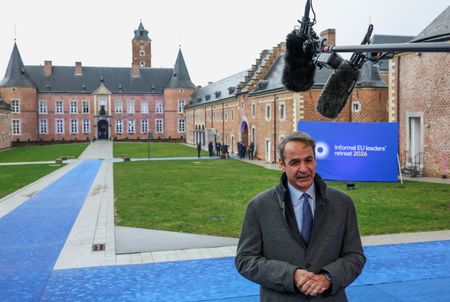
ATHENS – Greece’s Prime Minister Kyriakos Mitsotakis plans to reorganize his cabinet as authorities expand their investigation into a massive farm subsidy fraud scheme involving European Union funds, according to a government official who spoke Friday.
The controversy has shaken the administration since the previous year, when European prosecutors brought charges against numerous Greek livestock farmers accused of falsifying land ownership documents to illegally obtain millions of euros in EU agricultural subsidies. The scheme allegedly involved assistance from government workers and members of the conservative political party.
The scandal has already forced several ministers to step down and resulted in the European Union levying significant financial penalties against Greece for poor oversight of subsidies through its OPEKEPE payment organization.
Expanding the scope of the inquiry, Europe’s top prosecutor requested Wednesday that Greece remove legal protections from no fewer than 11 parliamentary members, including current ministers, to allow investigation into their suspected participation in the fraudulent operation.
“The government spokesman will announce changes to the cabinet at 1230 (0930 GMT),” the PM’s office said.
The current investigation focuses on suspected violations against EU financial interests during 2021, encompassing charges of encouraging breach of trust, digital fraud, and providing false documentation to secure illegal financial gains.
The OPEKEPE organization manages over 2 billion euros ($2.31 billion) in yearly European Union agricultural assistance.
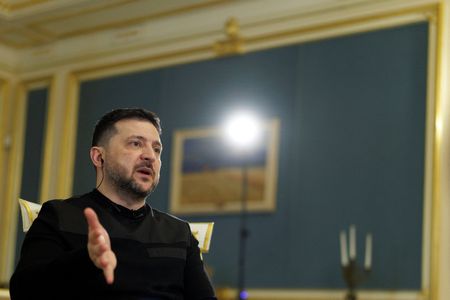
KYIV, April 3 – Ukrainian President Volodymyr Zelensky announced Friday that battlefield conditions for his country have reached their most favorable point in nearly a year, following his military’s success in preventing a planned Russian attack last month.
“The offensive they were planning for March was thwarted by the actions of our armed forces. That is why the Russians will now simply step up their assault operations,” Zelensky stated in comments issued by his administration on Friday.
The Ukrainian president also disclosed that he extended an invitation to American negotiators to travel to Kyiv during a virtual meeting held earlier this week, noting he received “positive signals” regarding his invitation.
“Overall, the front line is holding … The situation is complex, but the best it has been in the last 10 months,” Zelensky declared, referencing intelligence reports from both Ukrainian and British sources.
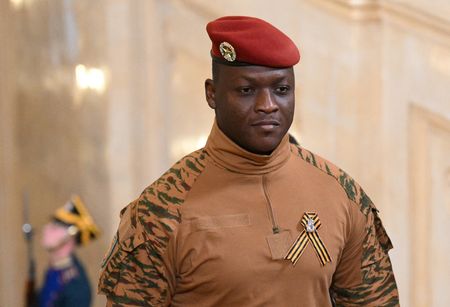
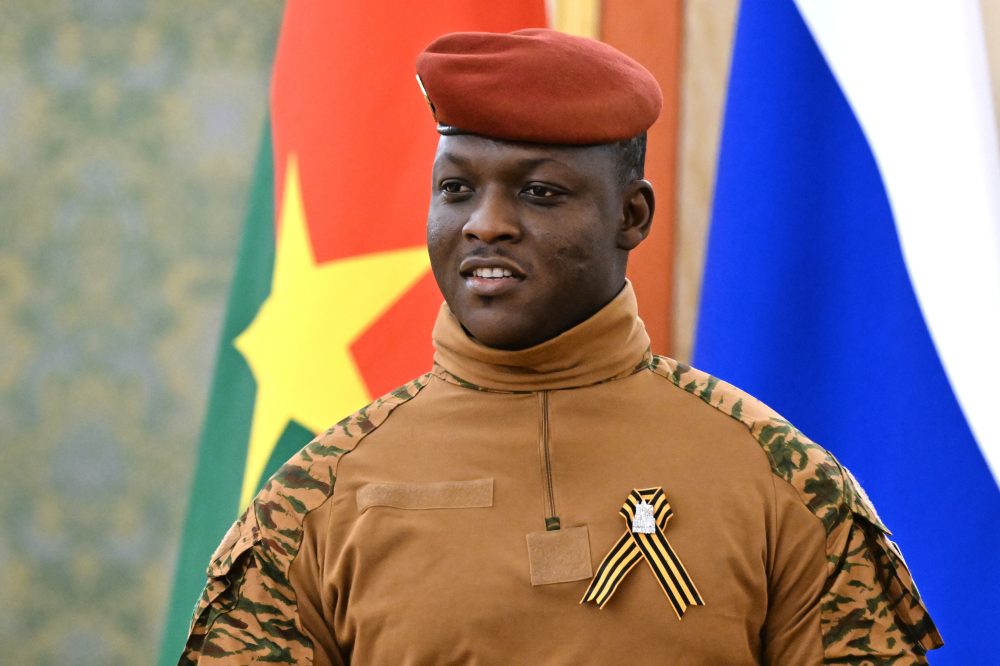
The military leader of Burkina Faso has made striking statements rejecting democratic governance, declaring during a televised interview that citizens should abandon any expectations of returning to democratic rule.
Captain Ibrahim Traore, who assumed control of the West African nation through a military takeover in September 2022, made these remarks during a Thursday evening roundtable discussion with reporters broadcast on government television.
“People need to forget about the issue of democracy,” Traore stated. “We have to tell the truth: democracy isn’t for us.”
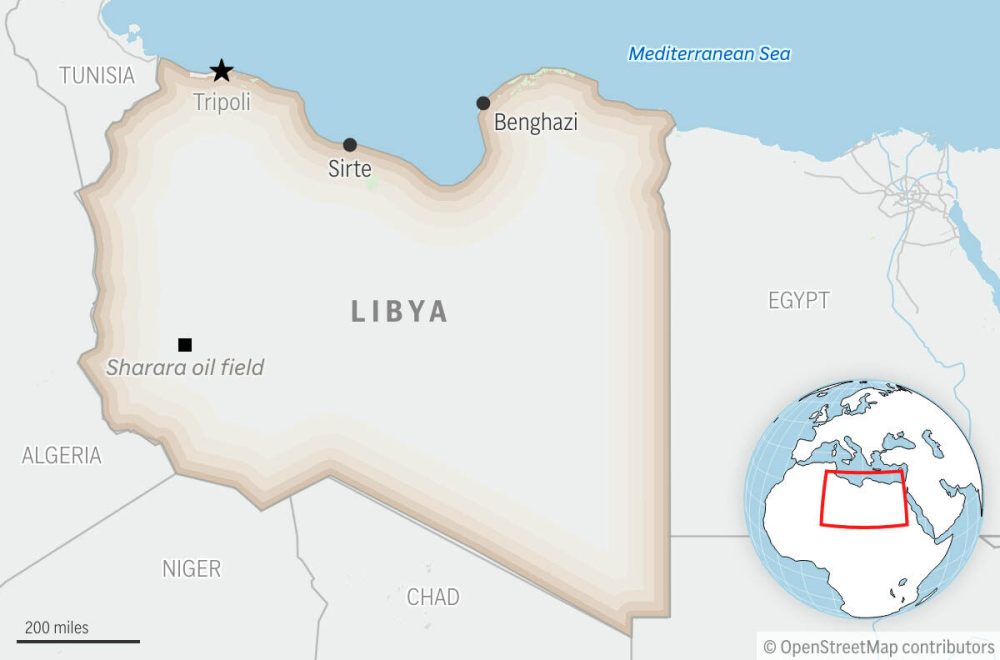
The military commander went further, citing Libya as an example where external forces attempted to “impose democracy,” before concluding that “democracy kills.”
Initially, Traore’s administration had pledged to conduct national elections in 2024. However, one year following the military takeover, he announced that voting would be postponed indefinitely until security conditions improve sufficiently for all citizens to participate safely.
The country has been battling extremist groups affiliated with al Qaeda and Islamic State for over ten years, creating widespread instability across the region.
In January, Traore’s government took the dramatic step of disbanding all political organizations, following an earlier suspension of political activities. Prior to the military coup, the nation had more than 100 registered political parties, with 15 holding parliamentary seats after the 2020 national elections.
Similar actions have been taken by military governments in neighboring Mali and Niger, where coup leaders have also eliminated political parties after seizing power.
The ongoing extremist violence across all three nations has resulted in thousands of deaths and forced millions from their homes over the past decade.
On the same day as Traore’s comments, Human Rights Watch released findings suggesting that Burkina Faso’s armed forces and their partners have been responsible for more than double the civilian casualties caused by extremist groups since 2023 began.
Government officials did not provide responses to requests for comment regarding the human rights organization’s report.
ROME, April 3 – One of Italy’s most prestigious art museums fell victim to a major digital security breach that forced emergency protective measures, including relocating priceless treasures to the nation’s central bank, according to a Friday report from Corriere della Sera.
The Uffizi Galleries in Florence, home to world-famous masterpieces such as Botticelli’s “Birth of Venus” and “Primavera,” along with Michelangelo’s “Doni Tondo,” experienced the cyber intrusion during the early months of this year.
Officials at the Uffizi – which ranks as Italy’s second-most popular museum and brings in approximately 60 million euros ($69 million) annually – have not yet provided comment on the incident. The Culture Ministry and police headquarters also declined to respond to inquiries.
According to Corriere’s investigation, museum director Simone Verde refused to discuss the matter. The institution only confirmed that its administrative computer systems had been compromised during that period, without providing additional details.
The newspaper reported that cybercriminals penetrated the museum’s digital infrastructure in late January or early February, successfully breaching computer servers at the Uffizi, Palazzo Pitti, and Boboli Gardens.
The attackers reportedly wiped data from several servers and delivered their ransom demands directly to Verde’s personal mobile device.
Corriere indicated the hackers successfully obtained security access codes, login credentials, alarm system information, and detailed facility blueprints.
As a protective measure, the most precious artifacts from the Treasury of the Grand Dukes – located within Palazzo Pitti, the historic Medici family palace – were transported to the central bank for safekeeping. Additional security steps included sealing certain doorways and emergency exits.
The Uffizi’s official website currently states that the Treasury of the Grand Dukes at Palazzo Pitti remains closed since February 3 for “extraordinary maintenance work” with no reopening date announced.
The cyber criminals also allegedly stole the museum’s complete digital photography archive, containing decades of accumulated images and historical documents, the report stated.
This incident follows other recent high-profile museum thefts, including last year’s robbery at Paris’s Louvre Museum where thieves made off with $102 million in jewels that remain missing. In March, criminals stole three paintings by French masters Pierre-Auguste Renoir, Paul Cezanne, and Henri Matisse from a museum in northern Italy.
BEIJING – Chinese officials announced Friday that diplomatic discussions between Afghanistan and Pakistan are making steady progress as the two neighboring nations work to resolve their most severe dispute since the Taliban regained control in Afghanistan in 2021.
Beijing, which borders both countries along its western frontier, has taken on the role of mediator between the former allies who have become adversaries. Chinese officials have conducted phone conversations with foreign ministers from both nations and dispatched a special diplomatic representative for visits during March.
“Both Pakistan and Afghanistan attach importance to, and welcome, China’s mediation, and are willing to sit down for talks again, which is a positive development,” foreign ministry spokesperson Mao Ning told a daily press conference.
While Mao declined to specify the exact location of the current negotiations, both countries have previously indicated that discussions were taking place in Urumqi, a city in northwestern China.
According to Mao, Beijing has been facilitating and encouraging dialogue while maintaining close contact with both parties to establish appropriate conditions and offer a venue for negotiations. She added that all three nations would release additional details at a later time.
The conflict between Pakistan and Afghanistan, which began in October, has resulted in dozens of casualties on both sides, with Afghan civilians bearing the heaviest losses.
Pakistani officials claim that the Afghan Taliban is providing sanctuary to Islamic extremists who conduct attacks within Pakistan’s borders. However, Kabul rejects these allegations, characterizing the militant activity as Pakistan’s internal issue.
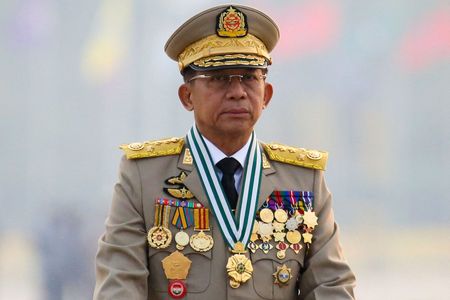
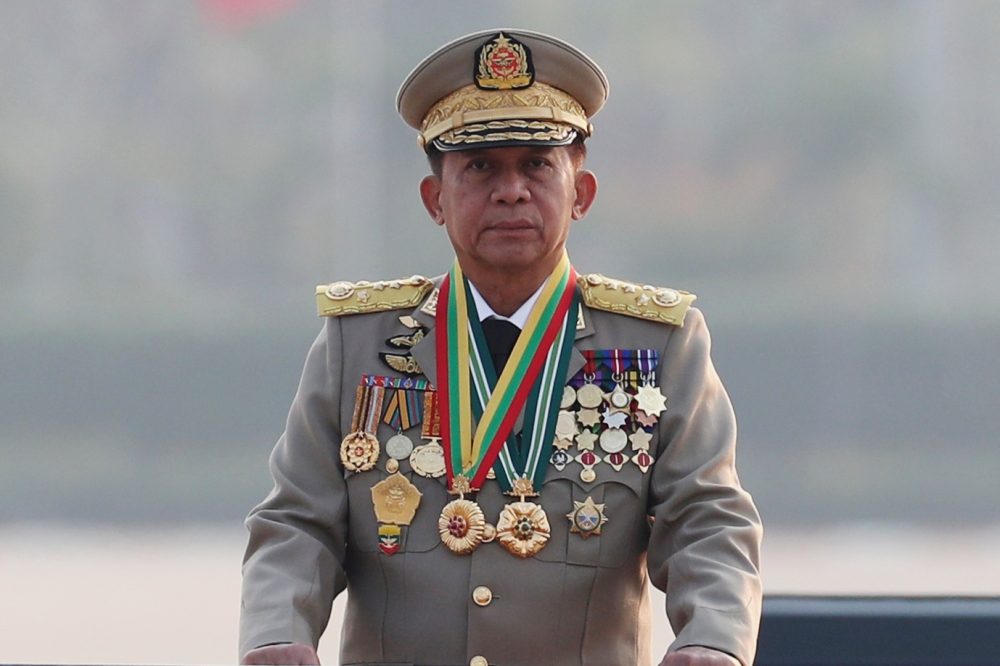
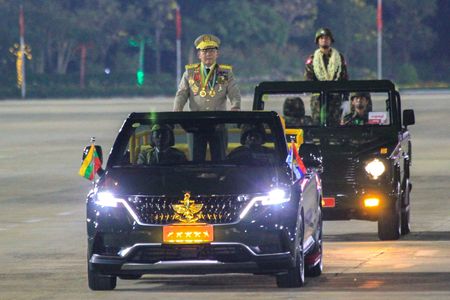
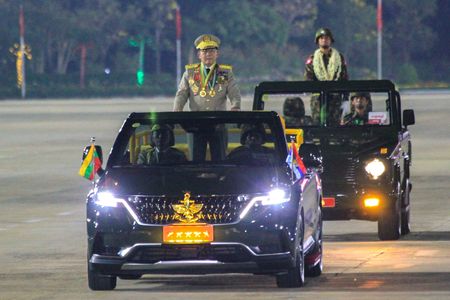
The military leader who orchestrated Myanmar’s 2021 coup has now secured the presidency through a parliamentary election, solidifying his control over the Southeast Asian nation that has been ravaged by conflict for the past five years.
Min Aung Hlaing, 69, won Friday’s presidential vote in a landslide, receiving 429 votes compared to 126 for his opponent, retired general Nyo Saw, who currently serves as the military government’s prime minister. The outcome was largely predetermined, with lawmakers from the military-backed Union Solidarity and Development Party joining appointed military representatives to support the former army chief.
This transition from military uniform to civilian leadership caps off what experts describe as an orchestrated political transformation that began with controversial elections held between December and January. International observers and Western nations condemned those elections as fraudulent, designed to give a democratic facade to continued military control.
The general’s path to power started when he overthrew the democratically elected government of Nobel laureate Aung San Suu Kyi in February 2021, subsequently placing her under arrest. That action triggered massive public demonstrations that eventually evolved into armed opposition movements across the country.
Political experts believe Min Aung Hlaing has long desired the presidential role. As part of his transition, he conducted a significant reorganization of Myanmar’s military leadership earlier this week, naming Ye Win Oo, a former intelligence director known for his loyalty, as his replacement to head the armed forces that he had commanded since 2011.
“He has long harboured the ambition to trade his title of commander-in-chief for president and it appears his dreams are now becoming a reality,” said Aung Kyaw Soe, an independent Myanmar analyst.
The new president’s whereabouts during the voting process remained unclear, as he was not visible during the state television coverage of the parliamentary session.
China, which maintains close ties with Myanmar’s military leadership, quickly offered congratulations and pledged support for the new administration in promoting regional peace and stability.
However, the country remains engulfed in violent conflict, with Myanmar’s military facing accusations from human rights organizations and United Nations investigators of committing widespread atrocities against civilians. The military government has consistently rejected these allegations.
International legal pressure continues to mount against Min Aung Hlaing. In 2024, the International Criminal Court’s prosecutor requested an arrest warrant for him related to alleged persecution of the Rohingya Muslim minority. More than one million Rohingya fled to Bangladesh in 2017 during a military offensive.
“He may exchange his military fatigues for civilian attire, but this changes nothing with respect to his suspected responsibility for serious crimes under international law,” Amnesty International said.
“For the many Myanmar people who have been victims of Min Aung Hlaing’s violently unfettered military … seeing their oppressor formally elevated instead of prosecuted will be deeply painful.”
Opposition forces are attempting to reorganize their resistance efforts. This week, various anti-military groups, including survivors from Suu Kyi’s political party and established ethnic minority armed organizations, announced the formation of a unified coalition called the Steering Council for the Emergence of a Federal Democratic Union.
The new alliance stated its goals as working to “completely dismantle all forms of dictatorship” and establish “a new political landscape.”
Nevertheless, some analysts warn that opposition groups may face increased difficulties as neighboring countries potentially strengthen relationships with Min Aung Hlaing’s newly legitimized government, while also confronting intensified military pressure and economic hardships.
“It may become even harder to build mutual understanding and trust between groups, reach firmer agreements, and sustain cooperation,” analyst Sai Kyi Zin Soe said of the opposition.
A member of the European Parliament from France is scheduled to face criminal charges this summer following her arrest over a controversial social media message, according to Paris prosecutors.
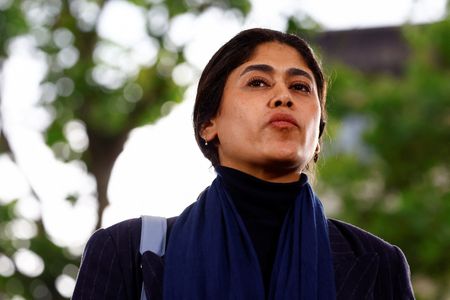
Rima Hassan, who represents France’s far-left political party, was taken into custody Thursday and held for several hours after officials determined her March 26 post on X could be interpreted as endorsing terrorist activities. The message was subsequently removed from the platform.
“At the end of her custody, Rima Hassan was given a summons to appear before the criminal court on July 7, 2026, to be tried on charges of advocating terrorism committed online,” prosecutors stated in their official announcement.
The controversial post referenced the deadly 1972 Lod airport assault in Tel Aviv, where Japanese Red Army militants killed 26 people. Hassan had shared a statement from one of the convicted attackers who attempted to defend the violence by pointing to what he described as Palestinian suffering.
French law treats online terrorism endorsement as a serious criminal matter, carrying potential penalties of up to seven years in prison and fines reaching 100,000 euros (approximately $115,290).
Two advocacy organizations – the International League Against Racism and Anti-Semitism and the European Jewish Organization – filed formal complaints about Hassan’s post.
Following her release, Hassan and her attorney Vincent Brengarth announced through separate social media statements that they would address the situation during a Friday afternoon news conference.
The 33-year-old politician, who was born in Syria and has Palestinian heritage, serves as an outspoken advocate for Palestinian causes and frequently criticizes Israeli policies. She won her European Parliament seat in 2024 representing the France Unbowed party.
Party leader Jean-Luc Melenchon characterized the legal action against Hassan as having political motivations.
Interior Minister Laurent Nunez rejected such claims, telling BFMTV: “There are rules to be respected. Apologising for terrorism is a very serious offense.”
Prosecutors revealed that Hassan faces six additional investigations for potential hate speech violations, while authorities have dismissed 16 other cases against her.
During her arrest, officers discovered cannabidiol (CBD) and what appeared to be the synthetic drug 3-MMC in her possession. These drug-related matters will be handled through separate legal proceedings.
Hassan has disputed the illegal drug possession allegations, explaining through social media that she uses CBD for medical purposes.
The island nation of Bahrain has intensified its suppression of opposition voices during its current conflict with Iran, following the controversial death of a man who disappeared while in government custody last month.
Mohamed al-Mousawi, a 32-year-old Shiite Muslim, went missing in March during Iranian missile strikes on the kingdom. His family was contacted eight days later to collect his remains from a military facility.
Family members report that al-Mousawi, who had been working to save funds for a new venture, was returned to them with extensive injuries including cuts and bruises across his body, particularly on his feet.
The incident has intensified tensions in the Sunni-led nation where Shiites form the majority population, as human rights advocates claim officials are employing similar harsh methods used during the 2011 Arab Spring demonstrations.
The monarchy, which provides a base for America’s 5th Fleet naval operations, has detained numerous individuals during the current conflict for recording attacks and rallies, showing solidarity with Iran, or suspected intelligence activities.
“They want to make sure nobody challenges the state’s narrative and silence any voices not telling the story (of the war) how they want it to be told,” said Sayed Ahmed AlWadaei of the London-based Bahrain Institute for Rights and Democracy.
Government officials stated that al-Mousawi faced espionage accusations related to Iran, which his relatives reject, and described photographs of his injuries as “inaccurate and misleading.” Officials maintain they are protecting national security and deny religious discrimination, insisting all actions follow legal procedures with independent oversight of misconduct claims.
Al-Mousawi had completed approximately 11 years of a 21-year sentence for charges including property destruction and terrorist group membership before his 2024 release under royal clemency.
According to unnamed relatives and a family associate who spoke confidentially due to safety concerns, al-Mousawi vanished on March 19 following religious services with two companions who also remain missing. Human rights organizations have repeatedly criticized Bahrain for forced disappearances.
His family received notification to retrieve his body on March 27. The relative who viewed the remains described evidence of cable whipping, apparent electrical burns including behind the knees, and cigarette burns on various body parts.
The Associated Press independently examined photographs of al-Mousawi’s remains, which displayed injuries confirmed by five people who personally observed the body. All requested anonymity fearing retaliation.
The Interior Ministry confirmed al-Mousawi was held by the National Security Agency. Following 2011 protest reforms, this intelligence service lost arrest authority due to abuse allegations, but regained these powers in 2017 as Bahrain expanded its anti-dissent efforts.
Officials stated that injury photographs were “inaccurate and misleading and have been deliberately disseminated to mislead public opinion,” without providing specifics.
Hospital records listed cardiac arrest as the cause of death. His relatives stated the 32-year-old had no known health problems.
Ahmed Banasr, a forensic specialist with New York-based Physicians for Human Rights, determined the photographed wounds matched blunt force injuries. Foot sole injuries help eliminate alternative explanations like altercations or accidents.
“The findings are highly consistent with alleged torture,” he said.
Al-Mousawi was among many Bahraini Shiites caught in intensified enforcement that critics say has grown since Israel and the U.S. began military action against Iran on February 28.
Human rights groups view these detentions and al-Mousawi’s death as a renewed phase of Bahrain’s ongoing suppression campaign that peaked in 2011 during regional democracy movements. The ruling Al Khalifa dynasty crushed mass protests that year using Saudi Arabian and UAE military assistance.
Sporadic unrest has persisted, with authorities characterizing predominantly Shiite demonstrators as Iranian agents. Unlike neighboring Sunni Gulf monarchies, Bahrain shares Iran’s Shiite majority population.
“It really remains to be seen how far the government is going to go in its crackdown on people,” said Maryam al-Khawaja, a Bahraini activist living abroad whose father is jailed in Bahrain. “What we’re seeing right now is definitely a lot more heavy-handed than we have in the past few years.”
Government representatives described their security actions as “a direct and proportionate response” to Iranian attacks.
“The individuals arrested include those who filmed military and strategic sites during an active attack on Bahraini territory, those who passed sensitive information, and those who publicly expressed support for a state that had just launched strikes against Bahraini soil,” officials stated.
“To present arrests made on the basis of conduct as evidence of sectarian persecution and conflate the two — is a framing that we firmly and unequivocally reject,” they added.
Since hostilities began, authorities have arrested at least 41 people, including foreign workers, for sharing footage of what officials termed “Iranian aggression” or expressing sympathy. Some face treason charges carrying potential life imprisonment or execution.
Bahrain reports over 600 Iranian drone and missile attacks that have killed at least two people and damaged critical infrastructure including water treatment facilities, petroleum refineries, and metal processing plants. Iran has also repeatedly struck U.S. 5th Fleet headquarters.
Video evidence reviewed by AP shows some protesters mourning Iran’s Supreme Leader Ayatollah Ali Khamenei’s killing and celebrating attacks on Bahrain. The footage also captures incendiary devices being thrown and vehicles set on fire.
The day after fighting commenced, 21-year-old Hussein Fatiil and a companion recorded social media videos displaying Iran’s supreme leader’s image at a demonstration near the U.S. Embassy. Plainclothes officers immediately arrested them using an unmarked vehicle.
The men contacted their families hours later from a police facility after questioning, Hussein’s father, Naji Fatiil, told the AP.
Three days afterward, Hussein informed his family of five charges including social media misuse, inciting hatred, and treason, his father reported.
“The charges are extremely serious and exaggerate what happened,” he said, adding his son described the embassy protest as peaceful. “Now he might be charged with the most severe punishment. All I want is for my son to have a normal life and not be sentenced to death.”
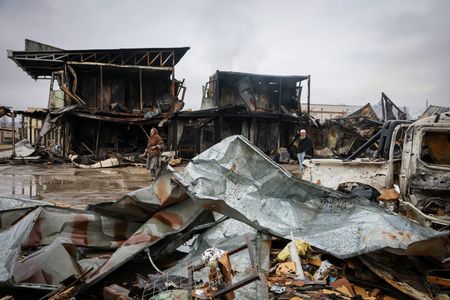
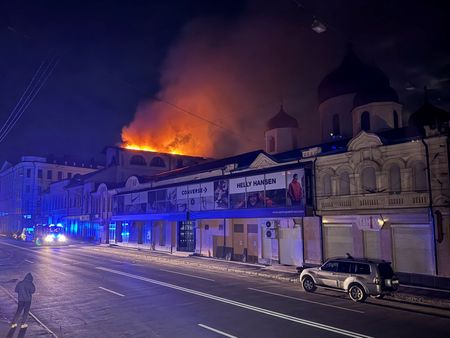
Ukrainian military officials reported Friday that Moscow has been launching sustained aerial bombardments against the country since Thursday evening, with numerous enemy drones currently operating in Ukrainian airspace.
This marks the second instance this week where Russian forces have combined overnight drone strikes with intensive daytime bombardments, representing a new strategic approach as Moscow seeks methods to overcome Ukraine’s defensive capabilities.
“We can see that the enemy is using new routes, new drones which they are constantly modernising, and new tactics,” air force spokesman Yurii Ihnat said on state television.
According to Ihnat, Russian forces deployed more than 400 long-range drones within a 24-hour period, along with ten ballistic missiles that mainly focused on regions close to the battle lines.
The spokesperson noted similarities between this bombardment and Tuesday’s assault, which resulted in at least four fatalities. That earlier attack featured an overnight wave of more than 300 drones followed by a comparable daytime strike.
Widespread Russian bombardments create significant disruption throughout Ukraine, forcing government offices, public transportation systems, and businesses to shut down during attacks that can persist for hours.
“The enemy is exerting (pressure) on our population, paralysing the work of certain public institutions, as well as learning institutions,” Ihnat said.
In Kharkiv’s eastern region, regional governor Oleh Synehubov reported via social media that one person died and 25 others sustained injuries from missile, bomb and drone strikes during the previous 24 hours.
Among these attacks were four ballistic missiles that hit the regional capital of Kharkiv during overnight hours, with authorities confirming only one injury from that particular strike.
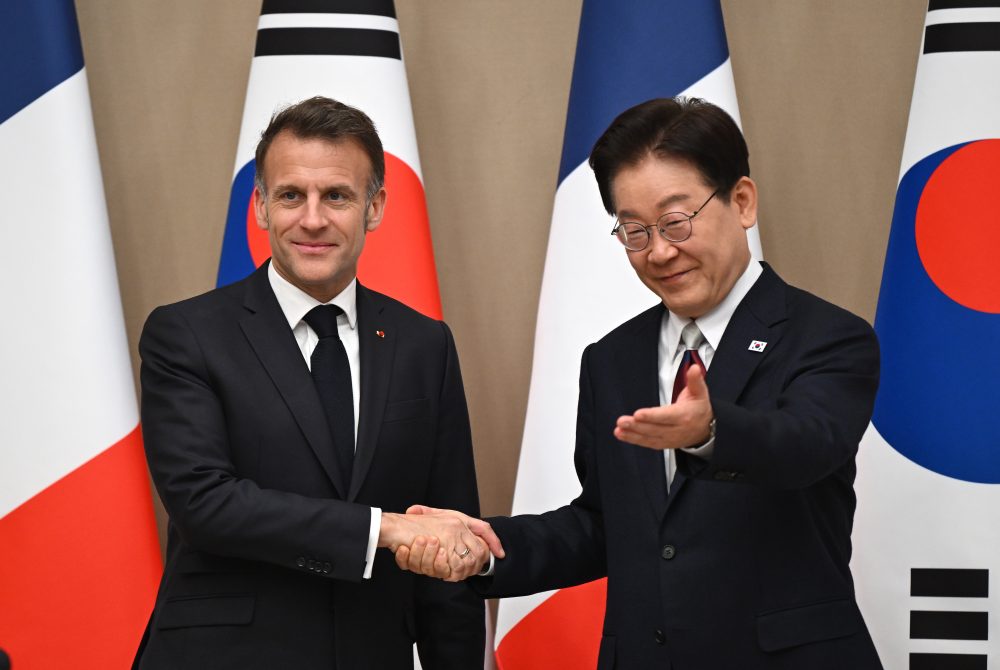
SEOUL, South Korea — During a diplomatic summit in Seoul on Friday, French President Emmanuel Macron and South Korean President Lee Jae Myung committed to joint efforts aimed at reopening the Strait of Hormuz and reducing worldwide economic instability stemming from Middle Eastern conflicts.
The high-level meeting occurred while U.S. President Donald Trump criticized international partners for insufficient support in the American and Israeli military campaign against Iran. This marked Macron’s inaugural trip to South Korea as president since assuming office in 2017, continuing his broader Asian diplomatic tour that previously included Japan.
During their initial discussions, Macron emphasized to Lee that both nations could contribute significantly to Middle Eastern stability, particularly addressing Iran’s control over the Strait of Hormuz, which has created turmoil in worldwide energy markets.
Speaking at a joint press conference following their talks, Macron highlighted the importance of French-South Korean collaboration in efforts to reopen the waterway and reduce Middle Eastern tensions. Lee confirmed that both leaders “affirmed their resolves to cooperate to secure the safe shipping route in the Strait of Hormuz.”
Neither president accepted media questions or provided specific details about their strategy for reopening the crucial passage — the narrow channel between Iran and Oman that typically handles approximately 20% of global oil shipments.
“We need to clearly define, at the international level, the conditions for a process to ease the crisis and conflict in the Middle East,” Macron stated. “We need to ensure that the Strait of Hormuz is reopened.”
Lee announced that he and Macron decided to broaden collaboration across technology, energy, and additional sectors. Representatives from both countries also formalized agreements covering nuclear fuel supply chain cooperation, joint investment in a southern South Korean offshore wind facility, and partnerships involving critical minerals. South Korea has been increasing nuclear reactor production to address energy shortages, while Lee has advocated for accelerated renewable energy adoption, noting how the conflict has highlighted the nation’s dependence on imported fossil fuels.
Macron’s Asian diplomatic mission coincides with Trump’s growing dissatisfaction with allied nations. During a Wednesday address, Trump declared that Americans “don’t need” the strait but countries that depend on it “must grab it and cherish it.”
At a previous White House Easter gathering, Trump urged Asian allies and China to participate in waterway reopening efforts.
“Let South Korea, you know, we only have 45,000 soldiers in harm’s way over there, right next to a nuclear force — let South Korea do it,” Trump commented. “Let Japan do it. They get 90% of their oil from the strait. Let China do it.”
The actual U.S. military presence in South Korea totals approximately 28,000 personnel, not the 45,000 figure Trump mentioned. American forces in South Korea serve as a deterrent against potential North Korean aggression.
Macron has previously stated that military action to reopen the Strait of Hormuz would be impractical.
South Korean officials report ongoing communication with Washington regarding the situation and confirm that Seoul is not considering payment of transit fees to Iran for securing fuel deliveries through the strait.
BANGKOK (AP) — General Min Aung Hlaing, the military leader who toppled Myanmar’s civilian administration in 2021 and maintained authoritarian control for five years, has been chosen as the nation’s president by parliament on Friday.
While this represents a technical shift back to elected leadership, critics view it as a calculated strategy to preserve military dominance following elections that opposition groups and international monitors characterized as illegitimate and unfair.
Though Min Aung Hlaing faced two other candidates for the presidency, his victory was essentially predetermined given that military-aligned party members and army appointees control a decisive parliamentary majority.
Parliamentary Speaker Aung Lin Dwe revealed that Min Aung Hlaing secured 429 votes from the total 584 cast, while his competitors were appointed as vice presidents.
The senior general had previously stepped down from his commander-in-chief role since Myanmar’s constitution bars the president from simultaneously serving as the military’s top leader. His trusted associate, General Ye Win Oo, assumed the influential military position.
At 69 years old, Min Aung Hlaing served as Myanmar’s military commander since 2011. Even before deposing Suu Kyi’s administration, he wielded considerable influence under the military-drafted constitution.
Legislative members gained their seats through elections conducted in three stages during December and January. Key opposition movements, including Suu Kyi’s previously governing National League for Democracy, were prevented from participating or chose to boycott what they considered rigged conditions. Suu Kyi remains imprisoned.
Russian authorities are urging citizens to adopt MAX, a government-supported messaging platform, but many users are expressing reluctance about downloading the state-controlled service.
Diplomats have described Russia’s actions as a “great crackdown,” with authorities repeatedly disrupting mobile internet access and obtaining broad authority to disable mass communication systems while interfering with messaging platforms and virtual private networks.
As an alternative, Moscow has vigorously promoted MAX, which markets itself as a “national messenger” and belongs to a firm whose leader is the child of one of Putin’s senior advisors.
Many Russians view this forced migration as excessive. Irina Matveeva, a Moscow saxophonist, downloaded MAX out of necessity to stay in touch with her music students.
“But I am not happy with this situation,” Matveeva told Reuters at the Rhythm & Blues Cafe in Moscow where she performs with the “Good Gollys” band. “I try to use it as little as possible.”
Matveeva described the Telegram restrictions as bewildering and irritating, explaining the difficulties of juggling multiple messaging platforms while dealing with VPN software and internet disruptions.
Ten additional Russians shared comparable doubts about MAX. However, two others reported satisfaction with the platform and said they had mostly moved on from Telegram and WhatsApp, which face partial interference in Moscow.
Government representatives argue that a domestic messaging service is essential because foreign intelligence agencies have compromised international messaging platforms like Telegram, and Moscow must guarantee security through developing a “sovereign” internet infrastructure.
VK, which owns MAX, did not respond to requests for comment. The company announced on March 26 that MAX had gained 107 million users since launching one year earlier, with the application being used globally including Russia and former Soviet republics, plus regions in Asia, Africa, Latin America and the Middle East.
Opposition groups claim Russian intelligence agencies can access MAX user data and that artificial intelligence technology monitors the information to identify potential state threats and gauge public sentiment and opposition.
One Russian citizen identifying himself only as Danil expressed satisfaction with supporting a domestic messaging service and said he used MAX without worry.
However, others feel uncomfortable after years of enjoying relatively unrestricted messaging freedom.
“I intentionally ask my inner circle not to download it because Telegram is closer to me,” Olga Kravets said.
Russians have historically found subtle ways to resist censorship, from clever satire during the Tsarist era to secret publishing and distribution of prohibited poetry and literature during the late Soviet period.
One Russian woman reported being compelled to install MAX because Gosuslugi – the government service platform that handles everything from passports and driver’s licenses to university admissions and hunting permits – required a verification code sent through the application.
“I kept it on my phone to use it in case everything else is shut down. But I do not plan to use it,” said Anna, who declined to provide her surname due to the delicate nature of the topic.
Denis Kuskov, director of the TelecomDaily information website, said he believed it was inappropriate to require the entire population to download MAX before the application functioned flawlessly.
He was choosing not to install it currently.
“Not because I am afraid to do so,” he explained. “But because I believe that installing an app or ordering a service should be a personal choice.”
Russian authorities reported Friday that a passenger train went off the tracks in the Ulyanovsk region, leaving seven people hurt among the 412 passengers aboard.
The derailment occurred approximately 559 miles away from Moscow in the Russian region. Officials have not yet determined what caused the train to leave the tracks.
Emergency responders attended to the seven injured passengers following the incident on Friday.
SYDNEY, April 3 – Millions of Australians are abandoning their Easter weekend getaway plans as fuel shortages and skyrocketing prices make travel unaffordable and impractical.
Sydney resident Elsa Ulcak, 67, represents countless retirees who traditionally spend the four-day Easter holiday exploring Australia’s countryside. This year, however, she and her husband are staying home.
“We usually go to the countryside, but because of the petrol situation, we decided to stay at home this year,” Ulcak explained.
The retired couple felt a lengthy drive would drain both their wallet and fuel supplies that working people need more urgently. “(It’s) six or seven hours drive to the countryside… it’s expensive. Also we’ve got to think about it – working people need their petrol, (but) we’re retired, we can stay at home,” she said.
“We usually go with a group of friends, everyone cancelled.”
Easter weekend traditionally ranks among Australia’s peak travel periods. Research company Roy Morgan projected over 4.5 million people would travel during 2025’s Easter break, generating approximately A$11.1 billion ($7.67 billion) in tourism spending.
However, the Iran conflict that erupted February 28th and subsequent Strait of Hormuz blockade have severely disrupted global energy markets, creating widespread travel disruptions.
Since Australia relies on imports for roughly 90% of its fuel supply, the nation has faced localized shortages and dramatic price increases. Diesel costs climbed above A$3 per liter while gasoline exceeded A$2.50 last week, prompting government intervention through fuel tax reductions.
Art director Rachel Abbott, 27, also scrapped her Easter travel arrangements. She typically visits family in northeastern Victoria but found both driving and airline costs prohibitive.
“Work’s just been quite busy and flights are very expensive, and then if I were to drive, obviously it would be a lot more expensive,” Abbott noted.
Aid worker Stav Zotalis, 59, wasn’t planning Easter travel anyway, preferring to remain home during the holiday. Still, she acknowledged this year “does feel very different” due to Middle Eastern tensions.
“I don’t know that we can celebrate. It feels like the world is shaky, it’s unpredictable. And I feel that we don’t know where things are going,” Zotalis said.
Despite experiencing higher costs at gas stations and grocery stores, her primary concern remains with those living in conflict areas.
“I’ve been an overseas aid worker for 25 years and I lived in Asia for 14 years, and I know people that live closer to the conflict are having to forgo food. Not just trips interstate or to the coast, like some of us here in Australia,” she explained.
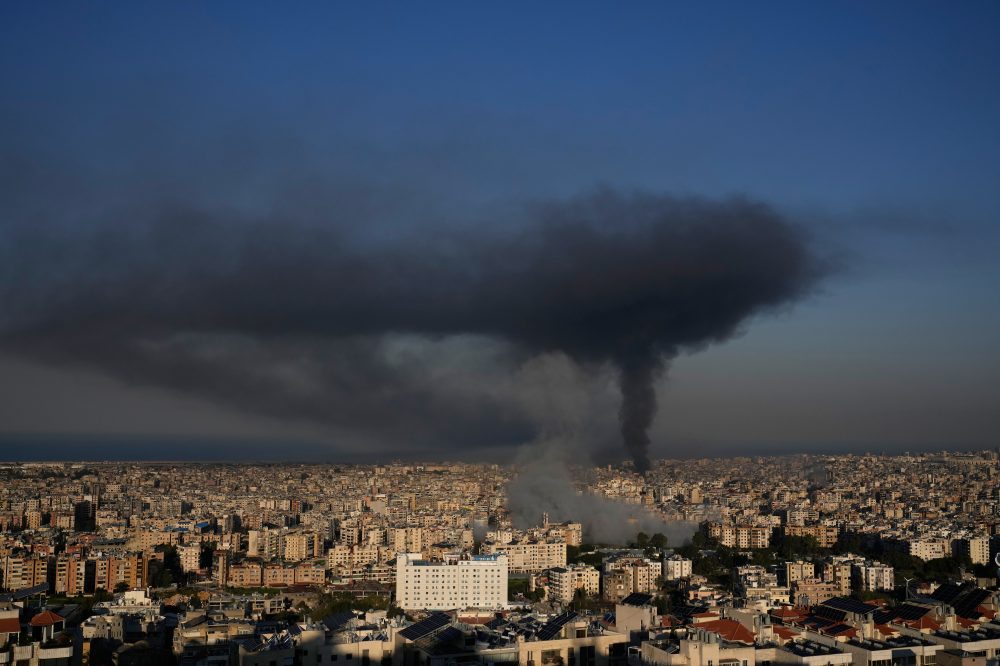
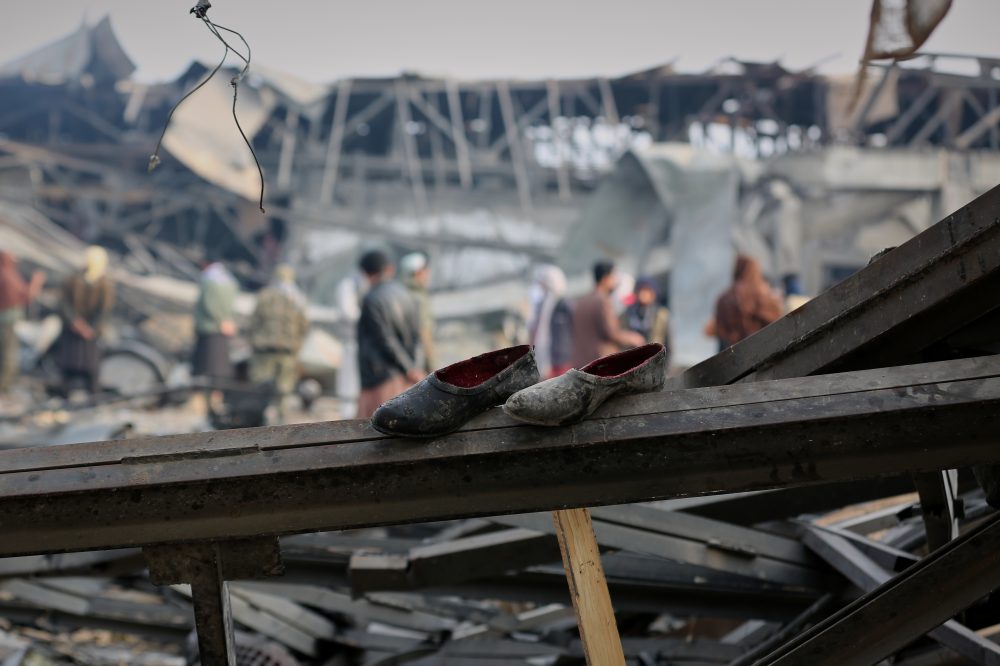
BEIRUT (AP) — After Israeli bombardment forced Hussein Shuman to evacuate Beirut’s southern suburbs in early March during the Israel-Hezbollah conflict, the 35-year-old perfume company employee chose not to search for rental housing elsewhere.
Shuman believes that in neighborhoods considered “secure” due to the absence of the Lebanese militant organization, Shiite Muslims face unwelcoming attitudes. Local residents view them suspiciously as possible Hezbollah affiliates, while property owners demand excessive rental fees from displaced families.
The father of two instead established a small tent in downtown Beirut, where he now lives with his wife and their children, ages 7 and 5.
Shuman even declined when a friend offered to host his family in Zgharta, a Christian mountain community. He chose to stay in his tent despite experiencing flooding on two occasions over the past fortnight.
“By staying here I have my dignity and respect,” Shuman said, sitting on a chair near his tent as a barber gave him an open-air hair cut. “We will not stay in a place where we are going to be humiliated.”
Within a nation marked by mistrust, the over one million individuals — predominantly Shiite — who have been forced from their homes due to Israeli evacuation directives and bombing campaigns face restricted choices.
Property owners in Christian communities sometimes refuse Shiite tenants entirely. Others impose excessive rental rates and security deposits beyond most families’ financial reach. Fatima Zahra, a 42-year-old from Beirut’s southern districts, explained that she and her sister liquidated their most valuable jewelry to cover the $5,000 upfront payment demanded by a landlord for two months of housing.
Certain Beirut areas require displaced families who can meet high rental costs to undergo security screenings, with landlords notifying authorities to investigate potential Hezbollah connections before approving tenancy.
Religious divisions remain a delicate matter in Lebanon following a 15-year civil conflict that concluded in 1990, which primarily divided communities along sectarian boundaries.
Community tensions have intensified following Israeli precision strikes that eliminated Hezbollah officials or Iranian Revolutionary Guard personnel in areas with Christian, Sunni, and Druze majorities, heightening concerns among host communities about Hezbollah operatives hiding among civilians.
Lebanese citizens remain sharply split regarding Hezbollah’s military actions against Israel, with many in the small Mediterranean country holding the Iran-supported group responsible for involving Lebanon in a devastating war that has claimed over 1,200 lives and injured more than 3,000 people. Hezbollah launched missiles toward Israel two days following U.S. and Israeli strikes on Iran on February 28, sparking the current Middle Eastern conflict.
This latest war has generated extensive destruction and crippled the economy while Lebanon continues struggling with a severe financial crisis that began in late 2019. The nation has not fully recovered from the previous Israel-Hezbollah war in 2024.
During mid-March, an Israeli attack on an apartment building in Aramoun resulted in three deaths, leading some local residents to demand the departure of displaced persons from their area.
Several days afterward, another strike in nearby Bchamoun also claimed three lives, including a four-year-old girl, who had been relocated from Beirut’s southern suburbs where Hezbollah maintains significant influence.
Israel did not identify the intended targets in either incident, but residents assumed someone in the attacked buildings had Hezbollah ties.
“Had we known that they were linked to Hezbollah, we would have kicked them out,” an angry man who owns an apartment in the building in Bchamoun said at the scene.
During late March, a missile detonated above the mainly Christian Keserwan area north of Beirut, scattering debris across multiple locations. While the Lebanese military later determined it was an Iranian missile crossing Lebanese airspace that fell, many initially believed it represented an Israeli attack targeting displaced civilians.
Though the missile fragments caused no injuries, a group of young men assaulted displaced Shiites in Haret Sakher district near Jounieh, demanding their removal before local authorities intervened.
“We don’t want them here,” shouted a Haret Sakher resident shortly after the strike. He said that some of the displaced refer to their hosts as “Zionists,” accusing them of being aligned with Israel because they criticize Hezbollah for dragging the country into the conflict. He added: “We don’t want national coexistence.”
George Saadeh, a Jounieh municipal council member, informed The Associated Press that he urged Haret Sakher residents to avoid reactions “so that we can preserve civil peace.”
Plans to shelter displaced individuals in an unused warehouse near the port in a predominantly Christian area north of Beirut were cancelled last week following opposition from legislators and community members.
“The Israeli targeting campaign has created a lot of paranoia,” said Maha Yahya, director of the Beirut-based Carnegie Middle East Center. “If you see a displaced person, maybe you wonder, ‘What if this person is a target?’”
Concerned about escalating tensions, military forces have increased their street presence.
On Friday, army commander Gen. Rudolphe Haikal visited Beirut and the southern city of Sidon, instructing troops to remain “firm in the face of any attempt to undermine internal stability,” according to an army statement.
Law enforcement units, including specialized tactical teams, were positioned at key intersections throughout the capital to maintain order and prevent conflicts between displaced persons and residents. Police patrols regularly monitor the coastal tent settlement where Shuman’s family resides.
A municipal official from the primarily Sunni town of Naameh, located south of Beirut, reported receiving thousands of people evacuated from southern Lebanon.
To prevent tensions, the official explained they designated one school in a particular district for displaced Shiites and opened another facility in a separate neighborhood for people evacuated from Sunni border communities.
“There are concerns among people,” that conflict could break out said the official who spoke on condition of anonymity because he was not authorized to speak to the media.
With Israeli airstrikes and ground operations primarily focusing on Shiite regions, U.S. ambassador to Lebanon Michel Issa, a Lebanese-American, faced criticism for promoting sectarian divisions. He informed reporters in late March that America had requested Israeli assurances that Christian villages in southern Lebanon would remain unattacked.
“We have asked the Israelis to leave Christian villages in the south alone and they told us that they will not touch Christian villages,” Issa said. However, he added, “They (Israelis) said that they cannot guarantee” that the villages would be left alone “if there is infiltration into these villages” by Hezbollah members.
Multiple Christian villages in southern Lebanon have requested that displaced Shiites seeking refuge there relocate elsewhere, fearing their presence could provoke Israeli attacks.
Legislator Taymour Joumblatt who is the leader of the Progressive Socialist Party, the largest Druze-led political group in the country, said that the biggest concern in the country now is “strife.”
“The most important thing is to reduce sectarian pressures on the ground,” Joumblatt said. “Our Shiites brothers are part of this country and our humanitarian duty is to help them.”
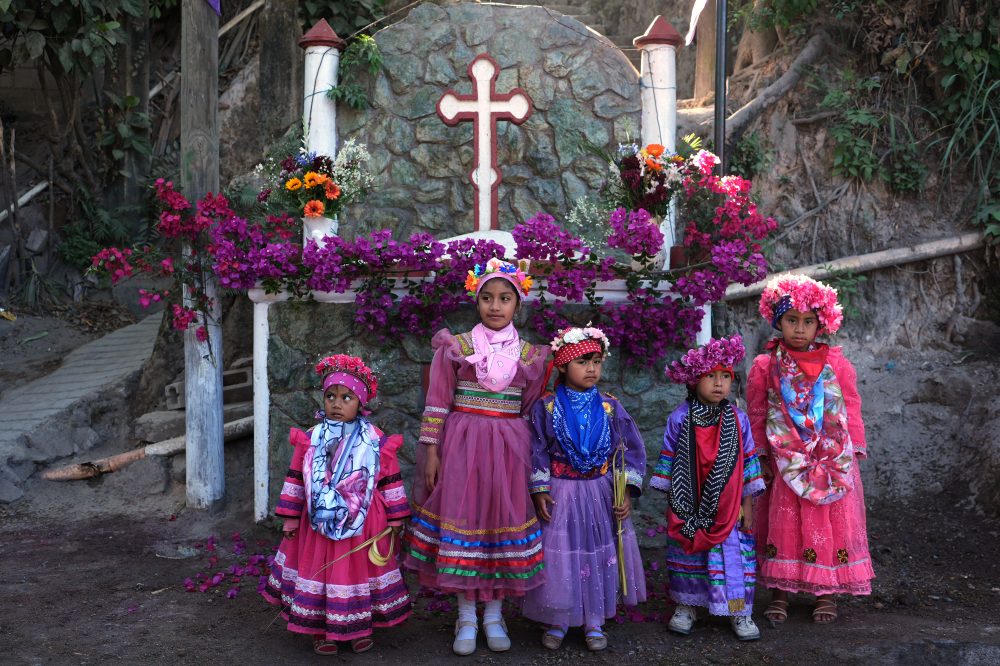
From March 27 through April 2, 2026, faithful across Latin America and the Caribbean observed Holy Week through vibrant processions and time-honored religious traditions.
Colombia held a somber memorial service in Bogota to pay tribute to 69 security personnel who perished when their military aircraft crashed.
The USS Nimitz, a U.S. Navy aircraft carrier, arrived and anchored in Panama’s Gulf waters during this period.
Meanwhile, Bolivia faced disappointment as their hopes were dashed in World Cup qualifying competition.
Photo editor Anita Baca, working from Mexico City, compiled this visual collection of the week’s significant events across the region.
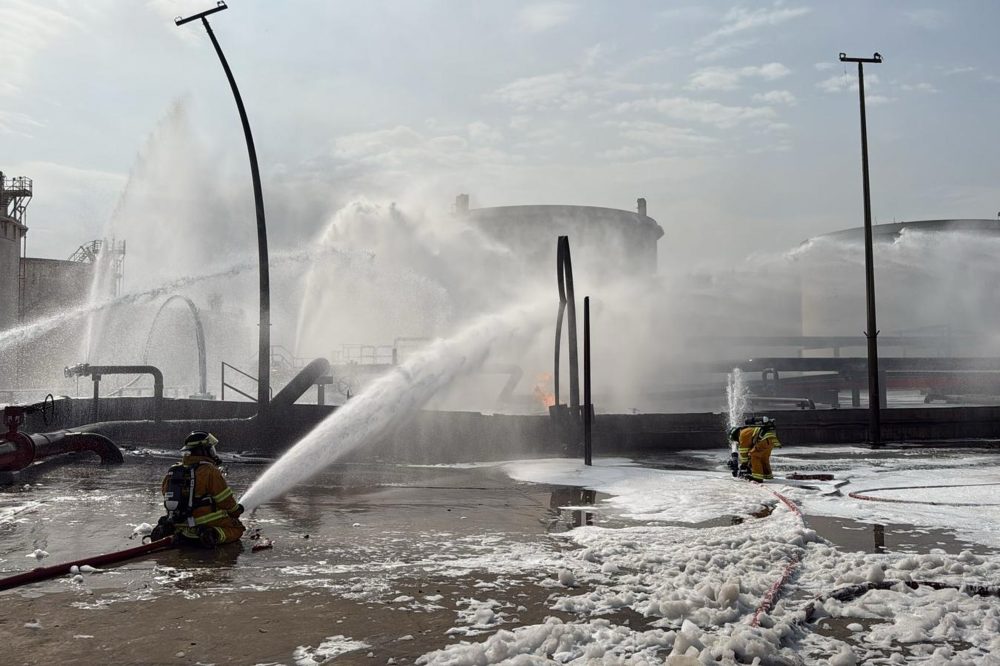
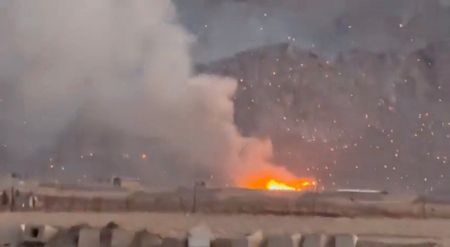
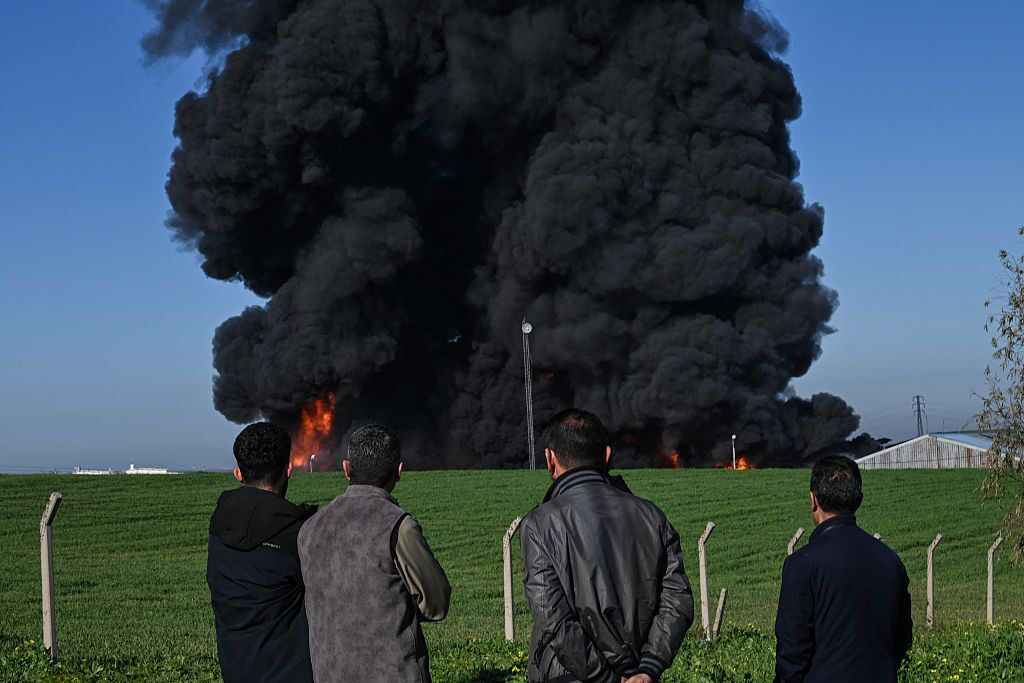
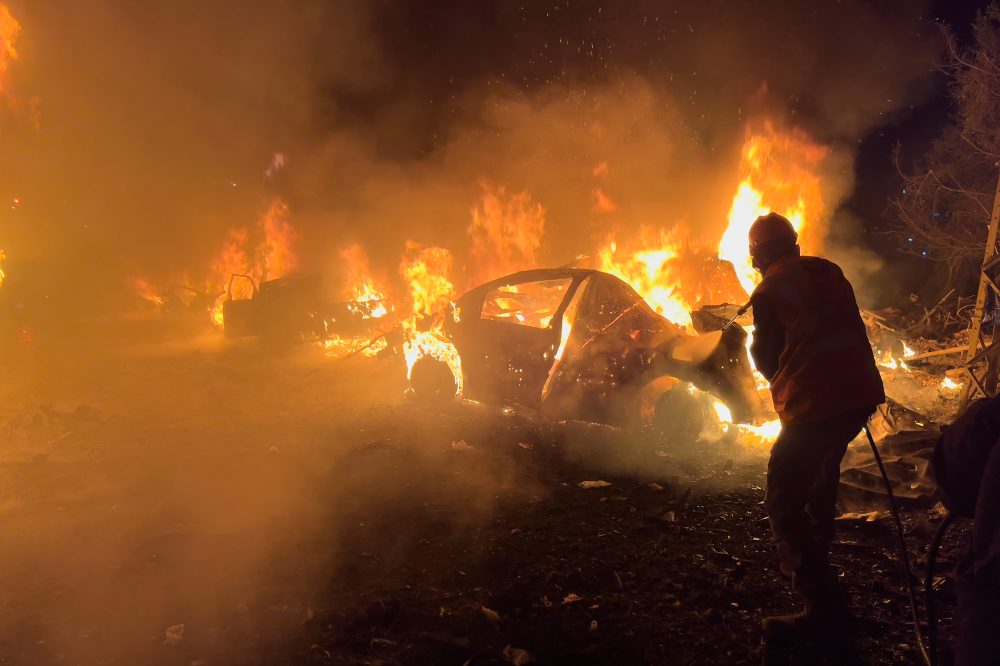
Drone attacks launched by Iran caused multiple fires to break out at Kuwait’s Mina al-Ahmadi oil refinery on Friday, according to officials.
Kuwait Petroleum Corp., the state-owned company, confirmed the assault in an official statement and reported that emergency crews were actively battling the resulting flames.
No casualties occurred during the incident, according to the corporation.
The Mina al-Ahmadi facility is one of three oil refineries that Kuwait operates and has been targeted several times during the ongoing conflict.
These processing facilities play a crucial role in Kuwait’s petroleum industry since crude oil wells must cease operations without functioning refineries to process their output.
The process of bringing refineries back online after attacks requires extensive time due to safety protocols, leaving oil wells inactive until the facilities resume operations.
The assault occurred as Iran launched attacks on multiple targets throughout the Middle East region while facing retaliatory strikes from American and Israeli forces early Friday. The conflict has now entered its fifth week with no signs of slowing.
Both Bahrain and Kuwait experienced early morning bombardments from Iranian forces, while Israel issued alerts about incoming missile threats, despite U.S. and Israeli assertions that Iran’s military infrastructure has been severely damaged.
Iran’s ongoing assault on regional energy facilities and its control over the Strait of Hormuz—a vital shipping lane for 20% of global oil and natural gas during peacetime—has caused petroleum prices to surge dramatically, affecting economies worldwide.
Brent crude oil, the global benchmark, reached approximately $109 per barrel early Friday, representing a more than 50% increase since February 28 when the conflict began with U.S. and Israeli strikes on Iran.
President Donald Trump has stated that reopening the blocked waterway is not America’s obligation, instead challenging other nations dependent on fuel shipments through Hormuz to “build some delayed courage” and “take it.”
The U.N. Security Council is scheduled to consider a Bahraini proposal on Saturday that would permit defensive measures to protect ships navigating the strait. The original draft would have authorized countries to “use all necessary means” to secure the passage, but Russia, China, and France—all possessing veto authority—have opposed authorizing military force.
French President Emmanuel Macron, speaking Thursday in South Korea, dismissed American expectations that the Strait of Hormuz could be reopened through military action as unrealistic.
“A military operation would take an infinite amount of time and would expose anyone passing through the strait to coastal threats from (Iran’s) Revolutionary Guard,” Macron stated. He emphasized that reopening the strait “can only be done in coordination with Iran,” through diplomatic negotiations following a potential ceasefire.
British-organized discussions involving more than 40 nations have emphasized diplomatic rather than military solutions for securing the strait. These countries, excluding the United States, have called for increased diplomatic pressure on Iran and potential economic sanctions.
The conflict has claimed more than 1,900 lives in Iran and 19 in Israel. Over two dozen people have perished in Gulf nations and the occupied West Bank, while 13 American military personnel have been killed.
In Lebanon, where Israel has launched a ground offensive against the pro-Iranian Hezbollah organization, more than 1,300 people have died and over one million have been displaced. Ten Israeli soldiers have also lost their lives in that theater.
Missile strikes launched by Iran targeted Israel and multiple Gulf nations on Friday, while residents reported hearing explosions throughout Tehran and the central Iranian city of Isfahan. The escalation comes as the United States moves to strengthen its already substantial military deployment in the Middle East region.
The conflict, which started on February 28th, was approaching its sixth week as Israel, Bahrain, and Kuwait issued warnings about incoming missile threats, though immediate damage assessments were not available. While activists confirmed strikes near Tehran and Isfahan, the specific targets remained unclear in initial reports.
Energy markets have been severely disrupted by Iran’s assault on Gulf region oil facilities and its control over the Strait of Hormuz, a critical waterway that handles one-fifth of global oil and natural gas shipments during normal conditions. This disruption has caused petroleum prices to spike dramatically.
Financial markets showed mixed reactions as oil costs climbed while Asian stock exchanges posted modest gains amid careful trading. U.S. benchmark crude oil jumped 11.4% to reach $111.54 per barrel, while Brent crude, used as the global pricing standard, surged 7.8% to $109.03 per barrel.
President Donald Trump stated that American forces would continue striking Iran “very hard” over the coming two to three weeks.
The Navy’s largest operational aircraft carrier departed from Split, Croatia, with the 6th Fleet announcing the vessel “remains poised for full mission tasking in support of national objectives in any area of operation.”
Military officials did not specify the carrier’s destination. The USS Abraham Lincoln continues operating in the Arabian Sea while the USS George H.W. Bush aircraft carrier left Norfolk on Wednesday, bound for the Middle East.
Energy costs kept climbing on concerns about an extended conflict with Iran, though Asian markets that remained open Friday showed moderate gains in careful trading sessions. Many exchanges were closed for Good Friday observances.
While the United States imports only a small percentage of its oil from the Persian Gulf region, petroleum operates as a global commodity with worldwide price setting.
Asian nations face a vastly different situation. Japan depends heavily on Strait of Hormuz access for its oil import requirements and would need to find alternative shipping routes. However, some experts believe Japan and other countries are working toward agreements with Iran to permit continued transport operations.
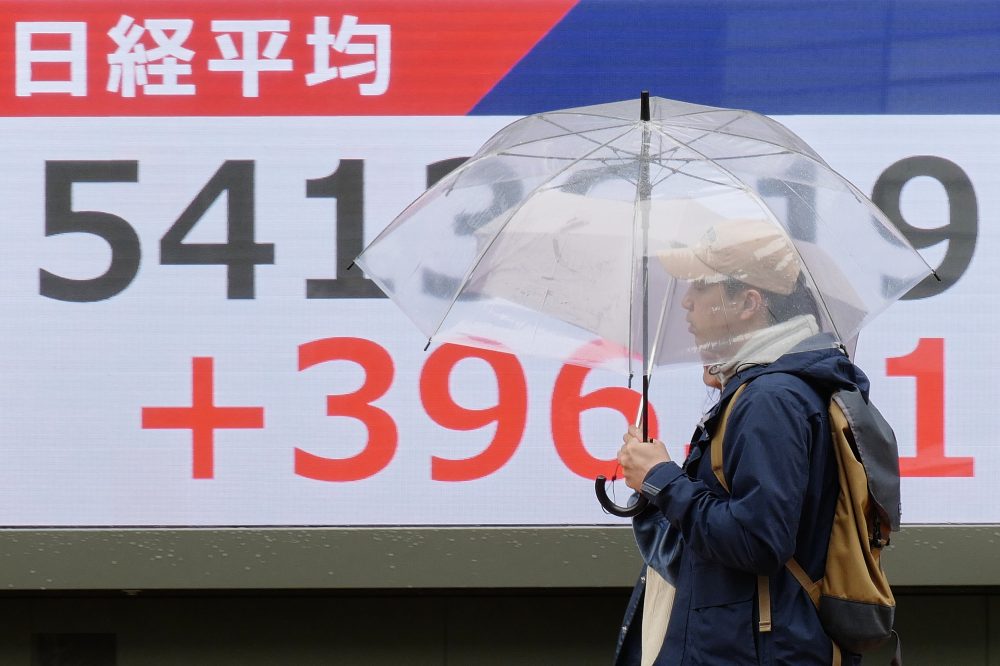
Japan’s Nikkei 225 index rose 0.9% during Friday morning sessions to 52,938.62. South Korea’s Kospi climbed 2.1% to 5,344.41, while the Shanghai Composite dropped 0.5% to 3,899.57. Markets remained closed in Hong Kong, Singapore, Australia, New Zealand, the Philippines, Indonesia, and India.
Wall Street, which was closed Friday, completed its first positive week since the Iranian conflict began, despite early trading declines caused by rising oil costs.
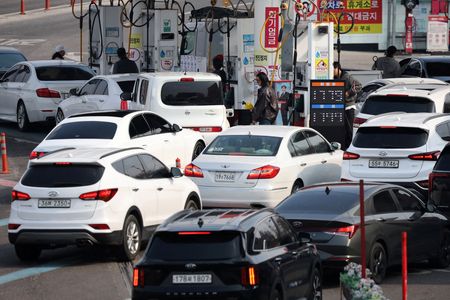
Bangladesh implemented reduced office hours and mandated early closures of shopping centers and retail stores starting Friday to address energy shortages stemming from the war.
Government officials ordered 30% reductions in fuel and power spending at public offices, halted certain employee training programs, and stopped purchasing new vehicles, ships, and aircraft. Decorative lighting for celebrations was also prohibited.
The South Asian nation of over 170 million residents is pursuing alternative energy sources and seeking $2.5 billion in external funding for imports, which represent 95% of its fuel supply.
Australian Energy Minister Chris Bowen advised motorists planning Easter weekend trips to refuel in urban areas on Friday, noting that most fuel shortages were affecting rural regions.
Of 2,400 service stations in New South Wales, Australia’s largest state by population, 182 had exhausted their diesel supplies by Friday.
Victoria, the country’s second-largest state, reported 76 stations without diesel. Among the remaining states by population size, Queensland recorded 75 stations lacking diesel, Western Australia had 37, South Australia counted 28, and Tasmania reported seven.
“For those Australians planning a road trip this weekend, given our shortages are predominantly in rural and regional Australia, it makes sense to fill up in the city to help the country if you can,” Bowen said in Sydney.
Officials attributed regional shortages to panic purchasing and supply chain issues, focusing efforts on delivering fuel to agricultural producers for crop planting activities.
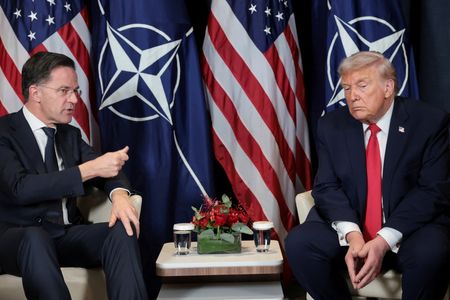
The North Atlantic Treaty Organization is confronting what analysts describe as its most severe crisis in more than seven decades, as President Donald Trump weighs a complete U.S. withdrawal from the military alliance.
The discord stems from Trump’s fury over European nations’ refusal to deploy naval forces to reopen the Strait of Hormuz for international shipping following the outbreak of air combat with Iran on February 28th.
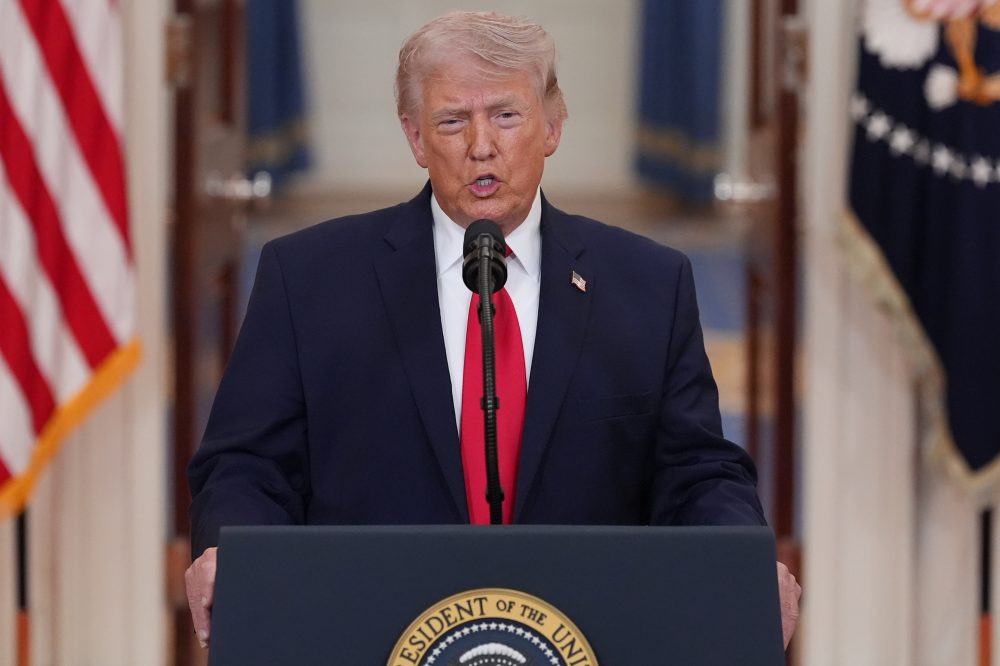
When asked by Reuters during a Wednesday interview whether he would consider leaving NATO, Trump responded, “Wouldn’t you if you were me?”
During Wednesday evening remarks, the president criticized American allies while avoiding direct condemnation of the alliance itself, though many observers had anticipated harsher language.
However, Trump’s recent statements, combined with weeks of sharp criticism directed at European partners, have sparked extraordinary worry that America might abandon its commitment to defend European allies under attack, regardless of whether Washington formally exits the organization.
According to experts and diplomatic sources, this situation has put the Cold War-era alliance – which has long formed the foundation of European security – under unprecedented strain, with its mutual defense commitments no longer considered guaranteed.
“This is the worst place (NATO) has been since it was founded,” stated Max Bergmann, a former State Department official who currently directs the Europe, Russia, and Eurasia Program at the Center for Strategic and International Studies in Washington. “It’s really hard to think of anything that even comes close.”
This harsh reality is becoming clear to European leaders who have historically relied on NATO as protection against an increasingly aggressive Russia.
Just last February, NATO Secretary-General Mark Rutte had called the concept of Europe defending itself without American support a “silly thought.” Today, numerous officials and diplomats view this scenario as the likely outcome.
“NATO remains necessary, but we must be capable of thinking of NATO without the Americans,” explained General Francois Lecointre, who led France’s armed forces from 2017 to 2021. “Whether it should even continue to be called NATO – North Atlantic Treaty Organization – is a valid question.”
White House spokeswoman Anna Kelly commented: “President Trump has made his disappointment with NATO and other allies clear, and as the President emphasized, ‘the United States will remember.’”
NATO representatives have not yet provided comment on the developing situation.
While the alliance has weathered previous storms, including Trump’s earlier threats to withdraw during his first presidency from 2017 to 2021, the current circumstances appear markedly different.
European officials who previously believed Trump could be managed through diplomatic courtesy and ceremony now hold diminished confidence in that approach, based on discussions with numerous current and former American and European officials.
The Trump administration has voiced frustration with what it perceives as NATO’s reluctance to support the United States during a critical period, including declining to assist with Strait of Hormuz operations and limiting American access to certain airfields and airspace. U.S. officials have emphasized that NATO cannot function as a “one-way street.”
European officials argue they have not received specific American requests for assets needed for strait operations and express confusion over Washington’s unclear timeline regarding whether such missions would occur during or after the conflict.
“It’s a terrible situation for NATO to be in,” observed Jamie Shea, a former senior NATO official now serving as a senior fellow at the Friends of Europe think tank. “It is a blow to the allies who, since Trump returned to the White House, have worked hard to show that they are willing and able to take more responsibility (for their own defense).”
Trump’s recent statements follow additional indicators of alliance instability, including intensified January threats to seize Greenland from Denmark and recent American policies that Europeans view as unusually accommodating toward Russia, which NATO identifies as its primary security threat.
The administration has remained largely silent regarding reports that Moscow has supplied targeting information to Iran for attacks on U.S. Middle Eastern assets and has removed sanctions on Russian oil to address global energy price increases during the war.
During a G7 foreign ministers gathering near Paris last week, U.S. Secretary of State Marco Rubio and European Union foreign policy chief Kaja Kallas engaged in a heated exchange, according to five sources familiar with the incident, highlighting growing transatlantic tensions.
Kallas questioned when American patience with Russian President Vladimir Putin would end regarding Ukraine peace talks, prompting an irritated Rubio to respond that the U.S. was working to conclude the war while supporting Ukraine, but the EU was free to mediate if preferred.
From a legal standpoint, Trump may lack authority to withdraw from NATO. A 2023 law requires a U.S. president to obtain consent from two-thirds of the Senate to exit the alliance, an extremely difficult threshold to achieve.
However, analysts note that as commander-in-chief, Trump can determine whether American military forces will defend NATO members. Refusing to do so could effectively destroy the alliance without formal withdrawal.
Not all observers view the current situation as existential. One French diplomat characterized the president’s statements as a temporary outburst.
Trump has previously modified his NATO stance. In 2024, he suggested during campaign events that he would encourage Putin to attack NATO members failing to meet defense spending obligations. By the June 2025 NATO summit, the alliance had regained his favor, with Trump delivering remarks praising European leaders as people who “love their countries.”
Next week, Secretary-General Rutte, who maintains a positive relationship with Trump, plans to visit Washington in an attempt to once again influence the president’s perspective.
Analysts suggest European nations have compelling reasons to maintain U.S. involvement in NATO despite uncertainties about Trump’s willingness to defend them. Among other factors, the American military provides essential capabilities NATO cannot easily replace, including satellite intelligence.
Even if Trump and European partners find a way to preserve their NATO relationship, diplomats, analysts, and officials believe the transatlantic alliance that has anchored global order since World War Two may be permanently changed.
“I do think we’re turning the page of 80 years of working together,” said Julianne Smith, who served as U.S. ambassador to NATO under Democratic President Joe Biden. “I don’t think it means the end of the transatlantic relationship, but we’re on the cusp of something that’s going to have a different look and feel to it.”
President Trump has escalated his threats against Iran, declaring that American forces have barely begun targeting the country’s remaining infrastructure as international efforts intensify to reopen the crucial Strait of Hormuz shipping route.
The conflict, now in its fifth week since beginning with coordinated U.S.-Israeli airstrikes, continues spreading instability throughout the Middle East while disrupting global financial markets and mounting pressure on the administration to resolve the crisis quickly.
Trump has intensified his public statements recently as behind-the-scenes negotiations through third parties with Iran’s new leadership have shown minimal advancement.
In a late Thursday social media post, Trump declared the American military has barely begun demolishing Iran’s remaining assets. He wrote that bridges would be next, followed by electrical power facilities, emphasizing that Iranian leadership understands what must be accomplished quickly.
Earlier, the president shared footage of U.S. forces destroying a recently built bridge connecting Tehran with Karaj, a major northwestern suburb. The structure was set to begin handling traffic this year. Iranian state media reported eight fatalities and 95 injuries from the American strike.
Iranian Foreign Minister Abbas Araqchi responded in a statement, saying that attacking civilian infrastructure, including incomplete bridges, would not force Iranians to capitulate.
Satellite imagery additionally revealed smoke billowing from facilities at Qeshm port, located on an Iranian island with strategic importance in the Strait of Hormuz, during this week’s operations.
More than 100 American international law scholars issued a statement Thursday expressing grave concerns about potential violations of international human rights and humanitarian law by U.S. forces and officials, including possible war crimes.
The experts’ letter specifically highlighted Trump’s mid-March statement suggesting potential strikes on Iran conducted purely for entertainment. They also referenced Pentagon Secretary Pete Hegseth’s early March remarks about American forces not operating under restrictive engagement rules.
During Wednesday evening remarks, Trump reiterated his threats against Iran’s civilian electrical infrastructure without providing any clear timeline for concluding military operations. This prompted Iranian retaliation promises, negatively impacted global stock markets, and drove oil prices higher amid concerns the Strait of Hormuz would remain mostly inaccessible.
Britain organized a virtual conference Thursday involving approximately 40 nations to explore methods for restoring navigational freedom, though no concrete agreements emerged. Participants did agree that all countries should enjoy unrestricted waterway access, according to one official.
The U.N. Security Council plans to vote Saturday on Bahrain’s resolution protecting commercial vessels in and around the strait, diplomats confirmed. However, China, which holds veto power, clearly opposed authorizing military force.
Chinese U.N. representative Fu Cong told the Security Council Thursday that any military intervention would legitimize unlawful and indiscriminate force usage, inevitably escalating tensions with serious ramifications.
Iran has effectively closed the strait, which typically handles approximately one-fifth of global oil commerce, as retaliation for U.S.-Israeli attacks that commenced February 28.
Tehran presented an alternative framework for future strait management, announcing it was developing protocols with neighboring Oman requiring vessels to secure permits and licenses.
European Union foreign policy leader Kaja Kallas rejected Tehran’s proposal, stating Iran cannot charge nations fees for ship passage. She wrote on social media that international law does not recognize pay-for-passage arrangements.
Concerns are mounting that the conflict could grant Iran control over Middle Eastern energy supplies after demonstrating its ability to block the Strait of Hormuz by targeting oil tankers and striking Gulf nations hosting American military personnel.
Gulf states maintain their self-defense rights but have avoided military responses to repeated Iranian attacks over recent weeks, hoping to prevent escalation into a broader Middle Eastern war.
Kuwait reported its air defense systems worked to intercept missiles and drones twice on Friday.
Thousands have died and tens of thousands suffered injuries across the Middle East since hostilities began. The International Federation of Red Cross and Red Crescent Societies delegation head said Thursday that medical requirements were increasing exponentially while supplies could become scarce.
Fuel shortages have already created economic pressures throughout Asia and are anticipated to affect Europe soon. A joint U.N. agencies report warned that sharp economic decline could trigger cost-of-living crises in Africa.
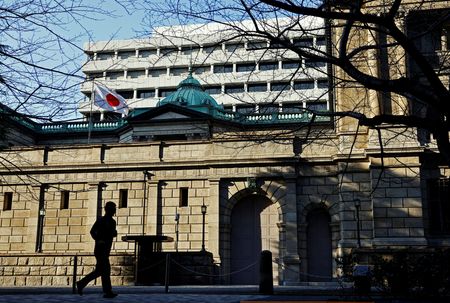
A top official from Japan’s central bank announced Friday that the institution plans to continue increasing interest rates while carefully monitoring the economic impact of ongoing Middle East conflicts.
Speaking before parliament, Koji Nakamura, who serves as the Bank of Japan’s executive director for monetary policy, explained that while elevated fuel prices stemming from regional conflicts could damage Japan’s economy through worsened trade conditions, they might simultaneously drive up core inflation by raising long-term price expectations.
Nakamura noted that inflationary pressure from increased fuel costs could be more significant than in previous situations, as businesses are showing greater willingness to implement price and wage increases.
“If our economic and price projections were to materialise, we will likely continue to raise interest rates,” Nakamura stated, emphasizing that the scale and timing of future adjustments would be determined by prevailing economic, price, and financial circumstances.
“We will reach an appropriate decision at each policy meeting by updating our economic, price projections and our views on risks using data available at the time,” he continued.
Japan’s central bank concluded a decade of extensive economic stimulus measures in 2024 and has implemented multiple rate increases since then, including a December adjustment that brought the short-term policy rate to 0.75% – its highest level in three decades.
Financial markets are currently indicating approximately a 70% probability of another rate increase this month, as climbing fuel costs and elevated import prices from a weakened yen continue to add inflationary pressure to Japan’s economy.
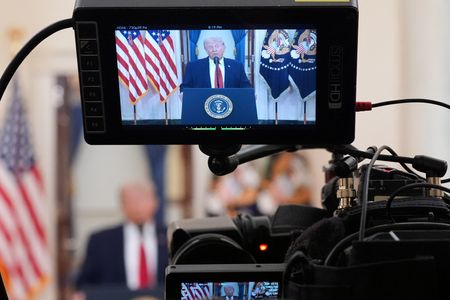
President Donald Trump issued fresh warnings against Iran Thursday evening, threatening to target the nation’s bridges and electrical grid as part of escalating military action against the country’s infrastructure.
In a social media post, Trump declared that the American military “hasn’t even started destroying what’s left in Iran. Bridges next, then Electric Power Plants.”
The president’s message indicated that Iranian officials “knows what has to be done, and has to be done, FAST!”
During a televised address Wednesday, Trump had already suggested the conflict might intensify if Iran refuses to accept Washington’s demands, warning that energy and petroleum facilities could become targets. The president has previously given varying timeframes and objectives regarding the ongoing military action.
International legal scholars raised alarm Thursday, with dozens of experts in the United States releasing a public statement warning that American attacks on Iran could constitute war crimes.
The Geneva Conventions of 1949, which govern humanitarian rules during warfare, specifically ban assaults on infrastructure vital to civilian populations.
These international agreements and their additional protocols require warring parties to differentiate between “civilian objects and military objectives,” explicitly forbidding strikes against civilian targets.
“We are going to hit them extremely hard over the next two to three weeks. We are going to bring them back to the Stone Ages, where they belong,” Trump declared during his Wednesday speech.
Although Trump suggested Washington was close to achieving its objectives in Iran, he provided no specific timeline for concluding the military campaign.
The conflict commenced February 28 when American and Israeli forces launched coordinated strikes against Iran. Tehran retaliated by conducting its own offensive operations against Israel and Gulf nations hosting American military installations. Combined U.S.-Israeli operations in Iran and Israeli strikes in Lebanon have resulted in thousands of casualties and displaced millions of people.
The military action has also driven up petroleum prices and created instability in international financial markets. Trump’s contradictory statements have failed to calm anxiety about America’s most significant military engagement since the 2003 Iraq invasion.
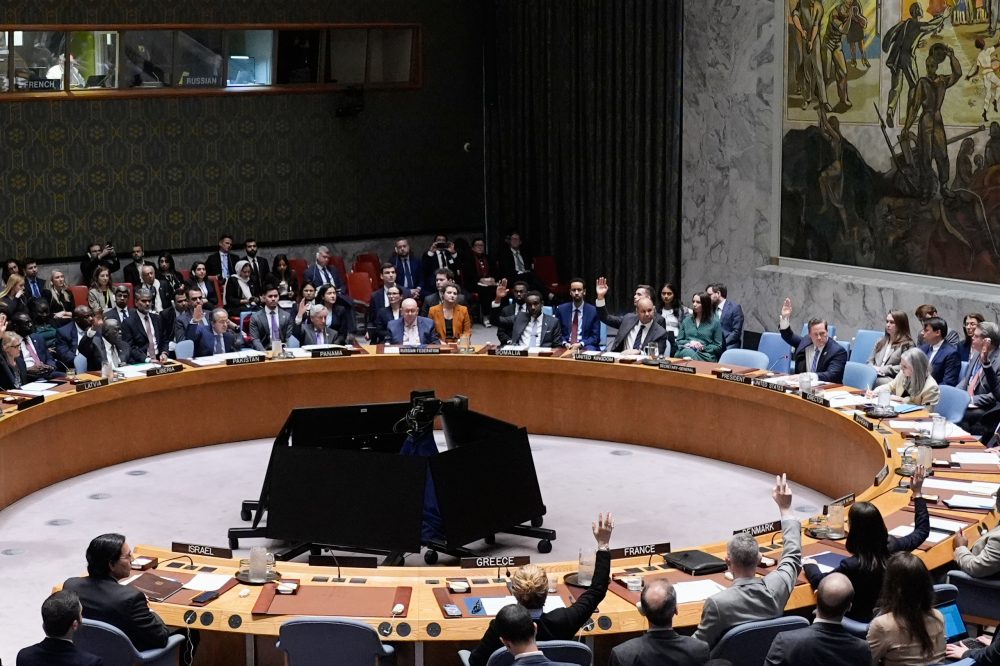
The United Nations Security Council has scheduled a Saturday morning vote on a resolution aimed at safeguarding commercial vessels traveling through the Strait of Hormuz, according to diplomatic sources who confirmed the meeting was postponed from Friday due to a UN holiday.
The proposed measure, drafted by Bahrain as the current Security Council chair, would permit “all defensive means necessary” to ensure safe passage for commercial shipping through the strategically vital waterway.
Oil markets have experienced significant price increases following US and Israeli military actions against Iran in late February, sparking a conflict that has persisted for over a month and effectively shut down the crucial shipping route.
During Thursday’s Security Council session, Bahrain’s Foreign Minister Abdullatif bin Rashid Al Zayani expressed hope for a Friday vote, stating “God willing” and emphasizing Bahrain’s expectation of a “unified position from this esteemed council.”
However, China’s UN representative Fu Cong voiced strong opposition to any force authorization during Thursday morning’s proceedings. Fu Cong warned that such action would amount to “legitimizing the unlawful and indiscriminate use of force, which would inevitably lead to further escalation of the situation and lead to serious consequences.”
The Gulf nation has received backing from fellow Arab states and Washington in pushing for the resolution, previously removing explicit language about binding enforcement to address concerns from Russia and China.
The current draft, as reviewed by Reuters, authorizes protective measures “for a period of at least six months … and until such time as the council decides otherwise.”
A preliminary approval process known as the silence procedure was attempted until Thursday noon, but China, France and Russia broke the silence, according to Western diplomatic sources. Despite this setback, diplomats confirmed the text has been finalized and is ready for an official vote.
For passage, the resolution needs support from at least nine of the 15 Security Council members and cannot face vetoes from any of the five permanent members: Britain, China, France, Russia and the United States.
Al Zayani characterized Iran’s actions as an “unlawful and unjustified attempt” to control international shipping lanes in the Strait of Hormuz, arguing the situation threatens worldwide interests and demands a “decisive response.”
The Arab League’s Secretary-General Ahmed Aboul Gheit announced the organization’s support for Bahrain’s resolution efforts during Security Council proceedings.
Britain organized a Thursday meeting with more than 40 nations focused on reopening the Strait of Hormuz and ensuring secure transit, while also endorsing Bahrain’s diplomatic initiative.
President Donald Trump pledged Wednesday to maintain military operations but offered no specific strategy for reopening the waterway. This announcement further elevated oil prices as markets worried about reduced US involvement in protecting commercial shipping through the region.
BEIJING, April 3 – A Chinese citizen wanted in connection with narcotics offenses has been transferred back to China by United States authorities, according to a report from China’s official news agency Xinhua on Friday.
Chinese law enforcement officials confirmed the repatriation of the suspect, who had been residing in the United States while facing drug-related criminal charges in China.
The transfer represents ongoing cooperation between U.S. and Chinese authorities in returning fugitives wanted for criminal activities.
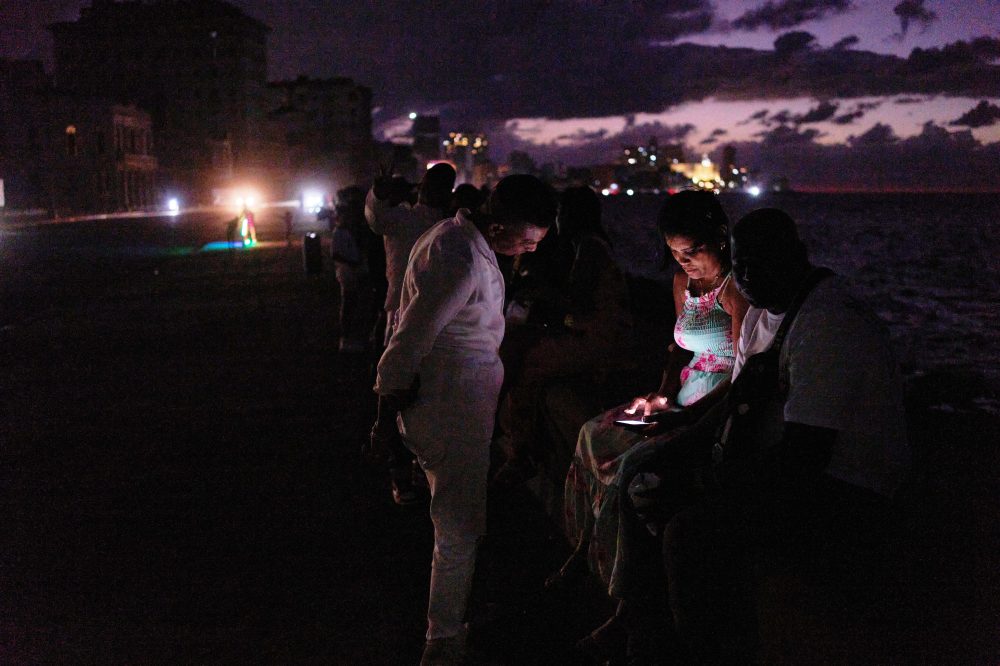
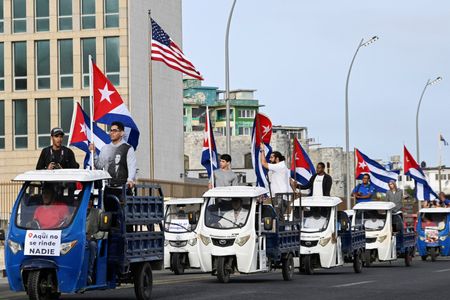
HAVANA (AP) — Cuban officials announced Thursday they will free 2,010 inmates from the nation’s prisons, describing the mass release as occurring during a period when the Trump administration maintains intense economic pressure on the Caribbean island through a restrictive oil embargo.
Officials characterized the pardons as a “humanitarian gesture” connected to Holy Week observances, making no reference to escalating tensions with the United States.
According to the government, those receiving pardons include both Cuban nationals and foreign prisoners, encompassing women, elderly inmates, and younger individuals. Officials did not specify the timing of the releases, the conditions attached, or detail the offenses for which these individuals were originally convicted.
The government provided no information about whether any pardoned individuals were demonstrators who had been convicted and sentenced on charges of terrorism, contempt, or public disorder.
While Cuba’s leadership maintains it does not detain political prisoners, the advocacy organization Prisoners Defended documented 1,214 individuals incarcerated for political activities in Cuba as of February.
Cuban officials stated the decision “was based on a careful analysis of the characteristics of the crimes committed by those sanctioned, their good behavior in prison, having served a significant portion of their sentence, and their health status,” according to a statement published in state media.
The prisoner release occurs during a time when the Trump administration has intensified economic pressure on Cuba’s leadership, implementing an oil embargo for several months that has triggered power outages and caused hardship for ordinary citizens.
Cuba has a history of freeing inmates during significant periods.
In January of the previous year, Cuban authorities released 553 prisoners during discussions with the Vatican, occurring one day after the Biden administration declared its intention to remove the U.S. classification of the island as a state sponsor of terrorism.
The previous month, Cuba freed 51 individuals from the nation’s correctional facilities in an unplanned action that officials attributed to goodwill and strong Vatican relationships.
Thursday’s announcement represents the fifth prisoner release since 2011, with the government stating it has freed over 11,000 individuals during this period.
The declaration follows by months the U.S. removal of former Venezuelan President Nicolas Maduro and pressure on that country’s leadership to implement significant reforms, including freeing politically detained prisoners and enacting amnesty legislation.
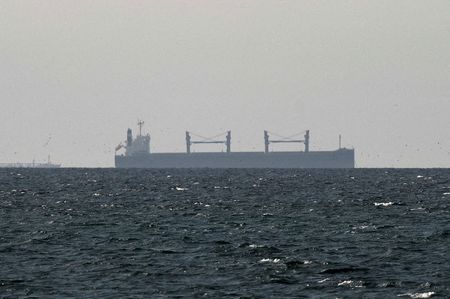
The United Nations Security Council is preparing for a Friday vote on a modified resolution designed to secure passage through the Strait of Hormuz, after the original proposal faced significant revisions following pushback from China and Russia regarding the use of military force to reopen the vital shipping lane that Iran has effectively blocked.
According to the revised draft obtained Thursday by The Associated Press, the resolution now permits only defensive measures—not offensive actions—to guarantee safe vessel passage through the strait. This waterway typically handles one-fifth of global oil shipments, and Iran’s blockade during ongoing hostilities has caused energy prices to spike worldwide.
The original resolution proposed by Bahrain would have permitted nations to employ “all necessary means”—diplomatic language that encompasses potential military intervention—throughout “the Strait of Hormuz, the Gulf and the Gulf of Oman” to maintain safe passage and prevent navigation interference.
Three permanent Security Council members with veto power—Russia, China, and France—had voiced concerns about approving military force. While the updated draft removes references to offensive military operations, these nations’ positions on the modifications remain unclear, making Friday’s vote particularly significant.
The current proposal permits countries to employ “all defensive means necessary and commensurate with the circumstances in the Strait of Hormuz and adjacent waters” to maintain passage and prevent interference with international shipping “for a period of at least six months.”
The resolution states that nations operating independently or through “multinational naval partnerships” may implement defensive measures after providing advance notice to the Security Council.
This development follows President Donald Trump’s Wednesday announcement that the United States and Israel would continue “extremely hard” bombardment of Iran over the coming two to three weeks, though he provided no clear timeline for ending the conflict. Iran has maintained retaliatory strikes throughout the region, and its control over the strait has created challenges for Trump and the international community as rising energy costs impact the global economy.
Prior to Bahrain’s release of the final draft, Russian UN Ambassador Vassily Nebenzia stated the proposal “does not solve the puzzle.” He emphasized that ending hostilities would provide the real solution.
Chinese UN Ambassador Fu Cong criticized the original draft’s force authorization, describing it as “unlawful and indiscriminate.” During Thursday’s council session, he cautioned that such measures “would inevitably lead to further escalation of the situation and lead to serious consequences.” He called on the council “to proceed with caution” while actively pursuing de-escalation and diplomatic dialogue.
French UN Ambassador Jérôme Bonnafont similarly advocated for de-escalation, stating to the council that “defensive measures that avoid any broad use of force need to be promoted.” He subsequently suggested the revised draft emphasizing defense could be acceptable.
On March 11, the Security Council passed a Bahrain-sponsored resolution denouncing Iran’s “egregious attacks” against Gulf states and demanding Tehran immediately cease its strikes, which began after the US and Israel initiated military action on February 28.
That measure passed 13-0 with Russia and China abstaining, and also criticized Iran’s Strait of Hormuz actions as threatening international peace and security while demanding an immediate halt to all shipping blockade activities.
HAVANA – The Cuban government declared Thursday its intention to release 2,010 inmates from correctional facilities across the Caribbean island nation, as reported by government-controlled media outlets.
This prisoner release represents the second amnesty announcement Cuba has made this year while diplomatic discussions with the United States remain ongoing.
The official government publication Granma described the prisoner release as a “humanitarian and sovereign gesture.”
German federal police took a suspect into custody Thursday evening following threatening behavior aboard a high-speed passenger train, according to law enforcement officials. Multiple travelers sustained minor injuries during the incident when explosive devices were detonated.
The passenger rail service was traveling between Cologne and Frankfurt Thursday night when authorities ordered an emergency evacuation in Siegburg, located near Cologne. Federal police officers subdued and detained the individual, and investigators discovered a blade concealed in his bag, the German news agency dpa confirmed.
According to law enforcement, the individual had barricaded himself inside one of the train’s restrooms. The German publication Bild reported that the explosive devices were hurled into a passenger walkway. Authorities confirmed that multiple individuals received minor cuts and scrapes during the incident.
Officials have not yet released details about the detained individual’s identity or background.
Myanmar’s military commander Min Aung Hlaing is poised for a parliamentary vote Friday that would install him as the nation’s president, cementing his authority five years following his military takeover of the democratically elected government.
The anticipated shift from military general to civilian leader comes after a heavily skewed election that saw an army-supported political party claim victory, which opposition voices and international leaders condemned as fraudulent theater designed to mask continued military control under democratic pretenses.
The 69-year-old military leader was the architect behind the 2021 military takeover that removed Nobel Peace Prize recipient Aung San Suu Kyi’s administration and resulted in her detention, triggering mass demonstrations that evolved into countrywide armed opposition to military rule.
Parliamentary members from the Union Solidarity and Development Party, which secured 81% of contested positions, are anticipated to unite with the military’s designated legislators in supporting the former top military commander among three nominated candidates, with legislative proceedings beginning at 10 a.m. local time.
Min Aung Hlaing’s presidential ambitions — a role that experts believe he has pursued for years — remained secret until recent days and came alongside news of significant changes in Myanmar’s military leadership structure, which he has commanded since 2011.
This past Monday, while receiving his parliamentary nomination for president, Min Aung Hlaing selected Ye Win Oo, a former intelligence director known for unwavering allegiance to the general, as his replacement to head the armed forces.
The military transition and Min Aung Hlaing’s anticipated presidency represent what experts view as a calculated move to strengthen his authority over Myanmar while leading what appears to be a civilian administration, benefiting an armed forces that has directly governed the nation for five out of the last six decades.
“He has long harboured the ambition to trade his title of commander-in-chief for president and it appears his dreams are now becoming a reality,” said Aung Kyaw Soe, an independent Myanmar analyst.
Despite these political maneuvers, the internal conflict that has devastated Myanmar throughout most of the previous five years continues intensely, with anti-military groups — including survivors from Suu Kyi’s political organization and established ethnic minority forces — creating a unified coalition this week to challenge the military.
“Our vision and strategic objectives are to completely dismantle all forms of dictatorship, including the military dictatorship, and to collectively initiate a new political landscape,” the Steering Council for the Emergence of a Federal Democratic Union said in a statement on Monday.
Opposition forces may encounter heightened military action along with greater attention from bordering nations that might attempt to strengthen ties with the emerging government, according to analysts.
“Amidst global oil and fuel shortages and economic crises, maintaining organisational stability could become difficult,” analyst Sai Kyi Zin Soe said of the opposition.
“As these hardships grow, it may become even harder to build mutual understanding and trust between groups, reach firmer agreements, and sustain cooperation.”
More than 100 international law professors from prestigious American universities have released a formal letter expressing grave concerns that U.S. military operations against Iran could constitute violations of international law.
The legal scholars, representing institutions including Harvard, Yale, Stanford and the University of California, issued their statement Thursday following President Trump’s renewed threats this week to target Iran’s electrical grid and water treatment facilities.
In a Wednesday television address, Trump indicated the conflict could intensify unless Iran accepts Washington’s demands, suggesting potential attacks on the country’s energy sector and oil production capabilities.
The academics’ letter, published through the Just Security policy publication, states that actions by American forces and remarks from top U.S. officials “raise serious concerns about violations of international human rights law and international humanitarian law, including potential war crimes.”
The letter specifically highlighted Trump’s mid-March statement suggesting the U.S. might launch attacks on Iran “just for fun,” as well as Defense Secretary Pete Hegseth’s early March remarks claiming America doesn’t operate under “stupid rules of engagement.”
The legal experts expressed particular alarm about military strikes affecting educational institutions, medical facilities, and residential areas, pointing to an attack on a school that occurred on the conflict’s opening day.
Military officials announced in March they had upgraded their investigation into a devastating February 28 strike on an Iranian girls’ school after media coverage indicated the inquiry found U.S. forces were probably responsible. Iranian Red Crescent officials report 175 fatalities from that incident.
During Wednesday’s remarks, Trump issued additional threats against Iran, stating: “We are going to hit them extremely hard over the next two to three weeks. We are going to bring them back to the Stone Ages, where they belong.”
A prominent Muslim advocacy organization in the United States has criticized Trump’s language throughout the conflict, describing his threat to bomb Iran “back to the Stone Ages” as “dehumanizing.”
The current hostilities commenced February 28 when American and Israeli forces launched coordinated attacks against Iran. Tehran retaliated with its own strikes targeting Israel and Gulf nations hosting U.S. military installations. Combined U.S.-Israeli operations in Iran and Israeli attacks in Lebanon have resulted in thousands of deaths and displaced millions of people.
Australia’s groundbreaking social media age restriction has captured international attention, with lawmakers from Spain to Malaysia considering similar measures since the ban on users under 16 took effect in December.
The worldwide interest appears to have prompted Prime Minister Anthony Albanese’s administration to strengthen enforcement efforts this week, moving away from what officials had previously described as productive industry collaboration just two months earlier, according to technology policy analysts.
As the government takes a more assertive approach with platforms like Instagram and TikTok, Albanese’s center-left administration welcomes the international attention from at least eight countries expressing interest in comparable restrictions, while working to address reports that many teenagers continue using these platforms, experts note.
INTERNATIONAL PRESSURE MOUNTS
“The whole world’s watching Australia in this experiment, and therefore it looks like weak government to back down or pretend that the failures in reasonable efforts aren’t happening,” explained Jeannie Paterson, co-founder of the Centre for Artificial Intelligence and Digital Ethics, who frequently provides government counsel on technology matters.
A representative for Communications Minister Anika Wells stated that global attention had not influenced her tougher position, refusing additional comment.
Following the ban’s implementation, officials announced in mid-January that social media companies had shut down 4.7 million accounts suspected of belonging to minors, leading industry observers to anticipate a potential one-year grace period for enforcement.
Government officials from Britain, Canada, and several U.S. lawmakers have reached out to Australian authorities regarding the social media restriction – a measure strongly supported by parents but opposed by the multi-trillion-dollar technology sector required to implement it.
However, these positive developments have been overshadowed by continued reports of minors maintaining social media presence.
On Tuesday, the government announced investigations into Meta’s Instagram and Facebook, TikTok, Alphabet’s YouTube, and Snapchat for potential law violations, collecting evidence for possible legal proceedings.
The eSafety regulator had previously indicated enforcement actions would only occur in cases of widespread non-compliance.
According to the regulator’s first detailed compliance assessment, nearly one-third of parents reported their under-16 child maintained at least one social media account. Among these cases, two-thirds said the platform never requested the child’s age.
Angela Flannery, former general counsel for the government’s Communications Department who now provides private sector guidance, noted, “The government is quite heartened generally by the number of other jurisdictions that are looking at imposing restrictions on the under-16s globally.”
However, considering Tuesday’s “disheartening” compliance findings, Flannery added, “They probably want to be seen to be taking action to keep encouraging other jurisdictions to enforce or to enact similar bans.”
Meta and Snap expressed commitment to ban compliance, TikTok refused comment, and Alphabet did not respond to requests regarding the government action.
U.S. COURT DECISIONS PROVIDE SUPPORT
The eSafety assessment revealed that cyberbullying and image-based abuse complaints – issues the government claimed the ban would address – remained unchanged, while parents reported inability to inform platforms about their underage children’s continued accounts. Minors failing age verification were being encouraged to retake tests until successful, the regulator found.
The restriction requires platforms to implement “reasonable steps” preventing under-16 users from maintaining accounts or face penalties up to A$49.5 million ($34 million).
Communications Minister Wells attributed the problem not to parent or child non-compliance but to Big Tech undermining government policy.
Recent U.S. court decisions likely encouraged Australia’s platform pursuit, according to sources familiar with the ban’s implementation, including last week’s trial verdict requiring Meta to pay $375 million in penalties for safety failures enabling child exploitation on Facebook, Instagram and WhatsApp, plus another ruling finding Meta and Google negligent for creating social media platforms harmful to young people.
“The court cases in New Mexico and California have helped the court of public opinion,” said Julian Sefton-Green, a Deakin University new media professor advising the commissioner’s two-year ban impact study.
“They’re jury decisions, that social media is liable for the well-being of young people, so I think the government’s going to take heart from that.”
Rob Nicholls, a University of Sydney regulation researcher, suggested the lawsuits might encourage platform redesigns complying with Australian restrictions by prioritizing minor protection.
“The effect of that design change will be to reduce access for under-16s,” he explained. “If you’ve got to do it to avoid litigation in the States, you may as well do the same thing around the world.”
Secretary of State Marco Rubio leveled accusations against China on Thursday, claiming the nation is engaging in “bullying” tactics by temporarily detaining numerous Panama-flagged vessels in Chinese ports following Panama’s takeover of two vital Panama Canal terminals from a Hong Kong company subsidiary earlier this year.
Beijing has rejected these claims. Panama finds itself caught between competing U.S. and Chinese interests after President Donald Trump previously alleged that China controls the Panama Canal. The Trump administration views this crucial shipping waterway as vital to both economic and defense interests, with Trump repeatedly discussing plans to regain control of the canal.
“China’s decision to detain or otherwise impede Panama-flagged vessels engaged in lawful trade destabilizes supply chains, raises costs, and erodes confidence in the global trading system,” Rubio said on social media. “The United States stands with Panama against any retaliatory actions against its sovereignty and will always support our partners in the face of bullying.”
Data from Tokyo MOU, an Asia-Pacific port control organization with 22 member nations, reveals that in March, 92 of 124 ships detained in Chinese ports for inspection carried Panama flags – representing nearly 75% of all detentions. These vessels were typically held for periods ranging from one to ten days before release.
This represents a significant increase from earlier months, when Panama-flagged ships comprised just over 40% of detentions in February (19 of 45 ships) and approximately 30% in January (23 of 71 ships).
Chinese embassy spokesperson Liu Pengyu dismissed the allegations, stating that America’s “repeated wrongful allegations only reveal its attempt to take control of the canal.” His statement did not acknowledge the increased detention rates of Panama-flagged vessels.
These developments follow Panama’s supreme court decision in January declaring the concession agreement held by a CK Hutchison Holdings subsidiary for the Balboa and Cristóbal terminals as unconstitutional.
Washington has pressured Panama and other regional nations to limit China’s influence throughout the Western Hemisphere, an area Trump has identified as a priority focus. The current administration has taken more assertive action in Latin America than previous U.S. governments have in recent decades, including the dramatic military operation that resulted in Venezuelan leader Nicolás Maduro’s capture in January.
The Federal Maritime Commission in Washington continues monitoring Panama-flagged ships experiencing delays or detentions in Chinese ports.
“Secretary Rubio’s statement highlights the disruptive effects of the government of China’s actions against Panama-flagged vessels,” said Laura DiBella, chair of the commission. She said the commission “is not aware of any other country in recent history conducting vessel safety inspections and detentions in a punitive manner.”
Panama’s leadership announced that APM Terminals, part of Denmark’s A.P. Moller-Maersk group, would temporarily manage the terminals during the contract transition period. DiBella noted that China’s Ministry of Transport had requested high-level meetings with Maersk officials in Beijing.
Panamanian officials have attempted to downplay the broader geopolitical implications surrounding the ship detentions. Government representatives did not respond to requests for comment regarding Rubio’s statements, though they have previously denied any connection between the detentions and China-Panama canal disagreements.
In March, Panama’s foreign minister, Javier Martínez, acknowledged the detention increase but characterized them as “part of routine maritime industry practices, because detentions also occur in other ports and to other flags.”
“We want to maintain a respectful relationship with China,” he added.
Following the January supreme court ruling, Chinese Foreign Ministry spokesperson Guo Jiakun stated that China would “take all measures necessary to firmly protect the legitimate and lawful rights and interests of Chinese companies.”
José Digeronimo, former president of the Panama Maritime Chamber, warned that actions targeting these ships could have a “huge impact” on Panama, which ranks among the world’s leading ship registry nations. These registrations generate approximately $100 million annually for the government.
Digeronimo likened ship registries to passport selection for vessel owners, who choose registration locations that “allow you to travel to the greatest number of countries without restrictions.” He warned that harassment from Chinese authorities could jeopardize this system.
“If the world’s main exporter starts imposing restrictions for using the Panamanian flag, the last thing you’ll want is to have the Panamanian one,” Digeronimo said.
A Russian sailor who spent approximately eight months in detention after surviving an attack by Yemeni Houthi rebels on his vessel has returned to his homeland following medical care in Sanaa, according to Yemen’s foreign ministry on Thursday.
Russian media reports identify the sailor as Aleksei Galaktionov, who served as crew aboard a Greek-operated cargo vessel that Houthi forces destroyed in July 2025. The mariner sustained injuries during the assault.
“The Russian citizen was transported on a United Nations aircraft, in coordination with the U.N. envoy,” the foreign ministry stated through the Houthi-controlled news agency, noting that his release occurred after completing his medical treatment.
Officials indicated the arrangement came about through discussions with Russian authorities and Iranian representatives.
The remaining ship crew members gained their freedom in December, according to sources from the vessel’s operating company and maritime security officials who spoke with Reuters.
The Iranian-backed Houthis destroyed the Liberian-registered Eternity C, which carried 22 crew members and three security personnel, using maritime drones and rocket-propelled grenades during attacks spanning two days.
Houthi forces have targeted over 100 vessels in what they described as support operations for Palestinians amid the Gaza conflict. The group ceased their maritime attacks following a ceasefire announcement last October.
Ukrainian officials reported that Russian military forces conducted continuous drone attacks against Kharkiv throughout Thursday, striking Ukraine’s second-largest city and wounding at least two civilians.
Throughout the day and into the evening hours, Kharkiv Mayor Ihor Terekhov provided updates via Telegram, documenting attacks across four separate districts within the city. A city official confirmed that drone strikes hit at least 20 locations.
According to the mayor, several of the drone impacts sparked fires throughout the city, and an evening assault wounded two individuals, including an 8-year-old girl.
In southern Ukraine, Zaporizhzhia faced a separate Russian assault that struck a multi-story residential building and a local business, regional governor Ivan Fedorov reported. Officials said no casualties occurred in that attack.
Across the border in Russia’s Belgorod Region, Governor Vyacheslav Gladkov reported that drone strikes injured 13 people in multiple locations, with 11 of those casualties occurring in Shebekino village, located near the Ukrainian border.
Ukrainian President Volodymyr Zelenskyy proposed Thursday that his nation could share its naval defense knowledge with countries working to maintain open shipping routes through the Strait of Hormuz during Middle East tensions.
During his evening video message, Zelenskyy revealed that Foreign Minister Andrii Sybiha participated in an online conference focused on ensuring the Strait of Hormuz remains accessible, with representatives from approximately 40 nations attending.
“Ukraine has relevant expertise concerning sea waterways, concerning the defence and reopening of maritime traffic,” he said.
“If (our) partners are ready to act we will consider how we can strengthen them, how we can apply our expertise, knowledge and technological potential.”
The Ukrainian leader did not elaborate on specific assistance plans.
Throughout four years of conflict, Ukrainian military forces have created innovative maritime technologies, including unmanned naval vessels, allowing them to achieve significant victories against Russian naval forces in the Black Sea while preventing Moscow from gaining control of those waters.
Last week, Zelenskyy began visiting Middle Eastern nations as part of an initiative to share defense technologies Ukraine has created while defending against drone attacks, many of which originated from Iranian designs.
The president announced he expects to receive an update Friday from Rustem Umerov, Ukraine’s chief negotiator in peace settlement discussions.
On Wednesday, Zelenskyy revealed that Ukraine has established partnerships with Saudi Arabia, the United Arab Emirates, Qatar, and Jordan, while maintaining communications with Bahrain, Kuwait and Iraq. Government officials are also discussing potential agreements with Turkey and additional nations.
PORT-AU-PRINCE, Haiti – A United Nations document reveals that investigators have confirmed four separate incidents of sexual exploitation and abuse involving personnel from a UN-supported security mission operating in Haiti during the previous year.
The UN report, which carries a February 16 date, was initially made public by the Ayibo Post news outlet on Friday.
According to the document, “All the allegations were found to be substantiated by investigations conducted by the Office of the United Nations High Commissioner for Human Rights.” However, the report does not specify what actions were taken against those responsible or provide additional details about the outcomes of these investigations.
Cuban demonstrators mounted bicycles and electric tricycles Thursday for a government-organized protest along Havana’s famous waterfront boulevard, with President Miguel Diaz-Canel joining the cycling caravan in opposition to American economic sanctions.
The procession traveled past the United States Embassy in Cuba’s capital city, with riders displaying flags and protest signs condemning the economic restrictions put in place during the Trump presidency that continue to impact the island nation’s fuel supplies.
The demonstration occurred one day following Cuba’s senior diplomat in Washington extending a public invitation for American assistance in rebuilding Cuba’s struggling economy through ongoing diplomatic discussions that have not yet produced concrete outcomes.
Rally participants expressed openness to diplomatic engagement with the United States while insisting on mutual respect between the nations.
“I believe that genuine dialogue between both governments is possible, but international law and our country’s autonomy must be respected,” said Sheila Ibatao, a Havana law student and participant.
President Diaz-Canel participated silently without delivering remarks during the demonstration.
While Cuban officials frequently stage major demonstrations outside the American Embassy, Thursday’s event was notably smaller and more subdued, reflecting the mobility challenges created by ongoing fuel shortages that have severely impacted public transit systems.
Some relief may be coming as a Russian oil tanker arrived in Cuba this week, delivering 700,000 barrels of crude oil that could ease shortages in the near term.
The Trump administration, which has imposed tariff threats on nations exporting oil to Cuba and banned Russian oil imports, stated it permitted the Russian vessel to dock at Cuba’s Matanzas port for humanitarian purposes.
Military authorities in the Democratic Republic of Congo announced that 43 civilians lost their lives during a Wednesday evening assault by militants with ties to the Islamic State in the nation’s eastern region.
The deadly incident occurred around 7 p.m. local time in Bafwakoa village, situated in Mambasa territory within Ituri province, close to the town of Niania, according to officials who spoke with Reuters.
Congo’s armed forces attributed the violence to the Allied Democratic Forces, a Ugandan militant organization operating in eastern Congo that has been recognized as an Islamic State affiliate.
The military statement indicated that 44 residential structures were destroyed by fire during the attack.
Christian Alimasi, a local customary official in Mambasa territory, described the brutal nature of the assault, stating that some casualties resulted from machete attacks while others perished when trapped in their burning homes. He also confirmed that two individuals were taken captive by the attackers.
Despite combined military efforts between Congolese and Ugandan forces that began in 2021 to combat the group, ADF assaults against civilian populations have grown more frequent in recent months across portions of Ituri and the adjacent North Kivu province.
Research data from Insecurity Insight, an organization that examines verified violent incidents targeting civilians, indicates that the ADF was responsible for approximately 25% of documented civilian violence in eastern Congo from 2020 through 2025.
Iranian intelligence officers arrested prominent human rights attorney Nasrin Sotoudeh at her Tehran residence during an overnight operation, her daughter confirmed Thursday.
The 64-year-old award-winning lawyer has built her reputation defending political activists, opposition figures, and women charged for refusing to wear mandatory headscarves. Sotoudeh has faced multiple imprisonments and was recently released on bail due to medical concerns.
Her spouse, Reza Khandan, who is also a recognized activist, remains incarcerated at Tehran’s notorious Evin prison facility.
Speaking to The Associated Press from Amsterdam, daughter Mehraveh Khandan explained she learned of her mother’s detention through intermediary messages from relatives in Iran. Communication restrictions and internet limitations implemented since January have made outside contact nearly impossible.
The arrest occurs as Iranian officials have escalated their suppression of opposition voices and political dissidents while conflict with the U.S. and Israel continues. Since hostilities began February 28, authorities have reportedly detained hundreds of individuals, frequently for speaking with international media outlets. Officials have also increased executions of imprisoned demonstrators who received death sentences. Human rights organizations say this intensified repression aims to create fear and prevent future uprisings.
Just prior to her detention, Sotoudeh participated in an interview published Monday by an overseas Persian news organization, discussing the ongoing conflict and stating that the Islamic Republic’s actions “have exposed us to death.” She also criticized government suppression of January protests—the most significant demonstrations against the Islamic Republic in recent decades—which authorities met with severe force.
Khandan expressed concern for her mother, who suffers from heart problems, citing potential U.S.-Israeli strikes on detention centers and noting that “our regime became even more brutal after this war started.”
Sotoudeh’s detention follows reports that Iran’s imprisoned Nobel Peace Prize winner Narges Mohammadi may have experienced a heart attack.
Mohammadi’s French attorney Chirinne Ardakani informed AP Thursday that her legal team discovered Mohammadi’s condition during a brief prison visit last week.
“She appeared extremely emaciated, pale, weak, and had difficulty moving. In fact, she was even accompanied to the waiting room by a nurse. We learned from Narges Mohammadi that she had a heart attack on March 24th, that she was found unconscious in her cell, and that it was actually her fellow inmates who took her to the infirmary,” Ardakani said.
Beyond health worries, airstrikes occurred near Zanjan Prison in northwestern Iran where Mohammadi is detained, creating additional safety concerns, the attorney noted.
The 53-year-old rights lawyer, who received the Nobel Peace Prize in 2023 while imprisoned, was arrested in December during a trip to the eastern Iranian city of Mashhad and received an additional seven-year prison sentence. Mohammadi’s health continues deteriorating.
During a brief Thursday phone call, Sotoudeh informed her family that Intelligence Ministry agents detained her—the same agency responsible for her previous arrests, Khandan reported.
Sotoudeh instructed her family to contact prosecutors regarding her detention. Officials have not disclosed the reason for her arrest. Intelligence agents also seized all communication equipment from the residence, including her father’s devices, Khandan added.
The European Union awarded Sotoudeh the prestigious Sakharov Prize for Freedom of Thought in 2012. Her former clients include Nobel laureate Shirin Ebadi and numerous activists arrested during the government’s repeated suppression of demonstrations.
Khandan worried that news of the dissent crackdown might be overshadowed by ongoing warfare.
“It is hard for our voice to be heard in this time,” Khandan said. “The regime had (some) limits before. They don’t have (them) anymore.”
TALLINN, Estonia (AP) — Belarus lawmakers have given final approval to legislation establishing penalties for individuals who advocate for LGBTQ+ rights, mirroring restrictive policies implemented by neighboring Russia.
The nation’s upper legislative chamber completed approval of the measure Thursday after the lower house endorsed it last month. The legislation now awaits the anticipated signature of authoritarian leader Alexander Lukashenko before taking effect.
Under the new law, promoting what officials term “propaganda of homosexual relations, gender charge, refusal to have children and pedophilia” will result in financial penalties, community service requirements, and potential 15-day detention.
While Belarus removed criminal penalties for homosexuality in 1994 following the Soviet Union’s dissolution, the country does not permit same-sex marriage and provides no legal protections for LGBTQ+ individuals. Lukashenko, who has maintained authoritarian control over the 9.5 million-person nation for more than thirty years, has openly ridiculed homosexuality.
Western nations have imposed multiple rounds of sanctions on Belarus for both human rights violations and permitting Russia to launch attacks on Ukraine from Belarusian territory during the 2022 invasion.
Authorities have already closed LGBTQ+ organizations in Belarus, with security personnel conducting frequent raids on nightclubs hosting private gatherings for gay individuals. Human rights advocates report that the country’s primary security service, which retains its Soviet-era designation KGB, has used intimidation tactics against LGBTQ+ community members to force their cooperation.
“LGBTQ+ people had faced beatings, arrests, persecution and mockery even before the bill’s approval, but now law enforcement agencies have received legal grounds for repressions,” said Alisa Sarmant, the head of TG House, a Belarusian group championing transgender rights.
TG House has recorded what it describes as a minimum of 12 incidents targeting LGBTQ+ individuals in Belarus during the previous three months, including law enforcement action at a Minsk nightclub last month during a private gay gathering.
According to Sarmant, the new legislation has created anxiety among transgender individuals who worry they may lose access to essential medications. TG House reports receiving hundreds of requests from LGBTQ+ people seeking mental health support and assistance with relocation to other countries.
“The Belarusian authorities have lumped together gays, lesbians, transgender people, and pedophiles, creating additional grounds for social rejection and stigmatization,” Sarmant said. “Belarus is copying Russia’s sad experience, creating unbearable conditions for LGBT+ people.”
Russia has similarly implemented restrictive legislation limiting LGBTQ+ rights. Russian law prohibits gender changes on government documents, gender-affirming medical treatment, and any public display of gay or transgender identity. Officials have classified the LGBTQ+ movement as extremist, with participants facing potential six-year prison sentences.
The Democratic Republic of Congo announced Thursday that it has officially ended a devastating mpox outbreak that persisted for two years and resulted in more than 2,200 suspected fatalities across the nation.
Health Minister Roger Kamba informed reporters that officials had determined the outbreak had concluded and no longer constituted a national emergency situation.
The central African nation served as the epicenter of the infectious viral disease outbreak that expanded into surrounding countries throughout 2024, leading the World Health Organization to issue a global health emergency declaration when the disease crossed international boundaries. The WHO lifted its global emergency status in September.
According to the Africa Centers for Disease Control and Prevention, Congo recorded over 161,000 suspected mpox cases throughout the outbreak spanning 2024 into this year, with approximately 37,000 cases verified through laboratory testing.
The Africa CDC reported 2,286 suspected fatalities, though only 127 deaths received laboratory confirmation.
Scientists first discovered mpox, previously called monkeypox, in 1958 during outbreaks of a “pox-like” illness among monkeys. Until recent years, human infections primarily occurred among individuals in central and western Africa who had direct contact with infected wildlife.
In 2022, researchers confirmed the virus could transmit through sexual contact for the first time, sparking outbreaks across more than 70 nations that had never previously documented mpox cases.
According to WHO data, mpox typically presents with rash and fever symptoms, though it may occasionally lead to severe complications. The majority of patients make complete recoveries.
KAMPALA, Uganda — A dozen individuals expelled from the United States touched down in Uganda Thursday, marking the initial group to arrive under a newly established bilateral agreement between the two countries, according to the Uganda Law Society.
Legal representatives condemned the deportation process, stating the individuals were “effectively dumped in Uganda through an undignified, harrowing and dehumanizing process.” The group arrived via private charter aircraft, the law society noted in their statement.
These expulsions are occurring as part of President Donald Trump’s intensified immigration enforcement efforts, aimed at discouraging illegal border crossings and removing individuals already in the country unlawfully, particularly those with criminal backgrounds and others difficult to return to their native countries.
Both the State Department and Department of Homeland Security have justified third-country deportations as an efficient method for rapidly removing individuals residing illegally in America. These deportation practices have sparked numerous legal challenges both domestically and in receiving nations.
The practice draws criticism partly because individuals may be transferred to nations with which they share no cultural connections. Last August, officials briefly contemplated sending Kilmar Abrego Garcia, a prominent figure in an ongoing immigration case, to Uganda.
America has established agreements with no fewer than seven African countries to accept certain migrants. These partnerships span from Ghana in West Africa to Eswatini in southern Africa, with the latter receiving $5.1 million from Washington to accept up to 160 deportees, based on State Department documentation.
Whether Uganda received similar compensation remains unclear.
The law society accused officials of placing deportees at the discretion of “unnamed, private interests on either side of the Atlantic,” while announcing plans to pursue legal action against what they termed “international illegality.”
Neither the identities nor countries of origin of the deportees were disclosed.
Okello Oryem, Uganda’s state minister overseeing foreign affairs, stated he was traveling and unaware of the arrivals.
A representative from the American Embassy in Kampala did not respond to inquiries regarding the deportees’ welfare.
Last month, Oryem informed The Associated Press that Uganda anticipated “planeloads” of deportees from America. He explained the agreement stemmed from pan-African solidarity and humanitarian concerns for Africans unwanted abroad.
Ugandan officials previously indicated their arrangement with Washington involves accepting African-origin deportees without criminal histories.
THE HAGUE, Netherlands — Three judges have determined that the chief prosecutor of the International Criminal Court may return to his position after finding that a United Nations probe into sexual misconduct allegations was inconclusive, according to documents obtained by The Associated Press.
The ultimate decision regarding British attorney Karim Khan’s future now rests with the Assembly of States Parties, which oversees the court. On Wednesday, this governing body voted to continue their investigation while dealing with an unprecedented situation that has created turmoil among court personnel and external political pressure.
Khan voluntarily stepped aside in May 2025 while awaiting results from a U.N. Office of Internal Oversight Service probe into sexual misconduct claims, which he has consistently rejected.
The United Nations inquiry concluded there was evidence that Khan engaged in “nonconsensual sexual contact with (the aide) in his office, at his private residence, and whilst on mission,” according to their report.
Through his legal team on Wednesday, Khan told AP that he “firmly maintains that he did not engage in any inappropriate conduct toward the complainant, whether sexual or otherwise.”
His attorneys further stated that Khan “categorially denies both any nonconsensual sexual conduct and the existence of any consensual sexual relationship.”
The ICC has refused to provide comment on the matter.
The judicial panel, chosen by the assembly to conduct a legal review of the UN probe, determined last month that the investigation lacked sufficient conclusive evidence. However, the judges indicated they were obligated to reach a decision, concluding that the findings “do not establish misconduct or breach of duty under the relevant legal framework,” according to their 85-page evaluation.
“The resolution of a number of disputes, which remains outstanding, would be necessary before a proper characterisation of the facts can be made,” the judges stated after examining over 5,000 pages of documentation.
The judicial panel criticized the UN investigators for failing to “indicate which witnesses’ testimony they found credible” and noted they “did not resolve narrative inconsistencies.”
The United Nations team was responsible for conducting the investigation but not for determining whether Khan’s actions constituted misconduct. The three-judge panel was required to apply the criminal standard of “beyond a reasonable doubt,” and their recommendation is non-binding on the assembly.
This situation marks uncharted territory for the ICC, forcing the Assembly of States Parties to continuously develop new procedures to handle the circumstances.
Khan’s legal representatives emphasized Thursday that the judicial panel unanimously concluded the UN investigation failed to establish any wrongdoing or violation of duties. They also highlighted that the UN probe did not reach a final misconduct determination and that their findings needed legal interpretation.
In October 2024, an Associated Press investigation disclosed that Khan was confronting internal sexual misconduct accusations.
Whistleblower documentation reviewed by AP alleged that Khan spotted the woman working in a different ICC division and transferred her to his office. She subsequently became a frequent companion on official travel, the records indicated.
During one overseas trip, Khan allegedly requested she lie down with him on a hotel bed before “sexually touching her,” according to the documents. Later that evening, he reportedly came to her room at 3 a.m. and knocked persistently for 10 minutes.
Additional alleged inappropriate behavior described in the documents included securing his office door and placing his hand in her pocket. He also reportedly made multiple requests for her to join him on vacation.
Two colleagues reported the alleged misconduct to the court’s oversight body in May 2024. The inquiry was terminated after five days when the woman decided against filing an official complaint due to concerns about potential retaliation, AP previously reported.
The situation has significantly impacted the woman at the center of the allegations. The UN investigation noted that she was placed under suicide watch at one point.
“I have been left with little dignity and no privacy,” she stated in an interview. The Associated Press typically does not identify individuals who report sexual misconduct.
A group of employees from the prosecutor’s office sent a letter Wednesday to the Assembly of States Parties, voicing serious concerns about Khan’s possible return.
The document, reviewed by AP, stated the group believed the UN investigation was “incompatible with continued confidence in the prosecutor’s leadership.”
One senior employee indicated “people are deeply afraid” of potential retaliation, while three other prosecutor’s office staff members shared similar sentiments. All requested anonymity as they lacked authorization to speak with media.
The UN investigators’ report stated that before taking leave, Khan was accused of engaging in “retaliatory in nature” behavior toward two staff members who supported the alleged victim.
The original investigation occurred shortly before Khan requested arrest warrants against Israeli Prime Minister Benjamin Netanyahu regarding actions in Gaza. In November 2024, a three-judge panel approved those charges.
Subsequently, U.S. President Donald Trump imposed sanctions on 11 ICC personnel, including Khan, for pursuing these investigations. Court officials and prosecutors had their banking privileges revoked and U.S. visas canceled.
These sanctions have severely affected the court’s operations and employee morale.
False claims about the death of Jonathan, a 193-year-old tortoise recognized as the planet’s oldest living land creature, spread across social media this week in what officials are calling an elaborate hoax.
The ancient Seychelles giant tortoise continues to move about — though at his characteristic leisurely pace — on St. Helena island, where he has lived for more than a century.
“It was a hoax,” stated Anne Dillon, the island’s communications director, when speaking with The Associated Press on Thursday. “I can just assure you that he is very much alive.”
False information about Jonathan’s passing began circulating widely on Wednesday across various social platforms.
A fake social media profile, pretending to represent Joe Hollins, a veterinarian who has previously cared for the ancient reptile on the remote Atlantic island located between Africa and Brazil, posted emotional news of the supposed death. The fraudulent message described Jonathan as a “gentle giant” that had “outlived empires, wars, and generations of humans.”
The deceptive post garnered close to 2 million views by Thursday, with most responses expressing grief and sympathy.
However, Hollins clarified on Facebook that he maintains no presence on X and warned of criminal intent behind the false announcement.
“There is a hoax — not even an April Fool — going around,” Hollins explained in his post. “The hoaxer is asking for crypto donations. It’s a con.”
According to Guinness World Records, Jonathan holds the distinction of being both the oldest living land creature and the oldest tortoise in recorded history. Experts estimate he was approximately 50 years old when he arrived at St. Helena in 1882.
Government officials from St. Helena provided a photograph captured Thursday showing Jonathan wandering around the governor’s official residence grounds. The island gained historical significance as Napoleon Bonaparte’s final place of exile after his military defeat at Waterloo in 1815. The former French emperor passed away there in 1821, roughly a decade before Jonathan is thought to have begun his remarkably extended existence.
Russian officials announced Thursday their intention to dispatch another oil tanker to Cuba, as the Caribbean island struggles with a deepening energy crisis that has left millions without reliable power.
Energy Minister Sergei Tsivilyov made the declaration during an energy conference in Kazan, Russia, just two days following the arrival of the sanctioned vessel Anatoly Kolodkin at Cuba’s Matanzas port. That delivery brought 730,000 barrels of crude oil to the island, representing the first such shipment in three months and providing enough fuel to meet Cuba’s diesel needs for approximately nine to ten days, according to energy analysts.
Speaking at the forum, Tsivilyov characterized Cuba’s situation as dire. “Cuba is in a total blockade, it’s been cut off. Whose shipment of oil made it? A Russian vessel broke through the blockade. A second one is being loaded right now, we will not leave Cubans alone in trouble,” the minister stated.
The oil deliveries occur against a backdrop of escalating tensions, as President Donald Trump issued threats in late January regarding potential tariffs against nations providing petroleum products to Cuba. However, Trump recently indicated a more dismissive stance toward the Russian shipments, suggesting they would have minimal impact on Cuba’s government stability.
“Cuba’s finished,” Trump remarked to reporters during his return flight to Washington on Sunday. “They have a bad regime. They have very bad and corrupt leadership and whether or not they get a boat of oil, it’s not going to matter.”
The island nation’s energy infrastructure has been severely strained, as Cuba can only meet approximately 40% of its fuel requirements through domestic production, making it heavily dependent on foreign oil imports to maintain its deteriorating electrical grid.
Venezuela, previously a key supplier of petroleum to Cuba, ceased its shipments following U.S. actions against the South American nation and the arrest of its leadership. Mexico similarly discontinued its oil exports to Cuba after receiving tariff warnings from the Trump administration.
These supply disruptions have intensified Cuba’s economic and energy difficulties, resulting in widespread power outages, reductions in government food distribution programs, and critical shortages of clean water and medical supplies that disproportionately affect the island’s most vulnerable populations.
Federal Bureau of Investigation agents have traveled to Cuba this week to conduct an independent examination of a deadly February incident involving an American-flagged speedboat that resulted in five fatalities.
The shooting took place on February 25 when Cuban Border Patrol forces engaged with occupants of the vessel, which Cuban authorities claim was attempting to infiltrate the island. Ten individuals were aboard the speedboat during the confrontation, with five others sustaining injuries in the gunfire exchange. Cuban officials have characterized the incident as a terrorist operation conducted by Cuban expatriates residing in the United States.
A U.S. diplomatic source familiar with the investigation confirmed to The Associated Press on Thursday that the FBI technical team arrived Tuesday to begin their comprehensive review. The official, speaking anonymously due to lack of authorization for public comment, declined to specify the number of agents involved or the expected duration of their stay in Cuba.
Cuban President Miguel Díaz-Canel had previously indicated in March his expectation that FBI personnel would visit the island to assist with the investigation.
According to Cuban military officials, their forces detected the speedboat carrying ten men and military gear in waters north of Cuba. They maintain that those aboard the vessel initiated the gunfire, prompting soldiers to respond defensively. Four individuals died immediately in the exchange, while a fifth succumbed to wounds later. Six others were injured, including one crew member from the Cuban military vessel.
The surviving individuals now face terrorism charges that could result in life imprisonment.
This incident occurred during a period of elevated tensions between the two nations.
U.S. Secretary of State Marco Rubio previously stated that the group was not conducting a U.S. government operation and indicated that American officials would work to confirm the details provided by Cuban authorities.
Following the shooting, senior officials from Cuba’s Interior Ministry and Revolutionary Armed Forces publicly presented military equipment confiscated from the speedboat and acknowledged communication with the U.S. Coast Guard regarding the incident.
The confiscated materials included high-powered rifles, handguns, military uniforms, boots, protective helmets, specialized food rations, an electric generator, satellite communication equipment, and more than 12,000 rounds of ammunition.
DUBAI, United Arab Emirates (AP) — Tehran launched additional missile strikes against Israel and neighboring Gulf nations Thursday, showcasing Iran’s persistent capability to attack regional targets despite President Donald Trump’s assertions that the Iranian threat has been virtually eliminated.
Tehran’s assaults on Gulf nations combined with its control over the Strait of Hormuz have severely disrupted global energy markets, creating impacts that extend well beyond Middle Eastern borders. This disruption has become Iran’s most significant strategic weapon in the ongoing conflict. Britain organized a conference call with approximately three dozen nations Thursday to discuss strategies for reopening the vital shipping lane after hostilities conclude.
Trump has maintained that the waterway could be seized through military force — though he stated America should not bear that responsibility alone. During Wednesday evening’s national address, he urged nations dependent on Hormuz oil shipments to “build some delayed courage” and proceed to “take it.”
Prior to the February 28 launch of U.S. and Israeli military operations against Iran, the strategic waterway remained accessible to commercial traffic, with one-fifth of globally traded oil passing through its waters.
Tehran responded with defiance to Trump’s Wednesday speech, during which the American leader declared U.S. military operations had been so effective that “one of the most powerful countries” is “really no longer a threat.”
Iranian military spokesperson Lt. Col. Ebrahim Zolfaghari stated Thursday that Tehran retains concealed weapons stockpiles, ammunition reserves, and manufacturing capabilities. He characterized facilities hit by U.S. attacks as “insignificant.”
Moments before Trump’s address — during which he declared U.S. “core strategic objectives are nearing completion” — explosions echoed through Dubai as defensive systems engaged an Iranian missile assault.
Within thirty minutes of the president’s speech conclusion, Israeli forces reported intercepting incoming projectiles. Warning sirens activated in Bahrain, headquarters of the U.S. Navy’s 5th Fleet, immediately following Trump’s remarks.
Thursday saw continued strikes throughout Iran, with explosions reported across multiple urban centers.
In Lebanon — where Iran-supported Hezbollah fighters are battling Israeli ground forces — an Israeli attack claimed four lives in the southern region, according to the Health Ministry.
Combat casualties have reached over 1,900 deaths in Iran compared to 19 reported fatalities in Israel. More than two dozen people have perished in Gulf states and the occupied West Bank, while 13 American military personnel have been killed.
Lebanese casualties exceed 1,200 deaths with over one million people displaced. Ten Israeli soldiers have also died in Lebanese operations.
Iranian strikes on roughly two dozen merchant vessels, plus threats of additional attacks, have virtually halted all commercial navigation through the waterway linking the Persian Gulf to international waters.
Since March 1, strait traffic has plummeted 94% compared to the previous year’s corresponding period, according to Lloyds List Intelligence maritime data. The firm confirmed two vessels paid transit fees, while others received passage based on agreements between Iran and their flag nations.
Saudi Arabia redirected approximately one billion barrels of oil away from the Strait of Hormuz during March, maritime analytics firm Kpler reported, while Iraq announced Thursday it had begun trucking petroleum through Syria to bypass the strait.
The 35 nations participating in Thursday’s discussions, including all G7 industrialized democracies except America, plus the United Arab Emirates and Bahrain, endorsed a declaration last month demanding Iran cease blocking the waterway.
Thursday’s negotiations centered on political and diplomatic solutions, though British Foreign Secretary Yvette Cooper indicated military planners from multiple countries would also develop security measures for post-conflict operations, including potential mine removal and commercial shipping “reassurance” efforts.
No nation appears prepared to forcibly reopen the strait during active hostilities. French President Emmanuel Macron, speaking during a South Korean visit, described military action to secure the waterway as “unrealistic.”
However, concerns persist that Iran might continue restricting waterway access even after U.S. and Israeli attacks conclude.
The international coalition concept mirrors the “coalition of the willing” led by Britain and France to support Ukrainian security during potential ceasefire negotiations. This effort partly demonstrates to Washington that European nations are assuming greater responsibility for regional security amid Trump’s frequent criticism.
The conflict continues driving oil and natural gas prices upward, destabilizing financial markets, increasing gasoline costs, and threatening to make various commodities, including food products, more expensive.
Thursday trading saw Brent crude, the global benchmark, rise again to approximately $109 per barrel, representing a 50% increase from February 28 when Israeli and American operations began.
While oil and gas typically transiting the strait primarily serves Asian markets, only Japan and South Korea from that region participated in Thursday’s strait discussions. Jet fuel supply disruptions have also affected global aviation travel.
KAMPALA, Uganda — Authorities in Uganda report that four young children lost their lives Thursday when an armed assailant launched a deadly assault at a nursery school in the nation’s capital.
According to the Daily Monitor newspaper, the perpetrator infiltrated the Gaba Early Childhood Development Program by posing as a parent seeking entry. After initially speaking with school administration staff, the man went outside and secured the facility’s entrance before launching his attack on the students.
Law enforcement officials confirmed in their statement that the suspect “brutally stabbed and killed four juveniles” during the rampage.
Television coverage from local station NTV captured heartbreaking scenes of distraught parents at the scene. Authorities were forced to discharge warning shots to control an enraged mob that had assembled outside the educational facility, with some attempting to take vigilante justice against the alleged perpetrator.
Police spokesman Kituuma Rusoke confirmed to The Associated Press that officers have the suspect in custody. Rusoke stated that investigators have not yet determined what drove the individual to carry out the attack. He noted that such violent incidents targeting children are uncommon in Kampala, which houses approximately 3 million residents.
ASSEN, Netherlands — Dutch law enforcement officials have successfully retrieved an invaluable 2,500-year-old golden helmet from Romania that was taken from a Netherlands museum earlier this year, authorities revealed Thursday.
During a press briefing in the eastern Dutch city of Assen, prosecutors displayed the recovered Cotofenesti helmet, a treasured artifact from Romania’s ancient Dacia civilization, while surrounded by heavily armed officers wearing masks.
“We are incredibly pleased,” Corien Fahner of the prosecution service told reporters. “It has been a roller-coaster. Especially for Romania, but also for employees of the Drents Museum.”
The ancient artifact was being exhibited at the small museum in January 2025 during the final weekend of a six-month display when criminals broke into the facility and stole it along with three golden armbands.
Concerns arose that the helmet might have been destroyed for its gold content since its distinctive appearance and notoriety would have made selling it nearly impossible.
Authorities also retrieved two of the three stolen armbands as part of negotiations with three suspects who were apprehended shortly after the crime. These individuals will face trial beginning in April.
Fahner indicated that efforts to locate the final missing armband will continue.
The helmet sustained some damage during its time away from the museum.
“The helmet is slightly dented, but there will be no permanent damage,” Drents Museum director Robert van Langh said during the news conference. “The armbands are in perfect condition.”
The criminals employed a makeshift explosive device and sledgehammer to force entry into the museum. Surveillance footage released by police following the incident showed three individuals prying open a museum entrance with a large crowbar before an explosion occurred.
The crime created diplomatic tensions between the Netherlands and Romania.
Romanian Justice Minister Radu Marinescu last year called the incident a “crime against our state” and said recovering the artifacts “is an absolute priority.”
DENPASAR, Indonesia — For the second straight day, Indonesian officials have postponed sending alleged Scottish crime leader Steven Lyons back to Spain, as law enforcement continues investigating his suspected criminal associates who may still be in Bali.
The 45-year-old Lyons, whom authorities describe as a high-ranking member of an international criminal organization, was supposed to depart for Spain Thursday evening through Doha after his transfer was already pushed back once without any public explanation.
Officials brought Lyons back from the airport to Bali police headquarters, according to Husnan Handano, who speaks for the island’s immigration department. Handano would not elaborate on the decision, calling the matter too “sensitive” to discuss. Media outlets in the region suggested the most recent postponement stems from an active police probe.
Immigration authorities apprehended Lyons on Saturday when he landed from Singapore, after Indonesia’s border control system flagged him following an Interpol Red Notice that Spain had requested. These international alerts ask law enforcement worldwide to arrest suspects for potential extradition.
Bugie Kurniawan, who leads Bali’s immigration office, revealed that Lyons arrived with two traveling partners who authorities believe remain on the island, even though Lyons claimed he was traveling solo. Kurniawan explained that Spanish Interpol officials have identified these individuals as part of the same criminal organization, though no arrest warrants or Red Notices exist for them.
Both immigration and police officials previously indicated this marked Lyons’ second visit to Bali, leading investigators to suspect he was evaluating Indonesia’s illegal drug trade opportunities. Bali Police spokesperson Ary Sandi would not discuss details of the ongoing investigation.
Law enforcement alleges Lyons heads the Lyons criminal family, operating from Scotland while being pursued by both Spanish and British authorities. Spanish officials have sought his arrest for approximately two years following a homicide that occurred there in 2024.
Bali Police Chief Daniel Adityajaya confirmed that Lyons’ capture resulted from collaborative investigative work between Indonesian, Spanish and Scottish law enforcement agencies.
Investigators claim Lyons controlled an international criminal enterprise based in Scotland that managed drug smuggling operations between Spain and the United Kingdom. Officials also believe his organization cleaned illegal proceeds through fake businesses throughout Europe and the Middle East, including operations in Spain, Scotland, England, Dubai, Qatar, Bahrain and Turkey.
Before Lyons’ Bali arrest, Scottish and Spanish police conducted simultaneous raids connected to their investigation, leading to several additional arrests. More suspects were also taken into custody in Turkey, the Netherlands and the United Arab Emirates.
Scottish news outlets have documented that Lyons escaped a Glasgow shooting in 2006 that claimed his cousin’s life, subsequently relocating to Spain before ultimately establishing residence in Dubai. In the previous year, his brother and another associate were fatally shot in what officials characterized as a suspected organized crime attack at a coastal bar in Fuengirola, in southern Spain.
WARSAW – Polish authorities have launched a formal investigation following a bombing incident that left one of their UN peacekeeping soldiers injured in Lebanon last month, according to Warsaw’s District Prosecutor’s Office announced Thursday.
An unknown assailant detonated an improvised explosive device along the path of a Polish military convoy on March 29 in the town of Bint Jubayl, prosecutors revealed in their official statement. The armored Humvee’s protective features prevented the attack from causing more severe damage, officials noted.
The targeted soldier sustained facial and head wounds from the explosion, according to the prosecutor’s office.
The United Nations Interim Force in Lebanon, known as UNIFIL, has maintained operations in the region since its initial deployment in 1978, continuing its mission throughout multiple conflicts. During the 2024 war, UNIFIL positions faced repeated attacks.
WARSAW – Polish prosecutors announced Thursday they will soon bring three men to trial on sabotage charges connected to a series of fires in Poland and neighboring Baltic countries that authorities believe were orchestrated by Russia.
The charges stem from what Polish officials describe as a Russian “hybrid war” campaign designed to undermine nations supporting Ukraine in its conflict with Russia. This alleged campaign has included both arson incidents and cyber warfare targeting Poland and its allies.
Russian officials have consistently rejected any claims of involvement in these activities.
Prosecutors revealed the upcoming trial will focus on three defendants linked to multiple fire incidents, though they did not specify when proceedings will commence.
The accused include a Belarusian man, identified under Polish privacy regulations only as Stepan K, who faces charges for igniting a fire at an OBI retail location in Warsaw during April 2024.
Two Ukrainian nationals, Daniil B and Oleksandr H, are charged with starting a blaze at an IKEA facility in Vilnius. Additionally, Daniil B faces accusations of plotting to burn down an IKEA store in Riga and filming the destruction of Marywilska 44, one of Warsaw’s largest shopping complexes.
National Prosecutor’s Office spokesperson Przemyslaw Nowak acknowledged significant gaps remain in the investigation.
“The direct perpetrator of the arson attack on the hall at 44 Marywilska Street has not yet been identified as well as the direct ordering party for this arson,” Nowak stated.
“The investigation into this criminal group of arsonists is still ongoing and this does not mean the end of this case,” he continued.
Each of the three primary defendants could receive life imprisonment if convicted.
Nowak also noted that two additional individuals connected to the same organization have been charged with lesser offenses.
This case follows previous convictions, as a Polish court sentenced three other Ukrainians last year for their participation in the same series of fires across Poland and the Baltic region.
Newly released satellite imagery shows Ukrainian drone strikes have destroyed nearly half of the storage infrastructure at Primorsk, a critical Russian oil export facility on the Baltic Sea, according to data analyzed Thursday.
The attacks represent an escalation in Ukraine’s campaign targeting Russian energy infrastructure, with the heaviest bombardments hitting Baltic Sea ports since the conflict began over four years ago.
Commercial satellite data from U.S. intelligence firm Vantor revealed extensive damage to Primorsk’s storage capabilities by late March. At least eight massive storage tanks, each holding 50,000 cubic meters, sustained significant damage in the strikes.
Industry analysts indicate the destruction represents roughly 40% of the facility’s total storage capacity, potentially forcing major reductions in export operations. The damaged infrastructure plays a crucial role in the port’s logistics operations and directly affects oil shipment capabilities.
Primorsk normally processes approximately 1 million barrels daily, representing nearly 1% of worldwide oil supply. Russian pipeline operator Transneft data shows the main depot houses 14 crude oil storage tanks and four diesel storage facilities.
Industry sources report that two of the eight severely damaged tanks were specifically used for diesel fuel operations. Transneft, which oversees port operations, has not responded to requests for comment.
The nearby Ust-Luga port also faced repeated bombardments throughout March, forcing multiple suspensions of loading operations. Russian regional officials confirmed strikes occurred on March 22, 25, 27, 29, and 31.
Satellite analysis indicates eight petroleum storage tanks at Ust-Luga Oil terminal, each with 30,000 cubic meter capacity, were damaged by fires. This represents approximately 25% of that facility’s total storage infrastructure.
The imagery also revealed damage to several dock facilities at the ports.
Kremlin spokesperson Dmitry Peskov has denounced the bombardments as “terrorist attacks,” stating Russia is implementing measures to safeguard critical infrastructure facilities.
At one point during March, approximately 40% of Russia’s oil export operations were offline due to the attacks, pipeline closures in Ukraine, and seizure of Russian-affiliated tanker vessels.
MOSCOW – Russian officials announced Thursday they will formally request the United States and Israel guarantee a temporary halt to hostilities while Moscow withdraws additional personnel from Iran’s Bushehr nuclear facility, according to RIA news agency reports.
Alexei Likhachev, who leads Russia’s state nuclear energy corporation Rosatom, stated that Moscow will coordinate evacuation routes with both Israeli and American authorities. “The travel routes will be communicated to the relevant authorities in Israel and the United States, and we will use all channels to request strict adherence to the ceasefire during the convoy’s movement,” Likhachev told RIA.
The Russian nuclear chief indicated that what he described as a “final wave of evacuation” is provisionally set for the coming week and would involve roughly 200 individuals. Russia originally constructed the Iranian nuclear facility at Bushehr, and Rosatom personnel have remained on-site to continue work on additional reactor units under development.
DAKAR, Senegal (AP) — A damning new investigation reveals that military forces in Burkina Faso have slaughtered more than double the number of civilians compared to extremist jihadist organizations during a two-year span, as documented by Human Rights Watch in a report that labels actions by both parties as war crimes and crimes against humanity.
The comprehensive study found that among 1,837 civilian deaths recorded in Burkina Faso from January 2023 through August 2025, government troops were responsible for more than 1,200 fatalities. The United Nations estimates that over 2 million residents have been forced from their homes since fighting erupted.
“Most likely a gross undercount because most instances go unreported,” Ilaria Allegrozzi, Human Rights Watch’s senior Sahel researcher, explained to The Associated Press regarding the documented casualties.
Officials from Burkina Faso’s government have not provided responses to requests seeking their perspective.
The human rights organization states that under the leadership of President Ibrahim Traoré, Burkina Faso’s military leadership has implemented “a broad crackdown” targeting political opponents, peaceful protesters and independent journalists, “fostering an atmosphere of terror and severely restricting the flow of information about the conflict and its toll.”
This West African nation of 23 million residents has become emblematic of the security breakdown plaguing the Sahel area below the Sahara Desert in recent years. The country has endured attacks from radical organizations affiliated with Al-Qaeda and ISIS, along with military responses from various governments. The Global Terrorism Index identifies the Sahel as the planet’s most dangerous region for extremist activity.
Both Burkina Faso’s military units and fighters from Jama’at Nusrat al-Islam wal-Muslimin (JNIM) — an Al-Qaeda-affiliated militant organization active throughout the region — have committed acts constituting war crimes and crimes against humanity, according to Human Rights Watch findings.
“These atrocities, including the government’s ethnic cleansing of Fulani civilians, amount to war crimes and crimes against humanity for which senior leaders on all sides may be liable,” states the 316-page investigation.
The report describes one incident where government troops allegedly murdered 223 civilians, including no fewer than 56 children, after accusing them of working with JNIM in northern Yatenga province during early 2024. In another assault that same year, JNIM reportedly murdered at least 133 civilians, including numerous children, in the country’s central region.
Attacks against civilians, especially members of the Fulani ethnic community, seem to represent official Burkina Faso government strategy, the rights organization concluded, with revenge strikes against communities suspected of supporting JNIM occurring regularly due to assumptions about the group’s allegiance to militant organizations.
“The highest levels of government appear supportive of military action against Fulani people based on these attitudes,” the investigation notes, explaining that obtaining accurate information about conditions within the country remains impossible since military leaders have established effective censorship. Citizens who speak publicly face risks of kidnapping, imprisonment or forced military service.
The military government, which seized control in 2022, has not delivered the promised stability. Conservative projections indicate that more than 60% of national territory now lies beyond government authority, over 2.1 million people have been displaced from their residences, and nearly 6.5 million require emergency assistance for survival.
Armed Conflict Location & Event Data, a conflict monitoring organization, calculates that no fewer than 10,600 civilians have died since 2016.
KYIV, Ukraine — Two civilians lost their lives and at least three others sustained injuries in Russian airstrikes targeting civilian locations throughout Ukraine on Thursday, according to Ukrainian officials. The attacks occurred as both nations continue discussions about conducting a prisoner exchange during the Easter holiday period.
These prisoner swaps have represented one of the rare constructive developments to emerge from extensive U.S.-mediated talks between Moscow and Kyiv that have otherwise yielded little progress. The negotiations have failed to address fundamental obstacles to ending Russia’s military campaign against Ukraine, which has now entered its fifth year.
Ukrainian President Volodymyr Zelenskyy has proposed implementing a ceasefire during Easter, though Kremlin representative Dmitry Peskov indicated earlier this week that Moscow seeks a comprehensive peace agreement rather than a short-term halt to hostilities.
Last Easter, President Vladimir Putin announced a unilateral 30-hour cessation of fighting, though both nations later claimed the other had violated the temporary truce.
Russia’s human rights representative Tatyana Moskalkova confirmed Thursday that negotiations for prisoner exchanges are underway. “Ahead of Easter, a lot of work is being done today to prepare prisoner exchanges,” Moskalkova told reporters.
Gen. Kyrylo Budanov, Zelenskyy’s chief of staff, expressed hope last week for a “major exchange” of prisoners during this Easter period. Orthodox Easter is scheduled for April 12.
In Thursday’s violence, a Russian attack on Synelnykove in the Dnipropetrovsk region claimed one life and wounded both a woman and a 12-year-old boy, regional military administration chief Oleksandr Hazha reported.
An assault on Kharkiv, Ukraine’s second-largest city, ignited a fire in a residential building and injured a 61-year-old woman, according to regional head Oleh Syniehubov.
A ballistic missile attack on the northern city of Chernihiv resulted in one death and wounded a 17-year-old girl, city military administration head Dmytro Bryzhynskyi stated.
Authorities also reported another strike targeting the Odesa region, as Russia launched 172 attack drones against Ukraine. Ukrainian air defense systems successfully intercepted 147 of these drones, the country’s air force announced.
Lebanon’s Prime Minister Nawaf Salam delivered a stark warning Thursday that the devastating conflict gripping his nation appears far from over, with more than one million residents already forced to abandon their homes during the past month of fighting.
The country has now entered its second month of warfare between Israeli forces and the Iran-supported militant organization Hezbollah, with Israeli leaders declaring their intention to control large portions of southern Lebanon to establish what they call a protective buffer zone for their northern communities.
“Lebanon has become a victim of a war – one whose outcomes and end date no one can predict,” Salam declared during a press conference following his cabinet’s Thursday session.
The prime minister expressed grave concerns about Israel’s long-term objectives, stating: “The positions of Israeli officials, and the practices of their army, reveal far-reaching goals, including a significant expansion in the occupation of Lebanese territories, dangerous talk about establishing buffer zones or security belts, and the displacement of more than one million Lebanese.”
Israeli declarations about maintaining military control over southern Lebanon have sparked widespread anxiety about a prolonged occupation, reminiscent of Israel’s two-decade presence in the region that concluded in 2000.
Salam announced his administration’s commitment to intensifying diplomatic and political initiatives to bring the hostilities to a close. Meanwhile, Lebanese President Joseph Aoun’s proposal for direct negotiations with Israel has yet to receive any acknowledgment.
The current escalation began after a brief ceasefire from 2024 collapsed, with Israeli forces maintaining positions at five elevated locations throughout southern Lebanon while continuing aerial bombardments.
The full-scale military campaign commenced following Hezbollah’s March 2 rocket attacks into Israeli territory, launched in support of Iran amid growing tensions between Tehran and the U.S.-Israel alliance.
Without directly mentioning Hezbollah by name, Salam criticized the coordinated military actions conducted alongside Iran’s Revolutionary Guards.
The human toll has been severe, with Israeli airstrikes claiming more than 1,300 lives while displacing approximately 20 percent of Lebanon’s entire population. Israeli evacuation directives now cover roughly 15 percent of Lebanese territory.
“I want to direct the biggest salute to our people who are staying in their hometowns and villages in the south, and want to reiterate that we stand by them,” the prime minister emphasized.
Despite the advancing military operations, tens of thousands of Lebanese citizens have chosen to remain in their southern communities, even as Lebanese military units retreat to avoid direct confrontations with Israeli troops. Among those staying are approximately 9,000 Lebanese Christians residing in border communities who have expressed their determination to remain despite the escalating danger.
The prime minister also highlighted the importance of maintaining domestic unity as the ongoing conflict puts pressure on Lebanon’s delicate sectarian political structure. Some communities have shown reluctance to welcome displaced families, prompting the government to explore long-term housing solutions as the war continues.
Mohammad al-Badran, a Syrian resident of Beirut’s southern suburbs for many years, described being rejected when his family sought shelter in mountainous areas outside the capital. Now living in a temporary tent settlement with his wife and four children – including a newborn born just two weeks before fighting began – Badran represents thousands facing similar hardships.
His 10-year-old daughter Nour can hear the explosions from nearby Israeli strikes. “The sound is loud, the children are crying, and I feel like the missiles are flying above us,” she explained.
Ali al-Aziz, another resident who fled the southern suburbs, called for Israeli withdrawal to enable peace and his return home. “We want the war to end once and for all. Not for a war to happen every year or every ten years,” he said.
CAIRO — Libyan officials announced Thursday that severe weather has derailed attempts to safely tow a crippled Russian gas tanker that has been floating adrift in Mediterranean waters since sustaining damage months ago.
The vessel, known as the Arctic Metagaz, belongs to Russia’s unofficial fleet of ships that transport oil and gas products despite international restrictions imposed over the conflict in Ukraine. The tanker suffered damage in what officials believe was a sea drone assault back in March.
According to Libya’s coast guard, crews had been working to pull the liquefied natural gas carrier toward a secure area near Zuwara, a town along Libya’s western shoreline.
But Libya’s Ports and Maritime Transport Authority reported that the rescue mission collapsed at 4 a.m. local time Thursday when brutal weather and powerful winds sent the vessel spinning beyond anyone’s control.
“The tanker is unable to return to redo the towing operation under these dangerous weather conditions,” officials stated, warning all maritime traffic to stay at least 10 nautical miles away from the wayward ship.
Malta Today newspaper indicated the tanker had been pulled to the edge of Malta’s maritime rescue territory.
Libyan port authorities are asking nearby ships to immediately report any changes to the tanker’s condition, particularly if they spot any leaks or smoke coming from the vessel.
Back in March, maritime officials said the Arctic Metagaz had suffered “sudden explosions, followed by a massive fire” roughly 240 kilometers (150 miles) from Libya’s coastal city of Sirte.
The World Wide Fund for Nature, an international environmental group, confirmed the ship stayed afloat after the incident and began floating toward Libya’s coastline.
Libya’s National Oil Corp. revealed last month it had partnered with Italian energy firm Eni to safely guide the compromised tanker to shore and prevent a potential environmental disaster.
MOSCOW, April 2 – Egypt’s Foreign Minister Badr Abdelatty is scheduled to meet with Russian President Vladimir Putin on Thursday for high-level diplomatic discussions, according to Kremlin spokesperson Dmitry Peskov.
The meeting agenda will center on the ongoing conflict involving Iran and broader regional tensions throughout the Middle East, Peskov announced. The two officials will also address bilateral diplomatic relations between Russia and Egypt during their talks.
The scheduled diplomatic session comes amid continued instability across the Middle East region, highlighting Russia’s ongoing involvement in regional affairs.
Ukrainian drone strikes targeting Russian oil infrastructure are forcing the country toward inevitable production cuts, according to three industry insiders who spoke Thursday on condition of anonymity.
The coordinated attacks have damaged Russia’s export capabilities by approximately 1 million barrels daily, representing about 20% of the nation’s total capacity, the sources revealed. This disruption comes as global oil markets already face strain from ongoing Middle East conflicts.
Over the past month, Ukraine has escalated its assault on Russia’s oil export facilities, launching some of the most intensive drone operations of the four-year conflict. The strikes have particularly focused on the Baltic Sea ports of Ust-Luga and Primorsk as part of Ukraine’s strategy to weaken Russia’s economic foundation.
The damaged infrastructure represents a significant portion of Russia’s export system, which peaked at 40% disruption in March before improving to the current 20% level. Despite this improvement, the sources indicate the damage remains severe enough to impact production from the world’s third-largest oil producer, trailing only the United States and Saudi Arabia.
Russia’s critical Ust-Luga Baltic port halted oil shipments one week ago following extensive drone bombardment and subsequent fires. The combination of export facility damage and domestic refinery attacks has created severe congestion throughout Russia’s pipeline network, with storage facilities rapidly approaching capacity limits.
This backup is compelling some oil fields to consider reducing output to prevent system overflow, industry sources explained.
While Russia has benefited from rising oil prices since late February conflicts began involving U.S.-Israeli actions against Iran, any production cuts would still inflict economic damage given that energy sales comprise 25% of the state’s budget revenue.
Russia’s export challenges existed even before the recent Baltic port attacks. The Druzhba pipeline, which delivers oil to Hungary and Slovakia, has remained suspended since January, further constraining export options.
State-controlled Transneft operates more than 80% of Russia’s oil pipeline infrastructure. Neither Transneft nor Russia’s energy ministry responded to requests for comment.
According to the sources, Transneft has informed exporters that Ust-Luga cannot accommodate oil loading according to original schedules due to recent damage. The company also indicated it cannot accept full oil volumes from producers that were designated for Ust-Luga exports.
The Organization of the Petroleum Exporting Countries reported Russian oil production at 9.184 million barrels daily in February. The sources could not specify potential cut amounts.
Loading schedules from Ust-Luga for early April are not expected to be fulfilled, though allocations for the month’s second half remain tentatively scheduled pending further developments.
Despite Western sanctions and Ukrainian refinery attacks, Russian oil output declined only 0.8% to 10.28 million barrels per day last year, maintaining roughly 10% of global production according to Russian statistics.
The Ust-Luga bottleneck affects not only Russian exports but also Kazakhstan, which ships between 200,000 and 400,000 metric tons of KEBCO oil through the facility monthly.
Seasonal refinery maintenance compounds the surplus oil problem within Transneft’s system, sources noted. As refineries process reduced volumes during maintenance periods, excess crude accumulates more rapidly.
While Russia typically increases crude exports during March and April maintenance seasons, this year’s refinery shutdowns may instead force additional oil into storage facilities.
Official storage capacity figures remain unavailable, though one source estimated current reserves could last weeks rather than months.
ATHENS – Violent weather conditions across Greece have claimed one life and caused extensive flooding damage to residential areas, with emergency responders working around the clock to address the destruction left in the storm’s wake.
Fire department officials confirmed Thursday that rescue teams recovered the body of a victim in Nea Makri, a coastal resort community located approximately 21.75 miles northeast of Athens. According to local news reports, the individual was swept away by rushing floodwaters and became pinned beneath a vehicle while trying to navigate a waterlogged roadway.
Emergency services reported fielding hundreds of distress calls as the weather system known as Erminio pounded Athens and multiple Aegean Sea islands on Wednesday. Rescue teams worked to extract residents from rising waters and clear roadways blocked by toppled trees throughout the affected regions.
Recovery efforts continued into Thursday morning as work crews focused on debris removal, water extraction from inundated structures, and infrastructure repairs in areas east of the Greek capital. Transportation officials also suspended ferry operations from Piraeus harbor near Athens to various Greek islands as a safety precaution.
The Mediterranean island of Crete experienced unusual atmospheric conditions Wednesday when powerful winds reaching force 9 intensity transported sand particles from North Africa, creating an otherworldly orange sky and causing flight disruptions.
Located at the southern edge of Europe, Greece has experienced increasingly severe flooding and wildfire events in recent years, which climate experts link to accelerating global temperature increases.
LONDON (AP) — President Donald Trump and Defense Secretary Pete Hegseth have launched sharp attacks on Britain’s naval strength, delivering criticism that has resonated painfully in a nation known for its storied maritime legacy, though experts say their comments contain elements of truth.
Britain has become a primary target of Trump’s criticism following the Iran conflict that began February 28, after British Prime Minister Keir Starmer initially denied U.S. forces access to British military installations.
While that stance has been partially modified to allow American use of British facilities, including the Diego Garcia base in the Indian Ocean, for what officials term defensive operations, Trump remains convinced he was betrayed. The president has consistently attacked Starmer and dismissed the Royal Navy’s aircraft carriers as mere playthings.
“You don’t even have a navy,” Trump stated to Britain’s Daily Telegraph in remarks released Wednesday. “You’re too old and had aircraft carriers that didn’t work.”
Hegseth added his own mocking commentary, suggesting sarcastically that the “big, bad Royal Navy” should step up to help secure the Strait of Hormuz for merchant vessels.
While the Royal Navy no longer commands the seas as it did during Britain’s imperial peak, it remains more capable than Trump and Hegseth suggest, with strength comparable to France’s naval forces.
“There’s validity to the criticism, as the Royal Navy has shrunk to its smallest size in centuries,” explained Professor Kevin Rowlands, who edits the Royal United Services Institute Journal. “However, the navy would point out it’s experiencing its first expansion since World War II, with more vessels planned for construction than we’ve seen in decades.”
Britain once assembled an impressive armada of 127 vessels, including two aircraft carriers, for the journey to the South Atlantic following Argentina’s seizure of the Falkland Islands. That 1982 operation, which received tepid support from then-President Ronald Reagan, represented the last demonstration of Britain’s naval supremacy.
Today’s Royal Navy could never mount such an operation. Since World War II, Britain’s battle-ready fleet has shrunk dramatically, driven by evolving military technology, strategic shifts, and the dissolution of the British Empire.
Analysis of Ministry of Defense and House of Commons Library data by The Associated Press shows combat vessels in the Royal Navy fleet, encompassing aircraft carriers, destroyers and frigates, have dropped by two-thirds from 466 ships in 1975 to just 66 in 2025.
While Britain operates two aircraft carriers currently, the nation went seven years in the 2010s without any. Destroyer numbers have been cut in half to six vessels, while the frigate fleet has plummeted from 60 ships to merely 11.
The Royal Navy drew criticism for the lengthy deployment time of HMS Dragon destroyer to the Middle East after the Iran war erupted. Despite round-the-clock efforts by naval personnel to prepare the ship for an unexpected mission change, many viewed the delay as evidence of how severely Britain’s military capabilities have been reduced since the Berlin Wall fell in 1989.
Throughout much of the Cold War era, Britain allocated between 4% and 8% of its national income to military spending. Following the Cold War’s conclusion, this percentage steadily declined to just 1.9% of GDP by 2018, providing ammunition for Trump’s criticisms.
Similar to other nations, Britain, particularly under Labour Prime Ministers Tony Blair and Gordon Brown, attempted to capitalize on the “peace dividend” after the Soviet Union’s collapse by redirecting defense funds to other areas like healthcare and education.
Budget cuts implemented by Conservative-led administrations following the 2008-9 financial crisis prevented any increase in defense spending, despite clear evidence of Russia’s growing aggression, particularly after Moscow’s seizure of Crimea and portions of eastern Ukraine.
After Russia’s comprehensive invasion of Ukraine in 2022, combined with ongoing Middle East conflicts, there’s growing bipartisan recognition that military cuts have been excessive.
The Conservative government began reversing military spending reductions following the Ukraine invasion. Since Labour regained power in 2024, Starmer has worked to increase British defense expenditures, partially by reducing the country’s historically significant foreign aid budget.
Starmer has committed to increasing U.K. defense spending to 2.5% of gross domestic product by 2027, with an updated target of 3.5% of GDP by 2035, fulfilling a NATO agreement championed by Trump. This translates to tens of billions of additional pounds in military equipment and capabilities.
Government officials face pressure to accelerate this timeline. However, with public finances already strained by the Iran war’s economic impact, finding additional funding sources remains unclear.
The criticism will likely continue despite being unfair and inaccurate, according to RUSI’s Rowlands, a former Royal Navy captain.
“We are dealing with an administration that doesn’t do nuance,” he observed.
Pakistani officials confirmed Thursday that diplomatic representatives are engaged in peace negotiations with Afghanistan’s Taliban leadership in China, where Beijing is working to facilitate a lasting ceasefire following weeks of deadly border conflicts that have claimed hundreds of lives and severely impacted regional commerce and cross-border movement.
The acknowledgment of these renewed diplomatic efforts came one day after sources from both nations informed The Associated Press that delegations had traveled to Urumqi in northern China for initial discussions.
The specific identities of those representing Pakistan and Afghanistan in these latest Chinese-hosted negotiations remain undisclosed.
During a news conference in Islamabad, Pakistan’s Foreign Ministry spokesperson Tahir Andrabi confirmed the ongoing nature of the discussions. “Yes, Pakistan has sent a delegation to Urumqi, in line with its consistent position and longstanding practice of supporting a credible process that can help find a durable solution to cross-border terrorism from Afghanistan,” he stated.
Andrabi emphasized that the responsibility for meaningful progress rests primarily with Kabul.
“The burden of a real process lies with Afghanistan, which must demonstrate visible and verifiable action against terrorist groups using Afghan soil against Pakistan,” he declared.
The spokesperson stressed Pakistan’s commitment to diplomatic solutions while outlining specific demands. “We remain engaged with the Chinese leadership on this issue and other relevant international partners,” Andrabi noted, while insisting that Pakistan requires written guarantees from Kabul preventing the use of Afghan territory for attacks against Pakistan.
Afghan officials have not yet responded to requests for comment.
While China has not formally acknowledged hosting the talks, the Chinese Foreign Ministry stated Thursday that President Xi Jinping’s administration has been “actively mediating and facilitating the resolution of conflicts between Afghanistan and Pakistan.” Foreign Ministry spokesperson Mao Ning emphasized that China has “always supported both sides in resolving their differences through dialogue and negotiation.”
Andrabi indicated that Pakistan’s military operations targeting the Pakistani Taliban and other militant organizations along the Afghan border will persist despite the diplomatic discussions.
On Wednesday, Farid Dehqan, a police spokesperson for Afghanistan’s eastern Kunar province, reported that Pakistani forces had launched mortar attacks into Afghan territory late Wednesday, resulting in two civilian deaths and six injuries, including four children. He noted the bombardment continued for over two hours.
Andrabi rejected these allegations, asserting that Pakistan conducts anti-militant operations with careful consideration to prevent civilian casualties.
Pakistan frequently alleges that Afghanistan provides sanctuary to militants conducting attacks within Pakistani territory, particularly the Pakistani Taliban, known as Tehrik-e-Taliban Pakistan or TTP. This organization operates separately from but maintains ties with the Afghan Taliban, which assumed control of Afghanistan in 2021 after the turbulent departure of U.S.-led forces. Kabul consistently denies these allegations.
The current violence represents the most severe fighting since February, when Afghanistan’s Taliban government reported Pakistani strikes in Kabul and other locations, primarily causing civilian casualties. Pakistan maintained it targeted TTP strongholds.
Pakistani officials have declared the country is in “open war” with Afghanistan.
Tensions escalated significantly last month when Afghanistan claimed a Pakistani airstrike on a drug treatment facility in Kabul killed over 400 people. This death toll remains unverified independently, and Pakistan disputes the claim. Pakistani officials denied targeting civilians, stating they struck an ammunition storage facility in Kabul.
These current Chinese-mediated discussions follow previous negotiation rounds in Qatar and Turkey, where both parties reached ceasefire agreements that remained largely effective until Pakistan conducted strikes in Kabul and other Afghan locations in late February, sparking border conflicts that have recently diminished.
Pakistan and the Afghan Taliban maintain a history of strained relations, but the current violence has concerned the international community, particularly given the regional presence of various militant groups including the outlawed TTP, al-Qaida, and the Islamic State group, which continue efforts to reorganize.
PARIS – French authorities have placed one adult and three minors in pre-trial custody following their arrests in connection with a thwarted bombing attempt targeting Bank of America’s Paris headquarters last month, officials announced.
According to anti-terrorism prosecutors, the explosive device discovered was the most potent ever found on French soil and “could have generated … a powerful fireball several metres in diameter and spread a fire,” prosecutors stated Wednesday evening.
The suspects – one adult and three teenagers ages 16 and 17 – face formal charges including creating, transporting and handling explosive materials, along with attempting to destroy property while operating as part of a terrorist organization, prosecutors said.
All four individuals have denied any terrorist motivations, according to the official statement. The adult suspect claimed he was approached through social media by someone claiming to be a middleman who then provided him with the explosive device.
The teenage suspects admitted they understood their target was not a residential structure, authorities noted. Legal representatives for the suspects have not yet issued public statements.
Under French law, formal investigation status does not indicate guilt but signals that judges believe sufficient evidence exists to continue the inquiry. Such investigations may continue for years before proceeding to trial or being dismissed.
French officials believe the pro-Iranian organization HAYI may have orchestrated the failed March 28 attack, though this connection has not been definitively proven, prosecutors revealed earlier this week.
HAYI had published a social media video on March 23 that specifically identified Bank of America’s Paris headquarters as a target.
Through surveillance video analysis, cellular phone records and police questioning, investigators determined the adult suspect had enlisted the three teenagers during the nights of March 26-27, compensating them between 500 and 1,000 euros ($580-$1,160) to position the device, ignite it and record the incident, the prosecutor’s office reported.
The three minors had clean criminal records while the adult had a prior drug-related conviction in 2025, according to authorities. A fifth individual was taken into custody and questioned by police but was subsequently released due to insufficient evidence.
PARIS, April 2 – Major financial institutions Goldman Sachs and Citigroup have authorized their Paris employees to work from home this Thursday after French authorities prevented a terrorist bombing targeting Bank of America’s Paris location last Saturday, according to a source with knowledge of the situation.
French law enforcement has detained four individuals suspected of orchestrating the attack plot, which authorities believe may have connections to Iran.
Neither the Paris police department nor the prosecutor’s office provided immediate responses when contacted for additional information.
Citigroup described their remote work policy as a safety precaution in a statement provided to Reuters via email. The bank’s Frankfurt location is also operating under similar remote work arrangements.
French counterterrorism officials announced Wednesday evening that the four detained suspects – three minors between ages 16 and 17, plus one adult – now face formal charges related to creating, moving, and possessing explosive materials, as well as attempting property destruction while operating within a terrorist organization.
According to the counterterrorism prosecutor’s office, the explosive device consisted of a five-liter gasoline container attached to a substantial pyrotechnic charge containing 650 grams of active explosive material. Officials described it as the most potent device of its type ever discovered in France, capable of creating “a powerful fireball several meters in diameter.”
Investigation findings reveal the adult suspect hired the three teenagers, compensating them between 500 and 1,000 euros ($580-$1,160) to position and record video of the device. All four suspects have rejected claims of terrorist motivations.
French intelligence agencies suspect connections to HAYI, a pro-Iranian organization that released a video on March 23 specifically targeting Bank of America’s Paris headquarters, although prosecutors note this connection remains under investigation and has not been definitively confirmed.
Iranian military forces launched fresh ballistic missile and drone attacks targeting Gulf region countries on Thursday, defying previous warnings from the United States about escalating regional tensions.
The renewed offensive prompted the American Embassy in Baghdad to release a security advisory cautioning about possible attacks from militia groups backed by Iran.
The strikes come amid heightened tensions in the Persian Gulf region, with Iran demonstrating its willingness to continue military operations despite diplomatic pressure from Washington.
Thursday’s attacks mark the latest escalation in the ongoing conflict, raising concerns about broader regional stability and the safety of American personnel and interests in the area.
BELGRADE, Serbia — Global media watchdog organizations have sounded the alarm alongside Serbian reporters about deteriorating conditions for press freedom in the Balkan nation, citing unprecedented levels of physical assaults, digital harassment campaigns, and death threats targeting journalists.
Media freedom advocacy groups partnered with the Council of Europe’s Platform for the Safety of Journalists and the Media Freedom Rapid Response coalition issued a warning this week stating that “the past year had seen a continued deterioration, leaving the country in a prolonged and worsening press freedom crisis.”
The organizations cautioned that “chances of further escalation in the severity of attacks against journalists remain dangerously high.”
Representatives from these groups conducted a fact-finding mission in Serbia from March 26-27, meeting with both news media professionals and government officials.
“The mission came at a time of unprecedented physical attacks on journalists and rampant online smear campaigns, led or amplified by influential members of the ruling party,” the coalition stated. “The delegation is fearful that journalists are caught in a spiral of violence with few protections in place.”
Serbia’s information ministry did not immediately respond when contacted by The Associated Press for comment.
On Wednesday, dozens of Serbian reporters staged a traffic-blocking demonstration outside populist President Aleksandar Vucic’s office, protesting a recent wave of assaults documented during Sunday’s violence-plagued municipal elections.
According to the Independent Journalists’ Association of Serbia, 20 news workers faced attacks during Sunday’s voting, contributing to approximately 100 documented incidents targeting media personnel this year alone.
International election monitors who observed the polling reported witnessing both violent incidents and voting irregularities. The elections took place across 10 Serbian municipalities and were viewed as a crucial test for Vucic following more than a year of youth-driven protests that began after a November 2024 train station disaster that claimed 16 lives.
Despite officially pursuing European Union membership for Serbia, the increasingly authoritarian Vucic administration faces accusations from human rights organizations of undermining democratic institutions, particularly press freedoms.
The international media coalition noted in their statement that harassment and violence against news workers have intensified since the Novi Sad station collapse and the emergence of student-led mass protests. They highlighted “alarming levels of impunity” with virtually no accountability for those responsible for attacks.
“Clear political will is needed to break the downward spiral and ensure all attacks on the media are properly sanctioned under the law,” the statement concluded.
Iranian authorities executed a protester Thursday who was convicted of attacking a military installation during the country’s January anti-government demonstrations, according to the judiciary’s news agency Mizan.
Amirhossein Hatami was put to death after Iran’s Supreme Court rejected his appeal and confirmed his death sentence. Officials said he was found guilty of breaking into a restricted military installation in Tehran, setting fires that damaged the facility, and trying to steal weapons and ammunition. According to Mizan, Hatami confessed to these actions while being questioned.
Last month, Hamzeh Khalili, the judiciary’s first deputy chief, announced that legal proceedings related to January’s protests had concluded and punishments were being carried out. The January demonstrations represented a nationwide anti-government uprising that Iranian officials suppressed in what they called the most severe crackdown since the Islamic Republic was established.
Human rights organization Amnesty International had previously identified Hatami as one of 11 individuals facing imminent execution risk. The group stated these men had been “subjected to torture and other ill-treatment in detention, before being convicted in grossly unfair trials that relied on forced confessions.”
Iran previously executed three other men in March who were convicted of killing two police officers during the January protests. This has prompted concern from human rights organizations like Hengaw, who worry that Tehran is escalating executions of political prisoners and demonstrators as the country faces increased military and international pressure.
Azerbaijan’s highest court has denied an appeal from a veteran opposition figure currently serving a lengthy prison term, according to his legal representative.
The Supreme Court on Thursday turned down the appeal filed by Tofig Yagublu, a 65-year-old member of the Musavat opposition party who is serving nine years behind bars, his attorney confirmed to Reuters.
Over the past three decades, Yagublu has faced multiple imprisonments for demonstrating against the government in the South Caucasus nation. Authorities took him into custody in December 2023, and he received his conviction in March of last year on charges including fraud and falsifying documents.
While his backers argue the prosecution is driven by political motives, government officials insist the conviction was justified based on legitimate criminal conduct.
Defense attorney Nemat Karimli stated that significant procedural errors plagued the initial proceedings, and the legal team intends to take their case to the European Court of Human Rights.
The oil-rich nation has faced mounting Western criticism regarding its treatment of human rights, particularly following a wave of detentions targeting independent media professionals and political dissidents in recent years.
Azerbaijan’s leadership dismisses such criticism and characterizes Western diplomatic calls for prisoner releases as improper meddling in the country’s justice system.
Universities throughout Russia are enticing college students with substantial monetary rewards to enlist in unmanned aircraft units operating in Ukraine, according to official documents reviewed by Reuters.
The targeted recruitment campaign unfolds as Russian military operations continue advancing in Ukraine during the conflict’s fifth year, with Moscow seeking to expand its drone capabilities through a specialized military branch established in late 2023 under President Vladimir Putin’s directive.
Russian officials maintain this represents standard volunteer recruitment rather than widespread mobilization. Dmitry Medvedev, who serves as deputy chairman of the Security Council, announced Friday that more than 400,000 individuals enlisted last year, with an additional 80,000 joining so far this year through the country’s ongoing volunteer system.
Kremlin spokesperson Dmitry Peskov acknowledged the student recruitment efforts when questioned by reporters Thursday, stating: “This (recruitment) offer exists; it is, as they say, on the market, and it applies equally to everyone: to workers, to students, to the unemployed, and so on and so forth. This is a completely open offer, an offer to join a new type of unit.”
The Far Eastern Federal University in Vladivostok presents students with comprehensive packages including guaranteed academic leave for one year minimum, complete tuition exemption upon return, complimentary housing, educational grants, and coverage for all required military gear.
Financial compensation reaches impressive levels by regional standards: initial yearly wages starting at 5.5 million rubles (approximately $68,433), plus a 2.5 million ruble signing bonus following training completion, monthly stipends of 240,000 rubles, and an additional 200,000 ruble payment directly from the university.
“This is not only an opportunity to prove yourself, but also a unique platform for social and career advancement, backed by unprecedented support measures,” the university declared in documentation released March 19.
Similar attractive offers emerge from Moscow State University of Civil Engineering, which promotes opportunities for students to become drone operators, engineers, or technical specialists through announcements on its official website.
The Russian State Hydrometeorological University in St. Petersburg also actively encourages student participation, advertising drone operator positions with annual compensation reaching 7 million rubles (roughly $87,000).
This academic recruitment strategy coincides with new advertising campaigns featuring billboard imagery of young drone operators wearing high-tech eyewear under the slogan “the new indispensables,” specifically targeting students in technical fields such as engineering and aeronautics.
Separately, Pavel Malkov, governor of the Ryazan region housing over one million residents, has mandated recruitment quotas for both private and public companies. His official decree requires businesses with up to 300 employees to provide two military recruits, companies with 500 workers to supply three recruits, and larger enterprises with over 500 staff members to contribute five recruits.
The quota system operates from April through September, with Malkov personally monitoring compliance, though the decree does not specify penalties for companies failing to meet requirements.
These recruitment efforts highlight Moscow’s emphasis on strengthening drone capabilities, as unmanned aircraft operations have become increasingly crucial in the prolonged conflict. Drone operators typically work away from front-line positions but face significant risks as high-priority targets when their locations become known to opposing forces.
A coalition of eight Muslim-majority nations has issued a joint declaration criticizing Israel’s recent legislation that establishes execution by hanging as the standard punishment for Palestinians convicted of fatal attacks in military tribunals, according to a statement released Thursday by Pakistan.
The countries participating in the joint declaration – Pakistan, Turkey, Egypt, Indonesia, Jordan, Qatar, Saudi Arabia, and the United Arab Emirates – expressed their opposition to the new law and called for restraint from actions that could worsen regional tensions. The nations emphasized the “urgent need to refrain from measures” that risk further inflaming tensions on the ground.
The statement was issued from Islamabad on Thursday, marking a coordinated diplomatic response to Israel’s controversial new death penalty legislation targeting Palestinians convicted in military court proceedings.
Officials in Lithuania are planning to formally request assistance from the United States as they continue investigating suspected human trafficking activities connected to the late Jeffrey Epstein, according to the Baltic nation’s top prosecutor.
Prosecutor General Vita Grunskiene announced Thursday that her office is working on submitting an official request for legal assistance from American authorities. “We are preparing to send a request for legal aid to the U.S.,” Grunskiene stated during an interview with Lithuania’s Ziniu radio station.
The investigation has involved questioning approximately 20 individuals so far, though no criminal charges have been filed against anyone at this time, Grunskiene explained. She also made a public appeal encouraging any potential victims of the alleged trafficking operations to contact law enforcement officials.
Iran’s top military commander has issued orders for the nation’s armed forces to closely watch adversary activities and prepare for potential hostile actions, according to reports from Iranian state media on Thursday.
Army Commander-in-Chief Amir Hatami instructed military operational centers to observe “enemy movements with utmost pessimism and accuracy” while maintaining readiness to defend against any form of assault, state outlets reported.
The directive comes as tensions continue in the region, with President Donald Trump recently stating that the Iran conflict is “nearing completion” and could conclude in the coming weeks. However, the deployment of additional American forces to the Gulf area has sparked speculation about possible ground military action.
“No enemy troops should survive if adversaries attempt a ground operation,” Hatami was quoted as saying by state media.
Iranian state television broadcast silent video showing Hatami meeting with three fellow army commanders in person while conducting a video conference with approximately twelve other military officials. Reuters was unable to immediately confirm when the recording was made.
Military officials in Moscow announced Thursday that Russian strategic nuclear forces completed training exercises in Siberia featuring Yars intercontinental ballistic missiles designed to carry nuclear warheads.
According to Russia’s Defense Ministry, military personnel practiced various tactical maneuvers, including concealing and disguising the movement of land-based missile systems during field operations.
The training also included exercises simulating responses to enemy attacks and defending against aerial assault weapons. Defense officials noted that no actual missile launches occurred during these drills.
These military exercises are part of Russia’s routine testing of its strategic nuclear capabilities, designed to evaluate combat readiness while sending messages to Western nations amid ongoing tensions with NATO allies regarding the conflict in Ukraine.
A frustrated mother in Athens has exhausted every strategy she can think of to reduce her teenage son’s obsession with social media platforms. Georgia Efstathiou, 43, has attempted intimate conversations, designated screen-free periods, and even taking away her 14-year-old’s device entirely, but battles continue to erupt over his attachment to online videos and messaging.
Relief may soon arrive for Efstathiou and countless other struggling parents. Greece’s government is preparing to implement a social media prohibition for youth under 15, adding the country to a growing list of nations attempting to protect children from digital dependency and online harm.
“Ban them, shut them down. We’ve reached our limits… We parents need help,” Efstathiou stated while clutching her son’s device in her Athens home.
The overwhelmed mother represents a widespread sentiment across Greece. A February survey conducted by ALCO revealed approximately 80% of respondents supported such restrictions. Prime Minister Kyriakos Mitsotakis’ administration has previously prohibited mobile devices in educational settings and established parental oversight systems to restrict adolescent screen exposure.
Government officials have refused to discuss specifics about the proposed ban or reveal implementation details and timing.
Reuters initially covered the proposal in February, with sources indicating an official announcement remains forthcoming. Mitsotakis recently informed a Greek-Australian publication that Greece would proceed “in a similar direction to that of Australia,” referencing December legislation requiring social media corporations to exclude users under 16 or face financial penalties.
Greece confronts the same challenges with platforms like Meta’s Instagram, TikTok, and gaming websites that nations worldwide are grappling with.
The EU-supported Greek Safer Internet Centre in Athens has documented alarming trends. George Kormas, who operates their support hotline for young cyberbullying victims, reported that calls more than doubled from 2024 to 2025. Additional concerns include minor exploitation, false information distribution, and hostile online communication.
Center statistics show 75% of Greek children accessing social media are elementary school age.
“This undoubtedly worries us, because they cannot handle social media or protect themselves,” Kormas explained.
Athanasios Theocharis, director of the National Organization for the Prevention and Treatment of Addictions, noted that roughly 48% of teenagers have experienced harmful effects from social media usage.
“Clearly (the ban) has the potential to provide a significant degree of protection,” Theocharis stated.
However, parents interviewed by Reuters expressed mixed feelings about losing oversight of their children’s online activities and worry that youth will circumvent restrictions. Some oppose any government involvement entirely.
“I’d prefer a different approach, limiting mobile phone use within the family,” explained Dimitris, 44. “But where that’s not possible, perhaps a ban would work as the extreme remedy.”
His 14-year-old daughter Catherine represents a generation that has never experienced life without digital connectivity.
“It is the way we learned since we were born,” she shared while playing basketball near the Acropolis with her father.
“I can control it — but then again I usually get carried away.”
In the small Hungarian village of Malyinka, 72-year-old Sandor Toth operates a local pub where he’s served customers for over four decades, watching his country transform from communist rule through multiple election cycles that have consistently favored Viktor Orban’s Fidesz party.
Toth’s establishment recently benefited from Orban’s village pub initiative, receiving 3 million forints (approximately $9,000) in government funding that enabled him to upgrade with new windows and air conditioning systems. This program distributed grants to hundreds of rural pubs under the government’s philosophy that these establishments represent “the soul of the villages.”
Rural communities like Malyinka have formed the backbone of support for Fidesz, the ruling nationalist and socially conservative party, largely through community development programs funded by party-controlled local governments. In many regions, the distinction between Fidesz and government services has become blurred, with the party serving as the primary source of employment and financial assistance.
Media landscape considerations also play a role, as Fidesz supporters control significant portions of Hungary’s private news outlets, while state media functions primarily as a government communications tool. Officials reject claims that press freedom has been compromised.
Orban’s messaging emphasizing “Hungarian interests” in opposition to European Union policies and his stance against providing aid to war-affected Ukraine has found particular resonance among older, more traditional voters in countryside areas.
The upcoming April 12 election presents Orban with his most challenging re-election campaign in over a decade and a half. Rural constituencies hold decisive importance, comprising 88 of 106 total districts, with these constituency races determining 106 of parliament’s 199 seats.
While serving sour cherry beer at 800 forints ($2.38) per pint—roughly half the cost found in Budapest—Toth expressed confidence that most residents in his village of 450 would continue supporting Orban.
“I believe generally here people vote for Fidesz as they help pensioners and also young people,” he explained, noting that “not all parties” would have provided the financial assistance his pub received.
Toth’s establishment, called Sanyi pub and decorated with 1980s memorabilia and featuring a 1990s jukebox, has evolved into Malyinka’s social hub, strategically positioned beside the soccer field and licensed for tobacco sales.
“The village, our direct connection to nature, the land … these are essential parts of human life that must be preserved,” Orban stated during a January campaign appearance.
In the electoral district encompassing Malyinka and 81 additional villages, Fidesz representative Zoltan Demeter secured victory in 2022 with more than 54% of votes cast. However, this election cycle presents increased competition.
Orban now faces opposition from the center-right Tisza party, established in 2024 under Peter Magyar’s leadership. Magyar, who previously admired Orban, now seeks to remove him from the prime minister’s office.
Current polling data indicates Tisza holds a national advantage, though significant numbers of voters remain uncommitted. Research conducted by the 21 Research Institute in early March showed Tisza leading among all voter demographics under age 50, while Fidesz maintained clear support among those over 65.
Tisza has intensified rural campaigning efforts, attempting to address a 16-year pattern of opposition parties struggling to present viable alternatives to Fidesz in countryside areas.
Magyar has spent two years traveling to towns and villages, pledging employment opportunities, infrastructure improvements, and enhanced healthcare access. Leading up to election day, his campaign schedule includes events in 5-6 different locations daily across the nation.
The 21 Research Institute survey indicated Fidesz maintained a 37% to 33% advantage over Tisza in village areas.
“The mood in small rural towns and villages is different from earlier elections, when the public quickly lost interest at events. Now they turn up and listen to what Magyar has to say,” noted Eurasia Group analysts, suggesting Magyar was gaining ground in rural districts.
Tisza’s local representative and campaign workers conduct door-to-door outreach throughout villages in Toth’s constituency, attempting to attract voters by proposing support for road repairs and improvements to healthcare facilities and educational institutions.
“This is key, I think this was missing badly from previous campaigns, that we must go to each street,” stated Tisza candidate Csaba Hatala-Orosz.
“We can promise to support local small- and medium-sized businesses, rebuild roads … I’ve been doing field work here for almost two years, and I got to know these 82 villages, and I have really put my heart into this.”
Military forces in two West African nations have caused more civilian casualties than the terrorist groups they’re fighting, according to new research from Human Rights Watch released Thursday.
Data compiled by the human rights organization reveals that since 2023, government troops and their allies in Burkina Faso have been responsible for more than double the civilian deaths caused by Islamic extremist groups.
Similar patterns emerge in neighboring Mali, where Armed Conflict Location & Event Data (ACLED) statistics show government forces and their partners have killed three to four times more civilians than jihadist fighters over the past two years.
Both countries are currently under military rule following recent coups, and both have experienced escalating violence from terrorist organizations since 2021, transforming the Sahel region into a major global terrorism concern.
Experts warn that extensive civilian killings by government troops may strengthen terrorist groups politically and help them recruit new members. These developments could also hinder U.S. efforts to rebuild relationships with Sahel governments that removed French and other Western military forces after their coups.
Ilaria Allegrozzi, Human Rights Watch’s senior Sahel researcher, stated that Burkina Faso’s security forces and allied militias “appear to be more brutal and violent” than extremist organizations like the regional al Qaeda branch, Jama’at Nusrat al-Islam wal-Muslimin (JNIM).
She explained that the behavior of Burkinabe forces reflects a broader regional trend that raises serious questions about military discipline and its impact on anti-insurgency operations.
Neither Mali nor Burkina Faso government representatives immediately responded to requests for comment. Both nations have previously rejected accusations of unlawful killings, claiming their forces have eliminated “terrorists.”
The Human Rights Watch investigation examined the timeframe from January 2023 through August 2025, recording 57 incidents that resulted in at least 1,837 civilian fatalities. Government forces and their allies carried out 33 of these incidents, causing 1,255 civilian deaths.
ACLED figures show that in 2025 alone, Burkina Faso’s military and the pro-government Homeland Defence Volunteers militia killed 523 civilians, while JNIM and Islamic State Sahel Province killed 339.
In Mali during 2025, the military working alongside Russian paramilitary units Wagner and Africa Corps killed 918 civilians, compared to 232 killed by JNIM and Islamic State Sahel Province.
Russia’s defense ministry, which oversees Wagner and Africa Corps, did not respond to comment requests. JNIM representatives could not be contacted.
ACLED gathers information from social media, news reports, and official statements from governments, armed groups, and non-governmental organizations. The organization acknowledges its fatality counts are conservative estimates. Human Rights Watch based its findings on 450 interviews and verified social media content and satellite images, noting their documented incidents don’t represent the complete picture.
Allegrozzi explained that because JNIM controls extensive territory, security forces often escort humanitarian and supply convoys through rural areas, but frequently kill civilians they encounter during these operations.
An eastern Burkina Faso resident, speaking anonymously due to safety concerns, described witnessing such an incident while traveling in a civilian convoy with military protection in July 2024. Many villages they passed appeared deserted until they reached Sakoani village, located 30 kilometers west of Kantchari town.
“When the army arrived in this village and saw that it was populated, they surrounded the entire village and they exterminated everything – every living being,” the witness told Reuters. “People tried to flee, but if you run, they shoot at you.”
The witness estimated seeing at least 100 bodies.
Mali has increasingly relied on drone attacks for many civilian killings, according to ACLED data. Drone operations expanded dramatically after the government started buying Turkish-manufactured drones in 2022. Civilian casualties from Mali’s drone or air attacks increased from four incidents in 2022 to 66 incidents in 2025, killing 155 people.
Government drone strikes in July 2024 killed at least 50 civilians at the Inatiyara artisanal gold mining location in northern Mali, ACLED reported. Three eyewitnesses provided accounts to Reuters.
A 30-year-old gold miner from Niger who worked at Inatiyara and requested anonymity said, “We were surprised by the strikes, we were so scared.”
“It was pure panic… I’m still reeling from the shock,” he added.
Human Rights Watch and ACLED also documented serious crimes by JNIM, including the deaths of at least 133 civilians in Barsalogho, Burkina Faso, during August 2024 and 19 civilians in Diallassagou, Mali, in May 2024.
Despite these actions, the group has successfully presented itself as a protector of marginalized communities like the Fulani, a nomadic herding group whose members are frequently suspected of JNIM connections, according to analysts.
Heni Nsaibia, ACLED’s senior West Africa analyst, noted, “As state responses increasingly rely on retaliation and collective punishment, more civilians find themselves trapped in areas under jihadist control, where JNIM is consolidating its influence through coercion and strategic engagement with local populations.”
DUBAI, United Arab Emirates — Tehran launched fresh missile strikes against Israel and Gulf Arab nations Thursday as President Donald Trump delivered remarks about concluding the Middle East conflict, demonstrating Iran’s rejection of Washington’s ceasefire overtures while continuing to control the Strait of Hormuz.
British officials scheduled a Thursday conference call with nearly three dozen nations to address reopening the strategic waterway, which handles 20% of global oil and natural gas shipments during normal operations. The 35 participating countries, encompassing all G7 developed nations except America, plus the United Arab Emirates and Bahrain, endorsed a declaration last month calling on Iran to stop obstructing the strait. Thursday’s discussion will focus on “diplomatic and political measures” to restore maritime traffic after hostilities end.
While Washington demands Iran permit unrestricted vessel passage through the strait, Trump recently stated America shouldn’t be responsible for forcing compliance, urging nations dependent on Hormuz oil shipments to “build some delayed courage” and “take it.”
During his remarks, Trump declared the U.S. would strike Iran “extremely hard over the next two to three weeks,” while claiming American “core strategic objectives are nearing completion.”
Iranian military officials responded defiantly Thursday, asserting their weapons facilities remain concealed and beyond reach of Israeli or American strikes.
“The centers you think you have targeted are insignificant,” declared Lt. Col. Ebrahim Zolfaghari, spokesperson for Iran’s Khatam Al-Anbiya Central Headquarters.
Explosions echoed through Dubai just before Trump’s nearly 20-minute Wednesday address as air defense systems engaged incoming Iranian missiles. Within 30 minutes of the president’s conclusion, Israel reported intercepting additional incoming projectiles.
Warning sirens activated in Bahrain, headquarters of the U.S. Navy’s 5th Fleet, immediately following the speech.
British Foreign Secretary Yvette Cooper hosted Thursday’s virtual meeting among the 35 signatories who issued a March joint statement condemning Iranian attacks on civilian commercial ships and demanding Tehran “cease immediately its threats, laying of mines, drone and missile attacks and other attempts to block the strait.”
Despite most Strait of Hormuz oil and gas typically serving Asian markets, only Japan and South Korea from that region participated in the discussions.
“Trump’s message was that the United States can sustain its own economic and energy ecosystem, while countries dependent on regional exports will either have to buy from the United States or manage the Strait themselves,” analyzed the New York-based Soufan Center think tank following the address.
“While Trump explicitly thanked U.S. allies in the Persian Gulf for their cooperation and allyship, an expedited U.S. withdrawal without securing the strait will leave many of these countries, whose economies are dependent on energy exports, in the lurch.”
No nation appears prepared to forcibly reopen the strait during ongoing warfare. British Prime Minister Keir Starmer said the coalition “will assess all viable diplomatic and political measures we can take to restore freedom of navigation, guarantee the safety of trapped ships and seafarers and to resume the movement of vital commodities.”
Bahrain, currently holding the UN Security Council presidency, has worked to bring the crisis before the international body.
While Iran permits limited vessel transit through the strait, the passage remains mostly blocked. Tehran continues targeting Gulf Arab energy infrastructure, driving oil prices higher and creating widespread economic disruption.
After Trump’s address, Brent crude prices climbed to $108 in early trading, representing a nearly 50% increase since February 28 when Israel and America initiated military action against Iran.
Rising energy costs and market volatility have intensified domestic pressure on Trump, who used his address to defend the military campaign while suggesting its conclusion approaches.
Acknowledging fallen American service members, he stated: “We are going to finish the job, and we’re going to finish it very fast. We’re getting very close.”
Washington has presented Tehran with a 15-point ceasefire proposal, though Trump made no mention of diplomatic efforts or his April 6 deadline for Iran to reopen the Strait of Hormuz or face severe American retaliation.
Combat casualties include more than 1,900 Iranian deaths and 19 Israeli fatalities. Over two dozen people have perished in Gulf states and the occupied West Bank, with 13 U.S. service members killed.
Lebanese authorities report more than 1,200 deaths and over one million displaced residents, while ten Israeli soldiers have died in that country.
Pakistan has undergone a stunning diplomatic reversal, transforming from an isolated nation just twelve months ago into a key regional power broker mediating between the United States and Iran in efforts to resolve Middle East conflicts. This dramatic shift has been orchestrated primarily by the country’s influential military leader, Field Marshal Asim Munir.
Munir has established close relationships with President Donald Trump, including an extraordinary private lunch meeting at the White House. Additionally, Pakistani authorities captured and transferred to U.S. custody an Islamic State operative responsible for attacks on American military personnel.
The Islamic republic has launched an extensive diplomatic campaign, with officials reaching out to global leaders while simultaneously strengthening bonds with key ally China.
“Pakistan’s civil-military leadership has been on a charm offensive primarily balancing relations between the U.S. and China as it seeks to employ a diversified foreign policy,” explained Arsla Jawaid, a global risk analyst at Control Risks, in comments to Reuters.
“All these efforts are beginning to show some signs of success.”
Relations between Pakistan and Western nations had deteriorated significantly after U.S. Navy SEALs eliminated Osama bin Laden on Pakistani soil in 2011. The situation worsened with the imprisonment of former Prime Minister Imran Khan and Washington’s allegations that Pakistan secretly aided the Taliban throughout the two-decade Afghanistan conflict.
Economically, the country teetered on the brink of defaulting on its debts until securing a new International Monetary Fund agreement following difficult negotiations approximately 18 months ago.
Government officials and experts point to two pivotal moments that helped Pakistan regain Washington’s confidence.
The initial breakthrough occurred in March of the previous year when Pakistan assisted in apprehending an individual connected to the 2021 Kabul airport attack that claimed the lives of 170 Afghan civilians and 13 American service members. This cooperation earned public recognition from Trump and restored intelligence cooperation between the nations.
Former Pakistani ambassador to the United States Maleeha Lodhi described this collaboration as “critical” in overcoming decades of mutual suspicion.
The second turning point came in May during a confrontation with longtime rival India.
Foreign ministry spokesman Tahir Andrabi noted that the 90-hour military engagement significantly enhanced Pakistan’s international standing because the nation’s “military leadership showed tremendous restraint after successfully downing Indian fighter jets.”
Pakistan promptly involved the United States in diplomatic efforts to resolve the dispute between the nuclear-armed neighbors. Subsequently, both Munir and Prime Minister Shehbaz Sharif put forward Trump’s name for Nobel Peace Prize consideration.
Throughout Pakistan’s history, military leaders have wielded significant influence even during civilian rule, making Munir’s support crucial for any governmental policy decisions.
The unprecedented White House meeting between Trump and Pakistan’s military commander, conducted without civilian officials present, demonstrated Trump’s understanding of Pakistan’s actual power dynamics.
Pakistani military officials declined to provide comments for this report. Government representatives attribute the country’s diplomatic renaissance to effective cooperation between civilian and military leadership and skillful management of relationships spanning Gulf nations, the United States, and China.
“If there is one factor above all that has fuelled the widening of diplomatic opportunity for Pakistan, it is the trust and symbiosis between the field marshal and prime minister,” stated Mosharraf Zaidi, Sharif’s spokesperson, in remarks to Reuters.
Both Zaidi and Andrabi emphasized their offices’ diplomatic initiatives, including numerous meetings and near-daily communications with international leaders.
This past Sunday, Foreign Minister Ishaq Dar welcomed his counterparts from Turkey, Saudi Arabia, and Egypt for discussions centered on ending the Iranian conflict.
“Because of Mr. Dar’s frequent interactions with these foreign ministers, they can share intimate comments as well as a solemn moment,” Andrabi observed.
Washington’s relationship with Pakistan has strengthened through regular engagement between Pakistani civilian and military officials and the White House.
Munir and Sharif have conducted discussions with U.S. officials covering investment possibilities, cryptocurrency agreements involving Trump family-associated enterprises, and Middle Eastern security matters, establishing Pakistan’s diplomatic comeback through a combination of commercial partnerships and strategic alliances.
Trump has referred to Munir as his “favourite field marshal,” and the Pakistani leader was the sole active military commander attending this year’s World Economic Forum in Davos. Sources indicate he conducted additional meetings with Trump at the event and has maintained regular contact with Vice President JD Vance since the Iranian conflict commenced.
As recently as Tuesday, Vance communicated through Pakistani intermediaries regarding the Iranian situation, with a source familiar with the discussions confirming Trump’s openness to a ceasefire under specific conditions.
Prime Minister Sharif has maintained ongoing dialogue with Trump, Saudi Crown Prince Mohammed bin Salman, and Iranian President Masoud Pezeshkian.
Pakistan formalized a mutual defense agreement with Saudi Arabia in the previous year.
Pakistan’s growing international prominence has created concerns in India, which traditionally maintained superior diplomatic standing between the two adversaries. Indian opposition politicians have criticized their government’s passive stance regarding the Middle East crisis, while analysts suggest Pakistan’s emergence threatens to marginalize New Delhi in regional diplomatic efforts.
“I have been calling for almost three weeks now for India to take a leading stand, leveraging its good relations with both sides into a peace initiative,” stated opposition legislator Shashi Tharoor. “Now, apparently, Pakistan, Egypt and Turkey have done it. Good luck to them…but India gets no credit while Pakistan is holding the peace talks.”
Despite diplomatic gains, Pakistan’s economy continues struggling, and experts warn the nation risks military involvement due to its defense treaty with Saudi Arabia, potentially triggering domestic unrest among Pakistan’s Shiite population, the world’s second-largest after Iran.
Pakistan also faces ongoing tensions with neighboring Afghanistan, which intensified shortly before U.S. and Israeli military actions against Tehran.
“Pakistan has to continue to look inwards to bolster its own pillars of national power, especially its economy,” advised Uzair Yunus from strategic consulting firm The Asia Group.
“It also needs to build an integrated defence industrial complex in partnership with Saudi Arabia and Turkey.”
Pakistan requires a comprehensive long-term approach to manage relationships with Iran, its defense partnership with Saudi Arabia, and ties with Washington during an uncertain and potentially extended conflict, according to Control Risks analyst Jawaid.
“The civil-military leadership will need to be very careful of the role and extent of Pakistan’s involvement. Overplaying the mediator card could prove to be more damaging if not managed astutely.”
TULKARM, West Bank – The Ghanem family huddles in a makeshift shelter with only thin metal sheeting overhead as Iranian missiles streak across the sky above them, a stark reminder of their vulnerability since being forced from their longtime home in a Palestinian refugee camp.
This family represents thousands among approximately 32,000 residents whom Israeli forces removed from their homes across three established refugee settlements in the occupied West Bank during the past year.
Their dangerous circumstances intensified following the February 28 strikes by the United States and Israel against Iran, which left the West Bank exposed to falling wreckage from Iranian missiles destroyed by Israeli defense systems.
“The children were terrified by the sound of the rockets,” explained Madleen Ghanem, who shares a single-room shelter with her four youngest children ages three, eight, 11 and 14, while her older offspring live in separate locations.
Palestinian Civil Defence rescue services report that more than 270 fragments of missile wreckage have crashed into the West Bank since hostilities began.
The contrast with Israel is stark – while bomb shelters are commonplace there, the West Bank offers virtually no protective facilities, leaving families like the Ghanems with nowhere to seek safety.
Although Iran has not been documented as intentionally striking Palestinian areas, four Palestinian women died last month when an Iranian missile struck the West Bank city of Hebron.
“We don’t have shelters, the space where we stay is the same space we hide in. There are no shelters and no place to run to,” Madleen stated.
Israeli military officials did not provide immediate responses to requests for comment.
During early 2025, as a temporary ceasefire with Hamas in Gaza took effect, Israeli forces initiated demolition operations targeting homes and infrastructure in the Tulkarm camp, the adjacent Nur Shams camp, and the Jenin refugee camp throughout the northern West Bank.
Israeli officials justified these operations as necessary to eliminate civilian infrastructure that could potentially be used by militant groups. Human Rights Watch condemned these forced relocations as war crimes and crimes against humanity in a displacement report released last year.
Several members of Israel’s governing coalition have repeatedly advocated for annexing the West Bank, a territory spanning roughly 100 kilometers that Palestinians envision as central to their future sovereign state, alongside Gaza.
Israel points to historical and biblical connections to the West Bank territory, which it occupied during the 1967 conflict.
Before their displacement, the Ghanems occupied a three-story residence within the densely populated Tulkarm camp, where the family’s women had cultivated trees, flowers and climbing vines that adorned their porches for decades.
Areej Ghanem, Madleen’s sister-in-law, recalls Israeli troops forcing entry into their family residence without advance notice during nighttime hours last year.
“We didn’t take clothes, nothing at all. They made us leave. Our father can’t get up or down…He’s an old man, he can’t walk. We left, dragging him,” Areej recounted.
Israeli military representatives did not respond to inquiries regarding the Ghanem family’s specific situation.
Following the destruction of their home along with numerous others in the camp, Areej relocated with her sister, niece and their 89-year-old father Mahmoud Ghanem to a cramped rented room in nearby Tulkarm town.
As the sole income earner working as a domestic worker, Areej supports the family in their small quarters that lack kitchen facilities, forcing her to wash dishes in the bathroom. Financial constraints have prevented them from purchasing meat for over a year.
“Honestly I have no hope for the future. We can’t even provide basic food,” Areej shared.
Separately, Madleen relocated with her husband Ibrahim – Areej’s brother – and their children to another section of Tulkarm, where they had purchased a small parcel of land in 2023, shortly before the Gaza conflict erupted.
Ibrahim previously worked in construction, joining thousands of Palestinians authorized to enter Israel for employment. However, following the Hamas-led attacks in 2023 that triggered the Gaza war, Israel revoked work permits for most Palestinians, leaving Ibrahim without employment since then.
Ibrahim explains that he and his wife sometimes cannot afford cooking gas, instead preparing meals over outdoor fires.
Despite living approximately an hour’s walk from each other, the family attempts weekly gatherings to maintain some sense of normalcy.
During a recent Friday afternoon at a dusty roadside playground, Areej and Madleen laid out a picnic blanket over worn synthetic grass while their children played nearby.
Madleen expressed her dream of completing the house construction they began and hopes the family can eventually reunite in a single home. Areej emphasized that staying together remains the priority.
“Either we die together or we live joyfully together,” she concluded.
BASRA, Iraq — What were once bustling Iraqi oil facilities filled with workers have become nearly empty landscapes. Shipping terminals that formerly hummed with commercial activity now sit quiet, with only the gentle sound of water lapping against empty docks.
Four weeks into the Iranian conflict, employees at petroleum facilities and shipping terminals throughout Basra province—which handles nearly all of Iraq’s crude oil production and shipments—have become familiar with missiles flying overhead toward American military installations and other strategic targets.
The conflict, which started with strikes by U.S. and Israeli forces, is severely damaging Iraq’s financial foundation. The nation depends on petroleum income for approximately 90% of its government funding, and the majority of its crude oil moves through the Strait of Hormuz, the crucial Persian Gulf passage where Iran has essentially blocked commercial shipping during the fighting. The conflict has also dramatically reduced imported merchandise arriving at Iraq’s southern shipping facilities, while military strikes have shut down movement along the Iranian border.
Iraq finds itself in a unique position among Middle Eastern nations affected by the war, hosting both deeply embedded pro-Iranian forces and substantial American interests, making it vulnerable to strikes from either side. Since hostilities began, petroleum output in Iraq’s southern region has plummeted more than 70%, while imported goods reaching the nation’s ports have been reduced by half. Unmanned aircraft and rocket strikes have hit American corporations and military installations. Iranian-backed Iraqi militias have also attacked petroleum facilities and energy infrastructure. Numerous international workers have evacuated.
Financial experts believe the Iraqi government has sufficient reserves to operate until mid-May without fresh oil income, but will need to seek loans after that point.
“After that, the government would resort to issuing bonds,” said Ahmed Tabaqchali, an expert in Iraq’s economy. “But not without consequences.”
Throughout southern Iraq, the Strait of Hormuz blockade has forced petroleum facilities to reduce output and prioritize domestic requirements, while global oil costs have increased. The Zubair oil field near Basra, previously generating approximately 400,000 barrels daily, has experienced production falling to about 250,000, according to officials.
Iran has provided guarantees that Iraqi petroleum can move safely through the strait, according to Bassem Abdul Karim, who leads the government-operated Basra Oil Company overseeing provincial production. Nevertheless, since Iraq doesn’t own its shipping vessels and relies on leased tankers, deliveries depend entirely on whether ship operators will accept the increased dangers of the voyage. Most refuse.
At a processing facility in Zubair where crude oil is refined, operations have also slowed significantly. “It’s quiet now because of the reductions,” said chief engineer Ammar Hashim. “Of course we are worried.”
The slowdown at Zubair mirrors a widespread decline throughout Basra. Production has fallen from 3.1 million barrels daily to approximately 900,000 across the entire province, Abdul Karim reported.
“Exports are currently completely halted. At the moment, we are considering alternative loading areas, but none are fully operational,” he told The Associated Press.
That same day, an unmanned aircraft crashed at the Majnoon oil field north of Basra without exploding. A security official described this as an increasingly frequent event, noting the drone was probably targeting American bases in Kuwait. Operations at the facility have been suspended because of how often these incidents occur. The official requested anonymity since he wasn’t authorized to speak with reporters.
Hundreds of workers from American, British, Italian, French and other international petroleum companies have departed Iraq because of the war. The exodus intensified following a March 6 drone attack on the Burjisiya complex in Basra, a vital logistics center for Iraq’s oil sector used by multiple companies. The assault targeted American oil services firm KBR, hitting its chemical storage area.
Another drone hit the British Petroleum-managed Rumaila oil field, causing some foreign personnel to evacuate, Abdul Karim said. The facility continues operating, he noted. On Wednesday, several drones struck a fuel storage facility connected to BP in northern Iraq.
Attempts to redirect Iraq’s oil face significant obstacles: The nation lacks capacity to increase shipments through its northern pipeline, and truck transport through Jordan and Syria is expensive and ineffective, Abdul Karim explained.
Umm Qasr, Iraq’s main deep-water shipping facility, was previously so loud with cargo operations that it could cause headaches, workers recalled.
Currently, with the Strait of Hormuz blocked, large cargo vessels bringing supplies to Iraq cannot reach the port. Instead, they dock in the United Arab Emirates, where merchandise is transported by trucks and smaller vessels to reach Umm Qasr—an expensive alternative.
The facility’s loading areas are operating far below previous levels, with cargo volumes cut in half by the war, according to port director Mohammed Tahir Fadhil.
During the AP’s visit, only one cargo vessel from the U.A.E. was docked.
The danger to shipping routes increased after Iran sank two tankers on March 11 in Iraqi waters—the Marshall Islands-registered Safesea Vishnu and the Malta-registered Zefyros.
“Today, our only gateway for goods is the United Arab Emirates,” said Farhan Fartousi, director of the Iraqi Ports Company.
Sunday morning found Haidar Abdul-Samad, assistant director of Basra’s Shalamcha border crossing with Iran, speaking by phone with an Iranian official, protesting power outages that had stopped trade and requesting immediate repairs. The electrical failures followed an airstrike that damaged the Iranian side of the crossing.
Local officials say such interruptions have become commonplace.
Before the conflict, the crossing experienced continuous activity, reflecting strong family and business connections between Iranians and Iraqis in the region. It also serves as an important route for merchants and religious pilgrims traveling to Shiite sacred sites in central Iraq.
That morning, trucks were lined up for miles.
“Priority is given to food supplies to prevent price increases,” Abdul-Samad said. “Passenger movement is not at the same level as before; activity has declined due to the war in Iran.”
After power was restored, 30-year-old Iranian merchant Atefa Al-Fatlawi arrived with her husband and young son. She purchases merchandise at reduced prices in Basra to sell back home.
“We are scared because of the bombings,” she said. “Shalamcha was targeted. Today, there were no transport vehicles at the garage because of the attack.”
COPENHAGEN, Denmark (AP) — Marine archaeologists working in Copenhagen Harbor have located the remains of a Danish warship that went down more than two centuries ago during a fierce battle with Admiral Horatio Nelson’s British naval forces.
Divers are racing against time to excavate the wreckage of the Dannebroge, working through thick mud and near-zero visibility conditions 49 feet below the surface. The excavation site will soon become part of a massive housing development project along Denmark’s coastline.
Denmark’s Viking Ship Museum, overseeing the extensive underwater dig, revealed their discovery on Thursday – marking exactly 225 years since the 1801 Battle of Copenhagen took place.
“It’s a big part of the Danish national feeling,” said Morten Johansen, the museum’s head of maritime archaeology.
While much has been documented about the historic confrontation “by very enthusiastic spectators, but we actually don’t know how it was to be onboard a ship being shot to pieces by English warships and some of that story we can probably learn from seeing the wreck,” Johansen explained.
During the Battle of Copenhagen, Nelson’s British forces launched an assault on Denmark’s naval defenses that had formed a protective barrier around the harbor entrance.
The devastating maritime confrontation lasted several hours and resulted in thousands of casualties, earning recognition as one of Nelson’s most significant victories. Britain’s goal was to break up Denmark’s participation in a coalition that included Russia, Prussia and Sweden.
The Danish flagship Dannebroge, under the command of Commodore Olfert Fischer, found itself at the heart of the intense fighting.
Nelson’s forces concentrated their attack on the 157-foot vessel. Artillery bombardment devastated the ship’s upper sections before explosive rounds ignited fires throughout the vessel.
“(It was) a nightmare to be on board one of these ships,” Johansen noted. “When a cannonball hits a ship, it’s not the cannonball that does the most damage to the crew, it’s wooden splinters flying everywhere, very much like grenade debris.”
The confrontation reportedly gave rise to the expression “to turn a blind eye.” Nelson, who had lost vision in his right eye, allegedly stated after choosing to disregard orders from a commanding officer: “I have only one eye, I have a right to be blind sometimes.”
Nelson ultimately proposed a temporary halt to fighting, and Denmark’s Crown Prince Frederik later agreed to end hostilities.
The badly damaged Dannebroge floated northward before a massive explosion destroyed what remained. Historical accounts describe the blast as creating thunderous noise that echoed throughout Copenhagen.
Underwater excavation teams have recovered two artillery pieces, military clothing, rank insignia, footwear, glass containers and even a portion of a sailor’s jawbone – possibly belonging to one of 19 crew members still listed as missing from that fateful day.
The archaeological site will eventually be covered by construction activities for Lynetteholm, an ambitious development plan to create a new residential area within Copenhagen Harbor, with completion scheduled for 2070.
Maritime archaeology teams started surveying the location in late 2023, focusing on an area believed to correspond with historical records of the flagship’s final resting place.
Researchers confirm that recovered timber dimensions align with historical ship blueprints. Tree ring analysis of the wood samples corresponds to the vessel’s original construction date. The excavation area contains numerous cannonballs, creating additional challenges for divers working through murky water filled with disturbed sediment.
“Sometimes you can’t see anything, and then you really have to just feel your way, look with your fingers instead of with your eyes,” explained diver and maritime archaeologist Marie Jonsson.
The 1801 naval engagement has become a cornerstone of Danish historical identity, documented extensively in literature and artwork.
Research teams believe their findings could provide fresh perspectives on this pivotal moment in Scandinavian history while revealing intimate details about the individuals who participated in the battle two and a quarter centuries ago.
“There are bottles, there are ceramics, and even pieces of basketry,” Jonsson observed. “You get closer to the people onboard.”
KAJIADO, Kenya — During her school break, 19-year-old Valerie Wairimu doesn’t have a moment to spare. She quickly grabs something to eat before heading to the on-campus nursery that sets Kenya’s Greenland Girls School apart from any other educational institution in the country.
At the nursery, a group of caregivers hand over her baby son Kayden, allowing Wairimu to nurse him before returning to her afternoon classes.
Greenland Girls School stands as Kenya’s sole educational facility specifically designed for teenage mothers, providing care for their children while the young women pursue their studies. The institution serves 310 students and more than 80 children ranging from newborns to toddlers, offering these families an opportunity to continue their education in an environment free from judgment — something education specialists view as an exemplary approach to bringing young mothers back into the classroom.
“When I found that I was pregnant, I didn’t have anywhere else to go,” said Wairimu, who has placed near the top of her class in exams at Greenland and hopes to become a doctor.
Established in 2015 as a residential facility, the institution has successfully guided hundreds of young women through their secondary education while providing support for their children. Many graduates have advanced to prominent careers in fields such as government service and healthcare.
The nonprofit organization Shining Hope for Communities operates the facility, with numerous students receiving financial assistance through scholarship programs.
Most enrolled students originate from Kajiado County, located south of Nairobi, where the school maintains a team of community outreach workers who identify and refer expectant mothers to the program.
The institution has also established connections with social service agencies and educators throughout Kenya, including remote western regions like Wairimu’s hometown. Coming from a household led by a single father with a younger sibling, she lacked the resources to support a newborn. Her grandmother learned about the school and arranged for Wairimu’s enrollment.
A significant portion of the student body comes from challenging circumstances, with some pregnancies resulting from sexual violence or arranged marriages.
According to Paul Mukilya, the school’s administrative manager, families frequently withhold support, leaving outreach staff to negotiate with local community leaders for permission to enroll students.
“Some of the challenges which the students encounter are the family and the community. Most of them have failed to accept them the way they are,” Mukilya said. “When they come here, we take them through psychological counseling and mentorship.”
Kenyan law prohibits sexual activity involving anyone under 18, though the legal framework only holds males criminally responsible. Underage pregnancies frequently result in court proceedings, and Greenland assists its students while coordinating with law enforcement, particularly in situations involving child marriage.
During classroom hours, the school’s staff assumes responsibility for childcare while providing guidance and support to the young mothers.
“Some of the mothers view their children as a burden,” said Caroline Mumbai, a caregiver at Greenland who has two children of her own. “So we also teach them how to mother.”
Ensuring educational access for teenage mothers presents a significant challenge in Kenya, particularly as the nation grapples with a rapidly expanding youth demographic. Government statistics indicate that more than 125,000 babies born in 2024 were delivered by mothers under 19 years old.
Research conducted by the Population Council, a health and development organization, revealed in 2015 that two-thirds of teenage mothers identified pregnancy as their primary reason for leaving school. More recent 2022 findings by research group IDinsight showed that unplanned pregnancy ranked as the second-leading factor preventing girls from returning to education, surpassed only by financial constraints.
To address growing demand from Kenya’s coastal areas, Greenland Girls School plans to launch a second location in Kilifi County.
“Every girl who gets pregnant and drops out during their school time must be allowed reentry,” said Dr. Githinji Gitahi, chief executive of development agency Amref Health Africa. “Special schools are important in supplementing the general scalable policy framework. We should focus on these schools that are helping to close the equity gap.”
Students at Greenland express gratitude for an atmosphere that eliminates social stigma and promotes academic achievement.
“People used to judge me because I got pregnant,” said Mary Wanjiku, 20, whose son is almost 18 months old. She now hopes to become a lawyer.
“The moment I came here, I was received with love,” she said.
WELLINGTON, New Zealand — A defense and security agreement signed Thursday between New Zealand and Cook Islands has resolved more than a year of diplomatic friction stemming from the smaller nation’s growing relationship with China.
The diplomatic dispute that led Wellington to temporarily halt millions in aid funding to Avarua may have involved nations of vastly different sizes — New Zealand’s 5 million residents versus Cook Islands’ 15,000 — but Pacific region watchers closely followed the standoff as it highlighted the challenging position facing small island nations. These countries must navigate between longstanding Western partnerships with nations like New Zealand and Australia while considering new opportunities from Beijing.
Under the newly signed declaration, Cook Islands committed to making New Zealand its “partner of choice regarding defense and security matters,” effectively eliminating Wellington’s concerns about China potentially filling that role. New Zealand Foreign Minister Winston Peters stated the agreement addressed “ambiguity” in the two nations’ existing relationship.
The tensions began in February 2025 when Cook Islands Prime Minister Mark Brown signed a comprehensive strategic partnership with China during a Beijing visit, causing concern in Wellington after Brown declined to share the agreement’s details beforehand. New Zealand officials worried this refusal could create security risks. Cook Islands operates as a self-governing territory under a 60-year free association arrangement with New Zealand, meaning New Zealand provides military protection while Cook Islands citizens can freely live and work in New Zealand.
This relationship requires Cook Islands leadership to consult Wellington on international agreements that might impact New Zealand’s interests. Brown justified his decision to keep the China deal private, arguing disclosure wasn’t required under existing agreements with Wellington.
New Zealand, serving as Cook Islands’ primary financial supporter, suspended millions in aid during the dispute, though this represented only a portion of total Wellington funding. Peters announced during his Thursday visit to Cook Islands that this assistance would resume following the signing of the new accord.
“This declaration seeks to remove previous ambiguity about the nature of the relationship between New Zealand and the Cook Islands, especially as it pertains to defense and security,” Peters stated.
Cook Islands, consisting of 15 islands scattered across the South Pacific, represents one of numerous small regional nations receiving attention from Beijing through aid offers, loans, and development deals designed to expand Chinese influence. The sparsely inhabited South Pacific holds strategic significance, and many countries there, including Cook Islands, control extensive and valuable exclusive economic zones where Brown is investigating deep-sea mineral extraction possibilities.
“The strategic environment we face is more complex and contested today than at any other point since New Zealand and the Cook Islands formed our free association relationship in 1965,” Peters said Thursday.
The China agreements particularly troubled Wellington because Cook Islanders carry New Zealand passports, raising security concerns. In October 2024, Brown suggested creating separate Cook Islands passports, though he later abandoned this idea after stating New Zealand had “bared its teeth” over the proposal.
“It’s no secret that our two governments have had a series of serious disagreements since late 2024,” Peters acknowledged Thursday.
When questioned about how the New Zealand-Cook Islands declaration affects the earlier Beijing agreement — which addressed deep-sea mining, infrastructure development, and educational scholarships without explicit security components — both leaders deflected. Brown told reporters the New Zealand agreement wouldn’t impact his country’s other international partnerships.
However, New Zealand would serve as “our first port of call on anything to do with defense and security,” Brown confirmed.
Eastern Libya’s military commander Khalifa Haftar has obtained what experts identify as Chinese and Turkish combat drones, violating a United Nations weapons embargo that has been in effect since 2011, according to new Reuters reporting.
Satellite imagery reveals at least three unmanned aircraft stationed at Al Khadim airbase, positioned approximately 62 miles east of Benghazi in the desert. The drones appeared at the facility between late April and December, marking the first time their presence has been disclosed publicly.
Three weapons specialists who examined the satellite photographs confirmed that ground control equipment for operating the aircraft remained visible into this year.
During Libya’s civil conflict from 2014 to 2020, drone warfare became a defining feature as Haftar’s Libyan National Army attempted to remove the UN-backed government in Tripoli. Haftar justified his campaign by claiming the western administration was sheltering armed militias and extremist groups, allegations the government rejected.
The conflict drew international involvement, with UAE, Egypt and Russia backing Haftar’s forces while Turkey supported the Tripoli administration, according to UN investigators. China maintained neutrality during the fighting.
Although the opposing sides reached a ceasefire agreement in 2020, Libya continues to operate under divided rule, with Haftar controlling the east and Prime Minister Abdulhamid Dbeibah’s government governing from Tripoli in the west.
Anas El Gomati, director of the Sadeq Institute, a Libyan research organization, described the new drone acquisitions as potentially “a huge symbolic win” for Haftar. The weapons would strengthen his control over eastern Libya and significant southern oil facilities while enhancing his position in talks aimed at establishing a unified national government.
El Gomati suggested the drones could also protect supply routes to Sudan’s Rapid Support Forces militia, though Haftar has rejected claims of supporting that group.
A critical question remains unanswered, according to Gomati, who noted that Haftar’s forces lack the technical knowledge to operate such advanced equipment. “The question remains: who’s operating them?” he told Reuters.
Weapons experts who analyzed the satellite images identified one drone as likely being a Chinese-manufactured Feilong-1, an advanced surveillance and attack aircraft. The remaining two appear to be less powerful Turkish-made Bayraktar TB2 drones, though experts acknowledged other models couldn’t be completely ruled out.
Reuters was unable to determine the source of the drones or their delivery timeline. The Libyan National Army, Chinese and Turkish governments, and the manufacturers – Xi’an-based Zhongtian Feilong and Istanbul-based Baykar – did not respond to detailed inquiries. The Tripoli government also declined to comment.
The news organization could not confirm whether China, Turkey or other UN member nations requested exemptions to supply drones to eastern Libya. The Security Council committee responsible for handling such requests did not answer questions about the aircraft.
The UN peacekeeping department referenced a Security Council resolution from last year expressing serious concerns about ongoing embargo violations. The embargo requires UN approval for all weapons transfers to Libya.
The arms restrictions were implemented in 2011 following a NATO-supported uprising that removed longtime leader Muammar Gaddafi. However, sophisticated military equipment continued flowing into the country during subsequent fighting, with UN monitors noting that Libya became Africa’s first major battlefield for drone warfare.
While current tensions have decreased, evidence suggests both sides are working to strengthen their air capabilities, according to five Libya analysts, weapons experts and UN investigators.
In December, the LNA signed a $4 billion military equipment agreement with Pakistan, including JF-17 fighter aircraft developed in partnership with China, as Reuters previously reported.
Pakistani officials maintained the agreement didn’t violate the embargo, though UN sanctions officials and Pakistan’s foreign and defense ministries haven’t responded to questions about these claims.
The new Chinese and Turkish drones would significantly enhance LNA capabilities following the 2020 removal of Chinese-made Wing Loong II drones that had been stationed at Al Khadim, as documented by UN investigators.
The UAE, viewing Haftar as protection against Islamist organizations, assisted in building LNA air power, including supplying and “most probably” operating the Wing Loong aircraft, according to a 2017 UN panel report.
Abu Dhabi has consistently denied providing military assistance to the LNA. The UAE foreign ministry didn’t respond to questions regarding the new drones.
Turkey provided the UN-recognized government with TB2 drones and air defense systems that helped repel Haftar’s 2020 Tripoli offensive, creating a stalemate that largely continues today.
The air power balance shifted further toward Tripoli in October 2022 when the western government agreed to acquire more advanced Turkish Bayraktar Akinci drones, capable of carrying nearly triple the payload and reaching higher altitudes than Wing Loong II aircraft.
However, Turkish-Haftar relations have recently improved as Ankara seeks to protect economic and energy interests in Libya and secure eastern parliament approval of a controversial 2019 maritime boundaries agreement with western authorities.
Ibrahim Kalin, Turkey’s National Intelligence Organization chief, met with Haftar and his son Saddam in Benghazi last August to explore enhanced cooperation on intelligence and security issues, according to an LNA statement.
Saddam, serving as LNA deputy commander, visited Ankara three times last year for meetings with senior officials including Defense Minister Yasar Guler. Turkey’s defense ministry characterized its LNA engagement as progress toward a “unified Libya.”
Reuters couldn’t establish whether these discussions included drone provisions.
Satellite imagery shows a previously unseen drone type appeared at Al Khadim between late April and July last year, parked outside a hangar on the northern section. The same aircraft also appeared on the runway in a May 3 image from Vantor, a U.S. satellite company, suggesting active use, according to Wim Zwijnenburg, a military technology expert with Dutch peace organization PAX.
While the aircraft’s dimensions and shape resemble a Wing Loong II, the wing configuration suggests it’s more likely a Feilong-1, Zwijnenburg explained. Jeremy Binnie from defense intelligence firm Janes and Joseph Dempsey from London’s International Institute for Strategic Studies agreed with this assessment.
Limited available photographs and lack of previous satellite imagery make definitive identification challenging.
A new protective shelter was constructed in November over the drone’s parking location, which Binnie suggested might explain its absence from later imagery. A truck carrying satellite equipment, likely used for aircraft control, remained near the area as recently as January 12.
Justyna Gudzowska, executive director of watchdog organization The Sentry, said Haftar has apparently sought Chinese military drones for years, citing international law enforcement operations targeting sanctions violations.
Chinese drones were connected to two alleged attempts to smuggle unauthorized military equipment into eastern Libya since 2019, according to U.S., Canadian and Italian investigators.
In June 2024, Italian authorities acting on U.S. intelligence seized drone components traveling from China to Benghazi. UN experts who examined the parts determined they matched components from two Feilong-1 drones, concluding the model falls under embargo restrictions, according to a draft 2025 panel report reviewed by Reuters.
China has disputed the parts’ military classification, previously informing the UN panel they appeared to come from a discontinued model used for emergency rescue and disaster response operations.
Two smaller drones appeared on the same Al Khadim section in a December 17 Vantor image. Their length, wingspan and twin-boom tail configuration match Turkish TB2 drones, said Dempsey, who brought the image to Reuters’ attention.
The model gained recognition when Ukraine deployed them against Russian invasion forces and has been exported to numerous countries, including the UAE.
Defense manufacturers in China, UAE and Belarus have also produced similar-appearing models. However, two ground control units with distinctive double-antenna configurations, visible in satellite imagery between July and March, strongly indicate TB2 operations in the area, all three experts agreed.
California-based Planet Labs satellite images show Al Khadim has undergone extensive renovations since early last year, including addition of at least three new hangars in the area where drones were observed.
Another structure under construction in the analyzed images is likely designed for “stationing and launching of Turkish Bayraktar UAVs,” according to the UN panel’s draft report.
Russian forces, who use Libya as a base for operations across West and Central Africa, maintain a presence at Al Khadim. However, experts who spoke with Reuters don’t believe they’re operating the drones in the imagery.
Baykar CEO Haluk Bayraktar told CNN in a 2022 interview that his company would never provide drones to Russia because “we support Ukraine, support its sovereignty.”
While Moscow is known to use some Chinese-made surveillance drones and components, there’s no record of it deploying fully assembled Chinese combat drones, military expert Zwijnenburg noted.
Russia’s defense and foreign ministries didn’t respond to comment requests.
South Korean President Lee Jae Myung called on lawmakers Thursday to swiftly approve an emergency spending package worth 26.2 trillion won, equivalent to $17.3 billion, as the nation faces what he described as an unprecedented energy security crisis stemming from Middle East conflicts.
Speaking to parliament in a nationally broadcast address, Lee warned that energy supply disruptions will persist long after current hostilities end. “Even if the war ends tomorrow, it will take a considerable period of time for the destroyed energy infrastructure facilities in the Middle East to be restored and supplies to run as smoothly as before,” the president stated.
Legislative leaders anticipate the emergency budget will receive parliamentary approval by April 10th. Once lawmakers give their backing, government officials plan to begin implementing the economic support measures immediately.
NAIROBI, Kenya (AP) — In the early morning hours within the cramped pathways of Mathare, a sprawling settlement in Kenya’s capital city, Agnes Mbesa switches on a lone light bulb suspended from her metal ceiling. The mother of three previously depended on smoky kerosene lamps for years. Today, electrical power illuminates her dwelling and operates the modest retail business she operates from her front porch.
“Before the power came, we closed early because it was too dark,” Mbesa said. “Now people come even at night, and I can earn something.”
Several hundred kilometers away in the western Kenyan village of Sori, fisherman Samuel Oketch shares a comparable account. When a solar mini-grid system arrived in his community, he purchased a freezer to preserve his daily catch. Fish that previously required immediate sale at reduced prices can now be kept fresh and transported to neighboring markets.
“These small changes mean a lot,” Oketch said. “Electricity gives us options. My wife can now sell (fish) without being taken advantage of by brokers who had the freezers.”
These stories of electrification supported by charitable organizations and government funding demonstrate how expanding energy access can revolutionize daily life and enhance economic opportunities. Over 730 million individuals globally remain without electrical power, with approximately 600 million residing in Africa. Insufficient access limits healthcare delivery, educational advancement, digital connections and employment opportunities.
Fresh financial commitments seek to speed up advancement. In March, the European Investment Bank committed over $1.15 billion toward renewable energy developments throughout sub-Saharan Africa, encompassing hydroelectric, solar, wind and electrical grid expansion projects.
“This funding is Europe’s commitment to provide cleaner, more affordable, and reliable energy for hundreds of millions of people in Africa,” said European Investment Bank President Nadia Calviño.
The Rockefeller Foundation also revealed in March during the Africa Energy Indaba conference in Cape Town, South Africa, its plan to contribute an additional $10 million supporting electrification efforts in no fewer than 15 African nations. These funds will be distributed through the Global Energy Alliance for People and Planet to bolster national programs and assist government policy changes.
“African governments are choosing to transform their energy sectors by committing to national energy compacts and investing in African-led solutions,” said William Asiko, senior vice president at the Rockefeller Foundation.
These investments back the Mission 300 program spearheaded by the World Bank and African Development Bank, targeting electrical connections for 300 million sub-Saharan African residents by 2030 using grid extensions and decentralized approaches like mini-grids and independent solar systems. Throughout much of Africa, where national power grids frequently prove unreliable, mini-grids have become a crucial alternative. These compact, community-based networks, usually solar or hybrid-powered, produce and deliver electricity within local areas.
Independent systems, in contrast, function autonomously at individual household levels. These encompass standalone solar packages that supply direct power access, helping close electricity shortfalls in distant and underserved regions.
The program provides governments in Malawi and Liberia with technical guidance to advance national energy strategies, extend transmission infrastructure and enhance distribution system reliability and effectiveness. Work in Côte d’Ivoire, Nigeria, and Senegal incorporates local currency funding and collective purchasing assistance.
Andrew Herscowitz, CEO of the Mission 300 Accelerator at RF Catalytic Capital, emphasized that expanding access requires ongoing funding and enhanced implementation capabilities, including better monitoring and more coordinated support to speed connections.
“Energy access is key to unlocking human potential and economic development,” Herscowitz said.
Kenya has obtained funding since 2017 from the World Bank, African Development Bank and partners through Mission 300 to advance its Last Mile Connectivity initiative, which focuses on households near existing electrical equipment, especially in countryside areas and informal communities, while working toward complete electricity coverage by 2030. Countryside access increased to roughly 68% in 2023 from slightly under 7% in 2010.
Throughout eastern and southern Africa, where only approximately 48% of residents and 26% in rural regions have electrical access, World Bank initiatives plan to expand coverage in up to 20 nations over the coming seven years through renewable energy developments.
Mbesa, the Mathare shop owner, received electrical service in 2021 through the Last Mile Connectivity Project. The program offered no-cost connections to households and small enterprises situated near transformers, with sponsors covering the typical $115 connection charge. In more isolated locations like Oketch’s village, the project included independent solutions, such as mini-grids and solar installations, to serve communities outside the national grid.
For Mbesa, the transformation is unmistakable. The single light fixture over her shop has lengthened her business day and enabled her children to complete homework after dark.
“Electricity changes everything,” she said. “Once you have it, life starts moving forward.”
Myanmar’s legislative chambers will convene on Friday for a combined parliamentary session to select the country’s next president, according to an announcement made Thursday by house speaker Aung Lin Dwe.
Among the candidates vying for the nation’s highest office is Min Aung Hlaing, the Southeast Asian country’s former top military commander who previously served as the leader of Myanmar’s ruling junta.
The announcement comes as Myanmar continues to navigate its complex political landscape following years of military rule and ongoing internal conflicts.
Authorities in Singapore have filed fraud charges against an additional suspect in connection with an alleged scheme to deceive U.S. technology company Dell Technologies about artificial intelligence servers.
Prosecutors charged Jenny Lim on Thursday with participating in fraudulent activities alongside Alan Wei Zhaolun and Aaron Woon Guo Jie, who faced similar charges in February of last year. According to police documentation, the three individuals allegedly worked together in 2024 to deceive Dell by falsely claiming that Aperia International would be the final recipient of servers purchased from the company.
Singapore’s Home Affairs Minister K Shanmugam revealed in March of last year that investigators determined the servers in question likely contained Nvidia computer chips. These servers were originally provided by Dell and artificial intelligence server manufacturer Super Micro Computer to Singapore-based businesses before being forwarded to Malaysia, though officials remain uncertain whether Malaysia was their ultimate destination.
The charges come amid ongoing tensions over technology exports, as the United States implemented restrictions on exporting advanced Nvidia chips to China in 2022 due to concerns about potential military applications. Earlier this year in January, the U.S. government gave conditional approval for sales of Nvidia’s H200 chips, which rank as the company’s second-most powerful processors.
According to Nvidia’s February 2025 financial disclosure, Singapore represented the chip manufacturer’s second-largest market during 2024, generating 18% of total revenue behind only the United States. However, Singapore officials stated last year that merely 1% of Nvidia’s chips actually arrived in Singapore for use in local data centers.
Nvidia’s revenue classification system is based on the headquarters locations of their customers rather than where products are physically delivered. The company’s 2026 financial year filing shows that sales to customers in the United States, Taiwan, and China comprised 98% of total revenue.
In a related development, U.S. authorities filed charges in March against three individuals connected to Super Micro, including one of the company’s co-founders, alleging they facilitated the illegal export of at least $2.5 billion worth of American AI technology to China in violation of export regulations.
LONDON (AP) — Nearly three dozen nations will convene Thursday in a diplomatic push to restore access to the Strait of Hormuz, a crucial maritime corridor that Iranian aggression has effectively closed amid the ongoing U.S.-Israeli conflict with Iran.
British Prime Minister Keir Starmer announced that the virtual summit, led by Foreign Secretary Yvette Cooper, “will assess all viable diplomatic and political measures we can take to restore freedom of navigation, guarantee the safety of trapped ships and seafarers and to resume the movement of vital commodities.”
Commercial vessel traffic through the strategic waterway linking the Persian Gulf to international waters has ground to a near-complete halt following Iranian strikes on merchant ships and continued threats of additional attacks. The blockade has severed a crucial artery for global oil transport, causing petroleum costs to spike worldwide.
Notably absent from Thursday’s gathering will be the United States. President Trump has declared that protecting the shipping lane falls outside American responsibilities and advised U.S. partners to “go get your own oil.”
With active hostilities continuing and Iran’s capability to deploy anti-ship missiles, unmanned drones, naval vessels and sea mines, no nation appears prepared to attempt a military solution to force the strait open. However, Starmer revealed Wednesday that defense officials from several unnamed countries will convene separately to develop security protocols for merchant shipping “after the fighting has stopped.”
Meanwhile, 35 nations—including Britain, France, Germany, Italy, Canada, Japan and the United Arab Emirates—have endorsed a declaration calling on Iran to cease its blockade efforts while committing to “contribute to appropriate efforts to ensure safe passage” through the vital channel.
Officials describe Thursday’s virtual conference as an initial step, with follow-up “working-level meetings” planned to develop specific implementation strategies.
Starmer acknowledged that restoring commercial navigation “will not be easy,” requiring “a united front of military strength and diplomatic activity” combined with collaboration from the shipping industry.
The multinational initiative mirrors the international “coalition of the willing” spearheaded by Britain and France to support Ukraine’s long-term security following any future ceasefire in that conflict. The coalition partly serves to demonstrate to the Trump administration that European allies are taking greater responsibility for regional security matters.
The importance of enhanced continental defense capabilities has gained added significance following Trump’s repeated suggestions that America might withdraw from NATO.
During his first televised address to the nation since military operations against Iran commenced, President Donald Trump announced that American forces will continue launching intensive strikes against the country over the coming weeks, promising to send Iran “back to the Stone Ages.”
In his primetime speech, Trump declared that Washington has achieved or surpassed all its military goals while warning of sustained attacks ahead.
“We are going to hit them extremely hard over the next two to three weeks,” Trump said. “We’re going to bring them back to the Stone Ages, where they belong.”
The president made no mention of potential diplomatic talks with Iran or his previously established April 6 deadline for reopening the Strait of Hormuz, a vital passage for global energy shipments. Trump had earlier threatened strikes on Iran’s energy facilities if the waterway remained closed.
Trump’s address provided no concrete strategy for ending supply chain disruptions that have caused energy costs to skyrocket. He also avoided discussing the potential deployment of American ground forces or involvement from NATO allies, despite his past criticism of the alliance for not assisting with securing the strategic waterway.
Financial markets reacted swiftly to the president’s comments, with oil prices climbing more than 4% and Asian stock markets declining. Brent crude, the global benchmark, surged 4.9% to reach $106.16 per barrel, while U.S. crude increased 4% to $104.15 per barrel.
American gasoline prices exceeded an average of $4 per gallon on Tuesday for the first time since 2022, as the ongoing conflict continues driving fuel costs upward globally. Economic experts warn these elevated fuel expenses will impact grocery prices as companies face higher transportation and packaging expenses.
Congressional Democrats have sharply criticized Trump’s national address, with multiple lawmakers issuing statements Wednesday calling the speech “incoherent” and inadequate in addressing fundamental concerns from the American public.
Virginia Senator Mark Warner stated that Trump failed to provide sufficient explanations for a conflict that has inflated gasoline costs “alongside rising prices for diesel, fertilizer, aluminum, and other essentials, with consequences that will continue to ripple through the economy for a long time to come.”
Connecticut Senator Chris Murphy released his own statement describing the address as being “grounded in a reality that only exists in Donald Trump’s mind.”
Murphy added that “no one in America, after listening to that speech, knows whether we are escalating or deescalating.”
Asian financial markets opened Thursday with significant losses following Trump’s remarks. Tokyo’s Nikkei 225 dropped 1.4% to 53,004.81, while South Korea’s Kospi fell 3.4% to 5,292.36. Hong Kong’s Hang Seng declined 0.8% to 25,082.59.
U.S. stock futures also showed declines of more than 0.7%. Oil prices continued their upward trajectory, with Brent crude jumping 5% to $106.22 per barrel and U.S. crude rising 4.2% to $104.36 per barrel.
Trump indicated during his address that the United States would “finish the job” in Iran and suggested military operations could conclude in the near future.
JAKARTA, April 2 – Twelve people sustained injuries when flames erupted at a propane gas facility located close to homes in Bekasi regency, situated east of Indonesia’s capital city Jakarta, according to reports from the state news service Antara on Thursday.
The intense blaze occurred Wednesday evening, creating an orange glow that illuminated the nighttime sky, as reported by local television stations.
Idham Kholid, an official with Bekasi’s disaster mitigation agency, confirmed to Antara that while no fatalities occurred during the incident, a dozen individuals were hurt in the fire. According to Idham, the flames also caused damage to residential properties and motor vehicles in the surrounding area.
Authorities have not yet determined what sparked the fire at the liquefied petroleum gas station.
Taiwan’s defense officials are raising alarm bells over legislative gridlock that could derail billions in critical military spending, according to statements made Thursday in Taipei.
Yen Ming-teh, who oversees the defense ministry’s budget operations, warned that parliamentary delays threaten to block T$78 billion ($2.44 billion) in essential weapons purchases, equipment maintenance, and military training programs.
The budget standoff means defense officials cannot move forward with 21% of this year’s planned military expenditures according to their original timeline, Yen explained during a press briefing.
President Lai Ching-te’s government had proposed boosting defense spending by 22.9% to reach T$949.5 billion in 2026. This would mark the first time since 2009 that Taiwan’s military budget would exceed 3% of the nation’s economic output, hitting 3.32% of gross domestic product.
Officials justify the increased spending as necessary to counter Beijing’s growing military aggression. China maintains territorial claims over Taiwan and has intensified pressure through military exercises and other displays of force. Washington has expressed support for Taiwan’s defense budget expansion.
However, opposition lawmakers controlling parliament have blocked both the main budget and an additional $40 billion military spending package. While opposition members say they back stronger defense capabilities, they refuse to approve what they call “blank cheques.”
The spending freeze directly impacts several major weapons programs, including the acquisition of U.S.-manufactured HIMARS rocket systems and Javelin missile purchases and restocking, according to Yen’s briefing.
Additional training for pilots flying Lockheed Martin F-16 fighter aircraft will also face delays due to the budget impasse, he noted.
“In response to the enemy threat, strengthening national defence capabilities cannot be delayed,” Yen stated. “Any delay in timing will cause irreversible negative effects.”
The budget dispute comes as President Trump has repeatedly urged international partners to increase their defense investments – a position Taiwan’s current leadership has embraced.
Meanwhile, Taiwan is preparing for its yearly Han Kuang military exercises, with planning sessions scheduled from April 11-24 and field exercises expected in July.
Tung Chi-hsing, who heads joint operations planning for the defense ministry, said the upcoming exercises will draw lessons from “recent international military operations as important references.”
These include studying U.S. and Israeli military actions against Iran, as well as the recent U.S. operation that captured Venezuelan leader Nicolas Maduro in January, Tung explained.
Taiwan’s military is focusing on improving early warning systems, rapid response protocols, drone countermeasures, multi-layered air defense networks, and anti-infiltration tactics based on these international examples, Tung added.
Beijing has never ruled out using military force to bring Taiwan under Chinese control, while Taiwan’s democratically chosen government maintains that only the island’s residents can determine their political future.
Financial markets worldwide experienced dramatic shifts following President Donald Trump’s national television address Wednesday evening, where he declared the United States would continue aggressive military action against Iran.
During his first televised speech since military operations began, Trump stated the U.S. would “finish the job” in Iran as “core strategic objectives are nearing completion,” suggesting the conflict could conclude in the near future.
The president’s remarks immediately impacted global energy markets, with oil prices climbing sharply. International benchmark Brent crude surged 5% to reach $106.22 per barrel, while domestic crude prices increased 4.2% to $104.36 per barrel.
Asian financial markets opened Thursday with significant losses across major indices. Japan’s Nikkei 225 dropped 1.4% to 53,004.81, while South Korea’s Kospi experienced a steeper decline of 3.4% to 5,292.36. Hong Kong’s Hang Seng index fell 0.8% to 25,082.59.
American market futures also pointed to continued volatility, with contracts down more than 0.9% ahead of Thursday’s opening bell.
Notably absent from Trump’s address was any reference to his previous ultimatum regarding Iran’s closure of the Strait of Hormuz, the vital shipping channel for global energy transport. The president also did not outline specific measures to address ongoing supply chain disruptions that have contributed to rising energy costs.
Gold prices moved in the opposite direction, falling 2% to $4,718.90 per ounce as investors adjusted their portfolios.
Wednesday’s domestic trading session had shown positive momentum before Trump’s evening remarks, with renewed speculation about a potential conflict resolution. The S&P 500 gained 0.7% to close at 6,575.32, the Dow Jones Industrial Average advanced 0.5% to 46,565.74, and the technology-heavy Nasdaq composite rose 1.2% to 21,840.95.
This optimism followed Trump’s Tuesday comments suggesting military operations could conclude within two to three weeks.
SYDNEY – Australian Prime Minister Anthony Albanese announced sweeping new restrictions on gambling promotions Thursday, marking what he described as the world’s most comprehensive betting reform initiative.
The Prime Minister characterized the upcoming changes as “the most significant reform on gambling that has ever been implemented” for a country that leads globally in both gambling participation and individual betting losses.
“The government is taking decisive action to tackle the community and public health concerns associated with gambling,” Albanese stated during the announcement.
Starting in 2027, the new regulations will specifically target protecting minors from what Albanese termed the “deluge of advertisements” currently reaching young people.
Under the updated framework, television gambling commercials will be limited to three per hour during the timeframe of 6 a.m. to 8:30 p.m., with complete prohibition during live sporting events within those hours.
Radio gambling promotions will be forbidden during morning and afternoon school transportation periods, while digital advertisements will only reach logged-in users who have verified they are 18 or older and can choose to disable such content.
The legislation will completely eliminate celebrity and athlete participation in gambling marketing campaigns, while also removing betting company branding from sporting facilities and all team uniforms worn by players and referees.
Major international gambling corporations are expected to feel the impact, including London-based Flutter Entertainment PLC, which operates Australia’s leading betting application Sportsbet, and Entain PLC, which runs the third-largest platform Ladbrokes.
Market reactions were immediate, with Tabcorp Holdings, Australia’s second-largest gambling company, experiencing a 2.4% stock decline during afternoon trading, significantly outpacing the broader ASX200 index drop of 0.8%.
The United Nations announced Wednesday that Garry Conille, who formerly held the position of Prime Minister in Haiti, has been selected by Secretary-General Antonio Guterres to serve as the organization’s resident coordinator in Kenya.
According to the UN announcement, Conille began his new duties immediately upon the Wednesday appointment. The move comes as international security arrangements continue to evolve in the region.
WASHINGTON — During his inaugural national television address since military operations commenced more than a month ago, President Donald Trump declared Wednesday evening that American forces would complete their mission in Iran within the coming weeks, stating that “core strategic objectives are nearing completion.”
The prime-time speech provided Trump with a platform to clarify war objectives after weeks of shifting goals and conflicting statements about whether military operations would wind down or escalate — all while Iran continued launching attacks against Israel and Persian Gulf nations amid ongoing airstrikes on Tehran.
However, much of the president’s remarks echoed previous statements from recent weeks, while indicating the United States was approaching completion of its primary military goals within an estimated two to three week timeframe. He vowed American forces would maintain intense pressure on Iran.
“For years, everyone has said that Iran cannot have nuclear weapons. But in the end, those are just words if you’re not willing to take action when the time comes,” Trump said.
The commander-in-chief stated, “In these past four weeks our armed forces have delivered swift, decisive, overwhelming victories on the battlefield” and criticized decades of previous U.S. foreign policy, declaring that former presidents “made mistakes and I am correcting them.”
“The situation has been going on for 47 years and should’ve been handled long before I arrived in office,” he said.
Trump also recognized increasing oil costs and unstable financial markets, but maintained these effects would be short-lived.
Current polling indicates many Americans believe U.S. military actions in Iran have exceeded appropriate limits — despite additional American troops deploying to the region for a potential ground campaign. Trump chose not to deliver such remarks closer to when the U.S. and Israel initially launched their offensive, raising questions about whether his message can now effectively reach the public.
Iranian missiles struck Dubai in the United Arab Emirates and Israel shortly before Trump’s televised remarks.
During an Easter lunch Wednesday afternoon, the president commented about Iran: “We could just take their oil. But you know, I’m not sure that the people in our country have the patience to do that, which is unfortunate.”
“Yeah, they want to see it end. If we stayed there, I prefer just to take the oil,” Trump said. “We could do it so easily. I would prefer that. But people in the country sort of say: ‘Just win. You’re winning so big. Just win. Come home.’ And I’m OK with that, too, because we have a lot of oil between Venezuela and our oil.”
Media representatives were barred from observing the president’s lunch remarks, though the White House initially posted video footage online before removing it. White House officials did not respond to Associated Press inquiries about the video or its removal.
In a Wednesday social media message, Trump maintained an aggressive stance, demanding Iran cease blocking the Strait of Hormuz — a crucial waterway for global oil transport — or face U.S. bombing that would send the Islamic Republic “back to the Stone Ages.” The president has also stated the U.S. “will not have anything to do with” protecting ships navigating Hormuz, seemingly retreating from earlier threats to attack Iran’s electrical infrastructure if the strait remained closed past April 6.
During the same Easter gathering, the president repeated criticisms of NATO partners for their hesitation to help secure the Strait of Hormuz while suggesting China, Japan and South Korea could assist in reopening the waterway.
“Let South Korea, you know, we only have 45,000 soldiers in harm’s way over there, right next to a nuclear force — let South Korea do it,” Trump said regarding efforts to reopen the strait. “Let Japan do it. They get 90% of their oil from the strait. Let China do it.”
In another morning social media post, Trump claimed that “Iran’s New Regime President” sought a ceasefire. The reference remained unclear since Iran maintains the same president. Iran’s Foreign Ministry spokesman, Esmail Baghaei, denounced Trump’s assertion as “false and baseless,” according to Iranian state television reports.
Speaking to Al Jazeera earlier, Iranian Foreign Minister Abbas Araghchi indicated Tehran’s determination to continue fighting. “You cannot speak to the people of Iran in the language of threats and deadlines,” he said. “We do not set any deadline for defending ourselves.”
Prior to Trump’s address, Iranian President Masoud Pezeshkian published an extensive English-language letter on his X account, appealing directly to American citizens and emphasizing that his nation had pursued diplomatic negotiations before the U.S. abandoned that approach. “Exactly which of the American people’s interests are truly being served by this war?” he wrote.
Since operations began February 28, Trump has presented varying objectives and repeatedly suggested the conflict could end quickly while simultaneously threatening to expand it. Thousands of additional U.S. military personnel are currently en route to the Middle East, generating widespread speculation about their purpose.
Trump has also threatened strikes against Iran’s Kharg Island oil export facility. Additionally, the U.S. might deploy military forces to secure Iran’s uranium reserves — a complicated and dangerous mission involving radiation and chemical hazards, according to experts and former government officials.
Further complicating matters is uncertainty about Israel’s role — which has conducted bombing campaigns alongside the U.S. — in any of these potential scenarios.
Trump faces mounting pressure to conclude the war that has driven up gasoline, food and other commodity prices. Brent crude oil, the international benchmark, has increased more than 40% since hostilities began.
The United States has presented Iran with a 15-point ceasefire proposal, including demands to reopen the strait and scale back its nuclear activities.
Iran maintains its nuclear program serves peaceful purposes. Last week, Iranian state television’s English-language service quoted an unnamed official stating Iran had its own conditions for ending hostilities, including maintaining sovereignty over the strait.
In the Al Jazeera interview, Araghchi confirmed receiving direct communications from U.S. Middle East envoy Steve Witkoff. However, he emphasized no direct negotiations were occurring and expressed zero confidence that discussions with the U.S. could produce results, stating “the trust level is at zero.”
He cautioned against any U.S. ground invasion attempt, declaring “we are waiting for them.”
In an apparent diplomatic gesture, U.S. officials have provided “clear assurances” that Araghchi and Iran’s Parliamentary Speaker Mohammad Bagher Qalibaf would not be targeted, according to three officials speaking anonymously because they lack authorization to discuss the matter publicly.
JAKARTA – A powerful magnitude 7.6 earthquake rocked Indonesia’s Northern Molucca Sea on Thursday, claiming one life and causing structural damage while generating tsunami waves across the region, according to officials and eyewitness accounts.
Indonesia’s weather monitoring service BMKG reported tsunami waves at five different locations, with the tallest measuring 0.75 meters (2.46 feet) in North Minahasa in North Sulawesi. The agency tracked 11 aftershocks following the initial quake, with the strongest registering magnitude 5.5, and advised residents to remain vigilant.
During a news briefing, BMKG director Teuku Faisal Fathani explained that their computer models suggested tsunami waves could reach heights between 0.5 and 3 meters (1.6 to 9.8 feet).
American tsunami monitoring centers initially warned of dangerous tsunami conditions along coastlines in Indonesia, the Philippines and Malaysia within 1,000 kilometers (620 miles) of the earthquake’s center, though they subsequently canceled the alert.
The lone fatality occurred in the Manado region when debris from a collapsing sports authority building struck a victim, North Sulawesi police deputy chief Awi Setiyono reported to media outlets.
The Southeast Asian nation sits along the “Pacific Ring of Fire,” an extremely active seismic region where multiple tectonic plates converge, generating frequent earthquakes and volcanic activity among the country’s more than 130 active volcanoes.
The earthquake’s epicenter was located approximately 580 kilometers (360 miles) south of Philippine shores and 1,000 kilometers (621 miles) from Malaysia’s Sabah region.
“Although relatively small, this situation still requires vigilance due to the potential for aftershocks,” Indonesia’s national disaster agency stated, noting preliminary reports showed minor to moderate damage to residential homes and a church, with comprehensive damage assessments ongoing.
The agency reported that initial tremors lasted 10 to 20 seconds in Bitung City and Ternate City, with follow-up aftershocks occurring offshore. Officials urged citizens to stay calm and follow official guidance until safety could be confirmed.
Indonesian Metro TV broadcast footage showing damaged structures, while a Manado resident speaking to Reuters described people fleeing their homes in fear. Though her neighborhood showed no obvious damage, household items had fallen and electricity was disrupted, the resident noted.
Philippine seismic monitoring agency Phivolcs determined there was “no destructive tsunami threat” to their nation based on current information, while Malaysia’s weather service found no immediate tsunami danger but continued monitoring the situation.
The Pacific Tsunami Warning Center cautioned about possible waves under 0.3 meters (1 foot) above normal tide levels affecting Guam, Japan, Malaysia, Papua New Guinea, the Philippines and Taiwan.
Japanese authorities predicted waves reaching 0.2 meters (8 inches) but anticipated no damage, though the Japan Meteorological Agency warned Pacific tsunami activity remained possible.
JAKARTA, Indonesia — A powerful 7.4 magnitude earthquake struck Indonesian waters early Thursday, generating small tsunami waves and claiming at least one life while damaging buildings across multiple coastal areas, according to government officials.
The U.S. Geological Survey reported the tremor originated in the Molucca Sea at a depth of 35 kilometers (22 miles).
Within 30 minutes of the earthquake, tsunami waves reached several coastal monitoring points, with Indonesia’s Meteorology, Climatology and Geophysics Agency documenting wave heights of 20 centimeters (8 inches) in Bitung and 30 centimeters (a foot) in West Halmahera.
The Pacific Tsunami Warning Center in Honolulu detected 5-centimeter (2-inch) waves reaching Davao in the southern Philippines, though officials determined there was no danger to more distant coastal regions approximately three hours following the initial tremor.
Residents in Bitung, a coastal community in North Sulawesi province, experienced intense shaking for 10 to 20 seconds, with similar tremors felt in surrounding areas and Ternate city in neighboring North Maluku province, Indonesia’s Disaster Management Agency reported.
Early damage reports from Ternate revealed light to moderate destruction, with local emergency officials noting one church in the Batang Dua Island district was impacted and two residential structures sustained damage in South Ternate. Damage evaluation efforts continued in Bitung, the agency stated.
Indonesia’s Search and Rescue Agency confirmed a 70-year-old woman perished in North Sulawesi’s Minahasa district, with another person sustaining injuries.
“At this stage, caution is still required, particularly for communities living along the coast,” said Disaster Management Agency spokesperson Abdul Muhari in an official statement. He advised coastal residents to avoid returning to beaches or shoreline areas until authorities provide an official safety clearance.
Officials recorded at least two aftershocks following the primary earthquake, both occurring offshore. Authorities determined neither secondary tremor posed tsunami risks, though residents in impacted areas felt the ground movement.
“We had just woken up and suddenly the earthquake hit… we all ran out of the house,” said Bitung resident Marten Mandagi. “The shaking was very strong.”
Mandagi reported no visible damage in his immediate vicinity. “We’re still checking whether there is damage or not. But here we are safe, there are no casualties or destruction,” he explained.
Indonesia, a sprawling island nation home to over 280 million people, lies along major geological fault lines and regularly experiences seismic activity and volcanic events.
A Sydney court has rejected an attempt by a man charged in one of Australia’s deadliest mass shootings to keep his family members’ identities out of the news.
Naveed Akram, 24, faces charges for allegedly shooting and killing 15 people during a Jewish Hanukkah gathering at Sydney’s Bondi Beach in December. Police say the attack was motivated by Islamic State ideology.
Akram had requested a four-decade-long media ban that would have prohibited news organizations from publishing his mother’s, brother’s and sister’s names or photographs. The proposed order also would have blocked reporting of their home address and workplace or school locations, citing safety concerns.
Multiple Australian news organizations fought against the restriction, arguing it would interfere with comprehensive coverage of a case that has drawn massive public attention both domestically and internationally.
Judge Hugh Donnelly sided with the media outlets, emphasizing that transparent justice proceedings are essential and that publication bans “should only be made in exceptional circumstances.”
“This case has caused unprecedented public interest, anger, outrage and grief,” Donnelly stated.
The court learned that Akram’s driver’s license containing his address had already spread widely across the internet, and his mother had spoken with a local newspaper shortly after the shooting occurred.
Donnelly noted that since social media and international publications would not be bound by an Australian court order, restricting only domestic media would serve little purpose.
“This case is exceptional by virtue of the sheer magnitude and intensity of commentary on social media,” the judge explained.
During the hearing, Akram participated through a video connection from the maximum-security facility where he is detained. He waved at the camera when sitting down and only spoke to confirm he could hear the proceedings clearly.
Following discussions with his legal representatives, Akram’s attorney Richard Wilson informed the court they would not pursue an appeal of the ruling.
The shooting shocked Australia, a country recognized for having stringent firearm regulations, and sparked fresh demands for enhanced gun control measures and stronger efforts to address antisemitism.
Australian officials have initiated a government-supported investigation into antisemitism and social unity, with results expected by December. Authorities have already implemented stricter gun regulations and enacted new hate speech laws.