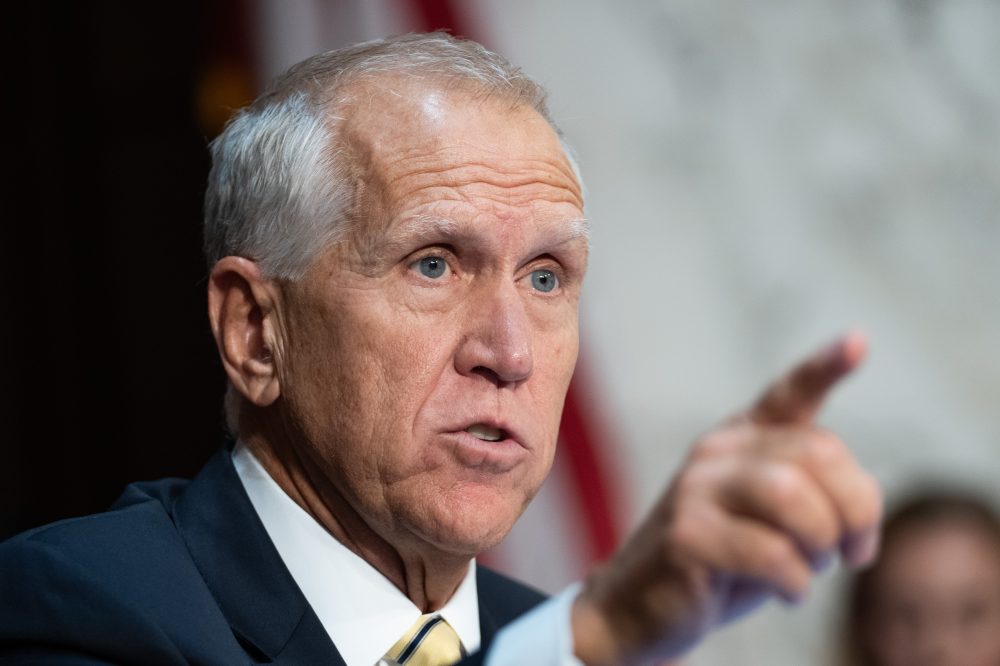
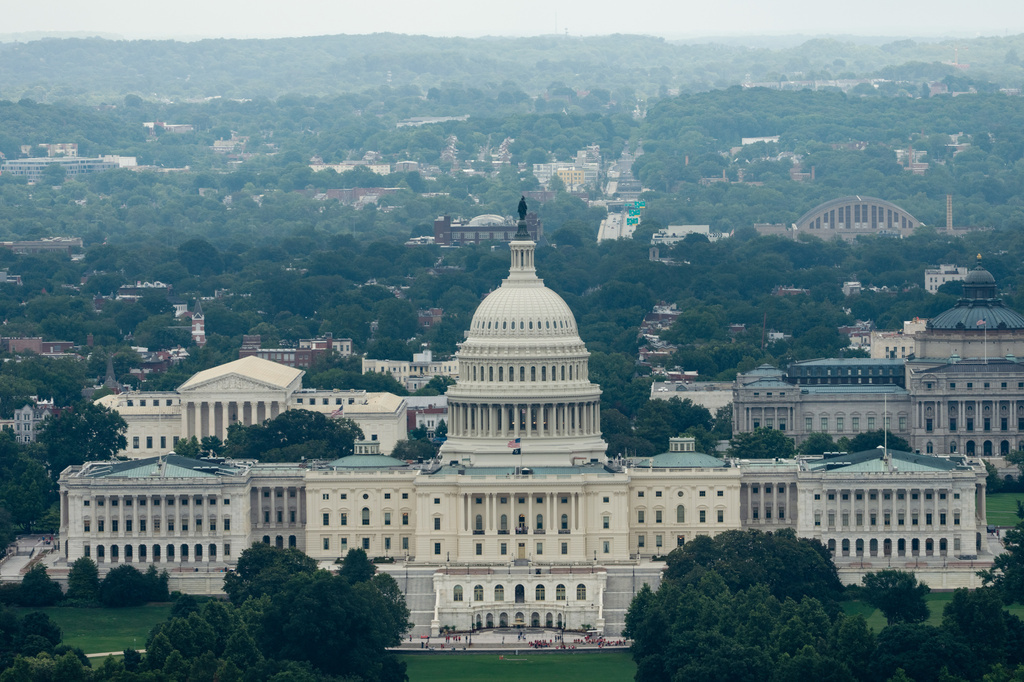
A bill that would permanently lock the United States into daylight saving time — ending the twice-yearly ritual of changing clocks — is heading into a difficult fight in the Senate, a lawmaker warned Monday.
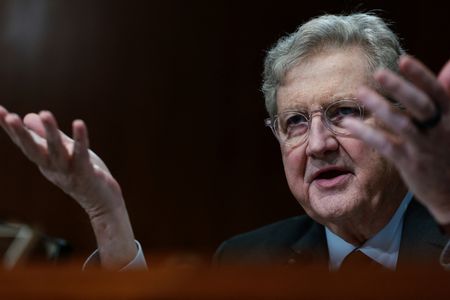
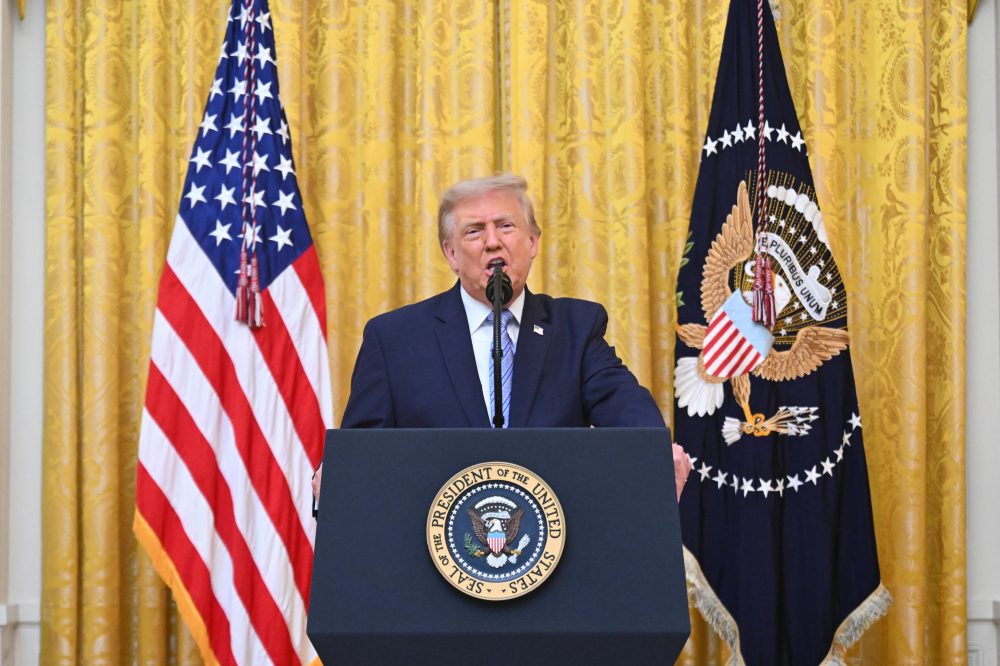
Senator John Kennedy, a Republican, revealed that President Donald Trump recently reached out to him by phone, asking for his support on the legislation. The bill cleared the U.S. House of Representatives last week and would do away with the clock-changing tradition that has been practiced across most of the country since the 1960s.
Kennedy said he told the president he would back the measure, but he cautioned that the road ahead in the Senate will not be easy. Speaking to reporters on the sidelines of the Farnborough air show in England on Monday, Kennedy was blunt about the challenge ahead. “It’s going to be a dog fight,” he said.
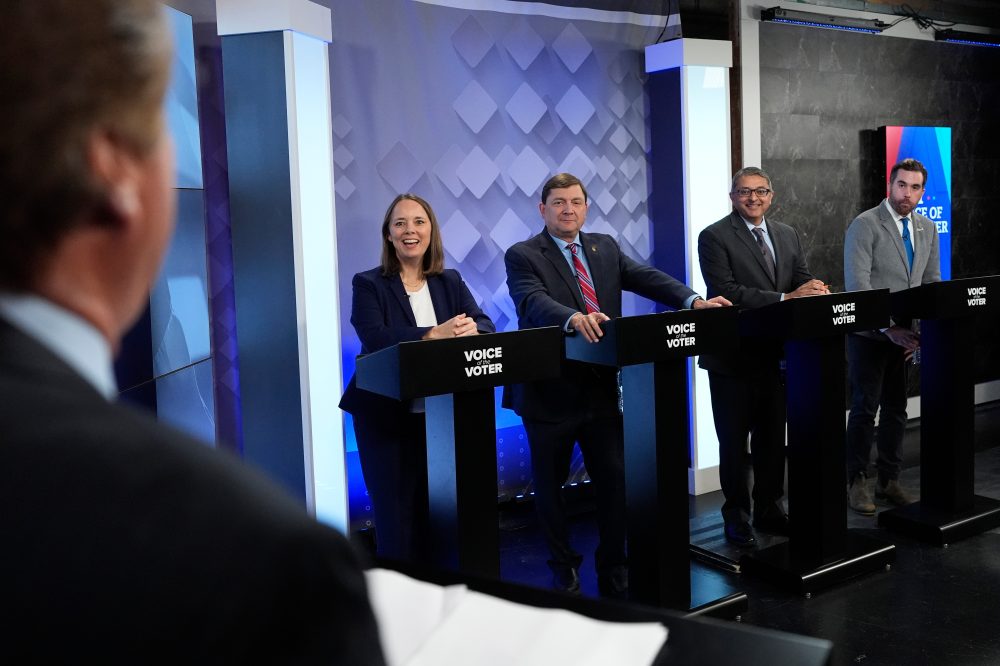
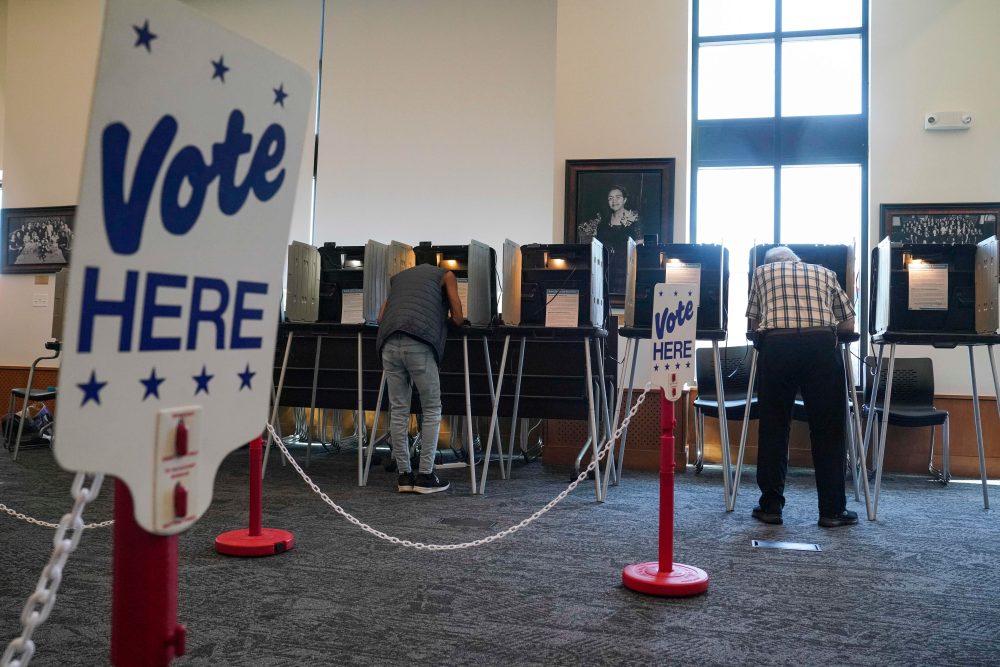
WASHINGTON — Arizona voters are casting ballots Tuesday in a state primary that will determine who Republicans send to challenge Democratic Gov. Katie Hobbs in November’s general election. Voters statewide will also lock in matchups for competitive U.S. House races and a full slate of state and local contests.
The Arizona governor’s race is seen as a prime pickup opportunity for Republicans, especially in a midterm election year when the party in the White House has historically faced a backlash from voters. Whoever wins the governorship — and the statewide political network that comes with it — could be a key player in the 2028 presidential race, since Arizona is once again projected to be a critical swing state.
Of the seven Democratic governors currently leading states that Donald Trump carried in 2024, only two face reelection in 2026. Among them, only Hobbs is expected to be in a truly competitive general election.
Four candidates are fighting for the Republican gubernatorial nomination: two sitting members of Congress and two businessmen. Five-term U.S. Rep. Andy Biggs, a former chair of the conservative House Freedom Caucus, is one of the congressional contenders. Eight-term U.S. Rep. David Schweikert is the other, having chosen to give up his competitive swing-district seat after barely fending off strong Democratic challenges in each of the past three election cycles. Rounding out the field are businessmen Ken Miceli and Scott Neely, both of whom have backgrounds in the construction industry.
Biggs holds an important endorsement from Trump. The president had previously backed another candidate — billionaire housing developer Karrin Taylor Robson — but issued a second endorsement for Biggs shortly after Biggs entered the race in early 2025. Taylor Robson withdrew from the race in February. Trump has been known to endorse multiple candidates in the same contest; he recently endorsed both candidates in the Republican primary runoff for South Carolina governor.
In the race to fill Schweikert’s seat in the 1st Congressional District, the Republican primary field includes state Rep. Joseph Chaplik, sportscaster and former Arizona Cardinals placekicker Jay Feely, and technology and telecommunications executive John Trobough. Feely had initially entered the race in the 5th Congressional District, but after Trump endorsed a different candidate there and encouraged Feely to seek a different seat or office, Feely shifted to the 1st District. Trump then endorsed both Feely and former state party chair Gina Swoboda for that nomination. Swoboda later exited the congressional race to instead run for secretary of state.
On the Democratic side, the 1st District primary includes two candidates who also competed for the same seat in the 2024 primary: former state Rep. Amish Shah and former local news anchor Marlene Galán-Woods. Shah won the Democratic nomination two years ago, while Galán-Woods placed third among six candidates. In the 2024 general election, Shah captured 48% of the vote against Schweikert. Publisher Rick McCartney and entrepreneur Jonathan Treble also appear on the Democratic primary ballot.
The 1st Congressional District sits just northeast of Phoenix and takes in Scottsdale. The district falls entirely within Maricopa County. Schweikert won his 2024 and 2022 reelection races with 51.9% and 50.4% of the vote, respectively. In the 2024 presidential contest, Trump received roughly 51% of the district’s vote, compared to about 48% for then-Democratic Vice President Kamala Harris.
Another Republican-held seat that Democrats are eyeing in their effort to reclaim the U.S. House is in the 6th Congressional District, where Rep. Juan Ciscomani is seeking a third term. Both Ciscomani and his Democratic opponent, Marine Corps veteran JoAnna Mendoza, are running unopposed in their respective primaries.
All 30 Arizona state Senate seats and all 60 state House seats are also on the ballot. Republicans currently hold narrow majorities in both chambers. Democrats have not controlled the state Senate since 1992, and they last held the state House in 1966 — the most recent time the party simultaneously held the governorship and both legislative chambers.
Maricopa County is by far the largest and most influential county in both parties’ statewide primaries. Home to Phoenix, Scottsdale, Tempe, and Mesa, the county accounted for roughly 61% of the total vote in the 2024 presidential general election. Pima County ranked a distant second, contributing about 15% of the vote.
Polls close at 7 p.m. local time, which translates to 10 p.m. ET for most of the state. No results will be made public before 11 p.m. ET. Most of Arizona does not observe daylight saving time, though the Navajo Nation is an exception — polls there close at 9 p.m. ET.
Registered Democrats and Republicans are limited to voting in their own party’s primary. Voters not affiliated with either party may choose to participate in either the Democratic or Republican primary.
As of July, Arizona had approximately 4.3 million registered voters — about 1.5 million Republicans, roughly 1.2 million Democrats, and approximately 1.5 million voters with no party affiliation.
In the 2022 gubernatorial primaries, about 596,000 Democratic ballots and roughly 831,000 Republican ballots were cast. Arizona conducts most of its elections by mail, with around 93% of Democratic primary votes and about 79% of Republican primary votes cast either early in person or by mail in the 2022 state primaries.
As of Thursday, approximately 755,000 ballots had already been submitted for Tuesday’s election — about 335,000 from Democrats and 347,000 from Republicans.
Arizona counties typically release the bulk of their early in-person and mail voting results in the first vote update of the evening, generally before any Election Day in-person votes are reported. In the 2024 state primary, the first results were published at 11:02 p.m. ET, just two minutes after the state permitted their release. About half of all votes had been counted by 11:05 p.m. ET, and the final update of the night came around 5:35 a.m. ET, at which point roughly 83% of total votes had been tallied.
In Arizona, an automatic recount is triggered if the margin between candidates is 0.5% or less of the total votes cast. As of Tuesday, 105 days remain until the 2026 midterm elections.
The Trump administration is moving forward with new restrictions on visas for international students, and the changes could reshape what the upcoming fall semester looks like at colleges and universities across the country.
The new rules, put in place by the administration, are drawing attention from higher education institutions that rely on international enrollment. Details of exactly how the restrictions will be enforced and who will be affected are still coming into focus.
With the fall semester approaching, students currently studying in the United States on international visas — as well as those planning to arrive — may need to navigate a new and more complicated set of requirements.
The full scope of the policy changes and their effects on students, schools, and academic programs is still being assessed.
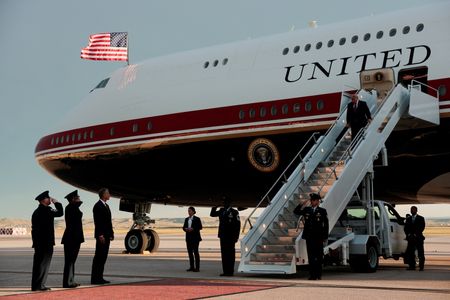
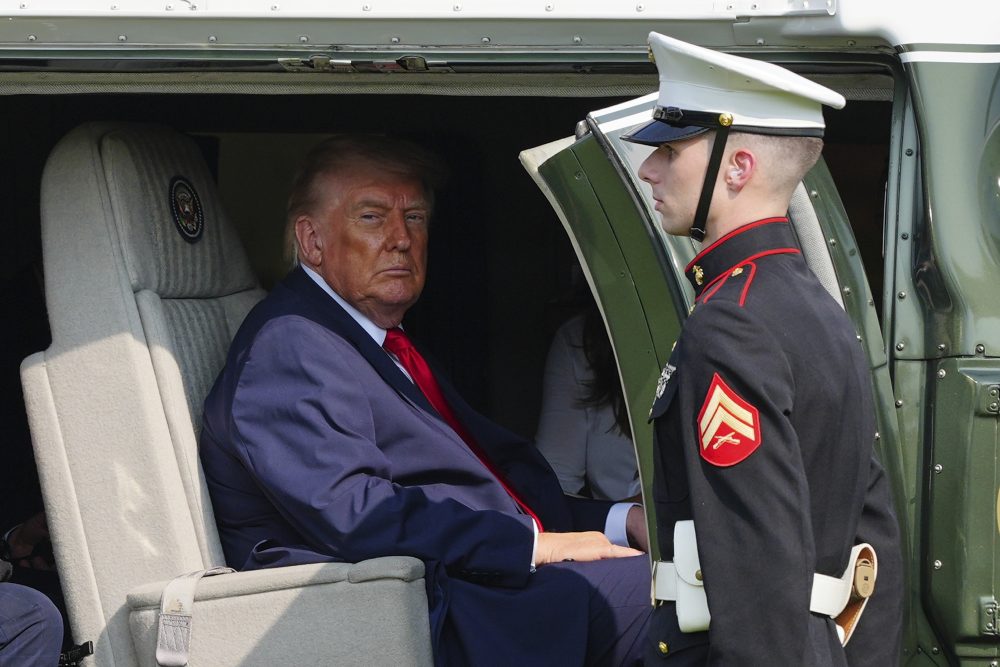
President Donald Trump announced Sunday that the Qatar-donated aircraft currently serving as Air Force One will soon undergo extensive upgrades, responding to growing concerns about the plane’s security capabilities.
Trump began using the jumbo jet on July 1 after accepting it as a gift last year. A rushed renovation effort was launched to prepare the Boeing 747 for presidential use. However, on July 8, Trump unexpectedly switched to an older Air Force One during a flight from Turkey to the United Kingdom, citing what he called a move “for old time’s sake” amid heightened tensions with Iran. He later returned to the newer aircraft for the trip back to the United States.
On Sunday, while heading home after attending the FIFA World Cup final in New Jersey, Trump was questioned about whether the refitted jet lacked missile-defense systems.
“It has a lot of capability,” Trump said of the aircraft. “But as I understand it, in about a month or so, they’re gonna send it to have it be maxed out…It’ll take about a month.”
The Air Force did not provide an immediate response when asked for comment.
The aircraft features red, white, dark blue, and gold exterior colors personally selected by Trump. The renovation work was carried out by defense contractor L3Harris Technologies.
The Qatar jet is intended to serve as a stopgap while Boeing continues to fall behind on delivering next-generation presidential aircraft. Boeing is under a $3.9 billion fixed-price contract, signed in 2018, to build two purpose-built 747-8 planes. That project is now four years behind schedule and over budget, with delivery now expected around mid-2028.
Security experts raised concerns that the rapid pace of the Qatar jet’s renovation may have left it less secure than the familiar baby blue Air Force One it temporarily replaced. Critics have also raised questions about the cost and the appropriateness of accepting such a gift from a foreign government.
Earlier this month, journalists from the New York Times who had reported on the new plane’s security features were subpoenaed. The Times has since gone to court seeking to block those orders requiring its reporters to appear before a grand jury in Manhattan federal court.
President Donald Trump is demanding a review of a scientific reference guide published by the Federal Judicial Center — the research arm of the U.S. federal court system — specifically regarding how it handles climate change information.
In a Sunday post on Truth Social, Trump claimed the manual contains “discredited” information that has resulted in “huge losses” for the country.
“Our Nation’s Federal Judges deserve Facts and Science, not Political Fraud and False Science on Climate,” Trump wrote. “With this TRUTH, I hereby order Federal Suspension and Debarment Officials to review this conduct.”
It remains unclear exactly what “conduct” Trump is directing officials to investigate. The White House did not respond to requests for comment.
The Federal Judicial Center’s Reference Manual on Scientific Evidence is a tool federal judges use when evaluating cases that involve scientific testimony and evidence. The fourth edition of the manual was released in December and included a newly added chapter focused on climate science.
That climate chapter was written by Jessica Wentz and Radley Horton of Columbia Law School. Its stated purpose was to help judges assess the credibility and relevance of expert testimony and evidence related to climate science.
However, earlier this year, the federal judiciary pulled that chapter from the fourth edition after Republican state attorneys general argued the section was unfairly slanted against fossil fuel companies.
The manual was jointly developed by the Federal Judicial Center and the National Academies of Sciences, Engineering, and Medicine.
President Donald Trump said Sunday that he confronted Canadian Prime Minister Mark Carney directly about the ongoing Ontario wildfire crisis, telling him that Canada needs to do more to bring the blazes under control.
Just one day after threatening to impose new tariffs on Canadian goods as punishment for the wildfire smoke drifting into the United States, Trump said he had a face-to-face conversation with Carney at the FIFA World Cup final in New Jersey, which both leaders attended.
“I have a good relationship with Mark Carney, but we’ve got to stop the fires up there,” Trump told reporters after returning from the game.
The president also suggested Canada could face financial consequences, adding: “Maybe they should pay us some damages or something, or we should do some tariffs.”
Hundreds of fires burning across Ontario have sent thick, choking smoke across a wide stretch of the country — from the Midwest through the Northeast and into the Mid-Atlantic region. The smoke began spreading Thursday, triggering days of public health warnings urging residents to stay inside as much as possible.
Carney’s office did not respond to a request for comment on Trump’s statements.
On Saturday, Carney posted on X that Canada has more than 5,300 firefighting personnel deployed and is using advanced data tools and thermal imaging technology to help detect and combat the fires in real time.
Canadian government data shows approximately 5.9 million acres — about 2.4 million hectares — have already burned during this wildfire season. Climate scientists note that increasing global temperatures are making wildfires more frequent and more intense around the world.
Former Maine state legislator Troy Jackson has moved into a commanding position to become the Democratic Party’s U.S. Senate candidate after multiple opponents withdrew from the race on Sunday.
The rapid reshaping of the field unfolded over a weekend when Democratic committees throughout Maine were busy selecting delegates for a nominating convention scheduled for July 25. That convention will determine who faces Republican U.S. Sen. Susan Collins in the November election.
Over Saturday and Sunday, the Jackson campaign announced it had locked up hundreds of delegate commitments heading into the convention, including a sweep of delegates from Cumberland County, the state’s most populated county.
That show of strength prompted a wave of withdrawals from the race.
Maine’s Secretary of State, Shenna Bellows, pulled out Sunday morning, stating that Democrats did not have “a day to waste in unifying” around the effort to defeat Collins.
Nirav Shah, who previously led Maine’s Center for Disease Control and Prevention, exited the race and threw his support behind Jackson on Sunday evening. Shortly after, Dan Kleban, co-founder of Maine Beer Company, and Jordan Wood also dropped out and endorsed Jackson.
With his most significant challengers now out of the picture, Jackson appears extremely difficult to beat at next weekend’s convention.
The Democratic scramble began after Graham Platner — who had won the party’s primary — withdrew from the race this month. Platner had energized portions of the progressive base, but his campaign fell apart following complaints from several women about his conduct, including a former girlfriend who alleged sexual assault. Platner denied that allegation.
Our Revolution, a progressive group originally founded by Vermont Sen. Bernie Sanders that had previously supported Platner, has now shifted its backing to Jackson.
Jackson, 58, worked as a logger before entering politics. He won election to the state legislature in 2002 and eventually rose to become president of Maine’s state senate, a position he held until leaving office in 2024 due to term limits.
Earlier this year, Jackson ran unsuccessfully for the Democratic gubernatorial nomination — a bid that had received the endorsement of Platner.
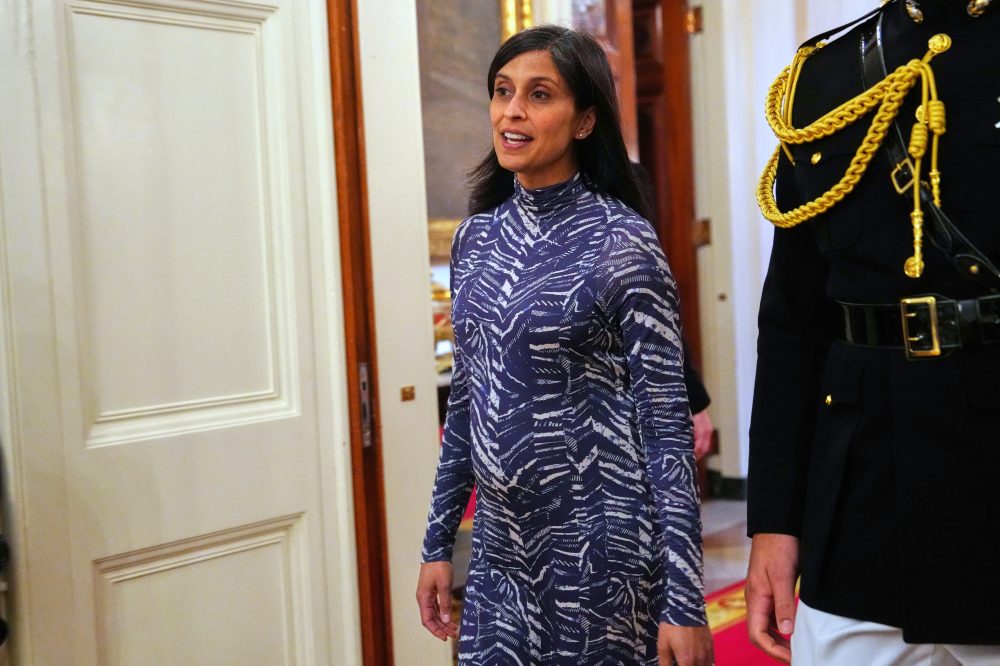
Vice President JD Vance and his wife, second lady Usha Vance, announced Sunday the arrival of their newest family member — a baby boy who makes history as the first child born to a sitting vice president in over 150 years.
The newborn, named Alec Neel Vance, arrived Sunday morning and joins three older siblings: Ewan, age 9; Vivek, age 6; and Mirabel, age 4.
The vice president shared the happy news through a social media post, with both he and his wife signing the announcement.
“We are excited to announce that our baby boy, Alec Neel Vance, was born this morning. Usha and the baby are happy and healthy, and our kids are overjoyed to meet their little brother,” the statement read.
The couple expressed gratitude to the medical professionals and staff at Walter Reed National Military Medical Center, as well as the White House medical team, for their care during the birth.
Maine Secretary of State Shenna Bellows announced Sunday that she is pulling out of the Democratic contest for U.S. Senate, shrinking the field of candidates just days before the party must settle on a nominee to take on Republican Senator Susan Collins this fall.
In a written statement, Bellows said she believes she can do the most good by remaining in her current role as secretary of state, pointing to what she described as President Donald Trump’s escalating threats to democracy. She called on fellow Democrats to come together quickly, saying the party has no time to spare if it hopes to unseat Collins.
Bellows’ decision comes in the wake of a chaotic stretch for Maine Democrats. Their previously chosen nominee, Graham Platner, suspended his campaign on July 8 after a woman accused him of sexually assaulting her during a relationship roughly five years ago. Platner has denied the allegation but acknowledged that pressure from both state and national Democratic leaders made it impossible for him to stay in the race.
Platner had locked up the Democratic nomination in June, capturing more than 70 percent of the primary vote. His path to the nomination had been cleared in April when his main opponent, Governor Janet Mills, dropped out of the running.
Maine’s Democratic Party now has until July 27 to select a new nominee through a party convention. The stakes are high nationally as well — Republicans currently hold a 53-47 Senate majority, and flipping Maine’s seat is considered a key piece of Democrats’ strategy to reclaim control of the chamber in the midterm elections.
Collins is widely viewed as the most vulnerable Republican senator heading into 2026, and she is the only Republican incumbent running for re-election in a state that former Vice President Kamala Harris carried in the 2024 presidential race. Harris beat Trump in Maine by approximately seven percentage points that year.
Despite those favorable conditions for Democrats, Collins has proven difficult to beat. She has held her Senate seat since 1997, and Democrats have not won a Senate race in Maine since 1988.
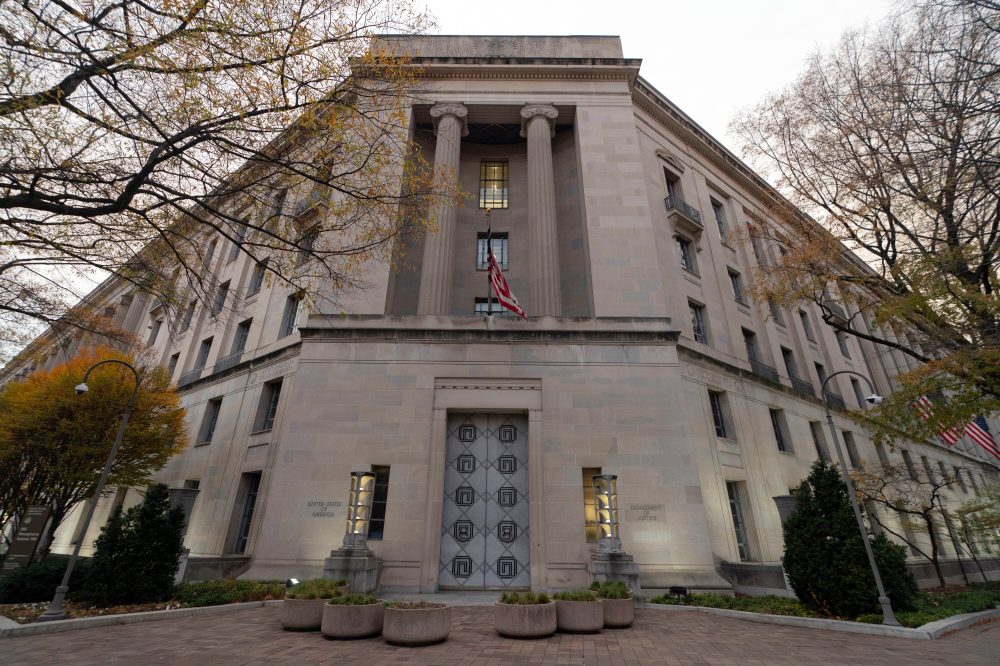
WASHINGTON (AP) — For the first time since it was established three decades ago, a little-known federal court designed to handle deportation cases involving suspected terrorists has been put to use by the Trump administration.
The Alien Terrorist Removal Court was created in 1996 but sat completely unused until last Wednesday, when the Justice Department submitted an application seeking to remove an unnamed individual from the United States. The person’s identity was withheld from the single-page filing posted on the court’s website.
The court’s chief judge, Joan Ericksen, responded in writing after a hearing was held the following day. She indicated the court had concerns about the government’s legal arguments, noting there were “questions about the nexus that the government alleges between the actions of the respondent and the specific sections and subsections it invokes with respect to those actions.”
Ericksen, who serves as a federal judge in Minnesota, wrote that the government’s answers during the hearing suggested it could use more time to sharpen its case. “The answers persuaded the Court that the Government could benefit from the opportunity for more thoughtful consideration,” she wrote. She gave the Justice Department until this coming Wednesday to submit additional information.
The court’s legal foundation comes from the Antiterrorism and Effective Death Penalty Act of 1996. Under that law, the attorney general can file a sealed application to deport someone believed to be an “alien terrorist.” If approved, a public hearing must follow, during which the government bears the burden of proving the individual fits that classification. Either the attorney general or deputy attorney general must sign off on any application.
Federal law outlines several ways a person could be classified as an “alien terrorist,” including having participated in terrorist activity, promoting or supporting such activity, or belonging to a group that encourages terrorism.
The court consists of five judges chosen by Chief Justice John Roberts. According to a summary on the Federal Judicial Center’s website, the court had never received a petition or conducted any hearings prior to last week.
The move comes as the Trump administration has pursued an aggressive deportation agenda over the past year. That effort has included invoking a 1798 wartime statute known as the Alien Enemies Act to remove Venezuelan migrants accused of belonging to a terrorist gang. During proceedings in that case, a Washington judge named James Boasberg suggested the Alien Terrorist Removal Court would be the appropriate venue for deportation requests based on national security concerns.
“In fact, Congress has an answer for us, doesn’t it? Because they created the Alien Terrorist Removal Court,” Boasberg said at the time. “So if there’s a national security concern with having these hearings…you can always go to the ATRC, which would be a first, but that’s what it’s there for, right?”
The story was originally reported by Court Watch, an independent news outlet.
SOUTH HAVEN, Mich. — When Senate candidate Haley Stevens hits the campaign trail, she focuses on manufacturing, taking on President Donald Trump, and making the case that she’s the Democrat best suited to win Michigan. What she tends not to bring up is the powerful pro-Israel organization that has spent tens of millions of dollars working to get her elected.
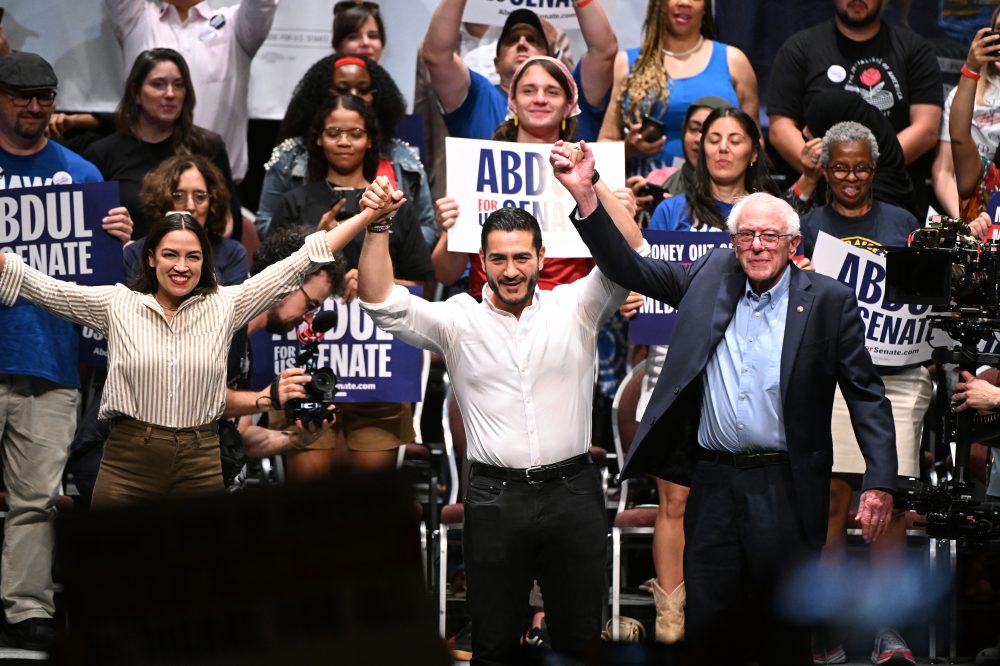
The American Israel Public Affairs Committee — better known as AIPAC — along with its affiliated groups, has pumped nearly $30 million into supporting Stevens. That figure represents the single largest investment the organization has ever made in one race. Their goal: defeating progressive candidate Abdul El-Sayed in the August 4 Democratic primary.
Even as AIPAC’s spending has fundamentally changed the dynamics of the race, Stevens has largely steered clear of discussing the group. At a campaign stop in West Michigan in July, she was asked twice about AIPAC and responded with more than 800 words — never once naming the organization. Israel was mentioned just once, when she expressed hope that “the U.S. and Israel working together to rebuild Gaza.”
When the Associated Press asked whether she welcomed AIPAC’s backing, Stevens replied: “Anyone who supported me is supporting me because of my dedication to the people of Michigan, and the things that I have done for Michiganders.”
The exchange captures just how politically sensitive AIPAC has become within the Democratic Party, as Israel’s war in Gaza has deepened divisions over U.S. policy. AIPAC’s mission centers on electing lawmakers who support a strong U.S.-Israel relationship and policies it says benefit both nations’ security. The organization did not respond to a request for comment, and its super PAC, United Democracy Project, also declined to speak on the record.
The stakes are especially high in Michigan, which is home to the largest Arab American population in the country. El-Sayed’s progressive allies are casting the race as a broader referendum on whether grassroots organizing can hold its own against a tidal wave of outside money.
New York Rep. Alexandria Ocasio-Cortez, who has been campaigning for El-Sayed in Michigan, put it plainly: “One of the laws of nature in politics is whoever spends the most money wins. It is an opportunity to show that things other than money can win in America.”
Stevens, a four-term congresswoman, raised only half of what El-Sayed brought in during the most recent fundraising period ending June 30. Her campaign said in a statement that it is “raising the resources we need to win this race.” Through early July, Stevens’ own campaign had spent just $12,000 on advertising before increasing that figure to nearly $1 million, according to AdImpact. Outside groups, however, have collectively spent close to $50 million boosting her candidacy — including roughly $12 million from a group called A Stronger Michigan that has not disclosed its donors.
El-Sayed has made AIPAC’s massive financial footprint a defining issue of his campaign, accusing Stevens of serving the interests of wealthy donors rather than everyday voters. Sen. Bernie Sanders, campaigning alongside El-Sayed at rallies in Detroit, Lansing, and Grand Rapids, was blunt in his assessment: “She is nothing more than an employee of these billionaires.”
Stevens has said she supports “comprehensive campaign finance reform.”
Many Michigan voters may not even realize that the ads flooding their television screens are being funded by AIPAC. The spots never reference Israel, instead spotlighting Stevens’ record on manufacturing and featuring former President Barack Obama. Former Rep. Andy Levin, who lost to Stevens in a 2022 Democratic primary after redistricting — with AIPAC spending millions against him — noted the deliberate strategy. “AIPAC never runs on AIPAC. They never even talk about Israel and Palestine,” said Levin, who is Jewish. “If you’re just a voter and you see a million ads, you don’t know who paid for it.”
The two candidates have staked out starkly different positions on Israel’s military campaign in Gaza. Stevens, though not Jewish, has long been among Congress’ most vocal supporters of Israel, describing herself as a “proud pro-Israel Democrat” and once saying during a Hanukkah celebration that “Israel comes to me in my dreams.” She has, however, criticized Israeli Prime Minister Benjamin Netanyahu, saying during a recent debate that he “has not made us safer, has not brought us closer to peace, and he’s endangered Jews here in America and around the world.”
El-Sayed, the son of Egyptian immigrants, has taken a sharply different stance. He has labeled Israel’s military campaign in Gaza a “genocide,” called the Israeli government “evil,” and argued repeatedly that AIPAC warps Democratic politics. “The reason that we’ve seen this war fought is because of the impact of AIPAC in our politics,” he said at a recent debate.
The war in Gaza was sparked by Hamas’ October 7, 2023 attacks inside Israel, which killed approximately 1,200 people and resulted in 251 being taken hostage. The conflict has now stretched beyond 1,000 days. According to Gaza’s Health Ministry, Israel’s retaliatory military offensive has killed more than 73,000 Palestinians.
If victorious, El-Sayed would become the first Muslim ever elected to the U.S. Senate. He has addressed questions about whether his faith could be a liability in a competitive general election. “When they raise questions about my ‘electability,’ they are usually pointing to the most obvious thing about me that makes me ‘different’ — that’s my name and my Muslim faith,” he wrote in an email to supporters. “Faith, to me, isn’t just about an identity. It’s about the choices that I make every single day about how I live my life.”
El-Sayed’s campaign has spent approximately $3.2 million of its own funds on advertising, with around $1 million in outside support. Rather than competing dollar-for-dollar with Stevens, his team has emphasized grassroots organizing, reporting more than 10,000 volunteers recruited statewide. When asked about Stevens’ volunteer numbers, her campaign said it has “hundreds across Michigan.” “This election will come down to the many versus the money,” El-Sayed wrote.
Support for Israel within the Democratic Party has been eroding since the Gaza war began. Earlier this week, 103 House Democrats voted — unsuccessfully — to block $3.3 billion in U.S. aid to Israel, the most visible sign yet of the party’s internal fracture. Among them was New York Rep. Pat Ryan, who had previously backed aid to Israel and accepted support from AIPAC. “I expect groups like AIPAC will not support me in my future elections and frankly, I don’t want their support,” Ryan posted on social media, later announcing he was returning the money.
Similar tensions played out in Michigan during the 2024 Senate race, when Democratic activists pushed now-Sen. Elissa Slotkin to take a tougher stance on Israel’s actions in Gaza. Slotkin, who is Jewish, had already distanced herself from AIPAC years before the race. She went on to defeat Republican Mike Rogers by fewer than 20,000 votes. Rogers is running for Senate again this year and faces no opposition in the Republican primary.
Even so, some observers question whether the Israel issue will ultimately drive most primary voters to the polls. Michigan political strategist Adrian Hemond offered this perspective: “It’s not that Democratic primary voters love AIPAC. They obviously don’t. But this doesn’t even register as an issue that’s influencing voting behavior for the overwhelming majority of primary voters.”
PHOENIX (AP) — For years, Rep. Andy Biggs earned a reputation as one of Washington’s most unyielding conservatives, leading the House Freedom Caucus and pushing President Donald Trump’s agenda while clashing with Republican leadership. Now, his fellow Arizona congressman Rep. David Schweikert is arguing that kind of all-or-nothing approach is exactly what has been costing Republicans elections in Arizona.
The two have spent decades navigating the turbulent waters of Arizona Republican politics, but on Tuesday they face each other directly in a gubernatorial primary. The contest has evolved into a fundamental debate over what direction the GOP must take to reclaim its footing and defeat Democratic Gov. Katie Hobbs, widely regarded as the most vulnerable Democratic governor in the nation.
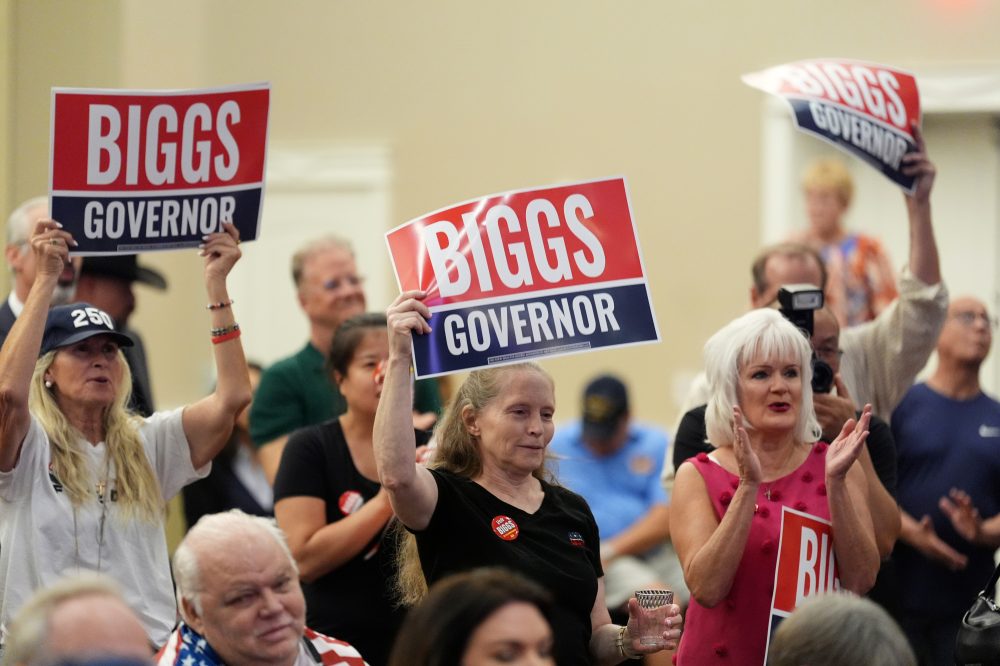
Biggs carries Trump’s endorsement and the backing of Turning Point Action, and he built his name in Congress as a fierce opponent of compromise. But he has never had to run a competitive general election race against a Democrat. Schweikert, on the other hand, is making the case for a brand of Republicanism that many in the party consider outdated.
“Biggs lives in a district where if he were a turtle running as a Republican, you’re going to win it,” said Kathleen Dunbar, 75, a former Tucson City Council member who intends to vote for Schweikert. “Schweikert lives in a district that’s very much like the state of Arizona, where he has to win the independents. And he’s done it eight times in the last 16 years.”
Trump’s support is Biggs’ most powerful asset — but it comes with complications in Arizona. No Republican has lost a statewide primary with Trump’s endorsement, yet since 2018, only one Trump-backed candidate, former Gov. Doug Ducey, has gone on to win a statewide general election. Despite registered Democrats being outnumbered by both Republicans and independents in the state, Democrats currently hold both U.S. Senate seats and the top three state offices.
In 2022, a Trump-endorsed group of Republican nominees — with former local television anchor Kari Lake leading the ticket as the gubernatorial candidate — refused to soften their message heading into the general election, betting that an energized base would carry them to victory. It did not.
Biggs pushes back on any comparison to Lake and has been working to smooth out his hardline image. After supporting Trump’s effort to block certification of the 2020 election results, Biggs now declines to say whether President Biden’s victory was legitimate. He has also begun highlighting moments when he has reached across party lines.
Kathy Babits, 71, a retired occupational therapist from Scottsdale who plans to vote for Biggs, said she was not moved by Schweikert’s warnings that Biggs would be too polarizing in a general election matchup.
“As long as people get behind him and as long as things don’t change too much, I’m in favor,” Babits said.
Both men are fiscal conservatives representing neighboring suburban Phoenix districts in the East Valley — the two wealthiest and whitest congressional districts in Arizona. Their differences, however, are most apparent in how they operate.
Biggs boasts of his close relationship with Trump and made a name for himself in the House as a roadblock to bipartisan deals. He played a significant role in ousting Republican Speaker Kevin McCarthy and participated in an unsuccessful effort to remove McCarthy’s successor, Mike Johnson. He has staked out some of the most conservative positions in Congress on government spending — voting against COVID-19 economic relief early in the pandemic and, as a state legislator, once proposing to eliminate Arizona’s Medicaid program entirely. His political base is rooted in the fast-growing, family-heavy outer suburbs of metro Phoenix.
“I like his style and his policies and his mannerisms,” said Don Dobie, a Biggs supporter from Scottsdale. “And he looks like a trustworthy guy.”
Schweikert has kept his distance from Trump publicly — no photos together — though he has generally supported Trump’s policy priorities and avoids criticizing him openly. He has instead cultivated an image as a policy-focused lawmaker laser-locked on the federal deficit. He has held his seat even as many of the college-educated, higher-income Republicans in his district drifted away from the party during the Trump era.
To win, Schweikert needs voters like Jeff Clark, a retired telecommunications engineer from Scottsdale who has grown disillusioned with his party’s alignment with Trump.
“Once they say they’re Trump-sponsored and everything, I’m sorry, it’s just not going to work,” Clark said.
Even so, Clark did not cast a ballot in the governor’s race. He believes Biggs has the nomination locked up, and he didn’t feel Schweikert had done enough in Congress to earn his vote.
Michael LoBello, a 79-year-old retiree from Scottsdale who voted for Biggs, said Republicans are losing in Arizona because they haven’t been forceful enough in pushing Trump’s priorities, including the SAVE America election bill.
“Stand up for the people,” LoBello said. “Just stand up for us. They’re forgetting who they represent, and that’s the people.”
Meanwhile, Schweikert’s congressional seat — considered a top battleground in the fight for a House majority — has drawn intense competition in both party primaries.
On the Democratic side, the Democratic Congressional Campaign Committee has made the controversial decision to back Marlene Galán-Woods, a former television news anchor who previously identified as a Republican. Her late husband, Grant Woods, served as Arizona’s Republican attorney general in the 1990s and later became a prominent Trump critic.
Her main challenger is Amish Shah, an emergency medicine physician and former state legislator who ran as the Democratic nominee in 2024 but lost narrowly to Schweikert.
“I like his background in medicine,” said Jeff Cohen, 69, an attorney from Cave Creek who voted for Shah. “And he actually came to my door and I met him. It made a difference. Old-style politics.”
On the Republican side, former Arizona Cardinals kicker Jay Feely holds Trump’s endorsement but has faced criticism for living outside the district — he resides in Biggs’ district and had originally planned to run there before Trump endorsed someone else. Feely is competing against Joseph Chaplik, a former state legislator with strong support among grassroots party activists, and businessman John Trobough.
The Trump administration is reportedly getting ready to announce a set of grants targeting MAGA-aligned projects in Europe and other parts of the world, as part of a sweeping restructuring of how the United States distributes foreign aid, according to a report published Saturday by the Financial Times.
Among the proposed funding outlined in the report is $2 million designated to “counter censorship” tied to European Union regulations — specifically the Digital Services Act and the Digital Markets Act. The Financial Times said it obtained a copy of a notice the State Department sent to members of Congress.
Reuters, which first carried the story, noted it was unable to immediately verify the Financial Times report independently.
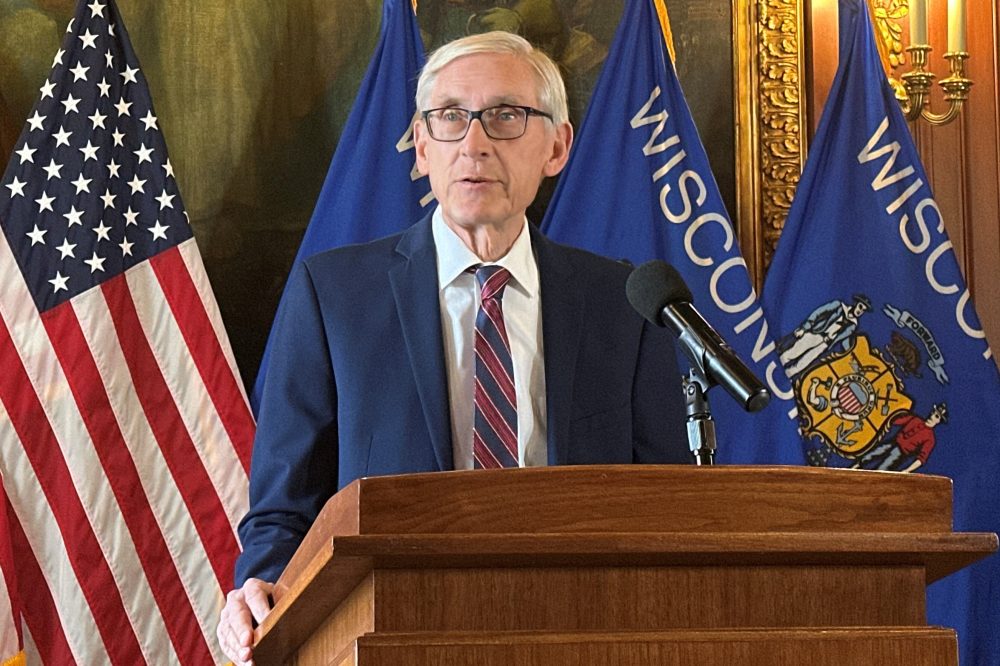
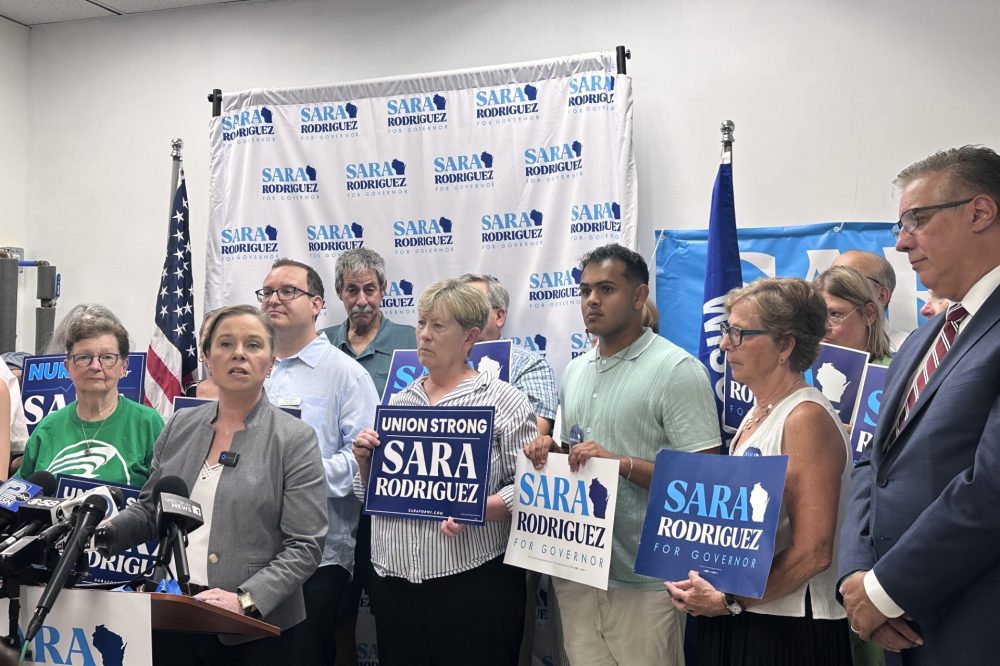
Wisconsin Gov. Tony Evers has announced his endorsement of Milwaukee County Executive David Crowley in the state’s Democratic primary for governor — a surprise move that comes just one day after the race was dramatically reshuffled by a rival candidate’s exit.
At a formal event planned for Saturday, Crowley was set to deliver remarks — provided in advance to The Associated Press — stating that Evers’ backing “reflects his confidence that I have the experience, the judgment, and the record to build the coalition we need, defeat Tom Tiffany, and lead effectively from the very first day in office.”
The 40-year-old Crowley is jumping back into a wide-open primary that was thrown into turmoil Friday when Lt. Gov. Sara Rodriguez announced she was ending her campaign. Rodriguez cited a campaign finance scandal, having fired her campaign manager earlier in the week after learning her campaign had hundreds of thousands of dollars less money available than anticipated.
Crowley had actually paused his own campaign two weeks ago to throw his support behind Rodriguez. Now he’s back in the race, competing against democratic socialist Francesca Hong, former Lt. Gov. Mandela Barnes, state Sen. Kelda Roys, and Joel Brennan, a former top aide to Evers. If elected, Crowley would make history as Wisconsin’s first Black governor.
Evers, a Democrat who chose not to seek a third term, had previously pledged to stay out of the primary — a position he had maintained throughout his eight years in office. By endorsing Crowley, he is passing over both his current and former lieutenant governors, each of whom has won statewide elections, in favor of someone who has never run a statewide race.
Evers was not expected to appear at Saturday’s event, as he is currently on a trade-related trip to Africa.
Crowley’s political story is one of personal perseverance. During the first phase of his campaign, he highlighted how his family once experienced homelessness in Milwaukee. He went on to become a community organizer and won a seat in the state Assembly in 2016 at just 30 years old. In mid-2020, he was elected as executive of Milwaukee County — the state’s most populous county — becoming both the first Black person and the youngest individual, at age 33, to hold that position.
Wisconsin’s Democratic primary is scheduled for August 11. Democrats are hoping not only to retain the governor’s office but also to flip control of the state Legislature, which Republicans have held since 2011. The Democratic nominee will face Republican Rep. Tom Tiffany in the general election, with Tiffany encountering only minimal opposition in his own primary.
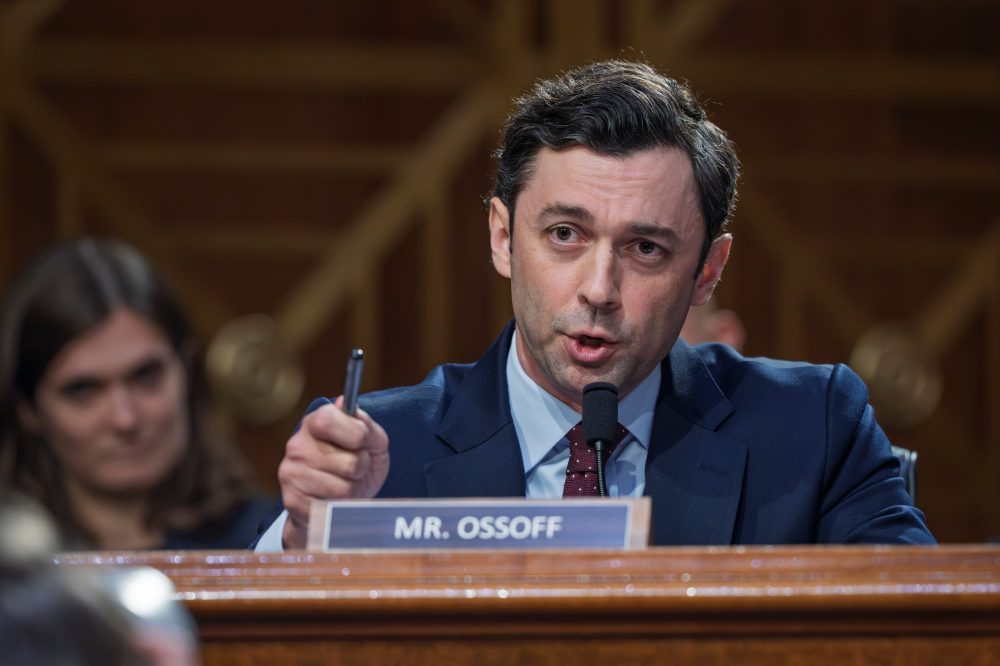
ATLANTA (AP) — About ten years ago, Jon Ossoff was a 30-year-old Democratic candidate for Congress who pitched Georgia suburban voters on cutting wasteful spending and holding both political parties accountable. His Republican opponent at the time even remarked that Ossoff sounded like a Republican.
That description would not apply today. After falling short in that 2017 race and then narrowly capturing a U.S. Senate seat in a 2021 runoff, Ossoff is now campaigning for reelection with an unrestrained assault on President Donald Trump, whom he labels a ‘national disgrace’ running a ‘Mar-a-Lago mafia’ and ‘the most corrupt administration of all time.’
The 39-year-old senator has long served as a focal point for anti-Trump energy, regardless of his specific campaign message. But only now has he fully leaned into that role. Democrats across the political spectrum are taking notice — from grassroots activists searching for the right message heading into the 2026 midterms to party members hoping to identify strong presidential contenders for 2028.
This week, as Trump once again pushed debunked claims of voter fraud in the 2020 election — the very race that sent Ossoff to Washington — the senator seized every opportunity to call Trump the ‘world’s most famous sore loser.’
‘The senator is definitely having a moment, and these breakout moments can certainly become a launching pad for something bigger,’ said Lis Smith, a Democratic strategist who helped Pete Buttigieg transform from an obscure Indiana mayor into a presidential candidate in 2020. Smith said Ossoff’s strategy — connecting Trump’s personal financial interests to his economic record — is ‘one that more Democrats should adopt.’
Ossoff says his attention is squarely on ‘providing Georgians with the best possible service, investigating and exposing corruption and abuse, and winning this pivotal Senate race’ against Rep. Mike Collins, who secured the Republican nomination after Trump offered a last-minute endorsement ahead of a primary runoff.
Collins has pushed back, calling Ossoff ‘out-of-touch, far-left liberal’ and labeling him ‘weak’ and ‘woke.’
Still, Ossoff’s rising national profile — combined with exceptional fundraising numbers — has placed him in a far stronger position for reelection than many political analysts anticipated when Trump returned to the White House less than two years ago. As the only Democratic senator seeking reelection in a state Trump carried in 2024, holding this seat is essential for Democrats working to flip at least four seats and reclaim control of the Senate.
Maryland Gov. Wes Moore, himself up for reelection and mentioned as a potential 2028 presidential candidate, recently traveled to Georgia to campaign alongside Ossoff and Democratic gubernatorial nominee Keisha Lance Bottoms.
Moore called both candidates ‘fighters’ and said Ossoff is delivering the right message for voters who ‘want someone that will disrupt the status quo and do what’s necessary to make their lives easier as the Trump administration raises prices on everything from gas to groceries.’
Ossoff was largely unknown in political circles when he entered the 2017 congressional race. It was the first special election of Trump’s first presidency, triggered when Trump tapped Tom Price to serve as health secretary — a move that opened up a seat the administration assumed was safely Republican, given it had once been held by House Speaker Newt Gingrich.
At the time, Ossoff had worked as a congressional aide and founded a production company that made investigative documentaries. Despite his low profile, he quickly became a fundraising phenomenon as Democrats nationwide searched for ways to push back against Trump. He topped an initial all-party primary, drawing intense national focus to the runoff that followed.
‘The atmosphere of disarray and gridlock and dysfunction and chaos in Washington doesn’t serve the American people, and it’s not just this administration or this White House — it’s career politicians in Congress,’ he said during that campaign.
Ossoff ultimately lost that race to Karen Handel, a Republican who had previously served as Georgia’s secretary of state.
When he ran against Republican Sen. David Perdue in 2020, Ossoff maintained a methodical, policy-focused style. Georgia was not seen as a major battleground, and what early attention the state received was directed more toward Democrat Raphael Warnock, who was running in a special Senate election against Sen. Kelly Loeffler. Loeffler was viewed as more vulnerable than Perdue, having been appointed to her seat following the retirement of Johnny Isakson, who stepped down due to health problems.
The political landscape shifted dramatically when Democratic presidential nominee Joe Biden carried Georgia and both Senate contests headed to runoffs, with control of the chamber at stake. Trump moved to challenge Biden’s victory and began a prolonged campaign of falsely claiming American elections are rigged, with Georgia at the center of those allegations.
Throughout his 2020 campaign, Ossoff kept his messaging trained on Perdue’s personal business dealings and the Republican response to the COVID-19 pandemic. During one debate, he did not bring up Trump at all. In another, when pressed on the president, he offered only a broad response.
‘That kind of leadership really only grows when there’s already been a destruction of faith in our political institutions,’ he said.
As a senator, Ossoff has developed relationships and a constituent services network across Georgia. He regularly announces funding for infrastructure, hospitals, and other programs — including in areas that lean heavily Republican. He spearheaded a congressional investigation into failures within Georgia’s child services system and has made veterans’ care a signature issue.
His 2026 campaign, however, has been defined by a stump speech built around a blistering critique of the president. He mocks Trump’s activity on Truth Social and his proposals to feature his own face on U.S. currency.
‘When he’s not posting, he’s been trying to rob us. Have you seen it?’ Ossoff asks crowds, before pivoting to what he describes as corruption and incompetence.
He runs through a list of grievances: Trump’s lawsuit against the Internal Revenue Service, a proposed restitution fund that could benefit January 6th rioters, and foreign business dealings involving Trump’s sons, whom Ossoff refers to as ‘Prince Don and Prince Eric.’
He also attacks Trump’s tax cuts as benefiting the wealthy, his efforts to keep the Jeffrey Epstein case files sealed, and what he calls an Iran war ‘no one voted for and no one can explain.’
‘All this while you pay more for gas, for groceries, for healthcare,’ he tells audiences.
Ossoff still references a broader ‘rot’ in a ‘coin-operated’ political system that extends beyond Trump. But the lines that draw the biggest applause — which campaign staff clip and post across social media in real time — are aimed directly at the president.
‘He’s a failed president and a national disgrace,’ Ossoff says repeatedly on the trail.
Ossoff won his Senate seat while Trump was actively contesting Georgia’s 2020 results, and Trump has revived those claims as Ossoff seeks reelection. Trump has directed his administration to reopen the 2020 election investigation, and federal agents have seized hundreds of boxes of ballots from Fulton County, a Democratic stronghold that includes Atlanta.
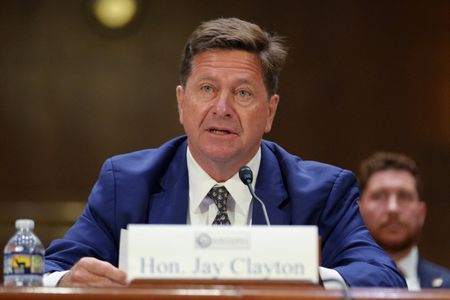
Refusing to confirm that Biden legitimately defeated Trump has emerged as an informal requirement for serving in the current administration — a point Ossoff drove home while questioning Jay Clayton, Trump’s nominee for national intelligence director.
‘Who won the 2020 election?’ Ossoff asked.
‘I’m not going to get into that with you,’ Clayton replied.
As Clayton continued to sidestep the question, Ossoff pressed: ‘Isn’t it humiliating to be unable to answer this question, to have to indulge the president’s delusions?’
Ossoff raised $20 million in the second quarter of 2026 and had $42 million remaining to spend. Collins raised approximately $2.1 million and held a similar amount in reserve. A 20-to-1 financial advantage gives Ossoff a significant edge as he works to hold his seat — and maintain his national visibility.
Smith offered one note of caution about Ossoff’s trajectory.
‘You can’t live off one great speech or one viral exchange,’ she said. ‘You have to prove you can perform in every format.’ The real test, she added, is how a politician goes ‘from flavor of the month to a more serious national political figure.’
A Republican congressman from South Carolina has announced his intention to seek the U.S. Senate seat that became vacant following the death of longtime Senator Lindsey Graham.
Representative Ralph Norman made the announcement Saturday on Fox News, saying he plans to enter the race for the open Senate seat in his state.
Following Graham’s passing, his sister, Darline Graham Nordone, was sworn in on Tuesday to temporarily hold the newly vacated Senate position.
President Donald Trump stated Friday that he had personally asked Darline Graham to pursue the seat on a permanent basis, with a special Republican primary set for August 11 in South Carolina.
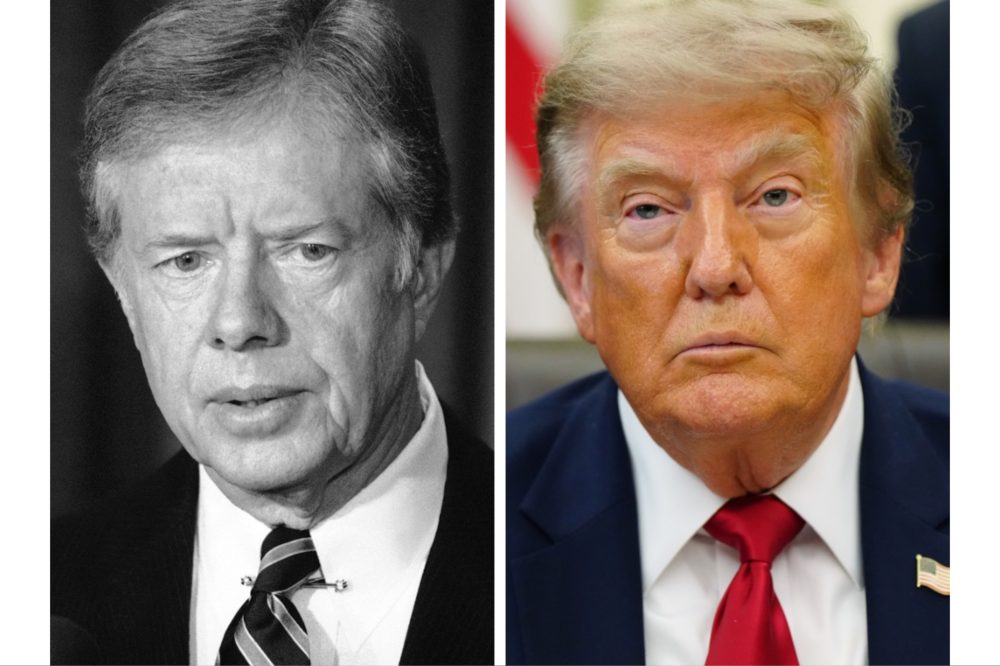
WASHINGTON — President Trump once used Jimmy Carter as a go-to political punching bag, regularly invoking the late 39th president as a symbol of Democratic weakness to make himself appear stronger and more decisive by contrast.
But that tone has changed. Trump has grown noticeably more reflective when discussing Carter, and observers say it may be because he is now wrestling with some of the very same problems that defined — and ultimately doomed — Carter’s presidency.
Chief among those parallels: an ongoing conflict with Iran that shows no signs of ending, and in fact is intensifying as the United States moves to assert control over the Strait of Hormuz. Add to that a stubborn inflation problem that Trump promised his business background would eliminate, and the similarities are hard to overlook.
Trump himself appears aware of the comparison. When asked last month why he hadn’t sent U.S. Special Forces into Iran to seize its enriched uranium by force, he replied, “I didn’t feel like being Jimmy Carter.” The remark was a clear reference to the disastrous 1980 rescue mission that attempted to free American hostages held in Iran — a mission that failed and claimed the lives of eight U.S. servicemen.
In March, Trump also noted that the failed raid “cost them the election” against Ronald Reagan in 1980 — a comment that suggested a more politically aware understanding of Carter’s downfall than his earlier mockery implied.
The change in how Trump speaks about Carter lines up with a broader pattern of the president focusing more on his personal legacy. Asked about Trump’s evolving tone and the overlapping challenges the two presidents have faced, White House spokesperson Olivia Wales said, “Trump will never allow Iran to have a nuclear weapon” and “remains laser-focused on implementing his proven economic agenda to lower costs.”
“The president is a one-of-a-kind leader who will always unapologetically advance America’s interests,” Wales said in a statement. “The only legacy he is concerned with is making America greater than ever before.”
Not everyone sees a deeper rethinking at play. Kori Schake, a former member of George W. Bush’s National Security Council, was skeptical that Trump is genuinely reassessing Carter. “He doesn’t stitch facts together and create theories,” she said.
Still, the shift is notable. During Trump’s 2024 reelection campaign, he routinely described Joe Biden as “the worst” president in history, adding that Biden made Carter look “brilliant” by comparison. Trump still brings up Carter, who passed away two years ago at the age of 100, but now it’s usually to make the inaccurate claim that Carter was opposed to mail-in voting.
The differences between the two men remain vast. Carter was married to his wife, Rosalynn, for 77 years, was deeply religious, and pledged to “never knowingly lie to the American people.” Trump has been divorced twice, openly enjoys using profanity in public, and has a well-documented history of making false statements.
As president, Carter placed his family’s peanut farming business into a blind trust. While control of the Trump Organization has been handed off to Trump’s sons, the president pulled in nearly $1.2 billion from his cryptocurrency ventures last year and has made no secret of using his presidency to generate personal financial benefit in various other ways.
In a 1977 speech, Carter declared, “We are now free of that inordinate fear of communism.” Trump, by contrast, has seized on primary victories by progressive Democrats as an opportunity to repeatedly stir up fears about communism.
Carter was also awarded the Nobel Peace Prize in 2002. Trump has not received the honor, despite claiming he deserves it more than any previous recipient.
While both presidents dealt with inflation, Carter’s situation was far more severe — consumer prices peaked at a 14.7% annual rate in April 1980. Under Trump, consumer prices rose 4.2% in May compared to a year earlier, a three-year high. Prices did drop from May to June, partly because a ceasefire with Iran brought gas prices down, but that truce has since collapsed, sending oil prices back up.
Trump has suggested he doesn’t factor Americans’ financial hardships into his decision-making on Iran — a war he initiated alongside Israel in February. He has also recently brushed off concerns about inflation. Meanwhile, U.S. military strikes have ramped up again after Iran launched attacks on commercial ships passing through the Strait of Hormuz.
Carter faced his own version of that crisis. In his 1980 State of the Union address, he said the situation in the strait “demands the participation of all those who rely on oil from the Middle East and who are concerned with global peace and stability.”
Another shared thread: Carter once weighed military action to seize Kharg Island but held back to protect the American hostages. Trump, by contrast, ordered strikes on the island early in the conflict to cut off Iranian oil exports and has threatened further action there.
Schake, who is a senior fellow and director of foreign and defense policy studies at the American Enterprise Institute, pointed out a critical distinction: “While the Carter administration gave serious consideration to attacking Kharg Island, the reason they didn’t do it was they didn’t want to be at war with Iran. And we’re already at war with Iran,” she said.
Johnathan Adler, author of “His Very Best: Jimmy Carter, A Life,” said Iran worked to undermine Carter’s reelection and suggested they could try the same playbook against Trump’s Republican Party heading into the November midterm elections. “These people are master diplomats, and they proved that during the Carter administration,” Adler said. “They’re proving that again. They’re really good at rope-a-dope.”
Adler also offered a blunt assessment of Trump’s situation: “I think it is dawning on him — it’s getting through even his thick skull — that he’s kicked over a hornet’s nest and his presidency might be remembered for some of the same things Jimmy Carter’s presidency is.”
Trump has been invoking many past presidents lately. He has praised William McKinley’s backing of tariffs, called Teddy Roosevelt a “great he-man,” and said he pushed for the now-collapsed June ceasefire with Iran partly to avoid the “economic catastrophe” that he associated with Herbert Hoover. “I’m a student of a lot of history,” Trump said this week.
During his first term, Trump frequently compared himself to Andrew Jackson. He still praises Jackson but has recently broadened his admiration to include other presidents, including Democrats like Franklin Delano Roosevelt. He even included some of Carter’s accomplishments on a “Walk of Fame” he created along the White House Colonnade — though displays for other Democrats, such as Barack Obama and Biden, were sharply critical.
James P. Pfiffner, a professor emeritus at George Mason University and author of several books including “The Character Factor: How We Judge Our Presidents,” offered a sobering take via email: “Trump is thinking of his legacy, and he might have thought that attacking Iran would have enhanced it. But, in fact, it will seriously hurt.”
Adler also recounted that after his presidency, Carter reached out to Trump asking for a donation toward his presidential library. Trump later wrote that Carter had requested $5 million — and that he never responded. During Trump’s first term, Carter sent the president a letter, and Trump called to thank him. The conversation left Carter with the impression he might be named a special envoy to China — a role that never came to pass.
“If he had learned anything from Carter’s experience — and listened to predictions about the Strait of Hormuz — he would have hesitated,” Pfiffner said of the decision to go to war with Iran. “But he ignored lessons of history and geography.”
President Donald Trump on Friday pointed the finger at Canada for the thick wildfire smoke drifting across the United States, threatening to pile the “incalculable cost” of dealing with the dirty air on top of the tariffs already imposed on Canadian goods.
Smoke from hundreds of active fires burning across Canada blanketed a wide stretch of the country — from the Midwest all the way to the Northeast — on Thursday and Friday, with officials urging people to stay inside due to the hazardous air quality.
Trump, who has had a tense relationship with Canadian Prime Minister Mark Carney, said he planned to call the prime minister to demand answers about what Canada intended to do about what he called a “totally unacceptable” situation.
In a post on Truth Social, Trump wrote: “We are holding Canada responsible for the fact that they are not properly maintaining their Forests … and the United States is being unnecessarily invaded by filthy, polluted, and unhealthy air.”
He continued: “This is Willful Negligence, and becoming a yearly occurrence, costing the United States Billions of Dollars, which cost of this pollution must of necessity be added to the TARIFFS Canada is currently paying.”
Canada’s minister of emergency management and community resilience, Eleanor Olszewski, responded by noting the country has put C$12 billion (roughly $8.56 billion) toward forest sustainability and fire prevention since 2020, as Canada faces increasingly dry and warm conditions. She also highlighted the long-standing cooperation between the U.S. and Canada in battling wildfires across both countries.
“At this time, our first priority is protecting Canadians and keeping communities safe,” Olszewski said in a statement.
Climate scientists say warming temperatures are drying out forests and fueling more frequent wildfires across Canada, which is home to some of the world’s largest stretches of forested land.
“As our climate warms, we’re seeing … more extreme weather, and we’re going to see more fire,” said Mike Flannigan, a wildland fire professor at Thompson Rivers University in British Columbia.
Trump imposed tariffs on major Canadian imports shortly after taking office in 2025. Carney’s office had not responded to requests for comment on Trump’s latest remarks. On Thursday, Carney said the United States could be doing more to address climate change, which he argued is driving longer droughts and rising temperatures worldwide.
The two leaders are expected to cross paths at the FIFA World Cup final in New Jersey on Sunday.
Much of this year’s fire activity is concentrated in the vast province of Ontario, particularly in its remote, sparsely populated northwest — a region accessible only by air. So far in 2026, roughly 650,000 acres (about 2,630 square kilometers) have burned, up from 600,000 acres at the same point last year. Thousands of residents have been forced to leave their homes.
One of the communities destroyed was the Namaygoosisagagun First Nation — also called Collins First Nation — in northwestern Ontario. Residents were forced to flee by boat and take shelter in Thunder Bay, according to Matthew Hoppe, the community’s incident commander.
“There was nothing remaining. So as you can imagine, the membership is totally distraught, upset, overwhelmed, lost,” Hoppe told Reuters.
Thunder Bay, a city of roughly 110,000 people situated on the northern shore of Lake Superior, more than 1,300 kilometers (about 800 miles) northwest of Toronto, is now at full capacity as it takes in wildfire evacuees from across the region, Mayor Ken Boshcoff said.
Ontario Premier Doug Ford announced Friday that the province would purchase 11 new aircraft to help fight the fast-moving fires, while also pushing back against criticism from U.S. politicians who have called the response insufficient.
The United States is also dealing with an above-average fire year. According to the National Interagency Fire Center, 3.7 million acres have burned across the country so far in 2026, compared to a 10-year average of 2.7 million acres.
The U.S. Justice Department has served subpoenas on 14 major law firms, demanding records and sworn depositions as part of a growing legal clash between the Trump administration and the country’s largest attorney membership organization, according to court documents filed Friday in Washington federal court.
The subpoenas, which were disclosed publicly through the court filing, require the firms to turn over communications tied to White House executive orders that either targeted those firms or prompted them to reach agreements with President Donald Trump to sidestep his directives. The records sought include any communications involving Boris Epshteyn, a longtime Trump adviser, dating back to the beginning of the president’s second term.
Investigators are also asking the firms to provide any communications they may have had with the American Bar Association specifically regarding Epshteyn. It remains unclear at this point whether any of the firms plan to legally challenge the subpoenas.
The Justice Department revealed the subpoenas in the context of a lawsuit filed by the ABA, which contends that the Trump administration has been unlawfully targeting law firms because of their past legal representation, internal diversity programs, and political associations. The ABA argues the policy harms its members.
In its court filing, the DOJ urged U.S. District Judge Amir Ali to deny the ABA’s request for similar documents directly from the White House. The department argued the ABA should instead be required to “seek this information from its own members, or the law firms at issue, rather than going directly to the White House.”
The DOJ stated in its filing that its subpoenas to the law firms are intended to “obtain the documents that Plaintiff has requested.”
Representatives for the ABA, the DOJ, and the Trump White House all declined to offer immediate comment. Spokespersons for the law firms named in the subpoenas also did not respond to requests for comment.
The ABA’s lawsuit is drawing new attention to the administration’s broader effort against high-profile law firms, and it could place firms that previously settled with the administration in a difficult spot as both sides battle over potential evidence in the case.
Four law firms that took legal action against the administration last year successfully obtained permanent court orders blocking the executive orders that had targeted them. The administration’s appeal of those rulings remains pending before the U.S. Court of Appeals for the District of Columbia Circuit, which heard oral arguments in May.
Pennsylvania Senator John Fetterman issued a stark warning Thursday, saying he would abandon the Democratic Party if it officially adopted a position opposing US aid to Israel — describing that scenario as a personal “red line.”
His remarks came in the wake of a House vote that struck down a measure to cut off American assistance to Israel. The proposal was rejected by nearly all Republicans and a slim majority of Democrats.
Speaking to NBC News, Fetterman made his position clear: “If they put that in our platform — no aid for Israel — and officially become the anti-Israel party, then yeah, that’s a red line for me. Democrats, we’ve always should support Israel. That’s our special ally, you know? In the only democracy in the entire region, that’s Israel. So I’m always proud to stand with Israel.”
The Pennsylvania senator went further, stating he could not remain in a party that formally turned its back on Israel. “It would be a problem for me if the Democratic Party officially says, ‘Israel is the problem, Israel doesn’t deserve to exist, and I’m never going to support aid, and I’m not going to call out Hamas and Hezbollah and Iran as terrorists, and they are the problem in the region,’” Fetterman said.
Fetterman stopped short of specifying what he would do next, declining to say whether he would join the Republican Party or serve as an independent if he did leave the Democrats.
A party switch would not be unprecedented. Senators Joe Manchin and Kyrsten Sinema both previously left the Democratic Party to become independents, though they continued caucusing with Democrats before eventually retiring at the end of their Senate terms.
The controversy stems from a House vote held Wednesday, in which 103 Democrats sided with an amendment introduced by Rep. Thomas Massie, R-Ky., that would have eliminated US aid to Israel. Republicans voted overwhelmingly against the measure.
The episode highlights a deepening divide within the Democratic Party on the issue of Israel. Younger members of the party have grown increasingly supportive of Palestinians over Israelis, and a recent Pew Research Center survey found that 71% of younger Democrats hold an unfavorable view of Israel.
Newly filed court documents have exposed that immigration officials shared sensitive Medicaid data — data they were not authorized to possess — with the private data analytics firm Palantir.
The revelation surfaced as part of an ongoing federal court case in which Democratic states are challenging ICE’s access to Medicaid records, arguing the agency has been using that information to assist in deportation operations.
According to the court filings, Medicaid officials improperly handed over data on millions of individuals to ICE, which then passed that information along to Palantir, a data analytics company.
SIOUX FALLS, S.D. — A federal judge ruled Friday that South Dakota cannot enforce its new abortion advertising law against a reproductive health nonprofit organization.
U.S. District Judge Camela C. Theeler issued a preliminary injunction halting enforcement of the recently passed state law against New York-based Mayday Health and plaintiff Nancy Turbak Berry. In her ruling, the judge indicated the nonprofit was likely to prevail in the case.
The law, which Republican Gov. Larry Rhoden signed in March, bans the distribution and advertising of unlawful abortion services — including abortion pills — within South Dakota. Friday’s decision does not strike the law from the books entirely.
The lawsuit was filed in May, naming Gov. Rhoden and Attorney General Marty Jackley as defendants. The plaintiffs argue the advertising ban infringes on constitutionally protected free speech. The judge noted in her ruling that the state made no attempt to demonstrate the law met the legal standard of strict scrutiny — meaning the state failed to show the law served a compelling government interest and was written as narrowly as possible.
Jim Leach, the attorney representing Mayday Health, said the decision sends a clear message. “Information should not be banned,” Leach said. “And the state wants to ban information about abortion. This ruling says the state cannot ban information about abortion, no matter what you think about abortion or anything else.”
Abortion has been illegal in South Dakota since the U.S. Supreme Court overturned Roe v. Wade, with the only exception being when the pregnant person’s life is in danger. Performing, prescribing, or obtaining an abortion in the state is considered a felony.
Mayday Health, founded in 2022, runs advertisements informing the public about the legal status and availability of abortion pills, though it does not sell or provide any medication itself. In December 2025, the nonprofit placed placards at gas stations across South Dakota that read: “Pregnant? Don’t want to be? Learn More at Mayday.Health.”
Following those advertisements, Attorney General Jackley filed a complaint against Mayday Health. The two parties reached an agreement in March under which the nonprofit agreed to take down the placards.
Gov. Rhoden issued a statement Friday expressing disappointment with the ruling but emphasized that it is only a preliminary decision. “I remain confident that our law is not only constitutional — it’s vitally important,” he said.
A federal judge in Boston has ruled that the Trump administration is prohibited from using an obscure contract provision to justify billions of dollars in cuts to federal grant funding, dealing a significant legal blow to the administration’s efforts to reduce spending.
The decision came after 23 states joined together last year in a lawsuit claiming the administration had been relying on the clause to slash funding across a wide range of programs, including crime prevention, food security, and scientific research. The states also feared the clause could be used to cancel both existing and future grants.
U.S. District Judge Indira Talwani issued a summary judgment blocking the administration from using the clause as a basis for cuts, and also turned down the federal government’s request to have the lawsuit dismissed.
In her written ruling, Talwani stated: “Defendants’ interpretation of the Termination Clause is not clearly supported by the text of the provision, runs counter to the regulatory scheme, receives no support in the rulemaking history, and would violate the Spending Clause’s requirement that conditions be imposed unambiguously.” Talwani was nominated to the bench by Democratic President Barack Obama.
The states’ lawsuit contended that the Office of Management and Budget had promoted the use of the clause to carry out what they characterized as a “nationwide slash-and-burn campaign” against federal grant programs.
The clause at the center of the dispute was first introduced in 2020 and later revised in 2024. It allows federal officials to end a grant if the award “no longer effectuates the program goals or agency priorities.” The states argued that while the language was put in place during the Biden administration, it was only now, for the first time, being used to actually terminate grants.
New Jersey Attorney General Jennifer Davenport issued a statement sharply criticizing the administration’s actions. “Instead of working with us to keep the public safe and lower costs for hardworking New Jerseyans, the Trump Administration has recklessly and illegally gutted federal funding for public safety, disaster preparedness, scientific research, clean water, and more,” she said.
Davenport continued: “Today’s decision is an important win for all New Jerseyans and confirms that the Trump Administration defied the law when it embarked on its campaign to gut critical federal funding to the states. The President and his allies cannot hold critical programs hostage to their personal whims and political ideologies, destabilizing the country by yanking essential federal funding that was already awarded to the states.”
Attorneys representing the federal government described the case as an “extraordinarily unusual lawsuit” and pushed for dismissal, arguing that many of the grants in question had already been terminated and that the states’ concerns about future grants were too speculative. They also accused the states of making broad, sweeping objections to the cancellation of thousands of grants without asking the court to reinstate any single specific grant.
In their dismissal motion, government lawyers wrote: “That mismatch between the allegedly unlawful agency ‘decision’ on one hand, and the amorphous relief requested in this suit, on the other, creates a set of jurisdiction and justiciability defects that doom this lawsuit at the threshold.”
A spokesperson for the Office of Management and Budget did not respond when asked for comment.
NEW YORK (AP) — The nation’s first billionaire president may soon be generating income from a brand-new revenue stream directly tied to his time in office: charging Wall Street traders for a head start on certain posts made to his Truth Social platform.
Trump’s financially troubled media company has announced plans to offer financial trading firms and institutions the ability to view posts from the platform’s “highest-ranking” accounts — potentially including the president’s own — a matter of milliseconds before the general public sees them.
For those traders, that tiny window of time could translate into enormous profits. And for Trump, it could mean significant new income.
Trump’s posts have repeatedly demonstrated the power to shake financial markets, sending prices sharply higher or lower within moments. Until now, announcements from the White House have generally been treated as public information — something that should be freely available to everyone at the same instant.
The president holds the largest following on Truth Social, with 12.9 million followers, making it likely his account would be among those included in the early-access offering.
Truth Social’s publicly traded parent company, Trump Media & Technology, did not respond to questions submitted by email — including whether the president’s own posts would be part of the service. But the planned offering has drawn significant attention, and not only from the financial world.
“It’s odious, selling access to highest bidders on Wall Street,” said Dylan Hedler-Gaudette, a federal ethics expert at watchdog organization Project on Government Oversight. “Everything he says has market implications.”
The service, dubbed Truth PSI, was unveiled in a brief press release on Thursday. It would allow trading firms to view select posts before ordinary users, giving them the opportunity to act on market-moving information ahead of the crowd — whether that involves stocks, bonds, or interest rates.
Trump Media’s announcement did not disclose the anticipated size of this new business, but it quoted CEO Kevin McGurn saying he expects it to become a “meaningful” source of revenue as part of a broader strategy to “monetize proprietary assets.” The company said it expects to launch the service next month.
The target customers are high-frequency traders — firms that rely on reacting to news faster than anyone else to buy and sell financial instruments. In that world, fractions of a millisecond can be the difference between a gain and a loss.
When Trump unveiled sweeping tariffs on April 2 last year, the announcement was a major market event — and many people learned about it first through Truth Social.
“It’s Liberation Day in America,” Trump posted hours before a formal Rose Garden ceremony, causing stocks to drop nearly 5% over the following hours, while safe-haven assets like gold and Treasury bonds climbed sharply.
Several days later, Trump reversed course, announcing a 90-day suspension of those tariffs — again via Truth Social — writing, “THIS IS A GREAT TIME TO BUY!!!”
Markets surged 9.5% that day, adding $4 trillion to investor wealth as measured by the S&P 500 index.
“It’s yet more brazen corruption,” said Kathleen Clark of Washington University School of Law, an expert in government ethics rules. “Trump can line his pockets by selling access.”
Trump has used Truth Social to announce a wide range of major decisions, including personnel changes, immigration enforcement actions, and developments related to conflicts in Ukraine and Iran.
“THE CEASEFIRE IS NOW IN EFFECT. PLEASE DO NOT VIOLATE IT!,” he posted on June 24 last year regarding a short-lived agreement with Iran, causing oil prices to drop immediately.
No other social media platform carries comparable access to the sitting president, and banks and trading firms will presumably be required to pay a premium for that advantage.
Trump Media did not disclose a price in its announcement, but confirmed it has already secured customers for the service.
While similar early-access services exist at other social media companies, the key distinction here is that the account in question belongs to the President of the United States. Still, there appears to be no legal barrier preventing Trump from proceeding.
Federal conflict-of-interest laws would prohibit most government officials from owning a company that profits by selling access to their official decisions — but those laws specifically exempt the president and vice president, according to Clark.
Even so, every president since those laws were enacted decades ago has voluntarily acted as though the rules applied to them — divesting stocks, selling off business interests, or placing assets in a blind trust. Trump has declined to follow that tradition.
The White House directed reporters’ questions — including those about the president profiting from his office — to the company that owns Truth Social. Multiple messages to Trump Media & Technology went unanswered, and Trump’s own family business, the Trump Organization, declined to offer any comment.
Trump himself has consistently maintained that there is no conflict between his duty to act in the public interest and any financial benefit he may derive from the presidency. The White House has previously stated that Trump acts solely in the country’s best interest and is not involved in his family’s business operations.
Truth PSI is the latest attempt to breathe life into Trump Media, whose stock has tumbled more than 70% since the president returned to office earlier this year. The company has tried expanding into cryptocurrency, financial services, and nuclear fusion — none of which has reversed the decline.
The company recently replaced its longtime CEO, former Congressman Devin Nunes, with McGurn, but the stock has continued to fall regardless. Shares rose 0.6% on Thursday following the announcement, and gained slightly less than that the following day, closing at $9.66. Before Trump took office last year, the stock had closed at $40.
WASHINGTON — President Donald Trump stepped before the nation Thursday night from the White House, releasing a collection of declassified documents that his supporters had promoted as definitive proof of widespread voter fraud in the 2020 election. But after a thorough review, The Associated Press found the records fell far short of that promise.
During his address, Trump described what he called alarming revelations — including alleged Chinese interference aimed at undermining his 2020 campaign and a cover-up orchestrated by what he termed the “deep state.” He told viewers, “Americans were blatantly lied to about the security of our election infrastructure.”
The newly released materials include declassified intelligence reports, investigation files, intelligence analysis, and various correspondence. Many pages are so heavily blacked out that their conclusions are impossible to determine. Others simply repeat vulnerabilities and findings that have already been publicly known for years. Crucially, nothing in the documents demonstrates that China or any other foreign nation actually manipulated election results in 2020 or any other year.
David Becker, executive director of the Center for Election Innovation & Research, attended a White House briefing on the materials before the speech and had a blunt reaction. “The White House promised a bombshell, and they delivered a dud,” he said. Despite what he described as a clear push by administration officials to frame the documents as explosive, he said “there was absolutely nothing here that was news, nothing here that even calls into question past elections and certainly not the 2020 election.”
During his speech, Trump stated: “Starting during the 2020 election cycle, the People’s Republic of China carried out what is believed to be the largest compromise of election data in history, resulting in China’s illicit acquisition of 220 million U.S. voter files.”
What the documents do not show, however, is any evidence that China actually did anything with that information. It has been widely established for years that China gathers enormous amounts of data on Americans — not as part of any effort to change election outcomes. Additionally, public versions of voter registration files are broadly available, including online, and are routinely bought and sold by political campaigns and parties to guide their outreach efforts.
China’s attempts to influence the 2020 race were already a matter of public record, and no intelligence assessment concluded that Beijing directly interfered with the vote itself. The newly released documents do not challenge that conclusion. Instead, they shed light on an internal debate within the intelligence community over how to describe China’s intentions and actions. Emails show that one dissenting view held that China had taken steps to “denigrate” Trump — but that perspective had already been included in the post-election intelligence community assessment, meaning it was never hidden.
China responded Friday, calling Trump’s allegations “groundless” and “entirely fabricated,” and reiterating that it has never interfered in U.S. elections and has no desire to do so.
Trump also highlighted a new Department of Homeland Security investigation, based on state voter rolls and public records, which he said identified roughly 278,000 noncitizens registered to vote in federal elections. The report claimed more than a quarter of a million noncitizens were illegally registered in California, Pennsylvania, New Jersey, and Nevada. An additional 28,000 were identified in 25 states using the new Systematic Alien Verification for Entitlements system, known as SAVE.
Importantly, the report does not allege that any of those individuals actually cast a ballot — which would constitute a crime. The data itself has not been independently verified. Reports have shown that the SAVE database is riddled with errors, including outdated records that have incorrectly labeled naturalized citizens as noncitizens. A federal judge has already blocked the database from being used, citing concerns that eligible voters could be wrongly removed from voter rolls. Research has consistently shown that noncitizen voting is extremely rare, and noncitizens are permitted to vote in some local elections.
Some of the released documents also touched on Russia’s election-related activities. One declassified 2020 report described Russia as the foreign nation that had made the most aggressive attempts to penetrate American election systems — specifically working to defeat Joe Biden. The document noted that Russia amplified claims that Biden, while serving as vice president, had acted improperly in connection with Burisma, the Ukrainian energy company that employed his son Hunter — allegations that Trump and Republicans frequently repeated.
“Their aim is to defeat the former Vice President and ensure the President’s victory,” reads the document from the National Intelligence Council.
The same document noted that both China and Iran wanted Trump to lose. However, a chart within the document showed that only Russia was identified as having engaged in “targeting, accessing, or manipulating election processes or election-related systems.” Russia has continued to deny interfering in U.S. affairs.
A significant portion of the released documents relate to a Michigan case in which a canvassing operation that appeared to support Biden submitted thousands of questionable voter registration forms to a local election official in 2020. That official rejected the registrations and notified authorities. Notes from at least one FBI agent — though heavily redacted — suggest the agent pushed for further investigation and charges as recently as 2024. Michigan Republicans complained in 2023 that the state’s Democratic attorney general failed to bring charges against anyone.
Ultimately, the case was closed, according to one of the records, “because logical investigation and/or leads have been exhausted, and the investigation to date did not identify a criminal violation or a priority threat to national security.”
Trump told the nation the documents also contained intelligence “revealing shocking vulnerabilities in our election infrastructure” that leave it open “to hacking, exploitation and foreign interference.” One report listed recent security breaches — mostly attributed to Russia — and urged state and local election officials to strengthen their defenses to prevent voter information from being misused to obtain absentee ballots or alter voter rolls.
Election officials have long acknowledged that voting machines carry some risk, which is why multiple safeguards exist — including physical security measures, equipment testing, paper ballot backups, and post-election audits — to catch errors or threats.
What remains unclear is what the Trump administration itself is doing to help protect election systems. Earlier this month, Trump removed members of a bipartisan federal election commission that distributes federal grants to states, oversees voting system testing, and maintains the national voter registration form, after the panel pushed back on his effort to require proof of citizenship before registering to vote. The administration has also cut millions of dollars in funding from the U.S. Cybersecurity and Infrastructure Security Agency, which assisted state and local officials in securing elections, and disbanded an FBI task force dedicated to investigating foreign influence operations targeting U.S. elections.
The documents repeatedly flag the dangers posed by large voter databases and election websites that could be accessed or manipulated by foreign adversaries. Yet the SAVE system — which Trump has been urging states to adopt — has itself been criticized as an unlawful, centralized federal database of voter data that could present yet another target.
A federal judge in Boston issued a ruling Friday blocking the Trump administration from using a White House budget regulation to eliminate billions of dollars in grant funding for programs that don’t align with the president’s agenda.
U.S. District Judge Indira Talwani sided with a coalition of Democratic-led states who challenged the move, agreeing that a provision quietly added to U.S. Office of Management and Budget regulations back in 2020 — during Trump’s first term in office — did not actually give his administration the legal authority to pull grant funding simply because federal agencies have shifted their priorities.
The states argued the regulation was being misused as a tool to cut off funding for causes the administration found unfavorable, and Judge Talwani agreed that the clause did not support such sweeping grant terminations.
WASHINGTON (AP) — Homeland Security Secretary Markwayne Mullin stepped before cameras at the White House Friday to deliver a stark warning: state officials who refuse to cooperate with President Trump’s election security agenda could face funding cuts, penalties, or even criminal investigations.
The warning came just one day after Trump addressed the nation in primetime on the subject, and arrives only months before midterm elections that will determine which party controls Congress.
Legal and election experts, however, say the threats are largely toothless. Courts have repeatedly blocked the administration’s voting-related initiatives, and the U.S. Constitution explicitly grants states the authority to manage their own elections.
Still, Mullin’s statements — delivered from the White House complex — could further erode public confidence in election systems and create complications for states as they gear up for November.
“We absolutely can build confidence in the American people, but the states have to do their part,” Mullin said.
Trump has continued to falsely assert that Democrat Joe Biden won the 2020 presidential election through fraud, despite judges and his own attorney general during his first term determining the election was legitimate. Since returning to the White House last year, Trump has sought to use federal power to challenge that outcome.
Mullin claimed Trump was not trying to relitigate 2020, “although he definitely could at this point,” adding: “This is just about exposing what took place and making sure it never happens again.”
During Friday’s remarks, Mullin repeated an unverified claim Trump made the night before — that the federal government had identified 250,000 noncitizen voters on the rolls across California, Nevada, New Jersey, and Pennsylvania. He said the Department of Homeland Security used publicly available data to reach that conclusion. Election experts, however, say public data lacks the precision and currency needed to accurately determine whether a registered voter is a noncitizen.
Election officials in California and Pennsylvania said they would look into the administration’s findings, while pointing out that they already conduct their own voter list maintenance and that noncitizen voting is extremely uncommon — a conclusion supported by research.
California Gov. Gavin Newsom, a Democrat, fired back on social media: “California has free, fair, and secure elections and we will fight for them. Try us.”
In Nevada, Secretary of State Cisco Aguilar, also a Democrat, expressed confidence in his state’s voter records. “We are constantly looking at the information to figure out how many registered voters in Nevada don’t have a Social Security number on file,” he said. “We have done significant work to make sure our voter rolls are as clean as possible.”
Mullin also vowed to closely monitor public voter lists to pursue fraud cases both before and after the 2026 election. “If you are an illegal or you are voting illegally, we will hunt you down, we will find you and we will prosecute you,” he said.
He called on states to participate in DHS’s recently revamped SAVE program — a federal database tool at the center of the administration’s push to nationalize election oversight. At least 25 states have used the program to check their voter rolls since April 2025, following significant expansions to its capabilities under the Trump administration. The administration has demanded that states submit sensitive voter data to the program for a full audit.
Mullin warned that state officials who refuse to participate could face fines, penalties, or imprisonment.
However, a federal judge recently blocked the updated version of the SAVE program, citing concerns about voter privacy and the risk of wrongly removing eligible voters from the rolls. The case included instances where the program incorrectly flagged legitimate voter registrations.
David Becker, executive director of the nonprofit Center for Election Innovation and Research, called Mullin’s threats baseless. “Every court to consider the DOJ’s demands — 15 of them to date, six of those judges appointed by President Trump — have confirmed that the federal government cannot legally demand access to states’ sensitive voter data,” he said. “What he’s suggesting is illegal.”
Meanwhile, Trump’s push to pass the SAVE Act — federal legislation that would require proof of citizenship to register to vote — has stalled in the Senate. Republicans do not have the votes needed to bypass filibuster rules and pass the bill without Democratic support.
Mullin also amplified Trump’s concerns about potential vulnerabilities in electronic voting machines, a topic voting security experts have long acknowledged. While Trump suggested Thursday that these weaknesses make it possible to “rig” elections, officials say extensive safeguards exist, including physical security measures, pre-election machine testing, post-election reviews, and paper ballot backups used across most of the country.
To address those concerns, Mullin said the nation’s Cybersecurity and Infrastructure Security Agency — which operates under DHS — would release an updated election infrastructure plan within 30 days and offer cyber threat resources to states that participate in SAVE.
Critics noted the irony: Trump has significantly scaled back CISA’s election security work. The agency was largely sidelined during last year’s elections after the administration reviewed its election-related activities, placed more than a dozen election-focused employees on administrative leave, and cut $10 million from two cybersecurity programs — including one specifically designed to assist state and local election officials. CISA also remains without a Senate-confirmed director and has gone through multiple acting leaders.
Nevada’s Aguilar said his state has had to step up to fill the void left by the federal government. “The fact that they think they’re going to come in prior to the general election in November and provide us infrastructure, that’s nuts,” he said. “Actions speak louder than words, and in their case, it’s all been talk.”
The lone Democrat serving on the Federal Communications Commission is speaking out against President Donald Trump’s demand that two major broadcast networks lose their licenses after they declined to air his speech.
On Thursday evening, Trump delivered a nearly 30-minute prime-time address in which he once again raised his familiar claims that American elections cannot be trusted. During those remarks, he called for the licenses of Disney-owned ABC and Comcast-owned NBC to be taken away, saying their decision not to carry his speech amounted to fraud.
“In a rare move NBC and ABC fake news have both said they would not cover this speech,” Trump said Thursday. “Fraud like this should mean a revocation of their licenses.”
FCC Commissioner Anna Gomez, who sits alongside two Republican commissioners, fired back on Friday, calling Trump’s demand “ridiculous.” She argued the networks were simply making “the same editorial decisions they’ve made under presidents of both parties.”
“Those editorial decisions are protected by the First Amendment, and the FCC has no authority to punish a station for refusing to air a blatantly political speech,” Gomez said in a statement. “This is a naked attempt to bully broadcasters, and the FCC should have no part in it.”
Legal experts note that broadcast networks hold broad First Amendment protections when it comes to deciding what content they air. Historically, however, networks have typically carried presidential speeches, viewing them as matters of public interest. Officials also pointed out that broadcast networks have previously declined to air speeches from Democratic presidents Barack Obama and Joe Biden.
Stripping a broadcaster of its license is not a simple process — it requires multiple steps, a ruling from an administrative law judge, and could ultimately be appealed to the full FCC and through the court system.
This is not the first time Trump has pushed for action against the two networks. He has made repeated calls for the FCC to revoke the licenses of both NBC and ABC.
A newly announced commemorative dollar coin bearing President Trump’s likeness is drawing criticism from legal experts who argue the move not only breaks with long-standing tradition — it may actually be against the law.
The U.S. Mint is moving forward with production of the coin, which is connected to the country’s 250th anniversary celebration. While the coin is being framed as a commemorative piece, experts say federal statutes have historically prohibited the image of any living person from appearing on American currency.
Trump would be only the second living president ever to have his face placed on a U.S. coin. The first was Calvin Coolidge, whose image appeared on a coin back in 1926.
The president’s face has shown up in a number of unusual places throughout this year, with this latest coin being among the more high-profile examples. Critics and legal scholars say the move sets a troubling precedent, regardless of the celebratory context surrounding the nation’s milestone anniversary.
Wisconsin Lt. Gov. Sara Rodriguez announced Friday that she is ending her bid for the Democratic gubernatorial nomination, saying that ongoing financial problems within her campaign would serve as too great a distraction to continue.
The decision follows a turbulent stretch for Rodriguez, who had been considered a prominent establishment Democrat from the Milwaukee suburbs — a key region in the battleground state. Earlier this week, she let go of her campaign manager after it was discovered that the campaign had hundreds of thousands of dollars less available than she had been led to believe.
Rodriguez addressed the situation directly in a social media post Friday. “As we have continued to dig into our financial reports, it has become clear there are issues that would be an ongoing distraction,” she wrote. “Part of being a leader is taking swift action, doing the right thing and being as honest as possible when there’s a problem.”
She went on to explain her reasoning for stepping aside entirely. “And because I believe that, I cannot, in good conscience, allow these questions to become a cloud over an election Democrats need to win,” she added.
The timing is significant — the Wisconsin Democratic primary is scheduled for August 11, less than a month away. Voters will be selecting a candidate to replace Gov. Tony Evers, a Democrat who chose not to pursue a third term in office.
Rodriguez had received the endorsement of Milwaukee County Executive David Crowley after he withdrew from the race on July 8. The remaining Democratic field includes democratic socialist Francesca Hong, former Lt. Gov. Mandela Barnes, and several other candidates.
COLUMBIA, S.C. — Newly appointed U.S. Sen. Darline Graham has quietly begun considering whether to seek a full Senate term on her own, three people with knowledge of the situation told the Associated Press. Those sources, who were not authorized to speak on the record, said she has already begun holding conversations about a possible campaign.
Darline Graham was appointed by South Carolina Gov. Henry McMaster earlier this week to serve out the remainder of her late brother Lindsey Graham’s Senate term, which expires in January. When McMaster made the announcement on Monday, he did not describe the appointment as temporary or symbolic in nature.
Darline Graham made history with the appointment, becoming the first woman ever to represent South Carolina in the U.S. Senate. At the announcement, she described the moment as “such an honor,” while many of her brother’s former staffers and campaign advisers stood behind her, visibly emotional.
“Lindsey has always been there for me. And now, I will be there for him,” she said.
Lindsey Graham passed away last Saturday at the age of 71. A preliminary finding from the medical examiner indicated he died from a tear in his aorta. He never married and had no children, though his sister was a frequent presence throughout his political career, appearing at events and even in some of his campaign advertisements.
Funeral arrangements were announced Friday. A service will be held in Washington on July 28, followed by additional services in South Carolina on July 29.
If Darline Graham decides to enter the race for a full term, her decision could significantly upend the field of candidates already positioning themselves for the contest. The filing window for a special primary opens July 21 and closes July 28, with the primary election itself set for August 11.
A number of other prominent South Carolina politicians have already been eyeing the race, including Reps. Russell Fry, Nancy Mace, and Ralph Norman, along with Lt. Gov. Pamela Evette.
Darline Graham’s interest in running was first reported by Semafor.
The City of Rehoboth Beach has shared an early look at what residents and planners had to say during the recent Charrette Week community planning event. A full report from Joe Kohl is set to be delivered at the Mayor and Commissioners Meeting on July 17 at 2:00 p.m., and the complete presentation will be posted once it becomes available.
Here is a rundown of the nine key themes that emerged from the sessions:
Revitalizing Downtown Rehoboth Beach topped the list of priorities, with participants calling for greater focus and investment in the city center. Closely tied to that goal was a push to make mixed-use development easier to achieve, with the aim of bringing more life and activity to downtown.
Future development, participants said, should be designed with pedestrians in mind — helping to cut down on parking demand and vehicle traffic. Along those lines, there was support for reducing parking requirements in certain areas and taking a fresh look at alternative transportation strategies, including transit, bicycle access, and multimodal options.
Attendees also called for a clear plan to address vacant commercial properties, as well as incentives to encourage the creation of workforce housing.
Other priorities included expanding outdoor dining and public gathering spaces, and strengthening cultural, arts, and community-serving uses throughout the city.
Finally, participants emphasized that both Wilmington Avenue and Baltimore Avenue are in urgent need of attention and improvement.
It’s a question that keeps coming up around Sussex County: why does Rehoboth Beach operate with a significantly larger budget than the City of Lewes? Officials have put together a detailed comparison to help answer that question.
One of the biggest factors is how each city handles utility services. Rehoboth Beach includes both Water and Wastewater operations as part of its budget — bringing in $8.2 million and $12 million respectively. Those two enterprise funds alone make up roughly 40.3% of the city’s total budget. Lewes, on the other hand, handles utility operations through a separate Board of Public Works, meaning those figures don’t appear in the city’s main budget at all.
When looking at General Fund revenues — the core operating budgets for each city — the gap is still substantial. Rehoboth Beach takes in $29.9 million in General Fund revenue, while Lewes brings in $13.8 million, making Lewes’s General Fund about 46.1% the size of Rehoboth Beach’s.
Interestingly, property taxes play a bigger role in Lewes than in Rehoboth Beach. Lewes collects $3.1 million in property tax revenue, which represents about 22.8% of its total revenues. Rehoboth Beach collects slightly less in property taxes — $2.7 million — but that figure only accounts for about 10.3% of its total revenues. The difference reflects how heavily Rehoboth Beach leans on tourism-driven income to fund city operations.
Parking revenue is one of the clearest illustrations of that tourism impact. Rehoboth Beach budgets $10.6 million from parking, compared to just $1.5 million for Lewes. A similar gap exists with lodging and accommodation taxes — Rehoboth Beach projects $4.9 million from that source, while Lewes budgets $1.2 million, or about 23.9% of what Rehoboth Beach expects to collect.
Capital spending also sets the two cities apart. Rehoboth Beach directs roughly 27.2% of its total budget toward capital improvements and infrastructure, compared to just 9.9% for Lewes. City officials say that higher figure is driven in part by the demands of maintaining utility systems and a broader range of municipal services.
Democratic hopefuls in Maine are in a frantic race against the clock to win over the progressive supporters of former Senate nominee Graham Platner, all while trying to shift attention toward the November battle against Republican Sen. Susan Collins.
It’s a difficult balancing act for the candidates, who are competing to face Collins in a contest that could determine which party controls the Senate — all while Platner’s scandal continues to cast a shadow over the race. During their first debate Thursday evening, one of the opening questions put to the candidates was: What was Graham Platner’s best idea?
Moving beyond Platner is just one hurdle Democrats face. The process being used to select a new nominee has never been used before, leaving candidates with fewer than three weeks to accomplish what campaigns normally spend months or even years doing — recruiting volunteers, raising funds, and preparing for debates.
The rapid pace of events was evident Thursday night on the debate stage.
When debate moderators asked about President Donald Trump’s decision to capture Venezuelan President Nicolás Maduro and his wife earlier this year, Secretary of State Shenna Bellows provided incorrect information about Collins’s response to Trump. When a moderator corrected her, Bellows explained she had been on vacation along the Kennebec River the previous week following her unsuccessful run for governor and hadn’t anticipated entering the Senate race.
“When I need to know the facts, I will. I’ll do my homework,” said Bellows, who was defeated by Collins in 2014.
The field of 12 candidates includes former public health leader Nirav Shah and union-backed logger Troy Jackson, who had campaigned alongside Platner in an unsuccessful bid for governor.
Platner stepped away from the Senate race last week following rape accusations, which he denies. His campaign rapidly fell apart as endorsers withdrew their support and resources dried up.
Under state law, Democrats have until July 27 to name a new nominee. The Maine Democratic Party’s succession plan calls for a state party convention on July 25, where 601 delegates will cast votes to determine Platner’s replacement. The majority of those delegates will be chosen this weekend from across the state’s 16 counties.
Candidates have been actively recruiting delegates who will vote on their behalf at the convention. They must also gather 500 voter signatures to qualify for the convention ballot.
“I don’t think anyone’s happy that we’re in this situation,” said Dan Jenkins, a Maine Democrat who has applied to serve as a delegate. “We would have preferred that this had broken many, many months ago and then Graham had exited the race when there was a time for a democratic process. But it’s where we are.”
Jackson is among a small group of candidates who are pivoting to the Senate race after already running for other offices, likely giving them an advantage since they don’t have to build a campaign from the ground up.
Our Revolution, a progressive organization founded by Sen. Bernie Sanders of Vermont that had originally supported Platner, has now thrown its backing behind Jackson, the former Maine Senate president. Sanders, an independent who aligns with Democrats, has not made an endorsement in the race.
Shah, the former director of Maine’s Center for Disease Control and Prevention, also ran unsuccessfully in this year’s Maine Democratic governor’s primary. He has been making the case to Platner’s supporters that he, too, is an outsider capable of bringing together a divided Democratic Party.
“You have an important place in this campaign, and we welcome your voices,” Shah said earlier this month while speaking to Platner’s base of supporters.
Bellows also ran for governor and is counting on her previous clashes with Trump to strengthen her argument that she will fight for working-class Mainers.
Bellows previously ran against Collins in the 2014 Senate race and suffered a lopsided defeat. She later won a state senate seat before becoming Maine’s secretary of state. She has since minimized her earlier loss to Collins, pointing to what she describes as the Democratic establishment’s reluctance to seriously challenge the Republican that year.
Another candidate, Jordan Wood, had initially announced plans to run in the Maine Democratic Senate primary before withdrawing last fall to pursue a race in the state’s 2nd Congressional District — a race he also lost.
A fatal shooting involving Immigration and Customs Enforcement agents in Maine this week has become a major talking point among the candidates seeking the nomination.
Colombia’s embassy has identified the man killed Monday in Biddeford — approximately 15 miles southwest of Portland — as Johan Sebastián Durán Guerrero, a 26-year-old Colombian national. The Department of Homeland Security has stated that an ICE officer discharged his weapon after the individual being pursued attempted to flee, posing what officials described as a threat to “public safety.”
Many of the candidates have been quick to tie Collins to the controversy surrounding the federal agency.
All candidates who participated in Thursday’s debate said they supported calls to “abolish ICE,” though Wood stopped short of saying the agency should be completely eliminated.
“I believe that when I say we have to abolish it, what I mean is that we need a new law enforcement agency that has the trust of the people,” Wood said.
Jackson took a stronger stance, describing ICE as a “rogue agency that goes around doing things that they’re being told to on high.”
Platner drew more than 150,000 votes in the June 9 primary — a striking total that demonstrated the strength of a progressive base hungry for a candidate who championed the working class and could energize large crowds.
With the state convention now just over a week away, it remains to be seen which candidate can tap into that same energy and enthusiasm that Platner generated among his supporters.
When Thursday’s debate moderators pressed candidates on Platner’s best campaign idea, Jackson pointed to his support for “Medicare for All.” As a gubernatorial candidate, Jackson had also advocated for replacing employer-based and private individual health insurance with a government-run program guaranteeing coverage for all Americans, with no premiums, no deductibles, and only minimal copays for select services.
Bellows said she agreed with Platner’s view that democracy in the United States has been corrupted by those who hold power.
Shah said he would carry forward Platner’s pledge to “abolish ICE,” while Wood said he most admired Platner’s willingness to state that Israel is committing genocide in Gaza — a claim Israel denies.
“Graham got into this race saying, ‘this is genocide.’ And I learned that it is so important in these moments to draw those moral lines,” Wood said.
President Donald Trump took to national television Thursday night to once again cast doubt on the integrity of U.S. elections and contest his 2020 presidential loss — this time framing those claims as a reason to push forward a tough new voter ID law.
During the primetime address, Trump leveled allegations of outside interference and undue influence in past elections, but offered no evidence that any votes were changed or that election outcomes were affected. He also left out important context surrounding his claims.
Trump announced he would be declassifying documents connected to the 2020 and 2018 elections — years when he lost the presidency and when his party suffered congressional setbacks, respectively. Despite repeated audits and reviews — many conducted by Republicans — no credible intelligence has ever confirmed that the 2020 vote count was fraudulent or manipulated by foreign governments. Notably, Trump raised no doubts about his victories in 2016 or 2024.
In a separate but related development, Democratic members of Congress are demanding answers from the Department of Homeland Security about how it screens and trains immigration enforcement officers. This comes after it was revealed Thursday that an ICE officer involved in a deadly shooting in Maine this week had a documented history of mental health problems and violent behavior.
The Associated Press reported that the officer, identified as David Brouillette, is an Army veteran whose close relatives say he has struggled with serious mental health issues since early childhood. Brouillette shot a Colombian man in Maine earlier this week.
Rep. Bennie Thompson of Mississippi, the top Democrat on the House Homeland Security Committee, said Brouillette’s background “directly call into question the supposed vetting and training ICE does of its recruits.”
Meanwhile, news organizations across the country faced a difficult decision ahead of Trump’s speech: broadcast it live or not? Trump had threatened sanctions against networks that chose not to carry it in real time. Broadcast and cable outlets spent hours debating how to handle the address, wrestling with the tension between covering the news and potentially amplifying false claims about the 2020 election.
Ultimately, most networks chose a similar approach — airing the speech while simultaneously fact-checking the president’s statements as he spoke. The situation unfolded amid ongoing friction between the press and a president who has repeatedly sought to exert influence over media coverage. Trump even used the speech itself to criticize networks that declined to air it live.
On the diplomatic front, Secretary of State Marco Rubio is set to travel to the Philippines next week for meetings with foreign ministers at an Association of Southeast Asian Nations gathering. The State Department says Rubio will meet with regional counterparts and senior officials as he promotes a free and open Indo-Pacific. He is scheduled to depart for Manila on Sunday and return to the United States on Thursday.
China pushed back Friday against Trump’s claims, with the Foreign Ministry flatly denying any involvement in U.S. elections. Spokesperson Lin Jian called the accusations fabricated. “The relevant allegations by the U.S. are entirely fabricated and aimed at vilifying China,” Lin said. “We have no interest in interfering in US elections and have never done so.” Lin urged Washington to stop what he called “groundless accusations” against China.
Sue Gordon, who served as principal deputy director of national intelligence during Trump’s first term, described the address as “a dangerous speech about an incredibly important topic.” She noted that the intelligence community had been raising alarms about foreign election interference throughout Trump’s first term, only to be dismissed. “He had an entire term to deal with it and I don’t know how you can believe how the same community that told him about it, that was excoriated about it” wouldn’t have warned him in 2020, Gordon said on CNN.
Conservative commentator John Solomon, who joined the White House staff last month and attended the speech in the East Room, said afterward that “the intelligence community has zero evidence that someone has flipped — that a foreign power flipped — a vote in 2020, ’22 or ’24.” He added, however, “We’re not through all the documents.”
In his remarks, Trump focused heavily on China while largely sidestepping Russia — a country that U.S. intelligence officials have said worked to boost Trump over Democrat Joe Biden in 2020 through widespread influence campaigns. Trump used the speech to call for passage of a strict voter ID bill that has stalled in Congress due to insufficient support even among his fellow Republicans.
“America is back and doing really well, but we still have a major challenge that must be urgently addressed, because no country can be great without fair and honest elections,” Trump said.
The head of the U.S. Small Business Administration, Kelly Loeffler, significantly grew her financial stake in Elon Musk’s SpaceX following her nomination to lead the agency, reaping millions of dollars when the company completed the largest initial public offering in U.S. history, according to a Reuters examination of federal financial disclosure records.
Before taking office, Loeffler reported an investment of between $1 million and $5 million — dated as of January 3, 2025 — in xAI, Musk’s artificial intelligence and social media company, which has since merged with SpaceX. That information came from a financial disclosure she was required to file prior to becoming SBA administrator.
A second financial disclosure, which Loeffler signed on May 14, 2026, and which Reuters obtained from the SBA on June 12, revealed she made an additional investment of between $1 million and $5 million in SpaceX and xAI during 2025. That second investment had not been previously reported publicly.
Two independent government ethics attorneys reviewed the disclosures and agreed with Reuters’ findings. Cabinet officials are required to report asset values in ranges and are not required to specify the exact dates of investments made before taking office.
SpaceX holds contracts with the U.S. military. Under federal law, cabinet members are barred from participating in government decisions involving companies in which they hold a financial interest. Public records do not show any financial connection between the SBA and either xAI or SpaceX, and xAI did not appear on the SBA’s publicly available list of AI tools used by agency employees in 2025.
Loeffler and her staff did not respond to repeated requests from Reuters seeking comment on her SpaceX holdings.
The payoff from those investments proved substantial. SpaceX priced its IPO on June 12 at a valuation of $1.77 trillion — the largest in U.S. history. According to Franco Granda, an analyst at data provider PitchBook, Loeffler’s first xAI investment could have been worth anywhere between $7 million and $2.6 billion on the day of the offering, depending on the exact amount invested and the timing. Her second investment would have been worth between $2.2 million and $25.4 million that same day.
Granda noted that earlier investments carried higher potential returns. xAI’s valuation climbed more than 7,000% between its first funding round and January 5, 2025, while SpaceX’s overall valuation more than doubled throughout 2025.
Loeffler’s initial stake in xAI was acquired through a private placement — an investment type typically available only to high-net-worth individuals and select institutions.
Loeffler is not the only Trump administration official with ties to Musk’s companies. At least 10 administration officials disclosed investments in SpaceX or xAI on their 2025 financial forms. None of those officials works at the Defense Department.
Musk, a billionaire and former adviser to President Trump, is the founder and chief executive of SpaceX.
Loeffler has an extensive background in finance. She founded and served as chief executive of Bakkt, a bitcoin trading platform, and spent 16 years at Intercontinental Exchange, the company that owns the New York Stock Exchange, according to her LinkedIn profile. She is married to Intercontinental Exchange CEO Jeffrey Sprecher and previously served a brief term representing Georgia in the U.S. Senate.
The SBA is a federal agency that assists entrepreneurs in starting and growing small businesses, connects business owners with lenders and funding sources, and helps communities recover from natural disasters. The Senate confirmed Loeffler as SBA administrator on February 19, 2025.
Former President Trump used a recent public address to raise concerns about the security of voting systems across the United States, but election security experts are pushing back hard on those claims.
According to those experts, neither Trump’s speech nor a batch of unclassified documents released alongside it contain any evidence to back up the assertions that American voting systems are at risk.
In other news, dangerous floodwaters have swept through portions of Texas, creating hazardous conditions for residents in affected areas.
A teleprompter operator with longstanding ties to President Trump is facing accusations that he used his privileged access to the president’s scripted remarks to line his own pockets.
The individual is suspected of placing bets on the prediction market website Kalshi, reportedly using his advance knowledge of what the president was about to say to gain a financial edge.
Because teleprompter operators see a president’s prepared remarks before they are delivered publicly, the accused would have had early insight into the content of Trump’s speeches — information that could potentially be used to anticipate market or public reactions.
President Donald Trump turned up the heat on his effort to place election security at the heart of the Republican Party’s midterm strategy, claiming during a prime-time White House address that China meddled in the 2020 presidential election — a claim that contradicts an official U.S. intelligence assessment.
The roughly 30-minute Thursday evening speech saw Trump revisit long-held assertions that American elections are fundamentally flawed, pointing to newly declassified documents he described as exposing “shocking vulnerabilities.” However, many of those documents appeared to fall well short of supporting his claims, and Trump offered no evidence that any votes were changed or manipulated in 2020.
Trump used the address to once again urge fellow Republicans in Congress to advance legislation that would impose stricter voter identification and citizenship verification requirements. The bill, called the SAVE America Act, has stalled in the Senate due to strong Democratic opposition, even as research consistently shows that voter fraud is extremely rare.
The speech arrived at a politically difficult time for Trump and his party. Republicans are facing the possibility of losing one or both chambers of Congress in November, with the president’s approval numbers dragged down by the unpopular Iran war and rising energy costs. Some Republican leaders have privately encouraged Trump to focus on kitchen-table concerns like the high cost of living rather than relitigating the 2020 election.
Trump briefly addressed the war, saying the United States was “winning big,” and highlighted domestic achievements including tax cuts and his immigration enforcement efforts before pivoting to election integrity.
The president announced he was releasing classified information showing that China had unlawfully obtained 220 million U.S. voter files containing names, addresses, and other personal data. He also alleged that members of the U.S. intelligence community had intentionally concealed the full scope of China’s actions.
However, a 2021 unclassified U.S. intelligence assessment found no sign that any foreign government attempted to or succeeded in altering “any technical aspect” of the 2020 presidential election — including voter registrations, ballot counts, or final results. That assessment was overseen by John Ratcliffe, who served as Trump’s director of national intelligence at the time and now leads the CIA.
The same report noted that China had been gathering data on U.S. voters, public opinion, candidates, and senior government officials since at least 2008, likely to help forecast election outcomes. Two sources with knowledge of the situation indicated that the voter data China obtained was not classified — voter files are commonly bought by political consultants — and could not be used to alter election results.
Trump’s pointed rhetoric toward China also raised concerns about damaging a relationship that had stabilized following a costly trade war the previous year. Trump is hoping to sit down with Chinese President Xi Jinping in September to discuss improving trade ties.
Before Trump’s speech began, a spokesperson for the Chinese embassy, Liu Chang, pushed back firmly, stating: “China has never and will never interfere in the presidential elections of the U.S.”
Trump has spent years sowing doubt about U.S. election outcomes, repeatedly and falsely claiming that his 2020 defeat to Democrat Joe Biden was the result of a rigged process. He has also promoted other unsubstantiated claims — that mail-in voting is riddled with fraud, that voting machines cannot be trusted, and that non-citizens are casting ballots in large numbers. Courts and election recounts across the country have found no evidence of widespread fraud in the 2020 race.
Despite the lack of evidence, Trump’s messaging has resonated with his political base. A Reuters/Ipsos poll conducted in April found that 63% of Republicans believe Trump’s assertion that the 2020 election was stolen.
During Thursday’s address, Trump claimed his administration had identified more than 275,000 non-citizens registered to vote across just four states — though he offered no evidence that any of them had actually cast a ballot. Past investigations have shown that citizenship verification systems have sometimes incorrectly flagged naturalized citizens as non-citizens, and studies consistently find that non-citizens voting is extremely rare.
Many of the newly declassified documents Trump cited also appeared to undercut rather than support his arguments. One CIA document, prepared just last month, dealt with Venezuela’s election rather than the United States’. A separate document stated that “vote tabulation systems would be difficult to manipulate on a wide enough scale to compromise election results.” A third CIA document described Chinese espionage efforts targeting Biden’s campaign, but also noted that Beijing “does not currently intend to covertly interfere to try to sway the outcome of the election.”
Democratic Senator Mark Warner of Virginia, who serves as vice chair of the Senate Intelligence Committee, issued a sharp response during the speech. “Trump’s shocking ‘bombshells’ about China are totally bogus,” Warner said. “The fact is our intelligence agencies unanimously agreed that China did not even try to change a single vote in the 2020 election.”
WASHINGTON — Democratic members of Congress are demanding a full accounting from the Department of Homeland Security over how it screens and trains immigration enforcement officers, following a report that an ICE agent involved in a deadly Maine shooting has a troubling history of mental illness and violent conduct.
The Associated Press revealed that David Brouillette — the Immigration and Customs Enforcement officer who shot and killed a Colombian man earlier this week in Maine — is an Army veteran whose close relatives say he has struggled with serious mental health issues since early childhood.
The top Democrat on the House Homeland Security Committee, Rep. Bennie Thompson of Mississippi, said Brouillette’s background raises serious red flags about the agency’s recruitment process. “This senseless tragedy must be investigated and the officer responsible should be taken off our streets and face justice for his actions,” Thompson said in a statement to the AP.
Thompson added that Brouillette’s history of violence and mental health struggles, combined with the fatal shooting, “directly call into question the supposed vetting and training ICE does of its recruits.”
Senate Democratic Leader Chuck Schumer — who led a government shutdown of the Department of Homeland Security earlier this year as Democrats sought to place limits on immigration enforcement — said the failure to establish proper oversight is now costing lives. “The Trump administration rushed 12,000 agents onto our streets without ensuring they were fit to carry a badge and a gun — and Republicans gave this rogue agency vast power and no accountability,” Schumer said. “They empowered ICE. Now they must work with us to prevent more killings.”
The shooting occurred Monday when Brouillette shot and killed 25-year-old Johan Sebastián Durán Guerrero, a Colombian national, while Guerrero was sitting in his car near his home in the coastal Maine city of Biddeford. At least 10 people have died in encounters with immigration agents since the current administration launched its enforcement crackdown.
The revelations about Brouillette’s past come as the Department of Homeland Security has been rapidly expanding its workforce, backed by large amounts of funding from Republicans in Congress to support the administration’s mass deportation efforts. Critics say the pace of hiring raises serious questions about whether recruits are being properly screened before being sent into communities.
Sen. Susan Collins of Maine, the Republican chair of the Senate Appropriations Committee, pointed back to a statement she had already issued, saying “an impartial investigation into the shooting in Biddeford needs to proceed, as the details surrounding this tragedy are important.” Collins had previously called it “extremely unfortunate” that the agent was not wearing a body camera at the time of the shooting.
Collins noted that she had secured $20 million for expanded body camera use and $2 million for de-escalation training as part of the Homeland Security funding bill Republicans passed to end the department shutdown. “The Democratic government shutdown delayed enactment and implementation of these important safety measures,” she said.
Sen. Richard Blumenthal of Connecticut called the AP’s findings alarming. “This bombshell is absolutely appalling — exactly the intolerable danger that we feared as a result of arrest quotas and inadequate training,” he said. “This agent clearly should never have had a gun — let alone one provided to him by the United States government. And now a man is dead. I’m going to continue demanding answers and accountability.”
Sen. Alex Padilla of California said the Trump administration has “encouraged ICE and CBP to enter and terrorize our communities, even if those agents are untrained, improperly vetted, or lack experience,” referring to Customs and Border Protection. “The killing of Johan Sebastián Durán Guerrero was horrifying,” Padilla said, “and there must be a credible, independent, and transparent investigation so that those responsible are held accountable.”
As President Donald Trump threatened sanctions against networks that refused to broadcast his address live Thursday evening, television outlets across the country faced one of their most difficult editorial decisions in recent memory: whether to air the speech at all.
Both broadcast and cable news organizations spent the hours before Trump’s address debating how to handle coverage, trying to strike a balance between informing the public and potentially amplifying what many feared could be false claims about the 2020 elections.
When the dust settled, networks had taken a range of different approaches, though most shared one common thread: fact-checking the president’s remarks in real time, even while he was still speaking.
The decision-making unfolded amid deep and growing friction between the press and a president who has made controlling media coverage a clear priority. Trump used the speech itself to go after networks that declined to carry it live, singling out “NBC and ABC fake news” and claiming they skipped it because they “don’t like the topic.” He then went further, suggesting the networks deserved to be punished for their choices.
“They and others in the media are part of a plot,” Trump said, without providing any evidence to support the claim. It should be noted that there is also no evidence of fraud in the 2020 elections.
“They want to continue this fraud for whatever reason. They want to keep it going,” he said. “Fraud like this should mean a revocation of their licenses. They use our public multibillion-dollar-in-value airwaves for absolutely no money. They pay nothing. All we want is honesty in our elections and honesty in reporting.”
The conflict between Trump and the press during his second term has played out in multiple arenas, including sanctions against White House press corps members, regulatory moves through the Federal Communications Commission, and court battles.
Many networks appeared to finalize their coverage plans at the last minute, announcing decisions just minutes before the 24-minute address began, resulting in a wide variety of approaches.
CNN anchor Kaitlan Collins hosted her regular nightly program rather than airing the speech. “We aren’t taking it live,” she explained, citing the president’s “well-documented history” of making false statements. Analysts were present to offer commentary and fact-checking. Veteran correspondent John King told viewers, “Sadly, we have no choice to be skeptical when this president talks elections.”
Fox News and Fox Broadcasting chose to carry the speech in full. ABC and NBC, however, kept their regular programming running — ABC aired “Press Your Luck” while NBC showed an animal program featuring alligators — though both were prepared to break in if events warranted and aired special reports following the address.
Despite skipping the live broadcast on their main channels, both ABC and NBC streamed the speech live on their digital platforms — NBC News NOW and ABC News Live — along with ABC News Radio. In an era when streaming continues to grow, that approach allowed both networks to effectively cover both bases.
CBS took a different path, pulling a summer rerun of “Georgie & Mandy’s First Marriage” to air a special report anchored by Tony Dokoupil. The CBS broadcast joined the speech already in progress at 9:06 p.m. and cut away before it concluded at 9:23 p.m.
MSNBC began carrying the speech live on host Jen Psaki’s program but switched to analysis and commentary after 17 minutes. Psaki briefly used a split screen, with her on the right side and a muted Trump visible on the left.
By the time the address wrapped up, Fox News was the only major network still airing it live.
Robert Thompson, director of Syracuse University’s Bleier Center for Television and Popular Culture, described the evening as unusual, noting that reporters were quoting and describing the speech while showing very little of the actual footage. Thompson argued that full coverage was the right call — especially if the speech was expected to contain inaccurate statements.
“When the president of the United States makes an announcement that there is going to be a major speech with major information, however cynical we are … I think that is, by definition, important civic news significant to the citizenry,” he said. “It’s the president making the speech, and if the president does what everybody’s worried about him doing, that is a real reason to be covering it, to bear witness on exactly what gets said.”
Earlier in the day, White House press secretary Karoline Leavitt had called on networks to carry the speech live. Fox News Channel’s Sean Hannity also weighed in on his program, calling it “pretty unheard of for a primetime address for a president” that major networks would opt out of live coverage.
However, broadcast networks have passed on live primetime coverage before. They previously declined to air a 2014 immigration speech by President Barack Obama and President Joe Biden’s 2022 democracy address, “Battle for the Soul of the Nation.”
Thursday’s events took place against a backdrop of increasing tension between the media and the current administration. Broadcast networks have been under heightened scrutiny from the Trump-appointed chair of the FCC, Brendan Carr, who has initiated early reviews of licenses for some ABC-owned stations and floated the idea of stripping the popular talk show “The View” of its long-standing exemption from equal time rules.
Trump’s hostility toward news organizations that don’t align with his agenda is nothing new, but during his second term he has escalated those efforts — often using the machinery of the federal government as a tool — both in the courts and in the broader public arena.
In a speech delivered Thursday evening, President Donald Trump told the country that Americans deserve secure elections, and he stated he was exercising federal authority to stop them from being “stolen.”
However, election security experts point out that one of the most powerful protections built into the U.S. voting system is the fact that elections are not run at the federal level. Voting in America takes place across more than 10,000 separate jurisdictions, each operating under rules established by state and sometimes local governments.
That highly fragmented structure makes the American election system extraordinarily complex — but also remarkably resistant to large-scale fraud. On the rare occasions when misconduct does occur, existing security measures typically catch it.
The decentralized nature of U.S. elections traces back to the nation’s founding. The Founding Fathers deliberately placed authority over elections with the states rather than the federal government. While Congress holds the power to regulate elections — and has exercised that power through legislation such as the Voting Rights Act — the Constitution clearly establishes that states hold primary responsibility for setting the “times, places and manner” of elections.
Unlike many other countries, the United States has no national election agency overseeing the presidential race. The day-to-day responsibility of running elections falls to local officials — typically a clerk or election supervisor — supported by staff and volunteers.
Although the variety of election laws across states can be confusing, experts in election security view this structure as a feature, not a flaw. Stealing a presidential election — as Trump has falsely claimed happened to him in 2020 — would require enormous numbers of election workers in the most competitive counties across the country to be willing to face prosecution, prison sentences, and fines. It would also require officials from both political parties to look the other way, with everyone involved somehow staying silent — a scenario experts describe as highly unlikely.
Beyond the structural safeguards, there are also widely shared security practices designed to ensure only eligible voters cast ballots and that each person’s vote is counted only once.
Stories of people casting multiple ballots, voting under a deceased relative’s name, or stealing mail-in ballots are not unheard of — but when these incidents do take place, they are frequently detected and prosecuted. Voting more than once, tampering with ballots, falsely claiming residency, or submitting someone else’s ballot are all crimes that carry significant fines and potential prison time. Non-citizens who violate election laws also face deportation.
For those who might still consider cheating the system, U.S. election infrastructure is built with multiple layers of protection and transparency designed to block such attempts.
For in-person voting, most states either require or request that voters show some form of identification at the polls. Others verify voters through alternative means, such as asking them to state their name and address, sign a poll book, or complete an affidavit.
For absentee voting, every state requires a voter’s signature on the ballot. Many states go further, requiring bipartisan teams to compare signatures against those on file, mandating notarization, or requiring a witness signature. These measures mean that even if a ballot is mistakenly sent to an old address and the current resident mails it in, election workers have checks in place to flag the irregularity.
Trump has spent six years asserting that he won the 2020 presidential election — a race he lost to former President Joe Biden.
A 2021 review by The Associated Press examined every potential case of voter fraud in the six battleground states Trump contested. The investigation uncovered fewer than 475 cases — a number that would have had no impact on the outcome of the election.
Trump’s claims of massive voter fraud have been rejected by numerous judges, state election officials, and even a division of his own administration’s Homeland Security Department. In 2020, then-Attorney General William Barr — a Trump appointee — told the AP that no evidence of widespread fraud had been found. “To date, we have not seen fraud on a scale that could have effected a different outcome in the election,” Barr said at the time.
President Donald Trump renewed his effort to raise doubts about U.S. elections on Thursday, releasing declassified intelligence documents he claims reveal widespread fraud and foreign meddling — even as existing intelligence findings and independent research contradict several of his assertions.
Throughout the first half of 2026, Trump has repeated claims that the 2020 elections were “rigged” more than 100 times. He has used those claims to push Congress to pass the SAVE America Act, a restrictive voter ID measure that would impose strict identification requirements on voters and expand federal involvement in elections. The bill has passed the Republican-controlled House of Representatives multiple times with a simple majority, but falls short of the 60 votes needed to break a filibuster in the Republican-led Senate.
CLAIM 1: China Worked to Help Democrats in Recent Elections
Trump accused the Chinese government of attempting to hurt Republican candidates in the 2018 midterm elections and undermine his 2020 reelection bid. He also alleged that Beijing obtained and compromised data on American voters.
A prior U.S. intelligence assessment tells a different story. A 2021 report concluded that while China considered launching influence operations to affect the outcome of the 2020 election, it ultimately chose not to move forward. That assessment was carried out under John Ratcliffe, who served as Trump’s director of national intelligence at the time and now leads the CIA.
The intelligence report did find that China had been collecting information on U.S. voters, public opinion, and political parties going back to at least 2008. However, the voter data China gathered was not classified, and there is no evidence it was used to change any votes.
CLAIM 2: Venezuela Tampered With Electronic Voting Machines
Trump pointed to CIA documents about alleged election manipulation by former Venezuelan President Nicolas Maduro to argue that American voting machines are vulnerable to being hacked. He claimed Maduro’s government was able to digitally change vote tallies.
A CIA document summarizing intelligence gathered between 2004 and 2020 did find that the Venezuelan government had the technical ability to digitally alter election results.
However, there is no evidence that any such manipulation has taken place in U.S. elections, and Trump himself did not claim these methods were used here. A theory promoted by Trump’s supporters — that Maduro’s government hacked American voting machines in 2020 — has been thoroughly debunked.
CLAIM 3: Hundreds of Thousands of Non-Citizens Are Registered to Vote
Trump stated that a Department of Homeland Security review identified approximately 278,000 non-U.S. citizens registered to vote in federal elections, which would be a violation of federal law. He and his allies have repeatedly cited such figures to argue for stricter voting requirements.
A number of Republican-led states have voluntarily shared private voter registration data with the Trump administration in an effort to identify and remove alleged non-citizens from their rolls. According to Democracy Docket, an online publication focused on election security, the Trump administration has lost 15 lawsuits in which it sought to force other states — most of them led by Democrats — to hand over similar data.
Independent research suggests that non-citizen voting is extremely uncommon. The Bipartisan Policy Center found that when states reviewed voter eligibility, only 0.04% of cases involved individuals identified as non-citizens. Election experts have also warned that large-scale efforts to purge voter rolls could result in eligible citizens being wrongly removed from registration lists.
(AP) — President Donald Trump took to the airwaves Thursday evening in a primetime address centered on elections and voting machines, using the occasion to rehash thoroughly debunked conspiracy theories surrounding his 2020 defeat to Democrat Joe Biden. The address came amid his growing pressure on Republicans to enact stricter federal voting laws before November’s midterm elections.
The speech also touched on the ongoing U.S. conflict with Iran. At his last primetime presidential address in April, Trump said the country would achieve its Iran war goals “very shortly.” Since then, a temporary pause in fighting has fallen apart, with U.S. strikes intensifying early Thursday against an expanding list of targets — including a ship accused of violating a blockade on Iranian ports. Iran responded by launching attacks against U.S. allies in the region.
Trump Closes Speech with Push for SAVE Act
After 24 minutes at the podium, Trump wrapped up his remarks by calling on Congress to pass the SAVE Act — the Safeguard American Voter Eligibility Act. The legislation would require people registering to vote to provide documentary proof of U.S. citizenship. Voting rights organizations have cautioned that such a requirement could strip millions of Americans of their ability to vote. It is worth noting that voting by noncitizens is already illegal under federal law and is considered rare.
Trump Targets California’s Vote Count
Trump took aim at California’s lengthy vote-counting process, calling it “worse than any Third World country.” However, his characterization significantly exaggerated the situation. He pointed out that the state didn’t finalize its June 2 primary count until July 10 — but that date refers to the formal certification of results, a process that takes most states a month or more to complete. Winners in major California races were determined earlier, though not quickly. For instance, the Los Angeles mayoral primary took a full week to be called, in part because California counts mail-in ballots that arrive up to a week after Election Day, provided they were postmarked by the close of voting. While California’s drawn-out counting process has its critics, there is no evidence of any fraud. Notably, Trump did not question California election results in 2022 when Republicans performed well in the state’s congressional races.
Networks Split on Whether to Air the Speech
Television networks took widely different approaches when Trump stepped up to the lectern. Fox News and Fox aired the address in its entirety. ABC and NBC chose to stay with their regular programming, though both were prepared to break in if events warranted. CBS preempted a summer rerun of “Georgie & Mandy’s First Marriage” to air a special report anchored by Tony Dokoupil. CNN anchor Kaitlan Collins, hosting her nightly program, told viewers, “We aren’t taking it live,” citing the president’s well-documented record of making false statements. MSNBC began airing the speech on host Jen Psaki’s program but cut away after 17 minutes for analysis. By 9:25 p.m., Fox News was the only network still carrying the speech live.
Trump Disputes His Own Intelligence Appointees’ 2020 Findings
Among the vaguer claims in the speech was an attack on what Trump called “members of the deep state.” He alleged that intelligence agencies covered up China’s efforts to interfere in U.S. elections. However, the officials who led those agencies in 2020 were Trump’s own appointees. On January 7, 2021, those agencies presented Trump with an assessment concluding that no foreign nation attempted to alter vote totals or fabricate ballots. There is no record of Trump disputing those findings at the time. Since then, Trump has filled intelligence agency leadership positions with individuals who repeat his frequently debunked election claims.
Trump Touts Progress in Iran Conflict
Even while delivering a speech focused on election security, Trump commented on the military situation with Iran, telling the audience that the U.S. is “winning big in Iran and you will see the fruits of that labor very, very shortly.” The remarks came as the U.S. expanded its airstrike campaign early Friday, targeting bridges and other infrastructure to pressure Tehran over its grip on the Strait of Hormuz.
White House Launches New Election Security Website
Coinciding with the speech, the White House launched a new website featuring documents that Trump says highlight major “areas of concern” related to election security. The site went live Thursday evening as Trump delivered his primetime address on foreign interference and influence in U.S. elections.
Speech Opens with List of Administration Accomplishments
Trump used the opening minutes of his address to run through what he described as his administration’s achievements, including claims of cutting drug prices, in what resembled a campaign-style recap rather than a policy-focused introduction.
As President Donald Trump prepares to deliver a national address, election security experts are warning that if he uses the speech to once again claim the 2020 election was taken from him — something many analysts anticipate — the consequences could reach far beyond old grievances.
According to those experts, such claims could pose a real threat to the legitimacy of future American elections, including this November’s midterm contests.
Reuters reported earlier this week that Trump’s upcoming speech is expected to touch on alleged vulnerabilities in voting machines and that the White House is considering releasing sensitive intelligence related to China’s role — or potential role — in disrupting the 2020 election. Both subjects have been central to Republican theories suggesting that Beijing or other foreign governments manipulated the outcome in favor of Trump’s opponent, Democrat Joe Biden.
However, eight analysts, academics, and election security professionals told Reuters there is no credible evidence that the 2020 vote was meaningfully tampered with. They described it as one of the most transparent, thoroughly audited, and heavily contested elections in recent memory.
Three of those experts went further, saying that renewed suggestions of foreign interference are part of a broader effort to gain control over U.S. election administration — and to pre-emptively discredit any future election outcome that does not go Trump’s way.
Eva Galperin, director of cybersecurity at the Electronic Frontier Foundation — a digital rights group with a long track record on election security — put it bluntly: “The purpose of litigating this is to set the stage for the upcoming midterms so that the Trump administration can claim that any election that does not go their way is illegitimate.”
Eddie Perez, a board member at the OSET Institute, an organization focused on building public trust in elections, agreed that the upcoming announcement appears aimed at least partly at future races. “If his party loses, he can cry foul,” Perez said.
White House spokeswoman Karoline Leavitt pushed back on reports about the speech’s content, calling them speculative. “The truth is, nobody knows yet what President Trump will ultimately say,” she said. Trump has continued to insist he defeated Biden, posting a digitally altered photo of Biden wearing an “I Lost to Trump” hat just three days ago. He and his allies have long maintained they were cheated out of victory through widespread fraud.
Experts acknowledge that foreign hackers do attempt to influence U.S. elections and that voting machines, like any technology, are theoretically hackable. But Princeton University professor emeritus Andrew Appel, who has spent two decades working on election security, said no credible evidence has ever surfaced that voting machines were actually compromised. He added that some of the more extreme theories circulating among Trump’s supporters — involving mysterious satellites, special inks, or ballots made from bamboo and shipped from China — “make no sense technologically.”
On the question of foreign interference, a document produced by Trump’s own intelligence community tells a different story. An unclassified summary of a classified assessment released by multiple intelligence agencies in early 2021 found that Russian operatives worked to benefit Trump, Iranian actors tried to hurt him, and China largely stayed out of the election entirely.
Renee DiResta, an associate research professor at Georgetown University who specializes in digital disinformation, said any effort to retroactively revise that intelligence assessment would serve a specific narrative — that “elections are not free and fair, they’re rigged, ergo we need to increase federal control over elections.”
WASHINGTON — Defense Secretary Pete Hegseth is doubling down on his support for low-altitude military flyovers, even as a Navy demonstration jet’s close pass over a packed Florida beach this week has put a fresh spotlight on the Pentagon’s repeated dismissal of safety reviews tied to such maneuvers.
The most recent incident was captured on video that spread rapidly across social media, showing a Blue Angels jet from the Navy’s demonstration squadron skimming so low over a crowded Pensacola beach on Wednesday that beach chairs and tents were sent flying, sand swirled into the air, and children covered their ears from the noise.
Shortly after the incident, the U.S. Navy released a statement saying it was “conducting a thorough safety review.” But by Thursday morning, multiple Trump administration officials were publicly praising the maneuver.
“The flyovers will continue until morale improves,” Hegseth wrote on his personal X account, offering no further explanation.
Pentagon top spokesman Sean Parnell posted “Carry on Patriots” on social media alongside an image showing a Blue Angels jet with its wingtip just feet above the heads of people on the beach. The White House also shared a cartoon depicting beachgoers photographing a Blue Angels aircraft, accompanied by the phrases “Freedom” and “It’s okay to love America.”
This marks at least the third time Hegseth and other officials have publicly backed military aviators for performing maneuvers that, while often thrilling for onlookers, have drawn public concern and triggered military investigations.
In both previous cases, Hegseth’s public statements led to the termination of safety probes. In the Florida case, acting Navy Secretary Hung Cao, a Trump administration political appointee, declared the Navy had “no problem” with the flight and confirmed there would be no reprimands or firings. Hegseth retweeted Cao’s post.
Cao also stated Thursday that the Blue Angels conducted a “flight debrief,” though Navy officials declined to confirm whether that routine post-flight session was the same “thorough safety review” the Navy had pledged the day before.
Aviation safety consultant Jeff Guzzetti, who previously investigated crashes for both the National Transportation Safety Board and the Federal Aviation Administration, said low-altitude flights like these have historically been linked to crashes.
“It’s shocking to me as an aviation safety professional that the top leaders of the military would excuse this type of reckless behavior,” Guzzetti said. “A cavalier attitude like that can only lead to accidents in my view.”
The Pensacola flyover follows a March incident in which video surfaced of two Army helicopters hovering near musician Kid Rock’s Tennessee home during a training exercise while he clapped and saluted. The Army initially suspended the helicopter crews and launched a safety investigation.
Within days, Hegseth stepped in, lifted the suspension, and shut down the investigation, declaring, “No punishment. No Investigation. Carry on, patriots.” The singer is a well-known supporter of President Donald Trump.
Then, months later, eight South Carolina National Guard helicopter pilots were suspended after Army Apache helicopters made a low-flying pass over beachgoers during a July 4 event honoring military service members.
Less than a week after that event, Hegseth announced he was intervening again, posting on social media: “We’ll fix this.” The following day, Parnell announced that “effective immediately, the suspension of all involved South Carolina pilots has been lifted,” adding “Carry on Patriots” to his post.
When reporters asked Thursday whether the similar language used in those posts signaled that Hegseth’s office was once again halting a safety investigation, Pentagon spokesman Jacob Bliss said he had “nothing further to provide at this time.”
Guzzetti said the military’s top leadership is sending a troubling message by excusing what he described as dangerous and unprofessional conduct.
“That sends out a powerful signal that this type of deviant behavior is acceptable and, in fact, desired,” he said. “And that’s dangerous. That’s the antithesis of a good safety culture.”
Former Transportation Department Inspector General Mary Schiavo, also a licensed pilot who worked air shows in the past, said these flyovers likely don’t break military rules since the Pentagon isn’t bound by the same FAA restrictions that apply to civilian flights over crowds. Still, she said that doesn’t make them a wise choice — especially given the extreme nature of Blue Angels maneuvers.
“They are air demonstration teams, and what they do is exceedingly dangerous — amazing and wonderful — but dangerous,” Schiavo said. “And so it is really not something to be performed over people.”
Not everyone on the Pensacola beach was alarmed. Florida beachgoer Alexandra Belcher, 34, described the Blue Angels flyover as a once-in-a-lifetime moment.
“I didn’t realize how close it was, until everyone around me was like, ‘That was so cool,’” she said. “It was not normal, but it was such a blessing to be able to witness that with everybody that I was with.”
A Navy official, speaking anonymously to discuss internal planning, confirmed the Blue Angels’ next scheduled show on Saturday will proceed as planned.
The debate over military aviation safety comes in the wake of sharp criticism the Army received from the NTSB following last year’s deadly midair collision between a Black Hawk helicopter and an American Airlines jet near Washington, which killed 67 people. The NTSB concluded that “the Army’s aviation safety system failed to consistently detect, interpret, and act on signals of latent hazards, resulting in degraded safety assurance, organizational learning, and safety culture.”
Even routine flyovers have proven fatal in the past. In April 2025, a Japanese woman died after the propeller wash from an Air Force HH-60W helicopter knocked her onto a concrete walkway, causing severe head injuries. A subsequent Air Force investigation found that contributing factors included “allowing deviation from safe spectator distances” and “an operational mindset fostering a false confidence of safety.”
In 2011, the then-commander of the Blue Angels, Cmdr. Dave Koss, voluntarily stepped down just days after a performance at a regional air show where he executed a low-altitude maneuver the Navy publicly described as “unacceptable.” The Blue Angels were forced to cancel multiple air shows that year as a result.
The National Guard’s presence in Washington D.C. is not going away anytime soon. The Pentagon confirmed Thursday that the troop deployment to the nation’s capital has been extended by more than two years, with the mission now set to run through January 20, 2029 — or until President Donald Trump decides to end it.
The extension pushes what had previously been expected to wrap up at the end of this year well into the future. Trump first ordered the deployment through an executive order issued in August 2025, citing what he described as a crime emergency in the city. Along with Guard troops, additional federal law enforcement officers were also called in at that time.
The White House has credited the operation with significantly reducing crime, pointing to figures showing 12,000 arrests made by a joint task force since the mission began, including 62 known gang members, along with the seizure of thousands of illegal firearms. However, local Washington officials have pushed back on that narrative, arguing that crime was already trending downward before the 2,500 troops arrived.
Those crime statistics have since come under additional scrutiny after allegations surfaced that local police may have manipulated the numbers, prompting an investigation.
Phil Mendelson, chairman of the District of Columbia Council, voiced sharp criticism of the deployment in April. “Taxpayers are paying more than a million dollars a day to have them walk around,” he said, adding that “the presence of armed soldiers on American streets is not a good look.”
Despite the controversy, Guard members continue to be a visible presence throughout the city, patrolling metro stations, tourist sites, neighborhoods, and parks. During their time in D.C., troops have also responded to medical emergencies, assisted with arrests, helped clear snow, and participated in beautification efforts.
The deployment has been marked by tragedy as well. In November, a Guard member was fatally shot and another was wounded after authorities say a man traveled from Washington state to D.C. and opened fire outside a subway station just three blocks from the White House. The soldier killed, Spc. Sarah Beckstrom, and the wounded Staff Sgt. Andrew Wolfe were both deployed from West Virginia.
Similar military deployments to other American cities have faced legal obstacles. Courts in California and Illinois have either ended or paused those operations, while more limited missions continue in cities such as New Orleans. Washington D.C., however, occupies a unique legal position — as a federally established district rather than a state, President Trump has direct authority over both local police and the D.C. National Guard, allowing him to sidestep the court challenges that have slowed operations elsewhere.
Guard members themselves do not make arrests, but the Trump administration maintains that their support role has been a key factor in the broader effort to reduce crime in the heavily Democratic city.
WASHINGTON — The Trump administration announced Thursday a sweeping change to how long foreign journalists are permitted to work in the United States, slashing their visa duration to 240 days — a dramatic reduction from what had previously been stays measured in years. Journalists from China face an even steeper cut, limited to just 90 days under the new rule.
The Department of Homeland Security’s final rule eliminates what was known as the “duration of status” system, which had allowed foreign journalists to remain in the U.S. and continue working as long as they remained eligible. In its place, journalists will now be limited to a fixed time period, though renewals will be possible.
The agency argues the change is needed to more thoroughly screen visa holders. However, organizations that advocate on behalf of foreign journalists are pushing back hard, saying the shortened window would make it nearly impossible for international reporters to effectively live and work in the country.
The 90-day restriction placed specifically on Chinese journalists — which does not apply to reporters from Hong Kong or Macau, both of which are considered special administrative regions — is especially severe. Analysts warn it could further strain the already tense relationship between Washington and Beijing, even as both governments have expressed a desire to stabilize their ties.
The announcement comes as President Donald Trump has been pursuing legal actions and issuing threats against domestic news organizations, and as his administration continues to tighten immigration policies more broadly. Foreign journalists, however, are not classified as immigrants under U.S. law.
The new rule takes effect 60 days after it appears in the Federal Register. While Congress has the authority to block such a rule, doing so is exceedingly rare.
The advocacy organization Reporters Without Borders responded sharply to the announcement. “We are outraged that the Trump administration has cruelly limited the duration of visas for foreign journalists from a period of up to five years to a fixed eight months,” the group said in a statement. “This change destroys international journalists’ ability to report from the U.S. and makes it extremely difficult for international outlets to operate here at all.”
The group also warned of a chilling effect on reporting. “The relentless cycle of visa renewals restricts press freedom, as journalists will feel compelled to avoid drawing the administration’s ire, lest their applications be rejected,” it added.
When the agency first proposed the change in August 2025, it stated that the growing number of foreign journalists in the country “poses a challenge” to its ability “to monitor and oversee these nonimmigrants while they are in the United States.” The same rule also affects international students and foreign visitors, who will similarly see their open-ended “duration of status” arrangement replaced with fixed time limits.
By setting defined time periods for entry, the Department of Homeland Security said it would be better equipped to vet visa holders and confirm their activities remain within legal boundaries. Extensions will be available.
This is not the first time such a change has been attempted. During Trump’s first term, a similar proposal was put forward in 2020, but it was pulled back in 2021 after President Joe Biden took office.
The Biden administration did, however, tighten visa rules for Chinese journalists to 90 days in response to how American reporters were being treated in China — including the expulsion of three Wall Street Journal correspondents — during a period of heightened tensions tied to the COVID-19 pandemic. Biden later eased that restriction, extending allowable stays to up to one year.
When the Trump administration floated the idea of reinstating the 90-day rule last year, China’s Foreign Ministry publicly objected, saying it opposed “the U.S.’s discriminatory move targeting a specific country.” The Chinese Embassy in Washington had not responded to a request for comment on the latest decision as of Thursday.
WASHINGTON — Republicans on the House Budget Committee pushed forward a $95 billion spending package Thursday that bundles funding for the Iran war, agricultural assistance, and President Donald Trump’s push for stricter voter identification rules — all on a party-line vote of 20-14.
Budget Committee Chairman Jodey Arrington, a Republican from Texas, cast the proposal as a final opportunity to deliver on promises to voters before midterm elections that will decide which party controls Congress.
“We are rallying to finish what we started when the American people sent us here,” Arrington said.
The largest chunk of the package — roughly $60 billion — is earmarked for the Iran war. Arrington acknowledged that debate exists over “why we’re there” in the overseas conflict, but argued the funding comes down to basic battlefield necessities. “Just the bombs, bullets and battlefield readiness for our men and women in uniform to finish the fight successfully and return home safely — that’s it,” he said.
Beyond war funding, the resolution directs congressional committees to develop proposals allocating $13 billion for Intelligence, $12 billion for Agriculture, and $10 billion for Administration, which oversees voting and elections.
This marks the third time Republicans have used the budget reconciliation process this session to push Trump’s agenda past Democratic opposition. The procedure requires only a simple majority for passage. House Speaker Mike Johnson previously used the same approach to pass Trump’s major tax cuts legislation and to secure four years of Homeland Security funding after Democrats refused to fund the department following the deaths of Americans protesting Immigration and Customs Enforcement earlier this year.
Johnson has been driving the effort largely on his own, without full support from his narrow House Republican majority or from Senate Republicans. He held extended meetings with Trump at the White House this week and brought Republican members together for a private session at Camp David to work through the details.
Even so, the 47-page package faces a steep climb — viewed by some members as too modest and by others as too expensive — ahead of an expected full House vote next week.
Rep. Chip Roy, an influential Freedom Caucus member who has raised concerns about the package, was absent from Thursday’s committee vote as his home state of Texas dealt with flooding.
Democrats remained firmly opposed, voting against the measure during Thursday’s committee session. Rep. Brendan Boyle of Pennsylvania, the top Democrat on the Budget Committee, pointed out that the 6,500-word document never once addresses what he called the number one issue on Americans’ minds: the cost of living.
“People know this is a failed presidency, and a failed Republican majority,” Boyle said.
Democrats introduced more than a dozen amendments during the lengthy committee session and pressed for answers on how the new spending would be financed — whether through cuts to existing programs or by adding to the national debt.
Boyle pushed an amendment to restore enhanced Affordable Care Act subsidies that Republicans let expire last year, which contributed to a government shutdown. Rep. Ilhan Omar of Minnesota sought to bring back funding for the Supplemental Nutrition Assistance Program, commonly known as food stamps. Rep. Scott Peters of California attempted to redirect Homeland Security funds to cover costs elsewhere.
Rep. Lloyd Doggett of Texas tied rising living costs directly to the Iran war, saying Americans are “paying for a war that should never have been started” every time they open their refrigerators or fill up at the gas pump.
The path forward remains uncertain. The House is scheduled to hold a rare Saturday pro forma session — a mostly administrative meeting — that will allow the resolution to be formally filed in time for a vote next week. Johnson has little room for error, as he is relying solely on Republican votes and can only afford to lose a handful of members from his side.
The resolution would also need Senate approval. Republican senators have largely been critical of the House’s approach, taking a wait-and-see stance on whether Johnson can get it through. Sen. Ron Johnson of Wisconsin, who is expected to chair the Senate Budget Committee following the sudden death of Sen. Lindsey Graham, has been a vocal critic of the nation’s growing deficits.
House committees are expected to work on the detailed bill language during the August recess, with a final vote on the full package anticipated in the fall.
DOVER, Del. — Delaware Governor Matt Meyer has put his signature on Executive Order 26, a measure designed to raise the bar on conflict-of-interest rules for executive branch officials who serve on the state’s Unclaimed Property Task Force.
The order establishes enhanced standards intended to ensure that task force members from the executive branch operate with greater accountability and transparency, reflecting the administration’s stated dedication to maintaining public trust.
Since late last year, President Donald Trump’s administration has been working to shut down offshore wind energy development, arguing the projects represent a threat to national security.
Construction on several major projects was frozen, and the government has been buying back offshore wind leases — all while pointing to national security concerns as the driving reason. Interior Secretary Doug Burgum has stated that a classified report from Defense Secretary Pete Hegseth confirms offshore wind poses a genuine national security threat.
The push to stop wind development comes as the Republican president has long expressed opposition to wind turbines and has prioritized expanding fossil fuel production to achieve what he calls “energy dominance” in global markets. National laboratory estimates indicate that turbines placed along U.S. coastlines could generate more than enough electricity to meet the entire country’s annual power needs.
Wind turbines are known to interfere with radar systems — but this is not a new challenge. The Pentagon already reviews wind farm construction proposals and has the authority to declare certain areas off-limits. Radar technology upgrades also exist to reduce the impact of turbines on detection systems.
Burgum has specifically raised concerns about autonomous drones potentially flying through offshore wind installations undetected due to radar interference. He also said the vibration produced by wind towers could disrupt undersea sonar systems.
The Department of Energy notes that radar systems can be adjusted to raise detection thresholds, though doing so may cause actual targets to be missed.
Kirk Lippold, a national security expert and former commander of the USS Cole, said radar operators are trained to distinguish real targets — whether boats, submarine periscopes, drones, or incoming missiles — from background interference. If drones aren’t being caught before they reach a wind farm, he said, “we have bigger national security issues.”
According to the Department of Justice, defense officials provided the Bureau of Ocean Energy Management with classified information in November 2025 outlining new national security concerns tied to offshore wind projects.
Just days before Christmas, BOEM halted construction on five large East Coast wind projects. Burgum said the action was necessary to address the rapid advancement of adversary technologies and the vulnerabilities these projects create near major East Coast cities. The move came after courts had already blocked the administration’s earlier attempts to stop wind development through executive orders.
Sweden is also raising national security concerns about offshore wind. Officials there announced Thursday they are approving two offshore wind farms but rejecting 11 others.
Green Power Sweden CEO Nils Grunditz questioned why Sweden is scaling back its offshore wind plans when radar interference solutions are already in use elsewhere in the region. Denmark has been at the forefront of wind energy since constructing the world’s first offshore wind farm in 1991.
In March, the UK government announced it purchased new air defense radar systems capable of handling anomalies caused by offshore wind farms, calling it technology that allows air defense and offshore wind to coexist. The independent climate think tank E3G has argued that turbines in the North Sea could actually serve as a defense asset by incorporating surveillance and monitoring equipment.
Wind energy developers affected by the construction freeze, along with several states, filed lawsuits. The DOJ argued that national security considerations take priority and that federal courts should not second-guess military officials’ risk assessments.
Federal judges reviewed the classified materials and ultimately allowed all five wind farms to resume construction.
At the U.S. District Court for the District of Columbia, Senior Judge Royce Lamberth raised concerns that the national security reasoning offered by the administration may have been “pretextual” — used to disguise the real motivation behind stopping offshore wind development.
When reinstating a major wind project serving Rhode Island and Connecticut called Revolution Wind in January, Lamberth pointed out that the government had not applied its newly stated security concerns specifically to that project, that Burgum had publicly criticized offshore wind around the time of the stop-work order for reasons having nothing to do with national security, and that BOEM waited until December to act on information it had received back in November.
The administration’s actions extend beyond offshore wind — the Pentagon is also delaying the development of onshore wind farms, and emergency orders have been used to keep fossil fuel power plants running.
Meghan Greenfield, a partner at Jenner & Block LLP in Washington, said the administration has leaned so heavily on national security arguments across so many different situations that “it has caused increased skepticism by the courts.”
In buying back offshore wind leases — including those off the California coast — the Interior Department again cited national security concerns.
Retired U.S. Navy Vice Admiral Dennis McGinn, who once commanded the fleet overseeing naval operations across the eastern and northern Pacific Ocean, said there is no “showstopping national security issue” that would undo years of analysis done on those lease areas.
McGinn said he believes the administration is exaggerating the risks and costs of offshore wind while downplaying its benefits, all to justify pushing more fossil fuels — and that “it doesn’t pass commonsense tests.” He noted that offshore wind generates electricity without pollution, while oil, coal, and natural gas all release carbon emissions when burned.
McGinn, who also served as an assistant secretary of the Navy, said radar interference from turbines was recognized early on and has been adequately addressed, pointing to thousands of turbines already operating across Europe and Asia.
“National security and offshore wind are compatible, if it is done right, in the right locations,” McGinn said.
Not everyone agrees. Economist Diana Furchtgott-Roth, a distinguished fellow at the Energy Policy Research Foundation, said defense concerns related to wind turbines have been recognized for decades, that the military’s perspective deserves serious weight, that the country should not rely on Chinese-manufactured turbines, and that gas, coal, and nuclear energy provide affordable and dependable power. She said the administration is acting prudently.
Democratic U.S. Sen. Jack Reed of Rhode Island said he attended a classified briefing on the matter months ago and did not find the security rationale convincing. Reed, who serves as the ranking member of the Senate Armed Services Committee, is pushing to include a provision in the defense bill that would require a military office known as the siting clearinghouse to evaluate wind projects and explain its conclusions within 180 days.
“They have to be able to produce a thoughtful and thorough analysis which justifies their decision,” Reed said Wednesday. “That’s the way to go.”
Even so, Reed acknowledged that this administration finds many ways to block things it opposes, and he expects the effort to stop wind energy development to continue.
President Trump’s nominee to lead the Transportation Security Administration appeared before a Senate panel Thursday, working to calm fears about a push to expand private airport screening while promising to stand up for the agency’s workforce.
David Cummins, who previously served as a senior vice president at government contractor Serco, is being considered to head an agency with approximately 60,000 employees who handle security at more than 440 airports across the country. He would take the reins of an agency already struggling with staffing and morale issues — problems made worse by this year’s record-breaking partial government shutdown, during which TSA workers went weeks without a paycheck. That funding gap caused thousands of officers to call in sick and led roughly 1,100 to resign, resulting in lengthy lines at airports around the nation.
In his opening remarks, Cummins said his top priority upon confirmation would be visiting airports in person to reassure workers that he would “do everything in my power to protect and support them in the future.”
“The challenges ahead are significant,” Cummins told the Senate Committee on Commerce, Science and Transportation. “But the opportunities to transform the TSA on the eve of its 25th anniversary are even greater.”
The TSA, which operates under the Department of Homeland Security, was established following the September 11, 2001 terrorist attacks to consolidate passenger screening under one federal authority. However, a program created shortly afterward permits airports to hire private contractors for screening duties, with TSA maintaining oversight.
Democratic senators and the union that represents TSA officers have voiced concerns that growing this initiative — known as the Screening Partnership Program — essentially privatizes a critical government security role and could put TSA workers at a disadvantage.
Cummins pushed back on that view and stood behind the Trump administration’s intention to grow the program, arguing it is not hostile to workers. He pointed out that airports operating under the private screening arrangement continued paying their employees during previous government shutdowns.
“Some will suggest that the SPP is all about privatization and that it is anti-worker,” Cummins said. “I hold that it is in fact pro-worker to pay your employees, as the SPP airports did during the last shutdowns.”
Cummins also stated that current TSA employees would have the “right of first refusal” for screening positions at any airport that transitions to the program, adding that “in our experience, all of them take the jobs and they stay there.”
He expressed support for legislation including the bipartisan Keep America Flying Act, which would ensure TSA employees are paid during any future government funding gaps. He said there is “too much at stake” to allow the agency to remain exposed to political standoffs over the budget.
When Democratic lawmakers pressed Cummins about Homeland Security Secretary Markwayne Mullin’s threats to withdraw Customs and Border Protection officers from airports in so-called sanctuary cities, Cummins said he had not received any briefing on “near-term plans” to do so. He did, however, acknowledge the role politics can play in aviation security decisions.
“What I would say is that we are in a very sort of politicized environment. We all need to recognize that aviation security is impaired oftentimes by politics,” Cummins said, adding that he would be straightforward with Congress if any such order threatened TSA operations.
Before his nomination, Cummins worked at Serco, a firm that partners with federal, state, and local government agencies. A since-deleted LinkedIn profile indicated he helped develop transportation technologies and was co-awarded roughly a dozen patents in transportation systems. The profile also noted he directed operations planning for the 2002 Winter Olympics held in Salt Lake City.
WASHINGTON — The man President Donald Trump wants to permanently lead the Department of Labor sat before a Senate panel Thursday, making the case that his background in private law practice, academic teaching, and federal service makes him the right person for the job.
Keith Sonderling has actually been running the department in an acting capacity since April, when the White House announced that his predecessor, Lori Chavez-DeRemer, was departing for a private sector role. Her exit came amid multiple allegations that she had misused the authority of her position.
Unlike some of the more contentious confirmation hearings that have marked Trump’s second term, Thursday’s session was relatively measured — though it was far from without disagreement. A notable point of contention was the administration’s decision to have the Department of Labor take on the management of certain grant programs that previously fell under the Department of Education.
Sonderling’s resume includes time as a senior advisor at the Labor Department during Trump’s first term, followed by a stint as a Republican member of the Equal Employment Opportunity Commission. He also taught labor law as an adjunct professor at George Washington University before returning to the department in Trump’s second term. He was confirmed as deputy secretary in March of last year.
“Few people have had the opportunity to experience the department from so many perspectives,” Sonderling told lawmakers during the hearing.
While Sonderling is widely expected to be confirmed, Sen. Patty Murray, D-Wash., made no effort to hide her opposition to his record. She pointed out that the department this year rolled back a Biden-era rule that had expanded overtime pay eligibility — a rule the department itself had estimated would have extended overtime protections to an additional 4 million lower-wage salaried workers. A federal judge had also placed the rule on hold during the final stretch of the Biden administration.
Murray further criticized the department’s pursuit of a new rule governing how workers are classified as either employees or independent contractors, arguing that the change would allow large corporations to label workers as contractors and pay them less — costing workers billions of dollars each year. She also highlighted that the department had dismissed the large majority of staff in the office responsible for shielding workers from discrimination by federal contractors.
“I fear any vote to confirm you is for more of the same: to strip overtime protections for our workers, to undercut our unions and to let giant corporations get away with robbery, literally,” Murray said.
On the other side of the aisle, Sen. Rick Scott, R-Fla., offered strong support for the nominee, calling him unquestionably qualified for the role. Scott also credited Sonderling with providing stability at the department following Chavez-DeRemer’s sudden departure.
“He is committed to making America the best place to get a job,” Scott said.
The question of Department of Education grant programs being handled by the Labor Department surfaced repeatedly throughout the hearing. Democrats raised concerns as Trump pushes forward with his campaign promise to shut down the Department of Education altogether. Sonderling explained that Education Department staff have been assigned to work within his department and are the ones making policy decisions, with the Labor Department handling the financial disbursement side. As one example, he said $1.5 billion arrived at his department at midnight on July 1 and was sent out to recipients within an hour or two.
“And the states love this,” Sonderling said.
Senators from both parties also raised questions about how the rapid expansion of artificial intelligence is affecting American workers. Sonderling said his department is gathering information from both companies and unions about how AI is being used in the workplace. The Bureau of Labor Statistics will then analyze that data to help direct job training funds to states more efficiently.
He pushed back on what he described as a “gloom and doom narrative” surrounding AI’s effect on jobs, saying that narrative is largely being driven by consultants and the technology industry.
“What we believe we’re going to see is that AI-impacted jobs can potentially make you more productive. It can make your workplaces safer, but we can’t get that information yet,” Sonderling said.
Sonderling also highlighted his collaboration with Vice President JD Vance on a task force aimed at reducing fraud in government programs. He said he is urging states to “verify first and pay later” when processing unemployment insurance claims, and noted that the department is partnering with Alabama on a centralized verification system.
“They have some of the lowest fraud and improper payment rates in the country because they are verifying,” Sonderling said.
The White House announced Thursday that the man responsible for operating President Donald Trump’s teleprompter has been placed on unpaid leave, following reports that he allegedly used his behind-the-scenes access to win bets on an online prediction platform by wagering on what the president would say in public speeches.
According to a report from ABC News, Gabriel Perez — who has been running Trump’s teleprompter since 2016 — allegedly used his advance knowledge of speech content to win more than $100,000 on the platform Kalshi. Among the speeches he allegedly bet on was the State of the Union address earlier this year.
White House Press Secretary Karoline Leavitt addressed the situation with reporters, saying the president is aware of what happened and is not pleased. She called the situation “unfortunate” and “a disgrace.”
“The White House has extremely strict ethical guidelines with respect to issues like this,” Leavitt said, confirming the aide had been placed on unpaid leave.
Kalshi’s head of enforcement and legal counsel, Robert Denault, posted on X that the company’s surveillance team identified and investigated the suspicious trades before referring them to the U.S. Commodity Futures Trading Commission, the federal agency that oversees such matters. Denault’s statement did not identify Perez by name.
“We have been assisting regulators on this matter and provided all evidence that we collected, as we do with any referral,” Denault wrote.
The ABC News report was based on multiple sources with knowledge of the situation who requested anonymity in order to speak freely about the details. The report pointed to suspicious activity on Kalshi’s “Mentions” market, where users can place wagers on specific words or phrases that might appear in public speeches. Kalshi recently introduced a requirement for users to disclose where they work, and the platform’s rules bar users from betting based on information they obtain through their employment.
The incident is part of a broader conversation about members of the administration benefiting financially from their proximity to the presidency — a discussion that has extended to Trump himself.
In his most recent financial disclosures, Trump reported earning $1.2 billion from his cryptocurrency ventures in 2025, even as investors in those same markets saw losses. Trump has pushed back against stricter federal oversight of the crypto industry.
The disclosures, filed with the Office of Government Ethics, showed that Trump’s company World Liberty Financial brought in more than $500 million from selling new crypto products, including what are called “governance tokens.” A separate crypto venture, CIC Digital LLC, collected more than $600 million from sales of souvenir-style “meme” coins featuring his image. The value of both the tokens and the coins has dropped sharply since they were sold.
Beyond crypto, Trump has also generated income through merchandise deals and high-priced events held at his personal properties, substantially growing his net worth since returning to office.
When asked about the president’s financial activities earlier this year, Leavitt defended his conduct, saying, “The president is abiding by all conflict-of-interest laws that are applicable to the president,” and calling it “absurd for anyone to insinuate that this president is profiting off of the presidency.”
WASHINGTON — A Republican senator whose support is critical to moving Todd Blanche’s attorney general nomination forward said Thursday that he will not cast his vote until Blanche sits down with Jeffrey Epstein’s accusers.
Sen. Thom Tillis made the remarks one day after Blanche faced tough questions at his Senate confirmation hearing about how the Justice Department has handled millions of files tied to the Epstein sex trafficking investigation.
Tillis told reporters Thursday that he is favorably inclined toward Blanche but has not reached a final decision. He pointed to statements Blanche made Wednesday indicating a willingness to meet with Epstein’s accusers, and said he expects that meeting to take place before he is “willing to vote out of this committee.”
Shortly after Tillis spoke, Blanche arrived at a Senate office building and told reporters that an earlier attempt to meet with the accusers had fallen through. He said his team was working to find another time either later Thursday or on a different day.
“The Department of Justice will always meet with victims or their representatives, and if those victims or their representatives have evidence that anybody committed a crime — whether it has to do with Jeffrey Epstein or anybody else — we will of course move forward and investigate and prosecute,” Blanche said.
Earlier Thursday, Epstein accuser Dani Bensky addressed lawmakers directly, saying that women harmed by Epstein had tried to reach Blanche “through multiple channels and he never responded.”
“We deserve to be heard directly, not dismissed and ignored,” Bensky said.
Blanche has disputed claims that the Justice Department has been dismissive of the late financier’s accusers. He said Wednesday that department officials have spoken with more than 30 representatives of the women as part of a broad review of the Epstein files.
Blanche has also stood behind the department’s phased release of the Epstein documents, even as that process ran into serious problems — including redaction errors that accidentally exposed nude photographs showing the faces of potential victims.
During his confirmation hearing Wednesday, Blanche said he accepts responsibility for those errors but noted that department attorneys were handed a “herculean task” to quickly sort through millions of files for public release. He said lawyers worked hard to protect the identities of the women involved and moved quickly to correct any mistakes.
“I am sorry that in about 1% of the documents mistakes were made,” Blanche said Wednesday. “But what I will say on top of that is we put tons of resources to rectifying those mistakes immediately, including pulling down documents within minutes of being informed that there were mistakes.”
America’s major television networks are facing a tough call: should they put President Donald Trump’s upcoming primetime speech on the air? The address, planned for Thursday, is expected to center on election security — a topic that comes with significant baggage just four months before critical midterm elections.
Historically, broadcast networks have aired presidential speeches like this one, viewing them as matters of public interest. But this situation is more complicated than most.
According to a Reuters report from Wednesday, the White House is considering using the speech to reveal sensitive intelligence regarding China’s intentions or capabilities to interfere in the 2020 U.S. election — information that some officials within the Trump administration are concerned could be presented in a misleading way.
Trump has spent years casting doubt on election results, falsely asserting that his 2020 defeat to Democrat Joe Biden was the result of a rigged process. He has also repeatedly claimed, without supporting evidence, that mail-in ballots are prone to fraud, that voting machines can be manipulated, and that non-citizens are casting votes in significant numbers.
Several Democrats are pushing back against the idea of airing the speech at all. U.S. Representative Alexandria Ocasio-Cortez is among those urging networks to decline, arguing that Trump will likely repeat claims that have already been proven false.
Spokespeople for the three major broadcast networks — ABC, CBS, and NBC — did not respond when asked whether they intend to carry the speech live. CNN and Fox News also declined to comment.
Choosing not to air the speech carries its own risks. The Trump administration has already applied extraordinary pressure on the major broadcast networks, and refusing could further strain those relationships.
Walt Disney-owned ABC is currently dealing with two open inquiries from the Federal Communications Commission. One of those involves a question of whether its daytime program “The View” broke equal-time rules by featuring a Democratic Senate candidate from Texas.
NBC and its parent company, Comcast — which Trump has mockingly called “Concast” — have also been frequent targets of the president’s criticism. Just last month, Trump walked out of an interview with NBC political reporter Kristen Welker, calling the network “a one-sided crooked network.”
Comcast recently announced it plans to divide into two separate publicly traded companies by spinning off NBCUniversal and Sky. Industry analysts have noted the move could make NBCUniversal an appealing acquisition target.
CBS is navigating its own set of challenges. The takeover of Paramount by David Ellison — whose billionaire father Larry is a Trump ally — has stirred unrest inside the newsroom and led to the departure of senior staff from the long-running news program “60 Minutes.” Some employees have alleged that political considerations have influenced editorial decisions, a claim the network has denied.
Ellison is still awaiting FCC approval for Paramount’s planned acquisition of Warner Bros. Discovery, a deal that would hand him control of CNN — a network Trump has long accused of covering him unfairly. The U.S. Justice Department’s Antitrust Division signed off on the deal last month.
Fox News, the conservative-leaning cable channel owned by Rupert Murdoch, typically broadcasts all of Trump’s speeches. However, the network may have reason to be cautious this time around. In 2023, Fox News agreed to pay $787 million to settle a defamation lawsuit stemming from its coverage of false claims about the 2020 presidential election.
Federal investigators are examining whether a teleprompter operator working inside the White House used advance knowledge of President Trump’s public statements to place profitable bets on a prediction market — making it the first known probe of its kind involving someone inside the executive residence.
The investigation centers on whether the individual, who would have had early access to the president’s scripted remarks before they were delivered publicly, used that privileged information to gain a financial edge on a prediction platform.
Authorities say this case represents an unprecedented situation — the first time officials have looked into suspected insider trading on a prediction market tied to someone working within the White House itself.
Secretary of State Marco Rubio hosted a gathering of officials from more than 60 nations Thursday, making it the latest move by the Trump administration to spotlight what it describes as a dangerous rise in left-wing political terrorism — an issue Republicans are pushing hard ahead of this November’s midterm elections.
The focus on left-wing violence comes despite research indicating that such incidents remain rare in the United States, particularly when compared to historically higher levels of violence from the far right.
Speaking in sweeping terms about what he called an “alarming rise” in politically motivated violence from the left, Rubio joined other U.S. officials in warning of dire consequences if those he described as “communists and Marxists” are not stopped. He called on attendees — drawn largely from European and Latin American nations — to join forces against what he argued has been a “blind spot” in how countries approach counterterrorism.
“So many people in positions of power have repeatedly dismissed acts of violence and even terrorism as legitimate forms of political expression, so long as they served a left-wing cause,” Rubio said in his opening remarks. “A bomb planted by a neo-Nazi group was ‘a nefarious and murderous act of evil.’ It is, but a bomb planted by a Marxist revolutionary; well, that’s just merely a tragic excess of idealism.”
A report released last year by the Center for Strategic and International Studies found that left-wing terrorism attacks had, as of July 4, 2025, exceeded those from the far right for the first time in over three decades. However, analysts note the increase reflects a very low baseline — and a simultaneous decline in far-right incidents.
According to the report, left-wing incidents averaged just 0.6 per year between 1994 and 2000, while right-wing incidents averaged 20.6 annually during that same period. Between 2016 and 2024, left-wing attacks averaged four per year compared to 22.7 on the right. By early July 2025, far-right incidents had fallen sharply to just one, while five left-wing incidents had been recorded.
The report’s authors caution that far-right terrorism could quickly return to elevated levels, and that combating terrorism across the political spectrum remains essential.
President Donald Trump and his political allies have made opposition to the far left a centerpiece of their messaging ahead of the November congressional elections. Trump has repeatedly claimed that the Democratic Party’s growing left wing consists of communists seeking to “completely destroy the traditional American way of life” and even carry out political assassinations.
Vice President JD Vance has similarly warned about communism as a political movement “something we haven’t seen in the U.S.,” while House Speaker Mike Johnson has spoken out against what he calls “radical candidates” who are “self-described, self-identifying Marxists.”
For Rubio, his perspective on this issue is deeply personal. He is the son of Cuban immigrants who came to Miami in May 1956, just before communist leader Fidel Castro took power in Havana. The former Florida senator said Thursday that Cuba’s intelligence and ideological network “helped to build the far left in our country and in our hemisphere.”
Stephen Miller, Trump’s deputy chief of staff and the primary architect of the administration’s immigration policy, spoke after Rubio and emphasized what he sees as an urgent need to defend American institutions from left-wing threats.
“If your civilization is your home, you must defend it with the same passion and force as if an enemy intruder is inside your own house where your family lives,” Miller said. “That is the level of dedication and urgency that is required.”
Critics have noted that this ideological framing repeatedly blurs the line between democratic socialism — which typically focuses on goals like universal healthcare, higher taxes on the wealthy, and tighter corporate regulations — and communism, which calls for the elimination of private ownership.
The administration’s focus has intensified over the past year, following the election of democratic socialist Zohran Mamdani as New York City mayor and the recent primary victories of several of his allies in New York City congressional races, where they defeated sitting incumbents.
One concrete step the administration has taken is the use of financial sanctions. In November, the State Department designated four antifa, or anti-fascist, groups in Europe as foreign terrorist organizations. Treasury Secretary Scott Bessent told Thursday’s conference that cutting off these groups’ financial networks is the most effective way to neutralize them.
“We have spent decades developing the world’s most sophisticated financial counterterrorism capabilities, and now we are mobilizing some of the same tools that we have deployed against terrorists abroad to confront this emerging threat here at home,” Bessent said.
MIAMI (AP) — The Trump administration is bringing back a policy that could prevent immigrants from obtaining green cards if they have relied on public assistance programs such as food stamps, Medicaid, or housing vouchers.
The policy, referred to as the “public charge” rule, appeared in the Federal Register on Thursday and is scheduled for formal publication on July 20. It will officially go into effect on September 18, according to U.S. Citizenship and Immigration Services.
The rule was originally put in place in February 2020 during President Donald Trump’s first term as part of efforts to restrict legal immigration. When Democratic President Joe Biden took office, the policy was reversed.
Under the rule, those applying for green cards must demonstrate that they would not become financially dependent on the government — what the policy terms a “public charge.”
The policy’s return comes as the Republican administration pursues aggressive efforts to reduce both illegal and legal immigration, even as the costs of food and healthcare continue to climb across the country.
“The federal government is reaffirming the requirement of self-reliance, protecting public resources and ending policies that encouraged dependency on the backs of hard-working American taxpayers,” U.S. Citizenship and Immigration Services wrote in a post on its X account.
“Under President Trump, USCIS is restoring the basic principle that immigrants must be able to support themselves,” the agency added.
While much of the administration’s immigration crackdown has centered on deportations and enforcement operations in cities, at the border, and at ports of entry, it has also pursued measures that affect legal immigrants and families of mixed immigration status.
Federal law has long required applicants for permanent residency to show they will not become a public charge. However, the Trump administration’s version of the rule expands the list of programs that could disqualify an applicant.
The administration first pushed the rule in 2018, framing it as a means of ensuring that only self-sufficient individuals would come to the United States. Immigrant rights advocates pushed back, calling it a “wealth test,” while public health experts warned it could lead to worse health outcomes for immigrant communities.
Advocacy organizations have noted that the policy created widespread confusion and fear, prompting many immigrants — and even their U.S.-born family members — to avoid applying for benefits and services they were legally entitled to receive.
A pivotal Republican member of the Senate Judiciary Committee announced Thursday that he will not support moving President Trump’s attorney general nominee, Todd Blanche, out of committee until Blanche sits down directly with Jeffrey Epstein survivors and their legal representatives.
Senator Thom Tillis made the declaration on the second day of Blanche’s confirmation hearing. Because Democrats on the committee have pledged to vote as a bloc against Blanche, his path forward depends on keeping every Republican on board — making Tillis’s support critical.
“I expect that meeting to occur before I’m willing to vote out of this committee,” Tillis stated. “I’m trying to get to yes, but this is a very important part of getting yes.”
Tillis is one of two Republican senators whose votes are considered uncertain. Senator John Cornyn told Reuters on Wednesday that he was still undecided, saying it remained unclear to him whether a controversial $1.8 billion fund had truly been abandoned.
A group of Epstein survivors say they have been requesting meetings with Blanche for months without receiving any response. During Wednesday’s hearing, Blanche suggested a deputy could meet with the survivors’ lawyers as soon as “today,” but said he was unable to meet with them personally.
Survivor Dani Bensky testified Thursday that the group had still not received any communication from the Justice Department regarding a potential meeting. The Justice Department did not respond to a request for comment.
During the first day of the hearing, Blanche — who currently serves as acting attorney general — faced tough questioning from both Democrats and Republicans over how the Justice Department handled the release of Epstein-related files, which left some victims’ names and photographs unredacted.
Lawmakers from both parties also pushed back hard on the creation of the $1.8 billion “anti-weaponization” fund and a resolution granting Trump and his associates broad immunity from tax audits. Both measures stemmed from a settlement in a $10 billion lawsuit Trump filed against the IRS.
The fund and the tax immunity provision sparked bipartisan anger, with lawmakers arguing the arrangements were designed to financially benefit Trump and his allies. Facing that backlash, Blanche told the committee the fund was dead — but he has since declined to formally cancel it in writing.
WASHINGTON — The U.S. Treasury was flush with cash last year as President Donald Trump’s sweeping import taxes brought in billions of dollars from goods arriving from nearly every nation on earth.
That revenue stream came to an abrupt halt after the Supreme Court struck down the largest of those tariffs back in February, leaving the administration scrambling to plug a massive financial hole.
The central question now facing Trump’s trade team: Can they replace that lost income before the clock runs out?
Time is running short. Following the Supreme Court defeat, the president turned to Section 122 of the Trade Act of 1974, which allowed him to impose a 10% global tariff. The problem is that Section 122 only authorizes tariffs for 150 days — and Trump’s authority under that provision expires on July 24. Getting Congress to extend those tariffs is considered unlikely, especially with the November 3 midterm elections on the horizon and voters already frustrated by the rising cost of living.
However, the administration has a more lasting tool available. Section 301 of the same 1974 law allows the president to impose tariffs and other trade penalties against countries found to engage in unfair, unreasonable, or discriminatory trade practices. Trump used this authority during his first term to hit China with heavy tariffs, and he’s already deploying it again. As recently as late Wednesday, he announced 25% tariffs on certain Brazilian imports, accusing the world’s 11th-largest economy of a range of unfair trade behaviors.
Trade lawyers and analysts say they believe the administration will find a way to swap out the expiring Section 122 tariffs for the more durable Section 301 tariffs before the July 24 cutoff. “They’re going to raise the tariff wall again,” said trade attorney Ryan Majerus, a partner at King & Spalding who served as a trade official in both Trump’s first administration and in President Joe Biden’s.
Trump had previously pushed the boundaries of presidential authority over import taxes — a power the Constitution grants to Congress. He invoked the 1977 International Emergency Economic Powers Act, known as IEEPA, to impose large tariffs on most of the world, justifying the move by declaring America’s longstanding trade deficits a national emergency. That represented a dramatic break from decades of U.S. trade policy favoring lower tariffs and open markets.
The Supreme Court rejected that approach entirely in February, ruling that the emergency powers law could not be used to impose tariffs. That decision forced the administration to issue refunds to importers who had already paid the levies, turning what had been a major source of government income into a net drain.
Tariff revenue had peaked at more than $31.4 billion in October. After the court ruling, collections fell to $22 billion in both March and April. By the time refund checks were going out faster than new tariff revenue was coming in, the numbers went negative — a modest $42 million shortfall in May ballooned into a staggering $25.6 billion loss in June.
Trump and Treasury Secretary Scott Bessent have both pledged to use other legal tools to recover the lost income.
Section 301 is now the administration’s primary vehicle. Unlike the IEEPA tariffs, Section 301 tariffs require the administration to go through a formal process — gathering public comments and holding hearings — before they can take effect. They carry no cap on their size, last for four years, and can be renewed. While the president has less ability to adjust them on the fly, they offer a more legally stable foundation than the IEEPA approach.
A shift to these rule-based tariffs would mean “there’s less uncertainty but not no uncertainty,” said Sarah Bianchi, a former U.S. trade official who now serves as chief strategist of international political affairs at the investment research firm Evercore ISI.
The administration has launched two major Section 301 investigations as part of its effort to restore tariff revenue. The first accuses 60 countries — representing 99% of U.S. imports — of not doing enough to stop goods made with forced labor from entering the market. The second is examining whether 16 trading partners, including China, the European Union, and Japan, are flooding the global market with overproduced goods, driving down prices and harming American manufacturers.
On the forced labor investigation, the administration has already signaled what it wants to do. U.S. Trade Representative Jamieson Greer last month proposed tariffs of 10% on 16 countries and 12.5% on 44 others — rates similar to or slightly above the Section 122 tariffs they would replace. However, Greer’s office is still accepting public comments and has not yet formally imposed those tariffs.
Nathaniel Halvorson, a partner at the Baker McKenzie law firm and a former U.S. trade official, believes Greer’s office will get those forced-labor tariffs in place before the Section 122 authority expires, with little or no gap in coverage. “Really, they’re operating about as fast as legally possible,” he said.
The second investigation, focused on alleged overproduction by 16 countries, is not yet complete. Trade attorney Majerus expects the administration to announce significant new tariffs from that probe within a month or two, and he suspects the timing will be deliberately set to take effect after the midterm elections “for obvious reasons.”
Trump, who has long described himself as “Tariff Man,” has made no secret of his desire to restore the sweeping, worldwide import taxes he put in place in 2025. Some legal experts believe the new Section 301 investigations may be vulnerable to court challenges because of that stated goal.
“Section 301s have been pretty legally durable,” said Bianchi. “But no one has tried to use it to basically put in place universal tariffs. I think there will be legal challenges.”
Secretary of State Marco Rubio stood before representatives from more than 60 nations in Washington on Thursday to launch a push for a new international counterterrorism focus — one aimed squarely at what he called “far-left terror.”
Rubio opened the conference, titled the Ministerial on the Resurgence of Political Terrorism, by arguing that years of coordinated global action had “severely diminished” the threat posed by Islamic extremism. However, he said rising left-wing violence represented an “undeniable reality” that the world had largely ignored — calling it a “blind spot” in current counterterrorism efforts.
“We can and we must identify and map this threat and rebuild our counterterrorism architecture to defeat it,” Rubio told the assembled officials. He characterized the danger as a transnational one, involving groups that target politicians and public infrastructure and are driven, he said, by a deep hostility toward the West.
President Donald Trump has made confronting left-wing organizations a central priority. Trump highlighted the issue during his 2024 campaign and pledged to act against groups he accuses of fueling violence, particularly following the killing of conservative activist and Trump ally Charlie Kirk.
Rubio announced that the Trump administration had already held a law enforcement workshop in May to examine the far-left threat, and that a second workshop would be co-hosted with Germany.
“We will either cooperate across our borders, or the terrorists will continue to exploit the gaps between them,” Rubio said. “The United States is building the infrastructure, the partnership and the strategy to defeat the scourge of far-left terror.”
Since November, the U.S. government has designated four European organizations — Antifa Ost, the Informal Anarchist Federation/International Revolutionary Front, Armed Proletarian Justice, and Revolutionary Class Self-Defense — as Foreign Terrorist Organizations. Authorities are offering rewards of as much as $10 million for information about how those groups are financed.
Rubio also alleged that left-wing militant groups around the world are becoming more closely connected to foreign governments that oppose the United States. He pointed to Iranian proxy networks as being “increasingly intimately tied to leftist militant groups around the world,” though he offered no evidence to support that claim. He also accused Cuba’s Communist leadership of having “helped build the far left” inside the United States, again without providing supporting evidence.
Not everyone is on board with the administration’s approach. The American Civil Liberties Union and other civil liberties organizations have cautioned that labeling groups as far-left terrorist organizations could end up criminalizing peaceful protests and targeting political opponents rather than addressing real security threats.
Northampton County, Virginia is pushing back against a proposal that would allow mining on the ocean floor off the coast.
County officials have formally voiced their opposition to the offshore seabed mining proposal, calling for it to be stopped. The stance was outlined in materials released by the county government.
The county’s opposition signals concern over what such an operation could mean for the region’s coastal environment and the communities that depend on it.
No additional details about the specific mining proposal or its current status were included in the county’s release.
WASHINGTON — A significant fracture within the Democratic Party was on full display Wednesday when more than half of House Democrats cast votes in favor of stripping $3.3 billion in U.S. military assistance to Israel — the clearest sign yet that longstanding bipartisan backing for the country is eroding amid the ongoing war in Gaza, which has claimed the lives of thousands of Palestinians.
The amendment ultimately failed by a vote of 104-314, falling short of the threshold needed to attach it to a broader national security spending bill. But the outcome laid bare how dramatically attitudes have shifted regarding Israeli Prime Minister Benjamin Netanyahu’s military campaign, which is now entering its third year.
House Democratic leadership itself was divided on the issue, with the vote widely viewed as a political test run ahead of the U.S. midterm elections that will decide which party controls Congress. Over 100 Democrats supported cutting the foreign military funding, while nearly as many opposed it. The vast majority of Republicans sided with maintaining the Israel aid package.
House Democratic Leader Hakeem Jeffries announced his opposition to the measure, though he acknowledged that change is needed. “For the good of Israel and the Palestinian people, American policy in the Middle East must change,” Jeffries said.
In a letter to fellow Democrats ahead of a private caucus meeting where he addressed the matter, Jeffries wrote that he believes “there are more decisive ways to achieve the urgent change necessary when it comes to the far-right Netanyahu government.”
The growing rift over U.S. support for Israel poses a serious challenge for the Democratic Party, which is facing pressure from an energized progressive wing. Self-described democratic socialists have been gaining ground in several high-profile House races, including contests last month in New York.
While more centrist Democrats have continued to back U.S. support for Israel, an increasing number have pulled away from Netanyahu’s approach as the war has stretched on in response to the October 7, 2023 Hamas attack on Israel.
Democratic Whip Rep. Katherine Clark of Massachusetts announced she would vote in favor of withholding the funds.
Republicans have used the Democratic divide to argue that the party is being pulled too far to the left — even as House Speaker Mike Johnson deals with his own internal tensions, as President Donald Trump’s most committed America First members push back against foreign military spending.
President Donald Trump is scheduled to speak to the nation Thursday evening at 9 p.m. ET, and he has indicated that elections and voting machines will be among the subjects he plans to cover — a signal that election integrity could take center stage.
The address comes at a time when Trump has been ramping up pressure on Republicans to enact tighter federal voting regulations before November’s midterm elections.
The speech is anticipated to center on the theme of “free and fair elections,” and Trump has already been building anticipation by teasing what he described as “really big news.”
Trump has long viewed election integrity as a cornerstone of public confidence in democratic institutions. His position typically includes support for voter identification requirements, maintaining accurate voter registration rolls, securing absentee and mail-in voting procedures, and guarding against fraud or administrative errors.
Conservatives broadly argue that clear, consistently enforced rules are essential to ensuring that every legitimate vote is counted and that election results carry public legitimacy. Transparency in how votes are counted and elections are administered is also a priority they frequently champion.
While critics have questioned whether some of the proposed measures are necessary or effective, conservatives generally regard election security and voter confidence as fundamental pillars of a fair democratic process.
DOVER, Delaware — Delaware’s 153rd General Assembly has recessed after passing a series of legislative updates designed to bolster the state’s marijuana regulatory framework before adjourning.
The new laws are intended to build on the foundation already in place for Delaware’s cannabis program, adding more structure and oversight to how marijuana is regulated across the state.
Commissioner Sanderlin spoke positively about the changes, saying, “These legislative updates provide important clarity and structure as Delaware continues to build a responsible and effective marijuana program.”
The Office of Marijuana Commissioner is expected to play a central role in implementing the newly passed measures as Delaware continues developing its cannabis oversight program.
President Donald Trump is scheduled to speak to the nation Thursday evening at 9 p.m. ET, and he has indicated the address will cover elections and voting machines — raising the possibility that he will once again bring up long-discredited theories surrounding his 2020 presidential loss to Democrat Joe Biden. The planned speech follows his recent push for Republicans to tighten federal voting laws before November’s midterm elections.
Trump’s last primetime presidential address, delivered in April, included a claim that U.S. objectives related to Iran would be achieved “very shortly.” Since then, however, a series of back-and-forth military strikes between the U.S. and Iran across the Middle East and in the Strait of Hormuz has collapsed an interim agreement meant to pause the conflict. Early Thursday, U.S. strikes expanded to a broader range of targets, including a vessel accused of breaking a blockade on Iranian ports, while Iran responded by launching attacks against U.S. allies in the region.
In the weeks following Trump’s defeat in the 2020 election, officials he had personally appointed to lead the Department of Justice, cybersecurity agencies, and intelligence departments all concluded the same thing — that the election was conducted fairly, with no significant fraud or foreign interference.
Now in his second term, Trump has worked to challenge that well-established conclusion, and Thursday night’s address is expected to be another attempt to do so. He has already filled key positions with loyalists who have repeated his false claims that the 2020 election was stolen, and he has made it clear he expects those around him to align with his position.
In what observers have described as a loyalty test, many of Trump’s nominees have declined to directly state who won the 2020 election, instead offering only brief acknowledgments that Biden did serve as president.
When a reporter asked Trump on Tuesday whether the address would deal with “election machines and integrity,” he confirmed it would cover “that subject” and added that there would be “a couple of other things to say also.” Beyond that, he has offered little detail about the content of the speech.
In a separate development, an Associated Press analysis of federal data going back to 1989 found that Trump has taken longer on average to approve disaster relief requests than any other president on record. Since returning to office, Trump has approved roughly 65 major disaster declarations while denying more than two dozen others from states, tribes, and territories seeking federal aid following hurricanes, tornadoes, floods, storms, and wildfires. The analysis also found that no other president has shown such a wide gap in denial rates between states that politically supported him and those that did not.
The Trump administration is moving forward with a plan to surround Lafayette Park with permanent fencing. The park sits directly outside the White House and has historically been one of the most well-known protest locations in the country.
A rendering released by the U.S. Commission of Fine Arts shows what the proposed fencing would look like when open, with a view looking south from H Street toward the White House.
Protesters and others who have long used the park as a place to demonstrate are expressing concern that installing permanent barriers could fundamentally change how the public is able to use the space.
President Donald Trump is planning to address the nation in a primetime speech Thursday evening, with election security as the central topic — a move that puts his long-standing grievances about voting systems back in the spotlight as Republicans brace for a difficult midterm election this November.
According to four sources cited by Reuters on Wednesday, the White House was weighing whether Trump’s remarks would include the release of classified intelligence regarding China’s intentions or capabilities to interfere in the 2020 U.S. election. Several Trump administration officials reportedly expressed concern that sharing the information could be misleading.
Trump has spent years casting doubt on election results, repeatedly and falsely claiming that his 2020 defeat to Democrat Joe Biden was the result of a rigged process. He has also pushed other debunked claims — that mail-in voting is riddled with fraud, that voting machines can be easily compromised, and that non-citizens are casting ballots in large numbers. Multiple courts and vote recounts have found no evidence of widespread fraud in the 2020 election.
The intelligence related to China was gathered during Trump’s first term, which ran from 2017 to 2021. Sources told Reuters that the information did not indicate Beijing had actually altered or manipulated any votes.
A White House task force headed by conservative journalist John Solomon reportedly requested documents from the intelligence community outlining that information. According to one source with knowledge of the group’s activities, the task force has spent several weeks reviewing those materials ahead of Thursday’s speech.
White House spokeswoman Karoline Leavitt pushed back on reports about the speech’s content. “As usual, anonymous sources are speculating about what President Trump will say during his speech on Thursday evening,” she said. “The truth is, nobody knows yet what President Trump will ultimately say.”
The Office of the Director of National Intelligence did not respond to requests for comment, and the CIA declined to comment.
Since taking office again in January 2025, Trump has moved to expand federal authority over election administration — a responsibility that under the U.S. Constitution belongs to state governments. He has also pushed Senate Republicans to pass the SAVE America Act, a bill that would require photo identification to vote and proof of U.S. citizenship to register, while also compelling states to share voter registration data with the federal government. Democrats and voting rights groups argue that voter fraud is extremely uncommon and that the legislation would end up blocking legitimate voters from participating.
Some Republican leaders have privately urged Trump to redirect his attention toward kitchen-table issues like the high cost of living rather than relitigating the 2020 election.
Senate Majority Leader John Thune offered a measured response when reporters asked Wednesday whether he would counsel Trump against bringing up the 2020 election. “I don’t know what he’s going to say,” Thune said. “The only thing I can tell you is, we are focused on the 2026 election, at least I am, and I think most of my colleagues are.”
Republicans are facing political headwinds heading into the midterms, with Trump’s approval rating below water and voters expressing deep frustration over the Iran war and the high energy prices that have come with it.
Democrats need to flip just three Republican-held seats to take control of the U.S. House of Representatives. Winning back the Senate, however, presents a steeper challenge, with key races playing out in states that lean Republican.
Senate Democratic leader Chuck Schumer told reporters Wednesday that Democrats are bracing for the White House to attempt to manipulate the November election. “They know they can’t win the election fair and square,” Schumer said. “So we don’t put it past them to try whatever they can.”
It remains unclear whether television networks will provide airtime for Trump’s speech. That practice is generally reserved for major presidential addresses on matters of significant national concern. Some Democrats, including U.S. Representative Alexandria Ocasio-Cortez, have called on networks to decline, arguing Trump is likely to repeat claims about elections that have already been thoroughly debunked.
Since the outbreak of the Iran war, oil prices have surged — and with them, the profits of major oil companies. Now, a growing number of U.S. lawmakers are calling for those excess earnings to be taxed.
The push centers on what critics are calling windfall profits — the billions of dollars oil companies have collected as a result of rising prices, not because of any change in how oil is produced or what it costs to produce it.
Supporters of a windfall profits tax argue that the money collected should be returned to lower-income Americans who are feeling the pinch of higher energy costs.
The debate is gaining momentum in Washington as oil companies continue to report strong financial results tied to elevated global oil prices driven by the ongoing conflict.
Several high-profile confirmation hearings and a major foreign policy development are dominating the national news cycle.
The nominee tapped to serve as the nation’s top law enforcement official faced a series of tough questions from senators during a confirmation hearing, with lawmakers pressing the nominee on a range of issues before potentially advancing the pick forward.
At the same time, President Trump’s decision to issue a notice related to resuming war with Iran is drawing significant attention, arriving at what many are describing as a particularly tense moment on the political stage.
Adding to the busy day in Washington, the president’s pick to lead the national intelligence community also appeared before lawmakers, facing questions as part of the confirmation process.
The U.S. Treasury has introduced a new collectible $1 coin as part of the nation’s 250th birthday celebration — but the design is already drawing attention for a notable reason.
One side of the commemorative coin bears the image of President Trump’s face. That detail has raised eyebrows because federal law prohibits placing the likeness of a living person on U.S. currency.
The coins are being marketed as collectibles tied to America’s semiquincentennial milestone.
When Donald Trump lost to Joe Biden in 2020, the very officials he had appointed to oversee the Department of Justice, cybersecurity agencies, and intelligence departments all reached the same conclusion — the election was conducted fairly, without major fraud or foreign interference.
Now in his second term, Trump has been working to use the power of his office to challenge that widely accepted conclusion, and he is expected to take that effort to a national audience Thursday night in a primetime address.
Trump has already surrounded himself with loyalists who have repeated his unsubstantiated claims that the 2020 election was stolen, and he has made clear he expects those around him to fall in line.
The extent to which accepting Trump’s disputed narrative has become a requirement within his administration was on display this week during a Senate confirmation hearing. Many of Trump’s nominees have avoided directly answering who won the 2020 election, instead offering only that Biden assumed the presidency. Jay Clayton, Trump’s pick to serve as the next national intelligence director, followed that same approach during his confirmation hearing Wednesday.
When asked about Biden, Clayton said, “He had the most electoral votes. He was declared the winner.”
Sen. Mark Kelly, an Arizona Democrat, pushed back: “And who has the most electoral votes? Is it the person who wins or the person who loses?”
Clayton replied, “That’s your characterization. I’m not going to continue to do this.”
Trump has also embraced elaborate conspiracy theories claiming that an international network infiltrated American voting machines — theories that have already resulted in defamation lawsuits against those who repeated them publicly.
In the days leading up to his speech, Trump has hinted at “really big news,” saying “it doesn’t get bigger, because without free and fair elections, you don’t have a country.”
Those who study elections are bracing for another wave of misinformation.
Victoria Bassetti of States United, a nonpartisan organization that supports state election officials, warned that the evidence is firmly settled. “There has been six-plus years of consistent findings from the intelligence community and from everyone who’s looked at it that there was no foreign interference in 2020, and our voting systems were secure and accurate,” she said. “I suppose the president could come up with some new assertion or new conclusion. It would fly in the face of all the evidence.”
The 2020 election has been examined extensively. Trump and those backing his claims lost dozens of court challenges — including cases heard by judges Trump himself had appointed. Multiple audits, recounts, and investigations, including those conducted by Republicans, turned up no significant issues with the vote or the counting process.
Trump’s own attorney general at the time, William Barr, stated publicly that there was no evidence of significant fraud, a position that drew Trump’s anger. The official Trump appointed to oversee monitoring of cyberattacks on U.S. election infrastructure, Chris Krebs, declared the 2020 election secure and free of tampering — a statement that led Trump to fire him and, after returning to power in 2025, to call for an investigation into Krebs.
An intelligence assessment finalized on January 7, 2021, during the final days of Trump’s first term and released in the early weeks of the Biden administration, found no evidence of foreign manipulation of vote totals or election equipment. Additionally, Trump himself signed a federal document last year — part of a routine review of potential foreign election interference — that stated “there has been no evidence of a foreign power altering the outcome or vote tabulation in any United States election.”
Since returning to the White House, Trump has launched a new review of the 2020 election. Federal agents have seized voting records from Fulton County, Georgia, which is run by Democrats, and Maricopa County, Arizona, which is run by Republicans — two high-profile counties that were central to 2020 conspiracy theories.
Trump chose Kurt Olsen, a well-known figure in election conspiracy theory circles, to lead the investigation. Olsen was previously sanctioned by the Arizona Supreme Court for making false statements in a lawsuit he filed to contest the 2022 loss of an Arizona governor’s race by one of Trump’s allies.
David Becker, a former Department of Justice attorney who now leads the Center for Election Integrity and Research, was blunt in his assessment. “He has committed untold taxpayer resources,” Becker said. “They’ve found nothing.”
A search warrant affidavit filed in connection with the Fulton County case was reportedly filled with previously debunked conspiracy theories about voting in that county. Hundreds of FBI analysts were reassigned to review the materials.
Despite this, election conspiracy theorists — active since Election Day 2020 — have been speculating that Trump is on the verge of presenting undeniable proof of massive election fraud.
One theory circulating claims that Venezuela, and possibly other nations, manipulated U.S. voting machines to deny Trump a victory. Venezuela’s former president, Nicolas Maduro, is currently awaiting trial in Manhattan on federal drug trafficking charges after being removed from his country’s capital by the U.S. military.
These theories have already cost their promoters dearly in court. Fox News paid $787.5 million to settle a defamation lawsuit stemming from airing those allegations in late 2020. Conservative outlets Newsmax and One America News have also reached settlements with voting machine companies over broadcasting similar claims.
A Denver jury found that Mike Lindell, a prominent election conspiracy theorist whom Trump endorsed this week as a Republican candidate for governor in Minnesota, defamed a voting machine company employee by publicly labeling him a traitor.
Becker described a pattern that has repeated itself over the past six years. Conspiracy theorists, including Trump, make sweeping public accusations — sometimes backed by what appears to be vast amounts of data from complex election databases. But in courtrooms, where claims must be grounded in actual evidence, they have consistently failed.
Becker argued that any new claims from Trump should face the same test. “If someone’s alleging a crime that occurred six years ago, we shouldn’t be responding to their claims,” he said. “We should be demanding they meet the burden of proof.”
WASHINGTON (AP) — President Donald Trump is preparing to speak to the nation Thursday evening, and he has indicated the address will cover elections and voting machines — signaling a possible return to the unproven claims he has repeatedly made about past Republican losses, especially his own defeat in 2020.
Trump’s continued focus on his loss to Democrat Joe Biden six years ago, along with theories about that election that have been thoroughly debunked, remains a recurring theme whenever he addresses other topics. Using a primetime presidential address to highlight such politically charged and conspiratorial subject matter reflects how Trump has used his second term to push past established norms while revisiting long-standing grievances.
Trump has kept details about the speech sparse. When a reporter asked him Tuesday whether it would deal with “election machines and integrity,” Trump confirmed it would “concern that subject” and added that “we’ll have a couple of other things to say also.”
He went further, saying he has “really, really big news” and that “our country has to shape up. But that’s what we’re going to be talking about Thursday.” He also stated that “it doesn’t get bigger because without free and fair elections, you don’t have a country.”
Despite Trump’s own comments, the White House on Wednesday suggested the speech’s content could still shift before airtime.
“As usual, anonymous sources are speculating about what President Trump will say during his speech on Thursday evening. The truth is, nobody knows yet what President Trump will ultimately say, which is why everyone should tune in,” White House press secretary Karoline Leavitt said in a written statement.
Primetime addresses to the nation by a sitting president are generally saved for major national events or significant milestones.
Trump’s most recent primetime address came in April, when he spoke about the Iran war, roughly a month after it began. At the time, he said the U.S. would achieve its goals “very shortly” and that “the hard part is done, so it should be easy.” That conflict has continued, however, with exchanges between U.S. and Iranian forces intensifying in recent days.
Trump also delivered a politically driven primetime speech in December, in which he placed blame for difficult economic conditions on Democrats.
It was not immediately clear whether major television networks plan to broadcast Thursday’s address. Messages sent to ABC, CBS, NBC, CNN, Fox News, and MSNBC requesting information about their coverage plans were not returned.
Democrats responded by warning that Trump is attempting to resurrect false narratives about stolen past elections as a way to undermine the credibility of the upcoming 2026 midterm elections, in which his Republican Party faces significant challenges.
“Tomorrow night, Trump is going to use a primetime address to stoke misleading claims about our elections in order to justify interfering in our midterms. It’s on all of us to follow the facts and not accept his constant stream of misdirections and lies,” Virginia Democratic Sen. Mark Warner wrote in a statement posted to X.
“Trump is again trying to drum up baseless election conspiracies ahead of the November elections,” New Jersey Democratic Sen. Andy Kim wrote on X. “Americans are tired of endless war, skyrocketing gas prices, and a president that isn’t looking out for them. Voters will make their voices heard, whether Trump wants them to or not.”
On Capitol Hill Wednesday, Vice President JD Vance pushed back when asked whether he would urge Trump to focus Thursday’s remarks on the November midterms rather than revisit past elections. Repeating the reporter’s phrasing, Vance said, “‘The unfounded claims,’” then added, “You’re basically assuming an answer in the very question that you ask.”
Vance went on to say, “The president is going to talk about a number of things tomorrow night. I’m obviously not going to get ahead of his remarks. But we can talk about a number of the American people’s problems. We can solve a number of the American people’s problems.”
Senate Majority Leader John Thune, R-S.D., told reporters he has no advance knowledge of what Trump plans to say, but added, “the only thing I can tell you is that we are focused on the 2026 election, at least I am, and I think most of my colleagues are.”
When catastrophic disasters hit communities across the country, Americans are increasingly finding themselves waiting weeks — sometimes months — before the president gives the green light on federal aid. And if they happen to live in a state that didn’t back President Donald Trump, the odds of being denied that assistance are significantly higher.
Since returning to the White House, Trump has signed off on roughly 65 major disaster declaration requests while turning down more than two dozen others from states, tribes, and territories seeking help in the aftermath of hurricanes, tornadoes, storms, floods, and wildfires.
An Associated Press analysis of federal data stretching back to 1989 — when a federal law establishing new guidelines for disaster determinations took effect — found that Trump is taking longer on average to approve disaster requests than any other president in that period. The analysis also found that no other president has shown such a stark difference in denial rates between politically supportive and opposing states.
These delays and rejections are happening as Trump’s administration considers a sweeping overhaul of the Federal Emergency Management Agency, which oversees the distribution of disaster assistance. Major disaster declarations are meant to cover events that exceed what state and local governments can handle on their own.
In his second term, Trump has denied a higher percentage of disaster requests than any president since 1989, and those denials have not fallen evenly across the country.
According to the AP’s review of FEMA data, Trump has approved 80% of disaster requests from Republican governors, compared to roughly 60% from Democratic governors. The gap becomes even more pronounced when looking at how states voted in the 2024 presidential election — Trump approved more than three-quarters of requests from states that supported him, but fewer than half from states that did not. While federal criteria exist for evaluating disaster aid, the final decision rests with the president.
Earlier this month, a round of denials hit four Democratic-led states — Massachusetts, New Jersey, New York, and Rhode Island — all of which had sought federal assistance following a February snowstorm.
Democratic U.S. senators and House members from Rhode Island responded with a joint statement, saying: “The President’s denial is part of a pattern of extreme partisanship as he tries to shift a heavier economic burden onto blue states. Disaster aid should be merit-based, not politicized.”
White House spokesperson Abigail Jackson pushed back, stating that “there is no politicization to the President’s decisions on disaster relief.”
Interestingly, during his first term, Trump actually approved a larger share of requests from states that had voted against him than from those that supported him. Still, no other president has displayed as wide a partisan gap in disaster declarations as currently exists under Trump’s second term. For comparison, during his second term, President Obama approved 87% of requests from Democratic governors and 79% from Republican governors — but his approval rate was the same regardless of how states voted.
When requests are turned down, the financial burden falls on individuals, insurance companies, and local governments to cover the costs themselves.
Since Trump began his current term, the AP found it has taken him an average of about six weeks to approve major disaster declarations after receiving a request. Because damage inspections and paperwork can take several weeks following a disaster, the total time people must wait often stretches beyond two months.
In contrast, Trump moved at an average pace of about three weeks during his first term — a speed similar to that of President Joe Biden. Presidents Barack Obama, George W. Bush, Bill Clinton, and George H.W. Bush all averaged less than two weeks to approve major disaster requests.
While all presidents have occasionally taken longer on certain requests, slow approvals have become standard practice in Trump’s second term. About 70% of Trump’s current approvals have taken at least a month — compared to roughly one-quarter during both his first term and Biden’s administration, and fewer than 10% under their predecessors.
Jackson said Trump conducts a more thorough review than previous administrations, “ensuring American tax dollars are used appropriately and efficiently by the states to supplement — not substitute — their obligation to respond to and recover from disasters.”
The longer the wait for a declaration, the longer displaced residents must go without federal help for basic living expenses, temporary housing, and home repairs. Local officials also face uncertainty about whether they’ll be reimbursed for debris removal and infrastructure repairs, which can slow down recovery efforts.
FEMA has cycled through four different temporary leaders since Trump returned to office in January 2025. One of them, Cameron Hamilton, is currently awaiting Senate confirmation to serve as the agency’s permanent director.
At a Senate committee hearing last month, Hamilton pledged to work toward faster disaster declaration decisions and reimbursements, and promised that FEMA would be objective, fair, and consistent in reviewing requests and making recommendations to the president.
Hamilton, a former Navy SEAL, had previously been fired from his role as FEMA’s acting director in May 2025 after publicly disagreeing with Trump’s suggestion of dismantling the agency. His return to consideration for the permanent role suggests the administration may now be leaning toward reforming FEMA rather than eliminating it entirely.
A council appointed by Trump has put forward a series of recommended changes to FEMA that would place more responsibility on individual states, which could result in fewer major disaster declarations and less federal money being distributed.
Among the recommendations is a revised eligibility standard that would require states, territories, and tribes to meet annual minimum spending thresholds before qualifying for a presidential disaster declaration.
Another proposal — which would need congressional approval — would lower the federal government’s minimum share of disaster costs from 75% to 50%, leaving states and local governments to cover more of the tab. However, the funding that is approved could arrive more quickly — within 30 days of a federal disaster declaration — rather than the current system where reimbursements based on documented expenditures can take months or even years to arrive.
For individual disaster survivors, the council recommended combining several types of assistance into a single payment aimed at people whose homes have been rendered uninhabitable.
The idea of never changing your clocks again may sound appealing — but the United States has already given it a shot, and it didn’t go well.
Legislation moving through Congress would make daylight saving time permanent across the country, putting an end to the spring-forward and fall-back routine that many Americans find frustrating. The House of Representatives voted overwhelmingly in favor of the measure earlier this week. President Donald Trump has signaled his support for the change. However, the Senate must still pass the bill before it can become law.
Right now, clocks move forward one hour each spring and back again each fall, giving people longer evenings during the summer months. But that biannual ritual has very few supporters. An AP-NORC poll from last year found that just 12% of American adults actually want to keep switching the clocks, while nearly half are opposed to it. Groups like the American Medical Association and the American Academy of Sleep Medicine have also come out in favor of settling on a single, consistent time.
Still, history offers a cautionary tale. Back in 1973, Congress passed a law establishing permanent daylight saving time as a trial set to run from January 1974 through April 1975. It didn’t make it that far. Public opposition — including concerns about children walking to school in total darkness during winter mornings — led Congress to repeal it in October 1974, less than a year into the experiment.
Kevin Birth, an anthropology professor at Queens College whose academic work centers on how cultures understand time, was a grade school student in Syracuse, New York, during that period and hasn’t forgotten what it was like. “I had to get up for school and it was like it was midnight,” he recalled. “It was just pitch black and it remained pitch black into the school day.”
Birth argues that if the country tries permanent daylight saving time again, adjusting the clocks alone won’t be enough. He says the nation’s time zones would also need to be rethought. The existing four zones span such large geographic areas that sunrise times can vary significantly between the eastern and western edges of each zone, making a one-size-fits-all approach complicated.
Supporters of another attempt point to some things that have changed since the 1970s. More people now work from home, which could reduce concerns about commuting in the dark. Advances in sleep science have also added new layers to the conversation about how time changes affect human health. School start times have also been trending later in many districts, which could ease worries about children heading to class before sunrise.
Whether this latest push will succeed where past efforts have fallen short remains to be seen — the Senate has yet to take up the bill.
WASHINGTON — The Trump administration has put forward plans to tighten security around the White House, including erecting a fence around Lafayette Park to allow law enforcement to restrict public access when needed.
The U.S. Commission of Fine Arts, which oversees the design of construction projects on federal land in Washington, was scheduled to take up both proposals at a Thursday meeting. The plans were posted publicly on the agency’s website ahead of the session.
Commissioners were also expected to revisit the design of an underground facility intended to screen the large numbers of tourists, staff, and guests who visit or work at the White House. All seven members of the commission were appointed by the Republican president.
These proposals are being advanced at a moment when presidential security has taken on heightened urgency. President Donald Trump has survived multiple assassination attempts — two during the 2024 campaign and a third this past April while he was attending a dinner with White House journalists in Washington.
Concerns were further elevated the following month when U.S. Secret Service officers fatally shot a man who opened fire near a White House security checkpoint.
Administration officials say both projects would replace the temporary and makeshift security measures that have long been in place, such as barriers made from bicycle racks, with more permanent and effective solutions.
Trump toured Lafayette Park alongside Interior Secretary Doug Burgum to see progress being made there at his direction. The president has been working with the Interior Department and the National Park Service to restore the park’s dormant fountains.
“We’re really doing a job at Lafayette Park, which is really the entrance to the White House, and that’s going to be completed very shortly and it’ll be incredible,” Trump said in June.
The administration’s 79-page proposal covers the 8-acre (3-hectare) park and calls for fencing the entire perimeter, with gates at the north and south entrances to manage public access. The plan offers two options — one that includes the four monuments at the park’s corners and one that does not. The proposal notes that leaving the monuments outside the fence would leave them vulnerable to vandalism.
The plan is backed by the Secret Service and the Executive Office of the President, in coordination with the Interior Department and National Park Service. Its stated goals are to “enhance long-term safety,” preserve Lafayette Park’s identity as a significant National Park Service landscape, and “maintain public access to this nationally symbolic space.” The park draws large crowds for protests and celebrations.
Lafayette Park has not had a permanent fence surrounding it since the 1800s. The Secret Service expects construction on the fence to begin sometime next year.
The administration is also seeking similar fencing along Pennsylvania Avenue on the north side of the White House complex, stretching from the Treasury Department building at 15th Street to the Eisenhower Executive Office Building at 17th Street. That portion will be treated as a separate proposal and submitted to the commission at a later date.
The commission also reviewed a revised design for an underground screening facility to be built beneath Sherman Park, a federal property southeast of the White House. The facility would handle security screening for public tour visitors, large-event guests, White House staff, and contractors.
An earlier version of the design placed the facility’s entrance at the southern end of the park. Following consultations, the entrance was moved to the western edge to avoid conflicts with existing infrastructure and reduce the visual impact on surrounding views.
Officials say the permanent facility will do away with the temporary screening tents currently used during events, strengthen security on the White House complex, and create a better experience for visitors.
The Secret Service, Interior Department, National Park Service, and Executive Office of the President are aiming to break ground in August on the 33,000-square-foot (3,066-square-meter) underground structure, with a target completion date of July 2028.
Under the proposed screening process, visitors would first show identification at an above-ground pavilion before descending to a lower level for a second security checkpoint. Once cleared, they would ride escalators up to the White House grounds.
WASHINGTON — When Markwayne Mullin stepped in as Homeland Security secretary following the dismissal of his predecessor Kristi Noem, he made a clear promise: he would steer the department away from constant controversy and keep it out of the news cycle.
That promise is now under serious strain. Just months after taking the helm, Mullin finds his department at the center of a firestorm following three deaths involving Immigration and Customs Enforcement officers — all occurring within less than a week of each other.
These incidents represent the first significant crisis of Mullin’s tenure, coming as he tries to manage competing pressures: a White House pushing hard for mass deportations, former congressional colleagues demanding accountability, and a public unsettled by the deaths.
Democratic Rep. Seth Magaziner made his frustration known on the House floor Tuesday, holding up a newspaper as he addressed the situation. “When he took his position, Secretary Mullin said that his goal was to get the department off the front page of the news,” Magaziner said. “Well, you’re back on the goddamn front page now.”
Mullin, a former senator from Oklahoma, was considered a surprising choice to lead the department after Noem was let go following two deadly shootings of American protesters by federal immigration officers in Minneapolis earlier this year.
Noem had embraced a high-visibility approach to immigration enforcement — most notably making a visit to a Salvadoran detention center — and was quick to publicly comment on controversial incidents, including the Minneapolis shootings, where she characterized the killed protesters as agitators.
President Donald Trump, who made mass deportations a cornerstone of his second term, ultimately grew dissatisfied with Noem over a $200 million advertising campaign and her management of the Minneapolis situation.
Mullin charted a different course from the start. His first trip as secretary took him not to an immigration enforcement operation, but to North Carolina to observe hurricane recovery efforts. Unlike Noem, he has not joined officers on immigration raids. The administration also shifted away from high-profile enforcement actions in American cities, opting for a quieter strategy that drew less media attention. Under Mullin, ICE also stepped back from a plan to house migrants in warehouses.
Even so, immigration arrests have continued at a significant pace. ICE detained 10,000 people over a five-day stretch in late June — roughly 2,000 arrests per day. Legal avenues for immigration have also been further restricted during this period.
Trump has spoken glowingly of Mullin during his tenure, calling him “so incredible” and “amazing,” and praising him for leaving his Senate seat to lead the department.
For a time, it seemed Mullin’s softer approach was working. Civil rights advocates continued to raise concerns about immigrant treatment, but the department largely stayed out of the national spotlight.
Then came the events of the past week. ICE officers in Houston and Maine each shot and killed individuals inside vehicles during immigration operations. In Florida, a man died in a car crash while fleeing from ICE officers.
Mullin has not made any public statements about the deaths. The department’s communications office has issued only brief written statements in response to each incident.
Behind closed doors, however, Mullin — known for sharing his personal cell phone number with members of Congress — has been in contact with lawmakers, including both senators from Maine, to share information about the incidents.
Following the second fatal shooting in Maine, and amid growing backlash from protesters and lawmakers, ICE was directed to suspend most vehicle stops. That move drew sharp criticism from conservative voices.
Conservative influencer Nick Sorter called it a “TOTAL CAPITULATION to the left” in a post on X. Conservative activist Mike Davis accused Mullin of acting on the advice of Maine Sen. Susan Collins, who said she had recommended the vehicle stop pause directly to the secretary.
One day later, Trump appeared to push back against that decision, posting on social media: “we must be strong, tough and smart and we CANNOT give up one of ICE’s most important and effective Crime Fighting tools, THE TRAFFIC STOP!”
Mullin reposted Trump’s message, adding that people in the country illegally would be “arrested and deported wherever they are.” He later wrote on X that he and the president are “on the same page.” Whether vehicle stops had actually resumed remained unclear.
The episode highlighted the tension between Mullin’s effort to project stability and the president’s insistence on aggressive enforcement.
Tom Warrick, a former counterterrorism official at Homeland Security who now works at the Atlantic Council, described the challenge Mullin faces. “Trying to deal with competing policy objectives is a challenge for any Cabinet secretary, but Mullin has this worse than most,” Warrick said. “In the case of Homeland Security, the White House wants both to meet their immigration quotas at the same time that they keep public trust, and how you do that — even with the funding that Mullin has — is a really difficult challenge.”
Democrats have been sharply critical, arguing they see little real change at the department. “Secretary Mullin, if he wants to, and if he has the backing of the White House, he has the ability to get ICE under control and make them follow the law,” said Rep. Joaquin Castro, a Democrat from Texas. “So either he has no interest in doing that, or the White House is not backing him up, or the agents are simply out of control.”
Republican lawmakers have largely rallied behind Mullin. Rep. Andrew Garbarino of New York, who chairs the congressional Homeland Security Committee and has requested a bipartisan briefing from DHS on ICE’s use of force policies, offered a measured defense of the secretary.
“I think the Secretary has lived up to what he’s wanted to do to try to change the atmosphere over there,” Garbarino said. “I don’t think anybody is celebrating that ICE is back in the headlines.”
SEATTLE — President Donald Trump wasted no time dismissing the newly named top federal prosecutor in Seattle on Wednesday, firing him in under an hour after the region’s federal judges unanimously selected him for the role — underscoring the deepening friction between the judiciary and the White House over these influential posts.
Roger Rogoff, a former state judge with decades of experience as both a state and federal prosecutor, was sworn in before 8 a.m. at the federal courthouse in downtown Seattle. He then made his way to the U.S. Attorney’s Office, where he intended to meet with Charles Neil Floyd, the man whose 120-day interim appointment had expired back in February.
While waiting in the lobby, Rogoff said he received an email from the Trump administration notifying him that he had been removed from the position. He told reporters he is now consulting with attorneys about the possibility of filing a lawsuit over his dismissal.
Under normal circumstances, the president nominates U.S. attorneys — the chief federal prosecutors in each judicial district — and the Senate confirms them. Temporary appointments are an exception to that confirmation requirement. When an interim appointment runs out before a permanent nominee is confirmed, the district’s federal judges have the authority to step in and select someone for the role.
The Trump administration, however, has pushed to keep unconfirmed prosecutors in place indefinitely, often through unconventional personnel moves.
Acting U.S. Attorney General Todd Blanche addressed the situation in a social media post Wednesday, writing, “District court judges can appoint a temporary U.S. Attorney, and POTUS can fire them.” He also argued that the judges who chose Rogoff “abandoned the time-honored process of consultation with the administration so that the selected U.S. Attorney is qualified to serve in the administration.”
Trump had originally named Floyd — a former immigration judge — as interim U.S. attorney last October, but never submitted his name to the Senate for confirmation. When Floyd’s interim term expired, the administration simply changed his job title to first assistant U.S. attorney, leaving the top position vacant. A federal appeals court panel raised doubts about the legality of that maneuver in May.
The district’s judges then opened up the position for applications and assembled a bipartisan panel to evaluate candidates. On Wednesday morning, the court — made up of 17 active and senior judges appointed by five different presidents — issued a unanimous order naming Rogoff as U.S. attorney for western Washington.
Democratic U.S. Sen. Patty Murray of Washington, who had previously opposed Floyd’s placement in the role, sharply criticized the rapid firing. “Throughout his career, he has demonstrated an outstanding commitment to public service, and he was appointed legally by the federal judges in the Western District of Washington,” she said in a written statement. “This administration doesn’t want to deal with advice and consent — they just want to install cronies to carry out a corrupt political agenda.”
This is not the first time the administration has clashed with courts over these appointments. In December, Alina Habba stepped down as the top federal prosecutor in New Jersey after an appeals court ruled she had been serving unlawfully. In Virginia, Lindsey Halligan left her acting U.S. attorney post after a judge found her appointment illegal and threw out indictments she had brought against two of Trump’s political opponents, including former FBI Director James Comey. The judges in that district then appointed James Hundley, a lawyer with more than 30 years of criminal and civil experience, but the administration fired him as well. A court-appointed U.S. attorney in northern New York was also dismissed.
Rogoff, who spent 20 years as a state prosecutor and six years as a federal prosecutor before becoming a state judge, said he was not surprised by the firing — he had anticipated it was a possibility going in. Still, he said he had no hesitation about stepping into the role despite the likely confrontation. Being a U.S. attorney is “the best job there is” for a prosecutor, he said.
“I’m really proud of my career,” Rogoff said. “The fact that the judges of this district — most of whom I’ve spent my career appearing in front of, or trying cases against, or working with — believed that I was the right person to do this work is just really humbling and amazing.”
Election officials in Arizona’s most populous county have put an end to a drawn-out legal fight, reaching an agreement this week on how they will jointly manage the county’s elections going forward.
Maricopa County Recorder Justin Heap had filed a lawsuit against the county’s board of supervisors — which is made up mostly of Republicans — back in June 2025. Heap alleged the board had unlawfully seized control over certain election administration functions. The board fired back, calling the lawsuit frivolous and accusing Heap of wasting money that belonged to taxpayers.
After mediated negotiations, both sides came to a settlement, which the board formally approved this week.
Board Chairwoman Kate Brophy McGee expressed relief following Tuesday’s vote. “This deal gets us out of the courtroom,” she said. “I’m sick of drama. We are done with being on the front page going forward.”
Heap described his office’s goal as straightforward — making sure its legally defined responsibilities are carried out properly. “I am pleased we have reached an agreement that, when implemented, will restore those responsibilities and establish a clear framework for administering elections moving forward,” Heap said in a statement released jointly with the board.
The terms of the settlement give Heap’s office primary control over early voting, the selection of ballot drop box locations, and other related duties. The board of supervisors will be responsible for Election Day voting operations, ballot tabulation, and maintenance of voting equipment. The board is also on the hook for funding a $15 million information technology system along with the staff positions that come with it.
An interim plan crafted by Heap’s attorney and approved by the Arizona Supreme Court will be in effect for the July 21 primary. Early voting in that race had already begun in late June.
Heap received support in his legal effort from America First Legal, a conservative public interest organization founded by Stephen Miller, who serves as a deputy chief of staff at the White House. Heap had argued that the board stripped his office of funding, IT personnel, and key responsibilities — including oversight of drop boxes and early voting site placement — through a deal made with his predecessor.
Heap had previously defeated incumbent recorder Stephen Richer in a Republican primary before winning the 2024 general election. The two clashed over how elections in Maricopa County should be run. Heap has stopped short of repeating debunked claims that the 2020 and 2022 elections were stolen, but has argued that voters lack confidence in the state’s voting system and that it is managed poorly. Richer, also a Republican, consistently and forcefully defended the integrity of past elections.
Not everyone on the board was on board with the deal. Supervisor Steve Gallardo, a Democrat, refused to vote in favor of the settlement and took aim at Heap during the meeting. “Honestly, I don’t think he wants to have an election that is conducted transparent or even an election that’s not compromised,” Gallardo said. “Now, with this, he owns it.”
Defense Secretary Pete Hegseth announced Wednesday that all U.S. military personnel aged 30 and older will be required to undergo mandatory testosterone screening on an annual basis. Hegseth described the initiative as a way to fight testosterone deficiency, which he said can negatively impact the health and effectiveness of troops.
According to Hegseth, the screenings could open the door for eligible service members to receive testosterone replacement therapy. In a video statement, he said the goal is “ensuring you have the right testosterone levels to operate at your absolute best.”
“Because it’s well-established science that as we age, testosterone levels often naturally drop,” Hegseth said in the video message.
Under the new policy, the testosterone check will be folded into routine annual testing for service members 30 and older. Any troops found to have low testosterone levels would be given the option — but not the requirement — to pursue hormone replacement treatment. Personnel under the age of 30 would be allowed to request testing on a voluntary basis.
The announcement comes as the U.S. Department of Health and Human Services has been working to loosen certain restrictions around testosterone replacement therapies. Last month, that agency said it would pursue the removal of limitations on the treatment’s use in men experiencing age-related declines in testosterone.
Despite the health-focused framing, Hegseth’s decision quickly drew fire from Democratic lawmakers, who noted the apparent contradiction with his earlier ban on transgender service members — many of whom relied on hormone therapy as part of their medical care.
“So now y’all support gender-affirming care?” asked Democratic Congresswoman Summer Lee.
Senator Tammy Duckworth echoed that sentiment, saying, “Sounds like gender-affirming care to me.”
WASHINGTON — The New York Times took legal action Wednesday, filing a motion to block Justice Department subpoenas that were served on its reporters following their coverage of security concerns tied to a new Air Force One aircraft — a plane donated by Qatar and upgraded at a cost of $400 million.
David McCraw, the newspaper’s senior vice president and deputy general counsel, issued a sharp statement defending the move. “As we set out in our motion, these subpoenas are brought in bad faith to punish The Times for its coverage. They violate the constitutional rights of The Times and its journalists. We are going to court to defend our journalists’ rights to report freely on the administration and to provide the public with stories that matter,” he said.
The motion was filed under seal in the Southern District of New York. The subpoenas, which were delivered last Friday — some directly to reporters at their homes — ordered the journalists to appear before a federal grand jury in Manhattan this week.
Press freedom advocates quickly condemned the subpoenas as a government attempt to intimidate news organizations. The action follows an FBI search earlier this year of a Washington Post reporter’s home, during which her electronic devices were seized.
The Times had reported, citing unnamed sources, that the Secret Service recommended against using the newer aircraft because it lacked certain advanced security features found on the older model — including antimissile capabilities. Despite those reports, Trump denied on social media that there were any security issues. He used an older Air Force One to depart a NATO summit in Turkey last week, rather than the newer jet.
The Justice Department defended its use of the subpoenas, stating that reporters are not the intended targets. “To be clear, reporters are not the targets, those leaking classified information are,” the department said. It also acknowledged the role of a free press while asserting its responsibility to protect classified information from unauthorized disclosure.
While it is not unheard of for the government to quietly obtain journalists’ phone records during leak investigations, compelling a reporter to testify before a grand jury and identify sources is considered extremely rare and represents a significant escalation.
In April 2025, then-Attorney General Pam Bondi rolled back a Biden-era policy that had shielded journalists from having their records secretly seized in leak investigations. The new policy gives prosecutors renewed authority to use subpoenas, court orders, and search warrants to pursue officials who share classified information with reporters. A memo from Bondi stated that members of the press are “presumptively entitled to advance notice” of such actions and that subpoenas must be “narrowly drawn.”
Earlier this year, in January, FBI agents searched the home of Washington Post reporter Hannah Natanson — who has been covering changes to the federal government under the Trump administration — as part of a separate leak investigation involving a Pentagon contractor accused of taking classified materials home.
The New York Times is taking legal action to prevent federal prosecutors from compelling three of its reporters to testify before a grand jury, a spokesperson for the newspaper confirmed Wednesday.
The publication filed a court motion seeking to block the subpoenas, which stem from the journalists’ reporting on security concerns related to President Donald Trump’s new presidential aircraft — a plane donated to the United States by Qatar.
The move signals a significant press freedom dispute between one of the country’s most prominent news organizations and federal authorities over the protection of journalists and their sources.
Worcester County, Maryland is letting residents know they have options when it comes to paying their property taxes — even before their bills show up in the mailbox.
The county is encouraging taxpayers who are waiting on their annual tax bills to take advantage of payment methods already available to them, including online tools and in-person services.
Whether you prefer to handle things digitally or face-to-face, Worcester County wants residents to know they don’t need to wait for a paper bill to arrive before taking action on their tax payments.
Residents looking for more information on how to pay or access their tax account details are encouraged to reach out to the county directly or visit the county’s official website for guidance on available options.
WASHINGTON — When the Lincoln Memorial Reflecting Pool was drained this week, it revealed something unexpected: the liner that President Donald Trump once described as “American flag blue” has visibly faded, now looking closer to gray than the vibrant color it displayed when the pool was repainted and refilled in early June.
An Associated Press reporter and photographer got a look at the fenced-off pool on Wednesday by viewing it from the top of the Washington Monument. Work crews had already cleared away debris that was visible earlier in the week following the pool’s draining.
The renovation project has been anything but smooth for the Trump administration, which initially hoped to have the Reflecting Pool ready in time for the nation’s 250th birthday celebration on July 4. That deadline came and went.
The president originally suggested the project would cost around $1.5 million, but expenses climbed to more than $16 million by June. Two companies were hired for the work: Ohio-based Green Water Solutions, also known as Greenwater Services, received a $1.7 million contract to install a water-purification system, while Virginia-based Atlantic Industrial Coatings was awarded $14.7 million to repaint and waterproof the pool’s concrete floor.
Trump had claimed the repairs would hold up for a hundred years, but problems emerged almost immediately after the project was first completed. Within days, an algae bloom spread through the water and pieces of the new coating appeared to be coming loose from the bottom.
The president has repeatedly pointed to vandals as the cause of the peeling, while critics argue the real culprit is poor workmanship. Trump has claimed, without providing evidence, that vandals created a “350-foot gash” in the liner. However, no large slash marks were visible from the Washington Monument vantage point on Wednesday. A dark fence surrounding the pool made a closer inspection impossible.
Interior Secretary Doug Burgum, whose department oversees the National Park Service, laid out a simple plan for moving forward. Speaking with conservative podcaster Katie Miller, he said the path ahead is clear: “Repair the vandalism that was done. Fill it back up again.”
Court documents reveal that the National Park Service reported a June 9 incident to U.S. Park Police, in which a sharp knife or razor blade was said to have cut into the pool’s new liner.
Former Olympic canoe racer David Hearn entered a not guilty plea last week in D.C. Superior Court on charges of deliberately damaging the Reflecting Pool. Hearn has maintained that he only reached into the pool to look at the peeling sealant and released a piece of it when a park worker told him to do so. His legal team and other critics of the Trump administration have called the prosecution an overreach and argue Hearn is being made a scapegoat for a botched repair job.
At least three additional individuals have also been charged with misdemeanors in the same court for allegedly taking pieces of paint from the pool. All three have pleaded not guilty.
The Reflecting Pool project is part of a broader set of renovations Trump has championed across Washington. Among the most notable efforts, he ordered the demolition of the White House’s East Wing to make way for a $400 million ballroom and has announced plans to construct a large arch between the Lincoln Memorial and Arlington National Cemetery.
WASHINGTON — A majority of House Democrats cast votes Wednesday in favor of cutting $3.3 billion in U.S. military funding to Israel, sending the clearest signal yet that long-standing bipartisan backing for the country is fracturing in the wake of its war in Gaza, which has claimed thousands of Palestinian lives.
The amendment was defeated 104-314 and will not be added to a broader national security spending bill. Even so, the outcome laid bare a dramatic realignment of opinion within the Democratic Party — and across the country — regarding Israeli Prime Minister Benjamin Netanyahu’s military strategy, which is now entering its third year.
Democratic leaders in the House were themselves divided on the measure, which many observers viewed as a test of where the party stands before this fall’s midterm elections that will decide control of Congress. More than 100 Democrats voted to strip the foreign military aid, while nearly as many voted to preserve it. Republicans largely sided with keeping the Israel funding in place.
House Democratic Leader Hakeem Jeffries announced his opposition to the amendment but acknowledged that change is needed. “For the good of Israel and the Palestinian people, American policy in the Middle East must change,” he said.
In a letter sent to fellow Democrats ahead of a closed-door caucus meeting where the Israel debate took center stage, Jeffries wrote that he believes “there are more decisive ways to achieve the urgent change necessary when it comes to the far-right Netanyahu government.”
The widening rift over Israel policy poses a serious threat to Democratic unity, as the party contends with a more energized progressive wing that has backed self-described democratic socialists in several high-profile House races, including last month in New York.
While more centrist Democrats have maintained their support for U.S. assistance to Israel, a growing number have pulled back from Netanyahu’s approach since the Hamas attack on Israel on Oct. 7, 2023.
Democratic Whip Rep. Katherine Clark of Massachusetts announced she would vote in favor of withholding the funds.
Republicans have used the internal Democratic disagreement to argue that the party is being pulled too far left — even as House Speaker Mike Johnson navigates his own divisions, with President Donald Trump’s most committed America First allies pushing for reduced foreign military spending.
A poll conducted this month by AP-NORC found that roughly one-third of American adults — including about half of Democrats — believe Israel has carried out genocide against Palestinians during the Gaza conflict, a charge that has been made by some human rights groups but is strongly rejected by both Israel and the U.S. government.
The amendment to cut Israel’s aid was introduced by Rep. Thomas Massie, a libertarian-leaning Republican from Kentucky who recently lost his own reelection bid after President Trump endorsed his opponent.
On the House floor, Massie argued the $3.3 billion would be better directed toward domestic needs such as roads, bridges, and veterans’ services, particularly as the national deficit continues to grow. He also said U.S.-supplied weapons had been used on “oftentimes innocent civilians.”
“I think we should stop it — we should put them on a diet,” Massie said.
On the other side of the debate, Democratic Rep. Steny Hoyer of Maryland, a former party leader, spoke out strongly in defense of continued U.S. support for Israel.
“I rise in strong opposition to this amendment, which would dangerously undermine American national security,” Hoyer said. He warned that cutting aid would hamper the United States’ ability to stand against terrorist groups like Hamas and Hezbollah, which he said “expressly target American citizens and military personnel.”
Lawmakers faced pressure from multiple directions as they look toward the fall midterm elections.
The pro-Israel lobbying organization AIPAC urged its members to reach out to Congress and push for the amendment’s defeat. “We must ensure his dangerous amendment is defeated,” AIPAC said in a statement released before the vote.
Meanwhile, the progressive advocacy group J Street gave members more room to vote their conscience — even as the organization itself opposed the amendment, calling it poorly written and too sweeping in scope.
J Street President Jeremy Ben-Ami said in a statement that the group understands “that, for many Democrats, this is one of the few opportunities to cast a recorded vote expressing opposition to the way American military assistance and American-supplied weapons have been used by the Israeli government in Gaza, the West Bank, Lebanon and elsewhere.”
Ben-Ami added that what brings most Democrats together “is far more significant” than any single vote as they work toward supporting “the security and rights of both Israelis and Palestinians.”
WASHINGTON — Vice President JD Vance is openly admitting that the Trump administration dropped the ball when it came to communicating with the public about the Jeffrey Epstein files.
In a wide-ranging podcast conversation with Joe Rogan that was released Wednesday, Vance directed much of the blame toward former Attorney General Pam Bondi. Bondi drew widespread criticism after she famously claimed that an alleged “client list” connected to Epstein was “sitting on my desk right now.” Epstein, a convicted sex offender, was well-known for his extensive connections to powerful and wealthy figures around the world.
Beyond those remarks, the Justice Department under Bondi’s leadership also distributed binders to conservative commentators and influencers that were labeled “The Epstein Files: Phase 1” and “Declassified.”
“I know Pam. I like Pam. I don’t think there was anything malicious going on,” Vance told Rogan. “I think Pam was trying to respond to the political moment. I think she overstated what we had and what we didn’t have.”
Vance said those missteps resulted in Bondi being publicly “roasted” and caused many people to “mistrust” the administration’s stated commitment to transparency regarding the Epstein documents.
“We absolutely screwed up the comms of the Epstein files. Like, we just did,” Vance said. “But do I think the reason we screwed up the comms is because we were trying to hide something? No.”
The Epstein files controversy haunted the administration throughout much of last year. Congress eventually passed legislation requiring the release of a large collection of government documents tied to investigations into the disgraced financier. The Justice Department began making those records public in late December, with the release including photographs, call logs, grand jury testimony, and transcripts of interviews.
New historical panels went up overnight at George Washington’s former Philadelphia home Wednesday, as the Trump administration moved quickly after a federal appeals court cleared the way for changes to how slavery is portrayed at the national landmark.
The Department of the Interior defended the updated displays, saying they provide historical context for the President’s House and other sites within Independence National Historical Park. However, Philadelphia Mayor Cherelle Parker sharply condemned the move.
“Overnight, under the cover of darkness, the federal government removed panels at the President’s House that told a thorough history of Philadelphia,” Mayor Parker said in a statement.
Parker added that the Democratic-led city intends to pursue a rehearing on the legal questions surrounding the case.
Last month, a federal appeals court reversed a lower court ruling that had blocked the Trump administration from replacing the existing slavery exhibit at Independence National Historical Park.
The newly installed panels still include references to slavery and to those enslaved by George Washington, but several prominent headings from the previous exhibit were removed. Among those dropped was the heading “The Dirty Business of Slavery.” In its place, the new panels carry the title “Celebrating Independence Throughout the Years.” A map showing slave trade routes was also left out of the updated display.
“These new panels are full of historical context and highlight the momentous events that took place in the President’s House and the other sites at Independence National Historical Park,” the Department of the Interior stated, adding that the panels “acknowledge the evils of slavery.”
The changes drew concern from Alan Spears, senior director for cultural resources at the National Parks Conservation Association.
“This appears to be an effort to soften or sanitize the way the history of slavery is interpreted at Independence National Historical Park,” Spears said. “And I have grave concerns about how this impacts the ability of our national parks to fulfill their role as honest brokers of our shared national narrative.”
The exhibit change is part of a broader pattern during President Trump’s second term. His executive orders and declarations have led to the removal of slavery exhibits, the return of Confederate statues, and other actions that civil rights advocates argue could roll back decades of social progress and diminish recognition of key chapters in American history. Trump has stated his goal is to eliminate what he calls “anti-American” ideology.
The White House has also taken aim at the Smithsonian Institution over its historical presentations. Groups including the Organization of American Historians have spoken out against Trump’s actions, arguing they serve a political agenda rather than historical accuracy.
Trump has faced widespread criticism from civil rights organizations for invoking “reverse discrimination,” for claiming that civil rights policies have harmed white Americans, and for suggesting that museums place too much emphasis on “how bad Slavery was.”
The U.S. Mint is moving forward with plans to produce a $1 coin bearing President Donald Trump’s likeness as part of the country’s 250th anniversary commemoration, Treasury Secretary Scott Bessent announced on Wednesday.
The coin’s front face displays Trump’s image alongside the inscriptions “Liberty,” “In God We Trust,” and “1776-2026.” The reverse side features the bald eagle image taken from the presidential seal. This finalized design represents a change from an earlier draft that was released to the public in October, which showed Trump with a raised clenched fist on the back of the coin, accompanied by the words “fight, fight, fight” — a nod to the 2024 assassination attempt on the president.
Trump expressed gratitude for the honor during an interview on Fox Business. “They gave me a coin,” he said. “That’s very unusual from what I understand.”
The announcement has not come without controversy. Some critics are questioning whether the design is even legal. A law dating back to 1866 prohibits the use of any living person’s portrait on U.S. currency, though legal experts note that restriction applies specifically to paper money produced by the Bureau of Engraving and Printing — not coins, which are handled by the U.S. Mint.
However, a separate piece of legislation passed by Congress in 2020 gave the Treasury Secretary authority to mint $1 coins marking the 250th anniversary while explicitly barring any design that depicts a living individual.
The U.S. Treasury had not responded to a request for comment at the time of this report.
WASHINGTON — The U.S. House of Representatives struck down a proposal Wednesday that would have ended American aid to Israel, even as nearly half of all Democrats voted in favor of cutting off the funding — a sign of how sharply opinions within the party have shifted over Israel’s ongoing military operations in Gaza.
The final tally was 314 against and 104 in favor of the amendment, which was attached to a State Department spending bill. The measure was introduced by Republican Representative Thomas Massie of Kentucky.
Despite the lopsided defeat, 103 Democrats and one Republican voted in support — a striking contrast to past years when legislation backing Israel sailed through Congress with near-unanimous support. Progressive Democrats have been pushing to end U.S. aid to Israel altogether, while more moderate members of the party favor limiting any assistance to defensive weapons only.
Massie, known for opposing all foreign aid on fiscal grounds, said he was also motivated by the human cost of Israel’s military campaign. “There have been 70,000 casualties in Gaza and I don’t think we should be part of that,” he told colleagues during floor debate.
His amendment would have prohibited any money in the spending bill from going to Israel and would have blocked the $3.3 billion in annual security assistance the United States currently provides to the country.
According to Israeli figures, Hamas-led fighters killed 1,200 people during a cross-border assault on October 7, 2023. The Gaza health ministry has reported that Israel’s military response has since killed more than 73,000 Palestinians in the territory.
Large portions of Gaza have been reduced to rubble. Almost all of the enclave’s roughly 2 million residents — most of whom have been displaced multiple times — are now crowded into a narrow coastal strip, living primarily in makeshift shelters or heavily damaged structures.
Even if the House had approved the amendment, it would have been largely a symbolic gesture. For it to take effect, it would also have needed to clear the Senate and survive what would almost certainly have been a veto from President Donald Trump, who has made strong support for Israel a cornerstone of his foreign policy.
U.S. military assistance to Israel, along with campaign donations flowing from pro-Israel groups to political candidates, has become a flashpoint within the Democratic Party this year.
The level of political criticism now directed at Israel represents a significant departure from recent history. Massie’s amendment targeted annual funding tied to a 2016 Memorandum of Understanding with Israel that remains in effect through 2028. Back in September 2016, the House voted 405 to 4 in support of a resolution backing that same agreement.
Some candidates have won surprising primary victories by running on progressive platforms that include opposition to Israel’s actions in Gaza — and in some cases, challenging the country’s very right to exist.
The issue has also created visible fault lines among Democratic leaders. Representative Hakeem Jeffries of New York, the top Democrat in the House, said Tuesday he would vote against the Massie amendment, calling it “too broad.”
But the second-ranking House Democrat, Representative Katherine Clark of Massachusetts, announced Wednesday she would vote for it. “We should not provide a blank check for military aid to any country that does not comply with U.S. law, interests, and values,” she said in a written statement.
Last month, influential Representative Adriano Espaillat was defeated in a New York Democratic primary by Darializa Avila Chevalier, a member of the Democratic Socialists of America. She received support from New York City Mayor Zohran Mamdani, who also identifies as a democratic socialist.
The Democratic Party’s relationship with Israel will face another test on August 4, when Michigan voters head to the polls to choose candidates for U.S. Senate, the U.S. House, and governor, with U.S.-Israel relations expected to be a central issue in those races.
Acting Attorney General Todd Blanche sat before the Senate Judiciary Committee on Tuesday as part of his confirmation hearing, enduring hours of questioning while working to lock down the votes he needs from every Republican senator on the panel.
While Blanche maintained a steady demeanor for much of the session, the hearing was not without friction. Several rounds of questioning grew contentious as senators pressed him on a range of issues.
The confirmation process comes as the Justice Department has faced increased scrutiny during Blanche’s time as acting attorney general. Among the issues drawing attention are the department’s involvement in pushing President Trump’s $1.8 billion anti-weaponization fund and questions surrounding how the department has handled the Epstein files.
Blanche will need to hold together Republican support on the committee if he hopes to advance his nomination toward a full Senate confirmation vote.
The U.S. Senate is taking a closer look at legislation that would permanently lock in daylight saving time, but the bill’s path forward remains uncertain, according to the Senate’s top Republican.
Senate Majority Leader John Thune said Wednesday it is not yet clear whether the daylight saving time bill can reach the 60 votes required for passage in the Senate.
“We’re looking at it. You know the House had a big vote. There’s a lot of interest in it from members on our side over here. Some for, some against,” the South Dakota Republican told reporters. When asked if he personally could get behind the bill, Thune said: “I’m from a northern clime. I voted against it in committee.”
The House of Representatives already approved the measure by a strong 308-117 vote, which would put an end to the practice of adjusting clocks twice a year — a tradition observed across most of the United States since the 1960s.
Should the bill become law, clocks would no longer be turned back to standard time each November. However, states that do not currently observe daylight saving time, or those that voted to adopt permanent standard time before the law took effect, would be allowed to opt out.
Backers of the change argue that shifting clocks twice a year disrupts sleep patterns, leads to more workplace injuries, and contributes to a rise in traffic accidents. They contend that keeping clocks set an hour ahead throughout the entire year would extend evening daylight and give the economy a boost during the winter months.
Opponents of the bill point out that making daylight saving time permanent would push winter sunrises an hour later, meaning more children would be heading to school and workers — including commuters, construction crews, farmers, and others — would be leaving for work before the sun comes up. In some areas, sunrise would not occur until close to 9 a.m. or even later during the depths of winter.
President Donald Trump has spoken out multiple times in support of ending the biannual clock changes and is a strong backer of the bill.
Senator Tom Cotton of Arkansas, a Republican, is among those opposing the measure. Cotton has argued that locking in daylight saving time year-round would result in extremely late winter sunrises and send children to school in the dark across large parts of the country.
The United States previously experimented with year-round daylight saving time during World War Two and again in 1974 as a way to cut energy consumption. That effort turned out to be widely unpopular, and Congress reversed course later that same year.
The White House is weighing whether to make public classified intelligence connected to China and its potential role in U.S. elections, according to four people with knowledge of the internal discussions who spoke on condition of anonymity.
Trump is expected to reference the intelligence during a speech scheduled for Thursday evening, where he is anticipated to lay out information about alleged weaknesses in the nation’s voting infrastructure that could leave elections open to foreign interference, the sources said.
Reuters was unable to determine the specific contents of the intelligence, but sources confirmed it is classified and centers on whether China had the intention or capability to disrupt U.S. elections in 2020. Importantly, sources said the intelligence does not show that Beijing manipulated or altered any votes.
Trump has continued to repeat the widely debunked claim that the 2020 election was stolen, suggesting foreign involvement in flipping votes — despite court rulings confirming that Democrat Joe Biden won.
Thursday’s address may shed new light on a year-long effort by the Trump administration to gather and examine material on what the White House describes as vulnerabilities in the country’s election systems. That effort is part of a broader push to extend federal authority over how U.S. elections are run — a responsibility the Constitution assigns exclusively to the states.
The White House and the Office of the Director of National Intelligence did not respond to requests for comment. The CIA also declined to comment.
NO EVIDENCE OF VOTE MANIPULATION
The China-related intelligence played a central role in the first Trump administration’s internal debate over foreign interference in the 2020 election and was examined as part of the official intelligence community’s assessment on the matter, the four sources said.
During Trump’s first term, administration officials publicly stated that Chinese hackers had been targeting election infrastructure ahead of the 2020 vote.
Former officials have consistently maintained there is no evidence that China or any other foreign adversary altered votes in 2020. A 2021 U.S. intelligence community assessment concluded there were no signs that any foreign actor attempted or succeeded in changing any technical aspect of the 2020 presidential election — including voter registrations, ballots, vote tallies, or final results.
However, a former intelligence analyst named Christopher Porter, who served as a national intelligence officer on cyber at the Office of the Director of National Intelligence, authored a dissent to that report. Porter argued that China had the capability to interfere in elections and may have been attempting to do so. A version of that dissent was included when the 2021 intelligence assessment was publicly released.
Porter also wrote a highly classified paper expanding on his original argument, according to two sources. Two sources who reviewed the paper described it as detailed, laying out specifics of Beijing’s thinking on U.S. elections. Two other sources said the paper drew from a narrow slice of raw intelligence and did not necessarily represent Beijing’s official position.
Porter has since publicly alleged that the intelligence community suppressed his dissent reports during Trump’s first term. Porter declined to comment for this story.
Sources expressed concern that the Trump administration could overstate the importance of Porter’s dissent and use it to argue that China influenced the outcome of the 2020 election.
The Chinese embassy in Washington did not immediately respond to a request for comment.
DEBATE OVER WHETHER TO DECLASSIFY
Current Trump administration officials have debated in recent weeks whether to declassify the intelligence. Some within the intelligence agencies have raised concerns that releasing it could expose sensitive sources and collection methods, and might imply that Beijing successfully interfered in past elections, two of the sources said.
A White House task force led by conservative journalist John Solomon recently requested documents from the intelligence community outlining the intelligence and has spent several weeks reviewing them ahead of Trump’s speech, according to one source familiar with the group’s work. The White House did not respond to questions about Solomon’s involvement.
The speech had not been finalized as of the time of reporting and could still be revised, the source added.
The White House may also release information tied to a longstanding allegation that China gained access to U.S. voter data in 2020, a source familiar with the internal discussions said. Two people familiar with that matter noted that voter data is not confidential, is already accessible to political consultants for campaign targeting purposes, and cannot be manipulated.
Both the Trump and Biden administrations reviewed intelligence about China’s potential access to voter data. However, two former officials said the intelligence community largely concluded that China did not break into U.S. voter systems but instead accessed the information through publicly available online sources.
A prominent journalist says the president not only accepted comparisons to some of history’s most notorious dictators — he welcomed them.
Jonathan Swan, a reporter for The New York Times, says the president was fixated on cementing his legacy as a “great man of history” during his second term in office. Swan made the remarks in connection with a new book he co-authored with fellow journalist Maggie Haberman.
The book, titled Regime Change, explores the president’s mindset and ambitions during his return to the White House. According to Swan, the president relished being compared to figures like Adolf Hitler and Joseph Stalin rather than being put off by such characterizations.
Swan and Haberman are both well-known for their extensive reporting on the president and his administration.
WASHINGTON — The U.S. Mint is now producing a commemorative $1 coin featuring the face of President Donald Trump, part of the nation’s celebration of America’s 250th birthday, the Treasury Department announced Wednesday.
The coin is scheduled to be released this fall. Its final design received approval earlier this year from the U.S. Commission of Fine Arts, a body whose members were appointed by Trump. However, the version unveiled Wednesday differs from that approved design in several ways — most notably, the coin is not made of gold but instead carries a gold-colored finish.
Treasury Secretary Scott Bessent described the coin’s purpose in a post on X, writing that it is meant “to honor the enduring legacy of liberty and a lasting symbol of patriotism.” He added that “featuring President Trump, it celebrates the strength of American values, and the promise of a nation dedicated to preserving freedom for all.”
Trump, a Republican, has shown a consistent interest in attaching his name and image to the historical record, having previously renamed the U.S. Institute of Peace, the Kennedy Center performing arts venue, and a new class of battleships, among other efforts. The decision to place his likeness on the coin has drawn criticism, particularly because federal law generally bars the depiction of a living president on U.S. currency — though the treasury secretary does hold authority to approve the minting and issuance of certain coins under specific circumstances.
The front of the coin shows Trump dressed in a suit and tie, wearing a serious expression. The word “LIBERTY” curves along the top of the coin, while the dates 1776-2026 appear along the bottom arc. The phrase “IN GOD WE TRUST” is printed in the center.
On the back of the coin is the classic bald eagle image from the Great Seal of the United States. “UNITED STATES OF AMERICA” runs along the top, and the Latin phrase “E PLURIBUS UNUM” — meaning “Out of many, one” — appears on the shield displayed on the eagle’s chest.
The final product also differs from the originally approved design in that Trump is no longer shown leaning forward with his fists resting on what appeared to be a desk. The Treasury Department did not offer an explanation Wednesday for why the finished coin departed from the earlier approved version.
This announcement follows a separate decision revealed in March, when the Treasury Department said it would begin placing Trump’s signature on all newly printed U.S. paper currency. Traditionally, paper currency carries only the signatures of the treasury secretary and the treasurer — not the sitting president.
WASHINGTON — President Trump’s nominee to serve as the country’s top intelligence official, Jay Clayton, refused Wednesday to plainly acknowledge that Trump lost the 2020 presidential election to Democrat Joe Biden, even as Democratic senators pushed him repeatedly on the question during his Senate confirmation hearing.
Democratic Senator Mark Kelly of Arizona challenged Clayton directly, pointing out that Trump was not present at the hearing. “Trump isn’t in the room today,” Kelly told Clayton. “If you can’t disagree with him when he’s not in the room, are you going to be able to disagree with him when you’re sitting across from him?”
Clayton’s only concession was that Biden had been “certified” as president, while insisting, “I am not an election denier.”
When Kelly pressed him further — asking whether the winner of an election is the person certified by Congress who received the most electoral votes — Clayton responded: “I think that’s your characterization. I’m really, I’m not going to continue.”
The exchange escalated into shouting at points during the Senate Intelligence Committee hearing, where Clayton is being considered to serve as director of national intelligence, the president’s chief intelligence adviser and overseer of the 18-agency U.S. intelligence community.
The hearing comes as the Trump administration, fueled by the president’s claims that U.S. elections are “rigged” and his ongoing refusal to accept his 2020 loss, has been pushing for greater federal control over elections. Legal experts have warned such efforts would strip power from states in a way that conflicts with the U.S. Constitution.
On Thursday night, Trump is scheduled to deliver a national address focused on newly declassified intelligence related to U.S. elections and what the White House describes as vulnerabilities in voting machines.
Senators also grilled Clayton about subpoenas he issued Friday in his current role as the U.S. Attorney for Manhattan. Those subpoenas ordered journalists from the New York Times to testify before a federal grand jury following the newspaper’s reporting on security concerns related to Trump’s new Qatari-donated Air Force One.
The Times characterized the move as “an extraordinary escalation” in the administration’s efforts to pressure journalists — a description echoed by several senators. The Justice Department, however, maintained the subpoenas were aimed at officials leaking sensitive information, not at the journalists themselves.
Clayton defended the subpoenas, saying they were “in connection with an ongoing national security investigation” and were issued through a “consultative process” involving career prosecutors in his office. “I’m absolutely committed to and respect our First Amendment and the role of the press,” he said, while declining to go into further detail about the case.
Senator Mark Warner of Virginia, the committee’s top Democrat, urged Clayton to avoid what Warner described as “repeated attempts” to politicize intelligence — a pattern he attributed to Clayton’s predecessors in the acting DNI role.
Warner also raised concerns about how the current acting DNI, Bill Pulte — who has held the position for only three weeks and lacks national security and intelligence experience — would handle the declassification of sensitive election-related intelligence for Thursday’s presidential address. “I just don’t understand how Mr. Pulte … can end up figuring out what is appropriate or not appropriate (to declassify) since he’s been in the job for only three weeks,” Warner said.
Pulte, a close Trump ally who also serves as Federal Housing Finance Agency director, took over the acting DNI role after Tulsi Gabbard departed the position in June. Since taking over, Pulte has announced multiple rounds of staff cuts, as some Republicans have called for the Office of the Director of National Intelligence to be eliminated entirely.
Clayton pushed back on that idea, saying there is a need for a “focal point for coordination across the other 17 intelligence agencies,” though he acknowledged the office should “probably pull back” from operational involvement and functions already handled by other agencies.
Clayton said he was not involved in preparations for Trump’s Thursday night speech.
While Clayton does not have deep traditional intelligence agency experience, he pointed to national security work during his time leading the Securities and Exchange Commission and his current role as Manhattan U.S. Attorney, where he has been overseeing the prosecution of deposed Venezuelan President Nicolas Maduro.
Wednesday’s hearing was Clayton’s second before the intelligence panel. Trump last month abruptly ordered the postponement of his first hearing in an effort to pressure Congress into passing a package of election restrictions known as the SAVE America Act. That legislation remains stalled, lacking enough Senate votes to advance. Voting rights organizations argue the measure would strip voting access from millions of Americans who lack ready access to passports and birth certificates.
Senator Tom Cotton of Arkansas, the committee’s Republican chairman, said he plans to hold a vote on Clayton’s nomination early next week and then send it to the full Senate for consideration.
Delaware has enacted updates to its Underground Utility Damage Prevention and Safety Act, a law originally established in the mid-1990s, with the goal of making underground utility work safer and better coordinated across the state.
Under the revised law, companies and individuals who own, operate, or control underground or submerged pipes, cables, or structures used to deliver services such as electricity, communications, gas, oil, water, or sewage are now required to respond to location inquiries from excavators within three business days. Those responses must be communicated through the Owner/Operator/Excavator Information Exchange System, an interactive platform designed to facilitate that communication.
Architects, engineers, and others who prepare drawings for construction or demolition projects — referred to in the law as “designers” — are now required to meet with utility owners or operators who want more details about a project’s scope. They must also make reasonable efforts to draw up construction plans in ways that reduce the risk of damaging or disrupting underground utilities in the work area.
Anyone planning to dig or demolish — classified as “excavators” under the law — must first contact the Owner/Operator/Excavator Information Exchange System to determine the location and type of nearby underground facilities. Work cannot begin until the excavator receives a positive response code of “clear,” “no conflict,” or “marked” from every relevant utility owner or operator.
If an emergency arises during excavation, the excavator must immediately alert the occupants of the affected property. If the excavation damages a facility and causes a flammable, toxic, or corrosive gas or liquid to escape — or creates any other threat to life, health, or property — the excavator must immediately call 911 and notify the facility owner or operator. For complex projects, excavators are also required to meet with facility owners, operators, or their representatives before breaking ground.
The Utilities Service Protection Center of Delmarva, Inc. is designated as the approved notification center under the law. It is responsible for receiving and recording information about the locations of underground facilities statewide, logging notices of planned excavation and demolition work from designers and excavators, and alerting utility owners and operators accordingly.
The law establishes a tiered system of civil penalties for violations. Utility owners or operators who fail to meet their legal obligations can face fines of up to $1 million if a violation results in a death, up to $500,000 if a structure is damaged, and up to $100,000 for all other violations. For violations that do not involve a death or structural damage, the Public Service Commission of Delaware may allow violators to complete training offered by the approved notification center instead of paying a fine.
Importantly, civil penalties do not bar individuals or parties from pursuing separate civil lawsuits for personal injury or property damage. Any penalty money collected will be directed toward public awareness campaigns, training and education programs, improvements to the notification center, or reducing costs for notification center members.
The legislation also includes technical corrections to bring existing state law in line with the Delaware Legislative Drafting Manual’s standards.
PHILADELPHIA — The Trump Administration has made good on its promise to replace and reinstall informational panels about slavery at the historic site of President George Washington’s Philadelphia residence.
The new panels went up Wednesday morning in the same area where the Declaration of Independence was adopted on July 4, 1776. Critics contend the replacement displays water down the history of slavery compared to the exhibits that had been in place since 2010.
Philadelphia Mayor Cherelle L. Parker strongly condemned the move. “Overnight, under the cover of darkness, the federal government removed panels at the President’s House that told a thorough history of Philadelphia,” Parker said Wednesday. “It was allowed to do this by the decision of the federal court, but that it did so at night shows it understands this action is shameful, that it violates community trust.”
The original displays, installed in 2010, documented the lives of nine enslaved people who lived in the home alongside George and Martha Washington during the 1790s, when Philadelphia briefly served as the nation’s capital.
Those panels were targeted for revision after President Donald Trump signed an executive order in 2025 directing federally owned or controlled historic sites to avoid presenting information that would “disparage Americans past or living” and to instead highlight the “greatness of the achievements and progress of the American people.”
The legal battle over the panels has been ongoing. A lower court ordered the federal government in February to take down the new panels after they had already been put up earlier this year. However, a three-judge panel of the U.S. 3rd Circuit Court of Appeals overturned that ruling on July 3, clearing the way for the installation to move forward.
According to a government website showing images of the updated panels, the new displays will still contain information about the enslaved individuals who lived in the home. They will also cover the abolitionist movement, how slavery was addressed in the Constitution, the end of slavery in Pennsylvania, how Washington and his successor John Adams viewed and handled slavery, and information about the 20th century Civil Rights movement.
However, several elements from the original panels are absent from the new ones, including a map of slave trade routes and a timeline of slavery. The replacement panels also drop pointed headings like “The Dirty Business of Slavery.”
The city of Philadelphia had taken the federal government to court over the removal of content from the earlier panels, arguing that federal officials are required to consult with the city before making changes to the President’s House Site. Justice Department attorneys countered that the administration has sole authority over what stories are told at National Park Service properties.
Mayor Parker announced the city plans to pursue a rehearing on what she called “serious legal issues” raised by the appeals court’s decision.
The Associated Press reached out to the National Park Service for comment on Wednesday but had not received a response.
The head of the Federal Communications Commission announced Wednesday that the agency plans to vote on doing away with an 85-year-old regulation that prevents broadcasters from owning stations that collectively reach more than 39% of all television households across the United States.
FCC Chair Brendan Carr confirmed the upcoming vote, saying the agency intends to replace the longstanding ownership ceiling with a new approach that would evaluate proposed deals individually. “Our new proposal would allow the FCC to approve deals that exceed the 39 percent cap, but only if doing so would promote the public interest,” Carr wrote in an essay released Wednesday.
Currently, stations with weaker over-the-air broadcast signals can be counted only partially when calculating how much of the country a company’s holdings cover.
Opponents of the move argue that lifting the cap is not within the FCC’s authority and that such a decision belongs to Congress. They also warn the change could result in a handful of large companies gaining an outsized grip on the nation’s local television landscape.
Back in March, the FCC gave its blessing to the $3.54 billion purchase of local television station owner Tegna by Nexstar, even as Democratic-led states pushed back against the deal. If the acquisition survives legal challenges, it would extend Nexstar’s reach to cover 80% of U.S. TV households. The FCC acknowledged it was waiving the 39% rule to approve that transaction. A federal judge has since put the deal on hold while a court challenge plays out.
President Donald Trump voiced support for the Nexstar-Tegna deal in February. Trump has also repeatedly called on Carr to pull the broadcast licenses of NBC stations owned by Comcast and ABC stations, and Carr launched an early license review of the eight ABC stations owned by Disney. Free speech advocates have accused Carr of trampling on the First Amendment rights of broadcasters.
FCC Commissioner Anna Gomez, a Democrat, pushed back strongly against the proposed change, stating that the ownership cap “reflects Congress’ judgment that excessive concentration threatens competition, localism, and viewpoint diversity. It is not a suggestion. It is the law.”
The National Association of Broadcasters, however, welcomed Carr’s announcement, saying the move “reflects the understanding that decades-old ownership restrictions that apply only to broadcasters – and none of our competitors – are out of step with today’s media marketplace.”