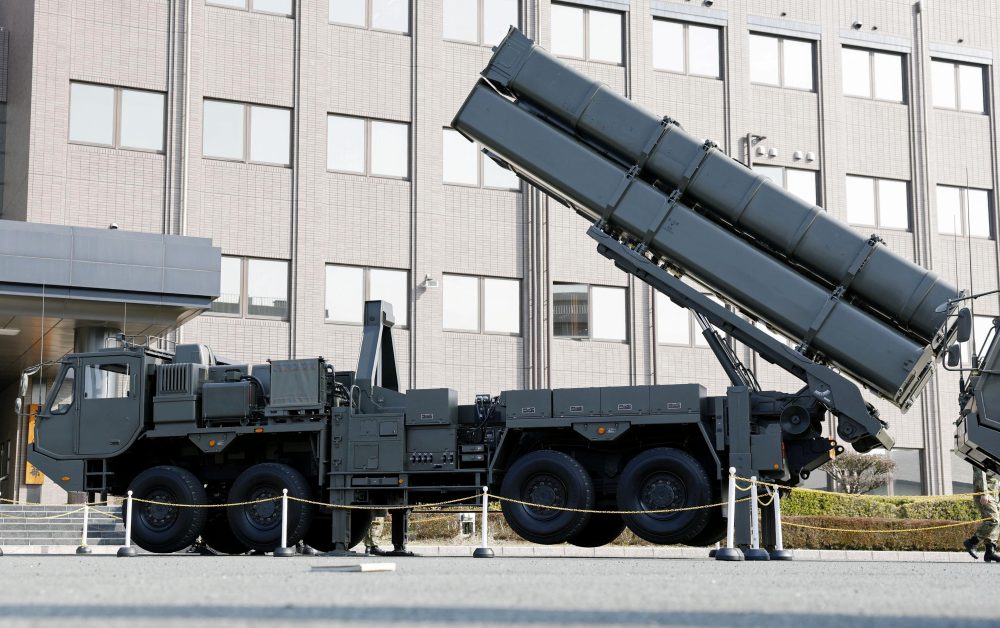
BEIRUT (AP) — More than a month after the United States and Israel began military operations against Iran on February 28, the Trump administration maintains it has nearly “obliterated” the Islamic Republic’s armed forces. Last week, Defense Secretary Pete Hegseth stated that “never in recorded history has a nation’s military been so quickly and so effectively neutralized.”
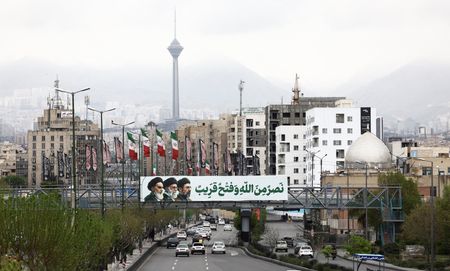
However, following weeks of intense American-Israeli air campaigns, Iran’s weakened military continues to pose a persistent threat. The country’s ongoing attacks on Israel and neighboring Gulf states are creating regional instability and generating significant economic and political consequences.
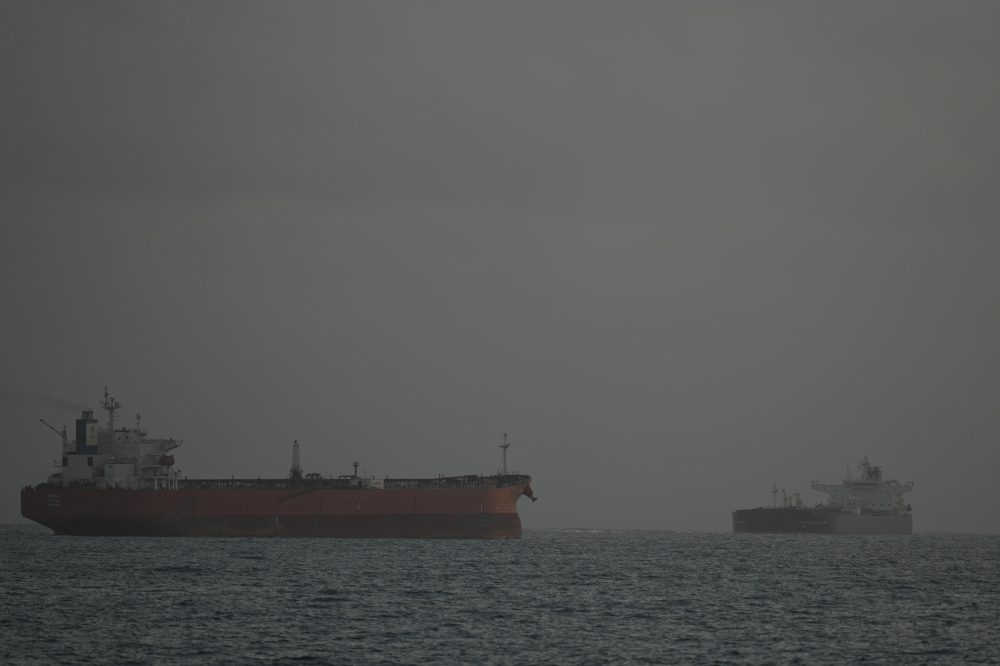
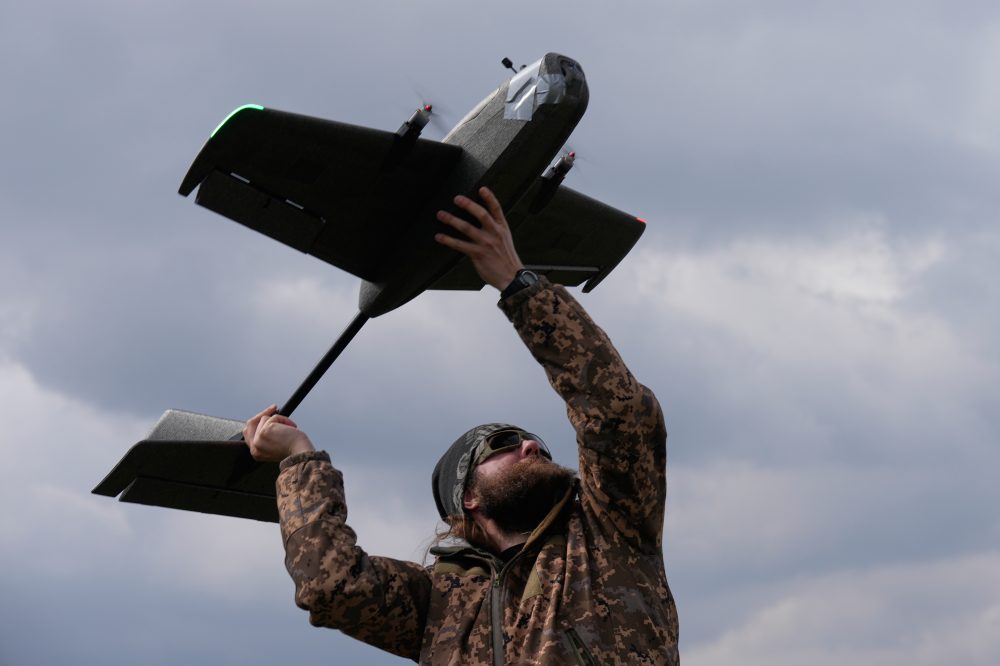
Iranian missiles keep breaching Israeli air defenses and causing civilian casualties. Low-cost unmanned aircraft evade neighboring countries’ defensive systems, damaging the Gulf Arab states’ reputation for security while injuring American service members. Tehran’s warnings to target petroleum vessels in the Strait of Hormuz are restricting shipping traffic and driving up fuel costs worldwide.
President Donald Trump has pursued diplomatic talks while issuing severe threats, aiming to secure Iran’s enriched uranium supplies and force the reopening of the Strait of Hormuz. According to analysts, Iran’s strategy involves enduring the current fighting long enough to pressure Washington into seeking a resolution.
“Their strategy is to try to cause sustained pain and to drive up the costs of the war for the U.S.,” said Kelly Grieco, an expert in U.S. military strategy and operations who is a senior fellow at the Washington-based Stimson Center think tank.
From the opening day of the American-Israeli air offensive, leaders from both nations have consistently highlighted a significant reduction in Iran’s ballistic missile launches as evidence their campaign to eliminate launch sites and weapon supplies was succeeding.
Joint Chiefs Chairman General Dan Caine reported to journalists on March 4 that Iran’s “ballistic missile shots fired are down 86% from the first day of fighting and their one-way attack drone shots are down 73%.” During a media briefing two weeks afterward, Hegseth announced that Iran’s ballistic missile attack frequency had decreased “90% since the start of the conflict.”
This Tuesday, Hegseth informed Pentagon reporters that Iran had launched its “lowest number” of missiles and drones in the previous day, although neither he nor Caine provided updated statistics. Trump posted on Truth Social Tuesday that “Iran has been, essentially, decimated.”
Independent tracking by Armed Conflict Location & Event Data (ACLED), an American organization monitoring global conflicts, supports assertions of reduced Iranian attacks.
March 1, the conflict’s second day, saw Iran execute nearly 100 strikes. The following day, attacks fell to 53 and remained at similar levels for several days. ACLED information indicates Iran hasn’t exceeded 50 strikes daily since March 6, spanning three and a half weeks. Under ACLED’s system, a “strike” may encompass multiple individual attacks at the same location on one day.
Iran has averaged 30 daily strikes over the past three weeks, occasionally increasing its attack frequency.
“That makes me question whether it’s a capacity issue or a strategy issue,” Grieco said of the initial decline in Iran’s strike rate. Iran may be conserving its missiles and drones rather than experiencing ammunition shortages.
ACLED findings reveal approximately 40% of Iran’s regional attacks are penetrating air defenses, indicating stress on American and Israeli interceptor supplies. Iran has deployed fewer missiles while increasing difficult-to-intercept low-altitude drones.
“We are vaporizing billions of dollars in long-range anti-missile defenses, which are scarce national resources,” said Tom Karako, the director of the Missile Defense Project at the Washington-based Center for Strategic and International Studies.
Karako warned that America and Israel risk depleting interceptors before eliminating Iran’s remaining missile stockpiles and mobile launchers — a goal proving “maddeningly difficult.”
More than a month into the conflict, Trump administration representatives continue referencing the initial 72 hours when discussing Iran’s diminished capabilities.
“A good percentage of Iranian missiles, at least half of the arsenal, is stored in very hardened facilities that are not easily reachable with air power,” said Farzin Nadimi, an expert on the Iranian missile program at The Washington Institute. “It looks like the Americans and the Israelis have been underestimating some level of complexity.”
Despite Hegseth’s description of Iranians as “flailing recklessly” through attacks on civilian and energy infrastructure throughout the Arabian Peninsula, analysts believe Tehran has carefully calibrated its timing and target selection for maximum impact.
“They have been able to strike targets more efficiently and therefore use fewer missiles to achieve the same result,” Nadimi said.
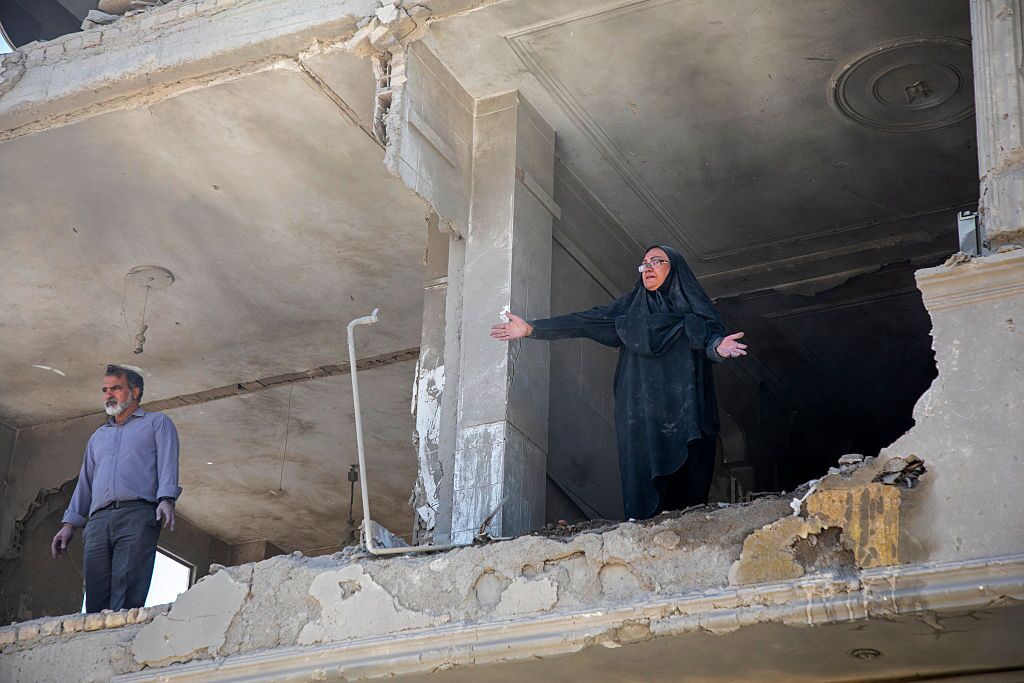
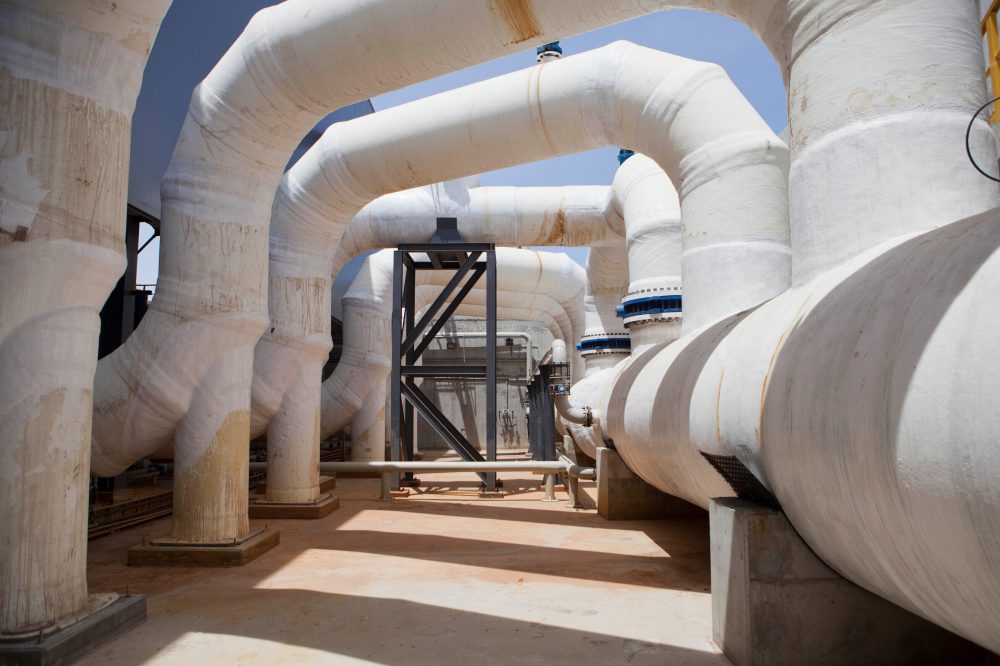
Iran has increasingly focused its attacks on critical infrastructure including oil pipelines and water treatment facilities across the Persian Gulf, attempting to force American concessions. The United Arab Emirates and Kuwait have suffered the heaviest damage. Last week, Iranian ballistic missiles and drones targeted a Saudi military base, injuring over two dozen American troops and damaging aircraft.
“In this asymmetrical war, the most important thing for Iran is attack the world economy in hopes of coercing the U.S. to stop,” said Assaf Orion, a retired Israeli brigadier general and senior researcher at the Institute for National Security Studies. This economic warfare has become more significant to Iran than targeting Israel, which considers this conflict existential and won’t be deterred, he explained.
Iran’s ability to maintain current retaliation levels remains uncertain, given limited American and Israeli intelligence regarding Iran’s missile and drone inventories.
Military analysts from both countries provide different estimates of remaining weapons but agree Iran likely retains thousands of inexpensive, domestically-produced drones capable of threatening American allies, even if much of its medium-range ballistic missile capacity has been eliminated.
“Iran built itself to be able to ride a war like this out,” said Karako. “It has been preparing for this.”
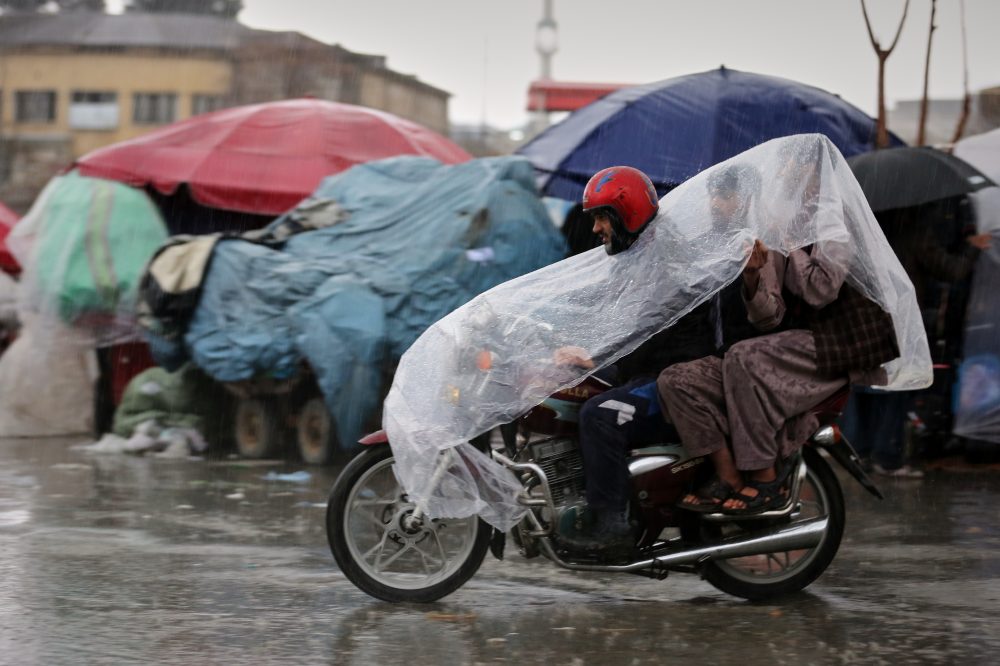
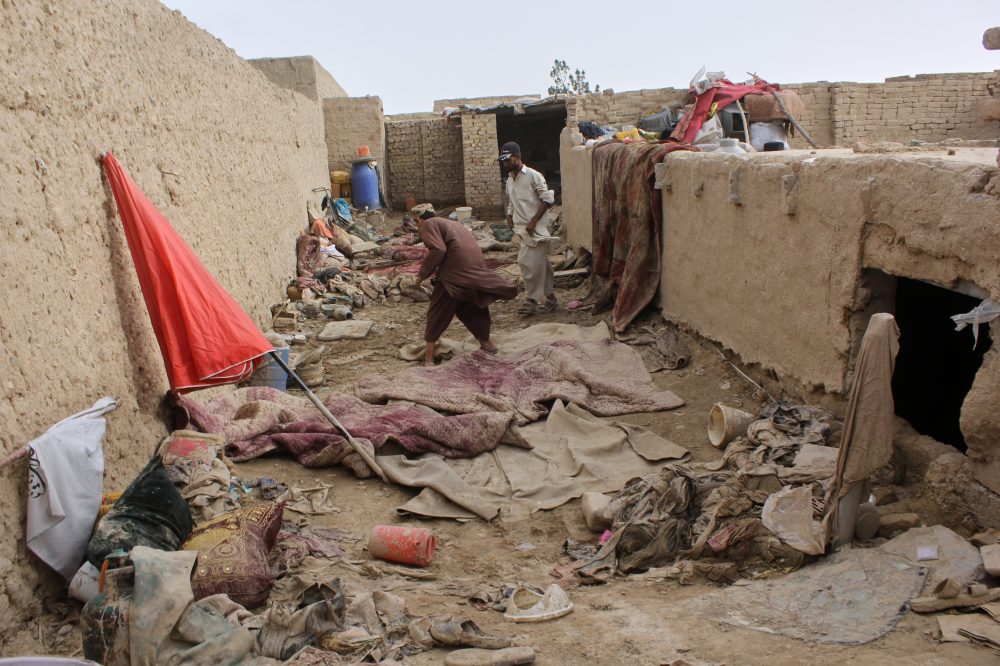
KABUL, Afghanistan — Deadly storms and flooding across Afghanistan claimed 14 additional lives during the past day, officials announced Tuesday, pushing the five-day casualty count to 42 fatalities as meteorologists predict continued severe weather ahead.
Afghanistan’s National Disaster Management Authority reported that 66 people have sustained injuries during the five-day period, as powerful thunderstorms and torrential rainfall impacted nearly all provinces throughout the nation. The severe weather has spawned dangerous flooding, deadly landslides, and fatal lightning incidents. Officials warned that additional heavy precipitation is expected to sweep across Afghanistan during the next 72 hours.
The United Nations Office for the Coordination of Humanitarian Affairs in Afghanistan posted on X that their initial field assessments indicated 19 fatalities and impacts to more than 900 households from the flooding. UN officials noted that damage evaluations remain underway and casualty numbers may be revised.
Earlier this year in January, dangerous snowstorms and sudden flooding resulted in dozens of deaths nationwide.
The country faces extreme susceptibility to severe weather conditions, where snow accumulation and intense rainfall create sudden flood events that frequently claim dozens or even hundreds of lives simultaneously. During 2024’s spring season, rapid flooding killed more than 300 people.
Years of warfare, combined with inadequate infrastructure, economic hardship, forest destruction, and worsening climate impacts have magnified the devastation from such natural disasters, especially in isolated regions where residences constructed from mud provide minimal defense against rapid flooding or heavy snow.
During the most recent 24-hour period, the extreme weather partially or completely demolished 476 residences, the national disaster authority reported Tuesday. Commercial properties, farmland, and water distribution systems also sustained damage, impacting 603 households.
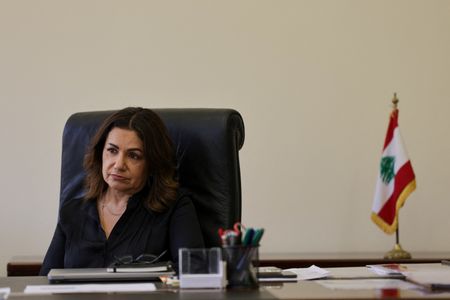
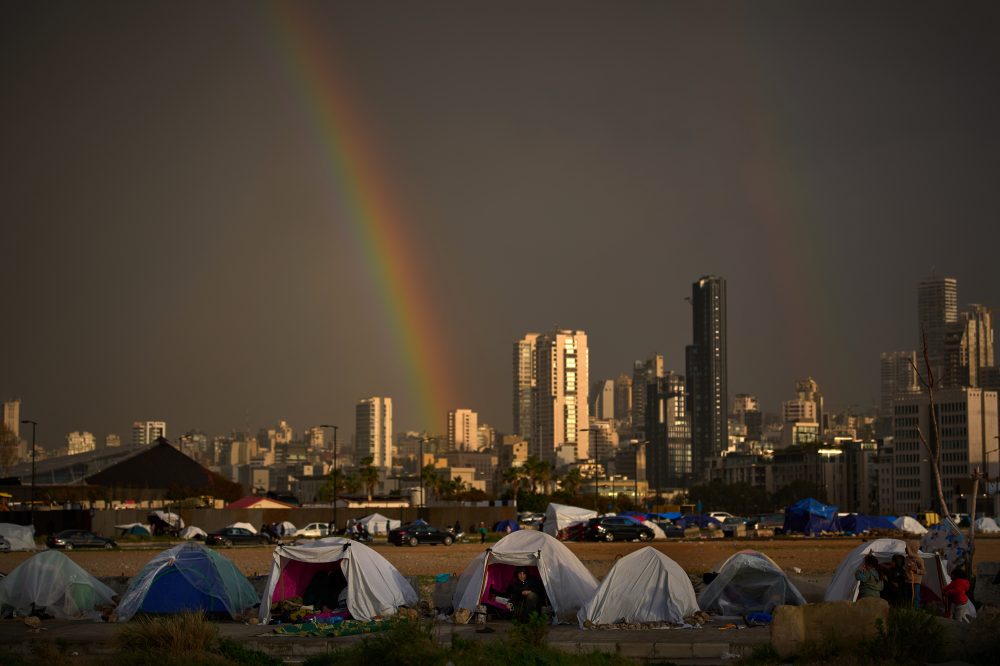
Lebanon’s government is making contingency plans for a scenario where hundreds of thousands of citizens displaced by Israeli military operations may be permanently unable to return to their communities, according to the country’s social affairs minister.
Minister Haneen Sayed made these remarks following statements from Israeli Defense Minister Israel Katz, who announced plans to demolish all residential structures near Lebanon’s border with Israel and prevent 600,000 people who evacuated southern Lebanon from going back to their towns.
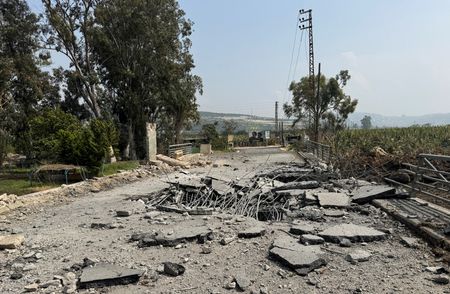
The conflict has forced more than one million Lebanese citizens from their residences, while another 1,200 have lost their lives in Israeli military strikes since March 2, when the Lebanese militant organization Hezbollah entered the regional war by launching attacks into Israel.
“Long-term displacement is something we are concerned about, of course. We hope it does not happen, but as a government, we have to prepare and think about it,” Sayed stated during her Tuesday interview.
Lebanese officials are exploring various solutions, including rental assistance programs and identifying “physical places where people might go,” though the government has no immediate plans to build refugee camps, the minister explained.
“And it all depends on how much of a land grab the Israelis will insist on, and of course, it’s totally unacceptable for us. I mean, this is a huge violation of our sovereignty, and we will do everything we can to ensure that this doesn’t happen, whatever we have in our means,” Sayed emphasized.
Israeli officials have indicated they plan to maintain military control over southern Lebanon extending to the Litani river, located approximately 30 kilometers north of the Israeli-Lebanese border. This territory represents nearly ten percent of Lebanon’s total landmass.
HUMANITARIAN AID FALLS SHORT OF REQUIREMENTS
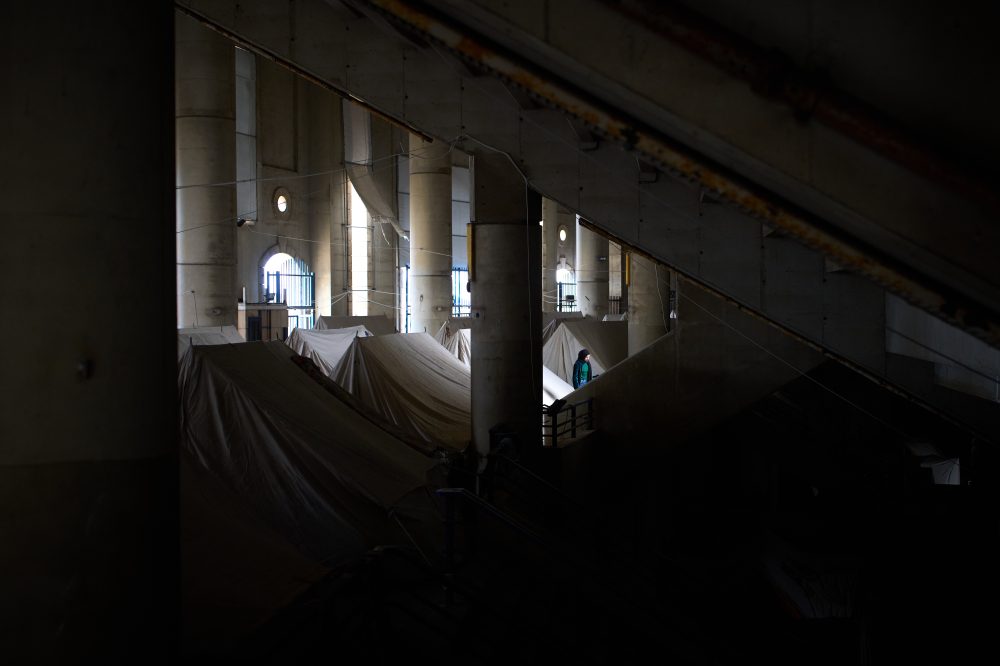
Currently, approximately 136,000 displaced individuals are housed in group shelters, while the remaining population stays with family members or, in limited instances, lives without shelter.
Extended displacement could spark social unrest among Lebanon’s varied population groups, as existing political and religious divisions have intensified due to Hezbollah’s involvement in the broader regional conflict.
“We already have a very large number, and the space is getting tighter in terms of where people can go,” Sayed noted.
Several communities that previously welcomed displaced families during the 2024 Hezbollah-Israel conflict, including offering schools and government facilities, have shown less willingness to help during the current crisis, she reported.
“This is another challenge – ensuring the social cohesion, making sure that people still love each other, if you will. And I mean, I fundamentally do believe the Lebanese have that. And with most of the examples, fantastic examples of the hospitality all over. But at the same time, people’s resources are stretched,” the minister said.
Sayed’s department is attempting to develop three-month advance planning to ensure displaced families receive essential services, but insufficient funding continues to pose difficulties.
The 2024 conflict, which lasted slightly more than two months, saw the United Nations collect $700 million for Lebanon’s humanitarian response, while various nations provided over 110 cargo flights of assistance, according to Sayed.
As Lebanon enters the second month of renewed fighting, it has obtained only $30 million from the UN’s current funding request, with an additional $60 million pledged by international donors. Just seven assistance flights have been delivered.
“We’re not even close. In the last war, within the first month, there must have been at least 50 flights that had already come in,” Sayed observed.
She explained that some of Lebanon’s regular Gulf state donors are now directly involved in the conflict in ways they weren’t during 2024, and noted that rising oil costs are reducing the effectiveness of available aid.
The minister indicated that current assistance covers roughly 30 percent of her ministry’s requirements.
“Of course, we’re trying all our efforts to make sure that we can at least cover all those that are in shelters. And then the other question, of course, will be the timing. I mean, how long this will last?”
Israeli military leaders and defense experts find themselves at odds over the scope and duration of operations in southern Lebanon, as ground forces continue reshaping the border region.
The discussion has evolved beyond simply pushing Hezbollah away from Israel’s northern border to considering extended military control of Lebanese territory. With memories of Israel’s previous 18-year presence in the region still fresh, strategists remain split on what measures will actually guarantee security for northern Israeli communities.
Dr. Gabriel Siboni, an IDF reserve colonel and senior researcher at Jerusalem Institute for Strategy and Security, advocates for the most comprehensive approach. When Israeli leadership discusses maintaining a security zone until threats are eliminated, Siboni believes the goal should be crystal clear.
“Removing the threat means that Hezbollah does not exist in Lebanon as a military organization with military capabilities,” Siboni explained to The Media Line. His position represents the most aggressive thinking currently influencing Israel’s northern strategy discussions.
This perspective extends far beyond typical military objectives of restoring deterrence or pushing enemies back from borders. Instead, Siboni envisions completely eliminating Hezbollah’s capacity to function as an armed organization within Lebanon.
Regarding territorial control, Siboni’s vision is equally expansive. Israel must maintain a presence in southern Lebanon, he argues, not just along the immediate border area. “My professional view is that we have to stay on the borders of the Litani River, on the Litani River, and in some points on the east side, even beyond the Litani River,” he stated.
Siboni’s stance puts him among the most hawkish voices currently discussing Lebanon policy. However, he frames his argument through military necessity rather than political ambition. He refuses to avoid the term “occupation,” emphasizing that “occupation is a military term” and that operationally, “we need to occupy, to hold the land” until withdrawal becomes feasible.
His proposed campaign would unfold in distinct phases. Initially, Israel would “occupy, to take hold of the area,” followed by what he calls “purifying the area” through destruction of Hezbollah infrastructure. The final phase involves sustained control preventing Hezbollah’s return.
“All these activities take time,” Siboni noted, adding that Israel must remain “until we think that there is no more threat to our northern villages,” meaning Hezbollah loses all military capabilities.
Siboni sees the October 7 attacks as fundamentally changing Israeli strategic thinking. When asked about shifts in northern doctrine, he confirmed the change “in comparison to what was before Oct. 6, 2023.” He explained that Israel’s current security strategy refuses to allow Hezbollah to build northern threats, with a southern Lebanon security zone being one essential component.
Dr. Harel Chorev from Tel Aviv University’s Moshe Dayan Center offers a more measured perspective. While agreeing that serious action against Hezbollah would require extended, multi-phase operations, he draws clear distinctions between degrading the organization and completely destroying it.
“I don’t think it would be realistic to hope for a full destruction of Hezbollah,” Chorev told The Media Line. This represents a significant departure from Siboni’s maximalist approach.
Chorev’s analysis recognizes Hezbollah as more than just “an Iranian arm,” describing it as “a Shiite Lebanese party, movement, mass movement that represents the desires and motivations of the Shiite sect.” This deeper social and political embedding makes complete eradication far more complex than military rhetoric suggests.
Attempting total destruction would require “the lives of many soldiers” and “an operation that would be extremely expensive, long range, unreasonable in any way,” according to Chorev’s assessment.
Nevertheless, Chorev doesn’t reject the possibility of renewed territorial control. He expects Israel will attempt destroying maximum Hezbollah capabilities while securing “a major part” of southern Lebanon to protect border communities.
However, his vision differs significantly from Siboni’s. “I don’t think it would be in the same pattern as the old security belt,” Chorev explained. “I think it would be something different.” He emphasized that Israel “would love to avoid any stay in Lebanon” but currently sees no viable alternatives.
“None of the Israelis would like a new option of staying in southern Lebanon,” Chorev said. “But the question is always, okay, so what is the alternative?”
Both analysts present renewed Lebanese presence as necessity rather than preference, resulting from strategic failures and post-October 7 intolerance for nearby Hezbollah forces.
Chorev, who served in the 1990s security belt, was particularly emphatic: “No one wants to go back there. They are forcing us to go back there because we cannot bear a situation where Hezbollah and Radwan forces are hanging on our border, threatening our settlements.”
Memories of the previous security zone, which ended with Israel’s May 2000 withdrawal, heavily influence current discussions. Siboni challenges conventional wisdom about that period’s costs.
The earlier presence cost was “not high compared to what we had to pay after October 2023,” Siboni argued, claiming the real strategic failure came when Hezbollah was permitted to rebuild strength.
A future security zone would differ because civilian populations have been relocated northward, eliminating the embedded village environment that complicated previous operations. “Now there will be no population in this area,” Siboni said. “Hopefully, it will be different than before.”
Chorev suggests learning from past mistakes by maintaining mobility rather than static positions, avoiding fixed outposts that make soldiers “sitting ducks.” While acknowledging that effective agreements could eventually allow withdrawal, he remains skeptical based on Hezbollah’s history of using quiet periods for rebuilding.
Both experts reach similar conclusions about Lebanese state capacity but frame them differently. Siboni dismisses possibilities of Lebanese government or military action against Hezbollah by force, concluding that only Israel can dismantle Hezbollah’s capabilities.
Chorev also describes Lebanese government and army as “totally incapable” of military confrontation with Hezbollah. However, he notes recent political shifts in Beirut, including Lebanon’s expulsion of Iranian ambassador Mohammad Reza Sheibani, as reflecting “shared interest and perception of the conflict with Hezbollah.”
Chorev bluntly observed that as long as Israel doesn’t threaten Lebanon as a state, many Lebanese officials “enjoy it” and “encourage it” because Israel performs “the dirty job for them.”
Siboni viewed the ambassador’s expulsion as significant since “Hezbollah is Iran,” calling Lebanese actions against Hezbollah and Iran meaningful. However, he sees this as supplementary to, not replacement for, Israeli force. He also rejects notions of hypothetical Iranian confrontation: “Iran is involved. We are fighting.”
The analytical differences don’t represent simple hawk-versus-moderate divisions. Both accept that previous northern border deterrence models have failed. Their disagreement centers on achievable objectives rather than whether action is necessary.
Chorev doesn’t envision Hezbollah’s complete military disappearance, while Siboni defines this as the only meaningful outcome. For Siboni, anything less leaves fundamental threats unresolved. For Chorev, such ambitions appear unrealistic, with more credible goals involving maximum operational capacity destruction while physically distancing dangers from Israeli communities.
These differences matter for determining any future Lebanese presence duration and justifying political language. Missions defined as temporary prevention can conclude when threats become manageable. Missions targeting Hezbollah elimination may lack clear endpoints.
For northern Israeli residents, the debate carries immediate rather than theoretical urgency. Siboni acknowledges that even with southern Lebanon control, neutralizing Hezbollah’s short-range threats “will take time,” while longer-range capabilities remain problematic. However, he argues the alternative—another cycle of Hezbollah survival, regrouping, and renewed threats—is worse.
“We need to finish the job with Hezbollah and not leave Hezbollah intact so they can recover,” Siboni stated.
Chorev concluded more soberly: “I don’t think there’s such a thing as final,” warning against definitive closure fantasies. Despite damage, Hezbollah remains functional, decentralized, and capable of coordinated operations. The situation isn’t about Israeli preferences, he noted: “None of us would like to be in it. But they left us no choice.”
Israeli forces are already operating in southern Lebanon and advancing. The ultimate outcome remains undetermined, with IDF scope and duration developing in real-time through field operations.
Israeli lawmakers voted Monday to establish capital punishment for individuals who commit deadly terrorist attacks, with the Knesset approving the controversial measure by a margin of 62 to 48 votes.
The new law, which completed its second and third readings on March 30, 2026, declares that any individual who deliberately kills someone during a terrorist attack will face execution. The measure mandates this punishment in specific circumstances and eliminates the previous requirement for judges to reach a unanimous verdict.
Prime Minister Benjamin Netanyahu cast his ballot in support of the legislation, even though the measure was expected to pass without his vote. The opposition Israel Beiteinu party endorsed the bill, while United Torah Judaism, a member of the governing coalition, opposed it. Following the vote, National Security Minister Itamar Ben Gvir, who helped initiate the proposal, declared: “We are making history.”
Under the new statute, the Israel Prison Service will conduct executions by hanging within 90 days, with no option for presidential pardons. However, government sources indicated the legislation remains vulnerable to challenges before the High Court of Justice.
Constitutional law specialists have identified several potential legal obstacles, including the compulsory nature of the death sentence and the prohibition on mercy provisions. They also noted complications arising from different legal systems governing Israeli citizens versus cases in West Bank territories.
Opposition leader Yair Lapid harshly criticized the legislation, stating: “This law will not lead to a single execution. Not in Gaza, not in Judea and Samaria, not of terrorists, and not of anyone else. It is deliberately written without filters and without balances, for one purpose only: to ensure that it will be struck down.”
According to N12 news reports, high-ranking European Union officials conducted emergency discussions with Israeli representatives in attempts to prevent the law’s passage. European leaders reportedly threatened economic sanctions and potential suspension of trade deals, technological partnerships, scientific collaboration, and diplomatic relations.
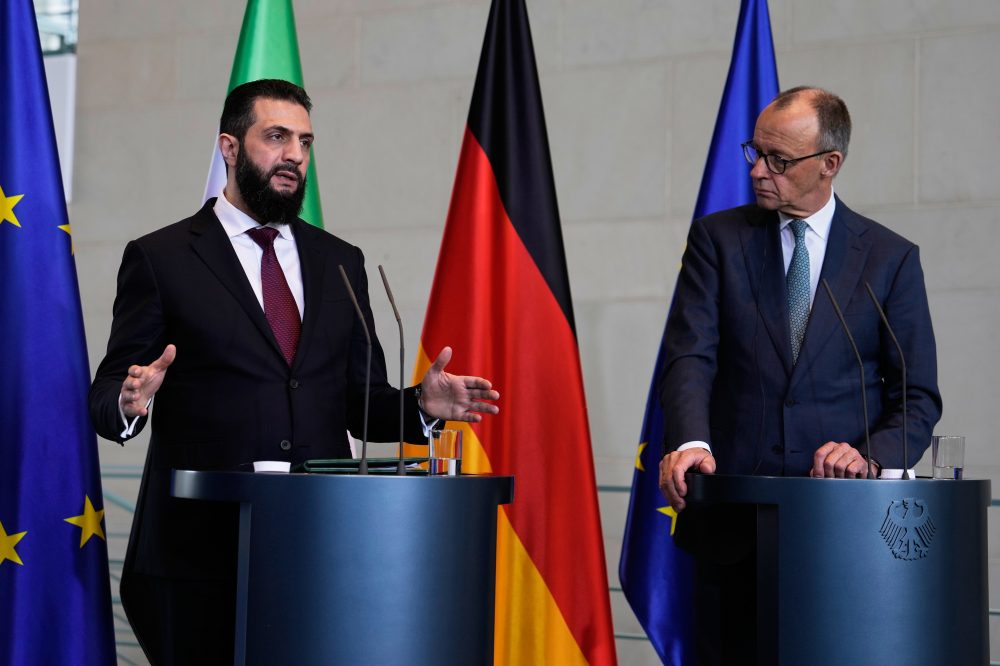
BERLIN, March 31 – German Chancellor Friedrich Merz walked back controversial statements Tuesday regarding Syrian refugees returning to their native country, following sharp criticism from political leaders and economic experts who cautioned about potential severe financial repercussions from widespread departures.
During Monday’s press conference alongside Syrian President Ahmed al-Sharaa, Merz had stated that approximately 80% of Germany’s Syrian population was anticipated to head back to Syria over the coming three years.
The chancellor faced immediate pushback from politicians across party lines, who criticized him for establishing what they viewed as an unattainable target while potentially undermining integration initiatives. Economic analysts also raised concerns that such a large-scale departure could worsen existing worker shortages across multiple industries.
“The Syrian president cited a figure of 80% of returnees within three years. We have taken note of this figure, but we are aware of the scale of the task,” Merz stated in his clarification.
Approximately one million Syrians currently reside in Germany, with many having arrived during the massive migration wave of 2015-2016 that occurred during Syria’s civil conflict. Increasing numbers have secured employment, particularly within construction, logistics and healthcare industries, while political discussions about immigration continue to heat up and the anti-immigration Alternative for Germany (AfD) party gains momentum.
Iran’s new Supreme Leader Mojtaba Khamenei remains within the country’s borders but is staying away from public events “for understandable reasons,” according to statements from Russia’s ambassador reported by RTVI news on Tuesday.
Mojtaba assumed leadership after the death of his father, Ayatollah Ali Khamenei, who died during the conflict between Iran and a coalition of Israel and the United States that began over a month ago. American officials have stated they believe Mojtaba sustained injuries and may have suffered disfigurement.
The two nations maintain strong diplomatic relations, having entered into a strategic partnership agreement last year that solidified their cooperation.
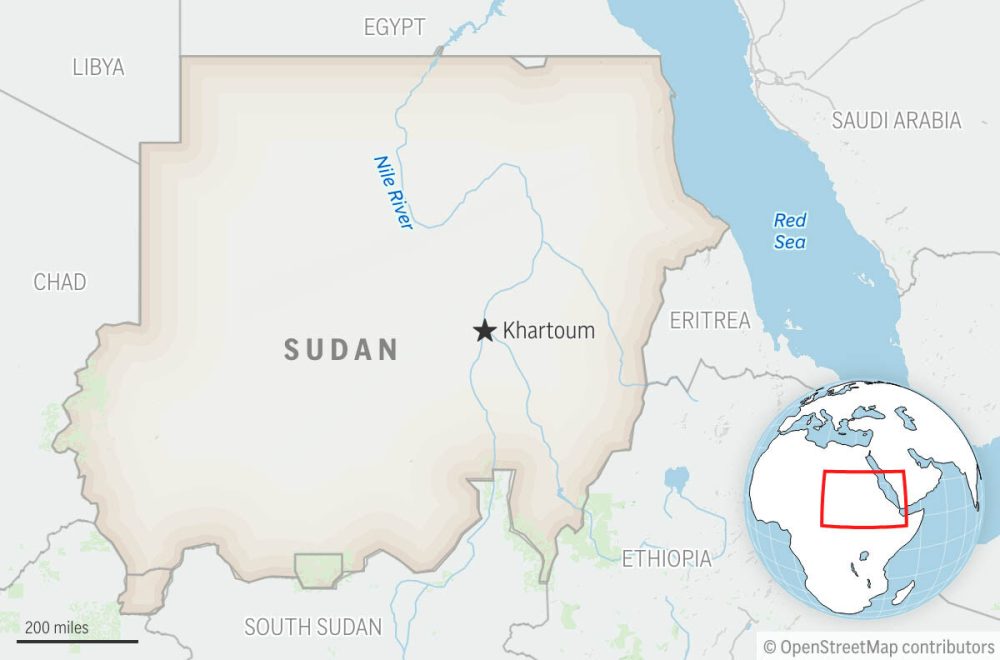
An international medical organization has documented widespread sexual violence being deployed as a strategic weapon in Sudan’s brutal civil war, according to a report released Tuesday by Doctors Without Borders.
The conflict erupted in April 2023 when tensions between Sudan’s military forces and the paramilitary Rapid Support Forces escalated into full-scale warfare across Khartoum and other regions. The International Criminal Court is now examining mass murders, group sexual assaults, and additional atrocities from this conflict as possible war crimes and crimes against humanity.
The medical aid organization, operating under the French acronym MSF, documented testimonies from women who experienced group sexual assault in both South Darfur and North Darfur provinces.
Between January 2024 and November 2025, MSF facilities provided care to no fewer than 3,396 sexual violence survivors. According to the organization, the majority of these survivors described their attackers as armed militants, with 60% of South Darfur incidents involving group perpetrators.
One survivor shared her traumatic experience in the report: “They took us to an open area. The first man raped me twice, the second once, the third four times,” according to her testimony.
MSF Emergency Coordinator Myriam Laroussi, who worked in Tawila, North Darfur, assisting medical teams following El Fasher’s capture in late 2025, addressed reporters during the report’s presentation in Nairobi, Kenya. She emphasized that the documented figures represent merely the “tip of the iceberg” and that sexual violence occurs on a much larger scale in regions where MSF cannot operate.
Gloria Endreo, an MSF midwife, reported that medical teams treat approximately 10 to 15 women each day, with the majority arriving beyond the crucial 72-hour window essential for addressing injuries, trauma, infections, and preventing unwanted pregnancies. Many victims must travel for days on foot or by camel to reach Tawila.
“As healthcare practitioners, we consider the 72 hours as a golden period because we provide a lot of care within that period,” Endreo explained.
The violence extends beyond individual victims to impact entire communities, according to Andreza Trajano, MSF’s sexual health specialist. She noted that in certain instances, young women were assaulted in front of their mothers and grandmothers. Community members now avoid essential activities like farming due to fear of sexual assault, Trajano reported.
“Will we continue to just let women’s and girls’ bodies be used as a weapon of war?” she questioned.
MSF called upon the United Nations to establish a stronger presence in Sudan to address community needs more effectively.
The catastrophic war has claimed over 40,000 lives according to United Nations data, though humanitarian organizations believe this represents a significant undercount and the actual death toll could be substantially higher.
Recent combat has concentrated in the Darfur and Kordofan regions, where fatal drone attacks occur daily. The U.N. Human Rights Office reported that more than 500 civilians died in drone strikes this year through mid-March.
JOHANNESBURG — In an unusual campaign move, a 75-year-old mayoral candidate donned full snorkeling equipment and took a swim in a massive water-filled pothole to protest what she calls decades of municipal incompetence in South Africa’s largest metropolis.
Helen Zille, a prominent figure in South African politics, suited up in a wetsuit, diving mask, snorkel gear, and a distinctive pink-and-white swim cap before taking a doggy paddle through the murky brown water that had collected in an upscale Johannesburg neighborhood street. According to Zille, the water-filled crater has remained unfixed for approximately three years following a water main break that city workers have unsuccessfully attempted to repair multiple times.
The politician filmed her aquatic protest and shared it online, where local television networks quickly picked up the footage. During her swim, she remarked with obvious sarcasm, “And here we are with a free and wonderful Saturday-afternoon snorkel.”
“I wonder if there are any fishes in here. Let me take a look,” she continued before submerging her head beneath the surface.
Despite being recognized as Africa’s wealthiest metropolis in terms of private assets, Johannesburg has endured years of unstable local government partnerships and deteriorating public services. The municipality, historically dubbed the “City of Gold” due to its origins in massive gold mining operations, continues to face significant challenges.
The city’s roughly six million residents regularly endure power outages, water service interruptions, and crumbling infrastructure including failed water mains and deteriorated roadways.
Zille, who previously served as head of South Africa’s second-largest political party and held the mayoral position in Cape Town, announced her intention to seek the top municipal office in Johannesburg during upcoming local elections.
Following Zille’s weekend demonstration, Johannesburg’s sitting mayor responded via social media on Tuesday, acknowledging that the pothole resulted from a water main “that had repeatedly failed over the past three years.” The official stated that repair crews addressed the problem and filled the crater within one day of the politician’s publicity stunt on Saturday.
Two major Asian nations have forged a stronger alliance to secure their energy futures as Middle Eastern conflicts create uncertainty in global oil and gas markets.
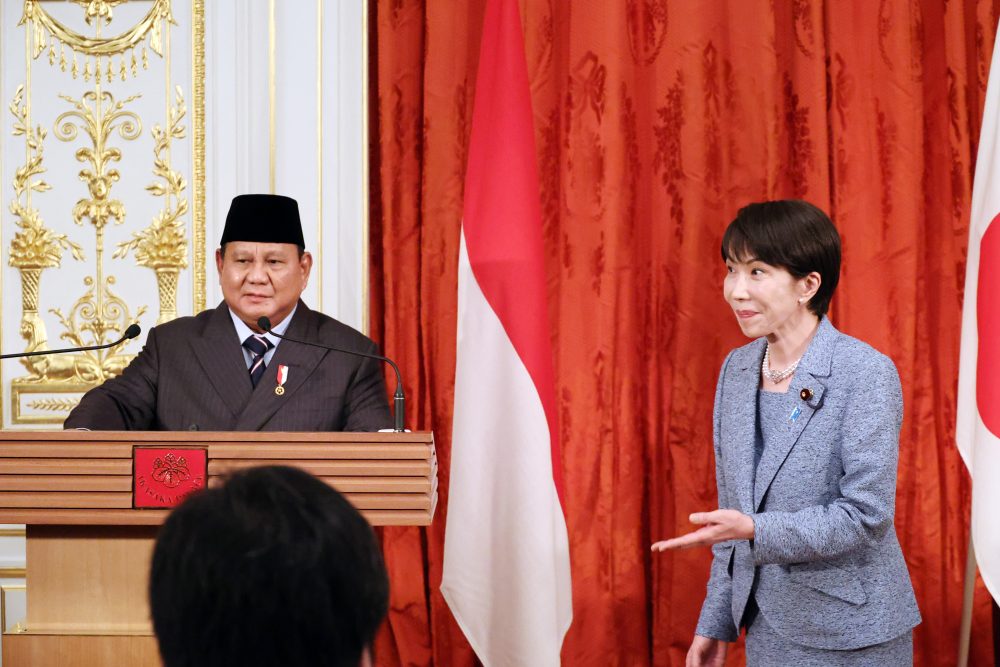
Japanese Prime Minister Sanae Takaichi and Indonesian President Prabowo Subianto announced Tuesday their commitment to expanded energy cooperation during talks held in Tokyo.
“In the wake of the Iran situation, the importance of resources and energy security is being recognized globally,” Takaichi stated during their joint press conference.
While specific terms of their new partnership remain confidential, both leaders revealed they had formalized an economic collaboration agreement earlier this month focusing on essential minerals and nuclear technology.
The March 15 memorandum outlines plans for constructing a nuclear facility, potentially located in Indonesia’s West Kalimantan region, utilizing Japanese technical knowledge and possible financing from development institutions, according to Japan’s Ministry of Economy, Trade and Industry documentation.
President Prabowo expressed Indonesia’s interest in Japanese assistance with processing valuable minerals including rare earth materials, along with expanding renewable energy and nuclear power capabilities.
Despite the devastating 2011 Fukushima nuclear accident, Japan has renewed its commitment to atomic energy while pursuing partnerships across Southeast Asia to achieve carbon-neutral goals. Meanwhile, Indonesia seeks nuclear solutions to address rising energy consumption.
Indonesian officials previously announced intentions to construct two compact nuclear reactors on a southern island by 2034, with formal cooperation proposals already received from Canadian and Russian governments.
The nations also committed to strengthening supply chain stability, particularly for liquefied natural gas, according to Japan’s Foreign Ministry statement.
Japan ranks among the world’s largest LNG importers, with Indonesia supplying approximately 5% of its needs. The resource-limited island nation relies on the Middle East for over 90% of its oil imports and has begun tapping strategic reserves this month to maintain market stability while seeking alternative suppliers.
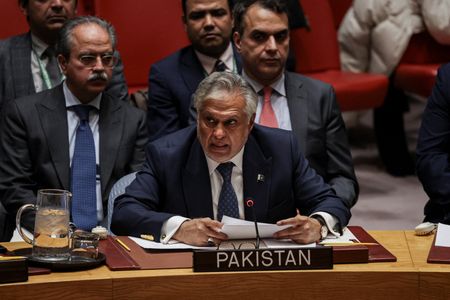
Foreign ministers from China and Pakistan issued a joint statement Tuesday demanding an immediate halt to fighting in Gulf and Middle Eastern regions, with both nations pushing for urgent diplomatic negotiations to begin, according to reports from Pakistan’s foreign ministry and China’s state-run Xinhua news agency.
The diplomatic leaders emphasized the need to protect maritime shipping lanes and ensure the security of vessels and their crews currently stuck in waters near the Strait of Hormuz, Xinhua reported.
Both nations presented their demands through a comprehensive five-point peace plan unveiled Tuesday aimed at bringing back stability and calm to the troubled region, Pakistan’s foreign ministry announced.
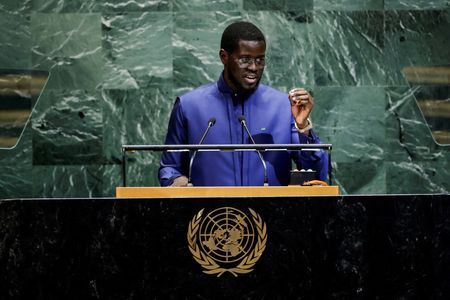
The president of Senegal has given his approval to controversial legislation that increases maximum prison sentences for same-sex relations from five to 10 years while also making it illegal to promote homosexuality, according to an official government announcement.
Parliament members voted by a wide margin to pass the legislation earlier in March, though President Bassirou Diomaye Faye faced significant opposition from international human rights organizations urging him not to enact the measure.
Volker Turk, the United Nations human rights chief, criticized the proposed law on March 12, stating it “flies in the face of the sacrosanct human rights we all enjoy: the rights to respect, dignity, privacy, equality and freedoms of expression, association and peaceful assembly.”
Both Faye and Prime Minister Ousmane Sonko had pledged during their 2024 election campaigns to implement stricter anti-LGBT legislation. The two leaders signed the bill into law on Friday, as confirmed by a government announcement dated Monday and shared by a government spokesperson on Tuesday.
Previously, Senegal’s criminal code included provisions that imposed prison sentences of up to five years and financial penalties reaching 1,500,000 CFA francs (equivalent to $2,700) for what it termed “acts against nature.”
The updated legislation increases the maximum sentence to twice the previous length and raises potential fines to as much as 10 million CFA francs.
The new law explicitly defines acts against nature as including homosexuality, bisexuality, “transsexuality,” zoophilia and necrophilia.
Individuals convicted of promoting or providing financial support for such activities will also face imprisonment.
Reuters previously reported that Senegalese supporters of the legislation had coordinated with a United States-based “pro-family” organization that characterizes homosexuality as a threat to public health, discussing campaign tactics and mobilization strategies.
In the weeks before lawmakers cast their votes on the bill, there was a notable increase in arrests of men suspected of “acts against nature” and, in certain instances, “voluntary transmission” of HIV, which carries a potential 10-year prison sentence.
JERUSALEM (AP) — Demonstrators filled streets throughout Palestinian territories on Tuesday following Israel’s parliamentary approval of legislation mandating capital punishment by hanging for Palestinians found guilty of killing Israelis.
Palestinian demonstrators of all ages organized sit-ins and protest marches in the Israeli-controlled West Bank, where the new legislation will have its broadest impact. The law requires West Bank military tribunals — which exclusively prosecute Palestinians — to impose death sentences as the standard punishment for murder convictions, unless extraordinary circumstances warrant otherwise.
Protest signs in the West Bank city of Nablus displayed images of a prisoner in traditional Palestinian keffiyeh headwear beside a hangman’s noose, bearing messages that read “Time is running out and silence is deadly” and “Stop the law to execute prisoners, before it’s too late.”
Israeli lawmakers gave final approval to the legislation Monday evening amid celebration and applause. National Security Minister Itamar Ben-Gvir, who led efforts to advance the bill, characterized the new law as overdue and representative of national strength and pride.
While scheduled to become effective within 30 days, the law’s enforcement may face delays due to ongoing legal challenges before Israel’s Supreme Court.
Though the legislation does not apply retroactively to existing inmates, it represents a dramatic shift toward harsher Israeli criminal justice policies that has generated anxiety among demonstrators concerned about all Palestinian detainees in Israeli facilities — viewed as symbols of national resistance.
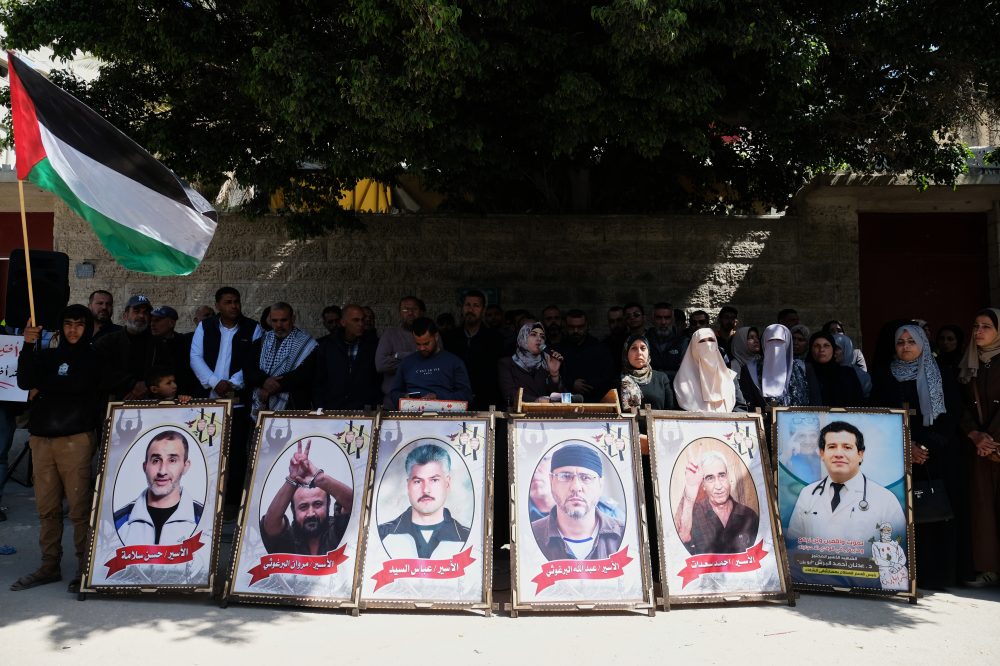
Protesters in Nablus voiced support by chanting “You are the symbol of struggle, You are the symbol of steadfastness,” while displaying photographs of imprisoned relatives and friends.
The Fatah movement called for a comprehensive work stoppage in northern West Bank areas for Wednesday. Palestinian leadership issued condemnations claiming the death penalty legislation breaches international legal standards and urged global intervention. The Palestinian Foreign Ministry demanded sanctions against Israel’s parliament and its removal from international organizations.
“The law represents a critical turning point in the formalization of extrajudicial killings under a legal guise,” the statement said. “The Ministry stresses that this law, in its essence, constitutes an institutionalized policy of field executions based on discriminatory and racist standards.”
The bill’s approval represented the achievement of a multi-year campaign by Israel’s far-right politicians to increase penalties for Palestinians convicted of attacks against Israelis. Following the vote, Ben-Gvir posted a video on X showing himself celebrating with champagne. Israeli human rights organizations and opposition legislators announced plans to file a Supreme Court petition seeking to invalidate the law.
Amnesty International warned that implementing the death penalty under this new legislation could breach fundamental rights to life and prohibitions against torture and cruel punishment established under international law.
In Gaza, demonstrators gathered outside Red Cross offices where women wearing hijabs displayed large portraits of prominent Palestinian prisoners including Marwan Barghouti.
The legislation also affects Israeli courts, authorizing them to impose capital punishment on Israeli citizens convicted of nationalist-motivated murder — terminology that legal analysts say effectively limits death sentences to Palestinian citizens of Israel while exempting Jewish citizens.
BELGRADE, Serbia (AP) — European Union officials on Tuesday condemned reports of violent incidents that occurred during Serbia’s local elections over the weekend, demanding that President Aleksandar Vucic’s government prosecute those responsible for the attacks.
The EU’s diplomatic mission in Serbia — a nation seeking to join the 27-member European bloc — referenced observations from international election monitors who documented violence and voting violations during Sunday’s elections.
“We regret the number of reported irregularities and incidents during the elections, the uneven playing field, and note with concern reports of acts of violence against independent observers, citizens, representatives of political parties and media workers,” the EU said in a statement.
“We call on the competent national authorities to ensure swift and transparent follow up and to hold perpetrators accountable,” the statement added.
Sunday’s elections took place across 10 Serbian municipalities and served as a crucial test for the authoritarian leader Vucic, who has faced over a year of youth-driven demonstrations that have weakened his stronghold on authority.
Vucic proclaimed success for his right-wing populist Serbian Progressive Party across all 10 local governments. The Serbian leader personally spearheaded the campaign effort, attempting to solidify his leadership following protests that began in November 2024 after a deadly train station incident in northern Serbia.
International election monitors from the Congress of Local and Regional Authorities of the Council of Europe stated Monday that although the actual voting process followed proper procedures, they were “alarmed” by conditions surrounding the polling locations.
Observers “saw heated arguments and the threatening presence of large groups of people, often unidentified and sometimes masked,” the group said.
The Associated Press asked the Serbian government to comment on the allegations but did not have a reply yet.
Multiple individuals sustained injuries during confrontations in at least three municipalities, including students and media personnel, who reported being assaulted by organized pro-government groups. Vucic has blamed his political opposition for inciting the disorder.
Although Vucic officially supports Serbia’s European Union membership bid, critics accuse him of restricting democratic rights while cultivating strong ties with Russia and China.
The student-organized demonstrations following the Novi Sad railway station roof collapse that claimed 16 lives have presented the most significant threat to Vucic’s leadership in more than ten years. Government officials have since intensified their crackdown on opposition voices, with hundreds of individuals arrested or reporting job losses.
On Tuesday, law enforcement officers searched the University of Belgrade campus, claiming they were investigating a student’s death from the previous week. University staff told local news outlets they believed the search was connected to ongoing government pressure following the student-led demonstrations.
Serbia is anticipated to hold presidential and parliamentary elections either later this year or in 2025. Political analysts believe Vucic’s popularity has declined, though large-scale protests have diminished in recent months.
President Donald Trump directed harsh criticism toward European allies on Tuesday, demanding they “go get your own oil” as the ongoing military conflict with Iran has driven American gasoline prices beyond $4 per gallon.
Trump’s sharp social media remarks followed recent U.S. military strikes against a city housing one of Iran’s primary nuclear facilities, creating a massive explosion visible from space, while Tehran retaliated by attacking an oil tanker from Kuwait in the Persian Gulf.
The escalating military actions demonstrate how intense the warfare has become more than 30 days after American and Israeli forces initiated the campaign. The fighting has resulted in over 3,000 casualties and severely disrupted global energy supplies, creating chaos in international markets.
Earlier, Trump had posted video footage showing the strike on Isfahan, a central Iranian city that houses one of three uranium enrichment facilities targeted by U.S. forces in June. Intelligence experts suspect much of Iran’s weapons-grade nuclear material is stored at this location.
Energy Markets in Turmoil
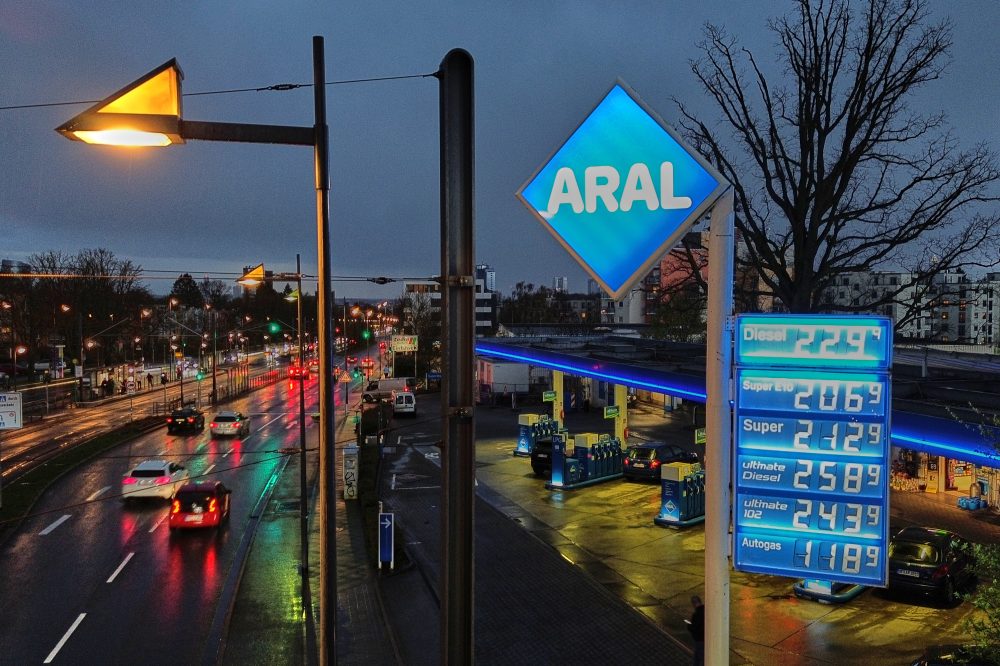
Iran’s control over the Strait of Hormuz – a critical shipping channel that normally handles 20% of global oil transportation – has caused dramatic price increases worldwide, along with Tehran’s systematic attacks on energy facilities throughout the region. These disruptions have created volatility in international stock exchanges and increased costs for essential consumer products.
Brent crude oil, the global benchmark, reached approximately $107 per barrel on Tuesday, representing a surge of more than 45% since military operations commenced on February 28.
Trump specifically blamed European partners including Britain and France for declining to participate in a military campaign they claim lacks clear objectives and was launched without their input.
“You’ll have to start learning how to fight for yourself, the U.S.A. won’t be there to help you anymore, just like you weren’t there for us. Iran has been, essentially, decimated. The hard part is done. Go get your own oil!” Trump posted online.
He particularly criticized France for blocking aircraft carrying military equipment to Israel from using French airspace, calling the nation “VERY UNHELPFUL” and warning “The U.S.A. will REMEMBER!!!”
European Nations Restrict Military Support
French military officials previously stated they permitted American Air Force operations at the Istres facility in southern France only after receiving assurances that aircraft involved in combat missions would not use the base.
Spain, which has become Europe’s most vocal opponent of the military campaign, announced Monday it was prohibiting U.S. military aircraft connected to the conflict from entering Spanish airspace.
Italy has also denied American forces access to the Sigonella air base in Sicily for operations related to the Middle East offensive, according to a knowledgeable official who confirmed earlier media reports.
The restriction was implemented several days ago and affected U.S. aircraft, including bomber squadrons, that were scheduled to refuel at the facility before continuing to the Middle East theater, said the official, who requested anonymity due to lack of authorization for public statements.
Italian government representatives later emphasized that their partnership with America remains “solid and based on full and loyal cooperation.”
Latest Military Operations Target Iranian Infrastructure
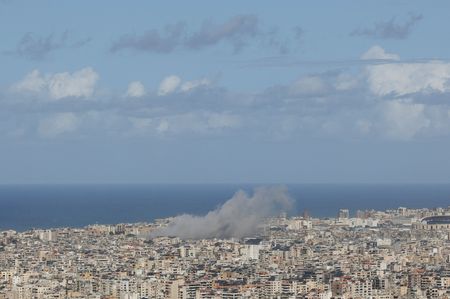
American and Israeli forces conducted fresh strikes against Iran, hitting the capital Tehran during early morning hours. Israeli military officials also announced new attacks against what they characterized as Hezbollah facilities in Beirut.
Video footage Trump distributed appeared to document a major assault on Isfahan, with NASA satellite monitoring systems detecting explosions in mountainous terrain south of the city. Iranian authorities have not acknowledged the attack occurred.
Satellite imagery captured before June’s military operations indicates Tehran moved a truck containing highly enriched uranium to a nuclear installation approximately 20 kilometers (12 miles) from Tuesday’s strike locations.
Intelligence analysts believe the vehicle – shown in images entering an underground tunnel while carrying 18 blue storage containers – likely transported most or all of Iran’s uranium stockpile enriched to 60% purity. This level represents a brief technical step away from weapons-grade concentrations.
Trump issued warnings this week that without a ceasefire agreement “shortly” and reopening of the strait, America would expand military operations to include attacks on the Kharg Island oil export terminal and potentially water desalination infrastructure.
During a Pentagon briefing, Defense Secretary Pete Hegseth declined to specify whether U.S. ground troops would join the conflict.
“We don’t want to have to do more militarily than we have to,” he stated. “But I didn’t mean it flippantly when I said, in the meantime, we’ll negotiate with bombs.”
FRANKFURT, Germany — European inflation climbed to 2.5% during March as ongoing conflict involving Iran drove fuel costs significantly upward, according to official data released Tuesday. Economic experts are now forecasting that the European Central Bank will implement interest rate increases later this year in response.
The yearly inflation figure for the 21 nations in the European Union that use the euro jumped from February’s 1.9% rate, which was recorded before the conflict began and disrupted oil and natural gas shipments from the Persian Gulf region.
Energy costs surged 4.9% during March, a stark contrast to February’s 3.1% decrease, according to data from Eurostat.
The conflict’s effect on pricing has become evident at Rome’s expansive Trionfale indoor marketplace, located just north of Vatican City, where produce vendor Anna Caruso noted that rising fuel expenses are driving up costs for zucchini, eggplant and other fruits.
“If the price of fuel increases, those who transport will increase the general price,” she explained. “With many items, they say, I can’t afford this … and shift toward the cheaper items.”
Fellow vendor Paola Ianzi acknowledged that while some price increases stem from seasonal factors, “the increase is also partially due to the war because diesel and fuel increased and those who transport fruit and vegetables need to compensate that.”
Food costs rose by a relatively modest 2.4%, while services — encompassing everything from healthcare to personal grooming — increased 3.2%.
Christine Lagarde, who leads the European Central Bank, has warned that companies might respond more rapidly to price increases during this inflationary period, influenced by difficult experiences from the 2022 inflation surge when rates reached double digits. During that period, Russia severely reduced natural gas deliveries to Europe while oil prices soared, causing energy expenses to skyrocket.
Iran has restricted most tanker movement through the Strait of Hormuz, a crucial shipping route that normally handles approximately 20% of global oil and gas transportation. This blockade threatens to create much tighter fuel markets in the weeks and months ahead.
The anticipated continued rise in inflation above the ECB’s 2% goal is prompting analysts to forecast rate increases in upcoming months to prevent inflation from becoming embedded in the economy through higher wage and price expectations. Bill Diviney, who heads macro research at ABM AMRO bank, stated: “We expect the ECB to raise rates already at the April and June governing council meetings… in order to pre-empt any de-anchoring of inflation expectations.” Economic researchers at Oxford Economics similarly anticipate two rate hikes during this year.
The ECB maintained its benchmark rate at 2% during its most recent meeting on March 19. Interest rate adjustments remain the primary tool central banks use to combat inflation.
LONDON — Buckingham Palace announced Tuesday that King Charles III plans to conduct his first official state visit to America this coming April, timing the trip to honor the approaching 250th anniversary of the United States’ independence while strengthening diplomatic relationships between both countries.
This royal visit comes after President Donald Trump’s ceremonial trip to Britain last September, which featured elaborate pageantry including ornate royal jewels, military musical performances, and an elegant formal dinner served with centuries-old silverware. These grand diplomatic ceremonies are designed to strengthen international partnerships, especially during challenging periods.
While Trump has expressed admiration for Britain’s royal family, tensions have emerged with British Prime Minister Keir Starmer, who has provided only cautious backing for his nation’s traditional ally regarding the Iran conflict.
Although Charles has traveled to America on 19 previous occasions, this marks his first formal state visit as Britain’s monarch. His late mother, Queen Elizabeth II, completed four official state visits to the United States during her reign.
The king’s itinerary will also include a stop in Bermuda, marking his inaugural visit to the British overseas territory since assuming the crown.
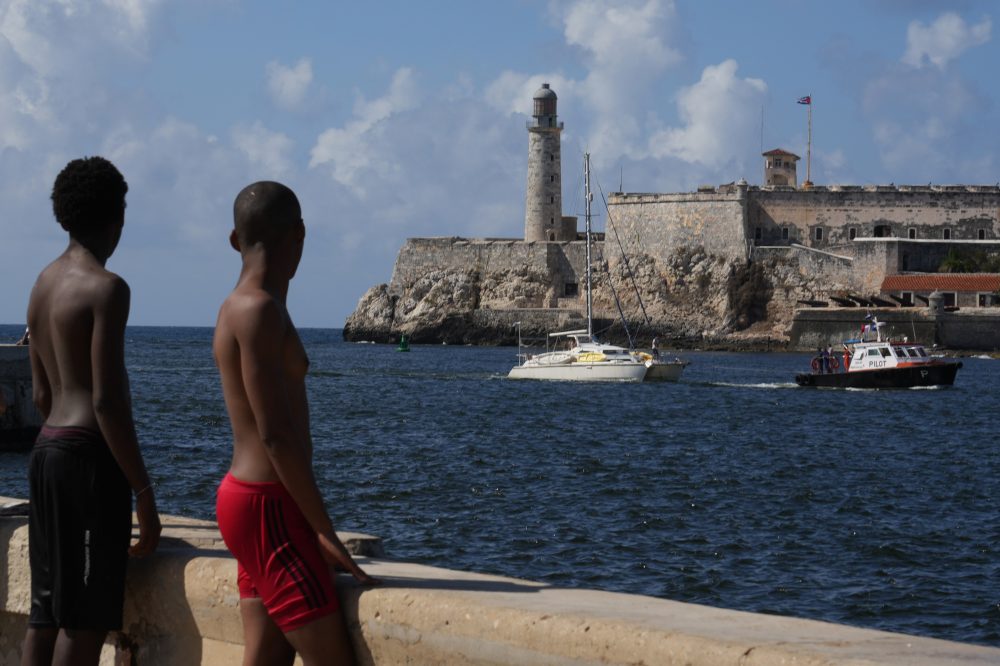
HAVANA — A Russian oil tanker successfully arrived at Cuba’s Matanzas port on Tuesday, delivering 730,000 barrels of much-needed fuel to the Caribbean island after a three-month gap in petroleum deliveries.
The vessel Anatoly Kolodkin was permitted to complete its mission by the Trump administration, even as the U.S. maintains strict energy sanctions against Cuba.
Cuban officials, including Energy and Mines Minister Vicente de la O Levy, celebrated the tanker’s arrival as the nation grapples with widespread power outages and shortages of essential goods including food and medical supplies.
“Our gratitude to the Government and People of Russia for all the support we are receiving. A valuable shipment that arrives amidst the complex energy situation we are facing,” de la O Levy wrote on X.
The island nation generates less than half of its fuel needs domestically and depends heavily on foreign oil to power its electrical infrastructure. Energy analysts estimate the cargo could yield approximately 180,000 barrels of diesel fuel, sufficient to meet Cuba’s consumption for roughly nine to ten days.
Cuban Deputy Foreign Minister Carlos Fernández de Cossío highlighted the significance of the delivery on social media. “The arrival of an oil tanker to a country has likely never generated so much news as the Russian one to Cuba,” he posted on X. “It’s a sign of the brutal siege Cubans endure with heroism and stoicism. It’s a demonstration of the criminal cruelty of imperialism against a nation that refuses to be dominated.”
Cuba previously depended on Venezuela for most of its petroleum imports, but those deliveries ceased after U.S. actions against the South American nation in early January, including the arrest of its leadership. Mexico also suspended oil exports to Cuba following Trump’s late January warning of potential tariffs against any nation providing fuel to the island.
Speaking to reporters while returning to Washington on Sunday evening, Trump expressed tolerance for the Russian delivery. “We don’t mind having somebody get a boatload because they need … they have to survive,” Trump stated.
However, he remained critical of Cuba’s government, adding: “Cuba’s finished. They have a bad regime. They have very bad and corrupt leadership and whether or not they get a boat of oil, it’s not going to matter.”
The Russian tanker faces sanctions from the United States, European Union, and United Kingdom due to the ongoing conflict in Ukraine.
When questioned Monday about the administration’s selective approach to oil deliveries, White House press secretary Karoline Leavitt described it as “a decision that will continue to be made on a case-by-case basis for humanitarian reasons or otherwise,” while emphasizing “there’s been no firm change in our sanctions policy.”
Both Trump and Secretary of State Marco Rubio continue pushing for significant reforms in Cuba’s political system and policies, with discussions ongoing as the island faces mounting economic and energy challenges.
Beijing plans to maintain its restrictions on refined fuel exports through April, according to five industry insiders familiar with the situation, though limited exceptions may be granted to regional nations that have requested assistance.
Negotiations are underway for modest shipments of diesel, jet fuel and gasoline to Southeast Asian countries during April, three sources revealed. Export volumes under consideration range from 150,000 to 300,000 metric tons, depending on which source is consulted.
The sources, who requested anonymity because they lack authorization to discuss the matter publicly, indicated that independent export sales by refineries would continue to be prohibited.
Nations potentially eligible to receive Chinese fuel deliveries include Bangladesh, Myanmar, Sri Lanka, the Maldives and Vietnam, the sources indicated.
Any direct deliveries to these countries would be managed by Chinese government-owned companies, three sources confirmed.
China’s National Development and Reform Commission has not yet responded to requests for official comment.
Multiple nations, including the Philippines and Bangladesh, have approached China seeking fuel assistance since the Iran conflict began, as previously reported by Reuters. Beijing has expressed willingness to collaborate with Southeast Asian countries to help resolve energy supply shortages.
The Chinese government implemented export restrictions on diesel, gasoline and jet fuel beginning March 12. The prohibition does not apply to jet fuel used for international flight refueling and marine bunkering operations, and was not formally announced to the public.
Limited quantities of diesel and jet fuel continued to leave bonded storage facilities in Hainan province in southern China after March 12, with two knowledgeable sources explaining these shipments had already cleared customs procedures before the restrictions took effect.
Three vessels – Stavanger Pearl, Auchentoshan and Qian Chi – departed Hainan with combined diesel cargo exceeding 600,000 barrels following March 12. Ship-tracking information from Kpler and trade sources showed the first tanker headed to Mexico while the remaining two sailed for the Philippines.
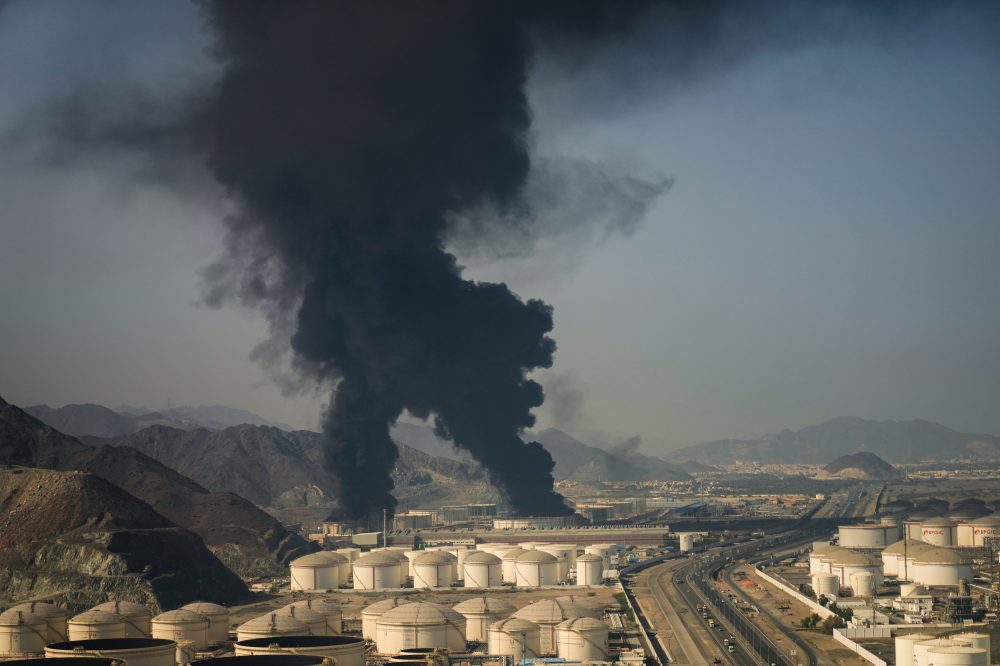
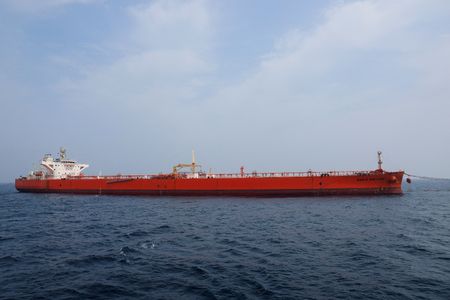
Iranian forces launched an overnight assault on a large Kuwaiti oil tanker in waters near Dubai, setting the vessel ablaze in the latest escalation affecting Gulf region shipping.
The attack on the massive tanker represents another example of how Gulf nations are bearing the brunt of consequences from the expanding regional conflict.
Meanwhile, former President Trump has directed sharp words toward European allies regarding energy independence, telling them to secure their own petroleum supplies rather than relying on external sources.
The tanker incident occurred as tensions continue to mount across the Middle East, with maritime shipping routes becoming increasingly vulnerable to military actions.
Gulf states have found themselves caught in the crossfire of the broader conflict, with their strategic waterways and energy infrastructure becoming frequent targets.
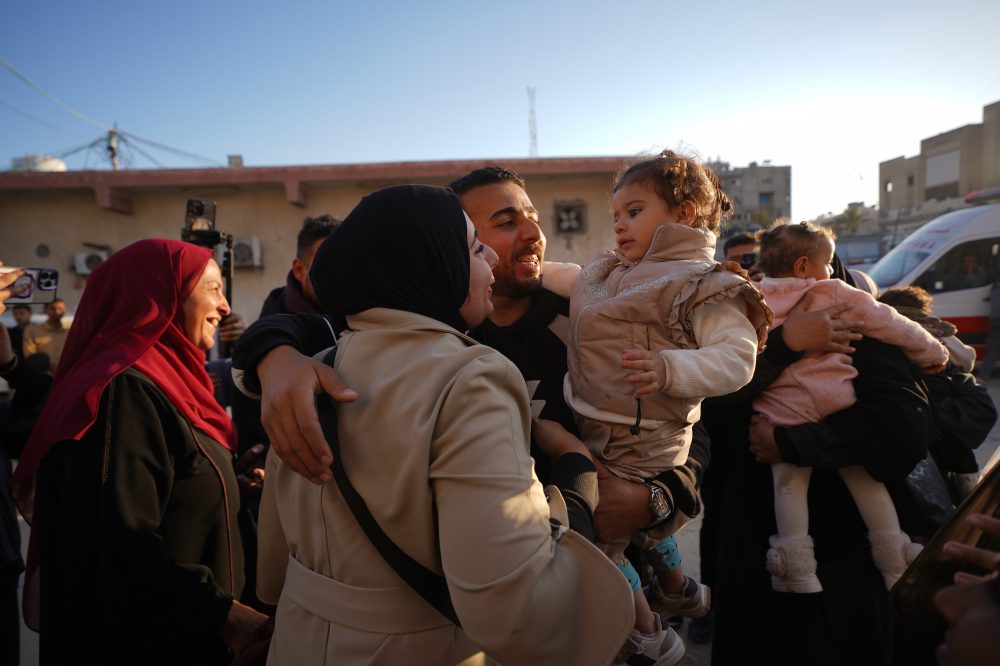
DEIR AL-BALAH, Gaza Strip — Samer Lulu’s face lit up with joy as he lifted his oldest daughter Kinda into his arms for the first time in over two years. The emotional reunion came Monday when eleven Palestinian toddlers returned to Gaza after being evacuated as critically ill newborns.
Kinda and other premature babies were rescued from Shifa Hospital’s neonatal intensive care unit in November 2023 when power failures shut down the life-sustaining incubators. The facility, Gaza’s largest medical center, lost electricity during the early stages of the Israel-Hamas war as Israeli forces surrounded and later entered the complex.
The fragile infants faced life-threatening conditions due to their premature births — they had delicate skin, dangerously low birth weights, and required continuous medical attention to survive. When the power went out, medical staff wrapped them in blankets and placed them together to share body heat after removing them from the non-functioning incubators.
Medical personnel were treating 50 premature infants during the conflict’s opening week, according to doctors who spoke with The Associated Press at that time. Of those, 31 babies survived the initial month and were transported to safety. On Monday, eleven of these children returned home, accompanied by some of the caregivers who had evacuated with them to Egypt.
Mohammad Zaqout, a hospital administrator, explained before the evacuation that electrical outages prevented Shifa from purifying water, creating a chain reaction of medical emergencies for the newborns, including digestive issues, blood infections, and dangerously low body temperatures. Medical staff reported that three infants died before the evacuation could take place.
Sundus Al-Kurd shared with The Associated Press that she initially feared her daughter had perished in the months following the emergency evacuation to Egypt. She was reunited with Bissan, now 2 and a half years old, during Monday’s homecoming.
While the children’s return brought rare happiness to Lulu and other families, concerns about what lies ahead overshadowed their celebrations. Describing Monday as the most significant day of his existence, Lulu acknowledged that anxiety about the future dampened his joy.
“Our feelings are mixed with pain because of the reality we live in,” he shared with The Associated Press outside Nasser Hospital in Khan Younis. “We hope that the future of our children will not be filled with the tragedy or suffering they faced at the beginning of their lives.”
These vulnerable infants became early representations of civilian casualties in Gaza following Israel’s military response launched October 8, 2023, one day after Hamas-led fighters carried out a devastating assault that killed over 1,200 people in Israel and resulted in 250 hostages being taken.
Israeli officials claimed that the attackers used medical facilities as military headquarters, accusations that both hospital administrators and Hamas rejected. During the war’s early phase, medical professionals and civilians seeking shelter in hospitals described continuous bombardment and rapidly worsening conditions.
The Red Crescent and World Health Organization coordinated the evacuation of Shifa’s neonatal intensive care unit in November 2023 as Israeli forces advanced into northern Gaza and surrounded the medical complex.
“Most cases in the neonatal unit depend on electricity, and most of them depend on artificial respiration. In the event of a power outage, a disaster will occur within five minutes, and all cases dependent on ventilators will inevitably die due to the power outage,” Naser Bulbul from Shifa’s neonatal unit explained at the time as medical staff worked frantically to keep the babies alive.
These children were part of a broader group of Palestinians returning to Gaza from Egypt through the partially reopened Rafah crossing, where they were transported to Nasser Hospital for family reunions. Parents held their sons and daughters close and comforted them as they cried while crowds gathered to witness the emotional scenes.
The border crossing resumed limited operations for Palestinian returnees in February, though passage has remained restricted, including a complete closure during the early weeks of tensions with Iran.
An Israeli government representative confirmed that the 11 toddlers and seven accompanying caregivers were allowed to return with assistance from UNICEF, the U.N. children’s organization. The official requested anonymity as they lacked authorization to speak publicly.
The whereabouts of most children from the original group of 31 evacuees from November 2023 remains unknown, though medical staff reported that four died after reaching Egypt in critical condition. Some parents told The Associated Press they still have no information about what happened to their newborns after the evacuation.
Two-year-old Ibrahim Bader was reunited with his father and grandmother, but not his mother, who died from illness in December 2023 after most Gaza hospitals had ceased operations or reduced services, according to his father Jabr Bader.
Ibrahim, Kinda, and the other children are coming back to a Gaza dramatically changed by more than two years of warfare. Israel’s military campaign has resulted in over 72,000 Palestinian deaths, according to local health officials, and forced most residents to flee their homes repeatedly. Communities lie in rubble, parts of the territory experienced severe food shortages last year, and attacks and gunfire have persisted beyond the October ceasefire agreement between Israel and Hamas.
Although several Gaza hospitals stopped functioning during the conflict, some have resumed limited operations, though power outages, fuel shortages, and supply problems continue to threaten services, requiring backup generators and endangering medical procedures. Gaza’s Health Ministry, which tracks victim ages, has documented thousands of children among the casualties. The ministry, operating under Hamas governance, keeps comprehensive casualty records that U.N. agencies and independent analysts consider generally credible.
Ahmed al-Farra, a physician in Nasser Hospital’s children’s department, described the family reunions as an emotional moment, “filled with many messages — sadness, and the joy of being reunited with their loved ones.”
Weekly, hundreds of residents queue up with plastic containers to receive meals at an extraordinary location: the modest childhood residence of soccer icon Diego Armando Maradona in Argentina.
Located in Villa Fiorito, an impoverished area outside Buenos Aires, the property no longer belongs to Maradona’s relatives following his 2020 death from cardiac arrest. For the past month, the current property owner has allowed volunteers to use the dirt courtyard to grill and prepare meals for local residents.
During a recent Thursday visit, Maria Torres was seen preparing stew in two oversized pots while other volunteers prepared potatoes and cut up chicken portions. The building’s front wall features a painted mural showing the soccer star alongside text reading “The house of god.”
Argentina’s poverty statistics show improvement, declining to 31.6% during the first six months of 2025 from 52.9% in early 2024, when President Javier Milei dramatically devalued the currency and inflation surged. Officials plan to release second-half 2025 data on Tuesday.
Despite this “very important drop” in poverty levels, Argentina requires increased GDP expansion in job-creating industries like mining rather than capital-focused sectors such as farming, according to Eduardo Donza, a sociologist from Argentina’s Catholic University.
The poverty reduction coincided with significant decreases in monthly inflation rates, falling from double-digit levels when Milei assumed office to 2.9% by February.
Nevertheless, Milei’s budget-cutting policies have drastically reduced government employment, and many citizens report decreased buying power following reductions in transportation and energy assistance programs.
Pastor Leonardo Fabian Alvarez, who operates the temporary food distribution site, reports increased demand for meals in Villa Fiorito and surrounding areas as small manufacturing businesses have shut down. Milei’s deregulation policies and a strengthened peso have made foreign goods more affordable.
“People obviously lost their jobs,” Alvarez explained, noting that “they come to the line, pick up food, take what we give them.”
In 2021, Argentina officially designated Maradona’s birthplace as a national historic landmark.
A Russian oil tanker loaded with approximately 700,000 barrels of crude oil reached Cuba’s Matanzas port early Tuesday morning, marking the island’s first major fuel shipment in three months during a severe energy shortage.
The vessel named Anatoly Kolodkin, which operates under Russian flag and faces U.S. sanctions, arrived at the anchorage area at sunrise under clear weather conditions, according to eyewitness reports and maritime tracking information. The ship had entered Cuban waters late Sunday evening near the U.S. naval facility at Guantanamo Bay.
U.S. officials stated they permitted the tanker’s fuel delivery on humanitarian grounds, despite ongoing sanctions against the vessel.
The Aframax-class ship docked at Matanzas Bay, Cuba’s primary facility for supertanker operations and fuel storage, while much of the surrounding city and most of Cuba remained without electrical power.
Cuban President Miguel Diaz-Canel has confirmed that no oil tankers had reached the country for three months prior to this delivery, intensifying an energy emergency that has caused continuous power outages throughout the nation of 10 million residents. The crisis has pushed medical facilities, mass transit systems, and agricultural operations to near-collapse conditions.
Should the cargo be successfully unloaded, it would provide temporary relief to Cuba’s Communist government as it faces mounting challenges from the Trump administration, which has pledged policy changes regarding Cuba.
Processing the crude oil aboard the Anatoly Kolodkin into usable gasoline, diesel fuel, and power generation materials will require several days through Cuba’s domestic refining operations.
The tanker’s cargo consists of Russian Urals crude, a medium sour grade that matches the capabilities of Cuba’s older refinery infrastructure.
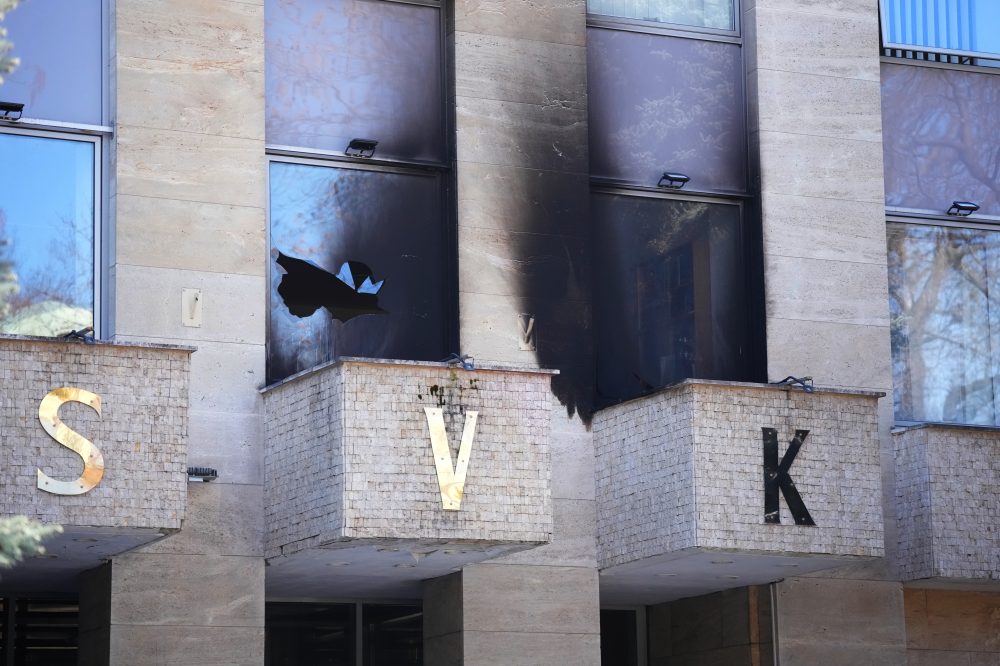
PRAGUE – Czech law enforcement announced Tuesday that a foreign individual has voluntarily surrendered to police, confessing to hurling incendiary devices at a Russian cultural facility in Prague during the previous week.
Authorities have not released additional identifying information about the individual, who was taken into custody on Monday.
“It is a foreigner who, according to his own words, had planned the act and was preparing for it since summer 2025,” police said on X.
The assault occurred last Thursday evening when the perpetrator launched multiple petrol bombs at the structure.
Law enforcement released photographs showing the blackened exterior of the building located in Prague’s 6th district, an area that houses numerous diplomatic facilities, including Russia’s embassy.
Russian embassy officials reported last week that the assailant hurled six containers filled with combustible materials, with three of them causing damage to the building’s front exterior.
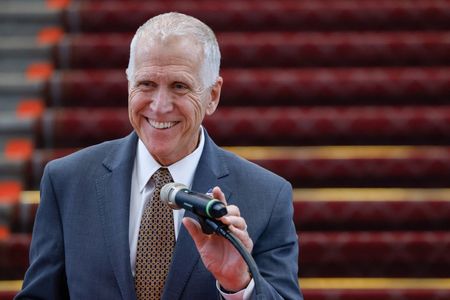
During a diplomatic mission to Taiwan on Tuesday, U.S. Senator Thom Tillis cautioned the island nation against underestimating China’s territorial ambitions, citing Hong Kong’s experience as a cautionary tale.
The Republican senator’s comments came as part of discussions surrounding Taiwan President Lai Ching-te’s stalled $40 billion defense budget proposal, which has U.S. backing but faces opposition in Taiwan’s parliament.
President Lai argues the additional military funding is essential to strengthen Taiwan’s defenses against China, which considers the island part of its territory. However, opposition lawmakers, while supporting defense investments generally, refuse to approve what they call “blank cheques.”
Speaking to reporters as part of a bipartisan Senate delegation, Tillis emphasized that Hong Kong’s fate should serve as a clear warning to Taiwan about Chinese intentions.
Hong Kong transitioned from British control to Chinese sovereignty in 1997 with promises of maintaining certain freedoms, but Beijing implemented strict national security legislation in 2020 that opponents argue has eliminated many liberties. Chinese officials defend the law as necessary for restoring order following prolonged civil unrest.
“And I think my biggest worry for Taiwan is that they underestimate the intentions of China, which I think were made very, very clear by what happened to Hong Kong. And so, yes, we would love peace, but please don’t be naive,” Tillis stated.
“You have a perfect example right in front of you of the intentions of China. And let’s make sure what happened to Hong Kong doesn’t happen here to Taiwan,” he continued.
The senator was joined by other lawmakers, including Democratic Senator Jeanne Shaheen, who serves as ranking member on the Senate Foreign Relations Committee. The delegation met with President Lai on Monday.
Coinciding with the U.S. visit, China extended an invitation to Cheng Li-wun, leader of Taiwan’s main opposition Kuomintang party, to visit Beijing. Cheng accepted the invitation and plans to travel next week on what she describes as a peace mission.
Taiwan’s government responded to Cheng’s planned Beijing trip by stating that China’s goals to “annex” Taiwan remain unchanged.
“While we may have ideals about peace, we should not harbour illusions,” declared Taiwan’s Mainland Affairs Council, the agency responsible for cross-strait policy, in an official statement.
Iranian military forces launched an overnight assault on a large Kuwaiti oil tanker in waters near Dubai, causing the vessel to catch fire and demonstrating how Gulf nations are becoming increasingly entangled in the expanding regional conflict.
The attack on the massive commercial oil vessel occurred as military operations continue across multiple theaters, with Gulf states now facing direct consequences from the widening warfare that has engulfed the region.
The incident marks a significant escalation in hostilities that threatens critical maritime shipping routes through the Persian Gulf, where much of the world’s oil transportation occurs daily.
Authorities in the Czech Republic announced Tuesday they have taken a foreign national into custody who confessed to firebombing a Russian cultural facility in Prague with homemade incendiary devices.
The male suspect voluntarily surrendered to law enforcement on Monday and admitted to orchestrating the assault on the Russian House, revealing he had been plotting the attack since last summer. The targeted facility receives funding from the Russian government but operates without diplomatic protection.
Czech authorities have not disclosed the suspect’s country of origin or provided additional identifying information.
The attack occurred late Thursday evening in the Czech capital. Images from the scene revealed shattered glass and smoke damage to two windows and an exterior wall, though the structure did not ignite.
The Russian House provides cultural, educational and academic programming while also teaching Russian language classes to the public.
Facility director Igor Girenko informed Russian state media outlet Tass that attackers hurled six Molotov cocktails at the building Thursday night, with three devices failing to detonate.
Russian Foreign Ministry representative Maria Zakharova denounced the incident as “a barbaric act,” while Russia’s Prague embassy urged Czech officials to strengthen protection for Russian facilities and personnel throughout the country.
Czech Foreign Ministry officials have publicly criticized the attack.
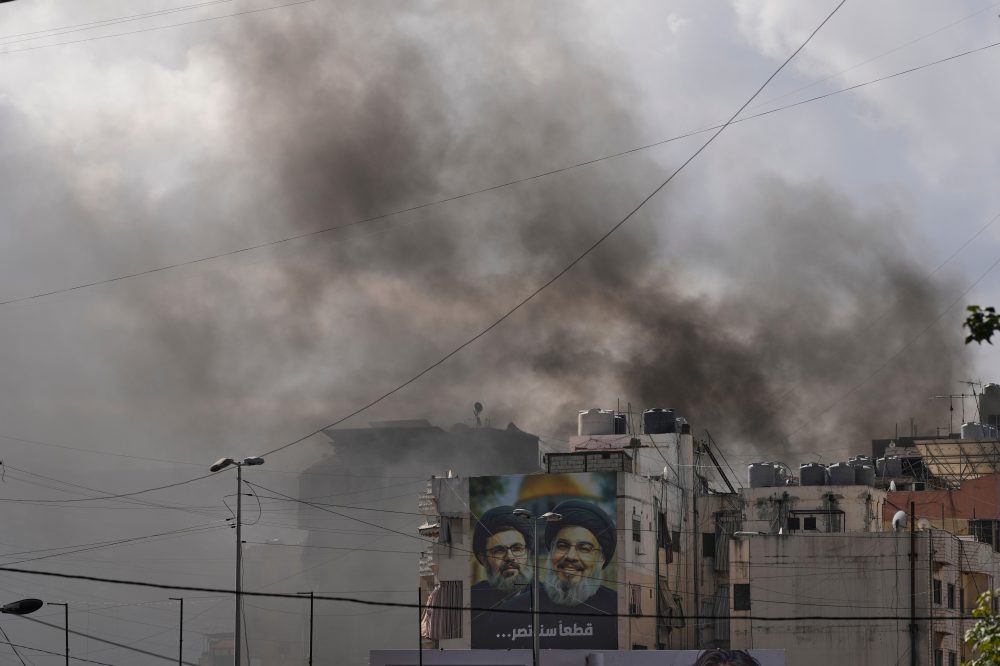
JERUSALEM – Israeli Defense Minister Israel Katz announced Tuesday that his country intends to create and maintain a security buffer zone throughout southern Lebanon extending to the Litani River after concluding military operations against Hezbollah.
Following a security briefing, Katz outlined the plan in an official statement, saying the Israeli Defense Forces would maintain authority over the region up to the Litani River, including remaining bridges across the waterway. He described the initiative as establishing a “security zone” while eliminating Hezbollah’s elite Radwan military units that have moved into the territory and destroying weaponry in the area.
The defense minister also stated that more than 600,000 Lebanese civilians who were evacuated to areas north of the Litani River would not be permitted to return to southern Lebanon until Israeli officials can ensure the security of northern Israeli communities.
Katz further announced that border villages in Lebanon would face complete destruction, stating this would follow “the model of Rafah and Beit Hanoun in Gaza, in order to permanently remove threats near the border to northern residents” of Israel.
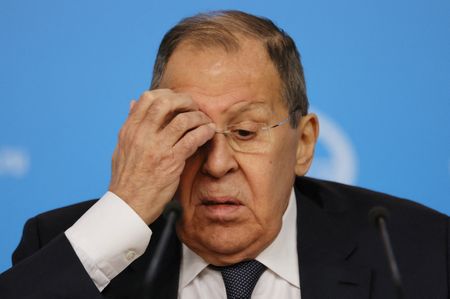
MOSCOW – Russia’s top diplomatic official made accusations Tuesday that American efforts to topple governments in Iran and Venezuela are driven by desires to secure greater access to oil and natural gas reserves.
Foreign Minister Sergei Lavrov claimed that both the United States and Israel oppose efforts to normalize relations between Iran and neighboring countries. He also issued warnings that ongoing Middle Eastern conflicts could expand into a much larger regional war.
HAMBURG, Germany — German authorities report a woman was attacked by a wolf Monday evening in a busy shopping district of Hamburg, marking what officials believe is the first recorded incident of its kind since wolves made their comeback to the country nearly three decades ago.
Emergency responders transported the victim to a local Hamburg medical facility following the unprecedented encounter, according to reports from the German news service dpa. Details about the woman’s medical status remained unavailable Tuesday, and law enforcement has not disclosed the location or extent of her injuries. The circumstances that led to the attack remain unclear.
The incident occurred in a commercial district close to Altona station, located west of Hamburg’s central area. Later that same evening, law enforcement officers retrieved the wolf from the Binnenalster lake in the heart of the city after receiving multiple reports of the animal’s presence there and at various other locations throughout Hamburg. Media outlets reported the wolf was subsequently moved to a containment facility on the city’s outskirts.
Authorities suspect the wolf responsible for the attack is likely the same animal spotted over the weekend in Blankenese, a Hamburg suburb. Wildlife specialists theorize the creature is a juvenile wolf seeking its own territory that inadvertently entered the urban area. Hamburg’s regional administration emphasized that wolves typically steer clear of human and canine contact, and noted that the unfamiliar city setting would create significant stress for the animal.
According to Germany’s Federal Agency for Nature Conservation, this represents the first documented case of a wild wolf attacking a human since these animals returned to German territory following a 150-year absence that ended nearly 30 years ago, dpa reported.
However, wolf attacks targeting farm animals across Europe have increasingly troubled agricultural communities for years. In the previous year, the European Parliament approved changing the wolf’s classification from “strictly protected” down to “protected.”
Just last week, Germany’s national legislature gave final authorization to new laws that will make it simpler for authorities to eliminate wolves that attack or injure farm animals.
BRUSSELS – The European Union’s top energy official is warning member nations to get ready for extended turmoil in energy markets caused by the war involving Iran.
EU Energy Commissioner Dan Jorgensen sent a letter dated March 30 to energy ministers across the bloc, advising them to begin preparations for what could be lasting market disruptions. The correspondence was obtained ahead of an emergency ministerial meeting scheduled for Tuesday.
The ongoing Middle East conflict has severely impacted global energy costs, with European gas prices skyrocketing more than 70% since the U.S.-Israeli military action against Iran commenced on February 28. Europe’s substantial dependence on energy imports makes the continent particularly vulnerable to price volatility stemming from regional conflicts.
While the closure of the critical Strait of Hormuz shipping lane hasn’t directly affected Europe’s crude oil and natural gas deliveries – since most of these resources come from non-Middle Eastern suppliers – Brussels remains deeply worried about other energy products.
Jorgensen highlighted immediate concerns regarding Europe’s access to refined petroleum goods, including jet fuel and diesel. These products face potential supply constraints that could impact the continent’s energy security.
The commissioner’s letter outlined several recommendations for member states during this uncertain period. Nations should refrain from implementing policies that would boost fuel usage, restrict petroleum product trading, or discourage production at European refineries processing these critical materials.
“Member States are encouraged to defer any non-emergency refinery maintenance,” Jorgensen wrote in his communication to ministers.
The emergency meeting comes as European leaders grapple with energy security challenges that echo previous disruptions caused by geopolitical tensions in key energy-producing regions.
Iranian judicial authorities are threatening capital punishment and complete property confiscation for citizens suspected of espionage or collaboration with adversarial nations, according to a judiciary spokesperson’s announcement on March 31st.
The official stated that individuals who share photographs or video footage potentially useful for enemy targeting operations may face charges of intelligence collaboration under the enhanced legislation.
Over 1,000 individuals have been detained during the past month on allegations including recording footage at strategic sites, distributing anti-regime material on social media platforms, and engaging in enemy collaboration, according to Iranian news outlets.
The ongoing military confrontation between Iran and both the United States and Israel began February 28th, subsequently expanding throughout the Middle East region, resulting in thousands of casualties while disrupting global energy markets and economic stability.
The judicial representative explained that the strengthened statute, enacted in the previous year, covers operational activities, intelligence work, and specific media actions considered supportive of antagonistic governments, particularly the United States and Israel.
Citizens who spread panic through false information could receive imprisonment, with enhanced penalties during periods of armed conflict, the spokesperson cautioned.
Approximately 200 formal charges have been filed in related cases, with authorities collaborating with security agencies to locate and confiscate assets connected to accused individuals, emphasizing zero tolerance in law enforcement, the official added.
Russian authorities are intensifying efforts to block Virtual Private Networks, the digital tools that millions of citizens rely on to circumvent government internet restrictions and censorship, according to the country’s top digital official.
The announcement comes amid what international diplomats have dubbed Russia’s “great crackdown” on digital freedoms, which has included blocking mobile internet access and disrupting major messaging platforms while expanding government authority to shut down mass communications.
“The task is reduce VPN usage,” stated Digital Minister Maksut Shadayev through the state-supported messaging platform MAX on Monday evening. He added that his department is working to implement these restrictions while attempting to minimize disruption for users.
Shadayev revealed that officials have made decisions to limit access to several unnamed foreign platforms, though he provided no specific details about which services would be affected.
Following Russia’s 2022 military action in Ukraine, the government enacted the most restrictive censorship measures witnessed since the Soviet era, strengthening oversight and expanding the authority of the Federal Security Service, which succeeded the Soviet KGB.
Recent months have seen authorities escalate these measures significantly, blocking WhatsApp entirely, reducing Telegram’s functionality, and repeatedly disrupting mobile internet service in Moscow and other major cities and regions throughout the country.
Government officials justify these actions by claiming foreign platforms have violated Russian law and that mobile internet limitations are essential for defending against large-scale Ukrainian drone attacks.
Data from the Kommersant newspaper indicates that by mid-January, Russian authorities had blocked over 400 VPN services, representing a 70% increase from the end of the previous year.
However, the situation has become an ongoing battle between authorities and users: each time officials disable one VPN service, replacement options quickly emerge, and many young Russians reportedly switch between different VPN providers on a daily basis to maintain access.
KYIV, Ukraine — A delegation of twelve European foreign ministers arrived in Ukraine’s capital Tuesday, traveling by train to commemorate the fourth anniversary of Russian war crimes committed in the nearby town of Bucha.
The high-level diplomatic mission comes as American-led peace negotiations remain stalled and Washington’s focus has shifted toward Middle Eastern conflicts, prompting European nations to intensify efforts to maintain international attention on what has become Europe’s largest land conflict in decades, now entering its fifth year.
Ukrainian Foreign Minister Andrii Sybiha welcomed the European delegation, acknowledging what he called the “grim anniversary” of the horrific crimes that shocked the world four years ago.
Russian forces quickly seized control of Bucha following their February 24, 2022 invasion of Ukraine, maintaining occupation for approximately one month. After Ukrainian forces reclaimed the community, they discovered over 400 bodies left behind from Russia’s systematic killing campaign.
“Such a strong European presence (in Ukraine) on this day demonstrates that justice for this and other Russian atrocities is inevitable,” Sybiha wrote on X. “Comprehensive accountability for Russian crimes is vital to restore justice in Europe.”
Tuesday’s discussions between EU representatives and Ukrainian officials centered on reaffirming Europe’s commitment to pursuing accountability for Russia’s invasion and subsequent war crimes.
During her journey to Kyiv, EU foreign policy chief Kaja Kallas emphasized the critical need to prosecute both military commanders who issued execution orders and soldiers who carried out the killings in communities like Bucha.
“One of the things that is really necessary is accountability. Otherwise, you have revenge and retaliation,” Kallas stated. “If you don’t see people doing this to your family held accountable, you will want revenge.”
The ongoing Iran conflict has become Washington’s primary concern, potentially redirecting crucial military resources that Ukraine desperately needs, including air defense systems, while simultaneously boosting Russia’s economy through elevated energy prices.
“We can’t let it (the Ukraine war) slip off the table,” Kallas warned. “We are the ones who have to keep this up because nobody else does.”
American-facilitated peace talks have reached an impasse, with no clear timeline for resumption as the Middle East crisis continues to dominate international attention.
BANGKOK (AP) — The globally popular Eurovision music competition will debut its inaugural Asian version in Thailand’s capital city this November.
Eurovision Song Contest Asia 2026 will feature performers from a minimum of 10 Asian nations: Thailand, South Korea, the Philippines, Vietnam, Malaysia, Cambodia, Laos, Bangladesh, Nepal and Bhutan. Additional countries are anticipated to participate before the November finale.
Contest director Martin Green stated in Tuesday’s announcement: “As we mark the 70th anniversary of the Eurovision Song Contest, it feels especially meaningful to open this next chapter with Asia, a region rich in culture, creativity and talent.”
Thailand Tourism Authority representative Chuwit Sirivajjakul explained that Bangkok serves as an ideal host city because it “has always been a place where cultures come together, where music fills the air, and where celebration is part of everyday life.”
The primary competition, organized by the European Broadcasting Union, attracts over 100 million viewers annually.
The 2025 main event featuring 35 nations will take place in Vienna this May. However, Iceland, Ireland, the Netherlands, Slovenia and Spain are refusing to participate due to disagreements regarding Israel’s involvement.
While the competition aims to prioritize pop music over politics, it has frequently become entangled in global conflicts. Russia faced expulsion in 2022 following its comprehensive invasion of Ukraine.
The Israel-Hamas conflict in Gaza has also created controversy, sparking demonstrations outside venues and prompting organizers to restrict political displays.
Similar political tensions might surface in the Asian version, particularly given that Thailand and Cambodia experienced fatal border confrontations on two occasions last year.
Military officials from two Baltic nations reported detecting suspicious drone activity along their borders with Russia during the overnight hours, marking the latest in a series of airspace incidents affecting NATO’s eastern territories.
Estonian defense officials announced Tuesday morning that they had identified what they termed “potentially dangerous air activity” both within and beyond the nation’s airspace boundaries during the night.
“A preventive threat notification was sent out,” military officials stated, adding that the danger had subsequently subsided.
Colonel Uku Arold, a spokesperson for Estonia’s defense forces, told the country’s public broadcasting network ERR that it was “highly likely that Ukrainian drones that went astray were involved.”
Defense authorities did not respond to requests for additional information.
In recent weeks, Ukraine has intensified its drone operations against Russian oil processing facilities and export infrastructure, with some targets located near Russia’s borders with Baltic states and Finland, as part of efforts to undermine Moscow’s wartime economic capabilities.
According to ERR, wreckage from at least one unmanned aircraft was discovered in Estonia’s Tartu county, while officials continue investigating reports of additional debris findings.
Meanwhile, Latvia’s military forces issued their own statement confirming they had spotted a foreign drone near the Latvian-Russian border on Monday evening. Officials emphasized that the aircraft remained outside Latvian airspace.
Finnish authorities revealed Monday that a Ukrainian drone that went down in Finland on Sunday was carrying an unexploded warhead when it crashed.
British Prime Minister Keir Starmer has issued a two-day deadline for England’s resident doctors’ union to reconsider its rejection of a compensation and staffing agreement, cautioning that upcoming work stoppages will damage both medical professionals and the patients they serve.
In an opinion piece published in the Times newspaper, Starmer criticized the British Medical Association for making a “reckless” choice by declining to allow its membership to vote on the government’s proposal while simultaneously declaring six days of work stoppages scheduled for April.
England’s resident doctors, previously called junior doctors, plan to stop work from April 7 through April 13 following the BMA’s announcement last week that the administration’s proposal did not adequately address ongoing salary deterioration and personnel shortages within the National Health Service.
According to Starmer, the government’s proposal would have provided a salary increase exceeding inflation rates for the current year and brought total compensation improvements to approximately 35% across three years, along with changes to advancement structures intended to better recognize professional experience.
“That is why walking away from this deal is the wrong decision. It is a reckless decision,” Starmer stated in Monday’s newspaper column. “And doing so without even giving resident doctors themselves the chance to vote on it makes it even worse.”
The proposed agreement also featured coverage of required examination costs, which can total thousands of pounds during training periods, plus the establishment of up to 4,500 new specialty training positions over three years.
“If this deal is not put to a vote, those opportunities will be lost,” Starmer declared, pressing the committee to allow members input and submit the proposal for voting.
The BMA, representing approximately 55,000 resident doctors who comprise nearly half the medical workforce, has maintained that the suggested salary boost fell short of inflation rates and that the gradual implementation of advancement changes could secure additional real-value decreases.
Jack Fletcher, who leads the BMA’s resident doctors’ committee, responded to Starmer’s criticism by saying the disagreement was “not about arbitrary cut-offs,” noting that any time limit would disappear once a believable and lasting proposal became available.
Fletcher indicated the union planned to restart discussions with the government on Tuesday, hoping to achieve an agreement that might still prevent the strikes.
STOCKHOLM – Sweden experienced its most significant drop in deadly violence in more than a decade last year, according to new government data released Tuesday, as law enforcement officials deployed enhanced tactics to combat gang-related crime that has troubled the Nordic nation for two decades.
Data from Sweden’s National Council for Crime Prevention reveals that 84 individuals lost their lives to homicide and manslaughter in 2025, marking a decrease from 92 fatalities recorded in 2024 and representing a substantial decline from the 2020 peak of 124 deaths.
“The development of the number of cases of deadly violence in 2025 represented the second straight year of decline and was at the lowest level since 2012,” BRA said in a statement.
These encouraging numbers provide political momentum for the conservative administration that secured victory in 2022 elections by pledging to address organized criminal activity, which had driven firearm-related fatalities to Europe’s highest rates.
However, the crime prevention council noted that a devastating mass shooting incident in February 2025 – unconnected to gang activity – resulted in 10 deaths and significantly influenced the year’s overall violence statistics, representing nearly 25 percent of all gun-related deaths.
With national elections scheduled for September, public safety remains a priority concern for Swedish voters, despite shooting incidents declining by more than half since 2022.
Law enforcement leaders and government officials point to innovative strategies, expanded funding, and broadened authority – including comprehensive surveillance legislation – as key factors driving the reduction in criminal violence.
Recent policy changes encompass protected identities for certain court witnesses, expanded electronic monitoring capabilities, harsher criminal penalties, and designated safety zones allowing officers to conduct searches without requiring probable cause.
Police officials report these enhanced measures have enabled them to confiscate criminal organizations’ resources more effectively and improve their ability to prevent shooting incidents.
Firearms remained the primary method in violent deaths, claiming 42 lives during 2025, representing a decrease of three victims from the previous year’s total.
BEIJING – Pakistan’s top diplomat is scheduled to meet with China’s foreign minister on Tuesday, with Iran’s current situation expected to be a key topic of discussion, according to Chinese foreign ministry officials.
A ministry spokesperson revealed during a press briefing that both nations maintain aligned perspectives on significant international and regional matters.
The diplomatic meeting comes as part of ongoing cooperation between the two countries on foreign policy issues.
MAKURDI, Nigeria – When US foreign aid cuts threatened to leave thousands of HIV patients without access to crucial medications, volunteer health workers in Nigeria took matters into their own hands, walking from house to house to ensure people stayed alive.
Josephine Angev, a 40-year-old volunteer, spent months last year traveling through rural communities in Nigeria’s Benue State, helping HIV patients maintain access to antiretroviral drugs that keep the virus suppressed and prevent transmission to others.
Angev is among dozens of volunteer “HIV champions” who conducted personal visits to bring patients back into medical care when medication access was interrupted, serving people whose condition often carries social stigma and shame.
Many patients were unaware of the dangers of stopping their treatment. “They don’t understand the implications,” Angev explained.
When people with HIV discontinue antiretroviral medications that control the virus, it resurges in their system. This creates risk for HIV-related health complications within months and enables virus transmission to others.
Angev made repeated visits to a 65-year-old woman who had ceased taking her medication when her supply was exhausted. The woman subsequently became sick. Through Angev’s persistent efforts, she has resumed her drug regimen and is now healthy.
This case illustrates how individuals managed during the aftermath of aid reductions that disrupted global HIV programs in 2025. Additional wealthy nations followed the US in reducing aid, forcing countries dependent on such assistance to find alternative solutions.
Nigeria responded within six weeks by announcing a $200 million health funding package that included HIV programs. The US government also granted a waiver for “life-saving” aid in February 2025, including antiretroviral medications. However, volunteers played a crucial role in filling service gaps.
Dinah Adaga oversees the volunteer network in Benue State. “If we couldn’t reach someone by phone, we went to their house – we traced the address and knocked on their door,” she explained.
A 41-year-old mother described feeling hopeless when learning about the aid reductions, worried that medications would become too expensive. Volunteers helped reconnect her with treatment in November.
“These drugs mean a lot to me. My future depends on them. I have three daughters, and they’re all doing well… They are all (HIV) negative. I’m the only one who is positive. So I believe the drugs were truly made for people like me,” she stated.
President Donald Trump’s 90-day suspension of foreign aid beginning January 20 last year created immediate consequences in Nigeria.
The US had covered approximately 90% of Nigeria’s HIV treatment expenses and supported healthcare personnel. In subsequent months, patients and advocacy organizations reported that medication distribution systems collapsed.
Patients could only obtain supplies lasting one to two weeks instead of six months from major medical facilities. In Makurdi, Benue’s capital city, all 10 treatment facilities shut down for one month, and the World Health Organization cautioned that medications might be depleted.
A network of volunteers intervened, operating as part of Afrocab, a continent-wide community support organization. They reconnected people with care facilities once they reopened with new funding sources, and addressed false information that had circulated about prayer-based “cures.” They encouraged expectant mothers to return to prenatal care to safeguard their babies.
Between June and December 2025, the volunteers brought more than 1,000 people in Benue, including 95 children under age five, back into medical care – representing everyone they estimate who had discontinued treatment in February and March.
“We have not received reports of people dying from not accessing antiretrovirals… that’s, for us, a good sign,” stated Krittayawan Boonto, UNAIDS country director in Nigeria.
Nigeria has approximately two million people living with HIV, among the world’s highest totals. Benue, a state with 4.25 million residents, has slightly over 200,000 people receiving treatment, according to Afrocab estimates.
Immediately following the aid suspension, a UNAIDS monitoring system indicated 200,000 fewer Nigerians were receiving treatment. However, by year-end 2025, data revealed 1.7 million people on treatment, a modest increase from 2024’s 1.6 million.
A US State Department representative said the number receiving medications was “very similar” at the end of 2025 compared to 2024. “The narrative suggesting widespread HIV treatment loss… is inaccurate, misleading and irresponsible,” they added.
Nigeria’s government did not respond to requests for comment.
Global health organizations and the Nigerian government have warned that HIV prevention services experienced more severe and prolonged impacts.
Bright Oniovokukor, who coordinates the Civil Society for HIV/AIDS in Nigeria, reported that people accessing drugs to prevent HIV infection decreased from 43,000 in November 2024 to below 6,000 in April 2025, while condom distribution fell by 55%.
Conditions have improved since then, but any interruption in prevention leads to increased cases, explained Dr. Oluwafunke Odunlade, HIV unit head at WHO Nigeria. Testing was also affected, meaning cases may have been overlooked: preliminary data showed that more than one million fewer people received HIV testing in 2025 compared to 2024.
Currently, the US and Nigeria are finalizing details of a health agreement for 2026-2030 that was signed in December, under which the US will provide $2.1 billion and Nigeria $3 billion.
The agreement prioritizes HIV response and commits to enrolling more patients in treatment programs, with Nigeria assuming complete funding responsibility over the next five years.
The US has indicated that only workers “formally recognised within government structures” will receive funding, and the agreement emphasizes “a strong emphasis on Christian faith-based healthcare providers,” reflecting broader US efforts to support Nigeria’s Christian population, which faces threats from Islamist violence.
In Benue, Angev will continue her volunteer work. “It can be exhausting, but we do it so lives that might have been lost are instead restored. And when you see them living better lives and truly changed, that’s when you feel happy,” she said.
Japan has activated its first long-range missile system at a military installation in the country’s southwest, officials announced Tuesday, representing a major expansion of the nation’s offensive military capabilities.
The enhanced Type-12 land-to-ship missile system, manufactured by Mitsubishi Heavy Industries, went into operation at Camp Kengun located in Kumamoto prefecture.
Defense Minister Shinjiro Koizumi addressed reporters about the significance of this development. “As Japan faces the most severe and complex security environment in the postwar era … it is an extremely important capability to strengthen Japan’s deterrence and responsiveness,” Koizumi stated. “It demonstrates Japan’s firm determination and capability to defend itself.”
The modernized Type-12 system can strike targets approximately 1,000 kilometers (620 miles) away, a dramatic increase from the original version’s 200-kilometer (125-mile) capability that now puts mainland China within striking distance.
This missile deployment provides Japan with “standoff” strike capabilities, allowing the country to attack enemy launch sites from distant positions. This represents a departure from Japan’s historically defensive-only military doctrine maintained under its pacifist constitution.
Local citizens who oppose having the weapons stationed near civilian neighborhoods held demonstrations outside Camp Kengun, arguing the deployment could heighten regional tensions and make their community a potential target for adversaries.
On the same day, military officials also activated a hypersonic glide vehicle system at Camp Fuji in Shizuoka prefecture, located west of Tokyo. This new weapons platform was specifically designed for defending Japan’s island territories. Military planners expect to install additional Type-12 missiles and hypersonic systems at various sites across Japan, including northern Hokkaido and southern Miyazaki, with completion targeted for March 2028.
Japan’s military expansion also includes plans to equip the destroyer JS Chokai with American-made Tomahawk cruise missiles capable of reaching targets 1,600 kilometers (990 miles) away later this year, with seven additional destroyers scheduled to receive the same weapons.
Japanese officials view China as the primary regional security challenge and have been strengthening defenses on southwestern islands near the East China Sea in recent years.
Prime Minister Sanae Takaichi’s administration approved a record-breaking defense spending plan in December exceeding 9 trillion yen ($58 billion) for the fiscal year starting in April, focusing on counter-strike capabilities and coastal defenses using cruise missiles and autonomous weapons systems.
Last June, Japan detected two Chinese aircraft carriers operating simultaneously near remote Japanese Pacific islands for the first time, raising Tokyo’s concerns about Beijing’s expanding military presence beyond its territorial boundaries.
Defense officials established a specialized office last week dedicated to monitoring China’s Pacific naval activities.
Regional tensions have intensified following Takaichi’s November declaration that any Chinese military assault on Taiwan could justify Japanese military intervention.
SAO PAULO (AP) — While the ongoing conflict involving Iran continues to disrupt oil markets worldwide, Brazil has found protection through an innovative solution that’s both cost-effective and eco-friendly: millions of motorists can select between pure sugarcane ethanol or gasoline mixed with 30% biofuel when they visit gas stations.
The South American nation’s extensive fleet of flexible-fuel vehicles — cars that operate on any mixture of ethanol and gasoline — represents an unparalleled program in terms of size. This initiative, which began in 1975 under Brazil’s former military government, has successfully adapted during democratic rule to decrease reliance on imported petroleum.
Currently, as the ongoing Middle East crisis involving Iran, the United States and Israel continues into its fifth week, countries including India and Mexico are examining Brazil’s approach as a model for achieving energy independence.
While motorists across the globe experience significant cost increases, Brazilian fuel prices climbed only 5% in March — a stark contrast to the 30% surge seen in America. Experts partially attribute this price stability to an established domestic biofuel sector that enables the nation to weather international tensions with little threat of fuel supply disruptions.
“Brazil is much better prepared than most countries because it has a viable alternative of this nature,” said Evandro Gussi, president of the Brazilian Sugarcane Industry Association, UNICA.
The circumstances are especially favorable given that Brazil’s upcoming sugarcane season, starting in April’s first half, is projected to yield a record 30 billion liters of ethanol — representing 4 billion liters more than the previous year. “That increase alone is equivalent to the total amount of gasoline Brazil imported in all of last year,” Gussi noted.
Although Brazil ranks as a significant crude oil producer and exporter, the country continues importing petroleum to satisfy domestic refined fuel needs. Brazil currently obtains oil from the United States, Saudi Arabia, Russia and nearby Guyana.
Nevertheless, ethanol has emerged as a cornerstone of everyday transportation. During 2025, ethanol sales reached 37.1 billion liters, based on data from the state-operated Energy Research Company. While it remains slightly behind diesel and gasoline in overall energy consumption, ethanol’s availability at all service stations offers Brazilians both psychological comfort and economic protection.
Brazil’s biofuel industry success centers in Sao Paulo state, the nation’s manufacturing and farming hub.
Operations there combine advanced, export-focused large-scale farms with smaller family-run businesses like Bom Retiro farm, established in 1958, where several dozen employees are currently preparing to harvest their 40-square-kilometer property spanning nearly 10,000 acres.
The country’s biofuel technology has benefited from extensive government-funded research. The Science Development Center for Ethanol at Unicamp university in Campinas, located near Sao Paulo, represents one such facility. Coordinator Luis Cortez explains that Brazil’s program possesses distinct benefits that other countries cannot replicate.
“We have flexibility in ethanol production, in vehicle engines and from the federal government, which sets the percentage of ethanol in the fuel blend,” said Cortez. “We have flexibility at three levels.”
He maintains that this research investment ultimately creates benefits for consumers at service stations.
Data from the Brazilian Association of Fuel Importers shows that gasoline processed by state-owned Petrobras — containing biofuel additives — costs 46% less than imported alternatives, saving 1.16 Brazilian reals ($0.22) per liter. Petrobras diesel similarly sells at refineries for 63% below international prices.
Although the potential closure of the Strait of Hormuz hasn’t dramatically affected Brazil’s gasoline sector, the country faces challenges with increasing diesel costs. This occurs because diesel relies heavily on imported crude oil and contains lower biofuel percentages.
In contrast to the sugarcane-ethanol achievement, Brazil’s biodiesel production, primarily derived from soybeans, comprises just 14% of diesel mixtures. This percentage may reach the same 30% level used in gasoline blends only by 2030, pending research advances and technological progress, meaning the current conflict has created immediate consequences.
Brazilian diesel costs jumped over 20% in March, leading President Luiz Inácio Lula da Silva to suggest import subsidies lasting through May. Government data indicates Brazil must purchase 20% to 30% of its diesel monthly, with most supplies coming from Russia.
Brazilian officials report the country imported nearly 17 billion liters of diesel during the past year.
For 80-year-old President Lula, who seeks reelection this October, maintaining stable diesel prices remains essential to avoid trucker protests and control food price inflation.
UNICA president Gussi revealed that since the recent Iran conflict began, multiple world leaders have contacted him regarding Brazil’s biofuel sector. Mexican President Claudia Sheinbaum expressed interest earlier this month in Petrobras’ methods for producing ethanol from agave, a widely cultivated plant in Mexico.
“The best news, even in the midst of a situation like the one we are experiencing, is that this solution has a significant level of replicability,” Gussi said.
PALU, Indonesia — Search and rescue operations in Indonesia concluded successfully Tuesday morning when teams located 21 survivors floating on a makeshift raft, one day after their passenger vessel went down in turbulent ocean conditions.
Muhammad Rizal, director of the Palu city search and rescue operations center, confirmed that all individuals aboard the vessel were recovered alive. Initial reports indicated 27 people were unaccounted for, but survivors clarified that six passengers listed on the ship’s roster had canceled their travel plans before departure.
The survivors, consisting mainly of fishing industry workers, were discovered on their raft approximately 46 kilometers (29 miles) away from the location where their vessel sank in waters north of Taliabu Island.
The vessel Nazila 05 had left port on Taliabu island in North Maluku province shortly after sunset on Sunday, heading toward Kema in North Sulawesi province, according to Rizal.
Rizal explained that the Nazila 05 regularly carried tourists and served the local community as both a fishing boat and small passenger transport.
According to statements from the vessel’s owner to authorities, the ship’s captain reported that the Nazila 05 went under after powerful waves damaged the front section during severe weather conditions, with all crew members successfully evacuating to a smaller boat before the main vessel submerged, Rizal noted.
Family members informed officials that the survivors had secured themselves to a raft, prompting the National Search and Rescue Agency, known as Basarnas, to dispatch a rescue ship toward the projected drift location at first light Tuesday, where the raft was expected to be floating in rough seas.
“All survivors located by rescuers will be taken to a nearby city of Gorontalo,” Rizal said in a video statement.
The rescue mission deployed two rescue ships and received support from area fishing boats, Basarnas reported.
As an island nation containing over 17,000 islands, Indonesia relies heavily on watercraft for transportation between locations. Maritime incidents happen regularly due to insufficient safety regulations and vessel overcrowding issues.
DUBAI, United Arab Emirates — American military forces conducted what appears to be a major strike against Iran’s central city of Isfahan in the early morning hours Tuesday, creating enormous explosions visible from great distances, while Iranian forces retaliated by attacking a fully-loaded Kuwaiti oil vessel in Persian Gulf waters.
These escalating strikes demonstrate how fierce the month-long conflict between the United States, Israel, and Iran has become, with Tehran continuing to block the strategically important Strait of Hormuz and cutting off crucial global oil shipping lanes, causing petroleum costs to spike dramatically and creating chaos in international markets.
President Donald Trump, who continues to claim diplomatic negotiations toward ending hostilities are making headway, posted footage of the Isfahan assault on social media, showing bright explosions illuminating the darkness. The targeted city houses one of three locations previously bombed by American forces in June and likely contains significant quantities of Iran’s highly enriched uranium materials stored underground.
Separately, Israeli officials reported that four additional soldiers lost their lives during their Lebanese military operation, along with two more United Nations peacekeeping personnel, leading the U.N. Security Council to call an urgent meeting for Tuesday evening.
International Brent crude oil pricing reached approximately $107 per barrel during morning trading sessions, marking a more than 45% increase since military actions began February 28 when American and Israeli forces first attacked Iranian targets.
Iran’s control over the Strait of Hormuz, the critical waterway connecting the Persian Gulf through which one-fifth of global oil moves during normal times, has caused worldwide petroleum prices to climb, along with Tehran’s strikes against regional energy facilities throughout the Gulf area.
Responding to increasing frustration from Arab Gulf nations, Iranian Foreign Minister Abbas Araghchi stated Tuesday that Tehran only aims at American military personnel. Multiple countries have been urging Washington to continue military operations until Iran’s armed forces are completely eliminated.
“Our operations are aimed at enemy aggressors who have no respect for Arabs or Iranians, nor can provide any security,” Araghchi wrote on X. “High time to eject U.S. forces.”
However, civilian targets remained under attack as an Iranian unmanned aircraft struck the Kuwaiti tanker in waters near Dubai, igniting fires that emergency crews later extinguished, according to Dubai Media Office statements.
Four Dubai residents sustained injuries when fragments from a destroyed drone crashed into a neighborhood area.
Warning sirens activated across Bahrain, while Saudi Arabia’s Defense Ministry reported intercepting three ballistic rockets aimed at Riyadh, with falling debris from a destroyed drone southeast of the capital causing minor property damage to six residential buildings.
Alert signals also sounded in Jerusalem with loud blasts heard shortly after Israeli military officials warned of incoming Iranian missile attacks.
Israel and the United States launched fresh bombing campaigns against Iran, striking Tehran during early morning hours.
The footage Trump shared appeared to document a massive assault on Isfahan, where NASA fire-detection satellites indicate the blasts occurred near Mount Soffeh, a location believed to contain military installations. Iranian officials have not yet acknowledged the attack.
Satellite imagery captured just before June’s 12-day conflict between Iran and Israel suggests Tehran moved a truck containing highly enriched uranium to its Isfahan nuclear complex.
The photograph from an Airbus Defense and Space Pléiades Neo satellite depicts a vehicle carrying 18 blue containers entering a tunnel at the Isfahan Nuclear Technology Center approximately two weeks before U.S. forces bombed the location.
Intelligence experts concluded the truck probably transported most or all of Iran’s uranium stockpile enriched to 60% purity levels. This represents a brief technical process away from weapons-grade concentrations of 90%.
Trump stated this week that “great progress is being made” in negotiations with Iran to cease military activities. However, he warned that without a deal reached “shortly,” and if the Strait of Hormuz remains closed, America would expand its campaign by “completely obliterating” electrical facilities, oil installations, Kharg Island and potentially desalination plants.
The United States has deployed 2,500 Marines to the region with additional forces en route, while ordering 1,000 paratroopers to the conflict zone.
Trump has publicly discussed potentially attempting to capture Kharg Island, Iran’s primary oil export terminal, and Iran has accused America of using diplomatic discussions to delay while positioning more military personnel.
U.S. forces have already struck military positions on Kharg Island. Iran has warned it will launch ground invasions of Gulf Arab nations and place mines throughout the Persian Gulf if American troops enter Iranian territory.
During Trump’s second presidency, the United States has twice attacked Iran while high-level peace talks were ongoing, including the February 28 strikes that initiated the current war.
The U.N. Security Council scheduled Tuesday’s emergency session after officials reported three peacekeepers in southern Lebanon had died within a 24-hour period.
The United Nations peacekeeping mission in the area where Israel is fighting Iran-supported Hezbollah forces did not identify who was responsible for the fatalities.
Iranian authorities report more than 1,900 casualties within their borders, while 19 deaths have been confirmed in Israel.
Twenty-four people have died in Gulf states and the occupied West Bank. Lebanese officials said over 1,200 people have been killed, with more than 1 million displaced from their homes.
Ten Israeli soldiers have been killed in Lebanon, including the four announced Tuesday, while 13 U.S. military personnel have died in the conflict.
American conservative leaders are keeping a close eye on Hungary’s upcoming parliamentary election on April 12, where Prime Minister Viktor Orban faces his most challenging political fight in over a decade.
For years, U.S. conservatives have held up Orban as an example of how Western politicians can implement strict immigration controls, challenge international organizations, and combat what they call “woke” ideology while maintaining electoral success.
However, polling data indicates that after 16 years in office, Orban’s Fidesz party is struggling against center-right challenger Peter Magyar and his Tisza party. Most independent surveys show Magyar holding a lead over the incumbent prime minister.
A potential loss for Orban would send shockwaves beyond Hungary’s borders, undermining a governing model characterized by strong nationalism and weakened democratic oversight that some American conservatives have promoted as a template for Western nations.
Magyar, age 45, has campaigned across hundreds of Hungarian communities, frequently delivering speeches from a truck decorated with the country’s national colors. The lawyer and European Parliament member has focused his message on economic concerns including stagnant wages, increasing food costs, and declining public services while promising to address corruption and restore democratic institutions.
His campaign has resonated particularly well with younger Hungarian voters, who appreciate his focused messaging and effective use of social media platforms.
Orban, 62, has characterized his opponent as an unreliable choice who would submit to European Union pressure and involve Hungary in the conflict in Ukraine. The longtime leader maintains friendly relations with Russia and opposes providing aid to Ukraine. Campaign materials throughout Budapest promote Fidesz as “The Safe Choice.”
Five political experts believe that even prominent American support, including Donald Trump’s endorsement and a scheduled visit from Vice President J.D. Vance on April 7-8, will have minimal impact on the election outcome since voters are primarily concerned with domestic economic issues.
Trump has described Orban as “a truly strong and powerful leader,” and Budapest has hosted conferences where American conservative figures study his political strategies.
The Hungarian leader’s approach to governance, which he calls “illiberal democracy,” shares similarities with Trump-era policies including strict immigration enforcement, rejection of liberal institutions, opposition to global organizations, and criticism of media outlets, universities, and advocacy groups. Orban became the first European leader to support Trump’s 2016 presidential campaign.
During Barack Obama’s presidency, Washington frequently criticized Orban’s government for undermining democratic principles, including judicial independence and media freedoms, but such criticism diminished after Trump took office.
Orban’s willingness to oppose the European Union has also attracted American conservative supporters. He has consistently challenged the bloc, particularly by opposing Ukraine’s membership application and maintaining ties with Russia. Magyar has promised to distance Hungary from Moscow and strengthen Western relationships.
In a previous Reuters interview, Magyar stated that voters must decide between “Europe and development, or a continuation of ’16 years of decline.’”
On his Truth Social platform, Trump has praised Orban for helping achieve “new heights of cooperation and spectacular achievement” between the United States and Hungary. A White House spokesperson confirmed that Trump considers Orban “a close partner, respected leader, and a winner for the people of Hungary – a great ally to the United States.”
Despite this praise, the Trump administration has not provided Orban with the same level of economic support given to other allies like Argentine President Javier Milei, who received billions in U.S. assistance last year.
Following a November White House meeting, Orban claimed he had secured a U.S. “financial shield” for Hungary’s economy, but Trump later denied making such an offer. Secretary of State Marco Rubio’s February 16 visit to Budapest yielded only vague promises about “finding ways to provide assistance” if needed.
“We’re hitting a ceiling (on) what the Americans are willing to really offer,” said Zsuzsanna Vegh, a political analyst at the German Marshall Fund of the United States. “That may signal a level of uncertainty about whether Orban will really win. Trump might not want to be seen supporting a loser.”
International observers from the Organization for Security and Cooperation in Europe found Hungary’s 2022 general election, which Orban won decisively, to be free but not fair due to extensive state-funded advertising and media bias favoring Fidesz. Changes to election laws under Orban’s leadership have enabled his party to secure supermajorities with less than half the popular vote.
Vance’s upcoming visit demonstrates Orban’s position within Trump’s global conservative network, highlighted by two March conferences in Budapest featuring right-wing politicians and activists from multiple countries.
Even Orban supporters question whether international endorsements will influence voters. “Domestic issues will determine voter intentions,” said Zoltan Kiszelly, a political analyst at the pro-Orban think tank Szazadveg.
A March 21 CPAC Hungary conference included Argentine President Milei, German far-right leader Alice Weidel, and Republican congressmen Russ Fulcher of Idaho and Andy Harris of Maryland. During the event, conservative media personality Dave Rubin acknowledged feeling “trepidation” among attendees, while Harris warned of “vandals” threatening Christian values and urged Hungarians to “throw the vandals out and shut the gate,” declaring that “the future of Western, Christian, free civilization depends on it.”
Harris told Reuters that Orban’s leadership “led the way for the victory of many right-of-center leaders in Europe. Of course, that put a political target on him.”
Two days later, Orban met with leaders from at least 10 European far-right parties, including France’s Marine Le Pen and the Netherlands’ Geert Wilders. Their alliance, Patriots for Europe, established by Orban and allies in 2024, now ranks as the third-largest group in the European Parliament.
Kiszelly suggested his American conservative contacts remain confident despite polling challenges, drawing lessons from Trump’s 2024 victory about the unreliability of surveys. He attributed Orban’s apparent deficit to “pro-opposition pollsters” and cited polling by McLaughlin & Associates, a firm associated with Trump, showing Fidesz leading Tisza by six points.
According to Kiszelly, such a margin would allow Fidesz to govern independently or with support from the far-right Our Homeland party. “The opposition has no chance,” he stated.
However, most polling suggests a different outcome, favoring a challenger who appeals to voters in areas traditionally dominated by Fidesz.
Magyar represents a departure from typical liberal opposition figures. Campaigning with the motto “Now or never,” his party supports strict immigration controls, traditional family values, and nationalism – positions historically associated with Orban’s platform. Notably, his surname translates to “Hungarian.”
Signs of electoral pressure have emerged on the campaign trail. Orban faced heckling at a recent rally in Gyor, an unusual occurrence for a leader whose events are typically carefully managed. Appearing unsettled by the disruption, he accused the protesters of “not standing with Hungarians.”
KYIV, Ukraine – European Union foreign policy chief Kaja Kallas and multiple EU foreign ministers traveled to Ukraine’s capital on Tuesday to commemorate the fourth anniversary of the Bucha massacre while demonstrating continued support for the war-torn nation. The diplomatic visit occurs as the European bloc faces internal disputes regarding stalled aid packages.
Ukraine’s Foreign Minister Andrii Sybiha welcomed Kallas and the delegation of high-ranking European officials at Kyiv’s main train station Tuesday morning. Sybiha emphasized that such significant European representation proved that accountability for Russian war crimes would ultimately prevail.
“Today, we commemorate the grim anniversary of the Bucha massacre,” Sybiha wrote on his Telegram account. “Comprehensive accountability for Russian crimes is vital to restore justice in Europe. And today, we will advance accountability efforts.”
This week marks four years since Ukrainian forces liberated Bucha, a town located approximately 25 kilometers from Kyiv, revealing horrific war crimes committed there. Russian forces killed over 400 civilians in the community during their occupation. Russia has consistently rejected responsibility for the killings and claimed Ukraine fabricated the evidence.
MELBOURNE, Australia — Australia’s internet safety regulator announced Tuesday it may pursue legal action against major social media companies, claiming Facebook, Instagram, Snapchat, TikTok and YouTube have failed to adequately enforce the nation’s groundbreaking ban on users under 16.
Legal experts suggest Australian courts will ultimately determine what constitutes reasonable enforcement measures under the legislation that became effective December 10, which requires platforms to block minors from creating accounts.
eSafety Commissioner Julie Inman Grant issued her initial enforcement assessment Tuesday following the law’s implementation, which mandated 10 social media services eliminate all Australian account holders below age 16.
The assessment revealed that although 5 million Australian accounts were shut down, significant numbers of children continue maintaining existing accounts, establishing new profiles, and circumventing the platforms’ age verification procedures.
Inman Grant stated her agency holds “significant concerns about the compliance” of five out of the 10 platforms examined. Her department is compiling evidence showing these companies failed to implement “reasonable steps” to block underage account creation.
Judicial authorities could impose penalties reaching 49.5 million Australian dollars ($33 million) for widespread compliance violations. The eSafety office plans to determine whether to pursue litigation against any platform by mid-2025.
Social media services not facing investigation include Reddit, X, Kick, Threads and Twitch.
Communications Minister Anika Wells accused the five targeted platforms of intentionally avoiding compliance with Australian regulations.
“Social media platforms are choosing to do the absolute bare minimum because they want these laws to fail,” Wells stated to news media.
“This is the world-leading law. We’re the first in the world to do it. Of course they don’t want these laws to work because they want that to be a chilling effect on the dozen countries that have come out since Dec. 10 to follow Australia’s step,” she continued.
The safety agency documented “poor practices” including platforms permitting endless attempts to bypass age verification systems and encouraging users to retry verification even after declaring themselves underage.
Meta, the parent company of Facebook and Instagram, told The Associated Press it remains dedicated to following Australia’s social media restrictions. “We’ve also been clear that accurately determining age online is a challenge for the whole industry,” the company stated.
Snap Inc. reported it has disabled 450,000 accounts under the new law and continues blocking additional accounts daily.
“Snapchat remains fully committed to implementing reasonable steps under the legislation and supporting its underlying goal of improving online safety for young Australians,” a Snap spokesperson said.
TikTok refused to provide comment Tuesday, while Alphabet Inc., YouTube and Google’s parent company, did not respond immediately to requests for statement.
Lisa Given, an information technology specialist at RMIT University in Melbourne, predicted courts will determine whether platforms have implemented “reasonable steps” to exclude minors.
“If a tech company has said: look, we put in age assurance, we’ve done all these steps. That’s reasonable. Even though the aged assurance technologies are flawed, whose fault is that? Should they be held accountable for a piece of technology that is not 100% and likely not going to be 100% foolproof any time soon?” Given explained.
“That’s really the crux of it: what the courts will deem reasonable,” she concluded.
Military operations in southern Lebanon have resulted in the deaths of United Nations peacekeepers and Israeli forces, authorities confirmed Tuesday, while President Donald Trump and Iranian leadership made conflicting claims regarding potential diplomatic talks to resolve their ongoing conflict.
Israeli forces are conducting operations aimed at removing Hezbollah fighters from southern Lebanon, following repeated rocket and drone attacks launched across the border. Israeli leadership indicates this military campaign may develop into an extended occupation of the region.
An emergency United Nations Security Council meeting has been scheduled after three UN peacekeeping personnel were fatally wounded in southern Lebanon within a 24-hour period, though the responsible party remains unclear. Israeli military sources reported Tuesday morning that four additional Israeli soldiers had died during the offensive operations.
In an interview published Monday by the New York Post, President Trump stated that the United States is conducting negotiations with Mohammad Bagher Qalibaf, Iran’s parliamentary speaker. The former Revolutionary Guard leader had previously been suggested as a potential diplomatic contact for Washington, but he has rejected claims that Iran is engaging in talks with America and characterized Pakistan-mediated discussions as merely concealing U.S. military positioning.
Trump additionally warned of massive strikes against Iran’s energy infrastructure and critical facilities, including water desalination systems, unless a peace agreement is achieved “shortly.”
Financial markets showed modest gains during volatile Monday trading sessions as petroleum prices continued rising amid uncertainty about the conflict’s duration.
The Thai cargo vessel operator whose ship was damaged by projectile fire near the Strait of Hormuz announced that search crews successfully boarded the disabled vessel but could not find three missing sailors.
The Mayuree Naree sustained damage after being struck north of Oman earlier this month.
Precious Shipping Co., Ltd informed the Stock Exchange of Thailand on Monday that searchers examined all reachable sections of the Mayuree Naree “under challenging conditions, including the presence of fire damage, residual smoke, and flooding in the engine room.” The company stated that relatives of the three missing crew members received appropriate notification.
Satellite imagery captured shortly before the 12-day Iran-Israel war in June indicates Tehran moved a truck carrying highly enriched uranium to its Isfahan nuclear complex.
The Airbus Defense and Space Pléiades Neo satellite photograph shows a truck carrying 18 blue containers entering a tunnel at the Isfahan Nuclear Technology Center on June 9, 2025. Hostilities commenced June 13, and American forces bombed the Isfahan facility along with two additional nuclear sites on June 22.
François Diaz-Maurin, a researcher with the Bulletin of Atomic Scientists, determined the truck probably transported 18 secure containers holding up to 534 kilograms (1,177 pounds) of uranium enriched to 60% purity. This represents a brief technical process away from weapons-grade 90% enrichment levels.
“This calculation suggests that Iran could have transferred all of its stockpile of highly enriched uranium to Isfahan via the truck seen in the satellite image,” Diaz-Maurin stated in his assessment.
The Washington-based Institute for Science and International Security similarly concluded the vehicle was moving highly enriched uranium. French publication Le Monde initially disclosed the satellite images.
Iran’s foreign minister declared early Tuesday that Tehran’s military strikes against Gulf Arab nations exclusively target American forces, despite attacks affecting civilian infrastructure across the region.
Iranian Foreign Minister Abbas Araghchi’s statements, directed toward Saudi Arabia, come as increasing Gulf Arab frustration encourages those nations to support America’s continued military engagement.
“Iran respects the Kingdom of Saudi Arabia and considers it a brotherly nation,” Araghchi posted on X, including a photograph allegedly showing damage to an American aircraft at Prince Sultan Air Base in the kingdom. “Our operations are aimed at enemy aggressors who have no respect for Arabs or Iranians, nor can provide any security. … High time to eject U.S. forces.”
ULAANBAATAR, Mongolia — Parliament in Mongolia has approved Uchral Nyam-Osor to serve as the nation’s third prime minister within a 12-month period, as lawmakers attempt to break through legislative gridlock during a time of growing economic challenges for the resource-rich, landlocked nation.
The new leader emphasized the need for political cooperation, stating that internal conflicts have worsened external difficulties facing the country.
“As others unite to confront crises, we cannot afford political infighting that weakens our economy,” he addressed parliament members.
During Monday evening’s vote, 107 out of 126 parliament members participated, with 88 lawmakers backing Uchral’s appointment — representing 82.2% support — paving the way for the 39-year-old to assume leadership.
Previously serving as minister of digital development and communications, Uchral championed transparency initiatives and digital government programs. Prior to his political career, he gained public recognition performing hip-hop music under the name “Timon.”
The new prime minister has established himself as a modernization advocate, working to update Mongolia’s regulatory framework and simplify permit processes left over from the nation’s Soviet period. The country shifted to democratic governance in 1990 following years of single-party Communist control.
His selection occurs as international investors express growing worries about Mongolia’s governmental instability, constantly shifting policies, and problems with corruption and regulatory uncertainty.
Parliament viewed Uchral as a middle-ground choice between competing groups within the Mongolian People’s Party — some supporting the president and others backing former prime minister Oyun-Erdene Luvsannamsrai.
The opposition Democratic Party’s boycott and internal conflicts within the governing party had prevented parliament from achieving the necessary attendance for voting during the legislative session that started approximately two weeks earlier.
Former Prime Minister Zandanshatar Gombojav, who had served for nine months, tendered his resignation on Friday to address the political crisis. He also faced pressure due to corruption charges against one of his top cabinet officials.
Zandanshatar, who maintains close ties with the president, had succeeded Oyun-Erdene, who served as prime minister for four years before stepping down last June following a parliamentary confidence vote defeat. All three leaders belong to the Mongolian People’s Party.
Manufacturing activity in China showed improvement during March, breaking a two-month streak of decline, according to government statistics released Tuesday. Economic experts remain cautious about future prospects due to potential energy supply challenges stemming from the ongoing Iran conflict.
China’s National Bureau of Statistics announced that the official manufacturing purchasing managers index climbed to 50.4 in March, up from February’s reading of 49. This figure exceeded analyst predictions and marked the highest level recorded in twelve months. The PMI scale runs from 0 to 100, with readings above 50 signaling sector growth.
Although the March data reflects the period following the start of the Iran war on February 28, economists believe the full effects of rising energy prices have yet to materialize. “So far supply disruptions have not occurred in a material way,” said Jacqueline Rong, Chief China Economist, BNP Paribas, a French bank.
China’s economic challenges extend beyond international conflicts, as the nation continues to grapple with a persistent real estate downturn that has lasted several years. This housing market decline has dampened both consumer spending and business investment throughout the country. As the globe’s second-largest economy, China has increasingly depended on international sales, particularly to Southeast Asian and European markets, which helped generate a record-breaking $1.2 trillion trade surplus last year despite elevated U.S. tariffs.
The nation’s export-driven economic strategy faces potential obstacles as the Iran conflict threatens to increase energy expenses and disrupt global supply networks. Maritime shipping through the Strait of Hormuz, a critical passage for approximately 20% of worldwide oil transport, has been severely restricted.
The severity of economic consequences will largely depend on the duration of Middle Eastern energy supply interruptions, according to BNP Paribas economist Rong. “If it is months, rather than weeks, then the supply disruptions, not just from oil, but also from the shortage of many chemical products — such as rare gases — would manifest itself in disrupting industrial production and services,” she said.
Chinese export performance could also decline if worldwide economic growth suffers significantly from the energy crisis, Rong noted. Higher global inflation rates, for instance, might reduce international demand for Chinese manufactured goods.
In early March, Chinese government officials announced an economic growth objective of 4.5% to 5% for the current year, representing a modest reduction from last year’s “around 5%” target and marking the most conservative growth goal since 1991.
Currently, China’s economy “appears to have weathered” the energy disruption from the Iran conflict relatively well, according to Zichun Huang, China economist at Capital Economics, in a recent research analysis. However, she warned that “it is likely that the fallout from the Iran war will grow over the coming months.”
As Chinese exports to the United States, its primary trading partner, have decreased in recent months, economists are monitoring developments in diplomatic relations between Washington and Beijing ahead of an anticipated meeting between U.S. President Donald Trump and Chinese leader Xi Jinping scheduled for May.
Some economic analysts suggest that reduced U.S. tariffs following a recent Supreme Court decision against Trump’s comprehensive global tariff policies might provide a modest boost to Chinese exports and manufacturing activity.
Israeli defense forces confirmed Tuesday that four military personnel lost their lives while two additional soldiers sustained injuries during active fighting in southern Lebanon.
The military announcement on March 31 detailed the casualties that occurred during ongoing combat operations in the southern region of Lebanon.
Energy markets experienced a dramatic turnaround during Tuesday’s Asian trading session, with crude oil prices falling after earlier gains, following reports that President Donald Trump indicated to his staff he may be prepared to halt military operations against Iran without requiring immediate reopening of the Strait of Hormuz.
Brent crude futures for May delivery dropped $1.22, representing a 1.08% decline to $111.56 per barrel as of 0210 GMT, despite climbing 2% earlier in the trading day. The May contract reaches expiration Tuesday, while the more actively traded June contract stood at $105.76.
West Texas Intermediate futures for May fell 98 cents, or 0.95%, to $101.90 per barrel after reaching their highest levels since March 9 during early trading hours.
Market experts indicated the price decline represents a short-term response to potential conflict resolution, though substantial pricing changes would require complete restoration of shipping through the Strait of Hormuz.
According to a Wall Street Journal report published Monday citing administration sources, Trump informed his advisers he would consider ending the military operation against Iran while potentially delaying the waterway’s reopening to a future date.
Just one day earlier, Trump issued a stern warning that the United States would “obliterate” Iran’s energy infrastructure and petroleum facilities if Tehran failed to reopen the strategic waterway.
Iran’s effective blockade of the Strait of Hormuz, a critical passage that normally handles approximately one-fifth of worldwide oil shipments and substantial liquefied natural gas transport, has driven Brent futures up 59% throughout March, marking their largest monthly increase on record. WTI has similarly risen 58% this month, the steepest gain since May 2020.
“While diplomatic signals remain mixed, the ground reality suggests that uncertainty will persist,” stated Sugandha Sachdeva, founder of SS WealthStreet, a New Delhi-based research firm.
“Even in the event of de-escalation, restoring damaged infrastructure will take time, keeping supply tight,” Sachdeva added.
Demonstrating ongoing threats to maritime energy transportation amid the conflict involving Iran, the U.S., and Israel, Kuwait Petroleum Corp announced Tuesday that its fully loaded crude tanker Al Salmi, with capacity for up to 2 million barrels, sustained damage from what officials described as an Iranian attack at a Dubai port facility. Authorities also expressed concerns about possible environmental contamination in the region.
Over the weekend, Yemen’s Iran-backed Houthi forces launched missile attacks targeting Israel, sparking renewed worries about potential disruptions to the Bab el-Mandeb strait, the narrow passage connecting the Red Sea and Gulf of Aden that serves as a vital shipping corridor between Asia and Europe through the Suez Canal.
Saudi Arabia has redirected its crude exports through this route, with shipments rerouted from the Gulf to the Red Sea facility at Yanbu reaching 4.658 million barrels daily last week according to Kpler data, representing a significant increase from the average 770,000 barrels per day recorded in January and February.
In domestic developments, U.S. crude oil inventories were projected to have decreased last week, alongside reductions in distillate and gasoline stocks, according to a preliminary Reuters survey released Monday.
“Contradictory statements and signals on the state of the war are flying thick and fast and truth and facts are the biggest casualty,” commented Vandana Hari, founder of oil market analysis provider Vanda Insights.
“Crude is likely to continue being whiplashed and directionless,” Hari concluded.
Iranian forces launched an attack Monday that set fire to a massive oil tanker loaded with crude off the coast of Dubai, while President Donald Trump issued stark warnings about destroying Iran’s energy infrastructure if shipping lanes remain blocked.
The assault targeted the Al-Salmi, a Kuwait-flagged vessel capable of transporting approximately 2 million barrels of oil valued at over $200 million based on current market rates. This marks another episode in an ongoing series of attacks against commercial shipping using missiles and explosive drones throughout the Gulf region and Strait of Hormuz, following U.S. and Israeli military actions against Iran on February 28.
Dubai officials later confirmed they successfully extinguished the blaze caused by the drone strike, with no casualties reported. Kuwait Petroleum Corp, which owns the vessel, announced efforts to evaluate the damage while cautioning about potential environmental spillage.
The month-long regional conflict has expanded throughout the Middle East, resulting in thousands of deaths, energy supply disruptions, and threats to global economic stability. Oil markets responded immediately to news of the tanker attack, with prices experiencing another surge.
Rising fuel costs have begun impacting American families’ budgets and created political challenges for Trump and the Republican Party before November’s midterm elections, despite campaign promises to reduce energy expenses and boost domestic oil and gas output.
Monday marked a milestone as U.S. gasoline prices exceeded $4 per gallon for the first time in over three years, according to GasBuddy data, driven by constrained global supplies that pushed American crude above $101 per barrel.
Military escalation continues on multiple fronts, with Iran-supported Houthis joining the conflict by launching missiles and drones toward Israel in recent days. Turkey reported intercepting an Iranian ballistic missile that had crossed into Turkish airspace using NATO defense systems.
Israeli forces conducted missile attacks on what they described as military facilities in Tehran and Hezbollah infrastructure in Beirut, leaving dark smoke visible across Lebanon’s capital city. The violence has claimed the lives of three Indonesian UN peacekeepers in southern Lebanon during two separate incidents.
Elite soldiers from the U.S. Army’s 82nd Airborne Division have begun deploying to the Middle East, according to two U.S. officials who spoke to Reuters Monday. This reinforcement could provide Trump with additional military options, including potential operations within Iranian borders, even as diplomatic discussions with Tehran continue.
White House press secretary Karoline Leavitt indicated Trump seeks an agreement with Tehran before his April 6 deadline, which extends an earlier timeframe he established for Iran to reopen the Strait of Hormuz. This critical waterway typically handles about one-fifth of global oil and liquefied natural gas shipments.
Leavitt noted that negotiations with Iran are advancing, observing that Tehran’s public statements contrast with their private communications to American officials.
The Wall Street Journal subsequently reported that Trump has informed advisers he would consider ending military operations against Iran even if the strait remains mostly blocked, potentially postponing the complex task of fully reopening it.
Iran acknowledged Monday it had received American peace proposals through intermediary nations, following Sunday discussions between foreign ministers from Pakistan, Egypt, Saudi Arabia, and Turkey.
Iranian Foreign Ministry spokesperson Esmaeil Baghaei characterized the proposals as “unrealistic, illogical and excessive.”
“Our position is clear. We are under military aggression. Therefore, all our efforts and strength are focused on defending ourselves,” he stated during a press conference.
Following Baghaei’s comments, Trump announced the U.S. was negotiating with a “more reasonable regime” to conclude the Iranian conflict while issuing fresh warnings regarding the Strait of Hormuz.
“Great progress has been made but, if for any reason a deal is not shortly reached, which it probably will be, and if the Hormuz Strait is not immediately ‘Open for Business,’ we will conclude our lovely ‘stay’ in Iran by blowing up and completely obliterating all of their Electric Generating Plants, Oil Wells and Kharg Island,” Trump posted on social media, also threatening Iranian desalination facilities.
The White House revealed Trump is exploring requests for Arab nations to finance the conflict’s costs. “It’s an idea that I know that he has and something that I think you’ll hear more from him on,” Leavitt responded when asked about the concept.
Trump’s administration has submitted a request for an additional $200 billion in war funding, though the proposal encounters significant resistance in Congress, which must authorize new expenditures.
JAKARTA – Indonesian government officials have called in representatives from tech giants Meta and Google following their failure to follow new social media regulations designed to protect children, according to a statement released Tuesday by the country’s Communications and Digital Minister.
The Southeast Asian nation implemented comprehensive rules last week requiring social media companies to shut down accounts belonging to users under age 16 on platforms classified as high-risk for young people.
Communications and Digital Minister Meutya Hafid described Meta and Google as “two business entities that are non-compliant with the law” during a video announcement. She confirmed that officials from both companies were called in Monday to “undergo checks” regarding their adherence to the new youth protection measures.
According to Hafid, both technology companies have resisted the protective measures since they were first proposed. The minister warned that platforms refusing to implement the required safeguards could face penalties or complete blocking within Indonesia.
Neither Google nor Meta provided immediate responses when contacted for comment Tuesday. However, both corporations stated last week that they had established protective measures for younger users on their platforms.
The Indonesian government has also issued warnings to two additional platforms – gaming platform Roblox and TikTok, which is owned by Chinese company ByteDance. Hafid indicated that these companies must achieve full compliance or risk facing similar summons. Representatives from TikTok and Roblox have not yet responded to requests for comment.
The protective regulations aim to shield young people from cyberbullying incidents and social media addiction, according to Indonesian officials. These measures follow similar action taken by Australia last year, where lawmakers banned certain social media access due to concerns about negative impacts on young people’s mental health.
Indonesian authorities classify platforms as high-risk based on several factors, including opportunities for users to communicate with strangers, addictive features, and potential psychological dangers.
Recent data from the Indonesia Internet Service Providers Association shows that internet usage has reached 80.66% of the population in 2025. Among “Gen Z” users between ages 13 and 28, internet penetration climbs to 87.8%.
Minister Hafid noted that approximately 70 million children under 16 currently live in Indonesia, highlighting the scope of the new protective measures.
BEIJING – Chinese officials announced Tuesday that corruption charges have been filed against a high-ranking former securities official.
Wang Jianjun, who previously held the deputy leadership role at China’s securities watchdog agency, now faces bribery allegations, according to the state-run Xinhua news service.
Government investigators concluded that Wang exploited his official position and authority to “secure benefits,” Xinhua reported in its Tuesday announcement.
The prosecution represents the latest development in China’s ongoing efforts to root out corruption among government and regulatory officials.
BANGKOK, March 31 – King Maha Vajiralongkorn of Thailand has given his royal approval to Prime Minister Anutin Charnvirakul’s cabinet selection, as announced in Tuesday’s Royal Gazette publication.
This royal endorsement enables the cabinet members to participate in a swearing-in ceremony before the monarch and subsequently present their policy agenda to parliament before officially assuming their ministerial duties.
As anticipated, several key officials will continue in their current roles, including Finance Minister Ekniti Nitithanprapas, Commerce Minister Suphajee Suthumpun, and Foreign Minister Sihasak Phuangketkeow.
In a notable change, Akanat Promphan, who previously served as Industry Minister, will take over the energy portfolio from Auttapol Rerkpiboon, the former chief executive of PTT.
During weekend remarks, Anutin indicated that his new administration would assume full operations by April.
Countries throughout Asia are racing to secure Russian petroleum as energy shortages worsen following a month-long conflict involving Iran that has eliminated approximately 20% of global oil production.
The majority of petroleum from the largely closed Strait of Hormuz was destined for Asian markets, which have been most severely affected by recent energy disruptions. This past weekend, Iranian-supported Houthi forces joined the fighting, creating additional threats to maritime transport.
To help stabilize worldwide petroleum supplies, the United States has temporarily lifted restrictions on Russian oil shipments currently in transit — initially for India, then expanding to all countries.
Asian demand is climbing while Russia earns billions in revenue. However, energy experts warn Moscow’s ability to increase crude oil exports is limited, as the country is already shipping at levels near its historical maximum.
Furthermore, Russia’s ongoing four-year invasion of Ukraine and recent Ukrainian drone strikes against Russian energy infrastructure are damaging its export capacity.
According to Muyu Xu, a senior petroleum analyst at global trade data company Kpler, the window of opportunity for Asian nations facing energy shortages is brief and narrowing.
“The real problem is how much cargo is still available in this market,” she stated.
Prior to the Iranian conflict, China, India and Turkey served as the primary buyers of Russian petroleum, ignoring Western sanctions in exchange for significant price reductions.
American and European Union restrictions were designed to economically weaken Russia following its Ukrainian invasion.
However, the U.S. sanction exemption triggered intense activity among energy-starved Southeast Asian nations. This month, the Philippines, Indonesia, Thailand and Vietnam expressed renewed interest in Russian petroleum.
Manila, a longtime American partner, purchased Russian crude for the first time in five years — just days after declaring an energy crisis.
Additional countries may follow suit, but they will face competition with China and India for approximately 126 million barrels currently being shipped, according to Kpler data.
India alone requires between 5.5 million and 6 million barrels daily.
Energy analysts believe Russia is unlikely to dramatically increase exports. March shipments reached about 3.8 million barrels daily, higher than February’s 3.2 million but still below the mid-2023 maximum of 3.9 million.
Xu explained that the current situation demonstrates how rapidly international politics can change — often influenced by a small number of leaders — making long-term planning difficult for nations. She noted that “right now, really the priority is to ensure your supply and all the other considerations are secondary.”
Southeast Asian nations competing for the decreasing amount of Russian petroleum at sea likely hope the United States will extend its sanction waiver past April, Xu noted.
These countries have few alternatives, and more reliable sources — such as petroleum from the United States, South America or West Africa — are too distant for Asia, meaning deliveries would take months to arrive. This situation leaves developing nations struggling to meet their needs.
Philippine airlines are considering fuel restrictions. Emergency financial assistance is being distributed to those most affected, including transportation workers. Most days see gas station lines extending for blocks.
The country of 117 million people serves as an early indicator for Southeast Asia.
Before the conflict, the Philippines depended on the Middle East for nearly 97% of its maritime oil imports, based on Kpler information. The energy emergency declaration represents a “new frontier” in scope and severity, according to Kairos Dela Cruz from the Institute for Climate and Sustainable Cities.
“It will definitely drive people down even further in the poverty line,” he explained.
To address energy shortages, the Philippines imported crude petroleum, marking the first such purchase since 2021. Other Southeast Asian countries are considering similar measures.
Vietnamese Prime Minister Pham Minh Chinh’s March 23 trip to Russia included petroleum and natural gas cooperation agreements, along with nuclear energy partnerships, as increasing diesel costs begin affecting Vietnam’s manufacturing industry.
Indonesian officials stated “all countries are possible” partners as they build up reserves. This includes Russia and the small oil-rich nation of Brunei, according to Indonesian Energy Minister Bahlil Lahadalia.
“When you don’t have any other options, all options are on the table,” explained Putra Adhiguna from the Jakarta-based Energy Shift Institute.
While considering similar actions, Thailand is not as urgently affected as the Philippines, said Jitsai Santaputra from energy consulting firm The Lantau Group in Bangkok. She added that Thailand will likely observe developments as long as impacts remain manageable.
However, effects are expanding.
Thai fuel prices increased on March 26 after price controls and subsidies ended, with most fuels rising approximately 20 U.S. cents per liter and diesel climbing roughly 18% — affecting industry and transportation while threatening to increase costs of other products.
Disregarding Western sanctions, China and India were significant Russian petroleum buyers before the U.S. and Israel attacked Iran on February 28.
India gained an extra benefit by having U.S. restrictions on Russian petroleum lifted about one week before other nations.
“They took that chance and snapped up quite many cargoes,” Xu said. When U.S. President Donald Trump permitted other countries to purchase, she explained it was “already a bit too late because most of the cargo had already been ordered” by China and India.
Despite this advantage, Kpler data indicates India’s Russian petroleum imports likely cannot compensate for lost Middle Eastern supplies.
Indian imports from Russia increased to approximately 1.9 million barrels daily in March, up from about 1 million barrels before the Iranian conflict. Prior to that fighting, India imported around 2.6 million barrels per day from Middle Eastern sources.
This may prove insufficient with approaching peak summer energy demands — driven by travel, farming and shipping requirements — particularly as emergency reserves decline, according to Duttatreya Das from research organization Ember. He noted that short-term purchases cover only several days of supply, making any shortage difficult to address without additional shipments from the United States or Canada.
“I don’t know how the shortfall will be met,” he said.
Despite ranking as the fifth-largest petroleum producer and promoting renewable energy, China maintains strong oil demand from its 1.4 billion citizens. However, the country has also accumulated massive oil reserves.
China possesses approximately 1.2 billion barrels of domestic crude stockpiles, Kpler estimates. This represents nearly four months of total maritime crude imports, providing protection against short-term war impacts.
China obtained about 13% of its maritime crude from Iran, according to Kpler, and roughly 20% from Russia, reported financial data company LSEG.
With substantial reserves and financial resources, analysts suggest some Russian shipments intended for China could be redirected to more desperate nations.
“Russia emerges as a major winner from the entire conflict,” said Sam Reynolds from the U.S.-based Institute for Energy Economics and Financial Analysis. Given the energy crisis, delivery speed and temporarily reduced prices, he stated Asia has “a much larger incentive to import Russian oil.”
“We can argue whether there’s a moral dilemma there, but I think it’s a reflection of the fact that countries are going to do whatever they need to to protect their energy security,” he concluded.
BEIJING, March 30 – Chinese officials have unveiled the World Data Organisation, a new international body designed to foster coordinated data development and management practices worldwide, state broadcaster CCTV reported.
The newly formed organization seeks to eliminate obstacles created by varying data regulations across nations through building industry-wide agreement and assisting international corporations in lowering their regulatory compliance expenses.
The group also plans to create comprehensive systems by implementing data solutions in real-world applications including healthcare, educational institutions, and power generation to advance project development and industrial advancement.
According to Tan Tieniu, who serves as chairman of the World Data Organization, the swift growth of artificial intelligence has transformed data into a primary engine for economic expansion, establishing the necessity for an internationally acknowledged forum to tackle data-related issues.
The organization has already gathered more than 200 participants representing over 40 nations worldwide.
Member organizations encompass corporations, academic institutions, research centers, global organizations, and banking institutions spanning sectors including financial services, healthcare, energy production, internet technology, and automotive manufacturing.
SYDNEY – The Reserve Bank of Australia’s board members have expressed uncertainty about future monetary policy direction following their closely divided decision to increase interest rates in March, according to meeting minutes released Tuesday.
Board members reached consensus that predicting the trajectory of interest rates with confidence has become impossible, particularly given ongoing uncertainties surrounding Middle Eastern conflicts and their potential economic ramifications.
The meeting minutes revealed concerns about extended conflict duration, stating: “A longer conflict could have a material bearing on both inflation and economic activity. Members therefore acknowledged that future policy decisions would require the board to balance its two objectives carefully.”
The central bank’s March decision increased rates by 25 basis points to 4.1%, marking the most divided vote since the RBA began publishing voting records last year. The 5-4 split in favor of the increase reversed two of three rate cuts implemented in 2025.
Financial markets currently assign a 60% probability to another rate increase in May, anticipating an additional 65 basis points of tightening throughout the year.
Following February’s unanimous rate increase, policymakers determined that monetary policy remained insufficiently restrictive. While all board members concurred that additional tightening would likely prove necessary, disagreement emerged regarding appropriate timing.
The five members supporting the March increase believed Middle East tensions would further constrain the economy’s already limited supply capacity while potentially destabilizing inflation expectations. They emphasized demonstrating clear commitment to achieving inflation targets.
Central bank projections indicate that oil prices sustained around $100 per barrel would push Australia’s headline inflation to approximately 5% during the June quarter, up from February’s 3.7% consumer price inflation rate.
The pro-increase faction acknowledged monitoring downside demand risks closely, noting in the minutes: “These members conceded it would be important to monitor downside risks to future demand closely… They noted that the board’s ability to respond effectively to a more material contraction in aggregate demand, should it occur, would not be impaired (by raising rates).”
The four dissenting members pointed to weakening household spending patterns and questioned whether labor market conditions had actually tightened recently. They favored delaying action until Middle East conflict effects became more apparent.
Two civilians lost their lives and over 20 others sustained injuries during Monday’s Russian military strikes targeting multiple Ukrainian regions, according to local government officials.
In the Poltava region of central Ukraine, debris from destroyed drones resulted in one death and three injuries while causing significant damage to a residential high-rise building, regional governor Vitaliy Diakivnych announced via Telegram.
The neighboring Dnipropetrovsk region experienced both drone assaults and artillery bombardments that claimed one life near Nikopol, Regional Governor Oleksandr Ganzha reported on Telegram. The attacks wounded two residents in Nikopol itself and an additional 12 people across the broader region.
In the northern Sumy region along the Russian border, Moscow’s forces deployed glide bombs in two separate strikes that wounded 13 individuals, including a 6-year-old child, according to regional governor Oleh Hryhorov. The bombardment damaged 15 residential properties.
High-ranking Russian military commanders have previously stated their intention to establish buffer zones within both Sumy and the neighboring northeastern Kharkiv region.
Reuters was unable to independently confirm these reports.
President Donald Trump issued stark warnings Monday about potential attacks on Iran’s critical water and energy infrastructure, including facilities that produce drinking water from seawater. Military experts caution that such actions could spark a humanitarian crisis throughout the drought-stricken Middle East region.
Writing on Truth Social, Trump declared that unless a peace agreement emerges “shortly” and the crucial Strait of Hormuz shipping lane reopens immediately, “we will conclude our lovely ‘stay’ in Iran by blowing up and completely obliterating all of their Electric Generating Plants, Oil Wells and Kharg Island (and possibly all desalinization plants!), which we have purposefully not yet ‘touched.’”
Security analysts express greater concern about potential Iranian counter-attacks than Trump’s initial threats. While Iran depends minimally on desalinated water, neighboring Gulf nations rely on these facilities for most of their freshwater supply.
Dozens of water treatment facilities line the Persian Gulf shoreline, placing systems that serve millions of residents within striking distance of Iranian rockets and unmanned aircraft. Major metropolitan areas including Dubai and Abu Dhabi in the United Arab Emirates, plus Qatar’s capital Doha, could not maintain their current population levels without these installations.
“Desalination facilities are oftentimes necessary for the survival of the civilian population and intentional destruction of those types of facilities is a war crime,” stated Niku Jafarnia, who conducts research for Human Rights Watch.
Iran faces its fifth consecutive year of severe drought conditions, with some domestic news outlets reporting that water storage facilities serving Tehran hold less than 10% of normal capacity. Satellite imagery examined by The Associated Press confirms significantly reduced reservoir levels. The nation continues to depend primarily on rivers, lakes and declining underground water sources.
Israeli air attacks on March 7 targeted fuel storage sites around Tehran, creating thick smoke and acidic precipitation. Specialists cautioned that contamination could affect soil and portions of the city’s water infrastructure.
“Attacking water facilities, even one, could end up being harmful to the population in such a severe water scarcity context,” Jafarnia explained.
Prior to the military conflict that Israel and the United States initiated on February 28, Iran had been working rapidly to build more desalination capacity along its southern coastline and transport treated water to interior regions. However, infrastructure limitations, power costs and international economic restrictions have severely hampered expansion efforts.
Kuwait obtains approximately 90% of its drinking water through desalination, while Oman relies on the technology for roughly 86% and Saudi Arabia for about 70%. The process eliminates salt from ocean water, typically by forcing it through extremely fine filters using reverse osmosis technology, creating the freshwater that supports cities, tourism, manufacturing and some farming in one of Earth’s most arid regions.
Even facilities connected to national power networks with alternative supply options face risks of cascading failures across linked systems, according to David Michel, who serves as senior fellow for water security at the Center for Strategic and International Studies.
“It’s an asymmetrical tactic,” he noted. “Iran doesn’t have the same capacity to strike back … But it does have this possibility to impose costs on the Gulf countries to push them to intervene or call for a cessation of hostilities.”
Water treatment plants contain numerous components including intake structures, processing equipment and power sources, with disruption to any element capable of halting operations, explained Ed Cullinane, Middle East editor at Global Water Intelligence, an industry publication.
“None of these assets are any more protected than any of the municipal areas that are currently being hit by ballistic missiles or drones,” Cullinane observed.
The Gulf region exports roughly one-third of global crude oil, with energy sales forming the foundation of national economies. Combat operations have already stopped tanker movement through vital shipping channels and interrupted port operations, compelling some producers to reduce exports as storage facilities reach capacity.
“Everyone thinks of Saudi Arabia and their neighbors as petrostates. But I call them saltwater kingdoms. They’re human-made fossil-fueled water superpowers,” said Michael Christopher Low, who directs the Middle East Center at the University of Utah. “It’s both a monumental achievement of the 20th century and a certain kind of vulnerability.”
Trump’s statements came amid escalating violence, with Tehran attacking a major water and power facility in Kuwait and an Israeli oil processing plant coming under fire, while American and Israeli military units launched fresh strikes against Iran.
A 2010 Central Intelligence Agency assessment cautioned that strikes on desalination infrastructure could create national emergencies in multiple Gulf states, with extended outages potentially lasting months if essential equipment suffered damage. The document noted that over 90% of the Gulf’s desalinated water originates from just 56 facilities, stating that “each of these critical plants is extremely vulnerable to sabotage or military action.”
Saudi Arabia and the UAE have constructed pipeline systems, water storage facilities and other backup measures intended to provide protection during brief interruptions. However, smaller nations including Bahrain, Qatar and Kuwait maintain fewer reserve supplies.
Desalination expansion has accelerated partly because climate change is worsening drought conditions throughout the region. The facilities themselves consume enormous amounts of energy and produce substantial carbon emissions, while their coastal positions leave them exposed to severe weather and ocean level increases.
During Iraq’s 1990-1991 occupation of Kuwait, withdrawing Iraqi military units sabotaged electrical stations and water treatment plants, Low recalled, while millions of barrels of petroleum were intentionally spilled into the Persian Gulf, threatening seawater intake systems used by desalination facilities across the area.
Emergency crews worked quickly to position protective barriers around intake valves at major installations, but the damage left Kuwait mostly without fresh water and reliant on emergency water shipments. Complete restoration required several years.
In recent years, Yemen’s Iran-supported Houthi forces have attacked Saudi desalination installations as regional tensions increased.
International humanitarian law, including sections of the Geneva Conventions, forbids attacking civilian infrastructure essential to population survival, including drinking water systems.
Australia’s internet safety watchdog announced Tuesday it is examining five major social media companies for possible violations of the nation’s pioneering law prohibiting users under age 16 from accessing their platforms.
The investigation represents the government’s first public review of how well companies are following the groundbreaking legislation, which is drawing attention from lawmakers worldwide. Poor enforcement could weaken support for similar age restrictions being considered by other governments.
Julie Inman Grant, who leads the eSafety Commission, identified Meta’s Facebook and Instagram, along with Snapchat, TikTok and Google’s YouTube as the platforms under scrutiny. Her agency is collecting evidence for potential penalties against these companies.
“While social media platforms have taken some initial action, I am concerned through our compliance monitoring that some may not be doing enough to comply with Australian law,” Inman Grant stated.
“We are now moving into an enforcement stance,” she continued.
The Australian legislation allows regulators to impose penalties reaching A$49.5 million (approximately $34 million) on companies that fail to comply. Officials noted Tuesday that violating platforms also risk significant damage to their public reputation.
The safety commission discovered significant shortcomings in how platforms are implementing the youth ban. These include asking children who previously indicated they were under 16 to verify their age again, permitting multiple attempts at age verification until users achieve a result showing they’re over 16, inadequate systems for reporting underage accounts, and weak protections against new sign-ups by minors.
Each platform has received notification about specific problems and expectations for addressing these issues, according to the regulator.
TikTok refused to provide comment on the investigation, while representatives from Meta, Snap and Google did not respond immediately to requests for statements.
Israel’s legislative body voted Monday to enact capital punishment for individuals who commit deadly terrorist attacks, with lawmakers approving the controversial measure by a margin of 62 to 48 votes despite significant political opposition and pressure from international allies.
The bill, which completed its second and third readings on March 30, 2026, establishes that “a terrorist who intentionally caused the death of a person as part of a terrorist act – his sentence is death.”
Prime Minister Benjamin Netanyahu cast his vote supporting the measure, even though the bill was expected to secure enough votes without his backing. The opposition Israel Beiteinu party supported the legislation, while United Torah Judaism, a member of the governing coalition, opposed it. Following the vote, National Security Minister Itamar Ben Gvir, who helped initiate the proposal, declared: “We are making history.”
Under the new statute, capital punishment becomes required in specific circumstances and eliminates the need for judges to reach a unanimous verdict. The law specifies that the Israel Prison Service will conduct executions by hanging within 90 days, with no option for presidential clemency.
Government sources indicated the statute will face review by the High Court of Justice.
Legal scholars have identified several constitutional concerns, including the automatic nature of the death sentence and clauses preventing pardons, along with disparities in how the law applies to Israeli citizens versus cases in the West Bank.
Opposition leader Yair Lapid criticized the legislation, stating: “This law will not lead to a single execution. Not in Gaza, not in Judea and Samaria, not of terrorists, and not of anyone else. It is deliberately written without filters and without balances, for one purpose only: to ensure that it will be struck down.”
According to N12 news, high-ranking European officials conducted emergency discussions with Israeli representatives in an attempt to block the legislation, threatening potential sanctions and the suspension of trade deals, technological partnerships, scientific collaboration, and diplomatic relations.
Yemen’s Houthi forces fired their first ballistic missiles directly at Tel Aviv since the October ceasefire ended, launching attacks in the early morning hours of Saturday, March 28, 2026. A follow-up operation occurred Sunday, March 29, with the group using drones and cruise missiles to target what they called strategic locations in Eilat.
The attacks occurred one month into the US-Israel conflict with Iran and have heightened concerns about potential closure of international shipping through the Bab el-Mandeb Strait. The Houthis announced their participation in the conflict as part of the “axis of resistance,” but Yemen’s unstable internal conditions could face serious repercussions. Peace negotiations with Saudi Arabia that were nearly finalized are now in jeopardy, potentially triggering new international responses that could further devastate the nation’s crumbling infrastructure.
Mohammed Salem, using a pseudonym and working with Houthi war media, explained that these operations were carefully planned strategic moves rather than impulsive actions. “The military wing has studied the situation closely since the first day of the regional war,” he stated, explaining that joining the conflict represents “a response to the will of the Yemeni people and a national and religious duty to support the resistance in Palestine, Lebanon, Iraq, and Iran.”
Salem emphasized that the Houthis aren’t using these attacks as negotiating leverage to secure better terms, describing them as part of their ongoing campaign against what he called the Zionist and American enemy. He noted that Yemen now controls significant military resources, positioning it among major regional powers, and cautioned that “the coming days will reveal many surprises that will astonish the world, as we are still in an escalating phase until the aggression stops on all fronts.”
The cross-border attacks have created a sharp division within Yemeni society, going beyond military and political considerations. This split demonstrates vastly different views of the current crisis—with supporters believing the escalation restores national pride, while critics worry it will destroy the nation’s final opportunities for survival.
Mohammed, a young Sanaa resident who backs the Houthis’ actions, spoke enthusiastically to The Media Line about the Tel Aviv strikes representing a pivotal moment that restored Yemen’s international position.
He maintained that Yemenis—previously relegated to being seen as a “forgotten civil war”—have proven they cannot be overlooked in regional politics. Speaking boldly, he dismissed concerns about potential Israeli or American retaliation, asking what more a population devastated by years of blockade and poverty could possibly lose. He argued that “dying with dignity” through direct confrontation is better than “a slow death” while depending on limited humanitarian assistance, calling the expected sacrifices “an inevitable price for freedom and dignity.”
However, strong opposition voices are emerging elsewhere. Badri Saleh, who lives in al-Jawf governorate, characterized the military involvement as dangerous gambling that leads the nation toward “collective suicide” to serve foreign interests.
He expressed regret over the missed opportunity for a significant peace agreement with Saudi Arabia—which was nearly completed—that could have reduced domestic hardship. Instead, he argued, the missile attacks have undermined political progress “to satisfy Tehran.”
Saleh’s worries go beyond political breakdown to include fears of extensive infrastructure destruction, warning that a strong international response could hit ports and airports, driving the country into “economic paralysis” with no clear way out.
Abdulsalam Mohammed, who leads Abaad Studies & Research Center, described what he called substantial military preparation by the Houthis. He reported that the Houthis currently control 200 missile launch locations strategically placed throughout Saadah, Hodeidah, al-Jawf, and Taiz, plus 300 drones, including large suicide drone models appearing in combat for the first time.
He also highlighted a major change in naval operations, mentioning an “underwater base” with unmanned submarines, along with launch sites for explosive boats in as-Salif and Hodeidah. These capabilities are backed by secret manufacturing and development facilities built inside mountain tunnels in Sa’dah.
Mohammed additionally claimed that approximately 2,000 foreign specialists—primarily former Syrian army officers and Hezbollah and Iraqi armed group members—are managing technical operations. He stated that strategic planning and advanced operational coordination remain connected to Iran’s Revolutionary Guard command center, while the local group focuses on mobilization and field implementation.
Military affairs analyst and journalist Adnan al-Jabarni rejected the notion that the armed intervention is simply reactive. In analysis posted on X, he argued the Houthis intentionally started their direct involvement by attacking Tel Aviv to accomplish strategic goals—primarily to trigger a direct Israeli response. This approach, he contended, establishes the group as a major player in the conflict while reducing perceptions of complete tactical reliance on Iran.
Al-Jabarni noted that the Houthis are following a “gradual entry” strategy based on “axis of resistance” requirements.
If Iran’s current goals involve wearing down Israeli defenses and causing direct harm, the emphasis will continue on Israeli territory. However, if objectives change toward applying political and economic pressure on the US administration—especially to complicate President Donald Trump’s strategic calculations—then efforts might shift toward limiting navigation through the Bab el-Mandeb Strait and potentially attacking regional military installations under sovereignty claims to expand the pressure campaign.
He concluded that if the Axis fully commits to this confrontation, especially during perceived weakness or distraction in Tehran, the region might face an extended conflict with a definitive result—either favorable or unfavorable to them.
As missiles illuminate regional skies, Yemen finds itself once more at the heart of a historic crisis that has continued for decades. From internal mountain conflicts to open maritime confrontations, the nation has transformed into a global battleground for rival powers. While the international community monitors the straits and shipping lanes, average Yemenis remain trapped between hopes of reconstructing their homeland and the reality of international conflicts.
Professional entertainers in full makeup and bright red noses took their concerns to the streets of Bolivia’s capital city Monday, rallying against a new educational policy that threatens to eliminate their primary source of income.
The colorfully dressed performers assembled outside La Paz’s Ministry of Education building to voice opposition to regulations implemented in February. The new rules require educational institutions to dedicate 200 full days annually to academic instruction, essentially prohibiting the special celebrations and events where these entertainers typically find work.
Wilder Ramírez, who represents the local performers’ union and performs under the stage name Zapallito, expressed concerns about the financial impact. “This decree will economically affect all of us who work with children,” Ramírez told reporters. He emphasized that “children need to laugh” while fellow performers questioned whether Bolivia’s Education Minister had experienced a proper childhood.
These professional entertainers regularly provide services at educational institutions throughout Bolivia, performing during school celebrations and special occasions that break up the regular academic routine. An important upcoming celebration is the nation’s Children’s Day observance on April 12.
The policy comes from recently elected President Rodrigo Paz’s administration, which states that festive activities will no longer receive approval during regular academic hours, though schools may choose to organize such events on weekends. Administrative officials indicated they would consider the entertainers’ concerns when developing policies for the 2027 academic year.
However, these future promises offered little comfort to Monday’s demonstrators.
“This decree will diminish our income, and with the economic crisis the country is going through, our future looks increasingly gloomy,” stated Elías Gutiérrez, representing the Confederation of Artisanal Workers of Bolivia.
The South American nation faces severe economic challenges as natural gas revenues continue declining due to reduced production levels, while U.S. currency shortages drive up import costs for the landlocked country.
The demonstration included additional workers whose livelihoods depend on school events, including seamstresses who create costumes for children’s performances and photographers who document educational celebrations.
The coalition of affected workers paraded through downtown La Paz, using whistles and small pyrotechnics to draw attention to their cause.
One demonstrator displayed a sign accusing government officials of “taking away smiles, and taking work away.”
WASHINGTON — Middle Eastern partners of the United States are privately pressing President Donald Trump to maintain military operations against Iran, contending that Tehran remains insufficiently weakened after weeks of U.S.-led airstrikes, sources from American, Gulf, and Israeli governments report.
Following initial behind-the-scenes complaints that they received insufficient warning about the U.S.-Israeli offensive and concerns about regional devastation, several allied nations now view this moment as a unique chance to permanently undermine Iran’s religious government.
Representatives from Saudi Arabia, the United Arab Emirates, Kuwait, and Bahrain have privately expressed their desire for military actions to continue until Iran’s leadership undergoes major changes or dramatically alters its conduct, according to officials speaking anonymously due to lack of authorization for public statements.
This regional pressure emerges as Trump wavers between declaring Iran’s weakened leadership ready for negotiations and threatening escalation if agreements aren’t reached quickly.
Meanwhile, Trump faces challenges building domestic support for a conflict that has claimed over 3,000 lives throughout the Middle East and disrupted global economic stability. However, the president appears increasingly confident about backing from key regional partners who initially showed reluctance about renewed military action.
“Saudi Arabia’s fighting back hard. Qatar is fighting back. UAE is fighting back. Kuwait’s fighting back. Bahrain’s fighting back,” Trump stated to reporters aboard Air Force One Sunday evening during his return flight to Washington from Florida. “They’re all fighting back.”
These Gulf nations provide hosting facilities for American forces and military bases used for launching Iranian strikes, though they haven’t participated directly in offensive operations.
Although regional leadership generally supports current U.S. actions, one Gulf diplomatic source noted internal disagreements, with Saudi Arabia and the UAE spearheading calls for intensified military pressure against Tehran.
The UAE has positioned itself as potentially the most aggressive among Gulf states, strongly advocating for Trump to authorize ground invasion operations, the diplomat revealed. Kuwait and Bahrain also support this approach. The UAE, having endured over 2,300 missile and drone strikes from Iran, grows increasingly frustrated as ongoing warfare threatens its reputation as the region’s secure, pristine commercial and tourism center.
Conversely, Oman and Qatar, traditionally serving as mediators between economically isolated Iran and Western nations, prefer diplomatic resolution.
The diplomat indicated Saudi Arabia has argued to American officials that concluding warfare prematurely won’t achieve a “good deal” ensuring security for Iran’s Arab neighbors.
Saudi demands for any eventual settlement include neutralizing Iran’s nuclear capabilities, eliminating ballistic missile systems, ending Tehran’s proxy group support, and preventing future Islamic Republic shutdowns of the Strait of Hormuz as occurred during this conflict. Approximately 20% of global oil previously flowed through this waterway.
Accomplishing these objectives would require dramatic policy reversals by the theocratic government controlling the country since 1979’s Islamic Revolution or complete regime change.
Senior Emirati officials have adopted increasingly direct language regarding Iran.
“An Iranian regime that launches ballistic missiles at homes, weaponizes global trade and supports proxies is no longer an acceptable feature of the regional landscape,” wrote Noura Al Kaabi, UAE Foreign Ministry minister of state, in Monday’s column for state-affiliated English publication The National. She continued: “We want a guarantee that this will never happen again.”
The White House refused comment regarding Gulf ally consultations. However, Secretary of State Marco Rubio emphasized Monday that America and Gulf Arab partners share unified views about Iran.
“They are religious zealots who can never be allowed to possess a nuclear weapon because they have an apocalyptic vision of the future,” Rubio said about Iran during his ABC “Good Morning America” appearance. “And all of their neighbors know that, by the way, which is why all of their neighbors have been supportive of the efforts we’re conducting.”
Crown Prince Mohammed bin Salman, the kingdom’s effective ruler, has informed White House officials that further reducing Iran’s military capabilities and clerical leadership benefits long-term Gulf regional interests and beyond, according to someone briefed on these discussions.
Nevertheless, Saudis remain concerned that prolonged conflict provides Iran additional opportunities for striking the kingdom’s energy infrastructure, which forms the foundation of its oil-dependent economy.
A Saudi government representative emphasized the kingdom ultimately seeks political crisis resolution, but immediate priorities focus on protecting citizens and essential infrastructure.
Trump recently highlighted most Gulf countries’ unified support for his administration’s war prosecution, praising their crisis solidarity while criticizing NATO allies for refusing to join American efforts.
Friday brought Trump’s praise for Bahrain, Kuwait, Qatar, Saudi Arabia, and the United Arab Emirates, commending their “bravery” throughout the conflict.
Speaking at a Miami event sponsored by Saudi sovereign wealth funds, the president offered particular acclaim for the Saudi crown prince, describing him as a “warrior” and “fantastic man.”
Trump also acknowledged Gulf countries’ initial hesitation about his and Israeli Prime Minister Benjamin Netanyahu’s war decision, but noted their subsequent rallying.
“They weren’t thinking this was going to happen, nobody was,” Trump said, referencing Iran’s thousands of retaliatory strikes across the Gulf region. “And they turned against them and really became very powerfully aligned. And they were with us, but they weren’t with us very obliquely. They were with us.”
Trump has not yet requested Gulf nations’ participation in offensive operations.
One consideration may involve administrative calculations that additional militaries beyond Israel would create unnecessary complications in crowded airspace.
Three American fighter aircraft were accidentally shot down by friendly Kuwaiti forces during initial conflict days amid Iranian aerial assault. All six crew members successfully ejected from the F-15E Strike Eagles.
Additionally, six American service members died March 12 when their KC-135 refueling plane crashed in western Iraq.
Another complication involves only UAE and Bahrain maintaining formal diplomatic relationships with Israel among Gulf states, adding complexity to their strategic considerations, notes Yasmine Farouk, International Crisis Group’s Gulf and Arabian Peninsula project director.
However, Iran has threatened attacks on neighbors’ critical infrastructure, including desalination facilities providing regional drinking water, should Trump execute his threat against Iranian power plants if the Strait of Hormuz isn’t reopened by April 6.
“The absence of a clear objective, the absence of the trust that the United States is really going to go until the end and finish the jobs … it’s making some of them reluctant,” Farouk explained. “But if there is a consequential or mass casualty (event) in one of those countries, then it would be justified for them to become a belligerent.”
Americans with connections to Israel are facing unprecedented travel disruptions as ongoing conflict forces the cancellation of holiday plans and family celebrations. Flight restrictions and war-related chaos have left travelers scrambling for alternative routes or abandoning trips altogether.
Lily Feinstein, a 20-year-old Dallas student at Reichman University in Herzliya, managed to return home through a grueling journey via Egypt and Greece. “My biggest fear throughout the whole war was getting stuck outside of the country rather than in the country,” said Feinstein, who is studying communications and marketing. “There was never a moment where I felt scared or something was going to happen to me. But rather, if I had to leave, what was going to happen then?”
Despite her concerns, Feinstein departed Israel as Passover approached and her family awaited her arrival for the Seder. After multiple El Al flight cancellations, she chose an unconventional route. “I had a couple of flights booked with El Al. My flights kept getting canceled,” she explained. While flights continued operating from Ben-Gurion Airport, options remained extremely limited, and each new reservation carried risks of being stranded during transit. “I just didn’t want to risk booking another flight and maybe getting stuck again. I just made the decision to go through Egypt.”
Her experience at Cairo’s airport highlighted the current travel crisis affecting Israel-bound passengers. “It was an experience for sure. I definitely wouldn’t recommend it,” Feinstein noted. “It’s not a good feeling when you don’t have the IDF behind you, and you’re alone.”
She described an airport terminal overwhelmed with Jewish travelers attempting to exit the region. “There was nobody else in the airport there. It was literally just Jews. There was not even one Egyptian person in the airport other than the staff and security, but it was chaos. Lines at the door. Their airport’s not equipped to handle what they’re doing.”
Tziril Yurman, who grew up in Israel until age 27 and currently resides on New York City’s Upper East Side working in nursing home admissions and marketing, faced her own disappointment when her March 25 El Al flight to spend Passover with elderly parents in Jerusalem was cancelled at 6 pm.
“Complete and utter devastation,” Yurman described her initial reaction. “I felt like I could not get home. I grew up there. But besides that, it’s home for every Jew, and I still feel stranded.” Having traveled without issues during COVID and following October 7, this situation felt different. “This is the first time where an Israeli, a Jew, who’s holding an Israeli passport, cannot get home.”
Instead of Jerusalem, she will attend a large Passover program in Cancun, Mexico, with her sister, joining over 1,500 participants. Security concerns weigh heavily on her mind, as tourist destinations are “definitely being looked at.” Event organizers have increased escorts and patrols, though she couldn’t confirm whether costs have risen accordingly.
California attorney and mother Melissa Cohen experienced her own devastating disruption. Cohen had spent over a year organizing what she called “the trip of a lifetime” to Israel for her middle daughter Alexa’s bat mitzvah celebration. “We actually hadn’t, I hadn’t been to Israel in over 30 years before last year for our spring break,” she shared. Having previously visited as a Houston teenager with her Jewish community and for her brother’s bar mitzvah, she felt an urgent need to return following October 7.
With Israel “being vilified for everything” in media coverage and Gaza war headlines dominating news, Cohen and her husband decided to show their daughters the country firsthand. “We wanted to take our family for the first time last year, so that we could see for ourselves, so that we could be there, so that we could support Israel, and give our tourism dollars to Israel, and give our children a sense of connection,” she explained. Their spring break trip succeeded: “All of my girls, 16, 12, and 10, fell in love with the country, and felt so connected.”
Upon departing Israel last year, they immediately began planning their bat mitzvah return. “Before we touched down on American soil, we sent a note to all of our friends saying next year in Jerusalem,” Cohen recalled. This trip was designed around joy and normalcy: Tel Aviv beaches, desert excursions, Bedouin tent experiences, and culminating with a bat mitzvah ceremony at the Western Wall. “This was really going to be the trip of a lifetime, in a way,” she said. “Being there with all of these people together, our family and friends traveling together, having one experience together, might not ever happen again.”
Then conflict with Iran escalated. As Israel’s military operations intensified and missiles were exchanged, authorities imposed strict limitations at Ben-Gurion airport: only one departure flight per hour to limited destinations like Athens and New York, with just 50 passengers permitted on any aircraft leaving Tel Aviv. “The vast majority of future bookings, both incoming and outgoing, has ground to a halt,” explained Mark Feldman, CEO of Ziontours Jerusalem, describing a tourism sector “paralyzed by uncertainty.” Tens of thousands of Israelis remain stranded overseas, primarily in North America and the Far East, while organized missions and group tours have virtually disappeared.
Cohen monitored these developments with increasing anxiety. “Starting with the moment we attacked Iran,” she said, “I thought, OK, well, this will be just like the 12‑day war last year. They’re even weaker than they were then, and this should be over soon, and this is good news, because this gives us time … and we’re good to go.” However, each passing day diminished that optimism. She and approximately 40 relatives and friends traveling from Houston, California, New York and Boston experienced what she describes as “whiplash”—alternating between thinking “maybe this is going to happen” and “there’s not a chance.”
Ultimately, airlines made the decision for them. As international carriers suspended Israel routes and remaining seats vanished, Cohen watched her meticulously planned celebration collapse. “They canceled flights, and then it just became very clear, I would say, seven, maybe 10 days ago, it became very clear that this was not going to happen,” she said. Passover and Easter itineraries like hers, typically booked a year in advance, “have crumbled,” Feldman observed, either because airlines ceased operations or “because they have chosen not to be in Israel during a war.”
Despite the chaos, Yurman shares Cohen’s commitment to supporting Israel. “Support the Jewish economy, the Jewish Israeli economy,” she urged. “Support any Israeli thing, anything you can, if it’s something online.” She purchases flowers and gifts for family there, encouraging visitors to buy locally—falafel, ice cream, or larger items—to help stores and tourism recover.
Financial consequences have varied. Cohen’s tour guide confirmed hotel reservations were refundable, providing rare relief. However, her attempt to save on airfare through a third-party ticket agency backfired. “That is not refundable,” she said. Rather than receiving straightforward airline credit, the company imposed “a $400 processing fee, plus a $300 commission fee on each ticket that they’re going to take.” Reflecting on the experience, she acknowledged, “In retrospect, I probably should have just gone directly through United. … I was overly confident that nothing was going to happen.”
Cohen’s miscalculation reflects broader assumptions that Israel’s skies had cleared. “Since the war last year in the summer, everything has been great,” she said. Tourism had surged, hotels required seven-night minimum stays over Passover, and prices climbed sharply as if the crisis had passed. It appeared the country had moved forward and tourists were no longer afraid to visit.
Currently, much of the travel system remains paralyzed. Feldman reports the government has provided no direct assistance, while the “one flight an hour” restriction leaves countless travelers with “no ability” to return home. Arkia, one of Israel’s domestic carriers, now operates solely from JFK to Larnaca, Cyprus, due to landing slot shortages. The US Embassy is transporting American citizens by bus to Amman’s airport in Jordan. “Short of a death certificate or a highlevel El Al frequent flier number, just getting out this week is almost a miracle,” Feldman said.
Feldman noted instances of price gouging amid the chaos: El Al’s $999 NYC economy tickets sell out immediately, with “finding space more than one or two days in advance … not possible,” while Amman’s Royal Jordanian charges $2,900 one-way to JFK, “way more than their normal fare.” Oil price spikes from the war haven’t yet impacted costs, but “will affect future ticket prices, when the system reboots,” he added.
Alternative routes used by Feinstein and others—through Egypt, Jordan, and Cyprus—have become essential lifelines. Foreign journalists enter Israel via land crossings, and Feldman reported “zero reports of any problems (other than a request for tips).”
However, these lifelines are becoming more expensive. At the Taba crossing into Egypt, fees on the Egyptian side have increased again as more stranded travelers use the route to reach connecting flights from Taba or Sharm el-Sheikh. Ynet reported on March 28 that new notices at the crossing announced that starting at March’s end, payments would only be accepted in US dollars, with costs for travelers continuing beyond the first kilometer rising to approximately $120 per person, up from the $60 fee mentioned in recent US Embassy Jerusalem travel advisories. An updated embassy alert on March 27 recommended travelers carry at least $115 cash per person, indicating how quickly this improvised exit route has become both more expensive and complicated.
Even so, the route offers little comfort. Feinstein said she “definitely felt safer in Israel” than in an Egyptian airport crowded with anxious passengers. She is now heading to Florida to meet her family and already worries about her return journey. “I don’t want to have to go through Egypt or Jordan again,” she said. “I’m hoping I don’t have to do that again.”
Yurman plans to return immediately after Passover, regardless of obstacles. “Without a question,” she said.
Cancellations have altered sacred family milestones. Rather than celebrating in Jerusalem at the Kotel, Cohen will now celebrate her daughter’s bat mitzvah at home. “I’ve spent the past week to two weeks planning a new bat mitzvah for April 11, the same day it was supposed to be,” she said. The venue has shifted from Jerusalem’s Old City to the family backyard in the Bay Area.
“Our whole family that was coming to Israel is coming here,” Cohen explained. “Everyone had tickets, they took the time off, they were planning to be away. And we’re going do it here,” she said. “…It’s going to be a very different experience. But I think it will be special, nonetheless.”
Cohen acknowledges that rising antisemitic incidents and anti-Israel sentiments have heightened fears around Jewish communal gatherings. She notes “a lot of concern” about attacks on Jews, but says, “I don’t think it’s going to change how I live my life. That’s just not how I operate daily.” Some of her friends are “very worried, very concerned,” and “don’t like going to synagogues now for bar mitzvahs” or to events with Jewish speakers. “I just can’t live that way,” she said. Yurman shared those concerns but remained determined.
The women say the war itself remains difficult for Americans to understand. As a communications student, Feinstein believes many in the US only see missiles and chaos. “They think that Israel is a scary place, with missiles all the time, and there’s no fun,” she said. Most “don’t even know you can study in English in Israel,” or that young people like her can live normal lives between sirens. She uses her modest Instagram platform to “showcase Israel in a positive light and all the fun and everything that you can do in Israel,” hoping to make it feel “not so far away and foreign.”
Yurman said the public misses the constant reality of sirens and shelter runs. “Just turn on the alarm on your phone, … just feel it with them,” she said. “You don’t have to run to a shelter, but just think that that many times people with children, old people, young people, babies have to run into shelters.”
Feinstein views the conflict with Iran in broad terms. “Without being too political, I would say that Iran has been given too much military power,” she said. In her opinion, Israel is “fighting a war on behalf of the whole world and protecting the whole world,” including Americans who may not realize they are being defended. “Iran having any sort of nuclear weapon is terrifying for the world,” she added. “Even right now, in this exact moment, it sucks that we have to deal with the consequences of war and fighting and all that. But in the long term, being able to fight this war now will protect the Jews, and honestly, everybody around the world, hopefully for forever.”
Yurman agreed the war is “definitely necessary” and overdue, calling Iran a global threat that could lead to another 9/11. “I definitely think it’s doing what it should,” she said. “It’s a legit threat, not only to Israel, but to the world.”
Cohen remains skeptical of messaging from Washington. “I don’t think Americans understand it. I don’t think anyone understands it,” she said of the war with Iran. “The messaging that is coming out of our administration is inaccurate, and untruthful, and bombastic. And so, I think it’s hard to know what’s real and what’s not.” Still, she believes the stakes could justify the campaign. “This could create a Middle East that is safer, not just for Israel and Jews, but safer for the world,” she said, while adding, “as to whether or not that is actually going to come to fruition, I don’t think anyone knows.”
Back in Israel, the impact of grounded aircraft and empty tour buses will persist long after the holidays. Feldman predicts outbound travel will recover within “one or two months” after a ceasefire, but inbound tourism will require “a solid six months” to rebound. Hotels and guides, he warns, will suffer longest, as many leave the industry “for stability, just as before.” Nothing will normalize “until the war has ended in Iran and missiles stop being fired from Lebanon,” he said. Yurman urged supporters to help accelerate that recovery: “When you end up taking a trip to Israel, you end up buying things in Israel. … Just support them.”
Feinstein is already planning beyond this Passover, balancing her activism and studies with her desire to remain rooted in Israel. Following October 7, she co-founded Mini Mitzvahs, a nonprofit that has “fed 60,000 soldiers on the front lines and visited injured soldiers in the hospital.” She and her friends have fulfilled “about 500 to 600 personal wish list requests” for wounded troops from Gaza and Lebanon and organized three barbecues on an air force base, feeding “over 100 pilots and 400 F‑16 plane technicians.”
For now, though, her focus remains personal: spending Passover with her family in Florida, then somehow returning to school without another harrowing detour. “I think anyone who wanted to get out was able to get out,” she said, noting that most students leaving Israel now are doing so for spring break, not from fear. “They’re not running away. They’re not fleeing. They just want to be with their families for this time.”
After Passover concludes, Feinstein will confront her biggest concern: repeating the exhausting journey back to Israel. “I definitely felt safer in Israel” than on the road, she said. The challenge, for now, is not the desire to be there—but finding a way to return without another “experience” she hopes never to repeat.
PARAMARIBO, Suriname (AP) — Chandrikapersad Santokhi, the former leader of Suriname who once served as a police commissioner investigating a notorious 1982 massacre of political dissidents, has passed away at the age of 67.
Known by the nickname “Chan,” Santokhi held the presidency of the South American nation from 2020 through 2025. He also held the position of justice and police minister between 2005 and 2010.
Current Suriname President Jennifer Geerlings-Simons announced Santokhi’s passing through a social media post, stating that “his years of service in various public functions will be remembered.”
Officials have not disclosed the cause of his death.
Netherlands Prime Minister Rob Jetten expressed his condolences on X, saying he was “grieved and shocked by the sudden passing” of the former leader. “As president, and in his other roles, he meant a great deal to Suriname. He also tirelessly worked to strengthen the ties between the Netherlands and Suriname,” Jetten wrote.
The nation of Suriname was once under Dutch colonial rule.
When Santokhi assumed the presidency, he inherited a financially devastated country from his predecessor, the late dictator Desi Bouterse. Under his leadership, the nation achieved economic recovery with assistance from an International Monetary Fund assistance package. The recovery required difficult economic reforms, including eliminating government subsidies for fuel, utilities, and water services, creating hardships for citizens.
Widespread public anger over rising energy and fuel costs led to violent protests in February 2023, when hundreds of demonstrators breached the Parliament building calling for Santokhi to step down.
Following the May 2025 national elections, voters chose not to grant Santokhi another presidential term.
During his tenure as justice and police minister, Santokhi gained recognition for his aggressive approach to combating drug smuggling and criminal activity, which earned him the moniker “The Sheriff.”
Prior to his political career, Santokhi worked as a police commissioner and spearheaded the investigation into what became known as the “December killings” — the execution-style murders of 15 opposition figures by Bouterse’s military government in December 1982.
Bouterse eventually faced prosecution beginning in 2007, twenty-five years after the murders occurred. He received two convictions and a 20-year prison sentence for the killings but evaded capture until his death in late 2024.
While Bouterse acknowledged “political responsibility” for the murders, he consistently maintained he was not present during the executions.
Before legal proceedings commenced, Bouterse publicly accused Santokhi of plotting to imprison and assassinate him. The two men remained bitter political rivals throughout their careers.
Santokhi’s achievements in law enforcement and government service positioned him to become leader of the Progressive Reform Party in 2011 after chairman Ramdien Sardjoe stepped down.
Ukrainian President Volodymyr Zelensky disclosed Monday that several international partners have urged his nation to dial back long-range attacks on Russian oil infrastructure as worldwide energy costs continue climbing.
During a media briefing conducted through WhatsApp, Zelensky indicated his country would be willing to pull back on such operations if Russia ceases its assault on Ukraine’s power grid. He also expressed openness to an Easter truce.
“Recently, following such a severe global energy crisis, we have indeed received signals from some of our partners about how to reduce our responses in the oil sector and the energy sector of the Russian Federation,” Zelensky stated during the virtual press conference.
A knowledgeable source revealed that American officials delivered this message to Ukrainian leadership during routine discussions, noting that the original “signals” seemed to originate from Moscow.
Neither the U.S. State Department nor Russia’s Washington embassy provided immediate responses when asked for comment.
The ongoing U.S.-Israeli conflict with Iran has tightened global oil, gas, and refined product availability, driving prices higher in what represents the most severe energy supply disruption on record. Russian attacks on Ukraine’s power infrastructure have already forced the country to search desperately for energy sources.
Following a four-day Middle Eastern diplomatic mission, Zelensky announced he had secured commitments from regional nations to provide energy assistance to Ukraine.
Over the weekend during his Middle East tour, Zelensky revealed he had negotiated a one-year diesel supply agreement for Ukraine, though he didn’t elaborate on specifics. Diesel fuel remains essential for Ukraine’s military operations and agricultural industry, which forms the foundation of the nation’s economy.
Throughout his trip, Ukraine established preliminary cooperation agreements with Saudi Arabia and Qatar, with another deal reportedly being finalized with the United Arab Emirates.
Zelensky mentioned discussing air defense missile supplies with Middle Eastern officials during his meetings, though he didn’t specify whether any deals were reached.
Due to the Iran conflict, Ukraine’s international supporters are “primarily” directing their anti-ballistic missile systems toward the Middle East currently, sometimes leaving Ukraine overlooked, he explained.
A member of Yemen’s parliament has brought his case to American courts, alleging that former United States military personnel were contracted to assassinate him during his country’s civil war.
The lawsuit focuses on what Anssaf Ali Mayo claims was an attempt on his life in 2015. Mayo, a Yemeni lawmaker, has filed the legal action against the former American service members he believes were hired to carry out the killing.
The case extends beyond the alleged assassination plot, bringing attention to larger issues surrounding the United Arab Emirates’ participation in Yemen’s internal conflict.
Security personnel were stationed outside Yemen’s parliamentary building in Sanna during 2015, the same year Mayo says he became a target for elimination. The politician is now pursuing legal remedies through the U.S. court system against the former military members he accuses of being involved in the plot against his life.
The legal proceedings highlight ongoing questions about foreign involvement and private military activities during Yemen’s civil war, which has created widespread humanitarian concerns in the region.
BELGRADE, Serbia — European election monitors reported witnessing violent confrontations and voting violations during Sunday’s municipal elections in the EU candidate nation of Serbia.
The Congress of Local and Regional Authorities of the Council of Europe released a statement Monday describing disturbing scenes outside polling locations. “Yesterday, the delegation observed procedures inside polling stations often largely in line with provisions but was alarmed by the situation outside the premises,” the organization stated.
The international observers added: “Congress observers witnessed acts of violence … and in all but one of the municipalities visited, saw heated arguments and the threatening presence of large groups of people, often unidentified and sometimes masked.”
Sunday’s municipal contests across 10 Serbian communities represented a significant political benchmark for authoritarian leader Aleksandar Vucic, who has faced sustained youth-driven demonstrations for more than 12 months that have challenged his firm control over the nation.
The Serbian leader’s right-wing populist Progressive Party claimed wins in all contested municipalities, with Vucic personally spearheading the campaign effort to solidify his position following protests that began in November 2024 after a deadly railway station incident in northern Serbia.
Physical altercations broke out in no fewer than three communities during voting day. Student demonstrators and election watchers reported being assaulted by Vucic backers, including some wearing masks, while the president and his political allies blamed opposition forces for instigating the disturbances.
The European monitoring team emphasized that “Violence and coercion are unacceptable barriers to the free expression of the will of all voters” and declared “No voter should feel threatened when exercising his or her democratic right.”
Beyond the physical confrontations, observers documented “a number of irregularities, related to breaches of voting secrecy and voters taking photos of their ballot papers” which they called “highly worrying.” The pre-election period was characterized as “highly polarized and focused on national priorities and actors.”
Vucic has encountered persistent criticism for restricting democratic institutions throughout his decade-plus tenure. Despite officially pursuing European Union membership, Serbia’s accession talks have stagnated as the president has cultivated relationships with both Russia and China.
National presidential and legislative elections are anticipated in Serbia within the coming year or early next year. Political analysts suggest Vucic’s popularity may have declined, though the large-scale protests have diminished in recent months.
Domestic Serbian election monitors documented numerous violent episodes and confrontations in several municipalities, along with procedural violations throughout Sunday’s voting. Video footage captured physical clashes and showed an armed individual in one location.
The independent Center for Research, Transparency and Accountability declared that “this can hardly be called an election.”
The organization documented violations of ballot privacy and coordinated voting schemes, plus recurring physical altercations involving government workers. Multiple individuals sustained injuries and riot police were deployed to several communities.
CRTA representative Jovana Djurbabic told The Associated Press: “The whole atmosphere was marked with high intensity of tensions, violence, pressures. I would not call these elections free, they are not free at all.”
Vucic has also claimed “logistical support” was provided to his political opponents by a neighboring nation during the election. The Serbian president has previously and repeatedly accused Croatia of backing the student movement that organized protests against his government.
Croatian President Zoran Milanovic announced Monday he was canceling a scheduled May regional summit because hosting Vucic had become impossible given his recent statements.
Milanovic’s office stated that Vucic’s “political statements and actions … inflict damage on relations between the states and jeopardize peace and stability in southeastern Europe.”
Croatian-Serbian diplomatic ties have remained tense since Belgrade supported a 1991-95 Croatian Serb uprising against the nation’s separation from the Serbian-dominated former Yugoslavia. The conflict resulted in more than 10,000 deaths.
SANTIAGO, Chile — Chilean President José Antonio Kast announced Monday his government will strengthen security protocols at the nation’s educational institutions after two separate weapon-related incidents sparked widespread concerns about student safety.
The security enhancement pledge comes after a fatal assault on Friday that claimed one life and left four people injured. Additionally, on the same day as Kast’s announcement, authorities detained another student who attempted to bring a loaded weapon onto school grounds.
“We are going to have to take certain measures to protect our students,” Kast declared during a school event in Santiago, the nation’s capital. “These measures, which were previously met with strong resistance, now need to be viewed differently. Society has changed.”
The Friday incident involved an 18-year-old student who launched a blade attack at an educational facility in northern Chile, fatally wounding a 59-year-old school inspector and injuring four others, including staff and students.
Medical officials report one victim continues receiving treatment in critical condition, while the perpetrator remains detained by authorities.
Chilean officials are calling this assault among the most severe cases of educational institution violence the country has experienced.
Kast, a far-right political leader who assumed the presidency in early March, referenced Monday’s separate incident involving a 15-year-old who tried entering a school while carrying a loaded firearm, stating that “the events that shock us all continue to occur.”
“Today, once again, a student was found in a school with an object capable of harming other children,” the president noted.
While declining to provide specific details, Kast revealed his administration will pursue “measures for greater control over access to schools.”
Education Minister María Paz Arzola disclosed her department is preparing legislation that would authorize educators to search student bags. The government also plans to accelerate the installation of metal detection equipment at educational facilities.
The Monday arrest occurred in Curicó, located approximately 200 kilometers south of Santiago, where the teenager had concealed a weapon and bullets in his clothing while attempting to enter the school premises.
“Police arrived at the scene… they detained the minor, the weapon was seized, and they proceeded with the arrest,” explained Maj. Juan Díaz Serrano of Chile’s police force. He noted the student made no threatening statements and did not “pull out the weapon to intimidate any staff member or classmate.”
Although armed incidents remain uncommon in Chile, the country’s secondary schools and universities have a long tradition of political activism. During significant social unrest in 2011 and 2019, students took confrontational positions against political and corporate leadership while demanding comprehensive reforms.
In late 2024, over 30 students sustained injuries from an explosion involving homemade incendiary devices prepared for a student demonstration in Santiago. Earlier in May, three students were shot and injured during what authorities labeled Chile’s first school shooting incident, which occurred in the Bío Bío region.
President Donald Trump delivered mixed messages about U.S.-Iran relations on Sunday, suggesting diplomatic progress while simultaneously discussing aggressive military options against the Islamic Republic.
During his remarks, Trump indicated that America maintains both “direct and indirect” communication channels with Iran, characterizing the current U.S. strategic position as “very good.” He expressed optimism about potential negotiations, stating: “I think we’ll make a deal with them very soon. It may not happen, but I do see an agreement with Iran; it could happen soon.”
However, Trump also discussed potential aggressive actions against Iranian energy infrastructure. In comments to the Financial Times on Sunday, he said: “To be honest with you, my favorite thing is to take the oil in Iran, but some stupid people back in the US say: ‘Why are you doing that?’ But they’re stupid people.”
The President specifically mentioned Iran’s crucial oil export terminal, stating: “Maybe we take Kharg Island, maybe we don’t. We have a lot of options.” He acknowledged such action would require extended military presence, adding: “It would also mean we had to be there [in Kharg Island] for a while.” When questioned about Iranian defensive capabilities, Trump responded: “I don’t think they have any defense. We could take it very easily.”
Trump also announced on Truth Social that American military forces had conducted strikes against Iranian positions, declaring: “Big day in Iran. The targets were destroyed by our mighty military, the best and most lethal in the entire world.”
According to Wall Street Journal reports citing U.S. officials, the administration is evaluating a specialized ground mission to secure approximately 1,000 pounds of uranium from Iran to block the nation’s nuclear weapons development, though no final authorization has been given while military planners assess troop safety concerns.
Israeli Defense Forces confirmed they are currently conducting operations against Iranian government facilities throughout Tehran. Iranian authorities reported an overnight aerial assault on a petrochemical plant in Tabriz, with officials stating: “the situation is under control and rescue forces are present at the scene,” while emphasizing that “no hazardous materials were released.”
The International Atomic Energy Agency reported that Iran’s Khondab heavy water reactor sustained major damage and ceased operations following last week’s reported attack, though the agency noted that no nuclear materials were believed to be housed at that location.
Iraqi military officials report that an Antonov-132 aircraft belonging to the nation’s Air Force was completely destroyed during a pre-dawn rocket assault on Monday at a military installation adjacent to Baghdad International Airport.
According to Iraq’s Defense Ministry, the strike occurred at 1:55 a.m. local time when rockets were fired from Baghdad’s outskirts, obliterating the aircraft while fortunately resulting in zero casualties.
Ministry officials condemned the assault as a “cowardly criminal act” targeting Iraq’s military establishment and defense infrastructure in their official statement. Technical specialists have begun evaluating the extent of damage and are working to identify where the rockets originated.
While no organization has stepped forward to take credit for the attack, and Iraqi officials haven’t publicly named the perpetrators, attention is expected to focus on Iranian-supported Iraqi militant factions. These groups have consistently launched strikes against military installations and facilities connected to U.S. operations around Baghdad’s airport in recent weeks. Such organizations have maintained a presence in Iraq for years and have intensified their offensive activities as regional conflict has expanded following the joint U.S.-Israeli operations against Iran that commenced February 28.
Iraqi leadership has attempted to prevent the nation from becoming more deeply entangled in the broader confrontation, though the country’s territory has historically served as a theater for competing regional powers. Baghdad maintains American personnel on its soil and preserves diplomatic relations with Washington, while simultaneously managing armed factions loyal to Tehran. This delicate diplomatic juggling has become increasingly challenging as Iran and its allied groups have retaliated against strikes on Iranian soil by targeting American and Israeli assets throughout the Middle East.
While the Baghdad airport area attack resulted in no loss of life, it delivered a clear setback to Iraq’s military forces and sparked renewed concerns about the government’s capacity to safeguard defense installations in the capital region. Iraqi leadership has consistently stated their commitment to preventing violations of national sovereignty, yet such incidents continue to highlight the disconnect between official policy and actual security conditions.
Multiple Iranian opposition factions organized demonstrations outside Iran over the weekend, displaying their continued resistance to the Islamic Republic as tensions with the United States continue to escalate.
The weekend events saw various anti-regime groups holding meetings in foreign countries as part of their ongoing campaign against Iran’s current government. These international gatherings aimed to showcase the opposition’s organizational capabilities and unity.
However, divisions within the opposition movement became apparent as some critics alleged that certain gatherings were backed by Israeli interests or pro-Israel advocacy organizations.
One notable event was the Iran Freedom Congress held in London, which organizers described as a gathering designed to unite different opposition factions under a republican framework. The congress was promoted as a central meeting point for Iranians living in exile around the world.
These demonstrations come at a time when military confrontation between Washington and Tehran appears increasingly possible, raising hopes among opposition leaders that citizens inside Iran might launch fresh protests against the regime’s control in the near future.
The weekend activities highlight the continued efforts by Iranian exile communities to maintain pressure on their homeland’s government while operating from abroad.
BANGUI, Central African Republic (AP) — President Faustin-Archange Touadéra officially began his third consecutive term in office Monday, taking the oath three months following a controversial December election.
The new term will last seven years under constitutional changes approved in 2023. Those same amendments eliminated presidential term limits and extended the office from five to seven years. Opposition coalition parties refused to participate in the December voting in protest of these changes.
During Monday’s inauguration ceremony in Bangui, which drew attendance from the leaders of Congo-Brazzaville and Comoros, Touadéra outlined his economic vision. “We aspire to build a sovereign economy and ensure transparent management of our natural resources,” he stated.
The Constitutional Council reported that Touadéra secured 77.9% of votes cast, but opposition groups and civil society organizations have dismissed these figures as fraudulent.
Civil society activist Frédéric Godoba expressed strong skepticism about the reported results, saying “You have to be a fool to believe that.”
The nation has experienced ongoing instability since 2013, when predominantly Muslim rebel forces overthrew former President François Bozizé. A 2019 peace agreement between government officials and 14 armed factions helped reduce tensions, though six of those groups have since abandoned the accord.
The Central African Republic became one of the initial African nations where Wagner, the Russian mercenary organization, established operations.
Armed gunmen killed at least 20 people during a deadly assault on a Nigerian community Sunday night, according to local residents and government officials.
The violent incident took place in the Gari Ya Waye community located in Jos North area within Plateau state, according to Joyce Lohya Ramnap, the state’s information commissioner. In her official statement, Ramnap confirmed there were fatalities and injuries but did not specify casualty numbers.
Following the deadly assault, state officials enacted a 48-hour curfew aimed at preventing additional violence, Ramnap announced.
While no organization has taken responsibility for the attack, local residents reported to The Associated Press that numerous armed individuals on motorcycles fired randomly throughout the community.
Local resident Ibukun Falodun confirmed that 20 deaths had been verified from the incident.
Such violent incidents in Plateau State represent part of an ongoing pattern of bloodshed across north-central Nigeria, where conflicts over territory and livestock grazing rights between predominantly Muslim Fulani cattle herders and primarily Christian agricultural communities regularly turn fatal. Criminal organizations also operate throughout the region.
Two United Nations peacekeepers lost their lives Monday when an explosion destroyed their vehicle in southern Lebanon, according to the UN peacekeeping mission known as UNIFIL.
The blast, described by officials as having an “unknown origin,” also left a third peacekeeper with severe injuries while a fourth sustained lesser wounds. The deadly incident occurred in the vicinity of Bani Haiyyan municipality.
This marks the second fatal attack on UN peacekeeping forces within a 24-hour period. Just one day earlier, another UNIFIL peacekeeper was killed when an explosive projectile detonated at a UN position in a village in southern Lebanon.
Police authorities confirmed Monday that a violent assault in the Haitian community of Petite-Riviere resulted in at least 16 fatalities and left 10 others wounded, as gang warfare continues to plague the nation’s crucial farming areas.
Civil protection officials on the ground provided preliminary casualty figures that were even higher, documenting 17 deaths and 19 people injured in the incident involving the Gran Grif gang.
Reports from regional news outlets indicated the deadly confrontation started within the Jean-Denis neighborhood of the community.
This latest outbreak of violence comes after United Nations officials documented that armed gang raids in the neighboring town of Verrettes recently forced more than 2,000 residents from their homes, causing people in Petite-Riviere to also abandon their residences.
The Artibonite department, which serves as Haiti’s primary agricultural hub, has experienced some of the nation’s most severe gang-related violence as criminal organizations expand their operations beyond the capital city of Port-au-Prince.
BEIRUT, LEBANON — The ongoing conflict between Israel and Hezbollah has driven massive numbers of Lebanese civilians into the capital city of Beirut, where they are finding temporary shelter wherever possible.
Lebanese families evacuating from the country’s southern regions and from Dahiyeh — the southern areas of Beirut where Hezbollah maintains its primary operations — have established temporary housing in various locations throughout the city. These include improvised shelters along Beirut’s waterfront promenade, educational facilities converted into emergency housing, athletic venues, and medical facilities.
Complete neighborhoods have been abandoned as residents flee ongoing bombardments and official evacuation notices that have cleared out towns and residential areas. The massive movement of people into Beirut has converted public areas into emergency housing and put significant pressure on the city’s already limited supplies and services.
The images were compiled by Associated Press photography staff.
HAVANA — Cuban officials prepared Monday to welcome a Russian oil tanker under sanctions that transported approximately 730,000 barrels of crude oil to the Caribbean island, representing the nation’s initial such shipment in 2025.
The delivery occurred one day following President Donald Trump’s statement to media that he had “no problem” with Russian vessels providing fuel assistance to Cuba, a nation severely impacted by American oil restrictions.
Conflicting information emerged Monday regarding the precise whereabouts of the Russian vessel Anatoly Kolodkin. Although Russia’s Transport Ministry and Cuban state media outlet Cubadebate reported the ship had reached its destination, maritime tracking systems indicated the tanker remained in Cuban territorial waters with an anticipated arrival at port on Tuesday.
Russian government spokesman Dmitry Peskov confirmed Monday that Moscow had coordinated the fuel delivery with Washington officials beforehand. “Russia сonsiders it its duty not to stand aside, but to provide the necessary assistance to our Cuban friends,” he told reporters.
The vessel is bound for Matanzas port, a crucial facility for the island nation that generates less than 40% of its fuel requirements domestically and depends on foreign imports to maintain electrical power. Energy analysts estimate the incoming cargo could yield approximately 180,000 barrels of diesel fuel, sufficient to meet Cuba’s consumption needs for nine to ten days.
Trump’s administration has pursued more stringent policies toward the Caribbean nation than previous U.S. governments in recent decades, essentially eliminating Cuba’s access to critical petroleum supplies in an attempt to pressure political transformation. The embargo has severely affected Cuban citizens whom Trump and Secretary of State Marco Rubio claim to support, creating widespread hardship.
Nationwide power failures have disrupted daily life for Cubans already enduring prolonged economic difficulties, while fuel shortages and resource scarcity have paralyzed medical facilities and dramatically reduced public transportation services.
Mexico previously provided oil to Cuba as a gesture of support during the island’s energy shortage, but Washington’s tariff threats effectively ended these shipments. Mexico subsequently shifted to delivering humanitarian supplies, including food items and personal care products.
When questioned during Monday’s press conference about Trump’s remarks regarding the Russian tanker, Mexican President Claudia Sheinbaum indicated her nation would maintain aid deliveries and that “work was underway” with Cuban officials for future oil transactions.
Sheinbaum, who has carefully managed relations with Trump to avoid tariff penalties and military intervention against drug cartels, offered limited specifics.
She explained that Cuban private businesses, including hospitality companies, “are looking for private entities willing to supply them with fuel,” and have contacted Mexico’s government-owned petroleum corporation about purchasing crude oil, noting these proposals remain under consideration.
Cuba has remained central to strategic competition between America and Russia spanning multiple decades. Trump dismissed Sunday the notion that permitting the vessel to reach Cuba would benefit Russian President Vladimir Putin.
“It doesn’t help him. He loses one boatload of oil, that’s all it is. If he wants to do that, and if other countries want to do it, it doesn’t bother me much,” Trump said on Sunday. “It’s not going to have an impact. Cuba’s finished. They have a bad regime. They have very bad and corrupt leadership and whether or not they get a boat of oil, it’s not going to matter.”
The United States, European Union, and United Kingdom imposed sanctions on numerous ships, including the Anatoly Kolodkin, used for transporting Russian petroleum following the Ukraine conflict.
MEXICO CITY, March 30 – During her Monday morning news briefing, Mexican President Claudia Sheinbaum stood firm on her nation’s authority to deliver fuel supplies to Cuba, citing both humanitarian needs and commercial interests as valid reasons.
Her statement came just one day following President Donald Trump’s modified position on restricting petroleum deliveries to the Communist nation, while a Russian tanker was making its way toward Havana’s port.
When asked about potential fuel deliveries to Cuba, Sheinbaum told reporters that the Mexican government “always seeks (to send) humanitarian aid, and it is in that context that we will make the decision.”
The Mexican leader did not provide specific details or establish any timeline regarding when her administration might move forward with oil deliveries to the island.
Sheinbaum revealed that Cuban private businesses, including hotel operations, have contacted Mexican officials about buying petroleum products from Pemex, the country’s state-run energy corporation.
BERLIN — Germany’s Chancellor Friedrich Merz discussed the possibility of Syrian refugees returning to their homeland during a meeting Monday with Syria’s interim President Ahmad al-Sharaa, suggesting their skills are crucial for rebuilding efforts following years of devastating civil war.
Syria continues working to reconstruct its economy and infrastructure after a brutal conflict that claimed nearly half a million lives and caused extensive damage before ending with Bashar Assad’s removal from power in December 2024.
The prolonged conflict forced massive numbers of Syrians to seek refuge abroad, with Germany becoming a preferred destination. The country currently houses more than 900,000 Syrian citizens, many of whom have obtained German citizenship in recent years.
Merz’s administration, which assumed power nearly 11 months ago, has prioritized reducing overall migration and increasing deportations of migrants without legal status.
During al-Sharaa’s inaugural visit, Merz stressed Germany’s immediate focus on deporting Syrian criminals. “We have a small group here, but a group that causes us problems, of Syrians who have offended whom we now urgently want to repatriate,” he stated during a press briefing.
“In the longer perspective of the next three years, that … was the wish of President al-Sharaa, about 80% of the Syrians currently living in Germany should return to their homeland,” Merz continued. “We have an interest in those who live here, want to stay and are well-integrated … that these people stay in Germany. But many who are here are needed at home.”
Al-Sharaa did not validate the 80% projection. Instead, he highlighted that Germany’s Syrian population includes “6,000 doctors working in hospitals, and more than a quarter of a million people who pay taxes and contribute actively to the German economy,” calling them “common national assets” for both nations.
“Therefore, we are working with our friends in the German government to establish a circular immigration model that allows skilled Syrians to contribute to the reconstruction of their motherland without giving up their stability and the lives they built here, for those who wish to stay,” al-Sharaa explained.
The Syrian leader also participated in a German-Syrian business roundtable in Berlin while seeking assistance for his nation’s recovery efforts.
“You can count on Germany’s support on the way to a good future,” Merz assured al-Sharaa. “Success is more important than ever in view of the ongoing war in Iran in this region.”
WASHINGTON — America has officially restored full embassy operations in Venezuela’s capital city of Caracas, marking the end of a seven-year diplomatic absence that began during Donald Trump’s presidency.
State Department officials confirmed Monday that regular embassy functions have resumed in Caracas following the January removal of former Venezuelan President Nicolas Maduro from power. The diplomatic facility required extensive renovations, including addressing mold contamination issues, before staff could return.
While a small group of American diplomatic personnel had been operating from neighboring Colombia and working in Caracas for over a month, the embassy building itself remained closed until this week’s announcement.
According to a State Department statement, the embassy’s return to normal operations represents a significant step forward in the administration’s strategy for Venezuela. “The resumption of operations at U.S. Embassy Caracas is a key milestone in implementing the president’s three phase plan for Venezuela and will strengthen our ability to engage directly with Venezuela’s interim government, civil society, and the private sector,” officials stated.
The department characterized the development as beginning “a new chapter in our diplomatic presence in Venezuela.”
Organizations with ties to Russia and Iran are turning to digital currencies to fund purchases of affordable military drones and equipment, according to fresh research from blockchain analytics company Chainalysis.
Affordable commercial drones have emerged as crucial tools in conflicts across Ukraine and Middle Eastern regions, but their widespread availability on online shopping platforms makes it difficult for officials to monitor purchasers and determine their intentions.
Although most drone acquisitions still occur through conventional payment methods, procurement networks are showing growing connections to blockchain technology – the public digital record system underlying cryptocurrencies, Chainalysis discovered. This ledger enables investigators to follow transaction paths from start to finish.
Researchers at Chainalysis successfully tracked cryptocurrency flows from individual digital wallets tied to drone manufacturers or paramilitary organizations to purchases of inexpensive drones and parts from online marketplace sellers.
Following Russia’s comprehensive invasion of Ukraine in 2022, pro-Russian organizations have collected over $8.3 million through cryptocurrency donations, with drones listed among the specific items bought using these funds, the research revealed.
Andrew Fierman, who heads national security intelligence at Chainalysis, explained the investigative advantage: “On the blockchain, there’s this incredible opportunity, once you have identified the vendor to see the counterparty activity and make assessments that help clarify that utilization and the intent behind the purchase.”
According to Fierman, Chainalysis successfully connected cryptocurrency transactions ranging from $2,200 to $3,500 with exact pricing for drones and drone parts on online platforms.
“We saw everything from the request for the drones and the parts and how much they were looking to get, and then the pictures showing that they had procured those goods,” he explained.
The study also revealed that groups linked to Iran are utilizing cryptocurrency to acquire drone components and distribute military hardware. Researchers specifically identified a digital wallet connected to Iran’s Islamic Revolutionary Guard Corps making drone part purchases from a supplier based in Hong Kong.
While the overall amount of cryptocurrency connected to drone procurement remains minimal compared to total military expenditures, the research suggests blockchain technology could help authorities better monitor purchases that might otherwise go undetected.
“The blockchain can provide a lot of insight that isn’t necessarily traditionally available,” Fierman noted.
WASHINGTON – Global economic recovery efforts face new threats as warfare in the Middle East creates widespread financial instability, according to a warning issued Monday by the International Monetary Fund.
The international financial institution’s leading economists published findings showing that military actions initiated by the United States and Israel against Iran on February 28 are generating uneven economic shockwaves across the globe while tightening financial markets.
According to the IMF’s analysis, nations closest to the conflict zone are experiencing severe economic disruption, while countries worldwide that were beginning to emerge from past economic challenges now face dimmed prospects for continued recovery.
The global lender emphasized that the economic impact, while widespread, is affecting different regions and sectors unevenly, creating additional complexity for policymakers trying to maintain financial stability.
JERUSALEM — Israel’s armed forces have taken the unusual step of suspending an entire military battalion after its soldiers attacked a CNN news team in the occupied West Bank, marking an uncommon instance of disciplinary action for troop misconduct.
Military officials announced Monday they were pulling the Netzah Yehuda battalion from active duty following last week’s filmed assault on the television crew.
The Netzah Yehuda unit, composed primarily of ultra-Orthodox troops, has previously been connected to mistreatment of Palestinian residents, including a 2022 incident that resulted in the death of a 78-year-old Palestinian American following his arrest by battalion members.
Following U.S. government protests over that earlier case, Israeli military leadership described the event as “a grave and unfortunate event,” issued a reprimand to one commanding officer, and transferred two additional personnel. Israel subsequently relocated the entire unit away from West Bank operations later that year.
During last week’s confrontation, CNN staff members were working on a story about settler attacks in the West Bank community of Tayasir. Violence by Israeli settlers in the region has escalated dramatically, with United Nations statistics showing at least nine Palestinian fatalities at settler hands this year. Israeli authorities seldom prosecute settlers for violent acts against Palestinians.
Video footage of the encounter shows battalion troops advancing on the news team with weapons drawn while shouting commands. CNN correspondent Jeremy Diamond reported that military personnel placed a producer in a chokehold during the confrontation. The recording quickly spread across social media platforms.
According to Diamond’s account published on CNN’s platform, soldiers held the journalism team and local Palestinians for two hours while expressing settler viewpoints, claiming Israeli ownership of all West Bank territory and labeling Palestinians as terrorists.
Military leadership stated Monday that Netzah Yehuda would remain suspended from current operations and could only return to service following “a process aimed at reinforcing its professional and ethical foundations.”
Rabbi Shaul Abdiel, who maintains ties with the Netzah Yehuda battalion, condemned the military’s disciplinary response during a radio appearance, describing the punishment as “too fast and too collective.”
Advocacy organizations focused on human rights have consistently maintained that Israeli forces face minimal accountability for Palestinian casualties. The situations involving the Palestinian American citizen and the CNN team seem to have drawn heightened scrutiny due to their connection to American individuals and a prominent media outlet.
Several weeks prior to the CNN confrontation, Israeli officials announced they had opened an inquiry into the shooting deaths of four Palestinians, including two minors, one with visual disabilities, during an Israeli military patrol in the neighboring West Bank community of Tammun.
No disciplinary actions have been revealed by Israeli authorities regarding the officers involved in that incident. Local media reports indicate those personnel have not been interviewed as part of any investigation.
Criminals have successfully stolen three priceless masterpieces from a private art museum located in northern Italy’s countryside, according to police reports released Monday.
The overnight break-in occurred between March 22nd and 23rd at the Magnani Rocca Foundation, situated roughly 12 miles outside Parma. Authorities report the perpetrators broke through the main entrance to gain access to the facility.
Three world-renowned works were taken during the crime: Auguste Renoir’s “Fish,” Paul Cézanne’s “Still Life with Cherries,” and Henri Matisse’s “Odalisque on the Terrace.” The stolen artwork carries a value of several million euros.
According to local news outlets, the criminals executed their plan with remarkable speed, completing the entire operation in fewer than three minutes before making their getaway through the museum’s garden area.
The Magnani Rocca Foundation, which opened its doors in 1977, houses an extensive collection assembled by art scholar Luigi Magnani. The museum’s holdings feature additional works by master artists including Dürer, Rubens, Van Dyck, Goya, and Monet.
Museum officials suspect the crime was carried out by a well-organized criminal group, according to local media coverage. The theft was cut short when the facility’s security alarm activated.
Attempts to reach the museum for official comment were unsuccessful, as the facility remains closed on Mondays. No public statement regarding the incident has appeared on the institution’s website.
This latest art theft follows a pattern of major museum heists across Europe, including an October robbery at the Louvre in Paris where criminals made off with jewelry and artifacts valued at $101 million.
A delegation of four US senators visiting Taipei on Monday voiced American backing for Taiwan’s proposed $40 billion defense spending package that remains blocked by opposition lawmakers in the island’s parliament.
The bipartisan group – Democrats Jeanne Shaheen of New Hampshire and Jacky Rosen of Nevada, along with Republicans John Curtis of Utah and Thom Tillis of North Carolina – arrived in Taiwan as part of a broader Asian tour designed to strengthen US partnerships and challenge China’s growing regional influence. The visit comes ahead of a planned May meeting between President Donald Trump and Chinese President Xi Jinping.
The four senators held discussions with Taiwan President Lai Ching-te on Monday, beginning a two-day visit aimed at reinforcing the unofficial relationship between Washington and Taipei.
Beijing considers Taiwan a rebellious territory that must eventually be brought under Chinese control, using military force if needed, and forbids countries with diplomatic relations to China, including America, from maintaining official government ties with Taiwan.
Although the US does not formally recognize Taiwan’s sovereignty, America serves as the island’s primary unofficial ally and weapons supplier.
Extensive American arms transfers to Taiwan are anticipated to be a major discussion point during the upcoming Trump-Xi meeting, with Beijing opposing such military sales.
A representative from China’s Foreign Ministry condemned the congressional delegation’s visit on Monday, calling on America to “handle the Taiwan question prudently and properly, stop all forms of official exchanges with Taiwan, and stop sending any wrong signals to Taiwan independence separatist forces.”
Foreign Ministry spokesperson Mao Ning stated that “China’s position on the Taiwan-related issue is consistent and clear,” adding that “China will take necessary measures to firmly safeguard its sovereignty and territorial integrity.”
Senator Curtis commended Taiwan’s advancement “on strengthening its defense, whole society preparedness and energy security, especially over the last year” during the meeting with President Lai.
“The seriousness is noticed in Washington D.C., and your efforts on the special defense budget are also noticed and supported,” Curtis remarked.
Taiwan’s administration is working to advance the eight-year, $40 billion military spending plan that would fund development of an advanced missile defense network called the “T-dome,” incorporate artificial intelligence into military operations, and expand Taiwan’s domestic defense manufacturing capabilities.
Opposition political parties in Taiwan’s legislature have proposed alternative, smaller defense spending measures, creating the current parliamentary deadlock.
President Lai urged lawmakers to approve the military budget “without delay.”
“I want to reassure you and all of our friends in the United States that my government’s resolve and commitment to enhancing our self-defense capabilities, strengthening Taiwan-U.S. cooperation and ensuring national security remain unwavering,” Lai told the American delegation.
Meanwhile, opposition leader and KMT chairwoman Cheng Li-wun announced Monday that she plans to travel to China next month to encourage “peaceful” cross-strait relations. While Cheng has previously shown interest in meeting Xi Jinping, it remains unclear whether such a meeting is scheduled during her upcoming trip.
Chinese officials refuse direct communication with Lai and have characterized him as a separatist seeking to transform Taiwan into a “powder keg.”
BEIRUT (AP) — Tehran has openly refused to comply with Lebanon’s demand to remove its ambassador, declaring Monday that the diplomat will remain in his position despite a weekend deadline for his departure. The defiance adds another layer of strain to a nation already caught in the middle of escalating conflict between Israel and the Iranian-supported Hezbollah militia.
Lebanese authorities had designated Ambassador Mohammad Reza Shibani as “persona non grata” in a move designed to reduce Iran’s diplomatic influence and replace him with a lower-ranking charge d’affairs. The Sunday deadline for his departure has now passed without compliance.
“Our embassy in Lebanon is active,” Iranian Foreign Ministry spokesman Esmail Baghaei told journalists. “Our ambassador, following remarks made by relevant Lebanese bodies and the conclusions reached, will continue his mission in Beirut and he is still there.”
Lebanese authorities have not yet responded to requests for comment regarding Iran’s refusal. The next steps Lebanon might take remain unclear, as does the potential impact on diplomatic relations between the two nations. Reports indicate the Iranian ambassador remains within the embassy compound, where diplomatic immunity likely protects him.
The Lebanese militant organization Hezbollah joined the broader Iran conflict by launching attacks against Israel, prompting Israeli forces to invade southern Lebanon and conduct bombing campaigns in parts of Beirut. Lebanese health authorities report more than 1,200 fatalities, with over one million people forced from their homes.
“This morning, the Iranian ambassador is drinking his coffee in Beirut and making a mockery of the ‘host’ country,” Israeli Foreign Minister Gideon Sa’ar said Monday on X. “Lebanon is a virtual country that is effectively occupied by Iran.”
Facing mounting international pressure to neutralize Hezbollah, Lebanon announced earlier this month a prohibition on military operations by both the militant group and Iran’s elite Revolutionary Guard. The ambassador’s expulsion order followed this announcement.
Hezbollah denounced the expulsion as a “reckless and reprehensible measure” and “a clear capitulation to external pressures and dictates.” The organization staged a demonstration near the Iranian embassy in support of the ambassador.
According to a Lebanese diplomatic source, Iran has applied “extreme pressure” over the past week on both the government and Parliament Speaker Nabih Berri, who maintains close political ties with Hezbollah, attempting to overturn the expulsion decision.
Beirut fears that Iran’s decision to link the Lebanese conflict to its negotiations with Washington could undermine Lebanon’s own efforts to disarm Hezbollah, the official explained, requesting anonymity due to protocol requirements.
Hezbollah maintains that Iran serves as a crucial ally, claiming the group acts as a military deterrent against Israel while delivering social services primarily to Lebanon’s Shiite Muslim population.
However, opponents argue that Hezbollah’s armed presence, which represents the strongest military force in the country, along with its autonomous decision-making, undermines Lebanese sovereignty and damages relationships with other Arab nations and Western countries.
This internal division has hampered Lebanon’s attempts to find a resolution to end the ongoing conflict.
Both President Joseph Aoun and Prime Minister Nawaf Salam, despite criticizing Israel’s invasion, have also denounced Hezbollah’s rocket attacks toward Israel in support of Iran, which triggered the current round of fighting.
Prior to the war’s outbreak, Aoun and Salam were working to establish credibility that they could successfully disarm Hezbollah through peaceful means. The militant organization had been weakened by its previous conflict with Israel, creating what many viewed as an opportunity for action. Both leaders assumed power shortly after the last war concluded in November 2024, promising to disarm Hezbollah and all non-governmental armed groups.
Internal Lebanese tensions have intensified, particularly following Foreign Minister Youssef Rajji’s announcement of the Iranian ambassador’s expulsion. Rajji is a strong Hezbollah opponent.
“Don’t play with fire because this fire will burn you, your people, and those behind you,” Mahmoud Qamati, a senior official in Hezbollah’s political bureau, said in a recent fiery address aimed at Rajji, who is a cabinet pick by the Christian Lebanese Forces party, Hezbollah’s bitter rival.
JUBA, South Sudan (AP) — Armed attackers massacred more than 70 people at an illegal gold mining operation near South Sudan’s capital during weekend violence, law enforcement officials reported Monday.
Disturbing footage showing numerous bodies scattered across the ground circulated on social media, while local reporters indicated additional victims likely escaped into surrounding wilderness areas.
The deadly incident occurred at the Jebel Iraq mining location in Central Equatoria State, a site that has previously experienced deadly confrontations between unauthorized miners. South Sudan’s gold extraction industry operates with minimal oversight, allowing regional governments to manage mining operations without federal supervision.
Law enforcement spokesman Kwacijwok Dominic Amondoc promised to provide additional details about the assault once investigators gather more information.
“All I know is that unknown gunmen attacked Jebel Iraq at a gold mine. There are more than 70 dead and many more injured,” he said.
Opposition forces from the Sudan People’s Liberation Movement/Army – In Opposition, known as SPLM/A-IO, issued a statement Monday denouncing the violence and pointing fingers at government military units called the SSPDF.
“Jebel Iraq lies within a zone that is entirely under the exclusive control of the SSPDF. Consequently, full responsibility for the massacre rests with the SSPDF forces that control the area,” a statement from the opposition said.
Military officials declined to provide comment when contacted by the Associated Press.
The Nile Institute for the Study of Human Rights and Transitional Justice, a regional advocacy organization, denounced the bloodshed and demanded improved administration of mineral-rich territories.
“This horrific act represents a grave violation of the fundamental right to life and highlights the continued vulnerability of civilians in areas affected by a weak security presence and unregulated resource exploitation,” the group wrote in a statement.
Rights advocate Edmund Yakani called on leadership to tackle growing conflicts over natural resource access.
“My appeal is to the government to intervene and stop this culture of illegal gold mining across the country,” he said.
Global oil markets are experiencing significant turbulence as Middle Eastern conflicts intensify, with Iran’s strategic actions creating ripple effects felt around the world.
The Islamic Republic’s targeting of regional energy facilities, combined with its control over the critical Strait of Hormuz shipping lane, has caused petroleum prices to climb dramatically across international markets. Energy analysts warn that these developments could trigger a worldwide shortage crisis.
The Associated Press has compiled visual documentation showing how these Middle Eastern tensions are impacting energy sectors globally, illustrating the far-reaching consequences of regional conflicts on worldwide fuel supplies.
MADRID — Spanish Defense Minister Margarita Robles announced Monday that her country has prohibited American military aircraft from flying through Spanish airspace for operations connected to the Iran conflict, expanding the nation’s resistance to US and Israeli military activities in the Middle East.
The airspace restriction builds upon Spain’s earlier decision to deny the United States access to jointly-operated military installations for the Iran conflict, which Spanish Prime Minister Pedro Sánchez has characterized as unlawful, dangerous and unfair.
According to Robles, the same reasoning that led to the base restrictions now applies to Spanish airspace usage in the conflict.
“This was made perfectly clear to the American military and forces from the very beginning. Therefore, neither the bases are authorized, nor, of course, is the use of Spanish airspace authorized for any actions related to the war in Iran,” Robles explained to journalists. The Spanish publication El Pais initially broke the story about the airspace closure, citing sources within the military.
Under Sánchez’s leadership, Spain has emerged as Europe’s most prominent critic of American and Israeli military operations in the Middle East region.
Following the Spanish government’s refusal to allow US forces to utilize the Rota and Morón military installations in southern Spain, President Donald Trump issued threats to reduce trade relations with Madrid.
Sánchez has also been among the most outspoken European leaders condemning Israel’s military campaign in Gaza.
“I think everyone knows Spain’s position; it’s very clear,” Robles stated, describing the Iran conflict as “profoundly illegal and profoundly unjust.”
PHNOM PENH, Cambodia (AP) — Cambodia’s parliament unanimously passed sweeping legislation Monday designed to combat online fraud operations, with maximum sentences reaching life imprisonment. The government has committed to eliminating these criminal enterprises by April’s end.
Every one of the 112 lawmakers present supported the measure, establishing Cambodia’s inaugural legal structure to address the profitable criminal industry that has made the nation a worldwide center for internet-based crimes.
These fraudulent operations commonly feature fake investment opportunities and romance deceptions that steal tens of billions of dollars annually from people across the globe.
Justice Minister Keut Rith observed that thousands of individuals, particularly from neighboring Asian countries, fall victim to deceptive employment promises and become trapped in fraud facilities under slave-like conditions.
Keut Rith informed parliament members that such criminal activities endanger public safety and severely harm Cambodia’s international standing.
The bill now moves to Senate consideration and requires King Norodom Sihamoni’s final signature.
Operating what authorities classify as a technology fraud facility would result in five to ten years behind bars plus fines up to $250,000. When human trafficking, unlawful detention, or physical harm occurs, sentences increase to 10 to 20 years.
Should a worker perish, which frequently happens during escape attempts, perpetrators could receive 15 to 30 years or life sentences.
Senior Minister Chhay Sinarith, who heads the Commission for Combating Online Scams, recently revealed that officials have investigated 250 suspicious sites since July, closing down 200 of them.
He reported the crackdown generated 79 criminal cases involving nearly 700 leaders and accomplices. During this timeframe, officials have sent home almost 10,000 fraud center employees from 23 nations.
Some experts remain doubtful. Jacob Sims, a visiting fellow at Harvard University’s Asia Center, responded to Chhay Sinarith’s statements by noting that previous enforcement actions frequently fell short because they preserved financial and protective networks, enabling criminal groups to resume operations rapidly.
KABUL, Afghanistan — Officials in Afghanistan reported Monday that deadly weather conditions sweeping across multiple regions have claimed 28 lives and left 49 others wounded during a four-day period of destruction.
According to the Afghanistan National Disaster Management Authority, intense storms accompanied by torrential rains have triggered devastating floods, dangerous landslides, and deadly lightning across numerous provinces. Officials warned the casualty numbers may climb as additional information emerges from affected areas.
The destructive weather pattern has completely demolished 130 residential structures and caused significant damage to an additional 436 homes, disaster management officials reported. Beyond the human toll, the storms have killed over 240 livestock, eliminated 93 kilometers (58 miles) of roadways, and devastated irrigation systems along with farmland. Authorities estimate 1,130 families have experienced impacts from the severe conditions.
This latest disaster follows similar deadly weather events from earlier in the year, when heavy snowfall and sudden flooding claimed numerous lives throughout the nation.
The country faces extreme susceptibility to harsh weather conditions, where snow accumulation and intense rainfall frequently spawn flash floods that can kill dozens or even hundreds at once. Spring flooding alone killed more than 300 people in 2024.
Years of ongoing warfare, combined with inadequate infrastructure, economic hardship, widespread deforestation, and worsening climate change effects have made such disasters more devastating. Rural communities suffer disproportionately, as many residences constructed from mud provide minimal defense against sudden flooding or heavy snow accumulation.
GOMA, Congo — Congolese rapper Clem Cléopâtre energized the audience during the final evening of a three-day women-organized music festival in Goma, delivering powerful verses focused on community unity, peace, and social harmony.
Organizers report that approximately 3,000 attendees participated in “Musika na Kipaji,” marking the seventh consecutive year for this event designed to address gender-based violence while highlighting female artistic talent in music and dance.
Sunday’s crowd moved rhythmically to Cléopâtre’s performance, with audience members joining in song and showing their appreciation while brightly dressed dancers performed alongside her on stage.
The strategically important city of Goma, located in mineral-wealthy eastern Congo, has been controlled by the Rwanda-backed M23 rebel faction since January 2025, following their rapid seizure of major cities throughout the eastern territory. This takeover has triggered intense fighting between the rebel forces and Congo’s national army. United Nations reports indicate that despite peace negotiations spearheaded by U.S. President Donald Trump aimed at resolving the decades-old conflict, hostilities persist with continued use of heavy weaponry.
The ongoing warfare has led to increased incidents of sexual violence, prompting festival organizers to position their event as a platform for women to resist violence and advocate for peace.
“I come from a place where war breaks out at any moment, ever since we were little. And for me, that’s a real motivation,” Cléopatre, one of the many women performers of the night, told The Associated Press. “I encourage young people not to feel alone, especially women, because they are often forgotten, and for me, it’s a real motivation to make music just to prove to these women that they are not alone.”
The fighting has created one of the globe’s most severe humanitarian emergencies, forcing at least 7 million residents of eastern Congo from their homes, yet community members maintain their optimism.
Within a city where violence remains a daily concern, festival participants describe the gathering as increasingly meaningful—a venue where diverse groups can come together to strengthen community connections despite their differences.
“Today, we are all together as young people. A year ago, that was impossible because of the war. Here, we can express our frustration … and see young people united around culture and women,” said Jean Luc Maroy, a festivalgoer.
KYIV, Ukraine — Top Ukrainian officials are pushing back against dismissive remarks from a German defense executive who downplayed the country’s sophisticated drone manufacturing capabilities and made controversial comments about women’s roles in the war effort.
Armin Papperger, who leads the defense contractor Rheinmetall AG as Chairman and CEO, compared Ukraine’s advanced drone development to playing with children’s toys and claimed the devices are manufactured by “Ukrainian housewives.”
“They have 3D printers in the kitchen, and they produce parts for drones,” Papperger stated in remarks published Friday by The Atlantic magazine. “This is not innovation.”
Ukrainian President Volodymyr Zelenskyy called Papperger’s statements “strange” during a Monday response to reporters delivered through WhatsApp voice message.
“If every Ukrainian housewife can really produce drones, then every Ukrainian housewife could also be the CEO of Rheinmetall,” Zelenskyy responded. “I congratulate our defense-industrial complex on being at such a high level.”
The war-torn nation has rapidly emerged as a global leader in manufacturing advanced, combat-proven drone interceptors that offer both affordability and effectiveness.
Following the publication of Papperger’s statements, Ukrainian citizens flooded social media platforms with criticism using the hashtag #MadeByHousewives.
Prime Minister Yulia Svyrydenko defended Ukrainian women’s contributions to resisting Russia’s full-scale invasion that began in February 2022.
“Ukrainian women are indeed an essential part of Ukraine’s war effort and of Europe’s security,” Svyrydenko wrote on X Sunday evening. “They have stepped with courage into many areas once seen as male-dominated, bringing energy, discipline, and determination.”
“And they are doing this while raising our next generation and caring for their families under wartime pressures,” she continued.
Presidential adviser Alexander Kamyshin, who frequently visits defense manufacturing facilities, noted the equal participation of both genders in production.
“They are great housewives, yet they have to work hard in the military factories,” he posted on X. “They deserve respect.”
Rheinmetall issued a response Sunday on X, stating the company maintains “the utmost respect” for Ukrainians battling Russian forces.
“Every single woman and man in (Ukraine) is making an immeasurable contribution,” the company stated. “The innovative strength and the fighting spirit of the Ukrainian people are an inspiration to us.”
MOSCOW (AP) — Moscow ordered a British diplomat to leave the country Monday following espionage accusations that United Kingdom officials dismissed as baseless, marking another escalation in deteriorating relations between Russia and Western nations.
Russia’s Federal Security Service, known as the FSB and serving as the nation’s primary domestic intelligence agency, announced in an official statement that the diplomat was engaged in “intelligence and subversive activities that threaten the security of the Russian Federation.”
According to the FSB, the diplomat attempted to collect “sensitive information” regarding Russia’s economic situation through “unofficial meetings” with Russian specialists, though the agency provided no additional specifics. Officials gave the diplomat a two-week deadline to depart the country.
A representative from the U.K. Foreign, Commonwealth and Development Office responded by stating that “the accusations made today by Russia against our diplomats are complete nonsense.”
“Russia has pursued an increasingly aggressive and coordinated campaign of harassment against British diplomats, pumping out malicious and completely baseless accusations about their work,” the spokesperson said. “The UK does not stand for intimidation of British embassy staff and their families.”
This incident represents the second time this year that Russia has forced out a British diplomatic official, following a similar January expulsion that Britain also characterized as “baseless.” London retaliated in February by withdrawing credentials from a Russian diplomatic representative.
Earlier this year in March, Moscow removed two additional British embassy personnel stationed in the Russian capital over similar espionage claims that the UK rejected as false.
Both Russia and NATO member countries have engaged in numerous reciprocal diplomatic expulsions as international relationships have deteriorated to their worst state since Cold War times, following the Kremlin’s military invasion of Ukraine in February 2022.
A milestone anniversary this week marks 25 years since The Netherlands broke new ground as the world’s first country to legally recognize marriages between same-sex couples. In the years that followed this historic decision, approximately 40 nations worldwide have enacted similar legislation, with the United States among those countries.
Despite this progress, same-sex marriage recognition remains geographically limited across the planet. Large regions including Eastern Europe, Middle Eastern nations, Far Eastern countries, and the African continent have yet to embrace these legal protections. The acceptance of same-sex marriage continues to be concentrated primarily within Western European countries and nations throughout the Americas.
BRUSSELS, March 30 – The head of the European Council spoke with Pakistan’s leader on Friday about the ongoing conflict involving Iran, describing their conversation as productive.
Antonio Costa, who serves as European Council President, reached out to Prime Minister Shehbaz Sharif to discuss the situation. Costa shared details of their discussion on social media platform X.
“Good call today with the Prime Minister of Pakistan @CMShehbaz Sharif to hear his assessment on the Iran war, as well as the outcome of the recent consultations between the Foreign Ministers of Egypt, the Kingdom of Saudi Arabia, Pakistan and Turkey held in Islamabad,” Costa wrote in his post.
The European official expressed serious concerns about the ongoing nature of the conflict and its worldwide implications.
“The EU is gravely concerned over the prolongation of the war and its increasing global impact,” Costa stated.
Meanwhile, Pakistani officials announced over the weekend that they are making preparations to facilitate diplomatic discussions designed to bring an end to the Iranian conflict. These negotiations are expected to take place within the next several days.