
Lebanon’s Prime Minister Nawaf Salam delivered a stark warning Thursday that the devastating conflict gripping his nation appears far from over, with more than one million residents already forced to abandon their homes during the past month of fighting.
The country has now entered its second month of warfare between Israeli forces and the Iran-supported militant organization Hezbollah, with Israeli leaders declaring their intention to control large portions of southern Lebanon to establish what they call a protective buffer zone for their northern communities.
“Lebanon has become a victim of a war – one whose outcomes and end date no one can predict,” Salam declared during a press conference following his cabinet’s Thursday session.
The prime minister expressed grave concerns about Israel’s long-term objectives, stating: “The positions of Israeli officials, and the practices of their army, reveal far-reaching goals, including a significant expansion in the occupation of Lebanese territories, dangerous talk about establishing buffer zones or security belts, and the displacement of more than one million Lebanese.”
Israeli declarations about maintaining military control over southern Lebanon have sparked widespread anxiety about a prolonged occupation, reminiscent of Israel’s two-decade presence in the region that concluded in 2000.
Salam announced his administration’s commitment to intensifying diplomatic and political initiatives to bring the hostilities to a close. Meanwhile, Lebanese President Joseph Aoun’s proposal for direct negotiations with Israel has yet to receive any acknowledgment.
The current escalation began after a brief ceasefire from 2024 collapsed, with Israeli forces maintaining positions at five elevated locations throughout southern Lebanon while continuing aerial bombardments.
The full-scale military campaign commenced following Hezbollah’s March 2 rocket attacks into Israeli territory, launched in support of Iran amid growing tensions between Tehran and the U.S.-Israel alliance.
Without directly mentioning Hezbollah by name, Salam criticized the coordinated military actions conducted alongside Iran’s Revolutionary Guards.
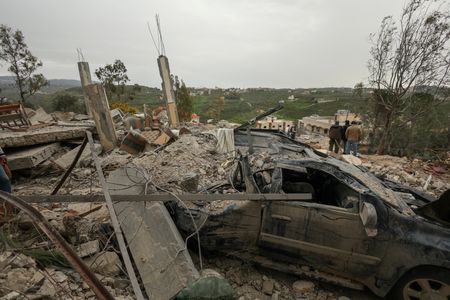
The human toll has been severe, with Israeli airstrikes claiming more than 1,300 lives while displacing approximately 20 percent of Lebanon’s entire population. Israeli evacuation directives now cover roughly 15 percent of Lebanese territory.
“I want to direct the biggest salute to our people who are staying in their hometowns and villages in the south, and want to reiterate that we stand by them,” the prime minister emphasized.
Despite the advancing military operations, tens of thousands of Lebanese citizens have chosen to remain in their southern communities, even as Lebanese military units retreat to avoid direct confrontations with Israeli troops. Among those staying are approximately 9,000 Lebanese Christians residing in border communities who have expressed their determination to remain despite the escalating danger.
The prime minister also highlighted the importance of maintaining domestic unity as the ongoing conflict puts pressure on Lebanon’s delicate sectarian political structure. Some communities have shown reluctance to welcome displaced families, prompting the government to explore long-term housing solutions as the war continues.
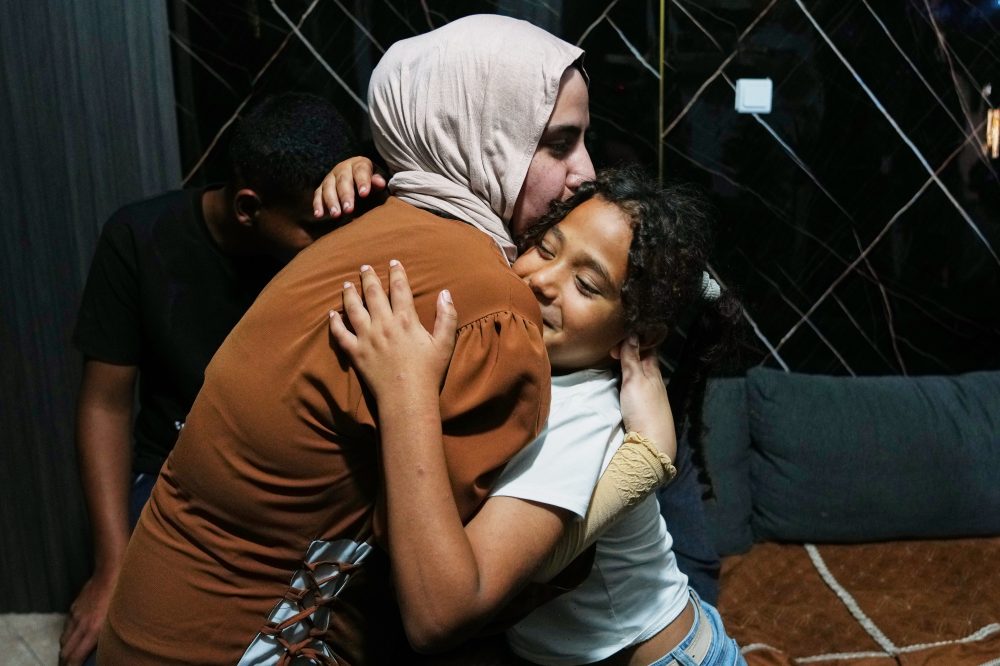
Mohammad al-Badran, a Syrian resident of Beirut’s southern suburbs for many years, described being rejected when his family sought shelter in mountainous areas outside the capital. Now living in a temporary tent settlement with his wife and four children – including a newborn born just two weeks before fighting began – Badran represents thousands facing similar hardships.
His 10-year-old daughter Nour can hear the explosions from nearby Israeli strikes. “The sound is loud, the children are crying, and I feel like the missiles are flying above us,” she explained.
Ali al-Aziz, another resident who fled the southern suburbs, called for Israeli withdrawal to enable peace and his return home. “We want the war to end once and for all. Not for a war to happen every year or every ten years,” he said.