American drivers are once again facing a $4-per-gallon average at the pump, as military exchanges between the United States and Iran continue to push energy costs higher.
The motor club federation AAA reported Monday that the national average for a gallon of regular gasoline has returned to $4. That marks a significant jump compared to the same time last year, when the average stood at $3.14 per gallon.
Keep in mind that $4 is a national average — some states have already been paying well above that figure for some time, while others are still seeing lower prices. The differences between states come down to several factors, including how close drivers are to fuel supplies and how much each state taxes gasoline.
The affordability crunch isn’t limited to the United States. People around the world are also grappling with elevated fuel costs as a result of the ongoing conflict.
Gas prices first crossed the $4-a-gallon threshold on average at the end of March. They slipped below that mark in mid-June and kept falling as crude oil prices eased following a temporary agreement between the U.S. and Iran. Even during that period of declining prices, President Donald Trump voiced frustration that gas prices were not dropping as fast as oil prices were.
With U.S. midterm elections on the horizon, the cost of living — including fuel and grocery prices — is expected to be a central concern for voters. Higher oil and gas prices tend to ripple through the broader economy, pushing up the cost of everyday goods.
Oil markets have been climbing again in recent days as tensions between the U.S. and Iran intensify. On Monday, Brent crude — the international benchmark — rose 3.2% to $90.95 per barrel, while U.S. benchmark crude gained 2.8%, reaching $84.04 per barrel.
AMSTERDAM — The explosive global demand for artificial intelligence has lifted Dutch company ASML to the highest position on Europe’s stock market, and now a question once considered unrealistic is gaining traction: could this firm become the first in European history to reach a $1 trillion valuation?
ASML holds a unique position in the technology world — it is the sole manufacturer of extreme ultraviolet, or EUV, lithography machines, which are essential for producing the most advanced computer chips. Analysts have compared the company’s role to that of a pickaxe seller during a gold rush, supplying the critical tools that power the AI revolution.
Following a strong second-quarter earnings report, analysts at Barclays, Susquehanna, and Bernstein have each set 12-month price targets above $2,600 per share. That would represent roughly a 49% increase from current levels and would put ASML’s market cap at approximately $1 trillion.
Carolyn Bell, lead portfolio manager for Stonehage Fleming’s Global Best Ideas — where ASML makes up about 8% of the portfolio — expressed confidence in the company’s prospects. “I think it has a really good chance of being the first company in Europe to hit the trillion mark,” she said. “I just don’t know when.”
ASML has already surpassed other major European corporations, including Roche, LVMH, Novo Nordisk, AstraZeneca, and SAP, in market value.
John Lamb of Capital Group, whose funds hold roughly 5% of ASML’s shares — worth approximately $35 billion — pointed to the company’s competitive advantages. “The fundamentals for the industry as a whole appear stronger than ever and ASML occupies a critical space,” he said, praising the firm’s “unique assets and wide moats.”
ASML shares currently trade at 38 times projected 2027 earnings, according to LSEG data — a significant premium over its top customer, which manufactures AI chips used by major technology and AI firms.
However, investors and analysts caution that reaching the trillion-dollar mark is far from guaranteed. Trent Masters of Alphinity Investment Management, which holds about 3% of its portfolio in ASML, warned that any slowdown in spending by major technology companies on data centers “will flow through to ASML’s earnings.” He also flagged supply chain management and geopolitical risks as concerns, though he said he remains “on balance very positive” about the company’s future.
One significant geopolitical concern involves proposed U.S. legislation known as the MATCH Act, which could restrict ASML’s ability to sell and service its equipment in China — a market the company expects to account for 20% of its sales in 2026.
Still, some analysts see reasons for optimism even if AI spending cools. Kinngai Chan of Summit Insights Group noted that memory chip manufacturers such as SK Hynix, Samsung, and Micron are transitioning from older equipment to ASML’s newer and more expensive EUV tools, creating what he described as a profitable “upgrade cycle” for the company.
ING analyst Marc Hesselink said ASML “can surely be” Europe’s first trillion-dollar firm. Additional growth potential includes a new chip manufacturing facility planned in Texas by Elon Musk, called the Terafab plant, which would serve SpaceX and Tesla and could become a new source of revenue for ASML.
Antoine Hucher of Aviva Investors offered a measured view, saying that if ASML executes its strategy effectively and AI demand holds steady, continued growth is likely — but not certain. “ASML could well become the first European company to reach a $1 trillion market cap,” he said. “However, the volatility we have seen with AI stocks in the last few weeks suggests the journey to this achievement won’t be a straight line.”
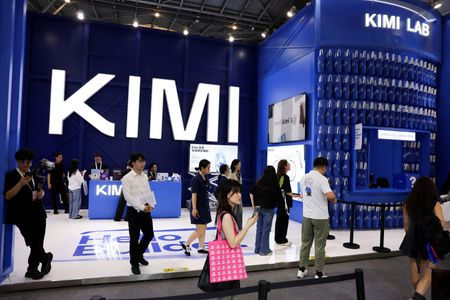
A Chinese artificial intelligence startup called Moonshot AI has put the brakes on new subscriptions after the debut of its latest model, Kimi K3, generated more user interest than its systems could handle — a development that coincides with the company’s efforts to raise new capital and potentially go public.
According to two sources familiar with the situation, Moonshot is restructuring its offshore corporate setup in preparation for a possible initial public offering on the Hong Kong stock exchange. The company has brought in financial advisers, including Goldman Sachs and China International Capital Corp, to help map out the IPO, though the timing has not been finalized, according to one of those sources and a third person with knowledge of the plans. All sources spoke anonymously because the details are confidential.
Goldman Sachs and Moonshot both declined to comment on the matter. China International Capital Corp did not respond to a request for comment.
Moonshot was founded in 2023 by Yang Zhilin, an AI researcher who studied for his doctorate at Carnegie Mellon University in Pittsburgh. The company has become one of the most closely followed AI startups in China.
In May, the company raised more than $2 billion from investors including Meituan, China Mobile, and CPE, according to a fundraising document reviewed by Reuters. That brought Moonshot’s total fundraising history to more than $5.5 billion. The company has since been seeking up to an additional $2 billion in new investment, with its valuation climbing to $30 billion as of June.
The surging appetite for powerful AI models is drawing significant investor attention to China’s top AI companies, but it is also driving up the need for expensive computing infrastructure.
Moonshot’s rivals, including DeepSeek, have also been seeking outside investment to expand their computing capabilities as Chinese AI companies race to close the gap with their American counterparts. U.S. export restrictions on advanced Nvidia chips have made access to computing power a major obstacle for these firms.
On Sunday, Moonshot announced that since Kimi K3’s release, the model has attracted enormous user interest, creating what the company described as “unprecedented compute challenges.” User requests over the previous 48 hours had far exceeded projections and were pushing the limits of existing server clusters, the company said.
In response, Moonshot said it would immediately pause new consumer subscriptions and redirect available computing resources to existing paid users, who would not be impacted by the crunch. The company also announced plans to divide future membership options into two tiers, including one dedicated specifically to coding tasks, in an effort to better align computing supply with the types of work users are doing.
The capacity strain follows a strong debut for Kimi K3, which Moonshot unveiled on Friday. The company described it as a 2.8 trillion-parameter model — which it says makes it the largest open-weight AI system in the world. Open-weight models allow users to download and customize the underlying technology, though analysts note that few users would realistically host a model of Kimi K3’s scale on their own due to the hardware costs involved.
“Kimi K3 has received far more love than we expected, and our GPUs are feeling it,” Moonshot wrote on X, noting that new subscription slots would be reopened gradually as additional capacity comes online.
The model’s size and its focus on coding and agent-style tasks make it particularly resource-intensive to operate at scale, since those types of workflows typically require the model to run repeatedly and demand heavy processing capacity.
Moonshot said Kimi K3 performs competitively with leading American models on certain technical benchmarks, a claim that has also been supported by independent evaluations.
The launch is part of a broader wave of activity among Chinese AI developers. Companies such as Z.ai and MiniMax have also recently introduced more capable models at lower costs, calling into question the assumption that China’s AI sector trails U.S. developers by months. Separately, Alibaba — which is an investor in Moonshot — announced Sunday that its own 2.4-trillion-parameter model, Qwen3.8-Max-Preview, had gone live on its AI platforms ahead of a planned open-weight release.
FRANKFURT — A survey released Monday by the European Central Bank offers some encouraging signs that inflation pressures in the euro zone may be easing, with businesses expecting slower growth in both selling prices and wages over the next year.
Inflation in the euro zone is currently hovering near 3%, driven largely by high energy costs — well above the ECB’s target of 2%. Central bank officials have been concerned that sustained price increases at this level could push inflation expectations higher and spark excessive wage demands, creating a difficult-to-reverse cycle of rising prices.
The ECB’s Survey on the Access to Finance of Enterprises found that, on average, companies are projecting more restrained growth across several key economic measures. As the ECB put it: “On average, firms expected selling prices, non-labour input costs and wage expectations to rise more moderately over the next 12 months.”
More than 5,000 businesses took part in the survey. Those firms now anticipate selling prices will climb 3.2% over the next year, a drop from the 3.5% projection recorded three months ago. Non-labour input costs — which include energy expenses — are expected to rise 5.2%, compared to the previous estimate of 5.8%.
Wage growth expectations also pulled back, falling to 2.5% from 2.8% in the prior quarter. The survey results are considered an important data point ahead of the ECB’s rate-setting meeting scheduled for Thursday.
Despite the more optimistic outlook on prices and wages, firms’ broader inflation expectations remained largely stable. Projections for one and three years out held steady at 3.0%, while the five-year outlook edged up slightly to 3.1% from 3.0% three months ago.
The ECB is widely anticipated to hold interest rates steady at this week’s meeting. However, persistently high oil prices are fueling speculation that the central bank could raise its 2.25% deposit rate again when officials reconvene in September.
Honeywell Aerospace announced Monday that Indian airline IndiGo has chosen its avionics and power systems for a fleet of 810 Airbus A320neo-family aircraft, while Mexican carrier Aeromexico is set to deploy the aerospace giant’s runway safety technology on more than 100 Boeing jets.
According to separate announcements from Honeywell, the IndiGo agreement covers auxiliary power units, weather radar, traffic collision avoidance systems, flight management systems, and ongoing aftermarket support.
Honeywell Aerospace has been a supplier to IndiGo’s fleet since 2015. The airline currently flies more than 400 aircraft in its operation.
Meanwhile, Aeromexico plans to implement Honeywell’s Surface Alerts technology — known as SURF-A — across its Boeing 737 NG and 737 MAX fleets to enhance runway safety.
SURF-A works by giving pilots real-time audio and visual warnings when their aircraft is on a collision course with another plane on a runway. The system uses GPS data, Automatic Dependent Surveillance-Broadcast equipment, and software analytics to detect potential traffic hazards.
Honeywell expects the U.S. Federal Aviation Administration to begin certifying SURF-A on several Boeing aircraft models in the fourth quarter of 2026, with the certification process continuing into 2027.
Honeywell Aerospace declined to share the dollar value of either deal.
SEOUL — Lee Seung-ho watched nearly 300 million won — roughly $202,515 — in stock market wealth disappear in just four weeks this past May. He had built that fortune using a 500% margin loan, and despite losing it all, he says he plans to borrow again the moment he has enough money to get back in.
The 24-year-old Seoul university student had originally saved 20 million won during his mandatory military service. By tapping what he described as a “tiny circle button” on his trading app, he unlocked five-times leverage and briefly turned that savings into a 15-fold gain.
Then the market reversed course.
Wild swings in South Korean stocks set off a chain reaction of forced sell-offs by his brokerage, wiping out every won of profit. In a matter of weeks, his account dropped below what he had originally put in. The pressure was overwhelming. “I literally could not breathe,” he said.
Even so, Lee hasn’t given up on borrowing. “But I’m sticking to margin loans,” he said from his studio apartment — barely bigger than a parking space — sitting near an empty bottle of Hibiki whisky and an unboxed electric fan his brokerage sent him as a gift after he reached VIP client status.
Lee’s story illustrates the broader dangers embedded in South Korea’s heavily leveraged retail investing culture — a trend that has financial regulators scrambling to contain what they view as an increasingly reckless trading environment.
The Kospi stock index, which had recently become the world’s top-performing index after more than doubling in just six months, has since experienced dramatic drops, falling more than 10% on several occasions within just a few weeks.
For many young South Koreans, the appeal of high-leverage investing goes beyond simple greed. With Seoul apartment prices averaging about 14 times the typical annual salary, younger generations feel shut out of conventional paths to building wealth. High-leverage trading apps have become, for many, the only tool they feel can level the playing field.
“Since stocks are volatile assets, that volatility, if it moves upward, allows for rapid wealth creation,” Lee explained. “If I add five times leverage, I can build wealth five times faster than others,” he added, when asked why he would take on more debt despite the pain he had already experienced.
His long-term goal is to purchase an apartment in Seoul — ideally before settling down with “a son and a daughter, one day.”
The scale of the borrowing is staggering. According to the Korea Financial Investment Association, margin loan balances in the domestic stock market hit 38.63 trillion won on June 24 — the highest level ever recorded. By July 15, that figure had eased slightly to 34.37 trillion won.
Broader data from the Bank of Korea, which captures additional forms of investor borrowing, showed total investor debt surpassed 60 trillion won at the end of May. That milestone coincided with South Korea’s $4.1 trillion stock market becoming both the hottest and most volatile in the world.
On Thursday, authorities took action to cool the speculative frenzy, announcing a ban on new listings of leveraged exchange-traded funds tied to individual stocks. The move came just two months after regulators had originally approved those same financial products.
Inki Cho, a senior financial market strategist at online trading platform Exness, placed the blame squarely on regulators. “The FSS Governor has already admitted these products were approved too hastily, so this is a correction of a known policy error,” Cho said, referring to the Financial Supervisory Service. “For retail investors holding these products, the risk is asymmetric: the leverage accelerates losses on the downside far faster than it builds wealth on the upside in a volatile tape like this.”
Lee says he understands those risks but remains convinced that leverage is his best path forward. “I’ve often compared this to poker: if you go all-in every single time, you are bound to lose,” he said. “But if you have the discipline to only deploy that capital when the mathematical odds are heavily in your favour, it is actually quite difficult to get repeatedly wiped out in a single shot.”
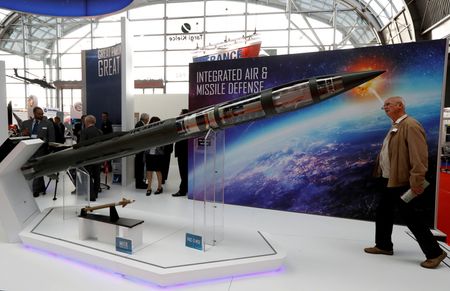
Defense giant Lockheed Martin unveiled a new, more affordable Patriot interceptor missile on Monday, responding to growing global demand for air defense systems and increasing competition from lower-cost weapons makers.
The new missile, called the PAC-3 Adapted Capability Effector — or ACE — would be priced at less than half the cost of Lockheed’s existing PAC-3 MSE interceptors. According to U.S. Army budget documents, the current MSE missiles cost approximately $4 million each.
Lockheed said it expects to begin initial production within 36 months and plans to work with both American and European industry partners to develop and build the weapon.
The announcement was made at Britain’s Farnborough Airshow, where Tim Cahill, president of Lockheed Martin Missiles and Fire Control, released a statement saying, “American and allied warfighters need a solution that is battle-tested and budget-smart.”
The choice of venue highlights efforts by U.S. defense companies to capitalize on a European military buildup driven by Russia’s ongoing war in Ukraine — even as European governments work to reduce their reliance on American suppliers and grow their own defense industries.
The Patriot air defense system has become one of the most in-demand weapons in the world since Russia launched its full-scale invasion of Ukraine in 2022. Ukrainian President Volodymyr Zelenskiy has repeatedly called for more Patriot launchers and interceptors, crediting the batteries with protecting Ukrainian cities from Russian ballistic missile strikes as Moscow continues to intensify its air campaign.
Demand for advanced air defense systems has also been pushed higher by missile exchanges involving Iran, the United States, and Israel, along with broader instability in the Gulf region. Those factors have strained supplies and exposed production bottlenecks across the Western defense industry.
Lockheed’s move to offer a cheaper interceptor also reflects pressure from Silicon Valley-backed startups that are promising to deliver weapons faster, in larger quantities, and at a fraction of what traditional defense systems cost.
Italian cable manufacturer Prysmian announced Monday that it has reached a long-term supply agreement with Molex, an electronics firm owned by Koch Industries, valued at up to €5.5 billion — roughly $6.4 billion — marking a major step in the company’s expansion into the data center market.
The agreement spans up to 10 years and comes with an upfront payment of €550 million. It covers the supply of optical cables used within data center facilities, according to a company statement.
The Molex deal is one component of a broader collection of agreements and commercial initiatives Prysmian is pursuing with hyperscalers and data center infrastructure providers. Together, these efforts could produce more than €10 billion in additional cumulative revenue by 2035 compared to 2025 levels, and are projected to deliver up to €1.1 billion in annual revenue starting in 2031.
To keep pace with surging demand driven by artificial intelligence infrastructure and data center expansion, Prysmian plans to more than double its fiber production capacity in the United States. The company has committed €1.25 billion in investment through 2031 to grow its optical cable and fiber manufacturing operations across both the U.S. and Europe.
The expansion is expected to create more than 1,000 jobs worldwide, with approximately 600 of those positions based in the United States.
Chief Executive Massimo Battaini called the combined investment and agreements a “transformative moment” for Prysmian’s Digital Solutions division.
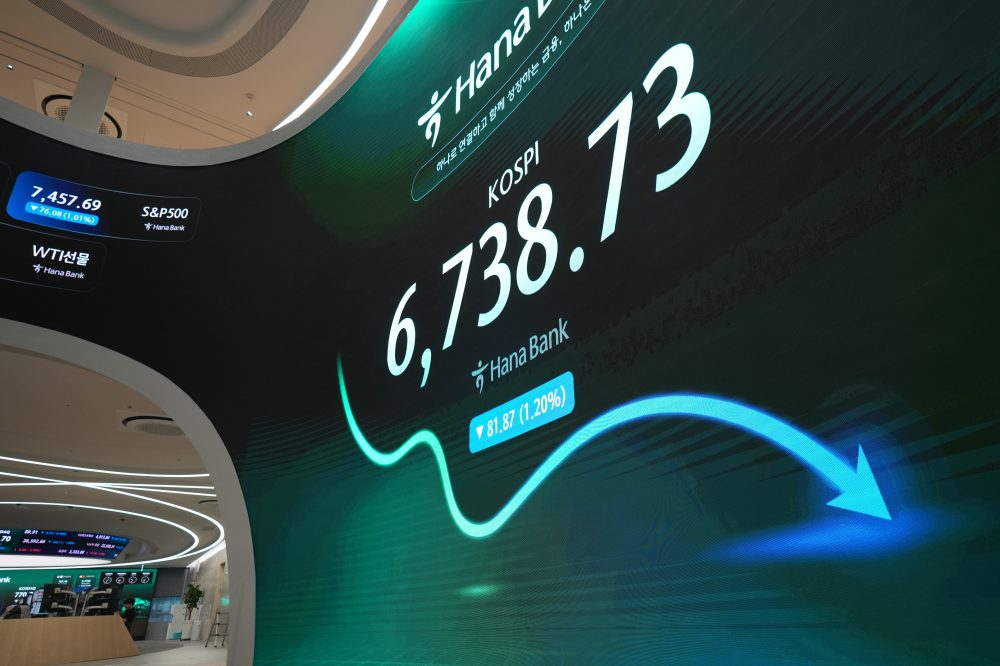
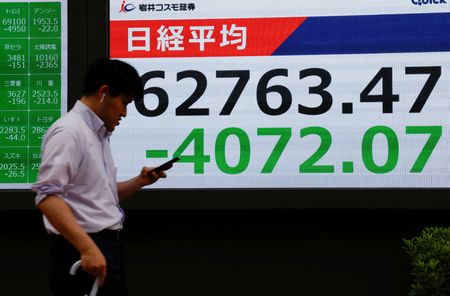
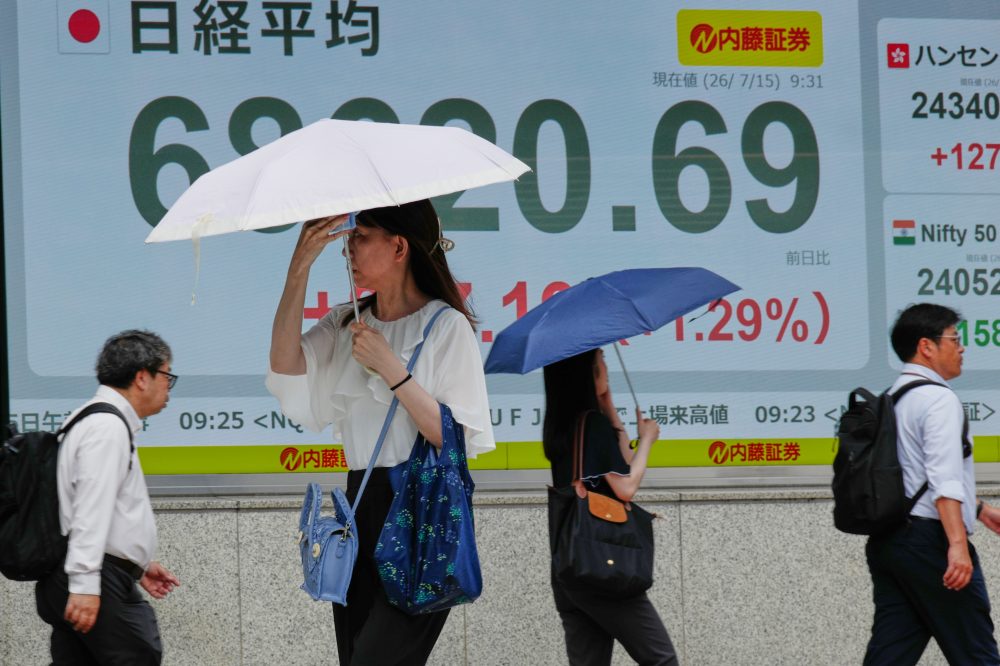
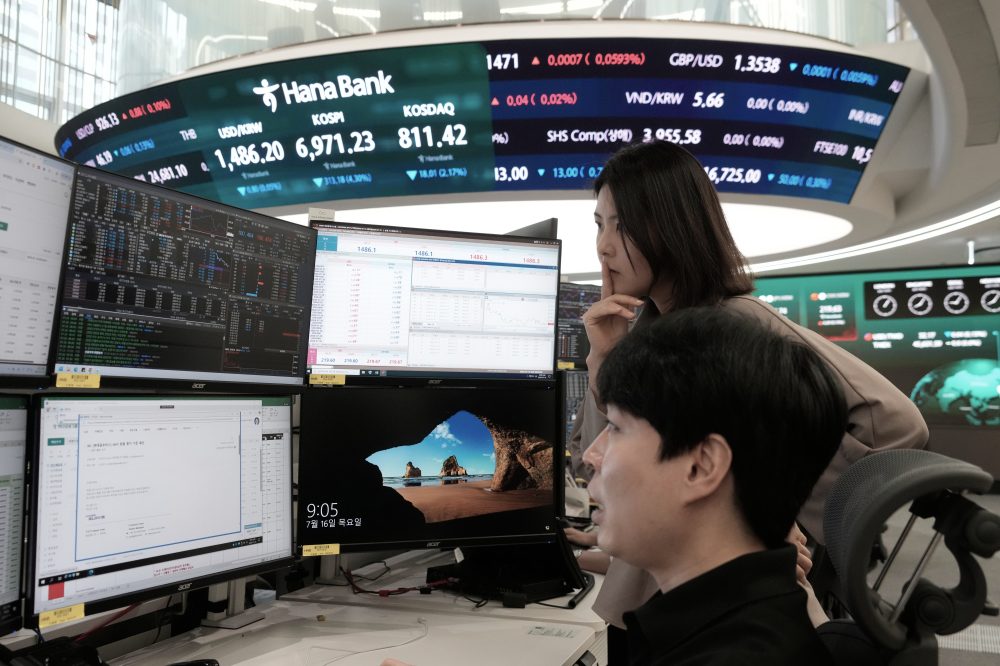
Asian stock markets were largely up on Monday, but South Korea’s Kospi index took a significant hit, dropping 4.9% to 6,490.97 as investors continued to dump shares tied to artificial intelligence technology.
Japan’s financial markets were shut down Monday due to a national holiday, and U.S. futures showed no clear direction.
Oil prices surged more than 2%, with Brent crude climbing above $90 a barrel as hostilities between the U.S. and Iran showed no signs of cooling. Early Monday, the U.S. reported another round of strikes — the ninth consecutive night of attacks. Iran has been retaliating against U.S. allies throughout the Middle East in response to American military action.
Brent crude, the international benchmark, jumped 2.6% to reach $90.40 per barrel, while U.S. benchmark crude rose 2.2% to $83.58 per barrel.
ING commodities strategists Warren Patterson and Ewa Manthey addressed the situation in a Monday commentary, writing: “The U.S. and Iran continue to exchange strikes, which are proving to be deadly for both sides. If this escalation goes unchecked, we could return to an environment of wide-scale attacks across the Persian Gulf.”
The analysts also pointed out that tanker traffic through the Strait of Hormuz — a critical chokepoint for global oil shipments — has nearly come to a standstill, adding further strain to global oil supplies.
The Kospi, which had ridden the global AI wave to significant gains, saw two of its most prized stocks suffer losses. Samsung Electronics dropped 4.4%, and memory chip manufacturer SK Hynix fell 3.3%.
Taiwan’s Taiex, another index with heavy exposure to AI-related companies, barely moved, slipping less than 0.1%. Its flagship chipmaker, Taiwan Semiconductor Manufacturing Co. — known as TSMC — actually gained 2%, recovering some ground after plunging 7.3% on Friday following the company’s announcement that it plans to invest an additional $100 billion to grow its U.S. chipmaking operations.
Hong Kong’s Hang Seng index climbed 2.1% to 25,105.78, and the Shanghai Composite advanced 1.2% to 3,808.39. Australia’s S&P/ASX 200 edged up 0.2% to 8,815.30, while India’s Sensex dipped 0.9%.
The broader sell-off in AI-related and chipmaking stocks that began Friday dragged global markets lower. Massive pledges of AI spending have sparked fears that the sector may be overvalued, prompting many investors to cash out and lock in profits from recent gains.
Markets were also unsettled by the debut of another powerful Chinese AI model from Beijing-based Moonshot AI. The release of its Kimi K3 open-source model caused a reaction similar to what happened when China’s so-called “DeepSeek moment” sent shockwaves through global markets in early 2025. Analysts see it as further evidence that lower-cost but highly capable Chinese AI systems are becoming serious competition for products like Anthropic’s Claude and OpenAI’s GPT.
On Wall Street, the S&P 500 closed the week down 1% at 7,457.69. The Dow Jones Industrial Average slid 0.8% to 52,146.42, and the tech-focused Nasdaq composite dropped 1.4% to 25,520.24.
Chipmakers bore the brunt of the losses, with Nvidia falling 2.2% and both Broadcom and Advanced Micro Devices — known as AMD — each declining 1%.
SpaceX, the rocket company owned by Elon Musk, saw its stock fall 5.4%, dropping below its initial public offering price of $135 per share and hitting its lowest level since the company began trading on the Nasdaq last month.
In currency markets, the U.S. dollar slipped to 162.37 Japanese yen from 162.43 yen. The euro rose slightly to $1.1446 from $1.1438.
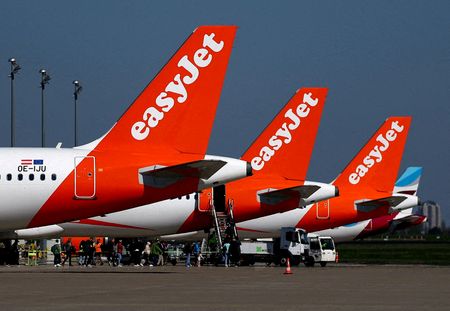
The Farnborough Airshow opened its doors Monday in England, with major aircraft manufacturers Boeing and Airbus looking to close deals while defense companies compete for contracts fueled by surging military budgets tied to wars in Ukraine and the Middle East.
Planemakers are anticipated to unveil a series of agreements throughout the week, though industry insiders say the final tally of aircraft orders will likely fall far short of some analyst projections of 800 or more planes. Ongoing supply chain problems that continue to restrict production are being blamed for the shortfall.
Defense firms are showing up in full force as governments around the world increase military spending and look to draw lessons from ongoing conflicts that have underscored the value of drones, missile defense systems, and artificial intelligence on the battlefield.
The airshow’s opening day also coincides with the first day in office for Prime Minister-in-waiting Andy Burnham, who may make an appearance at the July 20–24 event.
Organizers say defense companies will account for half of a record 1,600 exhibitors at the show. That marks a significant shift from the event’s commercial aviation origins, which date back to 1948 when it was launched as a showcase for British aerospace technology.
The growing defense presence reflects how conflicts stretching from Ukraine to the Middle East have reshaped spending priorities and accelerated demand for new military technologies, including unmanned fighter jets, kamikaze drones, and autonomous AI-driven software.
On the eve of the airshow, the head of Boeing’s commercial airplane division said the company’s attention is on ramping up and improving its aircraft production — “not order announcement.”
Sources told Reuters that Airbus and Boeing are together expected to land just over 300 aircraft orders combined, unless late-stage negotiations result in additional deals being finalized.
Among the anticipated announcements is an order for roughly 100 narrowbody planes from each manufacturer by Irish leasing firm SMBC Aviation Capital, according to sources. Bloomberg News was first to report on the potential deal. None of the companies involved offered any comment.
Other carriers reportedly in discussions about orders include Riyadh Air and Philippine Airlines.
Meanwhile, there were no immediate signs of progress in ongoing talks between Turkish Airlines and engine manufacturers over long-term maintenance agreements — a deal the airline has tied to a planned purchase of 150 Boeing 737 MAX jets.
The U.S. dollar edged higher against most world currencies at the opening of Asian markets Monday, as rising hostilities in the Middle East pushed oil prices upward and kept investor confidence on shaky ground following a rough week on global markets.
The greenback rose 0.1% to 162.48 yen, reaching its strongest position since July 9, as traders moved toward safe-haven assets amid growing geopolitical unease. The euro dipped 0.1% to $1.1426, while the British pound held steady at $1.3445. The Australian dollar fell 0.1% to $0.6975, and the New Zealand dollar dropped 0.2% to $0.5833.
Analysts at Westpac noted the relatively calm movement in currency markets, writing in a research report: “FX markets were relatively subdued, with the USD broadly stable, while the AUD weakened against the greenback and most major currencies.”
The analysts also pointed to two factors weighing on investor sentiment: “Market sentiment continued to deteriorate as concerns around semiconductor valuations weighed on risk appetite, while tensions in the Middle East escalated after Iran suspended its commitments under the interim peace deal.”
Brent crude futures surged 3.3% to $90.97 per barrel at the start of Asian trading. The spike came after the U.S. announced Sunday that it had launched a ninth straight night of strikes against Iran, following an earlier announcement that at least two American military personnel had been killed in Jordan.
Traders continue to expect the Federal Reserve to leave interest rates unchanged at its upcoming July 29 meeting. According to the CME Group’s FedWatch tool, Fed funds futures are pricing in an 85.6% probability that rates will hold — a significant jump from the 61.5% likelihood seen just one month ago.
Cleveland Fed President Beth Hammack added her voice Friday to a growing number of policymakers who believe interest rates may need to climb further to bring persistent inflation under control. Her comments set the stage for a heated debate at the Fed’s next gathering, which will be Chair Kevin Warsh’s second meeting leading the central bank and could see dissenting votes.
The U.S. dollar index, which tracks the dollar’s value against a basket of six currencies, climbed 0.1% to 100.84.
In the cryptocurrency market, bitcoin edged up 0.2% to $64,637.89, while ether gained 0.2% to reach $1,869.72.
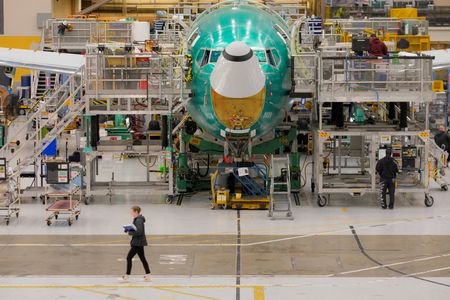
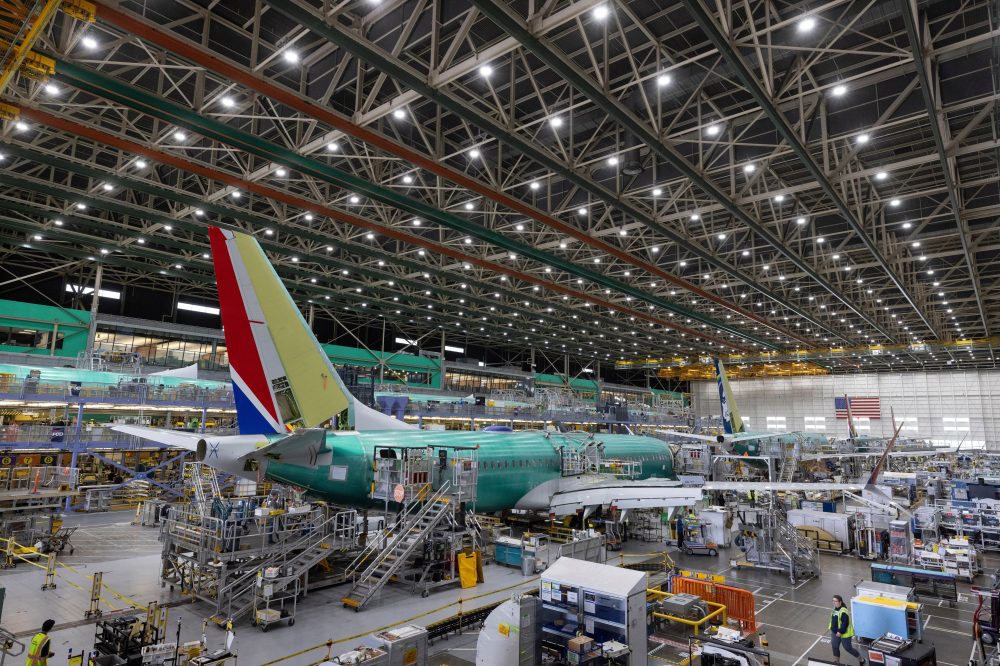
Boeing’s commercial airplane division is setting its sights on boosting production of its top-selling 737 MAX jet, with the company’s aviation chief signaling plans to push output beyond its current approved levels.
The head of Boeing Commercial Airplanes told reporters Sunday that the company is evaluating additional production increases for the 737 MAX after receiving approval from federal regulators in May to manufacture up to 47 aircraft per month.
The Federal Aviation Administration had placed an extraordinary cap on Boeing’s production following a 2024 mid-air safety incident that exposed serious quality and safety problems throughout the company’s manufacturing operations.
“We’re using the safety management system and our safety risk assessment on when we’re stable and ready to go to the next rate,” Boeing Commercial Airplanes CEO Stephanie Pope said during a media roundtable held ahead of the Farnborough Airshow in London.
“I’ve got the team focused on stabilising at 47. Once we get to 47, we’ll go to 52, and then we’ll just keep studying that,” she added.
Pope made clear that Boeing’s presence at the international airshow is centered on improving manufacturing — “not order announcement,” as she put it.
“Backlog is incredibly strong. Demand is not our issue. If we announce some orders along the way, we’ll celebrate with our customers based on if they want to do that,” Pope said.
Rather than drumming up new business, she said Boeing’s main goal at the biennial industry gathering — which draws top executives from across the global aviation sector — is to engage with customers and suppliers.
“We’re going to understand what their challenges are, and then we’re going to update them on our products,” Pope said.
Chinese chipmaker CXMT Corp pulled off Asia’s largest IPO of the year so far, raising $8.6 billion, but investor enthusiasm fell short of the frenzy seen in recent Chinese technology listings, according to a Sunday filing — a sign that a global chip stock selloff is weighing on market sentiment.
Institutional investors — including mutual funds, pension funds, and insurance companies — put in orders for a combined 1.24 trillion shares against the 2.17 billion shares made available to them. That works out to an oversubscription rate of around 570 times, which analysts would consider strong under normal conditions.
However, the figure pales in comparison to other recent listings on Shanghai’s STAR Market. Shares offered by Zhuhai Trinomab Pharmaceutical Co, Chongqing Genori Technology Co, and Wuhan Changjin Photonics were each oversubscribed by more than 5,000 times by institutional buyers.
The cooler reception follows an earlier announcement that the retail portion of CXMT’s IPO was oversubscribed 243.93 times — also lower than recent benchmarks — further signaling that investor appetite has softened.
The backdrop is a sharp global selloff in chip stocks, as investors from South Korea to Silicon Valley begin questioning whether the artificial intelligence boom has become overextended. In China specifically, the STAR Market — which is home to many of the country’s top semiconductor companies — has fallen roughly 25% from its July 1 peak, erasing more than 4 trillion yuan, or approximately $590 billion, in market value.
CXMT holds the position of the world’s fourth-largest maker of DRAM chips, trailing only Samsung, SK Hynix, and Micron Technology. DRAM, which stands for dynamic random-access memory, is a critical component found in smartphones, computers, servers, and a wide range of other electronics. Demand for the chips has surged alongside the AI boom.
The company has not officially announced a listing date on the STAR Market, though sources told Reuters the stock is expected to begin trading on July 27. The debut will be closely watched as Beijing continues to push for greater self-reliance in technology amid its ongoing rivalry with Washington, with several other major IPOs expected to follow.
Meta’s two major social media platforms, Facebook and Instagram, experienced disruptions on Sunday, with users across the country reporting problems accessing both the app and website.
According to outage-tracking website Downdetector, nearly 4,808 reports had been submitted by Facebook users in the United States as of 7:46 a.m. GMT. Of those reporting issues, 63% said they were unable to access the website.
Instagram users also ran into trouble, with 2,829 reports filed in the U.S. by 8:18 a.m. GMT the same morning.
The outages did not appear to be limited to the United States. Reporters from Reuters found that access to both Facebook and Instagram was also spotty in Singapore.
As of the time of reporting, Meta had not responded to an email request seeking comment on the disruptions.
Samsung Electronics America is moving to cut 739 jobs at its facility in Englewood Cliffs, New Jersey, according to a Worker Adjustment and Retraining Notification reviewed by Reuters.
The WARN notice, which companies are legally required to file when conducting large-scale layoffs, confirmed the workforce reduction at the New Jersey location. No additional details regarding the reason for the cuts or a specific timeline were provided in the filing.
Jet engine maker CFM International has secured approval from both U.S. and European authorities for an upgrade that promises to boost the durability of engines used on Boeing 737 MAX aircraft.
CFM International, the world’s largest engine maker by units sold and a joint venture between GE Aerospace and France’s Safran, announced the new ‘durability kit’ for its LEAP-1B engines. The company said the upgrade mirrors improvements that were already made available for Airbus A320neo jets, which are powered by the related LEAP-1A engine model.
According to CFM executives speaking at a briefing ahead of the Farnborough Airshow in England, the upgrade will double what the industry calls ‘time on wing’ — meaning the length of time an engine can operate between major maintenance events. That improvement is especially significant for airlines flying in hot and demanding climates, such as those in the Middle East and India.
Long repair wait times have been a persistent headache for airlines in recent years, leaving portions of their fleets out of service. The root cause traces back to the latest generation of engines, which deliver significant fuel savings but came with unexpectedly high levels of wear and tear — a trade-off that stretched repair schedules and forced some carriers to ground planes.
CFM said it has now brought the number of LEAP-powered aircraft grounded due to maintenance backlogs to a ‘near zero’ level.
Meanwhile, rival engine maker Pratt & Whitney, which also competes to power A320neo jets, has separately reported steady progress in addressing its own maintenance delays and issues related to metal contamination.
CFM noted that the new durability update can be installed during routine maintenance visits and will also be incorporated directly into the production of new engines going forward.
The state of the American economy took center stage this past week, with new data revealing both encouraging signs and fresh concerns for everyday consumers and businesses alike.
One of the biggest emerging threats to price stability is the enormous wave of money being poured into artificial intelligence infrastructure. Investment in data centers is expected to surpass $700 billion this year, driving up the cost of memory chips, computer processors, related equipment, and electricity. Economists warn this spending surge will likely keep inflation elevated at least through the end of 2025.
While the situation isn’t expected to mirror the severe inflation spike of 2021 through 2023 — when prices peaked at a 9.1% annual increase — the AI-driven cost pressures could prompt the Federal Reserve to raise its key interest rate later this year. When the Fed raises rates, borrowing costs for car loans, home mortgages, and business financing typically go up as well.
On a more positive note, inflation actually cooled in June. The cost of gasoline, clothing, and used vehicles all declined, giving consumers some breathing room. The Labor Department reported Tuesday that prices fell 0.4% between May and June — the steepest single-month drop in four years. Year-over-year, inflation came in at 3.5%, down from 4.2% in May and better than most economists had predicted.
However, oil prices climbed for a second straight day Tuesday after the United States launched renewed attacks on Iran and President Donald Trump announced a new blockade of the Strait of Hormuz — a critical shipping corridor that handles roughly one-fifth of the world’s oil supply. The ongoing conflict and years of elevated prices have left many Americans feeling pessimistic about the economy, which could create political headwinds for Trump and Republicans heading into the midterm elections.
Home financing also got more expensive this week. The average 30-year fixed mortgage rate climbed to 6.55%, up from 6.49% the previous week, according to mortgage buyer Freddie Mac. That’s still below the 6.75% average recorded one year ago, but the increase adds to the affordability struggles facing prospective homebuyers. Higher monthly payments reduce how much home buyers can afford, keeping many would-be owners on the sidelines.
Consumer spending showed signs of slowing down. Retail sales grew just 0.2% in June, a significant pullback from the revised 1% gain in May, the Commerce Department reported Thursday. Excluding gas station sales, retail was up 0.7%. Clothing and accessories stores saw a 0.3% decline, while online shopping surged 1.9%, boosted by Amazon’s Prime Day event, which ran from June 23 through June 26.
Wholesale inflation — which tracks price pressures before they reach consumers — also fell in June. The Labor Department’s producer price index dropped 0.3% from May, driven largely by a 12% plunge in gasoline prices. Still, compared to a year ago, wholesale prices were up 5.5% in June, slowing from a 6% annual increase in May. Gasoline remains nearly 43% higher than it was in June 2025, largely due to the ongoing conflict with Iran. Stripping out food and energy, core wholesale prices rose 4.7% from a year ago and 0.2% from May.
The job market offered some encouraging news. New unemployment claims fell by 8,000 during the week ending July 11, landing at 208,000 — the lowest level in 10 weeks and well below the 219,000 applications analysts had forecast. Weekly jobless filings are closely watched as a near real-time gauge of layoffs and overall labor market health.
That said, a broader government jobs report released earlier this month painted a more cautious picture. Employers added only 57,000 jobs in June — less than half of the previous month’s total — suggesting many companies remain hesitant to expand their workforces.
Stock markets ended the week on a down note. The S&P 500 fell and was on pace for its first losing week in three and only its third losing week out of the last 16. The Dow Jones Industrial Average and the Nasdaq composite also declined. Computer chip companies led the losses, continuing a weeks-long slide fueled by concerns that their valuations may have climbed too high and that demand for AI-related hardware might not hold up if the technology fails to deliver the profits and productivity gains investors are counting on.
Video game retailer GameStop disclosed in a late Friday regulatory filing that it has accumulated ownership of nearly 10% of e-commerce company eBay — a development that comes about three months after GameStop made an unsolicited bid to purchase eBay for approximately $56 billion.
According to the filing, GameStop now holds 43.4 million outstanding shares of eBay, representing a 9.8% ownership stake. That figure represents a substantial jump from early May, when GameStop CEO Ryan Cohen informed eBay’s board chairman that the company had built up “a 5% economic stake” through derivatives and beneficial ownership.
The filing revealed that GameStop purchased 3.5 million eBay shares last month for approximately $381 million. On Friday, the company also settled 39 million eBay shares stemming from put/call pairs.
Boeing is standing by its long-term prediction for strong worldwide demand for commercial aircraft, releasing a market outlook on Saturday ahead of the Farnborough Airshow in England that looks nearly identical to the one it issued last year.
The American aircraft manufacturer is projecting industry-wide global deliveries of 43,625 new commercial jets and cargo planes between 2026 and 2045. That breaks down to 33,545 single-aisle aircraft, 7,715 widebody jets, 930 factory-built freighters, and 1,435 regional aircraft.
The forecast puts Boeing at odds with its European competitor Airbus, which recently cut its own projection by 1% to 42,060 new planes, pointing to the Iran war and ongoing trade tensions as reasons for the reduction.
Boeing anticipates air passenger traffic will grow about 2.3% this year — less than half the 5.3% growth rate recorded last year. However, the company expects a rebound, with growth climbing to between 6% and 7% in 2027 and 5% to 6% in 2028.
Boeing Commercial Marketing Vice President Darren Hulst told reporters, “Our outlook is that passenger traffic globally will be where it would have been by the end of 2028.” He noted that the current slowdown is fundamentally different from the prolonged demand collapse caused by the COVID-19 pandemic.
Over the full 20-year period, Boeing projects passenger traffic will grow at an average annual rate of 4%, with cargo traffic increasing 3.7%, the global jet fleet expanding 3%, and the world economy growing 2.5%.
Hulst pointed out that demand for new aircraft continues to outpace what manufacturers are able to actually deliver. While passenger traffic last year bounced back to pre-pandemic levels, the number of new jets being delivered still hasn’t returned to 2018 output levels.
Boeing estimates there will be a shortfall of nearly 2,000 aircraft heading into 2026. The gap in single-aisle jets is not expected to close until around the end of this decade, while shortages in widebody aircraft could stretch into the early 2030s.
The company’s forecast assumes demand will be split roughly evenly between replacing aging aircraft and expanding existing fleets — with 21,475 deliveries going toward replacements and 22,150 supporting fleet growth. The global fleet is expected to nearly double, rising from around 28,000 aircraft in 2025 to 50,000 by 2045, with newer-generation planes growing from 32% of the fleet to 92%.
By region, China is expected to account for 21% of all deliveries, followed by Eurasia at 20%, North America and South/Southeast Asia at 19% each, the Middle East and Africa at 10%, Latin America at 6%, and Oceania/Northeast Asia at 5%.
The forecast reflects an industry still working through the effects of repeated disruptions, with manufacturing capacity and supply chain fragility continuing to limit output. Boeing also faces delays in getting regulatory certification for several key aircraft programs, including the 737 MAX 7 and 10 and the 777-9.
Hulst said the long-term case for air travel demand remains solid, driven by trade, tourism, migration, and the continued expansion of airline networks. “The reason why we travel and the reason why goods move isn’t changing,” he said.
Elon Musk’s SpaceX is reportedly in negotiations with the U.S. Department of Defense to provide access to data center capacity worth billions of dollars, according to a Wall Street Journal report published Friday, citing individuals with knowledge of the discussions.
If finalized, the agreement would deepen the existing partnership between the Pentagon and SpaceX, which already serves as a major contractor for rocket launches, satellite communications, and missile tracking services.
According to the Journal, SpaceX employees have been discussing plans to take on neocloud companies like CoreWeave more directly by offering computing capacity to artificial intelligence customers at more competitive prices.
The Defense Department, like many large organizations, is working to lock in additional cloud computing resources to support military AI applications and intelligence operations.
The push for computing power is not unique to SpaceX. Amazon announced late last year that it plans to invest as much as $50 billion to grow AI and supercomputing capacity for U.S. government clients through its Amazon Web Services division.
The Wall Street Journal noted that talks between SpaceX and the Pentagon are still in progress and may not result in a deal. Neither SpaceX nor the Pentagon responded to requests for comment from Reuters, which was also unable to independently confirm the report.
SpaceX has been active in striking similar agreements recently. In June, the company signed a multi-year cloud services deal with Alphabet’s Google, giving Google access to roughly 110,000 Nvidia chips and associated computing infrastructure.
In May, AI company Anthropic announced it had reached an agreement to utilize the full computing capacity of SpaceX’s Colossus 1 facility located in Memphis, adding 300 megawatts of new computing power.
Citizens Bank has announced plans to sever its financial ties with two private prison companies that have been operating immigration detention facilities under the Trump administration, following an intense public pressure campaign from activists and left-leaning city governments.
The bank had been providing financial services to CoreCivic and The GEO Group — two companies that own and operate private prisons across the United States. Under President Donald Trump, both companies have been contracted by U.S. Immigration and Customs Enforcement to run detention and deportation facilities as part of the administration’s broader crackdown on illegal immigration.
The pressure on Citizens Bank grew significantly, with at least two New Jersey city councils — those in Montclair and Jersey City — voting to pull their funds from the bank unless it ended its relationships with the private prison operators.
The De-ICE Citizens Bank Coalition responded to the announcement with a statement calling it a meaningful win: “Today’s announcement that Citizens Bank will exit its current lending relationships with private prison giants CoreCivic and The GEO Group is an important victory for the people who refused to let a major bank finance human suffering brought on by ICE detention activities of the current federal administration.”
Despite the public campaign, Citizens Bank maintained in its own statement that the decision was driven by business considerations, not political ones. The bank pointed to the federal government’s plans to purchase several facilities currently run by CoreCivic, and ongoing talks to do the same with GEO, arguing that these developments have reduced the companies’ need for outside financing.
“This is a business decision based on changed commercial circumstances and does not reflect any change in our view regarding these companies’ business models or operations,” the bank stated.
The broader issue of banks cutting off financial services to certain businesses — a practice known as debanking — has become increasingly controversial during Trump’s second term. Federal bank regulators have launched investigations into debanking practices, with the possibility of fines or penalties for institutions found to have engaged in it improperly.
Citizens Bank acknowledged the regulatory environment in its statement, saying: “All banks, including ourselves, must consider these regulatory and contractual frameworks in making decisions on who to bank or not bank.”
Beginning next week, Boeing will once again be permitted to take charge of certifying that its 737 Max and 787 aircraft meet airworthiness standards, the Federal Aviation Administration announced Friday.
Following an extensive review spanning several months, the FAA concluded that Boeing’s own final safety inspections are thorough enough to confirm its planes are safe to fly. Since September, Boeing and federal inspectors had been alternating weekly in conducting the required safety checks before aircraft could be cleared for delivery. The FAA noted that both parties had been arriving at similar conclusions when issuing airworthiness certificates.
The FAA first stripped Boeing of its authority to self-certify 737 Max jets back in 2019, in the aftermath of two deadly crashes that investigators later attributed to a new software system Boeing had developed for the plane. Then in 2022, the agency also revoked Boeing’s self-certification rights for its 787 Dreamliner, pointing to persistent problems with production quality.
FAA Administrator Bryan Bedford emphasized that safety remains the top priority. “Safety drives everything we do, and this step forward is only possible because we are confident it can be done safely,” Bedford said.
While Boeing resumes its certification responsibilities, federal inspectors will not be stepping away entirely. Bedford said government oversight of Boeing’s manufacturing facilities will continue, with inspectors now able to direct more of their attention toward identifying and resolving potential defects earlier in the production process.
Boeing had not issued a response to the FAA’s announcement at the time of this report.
Separately, the FAA has also been gradually relaxing production caps it placed on Boeing’s 737 Max line after a fuselage panel detached from one of those jets — operated by Alaska Airlines — while the aircraft was in flight in January 2024. That monthly production ceiling has been raised incrementally from 38 planes to 47 planes this past summer.
A growing faction within the Federal Reserve is making the case for raising interest rates, with Cleveland Fed President Beth Hammack becoming the latest policymaker to join that call on Friday — the final day officials were allowed to speak publicly before their upcoming July 28-29 policy meeting.
Hammack said she is hearing directly from the business community and everyday Americans about the strain of high prices. “For the first time in my tenure, I’m hearing from businesses who say they think we need to take action to curb inflation, and from consumers who can’t make ends meet about a growing sense of despair,” she wrote in a LinkedIn post.
“Inflation is too high. The labor market is right around my level of maximum employment,” Hammack added, noting that underlying inflation — as tracked by the core personal consumption expenditures price index — likely climbed 3.3% in June. “Persistently high inflation is the bigger concern,” she said.
Hammack, who has been a voting member on Fed policy this year, cast a dissent in April alongside two colleagues who felt the central bank’s stance was too loose. Her comments Friday capped a week of hawkish signals from multiple Fed officials, all of whom raised alarms about higher fuel prices tied to the Middle East conflict and increasing price pressures from the rapid expansion of AI-related data centers.
On Thursday, Dallas Fed President Lorie Logan — who also dissented in April — told a gathering in Houston that conditions call for “modestly higher interest rates.” Fed Vice Chair Philip Jefferson, who rarely tips his hand on policy direction, told a Stanford University audience that if inflation “does not start to cool down soon, I believe that it could be appropriate to reconsider our current policy stance.”
Not everyone is sounding the alarm, however. New York Fed President John Williams said he believes “unquestionably high” inflation will begin to ease, pointing to roughly six factors including limited wage-growth pressure and an expected continued decline in shelter-related inflation.
Fed Chair Kevin Warsh declined to offer any hints about his thinking, telling lawmakers this week that doing so could be counterproductive. “My colleagues know I’m not big for forward guidance,” he said.
The Labor Department reported this week that consumer prices rose 3.5% in June compared to a year ago — still elevated, but slower than the 4.2% surge recorded in May.
Fed Governor Christopher Waller, who believes transparency about how data shapes policy decisions is a core responsibility, said the cooler reading offers little reassurance. He indicated on Monday that he would need to see “several months” of declining inflation readings before concluding that price levels are genuinely heading back toward the Fed’s 2% target.
For now, financial markets are pricing in no change to the Fed’s current policy rate range of 3.50% to 3.75% at the July meeting, though traders expect at least one rate increase before the close of the year.
A federal judge has refused to put the brakes on Meta Platforms’ planned layoffs, even as 26 workers claim the tech company used artificial intelligence tools to unfairly single them out for job cuts because of disabilities or medical leave.
U.S. District Judge William Orrick, based in Oakland, California, issued a written ruling Friday stating he would not prevent Meta from moving forward with the layoffs starting July 22, while the employees’ groundbreaking legal claims are resolved through private arbitration.
In his decision, Orrick determined that the workers failed to demonstrate they would suffer what the law calls “irreparable harm” — the legal standard required before a judge can issue an emergency order to stop the layoffs.
Neither Meta nor attorneys representing the employees responded to requests for comment before deadline. Meta has denied any wrongdoing and maintained that human beings — not AI systems — made the final decisions about who would be laid off.
Back in May, Meta announced that nearly 8,000 employees — roughly 10% of its worldwide workforce — would be losing their positions as the company continues to pour resources into artificial intelligence development.
The lawsuit, filed earlier this week, alleges that Meta used AI-driven tools to measure worker productivity and AI usage, which put employees at a disadvantage if they had been away from work due to medical conditions or family caregiving responsibilities. Workers also say the company factored in performance reviews that partly graded employees on how much they embraced AI technology.
Legal experts note this case appears to be the first of its kind in the United States — a direct legal challenge to a major corporation’s alleged use of AI in carrying out mass layoffs.
The employees had asked Judge Orrick for a temporary restraining order to pause the layoffs while their claims go through arbitration. A request for a longer-term preliminary injunction is still pending, and Orrick indicated during a Thursday hearing that he expects to rule on that matter next month.
During Thursday’s hearing, attorneys for the workers argued that beyond their paychecks, the employees stood to lose valuable stock options and health insurance coverage — putting at risk medical care for pregnancies and other ongoing conditions.
“There’s no do-over for bonding with a new baby or giving birth or having active medical treatment,” said attorney Barbara Cowan, addressing the judge directly.
Meta’s attorney, Erin Connell, pushed back, arguing that workers would only be losing employer-subsidized insurance — not their health coverage entirely. Connell said those types of financial losses could be recovered later if the employees prevail in arbitration.
The workers contend that while Meta’s employment agreements require disputes to go through individual arbitration, those agreements still allow employees to seek temporary court relief — an argument at the heart of this case.
Arbitration agreements are standard practice at most large companies, requiring workers to handle workplace grievances individually rather than joining class-action lawsuits. Supporters say arbitration is faster and less expensive than going to court, while opponents argue it tends to benefit employers and makes it harder for workers to pursue legitimate claims.
The plaintiffs — who filed the case anonymously — include engineers, managers, researchers, and designers. They were notified of their layoffs in May. While many are scheduled to be officially terminated on July 22, others won’t lose their jobs until later in July or August, according to court documents.
Meta noted in court filings that although the affected workers are still technically on the payroll, they lost access to company systems on May 20 and have not performed any work since then.
According to the lawsuit, Meta used several internal AI-assisted systems to evaluate and rank employees for termination. These included a large language model assistant called “Metamate,” an employee-built “second brain” that monitored workers’ communications and documents, and a productivity scoring system that analyzed keystrokes, screen activity, emails, and browsing history.
The plaintiffs claim Meta did not pause these tracking systems during vacations or legally protected leave, causing employees’ AI adoption scores — which were used as part of the layoff selection process — to drop during those absences.
The Federal Aviation Administration has informed Congress that it will restore Boeing’s ability to self-certify airworthiness for all 737 MAX and 787 aircraft, with the change set to take effect as early as next week.
The decision represents a significant step forward for the American aircraft manufacturer as it works to scale up production of both aircraft lines.
In an email reviewed by Reuters, the FAA said the move “follows months of thorough data and safety review demonstrating consistent production quality and reflects the FAA’s confidence in Boeing’s ability to issue airworthiness certificates under FAA oversight.”
The FAA had originally stripped Boeing of its authority to approve individual MAX aircraft back in 2019, following a deadly crash in Ethiopia — the second fatal MAX accident in a short span of time. Boeing’s ability to self-certify its 787 aircraft was similarly revoked in 2022, citing problems with production quality.
Boeing had not issued a public response to the announcement at the time of this report.
Apple and the U.S. Department of Justice may be working toward a resolution in a major legal dispute, according to a Bloomberg News report published Friday.
The two sides are said to be in early-stage settlement discussions surrounding a 2024 lawsuit that accuses the iPhone manufacturer of violating federal antitrust laws.
Reuters, which first carried the Bloomberg report, noted it was unable to independently confirm the details at the time of publication.
Donald Trump’s social media company has reportedly been in discussions about charging traders and investors up to $100,000 per month for faster access to the president’s posts on Truth Social, according to a report published Friday by the Financial Times.
Trump Media & Technology Group did not respond to a request for comment from Reuters, and Reuters was unable to independently confirm the report, which was based on sources familiar with the matter.
On Thursday, the company officially launched a paid, licensed data service called the “Truth API,” designed to give banks and trading firms what it describes as “the fastest” access to posts from high-profile Truth Social accounts.
According to a spokesperson, the product will deliver content from the platform’s 10 most influential accounts at speeds significantly faster than standard push notifications sent through the Truth Social app.
The launch represents Trump Media & Technology Group’s first entry into the data licensing market and creates a new revenue stream for the company, which has struggled to grow its media business in the face of stiff competition from larger, more established social media platforms.
Popular dairy brand Fairlife has temporarily stopped producing its products in the United States after a ransomware attack compromised the company’s computer systems.
Coca-Cola, the Atlanta-based beverage giant that owns Fairlife, announced Thursday that its dairy subsidiary had discovered “unauthorized access by a third party” to part of its systems — including systems connected to production operations. The company confirmed the breach was tied to a ransomware event and said it took certain operations offline as a precaution.
“Product quality and safety have not been impacted,” Coca-Cola said in a statement. “However, as a result of the incident, production operations at fairlife in the United States are temporarily suspended.”
Fairlife’s operations in Canada were not impacted by the attack. Coca-Cola said the full extent of the damage remains unclear, but noted that law enforcement has been notified and that cybersecurity specialists are assisting with the ongoing investigation and efforts to get operations back up and running.
A company spokesperson confirmed Friday morning that no additional information was available at that time.
Ransomware attacks — where cybercriminals demand payment in exchange for restoring access to compromised systems — are becoming increasingly common. Experts point out that attackers deliberately target well-known consumer brands, knowing the disruption will have a noticeable impact on everyday shoppers.
Cyberattacks have been hitting a wide range of industries, with recent incidents knocking out school services, leaving store shelves empty, and disrupting major retailers.
Chicago-based Fairlife reports more than $3 billion in annual retail sales. The company is known for its line of lactose-free dairy products, which includes milk and protein shakes.
Retail giant Walmart is undergoing a significant leadership shake-up, with its U.S. chief operating officer, Kieran Shanahan, set to leave the company. An internal memo, obtained by Reuters on Friday, revealed that Kyle Kinnard — currently serving as COO of Walmart’s international division — has been tapped to take over the role.
Kinnard brings more than 25 years of experience with Walmart to his new position, having held a variety of senior-level roles throughout his tenure. Among those positions was executive vice president of health and wellness for Walmart’s U.S. operations, according to the memo.
Shanahan’s departure is not the first high-profile exit in recent months. Tom Ward, who served as COO of the warehouse chain Sam’s Club, and Cedric Clark, who led U.S. store operations, both left the company in May. Around that same time, David Guggina and Chris Nicholas were appointed as CEOs of Walmart’s domestic and international operations, respectively.
Friday’s announcement also included a promotion for Juan Galarraga, who will now oversee Walmart’s international business operations in Latin America.
The leadership changes come as CEO John Furner pushes a technology-driven strategy designed to grow Walmart’s marketplace and delivery services while also drawing in higher-income customers. The company eliminated roughly 1,000 positions in May as part of that broader effort.
Walmart has also been navigating a cautious consumer spending environment. The retailer stuck to conservative annual sales and profit projections in May, and earlier this month announced plans to lower prices on a range of summer cookout staples, including meat, chips, and soda.
A New York state judge has thrown out a lawsuit brought by a former JPMorgan Chase banker who alleged his former colleague coerced him into sexual activity and threatened him with racial slurs — though attorneys say the case will be refiled in federal court.
Justice Dakota Ramseur issued the ruling Thursday, ordering plaintiff Chirayu Rana to cover a portion of the legal fees incurred by JPMorgan and his former colleague Lorna Hajdini as part of the dismissal agreement. The dismissal was requested by Rana himself.
Notably, the ruling does not touch Hajdini’s defamation countersuit against Rana, which continues to move forward in Manhattan state court.
Rana, who held a vice president role in leveraged finance at JPMorgan, claimed that Hajdini used her senior position to pressure him into non-consensual sexual encounters over the course of several months. His complaint alleged she used racially derogatory language to threaten him — Rana is of Asian descent — and accused her of raping and drugging him. He also claimed she told him she “owned” him and threatened to derail his career if he refused her sexual demands.
Hajdini has pushed back firmly against those accusations. She denied ever being Rana’s supervisor, denied using racial slurs, and denied threatening him in any way. She said Rana’s allegations were deliberate lies that “wreaked havoc” on her life, subjected her to constant ridicule and harassment, and were crafted to generate media attention and win millions of dollars in damages she believes he does not deserve.
JPMorgan has also gone on record calling Rana’s claims meritless.
Rana originally filed the lawsuit on April 27, naming both JPMorgan and Hajdini as defendants. He switched legal representation last month, and his new attorneys have indicated plans to expand the case when it is refiled in federal court. The updated complaint is expected to include claims of discrimination and retaliation under several federal civil rights statutes, as well as claims under the federal Family and Medical Leave Act, alongside the existing state law allegations.
Stress is building in private investment markets, and it’s showing up in a telling way: the widening gap between what funds claim their assets are worth and what investors actually receive when they try to cash out.
This week, Cox Capital Partners launched offers to buy shares in non-traded business development companies managed by Apollo, Ares Capital, and BlackRock’s HPS Investment Partners. The offers came at discounts ranging from 15% to 30% below the funds’ net asset values as of the end of May. In practical terms, that means investors in the Apollo fund were offered just 70 cents for every dollar of stated value, HPS investors were offered 75 cents, and Ares holders were offered 85 cents.
The total dollar amount involved is relatively small — about $31 million combined — but the pricing sends a much larger message about the state of private markets.
The timing is significant. Fitch Ratings reported that redemption requests climbed at 10 of the 16 non-traded business development companies it monitors during the second quarter, with the average reaching 10.3% of shares outstanding, up from 9.7% the previous quarter.
These funds typically cap quarterly withdrawals at 5% of net asset value. When investors request more than that, payouts are spread proportionally among those seeking to exit — meaning some investors could wait multiple quarters before fully getting out. For those unwilling to wait, a secondary market exists, but it comes with a significant price penalty.
That penalty is becoming increasingly difficult to overlook. Publicly listed business development companies are trading at roughly 75 cents on the dollar on average. In some cases, public and private funds run by the same management firms hold very similar underlying investments, meaning essentially the same assets can carry very different valuations depending on which type of fund holds them.
The pressure isn’t limited to private credit. Partners Group disclosed that withdrawals from certain mature evergreen funds are expected to continue for several more quarters, after the firm capped redemptions from an $8.6 billion private-equity fund last month. Clients withdrew $3.8 billion in the first half of the year, with three mature evergreen strategies responsible for 79% of those outflows.
Partners Group cautioned that ongoing trends could reduce asset growth by 1% to 2% over the next 18 months, and that outflows from those funds could reach between $10 billion and $20 billion in a worst-case scenario. Notably, this warning came even as the firm attracted $16 billion in new client commitments — illustrating the dual reality of private markets, where new money continues to flow in while older investors struggle to get out.
Regulators are also trying to map where the risks lie. European supervisors seeking a clearer picture of banks’ exposure to the roughly $2 trillion private-credit market have reportedly run into resistance from U.S. authorities when requesting more detailed data.
On the surface, the numbers appear manageable. Euro zone banks hold an estimated €62.5 billion in private credit exposure globally, which amounts to just 0.2% of their total assets. Insurers hold approximately €211 billion, and pension funds hold about €52 billion.
However, regulators are concerned that these headline figures don’t capture the full web of financial connections beneath the surface. Private-credit assets can pass through multiple layers of the financial system, linking banks, insurers, pension funds, and asset managers through instruments such as collateralized loan obligations, leveraged lending, and reinsurance arrangements.
A stress test conducted by the European Central Bank found that direct losses from a severe private-credit shock would be manageable. The greater danger, the exercise found, would come from secondary effects — broader market selloffs and valuation losses rippling through the financial system.
Taken together, these developments point to a growing concern: as private markets expand and become more deeply connected to the broader financial system, limited liquidity and hard-to-verify valuations could make any future stress far worse when large numbers of investors try to exit at the same time.
Bank of America has made a series of high-level appointments aimed at accelerating the use of artificial intelligence across its global markets operations, according to an internal memo obtained by Reuters on Friday.
The memo, written by Ashok Krishnan — who serves as head of platforms within the global markets group — announced that Kevin Milsom has been named head of platforms AI transformation. Krishnan oversees efforts to modernize the bank’s technology infrastructure and expand automation, including the deployment of generative AI tools and other emerging technologies.
The bank’s chief technology officer indicated late last year that Bank of America intends to pour billions of dollars into technologies like artificial intelligence, with the goal of making bankers more productive and driving additional revenue.
According to the memo, Amy Avery and her Analytics, Modelling & Insights team — known as AMI — will be folded into the global platforms group, where they will be responsible for delivering data-driven insights across the organization.
The bank also announced that Sonali Theisen has taken on the additional title of head of global digital assets platform, a role she will hold alongside her existing position as head of Global FICC E-trading and markets strategic investments. FICC refers to Fixed Income, Currencies, and Commodities.
Property and casualty insurance powerhouse Travelers delivered a second-quarter earnings report that far exceeded Wall Street expectations, driven by a significant decline in catastrophe-related losses and strong returns from its investment portfolio. The company’s stock climbed 7% following the Friday announcement.
Despite ongoing financial pressures facing consumers and businesses alike, demand for insurance coverage has held steady. Both individuals and companies continue to seek protection from financial, legal, and disaster-related risks.
Travelers has long favored a cautious approach to its insurance business — consistently raising rates and pulling back from higher-risk clients to safeguard its bottom line, even while rival insurers chase growth through higher volumes.
One of the biggest drivers of the strong quarter was a dramatic reduction in catastrophe losses. On a pre-tax basis, those losses fell to $518 million, down sharply from $927 million in the same period last year.
The company, which focuses its investment strategy on high-quality bonds, also benefited from elevated interest rates, which allow it to earn more when reinvesting proceeds from maturing securities. Net investment income rose 13.6% to $1.07 billion, compared with $942 million a year ago. Net written premiums were essentially flat at $11.53 billion versus $11.54 billion the prior year.
CEO Alan Schnitzer highlighted the company’s financial strength and its investment in emerging technology. “The scale of our earnings and cash flow enable us to invest in differentiating technology, including AI… we remain highly confident in the outlook for Travelers,” he said in a statement.
A closely watched industry measure called the underlying combined ratio — which tracks whether a company is paying out more in claims and expenses than it collects in premiums — improved slightly to 84.1% from 84.7%. Any reading below 100 signals the company is taking in more than it pays out, which is considered healthy.
Travelers reported an adjusted profit of $10.04 per share for the quarter, well above the $5.42 per share analysts had forecast, according to data from LSEG. Shares of the company have gained more than 16% so far this year, outpacing the broader S&P 500 index.
Fifth Third Bancorp announced improved second-quarter profits on Friday, with the regional bank crediting higher net interest income along with strong fee growth in its capital markets and wealth management divisions.
Regional banks have generally been benefiting from more stable funding costs and steady customer activity, while capital markets and wealth management operations have offered an extra lift even amid ongoing economic uncertainty.
Here is a closer look at the numbers behind the bank’s quarterly performance:
Net interest income — the gap between what the bank collects in loan interest and what it pays out on deposits — climbed more than 48% to $2.22 billion compared to the same quarter a year ago.
Average portfolio loans and leases expanded to $177.57 billion, up from $123.07 billion during the prior year period.
Banks like Fifth Third have been growing their capital markets operations in recent years to take advantage of increased deal activity under the Trump administration, capturing higher fee income in the process.
According to data from Dealogic, the total value of global mergers and acquisitions announced so far this year has already crossed the $3 trillion mark.
Fifth Third’s capital markets fee revenue surged 71% to $154 million during the quarter, while wealth and asset management revenue climbed 54% to $256 million.
The bank’s adjusted tangible net income available to common shareholders reached $986 million in the second quarter, a notable jump from $608 million recorded in the same quarter a year earlier.
Looking ahead, the lender is projecting full-year net interest income to land somewhere between $8.74 billion and $8.80 billion.
A major shift away from some of the stock market’s biggest recent winners picked up speed this week, driving chip stocks toward their worst weekly performance in over a year and raising new questions about how long the AI-fueled rally can last.
The turbulence in semiconductor shares rippled across global markets, from Seoul to Europe, as investors retreated from stocks tied to artificial intelligence that had been driving strong portfolio gains for much of 2025.
The Philadelphia SE Semiconductor Index dropped 11% this week — a decline that would represent its largest single-week loss since March 2025, if those levels hold. The index has now fallen nearly 24% from its all-time high set in late June, putting it on track to officially enter bear market territory.
Toni Meadows, head of investment at BRI Wealth Management, offered this explanation: “The pullback reflects profit-taking and rising scrutiny of AI capex sustainability.”
Meadows added, “Valuations in semi-conductor stocks had priced near-perfect demand, for what has been a cyclical area in the past, so was always going to leave stocks vulnerable at some point in what has been a rapid rise.”
Despite this week’s sharp losses, the chip index has still climbed nearly 62% so far this year as of early Friday trading.
Among individual stocks, Nvidia shares fell 3%, while Qualcomm and Broadcom each dropped roughly 2%. Memory chip companies Micron and SanDisk each shed around 3%.
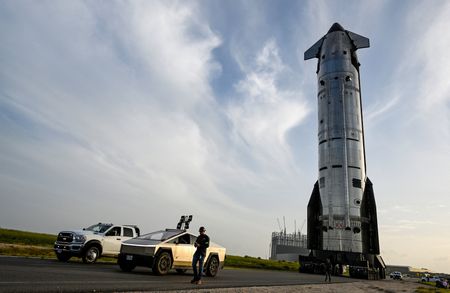
SpaceX shares tumbled 4% after a last-second abort of Starship’s 13th flight test added more pressure to a stock that had already slipped below its $135 per share IPO price earlier in the week.
SK Hynix’s U.S.-listed shares fell 2.7%, trading near their offering price, and have now lost more than 9% on the week.
Analysts have pointed to several factors behind this month’s sharp reversal. Chinese AI startup Moonshot unveiled a new model called Kimi K3 — a 2.8 trillion-parameter system the company describes as the world’s largest open-weight AI model — reigniting investor concerns about how quickly U.S. tech companies will see returns on their massive AI spending.
A report released Thursday indicated that Alphabet’s Google is running several months behind schedule on the launch of Gemini 3.5 Pro, its most advanced AI model.
Global markets have had a rocky start to July overall. South Korea’s KOSPI index fell into bear market territory last week, even as it remains up nearly 70% for the year. Japan’s Nikkei dropped into correction territory on Friday. Europe’s technology sector has been among the worst-performing areas this week, despite having posted its biggest quarterly gain since 2001 just last month.
The S&P 500 Momentum Index, which had been outpacing the broader S&P 500 by more than two-to-one this year, has now pulled back 10% in July, compared to just a 0.8% decline in the wider market.
Upbeat earnings forecasts from the world’s largest chipmaker, Taiwan’s TSMC, and European semiconductor equipment company ASML did little to slow the selloff.
Attention is now turning to upcoming earnings reports from two members of Wall Street’s so-called “Magnificent Seven” group. Alphabet and Tesla are both scheduled to release their quarterly results next week.
Space-related stocks also fell this week after rallying earlier in the year on excitement surrounding SpaceX’s market debut. Rocket Lab and Intuitive Machines each dropped 3% and 4% on Friday respectively, and both were on pace to finish the week down roughly 20%.
Apple is now just a hair’s breadth away from knocking Nvidia off its perch as the world’s highest-valued company — a development that would rearrange the pecking order among tech giants as investors take a fresh look at where artificial intelligence is headed.
As of Friday’s premarket trading, Apple’s market value sat at approximately $4.90 trillion following a slight uptick in its share price. Nvidia was hovering at roughly the same level after its stock slipped 2.4%.
Should Apple manage to edge past Nvidia, it would be the first time the iPhone maker has held the top position since April of last year. The neck-and-neck competition suggests that investors are no longer focused solely on the companies that have been the most obvious beneficiaries of AI spending — a group Nvidia has led for nearly a year.
“Apple was seen as a laggard in the AI race because it wasn’t spending to develop models, but now sentiment has changed,” said Toni Meadows, head of investment at BRI Wealth Management.
“Apple is less exposed to capex intensity and better positioned to monetize AI via services, ecosystem lock-in, and hardware upgrades. The re-rating reflects confidence in earnings durability rather than speculative AI upside,” Meadows added.
For a company that was long viewed as falling behind in artificial intelligence, Apple’s closing of the gap with Nvidia marks a notable shift — and could influence how CEO Tim Cook’s remaining time leading the company is remembered. Cook is set to hand the reins to hardware veteran John Ternus in September.
Last month, Apple unveiled a long-overdue revamp of its Siri voice assistant, wagering that the upgraded tool would help it catch up with both established tech rivals and newer AI-focused startups.
Some analysts believe Apple is sitting on a massive untapped AI resource: the personal data stored on hundreds of millions of iPhones. That information could make Siri far more useful and capable — but there’s a catch. The data is currently protected within Apple’s operating systems in the name of user privacy, and figuring out how to harness its value without compromising that privacy remains a significant challenge.
Meanwhile, Nvidia reached a historic milestone in October when it became the first company ever to surpass a $5 trillion market valuation, putting it in a class by itself.
Even if Apple were to overtake Nvidia, analysts caution that it wouldn’t necessarily represent a lasting power shift. Nvidia continues to be a central player in AI-related spending, with its graphics processors driving much of the generative AI surge. The chipmaker could easily reclaim the number-one spot if investor sentiment swings back in its favor.
Apple also faces its own headwinds. The company has raised prices to counter rising costs — a move that risks dampening consumer demand.
“I don’t see any meaningful distinction should Nvidia lose its crown. It’s likely to be a significant participant in whatever happens going forward,” said Benjamin Hall, vice president of alpha research at Segal Marco Advisors.
The AI investment wave has also lifted other players in the semiconductor sector. Memory chipmakers have emerged as some of the biggest winners this year. Micron crossed the $1 trillion market value threshold in May as investors recognized the critical role memory chips play in AI infrastructure. South Korea’s SK Hynix also made its debut on the Nasdaq earlier this month, adding yet another competitor for investor attention.
“The new entrants to the market could spread out the focus away from the pure Magnificent Seven names into a wider number of names,” Hall said.
The blistering rally in chip stocks hit some turbulence in July as investors began questioning whether the AI trade was sustainable. The Philadelphia SE Semiconductor index fell nearly 19% from its all-time highs during that stretch — though despite that sharp decline, the index has still outperformed Nvidia on the year.
WASHINGTON — Prices on goods brought into the United States climbed unexpectedly last month, with the annual pace of imported inflation reaching its highest point in nearly four years, according to new federal data released Friday.
The Labor Department’s Bureau of Labor Statistics reported that import prices rose 0.3% in June, following a downwardly revised 1.7% gain in May. The result caught economists off guard — those surveyed by Reuters had predicted a 0.7% decline, after a previously reported 1.9% increase the month before. It’s worth noting that these figures do not include tariff costs.
Looking at the bigger picture, import prices surged 7.1% over the 12 months ending in June — the largest year-over-year jump since August 2022, and up from the 6.6% annual increase recorded in May.
The June rise in import prices stood in contrast to declines seen in both producer and consumer prices during the same month, which had been credited to falling oil prices following a fragile ceasefire between the United States and Iran. That truce fell apart last week, sending oil prices to a one-month high.
Imported fuel costs dipped 0.4% in June after surging 12.6% in May, though they remain 44.1% higher than a year ago. Prices for imported food slipped 0.2%. When food and fuel are stripped out, import prices still rose 0.4% for the month and 4.6% over the past year.
A key driver of that core imported inflation was a 0.4% increase in the price of imported capital goods, reflecting robust demand for technology products as companies pour money into artificial intelligence. Imported consumer goods, excluding automobiles, rose 0.3%, while the cost of imported vehicles, parts, and engines edged down 0.1%.
A consortium of investors that includes Saudi Arabia’s Public Investment Fund appears on track to receive European Union approval for its $55 billion purchase of video game developer Electronic Arts, according to sources with knowledge of the situation.
Saudi Arabia’s $1 trillion sovereign wealth fund, along with Jared Kushner’s Affinity Partners and private equity firm Silver Lake, announced the deal back in September of last year. The transaction stands as the largest leveraged buyout ever recorded.
For the Public Investment Fund, the acquisition represents a significant step in its broader strategy to position Saudi Arabia as a worldwide center for gaming and sports, while also banking on the lasting commercial value of major game franchises as the industry works its way out of an extended slump.
The move also reflects Saudi Arabia’s ongoing effort to reduce its economic dependence on oil by expanding into sectors such as infrastructure, tourism, sports, and entertainment.
The European Commission, which serves as the EU’s competition watchdog, is expected to give the deal a green light following the conclusion of its preliminary review under the Foreign Subsidies Regulation on July 30, the sources indicated. A separate review under standard merger rules is also expected to result in unconditional approval when it wraps up on July 22.
The Foreign Subsidies Regulation was created to guard against situations where companies receiving government subsidies from outside the EU gain an unfair advantage when acquiring businesses within the 27-nation bloc.
The European Commission declined to offer any comment on the matter. Neither the Public Investment Fund nor Electronic Arts responded to requests for comment.
The anticipated smooth approval stands in contrast to two earlier deals involving Middle Eastern companies. Abu Dhabi state oil firm ADNOC’s acquisition of German chemicals company Covestro and UAE telecoms group e&’s bid for portions of Czech telecoms company PPF both required extensive investigations and concessions before receiving clearance.
The FIFA World Cup has been a windfall for the American beer industry. Boston bars scrambled for emergency restocking to keep up with thirsty fans on some match days, and Philadelphia alone saw 290,000 stadium beers consumed across six games, according to FIFA organizers.
But behind all that celebratory foam lies a sobering truth: beer sales have been on a downward slide worldwide, and it remains to be seen whether this year’s tournament — co-hosted by three countries across 16 cities — can turn that around.
The Brewers Association, a trade group representing craft beer makers, reports that U.S. beer consumption has been declining steadily for ten years. Canada’s national statistics agency has recorded a similar drop, and the Brewers of Europe trade association says the European Union is experiencing the same pattern.
A growing number of consumers are stepping back from alcohol for health reasons. For the first time in Gallup’s polling history, a majority of Americans — 53% — said last year that having “one or two drinks a day” is harmful to one’s health.
Non-alcoholic beer has seen some growth, but it still accounts for only about 1% of the U.S. market, according to the Beer Institute, a trade group for brewers.
Financial pressures have also weighed on the industry. Overall U.S. alcohol consumption — covering beer, wine, and spirits — dropped 5% last year, with affordability concerns cited as a contributing factor by beverage market research firm IWSR.
Craig Purser, the president and CEO of the National Beer Wholesalers Association, points to another culprit: smartphones and streaming services. He believes they’ve pulled people away from the kind of social gatherings where beer has traditionally flowed.
“If you have this behavior where we’re cocooning and we’re not spending time with other folks, that’s going to affect beer consumption,” Purser said.
Then came the World Cup, bringing soccer fans from across the globe to cheer, commiserate, and gather together.
During the tournament’s first four weeks, beer sales at bars, restaurants, stadiums, and other venues climbed 14% in U.S. host cities compared to the same stretch last year, according to the Beer Institute. The momentum spread beyond those cities as well, with national sales rising 4%.
Jim Koch, the brewer, founder, and CEO of the Boston Beer Co. — maker of Samuel Adams and other brands — said his company had to arrange two emergency deliveries to its Sam Adams Boston Taproom on the first day Scotland’s fans arrived in town.
“At one point, we were pouring them a Sam Adams Boston Lager every 12 seconds. What a wonderful group of people,” he said.
But the brisk sales weren’t the only thing that impressed Koch.
“I didn’t see a single soul on their phone,” he said. “They had a beer in their hand and they were talking to each other. They were doing what beer is meant to do, which is helping people enjoy each other’s company.”
The open and enthusiastic drinking at this year’s venues was a sharp departure from the World Cup four years ago in Qatar, where the government prohibited the sale of alcoholic beer inside match venues.
Beer makers invested heavily in this year’s event. AB InBev, the maker of Budweiser and Michelob Ultra and the World Cup’s official beer sponsor, channeled marketing support to bars and organized 200,000 watch parties across 40 countries. Molson Coors announced it would increase its June and July marketing spending by 60% compared to the previous year and also introduced a limited-edition soccer ball designed to hold 12 cans of Miller Lite.
Maybell Romero, a law professor at Tulane University School of Law in New Orleans, typically reaches for a cocktail over a beer. But during the World Cup, she said she gravitates toward beer because of its lower alcohol content — a practical choice when watching games can stretch across an entire day.
“If I drink cocktail after cocktail, I will not be functional after a few hours,” Romero said.
Romero, who watched this year’s matches at bars in Mexico City, said she enjoyed sampling unfamiliar beers, including some made with distinctive ingredients like champagne yeast. She expects to return to cocktails once the tournament wraps up, though she might occasionally order a beer.
Beer consumption was already expected to dip in certain markets before the tournament concluded. Shares in AB InBev and Constellation Brands — which holds U.S. rights to Mexican beer labels including Corona and Modelo — fell after Mexico and Brazil were knocked out of the competition.
Romero noticed the shift in atmosphere in Mexico City following those defeats.
“The city is collectively depressed,” she said. “Everything is a lot quieter, and people aren’t going out as much.”
Purser is still optimistic that the World Cup can rekindle people’s love of gathering around live sports, particularly with the Summer Olympics set to come to Los Angeles in 2028. He noted that opportunities to enjoy a game-day beer are expanding, with college and professional football now being played on more nights of the week. He also pointed to the growing range of low- and no-alcohol beer options as a way to bring in new consumers.
In May, the NCAA lifted its long-standing prohibition on alcohol advertising during March Madness, opening the door for beer, wine, spirits, and hard seltzer brands to sponsor the college basketball tournament beginning next season.
Koch, for his part, said he isn’t losing any sleep over the industry’s recent struggles.
“People worry that the beer business has declined for a few years, and I always remind them that beer has been a part of human society, human civilization, for 10,000 years,” he said. “Beer will always be a part enhancing our enjoyment of our lives and the time we spend on this earth.”
Three Chinese airlines have committed to purchasing a combined total of 95 Airbus jets in deals worth approximately $17.8 billion at list price, as carriers in China’s massive aviation market continue pushing to grow their fleets and replace older aircraft with more fuel-efficient models.
Air China, the country’s national carrier, along with its subsidiary Shenzhen Airlines, will together acquire 55 Airbus planes at a combined list price of $12.4 billion. Separately, Hainan Airlines has agreed to purchase 40 jets from the A320neo family at a list price of up to $5.4 billion. Both deals were disclosed through filings with the Shanghai Stock Exchange.
Under the agreement, Air China will take delivery of 15 A350-900 wide-body aircraft, valued at roughly $6.09 billion, with deliveries scheduled between 2030 and 2032. Shenzhen Airlines will receive 40 narrow-body A320neo-family jets, valued at approximately $6.35 billion, with deliveries expected between 2029 and 2032. Hainan Airlines’ 40 A320neo jets are set to arrive between 2028 and 2032.
Air China noted in its filing that the actual prices paid will fall below the listed figures, as Airbus is offering significant discounts — a common practice on large aircraft orders of this scale.
The purchases come as Chinese carriers work to rebuild and grow their operations following the pandemic. However, the outlook has become more difficult for some of China’s biggest airlines. Air China recently disclosed a projected net loss of as much as 2.6 billion yuan for the first half of the year, citing high fuel costs that have “drastically squeezed” its profit margins.
Other Chinese carriers have also been placing major orders with Airbus in recent months. China Eastern Airlines last month announced plans to purchase 25 A330neo jets for around $9.35 billion, following an earlier announcement in March to buy 101 A320neo aircraft for about $15.8 billion. In April, China Southern Airlines and its subsidiary Xiamen Airlines agreed to acquire 137 aircraft for $21.4 billion.
The new planes are projected to increase total capacity by around 7.1% for the Air China group and 4.3% for Shenzhen Airlines, based on their combined passenger and cargo capacity as of December 31, 2025. Some of the incoming jets will replace older aircraft being phased out of service.
The A320neo family is a direct competitor to Boeing’s 737 MAX on medium-haul routes, while the A350-900 is commonly deployed on long-haul international flights.
Netflix shares tumbled more than 10% in premarket trading on Friday after the streaming company projected another quarter of slowing revenue growth and announced plans to share less viewership information with investors, stoking fears that its era of standout growth could be coming to an end.
In what marks another step back from transparency, Netflix said it will reduce its viewing-hours reports from twice a year to just once annually beginning in 2027. That decision follows last year’s move to stop reporting subscriber counts, leaving investors with fewer tools to gauge the company’s performance as it faces mounting competition from traditional media companies and YouTube.
“Whenever you take away a data point from investors when results aren’t as good as they have been you will get punished by the market,” said Ben Barringer, head of technology research at Quilter Cheviot.
If Friday’s premarket losses carry through to the closing bell, the company could shed more than $35 billion from its market value of roughly $313 billion. The stock has already fallen 44% from its all-time high reached in June 2025, including a drop of more than 20% so far this year alone.
Netflix’s unsuccessful bid to acquire Warner Bros earlier this year has added to questions about where the company’s next wave of growth will come from. Slow uptake of its ad-supported streaming option — long promoted as a major growth engine — has only deepened those concerns.
Analysts also pointed out that after a strong content year in 2025, which featured the final season of the popular sci-fi series “Stranger Things” and the South Korean hit “Squid Games,” Netflix’s content lineup for the current year looks comparatively thin, which could further drag on growth.
Retaining subscribers remains critically important for Netflix, which has long carried a higher stock valuation than rival media companies. Those competitors have smaller streaming audiences and are dealing with ongoing declines in traditional cable TV viewership.
Netflix currently trades at nearly 20 times its projected earnings over the next year, compared to 13.5 times for Walt Disney and 6.6 times for Comcast — a reflection of the premium investors have historically been willing to pay for the streaming leader.
Despite the disappointing outlook, at least 18 analysts reduced their price targets for the stock after Netflix’s revenue and earnings forecast came in below Wall Street expectations. Even so, the median analyst price target still sits roughly 40% above where the stock closed on Thursday.
“The story lacks excitement,” said Jeffrey Wlodarczak, analyst at Pivotal Research Group.
Truist Financial posted a stronger quarterly profit Friday, with a resurgence in capital markets activity pushing investment banking earnings higher and increased market volatility keeping trading operations busy.
The broader banking industry has been riding a wave of renewed dealmaking, which has generated substantial advisory fees, while unpredictable market conditions have driven more client activity through trading desks at major financial institutions.
Here are the key highlights from Truist’s latest quarterly results:
Truist’s combined investment banking and trading revenue jumped nearly 72% for the three-month period ending June 30, compared to the same quarter a year ago.
The bank’s stock climbed 1.9% in premarket trading following the earnings announcement.
Bank executives are expressing optimism about the months ahead, pointing to strong deal pipelines and healthy backlogs for the second half of the year. That outlook is feeding expectations that the investment banking “super cycle” still has more ground to cover.
Global markets continue to experience turbulence, driven by uncertainty around interest rate direction, ongoing geopolitical tensions, and nervousness surrounding artificial intelligence developments in the tech sector — conditions that tend to keep trading activity elevated.
Truist CEO Bill Rogers offered his assessment of the quarter, stating: “We continued to deepen client relationships, grow in attractive markets, and improve operating efficiency and profitability.”
The bank’s wealth management division also saw gains, with income rising 7.8% during the second quarter.
Overall, Truist’s net income available to common shareholders came in at $1.52 billion, or $1.23 per share — a notable improvement over last year’s $1.18 billion, or 90 cents per share.
U.S. corporate earnings season is picking up steam in the days ahead, with reports from Alphabet and Intel poised to shape investor sentiment around the booming artificial intelligence trade — all while markets navigate uncertainty tied to the ongoing U.S.-Israeli war with Iran.
As of Thursday, the S&P 500 was slightly lower for the week but remained close to record territory, having climbed 10% so far in 2026 on the back of a bull run now approaching four years in length.
Rising expectations for corporate profits this year have given investors confidence to stay bullish on stocks. The second-quarter earnings season, now just getting underway, is expected to confirm that momentum, with S&P 500 earnings projected to surge 25.7% during the period, according to LSEG IBES data.
Michael Arone, chief investment strategist at State Street Investment Management, explained why markets keep climbing despite troubling news cycles. “Headlines continue to raise anxiety and leave investors scratching their heads wondering why the market continues to reach new heights,” he said. “And the reason it does is because the fundamentals have been resilient, and the earnings continue to be outstanding.”
Alphabet’s quarterly results, due Wednesday, are expected to be one of the most closely watched reports of the season. The parent company of Google ranks as the third-largest U.S. company by market value at $4.3 trillion, and as one of the so-called “Magnificent Seven” heavyweight stocks, its performance can move major market indexes.
Alphabet is also considered an AI “hyperscaler” — a company pouring billions of dollars into data centers and AI infrastructure. That kind of capital spending has been central to this year’s market rally, fueling massive gains for semiconductor companies and others benefiting from the AI buildout.
Kevin Mahn, president and chief investment officer at Hennion & Walsh Asset Management, warned that any sign of reduced AI spending could have wide consequences. “If Alphabet announces any type of pullbacks with respect to the spending that they’re forecasting around AI, you could see ripple effects across the entire AI ecosystem,” he said.
Chip company earnings from Intel and Texas Instruments are also drawing significant attention after a remarkable run in semiconductor stocks. Despite some stumbling in recent weeks, the Philadelphia SE Semiconductor index is still up roughly 68% in 2026. Intel shares have more than doubled, soaring over 160%, while Texas Instruments has gained 68%.
Recent earnings from Samsung Electronics and Taiwan Semiconductor drew muted market reactions despite strong results, underscoring just how high the bar has been set for the chip industry. Arone noted that leveraged investment products tied to semiconductors are “amplifying on both the upside and the downside,” contributing to the sector’s sharp swings.
Beyond the AI-focused names, Tesla — another member of the Magnificent Seven — is also scheduled to report results in the coming week. Additional high-profile reports are expected from American Express, Philip Morris International, and defense contractor RTX, with more than 80 S&P 500 companies set to release results.
Major U.S. banks already kicked off the season this week, posting earnings boosted by merger and acquisition advisory fees and a surge in trading revenue.
Markets remain on edge over Middle East developments following a recent escalation of the nearly five-month-old U.S.-Israeli war with Iran. While many investors believe the conflict will be relatively brief, concerns persist that renewed flare-ups could push energy prices back to the elevated levels seen when the war began — potentially stoking inflation fears.
That concern takes on added weight ahead of the Federal Reserve’s meeting scheduled for the end of July. Futures markets suggest traders expect the central bank to raise interest rates in the coming months to combat inflation that currently sits above the Fed’s 2% annual target.
Some of those worries eased this week after consumer and producer price data came in cooler than expected, reducing the likelihood of a rate hike at this month’s meeting.
Eric Kuby, chief investment officer at North Star Investment Management, offered a measured take on the economic picture. “The macro data has painted a picture of a steady economy with some improvement in inflationary pressure,” he said.
Companies across the United States are facing an alarming increase in cyberattacks powered by artificial intelligence, with hackers stealing sensitive data and bringing business operations to a standstill.
The latest victim is Fairlife, LLC, a dairy company owned by Coca-Cola, which was forced to temporarily shut down its U.S. production operations after an outside party gained unauthorized access to portions of its computer systems.
Earlier this week, the White House announced it is forming a new coordination group that will bring together AI developers and operators of critical infrastructure. The goal is to share information about cybersecurity weaknesses discovered by advanced AI systems and to work together on responses.
Below is a rundown of U.S. companies that have reported or been impacted by cyber incidents so far this year:
January 26 — Nike: The ransomware group World Leaks claimed on its website to have published 1.4 terabytes of data taken from Nike. The company declined to address the specifics of its investigation or whether any ransom was paid.
January 28 — Bumble, Match Group, Crunchbase, and Panera Bread: Bloomberg News reported that cyberattacks struck Bumble, Match Group, and Crunchbase. Separately, Panera Bread disclosed a security incident involving customer contact information and notified the appropriate authorities.
February 24 — Wynn Resorts: The company confirmed that hackers obtained employee data, triggering an investigation. The attackers demanded the equivalent of roughly $1.5 million in bitcoin.
March 11 — Stryker: A hacking group with ties to Iran claimed credit for an attack on the medical device maker that disrupted order processing, manufacturing, and shipping worldwide. The attackers also wiped remote devices running the Windows operating system. However, Stryker said patient services and connected medical products were not affected.
March 12 — Crunchyroll: Hackers claimed to have taken personal data along with 8 million support ticket records from the subscription-based anime streaming service, including 6.8 million unique email addresses, according to a report by BleepingComputer.
March 28 — Hasbro: The toy company said it was looking into a cybersecurity incident involving unauthorized access to its network. Hasbro took some systems offline and warned customers that order fulfillment could be delayed for several weeks.
April 10 — OpenAI: OpenAI disclosed a security issue after a third-party developer tool called Axios caused a GitHub workflow to download and run a malicious version of Axios. The company said it found no evidence that user data, systems, or intellectual property had been compromised.
April 13 — Take-Two Interactive’s Rockstar Games: The hacking group ShinyHunters claimed it stole nearly 80 million Rockstar Games business records by taking advantage of a third-party breach involving analytics provider Anodot. Rockstar said only a small amount of non-material company information was accessed.
May 4 — West Pharmaceutical Services: The medical equipment maker said a cyberattack involving data theft and system lockdowns disrupted manufacturing and logistics operations around the world. The company took systems offline before eventually restoring operations at its manufacturing, supply chain, and commercial locations.
May 11 — Instructure/Canvas: Instructure, the company behind the widely used Canvas educational learning management system, said a hack linked to ShinyHunters disrupted access and exposed student and school data from nearly 9,000 institutions. The company later reached an agreement under which the group said the stolen data was deleted and customers would not be targeted for extortion.
May 21 — Blank Rome: The law firm said cybercriminals posing as its IT department tricked an attorney into uploading files, exposing the personal information of 57,554 current, former, and prospective clients. The incident is the subject of a proposed class action lawsuit.
May 27 — Carnival: The cruise company said a social-engineering attack compromised an employee account, exposing personal details including names, addresses, and government-issued identification numbers. The company blocked the unauthorized access and notified those affected.
June 11 — Novo Nordisk: The maker of Wegovy said unauthorized individuals copied information from its internal IT systems, including limited clinical trial patient data. The company launched an investigation and temporarily shut down certain internal systems, though it said core operations were not impacted.
June 15 — iRhythm Holdings: The medical technology firm said a threat actor obtained potentially sensitive data — including proprietary information and patient health records — through a social-engineering attack targeting third-party-hosted business applications. A payment demand was later issued, though the company said patient care, medical device systems, and operations remained unaffected.
June 15 — AdaptHealth: The company reported that a “threat actor” stole patient information and insurance billing passwords after a social-engineering attack compromised a third-party contractor’s account, giving the attackers access to cloud-based business applications and internal patient management systems.
June 17 — Fortinet: Researchers reported that a widespread hacking campaign targeting Fortinet firewall and VPN devices compromised approximately 75,000 systems globally, resulting in password theft at Fortune 500 companies and government agencies in more than 15 countries.
July 16 — Coca-Cola Co./Fairlife: The beverage giant said its dairy subsidiary Fairlife temporarily suspended U.S. production operations after unauthorized access to parts of its systems, including production-related systems. The company investigated the incident while working to restore affected operations.
A Chinese maker of optical components used in artificial intelligence data centers is moving forward with what could become the largest stock offering in Hong Kong this year.
Zhongji Innolight announced Friday that the Hong Kong Stock Exchange’s listing committee has given the green light for the company’s listing plan. The Shenzhen-listed firm made its initial public offering documents public following that approval, a step that also signals clearance from China’s securities regulator.
According to sources who spoke in June, the company is looking to raise as much as $7 billion through the Hong Kong listing. If achieved, that figure would top the $3.1 billion share sale completed by Luxshare Precision on July 6, which currently holds the title of Hong Kong’s largest offering of the year, according to LSEG data.
Hong Kong’s IPO market has been on a record-breaking pace in 2026. Companies have collectively raised $33.8 billion through new listings so far this year — more than twice the $16.4 billion raised during the same stretch in 2025, LSEG data shows.
Hitachi Energy and Eve announced Friday they have entered into a formal agreement to jointly develop the power and charging infrastructure required for Eve’s electric vertical takeoff and landing vehicle — commonly referred to as a “flying car.”
The memorandum of understanding calls for Eve and Hitachi’s energy division — part of the larger Japanese conglomerate Hitachi — to collaborate on building the charging systems the aircraft will need to operate.
This agreement marks the first time Eve, which is controlled by Brazilian aircraft manufacturer Embraer, has signed a deal specifically focused on charging infrastructure for its aircraft.
Speaking to reporters at the event where the deal was announced, Luiz Mauad, Eve’s vice president of customer services, stressed the urgency of getting the power infrastructure right from the start. “The power has to be there from day one. Otherwise, we can’t fly; we can’t take off,” he said.
Glauco Freitas, Hitachi Energy’s Brazil head, explained that the company plans to adapt its existing electric vehicle fleet charging technology to meet the unique demands of eVTOL aircraft.
Eve’s aircraft are currently in the flight testing phase, with full certification anticipated in 2028. The company has already secured approximately 2,700 pre-orders from customers around the world.
TOKYO — Asian financial markets suffered steep losses Friday as a sweeping global selloff in technology stocks intensified, dragging equity indexes in Japan and Taiwan down by as much as 6%.
Japan’s Nikkei 225 index officially entered correction territory, having shed more than 10% of its value since reaching an all-time closing high on June 25.
Takamasa Ikeda, a senior portfolio manager at GCI Asset Management in Tokyo, pointed to the close relationship between the Nikkei and the SOX semiconductor index as a key factor. “The Nikkei is highly correlated with the SOX index. The pace of the SOX’s gain was unsustainable, and there’s been a correction in it. A correction was anticipated, but it is happening earlier than market expectations,” he said. He added that investors are growing skeptical about whether major tech companies can generate returns large enough to justify enormous investments financed through heavily leveraged loans.
Christopher Forbes, head of Asia and Middle East at CMC Markets in Singapore, noted that even solid tech earnings weren’t enough to prop up prices. “They were good (tech) earnings. But it just shows how much was baked into the price. SpaceX is a pretty good proxy for market sentiment right now, and it’s below the IPO price,” he said. Forbes also observed that rising bond yields are weighing on markets, though he hasn’t seen outright panic yet, with investors instead moving toward gold and silver.
Johan Javeus, a senior economist at SEB in Stockholm, described the selloff as likely driven by a mix of forces. “Probably a combination of factors where the selloff is partly driven by profit-taking on many AI stocks, coupled with the recurring doubts of an AI investment bubble. The fact that the SpaceX IPO has done so poorly makes many investors extra nervous,” he said.
Kei Okamura, a portfolio manager at Neuberger Berman in Tokyo, suggested that signals from the Federal Reserve may have sparked the downturn. “I think the Fed was likely a trigger. Kevin Warsh and his comments and changing views towards what appears to be quite hawkish Fed policy started a cascading effect towards taking chips off the table,” Okamura said. He noted that heavy selling began with high-profile names like SK Hynix and Samsung before spreading more broadly, calling the situation a “bloodbath” that is “across the board.”
Fabien Yip, a market analyst at IG in Sydney, said investors are now focused on financial sustainability rather than just growth numbers. “Retail investors have borrowed to trade in this really impressive AI rally, so I think the unwinding of leveraged positions will definitely exaggerate the decline as well,” he warned. Yip cautioned that if the selloff carries into the U.S. trading session, South Korean markets could face a particularly rough reopening.
Shoichi Arisawa, a fellow in the investment research department at Iwai Cosmo Securities in Tokyo, said the correction appears to be a reaction to the sharp run-up that preceded it, but expressed confidence that the underlying business outlook for AI and semiconductor companies hasn’t fundamentally changed.
Naoki Fujiwara, a senior fund manager at Shinkin Asset Management in Tokyo, raised concerns about the reliability of memory chip makers’ forecasts, suggesting demand signals may be distorted by customers ordering early ahead of anticipated price hikes. He said upcoming earnings reports from major memory chip users like Alphabet could provide a clearer picture and potentially spark a market rebound.
Wen Xunneng, CEO of Zhu Liu Asset Management in Shanghai, was more blunt in his assessment. “The global AI bubble is bursting. The A-share correction followed pull-backs in South Korean and U.S. stocks,” he said, adding that while the AI industry continues to expand, that growth doesn’t guarantee stock prices will keep climbing. He also noted that a large number of quantitative funds in China are amplifying market swings.
Shrikant Kale, a senior quantitative strategist at Jefferies in Hong Kong, said markets may be starting to price in more realistic earnings growth expectations for AI-related companies, moving away from assumptions of flawless execution and never-ending upgrades.
Zhiwei Zhang, chief economist at Pinpoint Asset Management in Hong Kong, characterized the correction as largely technical rather than rooted in fundamental changes. “It appears largely technical rather than fundamental. There doesn’t seem to be any major change in the tech capex expectations. It is more of an adjustment of crowded positions that led to a certain state of stampede,” he said.
Gary Tan, a portfolio manager at Allspring Global Investments in Singapore, agreed that the movement looks more like excess enthusiasm leaving a crowded trade than a broader market shift. “From the flows we are seeing, this looks more like froth coming out of a crowded AI trade than a knee-jerk reaction to higher yields,” he said, noting that investors appear to be locking in profits on top AI performers rather than rotating into other sectors.
Japan’s ruling political party stepped forward Friday with serious concerns about what it describes as suspected secret cooperation between activist investors and buyout funds in transactions designed to take publicly listed companies private.
A project team focused on corporate governance within the Liberal Democratic Party outlined the issue in draft policy proposals, stating that there have been instances where activist investors are believed to have been working covertly alongside private equity funds pursuing take-private deals.
According to the group, such situations “raise concerns from the perspectives of both enhancing corporate value and legal fairness.” The proposals are expected to be finalized before the end of this month, though no specific cases of alleged collusion were identified in the document.
Observers note this represents one of the most direct expressions of concern yet from Japan’s governing party regarding the growing influence of activist investors in corporate restructuring and take-private transactions — a sign that some companies are pushing back against pressure from such investors.
The Japan Private Equity Association declined to offer any comment on the matter.
Private equity activity in Japan surged 47.8% last year, reaching $42 billion in deals according to Dealogic. That momentum has carried into the current year, highlighted by a bidding competition involving EQT against SoftBank’s LY Corp and Bain Capital for control of Kakaku.com.
Japan has grown into one of the most active markets outside the United States for activist investing, drawing in hedge funds that have pressured companies to boost returns, unwind cross-shareholding arrangements, and strengthen governance practices.
The draft proposals also flagged cases in which activist shareholders are suspected of “securing unfair gains” by channeling a portion of their sale proceeds back into acquisition vehicles set up by private equity buyers.
Among the proposed reforms are stricter standards for shareholders seeking to call special meetings or submit proposals, along with limits on shareholder proposals touching on management decisions.
The group also explored potential steps to rein in what it characterized as “speculative or abusive” arbitrage trading.
Drawing on practices used in U.S. jurisdictions including Delaware, the document suggested Japan may want to consider limiting appraisal-rights claims by investors who bought shares after a merger or acquisition was publicly announced. Appraisal rights give shareholders who oppose a buyout the ability to demand the company buy their shares at a value determined by a court.
Arbitrage trading came under scrutiny during a prolonged dispute over Toyota Motor’s buyout of Toyota Industries, during which U.S. activist fund Elliott Investment Management accumulated a significant stake in the Toyota subsidiary in an effort to push for a higher acquisition price.
FARNBOROUGH, England — Defense is set to dominate this year’s Farnborough Airshow as aerospace and arms manufacturers struggle to meet surging weapons demand, even as the commercial aviation sector works to steady a fragile production recovery.
With the war in Ukraine now entering its fifth year and a ceasefire in the Gulf falling apart, the traditional rivalry between Boeing and Airbus for commercial jet orders is expected to take a back seat at the July 20-24 event in England.
“The global security environment is arguably more complex and volatile today than we have seen in many, many decades, and we are watching security threats evolve at a breakneck pace,” said Air Chief Marshal Harv Smyth, head of the Royal Air Force, speaking at an International Air Chiefs Conference held ahead of the show.
Arms manufacturers are arriving at their once-every-two-years gathering amid the largest increase in European defense spending since the Cold War, though questions remain about exactly where and how those funds will be directed.
Some industry leaders are raising alarms that defense technology startups building drones and AI-powered targeting software could shake up the established order — much the way SpaceX disrupted the rocket launch industry. The conflicts in Ukraine and Iran have highlighted the need for faster development timelines and systems that can be produced at scale.
“The younger companies are aggressive, not risk-averse,” said Tom Enders, president of the German Council on Foreign Relations and co-chairman of German defense startup Helsing. “They spend their own money. Procurement agencies and armed forces increasingly understand this is the way for a dynamic fast-moving industry,” added Enders, the former Airbus CEO who also chairs tank maker KNDS.
Some of the new defense dollars will flow toward existing warplanes such as the Lockheed Martin F-35 and the Eurofighter — both of which are scheduled to perform at the show — but startups like Helsing and U.S.-based Anduril are pushing AI-driven concepts including uncrewed fighter systems, even after some early stumbles.
“Valuations are tilting in favour of the defence entrants but…most militaries are still spending the vast amount of their resources on manned platforms,” said Byron Callan, managing partner of research firm Capital Alpha.
Show organizers told Reuters that defense companies will account for half of a record 1,600 exhibitors this year, up from a historical share of about 40%, with notable growth in AI, deep-tech, and finance firms.
On the commercial aviation front, both Airbus and Boeing are expected to announce new orders and reveal the buyers behind previously undisclosed deals. However, with delivery slots already booked well into the next decade, the usual wave of splashy order announcements is likely to generate less buzz than in previous years. Investors are instead keeping their eyes on actual aircraft deliveries, where manufacturers earn the bulk of their profits.
Industry sources indicated that total deals at the show may have difficulty surpassing 300 aircraft — well short of some pre-show estimates of up to 800 jets. The final count could also include orders that were previously announced.
“Winning orders is not the question. It’s not the relevant measuring stick that it used to be because of production capacity constraints,” said Jerrold Lundquist, managing director of advisory firm The Lundquist Group.
The aerospace industry has been battling supply chain problems since the COVID-19 pandemic, particularly with castings and forgings — precision parts manufactured from molten or solid metal that meet strict quality standards.
Resolving those bottlenecks is critical to Airbus reaching its long-delayed goal of boosting single-aisle jet production by roughly 25% to 75 aircraft per month by 2027. Boeing, meanwhile, has signaled it is exploring production rates beyond its current targets as it works to close the gap with Airbus and stabilize its declining market share.
“The supply chain…has improved relative to where it was a year or two ago but (not) to the point where Airbus can pursue its goal of 75,” said manufacturing expert Kevin Michaels, managing director of AeroDynamic Advisory. “And as Boeing raises rates, it’s surely going to cause issues there as well,” he added.
Engine delivery delays have been among the most persistent headaches in aviation’s supply chain, creating frustration for both aircraft manufacturers and airlines. GE Aerospace, one of the world’s largest jet engine producers, said the situation is getting better but that more progress is needed.
“I do think the supply chain has really turned the corner,” GE Aerospace CEO Larry Culp told Reuters. “(There is) more work to do.”
Fast-fashion powerhouse Shein has cleared a major hurdle on its path to going public, after receiving approval from the Hong Kong stock exchange’s listing committee for an initial public offering (IPO), according to three people familiar with the situation who spoke on Friday.
The development brings Shein significantly closer to a stock market debut in the Asian financial hub — one that has been closely anticipated by investors and industry watchers alike. Previous attempts by the company to list on exchanges in New York and London were derailed by regulatory scrutiny.
The sources who shared this information asked not to be identified, saying they were not authorized to speak publicly on the matter. Representatives for both Shein and the Hong Kong stock exchange did not respond to Reuters’ requests for comment regarding the outcome of the hearing process.
Reuters had reported earlier this week that the listing committee hearing was set for Thursday, during which Shein was expected to field questions from the exchange about its business operations and financial standing.
Under Hong Kong market rules, once a company receives the listing committee’s approval following its hearing, it is then permitted to move forward with investor roadshows and the process of building its order book ahead of the IPO.
Shein is aiming for a valuation in the range of $40 billion to $50 billion for its Hong Kong listing. That figure represents a significant decline from the $100 billion valuation the company reportedly received during a funding round in 2022, when it first began pursuing a listing in New York.
STOCKHOLM — Swedish defense and aerospace manufacturer Saab delivered a second-quarter earnings beat on Friday, as soaring demand across its key markets pushed both sales and new order bookings sharply higher.
The company, best known for producing the Gripen fighter jet, reported operating earnings of 2.79 billion Swedish crowns — roughly $289 million — up from 1.98 billion crowns during the same period a year ago. That result surpassed the 2.48 billion crown average estimate from an LSEG analyst survey.
Saab, whose product lineup extends well beyond fighter jets to include missiles, advanced electronics, and submarines, posted like-for-like sales growth of 29.8% compared to the previous year. Company leadership said it remains focused on expanding production capacity to keep pace with the extraordinary level of demand.
The surge comes on the heels of several consecutive years of rising orders, largely driven by a broad rearmament effort across Europe in response to Russia’s ongoing war in Ukraine. That momentum has accelerated even further in recent months, with Saab landing a series of landmark contracts.
Among the most significant deals: Saab is set to supply new Gripen E fighter jets to Ukraine, and Brazil is reportedly considering adding 20 more Gripen aircraft to its existing fleet. The company has also signed a $4.8 billion agreement with Poland to deliver three A26-type submarines.
Adding to the strong order pipeline, NATO recently announced plans to purchase up to 10 of Saab’s GlobalEye surveillance aircraft — a move that came just weeks after Canada committed to buying a fleet of the same plane, which is built on a Bombardier jet platform. Saab is also competing to supply Canada with Gripen fighters.
“With our broad offering and rapidly expanding production capacity, we are well positioned to meet this growing demand,” said Saab CEO Micael Johansson.
(Note: $1 = 9.6637 Swedish crowns at time of reporting)
The European Central Bank is scheduled to gather on July 23, and oil prices have once again moved to the center of concern for the institution’s policymakers.
A brief pullback in energy costs last month temporarily eased pressure on officials to raise interest rates — but that relief did not last long. With a lasting resolution to the Iran war appearing unlikely, uncertainty continues to cloud the road ahead.
Here are five key questions surrounding the upcoming meeting:
1. What action will the ECB take on July 23?
The most likely outcome is that the ECB will hold its key interest rate steady at 2.25%. That would follow a June rate increase that made the ECB the first among the world’s largest central banks to raise rates in response to the war.
While renewed conflict has pushed oil and natural gas prices higher, oil sitting near $85 per barrel is still well below the peaks seen in March and April — meaning policymakers feel no urgent need to act immediately. Even so, financial markets are still factoring in a small probability of a rate move.
Morgan Stanley’s chief Europe economist Jens Eisenschmidt noted that the question of whether a July hike was even discussed will likely come up. “There will be questions on whether a hike in July was discussed. I’m pretty sure that a few (policymakers) might bring it up,” he said. He added that any such conversation could serve as a signal about where the ECB stands heading into September.
2. How does the renewed Iran war escalation affect the ECB’s outlook?
For now, the moderate rise in oil prices — compared to earlier, more dramatic spikes — means the situation hasn’t shifted dramatically from what policymakers anticipated in June.
Oil futures are currently trading within a range that falls between the baseline and more favorable scenarios the ECB outlined last month, which supports the argument for holding rates in July.
Additionally, euro zone inflation declined more sharply than expected in June, and that drop wasn’t driven solely by energy prices — underlying inflation, which strips out energy costs, also fell more than forecasters had predicted.
Rabobank senior macro strategist Bas van Gaffen said policymakers have reason to be patient: “Policymakers can probably wait until September for more clarity on how developments in the Middle East affect inflation and the inflation outlook.”
3. Will the ECB raise rates again before the year is out?
Most likely yes. Both traders and economists surveyed by Reuters expect another rate hike, with September being the most anticipated timing — partly because that’s when the ECB releases updated economic projections.
Even during the period when oil prices were falling, sources indicated to Reuters that the rationale for a post-July rate increase remained solid. Now that energy prices have climbed again, traders have increased their bets on an additional move after September as well — though only three out of 74 economists polled by Reuters share that view.
Ross Hutchison, head of euro zone market strategy at Zurich Insurance Group, described the ECB’s mindset this way: “It’s super clear when we listen to the vast majority of ECB speakers, they simply are more concerned about missing inflation again to the upside than they are about the risk of what they still see as a weak but resilient economic outlook.”
A fertilizer shortage stemming from the Middle East conflict, combined with a European heatwave, could push food prices higher and keep inflation elevated — even if energy costs eventually ease. That said, some analysts remain skeptical that further rate hikes are necessary at this point, noting that there are few signs of accelerating wage pressures or second-round inflation effects.
4. What would happen if the ECB raised its minimum reserve requirement?
Analysts say it would drain liquidity from the financial system at a somewhat faster pace, moving up the timeline at which money markets become more sensitive to liquidity conditions.
Reuters recently reported that the ECB is weighing a plan to double the share of cash that banks must hold in non-interest-bearing reserve accounts. That move would reduce the interest the ECB pays banks on their excess reserves — a cost that grows as rates rise.
Societe Generale expects the effect on short-term funding markets to be relatively limited. The bank estimates the measure would remove roughly 160 to 170 billion euros in excess liquidity from the system, compared to the approximately 500 billion euros per year already being withdrawn through quantitative tightening.
5. Is the digital euro gaining momentum?
It appears so. In June, the ECB received important backing from the European Parliament for the digital euro project, ending three years of disputes with banks that have worried about losing deposits and revenue.
The push to launch a digital euro has taken on added urgency since President Donald Trump’s tariffs sparked concerns that the U.S. could potentially use its dominance over American payment networks as a geopolitical tool.
The goal is to finalize legislation by the end of this year, with a pilot program launching next year and a full rollout targeted for 2029.
Morgan Stanley’s Eisenschmidt said the digital euro is a meaningful step toward reducing Europe’s reliance on foreign payment systems, but cautioned that its current design — focused primarily on retail users — may limit how much it can achieve that goal.
Stock markets across Asia fell sharply on Friday, with Tokyo’s Nikkei 225 index plunging nearly 5% as investors sold off shares in computer chipmakers and companies tied to artificial intelligence technology.
Japan’s Nikkei finished the day down 5.8%, closing at 62,945.97. Taiwan’s markets also tumbled, losing more than 5% on the day. South Korean markets were not open for trading Friday. Hong Kong’s Hang Seng index dropped 2%, settling at 24,514.29, while China’s Shanghai Composite fell 1.6% to 3,818.59. In Australia, the S&P/ASX 200 slipped 0.7% to 8,775.70.
AI-related stocks have been under pressure for several weeks now. Investors are growing concerned that share prices in the sector have climbed too high, and that the enormous demand for computer memory chips and processors may not hold up if artificial intelligence technology fails to deliver the profits and productivity gains that many have anticipated.
The turbulence carried over from Thursday’s session on Wall Street, where the S&P 500 dropped 0.5% despite the fact that roughly three out of four stocks in the index actually gained ground. That disconnect came as many of the nation’s largest companies reported stronger-than-expected earnings for the most recent quarter. The Dow Jones Industrial Average edged down 0.2%, and the Nasdaq composite fell 1.5%.
Chipmaker Nvidia was the biggest drag on the market, falling 2.4%. Other companies that had surged on AI enthusiasm also gave back some of their recent gains. Micron Technology dropped 5.6%, though it remains up nearly 199% for the year. SanDisk tumbled 12.6% but is still an extraordinary 494% higher than where it started the year. Western Digital fell 9.2%, yet remains up 171% for 2024.
On the energy front, oil prices surged as conflict in the Middle East intensified. Fears that the war with Iran could force oil tankers away from the Strait of Hormuz — a critical shipping lane connecting the Persian Gulf to global markets — pushed prices toward a one-month high. Brent crude, the international benchmark, rose 1.1% to $85.13 per barrel. U.S. benchmark crude climbed 1.3% to $79.95 per barrel. U.S. stock futures also slipped.
The explosive rally in artificial intelligence chipmakers is hitting a rough patch, as worries about sky-high valuations and the long-term sustainability of massive spending have prompted some investors to quietly change course — moving away from semiconductor stocks and toward the very tech giants writing the checks.
For much of the last two years, the prevailing strategy was straightforward: pour money into chip and infrastructure companies, betting that Microsoft, Amazon, Alphabet, and Meta would keep ramping up spending on data center construction at a breakneck pace.
But that era of rapid acceleration may be nearing its end. UBS estimates that the combined capital expenditures of these major tech companies will climb 76% this year to $673 billion — but then grow by only 25% the following year, and just 6% by 2028.
Some active fund managers have already trimmed their holdings in chip stocks and are instead purchasing shares of the hyperscalers themselves, which have notably underperformed the chip sector’s rally. They are also moving into software companies and industries expected to benefit as AI technology gets adopted more broadly, including financial services and healthcare.
“Once they stop increasing their capex, it will definitely be a relief for hyperscalers and a negative signal for the semi industry,” said Alexis Bossard, global equity portfolio manager at Edmond de Rothschild Asset Management. Bossard has already reduced his exposure to semiconductor stocks, which he believes have become overpriced relative to realistic expectations.
The Philadelphia Semiconductor Index — whose top holdings include Nvidia, Broadcom, Micron, ASML, and TSMC — has more than doubled over the past year, even after falling nearly 18% from its June peak. That compares with an 11% gain in the equal-weighted S&P 500 and an 8% rise in Europe’s AI-light STOXX 600.
A July fund manager survey from Bank of America found that 82% of respondents viewed semiconductors as the most crowded trade in the market, and not a single manager reported holding a short position in the sector.
The central question for investors now is how to position if AI spending remains strong but no longer grows fast enough to justify the lofty expectations already built into AI infrastructure stocks.
Bossard said he has increased exposure to Amazon and favors areas including liquid cooling, cybersecurity, and select software companies. “We have a massive underexposure to semis right now,” he said.
LFG+ZEST CIO Alberto Conca has made sharp cuts to positions in memory-chip and equipment makers while building up stakes in hyperscalers and healthcare stocks. He has also backed that view by purchasing put options on certain semiconductor names.
After initially funding AI infrastructure buildout with their own cash reserves, the major tech companies are increasingly turning to outside financing — raising questions about whether capital market pressures could eventually put a ceiling on spending growth.
The corporate bond market has absorbed billions of dollars in Big Tech debt issuance this year, and investors had been eager to buy — until recently. Apollo Chief Economist Torsten Slok noted that cover ratios, a measure of investor demand relative to bond supply, have dropped to below 2 times in July, down from nearly 5 times back in February.
In June, the Basel-based Bank for International Settlements warned that if returns disappoint, it could trigger a sudden withdrawal of financing and transform the current spending boom into a prolonged bust.
“Cash flow is starting to be almost completely drained by capex,” said Conca, who argues that hyperscalers will be forced to become more disciplined about spending growth.
Research firm Empirical Research has flagged a growing disconnect between moderating capital expenditure growth and the still-ambitious revenue expectations built into chipmaker and AI infrastructure supplier stocks — suggesting something will eventually have to give.
“Either the capex trajectory of the hyperscalers will be upgraded again, or the revenue growth pencilled in for their suppliers will have to come from elsewhere,” the firm stated.
Not everyone is turning bearish. Madeleine Ronner, senior portfolio manager at DWS, expects upcoming earnings season commentary from hyperscalers to remain supportive of continued investment. “The surprise would be if it’s not like that,” she said, adding that buy-side forecasts for 2027 spending remain well above analyst estimates.
DWS has taken some profits in semiconductor stocks following their strong run but remains overweight in the sector, and some of its funds have added exposure to industrial and electrical equipment companies after recent price declines.
Growing community opposition to data center construction in the United States could also put a brake on spending. Empirical Research estimates that roughly 70% of data center projects face some level of local pushback.
New York this week became the first U.S. state to halt construction of large new data centers, imposing a one-year moratorium amid concerns that the facilities powering the AI boom are driving up electricity costs, straining water supplies, and placing burdens on local communities.
Despite these headwinds, investor appetite for AI infrastructure remains strong overall. Data from Morningstar shows that chip-focused investment funds attracted a record $10 billion in net inflows through May.
Jurrien Timmer, Director of Global Macro at Fidelity Investments, argues that demand for computing capacity remains robust and that the recent volatility may simply be another temporary shakeout. He drew a comparison to the late-1990s internet boom, when leading technology stocks repeatedly fell 20% to 30% before eventually pushing higher.
“The AI story is well known, it’s ongoing, the earnings are still supporting the trend,” Timmer said.
Even so, Timmer believes investors should diversify their exposure, noting that companies benefiting from AI adoption — such as those in the financial sector — may increasingly matter alongside the companies building the AI infrastructure itself.
“I want to participate in the boom, but I also want to protect myself in case that boom is overdone,” he said.
Global markets faced fresh turbulence Friday as a widespread selloff in semiconductor stocks rolled through Asia and set the stage for a shaky opening in Europe, according to a morning markets report from Rae Wee.
Stocks in Taiwan and Japan took the heaviest hits from the ongoing chip market downturn, while South Korean markets were closed for a holiday and avoided the damage.
Even a blockbuster earnings report couldn’t rescue sentiment. TSMC, the massive Taiwanese chip manufacturer, posted earnings growth of 77% — well above expectations — yet its shares still dropped 4% as investors remained unconvinced.
The ripple effects reached Europe quickly. EUROSTOXX 50 futures dropped 0.9%, and DAX futures fell 0.6% ahead of the trading day.
After a strong run for semiconductor stocks this year, investors have started stepping back from crowded positions in the sector, with renewed worries about heavy spending on artificial intelligence coming back into focus.
Adding to the cautious mood, the Chinese memory chip company CXMT saw its $8.6 billion initial public offering draw far less investor interest than most recent Chinese IPOs, with a lower-than-expected over-subscription rate.
On the political front, U.S. President Donald Trump on Thursday declassified intelligence documents he said demonstrate that China interfered in American elections. The move revived his repeated claims about election security, even though a U.S. intelligence assessment previously found no evidence that Beijing had any impact on the 2020 election, which Trump lost.
Financial markets largely shrugged off Trump’s accusations, but analysts warned that his sharp rhetoric toward China could destabilize a relationship that had been slowly recovering after last year’s damaging trade war. Trump has expressed hope to sit down with Chinese President Xi Jinping in September to discuss improving trade ties between the two nations.
Conflict in the Middle East also continued to simmer. Iran announced Friday that it had launched new attacks against U.S. facilities in the Gulf, coming after a sixth straight night of American strikes on Iranian military sites.
In China, the country’s foreign exchange regulator announced Friday it would be issuing new investment quotas for qualified institutional investors looking to put money overseas — a move that follows a recent crackdown on illegal cross-border money transfers.
Key items to watch Friday that could move markets include U.S. import price data, industrial production figures, and housing statistics. Earnings reports are expected from Swedbank, Danske Bank, Sweco, Volvo, and Burberry Group. The United Kingdom is also reopening auctions on one-month, three-month, and six-month government debt.
Shares of Tech Mahindra, India’s fifth-largest IT services company, climbed 3% in early Friday trading after the firm reported revenue that exceeded analyst expectations, boosted by gains in its manufacturing division and a weaker rupee.
The company’s stock was changing hands at 1,555 rupees per share, making it the top-performing stock on the Nifty IT index, which itself was up 2% on the day.
Market analysts noted that Tech Mahindra appears positioned to record the strongest growth among major IT services firms during the first quarter of fiscal year 2027.
JERA, the largest power generation company in Japan, has quietly begun exploring whether to list its shares on a U.S. stock exchange, according to three individuals with knowledge of the matter.
The company, which is privately held and jointly owned by Tokyo Electric Power and Chubu Electric Power, has traditionally looked toward the Tokyo Stock Exchange as its most likely venue for going public. However, sources say JERA is now examining ways to connect with international investors as it pushes forward with global expansion plans.
Two of the sources, all of whom asked not to be named due to the sensitive nature of the discussions, said JERA has begun reviewing U.S. market conditions, the level of interest from potential investors, and what regulatory hurdles it would need to clear.
The review is still in its earliest stages. No decisions have been reached on when an initial public offering might take place, how it would be structured, or what the company’s market value might be, the sources indicated.
JERA has previously signaled its interest in pursuing a public offering as a way to raise capital and grow its corporate profile. One source noted that rising interest from overseas institutional investors has pushed the company to strengthen its outreach efforts internationally.
JERA declined to offer any comment on the matter. Representatives for Tokyo Electric and Chubu Electric were not available to respond.
In terms of scale, JERA is Japan’s largest buyer of liquefied natural gas and brings in annual revenue of 3 trillion yen — roughly $18.48 billion — supported by assets totaling around 10 trillion yen. Its domestic power generation capacity stands at 59 gigawatts, including projects still under development, and it accounts for approximately 30% of Japan’s total electricity supply.
Looking ahead, JERA plans to invest 5 trillion yen between fiscal year 2024 and 2035, with a target of reaching 350 billion yen in net profit by that point, up from 183.6 billion yen in fiscal 2025.
The company handles roughly 35 million metric tons of LNG each year and has been building out its supply chain through upstream investments, fuel purchasing, and trading — with recent activity concentrated in the United States. JERA has also been growing its renewable energy operations.
The Nikkei newspaper reported in June that JERA is weighing the development of large-scale natural gas power plants in the U.S. to help meet the rapidly growing electricity demand driven by data centers — highlighting how significant its overseas business has become.
A successful U.S. listing could give JERA greater financial firepower to fund major energy projects and global expansion, while also raising its visibility among international investors and giving it stock that could be used in potential merger or acquisition deals.
JERA’s exploration comes amid a broader trend of Japanese companies turning to U.S. capital markets as their operations become more global. PayPay, which is backed by SoftBank Group, listed on the Nasdaq exchange this year, and memory-chip manufacturer Kioxia is preparing to list American depositary shares. Reuters also reported last year that the Rakuten Card unit of Rakuten Group was weighing a U.S. listing.
MONTERREY, Mexico — To the sound of popping confetti and amid floating balloons, American Cal-Mex restaurant chain Chipotle threw open the doors of its very first Mexican location on Thursday, bringing burrito bowls and chicken salads to the very country where tacos were born.
The chain chose Monterrey’s upscale San Pedro Garza Garcia neighborhood for its debut — a corporate enclave widely regarded as the wealthiest municipality in all of Latin America, situated in Mexico’s northern border state of Nuevo Leon.
A dramatic chili-shaped covering was pulled away in a shower of confetti, and eager crowds quickly lined up to try the California-born chain for themselves, snapping photos as workers assembled wraps and salads along a bustling counter.
Ricardo Aguilar, a 26-year-old Mexican resident who showed up on opening day, said he first discovered Chipotle during trips to the United States and has been a fan ever since, praising the restaurant’s fresh ingredients and generous serving sizes.
“It’s a different kind of offering,” he said. “It’s definitely not your street-corner taco stand.”
Chipotle’s Mexico director Pablo de Brito spoke with Reuters at the opening, saying the company intends to launch six to eight additional Monterrey locations over the next 14 months before pushing into Mexico City and eventually the rest of the country.
“We’re more than happy with this opening,” he said, explaining that Monterrey was selected as the launch city partly because its population skews young and has strong ties to American culture, giving the brand a built-in familiarity.
Chipotle’s arrival comes after fast-food chain Taco Bell made two failed attempts to crack the Mexican market — once in 1992 and again in 2007 — both times finding that locals had little interest in its offerings when authentic Mexican food was readily available.
Mexico’s national statistics office, INEGI, counts more than 147,000 registered taquerias throughout the country. The overwhelming majority are informal street-side stands serving a variety of meat-filled tacos topped with salsas and garnishes.
In 2021, a geographer at Mexico’s National Autonomous University named Baruch Sangines mapped out 1.6 million taco shops across the country. His research found that 95% of Mexico City residents live within 400 meters — roughly a five-minute walk — of a taqueria. In the Monterrey metro area, home to more than 5 million people, that figure was still a substantial 75%.
Sara Senatore, a senior restaurants analyst at Bank of America, sees promise in Chipotle’s decision to partner with Alsea — a company that already franchises Starbucks and Domino’s Pizza throughout Latin America and Europe.
“They’re the ones building the restaurants and they bear a lot of the risk,” she said, adding that Alsea’s willingness to invest is a signal that the brand has real potential. She also noted that a certain cultural “mystique” surrounding U.S. brands often helps them perform well in foreign markets.
Senatore also pointed to Chipotle’s menu range — from mild carnitas to a “pretty darn hot” salsa — as a factor that could appeal to a wide variety of Mexican customers.
Spice levels have become a culturally charged issue in Mexico in recent years. A number of traditional sauces have reportedly been toned down due to gentrification, a trend that accelerated during the COVID-19 pandemic when large numbers of American remote workers relocated to Mexico, often outspending local residents.
Trump Media Plans to Sell Fast-Track Access to Truth Social Posts
President Donald Trump’s media company has announced plans to offer paid, high-speed access to posts on Truth Social — potentially including posts from the president himself that could move financial markets. The service, called Truth PSI, was announced Thursday and would allow Wall Street trading firms and other financial institutions to receive posts in milliseconds, giving them an edge in trading stocks, bonds, and interest rates. The arrangement is similar to paid access programs at other platforms, though with the notable difference that the platform’s most prominent user is the sitting president. The company did not respond when asked whether the service amounts to profiting from his position in office.
Trump Team Racing to Rebuild Tariff Framework After Supreme Court Ruling
The administration is working against a ticking clock to restore tariff revenue after the Supreme Court struck down the largest of President Trump’s import taxes in February. Those tariffs had generated significant revenue for the U.S. Treasury last year by taxing goods from nearly every country in the world. A deadline of July 24 is fast approaching, but trade attorneys and analysts believe the administration will find a way to get it done. As one trade lawyer put it, “They’re going to raise the tariff wall again.”
US Safety Agency Takes Over Ryanair Window Incident Investigation
American aviation safety officials have assumed leadership of the investigation into a frightening incident aboard a Ryanair flight on July 10, when a window came loose and a passenger was partially pulled out of the aircraft before fellow travelers — including his wife — pulled him back inside. The National Transportation Safety Board announced Thursday that the incident occurred in Greek airspace, not over North Macedonia as originally reported. Under international aviation rules, Greece’s safety authority was able to transfer the case to the NTSB. The flight was traveling from Thessaloniki to Memmingen, Germany.
Retail Sales Rise Modestly in June, But Shoppers Show Strength Away from Gas Pumps
Consumer spending slowed slightly last month compared to May, but shoppers showed surprising resilience when gas station sales are set aside, according to a Commerce Department report released Thursday. Overall retail sales climbed just 0.2% in June, down from a revised 1% increase in May. However, when gas stations are excluded from the calculation, sales rose a solid 0.7%. The government’s figures are not adjusted for inflation, meaning falling gas prices weighed down the overall number.
Buffett Says His Children — Not the Gates Foundation — Will Distribute His Fortune
Billionaire Warren Buffett opened up Wednesday about his decision to redirect his charitable giving away from the Gates Foundation, saying the choice is primarily about his confidence in his three children’s readiness to manage the distribution of his entire fortune. Speaking on CNBC, the 95-year-old investor acknowledged that Bill Gates’ connection to convicted sex offender Jeffrey Epstein is “distasteful,” but said Gates’ actions were not dramatically different from his own past mistakes in choosing the wrong people. Buffett added that no one has a perfect track record when it comes to judging others.
25% Tariffs on Some Brazilian Goods Set to Begin July 22
The United States will begin imposing a 25% tariff on certain imports from Brazil starting July 22, citing what officials described as a range of unfair trade practices by the South American nation, which ranks as the world’s tenth-largest economy. The tariffs were first proposed last month. Several goods will be exempt from the new taxes, including coffee, beef, oranges, orange juice, certain oil and gas products, and aerospace components — items either not produced domestically or considered critical to U.S. supply chains.
30-Year Mortgage Rate Climbs to Highest Point in Nearly a Year
Prospective homebuyers are facing steeper borrowing costs after the average 30-year fixed mortgage rate rose to 6.55% this week, its highest level in almost a year. Mortgage buyer Freddie Mac reported Thursday that the rate increased from 6.49% the previous week. A year ago, the average stood at 6.75%. Rates on 15-year fixed mortgages, commonly used for refinancing, also moved higher. Mortgage rates are shaped by multiple factors including Federal Reserve policy and bond market expectations around inflation and economic growth.
Trump’s Teleprompter Operator on Unpaid Leave Over Alleged Prediction Market Bets
The White House confirmed Thursday that President Trump’s teleprompter operator has been placed on unpaid leave following reports that he used insider knowledge of the president’s speeches to place bets on an online prediction platform called Kalshi. According to ABC News, which first broke the story, Gabriel Perez allegedly won more than $100,000 by wagering on what the president would say in addresses such as the State of the Union earlier this year. The platform’s enforcement chief said Kalshi reached out to federal regulators about the bets. Perez has operated Trump’s teleprompter since 2016.
Federal Investigators: Driver, Not Tesla’s Self-Driving System, Caused Fatal Texas Crash
Federal safety investigators have concluded that the driver of a Tesla involved in a deadly crash last month was responsible for the accident — not the vehicle’s self-driving software. The National Transportation Safety Board determined Wednesday that the driver had pressed the accelerator to full speed, overriding the automated feature, before the car crashed into a home in Katy, Texas, killing a 76-year-old woman inside. The crash attracted widespread attention in part because Tesla’s CEO has been publicly promoting the safety of the company’s self-driving technology as he works to expand its use across vehicles already on the road.
Netflix Profits Rise in Second Quarter, But Cautious Forecast Spooks Investors
Netflix reported strong second-quarter earnings Thursday, driven by new subscriber sign-ups and higher subscription prices. However, the company’s stock fell sharply in after-hours trading after its outlook for the current quarter came in below what Wall Street had anticipated. The streaming giant earned $3.4 billion, or 80 cents per share, during the April-June period — a 9% increase from $3.13 billion, or 72 cents per share, during the same stretch a year ago.
China’s three dominant carriers are entering the busiest travel months of the year under serious financial strain, having disclosed that their combined losses for the first half of 2025 could reach as high as 9 billion yuan — roughly $1.33 billion U.S. dollars.
Air China, China Eastern Airlines, and China Southern Airlines each issued warnings Tuesday about the expected losses, a dramatic turnaround from the combined profit they recorded in the first quarter, when strong Lunar New Year travel had boosted their bottom lines.
The airlines now face a difficult balancing act: raising ticket prices to offset surging fuel costs risks driving away passengers, but keeping fares low means the carriers must absorb those higher expenses themselves.
Parash Jain, HSBC’s global head of transport and logistics research, pointed to what he called a “negative wealth effect” reshaping how Chinese consumers spend money as economic growth has slowed. He warned that every fare increase risks pushing travelers away.
“The rising ticket prices are hurting demand and pushing people to use high-speed rail more for shorter distances,” Jain said, also citing weather disruptions and a shrinking school-age population as factors weighing on summer travel. “But the single largest reason for weaker demand is the increased ticket prices.”
HSBC analysts project the three major carriers will post combined losses of approximately 16.8 billion yuan in 2026 — a stark contrast to the current market expectation of a combined profit of 1.3 billion yuan.
In a filing with the stock exchange, Air China stated that elevated fuel prices had “drastically squeezed” profit margins across the airline industry.
Unlike many of their Asian competitors, Chinese airlines do not hedge much of their fuel purchasing, which has left them more vulnerable to the oil price spike triggered by the Iran conflict. While jet fuel prices have retreated from their peak in the second quarter, they still sit roughly 50% above pre-conflict levels.
“Given that jet fuel normalization will take time, weak demand conditions are likely to remain the key concern heading into the summer peak season,” analysts at Bank of America wrote in a recent note.
While the third quarter is historically the most profitable stretch for Chinese airlines, aviation data company Flight Master is forecasting that passenger traffic on both domestic and international routes will drop 3.6% compared to the same period last year — falling to 142 million passengers in July and August. That would represent the first contraction during peak summer travel since 2022.
Between July 1 and July 14, the average number of daily flights dropped 2.2% year-over-year, with domestic flights declining 1.8% and international routes falling 3.6%, according to Flight Master. Economy class tickets averaged 831 yuan during that stretch, down 1.2% from a year ago and 6.1% below 2019 levels.
China’s domestic air travel demand shrank 6.2% in May compared to the previous year, according to the International Air Transport Association — the weakest showing among major domestic aviation markets worldwide and the first monthly decline in China unrelated to Lunar New Year timing since the pandemic era.
The three big carriers, which depend on international routes for around 30% of their revenue, have seen a boost in bookings on European flights since the Iran conflict began, as travelers have avoided disrupted Middle Eastern hub airports. However, Flight Master data indicates those gains are beginning to erode as Gulf airlines resume operations and offer more competitive fares.
The U.S. dollar steadied on Friday but was still on pace to finish the week lower, after a softer inflation reading earlier this week prompted traders to pull back their bets on a near-term interest rate increase from the Federal Reserve.
Adding complexity to the currency picture, rising hostilities in the Middle East — where Iran and the United States have been exchanging increasingly aggressive actions, largely unraveling a truce reached last month — have driven some investors toward the dollar as a safe-haven asset, pushing oil prices close to one-month highs.
Markets were also awaiting a scheduled speech from U.S. President Donald Trump, set for 0100 GMT.
In currency trading, the euro stood at $1.1445, putting it on track for a weekly gain of 0.29%. The British pound was trading at $1.3476, heading for a 0.56% weekly rise — its third consecutive week of gains — as worries about the United Kingdom’s fiscal situation continued to ease.
The Japanese yen sat at 162.39 per dollar, hovering near the 40-year low of 162.84 it reached at the beginning of the month, with traders staying cautious about the possibility of intervention by Japanese authorities.
The dollar index — which tracks the greenback against six other major currencies — was at 100.72, pointing toward a weekly decline of 0.24%. The index had touched a one-month low earlier in the week as expectations for a near-term rate hike faded, though safe-haven flows have since offered some support.
Strategists at OCBC noted that “the USD remains the highest-yielding safe-haven currency in the G10 complex.” They also wrote that “near-term FX price action is likely to continue reflecting the ‘USD smile’ framework, under which the greenback tends to outperform when markets price either stronger U.S. growth and higher rates or a rise in global risk aversion.”
Thursday’s data showed U.S. retail sales edged higher in June, as a drop in gasoline prices weighed on service station receipts, while online spending jumped — leading economists to revise upward their estimates for second-quarter economic growth.
Further signs of economic resilience came from data showing the labor market remained stable. Economists now expect the Federal Reserve to hold interest rates steady later this month, following a report showing consumer price inflation cooled in June.
Still, policymakers are cautious about reading too much into a single month of favorable data, particularly after inflation had been moving in the wrong direction for several months prior.
Federal Reserve Vice Chair Philip Jefferson indicated he would be willing to consider raising interest rates if inflation does not show further improvement in the near term.
According to the CME FedWatch tool, the probability of a Fed rate hike in July has dropped to 11%, down from 25% implied just last week. Traders are now pricing in roughly 26 basis points of rate increases by December, compared to 44 basis points earlier in the week.
South Korean authorities have raided the local office of Chinese chipmaker Montage Technology as part of an investigation into a possible violation of competition law, the company disclosed in a stock exchange filing.
In the filing, released Thursday, Montage stated it has been working fully with the Fair Trade Investigation Division of the Seoul Central District Prosecutors’ Office. The company also noted that none of its directors or employees have been charged with any wrongdoing by any government authority at this point.
South Korea is a significant market for Montage, accounting for 2.93 billion yuan — equivalent to approximately $432.63 million — in sales during fiscal year 2025. That figure represents more than half of the company’s total group revenue, according to the filing.
Established in 2004, Montage holds the title of the world’s largest memory interconnect chip supplier, commanding a 36.8% share of the global market by revenue in 2024, according to its prospectus citing research and consulting firm Frost & Sullivan.
The company had a strong stock market debut in Hong Kong earlier this year, with shares jumping 64% on their first day of trading after the company raised HK$7.04 billion — about $897.99 million — in a share sale aimed primarily at funding research and development.
News of the South Korean investigation hit Montage’s stock hard. Its Hong Kong-listed shares dropped 23%, closing at HK$278.6 on Thursday, while shares trading in Shanghai fell 16.4%.
A federal jury in Waco, Texas handed down a verdict Thursday requiring Japanese chipmaker Kioxia to pay $229 million to satellite-communications company Viasat, finding that Kioxia violated Viasat’s patent rights related to computer memory technology. The decision was outlined in a court document.
According to the jury’s findings, Kioxia’s flash-memory devices infringe on a Viasat patent covering technology that helps such devices use less power while also boosting their reliability and lifespan.
Representatives for both companies had not yet responded to requests for comment following the verdict.
Viasat, which is headquartered in Carlsbad, California, stated that it developed enhancements to flash-memory technology — a type of storage that saves data on transistors using electrical charges — while working on error-correction systems for its satellite operations.
The company alleged that Kioxia’s flash-memory products incorporate error-correction technology that functions in essentially the same way as Viasat’s patented method.
Kioxia pushed back against those claims, denying any wrongdoing and contending that the patent in question should be considered invalid.
This is not the only legal battle Viasat is fighting on this front. The company has filed a similar lawsuit against data-storage firm Western Digital, and that case remains ongoing.
Netflix announced Thursday that its profits climbed during the second quarter, crediting new subscriber growth and recent price increases that the company said “had gone well and as expected.”
Despite the positive earnings report, the streaming company’s stock dropped sharply in after-hours trading after its financial outlook for the current quarter came in lower than what Wall Street analysts had anticipated.
During the April through June period, Netflix brought in $3.4 billion in profit, or 80 cents per share — a 9% jump compared to $3.13 billion, or 72 cents per share, during the same stretch one year ago.
The company’s revenue climbed 13% to $12.56 billion, up from $11.08 billion in the prior year’s second quarter. Analysts surveyed by FactSet had projected earnings of 79 cents per share on revenue of $12.58 billion, meaning Netflix narrowly beat those earnings expectations while falling just short on revenue.
Looking ahead to the current quarter, Netflix is projecting revenue growth of roughly 12%. That falls short of the approximately 13% growth — totaling around $13 billion — that analysts had been expecting.
The Los Gatos, California-based company said its advertising business remains a key focus, with expectations to generate around $3 billion in ad revenue this year. Netflix also noted strong viewer interest in live event programming, including the Women’s World Cup.
On the content front, Netflix said its animated film “Swapped” is tracking to become its second-most watched original animated movie ever, trailing only last year’s hugely popular “KPop Demon Hunters.”
The quarter’s top-performing titles included Harlan Coben’s “I Will Find You,” the U.K. series “Legends,” the South African production “The Polygamist,” and the K-drama “Teach You a Lesson.”
Netflix also highlighted technology upgrades, saying it is deploying large language models to help users discover content more easily. The platform is also rolling out voice search and artificial intelligence-powered natural language search tools.
Earlier this year in February, Netflix withdrew its bid to acquire Warner Bros. Discovery’s studio and streaming operations.
Netflix shares fell $5.33, or 7.2%, to $69.02 in after-hours trading following the earnings release.
Global financial markets took a hit Thursday as U.S. semiconductor stocks experienced a sharp selloff, dragging down the tech-heavy Nasdaq while anxiety over artificial intelligence investments spread around the world. At the same time, stronger-than-expected U.S. economic data gave the dollar and Treasury yields a boost.
A closer look at market data reveals that foreign investors continue to pour money into U.S. stocks at a remarkable pace, suggesting that confidence in America’s AI-driven economic story — often called “U.S. exceptionalism” — remains intact, at least for now.
Key Market Moves for Thursday
Stock markets in South Korea plunged 7%, while Japan fell 2.8%. European and British markets were largely flat. On Wall Street, the three major indexes each slid between 0.2% and 1.5%.
In individual sectors, the U.S. chip index dropped 4% and communications services fell 3%, while consumer staples bucked the trend with a 3% gain. Sandisk tumbled 12.5% and Seagate Technology fell 10%. Netflix dropped 5% in after-hours trading, while Nike gained 4%.
The U.S. dollar rose 0.3%, while the British pound fell 0.5%. The dollar-to-yen exchange rate continued hovering near 40-year highs above 162.00.
On the bond side, short-term U.S. Treasury yields climbed 3 basis points, flattening the yield curve. In commodities, oil slipped 1%, U.S. natural gas hit a two-month low of $2.823 per million British thermal units, gold fell 2%, and silver dropped 4%.
South Korea in Crisis Mode
South Korean financial authorities are scrambling to rein in extreme swings in the country’s stock market. Their latest effort on Thursday targeted leveraged, derivative-based exchange-traded funds linked to major technology companies such as Samsung and SK Hynix.
Volatility in South Korea’s KOSPI index has reached historic levels — 30-day realized volatility is higher than at any point on record except for late 1998, during the LTCM crisis and Russian debt default. Foreign investors are also pulling out of South Korean stocks at the fastest pace in 25 years.
The Fed’s New Communication Strategy
In central banking, the signals policymakers send can sometimes matter just as much as the decisions they make. New Fed Chair Kevin Warsh has pledged to overhaul the Federal Reserve’s communications approach, moving toward a “less is more” philosophy — a shift that is creating uncertainty among investors.
It remains unclear how the Warsh-led Fed will respond to changing economic conditions, what would trigger a policy move, or what form that move would take. The Fed is currently in a quiet period ahead of its July 28-29 policy meeting.
AI’s Growing Role — and Risk
A new paper from the Federal Reserve and fresh data on U.S. capital flows both highlight just how central artificial intelligence has become to the American economy and its markets. The Fed paper suggests that AI-related imports could widen the U.S. current account deficit more than previously anticipated. Meanwhile, the latest Treasury International Capital data shows foreign investors are still pouring enormous sums into U.S. stocks, chasing AI-driven returns.
However, growing concern over the enormous costs of building out AI infrastructure is starting to shake Wall Street. The “SOX” chip index has fallen 20% over the past month. If that slide continues — or if foreign investors begin to pull back — the consequences for U.S. markets could be significant.
What Could Move Markets Friday
Investors will be watching developments in the Middle East, global sentiment toward AI and semiconductor stocks, and remarks from German Chancellor Merz and French President Macron. On the data front, the preliminary July reading of the University of Michigan’s consumer sentiment and inflation expectations survey will be released, along with June U.S. industrial production figures.
Opinions expressed in this report are those of the author and do not reflect the views of Reuters News.
NEW YORK (AP) — The media company owned by President Donald Trump is preparing to sell premium, high-speed access to posts on Truth Social — and that could include the president’s own messages touching on national security and financial markets.
The plan, revealed Thursday, would give Wall Street trading firms and other large institutions the ability to receive Truth Social content in milliseconds, allowing them to act quickly on any market-moving information. The service is being called Truth PSI, and while similar paid access programs exist at other social media platforms, this one comes with a significant twist: the platform’s most prominent user is the sitting president, who also happens to be the largest shareholder of the publicly traded company behind it — meaning he would personally profit from the arrangement.
Kathleen Clark, a government conflicts of interest expert at Washington University School of Law, did not mince words about the plan. “He’s selling expedited, privileged access to information about what he is doing as president,” she said. “It’s yet more brazen corruption, an improper exploitation of government power to enrich himself.”
The Trump family’s company declined to offer any comment on the matter. Trump Media & Technology, the publicly traded parent company of Truth Social, did not respond to questions sent by email, including whether the president’s posts would be left out of the new service.
A press release issued by the company suggested Trump would in fact be included, noting that the service would give paying customers early access to posts from “the highest-ranking Truth Social accounts.” The president currently has 12.9 million followers on the platform. The release did not specify what customers would be charged for the service.
Over recent months, Trump has used Truth Social to share major announcements and commentary on topics including the conflict with Iran, tariffs, and immigration enforcement actions in American cities. His posts about Iran have drawn particular attention from investors, who are concerned that rising oil prices could fuel inflation and potentially push the Federal Reserve to raise interest rates.
The timing of the announcement is notable: shares of Trump Media & Technology have dropped 70% since the president returned to the White House earlier this year.
Trump Media has indicated it hopes to launch the new service as soon as next month and said it has already secured customers ahead of the rollout.
French software developer Dassault Systemes is reportedly in negotiations to acquire ArisGlobal, a company that makes software used in drug trials, from investment firm Nordic Capital in a deal valued at roughly $2 billion, according to a report published Thursday by the Financial Times. The newspaper cited individuals familiar with the situation.
If completed, the acquisition would mark a significant expansion of Dassault Systemes’ presence in the life sciences software sector. It would also stand as the company’s second-largest purchase ever, trailing only its $5.8 billion acquisition of clinical trial software company Medidata Solutions back in 2019.
However, the Financial Times cautioned that a final agreement is far from guaranteed, and the negotiations could collapse before any deal is reached.
Reuters, which first distributed the report, noted it was unable to independently confirm the details at the time of publication.
Earlier this year in April, Dassault Systemes disclosed first-quarter revenue of 1.51 billion euros, equivalent to approximately $1.77 billion, a figure that matched analyst expectations.
The company, which develops software for automakers, aircraft manufacturers, and industrial businesses, has faced headwinds from a prolonged downturn in the global automotive industry. In response, Dassault Systemes has been shifting its focus toward artificial intelligence and data center technologies as new avenues for growth.
Representatives for Dassault Systemes, ArisGlobal, and Nordic Capital were not immediately available to respond to requests for comment.
Cryptocurrency exchange Crypto.com announced Thursday that Citadel Securities, a major global market maker, has poured $400 million into the company through its first-ever institutional investment round, placing Crypto.com’s total valuation at $20 billion.
Over the past year, banks, exchanges, and asset managers have been rapidly closing the gap between conventional financial systems and digital currencies, rushing to establish footholds in crypto markets.
Clearer regulations, surging demand from institutional players, and the growing use of tokenized assets have pushed major financial players to put money into infrastructure covering stablecoins, asset custody, trading platforms, and blockchain-based settlement systems.
Founded by billionaire Ken Griffin, Citadel Securities operates as a top-tier global market maker, supplying liquidity across various asset classes and helping keep financial markets running smoothly and efficiently.
Jim Esposito, president of Citadel Securities, commented on the move: “The convergence of traditional financial markets and digital asset infrastructure is an exciting evolution with the potential to further improve market efficiency.”
The crypto industry, which was once avoided by many large institutional investors following a string of notable failures, has managed a striking turnaround in recent times.
Crypto.com CEO Kris Marszalek expressed optimism about the road ahead, saying, “The size of the opportunity in front of us is staggering, as crypto increasingly becomes the rails for finance.”
Crypto.com said the newly raised funds are expected to speed up its growth into additional asset categories, including tokenized securities and derivatives products.
A number of dedicated crypto firms have been expanding their offerings beyond digital assets in recent months, part of a wider effort to evolve into full-service financial platforms. Competitor Coinbase, for example, rolled out stock trading last year.
Despite the industry’s momentum, price swings remain a significant obstacle to wider adoption. Bitcoin, often viewed as a gauge of overall investor confidence in crypto, has dropped nearly 27% so far this year as economic uncertainty and global tensions pushed investors toward safer assets.
The total crypto market is currently valued at roughly $2.3 trillion, according to data from CoinGecko. Top executives in the sector maintain that the recent dip in prices does not point to any underlying weakness in the industry’s fundamentals.
Prospective homebuyers are facing steeper borrowing costs this week after the average 30-year fixed mortgage rate jumped to its highest level in nearly 12 months.
Freddie Mac reported Thursday that the benchmark 30-year fixed mortgage rate climbed to 6.55%, up from 6.49% the previous week. At the same point last year, the rate stood at 6.75%.
The increase in mortgage rates can translate to hundreds of additional dollars each month for borrowers, shrinking what homebuyers can afford at a time when many aspiring owners are already being pushed out of the market.
Several forces shape where mortgage rates land, including the Federal Reserve’s decisions on interest rates and what bond market investors expect for the economy and inflation. Rates generally move in step with the 10-year Treasury yield, which lenders use as a benchmark when setting home loan prices.
Rates have trended upward for much of this year, largely driven by the war with Iran, which has sent crude oil prices sharply higher and fueled expectations of increased inflation. That has pushed long-term bond yields above where they were before the conflict began in late February, pulling mortgage rates higher along with them.
The 10-year Treasury yield stood at 4.57% midday Thursday, slightly above 4.54% from a week earlier. Before the war started in late February, that yield was just 3.97%.
The current 30-year mortgage average is the highest since August 28, when it reached 6.56%. As recently as late February, the average rate had briefly dipped below 6% for the first time since late 2022.
Rates on 15-year fixed mortgages — a popular option for homeowners looking to refinance — also moved higher. That average rate rose to 5.93% from 5.82% the week before. A year ago, it sat at 5.92%, Freddie Mac reported.
A separate report released this week showed that consumer prices for items like gas and clothing cooled last month, which could ease some pressure on the Federal Reserve as it weighs whether to raise interest rates. While the Fed does not directly control mortgage rates, its decisions on short-term rates are closely watched by bond investors and can ultimately influence 10-year Treasury yields.
Hannah Jones, senior economist at Realtor.com, said the cooler inflation reading “is a step in the right direction, but until mortgage rates actually follow suit, buyers will keep feeling the pinch of stubbornly high borrowing costs even as other conditions improve.”
Even though current long-term mortgage rates are still below where they were a year ago, the upward climb has weighed on home sales throughout the year.
The latest data on pending home sales — contracts signed but not yet finalized — points to a potentially sluggish summer for the housing market. The National Association of Realtors reported Thursday that pending U.S. home sales dropped 5.4% in June compared to May, and were down 0.3% from June of last year. Pending sales typically serve as a near-term indicator for the market since there is usually a one-to-two month gap between a signed contract and a completed sale.
Mortgage application data also reflects the cooling effect of higher rates. Total mortgage applications — covering both home purchases and refinances — fell 2.7% last week compared to the week before, the Mortgage Bankers Association reported. Applications specifically to purchase a home led the decline, dropping 7%.
Prediction market platform Kalshi announced Thursday that it will begin offering bets on the outcomes of clinical drug trials and decisions made by the U.S. Food and Drug Administration — a first-of-its-kind move that makes drug-development odds publicly available for wagering.
The new betting markets are being launched in collaboration with AppliedXL, a company that tracks and forecasts the results of clinical trials.
According to Kalshi, the markets give investors the ability to take a position on a specific drug rather than placing a broader bet on an entire pharmaceutical company.
As part of an initial pilot program, participants will only be permitted to wager on the outcomes of late-stage clinical trials. A contract will only be listed after a trial has completed its enrollment process.
Each contract will be grounded in a specific, named public document — such as the registered primary endpoint listed on ClinicalTrials.gov, an FDA approval letter, or the voting record from the agency’s advisory committee.
AppliedXL will establish the criteria for interpreting those documents before a contract becomes available for trading — not after results are announced.
Among the contracts available at launch are more than a dozen FDA decisions, including whether the agency will approve Gilead’s experimental cancer drug, anito-cel, and Summit Therapeutics’ experimental lung cancer drug, ivonescimab. Traders will also be able to bet on whether an early Alzheimer’s disease drug being developed by AriBio will meet the primary goals of a late-stage trial.
The platform will require employment verification for all participants and will ban anyone who possesses material nonpublic information from placing trades.
Kalshi, which launched in 2021, currently allows users to place bets on events ranging from sports and elections to weather outcomes.
Rehoboth Beach residents and visitors who make payments to the City should take note of some upcoming changes taking effect August 1. The City is moving away from its existing 2.5% convenience fee structure and adopting a new pass-through service fee model managed by Tyler Technologies.
Under the new system, fees will be determined by Tyler Technologies based on the payment method chosen and will show up as a separate line item on your transaction.
Here is a breakdown of what to expect under the new fee schedule:
Credit and debit cards — whether used online or in person — will carry a fee of 3.75% of the total transaction amount, with a minimum charge of $2.50.
ACH and eCheck payments made online will be charged a flat fee of $1.95 per transaction.
Checks paid in person will not incur any additional fee.
Credit card chargebacks will result in a $15.00 fee per occurrence.
United Airlines announced Thursday that climbing ticket prices have done little to push travelers away, giving the carrier confidence that stronger fares can help cover what amounts to nearly $6 billion in extra fuel costs expected this year.
Chief Executive Scott Kirby addressed the issue of yield — the average amount of revenue an airline collects per mile each passenger flies — saying it should continue trending toward what he described as reasonable pre-pandemic levels. Kirby said that over time, this would allow airlines to generate enough revenue to justify the significant investment needed to operate their businesses.
BEIJING — A stock-exchange filing from China’s Anhui Korrun has provided a rare look at the value of artificial intelligence startup DeepSeek, suggesting the company is worth roughly $51.82 billion.
According to the filing, a fund in which Anhui Korrun’s subsidiary had invested put 2.90 billion yuan toward an indirect ownership stake of 0.8265% in DeepSeek. That investment implies a total company valuation of 350.88 billion yuan, which converts to approximately $51.82 billion at current exchange rates.
The disclosure is notable because it represents one of the few pieces of publicly available information about DeepSeek’s first round of outside fundraising. The low-profile company has never publicly announced or explained the details of that fundraising effort.
(Exchange rate used: $1 = 6.7717 Chinese yuan renminbi)
Agreements to purchase existing homes across the United States dropped sharply in June, as rising mortgage costs and record-high home prices kept many would-be buyers from moving forward with purchases.
The National Association of Realtors announced Thursday that its pending home sales index fell 5.4% last month, landing at 72.5. That was a much steeper decline than the 0.5% drop that economists surveyed by Reuters had anticipated. Pending sales — which typically turn into completed transactions within one to two months — declined across all four regions of the country and were down 0.3% compared to June of the previous year.
Looking ahead, mortgage rates are expected to stay elevated in part due to renewed tensions between the United States and Iran, which flared up following the breakdown of a fragile ceasefire last week.
Lawrence Yun, the NAR’s chief economist, pointed to a combination of factors making the market particularly tough right now. “The highest mortgage rates in nearly a year and the record-high national median home price together are contributing to a tepid housing market that is especially difficult for first-time homebuyers,” he said.
NEW YORK (AP) — American consumers tightened their wallets in June compared to May, as ongoing economic concerns mounted and the positive effects of generous government tax refunds began to wear thin.
According to a report released Thursday by the Commerce Department, retail sales increased just 0.2% in June — a significant pullback from the revised 1% gain recorded in May.
When gas station sales are removed from the equation, retail sales actually showed stronger growth, rising a solid 0.7%.
Clothing and accessories stores experienced a 0.3% decline in sales, while internet retail saw a strong 1.9% jump — driven largely by consumer activity surrounding Amazon’s Prime Day event, which ran from June 23 through June 26. Stores selling sporting goods, hobby items, musical instruments, and books posted a 1.3% gain, boosted in part by spending tied to the World Cup.
It’s worth noting that the retail sales data only captures part of the consumer spending picture and leaves out categories such as travel and hotel stays. Among service-related businesses tracked, restaurants showed a slight uptick of just 0.1%.
This report arrives as inflation showed signs of cooling last month. The cost of gasoline, clothing, and used vehicles all declined, giving consumers some financial breathing room. Underlying price pressures also eased more than most analysts had predicted.
As of Thursday, gas prices had fallen to $3.94 per gallon, compared to $4.04 a month earlier, according to motor club AAA.
The Labor Department reported Tuesday that consumer prices dropped 0.4% between May and June — the steepest monthly decline in four years — after having risen 0.5% the previous month. Year-over-year inflation fell to 3.5%, down from 4.2% in May and below what many economists had forecast.
Economists say that core inflation data suggests the spike in gas prices resulting from the Iran war, while it pushed up airfares and some other costs, has not yet triggered widespread, lasting inflation. However, the United States has resumed attacks on Iran, and President Donald Trump announced a new blockade in the Strait of Hormuz — a critical shipping corridor that handles roughly one-fifth of the world’s oil supply. That escalation threatens to reverse some of the inflation progress seen last month.
Looking ahead, major retailers including Walmart, Target, and Macy’s are expected to release their second-quarter earnings results next month, which should shed more light on how shoppers are behaving.
A recent report from the Conference Board found that Americans’ views of the economy improved slightly as gas prices came down, though consumer sentiment remains largely pessimistic by historical measures.
Sarah Williamson, a 27-year-old software support engineer from Raleigh, North Carolina, said she has become much more deliberate about her spending over the past year or so. While she feels financially stable thanks to steady employment, rising food and fuel costs have led her to cut back on non-essential purchases.
“I shop less overall as a hobby,” she said.
Williamson said she makes small but deliberate choices at the grocery store — for example, skipping pre-cut fruit like cantaloupe in favor of buying the whole fruit at a lower cost. She’s also more careful with clothing purchases. Recently, she bought a dress for $30, shipping included, through TikTok Shop, and spent $72 on a cotton nightgown from Amazon. While the nightgown was pricier than she’d typically spend, she felt it was justified given how often she wears it.
Brian Reynolds, CEO and founder of Just For Teens — a skincare brand targeting preteens and teenagers — said his budget-friendly products, including $5 pimple patches, are well-positioned for the current retail climate because they appeal to cost-conscious families.
Reynolds said his brand is on track to expand into 10,000 Dollar General locations by October, up from roughly 4,000 stores late last year. Sales have been steady so far, and he anticipates a stronger push during the back-to-school shopping season.
“There’s a lot of space for products that are everyday essentials that are value-priced,” he said.
New filings for unemployment benefits fell last week to their lowest point in 10 weeks, as the pace of layoffs in the United States continues to remain at historically low levels.
According to a Thursday report from the Labor Department, the number of people applying for jobless aid during the week ending July 11 dropped by 8,000, landing at 208,000. That figure came in well under the 219,000 applications that analysts surveyed by the data firm FactSet had anticipated.
Weekly unemployment filings are widely viewed as a close approximation of layoff activity and serve as a near real-time snapshot of how the American job market is holding up.
Earlier this month, the government released its broader June jobs report, which painted a more cautious picture. Employers added just 57,000 jobs in June — less than half the number added the month before — suggesting that many companies are hesitant to grow their workforces. The unemployment rate ticked down to 4.2% from 4.3% in May, though that improvement is largely attributed to out-of-work individuals giving up their job searches and no longer being counted among the unemployed.
June’s sluggish hiring followed a relatively strong three-month stretch of job gains, which had helped ease fears that the war in Iran might further destabilize an already fragile labor market.
Since the U.S. economy recovered from the pandemic-era recession, weekly jobless claims have generally held steady in a range between 200,000 and 250,000. However, hiring began to slow roughly two years ago and slowed further into 2025, influenced by President Donald Trump’s tariffs, a reduction of the federal workforce, and the lingering effects of elevated interest rates used to combat inflation.
Several major corporations have reduced their headcounts in recent months, including Verizon, UPS, Amazon, Disney, Starbucks, and Walmart. Last week, Microsoft announced it would be cutting 4,800 positions — roughly 2.1% of its worldwide workforce — with a significant portion of those cuts coming from its Xbox video game division.
Thursday’s report also showed that the four-week moving average of jobless claims, which smooths out week-to-week fluctuations, fell by 4,750 to 214,250. Additionally, the total number of Americans currently collecting unemployment benefits for the week ending July 4 declined by 16,000 to 1.81 million — also considered a historically healthy level.
Micron Technology announced Thursday it has entered into long-term supply agreements with several automotive industry partners — including chip designer Qualcomm and audio products manufacturer Harman — to provide the memory and storage components that power artificial intelligence features in modern vehicles.
The deals come at a time when the semiconductor industry is scrambling to ramp up production capacity to keep pace with exploding demand for memory chips, driven largely by the rapid spread of AI technology across multiple sectors.
These types of chips serve a wide range of applications, from data centers and consumer electronics to automobiles, where they enable AI-driven features like advanced driver assistance systems and digital cockpit displays.
Micron holds a unique position in the market as the only U.S.-based producer of high bandwidth memory chips used alongside Nvidia’s AI processors. That distinction has helped Micron — along with competitors SK Hynix and Samsung Electronics — command premium prices in the marketplace.
In addition to Qualcomm and Harman, Micron’s new agreements extend to auto parts suppliers Visteon, JOYNEXT, DENSO, Astemo, and Hyundai Mobis. The goal of these partnerships is to provide consistent supply and predictable pricing, helping manufacturers plan production more effectively and invest in next-generation vehicle platforms.
Qualcomm’s president and CEO, Cristiano Amon, highlighted the growing need for integrated technology in modern vehicles. “As vehicles become increasingly software-defined, automakers need technology platforms that bring together high-performance compute, connectivity, memory and storage,” he said.
Micron CEO Sanjay Mehrotra had previously noted in June that the company had already signed 16 strategic customer agreements. He anticipates that growth fueled by data centers will increasingly be supported by AI-enabled capabilities in smartphones, high-end personal computers, automotive applications, and robotics.
Two major investment firms announced Thursday a $1.7 billion commitment to deploy fuel-cell technology as a power source for artificial intelligence cloud infrastructure.
Industrial Development Funding, known as IDF, and U.S.-based asset manager Oaktree said they will funnel the investment into Bloom Energy’s fuel-cell systems, with a specific focus on providing dedicated electricity for Nebius’ AI computing operations.
According to the companies, the funding will support behind-the-meter power generation — meaning electricity produced directly on-site — allowing Nebius to keep pace with rapidly growing demand for AI computing capacity. IDF is taking the lead role in developing the Nebius project, while Oaktree is coming in as a minority equity partner.
The announcement reflects a broader shift in the data center industry, where operators are increasingly looking to nuclear energy, renewable sources, and fuel cells to satisfy the enormous and growing appetite for power driven by AI and cloud computing. That shift is sparking billions of dollars in new infrastructure investment across the sector.
Bloom Energy has attracted significant attention from major investors. In 2025, Brookfield agreed to invest as much as $5 billion in Bloom’s fuel-cell technology specifically to power data centers.
Fuel cells work differently from conventional power generation. Rather than burning fuel, they produce electricity through a chemical reaction. Depending on the type of fuel used, the process can result in byproducts like water and heat — making the technology a cleaner option compared to traditional combustion-based power generation.
Boeing is in the final stretch of obtaining regulatory approval for a fix to the engine anti-ice system on its 737 MAX aircraft, a development that could open the door for deliveries of the long-stalled MAX 7 and MAX 10 versions, company executives announced.
The redesigned system corrects a problem that could lead to engine overheating and potential failure. That issue has been the primary roadblock preventing certification of both the smallest and largest variants of Boeing’s top-selling commercial jet.
According to aviation analytics company Cirium, Boeing has already manufactured roughly 30 MAX 7s and nine MAX 10s that are sitting in storage awaiting delivery. The MAX 10 alone represents at least 28% of all outstanding MAX orders.
The U.S. Federal Aviation Administration announced in May that it anticipated certifying the smaller MAX 7 this summer. Southwest Airlines holds the largest number of orders for that particular version.
The MAX 10, which generates more profit per unit, has completed 98% of its required certification flight testing, executives revealed to reporters before next week’s Farnborough Airshow.
“We have two flight tests left, and we should be done real soon here,” said Chris Payne, Boeing’s vice president and general manager for 737 MAX development programs.
Certification of both the MAX 7 and MAX 10 is running years behind its original schedule, a delay that has given European aircraft manufacturer Airbus the opportunity to extend its advantage in the narrowbody jet market.
Boeing has faced a more rigorous certification process following two deadly crashes involving the MAX 8 in 2018 and 2019, as well as heightened scrutiny of its manufacturing and quality control operations after a mid-air cabin panel blowout in January 2024 on a nearly new Alaska Airlines MAX 9.
When the anti-ice system problem was first identified in 2021, regulators permitted the MAX models already flying commercially — the MAX 8, MAX 8-200, and MAX 9 — to continue operating and allowed Boeing to keep building them, while holding back certification of the newer variants.
Beyond solving the heating issue, the fix also reduces engine noise and helps prevent fan flutter, based on results from testing conducted at GE Aerospace’s facility in Ohio, according to Mike Sinnett, Boeing’s senior vice president of product strategy, product development, and development programs.
“It was kind of win-win all around,” Sinnett said.
The 737 MAX uses the LEAP-1B engine, which is built by CFM International — a joint venture between GE Aerospace and France’s Safran.
For aircraft already in service, Boeing says the bulk of the engine anti-ice retrofit can be completed within a single maintenance shift, though it also involves installing new wiring that requires more extensive work. Executives said Boeing is coordinating with regulators on a timeline that would let airlines perform the repair when planes are already undergoing scheduled heavy maintenance, limiting disruption and keeping costs down.
The MAX 10 will also feature an upgraded flight crew alerting system — called an enhanced angle-of-attack system — to meet safety standards that Congress required following the two MAX crashes, which together killed 346 people and grounded the aircraft for 20 months starting in 2019.
The updated system simplifies the cockpit warnings that stem from a malfunctioning angle-of-attack sensor. In both the Indonesia and Ethiopia crashes, pilots were overwhelmed with excessive alerts triggered by that sensor failure.
“It’s an IOU from the return-to-service requirements after the very unfortunate accidents,” said Bill Quashnock, Boeing’s 737 deputy chief pilot.
Quashnock added that all 737 MAX jets currently in service will have the new system installed within two years of it receiving regulatory certification.
In other Boeing certification news, the company has surpassed the halfway point in flight testing for its 777-9 widebody jet and remains on schedule to begin deliveries of that aircraft next year, said Terry Beezhold, Boeing’s vice president and general manager of the 777-9 program. Several major certification steps still remain, including approval for extended-range flights over routes with limited airport options along the way.
BERLIN — German automaker BMW announced Thursday that it has selected Dorothea von Boxberg to join its executive board as the new head of human resources, highlighting her background in guiding companies through major organizational changes.
The appointment, which received approval from BMW’s supervisory board, follows a surprising profit warning issued last month under the company’s new chief executive, Milan Nedeljkovic, along with commitments to pursue additional cost savings.
Europe’s automotive sector — and German manufacturers in particular — have faced significant headwinds as the industry works to transition toward electric vehicles while contending with intensifying competition from Chinese automakers. Those challenges have been compounded more recently by costs tied to U.S. tariffs and uncertainty surrounding the conflict involving Iran.
Despite the turbulent environment, BMW has so far managed to steer clear of the large-scale layoffs that have hit rivals Volkswagen and Mercedes-Benz.
Von Boxberg currently serves as CEO of Brussels Airlines and previously held leadership positions at Lufthansa. She will step into the role on September 1, taking over from departing HR chief Ilka Horstmeier.
Supervisory board chair Nicolas Peter praised the selection, saying, “Dorothea von Boxberg not only brings extensive experience in implementing transformation processes, but also an outside-in perspective on our industry.”
CEO Nedeljkovic also weighed in, stating that “the BMW Group faces new challenges that require consistent adjustment of our structures and ways of working,” and expressing confidence that von Boxberg would be an “excellent addition” to help tackle those demands.
Following the dramatic reduction in its profit forecast — with profit margins potentially falling as low as 1% this year — BMW and employee representatives have been preparing to begin discussions aimed at speeding up efforts to improve operational efficiency.
Federal trade regulators have opened a formal investigation into Samsung Electronics following allegations that the tech giant’s memory chips violate patents belonging to Netlist, a California-based company.
The U.S. International Trade Commission announced Wednesday that the inquiry also extends to products sold by Google, Nvidia, Broadcom, and Super Micro Computer — all of which use Samsung’s chips in their devices.
At the center of the dispute is dynamic random access memory, commonly known as DRAM — a type of chip that temporarily holds data for processors. DRAM has become a critical component in the servers that power the rapidly growing artificial intelligence industry.
Netlist has accused Samsung and its U.S.-based divisions of infringing on its DRAM-related patents, prompting the federal investigation.
Eli Lilly announced Thursday that it has agreed to acquire AtaiBeckley in a deal valued at up to $3.8 billion, making a major move into the emerging market for psychedelic-based therapies targeting depression and other mental health conditions.
Under the terms of the agreement, Lilly will pay $6.75 per share in cash for AtaiBeckley — a price that represents roughly a 26% premium over where the stock closed on Wednesday.
News of the acquisition sent AtaiBeckley shares climbing more than 30% before the market opened Thursday.
Through this purchase, Lilly gains access to AtaiBeckley’s most advanced drug candidate, known as BPL-003. The product is a psychedelic-based nasal spray currently in late-stage clinical development, designed to treat treatment-resistant depression — a particularly severe form of the condition that fails to respond to conventional therapies.
The total deal value breaks down to approximately $2.8 billion paid upfront, with an additional $1 billion potentially owed depending on whether specific development milestones are achieved.
India’s fourth-largest software services company, Wipro, reported disappointing first-quarter revenue figures on Thursday, falling short of what analysts had anticipated as customers pulled back on technology spending deemed non-essential.
For the three-month period ending June 30, Wipro’s consolidated revenue climbed 10.6% compared to the same period last year, reaching 244.79 billion rupees — equivalent to approximately $2.54 billion U.S. dollars. However, that figure came in below the analyst consensus estimate of 247.76 billion rupees, according to data compiled by LSEG.
Company officials pointed to two key pressures weighing on the broader tech sector: ongoing geopolitical uncertainty and disruption tied to the rapid rise of artificial intelligence, both of which have made clients more cautious about where they direct their technology budgets.
Wall Street’s largest financial institutions had plenty to celebrate this earnings season, as a combination of booming deal activity, volatile markets, and resilient consumers pushed second-quarter profits well above expectations.
Here is a look at the major themes driving results at the biggest U.S. banks — institutions whose performance often sets the tone for the broader earnings season.
A Banner Quarter for Investment Banking
A wave of massive initial public offerings and multi-billion-dollar corporate deals sent investment banking fees soaring to their highest point since the pandemic-fueled boom of 2021. The standout moment was the landmark stock market debut of Elon Musk’s SpaceX.
According to data from Dealogic, global investment banking revenue surpassed $60 billion during the first half of the year. JPMorgan led all competitors in the rankings, with Goldman Sachs and Morgan Stanley following behind.
Bank executives pointed to healthy deal pipelines and strong backlogs heading into the second half of the year, raising hopes that the investment banking “super cycle” has more room to run.
Trading Desks Thrive Amid Market Swings
Stock trading operations posted exceptional results as choppy markets kept activity elevated throughout the quarter. Concerns about artificial intelligence, tensions in the Middle East, and swings in energy prices all drove clients to make moves.
Market turbulence tends to benefit trading desks, as sharp price swings prompt investors to rebalance portfolios, manage risk, and take advantage of short-term opportunities.
Loan Demand Supports Interest Income
Consistent borrowing demand helped push net interest income higher in the second quarter. Consumers showed continued financial resilience, with spending remaining healthy and supporting loan activity.
“Consumer spending is solid, consumer credit remains durable and commercial defaults appear to be declining,” said Brian Mulberry, senior client portfolio manager at Zacks Investment Management, a firm that holds shares in several bank stocks.
Although the possibility of an interest rate increase later this year — tied to ongoing inflation concerns — could put pressure on future loan growth, analysts noted that second-quarter results came in ahead of forecasts. Bank executives said the U.S. economy continues to show strength and that they have not yet seen any notable shift in how consumers are behaving.
All Six Major Banks Beat Profit Estimates
Every one of the six largest U.S. banks topped Wall Street’s second-quarter profit expectations. Analysts and investors described the magnitude of those earnings beats as “extraordinary.”
Among the highlights: JPMorgan posted the highest quarterly profit ever recorded by a U.S. bank; Goldman Sachs beat estimates on the back of a trading boom and a flurry of corporate deals; Wells Fargo exceeded forecasts on trading gains and loan growth; Bank of America set trading records amid market volatility; Citigroup shares dipped as investor concern over expenses overshadowed its profit beat; and Morgan Stanley topped estimates on strong dealmaking and trading results.
UnitedHealth Group announced Thursday that it is raising its profit outlook for 2026, crediting tighter controls on medical spending and a rebound in operating income at its Optum health services arm.
The news sent shares of the healthcare giant climbing nearly 5% in pre-market trading.
Chief Financial Officer Wayne DeVeydt credited cost discipline within the Medicare insurance business and higher payment rates for Medicaid plans serving lower-income Americans as key factors behind the strong second-quarter showing.
On an adjusted basis, the company posted earnings of $6.38 per share for the quarter — well above the average analyst projection of $4.90, based on data from LSEG.
“These results are not a reflection of a trend bending or coming under control, but rather our efforts to start pushing down what is already an elevated number,” DeVeydt said.
UnitedHealth now projects 2026 adjusted earnings per share in the range of $19.50 to $20.00, a significant jump from its earlier guidance of at least $17.75. Analysts had been expecting $18.47 per share for 2026, according to LSEG figures.
CEO Stephen Hemsley took back the reins of the company last year following a period of missed financial targets, a major ransomware attack that disrupted health services nationwide, and the fatal shooting of a top executive outside the company’s investor meeting.
Since returning, Hemsley has restructured the organization, replaced roughly half of its senior leadership team, stepped away from certain insurance products, and pledged $1.5 billion toward artificial intelligence investments.
Keeping Medical Costs in Check
UnitedHealth’s second-quarter medical cost ratio — which measures what share of premium revenue goes toward paying for care — came in at 86.70%. That was considerably better than the analyst forecast of 88.47% and an improvement from 89.4% in the same quarter a year ago.
The company’s insurance division, UnitedHealthcare, reported second-quarter revenue of $86 billion, nearly flat with $86.1 billion in the prior-year period. Total company revenue climbed to $112 billion from $111.6 billion, topping analyst expectations of around $111 billion, per LSEG.
UnitedHealth attributed the improved cost ratio to changes in how insurance plans are structured and updated pricing on its products.
DeVeydt noted that rising insurance costs contributed to a drop in membership, particularly among people who had been enrolled in marketplace plans through the Affordable Care Act — commonly known as Obamacare — as extra subsidies from the pandemic era expired. He said UnitedHealthcare anticipates 500,000 people will leave its Obamacare plans in 2026.
The company left its full-year 2026 revenue forecast unchanged at $439 billion.
Optum Bounces Back
The Optum health services segment delivered a strong turnaround, with second-quarter operating income rising 29% year-over-year to $4 billion. The gains were driven by better performance in the Optum Insight technology segment and improved patient access within its clinical operations.
That marks a notable recovery from the first quarter, when Optum’s operating income fell 15% compared to the prior year, landing at $3.3 billion.
DeVeydt said artificial intelligence tools introduced this year have helped reduce administrative tasks and freed up clinicians to spend more time with patients.
“We said, with Optum Health, this would be a multi-year journey to return to historical growth levels and margins,” DeVeydt said. “I would say we are ahead of schedule in year one.” He expects full revenue growth to return by 2028.
Earlier this year, UnitedHealth scaled back its Medicare Advantage offerings for older adults, and Optum exited contracts for coordinated care plans that were not financially favorable. The company had previously disclosed that Optum faced a combination of regulatory hurdles and cost pressures amounting to an $11 billion setback for the unit over three years.
U.S. stock index futures showed little movement Thursday as investors took a step back following two consecutive days of gains, while semiconductor stocks continued to face selling pressure ahead of new economic data and another round of quarterly earnings reports.
Chip stocks extended their slide from the previous session, when investors shifted money into large-cap technology companies and bank stocks after major lenders posted strong results.
U.S.-listed shares of TSMC dropped 3.2% in premarket trading, despite the advanced AI chipmaker reporting a 77% surge in second-quarter profit that beat analyst expectations. The company also announced plans to invest an additional $100 billion in the United States.
Memory chip companies were among the hardest hit, with Western Digital and Seagate Technology falling 3.9% and 3.3%, respectively.
Wall Street’s major indexes posted gains for the second day in a row on Wednesday after a Producer Price Index reading came in lower than expected, calming concerns about inflation and reducing fears that the Federal Reserve might tighten monetary policy further. That report came on the heels of similarly mild consumer inflation data released earlier in the week.
A strong start to the second-quarter earnings season also helped boost investor confidence, even as tensions between the U.S. and Iran continued to simmer in the background.
Mark Haefele, chief investment officer at UBS Global Wealth Management, offered this perspective: “While geopolitical dynamics may trigger setbacks, earnings should remain the key driver of performance for the remainder of the year.”
He added, “In fact, with the U.S. second-quarter earnings season kicking off with solid beats, we expect another strong set of results in the coming weeks.”
As of 5:18 a.m. ET, Dow E-minis were off 9 points, or 0.02%, while S&P 500 E-minis slipped 1 point, or 0.01%. Nasdaq 100 E-minis were down 63.75 points, or 0.21%.
Later in the morning, investors will be closely watching retail sales figures and weekly jobless claims, due out at 8:30 a.m. ET, for clues about whether the economy is cooling enough to keep inflation in check without raising concerns about slowing growth.
According to CME’s FedWatch tool, markets are currently placing a 10.2% probability on the Fed raising interest rates by 25 basis points at its upcoming policy meeting this month.
The benchmark S&P 500 has climbed more than 10% so far this year and is still hovering near its record close from June, making the rally susceptible to any disappointing economic or earnings news.
United Airlines shares slipped 2.3% after a renewed rise in oil prices cast a shadow over the airline’s profit outlook for both the third quarter and the full year.
On the earnings front, UnitedHealth is set to release its results before the opening bell, while Netflix is scheduled to report after markets close for the day.
Global funding for space startups stayed near historic highs in the second quarter, with investor enthusiasm sparked in part by SpaceX’s nearly $86 billion initial public offering, according to a new report from Seraphim Space released Thursday.
The high-profile listing has drawn attention from investors outside the traditional space investment community, helping to establish the sector as a mainstream category for capital allocation.
The wave of interest has also helped fuel larger financing rounds for companies working on launch vehicles, satellite networks, defense applications, and other infrastructure designed to operate in orbit.
“We’ve seen a clear increase in investor interest over the past year, which has been supported by the SpaceX IPO, but also reflects broader investor recognition of the commercial maturity of the sector,” said Lucas Bishop, an investment analyst at the British investment firm.
Bishop added, “We are seeing increased inbound from investors with limited or no prior space exposure, who are now looking to build positions in the category.”
While Bishop acknowledged that the first half of 2026 was an unusually strong period for fundraising and that quarterly figures could vary, he said the fundamental forces driving investment in the industry remained intact.
Investors noted growing interest in companies that serve defense and national security clients, as well as those building computing capabilities designed to operate in space — areas where both government and commercial spending is expected to rise.
Space companies collectively raised around $7.5 billion through 141 venture funding deals in the second quarter, falling slightly short of the record $8 billion raised across 159 deals in the first quarter.
“We are now seeing investors put more money into larger funding rounds for established space businesses. That will mean there’s more capital for companies that have already proved their technology works, that there’s clear demand, and that now’s the time to scale,” said Felix von Schubert, executive partner at NewSpace Capital.
Market watchers are now keeping a close eye on whether Jeff Bezos’ Blue Origin follows through on reported plans to raise approximately $10 billion. If completed, the transaction could rank among the largest private fundraises in the history of the commercial space industry and extend what has already been one of the sector’s strongest stretches of capital formation.
Exchange-traded funds — commonly known as ETFs — have been a staple of financial markets since the 1990s, offering everyday investors an affordable way to own a collection of stocks and trade them through a standard brokerage account.
A newer and riskier variation, known as leveraged ETFs, has existed for about two decades. These products promise to multiply the daily gains of a target investment — and they are now surging in popularity, especially among investors chasing the artificial intelligence boom and the hardware companies powering it.
A specific type called single-stock leveraged ETFs, which made their U.S. debut in 2022, are now booming across Asia. Investors are using them to amplify bets on South Korean chipmakers Samsung Electronics and SK Hynix — and the enormous money flows are reshaping those markets, intensifying volatility, and drawing scrutiny from regulators.
How Do Leveraged ETFs Actually Work?
These funds use financial instruments called futures or swaps — essentially contracts tied to borrowed money — to magnify the daily return of a target stock or index. Depending on the product, that multiplier can be two, three, or even five times the daily move. That means bigger gains when prices rise, but equally bigger losses when they fall.
Single-stock leveraged ETFs launched in South Korea in May, while two-times leveraged funds tracking both Samsung and SK Hynix were listed in Hong Kong in 2025 and have seen dramatic growth. The fund tracking SK Hynix alone has grown 20 times in assets since the beginning of the year.
When investors purchase shares in these funds, the fund must buy shares in the underlying stock plus derivatives to achieve the leverage. If the stock rises, the fund buys more. If it falls, the fund must sell. This daily rebalancing creates a feedback loop that amplifies price swings in both directions.
Who Is Buying These Products?
The firms selling these ETFs market them toward professional traders and experienced investors. Many products carry prominent disclaimers warning that they are not appropriate for long-term, buy-and-hold investors.
The ongoing cost of maintaining a leveraged position chips away at returns over time, causing these funds to often drift significantly from the performance of the investments they track. Despite those warnings, large numbers of everyday retail investors have jumped in, eager to capture the upside gains.
What Is Happening in South Korea?
In South Korea, the situation is especially intense. Samsung Electronics and SK Hynix each carry trillion-dollar market valuations and together make up more than half of the benchmark KOSPI stock index.
The combination is “creating an incredible feedback loop that’s driving volatility in the semiconductor space,” said Michael Green, chief strategist and portfolio manager for Simplify Asset Management. “That’s driving elevated levels of volatility on a single-stock level.”
The Hong Kong-listed two-times leveraged ETF tracking SK Hynix, offered by fund manager CSOP, has grown into the largest fund of its kind in the world, with HK$51.8 billion — roughly $6.6 billion — in assets under management.
The massive inflows helped push SK Hynix’s stock price sharply higher, but the daily rebalancing activity at the open and close of trading has since triggered dramatic price swings in both SK Hynix shares and the broader KOSPI index.
On some days this year, Samsung and SK Hynix together have accounted for more than 80% of all trading volume on the KOSPI, according to Reuters calculations.
The KOSPI’s volatility index stood at 89 on Thursday, well above the 28.85 reading at the end of 2025, and just below the record high of 97.99 reached on June 29. SK Hynix’s debut on the Nasdaq this month has added yet another layer of volatility, with a wave of new leveraged ETF products launching in the U.S. market.
What Are Regulators Doing About It?
South Korea’s top financial regulator, the Financial Services Commission, announced a set of new restrictions on Thursday targeting single-stock leveraged ETFs. The measures include a ban on promotional events and guidance discouraging new fund launches.
Last month, another market watchdog — the Financial Supervisory Service — issued an unusually candid admission, acknowledging that approvals for these funds had been “prepared hastily” as part of a broader effort to draw retail investors back from U.S. markets and slow a weakening of the South Korean won.
Six Chinese investment banks stand to collect a combined minimum of $41 million in fees tied to chipmaker CXMT’s blockbuster $8.6 billion initial public offering, according to company filings — a welcome boost for an industry that has seen its revenue shrink significantly over the past five years.
The windfall would push total fees from mainland China IPOs this year to approximately $684.62 million, closing in on last year’s $984.75 million, according to data from LSEG. Both figures pale in comparison to the 2022 high-water mark of $4.16 billion, which was fueled by major listings including those of China Mobile and CNOOC.
The share offering is part of a broader recovery in China’s domestic IPO market, driven by government efforts to reduce hurdles for companies in artificial intelligence, semiconductors, and robotics seeking to raise capital from public investors — all part of a national push toward technological leadership.
ChangXin Memory Technologies, known as CXMT, opened its IPO for public subscription on Thursday. The company holds the distinction of being China’s largest producer of dynamic random-access memory chips — commonly known as DRAM — which are essential components in smartphones, computers, servers, and a wide range of other electronic devices.
Should the offering reach its $8.6 billion target, it would become not only Asia’s largest IPO of 2025 to date, but also the biggest semiconductor IPO ever conducted on China’s A-share market, eclipsing the record previously set by Semiconductor Manufacturing International Corp in 2020.
According to IPO filings, China Securities and CICC are serving as the lead sponsors of the share sale. Also participating are China Merchants Securities, Guotai Haitong Securities, Guoyuan Securities, and Huatai United Securities, a subsidiary of Huatai Securities.
CXMT expects to pay total fees of 280.6 million yuan — roughly 0.48% of the total proceeds raised. That figure is dramatically lower than the 4.52% average fee rate for China A-share IPOs so far this year, per LSEG data. Despite the discounted rate, the sheer size of the deal still translates into meaningful earnings for the banks involved.
If investor demand triggers an overallotment option, total proceeds could climb to $9.8 billion, with fees rising to approximately 296 million yuan, the filings indicated.
Shen Meng, a director at boutique investment bank Chanson & Co in Beijing, described the deal’s dual significance. “This high-profile IPO carries both commercial value and strategic importance,” he said. He added that fierce competition among banks to win a role in the offering drives fees down, but noted: “Nevertheless, given CXMT’s huge fundraising size, investment banks can still reap substantial proceeds even with relatively reduced fee rates.”
CICC declined to provide comment on the matter. CXMT, China Securities, China Merchants Securities, Guotai Haitong Securities, Guoyuan Securities, and Huatai United Securities did not respond to requests for comment.
LSEG data shows that China Securities, CICC, Guotai Haitong, and Huatai Securities have all ranked among the top five earners of A-share IPO fees from 2022 through the current year. China Merchants ranked ninth over the same period.
CXMT’s fee rate also compares favorably to other recent large deals. Last month, China Resources New Energy paid 0.65% in fees for its 24.5 billion yuan listing on the Shenzhen exchange. In the United States, SpaceX paid $500 million — about 0.67% of proceeds — for its record-setting $75 billion IPO last month. South Korea’s SK Hynix paid approximately 0.97% of the $26.5 billion it raised through American depositary receipts last week.
Dressing for the office during a brutal heatwave is no easy task, but a leading voice in workplace management has some guidance to help workers navigate the challenge.
Michel Martin of NPR sat down with Johnny C. Taylor, the CEO of the Society for Human Resource Management, to talk through what employees should consider wearing when temperatures outside are dangerously high.
The conversation tackled how workers can balance comfort in the heat with maintaining a professional appearance in the workplace.
Australia announced Thursday that it is stepping up oversight of the country’s four biggest accounting firms, responding to a string of serious governance failures that have shaken the industry.
The government directed the Australian Securities and Investments Commission, known as ASIC, to strengthen how it regulates accounting and auditing firms. Officials described the move as a way of “enhancing the accountability, transparency and oversight of the audit sector.”
While Thursday’s announcement stopped short of spelling out specific new rules, the government earlier this month put forward a proposal to formally bring the major firms under ASIC’s authority and arm the regulator with expanded powers and tougher penalties for misconduct.
ASIC separately announced this month that it would look into whistleblower complaints about auditing practices across the entire industry, while also pressing forward with a distinct investigation into allegations specifically targeting KPMG, whose employees stand accused of misusing confidential information to secure contracts.
The government has also floated the possibility of breaking up the Big Four firms altogether as one potential course of action.
Each of the four major firms has been caught up in its own controversy in Australia in recent years. Beyond the KPMG situation, two employees at EY were fired in June after allegedly accessing the private banking information of the country’s prime minister.
In 2023, PwC faced a major crisis after it emerged that the firm had shared confidential government tax policy details with clients to gain a competitive edge. More recently, Deloitte was forced to apologize after researchers discovered that a report it had produced for a government agency contained fabricated content generated by artificial intelligence.
In addition to the accounting sector crackdown, ASIC was also directed to uphold high standards within Australia’s pension system, take steps to combat corporate greenwashing, and ensure that the country’s financial market infrastructure is functioning properly.
French food services company Sodexo announced Thursday that it anticipates a meaningful pickup in revenue growth starting in 2027, with North America serving as the engine of that recovery.
The company projects organic revenue growth of between 2% and 3% in 2027, a significant step up from the 1.2% to 1.5% growth it expects to see in 2026.
Sodexo’s new chief executive launched a review of company operations and contracts back in April, pointing to underinvestment, uneven performance across the business, and sluggish decision-making as key concerns.
“In terms of countries, obviously, the absolute priority is the United States,” CEO Thierry Delaporte said during a call with media.
North America currently accounts for roughly half of Sodexo’s total revenue. The company had already sounded the alarm in October 2025, warning that lackluster results in its education and healthcare divisions within its biggest market would drag on overall performance, with a return to growth not expected until 2027.
“It’s the largest market in the world, and it’s also a rapidly growing market,” Delaporte added.
Looking further ahead, Sodexo has set a target of organic revenue growth exceeding 5% for the full year 2030, along with net new business growth of more than 3%.
Major Taiwanese chipmaker TSMC announced Thursday that it intends to pour another $100 billion into growing its semiconductor production footprint across the United States.
The new pledge brings the company’s total committed U.S. investment to $265 billion. Along with the investment announcement, TSMC also raised its revenue outlook for the year after reporting record profits fueled by explosive demand tied to the artificial intelligence boom.
Known formally as Taiwan Semiconductor Manufacturing Co., TSMC holds the title of the world’s largest contract chip manufacturer and ranks among the most valuable companies on the planet. Industry analysts closely watch the company’s financial results as a gauge of the broader global chip market and the health of the AI sector — particularly as concerns about a possible AI bubble have rattled financial markets in recent months.
As AI-driven demand continues to climb, TSMC has been ramping up production at chip fabrication plants in the United States, Japan, and Taiwan. The company announced it is raising its capital spending budget for this year to between $60 billion and $64 billion, a significant jump from its earlier projection of $52 billion to $56 billion.
TSMC is a critical supplier to both Nvidia and Apple. The company had already committed $165 billion toward building facilities in Arizona, where six fabrication plants are in the works.
TSMC Chairman and CEO C.C. Wei explained the reasoning behind the additional investment during the company’s quarterly earnings call Thursday, saying it was meant to “support the strong multiyear demand from our leading U.S. customers.”
Wei also said the company believes the spending will benefit the broader American tech industry. “We believe this investment will help to further foster the development of the U.S. semiconductor ecosystem, strengthen the supply chain and support an increasing number of high-tech, high-paying jobs in the United States,” he said.
Wei described AI-related demand worldwide as “extremely robust,” noting that the “AI megatrend continues to drive the need for more and more computation.”
For the April-through-June quarter, TSMC posted a record net profit of 706.6 billion new Taiwan dollars — equivalent to approximately $22 billion — marking a 77% increase compared to the same period a year ago and surpassing what Wall Street analysts had anticipated.
British technology and online grocery firm Ocado announced it is in active discussions with several potential retail partners in the United States, as the company works to recover from recent high-profile losses in the North American market.
The London-listed company, which develops automated technology for warehouse distribution centers and operates its own online grocery service in the UK through a joint venture with Marks & Spencer, released its half-year financial results on Thursday. Those results were bolstered by one-time payments received from contract termination fees.
The company has faced significant headwinds after two of its major partners — Kroger in the United States and Sobeys in Canada — announced they would be shutting down robotic customer fulfillment centers, citing demand that came in below expectations.
The fallout from those closures has sent Ocado’s stock price tumbling 36% over the past six months. In response, the company is now aggressively pursuing new U.S. partnerships, stating it is currently holding what it describes as “multiple live engagements” with “significantly evolved solutions.”
When the one-time Kroger and Sobeys termination payments are excluded, Ocado’s adjusted half-year earnings dropped 12% to £81 million, which is equivalent to approximately $109.63 million. Despite that decline, the company maintained its forecast that cash flow would turn positive during the current six-month period, with full-year positive cash flow expected next year.
BERLIN — Uber officially launched a public takeover bid for Delivery Hero on Thursday, placing a value of roughly $14.8 billion on the German food delivery company. The move is part of the U.S. ride-hailing giant’s broader push to grow its food delivery operations around the world.
Under the terms of the offer, Uber is proposing to pay €41.50 — equivalent to about $47.58 — per share in cash. However, the deal hinges on at least 50% plus one share of Delivery Hero being tendered by shareholders.
If completed, the acquisition would bring Delivery Hero’s operations into the Uber Eats network, extending its reach across Europe, the Middle East, Asia, and Latin America. The deal is expected to face scrutiny from antitrust regulators due to overlapping business activities between the two companies in several markets.
Delivery Hero shares jumped about 5.7% in premarket trading in Frankfurt following the announcement. The offer price represents a premium of roughly 34% above Delivery Hero’s three-month volume-weighted average share price before the takeover was announced. Shares in the company had closed at €38.18 on Wednesday.
As part of the broader transaction, Delivery Hero has agreed to divest a portion of its business spanning 14 markets to SSW Partners, a U.S.-based investment firm, for approximately €1.4 billion.
Earlier in the week, on Tuesday, Delivery Hero had confirmed it was in advanced discussions with Uber about a possible takeover. The announcement follows word that major shareholder Prosus has agreed to sell its stake of just under 17% in the food delivery firm, according to Uber. Including derivatives, Uber had already secured a stake of just under 37% in Delivery Hero ahead of the formal offer.
Renewed fighting in the Gulf region is sending oil prices higher, and airline investors and industry executives are seeing growing signs that Europe’s financially weaker carriers could be heading for a major shakeout.
British budget airline easyJet is approaching a U.S.-led takeover deal that would take the 30-year-old carrier private at a valuation well below where it stood before the pandemic. Meanwhile, Latvia’s airBaltic is seeking short-term financing to avoid defaulting on its debts, and Norway’s Norse Atlantic has launched a strategic review of its operations.
Although much of the airline industry repaired its finances in the wake of COVID-19, the recent spike in fuel prices has hammered share values and laid bare the shaky financial foundations of some carriers that are now weighing restructuring options, potential buyouts, or bankruptcy protection.
“We are pitching, I think, four or five very large airlines on restructuring situations just at the moment across Europe,” said Barema Bocoum, head of EMEA at financial advisory firm Interpath, in an interview with Reuters.
Last month, the global airline industry slashed its 2026 profit forecast by nearly half, pointing to the Middle East conflict as the driver behind surging fuel costs, disruptions to major flight routes, and the exposure of an industry that already operates on razor-thin margins.
Bankers, investors, and analysts say the ongoing Iran war — which triggered a dramatic jump in fuel prices this year — has piled additional pressure on top of the cost burdens that have lingered since the pandemic era.
“It feels as though the cycle is over almost before it began,” said UK-based aviation analyst Rob Morris.
The difficult environment has caused airlines to pull back on expansion. Airbus this month lowered its 20-year forecast for passenger aircraft demand, as the combination of war and trade tensions has slowed what had been a strong post-pandemic recovery in air travel.
“Airlines are mostly maintaining very modest growth in U.S., Europe and Southeast Asia,” said aviation adviser and former sector banker Bertrand Grabowski. “Apart from some exceptions like Turkish Airlines, carriers are mostly being very prudent in increasing capacity.”
Jet fuel can account for more than a third of an airline’s total costs when prices are elevated, and those high costs have raised serious concerns about the financial stability of carriers this year. Although fuel prices have leveled off somewhat in recent weeks, fresh instability in the Middle East has renewed doubts about whether weaker European airlines can bring in enough revenue during the critical summer travel season to make it through the slower winter months.
“The smaller (airlines) are the ones probably in danger,” said London-based aviation analyst James Halstead, noting that a loss of traffic during the peak summer period could be fatal for some carriers in an industry heavily dependent on cash flow. He added that airlines might manage to get through the summer but could face steeper challenges early next year. “The usual thing is that airlines run out of cash in February,” he said.
Poland’s LOT has long been considered a potential consolidation target, and the yield on airBaltic’s 2029 bond has surged this year — a sign that investors see greater risk in the carrier. Shares of Norse Atlantic have plummeted to near zero since the airline’s high-profile market listing in 2021.
An airBaltic spokesperson declined to comment on the situation. LOT said its performance in recent years reflects the strength of its business model and long-term strategy. Norse Atlantic did not respond to a request for comment.
The airline industry has a long history of proving doom-and-gloom predictions wrong, often showing resilience in the face of major disruptions. However, some analysts say there are early warning signs that the optimistic trend that took hold after the pandemic is beginning to fade under the weight of higher fuel prices. Analysts are watching indicators such as capacity plans, prices for used aircraft, and the frequency of bankruptcies for signs that the industry’s strong run may be losing momentum.
In the United States, rising costs for fuel, labor, maintenance, and aircraft leasing have steadily eroded the cost edge that budget carriers once enjoyed, contributing to the collapse of Spirit Airlines in May. Analysts have also flagged budget carrier Wizz Air’s balance sheet as vulnerable, making it a possible takeover target.
Wizz Air says it has sufficient liquidity, though its CEO told reporters in April that he expected more airline bankruptcies to hit the sector at the end of summer as forward bookings for the less profitable winter season decline. He noted, however, that Wizz could benefit from rivals’ difficulties by picking up routes from struggling competitors. “We remain opportunistic,” he said.
The director general of the International Air Transport Association, the industry’s main trade body, told Reuters in June that some airlines would either go out of business or be absorbed by larger carriers — particularly if fuel prices stay high. “Unfortunately, I think there will be some carriers that will find this high fuel price very difficult to cope with,” he said.
HONG KONG — Most Asian stock markets finished lower on Thursday, with oil prices also retreating slightly despite continued military strikes between the United States and Iran.
U.S. futures moved modestly higher during the session.
A wave of selling in artificial intelligence-related stocks dragged down markets in South Korea and Japan. South Korea’s Kospi index suffered the sharpest losses in the region, plunging 6.6% to close at 6,816.70. The Bank of Korea’s decision to raise interest rates — its first such move since 2023 — added to the pressure, as the hike was intended to help fight inflation tied to the ongoing Iran conflict. Memory chipmaker SK Hynix saw its shares collapse 11.2%, while Samsung Electronics dropped 8.2%.
In Taiwan, the Taiex index slipped 0.3% as investors awaited an earnings report from chipmaker TSMC, which is widely viewed as a key indicator of the global semiconductor industry and the broader artificial intelligence boom.
Japan’s Nikkei 225 fell 2.9%, settling at 66,767.64. Shares of Japanese memory chipmaker Kioxia cratered 13.5%. Chipmaking equipment company Tokyo Electron lost 5.2%, and chip testing equipment manufacturer Advantest declined 5.6%. SoftBank Group also fell, shedding 6.4%.
Hong Kong’s Hang Seng index stood out as a bright spot in the region, rising 1.7% to 25,111.22. Alibaba’s Hong Kong-listed shares jumped 4.4% after China’s cyberspace regulator announced Wednesday that it had approved Apple’s Apple Intelligence AI tool for use in China. A spokesperson for Alibaba confirmed that its Qwen model would be incorporated into Apple Intelligence.
China’s Shanghai Composite index declined 0.9% to 3,921.20. Australia’s S&P/ASX 200 edged down 0.2% to 8,820.50, while India’s Sensex posted a modest gain of 0.3%.
Oil prices pulled back in early Thursday trading but remained at elevated levels as the United States stepped up its military strikes against Iran. Iran, in turn, launched missile and drone attacks targeting Kuwait and Bahrain.
Brent crude, the international benchmark, fell 0.4% to $84.55 per barrel. Before the war began in late February, Brent was trading around $72 per barrel.
U.S. benchmark crude dropped 0.2% to $79.34 per barrel.
ING commodities strategists Warren Patterson and Ewa Manthey noted in a Thursday commentary that “oil prices managed to eke out a third day of gains amid few signs of de-escalation between the U.S. and Iran.” They added that the rising tensions are “having a meaningful impact on vessel flows from the Persian Gulf,” with tanker traffic through the Strait of Hormuz — a vital corridor for global oil shipments — continuing to face pressure.
On Wall Street, Wednesday’s session ended on a positive note. The S&P 500 rose 0.4% to 7,572.40, the Dow Jones Industrial Average gained 0.3% to close at 52,658.64, and the tech-focused Nasdaq composite climbed 0.6% to 26,269.23.
Elon Musk’s rocket company SpaceX briefly dipped below its initial public offering price of $135 per share before recovering some of those losses.
Markets were also lifted by a U.S. report showing that inflation eased in June, along with better-than-expected quarterly results from investment firm BlackRock and other major companies. BlackRock’s shares surged 6.6% after the company reported revenue and profit that exceeded analyst expectations.
In currency markets early Thursday, the U.S. dollar slipped to 162.09 Japanese yen from 162.19 yen. The euro edged slightly lower to $1.1467 from $1.1464.
WASHINGTON — The United States is set to place 25% tariffs on a variety of goods imported from Brazil, with the new duties scheduled to go into effect on July 22. Federal officials say the move comes after determining that Brazil, the world’s 10th-largest economy, has engaged in a number of unfair trade practices.
The tariffs were first floated last month, and the final order carves out exceptions for products that either aren’t made in the U.S. or that could cause disruptions to supply chains if taxed. Items that won’t face the new tariffs include coffee, beef, oranges, orange juice, certain oil and gas products, and aerospace components.
The Office of the U.S. Trade Representative wrapped up a year-long investigation concluding that Brazil’s trade practices were problematic in several ways — including weak anti-corruption enforcement and its own unfair tariffs on American goods. Notably, the U.S. has actually maintained a goods trade surplus with Brazil for several years.
U.S. Trade Representative Jamieson Greer issued a statement saying the tariffs were needed to make sure American workers and businesses aren’t competing at a disadvantage.
“Extensive negotiations with Brazil over the past year have not resolved these issues, but we remain open to continuing negotiations with Brazil to bring about long-needed changes to the problems identified in this investigation,” Greer said.
Brazilian President Luiz Inácio Lula da Silva pushed back sharply when U.S. officials first signaled the tariffs were coming in early June. Rather than addressing the trade concerns directly, Lula pointed to political motivations and placed blame on his rival in Brazil’s upcoming October elections, Sen. Flávio Bolsonaro. Bolsonaro had recently traveled to Washington and is the son of former President Jair Bolsonaro, who has been an ally of President Donald Trump.
Secretary of State Marco Rubio weighed in on the announcement via a post on X, writing: “Let there be no confusion about why: President Lula and his government have not negotiated with the US in good faith. His economic policies are bad for Americans and bad for Brazilians. For the past year, Lula has put his own ego ahead of making a deal for the welfare of the Brazilian people, and these tariffs are the price for that.”
The tariffs are being applied under Section 301 of the Trade Act of 1974, the legal authority that allowed the U.S. to conduct the investigation into Brazil’s trade conduct.
The legal route matters because the U.S. Supreme Court ruled in February against many of Trump’s tariffs that had been imposed under a separate law — the International Emergency Economic Powers Act of 1977. The court determined that Trump exceeded his authority under that law when he used it to impose broad tariffs on trading partners, Brazil included.
Under that earlier law, Trump had imposed a 50% tariff on Brazil in response to Brazil’s prosecution of Jair Bolsonaro, who faced charges related to allegedly attempting to overturn his 2022 election defeat. Relations between Trump and President Lula appeared to warm somewhat in May, when Lula visited the White House.
The United States announced plans late Wednesday to impose a 25% tariff on select imports from Brazil, invoking Section 301 of the Trade Act, according to U.S. Trade Representative Jamieson Greer.
The move comes after a year-long investigation that determined Brazilian policies on digital trade, tariffs, intellectual property, ethanol access, and deforestation place an unfair burden on American commerce, the U.S. Trade Representative’s office stated.
The announcement was not entirely a surprise. Reuters had reported the day before that Brazil was preparing for the new tariffs after months of negotiations that produced little progress, according to three people with knowledge of the situation.
Greer defended the decision, saying, “Today’s action is necessary to address these unfair trade practices to ensure American workers and companies can compete on a level playing field.”
He added that “extensive negotiations with Brazil over the past year have not resolved these issues,” but noted that the United States remains open to continued discussions.
U.S. Secretary of State Marco Rubio was sharply critical of Brazil’s leadership, saying the Brazilian government had “not negotiated with the U.S. in good faith.” Rubio also said Brazil’s President Luiz Inacio Lula da Silva had “put his own ego ahead of making a deal for the welfare of the Brazilian people.”
Brazil is the first nation to be targeted under President Donald Trump’s updated tariff approach, which leans on Section 301 of U.S. trade law — a provision that allows the government to investigate and respond to alleged unfair trade practices by foreign countries.
Hyundai Motor Group announced Thursday that it intends to purchase SoftBank Group’s approximately 10% ownership stake in Boston Dynamics, a move that would give the South Korean automaker complete control of the U.S.-based robotics company.
The two companies did not reveal the financial terms of the agreement. However, local media outlets reported last month that the deal is expected to be valued at roughly 500 billion won — the equivalent of about $335 million.
Hyundai says taking full ownership of Boston Dynamics will help the company roll out cutting-edge robotics technology across its business operations.
As part of those plans, Hyundai intends to begin using Boston Dynamics’ humanoid robot, known as Atlas, at one of its car manufacturing facilities in Georgia starting in 2028. The robot is expected to start by handling parts sequencing tasks, with its responsibilities potentially expanding to include component assembly and other manufacturing processes by 2030.
Hyundai originally acquired an 80% stake in Boston Dynamics in 2021.