
BEIRUT (AP) — After Israeli bombardment forced Hussein Shuman to evacuate Beirut’s southern suburbs in early March during the Israel-Hezbollah conflict, the 35-year-old perfume company employee chose not to search for rental housing elsewhere.
Shuman believes that in neighborhoods considered “secure” due to the absence of the Lebanese militant organization, Shiite Muslims face unwelcoming attitudes. Local residents view them suspiciously as possible Hezbollah affiliates, while property owners demand excessive rental fees from displaced families.
The father of two instead established a small tent in downtown Beirut, where he now lives with his wife and their children, ages 7 and 5.
Shuman even declined when a friend offered to host his family in Zgharta, a Christian mountain community. He chose to stay in his tent despite experiencing flooding on two occasions over the past fortnight.
“By staying here I have my dignity and respect,” Shuman said, sitting on a chair near his tent as a barber gave him an open-air hair cut. “We will not stay in a place where we are going to be humiliated.”
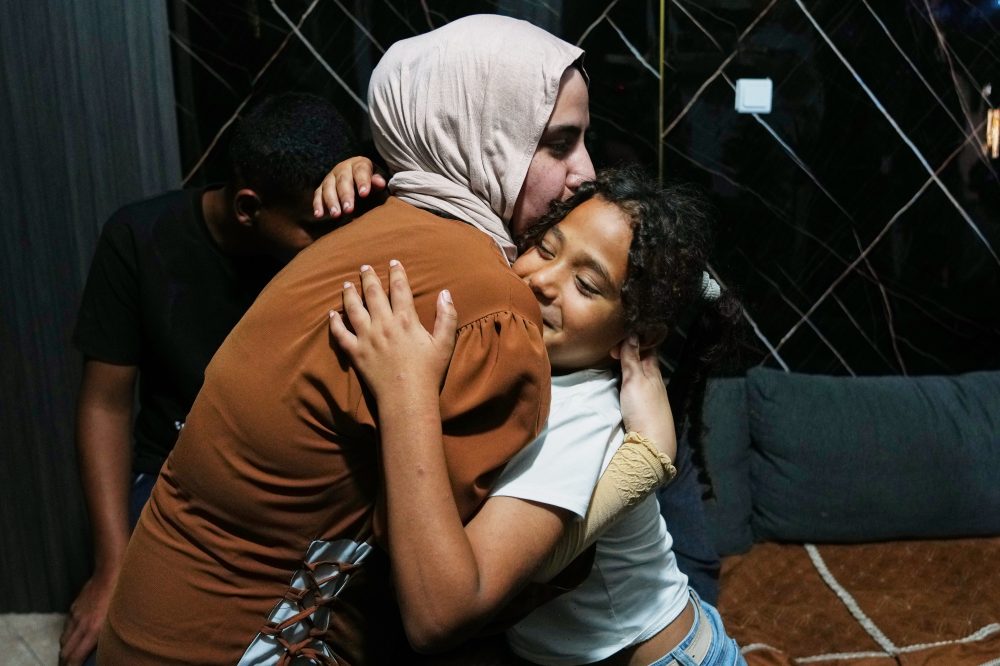
Within a nation marked by mistrust, the over one million individuals — predominantly Shiite — who have been forced from their homes due to Israeli evacuation directives and bombing campaigns face restricted choices.
Property owners in Christian communities sometimes refuse Shiite tenants entirely. Others impose excessive rental rates and security deposits beyond most families’ financial reach. Fatima Zahra, a 42-year-old from Beirut’s southern districts, explained that she and her sister liquidated their most valuable jewelry to cover the $5,000 upfront payment demanded by a landlord for two months of housing.
Certain Beirut areas require displaced families who can meet high rental costs to undergo security screenings, with landlords notifying authorities to investigate potential Hezbollah connections before approving tenancy.
Religious divisions remain a delicate matter in Lebanon following a 15-year civil conflict that concluded in 1990, which primarily divided communities along sectarian boundaries.
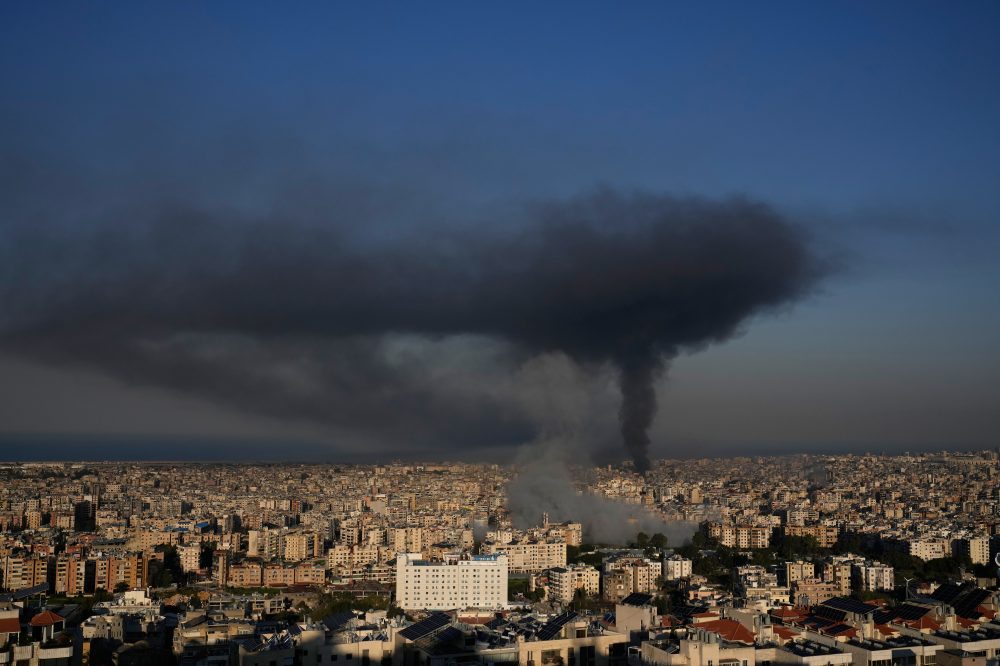
Community tensions have intensified following Israeli precision strikes that eliminated Hezbollah officials or Iranian Revolutionary Guard personnel in areas with Christian, Sunni, and Druze majorities, heightening concerns among host communities about Hezbollah operatives hiding among civilians.
Lebanese citizens remain sharply split regarding Hezbollah’s military actions against Israel, with many in the small Mediterranean country holding the Iran-supported group responsible for involving Lebanon in a devastating war that has claimed over 1,200 lives and injured more than 3,000 people. Hezbollah launched missiles toward Israel two days following U.S. and Israeli strikes on Iran on February 28, sparking the current Middle Eastern conflict.
This latest war has generated extensive destruction and crippled the economy while Lebanon continues struggling with a severe financial crisis that began in late 2019. The nation has not fully recovered from the previous Israel-Hezbollah war in 2024.
During mid-March, an Israeli attack on an apartment building in Aramoun resulted in three deaths, leading some local residents to demand the departure of displaced persons from their area.
Several days afterward, another strike in nearby Bchamoun also claimed three lives, including a four-year-old girl, who had been relocated from Beirut’s southern suburbs where Hezbollah maintains significant influence.
Israel did not identify the intended targets in either incident, but residents assumed someone in the attacked buildings had Hezbollah ties.
“Had we known that they were linked to Hezbollah, we would have kicked them out,” an angry man who owns an apartment in the building in Bchamoun said at the scene.
During late March, a missile detonated above the mainly Christian Keserwan area north of Beirut, scattering debris across multiple locations. While the Lebanese military later determined it was an Iranian missile crossing Lebanese airspace that fell, many initially believed it represented an Israeli attack targeting displaced civilians.
Though the missile fragments caused no injuries, a group of young men assaulted displaced Shiites in Haret Sakher district near Jounieh, demanding their removal before local authorities intervened.
“We don’t want them here,” shouted a Haret Sakher resident shortly after the strike. He said that some of the displaced refer to their hosts as “Zionists,” accusing them of being aligned with Israel because they criticize Hezbollah for dragging the country into the conflict. He added: “We don’t want national coexistence.”
George Saadeh, a Jounieh municipal council member, informed The Associated Press that he urged Haret Sakher residents to avoid reactions “so that we can preserve civil peace.”
Plans to shelter displaced individuals in an unused warehouse near the port in a predominantly Christian area north of Beirut were cancelled last week following opposition from legislators and community members.
“The Israeli targeting campaign has created a lot of paranoia,” said Maha Yahya, director of the Beirut-based Carnegie Middle East Center. “If you see a displaced person, maybe you wonder, ‘What if this person is a target?’”
Concerned about escalating tensions, military forces have increased their street presence.
On Friday, army commander Gen. Rudolphe Haikal visited Beirut and the southern city of Sidon, instructing troops to remain “firm in the face of any attempt to undermine internal stability,” according to an army statement.
Law enforcement units, including specialized tactical teams, were positioned at key intersections throughout the capital to maintain order and prevent conflicts between displaced persons and residents. Police patrols regularly monitor the coastal tent settlement where Shuman’s family resides.
A municipal official from the primarily Sunni town of Naameh, located south of Beirut, reported receiving thousands of people evacuated from southern Lebanon.
To prevent tensions, the official explained they designated one school in a particular district for displaced Shiites and opened another facility in a separate neighborhood for people evacuated from Sunni border communities.
“There are concerns among people,” that conflict could break out said the official who spoke on condition of anonymity because he was not authorized to speak to the media.
With Israeli airstrikes and ground operations primarily focusing on Shiite regions, U.S. ambassador to Lebanon Michel Issa, a Lebanese-American, faced criticism for promoting sectarian divisions. He informed reporters in late March that America had requested Israeli assurances that Christian villages in southern Lebanon would remain unattacked.
“We have asked the Israelis to leave Christian villages in the south alone and they told us that they will not touch Christian villages,” Issa said. However, he added, “They (Israelis) said that they cannot guarantee” that the villages would be left alone “if there is infiltration into these villages” by Hezbollah members.
Multiple Christian villages in southern Lebanon have requested that displaced Shiites seeking refuge there relocate elsewhere, fearing their presence could provoke Israeli attacks.
Legislator Taymour Joumblatt who is the leader of the Progressive Socialist Party, the largest Druze-led political group in the country, said that the biggest concern in the country now is “strife.”
“The most important thing is to reduce sectarian pressures on the ground,” Joumblatt said. “Our Shiites brothers are part of this country and our humanitarian duty is to help them.”