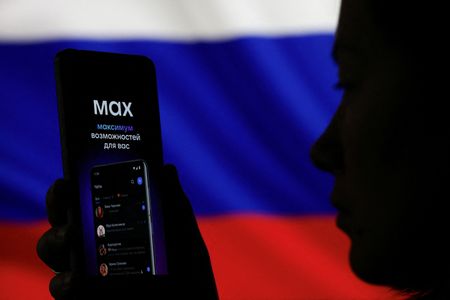

Russian authorities are urging citizens to adopt MAX, a government-supported messaging platform, but many users are expressing reluctance about downloading the state-controlled service.
Diplomats have described Russia’s actions as a “great crackdown,” with authorities repeatedly disrupting mobile internet access and obtaining broad authority to disable mass communication systems while interfering with messaging platforms and virtual private networks.
As an alternative, Moscow has vigorously promoted MAX, which markets itself as a “national messenger” and belongs to a firm whose leader is the child of one of Putin’s senior advisors.
Many Russians view this forced migration as excessive. Irina Matveeva, a Moscow saxophonist, downloaded MAX out of necessity to stay in touch with her music students.
“But I am not happy with this situation,” Matveeva told Reuters at the Rhythm & Blues Cafe in Moscow where she performs with the “Good Gollys” band. “I try to use it as little as possible.”
Matveeva described the Telegram restrictions as bewildering and irritating, explaining the difficulties of juggling multiple messaging platforms while dealing with VPN software and internet disruptions.
Ten additional Russians shared comparable doubts about MAX. However, two others reported satisfaction with the platform and said they had mostly moved on from Telegram and WhatsApp, which face partial interference in Moscow.
Government representatives argue that a domestic messaging service is essential because foreign intelligence agencies have compromised international messaging platforms like Telegram, and Moscow must guarantee security through developing a “sovereign” internet infrastructure.
VK, which owns MAX, did not respond to requests for comment. The company announced on March 26 that MAX had gained 107 million users since launching one year earlier, with the application being used globally including Russia and former Soviet republics, plus regions in Asia, Africa, Latin America and the Middle East.
Opposition groups claim Russian intelligence agencies can access MAX user data and that artificial intelligence technology monitors the information to identify potential state threats and gauge public sentiment and opposition.
One Russian citizen identifying himself only as Danil expressed satisfaction with supporting a domestic messaging service and said he used MAX without worry.
However, others feel uncomfortable after years of enjoying relatively unrestricted messaging freedom.
“I intentionally ask my inner circle not to download it because Telegram is closer to me,” Olga Kravets said.
Russians have historically found subtle ways to resist censorship, from clever satire during the Tsarist era to secret publishing and distribution of prohibited poetry and literature during the late Soviet period.
One Russian woman reported being compelled to install MAX because Gosuslugi – the government service platform that handles everything from passports and driver’s licenses to university admissions and hunting permits – required a verification code sent through the application.
“I kept it on my phone to use it in case everything else is shut down. But I do not plan to use it,” said Anna, who declined to provide her surname due to the delicate nature of the topic.
Denis Kuskov, director of the TelecomDaily information website, said he believed it was inappropriate to require the entire population to download MAX before the application functioned flawlessly.
He was choosing not to install it currently.
“Not because I am afraid to do so,” he explained. “But because I believe that installing an app or ordering a service should be a personal choice.”