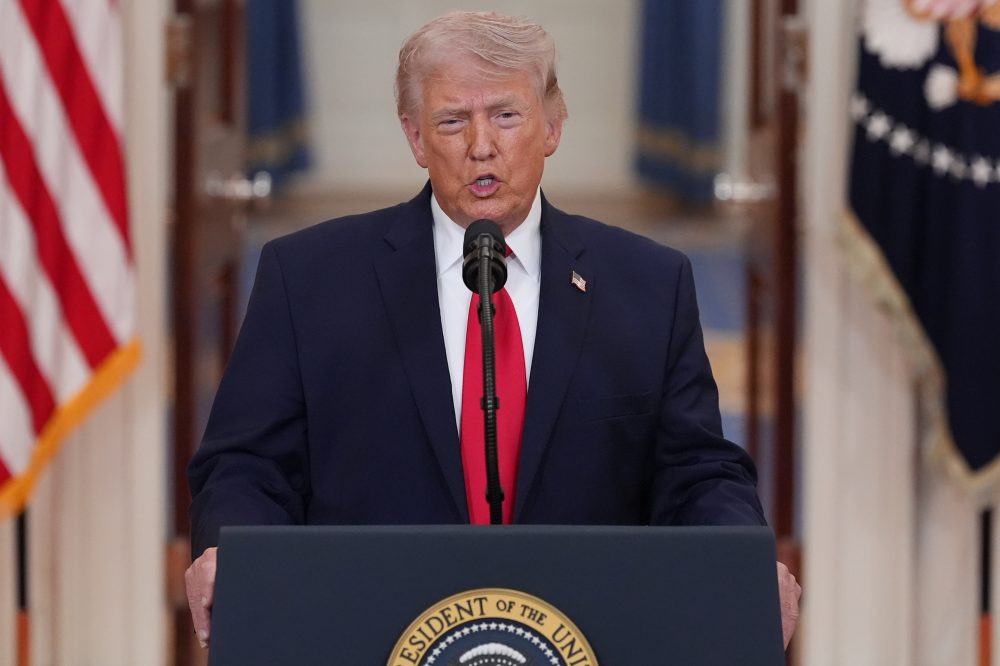

DUBAI, United Arab Emirates — Tehran launched fresh missile strikes against Israel and Gulf Arab nations Thursday as President Donald Trump delivered remarks about concluding the Middle East conflict, demonstrating Iran’s rejection of Washington’s ceasefire overtures while continuing to control the Strait of Hormuz.
British officials scheduled a Thursday conference call with nearly three dozen nations to address reopening the strategic waterway, which handles 20% of global oil and natural gas shipments during normal operations. The 35 participating countries, encompassing all G7 developed nations except America, plus the United Arab Emirates and Bahrain, endorsed a declaration last month calling on Iran to stop obstructing the strait. Thursday’s discussion will focus on “diplomatic and political measures” to restore maritime traffic after hostilities end.
While Washington demands Iran permit unrestricted vessel passage through the strait, Trump recently stated America shouldn’t be responsible for forcing compliance, urging nations dependent on Hormuz oil shipments to “build some delayed courage” and “take it.”
During his remarks, Trump declared the U.S. would strike Iran “extremely hard over the next two to three weeks,” while claiming American “core strategic objectives are nearing completion.”
Iranian military officials responded defiantly Thursday, asserting their weapons facilities remain concealed and beyond reach of Israeli or American strikes.
“The centers you think you have targeted are insignificant,” declared Lt. Col. Ebrahim Zolfaghari, spokesperson for Iran’s Khatam Al-Anbiya Central Headquarters.
Explosions echoed through Dubai just before Trump’s nearly 20-minute Wednesday address as air defense systems engaged incoming Iranian missiles. Within 30 minutes of the president’s conclusion, Israel reported intercepting additional incoming projectiles.
Warning sirens activated in Bahrain, headquarters of the U.S. Navy’s 5th Fleet, immediately following the speech.
British Foreign Secretary Yvette Cooper hosted Thursday’s virtual meeting among the 35 signatories who issued a March joint statement condemning Iranian attacks on civilian commercial ships and demanding Tehran “cease immediately its threats, laying of mines, drone and missile attacks and other attempts to block the strait.”
Despite most Strait of Hormuz oil and gas typically serving Asian markets, only Japan and South Korea from that region participated in the discussions.
“Trump’s message was that the United States can sustain its own economic and energy ecosystem, while countries dependent on regional exports will either have to buy from the United States or manage the Strait themselves,” analyzed the New York-based Soufan Center think tank following the address.
“While Trump explicitly thanked U.S. allies in the Persian Gulf for their cooperation and allyship, an expedited U.S. withdrawal without securing the strait will leave many of these countries, whose economies are dependent on energy exports, in the lurch.”
No nation appears prepared to forcibly reopen the strait during ongoing warfare. British Prime Minister Keir Starmer said the coalition “will assess all viable diplomatic and political measures we can take to restore freedom of navigation, guarantee the safety of trapped ships and seafarers and to resume the movement of vital commodities.”
Bahrain, currently holding the UN Security Council presidency, has worked to bring the crisis before the international body.
While Iran permits limited vessel transit through the strait, the passage remains mostly blocked. Tehran continues targeting Gulf Arab energy infrastructure, driving oil prices higher and creating widespread economic disruption.
After Trump’s address, Brent crude prices climbed to $108 in early trading, representing a nearly 50% increase since February 28 when Israel and America initiated military action against Iran.
Rising energy costs and market volatility have intensified domestic pressure on Trump, who used his address to defend the military campaign while suggesting its conclusion approaches.
Acknowledging fallen American service members, he stated: “We are going to finish the job, and we’re going to finish it very fast. We’re getting very close.”
Washington has presented Tehran with a 15-point ceasefire proposal, though Trump made no mention of diplomatic efforts or his April 6 deadline for Iran to reopen the Strait of Hormuz or face severe American retaliation.
Combat casualties include more than 1,900 Iranian deaths and 19 Israeli fatalities. Over two dozen people have perished in Gulf states and the occupied West Bank, with 13 U.S. service members killed.
Lebanese authorities report more than 1,200 deaths and over one million displaced residents, while ten Israeli soldiers have died in that country.