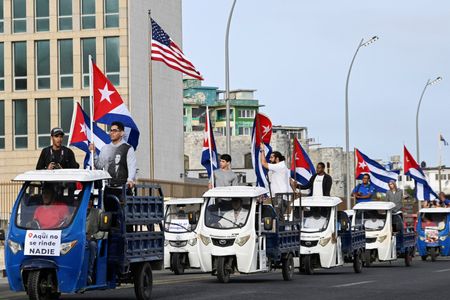

Cuban demonstrators mounted bicycles and electric tricycles Thursday for a government-organized protest along Havana’s famous waterfront boulevard, with President Miguel Diaz-Canel joining the cycling caravan in opposition to American economic sanctions.
The procession traveled past the United States Embassy in Cuba’s capital city, with riders displaying flags and protest signs condemning the economic restrictions put in place during the Trump presidency that continue to impact the island nation’s fuel supplies.
The demonstration occurred one day following Cuba’s senior diplomat in Washington extending a public invitation for American assistance in rebuilding Cuba’s struggling economy through ongoing diplomatic discussions that have not yet produced concrete outcomes.
Rally participants expressed openness to diplomatic engagement with the United States while insisting on mutual respect between the nations.
“I believe that genuine dialogue between both governments is possible, but international law and our country’s autonomy must be respected,” said Sheila Ibatao, a Havana law student and participant.
President Diaz-Canel participated silently without delivering remarks during the demonstration.
While Cuban officials frequently stage major demonstrations outside the American Embassy, Thursday’s event was notably smaller and more subdued, reflecting the mobility challenges created by ongoing fuel shortages that have severely impacted public transit systems.
Some relief may be coming as a Russian oil tanker arrived in Cuba this week, delivering 700,000 barrels of crude oil that could ease shortages in the near term.
The Trump administration, which has imposed tariff threats on nations exporting oil to Cuba and banned Russian oil imports, stated it permitted the Russian vessel to dock at Cuba’s Matanzas port for humanitarian purposes.