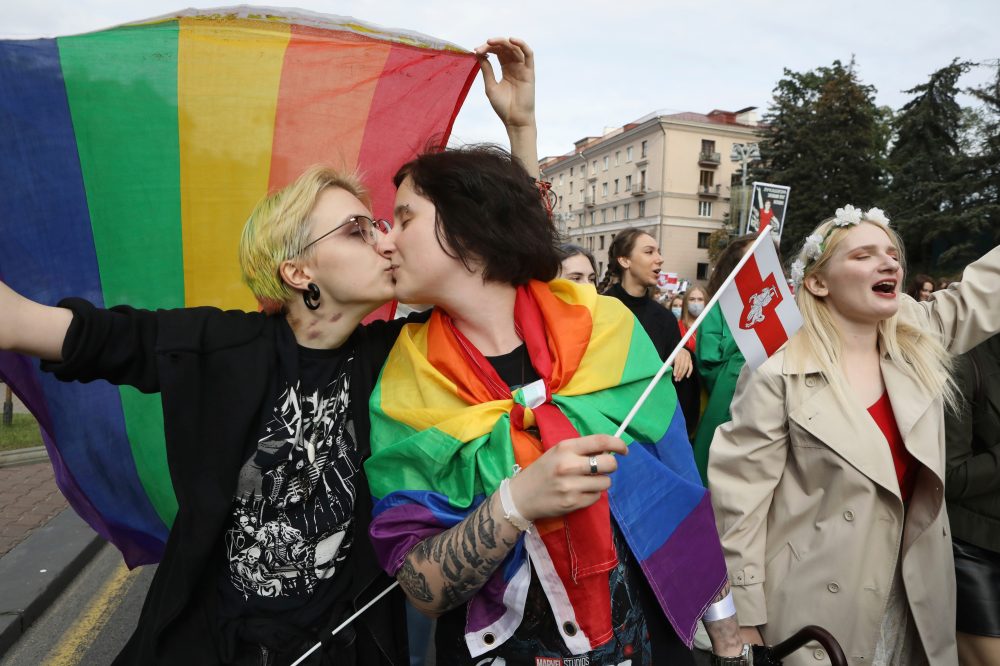

TALLINN, Estonia (AP) — Belarus lawmakers have given final approval to legislation establishing penalties for individuals who advocate for LGBTQ+ rights, mirroring restrictive policies implemented by neighboring Russia.
The nation’s upper legislative chamber completed approval of the measure Thursday after the lower house endorsed it last month. The legislation now awaits the anticipated signature of authoritarian leader Alexander Lukashenko before taking effect.
Under the new law, promoting what officials term “propaganda of homosexual relations, gender charge, refusal to have children and pedophilia” will result in financial penalties, community service requirements, and potential 15-day detention.
While Belarus removed criminal penalties for homosexuality in 1994 following the Soviet Union’s dissolution, the country does not permit same-sex marriage and provides no legal protections for LGBTQ+ individuals. Lukashenko, who has maintained authoritarian control over the 9.5 million-person nation for more than thirty years, has openly ridiculed homosexuality.
Western nations have imposed multiple rounds of sanctions on Belarus for both human rights violations and permitting Russia to launch attacks on Ukraine from Belarusian territory during the 2022 invasion.
Authorities have already closed LGBTQ+ organizations in Belarus, with security personnel conducting frequent raids on nightclubs hosting private gatherings for gay individuals. Human rights advocates report that the country’s primary security service, which retains its Soviet-era designation KGB, has used intimidation tactics against LGBTQ+ community members to force their cooperation.
“LGBTQ+ people had faced beatings, arrests, persecution and mockery even before the bill’s approval, but now law enforcement agencies have received legal grounds for repressions,” said Alisa Sarmant, the head of TG House, a Belarusian group championing transgender rights.
TG House has recorded what it describes as a minimum of 12 incidents targeting LGBTQ+ individuals in Belarus during the previous three months, including law enforcement action at a Minsk nightclub last month during a private gay gathering.
According to Sarmant, the new legislation has created anxiety among transgender individuals who worry they may lose access to essential medications. TG House reports receiving hundreds of requests from LGBTQ+ people seeking mental health support and assistance with relocation to other countries.
“The Belarusian authorities have lumped together gays, lesbians, transgender people, and pedophiles, creating additional grounds for social rejection and stigmatization,” Sarmant said. “Belarus is copying Russia’s sad experience, creating unbearable conditions for LGBT+ people.”
Russia has similarly implemented restrictive legislation limiting LGBTQ+ rights. Russian law prohibits gender changes on government documents, gender-affirming medical treatment, and any public display of gay or transgender identity. Officials have classified the LGBTQ+ movement as extremist, with participants facing potential six-year prison sentences.