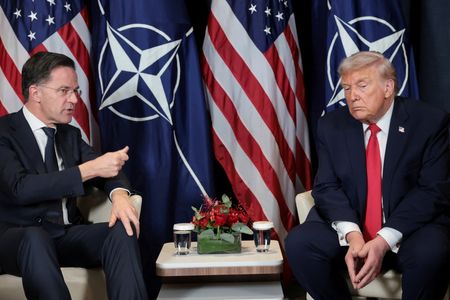

The North Atlantic Treaty Organization is confronting what analysts describe as its most severe crisis in more than seven decades, as President Donald Trump weighs a complete U.S. withdrawal from the military alliance.
The discord stems from Trump’s fury over European nations’ refusal to deploy naval forces to reopen the Strait of Hormuz for international shipping following the outbreak of air combat with Iran on February 28th.
When asked by Reuters during a Wednesday interview whether he would consider leaving NATO, Trump responded, “Wouldn’t you if you were me?”
During Wednesday evening remarks, the president criticized American allies while avoiding direct condemnation of the alliance itself, though many observers had anticipated harsher language.
However, Trump’s recent statements, combined with weeks of sharp criticism directed at European partners, have sparked extraordinary worry that America might abandon its commitment to defend European allies under attack, regardless of whether Washington formally exits the organization.
According to experts and diplomatic sources, this situation has put the Cold War-era alliance – which has long formed the foundation of European security – under unprecedented strain, with its mutual defense commitments no longer considered guaranteed.
“This is the worst place (NATO) has been since it was founded,” stated Max Bergmann, a former State Department official who currently directs the Europe, Russia, and Eurasia Program at the Center for Strategic and International Studies in Washington. “It’s really hard to think of anything that even comes close.”
This harsh reality is becoming clear to European leaders who have historically relied on NATO as protection against an increasingly aggressive Russia.
Just last February, NATO Secretary-General Mark Rutte had called the concept of Europe defending itself without American support a “silly thought.” Today, numerous officials and diplomats view this scenario as the likely outcome.
“NATO remains necessary, but we must be capable of thinking of NATO without the Americans,” explained General Francois Lecointre, who led France’s armed forces from 2017 to 2021. “Whether it should even continue to be called NATO – North Atlantic Treaty Organization – is a valid question.”
White House spokeswoman Anna Kelly commented: “President Trump has made his disappointment with NATO and other allies clear, and as the President emphasized, ‘the United States will remember.’”
NATO representatives have not yet provided comment on the developing situation.
While the alliance has weathered previous storms, including Trump’s earlier threats to withdraw during his first presidency from 2017 to 2021, the current circumstances appear markedly different.
European officials who previously believed Trump could be managed through diplomatic courtesy and ceremony now hold diminished confidence in that approach, based on discussions with numerous current and former American and European officials.
The Trump administration has voiced frustration with what it perceives as NATO’s reluctance to support the United States during a critical period, including declining to assist with Strait of Hormuz operations and limiting American access to certain airfields and airspace. U.S. officials have emphasized that NATO cannot function as a “one-way street.”
European officials argue they have not received specific American requests for assets needed for strait operations and express confusion over Washington’s unclear timeline regarding whether such missions would occur during or after the conflict.
“It’s a terrible situation for NATO to be in,” observed Jamie Shea, a former senior NATO official now serving as a senior fellow at the Friends of Europe think tank. “It is a blow to the allies who, since Trump returned to the White House, have worked hard to show that they are willing and able to take more responsibility (for their own defense).”
Trump’s recent statements follow additional indicators of alliance instability, including intensified January threats to seize Greenland from Denmark and recent American policies that Europeans view as unusually accommodating toward Russia, which NATO identifies as its primary security threat.
The administration has remained largely silent regarding reports that Moscow has supplied targeting information to Iran for attacks on U.S. Middle Eastern assets and has removed sanctions on Russian oil to address global energy price increases during the war.
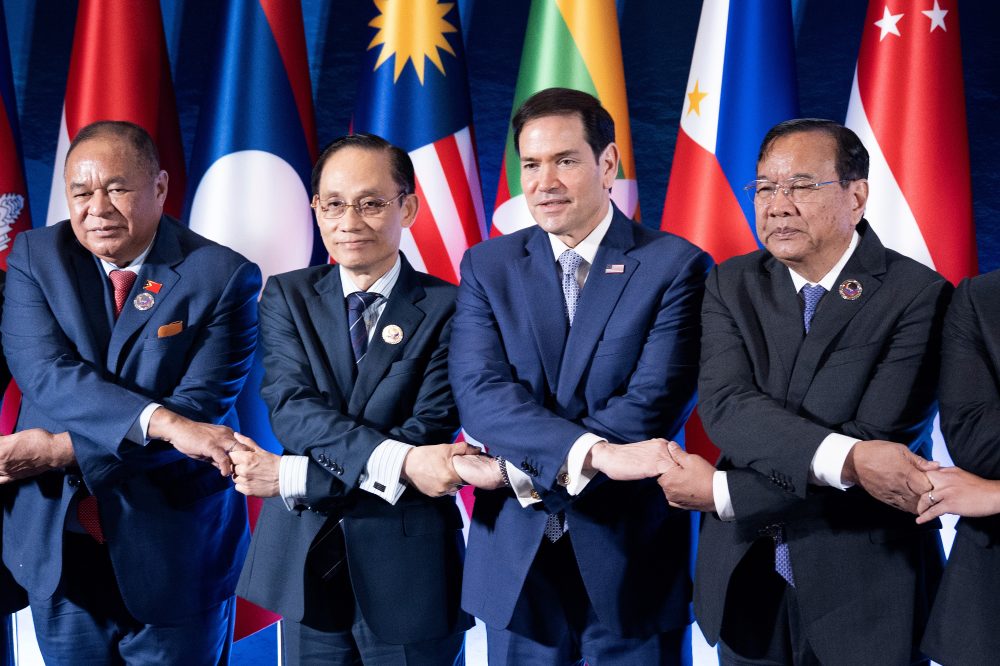
During a G7 foreign ministers gathering near Paris last week, U.S. Secretary of State Marco Rubio and European Union foreign policy chief Kaja Kallas engaged in a heated exchange, according to five sources familiar with the incident, highlighting growing transatlantic tensions.
Kallas questioned when American patience with Russian President Vladimir Putin would end regarding Ukraine peace talks, prompting an irritated Rubio to respond that the U.S. was working to conclude the war while supporting Ukraine, but the EU was free to mediate if preferred.
From a legal standpoint, Trump may lack authority to withdraw from NATO. A 2023 law requires a U.S. president to obtain consent from two-thirds of the Senate to exit the alliance, an extremely difficult threshold to achieve.
However, analysts note that as commander-in-chief, Trump can determine whether American military forces will defend NATO members. Refusing to do so could effectively destroy the alliance without formal withdrawal.
Not all observers view the current situation as existential. One French diplomat characterized the president’s statements as a temporary outburst.
Trump has previously modified his NATO stance. In 2024, he suggested during campaign events that he would encourage Putin to attack NATO members failing to meet defense spending obligations. By the June 2025 NATO summit, the alliance had regained his favor, with Trump delivering remarks praising European leaders as people who “love their countries.”
Next week, Secretary-General Rutte, who maintains a positive relationship with Trump, plans to visit Washington in an attempt to once again influence the president’s perspective.
Analysts suggest European nations have compelling reasons to maintain U.S. involvement in NATO despite uncertainties about Trump’s willingness to defend them. Among other factors, the American military provides essential capabilities NATO cannot easily replace, including satellite intelligence.
Even if Trump and European partners find a way to preserve their NATO relationship, diplomats, analysts, and officials believe the transatlantic alliance that has anchored global order since World War Two may be permanently changed.
“I do think we’re turning the page of 80 years of working together,” said Julianne Smith, who served as U.S. ambassador to NATO under Democratic President Joe Biden. “I don’t think it means the end of the transatlantic relationship, but we’re on the cusp of something that’s going to have a different look and feel to it.”