Listen to the Morning Delmarva Farm Report Update — July 20, 2026
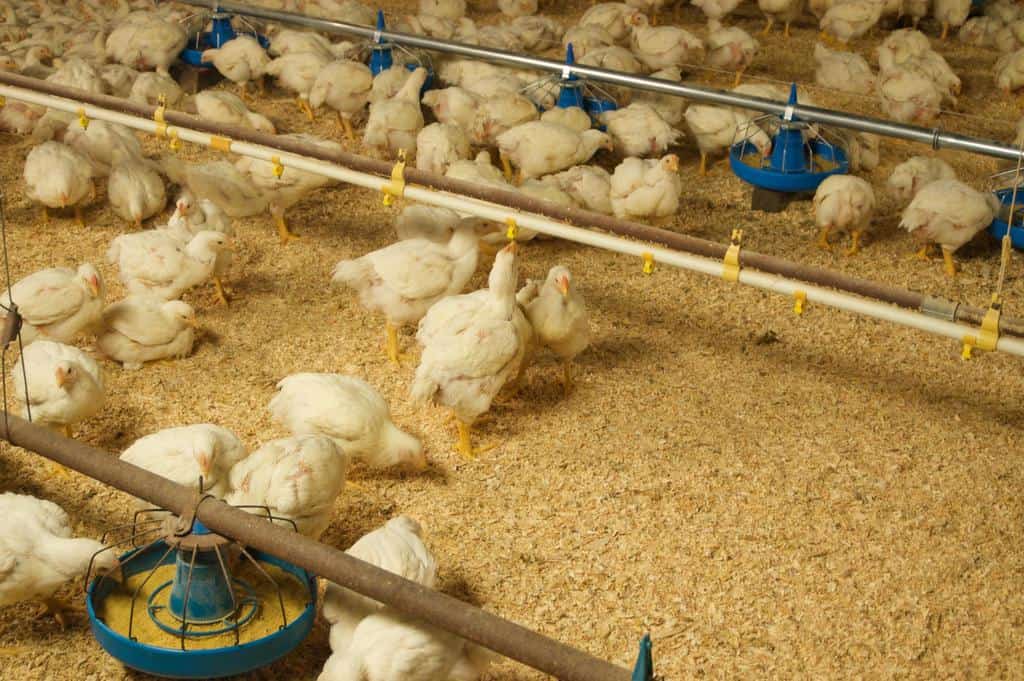
DELMARVA — An electrical failure sparked a fire at a commercial chicken house on Saint Luke’s Road in Wicomico County Friday afternoon. Emergency crews from the Fruitland Volunteer Fire Company arrived and had the blaze under control in approximately 5 minutes. The structure, a large house measuring roughly 500 feet by 43 feet, was unoccupied at the time. No birds were lost and no injuries were reported. Structural damage is estimated at around $1,000. The Maryland Office of the State Fire Marshal is continuing its investigation.
Livestock
Mineral supplementation consistency remains a challenge for cattle producers heading into peak production periods. According to Ag Proud, most producers have solid mineral programs in place, but the primary difficulty lies in ensuring animals reliably take in their supplements.
Weather
The National Hurricane Center has issued wind probability forecasts for Tropical Depression Two, the 2nd Atlantic tropical system of the 2026 season. Forecasters are tracking the storm’s 120-hour wind speed probabilities and monitoring its further development.
Markets
At Laurel Grain Company in Laurel, Delaware, corn for September delivery is at $4.93/bu. December corn is at $4.86/bu. November soybeans are at $11.62/bu.
Forecast
Delmarva can expect sunny skies Monday with highs near 85°F and light east winds at 5-10 mph. Clouds will build overnight with a chance of showers and thunderstorms. Tuesday brings showers and storms with highs near 88°F and south winds at 10-20 mph. Producers are advised to plan field work for Monday morning.
This article is based on the Delmarva Farm Report Update Morning Edition, July 20, 2026. Hosted by Tom Bradley.
BUCHAREST — Water levels along the Danube River in Romania plunged to their lowest point in nearly three decades over the weekend, triggering irrigation restrictions for farmers and disrupting both shipping traffic and tourism along the river’s banks.
The drop is part of a broader crisis affecting waterways throughout Europe, where prolonged heatwaves and drought conditions have taken a heavy toll this year. According to the Reuters Climate Monitor, average peak temperatures across Western Europe on Monday were forecast at 26.2 degrees Celsius — about 2.7 degrees higher than the typical high for that date.
Romania’s state water-management agency reported that flow at the country’s entry point along Europe’s second-longest river measured just 1,700 cubic meters per second on Sunday. That figure is dramatically below the normal July range of 4,700 cubic meters per second — the lowest reading since 1996.
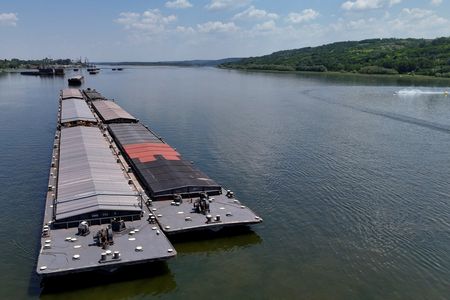
Video footage captured long stretches of exposed riverbank sand near the border with Bulgaria. Several ferry services have been suspended, and grain barges have been left sitting idle along the river.
The situation is particularly significant because Romania ranks among the European Union’s largest grain sellers and is a major exporter of agricultural products. Authorities have already restricted farmers in southeastern Romania from drawing water for crop irrigation.
Officials have also been carefully managing water reservoir levels to ensure the minimum flow needed to cool the two reactors operated by state nuclear power producer Nuclearelectrica.
The water-management agency said river levels are expected to rise gradually starting Monday, as heavy rainfall was forecast across several counties in the region.
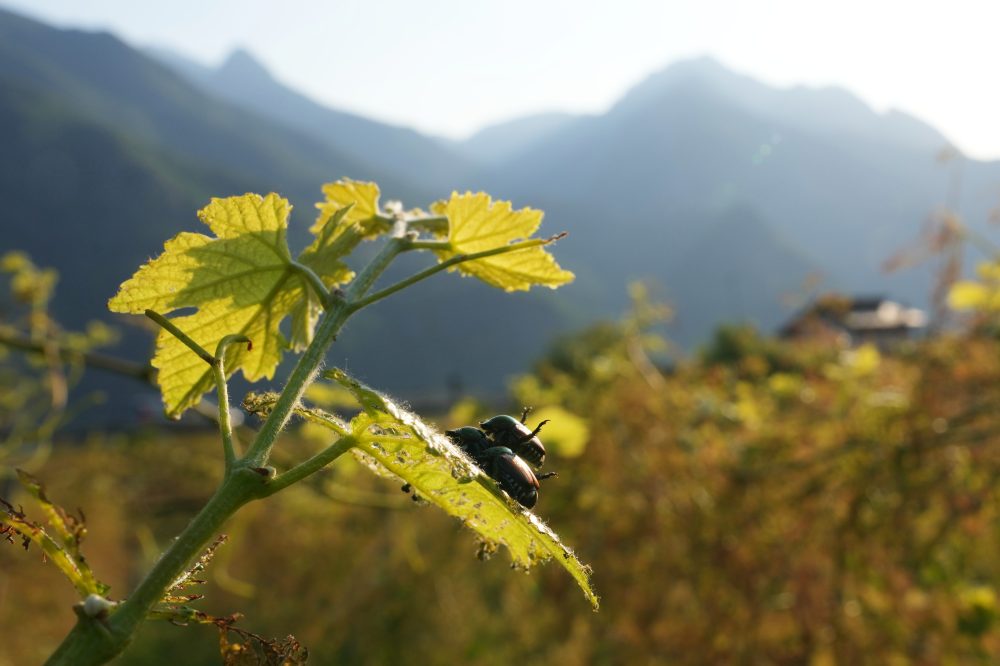
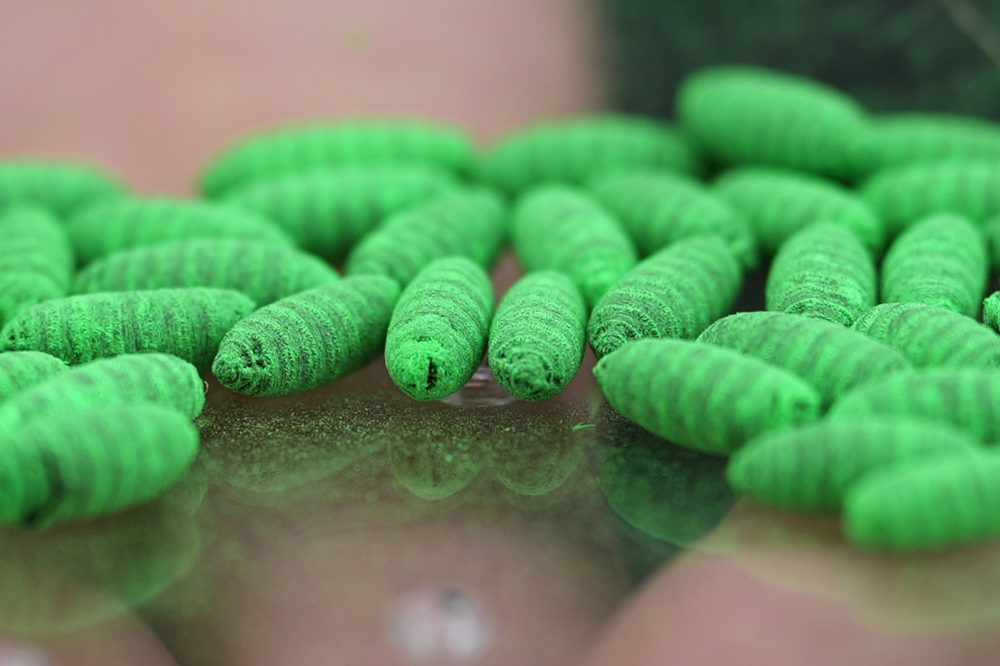
DONNAS, Italy — A shimmering green insect originally from Japan has become an increasingly serious threat to farmers across northern Italy, descending in swarms on orchards and vineyards and chewing distinctive lattice-like holes through leaves that weaken crops and cut into harvests.
Known scientifically as Popillia japonica, the Japanese beetle has been a well-established nuisance in the United States for over a hundred years. However, it is a much more recent arrival to Europe, first turning up near Milan’s Malpensa airport back in 2014. Since then, it has spread through the northeastern Italian regions of Lombardy, Piedmont, and Valle d’Aosta — including the terraced vineyards above the town of Donnas, where it was spotted for the first time last year.
Luciano Zoppo Ronzero, a winemaker who grows Nebbiolo grapes on those historic terraced slopes, described watching the infestation creep closer. “We’re seeing the popillia steadily advance from terrace to terrace across our historic vineyards,” he said. “We’re now about the 10th terrace and can already see the popillia attacks. This means they’re consuming and gradually moving up the mountain.”
The beetle has no natural predators in Europe and will feed on more than 300 different types of plants and trees. That voracious appetite has earned it a spot on the European Union’s list of priority pests, requiring active efforts to control and eliminate outbreaks wherever they occur.
Daniela Lupi, an entomologist at the University of Milan, explained that the beetle is now firmly established in Italy, Switzerland, and Germany — where the focus has shifted to managing its spread — while populations in France and Spain remain low enough that eradication may still be possible.
Adult beetles travel in large groups as they feed and are also known to hitch rides on trains, vehicles, and aircraft. After a summer of feeding, they mate and lay eggs, with the larvae then burrowing into the ground to feed on grass roots before emerging as adults to restart the cycle.
Italy’s Coldiretti agricultural lobby has warned that the pest poses a serious danger as it moves through the Po River Valley, the country’s primary agricultural region. Measuring the damage has proven difficult, however, because the beetle typically eats away the soft tissue of leaves rather than killing plants outright — weakening them and lowering their output without always causing visible destruction.
“In some areas, the beetle has destroyed the harvest,” said Lorenzo Bazzana, the head of economic affairs at Coldiretti. The beetle’s larvae also damage lawns, golf courses, and athletic fields by feeding on grass roots underground.
For Zoppo Ronzero, the concern goes beyond this season’s crop. His vineyards are carved into steep mountainsides and supported by centuries-old drystone walls. When the beetles strip the leaves from grapevines, the grape clusters are left exposed to direct sunlight while the plant’s ability to convert sunlight into energy is severely compromised.
“What scares me is the fact that in the end the grapes don’t ripen. If the grapes don’t ripen, it means we’re not bringing home a splendid harvest, as we had hoped, but something unusable,” he said.
According to Bazzana, the most promising approach to controlling the beetle is targeting the larvae before they mature. The pest was recently found near Verona’s Valerio Catullo airport, and researchers are now testing the release of a microscopic parasite in the surrounding area to attack the grubs in the soil.
Pheromone traps are also being deployed widely, while wine producers in Donnas have turned to pesticide treatments — though those come with limitations, as their effectiveness fades quickly and applying them on steep, terraced terrain is labor-intensive.
Lupi cautioned that inaction would allow the problem to grow. “If we don’t counter it, the population will continue to rise and so there will be strong damage to the fruit plants, to the grasses, to the ornamental plants,” she said. “There are no problems for the human population, because they are not so dangerous, but the production is really, really lowered.”
Listen to the Evening Delmarva Farm Report Update — July 18, 2026
DELMARVA — A Tornado Watch covers all of Delaware and the northern Mid-shore through 9 p.m. Saturday, as dangerous storms move across the region. A Severe Thunderstorm Warning was in effect until 6:15 p.m., with powerful winds, heavy rain, and dangerous lightning listed as the primary threats. Farmers with livestock or equipment in the field are urged to secure what they can and remain weather-aware.
A Flood Watch runs through Sunday morning. A Heat Advisory was in effect earlier Saturday, with temperatures reaching 94°F.
Forecast
Sunday is expected to bring relief, with mostly sunny skies, highs near 85°F, and northwest winds of 5-10 mph — conditions considered favorable for fieldwork heading into next week.
Markets
Grains finished the week on a strong note. September corn settled at $4.44¾/bu., up 3¼ cents. August soybeans closed at $12.04½, gaining 9½ cents on the day. Weather concerns and strong USDA export sales were cited as drivers of those gains. Soybean export sales included 340,000 tons to China, 256,000 tons to Mexico, and another 120,000 tons to undisclosed buyers, all for the 2026-2027 marketing year. September Chicago wheat settled at $6.82¾/bu.
At Laurel Grain Company in Laurel, Delaware, September corn bids stood at $4.90/bu., with November soybeans at $11.53/bu.
Livestock
A Purdue University agricultural economist is warning cattle producers that feeder cattle profit margins could tighten significantly into 2027 as input costs climb.
This article is based on the Delmarva Farm Report Update Evening Edition, July 18, 2026. Hosted by Tom Bradley.
Listen to the Morning Delmarva Farm Report Update — July 18, 2026
DELMARVA — Grain markets closed higher Friday on a combination of weather concerns and strong export demand, with soybeans leading gains after the USDA announced significant new sales to China and Mexico.
Markets
The USDA reported 340,000 tons of American soybeans sold to China, another 256,000 tons bound for Mexico, and 120,000 tons to undisclosed buyers — all for the 2026/2027 marketing year.
At Friday’s close, September corn settled at $4.44¾/bu, up 3¼ cents. August soybeans finished at $12.04½/bu, a gain of 9½ cents. September Chicago wheat closed at $6.82¾/bu, up 8 cents. Corn and wheat also posted gains, with weather playing a role across the complex.
Locally, Laurel Grain Company in Laurel is bidding $4.90/bu for September corn and $11.53/bu for November soybeans.
Research
University of Maryland researchers are testing cereal rye cover crops as a weed management tool in soybean fields at the Wye Research and Education Center in Queenstown. Trials funded by the Maryland Soybean Board show soybeans held up well after being rolled at the V1, V2, and even V3 growth stages.
Forecast
Saturday will bring high heat topping near 93°F with smoke in the air and southwest winds of 5-15 mph. Air quality alerts remain in effect across Delmarva, and a flood watch runs through Sunday morning. Farmers are advised to keep field workers and livestock protected.
Showers and thunderstorms are expected to move in Saturday night. Sunday is forecast to clear to mostly sunny with a high near 86°F.
This article is based on the Delmarva Farm Report Update Morning Edition, July 18, 2026. Hosted by Tom Bradley.
Listen to the Evening Delmarva Farm Report Update — July 17, 2026
DELMARVA — Grain markets closed higher across the board Friday, fueled by weather concerns and a strong round of export sales announced by the USDA.
The USDA reported that 340,000 tons of American soybeans sold to China, 256,634 tons headed to Mexico, and another 120,000 tons sold to undisclosed buyers — all for the 2026-2027 marketing year. That news helped push soybean prices higher, with August beans closing up 9.5 cents at $12.04½ per bushel. September corn settled at $4.44¾, up 3.25 cents. September Chicago wheat finished at $6.82¾, gaining 8 cents on the day.
At Laurel Grain Company in Laurel, Delaware, September corn is bringing $4.90 per bushel, and November soybeans are at $11.53.
Research
University of Maryland researchers at the Wye Research and Education Center in Queenstown are testing cereal rye cover crops as a weed management tool in soybean fields. The trials, funded by the Maryland Soybean Board, are exploring whether rolling rye at different crop growth stages affects weed suppression and stand establishment.
Forecast
Smoke from Canadian wildfires has pushed Delaware’s air quality to Code Red Friday, with a fine-particle index of 186. DNREC urges everyone to limit outdoor activity. Saturday brings patchy smoke and a high of 94°F, with showers and thunderstorms arriving Saturday night.
This article is based on the Delmarva Farm Report Update Evening Edition, July 17, 2026. Hosted by Tom Bradley.
Farmers saw a slight decline in what they were paid for peanuts during the most recent reporting period, according to federal agricultural statistics.
For the week ending July 11, the average price received by farmers for all farmer stock peanuts came in at 22.7 cents per pound. That figure represents a decrease of 1.5 cents compared to the prior period.
The data was published by the U.S. Department of Agriculture’s National Agricultural Statistics Service as part of its ongoing tracking of commodity prices across the country.
The Delaware Farm Bureau (DEFB) has announced the addition of Ashley Holmes to its team, naming her as the organization’s new Digital Media Assistant. In her new capacity, Holmes will work to spotlight the organization’s programs, upcoming events, and the broader world of Delaware agriculture through digital content and outreach.
Holmes comes to the position with a strong foundation in both agriculture and marketing, along with a genuine enthusiasm for telling the stories of Delaware’s farming families. She earned a bachelor’s degree in agricultural communications from Oklahoma State University and went on to gain experience in agricultural education and communications work with the Delaware Department of Agriculture. Today, Holmes also runs her family’s operation, Alley Mill Farm, located in Clayton, Delaware.
In her new role, Holmes will support DEFB’s core mission of promoting and protecting Delaware agriculture through education and advocacy — with the ultimate goal of securing a strong quality of life for farmers, their families, and the consumers they serve. Her work will include developing social media content, maintaining the organization’s website, and building digital campaigns designed to raise DEFB’s profile online.
“I am excited to work for the Delaware Farm Bureau because it provides me the opportunity to support our farmers and agricultural community,” Holmes said. “I look forward to helping advocate for agriculture, building strong relationships with producers, and contributing to an organization that works hard to ensure a successful future for Delaware’s farming families.”
For more information about the Delaware Farm Bureau, visit defb.org or follow the organization on social media.
Vladimir and Lyubov Fedorchenko are expecting one of their better harvests in years at their farm in southern Russia’s Rostov region — but that good news comes with serious problems attached.
A fuel shortage sweeping across Russia, triggered by months of Ukrainian drone attacks on Russian oil refineries, has sent diesel prices sharply higher. That’s a major concern for the couple, who depend on diesel to run their tractors and harvesting equipment. Vladimir says his workers are spending half a day standing in line just to fill their cars with enough fuel to make it to the farm.
On top of that, the couple is caught in the fallout from a new wave of military activity in the Sea of Azov — the primary route through which grain from the Rostov region reaches international buyers. With shipping now severely restricted, Lyubov says purchase offers for their grain have nearly vanished entirely.
“Everything is at a standstill. Barley — on halt. Wheat — on halt,” she told Reuters during a visit to the farm this week. “And we desperately need money now. We need to sell (the harvest) and buy diesel fuel, fertiliser.”
The day before speaking with reporters, Lyubov said they received an offer of 14,500 roubles — roughly $185 — per ton of wheat, but with a 2,500-rouble delivery cost deducted. After factoring in wages, fuel, fertilizer, and the need to replace aging equipment, she said almost nothing is left over.
The Fedorchenkos’ situation reflects a broader crisis hitting farmers across Russia, which ranks as the world’s largest wheat exporter. Ukraine has ramped up long-range strikes inside Russia this year, with refineries a particular focus, aiming to weaken Moscow’s ability to sustain its war effort. Meanwhile, Russia and Ukraine have each struck dozens of the other’s ships over the past week — including tankers and cargo vessels — marking a significant new chapter in a conflict now in its fifth year.
Russia’s Agriculture Minister Oksana Lut acknowledged on Friday that fuel supply concerns exist across all of the country’s regions, even as she expressed optimism about the overall harvest outlook. She pledged that the government would work to make sure farmers get the fuel they need.
Andrey Sizov, an analyst with the SovEcon Black Sea research consultancy, told Reuters the stakes are high for global food supplies. “If there is no military solution to open up the Sea of Azov, and the situation drags on for most of the second half of the year, Russia could fall short of supplying the global market by 5 to 10 million tons of wheat,” he said.
For context, Russia shipped more than 61 million tons of grain last year, according to its Union of Grain Exporters and Producers — including 46 million tons of wheat alone.
Sizov estimated that rising diesel costs are already costing farmers around 1,000 roubles per metric ton of grain, and that the Sea of Azov shipping restrictions have effectively doubled that loss. He also warned that the financial strain could push more farmers to plant less grain in coming seasons, continuing a trend that began in 2022.
Back on the Rostov farm, Lyubov summed up the situation bluntly: “It’s getting worse and worse every year. Last year, the crop failure and the drought stifled everything, and this year, it’s the financial situation. There is a harvest, but there’s no way to sell it.”
“We’re constantly watching our cashflow. So, when it comes to acquiring machinery or upgrading our fleet, we just don’t have the money. Nothing is left over,” she added.
Listen to the Morning Delmarva Farm Report Update — July 17, 2026
DELMARVA — Grain markets closed lower across the board Thursday, with corn and soybeans leading the retreat in another rough session for commodity traders.
Markets
September corn futures settled at $4.41½ per bushel, dropping 6 cents on the session. August soybeans fell 7¼ cents to close at $11.95. Soybean meal was the lone bright spot among the grains, with August contracts gaining $4.00 to settle at $322.90. September Chicago wheat ended at $6.74¾, off nearly 3 cents.
Analysts attribute the soybean weakness to profit taking and technical selling. Export data offered some encouragement, however, as new-crop soybean sales came in at 65 million bushels — the strongest showing in several months — with China the top buyer.
On the livestock side, August live cattle dropped $3.05 to settle at $227.07. August feeder cattle declined $3.35 to close at $346.60. August lean hogs edged lower, finishing at $100.27.
Policy
In Washington, the National Corn Growers Association held its biannual Corn Congress, with members identifying renewal of the U.S.-Mexico-Canada Agreement as their foremost trade priority.
Forecast
A National Weather Service Air Quality Alert issued Thursday remains active for the Delmarva region. Smoke in the area is expected to persist through the weekend, with today’s high reaching 90°F and similar conditions forecast for Saturday. Residents with asthma or respiratory conditions are advised to limit outdoor activity.
This article is based on the Delmarva Farm Report Update Morning Edition, July 17, 2026. Hosted by Tom Bradley.
Listen to the Evening Delmarva Farm Report Update — July 16, 2026
DELMARVA — Grain and livestock futures closed lower across the board Thursday, with corn, soybeans, wheat, and cattle all finishing in the red.
Markets
September corn settled at $4.41½/bu, down 6 cents. August soybeans fell 7¼ cents to close at $11.95/bu. September Chicago wheat ended at $6.74¾/bu, off nearly 3 cents. August live cattle dropped $3.05 to settle at $227.07/cwt. Feeder cattle and lean hogs also finished lower.
Locally, Laurel Grain Company in Laurel is bidding $4.87/bu for September corn and $11.45/bu for November soybeans.
Despite Thursday’s losses, a market analyst with U.S. Commodities cited longer-term reasons for optimism, noting that recent trade movement between the United States and China could open export doors for corn and soybean growers. Both nations appear to be considering pulling back on tariffs, a development that would be meaningful for American farmers who have felt the pressure of that standoff.
Forecast
Smoke from Canadian wildfires blanketed Delmarva on Thursday, triggering an air quality alert across Delaware. A heat advisory was also in effect, with highs near 96°F. Thursday night brings a slight chance of showers and thunderstorms before smoky conditions return. Friday is expected to stay hazy with highs around 91°F and continued smoke — producers should plan field work accordingly.
This article is based on the Delmarva Farm Report Update Evening Edition, July 16, 2026. Hosted by Tom Bradley.
CHESTER, Va. — More and more Virginia couples are choosing farm settings to tie the knot, and a growing number of farming families are seizing the opportunity to turn their land into wedding destinations.
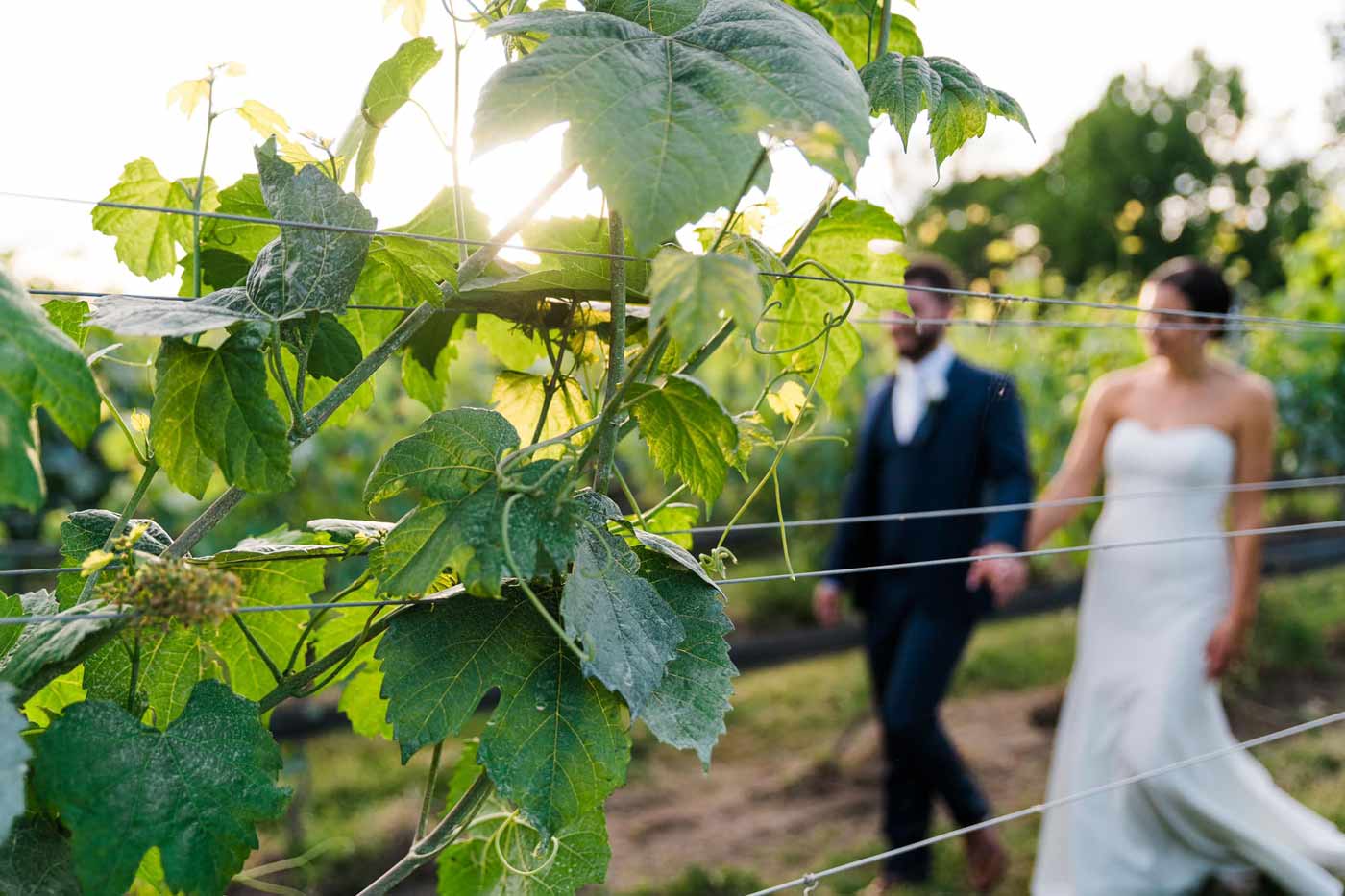
At Ashton Creek Vineyard, the Thibault family had a clear goal from the start: share the stunning scenery of their winemaking operation with guests looking to celebrate life’s biggest moments. Since 2006, they’ve built a space where visitors can relax and mark milestones while enjoying Virginia wines.
“Vineyards and wineries take so long to mature and build recognition, and we knew having weddings and events could speed up that process,” said Alan Thibault, who runs the vineyard alongside his wife, Maria.
The couple divides responsibilities — Maria works with couples, event planners and caterers, while Alan focuses on maintaining the vines and crafting 15 different wines. Most of the agricultural work takes place during the week, leaving weekends open for events and celebrations.
Beyond their Chester location, the family also operates a sister property called Riverside Vines in Dinwiddie County, where couples can exchange vows with sweeping views of Lake Chesdin.
In Nelson County, Dickie Bros. Orchard offers a completely different but equally breathtaking setting. Couples marry on a hilltop overlooking fruit trees, open pastureland and the DuPriest and Little DuPriest mountains — a landscape that has been farmed since 1752.
John and Shelby Bruguiere represent the ninth generation of their family to own and work the 500-acre property. The farm produces pears, plums, nectarines, peaches and apples across 40 orchard acres. In 2024, the couple opened Castle Hall Weddings at the orchard to help manage the financial pressures that come with running a farm.
“Castle Hall was the name of the original home here at the orchard,” John explained. “With this diversification, we could reduce some of the higher costs and keep the land, keep it in land use, and keep it as an option for the next generation.”
They built a barn venue capable of hosting up to 150 guests. While the facility may not rival high-end wedding venues, John says the scenery speaks for itself.
“We may not have the amenities that some of the high-end wineries and venues do, but we have a view unlike any other,” he said. “And that’s what we’re selling — the view!”
Over in Lunenburg County, Parrish View Farms has been in the Parrish family since 1950. What began as a dairy operation has grown into a row crop farm and a popular destination for agritourism, special events and weddings. Four generations of the family now work the land together.
Liz Parrish is among those helping run the property, which has been creatively reimagined to welcome wedding guests. The family constructed an elegant barn for receptions, transformed a tobacco barn into a cozy lounge complete with a signature LOVE sign, and converted 1970s-era grain bins into a bridal suite, a small theater and a fully functioning bar.
The ceremony area is surrounded by seasonal flowers and crops, giving guests an immersive experience in the farm’s natural beauty.
“The beauty that we have all around us every season is a big draw for folks,” Cary said. “Especially in the fall, when everything looks best.”
The full story is available in Virginia Farm Bureau Federation’s summer Cultivate magazine at issuu.com/virginiafarmbureau. The Parrish family was also featured in the August 1, 2024, episode of Real Virginia, Virginia Farm Bureau’s weekly television program.
WASHINGTON — Farmers in 59 Virginia counties and surrounding areas can now apply for emergency loans after a series of natural disasters, including drought, freeze, and frost conditions, struck the region.
The U.S. Department of Agriculture’s Farm Service Agency is making emergency credit available to help agricultural producers recover from the damage. The loans can be used for a variety of purposes, including replacing essential equipment or livestock, restructuring farm operations, or refinancing certain debts.
Counties qualifying for drought-related disaster assistance include: Albemarle, Augusta, Bedford, Carroll, Cumberland, Fluvanna, Franklin, Grayson, Lunenburg, Patrick, Prince Edward, Smyth, Tazewell, Washington, and Wythe, along with the city of Waynesboro.
A separate and longer list of counties is eligible for assistance related to frost and freeze damage. Those counties are: Albemarle, Amherst, Augusta, Bedford, Botetourt, Buckingham, Caroline, Clarke, Culpeper, Cumberland, Dinwiddie, Essex, Fairfax, Fauquier, Floyd, Fluvanna, Frederick, Giles, Gloucester, Goochland, Greene, Halifax, Hanover, Henry, Highland, Loudoun, Louisa, Madison, Montgomery, Nelson, New Kent, Orange, Page, Pittsylvania, Prince William, Pulaski, Rappahannock, Rockingham, Shenandoah, Stafford, Warren, Washington, and Wise.
Tony Banks, senior assistant director of agriculture, development and innovation for Virginia Farm Bureau, highlighted how farmers can find the help they need. “USDA’s Disaster Assistance Recovery Tool is easy to use and allows farmers to quickly drill down to the emergency program or programs available in the county where they experienced losses,” Banks said.
Banks also warned that the situation could expand. “As the drought progresses, additional localities may be designated as disaster areas,” he said. “I encourage farmers to check the discovery tool regularly or reach out to their local Farm Service Agency office.”
Farmers seeking more information can visit farmers.gov, where they will find the Disaster Assistance Discovery Tool, a Disaster Assistance-at-a-Glance fact sheet, and a Loan Assistance Tool to help identify available programs. Those wishing to file a Notice of Loss or learn more about programs can contact their local USDA Service Center. Media inquiries can be directed to Mathew Myers, FSA farm loan specialist, or to Banks at 804-514-5207.
RURAL RETREAT, Va. — When a local farmer was fatally struck by another vehicle while operating his tractor in September 2022, one Wythe County high school student decided something had to change.
Olivia Crigger was deeply moved by the tragedy and felt compelled to act. “This tragedy made me realize how quickly something preventable can take a life,” she said. “It inspired me to take action and become a voice for safer rural roads.”
What started as a Girl Scout Gold Award community service project grew into a full-scale safety campaign through the Virginia Farm Bureau SAFER contest, which Crigger joined along with 15 other organizations and individuals last year.
Matt Nuckols, the Virginia Farm Bureau’s safety coordinator, explained the purpose behind the contest. “The SAFER contest was created to raise awareness about the presence of farm equipment on our roads and ultimately change behaviors to keep both farmers and drivers safe,” he said. “It’s about giving communities the tools and encouragement to take that message locally and make a real impact.”
Crigger is no stranger to the dangers of slow-moving farm equipment sharing the road with regular traffic. She frequently escorts friends and family during spring planting and fall harvest seasons, using her vehicle’s hazard lights to alert drivers to slow down.
The numbers tell a sobering story: a vehicle traveling at 55 mph needs roughly 5 seconds and 300 feet — about the length of a football field — to brake and avoid hitting farm equipment moving at up to 20 mph.
“But many people will just keep going 55 miles per hour,” Crigger said. “My family, friends and I have experienced many close calls and near-misses.”
Under the slogan “One close call is one too many,” Crigger created posters, flyers, graphics, and videos that were distributed at local businesses, community events, and across social media. Her materials covered safe driving practices, tractor hand signals, and the challenges that come with operating large farm machinery on public roads.
Her campaign reached a high point at Rural Retreat Heritage Day, where she set up a real tractor display and gathered signatures on a petition calling for warning signs along local roadways. The effort drew strong community backing and caught the attention of the Virginia Department of Transportation.
VDOT Wytheville Residency Administrator James Schwartz described the outcome: “Olivia provided VDOT locations where she felt that farm equipment signs were needed for the safety of farmers in our region. Our staff evaluated the locations and determined the need for 14 signs on six routes, and all 14 signs have been installed. Our team was impressed with Olivia’s initiative, and we were happy to work with her in her effort to improve safety for farmers.”
Nuckols said the newly placed signs carry real value. He noted that the signs “can have a lasting impact by raising awareness in the moment, and pairing them with Olivia’s story — a young leader who chose to make a difference — is the kind of connection people remember.”
The Virginia Farm Bureau supported Crigger throughout the process, offering guidance on campaign strategy, branding, and messaging, along with printed materials and connections to local partners.
“Efforts like Olivia’s are exactly what the SAFER contest was designed to inspire: local leaders identifying a need, engaging their community and taking action,” Nuckols said. “That kind of grassroots impact is what ultimately strengthens safety across Virginia.”
Last month, Crigger presented her farm equipment road safety campaign at the Virginia 4-H State Congress, where she earned a blue ribbon and took first place in the public speaking category. She says she plans to continue expanding her outreach through new partnerships and opportunities.
A federal animal and plant health agency has announced plans to seek updated approval for an information collection program connected to rules designed to stop dangerous citrus diseases from spreading across the country.
The Animal and Plant Health Inspection Service published the notice in keeping with the requirements of the Paperwork Reduction Act of 1995. The agency is requesting both a revision to and an extension of approval for the information collection tied to its regulations.
Those regulations are focused on preventing the spread of citrus canker, citrus greening, and the Asian citrus psyllid — an insect that acts as a carrier for citrus greening — into parts of the United States that have not yet been affected by these threats.
A federal agency that oversees animal and plant health is taking steps to update and continue a data collection effort connected to horse welfare regulations.
The Animal and Plant Health Inspection Service has announced its intention to seek a revision to — and an extension of — an existing approved information collection. The collection is tied to the agency’s Horse Protection Program and its enforcement of the Horse Protection Act.
The announcement was made in accordance with the Paperwork Reduction Act of 1995, which requires federal agencies to notify the public when they plan to collect, revise, or extend information-gathering activities.
Listen to the Morning Delmarva Farm Report Update — July 16, 2026
DELMARVA — A Heat Advisory is in effect across Delmarva through 8 PM Thursday, issued by the National Weather Service out of Mount Holly. Conditions are hot and potentially dangerous, particularly for the elderly, young children, and anyone with heat-sensitive medical conditions. Residents are urged to limit outdoor exposure during the hottest parts of the day, stay hydrated, and check on vulnerable neighbors. Children and pets should never be left in parked vehicles.
Crop Threat
The regional heat advisory connects to a broader national concern: a heat dome is threatening the U.S. corn crop as it enters its critical pollination stage. Don Roose of U.S. Commodities is sounding the alarm. “We’re at a crossroads,” Roose said. “Are we going to continue to be threatened? Is the heat dome going to move around and help or hurt us?” Extreme heat during pollination can significantly cut final yields, and how the weather pattern shifts in the coming days could determine this year’s harvest outcome.
Markets
Yesterday’s closing numbers showed September corn at $4.47½, up 9 cents. August soybeans settled at $12.02¼, up 9½ cents. September Chicago wheat jumped 32½ cents to close at $6.77½. At Laurel Grain Company in Laurel, Delaware, September corn bids are at $4.94/bu.
Forecast
Thursday’s high is expected to reach 96°F with smoke and isolated afternoon storms possible. Friday drops to 89°F with smoke lingering. Producers are advised to plan field work early in the day.
This article is based on the Delmarva Farm Report Update Morning Edition, July 16, 2026. Hosted by Tom Bradley.
ARLINGTON, Va. — The National Grain and Feed Association (NGFA) is applauding a unanimous vote by the Senate Environment and Public Works Committee to advance the Water Resources Development Act (WRDA), describing the move as a crucial step toward improving the country’s inland waterways and keeping American agriculture competitive on a global scale.
The NGFA extended its thanks to Committee Chairman Shelley Moore Capito (R-W.Va.), Ranking Member Sheldon Whitehouse (D-R.I.), and the full committee for pushing the bipartisan measure forward.
“America’s inland waterways are a cornerstone of the agricultural supply chain, connecting producers to domestic customers and export markets around the world,” said NGFA President and CEO Mike Seyfert. “The committee’s bipartisan action reinforces Congress’s longstanding commitment to investing in the infrastructure that keeps U.S. agriculture competitive while providing the certainty needed to plan and deliver critical modernization projects.”
The grain and feed industry relies heavily on a dependable network of waterways, railroads, and highways to move products across the country. Each year, around 80 million tons of grain and oilseeds travel by barge alone, on top of the hundreds of millions of tons shipped by truck and rail. Ongoing investment in locks, dams, and navigation infrastructure is seen as essential to keeping goods moving efficiently, reducing transportation costs, and maintaining a stable supply chain.
The NGFA has voiced support for provisions within the bill that focus on maintaining and upgrading the inland waterway system, cutting down on delays caused by outdated infrastructure, and boosting the overall efficiency of freight movement.
“With strong bipartisan support in both chambers, Congress has an opportunity to deliver another WRDA bill that strengthens America’s infrastructure and economy,” Seyfert added. “NGFA looks forward to working with lawmakers to advance this legislation and ensure a final bipartisan WRDA bill reaches the President’s desk this year.”
Listen to the Evening Delmarva Farm Report Update — July 15, 2026
DELMARVA — A dangerous heat dome is putting this year’s corn crop at serious risk as the region enters a critical growth window, according to market analyst Don Roose of U.S. Commodities.
Roose warns the crop is at a crossroads, with corn now entering its pollination stage — the worst possible time for extreme heat. Whether the heat dome shifts, expands, or breaks down in the coming days could determine final yields for the entire harvest. On Delmarva, that threat hits particularly close to home.
Markets
Grain futures closed mostly higher Wednesday. September corn settled at $4.47½/bu, up 9 cents. August soybeans closed at $12.02¼/bu, up 9½ cents. September Chicago wheat posted a strong session, finishing at $6.77½/bu, up 32½ cents.
On the livestock side, August live cattle slipped $1.30 to close at $230.12. August lean hogs gained $1.87, settling at $100.32.
Locally, Laurel Grain Company in Laurel is bidding $4.93/bu on September corn.
Forecast
Delmarva is under an Extreme Heat Warning through 8 p.m. Wednesday, with afternoon highs near 99°F. An Air Quality Alert is also in effect. Thursday brings smoky skies and a high of 97°F, with light southerly winds. No rain is expected until the weekend.
Farmers are advised to keep livestock watered and limit fieldwork during peak afternoon heat.
This article is based on the Delmarva Farm Report Update Evening Edition, July 15, 2026. Hosted by Tom Bradley.
The latest figures from the federal government show a slight uptick in broiler poultry production across the United States, according to a new hatchery report.
Broiler-type eggs set nationally increased by 2 percent compared to the prior reporting period, while the number of broiler-type chicks placed rose by 1 percent.
The data, compiled and released by federal agricultural officials, tracks hatchery activity as a key indicator of near-term poultry supply trends across the country.
A newly released federal report on catfish production reveals a modest but notable dip in the industry’s output across the country.
According to the report, the total water surface acreage dedicated to raising catfish has fallen by three percent compared to previous figures. At the same time, the inventory of food-size catfish — those raised and ready for the consumer market — has also edged slightly downward.
The data was compiled and released by the U.S. Department of Agriculture’s National Agricultural Statistics Service as part of its ongoing tracking of American aquaculture production.
Maryland state officials have announced plans to chemically treat a designated stretch of the Potomac River near Harpers Ferry, West Virginia in an effort to bring black fly populations under control.
The Maryland Department of Agriculture, working in coordination with the Department of Natural Resources, is scheduled to carry out the treatment on Thursday, July 16, 2026. The operation is expected to run from 9:00 a.m. to 11:00 a.m.
The targeted treatment is aimed at reducing the number of black flies in the area around the Harpers Ferry section of the river.
Delaware Farm Bureau (DEFB) President Bill Powers made his way to Washington, D.C. in early July to represent the state organization at the American Farm Bureau Federation’s (AFBF) annual Council of Presidents gathering. The meeting brings Farm Bureau presidents from all across the nation together to address national agricultural priorities, leadership matters, and the policy challenges facing farmers and ranchers throughout the country.
During the sessions, Farm Bureau leaders received briefings on a range of important topics. Those included findings from AFBF’s Women in Agriculture study and related programs, the Growing a Healthier America initiative, an agricultural economic outlook presented by USDA Chief Economist Dr. Justin Benavidez, midterm election analysis from The Russell Group, and insights shared by USDA Deputy Secretary Judge Stephen Vaden.
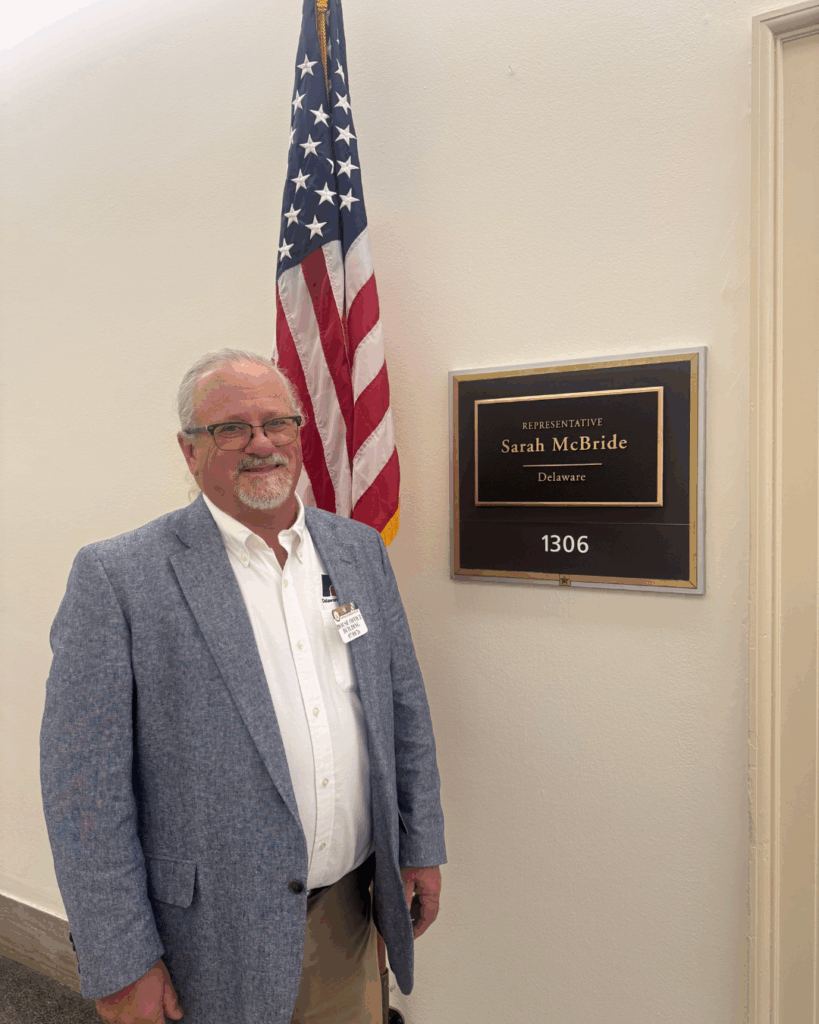
While in the nation’s capital, President Powers visited the offices of Senators Lisa Blunt Rochester and Chris Coons, as well as Representative Sarah McBride, to raise concerns central to Delaware’s farming community — most notably the push for an updated Farm Bill. As a gesture of goodwill, he presented each office with a photograph from the 2025 Delaware Farm Bureau Photo Contest to be displayed in their offices.
President Powers also participated in legislative and industry receptions organized by AFBF, giving him the chance to network with congressional staff, agricultural stakeholders, industry partners, and fellow Farm Bureau leaders from around the country.
The Council of Presidents wrapped up with meetings held at the Eisenhower Executive Office Building, where attendees heard directly from several administration officials. National Economic Council Director Kevin Hassett spoke about the council’s role in shaping economic and agricultural policy, along with the administration’s work to tackle challenges confronting farmers and ranchers. Ambassador Julie Callahan, serving as Chief Agricultural Negotiator at the U.S. Trade Representative’s Office, provided an update on trade priorities — including efforts to broaden market access, review the U.S.-Mexico-Canada Agreement (USMCA), and pursue trade policies that open meaningful doors for American agriculture.
Other presentations came from Environmental Protection Agency Administrator Lee Zeldin, who stressed the value of keeping communication lines open with the farming community and expressed a willingness to engage in dialogue with Farm Bureau leaders. Attendees also heard from Justin Schwab, General Counsel of the White House Council on Environmental Quality, who outlined the council’s role in coordinating federal environmental policy and its work with agencies on implementing the National Environmental Policy Act (NEPA).
The annual gathering serves as a critical platform for state Farm Bureau leaders to connect with federal policymakers, stay informed on emerging issues, and make sure agriculture has a seat at the table in national conversations. By attending these meetings and sitting down directly with Delaware’s congressional delegation, President Powers worked to bring the concerns and goals of Delaware farmers into focus as ongoing policy decisions continue to shape the future of agriculture.
A federal food safety agency has announced plans to seek renewal of an existing data collection program tied to Salmonella oversight efforts.
The Food Safety and Inspection Service (FSIS) stated it intends to request renewal of the approved information collection associated with the Salmonella Initiative Program, known as SIP. The agency made the announcement in compliance with the Paperwork Reduction Act of 1995 and regulations set by the Office of Management and Budget (OMB).
Officials noted that no changes are being made to the information collection as part of this renewal request. The current authorization for the program is scheduled to expire on January 31, 2027.
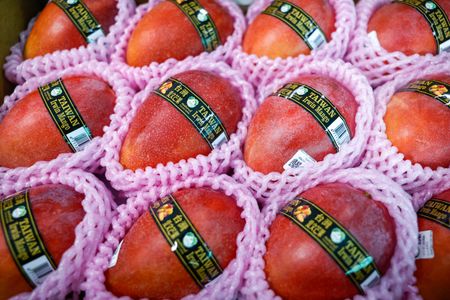
They are plump, fragrant, and bursting with flavor — and until now, tasting a genuine Taiwanese mango meant booking a flight to the island. That is changing in 2025, as Taiwan begins shipping its prized mangoes to Europe for the first time, with France and Britain serving as the initial destinations.
Europe has traditionally sourced its mangoes from countries like India and Pakistan, but David Chen, the CEO of fruit export company Natural House Taiwan, believes Taiwan’s mangoes can compete on taste alone — even at a higher price point. Speaking to Reuters at a fruit packing facility in the central city of Taichung, Chen noted that demand has held strong despite the steep costs involved.
“Exporting mangoes has really become extremely, extremely expensive,” Chen said. “It turned out that even though the price was so high this year, people still bought them.”
While Taiwan is perhaps best known globally for its dominance in advanced semiconductor manufacturing — chips that power everything from smartphones to artificial intelligence — it was actually agriculture that first brought the island international recognition. During the Japanese colonial period, which lasted from 1895 to 1945, Taiwan shipped products including pineapples and bananas to overseas markets.
Mangoes have been cultivated in Taiwan for generations, but it was not until the 1960s that the much sweeter Irwin variety, originally imported from the United States, was introduced. That variety has since become the one most closely associated with Taiwanese mango culture. Last year, Taiwan produced more than 100,000 metric tons of mangoes, though only a small fraction was exported — primarily to Japan, Hong Kong, and South Korea.
In the eastern county of Taitung, farmer You Tsang-fu has spent the past 15 years cultivating hybrid Summer Snow mangoes. This year, he sent what he described as a trial shipment of five boxes to Europe — all of which had to meet strict European Union standards, including regulations on pesticide residue levels.
“In terms of fruit selection, and also in terms of field management, the EU is stricter than for the domestic market,” You said.
The push into European markets is also being driven by political pressures closer to home. The Taiwanese government has encouraged farmers to diversify their export destinations amid ongoing friction with China, which considers the democratically governed island part of its own territory. President Lai Ching-te said last month that China had “weaponised” fruit by imposing import bans targeting pineapples, custard apples, wax apples, and mangoes. Chinese authorities have maintained that such bans are based on plant health and safety concerns.
Despite the challenges, You expressed full confidence that European consumers would embrace Taiwan’s mangoes once they had a chance to try them.
“The best mangoes in Taiwan are Snow Mangoes. Snow Mangoes are the Louis Vuitton of the mango world,” You said.
Listen to the Evening Delmarva Farm Report Update — July 14, 2026
DELMARVA — Livestock producers across the country are being urged to stay vigilant against the New World screwworm. A veterinarian with the Indiana State Board of Animal Health warns the parasite poses a serious danger to individual animals. Producers should look for wounds that are not healing or are growing in size. Early detection is critical, and that warning applies to Delmarva producers as well.
Markets
Cattle futures took a sharp hit Tuesday at the Chicago Mercantile Exchange. August live cattle dropped $3.30 to close at $231.42. August feeder cattle fell $5.55 to settle at $348.80. Direct cash cattle trade stayed quiet into the close.
In the grain markets, September corn finished at $4.38½ per bushel, down 2½ cents. August soybeans closed at $11.92¾, off 4 cents. September Chicago wheat was the bright spot, gaining nearly 10 cents to settle at $6.45. Locally, Laurel Grain Company in Laurel is bidding $4.84 on September corn and $11.41 on November soybeans.
Forecast
Dangerous heat is building across Delmarva. A Heat Advisory and an Extreme Heat Warning are both in effect through Wednesday evening. Temperatures Tuesday topped out near 92°F. Wednesday’s forecast calls for highs near 100° under sunny skies. An Air Quality Alert is also in effect Tuesday night. Producers are advised to keep livestock watered and limit fieldwork to early morning hours.
This article is based on the Delmarva Farm Report Update Evening Edition, July 14, 2026. Hosted by Tom Bradley.
ARLINGTON, Va. — The National Grain and Feed Association (NGFA) is expressing strong support for the House Transportation and Infrastructure Committee after it voted to advance the Water Resources Development Act (WRDA), a bipartisan measure focused on maintaining and upgrading the country’s inland waterways infrastructure.
The NGFA recognized Committee Chairman Sam Graves (R-Mo.), Ranking Member Rick Larsen (D-Wash.), and other committee members for working across party lines to push the bill forward.
“A reliable and efficient inland waterways system is essential to the competitiveness of U.S. agriculture and our ability to move grain and other agricultural products safely and efficiently to domestic and international markets,” said NGFA President and CEO Mike Seyfert. “Congress’s longstanding commitment to passing a bipartisan WRDA bill every two years provides critical certainty for planning and investing in the infrastructure that supports farmers, agribusinesses and rural communities.”
The grain and feed industry depends on a connected transportation network — including roads, railroads, and waterways — to get agricultural goods where they need to go. Every year, roughly 650 million tons of U.S. grain travel from farms to storage by truck, 160 million tons move by rail, and 80 million tons are carried by barge. Keeping all three systems running smoothly is considered key to a stable agricultural supply chain and to keeping American farmers competitive at home and abroad.
The NGFA says it strongly backs ongoing investment in the nation’s inland waterways, which offer a cost-effective way to transport hundreds of millions of tons of farm commodities annually. The group argues that upgrading locks and dams, tackling long-delayed maintenance, and improving navigation reliability are all necessary to keep U.S. agriculture competitive globally. The NGFA also noted its appreciation that the bill does not challenge the role of the Columbia River System and Lower Snake River dams, which it says are critical to U.S. agricultural exports.
“NGFA urges the full House to act swiftly on WRDA and looks forward to working with Congress to ensure final bipartisan legislation is enacted this year,” Seyfert added.
The Maryland Agricultural Land Preservation Foundation (MALPF) Board of Trustees is set to convene on July 28, 2026, at 9 a.m. The meeting will be held via teleconference.
Agenda items for the session are expected to include general board business matters.
Anyone with questions, comments, or concerns regarding the meeting is encouraged to contact Michelle Cable, Executive Director of the Maryland Agricultural Land Preservation Foundation, by email at [email protected] or by phone at (410) 841-5719.
Jaime Hodnett has become a recognizable advocate for the future of agriculture, lending her voice to conversations about what farming looks like for the next generation of producers.
Through her ongoing efforts, Hodnett has worked to elevate the concerns and aspirations of young people involved in the agricultural sector, helping to bridge the gap between established farming traditions and the needs of those just entering the industry.
Her work continues to draw attention to the vital role that emerging agricultural voices play in shaping the direction of farming for years to come.
Listen to the Morning Delmarva Farm Report Update — July 14, 2026
DELMARVA — An Extreme Heat Warning is in effect across the Delmarva Peninsula through 8 PM Wednesday, the highest-level alert issued by the National Weather Service for dangerous heat conditions. Farmers and agricultural workers are urged to keep workers hydrated and limit field exposure during peak afternoon hours.
Forecast
Tuesday will bring sunny skies with a high of 92°F and light southwest winds. Wednesday temperatures will climb to a scorching 100°F under full sun. No rainfall is expected until Friday night, when there is a chance of showers and thunderstorms. Producers should plan pesticide and fertilizer applications accordingly.
Crop Management
Uneven crop development is complicating fungicide timing for many corn growers this season. Adam Byrne, a technical service manager with FMC, says an unusually wide spread of planting dates has left crops at very different growth stages across the region. Fields at tassel or just past tassel with disease pressure may require separate treatment windows, adding both time and cost to operations. Byrne recommends scouting each field individually before spraying.
Community
Volunteers near Laurel gleaned leftover potatoes from a field at Lakeside Farms, collecting dozens of pounds for local food banks. The Society of Saint Andrew organized the effort. Farmer Travis Hastings said crops going to waste has always bothered him and that he was glad to help facilitate the donation.
Markets
Monday’s closing futures showed September corn at $4.41¼/bu, August soybeans at $11.96¾/bu, and September Chicago wheat at $6.35¼/bu. At Laurel Grain Company in Laurel, Delaware, September corn cash bids are at $4.81/bu.
This article is based on the Delmarva Farm Report Update Morning Edition, July 14, 2026. Hosted by Tom Bradley.
A federal agriculture agency is seeking to update and extend the paperwork requirements tied to rules governing the importation of live pigs, pork, and pork products into the United States.
The Animal and Plant Health Inspection Service announced its intention to request a revision to and extension of approval of an information collection connected to regulations designed to keep imported swine and pork products free of classical swine fever.
The effort is specifically focused on imports coming from Brazil, Chile, and Mexico.
The request is being made in accordance with the Paperwork Reduction Act of 1995, which requires federal agencies to seek approval before collecting certain types of information from the public.
A federal agency that oversees animal and plant health has announced its intention to update and extend an existing data collection program related to animal disease tracking across the country.
The Animal and Plant Health Inspection Service, known as APHIS, is seeking a revision to and an extension of approval for an information collection connected to its National Animal Health Reporting System, which is part of the agency’s National List of Reportable Animal Diseases program.
The announcement was made in accordance with the Paperwork Reduction Act of 1995, a federal law that requires government agencies to justify and receive approval for collecting information from the public.
The U.S. House of Representatives’ Democratic Women’s Caucus is pressing the U.S. Department of Agriculture to restore four women to the United Soybean Board after the agency blocked their reappointment — a decision the caucus says is taking the organization and American farmers “in the wrong direction.”
The 96-member caucus sent a formal letter on July 13 to Agriculture Secretary Brooke Rollins and USDA Agriculture Marketing Specialist Sarah Aswegan, demanding the agency reverse course on a move first brought to light by Reuters back in April.
Earlier this year, the Trump administration rejected all four women — along with one man — who had been selected by fellow farmers to represent them on the United Soybean Board. The USDA’s involvement was described as an unusual step, as the agency has historically approved state-level selections with little pushback. No explanation has been offered by the USDA for the rejections.
In the letter, the caucus wrote: “Your decision is not only disrespectful to the qualified women who were nominated, it sends a message to women farmers that their voices do not matter.”
The group added: “We strongly urge USDA to reverse its decision and allow these nominees to serve their rightful terms.”
The removal of those women left the United Soybean Board — which manages more than $121 million in farmer-contributed funds aimed at growing markets for U.S. soybeans — with only five women among its 77 board members. That represents the lowest female representation on the board in at least ten years. Women account for more than a third of all U.S. farmers, though they have traditionally held fewer leadership positions within commodity organizations.
The USDA’s action fits into a broader pattern under the current administration, which has reversed equal pay measures put in place by the previous administration and scaled back federal programs designed to address historical disadvantages faced by women and minority groups. The White House has argued those types of programs violate anti-discrimination laws and undermine advancement based on merit.
Democratic Representative Angie Craig of Minnesota, who serves as the ranking member of the House Agriculture Committee, responded sharply to the situation. “This is the type of targeted discrimination I have come to expect from this administration. These women were nominated by their peers and deserve to be reinstated to do the work that they are capable and qualified to do,” she said.
Listen to the Evening Delmarva Farm Report Update — July 13, 2026
DELMARVA — Soybean prices closed higher Monday as China resumed purchases of American soybeans, with additional support coming from a hot, dry weather pattern building across the country. The USDA’s latest crop conditions report rates soybeans at 65% good to excellent nationally, up 1 point from last week.
Maryland grain farmers should note that a referendum on the state’s Grain Checkoff Program is scheduled for July 23, running from 10:30 a.m. to 1:30 p.m. at the Queen Anne’s County 4-H Park in Chester during the Maryland Commodity Classic. Producers unable to attend in person may request an absentee ballot by calling 443-262-8491 or visiting marylandgrain.com. If approved, the 35-year-old program continues through October 1.
Markets
August soybeans closed at $11.96¾ per bushel, up 5 cents. September corn settled at $4.41, up 1½ cents. September Chicago wheat finished at $6.35¼, down 5 cents.
At Laurel Grain Company in Laurel, Delaware, September corn is bringing $4.86 per bushel and November soybeans are at $11.45.
Forecast
The National Weather Service has issued an Extreme Heat Watch through Tuesday evening. Monday afternoon will remain sunny with a high near 84°F and southeast winds around 10 mph. Tuesday brings dangerous heat with sunny skies and highs near 91°F. Producers are advised to limit field time during peak afternoon hours and keep both livestock and workers hydrated.
This article is based on the Delmarva Farm Report Update Evening Edition, July 13, 2026. Hosted by Tom Bradley.
The U.S. Department of Agriculture’s National Agricultural Statistics Service, known as NASS, has released its latest Crop Progress and Condition estimates.
These weekly reports are closely watched by farmers, commodity traders, and agricultural analysts as a key indicator of how the nation’s crops are faring throughout the growing season.
The report covers crop development stages and overall condition ratings, offering a snapshot of agricultural activity across the country.
The latest turkey hatchery figures show steady growth in production compared to one year ago, with several key indicators each climbing 4 percent.
According to the report, the number of eggs sitting in incubators as of July 1 was up 4 percent from the same point last year. The number of poults — young turkeys — that hatched during the month of June also rose 4 percent compared to June of the prior year.
Additionally, net poults placed during June came in 4 percent higher than the year-ago figure, rounding out a consistent picture of modest but steady growth across the turkey hatchery industry.
The Maryland Department of Agriculture announced on July 13, 2026, that it is making $670,000 in grant money available to support farms and organizations looking to adopt conservation practices that improve soil health, water quality, and climate resilience.
The funding comes through the Healthy Soils Competitive Fund, which provides grants of up to $50,000 to qualifying applicants. Recipients can use the money to support three years of enhanced soil health and agroforestry practices.
Agroforestry involves intentionally combining trees and shrubs with crops or livestock, a method that can improve land productivity while also providing environmental benefits.
The grants are designed to encourage farms and agricultural organizations to try innovative approaches to land stewardship that can have lasting benefits for the surrounding environment.
What started with rows of lavender growing in open fields has grown into something much bigger for Sweet Haven. The farm’s story is one of hard work, dedication, and a passion for turning a simple crop into products that customers keep coming back for.
Sweet Haven’s journey from the field to the marketplace is being highlighted in a new video profile, which traces the farm’s path from its early days cultivating lavender to developing a line of products that have become bestsellers.
The story of Sweet Haven serves as an example of how small-scale agriculture can evolve into a successful business venture, with lavender at the heart of everything they do.
The pesticide industry has been on a winning streak, securing a string of legal and regulatory victories that have drawn sharp criticism from environmental and public health organizations.
The biggest win came on June 25, when the U.S. Supreme Court ruled 7-2 in favor of German agrichemical and pharmaceutical company Bayer. The justices determined that plaintiffs cannot sue the company under state law for failing to include a cancer warning on the label of its Roundup weedkiller, whose active ingredient is glyphosate.
Following the ruling, Bayer’s stock surged to its largest single-day gain in 23 years. The company had been facing tens of thousands of lawsuits from Roundup users who claimed the product caused their cancer.
On Thursday, Bayer moved to persuade a federal judge to dissolve a consolidated federal lawsuit that combines nearly 4,000 additional cancer-related claims. The company has previously warned that the financial weight of that litigation could force it to stop making the weedkiller altogether.
Bayer, which purchased U.S.-based Roundup manufacturer Monsanto in 2018, has since reorganized its Roundup operations into a separate business unit and filed for duties on glyphosate imported from China.
The Trump administration backed Bayer’s position in the Supreme Court case — a stance that put it at odds with pesticide opponents aligned with the “Make America Healthy Again” movement led by U.S. Health and Human Services Secretary Robert F. Kennedy Jr., who had supported Trump in the 2024 presidential race.
Ken Cook, CEO of the Environmental Working Group, a non-profit that pushes for tighter pesticide regulations, said the administration appears to have concluded that “our constituency is these big farmers and pesticide companies.”
Cook said his organization and others fighting for pesticide limits have long been frustrated with the EPA’s pesticide oversight program. He noted that under former President Joe Biden, “it was at least more cautious,” adding, “There’s a big shift.”
The EPA, however, defended its decisions, saying they often include new application restrictions and that “the impact for farmers and the environment is straightforward. Growers get modern, more precise chemistries that do more with less.”
Bayer called the Supreme Court ruling “good for science, farmers, and industries that depend on regulatory clarity for innovation.”
Dicamba Gets Two-Season Green Light
Another herbicide at the center of controversy, dicamba — made by both Bayer and Syngenta — has also seen a favorable regulatory outcome. The chemical is applied to cotton and soybean crops that have been genetically modified to withstand it.
Critics have long argued that dicamba can drift away from where it is applied, damaging nearby plants and crops. In 2024, a U.S. District Court found that the EPA had previously failed to follow proper public input procedures when approving three dicamba products, and it threw out those approvals. That left farmers unable to use dicamba on their crops in 2025.
Then, in February 2026, the EPA announced it was re-approving dicamba products for the next two growing seasons under stricter rules, including a lower maximum application rate and limits on use during hot weather.
The non-profit Center for Biological Diversity, which opposes dicamba use, responded that those new measures would be ineffective and hard to enforce.
The EPA said in an email that the approval was “deliberately temporary” and featured “the strictest guardrails EPA has ever placed on this herbicide.”
Federal Agency Says Atrazine Not an Extinction Threat
The herbicide atrazine, widely produced by Syngenta and commonly used on crops such as corn and sugarcane, has also received a more favorable regulatory assessment.
In May, as part of an ongoing EPA registration review, the U.S. Fish and Wildlife Service issued a biological opinion concluding that atrazine does not pose an extinction risk to the threatened or endangered species it examined. “We anticipate that the registration of atrazine is not likely to jeopardize the continued existence of these species,” the agency wrote.
That finding marks a significant departure from a 2021 EPA biological evaluation, which determined that atrazine was likely to negatively affect more than 1,000 protected species.
The Centers for Disease Control and Prevention has noted that some scientific studies have suggested a possible connection between atrazine exposure and elevated rates of certain cancers, as well as premature births.
In 2025, the World Health Organization’s International Agency for Research on Cancer classified atrazine as “probably carcinogenic to humans.”
Nathan Donley, environmental health science director for the Center for Biological Diversity, was sharply critical of the outcome. “Instead of taking the environmental and health risks of atrazine seriously, the Trump administration has once again done the pesticide industry’s bidding, allowing this extraordinarily dangerous pesticide to continue poisoning our land and water for decades to come,” he said in a statement.
The EPA noted that the biological opinion was issued by a separate agency, and said it would factor in any new scientific findings as its own review of atrazine continues.
Syngenta, on a company website dedicated to atrazine, maintains that when the chemical is used as directed, it does not cause harmful effects to human health or the environment.
Farmers in Italy’s Emilia-Romagna region once only cracked open their barn windows on summer nights to give their cattle a bit of relief from the heat. Now, with temperatures climbing to record-breaking levels, those windows never close — day or night — as producers fight to protect their cows and safeguard the region’s prized Parmigiano Reggiano cheese industry.
“Extreme heat impacts milk’s quality and quantity,” said Nicola Bertinelli, president of the Parmigiano Reggiano Consortium. Bertinelli also oversees the dairy farm his family established in 1895 near Parma.
When temperatures climb past 40 degrees Celsius — about 104 degrees Fahrenheit — cows rest more, eat less, and can produce as much as 10% less milk. Milk is one of only three ingredients in authentic Parmigiano Reggiano, alongside salt and rennet.
The cheese can only legally be produced in five specific provinces, most of which fall within the Emilia-Romagna region. Additionally, the cows must be fed exclusively on grass and hay grown within that same area.
“If it doesn’t rain, grass doesn’t grow, hay cannot be produced and it’s impossible to obtain the milk needed to make the cheese,” said Bertinelli, 54.
To combat the heat, farmers like Bertinelli have added fans and water-misting systems to their barns — but those solutions have come at a steep price, sending energy bills sharply higher.
Those rising costs are also being felt in the climate-controlled warehouses where Parmigiano Reggiano wheels are stored during the aging process, which lasts a minimum of 12 months and can stretch to three years or beyond.
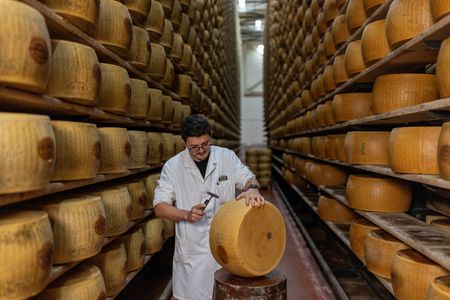
Two warehouses operated by Magazzini Generali delle Tagliate — known as MGT, a unit of Credito Emiliano — hold more than 500,000 cheese wheels across the provinces of Reggio Emilia and Modena. Together, those wheels are valued at over €300 million.
“During this year’s peak heatwaves, our daily energy consumption rose by about 30%,” said MGT director Giancarlo Ravanetti. He noted that the company has worked to offset those costs by improving cooling systems, upgrading insulation, and expanding renewable energy production.
These warehouses have become iconic in the region, collectively referred to as the Bank of Parmigiano. Inside, tradition and modern technology work side by side. Each cheese wheel goes through rigorous quality checks — including X-ray scans — and is inspected weekly by specialists who tap the wheels with small hammers, listening for any signs of defects that may have developed during aging.
“The human factor remains key and is the real strength of the entire process,” Ravanetti said.
Paolo Ganzerli, international sales director at food group GranTerre — which reported consolidated revenue of €1.87 billion in 2025 — shared similar concerns about the financial pressures ahead.
“If extreme events become longer-lasting and more intense, they will certainly have an impact on both the quantity and quality of milk, but above all they will lead to higher costs,” he said.
The stakes are enormous. The Parmigiano Reggiano industry brings in an estimated €4.5 billion — roughly $5.15 billion — in revenue each year, supporting thousands of jobs and anchoring the regional economy.
In 2025, exports made up more than half of the cheese’s total global sales, with the United States standing as its largest international market.
Ganzerli noted that Parmigiano Reggiano “has existed for more than 800 years.”
“We don’t want to be the last generation to eat it,” he added.
Listen to the Morning Delmarva Farm Report Update — July 13, 2026
DELMARVA — The National Weather Service out of Mount Holly has issued an Extreme Heat Watch for the Delmarva Peninsula running through Tuesday evening at 8 p.m., warning that conditions are favorable for a dangerous heat event to develop across the region.
Livestock producers are urged to ensure animals have shade, ample fresh water, and increased ventilation. Handling and transport of livestock should be limited to the coolest parts of the day. Field workers must be provided mandatory water and rest breaks.
Forecast
Monday’s forecast calls for sunny skies with a high of 83°F and light easterly winds. Tuesday climbs to 89°F, remaining sunny with southwest winds at 10 mph. By Wednesday, temperatures are expected to reach 96°F. Producers are advised to schedule the most strenuous fieldwork during early morning hours this week.
Markets
At Laurel Grain Company in Laurel, Delaware, corn for September delivery is trading at $4.89/bu, while December corn stands at $4.81/bu. November soybeans are at $11.44/bu.
Agricultural lenders are closely monitoring how operations are managed through stress periods such as the current heat event. Experts note that aligning forage species and production practices with long-term goals remains critical to demonstrating financial stability to lenders.
Traffic
Del-DOT reports that Glenda Road remains closed at Case Ridge Road Monday due to a downed tree. Motorists should seek alternate routes.
This article is based on the Delmarva Farm Report Update Morning Edition, July 13, 2026. Hosted by Tom Bradley.
Listen to the Evening Delmarva Farm Report Update — July 11, 2026
DELMARVA — The Trump Administration’s 2026 regulatory agenda has marked 3 Biden-era poultry competition rules for rescission, placing the rollbacks squarely on the radar of Delmarva growers. Reaction within the industry is split, with groups representing both poultry producers and processors divided on whether the changes help or hurt the sector.
Policy
The potential elimination of the 3 rules represents a significant shift in federal oversight of the poultry industry. The debate over the rollbacks is expected to continue as the regulatory agenda moves forward.
Markets
The USDA has trimmed its 2026 beef and pork production forecasts. Beef output is now projected at 25.288 billion pounds, down 150 million pounds from the June estimate. The average steer price is expected at $251.10 per hundredweight. Pork production was cut to 27.955 billion pounds, down 40 million pounds. The agency did raise its poultry production outlook, a positive development for the Delmarva region.
Friday’s grain markets closed with solid gains across the board. September corn settled at $4.39¾ per bushel, up 8 cents. August soybeans closed at $11.91¾, up 14 cents. September Chicago wheat finished at $6.40¼, up 20½ cents.
At Laurel Grain Company in Laurel, Delaware, September corn is bid at $4.85 per bushel. November soybeans are bid at $11.41.
Forecast
Showers and thunderstorms are continuing Saturday evening across Delmarva, with a high near 89°F. A Coastal Flood Advisory is in effect through 11:00 p.m. for Kent County, inland Sussex County, and the Delaware Beaches. Up to 1 foot of water above ground level is possible in low-lying areas, and residents are urged to avoid flooded roadways. Sunday is expected to turn partly sunny with a high of 82°F.
This article is based on the Delmarva Farm Report Update Evening Edition, July 11, 2026. Hosted by Tom Bradley.
Listen to the Morning Delmarva Farm Report Update — July 11, 2026
DELMARVA — Deer damage has emerged as the top agricultural story on the Eastern Shore this week, with farmers in Dorchester County, Maryland reporting devastating soybean losses. Some fields have been stripped nearly clean by white-tailed deer and sika deer, with the sika identified as the primary culprit.
Wendell Meekins, who manages 17 farm properties south of Cambridge, described the sika deer’s feeding behavior as particularly destructive. “It’s like a goat, it will stand there and eat totally all the way around and then move on,” Meekins said. A dry spring compounded the problem by stunting soybeans at the 1- to 2-inch stage — prime height for deer browse.
Mike Knauer, president of the Dorchester County Farm Bureau, lost 25 acres in roughly one week this past spring at a cost of approximately $250 per acre. The Dorchester and Wicomico county farm bureaus have scheduled a joint meeting on August 25 to discuss possible solutions.
Markets
Grain futures posted solid gains Friday. September corn settled at $4.39½ per bushel, August soybeans closed at $11.91¾, and September Chicago wheat finished at $6.40¼.
At Laurel Grain Company in Laurel, Delaware, September corn is bidding $4.85 per bushel and November soybeans are at $11.41.
Forecast
Mostly cloudy skies are expected Saturday with a chance of showers and thunderstorms and a high near 86°F. Tonight brings additional showers and storms before clearing, with a low around 68°F. Coastal flooding is possible along Delaware’s shorelines through 11 p.m. Sunday is forecast to be mostly sunny with a high near 84°F.
This article is based on the Delmarva Farm Report Update Morning Edition, July 11, 2026. Hosted by Tom Bradley.
Farmers saw a modest boost in peanut prices during the week ending July 4, according to the latest report from the U.S. Department of Agriculture’s National Agricultural Statistics Service.
The average price received by farmers for all farmer stock peanuts came in at 24.1 cents per pound for that reporting week — an increase of 2.9 cents compared to the prior period.
A new federal agricultural report reveals mixed results for two major U.S. crops, with winter wheat coming in lower than expected while orange growers are seeing better-than-anticipated yields.
According to the report, winter wheat production has fallen 4 percent below the forecast issued in June. At the same time, orange production has risen 3 percent compared to projections made in April.
The figures were released by federal agriculture officials as part of a routine crop production update tracking how harvests are measuring up against earlier estimates.
The Pesticide Advisory Committee has announced it will hold a virtual meeting on July 22, 2026, from 10:00 a.m. to 12:00 p.m.
Those who wish to attend can join online through Google Meet at the following address: https://meet.google.com/gqv-tmwb-xrq. Participants who prefer to join by phone can call (US) +1 402-921-2196 and enter PIN: 693 591 915# when prompted.
Officials note that the session will be recorded. Members of the public who would like to address the committee will be given an opportunity to speak during the meeting.
The Pesticide Advisory Committee has announced it will hold a virtual meeting on Wednesday, July 22, 2026, from 10:00 a.m. to 12:00 p.m.
Those who wish to attend can join the session online through Google Meet at the following address: https://meet.google.com/gqv-tmwb-xrq. Participants who prefer to dial in by phone can call (US) +1 402-921-2196 and enter PIN: 693 591 915# when prompted.
Officials note that the meeting will be recorded. Members of the public who would like to address the committee will be given an opportunity to speak during the session.
The Maryland Department of Agriculture is expanding its leadership team with the addition of two new staff members, according to an announcement from Secretary of Agriculture Kevin Atticks.
One of the newly appointed individuals is Allie Carter Cavanagh, who has taken on the role of Director of Legislative and Government Affairs. In her new position, she will oversee all aspects of the department’s legislative and governmental relations work.
Secretary Atticks expressed enthusiasm about the new appointments, signaling confidence in the direction of the department moving forward.
WASHINGTON, D.C. — The National Chicken Council is throwing its weight behind the Trump Administration’s 2026 Unified Agenda of Federal Regulatory and Deregulatory Actions, expressing strong approval for the White House’s push to cut back on federal oversight of the poultry industry.
A key part of that support involves the U.S. Department of Agriculture’s plans to do away with three regulations that were put in place during the Biden administration under the Packers and Stockyards Act. The chicken industry group says those rules pose a serious risk to a business model it describes as both efficient and effective.
According to the council, the current industry structure benefits farmers financially while also helping to hold down the cost of chicken at grocery stores and restaurants across the country. The organization argues that the Biden-era rules, if left in place, would undermine that system.
By backing the administration’s deregulatory agenda, the National Chicken Council is aligning itself with broader efforts by the Trump White House to reduce the number of federal rules governing American industries.
A federal agricultural health agency is seeking to continue its authority to collect information tied to the tracking of plant pests and diseases across the country.
The Animal and Plant Health Inspection Service, known as APHIS, has announced its intention to request an extension of approval for an existing information collection program. The data in question is connected to the reporting of plant pests and diseases, as well as activities carried out under the APHIS Asian Longhorn Beetle Program.
The move is being made in accordance with the Paperwork Reduction Act of 1995, a federal law that governs how government agencies gather and manage information from the public.
The Philippines has confirmed a new outbreak of highly pathogenic H5N1 avian influenza affecting backyard poultry in its Oriental Mindoro province, according to the World Organisation for Animal Health, known as WOAH, which made the announcement on Friday.
The virus was identified in a small flock of 39 birds located in the town of Capalan. Philippine authorities reported the case to the Paris-based WOAH, which confirmed that all of the affected birds were destroyed as a precautionary measure to prevent the disease from spreading further.
The continued spread of avian influenza — widely known as bird flu — has put governments and the poultry industry on alert in recent years. The disease has devastated flocks across the globe, straining poultry supplies, pushing food prices higher, and heightening concerns about the potential for the virus to spread to humans.
Listen to the Morning Delmarva Farm Report Update — July 10, 2026
DELMARVA — Weather is front and center for Delmarva crop farmers Friday, with implications that extend beyond harvest planning into integrated pest management decisions. According to Ag Proud, tracking weather patterns helps growers understand when insects are most active and vulnerable, allowing for more targeted pest control and potentially fewer broad pesticide applications. With summer heat building across the peninsula, farm advisors are urging producers to monitor field conditions closely before reaching for the sprayer.
Policy
Financially struggling crop farmers are watching for final rules on the 45Z tax credit. According to Agri-Pulse, those pending regulations could determine whether farm operators can break into the growing low-carbon fuel market — a potential new income stream at a critical time for farm finances.
For dairy producers, the FARM Program has opened a public comment period as it develops its 2028 version, giving stakeholders an opportunity to weigh in on its direction. High input costs continue to pressure dairy farm sentiment, according to Ag Proud.
Markets
Cattle futures fell sharply in Thursday’s session. August live cattle settled at $235.25, down $2.37. August feeder cattle dropped $5.90, closing at $356.15.
At Laurel Grain Company in Laurel, Delaware, corn for September delivery is bringing $4.74/bu. November soybeans are at $11.24.
Forecast
Friday’s high is expected to reach 90°F, mostly sunny with a slight chance of afternoon showers and thunderstorms. Saturday brings a forecast high of 86°F with scattered storm chances continuing.
This article is based on the Delmarva Farm Report Update Morning Edition, July 10, 2026. Hosted by Tom Bradley.
Australia has confirmed its first detection of the deadly H5N1 bird flu strain in a native seabird, signaling a new stage in the virus’s expansion across the country.
The infected bird — a greater crested tern — was found in the South Australian coastal town of Robe. Laboratory analysis conducted by Australia’s national science agency confirmed the positive result, Agriculture Minister Julie Collins announced.
Until now, every confirmed H5N1 case in Australia had involved migratory seabirds. This marks the first time the virus has been found in a bird species native to the country.
Friday’s announcement also included confirmation of two additional infections in South Australia and one in Western Australia, pushing the nation’s total number of confirmed detections to 12.
Collins described the situation as “concerning” but said it was not entirely unexpected. She noted that officials have found no evidence of widespread bird deaths or any spread of the virus into the poultry industry or broader agricultural sector.
“Our scientists are undertaking further work to establish the potential pathway that resulted in the Australian sea bird’s infection,” Collins said.
She added, “What we do know is that this is a coastal seabird that has been overlapping coastal range with migratory seabirds that have previously tested positive for H5.”
Australia made history in June as the last continent to record a mainland H5N1 case. The virus had previously been detected on Heard Island, a sub-Antarctic Australian territory located roughly 4,100 kilometers — about 2,600 miles — from the Australian mainland, in late 2025.
Listen to the Evening Delmarva Farm Report Update — July 9, 2026
DELMARVA — Severe weather is the top story for Delmarva farmers Thursday evening, with a Flood Watch in effect through midnight and Flash Flood Warnings issued across the region. The National Weather Service out of Mount Holly is urging residents to avoid flooded roadways. Farmers with equipment or livestock in low-lying areas near streams or drainage ditches are advised to take immediate action.
Conservation
A Kent County, Maryland farm family has placed 29 acres west of Chestertown into permanent conservation protection. Lee and Joyce Davis worked with the Eastern Shore Land Conservancy to secure the easement, funded through Maryland’s Conservation Reserve Enhancement Program. The property includes working farmland, woodland, and grassland buffers protecting the East Fork of Langford Creek. The parcel connects directly to the Davis family’s 300-acre Bell Rose Farm, which is already under conservation easement. The Eastern Shore Land Conservancy now holds more than 14,713 conserved acres in Kent County.
Markets
Cattle futures closed sharply lower Thursday. August live cattle settled at $235.25, down $2.37. August feeder cattle dropped $5.90, settling at $356.15. At Laurel Grain Company in Laurel, Delaware, September corn is trading at $4.77 per bushel and November soybeans are at $11.32.
University of Missouri Extension economist Ben Brown says China demand and biofuels policy are combining to brighten profit potential for the 2026 soybean crop.
Forecast
Thursday night’s forecast calls for showers and thunderstorms to continue, with lows near 72°F. Friday brings patchy fog early, followed by a chance of storms returning, with highs near 91°F.
This article is based on the Delmarva Farm Report Update Evening Edition, July 9, 2026. Hosted by Tom Bradley.
BELGRADE — Officials in Serbia have started putting down 11,000 pigs at a farm in the country’s western region after an outbreak of African swine fever (ASF) was confirmed there, according to a report Wednesday from the Tanjug news agency, which cited Agriculture Minister Dragan Glamocic.
The affected farm is located in the village of Hrtkovci, and the culling process is expected to take a number of days to complete. According to Tanjug, Minister Glamocic indicated that the farm’s owners will receive compensation from the government.
“The pigs are euthanised painlessly and then safely disposed of,” Glamocic was quoted as saying.
This latest outbreak is not an isolated incident — Serbia is currently dealing with several active cases of African swine fever across the country.
Over the past two months, thousands of pigs have already been destroyed in the western Macva region, an area that shares borders with both Bosnia and Croatia.
While African swine fever poses no health risk to people, it is highly contagious among domestic pigs and wild boar and can spread rapidly once an outbreak takes hold.
DOSWELL, Va. — Virginia’s biggest agricultural field day is heading back to Caroline County this summer, with cutting-edge farm technology, crop research, and live demonstrations all on the agenda.
The 2026 VA AG EXPO is scheduled for July 30 at The Meadow Event Park in Doswell, running from 7:30 a.m. to 2 p.m. The event is being organized in partnership with Engle Family Farms.
Billed as Virginia’s largest agricultural field day, the traveling trade show typically draws around 1,000 attendees, including farmers, researchers, agribusiness professionals, and students. This year’s lineup includes approximately 100 exhibitors showcasing agricultural technology, machinery, crops, products, and services.
Virginia Farm Bureau President Scott Sink described the event’s broader purpose: “The EXPO showcases what we do in agriculture. It’s a way for people to see how crops are doing, learn about nutrients, and a way for everyone to network and share their knowledge with each other.”
Each year, the EXPO partners with a different working farm to highlight the state’s agricultural diversity. This year, the Engle family — who farm land surrounding The Meadow — will share their multi-generational agricultural story with visitors. Attendees can learn about their production of corn, soybeans, wheat, barley, sorghum, and rapeseed.
Event organizer Jeff Whitaker noted that both large and small-scale farmers “will have the opportunity to explore precision agriculture tools, variable-rate fertility management, drone technology, weed identification displays and current crop research” throughout the day.
A key feature of the event is the Advanced Agronomy Education Area, co-hosted by the Virginia Cooperative Extension Service and the Natural Resources Conservation Service, where Virginia agronomy and natural resource experts will lead hands-on learning sessions.
Among the educational exhibits, the Virginia Soil Health Coalition will conduct demonstrations including rainfall simulations, soil slake tests, and root box displays. Interactive exhibits will also cover soybean processing, cover crops, plant diagnostics, insect management, and farmer-led conservation practices.
Crop test plots and variety trials involving corn, soybeans, cotton, small grains, and biochar have also been planted. Whitaker said guests will be able to speak directly with specialists about research methods, findings, and ongoing studies aimed at improving agricultural productivity, profitability, and environmental stewardship.
One notable change from past years: most exhibits and programming will be held indoors at The Meadow’s Farm Bureau Center, which Sink said will create more networking opportunities for both exhibitors and attendees. Visitors can also learn about Farm Bureau programs, services, and upcoming events.
Food vendors will be on-site serving breakfast and lunch, and the Children’s Museum of Richmond will host a dedicated kids’ area to keep younger visitors engaged.
“They always provide a fun environment for our future farmers,” Whitaker said.
The annual event is sponsored by the Virginia Grain Producers Association and the Virginia Soybean Association, with cooperation from Extension and support from Virginia’s corn, soybean, and small grain checkoff boards.
Admission and parking are both free. For more information, exhibitor details, and event updates, visit vaagexpo.com.
INDEPENDENCE, Va. — Farmers and agricultural stakeholders from Southwest Virginia sat down with U.S. Sen. Mark Warner, D-Va., on June 30 at the Grayson Agriculture, Technology & Educational Center to tackle some of the most pressing challenges facing rural producers today.
At the top of the agenda was the long-stalled Farm Bill. Warner pointed out that Congress has not passed a new five-year farm bill since 2018, leaving growers without the stability they need to plan ahead.
“We keep cobbling together short-term extensions that don’t give any of you predictability,” Warner told those gathered.
On the financial side, Warner noted that the federal government has committed roughly $66 billion in rural farm relief, calling that “the good news.” However, he cautioned that the legislation also slashes the Supplemental Nutrition Assistance Program — commonly known as SNAP — by more than half, which he said threatens the chances of a new Farm Bill clearing Congress this year. SNAP is a federal program that provides monthly grocery assistance to low-income households. A revised version of the legislation is currently under consideration in the Senate.
The meeting also touched on the ongoing recovery from recent extreme weather events, including a damaging spring frost that hit Virginia orchard crops hard and the destruction left behind by Hurricane Helene in 2024. Agricultural leaders expressed gratitude to Virginia’s congressional delegation for backing disaster declarations that could open the door to low-interest loans and other forms of aid for affected producers.
Gene Copenhaver, a multigenerational farmer from Washington County and president of the National Cattlemen’s Beef Association, reflected on how communities pulled together after the storm. He said neighbors helping neighbors was “the real story here,” highlighting the cooperation between counties, farmers, and elected officials.
Warner also took aim at broad tariff increases, arguing that unpredictable trade policy makes it difficult for farmers and agricultural businesses to map out their futures. While he acknowledged that targeted tariffs can be a reasonable tool when trading partners engage in unfair practices, he cautioned that sweeping changes can hurt Virginia growers who depend on international export markets.
Looking further down the road, Warner raised alarms about the potential workforce disruption that artificial intelligence could bring — and suggested that agriculture could be part of the solution by offering workers stable, long-term careers.
“I think over the next five years, we are going to see massive job dislocation come from AI,” Warner said. “We’re at 9% recent college graduate unemployment. I think it’s going to go to 30% in two years. I hope I’m wrong.”
Grayson County Farm Bureau member John Fant echoed concerns about the rural workforce, pointing to a shortage of diesel mechanics and other skilled tradespeople. He suggested that building stronger career pathways for students who choose not to pursue a traditional four-year college degree could help keep young people in rural communities while also supporting local farms and businesses.
Consumers across the country are increasingly focused on how the animals that end up on their dinner plates are treated during their lifetimes. Those who raise chickens for food say they share that concern — and now the industry’s leading trade group is taking steps to back that up.
The National Chicken Council, which first created its broiler chicken welfare guidelines back in 1999, has announced an update to those standards. Along with the revisions, the organization has earned certification from a prominent animal welfare auditing authority.
The NCC’s guidelines were originally put in place to give chicken producers and processors a framework for ensuring the humane treatment of birds throughout the production process. The newly updated standards and the accompanying certification are intended to strengthen that commitment and give consumers greater confidence in how their food is raised.
Listen to the Morning Delmarva Farm Report Update — July 9, 2026
DELMARVA — A Flood Watch is in effect for the Delmarva Peninsula through midnight tonight, issued by the National Weather Service out of Mount Holly. Conditions are favorable for flooding to develop, and residents are urged to avoid flooded roadways and stay clear of streams and low-lying areas. Officials warn that very little moving water can sweep a vehicle off the road.
Markets
Grain prices were under pressure at Tuesday’s close. September corn settled at $4.35/bu, down 8¾ cents, while September Chicago wheat fell to $6.07¾, off nearly 11 cents. August soybeans held near unchanged at $11.93¼. Livestock markets were mixed, with August live cattle at $237.62 and lean hogs gaining $2.72 to close at $99.65.
At Laurel Grain Company in Laurel, Delaware, September corn is bidding $4.75/bu and November soybeans at $11.37.
Policy
A preliminary settlement has been announced in an antitrust lawsuit against John Deere over repair access. If finalized, farmers and independent mechanics would be able to service their own equipment without being required to go through authorized dealerships.
A Westover, Maryland farm lost an estimated $50,000 after 700 straw bales caught fire Tuesday evening on George Riggins Road. 30 firefighters worked to contain the blaze. The Maryland State Fire Marshal is investigating the cause.
Forecast
Thursday’s high is expected to reach 86°F with showers and thunderstorms likely. Tonight will remain wet with a low of 72°F. Friday’s high climbs to 90°F with afternoon storm chances returning. Farmers are advised to monitor field conditions closely with the ongoing Flood Watch in place.
This article is based on the Delmarva Farm Report Update Morning Edition, July 9, 2026. Hosted by Tom Bradley.
John Deere equipment owners are about to gain a significant new freedom — the ability to repair their own machines without being forced to go through an authorized dealer.
The Federal Trade Commission, along with attorneys general from Arizona, Illinois, Michigan, Minnesota, and Wisconsin, announced a right-to-repair settlement Wednesday with agriculture equipment giant Deere & Co., the company widely known as John Deere. The agreement requires the Illinois-based manufacturer to give farmers and independent repair shops access to the tools they need to service their own equipment.
The company had faced years of complaints for keeping its repair software locked away from customers and independent mechanics, essentially forcing equipment owners to rely on Deere’s network of authorized dealers for repairs.
This is actually the second right-to-repair agreement Deere has struck in 2025. Back in April, the company reached a separate $99 million class-action settlement with farmers that compensated consumers financially. The new FTC settlement takes a different approach — rather than paying money to customers, it mandates that Deere open up its repair services to equipment owners and independent shops going forward.
The antitrust lawsuit was originally filed in January 2025, with the FTC and state attorneys general arguing that Deere had illegally blocked farmers and independent mechanics from repairing farm equipment, including tractors. The company also manufactures engines and equipment used in forestry, landscaping, and construction.
Under the court order filed in Illinois, Deere must now make its diagnostic and repair tools available not just to its own authorized dealer network, but to equipment owners and independent repair shops as well. The order also prohibits Deere dealers from taking any retaliatory action against customers or shops that choose to fix equipment on their own rather than paying for Deere’s services. The order still needs approval from Judge Iain D. Johnston.
Arizona Attorney General Kris Mayes spoke out strongly in favor of the settlement. “For too long, Arizona farmers and independent mechanics have been at the mercy of Deere’s monopoly over repair tools, forced to wait — and pay — for authorized dealers just to fix broken tractors and other equipment,” Mayes said in a statement Wednesday.
As part of the agreement, Deere will pay a combined $1 million to the five participating states to cover antitrust enforcement costs. The company will also be subject to strict compliance monitoring for the next 10 years.
In the original complaint, the FTC alleged that while Deere provided a full version of its service software to authorized dealers, it withheld that complete tool from equipment owners and independent shops. Deere had previously denied the allegations, calling the lawsuit baseless and arguing that its distribution of service tools was not anticompetitive.
On Wednesday, Deere issued a statement expressing support for the outcome. Denver Caldwell, the company’s vice president of aftermarket and customer support, said, “This is good news for our customers and for the future of how Deere equipment is supported.”
The right-to-repair movement has gained momentum in recent years, particularly in the technology sector, where consumers have long complained that even minor fixes can only legally be performed by manufacturer-approved service providers.
Listen to the Evening Delmarva Farm Report Update — July 8, 2026
DELMARVA — China made its largest single-day purchase of U.S. soybeans since January on Wednesday, a signal that demand is strengthening as trade relations between Washington and Beijing appear to be improving. The move is considered a meaningful boost for Delmarva soybean growers heading into summer.
Policy
Livestock producers are also watching the fallout from a U.S. Supreme Court ruling that stripped Temporary Protected Status from hundreds of thousands of Haitian immigrants. Immigrant advocacy groups say the decision is expected to hit the agriculture and food industries hard, with ripple effects across sectors that rely heavily on immigrant labor.
The Delaware Department of Agriculture is tracking New World Screwworm after the USDA confirmed a detection in Texas on June 3. No cases have been found in Delaware or anywhere in the mid-Atlantic region, and officials say the national food supply is not at risk. Producers are advised to monitor livestock for open wounds and report anything unusual to authorities.
Markets
September corn settled at $4.35¾/bu, down $0.08¾. August soybeans closed at $11.93¼, off just a fraction. September Chicago wheat fell $0.10¾ to $6.07¾/bu.
At Laurel Grain Company in Laurel, Delaware, September corn is bidding $4.80/bu and November soybeans are at $11.43/bu.
Forecast
Wednesday evening is expected to stay mostly clear with patchy fog developing overnight and a low near 70°F. Thursday brings a chance of showers and thunderstorms with a high of 86°F. Producers should plan field work accordingly.
This article is based on the Delmarva Farm Report Update Evening Edition, July 8, 2026. Hosted by Tom Bradley.
Veterinarians and humane societies issued warnings Wednesday after more than 30 confirmed cases of the New World screwworm were identified in Texas and New Mexico — two of them involving dogs — urging pet owners to stay alert and take steps to protect their animals.
The parasite made its return to the United States in June, more than half a century after it had been largely wiped out. Unlike most fly larvae that feed on dead tissue, the New World screwworm fly’s larvae consume living flesh and bodily fluids, making it especially dangerous to any mammal it infects.
The fly began moving north from Panama in 2024 and crossed into Mexico in 2025. While agriculture officials have focused on the threat it poses to the $113 billion U.S. cattle industry, the larvae can take hold in any mammal — including wildlife, dogs, cats, and occasionally humans.
The infestation begins when a female fly deposits eggs in open wounds or mucous membranes. Once hatched, the larvae feed for roughly a week before maturing, dropping to the ground, and eventually developing into adult flies.
The American Veterinary Medical Association notes that newborns and animals with open wounds or those who have recently had surgery or medical procedures face the highest risk. Even a tick bite can become a site for infestation, according to Aaron Grady, executive director of the Houston Humane Society shelter, who spoke during a webinar on the screwworm.
Animal health experts advise pet owners in affected areas — currently southern and southwestern Texas and southeastern New Mexico — to inspect their animals frequently for any wounds, cuts, or bites.
Signs of a possible infestation include visible maggots or movement within a wound, a foul odor, and unusual restlessness or anxiety in the animal. Melissa Stansell, a veterinarian at the shelter Austin Pets Alive!, also noted that an animal “hyper-fixating on looking or chewing in a certain area of the body” is a warning sign worth taking seriously.
Any of these symptoms should prompt an immediate call to a veterinarian. Infected animals are likely experiencing severe pain, which can lead to death from shock. The larvae can also be fatal if they migrate into vital organs or trigger life-threatening infections.
Shelters across Texas are working to prevent infestations by administering prescription flea and tick medications to animals in their care, and veterinarians recommend that pet owners do the same.
“It will kill the larvae as they ingest the blood and tissue,” Stansell explained. “The chemical compositions of those products are what kill the actual larval stages of these flies.”
Veterinarians can treat infestations, and animals can recover if care is sought promptly. Stansell said treatment may involve antibiotics, adding a reassuring note: “It is only fatal if left untreated.”
As a tropical species, the New World screwworm fly historically died off each year when cooler fall and winter temperatures arrived. However, state and federal agriculture officials aren’t counting on the weather to solve the problem.
Authorities have revived an eradication strategy that proved successful decades ago: breeding sterile male flies and releasing them into the wild. Since the female New World screwworm fly mates only once during her months-long life, pairing with a sterile male means her eggs will never hatch — gradually reducing and eventually eliminating the local population.
For years, the only facility in the Western Hemisphere breeding sterile flies was located in Panama. The U.S. Department of Agriculture has since invested $21 million to convert a site in southern Mexico — previously used to breed fruit flies — into a screwworm fly breeding operation. The agency also plans to spend $750 million on a new facility in Texas, expected to open next year.
The latest broiler hatchery figures from federal agriculture officials show a modest uptick in poultry production activity across the United States.
According to the report, the number of broiler-type eggs set nationally rose by 3 percent compared to the previous period. At the same time, the number of broiler-type chicks placed across the country climbed by 1 percent.
These figures track the early stages of commercial chicken production, from egg incubation through the placement of young chicks at grow-out facilities. Increases in both categories can indicate growing demand for broiler chickens in the marketplace.
The Delaware Department of Agriculture’s Poultry and Animal Health Section has been closely watching the situation after the U.S. Department of Agriculture’s Animal and Plant Health Inspection Service confirmed the presence of New World Screwworm in Texas on June 3.
Despite the detection in Texas, state agriculture officials want Delaware residents to know that no cases of the pest have been identified in Delaware or anywhere else in the mid-Atlantic region. Officials also emphasize that the national food supply is not at risk.
The New World Screwworm is a parasitic fly whose larvae can infest the open wounds of warm-blooded animals, posing a serious threat to livestock. Delaware agriculture authorities say they are actively monitoring the situation and will continue to track any developments as they unfold.
A Delaware Farm Bureau agricultural literacy coordinator made the trip to Providence, Rhode Island on June 21st to take part in the National Ag in the Classroom Organization (NAITCO) Conference.
The week kicked off with a full-day session on Monday alongside program leaders representing all 50 states, as well as the Virgin Islands and Puerto Rico. That gathering covered an introduction to the conference, a presentation of awards, planning discussions for future meetings, updates from NAITCO’s executive director and president, and a review of important details related to the NAITCO Curriculum Matrix.
Throughout the rest of the conference, the coordinator explored new ways to get students more engaged with agriculture inside the classroom, visited local agricultural education programs on guided tours, and listened to presentations from some of New England’s most prominent voices in the agriculture industry.
One of the most valuable parts of the experience, according to the coordinator, was having meaningful conversations with program leaders and educators from around the country — all with an eye toward strengthening Delaware’s own Ag in the Classroom efforts. Because the conference was designed with educators in mind, extensive notes were taken to share with Delaware teachers back home.
Looking ahead, the coordinator expressed a strong desire to see more representation from Delaware at the next NAITCO Convention, set to take place in 2027 in Oklahoma City, Oklahoma.
BROOKSVILLE, Ky. — Even as the sun began to dip toward the horizon, the heat of the day still hung heavy in the air as Annie Woods headed back out to gather squash and zucchini from her 50-acre farm.
Prolonged, intense heat — part of a broader pattern of climate change-driven weather extremes that also includes severe flooding and extended drought — is creating real challenges for farmers. Shorter planting windows and the risk of crop loss from early-season heat followed by a sudden freeze are becoming more common concerns.
“I think it’s pretty safe to assume these kind of heat waves aren’t going away or they’re not freak occurrences,” Woods said.
A recent heat dome — a high-pressure weather system that traps heat and humidity over a large area — took a toll on specialty farmers who grow fruits and vegetables. Scientists link these increasingly intense heat events to human-driven climate change.
Many specialty farmers have found ways to cope, largely by rescheduling their work to avoid the most dangerous parts of the day. However, experts point out that these growers don’t have access to the same financial safety nets available to farmers who grow traditional commodity crops like corn and soybeans.
The combination of heat and humidity that accompanies a heat dome is dangerous for farmworkers and represents a “serious threat to human health,” according to Melissa Widhalm, the associate director at the Midwest Regional Climate Center in West Lafayette, Indiana.
Woods now limits her fieldwork to the cooler morning and evening hours, taking frequent water breaks throughout. She plants and harvests everything by hand — unlike larger operations that depend on machinery. When the heat forces her to work in the fields during peak temperatures, she sets up the same tent she uses at farmer’s markets to create a patch of shade.
Extreme heat combined with rain and high humidity can also invite crop diseases and pests that devastate harvests. Her current focus is getting the most vulnerable crops — like delicate salad greens — out of the fields quickly. Woods supplies vegetables and culinary herbs to area restaurants and runs a community supported agriculture program. She noted that harvesting in excessive heat can damage the quality of the produce.
She’s also worried about the health of seedlings that will eventually become her fall crops. To protect them, she currently keeps the seedlings inside an enclosed cabinet in a barn where temperatures stay cooler. Once they sprout, she moves them to a greenhouse equipped with fans to keep conditions manageable.
“We have to do a lot checking on the greenhouse and watering frequently to keep those teeny tiny plants alive,” Woods said.
For some growers, the recent heat has dramatically shrunk the window for harvesting certain specialty crops.
Paul Rasch, who owns and runs several fruit orchards in central Iowa, said the heat has pushed his crew of eight to rush through the raspberry harvest. Under normal conditions, they’d have roughly three weeks to pick the perishable fruit, but “we’re scrambling to pick as many as we can,” he said.
His team has been starting as early as 6 a.m. some days to wrap up before noon, when temperatures become too dangerous to keep working. Rasch has also added air conditioning inside his farm buildings and is planting trees and installing covered pavilions outdoors so customers who come to pick their own fruit have somewhere cool to rest. He’s also experimenting with high tunnels to better control growing conditions for select crops.
Rasch said these extreme heat events seem to be growing more frequent, more intense, and longer-lasting. Combined with flooding, drought, and late-spring frosts, these weather patterns can cause damage throughout the entire growing season.
“We don’t ever seem to have a typical year anymore,” he said.
Smaller operations like those run by Woods and Rasch typically grow a wide variety of crops year-round. That’s partly a business strategy — but it also serves as a buffer, so that a loss in one crop doesn’t wipe out the whole farm.
“You’re always gonna have something that will thrive while other things might be more challenged,” Woods said.
Rasch also pointed out that crop insurance for specialty farmers works very differently than it does for commodity farmers. Specialty growers face greater exposure to extreme weather but have far less protection, he said. Woods, who also works with the Organic Association of Kentucky, agrees — and said she knows farmers in similar situations who struggle to get coverage because they grow so many different crops across small acreage.
The reason, according to Duncan Orlander, a policy specialist with the National Sustainable Agriculture Coalition, is that federal crop insurance programs are built around single crops with a single growing season — like corn, soybeans, and wheat.
For smaller specialty growers, the paperwork required to insure a wide range of crops on limited acreage can be overwhelming, and coverage for certain specialty crops may not even be offered in some areas. Insurance companies are also discouraged from selling policies with small premiums and limited potential payouts, Orlander added.
While some federal programs cover a farm’s overall revenue rather than individual crops, Orlander said those policies are complex and rarely used.
“We’re not keeping up with the losses and the extreme weather that we’re seeing,” he said. “And we have to think a little bit differently about how we are going to mitigate risk and cover losses into the future when these things occur.”
For Woods, the community supported agriculture program she operates provides a financial cushion if a crop fails — her customers commit to supporting the farm for the whole season, no matter what ends up in their weekly boxes. That program, combined with the variety of crops she grows, is how she “hedges our bets” against heat, flooding, and drought.
“It’s something you have to be aware of and plan for and have a plan to be resilient in the face of these kind of events,” Woods said.
Listen to the Morning Delmarva Farm Report Update — July 8, 2026
DELMARVA — Slow-moving storms rolled through Sussex County overnight, striking Bridgeville and Greenwood with dangerous flooding conditions. Officials issued a flash flood warning covering the Milford area and extending north into Kent County. Farmers heading out Wednesday morning are advised to watch for ponding on low-lying farm roads.
Markets
Tuesday’s closing futures posted broad gains across major commodities. September corn settled at $4.43¾/bu, up 5½ cents. August soybeans closed at $11.93¾/bu, up 9¾ cents. September Chicago wheat finished at $6.18½/bu, up 4½ cents. August live cattle closed at $238.42, and August lean hogs settled at $96.92.
At Laurel Grain Company in Laurel, Delaware, corn for September delivery is bringing $4.90/bu, and November soybeans are at $11.52/bu.
Policy
The National Corn Growers Association reports that U.S. farmers are paying considerably more for seeds and pesticides than their Brazilian competitors, raising serious concerns for corn producers competing in global markets.
With tight margins squeezing operations, grain storage specialists are urging growers not to overlook post-harvest pest management. John Mays with Central Life Sciences warns that insects and other pests can devastate stored grain supplies if left unchecked.
Forecast
Wednesday’s high is expected to reach 82°F, with patchy fog clearing to mostly sunny skies and light easterly winds. Showers and thunderstorms are forecast to move in Thursday afternoon, with a high of 86°F. Farmers are encouraged to complete field work Wednesday morning ahead of the incoming weather.
This article is based on the Delmarva Farm Report Update Morning Edition, July 8, 2026. Hosted by Tom Bradley.
Listen to the Evening Delmarva Farm Report Update — July 7, 2026
DELMARVA — Weather concerns drove grain prices higher Tuesday, with traders citing stress on crops at critical development stages. Short covering and technical buying pushed soybeans up sharply, and a midday forecast update added fuel to the rally.
Growing trade chatter about China purchasing roughly 300,000 tons of U.S. soybeans also circulated through markets, though the U.S. Department of Agriculture had not confirmed any deal as of Tuesday.
Markets
September corn closed up 5.5 cents at $4.43¾. August soybeans finished at $11.93¾, up 9¾ cents. September Chicago wheat settled at $6.18½, up 4.5 cents. August live cattle slipped 67 cents to $238.42.
At Laurel Grain Company in Laurel, Delaware, September corn is bidding $4.89/bu and November soybeans are at $11.48.
Policy
Virginia Eastern Shore farmers can sign up beginning July 15 for cover crop cost-share funding through the Eastern Shore Soil and Water Conservation District. Appointments run through August 21 on a first-come, first-served basis. Interested producers can contact District Manager Carmie Ross at 757-302-4431 to schedule.
Forecast
Scattered showers and thunderstorms are possible across Delmarva through Tuesday night, with a low near 69°F. Wednesday brings mostly sunny skies and a high of 82°F, offering good drying conditions.
This article is based on the Delmarva Farm Report Update Evening Edition, July 7, 2026. Hosted by Tom Bradley.
Farmers are pushing back against workforce reductions at a federal agency that has played a central role in helping them care for their soil for nearly a century.
The agency, which has been supporting agricultural land conservation efforts since the 1930s, is now facing job cuts that have left many in the farming community concerned about the future of those services.
Growers who have relied on the agency’s guidance and resources say the reductions could have serious consequences for their operations and for the health of farmland across the country.
A tug-of-war has emerged over control of the United States’ long-standing international food aid initiative known as Food for Peace, following a dramatic shakeup that left the program’s future uncertain.
The Department of Government Efficiency, known as DOGE, effectively gutted US international food aid operations, prompting lawmakers from agricultural states to step in and fight for the program’s survival. Their efforts resulted in Food for Peace being moved under the authority of the US Department of Agriculture.
But the move has not satisfied everyone. Specialists who focus on global hunger and food security are raising serious concerns, arguing that the USDA is steering the program away from its original purpose as a humanitarian tool and toward priorities that don’t align with the needs of the world’s most vulnerable populations.
The debate highlights a fundamental tension between agricultural and trade interests on one side, and the urgent need to deliver food aid to people facing starvation on the other. Critics worry that placing the program under an agency focused largely on domestic farming and trade could reshape how — and to whom — aid is delivered.
The outcome of this dispute could have significant consequences for millions of people around the world who depend on US food assistance programs.
Hundreds of teenagers from across the country converge on Oklahoma each year for a national competition with an unusual focus — judging soil.
The contest gives young participants a chance to demonstrate their ability to assess dirt, a skill that plays a critical role in growing crops, constructing buildings, and managing land effectively.
The Maryland Horse Industry Board has announced it will hold a meeting on Tuesday, July 21, 2026, beginning at 10:00 a.m. ET. The session will take place virtually through Google Meet.
Several topics are on the agenda for discussion, including current Horse Board initiatives, the Maryland Horse Strategic Plan, the issue of unlicensed stables, and legislative reports.
Both board members and stable inspectors are expected to take part in the meeting.
The Maryland Horse Industry Board has announced an upcoming virtual meeting set for Tuesday, July 21, 2026, beginning at 10:00 a.m. ET. The gathering will be held through Google Meet.
Attendees can expect the latest updates on a range of topics, including ongoing Horse Board initiatives and the Maryland Horse Strategic Plan. The agenda also calls for discussion of unlicensed stables and legislative reports.
Board members and stable inspectors are scheduled to take part in the meeting.
ARLINGTON, Va. — The National Grain and Feed Association (NGFA) announced on July 7, 2026, that Evan Dean will be joining the organization as its new vice president of government and legislative affairs, with his start date set for July 13. In this position, Dean will take the lead on NGFA’s federal advocacy work and push forward the association’s policy goals on behalf of the grain, feed, processing, and export industries.
Dean comes to NGFA from the office of U.S. Representative Mike Flood (R-Neb.), where he held the position of legislative director. In that capacity, he guided Congressman Flood on legislative strategy and policy questions, managing a wide-ranging portfolio that included agriculture, trade, energy, transportation, and telecommunications. He also oversaw the congressman’s legislative team and built working relationships with congressional offices, federal agencies, industry groups, and agricultural organizations.
His familiarity with the grain and feed industry was developed in part through his work on behalf of Nebraska’s First Congressional District. According to NGFA’s Harvest Economy report, the industry supports more than 15,000 jobs and generates nearly $5.5 billion in economic activity across that district.
NGFA President and CEO Mike Seyfert spoke highly of the new hire. “Evan Dean brings valuable Capitol Hill experience and a strong understanding of the policy issues that matter most to NGFA members,” Seyfert said. “Having represented a district where our industry has a significant economic impact, Evan understands firsthand the important role grain and feed businesses play in local economies and throughout the agricultural supply chain. His work on agriculture, trade, renewable fuels, and appropriations issues, combined with his ability to build relationships across government and industry, will strengthen NGFA’s advocacy efforts as we continue advancing policies that support the grain, feed, and processing industry.”
Before becoming legislative director, Dean worked as a legislative assistant in Congressman Flood’s office, where he handled agriculture, trade, appropriations, energy, telecommunications, and natural resources policy. During that time, he helped move sustainable aviation fuel initiatives forward, secured federal backing for agricultural research, and engaged broadly with agricultural stakeholders throughout Nebraska. He also worked on local transportation priorities, focusing on improving access and reducing barriers to moving goods across the country — an area of significant concern for NGFA members.
Earlier in his career, Dean served as a legislative correspondent for Congressman Greg Pence (R-Ind.) and also worked in the office of Senator Thom Tillis (R-N.C.).
Dean holds a bachelor’s degree in public policy leadership from the University of Mississippi, where he graduated magna cum laude.
Livestock owners are being advised to familiarize themselves with a serious animal health threat known as the New World Screwworm, a parasitic fly whose larvae can burrow into the living tissue of warm-blooded animals and cause severe, potentially fatal wounds.
The New World Screwworm, caused by the fly species Cochliomyia hominivorax, gets its name from the way its larvae screw themselves into open wounds on livestock and other animals. Unlike ordinary flies, these larvae do not feed on dead tissue — they feed on living flesh, which makes infestations especially dangerous and fast-moving.
Animals most at risk include cattle, sheep, goats, deer, and other warm-blooded creatures. Even small cuts, insect bites, or birthing wounds can serve as entry points for the fly to lay eggs. Once hatched, the larvae can rapidly enlarge a wound and cause serious damage within days if left untreated.
Livestock owners are encouraged to regularly inspect their animals for any signs of unusual wounds, foul odors coming from an animal, or behavioral changes that might indicate pain or distress. Early detection is considered critical to preventing the spread of an infestation and saving an affected animal.
The New World Screwworm was previously eradicated from the United States through a decades-long sterile insect program, but concerns have grown in recent years due to outbreaks in parts of Central America and the Caribbean. Animal health officials have warned that any reintroduction into the U.S. could pose a significant threat to the livestock industry.
Farmers who suspect they may have found a case are urged to contact their local veterinarian or state animal health officials immediately. Prompt reporting is considered essential to containing any potential spread.
Producers are also reminded to maintain good wound management practices, keep animals clean and monitored, and work closely with their veterinarians on prevention strategies during high-risk periods.
Listen to the Morning Delmarva Farm Report Update — July 7, 2026
DELMARVA — Farmers across the Delmarva Peninsula are watching the sky closely Tuesday, hoping a forecast chance of showers and thunderstorms delivers meaningful moisture to crops that have suffered through weeks of scorching, dry conditions. While some rain has fallen in recent days, producers say it has not been nearly enough to offset the toll dry weather has taken on regional fields.
Markets
Grain futures posted solid gains across the board at Monday’s close. September corn futures settled at $4.40¾/bu, up $0.15¾. August soybeans surged to $11.84/bu, gaining $0.47¾. September Chicago wheat closed at $6.14/bu, up $0.14¼.
Locally, Laurel Grain Company in Laurel, Delaware is bidding $4.84/bu for September corn and $11.46/bu for November soybeans.
Policy
On the national trade front, the United States has rejected renewal of the USMCA trade agreement in its current form, a development that carries potential implications for agricultural exports. Separately, the latest national crop report shows corn planted acreage down 3% this season, while soybean acreage is up 5%.
Forecast
Tuesday’s forecast calls for a high of 83°F with a chance of showers and thunderstorms. Northeast winds are expected at 5 mph. Wednesday looks partly sunny with a high of 82°F.
This article is based on the Delmarva Farm Report Update Morning Edition, July 7, 2026. Hosted by Tom Bradley.
Federal officials have formally announced an upcoming gathering of the General Conference Committee, which oversees the National Poultry Improvement Plan, along with the plan’s 47th Biennial Conference.
The notice was issued in accordance with the rules and regulations set forth by the Department of Agriculture, as well as the requirements of the Federal Advisory Committee Act, commonly known as FACA.
Listen to the Evening Delmarva Farm Report Update — July 6, 2026
DELMARVA — A Flash Flood Warning remains in effect across Delmarva Monday evening, issued by the National Weather Service out of Mount Holly, New Jersey, and active until 8:15 p.m. Motorists are urged not to attempt driving through flooded roadways.
Crop Conditions
The USDA’s latest weekly crop report shows 67% of the nation’s corn rated good to excellent, unchanged from the previous week. Soybeans dipped slightly to 64% good to excellent. 16% of corn has reached the silking stage. Last week’s heat and flooding may not fully reflect in the data until next week’s report.
Corn growers are advised to monitor overnight conditions closely for tar spot pressure. According to BASF technical representative Katie Stratham, tar spot thrives in moderate 60-70°F temperatures with increased leaf wetness. While hot days may slow the disease, warm humid nights still create conditions favorable for its spread. Scouting fields is recommended.
Markets
Grain markets posted strong gains at Monday’s close. September corn settled at $4.40¾/bu, up 15¾ cents. August soybeans closed at $11.84/bu, up 47¾ cents. September Chicago wheat finished at $6.14/bu.
Livestock markets eased. August live cattle settled at $239.10/cwt, with feeders at $360.50/cwt. At Laurel Grain Company in Laurel, Delaware, September corn is bringing $4.83/bu.
Forecast
Showers and thunderstorms are expected to continue Monday night with a low near 70°F. Tuesday brings a chance of rain showers with a high of 83°F. Producers are advised to delay fieldwork on saturated ground.
This article is based on the Delmarva Farm Report Update Evening Edition, July 6, 2026. Hosted by Tom Bradley.
The U.S. Department of Agriculture’s National Agricultural Statistics Service, known as NASS, has released its latest Crop Progress and Condition estimates.
The report offers a snapshot of how crops are faring across the nation, providing data that farmers, analysts, and agricultural businesses use to monitor the status of the current growing season.
NASS publishes these crop progress updates on a regular basis during the growing season, giving a week-by-week look at planting, emergence, and overall crop conditions throughout the country.
Technology is reshaping the way cattle farmers do their jobs, with virtual fencing emerging as one of the most talked-about innovations in modern livestock management.
Rather than relying on traditional wire and post fencing, this new approach allows farmers to set boundaries and guide cattle movement directly from a phone or other digital device. The system represents a significant shift in how ranchers think about controlling and monitoring their herds.
Virtual fencing technology gives producers the ability to manage grazing patterns, move animals between areas, and monitor herd behavior — all without ever setting foot in the field to string a wire or pound a post.
Proponents of the technology say it can save time, reduce labor costs, and offer greater flexibility in rotational grazing practices, which can benefit both the land and the animals.
As farming operations look for ways to become more efficient and sustainable, tools like virtual fencing are drawing growing interest from producers looking to modernize their cattle management practices.
Community Supported Agriculture — commonly known as CSA — is creating stronger bonds between Virginia farms and the families who depend on locally grown food, according to the Virginia Farm Bureau.
Through CSA programs, consumers can purchase a share of a farm’s seasonal harvest in advance, providing farmers with upfront financial support while giving families regular access to fresh produce and other farm goods throughout the growing season.
The Virginia Farm Bureau recently highlighted how these programs work and the benefits they offer to both farmers and consumers. The arrangement is seen as a way to strengthen local food systems and build lasting relationships between the people who grow food and the communities that eat it.
CSA programs have grown in popularity as more families seek out fresh, locally sourced food and as farmers look for more direct ways to connect with their customers.
Spring has arrived on Virginia farms, bringing with it colorful tulip festivals and cherished seasonal traditions that draw visitors from across the region.
Farms throughout Virginia are opening their fields to the public, showcasing vibrant tulip displays as part of springtime celebrations that have become a beloved annual tradition in the agricultural community.
These festivals highlight the intersection of farming and community, giving visitors a firsthand look at the beauty that comes with the spring growing season while supporting local agricultural operations.
Listen to the Morning Delmarva Farm Report Update — July 6, 2026
DELMARVA — New research points to probiotics as a promising tool for helping dairy cows manage heat stress, findings that carry particular relevance for Delmarva dairies as summer temperatures climb.
Scientists have found that high temperatures do not simply make cows uncomfortable — they disrupt digestion at a fundamental level. Agricultural researchers are now exploring nutritional strategies to support gut health in cattle, with probiotics leading that conversation. Producers are encouraged to raise the topic with their herd nutritionist.
In other livestock news, range experts are weighing in on wildfire recovery strategies for ranchers across the country. When fire moves through pastureland, fences come down, structures are damaged, and grazing land is stripped bare. Experts note, however, that rangeland carries a natural ability to bounce back, and ranchers who approach recovery with a clear, organized plan stand a strong chance of rebuilding their operations over time.
Markets
At Laurel Grain Company in Laurel, Delaware, corn for September delivery is trading at $4.78/bu. December corn is at $4.67/bu. November soybeans are at $11.26/bu.
Forecast
Conditions on Monday present significant challenges for fieldwork. The National Weather Service has a Flood Watch in effect through 8 PM, with showers and thunderstorms expected throughout the day. The high will be near 84°F, with light winds out of the east. Monday night remains unsettled, with storms likely and a low near 70°F.
Tuesday brings a chance of early rain showers that are expected to taper off through the day, with a high near 82°F. Producers should keep equipment out of low-lying fields and monitor drainage areas closely.
This article is based on the Delmarva Farm Report Update Morning Edition, July 6, 2026. Hosted by Tom Bradley.
New South Wales has become the third Australian state to record a confirmed case of H5N1 bird flu, after a migratory seabird discovered near a coastal town tested positive for the highly pathogenic virus.
Australia made history last month as the last continent to confirm a mainland H5N1 case. The virus had previously been detected in late 2025 on the sub-Antarctic territory of Heard Island, which sits roughly 4,100 kilometers — about 2,600 miles — from the Australian mainland.
The latest confirmation brings the total number of infections across the country to six cases spanning three states. The infected bird, a giant petrel, was found near the seaside community of Hawks Nest in New South Wales, which is Australia’s most populated state.
The H5 strain of bird flu has resulted in the slaughter of hundreds of millions of birds around the world over the past several years, straining food supplies and pushing prices higher. Infections in humans remain uncommon.
State Agriculture Minister Tara Moriarty confirmed the significance of the find, stating, “The positive test is the first confirmed detection of H5 in New South Wales.”
Moriarty also moved to reassure the public, saying there is “no evidence of spread to local wildlife and H5 bird flu has not been detected in commercial poultry flocks, captive birds or any other birds in New South Wales.” She added, “There is no impact on the supply of chicken meat or eggs and I would encourage everyone to purchase these products as they normally would.”
The state government has activated a response plan that includes expanded monitoring efforts and the deployment of additional personnel to assist the agricultural industry, Moriarty said.
Since avian flu reached the Australian mainland, officials nationwide have stepped up surveillance and testing of both wildlife and livestock. Prime Minister Anthony Albanese has pledged that his Labor government will take every available measure to prevent the virus from spreading further.
Listen to the Evening Delmarva Farm Report Update — July 4, 2026
DELMARVA — Agronomic research is reinforcing a critical message for Delmarva growers this holiday weekend: planting date has a dramatically larger effect on double crop soybeans than on full-season varieties. Because double crop beans go in after wheat harvest, the growing window is already compressed, and every day of delay translates directly into measurable yield losses at harvest. Agronomists say prioritizing speed after wheat comes off is essential, particularly in years when harvest runs late.
Markets
The USDA’s acreage report released earlier this week showed increases in planted acres for corn, soybeans, and cotton nationally, while rice and wheat acres came in below the agency’s March projections. University of Arkansas Extension economist Hunter Biram identified soybean profitability as a key driver behind planting decisions this season, a trend that aligns closely with what many Delmarva producers are seeing in their own operations.
On local cash markets, corn at Laurel Grain Company in Laurel, Delaware is trading at $4.57/bu on the December contract. Soybeans at Laurel are at $10.98/bu on the November contract.
Forecast
The National Weather Service has issued a Severe Thunderstorm Watch for the Delmarva region through 11 PM tonight. Damaging winds, large hail, and heavy rain are all possible. Producers with equipment or livestock exposed are urged to take protective action immediately. Sunday’s forecast calls for a high of 92°F with afternoon storm chances continuing.
This article is based on the Delmarva Farm Report Update Evening Edition, July 4, 2026. Hosted by Tom Bradley.
A grain market report for June 2026 has been published, providing agricultural producers with an overview of market conditions and price trends during the month.
The report, which covers key grain commodities, is intended to help farmers and others in the agricultural industry better understand the current marketing environment and make informed decisions about their crops.
No additional details from the report were available in the source material provided.
Farmers and growers are being advised to keep a close watch on their fields for signs of fall armyworm, a damaging insect pest that can devastate crops if left unchecked.
Agricultural experts are raising the alarm about the potential for fall armyworm activity, urging producers to regularly inspect their crops for early signs of infestation. Catching the pest early is considered critical to limiting crop losses.
Fall armyworm is known for its ability to spread rapidly and cause significant damage to a wide range of crops. Growers who spot signs of the pest are encouraged to take action promptly and consult with their local agricultural extension office for guidance on management options.
When it comes to growing soybeans, timing matters — but not equally for every type of crop. New agronomic research indicates that the date a farmer puts seeds in the ground has a much more noticeable effect on double crop soybeans than it does on full season soybeans.
Double crop soybeans are typically planted after a winter grain, such as wheat, is harvested. Because the growing season is already shortened by the time those seeds go in, any delay in planting can have a significant impact on how much the crop ultimately produces.
Full season soybeans, by contrast, appear to be less dramatically affected by shifts in planting date, according to the research. While timing still plays a role, the yield differences seen in full season varieties are not as pronounced as those observed in double crop production.
The findings serve as a practical reminder for growers to prioritize getting double crop soybeans in the ground as quickly as possible after the preceding crop is harvested. Every day of delay during that critical window can translate into measurable losses at harvest time.
Agronomists say understanding these differences can help farmers make better decisions about how they manage their fields and plan their growing seasons, particularly in years when wheat harvest runs later than expected.
Listen to the Morning Delmarva Farm Report Update — July 4, 2026
DELMARVA — An Extreme Heat Warning issued by the National Weather Service in Mount Holly is in effect Saturday, covering the region through 8 p.m. Temperatures are reaching 100°F across Delmarva under mostly sunny skies, with a chance of showers and thunderstorms developing by evening. Producers are urged to keep workers and livestock out of direct sun during peak hours, monitor water intake closely, and check on vulnerable neighbors.
Saturday night will drop to 74°F with continued storm chances. Sunday brings a high of 90°F with additional afternoon storm potential, limiting the outlook for any clear fieldwork window.
Markets
Thursday’s closing futures marked the last full trading session before the Independence Day holiday. September corn settled at $4.23/bu, up $0.0025. August soybeans closed at $11.3625/bu, gaining $0.03. September Chicago wheat slipped $0.0025 to close at $5.9975/bu.
At Laurel Grain Company in Laurel, Delaware, September corn bids are at $4.68/bu. November soybeans at Laurel are bringing $10.98/bu.
Cattle futures finished Thursday’s holiday-shortened session lower. August live cattle dropped $2.60 to settle at $239.22. August feeder cattle fell $3.52 to $360.62. Lean hogs bucked the slide, gaining $1.70 to close at $98.75.
This article is based on the Delmarva Farm Report Update Morning Edition, July 4, 2026. Hosted by Tom Bradley.
Listen to the Evening Delmarva Farm Report Update — July 3, 2026
DELMARVA — The USDA’s acreage report, released earlier this week, shows farmers shifting toward corn, soybeans, and cotton this season. Planted acres rose for all 3 crops, while rice and wheat fell short of March projections. Agricultural economist Hunter Biram with the University of Arkansas Extension says soybean profitability has been a key driver of planting decisions this year.
Policy
New federal legislation could reshape farm staffing across the region. The Securing Agriculture’s Workforce Act was introduced in the U.S. House on Tuesday, led by House Agriculture Committee Chair Glenn Thompson of Pennsylvania. The bill would expand the H-2A visa program beyond seasonal workers, potentially allowing agricultural employers to bring in foreign labor year-round.
Markets
In Thursday’s closing futures, September corn settled at $4.23/bu, up $0.0025. August soybeans closed at $11.3625/bu, up 3 cents. September Chicago wheat slipped a quarter cent to $5.9975/bu. August lean hogs bucked a down session in livestock, rising $1.70 to $98.75.
At Laurel Grain Company in Laurel, Delaware, September corn is bidding $4.68/bu.
Forecast
An Extreme Heat Warning remains in effect through 8 p.m. Saturday. Highs on Friday reached 102°F. Saturday — Independence Day — temperatures are expected to reach 100°F with a chance of afternoon storms. Producers are urged to limit outdoor work and livestock exposure during peak heat hours.
This article is based on the Delmarva Farm Report Update Evening Edition, July 3, 2026. Hosted by Tom Bradley.
At Ashawaug Farm in southwest Rhode Island, Dawn and Cassius Spears are doing more than growing food — they’re keeping centuries of Indigenous agricultural knowledge alive. The couple cultivates three Narragansett heritage crops: white corn, succotash beans and crookneck squash.
While they want to grow their farm’s reach beyond their roadside stand, doing so has proven difficult. Like countless small-scale food producers, the Spears have turned to federal assistance programs for support — only to watch some of those programs get slashed or dramatically reduced under the Trump administration, including U.S. Department of Agriculture initiatives that specifically helped tribal farmers.
Native tribes had been counting on those programs to grow and share culturally meaningful foods within their communities.
“When we go into these federal programs, we’re hoping that they’ll last long enough,” Cassius Spears said. “They usually start out with a good song and dance. And they’re going to last a long time. And then something happens where they get cut.”
During the pandemic, the Biden administration launched two programs designed to help states and tribes buy locally grown food for food banks and schools: the Local Food Purchase Assistance Cooperative Agreement Program (LFPA) and the Local Food for Schools Cooperative Agreement Program (LFS). These initiatives gave farmers — including those from tribal communities — dependable buyers for their goods. Tribal governments also received funding to purchase food from nearby producers and distribute it to their members.
The arrangement allowed tribes to direct federal money straight to small producers, said Carly Griffith Hotvedt, executive director of the Indigenous Food and Agriculture Initiative and a member of Cherokee Nation. The Spears’ farm supplied food to a tribal farm in neighboring Connecticut that was drawing on LFPA funds, following an agreement reached in August 2022.
In some cases, tribes used that funding to source culturally important items like bison meat, specific varieties of berries and wild rice, which were distributed in food boxes to tribal members. For lower-income individuals within those communities, it was often the only realistic way to access those foods, Hotvedt said.
“It wasn’t just commodity foods in that box. It was highly local, traditionally relevant, culturally relevant foods that were included,” Hotvedt said.
In March 2025, the Trump administration’s Agriculture Department shut down both programs, which had together provided more than $1 billion for schools and food banks. Officials said the programs no longer fit the agency’s priorities.
U.S. Sen. Jack Reed, a Rhode Island Democrat, and Sen. Jim Justice, a West Virginia Republican, have since introduced legislation they say takes the strongest elements of those two programs and builds a lasting grant structure. The bill would let state and tribal governments purchase locally sourced food from nearby producers and channel it to hunger relief organizations and schools in their areas.
Reed expressed concern that the USDA cuts would leave families across the country struggling to put food on the table — and that what food they could access would be less fresh and nutritious.
Reed is pushing to attach the legislation to the Farm Bill, the sweeping multi-year federal law that shapes agricultural and food policy across the country. The House passed its version of the Farm Bill in April, and a Senate committee released a draft in late June. The House version also contains a bipartisan proposal for a permanent program modeled after the Local Food Purchase Assistance program, which would allow states to work through the USDA to build cooperative agreements linking local farmers with food distribution organizations.
Both proposals would reserve 10% of program funding specifically for tribes.
For any new program to truly work, Congress must include mandatory funding so that farmers can plan ahead, buy supplies and hire workers with confidence, said Hannah Quigley, a policy specialist with the National Sustainable Agriculture Coalition. The House version, she noted, would require Congress to approve funding on a yearly basis.
Reed said he’s pushing hard for mandatory funding in the Senate version, arguing that without it, very little actually gets funded — and that farms are already under enormous financial strain. A program that’s only optional, he said, won’t provide the stability farmers need.
“We really want to punch through the existing obstacles for small farmers and Native American farmers,” he said.
Dawn and Cassius Spears want to see Indigenous producers given priority when tribal entities are purchasing food. They also believe that creating dedicated programs accessible directly to Indigenous producers — outside of tribal government channels — would open doors for more Native farmers.
On an early morning at the start of this year’s planting season, Dawn Spears worked beneath the canopy of one of her farm’s high tunnels, carefully separating tiny tomato plants before moving them to an outdoor field. The farm’s name honors the Narragansett word for the river running through town. What began as a small community garden and food sovereignty effort has grown into a 6-acre operation.
Her 9-year-old grandson, Giizhig, wandered in to offer a hand.
“Only if you want to,” Spears told him. “It’s always good to know how to do it, right?”
Passing that knowledge to the next generation is central to her mission. But her culture extends beyond farming — it includes gathering wild foods and protecting the land where those foods naturally grow. She’s working to preserve land near the farm as surrounding development expands, with plans to introduce native plants that can be foraged for food. Federal programs, she said, can also play a role in helping communities secure access to that land.
“If you take a person away from the land that they come from, then it’s like they’re not whole,” she said. “We have to eat the food that’s naturally from that space that we come from.”
The ongoing war in Iran has sent ripple effects through global supply chains, and American farmers are among those feeling the impact. The closure of the Strait of Hormuz has interrupted shipments of both fertilizer and natural gas — a key raw material used in fertilizer manufacturing.
Agricultural operations across the country were already navigating a difficult environment before the disruption, contending with extreme weather events, ongoing tariffs, and elevated costs for fuel and labor. The added strain of reduced fertilizer availability has compounded those challenges.
One farm highlighted in reporting on the issue is Bluff View Farms in West Jefferson, North Carolina, where workers were recently photographed spreading fertilizer following a potato planting in late April.
Despite the supply chain disruption and higher fertilizer prices, analysts do not expect the situation to trigger significant increases in food costs for everyday shoppers at U.S. grocery stores.
Listen to the Morning Delmarva Farm Report Update — July 3, 2026
DELMARVA — An Extreme Heat Warning issued by the National Weather Service in Mount Holly is in effect through Saturday evening at 8 p.m., with today’s high forecast to reach 103°F under sunny skies and light northwest winds.
The dangerous heat poses serious risks for field workers and livestock. Producers are advised to limit outdoor exposure during peak afternoon hours, keep animals watered, and monitor herds for signs of heat stress.
Drought conditions are compounding the danger. As prolonged heat and dry stress cause pastures to stop producing new growth earlier than normal, forage supplies shrink faster than expected and water sources dwindle. Livestock producers face the challenge of balancing immediate animal needs against long-term land health.
Markets
At Thursday’s close, September corn settled at $4.23/bu, up $0.0025. August soybeans closed at $11.3625/bu, up $0.03. September Chicago wheat slipped $0.0025 to $5.9975/bu. August live cattle fell $2.60 to $239.22, while August lean hogs bucked the trend, rising $1.70 to $98.75.
Locally, Laurel Grain Company in Laurel is bidding $4.68/bu on September corn and $10.98/bu on November soybeans.
Policy
The European Union has lifted tariffs on American nuts, fruits, vegetables, and lobsters — a development that benefits Delmarva producers with export exposure.
Forecast
Saturday brings another scorcher with a high of 100°F and scattered afternoon and evening thunderstorms possible.
This article is based on the Delmarva Farm Report Update Morning Edition, July 3, 2026. Hosted by Tom Bradley.
A farmer based in Reedley, California has been handing out free nectarines this week as he finds himself at the center of a legal battle with a food market and distributing company.
The company involved in the dispute is claiming it holds exclusive rights to the specific variety of white nectarine that the farmer has been growing on his land.
The situation has drawn attention, with Associated Press photo editors curating a gallery of images documenting the farmer’s unusual act of giving away his fruit amid the ongoing legal controversy.
Thousands of people have made their way to a farm in central California this week to pick up free nectarines — and the farmer giving them away says he would rather share his harvest than watch it spoil while he fights a legal battle over the right to sell it.
Cesar Mora, a third-generation farmer in the agricultural community of Reedley in California’s Central Valley, has been distributing his crop at no charge since Monday. By mid-week, he had already given away more than 100,000 pounds — roughly 45,359 kilograms — of the fruit.
“It was really just a thought of not wasting a perfectly good product,” Mora said. “It does make a grower feel good, being able to share my fruit with people and see their immediate reaction that they love it. It’s a little bit of good in this tough situation that I’ve been dealing with.”
At the center of the dispute is a legal fight Mora has been waging since 2023 against Giumarra Brothers Fruit Co. The company filed a lawsuit against him, claiming he violated a contract by selling a specific variety of white nectarine to other fruit packers — a variety the company says it holds exclusive rights to sublicense. A trial is scheduled for later this month.
Giumarra released a statement through one of its attorneys, saying: “At its heart, this is a disagreement involving two written agreements, and it is being resolved the right way — in court and on the facts.” Mora, for his part, has accused the company of unfair and fraudulent business practices.
The nectarine at the heart of the dispute is a variety called “Monalise,” known for its sweeter, less tart flavor. According to Giumarra’s court filings, all rights to the Monalise variety are owned by Star Fruits Diffusion, a French company involved in plant breeding programs, while Giumarra holds the right to sublicense the variety for testing, growing, and selling. Star Fruits Diffusion did not respond to a request for comment.
The case reflects a broader tension in American agriculture between farmers and the plant breeders or large food marketing companies that develop new crop varieties and secure exclusive rights over them. Bradley Rickard, a professor of food and agricultural economics at Cornell University, noted that fruit patents are becoming increasingly common, allowing breeders to collect royalties on the trees they sell, the fruit those trees produce, or both.
Plant breeding has a long history in the U.S. Washington State University developed the Rainier cherry in the 1950s, and the University of Minnesota introduced the Honeycrisp apple in the 1990s. Both varieties are now in the public domain and can be grown and sold freely. In 2010, more than a dozen apple growers sued the University of Minnesota after it awarded exclusive rights to its SweeTango apple to a single cooperative of orchards. That case was eventually settled, allowing additional Minnesota orchards to lease the trees.
California’s Central Valley, which spans roughly 20,000 square miles, is one of the most productive farming regions in the country, estimated to produce about 40% of the nation’s fruits, nuts, and other table foods — including the vast majority of its nectarines.
Court documents show Mora signed a sublicensing agreement with Giumarra in 2017 to grow and sell the Monalise nectarine, and then entered a separate marketing agreement in 2019 requiring the fruit to be packed and sold exclusively through Giumarra. He says the company recruited him to grow the variety in the first place.
Under the terms of those agreements, Mora was required to pay Giumarra a royalty of $2.50 per tree, a 4% production royalty based on gross sales of the fruit, and a sales commission.
“They sold me hope and a big dream that I thought I could participate in with them,” he said.
Mora claims that in 2020, up to half of the nectarines he delivered to Giumarra were discarded, cutting into his profits. The company disputes that claim, and the judge overseeing the case ruled that the deadline to pursue those allegations had already passed. Mora also alleges that in 2022, Giumarra sold his nectarines to buyers in Taiwan, which he says violated the contract’s requirement that the fruit be marketed and sold only in the U.S. and Canada. Giumarra denies that allegation as well.
After seeking to end his relationship with the company, Mora sold his nectarines to a different fruit packer in 2023. That decision prompted Giumarra to sue him for breach of contract, leaving him unable to sell his nectarine crop at all while the legal proceedings continue.
Mora’s legal team has argued that Giumarra failed to provide documentation proving it actually holds a license to the nectarine variety. The company stated in court filings that the Monalise is not covered by a U.S. plant patent. Mora’s attorneys counter that Giumarra represented the nectarine as an exclusive variety with patent protection and promised that exclusivity would allow the fruit to command premium prices.
Fresno County Superior Court Judge Jon Skiles ruled in May that Giumarra’s breach of contract claim can proceed, finding that the agreement between the two parties is valid regardless of whether a patent exists for the fruit. “The sublicense agreement does not expressly state that its validity is dependent on the existence or issuance of a patent for the fruit,” the judge wrote. He further noted that Giumarra “does not have to prove the existence of the underlying license agreement in order to prove that it has a valid contract with defendant regarding growing and selling the fruit.”
Mora said the years of legal fighting have left him feeling worn down and without recourse. While he also grows peaches and plums that are not tied to any agreement with Giumarra, he estimates he has lost a quarter of his income by being unable to sell his nectarine harvest. He says he hopes his case ultimately leads to stronger legal protections for farmers in similar situations.
“It’s been discouraging to even want to go out and farm,” he said.
On Wednesday, community members showed up wearing T-shirts that read “No Nectarines Wasted” as they bagged up the free fruit. Some stayed to help Mora manage the large crowds. He has also raised more than $17,000 through a GoFundMe campaign.
“The only saving grace through all this is being able to share it with the public,” Mora said, “and having everybody enjoy it.”
Brazil’s Agriculture Ministry has begun putting new inspection measures into place covering the production of meat and meat-based products, according to a report Thursday from Brazilian news outlet Globo Rural. The outlet cited a government document distributed to federal agriculture auditors as the source of the information.
The move is aimed at preventing the European Union from blocking imports of several Brazilian agricultural products — including beef, poultry, eggs, and live animals — a ban that could take effect as early as September.
The EU announced the potential import restrictions back in May. The decision is connected to European rules that limit the use of certain antimicrobial substances in animals raised for food production.
Brazil’s Agriculture Ministry had not responded to a request for comment at the time of the report.
Listen to the Evening Delmarva Farm Report Update — July 2, 2026
DELMARVA — The National Weather Service out of Mount Holly has an Extreme Heat Warning in effect through 8 PM on July 4, covering the full Fourth of July weekend. The warning represents the highest level of heat alert issued by the service. Dangerously hot conditions are expected, with temperatures reaching 100°F Thursday afternoon and 101°F on Friday.
Farmers and farm managers are urged to keep workers hydrated, limit outdoor fieldwork to early morning hours, and ensure livestock have continuous access to fresh water.
Policy
The Delaware Farm Service Agency is reminding producers that July 15 is the deadline for reporting spring-planted acres. So far in 2026, only about 201,621 acres have been certified in Delaware — roughly half of what is expected. A significant number of producers still need to file. Farmers are encouraged to contact their local FSA county office to schedule an appointment or submit farm maps ahead of time.
On the federal level, new legislation introduced in the U.S. House on Tuesday would expand the H-2A visa program beyond seasonal agricultural workers, potentially giving agricultural employers year-round access to the program. House Agriculture Committee Chair Glenn Thompson of Pennsylvania is leading the effort.
Markets
At Thursday’s close, September corn settled at $4.23/bu, August soybeans finished at $11.36¼/bu, and September Chicago wheat closed at $5.99¾/bu. At Laurel Grain Company in Laurel, Delaware, September corn is bidding $4.68/bu.
This article is based on the Delmarva Farm Report Update Evening Edition, July 2, 2026. Hosted by Tom Bradley.
The latest federal agricultural report shows that total cheese production in the United States climbed to 1.28 billion pounds, marking a notable increase from recent months.
According to the data, output was up 2.0 percent compared to May 2025, and also rose 1.1 percent when measured against April 2026. The figures do not include cottage cheese in the overall total.
Farmers saw peanut prices slip during the most recent reporting period, according to newly released federal agricultural data.
For the week ending June 27, the average price paid to farmers for all farmer stock peanuts came in at 21.2 cents per pound. That figure represents a drop of 3.2 cents compared to the prior week’s average.
The data was released as part of a regular weekly price summary tracking what farmers are receiving for their peanut crops at the farm level.
Listen to the Morning Delmarva Farm Report Update — July 2, 2026
DELMARVA — An Extreme Heat Warning is in effect through July 4th, with temperatures forecast to reach 100°F today and climb to 101°F Friday. Winds will be light with sunny skies, and no relief is expected until the holiday weekend. Farmers are urged to keep field workers hydrated, limit strenuous outdoor activity during peak afternoon hours, and check on anyone vulnerable to the heat.
Crop Concerns
The heat wave is raising national concern for the corn crop. A Purdue University Extension agronomist warns that extreme temperatures this close to pollination present a serious problem. While heat has helped some stressed fields recover, sustained highs could hurt yield potential if conditions stretch into the pollination period. Delmarva growers are advised to monitor their fields closely over the next several days.
Markets
Yesterday’s closing futures reflected mixed results across major commodities. September corn finished up 6 cents at $4.22¾. August soybeans gained 9 cents to close at $11.33¼. September Chicago wheat posted a strong session, rising 10¾ cents to close at $6.00.
On the livestock side, August live cattle slipped 60 cents to $241.82, and August lean hogs dropped $1.15 to $97.05.
At Laurel Grain Company in Laurel, Delaware, September corn is bringing $4.69/bu, and November soybeans are trading at $11.04.
Policy
The USDA announced Wednesday it is prepared to offer up to $500 million in aid to small and mid-sized beef processors dealing with the ongoing cattle shortage.
This article is based on the Delmarva Farm Report Update Morning Edition, July 2, 2026. Hosted by Tom Bradley.