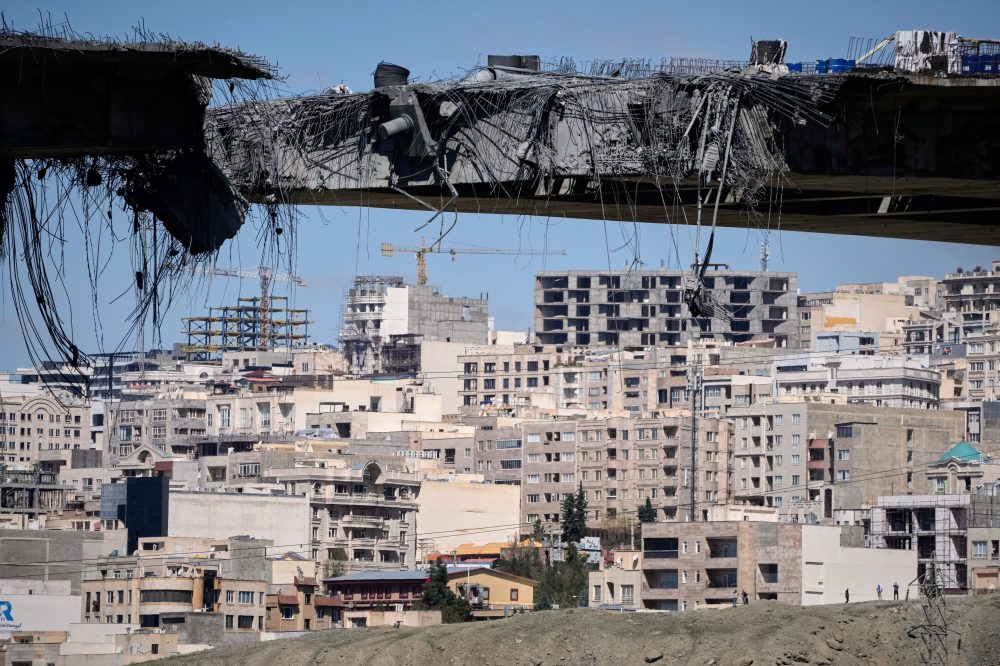
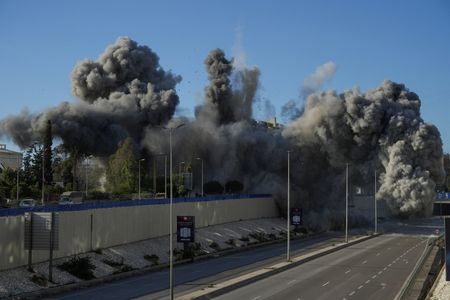
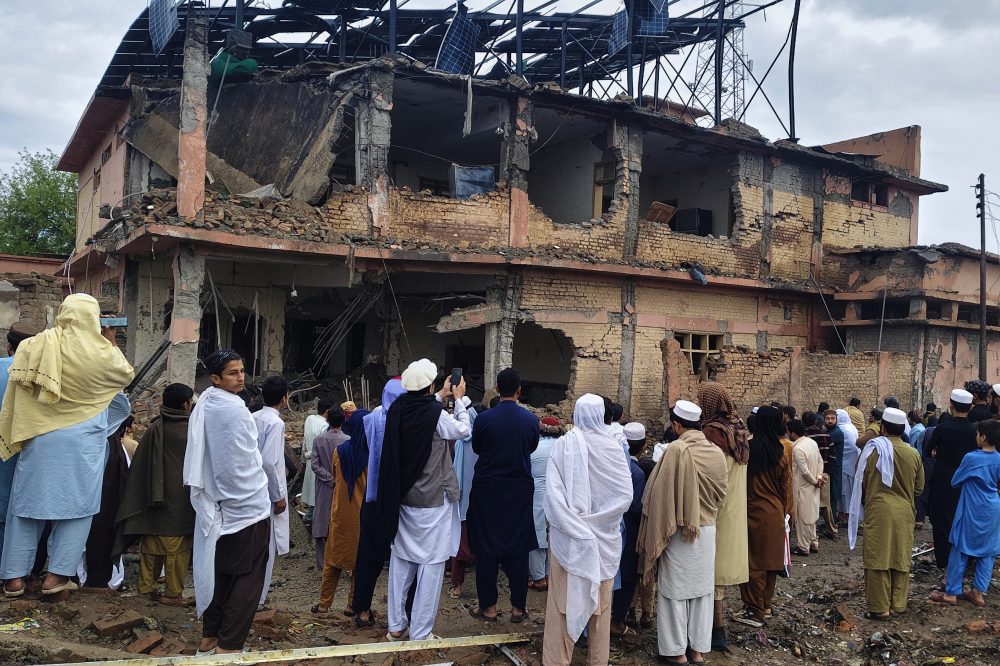
Lebanon’s armed forces announced Sunday that one of their personnel was fatally wounded during an Israeli military operation targeting the southern portion of the country.
The military confirmed the soldier’s death following the strike, though additional details about the circumstances surrounding the incident were not immediately provided.
The reported fatality represents the latest development in ongoing tensions between the neighboring nations along their shared border region.
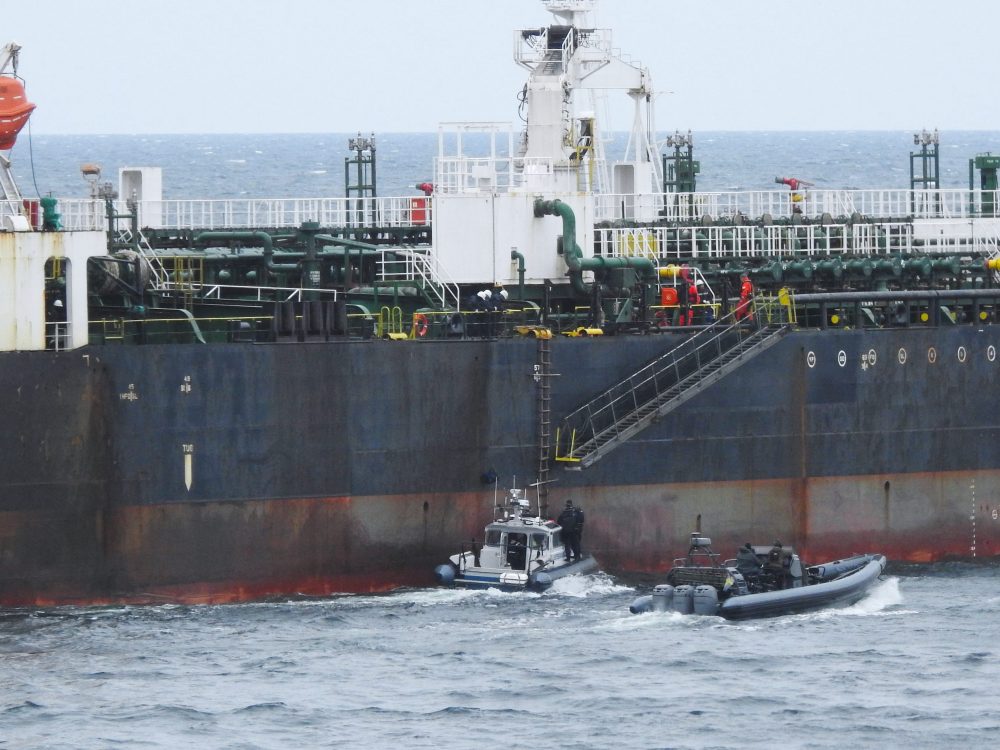
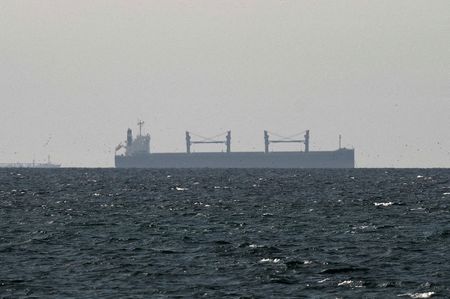
Swedish maritime officials have freed an oil tanker that faces European Union sanctions after determining there wasn’t enough proof the vessel caused an environmental disaster in Baltic waters.
Coast guard representatives announced they couldn’t establish adequate evidence linking the Flora 1 tanker to an 8-mile oil slick found last Thursday in the Baltic Sea.
Officials also confirmed that Cameroon verified the ship operated under their national flag, which remained uncertain when maritime authorities stopped the vessel and its 24 crew members on Friday, according to coast guard statements.
European Union officials placed the Flora 1 on their sanctions registry for transporting Russian petroleum while “practicing irregular and high-risk shipping practices.” These dangerous operations can involve disabling automatic tracking systems that broadcast vessel locations to nearby ships.
The penalties target what officials call a “shadow fleet” that developed following price restrictions on Russian petroleum implemented by the Group of Seven democratic nations to reduce funding for Russia’s Ukrainian military campaign. These restrictions work by preventing insurance and shipping companies from handling oil above the established price limit.
This maritime network consists of older tankers with ownership and insurance based in nations that ignore the price restrictions. The advanced age of these vessels and their lack of Western insurance coverage has created safety worries about potential spills and responsibility for cleanup costs.
According to Ukrainian government records, a Hong Kong corporation owned the Flora 1 as of late 2025, and the vessel also faces sanctions from Britain, Canada, Australia, Switzerland, and New Zealand. The ship has switched names six times and changed flag countries nine times. Maritime observers have documented the vessel disabling its automatic tracking system to conceal its whereabouts and conducting ship-to-ship transfers that can mask oil cargo origins.
Current sanctions prohibit any business dealings with the designated vessels.
An Israeli security official disclosed on April 5th that Israel contributed intelligence support to assist American forces in retrieving a U.S. airman who became stranded in Iran. According to the official, Israel also temporarily suspended its military operations in the region to ensure the rescue effort could be carried out successfully.
The cooperation between the two allies highlights the coordination that takes place behind the scenes during sensitive military operations in the Middle East. The Israeli official confirmed that the country’s intelligence services played a supporting role in helping American personnel safely extract their fellow serviceman from Iranian territory.
BEIJING – Chinese officials confirmed Sunday they executed a French national who had been on death row since 2010 for drug trafficking offenses, defending their judicial process amid criticism from France regarding the handling of the case.
The Chinese embassy in France issued a statement about the execution of 62-year-old Chan Thao Phoumy, who had served 20 years behind bars before his death sentence was carried out.
French foreign ministry officials expressed disappointment Saturday, stating they “particularly regretted” that Chan’s legal representatives were barred from attending the court’s final proceedings, which they said violated his legal rights.
As one of the nations with the harshest penalties for drug-related crimes worldwide, China has previously executed foreign nationals found guilty of smuggling substantial quantities of narcotics across its borders, though the government does not publicly release execution data.
Chan, who was born in Guangzhou in southern China but later became a naturalized French citizen, was among 89 individuals taken into custody in 2005 on drug trafficking charges. He initially received a life sentence in 2007.
A court in his birth city upgraded his sentence to death in 2010 due to his involvement in a drug enterprise valued at 100 million yuan (approximately $15 million) that manufactured, transported and distributed large quantities of crystal methamphetamine throughout China.
While China’s legal system allows for capital punishment when defendants are caught with as little as 50 grams of heroin or methamphetamine, executions typically occur in cases involving significantly larger trafficking operations.
ZURICH – Switzerland’s foreign ministry announced that Italy’s diplomatic representative will resume his duties in the country following a diplomatic standoff that lasted several months.
Ambassador Gian Lorenzo Cornado is scheduled to arrive in Bern on Monday, according to Swiss officials. His return comes after Italy withdrew him from his position in January as a formal protest against how Swiss authorities managed the aftermath of a catastrophic nightclub fire.
The deadly blaze occurred on New Year’s Day at a drinking establishment in the mountain resort town of Crans-Montana, claiming the lives of 41 individuals. Among the victims were six Italian citizens. The tragedy ranks among Switzerland’s most devastating disasters in recent decades.
Italian officials expressed strong objections when Swiss authorities decided to release the establishment’s owner on bail, prompting Rome to recall its ambassador as a diplomatic protest. The move highlighted tensions between the neighboring countries over the handling of the investigation and legal proceedings.
The Democratic Republic of Congo announced Sunday it has reached an agreement with the Trump administration to accept individuals being deported from the United States who are not Congolese nationals.
Officials in Kinshasa released a statement confirming the arrangement, which would see the Central African nation receive third-country nationals removed from U.S. territory under the new partnership deal.
The announcement marks a significant development in U.S. immigration policy, as the agreement provides an alternative destination for deportees who may not be accepted by their countries of origin.
Emergency crews successfully evacuated approximately 100 individuals from a military academy in Moscow after a fire broke out at the facility on Sunday, according to reports from Russian news agency TASS citing local officials.
Preliminary reports indicate that all personnel were safely removed from the structure with no one remaining inside during the incident.
A defense ministry representative told TASS that the blaze originated from an electrical short circuit that occurred at approximately 11:22 a.m. local time (8:22 a.m. GMT).
Hungarian Prime Minister Viktor Orban revealed Sunday that Serbian authorities discovered explosive devices at a crucial gas pipeline facility that connects Hungary and Serbia.
The Hungarian leader disclosed the information after speaking by phone with Serbian President Aleksandar Vucic about the security incident. Orban, who maintains a close political relationship with Vucic and is preparing for elections on April 12, shared details of the discovery through a social media announcement.
“Serbian authorities have found destructive explosives and the equipment needed for activation at the critical gas infrastructure connecting Serbia and Hungary. An investigation is underway. I have called an extraordinary defense council this afternoon,” Orban stated in his Facebook post.
The discovery prompted Orban to immediately schedule an emergency defense council meeting for Sunday afternoon as authorities work to determine the circumstances surrounding the explosive materials found at the strategic energy infrastructure.
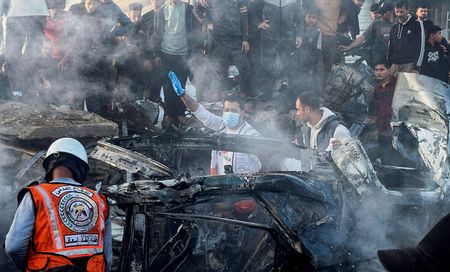
Medical officials in Gaza report that four Palestinians were killed Sunday when Israeli forces conducted an airstrike in the northern part of the territory, marking another deadly incident that threatens an already unstable ceasefire.
According to local medics, the strike hit a group of individuals on Jaffa Street near the Darraj neighborhood in Gaza City, resulting in four fatalities and additional injuries.
Israeli military officials have not yet provided a response regarding the incident.
Both Hamas militants and Israeli forces have accused each other of breaking the ceasefire terms that were established last October, bringing an end to two years of intense warfare.
Gaza’s health ministry reports that Israeli military actions have resulted in at least 700 Palestinian deaths since the ceasefire took effect. Israeli officials state that four of their soldiers have been killed by militants during the same timeframe.
Last week, representatives from Hamas met with mediators from Egypt, Qatar, and Turkey in Cairo to provide their preliminary response to a weapons surrender proposal that was presented to the organization last month, according to two Egyptian sources and a Palestinian official.
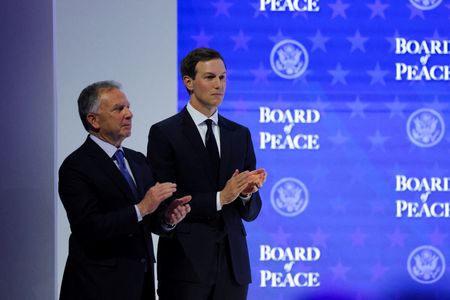
The organization has informed mediators it will not consider disarmament discussions without assurances that Israel will completely withdraw from Gaza, as outlined in President Donald Trump’s “Board of Peace” disarmament plan, three sources told Reuters on Thursday.
The question of Hamas giving up its weapons remains a major obstacle in negotiations to move forward with Trump’s plan for the Palestinian territory and strengthen the ceasefire agreement.
Israeli casualty figures show that Hamas’ attacks on October 7, 2023, resulted in 1,200 deaths.
The subsequent two-year Israeli military campaign has killed more than 72,000 Palestinians, with the majority being civilians according to Gaza health officials. The conflict has also caused widespread hunger, destroyed most structures, and forced repeated displacement of nearly the entire population.
A significant blaze erupted at one of Russia’s largest oil refineries following what officials describe as a drone strike, according to regional authorities.
The NORSI petroleum facility, which ranks as the nation’s fourth-largest refinery, caught fire after the unmanned aircraft attack, Nizhny Novgorod region Governor Gleb Nikitin announced via Telegram on Sunday.
The incident also caused damage to an electrical power facility and multiple residential properties in the area, Nikitin reported. Initial reports indicate no casualties resulted from the attack, the governor stated.
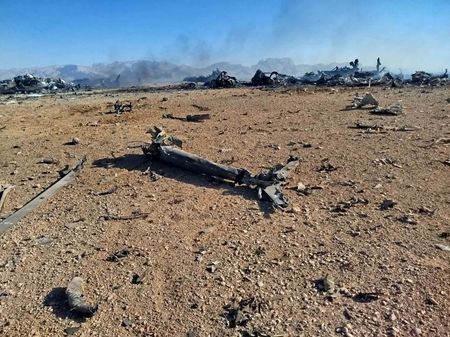
Iranian military forces claim they shot down multiple American military aircraft on Sunday during what officials described as a rescue operation for a stranded US pilot, according to reports from the Tasnim news agency.
The Revolutionary Guards announced that multiple hostile aircraft were eliminated during a coordinated military response involving various Iranian defense units. “During a joint operation (Aerospace, Ground Force, Popular Units, Basij and Police command), enemy flying objects were destroyed,” Iranian forces stated following reports that an American C-130 had been brought down south of Isfahan.
A representative from Khatam al-Anbiya Central Headquarters, which serves as the coordinated command center for Iran’s military branches, confirmed that the aircraft shot down included one C-130 military transport aircraft along with two Black Hawk helicopters.
Iranian army officials also reported earlier Sunday that they had successfully downed an Israeli unmanned aircraft in the same regional area.
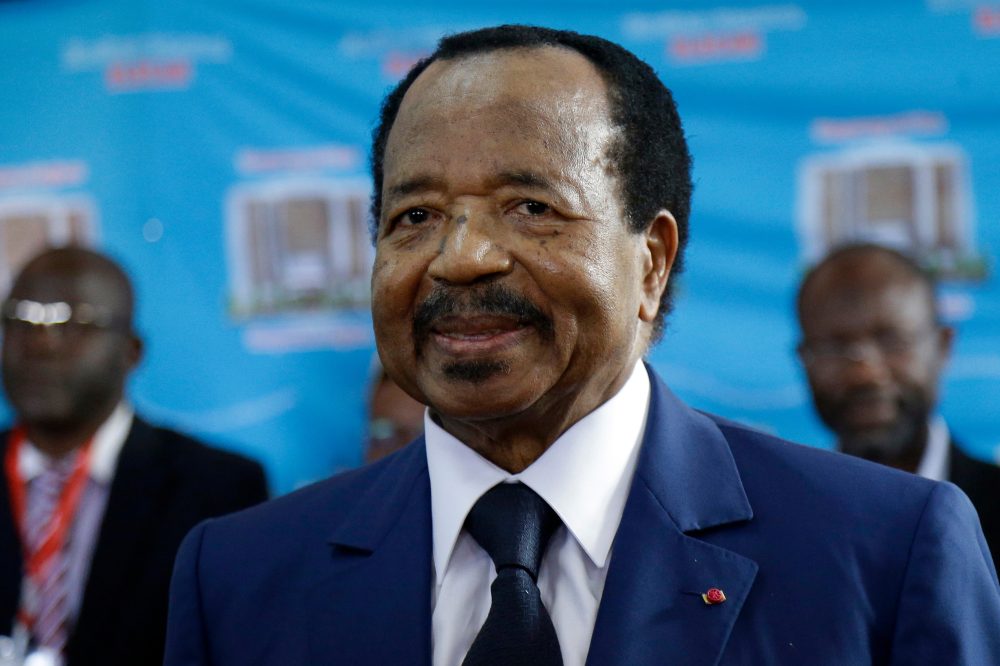
YAOUNDE, Cameroon — Legislators in Cameroon have voted decisively to restore the vice presidency role through a constitutional change that opposition leaders claim will expand the already extensive authority of 93-year-old President Paul Biya.
Biya stands as the globe’s most senior head of state and has governed the central African country for more than four decades since taking power in 1982. He secured his eighth presidential term in a contested election last year that drew widespread criticism.
During Saturday’s combined legislative session involving both chambers, lawmakers passed the controversial measure by a vote of 200 in favor, 18 opposed, and 4 abstentions. The primary opposition party refused to participate in the proceedings, and Biya is anticipated to formally enact the legislation.
Under the new constitutional provision, the elderly president gains complete discretion over the vice presidential role, including the power to select and remove the officeholder without restriction. The deputy would only possess authority specifically granted by Biya. Should the president pass away, step down, or become unable to serve, the vice president would assume temporary leadership for the balance of the seven-year term.
Legislators from the governing Cameroon People’s Democratic Movement praised the new law as essential for maintaining governmental continuity. Opposition voices, however, condemned the measure as an attack on democratic values that substitutes presidential selection for electoral legitimacy.
In an official statement, the opposition Social Democratic Front declared the constitutional change “fails to guarantee democratic legitimacy, inclusiveness, and proper institutional balance.”
SDF parliamentarian Fusi Namukong spoke to The Associated Press about his concerns regarding the legislation’s implications. “It’s not democratic. This is a republic, and in a republic, those who wield power at the highest level of the state should be elected and not appointed,” Namukong stated, adding that the law creates conditions for monarchical rule.
The Cameroon Bar Association has also expressed alarm, cautioning that the amendment “erodes the democratic legitimacy (of) the presidential office” and weakens the nation’s constitutional framework.
Cameroon eliminated the vice presidential position in 1972 through a constitutional vote.
Questions about Biya’s physical condition have persisted as he frequently travels to Europe for extended periods, delegating administrative duties to senior party members and relatives. His victory in the 2025 election triggered significant demonstrations that resulted in at least four fatalities, highlighting increasing friction between the nation’s predominantly youthful population and its elderly president.
Egypt’s private sector economy outside the oil industry experienced its steepest decline in nearly two years during March, as ongoing Middle East warfare increased business expenses and reduced customer demand, according to a key business survey released Sunday.
The S&P Global Egypt Purchasing Managers’ Index dropped for the fourth month in a row, falling to 48.0 in March compared to 48.9 in February. This marked the weakest performance since April 2024.
The index stayed below the critical 50.0 mark that indicates whether business activity is expanding or shrinking, though it remained close to the survey’s historical average of 48.2.
Production levels and incoming orders were the primary factors pulling down the index, with both measurements reaching their weakest points in almost two years. Companies consistently pointed to the regional conflict as reducing customer demand, particularly as it intensified pricing pressures.
For the first time, business outlook for the next year turned negative, with firms pointing to war-related uncertainty as a primary source of pessimism, although the level of concern was characterized as moderate.
Despite the decline, David Owen, senior economist at S&P Global Market Intelligence, observed that “the latest figure of 48.0 still relates to annual GDP growth of around 4.3%,” and noted that “recent data suggests the domestic non-oil sector is on a solid underlying growth path.”
Rising expenses continued to pose significant challenges for businesses. Input costs jumped at their steepest rate in 18 months, with companies reporting higher fuel expenses and other war-driven commodity price increases, made worse by a strengthening U.S. dollar.
Companies responded by increasing their prices at the quickest pace in 10 months, although the overall price hikes remained relatively small.
Iranian officials carried out death sentences Sunday for two men who were found guilty of attempting to break into a military installation and gain access to weapons during January’s civil unrest, according to the country’s judicial news service Mizan.
The executed individuals were named as Mohammadamin Biglari and Shahin Vahedparast, who were part of a four-person group facing capital punishment in the same legal proceeding, human rights organization Amnesty International reported.
Iran’s highest court confirmed the death penalties for the pair, who were classified among “rioters who sought to commit mass murder” through their alleged attempts to obtain firearms and military supplies, the judicial outlet reported.
The executions follow last week’s killing of 18-year-old Amirhossein Hatami, who received the death penalty in the identical case connected to the country-wide demonstrations against the government that Iran’s Islamic Republic violently suppressed in what represents the most extensive government crackdown in the nation’s modern era.
Amnesty International’s latest findings indicate that 11 men currently face the possibility of immediate execution for their involvement in the protest activities.
According to the human rights group, these individuals were “subjected to torture and other ill-treatment in detention” prior to being found guilty in “grossly unfair trials that relied on forced confessions.”
TEL AVIV, Israel — Humanitarian organizations are sounding the alarm that ongoing Middle East warfare is severely hampering their capacity to deliver essential food and medical supplies to millions of vulnerable people worldwide, warning that continued violence will worsen the crisis.
The conflict has not only blocked crucial shipping lanes and triggered a worldwide energy crisis, but has also thrown supply chains into chaos for relief organizations, compelling them to rely on more expensive and lengthy alternative routes.
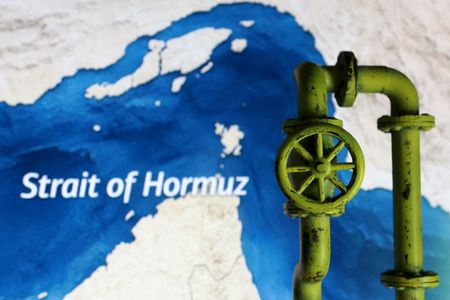
Critical waterways like the Strait of Hormuz have been essentially closed off, while shipping routes from major logistical centers including Dubai, Doha and Abu Dhabi have also suffered disruptions. Transportation expenses have skyrocketed due to increased fuel prices and insurance premiums, resulting in fewer supplies being delivered for the same budget.
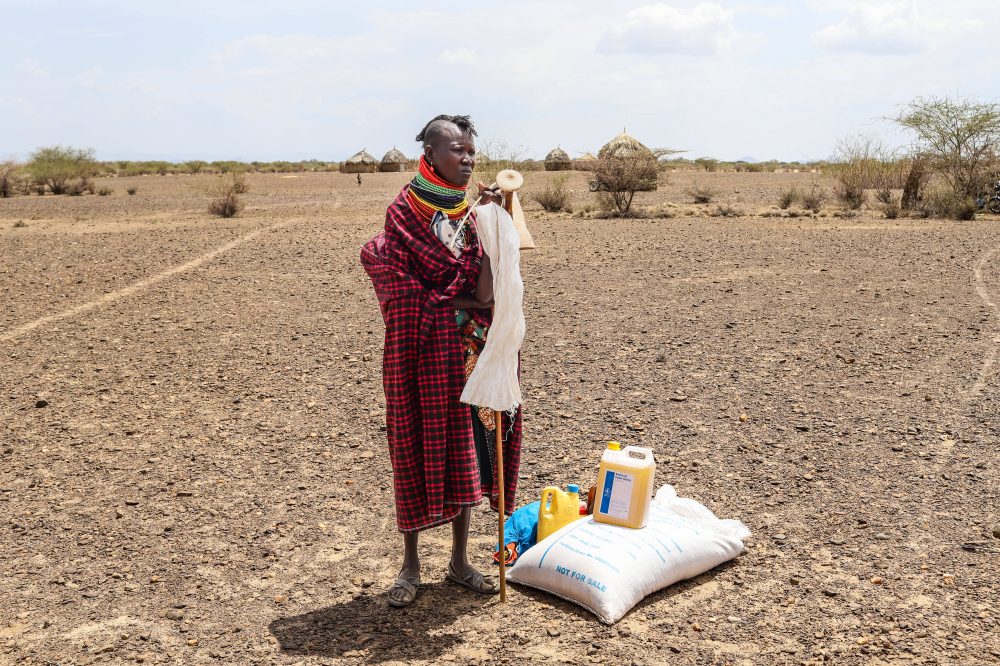
The World Food Program reports tens of thousands of metric tons of food supplies experiencing significant transit delays. The International Rescue Committee has pharmaceuticals worth $130,000 destined for conflict-ravaged Sudan sitting stranded in Dubai, while nearly 670 containers of therapeutic nutrition for severely undernourished children in Somalia remain stuck in India. The U.N. Population Fund indicates delays in shipping equipment to 16 nations.
Dramatic U.S. reductions in foreign aid funding had already weakened numerous relief organizations, who report the conflict is making matters worse.
United Nations officials describe this as the most severe supply chain breakdown since the COVID pandemic, with shipping costs rising up to 20% and significant delays as cargo gets redirected. The warfare is also generating fresh humanitarian crises, including in Iran and Lebanon where at least one million people have been forced from their homes.
“The war on Iran and disruption to the Strait of Hormuz risk pushing humanitarian operations beyond their limits,” stated Madiha Raza, associate director for public affairs and communications for Africa for the International Rescue Committee.
She noted that even after hostilities end, the damage to worldwide supply networks could continue delaying life-saving assistance for months.
The conflict has compelled organizations to develop alternative transportation methods, with some avoiding the Strait of Hormuz and Suez Canal entirely and sending ships around Africa, extending delivery times by weeks.
Other groups are employing combined approaches using land, sea and air transport, which increases expenses.
Jean-Cedric Meeus, chief of global transport and logistics for UNICEF, explained his organization is utilizing mixed land and air routes to deliver vaccines to Nigeria and Iran to meet vaccination campaign deadlines, though costs have surged.
Prior to the war, UNICEF shipped vaccines to Iran via direct flights from suppliers worldwide. Currently, vaccines are flown to Turkey and transported overland into Iran, increasing costs by 20% and adding 10 days to delivery schedules, he explained.
Save the Children International, which previously shipped supplies via ocean freight from Dubai to Port Sudan, must now truck materials from Dubai through Saudi Arabia and transport them by barge across the Red Sea. This route extends delivery by 10 days and raises costs approximately 25%, while over 19 million Sudanese face severe food shortages. The delays threaten more than 90 primary healthcare facilities across Sudan with running out of vital medicines.
Price increases also force organizations to make difficult priority decisions.
“In the end, you sacrifice either the number of children that you serve … or you sacrifice the number of items that you can afford to buy,” explained Janti Soeripto, president of Save the Children for the United States. The organization maintains stockpiles in countries where it operates, but some could be depleted within weeks.
Increased costs are also affecting people’s ability to access help within their own countries.
Doctors Without Borders reported that rising fuel costs across Somalia — where approximately 6.5 million people face acute food insecurity — have increased transportation and food expenses, making healthcare access more difficult. In Nigeria, the IRC reports fuel prices have jumped 50% and medical facilities are struggling to power equipment like generators, while mobile health teams have reduced operations.
Global hunger represents one of the most serious concerns regarding the war’s impact.
WFP cautions that if fighting continues through June, an additional 45 million people will face acute hunger, adding to nearly 320 million people experiencing food insecurity globally.
Approximately 30% of the world’s fertilizer passes through the Strait of Hormuz, and with planting seasons approaching in regions like East Africa and South Asia, small farmers in developing nations will face severe hardships. Sudan imports over half its fertilizer from the Gulf region while Kenya receives roughly 40% from there, according to aid organizations.
The U.N. secretary-general has created a task force to facilitate fertilizer trade — based on the Black Sea Grain Initiative model. However, aid groups argue this won’t suffice. Without a ceasefire, governments must provide additional funding for organizations to address rising expenses, they maintain.
Humanitarian specialists note a slower international funding response during this conflict compared to previous wars like Ukraine, possibly reflecting increased pressure to prioritize security investments over aid during global instability.
“They’re making hard choices between defense security and humanitarian aid,” said Sam Vigersky, an international affairs fellow at the Council on Foreign Relations who has analyzed the war’s impact on aid.
He noted that while the U.S. typically includes aid provisions when engaging in warfare, it hasn’t been “activating” those provisions. “It’s not a capacity issue, it’s a policy decision,” he stated.
Tommy Pigott, principal deputy spokesperson for the U.S. State Department, emphasized that the U.S. has been the “most generous country in the world” regarding humanitarian assistance.
The department announced it’s providing an additional $50 million in emergency aid to Lebanon, including support for the World Food Program, and is collaborating closely with the United Nations and other organizations to address humanitarian requirements.
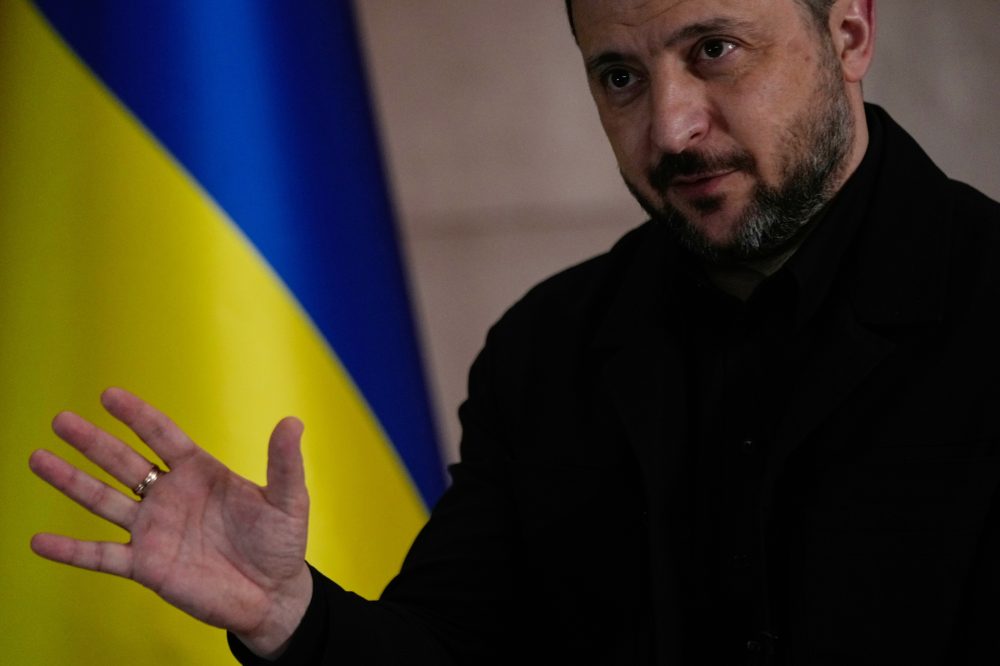
Ukrainian President Volodymyr Zelenskyy has voiced worries that an extended Middle East conflict involving Iran could diminish America’s military assistance to Ukraine, particularly affecting shipments of vital Patriot missile defense systems.
During an exclusive interview with The Associated Press in Istanbul on Saturday, Zelenskyy emphasized Ukraine’s urgent need for additional U.S.-manufactured Patriot defense systems to defend against Russia’s daily missile attacks.
Russia’s continuous bombardment of civilian areas since launching its full-scale invasion over four years ago has resulted in thousands of civilian deaths. Moscow has also systematically attacked Ukraine’s power infrastructure to disrupt production of Ukraine’s domestically developed weapons while depriving citizens of heating and water during winter months.
“We have to recognize that we are not the priority for today,” Zelenskyy said. “That’s why I am afraid a long (Iran) war will give us less support.”
Recent U.S.-mediated negotiations between Russian and Ukrainian representatives concluded in February without any progress. Zelenskyy, who has criticized Russia for “trying to drag out negotiations” while continuing its offensive, confirmed Ukraine maintains communication with American negotiators regarding a possible agreement to conclude the conflict and continues pushing for enhanced security assurances.
However, he noted that even these conversations demonstrate a wider shift in attention away from Ukraine.
Zelenskyy’s primary worry centers on Patriot systems — crucial for stopping Russian ballistic missiles — since Ukraine currently has no viable substitute.
These American defense systems were never provided in adequate numbers initially, Zelenskyy explained, and if the Iran conflict continues, “the package — which is not very big for us — I think will be smaller and smaller day by day.”
“That’s why, of course, we are afraid,” he said.
Zelenskyy had hoped European allies would assist with Patriot acquisitions despite tight availability and restricted U.S. manufacturing capacity.
However, the Iran conflict, now entering its sixth week, has created ripple effects throughout the global economy and drawn in much of the broader Middle East, further stretching these already scarce resources, redirecting stockpiles and leaving Ukrainian cities more vulnerable to missile strikes.
For Ukraine, a primary goal involves weakening Russia’s economy and making the conflict financially unsustainable. Rising oil prices caused by Iran’s blockade of the Strait of Hormuz are undermining this approach by increasing the Kremlin’s petroleum revenues and strengthening Moscow’s ability to continue its military campaign.
During his AP interview, Zelenskyy noted that Russia benefits economically from the Middle East conflict, pointing to the partial relaxation of American sanctions on Russian oil.
“Russia gets additional money because of this, so yes, they have benefits,” he said.
To maintain Ukraine’s prominence on the international stage, Zelenskyy has proposed sharing Ukraine’s combat experience with the United States and allies to create effective defenses against Iranian attacks.
Ukraine has countered Russia’s evolving deployment of Iranian-manufactured Shahed drones with increasing sophistication, technological creativity and cost efficiency.
Russia substantially altered the original Shahed-136, renaming it the Geran-2, improving its capacity to avoid air defenses and enable mass production. Ukraine countered with rapid innovations, including affordable interceptor drones designed to track and eliminate incoming threats.
Zelenskyy indicated Ukraine is prepared to share with Gulf Arab nations targeted by Iran its knowledge and technology, including interceptor drones and naval drones, which Ukraine manufactures in surplus quantities with funding from American and European partners.
In exchange, these nations could assist Ukraine “with anti-ballistic missiles,” Zelenskyy said.
In late March, as the Iran conflict intensified, Zelenskyy traveled to Gulf Arab states to promote Ukraine’s unique expertise in countering Iranian-made Shahed drones, resulting in new defense cooperation partnerships.
Zelenskyy has also presented Ukraine as a potential ally in protecting global shipping lanes, offering help in reopening the Strait of Hormuz by sharing Ukraine’s knowledge of securing maritime passages in the Black Sea.
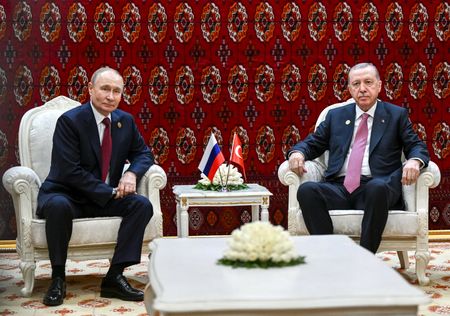
Zelenskyy was in Istanbul for discussions with President Recep Tayyip Erdogan, one day after the Turkish leader conversed with Russian President Vladimir Putin.
Zelenskyy said they explored peace negotiations and a potential leaders’ summit in Istanbul. He also mentioned that new defense agreements between the two nations could be finalized soon.
Each year as weather conditions improve, Russia intensifies its grinding war of attrition. Nevertheless, it has failed to capture Ukrainian cities and has achieved only marginal advances across rural territories. Russia controls approximately 20% of Ukraine, including the Crimean Peninsula, which Russia annexed in 2014.
Along the roughly 1,250-kilometer (750-mile) battle line extending across eastern and southern Ukraine, undermanned Ukrainian forces are preparing for a renewed offensive by Russia’s larger military.
The commander-in-chief of Ukraine’s armed forces, Gen. Oleksandr Syrskyi, reported that Russian forces have recently made coordinated attempts to penetrate defense positions in multiple strategic locations.
One principle Zelenskyy says he has maintained and will continue to uphold — territorial concessions and surrendering land will not be part of Ukraine’s negotiating position.
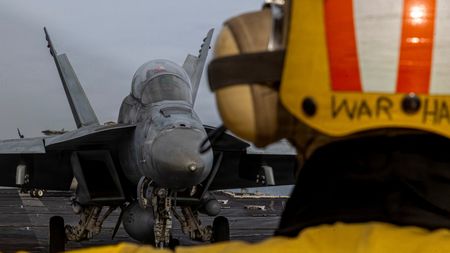
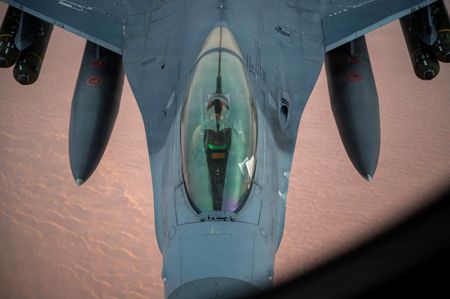
A U.S. military pilot who disappeared after Iranian forces brought down an American fighter aircraft has been successfully recovered, President Donald Trump announced on social media early Sunday morning.
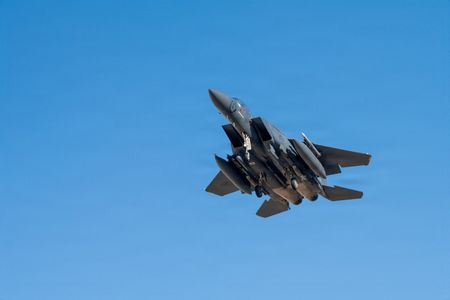
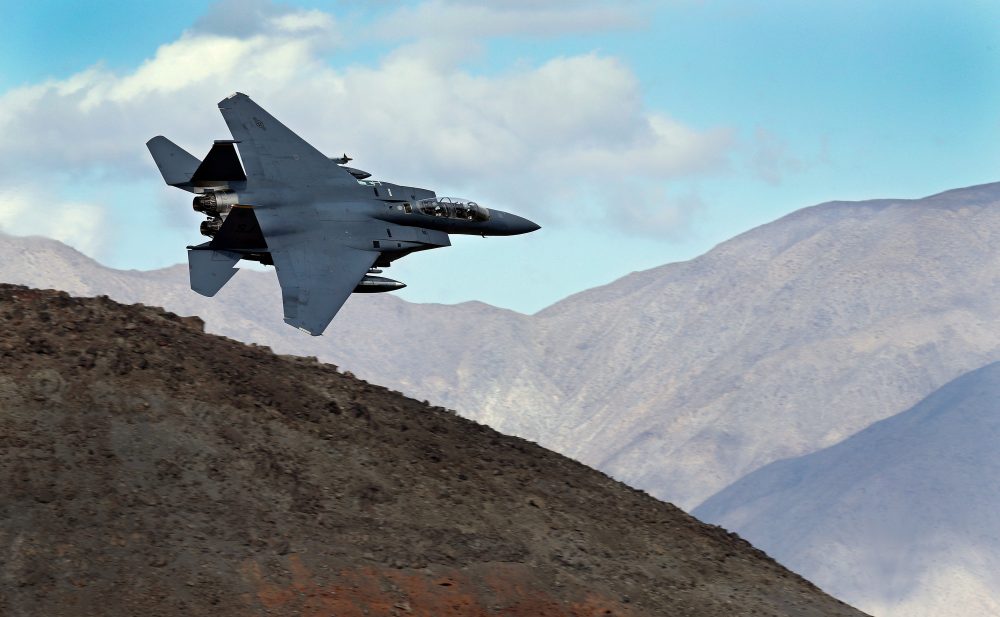
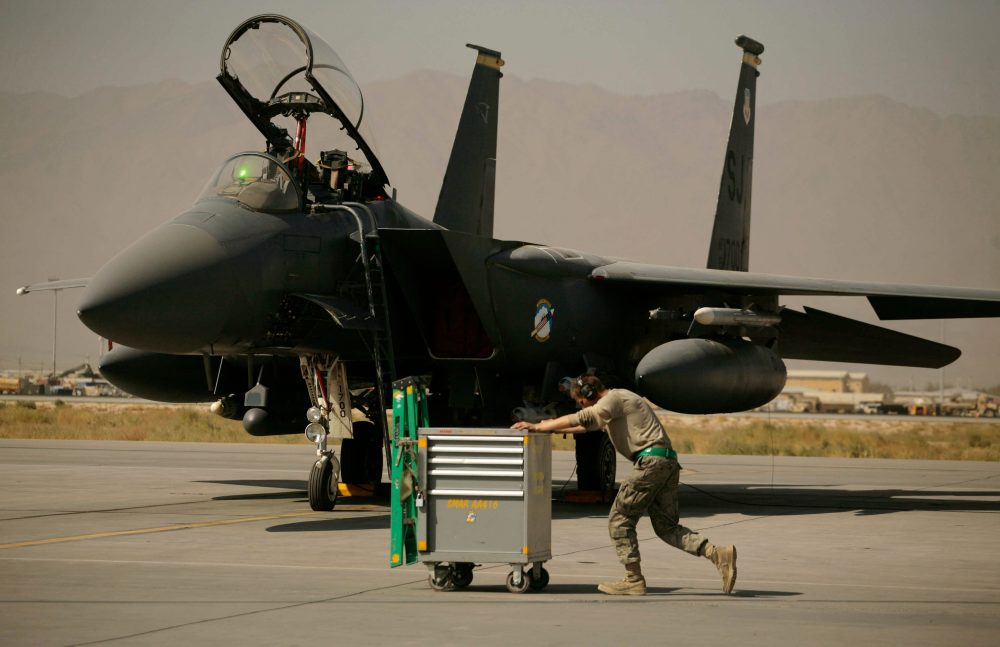
The rescue operation concluded an intense search effort that began Friday when an F-15E Strike Eagle fighter jet crashed, with Iranian authorities offering bounties for anyone who could capture the “enemy pilot.” Another crew member from the same aircraft had been recovered in an earlier operation.
“This brave Warrior was behind enemy lines in the treacherous mountains of Iran, being hunted down by our enemies, who were getting closer and closer by the hour,” Trump wrote.
According to Trump’s statement, the rescued aviator sustained injuries but “will be just fine.” The president detailed that the recovery mission utilized “dozens of aircraft” and that American forces had maintained constant surveillance of the pilot’s position “24 hours a day, and diligently planning for his rescue.”
This marks the initial U.S. military aircraft lost over Iranian soil since hostilities commenced in late February.
Trump declared last week that America had “decimated” Iran and would conclude the conflict “very fast.” However, just two days following that statement, Iranian forces successfully destroyed two U.S. military aircraft, demonstrating the continued dangers of the aerial campaign and Iran’s capacity to retaliate despite military setbacks.
The conflict initiated with combined U.S.-Israel military strikes on February 28 and has resulted in thousands of casualties, disrupted international markets, blocked critical shipping lanes, and driven up energy costs. Both nations have targeted and struck civilian infrastructure, prompting warnings about potential war crimes.
The second aircraft lost was a U.S. A-10 attack plane. Military officials have not disclosed the condition of that crew or the precise crash location.
Trump issued fresh ultimatums for Iran to reopen the Strait of Hormuz, a vital passage for worldwide energy transport that Tehran has blocked, demanding compliance by Monday or threatening severe retaliation. In a Saturday social media message, he stated: “Remember when I gave Iran ten days to MAKE A DEAL or OPEN UP THE HORMUZ STRAIT. Time is running out — 48 hours before all Hell will reign down on them.”
Iranian General Ali Abdollahi Aliabadi from the nation’s joint military command responded Saturday evening through state media, warning that “The doors of hell will be opened to you” if Iran’s infrastructure faces attack. The general also threatened all U.S. military facilities throughout the region.
Meanwhile, Pakistan’s Foreign Ministry spokesperson Tahir Andrabi informed The Associated Press that his nation’s ceasefire mediation efforts remain “right on track” following Islamabad’s announcement last week about hosting upcoming U.S.-Iran negotiations.
Iran’s foreign minister Abbas Araghchi stated that Iranian representatives “have never refused to go to Islamabad.”
Diplomatic sources indicate that mediators from Pakistan, Turkey, and Egypt are working to facilitate negotiations between Washington and Tehran, according to two regional officials.
The potential agreement involves halting military actions to enable diplomatic resolution, based on information from a regional official participating in the mediation and a Gulf diplomat briefed on the discussions. Both sources requested anonymity due to the confidential nature of the diplomatic process.
A U.S. official, speaking anonymously about sensitive military matters, confirmed that another American Air Force combat aircraft went down in the Middle East on Friday. The circumstances remain unclear regarding whether the plane crashed or was shot down, and Iranian involvement has not been confirmed.
Iranian state media reported that their defense forces struck down a U.S. A-10 attack aircraft over the Persian Gulf.
Mohammad Bagher Qalibaf, Iran’s parliamentary speaker, issued an indirect threat Friday evening to disrupt shipping through the Bab el-Mandeb, another strategically important regional waterway.
This passage, spanning 32 kilometers (20 miles), connects the Red Sea with the Gulf of Aden and Indian Ocean. Over ten percent of global seaborne oil shipments and twenty-five percent of container vessels transit through this strait.
“Which countries and companies account for the highest transit volumes through the strait?” Qalibaf wrote.
Casualty figures show more than 1,900 deaths in Iran since fighting began.
In Gulf Arab nations and the occupied West Bank, over two dozen people have perished, while Israel reports 19 deaths and the U.S. military has lost 13 service members. Lebanon has experienced more than 1,400 fatalities with over one million people displaced, while ten Israeli soldiers have died in that country.
The U.S. military successfully retrieved an injured American pilot after conducting what officials described as an extraordinarily bold rescue mission in Iran, government sources confirmed early Sunday morning.
The operation concluded a high-stakes crisis for President Donald Trump as the conflict with Iran enters its sixth week, after Iranian forces shot down an American F-15 fighter aircraft.
In a statement released through White House Press Secretary Karoline Leavitt on social media platform X, Trump described the mission as exceptional. “Over the past several hours, the United States Military pulled off one of the most daring Search and Rescue Operations in U.S. History,” the statement read.
While Trump confirmed the rescued crew member sustained injuries, he assured the public that “he will be just fine.”
Iranian officials announced Friday that their air defense systems had successfully targeted the F-15, which carried two personnel. News reports from Friday indicated that military forces had already recovered the first crew member, sparking an intense competition between Iranian and American forces to locate the remaining pilot.
Military officials have confirmed the successful recovery of an American service member who had been missing since Iranian forces downed a U.S. fighter aircraft on Friday.
Two defense officials, speaking anonymously before any formal Pentagon announcement, revealed Sunday that the airman was found following an intensive search and rescue mission. The crew member had been unaccounted for since Iran destroyed a U.S. F-15E Strike Eagle. Military personnel had already recovered a second crew member from the same aircraft earlier.
The incident has intensified tensions in what has now become a six-week military engagement. Iran’s destruction of two American military aircraft, combined with their public appeal to locate the “enemy pilot,” has significantly escalated the conflict.
President Donald Trump has issued an ultimatum to Iran regarding the strategically vital Strait of Hormuz, setting Monday as his deadline for the waterway to remain accessible.
The military confrontation, which commenced with coordinated American-Israeli operations on February 28, has resulted in thousands of casualties and created widespread global disruption. International markets have experienced significant volatility, critical maritime shipping lanes have been blocked, and energy costs have surged dramatically.
Both nations have targeted civilian infrastructure and issued threats against non-military sites, prompting international concerns about potential violations of warfare laws.
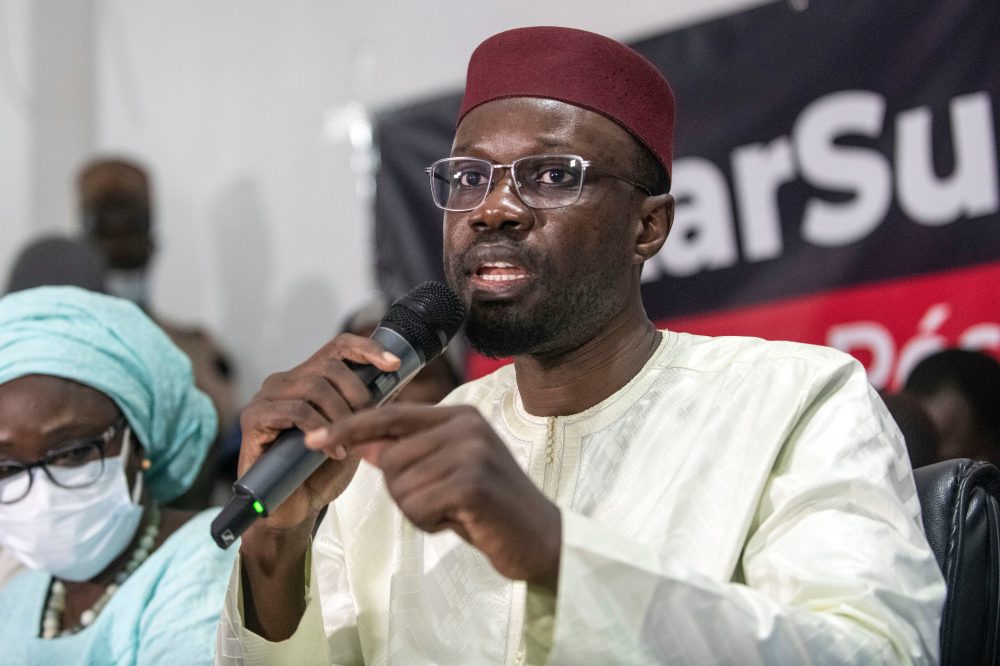
The conflict’s economic ripple effects are being felt worldwide, with Senegal announcing travel restrictions for government officials as part of emergency cost-cutting measures. Prime Minister Ousmane Sonko explained that his administration is implementing severe spending limitations due to the energy crisis.
“I have taken a number of drastic measures to restrict everything related to government spending, including the cancellation of all nonessential missions abroad,” Sonko stated to the government publication Le Soleil.
Senegal’s economy faces particular vulnerability since the nation imports the majority of its petroleum needs. The shipping disruptions in the Strait of Hormuz have caused crude oil prices to nearly double from the projected $62 per barrel to approximately $120.
American consumers are experiencing the conflict’s impact through rising mortgage rates, which have climbed to 6.46% this week – the highest level in nearly seven months. The increase represents a significant jump from late February rates of just under 6%.
“The war in Iran has seriously complicated the spring buying season,” explained Joel Berner, a senior economist with Realtor.com. “I expect that many buyers will be put off by rising rates and mounting economic uncertainty, choosing to bide their time rather than jumping on board for a purchase before rates go up.”
South Korea’s Finance Minister Koo Yun-cheol held discussions with diplomatic representatives from Gulf nations on Friday to address concerns about energy security and maritime safety in a crucial shipping corridor, according to a ministry announcement released Sunday.
During the diplomatic meeting, Koo requested that ambassadors from the Gulf Cooperation Council guarantee continued deliveries of oil, liquefied natural gas, naphtha, urea and other essential materials. He also emphasized the need for protection of South Korean ships and their crews operating near the strategically important Strait of Hormuz.
The diplomatic envoys responded by describing South Korea as a “top priority” nation and promised to maintain close coordination with Seoul to guarantee reliable supply chains, according to the ministry’s official statement.
South Korea, similar to many other Asian nations, depends significantly on imported energy resources, much of which travels through the Strait of Hormuz. This waterway previously handled 20% of global oil shipments before conflict erupted on February 28 when the U.S. and Israel initiated military action. Iran’s subsequent actions have essentially blocked the passage, causing energy costs to surge and raising concerns about potential worldwide economic downturn.
The Gulf Cooperation Council includes six member nations: Saudi Arabia, United Arab Emirates, Qatar, Kuwait, Oman and Bahrain.
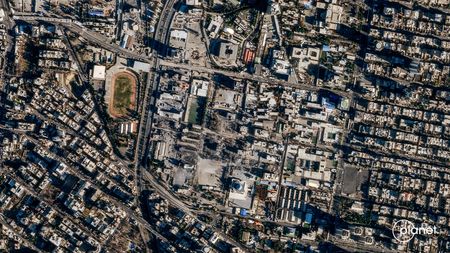
A major satellite imaging company has announced it will stop releasing pictures of Iran and Middle East war zones indefinitely after receiving a directive from the U.S. government.
Planet Labs, headquartered in California, informed its customers via email on Saturday that federal officials had requested all satellite imagery companies halt distribution of visuals from the conflict areas.
This new restriction builds on a previous two-week delay the company had already put in place last month for Middle Eastern imagery. Planet Labs had explained that earlier measure was designed to stop enemies from using their satellite pictures to target American forces and allied nations.
According to the company’s announcement, they will block all imagery going back to March 9 and anticipate maintaining this policy until hostilities conclude.
The current conflict started when American and Israeli forces struck Iran on February 28. The situation escalated across the region after Iran retaliated with its own strikes against Israeli targets and U.S. military installations in Gulf nations, including Saudi Arabia, Kuwait and Bahrain.
Satellite technology serves multiple military functions, including identifying targets, guiding weapons systems, tracking missiles and enabling communications. Defense experts warn that Iran may be obtaining commercial satellite images through adversarial nations. These images also provide valuable information for news organizations and researchers studying remote locations.
Planet Labs operates an extensive network of Earth-observation satellites and markets regularly updated imagery to government agencies, private companies and media organizations. The company declined to provide additional comments when contacted.
Pentagon officials stated they do not discuss matters related to intelligence operations.
In their customer notification, Planet Labs explained they would transition to a “managed distribution of images” system for visuals determined to be safe for release. This new approach will allow the company to provide imagery on an individual basis for urgent operational needs or matters of public importance.
“These are extraordinary circumstances, and we are doing all we can to balance the needs of all our stakeholders,” the company stated in their message.
Vantor, previously known as Maxar Technologies, told reporters they had not received contact from federal authorities. A company representative explained that Vantor has long maintained policies allowing them to “implement enhanced access controls during times of geopolitical conflict” and currently applies such measures to portions of the Middle East.
These restrictions may limit who can order new satellite images or purchase existing photographs of areas where American military and allied forces are “actively operating,” as well as locations “actively targeted by adversaries,” according to the spokesperson.
BlackSky Technology, another commercial satellite provider contacted for comment, had not responded by publication time.
President Donald Trump and Israeli leaders intensified their demands on Iran Saturday, threatening attacks on energy facilities unless Tehran reopens the crucial Strait of Hormuz shipping lane, as military forces from both nations continue searching for a missing American service member.
The president issued a stark 48-hour ultimatum to Iran, marking the latest escalation in the six-week-old conflict that began with coordinated U.S.-Israeli strikes on February 28.
“Remember when I gave Iran ten days to MAKE A DEAL or OPEN UP THE HORMUZ STRAIT. Time is running out — 48 hours before all Hell will reign (sic) down on them. Glory be to GOD!” Trump posted on Truth Social.
Throughout the conflict, Trump’s public statements have alternated between suggesting diplomatic breakthroughs and threatening to bomb Iran “back to the Stone Ages.”
Following Trump’s ultimatum, a high-ranking Israeli defense official revealed that Israel is preparing strikes against Iranian energy infrastructure and awaits U.S. authorization. The official indicated such operations could occur within the coming week, aligning with Trump’s previous threats against Iranian power facilities.
Tehran responded with its own warning, telling U.S. and Israeli forces that the “entire region will become a hell for you” if military actions continue to escalate, Iranian media outlets reported.
The conflict has reached a critical juncture as it enters its sixth week, with American forces facing the possibility of a service member captured or hiding within Iranian territory, diminishing prospects for diplomatic resolution, and declining domestic support for the military campaign.
Despite Iran’s unwavering stance since hostilities began, Foreign Minister Abbas Araqchi indicated potential openness to peace negotiations through Pakistani mediation, though he showed no indication of yielding to American demands.
“We are deeply grateful to Pakistan for its efforts and have never refused to go to Islamabad. What we care about are the terms of a conclusive and lasting END to the illegal war that is imposed on us,” Araqchi wrote on social media platform X.
Following a fourth strike near the Bushehr nuclear facility Saturday, Araqchi sent a letter to the United Nations warning of an “intolerable situation that poses a serious risk of radiological release,” according to Iranian state media.
The ongoing warfare has resulted in thousands of casualties, triggered a global energy crisis, and threatens long-term economic damage worldwide. Iran has effectively closed the Strait of Hormuz, a waterway that typically handles approximately one-fifth of global oil and liquefied natural gas shipments.
Iranian forces have launched extensive drone and missile attacks against Israel while also targeting Gulf nations allied with the United States, though these countries have avoided direct military involvement to prevent further escalation.
Iranian state television reported military strikes against U.S. radar facilities and an American-linked aluminum facility in the United Arab Emirates, as well as U.S. military command centers in Kuwait, describing these as retaliation for deadly attacks on Iranian industrial sites.
Earlier, Iranian forces targeted an Israeli-connected vessel with a drone attack in the strait, igniting the ship, state media reported, citing the Revolutionary Guards naval commander.
Yemen’s Iran-supported Houthis announced Saturday they had launched ballistic missiles and drones at Israel in coordination with Iran’s Revolutionary Guards, the Iranian military, and Lebanon’s Hezbollah. The group provided no evidence of resulting damage.
Israeli officials have not acknowledged the reported attack.
The loss of two American military aircraft demonstrates ongoing risks for U.S. and Israeli pilots, despite claims by Trump and Defense Secretary Pete Hegseth that American forces maintain complete aerial dominance over Iran.
Iranian defensive fire brought down a two-person U.S. F-15E fighter jet, with officials from both countries confirming Friday that rescue teams recovered one crew member.
Two Black Hawk helicopters involved in the search mission for the missing airman came under Iranian fire but successfully escaped Iranian airspace, U.S. officials told Reuters.
Iran’s Islamic Revolutionary Guard Corps reported conducting search operations in a southwestern region near the downed aircraft’s crash site, while the local governor offered rewards for anyone who captures or kills “forces of the hostile enemy.”
In a separate incident, an A-10 Warthog attack aircraft was struck and crashed over Kuwait, with the pilot successfully ejecting, according to U.S. officials.
Iranians, who have endured weeks of aerial bombardment since the U.S.-Israeli campaign began, celebrated these defensive victories.
The Khatam al-Anbiya joint military command announced the deployment of a new air defense system Friday, which successfully engaged a U.S. fighter aircraft, three unmanned drones, and two cruise missiles.
“The enemy should know that we rely on new air-defence systems built by the young, knowledgeable, and proud people of this country, unveiling them one after another in the field,” a Khatam al-Anbiya representative stated, according to Iranian state media.
The Revolutionary Guards reported launching multiple missiles and drones targeting various locations across Israel. Israeli media confirmed that two warheads from an Iranian cluster munition struck near Israel’s Kirya military headquarters in Tel Aviv.
Later Saturday, the Israel Defense Forces detected additional missiles fired from Iran toward Israeli territory.
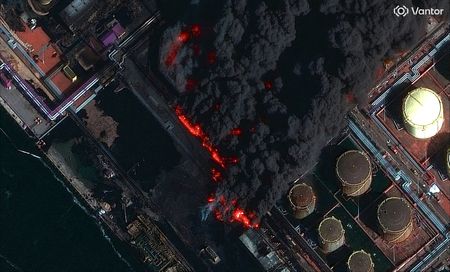
Iranian state media documented airstrikes at a petrochemical complex in southwestern Iran, resulting in five injuries. Officials later reported that fires at the facility had been extinguished.
Israeli Prime Minister Benjamin Netanyahu confirmed Israel conducted the strike against the plant, which an Israeli military spokesperson said manufactured materials for explosives and missile production.
Israel continues conducting a separate military campaign against Iran-backed Hezbollah forces in Lebanon after the militant organization launched attacks against Israel in support of Iran.
Early Saturday, Israeli military forces announced strikes against militant infrastructure locations in Beirut. Officials later confirmed an Israeli soldier was killed during combat operations in southern Lebanon.
Security concerns are mounting across Europe as Jewish communities observe Passover and Christians celebrate Easter amid a wave of attacks targeting synagogues and Jewish institutions from Belgium to Britain.
The heightened vigilance stems from recent incidents that security analysts believe are connected to escalating tensions between the United States, Israel, and Iran. Since late February, what started as regional Middle Eastern conflicts has evolved into a complex web of threats involving extremist groups, Iranian-backed networks, and antisemitic violence targeting symbolic religious holidays.
The timing carries particular weight for Jewish communities, who remember the devastating 2002 Passover massacre at the Park Hotel in Netanya, where a Palestinian suicide bomber killed 30 people during a holiday celebration on March 27. That attack during one of Judaism’s most sacred observances created lasting concerns about vulnerability during religious gatherings.
This year’s calendar compounds those worries. Passover began at sunset on April 1 and continues through April 9, while Easter Sunday falls on April 5, following Good Friday on April 3. These dates create what experts call high-value targets due to large gatherings and symbolic significance that can amplify the psychological impact of even smaller-scale violence.
Daniele Garofalo, who specializes in counterterrorism and extremist groups, explained that holiday periods have always been a security concern, but current global conflicts have transformed the threat environment.
“The possibility of attacks against American, Israeli, and Jewish targets during festive periods is a variable that security services constantly monitor, regardless of specific crises. In the current context, any increase in risk would not automatically depend on a potential US ground maneuver, but rather on three concrete operational factors,” Garofalo told The Media Line.
Those factors, he explained, include political intent, operational capability, and available opportunities.
“First, there is the political and strategic willingness of Iran to activate instruments of indirect projection abroad. Tehran tends to operate through proxies and clandestine networks, avoiding direct attribution,” he noted.
“Second, there is the operational capability of affiliated or aligned actors, such as Hezbollah, which has historically demonstrated external planning capacity, particularly in contexts with lower protection or less robust security infrastructures,” he continued.
Garofalo identified the third element as opportunity levels—accessible targets, public gatherings, and symbolic timing such as holidays that maximize visibility and psychological impact.
While cautioning against overstating Hezbollah’s direct operational presence in Italy, Garofalo emphasized that Iran’s broader network still poses risks.
“Iranian networks operate transnationally, so if assets are activated in countries like Germany, France, or the Balkans, Italy automatically falls within the operational perimeter,” he said.
Garofalo noted that Hezbollah’s European presence has historically focused more on logistics and financing than operations, with Italian activities primarily involving fundraising, logistical support, and diaspora connections. “The real risk is indirect escalation, through Iran, proxies, and local actors rather than classic Hezbollah structures,” he commented.
Recent European incidents align with this assessment rather than following traditional mass-casualty terrorism patterns. On March 9, an explosion damaged a synagogue in Liège, which Belgian authorities classified as an antisemitic attack. March 13 saw an arson attack on a Rotterdam synagogue, leading to multiple arrests as Dutch prosecutors determined the incident had terrorist intent.
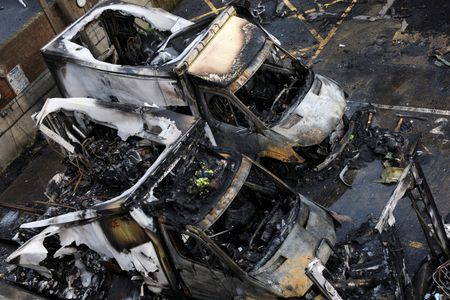
The following day brought an explosion at a Jewish school in Amsterdam, which the city’s mayor called deliberate. Belgium investigated additional arson in Antwerp, while London police are treating the burning of four Hatzola Northwest ambulances—belonging to a Jewish volunteer service—in Golders Green as an antisemitic hate crime.
Authorities have responded with visible security increases. Belgium deployed soldiers to protect Jewish institutions in Brussels, Antwerp, and Liège. British police and community security networks expanded patrols before Passover and added visible protection around Jewish sites. Italy’s annual intelligence assessment warned that Iran-related escalations are raising terrorist risks, particularly for Israeli, Jewish, and American interests.
Garofalo argued that the primary danger comes not from spectacular, centrally coordinated operations but from hybrid and indirect approaches.
“The real risk, as often happens, is more plausibly linked to opportunistic or low-complexity actions, the activation of sleeper cells already present, and the possible mobilization of radicalized individuals who are inspired rather than directly directed,” he noted.
He emphasized that current threats shouldn’t be understood solely through the lens of Islamic State-style attacks.
“This is a hybrid, state-linked, and indirect threat,” he said, explaining that European security services have recently raised alert levels for Iran-attributable activities, often through proxies or indirect networks. “European intelligence explicitly speaks of an evolution toward hybrid threats, meaning a combination of terrorism, criminality, and clandestine state operations,” he added.
Supporting this assessment is the emergence of Harakat Ashab al-Yamin al-Islamia, a previously unknown group claiming responsibility online for several European attacks on Jewish and Israeli-linked sites. The group had no detectable public presence before March, and analysts note its messaging first appeared through pro-Iran channels and networks connected to Hezbollah, the Islamic Revolutionary Guard Corps, and Iraqi Shiite armed groups rather than through independent propaganda systems.
Sharon Adarlo, a conflict analyst and operations director at Militant Wire, said the group should be understood within the context of deniable hybrid tactics rather than as a conventional armed organization.
She confirmed that countries like Iran—and previously Russia—have developed hybrid tactics that fall short of kinetic warfare but constitute definite sabotage. Recently, they have recruited what she termed ‘disposable agents’ or volunteers, compensating them with fees often paid in cryptocurrency, and directing them to conduct sabotage operations including bombings, arson, espionage, and various low-level but disruptive attacks. “What we’re seeing now is that Iran appears to have adopted similar tactics,” Adarlo told The Media Line.
The operational structure appears designed to obscure the true directors of the violence.
“I think what they’ve done is try to put several steps between the disposable agents who carry out the attacks and whoever is actually directing them. That creates confusion, but it also gives Iran plausible deniability. It looks like it could be Iran, it could not be Iran, but at the same time it very much seems like it is,” she observed.
Attribution for these incidents remains incomplete. British, Belgian, and Dutch authorities are investigating the attacks and verifying the group’s claims, but no European government has publicly established direct Iranian command-and-control over the incidents. This gap between suspicion and evidence reflects hybrid warfare logic: sufficient violence to intimidate, enough ambiguity to complicate responses.
According to Adarlo, multiple indicators suggest an Iran-linked network.
“The reason why we think it’s Iran-linked—even though there are some weird or atypical signatures—is because the group models itself after Iran’s Axis of Resistance. You see it in their logo, in their use of Quranic references, and in their statements where they invoke early Islamic battles like the conquest of Mecca,” she said.
Adarlo noted that the content first surfaced on pro-Iran Telegram, Twitter, and other platform channels, quickly amplified by pro-Iranian networks and so-called news organizations that openly endorsed the attacks. Some channels distributing this content also associate with Iranian-backed Iraqi militias, suggesting possible Iraqi connections as well.
Adarlo dismissed suggestions that the phenomenon represents fabrication by anti-Iran actors.
“Some people online are saying this could be a false flag operation, that it might be Mossad or something like that. … I really don’t think that’s the case here. The fact that it was disseminated first in pro-Iranian channels, praised in Farsi and Arabic-speaking spaces, and only later dismissed in English-language discourse strongly suggests it’s not a false flag. I think it’s a manufactured front for an Iranian operation,” she asserted.
While Adarlo’s described methods differ from Sunni extremist organizations like ISIS, the current crisis timing means both threat streams are simultaneously active.
Lucas Webber, a senior threat intelligence analyst at Tech Against Terrorism, said ISIS propagandists have framed the war as an opportunity to encourage Western attacks precisely because the conflict creates emotional volatility and perceptions that security services are overextended.
“Since the US-Israel versus Iran war began in late February, Islamic State propagandists have intensified their online messaging across social media and encrypted platforms, explicitly telling supporters not to rally behind Iran or US-backed governments but instead to carry out attacks against ‘near’ and ‘far’ enemies wherever they are,” he told The Media Line.
“The narrative frames the state-on-state conflict as a moment of strategic distraction, arguing that Western security services are focused on geopolitical escalation and therefore less able to monitor individuals moving from online radicalization to real-world action,” he added.
He said the online messaging deliberately targets opportunistic violence.
The propaganda emphasizes wartime grievances, graphic imagery, and revenge calls, he noted, while presenting mass protests and heightened political tensions as ideal conditions for supporters or small cells to mobilize. “The goal is not necessarily large, coordinated operations but rather opportunistic attacks by self-radicalized individuals who interpret the chaos as permission and encouragement to act,” he added.
Webber also highlighted a specific ISIS-linked New York case illustrating how online war-related incitement can translate into attempted violence in politically charged environments.
He said the attempted March 7 bombing in New York City occurred near the mayor’s official residence during an anti-Islam protest, where a homemade explosive device was thrown toward the crowd but failed to fully detonate and caused no injuries. Federal investigators later charged two suspects with offenses including aiding ISIS and attempting to carry out an explosive attack. The suspects had pledged ISIS support and expressed desires to carry out something larger than the Boston Marathon bombing.
“Officials described the plot as ISIS-inspired and said there was no evidence linking it to Iran, which shows how the broader security environment created by the war can still be exploited by other jihadist actors seeking to capitalize on tensions for their own ideological objectives,” Webber explained.
He said distinguishing between Sunni jihadi opportunism and Iran-linked hybrid intimidation is critical for understanding the evolving threat landscape.
Webber argued that two distinct but overlapping dynamics exist: ISIS is using the war to encourage decentralized jihadi violence, and Hakarat Ashab al-Yamin is leveraging the same geopolitical tension to amplify Iran-aligned messaging and psychological warfare. “In both cases, the online ecosystem functions as the connective tissue, enabling rapid dissemination, radicalization, and operational signaling across borders,” he concluded.
ROME, Italy (AP) — Italy’s Prime Minister Giorgia Meloni praised law enforcement officials Saturday evening following the capture of a suspected organized crime leader who had been among the country’s most sought-after fugitives.
Police announced they had taken Roberto Mazzarella, 48, into custody during Friday’s operation at a luxury residence along the Amalfi Coast in southern Italy. Investigators say he had allegedly secured the upscale property using fraudulent identification documents.
Speaking from her current diplomatic trip through Gulf nations, Meloni characterized Mazzarella’s capture as “an important blow against the Camorra,” the infamous criminal syndicate that has its roots in Naples.
“This sends a clear message that the state will not back down,” Meloni stated in a social media message.
Mazzarella faces charges related to a deadly 2000 shooting incident that occurred at a delicatessen in downtown Naples.
A tragic case of mistaken identity during a military operation in southern Lebanon resulted in the death of one Israeli soldier and left another with severe injuries early Saturday morning.
The fallen serviceman was identified as 21-year-old Sgt. First Class Guy Ludar from Yuvalim, who served with the elite Maglan Unit within the Commando Brigade. The fatal incident took place around 3 a.m. during a mission in the village of Shebaa, where special forces were conducting a raid to apprehend an individual suspected of providing assistance to Hezbollah.
Preliminary findings from the Israel Defense Forces investigation reveal that a soldier mistakenly opened fire on two of his own unit members, believing them to be captured Hezbollah operatives attempting to escape. The confusion led to Ludar’s death and left his fellow soldier with life-threatening wounds.
This mission was conducted as part of Israel’s continued military operations in the region, which escalated after Hezbollah became involved in the broader conflict. The militant organization entered the fighting following the killing of Iranian Supreme Leader Ali Khamenei.
The latest casualties bring the total number of Israeli military personnel killed in Hezbollah-related operations to 11 since March 2nd.
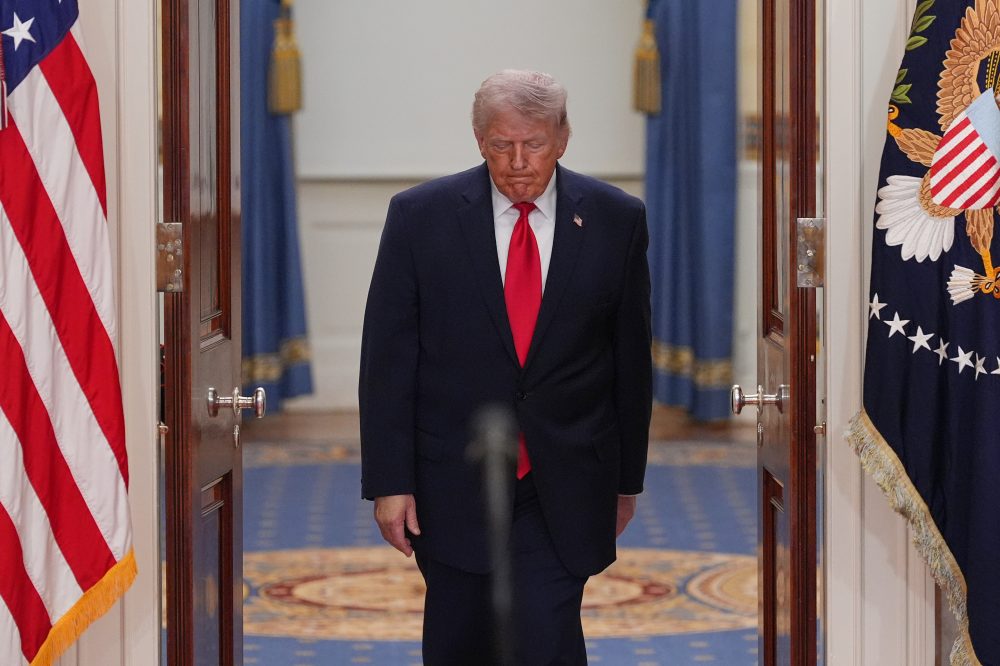
President Trump delivered a stark ultimatum to Iran on Saturday, giving the nation just 48 hours to reopen the critical Strait of Hormuz shipping lane or face what he described as devastating retaliation.
Taking to Truth Social, the President declared: “Remember when I gave Iran ten days to MAKE A DEAL or OPEN UP THE HORMUZ STRAIT. Time is running out – 48 hours before all Hell will reign down on them. Glory be to GOD!” The message represents a significant intensification of tensions over the vital maritime corridor.
Just one day earlier, Trump had suggested more aggressive action regarding the waterway, posting on social media: “With a little more time, we can easily OPEN THE HORMUZ STRAIT, TAKE THE OIL, & MAKE A FORTUNE.”
The narrow waterway serves as a crucial chokepoint for global energy supplies, with one-fifth of all international oil and natural gas shipments passing through its waters. Iran has implemented selective restrictions on vessel passage, blocking ships from nations it considers adversaries, including the United States, Israel, and their allies. Meanwhile, Tehran continues permitting vessels from Russia, China, Pakistan, India, and other nations to use the route.
Iranian officials announced Friday they would allow Iraqi ships to pass despite the ongoing restrictions. Government spokesman Ebrahim Zolfaghari stated on state-controlled television: “We announce that our brotherly country of Iraq is exempt from any restrictions we have imposed on the Strait of Hormuz, and these restrictions only apply to enemy countries.”
The shipping disruptions have triggered dramatic increases in worldwide energy costs. Brent crude oil prices have jumped dramatically from approximately $65 per barrel to a range of $100 to $120 per barrel in early April 2026, demonstrating the significant economic consequences of the strait’s partial closure on global markets.
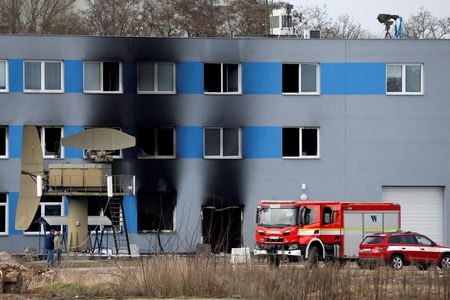
PRAGUE – Czech law enforcement officials announced Saturday they have apprehended two additional suspects linked to last month’s arson incident at a defense manufacturing facility in the country’s eastern region.
The fire occurred March 20 at an industrial facility in Pardubice, located approximately 75 miles east of the Czech capital. A pro-Palestinian activist organization, previously unknown to authorities, has taken credit for the attack.
Since the blaze targeted facilities operated by Czech defense contractor LPP Holding, law enforcement had already announced the arrest of five individuals, including suspects from Egypt and the United States.
Polish law enforcement revealed Wednesday that two Polish nationals were also taken into custody in relation to the incident.
Czech officials confirmed Saturday that one person was detained that day, while another individual was apprehended Friday in Bulgaria, with extradition proceedings expected to follow. Both suspects are foreign nationals, according to Czech authorities.
The activist organization claiming responsibility stated online that the targeted company was manufacturing weapons for Israel. While LPP Holding had announced intentions in 2023 to partner with Israeli defense firm Elbit Systems, the company maintains those collaboration plans were never executed.
LPP’s manufacturing operations include drone production for export to Ukraine, which continues defending against Russian military forces following Moscow’s comprehensive invasion in 2022.
Six individuals sustained minor injuries Saturday when Iran conducted a series of ballistic missile attacks against central and southern Israel, with debris from the strikes landing close to Israel’s primary military command center in Tel Aviv.
Throughout Saturday, Iran fired repeated waves of ballistic missiles, many equipped with cluster warheads that scattered smaller explosive devices across civilian areas. More than a dozen locations throughout central Israel reported direct hits from the assault.
Debris from the missile attack fell into a parking area adjacent to the Kirya military complex in Tel Aviv. The surrounding communities of Ramat Gan and Bnei Brak experienced damage to residential buildings and automobiles. Emergency response teams conducted search operations in Ramat Gan after a building suffered severe structural damage, looking for anyone potentially trapped beneath the debris. Medical personnel treated a man in his fifties for minor wounds, while a 45-year-old resident of Bnei Brak required care after being cut by flying glass.
The city of Rosh Ha’ayin also experienced infrastructure damage when a missile struck an electrical transmission line, leaving portions of the community without power.
South of Beersheba, a ballistic missile equipped with a large conventional explosive device hit the Ne’ot Hovav industrial complex, igniting a blaze at the facility.
According to the Israel Defense Forces, Home Front Command rescue units were sent to numerous impact locations, and officials warned civilians to avoid the affected zones due to potential dangers from unexploded munitions and falling wreckage.
TEL AVIV, Israel — U.S. military forces entered their second day of searching for an American pilot downed in a remote Iranian region, as President Donald Trump renewed his ultimatum to Tehran on Saturday with a stark warning about his Monday deadline for reopening the Strait of Hormuz: “Time is running out.”
Iran identified the downed American aircraft as an F-15E Strike Eagle, one of two planes attacked on Friday. Tehran has offered a bounty for anyone who captures the “enemy pilot.” Iranian military leadership claimed on Saturday that they also brought down two U.S. Black Hawk helicopters on Friday, though The Associated Press could not confirm this independently.
The conflict, which has now entered its sixth week, started with coordinated U.S.-Israeli military strikes on February 28 and has resulted in thousands of casualties, disrupted international markets, blocked critical shipping lanes, and driven up fuel costs. The hostilities continue to escalate as Iran launches retaliatory strikes throughout the region.
“We will continue to crush them,” declared Israeli Prime Minister Benjamin Netanyahu on Saturday. Israel’s armed forces verified they targeted a petrochemical facility in Mahshahr, which Netanyahu claimed finances the ongoing conflict. Iranian state media reported five fatalities from the strike, according to a provincial security official.
During a Wednesday national speech, Trump claimed the U.S. had “beaten and completely decimated Iran.” However, on Saturday, what appeared to be an Iranian drone struck Oracle’s headquarters in Dubai, United Arab Emirates.
Warning of potential war crimes, international observers noted that both nations have targeted and attacked civilian infrastructure and non-military sites.
Iran’s Atomic Energy Organization reported that an air attack occurred near the Bushehr nuclear plant, resulting in one security guard’s death and damage to a support structure. Rosatom’s director announced the evacuation of 198 personnel. This marked the fourth assault on the facility.
Diplomatic Efforts Underway
Pakistan’s Foreign Ministry spokesperson Tahir Andrabi informed the AP that his nation’s ceasefire mediation efforts are “right on track.” Pakistan announced last week it would host negotiations between Washington and Tehran.
Iranian Foreign Minister Abbas Araghchi stated that Iranian representatives “have never refused to go to Islamabad.”
According to two regional officials, mediators from Pakistan, Turkey, and Egypt are working to facilitate U.S.-Iran negotiations. They reported efforts to reconcile both nations’ conditions for ending hostilities and reopening the vital Strait of Hormuz.
The potential agreement involves halting military actions to enable diplomatic resolution, according to a regional official participating in the mediation and a Gulf diplomat briefed on the discussions. Both requested anonymity due to the confidential nature of the diplomatic process.
Trump reiterated his deadline through social media: “Remember when I gave Iran ten days to MAKE A DEAL or OPEN UP THE HORMUZ STRAIT. Time is running out — 48 hours before all Hell will reign down on them.”
Search for American Airman
The rescue operation for the U.S. pilot centers on a mountainous area in Iran’s southwestern Kohgiluyeh and Boyer-Ahmad province. A broadcaster on an Iranian state television affiliate called on local residents to surrender any “enemy pilot” to authorities.
According to a Pentagon email obtained by the AP, military officials received word of “an aircraft being shot down” in the Middle East.
One U.S. crew member was successfully recovered. The Pentagon informed the U.S. House Armed Services Committee that a second service member’s condition remained unknown.
Trump informed NBC News that the incident would not impact potential negotiations with Iran.
A U.S. official, speaking anonymously about sensitive military matters, confirmed that a second U.S. Air Force combat plane went down in the Middle East on Friday. It remained unclear whether the aircraft crashed or was attacked, or if Iran played a role.
Iranian media outlets reported that Iran’s defense systems struck a U.S. A-10 attack plane, causing it to crash in the Persian Gulf.
Oracle Building Attacked
Oracle’s Dubai offices sustained damage after Iran’s Revolutionary Guard threatened the company. AP-verified footage from the UAE revealed a significant hole in the building’s southwestern section.
Dubai’s government media office described a “minor incident caused by debris from an aerial interception that fell on the facade,” reporting no injuries. Austin, Texas-based Oracle Corp. did not immediately respond to requests for comment.
The Revolutionary Guard has labeled several major U.S. technology firms as participants in “terrorist espionage” activities against Iran and declared them valid targets. Previous drone attacks have hit Amazon Web Services installations in the UAE and Bahrain.
Second Strait Threatened
Late Friday, Iran’s parliamentary speaker Mohammad Bagher Qalibaf made an indirect threat to block traffic through another crucial regional waterway, the Bab el-Mandeb.
This 32-kilometer (20-mile) wide passage connects the Red Sea to the Gulf of Aden and Indian Ocean. Over ten percent of global maritime oil shipments and twenty-five percent of container vessels travel through it.
“Which countries and companies account for the highest transit volumes through the strait?” Qalibaf posted.
The conflict has claimed more than 1,900 lives in Iran since fighting began.
In Gulf Arab nations and the occupied West Bank, casualties exceed two dozen, while Israel has reported 19 deaths and the U.S. has lost 13 service members. Lebanon has suffered over 1,400 fatalities with more than one million people displaced. Ten Israeli soldiers have perished there.
A high-ranking Israeli defense official disclosed Saturday that the country is making preparations to launch strikes against Iranian energy infrastructure while seeking approval from the United States before moving forward.
The official indicated that any military operations would likely take place within the coming week, according to reports from Jerusalem.
These developments follow President Donald Trump’s issuance of a 48-hour deadline, which has intensified speculation about whether Washington will support additional Israeli military operations targeting Iran.
Ukrainian leadership announced Saturday that American diplomats Steve Witkoff and Jared Kushner may make a trip to Kyiv during April, as diplomatic efforts to restart stalled peace negotiations with Russia continue.
Kyrylo Budanov, a senior advisor to Ukraine’s president, indicated the visit could happen following Orthodox Easter celebrations on April 12. “Kushner, Witkoff, Lindsey Graham — those are the ones expected to come. Who else will be there — we’ll see,” Budanov stated in remarks to Bloomberg.
The planned journey would mark the first time either Witkoff or Kushner has made an official diplomatic trip to the Ukrainian capital. While both representatives have previously held discussions with Ukrainian officials on American soil, they have also conducted negotiations in Moscow with Russian leadership.
Diplomatic initiatives led by Washington to bring an end to Russia’s four-year military campaign in Ukraine have reached an impasse following recent military actions in the Middle East. The peace process encountered significant obstacles after American and Israeli forces conducted strikes against Iran, which subsequently led to a series of retaliatory attacks across multiple Middle Eastern nations.
Security forces in Nigeria have launched an intensive search for armed criminals following a devastating attack that resulted in the mass kidnapping of villagers in the country’s northwestern Zamfara state, authorities announced.
Armed bandits struck two communities, Kurfa Danya and Kurfan Magaji, located in the Bukkuyum region on Thursday. The attackers fired shots at vehicles and residential buildings before conducting systematic raids throughout both villages, according to a local government official.
Local council chairman Umar Abubakar Faru informed Reuters that the criminals captured more than 150 individuals, with the majority being women and children. The captives were reportedly forced into nearby forest regions, while frightened residents abandoned their homes, leaving the communities virtually empty.
While Zamfara state police acknowledged the assault occurred, they stated that officials are still working to confirm the exact count of kidnapped victims.
Authorities issued a statement explaining that a combined force involving police officers, military personnel, and additional security units has been mobilized and is actively tracking down the perpetrators.
Law enforcement reported that some villagers who managed to escape to neighboring areas required medical treatment and were transported to hospitals. Officials confirmed that rescue efforts remain in progress.
Nigeria’s northwestern region has faced ongoing challenges with criminal gang activity for several years, including large-scale abductions for monetary demands and community attacks. These armed organizations conduct operations from extensive forest strongholds throughout the area.
DHAKA, Bangladesh — Five people lost their lives when flames engulfed a gas lighter manufacturing plant outside Bangladesh’s capital city on Saturday, local officials reported.
The deadly incident occurred in Keraniganj’s Kadamtali district, located near Dhaka, fire service and civil defense officials confirmed.
Emergency responders dispatched seven firefighting teams to battle the flames, which ignited during afternoon hours, fire department officials stated. The crews worked for several hours before successfully containing the fire.
By evening, rescue workers had retrieved five victims from the scene, though their identities remain unknown at this time.
Officials have launched an investigation to determine what sparked the deadly fire.
The sisters of a woman who accused Jeffrey Epstein of sexual trafficking are calling on Britain’s King Charles to sit down with abuse survivors when he visits the United States later this month.
Sky and Amanda Roberts made the appeal Saturday regarding the monarch’s planned state visit, which falls just two days after the one-year mark since their sister Virginia Giuffre took her own life.
“We strongly urge King Charles to meet with us and survivors and hear what we have to say,” the sisters stated. “We are thankful to him for heeding our sister’s allegations against Andrew Mountbatten-Windsor, and for his decisive action in stripping his brother from his position as a prince.”
Buckingham Palace did not provide a response when contacted for comment. Royal representatives have stated previously that the king cannot get involved while ongoing investigations related to sexual abuse by Epstein and his associates continue.
Giuffre had claimed that the deceased American financier Epstein forced her into sexual encounters with King Charles’s younger brother, Andrew Mountbatten-Windsor, when she was just 17 years old.
Andrew has consistently rejected these claims and settled the case outside of court with Giuffre in 2022 while not acknowledging any guilt. He has maintained he does not remember ever meeting Giuffre.
The British monarch and Queen Camilla are scheduled to travel to America from April 27 through April 30 for a diplomatic visit celebrating the 250th anniversary of American independence.
This official visit occurs as Britain works to stabilize its relationship with U.S. President Donald Trump following disagreements about the Iran conflict, putting extra focus on the royal family’s activities in Washington.
Following increased examination of Andrew’s connection to Epstein, King Charles took steps to distance his brother from royal duties, removing his military appointments, charitable roles and right to use his royal designation.
Earlier this year, Andrew was taken into custody on suspicion of misconduct in his official capacity related to claims he shared classified materials with Epstein. He has rejected any wrongdoing.
The Roberts sisters expressed hope that the king would personally meet with those who survived abuse by Epstein and his network, believing such conversations with survivors and their families might prompt the British government to take action against Epstein’s accomplices.
Buckingham Palace has stated in the past that the royal family’s “thoughts and utmost sympathies” remain with those who experienced abuse.
Cameroon’s legislative body has voted decisively to establish a vice presidential position, marking the first significant constitutional change in the Central African nation since 2008.
During a combined meeting of both legislative chambers on Saturday, lawmakers cast 200 votes in favor of the constitutional modification, with only 18 opposing and four choosing not to vote. The ruling party holds dominant control in both the National Assembly and Senate.
Under the new constitutional framework, the vice president would immediately take over presidential duties should President Paul Biya pass away, step down, or become unable to serve. The 93-year-old leader has governed the oil and cocoa-rich nation for more than four decades since taking power in 1982, making him the globe’s eldest active head of government. Authorities prohibit public conversations about his medical condition.
The constitutional text, reviewed by news outlets, specifies that the president will have sole authority to select and remove the vice president, who would serve out the remaining portion of the president’s seven-year mandate. The temporary leader would face restrictions preventing them from altering the constitution or seeking election to the presidency afterward.
Government officials defend the reform as necessary to maintain governmental stability during unexpected leadership transitions. President Biya has two weeks to sign the legislation into law.
Opposition figures have denounced the amendment as harmful to democratic principles and an expansion of concentrated authority.
Joshua Osih, who serves in parliament and leads the opposition Social Democratic Front, characterized the modifications as a lost chance to strengthen national cohesion and democratic leadership in a country experiencing civil unrest since 2017.
“This text weakens legitimacy, reinforces centralisation, and ignores a major historical grievance,” Osih said, advocating instead for a system where the president and vice president are jointly elected, reflecting Cameroon’s origins as a union of British and French-administered territories.
The restoration of the vice presidential office represents Cameroon’s most substantial constitutional overhaul since 2008, when lawmakers eliminated presidential term restrictions in a decision that triggered widespread demonstrations and violent government suppression.
The vice presidential role had existed in Cameroon’s governmental framework previously but was eliminated in 1972 through a constitutional vote.
Slovakia’s Prime Minister Robert Fico is calling on the European Union to lift its sanctions against Russian energy imports as a way to address ongoing energy security challenges across the continent.
Speaking on Saturday after a phone conversation with Hungarian Prime Minister Viktor Orban, Fico argued that the EU should work to restart the flow of oil through the Druzhba pipeline and take action to end the conflict in Ukraine to combat the energy crisis.
“The EU and especially the (European Commission) should immediately resume dialogue with Russia and ensure such a political and legal environment that individual member states and the EU as a whole can replenish the missing gas and oil reserves and enable the supply of these strategic raw materials from all possible sources and directions, including Russia,” Fico stated in his official remarks.
The Slovak leader’s comments represent a push for renewed energy cooperation with Russia despite the ongoing war in Ukraine and existing EU sanctions policies.
LONDON — Three individuals accused of setting fire to emergency vehicles belonging to a Jewish charitable organization were ordered to remain behind bars following their court appearance on Saturday.
The fire occurred on March 23 in Golders Green, a northern London area home to a substantial Jewish community, and completely destroyed four emergency vehicles operated by Hatzola Northwest, a volunteer group that provides medical emergency services locally. The blaze caused oxygen tanks inside the ambulances to detonate, shattering windows in a nearby residential building.
Authorities charged Hamza Iqbal, 20, Rehan Khan, 19, both British citizens, and a 17-year-old with dual British-Pakistani citizenship from east London on Friday with arson and reckless endangerment of life. Due to his minor status, the teenage suspect’s identity remains protected by law and he will be housed in a juvenile detention facility.
During the 45-minute proceeding at Westminster Magistrates Court on Saturday, none of the accused entered formal pleas. The court was also informed that investigators have taken a fourth individual into custody in relation to the incident.
Authorities specializing in counterterrorism are treating the fire as a crime motivated by antisemitic hatred. Investigators are examining a statement claiming responsibility from an organization that may have connections to Iran, though officials have not classified the incident as terrorism.
Prosecutor Emma Harraway informed the court that “There is significant evidence that this was a premeditated and targeted attack against the Jewish community.”
The three accused individuals are scheduled for their next court appearance at London’s Central Criminal Court, commonly referred to as the Old Bailey, on April 24.
Two additional men who were previously taken into custody on suspicion of arson with intent to endanger life have been released on bail.
Russian nuclear corporation Rosatom pulled an additional 198 employees from Iran’s Bushehr nuclear facility on Saturday as conditions around the plant continue to worsen, according to Russian media reports.
The state-owned company has been withdrawing personnel from the Iranian facility since regional warfare erupted in late February.
The latest evacuation had already been scheduled before the International Atomic Energy Agency announced on social media Saturday that a security staff member at the plant had died from projectile debris, while a facility building sustained damage from explosive shockwaves and fragments.
Russian media quoted Rosatom director Alexei Likhachev stating that circumstances around the nuclear plant were developing according to their most dire projections.
Likhachev confirmed that the deceased worker was an Iranian citizen.
According to TASS news agency reports citing Likhachev, Rosatom briefed Russian President Vladimir Putin about the ongoing situation at the nuclear facility.
LONDON — Authorities in London have launched an urgent probe into how five armed security officers assigned to protect the city’s mayor accidentally abandoned a bag filled with weapons near his residence.
The Metropolitan Police announced Friday evening that the officers involved have been pulled from active duty pending a full investigation into the incident.
According to reports from The Sun, the abandoned bag contained multiple weapons including a Heckler & Koch MP5 semiautomatic carbine, a Glock handgun, a Taser device, and various ammunition. A local couple discovered the cache on a street in south London this past Tuesday and immediately alerted police.
Jordan Griffiths, who works in construction, explained to the newspaper that his girlfriend initially spotted the bag near the curb. He described feeling stunned when they opened it and realized what they had found.
“I could not believe my eyes and took some pictures as proof of what we had found,” Griffiths stated. “I called the police and told them what I had found and within a few minutes they turned up to collect the guns.”
The Metropolitan Police’s Directorate of Professional Standards has taken over the investigation and confirmed that all five officers have been temporarily removed from field assignments.
“We are urgently reviewing the circumstances of this incident and recognize the concern it may cause,” officials said in their statement. “At this stage it is believed the bag was misplaced by on-duty officers a short time before the member of the public located it.”
A representative for Mayor Khan emphasized that law enforcement “must now take all steps to ensure an incident like this never occurs again.”
KABUL, Afghanistan — Severe storms bringing torrential rainfall have unleashed deadly flooding and landslides across Afghanistan, claiming 77 lives and injuring 137 people during a devastating 10-day period, according to the nation’s Disaster Management Authority announced Saturday.
Weather forecasters predict additional rainfall in the coming days across the region, prompting officials to urge citizens to avoid riverbanks and flood-prone locations.
Afghanistan, one of the world’s poorest nations, faces extreme vulnerability to severe weather conditions, with dozens already perishing from weather-related disasters this year. Earlier seasonal heavy snowfall and sudden flood events claimed multiple lives throughout the country.
The latest fatalities include 26 deaths recorded within the last two days, disaster officials reported. The destructive weather has completely leveled 793 residences while damaging an additional 2,673 homes, and obliterated approximately 210 miles of roadways through flooding and mudslides.
Commercial establishments, farmland, water sources, and irrigation systems have suffered extensive damage, impacting more than 5,800 families across the affected regions, authorities confirmed.
Multiple major highways linking Afghanistan’s capital city to outlying provinces have sustained flood and landslide damage, forcing motorists to navigate lengthy alternate routes to reach Kabul, according to Public Works Ministry spokesman Ashraf Haqshinas on Saturday.
The critical Kabul-Jalalabad highway, serving as the primary corridor between the capital and Pakistan’s border along with eastern Afghan provinces, remains closed. Mudslides, falling rocks, and floodwaters blocked this vital route Thursday morning, with repair teams actively working to restore access, Haqshinas reported.
Transportation officials are advising motorists to exercise extreme caution when traveling through storm-affected regions.
Floodwaters have also forced closure of the Salang Pass, a crucial high-altitude route through the Hindu Kush mountains connecting Kabul with northern territories, including the significant urban centers of Kunduz and Mazar-e-Sharif.
Afghanistan regularly experiences deadly flash flooding triggered by heavy precipitation and snowmelt, often resulting in dozens or hundreds of casualties during single events. Spring flooding in 2024 resulted in over 300 fatalities nationwide.
DAKAR, Senegal (AP) — West African nation Senegal has prohibited government ministers from taking non-essential overseas trips as the country grapples with budget pressures stemming from the ongoing Iran conflict’s impact on global energy markets.
The nation depends heavily on imported petroleum products for its energy needs, making its economy susceptible to disruptions in global oil supply chains. The closure of the Strait of Hormuz has caused crude oil prices to skyrocket, creating significant financial strain.
Speaking on Friday, Prime Minister Ousmane Sonko announced his administration was implementing measures to reduce government spending, noting that the country’s original budget calculations were based on oil costing $62 per barrel — a figure that has nearly doubled due to the Iran conflict.
“I have taken a number of drastic measures to restrict everything related to government spending, including the cancellation of all nonessential missions abroad,” Sonko told the state-run Le Soleil newspaper.
The Prime Minister revealed he has already called off multiple planned trips, including visits to Niger, Spain and France.
“No minister in my government will leave the country except for an essential mission,” Sonko stated.
The dramatic increase in fuel costs has intensified existing economic challenges across the African continent, where millions of people already struggle with poverty. Many residents now find themselves unable to afford transportation to their jobs or even basic meals due to the rising energy expenses.
ITTEFAQ, Afghanistan — The screams lasted for several minutes after the earth began to shake. Then, devastating silence.
Mohibullah Niazi, a local resident who assisted with rescue operations, reported Saturday that eight victims who perished near Kabul during Friday evening’s 5.8 magnitude earthquake were members of a refugee family who had recently come back from Iran.
A single survivor remains: a 3-year-old boy named Aarash, who sustained injuries and is currently receiving treatment at a Kabul hospital.
Deputy government spokesman Hamdullah Fitrat announced Saturday that the earthquake’s total fatality count has reached 12, with four additional people wounded. According to Fitrat, the disaster destroyed five residences and caused substantial damage to 33 others, impacting 40 families across Kabul, Panjshir, Logar, Nangarhar, Laghman and Nuristan provinces.
The Afghanistan Disaster Management Authority reported a lower death count of nine. Officials have not explained the difference in these figures.
The affected family represents part of the massive wave of Afghan refugees who have recently come home from Iran and Pakistan, following both nations’ 2023 enforcement campaigns targeting foreign residents, especially Afghans.
The family had been in the area for just 15 days, residing in a tent on property adjacent to Niazi’s residence. The family patriarch, Najibullah, approximately 50 years old, “had no other shelter,” Niazi explained. “He was a very poor person.”
Their temporary shelter was positioned against a barrier wall that divided the land from Niazi’s property, which sat on elevated terrain in Ittefaq village on Kabul’s eastern edges.
Recent days of intense rainfall, which have caused fatal flooding throughout Afghanistan, had saturated the soil. During the earthquake, the barrier wall gave way and crushed the family beneath it.
“My daughter shouted to me that a wall had fallen on them. The whole family ran, but there were so many big rocks,” Niazi recalled Saturday while standing at the disaster site. “We tried our best.”
By Saturday morning, only debris piles of bricks and mud remained, alongside blankets, kitchen items and other personal effects recovered from the wreckage and gathered together.
“For about three minutes, I could hear the voices of these people,” Niazi stated. “But we couldn’t do anything. There were two or three of us, but this was not the work of three people.”
Community members quickly arrived to assist, using shovels and bare hands to dig through mud and debris. They contacted the nearby Taliban police station, which dispatched rescue teams and emergency vehicles.
Young Aarash was extracted alive but wounded and immediately transported for medical care. Health Ministry spokesperson Sharafat Zaman, who visited the child Saturday, confirmed he is being treated for serious head trauma.
For the remaining family members — the parents, four daughters between ages 12 and 23, and two sons — rescue came too late. Workers could only retrieve their remains.
Niazi revealed he had previously welcomed the family into his home for one evening. On Friday, merely 30 minutes before the earthquake occurred, he had extended another invitation, offering his guest room as protection from the harsh weather and cold. “But they did not come with me,” he said.
The Friday evening tremor originated in the Hindu Kush mountains, approximately 150 kilometers (90 miles) east of Kunduz city in the north, based on data from the Euro-Mediterranean Seismological Center and U.S. Geological Survey. This location sits roughly 290 kilometers (180 miles) northeast of the capital.
Afghanistan sits within an extremely earthquake-prone region, with seismic events claiming thousands of lives in recent years.
This past August, a 6.0 magnitude earthquake struck a remote mountainous area in eastern Afghanistan, resulting in over 2,200 deaths. Kunar province experienced the highest casualties, where residents typically inhabit wooden and mud-brick structures along steep valley slopes.
In November, a 6.3 earthquake hit Samangan province in northern Afghanistan, claiming at least 27 lives and injuring more than 950 people. The disaster also harmed historic landmarks, including Afghanistan’s renowned Blue Mosque in Mazar-e-Sharif and the Bagh-e-Jahan Nama Palace in Khulm.
On October 7, 2023, a 6.3 earthquake accompanied by powerful aftershocks in western Afghanistan resulted in thousands of fatalities.
China’s Communist Party disciplinary committee announced Friday that it has launched an investigation into Ma Xingrui, the former party secretary of Xinjiang region, for suspected violations of party discipline and legal statutes.
Ma, who holds membership in the party’s Central Committee, led the northwestern Xinjiang region from 2021 through 2025. His previous roles included heading the National Ethnic Affairs Commission and serving as deputy party leader in Guangdong province.
The specific nature of Ma’s alleged misconduct remains undisclosed. His case adds to a growing list of high-ranking officials who have been stripped of their positions this year, including the country’s top military commander whom Xi Jinping dismissed in January.
Chen Xiaojiang succeeded Ma as Xinjiang’s party chief last July. The region had gained international attention due to an extensive campaign involving mass detentions without legal proceedings.
Chinese authorities had held an estimated one million or more members of minority groups, particularly ethnic Uyghur Muslims, claiming the measures were necessary following attacks carried out by a small faction of Uyghur extremists.
When Ma assumed leadership in 2021, Beijing reported that most detention facilities had been closed. However, several camp locations were transformed into prison-style facilities, and leaked documents obtained by the Associated Press revealed that thousands of Uyghurs received lengthy prison terms on charges that analysts described as fabricated.
This past March, China enacted legislation that analysts say solidifies the government’s policy of cultural assimilation targeting ethnic minority populations, expanding upon years of policy shifts implemented at the provincial level in Xinjiang and other regions.
Iranian forces launched a drone strike against a ship with Israeli connections as it passed through the strategically important Strait of Hormuz, causing the vessel to catch fire, according to Saturday reports from Iran’s official media outlets.
The attack was confirmed by a commander from Iran’s Revolutionary Guards naval forces, as reported by the country’s state-run news agencies.
Israeli officials have not yet responded to the Iranian claims about the maritime incident.
Finance officials from five European nations are pushing the European Union to implement continent-wide profit restrictions on energy corporations as Middle Eastern conflicts send fuel costs soaring and threaten to burden ordinary citizens with higher expenses.
Spain’s Economy Minister Carlos Cuerpo announced Saturday that officials from Germany, Italy, Portugal and Austria had joined him in sending correspondence to the European Commission highlighting “market distortions” resulting from the recent price increases.
“The conflict in the Middle East has caused oil prices to rise, placing a significant burden on the European economy and on European citizens,” stated the correspondence, which was dated Friday and shared publicly by Cuerpo through social media.
“It is important to ensure that this burden is distributed fairly,” the letter continued.
European nations rely heavily on energy imports from other regions, making them susceptible to global disruptions. During 2022, energy market chaos following Russia’s comprehensive attack on Ukraine sent inflation rates above 10% across numerous European nations.
During that period, EU leadership established a “solidarity contribution” that featured restrictions on excessive energy sector earnings.
“Given the current market distortions and fiscal constraints, the European Commission should swiftly develop a similar EU-wide contribution instrument,” the correspondence stated. “It would also send a clear message that those who profit from the consequences of the war must do their part to ease the burden on the general public.”
Primarily due to elevated oil costs, yearly inflation across the 21 nations using the euro currency climbed to 2.5% in March, up from 1.9% the previous month.
Iran has restricted most oil tanker movement through the Strait of Hormuz — a critical passage for approximately 20% of worldwide oil and gas shipments — creating potential stress on fuel markets for an extended period.
European Union Energy Commissioner Dan Jorgensen cautioned earlier this week that the disruption from the blockade means fuel costs will likely not “go back to normal in a foreseeable future.”
Ukrainian authorities reported Saturday that overnight drone attacks by Russian forces resulted in five civilian deaths and left 30 people wounded across the country.
The assault took place while Ukrainian President Volodymyr Zelenskyy was en route to Istanbul for diplomatic discussions with Turkish President Recep Tayyip Erdogan. Zelenskyy is also scheduled to meet with Ecumenical Patriarch Bartholomew, who serves as the spiritual head of Eastern Orthodox Christians worldwide.
Ukrainian Air Force officials stated that Russia launched 286 drones during the overnight operation, with Ukrainian defense systems successfully intercepting 260 of them.
The deadliest strike occurred in Nikopol, located in the Dnipropetrovsk region, where three women and two men lost their lives, according to regional military administration leader Oleksandr Hanzha. The same attack wounded 19 additional people, including a 14-year-old girl, and caused damage to local market stalls and a retail shop.
Near the Russian border in Sumy, another strike left 11 people injured, including a 15-year-old victim, the National Police reported. The attack targeted residential neighborhoods, causing damage to homes, vehicles, and utility infrastructure.
In Ukraine’s capital city, a drone impact ignited a fire on the ground floor of a three-story building that houses offices and warehouse space, according to the State Emergency Service. Officials reported no casualties from the Kyiv incident.
Russian Defense Ministry officials claimed Saturday that their military targeted what they described as “military-industrial and energy facilities used by the Ukrainian Armed Forces” using “long-range air- and ground-based precision weapons, as well as strike drones.”
The ministry also reported that Russian air defense systems destroyed 85 Ukrainian drones overnight across nine Russian regions, the annexed Crimea territory, and over the Black Sea.
In Russia’s border region of Rostov, regional governor Yuri Slyusar confirmed one fatality and four injuries from Ukrainian attacks. The strikes ignited fires at a logistics company warehouse and aboard a foreign-flagged cargo ship positioned several kilometers offshore, Slyusar reported.
The Samara region’s Tolyatti city saw one person wounded and damage to an apartment building’s roof, with multiple units suffering broken windows, according to Governor Vyacheslav Fedorishchev.
Ukrainian President Volodymyr Zelensky touched down in Istanbul on Saturday for diplomatic meetings with Turkish President Tayyip Erdogan, according to a spokesperson for the Ukrainian leader.
The presidential spokesperson informed members of the press that Zelensky’s agenda also includes a meeting with Patriarch Bartholomew, who holds the highest position within the Orthodox Church hierarchy.
The visit comes as Ukraine continues to navigate ongoing international relations amid regional tensions.
Military operations in Iran have now stretched into their sixth week while search and rescue teams work to locate an American service member missing since Friday.
The U.S. pilot ejected from a fighter aircraft after it was struck down over Iranian airspace during combat operations. Rescue efforts remain active as teams attempt to locate and recover the missing crew member.
The ongoing conflict has now extended well beyond initial projections, with no clear timeline for resolution as military engagement continues in the region.
Iranian authorities are targeting the families of political dissidents living in exile, using arrests and property seizures as weapons to silence criticism from abroad, according to multiple activists who spoke with news outlets.
These intimidation tactics represent an escalation in Iran’s suppression of opposition voices as ongoing regional conflicts continue. Activists living overseas have become crucial sources for documenting government crackdowns, especially since internet blackouts during widespread anti-government demonstrations made internal reporting difficult.
Hossein Razzagh, a former political prisoner now residing in Europe, learned that intelligence officers arrested his brother Ali on March 15 from their family home in Tehran. “My own brother isn’t at all political and doesn’t do any kind of political activity. It’s to put me under pressure,” Razzagh explained.
Ali was able to make a brief phone call to his wife that evening from an Intelligence Ministry detention facility, but the family has had no contact since. Officials told them they were investigating Ali’s communications with his exiled brother.
Similar incidents have affected other activists’ families. Behnam Chegini, now based in France, reported that his 20-year-old niece was arrested March 10 and held for one week. She was taken from her parents’ residence in Arak after returning from Tehran when her university closed due to the war. The young woman was eventually freed on bail but cannot leave the country.
“Because she is my niece and they know that,” Chegini said, explaining the motivation behind her detention.
Sareh Sedighi, who fled Iran after successfully appealing a death sentence in 2021, said authorities detained her mother from their home in Urmia last month. “The Islamic Republic took my mother away to make me be quiet,” Sedighi stated, adding that her mother has serious health conditions requiring daily insulin.
Mahshid Nazemi, a former political prisoner now living in France, reported that at least one friend was arrested and interrogated about their relationship.
Beyond family arrests, Iranian courts have begun seizing assets belonging to prominent critics under anti-espionage legislation passed during last year’s 12-day conflict with Israel. This law targets media and cultural activities considered supportive of Iran’s adversaries.
A judicial spokesperson announced on state television March 31 that more than 200 asset forfeiture cases have been filed or are in progress.
Iranian actor Borzou Arjmand, living in California, discovered through news coverage that his Iranian assets had been confiscated. Following his public support for 2022 protests, Arjmand became unable to return home, and authorities froze his bank accounts. He has publicly backed Reza Pahlavi, the former shah’s son who leads an opposition movement from abroad and has supported American-Israeli military actions.
The pressure on exiled figures aims to ensure “so the Iranian people’s voice doesn’t reach the world,” Arjmand said.
Other prominent figures facing asset seizures include soccer star Sardar Azmoun, musician Mohsen Yeghaneh, and university professor Ali Sharifi Zarchi, according to Iranian semi-official news sources. Both Yeghaneh and Zarchi have publicly supported anti-government demonstrators online.
Iranian security and court officials have issued warnings that any future anti-government demonstrations will face deadly force.
Government media frequently announce arrests nationwide, labeling detainees as “mercenaries” or “agents” working for Israel and America, “royalist thugs,” or “traitorous elements.” Some reports claim arrestees provided intelligence to “hostile networks.”
Iran Human Rights, a monitoring organization based in Norway, has documented several hundred arrests since the current conflict began February 28, using contacts within Iran and official media reports. Director Mahmood Amiry-Moghhaddam believes the actual numbers are significantly higher.
Among recent detainees is prominent human rights attorney Nasrin Sotoudeh, taken from her Tehran residence by intelligence agents, according to her daughter Mehraveh Khandan who lives in Amsterdam. The 64-year-old Sotoudeh had been released on medical bail following an earlier imprisonment.
Court operations remain unclear as Israeli airstrikes have hit judicial buildings. “It’s like they are half-closed. A lot of judges are staying home,” explained Musa Barzin, an attorney with Dadban, an organization of rights lawyers operating from abroad.
Prison conditions are reportedly worsening due to overcrowding. From Tehran, the wife of a political prisoner held at Evin Prison expressed fears about potential strikes on the facility, as occurred during last year’s conflict.
“Explosions and smoke can be heard and seen from everywhere in the city. Every time we hear a sound, we get scared,” she said, requesting anonymity for her family’s protection.
These circumstances have sparked fresh efforts to unite Iran’s fragmented overseas opposition movement.
Before the current conflict began, Razzagh and colleagues started organizing the Iran Freedom Congress in London, bringing together pro-democracy organizations. Razzagh spoke for a coalition of Iran-based opposition figures including Sotoudeh and imprisoned Nobel Peace Prize winner Narges Mohammadi.
He described the conference as an initial step toward building a coalition focused on achieving “political transition” in Iran.
For generations, Iranian leadership has crushed organized political resistance. Diaspora activists say the ongoing war has intensified this suppression.
“Israel and America are saying, well, if the Islamic Republic doesn’t kill you, let us bomb you. They’ve been taken hostage from both sides,” Nazemi said regarding Iranians still in the country.
Iraqi officials have temporarily shuttered a major border crossing with Iran following deadly airstrikes that claimed the life of one Iraqi national and left several others critically injured, according to security officials who spoke Saturday.
The attack targeted a passenger reception facility located on Iran’s side of the Shalamcheh crossing, leaving at least five Iraqi nationals with severe injuries, security sources reported.
Authorities were able to retrieve the body of one victim, while emergency responders rushed the injured to nearby medical facilities where most remain in critical condition.
In response to the incident, Iraqi border officials issued orders to suspend all commercial trade and passenger travel through the crossing, according to an official statement from the border authorities.
India has resumed purchasing crude oil from Iran for the first time in nearly seven years, according to the country’s oil ministry announced Saturday.
The world’s third-largest oil consumer had avoided Iranian oil since May 2019 due to U.S. sanctions pressure, but ongoing Middle East conflicts disrupting supply routes through the Strait of Hormuz have forced the South Asian nation to seek alternative sources.
“Amid Middle East supply disruptions, Indian refiners have secured their crude oil requirements, including from Iran; and there is no payment hurdle for Iranian crude imports,” the oil ministry stated on social media platform X.
The resumption became possible after the United States temporarily lifted sanctions on Iranian petroleum products last month to address supply shortages affecting global markets.
Ministry officials confirmed that India has successfully secured adequate crude oil supplies for upcoming months through diversified sourcing strategies.
“India imports crude oil from 40-plus countries, with companies having full flexibility to source oil from different sources and geographies based on commercial considerations,” the ministry explained.
In addition to crude oil, India recently received 44,000 metric tons of Iranian liquefied petroleum gas delivered by a previously sanctioned vessel. The shipment arrived at Mangalore port on Wednesday and is currently being unloaded, according to ministry officials.
Taiwan’s economy minister announced Saturday that a leading energy-producing nation has pledged to support the island’s liquefied natural gas requirements amid ongoing Middle East conflicts affecting regional energy supplies.
The semiconductor manufacturing hub previously depended on Qatar for approximately one-third of its LNG imports before regional tensions escalated. Taiwan has now arranged alternative energy sources for upcoming months through suppliers including Australia and the United States.
During a press briefing in Taipei, Economy Minister Kung Ming-hsin told reporters that Taiwan’s strong partnerships with oil and gas suppliers mean the country can easily redirect shipment sources or purchase additional spot market cargoes when needed.
Kung revealed that roughly two weeks earlier, an energy minister from an unnamed “major energy-producing country” reached out directly to offer assistance.
“They explained to us that they would fully support our natural gas needs. If we have any demand, we can let them know,” Kung stated.
“Another country even said that some countries have released strategic petroleum reserves, and they could also help coordinate matters if Taiwan needs assistance,” the minister added.
“This shows that Taiwan has in fact earned considerable goodwill internationally through the long-term trust it has built over the years,” Kung emphasized.
The minister chose not to identify which specific countries made these commitments.
At the same briefing, Angela Lin, who speaks for state-owned refiner CPC, confirmed that crude oil stockpiles remain at pre-conflict levels while petrochemical feedstock supplies continue operating normally.
CPC Chairman Fang Jeng-zen outlined plans to reduce Middle East dependency through a new U.S. agreement that will deliver 1.2 million metric tons of LNG yearly, with additional volumes planned for the future, including potential Alaskan supplies.
Fang noted, however, that Taiwan will not pursue crude oil or LNG imports from Russia.
A deadly Russian drone attack struck a marketplace in the Ukrainian city of Nikopol on Saturday morning, leaving five people dead and injuring 19 others, according to Ukraine’s prosecutor general’s office.
Ukrainian authorities condemned the assault, with the prosecutor’s office stating on Telegram: “This is yet another war crime committed by the Russian Federation.”
The city of Nikopol sits along the frontlines of the conflict, positioned across the Dnipro River just kilometers from Russian-controlled territory. Due to its strategic location, the city frequently comes under enemy fire and bombardment.
American military forces continued an urgent search and rescue mission Saturday for a missing pilot after Iranian forces shot down a U.S. fighter jet, while Tehran urged its citizens to help locate and capture the “enemy pilot.”
Iranian forces targeted two American aircraft on Friday, shooting down what Iran identified as a U.S. F-15E Strike Eagle. Military officials rescued one crew member, but a second service member remains unaccounted for. This marks the first instance of the United States losing aircraft over Iranian airspace during the ongoing conflict, which has now entered its sixth week.
The hostilities began February 28 when the U.S. and Israel launched military operations, creating widespread regional instability. The conflict has resulted in thousands of casualties, disrupted international commerce, blocked crucial maritime passages, driven up energy costs, and continues escalating as Iran retaliates against American and Israeli air attacks with strikes throughout the Middle East.
Saturday brought continued violence as what appeared to be an Iranian drone struck Oracle Corporation’s Dubai headquarters. Israeli defense forces reported that Iran had fired missiles toward Israeli territory.
The aircraft downing occurred just 48 hours after President Donald Trump declared in a televised speech that America had “beaten and completely decimated Iran” and pledged to “finish the job, and we’re going to finish it very fast.” American and Israeli officials had recently claimed Iran’s air defense systems were destroyed.
Saturday also saw an attack near Iran’s Bushehr nuclear facility, according to the Atomic Energy Organization of Iran. The airstrike killed one security guard and damaged a support structure, marking the fourth time the facility has been targeted during the war. The agency made the announcement through social media channels.
Neither the White House nor Pentagon has issued public statements regarding the downed aircraft.
However, The Associated Press obtained a Pentagon email stating the military received notification of “an aircraft being shot down” in the Middle East, though no additional details were provided.
While one crew member from the aircraft was successfully rescued, the Pentagon informed the House Armed Services Committee that a second service member’s whereabouts remain unknown. Military search and rescue operations continued throughout Saturday.
When contacted by NBC News, Trump refused to discuss the rescue efforts but stated the incident would not impact ongoing negotiations with Iran.
Iranian state media separately reported that a U.S. A-10 attack aircraft crashed in the Persian Gulf after being hit by Iranian defense forces.
A U.S. official, speaking anonymously about the sensitive military situation, said it remained unclear whether the aircraft crashed or was shot down, or if Iran was responsible. The crew’s status and exact crash location were not immediately available.
A television anchor on an Iranian state-affiliated channel encouraged viewers to surrender any “enemy pilot” to police authorities.
Iran has repeatedly made false claims about downing enemy aircraft throughout the conflict. Friday marked the first occasion Iranian media asked civilians to search for a crashed pilot.
According to Iranian state media posts on social platform X, their military destroyed a U.S. F-15E Strike Eagle. This aircraft variant typically carries both a pilot and weapons system operator.
The Oracle headquarters attack in Dubai occurred after Iran’s Revolutionary Guard threatened the technology company. The strike hit the building located on Dubai’s main Sheikh Zayed Road, with verified footage showing significant damage. A large opening was visible in the building’s southwestern section, and the neon “Oracle” sign was partially destroyed.
Dubai’s Media Office described the incident as a “minor incident caused by debris from an aerial interception that fell on the facade of the Oracle building in Dubai Internet City,” noting no injuries occurred.
Austin, Texas-based Oracle did not immediately respond to requests for comment.
The Revolutionary Guard has labeled several major American technology companies as participants in “terrorist espionage” operations against Iran, declaring them valid targets. Previous Iranian drone attacks have targeted Amazon Web Services facilities in both the UAE and Bahrain.
International leaders continue struggling to break Iran’s control over critical waterways, which has created significant global economic impacts and represents Iran’s key strategic advantage in the conflict.
The U.N. Security Council was scheduled to address the situation Saturday.
Trump has shown inconsistent positions regarding America’s involvement in the strait, sometimes threatening Iran to reopen the passage while telling other countries to “go get your own oil.” Friday, he posted on social media: “With a little more time, we can easily OPEN THE HORMUZ STRAIT, TAKE THE OIL, & MAKE A FORTUNE.”
Since the conflict began, more than 1,900 people have died in Iran. A Friday report from the Armed Conflict Location and Event Data, a U.S.-based organization, found civilian casualties concentrated around strikes on security and government facilities “rather than indiscriminate bombardment” of populated areas.
Additional casualties include over two dozen deaths in Gulf Arab states and the occupied West Bank, 19 reported deaths in Israel, and 13 killed U.S. service members. Lebanon has seen over 1,300 deaths and more than one million displaced residents, while 10 Israeli soldiers have also died there.
Finance officials from five European Union nations are pushing for the implementation of a special tax targeting energy companies’ extraordinary profits amid surging fuel costs linked to the Iran conflict, according to correspondence obtained by Reuters on Saturday.
The treasury chiefs from Germany, Italy, Spain, Portugal and Austria issued their unified request in correspondence dated Friday to the European Union Commission, stating that implementing such a policy would demonstrate that “we stand united and are able to take action.”
The ministers emphasized in their letter that the measure would communicate a strong message about corporate responsibility during wartime. “It would also send a clear message that those who profit from the consequences of the war must do their part to ease the burden on the general public,” the finance officials stated.
The joint proposal comes as European nations grapple with rising energy costs that have impacted consumers and businesses across the continent.
NIJKERK, Netherlands – Authorities in the Netherlands launched an investigation Saturday following reports of an overnight blast at an Israel Centre located in the central town of Nijkerk.
According to a statement released on social media by Dutch law enforcement, no one was hurt in the incident and property damage to the facility was described as minor. The center is operated by the charitable organization Christians for Israel.
Investigators have not yet determined whether this incident is connected to a recent string of attacks targeting Jewish facilities throughout Europe that have occurred since the conflict in Iran began.
Law enforcement officials confirmed that no suspects have been taken into custody and are requesting that anyone with information about the explosion contact authorities.
The International Monetary Fund has recommended that Japan’s central bank continue its policy of increasing interest rates, despite acknowledging that ongoing Middle Eastern conflicts present “significant new risks” to Japan’s economic future.
This guidance emerges as financial markets anticipate Japan’s central bank may implement another rate increase as early as this month, driven by inflation concerns stemming from conflict-related oil price surges and increased import expenses due to currency weakness.
According to a Friday statement released from Washington following the IMF’s policy review with Japan, economic growth is anticipated to slow somewhat due in part to the Iran conflict, though steady wage improvements should support consumer spending.
“Risks to the outlook and inflation are broadly balanced,” the IMF stated, projecting that inflation will align with the central bank’s 2% goal by 2027.
The international organization’s executive board praised Japan’s “strong economic resilience” against worldwide disruptions and endorsed the central bank’s approach to scaling back monetary stimulus measures.
“They noted that as underlying inflation converges toward the BOJ’s target, gradual rate hikes toward neutral should continue” using a flexible, well-communicated and data-dependent strategy, according to the statement.
“Directors stressed the importance of maintaining a flexible exchange rate as a credible shock absorber,” the document added.
Japan’s central bank concluded its extensive stimulus program in 2024 and implemented multiple rate increases, including one in December, based on expectations that the nation would sustainably achieve its 2% inflation objective.
Bank officials have emphasized their willingness to continue raising rates, anticipating that core inflation will reach the 2% target between the latter half of fiscal 2026 and fiscal 2027. Japan’s fiscal calendar begins in April.
Although higher oil costs negatively affect Japan’s import-dependent economy, central bank policymakers have expressed concerns that these increases will compound inflationary pressures from years of consistent wage growth and widespread price rises.
The central bank’s series of hawkish statements has led markets to assign approximately a 70% probability to an April rate increase.
The yen’s decline toward the critical 160-per-dollar threshold has also heightened market vigilance for potential currency intervention by Japanese officials.
Finance Minister Satsuki Katayama delivered another warning against yen speculation on Friday, stating Japan remains prepared to counter speculative currency market activity.
“We’re ready to take all available means that are legally feasible, be it conventional or non-conventional,” she stated during a Friday evening online program.
Russian regional authorities reported Saturday that Ukrainian aerial strikes on southern Russia resulted in one death and four injuries, while also causing damage to commercial infrastructure and igniting fires.
Rostov region Governor Yuri Slyusar confirmed the casualty figures from what he described as Ukrainian air attacks on his territory. The strikes targeted the city of Taganrog, where commercial infrastructure sustained damage and a logistics company’s warehouse caught fire, according to Slyusar’s statements.
In a separate incident in the Sea of Azov, Slyusar reported that a Ukrainian drone strike damaged a commercial ship flying a foreign flag, causing a fire to break out on the vessel.
Meanwhile, Samara Governor Vyacheslav Fedorishchev announced that Ukrainian drones also targeted the Russian city of Togliatti, though details about what was struck remain unclear. Togliatti has been previously targeted by Ukraine, particularly the TogliattiAzot chemical fertilizer manufacturing facility located there.
MOSCOW – The creator of messaging app Telegram pointed fingers at Russian authorities Saturday, claiming their efforts to shut down Virtual Private Networks caused widespread disruptions to the country’s payment infrastructure.
Pavel Durov stated that Russia’s crackdown on VPNs resulted in significant problems for domestic financial transactions, with tens of millions of citizens now pushing back against government digital restrictions.
Friday’s technical failures created widespread confusion for consumers across Russia. Moscow’s subway system was forced to open its gates and allow passengers to enter without paying, while at least one regional zoo had to request that visitors pay only with physical currency.
Writing on his own platform, Durov criticized the government’s actions. “Their blocking attempts just triggered a massive banking failure,” he posted. “Welcome back to the Digital Resistance, my Russian brothers and sisters. The entire nation is now mobilised to bypass these absurd restrictions.”
Iranian military forces launched an intensive search Saturday for a missing American pilot following the downing of two U.S. military aircraft over Iran and Gulf waters, according to officials from both nations, while rescue teams successfully recovered two other airmen.
The aircraft losses highlight ongoing dangers for American and Israeli pilots operating in Iranian airspace during the sixth week of the current conflict, contradicting previous statements from President Donald Trump and Defense Secretary Pete Hegseth claiming complete U.S. air dominance.
The possibility of an American service member evading capture on Iranian soil significantly raises the political stakes for Washington in a war that lacks strong domestic support and shows no clear path to resolution.
Iranian forces successfully shot down a twin-seat F-15E Strike Eagle, confirmed by officials in both countries, while a separate A-10 Warthog attack aircraft crashed in Kuwait after sustaining Iranian fire damage, forcing the pilot to eject, two U.S. officials reported.
During search and rescue operations for the missing pilot, two American Black Hawk helicopters came under Iranian attack but successfully escaped Iranian airspace, the U.S. officials confirmed to Reuters. The extent of crew injuries aboard the helicopters remains unknown.
Iran’s Revolutionary Guard Corps announced it was conducting sweeps through southwestern regions near the crash site, while the local provincial governor offered rewards for anyone who captures or eliminates “forces of the hostile enemy.”
Iranian civilians, who have endured weeks of American bombing campaigns since the February 28 launch of U.S.-Israeli operations, celebrated the aircraft shootdowns. Parliament Speaker Mohammad Baqer Qalibaf posted on social media that the conflict had been “downgraded from regime change” to hunting for downed pilots.
A senior administration official confirmed that Trump has remained at the White House receiving regular briefings on the rescue mission. The Pentagon and U.S. Central Command have not yet responded to media inquiries about the incidents.
Pakistan-mediated ceasefire negotiations appear to have stalled, with Iran informing intermediaries it will not participate in planned meetings with U.S. representatives in Islamabad, the Wall Street Journal reported Friday.
The conflict has claimed thousands of lives, triggered a global energy crisis, and threatens long-term economic damage worldwide since the initial attacks that resulted in the death of Iran’s Supreme Leader Ayatollah Ali Khamenei.
U.S. Central Command reports 13 American military deaths and over 300 wounded personnel since fighting began.
Iran continues launching drone and missile strikes against Israel while targeting Gulf nations allied with the United States, though these countries have avoided direct military involvement to prevent further escalation.
Dubai authorities reported Saturday that debris from aerial defense operations struck two building facades in the emirate, though no casualties occurred.
The U.S. embassy in Beirut issued a security warning Friday stating that Iran and allied militant groups may target Lebanese universities, advising American citizens to depart while commercial flights remain available.
Israel maintains a separate military campaign against Iran-backed Hezbollah forces in Lebanon after the group launched attacks supporting Iran. Israeli military officials announced early Saturday strikes against Hezbollah infrastructure positions in Beirut.
Following Trump’s threats against Iranian infrastructure, Iran retaliated Friday by attacking a Kuwaiti power and water facility, demonstrating the vulnerability of Gulf states dependent on desalination for their water supply.
Thursday saw Trump share images of destruction from U.S. strikes on the B1 bridge connecting Tehran and Karaj, scheduled to open this year, while promising additional attacks.
“Our Military, the greatest and most powerful (by far!) anywhere in the World, hasn’t even started destroying what’s left in Iran. Bridges next, then Electric Power Plants!” he wrote.
A drone strike Friday damaged a Red Crescent humanitarian warehouse in Iran’s Bushehr province Choghadak region.
Kuwait Petroleum Corporation confirmed drone attacks on its Mina al-Ahmadi refinery, while additional strikes were reportedly intercepted in Saudi Arabia and Abu Dhabi. Missile fragments landed near Israel’s Haifa port, home to a significant oil refinery.
Oil markets closed after benchmark U.S. crude prices surged 11% Thursday following Trump’s speech that provided no indication of an imminent war conclusion.
Iranian forces have brought down two American military aircraft in distinct incidents, leaving one service member unaccounted for in what represents a significant intensification of the conflict that began almost six weeks ago.
The downing of US aircraft marks the first such losses since the conflict began and occurred merely two days following President Donald Trump’s national television statement claiming the United States had “beaten and completely decimated Iran.”
Military officials confirmed that one fighter aircraft was brought down over Iranian territory. While one American crew member from that aircraft was successfully recovered, another remains unaccounted for as military search and rescue teams continue their efforts.
In a separate incident, Iranian state television reported that their defense forces struck a US A-10 attack aircraft, causing it to crash into the Persian Gulf. An American official, who requested anonymity due to the classified nature of the military situation, indicated uncertainty about whether the aircraft was shot down or simply crashed.
The conflict, now in its sixth week, continues to disrupt global economic stability as Iran retaliates against American and Israeli military actions by striking energy infrastructure throughout the Gulf region and restricting oil and natural gas transport through the Strait of Hormuz.
Recent developments include damage to two building exteriors in Dubai from debris of intercepted unmanned aircraft, including property owned by American technology company Oracle. Officials reported no casualties from the incident.
The Iranian Revolutionary Guard has issued threats against Oracle and 17 additional American corporations, alleging their participation in “terrorist espionage” activities within Iran.
Earlier Iranian drone attacks resulted in damage to three Amazon Web Services installations across the United Arab Emirates and Bahrain.
Pentagon statistics through Friday show 247 wounded Army personnel, 63 Navy sailors, 19 Marines, and 36 Air Force members. The data may not reflect casualties from Friday’s aircraft incidents.
Among the wounded, 200 were mid to senior-level enlisted personnel, 85 were officers, and 80 were junior enlisted service members.
Combat fatalities remain at 13 American service members.
Iranian authorities carried out the death sentences of two men on Saturday who had been convicted of maintaining ties to an opposition organization and conducting armed attacks, according to domestic media reports.
The men were found guilty of connections to the People’s Mojahedin Organisation of Iran, an opposition group, state media indicated.
These death sentences represent a continuation of similar executions that have taken place in recent days targeting individuals with connections to opposition organizations.
TOKYO (AP) — The iconic cherry blossom trees that draw millions of visitors to Tokyo each spring are showing dangerous signs of age, with several collapsing during this year’s peak viewing season.
Thursday brought fresh concerns when two separate trees toppled over — one striking a fence at Kinuta Park in central Tokyo, while another nearly crashed into the Imperial Palace moat at Chidorigafuchi greenway. Fortunately, no one was hurt in either incident.
The fallen tree at Kinuta Park stood nearly 60 feet tall with a diameter exceeding eight feet, making it among the park’s oldest specimens at more than six decades old, according to city officials. This marks the second collapse at that location this year, following a March incident where a falling cherry tree injured a pedestrian.
The pattern is becoming alarmingly common across the capital. Tokyo parks experienced 85 tree failures last year alone, resulting in three injuries, with cherry trees representing a significant portion of those incidents, reports Masakazu Noguchi, who oversees metropolitan parks.
The timing couldn’t be worse, as these collapses occur during hanami — the beloved tradition of gathering beneath blooming cherry trees that Tokyo helped popularize worldwide.
Tokyo assembly member Yutaka Kazama took to social media last month to voice his alarm, stating that “cherry blossom trees with their roots partially exposed or obviously rotten seem dangerous.” He urged comprehensive safety measures while cautioning against hasty tree removal.
The deterioration stems primarily from the trees’ advanced age and internal fungal infections that weaken their structure over time.
Tree specialist Hiroyuki Wada advises watching for warning signs including severe leaning, unusual flowering along lower trunk areas, and mushroom growth at the base. He notes that water retention in tree trunks following rainfall significantly increases collapse risk.
“Many trees in our daily lives were planted soon after the war and are now 70-80 years old and getting weaker,” Wada explained, pointing to extreme summer heat and prolonged dry periods as additional stress factors.
“I hope people think about the climate change through what’s happening to the cherry blossom trees, which is very symbolic,” he added.
In response to March’s incidents, city officials launched comprehensive tree health assessments at major Tokyo parks before this season’s peak bloom period.
At Kinuta Park alone, preliminary examinations covered more than 800 cherry trees. Officials removed several trees and installed warning signs near others, though Thursday’s fallen tree had not been marked as hazardous.
“At the moment, our measures are mostly temporary, not fundamental steps such as replanting,” Noguchi acknowledged. “We call on visitors to use caution because we cannot say it’s safe even after inspection.”
Inokashira Park, among Tokyo’s most celebrated viewing destinations, has implemented a long-term replacement strategy that has required removing dozens of aging trees in recent years. Social media users have expressed sadness over bare spots around the pond that once featured unbroken circles of pink blossoms.
Despite safety concerns, cherry blossom enthusiasts remain determined to enjoy the brief blooming period.
“I’m a bit worried, but I guess it’s OK if we stay away from tree trunks,” visitor Lisa Suzuki commented.
Fellow visitor Akira Kamiyashiki brought his daughter despite the risks, explaining that weekend rain forecasts made Thursday their best opportunity. “Seeing the keep-off signs, I now feel safe,” he noted.
Cherry blossoms, known as “sakura,” hold special significance in Japanese culture, typically reaching peak bloom from late March through early April as the nation begins its new academic and business year. The tradition of walking and picnicking beneath flowering trees remains deeply embedded in Japanese life.
Iranian forces have brought down two American military aircraft in a rare escalation that represents the first enemy shootdown of US warplanes in over two decades, highlighting Tehran’s persistent defensive capabilities even after President Donald Trump claimed the nation had been “completely decimated.”
The aircraft losses occurred five weeks following initial US and Israeli bombardments of Iran, despite Trump’s recent assertion that Tehran’s “ability to launch missiles and drones is dramatically curtailed.”
Iranian defensive units downed an American F-15E Strike Eagle fighter on Friday, with military officials confirming one crew member was successfully recovered while search operations continue for the second. Tehran’s state-controlled media reported that Iranian defense forces also struck a US A-10 attack plane, causing it to crash.
The previous instance of an American fighter being destroyed in battle occurred during the 2003 Iraq invasion when an A-10 Thunderbolt II was lost, according to retired Air Force Brigadier General Houston Cantwell, who previously flew F-16 fighters.
However, Cantwell noted that American forces had primarily faced insurgent groups lacking sophisticated anti-aircraft systems in recent conflicts. The limited number of aircraft losses in Iran demonstrates the effectiveness of US military capabilities, he explained.
“The fact that this hasn’t happened until now is an absolute miracle,” stated Cantwell, who completed four combat deployments and currently works as a senior resident fellow at the Mitchell Institute for Aerospace Studies. “We’re flying combat missions here, they are being shot at every day.”
US Central Command reported Wednesday that American military units have conducted over 13,000 sorties during the Iran conflict while engaging more than 12,300 targets.
Despite enduring over a month of intensive US-Israeli bombing campaigns, Iran’s weakened but determined military continues to present significant challenges. Tehran’s ongoing attacks against Israel and neighboring Gulf states have created regional instability and worldwide economic disruption.
Regarding American control of Iranian airspace, a clear difference exists between achieving air superiority versus complete air supremacy, explained Behnam Ben Taleblu, who directs Iran programs at the Foundation for Defense of Democracies, a hawkish Washington policy organization.
“A disabled air defense system is not a destroyed air defense system,” he emphasized. “We shouldn’t be shocked that they’re still fighting.”
US aircraft have been conducting operations at reduced altitudes, increasing their exposure to Iranian missile systems, Taleblu noted. While Iran may have engaged the F-15 using surface-to-air missiles, portable shoulder-launched weapons were more probable, he suggested. These systems are significantly harder to detect and demonstrate how Iran remains “weak but still lethal.”
“This is a regime that is fighting for its life,” he observed.
Mark Cancian, a former Marine colonel and senior defense consultant with the Center for Strategic and International Studies, concurred that shoulder-fired missiles likely targeted the fighter aircraft.
Despite these losses, the American aerial campaign against Iran has achieved “tremendous success” thus far, he assessed.
For historical context, he referenced that American warplane losses over Germany during World War II reached 3% at certain points, which would translate to approximately 350 aircraft in the current Iranian conflict.
“But then there’s the political side — you have a American public that is accustomed to fighting bloodless wars,” Cancian explained. “Then a large part of the country doesn’t support the war. So to them, any loss is unacceptable.”
The most recent US aircraft shot down in combat was hit by an Iraqi surface-to-air missile above Baghdad on April 8, 2003. The pilot successfully ejected and was recovered safely, Air Force records show.
During high-risk operations like Iranian missions, aviators experience elevated stress responses and heightened awareness of incoming missile threats, retired General Cantwell described. These weapons typically use infrared or radar guidance systems, each requiring distinct evasive maneuvers.
When aircraft are struck and pilots must eject, they receive extensive training for post-ejection procedures, he explained.
Airmen learn to assess injuries following violent ejections and missile blast trauma, and most importantly, how to relay their position for rescue teams to locate them.
Simultaneously, enemy forces likely attempt to intercept these communications or provide false location data, he added.
Friday’s downed aircraft were not the initial crewed American planes lost in Iranian territory.
A military helicopter and transport plane exploded in 1980 during a failed rescue attempt for dozens of American hostages held at the US embassy in Tehran, Air Force Historical Support Division records indicate.
Following multiple complications including severe sandstorms and equipment malfunctions, mission commanders aborted the operation. During departure, rotor blades from an RH-53 helicopter struck a fuel-laden EC-130 aircraft, causing both to explode and killing eight personnel.
Additional US helicopters have been destroyed in recent years, including an Army MH-47 Chinook struck by rocket-propelled grenades in Afghanistan during 2005, resulting in 16 fatalities. Helicopters face greater risks because “the lower and the slower, the more susceptible you are,” Cantwell noted.
This makes this week’s rescue operations, likely conducted using helicopters, “such a brave and honorable act,” he concluded.
A tragic event at a soccer stadium in Peru on Friday claimed one life and left 47 people wounded just before a highly anticipated football derby was set to begin.
According to reports from AFP, a government minister confirmed the casualty figures from the stadium tragedy, though specific details about what led to the deadly incident have not been released.
The event unfolded as fans were preparing for the football derby match, but authorities have not yet provided information about the exact circumstances that resulted in the death and injuries.
Australian government officials are encouraging citizens to move forward with their Easter holiday travel despite widespread fuel shortages affecting hundreds of service stations across the country on Saturday, April 4th. The disruptions are linked to ongoing Middle East conflicts that have impacted the nation’s fuel supply chain.
Energy Minister Chris Bowen addressed the public through television broadcasts, stating: “Easter is a very special time of faith and family. We encourage people to feel free to stick to your plans, go and see your family, go take a break – but get no more fuel than you need.”
The fuel crisis has hit a nation that relies on imports for roughly 90% of its petroleum needs. Local shortages have emerged during the Middle East conflict, which entered its sixth week on Saturday. Some travelers have already canceled their holiday plans during what is traditionally one of the country’s peak travel periods.
Current fuel reserves stand at 39 days for gasoline, 29 days for diesel, and 30 days for aviation fuel, according to Bowen’s assessment.
“The total number of service stations without diesel in Australia, which is where the main pressure has been, is 312 out of the around 8,000 service stations,” Bowen explained, noting that rural locations face the greatest impact due to longer resupply times.
Prime Minister Anthony Albanese delivered an uncommon national address this week, warning citizens that economic impacts from the Middle East warfare would persist for months ahead. He also recommended using public transportation when possible.
WASHINGTON — Beijing is intensifying its diplomatic initiatives regarding the Iran conflict, collaborating with Pakistan on a five-point peace framework while building support among Gulf nations and rejecting a United Nations proposal that would authorize military force to reopen the Strait of Hormuz.
The diplomatic push represents Beijing’s latest attempt to establish itself as a major player on the world stage, though analysts suggest the effort may be more symbolic than meaningful, particularly given Washington’s apparent lack of interest in China’s involvement.
“The war with Iran is the priority of all countries in and outside the region,” said Sun Yun, director of the China program at the Stimson Center, a Washington-based think tank. “It is an opportunity China will not miss to demonstrate its leadership and diplomatic initiative.”
Danny Russel, a former senior U.S. diplomat, characterized Beijing’s diplomatic efforts as “performative” and drew parallels to China’s 12-point Ukraine peace plan from 2023, which was “filled with platitudes but never acted on.”
“Its narrative is that while Washington is reckless, aggressive and heedless of the cost to others, China is a principled and responsible champion of peace,” said Russel, a distinguished fellow at the Asia Society Policy Institute. “What we are seeing from China is messaging, not mediation.”
Liu Pengyu, spokesperson for the Chinese Embassy in Washington, stated that China has been working “tirelessly for peace” since the conflict began.
The Trump administration shows minimal enthusiasm for Chinese mediation efforts, according to U.S. officials.
Washington has grown skeptical of third-party mediation attempts and has little desire to enhance China’s global standing or provide an opportunity for Beijing to claim diplomatic victories in the Middle East, said three U.S. officials who requested anonymity due to lack of authorization to discuss potential diplomatic strategies publicly.
One official characterized the administration’s stance on the Chinese-Pakistani initiative as “agnostic,” neither supporting nor opposing it, though all three emphasized this position could shift if President Donald Trump provides direction before his scheduled summit with Chinese President Xi Jinping.
Beijing may have motivation to see the conflict end before Trump’s planned visit to China in mid-May. Trump postponed the originally scheduled late March trip, citing war-related demands.
“There is no guarantee that Trump may not delay the trip to China again if the war rages on,” Sun said.
The conflict intensified significantly Friday when Iran shot down two U.S. military aircraft, marking the first such incident since hostilities began five weeks ago. Trump told NBC News this development would not affect negotiations with Iran, speaking just days after announcing in a national address that the U.S. has “beaten and completely decimated Iran.”
Currently, China faces less disruption from Strait of Hormuz complications than other nations, having diversified its energy portfolio and reduced fossil fuel dependence.
Iran supplies approximately 13% of China’s oil imports, and Beijing is coordinating with Tehran to ensure safe passage for Chinese-flagged ships through the strategic waterway, where Iran’s blockade has caused energy prices to spike. China also maintains substantial strategic petroleum reserves.
Though China has positioned itself to weather immediate disruptions, experts believe Beijing is concerned about an extended conflict and has genuine interest in ending hostilities.
“An escalation of the conflict will start to harm Chinese interests,” Russel said. “Because China’s growth model is so export-heavy, prolonged energy shocks and shipping disruption will mean costlier inputs and weaker global demand that damage its vulnerable economy.”
Beyond avoiding a prolonged war, China “welcomes the opportunity to suggest that it is helping mitigate a crisis of America’s making, especially as the Trump administration’s lack of a considered strategy for containing the fallout becomes more apparent,” said Ali Wyne, a senior research and advocacy adviser on U.S.-China relations at the International Crisis Group.
Following the conflict’s outbreak, Chinese Foreign Minister Wang Yi conducted discussions with officials from Russia, Oman, Iran, France, Israel, Saudi Arabia and the United Arab Emirates. He assured Iran of China’s valued friendship, called on Israel to halt military operations and indicated China’s willingness to facilitate peace efforts.
Recently, Wang welcomed his Pakistani counterpart to Beijing to develop their five-point framework, which calls for ending hostilities and reopening the strait.
Liu reported that Wang has conducted over 20 phone conversations with regional foreign ministers, while a special envoy has traveled throughout the region to promote peace and reduce tensions.
Wang sought backing for China’s initiative from European Union foreign policy chief Kaja Kallas, describing it as representing “broad, international consensus,” according to the Chinese foreign ministry. Wang told Saudi Foreign Minister Prince Faisal bin Farhan that stopping the fighting was the most pressing issue.
This week, Wang also spoke with Bahrain’s foreign minister, Abdullatif bin Rashid Al Zayani, to explain China’s opposition to Bahrain’s U.N. proposal authorizing military action to reopen the Strait of Hormuz. Wang argued that U.N. Security Council actions should help reduce tensions “rather than endorse illegal acts of war, still less add fuel to the fire.”
China and Russia contended that the U.S. or other nations could exploit a U.N.-authorized mechanism to escalate the deadly conflict, according to a U.N. diplomat who spoke anonymously to discuss diplomatic conversations.
Both nations appear to have less urgent need for the strait’s complete reopening. While China has managed to pay for some ship passages, Russia benefits from elevated oil prices for its primary export.
To avoid a veto, Bahrain substantially modified its proposal to authorize defensive — rather than offensive — action to ensure safe vessel transit through the strait. The vote was postponed until next week.
China maintains that resolving the strait situation requires a ceasefire. However, its collaborative plan with Pakistan has received mostly silence from the U.S.
One U.S. official noted the plan is challenging to evaluate because it functions less as a concrete peace roadmap and more as a general appeal for respecting international law and emphasizing diplomacy and the U.N.’s importance.
India is strengthening its foothold across Africa through a dual strategy combining immediate humanitarian assistance with long-term economic partnerships. Recent weeks have seen New Delhi deliver rice shipments to Burkina Faso, Malawi, and Mozambique, while Indian policy experts advocate for enhanced engagement in Africa’s vital minerals industry, citing concerns over energy security and supply chain vulnerabilities that require stronger continental alliances.
The humanitarian initiative has moved swiftly and substantially. According to Business Insider Africa, India delivered 1,000 metric tons of rice to Burkina Faso, another 1,000 metric tons to drought-stricken Malawi, and 500 metric tons to flood-impacted Mozambique, accompanied by additional relief materials. Speaking about the Burkina Faso delivery, India’s Ministry of External Affairs spokesperson Randhir Jaiswal stated: “India has sent a consignment of 1000 metric tons of rice to Burkina Faso as humanitarian assistance. This is aimed at supporting food security for vulnerable communities and internally displaced persons. The gesture reflects India’s continued commitment as a reliable developmental and HADR partner to Global South countries.”
These humanitarian efforts address urgent crises affecting multiple African nations. Burkina Faso currently confronts one of the continent’s most serious humanitarian disasters, with millions requiring aid amid ongoing violence from Islamist militant groups and political instability following the 2022 military takeover. Meanwhile, Malawi battles food insecurity caused by El Niño-related drought conditions, and Mozambique continues recovering from devastating flood damage.
Beyond immediate relief efforts, India envisions broader engagement opportunities. A March 31 research document from the Center for Social and Economic Progress highlighted that Africa contains over 30% of worldwide critical and transition mineral reserves, recommending India move beyond traditional extraction methods or basic financing toward collaborative arrangements emphasizing technology sharing, skills development, and mutual benefit creation. The study identifies Zambia, Zimbabwe, and Tanzania as priority nations for future cooperation.
This blend of humanitarian outreach and resource-focused diplomacy indicates India seeks expanded African influence while China and the United States intensively compete for regional partnerships, infrastructure projects, and supply chain access. The approach appears both compassionate and pragmatic: providing rice for immediate needs while positioning for future mineral access.
The Kingdom of Saudi Arabia has rolled out stringent new penalties targeting nationals who journey to forbidden destinations, implementing financial sanctions as high as 30,000 Saudi riyals alongside potential movement restrictions extending up to two years, according to regulations approved by Interior Minister Prince Abdulaziz bin Saud bin Naif.
These enhanced enforcement measures will become active on March 31, 2026, representing the Interior Ministry’s strategy to control movement to specified dangerous nations during a period of heightened regional instability. Government officials stated that the catalog of prohibited locations will be established by the ministry following appropriate administrative processes.
The new framework establishes escalating punishments for multiple infractions. Financial penalties may increase twofold, while movement restrictions can stretch to five years for individuals who continue visiting banned nations.
The policies additionally target violations involving travel paperwork requirements. Submitting fraudulent details during travel document applications may trigger penalties reaching 5,000 Saudi riyals plus potential movement limitations.
More severe infractions, such as altering travel paperwork, misappropriating documents, or facilitating unauthorized usage by others, may result in financial sanctions reaching 100,000 Saudi riyals and movement bans extending five years. Government representatives stated these situations will be forwarded to the Public Prosecution.
Authorities noted that limitations may target particular nations classified as dangerous, including areas experiencing active warfare. Movement near the Yemeni frontier faces special restrictions; all journeys are discouraged within 30 kilometers, while non-critical travel is advised against within the 30-80 kilometer range due to ongoing military operations.
The framework acknowledges that exemptions might be granted under specific circumstances, including for persons 60 years or older or individuals maintaining immediate family connections to residents of restricted nations, where reduced sanctions could be applied.
In related developments, officials announced that foreign nationals and visitors holding expired documentation may utilize the Absher digital platform to extend their presence or depart the kingdom without penalties through April 18, 2026.
In the wake of Iranian Supreme Leader Ayatollah Ali Khamenei’s death, a London-based artist of Iranian heritage known as Naz has created a viral music video marking what many consider a turning point for Iran and the Middle East.
The TikTok creator appeared in a satirical music video just days following Khamenei’s killing, with the song serving as one of the first cultural responses to the dictator’s demise. Within its initial day online, the Instagram post accumulated hundreds of thousands of views.
The musical piece, titled “Hey Arr Arr” and performed by Hamed Fard with Naz dancing, emerged as regime forces fired upon Iranian citizens who were celebrating in the streets following news of Khamenei’s death.
Through social media platforms, Naz utilized music as a vehicle to amplify the voices of Iranians who, despite facing government violence, expressed joy over the end of the authoritarian leader’s reign. The video represents the intersection of art, resistance, and social media in documenting this historic moment for the Iranian people.
The United States Embassy in Albania has issued a security warning stating that Iran could potentially target American citizens, organizations with US connections, and Iranian opposition members as Middle East conflicts persist.
Albanian security agencies have elevated their alert status, with all protective systems described as “active and functional.” Embassy officials specifically warned that public locations such as tourist destinations, shopping centers, hotels, dining establishments, and nightlife venues may face increased risk. They encouraged heightened awareness and prompt reporting of any unusual activities.
Albanian President Bajram Begaj continues to receive regular briefings about possible security threats, his office announced in a Thursday statement.
“The president is informed about every situation and scenario, as well as all measures taken under security protocols,” the presidency stated, noting that collaboration with international allies remains at “extremely high levels.” Officials confirmed that Begaj maintains daily communication with the National Security Council.
These security concerns arise amid growing regional tensions, particularly after Bulgarian officials revealed that Iran delivered a diplomatic message last month warning Sofia against allowing American military aircraft to utilize Bulgarian airports for operations directed at Iran. This communication came after reports emerged of US military planes being observed in Bulgaria’s capital.
Former Foreign Minister Nadezhda Neynski characterized the message as typical diplomatic correspondence during crisis periods, though she acknowledged its significance given current circumstances. “This is normal diplomatic practice in times of crisis. It is not a threat, but a warning,” she told NOVA television during an interview.
Neynski explained that Bulgaria provided assurances to Tehran that it remains uninvolved in military operations, confirming that no combat missions fly through Bulgarian airspace and no military refueling occurs within its borders. She noted that officials delayed disclosing the diplomatic communication to prevent public alarm during the country’s election period, when national security matters are especially delicate.
Syrian military forces have found two underground passages used for illegal trafficking operations along the border with Lebanon, according to Damascus officials.
The tunnels were located during comprehensive security sweeps conducted by army units near Hawsh al-Sayyid Ali village in Homs province’s western region, Syrian government sources informed The Media Line.
Lt. Col. Shadi Hassan from Syria’s Ministry of Defense explained to The Media Line that authorities have now sealed the tunnels and implemented proper security measures after determining they were being used for illegal border crossings.
This latest find occurred just 24 hours after another similar tunnel was found in the same vicinity. According to Hassan, the discoveries point to an organized system of unauthorized border crossings being utilized for various illegal activities, including contraband trafficking and the transportation of armed individuals.
Evidence suggests these underground routes represent part of a broader pattern of criminal activity occurring along the Syria-Lebanon frontier. The region’s challenging landscape and overlapping geographical features create ideal conditions for such illegal operations to flourish.
Damascus officials stress that finding and shutting down these passages represents part of continuous border security initiatives aimed at stopping smuggling activities. They note that previous unauthorized crossing points have been eliminated after being used to illegally transport both merchandise and people.
Security experts view these actions as components of a wider plan to enhance border monitoring, especially given increasing worries that these pathways might be used for activities extending beyond typical contraband operations into security and military concerns.
The tunnel discoveries occur during a period of heightened regional tensions, particularly along Lebanon’s southern border areas where sporadic fighting and military escalation have generated growing international alarm.
Security analysts indicate that Syria has strengthened its frontier monitoring procedures due to concerns that regional conflicts might spread into Syrian territory through armed infiltration or weapons and supply smuggling.
These developments also coincide with reports of continued security cooperation between Damascus and Beirut in fighting smuggling operations and armed organizations, motivated by common border security challenges facing both nations.
Beyond immediate security concerns related to the tunnel findings, political factors also come into play, especially considering repeated allegations of non-governmental groups’ participation in managing cross-border trafficking operations.
Retired Brig. Gen. Ahmad Mansour explained to The Media Line that these passages might demonstrate overlapping interests between smuggling organizations and militant groups, which further complicates regional security and creates additional difficulties for law enforcement in both countries.
Mansour noted that the continuing discovery of such tunnels could lead to wider conversations about future border management strategies and the importance of regional cooperation in stopping illegal activities that threaten regional stability.
Following these revelations, Syrian authorities appear committed to expanding operations along their western frontier to prevent the construction of additional tunnels and unauthorized crossing points.
Regional observers suggest that the effectiveness of these initiatives will depend heavily on continued collaboration with Lebanese counterparts, along with addressing the underlying economic and security issues that fuel border area smuggling.
The discovery of these additional underground passages underscores the unstable security conditions along the Syria-Lebanon frontier. This situation presents a major challenge for both governments, particularly considering the potential for additional escalation.
Recent U.S. intelligence evaluations reveal that Iran continues to possess substantial missile capabilities following more than a month of coordinated strikes by Israeli and American forces, with approximately half of its missile launchers remaining operational, according to three sources with knowledge of the intelligence reports who spoke with CNN on Friday.
The intelligence assessments, gathered in recent days, indicate that Iran maintains the ability to conduct regional attacks. One source described Iran’s remaining capabilities, stating: “They are still very much poised to wreak absolute havoc throughout the entire region.”
The remaining operational launchers likely include missile systems that the Islamic Revolutionary Guard Corps (IRGC) concealed in underground facilities to protect them from aerial bombardment. Intelligence reports also revealed that a substantial portion of Iran’s coastal defense cruise missile systems remain undamaged, primarily because U.S. military operations have concentrated on Iran’s naval forces rather than the missile installations positioned along the coastline that could target vessels in the Strait of Hormuz.
These intelligence findings differ significantly from recent public comments made by President Donald Trump, who stated during Wednesday evening’s national address that Iran’s “ability to launch missiles and drones is dramatically curtailed, and their weapons factories and rocket launchers are being blown to pieces, very few of them left.”
Based on the most recent intelligence analysis, President Trump’s projection that the conflict could conclude within two to three weeks appears overly optimistic. “We can keep f**king them up, I don’t doubt it, but you’re out of your mind if you think this will be done in two weeks,” one intelligence source told CNN. During the early stages of the conflict, the Israel Defense Forces (IDF) claimed that 75% of Iran’s missile launchers had been eliminated within the first week of operations.
Nevertheless, a Reuters investigation conducted three weeks later indicated that U.S. intelligence could only verify the destruction of roughly one-third of Iran’s missile stockpile. Pentagon spokesperson Sean Parnell dismissed CNN’s reporting, describing it as “completely wrong.”
“The United States military has delivered a crippling series of blows to the Iranian regime,” Parnell said.
“We are far ahead of schedule on accomplishing our military objectives: destroy Iran’s missile arsenal, annihilate their Navy, destroy their terrorist proxies, and ensure Iran can never obtain a nuclear weapon,” he added.
Violence escalated in the Middle East during the Passover holiday as Hezbollah militants fired 130 rockets at Israel over Wednesday and Thursday, leaving four civilians with minor injuries while Israeli forces responded with operations in Lebanon that wounded two soldiers.
Emergency medical services reported casualties from two separate rocket strikes on Thursday. A direct hit on a building in Kiryat Shmona left a 34-year-old and an 85-year-old with minor injuries, according to Magen David Adom.
Another rocket impact in the northern community of Bi’ina caused light injuries to two men, ages 30 and 40. Additional rockets targeted the coastal city of Nahariya, with Israeli news outlets confirming that a kindergarten was among the structures hit. Emergency teams located two additional impact zones, though air defense systems successfully intercepted most of the incoming projectiles.
Israeli Defense Minister Israel Katz issued a stark warning to Hezbollah leader Naim Qassem regarding the continued aggression during the Jewish holiday. Following a security briefing with IDF Chief of Staff Lt. Gen. Eyal Zamir and senior military officials at the underground command facility beneath the Kiyra compound, Katz declared that Qassem would face a “very heavy price” and would end up “at the bottom of hell” with other eliminated members of Iran’s proxy network.
Israeli military officials confirmed that two soldiers received light wounds during combat operations in southern Lebanon. The injuries occurred during what the IDF described as a “targeted ground operation” by the 162nd Division aimed at strengthening Israel’s forward defensive positions, during which Israeli troops eliminated a Hezbollah fighter in close combat.
In a related development, Yemen’s Iran-supported Houthis took credit for launching a ballistic missile they claimed was aimed at “vital Israeli enemy targets” in the Tel Aviv region. However, Israeli defense forces reported the Yemen-launched missile actually activated warning sirens in Jerusalem before being successfully intercepted, with no casualties reported.
Syrian President Ahmed al-Sharaa revealed that diplomatic negotiations with Israel collapsed during the final stages, describing Israel’s stance toward Syria as consistently hostile.
Speaking at a Chatham House forum in London, al-Sharaa disclosed that Damascus had attempted to establish constructive dialogue with Israeli officials to find common ground, but recent events derailed any potential breakthrough.
On the topic of growing Middle East tensions, al-Sharaa declared that Syria will remain neutral in any US-Israeli conflict with Iran unless Syria faces direct attack and all diplomatic avenues are exhausted. Political analysts view this stance as Syria’s strategy to avoid getting pulled into a broader regional conflict.
The Syrian leader also distanced himself from al-Qaeda’s extremist views, stating his fundamental disagreements with their policies and ideology drove him to pursue an alternative path. He emphasized that Syria’s new government is adopting different strategies to prevent repeating historical errors, indicating efforts to reshape the nation’s political trajectory during this transition phase.
Al-Sharaa drew parallels between Syrian and Palestinian experiences, describing a common struggle where Syrians have faced hardships comparable to those endured by Gaza residents, underscoring the interconnected nature of regional humanitarian and political challenges.
These statements emerged during al-Sharaa’s ongoing European diplomatic tour. He traveled to Britain following meetings with high-ranking German officials, as part of Syria’s broader initiative to enhance political relationships and strengthen connections with European governments.
Iranian state television has broadcast footage of Iraqi Popular Mobilization Forces (PMF) fighters crossing into Khuzestan province, triggering widespread anger among Iranian citizens who believe these foreign military units are being deployed to suppress domestic opposition and protect the current government.
Iranian President Masoud Pezeshkian expressed gratitude on Tuesday through a social media post, thanking the “Muslim people of Iraq” for supporting Iran during what he characterized as an “unjust” conflict. He wrote, “I warmly shake the hands of the people, officials, and fighters of Iraq in Mesopotamia.”
Local residents in Khuzestan report that approximately 1,000 armed PMF members have crossed the border under the pretense of delivering humanitarian assistance, though they arrived with military vehicles and equipment while displaying official Iraqi flags. Sources suggest additional forces may have entered covertly.
The deployment violates Iran’s own constitutional provisions under Article 146, which prohibits foreign military forces from operating on Iranian territory. Similar criticism arose previously when Russian forces used Iranian military facilities.
A Khorramshahr resident spoke to The Media Line on Wednesday, describing widespread community distress over the PMF arrival, with some locals comparing it to the Iraqi occupation of their city during the Iran-Iraq War four decades ago. During that conflict, Iraqi forces held Khorramshahr for nearly two years.
The PMF deployment extends beyond Khorramshahr to include Abadan and Ahvaz, with forces positioned to assist Iranian military units during potential civil unrest or a possible American ground invasion of Khuzestan province.
Reports indicate PMF units previously entered Iran in January, working alongside the Islamic Revolutionary Guard Corps (IRGC) in violent suppression of civilian demonstrators. Protesters reported seeing non-Persian speaking armed personnel in Tehran firing on demonstrators. Social media footage allegedly shows PMF fighters departing Iran following the brutal crackdown that human rights organizations say resulted in approximately 10,000 deaths over several days beginning January 8.
The PMF also participated in crushing the Woman, Life, Freedom protests during fall 2022 in Tehran and other Iranian cities, working alongside proxy groups including Hezbollah. Witnesses reported these foreign forces operating throughout Tehran as prolonged nationwide demonstrations led by women had weakened Iran’s domestic security apparatus.
Iran has increasingly relied on various mercenary organizations to suppress major public demonstrations, including the Afghan Shiite Fatemiyoun Division and Pakistani Shiite Zainabiyoun Brigade, both of which maintain permanent bases inside Iran. Unlike these groups, PMF fighters typically do not establish permanent Iranian facilities.
PMF elements maintain an unofficial presence at the Ghayour military compound in Ahvaz, which serves as a training facility for Arabic-speaking forces, primarily Iraqis and Lebanese. Other Iranian proxy organizations also operate from this location, including Kata’ib Hezbollah, Harakat al-Nujaba, Asa’ib Ahl al-Haq, Kata’ib Sayyid al-Shuhada, and smaller groups like Saraya Awliya al-Dam.
While the PMF attempts to portray itself as a grassroots organization supported by Iraqi Shiites and remains officially part of Iraq’s military structure despite recent tensions, other groups function primarily as Iran’s operational forces in Iraq, conducting terrorist activities, sabotage operations against Kurdish populations, kidnappings, assassinations, and attacks on U.S. military installations.
PMF leadership also receives training at IRGC military academies, while core members travel regularly to Qom for ideological and political education.
Iran is utilizing the PMF’s extensive urban warfare experience to prepare for potential internal conflicts, assist in city control during a possible U.S. ground assault, and reinforce its own weakened military forces, which are reportedly now recruiting Basij militia members as young as 12 for urban area control.
Middle Eastern security analyst Shukriyga Bradost explained to The Media Line that the PMF’s open entry into Iran reflects the group’s necessity to maintain the Islamic Republic’s stability. “The fall of this regime would effectively mean the end of the PMF and other Shiite groups tied to the Islamic Republic regime,” she stated.
According to Bradost, PMF forces are being positioned for potential use against U.S. ground operations. “If there is a collapse within the regime’s military ranks, they could use the PMF against the United States, because since 2009 this group has had both experience fighting the Americans and also cooperating with them in Iraq, and therefore has greater familiarity with U.S. military forces,” she explained.
The Virginia Tech analyst and international security researcher suggested that U.S. and Israeli forces may have avoided striking PMF units before their Iranian entry because using these forces against protesters could intensify tensions between Iranian security forces and demonstrators, potentially leading to military confrontation or civil war.
Intelligence reports indicate PMF fighters have been stationed near Abadan’s oil refinery in strategically sensitive locations. These forces reportedly entered Khuzestan through both the Basra border and Shalamcheh crossing, traveling in fully equipped Toyota Hilux vehicles while carrying Iraqi flags and receiving official welcomes from Iranian government representatives.
Meanwhile, several PMF brigades in Iraq that had attacked Iranian Kurdish forces and threatened U.S. positions have come under American military strikes, resulting in reported casualties among their members.
Iraqi officials, concerned about potential U.S. retaliation for PMF deployment into Iran, believe Prime Minister Mohammed Shia al-Sudani’s government has implicitly opposed the entry of PMF fighters into Iran. According to Arab media reports, Baghdad has emphasized that only the commander-in-chief may authorize Iraqi armed forces movements.
Despite his close ties to Iran, Sudani has previously expressed concern about Iraq becoming a battlefield in an Iranian-American conflict. Other Iraqi officials and politicians have similarly warned against Iraq’s involvement in a war between Iran and the United States.
Recent Arab media reports indicate that Kata’ib Hezbollah, considered part of the PMF, also entered Khuzestan without Iraqi government coordination. Al-Araby al-Jadeed reported that several armed groups allied with Iran’s government, including Kata’ib Hezbollah, have defied Iraqi military and security directives requiring them to avoid border areas and parts of Baghdad, while the Iraqi government has remained silent on these violations.
Former Baghdad Post editor-in-chief Sufyan al-Samarrai wrote on social media that, contrary to Iranian government claims, the PMF convoy did not consist of food aid but secretly transported “important equipment, concealed light weapons, and missiles mounted on PMF pickup trucks, in preparation for street warfare in Iranian cities.”
On Tuesday, Iraqi Foreign Minister Fuad Hussein acknowledged in an Al Arabiya interview that Iraq had been unwillingly drawn into the conflict between Iran and the United States.
This development occurs as the PMF’s political influence in Iraq has become increasingly fragmented in recent years, particularly following Ali Khamenei’s death. A faction now identifying more closely with Iraqi Shiite religious authority Ayatollah Ali al-Sistani and Muqtada al-Sadr than with serving as Iran’s proxy force is distancing itself from Tehran’s agenda.
Both Sadr and Sistani are increasingly separating themselves from Iran’s Islamic Republic. Sistani did not issue a specific statement recognizing Mojtaba Khamenei as Iran’s leader, with his office merely expressing wishes for success to the former leader’s “successor.”
Sadr limited his response to a brief social media message following Ali Khamenei’s death, indicating a deepening divide between significant portions of Iraq’s Shiite religious establishment and Iran’s Islamic Republic, naturally placing the PMF in the center of this crisis.
Earlier, amid these disagreements, some PMF elements, including the Abbas Combat Division, separated and joined Iraq’s Ministry of Defense directly. The force is now split between a pro-velayat faction serving Iran’s Islamic Republic and a marjaiya faction loyal to Sistani. Another group, Saraya al-Salam, identifies itself as following Sadr’s orders.
The PMF appears to be losing Iraqi support, even among Shiites, with far more people turning away than in previous years. A recent IIACSS research group poll found that trust in the pro-velayat faction across Iraqi society dropped to approximately 28%, partly due to its service to Iran’s Islamic Republic within Iraq.
Iranian and Iraqi social media users have posted opposition to PMF presence on various platforms. Tishreen movement supporters, using the hashtag “Iraq is not (Iran’s) backyard,” have sharply criticized the economic consequences of PMF forces entering Iran.
Iranian users have expressed surprise that Israel or the United States did not attack the PMF, and, concerned about the likely reasons behind the Iraqi proxy group’s entry into Iran, have been discussing various scenarios.
One user named Mahtab wrote: “The country’s infrastructure has been destroyed, but the regime is still standing, and the PMF enters the country without coming under air attack. Isn’t that strange?”
British authorities announced Friday that three individuals have been formally charged in connection with a fire attack that targeted Jewish community emergency vehicles in north London last month.
According to prosecutors, the trio faces charges of arson with intent to damage property and reckless endangerment of life stemming from the March incident involving the ambulances.
While the Metropolitan Police have not officially categorized the case as terrorism, counter-terrorism specialists are heading up the investigation given the specific circumstances surrounding the attack on the Jewish community vehicles.
WASHINGTON – Fresh intelligence assessments from U.S. agencies indicate that Iran has no intention of releasing its control over the Strait of Hormuz anytime soon, as Tehran views its dominance of the critical oil shipping channel as its primary bargaining chip against America, three informed sources revealed.
These intelligence findings suggest Iran may continue restricting passage through the waterway to maintain elevated energy costs, potentially forcing President Donald Trump to seek a rapid resolution to the ongoing conflict that has lasted nearly five weeks and remains deeply unpopular among American voters.
The assessments also reveal that the military campaign, originally designed to eliminate Iran’s military capabilities, may paradoxically be strengthening Tehran’s regional influence by demonstrating its capacity to threaten this essential shipping route.
President Trump has attempted to minimize the challenges involved in reopening the Strait of Hormuz, through which one-fifth of global oil shipments pass. Last Friday, he seemed to indicate he might deploy American military forces to clear the passage.
“With a little more time, we can easily OPEN THE HORMUZ STRAIT, TAKE THE OIL, & MAKE A FORTUNE,” Trump wrote on his Truth Social platform.
However, military experts have consistently cautioned that using military force against Iran, which maintains control over one side of the strait, could result in significant casualties and potentially drag America into an extended ground conflict.
“In the attempt to try to prevent Iran from developing a weapon of mass destruction, the U.S. handed Iran a weapon of mass disruption,” stated Ali Vaez, who leads the Iran Project at the International Crisis Group, an organization focused on conflict prevention.
According to Vaez, Tehran recognizes that its capacity to influence global energy markets through its control of the strait “is much more potent than even a nuclear weapon.”
Trump’s position regarding potential American military action to reopen the strait has been inconsistent. While he has established ending Iran’s blockade as a requirement for any ceasefire agreement, he has also urged Gulf nations dependent on oil exports and NATO partners to spearhead efforts to restore passage.
A White House representative, speaking on condition of anonymity, stated that Trump remains “confident that the strait will be open very soon” and has made clear that Iran will not be permitted to control waterway traffic following the conflict’s conclusion.
However, the official acknowledged that Trump has also emphasized that other nations “have far more at stake in preventing this outcome” compared to the United States.
The CIA has not yet provided a response to requests for comment.
Iran’s outmatched Islamic Revolutionary Guard Corps has employed multiple strategies to make commercial shipping through the waterway too hazardous or uninsurable since Trump and Israeli Prime Minister Benjamin Netanyahu initiated their military campaign on February 28.
Through attacks on civilian ships, deployment of sea mines, and demands for transit payments, Iran has successfully halted traffic through the strait, causing global oil prices to reach multi-year peaks and creating fuel shortages in nations dependent on Gulf petroleum and natural gas.
Increasing energy expenses threaten to drive up inflation across America, creating political challenges for Trump as he confronts poor polling numbers while his Republican Party prepares for November’s midterm congressional elections.
According to the three sources, Iran shows no signs of relinquishing this strategic advantage in the near future, as warned in recent intelligence reports. The sources declined to specify which agencies produced these evaluations.
“It is certainly the case that now that Iran has tasted its power and leverage over the strait, it won’t soon give it up,” explained one source. All three requested anonymity when discussing the classified intelligence reports.
Military specialists emphasize that any operation to forcibly reopen the waterway would involve substantial risks.
The strait runs between Iran and Oman, measuring 21 miles across at its most narrow section, though the actual shipping channels are only 2 miles wide in each direction, creating vulnerable targets for both vessels and military personnel.
Even if American forces successfully captured Iran’s southern coastline and offshore islands, the IRGC could continue attacking them and maintaining waterway control using drones and missiles launched from Iran’s interior, according to defense experts.
“All it takes to disrupt traffic and deter vessels from passing through is one or two drones,” Vaez noted.
Several analysts believe that even after the conflict ends, Iran will be reluctant to surrender its ability to control strait traffic because the nation will require reconstruction funding, and collecting commercial shipping fees would provide one method of generating revenue.
Tehran “is going to look to maintain the leverage that they have rediscovered by disrupting traffic” through the strait, former CIA Director Bill Burns commented during a Foreign Affairs magazine podcast released Thursday.
Burns explained that Iran will attempt to use its waterway control capabilities to secure “long-term deterrence and security guarantees” in any peace agreement with America while gaining “some direct material benefits” such as charging passage fees to finance post-war rebuilding efforts.
“That,” he concluded, “sets up a really difficult negotiation right now.”
GUANABO, Cuba (AP) — Emotional scenes played out at Cuban detention facilities Friday as loved ones welcomed back inmates who had just been released, following the government’s Thursday announcement that 2,010 prisoners would be freed in what officials described as compassionate acts before Holy Week begins.
The release represents a significant number of inmates being returned to their communities as Cuba marks the religious observance period.
Two key Russian oil export facilities along the Baltic Sea coast have been shut down for shipment operations for the second consecutive week following a series of Ukrainian drone strikes, according to industry sources who spoke Friday.
The Ust-Luga and Primorsk terminals have suffered infrastructure damage from ongoing attacks that intensified during the final two weeks of March, with Ust-Luga hit by at least five separate drone strikes within a 10-day period.
Industry insiders indicate that the export bottlenecks, combined with operational problems at major refineries, may result in reduced Russian oil production levels.
According to traders, refineries have been blocked from shipping diesel fuel through Primorsk since March 22, cutting off the primary export pathway for facilities across European Russia and Siberia.
One industry source explained the situation: “Diesel fuel has not been accepted in Primorsk since Sunday (March 22). They have promised to resume accepting delivers to the system.”
The shipping disruptions are forcing refineries to explore costlier rail transportation options to reach other export points, traders report.
Facilities that typically route fuel oil shipments through Ust-Luga have spent the past week and a half exploring alternatives, including the Vysotsk terminal located further north along the Gulf of Finland, or the Taman facility on the Black Sea coastline.
However, traders note that Vysotsk has limited processing capabilities, while shipping to Taman would require securing significantly more railway cars for transport.
Finnish maritime authorities confirmed to Reuters this week that vessel traffic from both Primorsk and Ust-Luga has dropped dramatically to just “individual vessels” compared to the typical weekly average of 40 to 50 ships.
Cuban authorities commenced the release of inmates from detention facilities Friday, just hours after the island nation’s communist leadership announced a comprehensive prisoner amnesty amid heightened tensions with Washington.
The government plans to free more than 2,000 individuals in what state media described Thursday as a “sovereign and humanitarian” action, marking the most extensive such release in a decade.
Washington officials confirmed they are carefully observing whether individuals they classify as political detainees will be included in the releases.
“It is unclear how many, if any, political prisoners will be released,” the spokesperson said. “We continue to call for the immediate release of the hundreds of other brave Cuban patriots who remain unjustly detained.”
The issue of political detainees has remained a significant obstacle in diplomatic discussions between the two nations. If Cuba were to free all or most political prisoners, it would represent a substantial compromise in current negotiations.
Throughout Friday morning, a continuous flow of men and women emerged from La Lima detention center in Guanabacoa, located on Havana’s outskirts. Reuters interviewed several individuals who received pardons for various offenses including stealing and corruption, though none had participated in anti-government demonstrations.
“Long-live freedom,” shouted one man, convicted of theft, as he embraced his sister, waiting for him outside the prison gates. Others departed more quietly, some in tears, holding a single white slip of paper that stated the reason for their discharge was a “pardon.”
Abel Tamayo, who received a corruption conviction in 2024 and gained freedom Friday, described the amnesty as evidence of the Cuban leadership’s willingness to embrace reform.
“This shows they are open to everything, open to dialogue, open to national unity,” Tamayo told Reuters. “There are many people who are imprisoned who may well be bad people, but there are also many who are good people.”
Cuban officials have consistently denied making policy decisions in response to American demands.
Thursday evening’s official announcement made no reference to either the United States or the Vatican, which participated in previous amnesty efforts.
Human rights organizations, including some that receive American funding, claim Cuba detains hundreds of political prisoners, though exact numbers vary, and have pledged to closely examine the release proceedings.
Cuban authorities maintain they hold no political prisoners. Government officials argue those jailed following anti-government demonstrations were convicted of legitimate offenses including disturbing the peace, resisting law enforcement, theft, and property damage.
The Cuban Observatory for Human Rights, a Madrid-based organization that has received U.S. funding, reported that by midday Friday it had not documented the release of any individuals they classify as “prisoners of conscience.”
The island nation typically does not make public the identities of prisoners freed during such amnesties, making verification by advocacy groups more difficult.
Multiple sources informed Reuters that detention facilities throughout the Havana area and other Cuban regions had started releasing inmates.
During late 2015, Cuban leadership pardoned 3,522 prisoners to mark Pope Francis’ island visit during improved U.S.-Cuba diplomatic relations under former President Barack Obama.
In March, Cuba released 51 prisoners through an arrangement with the Vatican.
Rights organizations noted that some, though not all, of those freed last month were individuals they regarded as political prisoners.
HAVANA — Outside a detention center near Cuba’s capital, 43-year-old Katia Arias felt overwhelming hope Friday morning as she joined other families waiting for one of the largest prisoner releases the Cuban government has conducted in recent years.
Her son, 20-year-old Emilio Alejandro Leyva, emerged from the facility alongside dozens of other inmates, carrying his belongings and release papers after serving time for robbery charges. Mother and son embraced for the first time in years.
“It has been so difficult, but today God has given me so much joy,” said Arias, 43, breaking down in tears. “Today, I feel so happy. This is how all mothers who will have their children released today should feel.”
Families experienced waves of emotion following Thursday’s announcement that Cuban officials would free 2,010 inmates in what they described as “humanitarian gestures” before Holy Week. Officials have not confirmed how many walked free on Friday.
The prisoner release occurs while Cuba faces intense pressure and severe oil restrictions imposed by the Trump administration, which has publicly called for government change and the freedom of detained protesters.
Questions remain about whether Friday’s releases included any of the 1,214 individuals that activist organizations claim are jailed for political activities in Cuba. Cuban officials reject claims they hold political prisoners.
At La Lima prison in Havana’s rural outskirts Friday, inmates reported being awakened at 6 a.m. to hear their names announced. Within hours, they were reuniting with family members gathered outside the facility’s blue entrance gates.
Most prisoners who spoke with The Associated Press Friday had not been incarcerated on political charges, though it remains unknown how many released individuals were protesters — typically charged with public disturbance, disrespect, or terrorism. The activist group Prisoners Defended has documented more than one thousand people detained for political reasons, many stemming from the 2021 widespread demonstrations that resulted in mass government arrests.
Recent months have seen scattered protests as the island faces deepening crisis. In March, demonstrators set fire to the communist party building in central Cuba, resulting in five arrests.
Limited information about Friday’s releases sparked frustration among human rights and opposition organizations, who viewed the releases positively but insufficient for meaningful reform.
“The government presents it as a humanitarian gesture toward prisoners, not as the release of political prisoners,” said Manuel Cuesta Morúa, leader of the Council for Democratic Transition in Cuba, the island’s main opposition platform. “By doing so, it mixes things up to avoid giving the impression that it recognizes political imprisonment in Cuba.”
The organization has called for official amnesty legislation and notes that previously released individuals often face house arrest or restrictions on free speech.
In a March release of 51 people, prison monitoring groups identified political motivations in 22 cases.
The advocacy organization Justicia 11J stated Friday that partial releases cannot represent progress “as long as the criminalization of the exercise of fundamental rights persists.”
“Although every release represents immediate relief, especially for families, in a context marked by the severity of conditions in the country’s prisons … we warn that this gesture does not constitute a change in the repressive policy of the Cuban state,” the organization said.
These releases coincide with escalating U.S.-Cuban tensions. Trump administration policies have strangled the island through oil restrictions, pushing the already struggling nation toward collapse, devastating hospitals and increasing nationwide power outages.
Cubans received temporary relief this week when President Trump announced the government permitted a Russian vessel carrying nine to ten days’ worth of fuel to reach the island. Whether Cuban or Russian officials made concessions for the shipment remains unclear. Another Russian tanker is en route.
Cuba routinely releases prisoners during significant periods.
In January 2025, Cuban authorities freed 553 inmates as part of Vatican negotiations, one day after the Biden administration announced plans to remove the island’s state sponsor of terrorism designation.
Cuban officials stated Friday’s release represents the fifth since 2011, with more than 11,000 people freed overall.
Despite continuing uncertainty, hopeful scenes unfolded outside La Lima prison Friday as families embraced and a father kissed his pink-wrapped infant’s head.
Twenty-year-old Damián Fariñas, who completed most of his two-year robbery sentence, met three excited friends waiting on the street.
“This is freedom, a pardon, owing nothing to anyone. I’m heading out into the world,” he said.
Another U.S. Air Force fighter aircraft went down Friday in the Persian Gulf area, with the lone pilot successfully rescued afterward, according to a New York Times report citing two American officials.
The incident marks the second military aircraft crash in the region, though details about the circumstances surrounding the emergency remain limited.
Military rescue operations were able to safely recover the pilot following the aircraft’s emergency landing.
A devastating earthquake claimed eight lives and injured one child in Afghanistan’s capital city on Friday after a residential building crumbled during the seismic event, according to the country’s National Disaster Management Authority.
The magnitude 5.9 tremor originated in Afghanistan’s Hindu Kush mountain region, as reported by the German Research Centre for Geosciences. Seismic monitoring showed the earthquake occurred approximately 110 miles below the surface.
The powerful shaking was experienced far beyond Afghanistan’s borders, with residents in Pakistan’s capital city of Islamabad, Afghanistan’s Kabul, and India’s New Delhi all reporting significant ground movement, according to international news witnesses.
The mountainous terrain of Afghanistan makes the nation particularly vulnerable to various natural catastrophes, with seismic activity being the most lethal. On average, earthquakes in the region claim approximately 560 lives annually.
This latest tragedy follows another devastating quake that struck the country last November, when a magnitude 6.3 earthquake resulted in at least 27 fatalities and leveled hundreds of residential structures.
Israeli military forces launched airstrikes against Lebanon’s capital city on Friday evening, with officials stating they were targeting militant infrastructure as tensions continue escalating across the Middle East region.
The attacks occurred around sunset on Friday, with news reporters in the area hearing three powerful explosions that reverberated throughout Beirut. Many residents were observing Good Friday at the time of the strikes, despite the ongoing military hostilities affecting the religiously diverse nation.
Prior to the bombardment, Israeli military officials had issued evacuation warnings to civilians living in seven neighborhoods within Beirut’s southern suburbs, alerting them of planned military operations. Local Lebanese news sources confirmed the strikes targeted these southern suburban areas, though immediate casualty reports were not available.
Israeli military representatives stated they were “striking terror infrastructure in Beirut” but declined to provide additional operational details about the mission.
The conflict has expanded significantly since Israeli forces moved into southern Lebanon, with military leaders vowing to establish control over the region extending to the Litani River. This proposed security buffer zone is intended to protect Israeli communities in the north from attacks by Iran-supported Hezbollah fighters.
The current military campaign began after Hezbollah launched attacks into Israeli territory on March 2, acting in support of Iran following joint US-Israeli military operations against Iranian targets. Since then, the conflict has broadened to include Iranian strikes against Israeli positions, American military bases, and Gulf region nations.
More than one million Lebanese civilians have evacuated their homes due to the fighting, with Israeli evacuation orders now covering approximately 15 percent of Lebanese territory. Casualty figures show over 1,300 people have died in Israeli military strikes, while roughly one-fifth of Lebanon’s population has been forced to relocate.
Despite the widespread displacement, tens of thousands of Lebanese residents have chosen to remain in southern Lebanon communities, including approximately 9,000 Lebanese Christians living in border towns who have told international media they are determined to stay despite advancing military operations.
On Friday, American diplomatic officials in Beirut issued security warnings stating that “Iran and its aligned terrorist militias may intend to target universities in Lebanon.” This alert followed Iranian threats to retaliate against American universities in the region after Iranian educational institutions were damaged in recent attacks.
The American University of Beirut responded to these security concerns by moving to online instruction earlier this week. The US embassy also renewed its advisory for American citizens to leave Lebanon immediately.
The violence has also affected international peacekeeping forces, with three United Nations peacekeepers injured Friday in an explosion at a UN position near the Lebanese border. Two of the injured peacekeepers sustained serious injuries, though the cause of the explosion remains under investigation. This incident follows the deaths of three other UN peacekeepers earlier this week.
Lebanese military forces have withdrawn from southern border areas to avoid direct confrontations with advancing Israeli troops, leaving civilian populations in contested zones.
WASHINGTON – A U.S. official confirmed to Reuters Friday that one American crew member has been successfully recovered following the crash of an F-15 fighter aircraft in Iranian territory.
The military aircraft was carrying two American personnel when it went down in Iran. The official who spoke to Reuters declined to identify which organization or forces conducted the rescue mission and provided no additional information regarding the operation’s specifics.
No details were released about the condition of the rescued American or the status of the second crew member aboard the downed aircraft.
Multiple ships from Japan, France, and Oman have successfully navigated through the Strait of Hormuz since Thursday, according to shipping data, as Iran continues its policy of permitting vessels from nations it considers allies to pass through the critical waterway.
Iran had previously blocked the strait following U.S. and Israeli military strikes against Iran in late February that escalated regional tensions. The waterway serves as a passage for approximately 20 percent of the world’s oil and liquefied natural gas shipments. Tehran later announced it would allow ships without connections to the United States or Israel to continue their journeys.
Global oil and commodity markets are closely monitoring signs that shipping traffic is returning to normal levels. While some tankers and cargo vessels have managed to break through the blockade in recent weeks, such activity has typically been followed by periods of complete shutdown.
A cargo vessel belonging to French shipping company CMA CGM made the transit on Thursday, the same day French President Emmanuel Macron stated that diplomatic solutions, rather than military action, represented the only viable path to reopening the strait.
Before entering waters controlled by Iran, the French ship modified its Automatic Identification System to display “Owner France” as its destination, clearly indicating its nationality to Iranian officials.
The ships appeared to disable their AIS tracking systems while making the crossing, as their signals vanished from vessel monitoring systems.
Three ships operated by Oman Shipping Management – two large crude oil tankers and one LNG vessel – also departed the Gulf region on Thursday, based on data from MarineTraffic and LSEG.
Oman, which had facilitated discussions between Iran and the United States prior to the military strikes, has condemned the timing of the attacks while negotiations were still underway.
Japanese shipping company Mitsui O.S.K. Lines confirmed Friday that its partially-owned LNG tanker, Sohar LNG, had crossed the strait, marking the first Japanese-connected vessel and first LNG carrier to complete the journey since hostilities began.
A company representative refused to disclose to Reuters the exact timing of the passage or whether special negotiations were necessary.
As of early Friday, approximately 45 vessels owned or operated by Japanese companies remained stuck in the area, according to Japan’s transportation ministry.
Another Mitsui-owned LPG tanker, Green Sanvi, departed the Gulf through Iranian territorial waters earlier Friday, shipping records indicated.
The vessel, flying an Indian flag, displayed its destination as “India ship India crew.”
Additionally, the Panama-flagged Danisa, a large gas carrier, exited the Gulf using the same route while heading toward China, the data revealed.
Israeli media outlets reported Friday that one American military crew member has been successfully rescued following the crash of a U.S. fighter aircraft over Iranian territory.
The report, which cited Israeli government officials, provided limited details about the circumstances surrounding the aircraft’s downing or the rescue operation that followed.
No additional information was immediately available regarding the incident or the condition of the rescued crew member.
The Trump administration is currently negotiating with the Democratic Republic of Congo about establishing a deportation agreement that would allow the United States to send migrants to the African nation, according to multiple government sources in Kinshasa who spoke with Reuters.
Two Congolese government officials confirmed the ongoing discussions, which were also verified by three United Nations sources and two diplomatic officials who have been briefed on the matter by American representatives.
These negotiations highlight Washington’s increasing dependence on third-country deportation arrangements to accelerate the removal process for migrants who entered the United States illegally or overstayed their authorized presence.
Such deportation agreements are typically negotiated behind closed doors, with minimal public information released about their scope or specific conditions.
The Congo discussions are happening alongside Trump administration efforts to broker a peace agreement between Congo and Rwanda, as well as secure American access to Congo’s valuable mineral resources.
The United States has previously established similar deportation partnerships with several African nations, including Ghana, Cameroon, Equatorial Guinea and Eswatini. Legal scholars and human rights organizations have condemned these arrangements, questioning their legal foundation and raising concerns about how deportees are treated when sent to countries where they are not citizens.
In some cases, migrants have been forcibly removed despite having received court-ordered protection in the United States that was specifically designed to prevent their deportation.
According to the Congolese sources, the current negotiations have not yet produced a finalized agreement, and several important aspects remain unresolved. Officials have not disclosed when deportation flights might begin, how many migrants could be affected, or which nationalities would be involved.
It remains unknown what compensation or benefits Congo might receive for agreeing to accept these deportees.
A source from the United Nations’ International Organization for Migration who is familiar with the negotiations indicated that the plan could include migrants from South American countries, potentially including Venezuelan nationals.
When asked for comment, a State Department representative stated that Washington had “no comment on the details of our diplomatic communications with other governments.”
A spokesperson for Congo’s presidential office did not respond to requests for comment.
BEIJING — Chinese foreign ministry officials announced Friday that diplomatic negotiations between Pakistan and Afghanistan’s Taliban leadership are showing steady progress, following the resumption of talks after weeks of deadly border violence that claimed hundreds of lives.
Foreign Ministry spokesperson Mao Ning told reporters that “The consultation process is being steadily implemented and advanced.” Beijing is serving as an intermediary between the two nations, with diplomatic representatives reconvening discussions Wednesday in Urumqi, located in western China.
Mao noted that all three nations “have also reached consensus and arrangements on a specific operational mode, including media coverage,” though she declined to elaborate on specific details.
“Since the recent escalation of the Pakistan–Afghanistan conflict, China has been mediating and promoting talks in its own way, maintaining close communication with both sides through multiple channels and at various levels, and creating conditions and providing platforms for dialogue,” the spokesperson explained.
She emphasized that both nations “attach importance to and welcome China’s mediation efforts, and are willing to sit down again for talks, which is a positive development.”
The diplomatic progress comes amid continued violence, as Pakistani authorities have documented an increase in militant attacks over recent years, with many attributed to the Pakistani Taliban organization.
Despite the renewed negotiations, violence persisted Thursday evening when a suicide attacker drove an explosive-filled vehicle into a police facility in Pakistan’s northwestern Bannu district, resulting in at least five deaths and multiple injuries, according to police reports.
Pakistani officials frequently claim that Afghanistan provides sanctuary for militants conducting cross-border attacks, particularly members of the Pakistani Taliban, known as TTP.
This organization operates separately from but maintains ties with Afghanistan’s Taliban, which assumed control of the country in 2021 after U.S.-led forces departed. Afghan officials reject allegations of supporting the militant group.
Cross-border hostilities intensified in February when Afghanistan’s Taliban administration reported that Pakistan conducted military strikes in Kabul and other locations, resulting primarily in civilian casualties. Pakistani officials stated they targeted TTP strongholds but also declared being in “open war” with Afghanistan.
MOSCOW – The Kremlin announced Friday that Russian President Vladimir Putin conducted a telephone conversation with Turkish President Tayyip Erdogan.
According to the Kremlin’s statement, the two world leaders centered their discussion on current developments and conditions throughout the Middle East region.
The announcement provided no additional details about the specific topics covered during the diplomatic phone call between the Russian and Turkish presidents.
The Treasury Department has lifted economic sanctions against a former Russian finance minister who successfully petitioned for removal from the restricted list, according to federal officials.
Mikhail Zadornov, a banking executive and former government official, was taken off the sanctions roster on Friday, the Treasury Department confirmed on its official website.
Federal officials emphasized that lifting restrictions on Zadornov does not signal any broader shift in Washington’s approach to Russian sanctions policy.
Zadornov had been subject to U.S. economic penalties since 2022 when he was added to the sanctions list following Russia’s military invasion of Ukraine. He went through standard procedures with the Treasury’s Office of Foreign Assets Control to request his removal, according to a source with knowledge of the situation.
Treasury officials declined to provide specific details about Zadornov’s case but noted that the department regularly processes requests for sanctions removal through established channels.
“Like the imposition of sanctions, removal of sanctions on persons, or delisting, is a tool to realize U.S. foreign policy goals,” a federal official explained, emphasizing that sanctions aim “to bring about a positive change in behavior” that serves American national interests rather than simply to punish.
Zadornov brings decades of experience in Russian government and banking. He held the finance minister position from 1997 through 1999 and previously chaired Parliament’s budget committee across multiple Russian administrations.
Following his government service, he transitioned to banking leadership, taking charge of VTB24, the consumer banking division of VTB, Russia’s second-largest financial institution.
Most recently, Zadornov led Otkritie Bank as chief executive from 2018 until 2022, overseeing the institution’s rehabilitation following a bailout by Russia’s Central Bank. VTB acquired Otkritie Bank at the close of 2022.
Pentagon officials have verified reports from Iranian state television regarding the crash of an American military aircraft inside Iran’s territorial boundaries.
According to a U.S. defense official, American military personnel are actively conducting search and rescue operations in the region where the aircraft went down.
The incident comes amid heightened tensions in the Middle East, with recent U.S. military strikes targeting infrastructure in the Iranian city of Karaj, located west of the capital Tehran. Images from Friday show damage to a bridge in Karaj that was hit during Thursday’s airstrikes.
Defense officials have not yet released details about the type of aircraft involved, the circumstances surrounding the crash, or the status of any crew members who may have been aboard.
ROME, April 3 – Italian Prime Minister Giorgia Meloni departed for Saudi Arabia on Friday as part of an unexpected diplomatic journey that will take her to three Gulf nations, according to government officials.
The unscheduled tour will also bring Meloni to Qatar and the United Arab Emirates, with officials indicating the mission serves dual purposes: demonstrating Italy’s solidarity with these countries as they face Iranian aggression on their soil, while simultaneously strengthening Italy’s energy independence through enhanced partnerships with Gulf oil and gas producers.
This marks the first diplomatic mission to the Gulf region by any European Union leader since hostilities began at the conclusion of February, initiated by the United States and Israel.
Ukrainian President Volodymyr Zelenskyy is making an urgent appeal to his country’s parliament to approve crucial legislation next week that could prevent a severe financial crisis and secure continued support for the war effort against Russia.
The president’s push comes as Ukraine faces a staggering $52 billion funding gap this year – representing roughly 25% of the nation’s entire economic output. Economic experts warn that delayed reforms and sluggish legislative action in recent months have caused Ukraine to miss critical deadlines for unlocking billions in international assistance.
“I have a list of key draft laws that are critical for securing funding,” Zelenskyy stated in comments made public Friday. The proposed legislation covers a wide range of reforms, from judicial system improvements to changes in energy sector operations.
“I believe that members of parliament from all parties must understand the importance of these bills for Ukraine’s budget,” the president emphasized, despite growing tensions with lawmakers even within his own parliamentary majority.
David Arakhamia, who leads the governing Servant of the People parliamentary group, announced that legislators will convene Monday to review the proposed bills with senior cabinet officials. Parliamentary votes are scheduled for April 7 and 8.
Ukraine’s reliance on international financial backing remains crucial as it battles a larger and better-armed adversary. Since Russia’s 2022 invasion began, Kyiv has secured approximately $174 billion in economic assistance from Western allies.
However, this year’s funding efforts have hit significant obstacles, particularly after Hungarian Prime Minister Viktor Orban – who maintains friendly relations with Moscow – prevented approval of a 90 billion euro loan package for Ukraine.
Meanwhile, Russia stands to gain financially from rising global oil prices triggered by conflict in Iran.
Economic analysts from multiple Ukrainian research institutions report that the country has fallen dangerously behind in meeting requirements for the European Union’s Ukraine Facility program, missing deadlines on 14 key benchmarks and jeopardizing more than $3.9 billion in potential financing.
EU Enlargement Commissioner Marta Kos wrote to Ukraine’s parliamentary speaker on March 30, stating that legislative progress would demonstrate Kyiv’s genuine dedication to implementing reforms, according to correspondence reviewed by Reuters.
Parliament has also failed to enact four pieces of legislation necessary to unlock $3.35 billion in World Bank funding, according to the RRR4U consortium, which represents four economic research organizations.
“If the commitments are met, the shortfall will be fully covered,” the consortium explained. “If not, the financial chain will break: the deficit exceeds $30 billion, and funds will only last until May. Or in the best-case scenario, if parliamentarians finally start voting on the Ukraine Facility legislation, they will last until mid-summer.”
As the conflict enters its fifth year, war weariness and corruption controversies have intensified, straining the relationship between Zelenskyy’s administration and the legislative branch.
Parliamentary members have voiced frustration over inadequate consultation on major policy decisions, while opposition parties are demanding greater participation in government operations.
DUBAI – Following more than a month of targeted killings, Iranian leadership has shifted strategies to demonstrate their continued authority by having top officials appear publicly alongside crowds supporting the Islamic Republic in Tehran’s streets.
In recent appearances, Iran’s president and foreign minister have each mingled with groups numbering in the hundreds throughout central Tehran. State television broadcast footage Tuesday showing both officials taking photographs with citizens, engaging in conversations with the public, and greeting supporters who had assembled in public spaces.
Sources and experts indicate these public displays represent a deliberate strategy by Iran’s religious leadership to demonstrate strength and control over both the crucial Strait of Hormuz and their population, despite ongoing U.S.-Israeli operations designed to “obliterate” their regime.
A source with connections to the hardline government explained that these public appearances aim to demonstrate the Islamic Republic remains “unshaken by strikes and that it remains in control and vigilant” throughout the continuing conflict.
The U.S.-Israeli military campaign against Iran commenced February 28 with the assassination of longtime Supreme Leader Ayatollah Ali Khamenei and multiple senior military officials in a series of attacks that have continued targeting high-ranking figures.
The new Supreme Leader, Mojtaba Khamenei, has remained out of public view since assuming leadership March 8 following his father’s death. Foreign Minister Abbas Araqchi was reportedly removed from Israel’s target list during diplomatic efforts last month, including Pakistani mediation attempts to facilitate Tehran-Washington negotiations to end hostilities.
Peace negotiations have apparently stalled as Tehran calls U.S. proposals “unrealistic.” In this context, recent public appearances by President Masoud Pezeshkian and Araqchi seem intended to display resistance, though not necessarily widespread popular backing.
A high-level Iranian official stated that leaders’ public visibility shows “the establishment is not intimidated by Israel’s targeted killing of top Iranian figures.”
When questioned about whether Iran’s foreign minister or president appeared on any assassination lists, Israeli military spokesperson Nadav Shoshani declined Friday to “speak about specific personnel.”
EVENING DEMONSTRATIONS TO DISPLAY STRENGTH
Despite significant damage, Tehran appears strengthened by withstanding weeks of intensive U.S.-Israeli bombardment, launching attacks on Gulf nations hosting American forces and proving its capacity to effectively shut down the Strait of Hormuz.
Wednesday saw U.S. President Donald Trump promise more aggressive military action against Iran while providing no timeline for concluding the conflict. Tehran responded by threatening the United States and Israel with “more crushing, broader and more destructive” retaliation.
With encouragement from religious authorities, Islamic Republic supporters gather nightly in public squares to demonstrate allegiance even as bombing continues nationwide.
Experts suggest the government seeks to increase the “political and reputational” consequences of the strikes during a period when civilian deaths are deeply troubling to Iranians.
Omid Memarian, a senior Iran expert at DAWN, a Washington-based research organization, explained that deploying officials into public gatherings represents a multi-faceted approach, including efforts to maintain core supporter morale during intense pressure.
“The system relies heavily on this base; if its supporters withdraw from public space, its ability to project control and authority weakens significantly,” Memarian stated.
In interviews with state media, some crowd members express absolute loyalty to Iranian leadership; others oppose their country’s bombing regardless of political views; and some have connections to the system, including government workers, students and others whose income depends on it.
Hadi Ghaemi, director of the New York-based Center for Human Rights in Iran, said the government uses these loyal gatherings as human protection to increase the price of potential assassination attempts.
“By being in the middle of large crowds they have protections that would make Israeli-American attacks against them very bloody and generate sympathy worldwide,” he explained.
POTENTIAL OPPOSITION AVOIDS NIGHTTIME STREETS
The Islamic Republic originated from a 1979 revolution supported by millions of Iranians. However, decades of governance characterized by corruption, oppression and poor administration have eroded that backing, alienating many citizens.
Though there have been few signs of anti-government demonstrations like those that began in January and ended after violent suppression, the establishment has implemented severe tactics including arrests, executions and massive security deployments to prevent any signs of opposition.
Human rights organizations have cautioned about “rushed executions” during wartime after Iran executed at least seven political prisoners during the conflict.
“Many potential protesters are frightened by the continuing presence of armed men and violent crowds in the streets and largely stay at home once darkness falls,” Ghaemi noted.
Former President Donald Trump declared Friday that America has the capability to reopen the strategically crucial Strait of Hormuz if given additional time, amid mounting pressure to resolve the ongoing conflict with Iran.
“With a little more time, we can easily OPEN THE HORMUZ STRAIT, TAKE THE OIL,& MAKE A FORTUNE,” Trump wrote in a Truth Social post.
The conflict, which began with coordinated U.S.-Israeli airstrikes in late February, has now entered its fifth week and continues to destabilize the region while creating turmoil in global financial markets. This has intensified calls for Trump’s administration to bring the hostilities to a swift conclusion.
Iran has successfully blocked the Strait of Hormuz, a critical shipping channel through which approximately 20% of global oil supplies pass, as payback for the initial U.S.-Israeli military operations. Restoring access to this vital waterway has become an urgent priority for nations worldwide as fuel costs continue climbing.
During a Wednesday evening address, Trump reiterated his warnings about targeting Iran’s civilian energy infrastructure while providing no definitive timeline for concluding the military action. His remarks prompted fresh threats of retaliation from Iranian officials and sent stock markets tumbling.
KISKUNHALAS, Hungary — Opposition leader Péter Magyar describes next week’s critical Hungarian election as a decisive moment that will determine whether the nation continues moving toward Eastern authoritarian regimes or returns to its position among Europe’s democratic nations.
The former Orbán associate represents the strongest challenge to the nationalist prime minister’s authority since Orbán assumed power in 2010.
Speaking exclusively with The Associated Press, Magyar criticized the European Union’s most tenured leader for implementing a complete policy reversal in recent years, jeopardizing Hungary’s Western alignment while strengthening ties with Moscow.
Despite this shift, Magyar noted that “Hungarians still see that Hungary’s peace and development are guaranteed by membership of the European Union and NATO.” He emphasized, “I think this really will be a referendum on our country’s place in the world.”
The comments came after Magyar addressed supporters at a campaign event for his center-right Tisza party in Kiskunhalas, a community of approximately 25,000 residents in Hungary’s southern plains region. The appearance was part of an intensive campaign schedule that has taken him to hundreds of locations across the nation, with visits to as many as six communities daily before the April 12 vote.
Orbán has established himself as a persistent source of friction within the EU through his regular blocking of significant policy decisions. His campaign strategy focuses on warning voters about various external threats he claims endanger Hungarian citizens — including the Ukrainian conflict, alleged conspiracies involving EU officials and financial powers working against Hungary, and ongoing immigration concerns.
Magyar, who holds leads in most polling data, has concentrated on domestic concerns that impact citizens’ daily experiences, including the deteriorating state healthcare system, failing public transit infrastructure, and what he characterizes as widespread government corruption.
During campaign appearances, he consistently accuses Orbán and his nationalist-populist Fidesz party of transforming Hungary into the “poorest and most corrupt” EU member nation — while presenting an alternative vision of a “peaceful, humane and functioning” society that remains achievable.
Beyond domestic policy issues, Magyar has increasingly emphasized how Orbán’s confrontational approach with the EU and growing alignment with Russia pose significant risks to Hungary’s future prospects.
“I think that Tisza will have an overwhelming electoral victory, because even Fidesz voters do not want our country to be a Russian puppet state, a colony, an assembly plant, instead of belonging to Europe,” he stated.
The rapid emergence of Magyar and his political movement surprised many Hungarian observers. For nearly fifteen years, various fragmented opposition groups had attempted unsuccessfully to seriously challenge Orbán’s political dominance.
While opposition lawmakers frequently criticized Orbán during parliamentary proceedings, they typically failed to connect with his rural support base. Following repeated electoral defeats, many opposition supporters became politically disengaged.
Magyar, a 45-year-old attorney and former Fidesz member, was previously married to an Orbán supporter who held the position of Hungary’s justice minister. Following diplomatic service in Brussels, he returned to Hungary and accepted roles within government institutions, developing extensive knowledge of Orbán’s administrative structure.
However, following a 2024 political controversy involving a presidential pardon for someone connected to child sexual abuse, Magyar publicly separated from Orbán’s party, alleging systematic corruption and institutional capture.
He subsequently established the center-right Tisza party — taking its name from Hungary’s second-largest waterway — which achieved 30% support in European Parliament elections just four months after Magyar entered electoral politics.
As Tisza gained momentum, supporters adopted the rallying cry “The Tisza is flooding,” which became synonymous with the party’s growth.
While Magyar frames his electoral mission as dismantling Orbán’s authoritarian structure, he has committed to maintaining certain policies he considers beneficial, including border barriers to prevent migration and popular utility cost reduction programs.
Nevertheless, his party — which belongs to the European Parliament’s largest center-right coalition — differs significantly from far-right political movements across Europe and elsewhere that regard Orbán as an exemplary model of nationalist populism.
Demonstrating U.S. President Donald Trump and his MAGA movement’s support for Orbán, Vice President JD Vance plans to visit Budapest on Tuesday to endorse his reelection campaign.
Numerous EU leaders are monitoring Hungary’s election with hopes that Orbán will be defeated.
His frequent use of veto power — most recently blocking a substantial 90-billion euro ($104-billion) EU loan package for Ukraine — often serves to satisfy his euroskeptic supporters, Magyar explained, “vetoing just to veto so he can say at home that he is vetoing.”
The prime minister’s behavior has prompted renewed discussions within the EU about reforming foundational treaties by reducing decisions requiring unanimous approval — a strategy to prevent paralysis caused by uncooperative member nations.
Magyar indicated that under a Tisza administration, European leaders could anticipate a “constructive position,” though one that remains “critical and willing to debate. We want to be there at the table.”
Despite Orbán’s misuse of EU unanimity requirements, the veto authority represents a “valid option,” he continued, noting: “I think the European leaders have no problem with this, they have a problem with the unnecessary troublemaker role.”
“The task of a Hungarian prime minister at any given time is to represent Hungarian interests, and if necessary, to represent them forcefully,” he declared. “Whatever it costs.”
Orbán has frustrated and angered virtually all other EU leaders through his accommodating stance toward Russia and close relationship with President Vladimir Putin. Some EU officials and domestic critics have accused him of abandoning his commitments to the bloc in favor of Moscow.
While nearly all EU nations eliminated Russian fossil fuel imports following the February 2022 full-scale invasion of Ukraine, Hungary and Slovakia continued and even expanded their purchases — drawing criticism from countries that accused them of financing the conflict.
Though Magyar has condemned Hungary’s movement toward Moscow and reports of Russian intelligence interference in the election to benefit Orbán, he indicated his potential government would adopt a “pragmatic” approach toward Russia.
“Pragmatism means that we have no say in Russia’s internal affairs, and they don’t have any say in our affairs,” he explained. “We are both sovereign countries, and we respect each other, but we don’t have to like each other.”
Magyar has criticized Orbán’s administration for failing to diversify energy sources and supports developing new agreements and infrastructure to import oil and gas from alternative suppliers into landlocked Hungary.
However, he noted, “this does not mean that we must stop using Russian oil tomorrow. It means that the European Union’s resources must be used well.”
A humanitarian facility operated by the International Federation of Red Cross and Red Crescent Societies was targeted in a drone attack in Iran’s Bushehr province early Friday morning, according to an organization spokesperson speaking from Geneva.
The attack damaged a storage facility containing humanitarian supplies and emergency response equipment, destroying two aid containers, two buses, and multiple emergency vehicles, the spokesperson confirmed. Officials did not identify who was responsible for the strike, and the source of the attack remains unclear.
The Red Cross federation operates as the sole humanitarian organization providing assistance throughout Iran, deploying approximately 100,000 emergency responders across the country. Since military strikes involving U.S. and Israeli forces began on February 28, three humanitarian workers have lost their lives.
An Iranian delegation leader from the organization warned Thursday that medical supply needs are increasing dramatically throughout the region, with current stockpiles potentially running dangerously low in the coming days.
BEIJING, April 3 – A high-ranking member of China’s ruling Communist Party is facing investigation by the country’s anti-corruption agency over allegations of “serious violation of law and discipline,” according to official announcements made Friday.
Ma Xingrui, who holds a position on the powerful 24-member Politburo, represents the most recent senior official to be targeted in China’s ongoing campaign against government corruption.
The Central Commission for Discipline Inspection announced that Ma is currently subject to both disciplinary review and supervisory investigation. Ma also holds the role of deputy leader within the central rural work leading group.
Officials provided no specific information about the nature of the allegations against Ma.
This investigation comes just months after authorities launched a similar probe into Zhang Youxia, another Politburo member and the country’s highest-ranking military officer, in January. The Communist Party expelled He Weidong for corruption charges last year, bringing the Politburo membership down to 23. Both Ma and Zhang technically retain their positions while investigations continue.
Ma was last seen publicly during the Communist Party Central Committee’s Fourth Plenum gathering in late October. Since that time, he has been notably absent from state television coverage of major political events, including last month’s annual parliamentary session.
Authorities removed Ma from his role as Xinjiang party chief in July.