
Pakistan has undergone a stunning diplomatic reversal, transforming from an isolated nation just twelve months ago into a key regional power broker mediating between the United States and Iran in efforts to resolve Middle East conflicts. This dramatic shift has been orchestrated primarily by the country’s influential military leader, Field Marshal Asim Munir.
Munir has established close relationships with President Donald Trump, including an extraordinary private lunch meeting at the White House. Additionally, Pakistani authorities captured and transferred to U.S. custody an Islamic State operative responsible for attacks on American military personnel.
The Islamic republic has launched an extensive diplomatic campaign, with officials reaching out to global leaders while simultaneously strengthening bonds with key ally China.
“Pakistan’s civil-military leadership has been on a charm offensive primarily balancing relations between the U.S. and China as it seeks to employ a diversified foreign policy,” explained Arsla Jawaid, a global risk analyst at Control Risks, in comments to Reuters.
“All these efforts are beginning to show some signs of success.”
Relations between Pakistan and Western nations had deteriorated significantly after U.S. Navy SEALs eliminated Osama bin Laden on Pakistani soil in 2011. The situation worsened with the imprisonment of former Prime Minister Imran Khan and Washington’s allegations that Pakistan secretly aided the Taliban throughout the two-decade Afghanistan conflict.
Economically, the country teetered on the brink of defaulting on its debts until securing a new International Monetary Fund agreement following difficult negotiations approximately 18 months ago.
Government officials and experts point to two pivotal moments that helped Pakistan regain Washington’s confidence.
The initial breakthrough occurred in March of the previous year when Pakistan assisted in apprehending an individual connected to the 2021 Kabul airport attack that claimed the lives of 170 Afghan civilians and 13 American service members. This cooperation earned public recognition from Trump and restored intelligence cooperation between the nations.
Former Pakistani ambassador to the United States Maleeha Lodhi described this collaboration as “critical” in overcoming decades of mutual suspicion.
The second turning point came in May during a confrontation with longtime rival India.
Foreign ministry spokesman Tahir Andrabi noted that the 90-hour military engagement significantly enhanced Pakistan’s international standing because the nation’s “military leadership showed tremendous restraint after successfully downing Indian fighter jets.”
Pakistan promptly involved the United States in diplomatic efforts to resolve the dispute between the nuclear-armed neighbors. Subsequently, both Munir and Prime Minister Shehbaz Sharif put forward Trump’s name for Nobel Peace Prize consideration.
Throughout Pakistan’s history, military leaders have wielded significant influence even during civilian rule, making Munir’s support crucial for any governmental policy decisions.
The unprecedented White House meeting between Trump and Pakistan’s military commander, conducted without civilian officials present, demonstrated Trump’s understanding of Pakistan’s actual power dynamics.
Pakistani military officials declined to provide comments for this report. Government representatives attribute the country’s diplomatic renaissance to effective cooperation between civilian and military leadership and skillful management of relationships spanning Gulf nations, the United States, and China.
“If there is one factor above all that has fuelled the widening of diplomatic opportunity for Pakistan, it is the trust and symbiosis between the field marshal and prime minister,” stated Mosharraf Zaidi, Sharif’s spokesperson, in remarks to Reuters.
Both Zaidi and Andrabi emphasized their offices’ diplomatic initiatives, including numerous meetings and near-daily communications with international leaders.
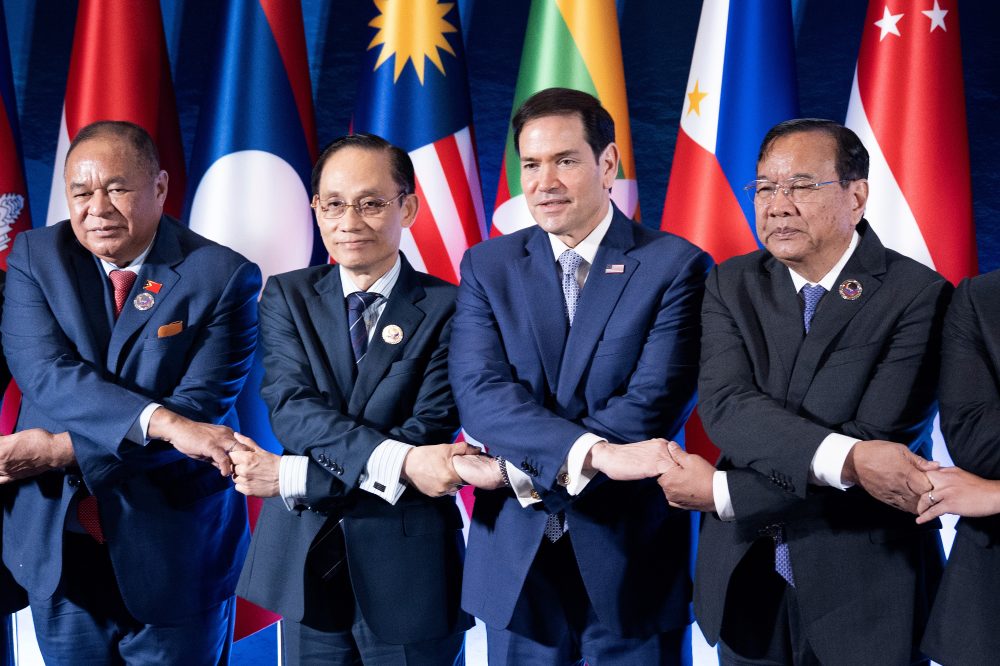
This past Sunday, Foreign Minister Ishaq Dar welcomed his counterparts from Turkey, Saudi Arabia, and Egypt for discussions centered on ending the Iranian conflict.
“Because of Mr. Dar’s frequent interactions with these foreign ministers, they can share intimate comments as well as a solemn moment,” Andrabi observed.
Washington’s relationship with Pakistan has strengthened through regular engagement between Pakistani civilian and military officials and the White House.
Munir and Sharif have conducted discussions with U.S. officials covering investment possibilities, cryptocurrency agreements involving Trump family-associated enterprises, and Middle Eastern security matters, establishing Pakistan’s diplomatic comeback through a combination of commercial partnerships and strategic alliances.
Trump has referred to Munir as his “favourite field marshal,” and the Pakistani leader was the sole active military commander attending this year’s World Economic Forum in Davos. Sources indicate he conducted additional meetings with Trump at the event and has maintained regular contact with Vice President JD Vance since the Iranian conflict commenced.
As recently as Tuesday, Vance communicated through Pakistani intermediaries regarding the Iranian situation, with a source familiar with the discussions confirming Trump’s openness to a ceasefire under specific conditions.
Prime Minister Sharif has maintained ongoing dialogue with Trump, Saudi Crown Prince Mohammed bin Salman, and Iranian President Masoud Pezeshkian.
Pakistan formalized a mutual defense agreement with Saudi Arabia in the previous year.
Pakistan’s growing international prominence has created concerns in India, which traditionally maintained superior diplomatic standing between the two adversaries. Indian opposition politicians have criticized their government’s passive stance regarding the Middle East crisis, while analysts suggest Pakistan’s emergence threatens to marginalize New Delhi in regional diplomatic efforts.
“I have been calling for almost three weeks now for India to take a leading stand, leveraging its good relations with both sides into a peace initiative,” stated opposition legislator Shashi Tharoor. “Now, apparently, Pakistan, Egypt and Turkey have done it. Good luck to them…but India gets no credit while Pakistan is holding the peace talks.”
Despite diplomatic gains, Pakistan’s economy continues struggling, and experts warn the nation risks military involvement due to its defense treaty with Saudi Arabia, potentially triggering domestic unrest among Pakistan’s Shiite population, the world’s second-largest after Iran.
Pakistan also faces ongoing tensions with neighboring Afghanistan, which intensified shortly before U.S. and Israeli military actions against Tehran.
“Pakistan has to continue to look inwards to bolster its own pillars of national power, especially its economy,” advised Uzair Yunus from strategic consulting firm The Asia Group.
“It also needs to build an integrated defence industrial complex in partnership with Saudi Arabia and Turkey.”
Pakistan requires a comprehensive long-term approach to manage relationships with Iran, its defense partnership with Saudi Arabia, and ties with Washington during an uncertain and potentially extended conflict, according to Control Risks analyst Jawaid.
“The civil-military leadership will need to be very careful of the role and extent of Pakistan’s involvement. Overplaying the mediator card could prove to be more damaging if not managed astutely.”