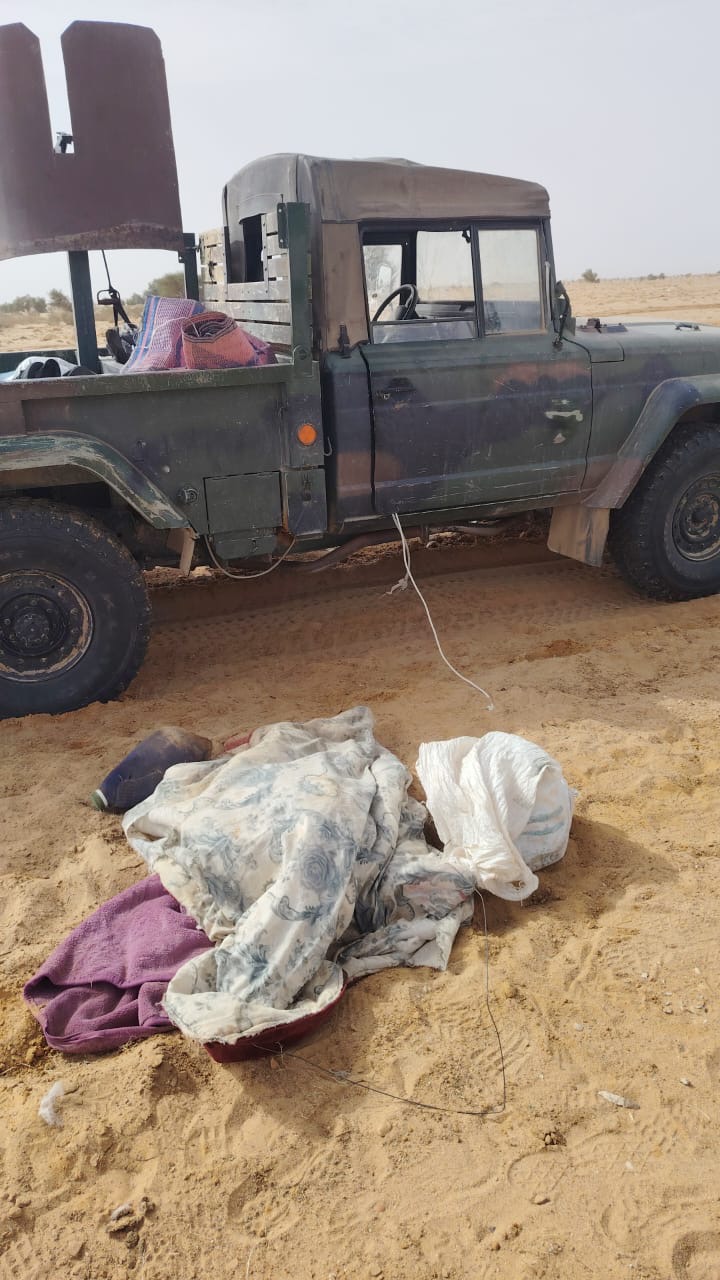
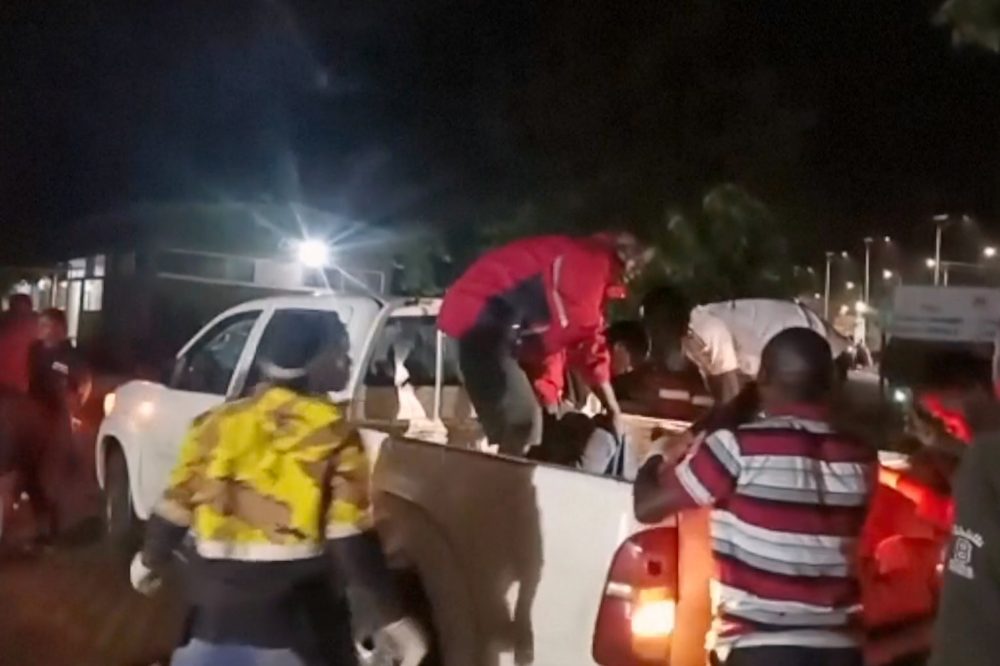
BAMAKO, Mali — A deadly ambush on a Malian military convoy in the country’s troubled north on Saturday left scores of soldiers either dead or taken captive, according to the rebel groups who carried out the attack.
Mali’s army acknowledged the assault in an official statement, confirming that armed groups targeted a convoy of Malian soldiers and their partners in a remote area of the northern Gao region. The military offered few additional details, stating only that “a counterattack is underway.”
Two separate armed factions — the regional al-Qaida affiliate known as JNIM and the separatist Azawad Liberation Front, or FLA — each issued statements claiming they carried out the attack together. Both groups described “great human losses” and “serious material damage” suffered by the Malian army.
According to the rebel groups, the convoy included both Malian army personnel and members of Russia’s Africa Corps, a force that has been operating alongside Mali’s military in the region.
Security analysts say the growing cooperation between JNIM and the FLA represents a significant and dangerous threat to Mali’s stability and its ruling military government.
FLA spokesperson Mohamed Elmaouloud Ramadane described the scale of the attack, saying: “There were many soldiers killed, others captured alive. Army cars including armored cars were destroyed and others seized in good condition.”
The convoy had been traveling from the northern town of Anefis toward Gao city when it was struck in the Sahara desert. The exact purpose of the convoy was not immediately known, though the presence of fuel tankers in the column suggested it may have been a logistics mission.
Videos shared by the rebel groups purportedly showed soldiers lined up and appearing to surrender while surrounded by militants and military vehicles. One video appeared to show rebels firing on soldiers lying on the ground, while other footage showed soldiers being transported in vehicles belonging to the armed groups. The Associated Press was unable to independently verify the authenticity of the videos.
The attack is the most recent in a string of militant strikes against Malian security forces in recent months, as armed factions compete for power and territory across the broader Sahel region. Mali is a landlocked country situated within the Sahel, a vast stretch of land running along the southern edge of the Sahara Desert that has become a hotbed of extremist activity in recent years.
In northern Mali, Tuareg-led separatist movements have long sought to establish an independent state called Azawad. In 2024, these groups united under the banner of the Azawad Liberation Front, or FLA.
The FLA and JNIM have been increasingly coordinating their operations against Malian forces. Their partnership was on full display in April, when they carried out what was described as the largest coordinated attack in the West African nation in more than a decade.
Two U.S. military personnel serving in Jordan were killed Friday as they worked to repel an assault involving Iranian missiles and drones, according to a statement released Saturday by U.S. Central Command.
The announcement confirmed that the service members died while actively defending against the incoming attack. No additional details about the circumstances were immediately provided in the official statement.
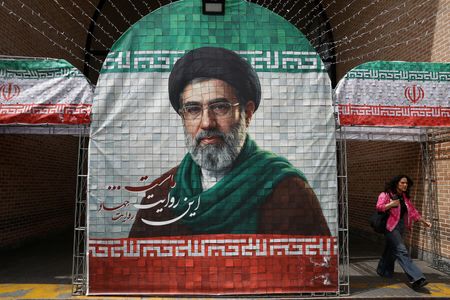
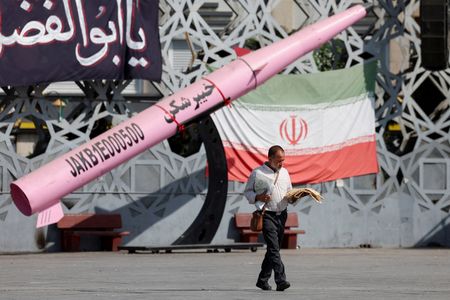
Iran’s Supreme Leader Mojtaba Khamenei released a written statement Saturday declaring that President Donald Trump’s signature is “utterly worthless and devoid of credibility,” pointing to what he described as repeated U.S. violations of a memorandum of understanding that had been signed by the leaders of both Iran and the United States.
The sharp condemnation comes as tensions between Washington and Tehran have sharply escalated. The two nations have exchanged military strikes after a ceasefire agreement between them broke down last week, stoking fears of a return to full-scale conflict.
Khamenei also issued a warning in his statement, saying the United States should understand that the Iranian people and the so-called “resistance front” have “unforgettable lessons” in store for it.
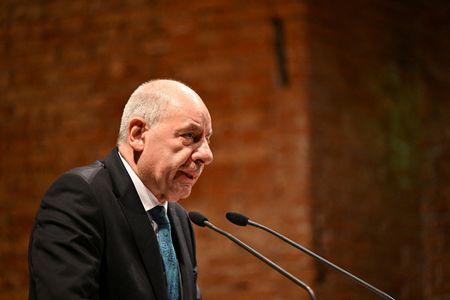
BUDAPEST — Hungarian President Tamas Sulyok put his signature on a constitutional amendment Saturday that brings his own tenure as head of state to an immediate end, according to a statement he released.
The measure was passed by Prime Minister Peter Magyar’s ruling Tisza party, which has been working to dismantle the political infrastructure built by former Prime Minister Viktor Orban. Magyar has said voters gave him a clear mandate to do exactly that after his party removed the right-wing leader in a sweeping April election victory.
The constitutional change ends Sulyok’s presidency right away, pointing to what it describes as a “serious loss of confidence” that society holds toward a leader who was originally elected in early 2024 by lawmakers loyal to Orban’s Fidesz party.
Sulyok, a former Constitutional Court judge, said he felt compelled to sign the legislation because it technically complied with existing law — but he made clear he believes the reform has done real damage to Hungary’s democratic foundations.
“The seventeenth amendment to the Constitution has marked a watershed in Hungary’s constitutional democracy,” Sulyok stated.
He added: “By removing public office holders in a manner that openly violates the rule of law … it sets a negative precedent that inflicts a deep wound on the constitutional values of democracy, the separation of powers, and the rule of law.”
The Tisza party holds a two-thirds supermajority in parliament, giving it the power to alter any law in the country. Parliament will now choose a new president, either until a new constitution takes effect or for up to five years.
The amendment goes further than just removing Sulyok. It also puts a 12-year cap on how long lawmakers can serve and sets a mandatory retirement age of 70 for Constitutional Court judges. That provision will force the court’s current president — considered an ally of Orban — Peter Polt, to step down.
Magyar had repeatedly demanded that Sulyok resign since taking power in April, accusing him of failing to represent the country’s interests and instead acting on behalf of Orban and his allies. Until now, Sulyok had refused to leave voluntarily.
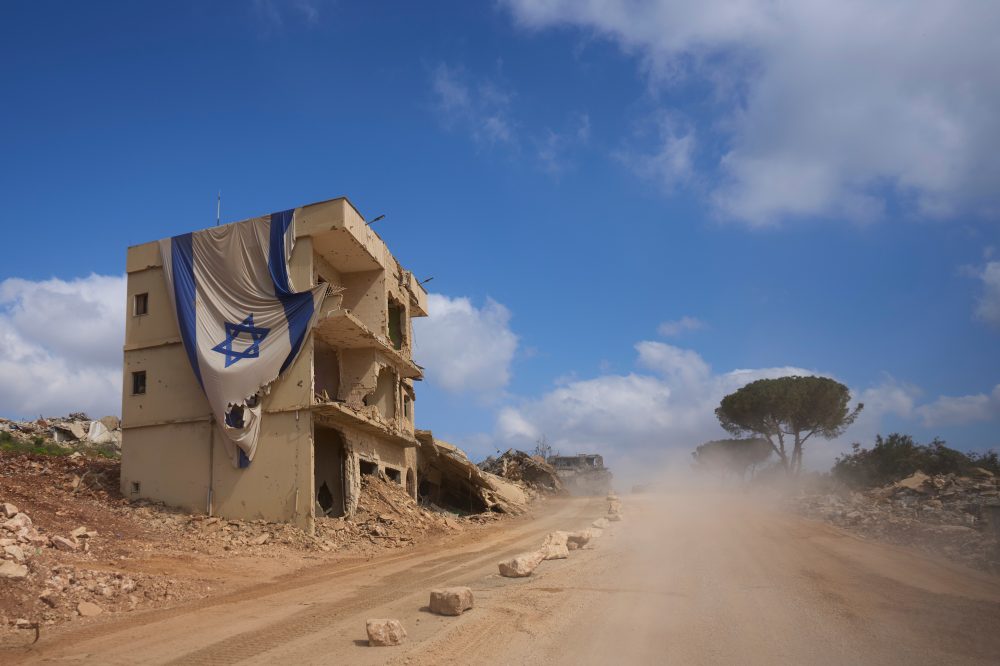
The Israeli military announced Saturday that it launched a strike targeting a Hezbollah cell located near the town of Tebnit in southern Lebanon, following the detection of a Hezbollah drone by Israeli soldiers in the region.
According to a military statement, the Israeli air force tracked down fighters who had been operating drones while taking cover in close proximity to Israeli troops. Officials stated that this behavior was a direct violation of ceasefire understandings that had been in place. As of the time of the report, Hezbollah had not issued any public comment in response to the strike.
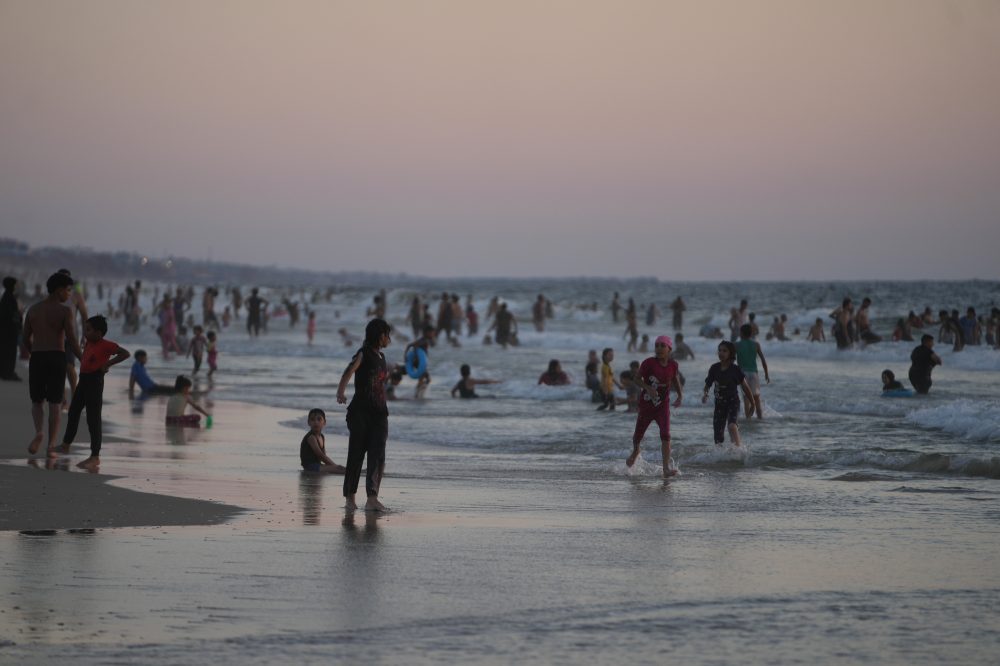
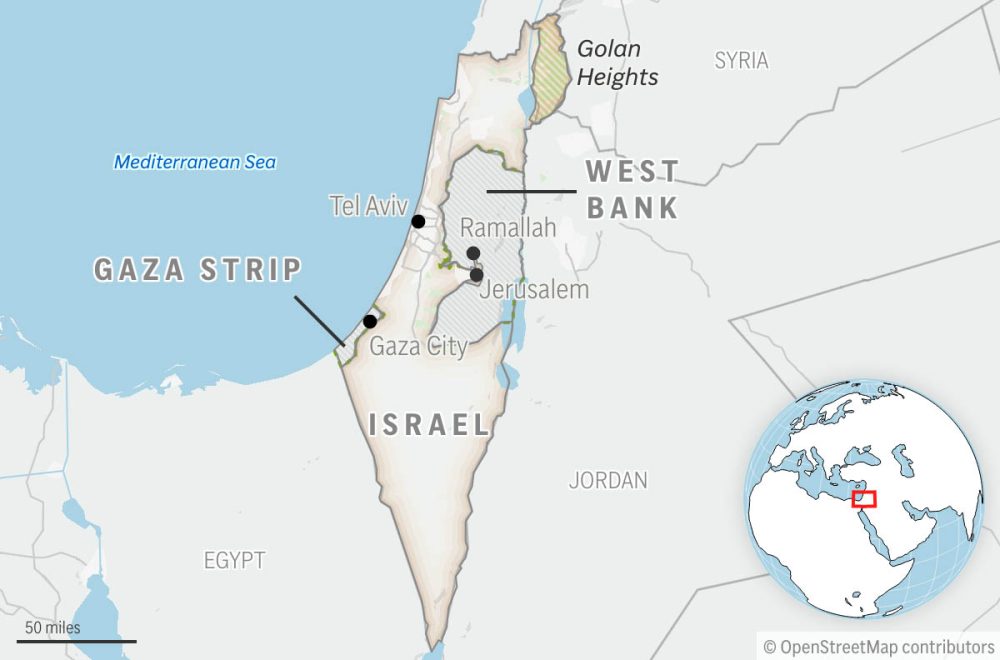
GAZA CITY — At least nine Palestinians, including three children, lost their lives Saturday following Israeli airstrikes in Gaza City, according to hospital officials.
One of the strikes targeted an apartment building in the Nasr neighborhood, claiming the lives of at least five people. Among the dead were children ranging in age from 8 to 18 years old. Mohammed Abu Selmiya, director of Shifa Hospital — where the victims were brought — confirmed the deaths and noted that six additional people sustained injuries, four of them children between the ages of 8 and 16.
The Israeli military stated it had identified Hamas infrastructure and located militants in the area as the basis for the strike, though it provided no further details.
A second Israeli strike struck a group of people gathered in the Zeitoun neighborhood, killing four individuals and leaving one more in critical condition, according to health officials.
Regarding that strike, the Israeli military said it had targeted what it described as a “Hamas terrorist” and indicated it was still assessing the outcome of the operation.
Residents across Gaza have reported a noticeable escalation in the frequency and intensity of Israeli strikes over the past several days.
Although Israel and the Hamas militant group reached a ceasefire agreement in October, Israeli forces have continued to carry out attacks across the territory on an almost daily basis. Israel maintains that its operations are focused on Hamas and other armed groups that it considers a threat. Both Israel and Hamas have accused the other of violating the terms of the ceasefire.
Since the ceasefire took effect, Gaza’s Health Ministry reports that at least 1,127 Palestinians have been killed, including no fewer than 260 children. Five Israeli soldiers have also died during that same period.
The conflict was ignited by a Hamas-led militant assault on October 7, 2023, which killed approximately 1,200 people in Israel and resulted in 251 others being taken hostage. Israel’s military response has since killed 73,250 Palestinians, according to figures from Gaza’s Health Ministry.
The Health Ministry operates under the Hamas-led government and is staffed by medical professionals who keep detailed records. United Nations agencies and independent analysts generally consider those records to be reliable. The ministry does not separate civilian deaths from militant deaths in its reporting, but indicates that women and children account for roughly half of all fatalities.
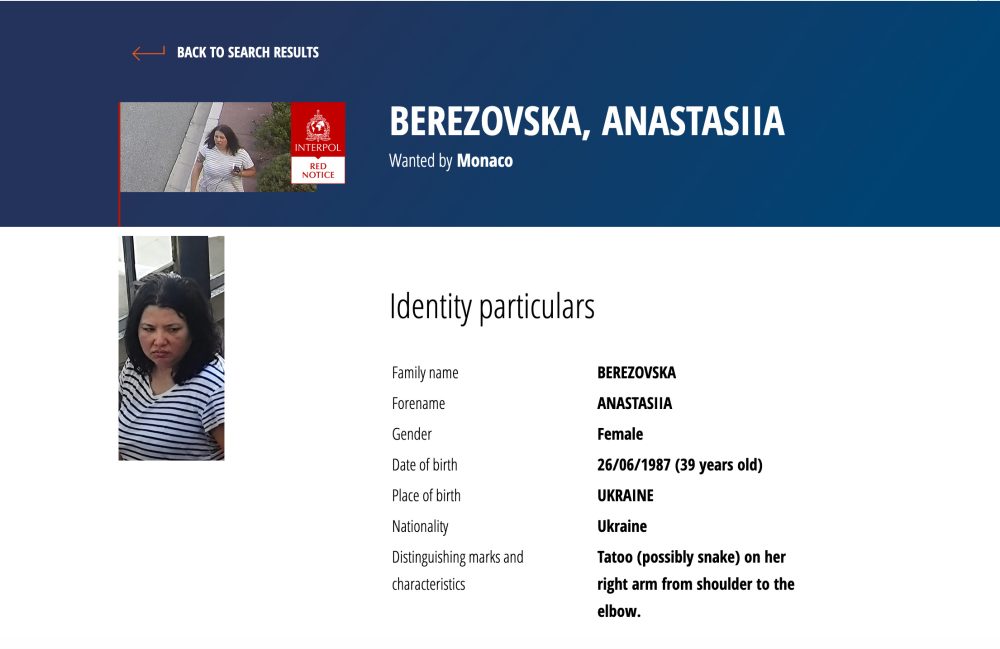
KYIV, Ukraine — Ukrainian prosecutors have made public surveillance video of what they describe as the bombing in Monaco that left wealthy businessman Vadym Yermolaiev and members of his family with serious injuries.
The explosion occurred on June 30 and sent shockwaves through the exclusive and famously private Mediterranean principality. The reason behind the attack has not been established. Investigators from Monaco, France, and Ukraine have all been working on the case, alongside international policing organization Interpol.
The woman suspected of carrying out the bombing, Anastasiia Berezovska, was discovered dead in Ukraine just days after the attack. A Ukrainian military intelligence officer later admitted to killing her, but claimed he acted entirely on his own without authorization from his superiors, according to Ukraine’s Security Service, known as the SBU.
In the footage shared with The Associated Press on Saturday, an individual wearing a hat and carrying a bag can be seen leaving an object in the entryway of a building before walking away. In the background, a man, a woman, and a child can be seen approaching the same entryway. As the three near the entrance, an explosion occurs and the video becomes distorted.
Ukrainian chief prosecutor Ruslan Kravchenko stated in a post on Telegram that the footage came from a surveillance camera that the suspected perpetrators had set up themselves to confirm the attack happened. He added that the footage had been erased but was successfully recovered by SBU technical experts.
The prosecutor’s office in Monaco did not respond to requests for comment regarding the video or where the investigation currently stands.
Lawyers representing Yermolaiev sent a letter this week alleging that Ukrainian security services were responsible for organizing the bombing and calling for protection for his family.
In the letter, which was provided to French media outlets, Yermolaiev stated that Ukrainian military intelligence was directly involved in what he described as an assassination attempt against his family. He wrote that he remains in the hospital, that his partner Anna has suffered injuries described as “irreversible,” and that their 13-year-old son sustained burns and fractures.
In an unusual turn, the letter also expressed gratitude toward Ukrainian President Volodymyr Zelenskyy for his personal attention to the situation and for unspecified help he reportedly provided, according to the French media reports.
Yermolaiev was placed under sanctions by Zelenskyy’s government in 2023 due to his connections to Russia, and he has stated that he gave up his Ukrainian citizenship. Zelenskyy has not addressed whether he played any role in assisting Yermolaiev.
SAO PAULO — A justice on Brazil’s Supreme Court has rejected a formal request from lawyers representing former Brazilian President Jair Bolsonaro, who sought to allow Argentine President Javier Milei to pay him a visit while he remains under house arrest.
The meeting had been planned for July 25 in Brazil’s capital city of Brasilia.
Justice Alexandre de Moraes, who also presided over the trial that resulted in Bolsonaro being sentenced to more than 27 years in prison for his role in a coup attempt, ruled against the visit. In his decision, Moraes pointed to an existing prohibition barring the former president from receiving any visitors for purposes described as “political-electoral in nature.”
Milei is expected to travel to Sao Paulo to attend a Liberal Party convention. That gathering will formally certify Sen. Flávio Bolsonaro — one of the former president’s sons — as the party’s candidate to challenge sitting President Luiz Inácio Lula da Silva.
The relationship between Lula and Milei has been described as chilly. Lula has long been allied with political figures who are considered rivals of Milei, including former Argentine presidents Cristina Fernández and Alberto Fernández.
This is not the first time Moraes has blocked such a request. Back in March, he denied a similar appeal from U.S. State Department official Darren Beattie — a conservative author who served as undersecretary for public diplomacy and public affairs during the Trump administration — who had sought to visit Bolsonaro while he was still in prison.
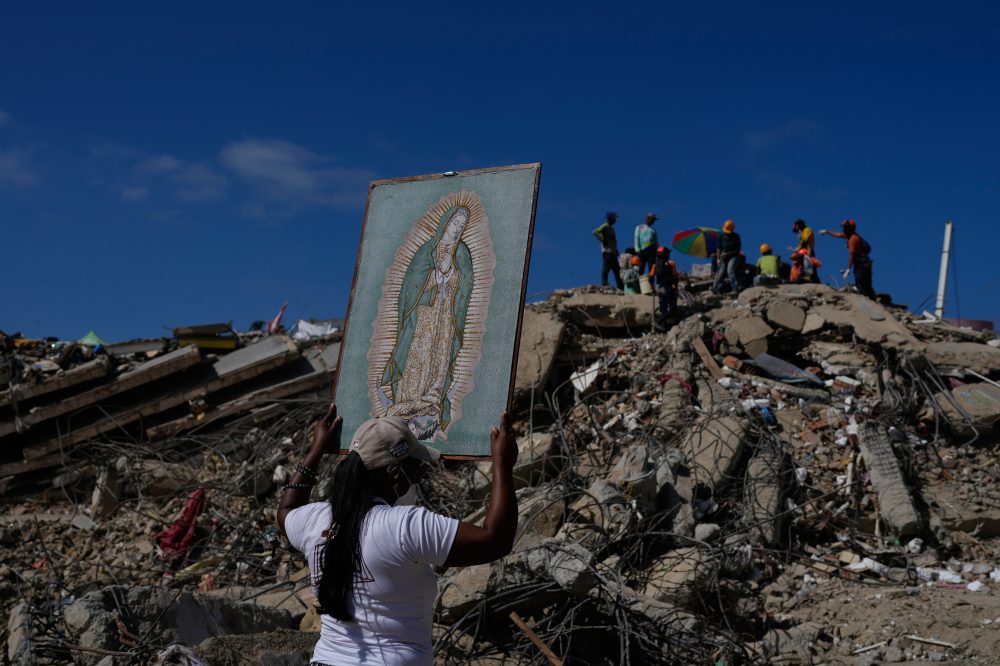
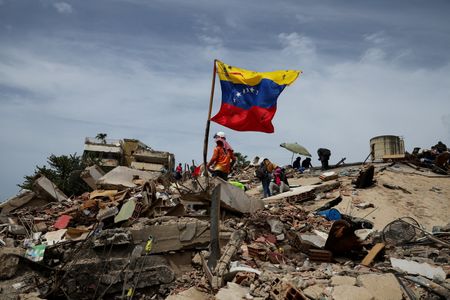
CARACAS (AP) — Venezuelan authorities announced late Friday that the combined death toll from two powerful earthquakes that struck the country last month has reached 5,069.
A statement from the interim government of President Delcy Rodriguez confirmed that the number of people injured remains at 16,740 — a figure that has held steady for the past 11 days.
The rising death toll is being attributed to ongoing recovery efforts and debris removal operations, especially in the coastal state of La Guaira, which sits near the Caribbean Sea and was the most severely affected area. As of Friday, authorities had recorded a total of 1,331 aftershocks following the initial quakes.
The Venezuelan government reports that 856 buildings sustained damage and 190 were completely destroyed following the 7.2 and 7.5 magnitude earthquakes that struck on June 24. Hundreds of additional structures, including roads and bridges, were also impacted by the disaster.
Iranian authorities announced Sunday that a man convicted of fatally shooting a member of the country’s security forces during the 2022 nationwide protests has been executed.
Officials said the deadly incident occurred during civil unrest in Tehran, where demonstrators blocked streets and confronted security personnel.
Authorities identified the executed man as Aref Khoshkar, saying he used a pellet gun to shoot at security forces, striking Salman Amirahmadi, who later died from his injuries at a hospital.
According to officials, Khoshkar admitted to firing the weapon from the rooftop of a building before discarding it in a trash bin.
This execution is among the most recent carried out in connection with the 2022 protest movement, which spread rapidly across Iran after Mahsa Amini — a 22-year-old Kurdish woman — died while in police custody. She had been detained for allegedly breaking the country’s strict dress code requirements.
Human rights organizations have spoken out against the legal proceedings tied to deaths of security personnel during the protests, arguing that those charged were not given fair due process under the law.
JOHANNESBURG — Kenya’s Ministry of Information, Communications and the Digital Economy announced Saturday that it is looking into a cybersecurity incident that struck the president’s official website, while stressing that no evidence has emerged pointing to unauthorized access to sensitive information or any loss of data.
According to the ministry, the government’s ICT Authority first detected the incident and quickly put cybersecurity response protocols into motion. As a precaution, access to the presidential website was temporarily shut down to help contain the situation and allow investigators to conduct a thorough forensic review.
The ministry noted that appropriate steps to address the threat have since been put in place, and efforts to bring the website back online are currently in progress.
Cabinet secretary for the ministry William Kabogo Gitau addressed the situation in a statement posted to X, saying: “At this time, there is no evidence of unauthorised access to sensitive data, data exfiltration, or loss of information. Government systems and digital services remain secure and operational.”
The ICT Authority is continuing to work alongside relevant government agencies and technical partners to carry out the forensic investigation and determine exactly what happened during the incident, according to the statement.
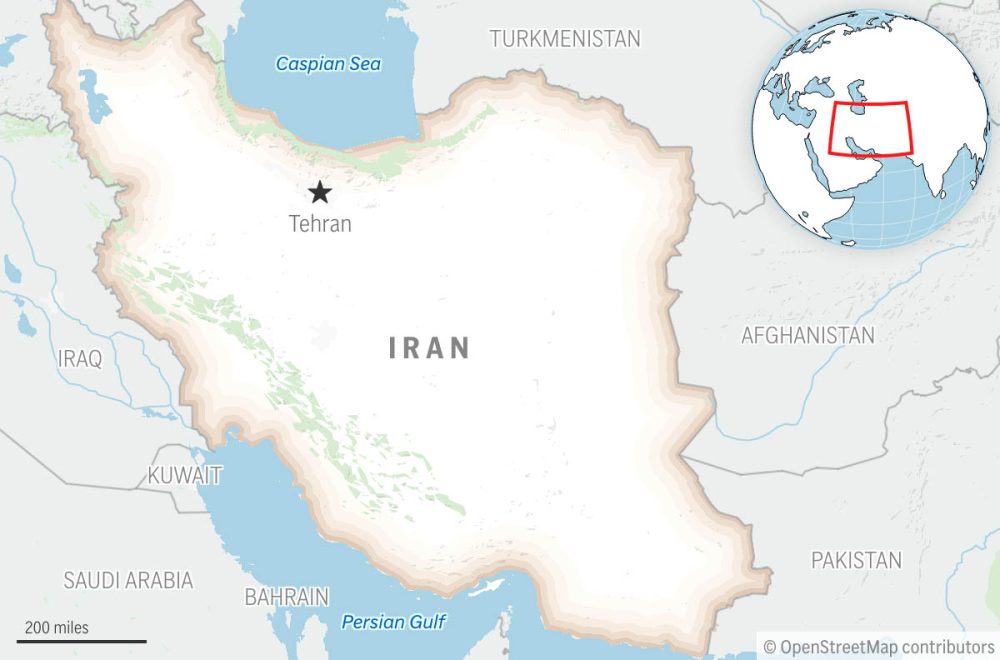
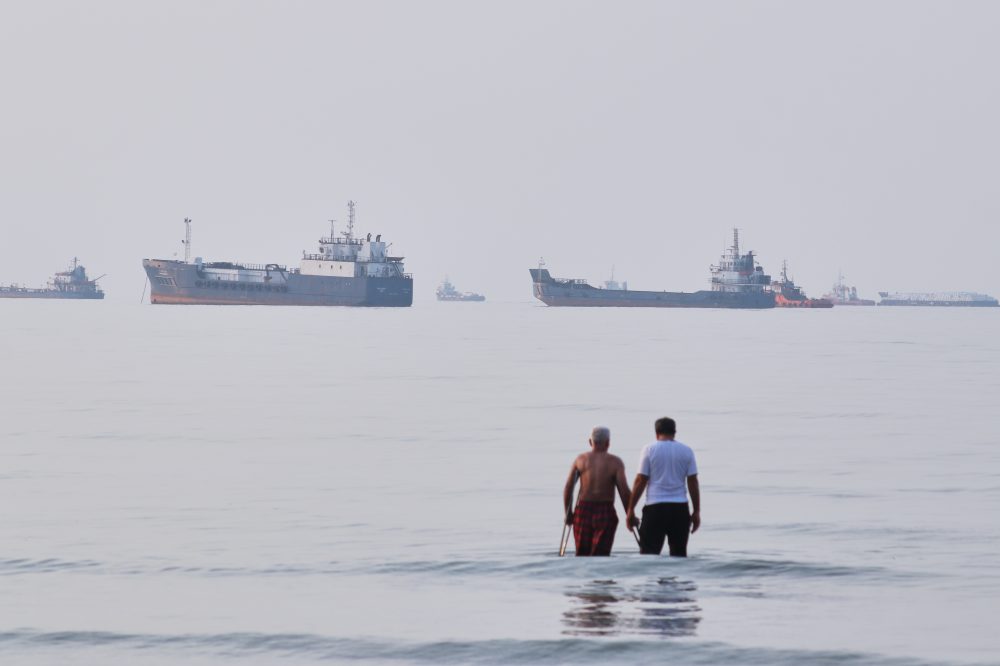
DUBAI, United Arab Emirates — American and Iranian forces exchanged blows against infrastructure and military targets on Saturday as their ongoing battle for control of the Strait of Hormuz grew more intense.
The region has been caught in a cycle of back-and-forth attacks in a conflict centered on the strait, a critical waterway that once carried one-fifth of the world’s crude oil. The breakdown of a temporary ceasefire has left no clear path toward ending the war, which the U.S. and Israel launched more than four months ago.
U.S. Central Command announced early Saturday that its seventh consecutive night of strikes had targeted “surveillance sites, military logistics infrastructure, underground weapons storage, and maritime capabilities.”
The most serious damage on Saturday came in Kuwait, where Iran struck a water desalination plant and an oil facility, according to Kuwaiti authorities and the Kuwait Petroleum Corporation. Neither organization disclosed the locations of the strikes.
The attack on the oil facility left several people injured, while the strike on the desalination plant triggered a fire and knocked multiple power generation units offline. This marked the second assault on a Kuwaiti desalination facility in two days — a particularly alarming development for the small desert nation, which relies on desalination for 90 percent of its drinking water.
The Kuwait Fire Force reported that several firefighters and a worker were also hurt while fighting two additional fires ignited by Iranian strikes.
Kuwait temporarily shut down its airspace Saturday morning in response to missile threats, and Kuwait Airways announced it was rescheduling the majority of its flights to and from the capital.
Elsewhere in the region, Iraq reported shooting down attack drones over the city of Irbil. Jordan’s state-run Petra news agency said the country’s air defense systems intercepted Iranian missiles, and air raid sirens sounded multiple times in Bahrain, according to that government.
Iranian officials have stated that recent U.S. strikes have killed dozens and wounded hundreds inside Iran. The U.S. military also confirmed that additional American service members had been injured.
Iran effectively shut the strait to shipping after the war began on Feb. 28, causing oil prices to spike and giving Tehran considerable leverage in negotiations. Oil prices climbed above $86 per barrel on Friday — near their highest point in a month — as vessel crossings through the strait dropped to a three-week low, according to an international shipping tracker.
In a Thursday evening address to the American public, Trump expressed confidence in the war’s progress. “We are likewise winning big in Iran, and you will see the fruits of that labor very, very shortly,” he said.
Before hostilities began, the U.S. had been engaged in diplomatic talks with Iran over its nuclear program. Trump now faces mounting political pressure to end the conflict and avoid the kind of drawn-out Middle East war he campaigned against.
U.S. airstrikes struck an electricity and desalination plant in Iran’s southern Hormozgan province, according to Iranian state television. The attacks hit Bonji, a coastal village on the Strait of Hormuz. Overnight strikes also damaged two tunnels and a bridge, disrupting a major highway leading toward Bandar Abbas — a city near the narrowest section of the strait — Iran’s state-run news agency reported. Iran additionally reported strikes on the strategically important Qeshm Island within the strait.
The day before, Iranian state media reported that U.S. forces had struck highways and railway bridges, in what appeared to be an effort to cut off Bandar Abbas, Iran’s main port, from roads connecting it to the country’s central region and ultimately to Tehran, the capital.
For the first time during the U.S. airstrike campaign, Iran’s Energy Ministry acknowledged “attacks on power infrastructure” on Friday, issuing a call for residents in southern provinces “experiencing extreme heat” to reduce their electricity consumption. The ministry did not identify which specific facilities had been hit.
Iranian authorities reported that at least 50 people have been killed and more than 500 wounded in U.S. strikes over the past three weeks, including eight people killed in a bridge strike on Friday.
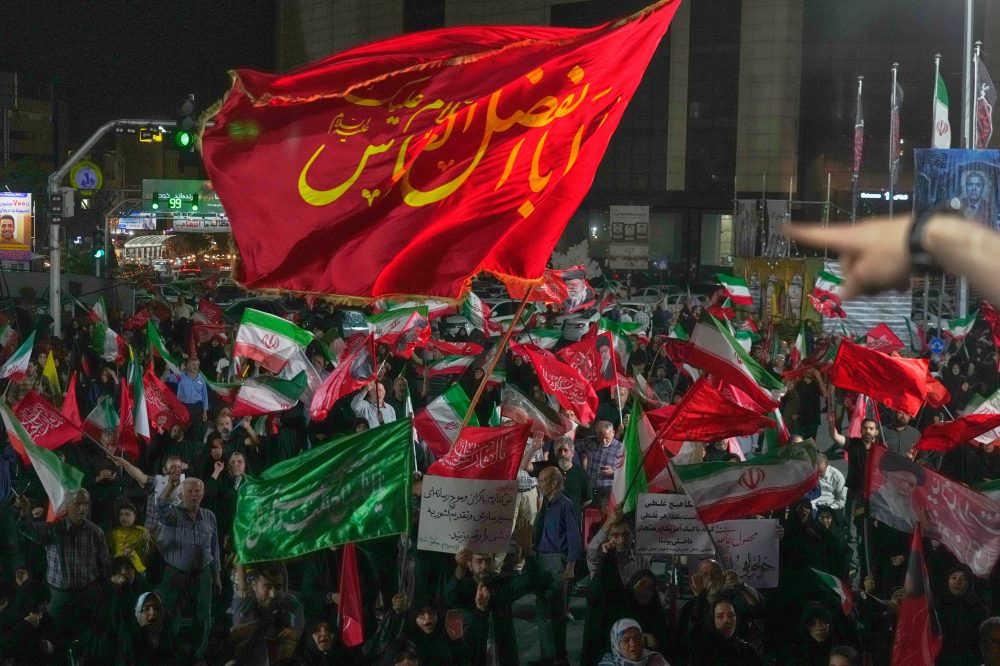
Iran’s Islamic Revolutionary Guard Corps escalated its warnings Saturday, stating that countries hosting U.S. forces should be “prepared to receive a corresponding response,” according to Iranian state TV. Pro-Iranian demonstrators continued their nightly protests in the capital for more than the 100th consecutive day.
U.S. officials confirmed that 13 additional service members — 10 Army soldiers and three Navy sailors — had been injured since Monday, though no further details were provided. Since the war’s start, 14 U.S. service members have been killed and 427 wounded.
Iran has asserted that the strait must fall under its exclusive control and that ships passing through should pay fees to Tehran — a position that conflicts with the international community’s longstanding recognition of the waterway as open to all nations.
Trump has renewed threats in recent days to target Iranian power stations and bridges in an effort to pressure Iran into relinquishing its grip on the strait, through which roughly one-fifth of all globally traded oil and natural gas once flowed during peacetime. The U.S. has also reinstated a naval blockade on Iranian ports to stop its crude oil exports.
According to MarineTraffic.com, only eight vessels crossed the strait on Thursday — a three-week low. While more regional energy is being routed through pipelines, the volume is far from enough to compensate for the dramatic decline in strait shipping.
BERLIN — A senior figure in Germany’s ruling conservative bloc resigned Saturday following intense backlash over his decision to have a child via a surrogate mother in the United States.
Jens Spahn, 46, served as the parliamentary leader of Chancellor Friedrich Merz’s Christian Democrat party and its allied Christian Social Union — together known as CDU/CSU. The controversy erupted after it became public that Spahn and his husband had welcomed a baby through a surrogate, a practice that runs counter to the party’s official position.
In Germany, surrogacy is against the law, though raising a child born through surrogacy in another country is not prohibited.
In his resignation letter, Spahn explained his decision: “Over the past few days, I have come to realise that my personal happiness — starting a family with my husband and becoming a father — is incompatible with my political office.”
The CDU had reaffirmed its opposition to surrogacy within Germany at a party conference back in February. Once news surfaced that Spahn had used a surrogate in the U.S., voices from within the party began calling on him to step aside.
Eight sources with inside knowledge of Venezuela’s disaster response have told Reuters that delayed commands from senior military leaders, a shortage of basic equipment, and widespread confusion crippled the country’s ability to mobilize troops in the critical first days following two massive earthquakes that struck its coastline last month.
The two quakes, measuring 7.2 and 7.5 in magnitude, claimed approximately 5,000 lives according to government figures — though experts, including the United States Geological Survey, have estimated the final death toll could reach nearly double that number. The hardest-hit area was La Guaira state, which is home to the country’s primary airport, a major port, and hundreds of high-rise residential buildings, many of which collapsed entirely or partially.
Acting President Delcy Rodriguez, who has the backing of U.S. President Donald Trump, has forcefully defended her administration’s handling of the disaster in the face of widespread criticism that military personnel and government officials arrived too late and provided little meaningful assistance to survivors, including those trapped beneath rubble.
While Rodriguez stated that 4,000 officials were deployed immediately following the quakes, residents, Reuters journalists on the ground, and multiple sources familiar with the situation said military and police were barely visible in the early hours after the disaster struck.
Ordinary civilians took the lead in rescue efforts — particularly during the first two days — bringing food and using basic tools to pull survivors and victims from the wreckage. International rescue teams, firefighters, civil protection workers, and a small number of Venezuelan soldiers eventually joined the effort. Those soldiers told Reuters they had volunteered for the often-grim work rather than being formally ordered to participate.
Active and retired military officers, along with diplomatic community sources, attributed the thin security presence to late deployment orders, uncertainty about who held authority over the crisis, and a lack of proper equipment.
“We don’t act on our own; we receive direct orders,” said one active-duty officer who spoke anonymously. “I can’t tell my unit, ‘Let’s go help in La Guaira,’ if I haven’t been ordered to do so. We didn’t have a plan like the ones that exist for defending the nation. There was no plan for dealing with something like this.”
Soldiers from that officer’s unit traveled to La Guaira the day after the June 24 earthquakes, following orders to reinforce personnel already there.
“We weren’t going to leave without preparation or logistics because obviously nobody is prepared for something like this,” the officer said. “The troops in Caracas should at least have been sent to provide security and help however they could.”
A source familiar with diplomatic circles described the overall situation as one of confusion. “There was no plan and the chain of command was weak; many people simply didn’t know what to do,” the source said. That same source noted that delays in issuing orders also held back international rescue teams who had arrived within the first 48 hours, squandering precious time during which more lives might have been saved.
“Everyone looks upward waiting for an order. They would rather do nothing than act and risk being reprimanded,” the source said, referring to delays in assigning search zones to rescue teams. “The loss of those hours was enormously frustrating.”
“The Marine Infantry Brigade was ready to move but never received instructions to do so,” said one source with knowledge of military affairs.
A separate military source said their unit lacked enough vehicles to transport personnel to the disaster zone. Three additional sources said units were missing equipment ranging from hammers and pickaxes to helicopters fitted with night vision capability. Another source said the vice minister responsible for disaster response arrived in La Guaira around midnight on the night of the quake without the communications equipment necessary to report the full scale of the devastation.
Venezuela’s Communications Ministry did not respond to a request for comment. Rodriguez, however, has been vocal in defending her government’s actions. When pressed by reporters on July 2 about who had issued orders to the military, she claimed that “media laboratories” had manufactured a false impression of chaos — though she offered no supporting evidence. Days later, at a public event, she declared: “I gave the order, and I take responsibility for our Bolivarian National Armed Force.”
Rodriguez designated National Guard commander Juan Sulbaran Quintero as the “single authority” overseeing the disaster response, while simultaneously issuing a decree granting authority to Interior Minister Diosdado Cabello. Four sources said that overlapping command structure generated confusion over who was actually directing military and police operations, including disagreements over whether to deploy military police or the national police force.
Sources noted that years of economic hardship have eroded military readiness, with budgets prioritizing payroll over equipment maintenance and upgrades. By contrast, when La Guaira was devastated by a massive mudslide in 1999, the military launched a full-scale response using boats and helicopters to rescue and evacuate survivors.
“The armed forces have a concept known as operational readiness — the capacity to respond to threats and emergencies — but that readiness is limited,” said one source with knowledge of military matters.
The earthquakes struck on Army Day, a national holiday during which many military personnel were off duty and away from their assigned posts. “When the earthquakes hit, the strategic operational commander and the regional commander should have ordered an immediate recall of military personnel. That order never came,” the source said.
“The earthquake was the moment for the military to distinguish itself,” the active-duty officer said. “They should have been there at dawn with armored vehicles and cables pulling people out. The psychological impact would have been enormous — people seeing the troops helping. But we didn’t have a plan.”
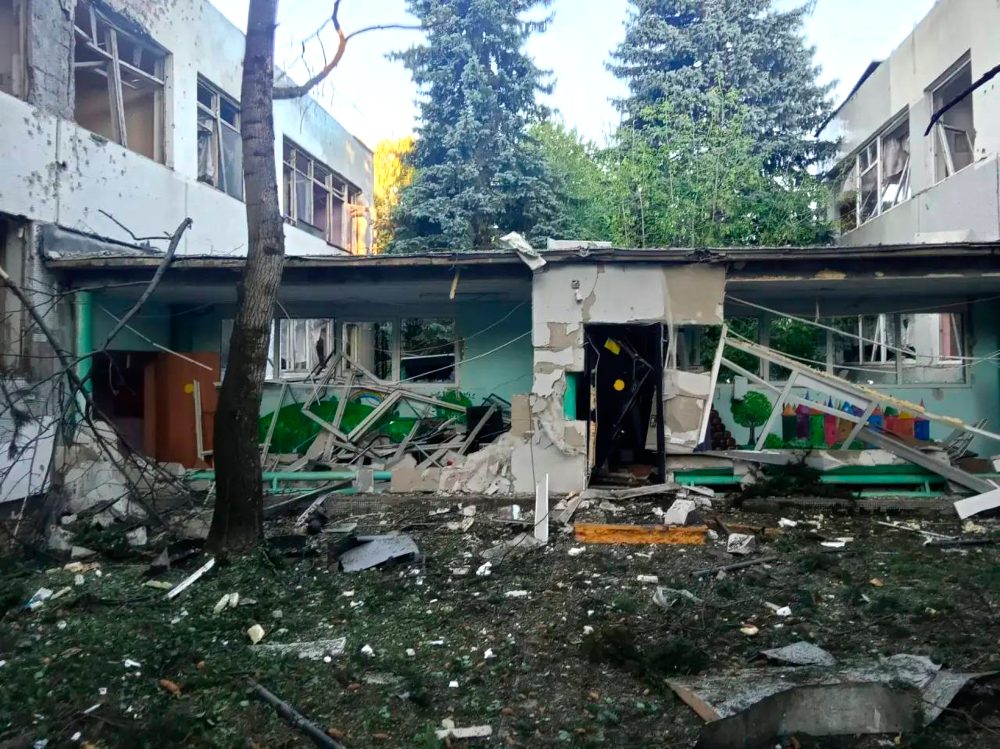
Russian officials reported Saturday that seven people lost their lives and 51 others were injured following a large-scale Ukrainian drone assault carried out overnight across multiple Russian regions.
Ukraine has been maintaining a persistent aerial campaign targeting energy infrastructure and military-related sites inside Russian territory, with the goal of weakening Moscow’s ability to wage war and bringing the reality of the conflict home to Russian citizens. The invasion of Ukraine is now well into its fifth year.
According to Russian officials, Ukrainian drones struck two large warehouses belonging to Wildberries, one of Russia’s biggest online retailers. One warehouse was hit in the town of Kotovsk, located in the Tambov region approximately 360 kilometers — or about 220 miles — from the Ukrainian border. A second warehouse was struck in the city of Elektrostal, roughly 50 kilometers, or about 30 miles, east of Moscow.
In a Saturday post on Telegram, Ukrainian President Volodymyr Zelenskyy confirmed that long-range Ukrainian strikes had hit two “significant logistical facilities in the Moscow and Tambov regions.”
“These facilities were used by the aggressor to supply sanctioned components for the production of drones and navigation equipment,” Zelenskyy wrote, adding that an oil facility was also struck in the attacks.
Zelenskyy also noted that Ukrainian special operations forces carried out additional strikes against targets in the Sea of Azov and in Russian-occupied Ukrainian territory.
Tambov regional governor Yevgeny Pervyshov confirmed that seven workers on the night shift were killed at the Kotovsk warehouse, with another 25 people wounded there. In Elektrostal, 24 people were injured, according to Moscow region governor Andrei Vorobyov.
Vorobyov also reported that two additional people were wounded in the Moscow region city of Noginsk, just north of Elektrostal, where a Ukrainian drone strike set an oil depot ablaze. As a safety precaution, a nearby maternity hospital and a residential building were evacuated, he added.
In the city of Vladimir — located about 180 kilometers, or more than 110 miles, east of Moscow — a Ukrainian drone struck a residential building and briefly ignited a fire. Vladimir governor Alexander Avdeyev said no one was hurt in that incident.
Russia’s Defense Ministry reported that its air defense systems intercepted a total of 379 Ukrainian drones overnight, with the strikes spanning 19 Russian regions as well as the illegally annexed Crimea, the Sea of Azov, and the Black Sea.
Less than a month after the United States and Iran reached a preliminary agreement to end their conflict, the two nations are lurching back toward all-out war — and the fragile deal they signed appears to be in ruins.
The unraveling began on June 25, just one week after the agreement was signed, when an Iranian drone struck a cargo ship traveling through the Strait of Hormuz. No one was killed and the damage was limited, but the attack set off a cycle of strikes and counterstrikes that has steadily dismantled the foundations of the peace deal.
Red lines declared by both countries have now been crossed, and while some diplomatic efforts to salvage the agreement are still underway, the prospect of renewed full-scale war — one that could further destabilize the Middle East and shake the world economy — is growing more likely by the day.
Here is a look at how the situation deteriorated.
The drone attack on the cargo ship came after Iran had warned ships not to use an alternative passage through the Strait of Hormuz — a route overseen by the U.S. military and designed to operate outside of Iran’s authority.
Iran had largely closed off the strait — which in peacetime carries about one-fifth of the world’s traded oil and gas — following a surprise U.S.-Israeli attack on February 28 that triggered the war. Tehran has since treated control over the strait, and the enormous economic leverage it provides, as a critical tool in its standoff with Washington.
The preliminary deal had called for the strait to be fully reopened, but it also included language that suggested Iran could manage ship traffic and potentially collect fees going forward. Iran has latched onto that provision, arguing it has the legal right to govern the strait and that the alternative route violates the terms of the agreement.
The United States and other nations reject that interpretation, maintaining that the strait should remain open to all vessels without tolls, just as it was before the war began.
The day after the June 25 drone strike, the U.S. launched its own strikes on Iran, targeting what the military described as missile and drone storage sites and coastal radar installations.
Iran responded the next day by attacking a tanker using the alternative route. The U.S. struck back again, and Iran escalated further — this time hitting nearby Gulf states, launching attacks on Kuwait and Bahrain, both of which are home to American military personnel.
The following week, both sides stepped back from the brink and sent delegations to Qatar, which had played a central role in brokering the original agreement. However, the two sides did not hold direct talks.
Iran repeated its warnings against use of the alternative route as it prepared for the multi-day funeral of Supreme Leader Ayatollah Ali Khamenei, who had been killed in the opening U.S.-Israeli strikes of the war. The funeral began on July 4, drawing large crowds calling for revenge against U.S. President Donald Trump.
Days after the funeral, Iran struck three ships in the Strait of Hormuz.
The U.S. responded with a broad wave of strikes it said targeted Iranian air defense systems, radar installations, and more than 60 small watercraft operated by Iran’s paramilitary Revolutionary Guard — vessels that have been used to harass commercial ships in the strait.
Washington also revoked a waiver that had allowed Iran to sell its oil on international markets in U.S. dollars for the first time in years. That waiver had been a key component of the interim deal.
Iran condemned both the strikes and the reimposition of oil sanctions as violations of the agreement, while continuing to insist on its right to control the strait — which its military leadership has called an “unbreakable red line.” Iran also widened its retaliatory strikes to include Bahrain, Kuwait, and even Qatar, the country that had served as a mediator.
President Trump, speaking after departing a NATO summit, sent mixed signals. He warned that the U.S. strikes were a direct response to attacks on shipping and cautioned that “if it happens again, it will get much worse!” At the same time, he appeared to rule out a prolonged military campaign, saying “anything that happens is going to happen very fast.” He also hinted that the U.S. military might “just finish the job.”
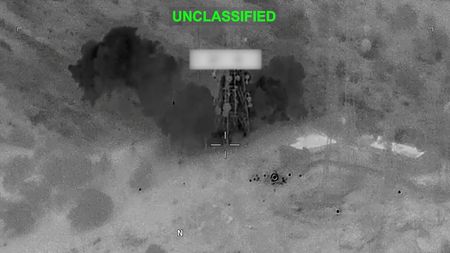
The conflict has continued to intensify. On Wednesday, the U.S. reinstated its blockade on Iranian ports, which had been suspended under the interim agreement. In recent days, American strikes have expanded into northern Iran, hitting targets well beyond the strait region. On Friday, the U.S. struck bridges and power stations in southern Iran, including a communications tower it said was used by the Revolutionary Guard to monitor maritime activity at one of Iran’s main ports.
Iran reported Friday that U.S. strikes since the resumption of hostilities have killed at least 46 people and left more than 400 others wounded.
Trump has repeatedly threatened to go after civilian infrastructure in Iran — at one point earlier in the war vowing to destroy Iran’s “whole civilization” — though he had consistently pulled back from those threats when diplomatic progress appeared possible.
Iran’s leadership may now believe yet another boundary has been crossed. On Friday and again on Saturday, Iran attacked a water desalination plant in Kuwait, a country with an extremely dry climate that depends heavily on such facilities.
Trump has also floated the idea of seizing control of the strait by force, potentially by taking over one or more strategic islands currently held by Iran — a move that analysts say would require a significantly larger naval force and possibly tens of thousands of ground troops.
FRANKFURT — Germany’s Interior Minister Alexander Dobrindt announced Saturday that the country is raising its security status from an “abstract threat level” to a “high threat level,” citing an increase in intelligence reports pointing to potential dangers.
Speaking in an interview with the German newspaper Welt am Sonntag, Dobrindt warned that the threat of attacks must now be considered a constant reality. “This means that the risk of attacks must be reckoned with at all times in Germany,” he was quoted as saying.
The minister made clear that the danger is not vague or distant. “Plans for attacks against our country are clearly discernible,” he added, pointing to threats directed at German infrastructure, individuals, and institutions.
Germany’s Interior Ministry had not responded to requests for additional information at the time of publication.
The announcement comes after a string of violent incidents in Germany in recent years. Last month, a Saudi doctor was sentenced to life in prison for a deadly attack in the eastern city of Magdeburg, where he drove a rented BMW into crowds at a historic market just days before Christmas in 2024, killing six people and injuring hundreds more.
In a separate case, a German court last year convicted a Syrian citizen for carrying out an Islamic State-inspired stabbing attack at a festival in the western city of Solingen in 2024. Three people were killed and 10 others were injured in that attack.
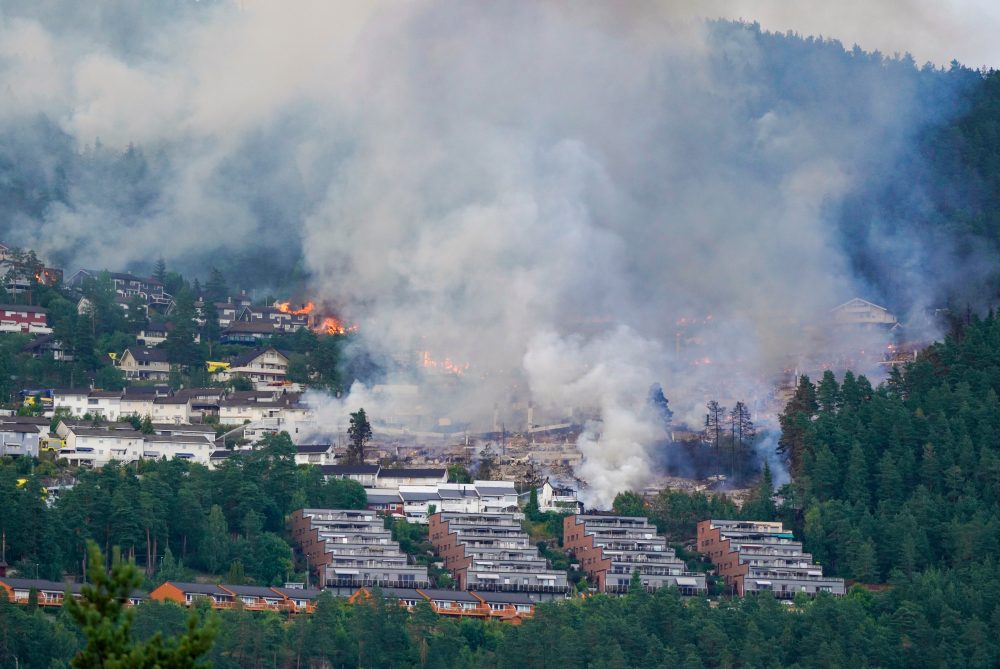
A devastating fire tore through the city of Drammen in southern Norway on Friday, destroying more than 100 homes and prompting a mass evacuation of the surrounding area, according to local police and the country’s national public broadcaster.
Authorities say the fire ignited in a townhouse at approximately 3:30 p.m. Friday before rapidly spreading throughout the neighborhood and into adjacent forest areas. Crews were still battling the blaze into Saturday morning in an effort to bring it fully under control.
Norway’s public broadcaster, NRK, reported that hundreds of displaced residents sought shelter at a designated evacuation center set up in response to the emergency.
Police confirmed that no residents have been reported missing. The cause of the fire has not yet been determined.
Drammen is located approximately 34 kilometers — about 21 miles — southwest of the Norwegian capital, Oslo.
MOSCOW — Multiple waves of Ukrainian drone strikes left seven workers dead and dozens injured across Russia on Saturday, while a separate attack set an oil depot ablaze near the country’s capital, according to regional governors.
Governor Evgeniy Pervyshov reported that Ukrainian drones struck a warehouse belonging to Wildberries — Russia’s largest online retailer — in the city of Kotovsk, located in the Tambov region approximately 475 kilometers (295 miles) southeast of Moscow. Seven people working the overnight shift were killed at the scene, and 25 others were hurt in the attack.
Pervyshov noted on Telegram that 28 incoming drones had been intercepted before reaching their target. “If they had achieved their goal, the number of civilian casualties could have been much higher,” he stated.
A second Wildberries warehouse was also struck — this one in Elektrostal, a city to the east of Moscow. Governor Andrei Vorobyov of the Moscow region confirmed that 24 people sustained injuries in that attack.
Wildberries co-founder and CEO Tatyana Kim called it a “terrible night” for both Russia and the company, extending her condolences to the families of those who lost their lives.
In the city of Noginsk, also within the Moscow region, falling drone debris triggered a fire at a local oil depot. Governor Vorobyov said two individuals were injured there, and a maternity hospital located nearby was evacuated as a precaution. He did not provide details on the extent of the damage to the oil facility.
LITOCHORO, Greece — Crowned with snow for much of the year and rising 2,918 meters (9,573 feet) from a base nearly at sea level, Mount Olympus has stirred human imagination for thousands of years. In ancient Greek belief, this towering, mist-draped peak was where Zeus, ruler of the gods, held his throne. Now, modern Greeks are hoping to see their country’s highest mountain earn a place on UNESCO’s prestigious World Heritage List.
The nomination for Mount Olympus — put forward as a mixed cultural and natural site — is scheduled to be considered when the World Heritage Committee holds its annual meeting in Busan, South Korea, running through July 29.
“Olympus is our life. It is the place we grew up in,” said Evagelos Geroliolios, mayor of Dion-Olympus, whose offices are based in Litochoro, the mountain’s principal town. “It is the place we see every day, but at the same time, it is also a place which carries with it myth, history, biodiversity, extraordinary beauty and a very great cultural weight.”
Few places hold as prominent a role in ancient Greek mythology as Mount Olympus. Legend holds that Zeus established his court atop the mountain after a 10-year conflict with his father, Cronus, that ended the rule of the Titans.
Interest in the mountain could get an additional lift this week with the theatrical release of Christopher Nolan’s “The Odyssey,” a new cinematic adaptation of Homer’s epic poem. In the film, the mountain serves as the residence of Zeus and the Olympian gods who shape the wanderings of Odysseus.
Archaeological digs on one of the mountain’s lower peaks have revealed an open-air sanctuary, with the earliest artifacts tracing back to the Hellenistic period, spanning from 323 B.C. to 30 B.C. Greece’s original UNESCO nomination suggests this sanctuary may be the very one referenced by the ancient philosopher and historian Plutarch, who wrote in the 2nd century about processions to an Olympus peak for animal sacrifices offered to Zeus.
The mountain’s religious significance did not fade with the rise of Christianity. A chapel on the peak known as Prophet Elias, standing at 2,803 meters, is thought to be the highest-elevation chapel in the Christian Orthodox world. The mountain’s Enipeas Gorge contains the ruins of a monastery established in 1542, and about a 20-minute walk away lies the Holy Cave of St. Dionysios — a chapel set within a natural cave from which a small spring flows, believed to carry holy water.
Beyond its mythological and religious heritage, the mountain’s slopes — which stretch nearly to the shoreline — shelter a rich variety of plant and animal life, including species found nowhere else. It is this rare combination of cultural history, ancient myth, natural scenery, and biodiversity that residents hope will earn Olympus its designation as a World Heritage site.
“It is a place we love. It is a place that many people from all over the world visit to see, to live, to experience. We want to protect it,” Geroliolios said. He added that inclusion on UNESCO’s list would be “something very big that goes beyond not just local boundaries, but national boundaries. It is something that concerns the entire world. It is very important.”
Greece first set the process in motion back in 2014, when it added Mount Olympus to its Tentative List — the required first step before any formal UNESCO nomination can be submitted. Countries typically use the Tentative List to identify sites they plan to formally nominate within the following five to ten years.
The full nomination process involves a preliminary review, followed by submission of a comprehensive nomination file. That file is then evaluated over 14 months by advisory bodies, including the International Council on Monuments and Sites (ICOMOS) and the International Union for Conservation of Nature. Their findings are then brought before the World Heritage Committee, where delegates from 21 countries cast votes on each nominated site.
Success is not guaranteed for Greece’s bid. A draft version of the Busan meeting’s agenda indicates the committee is likely to refer the nomination back to Greece and request more detailed information before moving forward.
Even so, those who live near the mountain remain hopeful that its extraordinary combination of cultural and natural assets will ultimately secure it a spot on the list — and with it, stronger protections for the mountain itself.
Mayor Geroliolios acknowledged that a World Heritage designation would come with added responsibility, saying it “places some greater obligations on our part to protect this environment.”
Environmental concerns are also top of mind for mountain guide Babis Marinidis, who serves as president of the Alpine Club of Litochoro. He noted that a UNESCO designation would likely draw even more visitors to the area, raising a pressing question: “How many people can this mountain, this ecosystem, bear?”
Marinidis pointed out that although much of Olympus has been a designated national park for decades and regulations exist, many visitors openly disregard them — routinely ignoring signs prohibiting swimming or camping. The steady increase in foot traffic has prompted local officials to explore entrance fees and visitor registration systems. “I used to be against that,” Marinidis said. “But now with so many people, I believe some limit must be imposed.”
The mountain draws hikers and climbers from around the globe, drawn by its mythological legacy and dramatic terrain. Reaching the summit does not require advanced technical climbing skills, but the mountain demands serious respect. Unpredictable weather and dangerous terrain have taken many lives over the years. Most recently, a 64-year-old Greek hiker died on July 11 after collapsing on a trail. In May, rescue teams recovered the body of a 25-year-old Spanish man several days after he went missing while attempting to summit in snowy conditions.
“You need to be careful,” said 32-year-old hiker Triantafyllos Giannospyros, who was visiting the mountain for the first time. Safety should always be a priority, he said, but added: “With care and with good organization, it isn’t something you should be afraid of.”
Stavroula Vourou, who operates a hotel in Litochoro — the town from which many hikers begin their ascent — offered a similar perspective. “Everyone sets off to go up and conquer a mountain that needs respect,” she said. “You respect this mountain, it respects you too.”
NEW DELHI — Authorities in India moved a well-known activist to a hospital in New Delhi on Saturday after his condition worsened following 20 days without food, as part of an ongoing protest tied to the country’s rapidly growing Cockroach Janta Party education reform movement.
Security forces increased their presence at Jantar Mantar, a designated protest area in New Delhi surrounded by police barricades, where activist Sonam Wangchuk had been camped alongside students and Cockroach Party supporters. The group is calling for the resignation of the education minister following allegations that exam questions were leaked ahead of testing.
Wangchuk, a 59-year-old engineer and education reform advocate, has become a central figure for the movement. The Cockroach Janta Party itself emerged in May after the Chief Justice of India’s Supreme Court, Surya Kant, compared certain unemployed young people to “cockroaches” during an unrelated court hearing. Rather than take offense, supporters adopted the term as a symbol of toughness, transforming it into a satirical political campaign that attracted more than 21 million Instagram followers within just a few days.
Among the movement’s key demands are the resignation of education minister Dharmendra Pradhan over the alleged exam leaks, a complete overhaul of the national examination system, and financial compensation for the families of students who died by suicide in connection with the leaked exams or test results.
Delhi Police confirmed that Wangchuk was taken to the hospital due to his deteriorating health, stating the transfer followed both medical guidance and a court order. Officers noted that a brief disturbance broke out when some protesters attempted to prevent the move.
The Cockroach Party pushed back on that account, posting on social media that the government had “forcefully abducted” Wangchuk “without his or his family’s consent.”
In response to the growing tension, authorities deployed additional police officers and paramilitary personnel and placed barricades around the Jantar Mantar protest site. Police described the increased security as a precautionary measure and asked demonstrators to work cooperatively with officials.
The abortion debate playing out in the United States is having life-or-death consequences for women living thousands of miles away — particularly across the African continent.
For many years, American anti-abortion organizations have pushed for tighter restrictions on abortion both at home and internationally. This year, the Trump administration gave new energy to the movement that seeks to export conservative “family values” abroad, announcing broad new limits on US funding for any organizations involved in abortion-related work overseas. Those restrictions could affect as much as $30 billion in aid.
These new policies are layered on top of years of groundwork already laid by US anti-abortion groups in Africa, a region where healthcare systems are heavily reliant on money from foreign donors.
A financial analysis conducted by the Institute for Journalism and Social Change found that 17 American anti-abortion nonprofit organizations spent a combined total of more than $9.3 million across Africa during 2023 and 2024. That figure comes on top of more than $16 million those same groups directed to the continent between 2019 and 2022 — and researchers say even that earlier number is likely an undercount.
The influx of US support has given confidence to those who harass people working in reproductive healthcare. Medical professionals, nurses, and activists in multiple African countries have been detained by authorities, targeted with threats on social media, and hit with lawsuits.
Africa is already considered the most dangerous region in the world for women of reproductive age, recording the highest rates of maternal deaths and unsafe abortions anywhere on the globe. While the Trump administration and anti-abortion organizations argue they are working to save lives, healthcare workers and advocates on the ground say the real outcome is more women dying.
When the Associated Press asked the US State Department to comment on the Trump administration’s new rules governing American foreign aid, the department responded: “The American people expect their tax dollars to support programs that save lives … and reflect American values, not fund abortion-related activities, left-wing social agendas, or wasteful overseas bureaucracies.”
The department added: “U.S. assistance continues to support a wide range of maternal and child health services as part of the America First Global Health Strategy.”
Tracking the full amount of money that American anti-abortion charitable groups send to Africa is no easy task. Publicly available tax filings from the 17 organizations examined by the Institute for Journalism and Social Change show that the money flowing to Africa jumped 50% between 2019 and 2022, surpassing $16 million. Funding continued to climb after that, with those organizations spending nearly $9.4 million across Africa in 2023 and 2024, according to previously unreported data the institute analyzed.
Even so, the institute’s Claire Provost cautioned that what’s visible is “just the tip of the iceberg.” Unlike most other tax-exempt nonprofits, US-based churches and certain religious organizations are not required to file annual financial disclosures that detail their income, contributions, and spending.
Marie Stopes International reported in 2024 that staff at its reproductive health clinics in several African countries described facing online attacks and legal pressure from US-based anti-abortion organizations and locally operating groups receiving US funding. In Congo, the organization said health workers had been held for days for providing services that are legally allowed, before being released without any charges filed.
“The extent of the opposition has made abortion providers fearful of coming into work,” the report stated.
In Ethiopia, the group reported that the local head of the US-based Family Watch International had “targeted and trolled members of our senior leadership team on social media” and posted YouTube videos spreading false information about abortion.
In Kenya, the names and home addresses of staff at reproductive rights organizations have been posted publicly online, with accusations of murder leveled against them. The owner of a private abortion clinic in Nairobi said staff have been harassed by police and held in detention, with officials allegedly demanding bribes and threatening criminal charges for those who refuse to pay. The clinic owner spoke without being identified out of concern for personal safety.
Kenya’s Health Ministry, Justice Ministry, and the government spokesperson’s office all failed to respond to repeated requests for comment from the Associated Press, including detailed questions sent by email.
An international agreement signed by African nations roughly two decades ago declared access to safe abortion a human right. The agreement, known as the Maputo Protocol, requires countries that signed it to legalize abortion in cases involving rape, incest, fetal abnormalities, or threats to a woman’s health. However, enforcement has been inconsistent, leaving many women to seek out dangerous, illegal procedures. Each year, more than 6 million unsafe abortions are recorded in sub-Saharan Africa, according to the African Institute for Development Policy.
Last year, anti-abortion Christian organizations from the United States, Europe, and Africa joined senior Kenyan officials at a conference held in Nairobi focused on “Promoting and Protecting Family Values in Challenging Times.”
Charles Kanjama, vice chairman of the African Christian Professionals Forum, which organized the conference, described the abortion debate as “a culture war.”
The anti-abortion movement appears to be gaining ground. In May, a Kenyan appeals court reversed a ruling that had affirmed abortion access as a fundamental right — a legal challenge led by Kanjama, who described the court’s decision as having “restored constitutional balance.”
In June, representatives from 20 African countries gathered at a conference in Ghana and finalized a draft charter calling for the rejection of sexual and reproductive health rights. That charter is set to be voted on by the African Union next year. Sharon Slater, co-founder of the US-based anti-abortion group Family Watch International, was among those raising money for the charter’s passage at the European Parliament in Brussels earlier this year.
KISUMU, Kenya — For decades, American anti-abortion organizations have pushed both at home and overseas to limit access to abortion services. Their greatest domestic victory came with the overturning of Roe v. Wade. Now, the Trump administration is giving fresh energy to the movement that seeks to export what it calls “family values” to countries around the world.
At the annual March for Life rally in Washington, Vice President JD Vance announced broad new limits on U.S. funding for nongovernmental organizations, foreign governments, and United Nations agencies that support abortion access, gender-affirming care, and diversity programs abroad.
“We’re going to start blocking every international NGO that performs or promotes abortion abroad from receiving a dollar of U.S. money,” Vance told the crowd in January.
These expanded restrictions build on the work already being done by conservative American nonprofits in Africa — a region where healthcare systems rely heavily on foreign aid. Africa also has the world’s highest estimated share of unsafe abortions and the highest maternal death rates, including the greatest number of pregnancy-related deaths per 100,000 abortions.
This report is part of an ongoing series examining maternal mortality in sub-Saharan Africa, which has the world’s fastest-growing population and accounts for 70% of all pregnancy-related deaths globally. Roughly 180,000 women die from pregnancy-related causes across the continent every year.
The new policy represents a dramatic expansion of a previous U.S. rule that cut off assistance to overseas organizations offering abortion-related services. Experts say at least $30 billion in U.S. aid could be affected, with far-reaching effects on health policy worldwide.
“We’re seeing opportunity here to have a consistently pro-life ethic,” said Nicole Hunt of Focus on the Family, a Colorado-based conservative Christian evangelical organization. “We’ve been influencing health policies for a long time with our foreign aid. This is just a new direction,” she told the Associated Press.
At the center of the controversy is an international agreement signed by African nations two decades ago that declared safe abortion a human right. Called the Maputo Protocol, it requires signatory countries to allow abortion in cases of rape, incest, fetal malformation, or risk to a woman’s health. However, enforcement has been inconsistent, pushing many women toward dangerous, illegal procedures. Sub-Saharan Africa sees more than 6 million unsafe abortions annually, according to the African Institute for Development Policy.
Energized by President Donald Trump’s policies, U.S. anti-abortion organizations are now working to eliminate even this limited access to safe abortion procedures.
In Nairobi, Nardos Hagos of the International Planned Parenthood Federation said she is gravely concerned about what lies ahead.
“We’ve now moved into a new era where we are the ones who are in opposition because the most powerful and influential supporters of reproductive health — the U.S. and a lot of Europe — are now more aligned with anti-rights groups,” she said. “We’re gonna see more women dying from unsafe abortions.”
Tracking the total amount of money U.S. anti-abortion charitable groups send to Africa is difficult. Publicly available tax filings from 17 such organizations show that money directed to Africa jumped 50% between 2019 and 2022, reaching more than $16 million, according to an analysis by the Institute for Journalism and Social Change. The organizations then spent nearly $9.4 million in Africa during 2023 and 2024, according to previously unreported data examined by the institute.
That figure is “just the tip of the iceberg,” said the institute’s Claire Provost. “What we’re seeing here is just a fraction of what the real investment on the continent is,” she said, noting that unlike many tax-exempt nonprofits, U.S.-based churches and certain religious organizations are not required to file annual financial disclosures detailing their revenue and spending.
Provost said it is not possible to see “even limited information” about how much money The Church of Jesus Christ of Latter-day Saints, among others, channels to Africa. The Salt Lake City-based church — widely known as the Mormon church — is “increasingly active on the continent, including opposing sexual and reproductive rights issues,” Provost said. With more than 1 million followers across Africa, the church has hosted “Strengthening Families” conferences on the continent over the past eight years.
Sean E.R. Donnelly, the church’s communications manager for Africa, said in an interview with the AP that about a quarter of the $1.5 billion the church spent overseas last year went to Africa, funding development projects “with the goal of helping people, especially families,” including work in healthcare, education, and emergency relief.
When asked about women’s reproductive rights and abortion, Donnelly said the church was “not really active” in those areas, though he acknowledged the topics may come up among African partners during church-sponsored events.
“We have the deputy prime minister, we have the ministries of gender, we have all the ministers who are relevant to family, and we’re helping them … as they craft policy and strategy to make sure that we protect the family,” Donnelly said of the conferences.
Asked specifically about the church’s stance on abortion, he provided a written statement saying the church generally opposes elective abortion in most cases but allows exceptions for rape, incest, or danger to a woman’s health when counseling its members. He also stated via email that the church carries out no activities related to abortion or reproductive rights.
One church-sponsored conference last year was held in Sierra Leone at a time when the country was close to decriminalizing abortion. Local rights groups say pressure from religious lobbies stalled that effort. Activists have raised concerns about the influence of local religious organizations whose strategies resemble those of some conservative American Christian groups. In response to AP questions about the conference and any influence on abortion-related issues, Donnelly said, “This is not how the church operates in Africa or globally.”
Determining how U.S. money is used once it arrives in Africa is complicated by weak financial disclosure requirements in many African countries. Focus on the Family spent $370,000 in Africa between 2019 and 2023, according to the Institute for Journalism and Social Change, which notes that figure likely understates the group’s actual reach and influence. Focus on the Family’s Hunt said the group’s mission is “to change hearts and minds on abortion” worldwide but declined to share specifics about its work in Africa.
Hannah Ruguru made a personal vow to help women access safe abortions after her own sister died following an illegal procedure. But her work at a reproductive health clinic in Kisumu, in rural western Kenya, has become increasingly dangerous.
She has been screamed at by protesters and faced so much online harassment on Facebook that she deleted her account. “Sometimes you can get scared,” Ruguru said. But “at the end of the day, I’m helping women.”
Marie Stopes International, which operates the clinic where Ruguru works, reported in 2024 that staff in several African countries described online harassment and legal attacks from U.S.-based groups and U.S.-funded local organizations. In Congo, the report said, health workers were detained for days for providing legally permitted services before being released without charges.
“The extent of the opposition has made abortion providers fearful of coming into work,” the report stated.
In Ethiopia, the group said the head of the local office of U.S.-based Family Watch International has “targeted and trolled members of our senior leadership team on social media” and posted YouTube videos spreading anti-abortion misinformation. In Kenya, the names and home addresses of staff at reproductive rights organizations have been posted online, with accusations of murder.
The owner of a private abortion clinic in Nairobi said staff have been harassed and detained by police, with officials demanding bribes and threatening criminal charges if they are not paid. The owner spoke on condition of anonymity due to fear of retaliation.
Musoba Kitui, regional director of Ipas Africa Alliance, which advocates for reproductive rights and safe abortion care, said the shifts in U.S. foreign aid policy combined with “this advancing American interest in ideology in Africa is really concerning.” “We think the consequences are going to be dire,” Kitui said, particularly for women and marginalized communities including LGBTQ+ individuals.
Last year, anti-abortion Christian groups from the U.S., Europe, and Africa, along with senior Kenyan officials, gathered in Nairobi for a conference titled “Promoting and Protecting Family Values in Challenging Times.” A Poland-based anti-abortion organization called Ordo Iuris distributed a guide in four languages — including Swahili — with advice on lobbying international bodies such as the United Nations, the European Union, and the African Union.
Travis Weber, vice president of the Family Research Council, a Washington-based evangelical group involved in anti-abortion advocacy, said he attended the Nairobi conference to “defend the family as God designed it.”
Charles Kanjama, vice chairman of the African Christian Professionals Forum, which organized the conference, said that in the past, international aid frequently supported reproductive rights — but the landscape has shifted. “We are hoping that … we can start attracting money from people who think like us,” said Kanjama, considered one of Africa’s most prominent anti-abortion figures. “It’s a culture war, really.”
The anti-abortion movement does appear to be gaining ground. In June, representatives from 20 African countries finalized a draft charter at a conference in Ghana calling for the rejection of sexual and reproductive health rights. That charter is set to be voted on by the African Union next year. Family Watch International’s co-founder, Sharon Slater, was among those raising money for the charter’s passage at the European Parliament in Brussels this year.
In Kenya — one of Africa’s wealthier nations — an average of seven women die every day from complications related to unsafe abortions, according to the African Population and Health Research Center. Kenya’s 2010 constitution allows abortion when a woman’s life or health is at risk, and subsequent court rulings have extended that to cases of rape, incest, or serious threat to a woman’s mental health.
However, a significant legal gray area remains. Kenya’s penal code, which dates back to the colonial era, still criminalizes abortion providers and women who seek the procedure, with penalties of up to 14 years in prison. Most public hospitals do not perform abortions, leaving women to choose between expensive private clinic services or dangerous illegal methods, according to healthcare officials.
In May, a Kenyan appeals court overturned a ruling that had affirmed abortion access as a fundamental right — a case led by Kanjama, who called the decision a restoration of “constitutional balance.”
The Kenyan Health Ministry, Justice Ministry, and the government spokesperson’s office did not respond to repeated requests for comment from the AP.
The U.S. State Department, responding to AP questions about the Trump administration’s new overseas aid rules, said: “The American people expect their tax dollars to support programs that save lives … and reflect American values, not fund abortion-related activities, left-wing social agendas, or wasteful overseas bureaucracies.” The department added: “U.S. assistance continues to support a wide range of maternal and child health services as part of the America First Global Health Strategy.”
In Kenya, doctors are required to treat women who arrive at hospitals suffering from complications following illegal abortions, including severe bleeding, infections, and loss of their uteruses — and these are the cases that most often reach public hospitals.
“By the time the women come, we are often dealing with a life-threatening situation,” said Dominic Omollo, the reproductive health coordinator in Bondo, western Kenya.
Even as U.S., international, and Africa-based anti-abortion groups say their goal is to protect life, healthcare providers and activists on the ground say the practical outcome is more unsafe abortions and more women dying.
In Karabok, a rural Kenyan village, two trees mark the burial site of Mary Olouch, just steps from where the 25-year-old bled to death after an illegal abortion. “She did not open up to anyone,” said Loice Ochieng, a community health volunteer responsible for family planning in the village.
Olouch already had a young child when she discovered she was pregnant again. She kept it from her husband. When he returned home one evening to find her bleeding, he rushed her to the hospital — but she did not survive.
Olouch did not qualify for an abortion at a public hospital and could not afford a private clinic on her modest income from selling fish. Abortion carries deep stigma in rural communities, and husbands often forbid their wives from using contraception, Ochieng said.
Following Olouch’s death, women in Karabok began speaking more openly about abortion — a subject that had previously been nearly unspeakable in the community. Now, Ochieng said, if women “have a problem, they come to me, they ask. Because they have seen that this thing can cause death.”
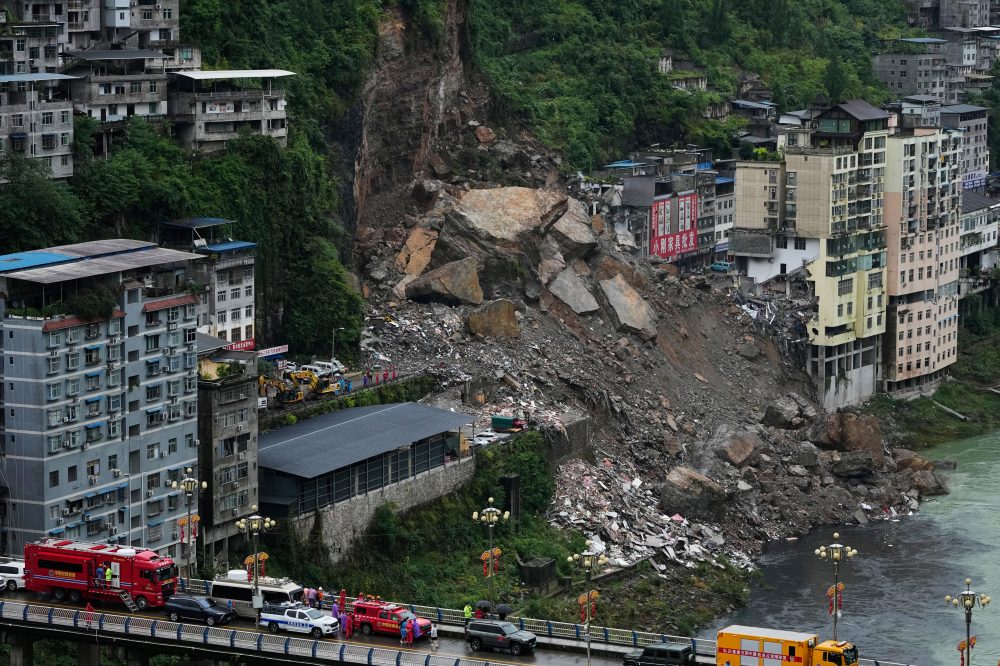
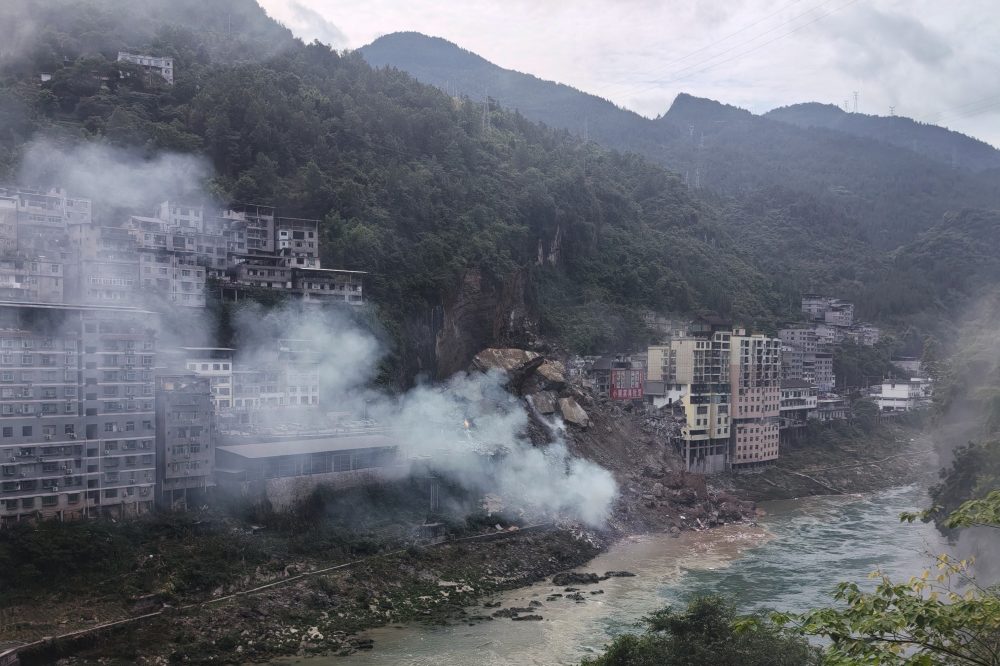
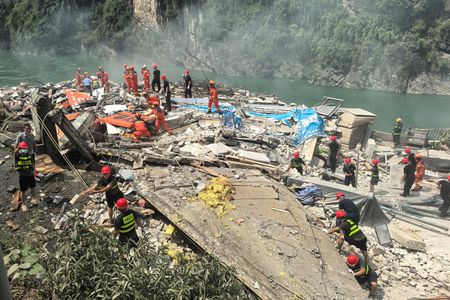
Emergency crews in China worked frantically Saturday to locate survivors after a devastating landslide in the southwestern city of Chongqing claimed at least eight lives and left 34 people still missing.
The disaster struck Pengshui County on Friday morning, when enormous quantities of rock and soil cascaded down a hillside, burying more than ten residential buildings, according to state broadcaster CCTV. Ten survivors were pulled from the debris and transported to the hospital, while authorities relocated more than 1,100 residents from the area.
Photographs and video from the scene revealed the sheer scale of the destruction — one of the boulders appeared to be larger than a multi-story building, with wreckage spread across the rugged, steep landscape. One structure had its upper portion completely crushed, and a vehicle was visible half-buried near another building.
Officials said the landslide involved approximately 18,000 cubic meters of rocks and debris. The single largest boulder measured around 3,000 cubic meters, according to Wang Chuanjun, the head of Planning and Natural Resources in Pengshui County, who spoke at a news conference Friday.
CCTV reported that heavy rain continued to pound Pengshui from Friday night into Saturday morning, with one weather station recording 19.2 centimeters — nearly 8 inches — of rainfall. The ongoing wet conditions made the rescue mission significantly more difficult. As the rain began to let up somewhat, search teams were able to enter the site and assess the collapsed buildings and nearby riverbank areas.
Rescue workers are currently operating around the perimeter of the massive boulders, but crews will eventually need to search beneath them — a dangerous task given the risk of the unstable rocks shifting or sliding. CCTV reported that once the surrounding search is finished, workers plan to drill into the boulders and pack the holes with explosives to break them apart.
China’s National Development and Reform Commission announced Saturday that it has allocated 30 million yuan — approximately $4.4 million — in relief funding to help rebuild infrastructure and restore public services in the disaster zone.
The landslide took place near a stretch of the Wujiang River, which winds through karst mountain terrain dotted with small communities and terraced hillsides. Pengshui County sits in the southeastern portion of Chongqing, along the borders of Hubei and Guizhou provinces.
Colombian state-owned energy giant Ecopetrol announced Friday that a cyberattack resulted in the theft of data connected to approximately 3,300 user accounts. The company also acknowledged it cannot “guarantee” the breach will not have a “material adverse” financial impact.
Despite the alarming disclosure, Ecopetrol said that as of Friday, no critical disruptions to its operations or production capacity had been detected, and no direct financial damage had been confirmed. Additionally, the hacker has not yet publicly released any of the stolen information.
Ecopetrol ranks among Latin America’s largest energy producers and is Colombia’s biggest company overall, responsible for more than 60% of the nation’s hydrocarbon output.
While the identity of the attacker remains unknown, the hacker has reached out to the company with extortion demands and has threatened to make the compromised data public if those demands are not met.
The breach impacted cloud-based file storage systems across 15 subsidiaries, including Ecopetrol itself. The company added that it successfully blocked a separate ransomware attack attempt during the incident.
Ecopetrol said it is still evaluating the full scope of the breach, which may involve confidential, proprietary, or personal data. The company cautioned that the incident could ultimately affect its business operations, reputation, financial results, or overall financial standing.
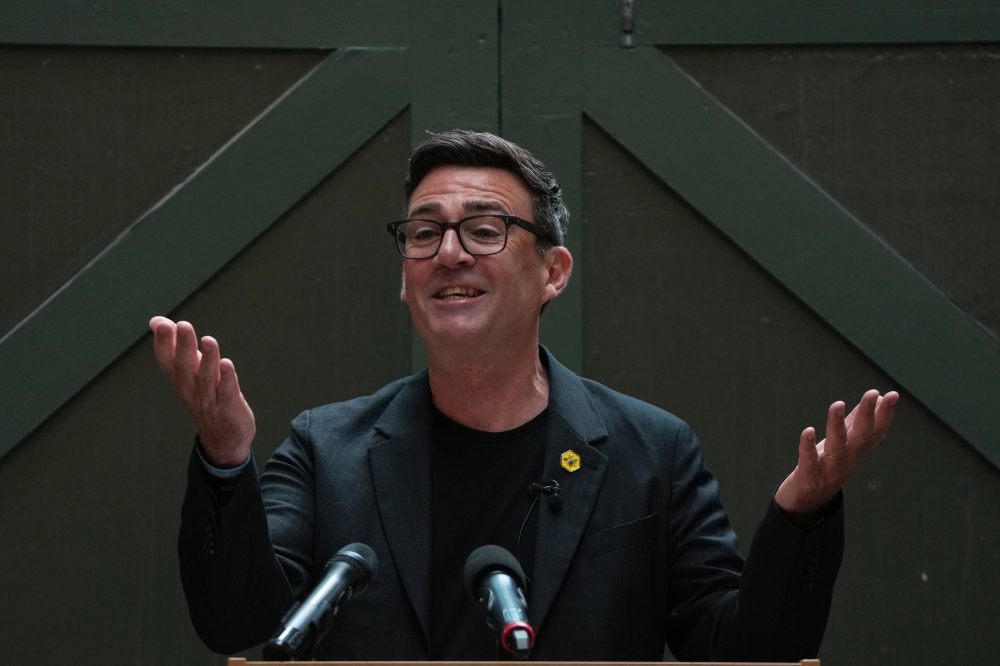
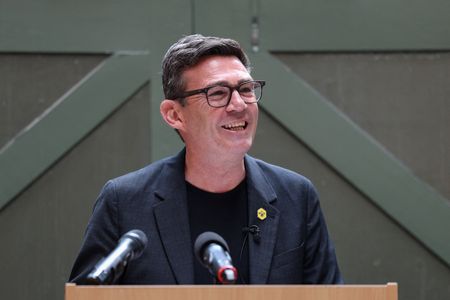
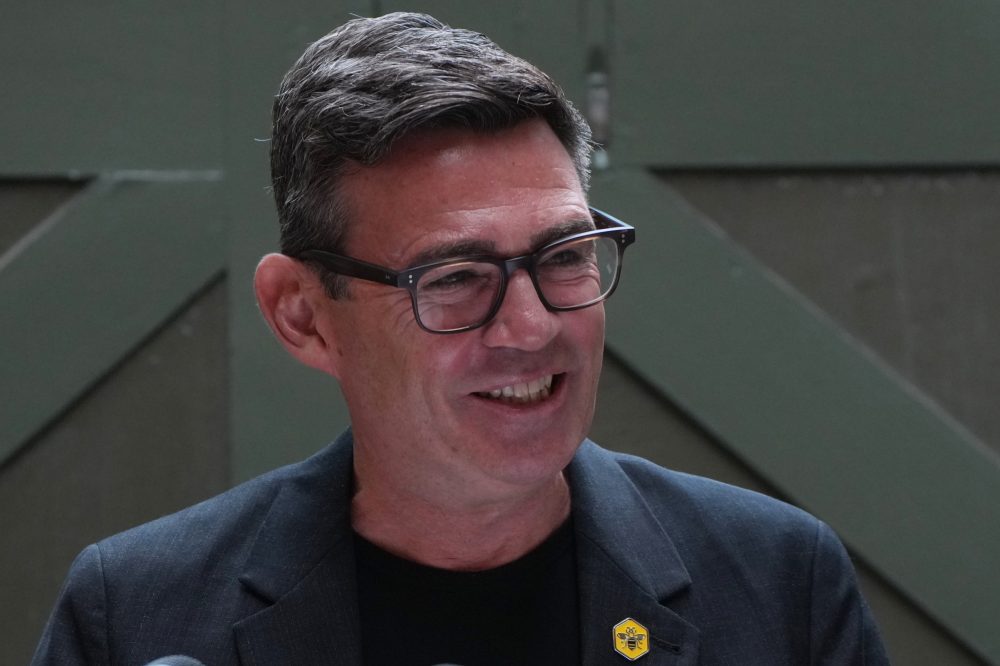
LONDON (AP) — Veteran Labour Party politician and former Greater Manchester mayor Andy Burnham is poised to take the reins as Britain’s next prime minister on Monday, formally assuming power from Keir Starmer, who stepped down as Labour leader last month.
Burnham ran unopposed in the Labour leadership race, becoming the only candidate to gather sufficient backing from fellow party lawmakers to succeed Starmer. Since Labour currently controls a majority in Parliament, whoever leads the party also holds the office of prime minister.
Of the 401 Labour lawmakers eligible to vote, 349 threw their support behind Burnham. He was officially declared the new Labour leader at a special party conference held Friday. However, he does not formally take office until Monday, when he travels to Buckingham Palace for a meeting with King Charles III — the ceremonial step that completes the transition. Until that meeting takes place, Starmer continues to serve as caretaker prime minister.
Here’s a closer look at how and why Britain is welcoming a new prime minister just two years after Starmer’s party swept to a landslide election victory:
Under Britain’s parliamentary system of government, a ruling party has the ability to swap out its leader in the middle of a term. When that happens, the new party leader steps into the role of prime minister without any need for a nationwide general election. This can occur when a prime minister voluntarily resigns as party leader or is pushed out through a formal leadership challenge.
The next scheduled general election does not need to occur until 2029 — five years after the last one, which was held in 2024.
Starmer announced on June 22 that he was stepping down as Labour leader after less than two years in power. His time in office was plagued by a string of political stumbles, most notably his decision to appoint someone with close ties to the late convicted sex offender Jeffrey Epstein as Britain’s ambassador to the United States.
Labour’s significant losses in a round of local elections held in May put enormous pressure on Starmer, with many of his own lawmakers calling for him to quit. The tipping point came when Burnham — widely seen as a favored figure within the party — won a special election for a parliamentary seat. That victory gave Burnham the platform he needed, and Starmer ultimately yielded to the growing calls to resign.
Starmer’s departure automatically set off a Labour leadership contest. Party rules state that a lawmaker can enter a leadership race if at least one-fifth of Labour’s House of Commons members back their candidacy. Burnham easily cleared that bar, and with no other candidates stepping forward, the outcome was never in doubt.
It is worth noting that this kind of leadership transition is far from unusual in British politics. In fact, four of the six prime ministers Britain has had over the past decade came to power through internal party contests rather than direct public votes.
During the 2010s, both Theresa May and Boris Johnson rose to the position of prime minister after winning Conservative Party leadership races that were triggered by their predecessors’ mid-term resignations. When Johnson himself announced he was stepping down in 2022, the Conservative Party held another leadership contest, and party members chose Liz Truss as his replacement. Truss lasted just 49 days before she too resigned, and was succeeded by Rishi Sunak through the same internal process.
With Burnham’s ascension, Britain will have its seventh prime minister in a decade — a turbulent stretch in which a rapid parade of leaders each struggled, to varying degrees, to navigate the complicated and divisive fallout from Britain’s decision to leave the European Union.
After so many leadership changes in recent years, the ceremonial transfer of power has become a familiar sequence for many British citizens.
On Monday, Starmer will deliver a farewell address to the public before heading to Buckingham Palace, where he will hold a brief audience with the king and formally submit his resignation.
Once Starmer departs, Burnham will arrive at the palace, where King Charles will formally invite him to establish a new government. The private ceremony is historically referred to as the “Kissing of Hands” — though in practice, no hands are actually kissed, and the exchange is more likely to involve a handshake.
After leaving the palace, Burnham will officially hold the title of the 59th person ever to serve as British prime minister. He will then travel by car to his official residence at 10 Downing Street, where he is expected to deliver his first public remarks as the country’s new leader.
The entire process is typically aired live on television and is expected to be completed within a matter of hours.
Iran launched a new wave of attacks against U.S. allies in the Gulf region on Saturday, coming after a seventh straight night of American military strikes on Iranian military targets, including logistics infrastructure. The renewed fighting comes one week after a fragile ceasefire between the two countries fell apart.
Both nations also took aim at maritime traffic in the region. The United States said it was enforcing a naval blockade of Iran, while Iran claimed it was stopping vessels that had violated its navigation rules in the Strait of Hormuz — the critical waterway through which one-fifth of the world’s oil flows.
Global oil prices jumped more than 4% on Friday, reaching their highest point in over a month. The spike is adding political pressure on President Donald Trump as his Republican Party works to maintain control of Congress in November elections.
Washington and Tehran have been pushing the boundaries of military escalation since their ceasefire broke down last week, raising fears of a full return to open warfare.
The U.S. military’s Central Command announced it had completed its latest round of strikes, hitting surveillance sites, military logistics infrastructure, underground weapons storage facilities, and maritime capabilities. “U.S. forces employed fighter aircraft, aerial drones, and warships in addition to other assets,” Central Command said in a statement. “More than 50,000 American service members are operating across the Middle East and remain vigilant, lethal, and ready.”
Iranian media reported Saturday that several missiles struck power facilities and desalination pumps in the southern Iranian city of Jask, according to a local official. That official said drinking water had been cut off in surrounding villages as a result of the attack.
The U.S. military said its forces redirected four commercial ships, disabled one vessel, and boarded another as part of its naval blockade enforcement. Iran’s Revolutionary Guards countered that four ships violating its shipping rules were stopped from passing through the strait using a combined missile and drone operation.
Iranian media, citing the Revolutionary Guards, also reported that two oil tankers exploded and caught fire after passing through a mined area south of the strait. The U.S. military rejected that report as false.
Separately, armed men seized another vessel off the coast of Yemen, raising new concerns about security at the mouth of the Red Sea — another major chokepoint for global oil shipments.
Iran’s state television quoted the Revolutionary Guards as warning that until U.S. “aggression” ends, it will not be possible to export chemical fertilizers or even a “single drop of oil and gas” from the region. Mohsen Rezaei, an adviser to Iran’s supreme leader, also warned on Friday against any U.S. escalation or attempts to seize Iranian territory.
United Nations Secretary-General Antonio Guterres expressed concern over the escalating conflict, particularly regarding what his spokesperson described as “attacks on civilian infrastructure in Iran and across the region.”
Iranian media reported early Saturday that strikes hit coastal Hormozgan Province on the Iranian side of the Strait of Hormuz. State television said three people were killed and eight wounded, and that two bridges and a road tunnel were damaged. Explosions or strikes were also reported in the cities of Sirik, Ahvaz, Yazd, Jask, and Khorramabad during Friday night and early Saturday.
On Friday, Iranian state media reported that at least five bridges in southern Iran were struck in U.S. attacks. Seven people were reported killed in strikes on bridges in the southern port of Bandar Khamir, where a train station was also hit. An airport was reported struck further east in Iranshahr, a province that borders Pakistan.
President Trump has threatened broad air strikes on Iranian infrastructure and has not ruled out a ground assault on Iran’s coast or islands. U.S. officials have said the attacks on southern Iran are partly designed to keep military options open for Trump.
Such actions risk prompting Iran to strike the vital infrastructure of vulnerable Gulf nations, or encouraging its allies in Yemen to further disrupt global energy supplies by targeting Red Sea shipping.
Iran announced it had launched attacks on Gulf countries hosting U.S. airbases, including Bahrain, Qatar, Kuwait, and Jordan, as well as targeting a U.S. vessel in the northern Indian Ocean. Saudi Arabia’s civil defense issued early warnings — the first in several months — in at least two locations, though no damage had yet been reported. Earlier in the conflict, Iran had struck some of the kingdom’s energy facilities.
Kuwaiti authorities confirmed that one of the country’s power generation and water desalination stations was hit in an Iranian attack, causing damage, a fire, and the disruption of a large number of electricity generation units. The Kuwaiti army later confirmed it was actively responding to Iranian drone attacks.
Iran’s Revolutionary Guards said they struck a U.S. drone depot in Bahrain and destroyed Bahrain’s main artificial intelligence center using ballistic missiles and drones. Iran’s state news agency also reported that the Iranian navy fired a shore-to-sea cruise missile at what it described as a hostile U.S. vessel in the northern Indian Ocean, with Iran’s army claiming the launch caused “fear and panic” and forced the vessel to move out of range.
SYDNEY — Australian police are reporting another shark attack, this time off the coast of Tasmania, where a 31-year-old male diver was bitten Saturday morning in what authorities believe was an encounter with a broadnose sevengill shark.
The incident took place at approximately 9:10 a.m. local time (2310 GMT) in the Adventure Bay area of Bruny Island, roughly 50 metres — about 164 feet — from shore. The shark involved is estimated to have been around 2 metres, or approximately 6.6 feet, in length.
Police Inspector Darren Latham described how the situation unfolded in an official statement: “The man was able to return to shore and was assisted by fellow divers.”
The diver suffered non-life-threatening wounds to his forearm and was airlifted to a hospital, arriving in stable condition. Authorities noted no additional sightings of the shark following the attack.
Bruny Island is a remote part of the island state of Tasmania, located about a one-hour flight from the mainland city of Melbourne, which sits roughly 445 kilometres — or 275 miles — away. Approximately 40 percent of the island consists of wilderness or protected lands.
The Tasmania attack is one of several shark incidents that have rattled Australia in recent months. Last month, a 35-year-old woman was left critically injured after a shark attack in Sydney, Australia’s largest city, prompting officials to launch a safety review at popular beaches across the country.
Also in June, a man lost his life after being attacked by a shark while fishing off the coast of Western Australia, marking the most recent fatal encounter.
May brought two more deadly incidents. A 39-year-old man died following a shark attack while fishing on Queensland’s Great Barrier Reef. Just one week before that, a 38-year-old was fatally attacked near an island off Perth in Western Australia.
The trend is not new. In January, dozens of beaches along Australia’s east coast were shut down after four shark attacks occurred within a span of just two days.
Although shark encounters are still considered statistically uncommon, data from the Australian Shark Incident Database — analyzed by Reuters — shows the numbers have been climbing. Australia has averaged close to 29 shark incidents per year over the past decade, a notable increase compared to roughly 16 incidents per year during the 2000s.
The U.S. military confirmed late Thursday that it had wrapped up another round of strikes against Iran, carried out under orders from President Donald Trump — the seventh night in a row that American forces have launched attacks.
According to a statement from U.S. Central Command, the assault involved a combination of fighter jets, aerial drones, and warships, along with additional military assets.
The targets struck included, in the military’s words, “surveillance sites, military logistics infrastructure, underground weapons storage, and maritime capabilities.”
Iran responded by launching its own strikes against U.S. allies in the Gulf on Friday, as both sides continued to go after infrastructure. Shipping traffic through the Strait of Hormuz also came under further attack.
Iranian state media reported that at least five bridges in the country’s southern region were destroyed in U.S. strikes on Friday. Seven people were reported dead following attacks on bridges in the southern port city of Bandar Khamir, where the train station was also hit. An airport in Iranshahr — a city in a province along the border with Pakistan — was also reported struck.
On the other side, authorities in Kuwait, a U.S. ally, said that one of the country’s facilities for generating power and desalinating water was damaged in an Iranian attack.
Trump, meanwhile, repeated his threats this week to target Iranian energy infrastructure and warned that bridges could be hit as soon as next week. Those threats have drawn scrutiny from legal experts, who noted earlier this year that striking civilian-essential sites could constitute war crimes under the 1949 Geneva Conventions, which prohibit attacks on infrastructure that civilians depend on.
Trump drew widespread international criticism in April after threatening to destroy Iran’s entire civilization, though a ceasefire with Tehran was eventually reached at that time.
The current conflict traces back to February 28, when the U.S. and Israel jointly attacked Iran. Iran responded with strikes on Israel and on Gulf states that host American military bases. Since then, U.S.-Israeli strikes on Iran and Israeli attacks on Lebanon have killed thousands of people and forced millions from their homes.
The war has also driven up oil prices and sent shockwaves through global financial markets.
New Delhi authorities have hospitalized social activist Sonam Wangchuk after his health took a turn for the worse on the 21st day of an ongoing hunger strike aimed at forcing India’s federal education minister out of office.
Wangchuk, who is 59 years old, began refusing food on June 28 in a show of solidarity with India’s youth Cockroach Janta Party, known as CJP. The group is calling for Education Minister Dharmendra Pradhan to step down following the leak of exam papers in May — a scandal that impacted millions of students across the country.
Delhi police confirmed that Wangchuk was transferred to a medical facility “for essential medical care” under court orders after his condition worsened on Saturday.
Earlier in the week, the Delhi High Court directed officials to closely monitor Wangchuk’s health and step in if necessary. The court’s action came in response to a petition requesting that authorities force-feed the activist as his condition continued to decline.
Members of the CJP announced plans to march to India’s parliament on July 20, coinciding with the start of the monsoon legislative session, to push for Pradhan’s removal and call for changes to the country’s exam system.
Throughout the protest, Wangchuk has been a central figure, lying on a mattress on a stage while supporters and visitors gathered around him at the demonstration site.
The federal government under Prime Minister Narendra Modi previously accused Wangchuk of stirring unrest through what it described as inflammatory remarks made during violent demonstrations in the Himalayan territory of Ladakh, where Wangchuk is from. He spent roughly six months behind bars before being released in March of this year. Wangchuk has rejected those accusations, arguing that the violent protests reflected deep public frustration with the central government.
On the third day of his fast, Wangchuk spoke with Reuters and said he intended to continue fasting for six weeks — unless his life ended before then.
“But hopefully, we don’t have to go that far,” he said at the time. “A sensitive government in a democracy listens to the pains of the people, and I hope they will take action.”
SAO PAULO — A Brazilian Supreme Court justice issued a ruling Friday placing a 30-day ban on visits to former President Jair Bolsonaro, who is currently confined to house arrest, permitting only medical staff and legal counsel to see him.
Justice Alexandre de Moraes determined that a social media post made by Senator Flavio Bolsonaro — the former president’s son and a candidate in October’s presidential race — had broken the terms of his father’s house arrest conditions.
The younger Bolsonaro shared a letter over the weekend, written by his father, in which the elder Bolsonaro urged supporters to move past any internal disagreements. In the letter, Jair Bolsonaro wrote that it was time “to set aside any differences, and have everyone commit to supporting” his son’s bid for the presidency.
Jair Bolsonaro was sentenced last year to more than 27 years behind bars after being convicted of plotting to overthrow the government following his loss to Luiz Inacio Lula da Silva in the 2022 presidential election. Under the terms of his humanitarian house arrest, which was granted this year due to health concerns, he is prohibited from using social media or a telephone, either directly or through other people acting on his behalf.
A legal representative for the former president had not responded to requests for comment at the time of the ruling.
Earlier in the week, Justice Moraes had already moved to block Senator Bolsonaro from visiting his father for a period of 90 days, also stemming from the letter incident. The senator described that earlier decision as an “attempt to interfere in the elections.”
Friday’s ruling went further, additionally prohibiting the former president from receiving any visits “with a political-electoral finality” through the conclusion of the elections, and barring him from issuing “political-electoral remarks” — including statements made through third parties on his behalf.
Syria’s Interior Ministry announced Tuesday that its security forces had intercepted an alleged weapons smuggling operation aimed at moving advanced armaments through Syrian territory to Hezbollah — and in doing so, publicly branded the Lebanese group a “terrorist militia,” a characterization analysts say marks a striking change in the new government’s official stance.
According to the ministry, specialized security units stopped a suspicious vehicle near the Syrian-Iraqi border and found a cache of long-range missiles, guided anti-tank missiles, and drones hidden inside. Preliminary findings suggest the shipment was intended to pass through Syria on its way to Lebanon for Hezbollah, and officials say the investigation is continuing to identify those responsible and dismantle the network behind it.
A Syrian Interior Ministry source told The Media Line that the seizure was “an exceptional and highly significant operation,” and said Damascus would share all evidence with Iraqi authorities as part of a coordinated effort to pursue everyone connected to the alleged smuggling ring.
“The investigation treats this as a cross-border network rather than an isolated incident,” the source said, adding that coordination with Baghdad would focus on tracing the shipment’s route and identifying all parties involved.
New details obtained by The Media Line from Mazen Alloush, director of public relations at Syria’s General Authority for Land and Sea Border Crossings, revealed that the weapons were concealed inside an oil tanker that was officially registered as carrying black fuel oil. Iraqi customs officials had sealed the tanker after processing it as a routine fuel delivery and attached instructions prohibiting inspectors from opening it until it reached its final destination.
The tanker had left Iraq roughly nine days earlier after completing all required customs procedures, joining convoys moving Iraqi fuel to Syria’s Baniyas refinery through the al-Tanf border crossing under an existing oil transport agreement between the two nations.
Alloush explained that the weapons were carefully wrapped in insulating materials and submerged beneath the black fuel oil, making them nearly impossible for police dogs to detect. He said the limited availability of specialized scanning equipment for liquid tankers allowed the vehicle to pass through multiple checkpoints before being discovered on the Syrian side of the border.
“This was a sophisticated concealment operation designed to evade customs inspections,” Alloush said.
The al-Tanf crossing has long been considered one of the most sensitive points along the Syria-Iraq border, having served for years as a corridor exploited by smuggling networks during Syria’s civil war. Syrian authorities say border security has been substantially tightened since the country’s new administration came to power.
The Interior Ministry pledged that Syrian territory would not be used as a transit route for weapons trafficking or any activity threatening Syria or neighboring countries, calling border protection and national sovereignty a top priority.
Hezbollah pushed back against the allegations, dismissing them as “fabricated claims with no basis in fact” designed to damage the group’s reputation.
Iraq responded by announcing the formation of a high-level investigative committee made up of security and technical officials. In a statement, Iraq’s Security Media Cell said the committee would work with Syrian authorities to determine the full circumstances of the case and hold any negligent parties accountable “to safeguard the security and stability of the shared border and prevent any attempts to undermine national security.”
The development comes as Baghdad and Damascus work to strengthen security cooperation along their approximately 600-kilometer (370-mile) shared border — a stretch long exploited by smuggling networks during years of conflict and weakened government control.
For many observers, the most significant element of this episode goes beyond the weapons seizure itself. Daoud al-Sayed, a Syrian researcher specializing in political science and international relations, said the Interior Ministry’s decision to publicly call Hezbollah a “terrorist militia” represents a major departure from the language used under former President Bashar Assad, when the Lebanese group was considered one of Damascus’s closest military partners.
Last month, President Trump said he spoke with al-Sharaa at the G-7 conference, and that the two leaders discussed the possibility of Syria playing an active role in countering Hezbollah.
“The new Syrian administration has consistently emphasized that relations with Lebanon should be conducted through state institutions rather than armed groups,” al-Sayed told The Media Line. “The ministry’s statement reflects that policy.”
He argued that the alleged smuggling operation pushed Damascus to publicly define its position toward Hezbollah more explicitly than at any point since the new government took office. “If this rhetoric is followed by additional security and political measures,” he said, “it could signal a broader restructuring of Syria’s policy toward non-state armed groups and a new framework governing relations with Lebanon and border security.”
Hezbollah had openly entered the Syrian conflict in 2013, deploying thousands of fighters in support of Assad’s government across multiple fronts. Since the fall of that government and the rise of Syria’s new administration, officials have repeatedly stated that all weapons inside the country must fall exclusively under state authority.
Analysts say the Interior Ministry’s decision to officially label Hezbollah a “terrorist militia” signals a notable shift in Syria’s public posture, suggesting Damascus may be redefining its security and political relationship with the group. The weapons seizure is also part of a broader campaign by Syria’s new leadership to crack down on arms and narcotics trafficking networks that took root along the country’s borders during years of conflict.
Whether the joint Syrian-Iraqi investigation will ultimately expose a wider regional network remains to be seen. But the inquiry is expected to determine not only who organized the alleged shipment, but whether additional actors were involved in moving weapons across one of the region’s most sensitive borders — and for Syria’s new leadership, the outcome could serve as an early test of its commitment to reassert state authority and keep Syrian territory free from regional weapons trafficking.
US Central Command conducted a new round of military operations overnight into Friday, hitting military and transportation infrastructure in Iran’s Hormozgan province as Tehran simultaneously expanded its attacks against neighboring countries that host American military installations.
The American military used fighter jets, drones, and warships to strike a range of targets, including military logistics facilities, air defense positions, coastal surveillance sites, and infrastructure connected to access routes leading into the port of Bandar Abbas. The operation also took out six bridges and a railway station in what appeared to be a coordinated effort to cut off supply lines into the strategically important southern port city.
According to Iranian state media, the strikes resulted in at least eight deaths and left 20 others injured in Hormozgan province.
While those US operations were underway, Iran launched attacks targeting Qatar, Bahrain, Kuwait, and Jordan — four countries that all host American military facilities.
Qatar’s Defense Ministry announced Friday morning that it was responding to a second aerial attack within the same day. Earlier, Qatar’s Interior Ministry had reported that a child was injured by falling shrapnel from a previous wave of strikes. Iran had not attacked Qatar in the days leading up to Friday, and Tehran has not claimed responsibility for Friday morning’s strikes on the country.
Bahrain sounded warning sirens for a second time Friday morning, according to its Interior Ministry. Iran’s state news agency IRNA reported that Iranian forces had targeted US military assets inside Bahrain, and state broadcaster IRIB released video it claimed showed drones being launched in Bahrain’s direction. CNN reported that it had reached out to US Central Command for a response.
Kuwaiti officials issued early Friday morning warnings to residents, alerting them that missile and drone threats could produce sounds from air defense interception systems. Iranian state media reported that the Islamic Revolutionary Guard Corps, known as the IRGC, claimed to have targeted US military equipment in Kuwait.
Jordan’s military said it intercepted three Iranian missiles on Friday, with no reported casualties or property damage. The IRGC separately claimed it had struck US fighter jets and aerial refueling aircraft in Jordan — a claim that CNN said it had not been able to independently confirm.
Iranian state media later reported that the IRGC had also targeted a US radar installation in Oman.
Armenia and Azerbaijan are moving forward on economic cooperation, including the revival of Azerbaijani oil product shipments to Armenia, even as a disagreement over Armenia’s constitution continues to block the signing of a full peace agreement between the two countries.
Despite the lack of a formal treaty, trade and diplomatic contacts between the two nations have grown, with observers describing the current situation as a kind of “real peace” in practice. Still, negotiations on a binding accord remain at a standstill.
At the heart of the dispute is language in the preamble of Armenia’s constitution. That section references a Soviet-era declaration that called for the unification of Armenia and the Nagorno-Karabakh region. Azerbaijan views this wording as an indirect claim on its sovereign territory and has insisted the language must be removed before any peace treaty can be finalized.
Armenian Prime Minister Nikol Pashinyan has said he intends to put a new constitution before voters through a national referendum, which would strip out the contested language. However, the timeline for that vote is unclear, as his political party currently lacks the parliamentary majority needed to push the referendum forward without complications.
Even with the treaty stalled, relations between the two countries have continued to improve. Direct communication has increased, and economic ties have been restored, most notably through the resumption of Azerbaijani oil deliveries to Armenia following years of conflict between the two nations.
The roots of the dispute stretch back decades to the long-standing conflict over the mountainous territory of Nagorno-Karabakh. That conflict came to a decisive end in 2023 when Azerbaijan launched a swift military offensive that dismantled the ethnic Armenian breakaway region there, causing more than 100,000 residents to flee their homes.
While the growing trade relationship and expanding diplomatic engagement point toward eventual normalization, the constitutional question remains the central obstacle standing between Armenia and Azerbaijan and a comprehensive, formal peace agreement.
Israel’s parliament voted in the early hours of Thursday morning to dissolve itself, opening the door to new national elections scheduled for October 27. The vote came after lawmakers pushed through a series of significant bills on some of the country’s most contentious domestic issues before bringing the current legislative session to a close.
With parliament now disbanded, the existing government will continue to function in a limited caretaker capacity, handling only routine matters until a new administration takes shape following the elections.
Political parties are now turning their focus to the campaign ahead, working to finalize candidate lists, forge alliances, and launch efforts across the country to secure seats in the 120-member parliament.
In the final hours before dissolving, the Knesset passed a temporary law extending mandatory military service from 30 months to 32 months. The measure is designed to help the Israel Defense Forces keep pace with operational demands and ongoing security challenges.
At the same time, parliament approved separate measures that could expand military service exemptions for ultra-Orthodox Jewish men. One of those bills elevates Torah study to the status of a Basic Law in Israel, while another halts the arrest of haredi men who have avoided the draft.
Lawmakers also approved a measure permitting gender-segregated academic programs at the graduate level.
Rounding out the final legislative push, the Knesset passed changes to the country’s communications regulatory structure and approved a bill that would divide the duties currently held by the attorney general into separate roles.
Israel’s parliament, the Knesset, passed a wide-ranging broadcast media reform law on Thursday, approving the Communications (Broadcasting) Law, 5786-2026, by a vote of 53 to 48 in its second and third readings.
The new legislation replaces the existing regulatory framework with a system that gives the government a larger role in overseeing the broadcasting industry. Under the changes, longstanding rules requiring minimum journalistic standards, investment in original Israeli productions, and limits on cross-ownership have been removed. The government will also gain more control over how television audiences are measured and how state advertising dollars are distributed.
A centerpiece of the reform is the establishment of the Broadcast Communications Authority, a new independent statutory regulator designed to consolidate and ultimately replace Israel’s current broadcast oversight bodies. The authority will operate on an annual budget of 25 million shekels, funded through deductions from the budget of Israel’s public broadcasting corporation.
The law also creates a nine-member Broadcast Communications Regulatory Council, which will be responsible for setting policy for the new authority. Council members will be chosen through a nomination process overseen by a committee chaired by the director general of the Communications Ministry.
Shortly before passage, lawmakers approved a last-minute amendment that benefits Channel 14, a pro-government broadcaster. The amendment exempts Channel 14 from a new rule that would have required television broadcasters to provide certain programming to distribution platforms at no cost. That exemption is estimated to be worth approximately 40 million shekels — roughly $13.8 million — per year.
Prime Minister Benjamin Netanyahu took part in the parliamentary debate over the legislation but stepped aside and did not vote when the final tally was taken. Netanyahu is currently on trial in cases connected to his past dealings with media outlets.
NEW YORK — The top federal prosecutor overseeing the Brooklyn district says he has no grounds to challenge the Justice Department’s move to abandon its criminal case against Indian billionaire Gautam Adani, though he stopped short of saying whether he personally agreed with the decision.
U.S. Attorney Joseph Nocella Jr. addressed the matter in a letter sent Friday to the federal judge handling the case. In it, he acknowledged that he was “not the decisionmaker” when it came to dropping the charges, and said he had no reason to believe that the justification offered by his supervisor — top Justice Department official Trent McCotter — did not reflect the “real grounds” for dismissal.
The letter came in response to a direct request from U.S. District Judge Nicholas Garaufis, who had asked Nocella to state whether he agreed or disagreed with McCotter’s reasoning for scrapping the Adani case, and whether any other factors supported the dismissal.
The case against Adani had involved allegations of fraud and bribery. Nocella’s office did not respond to a request for comment on the matter.
KAMPALA — Twenty schoolchildren were killed Thursday night when a bus transporting them home from a field trip crashed in eastern Uganda, according to authorities.
In response to the tragedy, the Ugandan government announced Friday that all school excursions are now on hold indefinitely, as the disaster sparked widespread grief and a wave of online calls for stronger safety measures.
According to police, early investigations indicate the driver lost control of the vehicle, which then veered off the road and flipped after striking a large rock. The information was shared in a police post on X.
The bus belonged to King David Junior School, located in the capital city of Kampala. It was making its way back from an educational trip to Sipi Falls when it crashed at Chekwatit village in the Kapchorwa district, police said.
In addition to the 20 children killed, one adult also died in the crash. Three other adults and a number of children sustained injuries, officials confirmed.
Fatal road accidents occur frequently in Uganda. Experts commonly point to poorly maintained vehicles and inadequate street lighting as contributing factors.
The country experienced another devastating crash last October, when 46 people died on one of Uganda’s main highways connecting the capital to the northern city of Gulu.
A government communications agency announced Friday that Education Minister Chrysostom Muyingo had placed “a hold on all school trips and excursions, effective immediately and until further notice.”
KYIV — For the second straight day, thousands of demonstrators filled the streets outside Ukraine’s presidential office, demanding the ouster of the country’s top military commander, Oleksandr Syrskyi. The protests erupted following President Volodymyr Zelenskiy’s surprise government shake-up that pushed out widely respected defense minister Mykhailo Fedorov.
Fedorov, a 35-year-old known for his technological expertise, had been widely credited with contributing to some of Ukraine’s recent battlefield successes against Russia. His removal in the unexpected reshuffle sparked immediate public fury and calls for a more forward-thinking military strategy.
Among those who showed up to protest was Andriy, a 27-year-old combat medic who lost part of his lower limb in the war and whose brother was killed in combat. He arrived carrying a handmade cardboard sign reading: “Can not stand. Will not stay silent.”
“Syrskyi had conflicts not only with the defence minister, but also with brigade and corps commanders. If he stays, we will simply be ineffective,” Andriy said. “We could simply lose this war, we could lose.”
Zelenskiy offered minimal explanation for the shake-up, saying he was forced to act because the divide between Syrskyi and Fedorov had grown so deep that the two men refused to sit at the same table.
On Friday, Zelenskiy named Ukraine’s former top law enforcement official, Ihor Klymenko, to head the national security and defence council, replacing current chairman Rustem Umerov. Klymenko had previously been floated as a possible replacement for Fedorov himself. The president said Klymenko would be responsible for coordinating “all components of the security and defence sector,” including defence production.
It remained unclear whether Umerov — who also serves as Ukraine’s lead negotiator in U.S.-backed peace discussions with Russia — would be offered another role in the government.
Late Thursday, as public anger intensified, Zelenskiy moved to ease tensions by appointing Yevhenii Khmara, a senior security official overseeing Ukraine’s long-range strikes on Russian territory, as acting defence minister.
Crowds outside the presidential building chanted “Syrskyi away” and “Bring Fedorov back,” with many calling on leadership to heed the voices of soldiers actively fighting on the front lines.
The tension between Fedorov and Syrskyi came into full public view Thursday when the former defence minister accused the 60-year-old general of deliberately undermining his efforts. Syrskyi earned recognition for his role in defending Kyiv during the early stages of the war and has held the top military post since early 2024. However, he has drawn sustained criticism for an inflexible leadership style that some soldiers say leads to unnecessary casualties, along with resistance to modernizing battlefield tactics.
Another demonstrator, Nina, whose husband is currently serving in the military, attended the protest for a second day, bringing along her one-year-old child, Oleksandr-Carlos. Her primary demand is Syrskyi’s removal.
“The problem isn’t so much that Fedorov resigned as it is that Syrskyi remains in office,” she said, adding that the system under the commander prioritizes showing results over protecting soldiers’ lives.
“Sure, he deserves some credit, I don’t deny that but at what cost? That’s the question. Syrskyi is, after all, the old system,” Nina said.
The demonstrations drew comparisons to protests held at the same location last year, when crowds pushed back against Zelenskiy’s efforts to reduce the authority of Ukraine’s anti-corruption bodies — a move he eventually reversed.
On Friday, Zelenskiy held virtual consultations with military commanders and met in person with Brigadier General Andriy Biletsky, who leads Ukraine’s Third Army Corps, to review the battlefield situation and defense planning.
In a move intended to reassure the public that reforms championed by Fedorov would continue, Zelenskiy named Serhii Beskrestnov, a former adviser to the defence ministry, as a presidential adviser on defence technology.
The political turmoil comes as Ukrainian forces have begun regaining some momentum against Russian troops through long-range strikes targeting Russian industry and supply lines. Still, Ukraine continues to struggle with military recruitment shortfalls as Russian forces push forward, and with obtaining sufficient air defense systems to protect its cities from missile attacks.
Many Ukrainians believe the path to victory runs through technological advancement and shedding outdated Soviet-era military practices — something they argue cannot happen under Syrskyi’s leadership.
Leonid, a 63-year-old veteran who described himself as a product of the Soviet military system, put it plainly: “They are destroying our army. Maybe at some point he was necessary, but that is it.”
The World Cup brought sold-out venues and millions of celebrating fans to Mexico, but the monthlong soccer spectacle did little to energize a struggling economy already burdened by sluggish investment and anxiety over the upcoming review of the North American trade agreement, known as the USMCA.
The tournament, which concludes Sunday after more than a month of competition spread across Canada, the United States, and Mexico, saw Mexico host 13 of the 104 total matches. Despite high hopes from government officials who had set ambitious tourism targets, the event fell short of those goals — and Mexico’s gross domestic product actually shrank during the first quarter of the year.
“The World Cup will not structurally change the trajectory of the Mexican economy,” said Humberto Calzada, chief economist at Rankia.
Calzada added that the competition offers only a brief, short-term jolt for an economy the government projects will grow between 1.8% and 2.8% this year — a rosier outlook than the 1.1% growth analysts are forecasting.
The financial gains from the tournament were concentrated in only a few areas. Banorte reduced its estimate of the World Cup’s contribution to Mexico’s GDP to between 0.4% and 0.5%, walking back an earlier projection of up to 0.62%. Meanwhile, Banamex put the total economic impact at $2 billion — roughly 0.1% of GDP and less than half of the $5.6 billion Mexico received in remittances during May alone.
Consulting firm Deloitte estimated the event generated around 100,000 temporary jobs, which was 10% below its earlier projection. Financial institution BBVA reported that its household consumption index dropped 0.2% from May to June, with hotel spending falling 10.5% and restaurant spending declining 4.9%, even as entertainment spending surged 16.5%.
The economic benefits were not shared equally among the three host cities — Mexico City, Guadalajara, and Monterrey. The Mexican Restaurant Association said that half of its member restaurants performed worse than during a normal week, citing low hotel occupancy and local protests in the capital as contributing factors.
Airline passenger data told a similarly uneven story. Flight traffic ticked upward in June at airports in Guadalajara and Monterrey, but dropped at Mexico City’s primary airport.
Economists say the real engine of Mexico’s economic fortunes lies beyond the soccer pitch: trade stability under the USMCA. With businesses holding off on investment while awaiting the outcome of the trade deal’s review, and the economy having contracted 0.6% in the first quarter, the International Monetary Fund recently cut its growth forecast for Mexico to 1.2%, down from a prior estimate of 1.6%.
WASHINGTON — American companies have entered into roughly $60 billion worth of agreements and partnerships with the Iraqi government, including deals designed to develop new pathways for moving oil out of the Persian Gulf region without relying on the Strait of Hormuz.
The agreements were finalized at the U.S. Chamber of Commerce and span multiple sectors beyond energy, including healthcare, communications, and infrastructure development.
How quickly these oil deals can produce workable alternatives to the Strait of Hormuz remains uncertain. The strait currently carries approximately one-fifth of the world’s oil supply. Analysts at Goldman Sachs have noted that constructing pipelines in a single country alone takes at least two and a half years — and the proposed routes would pass through two or more nations.
Iran has made repeated attempts to close the Strait of Hormuz since the U.S.-Iran war began on February 28, sending oil and gas prices swinging dramatically. By Friday afternoon, West Texas crude had climbed nearly 5% to $88 per barrel — up from roughly $67 when the war started. Prices had surged past $110 in early April before pulling back following a temporary truce, only to rise again as fighting resumed.
Thomas Barrack, the U.S. Ambassador to Turkey, said the pipeline agreements would launch a program “that will make the Strait of Hormuz an afterthought.”
The deal signings came a day after Iraqi Prime Minister Ali Falah al-Zaidi met with Chevron executives in Houston, where he urged the energy company to expand and speed up its investments in Iraq.
Speaking on Friday, al-Zaidi said Iraq is looking for long-term investment and genuine partnerships — not simply companies hired to complete individual projects. He also expressed his government’s dedication to working closely with the U.S. Chamber of Commerce, calling it “the place where economic decisions are made.”
Chevron signed three separate agreements with Iraq on Friday. Jake Spiering, Chevron’s president of corporate business development, explained that two of the deals are focused on increasing oil production, while the third involves “investing in a pipeline that’s going to create another export route out of Iraq to world markets. This is very important for energy security.”
The U.S. State Department also announced its support Friday for a separate agreement between Iraq and Syria to restore and rebuild the Iraq-Syria crude oil pipeline, calling it a priority infrastructure project. “The United States welcomes the engagement of a U.S.-led international consortium to execute the technical and financial aspects of this project,” the department stated.
According to Iraqi officials, the pipeline would run from Basra in southern Iraq to Haditha in western Iraq, then continue to the port of Ceyhan in Turkey and the Syrian coastal port of Baniyas. The pipeline is expected to have the capacity to move around 2 million barrels of oil per day.
In a report released earlier this week, Goldman Sachs analysts estimated that seven pipelines currently under development across the region could collectively carry roughly 60% of the oil now flowing through the Strait of Hormuz by the end of 2028 — approximately 14 million barrels per day. Before the war with Iran began, about 23 million barrels per day were being shipped through the strait.
Since the U.S. and Israel launched military operations against Iran on February 28, Iraq — which hosts both Iran-backed militias and American military bases — has been caught in the middle of the conflict. Syria, by contrast, has largely managed to avoid direct involvement. Syrian officials have positioned their country, which is still recovering from a 14-year civil war, as a stable alternative transit corridor for energy.
With oil exports through the Strait of Hormuz severely disrupted, some shipments have already been rerouted overland through Iraq into Syria, then shipped to European markets via the Baniyas port. A key border crossing between northern Iraq and Syria that had been closed for more than a decade reopened in April, with officials highlighting it as an additional energy export option.
The overland route, however, is slower and more costly than moving oil through the strait. The pipeline project being developed would allow Iraq to export far greater volumes of oil through Syria and Turkey.
Ukrainian President Volodymyr Zelenskiy moved on Friday to patch up a diplomatic dispute with key ally Poland, stemming from his May decision to name a Ukrainian military unit after World War Two fighters who were responsible for killing Polish civilians.
Zelenskiy convened a high-level meeting of senior government officials focused specifically on the state of relations with Poland. At the meeting, he committed to broadening investigations into killings carried out by the Ukrainian Insurgent Army, known by its Ukrainian acronym UPA, a pro-independence armed group, and pledged to open intelligence archives related to those events.
Zelenskiy emphasized that strengthening ties with Poland was essential, pointing to the significant assistance Poland has provided to Ukraine since Russia launched its full-scale invasion in 2022. Polish President Karol Nawrocki had previously stripped Zelenskiy of Poland’s highest honor in response to the military naming decision.
Following the meeting, Zelenskiy took to social media platform X to share his position. “The priorities are clear: All of us in Europe need good neighbourly, equal, and mutually beneficial relations built on respect,” he wrote. “Poland provided significant support to Ukraine after the start of Russia’s full-scale invasion, and we are grateful to Poland.”
Polish Prime Minister Donald Tusk responded warmly to Zelenskiy’s remarks. “We are ready for a serious and friendly dialogue on the issues that unite us and those that divide us today,” Tusk posted on X.
As part of the diplomatic effort, Zelenskiy announced that officials would unseal archives held by Ukraine’s Security Service and its Foreign Intelligence Service. Those files relate to the mass killings of ethnic Polish civilians in the Volhynia region, located in what is now northwestern Ukraine.
According to historians, UPA forces and allied nationalist groups killed between 70,000 and 100,000 Poles in that region between 1943 and 1945, with the aim of clearing the area of Polish inhabitants ahead of establishing future Ukrainian territory. Thousands of Ukrainians also lost their lives in retaliatory killings during the same period.
Zelenskiy additionally pledged to increase efforts to exhume victims’ remains, broaden historical dialogue, and direct more resources toward a Ukrainian history institute.
Despite these gestures, Ukrainian officials have given no sign that the decision to name the army unit after the UPA will be reversed, maintaining that Ukraine has the sovereign right to determine who it honors as national heroes.
The UPA holds a complicated place in Ukrainian historical memory. Many Ukrainians view the group as heroic for having resisted both Nazi German occupation and Soviet forces, and see it as a symbol of Ukraine’s long struggle for independence from Moscow.
The Jamaican government has confirmed that two of its citizens, recently deported by the United States to the African kingdom of Eswatini, have formally turned down offers to return to their home country.
Jamaica’s Ministry of Foreign Affairs announced late Thursday that officials were still working to make contact with a third Jamaican national who was also sent to Eswatini by U.S. authorities.
According to the Foreign Ministry, Jamaican representatives informed the two men about the consular support available to them and made clear that the government was prepared to arrange their return. “During the discussion, the men were advised of the consular assistance available to them and of the government’s readiness to facilitate their return to Jamaica,” the ministry stated.
The government also told the men that officials “could not determine their immigration status in the United States or secure their return there. Both men maintained that they did not wish to return to Jamaica.”
Communication with the two unidentified men was made possible through the Jamaican Consulate in Miami and a legal adviser who represents them.
Jamaica’s efforts came after the country reached out diplomatically to U.S. officials in Washington and also formally contacted Eswatini’s government through Jamaica’s diplomatic mission located in Pretoria, South Africa.
The U.S. practice of sending deportees to countries other than their home nations — including Eswatini — has drawn sharp criticism from attorneys and human rights advocates.
Eswatini is a small kingdom that shares a border with South Africa. The country’s king holds absolute authority and has faced accusations of suppressing pro-democracy movements within the nation.
A Jamaican man named Orville Etoria, identified as the first Jamaican national sent to Eswatini under this program, was returned to Jamaica last September. His legal team has accused U.S. authorities of unlawfully deporting him to Eswatini in July 2025 and says that he and others were repeatedly denied access to an attorney while detained there. Etoria’s return was made possible with assistance from the International Organization for Migration, known as IOM, which is a United Nations agency.
A devastating fire swept through a residential neighborhood near the city of Drammen in southern Norway on Friday, destroying more than 50 homes, according to rescue officials.
The affected area sits roughly 50 kilometers — about 30 miles — west of Oslo. Dense black smoke blanketed the region as the fire tore through a stretch of terraced housing before spreading into the surrounding forest. Despite the scale of the destruction, officials reported no casualties and no missing persons.
At least 60 firefighters were on the scene working to bring the blaze under control, with additional crews called in from neighboring regions. Helicopters were also deployed to help battle the flames from the air, dropping water on the fire below.
Strong winds made containment efforts especially difficult as authorities worked to keep the fire from spreading further. Police ordered the evacuation of hundreds of residents from the area as a precaution while the fire continued to burn.
The cause and origin of the fire had not been determined as of Friday, and an investigation is expected to follow.
The week of July 10-16, 2026 brought both heartbreak and celebration to communities across Latin America and the Caribbean, captured in a striking collection of photographs.
In Venezuela, families faced the devastating aftermath of two powerful earthquakes that struck the country on June 24, working desperately to recover the bodies of relatives killed in the disaster.
Meanwhile, Cuba was enduring its third nationwide blackout in just two weeks, as dwindling fuel supplies continued to plunge the island nation into darkness.
On a brighter note, tens of thousands of soccer fans poured into the streets of Argentina’s capital city in an explosion of joy after the national team secured a 2-1 victory over England, punching their ticket to the World Cup final.
The photo gallery was curated by photojournalist Fernando Vergara, based in Bogota, Colombia.
A powerful earthquake measuring 7.3 in magnitude rattled the southern Pacific coast of Mexico on Friday, striking right along the border with Guatemala and sending shockwaves felt as far away as Mexico City and El Salvador. Despite the quake’s strength, no serious damage or deaths were immediately reported in any of the affected countries.
According to the U.S. Geological Survey, the quake’s epicenter was located about 48 kilometers — roughly 30 miles — southwest of Aquiles Serdan, near the Chiapas coastline, at a depth of 15 kilometers, or about 9 miles underground. A smaller earthquake had already struck slightly farther offshore before the main event hit. At least five aftershocks followed, ranging in magnitude from 5.1 to 6.0, the USGS reported.
In Tapachula, the largest city on Mexico’s southern border, residents felt the shaking build gradually before it intensified. Alejandra Mendoza, an administrative worker at a local public hospital, described the experience to The Associated Press: “We were upstairs on the second floor when it started shaking; we thought it would pass, but then it got stronger, so we all went downstairs and evacuated in an orderly manner to the front courtyard.”
In Guatemala City, the earthquake caused widespread alarm, partly due to how long the shaking lasted. With the workday just getting underway during morning rush hour, crowds flooded into the streets and multiple buildings were evacuated. Guatemala’s National Coordinator for Disaster Reduction, known as CONRED, said there was no immediate damage to report, though videos circulating on social media showed landslides, particularly on roads heading westward.
Guatemalan education authorities suspended in-person classes in the departments of San Marcos, Quetzaltenango, Suchitepéquez, and Retalhuleu — all located near the earthquake’s epicenter.
Back in Mexico City, some buildings in certain neighborhoods swayed and creaked during the tremor. However, the city’s earthquake alert system never activated. Officials explained that “the energy radiated by the earthquake during the first few seconds did not exceed the activation thresholds.”
Mexican President Claudia Sheinbaum stated that early reports indicated no damage had occurred. The country’s navy urged people to avoid beaches for at least six hours due to the potential for tsunami activity. The Meteorological Service of Chiapas issued a warning that waves reaching up to 1 meter — about 3.3 feet — could hit the coastlines of both Mexico and Guatemala.
In Suchiate, a town situated along the river marking the border between Mexico and Guatemala, local officials were keeping a close watch on coastal areas for any signs of tsunami activity, according to Mayor Elmer Vázquez Gallardo.
The region has a long history of seismic activity, some of it deadly. Earlier this year, a major earthquake struck southern and central Mexico, claiming two lives. In 2017, a 7.1 magnitude quake killed hundreds of people in Mexico City.
HONG KONG (AP) — China indicated Friday that the door may be open for the United States to restore Hong Kong’s preferential trade privileges, after Washington confirmed it would not renew an executive order that had stripped the city of its special trading status.
According to China’s Commerce Ministry, the U.S. made commitments regarding Hong Kong and other issues during bilateral trade discussions held in Madrid last year. In a statement responding to media inquiries, the ministry said the U.S. had recently confirmed to China that the presidential executive order known as the Hong Kong Normalization order would be allowed to lapse.
“The U.S. side’s actions represent an important step in fulfilling the consensus reached during the bilateral economic and trade talks. China appreciates it,” the ministry’s statement read.
The full implications of the decision remain unclear. The White House directed reporters’ questions about the expiring order to the Treasury Department.
The U.S. Office of Foreign Assets Control issued its own statement Friday, saying the national emergency declared under the executive order had expired and that individuals who had been sanctioned under it were being removed from that list. However, the agency noted that those who remain sanctioned under a separate Hong Kong-related law have been moved to a different sanctions list.
Among those affected, Hong Kong leader John Lee and his predecessor Carrie Lam were removed from the first sanctions list but added to the second one.
The decision comes roughly two months after President Donald Trump met with his Chinese counterpart Xi Jinping in Beijing, and could help improve relations between the two countries ahead of Xi’s anticipated visit to the United States later this year. Earlier this month, a pastor from a well-known underground church who had been detained in China since October was freed after Trump raised the matter directly with Xi.
Trump originally signed the now-lapsed executive order in July 2020, during his first term in office, in response to Beijing’s imposition of a national security law in Hong Kong that same year. The order was most recently renewed for one year in July 2025.
The executive order declared that Hong Kong was no longer sufficiently self-governing to warrant different treatment from mainland China under certain U.S. laws. It removed Hong Kong’s preferential status to the degree allowed by law and in keeping with U.S. national security, foreign policy, and economic interests.
Beijing has maintained that the national security law was necessary to bring stability back to Hong Kong following widespread anti-government protests in 2019. That pro-democracy movement represented one of the most significant challenges to China’s Communist Party and the Hong Kong government since the former British territory was handed back to Chinese rule in 1997.
Six years after the law took effect, many prominent activists have been imprisoned under it, including pro-democracy former media mogul Jimmy Lai. Critics argue that the Western-style civil liberties Beijing pledged to preserve for 50 years following the handover have significantly eroded.
The Hong Kong government released a statement saying it took note of what it called a “positive shift in the U.S. policy” toward the city.
“Safeguarding Hong Kong’s prosperity and stability serves the common interests of China and the US, and also aligns with the general expectation of the international community,” the statement said.
Hong Kong officials expressed hope that the U.S. would respect China’s sovereignty and the rule of law in Hong Kong and move toward resuming normal trade and economic relations with the city.
PARIS — France’s national gambling watchdog announced Friday that it has ordered the country’s internet service providers to shut off access to the Polymarket betting platform, raising alarms over potential financial harm to users and the possibility that certain wagers on the site could be rigged.
The regulator posted a statement on its website explaining the action: “On July 16, 2026, the president of France’s National Gambling Authority ordered French internet service providers to block access to the Polymarket website. The site, which attracts a particularly large audience, is promoting an illegal gambling and betting offering.”
Attempts to reach Polymarket representatives for a response to the French decision were unsuccessful.
This development is part of a broader international push by governments and regulators to bring prediction market platforms under tighter control. In May, Spain temporarily prohibited both Polymarket and Kalshi from doing business in the country. Then in June, the top U.S. derivatives regulator put forward new draft rules aimed at the fast-growing prediction markets sector.
Platforms like Polymarket and Kalshi operate by letting users purchase and trade simple yes-or-no contracts tied to the outcomes of a wide range of events — from geopolitical developments to sporting contests and elections. The format has drawn criticism from lawmakers who argue that some of these bets serve no real economic function and could be harmful to the public, prompting calls for stricter oversight and outright bans on certain types of wagers.
DEIR AL-BALAH, Gaza Strip — At least seven people lost their lives and 22 more were injured Friday when an Israeli airstrike hit a funeral gathering in the Gaza Strip, according to a local medical facility.
The Israeli military had not issued any statement addressing the strike as of Friday.
Awda Hospital, located in the Nuseirat refugee camp, confirmed the death and injury toll. Officials there said those gathered had been mourning a Palestinian who died in a separate Israeli strike earlier in the day when the second attack occurred.
Israel and the Hamas militant group had reached a ceasefire agreement in October with the goal of ending a conflict that had stretched on for two years. While the most intense fighting has died down, Gaza’s Health Ministry reports that at least 1,123 people have been killed in the territory since that ceasefire went into effect.
The Health Ministry operates under the Hamas-led government and keeps detailed records of casualties. United Nations agencies and independent analysts generally consider its figures to be reliable. The ministry does not separate civilian deaths from militant deaths in its data, though it notes that women and children account for the majority of fatalities.
Militant groups have continued to carry out shooting attacks against Israeli forces, and Israel has said its airstrikes are a direct response to those incidents and other breaches of the ceasefire. Five Israeli soldiers have died since the truce began.
The conflict traces back to a Hamas-led assault on southern Israel on October 7, 2023, which claimed approximately 1,200 lives and resulted in 251 people being taken hostage. In response, Israel launched a military offensive in Gaza. Including deaths recorded since the ceasefire, Gaza’s Health Ministry says the total Palestinian death toll has surpassed 73,264.
VENICE, Italy — When the U.S. ambassador to Italy pulled into Venice harbor aboard his enormous luxury yacht on Friday, he was welcomed not with open arms, but with organized protests from Italians who see his visit as an unwanted show of American wealth and power.
Tilman Fertitta, a billionaire hospitality mogul who serves as America’s top diplomat in Italy, is conducting what he calls the Coastal Diplomacy 250 tour — a journey along 13 Italian coastal regions aboard his super yacht intended to mark the 250th anniversary of American independence. Fertitta described the tour in a social media post as a celebration of “our shared history, our economic partnership, and the cultural bonds that make the U.S.-Italy relationship so special.”
The vessel at the center of the controversy, named Boardwalk, stretches 117 meters — roughly 384 feet — and comes equipped with two helipads, a pair of swimming pools, and a full spa and gym.
Many of the same activist groups that demonstrated against the Venice wedding of Jeff Bezos and Lauren Sanchez last year have now turned their attention to Fertitta’s arrival. On July 4th, protesters stretched a banner reading “Venezia non si USA” — a phrase that plays on both the Italian expression meaning “Venice is not to be used” and the abbreviation for the United States. Demonstrators made the banner the same length as Fertitta’s yacht to highlight what they described as “the dimensions of his arrogance.”
Protest organizer Stella Morion spoke with the Associated Press about the demonstration. “It’s arrogant to think he can do what he wants in a city that is ever more sold to the single culture of tourism,” she said. Morion added that demonstrators also oppose President Donald Trump’s international policies, particularly U.S. military strikes on Iran, which she argued have driven up energy costs.
“It is the umpteenth slap in the face of a city and all of the people in Venice who struggle to reach the end of the month due to an increase in prices caused by Trump’s war,” Morion said.
Fertitta has not agreed to an interview to address the tour or the protests directed at his visit.
The ambassador was sworn into his role in 2025. He built his fortune through the hospitality sector, with holdings in restaurants, hotels, and casinos. He also owns the NBA’s Houston Rockets. His official biography lists his net worth at $11.3 billion, and Forbes places him among the 100 wealthiest people in the United States.
The specific details of who Fertitta will meet during his Venice stay have not been made public. He is expected, however, to attend the well-known Redentore festival on Saturday — a celebration that dates back to 1576 and commemorates the end of a devastating plague, traditionally capped off with fireworks over St. Mark’s Basin.
The tour has already taken Fertitta to the Sicilian port town of Cefalu, where his family’s ancestry can be traced to 1566, as well as a meeting with the governor in Palermo. He also stopped at the Calabrian port of Le Castella and traveled along the coastlines of Puglia and up the Adriatic Sea to Venice.
Meanwhile, Fertitta’s ambassadorship comes at a complicated time in U.S.-Italy relations. Italian Premier Giorgia Meloni, once considered a close political ally of Trump with shared views on issues like immigration, has seen that relationship cool following a string of social media attacks from Trump directed at her. Meloni did not attend the 250th anniversary celebrations held at the U.S. Embassy.
An Israeli airstrike struck mourners gathered at a funeral in Nuseirat in the central Gaza Strip on Friday, killing at least eight people and injuring 20 others, according to Gaza health officials. The victims had come together to mourn someone who had already been killed by a separate Israeli strike in the same area earlier that day.
When combined with at least three additional Palestinians killed in other Israeli airstrikes across the Gaza enclave, the day’s overall death toll climbed to at least 12, according to medics on the ground.
Hamas denounced the Nuseirat strike as a “brutal massacre” targeting people in mourning, and called on international mediators and the United Nations to take action to stop Israeli military operations in Gaza.
The Israeli military told Reuters it was looking into the request for comment but did not offer an immediate response.
Meanwhile, residents living east of Deir al-Balah in central Gaza reported that Israeli forces deployed drones to broadcast audio messages directing them to evacuate their homes. The warnings forced some families to flee in search of safety.
Friday’s deaths add to a growing toll. More than 1,100 Palestinians — the majority of them civilians — have been killed in Israeli strikes since a ceasefire between Israel and Hamas took effect in October, according to Gaza health officials. Hamas does not typically report its own casualties.
Although the truce brought a halt to large-scale combat operations, Israeli strikes have continued on an almost daily basis. Israel maintains that its operations are aimed at targeting militants. During the same period, four Israeli soldiers have been killed by militants inside Gaza.
Conflict monitoring organization ACLED, a U.S.-based research group that tracks political violence around the world, reported that Israeli airstrikes against Hamas and other armed groups surpassed 40 in June — the highest single-month figure recorded since the ceasefire began. The group also noted that additional strikes near the boundary between the two sides have resulted in civilian casualties, including women and children.
The current conflict traces back to October 7, 2023, when Hamas-led fighters launched an attack on southern Israel, killing 1,200 people and taking roughly 250 individuals hostage, according to Israeli figures. The military campaign Israel launched in response has since killed more than 73,000 Palestinians, according to Gaza health officials.
Today, nearly all of Gaza’s approximately 2 million residents are crowded into a narrow coastal strip, living primarily in makeshift tents or damaged structures, in territory under Hamas control.
BELFAST — Former Northern Ireland politician Jeffrey Donaldson has filed documents with Belfast’s Court of Appeal seeking to challenge his convictions on historic child sex offenses, the BBC reported Friday.
Last month, the 63-year-old was found guilty on all 18 charges against him — including one count of rape, 13 counts of indecent assault, and four counts of gross indecency. The offenses spanned a 23-year period and involved two women who were children at the time.
A sentencing hearing has yet to be scheduled.
Donaldson’s legal team did not respond to a request for comment regarding the appeal.
Donaldson had been among Northern Ireland’s most prominent political figures when he was arrested and charged back in March 2024. He stepped down immediately as leader of the Democratic Unionist Party, the largest unionist party in Northern Ireland, following his arrest. Last month, he also requested that his knighthood from the British monarch be renounced.
VENICE — U.S. Ambassador to Italy Tilman Fertitta made a striking entrance into the waters of Venice on Friday, arriving aboard his enormous superyacht and setting off a wave of protests while authorities scrambled to beef up security across the historic city.
Fertitta, a billionaire businessman tapped for the ambassadorship by President Donald Trump, is making his way along Italy’s coastline on what he’s calling a “Freedom 250 Coastal Diplomacy Tour” — a voyage meant to mark the 250th anniversary of American independence. His vessel, named Boardwalk, stretches 117 meters — roughly 384 feet — in length.
With a tugboat alongside, the gleaming white yacht slowly pulled up to Riva dei Sette Martiri, a wide waterfront walkway located about a kilometer — or half a mile — from the famous St. Mark’s Square.
The timing of Fertitta’s arrival proved particularly sensitive, landing just ahead of the Festa del Redentore, a centuries-old celebration marking the end of a historic plague outbreak. The festival draws thousands of locals and tourists to Venice each year for fireworks displays and religious observances.
Venice residents have long voiced frustration over the strain that large-scale tourism and high-profile events place on their fragile city. That discontent was reignited earlier this year when Amazon founder Jeff Bezos and journalist Lauren Sanchez held their wedding in Venice in June 2025.
Activists connected to the Morion social centre organized a demonstration under the rallying cry “Venezia non si Usa” — meaning “Venice is not to be used” — planning to march from their headquarters toward the spot where the yacht docked.
Those leading the protest described Fertitta as a symbol of Trump’s broader agenda, which they argued is stoking international conflicts, backing Israel’s military operations in Gaza, and contributing to rising prices and global economic uncertainty.
Italy’s Green and Left Alliance, known as AVS, leveled criticism at the Italian government, accusing it of pulling hundreds of police officers away from regular public safety responsibilities to essentially serve as personal security for Fertitta throughout his Italian tour. The party also called on its supporters to join demonstrations against U.S. policies.
The visit comes amid a cooling of relations between Trump and Italian Prime Minister Giorgia Meloni. A notable flashpoint came when Meloni flatly denied Trump’s claim that she had “begged” for a photo together at the recent Group of Seven summit — a public dispute that has put strain on what was once considered a tight political bond.
Fertitta has pushed back against talk of a falling out, insisting that Trump and Meloni share a genuinely strong personal connection.
COLOGNE, Germany — In a significant shift for European defense, the leaders of Germany and France revealed Friday that German military forces will take part in a nuclear exercise led by the French military before the year is out.
The announcement was made at Norvenich air base, located near Cologne in western Germany, where Chancellor Friedrich Merz spoke following meetings with French President Emmanuel Macron. “We will have German conventional forces participate in a nuclear exercise conducted by the French armed forces before the end of this year,” Merz stated.
The chancellor noted that previous German leaders had turned down similar offers of nuclear cooperation with France, but said “the world we live in today requires new answers.” He emphasized that Germany’s involvement in the exercise will be limited to conventional means for now, adding, “We are proceeding step by step, it may be that this will result in a new doctrine, but it is far too early to say that today.”
Merz also clarified that the cooperation with France “complements” the existing NATO nuclear sharing agreement, to which Germany remains committed. Under that arrangement, U.S. nuclear weapons are stationed on German soil as part of NATO’s deterrent strategy, and German fighter jets are certified to potentially carry those weapons in an emergency.
Macron stressed the importance of advanced deterrence for European collective security, saying “it creates strategic doubt among our adversaries.” He described Germany as having a “vanguard role” in deterrence efforts and warned that “diluting the presence of the nuclear deterrent” is what confuses enemies.
The French president outlined that the cooperation would involve “explaining some aspects of how we operate, sharing certain closely held practices, offering joint exercises, developing joint initiatives and partnerships, and fostering greater … trust among our teams, experts and military personnel.” He did not provide details on specific operational steps, noting that “complete and absolute transparency is not necessarily the most effective strategy when dealing with adversaries on European soil.” Macron also confirmed that Germany would not be expected to contribute financially to the enhanced nuclear deterrence effort.
A symbolic start to the partnership took place Thursday, when French Rafale jets and German Eurofighter jets conducted a joint in-flight refueling exercise. The Rafale aircraft are built to deliver nuclear weapons.
The push for deeper nuclear cooperation stems from an announcement Macron made in early March, when he said France would expand its nuclear arsenal and invited European allies to join in strengthening nuclear deterrence. That call came as doubts grew across Europe about whether the United States would remain a reliable security partner for the continent. France is currently the only nuclear power within the 27-nation European Union, a status that has held since the United Kingdom’s departure from the bloc.
A number of countries have expressed interest in the French initiative, including the United Kingdom, Germany, Poland, the Netherlands, Belgium, Greece, Sweden, Denmark, and Norway.
Germany’s involvement carries particular weight, as the country is currently carrying out a large-scale rearmament plan aimed at building Europe’s most powerful conventional military force by 2039.
The two leaders also used Friday’s meeting to try to strengthen their broader bilateral relationship, which has faced strain after a planned $100 billion joint fighter jet program fell apart in June. That project had been designed to replace both Rafales and Eurofighters operated by Germany and Spain by the year 2040.
Both leaders appear motivated to solidify progress in the months ahead, as Macron nears the end of his presidency and questions mount over whether his eventual successor will continue his push for deeper European cooperation.
LONDON (AP) — Brenda Fricker, the acclaimed Irish actress who took home an Academy Award for her role as Bridget Fagan Brown in the 1989 film “My Left Foot,” has passed away at the age of 81.
Fricker died Thursday evening in Dublin after dealing with ongoing health problems, according to a statement from her agent, Phil Belfield.
In 1990, Fricker made history by becoming the first Irish woman ever to win an Academy Award, taking home the best supporting actress honor for her portrayal of the devoted mother of Christy Brown — a man born with cerebral palsy who had use of only his left foot. Her co-star Daniel Day-Lewis, who portrayed Christy Brown in the film, also won that night, claiming the best actor award.
Belfield paid tribute to his client, saying, “We will never see her like again and the world is lesser for the lack of her. I was honored to know, love and work with her and she will always have a place in my heart and in the heart of so many film and TV fans the world over.”
Over the course of a career spanning six decades — from 1964 to 2024 — Fricker appeared in more than 90 films and television productions. Many audiences will remember her fondly as the “pigeon lady,” a kind-hearted homeless woman who formed a bond with Macaulay Culkin’s character in New York’s Central Park, in the 1992 holiday favorite “Home Alone 2: Lost in New York.”
Fricker was also part of the original cast of the long-running BBC medical drama “Casualty” and later appeared alongside Cate Blanchett in “Veronica Guerin,” a film based on the true story of an Irish investigative journalist who was killed in 1996.
Born in Dublin in 1945, Fricker was honored by her home city earlier this year when she received the Freedom of the City, Dublin’s most prestigious civic recognition.
Her autobiography, “She Died Young: A Life in Fragments,” published in September 2025, offers a candid look at both joyful childhood memories shared with her sister Grania and her deeply personal battles with sexual violence and mental health struggles that led to multiple periods of institutionalization. The book landed on the Irish Sunday Times bestseller list following its release.
Ireland’s deputy prime minister, Simon Harris, expressed the nation’s grief, calling Fricker a national treasure. “She truly was among the greatest exports this country has ever produced and an ambassador for Irish talent on the world stage,” he said. “Quite simply, we will never see the like of her ever again.”
A powerful 7.4 magnitude earthquake struck off the coast of Mexico’s southern state of Chiapas on Friday, setting off a tsunami warning and sending tremors through neighboring Central American countries.
According to the U.S. Geological Survey, the quake’s epicenter was located near the Mexican city of Puerto Madero, at a relatively shallow depth of 10 kilometers — roughly 6 miles below the surface. Shallow earthquakes tend to cause stronger shaking at ground level.
In the wake of the tremor, the U.S. Tsunami Warning System put the surrounding region on alert for a potential tsunami threat.
The effects of the quake were felt well beyond Mexico’s borders. A Reuters reporter on the ground in Guatemala City described buildings shaking during the event. Separately, another Reuters witness confirmed the tremor was also felt across the border in El Salvador.
Authorities in Denmark say a police officer and two other people were wounded in a shooting Friday, with the suspected perpetrator among those hit.
The incident took place in Nørresundby, a community in the North Jutland region of northern Denmark. A spokesperson for North Jutland police, Søren Pejtersen, described the injuries as serious in a statement released on Facebook.
According to Danish broadcaster DR, officers were initially dispatched to an industrial area of Nørresundby after a fire was reported at 1:39 p.m. local time (11:39 a.m. GMT). When they arrived, they were met with gunfire and shot back at the suspect.
Investigators have not yet determined whether the wounded officer was struck by the suspect or by friendly fire. The identity of the third injured person and the circumstances of their shooting also remained unclear in the immediate aftermath.
Police confirmed the active shooting situation had ended by 3 p.m. local time (1 p.m. GMT), though the investigation was expected to continue, DR reported.
Images and video from the scene showed a large column of black smoke rising from the area. Additional details were not immediately available.
China is firmly denying any role in influencing American elections, responding sharply on Friday to President Donald Trump’s renewed claims that Beijing meddled in the 2020 presidential race.
During a national address on Thursday, Trump once again cast doubt on the outcome of the 2020 election and pointed the finger at China as a foreign actor who interfered in the process.
China’s Foreign Ministry spokesperson Lin Jian fired back at those allegations during a daily press briefing in Beijing. “The relevant allegations by the U.S. are entirely fabricated and aimed at vilifying China,” Lin stated. “We have no interest in interfering in US elections and have never done so.”
Lin went further, calling on Washington to stop directing what he characterized as unfounded accusations toward China.
When a reporter asked whether Trump’s comments could jeopardize an expected trip by Chinese President Xi Jinping to the United States in September, the spokesperson did not directly answer but said: “As I just said, we urge the U.S. to stop making an issue of China in its elections and do something conducive to China-U.S. relations.”
The exchange comes after Trump traveled to Beijing in mid-May and held talks with Xi. Following that meeting, both governments announced they would work within a new framework to guide their relationship going forward. Trump extended an invitation for Xi to visit the U.S. in September, and Beijing has confirmed that Xi accepted.
BEIJING — China’s government is putting pressure on the country’s automotive industry to raise its safety standards and rein in what officials are calling reckless business practices.
The nation’s industry ministry gathered top automakers Friday and urged them to push back against “irrational competition” while making sure their vehicles, components, and driving assistance systems — including autonomous technology — are safe for consumers.
According to a statement released by the ministry, car manufacturers are being directed to examine their production processes for problems related to consistency, reliability, and durability. Companies are also expected to thoroughly evaluate safety risks before launching new vehicle designs or products.
The ministry made clear that deceptive marketing will not be tolerated, warning that companies must avoid “exaggerated or false advertising” in how they promote their products to the public.
Officials also called on automakers to “strengthen safety assessments of combined driver-assistance and autonomous driving features” — a growing area of concern as more vehicles incorporate advanced technology on public roads.
The ministry added that government authorities plan to increase their monitoring and inspection of production quality and consistency across the industry. Those found to be in violation of the new directives will face penalties, officials warned.
Iranian forces launched strikes on Friday that hit a combined power and water desalination facility in Kuwait, damaging one of the desert nation’s most important sources of drinking water.
The attack is the latest in a series of strikes targeting essential infrastructure across the Middle East, drawing attention to a critical weakness in one of the driest parts of the world. The region depends almost entirely on technology — not natural sources — to produce the freshwater that keeps its cities, hotels, industries, and farms running.
Kuwaiti officials confirmed that the strikes knocked out a large number of power generation units and triggered a fire at the facility. Authorities said the fire was eventually brought under control, and that emergency backup plans were put into effect.
Kuwait relies on desalination for approximately 90% of its drinking water. Neighboring countries face similar dependency levels — about 86% in Oman and roughly 70% in Saudi Arabia. Desalination works by stripping salt out of seawater, most often through a method called reverse osmosis, which forces water through extremely fine membranes.
Hundreds of these facilities line the shores of the Persian Gulf, placing the water supply for millions of people within striking distance of Iranian missiles or drones. Without these plants operating, major cities in the region could not support their current populations.
For much of the world watching the conflict involving Iran, the biggest concern has centered on energy costs. Attacks on ships passing through the Strait of Hormuz have rattled global markets and pushed oil prices to record levels.
Yet the systems that deliver drinking water to Gulf cities are just as exposed to attack.
Over the past several months, Iran has launched strikes in close proximity to multiple desalination facilities in the Gulf. Kuwait had previously reported damage at the Doha West desalination plant earlier in the conflict, caused by debris from intercepted drones or strikes targeting a nearby port.
Iran has also accused the United States of attacking Iranian desalination plants on Qeshm Island on March 8, claiming the strike cut off water access to 30 villages. Washington has not confirmed or acknowledged that strike.
Yemen’s Houthi rebels have previously targeted Saudi desalination infrastructure during periods of heightened regional tensions as well.
Many Gulf desalination plants are physically connected to power stations as co-generation facilities, meaning damage to the electrical side can also disrupt water output. These plants are made up of multiple interconnected components — intake systems, treatment stages, and energy supplies — and disrupting any single part of that chain can bring production to a halt.
Both Gulf governments and U.S. officials have long been aware of the danger these vulnerabilities pose to regional stability. If major desalination plants were taken offline, some cities could lose the bulk of their drinking water within just a few days.
A CIA analysis from 2010 warned that attacks on desalination facilities could spark national crises across multiple Gulf states, and that extended outages could stretch on for months if key equipment were destroyed.
That report noted that more than 90% of the Gulf’s desalinated water supply flows from just 56 plants, and that “each of these critical plants is extremely vulnerable to sabotage or military action.”
Beyond the threat of conflict, these facilities also face growing risks from climate change. Storm surges, extreme rainfall events, and the increasing frequency and strength of cyclones in the Arabian Sea — driven by warming ocean temperatures — all pose additional dangers to the infrastructure that millions depend on for survival.
Andy Burnham, Britain’s incoming prime minister, is placing a massive political wager on his ability to do something that has defeated nearly every British leader before him: breaking up one of the Western world’s most centralized governments to close the gap between wealthy and struggling regions.
Burnham has put forward what he describes as the “biggest rebalancing of power our country has ever seen,” a plan to shift decision-making authority away from London and hand regional leaders greater say over budgets, transportation, housing, job training, and economic development.
The plan is the foundation of Burnham’s vision for the country, but it comes with serious political dangers. The work is extraordinarily complicated, resistance from within central government is expected, and any real-world improvements will take years to materialize.
Burnham likely has no more than three years before the next general election — and British voters have not been forgiving of leaders who made bold promises about transforming the country but fell short.
“If you talk a good game, but don’t actually pass any of the power on, or it happens very slowly, people get impatient and get frustrated by it,” said Henri Murison, chief executive of the Northern Powerhouse Group, a lobbying organization representing business and civic leaders from northern England.
Why Spreading Economic Power Matters
Britain ranks among the most centralized developed democracies when it comes to taxing and spending, and it also has some of the sharpest economic divides between regions. Many economists and legislators say these two facts are not a coincidence.
According to the Organisation for Economic Cooperation and Development, only about 6% of Britain’s tax revenue is collected below the national level — compared to 20% in France and roughly half in Germany and the United States.
That concentration of power in the center has deepened regional inequality to a degree that exceeds even the gaps between eastern and western Germany and between northern and southern Italy — two countries already known for stark internal economic divides.
Supporters of devolution argue that regions given control over their own revenue have stronger motivation to attract investment and grow their local economies.
However, experts caution that simply moving money around won’t be enough. Burnham would need to build entirely new systems of local financial oversight and accountability in areas of England where those structures barely exist.
A striking illustration of the problem: only 5% of local government bodies completed fully audited accounts for 2024/2025. That weakness is one reason the government’s own spending watchdog refused — for the third year in a row — to formally approve the UK’s overall government financial accounts.
“Getting the accountability culture right isn’t a ‘nice-to-have’ at all — it’s actually existential for devolution to endure,” said Marcus Johns, a senior researcher at the Fabian Society think tank.
Johns pointed to Britain’s history of setting up regional governing bodies only to dissolve them once political enthusiasm waned. He argues the solution is not just moving executive power outward, but also strengthening local democratic institutions — empowering oversight bodies to hold regional politicians accountable and giving financial officers a legal obligation to answer for locally raised funds.
Britain has been expanding regional self-governance in phases over the past three decades, establishing parliaments in Scotland, Wales, and Northern Ireland, and creating elected mayors in several English city regions.
Burnham’s plans are expected to center on transferring more decision-making to regional leaders across England, where 85% of the UK’s population lives, while also granting some additional authority to the devolved governments in Scotland, Wales, and Northern Ireland.
But evidence from that earlier round of devolution offers a cautionary note. Scotland, Wales, and Northern Ireland — each responsible for areas like healthcare and policing — have all ranked in the bottom half of British regions for economic growth since the late 1990s.
Politicians in those nations counter that their governments lack the meaningful powers to raise taxes and borrow money that would actually allow them to shape their economies.
Akash Paun, programme director for devolution at the Institute for Government think tank, said Burnham’s years as mayor of Greater Manchester gave him a solid grasp of what regions actually need. But Paun cautioned that rolling out new powers across all of England couldn’t happen at the same pace everywhere.
“He might find there’s less low-hanging fruit than he would hope,” Paun said. “One needs to ensure that you’ve got institutions, leaders and capacity able to exercise those functions appropriately. So you may not be able to do that all overnight.”
The Risks Ahead
Burnham has proposed establishing a new prime ministerial office in Manchester, calling it his planned “nerve centre for a rewired Britain.” But beyond that symbolic move, it remains to be seen how far he is actually willing or able to go in handing over real power and funding.
British prime ministers going back to the 1960s have pledged to decentralize power or reduce regional inequality. David Cameron promoted the “Northern Powerhouse” concept for England, creating the mayoral position that Burnham himself later held. Boris Johnson launched a “Levelling Up” initiative but stopped short of transferring actual powers.
Government departments — particularly the finance ministry — have historically resisted giving up control over spending, especially where local finances are shaky or oversight is uncertain. Some economists also question whether devolution delivers the economic benefits its supporters claim, while the costs of restructuring are certain.
Burnham will also face more pressing day-to-day demands, including international crises and the challenge of finding near-term ways to grow the economy while budgets remain tight.
Former Conservative prime minister Sunak, writing in the Sunday Times, offered a pointed warning: “Burnham may want to be the ‘devolution PM’, but the world will have other ideas.”
When night descends on the West Bank town of Sinjil, Palestinian residents don’t stay indoors. Instead, they gather along a roadside overlooking a nearby valley, flashlights in hand, scanning the terrain for any sign of approaching Israeli settlers.
This has become the new normal in Sinjil, located roughly 15 kilometers — about 10 miles — northeast of Ramallah. Residents say they face settler attacks on a regular basis, and have formed a volunteer night watch to respond. When a settler group is spotted, members alert each other by phone, drawing more residents to the area to confront and drive the settlers back.
On one recent night, the volunteer watchmen spotted a group of masked settlers moving down a hillside toward the town. As more Sinjil residents arrived to defend the area, some set roadside brush on fire in an attempt to stop the settlers’ advance. The settlers responded by hurling stones and launching objects with slingshots, and Palestinian residents responded in kind. The confrontation later escalated when the sound of gunfire sent people running for cover.
Mayor Moataz Tawafsha described the situation plainly: “This is another episode in the series of settlers’ attacks against Sinjil.”
The broader context is one of rising violence across the West Bank since the Israel-Hamas war began on October 7, 2023. That conflict has brought with it a sharp increase in settler attacks on Palestinians, as well as repeated raids by the Israeli military.
For the people of Sinjil, these nightly patrols are no longer extraordinary — they have become a routine part of daily life, carried out in the absence of any government or security force willing to offer protection.
This report is based on a photo gallery curated by AP photo editors.
MOSCOW — A Russian politician who openly opposed his country’s military campaign in Ukraine and attempted to run against President Vladimir Putin in last year’s presidential election has now been found guilty of displaying “extremist symbols” — a conviction that effectively shuts him out of this fall’s parliamentary race.
Boris Nadezhdin, 63, faced the charges because of a 2023 online interview in which he briefly held up a photograph of the late opposition figure Alexei Navalny. At the time of the interview, Navalny was serving a 19-year prison term on extremism charges that many observers viewed as politically motivated. Navalny would later die at an Arctic prison facility on February 16, 2024.
Nadezhdin called the case against him ridiculous, arguing that the government was simply trying to prevent him from participating in September’s vote for Russia’s parliament. A court in Dolgoprudny — a town on the northern edge of Moscow where Nadezhdin resides — found him guilty and imposed a fine of 1,000 rubles, the equivalent of about $13.
Just one week before the verdict, Russia’s Justice Ministry labeled Nadezhdin a “foreign agent” — a designation that carries heavy negative implications in Russia and subjects him to increased government oversight. That label also prohibits him from holding public office, though he had still been able to pursue his symbolic parliamentary campaign up until Friday’s ruling.
During Friday’s court proceedings, Nadezhdin reported feeling unwell, prompting the hearing to be paused so medical personnel from an ambulance team could evaluate him. He had previously indicated he was thinking about leaving Russia, but said he has been prohibited from doing so.
Back in January 2024, Nadezhdin gathered tens of thousands of signatures while publicly calling for an end to the fighting in Ukraine. However, Russia’s Supreme Court ruled that more than 9,000 of the signatures his campaign submitted were invalid — enough to disqualify him from the March 2024 presidential ballot. Putin faced only minimal opposition in that election and secured a fifth term with ease.
Since Russian forces entered Ukraine in February 2022, the government has dramatically intensified its suppression of dissent and free expression. Rights organizations, independent journalists, civil society groups, LGBTQ+ activists, and certain religious communities have all been targeted. Hundreds of individuals have been imprisoned, and thousands more have left Russia to escape the crackdown.
In a separate development on Friday, Ilya Remeslo — a blogger and pro-Kremlin activist who has more recently turned critical of Putin — was taken into custody in St. Petersburg. He faces accusations of spreading false information about the Russian military, a charge that has frequently been used to silence government critics.
Russia’s state-run Tass news agency reported that Remeslo would be transported to Moscow for a court appearance. Earlier this year in March, he had publicly criticized the military operation in Ukraine and demanded Putin step down. Shortly after making those remarks, he was placed in a psychiatric facility, where he remained for a month — something he described as retaliation for speaking out.
ISLAMABAD (AP) — Pakistani security forces conducted raids on several militant hideouts in the country’s northwestern region, killing members of the Pakistani Taliban and recovering a stockpile of weapons, according to the military and local officials.
The military announced Friday that intelligence-led operations carried out over the prior day resulted in the deaths of 24 fighters belonging to the outlawed Pakistani Taliban and Baloch separatist organizations.
According to a military statement, the raids were launched in direct response to two militant attacks that occurred on Wednesday. One involved a suicide bomber who loaded a vehicle with explosives and drove it into police officers and civilians. A lesser-known militant group also attacked a police station in Bannu, a district within Khyber Pakhtunkhwa province along the Afghan border, injuring several officers.
Pakistan’s President Asif Ali Zardari and Prime Minister Shehbaz Sharif each issued separate statements Friday commending the security forces for what they called a rapid and effective response to those behind the recent Bannu attacks.
Both leaders stated that wiping out terrorism remains the government’s foremost priority and pledged to hold those responsible accountable.
The Pakistani Taliban — formally known as Tehrik-e-Taliban Pakistan, or TTP — are a distinct but allied group to the Afghan Taliban government now ruling Afghanistan. Pakistan regularly accuses the Afghan government in Kabul of ignoring cross-border militant activity, a charge Kabul consistently denies, even as the TTP and the Baloch separatist group BLA frequently take credit for attacks inside Pakistan.
Over the past year, Pakistan has launched multiple strikes it says were aimed at TTP strongholds near the Afghan border.
The Pakistani government in Islamabad also claims these militant groups receive backing from India, an allegation the Indian government in New Delhi denies. Both the president and prime minister repeated that claim in their Friday statements.
The military added that Pakistan’s security forces plan to continue the Azm-e-Istehkam campaign — translated as “Resolve for Stability” — a nationwide counterterrorism effort approved last year under the National Action Plan, designed to dismantle militant networks throughout the country.
U.S. Secretary of State Marco Rubio is set to travel to Manila this Sunday for a series of high-level diplomatic meetings involving Asia-Pacific nations, where he is widely expected to sit down with his Chinese counterpart to help prepare a possible September summit between President Donald Trump and Chinese leader Xi Jinping.
Russian Foreign Minister Sergei Lavrov is also anticipated to be in Manila next week, joining gatherings that will include Chinese Foreign Minister Wang Yi as well as top diplomats from Japan, Australia, Canada, and Britain. The meetings are organized around the 11-member Association of Southeast Asian Nations, known as ASEAN.
The diplomatic activity unfolds against a backdrop of worldwide uncertainty, with the Iran war disrupting international trade and placing economic strain on countries throughout Asia.
The U.S. State Department confirmed that Rubio will attend three major forums: the ASEAN Post-Ministerial Conference, the East Asia Summit Foreign Ministers’ Meeting, and the ASEAN Regional Forum Foreign Ministers’ Meeting. His trip is scheduled to run through next Thursday, during which he will also hold meetings with senior officials from Indo-Pacific nations.
A State Department statement outlined the purpose of the visit, saying: “The Secretary’s visit advances a clear U.S. priority: a free and open Indo-Pacific that delivers safety, security, and prosperity for the region and for the American people.” The statement added that Rubio would work to strengthen the U.S. relationship with the Philippines during the trip.
While neither the U.S. nor China has officially confirmed a bilateral meeting between Rubio and Wang Yi on the sidelines of the forum, such an encounter is broadly expected, as representatives from both countries have met in similar settings before.
Analysts say that if the two top diplomats do meet, the conversation will likely center on organizing a second Trump-Xi summit this year. The two leaders last met in May, and Trump has indicated that Xi plans to visit the United States at the end of September.
Relations between Washington and Beijing have become somewhat more stable under a temporary trade truce the two sides reached in October, but significant disagreements persist. Many analysts describe the overall relationship as caught in a new form of Cold War.
Beyond the Trump-Xi summit preparations, the forum is expected to tackle tensions in the South China Sea, where multiple regional nations dispute territorial claims. The meetings also follow ASEAN foreign ministers’ informal talks last week with Myanmar’s foreign minister — the first direct face-to-face exchange since a 2021 coup prompted ASEAN to exclude Myanmar’s leaders from its sessions.
The gatherings take place shortly after the 10th anniversary of a 2016 international ruling that struck down the legal foundation of China’s broad South China Sea territorial claims — a decision Beijing continues to reject.
Philippine Foreign Affairs spokesperson Dominic Xavier Imperial said both ASEAN and China remain committed to negotiating a “substantive and effective” code of conduct for the waterway, expressing confidence that meaningful progress could be made this year.
Harrison Pretat, a maritime security expert at Washington’s Center for Strategic and International Studies think tank, anticipates that Rubio will voice U.S. concerns about China’s conduct in the South China Sea, but in a restrained manner given the Trump administration’s broader agenda with Beijing. “He will also not want that to completely derail his talks with Wang Yi,” Pretat said, “so I would expect a calibrated approach rather than an attempt to really hammer Beijing. I think China will likewise want to state their position and move on to other things — but there is always room to be surprised.”
Another Southeast Asia expert at the same think tank, Andreyka Natalegawa, said scam operations based in Southeast Asia are also likely to come up during the meetings. The Trump administration has characterized these fraud centers as costing American citizens billions of dollars annually.
LONDON — Former Greater Manchester mayor Andy Burnham moved to within one step of becoming Britain’s next prime minister on Friday after being chosen to lead the ruling Labour Party.
Since his return to parliament in June, Burnham has laid out a series of policy positions that give a clearer picture of how he might lead the country as it grapples with a cost-of-living crisis, sluggish economic growth, and the challenge of winning back voters.
SHIFTING POWER AWAY FROM LONDON
Burnham has vowed to deliver what he calls “the biggest rebalancing of power our country has seen.” His primary target is Whitehall — the London hub of government departments where civil servants help ministers shape and carry out national policy — which he argues has grown too dominant at the expense of Britain’s regions.
“It is time for Whitehall to accept that growth cannot be ordered from the top down. Instead, it can only be nurtured from the bottom up,” he said during a June 29 speech.
While his initial focus is on England, home to 85% of the United Kingdom’s population, he has also called for expanded regional authority in Scotland, Wales, and Northern Ireland — nations that already have semi-autonomous assemblies handling most domestic matters but currently lack the ability to raise taxes or borrow money independently.
Among his pledges is granting regions greater control over economic development, housing, transportation, education, and job training. He has also proposed establishing a “Number 10 North” in Manchester — a northern counterpart to the prime minister’s official London residence and office at Number 10 Downing Street.
This northern hub would drive decentralization efforts and assist regions in reforming key utilities, rebuilding industry, and spurring regeneration to deliver what Burnham calls “good growth” across every part of the country. He has also pledged to give regions more public control over essential services including water, housing, energy, and transportation.
REBUILDING BRITISH INDUSTRY
Burnham has expressed a desire to revitalize Britain’s industrial base, pledging support for domestic manufacturing and production in critical sectors including steel, defence, energy, food, and farming.
Defence is a particular area of emphasis. He has committed to strengthening the armed forces, arguing that defence investment should serve as a vehicle for reindustrializing struggling communities across Britain, while also reducing the government’s dependence on foreign suppliers.
EDUCATION AND WORKFORCE TRAINING
Burnham has called for a shift away from the heavy emphasis on university education, instead pushing for greater recognition of technical and vocational qualifications. He has promised to build a system “based on parity between academic and technical” pathways. He has also encouraged businesses to expand apprenticeship opportunities for young people.
HOUSING
On housing, Burnham has pledged that his government would launch “the biggest council house building programme since the post-war period” following 1945, with plans to use vacant public land to keep costs down.
He described the approach as adopting “a national Housing First philosophy, as has been pioneered so successfully in Finland” — a reference to the Nordic country’s model of providing homeless individuals with stable housing rather than temporary shelter, treating a secure home as the foundation for addressing other life challenges.
TAXES AND FISCAL POLICY
Burnham has said he will honor the Labour government’s existing fiscal rules, which require day-to-day spending to be matched by revenues, and has reaffirmed the party’s commitment not to raise taxes on working people.
He has floated several potential tax reforms, including an overhaul of business rates to better support pubs and high street retailers, and has expressed backing for a land-value tax — an annual levy based on the market rental value of land itself, not the buildings on it. Such a tax could potentially lead to the elimination of stamp duty, a tax on home sales, and might also replace council tax, which households currently pay for local services.
SOCIAL CARE
Burnham has signaled that social care is in need of a significant overhaul, though he has not yet detailed specific plans.
FOREIGN POLICY
Burnham has said comparatively less about international affairs, but drew praise from the left wing of the Labour Party when he called on the government to increase pressure on Israel. He has also pledged to maintain Britain’s support for Ukraine in its defense against Russia’s ongoing war, and has committed to deepening ties with European nations, particularly in the areas of defence and security.
A ship traveling eastward through the Gulf of Aden was boarded by unauthorized individuals on Friday, according to the United Kingdom Maritime Trade Operations, known as UKMTO. The incident took place approximately 65 nautical miles south of Al Mukalla port in Yemen.
In a separate development, UKMTO also reported that a tanker was caught up in an incident involving military forces on Thursday. That encounter occurred roughly 100 nautical miles east of Duqm, a port city in Oman. Officials noted the tanker experienced interactions tied to ongoing military activity in the surrounding region.
BEIJING — A Chinese blogger has been handed a 20-month prison sentence after being convicted of making up false claims about the safety of Xiaomi’s SU7 electric sedan, according to state media reports released Friday.
Chinese authorities have been intensifying efforts over the past year to crack down on false advertising, online misinformation, and other questionable practices within the country’s highly competitive automotive sector. Officials have expressed concern that misleading content could warp how consumers perceive vehicles and distort fair competition. Bloggers and online platforms accused of spreading false information about automakers have increasingly found themselves in legal trouble.
The blogger, identified by the surname Gao, was found guilty by the Haidian District People’s Court of damaging the reputation of goods by inventing false information and deliberately harming the image of automaker Xiaomi, the Beijing Daily reported. In addition to his prison term, Gao was ordered to pay a 100,000 yuan fine, which amounts to approximately $14,800.
The incident at the center of the case dates to August 2024, when Gao and members of his team published a crash-test video that appeared to show the doors of Xiaomi’s popular SU7 failing to open following a collision. The video also seemed to indicate that the vehicle’s emergency call feature did not activate and that its central control screen remained dark, according to Chinese media accounts.
The clip was posted to Gao’s video-sharing account, which had approximately one million followers, and quickly spread across the internet, racking up around three million views.
Investigators determined that Gao and his associates had secretly tampered with the vehicle’s auxiliary battery before filming and had incorporated footage of a battery that had been damaged by a forklift in order to deceive viewers, the Beijing Daily reported.
Back in January 2025, Xiaomi publicly stated that “a blogger and his accomplices who previously maliciously smeared Xiaomi Auto have been arrested according to law.”
Attempts to reach the Haidian District court and the blogger for comment were unsuccessful.
A chemical tanker traveling through the Gulf of Aden was seized by an armed group off the coast of Yemen on Friday, according to the British military.
The United Kingdom Maritime Trade Operations Center, known as UKMTO, reported that military authorities confirmed the ship had been boarded by “unauthorized personnel” in waters south of Yemen’s al-Mukalla province.
British maritime security company Ambrey indicated that Somali pirates are believed to be responsible for the boarding. The firm noted that the tanker did not have an armed security team on board at the time of the incident.
Ambrey also reported that a Korean naval vessel was dispatched to assist the tanker after it issued a distress call while traveling in a westbound direction.
Ship tracking service Maritime Traffic showed that the vessel — a Tanzania-flagged oil and chemical tanker named Asana — had been headed toward Bosaso, Somalia at the time of the incident.
Yemen’s coast guard in Aden had not responded to requests for comment as of the time of this report.
This latest incident is part of a troubling pattern of maritime attacks in waters near Yemen, a country devastated by years of civil war and considered one of the poorest in the world.
Somali pirates have recently expanded their activity further out into the Gulf of Aden. On July 1, suspected pirates targeted a vessel located 76 nautical miles — approximately 140 kilometers — south of the southeastern Yemeni port town of Balhaf. According to UKMTO, four armed men on a small boat caused minor damage to the ship’s bridge during that attack.
In a related development on Thursday, the European Union signed an agreement with Djibouti aimed at bolstering its naval presence in the Red Sea to counter the Iran-backed Houthi rebel group, which has repeatedly threatened to attack ships passing through the region.
The EU currently operates two maritime security fleets in the Red Sea, a critical shipping corridor that connects the Mediterranean Sea — via the Suez Canal — to the Indian and Pacific oceans.
Yemen’s civil war began in 2014 and has pitted Iran-backed Houthi rebels against a Saudi-led coalition backing the country’s government. While a fragile peace between the Houthis and Saudi Arabia had largely held in recent months, tensions have flared again this week.
KAMPALA, Uganda — A school bus filled with young students returning from an educational field trip in Uganda veered off the road and flipped over Thursday night, leaving at least 20 children and one adult dead, according to police.
The crash took place in the Kapchorwa District in eastern Uganda. The students had been visiting Sipi Falls, a scenic waterfall in the region, when the bus went off the road on the way back. The Uganda Police Force shared details of the incident in a statement posted on social media.
Three adults and multiple children who survived the crash were transported to various hospitals for treatment. Police did not immediately provide a precise count of those injured.
At least nine of the children were listed in critical condition, according to Ugandan Minister of Local Government Balaam Barugahara Ateenyi, who posted about the tragedy on social media. He also noted that the adult who was killed appeared to be the founder and head of the school.
Barugahara said that residents living near the crash site stepped up as first responders, helping to get injured children to hospitals and doing what they could to assist victims in the immediate aftermath.
Police identified the bus as belonging to King David Junior School, an elementary school located in Kampala, Uganda’s capital city.
According to the preliminary police report, the driver lost control of the vehicle, which then struck a rock and overturned. Authorities stressed that the exact cause of the crash remains under investigation.
Images released by police showed the bus lying on its side with the roof completely torn away, seats twisted and mangled, and clothing and luggage scattered across the road.
Deadly road accidents are a persistent problem in Uganda, frequently attributed to poorly maintained vehicles, speeding, and deteriorating road conditions — challenges shared across much of the African continent. Earlier this month, at least 14 people lost their lives when a bus collided with a truck in a remote part of northern Uganda.
Africa holds the worst road safety record globally, with more than 300,000 people killed in road crashes each year and approximately 26 deaths per 100,000 people. By comparison, Europe — which sees far heavier road traffic — records around 20,000 road deaths annually, or about nine per 100,000 people, according to figures from the World Health Organization and the United Nations.
Calls to end ageism and better safeguard elderly people from hidden abuses took center stage this week in Geneva, where United Nations negotiators began formal discussions on a new international treaty focused on the rights of older individuals.
The week of talks, which wrapped up Friday, were initiated and led by Argentina as part of a broader effort to tackle exclusion, discrimination, and neglect of the elderly. The United Nations projects that the global population of people over age 65 will double over the next 50 years, eventually making up one-fifth of all people on Earth.
“Our objective is not just to address the needs of the present, but also to prepare a system that can meet the needs of the future,” said Carlos Mario Foradori, Argentina’s ambassador to the U.N. in Geneva. “This goal is to build an instrument that strengthens the dignity, protection, and the rights of millions of older persons globally.”
In addition to Argentina, Brazil, Slovenia, the Philippines, and Gambia are among the leading supporters of the proposed treaty. Chile and South Africa also expressed backing during the week-long session.
Negotiators are expected to reconvene in Geneva this October, though it remains unclear how long the full negotiation process will take. Treaties of this nature can take many years to finalize.
While existing human rights treaties include protections against discrimination based on race and gender, no such treaty currently addresses discrimination based on age.
“There are many situations where people are not fully protected by existing law,” said Heidrun Mollenkopf, President of AGE Platform Europe, a network representing older people.
Mollenkopf told Reuters that serious abuses in nursing homes — including the use of chemical restraints to manage the behavior of people living with dementia — often go unnoticed. “It’s completely hidden what’s going on,” she said, adding that there have even been cases of homicide, though she did not point to specific incidents.
A U.N.-appointed independent expert on the human rights of older people flagged these concerns in a 2021 report, finding that ageism was widespread globally and that deeply rooted stereotypes about aging were shaping laws and public policy.
Advocates point to examples such as mandatory retirement ages, age restrictions on jury service, and reduced access to cancer screenings for people beyond a certain age as evidence of systemic discrimination.
“There are age restrictions that go completely unchallenged,” said Bridget Sleap, a senior researcher at Human Rights Watch. “The idea that people should just stop working because they have a birthday, it’s arbitrary.”
Informal U.N. discussions on the issue have been ongoing since 2011, but advocates say the disproportionately high toll COVID-19 took on elderly populations gave new urgency to the push for formal negotiations. Repeated deadly heat waves across Europe that have hit seniors especially hard have also added momentum, campaigners say.
Margaret Gillis, 67, founding President of the International Longevity Centre Canada, said she anticipates a “fight” ahead, warning that authoritarian governments could try to weaken any final agreement, while other nations may push back over concerns about rising healthcare costs.
Mollenkopf, who is 85, expressed cautious hope. “I hope a treaty will come in my lifetime,” she said. “But I’m afraid it might not.”
The head of Australia’s largest telecommunications company told a Senate inquiry on Friday that an outage last week was likely the result of an undocumented design change and a software update that was never applied to a network time-keeping device.
The disruption, which occurred the previous Wednesday, is the most recent in a series of major incidents affecting Australia’s telecommunications industry over the past several years. Thousands of customers lost phone service, wireless payment systems were knocked offline, and train operations came to a halt.
The country’s second-largest telecom provider suffered a 13-hour emergency call service outage last year, an incident that may have contributed to four deaths. That company had also been hit by a cyberattack in 2022 that exposed the personal information of millions of people, followed by a 2023 outage that left millions without phone or internet access for an entire day.
In her opening remarks to the Senate, Telstra CEO Vicki Brady explained that routine maintenance work on network timing and synchronization equipment triggered a software configuration that caused the device to reset its date back to 2006. That reset caused authentication certificates across Telstra’s network to fail, disrupting both voice and data services — including calls to the country’s Triple Zero emergency line.
Brady said the problem stemmed from an intentional design change that had been made to the device to fix an earlier fault, but that change was never properly documented. As a result, the maintenance crew had no way of knowing how the equipment would respond when it was restarted. A software update that should have been applied to the device had also been left incomplete.
“Had that software update been completed or had the design change been properly reviewed and documented post the earlier incident, and reflected in the maintenance procedure, the outage may not have occurred,” Brady told the Senate.
She added: “Our investigation will address why that design change was not documented, why the software update was not completed, and what needs to change in our controls so known risks are captured, prioritised and closed before they can affect customers.”
Brady has been with Telstra since 2016, when she joined from Singtel-owned Optus.
KYIV, Ukraine — At least four civilians lost their lives and 20 others were hurt in Russian overnight attacks on Ukraine, President Volodymyr Zelenskyy announced, even as his government faces a deepening political storm over the abrupt dismissal of his defense minister.
Zelenskyy carried out a sweeping government overhaul on Thursday, which included naming a new prime minister. The shake-up rattled Ukraine’s military leadership and set off a wave of public anger — a troubling development at a time when Ukraine had been making meaningful progress in its fight against Russia’s invasion, now more than four years old.
The sudden exit of Defense Minister Mykhailo Fedorov, a young and well-liked government figure, prompted thousands of Ukrainians to take to the streets in cities throughout the country on Thursday to protest his removal. More demonstrations were anticipated on Friday.
Fedorov, who is 35 years old and had served in the post for only six months, is widely credited as the key force behind Ukraine’s rapid technological advances and anti-corruption efforts within the military — developments that had renewed hope among Ukrainians in the ongoing war.
Zelenskyy explained that a breakdown in the working relationship between Fedorov and Gen. Oleksandr Syrskyi — the commander of Ukraine’s armed forces, who began his military career in the former Soviet Union — had made it impossible for Fedorov to remain in his position.
To replace him, Zelenskyy said he asked Maj. Gen. Yevhen Khmara, the acting head of the state’s security service and a highly respected special operations expert, to assume the duties of defense minister.
Zelenskyy said late Thursday that he planned to formally ask Parliament to confirm Khmara’s appointment, as Ukrainian law requires. However, the process may face delays. Ukrainian law mandates that the defense minister be a civilian, meaning any active-duty military or security service member must first leave service before being officially appointed. Adding to the complication, lawmakers are scheduled to be on summer recess through mid-August.
Khmara has led the SBU security service since January. Before that, he commanded the SBU’s elite Alpha special forces unit and is recognized as a key architect of Operation Spiderweb — one of Ukraine’s most dramatic military strikes, targeting Russian air bases last year. He joined the Alpha unit in 2011, took command of it in 2023, and was promoted to major general the following year.
Russia has responded to setbacks on the battlefield and Ukraine’s targeting of Russian oil infrastructure — which has triggered serious fuel shortages — with relentless bombing campaigns aimed at civilian areas.
In Ukraine’s southern port city of Odesa, a Russian missile strike overnight killed two people and injured 10 others, including children, according to regional military administration head Oleh Kiper. Among those killed was a woman who had been walking in a park with her children at the time of the attack; her children survived.
In the Zaporizhzhia region, two more people were killed and five others were wounded in a separate strike, Zelenskyy said. He also reported that three people were injured due to Russian shelling in the northeastern Kharkiv region.
Officials confirmed additional injuries from Russian strikes across five other regions of Ukraine.
On the other side of the conflict, Russia’s Defense Ministry reported that its air defenses shot down 243 Ukrainian drones overnight heading into Friday. Vladimir Saldo, the Moscow-installed leader of the Russian-occupied portion of Ukraine’s Kherson region, said three civilians were killed and seven others injured in Ukrainian drone attacks over the previous 24 hours.
An exceptionally early and powerful heat wave that swept across Europe this summer appears to have triggered a dramatic surge in deaths, with emerging data suggesting that well over 10,000 more people died during the peak of the heat than would normally have been expected.
Researchers track what is known as “excess mortality” — the gap between the number of deaths that would typically occur and the actual number recorded. That figure spiked sharply in late June, when portions of Europe endured record-breaking temperatures. Experts warn that the full picture takes time to develop, and that many heat-related deaths are never officially classified as such. A heart attack, for instance — which can be brought on by extreme heat, particularly in elderly individuals or those with pre-existing health conditions — may simply be recorded on a death certificate as a heart attack, with no mention of heat.
The alarming toll marks a troubling start to the summer season. Heat waves have claimed thousands of lives across Europe in recent years, though 2003 remains the deadliest on record, with roughly 70,000 deaths attributed to heat that year. Scientists note that the growing frequency and severity of heat waves are being driven by climate change, which results from the burning of fossil fuels such as coal, oil, and natural gas.
The EuroMOMO mortality monitoring network, which collects data from approximately two dozen countries, estimated 14,260 excess deaths from all causes during the week that ended June 28. More than 12,000 of those deaths were among people aged 65 and older, out of a total of 84,583 deaths recorded that week. Death figures in the weeks before and after were significantly lower.
Lasse Vestergaard of Denmark’s Statens Serum Institut, which oversees EuroMOMO, explained that “we attribute this to the heat wave affecting quite a lot of countries in Europe, and we do that because there is no other obvious explanation that could explain such a high excess mortality happening at the moment.” He described such a sharp spike in a single week as “highly unusual.” While EuroMOMO does not release country-by-country figures, it identified France, Belgium, and Germany as having the highest rates of excess deaths.
Individual countries have also released their own estimates, though the methods and timeframes used vary. Here is a look at what different nations are reporting.
Germany’s disease control agency, the Robert Koch Institute, directly linked 6,830 deaths to heat through early July, with 6,470 of those victims being 65 or older. Temperatures in Germany hit their highest recorded levels in late June, reaching a peak of 41.7 degrees Celsius (107.06 Fahrenheit) on June 28, according to the German Weather Service.
In England and Wales, the national weather agency — Britain’s Met Office — estimates that approximately 2,700 people died from heat-related causes during heat waves in May and June. Around 550 of those deaths occurred in late May, with roughly 2,200 happening in late June. The country set national heat records for both May, at 35.1 Celsius (95.18 Fahrenheit), and June, which exceeded 37 Celsius (98.6 Fahrenheit).
France’s public health authority reported at least 2,000 more deaths during the week of June 22-28 compared to the previous week, when temperatures were already on the rise. France experienced its hottest days ever on June 24 and 25, when the Meteo France weather service said its national thermal indicator — an average of daily temperatures from 30 weather stations — reached 30 Celsius (86 Fahrenheit). Over 40 percent of the country saw peak temperatures exceeding 40 Celsius (104 Fahrenheit).
In Spain, the Carlos III Health Institute, an official government monitoring agency, attributed an estimated 937 deaths in June to excess heat. The AEMET weather agency reported that last month was Spain’s second-hottest June on record, with temperatures running 3.2 Celsius (5.8 Fahrenheit) above the monthly average. A five-day heat wave pushed temperatures well above 40 Celsius (104 Fahrenheit) on a regular basis.
Belgium recorded 1,747 deaths above the expected level during the heat wave that lasted from June 18 to July 1, according to Sciensano, the country’s public health institute. The agency noted that “a certain excess mortality is expected during heat waves, as during waves of cold weather and flu epidemics,” but added that “the heatwave of June 2026 is distinguished by its exceptional breadth.” Temperatures at the height of the heat wave reached 35.5 Celsius (95.9 Fahrenheit) on June 26, according to the IRM weather institute.
The Netherlands saw approximately 480 more deaths than expected during the June heat wave, according to its public health service. The increase in deaths was most pronounced in the eastern and southern parts of the country, where temperatures climbed the highest. The Dutch weather service recorded a June temperature record of 36.8 degrees Celsius (98.24 Fahrenheit) — more than a full degree Celsius (1.8 Fahrenheit) above the previous record, which had stood since 1947.
MANILA, Philippines — The Philippine government has lodged a strong formal protest with China over what it described as the portrayal of Filipinos as monkeys in an animated video released by a Chinese state-owned media outlet, calling on Beijing to have the content removed immediately.
Manila’s Department of Foreign Affairs announced Friday that a series of opinion videos and cartoons — most notably an animated clip posted to China Daily’s Facebook page on July 10 — focused on China’s refusal to accept a 2016 international arbitration ruling that struck down Beijing’s sweeping territorial claims in the South China Sea.
The roots of the dispute go back to 2013, when the Philippines brought the arbitration case after China took control of a shoal located to the west of the Philippines following a tense standoff. China disputed the tribunal’s authority, refused to participate in the proceedings, and dismissed the resulting ruling as illegitimate.
The China Daily video on Facebook depicts a monkey gripping a piece of paper labeled “South China Sea Arbitration Award,” dressed in what appears to be a traditional Philippine shirt, a rural hat, and worn-out pants. The clip then shows two hands — each sleeve marked with “USA” and “Japan” — throwing the monkey into the sea, where it is blasted by a water cannon from what appears to be a Chinese coast guard vessel.
The video’s caption ridicules the arbitration ruling, claiming it is not a path to peace “but a source of confrontation dressed up as law.” It also accuses Philippine politicians of “clinging to external forces and stirring up trouble in the South China Sea,” saying they are “turning their country into a pawn in someone else’s geopolitical game.”
The Philippines first conveyed its “firm objection to the offensive content” directly to Chinese Ambassador Jing Quan in Manila on Thursday. Philippine Foreign Undersecretary Leo Herrera-Lim “demanded that the materials be taken down, stressing that such content is inconsistent with the mutual respect expected between states,” according to the Department of Foreign Affairs.
In its formal protest, the department stated that “China Daily went beyond legitimate political debate by resorting to demeaning, dehumanizing, and racist depictions of Filipinos.” It further argued that “disagreement over legal and political issues does not justify resorting to imagery that has no place in the public discourse of responsible states.”
The Philippine Embassy in Beijing also sent a letter directly to China Daily’s editor-in-chief, repeating Manila’s demand that the offensive material be pulled down without delay.
At a press briefing in Beijing, China’s Foreign Ministry spokesperson Lin Jian stated Friday that the video “does not represent the official position” and declined to comment further on it.
However, Lin went on to characterize the South China Sea arbitration as “a political farce disguised as a legal proceeding,” and maintained that “the so-called award is illegal, null and void and has no binding force.”
The Philippine government marked the anniversary of the July 12, 2016 ruling as a significant victory for the rule of law over aggression.
The United States, the United Kingdom, more than a dozen other Western and Asian nations, and the 27-member European Union have all reaffirmed the validity of the ruling.
Clashes over territory in the disputed waters have grown more frequent in recent years, particularly involving Chinese, Philippine, and Vietnamese forces and fishing fleets. The long-standing disputes over the strategically important waterway — a major artery for global trade — also involve Malaysia, Brunei, and Taiwan.
A regulatory fine levied against e-commerce giant Coupang for a data breach has escalated into a significant diplomatic flashpoint between South Korea and the United States, raising questions about Seoul’s treatment of American technology companies.
Coupang, which is South Korea’s largest online retailer despite being headquartered in Seattle, has become the center of a growing dispute that has rattled relations between the two countries. The situation became serious enough that Kang Kyung-wha, Seoul’s ambassador to the U.S., traveled back to the South Korean capital on Wednesday to consult with officials in President Lee Jae Myung’s administration.
“The (Coupang) issue is dragging on much longer than I expected,” Kang told local media when asked about U.S. criticism of the matter. She indicated the issue would be handled separately from other bilateral agreements already in place between the two nations.
The broader stakes are considerable. A $350 billion South Korean commitment to invest in the United States, Seoul’s goal of constructing nuclear-powered submarines, and ongoing coordination regarding China and North Korea are all potentially affected by the growing tensions.
Beyond the Coupang matter, South Korea has also faced criticism from the U.S. State Department over changes to its communications laws that would increase financial penalties on content publishers found to have spread misinformation online. The State Department expressed “significant concerns” that the amendments could lead to excessive content regulation and threaten free speech. Those changes would apply to both domestic platforms and global companies including Google, Meta, X, and TikTok.
South Korean lawmakers who spoke with Reuters said they worry Washington is treating the Coupang case as a litmus test for how open Seoul is to American business, rather than viewing it as a domestic privacy matter.
“This is not discrimination against an American company,” said ruling Democratic Party lawmaker Park Sun-won. “It was action over a personal data leak affecting 35 million people. It would be the same for any company.”
A fellow ruling party lawmaker, Kim Young-bae, argued that framing the Coupang dispute as evidence of anti-American bias misrepresents both the facts and the overall direction of the alliance between the two countries.
South Korea’s Foreign Ministry has similarly stated that the Coupang matter should not be connected to ongoing security negotiations, including Seoul’s submarine ambitions — a plan that U.S. President Donald Trump endorsed last December.
When asked about the dispute, a State Department spokesperson said South Korea “should not impose disproportionate burdens on U.S. companies.” The White House did not respond to a request for comment.
Coupang pointed to its prior statements, saying the company hoped to reach a constructive resolution. A source familiar with the negotiations, who asked not to be named given the sensitivity of the matter, said Coupang had spent months seeking a “constructive off-ramp” with Seoul — “literally hundreds of times over the last seven months” — including requests for what it described as a fair technical review and an appropriate penalty.
The dispute traces back to November, when Coupang disclosed a data breach affecting more than 33 million customers after a former employee in China accessed its systems. In June, South Korean regulators issued a fine of 625 billion won — approximately $422.62 million — saying the penalty was meant to protect consumers. Coupang has said it plans to contest the fine, claiming regulators failed to account for corrective actions the company had already taken.
Following the fine, a number of U.S. Republicans came out in support of Coupang and criticized the South Korean government’s actions. A report released this month by the U.S. House Judiciary Committee accused South Korea of discriminating against American-owned businesses, alleging that Seoul had weaponized its regulations against Coupang and other companies.
South Korea’s presidential office rejected those claims, saying the report unfairly reflected Coupang’s viewpoint while ignoring Seoul’s position. A House Judiciary Committee spokesperson responded by telling Reuters that Seoul’s reaction showed “South Korea is acting just like other foreign governments that have been caught targeting and harassing innovative U.S. companies.”
Lawmaker Kim Joon-hyung of the minor Rebuilding Korea Party said some in the U.S. were conflating the business complaints around Coupang and the communications law changes with accusations of election fraud — allegations that members of South Korea’s far right have made against President Lee.
In June, an opinion piece published in the Wall Street Journal by two American conservatives accused the Lee administration of undermining the U.S.-South Korea alliance, pointing to the Coupang case as an example, and also alleged the administration was pushing constitutional changes to extend its hold on power indefinitely. The piece drew sharp criticism from South Korean officials and the presidential office.
“This time the problem is more serious because it is combined with extreme claims — and it is being done organizationally,” Kim said.
JAKARTA — Indonesia is working on a major overhaul of its copyright laws that would make it the first country in Southeast Asia to formally address artificial intelligence in such legislation, according to a draft bill reviewed by Reuters.
The proposed changes would extend copyright protections to people who use AI as a tool in creating content, though fully AI-generated works with no human involvement would not qualify. The draft bill did not specify exactly how much human participation would be required to earn protection.
Hermansyah Siregar, an Indonesian law ministry official responsible for intellectual property matters, confirmed the draft was authentic and said it would mark the first time AI is explicitly recognized under Indonesia’s copyright framework.
“The development of generative AI has disrupted the copyright framework,” Siregar said. “If unregulated, it could kill human creation.”
Among the bill’s key provisions are a ban on using AI to replicate a creator’s “distinctive style,” a requirement to disclose when AI was used in producing content, and mandates that tech platforms pay compensation when they aggregate, republish, link-preview, or use news content for AI training purposes. That money would flow through state-supervised organizations to news publishers.
The rules would cover a wide range of content types, including journalism, photography, video games, computer programs, and films.
The legislation originated in parliament and was sent to the government for review. It was not immediately clear when it might become law.
Tech giant Google issued a statement last month pushing back on the proposed overhaul. The company warned that overly rigid requirements could hurt local creators and stifle innovation.
“Rigid, overbroad mandates, however, would harm local creators, slow innovation, and leave Indonesia as an international outlier, ultimately discouraging the investment needed to drive its digital future,” Google said, adding that it planned to engage with the government on the matter.
Non-compliant platforms could face serious consequences under the bill, including the loss of their local business permits in Indonesia.
IP and entertainment lawyer Ari Juliano Gema noted that the bill might raise alarms among technology companies because it appears to blur the line between commercial AI use and AI used for research purposes.
Meta and TikTok had not responded to requests for comment at the time of reporting. Meta’s Instagram and Facebook platforms are widely used in Indonesia.
Siregar pointed to an ongoing court case led by the New York Times — one of several lawsuits brought by copyright holders against tech companies over the alleged unauthorized use of their content to train AI systems — as an example of why global regulation is needed.
He also noted the draft is not finalized and that the government is still collecting input.
The proposed legislation comes as Indonesia, Southeast Asia’s largest economy, is actively pushing to expand AI adoption and weave the technology into major government programs. On Thursday, Indonesia was among 29 nations that signed an agreement in Shanghai to create an intergovernmental body that China says will promote international cooperation and governance of AI.
China’s president on Friday laid out a vision for a new global AI framework, pledging to share open-source AI tools and expertise with developing nations while calling for AI systems to remain under human oversight and for countries to develop early-warning mechanisms to manage AI-related risks.
Indonesia’s transparency requirements for AI-generated content are in line with rules taking shape in other parts of the world. The European Union’s AI Act requires clear labeling when AI is used to create or alter images, video, or audio in ways that constitute a deepfake, with some exemptions for artistic or satirical content. The United States and Singapore do not explicitly mention AI in their copyright laws, but both countries’ copyright offices have stated that human contribution is required for copyright protection.
Maritime security sources say armed individuals are believed to have seized control of a chemical tanker named the Asana after boarding the vessel in the Gulf of Aden, off Yemen’s southern coastline, on Friday.
The small tanker, which did not have a confirmed flag, had the Somali port of Bosaso listed as its next destination, according to ship tracking data.
One maritime security source indicated that early assessments suggest the incident appears to be connected to Somali piracy, not to Yemen’s Iran-aligned Houthi militia.
The British navy agency UKMTO confirmed Friday that a vessel had been boarded by unauthorized individuals while traveling eastward through the Gulf of Aden, approximately 65 nautical miles south of Yemen’s Al Mukalla port.
British maritime risk management group Vanguard noted that many details remain unknown. “Details regarding the number of assailants, the circumstances of the boarding, and the status of the vessel and crew remain unclear,” the group stated.
An official with Greek maritime security company Diaplous confirmed that a South Korean warship had been dispatched to the scene.
British maritime security group Ambrey reported that the vessel sent out a distress call at approximately 6:20 a.m. GMT on Friday. The group added that the ship had no armed security team on board when the incident took place, and that the intruders are suspected to be part of a pirate action group.
Shipping databases list the vessel’s operator as Marshall Islands-based Exon Energy, which could not be reached for comment.
In a related development, sources told Reuters on Thursday that Iran has asked Yemen’s Houthis to be prepared to shut down the Red Sea oil route if the United States were to strike Iranian power infrastructure — a move that could pose a serious new threat to global energy supplies.
WARSAW — Poland’s president used his veto power Friday to block two pieces of legislation that would have created formal “cohabitation contracts” for unmarried couples living together, delivering a major blow to LGBT rights advocates in a country that already offers some of the most limited protections for same-sex couples in the European Union.
Prime Minister Donald Tusk came to power in 2023 with promises to advance reforms on abortion access and LGBT rights. However, deep divisions within his broad, pro-European governing coalition — combined with the veto authority held by nationalist President Karol Nawrocki — have made progress on those fronts extremely difficult.
The two vetoed bills, formally titled the “status of the closest person in a relationship and the cohabitation agreement,” would have permitted any two adults to enter into a legally recognized agreement covering shared property rights, access to a partner’s medical records, and decisions related to burial arrangements.
The legislation had managed to win backing from across the governing coalition, including the conservative PSL party, which had previously refused to support earlier versions of similar proposals out of concern they would weaken the institution of marriage. Nawrocki, however — a political ally of the nationalist opposition party Law and Justice, known as PiS — argued the bills still went too far.
“These proposals create a new, formalised institution of family law, equipped with a broad catalogue of rights similar to those of marriage,” Nawrocki said in a recorded statement.
Citing his role as a defender of Poland’s constitution, he added: “As the guardian of the Constitution, I cannot accept a solution that would lead to the loss of the special status of marriage, defined in Article 18 of the Constitution as a union of a man and a woman under the protection and care of the Republic of Poland.”
Overriding the veto would require a three-fifths supermajority in parliament, with at least half of all lawmakers participating in the vote. With nationalist opposition parties firmly against the bills, that threshold is considered virtually unachievable.
Katarzyna Kotula, the government official responsible for equality policy, sharply criticized the decision, saying Nawrocki had “turned his back on two million people living today in informal relationships.”
Kotula noted that Poland is now required to recognize same-sex marriages registered in other countries following a ruling by the European Union’s top court. She said her focus would shift toward making sure those couples can access every benefit available to them under that recognition.
Poland’s Campaign Against Homophobia, known as KPH, also condemned the veto, pointing out that the legislation Nawrocki rejected was already a stripped-down version of earlier civil partnership proposals. “Today’s veto of the bill, however, shows that even the absolute minimum of rights the bill was intended to provide is too much for the president,” the organization said.
Regional prosecutors in Ukraine reported Friday that a Russian drone strike hit port infrastructure in the southern city of Mykolaiv, leaving three civilian foreign-flagged vessels damaged.
The attack, which took place in the early hours of Friday morning, also claimed the lives of two Ukrainian citizens who were aboard one of the foreign vessels at the time of the strike, prosecutors said.
LONDON — Andy Burnham is on the verge of becoming Britain’s next prime minister, with the Labour Party officially announcing Friday that he has won the leadership contest to replace outgoing Prime Minister Keir Starmer.
Burnham ran as the sole candidate in the race to lead the center-left governing party, collecting nominations from 379 of the 403 Labour members of Parliament in the House of Commons as of Thursday evening.
The former mayor of Greater Manchester has been widely expected to take the top job for weeks, though he has shared very little about what his policy agenda will look like. After winning a special election for a parliamentary seat about a month ago, he promised to build a politics “based on unity and hope” and an economy that distributes growth more evenly throughout the country.
Despite his imminent rise to power, Burnham has held no press conferences and granted very few interviews, meaning he will step into 10 Downing Street largely unfamiliar to voters outside of Manchester.
Known as one of Labour’s most effective communicators, Burnham is expected to bring a more easygoing leadership style compared to the more rigid Starmer. However, he inherits a long list of difficult challenges, including a slow-moving economy, a cost-of-living crisis driven by ongoing conflicts in Ukraine and the Middle East, and public services stretched to their limits.
According to his office, Burnham plans to lay out some of his key priorities in his first address as Labour leader on Friday, promising he will have the “courage to fix the big things that politics has neglected.”
He is expected to emphasize economic renewal, greater public ownership of essential industries, and the creation of modern industrial jobs. He will argue that Britain took “a series of wrong turns in the 1980s” when “political power was centralized and economic power privatized” — a reference to the era of Conservative Prime Minister Margaret Thatcher, whose policies of privatization, deindustrialization, and centralization fundamentally reshaped the British economy.
In a video shared on social media late Thursday, Burnham also said he would prioritize improving access to social care for people who need support due to age, illness, or disability — an urgent concern in a nation with a rapidly aging population, and one that has stumped both Labour and Conservative governments for years.
Starmer announced last month that he was stepping down after two years in office marked by missteps and poor judgment calls that damaged his reputation with both his own party and the broader public. Labour has been consistently trailing the anti-immigration party Reform UK in polls, and the party suffered devastating losses in local elections in May, creating pressure on Starmer that ultimately proved too great to withstand.
Starmer will remain in office until Monday, when he will formally submit his resignation to King Charles III. The king will then invite Burnham to form a new government.
Under Britain’s parliamentary system, a governing party can swap out its leader — and therefore the prime minister — without triggering a national election. The next scheduled general election is not required until 2029.
Burnham will be the seventh person to lead the United Kingdom since 2016, reflecting the rapid turnover at the top of British politics in recent years.
A renewed wave of U.S. military strikes against Iran has sent ordinary Iranians spiraling back into deep anxiety and uncertainty, following a brief period of relative stability during a fragile ceasefire.
Reuters reached out to Iranians through an encrypted messaging application, and those who responded described worsening economic conditions and an overwhelming sense of dread about the future.
Somayeh, a 40-year-old photographer living in Tehran, shared a photo of her weekly grocery haul to illustrate how dramatically prices have risen since before the war began — nearly doubling in many cases.
“The most important thing overall in the middle of the war is the economy. Everyday our situation is worse and more difficult,” she said.
She added: “The thing that’s the most stressful is the back and forth: one day it’s war, the next it’s peace. We don’t know what’s actually going to happen. We can’t even make plans for two days in the future.”
Like all others who spoke with Reuters, Somayeh agreed to be identified only by her first name, saying she feared retaliation from Iranian authorities if her full identity were revealed.
Amir, a 30-year-old software engineer based in Sanandaj in Iran’s western Kurdistan province, said he had just gotten married shortly before U.S.-Israeli strikes kicked off on February 28, marking the start of the conflict.
His struggles began even earlier, when Iran’s government cut off internet access during protests against the authorities in January — a move that effectively shut down his ability to work as a remote employee.
“Within a month or so when the internet was reconnected, the war began. The internet was cut off again, businesses were again severely impacted, there was a lot of trouble in my industry,” Amir said.
“I had crippling debt. There were no other pathways for me because I’m in Sanandaj and I’m a remote worker who relies on the internet. I couldn’t work at all,” he added.
Amir said he only managed to find work a few days ago — but now the fighting has intensified again. The ceasefire reached in June has given way to near-daily exchanges of attacks and counterattacks in what has now become a conflict stretching more than four months.
Nazanin, a 34-year-old psychotherapist also speaking from Sanandaj, said she once dreamed of leaving Iran to pursue a doctoral degree in psychology. But the dramatic collapse in the value of Iran’s rial currency has made that dream financially impossible.
“I could probably go to Turkey and stay for two months but I neither have the money nor the possibility to make that happen,” she said.
She also described how the fear of being separated from her family during airstrikes has changed her thinking about leaving.
“During the war, whenever I was away from my family, I would start thinking if I was hit with an airstrike, how would this affect my family?” she said. “And then I would think that if my family was killed by a bomb, what would I do? The thought of not being with them and of having the destiny of a person living alone with grief was so difficult that it impacted my idea of emigrating.”
Somayeh, the Tehran photographer, said she too once had plans to leave Iran, but the currency crisis put an end to those. Even so, she said she would choose to stay even if leaving were now possible.
“Today even if I was able to go, I don’t think I would because my life, home and family are here. Even if I was able to leave for a few months, I’d have to return and continue my life here. I don’t think I’d ever leave,” she said.
Hiwa, a resident of the city of Mahabad, said he also has no desire to leave. He views the economic suffering brought on by the war as a potential catalyst for broader social upheaval.
“The continuation of this war can activate social elements because with the continuation of the current trend of inflation, there is no conceivable alternative but street riots,” he said.
Thousands of Iranians died when the government violently suppressed the January protests. Since then, authorities have worked to prevent further unrest through arrests, executions, and a heavy security presence on the streets.
Amir described suffering from insomnia for months while he was unable to reach his father, who had been away in Iraqi Kurdistan. Yet despite everything, he said he intends to remain in Iran.
“My mom was around during the (1980-88) Iran-Iraq War and she said then that my grandfather would say that it’s ok if we died, as long as we were under our own roof,” he said.
“We don’t want to leave our home. We don’t know what it would be like to leave. Will the borders be open? Will we be let into other countries and deal with the same situation that Syrian (refugees) did?” he asked, drawing a comparison to Syrians who fled their country’s civil war, which lasted from 2011 to 2024.
British police announced Friday that a 39-year-old man has been formally charged with suspected involvement in assisting Iran’s intelligence service, marking the latest in a string of incidents tied to Tehran under the United Kingdom’s national security laws.
The suspect, identified as Vahid Aberi, is a resident of Liverpool in northern England. He was taken into custody at a police station in central England, and law enforcement conducted searches at addresses in both Birmingham and Liverpool.
UK security officials have repeatedly raised alarms about Iran’s attempts to use criminal networks as proxies to conduct hostile operations within Britain. Since the start of the U.S.-Iran war, a number of antisemitic attacks in Britain have been linked to Iran.
Earlier this week, Britain moved to ban support for Iran’s Islamic Revolutionary Guard Corps, invoking new legal powers specifically designed to combat the use of state-sponsored proxy actors.
Investigators said they have not identified any direct threat to any specific community or individual in connection with the Aberi case, but acknowledged that authorities are stepping in more often to disrupt suspected foreign intelligence activity.
“We have seen a significant and sustained increase in the tempo of our work in national security investigations in recent years,” said Helen Flanagan, who leads counter terrorism policing in London, in an official statement.
Just last week, Britain called in Iran’s top diplomat to address the stabbing of an Iranian journalist in London — a crime for which two Romanian nationals were convicted.
Iran’s embassy in London has previously pushed back against accusations of threatening British security, dismissing such claims as “unfounded, politically motivated and hostile allegations.”
Aberi was scheduled to appear before a London court later on Friday.
HONG KONG — As an independent investigation into Hong Kong’s most deadly fire in decades drew to a close Friday, attorneys presented arguments that shoddy construction practices and deliberate deception of regulators transformed what started as a small fire into a catastrophic tragedy.
The blaze, which broke out in November, swept through seven buildings at Wang Fuk Court, an apartment complex in the suburban Tai Po district. A total of 168 people lost their lives, and thousands of residents were displaced — many of whom remain in temporary housing.
Victor Dawes, the committee’s lead attorney, told investigators that the use of scaffolding netting that lacked fire-retardant properties was very likely a major reason the flames spread so rapidly. The complex was in the middle of a large renovation project at the time of the fire. Dawes also noted that wooden planks covering staircase windows created thick smoke in the very escape routes residents needed to flee.
Dawes named Will Power Architects Company, a consultancy firm, and Prestige Construction & Engineering Co., the project’s primary contractor, as entities that cut corners on both labor and materials while actively misleading regulators and the building’s homeowners. He described a pattern of improper practices, including falsified inspection compliance records, with certain professionals signing off on documents in a manner he likened to a “rubber stamp.”
Dawes also took aim at the government’s reliance on an honor-based system to monitor the renovation project, saying relevant departments must bear some responsibility for what occurred.
“When faced with dishonest bad actors, the entire system collapsed,” he said.
Several residents broke down in tears during Friday’s hearing.
A day earlier, on Thursday, attorney Jenkin Suen, representing the government, conceded that some weaknesses existed within the system, but argued it would be unfair to characterize government departments as the ones who caused the fire. He said certain contractors and professionals exploited a mechanism meant to protect the public and violated the trust that had been placed in them.
Jeffrey Tam, an attorney representing nine Wang Fuk Court residents, acknowledged that some witnesses came forward despite the emotional toll of the tragedy. However, he noted that others seemed more focused on avoiding blame.
“But we heard some witnesses appear that they just wanted to be shirking responsibility,” Tam said. “So sometimes I also understand why they could not hold back their anger.”
He added that deflecting blame would not help the city uncover the full truth of what happened.
The investigating committee is led by High Court judge David Lok and is expected to release recommendations after examining the fire’s causes, potential systemic failures, and whether current regulations and penalties are adequate. A timeline for when those findings will be made public has not been announced.
The committee’s mandate does not extend to questions of legal liability, which will be handled separately by law enforcement authorities.
Last month, Hong Kong authorities announced charges in June against seven individuals and two companies — including Will Power and Prestige Construction & Engineering Co. — for offenses that include manslaughter and conspiracy to defraud in connection with the fire.
The families of two Australian teenagers killed by methanol-laced alcohol in Laos are speaking out against what they describe as woefully inadequate charges expected to be filed by Lao authorities.
Nineteen-year-olds Bianca Jones and Holly Morton-Bowles were among six foreign tourists who died after consuming tainted drinks at a hostel in Vang Vieng in November 2024. The other victims included an American man, a British woman, and two Danish women.
Speaking to reporters in Melbourne, the parents of Bianca Jones said Lao authorities were set to announce charges Friday against the individuals allegedly responsible for supplying the methanol-contaminated drinks. Mark Jones, Bianca’s father, said the families had been informed that those convicted could face a maximum of one year behind bars and a fine of approximately 1,600 Australian dollars — roughly $1,117 in U.S. currency.
Mark Jones called that outcome “unacceptable.”
Bianca’s mother, Michelle, expressed her heartbreak directly: “It’s like their lives didn’t even matter. We’re just really appalled by it all. You know, they were just going over to have a bit of fun and just doing the rite of passage that every, you know, child or teenager does. So for that outcome, it was just devastating.”
The two young women had been staying at the Nana Backpacker Hostel, where they reportedly drank complimentary shots of Laotian vodka before going out to other venues. When they did not check out as expected, staff found them ill in their room. They were eventually transported to hospitals across the border in Thailand, where both later died.
Shaun Bowles, the father of Holly Morton-Bowles, joined the Jones family at the news conference and called the anticipated legal outcome “mind-boggling because (Laos) is a popular tourist destination for a lot of travelers, a lot of Australian, young Australian travelers and young people from around the world.”
Bowles warned that the situation would likely cause future travelers to think twice about visiting Laos, saying the country had demonstrated “the value that they put on tourists’ lives over there and the way they’ve tried to cover this up.”
Methanol poisoning is a global public health concern, affecting not only tourists but also local populations — particularly in countries where alcohol is expensive or restricted. Data compiled by Doctors Without Borders identifies Indonesia, India, and Russia as nations with the highest number of reported cases. Methanol is sometimes added to mixed drinks at low-quality establishments as a cheaper substitute for ethanol, and it can also appear as a byproduct of improperly distilled homemade alcohol.
Laos is one of Southeast Asia’s least wealthy nations and draws many visitors, especially backpackers. The town of Vang Vieng is known as a hub for nightlife and adventure activities.
Australia’s Foreign Minister Penny Wong issued a statement Friday saying she was “deeply frustrated and bitterly disappointed” that Lao authorities were not pursuing “the most serious charges” in connection with the women’s deaths. Her office did not immediately provide details on how many people were expected to face charges, and her statement did not specify the exact counts.
Wong also confirmed that she and Australia’s Prime Minister had sent an envoy to Laos on Friday “to convey the Australian Government’s objections and reinforce our expectations for an investigation that delivers justice for Holly, Bianca and the other victims of the methanol poisoning.” Australian officials additionally summoned Laos’ ambassador to Canberra in response to the situation.
The Laos Embassy in Canberra had not responded to requests for comment at the time of publication.
BEIJING — China is demanding that the United States roll back what it describes as “discriminatory” new visa regulations, and the country says it is prepared to take matching retaliatory action if necessary.
At a press conference held in Beijing on Friday, foreign ministry spokesperson Lin Jian stated that China rejects the American policy changes outright, adding that the new rules do not serve the interests of either country.
The U.S. announced the changes on Thursday, tightening how long visas remain valid for foreign students, cultural exchange participants, and journalists. Among the changes, Chinese journalists will now be limited to visa stays of just 90 days.
TEL AVIV, Israel — Israel’s parliament wrapped up its work and formally dissolved early Friday, concluding a flurry of last-minute legislation pushed through by Prime Minister Benjamin Netanyahu’s governing coalition.
The Knesset had been set to begin its summer recess on Friday and will not come back into session before the October 27 elections.
The dissolution arrives at a difficult moment for Netanyahu, who is fighting to maintain his grip on power as Israel approaches the third anniversary of the October 7 attack that ignited nearly three years of conflict. Recent polling shows growing momentum for opposition parties, with former Prime Minister Naftali Bennett and a well-known centrist former military commander leading the charge.
In the days leading up to the dissolution, the Knesset pushed through a series of contentious measures during lengthy legislative sessions, as Netanyahu worked to advance several of his key priorities before the parliament closed.
Among the bills passed this week were two measures that would effectively pause military conscription for ultra-Orthodox men — a move seen as an effort to secure the support of ultra-Orthodox political parties in the next coalition government.
The Knesset also approved several measures tied to Netanyahu’s broader effort to reshape the country’s judicial system, including legislation expanding government authority over broadcast media and reducing the influence of the attorney general. Attorney General Gali Baharav-Miara, who has been a vocal opponent of the overhaul, has frequently been a target of criticism from Netanyahu and right-wing politicians.
Knesset Speaker Amir Ohana marked the occasion with brief remarks as he announced the dissolution. “We are completing a four-year term, we passed nine budgets and hundreds of bills, I thank you for the trust you placed in me, through which together we succeeded in maintaining a four-year term,” he said.
Finishing a full four-year term is a notable achievement in Israeli politics. The last time an Israeli government completed a full term without calling early elections was back in 1988.
Israel has no term limits for its prime minister, and Netanyahu has served more terms than any other leader in the country’s history — though even for him, completing a full four-year term is uncommon. Between 2019 and 2022, Israeli voters went to the polls five separate times. According to the Israel Democracy Institute, Israel holds elections on average every 2.4 years, ranking it second-lowest among OECD nations for the length of time between elections — a sign of ongoing political instability.
TOKYO (AP) — Japan officially put a new and contentious law on the books Friday, making it a crime to desecrate the country’s national flag. The legislation was a central goal of Prime Minister Sanae Takaichi’s right-wing agenda, but critics are pushing back hard, calling it a tool to intimidate citizens and muzzle dissent against her administration.
Under the new law, it is illegal to publicly damage, remove, or deface Japan’s national flag — known as the “hinomaru” — in any manner that “causes extreme discomfort or sense of disgust to others.” Even livestreaming or uploading video of someone burning or cutting a flag in a private space falls under the law’s reach.
Those found guilty could face a prison sentence of up to two years or a financial penalty of up to 200,000 yen, which is roughly $1,230.
Takaichi has long argued that Japan’s absence of a law protecting its own flag was “wrong,” pointing out that the country already had legislation on the books to prevent damage to foreign national flags — particularly those displayed at embassies and diplomatic sites — in order to prevent international incidents.
Legal scholars have largely pushed back against the new measure. Many argue the law’s wording is too vague, leaving it open to selective enforcement that could target people who criticize the government.
“Punishing national flag vandals means a prohibition of criticism against the government,” said Motohiro Hashimoto, a constitutional law professor at Chuo University, during testimony before parliament this week.
The law has sparked a wave of questions in parliament about what specific actions would actually be punishable. Takaichi’s governing Liberal Democratic Party outlined several examples of violations: pulling down and throwing away a flag displayed at a municipal building; tearing, burning, or cutting a flag in a public space; stepping on or smearing mud on a flag in public; and streaming or posting footage of oneself burning or cutting a flag even while at home.
However, certain uses of the flag are permitted. Digital or illustrated versions of the flag appearing in anime, cartoons, or AI-generated images are exempt because they are not physical objects. Flag imagery that is part of a painting is also not subject to punishment. Additionally, damaging the small decorative hinomaru flags commonly placed on children’s meals is allowed.
Opposition lawmaker Ayaka Shiomura of the Constitutional Democratic Party of Japan raised questions during a parliamentary session about whether crossing out an image of the flag — noting the flag’s complicated historical meaning when used at political rallies — would be a punishable act. LDP lawmaker Akihisa Shiozaki gave a notably vague reply: “It all depends. It is difficult to categorize, standardize or make a hypothetical judgment until it happens.”
Experts note that while other nations, including the United States and countries across Europe, have laws addressing flag vandalism, those laws tend to include clearer standards and stronger safeguards for free expression.
Japan’s national flag — a red circle on a white background — is thought to have roots in ancient sun worship. It was formally recognized as the flag for Japanese commercial ships in 1870. Today, it is a common sight at sporting events, government buildings, and international gatherings. At Imperial Palace events, crowds wave miniature versions of the flag to show support for the emperor and the royal family.
A separate well-known Japanese flag, called the “kyokujitsuki,” features a red disc surrounded by 16 outward-spreading rays. That flag has repeatedly drawn sharp protests from some of Japan’s neighboring countries due to its association with Japan’s imperial navy during the period when Japan colonized the Korean Peninsula and invaded or occupied China and other parts of Asia before its defeat in World War II in 1945.
Despite the hinomaru’s widespread modern use, it did not hold official legal status as a national flag until 1999 because of lingering controversy over its wartime associations. Starting around the 1980s, the Japanese government pushed to have the flag and the national anthem “Kimigayo” — which translates to “the Emperor’s reign” — used in public schools, a move that often drew protests from teachers opposed to patriotic education.
The emotional weight of that debate was underscored in 1999, when a school principal in Hiroshima took his own life the day before a graduation ceremony, caught in the middle of a standoff between teachers protesting the flag and local education officials demanding its display.
A landslide tore through a residential area in the southwestern Chinese city of Chongqing on Friday, burying buildings and leaving an unknown number of people trapped, according to state media reports.
China’s state broadcaster CCTV reported that rescue crews managed to pull at least eight survivors from the wreckage, with search and recovery operations still actively underway.
According to CCTV, the landslide hit at approximately 9:08 a.m. local time in Chongqing’s Pengshui county.
Footage released by the broadcaster captured a portion of a mountainside giving way and crashing down onto a nearby residential neighborhood. Multiple buildings were situated close to where the collapse occurred, and emergency workers could be seen combing through the debris in search of additional survivors.
Pengshui County lies in the southeastern part of Chongqing, sharing borders with the provinces of Hubei and Guizhou.
TAIPEI — Taiwan’s Vice President Hsiao Bi-khim is sounding the alarm over what she describes as a relentless campaign by China to isolate Taiwan on the world stage, speaking out Friday after Papua New Guinea announced it would be closing Taiwan’s representative office in the Pacific nation.
“Our diplomatic situation is truly extremely difficult. China is suppressing us everywhere — suppressing our chances to survive and to expand our international space,” Hsiao told reporters in Taipei.
Despite the setback, the vice president vowed Taiwan would keep pushing forward. “For us, this is a setback, but we will still continue to strive — to strive for opportunities, whether for our overseas compatriots or to continue expanding our cooperation with the international community,” she added.
The announcement from Papua New Guinea’s Foreign Minister Justin Tkatchenko on Thursday drew swift praise from Beijing and sharp condemnation from Taipei. Like the vast majority of countries around the world, Papua New Guinea maintains official diplomatic relations with China rather than Taiwan.
The Pacific region has long been a flashpoint for rivalry between Beijing and Taipei. China considers Taiwan part of its own territory and does not recognize it as a sovereign state, a position Taiwan firmly rejects.
With this latest development, only 12 countries now formally recognize Taiwan diplomatically. Three of those nations are located in the Pacific — Palau, Tuvalu, and the Marshall Islands.
New Zealand’s Ministry of Foreign Affairs and Trade acknowledged the Papua New Guinea announcement in a statement, saying officials are aware of the decision. “We will seek further information about this decision in due course,” the statement read, offering no additional details.
Both Taiwan and Papua New Guinea hold membership in APEC, the Asia-Pacific economic forum. Port Moresby served as host of the group’s annual leaders’ summit in 2018, an event that a Taiwan government envoy attended.
Papua New Guinea briefly recognized Taiwan diplomatically back in 1999. Taiwan also continues to operate a representative office in Fiji.
Tensions in the region are not new. In 2020, a Taiwanese diplomat was hospitalized in Fiji after two Chinese diplomats forced their way into a reception in an apparent attempt to identify who was in attendance.
Families of the five crew members who died when a K2 Airways Boeing 737 cargo plane went down in the Arabian Sea off Pakistan are demanding a broader international search effort to recover the aircraft’s flight recorders and uncover the cause of the crash.
Surface debris from the freighter was collected shortly after the July 7 disaster, but the sea floor in that area sits at roughly 3,000 meters — about 9,800 feet — below the surface. Aviation experts who have experience with deepwater accidents, including the 2009 Air France 447 crash, say locating the so-called black boxes would require an expensive underwater operation that Pakistan would likely need foreign help to carry out.
Adding urgency to the situation, the locator beacons on the 27-year-old aircraft were built to transmit signals for only 30 days. Retrieving the recorders could shed light on whether a navigational system problem reported just before the crash was connected to a navigation component that family members say was swapped out prior to the flight.
Pakistan has issued no public updates on the underwater search in over a week. An industrial firm with deepwater search capabilities told Reuters it had received no inquiries from Pakistan seeking assistance from foreign companies or navies.
Yashib Rizwan, the eldest son of Captain Rizwan Idris, spoke directly to the need for continued efforts. “The search has to continue, and whatever resources can be deployed, locally and internationally, should be deployed,” he said. “For us a transparent investigation is key.”
Abdur Rafay Siddiqui, the son of engineer Muhammad Arif Siddiqui, also voiced support for bringing in international assistance if necessary. Both families have already held funeral prayers after giving up hope that the bodies would ever be found.
Pakistan’s government has not answered questions about whether it intends to seek help from other countries. K2 Airways, which lost its only aircraft in the crash, has also declined to respond to requests for comment.
What Happened in the Final Minutes
According to Pakistan’s airports authority, the pilots radioed in a navigational system problem at 9:18 p.m. local time while the plane was en route to Karachi from Sharjah in the United Arab Emirates. Ground controllers attempted to assist, but just three minutes later, radar showed the aircraft dropping rapidly and all communication was lost.
Data from Flightradar24 painted a harrowing picture: the plane fell roughly 5,000 feet in under a minute, then shot back up about 6,000 feet in 30 seconds, before entering a fatal dive from an altitude of 36,550 feet.
Ghulam Nabi, the father-in-law of co-pilot Faisal Jatoi, said the plane had spent about 10 days in Sharjah before the flight while the crew waited for a replacement part to arrive from the United States following a maintenance issue.
Yashib Rizwan, the captain’s son, confirmed that one of the plane’s two inertial reference units — devices that provide the cockpit with data on the aircraft’s position, speed, and orientation — had been replaced while the plane was in Sharjah.
John Goglia, a former member of the U.S. National Transportation Safety Board, explained the potential significance of such a malfunction. “If you have a problem with your IRU, you just can’t rely upon the instruments,” he said, noting that pilots flying at night over open water without visual cues could have serious difficulty determining the aircraft’s orientation.
Experts caution that aviation accidents almost always result from a combination of factors, and it has not been established whether the replaced component played any role in the disaster.
A similar scenario unfolded in the 2007 Adam Air crash in Indonesia, where an inertial reference system failure contributed to the accident. In that case, investigators found that the pilots became so focused on faulty instrument readings that they failed to notice the plane had banked sharply to the right, lost control, and plunged into the sea, killing all 102 people on board. Signals from the Adam Air black boxes were picked up about three weeks after the crash with help from the U.S. Navy, but pulling the recorders up from roughly 2,000 meters of water took several months and millions of dollars using a specialized remotely operated vehicle.
U.S. aviation expert Todd Curtis said on the “Flight Safety Detectives” podcast that Pakistan is unlikely to launch a comparable recovery mission, given that the K2 aircraft was an aging cargo jet rather than a modern passenger plane.
BEIJING — A landslide hit a county in the southwestern Chinese city of Chongqing on Friday, burying an unknown number of people and causing several residential buildings in the area below to collapse, according to Chinese state media reports.
A community worker in Pengshui county first noticed rocks beginning to fall around 8 a.m. local time and immediately sounded an emergency alarm, state broadcaster CCTV reported. Authorities quickly ordered more than 60 residents to evacuate the area.
However, before the evacuation could be completed, the full landslide hit at 9:08 a.m., trapping some of those who had not yet escaped. The total number of people buried remained unclear as officials worked to confirm the figures.
The official Xinhua news agency reported that nine individuals had been rescued from the debris, and none of them were in life-threatening condition. The cause of the landslide had not been determined as of the initial reports.
Video footage broadcast by CCTV captured rocks and debris cascading down onto a group of riverside homes. People were seen running from the disaster scene as a massive cloud of dust rose behind them. A separate dashcam video, shared on social media platform X and confirmed as authentic by Reuters, showed a hillside giving way and sending wreckage across a road, forcing vehicles and a motorcycle to come to a sudden stop.
China’s Ministry of Emergency Management elevated its response to a level-two emergency and sent a 100-person rescue team to the area. An additional 206 rescue personnel and 49 vehicles from the country’s fire and rescue force were also deployed to assist in the recovery operation, according to a ministry statement.
KUALA LUMPUR — U.S. investor Balaji Srinivasan is questioning whether Malaysia remains a safe bet for global technology investment, following an immigration inspection at a “digital nomad” community he founded there that was triggered by unverified social media allegations.
The country’s Immigration Department confirmed Wednesday that its inspection of 266 foreign nationals at the Network School found that all of them possessed valid travel documents. The announcement came one day after authorities said they were looking into online claims that Israelis were present at the community in violation of Malaysian law.
Srinivasan, a former chief technology officer at Coinbase who established the Network School, took to social media late Thursday to raise a pointed question: “Should the global tech community continue investing in Malaysia?”
He noted that his experience would be relevant to “executives at Google, Amazon, Apple, and Microsoft, founders of tech unicorns like Coinbase and Solana, and investors at the world’s largest venture capital funds.”
Srinivasan stated that any additional investments he had planned for Malaysia are now on hold until he receives guarantees that a similar situation will not occur again. He also requested a meeting with the prime minister’s office. Reuters has reached out to that office for comment on his statements.
According to Srinivasan, an anonymous social media account made false accusations that the community was sheltering illegal immigrants. That post led to an official visit days later, during which he said authorities examined hundreds of passports — including those of dual-passport holders — and determined everything was in compliance.
Though he acknowledged that immigration officials conducted themselves in a courteous and professional manner, Srinivasan argued that “the process is the punishment.”
Malaysia, a Muslim-majority nation and firm supporter of the Palestinian cause, does not maintain diplomatic relations with Israel. However, the country has no specific legislation preventing Israelis from entering using passports from another country.
The timing of the controversy is notable. In 2024, Malaysia unveiled a roadmap aimed at transforming the country into a global hub for tech startups, featuring favorable visa programs for foreign investors and skilled workers, along with measures to simplify business formation and attract venture capital. That vision has gained further momentum through a surge in data center investment in Johor — the Malaysian state where the Network School operates — which has emerged as Southeast Asia’s fastest-growing data center hub.
SHANGHAI — Chinese President Xi Jinping took the stage at a major artificial intelligence conference in Shanghai on Friday, calling for countries around the world to work together on AI development and pushing back against restrictions that have cut China off from some of the most cutting-edge technology available.
Xi made clear that no single nation should hold the reins on artificial intelligence. “The development of artificial intelligence should not be a solo performance by any single country but rather a symphony of global cooperation,” he told attendees at China’s annual World Artificial Intelligence Conference. Leaders from Kazakhstan, Cambodia, and Thailand were present, along with United Nations Secretary-General António Guterres.
Xi also repeated a complaint China has raised before, targeting what he described as nations stretching the definition of national security to justify blocking others from technology. “We should together oppose the practice of overstretching the concept of national security in the field of artificial intelligence, and of placing one’s own security above that of other countries,” he said.
The remarks come as restrictions led by the United States have blocked China from obtaining some of the world’s most advanced technologies, pushing China to develop its own capabilities and deepening the technology competition between the two largest economies on the planet.
Xi announced that over the next five years, China will offer 5,000 training opportunities related to artificial intelligence for developing nations. He also said China would expand AI cooperation with several major international organizations and blocs, including the Association of Southeast Asian Nations, the League of Arab States, the African Union, the Community of Latin American and Caribbean States, the Shanghai Cooperation Organization, and the BRICS countries. Additionally, he pledged to give 30 countries access to a Chinese-developed AI weather system capable of providing early warnings for dangerous conditions.
Just one day before Xi’s speech, 29 countries — among them Pakistan, Russia, and Kazakhstan — signed an agreement with China to create a World Artificial Intelligence Cooperation Organization. According to Chinese state media, the new body will be an intergovernmental organization based in Shanghai focused on promoting global AI governance.
This year’s conference drew more than 1,100 companies and 1,400 guests, state media reported. Tech giant Huawei is using the event to show off its powerful AI computing system, known as the Atlas 950 SuperPoD.
Some analysts who follow the technology sector now believe China has moved beyond simply trying to catch up with the United States and has become a genuine innovator in artificial intelligence. China’s five-year plan through 2030 places AI among its top priorities in science and technology advancement.
Chinese open-source AI models, such as DeepSeek, have gained attention globally as attractive and often more affordable alternatives to U.S. AI models, which are typically closed-source. They have found particular appeal in developing countries.
Taiwan’s president is urging the island’s parliament to get behind a new drone spending package, saying the country cannot ignore global calls to take on a greater share of collective defense responsibilities.
President Lai Ching-te made the appeal on Friday while visiting the National Chung-Shan Institute of Science and Technology, a government-affiliated arms contractor located in the central city of Taichung. He told reporters that pressure from China on Taiwan has been growing more intense.
“To demonstrate our determination to safeguard the nation, maintain stability across the Taiwan Strait, and uphold peace in the Indo-Pacific, we must respond to the international call to share the responsibility of collective defence,” Lai said.
The push comes after Taiwan’s opposition-controlled parliament voted in May to approve only two-thirds of the T$1.25 trillion — roughly $38.69 billion — in additional defense funding that Lai had originally requested. Lawmakers at the time set aside money only for purchasing U.S. weapons systems.
Now, the government has put forward a new T$210 billion spending proposal focused on surveillance drones, coastal attack drones, and small surface drones, with funding planned through the end of 2031. Opposition parties in parliament are also advancing their own drone spending proposals.
Lai pointed to the ongoing conflict between Russia and Ukraine, as well as fighting involving the United States and Iran, as evidence that drones have emerged as the “most important assets on the battlefield.”
He called on both ruling and opposition lawmakers to set aside their differences and work together on the issue. “I also call on both the ruling and opposition parties to jointly support national security and industrial development, in order to respond to the international community’s expectations regarding Taiwan’s determination to safeguard its security,” he said.
China considers Taiwan part of its territory and has never ruled out using military force to bring the island under its control. Lai and his administration reject Beijing’s claims of sovereignty over Taiwan.
The United States, which serves as Taiwan’s primary arms supplier and most significant international supporter, has expressed strong backing for Taiwan’s efforts to expand defense spending — particularly when it comes to drones. Earlier this month, the top U.S. diplomat stationed in Taiwan said the island needs a “hornet’s nest” of drones to deter potential conflict and bolster security.
The Trump administration has been pushing U.S. allies to increase their own military budgets, a call that Lai has publicly and enthusiastically embraced.
For the past five years, China consistently brought in an average of 11.5 million barrels of oil every single day. But since April, that figure has collapsed to just 8 million barrels per day — and the world’s energy markets are taking notice.
By June, Chinese oil shipments had fallen to roughly 40% of what they were before the Iran war began. That dramatic pullback has helped hold global oil prices in check and made more oil available to other nations.
But energy analysts are scratching their heads trying to figure out exactly how China managed such a steep reduction — and whether the drop is here to stay.
“It’s the million-dollar question,” said Michal Meidan, head of China Energy Research at the Oxford Institute for Energy Studies. “There’s a massive level of uncertainty because we don’t fully understand what has happened.”
Part of the difficulty in answering that question lies in China’s lack of transparency. The country’s strategic oil reserves are classified information, its state oil companies share little publicly, and official data is incomplete at best.
Some energy analysts now believe China’s oil imports could end up permanently lower by 1 million to 2 million barrels per day compared to pre-war levels — a significant shift for a country that has been one of the primary engines of global oil demand growth for decades.
TRANSPORTATION FUEL USE MAY HAVE CHANGED FOR GOOD
The war has exposed the fact that China’s transportation network can operate on considerably less fuel than previously believed. This matters greatly for crude oil imports, since roughly half of what China brings in gets refined into fuel for vehicles and transport.
What remains unclear is whether the conflict will significantly speed up the adoption of electric vehicles, particularly now that gasoline prices have retreated to pre-war levels after jumping by more than 25%.
Electric and hybrid vehicles reached a record high of 62% of all new car sales in China in June. However, overall car sales are down by hundreds of thousands this year due to a sluggish Chinese economy and the fact that 87% of vehicles on the road still run on gasoline.
One area where lasting change appears more certain is diesel. The Chinese government launched a plan in June to electrify its trucking industry, targeting 80% electrification on high-traffic short-haul routes by 2030.
Energy consultancy Rystad now projects Chinese gasoline and diesel consumption will fall by 6.6% and 6.9%, respectively — significantly steeper than its pre-war projections of 3.5% and 3%.
“The crisis has acted as a trigger,” said Ye Lin, an analyst at Rystad. “It helped consumers build more confidence in electric cars and trucks.”
ECONOMIC WEAKNESS ADDS ANOTHER LAYER OF UNCERTAINTY
Beyond transportation, the broader Chinese economy poses additional risks to oil demand, according to Meidan of the Oxford Institute for Energy Studies.
China’s ongoing property market crisis has hammered the construction sector and eroded diesel demand for several years, with property values still declining. A prolonged economic slowdown could also reduce demand for plastics and other petroleum-based products, putting pressure on refiners who are already facing competition from coal-derived alternatives.
“Something we’re not thinking enough about is the broader economic story,” Meidan said. “That is a really big question that will impact Chinese oil demand and industrial activity.”
THE ROLE OF STRATEGIC OIL RESERVES
Before the war, China had been aggressively building up its strategic petroleum reserves — a move that turned out to be well-timed when the Strait of Hormuz closed. That stockpiling activity inflated import numbers in the period leading up to the conflict.
That reserve-building campaign appears to have paused since the war began, but analysts say it’s difficult to predict when China might resume it or at what scale, given how little Beijing discloses about its reserve targets and current storage levels.
Reuters reported last year that China was constructing new oil storage facilities. In May, Premier Li Qiang called for even greater storage capacity during a visit to a reserve site.
“Although there is demand destruction, there will still be incremental crude oil imports that China will use to fill its strategic petroleum reserves,” said June Goh, a senior analyst at Sparta Commodities.
Goh noted that structural shifts like electrification could bring monthly crude imports down to between 8 million and 9 million barrels per day once conditions in the Gulf stabilize — but a new stockpiling push could push that figure back up to the 9.5 million to 11 million barrel range.
During China’s stockpiling effort last year, Brent crude was trading between $58 and $83 per barrel. The current price sits at around $85. Analysts suggest China could resume stockpiling if prices drop back below $70.
FUEL EXPORT POLICY ALSO SHAPES THE PICTURE
Reaching any new normal will also depend on the resumption of stable Gulf supplies and Beijing lifting its wartime restrictions on fuel exports, analysts say. Without the ability to export surplus gasoline, diesel, and jet fuel, Chinese refiners have little motivation to increase crude purchases and ramp up production.
Beijing did lift those export restrictions for July, but analysts warn they could be reinstated for August following a resumption of fighting in the Gulf.
Over the longer term, fuel exports will play a role in determining where China’s crude imports ultimately settle. If overseas markets absorb China’s excess refined fuel and petrochemicals, refineries may need to import more oil. China manages its fuel exports through a tightly controlled quota system.
Just before dawn on May 24, 2000, the final columns of Israeli tanks rolled back across the border from Lebanon into Israel, ending an 18-year occupation of the south. Then-Prime Minister Ehud Barak, who gave the order to pull out, described the return of Israeli troops as sending “shivers down his spine.”
By that point, much of the Israeli public had come to see the original invasion — which was launched to drive out Palestinian militants — as a costly strategic blunder, drawing comparisons to the American military’s experience in Vietnam.
Now, 26 years later, Israel has once again taken control of a large portion of southern Lebanon. Polling shows that most Israelis currently back an extended military presence there, but voices like Barak’s — those who lived through the last occupation — are sounding alarms that Israel risks repeating the same mistakes.
“Our very presence will become the only goal,” Barak said in a recent interview, describing what he recalled thinking back in 1985, when he was serving as a general and Israel was shifting from active combat to a long-term deployment in Lebanon. “We will protect our fortresses, we will protect our convoys of supply, the logistics, the patrols, everything,” he said he warned at the time. “But we were not serving Israeli security, we were not serving the state. There was no logic to this in 1985, and there was no logic in 2000, when we pulled out.”
Israel launched a new invasion of Lebanon in March and now holds more than 600 square kilometers — roughly 230 square miles — of territory. The operation began after Hezbollah, the Iranian-backed Lebanese militant group, launched a series of drone and missile attacks in retaliation for the U.S.-Israeli war on Iran.
Last month, Israel reached a framework agreement with the Lebanese government to use at least two areas in southern Lebanon as “pilot zones” for dismantling Hezbollah weapons and infrastructure, with security then handed over to Lebanon’s military. Israeli forces would subsequently redeploy or leave those areas. Hezbollah was not included in the agreement and has pledged to fight it.
In the meantime, Israeli officials have said troops will remain inside a broader “security zone” in Lebanon for as long as Hezbollah holds onto its weapons. Following the October 7, 2023, Hamas attack that triggered the war in Gaza, Israel has also maintained smaller security zones in Gaza and Syria, citing the need to prevent future militant attacks.
“We didn’t ask anyone’s permission to enter Lebanon, and we don’t need anyone’s permission to stay in Lebanon,” Defense Minister Israel Katz said recently, describing it as Israel’s “right and our duty” to protect communities along the northern border.
Barak, who served as the military’s top commander before becoming prime minister, still regards the 2000 withdrawal as one of his greatest accomplishments. He recalls visiting soldiers stationed in Lebanon in the early 1980s, who told him, “We are fighting to remove the threat from Hezbollah so that our children will be safe and won’t have to serve here.” Yet when Barak finally ordered the pullout nearly two decades later, some of those same soldiers’ children were themselves serving in Lebanon.
Barak argued that Israel’s self-declared security zone inside Lebanon failed to deliver meaningful protection during the previous occupation, and he doubts the new zone will fare any better. Even in the 1990s, he noted, basic Katyusha rockets fired by Hezbollah could easily clear the zone and strike northern Israel.
“In order to destroy, totally destroy Hezbollah, you’d have to conquer the whole of Lebanon,” Barak said — a prospect most Israelis view as unrealistic. He also warned that Israel’s continued presence in the south, combined with widespread destruction of villages there, risks driving more Lebanese citizens toward Hezbollah. Israel says the group hides fighters and weapons in those border communities, but Israeli military operations since March have displaced approximately one million Lebanese people.
According to the Lebanese government, about 40% of those displaced have since returned to their homes. More than 4,300 people have been killed since fighting began on March 2. Close to 40 Israeli soldiers have also lost their lives, along with a defense contractor and two civilians in northern Israel.
Hezbollah was established in 1982 partly in response to the Israeli occupation, and waged a brutal guerrilla campaign that included suicide bombings, assassinations, roadside bombs, and ambushes. Israel responded with airstrikes and bombing campaigns, and also supported a local proxy militia — a mostly Christian force called the South Lebanon Army — that patrolled the region and served as a buffer between Israeli troops and Hezbollah. After the 2000 withdrawal, thousands of South Lebanon Army fighters and their families fled into Israel.
The nature of the conflict has shifted significantly since then. Israel is now operating without a local proxy force, instead relying on surveillance and strikes conducted from the air or from elevated positions along ridges and hilltops. Hezbollah, which once depended on guerrilla-style tactics, now deploys high-precision missiles and drones — including fiber-optic guided drones that are difficult to intercept and have inflicted Israeli casualties.
One significant difference from the situation in 2000 is the possibility of a diplomatic resolution, said Orna Mizrahi, a former deputy director of Israel’s National Security Council. She pointed to Lebanese President Joseph Aoun as a potential opening for Israel. Since his election last year, Aoun has publicly criticized Hezbollah and indicated a willingness to negotiate a lasting ceasefire with Israel.
“The military operation needs to complement a diplomatic process,” said Mizrahi, who now works as a senior researcher at the Institute for National Security Studies, an Israeli think tank.
While Hezbollah is unlikely to agree to disarm, Mizrahi said the group has been significantly weakened by its conflicts with Israel. She added that Hezbollah’s primary backer, Iran, is also occupied with withstanding U.S. strikes and fighting over control of the Strait of Hormuz. This has opened a window, she argued, for reshaping the balance of power inside Lebanon by building up the Lebanese government and military. Israel will never fully eliminate Hezbollah, she acknowledged, but while the group is struggling to regroup, Israel could work with international partners to help Lebanon take it on.
By the time Israel pulled out of Lebanon in 2000, the occupation had grown deeply unpopular — largely due to the deaths of more than 1,200 Israeli soldiers during the campaign. In 1997, four mothers of soldiers serving in Lebanon founded a grassroots movement pushing for withdrawal.
Brurya Sharon, now 84 years old and one of those founding members, remembers sending both of her sons to fight in Lebanon. At the time, she felt that the Israeli government and military were sustaining the occupation out of habit, without seriously examining whether it was actually working.
The group, known as the “Four Mothers” movement, has been widely credited as a major force behind Israel’s eventual withdrawal. They deliberately avoided partisan politics, Sharon said, keeping their focus on the lives of soldiers — a concern that crossed political lines.
Today, however, Sharon says the country is so fractured — particularly in the aftermath of the October 7 Hamas attack — that she sees no realistic path for a broad public movement to push for withdrawal from Lebanon. Israelis, still deeply shaken by that attack, are wary of leaving the country’s borders exposed. A recent poll by the Israel Democracy Institute found that more than seven in ten Israelis support a permanent security presence in southern Lebanon.
“I don’t see a sunbeam of hope, I don’t even see a speck of light,” Sharon said.
DHAKA, Bangladesh — For sewing machine operator Ruma Aktar, a single everyday item has changed the way she works and improved her quality of life: a pair of reading glasses.
Aktar’s job at a Bangladesh garment factory is intense, with workers expected to complete thousands of garments each day. Accuracy is critical — even minor errors can slow down an entire production line or lead to rejected pieces. Aktar says her new glasses have allowed her to thread needles much more quickly, while also eliminating the headaches and eye strain she once dealt with regularly.
“Before I got the glasses, it took me a long time to thread the needle. Now I can thread it in just a short time. I make far fewer alterations than before,” she said.
Bangladesh is home to the world’s second-largest garment industry, trailing only China. Some factory owners there are now actively working to get more glasses into the hands of their employees as a way to improve output. The nation’s garment sector accounts for roughly 11% of its gross domestic product and provides jobs for approximately 4 million people.
VisionSpring, a global nonprofit that works to make affordable eyewear available in lower-income countries, estimates that about one in three garment workers in Bangladesh need glasses but currently go without them.
The organization has been distributing pairs costing less than ten dollars each through a partnership with the Bangladesh Garment Manufacturers and Exporters Association, a group that represents factory owners across the country.
Ella Gudwin, chief executive of VisionSpring, said the impact was felt almost immediately. Workers were better equipped to hit quality and production targets, and better eyesight helped cut down on common mistakes like skipped stitches, uneven hems, and buttons sewn in the wrong place — reducing the need to redo work.
Fahima Akhter, a director at Bangladeshi garment company Masco Group, said factory managers initially had no idea how widespread the vision problems were, largely because workers rarely spoke up about them. She said Masco Group has now screened around 5,000 employees, with approximately 30% of them receiving glasses as a result.
Akhter added that the company intends to expand the screening program to cover its remaining workforce of more than 20,000 people.
“We don’t consider it a cost. It is an investment. If the workers are working with better vision, their productivity and workplace safety will improve, and eventually this will translate into better productivity and profit for the company,” she said.
A randomized controlled research trial conducted in India, which was co-authored by Gudwin, found that sewing machine operators who were given reading glasses boosted their productivity by 6% while also making fewer errors. The study, published in April in the British Journal of Ophthalmology, calculated that every dollar spent on vision screening and glasses generated $3.37 in productivity gains over a 12-week period.
The research also estimated that rolling out similar programs across the global garment and textile industry could produce the equivalent of $27 billion in additional output each year.
Gudwin noted that vision correction has historically been overlooked in workplace settings because glasses were viewed as a luxury rather than a necessary tool. She said many factory workers begin experiencing age-related vision decline in their late 30s and early 40s, but often put off getting help because they assume eyewear is too expensive.
Bringing eye screenings directly into the factory, Gudwin said, eliminates those obstacles entirely.
Masco Group’s Akhter said she believes vision screening should become a standard benefit across Bangladesh’s entire garment sector.
“Having a clear vision is not a luxury, it is a necessity now,” she said.
Iran’s Revolutionary Guards announced Friday that they carried out an attack on a U.S. special operations command center located at al-Tanf in Syria. The strike, according to Iranian state media, was described as retaliation for the killing of Iranian soldiers in the city of Iranshahr.
Reuters was unable to independently confirm the claim. As of the time of the report, neither the Syrian government nor the U.S. military had issued any statement in response.
It is worth noting that the U.S. military announced in February that it had finished withdrawing from the al-Tanf base, which sits at the point where the borders of Syria, Jordan, and Iraq meet.
Syria has been working to keep itself out of the broader regional conflict that has drawn in neighboring countries. Lebanon has seen fighting between Hezbollah and Israeli forces, while Iran-backed armed groups in Iraq have carried out drone and rocket attacks.
Syrian President Ahmed al-Sharaa stated in March that his country intended to remain neutral unless it was directly attacked. Speaking at an event hosted by the Chatham House think tank in London, Sharaa said: “Unless Syria is targeted by any party, Syria will remain outside any conflict.”
In addition to the strike claim, the Revolutionary Guards stated that Iran maintains full control over the Strait of Hormuz. They warned, according to state media, that no oil or gas would be allowed to pass through the waterway for as long as U.S. attacks continue.