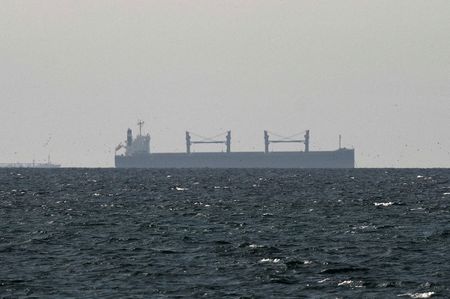
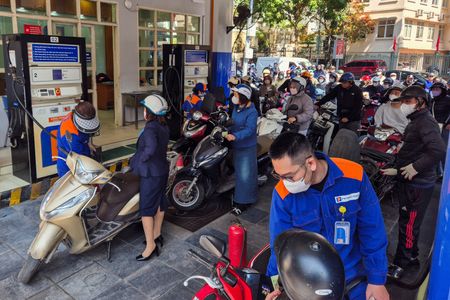
Global energy markets saw substantial declines Thursday morning as investors anticipated a potential shift in U.S. military strategy regarding Iran, with both major oil benchmarks dropping more than $1 per barrel.
Brent crude futures declined $1.16, representing a 1.15% decrease to reach $100 per barrel by 1204 GMT. Meanwhile, U.S. West Texas Intermediate crude futures dropped $1.41, or 1.41%, settling at $98.71 per barrel. Both oil benchmarks had already closed lower during the previous trading session.
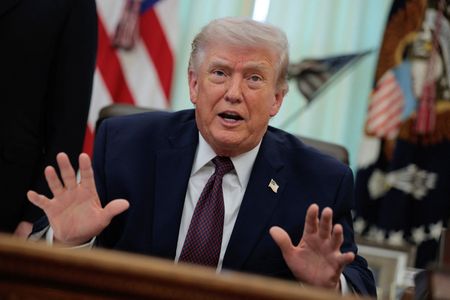
The market movement came ahead of President Donald Trump’s scheduled national address, with the president indicating to Reuters on Wednesday that the United States would conclude its military operations in Iran “fairly soon.” The speech was set for 9 p.m. EDT.
Market analyst Tony Sycamore from IG explained the trading activity in a research note, stating: “The overnight sell-off gathered pace on mounting hopes that the Iran conflict could finally be winding down.”
Sycamore added: “The market is widely expecting a decidedly dovish tone.”
Despite optimism about potential U.S. withdrawal, Sycamore warned that American departure wouldn’t automatically ensure the reopening of the crucial Strait of Hormuz shipping lane.
“If the U.S. leaves without a formal ceasefire agreement locking in free passage and leaving its regional allies and their energy assets highly exposed to Iranian strikes, a persistent risk premium is likely to linger in the oil price,” he explained.
Regional maritime security concerns continue escalating as military actions spread throughout the area. On Wednesday, Qatar’s defense ministry reported that an Iranian cruise missile struck an oil tanker chartered by QatarEnergy while operating in Qatari territorial waters.
The International Energy Agency’s director warned Wednesday that supply chain disruptions would begin affecting European economic activity starting in April. Until now, the continent had been protected by oil shipments secured through contracts signed before hostilities began.
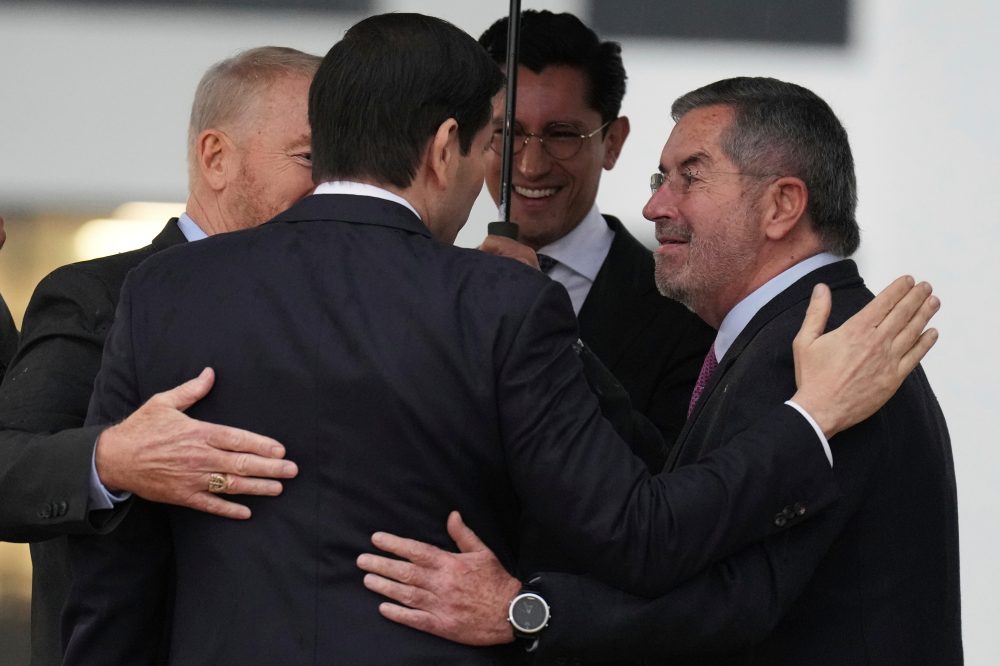
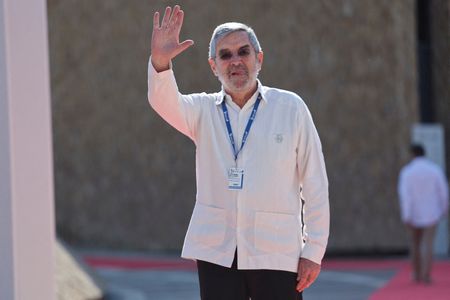
Mexico’s President Claudia Sheinbaum announced Wednesday that Roberto Velasco will take over as the nation’s foreign minister during a particularly tense period in U.S.-Mexico diplomatic relations.
Velasco, who currently serves as the foreign ministry’s North America subsecretary and is recognized as a leading authority on bilateral U.S. relations, will replace Juan Ramón de la Fuente. The outgoing minister, a 74-year-old psychiatrist and key advisor to Sheinbaum, asked to resign due to health concerns, according to a statement posted on social platform X by the president’s office.
The incoming foreign minister is a 38-year-old attorney who holds a master’s degree in Public Policy from the University of Chicago. Over the past six years, he has been deeply involved in Mexico’s diplomatic efforts with both the United States and Canada, initially serving as North America general director before advancing to his current subsecretary position. He temporarily filled in for De la Fuente following the minister’s surgery last year. The Senate must confirm his appointment.
Diplomatic observers view Velasco as among the most knowledgeable officials regarding the complex details of cross-border relations, having worked through the conclusion of President Trump’s initial presidency and now into his second term. He has spearheaded multiple bilateral and trilateral discussions covering security issues, immigration policy, economic matters, border management, and shared water resources.
Following Trump’s return to office, Velasco became De la Fuente’s primary deputy during increasingly strained relations between the neighboring countries, which have reached one of their most challenging phases. Questions remain about whether the younger official possesses sufficient political influence to navigate these difficult circumstances.
The new foreign minister will oversee Mexican diplomatic efforts during upcoming discussions to modify the U.S.-Mexico-Canada Free Trade Agreement, while managing Trump’s ongoing pressure regarding cartel operations. This comes as the U.S. president has demonstrated readiness to consider military action against nations he views as adversaries, including Cuba, which maintains close ties with Mexico.
Earlier in his career, Velasco worked as a spokesman for Marcelo Ebrard, who now serves as economy secretary, during Ebrard’s tenure as foreign minister in the initial years of former President Andrés Manuel López Obrador’s term.
De la Fuente, who held the foreign minister position since October 2024, earned recognition for his diplomatic approach and negotiation abilities. He supported Sheinbaum during the presidential transition, met with representatives from then-President Joe Biden’s administration, and oversaw preparations across the U.S. consular system for the deportation policies Trump announced.
After the Republican president took office in January 2025, De la Fuente emerged as a central figure in discussions with the new administration, consistently maintaining a reserved public presence while staying closely aligned with Sheinbaum’s careful response strategy to Trump’s frequent social media statements. Last September, he welcomed U.S. Secretary of State Marco Rubio to Mexico City for official talks.
Arturo Sarukhan, who previously served as Mexico’s ambassador to the United States, commented that “the reshuffle in the foreign ministry was long overdue” but declined to offer specific remarks about Velasco, saying he wished him success in the role.
Authorities issued tsunami warnings across Southeast Asia on Thursday following a powerful 7.8 magnitude earthquake that rocked the Northern Molucca Sea near Indonesia’s coast, according to the United States Geological Survey.
The seismic event occurred at a relatively shallow depth of 10 kilometers (6.21 miles) beneath the ocean floor, which can amplify the potential for dangerous waves.
Officials with the U.S. Tsunami Warning System cautioned that dangerous tsunami waves could reach coastlines within 1,000 kilometers of where the earthquake originated, potentially affecting Indonesia, the Philippines, and Malaysia.
The earthquake’s center was located approximately 120 kilometers away from Ternate, a city in Indonesia’s North Maluku province that is home to more than 205,000 residents, USGS data shows.
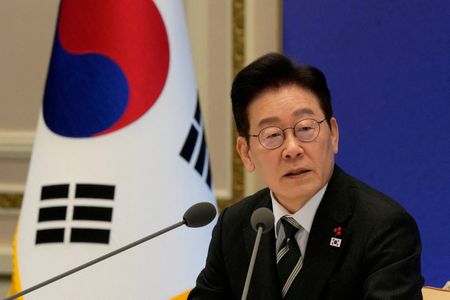
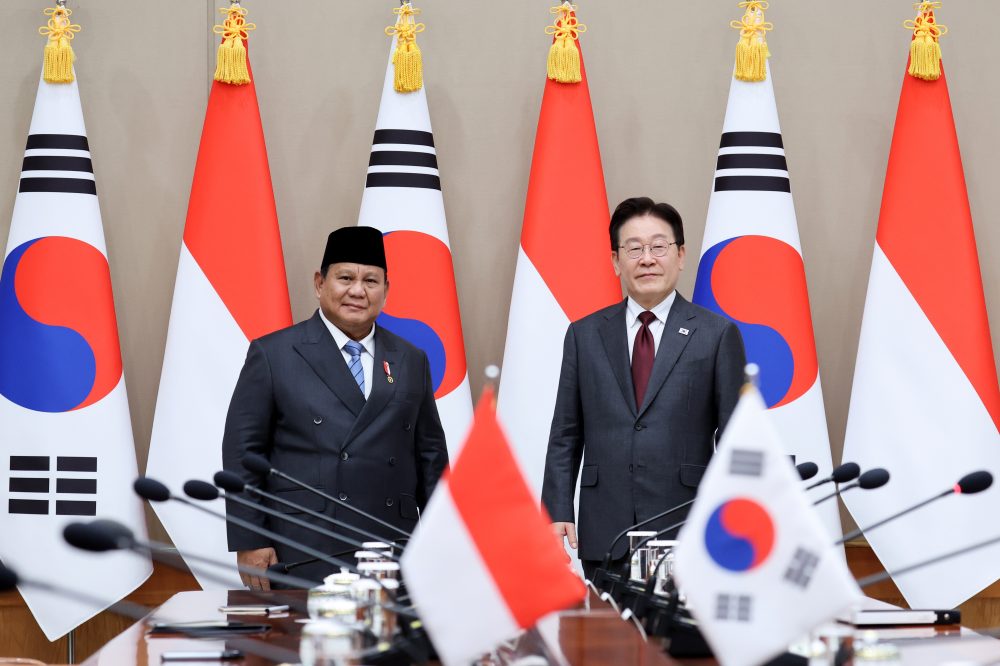
South Korean President Lee Jae Myung is pushing for deeper technological cooperation with France, emphasizing the need to move beyond standard diplomatic relationships toward strategic collaboration in cutting-edge fields.
According to remarks Lee made to French newspaper Le Figaro that were made public Thursday, the South Korean leader wants the two countries to work together on artificial intelligence and nuclear energy initiatives, which he views as essential for technological advancement.
Lee’s comments come as French President Emmanuel Macron arrived in Seoul Thursday for a two-day diplomatic visit to South Korea.
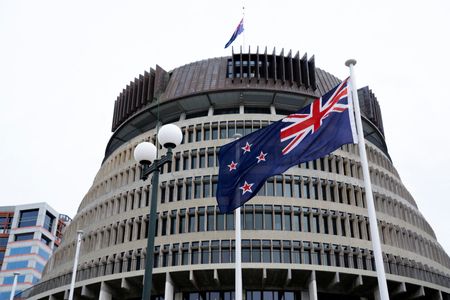
WELLINGTON – New Zealand’s Prime Minister Christopher Luxon announced Thursday that Chris Penk will take over as the nation’s defense minister as part of a broader cabinet reorganization, placing a former military serviceman in charge of the country’s armed forces.
In the ministerial shake-up, Penk will join the Cabinet and assume control of multiple security-related departments, including Defense, the Government Communications Security Bureau, the New Zealand Security Intelligence Service, and Space operations.
“Chris’ time in the NZDF (New Zealand Defence Force) leaves him well-placed to lead the work our Government has done in raising the status and capability of our armed forces,” Luxon said in a statement.
The appointment occurs during a period when New Zealand is placing increased emphasis on military investment and defense capabilities. Last year, the government announced an ambitious plan to boost defense expenditures beyond 2% of the nation’s GDP over the next eight years, backed by NZ$9 billion ($5.2 billion) in additional funding.
Penk will succeed outgoing Defense Minister Judith Collins, who is stepping down from Parliament. The prime minister also revealed adjustments to various other ministerial roles, affecting the energy, public service, and Pacific peoples portfolios.
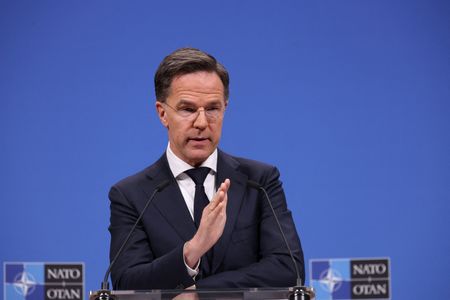
The head of NATO will travel to the nation’s capital next week as tensions escalate between President Donald Trump and European partners within the military alliance.
NATO Secretary-General Mark Rutte has scheduled what officials describe as a previously arranged visit to Washington, according to alliance spokesperson Allison Hart. The White House has also verified the upcoming meeting.
“I can confirm that the Secretary General will be in DC next week for a long-planned visit,” Hart stated. Officials have not released additional information about the visit’s agenda.
The meeting occurs as Trump has expressed consideration of withdrawing the United States from the Western defense partnership, citing European nations’ unwillingness to deploy naval vessels to help clear the Strait of Hormuz.
During Wednesday’s Easter gathering at the White House with allied representatives, Trump delivered sharp criticism of France, the United Kingdom, and other partner nations, referring to them as a “paper tiger.”
The North Atlantic Treaty Organization was established in 1949 as a defense against potential Soviet aggression and has served as the foundation of Western security arrangements for more than seven decades. The alliance encompasses European nations alongside the United States and Canada.
“We’ve had some very bad allies in NATO,” Trump stated. “Hopefully, we’re never going to need them. I don’t think we will need them.”
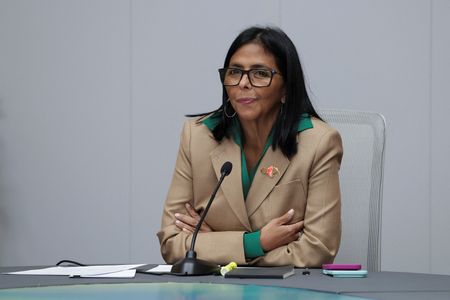
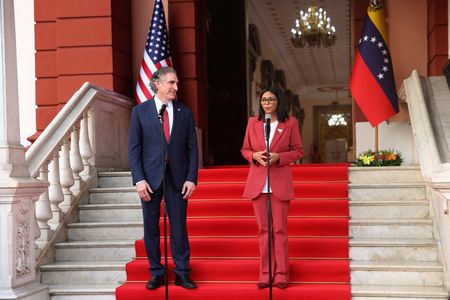
WASHINGTON — The United States removed economic sanctions against Venezuela’s interim President Delcy Rodríguez on Wednesday, as confirmed by a Treasury Department listing on the Office of Foreign Assets Control website.
This sanctions removal sends a clear message that Washington acknowledges Rodríguez as Venezuela’s rightful leader following the January 3rd capture of former President Nicolás Maduro and his spouse by American military forces in Caracas, the Venezuelan capital.
Both Maduro and his wife were transported to New York where they now face drug trafficking accusations, with both entering not guilty pleas.
Venezuelan officials have not yet provided a response to requests for comment regarding the sanctions relief.
The Treasury Department originally imposed sanctions on Rodríguez and her brother Jorge Rodríguez during the first Trump presidency for their alleged roles in weakening Venezuela’s democratic institutions.
The brother and sister duo, alongside other close Maduro associates, were placed on Treasury’s sanctions list in September 2018, following Maduro’s re-election victory in what international observers deemed fraudulent due to the exclusion of opposition candidates and political parties.
“Maduro has given Delcy Eloina Rodríguez Gomez and Jorge Jesus Rodríguez Gomez senior positions within the Venezuelan government to help him maintain power and solidify his authoritarian rule,” Treasury said in a statement at the time.
Since Maduro’s removal just months ago, Rodríguez has spearheaded Venezuela’s collaborative efforts with the Trump administration, promoting her petroleum-wealthy country to global investors while embracing private investment, international arbitration processes, and external oversight.
From a legal standpoint, Maduro remains Venezuela’s official president.
Following the January 3rd military operation, Venezuela’s government-aligned supreme court ruled his absence as “temporary,” which avoided the requirement for immediate elections while maintaining his presidential protections under international law. The court authorized Rodríguez to serve for up to 90 days, with potential extension to six months pending approval from the National Assembly, which remains under ruling party control and is led by her brother.
The 90-day authorization period concludes this Friday.
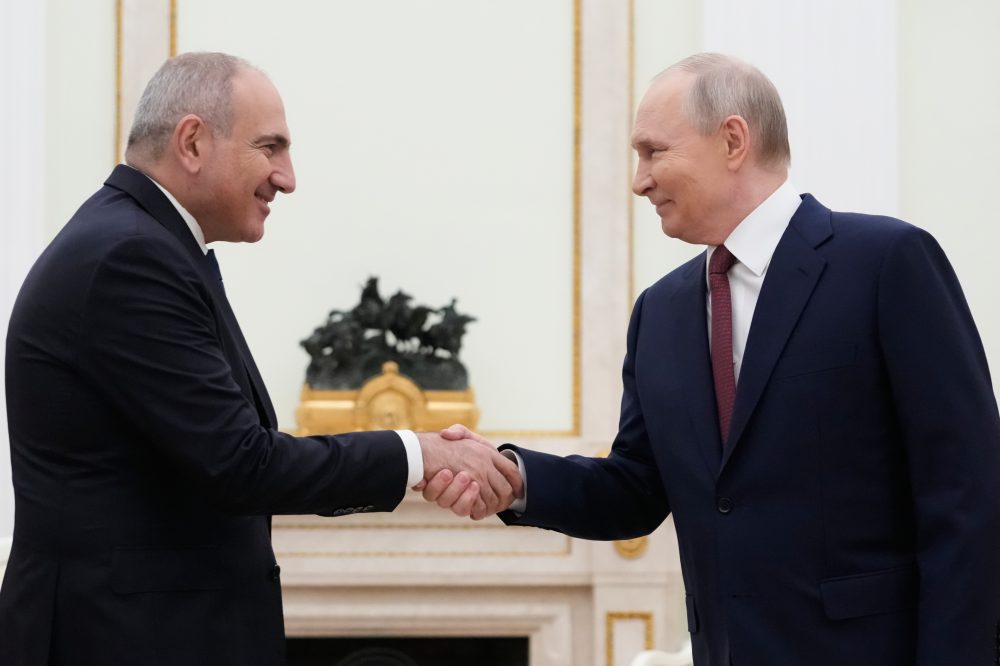
MOSCOW — During high-level discussions in the Russian capital Wednesday, President Vladimir Putin delivered a clear ultimatum to Armenia regarding its future economic partnerships, stating the nation cannot simultaneously participate in European Union membership and Moscow’s economic alliance.
Armenia has been actively pursuing stronger relationships with both the United States and European Union since signing a peace agreement with Azerbaijan last year that ended long-standing conflicts. Armenian leader Nikol Pashinyan has publicly announced his country’s intention to seek EU membership and has halted Armenia’s involvement in Russia’s military alliance known as the Collective Security Treaty Organization.
During the opening of discussions with Pashinyan in Moscow, Putin expressed that Russia remains “absolutely calm” regarding Armenia’s European outreach efforts, though he emphasized that “it’s impossible to be in a customs union with the EU and the Eurasian Economic Union.”
The Eurasian Economic Union, established in 2015 with Armenia, Belarus, Kazakhstan and Kyrgyzstan as members alongside Russia, operates as a unified marketplace enabling unrestricted movement of products, investment capital and workers.
Putin’s remarks seemed designed as a cautionary message, particularly given that Armenia’s path to EU membership remains uncertain with no concrete discussions about potential trade agreements currently underway.
The Russian president pointed out significant differences in market regulations between the two economic systems across various product categories, suggesting alignment between them appears unlikely in the near future. While acknowledging Armenia’s right to choose its direction, Putin highlighted that his country currently provides natural gas to Armenia at substantially reduced rates compared to European market prices.
Pashinyan acknowledged the impossibility of simultaneous membership in both organizations but indicated Armenia could maintain its current Eurasian Economic Union status while expanding European cooperation. “Ties with Russia are very deep and important for us,” he stated.
The relationship between Armenia and its historical patron Russia has deteriorated significantly since Azerbaijan regained complete control of the Karabakh territory in 2023, ending decades of ethnic Armenian separatist control in the region.
Armenian leadership criticized Russian peacekeeping forces stationed in the area for failing to prevent Azerbaijan’s military campaign. Moscow, focused on its Ukrainian conflict, dismissed these criticisms and argued its troops lacked authority to intervene in the situation.
Putin contended Wednesday that Pashinyan’s 2022 decision to acknowledge Karabakh as Azerbaijani territory prevented Moscow from taking action. He referenced the American-mediated peace agreement signed last year between the two nations and a potential transportation corridor supported by President Donald Trump as creating new opportunities for regional collaboration.
Putin also expressed expectations that pro-Russian political forces would have fair access to compete in Armenia’s upcoming June parliamentary elections, noting that some of their representatives have faced detention — likely referencing Russian-Armenian businessman Samvel Karapetyan, a Pashinyan opponent arrested last year after demanding government change.
Pashinyan, who has led Armenia since 2018, responded by explaining that Armenian law prohibits Russian passport holders from participating in electoral processes.
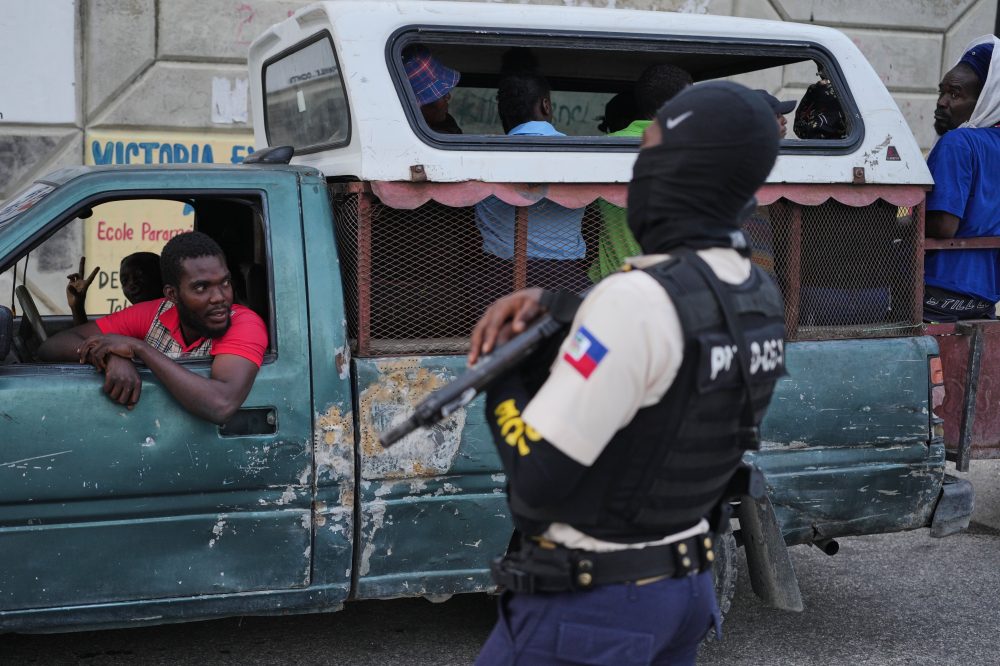
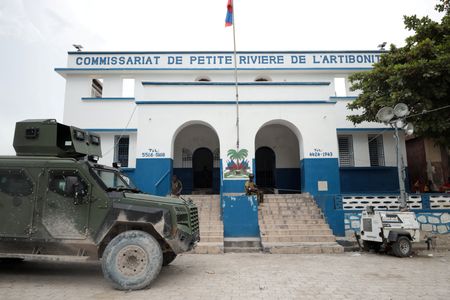
PORT-AU-PRINCE, Haiti — Military personnel from the African nation of Chad have touched down in Haiti’s capital city, marking the beginning of a new United Nations-supported mission designed to combat rampant gang violence, officials announced Wednesday.
The Chadian military team has arrived in Port-au-Prince alongside Jack Christofides, who serves as the mission’s special representative. Both were sent following a formal request from Haiti’s government, according to an official announcement shared on the force’s social media platform.
Officials did not release additional specifics about the deployment, and representatives for the mission have not responded to requests for more information.
The arrival of the Chadian personnel follows discussions between United Nations officials and Haitian Prime Minister Alix Didier Fils-Aimé regarding collaboration with the U.N. Support Office in Haiti. This office will supply the new mission with essential resources including housing, workspace, medical services, food supplies, water, electricity, fuel, transportation, aircraft support and other vital assistance.
In late September, the U.N. Security Council gave approval for a 5,550-member mission designed to replace a Kenya-led international force that struggled with insufficient personnel and funding during its deployment. The previous operation only managed to deploy roughly 1,000 troops instead of the planned 2,500.
Unlike its predecessor, the new gang-suppression mission will possess authority to detain suspected gang members, a capability the earlier force lacked.
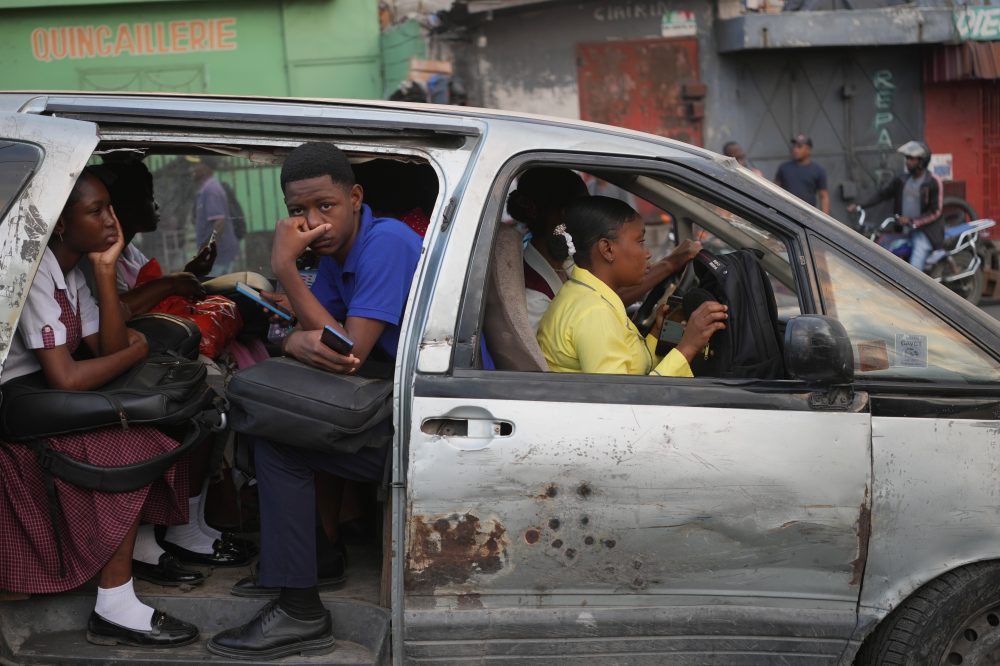
Criminal organizations currently maintain control over approximately 90% of Haiti’s capital city and significant portions of the nation’s central territories.
According to the most recent United Nations data, more than 5,500 individuals lost their lives throughout Haiti and over 2,600 sustained injuries between March 1, 2025 and January 15, 2026. The ongoing gang warfare has also forced more than 1.4 million residents to flee their homes in the country of nearly 12 million people.
MEXICO CITY – Mexico’s top diplomat Juan Ramon de la Fuente is stepping away from his role as Foreign Minister due to medical concerns, according to Wednesday reports from Mexican news outlets.
Roberto Velasco, who currently leads the North America division within the foreign ministry, is expected to assume the position, according to the reports.
De la Fuente took medical leave last November to undergo surgery. Reuters could not immediately verify the Mexican media reports or confirm whether his departure from the ministry will be permanent.
Officials from New Zealand and the Cook Islands finalized a Defense and Security Declaration on Thursday in Rarotonga, according to announcements from New Zealand Foreign Minister Winston Peters and Cook Islands Prime Minister Mark Brown.
The agreement establishes crucial political commitments between the two nations, with Peters explaining in a statement that the declaration “outlines a set of important political commitments the Cook Islands and New Zealand have made to one another that provide clarity on key aspects of our special constitutional relationship.”
This formal agreement follows a period of strained relations between the constitutionally connected nations, triggered by the Cook Islands’ growing diplomatic and economic connections with China, as well as discussions about establishing an independent Cook Islands passport separate from New Zealand.
PORT-AU-PRINCE, Haiti – Military personnel from Chad touched down in Haiti on Wednesday, becoming the first soldiers deployed as part of a United Nations-supported Gang Suppression Force (GSF), according to an announcement made by the force on social media platforms.
Accompanying the military deployment, Jack Christofides, a United Nations official, also landed in Haiti to serve as the GSF’s special representative. This new force represents an expanded version of the Kenya-led Multinational Security Support mission, though meaningful troop deployments have been absent since the mission received authorization in September of last year.
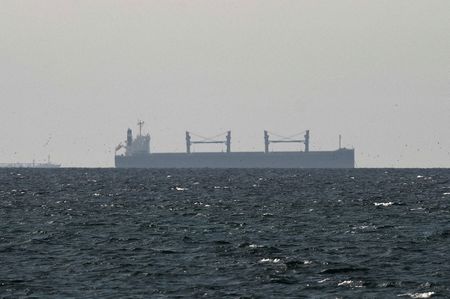
Bahrain encountered significant resistance Wednesday in its push for United Nations backing to safeguard merchant vessels navigating the Strait of Hormuz, highlighting international disagreements on addressing Iran’s effective blockade of the critical waterway that has triggered an unprecedented energy supply crisis.
As the nation holding April’s rotating leadership of the 15-member UN Security Council, Bahrain distributed an updated draft proposal that eliminated earlier language about mandatory enforcement actions, attempting to address concerns from other countries, especially Russia and China.
However, according to a UN diplomatic source, China, Russia and France presented objections to the revised draft before it could advance to final consideration at Wednesday’s noon deadline through the silence procedure – a process where resolutions pass unless a member nation raises opposition. Bahrain’s UN representative Jamal Fares Alrowaiei informed media that the proposal still needed “a lot of work.”
Leading Gulf nations and Western powers remain without a concrete strategy to restore access to the waterway, which has been essentially blocked since hostilities commenced one month ago, driving energy costs dramatically higher. Approximately 20 percent of global oil and natural gas typically moves through this vital shipping channel.
“There are ongoing communications and discussions with the Council members to bring a convergence of views and find a draft that can garner consensus, so that it can be adopted soon,” Alrowaiei stated.
At the conflict’s outset, US President Donald Trump promised to deploy naval vessels to accompany commercial ships through the strait and urged other nations to assist in securing the passage. Recently, however, he has indicated America should not participate in such efforts, arguing that other countries, particularly European NATO members, should handle reopening the strait.
Maritime traffic ceased using the waterway after Iran attacked vessels in response to strikes launched by the United States and Israel that initiated the conflict on February 28.
Bahrain’s original proposal, obtained by Reuters and supported by fellow Gulf Arab nations and Washington, had specifically referenced Chapter VII of the UN Charter, which permits the Security Council to approve actions from economic sanctions to military intervention.
Diplomatic sources indicated such a resolution would likely have failed, as Iran’s allies Russia and China were prepared to block it if needed.
The modified version reviewed by Reuters eliminated the Chapter VII language but maintained forceful wording essentially approving military action in the Strait of Hormuz, Persian Gulf and Gulf of Oman to guarantee passage and prevent disruption of international shipping, including within or near territorial waters.
The UN representatives for Russia, France and China did not provide immediate responses when questioned about their concerns with Bahrain’s proposal.
Security Council resolutions need a minimum of nine supporting votes and cannot face vetoes from the five permanent members: the United States, Russia, China, Britain and France.
According to diplomatic sources, France has proposed an alternative resolution seeking UN authorization after conditions stabilize.
Trump intensified his criticism of NATO Wednesday, warning of potential withdrawal from the long-standing alliance due to other nations’ absence from the Iran conflict.
France responded to Trump’s warnings Wednesday, asserting the military alliance exists to maintain Euro-Atlantic regional security rather than conduct offensive operations in the Strait of Hormuz.
French naval commander Admiral Nicolas Vaujour addressed a Paris security conference Wednesday, explaining France’s efforts to gather multiple nations for discussions on establishing lasting conditions for strait reopening.
Vaujour noted that China must eventually become more directly involved in restoring oil transportation through the strait, given China’s position as the world’s top oil importer via this route.
WASHINGTON, April 1 – The Treasury Department announced Wednesday that economic sanctions have been lifted against Venezuela’s interim President Delcy Rodriguez, marking a significant shift in U.S.-Venezuela relations just under three months since American forces apprehended former President Nicolas Maduro during an operation in the Venezuelan capital.
The Trump administration has been working closely with Rodriguez’s interim government, which took power after Maduro’s capture. This cooperation includes negotiations for American purchases of Venezuelan oil and the issuance of sanctions exemptions designed to promote U.S. business investment in the South American nation.
American forces took Maduro into custody on January 3 following an extended period of escalating diplomatic tensions between Washington and Caracas. His arrest triggered a series of political transformations throughout Venezuela. Maduro, along with his spouse Cilia Flores, currently faces drug trafficking allegations in a New York courtroom.
Officials from Venezuela’s communications ministry, which manages all media inquiries for the government, have not yet provided a response to requests for comment regarding the sanctions removal.
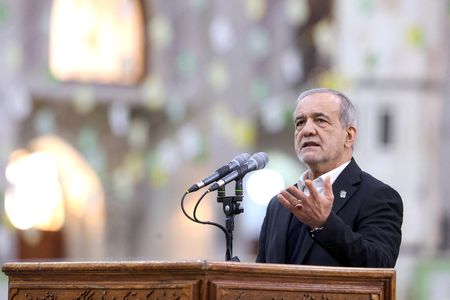
Iran’s President Masoud Pezeshkian reached out directly to Americans through a written message, declaring that his nation does not hold hostility toward everyday US citizens, according to Wednesday reports from Press TV.
In his correspondence to the American public, Pezeshkian challenged depictions of Iran as a dangerous nation, stating that such characterizations are “neither consistent with historical reality nor with present-day observable facts.”
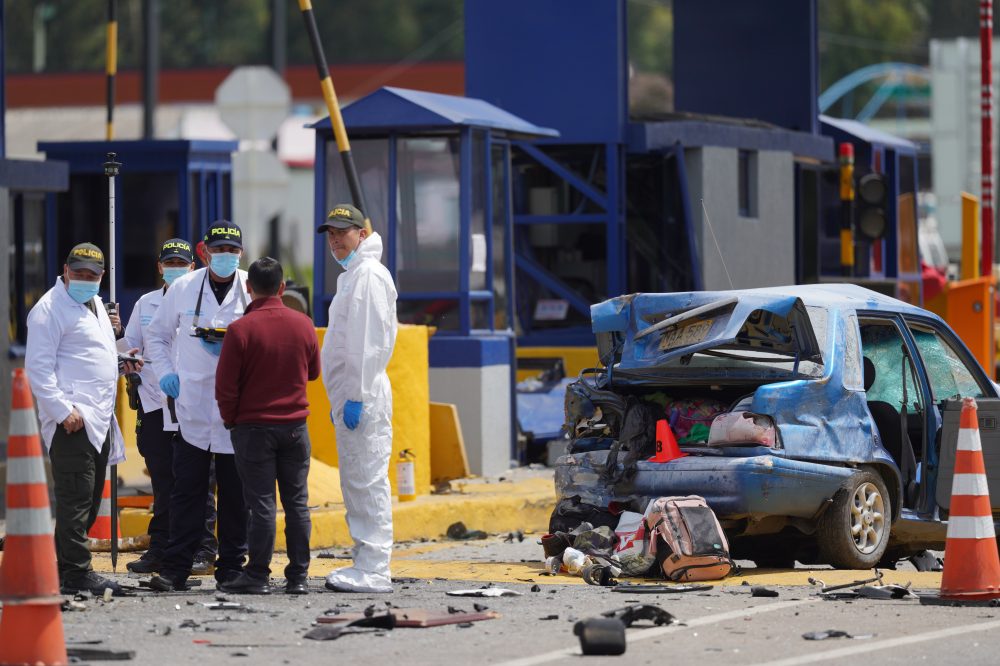
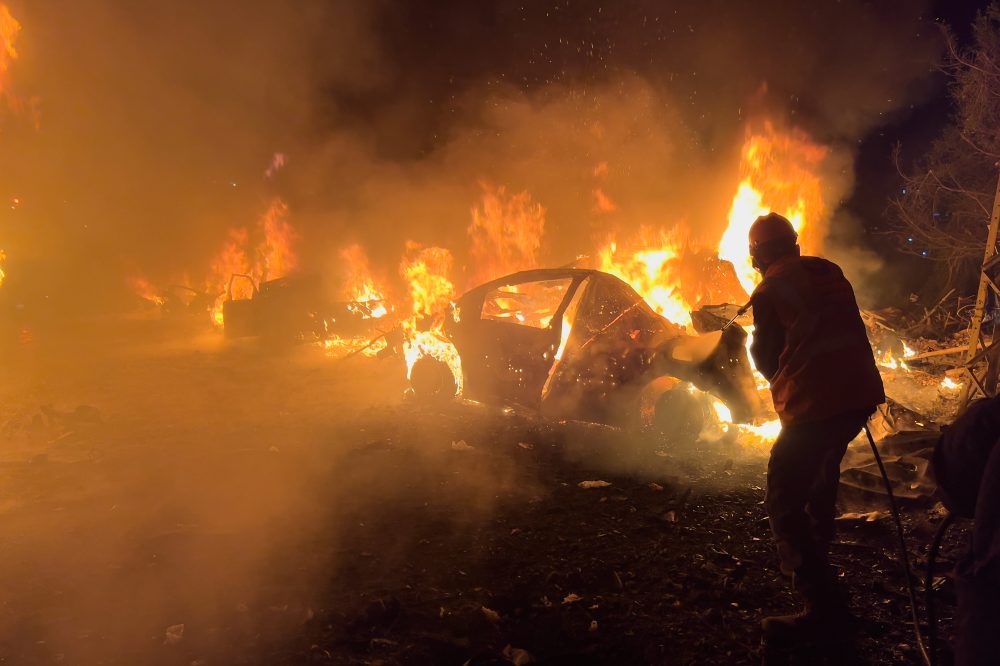
BOGOTA, Colombia — Two people died and 19 others were wounded Wednesday morning in a devastating multi-vehicle collision at a toll plaza in central Colombia, according to local officials. People who witnessed the crash reported hearing multiple explosions as video footage revealed vehicles completely consumed by fire.
The deadly incident occurred when a milk truck experienced brake failure and slammed into six other vehicles and one motorcycle that were stopped at the toll facility in the Cundinamarca region, located approximately 50 kilometers (31 miles) north of Bogota, according to Governor Emilio Rey, who posted details on X.
Rey confirmed that those wounded in the crash are receiving medical care at area hospitals, though he did not release information about the severity of their injuries.
Video footage aired by Colombian news outlets captured people weeping as they worked to help or rescue those who became trapped, while vehicles burned and lay destroyed around the toll area.
“I saw when the truck went through the toll booth, then there was an explosion, it overturned, and there were strong explosions and vehicles burning,” witness Hollman Osma told local news station Noticias Caracol. “There was absolutely nothing that could be done.”
Emergency responders dispatched no fewer than 11 ambulances along with firefighting crews and police officers to the crash site, Rey informed Noticias Caracol. The highway continues to remain shut down.
Three of the world’s most influential financial institutions announced Wednesday they will work together to address the widespread economic consequences stemming from the current Middle East conflict.
Leaders from the International Monetary Fund, International Energy Agency, and World Bank revealed plans to establish a joint coordination team aimed at maximizing their collective response to the crisis’s far-reaching economic and energy effects.
According to their collaborative announcement, the ongoing conflict has created massive regional disruptions and sparked what they describe as among the most severe energy supply shortfalls in global market history.
“At these times of high uncertainty, it is paramount that our institutions join forces to monitor developments, align analysis, and coordinate support to policymakers to navigate this crisis,” the leadership of all three organizations stated.
The newly formed coordination team plans to evaluate how severely different nations are being affected, develop coordinated response strategies, and rally stakeholders to provide assistance where it’s most needed.
Their response framework may encompass specialized policy guidance, evaluation of financing requirements, and provision of financial assistance through low-interest or zero-interest loans, along with additional risk management tools yet to be specified.
The conflict, which erupted when the United States and Israel launched strikes against Iran on February 28, has resulted in thousands of casualties throughout the Middle East. Iran subsequently retaliated with attacks on Israeli territory, American military installations, and Gulf region nations, while simultaneously opening another battlefront in Lebanon.
Now entering its second month, the warfare has expanded throughout the region, creating energy supply disruptions and raising concerns about potential global economic instability.
“The impact is substantial, global, and highly asymmetric, disproportionately affecting energy importers, in particular low-income countries,” the three international organizations emphasized.
The institutions highlighted that the conflict has already driven up costs for oil, natural gas, and fertilizers, while raising alarm about food price increases and affecting worldwide supply networks for helium, phosphate, aluminum, and various other materials. The tourism industry has also suffered significant damage.
“The resulting market volatility, weakening of currencies in emerging economies, and concerns about inflation expectations raise the prospect of tighter monetary stances and weaker growth,” the organizations explained.
“We are committed to working together to safeguard global economic and financial stability, strengthen energy security, and support affected countries and people on their path to sustained recovery, growth, and job creation through reforms,” they concluded.
Canada’s central bank has announced it will place greater emphasis on discretionary decision-making when setting interest rates, departing from its typical data-driven approach due to rising global instability, according to meeting minutes made public Wednesday.
The financial institution maintained its key interest rate at 2.25% during its March 18 meeting, with Governor Tiff Macklem indicating that policymakers would overlook temporary inflation spikes caused by the Iran conflict but would take action if price increases became entrenched.
The ongoing war in Iran has driven crude oil costs higher and raised fears about broader inflationary pressures across the economy.
Canada’s seven-member rate-setting committee determined it was premature to assess the conflict’s lasting economic consequences.
“They acknowledged that they would need to rely on judgment more heavily than usual and take a risk management approach to monetary policy,” the bank’s deliberation summary stated.
“They agreed to keep options open while closely monitoring the unfolding conflict in the Middle East, US trade policy and incoming data,” the document added.
Since October, the central bank has maintained its policy rate within the lower portion of what it considers a neutral range—neither boosting nor restraining economic activity. For nearly twelve months, inflation has remained near the center of the bank’s 1% to 3% target zone.
Policymakers noted that with inflationary forces appearing subdued, they possessed some leeway regarding rate adjustments and “could therefore take some time to see how the war in Iran evolved and what it meant for the outlook.”
Canada’s economic expansion and employment situation have weakened recently due to trade-related uncertainty and an upcoming evaluation of the United States-Mexico-Canada trade agreement.
Committee members concurred that the energy price surge resulting from the Iranian conflict would drive inflation higher in the short term, though the broader economic implications remain unclear at this early juncture.
Financial markets are anticipating two rate increases during the latter half of the year following President Donald Trump’s suggestion that the conflict might conclude within two to three weeks.
PARIS, April 1 – A top French naval official stated Wednesday that China must take a more active stance in resolving the ongoing crisis affecting oil shipments through the Strait of Hormuz, as current measures appear inadequate to handle vessel traffic demands.
Speaking at the War & Peace security conference in Paris, Admiral Nicolas Vaujour explained that while Beijing has maintained diplomatic communications with Iranian officials to allow some ships passage, these efforts fall short of what’s needed.
“We have not seen China’s navy step in to reopen the strait. On the other hand, there is direct political dialogue between Chinese and Iranian authorities to ensure that a certain number of vessels can pass. Will that be enough to restore normal traffic flows? I don’t believe so,” Vaujour stated.
The French admiral added: “As a result, China will probably have to engage more directly in the debate and show its impatience with the fact that the strait remains closed.”
According to Vaujour, France is currently coordinating efforts to convene multiple nations for high-level political discussions aimed at establishing sustainable conditions for reopening the strategic waterway.
Military forces will eventually be required to oversee any reopening operations, with officials examining the framework used by the previous European Union-led Agenor mission that previously operated in the strait.
Naval authorities are also investigating potential mine deployment in the area that would require clearing operations.
“This is obviously not a question for France alone. It concerns all partner countries, Gulf states, the United States and other European countries as well. But it is clearly an issue we are working on, should mining be confirmed, which, as of today, has not been established,” Vaujour explained.
An environmental activist ship intentionally rammed into a commercial fishing vessel in Antarctic waters this week, sparking accusations of reckless endangerment in one of Earth’s most remote and ecologically fragile regions.
The Tuesday incident involved the M/V Bandero, operated by the Captain Paul Watson Foundation, which deliberately approached and struck the Norwegian-flagged Antarctic Sea while it was harvesting krill. Video footage lasting two minutes, obtained by The Associated Press from Aker QRILL Co., captures the Bandero slowly approaching the fishing vessel’s rear section before making contact with its port side.
The confrontation highlights escalating tensions in Southern Ocean waters over Antarctic krill harvesting. These tiny shrimp-like creatures serve as essential food for whales and play a crucial role in combating climate change, while also being sought after for health supplements, fish feed, and various commercial products.
According to Aker’s Wednesday statement, the activist vessel came dangerously close to hitting a fuel tank aboard the Antarctic Sea, potentially threatening an ecosystem populated by numerous whale species, seals, and seabirds that depend on the region’s delicate krill populations.
The Norwegian company reported that its international crew experienced no injuries but was badly shaken by the encounter. Officials announced plans to pursue all possible legal remedies.
“Our crew were put at risk in some of the most remote waters on Earth, and only luck avoided potential environmental damage,” stated Aker CEO Webjørn Barstad.
The Captain Paul Watson Foundation declined to respond to AP inquiries regarding Aker’s claims. However, the organization issued its own statement describing their tactics as “aggressive nonviolence.” The group reported that their crew, under the leadership of French activist Lamya Essemlali, successfully halted all krill fishing activities during a five-hour “direct intervention” targeting two Aker-owned ships. The foundation also released photographs showing crew members deploying large metal devices designed to destroy fishing nets.
Watson, the organization’s founder, was not aboard the vessel, which left Australia last month as part of the foundation’s “Operation Krill Wars” campaign.
“Throughout the encounter, the crew witnessed Antarctic wildlife in the surrounding waters, including penguins, seals, and even a whale, underscoring what was at stake as a small ship challenged a powerful industrial krill operation in a stark David-and-Goliath scenario,” the foundation declared.
Watson established the worldwide Sea Shepherd conservation organization during the 1970s and spent decades building a notorious reputation through vessel ramming and other confrontational maritime tactics that frequently resulted in his imprisonment. His most recent detention occurred in Greenland during 2024, where he spent five months on a Japanese arrest warrant that Denmark ultimately dismissed. Japanese authorities had sought his capture following a 2010 incident where he allegedly directed a ship captain to hurl explosives at what Japan classified as a research whaling vessel.
The Canadian-American activist previously enjoyed backing from Hollywood personalities, but his extreme methods have created divisions within the movement he established. While affiliates in France and Brazil continue supporting his recently formed foundation, Sea Shepherd Global and 20 national branches have shifted focus toward maritime surveillance patrols, policy advocacy, and assisting law enforcement in developing nations where illegal fishing flourishes.
Antarctic krill fishing reached unprecedented levels last season, prompting the first-ever early shutdown of harvesting operations.
Aker operates as the globe’s dominant krill harvester, accounting for more than half of worldwide catches.
The Commission for the Conservation of Antarctic Marine Living Resources oversees this distant fishery. This international body includes 27 countries plus the European Union.
Any formal investigation, including potential criminal charges, will likely begin when the Mongolia-flagged Bandero reaches its next port destination. International maritime regulations require overtaking vessels to maintain safe distances from ships they are passing.
The Bandero takes its name from the tequila business owned by John Paul DeJoria, an American billionaire who created Paul Mitchell hair products and has long supported Watson’s environmental campaigns.
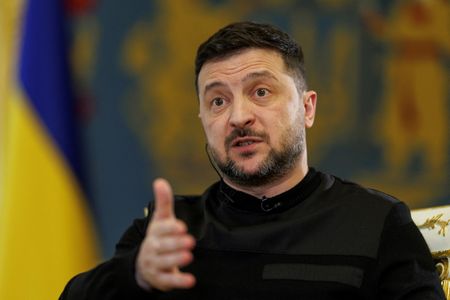
Ukrainian President Volodymyr Zelensky participated in virtual discussions Wednesday with American negotiators, according to a source with knowledge of the conversations, as Ukraine works to maintain the Trump administration’s attention on its conflict with Russia during the Iran war.
NATO Secretary General Mark Rutte participated in the discussions alongside U.S. special envoy Steve Witkoff, Trump’s son-in-law Jared Kushner, and Senator Lindley Graham, the source informed Reuters.
Ukraine intends to propose a potential Easter ceasefire, Zelensky announced to media on Tuesday, and will request that negotiators relay this proposal to Russian officials.
Through a Telegram message, Zelensky revealed he also conducted a conversation with British Prime Minister Keir Starmer on Wednesday, updating him on his ceasefire plan.
“I informed Keir about the situation on the frontline: our positions are now much stronger,” Zelensky said.
Ukraine has intensified attacks on Russian petroleum facilities in recent weeks. Approximately 40% of Russia’s oil export operations have been disrupted, based on Reuters analysis from last week.
Zelensky has indicated Ukraine would be willing to halt these attacks if Russia agrees to end strikes on Ukrainian energy facilities.
Russian foreign ministry officials dismissed the ceasefire proposal on Wednesday, labeling it a “PR stunt.” The Kremlin restated its position that Ukrainian forces should have withdrawn from Donbas territory – which Russia has been unable to completely capture during four years of warfare – “yesterday.”
Ukraine views halting combat at current battle lines as a reasonable compromise and refuses Russia’s demands to retreat from territories it continues to hold in the Donetsk region, which is part of Donbas.
Zelensky has consistently advocated for a meeting involving Trump and Russian President Vladimir Putin, stating that territorial matters can only be resolved through direct leader-to-leader negotiations.
After recent diplomatic tensions between American and European representatives, Finnish President Alexander Stubb announced on X Wednesday that he had spoken with Trump: “Constructive discussion and exchange of ideas on NATO, Ukraine and Iran.”
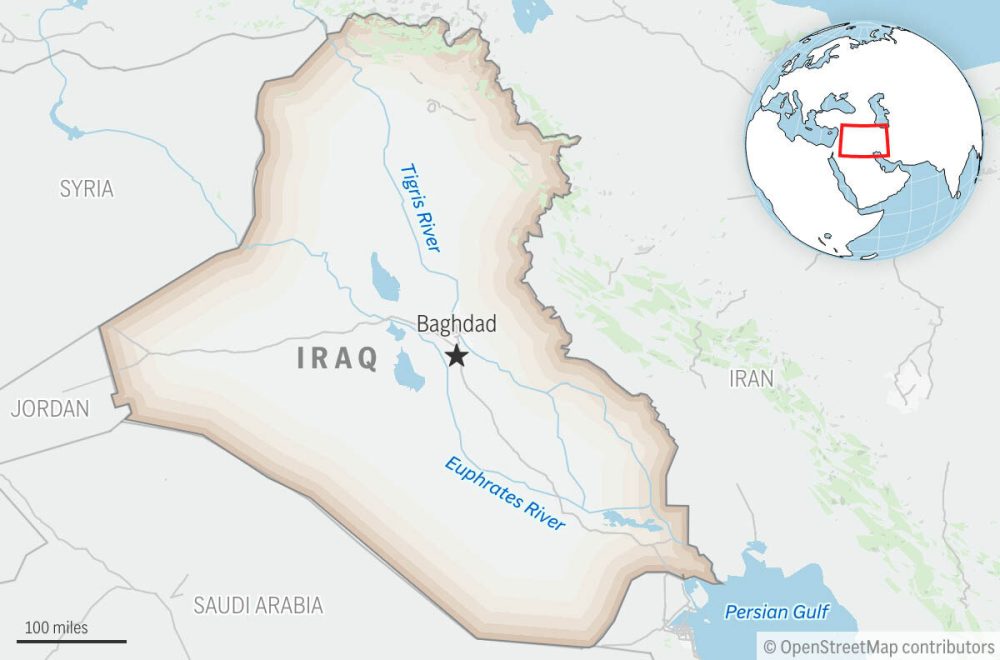
BAGHDAD — A 49-year-old American freelance journalist who disappeared Wednesday in Baghdad was recognized for her bold approach to reporting, frequently venturing into dangerous territories across the Middle East with minimal financial resources.
Shelly Kittleson, originally from Wisconsin, had established herself as a respected correspondent throughout the region after years of living overseas, including time based in Rome. Security footage captured the moment she was abducted by two individuals who forced her into a vehicle at a crowded Baghdad street corner on Wednesday.
Patrizio Nissirio, who previously worked as an editor at Italian news agency ANSA and has known Kittleson since 2011 when she served as a translator, praised her dedication. “She is a great reporter and always wants to go to areas where no one wants to go,” Nissirio explained.
He recalled advising her about safer reporting options: “I said to her, ‘You don’t need to be in a war zone to do good journalism,’ and she told me, ‘I think my work is worth something when I am in those areas,’” Nissirio said.
Colleagues and friends characterize Kittleson as a fearless and persistent journalist who dedicated more than ten years to covering Iraq, Syria, and the broader Middle East region for various publications, including Al-Monitor, a specialized regional news website.
Known for her inquisitive nature and self-reliance, she frequently immersed herself within local populations, sometimes choosing to stay with host families instead of commercial accommodations.
Her freelance status meant she typically operated solo, covering vast distances while carrying all her possessions, without the security resources that larger news organizations might provide their staff.
Friends describe the Wisconsin-born journalist as compassionate and spiritually minded, having converted to Islam during her time in the region.
She maintained a vegetarian diet, which Iraqi acquaintances noted was challenging in the meat-centric cuisine of Middle Eastern nations. She was often good-naturedly mocked for her heavy bags, which she refused to leave unattended at the basic Baghdad hotel where she resided.
Three Iraqi associates agreed to discuss Kittleson only without revealing their identities, concerned about potential retaliation from militant organizations if connected to her publicly.
During her last communications before the kidnapping, she inquired with contacts about transportation options between various cities while continuing her efforts to secure story access.
Just hours before her abduction, Kittleson met with an acquaintance in Baghdad’s Karrada district and revealed she had been warned that U.S. officials informed her of a militia group’s plan to target her. However, she dismissed the threat as lacking credibility.
Iraqi colleagues mentioned that security personnel and militia members had detained Kittleson at checkpoints previously, but she had consistently secured her freedom. “They will not hurt me,” she assured her friend that afternoon prior to her capture.
Rather than security concerns, she expressed worry about her financial difficulties, mentioning she lacked any work assignments during her Baghdad stay. Financial hardship had been a persistent challenge throughout her career of modest living.
Working independently, she frequently depended on assistance from Iraqi journalism professionals.
On March 9, Kittleson attempted to enter Iraq from Syria through the al-Qaim border crossing. While border authorities issued her a visa, Iraqi intelligence personnel subsequently blocked her entry, referencing kidnapping risks, according to three separate accounts from individuals she contacted that day.
She then traveled to Jordan and successfully entered Iraq through that route without complications.
“She always complained of the treatment of freelance journalists, saying they are not paid enough. She was always trying to make ends meet and said she would sleep on any couch she could find, unlike the big foreign correspondents that sleep in fancy hotels,” Nissirio explained.
“Her job has always been difficult, but she had a burning passion for it that I respect and appreciate.”
Kittleson’s most recent publication appeared in Il Foglio on Monday, March 31, examining how the Iran conflict has impacted Iraq’s Kurdish territories.
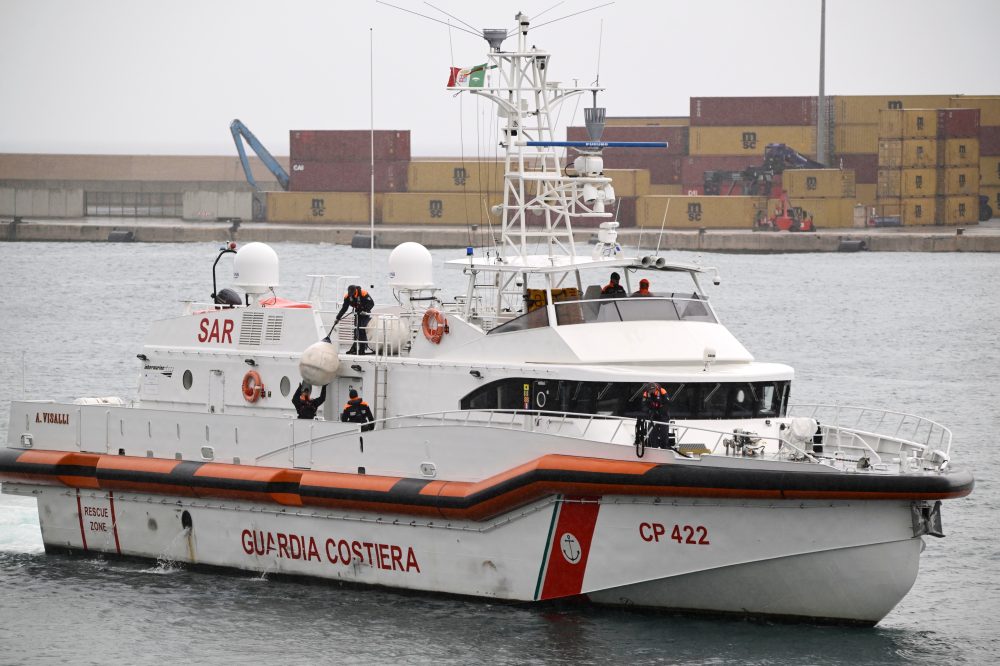
Italian maritime rescue teams pulled 58 people to safety and recovered 19 bodies from a migrant vessel that encountered trouble roughly 80 nautical miles from Lampedusa on Tuesday evening.
Coast guard officials conducted the rescue operation in Libya’s search and rescue zone during dangerous weather conditions, according to a spokesperson who briefed reporters Wednesday.
“We were the only one able to intervene, as there were no other ships or rescue teams in the area. Sea conditions were pretty extreme, with waves of more than 6-7 meters (20-23 feet),” said coast guard spokesman Roberto D’Arrigo.
According to D’Arrigo, the migrants most likely began their journey from Libya, and authorities believe the fatalities resulted from hypothermia, though official confirmation of the deaths’ causes is still pending.
Following a 10-hour voyage, the rescued individuals were transported to Lampedusa, where local medical personnel are now providing care, coast guard officials reported.
The small Mediterranean island serves as Europe’s primary gateway for people fleeing North Africa across dangerous waters, with thousands perishing during these treacherous crossings.
The majority of fatalities occur when overcrowded vessels depart from Tunisian and Libyan shores.
Last August marked the most recent fatal incident near Lampedusa, when an overcrowded vessel carrying approximately 100 migrants overturned in international waters, resulting in at least 26 deaths.
BISHKEK – Law enforcement officials in Kyrgyzstan have taken into custody the brother of a former high-ranking security official who lost his position in February, according to a Wednesday announcement from the country’s interior ministry.
Kamchybek Tashiev, the dismissed security chief, had been considered the nation’s second-most influential figure behind President Sadyr Japarov before his sudden removal from office. Following his termination, Tashiev faced corruption allegations as part of an expanding crackdown on his political network in the Central Asian nation of 7 million residents.
The interior ministry’s announcement detailed that the charges against Shairbek Tashiev, Kamchybek’s brother and a former member of parliament, center on suspected corrupt activities involving oil reselling operations.
Government officials have calculated initial losses to the state treasury at 4.1 billion soms, equivalent to approximately $47 million, and are demanding reimbursement from Shairbek Tashiev, who is now being held at a detention center in Bishkek. Both he and additional family members had faced repeated questioning during the ongoing investigation.
Since the former security chief’s removal from power, numerous government officials considered part of his political circle have either been terminated or stepped down voluntarily, including cabinet ministers, city leaders, and parliamentary members.
The Russia-aligned nation has recently faced increased attention from Western governments, who claim Kyrgyzstan has helped Moscow circumvent international sanctions. Several of the country’s financial institutions and digital currency companies have been targeted with sanctions as a result. Kyrgyzstan has objected to these actions, describing them as “one-sided.”
Emergency crews in Kuwait successfully contained a blaze at fuel storage facilities at the nation’s primary airport on Wednesday after Iranian drones targeted the location, according to government officials.
The fire began earlier in the day at the airport’s fuel tank area following the drone assault, but firefighting teams were able to bring the flames under control.
Government representatives confirmed that no individuals were harmed during the incident, with authorities reporting that damages were confined to property and infrastructure only.
An Iranian attack has caused damage to Amazon’s cloud computing facility in Bahrain, the Financial Times reported Wednesday, according to a source with knowledge of the situation.
Earlier that day, Bahrain’s Interior Ministry confirmed that civil defense crews were working to put out a blaze at a corporate facility following what officials called an Iranian assault.
The ministry has not yet released information about which company was affected, whether anyone was injured, or how severe the damage was.
The incident occurred just one day after Iran’s Revolutionary Guards issued threats against major U.S. technology firms operating in the Middle East, specifically naming Microsoft, Google and Apple as potential targets in response to recent attacks on Iranian interests.
Amazon has not yet provided a response to requests for comment regarding the Financial Times report.
Just last week, the retail and technology giant announced that its Amazon Web Services operations in Bahrain had experienced “disruptions” due to the ongoing Middle East conflict. This marks the second time in recent weeks that the company’s regional operations have been impacted by the warfare.
Amazon Web Services serves as the company’s cloud computing division and plays a vital role in keeping numerous popular websites and government systems running. The unit also represents Amazon’s primary source of profits.
Ukrainian armed forces launched an attack on a facility manufacturing missile components located in Russia’s Bryansk region, according to an announcement from Ukraine’s General Staff on Wednesday.
The strike represents part of a broader pattern of Ukrainian military operations extending beyond their borders, with forces increasingly targeting Russian weapons manufacturing facilities along with energy infrastructure and oil industry sites.
The operation was confirmed by Ukrainian military leadership as part of their ongoing efforts to disrupt Russian military supply chains and production capabilities.
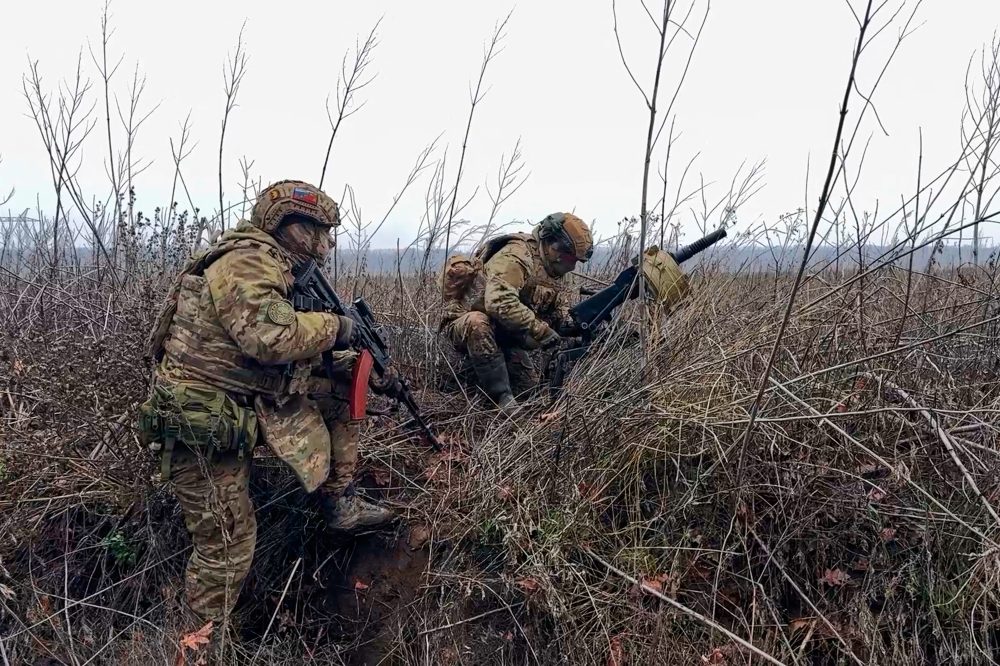
Moscow’s military announced Wednesday that its forces have seized complete control of Ukraine’s Luhansk region, though Ukrainian officials are disputing this assertion as President Volodymyr Zelenskyy prepares for discussions with American diplomatic representatives working to broker an end to the conflict.
The Russian Defense Ministry declared that “Units of the Group of Forces West have completed the liberation of the Luhansk People’s Republic.”
Ukrainian Joint Forces spokesperson Viktor Trehubov contradicted Moscow’s announcement, stating no territorial changes had occurred in the area.
“Unfortunately, we only hold small patches there (in Luhansk), but those positions have been held by 3rd brigade for a long time,” Trehubov explained during a phone conversation with The Associated Press.
Moscow’s battlefield declarations have previously contained inaccuracies. The Kremlin-appointed Luhansk administrator declared complete territorial control last June.
Ukrainian leadership has previously stated that Russia fabricates military progress reports to convince American negotiators that Moscow’s victory is certain.
American diplomatic initiatives over the past year aimed at ending the conflict, now entering its fifth year, have failed to resolve fundamental disagreements, while Washington’s attention has shifted toward the Iran war.
Zelenskyy announced he would conduct a video conference Wednesday with President Donald Trump’s representatives Steve Witkoff and Jared Kushner to explore additional three-party negotiations.
Moscow unlawfully claimed four Ukrainian territories — Luhansk, Donetsk, Kherson and Zaporizhzhia — in September 2022, though it has never maintained complete territorial dominance over these areas.
Russian President Vladimir Putin stated last October that Ukrainian military units still occupied 0.13% of Luhansk. Putin has insisted that Ukrainian forces must evacuate all four territories as a fundamental peace agreement requirement. Ukraine has refused this demand.
Zelenskyy stated Wednesday that frontline fighting remains intense during Russia’s spring military campaign, while asserting that Ukrainian defenders are maintaining their positions.
“The situation on the frontline is currently quite tense — the Russian army is trying to step up its assault activity,” he posted on X.
Independent confirmation of battlefield reports from either nation remains impossible.
The Institute for the Study of War indicated that Ukrainian military strategies are likely hampering advancement efforts by Russia’s larger military force.
The Washington-based research organization also reported Tuesday evening that Ukrainian forces have achieved “their most significant gains on the battlefield” in recent months since penetrating Russia’s Kursk region in August 2024 and conducting a 2023 counteroffensive.
Russia’s military campaign has devastated Ukrainian civilian populations, with United Nations figures showing over 15,000 deaths during the conflict.
A Russian unmanned aircraft attack claimed four lives Wednesday in Ukraine’s central Cherkasy region, according to regional governor Ihor Taburets. The assault targeted an open area in Zolotonosha, approximately 150 kilometers (90 miles) southeast of the capital.
Russian unmanned aircraft also struck locations in western Ukraine near the Polish border early Wednesday, including an industrial complex in Lutsk, roughly 400 kilometers (250 miles) west of Kyiv.
Mayor Ihor Polishchuk reported damage to a postal sorting facility and food distribution center, while falling drone wreckage ignited a residential structure. Emergency responders found no casualties.
Ukraine’s air defense forces reported destroying 298 drones — primarily Iranian-designed Shahed models and less expensive variations — during overnight assaults launched from multiple western Russian locations and Crimea, while 20 drones struck 11 locations across the country.
Ukraine has created advanced unmanned aircraft technology to counter Russian bombardments and is proposing assistance to Gulf nations in blocking Iranian drone assaults.
Zelenskyy announced Wednesday on X that Ukraine maintains “substantive cooperation” with Saudi Arabia, the United Arab Emirates and Qatar during the Middle East crisis.
Officials are conducting discussions with Jordan and maintaining communication with Bahrain, Kuwait, and Iraq, he added.
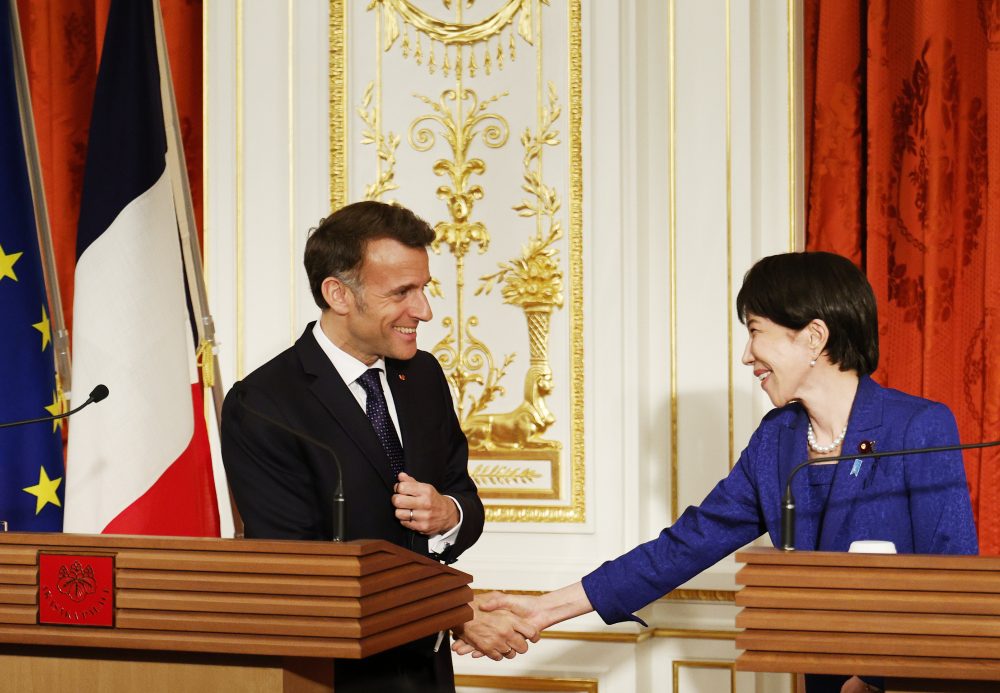
TOKYO — During his diplomatic mission to Japan on Wednesday, French President Emmanuel Macron urged for an end to hostilities in the Middle East while meeting with Japanese Prime Minister Sanae Takaichi.
Following their discussions, Macron emphasized their shared commitment to global legal frameworks and democratic principles, stating: “This is why … we both advocate for a return to peace, a ceasefire, calm, and free passage through the Strait of Hormuz.”
Prime Minister Takaichi confirmed both nations support rapid conflict de-escalation and ensuring security for the crucial shipping lane along with steady commercial flow.
“With the international environment increasingly severe, I believe it is especially meaningful for the Japanese and French leaders to deepen our friendship and cooperation,” Takaichi remarked during their joint press briefing at Tokyo’s Akasaka Palace.
The diplomatic partners announced expanded collaboration across multiple sectors including defense initiatives, rare earth mineral projects, nuclear technology, space exploration, and additional strategic areas.
Both nations have strengthened their Indo-Pacific security partnership in recent years, as France maintains military personnel, citizens, and assets throughout the region while working with democratic allies concerned about China’s expanding regional influence.
On Tuesday, Japanese Defense Minister Shinjiro Koizumi and French Defense Minister Catherine Vautrin formalized a defense cooperation framework emphasizing joint military exercises and enhanced Indo-Pacific coordination.
Additionally, trade officials from both countries finalized an agreement for collaborative rare earth mineral development.
China dominates global rare earth production, essential for manufacturing high-performance magnets used in defense systems and electric vehicle technology.
The leaders announced joint efforts in advanced reactor development and nuclear fuel recycling programs, areas where Japan has faced technical challenges.
Macron’s Tokyo visit occurred as U.S. President Donald Trump declared that nations dependent on the Strait of Hormuz should bear responsibility for keeping it operational, specifically mentioning “That’s not for us. That’ll be for France” and “whoever’s using the strait.”
Trump has expressed frustration with European support levels regarding the U.S.-Israeli conflict, criticizing France as “very unhelpful.”
Macron avoided addressing Trump’s remarks during the press conference, which did not include a question-and-answer session with reporters.
Thursday’s schedule includes visits to a space debris removal technology company, demonstrating bilateral space cooperation, followed by Macron’s audience with Emperor Naruhito and a palace luncheon before departing for South Korea.
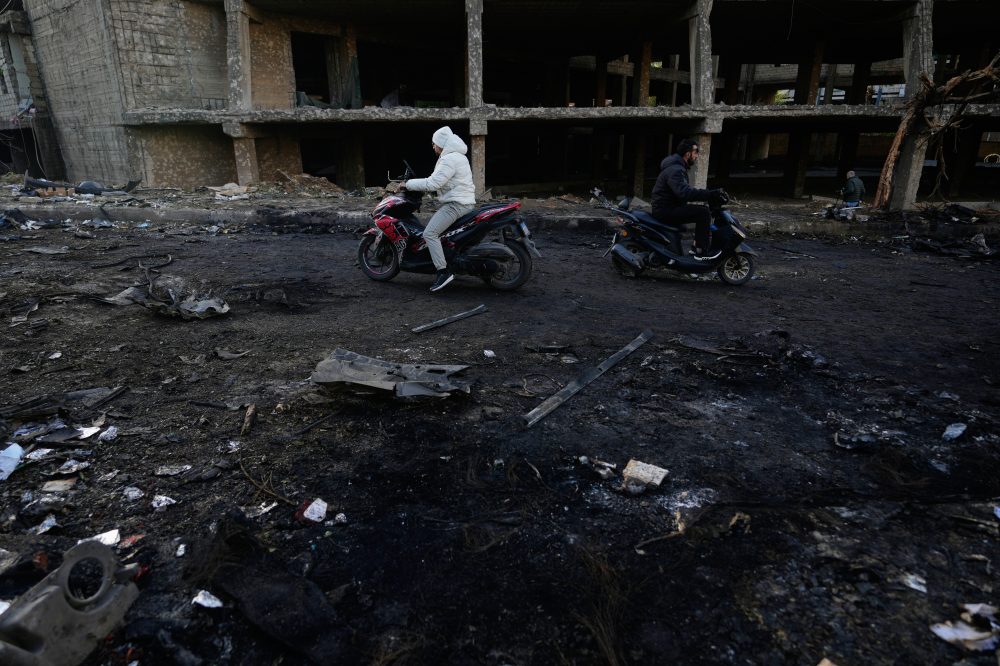
Israeli naval forces have eliminated a high-ranking Hezbollah leader in what military officials describe as the most devastating strike against the militant organization since renewed hostilities began in early March.
Military spokesman Avichay Adraee announced Wednesday that Israeli navy units successfully targeted and killed Haj Youssef Ismail Hashem, who oversaw Hezbollah’s southern operations. The Iran-backed group later acknowledged his death, describing him as a “beacon of the Islamic Resistance.”
The elimination represents the most severe loss for Hezbollah since the death of chief of staff Haytham Ali Tabtabai in November 2025. Hashem had assumed his leadership role after Ali Karaki was killed alongside former Hezbollah leader Hassan Nasrallah during an Israeli operation in September 2024.
“He is a tier-one commander and this is the harshest blow we have been subject to since the assassination of Tabtabai,” a senior Hezbollah official told Reuters.
Tabtabai had been named chief of staff after Hezbollah’s 2024 conflict with Israel ended. His death occurred near Beirut during Israeli operations that continued even after a ceasefire agreement had been reached.
That temporary halt in fighting didn’t last long. Israeli forces maintained their targeting of Hezbollah leadership and operatives throughout Lebanon during the ceasefire period. Combat resumed in early March when Hezbollah fired rockets into Israel, triggering Israeli retaliation that escalated into full-scale warfare.
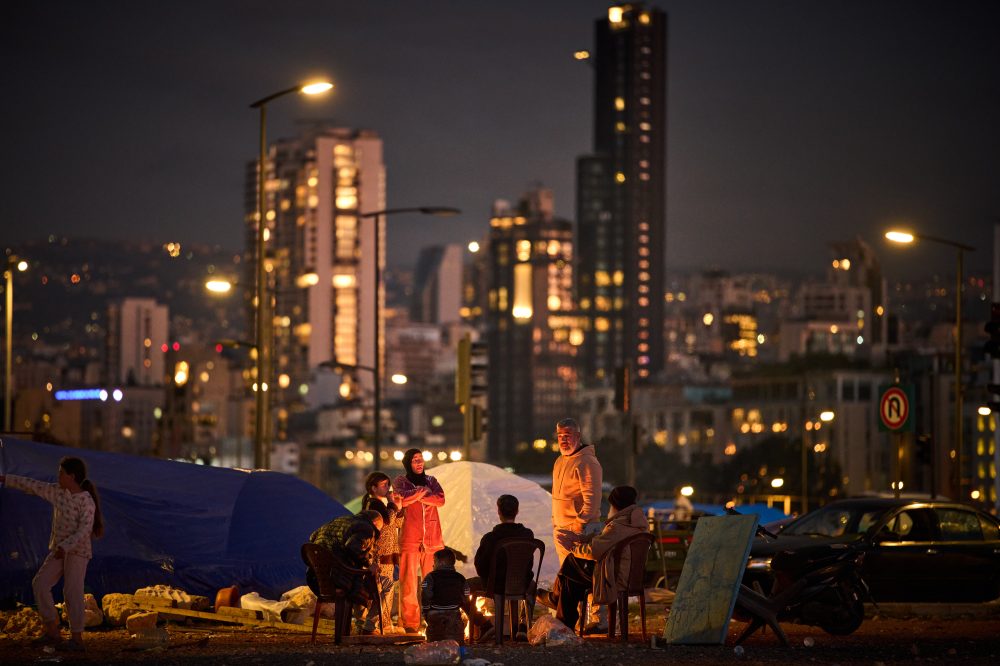
The renewed conflict has forced over 1.2 million Lebanese civilians from their homes, while Lebanese officials report more than 1,260 deaths from Israeli strikes. Two sources with knowledge of Hezbollah’s internal records say the group has lost over 400 fighters since March 2nd. Israeli military reports indicate ten of their soldiers have died in southern Lebanon operations during the same timeframe.
Lebanese authorities confirm that Wednesday’s strike on Hashem resulted in seven deaths and 26 injuries total.
According to the Hezbollah official, Hashem was conducting a meeting with other senior commanders when the fatal strike occurred. “A team was monitoring the sky for drones or war (planes) and the strike came from warships, and that had not been accounted for,” the source explained. “A group of second-tier and third-tier commanders and some escorts were killed alongside him.”
Talal Atrissi, who teaches sociology at Lebanese University and maintains close ties to Hezbollah, believes the commander’s death won’t significantly impact the group’s military operations. “It is of course a loss for Hezbollah and the resistance, but of course as we have seen, they have a number two and a number three that they can replace him with,” Atrissi stated.
Bulgaria’s interim Prime Minister Andrey Gyurov declared that the nation’s upcoming elections will represent some of the most transparent voting in recent memory, following his administration’s campaign against corruption and electoral fraud.
Gyurov, who assumed leadership in February after the prior government stepped down amid public demonstrations last year, believes the April 19 elections could restore citizens’ faith in democratic institutions.
Law enforcement has detained numerous individuals in recent weeks connected to suspected vote-buying schemes as Gyurov works to address Bulgaria’s long-standing election integrity issues. The nation ranks among Europe’s most corruption-plagued countries, and officials report finding suspects with money and voter lists.
“We think that this will be one of the fairest elections that we have seen in recent years,” Gyurov stated during his recent trip to Kyiv, noting that corruption reports to authorities have increased dramatically as citizens witness government action against wrongdoing.
While previous Bulgarian elections saw poor participation due to voter cynicism, Gyurov anticipates significantly higher turnout this time.
“I think this will have a multiplier effect on the confidence that people have in the institutions of the country,” he added.
The December resignation of the former government followed sustained public demonstrations against economic policies and perceived inaction on corruption. This snap election marks the eighth time Bulgarians will vote in just five years, reflecting the EU and NATO member’s deep political instability.
With polling suggesting no party will secure a majority, Gyurov – formerly a deputy governor at Bulgaria’s central bank – called on political leaders to form stable governing coalitions.
Current surveys show the Progressive Bulgaria center-left alliance, led by former President Rumen Radev, ahead with approximately 30% support. Radev left the presidency in January to pursue the election.
He has committed to fighting corruption in a nation where prosecutors claim hundreds of millions in European Union funding has been illegally diverted to business leaders and government officials through rigged contracts.
A new report from the Civil Liberties Union for Europe, a Berlin-based rights organization, identified Bulgaria among five European nations weakening legal institutions.
Gyurov acknowledged corruption’s widespread impact on society, including press freedom, and emphasized the need for judicial system reforms by future administrations.
“There should not be people, oligarchs, that are able to influence the political processes in the country,” he stated, specifically naming businessman and politician Delyan Peevski, who faces U.S. and UK sanctions for corruption.
“What we have shown as a government in recent weeks and months is that…the influence of such people can be fully isolated from the public political process,” Gyurov concluded.
Iranian officials are pushing back against recent comments made by President Donald Trump, with the country’s foreign ministry calling his assertions about Iran seeking a ceasefire completely without merit.
A spokesperson for Iran’s foreign ministry dismissed Trump’s claims as unfounded and untrue, according to a Wednesday report from Iranian state television.
The denial comes as tensions continue between the United States and Iran over various regional and international issues.
President Donald Trump declared Wednesday that Iran’s leader is seeking a ceasefire before he delivers remarks to the American public. The president shared this assertion through his Truth Social platform, though Iranian officials have not yet responded to his statement.
Military reinforcements continue flowing into the Middle East as the USS George H.W. Bush aircraft carrier prepares for deployment to the region alongside three destroyer vessels, according to two U.S. officials. This carrier strike group includes over 6,000 naval personnel. Additionally, thousands of troops from the 82nd Airborne Division have started arriving in the Middle East, two other U.S. officials confirmed.
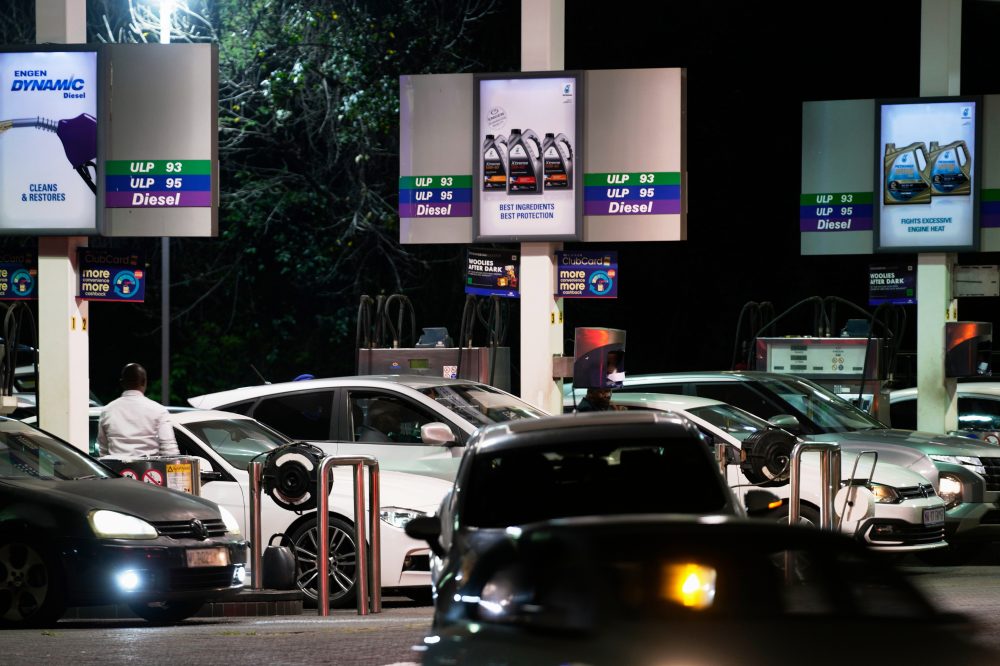
The ongoing conflict with Iran has driven American gasoline prices above $4 per gallon on Tuesday, marking the first time since 2022 that the national average reached this threshold. Energy experts predict these elevated fuel costs will impact grocery prices as businesses face increased transportation and packaging expenses.
Food Aid Shipments Face Major Delays Due to Conflict
Beyond petroleum products trapped in the Persian Gulf, critical food assistance bound for Sudan and Afghanistan is experiencing significant shipping delays, according to the World Food Program, the United Nations’ emergency hunger relief agency.
“Think of special nutritious foods required for Sudan,” WFP supply chain director Corinne Fleischer explained to the Associated Press. “Mothers and children are malnourished and they need this vitamin and mineral enriched food. We produced this in Pakistan as one of the countries. That is now stuck there.”
Fleischer noted that shipping companies must now navigate around Africa’s Cape of Good Hope to reach West African destinations due to attack risks in the southern Red Sea area.
Presidential Claims Met With Iranian Defiance
In his Wednesday Truth Social post, Trump stated Iran’s president desires a ceasefire ahead of his planned address to Americans, though he incorrectly referred to “Iran’s New Regime President” despite no change in Iranian leadership.
Trump specified that any ceasefire would require the Strait of Hormuz to remain “open, free, clear.”
“Until then, we are blasting Iran into oblivion or, as they say, back to the Stone Ages!!!” he posted.
Iranian officials have not issued an immediate response to Trump’s social media claims. However, Iran’s Foreign Minister Abbas Araghchi demonstrated Tehran’s resolve during a Tuesday evening Al Jazeera interview.
“You cannot speak to the people of Iran in the language of threats and deadlines,” Araghchi stated. “We do not set any deadline for defending ourselves.”
Pakistan Secures Oil Deliveries Through Strategic Arrangement
Oil shipments reached Pakistan’s Karachi port Wednesday after successfully passing through the Strait of Hormuz, while another vessel arrived via an alternative shipping route, confirmed Karachi Port Trust spokesperson Shariq Farooqi.
Farooqi indicated that additional Pakistani-flagged vessels are scheduled to deliver essential oil supplies from Gulf nations this month.
This development follows Pakistan’s foreign minister announcing that Iran had approved passage for 20 more Pakistani-flagged ships through the Strait of Hormuz, calling it a “constructive gesture” designed to reduce regional tensions.
Pakistan continues working to mediate between the United States and Iran, urging both nations to resume diplomatic negotiations. The Strait of Hormuz serves as a vital pathway for global oil transportation.
LONDON — Tensions between the United States and its European allies have reached a breaking point as President Donald Trump threatens to withdraw America from NATO over disagreements regarding the ongoing conflict with Iran.
In an interview with Britain’s Telegraph newspaper published Wednesday, Trump delivered some of his harshest criticism yet of the military alliance, suggesting he’s seriously considering ending U.S. membership entirely.
When asked if he would reconsider American participation in NATO following the conclusion of the Iran conflict, Trump responded: “Oh yes, I would say (it’s) beyond reconsideration.”
The remarks represent Trump’s most definitive statements to date about potentially abandoning the alliance, indicating the relationship may have deteriorated beyond repair.
NATO officials did not immediately respond to requests for comment from The Associated Press.
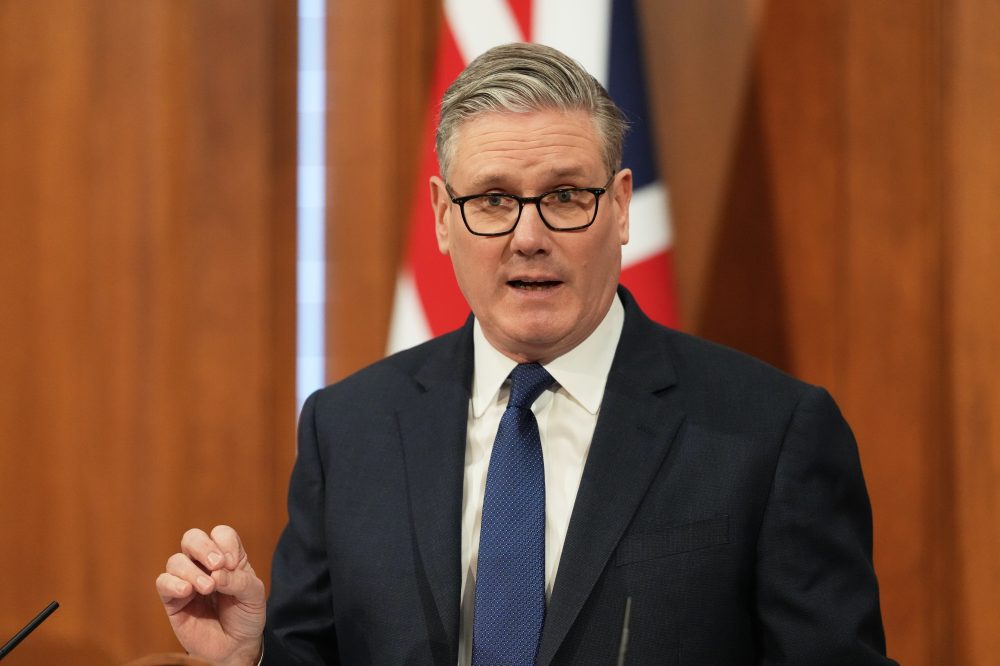
British Prime Minister Keir Starmer defended the organization when questioned about Trump’s comments, stating Britain remained “fully committed to NATO” and describing it as “the single most effective military alliance the world has ever seen.”
European governments have faced significant domestic opposition to the Middle East conflict, which has driven oil prices higher after Iran effectively blocked the Strait of Hormuz, a critical shipping lane that handles roughly 20 percent of global oil transport.
“Whatever the pressure on me and others, whatever the noise, I am going to act in the British national interest in all the decisions I make,” Starmer declared Wednesday.
The current crisis has reignited longstanding disagreements within the alliance. With energy costs climbing, Trump has urgently sought naval support from partner nations to address the Strait of Hormuz situation. He has labeled NATO members “cowards” and employed increasingly harsh rhetoric to pressure allies into assisting with a conflict they never agreed to join.
Trump has consistently criticized European partners for years, demanding they take greater responsibility for regional security and increase defense spending. He maintains that America has contributed more to the partnership than it has received in return.
An American withdrawal would effectively destroy NATO, which has operated successfully under U.S. leadership for decades.
Through his Truth Social platform Tuesday, Trump attacked nations “like the United Kingdom, which refused to get involved in the decapitation of Iran,” and recommended they purchase American oil or travel to the Strait of Hormuz independently to “just take it.”
Trump also expects allies to assist with reconstruction efforts following a war they played no role in initiating.
Britain is developing proposals that might help address Trump’s concerns.
Foreign Secretary Yvette Cooper will lead a virtual conference Thursday with 35 nations committed to providing shipping security in the Strait following the conflict’s end. Starmer indicated military officials are also preparing post-war security arrangements for the waterway.
NATO’s foundation rests on Article 5 of its charter, which guarantees that an attack against any member nation will trigger a collective response from all others.
As the Iranian conflict has expanded, missiles and drones have targeted NATO member Turkey and a British military installation in Cyprus, raising questions about what circumstances might activate the alliance’s mutual defense provisions.
The organization has not intervened or indicated any intention to do so. Secretary-General Mark Rutte, who has expressed support for Trump and America’s alliance role, has concentrated primarily on Russia’s invasion of Ukraine, which shares borders with four NATO countries.
NATO functions through unanimous agreement. All 32 member states must consent before the organization can act, making political considerations crucial. Even Article 5 activation requires allied consensus, meaning Turkey or Britain cannot invoke it independently.
Regarding the Middle East situation, Trump has expressed frustration with universal rejection from European allies, other partners, and even rival China to help secure the Strait of Hormuz.
Many European Union and NATO leadership figures have remained angry since the conflict began February 28, as they received no advance warning, breaking established diplomatic protocol.
Trump defended the lack of consultation by citing the need for tactical surprise, though he had publicly discussed potential military action and visibly increased American forces in the region before the war commenced.
European officials have demanded an end to hostilities and urged both the United States and Iran to resume nuclear program negotiations, as America and Israel view Tehran’s atomic ambitions as threatening.
European opposition to Trump’s Iranian campaign has evolved from criticism into concrete action.
Spain, Europe’s most outspoken critic, announced Monday it had closed its airspace to American aircraft participating in the Iran operation.
France reached an agreement last month allowing U.S. Air Force use of a southern French base after receiving “full guarantee” from Washington that only non-combat aircraft would utilize the facility.
Additional countries have voiced disapproval: German President Frank-Walter Steinmeier recently characterized the Iranian aggression as a “dangerous mistake” violating international law.
American-European relations had already deteriorated in recent months following Trump’s proposal that Greenland, a semi-autonomous Danish territory, should join the United States, prompting widespread EU support for Denmark.
French anti-terrorism officials announced Wednesday that four individuals face charges of “terrorist criminal conspiracy” following the prevention of a bombing attack targeting a Bank of America facility in Paris, with investigators believing the plot has connections to Iran.
Authorities apprehended one suspect near the financial institution during the early morning hours on Saturday, discovering an improvised explosive device consisting of a gasoline container attached to a high-powered firework. Forensic investigators determined the weapon held 650 grams of explosive material – approximately 23 ounces – representing an extraordinarily large amount not seen before in France. Experts concluded the device had the potential to create a massive fireball and trigger extensive fires.
The prosecution has requested that all four defendants, which includes three juveniles, remain in custody while awaiting trial as officials have launched a formal criminal investigation into the incident, part of a pattern of similar activities throughout Europe.
A promotional video distributed on social media platforms on March 23, shortly before the intended assault, explicitly identified the American bank’s Paris location as a target. The video was linked to an Iranian-affiliated organization called Harakat Ashab al-Yamin al-Islamia, meaning the Islamic Movement of the Companions of the Right.
The conspiracy was exposed early Saturday when surveillance officers monitoring the bank noticed two people approaching the building’s entrance. Law enforcement detained a 17-year-old at the location.
Subsequently, investigators arrested two additional 16-year-old suspects and one adult with a previous drug trafficking conviction. A fifth individual was released without facing charges.
According to the prosecutor’s office, the three minors, who have clean criminal backgrounds, have rejected any accusations of terrorist involvement.
Officials opened the formal investigation on preliminary charges including terrorist criminal conspiracy, manufacturing, possessing and transporting explosive materials, and attempted destruction as part of an organized criminal group connected to terrorist activities.
Prosecutors revealed that examination of security camera recordings, the suspects’ electronic devices and cellular phone records, along with their police statements, demonstrated that the adult recruited the three teenagers the previous week to position and detonate the device at the designated location and record the incident in return for payments between 500 to 1,000 euros (approximately $530 to $1,160).
The Harakat Ashab al-Yamin al-Islamia organization has taken credit for additional operations throughout Europe, including incidents in Belgium and the Netherlands, as well as an attack in London last week where four ambulances owned by a Jewish charitable organization were destroyed by fire.
London counterterrorism investigators announced three more arrests Wednesday related to the ambulance incident. Two men had previously been released on bail after being detained in that investigation.
The prosecutor’s office stated that the prevented Paris attack appears “likely linked” to the organization “although this has not yet been formally established at this stage of the proceedings.”
Interior Minister Laurent Nuñez stated this week that Iran’s intelligence agencies regularly employ “proxies,” meaning a network of subcontractors, to conduct operations overseas that target American interests, Jewish communities and Iranian opposition activists.
French security forces have increased protection around important individuals and locations since the U.S. and Israel began their conflict with Iran on February 28, including personal security for certain Iranian opposition members.
PHNOM PENH, Cambodia — Authorities in Cambodia have transferred a businessman to China where he faces allegations connected to an enormous international online fraud scheme worth billions of dollars, according to government officials.
Li Xiong, who holds dual Chinese-Cambodian citizenship and previously served as Huione Group’s chairman, was taken into custody in Cambodia by a combined law enforcement team after a months-long investigation, the Interior Ministry confirmed.
Chinese authorities suspect Li of participating in multiple criminal activities including running illegal gambling operations, conducting fraudulent schemes, operating unlawful businesses and hiding criminal proceeds, China’s official Xinhua news agency reported, referencing Beijing’s Ministry of Public Security.
Investigators believe Li held a senior position within a crime organization headed by Chen Zhi, who established the Prince Holding Group business and banking empire and stands accused of orchestrating the online fraud network. Chen was transferred to China in January. Both individuals lost their Cambodian citizenship before being sent to China. The companies they legitimately owned have rejected any allegations of criminal activity.
Federal prosecutors in the United States filed conspiracy charges against Chen in October, claiming he directed an international fraud network while using his other business ventures to clean the illegal profits. According to the U.S. criminal charges, Chen boasted of earning $30 million daily from the fraudulent schemes.
Online criminal activity has expanded rapidly across Southeast Asia in recent years, especially in Cambodia and Myanmar, with illegal operations generating enormous profits from victims across the globe, according to United Nations specialists and other experts.
The criminal enterprise is deeply connected to human trafficking, with foreign workers forced to operate romance and digital currency scams, frequently after being lured with fake employment opportunities and then compelled to work under slave-like conditions.
The U.S. Treasury Department has accused Huione Group of cleaning billions of dollars for international criminal groups, including North Korean computer hackers and Southeast Asian fraud networks. Treasury officials labeled Huione a “primary money-laundering concern,” limiting any ties to the U.S. financial system and barring American financial institutions from conducting business with the company.
Cambodia’s National Bank canceled the license of the organization’s digital payment division, Huione Pay, because of violations and its participation in an “illicit online marketplace” that enabled billions in criminal transactions.
Cambodian legislators approved new laws on Monday targeting online fraud operations with penalties up to life imprisonment after the government promised to eliminate such operations by April’s end.
Diplomatic relations between America and its NATO partners have reached a new low after President Donald Trump announced he is contemplating withdrawing the United States from the decades-old military alliance.
The president’s consideration stems from European nations’ refusal to deploy naval vessels to help clear the Strait of Hormuz, according to statements he made to Britain’s Daily Telegraph on Wednesday.
NATO was established in 1949 as a defense partnership against Soviet threats and has served as the foundation of Western security policy for over seven decades. The alliance encompasses European nations, the United States, and Canada.
Trump’s comments followed Defense Secretary Pete Hegseth’s refusal to confirm America’s dedication to NATO’s mutual defense principle during a Tuesday briefing.
“I was never swayed by NATO. I always knew they were a paper tiger, and (Russian President Vladimir) Putin knows that too, by the way,” Trump stated in the Telegraph interview, adding that he had moved “beyond reconsideration” of U.S. membership.
Defense analysts have consistently cautioned that questioning American commitment to NATO obligations could embolden Russia to challenge member nations’ willingness to uphold Article 5, which declares that an assault on any member constitutes an attack on the entire alliance.
France became one of the first European NATO countries to respond, though officials avoided directly addressing Trump’s withdrawal threat.
“Let me recall what NATO is,” said French junior army minister Alice Rufo. “It is a military alliance concerned with the security of territories in the Euro-Atlantic area. It is not intended to carry out an operation in the Strait of Hormuz, which is not in accordance with international law.”
Polish Defence Minister Wladyslaw Kosiniak-Kamysz urged restraint in response to the escalating situation.
“I hope that amid the emotions surrounding the President of the United States today, a moment of calm will come,” he stated. “And why? Because there is no NATO without the United States, and it is in our interest that this calm comes. But there is also no American power without NATO.”
NATO leadership has not yet issued an official response to Trump’s remarks.
A German government representative reaffirmed Berlin’s commitment to the alliance when questioned about Trump’s statements. “This isn’t the first time he’s done this, and since it’s a recurring phenomenon, you can probably judge the consequences for yourself,” the spokesperson said during a routine press briefing.
British Prime Minister Keir Starmer indicated he would prioritize his nation’s interests regardless of political “noise.” He suggested that instability from the Iran conflict should prompt Britain to strengthen economic and defense partnerships with Europe.
The ongoing Iran conflict has intensified existing friction between America and Europe that has grown since Trump began his second presidential term. Disputes have emerged over trade policies and Trump’s territorial claims regarding Greenland, which belongs to NATO member Denmark.
European leaders are also monitoring Trump’s diplomatic efforts to end the Russia-Ukraine conflict, with some senior officials worried that any agreement might favor Moscow’s interests.
When questioned Tuesday about America’s continued support for NATO’s collective defense principle, Hegseth responded: “As far as NATO is concerned, that’s a decision that will be left to the president. But I’ll just say a lot has been laid bare.”
“You don’t have much of an alliance if you have countries that are not willing to stand with you when you need them,” Hegseth added.
According to Reuters sources, France has blocked Israel from using its airspace for resupply missions carrying American weapons in the Iran conflict, while Italy has denied landing rights for U.S. military aircraft at Sicily’s Sigonella base before Middle East deployments. Both nations maintain these represent standard policies with no recent changes.
Spain has publicly announced a complete closure of its airspace to American aircraft participating in Iran operations.
Trump has also repeatedly criticized Britain for declining to join the United States in launching military action.
WASHINGTON – President Donald Trump announced Wednesday through his Truth Social platform that Iran’s leadership has reached out to the United States requesting a ceasefire.
In his social media statement, Trump outlined conditions for any potential consideration of the request. “We will consider when Hormuz Strait is open, free, and clear. Until then, we are blasting Iran into oblivion,” Trump wrote in his Wednesday post.
The announcement marks a significant development in ongoing tensions between the two nations, with Trump linking any ceasefire discussions to the strategic waterway that serves as a crucial shipping route for global oil transport.
Sweden’s Prime Minister Ulf Kristersson announced Wednesday that his center-right political party would welcome a controversial group with far-right origins into a future government coalition if this year’s elections deliver a right-wing majority, marking a significant shift toward bringing the party into mainstream politics.
Kristersson has led Sweden since 2022 through a three-party center-right alliance that depends on the Sweden Democrats for parliamentary support while keeping them out of cabinet positions.
The Sweden Democrats originated in the 1980s, established by individuals with backgrounds in extremist right-wing organizations, including neo-Nazi groups. Under Jimmie Åkesson’s leadership since 2005, the party moderated its messaging and removed openly racist members from its ranks.
Åkesson transformed the organization from a fringe movement into Sweden’s second-largest political force, capturing 20.5% of votes in the 2022 election and surpassing all other right-wing parties, including Kristersson’s conservative Moderate Party. While the party has shifted toward mainstream politics, it maintains strict anti-immigration positions, reflecting similar populist right-wing movements across Europe.
With parliamentary elections scheduled for September 13, center-right parties have begun reconsidering their previous hesitation to include the Sweden Democrats in direct governance. The Liberals, a smaller government coalition member, indicated last month they would accept the party in a future cabinet.
During a joint press conference Wednesday, Kristersson referenced that “courageous decision” as transformative, with Swedish news agency TT reporting the announcement that his Moderates would permit Sweden Democrats participation in future government leadership.
Under the arrangement, Kristersson would remain the prime ministerial candidate even if the Sweden Democrats emerge as the dominant party, while the Sweden Democrats would assume major responsibilities for immigration policy.
“In the most difficult situation since World War II, Sweden cannot do without an effective government,” Kristersson stated, seemingly referencing current crises including conflicts in Iran and Russia’s war against Ukraine.
BERLIN — Wildlife rescue teams in Germany announced Wednesday they no longer believe a humpback whale can be saved after it became trapped for a third time in the shallow waters of the Baltic Sea.
The massive marine mammal swam into shallow waters near Poel island, close to Wismar port, on Tuesday where it became stuck once again. The whale had previously been freed from even more shallow waters at Timmendorfer Strand resort town about 50 kilometers away last week, requiring heavy machinery to assist in the rescue, but quickly found itself in danger again.
Recent rescue attempts focused on allowing the exhausted whale to rest quietly, hoping it would regain enough energy to swim to deeper waters on its own. Teams occasionally used boats to try encouraging the animal to move toward open water.
Burkard Baschek, who serves as scientific director at Ocean Museum Germany and coordinates the rescue mission, reported the whale showed highly irregular breathing patterns Wednesday. Aerial drone footage revealed minimal movement in the sediment beneath the 39-49 foot long creature, and it showed little response when rescue teams approached.
Though the whale displayed slightly more movement after rescuers departed, Baschek explained during a televised press briefing that this activity provided no reason for optimism. “We firmly believe that the animal will die there,” he stated.
Unlike two earlier incidents where the whale managed to free itself after resting, the animal now appears significantly weaker and must contend with dropping water levels. “The prospects that it will free itself are very small,” Baschek explained. “The approach of maximum rest and respect for nature demands at some point that we let it go.”
The whale’s struggle has captured widespread attention throughout Germany, with news outlets providing regular updates on its condition. The animal earned the nickname “Timmy” during its journey along the coast.
Marine biologists first observed the whale in the area on March 3. Experts remain uncertain why the creature entered the Baltic Sea, which lies far from its natural environment and provides unsuitable conditions. Some specialists theorize the whale may have become disoriented while following a school of herring or during seasonal migration.
Even under the best circumstances, the animal faced enormous challenges reaching the North Sea, requiring a journey of several hundred kilometers, before continuing to the Atlantic Ocean.
LONDON — London police have taken three more individuals into custody Wednesday in connection with the deliberate burning of ambulances belonging to a Jewish charitable organization, authorities announced.
The Metropolitan Police Service reported that officers arrested two British citizens, aged 20 and 19, along with a 17-year-old who holds both British and Pakistani citizenship. All three face charges related to conspiracy to commit arson with intent to endanger life.
The incident is being examined by counterterrorism investigators as a hate crime targeting the Jewish community. Officials are looking into claims that a group potentially connected to Iran took responsibility for the attack, though they have not classified it as terrorism.
Earlier arrests in the case involved two men, ages 45 and 47, who have since been released on bail while facing similar arson charges.
The fire occurred on March 23 in Golders Green, an area of north London home to many Jewish residents. Four emergency vehicles belonging to Hatzola Northwest, a volunteer medical service serving the local community, were completely destroyed. The blaze caused oxygen tanks inside the ambulances to detonate, shattering windows in a nearby residential building.
Cmdr. Helen Flanagan, who leads counterterror operations, addressed the investigation’s progress. “Since this appalling attack last week, we have been working continuously to investigate and identify those responsible,” Flanagan said. “We know concern among the Jewish community remains high, but I hope these arrests show that we are doing everything we can to bring those responsible to justice.”
ISLAMABAD — Diplomatic efforts to end more than a month of intense fighting between Pakistan and Afghanistan have resumed, with both nations sending delegations to China for mediation talks, according to two Pakistani officials who spoke Wednesday.
The negotiations are taking place in Urumqi, located in northern China, the officials confirmed to The Associated Press on condition of anonymity since they lacked authorization to speak with media.
Chinese authorities have not issued any statements regarding the talks. Pakistan’s Foreign Affairs Ministry has neither confirmed nor denied these latest diplomatic developments.
An Afghan source revealed that Afghanistan’s five-person delegation traveling to Urumqi includes two representatives from their foreign ministry, along with single officials from defense, interior, and intelligence agencies. This official also requested anonymity due to lack of authorization to share details publicly.
Pakistani sources described the Urumqi negotiations as potentially bringing relief to millions across both Pakistan and Afghanistan, noting the discussions could continue for several days and represent just the initial phase of a broader peace initiative.
These renewed diplomatic efforts follow both nations’ acceptance of China’s mediation proposal, with talks scheduled to continue Thursday aimed at ending hostilities. Beijing has been pushing for renewed dialogue since late February, with Chinese special envoy Yue Xiaoyong meeting Pakistani counterpart Mohammad Sadiq last month following a visit to Kabul.
The core dispute centers on Pakistan’s allegations that Afghanistan provides sanctuary for militants conducting attacks on Pakistani soil, particularly the Pakistani Taliban. This group operates separately from but maintains ties with Afghanistan’s Taliban, which assumed control of Afghanistan in 2021 after U.S.-led forces withdrew. Afghan officials reject these accusations.
Asif Durrani, Pakistan’s former special envoy for Afghanistan, expressed optimism about the potential talks if officially verified.
“If both sides reach an agreement as a result of reported talks, the critical issue will be a verification mechanism to ensure Afghan territory is not used for attacks against Pakistan,” Durrani said.
The conflict that began in late February represents the most serious fighting between these neighboring countries in decades. Pakistan declared itself in “open war” with Afghanistan shortly after hostilities commenced. The violence has included repeated border skirmishes and airstrikes within Afghanistan, including several targeting the capital Kabul.
Afghanistan reported last month that a Pakistani airstrike struck a drug rehabilitation facility in Kabul, resulting in over 400 deaths. This casualty count remains unverified independently. Pakistan has challenged this claim and denied civilian targeting, maintaining they hit a weapons storage facility.
Pakistani Information Minister Attaullah Tarar explained to the AP during that period that Pakistan had “only targeted terrorist infrastructure” in Kabul, not medical facilities, stating: “We have just gone after the Afghan Taliban regime, their military setups, their terrorist infrastructure, and all the setups which are supporting or promoting terrorists.”
While both sides implemented a temporary ceasefire during the Muslim celebration of Eid al-Fitr, fighting later resumed at reduced intensity compared to the heavy combat witnessed in February and March, when Pakistan’s air force repeatedly struck what it identified as Pakistani Taliban positions and Afghan military installations. Afghanistan maintains these airstrikes hit civilian neighborhoods.
These nations share a history of strained relations, but the recent violence has concerned the international community, especially given the continued presence of militant organizations like al-Qaida and the Islamic State group seeking to rebuild in the region.
The current fighting also destroyed a Qatar-brokered ceasefire established in October, which had stopped earlier clashes that killed dozens of civilians, security forces, and militants. Both sides provide conflicting casualty numbers. Recent negotiations in Saudi Arabia failed to reach conclusions.
Earlier peace discussions held in Istanbul during November did not achieve a permanent settlement.
Officials have not disclosed who is representing Pakistan and Afghanistan in these latest Chinese-hosted negotiations.
BAGHDAD — A freelance American journalist abducted in Baghdad had received multiple warnings about threats against her life, including one as recent as the evening before her kidnapping, according to U.S. and Iraqi authorities.
Shelly Renee Kittleson, who has reported extensively from Iraq and Syria for several years, was taken from a Baghdad street on Tuesday and has not been located, officials confirmed Wednesday.
According to Hussein Alawi, an adviser to Prime Minister Mohammed Shia al-Sudani, Kittleson had attempted to enter Iraq from Syria three weeks prior to her abduction but was initially denied entry at the al-Qaim border crossing on March 9. She lacked the required press credentials and officials cited security risks due to “the escalation of the war and aerial projectiles over Iraqi airspace as a result of the war on Iran.”
Kittleson subsequently obtained a 60-day transit visa designed for foreign nationals stranded in neighboring countries who need to pass through Iraq to return home, Alawi explained. She arrived in Baghdad several days before the kidnapping and had been staying at a hotel in the capital.
“The incident is being followed closely by Iraqi security and intelligence agencies under the supervision of” al-Sudani, Alawi stated. He confirmed that investigators have detained one individual suspected of participating in the kidnapping scheme and are currently questioning him.
Iraqi security forces pursued the abductors immediately after the incident, successfully apprehending one suspect when his vehicle crashed during the chase. However, other kidnappers managed to flee with Kittleson in a separate vehicle.
An Iraqi intelligence source, speaking anonymously due to lack of authorization to discuss the case publicly, said authorities believe Kittleson is being held somewhere within Baghdad and are working to determine her exact location and secure her freedom. The official noted that investigators “have information about the abducting party” but refused to provide additional specifics.
American officials have accused Kataib Hezbollah, an Iranian-backed Iraqi militia group with a history of foreign kidnappings, of orchestrating the abduction. The organization has not taken responsibility for the incident, and Iraqi government representatives have not publicly identified the perpetrators’ affiliations.
The intelligence official revealed that before Kittleson’s kidnapping, Iraqi authorities had alerted U.S. officials about a particular threat against her from Iranian-affiliated militia groups.
Dylan Johnson, U.S. assistant secretary of state for public affairs, posted on X Tuesday that the “State Department previously fulfilled our duty to warn this individual of threats against them.”
A U.S. government source, also requesting anonymity, confirmed that “She was contacted multiple times with warnings of the threats against her,” with the most recent alert coming the night before her abduction.
Video footage acquired by The Associated Press appears to capture the kidnapping as it occurred on a Baghdad street. The surveillance recording shows two individuals approaching someone standing at a street corner and directing that person into the rear of a vehicle. The footage reveals what appears to be a brief struggle before the car door closes and the vehicle departs with the men inside.
Iranian-supported militia groups operating in Iraq have consistently targeted U.S. installations throughout the country since the start of the U.S.-Israeli conflict with Iran.
BERLIN (AP) — Economic analysts significantly lowered Germany’s growth projections for the next two years on Wednesday as European nations rush to implement emergency policies to shield citizens from rising prices caused by the ongoing Iran conflict.
Five leading economic research institutes now expect Germany’s gross domestic product to grow just 0.6% in 2026 — less than half their September prediction of 1.3% — and 0.9% in 2027, a reduction from their earlier 1.4% estimate. These revised projections fall short of the government’s own estimates from two months ago of 1% and 1.3% growth for those respective years.
The conflict in Iran has emerged as a significant barrier to economic expansion throughout Europe. Inflation in the 21-country eurozone accelerated to 2.5% in March, up from 1.9% the prior month, driven primarily by energy costs that surged 4.9% as warfare and the closure of the Strait of Hormuz pushed fuel expenses higher.
“This energy price shock is hitting a German economy in which a recovery set in last year after a several-year downturn,” said Timo Wollmershäuser, an expert with the Munich-based Ifo institute, one of those that issued the joint forecast for Europe’s biggest economy.
The shock “will dampen this recovery in Germany, but should not completely stop it,” he continued, citing upcoming government expenditures on defense and infrastructure as stabilizing elements. Germany’s economic output expanded 0.2% last year following two consecutive years of contraction.
Wollmershäuser cautioned against “short-term activism,” specifically opposing government-mandated fuel price reductions, which he claimed would be “costly, benefit many people who don’t need relief, distort the signal of scarcity from the price and keep up demand for crude oil.”
Germany’s approach has remained measured compared to other nations. New legislation that became effective Wednesday restricts gas stations to raising prices only once daily at noon, attempting to eliminate volatile price swings at fuel pumps. The law also expands the national antitrust authority’s ability to combat excessive fuel pricing.
Several other European countries have adopted more aggressive measures, despite the European Union’s executive commission encouraging member states to “consider the promotion of demand saving measures” and “refrain from taking measures that may increase fuel consumption.”
Poland introduced emergency measures this week establishing daily maximum fuel prices set by government officials, threatening penalties up to 1 million zlotys ($268,000) for businesses exceeding the price ceiling. The country also temporarily reduced fuel taxes.
Austria implemented fuel tax reductions Wednesday to lower pump prices. Sweden’s government has proposed decreasing gasoline and diesel taxes beginning May 1. The country also acted on another front Wednesday, cutting the value-added tax on food and beverages purchased in stores or for takeout from restaurants from 12% to 6%.
Latvia and Lithuania are planning to reduce diesel duties. Norway, though not an EU member, enacted temporary fuel tax cuts Wednesday following a parliamentary mandate last week.
Nevertheless, the EU’s energy commissioner cautioned Tuesday that oil and gas prices will not normalize quickly even if Middle Eastern peace is achieved soon.
Wollmershäuser explained the German forecast assumes the Strait of Hormuz will reopen during the second quarter and energy prices will decline starting in summer, “but without reaching the prewar level.”
This disruption occurs as Chancellor Friedrich Merz’s governing coalition considers comprehensive reforms to address Germany’s structural challenges — including elevated production costs, insufficient private investment, and mounting healthcare and pension expenses — while stimulating long-term economic growth.
Economy Minister Katherina Reiche stated the latest growth forecast delivers a clear message: “The conflict in the Middle East is increasing the pressure on German politicians to tackle structural reforms forcefully.”
BELGRADE, Serbia (AP) — Media professionals brought traffic to a standstill Wednesday in front of Serbian President Aleksandar Vucic’s office, demanding action against what they describe as escalating violence and intimidation targeting news reporters throughout the Balkan nation.
The demonstration in Serbia’s capital came after reporters covering Sunday’s municipal elections encountered violent confrontations during chaotic scenes reported in at least three of the 10 communities holding votes.
“We want to show solidarity with colleagues who were attacked on that day (Sunday) … but also to stress the ever harder and more dangerous position of journalists in the field,” Serbia’s Independent Journalists’ Association said in a statement.
The organization emphasized that “attacks on journalists are not isolated incidents, they are a systematic blow to the public’s right to know.”
Global election monitors documented violence and voting irregularities during Sunday’s balloting.
The municipal contests served as a political barometer for Vucic after more than 12 months of youth-driven demonstrations that have weakened his firm control over the country. His conservative populist Serbian Progressive Party secured victories across all 10 municipalities.
Approximately 20 media workers faced assault on Sunday, while the Serbian press organization reports documenting over 100 such incidents throughout this year.
Government officials have pledged investigations, though prosecution of perpetrators has been virtually nonexistent.
While Serbia maintains official European Union membership candidate status, Vucic faces criticism for restricting democratic institutions, particularly press liberties, while strengthening relationships with Russia and China.
Political friction intensified Tuesday when law enforcement officers conducted searches at Belgrade University headquarters, claiming to investigate a student fatality. University officials accused authorities of exploiting the case to apply pressure following student-organized demonstrations that began in November 2024 after a deadly train station incident in northern Serbia.
Thousands assembled Tuesday evening outside the university administration building in central Belgrade to condemn the police operation. Brief confrontations occurred when officers forced demonstrators back from the structure.
The student movement emerged following a railway platform roof collapse in Novi Sad that claimed 16 lives. The protests represent the most significant threat to Vucic’s authority in over ten years.
DENPASAR, Indonesia — Indonesian authorities have sent a high-ranking Scottish criminal figure to Spain following his capture at a Bali airport, where he faces serious charges including murder and large-scale narcotics operations.
Steven Lyons, 45, was apprehended Saturday upon landing at Ngurah Rai International Airport from Singapore, according to Indonesian immigration and law enforcement officials. The arrest came after immigration systems detected an Interpol Red Notice requesting his detention for extradition to Spain.
Officials characterize Lyons as a top-level member of a global criminal organization who had been evading capture for several months. The Red Notice system allows Interpol member nations to request worldwide arrests of suspects sought for extradition.
Bugie Kurniawan from Bali’s immigration department confirmed that Lyons, who faces charges in both Spain and Britain, departed for Spain via Doha on Wednesday evening. Spanish Civil Guard officers took custody of the suspect at the Bali airport before his transport to Madrid.
“The alleged leader of the Lyons crime family, based in Scotland, was handed over to Spain’s Civil Guard officers at Ngurah Rai airport ahead of his extradition to Madrid, where prosecutors are seeking to try him on charges in connection with organized crime, drug trafficking and money laundering,” Kurniawan said.
Spanish authorities have pursued Lyons for approximately two years following a 2024 homicide. Bali Police Chief Daniel Adityajaya indicated the arrest resulted from collaborative efforts between Spanish and Scottish investigators.
Untung Widiyatmoko, who oversees Indonesia’s Interpol operations, detailed the scope of Lyons’ alleged criminal enterprise. The suspect reportedly commanded a multinational trafficking network headquartered in Cumbernauld, Scotland, managing drug smuggling corridors between Spain and the United Kingdom.
The criminal organization allegedly employed fake businesses to launder money across Europe and the Middle East, with operations spanning Spain, Scotland, England, Dubai, Qatar, Bahrain and Turkey, according to Widiyatmoko.
Law enforcement conducted coordinated strikes one day before Lyons’ Bali arrest, with Scottish and Spanish police executing raids supported by Europol, the European Union’s law enforcement coordination center. Multiple arrests occurred during these operations, while additional suspects were detained in Turkey, the Netherlands and the United Arab Emirates.
Scottish news outlets report that Lyons escaped a 2006 Glasgow shooting that claimed his cousin’s life, subsequently relocating to Spain before establishing residence in Dubai. In May of last year, his brother and an accomplice were fatally shot at a coastal bar in Fuengirola, southern Spain, in what authorities suspect was a gang-related attack.
Improving poll numbers have given Brazilian opposition Senator Flavio Bolsonaro additional time to select his economic advisory team as he prepares for the October presidential election, according to campaign sources.
The 44-year-old senator has dedicated significant time to international travel, meeting with conservative allies abroad and visiting his father, former President Jair Bolsonaro, who is currently under house arrest in Brasilia following his conviction related to a failed coup attempt.
Despite this approach, polling data shows Flavio Bolsonaro now running neck-and-neck with 80-year-old President Luiz Inacio Lula da Silva in projected head-to-head scenarios. The current leftist president faces challenges from economic slowdown and a banking corruption scandal affecting the capital.
Campaign insiders indicate that Bolsonaro’s growing support, built on a platform similar to his father’s policies, provides additional flexibility for assembling his advisory team and developing policy proposals to build a successful electoral coalition.
The economic team announcement, originally scheduled for May, may face further postponement if current polling trends persist, according to one source. Initially, campaign officials had suggested the economic platform could be unveiled as early as February when Bolsonaro was working to gain business community confidence in December.
This strategy differs markedly from the elder Bolsonaro’s 2018 campaign approach, when the then-congressman selected Paulo Guedes as his chief economic adviser nearly twelve months before the election to calm investor concerns.
The senator’s cautious strategy will encounter new challenges as additional right-wing candidates enter the race. The Social Democratic Party recently nominated Goias state Governor Ronaldo Caiado, while Minas Gerais Governor Romeu Zema is campaigning for the Novo Party.
Carlos Melo, a political scientist at Insper in Sao Paulo, commented on the increasingly competitive conservative landscape: “It will be a turbulent campaign.” However, he noted that the gubernatorial candidates face significant obstacles in overtaking Bolsonaro’s position.
Caiado made a direct pitch to Jair Bolsonaro supporters on Monday, promising comprehensive pardons for individuals convicted in connection with the 2023 coup attempt, including the former president who remains under home confinement due to medical conditions.
In an interview with Reuters, Zema emphasized his intention to use his administrative experience in Minas Gerais and his clean reputation in a nation troubled by corruption scandals to provide conservative voters with an alternative option, while acknowledging the challenging path ahead in early polling.
“All political campaigns are somewhat unpredictable,” Zema stated.
Flavio Bolsonaro, who served as a Rio de Janeiro state legislator before winning his Senate position during his father’s 2018 presidential campaign, has provided limited specifics regarding his economic agenda. He has committed to reducing taxes and government expenditures while enhancing conditions for business operations.
Campaign advisers believe his polling momentum will attract greater interest from prospective cabinet appointees.
Sources within Bolsonaro’s circle revealed that the campaign has established preliminary discussions with potential advisers, including former Treasury Secretary Mansueto Almeida, currently with BTG Pactual, and former central bank governor Roberto Campos Neto, now serving as vice chairman at digital banking company Nubank.
Both individuals served in the previous Bolsonaro administration from 2019 to 2022.
Speaking at a Boston conference over the weekend, Almeida confirmed he continues working in the private sector and has not received approaches from any presidential candidates. Campos Neto did not provide a response to requests for comment.
As Brazil, Colombia, and Peru prepare for upcoming presidential contests, fresh polling data from the Pew Research Center reveals that religious considerations will play a significant role in voters’ decisions across all three countries. The survey shows that roughly two-thirds of citizens in each nation desire a leader who will actively support and protect their faith-based values.
The research also uncovered strong support for incorporating religious principles into governance, with approximately the same percentage of respondents expressing the view that biblical teachings should serve as the foundation for their country’s legal framework. Perhaps most surprisingly, the poll found that even among those who don’t consider themselves religious, about half shared this perspective on the role scripture should play in lawmaking.
SEOUL, South Korea — Indonesian President Prabowo Subianto and South Korean President Lee Jae Myung met Wednesday to strengthen their nations’ strategic alliance, focusing on military technology partnerships and energy security amid global disruptions from Middle Eastern conflicts, according to Seoul’s presidential office.
During their summit meeting in the South Korean capital, both leaders issued a joint declaration promising enhanced economic relationships and continued collaboration on military equipment projects, which include supersonic fighter aircraft, training planes, and anti-tank weapon systems.
The nations committed to strengthening their partnership in securing supply lines for energy resources, essential minerals, and other critical materials. Lee highlighted Indonesia’s importance as a key supplier of natural gas and coal during a time when Middle Eastern warfare has created worldwide energy market instability.
Data from Lee’s administration shows that South Korean businesses are set to import approximately 820,000 tons of liquefied natural gas from Indonesia throughout this year, providing sufficient fuel to operate the nation’s entire fleet of gas-powered electrical generation facilities for roughly 12 days.
Both presidents praised their countries’ joint work on South Korea’s domestically developed KF-21 supersonic fighter aircraft, an initiative that began in 2015 with Indonesian participation as a key partner. The initial aircraft from this program were unveiled last week, and reports indicate South Korea intends to sell 16 of these advanced fighters to Indonesia.
A major system breakdown left passengers trapped inside autonomous vehicles amid busy traffic in Wuhan, China, marking the first reported mass failure of robotaxis in the country, authorities confirmed Wednesday.
Law enforcement officials in Wuhan revealed that over 100 driverless vehicles simultaneously shut down due to what they described as a “system malfunction,” though they provided no additional details about the cause. Authorities confirmed no one was hurt during the incident.
A rider described to Chinese news outlets how their autonomous vehicle suddenly stopped after making a turn. The vehicle’s display showed a message stating: “Driving system malfunction. Staff are expected to arrive in 5 minutes.” When no help arrived, the passenger activated an emergency button and received assurance that assistance was coming. The individual managed to exit independently since the doors remained functional.
This represents China’s first documented widespread robotaxi shutdown. A similar incident occurred in San Francisco last December when numerous Waymo autonomous vehicles stopped operating due to an electrical outage.
The affected vehicles belong to Baidu, a prominent Chinese technology and artificial intelligence corporation that has been growing its Apollo Go autonomous taxi operations into European and Middle Eastern markets.
Company representatives from Baidu were not available for immediate response.
Law enforcement indicated that reports of stalled taxis began arriving around 9 p.m., with news sources confirming that several individuals required rescue assistance.
Some riders managed to leave their vehicles independently, while others remained inside because their taxis had stopped in center lanes of ring roads with traffic flowing around them, according to media accounts. These elevated roadways lack traffic signals and are designed for rapid urban transportation.
Baidu maintains several hundred robotaxis in Wuhan, where the company conducted early testing programs.
The corporation, which manages over 1,000 autonomous taxis primarily throughout China, launched operations in Abu Dhabi and Dubai this year and is collaborating with international partners to begin services in Britain and Switzerland.
LONDON – British Prime Minister Keir Starmer announced Wednesday that worldwide tensions stemming from the Iran conflict necessitate stronger ties between the United Kingdom and European Union regarding security and economic matters. His remarks followed sharp criticism from President Donald Trump directed at European allies.
During a news conference designed to address public worries about escalating energy costs, Starmer declared the war’s effects will “define us for a generation” and might mirror the energy price spikes experienced during the 1970s.
“We want to be more ambitious, closer economic cooperation, closer security cooperation, a partnership that recognises our shared values, our shared interest and our shared future” with the EU, Starmer explained to members of the press.
On Tuesday, Trump once again condemned European nations that declined to participate in his military campaign against Iran, specifically naming Britain and France as transatlantic relationships have worsened due to the conflict that has pushed energy prices higher.
The president cautioned Britain and other nations to “start learning how to fight for yourself” because the United States “won’t be there to help you anymore.”
The current Labour administration in Britain has pursued improved relations with the EU, and Starmer stated it was evident that the Brexit agreement negotiated by the former Conservative government in 2020 had inflicted “deep damage to our economy.”
French anti-terrorism authorities announced Wednesday they believe a pro-Iranian organization orchestrated a thwarted bombing attempt targeting Bank of America’s Paris headquarters last week.
The suspected group, known as HAYI (Harakat Ashab al-Yamin al-Islamiyya or Movement of the Companions of the Right Hand of Islam), had released a threatening video on social media on March 23 that specifically mentioned the bank’s location in Paris’s 8th district, according to prosecutors.
“In light of the aforementioned video targeting this U.S. bank and the modus operandi observed in similar operations across several European countries, this attack… appears to be linked to the HAYI group, although this has not yet been formally established at this stage of the proceedings,” prosecutors stated.
The explosive device discovered on March 28 consisted of a five-liter gasoline container attached to a large pyrotechnic charge containing 650 grams of active material and a fuse. French police determined it was the most potent pyrotechnic device of its type ever found in the country.
Authorities have formally charged four individuals in the case – one adult and three minors – while releasing a fifth person due to insufficient evidence. Through surveillance video, phone records, and interrogations, investigators determined the adult recruited the three teenagers between March 26-27, paying them 500 to 1,000 euros to place the device, ignite it, and record the incident.
While all four suspects have denied terrorist intentions, the minors admitted they understood their target was not a residential structure, prosecutors said.
The Iranian embassy in France has not responded to requests for comment and previously declined to address remarks by French Interior Minister Laurent Nunez regarding Iran’s potential involvement.
French anti-terrorism investigators are coordinating with officials in Belgium, Germany, and the Netherlands regarding what they describe as HAYI-connected attacks throughout Europe in March. Their current focus centers on identifying the masterminds behind the operation.
A deadly aircraft accident in the Crimean Peninsula has claimed 29 lives after a Russian military transport plane went down Tuesday evening, according to reports from Moscow defense officials.
The An-26 transport aircraft was conducting routine operations over the peninsula when military officials lost communication with the flight at approximately 6 p.m. Tuesday. Russia took control of Crimea from Ukraine through annexation in 2014.
Emergency responders found the Soviet-era turboprop aircraft had collided with a cliff face, according to sources who spoke with Russian state media outlets Tass and RIA Novosti.
Initial reports from Russia’s Investigative Committee indicate 30 people were aboard the flight – seven crew members and 23 passengers. Official statements suggest one person may have survived the crash, though details remain unclear.
Authorities have initiated a criminal investigation focusing on potential flight regulation violations, with search operations continuing in the mountainous, wooded terrain of the Bakhchisarai district.
Defense Ministry sources told the Interfax news agency that investigators believe a mechanical failure likely caused the accident, ruling out any external interference with the aircraft.
This incident adds to a growing list of Russian military aviation accidents that have occurred since Moscow’s military engagement in Ukraine began.
Recent crashes include an An-22 transport plane that went down in Russia’s Ivanovo region last December, killing seven crew members. Other incidents this year involved a MiG-31 fighter jet crash in the Lipetsk region in October and a Tu-22M3 bomber that crashed in Siberia’s Irkutsk region in April.
In late 2022, a Su-34 bomber crashed into residential buildings in the Russian coastal city of Yeysk, igniting a large fire that killed 15 people.
BEIRUT — A deadly overnight military strike by Israeli forces targeted a structure in Beirut’s Jnah district, located just south of Lebanon’s capital center. The attack resulted in multiple vehicle fires while emergency responders worked frantically to locate survivors.
Lebanon’s Health Ministry reported that the unannounced assault claimed the lives of at least five individuals and left 21 others injured. Emergency crews and firefighters were observed by Associated Press photographers working to extract casualties while battling the resulting blaze.
The Jnah district serves as both a residential community and bustling commercial hub within the Lebanese capital. Israeli military officials confirmed they carried out the nighttime operations, stating the strikes were aimed at targeting Hezbollah militant group operatives.
SANTIAGO, Chile — Chile has sworn in a new president who openly displays his religious faith, adding to a wave of conservative leadership sweeping across Latin America.
José Antonio Kast, who assumed the presidency on March 11, practices Catholicism and participates in the Schoenstatt movement, an international Catholic group centered on devotion to the Virgin Mary. The 60-year-old former legislator and father of nine has previously taken strong stances against emergency contraceptive sales in 2009, while also voicing opposition to same-sex marriage and abortion during his 2021 campaign.
“We are inviting you on a journey to recover values for a proper and healthy life,” Kast declared to supporters on election night in December. “It requires everyone’s commitment.”
Advocates for reproductive and LGBTQ+ rights express concern about Kast’s presidency. While immediate policy shifts may not occur, they fear progress on their issues will face new obstacles.
Kast secured 58% of voter support after promising tough action on crime and pledging to remove undocumented immigrants. His rise mirrors a regional pattern where conservative figures like El Salvador’s Nayib Bukele and Argentina’s Javier Milei have gained power focusing on security and economic changes.
The new Chilean leader’s viewpoints share similarities with those of U.S. President Donald Trump, whose administration celebrated Kast’s electoral success.
Chile has experienced declining Catholic membership over the past twenty years, reflecting broader trends throughout Latin America. A 2024 Latinobarómetro survey found regional Catholic identification dropped from 80% in 1995 to 54% in 2024.
Within Chile specifically, 45% of citizens consider themselves Catholic, while 37% claim no religious affiliation and approximately 12% identify as Protestant.
Luis Bahamondes, who studies religion at the University of Chile, notes the Catholic Church ranked among the nation’s most respected institutions during the 1990s. However, social changes and sexual abuse controversies damaged that standing. “It became one of the most questioned institutions and one of the least trusted,” Bahamondes explained.
Despite this decline, conservative attitudes remain visible in Chilean society, he observed.
Chile became the final Latin American nation to permit divorce in 2004, Bahamondes noted. Recently, resistance to school-based sex education has emerged.
Religious instruction remains voluntary in Chile’s public and private schools rather than mandatory.
“There are still concepts that resonate strongly in Chilean society — such as family and marriage — which carry a strong religious weight,” Bahamondes stated. “There is often talk of a crisis of Catholicism, but what is in crisis is the institution, not the belief itself.”
Both Kast and his wife participate in Schoenstatt, a Catholic movement dedicated to the Virgin Mary that began in Germany in 1914 during World War I’s early days.
The movement reached Chile in 1947, establishing its first shrine in the port city of Valparaíso before spreading to Santiago, Temuco and Concepción. Today it claims roughly 10,000 members and operates more than 20 shrines nationwide.
Rev. Gonzalo Illanes, who leads the movement in Chile, describes Schoenstatt’s three foundations: personal development, integrating faith with everyday life, and emphasizing the Virgin Mary’s importance.
Illanes confirmed Kast’s longtime membership in the community, which encourages members to improve the world. “Schoenstatt, like the Catholic Church, is not a political movement but a space for formation, faith and transcendence,” he said.
Similar to Kast’s position, Schoenstatt supports protecting life from conception until natural death. However, Illanes emphasized the group welcomes dialogue. “The challenge is how to move forward,” he said. “Not to stop talking.”
“He’s a president who gives me a lot of confidence,” said Jorge Herrera, a Schoenstatt Catholic who supported Kast. “I share his values.”
Herrera explained that Schoenstatt teaches each person possesses a distinct life purpose. “God did not bring us here by chance,” he said. “We exist because there is something special we are called to do.”
While Kast’s anti-abortion stance matches Herrera’s beliefs, the voter was also drawn to the candidate’s political agenda before the 2025 elections.
“He’s someone very capable and has a plan,” Herrera said. “I think Chile needed a plan.”
This confidence in Kast extends beyond South American borders.
In Mexico, where a leftist government has decriminalized abortion in over half the states, some desire similar leadership.
“It gives me confidence that he publicly acknowledges being inspired by a Christian faith,” said Rodrigo Iván Cortés, who heads a conservative advocacy organization. “That does not mean that he wants to impose his faith on others, but simply that he professes it.”
Kast narrowly missed Chile’s presidency in 2021, losing to Gabriel Boric. His opposition to abortion and same-sex marriage, plus his history of defending Augusto Pinochet’s dictatorship, faced widespread Chilean rejection then.
While Kast focused his 2025 campaign on security issues, experts believe his views could still affect reproductive and LGBTQ+ rights.
“There are valid reasons for concern, though not necessarily for an immediate rollback as seen with Milei,” said Cristian González Cabrera, an LGBTQ-rights researcher at Human Rights Watch, referencing the Argentine president’s prohibition of gender-affirming care for minors under 18.
“The risk with Kast could be more gradual: slowing progress, weakening public policies and legitimizing anti-LGBTQ+ rhetoric,” González Cabrera added.
Concerning women’s reproductive rights, Catalina Calderón from the Women’s Equality Center highlighted that Kast implemented a 3% budget reduction as one of his initial presidential actions.
“Across the region, we have seen that when leaders from the political wing to which Kast belongs take office, one of the first things that happens is a rollback of individual rights and women’s rights,” she stated.
Calderón referenced Argentina, where Milei eliminated funding for comprehensive sex education programs designed to prevent teenage pregnancy.
She also noted the significance of Chile’s new Women and Health ministers being openly religious individuals.
“That belongs to the private sphere,” she said. “But how that vision could shape the administration is something that should be watched closely.”
BEIRUT (AP) — Lebanon’s capital is overwhelmed with displaced families.
One month has passed since Hezbollah launched rockets toward Israel following the U.S.-Israeli strike on Iran, prompting Israeli bombing campaigns across Lebanon and ground forces entering the country. More than one million residents from southern and eastern regions, along with Beirut’s southern neighborhoods, have abandoned their homes. Most have packed into increasingly crowded areas of the capital where airstrikes have not yet reached.
The Israeli military operations and evacuation directives — unmatched in their reach across what aid organizations say covers 15% of the small nation — have cleared out southern Lebanese communities and forced nearly all residents from southern neighborhoods into central Beirut, altering the city’s population distribution and geography while raising concerns about what lies ahead.
A massive temporary settlement of tents has emerged in the grass between a yacht club and entertainment district, completely changing Beirut’s waterfront appearance. Some families have taken shelter in empty shops, religious buildings, and the vehicles they escaped in, creating long lines of parked cars on major roads. Others have gathered in makeshift shelters constructed from tarps along the curved seaside boulevard or near Horsh Beirut, a pine tree park on the edge of the southern district called Dahiyeh.
“It’s horrid because we feel this tension, that we’re not wanted here,” said Noor Hussein, who arrived at the waterfront in early March after escaping the initial Israeli airstrikes on Dahiyeh. She observed wealthy joggers weaving through a maze of tents and dirty mattresses while her three youngest children climbed onto her lap.
“We don’t want to be here,” she said. “We have nothing here and nowhere to go.”
Previous displacement waves have disrupted this city before, including during the 2024 Israel-Hezbollah conflict. However, experts find it difficult to remember such a massive population movement — roughly 20% of the nation’s residents, according to official reports — affecting Beirut this rapidly.
“The scale and intensity of this is just unprecedented,” said Dalal Harb, the spokesperson for the United Nations refugee agency in Lebanon. She explained that the one million displaced figure is likely conservative since it doesn’t include those who haven’t officially registered as displaced through the Ministry of Social Affairs.
Officials have transformed hundreds of public schools into temporary housing and erected tents for displaced families under the bleachers of the city’s primary sports stadium. Charitable organizations have rushed to assist, with one group converting an abandoned slaughterhouse damaged in Beirut’s 2020 port explosion into sleeping quarters for nearly 1,000 displaced individuals.
However, urban planning experts point to an extraordinary number of people living on the streets compared to previous conflicts, making it challenging for regular residents to ignore the war and its devastating effects.
“This is relatively new, that you have so many people spending time in these open spaces, who are very vulnerable, living in very precarious conditions,” said Mona Harb, a professor of urban studies at the American University of Beirut. “You have to confront this visually when you’re coming and going to work, to school … and there are strong, mixed feelings associated with this presence that’s unregulated.”
Displaced families report difficulty securing space at government-operated shelters in Beirut and prefer enduring outdoor conditions rather than traveling north to cities where better housing might exist but where they lack family or social connections.
“The further away we go, the more we’ll lose hope about finding our way back,” said Hawraa Balha, 42, explaining why her family of four was cramming into the small car they drove from the destroyed southern border village of Duhaira instead of sleeping in an available shelter further north. “We don’t want to move again.”
People from the Dahiyeh suburbs have mostly chosen to stay in Beirut. This allows them to occasionally return to collect possessions and verify whether their homes remain intact, though these visits require quick trips under bombardment threats. Hussein mentioned her children became so desperate for bathing facilities after almost a month without proper restrooms that they hurried home to clean up last week despite constant Israeli drone activity overhead.
The movement of hundreds of thousands of Shiites has heightened Lebanese concerns about the nation’s delicate religious balance. Since its devastating 15-year civil war ended, Lebanon has depended on a power-sharing system to balance the interests of Christians, Shiite Muslims and Sunni Muslims, the country’s three largest religious communities, which comprise roughly equal portions of the population.
“It’s generating anxieties in Beirut, where the bulk of the displacement is, that this may cause a significant transformation in the demographic balance within the country, or within certain spaces and cities,” said Maha Yahya, director of the Beirut-based Carnegie Middle East Center.
Each passing day brings more tents to the waterfront settlement. Children have begun developing skin irritations. Recent heavy rains flooded the grassy area and penetrated tents, creating trails of wet clothing and causing sore throats. A dispute erupted last week when volunteers came to distribute donated items.
“We’re not used to living like this — we had a house, we had normal lives,” said Lina Shamis, 51, warming herself beside a fire at the base of a billboard advertising luxury watches. She, her three adult daughters and their young children established their camp here after following Israeli evacuation orders for Dahiyeh in a rush, bringing almost no belongings.
“Now the kids are out of school and hungry, and our neighborhood is gone,” she said. “All I feel is despair.”
With Israeli forces advancing deeper into Lebanon and threatening to occupy Lebanese territory extending to the Litani, a river 20 miles (30 kilometers) north of the Israeli border, the circumstances for displaced people in Beirut “will be even worse than what we’re seeing now,” warned Harb, from the U.N. refugee agency.
“The needs will continue to increase,” she said. “It’s an imminent humanitarian catastrophe.”
A 36-year-old driver is scheduled for a court appearance Wednesday following a weekend collision that injured seven people walking along a busy street in Derby, England.
Authorities have charged Sandhu Ponnachan with six counts of causing grievous bodily harm with intent, one count of attempted grievous bodily harm, and one count of possession of a bladed article, according to Derbyshire Constabulary officials.
While counterterrorism specialists joined local law enforcement in examining the case, Derbyshire police emphasized this collaboration is standard procedure for such incidents and investigators are “keeping an open mind” regarding the circumstances.
The collision happened around 9:30 p.m. Saturday along Friar Gate, a bustling entertainment district in central Derby. The city, home to approximately 275,000 residents, sits northeast of Birmingham.
Seven individuals were transported to medical facilities following the incident – four men and three women between the ages of 36 and 52. Hospital officials have since released four of the injured victims, police confirmed.
VIENNA (AP) — Military and nuclear experts warn that any U.S. operation to forcibly secure Iran’s uranium reserves would present enormous challenges, involving radiation hazards, chemical dangers, and complex logistics requiring hundreds of specialized personnel.
President Donald Trump has cited various justifications for military action against Iran while maintaining that a key goal is preventing the nation from ever obtaining nuclear weapons. However, the extent of measures he would authorize to capture Iran’s nuclear materials remains uncertain.
Considering the dangers of deploying up to 1,000 specially trained military personnel into an active conflict zone to extract the stockpile, experts suggest a diplomatic agreement allowing Iran to voluntarily surrender the materials could be preferable.
According to the International Atomic Energy Agency, the United Nations nuclear monitoring organization, Iran possesses 440.9 kilograms (972 pounds) of uranium enriched to 60% purity — requiring only minor technical advancement to reach weapons-grade concentration of 90%.
IAEA Director General Rafael Grossi previously told The Associated Press that this stockpile could potentially produce up to 10 nuclear weapons if Iran chose to weaponize its nuclear program, though he emphasized this doesn’t indicate Iran currently possesses such weapons.
While Iran continues to maintain its nuclear program serves peaceful purposes, the IAEA and Western governments assert that Tehran operated an organized nuclear weapons development program until 2003.
IAEA inspectors have been unable to verify the location of the near-weapons-grade uranium since June 2025, following Israeli and American strikes that significantly damaged Iran’s air defenses, military command structure, and nuclear facilities. This inspection gap has created uncertainty about the precise whereabouts of the materials.
Grossi has indicated that the IAEA believes approximately 200 kilograms (about 440 pounds) of highly enriched uranium is housed in underground tunnels at Iran’s nuclear facility near Isfahan. This location was primarily used for manufacturing uranium gas that feeds into centrifuges for enrichment processing.
He has also stated that additional amounts are likely located at the Natanz nuclear installation, with smaller quantities possibly stored at the Fordo facility.
Whether additional stockpiles exist at other locations remains unknown.
During a House hearing on March 19, U.S. Director of National Intelligence Tulsi Gabbard stated that American intelligence agencies have “high confidence” in their knowledge of where Iran’s highly enriched uranium stockpiles are located.
Iran’s highly enriched uranium supply is contained in canisters weighing approximately 50 kilograms (110 pounds) when filled. The material exists as uranium hexafluoride gas. Expert estimates suggest between 26 and roughly 50 canisters exist, depending on how completely each cylinder is filled.
David Albright, a former nuclear weapons inspector in Iraq and founder of the nonprofit Institute for Science and International Security in Washington, described the canisters containing the highly enriched uranium as “pretty robust” and engineered for both storage and transportation.
However, he cautioned that “safety issues become paramount” if the canisters sustain damage — such as from air strikes — allowing moisture to penetrate.
Under such circumstances, fluorine would create a significant hazard, as this highly toxic chemical causes severe damage to skin, eyes, and lungs. Personnel attempting to enter the tunnels to recover the canisters “would have to wear hazmat suits,” Albright explained.
Maintaining proper distance between the various canisters would also be essential to prevent a self-sustaining critical nuclear reaction that would generate “a large amount of radiation,” he noted.
To prevent such a radiological incident, the canisters would need to be placed in specially designed containers that maintain separation during transportation, he said.
Albright indicated that the optimal approach for handling the uranium would involve removing it from Iran using specialized military aircraft and then “downblending” it — combining it with lower-enriched materials to reduce it to levels appropriate for civilian applications.
Processing the material within Iran through downblending would likely prove impractical, given that the necessary infrastructure may have been damaged during the conflict, he added.
Darya Dolzikova, senior research fellow at the Royal United Services Institute, shared this assessment.
Downblending the material within Iran is “probably not the most likely option just because it’s a very complicated and long process that requires specialized equipment,” she explained.
Christine E. Wormuth, who served as Army Secretary under former President Joe Biden, characterized securing Iran’s nuclear materials through ground forces as a “very complex and high risk military operation.”
This assessment stems from the material’s distribution across multiple locations and the reality that such an undertaking would “probably take casualties,” added Wormuth, who now serves as president and CEO of the Washington-based Nuclear Threat Initiative.
She estimated that operations at the Isfahan location alone would require no fewer than 1,000 military personnel.
Since tunnel entrances are likely buried beneath debris, helicopters would need to transport heavy machinery like excavators, and U.S. forces might need to construct a nearby airstrip to accommodate all necessary equipment and personnel, Wormuth explained.
She indicated that special operations forces, potentially including the 75th Ranger Regiment, would need to coordinate “in tandem” with nuclear specialists who would search underground for the canisters, with special forces likely establishing a defensive perimeter against potential attacks.
Wormuth identified the Nuclear Disablement Teams within the 20th Chemical, Biological, Radiological, Nuclear, Explosives Command as one possible unit for deployment in such an operation.
“The Iranians have thought this through, I’m sure, and are going to try to make it as difficult as possible to do this in an expeditious way,” she stated. “So I would imagine it will be a pretty painstaking effort to go underground, get oriented, try to discern … which ones are the real canisters, which ones may be decoys, to try to avoid booby traps.”
Scott Roecker, former director of the Office of Nuclear Material Removal at the National Nuclear Security Administration, a semiautonomous agency within the U.S. Department of Energy, suggested the optimal solution would be “to have an agreement with the (Iranian) government to remove all of that material.”
A comparable mission took place in 1994 when the United States, working with Kazakhstan’s government, covertly removed 600 kilograms (about 1,322 pounds) of weapons-grade uranium from the former Soviet republic in an operation called “Project Sapphire.” The material remained from the USSR’s nuclear program.
Roecker, now serving as vice president for the Nuclear Materials Security Program at the Nuclear Threat Initiative, explained that the Department of Energy’s Mobile Packaging Unit was developed based on the Kazakhstan experience. This unit has successfully removed nuclear materials from multiple countries, including Georgia in 1998 and Iraq in 2004, 2007, and 2008.
The unit comprises technical specialists and specialized equipment capable of deployment anywhere to safely extract nuclear materials, and Roecker believes it would be perfectly suited to remove the uranium under a negotiated agreement with Iran. However, Tehran maintains distrust toward Washington, which under Trump abandoned a nuclear agreement and has conducted attacks twice during high-level diplomatic talks.
Under a diplomatic solution, IAEA inspectors could also participate in the mission. “We are considering these options, of course,” IAEA’s Grossi stated on March 22 during CBS’s “Face the Nation” when questioned about such a possibility.
Iran has “a contractual obligation to allow inspectors in,” he noted. “Of course, there’s common sense. Nothing can happen while bombs are falling.”
BUDAPEST, April 1 – New polling data from Hungary shows the opposition Tisza party has strengthened its advantage over longtime Prime Minister Viktor Orban’s Fidesz party as the country approaches its April 12 parliamentary election, according to two independent surveys released Wednesday.
The results suggest Orban, a veteran nationalist leader, is confronting the most serious threat to his authority in 16 years of governance, though the final outcome remains unclear given the significant number of uncommitted voters.
According to research from the 21 Research Centre, Tisza – a centre-right opposition movement headed by former government official Peter Magyar – now commands 56% support among voters who have made their choice, representing an increase from 53% recorded in early March. Meanwhile, Fidesz saw its backing drop to 37% from 39% three weeks prior.
The survey found that 26% of those questioned had not decided which party to support.
The 21 Research Centre study, which polled 1,500 people between March 23 and 28, demonstrated Tisza’s lead had expanded to 19 percentage points from a 14-point margin in the previous survey. When including all respondents, the poll published by news website 24.hu indicated 40% support for Tisza compared to 28% for Fidesz.
A separate study released Tuesday by Zavecz Research confirmed the trend, showing Tisza had expanded its advantage to 13 points among committed voters, up from 12 points in February polling.
The Zavecz survey, conducted between March 24 and 28 with 1,000 participants, found 51% of decided voters favoring Tisza – a slight increase from 50% in February – while Fidesz maintained steady support at 38%.
Among all respondents in the Zavecz poll, Tisza received 39% backing while Fidesz earned 31%. Twenty percent of those surveyed remained undecided.
Magyar has outlined his party’s agenda, stating Tisza would combat corruption, secure billions of euros in frozen European Union funding to strengthen the economy, and ensure Hungary’s firm commitment to both the EU and NATO.
Although most recent polling indicates a Tisza advantage, Fidesz officials cite alternative surveys suggesting their party remains positioned for victory. Opposition figures argue these favorable polls primarily come from organizations with financial or personal connections to the governing party.
Both 21 Research Centre and Zavecz Research operate independently from political organizations and collected responses through telephone interviews and online surveys.
The polling data suggests the far-right Our Homeland party (Mi Hazank) may be the sole additional political group to surpass the 5% threshold necessary for parliamentary representation.
21 Research Centre calculated Our Homeland’s support at 5% among decided voters, while Zavecz placed it at 4%.
The chairwoman of Taiwan’s primary opposition party emphasized Wednesday that global tensions make it crucial to avoid a Taiwan crisis, as she prepares for a six-day visit to China beginning Tuesday.
Kuomintang (KMT) leader Cheng Li-wun will travel to China at Chinese President Xi Jinping’s invitation, focusing on what she calls efforts toward reconciliation.
Beijing considers Taiwan, which operates as a democracy, part of Chinese territory and has increased military and political pressure on President Lai Ching-te’s administration. Chinese officials label Lai a “separatist,” while he maintains that Taiwan’s citizens alone should determine their island’s destiny.
During her party’s weekly gathering in Taipei, Cheng emphasized that Taiwan’s residents don’t want their home to become a global conflict zone.
“What we are promoting is peace and reconciliation, including reconciliation between the ruling and opposition parties within Taiwan, and reconciliation and peace across the Taiwan Strait,” she said.
“No one wants to see the Taiwan Strait once again fall into a tense military crisis at a time when the international situation is already turbulent.”
Her visit occurs as Taiwan’s opposition-controlled legislature blocks a $40 billion defense spending package backed by the U.S. The KMT maintains it supports military funding but opposes what it calls “blank cheques.”
Taiwan’s Mainland Affairs Council, which handles China policy, stated this week that Beijing’s goal to “annex” the island won’t change simply because of political party interactions or individual meetings.
In Beijing Wednesday, Zhang Han from China’s Taiwan Affairs Office declined to provide additional details about Cheng’s planned stops in Beijing, Shanghai, and Jiangsu province.
Zhang described the visit as demonstrating both the Communist Party and KMT’s commitment to “seek peace.”
Following last month’s Middle East conflict outbreak, China has intensified efforts to convince Taiwan of the advantages of Beijing’s rule, highlighting energy security and proposing a “rapid transit link” connecting both sides.
“Peaceful reunification will create enormous opportunities for Taiwan’s economic and social development and bring tangible benefits to the broad masses of Taiwan compatriots — this is its greatest appeal,” Zhang stated during a press briefing.
Polling data consistently shows Taiwan residents have little interest in accepting Beijing’s authority through its “one country, two systems” framework.
Chinese leadership has never ruled out military action to bring Taiwan under its authority.
ANKARA, Turkey – A tragic maritime disaster claimed the lives of at least 18 migrants Wednesday when their vessel capsized in rough waters off Turkey’s western coastline, according to Turkish coastguard officials.
The inflatable vessel equipped with an outboard engine was spotted by authorities at 3 a.m. local time near the Bodrum district in Mugla province. Coastguard personnel issued multiple commands for the boat to halt, but the vessel attempted to evade capture, officials reported.
Deteriorating weather patterns and challenging sea conditions caused the craft to take on water before ultimately going under, coastguard representatives explained.
Emergency response teams immediately launched rescue operations, deploying one helicopter and three patrol vessels to the disaster site. So far, rescue crews have pulled 21 survivors from the waters, with search efforts ongoing.
Authorities have not disclosed the vessel’s point of origin or intended destination.
This stretch of the Aegean Sea serves as a major crossing point for countless migrants seeking passage from regions across North Africa and the Middle East into European territory. Turkey currently provides refuge to millions of displaced individuals fleeing conflicts in Syria, Iraq, and Afghanistan.
BUCHAREST – Defense representatives from Ukraine and Romania are advancing discussions this week about collaborative drone manufacturing through a newly established European Union funding program, according to Romania’s defense ministry.
The meetings in Bucharest bring together Ukrainian drone companies and Romanian military leadership to explore partnership opportunities under the EU’s rearmament funding initiative. Romania borders Ukraine along a 650-kilometer stretch and has experienced multiple incidents of drone incursions and debris falling on its soil since Russia began targeting Ukrainian ports along the Danube River.
Under the EU’s new SAFE rearmament program launching later this year, Romania has been allocated 16.6 billion euros ($19.2 billion). Defense Minister Radu Miruta announced plans to dedicate 200 million euros specifically toward joint drone manufacturing efforts.
“We are currently discussing how to form a team to deal exclusively with this project, with the contract signing deadline being the end of May,” Miruta stated following his Tuesday meeting with Ukraine’s Deputy Minister for Strategic Industries Sergiy Boyev.
The defense minister noted that fifteen Ukrainian companies will participate in continued project discussions throughout the remainder of the week in Bucharest.
The current talks build upon an agreement signed earlier this month between the Romanian and Ukrainian presidents, establishing their intention to manufacture Ukrainian defense equipment, including unmanned aircraft systems, within Romanian territory.
WELLINGTON, New Zealand — A border collie named Molly has been safely rescued from New Zealand’s rugged wilderness after spending a week alone following her owner’s dramatic fall from a 180-foot waterfall.
The dramatic rescue unfolded after the injured hiker had to be evacuated without her beloved pet, who disappeared during the emergency response on March 24. The woman suffered serious bruises and cuts when she fell at the rocky waterfall location on New Zealand’s South Island West Coast.
Matt Newton, who operates Precision Helicopters New Zealand near the Hokitika Gorge close to the Arahura River where Molly vanished, refused to abandon the search effort.
“I contacted her in hospital and said I’d go for a look for it,” Newton explained. “I went and looked for the dog several times and no avail.”
Determined to continue the rescue mission, Newton and his family organized a crowdfunding campaign to cover additional flight time and specialized equipment. The community response was overwhelming, with complete strangers contributing more than 11,000 New Zealand dollars ($6,300) to support the search operation.
The donations funded three additional helicopter hours equipped with thermal imaging technology. Newton launched the renewed search Tuesday with a veterinary nurse, volunteer searchers, and a rescue dog named Bingo.
“We struck jackpot within about an hour,” Newton recalled. “As we made our way up the river, we could see the dog in the thermal and then we could visually see it.”
Molly was discovered disheveled and starving just meters from where her owner had miraculously survived the fall. Newton noted that the dog hadn’t been visible during his earlier searches of the waterfall area, leaving questions about whether she had also fallen or eventually found her way to the landing spot.
The helicopter descended low enough to allow a volunteer and rescue dog Bingo to approach Molly, helping to calm her and guide her to safety.
Newton believes Molly survived her ordeal by hunting wild animals during her week-long wilderness adventure.
“She knew what we were up to, I think,” he said. “She behaved real well. She didn’t run away and she was pleased to be rescued.”
Despite her week in the wild, the pilot reported that Molly was in “surprisingly good condition.” Newton radioed the helicopter base where additional volunteers had gathered to assist with the search. “Instead we just had a big barbecue and all had a cuddle with Molly.”
The emotional reunion came later that day when Molly’s owner, still recovering from her injuries, arrived to see her pet.
“I think that’ll speed up her healing process somewhat,” Newton observed. “Having your dog back, that’s for sure.”
DUBAI, United Arab Emirates — Tehran launched new strikes Wednesday morning against a commercial vessel near Qatar’s coastline and Kuwait International Airport, continuing its aggressive campaign against Gulf Arab nations while confirming for the first time that Washington has made direct contact regarding potential ceasefire negotiations.
Israeli forces issued alerts about incoming projectiles from Yemen and Iran while conducting their own operations in Lebanon that resulted in at least five deaths.
As the conflict shows no signs of diminishing after claiming more than 3,000 lives, President Donald Trump indicated the fighting might conclude within two weeks, even as he deploys additional thousands of military personnel to the Middle East.
Growing pressure mounts on Trump to halt the warfare as Tehran’s control over Strait of Hormuz shipping lanes and strikes against regional energy facilities have pushed gasoline costs to their peak levels since 2022, triggering widespread stock market volatility.
Tehran restricted vessel movement through the strategic waterway connecting the Persian Gulf to international waters following U.S. and Israeli strikes on February 28. During normal operations, twenty percent of global oil shipments pass through this corridor, and Brent crude prices have surged over 40% since hostilities began, now exceeding $104 per barrel.
Washington has presented Tehran with a comprehensive 15-point ceasefire proposal demanding the strait’s reopening. Iran’s five-point counter-proposal insists on maintaining control over the waterway, with Trump suggesting Tuesday that hostilities might end even with continued Iranian dominance of the passage.
The United States “will not have anything to do with” developments in the Strait of Hormuz, Trump told media, stating that nations dependent on the waterway bear responsibility for maintaining its accessibility.
“That’s not for us. That’ll be for France. That’ll be for whoever’s using the strait,” Trump stated.
Trump’s reference to France remained unclear, given Europe receives minimal oil through the strait compared to Asian nations. The president plans a prime-time national address Wednesday.
Trump, who has alternated between claiming diplomatic progress with Iran and threatening expanded military action, declared the U.S. is “finishing the job” in Iran and predicted completion in “maybe two weeks, maybe a couple of days longer to do the job.”
Trump has cautioned that without a “shortly” achieved ceasefire and strait reopening, America would expand operations, potentially targeting the Kharg Island oil terminal and desalination facilities.
Thousands of Marines and paratroopers have received deployment orders for possible Kharg Island operations, though naval access would require passage through the Strait of Hormuz and Persian Gulf, which Iran has threatened to mine.
During an Al Jazeera interview, Iranian Foreign Minister Abbas Araghchi confirmed receiving direct communications from U.S. Middle East envoy Steve Witkoff. However, he emphasized no formal negotiations exist and expressed zero confidence in productive American discussions, stating “the trust level is at zero.”
Regarding potential ground operations, he warned “we are waiting for them.”
“We know very well how to defend ourselves,” Araghchi declared.
Wednesday morning brought reports of a projectile striking a tanker off Qatar’s coast, according to the British military’s United Kingdom Maritime Trade Operations center. Crew members reportedly escaped injury. A loaded Kuwaiti oil vessel suffered attack near Dubai Tuesday, joining more than 20 ships targeted by Iran during the conflict.
Bahrain issued dual missile alerts and reported an Iranian strike ignited fires at a commercial facility.
In Kuwait, state-run KUNA news agency confirmed a drone struck a fuel storage tank at Kuwait International Airport, creating a “large fire” that emergency crews worked to contain.
Saudi Arabia intercepted two drones amid repeated Iranian attacks, while air raid warnings sounded across Israel without immediate damage or casualty reports.
Within Iran, Israeli forces claimed striking a facility manufacturing fentanyl allegedly intended for chemical weapons development. Iran acknowledged the attack on Tofigh Daru factory but maintained it only produces “hospital drugs” for medical applications.
Both Israeli and Iranian sources confirmed Tuesday’s strike timing.
Medical facilities widely utilize fentanyl for severe pain management, though small quantities prove lethal.
Israel and the United States have previously accused Iran of incorporating fentanyl into weapons systems.
In Beirut, Israeli strikes on a residential area killed at least five people, with Lebanon’s Health Ministry reporting 21 additional injuries.
Israeli forces entered southern Lebanon following missile attacks from Iran-affiliated Hezbollah militants targeting northern Israel shortly after broader hostilities erupted. Many Lebanese citizens fear another extended military occupation.
Lebanese authorities report over 1,200 deaths and more than one million displaced residents, while ten Israeli soldiers have died in Lebanon operations.
Iranian officials cite more than 1,900 domestic casualties, compared to 19 reported Israeli deaths.
Since the Iran conflict began, 13 U.S. service members have died with 348 wounded, including six seriously injured, according to U.S. Central Command.
Over two dozen fatalities have occurred across Gulf states and the occupied West Bank.
NEW DELHI (AP) — The world’s most extensive national population survey has commenced in India, with potential to dramatically alter government assistance programs and legislative representation throughout the nation.
India’s last population count in 2011 documented 1.21 billion residents. Current estimates place the figure above 1.4 billion, establishing India as the globe’s most populated country.
Originally scheduled for 2021, the massive undertaking was delayed by the coronavirus pandemic and operational obstacles.
Understanding India’s census process and its importance:
The initial stage launched Wednesday and will expand nationwide through September. Census workers will spend approximately one month in each region gathering data about residences and available infrastructure while documenting housing inventory and living standards.
The process combines face-to-face interviews with digital technology, allowing citizens to provide information via a multilingual mobile app that incorporates satellite mapping capabilities.
Beginning in September through April 1st, the second stage will capture comprehensive details about residents’ social and economic backgrounds, including religious affiliation and caste identity.
Over 3 million government employees are anticipated to participate throughout the year-long effort. The 2011 census involved nearly 2.7 million data collectors who surveyed more than 240 million households across the country.
The upcoming census’s second phase will seek expanded caste documentation beyond traditionally disadvantaged communities.
India’s caste system represents an ancient social structure that continues influencing social status and determining access to resources, educational opportunities, and economic advancement. Hundreds of caste classifications exist based on profession and financial standing throughout India, especially among Hindu populations, though current demographic information remains insufficient or obsolete.
The most recent comprehensive caste data collection occurred in 1931 under British colonial administration. Since India’s independence and first census in 1951, counting has focused solely on Dalits and Adivasis, members of disadvantaged groups classified as scheduled castes and tribes.
Previous administrations have avoided comprehensive caste enumeration, expressing concerns it might intensify social divisions and provoke civil unrest.
Census population statistics form the foundation for allocating government assistance programs and developing numerous public policies.
The data may also necessitate restructuring India’s political landscape, as parliamentary and state legislative seats might increase to reflect demographic growth. A 2023 statute designates one-third of legislative positions for women, meaning any expansion would boost female representative allocations.
AMSTERDAM — The Netherlands capital commemorated a historic milestone Wednesday as three same-sex couples exchanged vows at City Hall just after midnight, marking 25 years since the world’s first legal gay marriages took place.
Mayor Femke Halsema officiated the celebratory ceremony, honoring a groundbreaking moment from a quarter-century ago when her predecessor Job Cohen conducted four wedding ceremonies that became a pivotal moment for LGBTQ+ rights globally, inspiring similar laws in nearly 40 nations.
The Netherlands has seen same-sex marriages become routine since the historic 2001 legislation took effect. Government statistics show more than 36,000 same-sex couples have wed in the country over the past two decades.
The nation’s Prime Minister Rob Jetten, who holds the distinction of being the country’s first openly gay leader, plans to wed his partner Nicolás Keenan, an Argentine field hockey player who earned bronze with his national team at the 2024 Paris Olympics.
“As a prime minister, I’m very proud that we celebrate 25 years of universal marriage here in the Netherlands,” Jetten told The Associated Press during the midnight celebration.
“Also for me personally, I can still remember when I was 14 years old watching TV, seeing the first couples getting married here in Amsterdam. That was also very inspiring and emancipating for me, personally, as it has been for so many others,” he continued.
The United States achieved nationwide recognition of same-sex marriage through a Supreme Court ruling in 2015, following earlier state-by-state adoptions. Research from last year indicates more than 800,000 same-sex married couples currently live in America.
Amy Quinn and her spouse Heather Jensen were among the initial couples to marry in New Jersey when the state recognized such unions in 2013.
Quinn explained the importance stemmed from their plans to have children, noting their attorney advised marriage would ensure both women’s names appeared on birth certificates while granting equal rights for school documentation and hospital visits.
“It’s shocking to me in terms of really how recently we got it,” said Quinn, who serves as deputy mayor of Asbury Park, New Jersey.
The Human Rights Campaign, a U.S.-based LGBTQ+ advocacy organization, has tracked legislation in at least nine American states during current or recent sessions attempting to reverse legal recognition of same-sex marriages. Most proposals urge the Supreme Court to overturn its 2015 ruling, though none have progressed and couldn’t compel judicial reversal even if passed.
“I don’t think it’s a time for people to be afraid,” stated Kelley Robinson, president of the Human Rights Campaign. “It’s a time to be aware, to protect our families, to protect our kids and to protect our lives.”
Vast regions globally — especially throughout Asia and Africa — have not legalized same-sex marriage, with some nations becoming increasingly restrictive.
Senegal’s president enacted legislation Monday strengthening penalties for homosexuality, joining other African countries imposing severe sanctions against LGBTQ+ communities.
American conservatives have also contested laws prohibiting “conversion therapy” for LGBTQ+ youth. The Supreme Court ruled Tuesday that objectors have valid concerns, determining Colorado’s ban raises free-speech issues requiring lower court review.
Philip Tijsma, representing the primary Dutch LGBTQ+ advocacy organization COC, acknowledged while the silver anniversary provided opportunity for reflection and celebration, the Netherlands has fallen behind other nations in supporting LGBTQ+ communities.
“We have become a little bit lazy,” he stated, noting other European countries now maintain stronger transgender protections. He emphasized that Dutch LGBTQ individuals still face school bullying and street harassment for public displays of affection.
Recent years have witnessed significant backlash in America against transgender rights particularly. Most states have prohibited transgender women and girls from certain women’s sports competitions while restricting gender-affirming healthcare for minors. Limitations on puberty-blocking medications, hormone treatments and gender-affirming surgeries have expanded internationally.
President Donald Trump and his administration have advocated for transgender restrictions.
Despite ongoing challenges, Amsterdam’s ceremony maintained a joyful atmosphere.
Gert Kasteel and Dolf Pasker participated in Wednesday’s event, having originally married during the historic April 1, 2001 ceremony.
“We’re very happy!” Kasteel declared.
“It’s unbelievable, 25 years,” Pasker added. “It’s so beautiful that there’s so much attention for it.”
More than a million Rohingya refugees living in overcrowded Bangladesh camps began receiving drastically reduced food assistance Wednesday, creating widespread fear and desperation among families already struggling to survive.
The 1.2 million refugees currently trapped in these makeshift settlements had been receiving $12 monthly per person – an amount community leaders have consistently described as insufficient. The majority of these refugees escaped violent military assaults in Myanmar during 2017, and Bangladesh law prevents them from seeking employment, making humanitarian assistance their primary lifeline.
The United Nations World Food Program has implemented a new classification system that distributes aid based on family vulnerability levels. Approximately 17% of refugees will now receive only $7 monthly, while one-third classified as “extremely food insecure” – including families led by children – will maintain the $12 allocation.
“It is very difficult to understand how we will survive now with only $7. Our children will suffer the most,” said camp resident Mohammed Rahim, who said he and his wife were already struggling to feed their three children before the reduction. “I am deeply concerned that people may face severe hunger and some may even die due to lack of food.”
While the WFP previously cautioned that assistance might decrease following significant funding reductions by the United States and other nations last year – resulting in a one-third budget loss – spokesperson Kun Li stated Wednesday’s changes were unconnected to those cuts. Li emphasized this should not be characterized as a “ration cut,” despite two-thirds of residents receiving diminished assistance.
The organization maintains that reducing aid below 2,100 daily calories would constitute a true ration reduction, the established minimum for emergency food assistance. According to WFP officials, even recipients of the $7 monthly allocation will meet this nutritional threshold.
The revised approach “ensures that even with differentiated ration sizes, all Rohingya continue meeting their minimum food needs, strengthening fairness, transparency, and equity in food assistance,” the agency stated.
However, Bangladesh’s Refugee Relief and Repatriation Commissioner Mohammad Mizanur Rahman directly contradicted this assessment, calling the changes exactly what they appear to be – ration cuts.
Rahman warned The Associated Press that desperate refugees will likely attempt dangerous escapes seeking food and employment opportunities.
“Law and order will be deteriorated,” he predicted.
The same military forces responsible for the 2017 attacks – which the United States officially recognized as genocide – seized control of Myanmar’s government in 2021 and continue ruling the country. This situation makes safe repatriation virtually impossible for the Rohingya community.
Previous funding cuts deepened camp conditions significantly, especially impacting children through school closures that contributed to increased kidnapping, forced marriages, and child labor. Rohingya support programs received only half their required funding in 2024 and just 19% this year.
During 2023, donation shortfalls forced the WFP to reduce monthly rations to $8. By November, agency reports showed 90% of camp residents could not afford adequate nutrition, while 15% of children experienced acute malnutrition – the highest levels ever documented in these settlements. The $12 monthly allocation was restored throughout 2024.
Camp residents who endured the previous reduction are questioning their ability to survive additional cuts. Dozens of Rohingya organized protests Tuesday opposing the new distribution system and demanding full ration restoration. Demonstrators carried signs warning of starvation and declaring “Food is a right, not a choice.”
Rahim, whose family’s assistance dropped to $7 monthly, explained that illness prevents him from working while his children cannot safely leave the camps due to rising kidnapping, violence, and trafficking threats.
Several acquaintances are already contemplating returning to Myanmar despite extreme dangers, Rahim reported. Others are considering perilous sea journeys to Malaysia aboard unsafe fishing vessels – trips that claim hundreds of Rohingya lives annually through drowning or disappearances.
“Ration cuts are pushing people toward life-threatening risks, leaving them with no safe choices,” he said. “I am very worried about the future of our children.”
President Donald Trump announced Tuesday that U.S. military operations against Iran could wrap up within two to three weeks, while declaring that other nations must take over security responsibilities for the critical Strait of Hormuz shipping lane. The White House has scheduled a prime-time presidential address for Wednesday evening regarding the ongoing conflict.
During remarks to reporters, Trump voiced his displeasure with international partners who have failed to provide adequate support for American military efforts, bluntly advising them to “go get your own oil.” The president has recently alternated between highlighting potential diplomatic progress with Iran and threatening to expand military operations.
Trump stated that America “will not have anything to do with” future developments in the strategically important waterway, which Iran has blocked. He emphasized that nations dependent on the strait for commerce must assume responsibility for maintaining its accessibility. The passage serves as a crucial route for Gulf nations’ trade and handles approximately 20 percent of global oil shipments.
Fuel costs across the United States surpassed $4 per gallon on Tuesday, marking the highest average since 2022 as the Iranian conflict continues driving worldwide energy prices upward. Economic experts predict these elevated fuel expenses will impact grocery prices as businesses face increased transportation and packaging expenses.
Israeli defense forces issued a public warning Wednesday morning about an incoming missile from Yemen, representing another assault by Houthi rebels who recently joined the conflict supporting Iran. Emergency sirens activated throughout southern Israel, spanning from Beersheba to coastal Mediterranean areas.
The early morning alert ended a significant quiet period, with more than 19 hours passing since Israel’s last missile warning from Iran, and over six hours since northern Israeli alarms, which have faced continuous attacks from Lebanese Hezbollah forces in recent days.
Iranian forces and allied groups conducted a drone strike against Kuwait International Airport, targeting a fuel storage tank and igniting a blaze, according to official reports. The state-operated KUNA news service reported the Wednesday morning attack created a “large fire” at the aviation facility.
Airport authorities confirmed no immediate casualties from the assault while firefighting crews worked to contain the flames. Kuwait’s main airport has previously suffered Iranian attacks during the current conflict, with KUNA suggesting Iranian-backed Iraqi militias may have executed the strike with Tehran’s backing.
Bahrain reported early Wednesday that emergency responders were battling a fire at a commercial facility following an Iranian attack on the island nation.
Israeli forces announced they destroyed a facility early Wednesday that allegedly supplied Iran’s government with fentanyl, a potent synthetic opioid reportedly intended for chemical weapons development. Iran confirmed the strike on the Tofigh Daru manufacturing plant but maintained the facility only produced “hospital drugs” for medical procedures.
Both Israeli and Iranian officials confirmed the Tuesday attack occurred. Iranian Foreign Minister Abbas Araghchi shared an image of the damaged Tehran factory on social media platform X, writing: “The war criminals in Israel are now openly and unashamedly bombing pharmaceutical companies.”
Medical facilities commonly utilize fentanyl for treating intense pain, though minimal quantities can prove lethal. Israeli and American intelligence agencies have previously warned that Iran was developing fentanyl-based weapons, with the U.S. citing Iranian academic studies examining Russia’s suspected use of fentanyl compounds during the 2002 Moscow theater hostage crisis involving Chechen separatists.
Israeli intelligence claimed Tofigh Daru provided fentanyl supplies to a Tehran advanced research facility known as SPND. American officials allege SPND conducts research and testing that could support nuclear weapon development and other military applications.
The United Arab Emirates has implemented a ban preventing Iranian citizens from entering or traveling through the country as hostilities continue, three major airlines announced Wednesday. International carriers Emirates and Etihad, along with budget airline FlyDubai, posted the restrictions on their official websites.
While entry regulations in the authoritarian UAE federation of seven emirates can lack transparency, all three airlines confirmed the coordinated directive. The policy allows holders of 10-year Golden Visa residency permits to maintain entry privileges.
UAE officials have not provided public statements regarding the travel ban. Dubai has already ordered the closure of the Iranian Hospital and Iranian Club, both institutions established during the era of the Iranian shah.
JAKARTA – Indonesian officials are pressing the United Nations to launch a formal investigation into the deaths of three Indonesian peacekeepers who were killed in southern Lebanon amid Israeli military strikes, according to a foreign ministry statement released Wednesday.
During an emergency Security Council session on Tuesday, Indonesia’s UN representative Umar Hadi delivered the country’s demand for accountability.
“We demand a direct investigation from the U.N., not just Israel’s excuses,” Hadi stated during the meeting.
Earlier this week, Indonesian officials warned that current Israeli military actions have put UN peacekeeping forces in Lebanon in serious danger.
The three Indonesian peacekeepers died in two different incidents in southern Lebanon, occurring during a violent weekend that also saw Lebanese journalists and medical personnel killed in Israeli attacks.
According to UN peacekeeping chief Jean-Pierre Lacroix, preliminary investigation results suggest that a roadside bomb may have been responsible for killing two Indonesian peacekeepers on Monday.
Israeli military officials responded Tuesday, stating their review of Monday’s incident determined that Israeli forces did not plant any explosive devices in the location and that no Israeli personnel were in the area at the time.
The UN reported in 2024 that Indonesia ranks among the world’s top contributors to peacekeeping operations, providing more than 2,700 uniformed personnel to various missions.
Indonesia has also committed to providing troops for possible deployment in Gaza as part of a UN-authorized multinational stabilization force.
Kuwaiti officials reported Wednesday that an Iranian drone strike targeted fuel storage facilities at Kuwait International Airport, igniting a large fire without causing any injuries.
According to Kuwait’s state news agency KUNA, the attack represents another in a series of strikes against the airport and its fuel infrastructure amid escalating tensions in the region.
The incident occurs as conflicts involving the United States, Israel, and Iran continue to expand, with Tehran launching attacks against Israel and Gulf nations that provide hosting facilities for American military operations.
A civil aviation authority spokesperson told the news agency that the Wednesday assault resulted in extensive damage to fuel tanks operated by the Kuwait Aviation Fuelling Company at the international airport.
Secretary of State Marco Rubio declared on Tuesday that Venezuela must undergo a transitional period and hold democratic elections, while emphasizing the need for patience during this process.
During an appearance on Fox News Channel’s “Hannity” program, Rubio stated, “Ultimately, there will have to be a transition phase. There will have to be free and fair elections in Venezuela. And that point has to come.”
“We have to be patient, but we also can’t be complacent,” he added.
These comments come after U.S. military forces captured Venezuelan President Nicolas Maduro during a fatal operation in January, which President Donald Trump had authorized. The United Nations’ human rights office has declared this action violated international law.
Trump previously announced that Washington would “run” Venezuela following the operation. Maduro’s former vice president, Delcy Rodriguez, has since assumed control of the nation under American supervision.
In the wake of developments in Venezuela, Trump has discussed potential action against Cuba and applying pressure to its government.
During Tuesday’s interview, Rubio emphasized that Cuba requires both economic and governmental changes, hinting that Washington would soon announce developments regarding that nation.
“So I think Cuba is in need of two things, economic reforms and political reforms, you cannot fix their economy if you don’t change their system of government,” Rubio explained.
The United States halted Venezuela’s oil shipments to Cuba after removing Maduro in early January, with Trump warning of severe tariffs against any nation that provides crude oil to Cuba.
Cuba’s resulting energy shortage has led to widespread power outages throughout the nation of 10 million residents. Medical authorities report that the crisis has heightened mortality risks for cancer patients, particularly children.
Human rights analysts argue that Trump’s emphasis on controlling Venezuelan oil resources and his threats toward Cuba reflect an imperialist strategy.
Asian countries are frantically negotiating fuel exchange agreements as ongoing Middle East conflicts severely impact energy deliveries to the region, with Indonesia’s president making a diplomatic visit to Japan this week as part of these urgent efforts.
The scramble for energy alternatives has intensified after China, the globe’s second-largest economy, banned fuel exports, while countries like South Korea and Thailand attempt to take advantage of temporarily relaxed U.S. sanctions on Russian energy as an emergency solution.
The situation has become dire for developing nations, with the Philippines becoming the first country to announce a national energy emergency, Sri Lanka reducing its work schedule to four days weekly, and Myanmar restricting vehicle use to alternating days.
Indonesia, which represents Southeast Asia’s largest economy and ranks as the world’s fourth most populated nation, has implemented comprehensive measures including fuel sales restrictions and encouraging remote work arrangements.
“To maintain rational economic relationships is of vital importance,” President Prabowo Subianto addressed Japanese business executives in Tokyo following agreements signed Monday for long-term oil, gas and geothermal energy projects.
“The geopolitical situation in the Middle East gives strategic uncertainty for the security of our energy.”
In more immediate terms, Jakarta may finalize an agreement to increase liquefied natural gas shipments to Tokyo in return for liquefied petroleum gas, a crucial cooking fuel, according to Djoko Siswanto, who heads oil and gas regulatory body SKK Migas, speaking to Reuters Monday.
Although Prabowo and Japan’s Sanae Takaichi agreed to strengthen energy security cooperation during Tuesday’s meeting, neither official verified such an exchange arrangement.
Japan’s government-supported energy company Inpex is negotiating a comparable trading agreement with India to exchange LPG for naphtha and crude oil, based on an internal Japanese government document obtained by Reuters.
Vietnam has similarly requested Japan’s assistance for energy supplies, the document revealed, while the Philippines announced Monday it had received diesel shipments from Tokyo.
Japan’s trade minister emphasized the critical nature of maintaining fuel deliveries to Southeast Asian countries where it operates supply networks, but refused to discuss specific agreements.
Energy-scarce Japan depends on Middle Eastern sources for approximately 95% of its oil and 11% of its liquefied natural gas imports, although its energy reserves rank among the world’s most substantial.
Australia’s status as a significant energy producer and exporter should provide it with negotiating power in discussions with Asian partners for jet fuel supplies that may soon become scarce, according to energy experts.
The government has been coordinating with major suppliers including China, Singapore and South Korea, Foreign Minister Penny Wong stated this month.
Nevertheless, China has prohibited refined fuel exports, including jet fuel, to protect its domestic economy from energy disruptions.
This prohibition, along with Thailand’s similar ban, has particularly affected Vietnam, as these neighboring countries supply over 60% of its jet fuel requirements.
Vietnam’s aviation regulatory body urged officials this month to pursue additional jet fuel sources from Brunei, India, Japan and South Korea.
Bilateral agreements with alternative suppliers should help alleviate shortages, but extended conflict would demand coordinated responses, according to Hiroshi Hashimoto, senior fellow at Japan’s Institute of Energy Economics.
“If the crisis continues for a prolonged period, Asian countries may need to develop multilateral frameworks to help each other and talk to alternative supply sources.”
Russia may emerge as an unexpected supplier for certain Asian nations following the United States’ temporary suspension of sanctions related to its Ukraine invasion.
South Korea imported Russian naphtha this week for the first time in years, a essential component for manufacturing plastics used in automobiles and electronics, and is also seeking crude oil access, its energy ministry reported.
India has increased oil purchases from Russia, with Bangladesh, Thailand and Sri Lanka also conducting negotiations.
Finalizing arrangements with Russian oil companies before the April 11 expiration of the U.S. sanctions waiver could prove difficult, noted Janaka Rajakaruna, chairman of Sri Lanka’s state-operated Ceylon Petroleum Corp.
Smaller nations like New Zealand recognize their vulnerability during an increasingly intense fuel competition expected to worsen in coming months.
Prime Minister Christopher Luxon has conducted phone conversations in recent weeks with leaders from Singapore, Malaysia and South Korea, New Zealand’s three primary refined product suppliers, as well as the European Commission head.
Associate Energy Minister Shane Jones told Reuters he has also reached out to major commodity trading companies, among others, in efforts to secure fuel supplies.
“Unless you build options, we’re too small to get noticed in a maddening, frenzied search for fuel in another two or three months,” Jones explained.
Manufacturing operations across Asia experienced a slowdown during March as escalating energy expenses and global economic uncertainty stemming from the Middle East conflict began impacting regional production, according to business surveys released Wednesday.
The data underscores the difficulties facing policymakers throughout a region that depends on approximately 80% of petroleum transported via the Strait of Hormuz, leaving numerous nations exposed to energy-related economic shocks from the ongoing warfare.
Chinese manufacturing continued its growth streak for the fourth consecutive month in March, though companies faced mounting inflation pressures and supply chain difficulties, private sector data revealed.
S&P Global’s RatingDog China General Manufacturing Purchasing Managers’ Index dropped to 50.8 in March, down from February’s 52.1 reading and below the anticipated 51.6 forecast. Values above 50 indicate expansion while readings below signal contraction.
Production activity decelerated across multiple economies including Indonesia, Vietnam, Taiwan and the Philippines during March, with PMI data demonstrating how the Middle Eastern crisis was already affecting regional businesses.
Japanese manufacturing facilities also experienced setbacks from deteriorating business sentiment and cost increases that reached their highest level in 19 months.
Japan’s final S&P Global Manufacturing PMI declined to 51.6 in March from the previous month’s 53.0. Input costs climbed at their steepest pace since August 2024 as Middle Eastern warfare pushed up energy and commodity prices, compounding existing pressures from currency weakness and worker shortages.
“The war has also fuelled greater uncertainty about the global economic outlook, dampening business confidence and resulting in more cautious hiring and purchasing activity,” said Annabel Fiddes, Economics Associate Director at S&P Global Market Intelligence.
Indonesia’s manufacturing index dropped to 50.1 from February’s 53.8, while Vietnam’s reading slowed to 51.2 compared to the prior month’s 54.3, survey data indicated.
South Korea bucked the regional trend with factory output growing at its fastest rate in over four years during March, driven by semiconductor demand and new product introductions.
Financial markets have experienced volatility this month following the Iran conflict’s effective closure of the Strait of Hormuz, a critical passage for roughly one-fifth of worldwide oil and gas shipments, pushing crude prices higher and increasing broader inflation.
Growing appetite for the safe-haven dollar has also weakened emerging Asian currencies, creating additional challenges for regional central banks working to protect their economies from secondary effects of the conflict.
Secretary of State Marco Rubio indicated Tuesday that the United States can envision an end to the ongoing conflict with Iran, now entering its fifth week, while suggesting Washington may need to reassess its NATO partnerships following the war.
During an appearance on Fox News Channel’s “Hannity” program, Rubio stated: “We can see the finish line. It’s not today, it’s not tomorrow, but it is coming.”
The conflict commenced February 28 when American and Israeli forces launched coordinated strikes against Iran. In response, Tehran retaliated with attacks targeting Israel and Gulf nations hosting U.S. military installations.
Combined American-Israeli military operations in Iran, along with Israeli strikes in Lebanon, have resulted in thousands of casualties and displaced millions of people. The warfare has also driven up petroleum prices and created instability in international markets.
According to Rubio, diplomatic communications are occurring between Iranian and American officials, with possibilities for face-to-face negotiations in the future.
“There are messages being exchanged, there are talks going on. There is the potential for direct meeting at some point,” Rubio explained.
President Donald Trump, who has provided varying timelines and goals for the military campaign – from removing Iran’s government to reducing its military capabilities and regional power – announced Tuesday that U.S. combat operations could conclude within two to three weeks.
The Secretary of State also indicated that America will need to reevaluate its NATO relationships once the Iranian conflict ends.
“Ultimately, that’s a decision for the president to make, and he’ll have to make it,” Rubio noted.
He continued: “But I do think, unfortunately, we are going to have to reexamine whether or not this alliance that has served this country well for a while is still serving that purpose, or has it now become a one-way street where America is simply in a position to defend Europe, but when we need the help of our allies, they’re going to deny us basing rights, and they’re going to deny us overflight.”
European leadership has declined participation in offensive military actions against Iran.
Criminal organizations carried out additional violent assaults in Haiti’s crucial agricultural zone on Tuesday, following a devastating weekend attack that claimed the lives of roughly 70 civilians, according to human rights organizations and area residents.
Haitian national police confirmed they were conducting operations across multiple locations in the Artibonite region on Tuesday.
Community members in Jean-Denis discovered 70 bodies on Sunday following an assault by the Gran Grif criminal organization, the National Network for the Defense of Human Rights (RNDDH) reported, aligning with estimates from the Defense Plus advocacy group while significantly exceeding government figures that placed fatalities at approximately 16.
The RNDDH documented an additional 30 wounded individuals, with casualties spanning all ages including babies, expectant mothers, adolescents and an elderly 80-year-old resident.
While the armed attackers retreated from Jean-Denis on Monday, RNDDH reported they had regrouped in the nearby community of Pont Benoit by Tuesday and were planning to launch another assault on Marchand Dessalines, located roughly 12 miles to the north.
Social media footage captured armed individuals, reportedly from the Kokorat San Ras organization – a close partner of the influential Gran Grif group – handing out money to people in Marchand Dessalines. Both the United States and Dominican Republic have classified Gran Grif as a terrorist entity.
Local residents informed Reuters that community defense groups lacked sufficient weapons to repel the criminal organizations, which would remain hidden during daylight hours when police were visible but would emerge after dark to conduct shootings and arson attacks.
The RNDDH investigation, which included interviews with regional officials, law enforcement and community members, revealed that Gran Grif’s assault on Jean-Denis came after weeks of intimidation, though residents remained because they trusted their local defense brigade would provide protection.
However, the community defense force retreated when they realized they were outgunned and unable to withstand the attack, according to RNDDH findings.
Police intervention proved insufficient, the organization noted, with armored units that reached the location remaining only briefly before withdrawing and not returning until Monday.
Regional officials informed the rights organization that most of their armored vehicles were inoperable, some due to battery problems requiring assistance from mechanics located in Port-au-Prince, while units from the U.N.-supported security force needed approval from the capital before deployment.
On Tuesday, Prime Minister Alix Didier Fils-Aime met with United Nations representatives to discuss expanding a partially deployed international security mission that has struggled with shortages of equipment, personnel and funding.
President Donald Trump announced Tuesday that American military operations against Iran could conclude within the next few weeks, telling reporters that Tehran does not need to reach a diplomatic agreement for the conflict to end.
Speaking from the White House, Trump indicated the timeline for withdrawal could be swift. “We’ll be leaving very soon,” the president stated, adding the departure might happen “within two weeks, maybe two weeks, maybe three.”
When questioned whether successful negotiations with Iran were necessary before the U.S. concludes what officials have called “Operation Epic Fury,” Trump made clear they were not required.
“Iran doesn’t have to make a deal, no,” he stated. “No, they don’t have to make a deal with me.”
The president’s statements highlight the fluctuating and sometimes conflicting messages coming from Washington regarding how the five-week conflict might conclude.
Earlier Tuesday, Defense Secretary Pete Hegseth indicated Trump remained open to reaching an agreement with Iran to halt the war, which has resulted in thousands of casualties, expanded throughout the region, disrupted global energy markets, and threatened worldwide economic stability.
According to Hegseth, diplomatic discussions are progressing and gaining momentum, though the U.S. remains ready to continue military action if Iran fails to cooperate.
“We have more and more options, and they have less … in only one month we set the terms, the upcoming days will be decisive,” Hegseth said during remarks in Washington.
Iran’s Revolutionary Guards responded Tuesday with fresh warnings targeting American corporations operating in the region, effective Wednesday evening.
The Iranian forces identified 18 companies for potential targeting, including major tech and aerospace firms Microsoft, Google, Apple, Intel, IBM, Tesla and Boeing, beginning at 8 p.m. Tehran time.
Asked about his concerns regarding these corporate threats, Trump dismissed them. “They don’t have much left to threaten,” he said regarding Iran’s capabilities.
Iranian Foreign Minister Abbas Araqchi confirmed Tuesday he has been receiving direct communications from U.S. special envoy Steve Witkoff, though he clarified these do not amount to formal “negotiations,” according to Qatar’s Al Jazeera television.
Araqchi described the communications as including warnings or exchanged perspectives delivered through intermediary “friends.”
Trump also criticized allied nations that have not supported the American war effort, specifically mentioning Britain.
In a social media message, he suggested that in response to global fuel shortages, these countries should purchase energy from America or find “some delayed courage, go to the strait and just TAKE IT.”
Sources indicate that France and Italy have objected to certain U.S.-Israeli military operations, revealing how the conflict has created divisions among NATO partners.
U.S. General Dan Caine, chairman of the Joint Chiefs of Staff, reported Tuesday that American forces continue targeting critical manufacturing and research facilities and have destroyed more than 150 Iranian naval vessels.
As military strikes show no signs of diminishing, Pakistan is attempting to broker peace in the conflict. Chinese and Pakistani foreign ministers called for an immediate ceasefire Tuesday following their Beijing meeting, advocating for peace negotiations to begin immediately.
Despite sustained American and Israeli attacks over the past month, Iran has maintained its defiant stance as neighboring countries have been drawn into the fighting.
Security sources reported heavy bombardment in Beirut Tuesday evening.
Israeli military officials confirmed they had targeted a senior Hezbollah commander and another high-ranking fighter in two separate Beirut strikes.
Syrian state television reported that explosions heard in Damascus resulted from Israeli air defense systems intercepting Iranian missiles.
A regional official told state media that a weather station’s radar equipment and building in the Iranian port city of Bushehr were disabled Tuesday after being struck twice in coordinated U.S.-Israeli attacks.
The Mobarakeh steel facility in central Isfahan was attacked for the second time in seven days, according to semi-official Tasnim news agency, while portions of the Sefiddasht Steel Complex in Borujen were also targeted, Fars news agency reported.
Reuters could not immediately confirm these battlefield accounts.
Rising oil and fuel costs have begun impacting American household budgets and present a political challenge for Trump and the Republican Party ahead of November’s midterm elections.
American retail gasoline prices exceeded $4 per gallon Monday for the first time in over three years, according to GasBuddy price-tracking data.
A Reuters/Ipsos poll revealed that two-thirds of Americans believe the U.S. should work toward quickly ending its involvement in the Iran conflict, even if that means not accomplishing the Trump administration’s stated objectives.
All 29 individuals aboard a Russian military aircraft perished when the plane went down in Crimea during the early morning hours Wednesday, according to statements from Russia’s Defense Ministry reported by news agencies.
Search and rescue teams located the wreckage of the An-26 transport aircraft, confirming that both the 23 passengers and six crew members died in the incident. Defense officials indicated that mechanical problems appear to be the likely cause of the fatal crash.
The Israeli Defense Forces announced Wednesday that they launched two distinct military operations in the greater Beirut region, with both attacks aimed at high-ranking officials within the Hezbollah organization.
According to Israeli military officials, one operation targeted a senior commander within the militant group, while the second focused on another prominent Hezbollah member. The attacks occurred within a short timeframe of each other on April 1st.
Israeli authorities have declined to release additional information regarding the specific identities of those targeted or whether the military operations achieved their intended objectives.
JOHANNESBURG (AP) — Drivers across South Africa flocked to fuel stations Tuesday evening as the nation braced for unprecedented gasoline and diesel price jumps scheduled to begin at midnight, driven by ongoing Middle East conflicts affecting worldwide energy markets.
Finance Minister Enoch Godongwana attempted to soften the blow by announcing a 3 rand ($0.18) reduction in fuel taxes per liter on Tuesday, though the relief proved insufficient to prevent sticker shock.
The diesel price surge of 7.51 rand ($0.44) represents the largest single increase in the country’s history, while gasoline climbed 3.06 rand ($0.18), creating widespread concern throughout the southern African nation.
By evening hours Tuesday, multiple fuel stations in eastern Johannesburg had exhausted their supplies of both diesel and gasoline, forcing operators to turn customers away. Other locations offered only gasoline while denying service to diesel customers, with lengthy queues forming at remaining stations with available fuel.
According to Godongwana, the continuing Middle Eastern warfare has elevated risks within international energy markets while applying significant pressure to South Africa’s domestic fuel costs.
The temporary fuel tax reduction for April, implemented before new pricing adjustments are announced in March, will result in lost government tax collections exceeding 6 billion rand (more than $351 million).
Distribution challenges and operational disruptions have compounded the nation’s fuel crisis, with numerous stations running completely dry while others implemented purchase limits ranging from 30 to 50 liters (8 to 13 gallons) per vehicle.
“Even after fuel levies were reduced, these are the largest increases in recent history and would be devastating for consumers,” said Theuns Du Buisson, an economic researcher at the Solidarity Research Institute.
Du Buisson warned that the price jumps, particularly the record-breaking diesel increase, would severely impact logistics and transportation expenses, creating ripple effects on inflation in upcoming months.
Since most South Africans depend on public transportation including minibus taxis and buses, low-income families will likely bear the heaviest burden from these increases, Du Buisson explained.
Public bus operations in Pretoria, the capital city, experienced disruptions Tuesday due to fuel shortages affecting municipal bus facilities, according to city officials.
The Lebanese militant organization Hezbollah launched more than 50 rockets and drones targeting Israel’s Upper Galilee region Tuesday evening, leaving three people wounded and causing damage to the area, according to emergency officials. The northern assault occurred hours after separate Iranian attacks struck central Israel earlier in the day, injuring at least nine additional people.
Israeli emergency medical service Magen David Adom reported that debris from the evening bombardment landed close to a residential structure on a kibbutz. Among the three people who sustained minor injuries was a 6-year-old child. Medical personnel transported two of the victims to a local medical facility for care.
The evening rocket barrage came after morning launches from Iran that included cluster munitions hitting various targets, resulting in casualties and structural damage across central Israel.
In the city of Bnei Brak, six individuals suffered minor injuries from the blast impacts, including one woman who was wounded by flying glass shards. First responders pulled a mother and her two children to safety after part of a building’s roof caved in during the attack. Three other people were also hurt at that same location.
Tuesday’s events represented an escalation of violence affecting both Israel’s northern border region and its central areas, with emergency crews dispatched to numerous locations throughout the targeted zones.
Israeli Prime Minister Benjamin Netanyahu declared Tuesday that his nation has fundamentally transformed the regional power dynamic with Iran through ongoing military operations, speaking during a televised address where he did not accept reporter questions.
“We have enormous, tremendous achievements. There are also painful costs,” Netanyahu stated, referencing recent military losses. “Just yesterday we lost four of our finest sons. I extend condolences to the families. We all embrace the families and our wounded heroes, in body and spirit. We are one people.”
The Prime Minister described how Israel’s military campaign has substantially diminished Iran’s influence across the Middle East and damaged its military strength. “We are systematically crushing the Iranian regime,” Netanyahu declared, explaining that Tehran had previously aimed “to annihilate us and take control of the Middle East.”
According to Netanyahu, Iran had poured approximately $1 trillion into its military objectives across the region. “That trillion has gone down the drain,” he stated, claiming Israel had struck “10 blows to the axis of evil” throughout what he characterized as the “war of resurgence.”
“The campaign is not yet over, but against the 10 blows our enemies have absorbed, we have achieved 10 tremendous accomplishments,” Netanyahu continued. “We have created a strategic reversal. Before the two operations, Iran sought to choke us—today we are choking them. Their regime is weaker than ever.”
The Israeli leader mentioned ongoing coordination with the United States and suggested potential diplomatic breakthroughs ahead. “We have created conditions for expanding alliances and the circle of peace. I hope that soon I will be able to tell the citizens of Israel about our new alliances.”
Netanyahu emphasized that Israel has weakened fundamental terrorist infrastructure in the region. “We have undermined the foundations of the terror regime,” he said. “We have shaken the regime, and I say that sooner or later — the regime will fall.”
“It is true, they still have the ability to threaten us—but they can no longer threaten our existence,” he added, speaking about Iran and its allied groups throughout the region.
The Prime Minister noted that Israel has created security buffer zones outside its borders in Gaza, Syria, and Lebanon, while expressing gratitude to citizens and military personnel. “Israel has become a regional power, and in certain areas, even a global power,” Netanyahu concluded.
Iraqi security forces are conducting an intensive search operation after freelance American journalist Shelly Kittleson was taken by unknown individuals in central Baghdad on Tuesday, according to Iraqi officials.
Kittleson, who writes for Al-Monitor and has covered conflicts across Iraq, Syria, and Afghanistan, was seized near the Baghdad Hotel on Al-Sa’doun Street, local reports indicate. Iraqi security personnel responded rapidly using what officials characterized as reliable intelligence information to begin tracking her captors.
During the search efforts, authorities located a vehicle they believed was connected to the abduction. The car flipped over when those inside tried to escape, leading to the arrest of at least one suspect. However, Kittleson was not in the vehicle and her current location is still undetermined.
Different versions of how the abduction occurred have emerged. Some sources report armed men took her in daylight hours, while other accounts describe individuals wearing masks and civilian clothing conducting the operation, leading to questions about potential connections to local armed groups. So far, no organization has taken credit for the incident.
A US government representative confirmed American officials are informed about the situation and are working alongside Iraqi authorities in ongoing efforts to bring about her safe return. The incident brings to mind the 2023 abduction of researcher Elizabeth Tsurkov in Baghdad, which underscored the dangers that armed factions present in Iraq’s capital city.
Kittleson, who holds American citizenship and lives in Rome, had allegedly received warnings about traveling to Iraq before making this trip.
TORONTO (AP) — Canadian diplomat and human rights champion Stephen Lewis passed away Tuesday at age 88, following an eight-year fight against stomach cancer, according to an announcement from The Stephen Lewis Foundation.
Lewis served as Canada’s United Nations ambassador and later took on several high-profile UN roles, including special adviser to former Secretary-General Kofi Annan during his distinguished international career.
His son Avi Lewis was just elected to lead Canada’s New Democratic Party this past Sunday, continuing the family’s political legacy.
Throughout his career, Lewis dedicated himself to advocating for human rights, women’s equality, and supporting African families affected by the AIDS crisis, using his powerful speaking and writing abilities as his primary tools for change.
“Stephen spent the last eight years of his life battling cancer with the same indomitable energy he brought to his lifelong work: the unending struggle for justice and dignity for every human life,” his family stated following his passing.
“The world has lost a voice of unmatched eloquence and integrity,” the family added.
Known throughout Canada as a gifted writer and speaker, Lewis spent decades advocating for the poor and marginalized, raising awareness about climate change dangers, and condemning violence against women and children globally.
His political career began with the federal New Democratic Party, leading to his election to Ontario’s legislature in 1963 when he was just 26 years old. He assumed leadership of the provincial NDP in 1970, guiding the party to official opposition status by 1975. Following electoral losses in 1978, he stepped down from party leadership to pursue careers in media commentary, lecturing, and labor arbitration.
Prime Minister Brian Mulroney selected Lewis as Canada’s UN ambassador in 1984, a position he maintained for four years. Subsequently, he served as special adviser to the UN secretary-general on African matters until 1991, followed by roles as UNICEF deputy director from 1995 to 1999, and UN special envoy for AIDS in Africa from 2001 to 2006.
Current Canadian Prime Minister Mark Carney expressed his condolences, stating he “joined Canadians in mourning the loss of Stephen Lewis, a pillar of compassionate leadership in Canadian democracy and a renowned global champion for human rights and multilateralism.”
“As a member of Ontario’s legislature, leader of the Ontario New Democratic Party, and Canada’s ambassador to the United Nations, Mr. Lewis moved millions with his appeals for a compassionate and just society,” Carney remarked.
According to Carney, Lewis played a crucial role in establishing Canada as a principled opponent of South African apartheid and maintained that accessible healthcare was essential for poverty reduction and economic development.
Lewis was married to journalist and activist Michele Landsberg. The Toronto-based couple raised three children: Ilana Landsberg-Lewis, Jenny Leah Lewis, and Avi Lewis, who is married to author Naomi Klein.
Attorneys representing Nobel Peace Prize winner Narges Mohammadi report that the imprisoned Iranian human rights advocate may have experienced a heart attack while incarcerated.
The 53-year-old activist’s legal team and sister met with her at Zanjan Prison in Iran’s northwest region on Sunday, according to her French attorney Chirinne Ardakani, who spoke with The Associated Press following briefings from the Iranian lawyers present at the visit.
“When my colleagues saw her, they were shocked because she was very pale and had lost a lot of weight, and she was not alone but aided by a nurse,” Ardakani stated.
Ardakani explained that Mohammadi reported fellow prisoners informed her she remained unconscious for more than an hour on March 24. Following a subsequent medical evaluation at the prison’s health facility, a physician indicated she likely experienced a cardiac event.
“She said she has since been having chest pain more than once a day and she has breathing difficulties and that she is in a very bad state,” Ardakani explained.
Prison authorities have refused to allow Mohammadi’s transfer to a hospital or permit visits with her heart specialist. A correctional officer remained present during the entire brief meeting with her attorneys.
Direct contact with her Iranian legal representatives was unavailable, as they typically avoid media interactions. Government-imposed internet restrictions have severely limited communications throughout the country. Ardakani noted that unauthorized contact with foreign press can result in criminal charges carrying potential 10-year prison sentences.
The human rights attorney received the Nobel Peace Prize in 2023 while behind bars. She was taken into custody in December while visiting Mashhad in eastern Iran and received an additional seven-year prison term.
Her husband, Taghi Rahmani, informed The Associated Press last month that her condition was deteriorating, partly due to physical assault during her December arrest. He described how multiple attackers struck and kicked her head, neck, and torso.
Before her December 12 detention, Mohammadi was already serving a 13-year, nine-month sentence for charges including conspiracy against national security and anti-government propaganda. She had been temporarily released on medical furlough since late 2024.
Throughout her temporary freedom, Mohammadi continued her advocacy work through public demonstrations and international media engagements, including protests outside Tehran’s infamous Evin Prison where she was previously held.
A Revolutionary Court in Mashhad imposed the additional seven-year sentence in February. These specialized courts routinely deliver judgments with minimal opportunity for defendants to challenge accusations.
Supporters indicate Mohammadi has pre-existing cardiac issues and previously suffered multiple heart attacks during imprisonment before requiring emergency surgical intervention in 2022.
“We are very worried that the regime is seeking to exhaust (Mohammadi), to wear her down, slowly killing her,” Ardakani expressed. She noted visible bruising remained on Mohammadi’s body more than three months following her violent arrest.
The Nobel committee issued a statement last month denouncing the “ongoing life-threatening mistreatment” of Mohammadi.
Mohammadi became the fifth individual to receive the Nobel Peace Prize while imprisoned in 2023, elevating her advocacy for the widespread demonstrations that erupted across Iran following Mahsa Amini’s death. Amini died after arrest by morality police for allegedly improper headscarf compliance.
Her Nobel selection infuriated Iran’s conservative Shiite leadership, which extended her incarceration and later deployed guards to physically attack her and other protesting inmates at Evin Prison.
Despite these challenges, Mohammadi maintained her resistance, including calls to boycott the 2024 election won by President Masoud Pezeshkian. She expressed confidence that public pressure would eventually bring governmental change to Iran.
Early Tuesday morning, reports indicated an airstrike targeted a Shiite religious facility in Zanjan, located approximately two miles from Mohammadi’s current detention center.
Iraqi authorities confirmed Tuesday that an American freelance reporter was abducted in Baghdad, prompting an intensive search operation by security forces to locate her captors.
The victim has been named as Shelly Kittleson, a freelance correspondent, according to one of the publications she writes for.
Iraq’s interior ministry released a statement confirming that a foreign correspondent had been taken, though they did not initially reveal the person’s identity.
Two Iraqi security sources, speaking anonymously due to restrictions on public statements about the case, confirmed the abducted reporter is an American woman.
According to these sources, the abduction involved two vehicles. During the chase by authorities near Al-Haswa in Babil province, located southwest of Baghdad, one vehicle crashed and was captured. However, the reporter had already been moved to a second car that successfully escaped.
The interior ministry stated that law enforcement agencies initiated a comprehensive operation to locate the abductors, “acting on precise intelligence and through intensive field operations” following the interception of a kidnapper’s vehicle that overturned during their escape attempt.
Authorities successfully detained one individual and confiscated one of the cars used in the crime, though additional suspects remain free, according to the official statement.
The security sources revealed that Kittleson was taken from Baghdad’s center, specifically on Saadoun Street. They noted that warnings were distributed to all security checkpoints, which led to the pursuit as the kidnappers traveled southwest toward Babil province.
Al-Monitor, a Middle Eastern news organization, confirmed that Kittleson, who contributes articles to their publication, was the journalist taken Tuesday in Baghdad. The outlet expressed being “deeply alarmed” by her abduction.
“We call for her safe and immediate release,” their statement declared. “We stand by her vital reporting from the region and call for her swift return to continue her important work.”
Kittleson has worked as a regional freelance correspondent for many years, providing extensive coverage from both Syria and Iraq.
A representative from the U.S. Embassy in Baghdad refused to provide comment.
The U.S. State Department issued a statement saying, “The Trump Administration has no higher priority than the safety and security of Americans” and confirmed they are “tracking these reports.”
“Due to privacy and other considerations, we have nothing further to share at this time,” their statement continued.
Whether this kidnapping connects to the current regional conflict remains unclear, though Iranian-supported militias in Iraq have consistently targeted American installations since the U.S.-Israeli conflict with Iran began.
Following the war’s outbreak, the U.S. embassy has issued warnings about abduction dangers and encouraged American citizens to depart the country.
Iraqi militant groups have also taken foreign nationals captive prior to the current conflict.
Elizabeth Tsurkov, a Princeton University graduate student holding both Israeli and Russian passports, vanished in Baghdad during 2023. Following her release to U.S. officials in September 2025, she revealed that the Iranian-affiliated Iraqi group Kataib Hezbollah had held her captive.
The organization never formally acknowledged responsibility for her kidnapping.
PORT-AU-PRINCE, Haiti (AP) — Caribbean nation Haiti unveiled strict budget-cutting measures Tuesday in response to rising global oil costs and supply disruptions caused by ongoing conflict in Iran.
The cash-strapped government has prohibited purchasing any new vehicles, mandated reductions in fuel spending across public agencies, and restricted international travel to only essential trips that must receive approval from the prime minister.
Additionally, security details will be reduced to just one vehicle per convoy in a nation where criminal organizations have seized control of roughly 90% of Port-au-Prince, the capital, along with large portions of the countryside.
Prime Minister Alix Didier Fils-Aimé authorized the new policies in an official statement, explaining they would help the administration “to anticipate serious repercussions on the already fragile macroeconomic balance and public finances in particular.”
“The government has no choice but to further reduce state spending,” the statement said.
Economic hardship throughout Haiti has worsened as criminal gangs have expanded their territorial control following the July 2021 killing of President Jovenel Moïse.
Nations worldwide have implemented various responses to the ongoing conflict, with some adopting four-day work schedules to conserve resources.
NICOSIA, Cyprus (AP) — Europe’s energy chief delivered sobering news Tuesday, cautioning that the dramatic surge in fuel costs triggered by the Iran conflict will persist long after any potential peace agreement.
EU Energy Commissioner Dan Jørgensen emphasized that while the 27-nation European Union isn’t facing immediate fuel shortages, the bloc is grappling with strained diesel and jet fuel availability plus growing limitations in worldwide gas markets that are pushing electricity costs higher.
“What I find extremely important is to state as clearly as I can, that even if that peace is here tomorrow, still we will not go back to normal in a foreseeable future,” Jørgensen stated during a press briefing following discussions among EU energy ministers.
The commissioner revealed that European officials are developing a comprehensive package of relief measures to help households and companies cope with massive energy cost increases that have sent gas prices soaring 70% and oil climbing 60% across Europe. The conflict has added 14 billion euros to the EU’s fossil fuel import expenses, Jørgensen reported.
He stressed the need for unified action among all member nations to “avoid fragmented national responses and disruptive signals to the markets.”
The upcoming relief package, which Jørgensen promised would be announced “quite soon,” will feature options to help countries separate gas pricing from electricity rates. Officials are also considering an electricity tax reduction proposed by Commission President Ursula von der Leyen.
While Jørgensen doesn’t anticipate a repeat of 2022’s natural gas emergency that generated enormous profits for energy companies during price spikes, he noted that a temporary “windfall tax” on such firms remains “a possibility.”
The commissioner highlighted current “good opportunities” for member countries to provide financial assistance to vulnerable populations and industries experiencing “extraordinary stress,” promising the Commission would make “these possibilities even simpler and wider.”
Jørgensen also urged EU nations to adopt the International Energy Agency’s 10-step conservation plan, which features remote work policies, lower highway speed limits, enhanced public transportation, and expanded carpooling programs.
The EU maintains its prohibition on Russian gas imports, designed to decrease Moscow’s energy influence and eliminate funding for Russia’s Ukrainian military campaign. Russian gas dependency has plummeted from 45% before the conflict to just 10% currently, with plans to reach zero once alternative suppliers increase deliveries, particularly from America. European leaders are exploring new energy partnerships with Azerbaijan, Algeria, and Canada, along with smaller producers globally.
Jørgensen cautioned against repeating “the mistakes of the past allowing Putin to weaponize energy against us and blackmail member states.” He declared it “would be totally unacceptable” for the EU to continue purchasing energy that would “indirectly help finance the terrible war that Putin is conducting in Ukraine.”
HAVANA (AP) — Cuban residents who have been forced to carry bags stuffed with cash due to severe inflation received some assistance Wednesday as the country launched two new high-value banknotes into circulation.
The Central Bank of Cuba released the new 2,000 and 5,000 peso bills, worth approximately $4 and $10 respectively, following their announcement Tuesday on the official government platform Cubadebate.
These bills mark a historic milestone as the first Cuban paper money to showcase women. The violet and pink 2,000 peso bill displays Mariana Grajales, an independence movement patriot and mother to multiple Cuban heroes. The blue 5,000 peso note honors Celia Sánchez, a guerrilla combatant who worked closely with former leader Fidel Castro.
According to Cubadebate, the new currency will “facilitate cash transactions, respond to the real needs of an economy that demands large amounts of cash… reduce the costs of cash logistics, and improve operational efficiency during the current period of inflation.”
Previously, the 1,000 peso bill represented the largest denomination available, but escalating inflation since 2001 has left citizens struggling with bulky stacks of money that exceed wallet capacity.
While government officials have encouraged electronic banking and transfers, cash remains the preferred payment method for many Cubans.
Official data shows annual inflation reached 14% by the end of last year. Price surges over the past five years — which hit a peak of 77% in 2021 — coupled with sharp drops in the nation’s economic output have dramatically affected everyday life.
The island nation faces a deep economic downturn stemming from the coronavirus pandemic, a 2021 monetary overhaul that triggered massive inflation, and expanded U.S. economic sanctions designed to pressure Cuba toward political and economic reforms.
HARARE, Zimbabwe — Violence erupted during a public parliamentary session in Zimbabwe’s capital on Tuesday as lawmakers heard testimony about proposed constitutional changes that could keep the nation’s 83-year-old president in office longer.
The meeting at a Harare sports facility became chaotic when supporters of extending the presidential term physically assaulted prominent human rights attorney Doug Coltart, leaving him injured. The attackers damaged his eyeglasses, stole his mobile phone, and left him with bruises as he attempted to leave the venue.
Coltart was among several critics who walked out of the session to protest the intimidating atmosphere that dominated the proceedings. Supporters of the term extension pushed and struck him while shouting their backing for the constitutional changes.
The proposed modifications would permit President Emmerson Mnangagwa, who previously served as a guerrilla fighter, to continue governing for an additional two years past his scheduled departure in 2028. The changes would also transfer presidential selection authority from voters to Parliament and extend both presidential and legislative terms from five to seven years.
These nationwide hearings represent a required procedural step before parliamentary members cast their votes on the legislation, although public feedback does not legally bind Parliament’s decision.
According to Tendai Biti, who leads the Constitutional Defenders Forum opposing these proposals, critics at multiple hearings that started Monday across Zimbabwe faced hostile crowds who shouted them down, intimidated speakers, or prevented them from participating entirely.
Biti, who previously served as finance minister, gained his freedom on bail last week following his detention for allegedly conducting an unauthorized gathering against the amendments.
Earlier this month, another opposition leader required hospitalization after unidentified attackers beat him following a meeting about the proposed changes. The victim claimed police officers carried out the assault, though law enforcement denied involvement and stated the gathering had been prohibited.
Government officials have dismissed claims they are silencing opposition voices, maintaining that the reform process follows legal procedures. While Mnangagwa has stated he plans to leave office when his second term concludes in 2028, he has not publicly criticized his ruling ZANU-PF party’s efforts to extend his presidency.
Mnangagwa assumed leadership following a widely supported military takeover in 2017 that removed Zimbabwe’s long-serving ruler, the late Robert Mugabe. He subsequently secured victory in contested elections during 2018 and 2023, both of which drew criticism from international rights organizations for alleged suppression of opposition candidates and their supporters.
Opposition voices maintain that any attempt to lengthen presidential terms must receive voter approval through a nationwide referendum.
The resolution of Prince Harry’s remaining legal battle with British newspapers may depend on whether a judge finds a private investigator credible, after the detective previously confessed to surveillance activities targeting the royal family member.
During closing arguments Tuesday, an attorney representing the Daily Mail’s publisher argued that the lawsuit filed by the Duke of Sussex alongside celebrities like Elton John, Sadie Frost, and Elizabeth Hurley falls apart based on testimony from investigator Gavin Burrows, who denied conducting surveillance work for the newspaper or its sister publication, the Mail on Sunday.
In his final argument, defense attorney Antony White stated that a document Burrows supposedly signed — which he later rejected — claiming he “must have done hundreds of jobs” for the Mail from 2000 to 2005 had sparked the legal action.
However, Burrows, who previously expressed regret to Harry in a BBC program for aggressively pursuing him for tabloids during his teenage years, testified he never performed such activities for the Mail. He claimed the document was created by the plaintiffs’ legal representatives and his signature was falsified.
Throughout the 11-week High Court proceedings, Judge Matthew Nicklin repeatedly questioned the plaintiffs’ attorney about the case’s viability if Burrows’ original statement was dismissed. The judge will deliver a written decision at a later date.
Lawyer David Sherborne argued that substantial additional evidence exists showing the newspapers engaged in illegal information collection, including employing other investigators, reporters, and freelance journalists to hack phones, intercept voicemails, and gather information through fraudulent means.
Harry and six additional plaintiffs are pursuing “a substantial award of damages, including aggravated damages,” according to Sherborne. Legal expenses alone are estimated to approach 40 million pounds ($52 million).
This trial represents the concluding phase of Harry’s extended conflict with British tabloid media. He seeks to make newspapers answerable for previous misconduct and transform what he has characterized as a harmful media landscape.
Harry and fellow plaintiffs are pursuing legal action against Associated Newspapers Ltd. for privacy violations. Additional plaintiffs include anti-racism campaigner Doreen Lawrence, former politician Simon Hughes, and John’s spouse, David Furnish.
They allege the publications engaged in “clear, systematic and sustained use of unlawful information gathering” spanning two decades to conduct surveillance on them.
Associated Newspapers rejected the accusations as “preposterous,” maintaining that approximately 50 disputed articles relied on legitimate sources, including friends, royal staff members, and publicists who voluntarily provided information to journalists. The company also argued that claims reaching back to the 1990s were submitted beyond acceptable time limits.
While Sherborne claimed payment records to private investigators corresponded with publication dates of questioned articles, White dismissed this as speculation and argued the case depended too heavily on assumptions.
Harry testified early in the January trial that media intrusions made him “paranoid beyond belief,” damaged his relationships, and affected his mental well-being.
During cross-examination, he adopted a protective stance and became emotional, stating that tabloids had made his wife Meghan’s life “an absolute misery.”
Harry has connected his media hostility to his mother Princess Diana’s death, who died in a 1997 automobile accident while being chased by photographers, and to what he describes as continuous press harassment of his wife that influenced their choice to reduce royal responsibilities and relocate to the United States in 2020.
Harry previously secured a favorable ruling in a phone hacking case against the Daily Mirror’s publisher and received a settlement and apology from Rupert Murdoch’s Sun and the now-closed News of the World.
The Mail trial has proceeded differently from the Mirror case, featuring significantly more current and former journalists and editors testifying to deny using illegal methods for stories about Harry’s numerous relationships — particularly regarding former girlfriend Chelsy Davy — his godfather responsibilities, and his deceased mother.
Several reporters identified their sources and challenged Harry’s claim that his “social circles were not leaky.”
“They were not all tight lipped,” said Katie Nicholl, a former Mail on Sunday editor, regarding Harry’s associates. “I had very good sources in the inner circle.”
HAVANA — In a crumbling Havana neighborhood, Yuneisy Riviaux faces a reality she never thought possible: watching her young daughters go hungry because there simply isn’t enough food.
The 42-year-old mother, currently without work, shares a deteriorating home with multiple families after the building’s upper level caved in years earlier. As she holds her 2-year-old daughter Seinet, Riviaux describes their desperate situation.
“Things have been going very, very badly for me,” Riviaux explained. “Some days I manage to get food.”
“But other times I can’t — like right now, when I have to bite my lip and swallow my tears because I don’t have lunch for the girls.”
Cuba’s worsening financial collapse, now in its sixth year and made worse by energy sanctions implemented during Donald Trump’s presidency, has hit families like Riviaux’s the hardest. Constant power outages, reductions in government food distributions, and critical shortages of clean water and medical supplies have made survival a daily struggle for Riviaux, her 61-year-old husband Cristóbal Estrada, and their two children.
Earlier that morning, Estrada had prepared breakfast for their 7-year-old daughter Edianet: a slice of rationed bread topped with a small amount of butter — a rare treat given to the family by a passing tourist exploring their neighborhood.
After taking Edianet to school, Estrada began the challenging journey to Cotorro, roughly 12 miles away, hoping to collect food and financial assistance from family members. The nationwide power failure on March 21 had destroyed all the perishable items in their refrigerator.
“He has to see if he can find a ride, a bus or whatever it takes to get there,” Riviaux said.
Cuba’s transportation network has nearly ground to a halt due to fuel shortages after the United States blocked oil shipments to the island following January’s attack on Venezuela — Cuba’s primary petroleum source. The island only produces about 40% of its required crude oil.
These fuel shortages have triggered nationwide blackouts that have frustrated Cubans already dealing with years of hardship. The lack of gasoline and essential supplies has devastated healthcare facilities and caused dramatic increases in food costs and availability problems.
Mexico previously provided oil to Cuba during the island’s ongoing energy struggles, but stopped these deliveries when faced with potential US trade penalties, now limiting assistance to humanitarian supplies only.
This Tuesday, a Russian oil tanker arrived at Cuba’s Matanzas port carrying 730,000 barrels of petroleum after the Trump administration allowed the delivery despite the US energy blockade — the first such shipment in three months. However, energy analysts estimate this supply will only meet the island’s diesel requirements for approximately nine to ten days.
Riviaux and Estrada previously operated a small vendor stand outside their residence, selling drink mixes and basic packaged goods.
However, in February, Estrada became seriously ill and required hospitalization for a collapsed lung. The medical expenses proved financially devastating as the couple exhausted their savings purchasing medications on the illegal market when government-subsidized pharmacies had no supplies available.
“We had to sacrifice that business to buy the medicine and save his life,” Riviaux said.
Currently, Riviaux sells sweet baked goods prepared by her sister whenever they can obtain flour — an item not included in the limited monthly government rations that provide rice, beans, sugar, cooking oil, coffee, and daily bread.
Cuba’s previously celebrated universal healthcare system has deteriorated so severely that it cannot deliver basic medical services. Medical facilities face enormous backlogs, with approximately 96,000 surgical procedures delayed, including 11,000 for pediatric patients, based on local government and United Nations data.
Almost 5 million citizens with ongoing medical conditions cannot access necessary medications, while critical treatments including cancer radiation therapy and kidney dialysis have been suspended for 16,000 and 2,800 patients respectively.
The United Nations announced a $94 million emergency assistance program this week to address what officials described as a “life-threatening” situation for Cuban citizens. Francisco Pichón, the UN’s resident coordinator in Cuba, noted the appeal follows Cuba’s historical leadership in Latin American maternal healthcare and immunization programs — achievements now seriously threatened.
By midday, with her husband still away, Riviaux had no option but to feed her 2-year-old a piece of bread and the family’s remaining milk — a donation from Mexico. Riviaux went without eating. Her 7-year-old continues receiving free school meals, as classes persist despite the national emergency.
Riviaux looks back wistfully to the period before the COVID-19 pandemic, when she recalls “Cuba had everything.”
“I know the pandemic hit the whole world, but it hit us much harder,” she said.
Before the pandemic, each family’s ration booklet included rice, beans, daily milk for children, sugar, oil, chicken, ground meat, and approximately 30 food and hygiene items. These supplies typically lasted about 20 days, requiring families to purchase additional items from private businesses using currency tied to the US dollar.
Enhanced US sanctions that began during Trump’s first term, combined with tourism’s collapse during the pandemic and Cuba’s unsuccessful economic strategies, created a severe recession.
Cuba’s economic output has dropped 15% during the past six years, causing a massive population exodus. The island lost over 1 million residents — roughly 10% of its total population — in 2024 alone.
Following the US capture of Venezuelan President Nicolás Maduro, Trump has intensified his statements about Cuba, initially suggesting a “friendly takeover” and recently telling conservative Latin American allies he would “take care” of Cuba after concluding the conflict with Iran.
Riviaux acknowledged that despite attempting to avoid political discussions, Trump’s aggressive language has caused her significant concern.
“We heard the news that Trump wanted to take over. What will happen if the U.S. gets involved?” she questioned as her husband returned late that afternoon.
He brought plantains, chicken, and sufficient money to purchase a kilogram of rice from a neighboring vendor — providing small comfort during an unpredictable week.
Military officials in Burundi report that loud explosions that shook the commercial capital of Bujumbura on Tuesday stemmed from an electrical malfunction at a weapons storage facility within a military installation.
The powerful blasts echoed throughout the city, creating massive smoke clouds visible across the skyline while frightened citizens rushed indoors for safety.
Social media users posted videos and photos capturing the dramatic explosions, showing thick smoke and flames in the distance, though Reuters was unable to confirm whether these images were authentic.
“A serious electrical accident at the (army) ammunition depot in Musaga is the cause of the explosions currently being heard in the economic capital, Bujumbura,” military spokesman Gaspard Baratuza told Reuters when asked about the incident.
Baratuza called on citizens to remain composed and stay away from the affected area, noting that emergency response crews were working to handle the crisis.
Palestinian families in the West Bank are expressing deep anxiety about the safety of their imprisoned loved ones following Israel’s passage of new legislation that establishes capital punishment as the standard sentence for Palestinians found guilty of fatal attacks.
The legislation, approved by Israeli lawmakers late Monday evening, technically applies to all citizens but specifically targets attacks described as those “negating Israel’s existence” – language that critics argue makes it highly unlikely to affect Jewish Israelis.
Legal scholars anticipate Israel’s Supreme Court will overturn the measure after civil rights organizations file their expected challenge, noting the law conflicts with international agreements. The U.N. human rights chief stated Tuesday that the legislation breaches international humanitarian law.
Under the new statute, condemned individuals would face execution specifically through hanging within 90 days of sentencing, with no opportunity for clemency. Legal experts suggest the hanging provision was included due to concerns that Israeli physicians would decline to participate in lethal injection procedures.
While judges retain discretion to impose life imprisonment instead of execution in undefined “special circumstances,” the law otherwise mandates capital punishment.
The Israeli human rights organization B’Tselem reports that West Bank military tribunals, which exclusively handle Palestinian cases, achieve conviction rates of 96% and have documented histories of coercing confessions through pressure or torture – allegations Israel disputes.
Family members of Palestinian detainees gathered for a demonstration in Ramallah Tuesday, demanding the death penalty statute be rescinded.
“I am afraid for my son and for all the prisoners. The news came down like a thunderbolt on the prisoners’ families,” said Maysoun Shawamreh, whose 29-year-old son Mansour faces attempted murder charges.
Abdel Fattah al-Himouni’s son Ahmed awaits trial for his alleged role in an October 2024 combined shooting and stabbing incident at a light-rail station near Tel Aviv that claimed seven lives, including a woman holding her infant.
Al-Himouni expressed concern his son could now face execution if convicted and questioned whether a fair trial would be possible. “I appeal to human rights organizations to pressure the Israeli government so this law does not come into effect,” said al-Himouni.
The 1949 Fourth Geneva Convention, which Israel has signed, requires that death row inmates retain petition rights for pardons and mandates at least six months between sentencing and execution.
Mordechai Kremnitzer, a legal scholar with the Israel Democracy Institute, characterized the law as “a clear case that invites the Supreme Court to strike it down.”
“The likelihood of executions in the near future is not very high,” Kremnitzer explained, noting that judges typically oppose capital punishment as it conflicts with both universal and Jewish moral principles.
The measure has generated international condemnation of Israel, which already faces criticism for escalating settler violence against Palestinians in the West Bank and its military operations against Hamas in Gaza.
Israeli settler attacks on Palestinians in the West Bank seldom result in military court charges. The monitoring group Yesh Din reports the most recent case of an Israeli citizen being indicted for killing a Palestinian involved a 2018 incident.
In Israel’s civilian court system, where Palestinians may also face trial, the law similarly mandates death or life imprisonment for homicides intended to “negate Israel’s existence” – terminology unlikely to apply to Jewish defendants.
“That’s how the law will only apply to Palestinians,” explained attorney Debbie Gild-Hayo of The Association for Civil Rights in Israel, which has petitioned the Supreme Court challenging the measure.
Suhad Bishara, whose organization Adalah jointly filed the appeal with ACRI, argued that “military courts have no basic guarantees for a fair trial” and questioned whether Israel’s parliament has authority to create laws for occupied territories.
Palestinian Authority prisoners’ minister Raed Abu al-Hummus estimates 45 to 47 Palestinian detainees currently awaiting murder sentencing could face execution if the law takes effect.
ACRI clarified the statute would only apply to future killings, not past cases, and would not affect the hundreds of Hamas fighters involved in the October 7, 2023 attack that killed 1,200 people in southern Israel, since parliament continues developing the legal framework for their trials.
Israel’s far-right politicians celebrated the legislation as fulfilling a key 2022 campaign promise by National Security Minister Itamar Ben-Gvir. His Jewish Power party contends capital punishment will discourage Palestinians from conducting deadly attacks against Israelis or attempting kidnappings to secure prisoner exchanges.
However, Amnesty International, which monitors global death penalty implementation, states “there is no evidence that the death penalty is any more effective in reducing crime than life imprisonment.”
Two Indonesian peacekeepers serving with the United Nations died Monday when an explosive device detonated along their convoy route in southern Lebanon, according to preliminary investigation results released by UN officials on Tuesday.
The fatal incident occurred near the village of Bani Hayyan, where the roadside explosion also left two additional soldiers injured. This tragedy followed another deadly attack just hours earlier, when a third Indonesian peacekeeper lost his life Sunday night after a projectile struck close to a UN position.
Speaking at a UN Security Council session focused on Lebanon, Jean-Pierre Lacroix, who oversees UN peacekeeping operations, announced that investigators are working to understand the full details of these attacks. “UNIFIL is conducting investigations to determine the circumstances of these reprehensible developments,” Lacroix stated.
The violence comes as fighting between Israel and the Lebanese militant organization Hezbollah intensified following the outbreak of renewed conflict on March 2nd.
Israel’s UN representative Danny Danon pointed fingers at Hezbollah for the peacekeepers’ deaths, claiming the organization fires rockets from civilian areas adjacent to UN facilities. This practice, he argued, “putting peacekeepers directly in the line of fire.”
When asked to respond to Danon’s accusations, UNIFIL spokesperson Kandice Ardiel replied: “We invite them to share their evidence with our investigative team.”
UN spokesperson Stephane Dujarric confirmed during a press briefing that the Bani Hayyan attack involved a “roadside bomb, most likely an IED,” referring to an improvised explosive device.
UN Secretary-General Antonio Guterres issued a strong condemnation of the attacks, describing them as “grave violations of international humanitarian law… and may amount to war crimes.” He emphasized that “There will need to be accountability” for these incidents.
Indonesia’s foreign ministry responded Tuesday with its own harsh criticism, condemning the attacks “in the strongest terms” while noting the worsening security situation across the region. The ministry specifically cited ongoing Israeli military actions as creating serious dangers for UN peacekeeping personnel stationed in Lebanon.
During the Security Council meeting, U.S. representative Mike Waltz highlighted the long history of peacekeeper casualties, noting that since 1978, more than 300 UNIFIL personnel have died. This record, he argued, means the council “must think very carefully about the effectiveness of this effort.”
“We can help refocus international efforts on supporting Lebanese state institutions, reducing risk to peacekeepers, and pressing Hezbollah and Iran to cease their destabilizing activities,” Waltz added.
The peacekeeping mission faces a scheduled conclusion, with the Security Council having decided that UNIFIL operations will end in late 2026, followed by complete withdrawal in 2027. Current deployment numbers show 7,505 peacekeepers from 47 different countries serving in the mission as of March.
Brazilian President Luiz Inácio Lula da Silva announced Tuesday his decision to retain Vice President Geraldo Alckmin as his vice presidential candidate for the upcoming October election.
The 80-year-old leftist leader faced pressure from political allies to select a running mate from a larger right-wing party, but ultimately chose to stand by the former São Paulo state governor.
Alckmin, 73, represents the center-right and previously challenged Lula in the 2006 presidential race, which he lost. He currently serves as the nation’s industry minister alongside his vice presidential duties.
According to Brazil’s election regulations, Alckmin must resign from his Cabinet position to qualify as a candidate. “Our partner Alckmin will have to leave the Industry Ministry. He will have to leave because he will be candidate for vice president once again,” Lula announced during a Cabinet session in Brasília.
Brazilian electoral rules require government ministers to step down by April 4 if they plan to seek office in the October general election. Multiple other Cabinet members are expected to resign to pursue various political positions.
Alckmin’s conservative background proved valuable in Lula’s tight 2022 victory over former President Jair Bolsonaro. This election cycle, Lula is anticipated to face Senator Flávio Bolsonaro, the former president’s son. Current polling indicates a closely contested race between the two candidates.
Known to many Brazilians as “Dr. Alckmin,” the mild-mannered Catholic politician led Brazil’s most prosperous state on three separate occasions. His 2006 presidential bid ended in a decisive runoff defeat to Lula. In 2018, despite beginning as the frontrunner, he suffered an early elimination in the first round to political newcomer Bolsonaro, who subsequently defeated Workers’ Party nominee Fernando Haddad.
For the 2022 election, Alckmin switched his party affiliation to the Brazilian Socialist Party to join Lula’s ticket, abandoning the center-right Brazilian Social Democracy Party he had helped establish thirty years earlier.
As vice president, Alckmin has played a significant role in Lula’s government, particularly in trade negotiations with the United States and in finalizing the agreement between the Mercosur trade bloc and the European Union.
DENPASAR, Indonesia — Indonesian immigration officials have detained a Scottish national believed to be a high-ranking member of a global criminal organization, law enforcement announced Tuesday.
Steven Lyons, 45, was apprehended by immigration personnel at Ngurah Rai International Airport on Saturday after arriving from Singapore, confirmed Untung Widiyatmoko, who leads Indonesia’s Interpol division.
Airport systems had identified Lyons through an Interpol Red Notice requested by Spanish authorities. These notices serve as international alerts asking law enforcement agencies worldwide to locate and arrest individuals for potential extradition.
Widiyatmoko informed media in Denpasar, Bali’s capital city, that Lyons faces charges in both Spain and Britain for organized criminal activity, narcotics trafficking, and financial crimes. Officials plan to transfer him to Spain on Wednesday.
Spanish authorities have pursued Lyons for approximately two years following a homicide investigation that began in 2024. Bali Police Chief Daniel Adityajaya explained that the capture resulted from collaborative efforts between Spanish and Scottish law enforcement agencies.
Widiyatmoko stated that investigators believe Lyons operated a criminal network utilizing fake businesses to launder money throughout Europe and Middle Eastern nations, including Spain, Scotland, England, Dubai, Qatar, Bahrain and Turkey.
Law enforcement agencies in Scotland and Spain conducted coordinated raids last week related to Lyons’ case, leading to several additional arrests with assistance from Europol, the European Union’s law enforcement coordination agency, along with authorities in Turkey, the Netherlands and the United Arab Emirates.
Reports from Scottish news outlets indicate Lyons escaped a 2006 Glasgow shooting that claimed his cousin’s life, subsequently relocating to Spain before establishing residence in Dubai. In May of last year, his brother and another associate were fatally shot in what authorities suspect was a gang-related attack at a coastal bar in Fuengirola, located in southern Spain.
Bugie Kurniawan from Bali’s immigration department revealed that Lyons traveled with two other individuals who remain on the island. While Spanish Interpol officials have identified these companions as suspected members of the same criminal organization, no arrest warrants have been issued for them.
Syrian Internal Security Forces have arrested former Major General Muhammad Mansoura in Jableh, located in Latakia governorate, and brought him to Damascus for questioning.
Information from The Media Line reveals that authorities have launched a formal investigation into Mansoura and are ready to accept any complaints or legal actions brought against him.
Mansoura stands out as a key security official who occupied critical roles within Syria’s former government structure. From 2005 through 2016, he directed Syria’s Political Security Directorate, which ranked among the most powerful security organizations under the Interior Ministry.
Throughout his career, he occupied various security leadership roles, including directing the military intelligence division in Syria’s Jazira region from Qamishli, leading the Palestine branch in Damascus, and serving as deputy to Major General Ghazi Kanaan.
Born in 1950 in the village of Ain Qubiya within Latakia governorate’s Hamam al-Qarahleh subdistrict, Mansoura achieved the rank of major general. Sources suggest he managed security operations involving Arab-Kurdish relations in the Qamishli region and supervised issues related to Kurdish political groups and military forces during his time there.
Allegations have connected his name to weapons trafficking and corruption charges, along with claims of connections to the Kurdistan Workers’ Party and its Syrian political affiliates. Mansoura has not responded publicly to these accusations.
This arrest occurs as pressure mounts within Syria to examine suspected violations and misconduct by the previous security establishment. These calls represent part of a comprehensive transitional justice movement that encompasses truth-seeking, legal responsibility, victim compensation, and protecting historical records—measures considered crucial for the nation’s political and social healing.
This action follows dramatic transformations in Syria after Bashar Assad’s government collapsed in late 2024, marking an end to an era characterized by oppression, violations, and security agencies controlling civilian life.
The pursuit of former security and military leaders represents a component of the wider transitional justice initiative, encompassing accountability measures, truth revelation, and safeguarding victims’ rights and collective memory.
Israeli military officials confirmed that four soldiers died during fierce fighting with Hezbollah militants in southern Lebanon Monday evening, as border operations continue in the region.
Military authorities have identified three of the deceased service members as Captain Noam Madmoni, age 22, from Sderot; Staff Sergeant Ben Cohen, age 21, from Lehavim; and Staff Sergeant Maxsim Entis, age 21, from Bat Yam. All three belonged to the Nahal Brigade’s Reconnaissance Unit. Officials have not yet disclosed the identity of the fourth fallen soldier.
Military investigators report the confrontation took place Monday evening in southern Lebanon’s western region, where reconnaissance troops spotted a group of Hezbollah fighters. The Israeli soldiers confronted the militants in close-quarters combat, opening fire and striking multiple targets.
The firefight resulted in four Israeli fatalities. Three other soldiers sustained injuries – one critically wounded, with another soldier and a reservist suffering moderate wounds. Medical teams transported all injured personnel to hospitals, and military officials contacted the families of those affected.
As troops worked to remove the wounded from the battlefield, Hezbollah forces launched an anti-tank missile at Israeli positions. Military sources say the missile strike caused no further casualties.
Israeli forces retaliated with tank bombardments and aerial attacks against Hezbollah positions in the surrounding area.
The military stated that troops located and confronted terrorist groups as part of continuing missions in southern Lebanon. The Nahal Brigade operates within the 162nd Division’s command structure during efforts to gain military control of the border zone.
Military forces worldwide are grappling with the growing threat of drone warfare, and one Israeli company believes it has found an innovative solution. Rather than developing specialized anti-drone weapons, Israel Weapon Industries (IWI) has created a system that enhances conventional rifles where it matters most – at the trigger.
The company’s new Arbel technology integrates computer processing directly into standard firearms, enabling military personnel to achieve rapid, accurate strikes against small tactical drones during fleeting engagement opportunities. This approach allows soldiers to deliver multiple precise shots in the critical seconds when unmanned targets briefly become visible before vanishing again.
A journalist from The Media Line recently toured IWI’s advanced facility to examine how this anti-drone technology functions. The system represents a shift away from creating entirely new weapon platforms, instead focusing on upgrading existing military rifles with enhanced firing capabilities.
The technology addresses a key challenge in modern warfare: the difficulty of neutralizing small, fast-moving drones with traditional shooting methods. By incorporating computational assistance into the trigger mechanism, the Arbel system aims to improve soldiers’ effectiveness against these increasingly common battlefield threats.
London Mayor Sadiq Khan has requested that British diplomatic officials worldwide help combat false information about his city that has been promoted by President Donald Trump.
Speaking to Reuters after meeting with British diplomats, ambassadors and high commissioners on Tuesday, Khan expressed concern about what he termed misleading claims being spread about London.
Trump has previously criticized Khan, whom he has labeled a “terrible mayor,” and has made various statements about London, claiming crime rates are extremely high and suggesting the city wants to implement Islamic law.
Khan acknowledged that London isn’t without problems but emphasized that it remains secure and is actually safer than many major American cities. The mayor, who made history in 2016 as London’s first Muslim mayor and has since won two additional elections, cited recent crime statistics to support his position.
According to Khan, London achieved its lowest homicide rate per capita on record last year, while incidents of phone theft have also decreased recently.
“A lot of this misinformation, disinformation and lies comes from the United States of America,” Khan stated. “It’s really important to counter the propaganda coming from President Trump.”
The White House has not responded to requests for comment regarding Khan’s statements.
Khan emphasized the need to better challenge false narratives that circulate globally. “One of the things that we’ve got to do better is to rebut these lies that exist across the globe,” he said, stressing that diplomatic personnel need accurate information to counter misconceptions about London.
The mayor expressed worry that such false claims spreading through social media platforms might discourage tourism, investment, residency, and educational opportunities in London, potentially damaging the city’s economic future.
The diplomatic meeting included representatives from multiple countries, including the United States, United Arab Emirates, and Japan, along with officials from London’s Metropolitan Police.
The ongoing public dispute between Trump and Khan began around 2017, when Khan criticized Trump’s proposed travel restrictions targeting several predominantly Muslim nations.