
Secretary of State Marco Rubio leveled accusations against China on Thursday, claiming the nation is engaging in “bullying” tactics by temporarily detaining numerous Panama-flagged vessels in Chinese ports following Panama’s takeover of two vital Panama Canal terminals from a Hong Kong company subsidiary earlier this year.
Beijing has rejected these claims. Panama finds itself caught between competing U.S. and Chinese interests after President Donald Trump previously alleged that China controls the Panama Canal. The Trump administration views this crucial shipping waterway as vital to both economic and defense interests, with Trump repeatedly discussing plans to regain control of the canal.
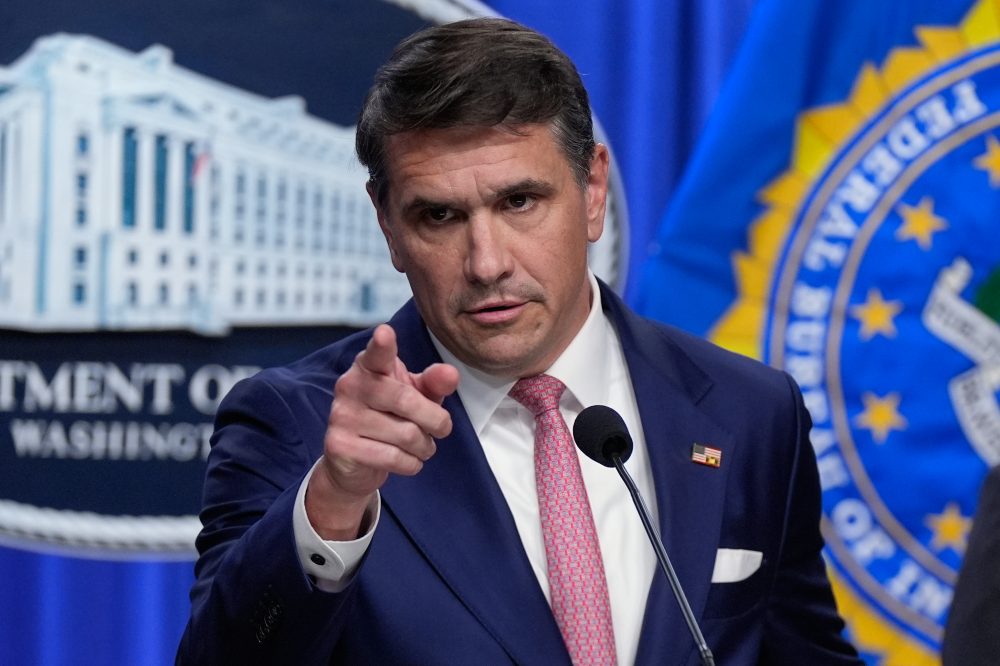
“China’s decision to detain or otherwise impede Panama-flagged vessels engaged in lawful trade destabilizes supply chains, raises costs, and erodes confidence in the global trading system,” Rubio said on social media. “The United States stands with Panama against any retaliatory actions against its sovereignty and will always support our partners in the face of bullying.”
Data from Tokyo MOU, an Asia-Pacific port control organization with 22 member nations, reveals that in March, 92 of 124 ships detained in Chinese ports for inspection carried Panama flags – representing nearly 75% of all detentions. These vessels were typically held for periods ranging from one to ten days before release.
This represents a significant increase from earlier months, when Panama-flagged ships comprised just over 40% of detentions in February (19 of 45 ships) and approximately 30% in January (23 of 71 ships).
Chinese embassy spokesperson Liu Pengyu dismissed the allegations, stating that America’s “repeated wrongful allegations only reveal its attempt to take control of the canal.” His statement did not acknowledge the increased detention rates of Panama-flagged vessels.
These developments follow Panama’s supreme court decision in January declaring the concession agreement held by a CK Hutchison Holdings subsidiary for the Balboa and Cristóbal terminals as unconstitutional.
Washington has pressured Panama and other regional nations to limit China’s influence throughout the Western Hemisphere, an area Trump has identified as a priority focus. The current administration has taken more assertive action in Latin America than previous U.S. governments have in recent decades, including the dramatic military operation that resulted in Venezuelan leader Nicolás Maduro’s capture in January.
The Federal Maritime Commission in Washington continues monitoring Panama-flagged ships experiencing delays or detentions in Chinese ports.
“Secretary Rubio’s statement highlights the disruptive effects of the government of China’s actions against Panama-flagged vessels,” said Laura DiBella, chair of the commission. She said the commission “is not aware of any other country in recent history conducting vessel safety inspections and detentions in a punitive manner.”
Panama’s leadership announced that APM Terminals, part of Denmark’s A.P. Moller-Maersk group, would temporarily manage the terminals during the contract transition period. DiBella noted that China’s Ministry of Transport had requested high-level meetings with Maersk officials in Beijing.
Panamanian officials have attempted to downplay the broader geopolitical implications surrounding the ship detentions. Government representatives did not respond to requests for comment regarding Rubio’s statements, though they have previously denied any connection between the detentions and China-Panama canal disagreements.
In March, Panama’s foreign minister, Javier Martínez, acknowledged the detention increase but characterized them as “part of routine maritime industry practices, because detentions also occur in other ports and to other flags.”
“We want to maintain a respectful relationship with China,” he added.
Following the January supreme court ruling, Chinese Foreign Ministry spokesperson Guo Jiakun stated that China would “take all measures necessary to firmly protect the legitimate and lawful rights and interests of Chinese companies.”
José Digeronimo, former president of the Panama Maritime Chamber, warned that actions targeting these ships could have a “huge impact” on Panama, which ranks among the world’s leading ship registry nations. These registrations generate approximately $100 million annually for the government.
Digeronimo likened ship registries to passport selection for vessel owners, who choose registration locations that “allow you to travel to the greatest number of countries without restrictions.” He warned that harassment from Chinese authorities could jeopardize this system.
“If the world’s main exporter starts imposing restrictions for using the Panamanian flag, the last thing you’ll want is to have the Panamanian one,” Digeronimo said.