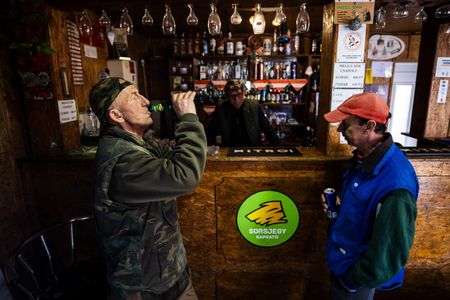

In the small Hungarian village of Malyinka, 72-year-old Sandor Toth operates a local pub where he’s served customers for over four decades, watching his country transform from communist rule through multiple election cycles that have consistently favored Viktor Orban’s Fidesz party.
Toth’s establishment recently benefited from Orban’s village pub initiative, receiving 3 million forints (approximately $9,000) in government funding that enabled him to upgrade with new windows and air conditioning systems. This program distributed grants to hundreds of rural pubs under the government’s philosophy that these establishments represent “the soul of the villages.”
Rural communities like Malyinka have formed the backbone of support for Fidesz, the ruling nationalist and socially conservative party, largely through community development programs funded by party-controlled local governments. In many regions, the distinction between Fidesz and government services has become blurred, with the party serving as the primary source of employment and financial assistance.
Media landscape considerations also play a role, as Fidesz supporters control significant portions of Hungary’s private news outlets, while state media functions primarily as a government communications tool. Officials reject claims that press freedom has been compromised.
Orban’s messaging emphasizing “Hungarian interests” in opposition to European Union policies and his stance against providing aid to war-affected Ukraine has found particular resonance among older, more traditional voters in countryside areas.
The upcoming April 12 election presents Orban with his most challenging re-election campaign in over a decade and a half. Rural constituencies hold decisive importance, comprising 88 of 106 total districts, with these constituency races determining 106 of parliament’s 199 seats.
While serving sour cherry beer at 800 forints ($2.38) per pint—roughly half the cost found in Budapest—Toth expressed confidence that most residents in his village of 450 would continue supporting Orban.
“I believe generally here people vote for Fidesz as they help pensioners and also young people,” he explained, noting that “not all parties” would have provided the financial assistance his pub received.
Toth’s establishment, called Sanyi pub and decorated with 1980s memorabilia and featuring a 1990s jukebox, has evolved into Malyinka’s social hub, strategically positioned beside the soccer field and licensed for tobacco sales.
“The village, our direct connection to nature, the land … these are essential parts of human life that must be preserved,” Orban stated during a January campaign appearance.
In the electoral district encompassing Malyinka and 81 additional villages, Fidesz representative Zoltan Demeter secured victory in 2022 with more than 54% of votes cast. However, this election cycle presents increased competition.
Orban now faces opposition from the center-right Tisza party, established in 2024 under Peter Magyar’s leadership. Magyar, who previously admired Orban, now seeks to remove him from the prime minister’s office.
Current polling data indicates Tisza holds a national advantage, though significant numbers of voters remain uncommitted. Research conducted by the 21 Research Institute in early March showed Tisza leading among all voter demographics under age 50, while Fidesz maintained clear support among those over 65.
Tisza has intensified rural campaigning efforts, attempting to address a 16-year pattern of opposition parties struggling to present viable alternatives to Fidesz in countryside areas.
Magyar has spent two years traveling to towns and villages, pledging employment opportunities, infrastructure improvements, and enhanced healthcare access. Leading up to election day, his campaign schedule includes events in 5-6 different locations daily across the nation.
The 21 Research Institute survey indicated Fidesz maintained a 37% to 33% advantage over Tisza in village areas.
“The mood in small rural towns and villages is different from earlier elections, when the public quickly lost interest at events. Now they turn up and listen to what Magyar has to say,” noted Eurasia Group analysts, suggesting Magyar was gaining ground in rural districts.
Tisza’s local representative and campaign workers conduct door-to-door outreach throughout villages in Toth’s constituency, attempting to attract voters by proposing support for road repairs and improvements to healthcare facilities and educational institutions.
“This is key, I think this was missing badly from previous campaigns, that we must go to each street,” stated Tisza candidate Csaba Hatala-Orosz.
“We can promise to support local small- and medium-sized businesses, rebuild roads … I’ve been doing field work here for almost two years, and I got to know these 82 villages, and I have really put my heart into this.”