
ROME, April 3 – One of Italy’s most prestigious art museums fell victim to a major digital security breach that forced emergency protective measures, including relocating priceless treasures to the nation’s central bank, according to a Friday report from Corriere della Sera.
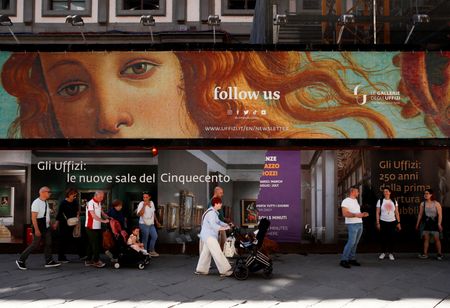
The Uffizi Galleries in Florence, home to world-famous masterpieces such as Botticelli’s “Birth of Venus” and “Primavera,” along with Michelangelo’s “Doni Tondo,” experienced the cyber intrusion during the early months of this year.
Officials at the Uffizi – which ranks as Italy’s second-most popular museum and brings in approximately 60 million euros ($69 million) annually – have not yet provided comment on the incident. The Culture Ministry and police headquarters also declined to respond to inquiries.
According to Corriere’s investigation, museum director Simone Verde refused to discuss the matter. The institution only confirmed that its administrative computer systems had been compromised during that period, without providing additional details.
The newspaper reported that cybercriminals penetrated the museum’s digital infrastructure in late January or early February, successfully breaching computer servers at the Uffizi, Palazzo Pitti, and Boboli Gardens.
The attackers reportedly wiped data from several servers and delivered their ransom demands directly to Verde’s personal mobile device.
Corriere indicated the hackers successfully obtained security access codes, login credentials, alarm system information, and detailed facility blueprints.
As a protective measure, the most precious artifacts from the Treasury of the Grand Dukes – located within Palazzo Pitti, the historic Medici family palace – were transported to the central bank for safekeeping. Additional security steps included sealing certain doorways and emergency exits.
The Uffizi’s official website currently states that the Treasury of the Grand Dukes at Palazzo Pitti remains closed since February 3 for “extraordinary maintenance work” with no reopening date announced.
The cyber criminals also allegedly stole the museum’s complete digital photography archive, containing decades of accumulated images and historical documents, the report stated.
This incident follows other recent high-profile museum thefts, including last year’s robbery at Paris’s Louvre Museum where thieves made off with $102 million in jewels that remain missing. In March, criminals stole three paintings by French masters Pierre-Auguste Renoir, Paul Cezanne, and Henri Matisse from a museum in northern Italy.