
Taiwan’s defense officials are raising alarm bells over legislative gridlock that could derail billions in critical military spending, according to statements made Thursday in Taipei.
Yen Ming-teh, who oversees the defense ministry’s budget operations, warned that parliamentary delays threaten to block T$78 billion ($2.44 billion) in essential weapons purchases, equipment maintenance, and military training programs.
The budget standoff means defense officials cannot move forward with 21% of this year’s planned military expenditures according to their original timeline, Yen explained during a press briefing.
President Lai Ching-te’s government had proposed boosting defense spending by 22.9% to reach T$949.5 billion in 2026. This would mark the first time since 2009 that Taiwan’s military budget would exceed 3% of the nation’s economic output, hitting 3.32% of gross domestic product.
Officials justify the increased spending as necessary to counter Beijing’s growing military aggression. China maintains territorial claims over Taiwan and has intensified pressure through military exercises and other displays of force. Washington has expressed support for Taiwan’s defense budget expansion.
However, opposition lawmakers controlling parliament have blocked both the main budget and an additional $40 billion military spending package. While opposition members say they back stronger defense capabilities, they refuse to approve what they call “blank cheques.”
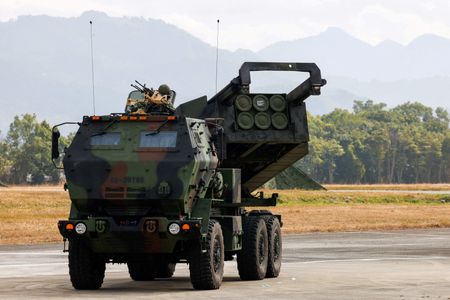
The spending freeze directly impacts several major weapons programs, including the acquisition of U.S.-manufactured HIMARS rocket systems and Javelin missile purchases and restocking, according to Yen’s briefing.
Additional training for pilots flying Lockheed Martin F-16 fighter aircraft will also face delays due to the budget impasse, he noted.
“In response to the enemy threat, strengthening national defence capabilities cannot be delayed,” Yen stated. “Any delay in timing will cause irreversible negative effects.”
The budget dispute comes as President Trump has repeatedly urged international partners to increase their defense investments – a position Taiwan’s current leadership has embraced.
Meanwhile, Taiwan is preparing for its yearly Han Kuang military exercises, with planning sessions scheduled from April 11-24 and field exercises expected in July.
Tung Chi-hsing, who heads joint operations planning for the defense ministry, said the upcoming exercises will draw lessons from “recent international military operations as important references.”
These include studying U.S. and Israeli military actions against Iran, as well as the recent U.S. operation that captured Venezuelan leader Nicolas Maduro in January, Tung explained.
Taiwan’s military is focusing on improving early warning systems, rapid response protocols, drone countermeasures, multi-layered air defense networks, and anti-infiltration tactics based on these international examples, Tung added.
Beijing has never ruled out using military force to bring Taiwan under Chinese control, while Taiwan’s democratically chosen government maintains that only the island’s residents can determine their political future.