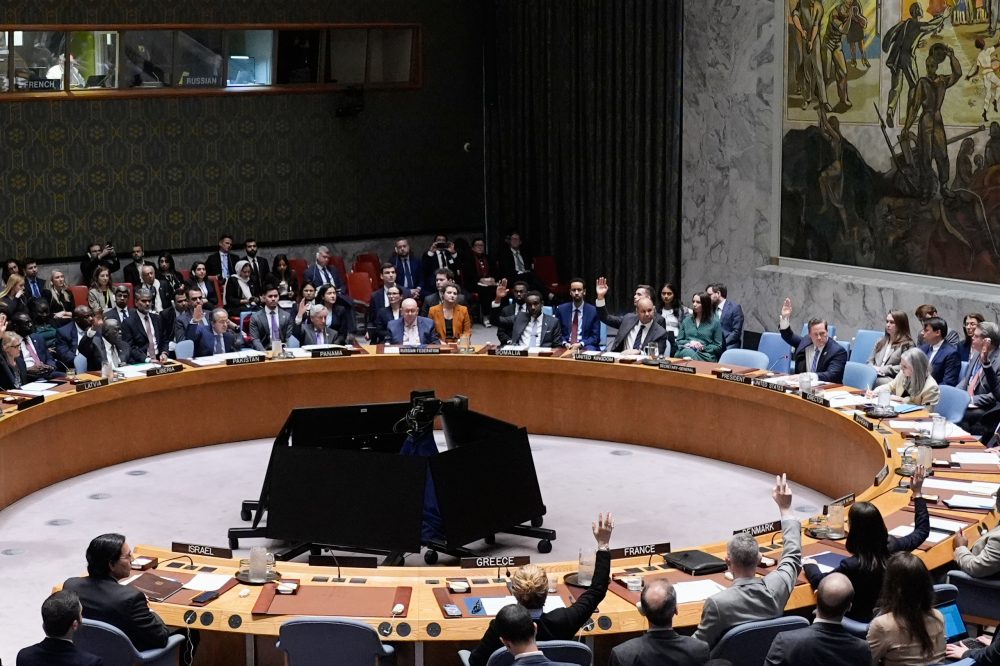

The United Nations Security Council is preparing for a Friday vote on a modified resolution designed to secure passage through the Strait of Hormuz, after the original proposal faced significant revisions following pushback from China and Russia regarding the use of military force to reopen the vital shipping lane that Iran has effectively blocked.
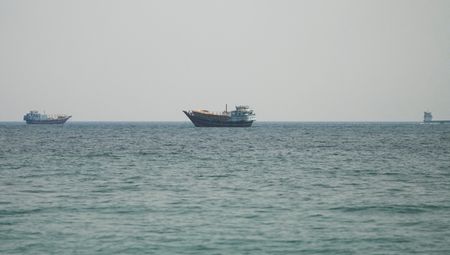
According to the revised draft obtained Thursday by The Associated Press, the resolution now permits only defensive measures—not offensive actions—to guarantee safe vessel passage through the strait. This waterway typically handles one-fifth of global oil shipments, and Iran’s blockade during ongoing hostilities has caused energy prices to spike worldwide.
The original resolution proposed by Bahrain would have permitted nations to employ “all necessary means”—diplomatic language that encompasses potential military intervention—throughout “the Strait of Hormuz, the Gulf and the Gulf of Oman” to maintain safe passage and prevent navigation interference.
Three permanent Security Council members with veto power—Russia, China, and France—had voiced concerns about approving military force. While the updated draft removes references to offensive military operations, these nations’ positions on the modifications remain unclear, making Friday’s vote particularly significant.
The current proposal permits countries to employ “all defensive means necessary and commensurate with the circumstances in the Strait of Hormuz and adjacent waters” to maintain passage and prevent interference with international shipping “for a period of at least six months.”
The resolution states that nations operating independently or through “multinational naval partnerships” may implement defensive measures after providing advance notice to the Security Council.
This development follows President Donald Trump’s Wednesday announcement that the United States and Israel would continue “extremely hard” bombardment of Iran over the coming two to three weeks, though he provided no clear timeline for ending the conflict. Iran has maintained retaliatory strikes throughout the region, and its control over the strait has created challenges for Trump and the international community as rising energy costs impact the global economy.
Prior to Bahrain’s release of the final draft, Russian UN Ambassador Vassily Nebenzia stated the proposal “does not solve the puzzle.” He emphasized that ending hostilities would provide the real solution.
Chinese UN Ambassador Fu Cong criticized the original draft’s force authorization, describing it as “unlawful and indiscriminate.” During Thursday’s council session, he cautioned that such measures “would inevitably lead to further escalation of the situation and lead to serious consequences.” He called on the council “to proceed with caution” while actively pursuing de-escalation and diplomatic dialogue.
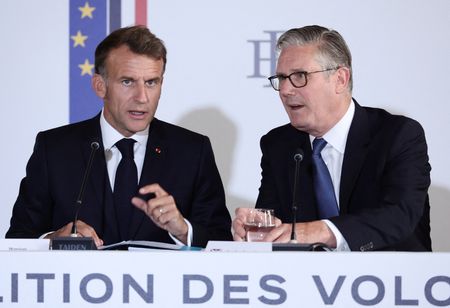
French UN Ambassador Jérôme Bonnafont similarly advocated for de-escalation, stating to the council that “defensive measures that avoid any broad use of force need to be promoted.” He subsequently suggested the revised draft emphasizing defense could be acceptable.
On March 11, the Security Council passed a Bahrain-sponsored resolution denouncing Iran’s “egregious attacks” against Gulf states and demanding Tehran immediately cease its strikes, which began after the US and Israel initiated military action on February 28.
That measure passed 13-0 with Russia and China abstaining, and also criticized Iran’s Strait of Hormuz actions as threatening international peace and security while demanding an immediate halt to all shipping blockade activities.