
Ukrainian drone strikes targeting Russian oil infrastructure are forcing the country toward inevitable production cuts, according to three industry insiders who spoke Thursday on condition of anonymity.
The coordinated attacks have damaged Russia’s export capabilities by approximately 1 million barrels daily, representing about 20% of the nation’s total capacity, the sources revealed. This disruption comes as global oil markets already face strain from ongoing Middle East conflicts.
Over the past month, Ukraine has escalated its assault on Russia’s oil export facilities, launching some of the most intensive drone operations of the four-year conflict. The strikes have particularly focused on the Baltic Sea ports of Ust-Luga and Primorsk as part of Ukraine’s strategy to weaken Russia’s economic foundation.
The damaged infrastructure represents a significant portion of Russia’s export system, which peaked at 40% disruption in March before improving to the current 20% level. Despite this improvement, the sources indicate the damage remains severe enough to impact production from the world’s third-largest oil producer, trailing only the United States and Saudi Arabia.
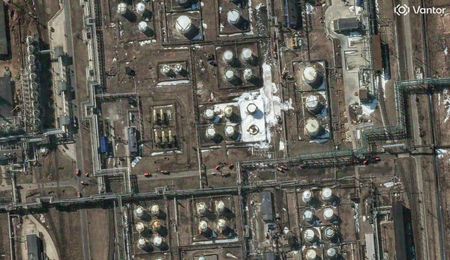
Russia’s critical Ust-Luga Baltic port halted oil shipments one week ago following extensive drone bombardment and subsequent fires. The combination of export facility damage and domestic refinery attacks has created severe congestion throughout Russia’s pipeline network, with storage facilities rapidly approaching capacity limits.
This backup is compelling some oil fields to consider reducing output to prevent system overflow, industry sources explained.
While Russia has benefited from rising oil prices since late February conflicts began involving U.S.-Israeli actions against Iran, any production cuts would still inflict economic damage given that energy sales comprise 25% of the state’s budget revenue.
Russia’s export challenges existed even before the recent Baltic port attacks. The Druzhba pipeline, which delivers oil to Hungary and Slovakia, has remained suspended since January, further constraining export options.
State-controlled Transneft operates more than 80% of Russia’s oil pipeline infrastructure. Neither Transneft nor Russia’s energy ministry responded to requests for comment.
According to the sources, Transneft has informed exporters that Ust-Luga cannot accommodate oil loading according to original schedules due to recent damage. The company also indicated it cannot accept full oil volumes from producers that were designated for Ust-Luga exports.
The Organization of the Petroleum Exporting Countries reported Russian oil production at 9.184 million barrels daily in February. The sources could not specify potential cut amounts.
Loading schedules from Ust-Luga for early April are not expected to be fulfilled, though allocations for the month’s second half remain tentatively scheduled pending further developments.
Despite Western sanctions and Ukrainian refinery attacks, Russian oil output declined only 0.8% to 10.28 million barrels per day last year, maintaining roughly 10% of global production according to Russian statistics.
The Ust-Luga bottleneck affects not only Russian exports but also Kazakhstan, which ships between 200,000 and 400,000 metric tons of KEBCO oil through the facility monthly.
Seasonal refinery maintenance compounds the surplus oil problem within Transneft’s system, sources noted. As refineries process reduced volumes during maintenance periods, excess crude accumulates more rapidly.
While Russia typically increases crude exports during March and April maintenance seasons, this year’s refinery shutdowns may instead force additional oil into storage facilities.
Official storage capacity figures remain unavailable, though one source estimated current reserves could last weeks rather than months.