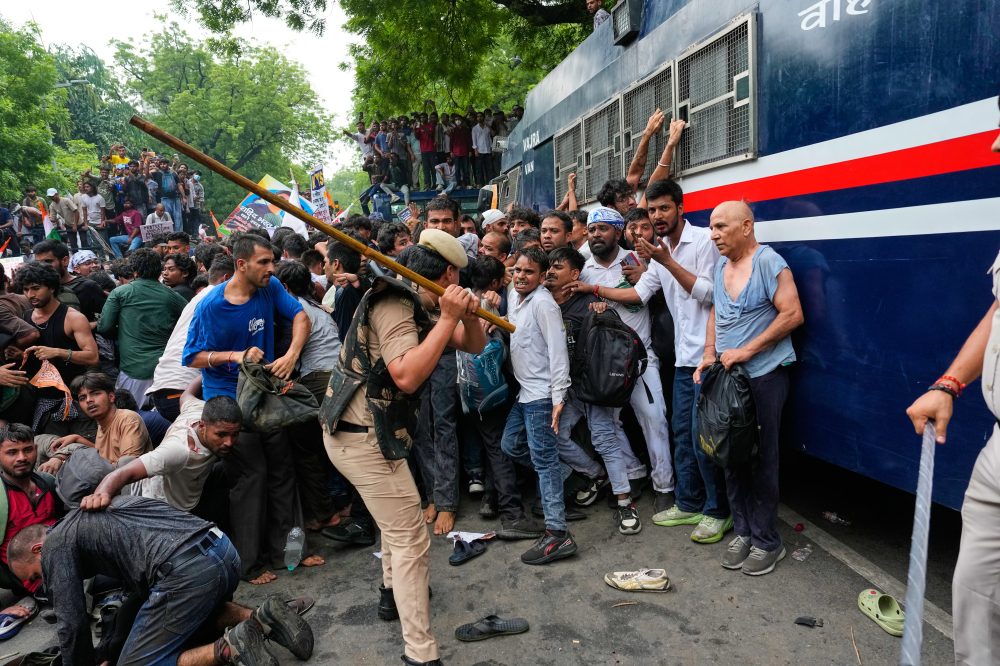
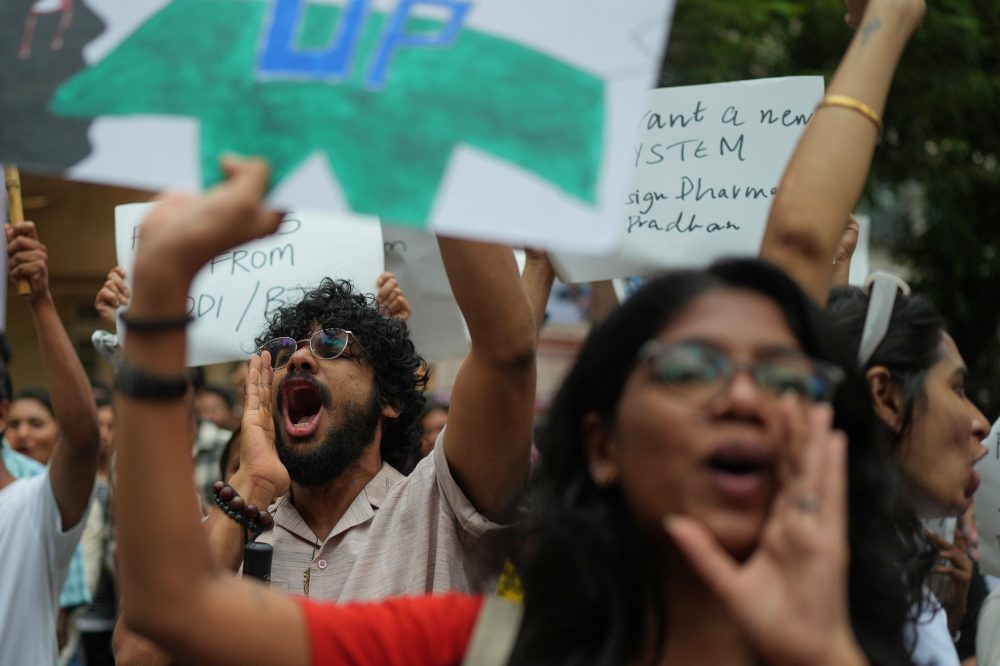
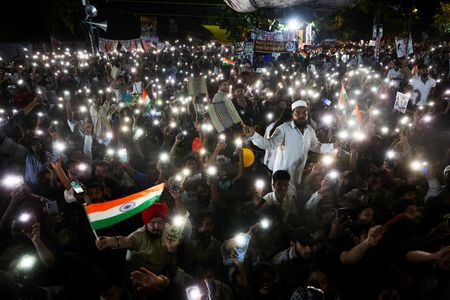
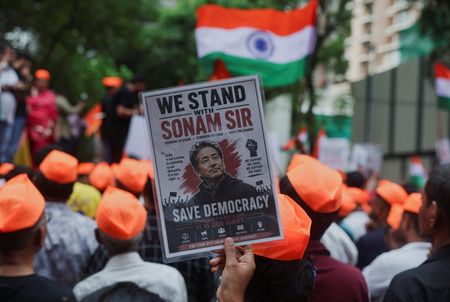
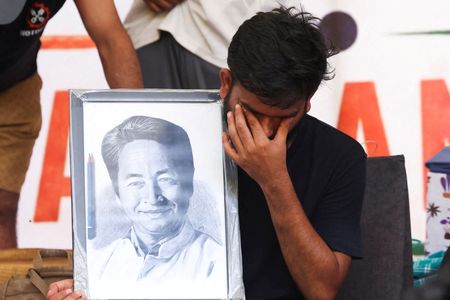
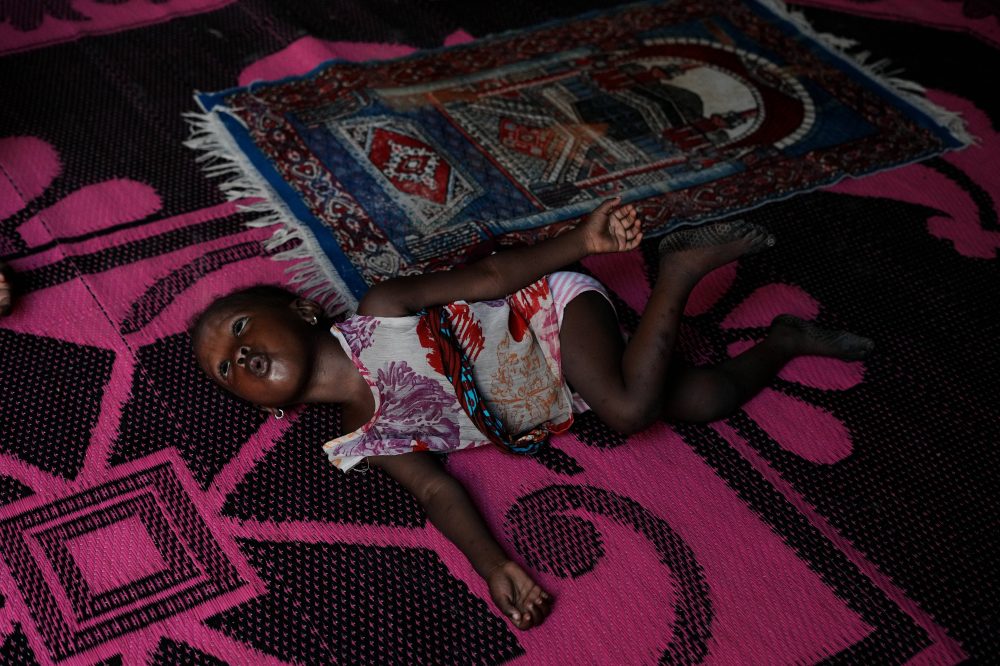
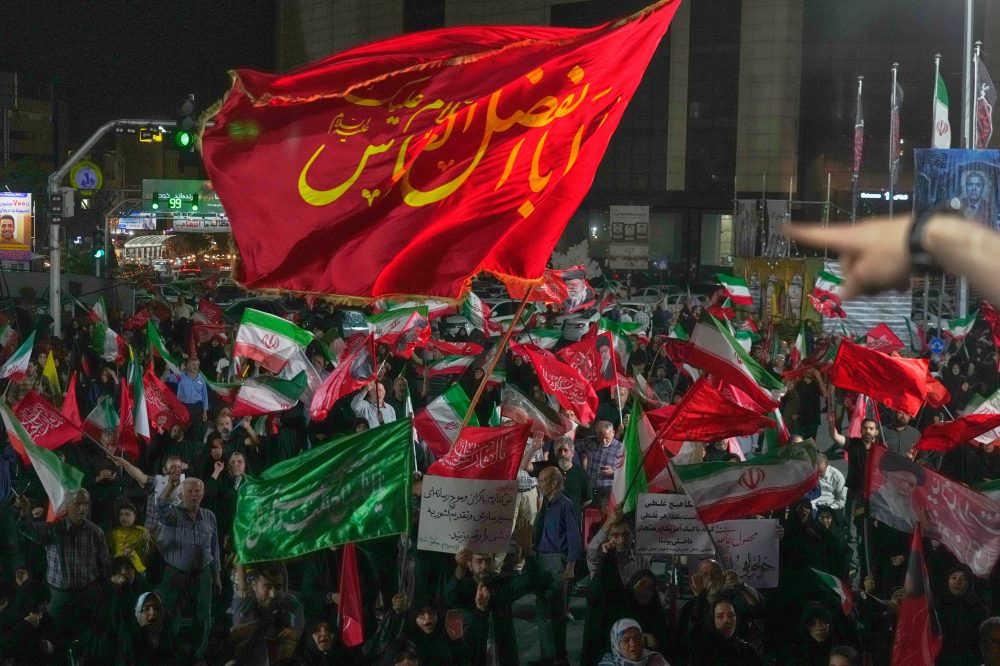
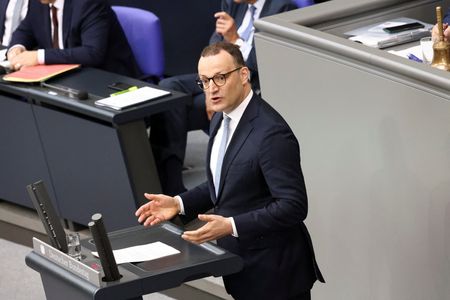
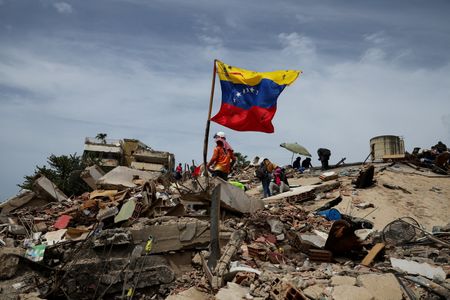
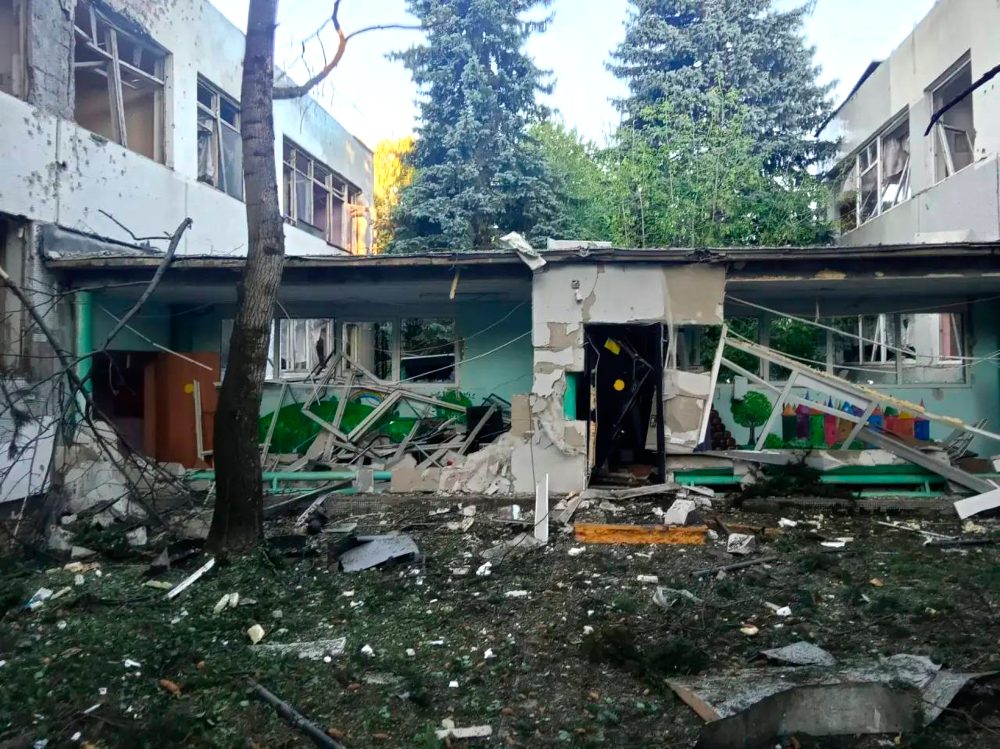
NEW DELHI, India — Demonstrators supporting India’s youth-driven “Cockroach” movement were met with police batons and tear gas in New Delhi as they attempted to march toward Parliament, where they planned to call for the resignation of the nation’s education minister.
The movement traces its origins to May, when a Supreme Court judge sparked widespread outrage by comparing unemployed young people to “cockroaches.” That inflammatory remark, combined with the leak of critical exam papers that could shape the futures of countless young Indians, ignited a wave of public anger that gave birth to the Cockroach Janta Party.
Since its formation, the movement has grown beyond its initial demands and is now pushing for sweeping reforms across the country. Government officials have responded with a firm stance against the protesters, making clear they intend to resist the movement’s pressure.
The photographs documenting the police crackdown were curated by AP photo editors.
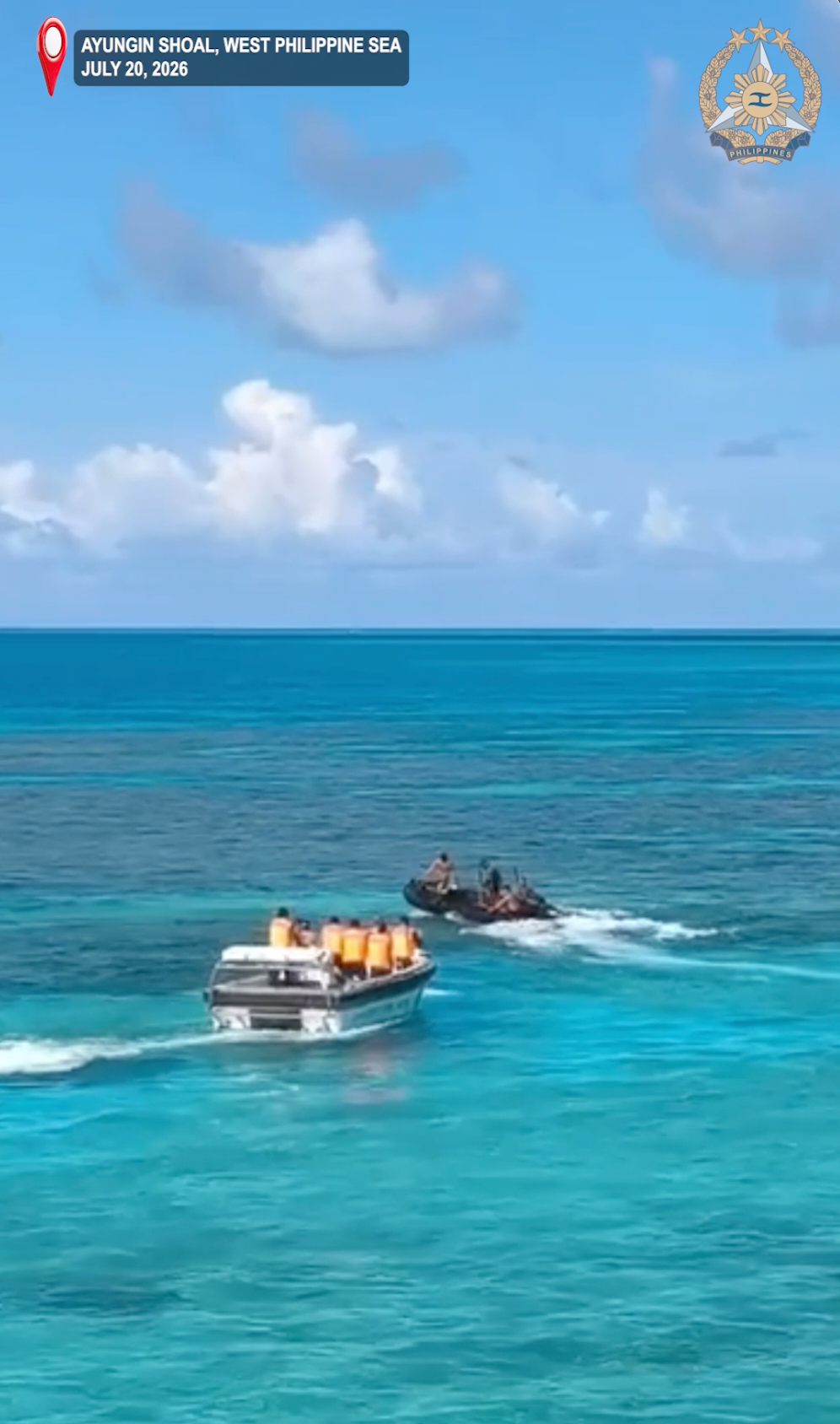
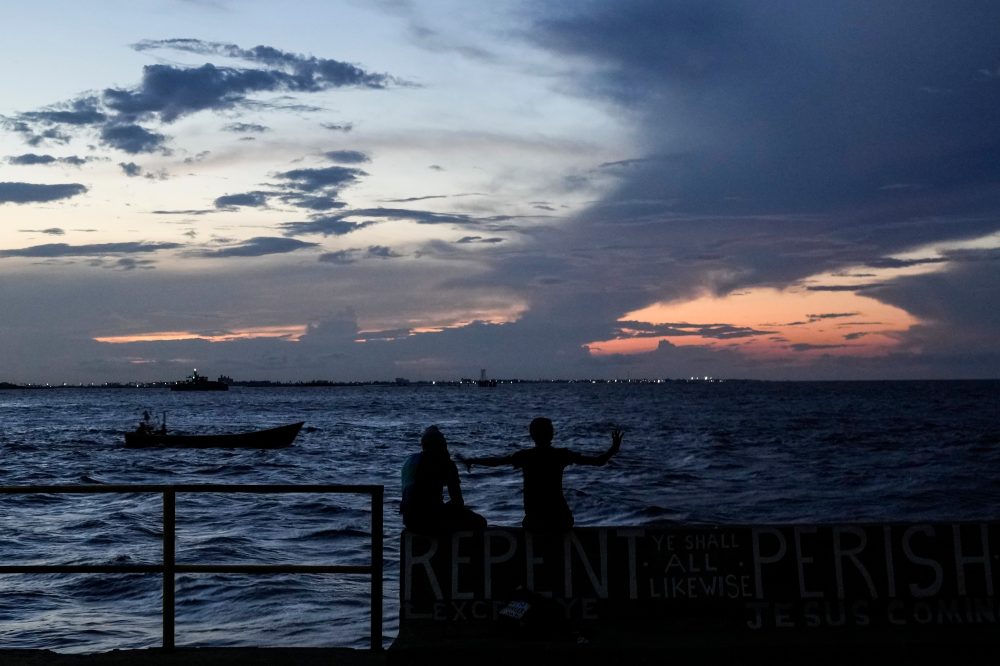
The Philippine military is reporting that Chinese coast guard personnel aboard a motorboat attacked a Filipino sailor at a disputed location in the South China Sea on Monday, striking him repeatedly on the head with a wooden baton and damaging his vessel.
The violent encounter took place at Second Thomas Shoal and was recorded on video by other Filipino sailors present. Philippine officials swiftly condemned the attack, while also praising the Filipino navy personnel for not taking any action that could have escalated the situation.
Chinese officials had not released any statement regarding the incident, though Beijing has consistently asserted its claim over the shoal and nearly all of the South China Sea. China has also repeatedly demanded that the Philippines remove a long-stranded, rusting navy vessel — the BRP Sierra Madre — which is staffed by Filipino navy personnel and functions as a makeshift territorial outpost.
According to the Philippine military, a Chinese coast guard inflatable boat carrying eight people was launched from a larger ship and approached the BRP Sierra Madre at close range, circling the vessel while its occupants filmed and photographed the scene.
Filipino sailors on two rubber boats calmly asked the Chinese personnel to move back. “The Chinese coast guard vessel personnel reacted violently and aggressively by striking a Philippine Navy personnel on the head with a wooden baton, causing injury and damaging the navy rubber boat,” the Philippine military stated.
Officials said the full extent of the sailor’s injuries was still being evaluated to determine whether a medical evacuation would be necessary.
“No act of coercion or aggression will deter us from carrying out our constitutional mandate or exercising the Philippines’ lawful rights in the West Philippine Sea,” the military said, referring to the South China Sea by its Philippine designation.
The Department of National Defense also issued a statement, saying: “The latest act of violence and harassment committed by the China coast guard against Philippine navy personnel … adds to a clear pattern of provocative and hostile behavior and further contributes to the People’s Republic of China’s deficit of trust and credibility.”
The Philippines intentionally grounded the Sierra Madre in the shallow waters of Second Thomas Shoal back in 1999 to establish a territorial presence there. China, which also lays claim to the shoal, later encircled the area with its own ships, creating a tense standoff that has persisted for years.
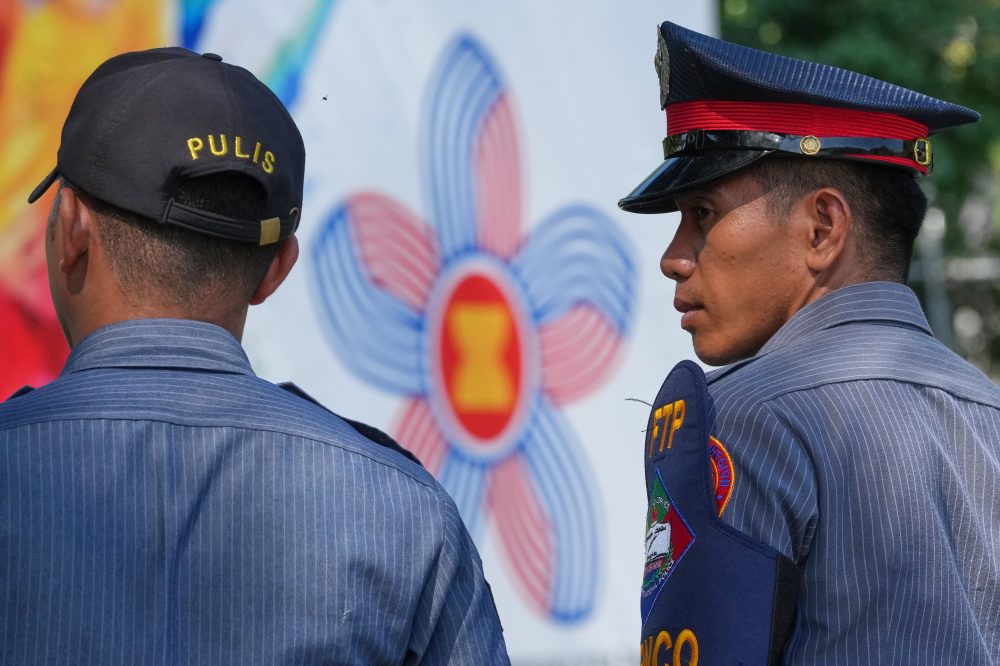
The broader territorial dispute — which also involves Brunei, Malaysia, Vietnam, and Taiwan — is among the top issues being discussed this week in Manila during talks between foreign ministers of the Association of Southeast Asian Nations and their Chinese counterpart, Wang Yi.
Both nations have been working toward a nonaggression agreement intended to reduce the risk of a major armed conflict, one that could potentially draw in the United States, which has pledged to help counter growing Chinese aggression and protect freedom of navigation in the heavily trafficked waterway.
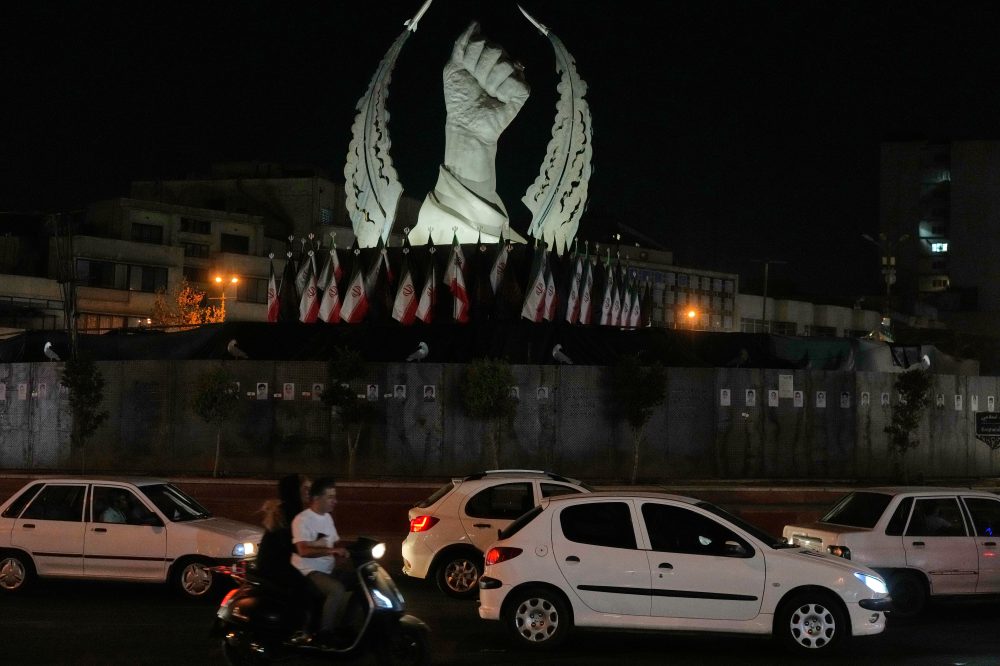
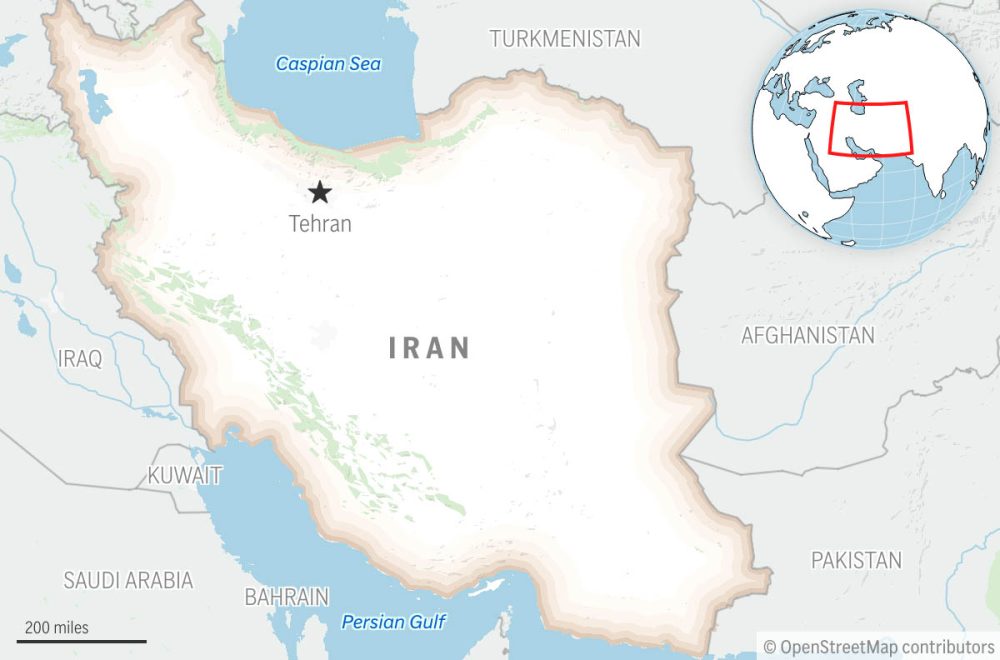
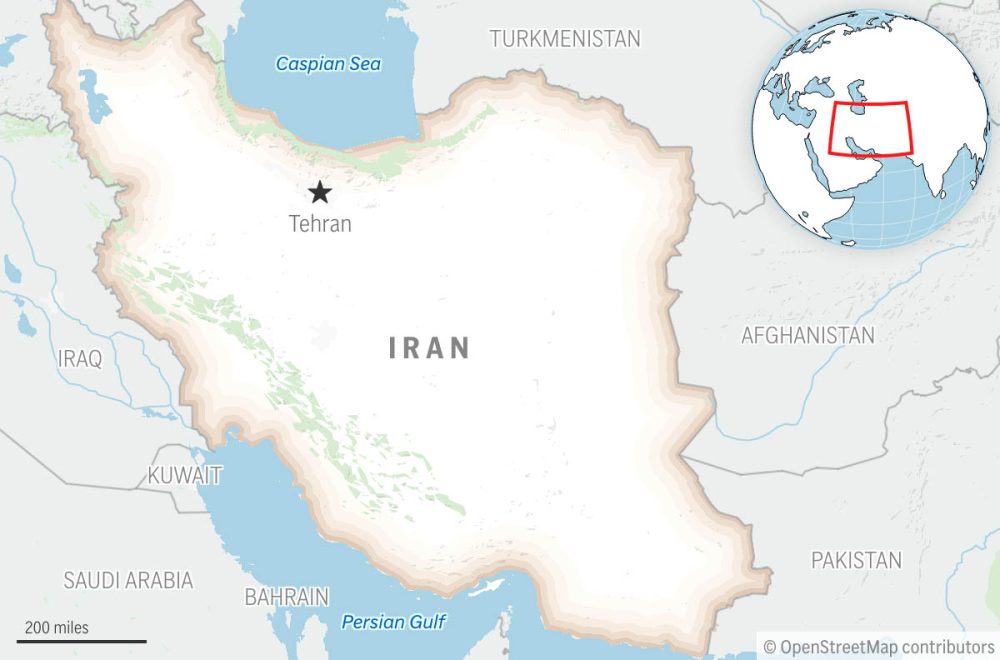
Mediators have handed Iran a proposal designed to lower the temperature in its ongoing conflict with the United States, according to a senior Iranian official who spoke with Reuters on Monday.
The proposal calls for a 10-day ceasefire that would give both sides time to explore ways to bring back an interim deal that was reached between the two countries last month.
MADRID — A wildfire tearing through Spain’s central Guadalajara province continued burning out of control Monday, marking its fifth consecutive day of destruction and earning the grim distinction of being the country’s largest wildfire so far this year. The situation is expected to worsen as a powerful heatwave moves closer.
The La Mierla wildfire has now scorched more than 26,000 hectares, prompting authorities to order the evacuation of three more municipalities on Monday. In total, more than 1,000 people have been displaced from their homes.
Regional leader Emiliano Garcia-Page described the scale of the emergency, noting that nearly 30 populated communities are currently surrounded by the fire. He stressed that protecting human lives and keeping the flames away from residential areas remains the top priority for crews battling the blaze.
The timing could hardly be worse. Spain’s national weather agency, AEMET, announced that the country’s third heatwave of 2026 is expected to persist at least through Thursday. Temperatures across much of the southeastern interior could climb past 40 degrees Celsius — roughly 104 degrees Fahrenheit — pushing wildfire danger to extreme levels. Some locations may see temperatures reach as high as 42 to 44 degrees Celsius by Thursday, fueled by hot, dry air sweeping northward from Africa. The agency also cautioned that dry thunderstorms could develop in mountainous regions of eastern Spain, further complicating conditions.
This latest disaster follows a deadly wildfire near Bedar, in Almeria province, that killed 13 people less than two weeks ago — one of the deadliest fires Spain has seen in decades.
Spain is already the hardest-hit country in the European Union when it comes to wildfires this year. Data from the EU’s Copernicus wildfire monitoring service shows that 104,423 hectares have burned across Spain in 2026, far outpacing France, where 41,781 hectares have burned.
The current crisis follows an already devastating fire season last summer, when Spain saw 354,747 hectares burned and 63 large wildfires — the highest annual burned area recorded in the past ten years. Scientists have linked the trend of increasingly severe wildfire seasons in Spain and across southern Europe to climate change.
PARIS — French lawmakers are in a race against time, pushing to finalize a deal on legislation that would prohibit children under the age of 15 from accessing social media platforms — with the goal of having the ban in place when students return to school in September.
With Parliament’s summer break approaching fast, a joint committee made up of seven members of the National Assembly and seven senators convened Monday to hammer out a compromise. The effort hit a snag after the European Commission determined that the most recent version of the bill did not fully align with European Union law.
French President Emmanuel Macron has been a vocal supporter of the ban, which could stand as one of the last significant pieces of legislation passed under his leadership before he departs office next year.
The central disagreement between the two legislative chambers involves which platforms the ban would actually cover. The National Assembly voted to apply the ban across all online social networking services, while senators preferred to create a specific blacklist of prohibited platforms. Both sides agree the ban would not apply to online encyclopedias, educational or scientific directories, or open-source software development and sharing platforms.
The bill also includes a prohibition on mobile phone use in high schools and was crafted to align with the EU Digital Services Act — a set of strict regulations designed to protect internet users online.
While both the French government and the EU Commission share the goal of safeguarding minors, the Commission found that parts of the French bill overlap with existing EU rules and asked French officials to revise the draft. French senators have argued that the blacklist approach was not the part the Commission objected to, pointing instead to provisions they say grant too much authority to France’s regulatory body overseeing audiovisual and digital communications.
“Everyone must rise to the importance of the issue at stake, which is nothing less than protecting the physical and mental health of our children,” the Senate said in a statement.
If both chambers can reach an agreement, a final vote could happen as early as Tuesday. However, because of a required notification period under EU law, the legislation cannot officially become law before August 10.
France’s national health watchdog reports that one out of every two teenagers spends between two and five hours per day on a smartphone. A report it released in December found that roughly 90% of children between the ages of 12 and 17 go online daily via smartphones, and 58% of those kids use their devices to access social networks.
That same report identified several harmful effects tied to social media use among young people, including lower self-esteem and greater exposure to content linked to dangerous behaviors such as self-harm, drug use, and suicide. A number of French families have filed lawsuits against TikTok, claiming the platform’s content contributed to their teenagers taking their own lives.
Earlier this month, European Commission President Ursula von der Leyen called for restrictions on children’s access to social media. A special EU advisory panel recommended banning access for children under 13 until technology companies can demonstrate their platforms are safe for young users.
Von der Leyen also stated that children under the age of 3 should have no screen exposure whatsoever, and she singled out infinite scrolling as one of several “addictive” features that tech companies need to address.
Globally, concern over the impact of social media on young, still-developing minds has led to a wave of new regulations. Countries including Australia, the United Kingdom, Turkey, and Indonesia have enacted bans preventing children under 15 or 16 from using platforms such as TikTok, YouTube, and Instagram.
The European Commission is expected to put forward a proposal for all 27 EU member nations to consider in the coming months.
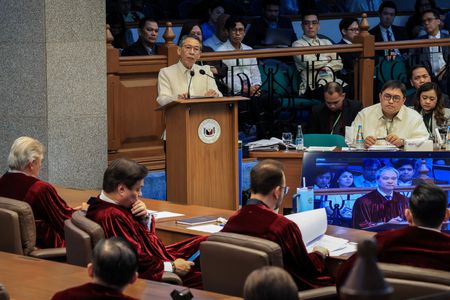
MANILA — The Philippine Senate issued orders Monday requiring banks and the Anti-Money Laundering Council to turn over financial records tied to Vice President Sara Duterte, her husband, and a number of related entities — a significant step forward for prosecutors building their case against her.
The Senate, which is functioning as an impeachment court in the proceedings, placed limits on how the documents can be used. Senators specified that the records are intended solely to establish a baseline for evaluating Duterte’s assets, financial transactions, and business interests during her current term in office — not to introduce any new charges against her.
The House of Representatives voted to impeach Duterte on May 11, citing allegations of unexplained income, bribery, and corruption. She also faces accusations of making threats against President Ferdinand Marcos Jr., the first lady, and a former House speaker.
Duterte and Marcos, both heirs to two of the Philippines’ most influential political dynasties, ran together on a joint ticket and won by a wide margin in 2022. However, their political partnership eventually fell apart, with Duterte publicly criticizing Marcos for what she called poor leadership and incompetence.
Senator Francis Escudero, who is presiding over the impeachment trial, explained the court’s decision in a statement: “After examining the records sought, the Court finds that the requested documents meet the requirements set forth.”
The court also approved a subpoena covering tax records, though it stopped short of ordering their immediate release. The ruling noted that any disclosure of those documents must first satisfy tax confidentiality regulations.
Duterte’s political future hangs in the balance. A conviction would require at least 16 of the Senate’s 24 members to vote against her — and if that threshold is met, it could effectively end her reported plans to seek the presidency in 2028. Duterte has maintained her innocence throughout the proceedings, calling the entire process politically driven.
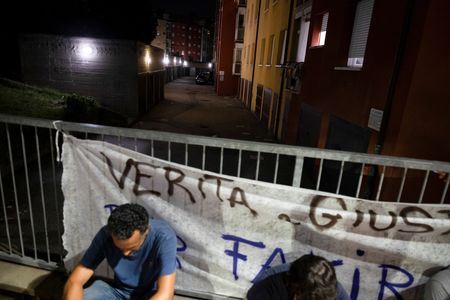
A man died in the northern Italian city of Bologna after officers pinned him to the ground while attempting to place him under arrest, an incident caught on camera that has ignited street protests and launched a criminal investigation.
The victim, Abderrahim Fakir, was a Moroccan-born entrepreneur who operated a small removals and cleaning business. He died on Sunday after police were called to the scene to address reports of a man behaving aggressively and damaging a vehicle, according to Italian media.
Video of the incident, recorded by a nearby resident and widely circulated on social media, drew hundreds of protesters into the streets and prompted reactions from politicians across Italy’s political spectrum. Opposition figures called for accountability, while members of the ruling coalition defended the officers involved.
According to the local newspaper Il Resto del Carlino, protesters chanted anti-police slogans and knelt with raised fists — a gesture tied to the Black Lives Matter movement that gained prominence in the United States following the 2020 death of George Floyd in Minneapolis.
The footage shows Fakir lying face down on the ground as two officers hold him in place. In the video, he can be heard repeatedly crying out for help and struggling to breathe before his movements gradually cease.
Bologna prosecutors and Italy’s Interior Ministry had not responded to requests for comment as of the time of reporting. Bologna police stated they would hand over body camera footage from the responding officers to investigators.
Media reports indicate that officers called for emergency medical assistance after arriving in the northeastern neighborhood of Pilastro shortly after noon, when temperatures had climbed above 35 degrees Celsius, or 95 degrees Fahrenheit. Reports say police attempted to calm Fakir before deploying pepper spray and restraining him on the ground while trying to handcuff him, after he responded aggressively.
Fakir’s sister, Khadija, spoke to reporters as hundreds of people gathered in Pilastro on Sunday. “They killed my brother in cold blood, I want justice,” she said.
A second demonstration was scheduled for central Bologna on Monday, with support from centre-left Mayor Matteo Lepore, the Cgil trade union, and several left-leaning organizations.
The right-wing League party, a member of Prime Minister Giorgia Meloni’s governing coalition, called for a thorough investigation but maintained that the officers were “doing their duty” when they responded “at the request of exasperated citizens.”
Ryanair CEO Michael O’Leary revealed Monday that preliminary findings from an investigation into a disturbing in-flight incident appear to point toward foreign object damage as the likely cause.
The incident involved a passenger who was partially pulled through a broken window aboard a Boeing 737. According to O’Leary, the damage appears to have originated with the engine during takeoff at Thessaloniki.
“Initial indication would suggest it looks like a foreign object damage to the engine on takeoff at Thessaloniki, but we don’t have, we can’t say that definitively,” O’Leary told analysts during a presentation of Ryanair’s financial results for the April-June quarter.
O’Leary noted that investigators are still working through the details and that a formal draft report on the incident is expected to be released in approximately 28 days, with a more comprehensive report to follow after that.
MANILA — The Philippine military is accusing Chinese coast guard personnel of aggressively hitting one of its navy sailors in the head with a wooden baton during a confrontation in the South China Sea. The country’s defense ministry described the Monday incident as part of what it called a “clear pattern of provocative and hostile behaviour” by China.
According to a statement from the Armed Forces of the Philippines, one Filipino sailor was hurt and a navy rubber boat was damaged during the encounter at Second Thomas Shoal, which the Philippines refers to as Ayungin.
The armed forces said a Chinese Coast Guard rigid hull inflatable boat carrying eight personnel came in close to the Philippines’ grounded warship at the shoal and began taking photos and videos. When two Philippine navy vessels moved in to push the Chinese boat away, the situation turned violent.
The Chinese personnel “reacted violently and aggressively by striking Philippine navy personnel with a wooden baton,” the Philippine armed forces said. The military also released a 25-second video clip of the confrontation, in which one of the eight Chinese personnel can be seen hitting a crew member aboard a nearby rubber boat.
The Philippine military issued a direct call to action: “We call on the People’s Liberation Army and the China Coast Guard, including their maritime militia, to put a stop to their illegal, coercive, aggressive and deceptive actions within the West Philippine Sea and adhere to the 2016 Arbitral Award that affirms the Philippines’ lawful maritime rights under international law.”
The incident comes as Southeast Asian ministers are gathered in Manila this week for high-level diplomatic meetings, with Chinese Foreign Minister Wang Yi also present. Tensions in the South China Sea are expected to be a topic of discussion.
The Philippine foreign ministry condemned the attack on its navy personnel as an “act of violence” that is “unacceptable” and said it warrants a diplomatic response.
Second Thomas Shoal sits within the Philippines’ 200-nautical mile exclusive economic zone and is approximately 1,300 kilometers — about 808 miles — from the Chinese mainland. China refers to the location as the Renai Reef.
This is not the first time tensions at the site have turned physical. A June 2024 incident also became violent, resulting in a Filipino sailor losing a finger. That confrontation eventually led to a provisional agreement with China allowing resupply missions to reach the grounded Philippine vessel. The Philippines has long accused China of interfering with those resupply operations.
China has consistently denied acting aggressively during South China Sea encounters and has accused the Philippines of unlawfully entering what it considers its own waters. Neither the Chinese embassy in Manila nor China’s defense ministry responded to requests for comment following Monday’s incident.
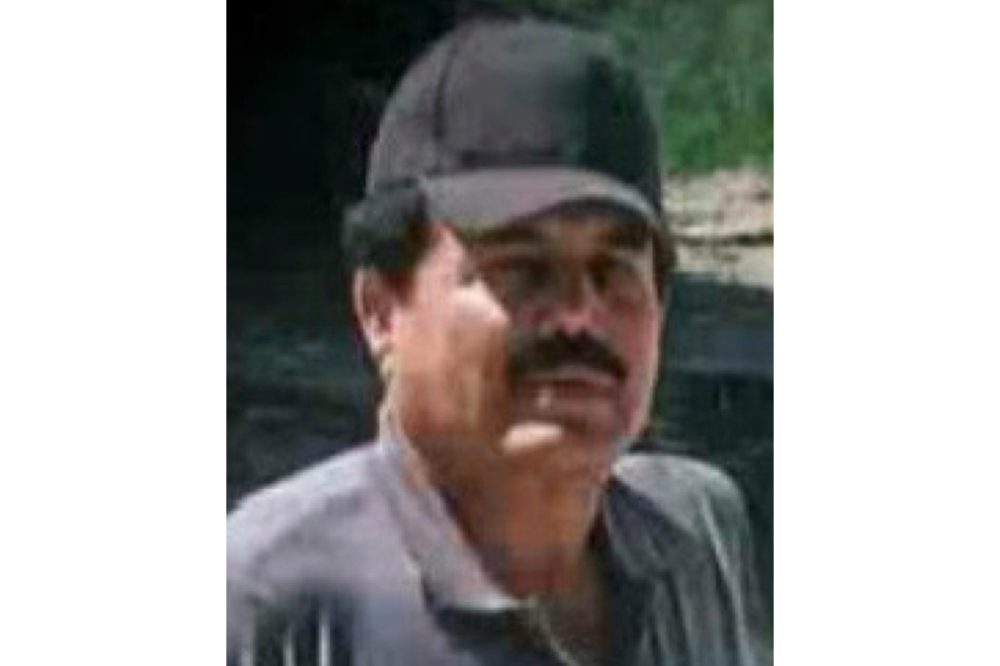
One of Mexico’s most notorious drug traffickers is expected to spend the rest of his life behind bars after a federal court in Brooklyn is set to hand down a life sentence Monday morning to Ismael “El Mayo” Zambada, the longtime co-leader of the powerful Sinaloa Cartel.
Zambada, 76, stands alongside Joaquin “El Chapo” Guzman as one of the highest-profile Mexican drug lords ever sentenced in an American courtroom. Guzman received his life sentence back in 2019.
As part of a plea agreement reached in August 2025, Zambada admitted guilt on charges of racketeering conspiracy and running a continuing criminal enterprise. The Justice Department agreed not to pursue the death penalty, though the charges themselves carried a mandatory life sentence. Over the course of his criminal career, Zambada admitted to overseeing the shipment of millions of kilograms of cocaine into the United States.
U.S. District Judge Brian Cogan is scheduled to formally impose the sentence at a 10:30 a.m. hearing — 2:30 p.m. Greenwich Mean Time — at Brooklyn’s federal courthouse.
Zambada was taken into custody in July 2024 when a plane carrying him and Joaquin Guzman Lopez — a son of El Chapo — touched down at a small airstrip in New Mexico. Guzman Lopez has since entered a guilty plea on drug trafficking charges of his own.
Zambada’s attorney, Frank Perez, noted in a July 6 court filing that his client fully understood he would be sentenced to life when he chose to accept responsibility. Perez also asked Judge Cogan to recommend to federal prison officials that Zambada be housed in a facility capable of providing appropriate medical care, given his age.
Federal prosecutors from the Brooklyn U.S. Attorney’s office pushed back, arguing that the prisons suggested by Perez may not be able to adequately manage the security risks Zambada presents — including the concern that he could potentially continue directing cartel operations even from inside a prison cell.
“Those security concerns will continue for the foreseeable future because individuals loyal to the defendant continue to control the Cartel,” prosecutors stated in a July 13 court filing.
El Chapo Guzman is currently serving his life sentence at a maximum-security federal prison in Colorado.
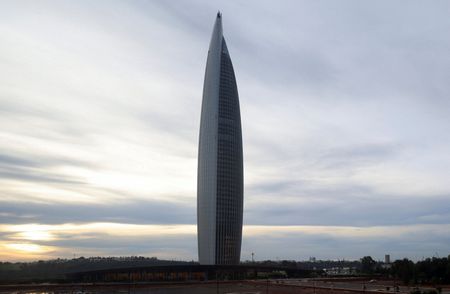
Morocco is preparing to significantly expand its hospitality sector, with plans to add 60,000 hotel beds before the country takes on a co-hosting role for the 2030 FIFA World Cup, according to the nation’s tourism minister.
The North African nation has gained renewed global attention following a strong showing in the most recent World Cup, building on its historic run four years ago in Qatar, when it became the first African and Arab nation ever to advance to the semi-finals.
Government officials are looking to turn that spotlight into real, lasting benefits for Morocco’s tourism economy — a sector that supports hundreds of thousands of jobs and accounts for roughly 7% of the country’s gross domestic product.
“We see the 2030 FIFA World Cup as an accelerator, not an end in itself,” Tourism Minister Fatim-Zahra Ammor told Reuters.
To prepare for the tournament, Morocco’s government is pouring more than 190 billion dirhams — approximately $20 billion — into upgrading and building rail lines, roads, airports, stadiums, and other urban infrastructure. Morocco is one of three primary co-hosts for the event, alongside Portugal and Spain, though how many matches each country will host has not yet been determined.
Morocco has already made notable strides in its hospitality industry, adding 45,000 hotel beds over the past four years. That brings the country’s current total to just over 300,000 beds, according to official figures.
Last year, the country welcomed close to 20 million visitors, ranking it as the most-visited destination on the African continent. Officials are now aiming to draw 26 million tourists annually by 2030.
Morocco’s central bank projects that tourism revenue will climb to a record 161 billion dirhams by 2027, up from 138 billion dirhams in 2025.
Expanded air service from European cities has also helped fuel the sector’s growth. Ammor said the next stage of development will focus on drawing more visitors from China, the United States, and the Middle East by improving air connectivity to those markets.
Morocco is also working to spread tourism beyond its well-known destinations like Marrakech and Agadir. Part of that effort involves positioning the capital city of Rabat — home to centuries-old monuments, museums, and sports venues — as a destination for cultural gatherings, sporting events, and business travel.
“We need to make investments that create lasting value for Moroccan tourism,” Ammor said.
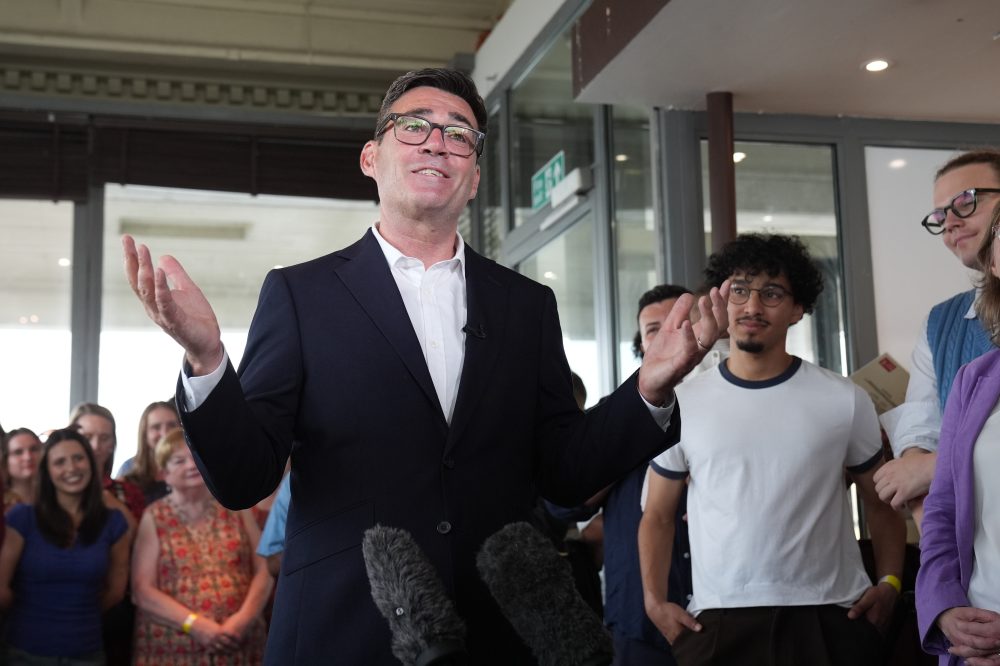
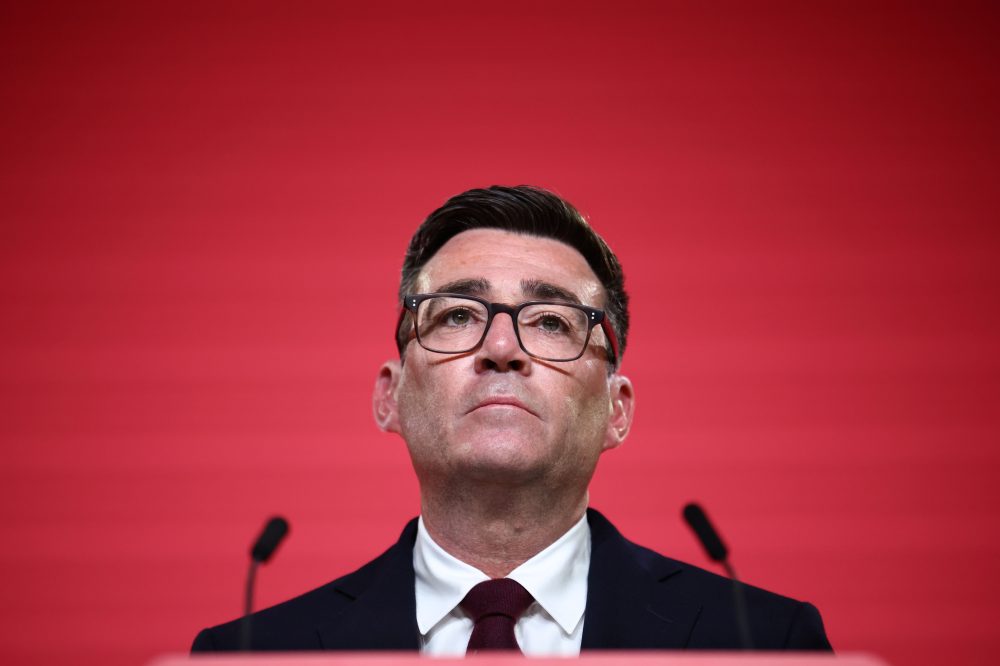
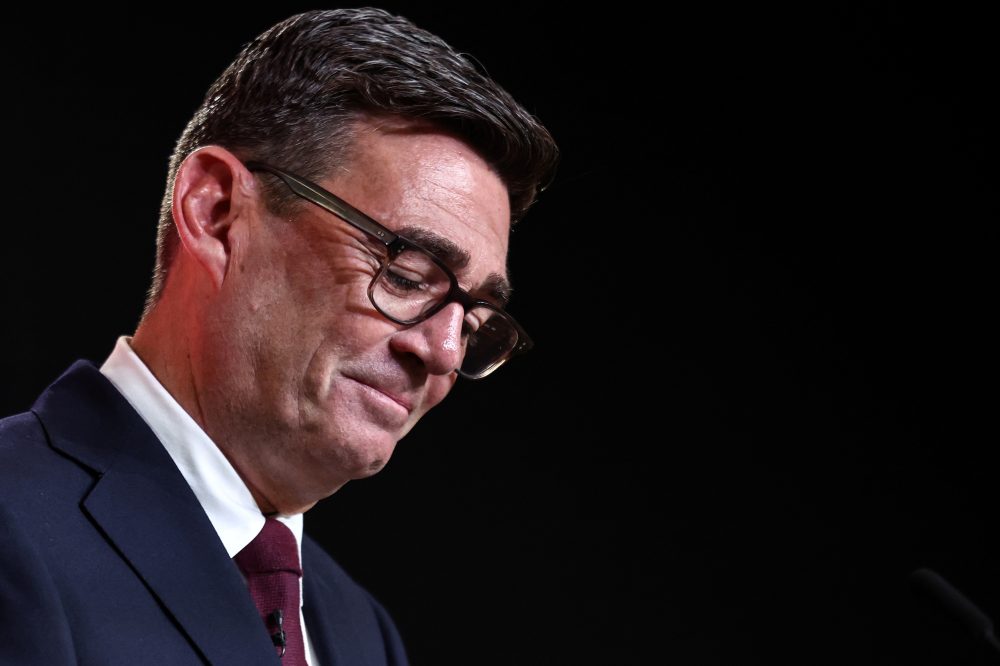
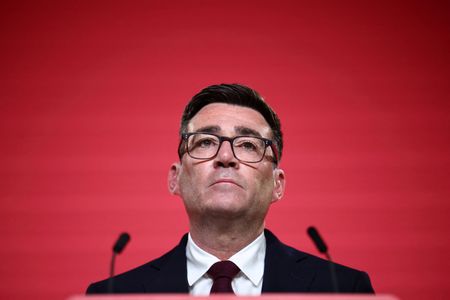
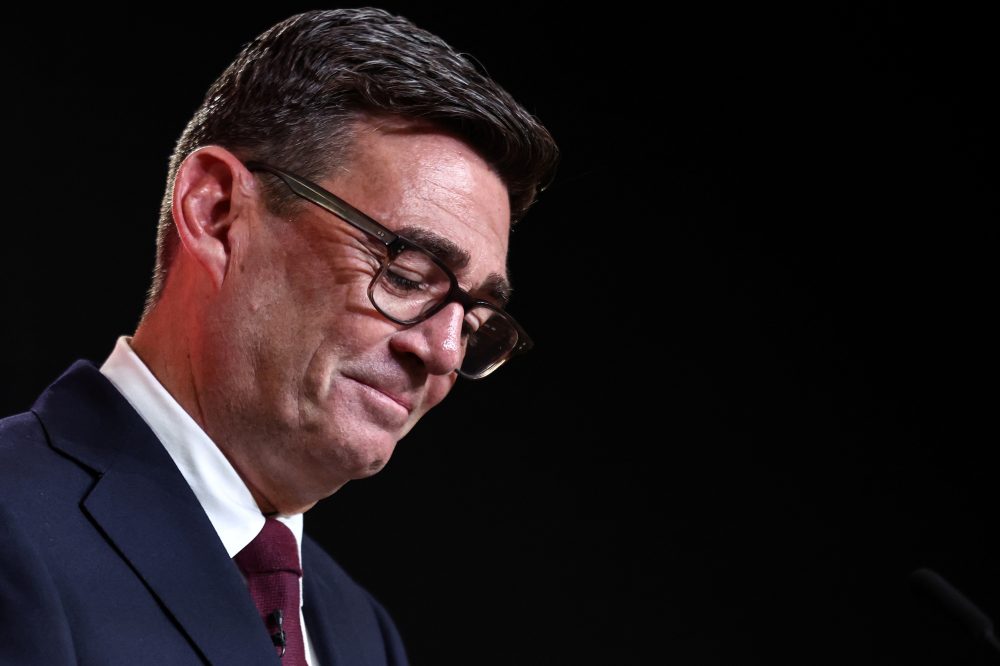
LONDON (AP) — Andy Burnham spent years working his way up before reaching the top — and now that he’s there, the clock is already ticking.
A decade ago, Burnham walked away from a 20-year career climbing the Labour Party ranks in London to head north and take on the role of Greater Manchester’s mayor. Just one month ago, he secured a return to Parliament by winning a high-stakes special election. This Monday, he will be sworn in as Britain’s 59th prime minister.
The abrupt collapse of Prime Minister Keir Starmer’s government after only two years in power has thrust the 56-year-old Burnham into the country’s top job — largely untested on the national stage and unfamiliar to much of the British public outside Manchester. He steps through the door of No. 10 Downing Street carrying enormous expectations and serious doubts about whether he can meet them.
“A whole range of people across the Labour movement and in the country have projected onto Andy Burnham their hopes and their fantasies about how the country should be run and what Labour should stand for and what Andy Burnham stands for,” said Joshi Herrmann, founder of Manchester news site The Mill. “He has got lots of people’s hopes up.”
Though Burnham made his reputation in Manchester, he was actually born in Liverpool and grew up in a commuter village situated between those two rival cities in northwest England.
His father worked as a British Telecom engineer and his mother as a receptionist. He was raised in a tight-knit Catholic family. Burnham has described himself as “not particularly religious,” but says Catholic teachings and the center-left Labour Party shaped his values and commitment to social justice.
In a recent interview with the Times, Burnham expressed sadness that his father, who has Alzheimer’s, is unaware of his son’s historic achievement. “The way I look at it, it’s his achievement as well,” Burnham said. “A whole family achievement, although he doesn’t know it.”
Burnham and his brothers were the first in their family to attend university — and not just any university. He studied at Cambridge, one of England’s oldest and most esteemed institutions.
“He needed a lot of persuading to apply because he felt that as a working-class boy, going off to Cambridge wasn’t for him,” said Stephen Harrington, Burnham’s former English teacher at St. Aelred’s Catholic High School, in comments to the BBC. “He didn’t believe in himself. But he did it, and the rest is history.”
Burnham has spoken openly about feeling like an outsider at Cambridge, where many classmates had attended elite private schools in the wealthier south of England. Nevertheless, he earned a degree in English and met his future wife, Dutch fellow student Marie-France van Heel, now a marketing executive. The two wed in 2000 and together have a son and two daughters.
After finishing his studies, Burnham worked as a journalist for trade publications before shifting to roles as a researcher and adviser to Labour politicians.
He was elected to Parliament in 2001 representing the Manchester-area constituency of Leigh, and steadily rose through government ranks under Labour Prime Ministers Tony Blair and Gordon Brown. Between 2007 and 2010, he served in Brown’s Cabinet, holding the positions of chief secretary to the Treasury, culture secretary, and health secretary.
A pivotal moment in his career came in 2009, when he was heckled while attending a memorial for the 1989 Hillsborough Stadium disaster, in which 97 Liverpool soccer fans were crushed to death. Families of the victims had spent years fighting to correct a false police narrative that blamed unruly fans for the tragedy.
Burnham became a fierce advocate for those families, helping push for a new inquest, a formal apology, and legislation requiring public officials to be truthful about disasters regardless of any reputational damage to themselves or their institutions.
After Labour lost power in 2010, Burnham ran for the party’s leadership twice — in 2010 and again in 2015 — falling short both times. In 2017, with Labour at a low point nationally, he left Parliament to pursue the mayoralty of Greater Manchester.
The mayoral role suited him well. He demonstrated a talent for coalition-building, an eye for opportunity, and a strong practical streak. His governing philosophy became known as “Manchesterism” — a business-friendly form of socialism focused on channeling both public and private investment into areas like transportation, housing, and infrastructure.
Manchester, once a manufacturing hub widely credited as the birthplace of the Industrial Revolution, had suffered greatly as British industry declined. Under Burnham’s leadership, the city experienced a revival, with new high-rise buildings rising on former industrial sites. He was also praised for bringing a fragmented public transit system under unified public control and improving its performance.
He traded in suits and ties for jeans and dark T-shirts, talked openly about his love for bands like Oasis, The Smiths, and New Order, and spent free time playing soccer or competing in DJ battles spinning 1990s music.
During the COVID-19 pandemic, he publicly clashed with Conservative Prime Minister Boris Johnson over what Burnham called a “London-centric” approach to managing the crisis — one he argued was unfairly punishing cities in the north. That confrontation earned him the nickname “King of the North,” a reference to the television series “Game of Thrones” that spoke to both his regional advocacy and his broader political ambitions.
Burnham has described his time away from national government as “unfinished business,” and his opportunity came when Starmer was pressured to resign by Labour colleagues worried about the party’s declining popularity.
To return to Parliament, Burnham needed a seat. A sitting Labour lawmaker stepped down, triggering a special election in the Manchester-area constituency of Makerfield. Burnham handily defeated the candidate from the anti-immigration party Reform UK, reinforcing his image as an election winner.
When the contest to replace Starmer as Labour leader was held, Burnham was the sole candidate.
He now promises to deliver “a new politics based on unity and hope” and “an economy that works for everybody,” regardless of where they live. A central element of his agenda is expanding the powers of regional leaders, and he has announced plans to establish a satellite prime ministerial office — a “No. 10 North” — in Manchester.
Herrmann noted that Burnham possesses real strengths, particularly his ability to craft a compelling narrative and a level of empathy that sets him apart from many politicians. He added that Burnham holds “a set of principles about trying to make the country fairer, trying to bring people out of poverty, that he really does believe in.”
Critics, however, argue that Burnham’s policy positions are short on specifics — particularly around how he intends to fund his various commitments. He will also confront many of the same stubborn challenges that derailed Starmer, including a sluggish economy, strained public services, and a cost-of-living crisis. His lack of experience in foreign affairs — from the ongoing war in Ukraine to managing relations with U.S. President Donald Trump — is also seen as a vulnerability.
Still, Sacha Lord, a Manchester music entrepreneur who served as Burnham’s nighttime economy adviser, says the new prime minister has a tougher edge than many people realize. “He’s not scared of locking horns with people,” Lord said. “Everybody thinks Andy’s this nice, cheeky-chappy guy. But trust me, when he wants something … he tends to get it.”
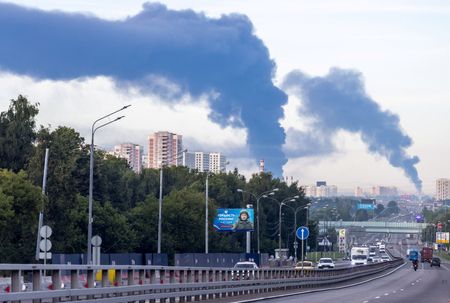
Ukraine sent more than 400 drones toward the Russian capital overnight, Moscow’s mayor announced Monday, in one of the most significant drone offensives against the city since the war began.
The massive strike came just hours after Russian forces pounded Kyiv and several other Ukrainian cities with ballistic missiles — the latest exchange in an ongoing cycle of retaliatory attacks that makes any prospect of a peace agreement seem increasingly remote, given that Russia’s full-scale invasion has now stretched past four years.
Ukrainian President Volodymyr Zelenskyy said Monday he planned to hold “key talks” as he works to manage a growing political crisis at home. The turmoil was triggered by a recent reshuffling of his government, which revealed a sharp divide between veteran military commanders and a younger generation of innovators over the best strategy for fighting the war.
At the center of the controversy is Zelenskyy’s decision to remove 35-year-old Mykhailo Fedorov from his role as defense minister while retaining 60-year-old Soviet-trained Gen. Oleksandr Syrskyi as the head of Ukraine’s armed forces. Zelenskyy now faces the challenge of convincing Ukrainians that those choices will not weaken the country’s war effort.
The decision sparked days of street demonstrations, with protesters voicing support for Fedorov and opposition to Syrskyi.
Moscow Mayor Sergei Sobyanin reported that the drone barrage began late Sunday and continued into the early hours of Monday morning. He said the majority of the drones were shot down well before reaching the city, with 85 intercepted in the immediate vicinity of Moscow.
Andrei Vorobyov, the governor of the Moscow region, said 10 people sustained injuries in the attack. He also reported damage to several residential buildings and civilian infrastructure.
According to Yevgeniya Khrustaleva, who heads the Domodedovo district of the Moscow region, the assault ignited a fire at the Yuzhnye Vrata industrial park, located roughly 30 kilometers — about 18 miles — south of Moscow.
The Astra news outlet reported that a fire broke out at an oil storage facility in Podolsk, approximately 20 kilometers, or 12 miles, south of Moscow, though Russian officials have not confirmed that report.
Ukraine’s drone capabilities have advanced rapidly throughout the conflict, creating a significant challenge for Russia, whose vast territory is difficult to fully defend. Ukrainian forces have made a point of targeting Russian oil infrastructure in particular, causing fuel supply disruptions and putting pressure on Russian President Vladimir Putin.
For context, Russia’s Defense Ministry reported in May that its air defense systems shot down 1,054 Ukrainian drones within a single 24-hour period.
While Ukraine continues to appeal to its international allies for advanced air defense systems capable of stopping ballistic missiles — which are far more difficult to intercept than drones or cruise missiles — Russian forces have been exploiting gaps in Ukraine’s defensive capabilities.
Russia has sharply increased its use of ballistic missiles in recent weeks. A Sunday bombardment using those weapons killed at least six people and wounded dozens more, according to Ukrainian officials.
The Institute for the Study of War, a Washington-based think tank, noted late Sunday that “Russian forces have launched more ballistic missiles against Ukraine thus far in July than Russia reportedly produces each month.”
The organization added that “Russia appears to be dipping into its stockpiles to continue increasing the number of ballistic missiles it launches against Ukraine, as these missiles have a higher success rate than drones and cruise missiles.”
Russia’s Defense Ministry said Monday that overnight strikes targeted fuel storage tanks at the southern Ukrainian port city of Odesa.
Ukraine’s air force reported that Russia launched two missiles and 94 long-range drones at Ukrainian territory overnight. Of those, 81 drones were either jammed or shot down, while nine drones and one missile struck nine separate locations, causing damage.
European missile maker MBDA is rolling out a new defensive weapon aimed at stopping swarms of low-cost drones and munitions — a challenge that modern wars in Ukraine and the Middle East have made increasingly urgent.
The weapon, called the Counter Mass Interceptor, was set to make its public debut at the Farnborough Airshow in England on Monday. It is designed to give European militaries and NATO allies a homegrown option for defending against waves of cheap, mass-produced weapons.
An MBDA representative explained the gap in current European capabilities, telling Reuters: “Today in Europe, there is no sovereign system capable of addressing saturation.”
“That means that if we want to address this threat, we are forced to rely on non-European systems, whether American, Israeli or others,” the representative added.
Currently, the United States relies on systems like the precision-guided APKWS — the Advanced Precision Kill Weapon System — which is produced by BAE Systems along with U.S. companies Northrop Grumman and General Dynamics.
The economic challenge of modern drone warfare is significant. Shooting down an inexpensive drone often requires a missile that costs far more than the drone itself, straining both defense budgets and ammunition supplies.
Russia’s widespread deployment of Shahed drones against Ukraine, along with Iran’s use of the same drones in its conflict with the U.S., has underscored the urgent need for affordable, scalable countermeasures.
The first version of the interceptor is designed to take down smaller drones. MBDA plans to follow it with a second, longer-range interceptor capable of targeting not only drones but also rockets, gliding bombs, and subsonic missiles — and able to function in any weather conditions.
MBDA said its British teams are currently leading development of the program, though a future version is expected to be led by the company’s French division.
According to MBDA, an initial version of the interceptor could be available as early as 2028. The company said production could be handled either by industrial partners or directly through MBDA itself, using existing facilities and repurposed assembly lines.
“We are moving closer to an automotive-industry model. The goal is to be able to manufacture at scale,” the MBDA representative said.
Jose Simao traveled from Angola to Portugal in 2022 to work as a bricklayer, joining a broader wave of immigrants who had become a vital lifeline for the country’s severely understaffed construction industry. Now, his future in the country is uncertain.
“I did everything the authorities asked of me, and I’m here legally. But the government changed the rules. I’m afraid they’ll send me back,” Simao told Reuters.
Portugal’s increasingly strict immigration policies — driven in part by the government’s effort to blunt the rise of a growing far-right movement — are cutting off the labor supply that construction companies depend on, even as those same companies race to address one of the worst housing crises in Europe.
The country’s centre-right coalition government says it wants to put a stop to what it calls “uncontrolled inflows” of migrants while ensuring that those already living in Portugal have adequate living conditions. But construction executives and industry organizations say the new measures have deepened an already serious worker shortage, threatening efforts to build affordable housing and putting at risk a sector that accounts for nearly 8% of the national economy.
“The government has restricted immigration too much and too quickly given the country’s needs,” said Oscar Afonso, an economics professor at the University of Porto. “It was a political choice, but immigrants are essential to the economy.”
The roots of Portugal’s immigration boom stretch back to 2017, when the previous centre-left government allowed foreign workers to enter without work visas and later apply for residency after a year of employment with documented social security contributions. Between 2021 and 2025, the number of foreign residents more than doubled, reaching a record 1.6 million — about 14% of the total population.
These workers filled a critical gap in construction, a sector that had seen many of its Portuguese employees leave for higher-paying jobs in wealthier European Union countries. Today, foreign workers account for roughly 30% of the construction workforce.
But the surge in immigrant numbers also fueled the anti-immigrant Chega party, whose rising popularity traditional Portuguese political parties have found difficult to counter. In 2024, Portugal followed the lead of many other European nations and tightened its immigration rules after a shift toward a centre-right government, with one cabinet minister declaring at the time that “the time for an irresponsible policy is over.”
A study by the Bank of Portugal found that the new restrictions had already cut net immigration roughly in half, down to about 6,200 people per month in 2025 compared to the year before. Experts expect the numbers to fall further.
For the construction industry, the timing is especially difficult. Portugal faces a severe housing shortage, with new rental lease costs nearly doubling since 2017. The country’s central bank estimates a deficit of 300,000 homes across the nation — equivalent to the entire housing stock of the capital, Lisbon.
Portugal has committed to building 150,000 affordable homes by 2030 through a €9 billion ($10.3 billion) program backed by the European Union. But even with a 34% jump in construction jobs between 2020 and 2025, the industry is still short on workers.
Portugal’s largest construction association, AICCOPN, estimates the sector needs at least 80,000 more workers just to keep existing projects moving. Albano Ribeiro, head of the Construction Workers’ Union, warned the shortfall could grow to 120,000 jobs as major projects get underway — including Lisbon’s planned new airport, which alone is expected to require 10,000 workers.
The government introduced a fast-track visa program last year to help companies hire workers from abroad. However, firms are required to offer employment contracts and arrange adequate housing for incoming workers before they arrive. So far, only 5,000 construction visas have been issued under the program.
“The sector needs workers to build homes … yet builders must now secure housing for incoming immigrants,” said Joao Sousa, chief executive of JPS, one of Portugal’s largest developers. “If there are no homes for those already here, how can we provide housing for people coming to Portugal?”
About 90% of JPS’s workforce of roughly 700 to 800 people are foreign nationals. Smaller companies, builders and union officials say, have even less ability to arrange dormitory-style housing near often remote job sites.
The stricter rules are also threatening the status of many workers already living and working in Portugal, like Simao. Although he has an employment contract, his two-year residence permit is set to expire in August. Under the updated regulations, he must now present a formal rental contract to renew it.
Simao rents a room in Lisbon for €380 a month through an informal arrangement, but his landlord is unwilling to provide official payment receipts — leaving his renewal in jeopardy.
“I came here to improve my life and hoped to one day bring my mother to Portugal,” he said.
Meanwhile, other European countries facing similar labor shortages — including Spain and Italy — are moving in the opposite direction, working to regularize undocumented migrants or expand work visa programs.
JPS’s Sousa said he supports expanding training programs and raising wages to draw more Portuguese workers into the industry, but acknowledged that foreign labor remains essential. “Many projects could be delayed or cancelled unless the government adopts exceptional measures, as other countries have, to attract and retain migrants,” he said.
A Sunni Muslim cleric has been shot and killed by unidentified gunmen in a southeastern Iranian border town, according to reports from Iran’s state media citing local officials.
The victim, Molavi Mohammad Anvar Rigi, served as a Sunni Friday prayer leader in Mirjaveh, a town located near Iran’s southeastern border. The attack took place on Monday.
The incident occurred in Sistan-Baluchistan province, which is considered one of Iran’s poorest regions and is home to a significant Sunni Baluch population. The area has a long history of unrest, with Islamist and ethnic militant groups clashing with security forces and targeting individuals seen as aligned with the central government in Tehran.
Authorities confirmed that an investigation is underway and appealed to local residents to remain calm. Officials stated that the attack appeared to be designed to destabilize security in the region and inflame sectarian tensions within the province.
LONDON (AP) — Andy Burnham, the former mayor of Greater Manchester who now leads the Labour Party, is completing the final steps Monday to become Britain’s seventh prime minister in a single decade, taking over from Keir Starmer.
Burnham made his return to Parliament in June after winning a high-stakes special election, and he was officially sworn in as a member on July 12 — just hours after the widely unpopular Starmer announced he was stepping down following only two years as prime minister.
As part of the transition, Starmer will travel the roughly one mile from Downing Street to Buckingham Palace to formally inform King Charles III of his resignation.
Shortly after, the 56-year-old Burnham will make the same journey to the palace, where King Charles will ask him to form a government. That moment — traditionally referred to as “kissing hands” — is when Burnham will officially assume the role of prime minister.
Starmer came to power just two years ago when he led Labour to a sweeping election victory. However, his time in office quickly soured. A string of policy reversals and political missteps caused public support to collapse, and after devastating local election results in May, the Labour Party pushed him out.
Britain’s system of parliamentary democracy allows the party in power to swap out its leader mid-term, with the new leader automatically becoming prime minister — no general election required.
The next scheduled national election is not required until 2029, five years after the last one held in 2024, though Burnham has the option to call one earlier if he chooses.
Before the day wraps up, Burnham will likely come face to face with one of Downing Street’s most enduring residents — Larry the cat. The gray and white tabby has called the prime minister’s official home since 2011 and has outlasted six of Burnham’s predecessors.
Originally a stray taken in to deal with a rodent problem, Larry now holds court on Downing Street, frequently making appearances just as foreign dignitaries arrive. He was already spotted Monday morning, drawing attention in front of the iconic black door of No. 10.
Photographer Justin Ng, who has chronicled Larry more than almost anyone, put it simply: “Larry is the most stable thing in British politics.”
Ng added: “(He’s) like the night watchman of Downing Street. He’s looking out, looking out for people. People are reassured (by) his presence that things will carry on.”
Larry now has an official profile on the government’s website and boasts more than 900,000 followers on X. NATO Secretary-General Mark Rutte recently stopped by to greet him, and leaders across the board have been eager to be photographed at his side.
There is one potential wrinkle, however — Burnham also has a dog named Axel, who will now need to make peace with the famous feline.
The day’s events at Downing Street will begin with Starmer delivering a brief farewell address before heading to Buckingham Palace to submit his resignation to the king. Burnham will then be summoned to the palace, and upon his return, he will speak to the nation for the first time as prime minister, standing before the famous black door of 10 Downing Street.
Labour is hoping Burnham’s arrival marks the end of a turbulent era of rapid leadership changes. He will be the seventh prime minister the United Kingdom has had since 2016.
Russian military strikes have taken the lives of 28 people in Ukraine’s southern Odesa region since the start of July, the area’s regional governor announced on Monday.
Regional Governor Oleh Kiper described the ongoing assault during an appearance on Ukrainian television, painting a picture of relentless attacks on the region. “If you take since the beginning of July, the Odesa region was under constant daily shelling. There were days when 13-15 air raid alerts had been announced in the region,” Kiper said.
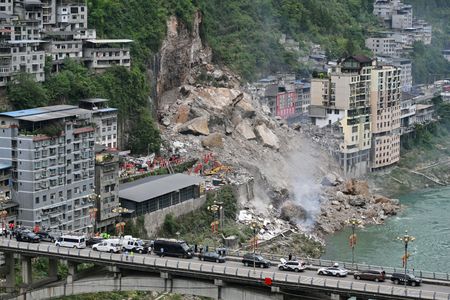
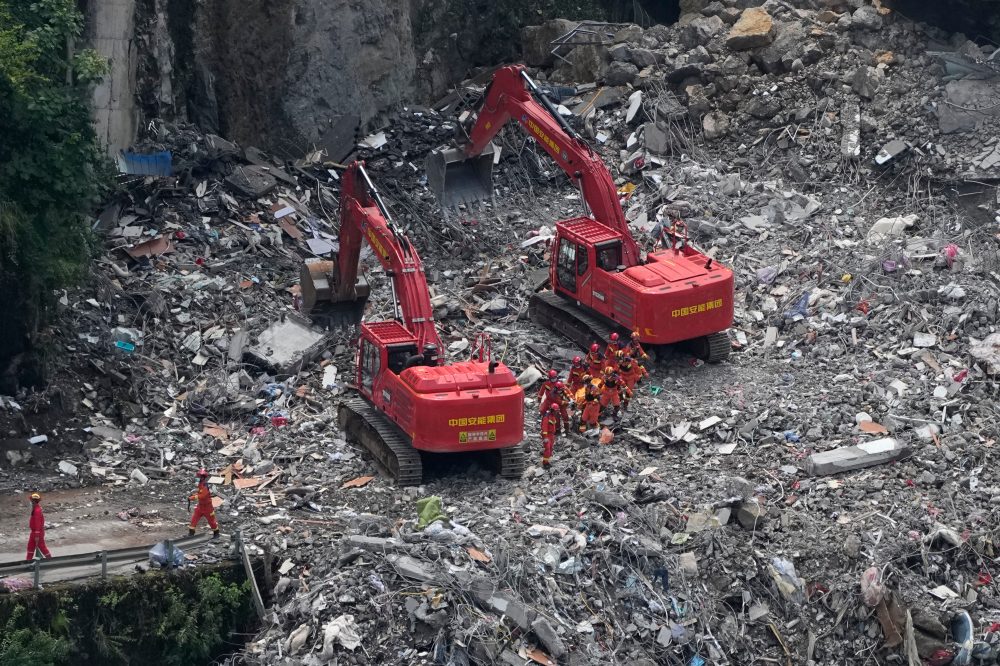
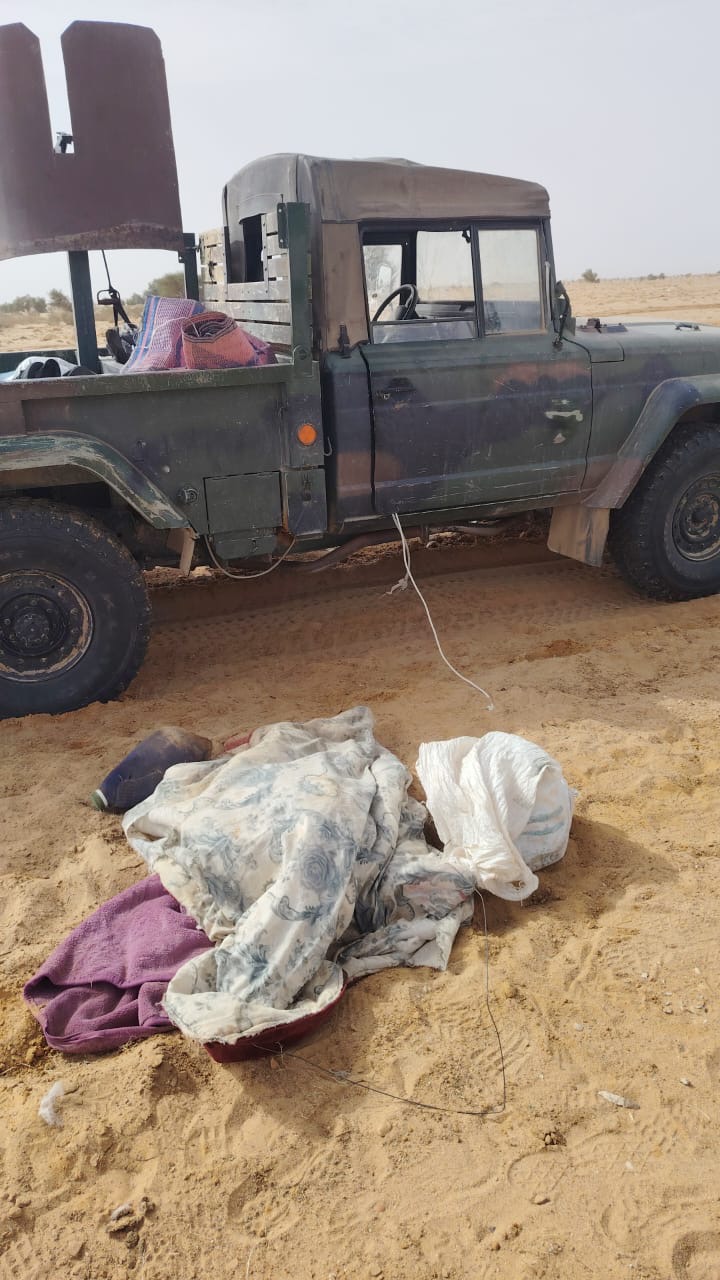
Rescue workers in southwestern China turned to explosives Monday in a desperate attempt to reach 34 people who have been missing for three days following a devastating landslide triggered by heavy rainfall in a region known for its scenic landscapes.
The landslide struck Friday in Penghui county, roughly 270 kilometers — about 168 miles — from the sprawling urban center of Chongqing. Eight people lost their lives in the disaster. China ranks among the world’s most landslide-prone nations.
Video footage broadcast by state television network CCTV showed rescue teams shattering a massive boulder during Monday’s blasting operation. The broadcaster reported that the operation had moved into a “deep rescue phase,” though no further immediate details were provided.
The rescue effort comes after President Xi Jinping called for scientifically guided search and rescue operations for those still unaccounted for, along with a rapid investigation into what caused the landslide.
More than 1,100 residents were evacuated from the county, which is home to approximately 500,000 people. Many of the area’s communities are built along steep hillsides overlooking the Wujian river. Images and video from the scene showed a section of the collapsed mountainside tumbling into the river, blocking the main street of the narrow hillside township.
Officials have deployed teams to assess hidden geological hazards and track the possibility of secondary disasters, according to the official news agency Xinhua.
With heavy to torrential rain in the forecast through Monday across several provinces, authorities are urging stronger protective measures in high-risk areas already made vulnerable by saturated groundwater and ongoing construction activity. CCTV reported Monday that eight small and medium-sized rivers across Yunnan, Guangxi, Guangdong, Anhui, and Shanghai are currently running above flood warning levels.
Experts point to a combination of intense summer rainfall, rapid urban development and construction, and frequent seismic activity as major contributors to China’s disaster risk. Mountains, hills, and plateaus account for roughly two-thirds of China’s total land area.
Over the past decade, at least five major landslides have claimed approximately 294 lives across the country. The deadliest of those incidents occurred in December 2015, when a massive mound of construction debris collapsed at an industrial park in the southern technology hub of Shenzhen, killing more than 70 people.
Russian officials announced Monday that Ukraine struck Moscow and the surrounding region with a wave of more than 400 drones overnight, leaving two people injured and igniting fires at several civilian sites.
Andrei Vorobyov, the governor of the Moscow region, posted on the Telegram messaging app that air defense forces and electronic warfare systems successfully pushed back the drone assault. He noted the most significant damage occurred in Podolsk, Domodedovo, and the Odintsovo district, where two people were hurt and multiple civilian infrastructure sites were set on fire or damaged.
Moscow Mayor Sergei Sobyanin reported that more than 400 “enemy drones” were launched toward the Moscow region during a window stretching from 8:30 p.m. (1730 GMT) to 5:00 a.m. (0200 GMT). The vast majority were intercepted by air defense systems at long range, with 85 drones shot down as they approached the Russian capital.
Wildberries, identified as Russia’s largest online retailer, announced Monday that its logistics center in the Podolsk district had been evacuated out of caution, though it later returned to normal operations.
The attack came just days after a series of Ukrainian drone strikes on Saturday killed seven warehouse employees at a Wildberries facility and injured dozens of others. A separate strike that same day triggered a fire at an oil depot located in the broader Moscow region.
Russia’s Defense Ministry stated that air defense systems destroyed 381 Ukrainian drones overnight across various Russian regions as well as over the Black Sea and the Sea of Azov.
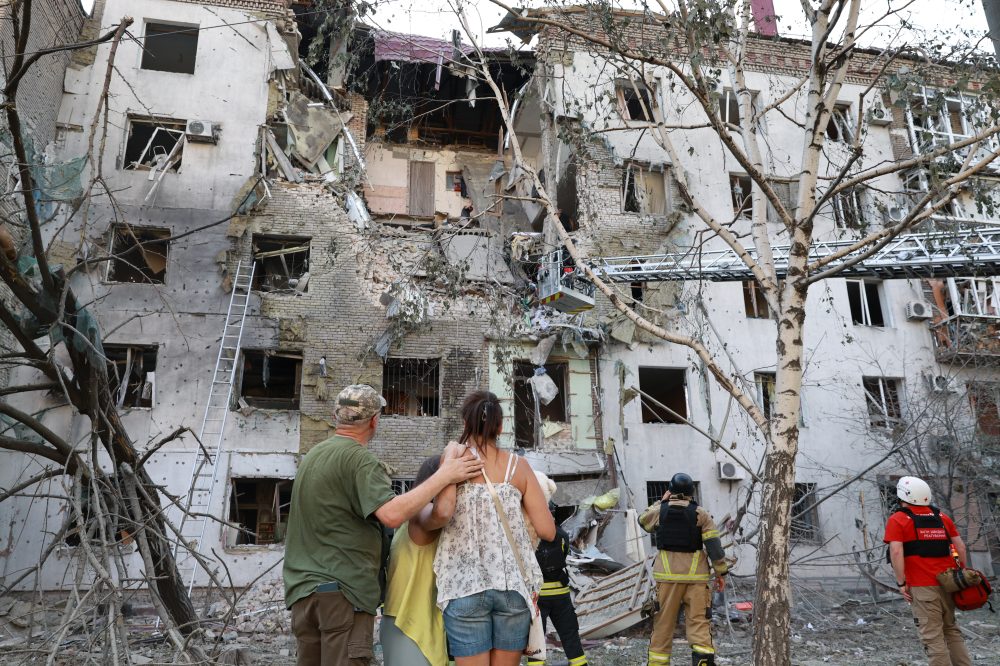
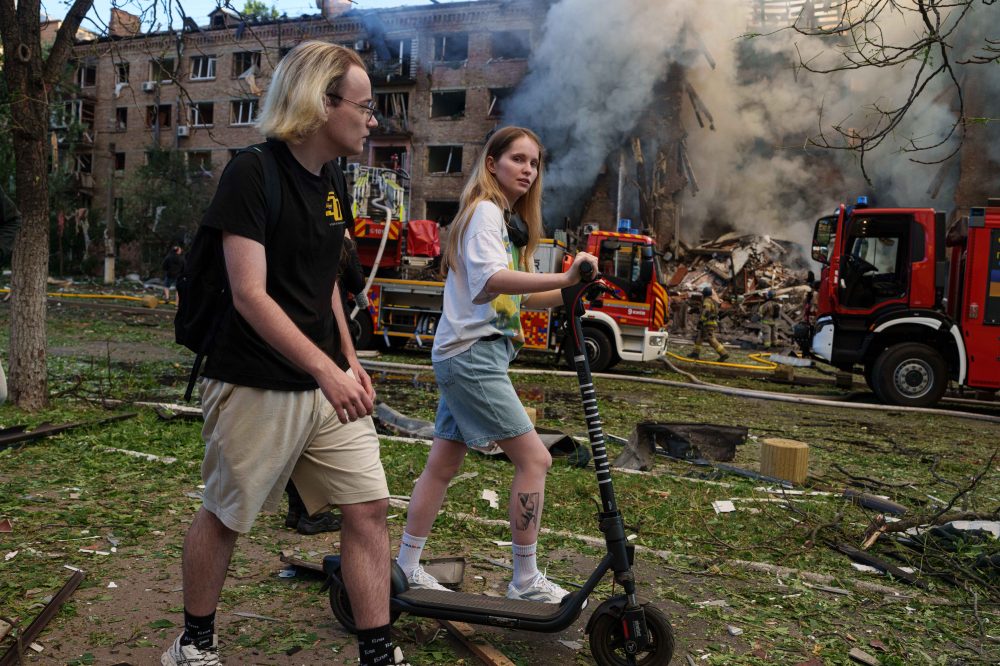
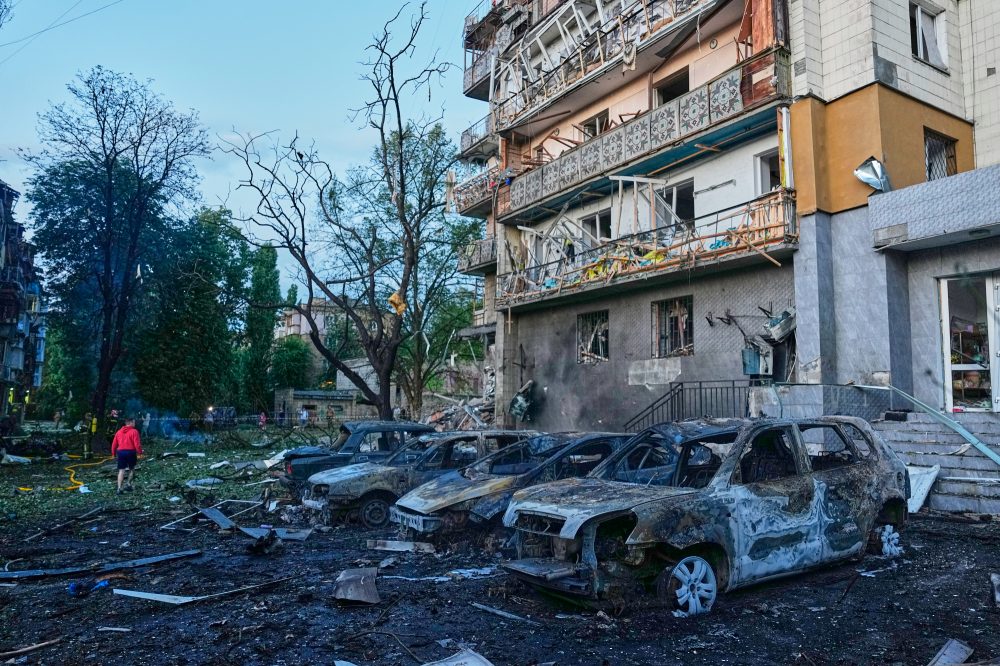
KYIV, Ukraine (AP) — There’s a grim joke that circulates among the people of Kyiv’s historic Lukianivka neighborhood: Russian attacks come so often that residents joke they should be handed military service papers, as if they were stationed on the front lines of the war.
When real estate agent Dmytro Zhekov tries to attract renters to one of the Ukrainian capital’s most frequently struck areas, he doesn’t sugarcoat the situation. His social media listings tout the neighborhood’s genuine advantages — lower rents, proximity to the city center, a convenient metro line and historic sites — but he leads with a warning.
“From the beginning I tell them, ‘This is a place in the danger zone. It gets hit regularly. If you are all right with that, then we can see it,’” he said.
At the heart of the danger is a Soviet-era weapons factory whose roof has been blackened by repeated bombardments, making it one of Russia’s most consistent targets in Kyiv. Just across the street, the Lukianivka metro station — which lends the neighborhood its name — has been struck at least eight times. During air raid warnings, that same station becomes a refuge for local residents. Craters have become a fixture of the surrounding streets.
For people living here, the question is no longer whether another strike will come, but when. Life in Lukianivka means reopening a shop next to the scorched remains of a market, cutting hair in buildings scarred by shrapnel, moving theater productions into basements and choosing to rebuild instead of flee.
Between attacks, residents sweep broken glass from the pavement, cover shattered windows with boards and press on. After another Russian missile barrage struck on Sunday, that familiar routine started all over again.
“After every attack, I walk down the main street, and it feels like watching a wound widen,” said resident Vladyslav Darmohrai.
Lukianivka’s central road, Dehtiarivska Street, traces a portion of the ancient Via Regia — the medieval trade route that once guided merchants into Kyiv over the course of centuries.
In later years, the neighborhood developed into a working-class area of factories, markets and the Lukianivka prison, whose notable inmates have included former Prime Minister Yulia Tymoshenko. She spent two and a half years behind bars after striking a gas agreement with Russia — a case widely seen as political payback by her rival, then-President Viktor Yanukovych.
The neighborhood has been shaped by successive chapters of history, from Soviet industrialization to Ukrainian independence and now relentless Russian bombardment. Today it also houses many residents who were displaced from other parts of the country by the war.
Ukraine’s first McDonald’s, which opened in Lukianivka in 1997, became an early emblem of the post-independence era. Today, diners eat beneath a plastic sign permanently warped by the heat generated from nearby Russian strikes.
“It’s part of our history now,” said historian Kyrylo Stepanets.
The neighborhood’s position as a historic crossroads gave birth to the Lukianivka market, which had served the community since the late 19th century — until a Russian strike on May 24 reduced it to ruins.
What remains is a charred labyrinth of stalls, frozen in the moment of destruction. Blackened loaves of bread still rest on the shelves of what was once a bakery.
For many locals, the market endures in memories of childhood — of being led by parents and grandparents through its bustling aisles to pick up fruit, flowers and everyday goods.
Alyona Lukianets, 32, spent 11 years growing her produce business there. When she returned after the strike, her stall was ash. Weeks later, she came back to work anyway.
Her new stall — cobbled together from wooden pallets and tarps outside the market’s burned-out shell — looks nothing like what she lost. Each morning, she still arranges her baskets of berries and fresh vegetables with the same attention to detail. The bitter smell of the destroyed market sometimes still drifts through the air behind her.
“I don’t know what it will take for us to leave this place,” Lukianets said. “We are unmovable.”
Julia Sosnovska had dreamed of having a dog ever since she moved into her Lukianivka apartment in 2022. Her landlords had refused for years. But after a devastating Russian strike in May, they finally agreed, and a brown dog named Perry became part of her life.
Displaced after Russia seized control of the southern city of Mariupol, Sosnovska chose Lukianivka for its low rents, even knowing her apartment looked out over the Artem weapons factory.
Rents in the neighborhood begin at under $200 per month for a studio. One-bedroom units start around $270, and two-bedroom apartments can be found for roughly $310.
The Artem plant was originally founded in the late 19th century as an industrial machinery facility. It eventually became one of the Soviet Union’s premier arms manufacturers before transitioning into a key part of Ukraine’s defense industry after independence. Production ramped up after Russian-backed forces began seizing territory in eastern Ukraine in 2014.
Since Russia’s full-scale invasion, the factory has become one of Moscow’s primary targets in the capital. Russia contends the plant is still manufacturing weapons. Ukraine has neither confirmed nor denied that claim, with wartime restrictions preventing officials from commenting on military production.
Residents sometimes wonder whether it would be safer to move production elsewhere — but few believe that would help much, since Russian missiles have struck every district across Kyiv.
Instead, people have adapted to cleaning up after strikes. Some property owners even keep extra windowpanes on hand, according to Zhekov, the real estate agent.
When the latest barrage hit on Sunday, Sosnovska was jolted awake by a blinding flash outside her bedroom window, followed immediately by the sound of shattering glass. Her first thought was to find Perry, who had fled her bed in a panic. She grabbed the trembling dog along with her documents and laptop and joined neighbors sheltering in the building’s underground parking garage as more explosions rang out.
By morning, her apartment windows had been blown out and her car had been damaged. She counted herself lucky. “Glass is the least you can lose in these attacks,” she said.
Still, she is staying in Lukianivka. “Where else would I go? You never know which place will be next,” she said.
Vitalii Zhdaniuk opened a barber school in Lukianivka because he loved the area. The building is riddled with shrapnel marks, and a chunk of brick thrown from a nearby auto repair shop during a Russian strike last year is still lodged in the wall.
“No matter how many missiles fly here,” he said, “I’ll stay.”
Just behind the Lukianivka metro station sits the Mala Opera, a theater that has long been a cornerstone of Kyiv’s cultural scene. The threat of missile strikes has forced performances underground, leaving the main auditorium dark and empty.
It is in that basement space where Director Mykhailo Miskun is staging his newest production.
“When the war began, we set ourselves one task: to perform comedies,” Miskun said. “We want to lift the spirits of the people who come to us.”
His latest play centers on romance, relationships and squabbling neighbors — topics chosen deliberately to give audiences a brief mental escape from the war.
The company has adjusted to the ongoing threat by holding rehearsals online and gathering in smaller venues. After a recent Russian strike, the troupe briefly debated whether to leave. They chose to stay “despite everything,” Miskun said.
Outside, audience members line up to descend into the basement as the evening’s show prepares to begin.
“We live. We create. We give birth,” Miskun said. “Just like any part of Ukraine, Lukianivka is also being restored and continues to live.”
Torrential monsoon rains unleashed devastating floods and landslides across northern and northeastern India over the weekend, leaving at least 25 people dead, officials confirmed Monday. Forecasters are warning that the dangerous weather is far from over.
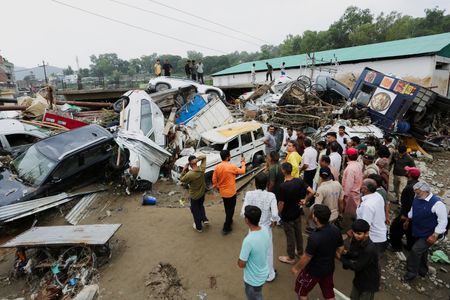
In Indian-administered Kashmir, at least 15 people lost their lives in separate rain-related disasters across the Poonch, Rajouri, and Doda districts, according to a senior police official. A number of additional residents are still unaccounted for.
The northeastern state of Nagaland was also hard hit, where relentless rainfall set off multiple landslides that killed nine people. Rescue teams have so far recovered four bodies, a senior district official told Reuters.
In the neighboring state of Assam, floodwaters claimed one life on Sunday. State disaster management officials reported that more than 57,000 residents spread across seven districts have been impacted by the severe rainfall.
India’s national weather office issued a warning on social media platform X, stating: “Active monsoon conditions are likely to persist over northwest, east and northeast India during the next 6–7 days.”
The deadly weather has also extended into Nepal, a neighboring Himalayan nation. Since the monsoon season began in mid-June, 27 people have been killed, one person remains missing, and 69 others have been injured due to floods, landslides, heavy rain, and lightning strikes, according to the National Disaster Risk Reduction and Management Authority.
Several major roads in Nepal have been blocked by landslide debris, including the highway connecting the capital city of Kathmandu to the southern plains, police said Monday.
Nepal’s weather department called for light to moderate rainfall across most of the country Monday, with heavier rain expected at isolated spots in the Koshi, Bagmati, Gandaki, and Lumbini provinces.
For another month, China has kept its shipments of critical rare earth materials to Japan at virtually nothing, with new customs figures showing the diplomatic standoff between the two nations continues to take a serious economic toll.
According to Chinese customs data made public on Monday, China sent zero gallium, dysprosium, terbium, or yttrium to Japan in June. These controlled materials have been severely restricted for several months running.
Japan operates the largest rare earth magnet industry in the world outside of China, but the country depends heavily on Chinese sources for key raw material inputs — a vulnerability now being felt across multiple industries.
The trouble began after Japanese Prime Minister Sanae Takaichi made remarks about Taiwan in November that triggered a diplomatic falling-out with Beijing. In the months that followed, China moved to tighten its grip on exports of these materials.
Beijing rolled out export controls on categories of heavy rare earths and the magnets made from them in April 2025. It then formally tightened restrictions targeting Japan in January, and tightened them again two more times the following month, with major Japanese conglomerates directly in the crosshairs.
Japanese businesses have been sounding the alarm, warning that the lack of access to these critical minerals is beginning to drag on the broader Japanese economy.
China’s ability to control these supply chains has given Beijing one of its most powerful tools in international diplomacy. The issue has even come up in recent negotiations involving U.S. President Donald Trump.
Gallium — a metal essential to chip and magnet manufacturing — had briefly returned to Japan in May with a large shipment, but exports fell back to zero in June. Meanwhile, yttrium, a rare earth used to shield turbine blades in aircraft engines and power plants from intense heat, also saw no shipments to Japan last month.
The U.S., which was also a major recipient of Chinese yttrium before the restrictions took hold, received none of the material for the second consecutive month.
Despite the targeted cutoffs, China’s overall rare earth magnet exports remained robust in June. The country shipped approximately 5,649 metric tons of magnets during the month, up from 4,730 tons in May.
Cyprus observed the 52nd anniversary of Turkey’s military invasion on Monday, as both the Greek Cypriot and Turkish Cypriot communities braced for a renewed United Nations effort to end years of stalled peace negotiations.
In the southern, Greek Cypriot-controlled portion of the island, air raid sirens rang out Monday morning to mark the exact hour Turkish forces arrived in 1974 — a military operation that came just days after a brief coup backed by Greece.
Meanwhile, military ceremonies were held in the Turkish Cypriot north, a self-declared state that only Turkey officially recognizes.
U.N. Secretary-General Antonio Guterres is scheduled to visit the island from July 27 to 29 in a bid to breathe new life into a peace process that has seen no meaningful negotiations in years.
Cyprus President Nikos Christodoulides expressed cautious optimism ahead of the visit. “We hope the conditions will be created for the resumption of negotiations,” he said.
Progress toward peace has long been blocked by a fundamental disagreement over what a resolution should look like. Greek Cypriots want the island reunified as a federation, while Turkey and the Turkish Cypriot leadership are pushing for recognition of two separate sovereign states.
The unresolved conflict continues to strain relations between NATO allies Greece and Turkey, and it also stands as a significant barrier to Turkey’s long-standing goal of joining the European Union — an organization Cyprus has belonged to since 2004.
The roots of the crisis stretch back to years of intercommunal tension and violence that followed Cyprus gaining independence from Britain. Turkey refers to its 1974 military action as a “peace operation” carried out to safeguard the Turkish Cypriot population.
NEW DELHI — Indian social activist Sonam Wangchuk is approaching 60 years old, yet he has emerged as the defining figure of a Gen Z movement calling for the ouster of Prime Minister Narendra Modi’s education minister, following widespread exam paper leaks. His cause gained even more visibility after authorities forcibly transported him to a hospital following three weeks of refusing food.
Wangchuk is widely believed to have inspired the central character in a major Bollywood film. He built his reputation campaigning on behalf of his home region of Ladakh, a Himalayan area that borders China. However, his hunger strike in protest of exam leaks that impacted millions of students across India has earned him a brand-new audience among young people, helping transform the issue into a broader generational movement that is putting pressure on Modi’s administration.
Even before Delhi police moved him to a hospital over the weekend — following his hunger strike in solidarity with supporters of the youth Cockroach Janta Party — people were already drawing comparisons between Wangchuk and India’s revered independence leader Mahatma Gandhi. Messages of support, both video and text, have poured in from across the country, including from Bollywood celebrities.
Speaking this month from Delhi’s Jantar Mantar protest site, Wangchuk addressed those comparisons directly: “It pains me when some say you’re the Gandhi of the 21st century, the modern Gandhi, you’re the real hero.”
He continued: “I am no Gandhi, no hero. I’m just an ordinary citizen who has not shied away from his responsibilities. Don’t look for a hero in others. Be the hero of your own life and fulfill your responsibilities.”
Affectionately referred to as “Sonam Sir” — the name Sonam translates to “merit” or “virtue” in some cultures — Wangchuk is one of the most prominent voices in Ladakh. CJP founder Abhijeet Dipke is among those who use that endearing title. Wangchuk has spent his career championing education reform and water conservation in the high-altitude desert landscape of Ladakh. In 2018, he received the Ramon Magsaysay Award, a prestigious honor often referred to as Asia’s Nobel Prize, in recognition of that work.
Born in 1966 in the small, isolated village of Ulaytokpo in Ladakh, Wangchuk was just 19 years old and studying engineering at the government-run National Institute of Technology in Kashmir when he launched a tutoring program in foundational subjects like English and mathematics that helped hundreds of students. He later founded the Students’ Educational and Cultural Movement of Ladakh.
As the effects of climate change began threatening water availability in the region, Wangchuk developed artificial glaciers he called “ice stupas” — cone-shaped ice formations that accumulate water during winter months and gradually melt in summer to provide irrigation, according to his Magsaysay Award citation.
In recent years, he has grown into a prominent voice for environmental protection and greater self-governance for Ladakh, which is currently a federally administered territory. He spent nearly six months behind bars in 2025 following deadly protests that called for Ladakh to be granted statehood. Wangchuk has denied any role in inciting the violence.
Indian media reported that his father, Sonam Wangyal, once served as a minister in the former state of Jammu and Kashmir, and that former Prime Minister Indira Gandhi played a role in ending one of his hunger strikes related to demands for affirmative action for people from Ladakh.
Wangchuk is married to Gitanjali J. Angmo, who also works in the field of education. He has previously stated that he is willing to die for the causes he believes in, including his demand that Education Minister Dharmendra Pradhan step down. Pradhan has not responded to multiple requests for comment from Reuters.
Wangchuk had previously stated his fast could stretch to six weeks — unless his body gave out first. “But hopefully we don’t have to go that far,” he said. “A sensitive government in a democracy listens to the pain of its people, and I hope they will take action.”
In the days before Delhi police intervened and moved him to the hospital, Wangchuk told Reuters: “Our demand for a resignation will bring some accountability to the system. At least, this will help restore trust in democracy.”
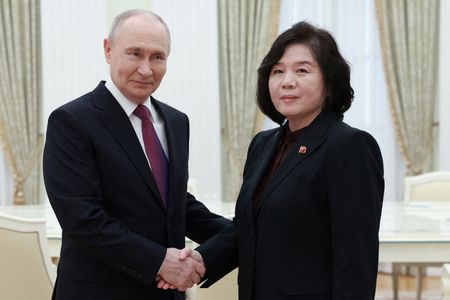
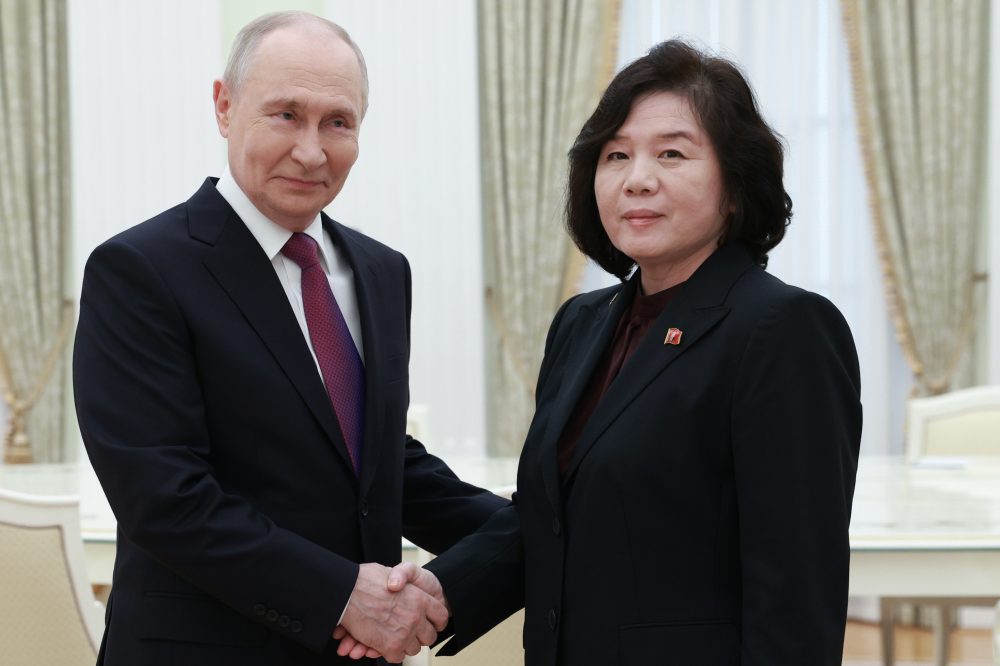
MOSCOW — Russian President Vladimir Putin sat down with North Korean Foreign Minister Choe Son Hui at the Kremlin on Sunday, offering his thanks for North Korea’s role in what Moscow refers to as its special military operation, according to a statement from the Kremlin.
The meeting comes after North Korean troops played a significant part in helping Russia repel a large-scale Ukrainian military push into Russia’s western Kursk region in 2024.
Under a mutual defense agreement between the two countries, North Korea contributed approximately 14,000 soldiers to fight alongside Russian forces in Kursk.
Ukrainian troops had crossed the border into Kursk in August 2024, managing to hold onto considerable portions of territory for several months before being driven back.
During Sunday’s meeting, Choe conveyed that North Korean leader Kim Jong Un had recently reaffirmed his country’s dedication to the full development of its relationship with the Russian Federation, the Kremlin reported.
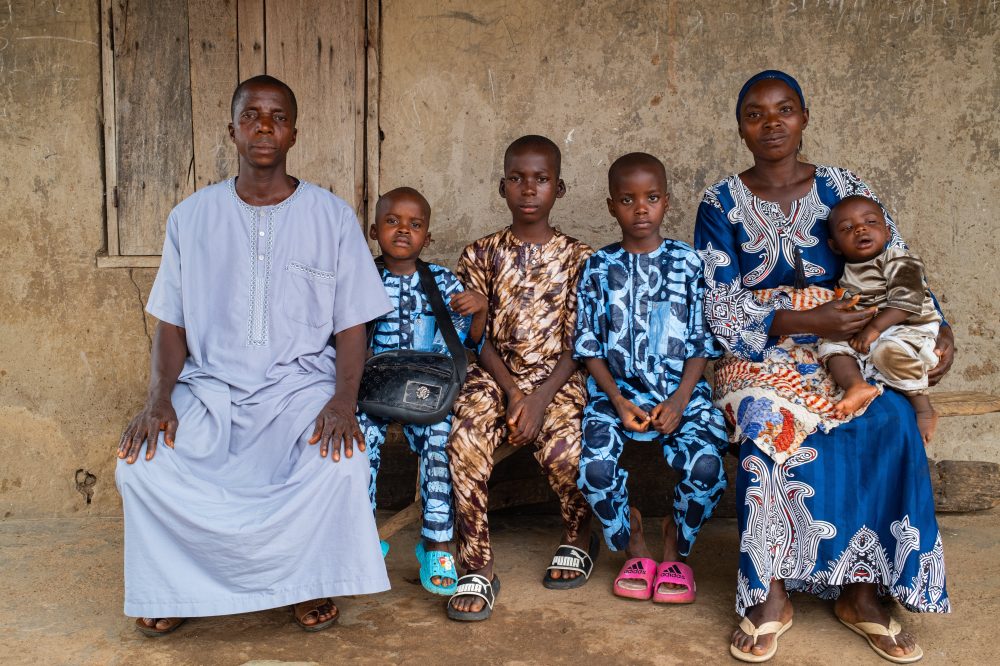
ESINELE, Nigeria — A Nigerian farmer spent nearly two months barely sleeping, haunted by the thought that he might never see his three young sons again. Al-Qaida-linked fighters had swept through his community and taken the boys — along with dozens of other children — in a mass abduction that shocked a part of Nigeria that had never before experienced such an attack.
His youngest son was only 5 years old at the time.
“The day they told us they had been rescued was the happiest day of my life,” said the farmer, Aliyu Saheed, speaking to The Associated Press as the children arrived back in their community on a Friday to celebrations filled with food, prayers, pastors, and Islamic clerics.
His three sons were among dozens of students taken from classrooms in the Oriire area of southwestern Oyo state on May 15. They were eventually freed on July 10.
The attackers seized children as young as 3 years old — an assault that has put much of Nigeria on alert about a threat steadily pushing southward through Africa’s most populated country over the past year. Armed groups, including jihadist factions, are expanding beyond the conflict-worn northern regions into areas that had largely been spared, driven by competition over territory and natural resources.
The armed men descended on the farming community and removed 39 children from three different schools, then marched them — along with their teachers — into a large nearby forest reserve. One teacher died during the abduction itself. According to local media reports, two more teachers were killed while in captivity.
That forest reserve is connected to the neighboring state of Kwara to the north, which borders Nigeria’s northern region — an area with a long and painful history of mass student kidnappings carried out by armed groups seeking ransom. Analysts note that children and schools are frequently chosen as targets because they generate more public attention and command higher ransom payments.
Nigerian President Bola Tinubu identified the attackers as Ansaru militants — a splinter group of the Boko Haram organization that claims to act in defense of Islam and has grown more active in recent years. Authorities reported that the rescue was a joint effort involving the military, the national intelligence agency, and police. Eight kidnappers were taken into custody, while others were killed during the operation.
The incident cast a spotlight on Nigeria’s poorly monitored forest reserves, which armed groups have been using as corridors and hideouts.
“The thing to learn is that the forested areas of the country must be much better surveilled because that is where those armed groups operate and keep their victims,” said Joachim MacEbong, a senior analyst at global risk consultancy firm Control Risks.
In conversations with the AP, both children and their parents described the brutal conditions they endured. Captors left the children outdoors without any shelter, exposed to both harsh sun and heavy rain.
Saheed’s oldest son, 9-year-old Shuaib, said he and his brothers coped by thinking about home and their mother’s food. They were given only boiled rice with palm oil to eat.
“I could not say anything for fear of getting beaten,” Shuaib said. “They flogged us with a cane all over the body, and they hit me in the back with the butt of their gun.”
Alamu Folawe, the head of one of the schools, told reporters that the militants actually beat the youngest children the hardest, and stuffed cloth into their mouths to keep their cries from being heard.
Families reported that some children came home with physical scars, and many are still working through the psychological damage.
Eight-year-old Kehinde Kaosarat, daughter of Aduke Balogun, was among the last children to be released from the hospital. Since returning home that Friday, she has not left her mother’s side.
While being held, the girl said she was unable to eat or sleep because “I kept imagining the worst things.”
Two siblings, Jacob and Mary, told their parents after being freed that they did not want to go back to school, according to their father, Gabriel Sunday. That reaction is not unusual following kidnappings in a country that already ranks among the highest in the world for the number of children not attending school.
“Sending them back to the school does not sound meaningful to me right now,” said Saheed, father of the three boys.
President Tinubu, who won election in 2023 on pledges to fix Nigeria’s security problems, has faced mounting criticism. The United States military has been providing support to Nigerian forces, though that assistance is largely limited to logistics and intelligence work concentrated in the more volatile northern regions.
While Tinubu claimed that the Ansaru militants’ informant network was broken up during the rescue operation, analysts caution that the root causes of instability — including corruption and weak governance — have not been addressed. Nigeria’s security forces, already stretched thin, are largely absent from remote communities.
James Barnett, a research fellow at the U.S.-based Hudson Institute who focuses on African security issues, said Ansaru has spent years quietly building networks in Nigeria’s southwestern region.
Experts warn that an attack perceived as successful could encourage further strikes.
The celebration welcoming the children home brought together both Christians and Muslims from the community for dancing and a shared meal of thanksgiving.
“We have all come here to thank God for protecting the children and their teachers and helping the military men who rescued them,” said Tajudeen Abioye, the village chief.
Many residents had fled the area after the kidnapping but have begun returning. Security forces remain deployed in the area, yet locals — particularly farmers whose fields border the forest reserve — are still living with fear.
“The rescue of the Oriire abductees is wonderful news and should inspire some confidence in Nigeria’s ability to better manage these threats. But it is not the end of insecurity in the southwest or Nigeria as a whole,” Barnett said.
SEOUL, South Korea — Russian President Vladimir Putin sat down with North Korea’s foreign minister at the Kremlin on Sunday, using the occasion to express appreciation for Pyongyang’s backing of his military campaign in Ukraine, according to reports from Russian state media.
North Korean Foreign Minister Choe Son Hui made the trip to Moscow without a clear diplomatic trigger — no major multilateral event or national anniversary appeared to prompt the visit. That unusual timing has led some observers to wonder whether she may be laying the groundwork for a potential trip to Russia by North Korean leader Kim Jong Un. North Korean state media confirmed Choe left for Russia on Saturday at the invitation of Russian Foreign Minister Sergey Lavrov, but offered no explanation for the purpose of her journey.
South Korea’s Unification Ministry, the government body responsible for North Korea-related affairs, said Monday that Seoul is keeping a close eye on the meetings. A ministry spokesperson, Yoon Min Ho, stopped short of saying whether Moscow and Pyongyang were discussing another leader-to-leader summit.
Russia’s Tass news agency reported that during the Kremlin meeting, Putin praised the state of relations between the two countries and once again expressed his “gratitude to the North Korean leadership and people” for their support of Russia’s military operations against Ukraine. For her part, Choe conveyed to Putin that Kim remains dedicated to the “comprehensive development” of ties with Russia, according to Tass.
Kim has previously traveled to Russia’s Far East for summits with Putin, meeting in both 2019 and 2023. During a June 2024 summit held in Pyongyang, Putin extended a fresh invitation for Kim to visit Russia, and the two leaders signed a strategic partnership agreement committing each side to mutual assistance in the event of an attack.
In recent years, Kim has made Russia the centerpiece of his foreign policy agenda. He has dispatched thousands of soldiers and large quantities of weapons to bolster Putin’s war effort in Ukraine — moves that some analysts believe are being rewarded with economic assistance and technology transfers that could be strengthening North Korea’s own military capabilities.
Kim has also been working to deepen his country’s relationship with China. He hosted Chinese President Xi Jinping for a June summit in Pyongyang, aligning himself with the concept of a “new Cold War” and positioning North Korea as part of a broader coalition opposing Washington.
Choe’s Moscow visit followed a flurry of diplomatic activity between North Korea and China. This month, North Korean Cabinet premier Pak Thae Song — Kim’s leading economic official — traveled to Beijing to meet with Xi, while Wang Huning, a senior member of the Chinese Communist Party’s powerful Politburo Standing Committee, made a visit to Kim in Pyongyang.
Kim cut off all substantive dialogue with both the United States and South Korea following the breakdown of his nuclear negotiations with U.S. President Donald Trump in 2019. He has since used Russia’s war in Ukraine as cover to speed up development of his nuclear weapons and missile programs, while insisting that Washington drop its demand for North Korean denuclearization before any talks can resume.
RAMALLAH, West Bank (AP) — Imagine pulling up to a gas station, reaching for your wallet, and being told the attendant won’t accept your cash — not because there’s a problem with your money, but because the station’s bank has literally run out of room to store it.
That scenario is playing out across the Israeli-occupied West Bank, where Palestinian banks have accumulated far more Israeli shekels than they can handle. Rather than a shortage of money, the territory is facing the opposite problem: a massive cash surplus that is grinding commerce to a halt.
At the center of the crisis is a standoff between the Bank of Israel and the Palestinian Monetary Authority, which regulates Palestinian financial institutions. Israel places a ceiling on how much physical currency it will accept back from the West Bank’s banking system. Palestinian officials argue that limit hasn’t kept up with economic growth and is being used as a tool to keep the territory in a perpetual state of financial distress.
Mohammad Manasra, the deputy governor of the Palestinian Monetary Authority, told the Associated Press that the situation has left financial institutions without the ability to function normally. “The banks have been shackled” in their ability to deal with the crisis, he said. “What is being practiced in the West Bank is economic warfare.”
In a typical economy, a central bank accepts physical currency from commercial banks and credits them electronically, allowing those banks to process payments, make loans, and handle customer transfers. But the West Bank operates under a different set of rules. Palestinians have no authority over monetary policy governing the shekel, and the territory has depended on Israeli financial systems for decades under agreements reached in the 1990s.
More shekels flow into the West Bank than can flow out. Workers employed by Israeli businesses and settlements are paid in cash. Palestinian citizens of Israel frequently cross into the West Bank to buy goods like cigarettes and fuel, bringing even more currency with them. That money piles up inside Palestinian banks, where it sits idle — earning no interest and unable to be converted into loans, investments, or electronic payments.
Israel’s current cap allows the West Bank banking system to return 18 billion shekels — roughly $5.9 billion — per year to the Bank of Israel. But banks are now taking in an estimated 30 billion shekels annually, according to Moayad Afaneh, an economist who has advised the Palestinian Authority.
Israeli officials have previously cited concerns about money laundering, tax evasion, and terrorism as reasons for limiting how much cash they accept back. The Bank of Israel said in a statement that it follows the current government’s policy on shekel transfers, and noted that fewer Palestinians have worked in Israel since the Gaza war began, which has reduced the flow of cash into the West Bank.
The office of Israeli Finance Minister Bezalel Smotrich did not respond to requests for comment, but in September 2025, Smotrich threatened to use “all of the tools” at his disposal to block the formation of a Palestinian state, including what he described as “economic strangulation.”
Since Hamas-led militants launched their attack in October 2023, triggering the war in Gaza, Israel has enacted a series of measures that have weakened the West Bank economy. Most work permits for Palestinians employed in Israel were revoked, eliminating a key income source. Tax and customs revenues collected on behalf of the Palestinian Authority have been withheld, leaving the Authority unable to fully pay public sector workers — including teachers and hospital employees — for more than a year.
As vault space runs short, banks are paying to store and insure cash they cannot move. They have begun turning away deposits from businesses and households, which are then left scrambling to safely store their own money. Fears of looting during Israeli military raids — which have become more frequent — have pushed more Palestinians to deposit cash in banks to protect it from potential confiscation, worsening the bottleneck, Afaneh said.
Manasra said the cash overflow is “directly affecting the government’s ability and the private sector’s capacity to continue providing services to major industrial sectors and the Palestinian people.” He pointed out that most of the West Bank’s fuel and electricity comes from Israel or Israeli utilities, and when banks are overloaded with physical cash, they lack the electronic funds needed to process those essential payments.
A 2022 International Monetary Fund study found that excess cash had cut Palestinian banks’ profits by roughly 20%. Afaneh said that figure is likely considerably higher today.
Inside the Ramallah offices of the Al-Huda Group — a company that runs filling stations, convenience stores, grocery outlets, home improvement shops, car washes, and other businesses — clerks feed banknotes through counting machines that stack the bills into neat bundles. The company takes in tens of millions of shekels each month.
Hussni Jaber, the executive manager of Al-Huda Group, said the inability to deposit that cash has made routine business operations more complicated and costly. Some businesses have resorted to taking out loans or purchasing foreign currencies just to make electronic payments to suppliers, all while spending more to securely store their excess cash on-site.
When suppliers go unpaid, some gas stations are forced to stop pumping fuel altogether. The Palestinian Authority referenced the issue when gas stations temporarily closed on a recent Saturday. Last month, gas station owners — including the 22 locations operated by Al-Huda — staged a coordinated 30-minute strike across the West Bank to draw attention to the crisis. So far, it has produced little response.
Jaber warned that if the problem isn’t resolved, West Bank businesses will eventually lose the ability to import fuel, food, and medical supplies from Israel and other countries. “All sectors will collapse if the cash problem is not resolved,” he said.
LONDON (AP) — Andy Burnham’s moment has arrived. After spending weeks as the anticipated next leader of the United Kingdom, Burnham is set to be sworn in as prime minister on Monday, taking over from outgoing leader Keir Starmer in what is expected to be an orderly and well-practiced transfer of power.
Burnham will become the seventh person to hold the office of UK prime minister since 2016, having replaced Starmer as the head of the center-left Labour Party on Friday.
A spokesperson confirmed that in his first address as prime minister, Burnham plans to acknowledge that he is “acutely aware” of how many leadership changes the nation has experienced over the past decade, and will commit to bringing stability back to British politics.
Starmer made similar promises when he assumed office two years ago. Last month, he announced his resignation following a series of missteps and poor judgment calls that had damaged his standing within the party and among the broader public.
Burnham ran unopposed in the Labour leadership race, earning nominations from 379 of the party’s 403 members of Parliament in the House of Commons.
Monday’s transition will follow a familiar script. Starmer will travel the roughly one mile from Downing Street to Buckingham Palace to formally notify King Charles III of his resignation. Shortly afterward, Burnham will make the same journey, where the king will invite him to form a government — a ceremony historically referred to as “kissing hands,” though no actual hand-kissing takes place.
The tradition traces its roots to an era when the monarch held supreme authority and personally selected the prime minister. Today, the king holds no political power, but the monarchy still officially extends the invitation to the leader of whichever party commands a majority in the House of Commons.
Under Britain’s parliamentary system, a governing party can swap out its leader — and therefore the prime minister — without triggering a nationwide election. The next general election is not required until 2029, though Burnham has the option to call one earlier if he chooses.
After his palace visit, Burnham will head to Downing Street, where tradition calls for new prime ministers to deliver a brief speech outside the official residence.
The former mayor of Greater Manchester has promised to make politics “less toxic,” raise living standards across the nation, and “bring back the hope we have all been missing.”
“I will work to build a new politics,” he said upon being named Labour leader on Friday. “The country is crying out for it.”
Both supporters and critics are expected to quickly press Burnham for specifics on how he intends to deliver on those promises.
“Fundamentally, it only will work if you can generate significant economic growth, because it’s the lack of growth that’s really holding the country back,” said Joshi Herrmann, who has covered Burnham’s career as the founder of Manchester news site The Mill.
Much of the early attention will focus on who Burnham selects for his Cabinet. He is widely expected to shake up Starmer’s top team, particularly in the key roles of Treasury chief, foreign secretary, and home secretary. As of Friday, Burnham said he had not yet finalized those decisions.
In his first speech as Labour leader, Burnham credited Starmer’s record, saying he would “build on the foundation laid” by his predecessor.
Starmer had taken over Labour leadership in 2020 following the party’s worst-ever election defeat, and went on to lead it to a sweeping victory four years later. However, the challenges of governing proved difficult to manage.
At his final Prime Minister’s Questions session in Parliament on Wednesday, Starmer defended his government’s track record on the world stage — highlighting support for Ukraine — as well as domestic accomplishments including stronger worker protections, reduced child poverty, legislation aimed at preventing official cover-ups following tragedies, and increased defense spending.
“I am proud to leave this country in a better shape than I found it,” he said.
NEW DELHI (AP) — Thousands of demonstrators supporting India’s youth-driven Cockroach movement assembled Monday in an attempt to march on Parliament, calling for the education minister to step down — even as police refused to authorize the protest.
A heavy police presence surrounded the barricaded gathering area at Jantar Mantar in central New Delhi, setting the stage for a potential standoff just a short distance from Parliament as protesters pushed forward with their plans.
The crowd was a mix of students, working professionals, and families — some with small children in tow. Many came prepared for a lengthy day, carrying backpacks stocked with food and water, while others waved Indian flags. Officers used loudspeakers to urge the crowd to leave, but demonstrators responded with chants directed at the education minister and Prime Minister Narendra Modi.
The Cockroach Janta Party was born in May after the country’s Supreme Court chief justice, during an unrelated court proceeding, compared certain unemployed young people to “cockroaches.” Rather than taking offense, supporters reclaimed the term, building a satirical movement that has since attracted millions of followers across social media platforms.
The movement picked up steam following a series of leaks involving high-stakes entrance exams for medical school admissions and government employment, which fueled widespread public outrage. It gained even more attention after activist Sonam Wangchuk, who had been on a hunger strike, was taken to a hospital by police on Saturday.
Self-described “cockroaches” have maintained a presence at Jantar Mantar for the past month, with members of various student organizations joining Wangchuk’s hunger strike. Large crowds have also rallied at universities and in cities across the country. Their demands include the resignation of Education Minister Dharmendra Pradhan, an overhaul of the exam system, and financial compensation for families of students who died by suicide following the exam leaks.
Prior to the march, Wangchuk stated he would only end his nearly three-week hunger strike under two conditions: if the government formally acknowledged responsibility for failures in the education and exam systems, or if protesters were permitted to reach Parliament and legislators committed to raising the issues in both legislative chambers.
Delhi Police maintained that the march lacked proper authorization and that security restrictions around Parliament were necessary to preserve public order during the monsoon legislative session, which opened Monday.
The protests have emerged as one of the more significant public challenges to Prime Minister Modi’s Hindu nationalist government during its current third term, drawing backing from opposition political figures, human rights advocates, and some Bollywood celebrities. Many demonstrators argue that opportunities to voice dissent have narrowed under Modi’s administration, which has faced criticism for cracking down on public demonstrations through arrests of activists and, in certain cases, forceful police responses.
Top officials in Modi’s government have pushed back firmly against the movement. Education Minister Pradhan has gone so far as to accuse the protesters of working against the country’s interests, while other cabinet members have acknowledged student grievances but ruled out any formal dialogue with movement leaders.
Jyoti Rajput, a yoga teacher who joined the protests, explained her reasons for showing up: “This rotten system refuses to take action.”
“It cannot see the pain of students, and that’s why so many people have joined this movement,” she added.
NEW YORK — One of the most powerful drug lords in modern history is set to spend the rest of his life behind bars. Ismael “El Mayo” Zambada, co-founder of the notorious Sinaloa cartel, is scheduled to be sentenced Monday in a Brooklyn federal court, where a life prison term is all but guaranteed following his guilty plea to drug trafficking charges last year.
The sentencing represents the conclusion of a years-long effort by U.S. authorities to bring Zambada — long considered one of the most elusive figures in the global drug trade — into American custody. He was taken into custody in 2024 after he claimed he was kidnapped in Mexico and transported by plane to Texas.
Prosecutors described Zambada as a ruthless operator who ordered torture and plotted killings as he and fellow co-founder Joaquín “El Chapo” Guzmán built the Sinaloa cartel into the largest drug trafficking organization on the planet, pumping massive quantities of cocaine, fentanyl, methamphetamine and other narcotics into the United States.
While Guzmán was known for his flashy persona, Zambada was regarded as the cartel’s behind-the-scenes strategist and deal broker, more deeply embedded in the organization’s daily operations. Guzmán was convicted in 2019 and is currently serving a life sentence at the federal Supermax facility in Florence, Colorado.
Zambada entered his guilty plea in August 2025 after prosecutors agreed not to pursue the death penalty. Speaking through a Spanish interpreter, he offered an apology “to everyone who has suffered or been affected by my actions.”
Now 76 years old, Zambada has requested placement in a federal prison hospital, citing significant health concerns. His defense attorney, Frank Perez, noted in a sentencing memo that Zambada “contends with a complex of age-related health issues” and “will need ongoing access to medical care.”
Federal prosecutors, however, urged Judge Brian M. Cogan to weigh “the serious ongoing security risks” that Zambada presents, warning that certain facilities “may not be appropriate for the security concerns posed.” While judges can recommend where a prisoner serves time, the ultimate decision rests with the federal Bureau of Prisons.
In their sentencing memo, prosecutors called Zambada “one of the most — if not the most — prolific and powerful narcotraffickers in the world,” adding that “it would be difficult to overstate the magnitude” of his crimes and the widespread “corruption, violence, and other harm he spread throughout Mexico, the United States, and the world.”
In addition to a life sentence, Zambada faces $15 billion in financial penalties — a figure prosecutors say reflects the cartel’s earnings under his direction.
He pleaded guilty to running a continuing criminal enterprise and racketeering conspiracy, admitting responsibility for 85 underlying offenses. From 1980 until last year, he acknowledged that he and the cartel were responsible for moving at least 1.5 million kilograms of cocaine, “most of which went to the United States.”
Zambada also admitted to the cartel’s sprawling infrastructure, including operatives who cultivated ties with Colombian cocaine producers, arranged shipments into Mexico by sea and air, and coordinated smuggling across the U.S.-Mexico border. He said the cartel brought in hundreds of millions of dollars annually and acknowledged that his subordinates paid large bribes to Mexican officials “so they could operate freely.”
Prosecutors said that in the months before his arrest, Zambada ordered the killing of his own nephew, Eliseo Imperial Castro — also known as “Cheyo Antrax” — after discovering that Castro had been collecting debts in Zambada’s name and keeping the money for himself.
In 2023, at least three people were killed in retaliatory violence that Zambada directed after a large supply of fentanyl pills, methamphetamine and cocaine was stolen from the cartel, according to prosecutors.
Zambada’s attorney says his client was beaten, bound, abducted and forced onto a private aircraft by one of Guzmán’s sons, Joaquín Guzmán López. The arrests of both men set off deadly conflict within Sinaloa, with Zambada’s supporters clashing violently against backers of Guzmán’s sons, a faction known as the Chapitos, or “little Chapos.”
Defense attorney Perez argued that Zambada’s decision to plead guilty — rather than go to trial as Guzmán did — should be taken into account. Guzmán’s trial was an 11-week proceeding that required shutting down the Brooklyn Bridge to transport him between court and jail.
“Mr. Zambada’s unequivocal acceptance of responsibility has been a defining feature of his conduct since his involuntary arrival in the United States,” Perez wrote.
Perez also argued that placing Zambada in the same Supermax facility as Guzmán would ignore the significance of his client’s cooperation. “For Mr. Zambada to end up not only with the same life sentence as Mr. Guzman, but also in the same draconian Supermax prison, would fail to account in any way for the fact that he took the right path in resolving the charges against him,” Perez wrote.
DUBAI, United Arab Emirates — Early Monday morning, the United States carried out a fresh wave of airstrikes against Iran, hours after military officials announced the death of another American service member. Iran fired back, launching an attack against Bahrain — the headquarters of the U.S. Navy’s 5th Fleet.
The latest round of strikes marks the ninth straight night of U.S. military action, and the escalating exchange between Washington and Tehran is pushing the two nations ever closer to full-scale war. A temporary agreement reached last month to end the fighting has fallen apart, and shipping through the Strait of Hormuz has nearly ground to a halt. Both countries have struck civilian infrastructure that millions of people depend on. Meanwhile, benchmark Brent crude oil climbed past $90 per barrel Monday, adding to an already severe global energy crisis driven by the ongoing conflict.
According to the U.S. military, the American service member died in Iraq on Saturday during what officials described as a “controlled detonation” of an Iranian drone that had been shot down.
President Donald Trump addressed the strikes, saying, “We hit them very hard again tonight. And we did that in honor of the” soldiers who lost their lives.
The U.S. military’s Central Command confirmed the new strikes and said they focused on “Iranian military command centers, air defense and coastal surveillance sites, maritime capabilities, missile and drone launch sites and communications networks.” Iran did not immediately report any casualties or damage, though Iranian state media said residents in southern and northwestern parts of the country heard explosions.
As the strikes got underway, a vessel caught fire in the Strait of Hormuz near the Omani coastline early Monday, according to the British military. The cause of the blaze was not immediately clear. Oman’s waters have been a path the U.S. military has urged ships to use to avoid Iranian-controlled areas. Iran’s paramilitary Revolutionary Guard later said it was targeting tankers in the strait.
Iran has continued to strike back against U.S.-allied nations across the Middle East. Trump has threatened to go after Iran’s power stations and bridges in an effort to pressure Tehran into releasing its grip on the Strait of Hormuz, which once carried about one-fifth of the world’s traded oil before the war broke out. Recent strikes suggest the military is now following through on that threat.
Over the past week, the U.S. has reinstated a naval blockade on Iranian ports to cut off its crude oil exports. As of Saturday, the military said it had redirected six ships and disabled one vessel since the blockade resumed.
More than 30 days have now passed in the 60-day window established by the earlier deal — time set aside to work out a permanent end to the war and address other matters, including Iran’s nuclear program.
Secretary of State Marco Rubio told reporters Monday that the United States remains willing to negotiate with Iran, but stressed that any talks “have to be real.”
“We’re going to continue to respond. If the door opens to diplomacy — if the guys that want to do something productive for Iran win and take control of that system, or take control of the negotiations — that’ll be a very positive development,” Rubio said. “That’s not where we are tonight, unfortunately.”
Iranian officials reported Sunday that at least 50 people have been killed and 517 others wounded in the most recent rounds of U.S. strikes. Since the conflict began on February 28, a total of 17 U.S. service members have died.
Taiwan’s coast guard is sounding the alarm after detecting a sharp jump in Chinese government vessel activity around the island last month, with officials warning the pattern could signal preparations to cut off Taiwan’s vital Pacific supply lines.
According to Taiwan Coast Guard data, authorities spotted 55 Chinese government vessels — including coast guard ships and research boats — operating around Taiwan in June. That’s up from 30 sightings in May and represents an 83% increase month over month. Compared to June of last year, when 25 sightings were recorded, the figure has risen by 120%. Those numbers do not include sightings near Taiwan-controlled islands located close to the Chinese coast.
The data highlights the growing role China’s coast guard is playing in Beijing’s ongoing pressure campaign against Taiwan — a campaign that has drawn concern from Western nations including the United States, Britain, France, and Germany.
While China’s military conducts operations near Taiwan on an almost daily basis, Beijing has increasingly deployed its coast guard to reinforce territorial claims. Taiwan officials refer to this tactic as “lawfare” — using legal-seeming actions to establish a basis for Chinese authority around the island.
A senior Taiwan Coast Guard official, speaking on the condition of anonymity at a recent briefing, said the activity points to a serious wartime concern: that China could be practicing how to sever Taiwan’s Pacific connections to its allies.
“If the situation escalates to a blockade — or what would already amount to a quasi-war — we have plans to work with the navy to jointly protect Taiwan’s lifeline sea routes,” the official said.
The official added: “We have anticipated this scenario not only through tabletop exercises but also through live drills.”
China’s defense ministry and its Taiwan Affairs Office did not respond to requests for comment.
Beijing does not recognize Taiwan as a sovereign nation and considers the democratic island part of China. Taiwan rejects that position, asserting that Beijing has no right to claim authority over the island or its surrounding waters, and that only the Taiwanese people have the right to determine their own future.
Officials also revealed that some of China’s coast guard ships were originally naval destroyers that have since been repainted and repurposed for coast guard operations. A senior coast guard official said this makes them a more serious threat to Taiwan’s own fleet due to their larger size, greater range, and military-grade equipment.
Chinese coast guard vessels have also begun operating in pairs just outside Taiwan’s economic waters in the Pacific — a vast area that is stretching Taiwan’s comparatively small coast guard thin.
“This places a major strain on the capacity of Taiwan’s coast guard vessels,” the official said.
A second senior official described the Chinese activity as “expansion” and an attempt to alter the existing balance of power in the region. That official also noted that Chinese coast guard ships have been broadcasting messages to commercial vessels, asking them for information about port arrivals and departures — putting pressure on merchant shipping even though no ships have changed course in response.
Taiwan has responded by broadcasting its own messages to those ships, instructing them to continue normal navigation and disregard Chinese interference.
“It knows it has no jurisdiction now, so it is trying to create something out of nothing,” the second official said, also speaking anonymously.
A. Shrinikheathan is doing something his family has never done before — skipping the United States for his graduate education and heading to Germany instead.
The 22-year-old engineering graduate from Chennai is currently studying German and preparing for a language proficiency exam as he applies to master’s degree programs there. He’s drawn by Germany’s comparatively low tuition costs and its deep ties to the engineering industry.
His choice is part of a broader pattern. A growing number of young Indians are reconsidering the traditional path to American universities, with a new India-EU trade deal offering clearer routes to study and work in Europe — while U.S. immigration policies have become more restrictive. That’s the picture painted by roughly a dozen students and education consultants interviewed for this story.
“The world is becoming more multi-polar. Earlier, the U.S. was all that everyone was talking about,” Shrinikheathan said, adding that he was glad to have options beyond the “wildly more expensive” United States and Canada.
If the trend holds, it could fundamentally change where Indian students go to study, with Europe stepping up as a serious competitor to North America — and the EU actively seeking young talent to fill labor gaps created by an aging population.
According to education consultancy KC Overseas, tuition fees at European universities typically run 50% to 80% lower than those in the United States, with living expenses also considerably cheaper.
“The European Union has become a leading destination for Indian students,” an EU official said in a statement. “Indian students bring entrepreneurial spirit, cultural richness, and research excellence.”
The official continued: “(Indian students enrich) European campuses while deepening EU-India ties in innovation, trade, and diplomacy … this trend will continue to grow, benefiting Europe’s talent pool and India’s globally competitive workforce.”
India’s total number of students studying abroad dropped to around 626,000 in 2025, down sharply from more than 908,000 in 2023, according to government data. Students have grown wary of stricter visa requirements and higher costs in the U.S., Australia, and the United Kingdom. Last week, Washington moved to shorten the length of visas for international students as part of a sweeping immigration crackdown that began after Donald Trump took office in January 2025.
Interest in Europe has picked up since the India-EU trade agreement reached in January, which aims to simplify the process for Indian students and skilled workers to move to Europe through streamlined visa pathways, clearer post-graduation work options, and better recognition of Indian academic credentials.
“The EU-India mobility framework is part of a broader set of initiatives aiming to make the EU a global magnet for attracting and retaining talent, including for Indian students and talent,” the EU official said.
“For the first time, a major economic bloc is saying, ‘We want Indian talent at scale,’” said Arnav Kumar, co-founder of study-abroad platform Leap.
India and the EU plan to work together over five years on social security agreements with member nations, starting with a tech-focused office to support Indian students and professionals navigating the system.
“Indian students have been growing in Europe without any overarching framework. Now, we have structured pathways from education to employment,” Kumar said, predicting a 60% to 70% increase in student and worker movement over the next three to five years.
Education consultants say students are increasingly aligning their destination choice with their career ambitions and personal preferences — picking Germany for engineering, the Netherlands for work-life balance, Portugal for affordable postgraduate research, and France for management studies.
The possibility of traveling and working freely across EU member countries, along with a growing number of English-language graduate programs, is also pulling Indian students toward Europe.
Education consultancy Europe Study Centre has seen inquiries rise 25% to 30% since the trade deal was announced. Director Sivaraman Pandian described Europe as the “red-hot destination” for families put off by climbing costs and tougher visa requirements elsewhere.
More than 121,000 Indians currently study within the EU — roughly half the number enrolled in the United States — but the bloc has been steadily gaining ground as a preferred destination alongside the U.S., Canada, and Australia, government data showed.
Still, significant hurdles remain. Pandian cautioned students against unrealistic expectations: “If somebody says you will get a job in this country, don’t blindly believe it. Just because you studied in that country, it does not entitle you to get a job. You study, and you develop a skill-set; your doors are open.”
Students also pointed to language barriers, housing shortages in major cities like Amsterdam, stiff competition in the job market, and the need for specialized skills as ongoing concerns. Some also noted worries about the rise of far-right political movements and shifting attitudes toward foreigners in parts of Europe.
Early enrollment data, however, suggests real momentum. Indian student enrollment in the Netherlands climbed to roughly 3,700 in the 2025-26 academic year, up from 2,630 in 2018-19, making Indians the third-largest non-EU student group, according to Statistics Netherlands.
Eindhoven University of Technology reported approximately 2,140 pre-enrollments from India for the upcoming academic year, compared to about 1,390 the year before. Leiden University saw its Indian intake in standard master’s programs jump to 120 this year from 70 in 2021. Italy’s Padua University said partner agencies in India are reporting rising interest in European programs, including from regions that have traditionally sent students to the United States.
Whether the surge in inquiries translates into lasting enrollment growth will depend largely on how effectively the new agreement is put into practice.
Chennai-based engineer T Suthir, who is looking into colleges in the Czech Republic and Italy, said the change in attitude is already noticeable. “Earlier, before the deal was finalised, my family was saying Europe is not good,” he said. “Now, they are saying it’s good.”
MANILA, Philippines — The leading diplomats of Southeast Asia are convening in the Philippine capital this Tuesday, joined by counterparts from Western and Asian nations including the United States, China, Russia, and the European Union, with the conflict involving Iran topping the list of urgent concerns.
The gathering is the annual ministerial meeting of the Association of Southeast Asian Nations, known as ASEAN. The Philippines, which holds the chairmanship of the 11-nation bloc this year, is hosting the three-day sessions in Manila.
Among those attending are U.S. Secretary of State Marco Rubio, Chinese Foreign Minister Wang Yi, and Russian Foreign Minister Sergey Lavrov. Ukraine’s top diplomat, Andrii Sybiha, has been invited to a Friday ceremony marking a 1976 nonaggression treaty tied to ASEAN, though he will not be part of the main ASEAN sessions that Rubio and Lavrov are attending. Neither Rubio nor Lavrov has announced any plans to hold meetings with each other or with Sybiha while in Manila.
Before the broader multilateral discussions begin, ASEAN foreign ministers are scheduled to meet among themselves Tuesday. A central topic will be the hostilities between the United States and Iran, which have spread to other parts of the Middle East and raised fears of an all-out war resuming. Two Southeast Asian diplomats told the Associated Press that the ministers plan to release a joint statement expressing serious concern and calling on both parties to return to the negotiating table.
The conflict has once again put shipping through the Strait of Hormuz at risk — a critical waterway through which roughly 20% of the world’s oil supplies moved before the war broke out.
Southeast Asia, a region home to more than 680 million people, depends significantly on oil and gas from the Middle East and has been hard hit by supply disruptions and price spikes tied to the Iran conflict. Philippine President Ferdinand Marcos Jr. declared a national energy emergency in March to safeguard the availability of fuel, food, and other essential goods and to crack down on hoarding and price gouging.
There are also growing concerns that Washington’s military focus on the Iran conflict has drawn attention away from Asia-Pacific issues — particularly China’s assertive moves in the contested South China Sea and toward Taiwan, areas where the Trump administration has pledged to push back. Rubio’s participation in the ASEAN meetings is intended to reaffirm the United States’ commitment to the region.
State Department spokesperson Thomas Pigott said in Washington: “The secretary’s visit advances a clear U.S. priority: a free and open Indo-Pacific that delivers safety, security and prosperity for the region and for the American people.”
On the sidelines of the ASEAN meetings, Rubio is expected to participate in a session of the Quad — a grouping made up of the United States, India, Japan, and Australia that was first formed in 2007. The Quad is widely seen as a key piece of the American strategy to counter China’s influence, and Beijing has repeatedly criticized it as an effort to contain its rise.
Beyond conflicts outside the region, ASEAN foreign ministers are also under mounting pressure to take stronger action on crises within Southeast Asia itself — particularly Myanmar’s ongoing civil war and the territorial disputes simmering in the South China Sea.
Myanmar’s military seized power from the democratically elected government of Aung San Suu Kyi in 2021. Since then, according to the Assistance Association for Political Prisoners, a rights-monitoring organization, more than 8,100 people have died in the fighting and nearly 22,500 remain detained.
A five-point peace plan that ASEAN leaders put forward in 2021 has not succeeded in halting the bloodshed, largely because Myanmar’s military-backed government has refused to comply. As a result, the bloc has barred Myanmar’s leaders and foreign minister from its high-level meetings, including this week’s sessions in Manila.
In an effort to move past the deadlock, ASEAN foreign ministers led by Philippine Foreign Secretary Theresa Lazaro met Myanmar’s top diplomat for the first time in five years earlier this month in Bangkok. At that meeting, they renewed calls for a reduction in violence and pushed for dialogue among all factions involved in the conflict. The following day, Lazaro — in her role as ASEAN’s special envoy — and Thai Foreign Minister Sihasak Phuangketkeow held consultations with high-level representatives of ethnic armed groups from Myanmar in the Thai resort city of Pattaya.
The decision to meet with Myanmar’s foreign minister, Tin Maung Swe, drew sharp criticism from human rights organizations, who argued it effectively undermined the bloc’s ban on engaging with the country’s senior officials and gave the military government a diplomatic win without requiring any concessions in return.
Lazaro pushed back on that characterization, saying: “It was not and should not be mischaracterized as an abandonment of the five-point consensus. The path to peace can only be obtained through resolute diplomacy with all parties to the conflict.”
The ASEAN foreign ministers are also set to meet with Chinese Foreign Minister Wang Yi in Manila to assess progress on negotiations over a proposed “code of conduct” for the South China Sea — an agreement designed to keep long-standing territorial disputes from escalating into open conflict.
The disputes involve China, Taiwan, and the ASEAN member states of Brunei, Malaysia, the Philippines, and Vietnam. In recent years, tensions between Chinese and Philippine coast guard and naval forces in the contested waters have grown particularly sharp.
NEW DELHI — Hundreds of demonstrators backing India’s youth-driven “Cockroach” movement descended on the nation’s capital Monday, pushing forward with a march toward parliament even after police refused to grant permission for the demonstration.
The movement, which has been building for months, is being viewed as the most significant public challenge to Prime Minister Narendra Modi since he began his third term in office. It has attracted millions of followers on social media and has been gaining momentum on the ground as well.
The protest gained fresh energy after activist Sonam Wangchuk was forcibly transported to a hospital by police on Saturday. Thousands of supporters streamed into the protest site at Jantar Mantar in central New Delhi throughout the night, arriving in time for the march on the same day parliament opened its monsoon session.
Heavy barricades lined the protest area, with scores of police officers and paramilitary personnel stationed nearby — setting up a potential standoff just a few kilometers from parliament if demonstrators attempted to push forward.
Crowds chanted “Quit, quit” — calling on both Education Minister Dharmendra Pradhan and Prime Minister Modi to step down.
The Cockroach Janta Party, known as CJP, was born out of public outrage after national medical school entrance exam papers were leaked in May. The breach impacted more than two million students who were forced to retake the test.
“All these leaders in power are illiterate and I am here to protest because we do not want question papers to leak,” said Adi Nathan, a 21-year-old student from Meerut, a city roughly 100 kilometers from the capital. “This should come to an end.”
Mohammed Tabrez, 22, said he traveled from Amroha in Uttar Pradesh state — approximately 165 kilometers away — to take part. He is preparing for competitive exams that determine entry into professional programs and government jobs.
“We want this corruption to end,” he said. “We want all the frauds in paper leaks, in competitive examinations to end and this is the reason I have come here.”
The CJP initially built its following almost entirely online, gaining 22 million Instagram followers within days before expanding its reach and winning support from some opposition political parties.
CJP founder Abhijeet Dipke and his supporters launched a sit-in last month calling for Education Minister Pradhan’s resignation. Wangchuk joined them on June 28, beginning an indefinite hunger strike at the site.
In a handwritten note shared from his hospital bed on his X account Monday, Wangchuk outlined conditions under which he would end his fast. He said he would stop if the government acknowledged accountability for recent failures in the education system and for exam paper leaks, or if CJP protesters were permitted to reach parliament and lawmakers pledged to address the issues in the chambers.
He added that he would also end the fast if lawmakers and party leaders visited him in the hospital and offered the same assurances, noting that his health prevents him from joining the march himself.
Analysts say the CJP’s rise reflects deep frustration among young Indians over persistent problems including high youth unemployment and recurring exam paper leaks. Government data shows that while overall unemployment for those aged 15 and above stood at 3.1% in 2025, the rate for those between 15 and 29 was considerably higher at 9.9% — climbing to 13.6% in urban areas, compared to 8.3% in rural regions.
Battery electric vehicles in Germany got more affordable over the past five years — even though average prices tell a different story, according to new data released July 20.
Research from the International Council on Clean Transportation and Fraunhofer ISI shows that when comparing electric vehicles with similar characteristics, prices fell by roughly 18% between 2020 and 2025 after accounting for inflation. By contrast, prices for comparable internal combustion engine vehicles actually edged up about 2% over the same period.
So why did average electric vehicle prices appear to go up? The answer lies in what automakers chose to sell. The median list price for a battery electric vehicle jumped 42% — rising to around €53,000 — while the median price for combustion engine vehicles increased a more modest 15%. Manufacturers shifted their offerings toward larger, higher-end electric models, which pushed the overall average higher.
The electric vehicle market also expanded dramatically during this period. The number of available battery electric models more than quadrupled, reaching 159 different options. Meanwhile, the number of combustion engine models on the market shrank to 194.
Battery technology costs dropped sharply on a global scale — falling between 35% and 37% after inflation — but that reduction had only a limited effect on what consumers actually paid for vehicles.
One notable improvement came in driving range. The average electric range grew by about one-third over the five-year span, suggesting that manufacturers reinvested the savings from cheaper batteries into improving the vehicles themselves rather than simply lowering sticker prices.
U.S. forces carried out strikes against Iran for the ninth day in a row on Monday, as the confirmed death toll among American military personnel climbed to three in the renewed fighting and anxiety grew over the safety of shipping through the Strait of Hormuz.
U.S. Central Command released a statement announcing “a new wave of strikes” designed to “degrade” Iran’s capacity to threaten commercial ships passing through the strait’s critical shipping lanes. The statement offered no additional specifics.
Iran’s semi-official Tasnim news agency, citing its own reporters on the ground, reported that U.S. missiles struck multiple Iranian cities in the early morning hours Monday. According to Tasnim, explosions were reported in Tabriz, Chabahar, Konarak, Bandar Mahshahr, and Bandar Imam Khomeini.
On Sunday, the U.S. military disclosed that a service member had been killed the previous day in northern Iraq — where the U.S. maintains military bases — during a controlled detonation of unexploded ordnance found on a downed Iranian attack drone. Central Command described the incident as occurring during a routine disposal operation.
Earlier in the weekend, the military reported that two service members had died in Jordan, with a third listed as missing in action. By Sunday, Central Command announced that “unidentified remains” had been recovered at the site of Friday’s attack, adding that “an examination process to verify the remains is ongoing.”
With the latest deaths included, the total number of U.S. military personnel killed since the war began stands at 17, with more than 420 additional troops wounded.
Iran’s Islamic Revolutionary Guard Corps announced its own surprise offensive, striking what it described as “the enemy’s special operations headquarters in Syria’s Al-Tanf area.” Iranian state television also reported that Iran conducted drone attacks against U.S. military assets and equipment at Kuwait’s Al-Adiri camp and Ali Al Salem Air Base early Sunday — locations Iran had targeted previously during the past week of fighting.
Kuwait’s government reported that a desalination plant had been attacked for the second consecutive day, sparking a fire and prompting officials to condemn what they called a direct strike on essential civilian infrastructure.
The Royal Navy’s United Kingdom Maritime Operations Centre reported late Sunday that it had received word of a vessel on fire near the Omani coast, though it had not confirmed the cause.
Oil markets reacted sharply, with Brent crude futures jumping 3% on Monday and climbing above $90 per barrel — the highest price recorded since June 11.
Trump, speaking to reporters after returning from the World Cup final, addressed the overnight strikes: “We hit them very hard again tonight, and we did it in honor of” the U.S. service members who had been killed since Friday.
The U.S. Embassy in Bahrain issued a warning to Americans in the country, stating it had received information indicating Iran may be planning to target unspecified locations in central Manama, the nation’s capital, and urged U.S. citizens there to stay alert.
The broader conflict began on February 28, when the U.S. and Israel launched attacks against Iran aimed at disabling Tehran’s nuclear and missile programs and weakening its regional allies. Since then, thousands of people have been killed — the majority in Iran and Lebanon — and significant disruptions to global energy supplies have fueled fears of widespread inflation.
Hostilities have intensified in recent days as a temporary ceasefire agreement reached one month ago has collapsed and the battle for control of the Strait of Hormuz has deepened, raising the prospect of a return to full-scale warfare.
Andy Burnham is poised to become Britain’s next prime minister on Monday, following his selection by the Labour Party to succeed Sir Keir Starmer. Before returning to Parliament earlier this year, Burnham spent nine years serving as mayor of Greater Manchester. He also previously held senior cabinet roles — including health secretary — under Prime Ministers Tony Blair and Gordon Brown.
Burnham steps into Downing Street with a deep well of domestic governing experience but a comparatively thin record on international affairs. His most clearly defined foreign policy positions center on Israel, the Palestinians, and the conflict in Gaza. On issues such as Iran, the Gulf states, and the broader Middle East, he has said considerably less.
How Burnham Got to Downing Street
Burnham secured his path back to Parliament by winning a by-election in Makerfield, giving him the Commons seat required to pursue the Labour leadership. He was formally elected party leader on July 17, earning the backing of 379 Labour MPs and 23 affiliated organizations.
Because Labour already commands a strong parliamentary majority, Burnham can assume the role of prime minister without triggering an immediate general election. He arrives with broad support within the Parliamentary Labour Party, though he does not carry a personal nationwide electoral mandate for his foreign policy agenda.
Gaza and the October 7 Attacks
The clearest window into Burnham’s likely Middle East approach comes from his public statements about the Hamas-led October 7 attack and the war that followed in Gaza.
Burnham has spoken out against the Hamas attack and has worked to reassure Britain’s Jewish community that his criticism of Israel will not soften Labour’s firm stance against antisemitism. At the same time, he has acknowledged that Labour’s early response to the war fell short, saying the party “didn’t get it right” and that Britain was too slow to push for a ceasefire.
“We’ve got to do more to put pressure on the Israeli government,” he said in July. “But let’s be honest, the UK was too slow to call for a ceasefire. And we must now do more to strengthen our approach.”
This represents a departure from Starmer’s initial post-October 7 stance, which placed more weight on Israel’s right to self-defense and held back from early ceasefire calls.
Burnham has characterized the devastation in Gaza as appalling and stated there is “increasing evidence” that war crimes may have been committed. He has, however, stopped short of labeling Israel’s actions as genocide, arguing that such legal determinations should be left to international courts rather than politicians.
Israel, Palestine, and Settlements
Burnham’s views on Israel and the Palestinians go back well before the Gaza conflict. In 2012, he traveled to the West Bank as part of a parliamentary delegation. One of the trip’s organizers later recalled that Burnham was visibly troubled by the scale of settlements, checkpoints, barriers, and military infrastructure, and questioned whether a viable Palestinian state was still achievable.
During his 2015 Labour leadership bid, Burnham backed recognition of Palestinian statehood and labeled Israeli settlements both illegal and immoral. He also condemned Hamas terrorism and opposed the broad Boycott, Divestment and Sanctions movement against Israel, instead favoring targeted measures aimed specifically at goods produced in settlements.
That same year, Burnham joined Labour Friends of Israel and pledged that Israel would be his first foreign destination if he became Labour leader. There is no clear public record indicating he followed through on that pledge.
His current position reflects a shift in emphasis rather than a full ideological reversal. Burnham still supports a two-state solution and does not advocate isolating Israel, but he has signaled that his government could pursue additional sanctions against those involved in violence and may consider banning trade in goods produced in Israeli settlements.
Israel and Antisemitism
Burnham has maintained that forceful criticism of Prime Minister Benjamin Netanyahu’s government can coexist with an unwavering opposition to antisemitism.
“There is no contradiction between a zero-tolerance approach to antisemitism and holding the Netanyahu government to account,” he said.
That balance will carry significant political weight. Labour spent years rebuilding its relationship with British Jewish communities following the antisemitism crisis under former party leader Jeremy Corbyn. Burnham will face pressure from pro-Palestinian members within Labour calling for stronger action against Israel, while also being expected to ensure that criticism of Israeli policy does not slide into hostility toward Jewish people or institutions.
Military Intervention and Iraq
Burnham’s record does not fit neatly into the category of a politician who opposes military action in the Middle East. As a Labour MP, he voted in 2003 in favor of the motion authorizing Britain’s involvement in the Iraq War. He later voted against several proposed inquiries into how that decision was made and how the war was conducted.
During the 2013 parliamentary debate over Syria’s use of chemical weapons, Burnham supported Labour’s more cautious approach, which required further review by the United Nations and an additional Commons vote before British forces could be deployed.
His record suggests neither automatic support for military intervention nor blanket opposition to it. As prime minister, he is likely to face pressing decisions involving the US-Iran conflict, the protection of British personnel and facilities, maritime security, and any international effort to safeguard shipping through the Strait of Hormuz.
Iran
Burnham has not yet put forward a detailed policy on Iran. He has referenced Iran and the deteriorating global security environment when making the case for stronger British armed forces and increased domestic defense production — but that establishes concern about preparedness rather than a clear strategy for dealing with Tehran’s nuclear program, sanctions, military confrontation, or diplomacy.
The ongoing US-Iran conflict may force Burnham to define those positions far sooner than anticipated. He will need to decide whether to offer diplomatic, logistical, or military support to Washington, and how to balance Britain’s alliance with the United States against pressure to avoid being drawn into another prolonged Middle Eastern conflict.
The Gulf and the Wider Region
There is little in the public record from which to piece together a distinct Burnham policy toward Saudi Arabia, the United Arab Emirates, Qatar, Bahrain, Oman, or Kuwait. Britain’s ties with Gulf states span defense cooperation, intelligence sharing, trade, energy, and investment — relationships that are deeply embedded in British foreign policy and unlikely to be fundamentally altered simply because a new prime minister takes office.
A similar gap exists when it comes to Syria and Lebanon. Burnham has not laid out a developed position on Syria’s new government, Hezbollah’s weapons, Israeli operations in Lebanon, or the future of British engagement with Damascus.
His years as Greater Manchester mayor gave him exposure to diaspora communities and foreign representatives, but that kind of municipal engagement does not translate into a fully developed national foreign policy program.
The United States
Burnham has given no indication that he plans to weaken Britain’s strategic relationship with Washington. He may find himself at odds with President Donald Trump over specific Middle East decisions — particularly if the American president seeks British involvement in military operations against Iran. Even so, NATO commitments, intelligence cooperation, nuclear policy, and the broader US-UK security partnership are likely to constrain how far any such disagreements go.
Continuity With a Sharper Tone
Burnham’s probable approach to the Middle East can be described with more confidence on Gaza than on any other issue. He appears more willing than Starmer initially was to acknowledge Palestinian suffering, criticize Israeli conduct, consider trade restrictions tied to settlements, and use targeted sanctions as a tool of pressure. His history also reflects long-standing support for Palestinian statehood and concern about settlement expansion.
At the same time, Burnham has condemned Hamas, declined to treat genocide as a political determination, opposed a broad boycott of Israel, and emphasized zero tolerance for antisemitism. He has not called for severing Britain’s alliance with the United States or dismantling its strategic ties with Gulf governments.
The most likely outcome is not a foreign policy revolution, but rather a British government that speaks more critically about Israel, places greater public emphasis on Palestinian rights, and pursues targeted economic pressure — while proceeding carefully on Iran, the Gulf, Syria, and Lebanon. How well that approach holds up against the realities of war, alliance obligations, and the day-to-day demands of governing will only become clear once Burnham is inside Downing Street.
Syrian President Ahmed al-Sharaa on Sunday announced a sweeping reorganization of the country’s top security posts, making new appointments at the National Security Bureau, the Interior Ministry, and the General Intelligence Directorate as Syria continues restructuring its institutions during an ongoing transitional period.
Among the most significant changes, Interior Minister Anas Khattab was given the additional role of director of the National Security Bureau, while continuing to serve in his current ministerial position.
Khattab has risen to become one of Syria’s most prominent security figures since the fall of former President Bashar Assad. Following the establishment of the new government, he was first appointed to lead the General Intelligence Directorate before taking over as interior minister in March 2025. In that role, he has led a wide-ranging overhaul of the Interior Ministry, which has included merging security agencies, bolstering civilian law enforcement, and stepping up efforts to fight terrorism and organized crime.
Hussein al-Salama was appointed deputy director of the National Security Bureau after previously heading the General Intelligence Directorate. Before taking on that intelligence role, al-Salama had served as governor of Deir ez-Zor.
President al-Sharaa also tapped Brig. Gen. Mulham al-Shantout as deputy interior minister for security affairs. Al-Shantout previously served as the head of internal security in Hama province. Meanwhile, Maj. Gen. Abdul Qader Tahan, who had been serving as deputy interior minister, was elevated to director of the General Intelligence Directorate.
Syrian officials say the restructuring is part of a broader push to rebuild and redistribute responsibilities among the country’s security agencies following its political transition.
The personnel changes come on the heels of a troubling string of security incidents in the capital. On July 2, a bomb went off at a café in central Damascus, killing five people and wounding 16 others, according to the Interior Ministry. Shortly after, two improvised explosive devices detonated while bomb disposal teams were attempting to neutralize them, injuring 18 people including four police officers. On July 9, the Interior Ministry announced that a cell believed to be responsible for the attacks had been arrested, with early investigations pointing to connections with the Islamic State group.
The Israeli military issued a warning Sunday that Iran had fired ballistic missiles at the southern Jordanian city of Aqaba, cautioning that the assault could send projectiles or debris crossing into Israeli territory.
“There may be spillover into Israeli territory as a result of the fire,” the Israel Defense Forces stated, noting that air raid sirens would be activated if the situation required it. The IDF also confirmed that civilian safety guidelines from the Home Front Command remained unchanged.
Early reports indicated that loud explosions were heard over the Israeli city of Eilat as defense systems moved to intercept the Iranian missiles heading toward neighboring Aqaba. Videos and photos circulating on social media captured thick plumes of smoke rising above the Red Sea resort area.
The IDF later confirmed that interceptions had taken place outside Israeli borders, but that fragments from those intercepts may have drifted into Israeli airspace. Debris was ultimately found in the northern part of Eilat, and officials reported no injuries.
Earlier that same day, Jordan’s government pushed back against a statement released by the US Embassy in Amman, which had claimed that Jordanian authorities evacuated Aqaba’s international airport and Red Sea seaport due to what the embassy called a “specific and credible threat.”
Jordanian government spokesman Mohammad Al-Momani flatly denied that any evacuation orders had been issued for either location. In comments to the state-run Petra news agency, Al-Momani stated that Jordanian authorities had not identified any threats to Aqaba in recent hours. Jordan’s state news agency also cited a government spokesperson confirming that no decision had been made to evacuate the airport or seaport.
The US Embassy had previously urged American citizens to avoid traveling to those facilities, citing the supposed evacuations in response to the described threat.
These developments occurred against the backdrop of the United States conducting its eighth straight night of military strikes against Iran, following attacks on US military bases in Jordan that left two American troops dead and roughly a dozen others wounded.
New York City Mayor Zohran Mamdani has revealed that his administration is looking into whether the city holds the legal power to detain Israeli Prime Minister Benjamin Netanyahu if he arrives in New York for the United Nations General Assembly this September.
Mamdani confirmed that the city’s Law Department is actively reviewing the question, and that conversations are still underway about what authority, if any, the mayor and the New York Police Department actually have in such a situation.
During an appearance on The Interview, a New York Times program hosted by Lulu Garcia-Navarro, Mamdani voiced sharp criticism of the Israeli leader while admitting the legal picture is far from clear.
“I believe that Prime Minister Netanyahu belongs in The Hague,” Mamdani said. “He’s a war criminal who has been charged by the International Criminal Court. And what you will find is that is an opinion that is held by many, purely because of what his actions have wrought over these last many years.”
While the New York Police Department falls under the mayor’s command, Mamdani said he is uncertain whether that authority extends to ordering officers to detain a foreign head of government visiting the city. He described the situation as being in “an active conversation” with the Law Department.
“Whatever the law allows me to do in New York City, that’s what we will do, but we won’t be writing our own laws to that end,” he said.
Mamdani’s current position is a step back from statements he made during last year’s mayoral campaign, when he told The New York Times he would order the Police Department to arrest Netanyahu if the Israeli prime minister set foot in the city.
The International Criminal Court has issued arrest warrants for both Netanyahu and former Defense Minister Yoav Gallant, accusing them of responsibility for war crimes and crimes against humanity in connection with the conflict in Gaza.
Israel’s ambassador to the United Nations, Danny Danon, sharply condemned Mamdani’s comments.
“Mamdani failed in managing the city of New York. Instead of focusing on his responsibility as mayor and confronting the rising wave of antisemitism in his city, he chose to incite hostility and create headlines by attacking the State of Israel,” Danon said.
Danon went on to say, “The Prime Minister of Israel will come to New York, address the General Assembly of the UN with pride, and stand before the world.”
Jordan’s government pushed back Sunday against a statement from the US Embassy in Amman that claimed Jordanian authorities had cleared out the international airport and seaport in the southern port city of Aqaba due to what the embassy called a “specific and credible threat.”
Jordanian government spokesman Mohammad Al-Momani rejected the embassy’s account outright, telling the state-run Petra news agency that no evacuation orders had been issued for either facility. Al-Momani added that Jordanian authorities had not detected any potential threats to Aqaba in the hours leading up to the embassy’s statement. Jordan’s state news agency separately quoted a government spokesperson confirming that no decision had been made to evacuate the airport or the seaport.
Earlier that same Sunday, the US Embassy in Amman had put out a statement saying Jordanian authorities had evacuated both the Aqaba international airport and the seaport in response to what it described as a “specific and credible threat.” The embassy called on American citizens to avoid traveling to either location and urged them to follow all security guidance from Jordanian authorities.
The embassy also reminded Americans in Jordan to stay away from military bases in the country, avoid demonstrations and large gatherings, steer clear of areas with a heavy police presence, and use extra caution near places publicly associated with the United States.
In a separate and significant development, Iran’s Atomic Energy Organization alleged that the United States had carried out a strike on the Darkhovin nuclear power plant, a facility still under construction in Khuzestan province in southwestern Iran. Iran’s Mehr news agency reported the organization’s claim that the alleged attack was a violation of international law. No specific timeframe for the supposed strike was given, and no details about damage to the site were provided.
Construction on the Darkhovin nuclear power plant began in 2022.
The U.S. military announced early Monday that it had launched another wave of airstrikes against Iran, continuing what has now become nine consecutive nights of military operations.
The announcement came from U.S. Central Command, which has been overseeing the ongoing campaign. Activists inside Iran began reporting explosions at approximately 2:30 a.m. local time.
In a statement, Central Command said, “The strikes will continue degrading Iranian military capabilities used to attack commercial vessels and civilian mariners transiting the Strait of Hormuz.”
The military also confirmed that one American service member has been killed, and officials are working to verify the remains of a soldier who was reported missing in action following Iranian strikes over the weekend. The identities of those casualties are being withheld until their families can be properly notified.
The back-and-forth military exchanges between the United States and Iran have been ongoing for roughly a week, following the collapse of a memorandum of understanding that had been designed to ease hostilities and preserve peace between the two countries.
U.S. officials have made clear they intend to hold those responsible for the attacks accountable, vowing a continued response to the ongoing aggression.
LONDON — Andy Burnham, widely known by the nickname ‘King of the North,’ was officially installed as Britain’s seventh prime minister in just ten years on Monday, pledging to fundamentally ‘rewire’ the country to address the issues that matter most to everyday citizens, including the ongoing cost-of-living crisis and struggling public services.
The transition of power began with outgoing Prime Minister Keir Starmer delivering his farewell address outside his Number 10 Downing Street office before formally submitting his resignation to King Charles. Burnham, who previously served as mayor of Greater Manchester, then met with the monarch to be formally appointed to the top job.
Now, the real work begins for the 56-year-old leader.
Burnham inherits a lengthy list of national challenges, ranging from sluggish economic growth to poorly functioning utility companies. His immediate task is revealing the makeup of his ministerial team — a decision that has already sparked considerable debate within the ruling Labour Party.
At a party address on Friday, Burnham described his rise to Labour leadership as ‘the most significant change moment in our politics for 40 years,’ and laid out an ambitious vision for transforming Britain’s political landscape to rapidly improve living standards.
‘The government I lead will confidently lay that path out starting next week,’ he told Labour lawmakers, adding that he intended to deliver the hope and change the country ‘was crying out for.’
‘It will take us to a country where life is more affordable and all people and places are lifted from where they are now,’ he continued.
Those remarks were aimed squarely at Labour members of parliament, who have increasingly viewed Burnham as one of the few figures capable of countering the rising influence of veteran Brexit campaigner Nigel Farage and his populist Reform UK party — a challenge they believed the unpopular Starmer was unable to meet.
Burnham’s most pressing early decision centers on cabinet appointments, especially the selection of a finance minister. Historically, a fractured relationship between a prime minister and their treasury chief has spelled trouble for British governments.
Energy security and net zero minister Ed Miliband had been considered a leading candidate for the finance role, but has recently faced a wave of negative behind-the-scenes briefings. Interior minister Shabana Mahmood has now emerged as the apparent frontrunner.
On Friday, Burnham urged members of his party to disregard the ‘speculation’ swirling around cabinet picks, saying he had not yet finalized his choices.
Policy moves are also drawing early attention. On Sunday, his team announced plans to abandon a proposed scheme that would have required all workers to carry a digital identity document — a measure aimed at curbing illegal migration that a cross-party parliamentary committee had labeled a ‘fiasco.’
Further scrutiny is expected over upcoming decisions on taxation, government spending, energy policy involving oil and gas, and the future of underperforming utility companies, which Burnham has indicated he wants brought under greater public oversight.
Also on Sunday, deputy Labour leader Lucy Powell — a close Burnham ally — suggested that Thames Water, a heavily indebted utility company, could be placed under ‘special measures,’ effectively putting it under government control.
‘He wants to refocus and reprioritise the government’s resources, the government’s attention onto his priorities of tackling the cost of living, really rewiring the way the country, the economy works,’ Powell told Sky News.
Electric vehicle charging infrastructure across the European Union is expanding faster than EV sales are growing, according to new data released Monday by the advocacy organization Transport & Environment, known as T&E.
The report found that every EU member nation — with the exception of Malta — has already satisfied the bloc’s public charging requirements, which are based on the size of each country’s electric vehicle fleet.
The findings directly counter arguments made by some automobile manufacturers, who have claimed that insufficient charging networks and sluggish consumer demand are valid reasons to slow the move away from gasoline and diesel-powered vehicles. T&E’s analysis tells a different story, suggesting that charging capacity is actually growing at a faster rate than the battery-electric vehicle fleet itself.
Key highlights from the report include the EU’s public charging network reaching 1.1 million charging points by the end of 2025 — five times the number that existed in 2020. The EU is also said to be exceeding its fleet-based charging target, known as the AFIR standard, by 180 percent.
However, the report does acknowledge some remaining gaps. Ultra-fast chargers along the EU’s core transportation network are not yet fully compliant, with only 79 percent of that network meeting the required standard.
BUDAPEST — Hungarian Prime Minister Peter Magyar announced Sunday that he intends to ask celebrated chess champion Judit Polgar to take on the largely ceremonial role of Hungary’s next head of state.
In a Facebook post, Magyar said the 49-year-old Polgar has the ability to represent national unity, and that he planned to sit down with her Monday to find out whether she would accept the nomination.
The announcement comes just one day after President Tamas Sulyok signed a constitutional amendment — passed by Magyar’s ruling Tisza party — that brings his own term as head of state to an early close.
The move is part of Magyar’s broader effort to dismantle the power structures built by former Prime Minister Viktor Orban. Magyar says voters gave him a strong mandate to do so after he defeated the right-wing leader in a landslide election victory this past April.
Magyar’s party holds a two-thirds majority in parliament, giving it the power to change any laws. Parliament will choose a new president who will serve until a new constitution is adopted, or for up to five years.
Polgar is a towering figure in the world of chess. She and her two sisters — Zsuzsa (Susan) and Zsofia (Sofia) — along with Ildiko Madl helped Hungary’s women’s team win the 1988 Chess Olympiad, ending years of Soviet dominance in the sport.
Unlike many of her contemporaries, Polgar competed directly against male players and rose to the upper tier of the sport. She remains the only woman ever to surpass the 2700 rating threshold, a benchmark widely recognized as the “Super GM” level of achievement.
A Netflix documentary titled “Queen of Chess,” focusing on Polgar’s life and career, was released in February.
“I will meet her tomorrow, and will ask whether she is ready to serve our country in a new role until the new constitution is passed,” Magyar wrote in his Facebook post. “Judit Polgar’s name has been synonymous with talent and perseverance for decades.”
Polgar had not responded to a request for comment at the time of this report.
Ukrainian officials reported Sunday that Russian forces targeted an international cargo ship in the Black Sea, just off the southern Ukrainian city of Odesa, killing at least five crew members.
The vessel was registered under the flag of Guinea-Bissau and had departed port with a load of corn aboard. Prime Minister Sergii Koretskyi said the ship’s crew of 17 included sailors from India and Syria, along with one Ukrainian national.
Koretskyi added that eight crew members were pulled to safety, though the ship remained engulfed in flames as of late Sunday evening. Five additional crew members are still missing.
A Reuters journalist on the ground in Odesa witnessed thick smoke rising from a large ship visible off the coastline. Russia has not issued any public statement regarding Sunday’s strike.
The attack is part of a broader pattern of escalating Russian assaults on deepwater port facilities in southern Ukraine — ports that handle a significant share of the country’s grain exports and other essential cargo. These strikes have intensified in recent weeks as the conflict enters its fifth year.
Ukraine’s acting Foreign Minister Andrii Sybiha took to social media platform X to condemn the attack, writing: “A civilian ship. An international crew. A route serving global food security. Putin saw another target.”
“This attack leaves no room for illusions. Putin’s Russia does not care whom it kills,” Sybiha added, referring to Russian President Vladimir Putin.
The assault follows a deadly weekend of Russian strikes in the region. On Saturday, one person died when Russian forces hit port infrastructure in Odesa, striking a vessel flying the flag of Antigua and Barbuda. The day before that, three people were killed in Russian attacks on Odesa and Mykolaiv.
A U.S. military service member died Saturday while handling unexploded ordnance in northern Iraq, according to U.S. Central Command.
The military said the service member was killed “during a controlled detonation of unexploded ordnance” — material that had come from a “downed Iranian one-way attack drone,” according to a statement released by Central Command on Sunday.
Authorities in India have blocked a planned march on the country’s parliament by followers of the youth-driven “Cockroach” movement, raising the prospect of a serious confrontation as pressure mounts for Prime Minister Narendra Modi’s education minister to resign over widespread exam paper leaks.
The movement gained renewed momentum after police forcibly transported hunger-striking activist Sonam Wangchuk to a hospital on Saturday. In the days that followed, hundreds of demonstrators gathered at a protest site in anticipation of a march timed to coincide with the opening of parliament’s monsoon session on Monday.
Though the movement first built its base largely through social media — drawing 22 million Instagram followers within days of its launch in May — it has since expanded well beyond the internet, becoming a significant political challenge for Modi’s government. The movement was originally sparked by exam paper leaks that disrupted the academic futures of millions of young people.
Wangchuk, who is 59 years old, shared his views through a message posted by his wife on the social platform X on Sunday. He described the planned march as “India’s 2nd FREEDOM MOVEMENT” and said it would stand for “freedom from injustice (like paper leaks)” and “freedom from fear (my illegal detention).”
Despite those calls to action, police announced that existing orders in the New Delhi district prohibit any gathering of five or more people, with the sole exception being a designated protest area at the Jantar Mantar observatory, where demonstrators have already been camped out for more than three weeks.
“As parliament session is commencing from 20 July, strict security arrangements are in place to ensure public safety, security of protectees, and the protection of vital government installations,” police stated on X.
The Cockroach Janta Party, however, made clear it had no intention of backing down. “The march is happening for sure. We are figuring out the rest,” said a spokesperson who declined to be identified while plans were still being finalized.
Earlier Monday, a Delhi court ruled that officials had acted within legal boundaries when they moved Wangchuk to a government-run medical facility, noting that he had not sought admission on his own despite his health declining.
Judge Mini Pushkarna stated that medical staff had provided only oral fluids and supplements with Wangchuk’s agreement, and concluded: “It cannot be said that any force is being used against Mr Sonam Wangchuk or that his bodily autonomy is being violated in any manner whatsoever.”
Wangchuk’s wife, Gitanjali Angmo, had asked the court for permission to have him transferred to the privately operated Medanta Hospital, with her legal team arguing that the family had the right to choose where he received care. The government pushed back, saying it needed to prioritize his medical wellbeing and noted that his wife and immediate family had been granted around-the-clock access to him.
Angmo took to X to express her frustration over the heavy police presence at the hospital, writing that “it is not medical care. It is illegal detention.”
Safdarjung Hospital reported that Wangchuk’s vital signs remained stable, though his blood test results were “marginally altered” and he required continuous monitoring.
The rapid rise of the Cockroach movement reflects deep frustration among India’s young population, driven by persistent high unemployment rates and repeated instances of exam papers being leaked before test day.
Authorities in Peru confirmed Sunday that a 5.5 magnitude earthquake struck the country’s Andes region, leaving at least five people dead, more than 20 injured, and approximately 300 displaced from their homes.
According to the U.S. Geological Survey, the quake hit Saturday evening at 9:24 p.m. The epicenter was pinpointed roughly 2 kilometers — about 1.24 miles — west-southwest of the city of Sicaya in Huancayo province, at a depth of 10 kilometers, or about 6.21 miles.
Peru’s National Civil Defense Institute issued a statement noting that the full count of missing persons has yet to be determined. A number of buildings were either destroyed or significantly damaged in the quake, among them a local church and convent.
Luis Vásquez, who heads the local civil defense office, spoke to reporters about the widespread destruction, saying that the use of rustic adobe materials in construction in that Andean area “has contributed to the greater impact and damage.”
One of the most severely affected areas was Chongo Bajo, an agricultural community where video footage aired by local media showed distressed family members of victims gathering outside badly damaged homes, wrapped in blankets. Animals were also found trapped beneath rubble.
Hermenegilda Guamalato, a resident who was searching for shelter with her three children in the neighboring province of Huayucachi, spoke to a local radio station about her situation. “My home has been destroyed,” she said.
Peru sits along the Pacific “Ring of Fire,” making earthquakes a regular occurrence in the country. In 2007, a far more powerful magnitude 7.9 quake devastated the province of Pisco in the Ica region, resulting in nearly 600 deaths.
A passenger ferry with 116 people aboard sank off the coast of Guyana in South America late Saturday night, leaving many passengers still missing as rescue teams worked to find survivors.
An air traffic control tower received a distress call at 11:01 p.m. Saturday from the vessel, identified as the MV Barima, according to local reports. The call set off an immediate search and rescue response in the area.
The ferry, which carried both 116 passengers and 17 crew members, went down in the North Atlantic coast waters while en route to the village of Port Kaituma. The point of departure for the vessel was not immediately known.
As of Sunday morning, 67 people had been rescued, among them 15 children. The fate of the remaining passengers and crew members had not yet been determined.
Guyana’s Prime Minister Mark Phillips addressed reporters Sunday morning, saying the rescue effort would press forward. “The operation will continue until all efforts have been exhausted,” he said.
Guyana’s Minister of Public Utilities and Aviation, Deodat Indar, announced that emergency family assistance centers have been set up to give families access to information and support during the crisis.
PARIS — France gathered Sunday to remember the Vel d’Hiv roundup, a deeply shameful chapter in the country’s wartime history when French police carried out a mass arrest of Jewish people in 1942.
Over two days in July of that year, French police seized thousands of Jewish men, women, and children — tearing children away from their mothers and sending them all to Nazi death camps. France holds a yearly ceremony to honor those victims and keep the memory of what happened alive, particularly as antisemitism continues to rise across the country.
France is home to the largest Jewish population in Europe and has experienced a sharp increase in antisemitic acts — including threats, vandalism, and physical attacks — since the Hamas assault on Israel on October 7, 2023, and the war in Gaza that followed.
Just ahead of Sunday’s ceremony, French authorities reported that a memorial plaque in Paris had been vandalized. The plaque honored a couple and their daughter who sheltered a 13-year-old child during the roundup and were recognized by Israel with the title Righteous Among the Nations.
Alice Rufo, a deputy defense minister, responded to the vandalism with strong words. “To attack the Righteous is to desecrate the entire universe,” she said. “The plaque will be restored. Their memory remains undiminished. In the face of antisemitism, in all its forms, the Republic will not yield an inch.”
The Vel d’Hiv roundup took place under the Vichy France government, which came to power after Nazi Germany invaded France in 1940 and collaborated with the Nazi regime.
The name Vel d’Hiv comes from the Winter Velodrome, a sports arena where many of those arrested were held before being transported to concentration and extermination camps. On July 16 and 17, 1942, more than 4,500 police officers took part in the operation, with dozens of buses pressed into service. It stands as the single largest roundup of Jewish people conducted in France during World War II. Arrests continued through July 20, and in total, 13,152 people were deported — one-third of them children.
It was not until 50 years after the end of World War II that France’s leadership formally admitted the government’s role in the Holocaust. Then-President Jacques Chirac issued an official apology for French authorities’ participation in the Vel d’Hiv raids.
LONDON — Social media influencer brothers Andrew and Tristan Tate were taken into custody in Miami on Saturday after prosecutors in the United Kingdom announced a new wave of rape and sex trafficking charges against them.
Britain’s Crown Prosecution Service announced the new charges stem from evidence provided by Bedfordshire Police in southeastern England and involve four additional alleged victims. The charges cover rape, assault, trafficking, and offenses connected to indecent images of a child and extreme pornography.
With the latest charges, the total number of alleged victims in the UK has risen to seven. The brothers have denied any wrongdoing. Their legal troubles now span three countries — the United States, the United Kingdom, and Romania — in what has become a lengthy international legal saga.
Andrew Tate, 39, and Tristan Tate, 38, hold dual U.S.-British citizenship and have built a social media empire centered around themes of wealth, male dominance, and misogyny. Andrew, a former professional kickboxer who describes himself as a misogynist, has accumulated more than 10 million followers on X, the majority of whom are boys and young men. He has been removed from platforms including YouTube, TikTok, and Instagram for violating their hate speech policies. He also operates an online program where he claims to teach young men how to build wealth and attract women. Tristan Tate is also a former kickboxer.
Both brothers are vocal supporters of U.S. President Donald Trump.
British prosecutors said the newly announced charges relate to alleged offenses that occurred between 2010 and 2017. Andrew Tate faces seven additional counts of rape, three counts of arranging or facilitating trafficking for sexual exploitation, three counts of assault, and 19 charges tied to indecent images of a child and extreme pornography. Tristan Tate faces one count of sexual assault, two counts of rape, and three counts of arranging or facilitating sex trafficking.
The Crown Prosecution Service stated that it “has requested the extradition of the Tates from the U.S. They have been arrested and await extradition proceedings to the U.K.”
These are in addition to charges the brothers already face in the UK involving three other alleged victims — including rape, bodily harm, human trafficking, and controlling prostitution for gain — covering the period between 2012 and 2015. In June, a UK High Court judge rejected a legal attempt by the Tates to obtain the names of their accusers.
In Romania, the brothers were arrested in late 2022 alongside two Romanian women. All four were accused of participating in criminal schemes to lure women for sexual exploitation. They denied those allegations, and the Romanian case has stalled due to legal and procedural complications, though it has not been closed. A separate legal case against the brothers also exists in Romania.
Andrew Tate has repeatedly insisted that Romanian prosecutors have no evidence against him and has claimed there is a political conspiracy aimed at silencing him.
UK authorities had previously sought the brothers’ extradition once their Romanian legal proceedings wrapped up. However, in February 2025, Romanian authorities lifted travel restrictions on the brothers, allowing them to depart the country. They flew to Florida aboard a private jet.
Romania’s foreign minister stated at the time that a U.S. official within the Trump administration had expressed interest in the brothers’ legal situation in Romania. When asked whether his administration had pressured Romania to release the Tates, President Trump said he knew “nothing about” the case.
A ferry with 116 passengers and crew members on board capsized off the coast of Guyana on Sunday, according to authorities, with 53 people rescued as search and rescue teams continued their efforts.
The vessel, identified as the MV Barima, was traveling along the North Atlantic coast from the capital, Georgetown, heading to Port Kaituma, according to Guyanese Prime Minister Mark Phillips.
A distress call came in at 11:01 p.m. local time — 3:01 GMT — triggering a rescue operation that brought in both government and privately owned boats, Public Works Minister Juan Edghill announced via Facebook.
The boat went down in waters near the Pomeroon River, authorities confirmed.
It remains unclear how many people, if any, may have died in the incident. Guyanese officials, however, expressed hope that additional survivors would be located.
According to Edghill, the MV Barima was equipped with 250 life jackets, two rigid life rafts, and six inflatable life rafts at the time of the capsizing.
Prime Minister Phillips is personally overseeing the government’s response to the disaster.
JERUSALEM — Israel is preparing to accept a new wave of U.S. aerial refueling aircraft, an Israeli military official announced Sunday, as the conflict between the United States and Iran has grown more intense over the past week.
Both the U.S. and Iran have stepped up their military strikes since an interim ceasefire agreement, reached roughly a month ago, fell apart. The renewed hostilities have raised concerns about a potential return to full-scale war. Israel has not participated in the most recent round of U.S. attacks against Iran.
The Israeli official stated that the U.S. had “decided to adjust its force posture in the region” and “to reinforce the existing fleet of aerial refuelling aircraft stationed in Israel with additional refuelling aircraft.”
A second senior Israeli official indicated that dozens of American refueling planes are expected to arrive in the country.
The U.S. Embassy in Jerusalem did not respond to requests for comment. American forces have maintained dozens of refueling aircraft in Israel since the conflict began with U.S. and Israeli strikes against Iran on February 28.
Citing three U.S. and Israeli officials, Axios reported Friday that the Trump administration had notified Israel it was sending additional dozens of refueling planes ahead of a possible expansion of military operations targeting Iran.
The Israeli military official explained that in order to limit disruptions to civilian air travel, and based on operational and logistical factors, the U.S. “chose to station some of the refuelling aircraft at Israeli Air Force bases,” in addition to commercial airports.
In May, Sharon Kedmi, director general of the authority, revealed that 70% of operations at Ben Gurion — Israel’s primary international airport — had been restricted due to the space and resources being consumed by U.S. military activity. Following those concerns, the U.S. agreed to shift some of its aircraft to Israeli Air Force bases, according to a spokesperson for Transport Minister Miri Regev.
As of June 25, a total of 98 U.S. military aircraft were present in Israel, the spokesperson confirmed.
Jordanian officials are pushing back against claims made by the U.S. embassy in Amman, saying no evacuation order has been issued for the airport or seaport in the city of Aqaba.
Government spokesperson Mohammad Al-Momani addressed the matter in a written statement to Reuters on Sunday. “No potential threats have been recorded by the relevant Jordanian authorities in the past few hours,” he said. “The airport and port are operating normally.”
The U.S. embassy had previously stated that both the airport and seaport had been evacuated due to what it described as a “specific and credible threat,” though it did not elaborate on the nature of that threat.
The embassy also urged American citizens to avoid traveling to either location and to stay up to date with any security guidance issued by Jordanian authorities.
The dispute comes amid heightened regional tensions. The U.S. military reported on Saturday that two of its service members were killed in Jordan and a third was unaccounted for following an Iranian attack.
Over the course of the past week, Jordan has said on multiple occasions that it intercepted Iranian missiles traveling through its airspace.
FRANKFURT — German Chancellor Friedrich Merz hinted Sunday that a recent high-profile resignation could give him the opening he needs to make changes to his cabinet.
When asked by broadcaster ZDF whether he was considering reshuffling his government, Merz did not rule it out. “It could be an opportunity,” he said.
He went further, adding, “This could be an opportunity to reconsider the composition of the federal government.”
The comments came following the weekend resignation of a senior political figure, though Merz stopped short of spelling out what specific changes, if any, he intends to make.
BEIJING (AP) — The Chinese company that once held ownership of British Steel is calling on the United Kingdom to pay compensation for investment losses following the government’s nationalization of the steel manufacturer last week.
The British government assumed operational control of the company after Jingye Group indicated it was considering shutting down the blast furnaces at its Scunthorpe facility in northern England — the last remaining site in the United Kingdom capable of producing “virgin steel” directly from raw materials.
In a statement posted on WeChat, Jingye Group argued that the nationalization damaged the UK government’s credibility, rattled international investors, and resulted in major losses for both the company and British taxpayers. The firm also called on the UK government to stop what it described as “trampling on international investment rules.”
Jingye announced it has launched formal negotiation procedures under applicable bilateral investment agreements, while reserving all its rights — including the option to pursue international arbitration. The company also said it intends to represent British taxpayers in seeking legal accountability from the UK government and British Steel’s leadership, though it did not elaborate on exactly how it plans to pursue that course of action.
“The U.K. disregarded Jingye’s continuous investment and significant contribution and was only willing to provide almost zero compensation,” the company stated.
For its part, the UK government said last week that an independent review will be conducted to assess whether Jingye Group is owed any compensation at all.
The Department for Business and Trade announced the nationalization on July 17, stating that the move would protect thousands of jobs and serve the UK’s national interest by securing a domestic supply of steel for major construction and defense projects.
Steel has been produced at the Scunthorpe site for more than 130 years, with roots tracing back to advances in steelmaking technology developed during the Industrial Revolution. The plant currently employs around 2,700 workers.
Jingye purchased British Steel in 2020, claiming at the time that it rescued the company from a financial crisis.
China’s Foreign Ministry weighed in on Saturday, warning that how the UK chooses to resolve the matter will directly shape how Chinese investors perceive the British investment climate and the reliability of the UK government.
“China urges the UK to earnestly respect market principles and the spirit of contract, and find solutions on compensation and other issues acceptable to both sides,” the ministry said in an official statement.
The ministry added that China supports its companies in defending their legitimate interests through legal channels.
Voters in Sao Tome and Principe headed to the polls on Sunday as the tiny cocoa-producing island nation in Africa held its presidential election. Sitting president Carlos Vila Nova is hoping to secure another five-year term, though he now finds himself running without the support of the country’s most powerful political party.
Vila Nova, who previously served as a public works and infrastructure minister, first won the presidency in 2021 through a runoff election. At that time, he had the endorsement of the Independent Democratic Action party — known by its Portuguese initials, ADI — which controls a majority of seats in the National Assembly.
That alliance collapsed last year when Vila Nova removed Patrice Trovoada from the prime minister’s post. The move triggered a break with ADI, leaving Vila Nova to campaign as an independent this time around against three other candidates.
His primary opponent, Nito Abreu, has made youth employment and population retention a centerpiece of his campaign. Abreu has pledged to create more jobs for young people and address what he calls a growing trend of young residents leaving the country. Sao Tome and Principe consists of two main islands and is home to roughly 240,000 people.
The nation was once a Portuguese colony and sits off the western coast of Africa. Since adopting multiparty democracy in 1990, it has maintained a consistent record of free and peaceful elections.
That record faced a serious test in 2022 when the government announced it had foiled a coup attempt — the first in nearly 20 years. The plot reportedly involved at least one member of a South African apartheid-era militia called the Buffalo Battalion.
The Africa Center for Strategic Studies, which is affiliated with the U.S. Department of Defense, noted in a briefing that Sunday’s election represents an opportunity for the country to demonstrate that the attempted coup was, in its words, “an isolated aberration rather than an ongoing feature of national politics.”
According to the country’s election commission, there are 142,298 registered voters eligible to cast ballots. Polling locations opened at 7 a.m. local time and were set to close at 6 p.m. Early results are anticipated either late Sunday or by Monday. If no candidate receives more than 50 percent of the vote, a runoff election will follow. The country also has legislative elections scheduled for September.
Sao Tome and Principe had at one point been considered a potential oil-producing nation, but exploration efforts have not resulted in any significant discoveries.
BEIJING (AP) — China’s highest anti-corruption body announced Sunday that the former president of the China Development Bank is now under formal investigation for suspected serious violations of party rules and the law.
The Central Commission for Discipline Inspection released a brief one-sentence statement confirming that Ouyang Weimin is being investigated jointly by the commission and the National Commission of Supervision. No additional details were provided.
According to state-run outlet China Daily, Ouyang began his professional career and became a member of the Chinese Communist Party in 1986. He spent a large portion of his early career working at the People’s Bank of China.
China Daily also reported that Ouyang previously served as vice-governor of Guangdong, a major economic hub located near Hong Kong. In 2019, he was appointed president and deputy party secretary of the China Development Bank, a position he held until stepping down in 2023.
The China Development Bank was established in 1994 as a state-funded and state-owned financial institution. Its website states that it operates under the direct oversight of the State Council, with a mission to bolster China’s economic growth in key industries and underserved sectors.
The investigation is the latest action under Chinese President Xi Jinping’s sweeping anti-corruption campaign, which has targeted government officials and military leaders alike. Some critics have argued that the campaign has also been used as a tool to sideline Xi’s political opponents.
TAIPEI — Taiwan’s president used his party’s annual gathering on Sunday to issue a firm warning: the island’s democratic way of life must be protected, and Taiwan must never fall under China’s control.
President Lai Ching-te, speaking at the Democratic Progressive Party’s yearly convention, called on fellow party members to stand at the forefront of resistance against what he described as China’s “red terror” — a term referring to Beijing’s growing political and legal pressure on the island.
“I also expect comrades within the party to stand on the front lines, unite as one, and jointly oppose the threat posed by China’s ‘red terror’ to Taiwanese society,” Lai said, delivering his remarks in Taiwanese — also known as Hokkien or Hoklo — rather than in Mandarin, the primary language of government.
He went further, declaring: “We must work together to protect our democratic and free way of life, and absolutely never allow ‘democratic Taiwan’ to turn back and become ‘China’s Taiwan.’”
Lai, who also serves as DPP chairman and won election two years ago, has long championed Taiwan’s distinct identity separate from China. That stance regularly draws sharp reactions from Beijing, which considers Taiwan an inseparable part of Chinese territory.
Among the specific concerns Lai raised was China’s new ethnic unity law, which he said amounts to “legal warfare” — giving Beijing a potential legal framework to take action against individuals living outside its borders, including Taiwanese citizens it considers separatists. China has dismissed all criticism of the law. It is worth noting that China’s legal system holds no authority within Taiwan.
Lai also restated his long-held position that Taiwan is already a sovereign nation, formally known as the Republic of China, and is not under the authority of the People’s Republic of China.
“Regardless of ethnic group, regardless of who came earlier or later, anyone who identifies with Taiwan is a master of the country. Taiwan’s future must be decided jointly by the 23 million people of Taiwan,” he said.
The roots of the current political divide trace back to 1949, when the Republic of China government retreated to Taiwan after losing a civil war against Mao Zedong’s communist forces, who then established the People’s Republic of China on the mainland. No peace treaty or armistice has ever been signed, and the two governments have never formally recognized each other.
Reflecting on the past decade under DPP leadership, Lai said Taiwan had not yielded to what he called “authoritarian expansion,” disinformation campaigns, military intimidation, or diplomatic isolation efforts.
“Taiwan has shown the world that democracy is not a weakness; democracy is strength,” he said.
China’s Taiwan Affairs Office had not responded to requests for comment at the time of this report. Beijing has repeatedly rejected Lai’s calls for dialogue, labeling him a “separatist.”
Lebanese President Joseph Aoun is heading to the White House this week for a face-to-face meeting with President Donald Trump — his first visit there and the first by a Lebanese head of state in close to two decades.
Aoun, who previously commanded Lebanon’s U.S.-backed military before winning the presidency last year, plans to bring a written proposal outlining how to dismantle the weapons arsenal held by Hezbollah, the Iran-backed militant group. He also intends to push Trump to pressure Israel into withdrawing its forces from southern Lebanon.
The Tuesday meeting arrives at a critical juncture. Israeli troops currently occupy a portion of southern Lebanon, hundreds of thousands of Lebanese citizens remain displaced in the aftermath of Israeli strikes, and Hezbollah has flatly rejected both the Lebanese government’s direct negotiations with Israel and any effort to strip the group of its weapons.
In remarks released by his office last week, Aoun said he plans to ask Trump to “exert the necessary pressure on Israel” to follow through on a U.S.-brokered agreement reached on June 26 between Lebanon and Israel. That deal calls for Hezbollah’s disarmament, a gradual Israeli troop pullback, and a path toward peaceful relations between the two nations.
A Lebanese official said Aoun believes Trump is the only leader with enough leverage to compel Israel to withdraw and help Lebanon reclaim full sovereignty over its territory.
Aoun, 62, took office just before Trump began his second term. The United States welcomed his election. He is a Maronite Christian, as required under Lebanon’s sectarian power-sharing arrangement, which also mandates that the prime minister be Sunni Muslim and the parliamentary speaker be Shi’ite Muslim. A lifelong military man, Aoun was wounded twice during his career and still carries a shrapnel wound.
His rise to the presidency reflected a dramatic shift in Lebanon’s political landscape following a devastating Israeli military campaign against Hezbollah in 2024 and the removal of Hezbollah’s Syrian ally, President Bashar al-Assad — developments that significantly weakened the group’s grip on Lebanese politics.
At his swearing-in, Aoun pledged to uphold “the state’s right to a monopoly on arms.” Much of his first year in office was dominated by efforts to disarm Hezbollah, which was established by Iran’s Revolutionary Guards in 1982 and has fought multiple wars against Israel. Lebanese soldiers deployed to the country’s south to collect Hezbollah weapons caches under the terms of a ceasefire following the 2024 conflict, with little resistance from a weakened Hezbollah.
However, early in the second year of his term, a new conflict broke out when Hezbollah launched an attack on Israel on March 2 in solidarity with Iran, which was facing strikes from both the U.S. and Israel. The assault triggered a sweeping Israeli air and ground response that has killed more than 4,300 people, according to Lebanon’s health ministry — including nearly 800 children, women, and medical workers. The death toll does not separate civilians from combatants, and Hezbollah has not released figures for its own fighters killed.
Following the outbreak of fighting, Aoun took the historic step of calling for direct talks with Israel — a significant departure for a country that has been invaded by Israel repeatedly since 1978. The move led to the highest-level direct contact between the two countries in decades, but also drew sharp condemnation from Hezbollah and its supporters.
Aoun has not backed down, publicly blaming Hezbollah for starting the war and accusing the group of sacrificing Lebanon for Iran’s interests. Even so, he has declined Trump’s suggestion that he meet directly with Israeli Prime Minister Benjamin Netanyahu.
Born in Sin al-Fil, a suburb of eastern Beirut, Aoun comes from a family with roots in southern Lebanon. He began his military career as a platoon commander in the army rangers in 1985, during Lebanon’s civil war that lasted from 1975 to 1990. Shortly after being promoted to army commander, he led a successful campaign to drive out Islamic State militants from the Syrian-Lebanese border region.
He also guided the military through Lebanon’s severe financial crisis that began in 2019, which devastated the national currency after years of corruption and mismanagement. At the time, he warned that the economic collapse could destroy the Lebanese army, calling it “the backbone of the country.” In an unusually candid statement for a military commander, he called out political leaders over the disaster, noting that soldiers were going hungry alongside ordinary citizens and demanding of politicians, “what do you intend to do?”
Aoun’s election ended a two-year gap in Lebanon’s presidency that followed the conclusion of the term of Hezbollah ally Michel Aoun — who shares a surname but is not related. He has also committed to pursuing long-delayed economic reforms and delivering justice for the victims of the 2020 Beirut port explosion.
NEW DELHI — The wife of Indian social activist Sonam Wangchuk turned to the courts on Sunday, seeking permission to have her husband transferred from a government hospital to a private one, calling his current situation “illegal detention.”
Gitanjali Angmo shared her concerns on social media platform X, writing that despite multiple requests, hospital officials had refused to discharge Wangchuk or allow the family to move him to a facility of their choosing. This came one day after security personnel transported Wangchuk to the state-run Safdarjung Hospital against his expressed wishes.
The hospital released a statement Sunday saying Wangchuk’s vital signs were stable, though his blood work remained “marginally altered.” Officials said he needed ongoing medical care and continuous monitoring. Attempts to reach the hospital and its director’s office by phone went unanswered.
Wangchuk, 59, began fasting on June 28 in a show of solidarity with India’s Cockroach Janta Party, a youth-led political movement demanding that federal Education Minister Dharmendra Pradhan resign following exam paper leaks in May that impacted millions of students across the country.
The movement has grown into an uncommon public challenge to Prime Minister Narendra Modi’s government and has attracted widespread support throughout India.
Earlier in the week, Wangchuk had informed government doctors that he did not want to be hospitalized. By Saturday, hospital authorities reported that he was declining medical treatment.
Angmo described a heavily restricted environment at the hospital. “With around 30 police personnel stationed on our floor and well over 100 across the hospital, our movement is severely restricted,” she wrote Sunday.
The Delhi Police, which operates under India’s federal home ministry, did not respond to requests for comment made by phone and email.
On Thursday, the Delhi High Court directed authorities to closely monitor Wangchuk’s health and step in if his condition worsened. That order came in response to a petition asking officials to force-feed him as his health continued to decline.
The Cockroach Janta Party has announced plans to march to Parliament on Monday — the opening day of its latest session — to push forward its demands.
SOKOTO, Nigeria (AP) — When her youngest child was diagnosed with malnutrition for the second time in April, Maryam Aminu was not shocked. The 18-month-old was barely eating regularly, let alone getting the nutritious food she needed to grow.
The family in northwest Nigeria had long faced financial difficulties, but things took a sharp turn for the worse after February. That’s when Maryam’s husband, Shehu Aminu, lost his job as a taxi driver after the retail price of petrol spiked — a direct result of the war in Iran disrupting global oil supplies.
“When she was diagnosed the second time, even though I suspected it, I was sad and angry because I knew why,” Aminu said from inside their modest two-bedroom home in the town of Kware, Sokoto, smoke from a coal stove drifting through the room. “Times are tough, and the food is not consistent.”
Health workers and aid organizations in the region say children falling back into malnutrition after initial treatment has become a troubling and growing pattern across northern Nigeria, with the Iran war cited as a key contributing factor.
Northern Nigeria is already one of the world’s most impoverished areas and has been battling an ongoing insurgency. The Middle East conflict has now made food security even more precarious for millions of people living in poverty, particularly children.
Adding to the strain, Nigerian President Bola Tinubu’s sweeping economic reforms — which included removing fuel subsidies three years ago and devaluing the national currency — have fueled high inflation. A World Bank technical report released this week found that 139 million Nigerians are now considered poor or at risk of falling into poverty.
If the Middle East war drags on, as many as 23.4 million more children could fall into monetary poverty — defined as a lack of income or adequate consumption — before the end of the year, according to a new report from UNICEF, the United Nations children’s agency. The agency warned that at least 80% of those affected would be in Africa and Asia.
“Children are paying the price for the escalating conflict in the Middle East, including children far beyond the region,” said UNICEF Executive Director Catherine Russell. “The longer this continues, the worse the consequences will be.”
The war’s disruption of the Strait of Hormuz — a critical passage through which one-fifth of the world’s oil and gas previously flowed — sent economic shockwaves around the globe. The resulting fuel shock drove up costs across the board, from gasoline and groceries to fertilizer and airline tickets.
In Nigeria specifically, the price of fuel at the pump jumped from 800 naira (about $0.58) per liter in February to 1,400 naira (about $1.02) per liter in April, dragging up the cost of food and other basic necessities along with it.
U.S. President Donald Trump has spent months attempting to pressure Iran into fully reopening the route, employing a range of tactics including airstrikes, naval blockades, negotiations, and threats.
In Sokoto, health workers told The Associated Press that they have seen a growing number of children return to medical facilities this year after slipping back into malnutrition following earlier treatment. Hospital records shared with the AP show that nearly 40 children who had previously been treated for malnutrition since February are currently receiving treatment again — and that figure doesn’t include cases that weren’t officially documented.
“I am worried and sometimes angry about the increasing numbers we are seeing,” said health worker Halimah Muhammad.
UNICEF’s Russell, who was visiting Sokoto this week and spoke with the AP, said the long-term outlook is equally alarming. Children in households crushed by rising prices and economic hardship are more likely to suffer lasting developmental setbacks.
“Their development will be compromised. They are less likely to stay in school because their parents are under so much financial stress. So the long-term implications for children are absolutely terrible,” Russell said.
The conflict has also disrupted fertilizer supplies and driven up prices, threatening the upcoming planting season and compounding the struggles of farming communities across northern Nigeria — communities that are already fighting to access their own land amid violence from armed groups.
“I wake up every morning unhappy, seeing I can no longer provide for my family,” said Shehu, Maryam’s husband. “Then, 2,000 naira could buy you a nutritious meal for the whole family. Now, you need 5,000 naira to buy what 2,000 naira would buy.”
Most days, the family survives on pap — a corn-based pudding — and rice. “There is no way to feed the children,” he said.
Residents of northwest Nigeria are caught in a dangerous squeeze between bandit groups that carry out kidnappings for ransom and Islamist militants pushing into new territory. Analysts say the Iran war only compounds those existing pressures.
“This distant war offers no relief for the north’s vulnerable,” said Ikemesit Effiong, a partner at SBM Intelligence, a Lagos-based geopolitical risk advisory firm.
Larai Malami, a 35-year-old mother of 10, gave birth to her youngest child in December. That infant has already been diagnosed with malnutrition twice. Her husband lost his job as a motorcycle rider and has since crossed into neighboring Niger in search of work, leaving Malami to manage on her own.
She says the high fuel prices — which keep food costs elevated and her husband far from home — weigh on her constantly. “I worry that the child might never be fully well,” she said.
It’s a fear Maryam Aminu understands all too well. “I wish she were excited and full of life,” she said of her youngest daughter.
LONDON (AP) — Andy Burnham stepped into 10 Downing Street on Monday riding a wave of public enthusiasm, but the new British prime minister faces an enormous set of problems that could quickly test his leadership.
Although his rise to the top job has been celebrated, observers note that he faces many of the same difficult circumstances that brought down his predecessor — a cost-of-living crisis, overstretched public services, and an increasingly complicated international landscape shaped by wars in Ukraine and the Middle East.
Burnham spent the better part of the last decade leading Greater Manchester in northwest England before returning to Parliament through a special election last month. Now, instead of governing a region of roughly 3 million people, he is responsible for delivering services to a nation of 70 million — a dramatically different challenge in both scale and complexity.
Here is a breakdown of the major issues Burnham is walking into and how he has indicated he plans to handle them:
On the economy, Burnham has been deliberately vague so far, though he pledged to offer specifics this week on how he plans to fund his domestic agenda. His goals include jump-starting a slow-moving economy, improving public services, and raising living standards across the country.
“This change today is the most significant change moment in our politics for 40 years,” he said Friday upon being named Labour Party leader. “It will take us to a country where life is more affordable, and all people and places are lifted from where they are now.”
The economic picture he inherits had been improving until the Iran war disrupted forecasts. Growth is now expected to slow significantly this year while inflation climbs.
Burnham has spoken about spreading opportunity more evenly across the United Kingdom, including by shifting power away from the central government, directing more funding to local governments, and bringing back under public control some services that were privatized roughly four decades ago.
His governing philosophy — sometimes called “Manchesterism” — blends business-friendly policies with socialist principles, aiming to use both public and private investment in areas like transportation, housing, and infrastructure. Critics note this approach could take years to fully implement.
Joshi Herrmann, who founded the Manchester news outlet The Mill and has followed Burnham’s career closely, said the new prime minister may be able to ease the burden for some struggling residents. However, Herrmann expressed doubt about Burnham’s ability to deliver broader economic transformation.
“But if the essay question is who can get economic growth and who can remodel the economy in the post-Brexit, post-financial crash era, I’d be very surprised if the answer to that question is Andy Burnham,” Herrmann said.
On taxes, Burnham faces tight constraints. He is stepping into a role previously held by Prime Minister Keir Starmer, who was elected on a platform that ruled out raising the government’s major tax rates. Breaking those pledges would be politically risky. That said, Burnham declined to take a wealth tax off the table, telling Gary Lineker on the Goalhanger podcast last week that the government “might be having to ask for a little more.”
When it comes to foreign policy, Burnham acknowledges he has limited experience in that arena. He has committed to maintaining the United Kingdom’s obligations to NATO and its nuclear deterrent, and has said Britain will remain a strong supporter of Ukraine and a firm ally of the United States.
How that alliance holds up may depend in large part on his relationship with President Donald Trump. Trump initially praised Burnham’s predecessor before that relationship deteriorated over the Iran conflict. Burnham has previously been critical of Trump in public statements but says he will engage with him respectfully while still being willing to disagree.
“I like to think I’ve got some personality myself and I’ll just, you know, I’ll deal with him very upfront in the same way,” Burnham told Lineker. “Where you disagree, do it, but do it in a way that is kind of meeting him where he’s at.”
Trump has pushed NATO members to significantly increase their defense budgets, and Burnham is expected to face pressure to go beyond the military spending targets set by Starmer. A defense plan that includes a 15 billion pound ($20 billion) spending increase has drawn criticism for falling short of what military leaders requested and for not being fully covered under the existing budget.
On the Israel-Gaza conflict, Burnham has taken a different tone than his predecessor. He condemned the October 7, 2023, Hamas attacks on southern Israel, in which roughly 1,200 people were killed and 251 others were taken hostage, but argued that the British government was too slow in calling for a ceasefire. More than 73,000 Palestinians have been killed, according to the Gaza Health Ministry, which operates under the Hamas-led government. United Nations agencies and independent experts generally consider the ministry’s records, maintained by medical professionals, to be reliable, though the figures do not distinguish between civilians and combatants.
Burnham said the United Kingdom would consider imposing additional sanctions on Israelis connected to violence in Gaza and illegal settlements in the West Bank. His statements have drawn criticism from Jewish groups, while pro-Palestinian organizations have faulted him for not labeling Israel’s military campaign a genocide. The issue is particularly delicate for Labour, which faced accusations of antisemitism before Starmer’s leadership and also depends on support from a large Muslim voter base.
On immigration, Burnham notably did not address the topic during his acceptance speech Friday, even though it ranks among voters’ top concerns. Like many European and wealthier nations, the United Kingdom has seen a significant rise in migrants arriving from conflict zones, famine-affected regions, areas experiencing climate-related crises, and countries with political repression or extreme poverty.
Anxiety over migrants crossing the English Channel in overcrowded inflatable boats has fueled the rise of the anti-immigration Reform UK party, which has performed strongly in recent local and regional elections — contributing to the pressure that ultimately led Labour to replace Starmer.
Burnham has said he would largely continue Labour’s current approach to migration. The party has pointed to a drop in net migration from more than 900,000 in 2023 to 171,000 last year, and Channel crossings are reportedly down 40% this year compared to the same period in 2025. Burnham has expressed support for continuing to reduce net migration and voted in favor of legislation aimed at cutting Channel crossings and steering migrants toward legal pathways.
Ukrainian authorities report that one person lost their life and eight more were wounded following an overnight Russian assault on the capital city of Kyiv that involved ballistic missiles.
The attack got underway at approximately 1:30 a.m. local time and lasted for several hours, with the sounds of explosions heard throughout the city.
According to Ukraine’s State Emergency Service, the strikes set off fires in five separate districts, causing damage to homes, office buildings, industrial facilities, a dormitory, and vehicles.
Emergency crews rescued four people from a burning private residence in the Sviatoshynskyi district. In the Shevchenkivskyi district, rescue teams also pulled residents to safety from a three-story building that had caught fire. A blaze in a non-residential structure was brought under control as well. One victim was later found dead at the scene.
Fire crews were additionally called to respond to blazes in the Solomyanskyi, Desnianskyi, and Dnipro districts of the city.
Russia has carried out several major attacks on Kyiv in recent weeks, taking advantage of Ukraine’s dwindling supply of Patriot air defense missiles — currently the most reliable tool Ukraine has for shooting down Russian ballistic missiles. U.S. President Donald Trump has indicated he is willing to allow Ukraine to obtain licenses to manufacture Patriot interceptor missiles, a move that could strengthen Kyiv’s ability to defend against such strikes. Even so, the specific details and a clear timeline for putting that decision into action have yet to be established.
CHONGQING, China — Search-and-rescue teams are working through the wreckage of a deadly landslide in the southwestern Chinese city of Chongqing, where at least eight people have been killed and 34 others remain unaccounted for.
The disaster struck early Friday morning in Pengshui County, on the outskirts of Chongqing, when a massive surge of rocks and soil cascaded down a hillside and buried more than 10 residential buildings.
By Sunday morning, crews operating excavators were still digging through the debris. At one point, roughly nine rescue workers were observed carrying a sealed orange bag away from the site, though it was not immediately clear whether a victim had been recovered.
State broadcaster CCTV reported that all residents living in 21 buildings within the potential danger zone had been evacuated. Chongqing authorities said in a WeChat post that people were relocated from structures on slopes and in low-lying areas within a one-kilometer radius of the disaster site, with more than 1,100 individuals moved to safety.
Of the 10 people pulled from the rubble alive, one has been released from the hospital. The remaining nine survivors are reported to be in stable condition. Eight others recovered from the debris did not survive.
On Saturday, rescue dogs and detection equipment picked up signs of life under the rubble, confirming that at least one person remained trapped. However, officials cautioned that crews needed to carefully develop a rescue strategy, warning that careless digging could risk triggering a secondary collapse — particularly given the enormous boulders at the scene.
Wang Chuanjun, head of Planning and Natural Resources in Pengshui County, told reporters Friday that the landslide involved roughly 18,000 cubic meters — about 635,500 cubic feet — of rocks and debris. A single boulder at the site measured approximately 3,000 cubic meters, or around 106,000 cubic feet.
More than 120 specialists have been brought in to assist with the rescue operation.
The landslide was triggered by rain and occurred near a section of the Wujiang River, which winds through karst mountain terrain dotted with small communities and terraced hillsides. Pengshui County sits in the southeastern part of Chongqing, near the borders of Hubei and Guizhou provinces.
Rescue workers discovered five survivors Saturday evening from a passenger boat that sank earlier this week in the waters of eastern Indonesia, with 20 people still unaccounted for.
The vessel, identified as the KM Nurul Salsa, was transporting 78 passengers and crew members when its engine failed. The boat went down on Wednesday, approximately 43 nautical miles — or about 79 kilometers — from the port in the Selayar Islands, located in South Sulawesi Province.
Among those found alive was a 7-year-old girl. The group of five — one man and four women — were discovered late Saturday still afloat, holding onto a fish trap owned by a local fisherman. Muhammad Arif Anwar, head of the Makassar Search and Rescue Office, confirmed the discovery in an official statement. At least one person has been confirmed dead as a result of the sinking.
A nearby fishing vessel spotted the survivors before nightfall near Matallang Island and brought them aboard before they were transferred to a search and rescue boat. Officials initially reported the vessel had departed from Jampea Island with 74 people on board, though that number was later revised upward.
Anwar said the survivors were brought ashore at the port in Benteng town, where they received medical evaluations and were interviewed by authorities. “They were taken to the port in Benteng town for health checkups and information gathering,” he said.
Passenger boats serve as a primary mode of transportation throughout Indonesia, a nation made up of more than 17,000 islands. The country has long struggled with weak safety enforcement and overcrowding on watercraft, conditions that regularly contribute to deadly accidents.
DUBAI, United Arab Emirates — American forces carried out airstrikes Sunday against Iran’s paramilitary Revolutionary Guard, responding to the deaths of U.S. troops in Jordan and escalating an already intense military confrontation between the two countries over the Strait of Hormuz.
The strikes are now part of a campaign stretching over a full week, during which Iran has launched attacks against U.S.-allied nations across the Middle East. Efforts to reach an interim agreement to end the conflict have fallen apart.
American forces have hit bridges, electrical infrastructure, and other targets inside Iran. In response, Tehran has struck power and water desalination facilities in Kuwait, disrupting everyday life in that small, oil-rich nation. Iran has also threatened to expand its attacks further, prompting an overnight warning from the United Arab Emirates, which includes the cities of Abu Dhabi and Dubai.
U.S. Central Command said its forces struck Iranian military coastal surveillance and air defense installations, maritime assets, and storage sites for missiles and drones. Officials also confirmed for the first time that the Revolutionary Guard — a major pillar of Iran’s government and the force that oversees its ballistic missile program — was directly targeted.
Video released by the U.S. military appeared to show attacks carried out by fighter jets and Tomahawk cruise missiles fired from naval vessels. One of the targeted locations appeared to be situated in a mountainous valley — terrain where the Revolutionary Guard frequently conceals missile installations and military equipment.
Iran has not released any accounting of the military losses it has suffered during the American campaign, which has now entered its eighth day as both nations compete for dominance over the Strait of Hormuz — the narrow passage at the entrance to the Persian Gulf through which one-fifth of the world’s oil and natural gas trade flows during peacetime.
The U.S. military said an Iranian strike on a base in Jordan killed two American service members, left one missing, and sent four others to the hospital. Since the broader conflict began, 16 U.S. service members have been killed and more than 430 have been wounded.
Iranian officials stated Saturday that the most recent American strikes have killed at least 50 people and wounded more than 500 others.
China’s anti-corruption watchdog announced Sunday that the former president of the China Development Bank, Ouyang Weimin, is now under investigation for alleged serious violations of party discipline and the law.
The Central Commission for Discipline Inspection confirmed the probe, which marks the latest high-profile case to emerge from the state-owned financial institution.
The investigation comes on the heels of a related case from 2024, when a former vice president of the same bank was convicted of accepting bribes and handed a 12-year prison sentence along with financial penalties.
Russian missiles rained down on Kyiv and the surrounding region in the early hours of Sunday, claiming at least one life and leaving nine people injured as fires spread throughout the city, according to officials.
A Reuters journalist on the ground reported hearing a succession of powerful blasts shake the Ukrainian capital, as the country’s air force issued warnings about an incoming ballistic missile threat.
Kyiv Mayor Vitali Klitschko announced via the Telegram app that fires had broken out at a dormitory, a residential building, and a supermarket as a result of the strikes.
Klitschko added that the attack also damaged several non-residential buildings and warehouses, while parked vehicles and office buildings in multiple districts were set ablaze.
In the broader Kyiv region, the military administration reported that two additional people were hurt and that warehouses in the area sustained damage as well.
Mexican President Claudia Sheinbaum announced via a post on X that she will join U.S. President Donald Trump and Canadian Prime Minister Mark Carney at Sunday’s World Cup final in New Jersey — an event she had previously said she would skip.
Sheinbaum explained her change of heart in a statement, saying, “I considered it politically important that the three countries hosting the World Cup are involved, and it is also a sign of the strong coordination and collaboration we have with the U.S. government.”
The championship match between Argentina and Spain brings the curtain down on a five-week tournament that featured 48 teams and launched in Mexico City on June 11.
Earlier in the tournament, Sheinbaum had pledged not to attend any World Cup matches as a gesture of solidarity with everyday Mexicans who couldn’t afford the steep ticket prices, which ran into the thousands of dollars. Tickets to Sunday’s final have surpassed $10,000, a spike attributed to FIFA’s switch to a dynamic pricing model.
The attendance of both Sheinbaum and Carney at the sporting event carries significant diplomatic weight, as Mexico and Canada are currently working to persuade Trump to renew the trilateral North American trade agreement.
Sheinbaum has maintained a cautious but generally cooperative relationship with Trump, carefully avoiding statements or actions that might provoke him. The dynamic between the U.S. and Canada has been more contentious, with Carney and Trump frequently exchanging sharp words and tariff threats.
On Tuesday, trade representatives from the United States and Mexico are scheduled to meet in Mexico City for a third round of negotiations focused on updating the trade agreement. Key issues on the table include steel, automotive manufacturing, agriculture, and electronic payment systems.
WASHINGTON/CAIRO — The United States launched a new wave of airstrikes against Iran on Saturday after American military officials confirmed that two U.S. service members were killed in Jordan and a third went missing following an Iranian assault.
U.S. Central Command announced that the strikes began at 6 p.m. Eastern Time, carried out under orders from President Donald Trump.
“The strikes are designed to further degrade Iran’s ability to threaten commercial shipping in the Strait of Hormuz and swiftly punish Islamic Revolutionary Guard Corps forces who launched attacks against American service members in Jordan last night,” Central Command stated, offering no additional specifics.
Iran’s Mehr news agency reported that a U.S. strike hit an area near Sirik in southern Iran, though it said no casualties or infrastructure damage had been reported there.
The two American deaths occurred on Friday, Central Command said. With those losses, the total number of U.S. service members killed since the conflict began has reached 16, with more than 420 others wounded.
Defense Secretary Pete Hegseth responded to the deaths on social media, writing: “Godspeed, heroes. Their sacrifice only stiffens our resolve.”
Before the latest U.S. strikes, Iran’s supreme leader issued a stark warning, saying Washington would pay for “seeking to escalate the conflict.” In a written statement distributed through official Iranian state media and his own accounts, Supreme Leader Ayatollah Mojtaba Khamenei said repeated U.S. violations of an interim ceasefire agreement had proven that President Trump’s word was “utterly worthless and devoid of credibility.”
“Now that the American enemy is seeking to escalate the conflict thereby incurring even heavier costs and further humiliation, it should know that the noble nation of Iran and the Resistance Front have unforgettable lessons in store for it,” the statement continued. The White House did not respond to a request for comment. Khamenei’s current location remains unknown.
The conflict originally broke out when the U.S. and Israel launched strikes against Iran at the end of February, aiming to neutralize its missile program and regional proxy forces. Since then, it has caused major disruptions to energy supplies worldwide and sparked an ongoing struggle for dominance over the Strait of Hormuz, through which roughly one-fifth of the world’s oil supply typically flows.
A temporary ceasefire reached about a month ago collapsed last week, and both sides have since ramped up their attacks, raising fears of a return to full-scale war.
On Saturday, Iran’s Islamic Revolutionary Guard Corps struck multiple targets across the region. Kuwait came under sustained assault, with Kuwaiti armed forces reporting that they intercepted Iranian ballistic missiles and drones. Some firefighters and oil sector workers were injured while responding to the attacks. Iran’s IRGC claimed it hit a U.S. military support center at Kuwait’s Camp Arifjan and destroyed a radar facility at Ali Al Salem Air Base. Kuwait Petroleum Corporation later confirmed that one of its oil facilities suffered significant damage and some injuries in what it described as “repeated Iranian attacks.”
Iran also targeted a site in Bahrain where U.S. combat aircraft were stationed at Sheikh Isa Air Base, as well as an intelligence data center, according to Iranian media. Additionally, Iranian state television reported that the IRGC destroyed at least two U.S. fighter aircraft and three other aircraft in a missile and drone strike on the U.S. base in Al Azraq, Jordan. Reuters was unable to independently verify those claims.
Early warning alerts went out in Saudi Arabia on Saturday morning, urging residents of Al-Kharj and Yanbu to take shelter. Al-Kharj, located east of Riyadh, hosts a military base with U.S. troops, while Yanbu on the Red Sea is home to a major oil export terminal. Two people with knowledge of the situation said an Iranian missile strike — the first on Saudi Arabia in more than three months — triggered the alerts. Saudi state media did not specify the cause, and the government did not respond to a request for comment. Iran’s IRGC made no mention of any attack on Saudi Arabia.
Earlier in the day, U.S. Central Command reported hitting Iranian surveillance sites, military logistics infrastructure, underground weapons storage facilities, and maritime capabilities. Airstrikes early Saturday in Iran’s southern Hormozgan province — which borders the Strait of Hormuz — killed three people and wounded eight others, while two bridges and a road tunnel were also damaged, according to Iranian state TV. Additional U.S. strikes in the same province were reported Saturday afternoon.
Iran’s Health Ministry said that over the past three weeks, U.S. strikes have killed 50 people and wounded more than 500 across the country.
Iran’s Foreign Ministry spokesperson Esmaeil Baghaei accused the United States of trying to seize control of the Strait of Hormuz. Both nations have been targeting shipping traffic in the waterway, with the U.S. describing its actions as enforcing a naval blockade and Iran saying it is targeting vessels that violate its navigation rules.
The European Union and Gulf states jointly called on Iran to immediately and unconditionally stop all attacks and interference with maritime traffic, and to keep the strait open without restrictions or fees, according to a joint statement reported by Saudi state TV.
MIAMI (AP) — Celebrated Cuban artist, musician, and dissident Luis Manuel Otero Alcántara landed in Miami on Saturday following his release from a five-year prison term — a freedom that came with a steep price: permanent exile from his homeland.
The 38-year-old was welcomed at the airport by an enthusiastic crowd of supporters who cheered, sang, and held up their phones to capture the moment. Supporters wrapped him in a Cuban flag emblazoned with the phrase “Patria y Vida” — meaning “Homeland and Life” — the name of a song he co-wrote that earned him a Grammy and became a rallying anthem for those opposing political repression in Cuba.
Earlier in the week, the United States had approved his parole into the country, according to a social media page run by his friends and supporters. They noted that Alcántara accepted exile as the only path available to escape ongoing persecution and to continue his work as an artist and activist.
Alcántara helped establish a collective of artists, writers, and musicians based in Havana known as the San Isidro Movement, named after the neighborhood where he lived.
He was taken into custody on July 11, 2021, during a public demonstration. The following year, in 2022, a Cuban court found him guilty of public disorder, contempt, and disrespecting national symbols, handing down a five-year prison sentence.
His imprisonment drew condemnation from human rights groups and the U.S. government alike. Organizations such as Amnesty International labeled him a political prisoner — a characterization the Cuban government denied.
Alcántara was held in a maximum-security facility. Although he had been expected to walk free the previous week, his advocates spent several days unable to reach him or confirm his whereabouts. In response, the organization Cubalex — which provides legal support to dissidents and documents human rights abuses from abroad — filed a habeas corpus petition on his behalf on Monday.
His supporters remained uncertain of his location and whether he was truly free right up until the moment he boarded a plane Saturday.
Upon arriving on American soil, Alcántara said his first destination would be the Shrine of Our Lady of Charity, where he planned to make an offering.
His advocates noted that other political prisoners remain behind bars in Cuba, including fellow artist Maykel “Osorbo” Castillo Pérez. They expressed hope that Alcántara’s release would increase pressure on Cuban authorities to free Pérez as well.
Alcántara carried with him from Cuba a broken statue of the Virgin Mary, which he described as a symbol of hope and healing — representing the possibility of making something whole again from broken pieces.
Iran has ordered Hezbollah and other allied militant groups across the region to gear up for a broader, more intense conflict, as military clashes between the United States and Iran continue to intensify and fighting persists in Lebanon.
Lebanon’s Nidaa Al Watan newspaper reported Friday that Iranian officials delivered the directive to leaders of the so-called “Axis of Resistance,” including Hezbollah, during meetings held in Tehran at the funeral of former Iranian supreme leader Ali Khamenei. According to the report, those officials told the group’s leaders to make military readiness their top priority and signaled that a period of waiting was coming to a close.
The report emerged against a backdrop of ongoing U.S. airstrikes on Iranian infrastructure and Iranian drone counterattacks across the Persian Gulf. American forces have struck bridges, airports, and military installations inside Iran. In response, Tehran launched attacks on U.S. military bases in Jordan, Kuwait, and Qatar, and also targeted commercial ships in the Strait of Hormuz.
Iran’s Supreme Leader Mojtaba Khamenei publicly echoed the warning his government reportedly delivered to its regional allies. “Now that the American enemy seeks to ignite further war, impose even heavier costs, and suffer even greater disgrace, it should know that the noble Iranian nation and the Axis of Resistance have unforgettable lessons in store for it,” he declared.
The report also indicated that Iran continues to view Hezbollah as its most critical regional proxy. Iran’s Islamic Revolutionary Guard Corps is said to be working to rebuild the Lebanese militant group’s weapons stockpile, specifically by supplying advanced drone technology — including first-person-view systems and fiber-optic hardware.
Israel has largely stayed out of the direct military exchanges between Washington and Tehran, though the reported Iranian directive raised the possibility that Hezbollah could take on a more active combat role going forward.
In a separate development, the Israel Defense Forces announced that the Israeli Air Force carried out a strike in southern Lebanon, killing a Hezbollah cell near the security zone. The strike came after Commando Brigade troops operating under Division 36 identified the operatives using explosive drones in the village of Tabnit.
Also in southern Lebanon, one Lebanese army soldier was killed and two others were injured when an explosive device went off near a military vehicle in the village of Al-Mansouri. Lebanese media initially described the blast as a deliberate attack on army personnel, but later reporting suggested it was most likely caused by leftover munitions rather than a targeted strike.
The United States military announced Saturday that two American soldiers lost their lives and a third is still unaccounted for after Iranian missile and drone strikes targeted US forces in Jordan, as the fighting between Washington and Tehran stretched into a seventh consecutive night.
US Central Command reported that four other service members were taken to medical facilities following the attack but have since been released. Officials offered no additional details regarding the missing soldier or the specific circumstances of the casualties.
With these latest deaths, the total number of American fatalities in the conflict has reached 16. That figure already included a US Navy pilot who had been reported missing earlier this month and was subsequently declared dead. This marks the second time this week that the death toll has risen.
Jordan had previously reported intercepting 10 incoming missiles without suffering any damage to its territory.
In the span from Friday evening into Saturday, the US military carried out its seventh straight night of strikes. Iran responded by launching attacks against American assets in Bahrain, Jordan, and Kuwait.
As the military conflict continued, the war of words between the two governments also grew louder. Iran’s Supreme Leader Mojtaba Khamenei declared in a statement that a previous memorandum of understanding meant to bring the conflict to an end was now “useless,” blaming what he called violations by the United States.
“Now that the American enemy seeks to ignite further war, impose even heavier costs, and suffer even greater disgrace, it should know that the noble Iranian nation and the Axis of Resistance have unforgettable lessons in store for it,” Khamenei added.
Last week, President Donald Trump declared the ceasefire finished, signaling a continued breakdown in relations between the US and Iran. Despite that, White House Press Secretary Karoline Leavitt stated on Thursday that diplomatic negotiations with Iran were still ongoing.
The U.S. military announced Saturday that two more service members have been killed in the war with Iran, pushing the total American death toll to 16.
The growing casualty count underscores a sobering reality: American troops do not have to be fighting on the ground to face deadly danger. The conflict — waged primarily through drones, missiles, and aircraft — has put U.S. forces stationed throughout the Middle East at risk, and has made the nations hosting those forces targets of Iranian aggression as peace negotiations have collapsed and fighting has intensified.
President Donald Trump has stated that the war is essential to prevent Iran from obtaining nuclear weapons. As of Saturday afternoon, Trump had not personally commented on the latest deaths, which took place in Jordan. Instead, the White House directed attention to a statement released by U.S. Central Command.
The first major loss of life came shortly after the conflict began on February 28, when an Iranian drone strike hit a civilian port in Kuwait, killing six American soldiers. Those soldiers belonged to a supply and logistics unit from Iowa and were working inside a shipping container-style structure that had no defensive capabilities.
A seventh soldier died more than a week after sustaining wounds during an Iranian attack on the Prince Sultan Air Base in Saudi Arabia on March 1.
Later in March, six more service members lost their lives when a KC-135 aerial refueling aircraft, which had been supporting U.S. military operations against Iran, went down in Iraq. U.S. Central Command stated the aircraft was operating in friendly airspace when an unspecified incident involving another aircraft occurred.
On Monday, the military reported that a Navy pilot died in a helicopter crash in the Arabian Sea. The Navy initially described the July 1 incident as an emergency landing and said there was “no indication the emergency was caused by hostile action.” The other three crew members aboard the helicopter were successfully rescued.
On Saturday, U.S. Central Command confirmed that the two most recent fatalities occurred in Jordan, where American forces came under attack from Iranian ballistic missiles and drones. The military also disclosed that one U.S. service member is currently unaccounted for following that attack.
Officials stated they are withholding the names of the fallen service members until 24 hours after their families have been notified.
American troops are not the only ones losing their lives in this conflict. Iranian authorities report that at least 50 people have been killed and more than 500 others wounded in U.S. strikes over the past three weeks alone, including eight people killed in a strike on a bridge on Friday.
The war has also claimed the lives of maritime workers, foreign nationals, and civilians in Gulf nations, Israel, and Lebanon.
MANCHESTER, England — When Andy Burnham steps into the role of British prime minister on Monday, one of his first moves will be to cancel the government’s struggling digital ID program, according to a spokesperson for the incoming Labour Party leader.
The spokesperson said funds and staff previously committed to the program — which a cross-party panel of lawmakers called a “fiasco” — will be shifted toward Burnham’s other priorities.
Burnham was chosen as leader of the governing Labour Party on Friday, making him Britain’s seventh prime minister in just ten years. He takes over from the widely unpopular Keir Starmer.
The former mayor of Greater Manchester has made it a central goal to counter the rise of Reform UK, the right-wing populist party that has held a commanding lead in British opinion polls.
It was Starmer who first introduced the digital ID initiative back in September, proposing that every worker in Britain carry a digital identity document as a way to address illegal immigration and blunt Reform UK’s political momentum. Following a significant public backlash, Starmer walked back the mandatory requirement in January.
Burnham’s spokesperson framed the cancellation as a matter of redirecting resources: “All the time and resource that was going to be spent on a national ID scheme will go instead to where it’s most needed, such as helping with the cost of living.”
The financial watchdog, the Office for Budget Responsibility, estimated in November that the digital ID program would have cost approximately £1.8 billion — roughly $2.4 billion — between the 2026/27 and 2028/29 financial years.
The decision drew criticism from the opposition. Julia Lopez, a lawmaker with the Conservative Party, pushed back on the move, saying, “Labour have wasted millions of pounds on this project and now Andy Burnham is trying to pretend he’s riding to the rescue.”
Identity cards have not been used in the United Kingdom since they were abolished following World War Two. British residents generally rely on passports and driver’s licenses to verify their identities.
BUDAPEST, Hungary — Hungary’s president put his signature on a constitutional amendment Saturday that brings his time in office to an early end, closing out a bitter power struggle between him and the country’s new government, which had been working to remove officials tied to the previous administration of Viktor Orbán.
Prime Minister Péter Magyar, who dealt a decisive defeat to the long-serving Orbán in an April election, had repeatedly demanded that President Tamás Sulyok — an Orbán appointee — step down. Magyar’s argument was that Sulyok had failed in his duties as president by not pushing back against what he described as antidemocratic actions carried out under Orbán’s government.
After Sulyok declined to resign, lawmakers from Magyar’s pro-European, center-right Tisza party moved forward this week with a constitutional amendment calling for an immediate end to his presidency. Sulyok had five days to sign the measure into law and did so on the last possible day before the deadline.
In a Facebook video posted Saturday evening, Sulyok — whom Magyar had often called Orbán’s “puppet” — described being compelled to sign the amendment as “lasting proof that the fundamental values of a free society, the rule of law, democracy, the principle of power-sharing, have been trampled on in the interest of power.”
His term will come to an official close at midnight Monday, at which point Parliament Speaker Ágnes Forsthoffer will automatically take over his responsibilities. Lawmakers will then have 30 days to elect a new president.
Since coming to power in May, Magyar’s administration has moved aggressively to dismantle what he refers to as Orbán’s “mafia” — removing political appointees and institutional leaders seen as having enabled Orbán’s style of governance.
The new government has already suspended the news operations of Hungary’s public television and radio, which Magyar has characterized as a “propaganda factory” for Orbán’s party, and shut down Hungary’s Sovereignty Protection Office, an agency that Orbán’s critics viewed as a mechanism for silencing dissent and intimidating independent media.
Beyond removing Sulyok, the constitutional amendment also introduced judicial reforms, established an office to investigate financial misconduct during the Orbán era, and set a 12-year term limit on members of Parliament.
Orbán responded to the signing on Facebook Saturday, writing that “tyranny is no longer a threat, but a reality.” He added, “If this could be done to the president of the republic, then tomorrow no one will be safe.”
Magyar, for his part, pushed back in his own Facebook video statement Saturday, saying the passage of the amendment meant “we have fulfilled several of our important commitments and returned what the Orbán regime tried to take away from the Hungarian people for many years.” He announced he would bring his party together Monday to begin discussions on who to nominate as the next president.
British police announced Saturday that their investigation into an alleged threat against an Islamic religious event in eastern England last weekend has turned up no evidence sufficient to charge anyone with a terrorism-related offense.
The incident prompted the arrest of thirteen individuals between Sunday and Thursday, after authorities learned of what they described as a “potential serious threat” directed at a religious gathering attended by roughly 15,000 people at a country house in Suffolk.
Eight of those arrested were detained under the Terrorism Act. By Saturday, seven of the eight had been released without any charges filed against them.
The eighth man, age 42, was charged — but not in connection with the alleged threat. He faces charges related to possession of offensive weapons, specifically extendable batons, as well as possession of a stun gun. Those items were discovered during searches conducted as part of the investigation. Police clarified that those charges are not believed to be tied to the original threat.
Commander Helen Flanagan, who leads Counter Terrorism Policing London, addressed the outcome in an official statement: “We have found no evidence to support anyone being charged with any offences linked to the alleged threat.”
Flanagan added that the investigation remains active and that authorities will not hesitate to act if any new threats to public safety are identified.
During the course of the investigation, officers searched homes and vehicles and confiscated more than 35 digital devices.
The development comes after Britain elevated its national terrorism threat level to “severe” back in April — a designation indicating that an attack is considered highly likely.
Interior minister Shabana Mahmood acknowledged last week that the arrests would likely be a source of concern for British Muslims. Flanagan echoed that sentiment Saturday, saying she wanted to offer reassurance to the Muslim community that the inquiry is continuing.
A Lebanese soldier died Saturday after an explosive device detonated within an army vehicle traveling through the southern Lebanese town of Mansouri, according to a statement from the Lebanese army. An officer and one additional soldier sustained injuries in the blast.
The Israeli military also commented on the incident, stating that the vehicle had driven over an explosive device in the Al-Mansouri area. Following a review, Israeli forces concluded the device did not originate from the Israeli military and was most likely planted by Hezbollah.
Israeli officials further noted that their soldiers had not been operating in that area recently. They also stated that the Lebanese army vehicle had entered what they referred to as a security zone without first coordinating with Israel — a step they say is required under an existing coordination agreement between the two sides.
The Lebanese army said its investigation into the incident is ongoing and offered no additional details at this time.
BAMAKO, Mali — A deadly ambush on a Malian military convoy in the country’s troubled north on Saturday left scores of soldiers either dead or taken captive, according to the rebel groups who carried out the attack.
Mali’s army acknowledged the assault in an official statement, confirming that armed groups targeted a convoy of Malian soldiers and their partners in a remote area of the northern Gao region. The military offered few additional details, stating only that “a counterattack is underway.”
Two separate armed factions — the regional al-Qaida affiliate known as JNIM and the separatist Azawad Liberation Front, or FLA — each issued statements claiming they carried out the attack together. Both groups described “great human losses” and “serious material damage” suffered by the Malian army.
According to the rebel groups, the convoy included both Malian army personnel and members of Russia’s Africa Corps, a force that has been operating alongside Mali’s military in the region.
Security analysts say the growing cooperation between JNIM and the FLA represents a significant and dangerous threat to Mali’s stability and its ruling military government.
FLA spokesperson Mohamed Elmaouloud Ramadane described the scale of the attack, saying: “There were many soldiers killed, others captured alive. Army cars including armored cars were destroyed and others seized in good condition.”
The convoy had been traveling from the northern town of Anefis toward Gao city when it was struck in the Sahara desert. The exact purpose of the convoy was not immediately known, though the presence of fuel tankers in the column suggested it may have been a logistics mission.
Videos shared by the rebel groups purportedly showed soldiers lined up and appearing to surrender while surrounded by militants and military vehicles. One video appeared to show rebels firing on soldiers lying on the ground, while other footage showed soldiers being transported in vehicles belonging to the armed groups. The Associated Press was unable to independently verify the authenticity of the videos.
The attack is the most recent in a string of militant strikes against Malian security forces in recent months, as armed factions compete for power and territory across the broader Sahel region. Mali is a landlocked country situated within the Sahel, a vast stretch of land running along the southern edge of the Sahara Desert that has become a hotbed of extremist activity in recent years.
In northern Mali, Tuareg-led separatist movements have long sought to establish an independent state called Azawad. In 2024, these groups united under the banner of the Azawad Liberation Front, or FLA.
The FLA and JNIM have been increasingly coordinating their operations against Malian forces. Their partnership was on full display in April, when they carried out what was described as the largest coordinated attack in the West African nation in more than a decade.
Two U.S. military personnel serving in Jordan were killed Friday as they worked to repel an assault involving Iranian missiles and drones, according to a statement released Saturday by U.S. Central Command.
The announcement confirmed that the service members died while actively defending against the incoming attack. No additional details about the circumstances were immediately provided in the official statement.
Iran’s Supreme Leader Mojtaba Khamenei released a written statement Saturday declaring that President Donald Trump’s signature is “utterly worthless and devoid of credibility,” pointing to what he described as repeated U.S. violations of a memorandum of understanding that had been signed by the leaders of both Iran and the United States.
The sharp condemnation comes as tensions between Washington and Tehran have sharply escalated. The two nations have exchanged military strikes after a ceasefire agreement between them broke down last week, stoking fears of a return to full-scale conflict.
Khamenei also issued a warning in his statement, saying the United States should understand that the Iranian people and the so-called “resistance front” have “unforgettable lessons” in store for it.
BUDAPEST — Hungarian President Tamas Sulyok put his signature on a constitutional amendment Saturday that brings his own tenure as head of state to an immediate end, according to a statement he released.
The measure was passed by Prime Minister Peter Magyar’s ruling Tisza party, which has been working to dismantle the political infrastructure built by former Prime Minister Viktor Orban. Magyar has said voters gave him a clear mandate to do exactly that after his party removed the right-wing leader in a sweeping April election victory.
The constitutional change ends Sulyok’s presidency right away, pointing to what it describes as a “serious loss of confidence” that society holds toward a leader who was originally elected in early 2024 by lawmakers loyal to Orban’s Fidesz party.
Sulyok, a former Constitutional Court judge, said he felt compelled to sign the legislation because it technically complied with existing law — but he made clear he believes the reform has done real damage to Hungary’s democratic foundations.
“The seventeenth amendment to the Constitution has marked a watershed in Hungary’s constitutional democracy,” Sulyok stated.
He added: “By removing public office holders in a manner that openly violates the rule of law … it sets a negative precedent that inflicts a deep wound on the constitutional values of democracy, the separation of powers, and the rule of law.”
The Tisza party holds a two-thirds supermajority in parliament, giving it the power to alter any law in the country. Parliament will now choose a new president, either until a new constitution takes effect or for up to five years.
The amendment goes further than just removing Sulyok. It also puts a 12-year cap on how long lawmakers can serve and sets a mandatory retirement age of 70 for Constitutional Court judges. That provision will force the court’s current president — considered an ally of Orban — Peter Polt, to step down.
Magyar had repeatedly demanded that Sulyok resign since taking power in April, accusing him of failing to represent the country’s interests and instead acting on behalf of Orban and his allies. Until now, Sulyok had refused to leave voluntarily.
The Israeli military announced Saturday that it launched a strike targeting a Hezbollah cell located near the town of Tebnit in southern Lebanon, following the detection of a Hezbollah drone by Israeli soldiers in the region.
According to a military statement, the Israeli air force tracked down fighters who had been operating drones while taking cover in close proximity to Israeli troops. Officials stated that this behavior was a direct violation of ceasefire understandings that had been in place. As of the time of the report, Hezbollah had not issued any public comment in response to the strike.
GAZA CITY — At least nine Palestinians, including three children, lost their lives Saturday following Israeli airstrikes in Gaza City, according to hospital officials.
One of the strikes targeted an apartment building in the Nasr neighborhood, claiming the lives of at least five people. Among the dead were children ranging in age from 8 to 18 years old. Mohammed Abu Selmiya, director of Shifa Hospital — where the victims were brought — confirmed the deaths and noted that six additional people sustained injuries, four of them children between the ages of 8 and 16.
The Israeli military stated it had identified Hamas infrastructure and located militants in the area as the basis for the strike, though it provided no further details.
A second Israeli strike struck a group of people gathered in the Zeitoun neighborhood, killing four individuals and leaving one more in critical condition, according to health officials.
Regarding that strike, the Israeli military said it had targeted what it described as a “Hamas terrorist” and indicated it was still assessing the outcome of the operation.
Residents across Gaza have reported a noticeable escalation in the frequency and intensity of Israeli strikes over the past several days.
Although Israel and the Hamas militant group reached a ceasefire agreement in October, Israeli forces have continued to carry out attacks across the territory on an almost daily basis. Israel maintains that its operations are focused on Hamas and other armed groups that it considers a threat. Both Israel and Hamas have accused the other of violating the terms of the ceasefire.
Since the ceasefire took effect, Gaza’s Health Ministry reports that at least 1,127 Palestinians have been killed, including no fewer than 260 children. Five Israeli soldiers have also died during that same period.
The conflict was ignited by a Hamas-led militant assault on October 7, 2023, which killed approximately 1,200 people in Israel and resulted in 251 others being taken hostage. Israel’s military response has since killed 73,250 Palestinians, according to figures from Gaza’s Health Ministry.
The Health Ministry operates under the Hamas-led government and is staffed by medical professionals who keep detailed records. United Nations agencies and independent analysts generally consider those records to be reliable. The ministry does not separate civilian deaths from militant deaths in its reporting, but indicates that women and children account for roughly half of all fatalities.
KYIV, Ukraine — Ukrainian prosecutors have made public surveillance video of what they describe as the bombing in Monaco that left wealthy businessman Vadym Yermolaiev and members of his family with serious injuries.
The explosion occurred on June 30 and sent shockwaves through the exclusive and famously private Mediterranean principality. The reason behind the attack has not been established. Investigators from Monaco, France, and Ukraine have all been working on the case, alongside international policing organization Interpol.
The woman suspected of carrying out the bombing, Anastasiia Berezovska, was discovered dead in Ukraine just days after the attack. A Ukrainian military intelligence officer later admitted to killing her, but claimed he acted entirely on his own without authorization from his superiors, according to Ukraine’s Security Service, known as the SBU.
In the footage shared with The Associated Press on Saturday, an individual wearing a hat and carrying a bag can be seen leaving an object in the entryway of a building before walking away. In the background, a man, a woman, and a child can be seen approaching the same entryway. As the three near the entrance, an explosion occurs and the video becomes distorted.
Ukrainian chief prosecutor Ruslan Kravchenko stated in a post on Telegram that the footage came from a surveillance camera that the suspected perpetrators had set up themselves to confirm the attack happened. He added that the footage had been erased but was successfully recovered by SBU technical experts.
The prosecutor’s office in Monaco did not respond to requests for comment regarding the video or where the investigation currently stands.
Lawyers representing Yermolaiev sent a letter this week alleging that Ukrainian security services were responsible for organizing the bombing and calling for protection for his family.
In the letter, which was provided to French media outlets, Yermolaiev stated that Ukrainian military intelligence was directly involved in what he described as an assassination attempt against his family. He wrote that he remains in the hospital, that his partner Anna has suffered injuries described as “irreversible,” and that their 13-year-old son sustained burns and fractures.
In an unusual turn, the letter also expressed gratitude toward Ukrainian President Volodymyr Zelenskyy for his personal attention to the situation and for unspecified help he reportedly provided, according to the French media reports.
Yermolaiev was placed under sanctions by Zelenskyy’s government in 2023 due to his connections to Russia, and he has stated that he gave up his Ukrainian citizenship. Zelenskyy has not addressed whether he played any role in assisting Yermolaiev.
SAO PAULO — A justice on Brazil’s Supreme Court has rejected a formal request from lawyers representing former Brazilian President Jair Bolsonaro, who sought to allow Argentine President Javier Milei to pay him a visit while he remains under house arrest.
The meeting had been planned for July 25 in Brazil’s capital city of Brasilia.
Justice Alexandre de Moraes, who also presided over the trial that resulted in Bolsonaro being sentenced to more than 27 years in prison for his role in a coup attempt, ruled against the visit. In his decision, Moraes pointed to an existing prohibition barring the former president from receiving any visitors for purposes described as “political-electoral in nature.”
Milei is expected to travel to Sao Paulo to attend a Liberal Party convention. That gathering will formally certify Sen. Flávio Bolsonaro — one of the former president’s sons — as the party’s candidate to challenge sitting President Luiz Inácio Lula da Silva.
The relationship between Lula and Milei has been described as chilly. Lula has long been allied with political figures who are considered rivals of Milei, including former Argentine presidents Cristina Fernández and Alberto Fernández.
This is not the first time Moraes has blocked such a request. Back in March, he denied a similar appeal from U.S. State Department official Darren Beattie — a conservative author who served as undersecretary for public diplomacy and public affairs during the Trump administration — who had sought to visit Bolsonaro while he was still in prison.
CARACAS (AP) — Venezuelan authorities announced late Friday that the combined death toll from two powerful earthquakes that struck the country last month has reached 5,069.
A statement from the interim government of President Delcy Rodriguez confirmed that the number of people injured remains at 16,740 — a figure that has held steady for the past 11 days.
The rising death toll is being attributed to ongoing recovery efforts and debris removal operations, especially in the coastal state of La Guaira, which sits near the Caribbean Sea and was the most severely affected area. As of Friday, authorities had recorded a total of 1,331 aftershocks following the initial quakes.
The Venezuelan government reports that 856 buildings sustained damage and 190 were completely destroyed following the 7.2 and 7.5 magnitude earthquakes that struck on June 24. Hundreds of additional structures, including roads and bridges, were also impacted by the disaster.
Iranian authorities announced Sunday that a man convicted of fatally shooting a member of the country’s security forces during the 2022 nationwide protests has been executed.
Officials said the deadly incident occurred during civil unrest in Tehran, where demonstrators blocked streets and confronted security personnel.
Authorities identified the executed man as Aref Khoshkar, saying he used a pellet gun to shoot at security forces, striking Salman Amirahmadi, who later died from his injuries at a hospital.
According to officials, Khoshkar admitted to firing the weapon from the rooftop of a building before discarding it in a trash bin.
This execution is among the most recent carried out in connection with the 2022 protest movement, which spread rapidly across Iran after Mahsa Amini — a 22-year-old Kurdish woman — died while in police custody. She had been detained for allegedly breaking the country’s strict dress code requirements.
Human rights organizations have spoken out against the legal proceedings tied to deaths of security personnel during the protests, arguing that those charged were not given fair due process under the law.
JOHANNESBURG — Kenya’s Ministry of Information, Communications and the Digital Economy announced Saturday that it is looking into a cybersecurity incident that struck the president’s official website, while stressing that no evidence has emerged pointing to unauthorized access to sensitive information or any loss of data.
According to the ministry, the government’s ICT Authority first detected the incident and quickly put cybersecurity response protocols into motion. As a precaution, access to the presidential website was temporarily shut down to help contain the situation and allow investigators to conduct a thorough forensic review.
The ministry noted that appropriate steps to address the threat have since been put in place, and efforts to bring the website back online are currently in progress.
Cabinet secretary for the ministry William Kabogo Gitau addressed the situation in a statement posted to X, saying: “At this time, there is no evidence of unauthorised access to sensitive data, data exfiltration, or loss of information. Government systems and digital services remain secure and operational.”
The ICT Authority is continuing to work alongside relevant government agencies and technical partners to carry out the forensic investigation and determine exactly what happened during the incident, according to the statement.
DUBAI, United Arab Emirates — American and Iranian forces exchanged blows against infrastructure and military targets on Saturday as their ongoing battle for control of the Strait of Hormuz grew more intense.
The region has been caught in a cycle of back-and-forth attacks in a conflict centered on the strait, a critical waterway that once carried one-fifth of the world’s crude oil. The breakdown of a temporary ceasefire has left no clear path toward ending the war, which the U.S. and Israel launched more than four months ago.
U.S. Central Command announced early Saturday that its seventh consecutive night of strikes had targeted “surveillance sites, military logistics infrastructure, underground weapons storage, and maritime capabilities.”
The most serious damage on Saturday came in Kuwait, where Iran struck a water desalination plant and an oil facility, according to Kuwaiti authorities and the Kuwait Petroleum Corporation. Neither organization disclosed the locations of the strikes.
The attack on the oil facility left several people injured, while the strike on the desalination plant triggered a fire and knocked multiple power generation units offline. This marked the second assault on a Kuwaiti desalination facility in two days — a particularly alarming development for the small desert nation, which relies on desalination for 90 percent of its drinking water.
The Kuwait Fire Force reported that several firefighters and a worker were also hurt while fighting two additional fires ignited by Iranian strikes.
Kuwait temporarily shut down its airspace Saturday morning in response to missile threats, and Kuwait Airways announced it was rescheduling the majority of its flights to and from the capital.
Elsewhere in the region, Iraq reported shooting down attack drones over the city of Irbil. Jordan’s state-run Petra news agency said the country’s air defense systems intercepted Iranian missiles, and air raid sirens sounded multiple times in Bahrain, according to that government.
Iranian officials have stated that recent U.S. strikes have killed dozens and wounded hundreds inside Iran. The U.S. military also confirmed that additional American service members had been injured.
Iran effectively shut the strait to shipping after the war began on Feb. 28, causing oil prices to spike and giving Tehran considerable leverage in negotiations. Oil prices climbed above $86 per barrel on Friday — near their highest point in a month — as vessel crossings through the strait dropped to a three-week low, according to an international shipping tracker.
In a Thursday evening address to the American public, Trump expressed confidence in the war’s progress. “We are likewise winning big in Iran, and you will see the fruits of that labor very, very shortly,” he said.
Before hostilities began, the U.S. had been engaged in diplomatic talks with Iran over its nuclear program. Trump now faces mounting political pressure to end the conflict and avoid the kind of drawn-out Middle East war he campaigned against.
U.S. airstrikes struck an electricity and desalination plant in Iran’s southern Hormozgan province, according to Iranian state television. The attacks hit Bonji, a coastal village on the Strait of Hormuz. Overnight strikes also damaged two tunnels and a bridge, disrupting a major highway leading toward Bandar Abbas — a city near the narrowest section of the strait — Iran’s state-run news agency reported. Iran additionally reported strikes on the strategically important Qeshm Island within the strait.
The day before, Iranian state media reported that U.S. forces had struck highways and railway bridges, in what appeared to be an effort to cut off Bandar Abbas, Iran’s main port, from roads connecting it to the country’s central region and ultimately to Tehran, the capital.
For the first time during the U.S. airstrike campaign, Iran’s Energy Ministry acknowledged “attacks on power infrastructure” on Friday, issuing a call for residents in southern provinces “experiencing extreme heat” to reduce their electricity consumption. The ministry did not identify which specific facilities had been hit.
Iranian authorities reported that at least 50 people have been killed and more than 500 wounded in U.S. strikes over the past three weeks, including eight people killed in a bridge strike on Friday.
Iran’s Islamic Revolutionary Guard Corps escalated its warnings Saturday, stating that countries hosting U.S. forces should be “prepared to receive a corresponding response,” according to Iranian state TV. Pro-Iranian demonstrators continued their nightly protests in the capital for more than the 100th consecutive day.
U.S. officials confirmed that 13 additional service members — 10 Army soldiers and three Navy sailors — had been injured since Monday, though no further details were provided. Since the war’s start, 14 U.S. service members have been killed and 427 wounded.
Iran has asserted that the strait must fall under its exclusive control and that ships passing through should pay fees to Tehran — a position that conflicts with the international community’s longstanding recognition of the waterway as open to all nations.
Trump has renewed threats in recent days to target Iranian power stations and bridges in an effort to pressure Iran into relinquishing its grip on the strait, through which roughly one-fifth of all globally traded oil and natural gas once flowed during peacetime. The U.S. has also reinstated a naval blockade on Iranian ports to stop its crude oil exports.
According to MarineTraffic.com, only eight vessels crossed the strait on Thursday — a three-week low. While more regional energy is being routed through pipelines, the volume is far from enough to compensate for the dramatic decline in strait shipping.
BERLIN — A senior figure in Germany’s ruling conservative bloc resigned Saturday following intense backlash over his decision to have a child via a surrogate mother in the United States.
Jens Spahn, 46, served as the parliamentary leader of Chancellor Friedrich Merz’s Christian Democrat party and its allied Christian Social Union — together known as CDU/CSU. The controversy erupted after it became public that Spahn and his husband had welcomed a baby through a surrogate, a practice that runs counter to the party’s official position.
In Germany, surrogacy is against the law, though raising a child born through surrogacy in another country is not prohibited.
In his resignation letter, Spahn explained his decision: “Over the past few days, I have come to realise that my personal happiness — starting a family with my husband and becoming a father — is incompatible with my political office.”
The CDU had reaffirmed its opposition to surrogacy within Germany at a party conference back in February. Once news surfaced that Spahn had used a surrogate in the U.S., voices from within the party began calling on him to step aside.
Eight sources with inside knowledge of Venezuela’s disaster response have told Reuters that delayed commands from senior military leaders, a shortage of basic equipment, and widespread confusion crippled the country’s ability to mobilize troops in the critical first days following two massive earthquakes that struck its coastline last month.
The two quakes, measuring 7.2 and 7.5 in magnitude, claimed approximately 5,000 lives according to government figures — though experts, including the United States Geological Survey, have estimated the final death toll could reach nearly double that number. The hardest-hit area was La Guaira state, which is home to the country’s primary airport, a major port, and hundreds of high-rise residential buildings, many of which collapsed entirely or partially.
Acting President Delcy Rodriguez, who has the backing of U.S. President Donald Trump, has forcefully defended her administration’s handling of the disaster in the face of widespread criticism that military personnel and government officials arrived too late and provided little meaningful assistance to survivors, including those trapped beneath rubble.
While Rodriguez stated that 4,000 officials were deployed immediately following the quakes, residents, Reuters journalists on the ground, and multiple sources familiar with the situation said military and police were barely visible in the early hours after the disaster struck.
Ordinary civilians took the lead in rescue efforts — particularly during the first two days — bringing food and using basic tools to pull survivors and victims from the wreckage. International rescue teams, firefighters, civil protection workers, and a small number of Venezuelan soldiers eventually joined the effort. Those soldiers told Reuters they had volunteered for the often-grim work rather than being formally ordered to participate.
Active and retired military officers, along with diplomatic community sources, attributed the thin security presence to late deployment orders, uncertainty about who held authority over the crisis, and a lack of proper equipment.
“We don’t act on our own; we receive direct orders,” said one active-duty officer who spoke anonymously. “I can’t tell my unit, ‘Let’s go help in La Guaira,’ if I haven’t been ordered to do so. We didn’t have a plan like the ones that exist for defending the nation. There was no plan for dealing with something like this.”
Soldiers from that officer’s unit traveled to La Guaira the day after the June 24 earthquakes, following orders to reinforce personnel already there.
“We weren’t going to leave without preparation or logistics because obviously nobody is prepared for something like this,” the officer said. “The troops in Caracas should at least have been sent to provide security and help however they could.”
A source familiar with diplomatic circles described the overall situation as one of confusion. “There was no plan and the chain of command was weak; many people simply didn’t know what to do,” the source said. That same source noted that delays in issuing orders also held back international rescue teams who had arrived within the first 48 hours, squandering precious time during which more lives might have been saved.
“Everyone looks upward waiting for an order. They would rather do nothing than act and risk being reprimanded,” the source said, referring to delays in assigning search zones to rescue teams. “The loss of those hours was enormously frustrating.”
“The Marine Infantry Brigade was ready to move but never received instructions to do so,” said one source with knowledge of military affairs.
A separate military source said their unit lacked enough vehicles to transport personnel to the disaster zone. Three additional sources said units were missing equipment ranging from hammers and pickaxes to helicopters fitted with night vision capability. Another source said the vice minister responsible for disaster response arrived in La Guaira around midnight on the night of the quake without the communications equipment necessary to report the full scale of the devastation.
Venezuela’s Communications Ministry did not respond to a request for comment. Rodriguez, however, has been vocal in defending her government’s actions. When pressed by reporters on July 2 about who had issued orders to the military, she claimed that “media laboratories” had manufactured a false impression of chaos — though she offered no supporting evidence. Days later, at a public event, she declared: “I gave the order, and I take responsibility for our Bolivarian National Armed Force.”
Rodriguez designated National Guard commander Juan Sulbaran Quintero as the “single authority” overseeing the disaster response, while simultaneously issuing a decree granting authority to Interior Minister Diosdado Cabello. Four sources said that overlapping command structure generated confusion over who was actually directing military and police operations, including disagreements over whether to deploy military police or the national police force.
Sources noted that years of economic hardship have eroded military readiness, with budgets prioritizing payroll over equipment maintenance and upgrades. By contrast, when La Guaira was devastated by a massive mudslide in 1999, the military launched a full-scale response using boats and helicopters to rescue and evacuate survivors.
“The armed forces have a concept known as operational readiness — the capacity to respond to threats and emergencies — but that readiness is limited,” said one source with knowledge of military matters.
The earthquakes struck on Army Day, a national holiday during which many military personnel were off duty and away from their assigned posts. “When the earthquakes hit, the strategic operational commander and the regional commander should have ordered an immediate recall of military personnel. That order never came,” the source said.
“The earthquake was the moment for the military to distinguish itself,” the active-duty officer said. “They should have been there at dawn with armored vehicles and cables pulling people out. The psychological impact would have been enormous — people seeing the troops helping. But we didn’t have a plan.”
Russian officials reported Saturday that seven people lost their lives and 51 others were injured following a large-scale Ukrainian drone assault carried out overnight across multiple Russian regions.
Ukraine has been maintaining a persistent aerial campaign targeting energy infrastructure and military-related sites inside Russian territory, with the goal of weakening Moscow’s ability to wage war and bringing the reality of the conflict home to Russian citizens. The invasion of Ukraine is now well into its fifth year.
According to Russian officials, Ukrainian drones struck two large warehouses belonging to Wildberries, one of Russia’s biggest online retailers. One warehouse was hit in the town of Kotovsk, located in the Tambov region approximately 360 kilometers — or about 220 miles — from the Ukrainian border. A second warehouse was struck in the city of Elektrostal, roughly 50 kilometers, or about 30 miles, east of Moscow.
In a Saturday post on Telegram, Ukrainian President Volodymyr Zelenskyy confirmed that long-range Ukrainian strikes had hit two “significant logistical facilities in the Moscow and Tambov regions.”
“These facilities were used by the aggressor to supply sanctioned components for the production of drones and navigation equipment,” Zelenskyy wrote, adding that an oil facility was also struck in the attacks.
Zelenskyy also noted that Ukrainian special operations forces carried out additional strikes against targets in the Sea of Azov and in Russian-occupied Ukrainian territory.
Tambov regional governor Yevgeny Pervyshov confirmed that seven workers on the night shift were killed at the Kotovsk warehouse, with another 25 people wounded there. In Elektrostal, 24 people were injured, according to Moscow region governor Andrei Vorobyov.
Vorobyov also reported that two additional people were wounded in the Moscow region city of Noginsk, just north of Elektrostal, where a Ukrainian drone strike set an oil depot ablaze. As a safety precaution, a nearby maternity hospital and a residential building were evacuated, he added.
In the city of Vladimir — located about 180 kilometers, or more than 110 miles, east of Moscow — a Ukrainian drone struck a residential building and briefly ignited a fire. Vladimir governor Alexander Avdeyev said no one was hurt in that incident.
Russia’s Defense Ministry reported that its air defense systems intercepted a total of 379 Ukrainian drones overnight, with the strikes spanning 19 Russian regions as well as the illegally annexed Crimea, the Sea of Azov, and the Black Sea.
Less than a month after the United States and Iran reached a preliminary agreement to end their conflict, the two nations are lurching back toward all-out war — and the fragile deal they signed appears to be in ruins.
The unraveling began on June 25, just one week after the agreement was signed, when an Iranian drone struck a cargo ship traveling through the Strait of Hormuz. No one was killed and the damage was limited, but the attack set off a cycle of strikes and counterstrikes that has steadily dismantled the foundations of the peace deal.
Red lines declared by both countries have now been crossed, and while some diplomatic efforts to salvage the agreement are still underway, the prospect of renewed full-scale war — one that could further destabilize the Middle East and shake the world economy — is growing more likely by the day.
Here is a look at how the situation deteriorated.
The drone attack on the cargo ship came after Iran had warned ships not to use an alternative passage through the Strait of Hormuz — a route overseen by the U.S. military and designed to operate outside of Iran’s authority.
Iran had largely closed off the strait — which in peacetime carries about one-fifth of the world’s traded oil and gas — following a surprise U.S.-Israeli attack on February 28 that triggered the war. Tehran has since treated control over the strait, and the enormous economic leverage it provides, as a critical tool in its standoff with Washington.
The preliminary deal had called for the strait to be fully reopened, but it also included language that suggested Iran could manage ship traffic and potentially collect fees going forward. Iran has latched onto that provision, arguing it has the legal right to govern the strait and that the alternative route violates the terms of the agreement.
The United States and other nations reject that interpretation, maintaining that the strait should remain open to all vessels without tolls, just as it was before the war began.
The day after the June 25 drone strike, the U.S. launched its own strikes on Iran, targeting what the military described as missile and drone storage sites and coastal radar installations.
Iran responded the next day by attacking a tanker using the alternative route. The U.S. struck back again, and Iran escalated further — this time hitting nearby Gulf states, launching attacks on Kuwait and Bahrain, both of which are home to American military personnel.
The following week, both sides stepped back from the brink and sent delegations to Qatar, which had played a central role in brokering the original agreement. However, the two sides did not hold direct talks.
Iran repeated its warnings against use of the alternative route as it prepared for the multi-day funeral of Supreme Leader Ayatollah Ali Khamenei, who had been killed in the opening U.S.-Israeli strikes of the war. The funeral began on July 4, drawing large crowds calling for revenge against U.S. President Donald Trump.
Days after the funeral, Iran struck three ships in the Strait of Hormuz.
The U.S. responded with a broad wave of strikes it said targeted Iranian air defense systems, radar installations, and more than 60 small watercraft operated by Iran’s paramilitary Revolutionary Guard — vessels that have been used to harass commercial ships in the strait.
Washington also revoked a waiver that had allowed Iran to sell its oil on international markets in U.S. dollars for the first time in years. That waiver had been a key component of the interim deal.
Iran condemned both the strikes and the reimposition of oil sanctions as violations of the agreement, while continuing to insist on its right to control the strait — which its military leadership has called an “unbreakable red line.” Iran also widened its retaliatory strikes to include Bahrain, Kuwait, and even Qatar, the country that had served as a mediator.
President Trump, speaking after departing a NATO summit, sent mixed signals. He warned that the U.S. strikes were a direct response to attacks on shipping and cautioned that “if it happens again, it will get much worse!” At the same time, he appeared to rule out a prolonged military campaign, saying “anything that happens is going to happen very fast.” He also hinted that the U.S. military might “just finish the job.”
The conflict has continued to intensify. On Wednesday, the U.S. reinstated its blockade on Iranian ports, which had been suspended under the interim agreement. In recent days, American strikes have expanded into northern Iran, hitting targets well beyond the strait region. On Friday, the U.S. struck bridges and power stations in southern Iran, including a communications tower it said was used by the Revolutionary Guard to monitor maritime activity at one of Iran’s main ports.
Iran reported Friday that U.S. strikes since the resumption of hostilities have killed at least 46 people and left more than 400 others wounded.
Trump has repeatedly threatened to go after civilian infrastructure in Iran — at one point earlier in the war vowing to destroy Iran’s “whole civilization” — though he had consistently pulled back from those threats when diplomatic progress appeared possible.
Iran’s leadership may now believe yet another boundary has been crossed. On Friday and again on Saturday, Iran attacked a water desalination plant in Kuwait, a country with an extremely dry climate that depends heavily on such facilities.
Trump has also floated the idea of seizing control of the strait by force, potentially by taking over one or more strategic islands currently held by Iran — a move that analysts say would require a significantly larger naval force and possibly tens of thousands of ground troops.