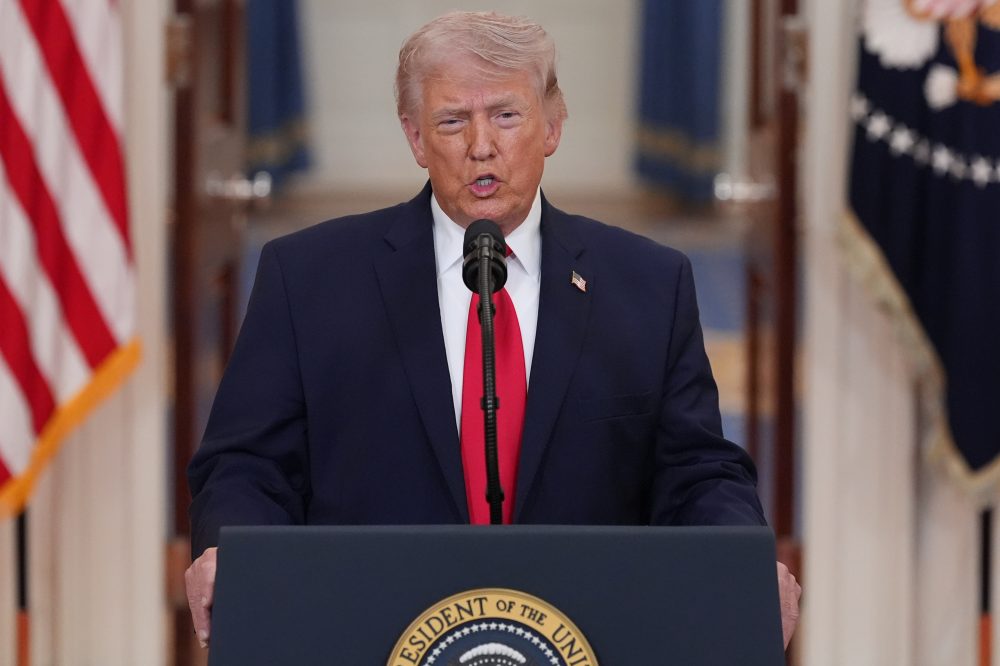

DUBAI, United Arab Emirates (AP) — Tehran launched additional missile strikes against Israel and neighboring Gulf nations Thursday, showcasing Iran’s persistent capability to attack regional targets despite President Donald Trump’s assertions that the Iranian threat has been virtually eliminated.
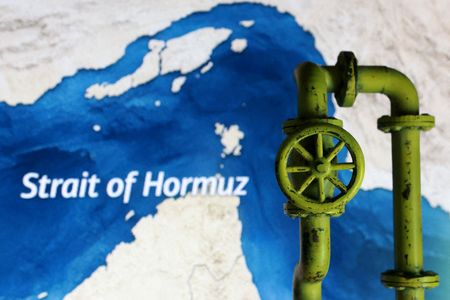
Tehran’s assaults on Gulf nations combined with its control over the Strait of Hormuz have severely disrupted global energy markets, creating impacts that extend well beyond Middle Eastern borders. This disruption has become Iran’s most significant strategic weapon in the ongoing conflict. Britain organized a conference call with approximately three dozen nations Thursday to discuss strategies for reopening the vital shipping lane after hostilities conclude.
Trump has maintained that the waterway could be seized through military force — though he stated America should not bear that responsibility alone. During Wednesday evening’s national address, he urged nations dependent on Hormuz oil shipments to “build some delayed courage” and proceed to “take it.”
Prior to the February 28 launch of U.S. and Israeli military operations against Iran, the strategic waterway remained accessible to commercial traffic, with one-fifth of globally traded oil passing through its waters.
Tehran responded with defiance to Trump’s Wednesday speech, during which the American leader declared U.S. military operations had been so effective that “one of the most powerful countries” is “really no longer a threat.”
Iranian military spokesperson Lt. Col. Ebrahim Zolfaghari stated Thursday that Tehran retains concealed weapons stockpiles, ammunition reserves, and manufacturing capabilities. He characterized facilities hit by U.S. attacks as “insignificant.”
Moments before Trump’s address — during which he declared U.S. “core strategic objectives are nearing completion” — explosions echoed through Dubai as defensive systems engaged an Iranian missile assault.
Within thirty minutes of the president’s speech conclusion, Israeli forces reported intercepting incoming projectiles. Warning sirens activated in Bahrain, headquarters of the U.S. Navy’s 5th Fleet, immediately following Trump’s remarks.
Thursday saw continued strikes throughout Iran, with explosions reported across multiple urban centers.
In Lebanon — where Iran-supported Hezbollah fighters are battling Israeli ground forces — an Israeli attack claimed four lives in the southern region, according to the Health Ministry.
Combat casualties have reached over 1,900 deaths in Iran compared to 19 reported fatalities in Israel. More than two dozen people have perished in Gulf states and the occupied West Bank, while 13 American military personnel have been killed.
Lebanese casualties exceed 1,200 deaths with over one million people displaced. Ten Israeli soldiers have also died in Lebanese operations.
Iranian strikes on roughly two dozen merchant vessels, plus threats of additional attacks, have virtually halted all commercial navigation through the waterway linking the Persian Gulf to international waters.
Since March 1, strait traffic has plummeted 94% compared to the previous year’s corresponding period, according to Lloyds List Intelligence maritime data. The firm confirmed two vessels paid transit fees, while others received passage based on agreements between Iran and their flag nations.
Saudi Arabia redirected approximately one billion barrels of oil away from the Strait of Hormuz during March, maritime analytics firm Kpler reported, while Iraq announced Thursday it had begun trucking petroleum through Syria to bypass the strait.
The 35 nations participating in Thursday’s discussions, including all G7 industrialized democracies except America, plus the United Arab Emirates and Bahrain, endorsed a declaration last month demanding Iran cease blocking the waterway.
Thursday’s negotiations centered on political and diplomatic solutions, though British Foreign Secretary Yvette Cooper indicated military planners from multiple countries would also develop security measures for post-conflict operations, including potential mine removal and commercial shipping “reassurance” efforts.
No nation appears prepared to forcibly reopen the strait during active hostilities. French President Emmanuel Macron, speaking during a South Korean visit, described military action to secure the waterway as “unrealistic.”
However, concerns persist that Iran might continue restricting waterway access even after U.S. and Israeli attacks conclude.
The international coalition concept mirrors the “coalition of the willing” led by Britain and France to support Ukrainian security during potential ceasefire negotiations. This effort partly demonstrates to Washington that European nations are assuming greater responsibility for regional security amid Trump’s frequent criticism.
The conflict continues driving oil and natural gas prices upward, destabilizing financial markets, increasing gasoline costs, and threatening to make various commodities, including food products, more expensive.
Thursday trading saw Brent crude, the global benchmark, rise again to approximately $109 per barrel, representing a 50% increase from February 28 when Israeli and American operations began.
While oil and gas typically transiting the strait primarily serves Asian markets, only Japan and South Korea from that region participated in Thursday’s strait discussions. Jet fuel supply disruptions have also affected global aviation travel.