WARSAW — Polish special services are on alert for possible Russian sabotage efforts aimed at stoking conflict between Poland and Ukraine, according to the minister responsible for overseeing those services, Tomasz Siemoniak, who spoke to RMF FM Radio on Wednesday.
The relationship between Poland and Ukraine has grown strained following a decision by Polish President Karol Nawrocki to revoke Ukraine’s President Volodymyr Zelenskiy of Poland’s top state honor. The move stemmed from a dispute over Ukraine naming a military unit after insurgents held responsible for the killing of Polish civilians during World War Two.
Siemoniak noted that Russian disinformation campaigns targeting Poland have picked up significantly in recent weeks, with automated accounts and paid trolls working to amplify disagreements and shape public opinion online.
“Russia’s dream, the dream of the Russian services, was and is the greatest possible tension between Poland and Ukraine,” Siemoniak stated.
When asked whether Russia might go as far as staging an attack on Ukrainians living in Poland to further inflame public sentiment, Siemoniak said such a scenario was entirely believable.
“We observe the interest of people who are commissioned by Russian services in various facilities which are important from the Polish-Ukrainian point of view,” he said.
Siemoniak clarified that this surveillance-like interest goes beyond military bases and critical infrastructure. It also extends to humanitarian aid organizations and other locations tied to cooperation between the two nations.
He stressed that no specific plot has been identified as imminent, but that Polish authorities must stay ahead of any Russian attempt to take advantage of the current friction between the two neighboring countries.
On a broader level, Siemoniak said intelligence agencies across the Western alliance are worried about the threat of Russian hybrid attacks — and potentially even direct physical strikes — against Poland and the Baltic states.
“Russia has an arsenal of such actions and… they are preparing them,” he said. “We have to take into account various possibilities.”
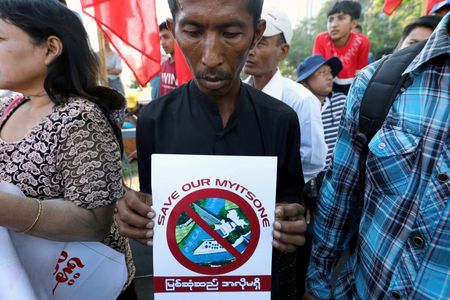
Myanmar’s new government is planning to restart a deeply controversial $3.6 billion dam project at Myitsone in the country’s northern Kachin state, with a target of completing the work within approximately eight years, according to two sources familiar with remarks made by Khet Htein Nan, the region’s top administrator.
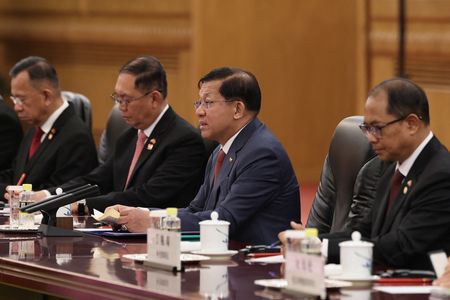
The push to revive the project follows a trip last month by junta chief-turned-president Min Aung Hlaing to China, which has long championed the massive hydropower development in the war-ravaged country’s northernmost province.
Htet Paing Htoo, a member of the Kachin State parliament, told Reuters that the long-dormant construction effort is about to get underway. “It will begin shortly,” he said, referring to work that was suspended in 2011 after an unusually strong wave of public protest against what would have been Myanmar’s largest hydropower project. “An official announcement will be released. The president himself has already stated that it will be restarted.”
The 2011 halt frustrated China, but widespread resentment toward Beijing’s heavy influence in Myanmar — combined with environmental worries about flooding an area roughly the size of Singapore — ultimately won out over plans to export 90% of the dam’s 6 gigawatts of electricity output to China. That generating capacity would place Myitsone among Southeast Asia’s biggest hydropower projects, though it would still fall well short of China’s Three Gorges Dam, which has an installed capacity of 22.5 gigawatts.
A spokeswoman for the presidential office confirmed that restarting the dam was part of discussions during Min Aung Hlaing’s China visit. She noted the project could supply more than half of the 10 gigawatts of electricity that a country facing serious power shortages desperately needs. The spokeswoman, Khaing Khaing Soe, said the government is carefully weighing concerns about flooding and the displacement of local communities. “We are analysing these matters in detail, evaluating the extent of the benefits versus the negative impacts, to strike a balance,” she said on Tuesday.
Khet Htein Nan’s office and China’s foreign ministry did not respond to requests for comment. The two sources who described the administrator’s remarks asked not to be identified, as those discussions were held privately.
If the Myitsone dam moves forward, the price tag could be dramatically higher than originally projected. Based on the International Renewable Energy Agency’s most recent average construction cost estimate of $1,914 per kilowatt for Asian hydropower projects outside China and India, a revived Myitsone dam could run as high as $11.5 billion — more than three times its 2009 price.
Three officials, including the Kachin State lawmaker, confirmed that Min Aung Hlaing’s government — which came to power in April following a widely criticized election won by a military-aligned political party — is actively working to bring the project back to life. The effort comes against the backdrop of an ongoing civil war sparked by the military’s 2021 coup, in which Min Aung Hlaing’s forces overthrew the elected government of Nobel Peace Prize winner Aung San Suu Kyi, who had herself opposed the Myitsone dam.
In Myitkyina, the state capital located about 37 kilometers (23 miles) from the dam site, Khet Htein Nan has made clear in private conversations that the government is determined to move forward, the two sources said. At a June 23 discussion on the dam, the chief minister reportedly told attendees that China is now prepared to address environmental concerns using new technology. “They will use technology to ensure it can withstand such risks,” one source quoted the minister as saying. “There is nothing to worry about.”
Those assurances come as concerns about seismic risk have grown. A powerful 7.7 magnitude earthquake that struck central Myanmar last March and killed thousands has heightened fears about building a massive dam in a geologically unstable region. The proposed structure would stand 152 meters (500 feet) tall and span 152 meters (500 feet) wide at the point where the Mali and Nmai rivers meet.
A third source with direct knowledge of internal government discussions cited the chief minister’s remarks at a June 22 meeting, where he reportedly described the Myitsone project as a potential “historic achievement.” That source added: “The chief minister mentioned that China fully supports and encourages the resumption of the Myitsone project.”
Reuters was unable to determine whether Myanmar’s original arrangement — which called for sending most of the dam’s electricity to China — had been revised.
Meanwhile, the government has been working to build public support in areas now under military control. Following a visit to Myitkyina in April by the former deputy military chief, at least 26 public meetings were held across Kachin State in favor of the project, according to two members of a government-backed committee. “What we want is to provide the public with accurate information and allow them to make their own decisions,” said committee member Naw Khon.
Despite those efforts, resistance remains strong. A coalition of 49 civil society organizations recently called for the project to be abandoned entirely. In a joint statement issued on May 5, the groups declared: “It offers no benefits to the public and will only result in the severe destruction and loss of people’s lives, homes, and property.”
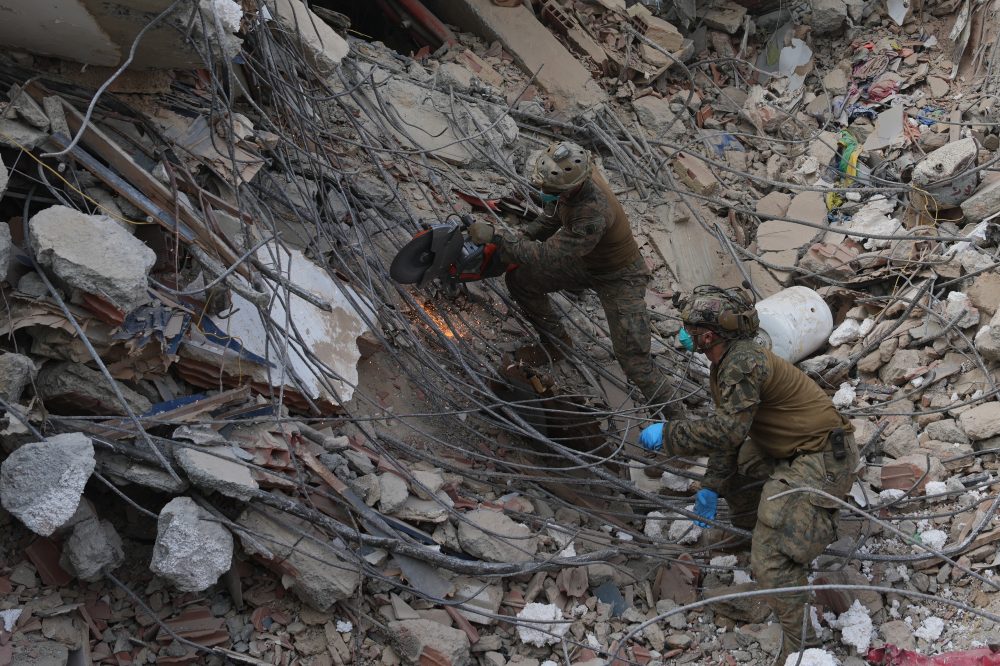
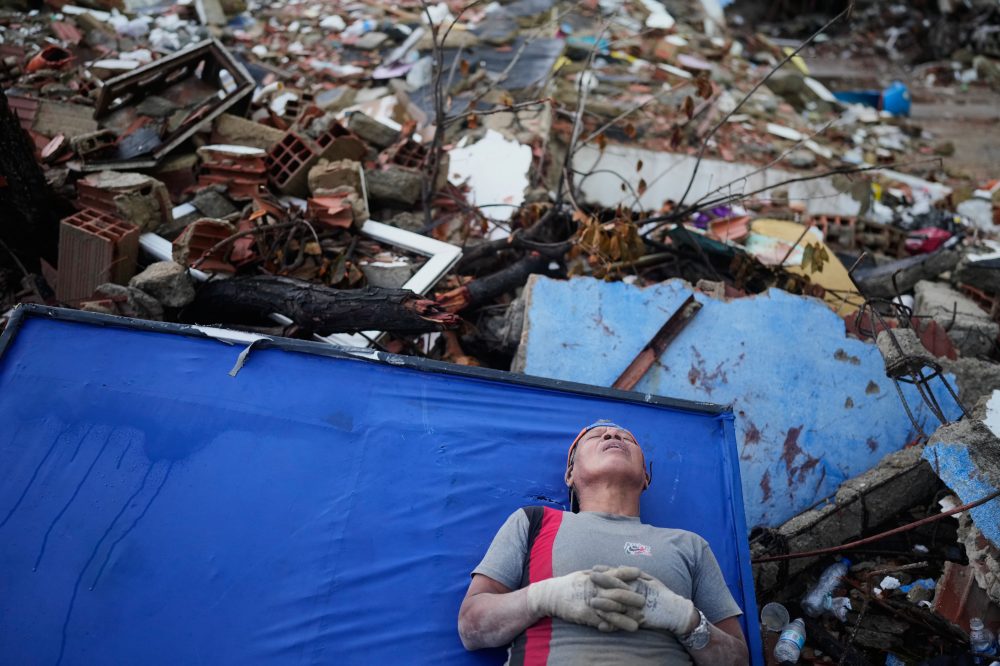
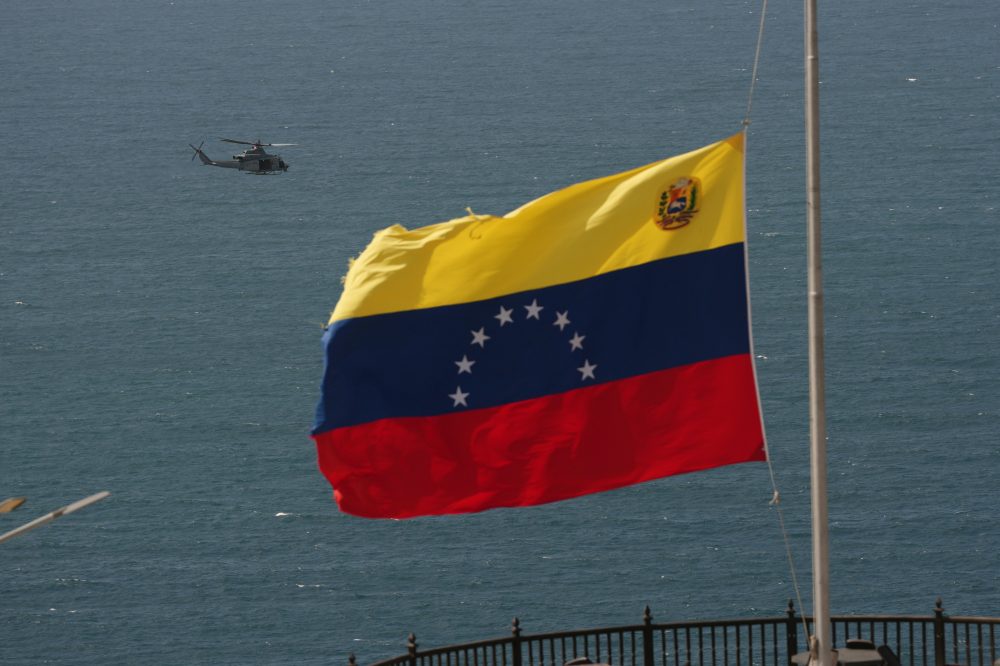
LA GUAIRA, Venezuela — Angelica Mundrain has spent six agonizing days waiting for the heavy equipment necessary to recover the bodies of her son, niece, and nephew, who remain buried beneath the crushed remains of her beachfront apartment building. Massive concrete slabs and mangled metal are all that stand between her and her family — and the machinery needed to move it has not come.
She is not alone. Across the northern state of La Guaira, earthquake survivors are asking the same desperate question: Who is actually in charge?
Venezuela’s government, which has long portrayed itself as a protector of its people, has failed to live up to that image when it mattered most, according to many survivors. The powerful back-to-back earthquakes on June 24 have exposed deep failures within the ruling party — now led by acting President Delcy Rodriguez — after 27 years in power.
“We’ve been abandoned,” Mundrain said Tuesday, seated in a chair on the street in front of the ruins of the 11-story building she once called home. “We feel helpless. What we have seen is a lack of organization, a lack of empathy, a lack of everything.”
In the critical first 72 hours following the disaster — which brought down apartment buildings, restaurants, pharmacies, hotels, and convenience stores throughout La Guaira state, Caracas, and surrounding areas — the government’s visible presence on the ground was largely limited to directing traffic. Police officers, intelligence agents, and military personnel were stationed at intersections while the search for survivors was left largely to ordinary citizens.
Civilians, many working on their own and some alongside foreign rescue teams, combed through rubble looking for loved ones. Ambulances sat trapped in miles-long traffic jams. Hospitals were overwhelmed, understaffed, and lacking basic supplies. Emergency responders showed up with little or no equipment.
A week after the earthquakes, residents of coastal communities in La Guaira credited most of the rescues and body recoveries to fellow Venezuelans and international teams equipped with thermal cameras, sound detection technology, and trained search dogs. Many noted that while these groups worked tirelessly, Venezuelan government personnel in uniform stood by and watched — and in some cases, posed for photos.
Tulane University professor David Smilde, who has spent three decades studying Venezuela, said the disaster has made painfully clear that the country’s government is fundamentally broken. He connected the earthquake response failures to the stunning January 3rd capture of then-President Nicolas Maduro by U.S. forces — describing both as signs of a state that “was not able to defend itself at all.”
“It also can’t do anything like get started with digging people out,” Smilde said, adding that the situation should be deeply concerning for Rodriguez, who was sworn in after Maduro was removed from power and taken to New York to face drug trafficking charges.
Smilde attributed the poor response to the mass exodus of workers from the public sector, driven by extremely low wages and widespread corruption — including thousands of people who remain on the government payroll but have not actually worked in months or even years. He said a functioning government would have clearly defined roles and emergency protocols already in place.
“It’s like trying to have a baseball team with three people on the field. You’re not sure who’s going to be the pitcher, who’s going to be catching, and who’s going to be outfielder,” he said, describing the government’s lack of coordination.
Wealth and political connections also shaped which victims received attention. One collapsed building drew heavy police and military presence — and residents quickly figured out why. Officers from a neighboring state were searching for a captain, while military students and national guard members were looking for a major general.
A telescopic crane — exactly the kind of equipment Mundrain desperately needs — sat parked for hours outside that building. The families of well-connected residents were able to rent it. Mundrain cannot afford to do the same.
“I think that if there were someone in a position of authority in each of these apartments, there would be a well-oiled machine working like they have in other residences,” she said, gesturing toward her destroyed building.
Frustration over the response has boiled over into confrontations. In one incident at a collapsed public housing building, residents blocked traffic to prevent a government-provided excavator from leaving the site and physically pulled the operator out of the cab to stop it from going.
Venezuelan authorities have confirmed that 1,943 people died and more than 10,500 were injured in the 7.2 and 7.5 magnitude earthquakes that struck on June 24. Thousands more remain unaccounted for.
On Tuesday, rescue teams continued pulling some survivors from the debris, giving grieving families a fragile reason for hope — even as the odds of finding anyone alive grew slimmer with each passing hour. Experts note that the first 48 to 72 hours after a disaster are the most critical for rescue efforts, though survival is possible longer if victims have access to food and water.
Electrician Daniel Castillo managed to rescue his mother and son from their second-floor apartment in a collapsed public housing building in La Guaira just hours after the earthquakes hit. His brother’s body remained inside for another full day before he could reach him.
On Tuesday, Castillo stood in line to receive a free bag of hygiene supplies — including toilet paper and soap — distributed from a tent run by the Venezuelan armed forces. He had harsh words for the government’s handling of the crisis.
“You see the guards, and their uniforms are spotless, not dirty at all,” Castillo said, drawing a sharp contrast between the immaculate appearance of Venezuela’s National Guard members and the dust-caked clothing of civilians and foreign rescuers who have been digging through rubble for days. “The government did nothing.”
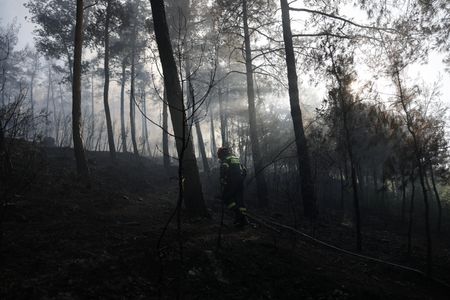
Two people have lost their lives after a wildfire swept through a forested settlement in northern Greece, according to the country’s fire brigade.
The blaze ignited in bushland on Tuesday afternoon and rapidly spread, driven by powerful winds, until it consumed a home near the village of Liti — located roughly 25 kilometers, or about 16 miles, from the northern city of Thessaloniki. Local media reported on the destruction.
Firefighters working to extinguish the flames discovered the body of a man near the house, and upon entering the structure, found a second victim inside. A woman who sustained burn injuries was pulled to safety from the same location.
Before the fire reached the settlement, authorities had ordered residents to evacuate and directed them to gather at a nearby playing field.
Greece, along with other nations bordering the Mediterranean Sea, is considered one of the world’s most vulnerable regions for wildfires. Scientists point to a rapidly warming climate as the driving force behind increasingly destructive fire seasons during hot, dry summers.
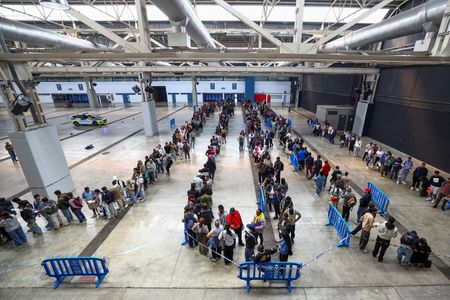
A Spanish law designed to provide reparations by offering citizenship to descendants of exiled nationals has ignited a fierce political debate, with conservative and far-right opposition leaders accusing the Socialist-led government of engineering a new voter base ahead of next year’s elections.
According to government figures, at least 544,722 people have been granted citizenship under the law, which was passed in 2022. Of those, 306,000 have signed up on the electoral roll. Roughly 650,000 additional applications are still waiting to be processed.
This week, right-wing politicians leveled accusations — without presenting any evidence — that the Socialists were meddling in applications from countries where residents were less likely to vote for them, and strategically placing new voters in competitive districts to gain a few additional parliamentary seats. The far-right party Vox went further on Tuesday, calling for a complete suspension of all mail-in ballots cast from outside Spain.
The accusations echo rhetoric used by Brazil’s Jair Bolsonaro and U.S. President Donald Trump, both of whom made claims about rigged elections ahead of major votes. The controversy comes at a difficult moment for Prime Minister Pedro Sanchez, who faces mounting pressure to call early elections before August 2027 amid a stalled parliament and corruption scandals involving people close to him.
Current polling indicates the conservative People’s Party, known as the PP, is on track to win the most votes in the next election but would need support from Vox to form a government.
PP leader Alberto Nuñez Feijoo made his position clear during a Monday radio appearance, saying: “Since the numbers don’t add up for [Sanchez] with the current voters, he’s going to see if manufacturing voters will.”
Spain’s government fired back, calling Feijoo’s remarks “profoundly irresponsible” and pointing out that the government has no authority over where newly naturalized citizens choose to register. The application window for citizenship under the law closed last October.
Officials also criticized opposition figures for blurring the lines between the citizenship law and a separate three-month amnesty program, which offers legal residency to undocumented migrants but does not grant citizenship or voting rights. Vox had claimed that program was also a secret effort to reshape the country’s electorate.
The law in question, known as the “Democratic Memory” law, expands on a 2007 measure that gave citizenship to the grandchildren of approximately half a million people who fled Spain during the 1936-39 civil war and the dictatorship of Francisco Franco that followed, as well as first-generation descendants of Spaniards living abroad.
In 2022, the Sanchez government broadened those rights to include the adult children of people who received citizenship under the 2007 law, descendants of individuals persecuted for their sexual orientation or beliefs, and women who lost their Spanish citizenship as a result of marrying foreign nationals during the Franco years.
Spain is not alone in this practice — Italy, Ireland, Poland, Hungary, and several other European nations also extend citizenship to descendants of their nationals living abroad, including grandchildren, regardless of the country’s political history.
Despite the political tension, overseas voter participation remains relatively low. Only 9% of Spain’s diaspora, which numbers around 2.3 million, cast ballots in the 2023 election. While votes from abroad have trended toward the Socialists in some regional contests this year, the party has suffered significant losses domestically.
A mysterious crash involving a small aircraft that struck Beijing’s tallest building has sent shockwaves through China’s low-altitude aviation industry and exposed troubling gaps in the country’s airspace safety systems.
The single-engine, two-seat light sport aircraft struck the 108-story CITIC Tower at 5:55 p.m. local time on June 26, according to district authorities in Beijing’s Chaoyang district. The pilot was killed and 13 other people at the scene were injured. The pilot’s identity has not been released.
In the aftermath, at least one Beijing-based company offering scenic flight services has shut down its tours, and a provider in the eastern city of Qingdao has also halted operations.
Beijing Capital Helicopter told Reuters that a broad pause was underway. “There has been a nationwide suspension because of the security incident in Beijing,” the company said, adding that it had no timeline for when services would restart. “It could take one or two months. We are also waiting for the official notification.”
Qingdao Hengyi General Aviation also cited control measures as the reason for its suspension, saying it was uncertain when those restrictions might be lifted.
Reuters reached out to some of the more than 100,000 companies operating in China’s low-altitude aviation sector and found widespread confusion on the ground, with many awaiting formal guidance from the Civil Aviation Administration of China, known as the CAAC. The agency has not responded to requests for comment.
Not all operators suspended services. Hongyan General Aviation, which runs flights in Sichuan, Guangdong, and Xinjiang, said its flight training and experience-flight programs were continuing as normal. An aviation school in central Hubei province also said it was accepting bookings.
Beijing district officials confirmed an investigation is underway but did not name the pilot or identify the building in their statement, which was later reposted by the state-run Beijing Daily. Major national outlets, including Xinhua news agency and China Central Television, have not covered the incident. Online discussion of the crash has since been removed from Chinese social media platforms.
Witnesses told Reuters that bystanders near the CITIC Tower on the day of the crash were ordered by police to erase any photos or videos from their mobile phones.
Aviation experts say the crash raises serious concerns. It remains unclear how the aircraft was able to fly into an area bordering a permanent no-fly zone that covers offices of China’s central government and the ruling Communist Party.
Flight tracking data from Flightradar24, reviewed by Reuters, showed that a Hainan Airlines Airbus A330 jet traveling from Urumqi suddenly stopped its descent toward Beijing Capital International Airport and climbed to a higher altitude around the time of the crash, after its flight path crossed with that of the small twin-seat aircraft. The passenger jet landed safely about 30 minutes later. Hainan Airlines did not respond to a request for comment.
Keith Tonkin, managing director of the Australia-based consultancy Aviation Projects, said the incident reveals a significant vulnerability. “Without knowing a lot of detail, the incident exposes a gap in the ability of aviation and defence authorities to prevent such an incident, whether intentional or otherwise,” he said. “There may be specific measures in place in Beijing of which we are unaware, in which case there will be some concern about their effectiveness.”
Under Chinese regulations, all flights — including non-airline general aviation — must receive prior approval. Operators are required to submit detailed flight plans to flight-control authorities by 3 p.m. the day before takeoff, and flying over urban areas is generally prohibited under Chinese civil aviation law.
Tonkin added that the crash will likely force a closer look at how China balances the growth of its low-altitude economy with public safety. “The incident will no doubt result in even more careful consideration of how to realise the value of the low-altitude economy while managing the low but real risk of an aircraft either intentionally or accidentally flying into a building or other high-value infrastructure,” he said.
The CAAC has previously projected that China’s low-altitude economy — which covers both manned and unmanned aviation at lower elevations — could grow into a 3.5 trillion yuan (approximately $516 billion) market by 2035.
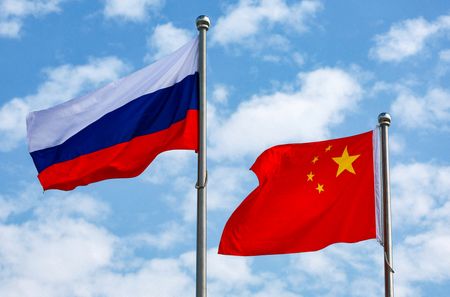
Russia’s top defense official personally signed off on a secret military training program in China last year, with at least four generals from both countries directly involved, according to two European officials and classified documents reviewed by Reuters.
The officials said the participation of such high-level figures in training connected to the Ukraine war underscores how significant this cooperation is to both Moscow and Beijing — even as China continues to deny the program ever happened.
A classified Russian document reviewed by Reuters referenced an internal directive issued by Defence Minister Andrei Belousov in August 2025. According to that document, a Russian armed forces delegation traveled to China to take part in training exercises at People’s Liberation Army facilities, in accordance with Belousov’s order.
Radiological, Biological, and Chemical Warfare Instruction
Among the training sessions described in the documents was a three-week course held at a military facility in Beijing in November, focused on protection against radiological, chemical, and biological threats. Images and descriptions in two separate reports showed Russian soldiers receiving instruction from a Chinese trainer, examining a model nuclear reactor, and learning about “chemical reconnaissance,” “radiation reconnaissance,” and how to shield ventilation systems from contamination.
One of the European officials noted that including this type of warfare training highlighted the strategic depth of the exchanges, calling the subject matter especially sensitive within military circles.
Neither Russia’s nor China’s defense ministries responded to requests for comment. China’s foreign ministry issued a statement saying its position on the Ukraine conflict has not changed, adding that “the relevant allegations are entirely unfounded.”
Beijing maintains it is neutral in the conflict and portrays itself as a potential peace broker.
A Reuters report published last month, drawing on European intelligence sources and military documents, revealed that China trained roughly 200 Russian military personnel in November, some of whom have since been deployed to Ukraine. The Kremlin declined to address that report directly but criticized what it called “false information” coming from Western outlets.
On June 15, the European Union’s foreign policy chief Kaja Kallas stated that Brussels had independently confirmed through its own channels that the training occurred and was evaluating what steps to take next. Beijing dismissed her remarks as “nothing but smears.”
EU Weighs Its Response
European nations, which have viewed Russia as their primary security concern since its 2022 invasion of Ukraine, have grown increasingly uneasy as relations between Moscow and Beijing have deepened. China is the world’s second-largest economy and a major trading partner for the EU.
Within the 27-member bloc, private discussions are focused on whether additional measures are warranted in response to the training, balanced against the economic ties that have long defined the EU’s relationship with China. The EU has already sanctioned Chinese companies it says are helping to fuel Russia’s war effort.
A third official based in Brussels told Reuters that the bloc needs to stop seeing China primarily as a trade partner and instead focus on what Kallas described as its role as a “decisive enabler of Russia’s war.”
Both European officials, speaking anonymously due to the sensitivity of the matter, identified the signatories of a July 2 agreement that laid the groundwork for the training as Russian Major General Rustam Khusainov and Chinese Senior Colonel Sun Dayun.
Andrei Kartapolov, a senior member of Russia’s parliament who chairs its defense committee, told Russian outlet RTVI that the training reports were “complete nonsense” and insisted Russia’s military had nothing to gain from China in that regard.
China’s Limited Combat Experience Noted
Russia has amassed substantial battlefield experience over more than four years of fighting in Ukraine, while China — despite having a large and technologically sophisticated military — has not engaged in armed conflict in decades.
Internal Russian military documents reviewed by Reuters offered assessments of both the strengths and shortcomings of the training program. One report covering training conducted in Nanjing praised the quality of equipment, the use of simulators, and the instructors’ strong theoretical knowledge, while also specifically pointing out China’s absence of real combat experience.
Additional documents named three generals who participated in the program. One Russian military document included a full roster of all participants across every course — listing rank, date of birth, organizational affiliation, and security clearance level for each individual, including senior officers.
Colonel General Rustam Muradov, deputy commander-in-chief of Russia’s ground forces, led the Russian delegation, according to the participant list and a second military document. That second document also indicated that Chinese Major General Li Jinsun, who heads the PLA’s Military Academy of Radiological, Chemical and Biological Defence, was present at the opening of one of the courses. Russian Major General Vitaly Gerasimov participated in a course held in Bengbu, according to the roster.
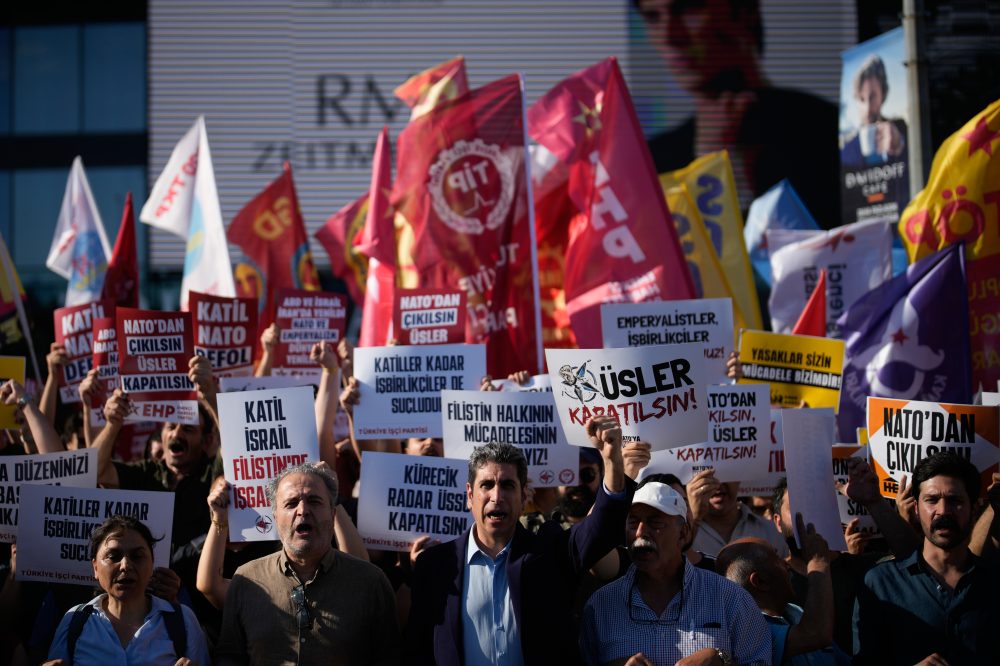
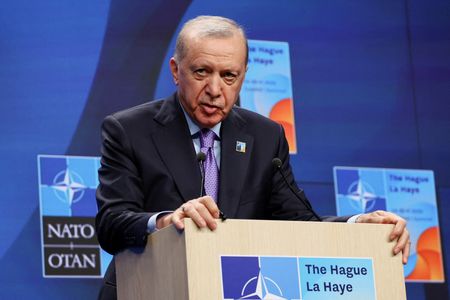
ANKARA, Turkey — Turkey is pulling out all the stops ahead of next month’s NATO summit, flooding its capital with tens of thousands of police officers, activating air defense systems, and banning public events — all while critics raise concerns about restrictions on free speech and the right to assemble.
The sweeping preparations are designed not only to protect the gathering but also to signal Turkey’s strength and reaffirm its dedication to the alliance, even as the country has frequently been viewed as a difficult partner within NATO.
On July 7 and 8, heads of state from all 32 NATO member countries are set to meet in the Turkish capital, including U.S. President Donald Trump. Trump’s past threats to pull the United States out of NATO and reduce American troop deployments have raised serious questions about the alliance’s direction going forward.
As part of its preparations, Turkey has opened a brand-new VIP airport — converted from a former military airfield — built specifically to receive NATO leaders arriving for the summit.
Key topics on the agenda include how much member nations are spending on defense and what role the U.S. will play in the alliance moving forward. Much of the conversation is expected to focus on rebuilding unity after Trump criticized allies for not backing U.S.-led military action against Iran and efforts to reopen the Strait of Hormuz.
Fatih Ceylan, a former Turkish ambassador to NATO and security analyst at the Ankara Policy Center, offered a measured outlook on what the summit might accomplish. “The important aspect of the meeting is to what extent the rift between the United States and Europe can be healed or narrowed during the summit,” he said. “We should not expect miracles, but nonetheless if there is a convergence of ideas emphasizing the importance of NATO, that should be seen as a success.”
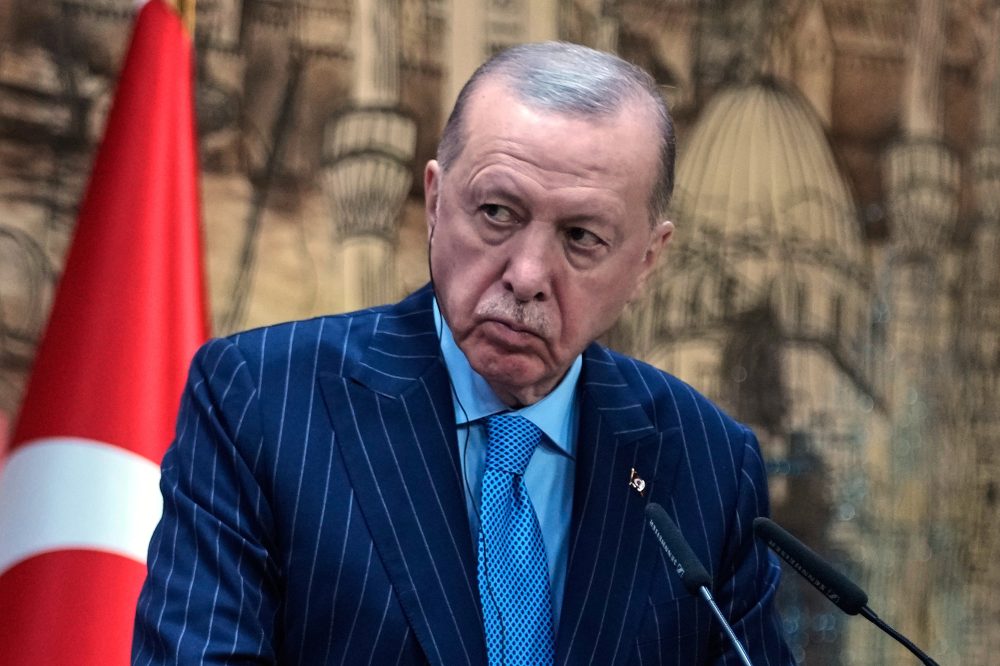
Turkey’s position as the host nation appears to have been a deciding factor in getting Trump to attend. The U.S. president has a well-known personal relationship with Turkish President Recep Tayyip Erdogan. Speaking to reporters after a meeting with NATO Secretary General Mark Rutte at the White House, Trump put it plainly: “Well, except for the fact that it was being held in Turkey by President Erdogan, I don’t think I would have gone to it.”
In the lead-up to the summit, Erdogan has portrayed Turkey as a dependable ally that consistently takes on responsibility along NATO’s southeastern flank. He has said Turkey is working to make sure the Ankara Summit “will stand as a reference point in NATO’s history.”
Turkey has been a NATO member since 1952 and fields the alliance’s second-largest military force after the United States. The country also has a rapidly expanding defense industry and sits at a strategically vital crossroads between Europe, the Middle East, the Black Sea, and the Caucasus region.
Despite that, Turkey has frequently charted its own course, frustrating fellow alliance members. It has refused to join sanctions against Russia, clashed with Greece, and purchased Russian missile defense systems — a decision that got Turkey kicked out of the U.S.-led F-35 fighter jet program in 2019. Turkey also held up Finland and Sweden’s bids to join NATO until it received concessions on counterterrorism cooperation and arms export restrictions, and it previously blocked the appointments of NATO chiefs in 2009 and 2024 until its demands were met.
At the same time, Turkey’s willingness to act independently has allowed it to serve as a mediator in international conflicts — most notably by brokering a 2022 agreement to move grain through the Black Sea between Ukraine and Russia, and by supporting recent efforts to bring the war in Iran to an end.
Turkey has also had its own frustrations with NATO allies, particularly over what it viewed as a lack of solidarity from the alliance following a failed coup attempt in 2016, and over arms sales restrictions placed on Turkey after it intervened militarily in Syria.
Murat Aslan, an analyst at the Ankara-based SETA think tank, said Turkey developed a habit of acting on its own due to its complicated history with both the United States and Europe — and noted that Europe itself is now discussing its own “strategic autonomy” from the U.S. He said Turkey could serve as a model for how to balance independence with alliance commitments as NATO navigates tensions between Washington and European capitals.
More recently, Turkey has moved closer to the NATO fold. During the war with Iran, alliance missile defenses intercepted four Iranian missiles that struck Turkish territory, highlighting the value of NATO membership. In the weeks before the summit, Italy and Germany each deployed air defense systems to Turkey in response to rising threats.
Hamish Kinnear, principal Middle East and North Africa analyst at risk intelligence firm Verisk Maplecroft, described Turkey’s current position in a written analysis: “Turkey wishes to distinguish itself as a foreign policy actor that is independent of NATO and the West. While Turkey is not abandoning its balancing approach, it is tilting closer to the West, primarily because of NATO.”
Inside Ankara, residents are bracing for major disruptions. Strict access controls will be placed on several of the city’s main roads, around airports, the presidential complex where the summit will be held, and around hotels housing foreign delegations. The restrictions will significantly affect daily life in a city of nearly 6 million people.
The newly opened Ankara Airport — built from a former military airfield with expanded runways — is expected to continue operating as a VIP facility after the summit wraps up and will not be open to the general public, officials have said. According to the newspaper Cumhuriyet, building facades along the route from the new airport have been freshly painted as part of a city beautification effort.
While Ankara has dealt with terrorist attacks in the past and is accustomed to heightened security, the measures being put in place for this summit appear to go well beyond what is typical. Authorities have banned demonstrations, concerts, and graduation ceremonies during the summit period, and non-essential government workers have been given leave to help reduce congestion in the city.
More than 200 people suspected of ties to extremist organizations — including the Islamic State — have been detained, authorities confirmed. Media reports indicated that some activists, lawyers, and at least one academic were swept up in the detentions.
A Turkish court has also ordered websites critical of NATO and the summit to be blocked, citing security and public order concerns, according to Engelli Web, a site that monitors internet censorship in Turkey. Additionally, several journalists from Turkish opposition-leaning news outlets were denied press credentials to cover the summit, drawing sharp criticism from media freedom organizations.
Namik Tan, a former Turkish ambassador who now serves as a legislator with Turkey’s main opposition party, was blunt in his assessment: “In the history of the organization, we have never witnessed security measures as stringent and suffocating in a host city for a summit as we are seeing this time in Ankara.”
For some Ankara residents, the restrictions are hitting close to home — literally. Personal trainer Selin Karakoc said she was relieved to learn her July 5 wedding falls just before the restrictions take effect. “Ours could be one of the last weddings in Ankara that week,” she joked.
Ukraine is calling on its European Union partners to redirect €6.6 billion — roughly $7.5 billion — from a bloc fund known as the European Peace Facility toward military support for the country.
Ukrainian officials say the timing is critical, describing the current moment as a six-to-nine month “window of opportunity” on the battlefield that they hope to take full advantage of with increased allied backing.
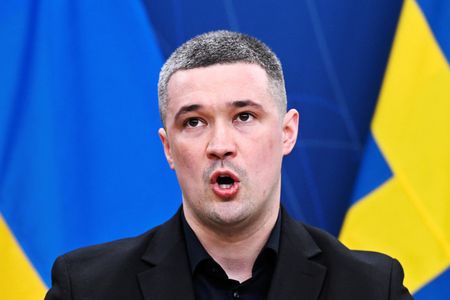
In a letter reviewed by Reuters, Ukraine’s Defence Minister Mykhailo Fedorov outlined the scope of the country’s military funding needs. He noted that Ukraine’s total defense requirements for the current year are estimated at approximately €136 billion, with Ukraine’s own national budget expected to contribute around €53 billion of that total.
TAIPEI — Taiwanese vessels operating off the island’s eastern shoreline have been directed to refuse any attempts by Chinese coast guard ships to board or inspect them, a top Taiwanese official announced Wednesday. Taiwan’s coast guard stands ready to physically step in and block such encounters if they occur.
China, which claims democratically governed Taiwan as part of its own territory, deployed coast guard vessels into the waters east of Taiwan last month. Beijing described the mission as a “special maritime traffic law-enforcement operation,” a move that drew sharp criticism from Taipei.
According to Chinese officials, the patrol was triggered by a joint announcement from Japan and the Philippines that the two countries would begin formal discussions about their shared maritime boundaries — a development Beijing interpreted as encroaching on waters it considers Chinese near Taiwan.
Appearing before lawmakers in parliament, Hsieh Ching-chin, the deputy head of Taiwan’s Coast Guard, laid out how ships should respond if confronted. He said vessels should alert Taiwan’s Coast Guard and “not respond to the so-called boarding inspections” carried out by Chinese ships.
Hsieh went further, stating: “If the situation is urgent, Coast Guard vessels will sail between the two ships to separate them,” referring to Taiwanese vessels facing Chinese pressure.
China’s Taiwan Affairs Office did not reply when asked for a response. Beijing has consistently maintained that the waters surrounding Taiwan are Chinese and that Taipei holds no sovereign authority of its own.
Hsieh also addressed situations involving foreign-flagged vessels within Taiwan’s waters, saying that “in order to defend our national sovereignty and maintain order in our waters, we will intervene” if China attempts to assert authority there. He was direct in his conclusion: “In our waters, China has no jurisdiction.”
During last month’s Chinese patrol, neither side reported any actual boarding attempts. However, Taiwan accused the Chinese coast guard ships of “harassing” commercial vessels by demanding information about where they came from and where they were headed, while asserting Chinese jurisdiction over the area.
This is not the first time such tensions have arisen. In 2024, Chinese coast guard personnel briefly boarded a Taiwanese tourist boat near Taiwan-controlled islands located close to China’s coastline.
China’s growing patrol activity off Taiwan’s eastern coast has raised concerns from the United States, Britain, France, and Germany.
Myanmar’s leader Min Aung Hlaing, who recently shifted from heading the country’s military government to serving as president, is expected to travel to Laos within the next few days, according to state media reports released Wednesday. The upcoming trip will be his first official visit to a fellow member of the Association of Southeast Asian Nations since assuming his new civilian role.
The journey comes roughly four months after Min Aung Hlaing completed a carefully orchestrated move from military ruler to president. He has previously traveled to Myanmar’s large neighboring countries, India and China, but this will be his first visit to an ASEAN nation in his new capacity.
The state-run Global New Light of Myanmar newspaper reported that Min Aung Hlaing accepted an invitation from Lao President Thongloun Sisoulith and will be accompanied by his spouse along with a group of senior cabinet ministers and government officials. The newspaper did not provide specific dates for the visit.
The 11-nation ASEAN bloc declined to recognize the outcome of Myanmar’s three-phase elections held in December and January. Those elections barred major opposition groups from participating and resulted in a landslide win for a military-aligned political party.
Despite that stance, ASEAN member nations have increasingly sought to re-engage with Myanmar following the elections. The foreign ministers of Malaysia and Thailand have both made separate trips to Myanmar’s capital, Naypyitaw, in recent months.
Min Aung Hlaing first seized power in February 2021 through a coup that ousted an elected government led by Aung San Suu Kyi. That takeover sparked widespread protests that eventually grew into a brutal civil war, which continues to this day.
In the immediate aftermath of the coup, ASEAN attempted — without success — to broker peace through a framework called the “five-point consensus.” The bloc also banned Myanmar’s military leadership from attending its regional summits, leaving Min Aung Hlaing largely shut out diplomatically until last year. Following his election win, he stated that rebuilding ties with ASEAN was among his government’s top priorities.
Richard Horsey, a senior Asia advisor at the International Crisis Group, offered this assessment of the upcoming visit: “A state visit to Laos represents the clearest break yet with the diplomatic quarantine that ASEAN imposed on Naypyitaw after the coup.”
Horsey added, “That inevitably weakens the political force of the five-point consensus, and means that the shrinking number of ASEAN states still arguing against normalisation will find it increasingly difficult to hold the line.”
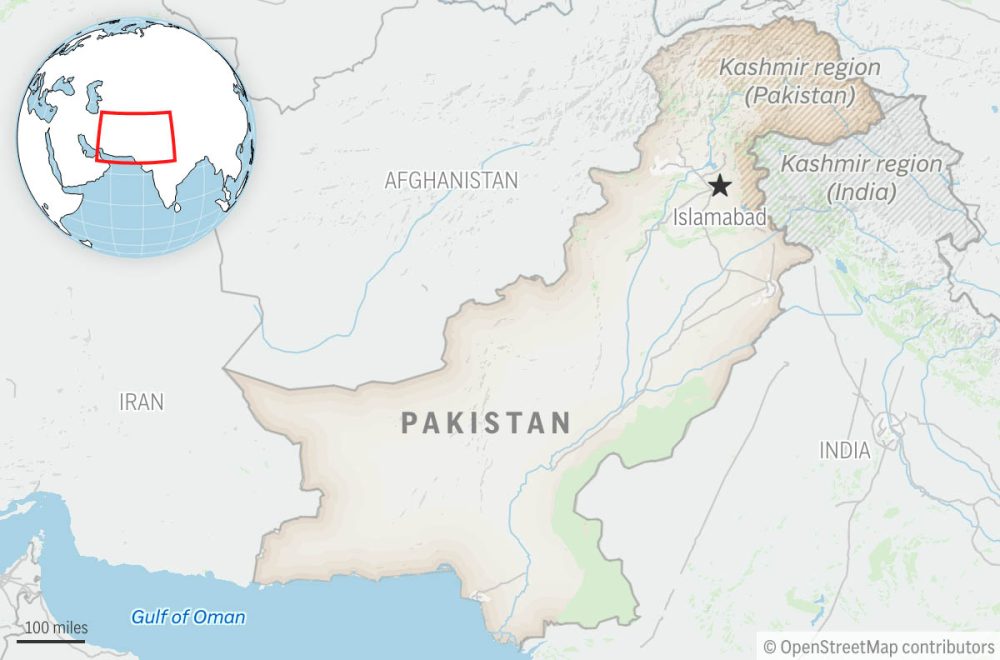
KABUL/QUETTA, Pakistan — Afghanistan’s Taliban government announced Tuesday that it carried out airstrikes against targets inside Pakistan, while Pakistani officials reported that their forces intercepted and destroyed four primitive drones over the southern province of Balochistan, a region rich in natural resources.
Tuesday’s confrontation marks the most recent episode in a string of armed clashes between the two neighboring South Asian countries.
Afghanistan’s defense ministry stated that its forces struck what it identified as an ISIS facility in the town of Saranan, located in Pakistan’s border province of Balochistan, along with additional targets in the Khyber Pakhtunkhwa province.
Pakistan’s military released a statement saying the drones were detected immediately and taken down. Local provincial authorities confirmed the drone incident, noting that one of the drones was spotted near a government school in Saranan. Officials reported that two people suffered injuries in the attack.
Afghanistan does not operate fighter jets, but is believed to have at least six aircraft and 23 helicopters, according to data from the International Institute for Strategic Studies, which is based in London. Taliban forces are also known to operate drones, which have previously been used in confrontations with Pakistan.
Pakistan has long accused Afghanistan of sheltering militant groups it holds responsible for planning attacks on Pakistani soil. The Afghan Taliban rejects those accusations, arguing that militancy within Pakistan is that country’s own internal issue.
The latest exchange follows deadly Pakistani airstrikes conducted Monday along the Afghan border, which killed at least 28 civilians and left 49 others injured. Pakistan described those strikes as retaliation for what it called “terrorist attacks” carried out on its territory.
The deteriorating relationship between the two countries — once considered allies — has resulted in hundreds of deaths so far this year. Diplomatic efforts led by China to reduce tensions have not yet produced any breakthroughs.
Five years ago, the West came dangerously close to a major diplomatic rupture with NATO ally Turkey when 10 ambassadors jointly demanded the release of a man they considered a political prisoner — a move that so enraged President Tayyip Erdogan that he threatened to expel them from the country.
After two tense days in 2021, both sides pulled back from the edge. The U.S., French, German, Canadian and other envoys issued statements aimed at smoothing things over, and Erdogan declared they would exercise more caution going forward.
And that is exactly what they have done.
In the years since — and particularly after Russia’s invasion of Ukraine left European nations feeling strategically vulnerable — Western governments have largely stopped publicly challenging Turkey’s track record on rights and civil liberties. Instead, they have focused on deepening security relationships with the regionally powerful nation, which is also a major arms exporter.
That diplomatic shift will be front and center when the leaders of all 32 NATO member nations gather in Ankara on July 7 and 8 for a major summit.
According to Western and Turkish diplomats involved in planning the event, the leaders are not anticipated to speak out against an extraordinary legal offensive targeting Turkey’s primary opposition party, the Republican People’s Party (CHP). That crackdown has included the imprisonment of the party’s presidential candidate, Istanbul Mayor Ekrem Imamoglu, who is widely regarded as Erdogan’s chief political rival.
Some critics of Erdogan’s government argue that the West’s relative quiet is giving the government room to slide further toward authoritarianism, while leaving Turkey’s opposition isolated and abandoning NATO’s core commitments to democracy and the rule of law.
“It remains important for the West to continue to comment on the degradation of democratic institutions in Turkey because the course is not irrevocably set, Turkey is not beyond the pale,” said David Satterfield, a former U.S. ambassador to Ankara.
“It’s important that Turks hear others talking about their system in this way,” Satterfield, who now serves as director of the Baker Institute for Public Policy, told Reuters.
Erdogan’s office did not respond when asked for a reaction to those views.
Satterfield pushed back against the idea that speaking up about human rights in Turkey had damaged the core working relationship between the U.S. and Turkey. He also said that the approach taken during President Donald Trump’s second term — avoiding talk of democratic values altogether — had not actually improved relations either.
Satterfield was among the 10 Western ambassadors whom Erdogan briefly moved to declare “persona non grata” in 2021, after they collectively called for the release of jailed philanthropist Osman Kavala. The ambassadors said his case was doing harm to Turkish democracy.
Kavala has now been imprisoned for nearly nine years and faces a potential life sentence on charges that he attempted to overthrow the government — allegations he denies. The European Court of Human Rights has ruled that he and others involved in the case should be freed, citing insufficient evidence, and concluded that his continued detention is meant to silence him.
Erdogan’s ruling AK Party, which has held power for 23 years, dismisses criticism of its democratic record and rejects any notion that the courts are being used for political purposes, maintaining that the judiciary operates independently.
Over the past two years, hundreds of elected CHP officials and members have been imprisoned and the party’s leader has been removed from his position — actions the CHP describes as a judicial coup.
Ahead of the NATO summit, rights organizations have raised alarms about additional restrictions. Dozens of journalists from independent Turkish media have been denied press credentials to cover the event, and authorities have detained more than 200 people, citing security concerns.
Erdogan’s office declined to comment on the denied media accreditations. NATO said it looks to the host country for guidance on such matters. When asked whether the alliance intends to raise human rights issues at the summit, a NATO official pointed to a previous statement on the accreditation matter, noting that in-person press coverage was considered very important. The U.S. embassy in Ankara did not immediately respond to questions about any change in its approach toward Turkey.
Few Western governments have spoken out about the crackdown on the CHP. Some Western diplomats argue that open criticism of Ankara accomplishes little in terms of slowing democratic backsliding, and say they prefer to raise concerns through private channels with Turkish officials.
The summit will mark Trump’s first visit to Turkey as president. He is also expected to hold a one-on-one meeting with Erdogan, whom he has repeatedly referred to as a friend — a reflection of what observers describe as the warmest U.S.-Turkish relationship in years.
Turkey is hoping the summit will showcase unity within the alliance and open doors to expanded defense industry partnerships. NATO Secretary General Mark Rutte indicated that deals worth tens of billions of dollars would be announced at the gathering.
Alliance members increasingly view Turkey — which fields NATO’s second-largest military and is a top exporter of armed drones — as a critical barrier against Russian aggression along the alliance’s southeastern edge. That elevated status comes despite some past friction, including Turkey’s delay of Sweden and Finland’s membership bids between 2022 and 2023, and its relatively friendly ties with Moscow.
Western allies are now signaling they have “given up on values to an extent and prefer a transactional relationship … knowing that Turkey is indispensable for the defence of Europe,” said Karol Wasilewski, head of Turkey, Caucasus and Central Asia at the Warsaw-based Center for Eastern Studies. He added that Ankara recognizes that any Western criticism — including over the opposition crackdown — will be muted and “won’t translate into actions.”
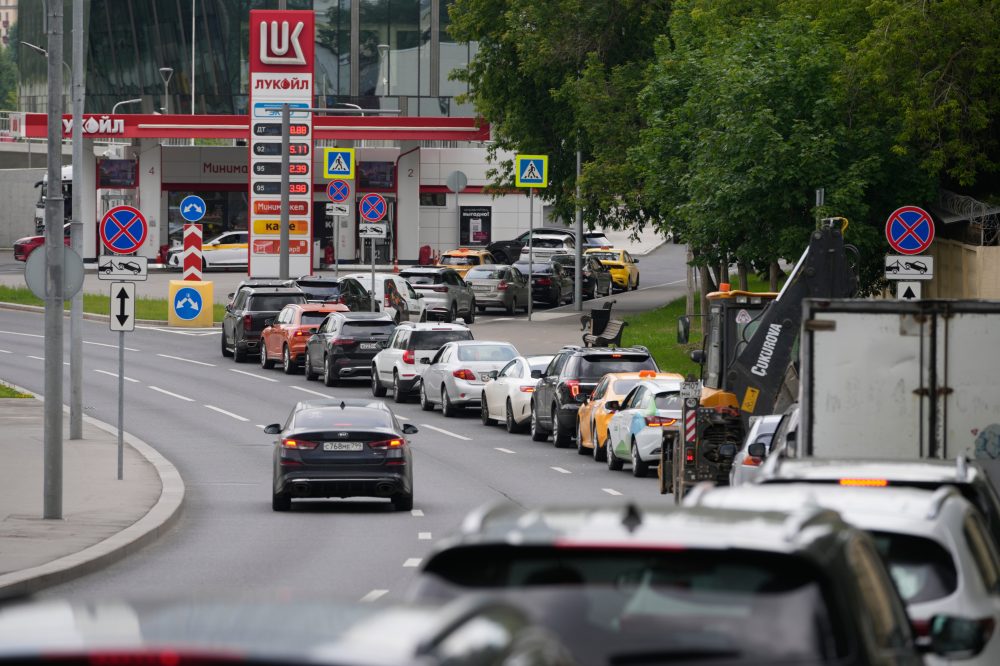
Frustration is mounting at gas stations across Russia as months of Ukrainian drone strikes against oil refineries have ignited fires, disrupted production, and left drivers waiting in lines that stretch for hours along roadsides.
Fuel rationing has been put in place across many parts of the country, with videos circulating on social media showing angry drivers confronting empty pumps and sticker shock at rising prices. The situation grew so dire in the Siberian city of Irkutsk that the mayor ordered portable toilets placed outside gas stations to serve those stuck waiting in line.
For a nation that ranks among the world’s top energy producers, the crisis is without precedent — and it has brought the reality of Russia’s ongoing war against Ukraine home to everyday citizens in a way few other developments in the now five-year conflict have managed.
The situation prompted an unusual public acknowledgment from President Vladimir Putin, who admitted that “problems persist for both motorists and businesses” and that “there are still queues at petrol stations, and finding the right grade of petrol isn’t always easy.”
Putin maintained that the shortages are “not critical” and “temporary,” but that message appeared to offer little comfort to at least one Moscow driver waiting in line. Even the Russian capital — typically shielded from economic hardships more than the rest of the country — has not been spared.
“I think the situation is not very good,” the motorist told The Associated Press on Monday, the day following Putin’s televised comments. “They say one thing on television, and in reality it’s another. … People are queueing everywhere,” the man added, choosing not to give his name due to safety concerns.
A tally by the AP identified more than 50 reported Ukrainian strikes on Russian oil refineries, fuel depots, terminals, and related infrastructure — including on the illegally annexed Crimean Peninsula — since late March. Some facilities have been hit repeatedly; a refinery in the Black Sea town of Tuapse was struck four separate times in just over two weeks.
The cumulative damage has taken a serious toll on Russian fuel output. In June, Russia processed crude oil at a rate of 3.95 million barrels per day — a 25% drop compared to the same period a year earlier and the lowest level in more than two decades, according to Gary Peach, an oil markets analyst at Energy Intelligence. “The outages are extraordinary,” he said.
Gasoline production has dropped 17%, falling from 1.03 million barrels per day to 850,000 — well below what Russia needs to meet domestic demand. The country exports very little of its gasoline supply.
Roughly one-third of Russia’s oil refining capacity is currently out of service, according to Chris Weafer, CEO of Macro-Advisory Ltd. Consultancy. He noted that because refineries do not publicly disclose the full extent of damage, his estimate is based on industry sources and anecdotal reports.
“It comes at a very critical time for the Russian economy, in that the agriculture season, particularly the harvest season, is now starting to ratchet up,” driving demand even higher, Weafer said.
Ukrainian officials have characterized the strikes as part of a deliberate strategy to pressure Moscow into ending the war by disrupting military logistics, cutting supply lines, and weakening Russia’s ability to launch attacks along the front lines. Kyiv has also specifically targeted Crimea, seized from Ukraine in 2014 in a move that most of the world does not recognize. Earlier strikes forced authorities in Crimea to implement fuel rationing in May and eventually halt civilian sales altogether for several weeks, before limited sales later resumed in the city of Sevastopol.
Ukraine has also launched significant drone attacks on Russia’s two largest cities. A June 3 strike on an oil terminal in St. Petersburg sent thick black smoke into the sky just as Putin was preparing to host his annual economic forum aimed at drawing foreign investment. On June 18, a similar dark cloud rose from the Moscow Oil Refinery on the edge of the capital, with oily black droplets reported falling in the area.
By late June, some form of fuel rationing had been reported in more than half of Russia’s regions. Some areas placed hard limits on all gas stations, while others saw fuel chains cap how much a driver could purchase at one time.
Government officials blamed hoarding and panic-buying, urging drivers to refuel only when necessary. Gasoline and aviation fuel exports have been restricted, and authorities were also weighing a ban on diesel exports. The possibility of importing fuel was under consideration, with Kremlin spokesman Dmitry Peskov saying talks with certain countries were “underway” — a step he described as “aimed at reducing panic-buying.”
The shortages have spread to distant Russian regions where no drone attacks have occurred. Viktor Shkurenko, a retail store owner in the Omsk region, called a newly announced limit of 40 liters — roughly 10.5 gallons — per vehicle “unexpected.”
“Nothing was bombed here. We have the biggest oil refinery in Siberia right here, and it gave us confidence that this fuel crisis won’t come to us,” he said, voicing concern about the potential impact on his businesses. As of Saturday, however, he said his company had not yet experienced any difficulty refueling its vehicles.
In the Siberian region of Zabayakalye, east of Lake Baikal, media reports indicated that a garbage collection service suspended pickups and some bus routes were reduced. Beyond ordering portable toilets at gas stations, the city of Irkutsk also raised public transit fares as of Wednesday, citing increased fuel costs.
Pavel Kharitonenko, acting head of the Irkutsk branch of the opposition Yabloko party, told AP he has found it easier to simply walk or take public transportation. “I don’t have the fuel, and I don’t want to queue at gas stations,” he said. He noted that the Irkutsk region, which is home to a Rosneft oil refinery, has been experiencing severe shortages for several days with lines continuing to grow.
Putin stated that Russia’s gasoline stockpiles are only 4% lower than they were a year ago. Analyst Weafer says that “reportedly, there are good supplies of fuel around the country. The problem is it’s in the wrong place.” Getting those supplies redistributed to regions in need is a massive logistical challenge in a country as large as Russia. “There should be enough, but it will take several weeks to get it from where it is to where it’s needed,” Weafer said. “It’s just a huge logistics operation to do that.”
Repairing the damaged refineries is also a complicated matter. Ukraine’s strikes have destroyed specialized equipment that is typically imported, making repairs slow and costly as Russia attempts to find replacements while evading international sanctions. “They manage to get these things up and running, not necessarily at full capacity,” said Peach. “But the extent of the damage this time is so extensive that they won’t get back to winter levels of refining this summer.”
Some facilities may not be worth fixing at all until a ceasefire or armistice is reached, Peach added, since they would likely “get knocked down again.” The Moscow Oil Refinery — which supplied 40% of the fuel used in the capital and surrounding area — is expected to take at least three months to repair, according to Weafer. Barring further attacks on Russian energy infrastructure, he estimated the shortage will likely persist “probably throughout the summer” as agricultural demand remains elevated through September.
JERUSALEM (AP) — It was described as the deadliest strike of the U.S.-Israeli war against Iran, and most of those who died were children. Yet more than 120 days later, the full truth of what happened remains buried under a cloud of incomplete information and political maneuvering.
Since at least one American missile struck an Iranian primary school on February 28, the Trump administration has neither formally accepted responsibility nor publicly released the results of a Pentagon inquiry into the bombing. A U.S. official familiar with the matter, speaking anonymously because the investigation is ongoing, told the Associated Press that the military had evidence almost immediately that the school had been hit.
The AP pieced together an account of the attack using open-source data, video footage, human rights documentation, and interviews with researchers and civilians both inside and outside Iran. The reconstruction revealed previously unknown details about the bombing in Minab — including the range of backgrounds of the children who were killed.
A lack of information from the Pentagon, combined with Iran’s government using the tragedy for its own political messaging, has made independent reporting extremely difficult. Families of the victims have been left without answers. Key questions — such as exactly how many munitions struck the school and a complete list of those who died — remain unresolved.
When asked about the incident last week, President Donald Trump said he had not read the Pentagon’s report and had seen nothing convincing him that the U.S. was responsible.
“I don’t know that they’re ever going to solve that problem in terms of whose fault was it, because there were missiles flying all over the place,” he said. “I don’t think it was us.”
Iran’s mission to the United Nations did not respond to the AP’s request for comment.
The AP’s reporting drew on conversations with U.S. officials, Iranian human rights workers, a Minab resident, an international representative of the Coordinating Council of Iranian Teachers’ Trade Union, and researchers from major international rights organizations. Many of those interviewed requested anonymity out of concern for their safety and the safety of those they spoke with.
The morning of Saturday, February 28 was clear and bright over Minab, a city in southeastern Iran located roughly 16 miles from the Strait of Hormuz. It was Ramadan and a regular school day in Iran.
Students filed into the Shajareh Tayyebeh school — a name that translates from Farsi as “Good Tree” — passing colorful murals in the schoolyard before settling into classrooms with brightly painted desks, boys and girls in separate areas.
The school was one of more than 30 bearing the same name, established to serve children from families connected to Iran’s paramilitary Revolutionary Guard or other state institutions, according to Shiva Amelirad, the international union representative who taught in Iran for 18 years and has maintained contact with people in Minab.
While most Iranian schools operate under the Islamic Republic’s general guidelines, the Shajareh Tayyebeh schools were more deliberately designed to instill and reinforce the Guard’s ideology, Amelirad said. She was quick to add, however, that children are civilians no matter their family backgrounds, and that “any attack targeting a school is unequivocally condemnable.”
Satellite imagery and open-source mapping reviewed by the AP showed the school sat within the same walled compound as a Guard base. It had once been part of that base before being separated and converted into a school more than a decade ago.
While some students were children of Guard officers stationed at the nearby base, others were local children from Minab — a city with a predominantly Sunni Baluch population, an ethnic minority that frequently faces repression from the Iranian government, according to the Balochistan Human Rights Group.
Hundreds of students were believed to be inside the building when teachers and administrators learned that bombs had begun falling on Tehran at around 9:40 a.m. School officials decided to send the children home early and began calling parents on landlines to come pick up their kids, according to two people who spoke with the AP. An independent conflict-tracking organization called Airwars, based in London, also documented that parents were summoned to retrieve their children.
At 10:15 a.m., Iran’s state media issued an advisory closing schools across the country.
One father who lived nearby immediately went to collect his 10-year-old son, according to a Minab resident who shared the stories of several families with the AP — details the AP cross-referenced against available lists of the dead and timelines compiled by rights groups. At the school, the father spotted two younger relatives, ages 6 and 7, waiting outside. He offered them a ride home, but they declined, saying their own father was already on his way.
He left with his son and stopped at a supermarket. Ten minutes later, he heard explosions.
Multiple munitions hit the compound, striking at least five buildings, according to the AP’s satellite imagery analysis. The school was leveled under hundreds of pounds of explosives.
The father rushed back to find a scene of devastation. Video circulated by Iranian state media showed onlookers screaming as men dug through smoldering debris pulling out bodies. The father eventually spotted two burned figures he believed were his young relatives — though he couldn’t be certain.
More people arrived. A man from a nearby Sunni village came searching for his nephew after receiving a frantic call from the boy’s mother. He found the child dead in the rubble.
Rescuers uncovered small backpacks, children’s drawings, colored pencils, and worksheets. A tiny arm was found suspended in the wreckage.
Men carried mangled limbs and torsos to the local hospital, according to the Balochistan Human Rights Group, whose staff spoke with two victim families. The AP was unable to independently confirm the exact number of munitions that hit the school, but the blast had left remains so badly damaged that many body parts were unrecognizable.
By the end of that day, hospital doctors estimated they had received at least 108 bodies, though they cautioned the number was likely an undercount, the Minab resident said. By the following day, state media was reporting roughly 150 dead. The figure soon climbed to 168.
Three days after the bombing, thousands of Iranians gathered at a roundabout in Minab for a mass funeral, standing before a podium and a large portrait of the late founder of the Islamic Republic. All parents of victims — regardless of ethnicity or religion — were required to attend, according to the Minab resident. Most women in the crowd wore the black chador, a garment standard in the Islamic Republic but not typically worn by Baluch people at funerals.
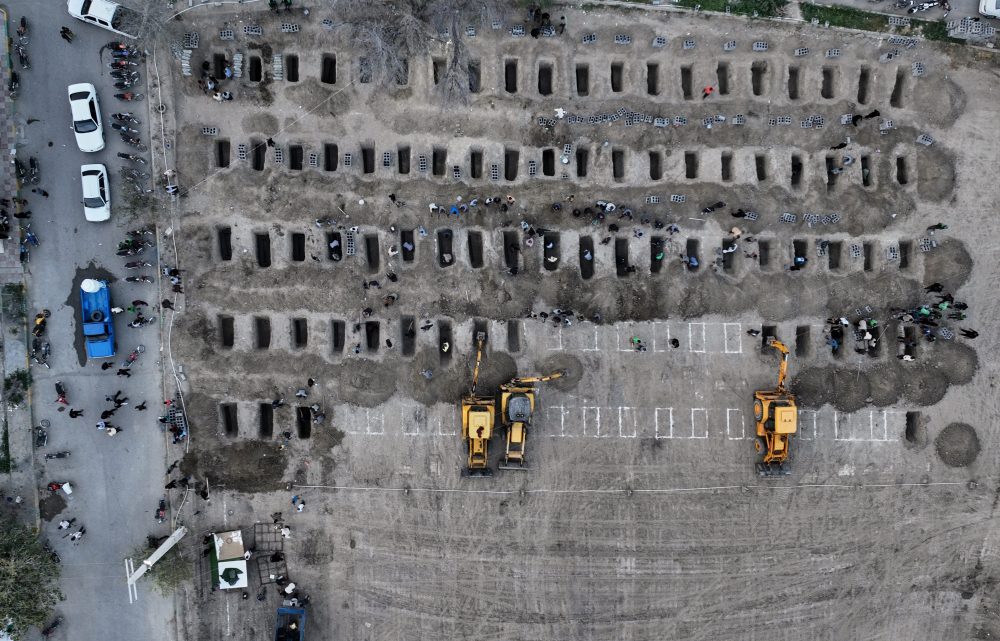
Parents were initially told they could take their children’s bodies home for private burials, the resident said. In the end, many chose to bury their children together. Drone footage circulated by state media showed workers digging a grid of small, identical, unmarked graves in an open lot.
“The state media advocated a narrative based on IRGC interest,” said Amelirad. “You can tell because they called the kids martyrs.”
As strikes continued across Iran, journalists and human rights researchers scrambled to document what was happening — but verifying details from Minab proved nearly impossible. No one had access to the site. Iranian government restrictions blocked most foreign journalists from entering the country. On the first day of the war, Iran shut down internet access, cutting off ordinary civilians from the outside world.
As fighting intensified around the Strait of Hormuz, the atmosphere in the province grew increasingly tense. All military branches were heavily deployed in the region. Families of victims feared speaking out. Reports emerged of people being detained for attempting to contact foreign media.
That left Iran’s government in control of the story.
Iran’s soccer team wore golden “#168” pins on their jackets when they arrived at the FIFA World Cup. The Iranian negotiating team pursuing a pause in the war with the U.S. called itself “Minab 168.” Pro-Iran groups produced viral videos depicting the children as animated Lego figures, mocking the United States.
“In the aftermath of the attack, Iranian authorities … exploited the suffering of victims’ families and surviving children for propaganda purposes,” Amnesty International wrote in a March report on the deaths.
Throughout all of this, no public list of the victims’ names was ever released.
With access to Iran blocked, researchers turned their focus to the question of who was responsible. Iran blamed the U.S. Trump cast doubt on American involvement and pointed the finger back at Iran. Defense Secretary Pete Hegseth said only that the Pentagon was looking into it.
Internally, the U.S. military knew more than it publicly acknowledged. When reports of the school strike first emerged, the military was aware it had conducted strikes in that general area — though it took time to verify Iranian claims that a school had been hit and to formally open an investigation, said the U.S. official speaking anonymously.
It appears that while one analyst had identified the building as a school as far back as seven years ago, that finding was never adequately shared across the various intelligence and military agencies involved. As a result, the building was not recognized as a school by those selecting targets — pointing to potential systemic failures in the target review process, the official said.
A former Pentagon official, also speaking anonymously, said the bombing was a foreseeable consequence of changes made by the Trump administration — specifically, reductions in staff dedicated to minimizing civilian casualties and Defense Secretary Hegseth’s focus on military lethality.
When Hegseth took over, he significantly reduced the size of an office known as the Civilian Protection Center of Excellence, which had been established by Congress in late 2022. That move halted the office’s work on maintaining “no-strike lists” — catalogues of protected locations such as hospitals, schools, churches, and mosques — said Wes Bryant, who joined the office in 2024 as Branch Chief of Civil Harm Assessments. Bryant noted that when he was at the Pentagon, it was widely understood that the list was already out of date.
In recent weeks, some progress has been made in identifying the victims. Airwars spent months reviewing open-source information and was able to confirm the names and identities of 157 people killed, including 123 children aged 13 and under, and 34 adults. Among the adults were 26 school staff members — one of whom was pregnant — and five parents, each of whom lost at least one child. Airwars estimates the death toll falls between 157 and 168, with between 95 and 111 people injured.
Whether the Pentagon’s formal findings will ever be made public remains unclear. Much of the investigative work has reportedly been completed, but the military’s Central Command, which commissioned the probe, is still reviewing the results.
Past investigations have moved faster. When a Hellfire missile killed 10 civilians in Kabul, Afghanistan, on August 29, 2021, the Defense Department acknowledged responsibility and provided operational details within a month.
When asked about the Minab investigation last week, Trump said, “I don’t know that they’re ever going to solve that problem.” Hegseth said the findings would be released “when the appropriate time is right.”
Some members of Congress are still demanding answers. Sen. Mike Rounds, a Republican from South Dakota who sits on both the Armed Services and Intelligence committees, said in a recent interview that Congress has not received adequate information about the bombing and expects a full report.
Asia’s manufacturing sector held its ground in June, as a worldwide surge in demand for artificial intelligence technology helped cushion the blow from the ongoing Iran war, according to private business surveys released Wednesday.
The findings offer some reassurance for Asian economies that depend heavily on exports, though analysts warn that energy-related price pressures stemming from the Middle East conflict could intensify in the coming months. Supply shortages and shipping delays are already stretching delivery timelines across the region.
The surveys highlight how the global wave of AI investment is fundamentally changing economic conditions across Asia. Soaring demand for computer chips, data center equipment, and other technology products is providing a significant growth engine while helping to shield the region from escalating geopolitical and trade uncertainties.
China, Japan, and South Korea all recorded factory growth in June, driven by strong orders for chips, computers, and AI-related goods. Companies also stockpiled materials in anticipation of potential shortages and price hikes linked to the Middle East situation.
China’s RatingDog General Manufacturing Purchasing Managers’ Index, or PMI, came in at 51.7 in June — marking a seventh straight month of expansion and topping the 50-point threshold that separates growth from contraction. The reading dipped slightly from 51.8 in May but surpassed analyst expectations of 51.6.
Those results echoed an official government survey released Tuesday, which also showed Chinese factory activity returning to expansion territory last month on the strength of export orders.
Yao Yu, founder of RatingDog, described the results positively: “Overall, the manufacturing sector maintained a steady expansion in June, supported by sustained new order growth, easing cost pressures and improved labour market conditions.”
Japan’s PMI climbed to 54.8 in June, up from 54.5 the previous month, marking a sixth consecutive month of expansion. New orders grew at their fastest rate in over two years. Despite the positive headline numbers, input cost inflation remained near a four-year high — a warning sign that corporate profit margins could come under pressure and broader inflation could follow.
South Korea’s factory sector also expanded for a seventh month in a row, though the pace slowed compared to May as export demand softened.
Usamah Bhatti, an economist at S&P Global Market Intelligence, noted the headwinds facing manufacturers: “Firms frequently reported that rising raw material prices, alongside difficulties sourcing and receiving inputs due to delays and shortages, weighed on sector performance.”
Across other parts of Asia, factory activity largely continued to grow. The Philippines’ PMI held nearly steady at 50.9 in June compared to 50.8 in May, while Malaysia’s index climbed to 50.7 from 49.9. Taiwan and Vietnam also reported factory expansion during the month.
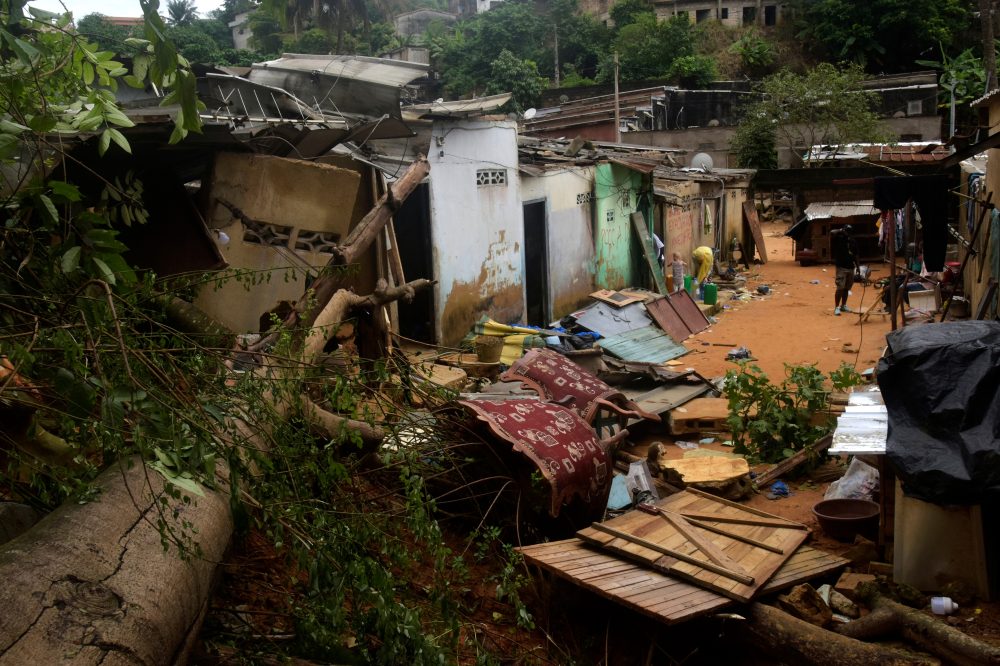
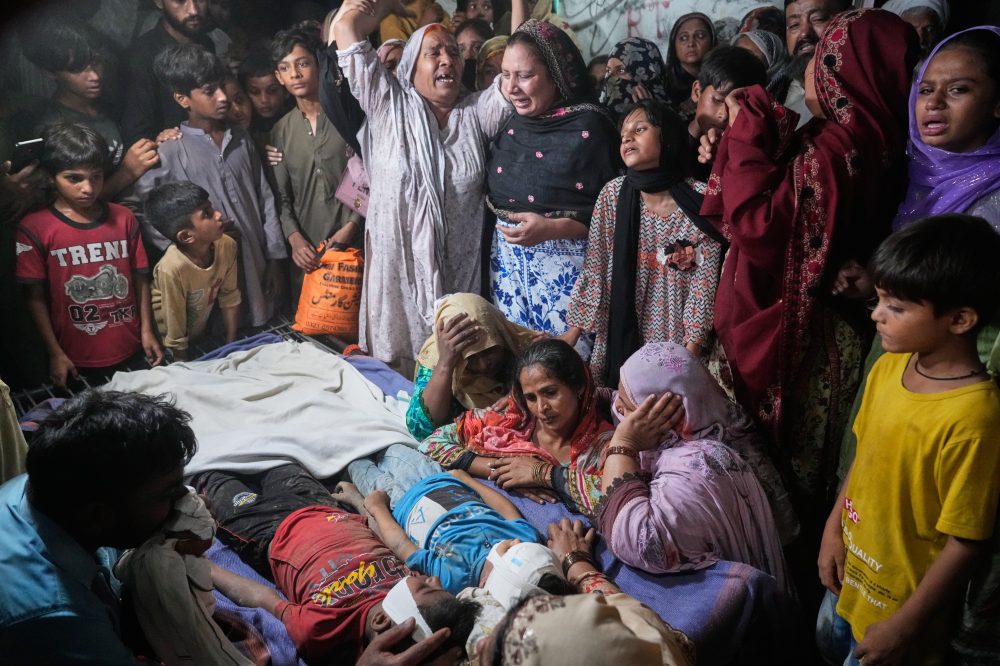
Powerful rainstorms have swept through Ghana, triggering widespread flooding that has claimed the lives of at least 12 people, according to the Ghana National Fire Service, which announced the death toll on Tuesday while noting that rescue efforts remain active.
Among those who lost their lives, the fire service confirmed that three were women, eight were men, and one was a child. Rescuers have pulled more than 470 people to safety so far, and officials said they would continue providing updated figures as additional casualties are confirmed.
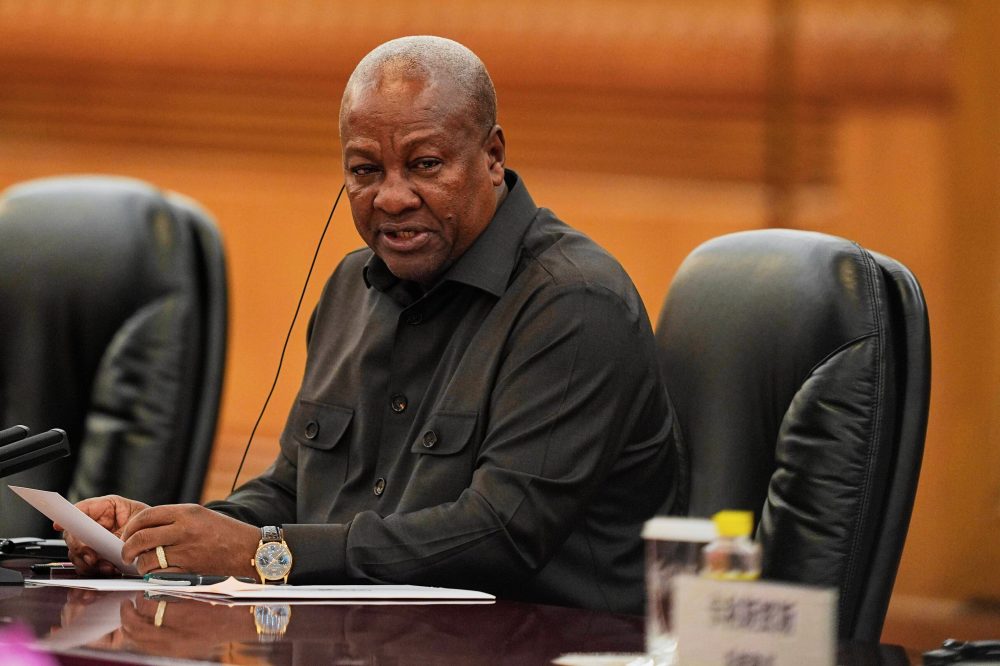
President John Dramani Mahama said early measurements showed approximately 140 millimetres of rain had fallen on Accra — the highest rainfall total recorded in the city in several years. For context, he noted that the highest single-day rainfall recorded the previous year was roughly 56 millimetres.
Mahama attributed the extreme rainfall to shifting climate conditions, describing the event as something beyond the government’s ability to prevent.
Flooding in Accra is a recurring problem during the rainy season. Experts have long pointed to inadequate drainage systems, illegal construction along waterways, and poor urban planning as factors that consistently make the flooding worse when heavy rains arrive.
In a formal statement Tuesday, a government spokesperson announced that 300 million cedis — roughly $27 million — would be made available to support flood relief efforts.
President Mahama also directed Ghana Armed Forces and police personnel to be deployed alongside the National Disaster Management Organisation and other agencies to assist with rescue and relief work throughout the capital.
The flooding has not been limited to Ghana. Neighboring Ivory Coast has also experienced severe rainfall. While officials there have not released an official death toll, a source with ties to firefighters and the interior minister indicated that approximately 20 people have died.
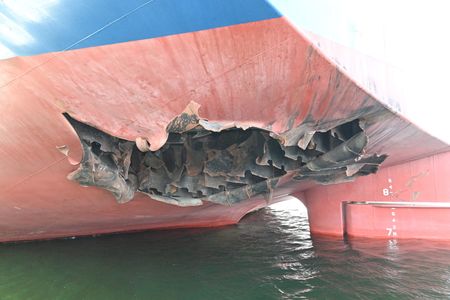
South Korea’s Oceans Ministry announced Wednesday that the cargo ship Namu, operated by HMM, is expected to leave the Strait of Hormuz no earlier than mid-July, once repairs from a May attack have been completed.
The bulk carrier suffered damage to its hull near the stern during the attack. On May 27, South Korea stated the strike likely involved an Iranian anti-ship missile, and the country called in Iran’s ambassador to deliver the findings of its investigation along with a formal protest.
Iran’s ambassador to South Korea, Saeed Koozechi, rejected any suggestion that Tehran was behind the attack, according to the Yonhap news agency. South Korea later acknowledged it could not definitively determine who carried out the attack or whether it was intentional.
Vice Oceans Minister Nam Jae-heon told reporters at a Wednesday press briefing that two vessels, including the Namu, remain stranded in the Strait of Hormuz with a combined 35 crew members on board. He also noted that 21 South Korean-operated ships have safely passed through the strait in the two weeks since the United States and Iran signed a ceasefire agreement.
A ministry official at the briefing confirmed that HMM is bearing the cost of the repairs. A company spokesperson later confirmed to Reuters that HMM is covering the expenses and intends to file a claim with its insurer.
When asked whether South Korea might seek reimbursement from Iran or the United States, Minister Nam said the government may consider reviewing that option at a later time, but offered no further details.
The Strait of Hormuz was shut down by Iran after the U.S. and Israel launched military strikes on February 28, a move that sent oil prices surging worldwide and sparked widespread concern about the potential effects on the global economy.
Iraqi security forces swept through Baghdad’s heavily fortified Green Zone on Sunday, detaining politicians and senior government officials in what stands as one of the most visible anti-corruption operations the country has witnessed in recent years — and an early test for Prime Minister Ali al-Zaidi, who took office in May.
The Green Zone has long symbolized Iraq’s post-2003 political landscape: a sealed enclave housing government institutions, foreign embassies, and the political networks that have shaped Iraq’s delicate balancing act between Washington, Tehran, and its own deeply entrenched elite.
According to Reuters, elite units from the Counter Terrorism Service carried out raids on homes within the fortified district. Iraq’s state-run Iraqi News Agency reported that 47 suspects were taken into custody, among them members of parliament and government officials. The arrests were carried out under judicial warrants tied to suspected corruption networks, with some cases reportedly stemming from testimony provided by Adnan al-Jumaili — the former deputy oil minister for refining affairs — following his earlier detention.
The Associated Press, citing the Iraqi News Agency, reported that those detained included 12 sitting lawmakers, one former legislator, a former adviser to former Prime Minister Mohammed Shia al-Sudani, and another senior Oil Ministry official. Some of those arrested were associated with al-Sudani’s Shiite political bloc, while others were linked to the Sunni Azm Alliance. Specific charges were not immediately disclosed, but an investigative judge indicated the probe centered on allegations that state resources were used for political campaigning and that government contracts were exploited for personal financial gain.
For al-Zaidi, the operation offers a political opportunity — a chance to present his new government as bold and willing to take on a corruption system that has hollowed out Iraqi state institutions for decades. But the raids also invite a harder question: Do these arrests represent the beginning of a genuine reckoning with Iraq’s deepest corruption networks — including those tied to armed factions and Iran-aligned political interests — or are they a managed spectacle designed to channel public frustration while leaving the real power structures intact?
The timing adds political significance. Al-Zaidi is expected to travel to Washington in mid-July to strengthen economic, trade, and investment ties with the United States. Reuters reported that the visit is aimed at deepening the Iraqi-US partnership, while also noting that the prime minister faces the broader challenge of reining in Iran-backed fighters, tackling systemic corruption, and navigating the competing demands of Washington and Tehran.
That balancing act has grown more complicated in the wake of recent US-Iran understandings and broader regional efforts to reduce tensions. Earlier this month, US Special Presidential Envoy for Iraq and Syria Tom Barrack traveled to Baghdad in what The National described as the highest-level American engagement with Iraq since al-Zaidi’s government was formed. Washington’s deepening cooperation with Baghdad has been tied to efforts to disarm Iran-backed militias and bring weapons under state control.
A report by Asharq Al-Awsat on the meeting between Barrack and al-Zaidi, citing a US Embassy statement, said the two sides discussed Iraq’s plans for the “complete disarmament and disbandment of all armed groups and formations operating outside the authority and control of the Iraqi state,” as well as preventing Iraqi soil from being used to threaten regional stability. The same report noted that the mechanisms for establishing a state monopoly over weapons remain unclear and that some factions have continued to resist disarmament.
Against that backdrop, analysts view the Green Zone raids as carrying implications beyond domestic anti-corruption enforcement. One notable arrest with Iran-related dimensions was that of Ali Maarij, the deputy oil minister for distribution affairs. Reuters reported that the United States sanctioned Maarij in May, accusing him of helping divert Iraqi oil revenues to benefit Iran and Iran-backed militias, and of facilitating the blending of Iranian crude with Iraqi oil for export using falsified documents. Iraq’s Oil Ministry had denied those allegations at the time, stating that the activities described by Washington were outside Maarij’s official responsibilities.
Even so, the broader campaign has not yet visibly moved against the most powerful Iran-aligned militia figures or the political structures surrounding them — and for some Iraqi observers, that absence is telling.
Middle East political analyst Dr. Tallha Abdulrazaq argues that the operation should be measured not by the scope of the arrests, but by who has been left untouched.
“For there to be a real shift, [al-]Zaidi would have to start targeting the real big whales of corruption that have plagued Iraq for almost a quarter of a century since the US-led invasion in 2003,” Abdulrazaq told The Media Line. “This operation is designed to give the impression that Iraq is finally cleaning itself up, but the reality is that those arrested are small fry and expendable fall guys.”
That assessment is harsh, but it reflects widespread Iraqi skepticism toward government-led reform efforts. Iraq has seen previous administrations announce anti-corruption drives, only to watch them stall, unravel, or get absorbed into elite deal-making. Under former prime ministers Haider al-Abadi and Mustafa al-Kadhimi, reform rhetoric repeatedly collided with the realities of Iraq’s power-sharing arrangements, party patronage networks, and militia-linked economic influence.
Political analyst Alfadhel Ahmad offered a more measured take. He said the arrests have given al-Zaidi political momentum, but cautioned that their true significance depends on what follows.
“So far, the arrests have targeted third-tier Sunni politicians and associates of former PM Mohammed Shia al-Sudani — most linked to the network of Adnan al-Jumaili, the oil ministry undersecretary arrested earlier,” Ahmad told The Media Line. “Real intentions are hard to judge yet, but these arrests have clearly added political momentum and a cautious popular legitimacy to al-Zaidi’s new government.”
Ahmad also noted the deliberate staging of the operation. Deploying elite security forces gave the raids the look of a decisive government intervention, even if many of those targeted were not among Iraq’s most heavily protected political actors.
“There’s also a deliberate effort to project spectacle — deploying tanks and counterterrorism units to arrest figures who mostly have no militia protecting them,” he said.
The deployment of the Counter Terrorism Service carries its own symbolism. The force is among Iraq’s most respected security institutions, closely associated with the campaign against the Islamic State group, also known as ISIS, and formally accountable to the prime minister. Using it in a corruption sweep inside the Green Zone sends a message that al-Zaidi can direct the state’s coercive power against senior political figures.
Abdulrazaq, however, views the Counter Terrorism Service’s involvement as part of the performance rather than evidence of genuine institutional authority.
“The use of the Counter Terrorism Service was, again, just for theatrical purposes,” he said. “…it was designed to show that Zaidi himself has authority and command.”
The deeper question is whether Iraq’s state institutions can operate independently of the networks that have long dominated them. Corruption in Iraq is not simply a matter of individual misconduct. It is woven into party financing, public-sector contracting, oil revenues, border operations, government ministries, and armed groups with formal political representation.
That is why anti-corruption campaigns in Iraq are so often filtered through the lens of factional politics — who gets arrested, who walks free, and whose interests are shielded.
“This strikes at the heart of the matter,” Abdulrazaq said. “The Iraqi state literally is the militia-linked economic structure and the militia-controlled parliament and government. There is no separation between them.”
For Ahmad, the verdict is still out. He does not rule out the possibility that al-Zaidi could build on this early momentum to widen the campaign, but says the bar must be clear: the government would need to move beyond expendable figures and begin targeting interests connected to powerful factions.
“Worth remembering: Iraqi politicians have always reversed reform and anti-corruption efforts,” Ahmad said. “Iraqis have a long record of distrusting government action, fearing the same outcomes they’ve seen before.”
“Al-Zaidi has a clear chance to prevent backsliding by building on this momentum to expand toward key politicians and test the waters for confronting interests tied to pro-Iranian militias in Iraq,” he added.
That is also where Iran enters the picture. The raids took place while Iranian Foreign Minister Abbas Araghchi was visiting Iraq. Iranian state media reported that Araghchi held separate meetings with the governors of Karbala and Najaf to discuss arrangements for funeral ceremonies in Iraq for the late Iranian Supreme Leader Ayatollah Ali Khamenei.
Some observers have wondered whether the arrests, the US diplomatic track, and Araghchi’s visit are somehow linked. Both analysts rejected any direct operational connection between Araghchi’s trip and the Green Zone operation, though they interpreted that absence differently.
“I wouldn’t bother reading too much into the timing apart from the fact that it shows Iran isn’t bothered at all by [al-]Zaidi’s move,” Abdulrazaq said. “Tehran is extremely pragmatic and would be more than happy to sacrifice a few nobodies and placeholder MPs just so that the current system that serves its interests continues.”
Ahmad was more restrained, saying there is no evidence so far connecting the two developments.
“Regarding Araghchi’s visit, those two things are not connected — at least for what is known till now. He came to arrange Khamenei’s ceremonies in Najaf and Karbala.”
The distinction matters. There is a difference between proving that Baghdad coordinated operationally with Tehran and arguing that the campaign has avoided Iran-linked power centers. The first would require evidence that has not publicly surfaced. The second is a political judgment based on who has been targeted so far — and who has not.
Ahmad said the campaign may actually serve the interests of the Coordination Framework — the largest Shiite political bloc and the central parliamentary force behind Iraq’s current order — as it tries to manage US pressure without breaking its ties to Iran-aligned factions.
“The Coordination Framework…may be trying to market this campaign to Washington,” he said. “But importantly, the campaign has not yet touched any Iran-linked interests or proxies.”
That gap between appearance and substance could prove decisive ahead of al-Zaidi’s expected Washington trip. The United States is not viewing corruption solely as a governance problem; it also sees corruption as part of the infrastructure that allows armed groups, smuggling networks, and foreign influence to persist within the Iraqi system.
Abdulrazaq argued that Washington’s real concern is less about corruption itself and more about regional compliance.
“I don’t think the US necessarily cares about corruption per se,” he said. “What the US cares about is compliance with its ambitions in the region.”
Ahmad’s conclusion ran along similar lines, though with less certainty. He said the true measure will be whether the campaign eventually moves against militia-linked economic interests and the political figures who protect them.
“Against the broader US demands, there’s no sign anything has changed on the ground,” he said. “I think we should watch what follows these campaigns — specifically whether the government moves to undermine militia-linked interests.”
Ahmad warned that if the campaign goes no further, it will likely be read as a maneuver by Iraq’s political class to manage American expectations ahead of the prime minister’s anticipated Washington visit.
“Otherwise, the likeliest reading is that Iraq’s political class is trying to circumvent US demands and present Washington a false picture — especially ahead of the PM’s anticipated visit — at the expense of expendable, marginal politicians.”
There is also the dimension of internal score-settling. Anti-corruption drives in Iraq have frequently been used as tools in factional power struggles, particularly when the justice system is applied selectively. Abdulrazaq said this campaign appears to follow that pattern.
“This is absolutely also about score settling,” he said. “To be clear, those arrested are almost certainly also corrupt, but, effectively, Zaidi is eliminating certain political rivals on behalf of the Coordination Framework of Shia Islamists close to Iran.”
The arrests have produced three competing narratives: the government’s claim that Iraq is finally confronting corruption; the public’s guarded skepticism shaped by years of broken promises; and the analysts’ warning that the campaign will only prove meaningful if it extends to the political and militia-linked structures that have historically been treated as untouchable.
For now, al-Zaidi has made his mark. The Green Zone was locked down, prominent figures were detained, and the state projected strength at a moment when Washington is pressing Baghdad to demonstrate control over armed groups and reduce Iranian influence. But projecting strength is not the same as achieving transformation.
What unfolds in the weeks ahead will determine whether this becomes a genuine turning point or simply another chapter in Iraq’s long history of managed reform. If the arrests remain confined to lower-tier actors, Sunni rivals, and associates of the previous government, the campaign will deepen suspicions that Baghdad is offering Washington a staged concession while leaving the underlying system untouched. If it reaches toward senior militia-linked economic interests and the political figures shielding them, then al-Zaidi may begin to truly challenge the foundations of Iraq’s post-2003 order.
Until that question is answered, the Green Zone raids remain less a conclusion than an open test: whether Iraq’s new government is genuinely confronting corruption — or simply managing the appearance of doing so at a moment when both Washington and Tehran are paying close attention.
Two prominent Israeli figures whose lives were transformed by the October 7 Hamas-led attack officially became members of the opposition party Yisrael Beitenu this week, bringing an emotionally charged message to opposition lawmaker Avigdor Liberman’s political movement just ahead of the 1,000-day anniversary of the assault.
Sharon Sharabi — brother of former hostage Eli Sharabi and of Yossi Sharabi, who was killed while being held captive in Gaza — along with Rafi Ben Shitrit, whose son Elroy Ben Shitrit fell as an IDF soldier, addressed the party’s weekly faction gathering for the first time on Monday.
Both men described their decision to enter politics as a transition from personal sorrow to public duty. Sharabi explained that within hours of the attack, what began as individual family tragedies became, in his words, “a national disaster for an entire country.” He spoke about bereaved families, fallen soldiers, and a society still grappling with issues of security and trust. “How is it possible that 1,000 days have passed and Hamas, a Nazi terrorist organization, is still in the Gaza Strip, still trying to harm our soldiers and the citizens of the State of Israel?” Sharabi asked.
He said that under the next government, Yisrael Beitenu would work toward defeating Hamas while also pushing for a stronger, more unified Israeli society. Sharabi also spoke personally about the toll his family paid — losing his brother Yossi, his sister-in-law Lianne, and Eli’s two daughters, Noiya and Yahel. “Our mission is to pass on to the next generations a stronger, more united and safer state,” he said.
Ben Shitrit took a more overtly political tone, drawing a connection between the approaching 1,000-day milestone and the Hebrew calendar date marking the ancient breach of Jerusalem’s walls before the destruction of the Second Temple. “The symbolic connection is clear and painful,” he said, adding that on October 7, “the walls of defense and security of the State of Israel were breached.”
Ben Shitrit said the Israeli public has spent 1,000 days waiting for answers. He argued that only an independent state commission of inquiry — one operating outside of political influence — could properly investigate what went wrong before and during the attack, including intelligence failures and government decisions made in the years prior. He placed ultimate responsibility on Prime Minister Benjamin Netanyahu, saying Netanyahu’s continued resistance to such a commission only erodes public trust further.
He also rejected the idea of forming a broad national unity government under Netanyahu, calling it a political tactic and arguing that the same leadership responsible for divisive policies and the failures that preceded October 7 cannot credibly position itself as a unifying force.
Ben Shitrit said his motivation for entering public life goes beyond anger — he wants to bring “responsibility, truth, service, pioneering and dedication” back to the center of Israeli politics. He praised Liberman as a leader with experience, strategic clarity, and firm stances on Hamas, Hezbollah, military service, and governing. “I joined Yisrael Beitenu because Avigdor Liberman and Yisrael Beitenu tell the truth, even when it hurts,” he said.
The addition of both men gives Yisrael Beitenu two new faces whose personal stories directly tie the party’s political platform to the still-open wounds of October 7 — including calls for a state inquiry, the grief of bereaved families, and the argument that Israel’s future government must be grounded in accountability rather than political self-preservation.
BOGOTA, Colombia — A Colombian senator who came up short in last month’s presidential race is now threatening to refuse recognition of the election’s winner unless several conditions are met — chief among them, that the president-elect give up his American citizenship.
Progressive senator Iván Cepeda issued a statement Tuesday demanding that Abelardo de la Espriella, who won Colombia’s presidential runoff in June, relinquish his U.S. citizenship before taking office. Cepeda argued that holding citizenship in another country while serving as Colombia’s head of state could create serious conflicts of interest.
Cepeda also called on de la Espriella to publicly clarify whether he acts as an “agent” of the United States. The concern stems from de la Espriella’s background as a criminal defense attorney, during which he represented a former paramilitary leader who served as an informant for the U.S. Drug Enforcement Administration.
Additionally, Cepeda demanded that de la Espriella abandon any plans to extradite outgoing President Gustavo Petro to the United States. Federal prosecutors in Brooklyn have stated they are looking into Petro for possible connections to drug traffickers.
“If these conditions of legality are not met, as the leader of the opposition, I will embark on the path of peaceful civil disobedience that implies not recognizing the authority of someone who will not defend our national sovereignty,” Cepeda stated.
De la Espriella, a conservative attorney who campaigned on a law-and-order message and received an endorsement from U.S. President Donald Trump, defeated Cepeda in the June 21 runoff by roughly 250,000 votes. The final tally showed de la Espriella with 49.6% of the vote compared to Cepeda’s 48.7%.
Cepeda had formally acknowledged those results three days after the vote, following validation by Colombian authorities of an election-night quick count.
De la Espriella has not publicly responded to Cepeda’s accusations or the demand that he renounce his U.S. citizenship.
The 47-year-old lawyer was born in Bogota and is scheduled to be sworn in as Colombia’s president on August 7. He acquired U.S. citizenship as an adult after spending several years living in Florida, where he operated a law firm whose clients included former paramilitary figures accused of human rights violations and businesspeople facing money laundering charges.
While Cepeda’s refusal to recognize de la Espriella carries no legal consequences — the National Electoral Council has already certified de la Espriella as the winner — political observers say the stance could still have real-world effects.
Manuel Camilo González, a political science professor at Bogota’s Javeriana University, noted that Cepeda’s position could ignite demonstrations in the streets or be used to justify efforts to obstruct de la Espriella’s legislative agenda in Congress.
Cepeda’s party, the Historical Pact, holds more Senate seats than any other party in Colombia, though it does not have enough on its own to block legislation from passing.
KAMAKURA, Japan — The Japanese author behind one of the country’s most cherished literary characters — a young witch named Kiki — has a bit of difficulty climbing stairs these days. But at 91 years old, Eiko Kadono hasn’t slowed down when it comes to writing.
Kadono still sits down to write every single day, still loves the color pink, still dresses up, and still holds firmly to her belief in the transformative power of books.
Her most famous work, “Kiki’s Delivery Service,” was first published in 1985 and later adapted into an animated film in 1989 by Hayao Miyazaki’s Studio Ghibli. It is just one of roughly 200 books she has authored.
“I never tire of writing,” she told The Associated Press during a visit to her home in the scenic coastal town of Kamakura, located south of Tokyo.
Her home, marked by a small pink gate, is packed with books, pink chairs, and a collection of animal figurines.
“I’m probably a child at heart,” Kadono said with a quiet laugh.
She was dressed in a colorful smock — designed specifically for her by her daughter — and wore her trademark boldly framed glasses. She noted with pride that the smock’s sleeves have elastic at the wrists so they can easily be pushed up while she writes.
Today, she types on a keyboard, pressing each key slowly and deliberately. But every story still begins the old-fashioned way — written by hand. She also sketches drawings as part of her creative process.
“I want to write so that the reader can visualize what I am writing,” she said. “I love to write.”
Kadono remains sharp and quick-witted. She’s unbothered about wearing a wig and doesn’t understand why anyone would feel the need to hide it. She wears red lipstick and is only slightly self-conscious about her wrinkles.
Her writing style has remained largely consistent over the decades, though looking back at her earlier work, she feels it was more wordy compared to the cleaner, more precise style she favors now.
The original Japanese Kiki series spans six books along with three spinoff titles. The first book was translated into English in 2020 by Delacorte Press and is now available in 25 languages worldwide.
The second installment in the English series, “Kiki and the New Magic,” is scheduled for release in August, translated by Emily Balistrieri and illustrated by Yuta Onoda.
Kadono never planned to become a writer. She was, by her own description, primarily a housewife — married to a designer and raising a daughter. During her 30s, she spent two years living in Brazil and was later asked to write about that experience. That’s when she realized she genuinely enjoyed writing — not as a profession, but as something she found fun and fulfilling.
The spirited, no-nonsense character of Kiki was actually born from a drawing her daughter made at age 12 — a cute little witch flying on a broomstick toward the moon. From that image, Kadono crafted a coming-of-age adventure featuring Kiki and her black cat, Jiji.
Kiki’s Museum of Literature opened in Tokyo in 2023 and now sells Kadono’s signature smocks, pink mugs, and T-shirts featuring her characters, alongside shelves upon shelves of books by various authors.
A statement displayed in pink lettering on the museum wall reads: “The other-worldly fantasy that Kadono creates has overcome the boundaries of language, to become appreciated by a wide global audience, including children and adults, and won international accolades.”
A five-year-old visitor named Tsukiko Fukuda, who was touring the museum with her family, put it more simply: the books are fun, and pink is her favorite color too.
Kadono, who received the prestigious Hans Christian Andersen Award in 2018, says she hopes a steady stream of talented children’s book authors will emerge so that future generations can grow up loving to read.
She believes we are at a critical crossroads that will determine whether that vision becomes reality. The outdoor adventures and imaginative play that once shaped children’s lives have largely faded away, replaced by digital entertainment and modern distractions.
That’s why reading matters more than ever, she says.
“People must think on their own to be able to create. That’s what being human means,” Kadono said, her voice filled with conviction. “Books are the only thing now that can bring about creation and imagination.”
KABUL, Afghanistan — Abdul Ahad Momand, the first Afghan citizen ever to travel to space, has passed away at the age of 67, according to his family and friends.
Momand lost his battle with cancer on June 21 at a hospital in Stuttgart, Germany, the city he had called home since departing Afghanistan in 1992 amid the country’s civil war.
Former President Ashraf Ghani expressed his grief on social media platform X, writing: “I am deeply saddened by the sudden death of Afghanistan’s first and only astronaut, Abdul Ahad Momand. I pray to God to grant Momand a high place in heaven, and I extend my deepest condolences to his wife, children, and other family members.”
Back in 1988, when Momand was just 29 years old and serving as an air force pilot, he was chosen to participate in a Soviet space program that sent representatives from allied nations into orbit. At the time, Afghanistan was under Soviet control.
Following extensive training, Momand launched aboard the Soyuz TM-6 spacecraft alongside Russian cosmonauts Vladimir Lyakhov and Valery Polyakov. He spent nine days in space conducting scientific research on the Mir space station. His journey home aboard the Soyuz TM-5 hit a snag when technical difficulties caused a one-day delay, leaving him and Lyakhov in tight quarters and at risk of running out of food and oxygen.
An Associated Press report from that era noted that Momand — whose surname was spelled Mohmand at the time — spoke about his earlier role in joint Soviet-Afghan military operations aimed at suppressing an insurgency in his homeland, saying he had flown hundreds of attack missions.
Prior to his launch, Momand told the Soviet publication Sovietskaya Rossiya that his mission would help pinpoint Afghanistan’s mineral resources, evaluate hydroelectric potential, and examine glaciers and earthquake hazards, according to the AP.
From orbit, Momand addressed his fellow Afghans in a televised message, noting that conflict cannot be observed from space. “I would like to believe that such will be the situation on the land inhabited by my brothers and sisters, on the land of our fathers and mothers who have suffered so much during the years of the war,” he said.
During his mission, Momand also brought the Quran with him and read from it — a moment Ghani described as introducing Afghanistan to the world “with national colors and national words” while presenting its Islamic identity to the cosmos.
“His nine days on the Mir space station made Afghans forget the bitterness of the civil wars of 1988 and the rest of that decade,” Ghani added.
Momand was originally from the Andar district of Ghazni province in southeastern Afghanistan. He received military training at academies in both Afghanistan and the Soviet Union.
News of his death brought widespread sorrow across Afghanistan among those who regarded him as a hero. Zahir Ammar, a 35-year-old blogger from Jalalabad who focuses on cosmology, honored Momand’s legacy, calling attention to the historic nature of his achievement.
“Abdul Ahad Momand is the first Afghan astronaut in the entire scientific history of the country to go into space, he took the Holy Quran with him into space and added Pashto to the list of languages spoken in space,” Ammar wrote.
“Now, astronauts’ trips to (international space stations) have become commonplace, but during the time of the late Abdul Ahad Momand, this was a great achievement for Afghanistan,” he added.
Ammar also voiced regret that Momand spent his final years in exile, expressing a wish that he could have shared his experiences with younger generations inside Afghanistan.
No details about funeral or memorial services have been announced. Momand is survived by his wife, two daughters, and a son.
Israel is facing its most difficult diplomatic position with the United States in modern memory, and may be more isolated internationally than it has been in decades — that is the stark assessment of former Israeli Ambassador to the United States Michael Oren.
Oren shared his views last week with a small gathering of foreign journalists at an event organized by MediaCentral, speaking openly over a meal at a Tel Aviv restaurant. Born in the United States, Oren immigrated to Israel in 1979 and went on to become one of the country’s most recognized diplomats. He held nothing back when addressing the challenges confronting Prime Minister Benjamin Netanyahu, the possibility that Netanyahu could survive politically, and what the future might look like if the Israel Defense Forces fail to secure the northern front.
“For the first time in history, we have no recourse,” Oren told the group. “Traditionally, if there was a problem with an [American] administration, we went to Congress. If there were problems with Congress, we went to the administration. We can’t do that. There’s nobody we can go to complain to.”
Oren explained that Israel has, in his view, “lost the Democratic Party,” while the Republican Party is split between those who “may not like us very much” and others whose primary loyalty is to President Donald Trump.
“So, who are we left with? Maybe, at times, Lindsey Graham, Ted Cruz. That’s a slim limb to be hanging from,” he said.
Oren noted that several Republicans have told him the upcoming US midterm elections, set for November 3rd, represent an “existential fight for Trump.” He said Trump’s supporters believe that if the president fails to contain the conflict in Lebanon, it will hurt him politically. At the same time, Netanyahu understands that a military defeat in Lebanon could mean “he can find himself being Citizen Netanyahu and not prime minister.”
Despite this, Oren placed some of the blame on Netanyahu himself, saying the prime minister bears responsibility for “alienating the Democrats.”
“I opposed his March 2015 speech to Congress,” Oren said, referring to Netanyahu’s controversial address before a joint session of the Republican-led US Congress — an appearance arranged without the Obama administration’s knowledge. Netanyahu used the occasion to argue against the Joint Comprehensive Plan of Action, the Iran nuclear agreement that President Obama later signed.
“I didn’t think it was going to affect the vote on the nuclear deal at all, and it didn’t; and it would only cost us further support in the Democratic Party,” Oren said. “They still talk about that speech, so I don’t know what we gained.”
Looking ahead, Oren pointed out that many potential Democratic presidential candidates — including several who are Jewish — are “highly critical of Israel.” He expressed support for Netanyahu’s push to negotiate a new framework for defense cooperation and US military assistance, but expressed doubt that Israel has the decade-long window Netanyahu is counting on to put such an arrangement in place.
In January, Netanyahu introduced a plan to gradually phase out US military aid in favor of expanded joint defense programs. Oren warned that if Democrats return to power, “they’re going to cut it [the aid] off immediately. There’s a big difference between morphing into a partnership where we’re equal partners and one where one side is simply cutting off the aid.”
The situation for Jewish communities outside Israel is also deteriorating, Oren said. According to Tel Aviv University’s 2025 Annual Antisemitism Report, 20 Jewish people were killed in antisemitic attacks last year — the highest annual death toll in more than 30 years. The same report found that antisemitic incidents across every Western nation remain far above pre-Gaza war levels.
“I’ve been in Australia, Canada, most recently in Italy and France. In every community I’ve visited, they say there’s no future for that community, which is very disheartening,” Oren told journalists. “It’s like we’re reaching a situation where the Diaspora as we know it is going to constrict very, very fast.”
In the past, Oren said, Jews facing persecution in one country could relocate to another — from France to England, Canada, or New York. Those escape routes, he noted, no longer feel as secure. He described Hamas’s October 7th border attack as having “broke through a dam, which had held back the currents of antisemitism for about 80 years, and what followed was a torrent.”
Oren suggested it may not matter much who leads Israel after its upcoming election — whether that turns out to be Naftali Bennett, Gadi Eisenkot, or Netanyahu himself. He said a new prime minister might earn a brief “grace period” of two or three weeks in terms of international perception, but that a fundamental shift in Israel’s global standing is unlikely. He argued that no incoming government would establish a Palestinian state overnight, and military operations in Gaza and Lebanon would likely become more aggressive, not less.
On the Lebanon front specifically, Oren was unequivocal: “This is not a strategic issue. This is an existential issue … If we lose the North, we lose the country.” He warned that pulling back prematurely would allow Hezbollah to eventually redirect rocket fire from border communities like Metula toward larger cities like Ashkelon.
“For a large segment of the people who now define themselves as anti-Zionist, it’s not what we do anymore; it’s who we are, and that’s not going to change,” Oren stressed.
On the question of responsibility for October 7th, Oren said Netanyahu deserves some of the blame but should not be held solely accountable, even if “the buck ends there.” He revealed that just days before the massacre, the Israeli government had held a meeting in which it decided to send a delegation to Cairo to offer Hamas de facto sovereignty over Gaza and participation in a gas-sharing arrangement. Further details, Oren said, will appear in a new book he plans to publish later this year.
“I was in the government until 2019, and I had a tremendous amount of responsibility for Gaza,” Oren said. “I worked closely with the army, worked closely with the Shabak [Israel Security Agency], worked closely with Mossad. And I will tell you unconditionally, unequivocally, that the ‘concepzia,’ as they call it, was that Hamas was deterred, was that Hamas wanted to devote its time to developing Gaza, was uninterested in the conflict, and that Israel could focus on the serious dangers, which were Hezbollah and Iran.”
Oren said this belief was not unique to Israeli leadership — it was shared by American officials across both the Biden and Trump administrations. He said the only prominent figure who publicly challenged that assumption was Member of Knesset Avigdor Liberman, head of the Yisrael Beitenu party and a former defense minister.
Despite nearly three years of war and mounting political pressure, Oren cautioned against writing Netanyahu off. “It’s always premature to eulogize” him politically, he said. Israel remains sharply divided: in Oren’s largely Mizrahi neighborhood in southern Israel, criticism of Netanyahu is virtually nonexistent, while among the more Ashkenazi, center-left community where he rows on the Yarkon River, people are eager to see the prime minister removed from office.
“The problem with Bibi … he’s a very, very difficult act to follow,” Oren said. “He is physically robust. He spent a lot of time in ridiculously overrated schools, and he’s probably the smartest guy I’ve ever encountered. He is a brilliant politician, whatever you want to say. He’s a survivor.”
A recent N12 poll showed Netanyahu’s Likud party still leading with 24 seats, with former IDF chief Gadi Eisenkot’s centrist Yashar party close behind at 22 seats.
Oren also defended Netanyahu against some critics, arguing that many decisions attributed to him personally would likely have been made by any Israeli prime minister. On the US-Iran agreement, Oren said the greatest damage is not to Israel but to America’s standing globally.
“It is an incalculable blow to America’s prestige and deterrence power,” Oren said. “The Chinese are going to take notice, and the Russians are going to take notice. I can’t imagine any country will join the Abraham Accords right now. If anything, they’ll be seeking rapprochement with Tehran very quickly. I think they’re already doing it.”
Oren said Israel should use the coming years to broaden its foreign policy reach, building stronger ties with India, South America, and Africa. As for why Netanyahu should be the one to lead those efforts, Oren suggested the prime minister simply may not be willing to step aside — describing him as someone who sees himself as “transformative, if not messianic,” driven by a belief that he was born to fulfill a mission.
“Here’s a man who’s got a pacemaker, who’s now recovered from cancer, has been through I don’t know what. He doesn’t stop, and you have to ask yourself, what’s driving this human being? What animates him?” Oren said. “What animates him is a sense of mission: the mission to save Israel and the Jewish people.”
Whatever one makes of Oren’s analysis, his overall message was unmistakable: Israel is confronting serious headwinds on the world stage, including a deeply uncertain relationship with its most important ally. In that environment, he suggested, the identity of whoever holds the prime minister’s office may matter far less than whether Israel — and the broader Jewish world — can find its footing in the turbulent years ahead.
US Ambassador to Israel Mike Huckabee took the stage at the Herzliya Conference on Tuesday, describing last week’s US-brokered framework between Israel and Lebanon as a landmark moment — one that fundamentally reframes how both nations view the conflict along their shared border.
Rather than a war between two countries, Huckabee said, the agreement reflects a shared understanding that Hezbollah — not Israel or Lebanon — is the true source of the problem.
“Israel already knew that it was not at war with Lebanon,” Huckabee said. “Lebanon has a problem with Hezbollah, not Israel. Israel has a problem with Hezbollah, not with Lebanon.”
The Washington framework, reached through US-mediated negotiations, connects a step-by-step Israeli pullback from portions of southern Lebanon to Hezbollah’s disarmament and the movement of Lebanon’s national military into areas long controlled by the Iran-backed group. Israel and Lebanon have technically been at war since 1948, and Hezbollah has pushed back against any deal that conditions an Israeli withdrawal on giving up its weapons.
Huckabee said the negotiations unfolded across five separate meetings in Washington over recent months. Early sessions were stiff and formal, he noted, but the tone gradually warmed as talks progressed.
He recalled a particularly striking moment during a break in negotiations, when he spotted an Israeli general and a Lebanese general chatting privately — relaxed, smiling, and at ease with one another.
“When I saw that, I realized I was watching something historic,” Huckabee said.
That scene brought to mind an image previously put forward by President Isaac Herzog: the possibility of one day driving a car from Jerusalem north all the way to Beirut. Huckabee said he referenced that vision during the talks — not as a near-term forecast, but as a way to illustrate what full normalization between the two countries could one day look like.
The ambassador was careful to note that the deal does not solve the hardest problems. Dismantling Hezbollah’s military capabilities in southern Lebanon, he said, will be a long-term undertaking. The group’s armed presence in that region has repeatedly sparked conflict with Israel, including during the most recent round of fighting, which left much of southern Lebanon damaged and displaced large numbers of civilians.
Huckabee also highlighted what he called one of the agreement’s most notable features: Iran was deliberately excluded from the negotiations. Tehran has spent decades arming and financing Hezbollah and has relied on the group as a cornerstone of its regional influence.
“They have no role in it,” Huckabee said of Tehran. “They have no reason to stick their nose in it.”
Shifting to the broader US-Israel relationship, Huckabee described the military cooperation between the two countries during recent operations as unlike anything seen before. He said Adm. Brad Cooper, commander of US Central Command, told him personally that in his entire military career, he had never witnessed a partnership like the one forged between American and Israeli forces.
Huckabee said the two militaries worked so closely together in operations centers that it was nearly impossible to tell them apart — except by the patches on their uniforms.
“If you did not notice the patches on their sleeve, you would not realize which one is the Israeli and which one is the American,” he said.
While many specifics remain classified, Huckabee said future disclosures would reveal an extraordinary degree of coordination in both operations and intelligence sharing.
The ambassador also highlighted President Donald Trump’s record on Israel, pointing to the relocation of the US Embassy to Jerusalem, US recognition of Israeli sovereignty over the Golan Heights, efforts to bring home Israeli hostages, and the establishment of the Board of Peace.
Wrapping up his remarks, Huckabee pushed back on the notion that the US-Israel alliance only benefits Israel. He argued that the United States gains significantly from Israeli intelligence, technology, agriculture, and innovation.
“It is not a one-way street,” Huckabee said. “Israel does a lot of things for America.”
The comments reflect the administration’s broader effort to position the Lebanon framework as both a security agreement and a potential opening for wider diplomatic progress in the region. Whether that potential is realized will hinge on one unresolved question: whether Lebanon can assert real authority in its south while Hezbollah continues to refuse surrendering its arms.
Ukraine’s highest-ranking military commander said in a televised interview aired Tuesday that his forces are actively preparing for a potential new Russian offensive launched from the north, though he considers a renewed push toward the capital to be an unlikely goal.
Oleksandr Syrskyi, speaking with TSN Ukrainian television, also addressed weeks of Ukrainian concerns that Moscow has been pressuring its ally Belarus to take a more active role in the ongoing war — saying a Belarusian-based attack is not something he views as probable.
“The most likely scenario, and this is confirmed by several data sources, is possible offensive action in the north from the territory of Russia, from the Bryansk region,” Syrskyi said. “This is a realistic option, of course, and we are preparing for it.”
He explained that the goal of such a northern offensive would not be to march on Kyiv, as Russian forces attempted following their February 2022 invasion before pulling back to concentrate on the Donbas region in the east. Rather, the strategy would likely focus on capturing territory in Ukraine’s Chernihiv region while pulling Ukrainian troops away from other parts of the 1,250-kilometer (775-mile) front line.
He described such a move as a tactic aimed at “stretching the front and depriving us of reserves.”
On the question of Belarus, Syrskyi noted that while the country allowed Russian President Vladimir Putin to use its soil as a launchpad for the initial invasion, he doubts Belarusian leadership would go that far again. Ukrainian President Volodymyr Zelenskiy has repeatedly cautioned Belarus against getting further involved in the conflict.
“In view of recent events, I don’t think the Belarusian leadership would opt to use their own territory and give it to the aggressor to use as a staging area for an offensive operation,” Syrskyi said. “At the same time, of course, we are taking this possibility into account as well.”
Earlier this month, Zelenskiy gave Belarus — led by longtime President Alexander Lukashenko — one week to shut down relay stations that Kyiv claimed were being used to strike Ukraine. Zelenskiy has since stated those stations are no longer in operation.
Syrskyi also noted signs that Russian troops are showing fatigue, with the pace of front-line fighting dropping off. He said Russian frontline activity has decreased by about 30%, while Ukrainian forces have continued carrying out long-range strikes against Russian targets, primarily those connected to the oil industry.
Miguel Gomez confirmed to Reuters on Tuesday that he has been selected to serve as finance minister by Colombia’s president-elect, Abelardo De La Espriella.
Once in office, Gomez will face the significant challenge of advancing sweeping economic reforms through a Congress sharply divided along political lines, all while working to stabilize the nation’s struggling financial situation.
De La Espriella has laid out an ambitious agenda that includes cutting taxes, rolling back government regulations, and reducing the overall size of the Colombian government by 40 percent — moves he says are necessary to address a growing budget deficit that has already taken a toll on the country’s credit rating.
ACCRA, Ghana — Catastrophic flooding and landslides brought on by days of heavy rainfall have claimed at least 24 lives in the capital cities of Ghana and Ivory Coast, authorities announced Tuesday, as rescue workers continued pulling stranded residents from buildings swallowed by floodwaters.
In Ghana’s capital, Accra, entire structures and roadways were underwater by Monday, cutting off access to multiple parts of the city as well as the neighboring city of Tema.
At least 12 deaths have been confirmed in Ghana. Among the victims were a mother and her child, both swept away in the Achimota-Agbogbloshie district. Alex King Nartey, a spokesperson for the Ghana National Fire Service, shared that information with The Associated Press.
Across the border in Ivory Coast, several days of rainfall caused flooding that killed more than a dozen people — the majority of them in the Attécoubé and Yopougon municipalities within the capital city of Abidjan, according to the Minister of National Cohesion Myss Belmonde Dogo.
Local media in the region reported that at least nine of those who died were found buried under rubble in the Mossikro neighborhood, following rains that began on Saturday.
Footage circulating from Accra showed residents wading through chest-high water to help neighbors escape, while cars sat abandoned on roads completely overtaken by floodwaters.
Nartey described access to the hardest-hit neighborhoods as “a big problem” for emergency responders, who were forced to call in military assistance. By Tuesday morning, several areas of the city remained partially underwater.
Ghana’s National Disaster Management Organisation reported that emergency calls started flooding in around 7 a.m. Monday as homeowners discovered water rushing into their residences. “The whole place was flooded. It’s alarming,” said Mariam Dongyela Millah, deputy director of communications at the disaster agency.
The Ghana Meteorological Agency issued a warning to residents of Accra to brace for additional rainfall throughout the coming week.
Deadly flooding is a recurring crisis across parts of Africa. The World Meteorological Organization notes that Africa is among the world’s most vulnerable regions to extreme weather, even though the continent contributes only a small share of global greenhouse gas emissions.
RIO DE JANEIRO — Hundreds of bus drivers walked off the job and gathered in the heart of Rio de Janeiro on Tuesday, rallying for higher wages, improved working conditions, and an end to the exhausting six-day work week. Their strike is part of a larger national effort to guarantee all Brazilian workers two full days of rest each week.
Alexandre Garrido, 49, has spent two decades behind the wheel of a bus and says the current schedule leaves no room for a personal life. “You can’t spend quality time or go out with your family, give attention to your children, visit relatives, or have a day like going to a restaurant to have lunch together,” he said.
A constitutional amendment that would cap the Brazilian work week at five days has already cleared the country’s lower legislative chamber and now sits before the Senate. President Luiz Inácio Lula da Silva has thrown his support behind the measure, making it a centerpiece of his reelection campaign ahead of an October vote.
Under the current system, many Brazilians put in five full eight-hour days and then report for another four hours on a sixth day. Others technically have two days off but still clock 44 hours total per week. The proposed amendment would set a 40-hour weekly maximum while keeping workers’ pay intact.
If the Senate passes the measure, it would reshape daily life for millions of lower-income Brazilians and could provide a significant political lift for the president’s campaign. Several other Latin American nations have enacted similar labor reforms, though Argentina has moved in the opposite direction.
Rick Azevedo, a city councilor in Rio and founder of the movement known as Life Beyond Work — one of the primary forces driving the reform — attended Tuesday’s demonstration. “Those who support working six days a week are in favor of modern slavery,” he said. Beyond the bus drivers’ union strike, Azevedo’s organization also coordinated protests in cities across Brazil on Tuesday.
Roughly 14 million Brazilians currently work six days a week. Among them is Fernanda Sousa, 26, who lives in the sprawling Rocinha favela. Six days a week, she rises before dawn, drops her 6-year-old son at his godmother’s home around 5:30 a.m., and commutes to the upscale neighborhood of Gavea, where she serves cheese bread and snacks at a bistro.
“Going to work on a Sunday when everyone is with their families breaks my heart,” Sousa said while heading home one recent Friday evening with her son beside her. She added that juggling work and household responsibilities is a constant struggle — a burden that falls heavily on women and is made worse by the lengthy work schedule.
Research in Brazil consistently shows that workers in lower-paying, lower-skilled positions are the ones most likely to be locked into the demanding 44-hour week.
Matheus Paulo Costa da Silva, 28, supervises a home furnishings store in Rio. He recently tried enrolling in an evening information technology course but found he was simply too worn out to continue. “I can’t see my family, I can’t go to the gym, I can’t study. I live to work,” he said.
Lawmaker Erika Hilton, who championed the amendment through the lower house in May, noted that even some of her conservative colleagues have come around to supporting it, though opponents in the Senate are working to defeat the bill. “Ending the six-day workweek allows us to care for workers who are under attack since Brazil’s slavery days,” said Hilton, referencing a period of nearly 400 years that came to an end in 1888. She added that workers deserve the freedom to travel, go to the beach, attend church, or simply spend time with friends.
Brazil’s business community, however, is raising serious concerns. The country’s National Confederation of Industry estimates that cutting the work week could drive annual labor costs up by as much as 267 billion reais — the equivalent of roughly $52 billion — an increase of up to 7%. The confederation also warns the change could drag down Brazil’s economic growth by 0.7%.
Economists say smaller businesses stand to be hit the hardest. An institution that supports small enterprises notes they account for about 97% of all businesses in Brazil and provide half of the country’s formal employment.
Marcelo Pierini, 52, owns a pie restaurant in downtown São Paulo and is already anxious about what the reform could mean for him. He runs the restaurant with five employees, closes only on Sundays, and operates on slim profit margins. “This change could mean one of two things: closing on Mondays and losing some profit or sharing my bill with the customers,” he said. “It is hard. I want some rest too, but I can’t afford it.”
ISLAMABAD (AP) — Pakistan’s government issued a stern warning Tuesday, stating that any effort by India to cut off Pakistan’s share of water under the Indus Waters Treaty would constitute the “weaponization of water” — a move it said could seriously threaten peace and security across the region.
Foreign Minister Ishaq Dar, along with other senior government officials, delivered those remarks at an international seminar dedicated to the treaty, a 1960 agreement brokered by the World Bank that governs how water from the Indus River system is divided between the two nuclear-armed neighboring countries.
The treaty has faced growing pressure since India suspended its involvement in the agreement following the killing of 26 tourists in Indian-controlled Kashmir in April. India blamed Pakistan-based militants for the attack, an accusation Pakistan rejected while offering to cooperate with an independent investigation.
The incident triggered one of the worst breakdowns in relations between the two rivals in decades. Both nations cut back diplomatic and trade ties, shut down their primary land border crossing, and canceled visas for each other’s citizens. The situation worsened further when the two sides exchanged missile strikes in May 2025, until U.S. President Donald Trump announced a ceasefire. Relations between the two countries have remained at a standstill ever since.
At the seminar, Dar made clear that water should never become a political weapon. “Shared waters must never be weaponized. They should remain a bridge between nations, guided by cooperation, dialogue, and respect for international law for the benefit of present and future generations,” he said.
Dar argued that water is fundamental to human dignity, food security, economic growth, and environmental health, and that rivers flowing across national borders should encourage cooperation rather than spark conflict.
He labeled India’s 2025 decision to suspend the treaty as “illegal,” insisting that Pakistan views the agreement as still fully valid and legally enforceable. “No party can unilaterally suspend or terminate obligations under a treaty that contains no such provision,” Dar stated, adding that international agreements must be honored in good faith.
Dar also repeated Pakistan’s position — previously adopted by the country’s National Security Committee — that any move to redirect, interrupt, or reduce Pakistan’s water allocation under the treaty would be considered an “act of war.”
Pakistan has repeatedly accused India of violating the treaty since New Delhi announced its suspension. At Tuesday’s seminar, Mehar Ali Shah, the chairman of Pakistan’s Indus River System Authority, alleged that India reduced water flows along the Chenab River in recent months, in what he described as a treaty violation. India had not issued a response at the time of reporting.
Earlier in the event, Information Minister Attaullah Tarar emphasized that the treaty cannot be changed, revoked, suspended, or set aside by one country acting alone. He also argued that protecting the agreement has grown more urgent as climate change, melting glaciers, and increasing water shortages pose long-term threats to the region’s stability.
The Indus Waters Treaty, signed in 1960 and facilitated by the World Bank, lays out how the Indus River system’s water is distributed. Under the agreement, India controls three eastern rivers — the Ravi, Sutlej, and Beas — while Pakistan receives the waters of three western rivers: the Indus, Jhelum, and Chenab.
Until May 2025, the treaty had survived multiple wars between the two nations, including conflicts in 1965 and 1971, as well as the 1999 Kargil conflict. It had long been considered one of the few lasting agreements between the two countries despite decades of hostility centered on the Kashmir dispute.
Rescue teams from Jordan working in earthquake-ravaged Venezuela pulled a young child alive from the debris of a collapsed building early Tuesday morning — a rare breakthrough on the sixth day of search-and-rescue operations, Venezuelan authorities confirmed.
The child, identified as Klieber Moran, was freed from the rubble of the Los Corales Garden 1 building in La Guaira state. Venezuela’s acting President Delcy Rodriguez announced the rescue in a message posted to Telegram, saying the child was taken to receive medical care following the ordeal.
The rescue came after Venezuela was struck by two earthquakes — measuring magnitudes 7.2 and 7.5 — that hit less than a minute apart last Wednesday. The back-to-back quakes toppled buildings and left thousands of people trapped beneath the wreckage, according to authorities and rescue teams on the ground.
There was some confusion over the child’s exact age. Acting President Delcy Rodriguez described Moran as 3 years old, while National Assembly President Jorge Rodriguez referred to the child as 2 years old in a televised address.
“We must hold onto the hope of continuing to find people alive beneath the rubble,” Jorge said. “Early this morning, a 2-year-old boy was rescued and is currently receiving care at a health center in Caracas.”
Meanwhile, a major delivery of humanitarian aid touched down in Venezuela on Tuesday. United Nations spokesperson Stephane Dujarric confirmed that a UNICEF shipment carrying 47 metric tons of supplies had arrived to help children and families in need.
Dujarric said the shipment contains emergency health kits designed to provide urgent medical care, including supplies for safe deliveries, newborn care, disease prevention, and treatment for those affected by the disaster.
HAVANA (AP) — Despite Cuba recently rolling out a sweeping set of free-market economic changes, the country’s top diplomat says discussions with the United States have ground to a halt. Cuban Foreign Minister Bruno Rodríguez made the announcement Tuesday, signaling a sharp freeze in diplomatic relations between the two countries.
Rodríguez pointed out that the newly introduced economic measures were never brought up or addressed during previous rounds of talks between the two nations.
“The recently announced (measures) are a matter of total and absolute sovereignty,” Rodríguez said. “We have neither listened to nor are we interested in the U.S. government’s opinion on them.”
However, he expressed frustration that the reforms were answered with what he described as “a new package of unilateral coercive measures … against Cuba.”
Earlier this month, the U.S. imposed fresh sanctions targeting Cuban President Miguel Díaz Canel, other government officials, and companies considered vital to the island’s struggling economy.
Several of those sanctions came after Cuba’s Communist Party and the National Assembly of People’s Power gave the green light to 176 economic measures — the most significant economic overhaul since the Cuban revolution. The changes align with certain demands the United States has made as it pushes for a transformation of Cuba’s political and economic system.
Among the reforms are expanded opportunities for private businesses, the ability to hire workers freely, authorization for private banking, and allowances for Cubans living abroad to invest on the island.
While Rodríguez acknowledged that U.S. officials had been “generally respectful” during earlier talks, he said that behavior runs alongside “constant aggressive statements against Cuba, threats of military aggression, and the imposition of additional coercive measures.”
The U.S. State Department had not responded to a request for comment at the time of this report.
Rodríguez made his remarks at a press conference where he also announced that Cuba will bring the issue of a U.S. energy embargo — put in place by President Donald Trump in late January — before the United Nations General Assembly on July 7.
“The blockade and the policy of aggression and hostility of the United States government against Cuba are a threat to the existence and well-being of the Cuban people, and to the exercise of their human rights,” Rodríguez said.
He also pushed back on any suggestion that Cuba poses a danger to the United States, which he referred to as “a major military and nuclear power.”
The oil embargo has dealt a heavy blow to everyday life in Cuba, triggering extended power outages, rationing of fuel, internet disruptions, and the suspension of public transportation and flights. Garbage collection, water delivery, and other essential services have also been halted, and working hours have been cut back across the country.
JERUSALEM (AP) — A prominent Israeli military leader who walked away from Prime Minister Benjamin Netanyahu’s war Cabinet — publicly blaming the prime minister for having no clear plan in Gaza — has now positioned himself as one of Netanyahu’s most serious political threats heading into elections scheduled for this fall.
The challenger’s name is Gadi Eisenkot. His centrist political party, called “Yashar!” — which translates to “Straight!” — formally kicked off its election campaign on Tuesday in Israel.
Eisenkot’s background as one of Israel’s most decorated military figures could intensify public examination of Netanyahu and how he has led the country through a series of conflicts. Like most of Netanyahu’s political opponents, Eisenkot has broadly backed Israeli military campaigns in Gaza, Lebanon, and against Iran. However, he has also charged Netanyahu with strategic failure in the aftermath of the Hamas-led attacks on October 7, 2023, and warned that Netanyahu’s vision of an increasingly isolated Israel poses a danger to the country’s long-term future.
In recent days, Netanyahu — who leads Israel’s right-wing Likud Party — has pushed back sharply, claiming that had he followed Eisenkot’s advice and held back on certain operations in Gaza, “all of Hamas” would still be in power there.
As someone new to the political arena, Eisenkot “looks like a front-runner because he’s everything Netanyahu is not,” according to Gideon Rahat, a senior fellow at the Israel Democracy Institute think tank in Jerusalem. “He’s not polarizing, he’s not a populist like Netanyahu, and he will try to unify the country,” Rahat added.
At 66, Eisenkot is the son of Jewish Moroccan immigrants and presents a sharp contrast to Netanyahu, a U.S.-educated figure currently facing corruption charges in court. Eisenkot grew up in a working-class household, speaks unpolished English, and devoted four decades of his life to Israel’s military.
He has never built his political identity around connections to U.S. President Donald Trump. And in a deeply personal distinction from Netanyahu, Eisenkot lost his 25-year-old son, Gal Meir Eisenkot, in combat in Gaza. Netanyahu’s son, a podcaster, has lived part-time in Florida. Eisenkot also lost two nephews in the war.
Those losses have elevated Eisenkot’s standing among Israelis and lent him a kind of moral authority — a sense that someone who has paid such a devastating personal price will not send soldiers into harm’s way without good reason.
“People trust him to be a real person and a patriot. They expect him to take care of the country and not himself,” said Rahat, who also serves as a professor at Hebrew University.
Eisenkot’s platform centers on strengthening Israel’s national security, including through regional cooperation. He has said he supports Jewish settlements in the occupied West Bank that are “in line with Israel’s interests.” He has also adopted the campaign slogan “Service for All,” which signals his push to require military service from Israel’s ultra-Orthodox communities — a politically charged issue. For Israelis exhausted by years of conflict and the burden of sending family members to fight, these positions could carry significant appeal.
“He presents as an everyman, a reflection of the ordinary Israeli,” Joshua Leifer, a columnist for Israel’s Haaretz newspaper, wrote, describing Eisenkot as “a kind of antipolitician.”
In 2024, Eisenkot resigned from Netanyahu’s war Cabinet, saying the prime minister lacked any real strategy for the war in Gaza. He sent a pointed letter to fellow Cabinet members warning them that they were confusing small battlefield advances with the kind of decisions that could actually neutralize Hamas and make Israel safer.
His objections, however, were not focused on the scale of destruction in Gaza or the high number of civilian casualties — both of which have drawn widespread international condemnation. And while he has at times pointed to diplomacy as a tool for addressing Israel’s security needs, Eisenkot is also credited with developing Israel’s so-called “Dahiyeh Doctrine,” named for the area in southern Beirut where the Hezbollah militant group maintains a stronghold.
He explained the doctrine in a 2008 interview with the Israeli daily Yedioth Ahronoth, following his role as a senior military official during Israel’s 2006 war with Lebanon. “What happened in the Dahiyeh quarter of Beirut in 2006 will happen in every village from which shots will be fired in the direction of Israel,” he said. “We will wield disproportionate power against every village from which shots are fired on Israel, and cause immense damage and destruction. From our perspective, these are military bases.”
Israel’s fragmented multi-party political system rarely allows prime ministers to complete full four-year terms — coalitions fall apart and new alliances take shape. Because of this, and despite Netanyahu’s unpopularity, it would still be a significant challenge for any rival to assemble a coalition broad enough to remove him from power.
Even if Eisenkot’s party wins more seats than Netanyahu’s Likud, he would still need to build alliances with enough other parties to reach a governing majority. Eisenkot has stated he will not back down on legislation requiring ultra-Orthodox Israelis to serve in the military — a community that also holds considerable political influence. He will also face a decision about whether to bring Arab-led parties into a potential coalition to reach the necessary threshold, a move that Netanyahu and his far-right allies have already begun using as an attack line against him.
ANKARA, Turkey — Turkish President Recep Tayyip Erdogan on Tuesday brushed aside a move by Israel’s Cabinet to label the Ottoman Empire’s mass killing of Armenians during World War I as genocide, instead directing accusations back at Israel over Palestinian deaths in Gaza.
Erdogan’s remarks came in response to a measure the Israeli Cabinet approved on Sunday. The proposal has not yet received a full parliamentary vote and arrives at a time when relations between Israel and Turkey have been steadily deteriorating.
Turkey has long and aggressively worked to stop other nations from officially classifying the large-scale deaths of Armenians around 1915 as genocide, even as Armenians have continued to push for that recognition.
Historians put the death toll at up to 1.5 million Armenians killed by Ottoman Turks around the time of World War I — an event that many scholars consider the first genocide of the 20th century. Turkey disputes that characterization, arguing the death toll has been exaggerated and that those who died were casualties of civil war and widespread unrest.
Speaking during a televised address following a Turkish Cabinet meeting, Erdogan said: “We pay absolutely no attention to the slanders against our country by this criminal network, which has the blood of 73,000 innocent people of Gaza, mostly children and women, on its hands.”
“Our history is free from genocide, massacres, oppression, and colonialism,” Erdogan added.
For years, Israel held back from officially recognizing the violence as genocide partly to avoid straining its relationship with Turkey. However, that relationship has grown increasingly tense over the past two decades, particularly as conflicts in Gaza, Lebanon, and Iran have continued.
Israeli Foreign Minister Gideon Saar, who put forward the proposal, stated on Sunday that the “Armenian Genocide remains to this day the subject of an institutionalized campaign of denial and minimization” by the Turkish government, despite what he described as overwhelming historical evidence.
Saar also noted that Israeli leaders — including Prime Minister Benjamin Netanyahu — have previously referred to the violence against Armenians as a genocide, though Israel’s Knesset has never formally voted to recognize it as such.
He pointed out that 32 countries, among them the United States, Syria, and Lebanon, have already classified the killings as genocide.
On Sunday, Turkey’s Foreign Ministry characterized Israel’s move as “politically motivated,” accusing Israel of using it to draw attention away from its own conduct toward Palestinians and from proceedings at the International Court of Justice over alleged genocide in Gaza.
Once considered close allies, Israel and Turkey saw their relationship begin to unravel after Erdogan — whose political party has roots in Turkey’s Islamic movement — rose to power. His vocal criticism of Israeli policies toward Palestinians contributed to the ongoing rift between the two nations.
Israel has faced repeated accusations from multiple parties, including the United Nations and Turkey, that its military campaign in Gaza constitutes genocide. Israel, a nation founded in the aftermath of the Holocaust, has denied those accusations.
ACCRA, Ghana — A coalition of international human rights lawyers and advocates filed a lawsuit Tuesday against Ghana, alleging the country has been forcibly sending deportees from the United States back to the very countries they had escaped — in direct violation of their rights.
The case is the latest in a series of legal challenges targeting African nations that have entered into agreements with the Trump administration to accept deportees who are not their own citizens.
The lawsuit was brought before the Community Court of Justice of the Economic Community of West African States, a regional judicial body. Among the groups involved in the coalition is the Global Strategic Litigation Council, an international network of lawyers and advocates. Notably, this is the first legal case ever filed under a 1979 regional treaty that guarantees freedom of movement throughout West Africa.
The case covers 27 individuals among the more than 60 people the U.S. has deported to Ghana since September 2025 under an agreement between the two governments. According to a statement from the coalition, Ghana accepted these deportees, held them, and arranged for their further removal — even though most of them had received formal orders of protection from U.S. judges preventing their deportation to their home countries.
The coalition’s statement says most of the 27 individuals were flown from Ghana to their home countries within hours or days of landing there, even after informing Ghanaian authorities about their U.S.-issued legal protections. Some reported being shackled during the flight from the United States. Upon arrival in Ghana, they described being held under armed guard in military camps, hotels, and airport detention areas, often under poor conditions.
At the heart of the lawsuit is the legal principle of non-refoulement — an international standard that prohibits countries from transferring individuals to places where they face persecution or torture. The coalition argues Ghana has violated this principle.
A spokesperson for Ghana’s government had not responded to requests for comment as of Tuesday.
Ghana is one of at least nine African countries that have signed third-country deportation arrangements with the U.S. Under these agreements, which are often kept secret, the Trump administration has deported thousands of people to nearly two dozen countries that are not their countries of origin, according to advocates. Immigration attorneys argue the administration uses these third-country deportations as a legal workaround to send asylum-seekers back to their home countries indirectly.
Medical assessments cited in the lawsuit found evidence of post-traumatic stress disorder and severe depression among several of the 27 individuals involved in the case.
The lawsuit is asking the regional court to halt any further transfers, compel Ghana to make public the terms of its deportation agreement, award financial damages to those affected, and prohibit Ghana from entering into similar deals going forward.
Earlier this month, a separate group of rights lawyers filed a comparable case against Equatorial Guinea — another African nation that signed a deal with the U.S. — before Africa’s top human rights body, raising similar allegations of forced deportations in violation of individuals’ rights.
TLAXCALA, Mexico — A pair of significant cocaine busts in Mexico this month, including an unusual seizure in a state bordering Mexico City, are raising questions about whether drug cartels are ramping up supply to capitalize on demand generated by the World Cup, according to security analysts.
On June 22, Mexican security forces announced they had confiscated just over three metric tons of cocaine in a single day, with the drugs found in two separate locations — the western state of Guerrero and the central state of Tlaxcala.
Six security analysts who spoke with Reuters identified the World Cup as the most probable explanation for why such a large cocaine shipment would surface in Tlaxcala, a landlocked state that is not typically associated with drug trafficking activity.
Andrés Sumano, a security expert at El Colegio de la Frontera Norte in Tijuana, said criminal organizations appear to be preparing for a surge in business. “The increase in demand expected for the World Cup in Mexico City may have led criminal groups to increase their supply in warehouses near Mexico City, which facilitated such a large seizure,” he said.
Sumano drew a comparison to how legitimate businesses operate during large-scale events. “Just like any company does at massive events… large groups that are dedicated to drug trafficking have more drugs in warehouses to be able to meet the demand,” he added.
Three drug dealers operating in Mexico City who agreed to speak with Reuters confirmed they had already noticed an uptick in business tied to the World Cup. Mexico was anticipating roughly 5.5 million visitors for the tournament.
One dealer, who asked to remain anonymous, described the situation in blunt business terms. “This is a business, and if the client wants something, then we have to see how we’re going to give them what they’re looking for,” the dealer said, acknowledging that major international events like the World Cup are always a “good opportunity” to increase sales.
The Mexico City government and the country’s presidency did not respond to requests for comment. In their public announcements about the seizures, authorities made no mention of any connection to the World Cup.
Antonio Martínez, a spokesperson for the Tlaxcala state government, pushed back on any suggestion that the bust reflects a broader criminal presence in the region. He said the seizure “does not constitute evidence that Tlaxcala is a center of operation or distribution for organized crime, nor is there any information that allows linking this fact to international events.”
Still, Vicente Sánchez, a researcher with Mexico’s National System of Researchers, said the World Cup connection remains the most logical explanation. “The hypothesis is that this unusual seizure in Tlaxcala could be linked to drug use, such as cocaine, around the time of the World Cup, especially given its proximity to Mexico City,” he said.
At least 14 children lost their lives and several more were seriously hurt after the roof of a private tutoring center came crashing down in the Kahna area of Lahore, Pakistan, on Tuesday afternoon. Rescue officials, hospital staff, and local police all confirmed the tragedy.
The collapse happened at a tutoring facility located in the Kahna Nau/Eidgah settlement, where approximately 30 students were in the middle of class when the roof suddenly failed. At least one teacher was also trapped beneath the fallen structure along with the children.
Emergency responders from Rescue 1122 arrived quickly alongside police officers and community volunteers to begin digging through the wreckage. Early estimates suggested eight to ten children were trapped, but as the operation unfolded, it became clear that nearly 30 students had been inside the building when it collapsed.
Rescue teams were able to pull more than 20 children from the debris. Those who were injured were transported to nearby medical facilities, including THQ Hospital Kahna, where they received emergency care.
Hospital officials confirmed that 19 children were brought in for treatment. Of those, 14 did not survive their injuries, while five others remained hospitalized. Rescue officials noted that several of the injured children were in critical condition.
According to Rescue 1122, the roof — which was held up by T-R girders — suddenly gave way, bringing down the structure. Early findings point to possible structural weakness, substandard construction, or excessive load as contributing factors. An official investigation has been opened to determine the precise cause and whether any negligence was involved.
Search-and-rescue efforts continued for several hours as emergency crews combed through the rubble to confirm no one remained trapped.
The collapse sent shockwaves through the local community. Many parents rushed to the scene after word spread about the disaster. Residents began raising serious questions about safety standards at educational facilities operating within residential neighborhoods.
Officials from the Punjab government and rescue authorities expressed deep sorrow over the deaths. The incident has reignited broader concerns about building safety regulations for schools and private tutoring centers in heavily populated parts of Lahore.
At least 14 schoolchildren lost their lives Tuesday when the roof of a tutoring center in Lahore, Pakistan gave way, according to police and rescue officials on the scene.
Eight more children sustained injuries and were taken to a hospital for treatment, senior police official Faisal Kamran confirmed. Kamran also announced that the owner of the tutoring center and one other individual had been taken into custody following the disaster.
According to Kamran, rescue teams were still sifting through the wreckage after reports emerged that additional children may have been trapped under the debris. He noted that the tutoring center was operating inside an older building, and that the roof of an unfinished upper floor gave way due to what appeared to be inferior construction work.
Pakistan’s President Asif Ali Zardari publicly expressed sorrow over the collapse, which occurred at an evening school facility in Lahore. In an official statement, he extended his condolences to the families of those who died, wished a swift recovery for the injured, and called for stronger safety measures to prevent similar disasters from happening in the future.
Deadly building collapses are not uncommon in Pakistan, where enforcement of construction codes is frequently lax. Substandard building materials are widely used, and safety rules are often bypassed in an effort to cut costs.
Nine children were killed and two others hurt Tuesday after a motorized tricycle tumbled into a canal in southern Egypt, according to local officials.
The vehicle went into the water in the Abu Tig area, located within the southern province of Assiut, as confirmed by a statement released on Facebook by the governor’s office. Assiut sits roughly 320 kilometers — about 199 miles — south of Cairo, the nation’s capital, and is a province in Upper Egypt recognized for its historic sites.
Reports from local media indicated that a malfunction in the tricycle’s steering caused it to flip over. At the time of the accident, the vehicle was carrying children who were on their way home after working at nearby farms. The status of the two injured individuals remained uncertain. According to the governor’s office, the victims’ bodies were transported to Abu Tig Hospital.
Cairo 24, a local Egyptian news outlet, reported that the children who died ranged in age from 10 to 17 years old.
Images shared by the governor’s office captured a large crowd gathered along the canal’s edge while rescue workers wearing diving equipment searched the water below.
Assiut Gov. Mohamed Elwan directed authorities to take action on safety improvements, including placing concrete barriers along the canal’s banks to help prevent future tragedies.
Traffic fatalities are a persistent problem in Egypt, where thousands of people die each year in road-related incidents. The country has a well-documented record of poor transportation safety, with speeding, deteriorating road conditions, and lax enforcement of traffic regulations cited as leading causes of crashes. Earlier this year, a collision between a truck and a pickup truck on a highway claimed 18 lives, officials said.
LA GUAIRA, Venezuela — Relief organizations sounded the alarm Tuesday that Venezuela’s already weakened healthcare system is being pushed beyond its breaking point, nearly one week after two major earthquakes struck the country. Damaged hospitals are flooded with injured patients, staff shortages are worsening, and conditions in the disaster zone are fueling the spread of infectious diseases.
Dozens of international and local rescue teams continue working across the country in search of survivors, as the government’s confirmed death toll has climbed past 1,700, with bodies still being recovered from the wreckage.
Even as the search continues, a humanitarian emergency is rapidly developing among those who survived. United Nations agencies have raised serious concerns about the health risks facing thousands of people who have been displaced and are sleeping outdoors or in overcrowded, unsanitary shelters for days on end.
Venezuelan authorities report that more than 15,800 people have been affected by the earthquakes — a figure representing the official count of displaced individuals, according to U.N. refugee agency spokesperson Carlotta Wolf, who spoke Tuesday. Many newly homeless Venezuelans have been sleeping in cars, parks, and other makeshift locations due to a lack of adequate emergency shelter.
Wolf noted that the number of displaced people will likely keep climbing. She added that many of those hit hardest in the state of La Guaira are also facing serious food shortages.
At a Tuesday press briefing held in Geneva, World Health Organization spokesperson Christian Lindmeier warned that displaced Venezuelans are increasingly at risk of preventable diseases like measles, due to low vaccination rates in the population. Waterborne and mosquito-borne illnesses including dengue, yellow fever, and malaria are also flaring up in the aftermath of the disaster.
Venezuela’s healthcare system, already weakened by decades of underinvestment and years of economic hardship, is now “under extreme pressure, with facilities operating beyond the capacity of the surge of the trauma cases,” Lindmeier said.
Government figures show that last week’s earthquakes damaged or compromised 38 hospitals across the country. WHO has so far assessed 21 of those facilities and found that three are no longer functioning at all. Six others have sustained structural damage, and the remaining hospitals are struggling under the weight of a massive surge in trauma patients.
WHO also noted that many specialist physicians are unaccounted for in the disaster zone, including medical officials responsible for maternity care in La Guaira — adding further stress to an already strained system.
Lindmeier described the situation inside hospitals as deeply troubling, saying findings show “chaotic service delivery and patient flow, marked by overcrowding, growing surgical backlogs … and a breakdown in biosafety measures.” He added that the disorder has led to “the collapse of forensic and morgue services and inadequate casualty registration.”
As of Monday, the government reported 1,719 deaths and approximately 5,000 people injured. However, experts believe the true toll is likely far higher, as many people remain unaccounted for and the chances of finding survivors alive grow slimmer each day.
Officials have not released any formal count of missing persons. Earthquake damage to phone networks and other communication infrastructure has made it difficult even for informal efforts to track how many people remain buried under the rubble.
One non-governmental digital database listed more than 50,000 people as missing, though it remains unclear how many of those individuals may have since been located.
KINSHASA, Congo — Opposition groups and civil society organizations in Congo are speaking out against a newly imposed government ban on public demonstrations and mass gatherings in the capital and other regions far from the country’s growing Ebola crisis, claiming the move is designed to silence political opposition.
The ban was announced over the weekend as a deadly Ebola outbreak — caused by a strain with no approved treatment or vaccine — continues to worsen. So far, 1,307 people have been infected and 377 have died across three provinces in eastern Congo. Health officials fear this could become the deadliest Ebola outbreak in history.
On Saturday, Congo’s ministry of interior declared that gatherings and demonstrations were prohibited in the provinces of Kinshasa, Tshopo, Haut-Uele and Bas-Uele, citing concerns about the outbreak potentially spreading to new areas. None of those provinces currently have any confirmed Ebola cases.
In a separate development, the mayor of Goma — eastern Congo’s largest city, now under the control of the Rwanda-backed M23 rebel group — also issued a ban on public gatherings and demonstrations on Monday, including celebrations tied to sporting events. Congo is currently participating in its first World Cup in more than half a century.
Congo’s political opposition has called the ban unconstitutional. Prince Epenge, the spokesperson for the Lamuka coalition, stated that the ban appears aimed at stopping a planned demonstration in the capital, Kinshasa, scheduled for early next month. That protest was set to oppose proposed constitutional changes that would allow President Felix Tshisekedi to seek a third term in office.
Civil society organizations also issued a statement Monday condemning the ban, invoking the rights to free speech and freedom of assembly.
During a televised address Monday evening, Tshisekedi unveiled a $319 million plan to combat the Ebola outbreak. He urged citizens to follow health guidelines, report suspected cases, and reject misinformation — but made no direct mention of the gathering bans.
“Ebola is neither a rumor nor a source of shame,” Tshisekedi said. “It is a health emergency that demands responsibility, solidarity, and truth.”
Health workers operating in the affected areas of Ituri, North Kivu and South Kivu provinces have encountered skepticism from some residents, and there have been reports of attacks on medical personnel.
The virus has also crossed Congo’s borders, with cases confirmed in neighboring Uganda and one case reported in France involving a doctor who had recently returned from Congo.
On Tuesday, the United Nations released a report warning that if Ebola spreads to additional neighboring countries — including Rwanda and Angola — the economic toll on Africa could reach $3.6 billion, with as many as 328,000 jobs lost.
More than a month since the outbreak began, officials acknowledge that the response has not kept pace with the virus. Authorities have yet to identify the original patient and continue to struggle with contact tracing.
The World Health Organization has also raised alarms that ongoing rebel violence in eastern Congo is hampering efforts to contain the outbreak. In Ituri province, attacks by the Allied Democratic Force — a group with ties to the Islamic State — have cut off access to numerous villages and driven residents from their homes, adding pressure to already overcrowded displacement camps.
Saudi Foreign Minister Prince Faisal bin Farhan touched down in Beijing on June 30 for a two-day official visit aimed at strengthening ties between the two nations, boosting economic cooperation, and addressing growing security concerns in the Middle East.
The visit was arranged at the invitation of Chinese Foreign Minister Wang Yi. Among the top priorities are advancing Saudi Arabia’s Vision 2030 development program and expanding the already substantial trade and investment relationship between the two countries.
Security in the region is expected to be a central topic of conversation. Ongoing tensions between the United States and Iran, along with recent disruptions in the Strait of Hormuz — a critical passageway for global energy supplies — have raised concerns about stability in the area. As one of the world’s top consumers of Middle Eastern energy, China has a strong interest in keeping that shipping route open and functioning.
On the economic front, officials from both sides are set to review a bilateral trade relationship valued at approximately $106.1 billion. Discussions will also touch on energy investments, industrial partnerships, and plans to better connect Saudi Vision 2030 with China’s Belt and Road Initiative — a sweeping global infrastructure and development strategy.
The talks are scheduled to wrap up on July 1.
This visit comes as the relationship between Riyadh and Beijing continues to deepen. China stands as Saudi Arabia’s largest trading partner, with total bilateral trade surpassing $107 billion. Joint efforts between the two nations have expanded across sectors including green energy, infrastructure development, and technology, all under the umbrella of their shared strategic frameworks.
American and Iranian officials are giving sharply different accounts of whether a high-stakes diplomatic meeting was scheduled to take place in Doha on Tuesday to work out the details of a recently signed memorandum of understanding aimed at ending the ongoing regional conflict.
President Donald Trump broke the news of the proposed talks in a Monday post on Truth Social, writing, “Iran has requested a meeting. It will take place tomorrow in Doha!” White House spokeswoman Karoline Leavitt later confirmed to Fox News that the administration intended to send senior envoys Steve Witkoff and Jared Kushner to attend what she called “high-level” meetings in the Qatari capital.
Tehran pushed back sharply, publicly disputing the American version of events and insisting no such meeting had been arranged. “No technical meetings of the working groups are planned for this week,” Deputy Foreign Minister Kazem Gharibabadi stated, according to Iranian state television. His reference to “this week” reflected the Iranian calendar, which runs through Friday.
Qatar has been playing a key mediating role in the ongoing diplomatic effort between Washington and Tehran, alongside Pakistan, as both nations work toward ending the Middle East conflict. The most recent round of formal negotiations took place in Switzerland on June 21 and brought together delegations from the United States, Iran, Qatar, and Pakistan.
The confusion over the Doha meeting emerged in the aftermath of renewed hostilities over the weekend in the Strait of Hormuz. Iran launched attacks against commercial ships, drawing retaliatory US military strikes, which were then followed by further Iranian military action. The back-and-forth fighting disrupted shipping traffic through the critical waterway, causing shipping companies to slow operations and reassess the risks. Both sides eventually agreed to stand down and return to the negotiating table.
Israeli officials are speaking out strongly against a rabbi who publicly cursed the country’s top military commander during an anti-conscription demonstration held Monday in Bnei Brak.
Rabbi Aryeh Yazdi drew immediate backlash after calling for IDF Chief of Staff Eyal Zamir’s memory to be “erased” and accusing the Israeli military of promoting behavior that violates Jewish religious law. His remarks came as hundreds of haredi, or ultra-Orthodox, men gathered to oppose mandatory military conscription.
Standing before the crowd, Yazdi declared, “The cursed chief of staff, may his name and memory be erased, sent a soldier to prison…” He went further, labeling Israel an “impure country” for maintaining an army that, in his words, “educates for the most severe offenses in the Torah.”
The phrase “may his name and memory be erased” holds deep and grave meaning in Jewish tradition — it is typically reserved for the worst enemies of the Jewish people and those considered to have committed the most serious offenses imaginable.
Gadi Eisenkot, head of Yashar!, wasted no time in denouncing the speech, describing it as “wild incitement” and “a reckless crossing of a red line that effectively endangers the lives of IDF commanders and soldiers.”
President Isaac Herzog also weighed in with a firm rebuke, stating, “Even in times of deep division, there is no place for curses, insults or degrading language, especially when it concerns the supreme commander of the IDF and our soldiers, our sons and daughters.”
Yazdi’s speech focused primarily on his opposition to requiring ultra-Orthodox men to serve in the Israeli military. Beyond criticizing Zamir for jailing a soldier, he argued that an army he believes promotes violations of Torah law makes Israel unworthy of being called a pure nation.
NICOSIA, Cyprus — Natural gas from two underwater deposits found by ExxonMobil in waters off Cyprus could be flowing to market as early as 2033, a top company official announced Tuesday. The development could help transform the eastern Mediterranean island into a key energy supplier for Europe.
ExxonMobil’s Vice President of Global Exploration John Ardill said the company and its consortium partner, QatarEnergy, believe the most practical route to market would be sending the gas through a pipeline to existing processing facilities in Egypt, where it could be liquefied and then exported. Other possibilities — such as building onshore infrastructure in Cyprus or a floating facility above the deposits — have been ruled out for now due to high costs.
“Everything you’ve seen between the government of Cyprus and the government of Egypt gives us a lot of confidence that there’s good government to government coordination, the agreements in place to leverage that eastern Mediterranean energy hub concept,” Ardill said.
His remarks came after ExxonMobil and QatarEnergy signed an agreement with Cyprus formally declaring the two deposits commercially viable. The fields — named Glaucus and Pegasus — sit within Block 10 of Cyprus’s exclusive economic zone and are estimated to contain a combined 7 trillion cubic feet of natural gas.
Ardill said the consortium is also looking to expand its footprint in the region, expressing interest in exploring a block on the southwestern edge of the exclusive economic zone that sits next to an area where the consortium already holds drilling licenses. He added that additional drilling at the Pegasus deposit is planned for around the end of this year to gather more critical data needed for the field’s development.
“So what we should tell ordinary people is we have been working very diligently together between government and investor to make these discoveries and we’re working very diligently to get the gas flowing for the people of Cyprus,” Ardill said.
Cyprus has been working to establish itself as a new energy source for Europe and beyond since natural gas was first discovered off its southern coast in 2011. Beyond ExxonMobil and QatarEnergy, two other consortiums hold exploration licenses in Cypriot waters.
A group made up of Italy’s Eni and French company TOTAL holds licenses for four blocks, with two deposits there estimated to hold a combined 5.6 trillion cubic feet of gas. Meanwhile, a partnership between Chevron, Dutch Shell, and Israeli NewMed holds a license for one block containing the Aphrodite deposit, the oldest discovery in the area, which also holds approximately 5.6 trillion cubic feet of gas.
Earlier this year, Eni’s Chief Operating Officer Guido Brusco said his company was close to making a final decision on developing the Cronos gas field, which could potentially deliver gas to European markets by late 2027 or early 2028.
DUBAI, United Arab Emirates — Two American diplomatic representatives touched down in Qatar on Tuesday to meet with mediators about moving forward with an initial agreement to end the war with Iran, according to an official familiar with the discussions.
The trip involves Steve Witkoff, U.S. President Donald Trump’s special envoy to the Middle East, and Jared Kushner, his son-in-law. Their arrival comes on the heels of a tense weekend in the Persian Gulf, where both sides exchanged strikes as efforts continued to reopen the Strait of Hormuz to commercial shipping.
According to Majed al-Ansari, a spokesman for Qatar’s Foreign Ministry, the American envoys will not be sitting down directly with Iranian diplomats while in Doha, Qatar’s capital. Instead, Qatari mediators are acting as intermediaries, and no high-level officials from Iran are expected to participate.
“We’re not expecting any high-level Iranian officials at the moment, but as I said, the technical meetings are ongoing … and they haven’t stopped since then,” al-Ansari told reporters during a weekly press briefing.
Iran was also dispatching its own delegation to Qatar this week. However, Iran’s Foreign Ministry spokesman Esmail Baghaei stated Tuesday that Tehran had no plans to meet directly with American officials at any level in the near future.
“What will take place in Doha tomorrow is a discussion with the Qatari side about implementing parts of the memorandum of understanding, including the release of Iran’s blocked assets,” Baghaei told journalists at a separate briefing.
Despite both sides denying direct contact, the arrangement still allows for messages to be relayed through Qatari intermediaries.
Earlier this month, the U.S. and Iran reached an interim agreement requiring Tehran to dilute its stockpile of enriched uranium. The deal also lifts U.S.-backed oil sanctions, calls for open passage through the Strait of Hormuz, and gives both nations 60 days to work toward a broader, more comprehensive agreement.
Before the conflict began on February 28, roughly one-fifth of the world’s oil supply passed through the Strait of Hormuz. Iranian attacks and threats in the region brought cargo ships and tankers to a halt, triggering a global energy crisis.
The strait, which runs through waters claimed by both Iran and Oman, has long been recognized internationally as an open waterway.
Last week, both sides exchanged military strikes as efforts were underway to open Oman’s portion of the strait to two-way ship traffic. Those clashes raised fears that the broader peace negotiations could fall apart.
Iran attacked ships in the strait on two separate occasions — one of which was a tanker carrying Qatari crude oil — prompting retaliatory U.S. airstrikes. Iran also launched drone and missile attacks against Bahrain and Kuwait on Sunday.
This type of indirect diplomacy between the U.S. and Iran is not new, though two earlier rounds of negotiations broke down before erupting into the 12-day war Israel launched against Iran in 2025, and again during the most recent conflict.
ROME (AP) — Ancient Etruscan paintings that have been held in private hands for more than a century are now on public display in Italy, as the country’s Culture Ministry continues its aggressive push to reclaim major pieces of the nation’s cultural heritage.
The ministry announced back in May that it had purchased the fresco panels from members of the Torlonia family, one of Italy’s oldest noble families. The Torlonia family has long held one of the country’s most significant collections of antiquities, much of which has never been accessible to the public.
The Francois Tomb was first uncovered in 1857 by French archaeologist Alessandro Francois in Vulci, on land belonging to the Torlonia family. Two years later, in 1863, the frescoes were removed from the burial site and absorbed into the Torlonia collection. The contents of the tomb were divided among Francois, his colleagues, and the family.
Italy’s government has been working to gain control of the tomb since 1921, as part of a broader effort to return artifacts and antiquities to the Italian public — pieces that were acquired or looted during the surge of archaeological excavations throughout the 1800s and beyond.
The tomb’s contents are now on view at Rome’s Villa Giulia National Etruscan Museum, which opened the exhibit to the public on Wednesday. In addition to the fresco panels, the display includes jewels, Etruscan vases, and other items originally found inside the tomb. Those pieces, which are now held by museum collections around the world, were loaned to Italy specifically for this exhibition.
The tomb was reportedly purchased for 15 million euros, roughly $17 million, making it the Culture Ministry’s third major art acquisition of the year. Earlier in 2024, the ministry spent 14.9 million euros — about $16 million — on Antonello da Messina’s “Ecce Homo,” and $35 million on a rare Caravaggio portrait depicting Maffeo Barberini, who would later become Pope Urban VIII.
The purchases have been funded through the ministry’s annual acquisitions budget. Culture Minister Alessandro Giuli has made it a priority to focus spending on fewer, high-value cultural treasures rather than spreading funds across a larger number of lesser works, according to ministry officials.
Giuli described the tomb as a “fundamental” piece of Italian history, saying it is now being returned to the Italian people where it belongs.
Police in Monaco and France launched a manhunt Tuesday after a parcel bomb explosion in the wealthy principality left three people injured. Two sources told investigators the attack was directed at a Ukrainian-born oligarch living in Monaco.
Monaco prosecutor Stephane Thibault said the suspect is believed to have escaped on foot across the border into France following the Monday evening attack. Because Monaco is bordered by both the Mediterranean Sea and France, and there are no border checkpoints between the two countries, the suspect was able to flee without being stopped.
A source familiar with the investigation identified the man wounded in the blast as Ukrainian-born oligarch Vadym Yermolaiev. His partner, who was also injured in the attack, suffered serious wounds from the waist down. A police source confirmed the injured couple were Yermolaiev and his partner, and that a third person hurt in the explosion — less seriously — was his son.
Thibault declined to officially confirm the identities of the victims, noting they had not yet been interviewed by police. He did say the man had been living in Monaco since at least 2021. All three remained hospitalized, with the woman listed in critical condition and the man’s condition no longer considered critical.
Yermolaiev obtained Cypriot citizenship in 2019 and was placed under Ukrainian government sanctions in 2023. Ukrainian media have reported the sanctions were related to conducting business in Russian-occupied Crimea. The Ukrainian embassy in Paris said it was working to verify the identities and nationalities of those involved.
According to Thibault, the attacker left the parcel in front of a building shortly before the three residents — who live on the ground floor — arrived. The bomb detonated as they approached. The suspect faces charges of attempted murder.
“In coordination with the French authorities, we are pursuing efforts to identify and apprehend him. I hope that will happen quickly, given the resources we are deploying,” Thibault said at a press conference.
Prince Albert of Monaco called the bombing “an odious act” and said it came as a shock to everyone in the principality.
The attack comes amid a broader pattern of violence connected to Ukrainian political figures. In February, a suspect believed to be responsible for killing a former pro-Russian Ukrainian politician outside a school in a wealthy Madrid suburb in 2025 was arrested in Germany.
JAKARTA, Indonesia — An Indonesian anti-corruption court handed down a 10-year prison sentence Tuesday to one of the men who helped build ride-hailing and payments powerhouse Gojek, finding him guilty of corruption tied to his time serving as the country’s education minister.
Nadiem Anwar Makarim, 41, was convicted of directing his ministry to purchase Google Chromebook laptops for use in schools during the COVID-19 pandemic — a decision that coincided with Google’s consideration of a major investment in Gojek’s parent company.
A five-judge panel at Jakarta’s Corruption Court ordered Makarim to repay 809 billion rupiah — roughly $45.2 million — which prosecutors said represented the value of Google’s investment in PT Aplikasi Karya Anak Bangsa. He was also hit with a fine of 1 billion rupiah, approximately $55,870. Prosecutors further argued the procurement decision resulted in $125 million in losses to the Indonesian government.
Presiding Judge Purwanto S. Abdullah delivered sharp words in announcing the verdict. “The defendant, as a minister who should serve as a role model, abused his authority. His actions were deliberate, structured and systematic,” Abdullah said. “As a high-ranking official, the defendant exacerbated the situation during the COVID-19 pandemic, when the education sector was already in crisis.”
Despite the conviction, the court stopped short of concluding that Makarim’s push for Chromebooks actually swayed Google’s investment decision. Three former Google executives who took the stand during the trial testified that the tech company’s investment in GoTo had nothing to do with the Indonesian government’s laptop purchasing choice.
The 10-year sentence was significantly lighter than the 18 years prosecutors had requested. Judges explained that they reduced the punishment in part because of Makarim’s age, noting that the sentence should not eliminate his opportunity for rehabilitation and the chance to one day contribute to society again. The time he has already served since his arrest in September will be credited toward the sentence.
The judges determined that Makarim’s decision to adopt ChromeOS and Chrome Education Upgrades — both products exclusively licensed through Google — was driven by a conflict of interest. They found he disregarded guidance from his own ministry’s legal team and ignored policies requiring preference for domestically made products.
“The defendant maintained the Chromebook policy by systematically removing officials who opposed it during his tenure as education and culture minister,” Judge Abdullah added.
Makarim was not the only one facing consequences. Two former education ministry officials and a former technology consultant were also detained alongside him and received sentences of up to four and a half years. A fifth individual connected to the case remains wanted by authorities and has not been apprehended.
The trial, which got underway in January, captured widespread public interest in Indonesia. Hearings were frequently attended by hundreds of motorcycle taxi drivers who came to show support for the man many credit with helping create their livelihood through Gojek.
One judge on the panel, Andi Saputra, broke from the majority in a dissenting opinion, arguing the evidence was insufficient and that Makarim should have been acquitted.
Makarim has maintained his innocence throughout the proceedings. After the verdict was read, he called the punishment excessive and announced his intention to appeal the decision.
ATHENS, Greece — Four people found themselves trapped Tuesday after a four-story residential apartment building came crashing down in the Petralona district of Athens, according to the city’s fire brigade.
Emergency responders, including firefighters and police officers, were sent to the scene to assist with the rescue effort, which was still underway as of the latest update. The fire brigade released a statement confirming the operation was ongoing. Video footage aired by local media showed rescue personnel carefully making their way through the debris.
The building contained seven apartments, though the reason for its sudden collapse has not been determined. Local media reported that construction activity was taking place in a building next door at the time of the incident.
DOHA — U.S. envoy Steve Witkoff and Jared Kushner, President Donald Trump’s son-in-law, are set to travel to Doha, Qatar, where they will sit down with Qatari mediators to advance discussions surrounding U.S.-Iran nuclear negotiations, according to a spokesperson for Qatar’s foreign ministry.
Qatar’s foreign ministry spokesperson Majed Al Ansari addressed reporters at a media briefing on Tuesday, making clear that a high-level, face-to-face meeting between officials from Washington and Tehran is not on the agenda.
Al Ansari also addressed questions about Iranian funds, stating that Qatar has not transferred $6 billion in frozen Iranian assets to Tehran.
Additionally, Doha has been working in coordination with Oman — a nation located along the western coast of the Strait of Hormuz — to ensure safe passage for ships traveling through the critical waterway.
JOHANNESBURG — Thousands of people gathered across South Africa on Tuesday to demonstrate against illegal immigration, a day that several protest organizations had designated as a deadline for undocumented migrants to leave the country.
The groups organizing the demonstrations argue that illegal immigrants drive up unemployment among South African citizens by working for lower wages, and that they contribute to rising crime rates and other social problems.
South Africa’s government has not recognized the departure deadline set by the protest groups, making clear that only official authorities have the power to enforce immigration laws.
Among the most prominent organizations leading the demonstrations are March and March, Operation Dudula, and Progressive Forces. President Cyril Ramaphosa held a meeting Monday evening with leaders from some of these groups, urging them to keep their protests peaceful.
South African police responded by stationing hundreds of officers across major cities, including Johannesburg in Gauteng province and Durban in KwaZulu-Natal province, in anticipation of possible unrest.
Past demonstrations against illegal immigration in the country have turned violent, resulting in attacks on migrants and damage to businesses owned by foreign nationals.
Security forces and private firms were also deployed in the Eastern Cape province, where earlier protests had turned destructive — with public infrastructure damaged and foreign-owned shops forced to shut their doors.
Fear spread rapidly among migrant communities, particularly those from neighboring Zimbabwe and Malawi, with many crowding into embassies and consulates to seek help getting back to their home countries.
Traffic increased significantly in recent days at the Beitbridge border crossing with Zimbabwe, as buses carrying migrants departed South Africa. Thousands of Malawian nationals also returned home from a temporary repatriation center located in Durban.
Early Tuesday morning, crowds of demonstrators were spotted forming in parts of Durban, with additional reports of protesters gathering in the North West and Free State provinces.
In Johannesburg, some shops owned by foreign nationals closed their doors as protesters began to arrive in the area.
“Today is the last day,” said Nkele Thebe, a protester in Johannesburg. “After today, we’ll be dealing with our president and our nation. We don’t want an outsider to come interfere.”
Fellow protester Bongani Cindi pushed back against the idea that the movement is driven by hatred of foreigners, saying the groups are simply addressing real concerns.
“Our country has got a lot of problems. We have influx of illegal immigrants who are committing crimes that we can’t even take anymore. So we need them to leave us in peace, so we can sort our house. We are not fighting anyone,” Cindi said.
PODGORICA, Montenegro — A dangerous heat wave that has been scorching western Europe has now moved into the Balkans, and animal welfare advocates in the small nation of Montenegro are sounding the alarm over a long-standing problem with abandoned animals.
Multiple horses without owners have been spotted wandering the outskirts of Montenegro’s capital city, Podgorica, exposed to extreme heat with no shelter, water, or food available. Temperatures in the area have climbed to nearly 40 degrees Celsius — about 104 degrees Fahrenheit — leading activists to warn that the animals’ lives may be at risk.
Animal protection activist Marta Darmanovic pointed out just how close to civilization these animals are. “This is only 4 kilometers (2.4 miles) from the city center,” she said. “It is not in the middle of nowhere.”
Across Europe, the ongoing heat emergency has shattered temperature records in numerous countries, overwhelmed healthcare systems, and left residents struggling to find relief from the heat. In France, this week’s temperatures have already surpassed those recorded during a devastating 2003 heat wave that was linked to the deaths of 15,000 people, many of them elderly.
Back in Podgorica, the open land where the horses have congregated sits near an illegal dumping site and several informal, unregistered settlements. It remains unknown how the animals ended up there or whether anyone claims ownership of them.
Darmanovic was sharply critical of the country’s failure to build proper facilities for large animals. “It is simply unbelievable that a country does not have a shelter for large animals, for confiscated horses, confiscated livestock, stray livestock and wild animals,” she said. “Montenegro has effectively legalized animal abuse because it has failed to provide even minimum infrastructure needed for the regulations to be enforced.”
Montenegro, an Adriatic nation with a population of just 620,000, is working toward European Union membership by 2028. Countries seeking to join the EU are required to have animal welfare laws in place as part of the accession process.
Branko Kovacevic, who leads Podgorica’s Municipal Inspection Administration, acknowledged the situation and said the city has already set up shelters for dogs and cats. His agency, he said, is now trying to address the issue of large animals within the framework of existing regulations.
“Horses and some other abandoned domestic animals keep appearing,” Kovacevic said. “As far as the law allows us, we deal with the problem.”
He also acknowledged a troubling gap in responsibility, saying that “unfortunately, nobody is responsible” for ensuring these animals have access to food or water.
Although Montenegro and the broader Balkan region are more accustomed to hot summers than countries like France or Britain, officials have still urged residents to remain indoors and stay hydrated. Cooler temperatures are expected to arrive by Tuesday and Wednesday.
Meanwhile, in the eastern Croatian city of Osijek, zoo animals are getting a special treat to help them cope with the heat — ice cream made from fruit and meat. A zoo employee named Zeljko Busljeta told Croatian broadcaster HRT that the monkeys have been choosing to stay inside and rest during the hottest parts of the day.
“They like cold water melons, melons and grapes,” Busljeta said. “They also get lemonade and cold tea.”
MADRID — A sweeping effort by Spain to bring undocumented immigrants into legal standing has drawn an overwhelming response, with close to one million people applying for residency permits since the program launched earlier this year.
The application period, which was announced in January and opened in April, was set to wrap up on Tuesday. The initiative offers immigrants without legal documentation a one-year, renewable residence permit, provided they can show they have lived in Spain for at least five months and have no criminal history.
Spain’s government had originally projected that roughly half a million undocumented residents might take advantage of the opportunity. However, by June 12, more than 900,000 applications had already been submitted. Immigration experts and analysts say the final total is expected to surpass one million.
Spanish Prime Minister Pedro Sánchez, widely regarded as one of Europe’s leading progressive voices, described the initiative as “an act of justice and a necessity.” He argued that people already living and working in Spain should “do so under equal conditions” and contribute to the tax system.
The move stands in stark contrast to intensified deportation campaigns underway in other parts of the European Union and in the United States. While Spain has taken similar steps before, this latest round has sparked significant public debate and scrutiny within the country.
By mid-June, the government reported that around 300,000 applications had been successfully processed, with those individuals set to receive temporary work and residency permits. The government has three months from the June 30 deadline to work through all submitted applications, meaning the final processed count will be considerably higher.
Colombian nationals make up the largest share of applicants, according to government figures. Colombians represent one of Spain’s biggest immigrant communities, with nearly 980,000 Colombian-born residents living in the country, according to the National Statistics Institute. Moroccan nationals accounted for 14% of applicants, followed by Venezuelans at 10% and Peruvians at 9%.
Key areas of Spain’s economy — including agriculture, tourism, and the broader service industry — rely heavily on immigrant workers from Latin America and Africa.
Spain’s overall population has expanded significantly in recent decades. Of the country’s roughly 50 million residents, approximately 10 million — or about one in five people — were born outside Spain. Many come from Colombia, Venezuela, and Morocco, having left their home countries due to violence, political instability, or in search of better economic prospects.
This is not the first time Spain has undertaken a large-scale legalization effort. The country has done so five previous times. The first three occurred under Socialist Party Prime Minister Felipe González beginning in 1986, while conservative leader José Aznar’s government carried out two additional rounds in the 2000s. The 2005 effort, the second-largest of those previous measures, resulted in 576,500 immigrants receiving legal status — a number the current program has already far surpassed.
LONDON — Britain’s military is set for a dramatic technological overhaul, with autonomous fighter jets, pilotless submarines, and drone systems taking center stage in a new Defense Investment Plan unveiled Tuesday.
The announcement reflects how modern warfare has been reshaped by technology and comes after months of delays caused by disagreements between military leadership and Treasury officials over how much money should be committed to national defense.
Like other NATO member nations, the United Kingdom faces growing pressure to boost defense spending in response to an increasingly aggressive Russia and questions about the reliability of the United States as a security partner.
Former Defense Secretary John Healey stepped down on June 11, citing the government’s reluctance to spend adequately on the military during what he described as a period of “rising threats.” Healey had pushed for defense spending to reach 3% of the country’s GDP by 2030, pointing to a British intelligence assessment warning that Russia could launch an attack on a NATO member nation by that time. He argued that the Treasury’s proposed budget would only bring spending to 2.68% of GDP in 2030, following a rise to 2.6% the following year.
The government says the plan has been “refocused” in recent weeks under Healey’s replacement, Defense Secretary Dan Jarvis. The revised budget is slightly more than the 13.5 billion pounds — roughly $18 billion — that Healey was originally offered, though it reportedly falls well short of the 28 billion pounds, or about $37 billion, that defense officials had requested.
Prime Minister Keir Starmer stated that the plan will guarantee “our servicemen and women have the cutting-edge capabilities they need to deter evolving threats and keep the British people safe.” The complete document was scheduled for release later Tuesday.
The plan serves as a roadmap for reaching NATO’s target of spending 3.5% of GDP on defense by 2035. Britain’s military has been working to reverse years of reduced investment as Russia grows bolder — the country invaded neighboring Ukraine in 2022 and has increasingly tested European defenses through both open and covert means.
The United Kingdom has taken note of how drones have fundamentally changed the battlefield in Ukraine, where the country deploys roughly 200,000 drones each month to resist Russian forces. Britain intends to invest billions of pounds in drone technology across every branch of its military. Rather than building a new fleet of destroyers as previously planned, the Royal Navy will instead receive hybrid vessels designed to serve as command centers for drone operations.
U.S. President Donald Trump has repeatedly pressured Britain and other NATO allies to spend more on their own defense, long questioning the value of the alliance and arguing that the United States has been shouldering too much of the burden for European security.
The departures of Healey and junior Defense Minister Al Carns were part of a series of political setbacks that led Starmer to announce last week that he intends to resign as prime minister. He is expected to attend a NATO summit in Turkey on July 7 and 8 as one of his final acts in office.
Starmer’s likely successor, former Greater Manchester Mayor Andy Burnham, will face pressure to honor the commitments laid out in the defense plan.
Opposition Conservative Party defense spokesperson James Cartlidge criticized the announcement, calling it “too little, too late.” He added, “The plan is now almost a year overdue and only being rushed through because Keir Starmer is desperate for a legacy.”
A fire at a petrochemical plant in eastern India has left at least 20 people injured, five of them in critical condition, according to police.
The fire ignited Tuesday in a naphtha pipeline at a facility operated by Haldia Petrochemicals. The blaze quickly spread beyond the plant’s boundaries, reaching homes in West Bengal’s Purba Medinipur district — located roughly 130 kilometers, or about 80 miles, southwest of the state capital, Kolkata.
Twelve fire engines were deployed to battle the blaze and eventually bring it under control. Emergency crews rescued the injured and transported them to nearby medical facilities. Among those hurt were workers at the plant and at least two security guards, police said.
Footage captured at the scene showed firefighters spraying water on the burning pipeline as dense black smoke billowed into the air above the facility.
Naphtha, the substance involved in the pipeline fire, is a highly flammable petroleum-based product commonly used in the manufacturing of fuels and various chemicals.
Authorities have not yet determined what caused the fire. Haldia Petrochemicals released a statement confirming the company has launched an investigation into the incident.
The United Nations issued a stark warning Tuesday, saying an ongoing Ebola outbreak could inflict economic damage of as much as $3.6 billion across Africa while eliminating hundreds of thousands of jobs — potentially triggering a widespread development crisis.
Damien Mama, the United Nations Development Programme Resident Representative in the Democratic Republic of Congo, stressed that the window to act is now.
“If we have the resources and we step up, we can contain this outbreak and prevent further losses,” Mama said.
He cautioned that failure to respond adequately could have consequences far beyond the immediate health emergency.
“If we do not, this health emergency risks becoming a much deeper and prolonged development crisis across the region and potentially the continent,” he added.
GENEVA — The United Nations Human Rights Council has received a formal request for an urgent debate focused on the deteriorating situation in Sudan’s al-Obeid, a council spokesperson announced Tuesday.
Pascal Sim, a spokesperson for the council, told reporters at a press briefing in Geneva that the debate would most likely be held on Friday.
The request was submitted by several countries, including Britain and Germany, following reports that Sudan’s paramilitary Rapid Support Forces and their allies are concentrating troops around the city of al-Obeid. Officials warn the military buildup could lead to a further escalation of the ongoing conflict in the region.
A senior U.S. military commander declared Tuesday that America will stand shoulder-to-shoulder with its European partners in protecting the Baltic region, as NATO announced a significant expansion of its command structure there.
U.S. General Chris Donahue, who serves as the American commander of NATO’s land forces in Europe, made the pledge during an official ceremony held in the Estonian town of Valga.
“You’re ready to do more and following words with action, and the United States will be there alongside you,” Donahue said at the event.
He added a pointed message about what real deterrence looks like: “That is how deterrence is built: Not with words from a podium, but with boots in the mud.”
Donahue, who also holds the title of chief of the U.S. Army in Europe and Africa, is set to step down from his position on Thursday.
Until now, NATO troops stationed in Lithuania, Latvia, Estonia, and northern Poland have all fallen under the authority of a single multinational headquarters located in the Polish city of Szczecin, in the country’s northwest. That command structure, known as the Multi-National Corps Northeast, was established in 2017 — three years after Russia seized Ukraine’s Crimea region.
By establishing a second command zone, NATO will be able to dedicate more military resources specifically to the Baltic states. Initially, two multinational divisions based in Estonia and Latvia will fall under the authority of the German Netherlands Corps, headquartered in the German city of Muenster.
A military official, speaking without attribution, said the second corps would give NATO the ability to bring in “mass at speed” when defending the Baltic region.
When fully operational, an army corps typically oversees three divisions — roughly 40,000 to 60,000 troops. During peacetime, it generally operates as a reduced command framework, with key capabilities such as artillery, air defense, and medical units in place to enable rapid troop deployment when necessary.
German Defence Minister Boris Pistorius attended the ceremony and described the restructuring as a powerful signal of the alliance’s resolve.
“It is a visible and strong demonstration of NATO’s unity, readiness, and of our collective determination to defend every inch of Allied territory,” Pistorius said in Valga.
The announcement comes as NATO has warned that Russia — which launched a full-scale invasion of Ukraine in 2022 — could potentially carry out a large-scale attack on allied territory as soon as 2029 if it maintains its current pace of military buildup. Russia’s government has denied any such intentions.
European nations have also faced mounting pressure to boost their own defense spending following repeated criticism from U.S. President Donald Trump, who has accused European members of the alliance of not contributing enough to collective security.
JAKARTA — A court in Indonesia delivered a guilty verdict Tuesday against Nadiem Makarim, the 41-year-old co-founder of technology firm Gojek and a former education minister, convicting him on corruption charges and sentencing him to 10 years behind bars.
Makarim has firmly denied any wrongdoing, arguing that the case brought against him was politically motivated. That claim has drawn backing from academics and human rights advocates.
The conviction could deal another blow to investor confidence in Indonesia, which has already seen its currency and stock market fall this year. Credit ratings agencies have cut their outlooks for the country, citing concerns over unpredictable policymaking and governance. Meanwhile, index provider MSCI is currently considering whether to downgrade Southeast Asia’s largest economy over concerns about market transparency.
Thai police announced Tuesday that an Australian man is facing murder and body concealment charges in connection with the death of a teenage girl in Pattaya, a well-known beach destination located roughly 150 kilometers (93 miles) east of Bangkok.
The victim, a 17-year-old girl, was reported missing on Friday. Investigators said surveillance footage captured her walking into a condominium alongside the suspect, identified as Simon Peter Carman, in the coastal resort city.
Local police said Carman was later recorded on security cameras leaving the same building by himself, carrying a large suitcase. Additional footage reportedly showed him loading the suitcase onto a motorbike before heading into a remote area near a railway line.
Authorities arrested Carman in the early hours of Saturday at a Bangkok airport, where he was about to board a flight to Perth, Australia. He was initially charged with raping a minor. Shortly after his arrest, police discovered the girl’s body inside the suitcase, which led to the additional charges of murder and concealment.
The premeditated murder charge carries a possible death penalty under Thai law.
Carman has denied all charges. He remains in custody and has been given access to an attorney. According to Kanoknan Sooksri, a Pattaya Police investigator handling the case, it is not yet known when Carman will appear before a court.
Video footage distributed by Thai media outlets allegedly shows Carman and the girl holding hands as they stepped into a condominium elevator in the early hours of Thursday morning. Separate footage shows him departing the building alone Thursday night with the dark-colored suitcase.
In another video circulated online by Thai media, Carman can be seen being questioned by police. During that questioning, he offered an explanation for his actions. “I was holding her down because she got crazy,” he told investigators. He also claimed the girl threatened him as he tried to hand her money, saying, “I had my wallet open to get the money out, and next thing there’s a knife to my face” — referring to an attempt to give her 500 baht, the equivalent of about $15.
Near the front lines of the war in Ukraine, birds have found an unexpected use for one of the conflict’s most modern tools — fiber-optic cable. Researchers say small nests woven together from these ultra-thin cables and dry grass reveal just how deeply the more than four-year-old war has changed the surrounding environment.
Along Ukraine’s roughly 1,200-kilometer (about 746-mile) front line, fiber-optic cables are widely used by both Ukrainian and Russian forces to steer aerial attack drones. Unlike radio-controlled drones, these cable-guided aircraft cannot be disrupted by electronic jamming. The cables, which can extend up to 20 kilometers in length, have ended up tangled in trees, spread across open fields, and draped over rooftops in front-line towns — shimmering in sunlight like enormous spider webs.
Wildlife has started incorporating these leftover materials into their homes. Yana Hrynko, a senior researcher at Kyiv’s War Museum, carefully examined two fragile nests that the Ukrainian armed forces sent to the museum directly from the battlefield.
“Objects such as bird nests with fragments of optic fibre demonstrate the change in the nature of war,” Hrynko said.
Russia launched its invasion of Ukraine in February 2022, relying heavily on tanks, armored vehicles, and artillery. In response, Ukraine invested heavily in drone technology to offset Russia’s edge in conventional weaponry, and drones have since become a defining feature of the fighting.
Hrynko noted that researchers have not yet been able to determine which bird species constructed the nests or how the birds managed to collect the long, thin cables. “The first nest mainly contains dry grass and fibre-optic cable. And it’s pretty tightly twisted,” she said.
Reuters journalists spoke with several Ukrainian soldiers serving in the front-line regions of Donetsk, Kharkiv, and Zaporizhzhia who had come across similar nests and shared photos and videos of them online.
One of the two nests will be kept permanently at the War Museum in Kyiv as part of its wartime collection. The other will be shipped to the Netherlands for scientific study before being returned, researchers said.
Auke-Florian Hiemstra, a 33-year-old biologist based in the Dutch city of Leiden who focuses on artificial materials used in bird nests, said Ukraine’s diverse bird population means many species could potentially be responsible for building the nests.
“We’re going to look for DNA traces still in a nest to determine who actually made the nest,” Hiemstra said. “I have never seen nests like this before — and I have seen many, many bird nests.”
Hiemstra said the effect of fiber-optic cable on birds is likely complicated. On one hand, birds could become dangerously tangled in the material. On the other, the cables might actually help reinforce the structure of the nest. “And by documenting this nest, we’re also documenting the impact of war on nature in Ukraine,” Hiemstra added.
Beijing — China’s top diplomat is preparing to embark on a multi-country tour of northern Europe, according to a Chinese foreign ministry spokesperson.
Foreign Minister Wang Yi will travel to Denmark, Sweden, Finland, and Norway between July 2 and July 8, the spokesperson announced during a routine press briefing on Tuesday. During the visit, Wang Yi is expected to sit down for formal discussions with the foreign ministers of each country on his itinerary.
Venezuelan merchant Grian Serrano has lived through not one, but two of his country’s most devastating natural disasters — both striking the same coastal region of La Guaira.
The first was the catastrophic 1999 mudslides that tore through the area. The second came 26 years later, when two powerful earthquakes rocked the same region, burying Serrano, his 8-year-old son, and his 69-year-old mother beneath the rubble of their collapsed eight-story apartment building in the city of Caraballeda.
Now 46 years old and visibly bruised around his left eye and across much of his body, Serrano is recovering at his brother’s home in Caracas after the harrowing ordeal.
“It is a miracle from God,” he said, describing how he dug through wreckage in complete darkness using only his bare hands until two strangers came to help him pull his son and mother to safety.
The twin earthquakes, measuring magnitude 7.2 and 7.5, have claimed more than 1,700 lives and left more than 5,000 people injured, according to government figures. Hundreds of structures collapsed or sustained serious damage, with La Guaira bearing the brunt of the destruction. Notable damage was also reported in the capital city of Caracas and in the states of Carabobo, Miranda, Aragua, and Yaracuy.
La Guaira — formerly known as Vargas until 2019 — is Venezuela’s second-smallest state, yet one of its most vital. Situated roughly 30 kilometers, or about 19 miles, north of Caracas, it houses the nation’s primary international airport and its second-largest seaport. Its approximately 440,000 residents are mostly low-income and rely on tourism, trade, and employment connected to those transportation hubs.
As Serrano reflected on last week’s disaster, his mind drifted back to December 15, 1999, when he was jolted awake by a household employee’s screams after a nearby river overflowed following days of relentless rain. He watched from his window as the swollen river swept away trees, enormous boulders, and vehicles with people trapped inside, desperately banging on windows and crying out for help.
Acting on instinct, he grabbed his mother, sister, and nanny and climbed to the roof of his four-story apartment building. From that vantage point, they watched floodwaters swallow the lower floors as massive trees crashed into the building’s support columns, fearing it would crumble just as neighboring structures had. The danger finally passed at daybreak when the rain stopped and the water began to recede. Unable to wait any longer for rescuers to arrive, the family made their way on foot through mud, rocks, and fallen trees to his grandparents’ home in a nearby neighborhood.
That 1999 disaster, known as the “Vargas Tragedy,” killed 782 people, left another 2,000 missing, and affected roughly 250,000 residents, according to Ángel Rangel, who directed Venezuela’s Civil Protection agency and led rescue operations at the time.
Today, Serrano believes the region — wedged between the Caribbean Sea and the Ávila mountain range — is somehow cursed.
“It isn’t normal for such horrible things to happen in the same place,” he said.
Rangel, now working as a disaster specialist, offers a more technical explanation. The engineer pointed out that many of the buildings that fell in La Guaira were constructed on ground formed over centuries by sediment washing down from the surrounding mountains.
“That type of terrain is particularly risky for construction,” Rangel said, noting that building in such zones demands “strict adherence to seismic-resistant engineering standards” that were put in place following a major earthquake that hit Caracas in 1967.
A large number of the collapsed buildings in La Guaira date back to the 1970s, and it remains unknown whether they were built to meet those safety requirements.
Having lost his home and everything he owned, Serrano says he has no clear plan for what comes next — but his decision about where he will not live is firm.
“That’s twice now,” he said. “Sometimes I think if there’s a third time, it’s going to win the battle.”
BANGKOK (AP) — The war with Iran has sent energy prices surging across Asia, and nations throughout the region are scrambling to lock in more stable energy supplies — a response that experts say could seriously undercut global climate commitments.
While peace talks remain stalled, energy-hungry countries across Southeast Asia are looking at nuclear power options and planning renewable energy expansions. At the same time, many are pouring new money into coal as a safeguard against future supply disruptions.
Sandeep Pai at Duke University’s Nicholas Institute for Energy, Environment and Sustainability said the conflict has done nothing to loosen coal’s grip as a cornerstone of energy security in Southeast Asia.
Before the war, coal had been on a slow path toward retirement as governments worked to cut climate-damaging emissions and improve air quality. The conflict has thrown that trajectory into question.
“At the end of the day, energy security triumphs any other climate considerations,” Pai said.
In East Asia, both South Korea and Japan turned to coal to keep their power grids running after the war forced the closure of the Strait of Hormuz, cutting off key oil and gas shipping routes. Southeast Asian nations including Thailand, Vietnam, and the Philippines followed suit.
Pai noted that what began as an emergency response has since evolved into longer-term energy policies that have given coal a new lease on life.
The International Energy Agency projects global coal investment will climb to $180 billion in 2026 — the highest level since 2012.
Back in 2021, the United Nations declared coal was on its way out after nearly 200 countries agreed to phase it down. But when Russia invaded Ukraine in 2022 and disrupted natural gas supplies, European countries responded by burning more coal and constructing new fossil fuel pipelines and import terminals.
Michelle Manook of FutureCoal — formerly the World Coal Association, a group backed by the fossil fuel industry — said this second major energy disruption in under a decade is cementing coal’s role in Asia’s energy security strategy.
According to the Global Energy Monitor, global coal-fired power generation dipped 0.6% last year, but new coal power capacity actually grew by 3.5%.
Indonesia, the world’s top exporter of thermal coal and a key indicator for the fossil fuel sector, is rewriting its trade rules and introducing new taxes following a surge in coal prices to multi-year highs. But the country is also chasing ambitious solar energy targets, aiming to install 100 gigawatts of rooftop solar by 2034 — a massive jump from its current 1.3 gigawatts of capacity.
“Indonesia’s obviously tied to coal in so many ways, but it’s seen beyond that,” said Dave Jones of the energy think tank Ember, adding that renewables still lead growth in regional power generation.
Vietnam has also ramped up coal use but has pledged to put rooftop solar on 10% of public buildings and homes across the country by 2030.
The Philippines burned more coal after the war broke out and declared a national energy emergency. Officials considered lifting a ban on new coal plants but ultimately chose not to, though previously approved projects will still move forward. Meanwhile, Filipino consumers have been installing rooftop solar panels at record-breaking rates.
“This really doesn’t cancel out any of the green energy gains,” said Brenda Valerio of the nonprofit New Energy Nexus in the Philippines. “But it does really show that the energy transition is non-linear and contested.”
A large share of the liquified natural gas passing through the Strait of Hormuz was bound for South Korea and Japan — two countries that import nearly all of their energy. Facing a significant shortfall, South Korea pushed back the scheduled closure of three coal plants, a move that could slow its progress on climate goals. The country also ramped up output at its operating nuclear facilities and fast-tracked maintenance work at five reactors that had been taken offline.
Michiyo Miyamoto of the Institute for Energy Economics and Financial Analysis said Japan has been accelerating the restart of nuclear plants that were shut down following the 2011 Fukushima disaster. That catastrophe had led Japan to lean more heavily on coal after the plant shutdowns temporarily wiped out roughly a third of its total power generating capacity.
India, meanwhile, is planning to invest $3.9 billion in converting coal into industrial fuels and chemicals to replace goods it currently imports, keeping coal central to its energy strategy.
Luke Holt, the Asia-Pacific energy director at the consultancy firm Ramboll, said cutting emissions and reaching net-zero targets are long-term goals that demand sustained focus over many years.
“But we see that they are easily distracted,” he said. “We’ve had a number of shocks to the decarbonization plan.”
Cities across South Africa ground to a halt on Tuesday, with workers staying home, storefronts locked up, and public buses sitting empty, as anxiety grew that planned anti-immigrant demonstrations could turn violent.
Many immigrants from other African nations chose not to go to work, and thousands more had already packed up and left ahead of a deadline imposed by the protest organizers — a cutoff by which all undocumented migrants were told to be gone.
Most foreign nationals have taken that deadline as a direct physical threat. Historically, xenophobic demonstrations in South Africa have erupted into violent attacks on immigrants and their belongings, with little regard for whether those targeted entered the country legally or not.
In both Johannesburg, the country’s main city, and the port city of Durban, witnesses reported that landlords were forcing foreign tenants out of their homes, fearing their properties would be destroyed.
Standing near a group of roughly 100 people sleeping outside on a downtown Durban street, Mabako Majole, a leader within the Congolese community, described what was happening to those around him.
“All these people, they were chased out by their landlords,” Majole said. “All these people are legal. They have documents.”
Law enforcement officers and military personnel were sent into the streets of multiple cities to try to maintain peace during the marches, which were expected to draw large numbers of mostly low-income or unemployed South Africans.
“The state has the duty and obligation to ensure that those that are demonstrating do so peacefully,” Deputy National Commissioner for Policing Tebello Mosikili said at a news conference held Monday evening.
The wave of anti-immigrant sentiment, combined with what critics describe as a failure by police to protect attack victims, has damaged South Africa’s post-Mandela image as a champion of human rights and has put a strain on its relationships with neighboring African nations.
Several politicians have voiced sympathy with the demonstrators’ concerns, even while speaking out against violent behavior.
President Cyril Ramaphosa addressed the situation in a Monday statement, acknowledging the frustrations of South Africans while drawing a firm line. “South Africans’ … deep concerns about illegal immigration … are real and they deserve to be heard,” he said. “But the right to protest … does not allow people to threaten or intimidate others, or to engage in acts of vandalism or violence.”
Switzerland’s government announced late Monday that it intends to take additional steps to back up commitments made in a preliminary tariff agreement reached with the United States last year. Those steps include making it easier to recognize American standards for automobiles and medical devices.
The country’s governing Federal Council said the measures are also designed to simplify recognition of U.S. conformity assessment organizations and streamline government procurement processes, all as Switzerland works toward a formal trade deal with Washington.
“This announcement further contributes to the stabilisation of bilateral economic relations between Switzerland and the United States and gives Swiss exporters greater planning certainty,” the Federal Council said in an official statement.
The government said it plans to carry out these measures through changes to existing regulations, and it expects the United States to follow through on its obligations under the November agreement as well.
The announcement coincided with the start of a trip to the United States, Canada, and Mexico by Swiss President Guy Parmelin, who also serves as the country’s economy minister. His visit runs through July 9, and he is scheduled to meet with U.S. Trade Representative Jamieson Greer during that time.
Switzerland faced some of the steepest U.S. tariffs in Europe last summer after President Donald Trump imposed a 39% duty on Swiss imports. The November agreement brought that rate down to 15%, matching the tariff rate applied to the European Union.
Negotiations to turn that preliminary agreement into a formal trade deal are still underway. According to a Swiss source with knowledge of the situation, a finalized deal is unlikely to be reached during Parmelin’s current visit.
A blanket 10% U.S. tariff put in place by the Trump administration in February — following a U.S. Supreme Court ruling that struck down some earlier tariffs — is set to expire on July 24. Many analysts expect it could be replaced with higher rates once it lapses.
BERLIN — The head of Germany’s far-right Alternative for Germany party is pushing for a resumption of Russian energy imports, arguing that cutting ties with Moscow has crippled the German economy and cost hundreds of thousands of jobs.
Alice Weidel, the AfD’s leader, told Reuters that Germany must abandon its boycott of Russian oil and gas to revive an economy that has been struggling since sanctions were imposed following Russia’s 2022 invasion of Ukraine.
“Cheap energy from Russia was the secret of the success of ‘Made in Germany’. We need it back,” Weidel said. “The loss of this energy has set us back years. Hundreds of thousands of jobs have been lost. It has made us dependent on the United States, which sells us energy at far higher prices.”
Before sanctions took effect, Russia provided more than a third of Germany’s crude oil imports and over half of its natural gas supply. The situation worsened further when the undersea Nord Stream pipeline was destroyed by explosions in September 2022, sending energy costs soaring and leaving German industry reeling.
The economic fallout continues to weigh heavily on Germany. Car manufacturer Volkswagen is reportedly weighing cuts of up to 100,000 positions as the industrial sector remains in a prolonged slump.
Weidel’s remarks come ahead of September elections in two eastern German states — Saxony-Anhalt and Mecklenburg-Vorpommern — where the AfD currently leads in polling. She described those contests as crucial stepping stones toward national leadership.
“Saxony-Anhalt and Mecklenburg-Vorpommern are decisive milestones,” Weidel said. “If we win in Saxony-Anhalt, then Mecklenburg-Vorpommern will probably follow. I can see the AfD in the chancellery either by the next elections or the ones after.”
If the AfD gains control of those state governments, the party would use that power to challenge Berlin’s immigration policies, which the AfD considers overly generous and a financial burden on local governments. It would also disrupt Germany’s tradition of broad coalition governance and give the AfD a significant foothold toward national rule.
Mainstream parties, including the Christian Democrats led by Chancellor Friedrich Merz, have refused to work with the AfD. An AfD victory in Saxony-Anhalt would put pressure on what political observers have called a “firewall” — the agreement among established parties to keep the AfD out of governing coalitions.
The AfD’s pro-Russia message may carry particular weight in eastern Germany, a region that was under Soviet control until the fall of the Berlin Wall more than 35 years ago. Many residents there hold a more favorable view of Russia and are skeptical of the United States.
Weidel’s statements follow a recent visit to Russia by senior AfD lawmaker Markus Frohnmaier, who met with Alexei Miller, the chief of Russian energy company Gazprom, and called for the Nord Stream pipeline to be reopened. Frohnmaier pushed back against criticism of the trip, noting that American investors were reportedly exploring the possibility of reviving the Nord Stream route.
“We have to be careful in Germany that we don’t miss the window of opportunity to get back into the Russian market,” Frohnmaier said. “Mr. Miller said it would take a three-month timeframe for the gas supply to be resumed.”
Not everyone is receptive to the AfD’s position. Roderich Kiesewetter, a lawmaker from the Christian Democrats, accused the AfD of distorting public debate with its stance on Russia.
“The romanticisation of Russia is being used by the AfD, in particular with an eye on the upcoming elections in eastern Germany,” Kiesewetter said.
Weidel rejected characterizations of her party as extremist — a label applied by Germany’s domestic intelligence agency last year — insisting the AfD represents ordinary citizens.
“The way we see ourselves and the way our political rivals judge us, are miles apart,” she said. “People describe us as far-right. In truth, we are a party for the regular person. We will not turn everything on its head if we get into power.”
BELGRADE, Serbia — The story of Feliks the eagle reads more like a Hollywood thriller than a nature documentary — complete with poachers, illegal smugglers, and dangerous border crossings under cover of darkness.
The one-year-old eastern imperial eagle, native to Serbia, took his first migratory flight in August, heading toward the Middle East. What followed was a harrowing journey that ended with his capture by poachers, his sale on the illegal wildlife market, and an extraordinary rescue mission to bring him back home.
Feliks made it back to Serbia safely last week, but his ordeal has cast a harsh spotlight on the booming illegal animal trade and the relentless efforts of wildlife advocates fighting against it.
“It’s getting worse year after year, season after season, day after day,” said Michel Sawan, the head of the Lebanese Association for Migratory Birds, who was central to Feliks’s rescue. “We can actually barely believe … the mission was done successfully.”
The eastern imperial eagle is a striking bird of prey, capable of reaching a wingspan of up to 2 meters — roughly 6 feet. The species is protected in Serbia, where the population had fallen to just a single breeding pair in 2017 before recovering through the dedicated efforts of the Bird Protection and Study Society of Serbia, known as BPSSS.
As a prized member of the eagle population’s new generation, Feliks was fitted with a leg ring and a small backpack-style transmitter before departing last August, according to Uros Stojiljkovic of the BPSSS.
“Everything seemed normal,” Stojiljkovic said. “We didn’t dream all this would happen.”
Feliks flew southeast from Serbia, crossing through North Macedonia, Greece, and Turkey. His tracking signal went dark in late October somewhere over Syria.
“We hoped this was because there was a problem with the transmitter or something,” Stojiljkovic said.
Weeks later, Sawan delivered troubling news: Feliks had been caught by poachers who use various methods to trap migratory birds, including placing water in the desert as bait, shooting them, using nets, or even chasing them down with motorcycles.
“When Feliks was caught at first, it was posted on many WhatsApp groups for selling wild birds illegally trapped in Syria,” Sawan said. “I started my phone calls with people I know in Syria and we were able to reach out for Feliks.”
Paying smugglers for his return was never an option, but Sawan refused to abandon the effort. Feliks was sold to a buyer in Lebanon, then resold back into Syria, before Sawan was able to secure him through a network of trusted contacts. Getting the eagle across the border into Lebanon proved difficult due to ongoing fighting in the region and bad weather conditions.
Ultimately, a group of refugees carried Feliks across the Nahr al-Kabir river — the northern border between Syria and Lebanon — hidden inside a potato sack. “It was crazy,” Sawan said.
Once safely housed at Sawan’s bird sanctuary in Beirut, the challenge of getting Feliks back to Serbia remained. That task became nearly impossible after fighting broke out in Iran in February, leading to three failed attempts to transport him home.
The breakthrough came when the Serbian military stepped in, using troops already deployed in Lebanon as part of a United Nations peacekeeping mission. On June 22, Feliks finally touched down in Serbia aboard a military transport plane.
He is currently being held at a zoo in northern Serbia, where he must undergo a 21-day quarantine. BPSSS experts say he will be fitted with a new transmitter before being released back into the wild.
Over the past decade, the BPSSS has worked extensively to plant trees and install nesting platforms across the flat agricultural landscape of northern Serbia. In 2017, volunteers organized around-the-clock watches over the last remaining nesting pair to ensure their survival. A European Union-supported conservation project later helped grow the population to its current 29 breeding pairs.
Threats to the species remain significant, including accidental poisoning and collisions with electrical cables, Stojiljkovic noted.
“Feliks went full circle and came back to where he had set off,” Stojiljkovic said. “Let’s hope he won’t be bored here.”
He thought he was falling for someone named “Eliza” — and ended up losing everything he had saved. Meanwhile, halfway around the world, a young man was smuggled into a criminal compound, beaten, and forced to become “Ella” online. Though separated by thousands of miles, Chris Colocousis and Safeer Mohammed Koorimannil found themselves on opposite ends of the same ruthless global cyberscam machine.
A joint investigation by AP and FRONTLINE uncovered that American technology is woven throughout the digital supply chains connecting scammers to their victims. While most public attention has been directed at the social media platforms where victims are first contacted, the infrastructure enabling these crimes stretches much further back — from artificial intelligence tools that help create convincing fake personas, to satellite equipment that helps scammers dodge internet restrictions, to internet service providers carrying data out of the lawless border regions of Myanmar to the devices of millions of unsuspecting people worldwide.
Watchdogs note that while U.S. tech companies aren’t breaking any laws, they possess the technical ability to do more to prevent these abuses — yet face little legal, regulatory, or financial pressure to act.
For Colocousis, the trouble began when a woman reached out to him on Facebook. She had a New York phone number and claimed to work at a well-known financial firm in Atlanta. “Eliza” suggested they video chat, and when he saw her on screen — the same blonde woman from her profile photos, complete with small bags under her eyes — she seemed completely real.
Now, Colocousis, a divorced man in his 60s, has no way of knowing where “Eliza” actually is, whether he was ever speaking with a real person or an AI like ChatGPT, or even whether “she” is actually a woman. What he does know is that the $400,000 he said he “invested” at Eliza’s direction has vanished — along with the comfortable retirement he spent years building.
“I think I have a degree of PTSD from it, to be honest with you. I still wake up occasionally in the middle of the night with anxiety where it just all of a sudden hits me,” he said from his home in Massachusetts. “I really never want to leave my house.”
Colocousis said he had planned to retire within a few years, but now faces the prospect of continuing to work and possibly taking out a home equity loan to stay afloat.
“Most people react when they find out somebody was scammed, is like, how stupid could you be? Well, I’m an educated guy. You know, what is my flaw in this? My flaw is I was looking for a companionship,” he said. “I’m at peace for now being by myself.”
Koorimannil, 30, had a very different experience with the same criminal industry. According to records he managed to smuggle out to AP, the software on his computer at the Tai Chang scam compound in Myanmar allowed him to target approximately 50,000 victims from at least 17 countries in a single month. Among those targeted were a widowed tailor in Kurdistan, a pastry chef in Turkey, soldiers in Iraq, an engineer in Russia, and a building painter in Germany. Working with security nonprofit C4ADS, AP determined that the tools Koorimannil was forced to use were partly powered by American artificial intelligence models.
On a typical work shift, Koorimannil said he was managing conversations with more than 100 people across dozens of fake profiles simultaneously, all while supervisors walked the floor carrying electric batons. He said he was beaten when he failed to scam people effectively, and photographs document the red, swollen marks left on his body.
“When they came near my computer, my hands would shake and sweat,” he told AP in his native Malayalam language from his home in southern India.
At night, he said, he and his closest friend would huddle together in a single narrow bunk, too scared to sleep on their own.
Koorimannil said he ultimately paid more than $5,000 to secure his release and has since returned to work in his family’s fish business. He sometimes struggles to accept the limits of the life he was born into, but says the price of chasing something more was far too high.
“I’ve learned to stay hungry and I have learned to be patient,” he said. “I was not like this before. After coming back from Myanmar, I know how to be hungry and patient.”
This story is based on a documentary photo essay curated by AP photo editors.
A sweeping investigation conducted jointly by the Associated Press and FRONTLINE drew on tens of thousands of leaked documents, videos, and photos from scam centers, along with an in-depth analysis of how artificial intelligence is being misused at those facilities. The project also involved a close look at more than 200,000 internet connections made by devices at four scam compounds in Myanmar — all of which have been tied to entities under U.S. government sanctions. Researchers also spoke with 58 people who were defrauded and roughly three dozen individuals who worked at scam operations, representing 19 countries in total.
The AP examined a specific sample of 202,013 device connections traced to those four Myanmar compounds. The data used in the analysis was commercially available advertising technology data obtained by International Justice Mission, an anti-trafficking nonprofit organization, which then shared it with the AP. The data covers several time windows between February 2025 and January 2026.
Every entry in the dataset recorded a device’s physical location coordinates along with its IP address. The AP used a database from Scamalytics, a company specializing in fraud prevention, to determine which internet service providers were assigned those IP addresses. When results were unclear or conflicting, the AP defaulted to the information provided by Scamalytics.
This approach made it possible to pinpoint not only where internet traffic was physically originating, but also which companies were profiting by providing hosting services for it. The dataset was further analyzed using risk indicators from Scamalytics, which draws on several open-source blacklists — including those maintained by Firehol, IP2ProxyLite, IPSum, Spamhaus, and X4Bnet Spambot — as well as Scamalytics’ own scoring system based on fraud reports and internal analysis. Those scores reflect potential risk and are not proof of confirmed fraud.
Reporters note several important limitations. The dataset only captures devices that had geolocation enabled, meaning the actual internet infrastructure supporting these compounds is likely far more extensive than what the data reflects. Additionally, Spur Intelligence Corporation, a cybersecurity firm, reviewed the data and flagged instances of ad fraud. The AP removed those known cases from its analysis, though additional undetected instances may remain.
Telecommunications firms and internet service providers can serve scam operations in multiple ways — providing basic internet access, hosting fraudulent websites like fake cryptocurrency platforms or counterfeit shopping sites, enabling VPN or proxy services to hide real locations, or simply routing internet traffic. While patterns in the data may point toward certain uses, the commercially available data alone cannot support definitive conclusions.
The four compounds where devices were geolocated are: Tai Chang, Deko Park, KK Park, and a newly identified compound near Hpakalu, Myanmar.
KK Park, like many scam operations along the Thai border, operates under the protection of the Karen Border Guard Force — also referred to as the Karen National Army, or KNA — an armed militia composed of ethnic Karen people from eastern Myanmar that is affiliated with Myanmar’s military, according to U.S. and European government sanctions documents. In May 2025, the U.S. Treasury designated the KNA as a transnational criminal organization, pointing to its role in enabling cyberscams targeting Americans and facilitating human trafficking. Treasury’s Office of Foreign Assets Control stated the KNA provided security at KK Park and profited from scam activities by leasing land to criminal groups. Myanmar’s military government launched a high-profile demolition effort against KK Park in October 2025, causing scammers to disperse — including to the emerging site near Hpakalu. The International Justice Mission found that some devices active at KK Park just before the raids later showed activity at the Hpakalu location in January 2026.
Deko Park and Tai Chang are situated in territory controlled by the Democratic Karen Benevolent Army, known as the DKBA. The U.S. Treasury Department sanctioned the DKBA in November 2025, citing its support for cyberscam centers, including the Tai Chang compound, where survivors of trafficking have reported being tortured and beaten by DKBA soldiers.
The AP also confirmed satellite imagery of 25 newly identified scam compounds in Myanmar, flagged by International Justice Mission, that have either appeared or expanded considerably since the October 2025 crackdown on KK Park and similar sites. The AP reviewed a sample of device activity at these locations between March 1, 2026, and June 1, 2026. At least 13 of those compounds showed connections using Starlink IP addresses. That data represents only a sample and may not capture all Starlink activity at those sites.
The AP provided detailed information about the timing and location of device connections to every company referenced in the investigation.
This investigation is part of a continuing collaboration between the Associated Press and FRONTLINE on PBS, which includes an upcoming documentary.
Even decades after the fact, Samar Kabouli treasures the memory of sitting among the women in her family, sharing cardamom-spiced coffee while they worked colorful threads through fabric in distinctly Palestinian patterns.
Kabouli was born in Lebanon to Palestinian refugees and had never set foot in her parents’ homeland. Yet with every stitch, she was weaving something deeper than decoration — a bond with her roots.
That craft is called “tatreez,” and Kabouli, now 48, began practicing this traditional Palestinian embroidery as a teenager as a way to earn money. Beyond the income it provided, tatreez became a pathway connecting her to the land her parents were forced to leave during the 1948 mass displacement that Palestinians refer to as the Nakba — meaning catastrophe.
During the 1948 war that accompanied Israel’s founding, hundreds of thousands of Palestinians were driven from or abandoned their homes in what is now Israel. They were never allowed to return.
Through her work, Kabouli communicates a message of endurance and survival.
“We’re still here,” she said. “All what has been happening in Gaza … and we’re still standing and we’ll not forget the cause.”
Whether in refugee camps, community stitching circles, museum galleries, or virtual classrooms, tatreez holds a significance for Palestinian diaspora communities that goes far beyond its visual appeal.
Practitioners view it as a celebration of their cultural roots, a link to their homeland and to scattered communities around the globe, and — through its many symbolic motifs — a visual form of storytelling. For many, regardless of whether they are refugees, tatreez has become an emblem of Palestinian identity and pride, a means of recording history, and an act of resistance.
Since the outbreak of the Israel-Hamas war in Gaza, some have used tatreez to raise money for people there, while others have stitched designs intended to draw attention to Palestinian suffering in the territory.
“We had a lot of people who came and they’re like, ‘OK, we want to do a T-shirt with a Gaza chest or we want to do a scarf with the Gaza motif,’” said Ali Jaafar, general manager of Inaash Association, where Kabouli is employed. The Lebanese organization gives Palestinian women living in refugee camps in Lebanon a source of income through tatreez, while also working to preserve and promote the tradition. It markets embroidered fashion, home decor, and artwork, and presents the craft in exhibitions and museums.
Broader efforts to keep tatreez alive and raise its profile among Palestinian communities both locally and internationally are part of a larger mission to protect a heritage and a connection to history and place that many fear could be wiped away.
“Palestinian tatreez is an identity and a document of our presence in every Palestinian village and town,” said Maha Saca, founder and director of the Palestinian Heritage Center in Bethlehem in the Israeli-occupied West Bank. She noted that antique embroidered thobes — traditional dresses — serve as evidence of Palestinian presence in specific locations before the widespread displacement of their people. “The Palestinian woman has written the story of her village through motifs from her surrounding environment and her beliefs,” Saca said. “We’re struggling through culture and saying we have roots.”
The Palestinian embroidery tradition was added to UNESCO’s list of Intangible Cultural Heritage of Humanity in 2021.
In New York, Lina Barkawi, who runs a small business teaching tatreez, said the “constant fight for liberation and having a Palestinian identity that’s recognized globally is really what has been driving a lot of this documentation.”
In Arabic, the word tatreez refers broadly to embroidery as well as to the specific Palestinian tradition, which is typically passed down through generations — from grandmothers to mothers to daughters. Some also seek out formal instruction.
The motifs Palestinian women historically drew from their natural and cultural surroundings mean that old embroidered thobes can reveal details about a woman’s personal story, her environment, and her regional identity through patterns, design, and color, according to Saca.
In the Palestinian context, those connections to specific times and places — including areas that now fall within Israel — carry added weight as proof of what once existed. “How do we have a Jaffa thobe if we hadn’t been in Jaffa?” she said. “We write history on our thobes.”
There is also a thread of continuity running through the craft. Saca’s grandmother’s embroidered wedding thobe bears the distinctive characteristics of Bethlehem dresses, she noted. Embroideries copied from that dress were later incorporated into her own granddaughter’s baptism gown.
Tatreez can carry political weight as well, both through its preservation and its creation.
“Just being able to have some of the dresses from pre-1948 is a political act,” Barkawi said.
There is also the tradition of the so-called “intifada thobe,” which featured embroidered political and Palestinian symbols including the flag. It is associated with the “first intifada,” or uprising, which began in 1987 against Israel’s occupation and was met with a forceful Israeli response.
Following the outbreak of the war in Gaza — triggered by Hamas’ October 7, 2023, attack on Israel — fashion designer Hama Hinnawi channeled her grief into tatreez. The craft is typically vibrant with color, she noted, but the moment called for something different.
The outcome was black embroidery on black fabric — a statement of mourning for the deaths, destruction, and displacement unfolding in Gaza. She has also experimented with transforming iconic images from the war into new embroidery motifs.
“We have a big responsibility on our shoulders to tell this story, not to be buried for the next generations … through tatreez, through art, through speaking.”
Born in Jordan to Palestinian parents, Hinnawi set out to bring awareness to Palestinian heritage through her fashion brand by blending tatreez with modern design. To her, tatreez simply means home — “identity, pride, storytelling,” said Hinnawi, who divides her time between Chicago and Jordan.
She has created embroidery work opportunities for Palestinian women in refugee camps in Jordan and has spoken about tatreez in the United States. Before the war, she also collaborated with women in Gaza.
Barkawi leads an online community of Palestinian and non-Palestinian embroiderers, some of whom have produced designs sold to raise funds for families in Gaza. One design incorporates a “water and seeds” motif alongside an embroidered message reading “Feed Gaza Now.”
Members living in different countries also collectively recreated a tapestry that once hung in a Gaza home that was bombed, with each person stitching a section and mailing it to the next.
Born in the United States to a Palestinian father and a Panamanian mother, Barkawi said that learning tatreez strengthened her sense of Palestinian identity. Completing her first thobe took two years. She wove in motifs with personal meaning — palm trees representing her name in Arabic, and orchids, Panama’s national flower, in honor of her mother. Though technically imperfect, it became the perfect dress for her Islamic marriage ceremony.
“I embedded my story as a Palestinian in the diaspora into this dress,” she said.
Back in Lebanon, Kabouli once dreamed of owning a tatreez piece for her wedding trousseau but could not afford one. After their parents passed away, an older sister had turned to tatreez work with Inaash to help support the family, and Kabouli learned the craft from her.
Now working as a production supervisor at Inaash in Beirut, Kabouli sees echoes of her younger self in the women laboring in refugee camps across Lebanon — many in the south, a region heavily affected by the most recent Israel-Hezbollah war. The richness of tatreez often stands in sharp contrast to the difficult conditions inside the camps, where residents face restrictions on employment and other aspects of daily life. With frequent power outages, women eager to complete a piece and receive payment may climb to rooftops to catch the last light of day, according to Jaafar.
Beyond the financial benefit, Kabouli said the act of embroidering can be grounding — almost meditative. She also carries a deeper longing: to one day visit the homeland her parents came from, in what is now Israel.
For now, tatreez gives her hope.
“I don’t feel like I am far away. I keep working on Palestinian heritage, following the cause,” she said. “It connects me to my homeland, especially since we’re deprived of it.”
After nearly 40 years of calling Britain home, a man named Ali Haydor says there are days when he wishes he could conceal the color of his skin.
Haydor, who moved to Britain from Bangladesh at the age of five, has watched his home city of Southampton erupt in violent protests following the murder conviction of a British-born Sikh man. That man had falsely claimed his white victim had carried out a racist attack against him. A video showing police handcuffing the dying victim — released at the time of the June 1 sentencing — ignited public outrage and prompted politicians across party lines to call for an end to police guidance that allows for different treatment based on ethnicity.
Just one week later, gangs of masked individuals went door to door in Belfast searching for migrants, after a white man was stabbed multiple times and lost an eye in an attack carried out by a Sudanese immigrant.
Although such incidents are uncommon, they have become a rallying point for right-wing politicians and activists who have zeroed in on crime to stoke long-simmering tensions over national identity and immigration. For many ethnic minority residents, the result is a Britain that once felt like a stable, welcoming home now feels increasingly threatening.
“Anybody of colour is at risk at the moment,” said Haydor, who is 44 years old. “As much as we love our heritage and identity, sometimes (I wish) we could just hide it.”
According to the Migration Observatory, British attitudes toward immigration were more open than most of Europe in the early 2020s. However, multiple polls indicate those views have hardened since 2022. Surveys consistently show younger and more left-leaning voters tend to be more welcoming of immigration, while older and more right-leaning voters are less so.
British Social Attitudes surveys suggest much of the public concern is tied specifically to asylum seekers arriving by small boats, rather than people coming to work or study.
Reuters spoke with policy experts and 10 trade unions whose members have reported a noticeable uptick in racist incidents. These include patients refusing medical care based on a nurse’s race, an increase in racist comments in workplaces, and migrant workers describing repeated experiences of discrimination on the job.
The Royal College of Nursing reported a 55% increase in workers experiencing racial discrimination since 2022. Paul Rees, head of the Nursing and Midwifery Council, noted in 2025 that roughly one-third of the sector’s workforce is Black, Asian, or from a minority ethnic background. He said many of those workers report “they are today facing the kind of abuse they haven’t received in decades.”
Prime Minister Keir Starmer has repeatedly spoken out against racism in all forms and against the violence connected to it, cautioning that racist language is making a troubling comeback. But union leaders and experts argue that political messaging — from the government as well as other political figures — has helped create an environment where open racism is increasingly tolerated.
Populist political leader Nigel Farage, speaking after Southampton protesters clashed with police, claimed British institutions were biased against white people. Starmer firmly rejected that claim and accused Farage of trying to exploit a tragedy to deepen divisions.
Haydor, a Muslim who works as a private hire driver, said he had seen racism ease from the mid-1990s onward, only for it to resurface during politically charged moments — including the 2016 Brexit vote, which placed heavy emphasis on immigration. But in recent weeks, he said he has felt more uneasy than ever. Passengers have brought up the murder case and asked for his views. Two passengers told him that Muslims were “not compatible” with Britain and the West.
Hardeep Singh, deputy director of the Network of Sikh Organisations, said he reported a hate email to police that called for Sikhism to be made “extinct.” He described social media as “a cesspit of venom” and said he had not seen “anything like this vitriol ever before.”
In Belfast, the stabbing of a local man by a Sudanese refugee who had been granted permission to remain in Britain set off days of civil unrest. Rioters targeted the homes and businesses of ethnic minorities across Northern Ireland, burning properties and vehicles and forcing many families to flee.
Twasul Mohammed, who escaped Sudan’s civil war as a refugee in 2016 and now lives in the British province, told Reuters, “women and kids are terrified… I haven’t sent my kids to school since this has happened.”
She said many minority ethnic residents feel Northern Ireland has grown more hostile since riots in 2024 — part of a broader wave of violence that swept the UK after three young girls were murdered at a Taylor Swift dance class in the English town of Southport. The attacker was initially and falsely reported online to be an asylum seeker who had arrived by boat. In reality, a 17-year-old boy born in Britain to Rwandan parents pleaded guilty to those crimes.
Shortly after the unrest in Southampton and Belfast, a 36-year-old man was charged in Edinburgh, Scotland, following a series of attacks that Prime Minister Starmer said appeared to be motivated by anti-Muslim bias.
Police-recorded hate crimes in England and Wales rose for the first time in three years during the year ending March 2025, with racially motivated offenses climbing 6% to 82,490 incidents.
Britain is home to large and diverse immigrant communities, many of which trace their roots to the country’s colonial era. According to the 2021 Census, 18% of the population of England and Wales identified as Black, Asian, mixed, or another ethnic group.
While racism has deep historical roots in Britain — connected to transatlantic slavery and colonialism and persisting throughout much of the 20th century — the country has been seen as relatively successful at integrating diverse communities, with ethnic minorities increasingly visible in public life.
Rishi Sunak became Britain’s first prime minister of color when he took over leadership of the Conservative Party in 2022. He was later succeeded in that party role by Kemi Badenoch, who was born in Britain to Nigerian parents and spent much of her childhood in Nigeria.
A 2016 EU survey found that migrants in Britain from Sub-Saharan Africa, Asia, and South Asia reported the lowest levels of discrimination compared to those in other European countries surveyed.
But public opinion appears to be shifting. The British Social Attitudes survey found the share of people who believe immigration benefits the economy and culture dropped from 50% in 2022 to just 32% in 2025.
Immigration was a central issue in Britain’s 2016 vote to leave the European Union. Yet net migration climbed sharply after Brexit, as Britain brought in healthcare workers from India and Nigeria to fill staffing shortages and saw a surge in non-EU students enrolling at its universities. While net migration averaged 223,000 during the 2000s and 260,000 during the 2010s, it hit a record 944,000 in the year ending March 2023.
Farage’s Reform UK party — which has had to remove certain candidates and activists for making racist remarks — has led every major political poll over the past year. Among its policy proposals are mass deportations of anyone who arrived in Britain illegally and the removal of foreign nationals from social housing.
Interior minister Shabana Mahmood warned in March that the record immigration levels recorded under the previous Conservative government had placed serious strain on public services. In pushing for stricter citizenship rules, she cautioned that people who had settled in Britain decades ago could face a backlash if the system was not fixed.
Tougher visa regulations did cut net migration significantly in 2025 — dropping to 171,000 from 331,000 the year before. However, the number of asylum seekers arriving by small boats continued to rise, increasing 13% to 41,000 in 2025. While those figures are far smaller than the number of legal arrivals, opposition politicians and anti-migration activists argue they demonstrate the government has lost control of its borders.
For many people, all of this has contributed to a more tense and divided Britain.
Marcia Dixon, a 61-year-old whose parents came to Britain as part of the post-war Windrush generation of Caribbean migrants invited to help rebuild the country, said she worries the racism of the 1970s is making a comeback. She said parties like Reform use inflammatory language when responding to news stories involving people of color, and she expressed concern about younger people being exposed to that kind of rhetoric for the first time.
“It felt like things were improving,” Dixon said. “But some of that now feels like it’s being slowly rolled back. If I was younger, I’d probably feel more fearful.”
BEIJING — China’s armed forces and coast guard announced Tuesday that they had conducted separate patrols in the waters surrounding Scarborough Shoal in the South China Sea, citing the need to defend Beijing’s territorial claims over the area.
The Southern Theatre Command of the People’s Liberation Army reported that its naval and air units carried out combat-readiness operations in the territorial waters and airspace around the shoal.
Scarborough Shoal, which China refers to as “Huangyan Dao,” is claimed by both China and the Philippines and stands as one of the most bitterly contested maritime locations in Asia.
In a separate announcement, the China Coast Guard said it also conducted law-enforcement patrols Tuesday in and around the shoal’s waters. The agency said it has stepped up patrols throughout the month and taken action against vessels engaged in what it described as “illegal rights-violation activities,” though it offered no further details.
The Philippine embassy in Beijing had not responded to requests for comment regarding the patrols by either the military or the coast guard.
The Tuesday patrols came on the heels of joint U.S.-Philippine military exercises conducted near Scarborough Shoal over the weekend. Washington stated those drills reflected a shared dedication to building regional and international cooperation in support of a free and open Indo-Pacific.
China’s military responded Monday, saying it had performed a routine patrol in the South China Sea during the weekend and criticizing the Philippines for bringing in countries from outside the region, claiming such actions threaten peace and stability in the area.
In recent years, Beijing has ramped up its sovereignty assertions over Scarborough Shoal, including establishing a national nature reserve at the site — a move the Philippines condemned as a “clear pretext for occupation.”
Earlier this month, the Philippines reported that China had placed a floating platform at the entrance to the shoal in late May, which was later removed. Beijing maintained that any activities it carries out there, including scientific research, fall within the legitimate rights of a sovereign nation.
WELLINGTON — Final results from New Caledonia’s provincial elections have revealed a fragmented legislature, with the pro-France coalition winning the most seats but failing to secure a governing majority, leaving a small centrist Pacific party holding the balance of power.
The vote, which took place on June 28, was the first provincial election in the French Pacific territory since 2019. It came after multiple postponements and followed violent unrest in 2024 triggered by proposed changes to the local electoral roll — tensions that laid bare the strained relationship between France and New Caledonia’s Indigenous Kanak people.
New Caledonia sits roughly 1,500 kilometers — about 930 miles — east of Australia and is home to approximately 270,000 people. The population includes around 41% Melanesian Kanaks and 24% of European descent, predominantly French. The territory has long been divided between those who favor independence and those who wish to remain part of France.
According to final figures released by the High Commission, Sonia Backes’ loyalist alliance, Les Loyalistes-Le Rassemblement, secured 24 of the 54 seats in the Congress. Meanwhile, the pro-independence grouping — made up of UC-FLNKS, UNI-Palika, and Dynamique Autochtone — captured 26 seats.
The remaining four seats belong to the centrist party L’Eveil oceanien, which is now positioned as the deciding force in determining the direction of the next executive government.
New Caledonia’s political system requires Congress to elect the government through proportional representation. Once formed, government members then select a president and vice president from within their own ranks.
The stakes are especially high because the incoming government is expected to play a central role in shaping future negotiations with France over the territory’s political status. Three referendums have been held on the question of independence, with the most recent in 2021 returning a majority in favor of remaining part of France. However, that vote was boycotted by pro-independence parties, who had sought a postponement due to a COVID-19 outbreak and a period of Kanak mourning.
Taiwan’s President Lai Ching-te delivered a strong warning to graduating military officers Tuesday, telling them to stay vigilant against China’s efforts to spy on and undermine the island’s armed forces.
Lai spoke at a graduation ceremony held at Fu Hsing Kang College, located on the outskirts of Taipei. The college, now part of the National Defence University, was established in 1951 — just two years after the Republic of China government retreated to Taiwan following its defeat in a civil war against Mao Zedong’s communist forces.
The institution was originally created to train military officers in political warfare and to foster a strong anti-communist identity within the ranks. That Cold War-era spirit remains very much present at the school today.
Addressing the graduates, Lai said a soldier’s honor is rooted in loyalty. He called on the new officers to be clear-eyed about who their adversaries are.
“In the face of various threats and challenges, as well as China’s infiltration, division, sabotage, and espionage activities targeting our armed forces, I ask all of you to establish a clear awareness of friend and foe,” Lai said.
“Only by resisting all forms of threat and temptation can we defend our nation’s sovereignty and security,” he added.
The president also urged graduates to oppose communism, protect against infiltration, and firmly uphold democratic values and freedom. He insisted that the Republic of China and the People’s Republic of China are not subordinate to one another — using Taiwan’s formal official name in making that point.
Taiwan and China have long engaged in mutual espionage, but Taiwan has recently reported a rising number of Chinese spying cases, particularly within its military. China, which considers Taiwan part of its own territory, has never ruled out using military force to bring the island under its control, and Chinese military activity around Taiwan occurs on a daily basis.
Inside the hall where Lai delivered his address, large Chinese characters flank both sides of the room. The inscription — “I regard the nation’s rise or fall as my own personal responsibility” — was written by former Taiwan leader Chiang Kai-shek shortly before his death in 1975. Chiang remains a divisive figure in Taiwan, condemned by some for his authoritarian rule while admired by others for his fierce opposition to communism.
During the Cold War, the college also trained military officers from other anti-communist nations around the world, and it continues to host international students today.
Among those attending Tuesday’s ceremony were the ambassadors of Belize, Guatemala, and Paraguay — three countries that maintain formal diplomatic relations with Taiwan — as well as the de facto ambassador from Jordan, which does not officially recognize Taiwan despite having maintained close military ties during the Cold War.
A large fire erupted early Tuesday morning at an oil refinery located in Haldia, India, according to reports from local media outlets.
The fire started in a pipeline that carries naphtha, a highly flammable petroleum liquid used in the refining process. Multiple workers at the facility were hurt in the incident, media reports indicated.
As of the initial reports, investigators had not yet determined what caused the blaze to break out.
CARACAS — Construction worker Anderson Daniel Salcedo had spent three months locked in U.S. immigration detention before stepping onto a repatriation flight last Wednesday. He touched down in Venezuela just hours before a pair of devastating earthquakes struck his homeland.
The 22-year-old, a passionate soccer fan, had spent more than three years living in the United States, sending money back home so his mother could build a house. After landing at Maiquetia airport near the capital Caracas, Salcedo and more than 140 fellow returning migrants — among them seven children — were transported to the nearby government-operated Hotel Santuario La Llanada, perched on a hilltop with views of the Caribbean Sea, where they were to wait for processing.
What happened next was catastrophic. Venezuela’s most powerful earthquakes in over a century tore through coastal La Guaira state, bringing the hotel down and, according to relatives, likely killing the majority of the deportees sheltering inside.
Salcedo made it out alive, but with life-altering injuries. Now, his family — along with relatives of others lost in the collapse — are raising serious questions about why returning migrants were placed at that location, and why their phones and identification documents were confiscated, which made it far harder to locate and identify survivors.
Venezuela’s Return to the Homeland Grand Mission, the government program responsible for receiving returning migrants, did not respond to questions from Reuters. Three days after the earthquakes, the program posted a message of condolence on its social media account along with phone numbers for families to call.
“We express our deepest sorrow and solidarity over the tragic loss of life caused by the recent earthquakes,” the post read. “Today we embrace each other in grief, but tomorrow we will rise stronger. We are a people of light, resilience, and hope; together, step by step, we will overcome this trial and find our way home again. You are not alone.”
Venezuelan authorities report that at least 1,750 people died in the earthquakes, which destroyed or seriously damaged more than 850 buildings, injured thousands more, and left approximately 16,000 people without homes. A website run by the country’s political opposition lists roughly 45,000 people as still unaccounted for.
Satellite images from Vantor show a large portion of the hotel reduced to a heap of concrete and twisted metal, with broken roof tiles strewn across the wreckage. Part of the structure remained standing.
Two families of passengers on the deportation flight — who connected through social media and began sharing missing-person notices — told Reuters that 12 people managed to escape the debris on their own. One family was shown an official list from the Grand Mission indicating 32 survivors from the flight.
Salcedo was pulled from the rubble 40 hours after the quakes struck, according to his grandmother, Marlene Lozano, speaking by phone from her home in Nueva Bolivia in Merida, roughly 700 kilometers (430 miles) from La Guaira. A video circulated among the families shows Salcedo being extracted from a hole in the debris by several men, his face twisted in pain as one rescuer says, “we’ll pull him right now.”
Salcedo’s family said SEBIN, Venezuela’s domestic intelligence agency, had taken his phone and identity card before the disaster. The Communications Ministry did not respond to a request for comment.
“He spent 40 hours in that hole, he didn’t have an ID, they couldn’t account for him because he had no documents,” Lozano said. “We had no way to communicate with him and didn’t know anything.”
A relative eventually located Salcedo at University Hospital in Caracas and contacted his aunt. His mother made the journey to the city by motorcycle with her husband.
“She went straight to the hospital, and that’s where she found him — but they had already amputated his legs. Because he had a lot, a lot of debris on top of his legs,” Lozano said.
Salcedo remains intubated. A doctor told the family that the damage to his legs was worsened by how he was removed from the wreckage.
“Here we are praying, asking God to give him strength and courage,” Lozano said. “We are trusting in God, that God will keep him alive as he is. We know he won’t be the same anymore — he’s missing his legs — but we love him, just the way he is.”
Lozano said the family has received no official information. When she visited the local SEBIN office, she was told they had nothing to share.
Another family is facing a similar ordeal. Oswadeliz Nunez, an industrial engineer and lawyer, has been unable to get any official word about her 28-year-old son, Daniel Nunez, who arrived on the same flight. When he landed, Daniel borrowed a phone and told his mother he was being taken to a hotel and would be released to go home the next day.
“Thank God my son called me, because otherwise I would never have spoken to him again,” Nunez said.
She rushed to La Guaira from El Tigre, in Anzoategui state — about 470 kilometers (290 miles) southeast of Caracas — and was told by a SEBIN official that her son had been taken away by ambulance. She could not find him at any clinic or hospital. She was later shown an official list on which her son appears as missing.
Nunez said SEBIN personnel have been digging through the rubble by hand, and that heavy machinery did not arrive at the site until Monday.
“We are earnestly asking the international community to help us recover the bodies, because if it was God’s will that my son was there, I want my son’s body. I can’t wait one or two months until the government decides to remove the bodies,” she said.
She added that had her son been allowed to go directly home upon arrival, he would still be alive.
“They did not commit any crime. They were already in their country, they had already been deported.”
Australian Federal Police have charged a Thai Airways flight attendant with smuggling more than a kilogram — roughly 2.2 pounds — of heroin into the country after border officers intercepted the drug at Melbourne Airport.
The 26-year-old woman arrived at the airport on June 25, at which point customs officials screened 12 tote bags she was carrying. Officers discovered heroin hidden within the lining of those bags, with an estimated street value of A$500,000 — equivalent to about $343,300 U.S. dollars.
Thai Airways confirmed the woman was employed as a flight attendant at the time of her arrival. The airline released a statement saying it maintains strict conduct rules for all of its employees and that it “stands ready to fully cooperate with the relevant authorities throughout the process.”
The woman was taken into custody on June 26 and now faces one count of importing and one count of possessing a marketable quantity of a border-controlled drug. Each of those charges carries a maximum sentence of 25 years behind bars. She is scheduled to appear before Melbourne Magistrates’ Court on September 14.
Australian Federal Police Acting Commander Simone Butcher emphasized the agency’s commitment to pursuing those who exploit their positions to move drugs. “The AFP remains unwavering in its efforts to target individuals who use their employment or community standing to support drug trafficking,” she said.
Australian Border Force Commander Clint Sims added that criminal organizations continue to recruit trusted insiders — including airline crew members — as a means of smuggling illegal substances into Australia.
An explosive device detonated outside a residential building in Monaco on Monday evening, leaving three people with serious injuries and sending the attacker fleeing across the border into neighboring France, according to local authorities.
The shocking incident rattled the wealthy Mediterranean principality, prompting Monaco’s ruler, Prince Albert II, to speak out strongly against what he described as “an odious act,” adding that all of the nation’s resources had been activated to maintain security.
Monaco’s top government official, Minister of State Christophe Mirmand, told reporters that both French and Monaco law enforcement are actively searching for the attacker, and that investigators are still working to determine a motive.
The blast took place at approximately 9 p.m. near the entrance of a residence close to the French border. Two adults and a child were injured in the explosion and transported to hospitals located in France, Mirmand said.
According to Mirmand, the suspect crossed into France on foot and was tracked through video surveillance footage captured in Monaco and in the nearby French town of Beausoleil.
A French national police official confirmed that French authorities are actively involved in the search for the suspect and are assisting with the investigation, though the official declined to provide additional details.
French broadcaster BFM and Ukrainian news outlet Ukrainska Pravda have reported that one of the injured individuals is Ukrainian construction tycoon Vadym Iermolaiev. Ukrainska Pravda further reported that Iermolaiev was placed under Ukrainian sanctions in 2023 due to alleged ties to Russia.
Oil prices slid on Tuesday as the world watched for any developments from potential negotiations between the United States and Iran in Doha, following a weekend of missile exchanges that strained a shaky ceasefire in a conflict now entering its fifth month.
Brent August crude futures, set to expire Tuesday, dropped 1.03%, or 75 cents, to $72.40 per barrel as of early morning GMT. The more widely traded September Brent contract fell 0.54%, or 40 cents, to $73.51 per barrel. U.S. West Texas Intermediate crude also declined, losing 0.66%, or 47 cents, to settle at $70.32 per barrel.
Tim Waterer, chief market analyst at KCM Trade, explained that traders are factoring in the possibility of a favorable outcome from the Doha discussions. “Investors are pricing in hopes of a positive outcome from the Doha talks, even though real normalisation of flows through the Strait of Hormuz is not yet visible,” he said.
Waterer further noted that the market remains cautious. “The market is cautiously hopeful but still hedging its bets until we see more tangible signs of de-escalation,” he added.
On Monday, Iranian Deputy Foreign Minister Kazem Gharibabadi told state television that Iranian and Omani experts would begin discussions in the coming days about redefining shipping routes through the Strait of Hormuz, and that Iran would work to block vessels operating outside those designated paths.
Despite that, Iran’s Foreign Ministry spokesperson Esmaeil Baghaei stated flatly that there would be no negotiation sessions with American officials at any level in the near future.
President Donald Trump offered an uncertain take on the situation when speaking to reporters in the Oval Office. “The meeting in Doha is going to be perhaps important, perhaps not. We’re going to find out,” he said.
The back-and-forth underscored how delicate the June 17 agreement to pause hostilities truly is. That deal has already been shaken by renewed fighting that has disrupted global oil shipments through the Strait of Hormuz and created a political headache for Trump ahead of November’s congressional elections. Israel has not participated in the U.S.-Iran peace process and has kept its distance from the agreement.
Even so, oil and liquefied natural gas producers in the Middle East have continued loading shipments despite fresh attacks on vessels in the strait and recent exchanges of strikes between American and Iranian forces, according to shipping data.
Analysts at Goldman Sachs wrote in a note dated June 29 that if Persian Gulf oil flows keep recovering at the same pace seen over the previous two weeks, output could return to pre-war levels of 23 million barrels per day as soon as early July. Shipping traffic through the region last week reached its highest point since the conflict began at the end of February.
A court in Jakarta is set to deliver its verdict Tuesday in a closely watched corruption case against Nadiem Makarim, the 41-year-old former Indonesian education minister and co-founder of the country’s largest tech startup, Gojek. Prosecutors accuse him of abusing his official authority to line his own pockets.
The ruling brings to a close a legal battle that has stretched on for months, attracting attention from prominent international figures and stoking fears that Indonesia’s judicial system may be serving political interests rather than justice.
According to prosecutors, Makarim personally profited from irregular laptop procurement deals carried out during the COVID-19 pandemic, resulting in roughly $125 million in losses to the Indonesian government.
Prosecutors are pushing for an 18-year prison term and demanding he pay approximately 5.6 trillion rupiah — equivalent to around $314 million — in fines and restitution. If convicted, this could rank among the most significant legal proceedings ever brought against a former Indonesian cabinet minister.
Makarim stepped down as chief executive of Gojek in 2019 to take on the role of education minister, a position he held until 2024. Prosecutors allege that between 2020 and 2022, he steered the procurement of Chromebook laptops and Chrome OS software for Indonesian schools in a way that enriched him by approximately 809 billion rupiah, or around $46.33 million.
Prosecutors further claimed that Makarim crafted tender requirements designed exclusively for the Chrome platform in order to, in their words, “make Google the sole controller of the education ecosystem in Indonesia.” They also argued that Google’s investment in Gojek’s parent company played a role in the laptop procurement decisions.
Google has not been charged in the case. Makarim has denied any connection between Google’s investment in Gojek and the procurement process. In January, Google stated that its investments in Gojek-related companies took place between 2017 and 2021 — before Makarim was appointed education minister.
Legal experts have raised serious doubts about the case. Tim Lindsey, a law professor at the University of Melbourne who has spent years studying Indonesia’s legal system, said the charges — which allege Makarim’s decisions caused losses to the state — rely on a legal standard that is frequently applied too broadly, blurring the line between corruption and simply taking risks or being inefficient.
“This is a huge expansion of the notion of corruption, way beyond what most people and most legal systems would consider corrupt,” Lindsey said.
He also cautioned that allowing politics to seep into legal proceedings is damaging Indonesia’s standing on the world stage. “These sorts of prosecutions, combined with the increasing intrusion of the state into the commercial sector, are contributing to damage to Indonesia’s reputation among investors,” he added.
The case has drawn sharp criticism from international figures. British billionaire Richard Branson wrote on LinkedIn that Makarim “should be celebrated for what he achieved, not prosecuted on trumped-up charges that seem politically motivated.”
In a recent interview, Makarim — a Harvard Business School graduate — maintained that he is innocent and described his situation as a warning to others. “My case is scary for young people, for public officials, for procurement officers, for investors,” he said.
Makarim, who was arrested in September, reflected on his ordeal in a LinkedIn post last week, writing through his legal team: “It’s been more than nine months since this nightmare began.”
He has said he will appeal if the court finds him guilty, adding: “I’m ready for the worst.”
A press conference meant to highlight a significant security and diplomatic achievement regarding Lebanon quickly transformed into the opening act of Israel’s next election season.
Standing before cameras, Prime Minister Benjamin Netanyahu declared that Israel had secured an unprecedented arrangement with Lebanon, brokered by Washington, that would allow Israel to maintain a security zone for as long as Hezbollah remained armed and posed a threat. But when reporters shifted their questions from Lebanon to the ongoing ultra-Orthodox military draft crisis, Netanyahu pivoted from military strategy to political vision — announcing that after the elections, he plans to form a “broad national government.”
The timing was deliberate. Netanyahu’s government had just survived yet another coalition crisis after reaching an agreement with ultra-Orthodox parties regarding draft enforcement and the detention of yeshiva students who had ignored military call-up orders. While the deal may have extended the coalition’s lifespan, it has also placed military service — and the parties that resist it — at the center of any future government Netanyahu says he wants to build.
“I am not boycotting anyone,” Netanyahu said, describing his proposed post-election coalition as open to any party willing to accept a set of core principles. He outlined those principles as: Israel as the nation-state of the Jewish people, respect for individual rights, a free economy, technological and defense independence, and broad agreement on draft and judicial matters. He later added one more condition: “There is no room for two states. From the sea to the Jordan, there is no room for two states,” explicitly rejecting Palestinian statehood as a foundational principle of any government he would lead.
That position sharpened the core political question of the campaign: How can a prime minister who promises a broad, Zionist-led government continue to depend on ultra-Orthodox parties that are historically non-Zionist and that prioritize military service exemptions for Torah students?
Netanyahu’s allies frame this as a matter of necessity rather than contradiction. Likud lawmaker Moshe Saada told The Media Line that a broad government is the appropriate response to a deeply divided society. “You cannot heal the rifts with a narrow government,” Saada said. “It will deepen the divide. We have to do everything to create connections among us.”
Saada also defended the government’s decision to halt arrests of yeshiva students, arguing that criminal enforcement fosters resentment rather than enlistment. “Every arrest of one haredi prevents the enlistment of another haredi,” he said. “It creates hatred and gives nothing.” He added that it is not practically feasible for the state to arrest tens of thousands of people, calling a focus on arrests “cheap populism.”
His preferred approach is a “no service, no benefits” model — relying on economic incentives and sanctions rather than arrests. “Only the economy moves people to action. Force and coercion, in the end, produce nothing,” he said. Saada compared this strategy to past reductions in allowances that helped increase ultra-Orthodox women’s participation in the workforce without requiring police enforcement.
That argument aligns with the government’s formal justification for the proposed arrest freeze. Cabinet Secretary Yossi Fuchs wrote to Foreign Affairs and Defense Committee chairman Boaz Bismuth that arrests were undermining efforts to bring haredi men into the military, deepening a rift with the ultra-Orthodox community, and risking what he warned could escalate into severe internal conflict — potentially approaching “civil war.”
Defense Minister Israel Katz also supported moving the issue to the committee and backed a temporary framework that would suspend arrests of yeshiva students under specific conditions.
The opposition sees it very differently. Yesh Atid’s Moshe Tur-Paz, a reservist who served in the conflict following October 7, told The Media Line that Netanyahu is not genuinely addressing the draft issue but rather trying to lock in ultra-Orthodox political support ahead of elections. “I think what Netanyahu is trying to achieve is to connect haredim stronger toward him, so he makes sure that they don’t leave him after the elections,” Tur-Paz said. “We’re seeing a terrified Netanyahu doing everything to keep the haredi parties on his side.”
Tur-Paz called the partnership “disgraceful,” particularly while Israeli soldiers continue to be killed in Lebanon and the country faces pressure on multiple fronts. “The price of … defending Israel’s borders these days is going up by the day,” he said. “Threats haven’t gone down, not in Lebanon, not in Syria, not in Gaza. And Iran is still a big enemy of Israel.” He argued the government should be expanding the pool of those who serve, not reducing pressure on those who refuse.
He acknowledged that more ultra-Orthodox men are serving in the military today than in the past, but said that progress was not driven by the haredi parties or Netanyahu’s government. “The army has done a bigger effort to bring in haredim, but nothing has been done or led by the political part of the coalition,” he said.
The issue carries real political risk for Netanyahu because it divides his own voter base. A recent Channel 12 poll found that 62% of respondents opposed the Netanyahu-ultra-Orthodox deal, while only 23% supported it. That same poll showed Likud rising to 23 seats, Gadi Eisenkot’s Yashar party holding steady at 21, and Naftali Bennett’s alliance slipping to 18. The coalition bloc reached 52 seats, while the opposition — including Arab parties — reached 68.
The poll numbers reveal the complexity of Netanyahu’s situation. Likud still claimed first place with 23 seats, and Netanyahu remained competitive in head-to-head matchups. But the warning sign lay elsewhere: Eisenkot led Netanyahu in prime ministerial suitability ratings, 38% to 36%, and the broader bloc numbers left the current coalition well short of a majority. That explains why Netanyahu is already talking about bringing in partners from outside his current camp — and why his phrase “broad national government” sounds less like a slogan and more like a preview of post-election deal-making.
The shift implies an unspoken acknowledgment. For years, Netanyahu’s political formula depended on a hard-right coalition with ultra-Orthodox and far-right partners. His repeated references to a future broad government suggest he is laying the groundwork for a different arrangement — not necessarily abandoning current partners, but signaling that the existing formula may not be enough to secure the stable majority he needs.
Tur-Paz did not rule out Likud as a future partner in a broad Zionist coalition — but only without Netanyahu. Saada, by contrast, did not seriously entertain the reverse scenario, in which Likud would join a government led by Eisenkot, Bennett, or another center-right figure. In his view, the most likely outcome remains a Netanyahu-led government that brings in at least one centrist party after the election.
The contrast is telling. The opposition is working to separate Likud from Netanyahu. Likud, at least as Saada describes it, is working to pull centrist voters and parties away from the opposition while keeping Netanyahu at the head of the table. In both cases, the same underlying question is being tested: whether Israel’s next government can be broader than the current one without first removing the man who built it.
National Security Minister Itamar Ben-Gvir warned that talk of a broad unity government was “very troubling” and insisted Netanyahu must form a fully right-wing government. During a cabinet meeting, after Netanyahu again stated his intention to build a broad national government grounded in Jewish statehood, defense independence, and rejection of a Palestinian state, Ben-Gvir pressed him not to exclude any part of the right-wing bloc. Netanyahu replied that there would be no boycotts.
Saada echoed that position. “Every Zionist party that fights alongside me, … I have no problem with,” he said. He rejected the notion of sidelining parties on the right out of political discomfort, arguing that anyone fit to serve alongside others in combat should not be treated as illegitimate in government. “I do not boycott any Zionist party,” he said. “Period.”
That stance becomes more complicated when the current coalition is examined closely. Saada said he would not work with parties that reject Zionism or the state itself, but he treated the ultra-Orthodox parties as a different case. When asked how non-Zionist haredi factions fit alongside a party like Likud, he argued that the gap between rabbinic leadership and the broader haredi public is larger than it may appear from the outside.
The haredi public, Saada argued, is gradually drawing closer to the rest of Israeli society, even if the process is slow and uneven. The rabbis, he said, may be less connected to the broader Israeli experience, but the public is undergoing its own evolution. “The haredi mainstream is also part of the melting pot,” he said. “It is Jewish and national. It is more liberal than its rabbis.”
For Tur-Paz, that is precisely the contradiction. Netanyahu, he said, is deepening his ties with United Torah Judaism and Shas while presenting himself as the future leader of a Zionist coalition. “People find it hard to believe when they see an Israeli strong leader doing something and yet saying exactly the opposite,” Tur-Paz said. “He is adding more and more laws that are meant to strengthen the ties with them, stop the few haredim that are going to the army, do whatever he can to help them get money from the government, and yet he says, ‘I want a broad Zionist government.’”
Tur-Paz said Yesh Atid does not rule out a future coalition with Likud in principle — but not under Netanyahu. “I do hope there is a future for Likud as a Zionist right-wing party without Netanyahu,” he said. “But that has to be proven.” For now, he argued, Likud remains defined by the prime minister’s personal leadership and by lawmakers unwilling to break from him. “You really ask yourself, is there a place for different leadership in the Likud? At the moment the answer is no,” he said.
Netanyahu’s broad-government message has also been publicly rejected by opposition leaders outside Yesh Atid. Eisenkot dismissed the idea of joining any government under him, arguing that a leader who avoided accountability after October 7 cannot lecture others about national unity. Yair Golan called on the liberal and democratic bloc to declare outright that it would not sit with Netanyahu. Benny Gantz, who twice entered unity arrangements with Netanyahu, has also expressed doubt that the offer is sincere.
Netanyahu’s supporters counter that Israel’s security situation demands a larger governing structure, not a smaller one. Saada said the Lebanon agreement itself demonstrates that Israel has entered a period in which military gains must be converted into diplomatic and internal political progress. He described Israel’s position regarding Lebanon as “dramatic,” saying it gives Israel international legitimacy to remain there until Hezbollah is disarmed. He framed a broad government as part of the same strategic moment. “To heal the rifts, you need a real broad government,” he said.
The language of “civil war” now hovers over this entire debate. Netanyahu invoked the warning of former Prime Minister Menachem Begin against internal conflict, urging unity while external enemies remain active. Fuchs used similarly stark language in his letter on draft enforcement. Tur-Paz said such language is dangerous and should not become normalized. “We could argue, we can debate, we can be very anxious about things, but we can’t afford fighting each other because that means the end of Israel,” he said.
That is where the draft crisis and the election campaign now converge. Netanyahu’s agreement with the ultra-Orthodox parties may help him hold his current coalition together long enough to reach the next political stage. But it has also handed his rivals a powerful argument: that the same leader who speaks of national unity and a Zionist majority remains bound to partners whose political demands run directly counter to the principle of equal military service.
For Netanyahu, the answer is that a future broad government could generate the consensus the current system cannot deliver. For the opposition, the haredi deal is proof that no such consensus can be built under his leadership. Between those two positions lies the opening battle of Israel’s election campaign — not merely about who wins the most seats, but about what kind of government can claim to represent a nation exhausted by war, divided over military service, and uncertain whether “unity” is a genuine governing plan or simply another campaign promise.
Israeli Defense Minister Israel Katz declared Monday that a US decision to connect Lebanon to the Iran ceasefire memorandum of understanding effectively shielded Hezbollah from being wiped out by Israeli forces.
Speaking at a briefing for military and diplomatic reporters centered on Iran, Katz addressed the halt in Israeli Defense Forces operations, arguing that “the pause prevented a massive blow the IDF had planned to continue inflicting on Hezbollah. Linking the arenas saved Hezbollah from a devastating blow, perhaps even its collapse.”
Katz made clear that Israel has no intention of pulling back from its security zone in Lebanon, stating: “In any case, we would not have withdrawn, and we will not do so in the future as long as Hezbollah is there.”
While insisting Israel holds no desire for Lebanese territory, Katz said any future Israeli withdrawal would hinge on the Lebanese Army clearing Hezbollah out of areas that Israeli troops vacate. “We have no territorial ambitions in Lebanon. The Lebanese Army will have to do the job in the areas from which the IDF withdraws. The IDF will have to verify that this has happened and that Hezbollah is no longer present in the areas from which it withdraws. The current mission is to remove Hezbollah from the Litani area,” he said.
Katz added bluntly: “I have no illusions. In the end, the one that will have to do the job is the IDF.”
He also told reporters that Israel had communicated to American officials that it would not pull out of security zones in Gaza, Lebanon, or Syria, framing this as a cornerstone of Israeli strategy. “This is Israel’s new security doctrine,” Katz said. “The condition for leaving these areas is the disarmament of the terrorist organizations.”
Katz noted, as previously reported by N12, that Israel had offered to hand over responsibility for the Ali Taher Ridge to the Lebanese Army, but that offer was turned down.
He closed his remarks on Lebanon with a firm warning: “We will respond to every Hezbollah violation. We will not tolerate violations. The equation still stands: rocket fire toward northern Israel and the frontline communities will be answered with strikes in Dahiyeh.”
Turning to Iran, Katz cautioned that hostilities could restart at any time and said Israel’s military is actively preparing for another confrontation. He revealed that the IDF has been ordered to prepare for what he called a “Blue and White operation in Iran.”
“If we have definitive intelligence about Iranian decisions, we will act on it,” Katz said. “If Iran attacks us with missiles, we will respond with force, and this has been made clear to the Americans.”
He outlined two scenarios under which he believes war with Iran could resume: “if President Trump decides and we join, or if they fire at us, it will be the Third Iran War. Israel’s position is clear—there is no scenario in which Israel will allow missile fire on its territory.”
Venezuelan opposition leader Maria Corina Machado announced Monday that she is “willing to do whatever it takes” to get back into Venezuela and assist with recovery efforts in the wake of two major earthquakes that struck the country last week.
Speaking from Panama, where she is currently based, Machado accused the Venezuelan government of preventing her from returning home. In a video she posted on X, she declared that she “will be in Venezuela to help coordinate and encourage citizens’ efforts during the emergency.”
She offered no additional details about how she plans to make her way back into the country.
Machado had spent time living in hiding inside Venezuela after claiming victory in the nation’s disputed 2024 presidential election. Last December, she secretly escaped the country by boat, traveling to Oslo to accept the Nobel Peace Prize — an award she later presented to U.S. President Donald Trump.
Her determination to return has created friction in Washington. A White House official told Reuters on Saturday that Machado has reached out to multiple U.S. administration officials — including contacts at the White House, the State Department, and members of Congress — seeking support for a potential return to Venezuela.
The situation surrounding Machado’s future role in Venezuela shifted earlier this year when U.S. forces captured former President Nicolas Maduro in January, raising hopes among some in the opposition that Machado, 58, would step into a leadership position in governing the country.
However, Trump threw his backing behind Maduro’s former deputy, Delcy Rodriguez, stating that Machado did not have enough support to lead Venezuela in the near future.
Before the earthquakes struck, Machado had already indicated she planned to return to Venezuela before the year’s end.
“At this moment, I am willing to do whatever it takes, speak to whoever I need to speak to, in order to coordinate and serve our people,” Machado said Monday.
NEW YORK — A Chinese billionaire once counted among the wealthiest people in China has been sentenced to 30 years behind bars in the United States after being found guilty of orchestrating a sweeping financial fraud.
Guo Wengui, who escaped China a decade ago and built a new identity as a U.S.-based critic of the Chinese Communist Party, received his sentence Monday from U.S. District Judge Analisa Torres in a Manhattan courtroom.
Before the sentence was handed down, Guo was given an opportunity to address the court. He complained about his treatment while in jail, telling the judge he had fainted and collapsed at 5 a.m. that morning. He said hospital doctors recommended he remain there for care, but he was transported back to jail instead, during which he vomited multiple times. He said a doctor came to see him at the jail before he was brought to court.
Speaking through an interpreter, Guo told the judge: “When I came here, I said I have a stomach ache, I need to go to the bathroom, I don’t feel well.”
He also declared: “The reason I came to the U.S. was to destroy the CCP” — a reference to the Chinese Communist Party.
Judge Torres, in delivering the sentence, read aloud portions of letters she had received from victims who described watching their entire life savings disappear, and who spoke of developing deep fear, crippling anxiety, and even losing loved ones.
“Mr. Guo preyed on those seeking to bring democracy to China,” Torres said from the bench.
She went on to say that even now, Guo “takes no responsibility for his actions and instead insists incredibly his conduct caused no loss and harmed no one.” She also noted that he “has called upon supporters to harass and intimidate those who dare to speak out against him.”
Guo had developed a close relationship with conservative political strategist Steve Bannon, and the two announced a joint effort in 2020 aimed at toppling the Chinese government. Before his arrest and detention without bail three years ago, Guo lived in a high-end Manhattan apartment with views of Central Park and had become a member of President Donald Trump’s Mar-a-Lago golf club in Florida.
Federal prosecutors had urged the court to impose at least a 30-year sentence, arguing that his “astonishing” fraud — which ran from 2018 to 2023 — “destroyed hundreds of lives” and left behind “a wreckage of victims and families who have been devastated financially, emotionally, and psychologically,” even as Guo claimed many of his followers still believed in him.
According to prosecutors, the money Guo took from victims bankrolled “a lifestyle of extraordinary excess and indulgence, a gilded life of mansions, yachts, race cars, designer clothes and luxury furnishings.”
A jury convicted him on nine of 12 criminal counts after a seven-week trial. Prosecutors said the case exposed how Guo deceived thousands of investors through fraudulent ventures that personally enriched him.
Guo’s defense attorneys argued in court filings that their client was himself a victim — targeted by the Chinese Communist Party through a “grand, pervasive, and life threatening” campaign against him. They alleged the party enlisted powerful figures in American business, entertainment, and politics to work against him.
The defense also argued that a lengthy sentence would only serve to validate China’s smear campaign and “embolden further efforts to eliminate Chinese dissidents from public life.” They pointed out that defendants in comparable cases typically received sentences of just two to four years.
Defense lawyers also noted that a court probation officer reported to the sentencing judge that Guo — also known as Miles Guo and Ho Wan Kwok — bore physical scars and disfigurements from torture he said he endured in China, along with surgeries performed between 1993 and 2022 to address those injuries.
The Probation Department had recommended a 25-year sentence and cited what it called “astronomical losses” exceeding $1 billion suffered by victims.
The defense said Guo’s fortune was built after his family became the largest shareholder of China’s biggest publicly traded securities firm, but that he became a target of Chinese officials after exposing their alleged corruption. They said those officials then accused him of being a U.S. spy, eventually forcing him to flee to Hong Kong, then London, and finally New York in 2017.
Chinese authorities charged him with rape, kidnapping, bribery, and other offenses — all of which Guo denied, saying the accusations were fabricated to punish him for speaking out against senior Communist Party leaders.
Prosecutors say Guo persuaded hundreds of thousands of people to pour more than $1 billion combined into organizations he controlled, including his media company GTV Media Group Inc., as well as the so-called Himalaya Farm Alliance and the Himalaya Exchange.
The government described Guo as “entirely unrepentant” after taking advantage of U.S. asylum laws to build his life in America.
“He does not even offer the lip service of remorse or acceptance of any responsibility for the harms he caused so many individuals and their loved ones, some of whom have been pushed to consider suicide as a result of his crimes, and some of whom confronted him directly by bravely testifying at trial about how he brainwashed, cheated, and harmed them,” prosecutors wrote in court documents.
Police in the tiny Mediterranean principality of Monaco are on the hunt for a suspect believed to have set off a homemade explosive device Monday evening, wounding three people, according to reports from French media outlets.
The explosion took place just before 9 p.m. local time. French newspaper Le Figaro reported that security camera footage showed a man placing a backpack near the entrance of a residential building shortly before the blast went off.
French television network BFM TV, citing Monaco’s prosecutor general, identified the device as a “parcel bomb.”
Eric Ciotti, the right-wing mayor of Nice — a French city located just across the border from Monaco — responded to the incident on social media platform X, writing: “The attack committed this evening is a tragedy for Monaco.”
A representative for Monaco’s police force declined to provide any comment on the incident.
Monaco is a small, tax-free nation situated along the French Riviera and is widely recognized as a destination for the ultra-wealthy, who are drawn to the area by its luxury lifestyle and favorable financial conditions.
More than 100 people who had just been deported from the United States were staying in a hotel in Venezuela when a pair of powerful earthquakes struck, sending survivors scrambling through rubble and leaving the fate of many others unknown, according to those who made it out alive.
A deportation flight departing from Miami touched down in Caracas on Wednesday — just hours before the earthquakes hit. According to ICE Flight Monitor, a project run by Human Rights First that tracks deportation flights, the plane carried 146 Venezuelan nationals, including 19 women and seven children.
Lisbeth Portillo, 58, said she managed to escape the collapsed hotel along with roughly 20 other deportees. The group wandered the streets searching for assistance, witnessing chaotic scenes of people fleeing the destruction — some without shoes, others without clothing — as they emerged from the wreckage in La Guaira, one of the areas hardest hit by Wednesday’s 7.2 and 7.5 magnitude earthquakes.
“We walked about five kilometers, and I cried and cried … there was no communication,” Portillo said in a phone interview from her home in Maracaibo, Venezuela.
The group eventually reached a National Guard facility, where they were able to contact family members.
“I was born again; God gave me a second chance,” Portillo said, then paused and wept. “I am traumatized.”
The Venezuelan government has reported that more than 1,700 people lost their lives in the disaster.
Portillo was among those caught up in the current U.S. administration’s push for large-scale deportations. In May alone, ICE Flight Monitor recorded 288 deportation flights to 38 countries, including Burkina Faso, Cambodia, Cameroon, Chile, and the Ivory Coast. Twelve of those flights were to Venezuela, running three days per week. Deportation flights to Venezuela had resumed in February 2025 following a 13-month suspension.
Portillo said that upon arrival, authorities transported the deportees to the Hotel Santuario La Llanada, where they underwent medical evaluations and received identification documents. They were told they would be sent home the following day.
She had been sharing a second-floor room with 16 other women. Portillo stepped out onto a balcony to look at the ocean and noticed the sky had turned dark and the air was unusually hot. She went back inside, lay down on a bed, and then felt the shaking begin.
“I started hearing ‘papa, papa papapa,’ and I saw the women next to me start to fall,” she said, describing what the earthquake sounded and looked like. “They were all screaming for help.”
Almost immediately, a second earthquake followed.
“I fall and end up buried and covered by a beam, but the shaking shifted everything where I was buried and I was able to get out,” said Portillo, who sustained bruises across her body.
U.S. Immigration and Customs Enforcement did not provide a response to the Associated Press when asked for information about the situation.
The Venezuelan government shared video footage on social media showing the deportees being welcomed by Venezuelan officials upon landing at the Caracas airport on Wednesday.
Jenny Rodriguez, 24, told the Telemundo network that she had been on the deportation flight and was taken to the hotel. “I was trapped under the rubble. A colleague who had been on the same flight came by; I managed to free my hand from the debris, grabbed him by the trousers, and begged for help,” she said. “Thanks to God — and to him — I was able to get out of there.”
Liliana Rojas told Telemundo she has been desperately trying to find her 33-year-old partner. The detention facility in El Paso, Texas, where he had been held only confirmed that he was deported, offering no further details. “No one is giving an answer about anything,” Rojas said.
Portillo, who crossed the U.S.-Mexico border in November 2021 and said she had a pending asylum claim, could not recall her children’s phone numbers after the ordeal. Instead, she called her husband in the United States.
“I said to him, ‘Cesar, I’m alive. Help me.’ And my husband kept saying, ‘It can’t be,’” she recalled. “‘I’m alive, I made it out of the rubble, I’m alive,’ I told him.”
Her husband then contacted their children, who located her and reunited with her the following night.
“I was born that day; on the 24th, I was born again,” said Portillo, who had lived in South Florida for more than four years.
FRANKFURT, Germany — The leader of the European Central Bank is standing firmly behind the institution’s decision to raise interest rates earlier this month, rejecting the notion that the move was simply a precautionary measure.
ECB chief Christine Lagarde stated Monday that the quarter percentage-point rate increase on June 11 was absolutely necessary. Without it, she argued, inflation could have remained above the bank’s 2% target all the way through 2028.
“Some have characterized our rate increase earlier this month as an ‘insurance hike,’” Lagarde said. “I’m sorry to disappoint them. That is not an accurate description. We faced an outlook of rising headline and core inflation.”
The ECB serves as the central bank for the 21 nations that share the euro currency. The June hike brought the benchmark interest rate up by a quarter point to 2.25% — the first rate adjustment in a full year. Despite the increase, economists project that inflation won’t fall back to the 2% goal until the final quarter of 2027. As of May, annual inflation across the euro area stood at 3.2%.
Lagarde was quick to note, however, that the bank does not anticipate needing the aggressive half-point or three-quarter-point rate increases it previously used to bring inflation under control after Russia halted natural gas supplies during the war in Ukraine.
Instead, she explained that improved economic forecasting now allows the bank to evaluate conditions on a meeting-by-meeting basis and respond more carefully to shifting price pressures. Among the current concerns are the economic fallout from the Iran war and disruptions to oil and gas shipments through the Strait of Hormuz. The bank’s next scheduled rate-setting meetings are set for July 22-23 and September 9-10.
Speaking at the bank’s annual monetary policy conference in Sintra, Portugal, Lagarde reflected on how the institution handled the earlier energy crisis. The Russian gas cutoff triggered “the fastest tightening cycle in our history, raising rates in increments we had never used before,” she said.
“We no longer need to act with the same force,” she added. “We can make measured adjustments to rates, calibrated to the shocks we face.”
Lagarde noted that bank analysts are now running scenarios covering both milder and more severe geopolitical outcomes to help avoid overreacting or underreacting to events. Oil prices have swung dramatically throughout the Iran conflict, while the broader European economy has shown more resilience than many anticipated in the face of new tariffs on European goods imposed by U.S. President Donald Trump.
Mexican President Claudia Sheinbaum made clear Monday that she would not stand in the way of justice after a video emerged appearing to show Victor Rodriguez, the former chief of state-owned energy company Pemex, physically assaulting his wife.
The video was uploaded to YouTube on Friday by a woman who identified herself as Maria Felicia Jimenez, Rodriguez’s wife. The footage appears to have been captured by a home security camera in a living room and carries a date of March 15, 2026. Reuters has not independently confirmed the video’s authenticity.
At the time shown in the recording, Rodriguez was still serving as the top executive at Pemex. He later announced he was stepping down on May 14, in a joint video alongside Sheinbaum, who expressed gratitude for his work and described his exit as consistent with a timeline he had set before accepting the position.
Attempts to reach Rodriguez for comment were unsuccessful. A post on an X account that appeared to be his stated that he had withdrawn from any public-facing role while authorities investigate the matter, and that he was willing to cooperate with all relevant agencies.
“Let the law be applied, we will not protect anyone,” Sheinbaum declared at her regular morning press briefing.
“There can be no violence against women,” she added, making clear that Rodriguez would not be given any position within her government going forward.
In the five-minute clip reviewed by Reuters, Rodriguez is seen grabbing a woman by the throat, yanking her by the hair, pushing her, and pinning her down on a couch. He appears shirtless during portions of the video and is clearly recognizable throughout. A young child is briefly visible at the beginning of the footage before leaving the frame.
A written statement accompanying the YouTube video read: “Breaking my silence meant losing my job, my money, having nowhere to live, and having my children taken from me, simply because of his closeness to the highest spheres of power — the presidency, governors, members of congress, secretaries of state.”
The statement continued: “This is a government led by women, so I am asking for help and for the necessary measures to be taken to protect me and my children who are minors.”
The attorney general’s office for the state of Morelos announced on X Friday that it had launched an investigation into suspected criminal conduct stemming from a video “in which a violent act against a woman is observed.”
Throughout her time in office, Sheinbaum has consistently championed gender equality, a violence-free life for women, and what she has called an “era of women” since taking power.
Rodriguez has been a long-standing ally of Sheinbaum, with the two sharing both a personal and professional history going back to their time as students. After departing Pemex in May, he was named to lead the energy transition institute INEEL, though the energy ministry later clarified in a statement that his appointment was never officially finalized.
BELGRADE, Serbia — Serbian President Aleksandar Vucic announced Monday that early general elections in the Balkan nation are expected within the next three to four months. He also repeated his intention to step down from the presidency before that vote takes place.
Vucic did not provide specific dates for either his resignation or the elections. Speaking to supporters at a rally on Saturday, he indicated it was likely the final time he would address them as president and said he plans to leave office within weeks.
Political observers widely view the move as a strategic maneuver that would position Vucic to take over as prime minister — a role that is formally the most powerful in the Serbian government. Vucic is currently serving his second presidential term and is prohibited by law from running for president again.
“Yes, it is logical that we will have elections soon, and when I say soon I mean the next three-four months,” Vucic stated. He added that he has not yet decided whether to pursue the prime minister’s position if his Serbian Progressive Party, known as SNS, wins the upcoming parliamentary election.
“Whatever I decide and whatever decision I make, it will be transparent, just like I have done by announcing my resignation,” he said. He noted he could step down at any point in July, August, or September, adding, “It will be no surprise.”
Under Serbian law, once Vucic formally submits his resignation, a presidential election must be held within 90 days. Regularly scheduled presidential and parliamentary elections in Serbia are not due until next year.
Vucic has been facing more than a year of widespread street demonstrations that originally erupted following a deadly train station tragedy in northern Serbia, which claimed the lives of 16 people. A youth-led movement demanding accountability for the collapse of a station canopy has rattled Vucic’s hold on power more significantly than any previous challenge.
Anti-government demonstrators have attributed the canopy collapse at the Novi Sad railway station to corruption-driven negligence in large government infrastructure projects.
Before assuming the presidency in 2017, Vucic had previously held the position of prime minister. His right-wing SNS party came to power in 2012, and since then he has steadily consolidated his authority. He has pushed back forcefully against protesters and has drawn criticism from the European Union over concerns about democratic backsliding in Serbia, including a crackdown on media freedom.
Hundreds of individuals have been detained during the protests, with demonstrators and international human rights organizations accusing Serbian police of using excessive force and conducting arbitrary arrests.
With fewer than 60 days left to hammer out a lasting peace agreement, the United States and Iran cannot even seem to agree on the details of the temporary deal they struck earlier this month — and it remains unclear when the two countries will sit down together again.
“The situation is sensitive and complex,” senior Iranian negotiator Kazem Gharibabadi wrote Monday on the social media platform X, underscoring just how fragile the diplomatic process has become.
Beyond the peace talks themselves, major unresolved disputes remain — including who controls the Strait of Hormuz, the future of fighting in Lebanon, and what happens to Iran’s stockpile of highly enriched uranium. Days of military strikes between the two sides appeared to have wound down as of Monday, but tensions remain high.
ARE TALKS EVEN HAPPENING?
The two sides can’t even agree on that. U.S. President Donald Trump announced on social media Monday: “IRAN HAS REQUESTED A MEETING. IT WILL TAKE PLACE TOMORROW IN DOHA!”
Iran’s Foreign Ministry spokesperson Esmail Baghaei flatly contradicted that, stating Monday: “There are no negotiation meetings with the U.S. side at any level scheduled in the coming days.”
The reality appears to be somewhere in between. Lower-level technical diplomats are expected to meet before any high-level negotiations resume. Pakistan, serving as a key mediator alongside Qatar, indicated talks would pick back up on Tuesday. White House press secretary Karoline Leavitt told Fox News on Monday that envoys Steve Witkoff and Jared Kushner, who is Trump’s son-in-law, were heading to Qatar for meetings with Iranian counterparts, with technical negotiations expected on the sidelines.
Later, Iranian state media quoted Baghaei as saying an expert delegation would travel to Qatar during the week — but with no U.S. meetings planned.
The two countries are working against a deadline of roughly mid-August to finalize a comprehensive peace agreement, which must also address Iran’s disputed nuclear program. However, the interim deal requires a halt to all fighting before substantive negotiations can continue. After clashes over the weekend, Iran threatened Sunday to completely walk away from the talks. By Monday, both sides appeared to have paused their attacks, though Tehran may be waiting to see if that calm holds.
THE STRAIT OF HORMUZ DISPUTE
The U.S. maintains that the Strait of Hormuz is open under the terms of the interim agreement. Iran sees it differently.
Iranian Foreign Minister Abbas Araghchi stated Sunday: “Any attempt to establish new or separate arrangements from those currently being carried out by the Islamic Republic of Iran will only lead to further complications, delay the reopening of the Strait of Hormuz and increase the level of tension.”
The strait is a critical global waterway that carried one-fifth of the world’s oil and gas before the conflict began. During the war, Iran found it to be a significant source of leverage. The interim deal calls on Iran to immediately allow commercial shipping to pass through the strait, which lies between Iran and Oman, while permitting Iran to work with Oman and other Persian Gulf nations to manage the waterway in accordance with international freedom-of-navigation laws.
Iran has insisted that ships use its designated routes and check in with its authorities. It has pushed back against a new route overseen by the U.S. running along Oman’s coast — a disagreement that sparked the recent military exchanges. A U.S. official, speaking anonymously Monday because of the confidential nature of the negotiations, said the Trump administration is operating under the assumption that both sides are standing down and that vessels can move freely. Ships have started passing through again, though traffic remains lower than it was before the conflict.
THE SITUATION IN LEBANON
Iran’s position is that all fighting must stop and that Israel must pull its forces out of Lebanon before progress can be made on other fronts.
Hezbollah, the Iranian-backed militant group, has vowed to resist Israel’s occupation of large parts of southern Lebanon. Hezbollah leader Naim Kassem said Saturday that tying Israel’s withdrawal to Hezbollah’s disarmament is a “very dangerous suggestion.”
Israeli Prime Minister Benjamin Netanyahu, however, has made clear that Israeli forces will stay in southern Lebanon “until Hezbollah and the rest of the terrorist organizations are disarmed, and until no further threat to Israel is posed from Lebanon.”
A separate round of U.S.-brokered talks has been taking place between Israel and Lebanon’s government. Iran’s interim deal with the U.S. calls for a complete ceasefire in Lebanon and requires Israel to withdraw. But a different U.S.-brokered agreement between Lebanon and Israel allows Israeli forces to remain in southern Lebanon until Hezbollah has been disarmed. Hezbollah was excluded from those talks and has rejected that arrangement outright.
Hezbollah launched attacks against Israel two days after both Hezbollah and the U.S. struck Iran on Feb. 28. Israel responded with aerial strikes and a ground invasion. Lebanon’s government lacks the military capacity to forcibly disarm Hezbollah. Sporadic clashes continued in Lebanon over the weekend, which could further delay Iran’s willingness to return to the negotiating table.
ABDIN, Syria — When Israeli troops and military vehicles rolled into the southern Syrian town of Abdin, locals fought back the only way they could — blocking roads with rocks while young men and boys hurled stones at the patrol.
The confrontation on Sunday is the latest sign of rising tensions in a region where Israeli forces have taken control of a buffer zone previously monitored by United Nations peacekeepers. Residents of Abdin, located near that zone, attempted to resist what they described as a military incursion into their community.
According to residents, Israeli troops fired warning shots at walls and into the spaces between angry protesters before launching artillery rounds at the village. While no one was injured, the majority of residents fled their homes and remained too frightened to come back by Monday. Many now worry that the skirmish will bring even more aggressive military operations to the area.
“They come into the village regularly, every few days,” said resident Mohammad al-Hassan, speaking near a group of children gathered around an exploded shell. “They come in armored 4×4 vehicles, they roam around the village and search some houses, they knock on doors and if people don’t answer the door they break it down and enter the houses. Women and children start screaming, it’s a terrifying thing, them coming here.”
Israel took over the U.N.-monitored buffer zone in southern Syria back in December 2024, shortly after former Syrian President Bashar Assad was removed from power during an insurgent offensive. Israeli officials initially characterized the move as a temporary measure to guard their borders against militant groups. More recently, however, senior Israeli officials have stated that the occupation of the buffer zone will continue indefinitely.
The expanded Israeli military footprint in southern Syria fits into a broader strategic shift following the deadly Hamas-led attacks on southern Israel in October 2023. Since then, Israel has taken over large portions of Gaza, seized areas of Lebanon — where the Hezbollah militant group has launched missiles and drones across the border — and moved into Syria. Israel refers to these areas as “buffer zones” and maintains they are necessary to prevent future militant attacks.
Since Assad’s removal, there have been no cross-border attacks launched from Syria into Israel, aside from two rockets fired by a little-known militant group. Still, Israeli military operations in southwestern Syrian towns have at times triggered local resistance that has escalated into deadly confrontations.
Syria’s interim president, Ahmad al-Sharaa, has demanded that Israel pull out of the territory, which the United Nations estimates covers 235 square kilometers — roughly 91 square miles. The Syrian government also formally condemned the Israeli military’s incursion and shelling in Abdin.
The clashes in Abdin were actually the second violent episode within a 24-hour span. Earlier Sunday, the Israeli military announced it had killed armed individuals in southern Syria but provided no additional details.
On Monday, an Israeli military official — speaking anonymously under military briefing rules — confirmed that Israeli soldiers had killed two militants who were allegedly planning an attack on Israeli forces. The official did not specify the exact location within Syria.
Meanwhile, the mayor of the Syrian village of Hadar reported that two unidentified individuals traveling in a pickup truck just south of the village were killed in an attack, and that their bodies were taken by the Israeli military.
“There was the sound of an explosion when it happened,” Imad Hassoun told the Associated Press. “They weren’t from Hadar. If they were, we would immediately know.”
On the Abdin incident specifically, the Israeli military official said armed militants had opened fire on one of Israel’s military positions but that no one was hurt, offering no further details.
Residents of Abdin had held out hope that U.S.-brokered talks between Israel and Syria held in France — aimed at reaching a security agreement — would help ease the situation. Those negotiations, however, appear to have stalled.
With the security situation unstable and residents struggling with a lack of employment and basic services, many people in these border communities are leaving. The nearest Syrian government security checkpoint to Abdin sits about 10 kilometers — roughly 6 miles — away, and those who remain face persistent shortages of water and electricity.
Sobhi al-Tawlbi, 66, said farmers have had a particularly difficult time reaching their crops and water sources.
“We need the government to support us a little so we can remain steadfast in our villages,” he said, calling on the international community to pressure Israel to end its military incursions.
Residents throughout the broader border region have consistently maintained that they pose no threat and simply want to live stable lives after more than 13 years of civil war that devastated Syria.
“Why are they bothering us? We are living here peacefully in this border area,” al-Hassan said.
Dakar, Senegal — Senegal’s National Assembly voted Monday to approve a controversial set of constitutional changes that would boost the legislature’s authority and reduce the powers held by the country’s president. Despite the vote, the government announced the reforms will ultimately be decided by a public referendum.
The move comes at a time of heightened political friction between President Bassirou Diomaye Faye and his former prime minister, Ousmane Sonko. Sonko was dismissed from the prime minister’s post last month and subsequently elected to lead the National Assembly.
The reform package was put forward by Pastef, the political party led by Sonko. Opposition groups are calling it an act of political payback, arguing that Sonko continues to wield considerable influence over the parliamentary majority.
Protests erupted outside the parliament building Monday, with demonstrators responding to calls from opposition parties and civil society groups. Crowds waved signs and chanted “Hands off my Constitution!” as police responded with tear gas and detained a number of opposition leaders and activists.
Among the changes included in the reform is a requirement that the government keep the legislature informed about agreements involving the extraction and use of natural resources. The package also expands the investigative authority of parliamentary committees.
Additionally, the reform calls for replacing the existing Constitutional Council with a newly created Constitutional Court. The new body would include nine members, two more than the current seven-member council.
Other provisions in the reform would bar the head of state from simultaneously serving as the leader of a political party, place limits on executive decisions made during the period between a presidential election and the official announcement of results, and tighten restrictions on the president’s ability to dissolve the National Assembly.
The government confirmed a referendum on the proposed changes will be held but did not provide a timeline for when that vote might occur.
LONDON (AP) — Penelope Keith, the celebrated British actress who charmed audiences with her portrayals of haughty yet endearing upper-class characters in beloved sitcoms, has passed away at the age of 86.
Her family announced Monday that Keith had received a cancer diagnosis and died at her home in Surrey, just outside London.
Keith launched her career on the stage, joining the Royal Shakespeare Company in 1963, before television brought her to the height of her fame.
In 1977, she took home a BAFTA award for her role as Margo Leadbetter in “The Good Life” — a snobbish suburbanite horrified by her neighbors Tom and Barbara Good, who were portrayed by Richard Briers and Felicity Kendal, as they abandoned modern comforts to live off the land.
Kendal remembered her co-star warmly, describing Keith as a “comic genius.” “She was a joy to know and work with, and she will be much missed,” Kendal said.
Keith brought a similar blend of commanding presence and dry humor to “To the Manor Born,” which aired from 1979 to 1981 and returned for a Christmas special in 2007. In that series, she played Audrey fforbes-Hamilton, a cash-strapped aristocratic widow who is forced to sell her country estate to a newly wealthy buyer played by Peter Bowles — a man she shares a complicated love-hate relationship with.
Beyond her sitcom roles, Keith’s distinctive voice was heard on the children’s program “Teletubbies” and in advertisements for products ranging from Pimm’s to Parker Pens. She also hosted warm, documentary-style television programs, among them “Penelope Keith’s Hidden Villages.”
Even into her 80s, Keith continued to take on stage roles. As a tribute to her legacy, theaters along London’s West End will dim their lights Wednesday evening in her honor.
In 2014, she was awarded the title of dame — the female equivalent of a knighthood — in recognition of her contributions to the arts and to charitable causes.
She is survived by her husband, Rodney Timson, and their two adopted sons.
LONDON — A former British Conservative lawmaker who had access to inside information about when then-Prime Minister Rishi Sunak would call a national election entered a guilty plea Monday on charges of cheating at gambling.
Craig Williams, who served as Sunak’s parliamentary private secretary, is among more than a dozen individuals charged in connection with a betting scandal surrounding the timing of Britain’s most recent general election.
While election gambling is legal in the United Kingdom — and wagering on when a prime minister will set an election date is a common bet — it becomes illegal when a person relies on confidential inside knowledge to place those bets.
Sunak caught many off guard in May 2024 when he announced the election would be held on July 4, as most political observers had expected him to wait until autumn. The announcement itself turned chaotic when Sunak was caught in a heavy rainstorm outside 10 Downing Street, and word quickly spread that several individuals with ties to the Conservative Party had placed suspiciously well-timed bets. Six weeks after that announcement, the Labour Party defeated the Conservatives, ending 14 years of Conservative rule.
Williams, 41, was present in meetings where the election date was discussed. He admitted in Southwark Crown Court that he used confidential information to place wagers. Prosecutors stated he placed three bets ranging from 22.50 pounds ($29.80) to 250 pounds ($331).
Williams, who lost his bid to keep his parliamentary seat in Wales, had previously acknowledged placing a 100-pound ($132) bet on a July election several days before the date was publicly announced.
In a video posted to social media in June 2024, Williams addressed the situation directly, saying: “I committed an error of judgment, not an offense, and I want to reiterate my apology directly to you.”
Prosecutor Zoe Johnson confirmed that three additional charges Williams had denied would be dropped at the time of his sentencing, which is scheduled for a later date. “He has now accepted by his plea that he used highly sensitive and confidential information to place bets and to profit,” Johnson said.
Other individuals still facing charges include additional members of the Conservative Party who were part of the government at the time, as well as a police officer. Those charges carry a potential prison sentence of up to two years upon conviction.
Twelve other defendants entered not guilty pleas Monday and are set to face trials scheduled for September 2027 and January 2028.
Also pleading guilty Monday was Amy Hind, 35, the wife of Conservative deputy digital director Anthony Hind. She admitted to cheating at betting and is scheduled to be sentenced on October 23. A separate charge against her husband for allegedly passing information to her was dropped.
The Democratic Republic of Congo has prohibited public gatherings across four provinces, including the capital city of Kinshasa, as the government works to contain a deadly Ebola outbreak that has claimed hundreds of lives.
The order was issued on June 27 by the country’s interior minister and applies to Kinshasa, Tshopo, Haut-Uele, and Bas-Uele provinces. Notably, none of those four provinces have recorded any Ebola cases so far. Officials cited the regions’ proximity to already-affected areas as a significant risk for transmission. Authorities in the affected provinces are also required to monitor individuals showing symptoms and submit daily surveillance reports.
The outbreak was officially declared on May 15 and has since infected 1,274 people and killed 360 across three eastern provinces — Ituri, North Kivu, and South Kivu — according to government figures released Monday.
However, the timing of the ban has raised red flags among opposition leaders. The restriction arrives just days before a scheduled protest in Kinshasa set for July 8, where demonstrators planned to rally against proposed constitutional changes that critics say could allow President Felix Tshisekedi to pursue a third term in office.
Prince Epenge, a spokesperson for the opposition Lamuka coalition, condemned the gathering ban as “politically motivated” and made clear to Reuters that the July 8 demonstration would move forward regardless of the government’s order.
The political tension is not new. A previous protest on June 12 was forcibly dispersed by police using tear gas and live ammunition, resulting in the death of one demonstrator and injuries to 38 others, according to the UN Human Rights Office.
BASEL, Switzerland — When a brutal European heat wave sent temperatures soaring to around 39 degrees Celsius (102 degrees Fahrenheit) this past weekend, performers at Switzerland’s national yodeling festival found a creative way to stay cool — they took their rehearsals straight to the city’s fountains.
At one Basel fountain on Saturday, a folk band waded in and dangled their feet in the water while onlookers clapped along and dipped their hands into the flowing stream to escape the heat.
Throughout the three-day event, which ran from Friday through Sunday, singers and alphorn players spilled into the streets, and spontaneous yodeling broke out inside restaurants — catching diners off guard at first before they warmed up and joined in.
In the central Basel square of Petersplatz, seamstresses stood ready the entire festival to mend the traditional Alpine folk costumes worn by competitors whenever something tore or came undone.
But it was the fountain rehearsals that ended up defining this year’s gathering, as the city struggled through record-high temperatures.
The Eidgenössisches Jodlerfest — Switzerland’s national yodeling festival — drew roughly 12,000 performers and close to 200,000 visitors to Basel. It marked the first time the northwestern Swiss city had hosted the event since 1924.
The festival also carried added historical weight: Swiss yodeling was added to UNESCO’s Representative List of the Intangible Cultural Heritage of Humanity in December 2025, making this the first national gathering since the tradition received that international honor — something many Swiss people hold with considerable pride.
Swiss yodeling differs from the style most people associate with Austria and the Tyrol region. Rather than bright and melodic, the Swiss version is slower and more emotionally complex, rooted in the unique dialects of different regions.
One performer, Freddie Conquer, a member of Jodlerclub Echo Basel — one of the clubs organizing the festival — shared how the tradition has followed him across the globe. “I’ve always loved music, and I left here as a child. When I moved back to New Zealand, I wanted to stay connected to Swiss culture, so I joined a New Zealand-Swiss-Kiwi yodeling club,” he said.
Competitors took part in three categories during the festival: yodeling, alphorn playing, and flag-throwing.
The alphorn is a lengthy wooden instrument with deep roots in Alpine herding culture. Stretching more than 3 meters — or about 10 feet — in length, it was traditionally used to send sound echoing across mountain valleys. During the festival, those sounds rang through Basel’s streets instead. The instrument relies entirely on natural harmonics, with no valves or keys to assist the player.
Pierre-André Karlen, who was practicing on a school lawn, explained the challenge of playing it: “Everything is down to the mouthpiece, hearing the note in your head, and then using your lips to shape the pitch. The higher the note, the harder you have to blow.”
On Sunday morning, competitors gathered in front of the town hall, anxiously waiting to hear the competition results. Members of Jodlerklub Balfrin, from the town of Visp in the canton of Valais, nervously scanned the posted scores — then erupted in celebration after earning a perfect score of one, joining several other top-scoring groups.
The festival wrapped up with a closing parade through Basel’s historic old town, where members of Jodlerklub Muttenz rode by on a tractor to cheers from the crowd. Alphorn players marched behind them, their heavy instruments and thick traditional costumes no match for the heat — though the smiles on their faces never faded.
KHARTOUM, Sudan — Three years of war have turned Khartoum into something resembling a ghost town, with the Sudanese capital bearing deep scars from the ongoing conflict between the country’s military and the paramilitary Rapid Support Forces.
Children now wander through an abandoned amusement park surrounded by some of the city’s most recognizable buildings, which have been reduced to hollow shells following repeated attacks. The ground throughout the city is scattered with bullet casings, shrapnel, and unexploded weapons — a constant reminder of the danger that still lingers.
Though the military has retaken Khartoum, fighting continues in other parts of the vast nation, and the possibility of renewed violence has not disappeared.
Throughout the capital’s streets, makeshift burial sites have emerged, and volunteers are now working to exhume the remains. While some of the dead have been identified, thousands of others remain unknown.
For families desperately searching for missing loved ones, one source of hope is the morgue database at Al Nao Hospital — the only facility in Khartoum’s neighboring city of Omdurman that continued operating while the capital was under RSF control. The hospital, which has been bombed multiple times, continues to care for the injured, including a young girl who lost an eye during the conflict.
Since the military recaptured Khartoum last year, officials have been encouraging displaced residents to come back and begin rebuilding some sense of everyday life in the war-torn city.
Jonathan Conricus, a senior fellow at the Foundation for Defense of Democracies and a former international spokesman for the Israel Defense Forces, is framing the Middle East not as one single crisis but as a series of overlapping collisions — each one demanding attention at the same time.
In a wide-ranging discussion, Conricus touched on attacks in the Strait of Hormuz, US military retaliation, and the nature of a memorandum of understanding between the United States and Iran. He questioned whether the document truly qualified as an MOU at all, arguing that it hands Tehran sanctions relief and diplomatic breathing room while doing nothing to confront Iran’s nuclear ambitions, its ballistic missile program, or its backing of proxy armed groups across the region.
The conversation also included a reference to President Trump’s threat to “complete the job” in connection with Iran and Bahrain, adding another layer of tension to an already complicated diplomatic picture.
But it was Lebanon where Conricus struck a notably different tone. He called the Lebanon diplomatic development “the big news of the weekend” and said it gave him “a glimmer of hope that maybe the future will be different” from the near-constant state of conflict Israel has endured over the past nearly three years.
Conricus also weighed in on Egypt and Prime Minister Netanyahu, offering assessments that ranged from pointed criticism to cautious optimism depending on the topic.