
TLAXCALA, Mexico — A pair of significant cocaine busts in Mexico this month, including an unusual seizure in a state bordering Mexico City, are raising questions about whether drug cartels are ramping up supply to capitalize on demand generated by the World Cup, according to security analysts.
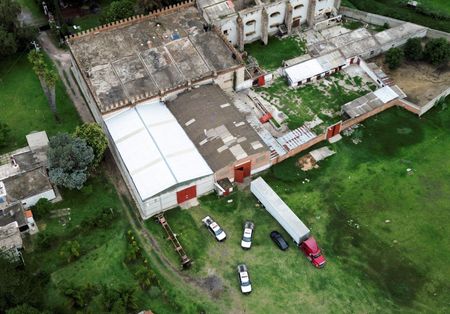
On June 22, Mexican security forces announced they had confiscated just over three metric tons of cocaine in a single day, with the drugs found in two separate locations — the western state of Guerrero and the central state of Tlaxcala.
Six security analysts who spoke with Reuters identified the World Cup as the most probable explanation for why such a large cocaine shipment would surface in Tlaxcala, a landlocked state that is not typically associated with drug trafficking activity.
Andrés Sumano, a security expert at El Colegio de la Frontera Norte in Tijuana, said criminal organizations appear to be preparing for a surge in business. “The increase in demand expected for the World Cup in Mexico City may have led criminal groups to increase their supply in warehouses near Mexico City, which facilitated such a large seizure,” he said.
Sumano drew a comparison to how legitimate businesses operate during large-scale events. “Just like any company does at massive events… large groups that are dedicated to drug trafficking have more drugs in warehouses to be able to meet the demand,” he added.
Three drug dealers operating in Mexico City who agreed to speak with Reuters confirmed they had already noticed an uptick in business tied to the World Cup. Mexico was anticipating roughly 5.5 million visitors for the tournament.
One dealer, who asked to remain anonymous, described the situation in blunt business terms. “This is a business, and if the client wants something, then we have to see how we’re going to give them what they’re looking for,” the dealer said, acknowledging that major international events like the World Cup are always a “good opportunity” to increase sales.
The Mexico City government and the country’s presidency did not respond to requests for comment. In their public announcements about the seizures, authorities made no mention of any connection to the World Cup.
Antonio Martínez, a spokesperson for the Tlaxcala state government, pushed back on any suggestion that the bust reflects a broader criminal presence in the region. He said the seizure “does not constitute evidence that Tlaxcala is a center of operation or distribution for organized crime, nor is there any information that allows linking this fact to international events.”
Still, Vicente Sánchez, a researcher with Mexico’s National System of Researchers, said the World Cup connection remains the most logical explanation. “The hypothesis is that this unusual seizure in Tlaxcala could be linked to drug use, such as cocaine, around the time of the World Cup, especially given its proximity to Mexico City,” he said.