
Iraqi security forces swept through Baghdad’s heavily fortified Green Zone on Sunday, detaining politicians and senior government officials in what stands as one of the most visible anti-corruption operations the country has witnessed in recent years — and an early test for Prime Minister Ali al-Zaidi, who took office in May.
The Green Zone has long symbolized Iraq’s post-2003 political landscape: a sealed enclave housing government institutions, foreign embassies, and the political networks that have shaped Iraq’s delicate balancing act between Washington, Tehran, and its own deeply entrenched elite.
According to Reuters, elite units from the Counter Terrorism Service carried out raids on homes within the fortified district. Iraq’s state-run Iraqi News Agency reported that 47 suspects were taken into custody, among them members of parliament and government officials. The arrests were carried out under judicial warrants tied to suspected corruption networks, with some cases reportedly stemming from testimony provided by Adnan al-Jumaili — the former deputy oil minister for refining affairs — following his earlier detention.
The Associated Press, citing the Iraqi News Agency, reported that those detained included 12 sitting lawmakers, one former legislator, a former adviser to former Prime Minister Mohammed Shia al-Sudani, and another senior Oil Ministry official. Some of those arrested were associated with al-Sudani’s Shiite political bloc, while others were linked to the Sunni Azm Alliance. Specific charges were not immediately disclosed, but an investigative judge indicated the probe centered on allegations that state resources were used for political campaigning and that government contracts were exploited for personal financial gain.
For al-Zaidi, the operation offers a political opportunity — a chance to present his new government as bold and willing to take on a corruption system that has hollowed out Iraqi state institutions for decades. But the raids also invite a harder question: Do these arrests represent the beginning of a genuine reckoning with Iraq’s deepest corruption networks — including those tied to armed factions and Iran-aligned political interests — or are they a managed spectacle designed to channel public frustration while leaving the real power structures intact?
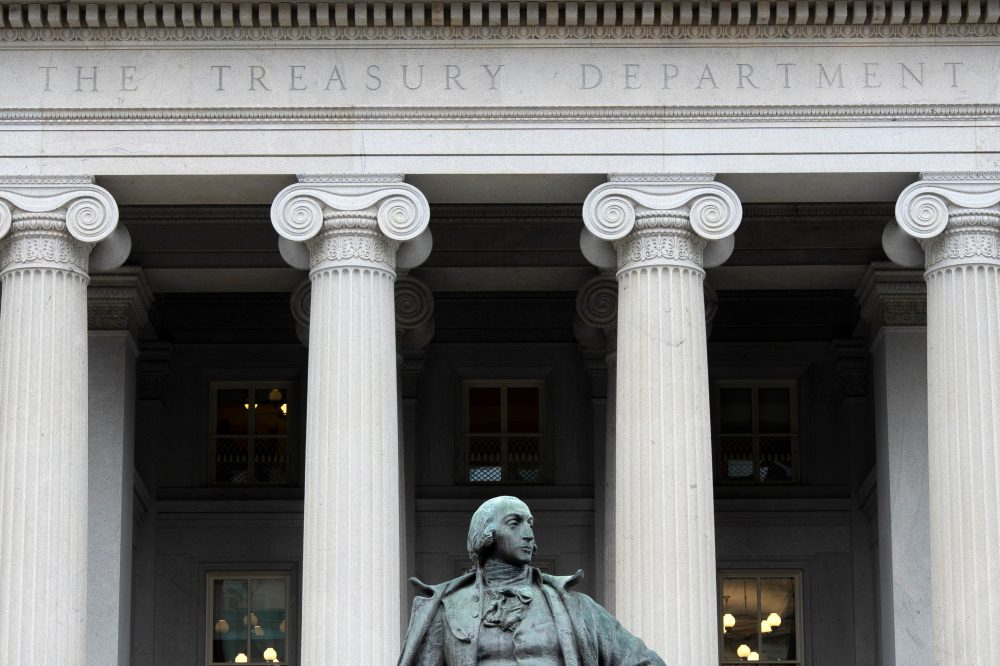
The timing adds political significance. Al-Zaidi is expected to travel to Washington in mid-July to strengthen economic, trade, and investment ties with the United States. Reuters reported that the visit is aimed at deepening the Iraqi-US partnership, while also noting that the prime minister faces the broader challenge of reining in Iran-backed fighters, tackling systemic corruption, and navigating the competing demands of Washington and Tehran.
That balancing act has grown more complicated in the wake of recent US-Iran understandings and broader regional efforts to reduce tensions. Earlier this month, US Special Presidential Envoy for Iraq and Syria Tom Barrack traveled to Baghdad in what The National described as the highest-level American engagement with Iraq since al-Zaidi’s government was formed. Washington’s deepening cooperation with Baghdad has been tied to efforts to disarm Iran-backed militias and bring weapons under state control.
A report by Asharq Al-Awsat on the meeting between Barrack and al-Zaidi, citing a US Embassy statement, said the two sides discussed Iraq’s plans for the “complete disarmament and disbandment of all armed groups and formations operating outside the authority and control of the Iraqi state,” as well as preventing Iraqi soil from being used to threaten regional stability. The same report noted that the mechanisms for establishing a state monopoly over weapons remain unclear and that some factions have continued to resist disarmament.
Against that backdrop, analysts view the Green Zone raids as carrying implications beyond domestic anti-corruption enforcement. One notable arrest with Iran-related dimensions was that of Ali Maarij, the deputy oil minister for distribution affairs. Reuters reported that the United States sanctioned Maarij in May, accusing him of helping divert Iraqi oil revenues to benefit Iran and Iran-backed militias, and of facilitating the blending of Iranian crude with Iraqi oil for export using falsified documents. Iraq’s Oil Ministry had denied those allegations at the time, stating that the activities described by Washington were outside Maarij’s official responsibilities.
Even so, the broader campaign has not yet visibly moved against the most powerful Iran-aligned militia figures or the political structures surrounding them — and for some Iraqi observers, that absence is telling.
Middle East political analyst Dr. Tallha Abdulrazaq argues that the operation should be measured not by the scope of the arrests, but by who has been left untouched.
“For there to be a real shift, [al-]Zaidi would have to start targeting the real big whales of corruption that have plagued Iraq for almost a quarter of a century since the US-led invasion in 2003,” Abdulrazaq told The Media Line. “This operation is designed to give the impression that Iraq is finally cleaning itself up, but the reality is that those arrested are small fry and expendable fall guys.”
That assessment is harsh, but it reflects widespread Iraqi skepticism toward government-led reform efforts. Iraq has seen previous administrations announce anti-corruption drives, only to watch them stall, unravel, or get absorbed into elite deal-making. Under former prime ministers Haider al-Abadi and Mustafa al-Kadhimi, reform rhetoric repeatedly collided with the realities of Iraq’s power-sharing arrangements, party patronage networks, and militia-linked economic influence.
Political analyst Alfadhel Ahmad offered a more measured take. He said the arrests have given al-Zaidi political momentum, but cautioned that their true significance depends on what follows.
“So far, the arrests have targeted third-tier Sunni politicians and associates of former PM Mohammed Shia al-Sudani — most linked to the network of Adnan al-Jumaili, the oil ministry undersecretary arrested earlier,” Ahmad told The Media Line. “Real intentions are hard to judge yet, but these arrests have clearly added political momentum and a cautious popular legitimacy to al-Zaidi’s new government.”
Ahmad also noted the deliberate staging of the operation. Deploying elite security forces gave the raids the look of a decisive government intervention, even if many of those targeted were not among Iraq’s most heavily protected political actors.
“There’s also a deliberate effort to project spectacle — deploying tanks and counterterrorism units to arrest figures who mostly have no militia protecting them,” he said.
The deployment of the Counter Terrorism Service carries its own symbolism. The force is among Iraq’s most respected security institutions, closely associated with the campaign against the Islamic State group, also known as ISIS, and formally accountable to the prime minister. Using it in a corruption sweep inside the Green Zone sends a message that al-Zaidi can direct the state’s coercive power against senior political figures.
Abdulrazaq, however, views the Counter Terrorism Service’s involvement as part of the performance rather than evidence of genuine institutional authority.
“The use of the Counter Terrorism Service was, again, just for theatrical purposes,” he said. “…it was designed to show that Zaidi himself has authority and command.”
The deeper question is whether Iraq’s state institutions can operate independently of the networks that have long dominated them. Corruption in Iraq is not simply a matter of individual misconduct. It is woven into party financing, public-sector contracting, oil revenues, border operations, government ministries, and armed groups with formal political representation.
That is why anti-corruption campaigns in Iraq are so often filtered through the lens of factional politics — who gets arrested, who walks free, and whose interests are shielded.
“This strikes at the heart of the matter,” Abdulrazaq said. “The Iraqi state literally is the militia-linked economic structure and the militia-controlled parliament and government. There is no separation between them.”
For Ahmad, the verdict is still out. He does not rule out the possibility that al-Zaidi could build on this early momentum to widen the campaign, but says the bar must be clear: the government would need to move beyond expendable figures and begin targeting interests connected to powerful factions.
“Worth remembering: Iraqi politicians have always reversed reform and anti-corruption efforts,” Ahmad said. “Iraqis have a long record of distrusting government action, fearing the same outcomes they’ve seen before.”
“Al-Zaidi has a clear chance to prevent backsliding by building on this momentum to expand toward key politicians and test the waters for confronting interests tied to pro-Iranian militias in Iraq,” he added.
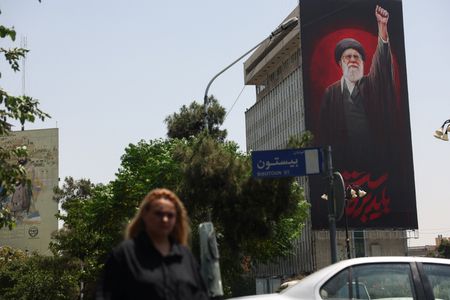
That is also where Iran enters the picture. The raids took place while Iranian Foreign Minister Abbas Araghchi was visiting Iraq. Iranian state media reported that Araghchi held separate meetings with the governors of Karbala and Najaf to discuss arrangements for funeral ceremonies in Iraq for the late Iranian Supreme Leader Ayatollah Ali Khamenei.
Some observers have wondered whether the arrests, the US diplomatic track, and Araghchi’s visit are somehow linked. Both analysts rejected any direct operational connection between Araghchi’s trip and the Green Zone operation, though they interpreted that absence differently.
“I wouldn’t bother reading too much into the timing apart from the fact that it shows Iran isn’t bothered at all by [al-]Zaidi’s move,” Abdulrazaq said. “Tehran is extremely pragmatic and would be more than happy to sacrifice a few nobodies and placeholder MPs just so that the current system that serves its interests continues.”
Ahmad was more restrained, saying there is no evidence so far connecting the two developments.
“Regarding Araghchi’s visit, those two things are not connected — at least for what is known till now. He came to arrange Khamenei’s ceremonies in Najaf and Karbala.”
The distinction matters. There is a difference between proving that Baghdad coordinated operationally with Tehran and arguing that the campaign has avoided Iran-linked power centers. The first would require evidence that has not publicly surfaced. The second is a political judgment based on who has been targeted so far — and who has not.
Ahmad said the campaign may actually serve the interests of the Coordination Framework — the largest Shiite political bloc and the central parliamentary force behind Iraq’s current order — as it tries to manage US pressure without breaking its ties to Iran-aligned factions.
“The Coordination Framework…may be trying to market this campaign to Washington,” he said. “But importantly, the campaign has not yet touched any Iran-linked interests or proxies.”
That gap between appearance and substance could prove decisive ahead of al-Zaidi’s expected Washington trip. The United States is not viewing corruption solely as a governance problem; it also sees corruption as part of the infrastructure that allows armed groups, smuggling networks, and foreign influence to persist within the Iraqi system.
Abdulrazaq argued that Washington’s real concern is less about corruption itself and more about regional compliance.
“I don’t think the US necessarily cares about corruption per se,” he said. “What the US cares about is compliance with its ambitions in the region.”
Ahmad’s conclusion ran along similar lines, though with less certainty. He said the true measure will be whether the campaign eventually moves against militia-linked economic interests and the political figures who protect them.
“Against the broader US demands, there’s no sign anything has changed on the ground,” he said. “I think we should watch what follows these campaigns — specifically whether the government moves to undermine militia-linked interests.”
Ahmad warned that if the campaign goes no further, it will likely be read as a maneuver by Iraq’s political class to manage American expectations ahead of the prime minister’s anticipated Washington visit.
“Otherwise, the likeliest reading is that Iraq’s political class is trying to circumvent US demands and present Washington a false picture — especially ahead of the PM’s anticipated visit — at the expense of expendable, marginal politicians.”
There is also the dimension of internal score-settling. Anti-corruption drives in Iraq have frequently been used as tools in factional power struggles, particularly when the justice system is applied selectively. Abdulrazaq said this campaign appears to follow that pattern.
“This is absolutely also about score settling,” he said. “To be clear, those arrested are almost certainly also corrupt, but, effectively, Zaidi is eliminating certain political rivals on behalf of the Coordination Framework of Shia Islamists close to Iran.”
The arrests have produced three competing narratives: the government’s claim that Iraq is finally confronting corruption; the public’s guarded skepticism shaped by years of broken promises; and the analysts’ warning that the campaign will only prove meaningful if it extends to the political and militia-linked structures that have historically been treated as untouchable.
For now, al-Zaidi has made his mark. The Green Zone was locked down, prominent figures were detained, and the state projected strength at a moment when Washington is pressing Baghdad to demonstrate control over armed groups and reduce Iranian influence. But projecting strength is not the same as achieving transformation.
What unfolds in the weeks ahead will determine whether this becomes a genuine turning point or simply another chapter in Iraq’s long history of managed reform. If the arrests remain confined to lower-tier actors, Sunni rivals, and associates of the previous government, the campaign will deepen suspicions that Baghdad is offering Washington a staged concession while leaving the underlying system untouched. If it reaches toward senior militia-linked economic interests and the political figures shielding them, then al-Zaidi may begin to truly challenge the foundations of Iraq’s post-2003 order.
Until that question is answered, the Green Zone raids remain less a conclusion than an open test: whether Iraq’s new government is genuinely confronting corruption — or simply managing the appearance of doing so at a moment when both Washington and Tehran are paying close attention.