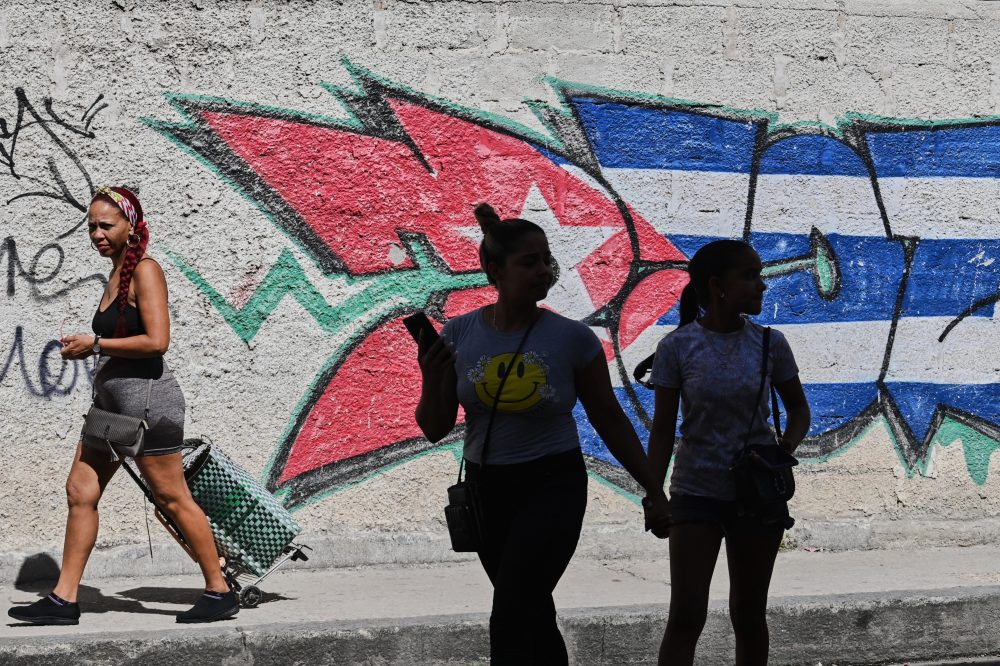

HAVANA (AP) — Despite Cuba recently rolling out a sweeping set of free-market economic changes, the country’s top diplomat says discussions with the United States have ground to a halt. Cuban Foreign Minister Bruno Rodríguez made the announcement Tuesday, signaling a sharp freeze in diplomatic relations between the two countries.
Rodríguez pointed out that the newly introduced economic measures were never brought up or addressed during previous rounds of talks between the two nations.
“The recently announced (measures) are a matter of total and absolute sovereignty,” Rodríguez said. “We have neither listened to nor are we interested in the U.S. government’s opinion on them.”
However, he expressed frustration that the reforms were answered with what he described as “a new package of unilateral coercive measures … against Cuba.”
Earlier this month, the U.S. imposed fresh sanctions targeting Cuban President Miguel Díaz Canel, other government officials, and companies considered vital to the island’s struggling economy.
Several of those sanctions came after Cuba’s Communist Party and the National Assembly of People’s Power gave the green light to 176 economic measures — the most significant economic overhaul since the Cuban revolution. The changes align with certain demands the United States has made as it pushes for a transformation of Cuba’s political and economic system.
Among the reforms are expanded opportunities for private businesses, the ability to hire workers freely, authorization for private banking, and allowances for Cubans living abroad to invest on the island.
While Rodríguez acknowledged that U.S. officials had been “generally respectful” during earlier talks, he said that behavior runs alongside “constant aggressive statements against Cuba, threats of military aggression, and the imposition of additional coercive measures.”
The U.S. State Department had not responded to a request for comment at the time of this report.
Rodríguez made his remarks at a press conference where he also announced that Cuba will bring the issue of a U.S. energy embargo — put in place by President Donald Trump in late January — before the United Nations General Assembly on July 7.
“The blockade and the policy of aggression and hostility of the United States government against Cuba are a threat to the existence and well-being of the Cuban people, and to the exercise of their human rights,” Rodríguez said.
He also pushed back on any suggestion that Cuba poses a danger to the United States, which he referred to as “a major military and nuclear power.”
The oil embargo has dealt a heavy blow to everyday life in Cuba, triggering extended power outages, rationing of fuel, internet disruptions, and the suspension of public transportation and flights. Garbage collection, water delivery, and other essential services have also been halted, and working hours have been cut back across the country.