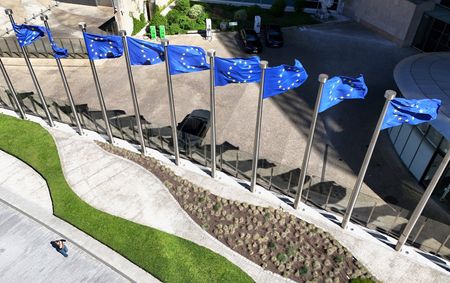
Austria is lobbying the European Union to explore hosting Anthropic’s artificial intelligence system inside Europe, according to a Bloomberg News report published Sunday.
The effort is described as a response to moves by the United States to restrict foreign access to Anthropic’s most cutting-edge AI models.
Reuters, which first carried the report, noted it was unable to immediately verify the information independently.
LISBON — A 4.1 magnitude earthquake rattled southern Portugal’s Algarve region on Sunday morning, though authorities say there are no reports of injuries or property damage, according to the country’s sea and atmosphere institute, known as IPMA.
IPMA reported the quake struck at 7:59 a.m. and was felt by residents in the cities of Lagos and Portimao. Based on information available at the time, officials said there were no casualties or structural damage to report.
The earthquake’s epicenter was traced to the Atlantic Ocean, roughly 70 kilometers off Cape St. Vincent, according to IPMA.
Southern Portugal and the Lisbon region sit along a geologically active boundary where the Eurasian and African tectonic plates meet, though seismic activity in the area has been relatively quiet in recent years.
The region has a long history with destructive earthquakes. In 1755, a massive quake and the tsunami that followed it devastated the Portuguese capital, killing an estimated 30,000 to 40,000 people — making it one of the deadliest seismic events in European history.
More recently, in 1969, a magnitude 7.9 earthquake — also centered off Cape St. Vincent — killed at least 13 people and left dozens more injured across the region.
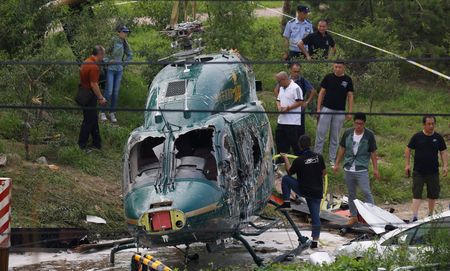
Fourteen people lost their lives Sunday when a helicopter belonging to Aramco, Saudi Arabia’s state-owned oil company, went down in the city of Ras Tanura, according to the Saudi state news agency.
Officials have not yet identified a cause for the crash. Authorities have launched an investigation into the incident, though no further details have been released at this time.
Emergency authorities in France are on the scene of an incident involving a civilian aircraft in the northeastern town of Tomblaine, according to the local prefecture.
The incident was reported on Sunday. Local newspaper L’Est Republicain reported that the aircraft involved was transporting a group of skydivers and had crashed.
Further details are limited at this time as authorities continue to respond to the scene.
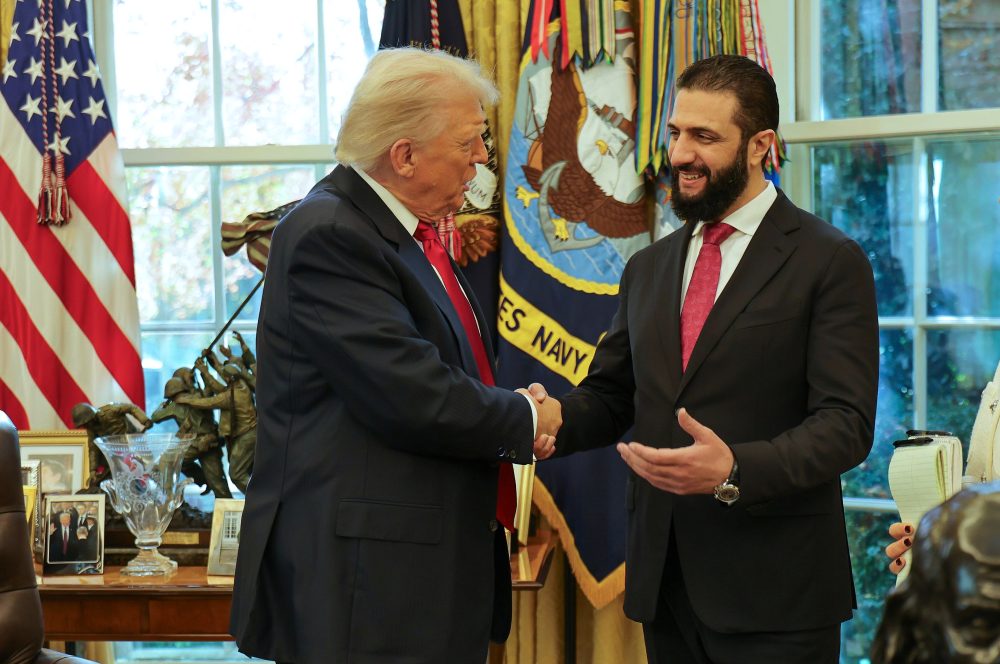
BEIRUT — A surprising proposal from President Donald Trump has sent shockwaves through the Middle East: rather than continuing to support Israel’s prolonged conflict with Hezbollah in Lebanon, Trump has suggested that Syria step in and handle the Iran-backed militant group instead.
Trump has indicated that the Islamist-led insurgents who toppled Syria’s longtime autocratic leader Bashar Assad roughly a year and a half ago — and who now lead a new Syrian government — would be more effective at eliminating Hezbollah than the Israeli military has been.
Syrian President Ahmad al-Sharaa has firmly rejected the notion, insisting that Trump’s comments were taken out of context. Trump, however, has continued to push the idea.
While it remains uncertain just how committed the White House is to the proposal, the mere suggestion of a Syrian military incursion has triggered serious alarm in Lebanon. It has also unsettled Israel, which views al-Sharaa’s Islamist-led government with deep suspicion and has already seized a portion of southern Syrian territory since al-Sharaa came to power.
The situation has also inflamed tensions between Israel and Turkey — a key supporter of al-Sharaa’s government — as both countries maneuver to limit each other’s foothold in Syria. Top Israeli security officials held a meeting specifically to address the issue on Wednesday, according to a source who requested anonymity because they were not permitted to speak publicly.
On the sidelines of the G7 summit earlier this month, Trump voiced frustration with the pace of Israel’s campaign against Hezbollah, complaining that it has gone on too long and that “too many people are being killed.”
Since Hezbollah joined the broader Iran conflict with a March 2 attack on Israel, more than 4,000 people have died in Israeli strikes on Lebanon, among them hundreds of women and children. Israel maintains that its strikes are directed at Hezbollah and that it takes steps to minimize civilian casualties.
Trump was blunt in his criticism of Israel’s approach: “You don’t have to knock down an apartment house every time you’re looking for somebody, because there are a lot of people in those apartment houses and they’re not all Hezbollah.”
He went further, saying: “I suggested to Israel to let Syria take care of Hezbollah. ‘Cause to be honest with you, I think they’d do a better job.”
Shortly after, on the opening day of U.S.-Iran talks held in Switzerland, Fox News correspondent Trey Yingst reported that Trump — during an interview — expressed frustration that Israel has been unable to “put Hezbollah away” and said he is “close to giving it to Syria,” believing al-Sharaa would handle it with more precision. The White House declined to elaborate and pointed back to Trump’s existing public statements.
Syrian officials moved quickly to contain the fallout. In a June 13 speech in Damascus, al-Sharaa stated clearly: “There are people spreading rumors that Syria will intervene in Lebanon. This is not true. We are calling for a permanent end to the war and the strengthening of institutions and for there to be economic ties and a calming of the situation in Lebanon.”
In a June 21 interview with the Emirati network Al Mashhad, al-Sharaa said Trump’s words had been misread. Trump “spoke about Syria’s role in finding a safe and peaceful solution, but the statement was misinterpreted as if Syria were going to invade Lebanon tomorrow morning,” al-Sharaa said. He added that Syria had “presented our vision for a solution to the United States, which is to stop the war and address the negative effects on Lebanon and Syria, and to find different economic, political and social solutions.”
The history between Syria and Hezbollah is deeply complicated. Hezbollah — alongside Iran — intervened in Syria’s 14-year civil war on behalf of Assad, while al-Sharaa led the insurgency trying to remove him. Despite that bitter past, Syria’s new leadership has said since taking power in December 2024 that it is focused on rebuilding the nation and has no desire to get drawn into regional conflicts or settle old scores.
When Israel and the U.S. launched their war against Iran — which set off a broader regional conflict — Syria deliberately stayed on the sidelines. In the early weeks of fighting, Syrian forces were sent to reinforce the border with Lebanon, officially to prevent weapons smuggling and stop the conflict from spilling over. In March, Syria accused Hezbollah of firing artillery shells across the border at Syrian army positions — a charge Hezbollah denied — but the standoff did not escalate further. Turkish Foreign Minister Hakan Fidan told The Associated Press in March that Turkey had stepped in to ease those tensions.
Al-Sharaa acknowledged in his Al Mashhad interview that Hezbollah’s decision to get involved in Syria’s civil war “was wrong,” but said he remained open to holding “dialogue” with the group and even to serving as a mediator among Lebanese factions debating the future of Hezbollah’s weapons arsenal.
Back in March, U.S. envoy to Syria Tom Barrack had denied reports that Washington was floating the idea of Syrian intervention against Hezbollah. Since then, Trump has begun making the suggestion openly and publicly.
Randa Slim, director of the Middle East Program at the Washington-based Stimson Center, was sharply critical of the proposal, calling it, “at best, driven by a profound ignorance of the dynamics on the ground.”
“Syria needs to focus on a myriad of complex and daunting challenges — not least rebuilding a shattered country and repatriating millions of refugees,” she said. “Syrian forces are far from a coherent military institution; they include thousands of foreign jihadi fighters of uncertain loyalty and discipline.”
The months following Assad’s ouster were marked by repeated outbreaks of violence between factions loyal and opposed to al-Sharaa, some of which escalated into sectarian attacks in which Sunni Islamist fighters aligned with the new government struck Alawite and Druze civilians. Those events stoked fears of cross-border violence among Lebanon’s Shiite, Christian, and Druze communities.
Many in Lebanon also carry painful memories of Syria’s decades-long military occupation of their country — a presence that began during the Lebanese civil war with initial backing from Lebanese authorities and Arab states, and did not end until 2005.
The Israeli official who spoke anonymously said Israel is watching for signs that Syria might try to reclaim its old political role in Lebanon, but emphasized that Israel’s primary concern remains Hezbollah itself.
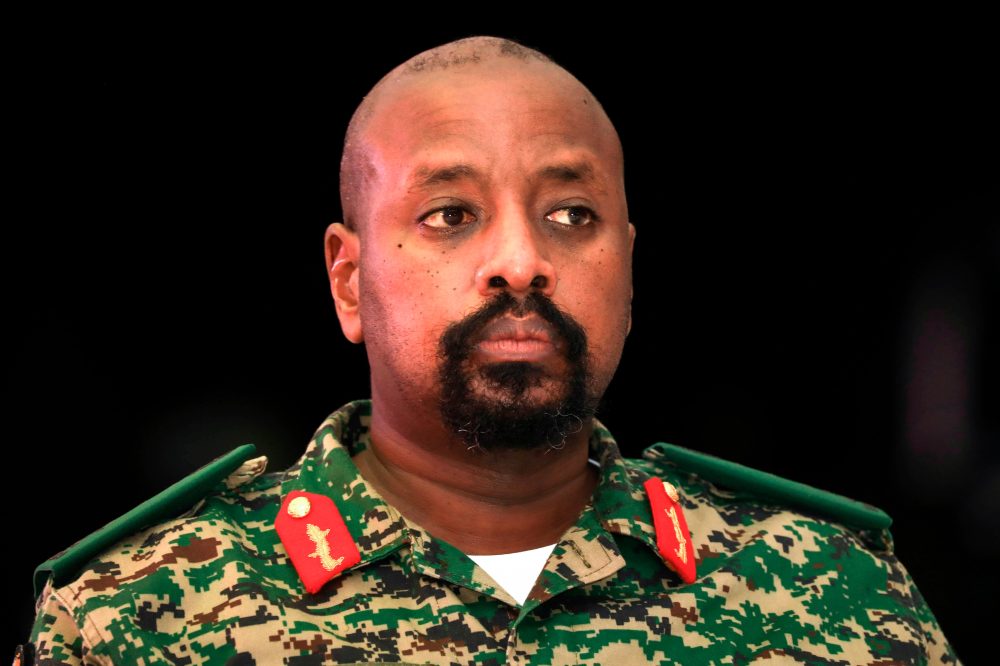
KAMPALA, Uganda — Soldiers were sent to enforce the shutdown of a prominent news organization’s offices in Uganda’s capital on Sunday, acting on orders from the country’s military chief, who declared that all media outlets in the East African nation “will follow the rules.”
Gen. Muhoozi Kainerugaba, the eldest son of President Yoweri Museveni, has held the position of top military commander since 2024. In the days following Museveni’s swearing-in for a seventh straight term, Kainerugaba has issued a string of directives typically associated with a head of state, signaling a tightening of his personal authority.
Troops appeared outside the Kampala offices of the Daily Monitor newspaper early Sunday morning. The publication is owned by Nation Media Group, a company headquartered in Nairobi, the capital of Kenya.
Taking to X — his go-to platform for public statements — Kainerugaba made his position clear: “I have the power in Uganda to shut down ANY media house I want to. I have had this power since 2017. This power was given to me by my great father.”
He followed that with a blunt warning: “From now on ALL media in Uganda will follow the rules!”
Beyond the Daily Monitor, Kainerugaba said his closure order also applied to local television broadcaster NTV, another outlet operating under the Nation Media Group umbrella.
The National Association of Broadcasters released a statement confirming that at least six publishing and broadcasting organizations — all belonging to Nation Media Group — had been forced to close. “We are deeply concerned about this action and its impact on the media ecosystem,” the group said.
Kainerugaba has openly stated his intention to succeed his father as president, a prospect that appears increasingly realistic as the 81-year-old leader leans more heavily on his son’s military clout.
Earlier this month, Kainerugaba took action against a well-known attorney who had attempted to hold him accountable over his alleged involvement in rights violations against opposition figure Kizza Besigye. Besigye was taken into custody in Nairobi in 2024 and has since faced treason charges that he contends are politically motivated. His lawyer, Erias Lukwago, was removed from his home and later charged with an offense connected to concealing treason.
Museveni has governed Uganda since 1986 and has given no indication of when he plans to step down. With no serious challengers within the ruling party, many observers believe the military will play a decisive role in determining who leads the country next.
Those close to Kainerugaba describe him as a disciplined military figure who avoids showy displays of wealth and takes a hard stance against government corruption. He received his military training at schools in the United States and Britain before taking command of a presidential guard unit that has since grown into an elite special forces organization. Outside of his military role, he founded a political activist group called the Patriotic League of Uganda, whose supporters and members include figures ranging from the parliamentary speaker to government ministers.
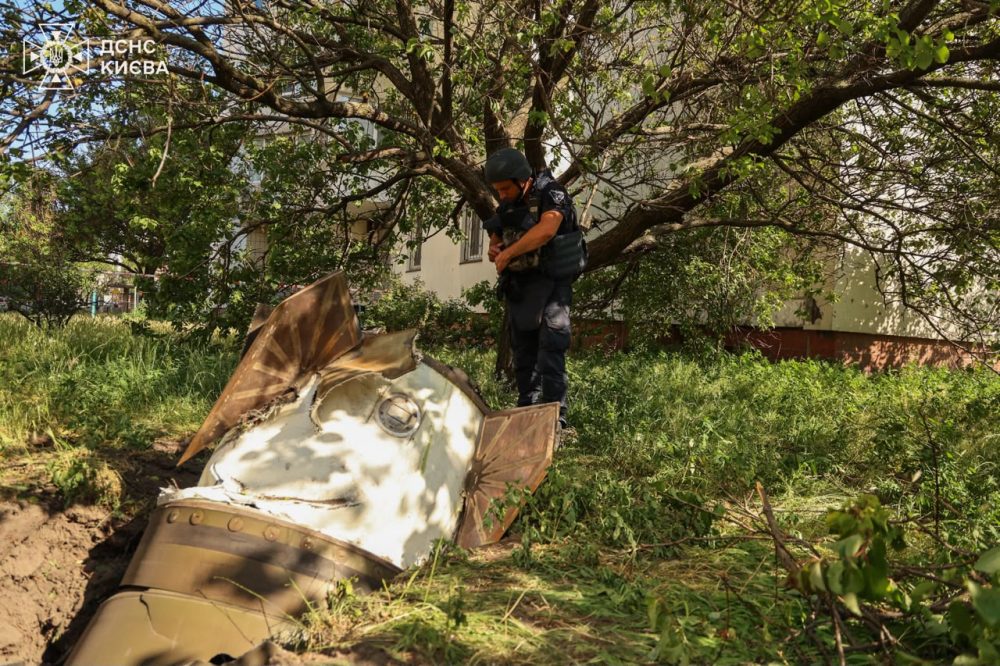
KYIV, Ukraine — Ukraine continued its intense drone campaign against Russia on Sunday, igniting a major oil refinery in the country’s south and leaving at least two people dead, according to Russian officials.
Kyiv has been conducting large-scale, long-range drone strikes aimed at squeezing Russia’s fuel supplies and disrupting military logistics — a strategy Ukrainian authorities describe as an effort to pressure the Kremlin into peace negotiations.
Gov. Veniamin Kondratyev of Russia’s Krasnodar region reported that wreckage from intercepted Ukrainian drones touched off a fire at a refinery in Slavyansk-na-Kubani, a town located east of occupied Crimea. Regional officials said the falling debris claimed one life in Slavyansk and left another person injured in a nearby village.
Photos and videos spreading across Russian social media appeared to show a massive plume of black smoke rising over what users identified as the Slavyansk refinery. The Associated Press was unable to independently confirm the authenticity of those images.
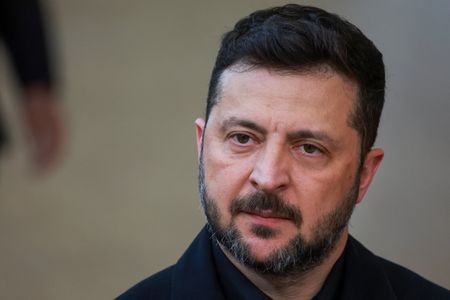
Ukrainian President Volodymyr Zelenskyy publicly acknowledged that Ukraine carried out the Slavyansk strike. He also stated that a second refinery was hit — this one located in Russia’s Yaroslavl region, roughly 700 kilometers (435 miles) from the Ukrainian border.
“Tonight, our ‘long-range sanctions’ reached two oil refineries in Russia,” Zelenskyy posted on the Telegram messaging platform. “Each (strike) means a reduction in the resources that fuel the Russian war machine, and another step toward peace.”
Over recent months, Ukraine has significantly intensified its long-range strikes on Russian military production sites and energy infrastructure. The goal, according to Western officials, is to cut into Moscow’s income from its now fifth-year invasion and force Russian civilians to feel the toll of the war. Those officials say the campaign has helped slow Russian advances on the battlefield and increased pressure on the Kremlin.
The Slavyansk facility ranks among southern Russia’s most significant refineries, handling close to 4 million tons of crude oil annually, according to the operator’s website. It also serves as a critical supplier of petroleum products — including fuel oil, naphtha, and marine fuel — destined for export through Russia’s Black Sea ports.
Russian authorities did not immediately release information about the reported strike on the Yaroslavl refinery. However, local Gov. Mikhail Evraev announced Sunday morning that some roads connecting Moscow to the regional capital of Yaroslavl had been temporarily shut down following what he described as “an enemy attack by Ukrainian drones.”
Yaroslavl’s airport also shut down briefly overnight, joining several other airports in southern and western Russia that were temporarily closed, the country’s civil aviation authority reported.
In a separate incident, Ukrainian drone strikes in Russia’s Belgorod border region killed one person and wounded another, according to acting Gov. Alexander Shuvayev.
Russia’s Defense Ministry announced that its forces intercepted 213 Ukrainian drones overnight across Russian territory, occupied Crimea, and the Black and Azov seas.
On the other side of the conflict, Ukraine’s air force reported that Russia launched 142 long-range strike drones and eight missiles at Ukraine during the night. Of those, 125 drones and seven missiles were successfully shot down, the air force said.
France’s public health agency, Sante Publique, announced Sunday that the country has recorded 1,000 excess deaths connected to the intense heatwave that has been scorching much of Europe — and officials say that number will almost certainly climb.
In releasing its early death toll figures, Sante Publique noted that the majority of those who died were elderly. The agency added that it anticipates the mortality numbers to increase as additional data becomes available regarding deaths that occurred in residential care facilities and private homes.
Across Europe, people have been suffering through dangerously high temperatures during a heatwave tied to dozens of deaths. The extreme heat has also shattered temperature records, disrupted power generation, and caused damage to infrastructure throughout the continent.
Scientists have described the heatwave — which began on June 20 — as the worst ever documented in Europe, a region where the climate is warming at a faster pace than the global average.
While the heatwave has been shifting eastward, France’s weather agency reported that the most extreme heat has eased in most parts of the country. However, some areas in the northeast remained under a heatwave advisory.
Health Minister Stephanie Rist cautioned in an interview with La Tribune newspaper that the health consequences of the extreme heat could persist for up to 10 days even after temperatures return to normal.
“The episode is not finished,” she also told broadcaster BFM.
Sante Publique confirmed that while most of the deaths involved people aged 65 and older, the health impacts of the extreme heat were felt across all segments of the population.
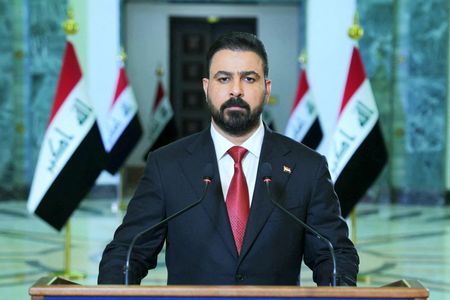
BAGHDAD — Iraqi security forces moved in the early hours of Sunday morning to arrest politicians, lawmakers, and high-ranking government officials as part of what security and legal sources are calling the opening phase of a major anti-corruption campaign directed by Prime Minister Ali al-Zaidi.
Elite units from the Counter Terrorism Service conducted raids on homes located inside Baghdad’s heavily secured Green Zone, detaining multiple individuals, according to sources who asked not to be identified because they are not authorized to discuss sensitive matters with the press.
As of Sunday, no official statement had been released regarding the arrests.
Al-Zaidi, who assumed the role of prime minister in May, has made a public commitment to confronting deep-rooted corruption — one of the most enduring problems facing Iraq’s government, despite pledges from numerous administrations over the years to hold wrongdoers accountable.
Sunday’s raids were carried out under direct orders from al-Zaidi after Iraqi judicial authorities issued arrest warrants targeting what sources described as suspected corruption networks operating within the government.
The operation follows a series of recent arrests of senior officials, including a deputy oil minister who was taken into custody on corruption-related charges. According to three sources, those earlier arrests led to the issuance of new warrants that were then executed on Sunday.
The Green Zone, where Sunday’s raids took place, serves as home to parliament, foreign embassies, and the prime minister’s office, and is where many senior Iraqi officials, lawmakers, and political figures maintain residences or workplaces.
A senior source cited by the state news agency INA said that some of Sunday’s arrests stemmed from testimony given by Adnan al-Jumaili, the deputy oil minister for refining affairs, following his detention on corruption charges. According to INA, al-Jumaili’s statements pointed to a broader network of officials allegedly involved in corrupt activities.
Some individuals managed to escape before security forces arrived, prompting authorities to seal off entrances to the Green Zone and expand their search. The three sources indicated that the anti-corruption campaign is expected to press forward over the coming days.
TIRANA, Albania (AP) — A protest movement sweeping through Albania has captured worldwide attention, partly due to its connection with Donald Trump’s son-in-law Jared Kushner, and partly because of its unlikely symbol: the flamingo.
At the heart of the controversy is a two-part luxury development plan — one piece involving a resort on the uninhabited island of Sazan, and another calling for construction along the Narta Lagoon, a protected wildlife area where flamingos and other wetland birds are known to gather.
For weeks, demonstrators numbering in the thousands have filled the streets of Tirana each evening, waving flamingo cutouts in the air. Their movement has earned a fitting name: “The Flamingo Revolution.” Below are three of the people who make up that movement.
Fatma Paja, 28, is a Tirana resident who co-runs a creative studio alongside her two sisters. She belongs to a collective of artists responsible for crafting the flamingo cutouts that have become synonymous with the nightly demonstrations.
“I have long used art as a means to express the injustices and dissatisfaction associated with everyday civilian life in Albania,” Paja told the Associated Press on a Friday afternoon, as she painted a foam flamingo pink ahead of that night’s march.
Her group also sets up art activities for children at the protests, giving parents a way to participate while keeping their kids engaged. During the marches, Paja takes up a loudspeaker and leads the crowd in chants: “Albania is not for sale!” and “Don’t touch Narta!”
Environmentalists warn that the proposed development would permanently destroy a pristine and irreplaceable natural habitat. Protesters have voiced frustration over what they see as a lack of transparency and a history of similar projects failing to meet environmental standards.
“I am against a pro-elitist project that is blocking a fully protected area and destroying it,” Paja said. “It is a project that has no legal basis and has not been supported by any study on the damage it would cause to the environment and nature.”
Despite the tension, Paja said she feels hopeful, believing the protests have already made a difference. “This protest has motivated people to speak up and react,” she said, noting that the movement’s independence from political parties has helped build widespread trust and solidarity.
Though the protesters are not formally aligned with any party, they are nearly unanimous in calling for the resignation of Prime Minister Edi Rama.
Arben Kola, one of the earliest participants in the Flamingo Revolution, has spent more than ten years working as a tour guide, leading visitors through Albania’s historical and natural landmarks — including the area now targeted for development.
Tourism in Albania has surged in recent years, with travelers drawn to the country’s vast, largely untouched coastline. Among those who took notice were Kushner and Trump’s daughter, Ivanka Trump, who described on a podcast last month how they stumbled upon the development site while swimming from a friend’s boat.
For Kola, the project was one too many examples of government overreach. He joined the protest movement in its earliest days.
“Albania is facing a high level of corruption, with the privatization and giveaway of land, beaches, valleys and rivers,” said the 46-year-old during an interview while guiding a group through Tirana.
Albania’s anti-corruption agency has launched an investigation tied to the project. The government maintains the land is privately owned, though competing claims about how it was privatized have surfaced.
In a recent interview with the AP, Prime Minister Rama brushed off environmental objections as stemming from misinformation. He argued the development was transforming Albania into a destination “where the big capital wants to come and the big investors want to come.”
Kushner’s exact financial role in the project remains unclear, though Rama has confirmed he is involved. The prime minister also said a formal environmental impact study has not yet begun because the development plan is still being finalized by international architects and environmental specialists.
Kola, however, sees things differently. He says it looks like the project is already well underway, pointing to excavators and heavy machinery already clearing land inside the nature reserve. Today, he helps manage the crowds at demonstrations, speaking into a loudspeaker. He says he’s still amazed by how large the movement has grown.
“We didn’t believe the protest would reach this size,” Kola said. When people ask him whether the movement will keep going, his answer is simple: “It depends on the people.”
What sets this round of protests apart from most of Albania’s demonstrations over its three decades of democracy is the mix of ages in the crowd. Younger demonstrators have been joined by a growing number of retirees — including Bujare Ishmi, 70.
The retired engineer shows up to the protests nearly every night, wearing a sign that reads: “You have the power of crime, we have the power of truth.” When she arrives, fellow protesters greet her with chants of “Nona! Nona!” — an Albanian term of endearment for an older female family member — recognizing her as a kind of matriarch of the movement.
Ishmi said she has long hoped to witness a protest like this one, describing Albania’s political structure as a “half-hearted democracy.” Her husband is a former political prisoner from the era of Enver Hoxha’s four-decade rule, and she says neither of them opposes foreign investment in principle. Their primary concern is the absence of transparency.
Investment can bring progress, she said, “but the location must be known and the proper parameters must be maintained.”
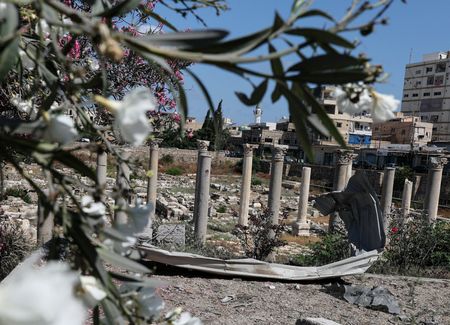
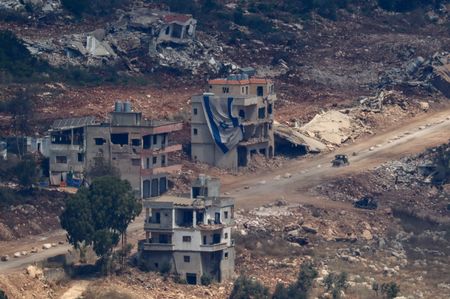
TYRE/BEIRUT, Lebanon — An ancient column at a UNESCO-listed site in Lebanon’s port city of Tyre had its crown blown off. A pilgrimage site sacred to both Muslims and Christians was leveled in another southern town. A historic market from the Mamluk era in the city of Nabatieh was struck by Israeli bombs, and centuries-old villages along Lebanon’s border were bulldozed by Israeli forces.
Lebanese Culture Minister Ghassan Salame told Reuters that Israel’s roughly four-month air and ground campaign — which Israel said was aimed at the Iran-backed armed group Hezbollah — has left a trail of destruction through some of southern Lebanon’s most treasured heritage sites.
Even though a ceasefire went into effect a week ago, authorities still cannot get a complete picture of the damage. Israeli forces remain in control of a zone stretching about 10 kilometers, or roughly 6.2 miles, into Lebanese territory, and Lebanese officials are barred from entering. “We cannot work under the shadow of occupation,” Salame said.
Within that restricted zone lies the medieval Beaufort Castle and numerous ancient villages that were home to Christian, Shi’ite Muslim, and Sunni Muslim communities, along with their houses of worship. “There are villages that have been completely bulldozed,” Salame said.
Historic towns located outside the occupied zone also suffered heavy bombardment. Tyre and Nabatieh both sustained significant damage from airstrikes. The town of Tebnin was heavily bombed, raising fears that its Crusader-era fortress may have been damaged as well, according to Salame.
“Heritage is not only Roman and Phoenician antiquities,” Salame said. “Heritage is also historic buildings, archaeological sites, and buildings with a cultural function.”
When asked by Reuters for comment, the Israeli military said it does not seek to “cause excessive damage to civilian infrastructure and strikes only out of military necessity, with consideration for the safety of its citizens” — referring to residents of northern Israel, which Hezbollah has attacked. The military added that it takes into account the presence of “sensitive sites” and follows “a rigorous approval process as required.” Israel has also accused Hezbollah of storing weapons inside Beaufort Castle, a claim Lebanese authorities reject.
Modern-day Lebanon sits at the crossroads of multiple ancient civilizations — including the Phoenicians, Byzantines, Mamluks, and Crusaders — each of which left behind temples, castles, and mausoleums. Tyre, nearly 5,000 years old, is home to Roman ruins that reflect this rich layered history. The city, originally built as an island fortress, was permanently joined to the mainland by Alexander the Great during his conquest.
Tyre has endured many conflicts throughout the centuries, but the recent war has left much of the city in ruins. Dust-covered cars with shattered windows sit near ancient columns that were once erected in honor of long-forgotten gods. Protective barriers put in place to shield the ruins from strikes or shrapnel were found blown into the middle of the very sites they were meant to guard.
“Look at the damage that happened to it, it’s as if it all exploded from underneath, as if an earthquake hit it,” said Adnan Istanbouli, an official from Lebanon’s antiquities department, while standing near a Roman mosaic.
Alwan Charafeddine, deputy mayor of Tyre, said the city “is supposed to be one of the cities that is internationally protected, or that should never be targeted in any way, in any conflict.”
The United Nations Educational, Scientific and Cultural Organization (UNESCO) issued a statement last month expressing concern over the condition of Tyre, which holds World Heritage Site status and has been granted the organization’s enhanced protection designation. UNESCO also said it was “deeply alarmed” by reports of damage to a citadel in the southern town of Chama and by fighting near Beaufort Castle, condemning what it called “unlawful attacks against cultural property.” The agency had previously raised similar concerns about historical sites in Iran in March.
After Israeli bombing reached the ruins of Tyre, Salame formally requested that UNESCO reclassify the site as a World Heritage Site in Danger — a designation that would place greater responsibilities on UNESCO and the broader international community to act. As of now, that reclassification has not been granted.
Earlier in the conflict, Israel’s Defense Minister stated that Israel would demolish all homes along Lebanon’s border with Israel. Salame expressed fear that Israel’s campaign could permanently wipe out centuries of Lebanese history. “There is something systematic: a systematic destruction of villages, hamlets, and entire towns,” he said.
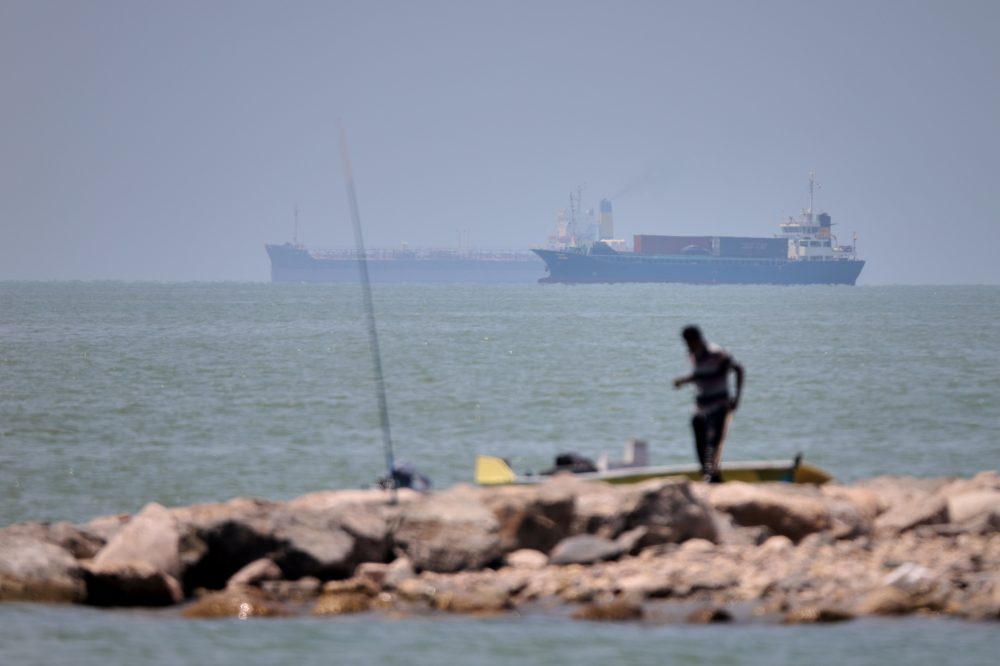
French shipping company CMA CGM announced Sunday morning that its Galapagos container ship has successfully navigated through the Strait of Hormuz, a critical international waterway that has been at the center of escalating tensions in the region.
The development comes at a turbulent time. The United States and Iran had reached a temporary agreement to end their four-month conflict, with the strait expected to reopen as a result. However, both nations have since resumed military exchanges and are accusing each other of breaking the terms of that agreement.
In a statement, CMA CGM described the vessel’s passage as a significant development, saying, “This crossing marks an important milestone in a regional context that remains complex and requires constant vigilance.”
The company declined to provide any additional details about the specific conditions surrounding the ship’s exit from the strait.
CMA CGM also noted that 10 of its other vessels remain in the Gulf, where they have been stranded since the outbreak of the conflict.
A Thai family is heartbroken after the body of their 17-year-old daughter was discovered stuffed inside a suitcase in the resort city of Pattaya, with an Australian man now behind bars and charged with her murder.
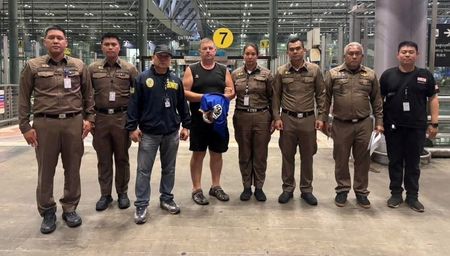
Thai police arrested the suspect, identified as Simon Peter Carman, an Australian man in his 40s, in the early morning hours of Saturday at Bangkok’s Suvarnabhumi airport. Authorities said he was on the verge of boarding a flight back to Australia when officers took him into custody.
Carman now faces a series of serious charges, including murder, concealment of a body, moving or destroying a body, and taking a minor for sexual purposes.
According to police, investigators reviewed surveillance camera footage that captured Carman entering a condominium together with the young girl. Hours later, the footage showed him leaving the building alone, carrying a suitcase. Police posted on their official Facebook page that he then loaded the suitcase onto a motorcycle and rode to a grassy area near a set of railway tracks.
Authorities subsequently obtained an arrest warrant and intercepted Carman at the airport before he could leave the country. While in an investigation room at the police station, Carman addressed the victim’s family before being transferred to the Pattaya Provincial Court.
“I feel bad for what happened to your daughter. It was out of my control,” he said.
The girl’s father, Thongchai Donhomla, 46, spoke about the devastating impact of losing his child.
“I am deeply saddened. My daughter had no mother, so whenever she wanted anything, she would find a way herself, and she always helped me too,” he said.
The victim’s stepmother, Oradee Bussarakum, made clear she wants the harshest possible punishment for the accused.
“I told the police I want him executed. As a (step)mother, I don’t know what else to say … I just want him to face the full consequences,” she said.
Police have not yet announced when Carman will make his first appearance before the court.
KYIV — Ukrainian President Volodymyr Zelenskiy announced Sunday that Ukraine carried out overnight strikes against two Russian oil refineries, one located in the Krasnodar region and another in the Yaroslavl region, as part of Kyiv’s expanding drone campaign targeting Russia’s fuel infrastructure.
Ukraine’s growing use of drone strikes has been creating serious fuel supply problems in parts of Russia — one of the largest oil-producing nations in the world — with drivers facing long lines and fuel rationing at gas stations.
“We continue our operations that weaken Russia’s ability to wage this war,” Zelenskiy wrote on social media. He noted that the two refineries were located approximately 300 kilometers and 700 kilometers from Ukrainian territory — roughly 190 miles and 430 miles respectively.
The governor of the Krasnodar region, Veniamin Kondratiev, confirmed via Telegram on Sunday that a fire had broken out at the refinery in Slavyansk-na-Kubani. He reported that one person was killed and another was injured in a nearby village. Unverified video circulating on social media appeared to show a large blaze at the facility.
The Slavyansk refinery is a privately owned operation capable of processing around 100,000 barrels of oil per day, supplying fuel for both domestic consumption and export.
Further north, in the Yaroslavl region east of Moscow, the regional governor confirmed that area also came under drone attack. As a precaution, temporary movement restrictions were put in place on certain road routes leading to the Russian capital.
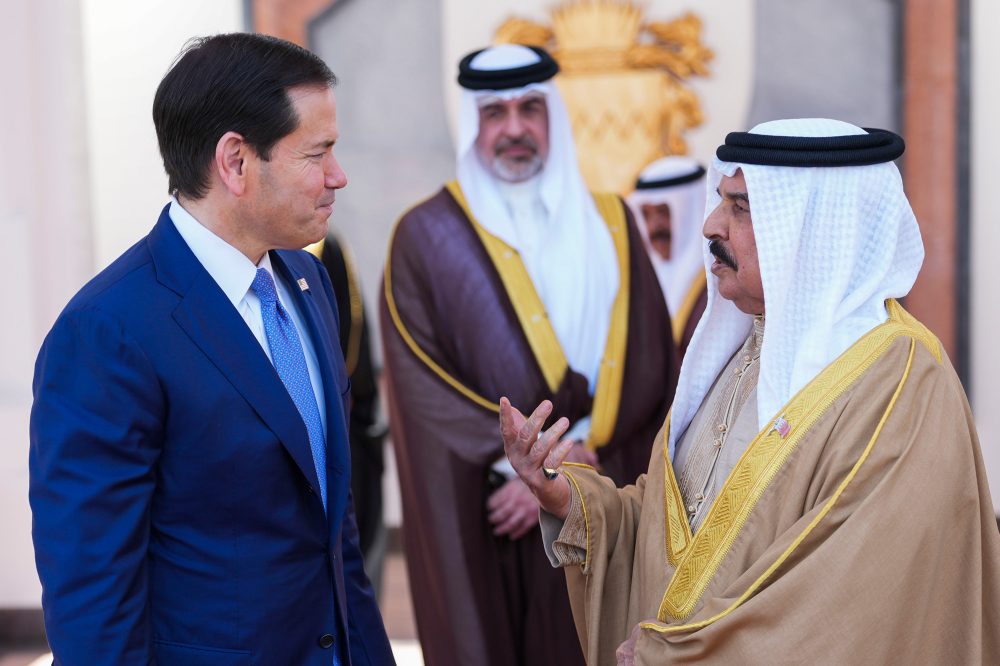
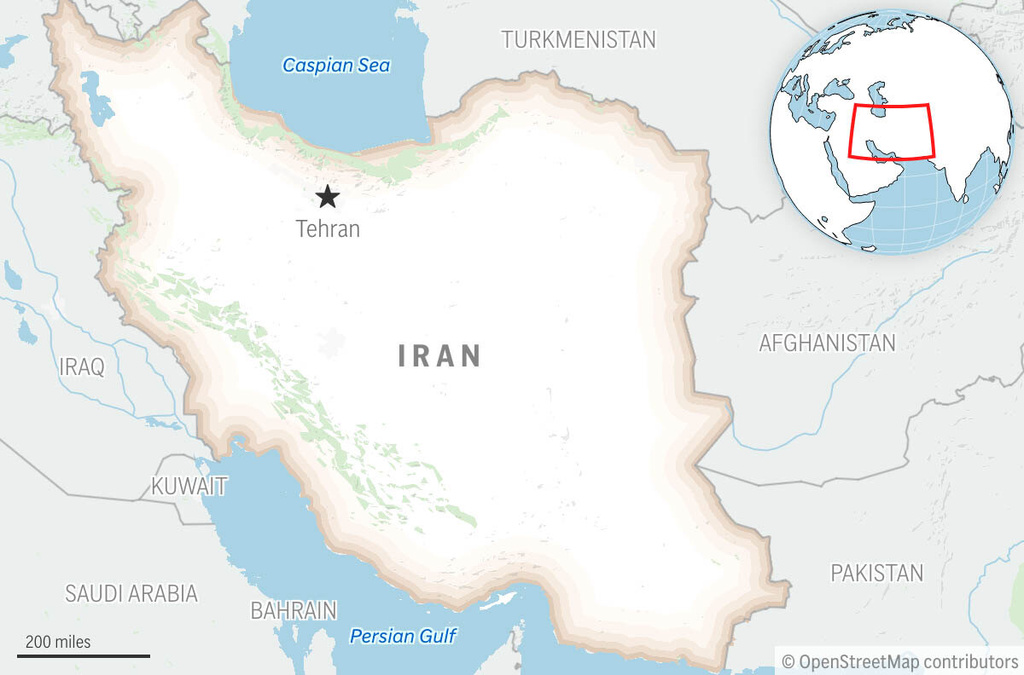
DUBAI, United Arab Emirates (AP) — Iran’s paramilitary Revolutionary Guard fired drones and missiles at Bahrain and Kuwait on Sunday, striking back after U.S. airstrikes hit Iranian targets, while also warning that peace negotiations could be brought to a “complete halt” if Washington presses forward with its military campaign.
The escalating conflict has been further inflamed by a dispute over control of the Strait of Hormuz. A multinational maritime organization operating under U.S. Navy oversight announced Saturday that it would widen a shipping lane near Oman to accommodate both arriving and departing vessels — a move that put it on a direct collision course with Tehran.
Iran has insisted that once the war is over, it must have sole authority over the strait — the narrow waterway at the mouth of the Persian Gulf that once carried roughly one-fifth of the world’s oil and natural gas supply. While the international community has long viewed the strait as an open international passage, it runs through the territorial waters of both Iran and Oman. In recent days, Iran has attacked ships twice that were using a route along the Omani side of the strait, a route backed by a United Nations agency.
Kuwait’s military reported that its air defense systems successfully intercepted Iranian drones and missiles Sunday morning, shortly after the U.S. conducted its strikes. Kuwait, which is home to a major U.S. Army installation, confirmed it detected and shot down two ballistic missiles, with no reported casualties or damage on the ground.
In Bahrain, the Interior Ministry confirmed that Iranian strikes damaged a residential building located near the country’s international airport, though no fatalities were reported. The ministry shared photographs showing an eight-story structure with its top floor completely obliterated — reduced to rubble with windows blown out throughout the building.
Bahrain serves as the home port for the U.S. Navy’s 5th Fleet, whose base there had come under repeated fire during the ongoing war. Sunday’s damaged building was not located near the fleet’s headquarters in downtown Manama.
Bahrain’s Foreign Ministry released a sharp condemnation, calling the attacks “a dangerous escalation that reveals that what Tehran is doing is not a passing act, nor an isolated incident, but rather a deliberate approach and a systematic pattern of repeated aggression against the sovereignty of the kingdom, and the security of its citizens and residents.”
The strikes unfolded after a weekend of back-and-forth military action between the U.S. and Iran. The U.S. military’s Central Command stated it had hit Iranian “surveillance infrastructure, communication systems, air defense sites, drone storage facilities and minelayer capabilities” on Sunday, following an attack on a vessel at sea early Saturday morning. That ship — the Panamanian-flagged tanker Kiku — was carrying crude oil for the state-run energy company of Qatar, which has been serving as a key mediator between Iran and the United States.
Trump posted on social media that the U.S. had “struck Iranian missile and drone storage locations, and coastal radar sites, for violating the Cease Fire Agreement, AGAIN!” He cautioned that there may come a point where the U.S. can no longer exercise restraint “and will be forced to militarily complete the job.”
“If that happens, the Islamic Republic of Iran will no longer exist!” Trump wrote on Truth Social.
This latest exchange mirrors a similar cycle of attacks that played out just days earlier, when an Iranian drone struck a merchant ship off the Omani coast on Thursday, prompting U.S. military retaliation.
The Revolutionary Guard claimed responsibility for both Sunday’s attacks, saying it targeted Al Asad Air Base in Kuwait. The Guard also issued a stark warning: “Let the enemy know that violating the ceasefire … will lead to a complete halt of ongoing processes.”
The Guard, which maintains control over Iran’s ballistic missile stockpile and reports solely to Supreme Leader Ayatollah Mojtaba Khamenei, is believed to hold growing sway within the Islamic Republic.
The U.S. military stated that “Iran had a chance to honor the ceasefire agreement” but “elected not to” when its forces attacked the Kiku.
Ship-tracking data shows the Kiku had departed a Qatari oil field in the middle of the Persian Gulf earlier in the week and was headed toward a port in the United Arab Emirates situated on the Gulf of Oman, just beyond the Strait of Hormuz. The vessel appeared to be navigating an alternate route along the Omani coastline — an option that bypasses the Iran-sanctioned corridor running through Iranian waters.
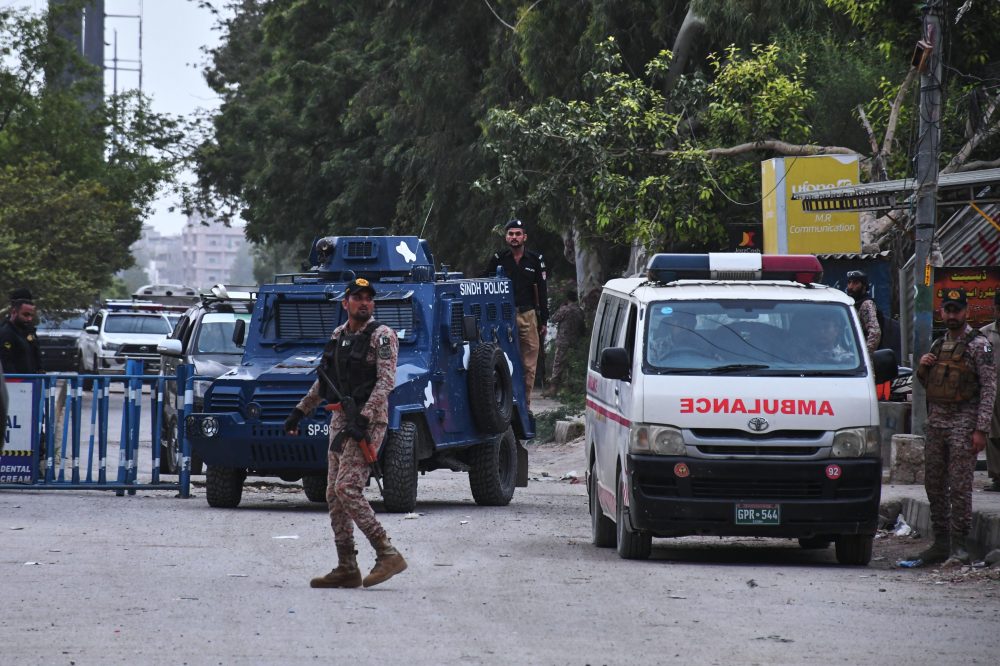
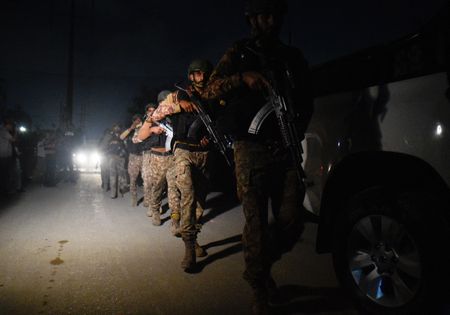
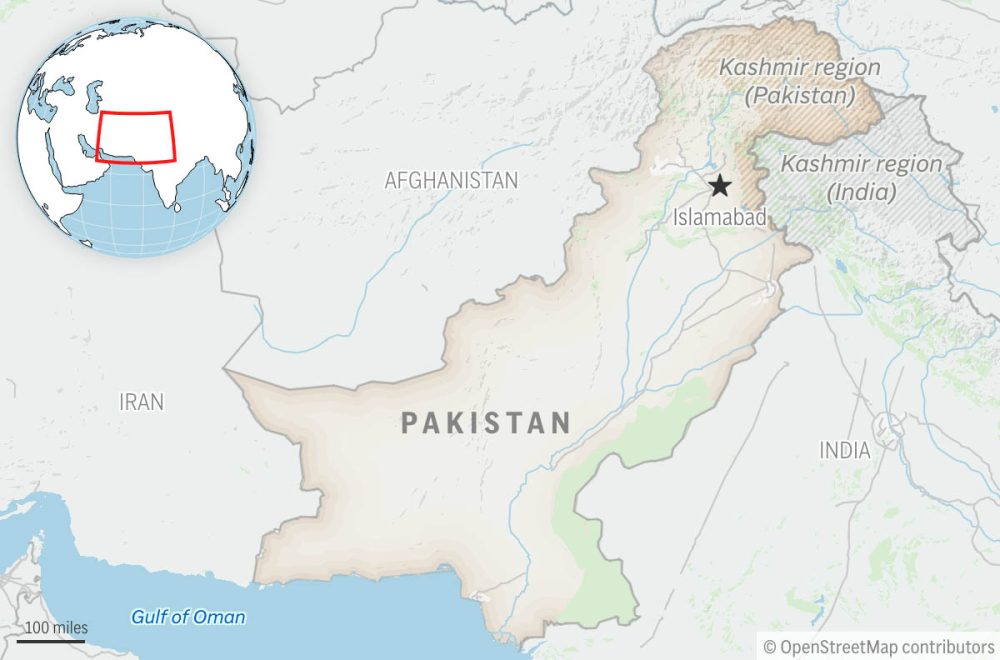
KARACHI, Pakistan — Pakistan’s military announced Sunday that three members of its paramilitary Rangers force lost their lives and four additional personnel were injured after militants launched an assault the previous night on a regional headquarters in the southern port city of Karachi.
According to police and witnesses, a militant drove a vehicle loaded with explosives into the provincial headquarters of the Pakistan Rangers on Saturday night, setting off a fierce exchange of gunfire between the attackers and security forces.
In an official statement, the military reported that security forces killed three of the attackers and took a fourth into custody. The captured suspect, who was wounded during the confrontation, was identified as an Afghan national.
The military said operations remained active in the surrounding area and issued a warning that Pakistan would strike back against those behind the assault. In recent years, Pakistan has conducted airstrikes inside Afghanistan, stating they were aimed at militants responsible for attacks on Pakistani soil. Afghanistan’s government has repeatedly denied that militant groups are permitted to use Afghan territory to carry out cross-border attacks.
The militant organization Jamaat-ul-Ahrar, which broke away from the Pakistani Taliban, took responsibility for the attack shortly after it took place.
Pakistan’s military characterized the group as a proxy of India, though it offered no evidence to back up that claim. India did not immediately respond, and New Delhi has rejected similar accusations in the past.
President Asif Ali Zardari honored the three Rangers personnel who were “martyred” in the attack, offered his condolences to their families, and wished a full recovery to those who were wounded, according to a statement from his office. He also recognized the sacrifices made by Pakistan’s security forces in combating militancy and reaffirmed the country’s commitment to wiping out terrorism.
Prime Minister Shehbaz Sharif likewise condemned the assault and commended security forces for successfully repelling the attackers.
The attack is part of a broader pattern, as Pakistan has seen a significant rise in militant strikes targeting law enforcement and military personnel in recent years.
The military confirmed that operations were still underway to track down and eliminate any remaining associates of those who carried out the attack.
Ukrainian drones launched overnight strikes against targets in Russia’s southern Krasnodar region, hitting an oil refinery and causing at least one death, according to local authorities.
Krasnodar region governor Veniamin Kondratiev announced via Telegram on Sunday that a fire erupted at a refinery located in the city of Slavyansk-na-Kubani. He reported that one person was killed and a second was injured in a nearby village as a result of the attack.
Video circulating on social media, though not independently verified, appeared to show a massive blaze burning at the refinery facility.
The Slavyansk refinery is a privately owned operation capable of processing roughly 100,000 barrels of oil per day. The plant produces fuel both for use within Russia and for export markets.
The attack is part of a broader Ukrainian strategy of striking Russian energy infrastructure, a campaign that has contributed to serious fuel supply problems in various parts of Russia.
Drone attacks were also reported in the Yaroslavl region, located east of Moscow. That region’s governor confirmed the strikes and said temporary movement restrictions were put in place on certain roads leading to the Russian capital.
JAKARTA — Indonesia’s national human rights commission is demanding the government put a stop to basic military training for future managers of President Prabowo Subianto’s signature village cooperative initiative, following the deaths of five participants in just the first 10 days of a 45-day program.
The cooperative initiative, known as the “Red and White Cooperatives” program, was launched in July of last year. It aims to establish roughly 80,000 village cooperatives throughout Indonesia with the goals of creating employment and helping the country reach an 8% economic growth target by 2029. The cooperatives are designed to sell everyday goods, subsidized cooking gas, and fertilizer.
Nearly 35,000 prospective cooperative managers are required to complete the military training, which began on June 14 and is scheduled to run through July 31 at various regional military training facilities.
A rights commission official, Pramono Ubaid Tantowi, stated that the agency “recommends the government stop … the basic military training for the prospective managers of the cooperatives and fishing villages programmes, considering that cooperatives are economic institutions oriented in business management, services to members, and organisational governance.”
On Saturday, the defense ministry — which is overseeing the training — confirmed that five individuals died between June 17 and June 26. Officials attributed the deaths to a range of medical causes, including cardiac arrest, heat stroke, tuberculosis, and pneumonia.
Major General Ketut Gede Wetan, who heads human resource development at the defense ministry, stated: “The five participants have different medical conditions and received medical treatment according to the standard procedures.”
Ketut also noted that all participants had undergone medical screenings prior to beginning the training and were cleared to participate. He further emphasized that the training was not combat-focused and did not involve intense physical activity.
The defense ministry announced plans to carry out a “comprehensive evaluation” of the program, which would include closer health monitoring, earlier identification of participants at risk, and adjustments to the intensity of training activities. The health ministry will also be brought in to assist, officials added.
Pramono argued that training for cooperative managers should center on building managerial skills, leadership abilities, and financial knowledge. “Basic military training does not directly support the achievement of those competencies,” he said.
The human rights commission is also urging the government to investigate the five deaths and is calling on police to seek forensic autopsies to help determine the cause of each death as part of any potential criminal inquiry.
President Prabowo, a former military general who assumed office in 2024, has broadened the role of the military in civilian matters, including in the administration of his key government programs.
SEOUL — South Korea and Japan came together Sunday to restate their dedication to ridding the Korean peninsula of nuclear weapons, while also agreeing to bring back joint search-and-rescue military drills as part of growing security cooperation between the two neighboring nations.
South Korean Defence Minister Ahn Gyu-back sat down with his Japanese counterpart Shinjiro Koizumi in Seoul for their sixth round of bilateral talks. The two ministers agreed to pursue regional stability both on their own and through their shared alliance with Washington.
“Both ministers shared the view to continue cooperation for maintaining regional peace and stability amid a grave security environment,” South Korea’s defence ministry said in an official statement following the meeting.
With encouragement from the United States, South Korea and Japan have been working since 2022 to build stronger ties and move past long-standing historical grievances. That effort has continued under President Lee Jae Myung and Prime Minister Sanae Takaichi.
The relationship has not always been smooth. In 2019, Seoul moved to dissolve the GSOMIA intelligence-sharing agreement with Japan after Tokyo placed restrictions on semiconductor material exports and removed South Korea from its preferential trade list — disputes rooted in Japan’s colonial rule over the Korean peninsula.
In 2025, Japan’s then-Prime Minister Shigeru Ishiba and President Lee committed to deeper security and economic cooperation. Their defence ministers pledged to coordinate with Washington to counter North Korea’s nuclear ambitions and Pyongyang’s expanding military relationship with Russia, including collaboration on artificial intelligence, unmanned systems, and annual trilateral military exercises.
In January 2026, Takaichi and Lee agreed to strengthen shuttle diplomacy between the two countries, and in May they broadened their cooperation to include energy matters.
Sunday’s meeting also produced an agreement to continue exchanges between the two nations’ elite aerobatic flight teams — South Korea’s Black Eagles and Japan’s Blue Impulse — as well as to advance joint search-and-rescue exercises covering a range of maritime emergency scenarios.
The two defence ministers had previously met in Japan in January and again in May at the Shangri-La Dialogue in Singapore, where discussions touched on a potential military logistics support agreement involving fuel, food, and ammunition. They had also agreed at that time to conduct a joint humanitarian search-and-rescue exercise in June — the first such drill in nearly ten years.
Despite the progress, tensions between the two countries have not fully faded. Disputes remain over Korean women who were forced to serve in Japanese military brothels during World War Two. In February, Seoul formally protested a Japanese government event honoring a group of contested islands — called Takeshima in Japan and Dokdo in South Korea — which are currently under South Korean control.
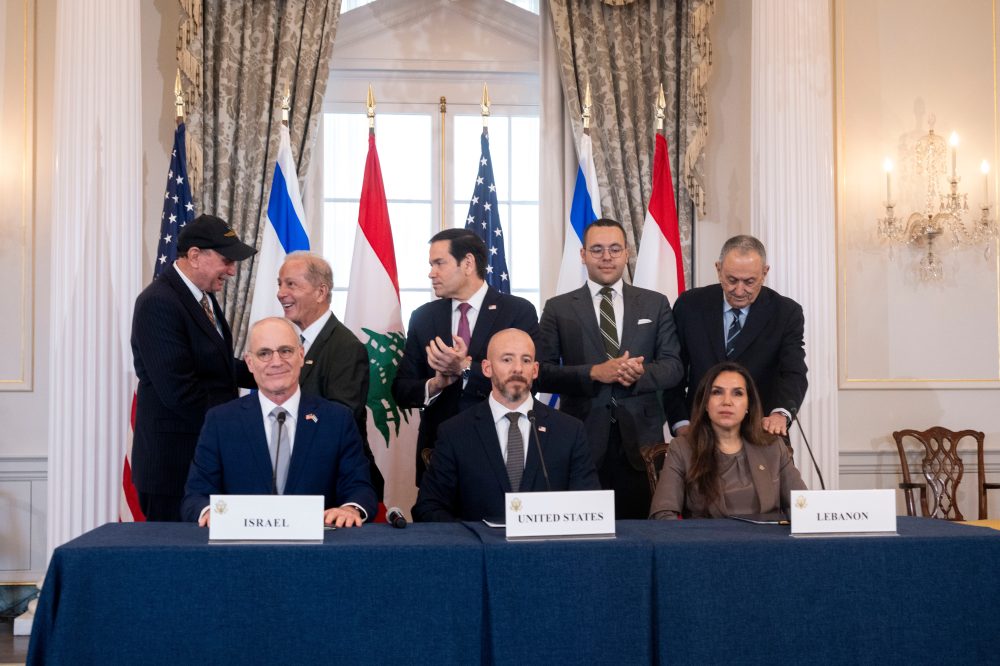
The Israeli military announced on Sunday that it had killed Hezbollah fighters who were armed with rocket-propelled grenades in the Nabatieh area of southern Lebanon.
According to the Israeli military, the operation was carried out to eliminate threats to its troops in the region. Forces targeted the building from which the Hezbollah militants were operating and also dismantled a rocket launcher that had been identified as a danger to Israeli soldiers.
Voters in New Caledonia headed to the polls Sunday for long-overdue provincial elections, with tight security measures in place across the French-ruled Pacific island territory, according to New Zealand public broadcaster RNZ.
Approximately 2,500 police officers were stationed at polling locations to provide security and oversight as voting began at 8 a.m. local time (2100 GMT Saturday).
The elections had been postponed since 2024, following a period of serious violence between indigenous Kanak people and those loyal to France. The results are considered crucial to setting the stage for future negotiations between New Caledonia and France regarding the territory’s political status.
The question of independence has been put to voters three times, with the most recent referendum in 2021. All three votes produced majorities in favor of staying under French rule.
Before polling stations even opened in the capital city of Noumea, residents were already forming long lines outside a voting location at Hotel de Ville, RNZ reported.
Located in the southwest Pacific roughly 1,500 kilometers — about 930 miles — east of Australia, New Caledonia is home to approximately 270,000 residents. Around 41% of the population is Melanesian Kanak, while about 24% is of European descent, predominantly French.
British explorer Captain James Cook first named the islands in 1774. France took control in 1853 and officially designated the territory an overseas territory in 1946. For decades, the islands have been at the center of an ongoing dispute over France’s influence in local affairs.
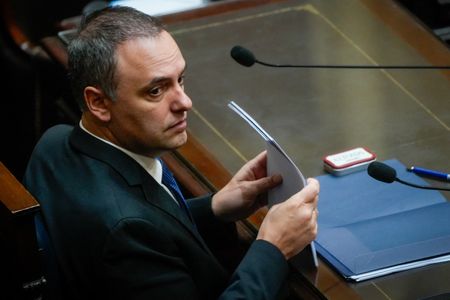
BUENOS AIRES, Argentina — Argentine President Javier Milei lost one of his most trusted allies Saturday when Cabinet chief Manuel Adorni submitted his resignation amid a widening corruption scandal that has shaken the libertarian government to its core.
Adorni first rose to national prominence as Milei’s spokesperson in 2023, becoming the public face of the president’s aggressive austerity measures and his crusade against political corruption. Milei later elevated him to Cabinet chief, a powerful role that put him at the center of negotiations with regional governors and members of Congress.
In recent months, however, Adorni found himself at the heart of controversy as reports surfaced about lavish spending and real estate acquisitions that appeared far beyond what his government salary could support. Federal prosecutors launched an investigation into him for alleged illicit enrichment — the very kind of behavior that both Milei and Adorni had publicly condemned in Argentina’s left-leaning opposition. Adorni has denied any wrongdoing.
In a resignation letter posted publicly to social media, Adorni addressed the president directly. “For the first time since December 10, 2023, I am going against your wishes,” he wrote, citing the date Milei assumed office. “Thank you for always trusting me and thank you for supporting me through this unjust, painful and exhausting process for me and my family.”
Despite the political damage caused by the scandal, Milei had stood firmly behind his Cabinet chief. During a visit to Spain last week, the president told local media, “Manuel is innocent. I stand by my ministers to the bitter end.”
Milei’s spokesperson did not respond to requests for comment following Adorni’s announcement. The president’s sister and top adviser, Karina Milei, offered public praise for Adorni, thanking him for his “tireless work” and calling him an “upright, valuable and much-loved” member of their libertarian movement.
The scrutiny of Adorni’s personal finances began in March, when his wife — who holds no government position — traveled with him aboard the presidential aircraft to a conference in New York. Shortly after, video emerged showing him and his family taking a private jet to the upscale Punta del Este beach resort in Uruguay. Reports also indicated he had purchased two properties since Milei took office: an apartment in Buenos Aires and a weekend home outside the city. Photographs later circulated of him on additional luxury vacations, including an all-cash trip to Aruba.
Public financial disclosures showed Adorni’s monthly government salary was approximately $2,600 until late last year — a figure that left lawmakers and journalists pressing him to explain the gap between his earnings and his apparent lifestyle. He repeatedly struggled to provide a satisfactory answer.
As pressure intensified earlier this month, Adorni admitted to purchasing U.S. dollars through Argentina’s black market and concealing $500,000 in savings from tax authorities. While technically illegal, such practices are widespread in Argentina’s economically unstable environment and rarely prosecuted. Adorni maintained the money was earned through legitimate means, including cryptocurrency investments.
No announcement has been made regarding who will take over as Cabinet chief.
The week of June 19 through 25, 2026, brought dramatic and turbulent events across Latin America and the Caribbean.
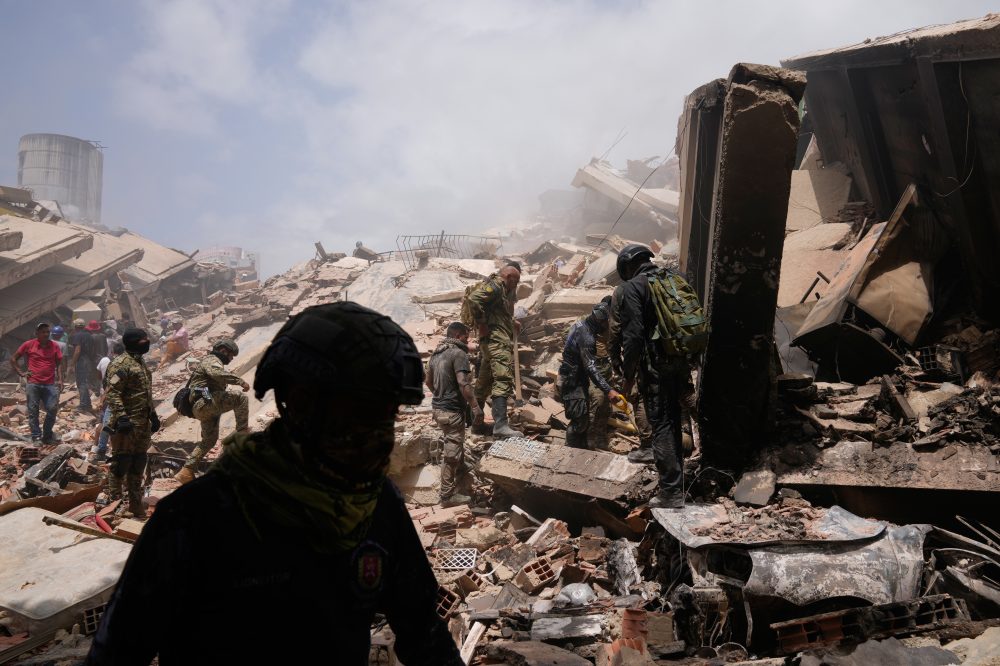
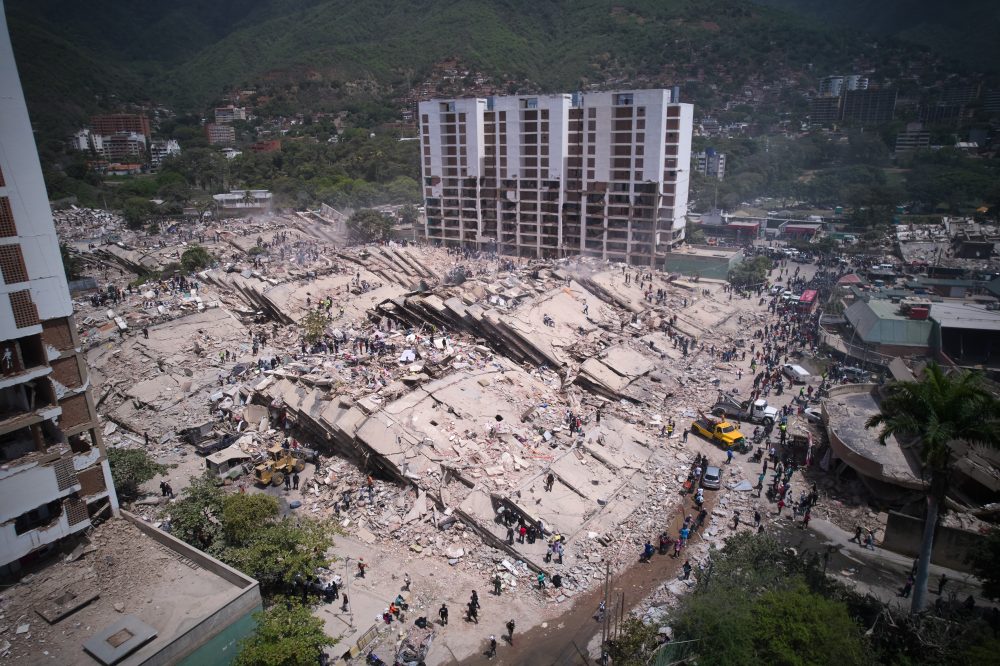
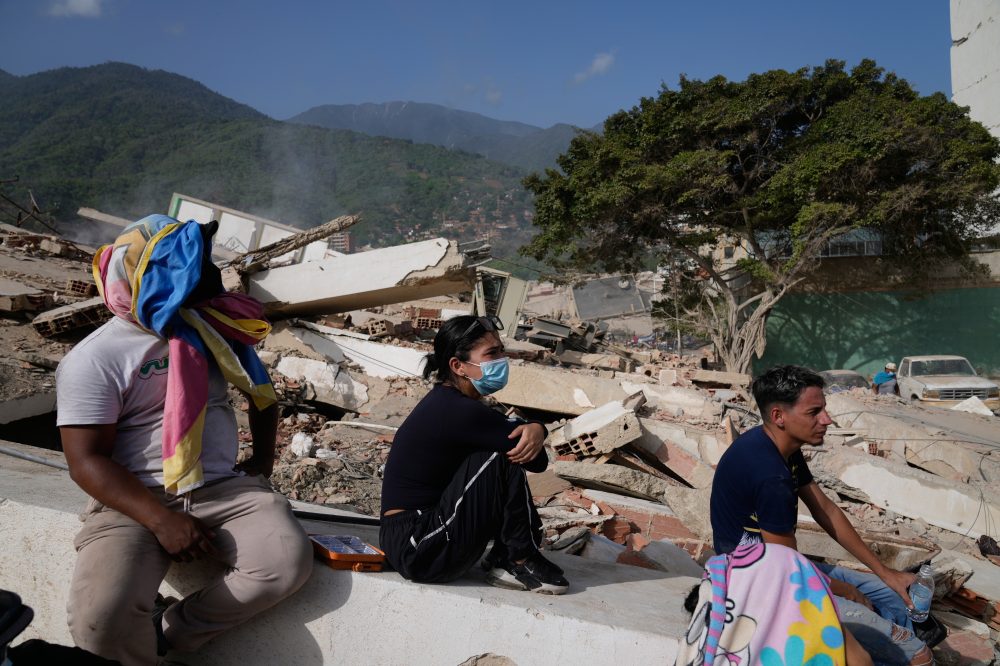
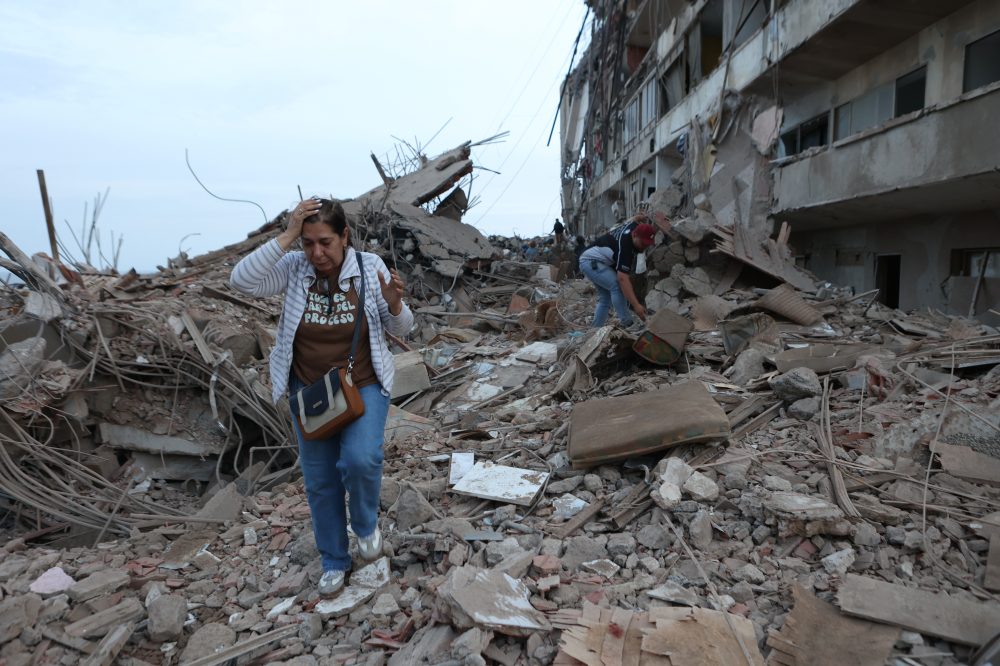
Venezuela was struck by two powerful earthquakes in rapid succession, unleashing widespread destruction across the country. The back-to-back seismic events left a rising number of fatalities and thousands of people with injuries.
In Colombia, election officials declared conservative outsider Abelardo de la Espriella the winner of the presidential runoff vote. The millionaire, widely regarded as a political newcomer with no prior experience in government, will now lead the country as its next president.
Bolivia, meanwhile, experienced a brief respite from weeks of turmoil. The Andean New Year celebration brought traditional offerings to Pachamama and marked a turning point toward normalcy following the conclusion of a state of emergency. That emergency had been declared after more than 50 days of road blockades that effectively cut off La Paz and other parts of the country from the rest of the nation.
This photo collection was assembled by photojournalist Fernando Llano, who is based in Mexico City.
The U.S. military has launched another round of strikes against Iran, just hours after a tanker was hit in the Strait of Hormuz — the most serious flare-up since the two nations agreed to a temporary peace deal two weeks ago.
Both countries are pointing fingers at each other, each claiming the other side broke the agreement that was meant to bring an end to a four-month-long conflict.
U.S. Central Command announced Saturday that its forces conducted new strikes following a drone attack by Iran on a Panama-flagged tanker earlier that morning. Iran’s state broadcaster IRIB reported early Sunday local time that explosions were heard in the southern Iranian city of Sirik, though no additional details were provided.
“Iran was given a chance to honor the ceasefire agreement but elected not to,” U.S. Central Command said in an official statement. The command described the strikes as “in direct response to continued Iranian aggression against commercial shipping,” saying they targeted Iranian military surveillance, communications, air defense, drone storage, and mine-laying facilities.
A U.S. defense official later confirmed to Fox News that the strikes on Iranian targets had been completed.
Washington had previously reported hitting Iranian targets overnight, while Iran said it responded Saturday by striking locations connected to U.S. forces.
The tanker attack Saturday came on the heels of a cargo ship strike on Thursday, which set off the latest round of hostilities. Iran has been making renewed efforts to assert authority over the Strait of Hormuz — the world’s most critical route for energy shipments — which had only recently begun reopening after months of disruption.
Britain’s UKMTO maritime security agency reported that the tanker struck Saturday suffered damage to its bridge, though all crew members were confirmed safe. The Joint Maritime Information Center, operated by a coalition of navies working to protect shipping lanes, elevated its security threat level in response to the recent incidents.
Iran has not directly addressed reports of specific ship attacks. However, Iranian state television reported that the Revolutionary Guards fired “warning shots” at unidentified vessels trying to pass through shipping channels not authorized by Iran, and that ships were now seeking Iranian permits before attempting to cross the strait.
Iran’s foreign ministry earlier described its attacks on U.S.-linked military targets as “defensive” in nature. Bahrain, which serves as the home base for the U.S. Navy’s regional headquarters, reported an Iranian drone attack on its territory. The U.S. military did not immediately respond to those reports.
Iran has accused the United States of failing to uphold the interim agreement, specifically by not maintaining a promised ceasefire in Lebanon, which U.S. ally Israel invaded in March in pursuit of the Iran-backed militant group Hezbollah.
Israel and Lebanon have agreed to multiple U.S.-brokered ceasefires, with the most recent announced on Friday. However, these agreements have had limited effectiveness. Israel has insisted it will not pull back from territory it has taken, while Hezbollah has repeatedly refused to disarm as long as Israeli troops remain present.
Lebanese state television reported an Israeli drone strike Saturday in the Nabatiyeh area in southern Lebanon, a region that has been repeatedly hit throughout the conflict. The Israeli military said it had targeted an individual who posed a threat to its forces.
Hezbollah leader Naim Qassem rejected the day-old Israel-Lebanon ceasefire as a surrender, calling it “null and void.”
With hundreds of thousands of Lebanese citizens — primarily Shi’ite Muslims — still unable to return to homes in Israeli-occupied areas, resentment over the agreement has spread well beyond Hezbollah into the broader Shi’ite community.
Israeli Defense Minister Israel Katz praised the agreement, saying it allows Israel to maintain its hold over what he called a security zone in Lebanon and prevents displaced residents from returning.
Mohsen Rezaei, an adviser to Iran’s supreme leader, said Washington had violated the war-ending memorandum of understanding by backing what he described as proxy forces in the region and by creating tensions in the Strait of Hormuz.
Iran has also struck neighboring Gulf states that host major U.S. military installations. Iranian state television reported that the Revolutionary Guards delivered “a decisive response” after U.S. forces struck a communications tower in the port city of Sirik. Iran’s Mehr news agency reported that the port was operating normally, with no damage to its facilities or equipment.
Bahrain stated that Iran’s latest attacks were a violation of the memorandum of understanding.
Hundreds of ships, including oil-laden tankers, had been blocked inside the Gulf since the conflict began. As they started moving through the strait over the past two weeks, oil prices have dropped sharply — falling close to pre-war levels due to the surge in supply.
The U.S. has been encouraging ships to use a southern shipping lane along Oman’s coast, while Iran — which ultimately wants to collect fees for use of the strait — is pushing vessels to take a northern route through Iranian waters under its control.
Ebrahim Azizi, who chairs the Iranian parliament’s national security committee, said Saturday that any ship ignoring Iran’s navigation instructions would face a decisive response.
Vice President JD Vance, who serves as President Donald Trump’s lead negotiator on the conflict, said the United States has held up its end of the ceasefire deal and placed the blame squarely on Iran for any renewed hostilities.
“Iran signed a ceasefire agreement. We have honored it. If they have disagreements about how the MOU is being applied, they can pick up the phone. But violence will be met with violence,” Vance posted on X.
WASHINGTON — American military forces conducted a fresh round of strikes against Iran on Saturday, according to the U.S. Central Command, hitting a number of targets that included military surveillance infrastructure.
“CENTCOM forces launched strikes today in direct response to continued Iranian aggression against commercial shipping,” the command announced in an official statement.
Officials explained that the previous day’s strikes had come after Iran attacked the commercial vessel M/V Ever Lovely. Following that initial U.S. response, Iran was offered an opportunity to abide by an existing ceasefire agreement — but instead chose to send a one-way attack drone that struck the commercial tanker M/T Kiku on Saturday morning.
“After yesterday’s U.S. strikes in response to the Iranian attack on M/V Ever Lovely, Iran was given a chance to honor the ceasefire agreement but elected not to when its forces launched a one-way attack drone that hit M/T Kiku this morning,” CENTCOM stated.
Argentine President Javier Milei lost his top cabinet official on Saturday when Manuel Adorni stepped down amid an ongoing investigation into allegations that his personal spending far exceeded what his income could explain.
Adorni had been serving as cabinet chief since November of last year. He was originally brought into the administration as a spokesperson shortly after Milei took office in late 2023, and the two have been considered close allies.
In a resignation letter posted to the social media platform X, Adorni addressed Milei directly, writing: “For the first time since December 10, 2023, I am going against your wishes. I am closing this chapter. I leave peacefully and serenely, but above all, with a clear conscience.”
Adorni has faced accusations of illicit enrichment, with critics pointing to lavish personal travel that appears inconsistent with his official salary. Among the trips drawing scrutiny were a first-class holiday to Aruba over the Christmas season and a private jet trip to Uruguay during Carnival.
Adorni has maintained that he built his fortune before entering public service and that all family travel was covered with his own private money. “I haven’t committed any crime and I’m going to show that in court,” he told Congress during an address on the state of the nation in late April.
However, this month Adorni acknowledged in an interview with the Argentine newspaper La Nacion that he had kept undeclared savings for years — a practice he described as something done “like all Argentines.” He said he had updated his financial disclosures for 2023 and 2024 to account for approximately half a million dollars that had not previously been reported.
“The mea culpa I do is for having dragged an involuntary mistake and I am going to pay everything that corresponds,” Adorni said.
President Milei had firmly stood behind his cabinet chief as recently as May, telling La Nacion that “no way will Adorni leave” and that “I’m not going to execute an innocent person.”
The resignation adds to a growing list of political headaches for Milei, who is also contending with broader corruption allegations within his government and an economy where purchasing power has not kept pace with inflation. A poll conducted by Opina Argentina in May found that 39% of voters now hold a favorable view of Milei — a notable drop from an approval rating of 53% recorded more than a year ago.
BELGRADE, Serbia — Serbian President Aleksandar Vucic announced Saturday that he intends to leave office within the coming weeks, opening the door to early elections after prolonged youth-driven demonstrations rattled his long-standing control over the country.
Vucic stopped short of naming a specific date for his departure or clarifying whether the upcoming vote would be for a new parliament, a new president, or both. He has previously hinted at the possibility of stepping down from the presidency, with speculation that he may attempt to shift into the role of prime minister — a position that carries more formal authority in Serbia.
Under Serbia’s election rules, Vucic is barred from seeking a third presidential term, as he is currently finishing his second. Both presidential and parliamentary elections are already scheduled for next year.
Speaking to thousands of his supporters gathered in the heart of Belgrade, Vucic declared, “I will be president for several weeks more and then I will submit my resignation.” He added that he plans to support his right-wing Serbian Progressive Party in the elections ahead, telling the crowd, “We will win more convincingly than ever before.” He acknowledged that the rally was likely the final time he would speak to supporters in his capacity as president.
University students have been at the forefront of more than a year of demonstrations against what they describe as Vucic’s increasingly authoritarian style of governing. Protesters have been pushing for early parliamentary elections for over a year, though Vucic had repeatedly avoided committing to a timeline.
Vucic and his populist party have steadily consolidated power over Serbia during the past 14 years. A deadly accident at a train station in northern Serbia in November 2024 — in which a collapsing concrete canopy killed 16 people — ignited months of large-scale public protests calling for accountability. Demonstrators have pointed to what they say is corruption-driven negligence in major government infrastructure projects as the root cause of the Novi Sad railway station tragedy.
Vucic has responded aggressively to the protest movement, and Serbia has also drawn criticism from the European Union over what officials describe as a retreat from democratic standards, including restrictions placed on the media. Hundreds of demonstrators have been taken into custody, and Serbia’s police force has faced accusations of using excessive force and making arbitrary arrests.
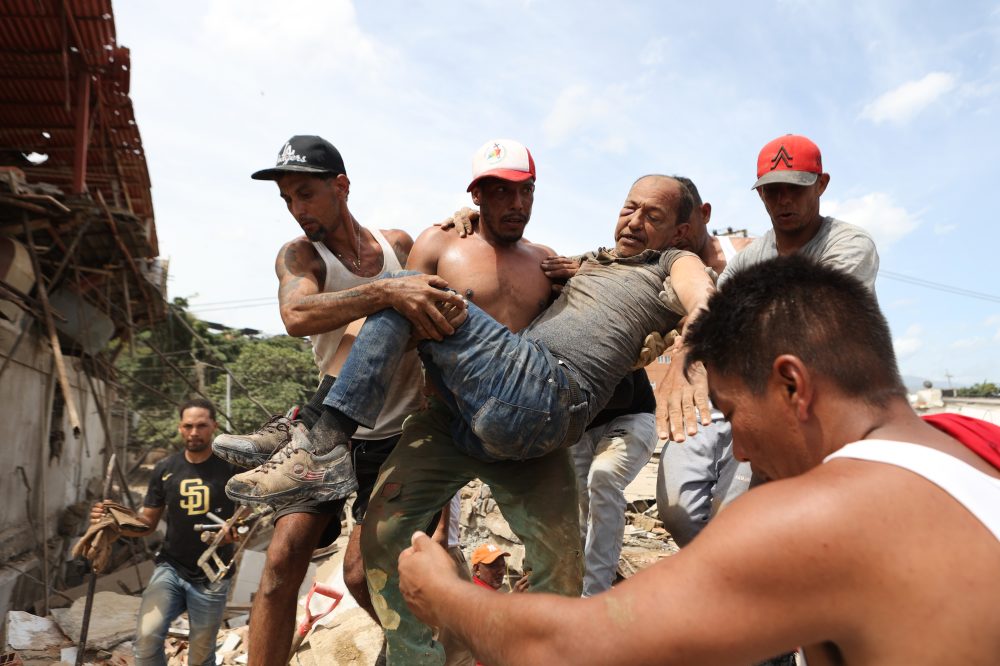
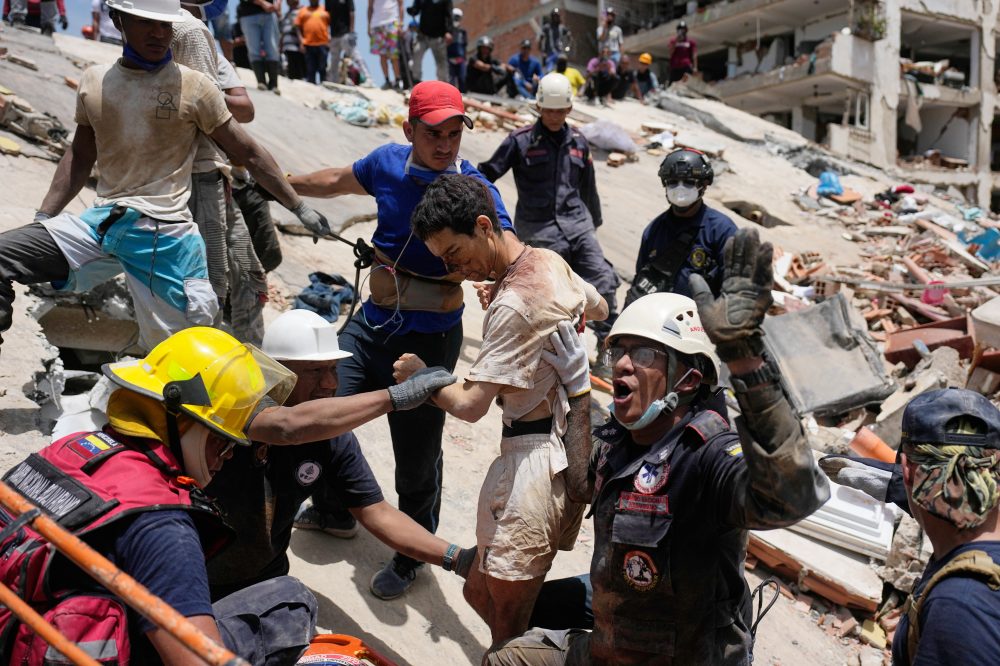
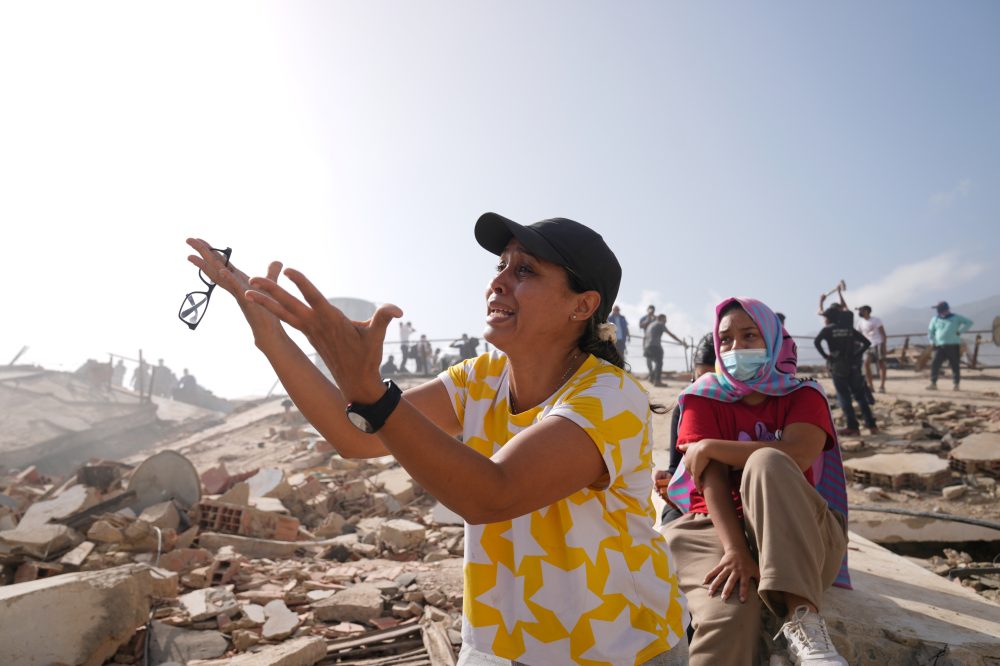
LA GUAIRA, Venezuela — When Daniel Cordero was pulled from the wreckage of a collapsed building in Catia La Mar, his face covered in blood, rescue workers carefully lifted him onto a stretcher while onlookers recorded the moment on their phones.
Three days after a pair of devastating earthquakes struck Venezuela, Friday’s rescue of Cordero and others is giving a glimmer of hope to families still desperately searching for missing loved ones.
The earthquakes — measuring 7.2 and 7.5 in magnitude — struck on Wednesday, and the death toll has been rising ever since. Government officials confirmed Saturday that at least 1,430 people have lost their lives, a number authorities expect to keep climbing. Thousands more have been wounded, and tens of thousands remain unaccounted for.
Search efforts pressed on through Saturday, driven largely by ordinary citizens, while an increasing number of international rescue teams have arrived to assist. Emergency aid organizations typically consider the first 48 to 72 hours the most critical window for finding people alive, though survivors can endure longer if they have access to food and water.
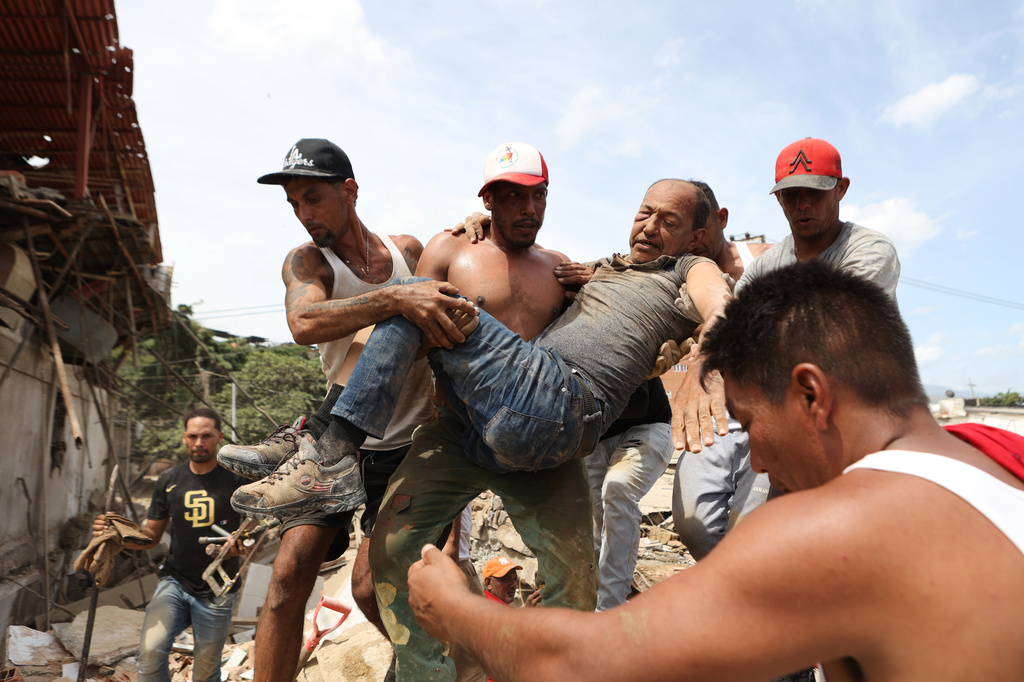
As volunteers and family members labored beneath a blazing sun, some of their efforts drew cheers from onlookers. A 4-year-old child was rescued alive. An elderly man, his eye blackened from the ordeal, was greeted with applause when he was brought out safely.
But for many others, the outcome has been devastating.
In La Guaira — one of the hardest-hit areas — Daritza Polo received the crushing news Friday that her mother had not survived. “I have no words,” she said.
The grief in La Guaira has been overwhelming. Siblings Leyder Rojas and Leymar Rojas, ages 3 and 10, were recovered from the debris wrapped in a sheet. Their mother collapsed in anguish as two women tried to support her, and she fainted to the ground. Rescue operations continued even as she lay there.
The children’s uncle, Ramón Eduardo, struggled to hold back tears as he described the scene. “It’s horrible, we have seen way too much,” he said. “We got one alive, thank God” — referring to the siblings’ 4-year-old brother Adrián — “but not all of them, we could not get them.”
For some families, the absence of any news at all is what they are clinging to.
The apartment building in La Guaira where Noribel Mendoza lived with her two sons — Andrés David Molina Mendoza, 21, and Ángel Eduardo Molina Mendoza, 19 — came down Wednesday, and no one has heard from either young man since.
“We don’t know if they were there, they weren’t there, if they’re in the hospital or a clinic, still nothing,” said the boys’ aunt, Ángela Molina Castro, 30, speaking by phone from Puerto Píritu in Anzoátegui State.
Molina Castro said another aunt has been standing outside the collapsed building waiting for any update, but no official rescue teams have appeared. Neighbors and friends have been attempting to move the debris by hand, though much of it is too heavy to shift.
On Friday, a friend and his pregnant wife were confirmed among the dead. Molina Castro said she hopes she does not receive similar news about her nephews.
“Even if they are not family, friends or acquaintances, they are still human beings like us,” she said of all the victims. “It’s a tragedy that I’m living for the first time in my life.”
Flor María González has been waiting since Wednesday for any word about her daughter, Dilinyer Caroley Rada González, 33, and three grandchildren — Jonas, 10, Ashley, 8, and Angely, 6 — after the apartment building where they lived in La Guaira came down.
González had just returned to the western city of Maracaibo after a visit with her two daughters near Caracas when she learned of the earthquake. She has been watching from a distance as neighbors and rescue teams comb through the wreckage.
Her other daughter has kept a vigil outside Rada González’s building, holding onto the hope that her sister and the children will be found alive.
The British government has announced a two-pronged immigration approach: opening new legal pathways for eligible refugees while simultaneously making it easier to remove those who are in the country without authorization.
Under the new plan, community organizations, universities, and businesses would be able to sponsor refugees to relocate to the United Kingdom. Officials said the initiative draws inspiration from a comparable program in Canada that has successfully resettled approximately 400,000 people since 1979.
Home Secretary Shabana Mahmood outlined the approach on Friday, stating, “I will open new legal routes for genuine refugees, while closing loopholes that have been too often abused.”
Mahmood also announced that upcoming immigration legislation would target what she described as “abuse” of existing human rights laws and crack down on “vexatious claims.” The bill would also narrow the legal definition of family to include only immediate relatives.
Some critics have long argued that the European Convention on Human Rights is frequently used as a legal shield to block the deportation of individuals who have no lawful right to remain in the UK.
The policy announcement came as Mahmood faces uncertainty about her future in the role, following Prime Minister Keir Starmer’s announcement Monday that he intends to resign. Starmer, who has been in office for two years, saw his standing with both his party and the public diminish due to a series of missteps and poor judgments. He is expected to leave office within weeks once the governing Labour Party selects a new leader.
Former Greater Manchester mayor Andy Burnham is widely anticipated to succeed Starmer as Britain’s next prime minister, likely without a formal party contest.
Immigration has emerged as a deeply divisive political issue across Britain and many other Western nations, as large numbers of migrants flee conflict, poverty, climate-related hardships, and political persecution in search of better lives.
In the UK specifically, public debate has centered on migrants making dangerous crossings of the English Channel in overcrowded boats operated by smugglers, as well as growing frustration over the cost of housing tens of thousands of asylum seekers at taxpayer expense.
At least three members of Pakistan’s Sindh Rangers paramilitary force lost their lives Saturday following an attack on the force’s headquarters in Karachi, the Dawn newspaper reported.
The assault involved both an explosion and gunfire along a major road in the city, situated near multiple universities and Pakistan’s meteorological department, according to Pakistani media outlets.
Sindh Inspector General Javed Alam Odho confirmed to Dawn that three militants were also killed during the attack on the Sindh Rangers’ local headquarters.
A Reuters journalist who was at the scene reported that the shooting had stopped and the area had returned to calm. Authorities are describing this as the most significant attack in Karachi since an October 2024 explosion that targeted a Chinese convoy and claimed the lives of two Chinese nationals.
While large-scale attacks in Pakistan’s major urban areas have grown increasingly uncommon in recent years, a rise in militant activity along the country’s border with Afghanistan has sparked fears that violence could once again spread into the nation’s cities.
Civilian lives were lost on both sides of the Russia-Ukraine border Saturday as drone strikes and artillery fire struck multiple areas, according to local officials.
In Russia’s Bryansk border region, two people were killed when a Ukrainian drone hit their vehicle in a village close to the border. The region’s acting Governor Yegor Kovalchuk shared the news on Telegram.
Russia’s Defence Ministry, as cited by Russian news agencies, reported that 124 Ukrainian drones were shot down over Russian territory during a 12-hour window between 8 a.m. and 8 p.m. local time (0500-1700 GMT).
Moscow Mayor Sergei Sobyanin released a series of updates throughout the day reporting that Ukrainian drones headed toward the Russian capital had been intercepted. Russian news agencies tracking the situation tallied approximately 21 drones intercepted over the course of the day.
On the Ukrainian side, Oleksandr Ganzha, the governor of the southeastern Dnipropetrovsk Region, reported that a combination of more than 40 drone strikes and artillery attacks near the city of Nikopol resulted in one fatality and one injury.
Nikopol sits across the Dnipro River from the Russian-controlled Zaporizhzhia nuclear power plant and has been a repeated target of Russian attacks.
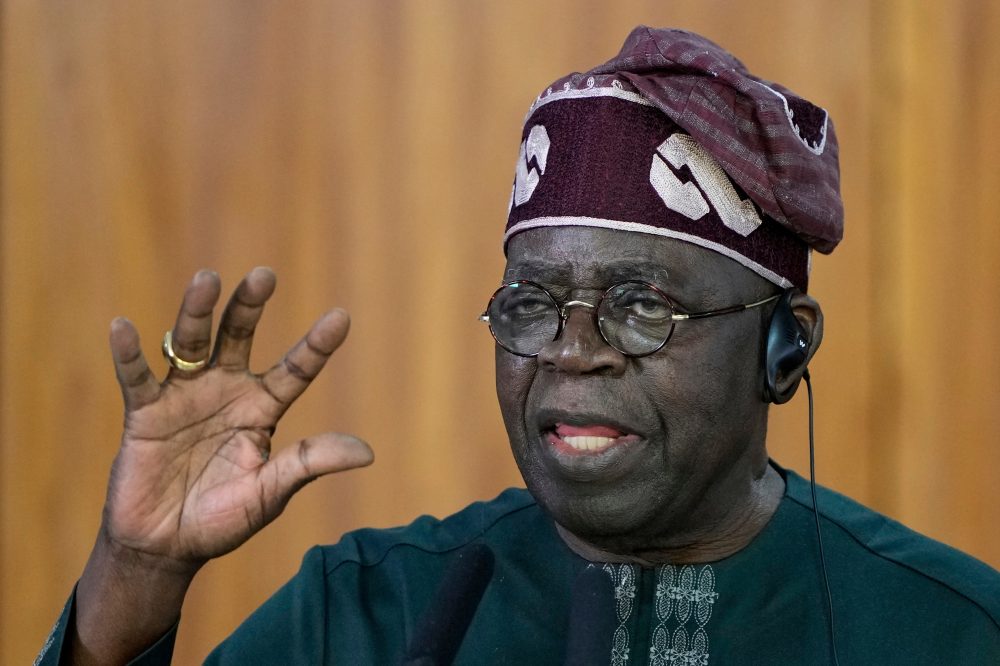
ABUJA, Nigeria — Armed gunmen stormed a farming community in northwestern Nigeria on Friday, leaving at least 15 people dead, according to an official statement released Saturday.
The deadly raid occurred in the Talata Mafara area of Zamfara state, a region that has endured persistent and deadly violence over the years. No group has stepped forward to claim responsibility for the attack.
Abdullaziz Yari, a national lawmaker representing the district, took to social media to condemn the assault, calling it a “terrorist attack” against the community.
The elected local government chairman overseeing the area, Yahaya Yari — no relation to the lawmaker — was captured on video at the victims’ funeral Friday evening. In an emotional appeal, he urged President Bola Tinubu and the junior defense minister, who comes from the same region, to take action and put an end to the ongoing killings.
This latest attack follows a similar incident earlier this month, when gunmen killed 17 farmers and injured at least 13 others while they were working in their fields in Goron Namaye, another part of Zamfara state.
According to the United Nations, an ongoing insurgency in northern Nigeria has claimed thousands of lives and forced millions of people from their homes. Armed criminal groups operating in the north-central and northwestern parts of the country are known to kidnap people for ransom, extort farming communities, and carry out illegal mining operations.
Despite pledges from the Tinubu administration to bring the crisis under control, the violence has continued unabated.
Last year, Nigeria signed a military cooperation agreement with the United States after a diplomatic dispute in which U.S. officials claimed a “Christian genocide” was underway in the country. Nigeria’s government denied the characterization, and analysts noted that the situation is far more complex — with victims often targeted regardless of their religious background. Nigeria is broadly divided between a Christian-majority south and a Muslim-majority north.
BELGRADE — Serbian President Aleksandar Vucic declared Saturday that he intends to leave office within weeks, triggering early presidential and parliamentary elections in the country.
The populist leader made his announcement against the backdrop of approximately a year and a half of widespread anti-corruption protests led by students. Those demonstrations were sparked by the collapse of an awning at a railway station in Novi Sad, a city in northern Serbia, which claimed the lives of 16 people.
Just days before Vucic’s announcement, students gathered in Novi Sad to mark the 2024 deaths and call for snap general elections.
Speaking to supporters at a pro-government rally in the capital city of Belgrade, Vucic stated, “I will be president for only a couple of weeks, and then I will resign.” His second and final term in office was not set to expire until mid-2027.
Vucic indicated he intends to assist his Serbian Progressive Party in winning the upcoming elections, which include the early parliamentary vote that had originally been scheduled for 2027. However, he stopped short of providing a specific date for his resignation or clarifying when he might dissolve parliament — a necessary step before early parliamentary elections can be held.
Opposition groups, protesters, and human rights organizations have argued that the railway station disaster was evidence of widespread government mismanagement of construction projects and deep-rooted corruption. Activists from the student-led movement say they plan to challenge Vucic and his party in both the upcoming presidential and parliamentary races.
WASHINGTON — Senior U.S. officials are growing frustrated with Venezuelan opposition leader Maria Corina Machado over her renewed efforts to secure American assistance in returning to her home country in the aftermath of devastating earthquakes, according to a White House official.
Machado has contacted multiple U.S. administration figures in recent days, including officials at the White House, the State Department, and several members of Congress, requesting help arranging her return to Venezuela, the official told Reuters while speaking on condition of anonymity.
The urgency of her outreach comes after twin earthquakes struck Venezuela this week, leaving more than 900 people dead. Machado, 58, departed Venezuela back in December, defying a travel ban that had been in place for a decade in order to accept the Nobel Peace Prize. Prior to leaving, she had spent more than a year largely living in hiding following disputed elections in 2024.
The White House official expressed clear irritation with the timing of her request. “We support her returning to Venezuela, but does it have to be 24 hours after a massive humanitarian catastrophe where the death toll continues to climb?” the official said.
A representative for Machado did not respond to a request for comment.
The political backdrop to Machado’s push is complicated. The U.S. took former President Nicolas Maduro into custody in January, which had raised expectations among some of his opponents that Machado would step into a leading role in governing the country. However, U.S. President Donald Trump instead threw his support behind Delcy Rodriguez, Maduro’s former deputy, stating that Machado lacked the backing necessary to lead Venezuela in the near term.
Machado has continued to advocate for free and fair elections in Venezuela. Before this week’s earthquakes, she had publicly stated her intention to return to her homeland before the end of this year. Since departing Venezuela, she has been living primarily in the United States.
In response to the disaster, Washington has launched a significant relief operation. A State Department spokesperson confirmed that the U.S. has deployed search and rescue teams, is coordinating the delivery of medical supplies, and has released $150 million in humanitarian assistance for Venezuela.
BUDAPEST, Hungary — Enormous crowds filled the streets of the Hungarian capital on Saturday to mark the 31st Budapest Pride celebration, a milestone event made especially significant by the recent political shift that removed former Prime Minister Viktor Orbán from power.
The march got underway Saturday afternoon under extreme heat, with temperatures climbing to at least 38 degrees Celsius — roughly 100 degrees Fahrenheit — as a record-setting heat wave continued to bake much of Europe. To help marchers cope with the conditions, organizers handed out water bottles, and the city’s public water utility opened fountains at points along the parade route.
The procession started at Budapest’s famous Opera house, moved through the heart of the city, and eventually crossed the Erzsébet Bridge spanning the Danube River. Members of Hungary’s LGBTQ+ community and a large number of allies danced to music and waved rainbow flags throughout the route.
Luca Új, attending her third Pride event, said the atmosphere felt noticeably different now that Orbán’s government — which spent 16 years enacting policies hostile to LGBTQ+ people — had been turned out of office.
“There used to be a lot of tension. But now I see people as being somehow happier, and there are more older people, too,” she said.
Saturday’s celebration came just over a year after Orbán’s nationalist-populist government passed a law and a constitutional amendment specifically designed to prohibit the event, moves that drew sharp condemnation from human rights organizations and elected officials throughout the European Union.
Despite that ban, last year’s Pride proceeded as scheduled and became the largest in Hungary’s history, with organizers putting attendance at more than 350,000 people. That massive showing — coming after months of government insistence that the march would not be allowed — was widely viewed as a serious blow to Orbán’s standing.
Orbán was decisively defeated in the April election by center-right challenger Prime Minister Péter Magyar and his Tisza party. While Hungary’s new government has not yet overturned the Orbán-era legislation banning Pride, police this year approved the event and stationed officers along the route to ensure security.
Kristóf Györgyi, who was attending Pride for the first time and had traveled to Budapest from the southern city of Szeged, said he is hopeful the new government will move to extend rights to LGBTQ+ people that are already standard in many other European nations.
“The fact that there’s already a debate in Parliament about whether an orphaned child is better off with a same-sex couple or in an orphanage is a positive sign,” he said, referencing the Orbán-era prohibitions on same-sex adoption and same-sex marriage.
“Obviously, the laws haven’t changed yet, but there are already many signs of hope for our community,” he added.
Hungary’s former government had long argued that Pride events violated children’s rights to moral and spiritual development — a claim widely rejected by rights organizations and experts.
In April, the European Union’s top court ruled that Orbán-era legislation from 2021 — which restricted LGBTQ+ content from being available to minors — violates EU law and conflicts with a foundational treaty that guarantees human rights and equality protections.
BEIRUT — Just one day after Israel and Lebanon signed a framework agreement in Washington aimed at ending months of conflict, Hezbollah’s leader came out strongly against it Saturday, casting serious doubt on whether the deal can hold.
The agreement, reached Friday without Hezbollah at the table, ties Israel’s military withdrawal from Lebanon directly to the disarmament of the Iran-backed militant group — a condition Hezbollah has flatly refused. It wouldn’t be the first time a ceasefire deal involving Lebanon and Israel has failed to take effect; several previous agreements have collapsed before being implemented.
Hezbollah leader Naim Kassem declared Saturday that his group would continue fighting until Israel is forced out of Lebanon. Supporters of the group took to the streets of Beirut in protest following the announcement. Kassem went further, saying from his perspective the deal simply does not exist.
He labeled the agreement a “humiliation” and described the condition linking Israel’s withdrawal to Hezbollah’s disarmament as a “very dangerous suggestion.”
One of the group’s officials, Hassan Fadlallah, issued a stark warning that the deal could spark civil war, saying Hezbollah will not surrender its weapons and will resist any attempt by the Lebanese army to enforce the agreement.
Despite the signing of the deal, violence continued. Lebanon’s state news agency reported an Israeli drone strike near the southern city of Nabatiyeh on Saturday. The agency also reported that three Lebanese and three Syrian workers, detained near the southern village of Ain Arab on Friday, were released by the Israeli military.
Details released Saturday by the U.S. State Department reveal that both countries aim to ultimately end the state of war between them — a conflict that dates back to Israel’s founding in 1948. Under the agreement, Israel would begin by withdrawing from two small designated areas, referred to as pilot zones, though the specific locations were not disclosed. The Lebanese army would gradually take over full security responsibility in those areas, with additional withdrawal zones to be agreed upon later.
A security annex outlining the specifics of Lebanese army deployment and Israeli troop movements was included in the deal but was not released to the public.
The agreement also emphasizes that Hezbollah’s disarmament across all of Lebanon, along with additional security measures to be negotiated, would eliminate any future need for Israeli military action or presence in Lebanese territory.
The Lebanon-Israel negotiations were conducted separately from an interim agreement reached earlier this month between the U.S. and Iran regarding the fighting in that country.
In an effort to cut off Hezbollah’s financial lifeline — in what appeared to be a reference to Iran, which has provided the group with billions of dollars over four decades — the deal commits both Lebanon and the United States to blocking funds from reaching non-state armed groups. The Lebanese government also explicitly pledged to ensure reconstruction money does not flow to such organizations.
Lebanon’s top public prosecutor, Judge Ahmed Rami al-Hajj, responded to the unrest by ordering the heads of the country’s security agencies Saturday to take steps to prevent rioting.
Reactions among ordinary people were sharply divided. At the border town of Metula in Israel, citizen Ronit Belson expressed skepticism about the deal’s staying power. “Personally, I don’t think it will be lasting because the Lebanese military cannot really stand a chance against Hezbollah,” she said.
In the southern Lebanese city of Sidon, opinions were split. Resident Rabie Sammour voiced support, saying: “People just want to rest for good. I support the Lebanese authorities in the decision” taken. But fellow Sidon resident Khaled Ghannoum took a very different view, saying the deal “legitimized Israel’s occupation.”
An Israeli drone strike on Saturday left two Palestinian siblings dead and at least seven others wounded in southern Gaza, according to Nasser hospital, where the victims were brought for treatment.
The attack struck tents housing displaced Palestinians at the large camp of Muwasi, claiming the lives of 15-year-old Islam Moussa and her 30-year-old brother, Abdullah Moussa.
The Israeli military confirmed it had carried out a strike in the Muwasi area, stating it had targeted a Hamas militant, though no additional details were immediately released.
At the hospital, grieving family members gathered in the courtyard, weeping over the bodies wrapped in white burial shrouds.
Separately on Saturday, a loud explosion was reported by Palestinians in Gaza City. According to Shifa hospital, an Israeli strike hit a tent sheltering displaced people in western Gaza City, injuring at least 12 individuals. The Palestinian Red Crescent Society’s ambulance service reported that two of those hurt were in critical condition and that most of the wounded were women. The Israeli military did not respond to a request for comment on that strike, and the intended target was not immediately known.
Even with a fragile ceasefire reached in October that slowed the most intense fighting between Israel and Hamas, Israel has continued to conduct near-daily strikes and shelling throughout the coastal territory. Both Israel and Hamas have accused each other of breaching the ceasefire agreement. Israel maintains its strikes are aimed at Hamas fighters and other armed groups posing a threat, carried out in response to ceasefire violations.
Since the ceasefire took effect, Gaza’s Health Ministry — part of the Hamas-led government — reports that Israeli strikes have killed more than 1,030 people in Gaza. The ministry’s casualty figures are considered broadly reliable by United Nations agencies and independent analysts, though they do not distinguish between civilians and combatants.
Last week, the ministry reported that more than 250 children have been killed in Gaza since the ceasefire began.
A panel of independent experts appointed by the United Nations has accused Israel of deliberately targeting children in Gaza and has repeated allegations that Israel has committed genocide in the territory. Israel firmly denies the genocide accusation.
The conflict began on October 7, 2023, when a Hamas-led attack on southern Israel killed approximately 1,200 people and resulted in 251 individuals being taken hostage. Israel’s military response in Gaza has since killed more than 73,050 Palestinians, including those killed after the ceasefire went into effect, according to Gaza’s Health Ministry.
PESHAWAR, Pakistan — A 5.9 magnitude earthquake shook portions of Pakistan and the neighboring country of Afghanistan on Saturday, causing alarmed residents throughout Pakistan to rush outside their homes in a panic, according to officials. No damage or casualties were reported in the immediate aftermath.
Pakistan’s Meteorological Department identified the epicenter as being located in Afghanistan’s Hindu Kush region. The U.S. Geological Survey placed the earthquake’s strength slightly higher, at magnitude 6.1.
The shaking was felt in the capital city of Islamabad, as well as in Punjab province to the east and the northwestern province of Khyber Pakhtunkhwa, which shares a border with Afghanistan. Residents in Pakistan-administered Kashmir also reported feeling the tremors.
Emergency services in Khyber Pakhtunkhwa confirmed that local district administrations had been placed on high alert following the quake.
Anwar Shahzad, a spokesperson for the Provincial Disaster Management Authority, stated that early assessments turned up no reports of deaths, injuries, or structural damage.
Pakistan sits within an active seismic zone and regularly experiences earthquakes. The country suffered one of its deadliest disasters in 2005 when a magnitude 7.6 earthquake killed tens of thousands of people in Pakistan and Kashmir — the disputed Himalayan territory that is divided between Pakistan and India, with both nations claiming it as their own.
As of Saturday, no Afghan officials had issued a statement about the earthquake. Afghanistan has also endured a series of devastating earthquakes in recent years, with several events claiming thousands of lives.
A powerful earthquake rocked Afghanistan’s Hindu Kush region on Saturday, according to the European Mediterranean Seismological Centre, with shaking felt across Kabul and into neighboring Pakistan.
In Pakistan’s northern Khyber Pakhtunkhwa province, residents in the Swat district rushed out of their homes in a panic. Local resident Daniyal Ahmad described the scene to Reuters, saying the quake was intense and went on for an unusually long time.
“It was very huge here in Swat and it lasted for quite a long time,” Ahmad said. “People came out of their houses and women and children were seen crying in panic.”
The Afghanistan National Disaster Management Authority released a statement saying there were no confirmed reports of casualties or damage at that time, but that assessments were still being conducted across affected areas.
The European Mediterranean Seismological Centre measured the quake at magnitude 6, placing its depth at approximately 100 kilometers — or about 62 miles — below the surface.
Earlier that same Saturday, a separate earthquake measuring magnitude 5.4 had already struck Pakistan, also according to the European Mediterranean Seismological Centre.
A Chinese political dissident who made a daring escape attempt by inflatable dinghy has finally reached Canada, according to a social media post made by his friend on Saturday.
Dong Guangping was found in May aboard a small 3.3-meter (10.8-foot) inflatable boat in the waters near a western South Korean island, where he was taken into custody by South Korea’s coast guard on suspicion of violating the country’s immigration laws. It marked his fourth known attempt to leave China.
When he appeared before a South Korean court, Dong told reporters he was hoping to make it to Canada to be reunited with his wife and daughters, who had already been resettled there, according to reports from South Korean media.
Sheng Xue, a Chinese Canadian activist and friend of Dong’s, announced on the social media platform X on Saturday that Dong had touched down in Toronto following an Air Canada flight the previous day.
“He just had a big bowl of noodles with eggs, tomatoes and shrimps,” she wrote, noting that she had spent more than a decade working to help him get out of China.
She also shared two photographs — one showing Dong riding in a car alongside her, and another of him holding a bowl of food.
Before becoming a dissident, Dong worked as a police officer in China. He was imprisoned for three years in 2001 after being convicted of “inciting subversion of state power.” He was later arrested again in 2014 and spent more than eight months incarcerated for participating in a memorial honoring victims of the 1989 Tiananmen Square crackdown, according to past statements from Amnesty International.
Dong had previously fled to Thailand and Vietnam in earlier escape attempts, but was deported back to China by authorities in both countries. He also made an unsuccessful attempt to swim to a Taiwanese island.
Canada’s Immigration, Refugees and Citizenship department had not yet responded to requests for comment at the time of this report.
Venezuela’s government announced Saturday that 1,600 rescue personnel from foreign nations have arrived to assist in the search for survivors following two devastating earthquakes that claimed more than 900 lives earlier this week. At the same time, officials moved to restrict access to the most severely damaged parts of the country.
La Guaira, a well-known beach destination where at least 100 structures — including numerous residential high-rise buildings — were either destroyed or heavily damaged, has been at the center of the crisis. For days, local residents and volunteers there have complained about a lack of heavy machinery and an insufficient official response.
In an overnight address broadcast on state television, Venezuela’s interim President Delcy Rodriguez announced that 10 additional countries were still preparing to join the rescue mission. She also said 14,000 military and police personnel had been deployed to La Guaira to maintain order and carry out sanitary measures.
Foreign ministry official Oliver Blanco shared details of the international response early Saturday morning on X. “In recent hours, Venezuela has received 17 flights carrying more than 1,600 members of rescue teams, and over the next 24 hours, the arrival of 25 additional flights is expected,” Blanco stated. He added, “We thank the international community for its support and solidarity during these moments of uncertainty for Venezuelans.”
Rescue teams have been fanning out across La Guaira state and the capital city of Caracas. However, as of Friday, some areas were still largely without any official assistance, leaving families and neighbors to search through rubble on their own — in some cases using nothing but their bare hands — hoping to find missing loved ones.
On Friday evening, authorities shut down the main road connecting La Guaira and Caracas, citing heavy civilian traffic that was slowing emergency vehicles and official rescue crews. As of Saturday morning, anyone without an official credential was being turned away at police checkpoints. Reuters journalists reported being blocked from using the main road, while a secondary older route was severely congested.
The government had previously expressed gratitude to civilians who delivered supplies — often by motorcycle — to people in desperate need. Venezuelan state television aired footage showing thousands of pairs of shoes, clothing items, and other donated goods being gathered by authorities.
Power remained completely out near the earthquakes’ epicenter in Moron and throughout La Guaira as of Friday, though Rodriguez said electricity had been restored to about 60% of other affected areas. Venezuela’s electrical grid has long struggled due to years of underinvestment and economic sanctions, resulting in regular multi-hour blackouts across various regions.
While the government has acknowledged that hundreds of people are missing or trapped, an opposition-run website lists more than 54,000 individuals as unaccounted for. The U.S. Geological Survey has estimated that the magnitude 7.2 and 7.5 earthquakes could ultimately result in more than 10,000 deaths — a toll that would rank them among the deadliest earthquakes in Latin America over the past century.
The United Nations estimated that nearly 7 million people could be affected by the disaster, with direct damage projected at approximately $6.7 billion.
The catastrophe may also carry political implications for Rodriguez, who has sought to position herself as a reformer despite having served as vice president under Nicolas Maduro, who was removed from power and taken into U.S. custody in January. On Friday, Rodriguez spoke by phone with President Donald Trump and Secretary of State Marco Rubio, following a meeting with the U.S. military’s Northern Command and disaster relief specialists.
The United States announced it was releasing $150 million in humanitarian aid, easing certain sanctions, and deploying two naval vessels, with helicopters and aircraft also committed to supporting rescue operations.
Among the international teams on the ground in La Guaira is a group from El Salvador. That country’s president, Nayib Bukele, has been posting updates on X celebrating successful rescues, including the recovery of a 15-year-old girl.
Reuters journalists on the scene also reported instances of looting at multiple locations throughout La Guaira.
Venezuela’s Oil Minister Paula Henao said Friday that the country’s oil production was not disrupted by the earthquakes and that fuel distribution would continue without interruption. Executives and workers in the oil sector confirmed that critical infrastructure had largely been spared from major damage.
Just one day after Israel and Lebanon signed a U.S.-brokered security arrangement meant to ease months of border tensions, Israel launched a drone strike into southern Lebanon on Saturday, June 27.
According to Lebanon’s state news agency, the drone hit the town of Nabatieh al-Fawqa — a location that falls outside the boundaries of the expanded security zone that Israel had previously outlined on a publicly released map of the area its forces control in southern Lebanon.
The Israeli military confirmed to Reuters that it conducted the strike, explaining that a drone was used because no Israeli ground troops were present in the immediate vicinity. Officials stated the strike was directed at an individual who was considered a threat to Israeli forces, though no additional details or supporting evidence were provided.
Australia announced Saturday it will double the maximum fines that can be levied against technology companies that fail to enforce the country’s landmark social media ban for children, as growing evidence suggests the law has done little to keep young people off those platforms.
Under the updated rules, tech firms found to have systematically failed to comply with the ban could face penalties of up to A$99 million — roughly $68 million U.S. — compared to the previous ceiling of A$49.5 million.
The government also plans to expand the authority of its internet watchdog, the eSafety Commissioner, giving it the power to require social media companies to hand over evidence showing what steps they have taken to prevent children under 16 from creating accounts.
Officials confirmed that eSafety is currently investigating five platforms for potential non-compliance: Meta’s Instagram and Facebook, Google’s YouTube, Snap’s Snapchat, and TikTok.
The ban, which has now been in place for six months, is being watched closely by governments around the world that are considering similar measures due to concerns about social media’s effects on the mental and physical health of young people. Britain announced this month that it plans to go even further, extending restrictions to gaming and live-streaming platforms as well.
“I’m heartened by the shift in conversation and the global momentum we’ve seen since introducing the social media minimum age, but it’s clear big tech are not doing enough to comply with the law – there are still too many children on social media,” Prime Minister Anthony Albanese said in a statement.
Officials noted that more than 5 million accounts belonging to users under 16 have been deactivated or restricted since the ban went into effect.
However, multiple studies indicate that age-verification methods put in place by tech companies — such as submitting a selfie — are easily bypassed by children. In many instances, young users were never even asked to confirm their age.
A study published this week in the British Medical Journal, which examined 408 teenagers, found that 85% of Australians between the ages of 12 and 15 were still active on social media three months after the ban began. About two-thirds of underage users remained online by either claiming to be older than 16 or submitting a selfie that the platform accepted as proof of age.
An industry group representing technology suppliers said in April that the enforcement problems stem from social media platforms making weak use of available age-checking tools, rather than any shortcoming in the technology itself.
“Based on the regular updates I receive from the eSafety Commissioner, it is clear to me that social media platforms are adopting tricks straight out of the big tech playbook and doing the bare minimum to get by,” said the Minister for Communications in the government’s statement.
The planned legal updates would also allow the regulator to seek information from outside parties — such as age-verification services or app store providers — to help evaluate claims made by the social media platforms themselves.
A spokesperson for the prime minister said no decision has been made yet on when the proposed changes will be brought before parliament, but indicated the government would provide further details soon.
Separately, the message board platform Reddit is challenging the ban in Australia’s highest court, arguing it violates free speech protections. The government has said it intends to defend the case.
Rome is rolling out the red carpet this week for one of Italy’s most iconic inventions — the Vespa scooter — as it marks 80 years since its debut.
The Italian capital is hosting “Vespa Roma 2026 – 80 Years of an Icon” from June 25 through June 28. The four-day celebration is centered at the Foro Italico and the Stadio dei Marmi, which has been transformed into a “Vespa Village” featuring exhibitions, racing events, parades, and club gatherings.
The Vespa was introduced in 1946 by Piaggio and quickly became a powerful symbol of Italy’s recovery following World War Two. Affordable enough for a country still rebuilding from the war, yet stylish enough to capture the world’s imagination, the scooter became a fixture on the narrow streets of Naples, Milan, and Rome.
The scooter’s cultural reach extended well beyond Italy’s borders. It gained international fame through appearances in films, advertisements, and travel brochures — perhaps most memorably in the classic film “Roman Holiday,” in which Gregory Peck and Audrey Hepburn rode through the streets of Rome together.
Over the past eight decades, the Vespa has never stopped rolling off production lines. The design has gone through approximately 160 updates, and close to 20 million units have been sold globally — with just over two million of those sold in the last ten years alone.
Today, the scooter is available in around 100 countries, with its strongest markets in Europe and Southeast Asia. It is currently manufactured at three facilities located in Italy, Vietnam, and India.
Ukrainian President Volodymyr Zelenskyy announced Saturday that Ukraine carried out a strike on a large industrial facility in the Russian city of Volgograd, even as a Russian drone attack claimed the life of a man in Ukraine’s northeastern Sumy region overnight.
The attack is part of a broader Ukrainian effort to intensify long-range strikes against Russian military production sites and energy infrastructure. The strategy is designed to cut into Moscow’s war funding and bring the reality of the conflict home to Russian citizens. The war is now entering its fifth year.
In a post on X, Zelenskyy stated that FP-5 Flamingo missiles struck the Titan-Barrikady facility in Volgograd, located in southwestern Russia. He described the site as a “major industrial complex” where Russia “produces artillery systems and specialized military equipment, including components for missile launch systems.”
Ukraine’s General Staff added that the facility is responsible for manufacturing equipment tied to missile systems, including self-propelled launchers and transport-loading vehicles used with the Iskander-M missile system — which they described as “the same system Russia regularly uses to strike Ukrainian cities.”
The regional governor of Volgograd, Andrei Bocharov, acknowledged that a business in the Krasnooktyabrsky district had been hit, reporting that 10 people were injured and transported to the hospital. He noted that production areas at the site sustained damage but declined to name the company involved.
The Volgograd strike followed what appeared to be one of Ukraine’s largest drone offensives since Russia launched its full-scale invasion more than four years ago. That major overnight assault targeted approximately a dozen Russian regions, Russian-held Crimea, and nearby waters. Russia’s Defense Ministry said Friday that its air defenses shot down 660 Ukrainian drones during the attack.
Earlier in the week, Zelenskyy said Thursday that he had ordered “a 40-day influence operation” — widely interpreted as a planned escalation of attacks — with the goal of “compelling (Russia) to end the war” following a year of U.S.-led peace efforts that produced no significant results.
On the Ukrainian side, regional head Oleh Hryhorov reported Saturday that a 66-year-old man was killed overnight when a Russian drone struck a private home in the Sumy region.
ROME — The streets around the Colosseum and Roman Forum were filled with the familiar putt-putt of more than 10,000 Vespas on Saturday as riders from around the world gathered to mark eight decades of the legendary Italian scooter.
Riders made their way to Rome from all corners of the globe. The Associated Press spoke with attendees from countries across continental Europe, northern England, San Francisco, Australia’s Gold Coast, the Philippines, and beyond. For one day, the mighty Ferrari and Ducati took a back seat as the humble little Vespa stole the spotlight on Rome’s ancient cobblestone streets.
“The passion for Vespa is for the Italian style, freedom, the ’60s,” said Natalie Dunand, a retired woman from France who was also celebrating her own 61st birthday that day. “I love it.”
The scooter first captured the world’s imagination through the 1953 film “Roman Holiday,” in which Gregory Peck gave Audrey Hepburn a romantic ride through the city. Since then, Vespas have appeared in other well-known films, including “The Talented Mr. Ripley” and the more recent animated feature “Luca.”
With its graceful curves that evoke a simpler time and its uncanny ability to make passersby smile, the Vespa — whose name means “wasp” in Italian — holds a place in two-wheeled transportation similar to what the Volkswagen Beetle holds in the car world.
The scooter’s birth was something of a happy accident. After World War II, as Italy worked to rebuild itself from the destruction, aircraft manufacturer Piaggio found its Pontedera factory in ruins from wartime bombings. Forced to reinvent itself, the company shifted its focus dramatically and began producing scooters instead.
According to Davide Zanolini, Piaggio’s executive vice president of marketing, women were among the first target customers, since the scooter’s design allowed them to ride while wearing long skirts without exposing their legs.
“The shape, the elegance. This very charming attitude of Vespa is much more of a lady than a man,” Zanolini told the Associated Press.
The little scooter helped breathe life back into Italy’s recovering economy, and before long Vespas were everywhere. A 1950 AP article described the sound of Rome’s downtown streets as resembling the Indy 500 due to the scooters’ constant “staccato exhaust racket.”
“There probably isn’t a noisier scooter in all the world,” the article noted. “Scooters darting loudly around Rome are said to impress motor-minded Americans as strongly as St. Peter’s or the Colosseum. The scooter quickly teaches visitors to look four ways at once at street crossings.”
Those kinds of scenes returned to Rome starting Thursday, as Vespa fans began flooding the city’s streets, many traveling in groups and wearing matching T-shirts to show their club colors.
Outside Rome’s Stadium of the Marbles, row after row of Vespas spanning eight decades were on display — like a motorcycle rally, but with considerably more charm. Some of the scooters were decorated with flowers and stuffed animals.
Dunand’s West Highland terrier rode along behind her, its fur trimmed short to handle the heat. A man who had traveled from Tokyo brought his 8-year-old daughter along for the ride and exchanged his hometown club’s banner with an Italian one. Riders swapped stickers with one another. And one German man had the Vespa logo tattooed on his left calf, alongside three words in flowing cursive: “La Dolce Vita” — The Sweet Life.
Many riders talked about the nostalgia the brand stirs up, even among those who weren’t around during the Vespa’s heyday. A number of them also mentioned trading in larger, heavier motorcycles for the lighter, automatic Vespa, which features an accelerator on the hand grip.
“You get on, twist, go. Doddle. Easy,” said Andrew Walton, a 59-year-old truck driver who purchased his first Vespa nearly 20 years ago and never looked back. He had just completed an eight-day journey from Newcastle, taking a ferry to Rotterdam and then following the Rhine River through Germany to Austria’s “Romantic Road” before heading down along Italy’s coastline to reach Rome.
Once Rome’s mayor cut the ribbon at the Stadium of the Marbles, the crowd poured in — singing, chanting, and waving flags. Many rushed straight to the gift shop, which offered everything from Vespa jackets and hats to blankets, water bottles, and umbrellas. The hottest item, though, was a limited-edition helmet with “80 Years of an Icon” printed on the side.
A photo exhibit showcased the Vespa through the decades — couples enjoying picnics in flower-filled fields, seaside getaways, and sun-drenched road trips — as well as some surprising moments, like explorer Soren Nielsen’s 1963 journey to the Arctic Circle on a Vespa.
Piaggio also displayed an immaculate collection of vintage Vespas, which drew nearly as much admiration as the classical sculptures housed nearby.
Since the Vespa first rolled off the production line in 1946, Piaggio has sold roughly 20 million of them worldwide. Today the scooter is available in 110 countries, Zanolini said. In the United States, it’s most popular in Florida and California and is gaining ground in cities like Austin — though it remains a niche product overall.
Burke Sandman, whose family runs a 108-year-old car dealership in Indiana, told the AP he fell for Vespas about two decades ago after spotting one with a sidecar. Realizing there were no local dealers nearby, he reached out to Vespa directly and got into the business. He has since sold around 1,000 Vespas across the country — and kept 15 for himself.
“No one ever says anything bad about a Vespa. You know, it’s crazy,” Sandman said from inside the Vespa Village. “Everyone that trades other brands for a Vespa, they never go back. It’s just something about it. And everyone likes Italian stuff. I get a lot of people that come back from Europe, and they’ve got the bug.”
BEIJING — Witnesses described a startling scene on Friday when a small aircraft, roughly the size of a car, collided with the tallest building in Beijing — an unusual event in China’s capital, where the airspace is subject to strict controls.
The following is a timeline of notable small aircraft and helicopter crashes in Beijing over the past two decades, drawn from aviation authority records and Chinese state media reports.
On July 6, 2022, a tourist helicopter went down during a flight between Beijing’s Changping and Fangshan districts, claiming the lives of both pilots aboard.
On July 30, 2018, a civilian helicopter came down in a parking lot in a village located in Beijing’s Chaoyang district. Investigators attributed the crash to pilot error, and four people on board were injured.
On June 6, 2015, a small training helicopter plunged into Miyun Reservoir, resulting in the deaths of two people.
On April 10, 2014, another small training aircraft went down into a river near Miyun Reservoir. One pilot was killed and the other was injured in the crash.
On August 17, 2011, a police helicopter crashed into Miyun Reservoir while making its way back from a search-and-rescue training exercise. Four of the five crew members on board lost their lives.
On July 12, 2008, a helicopter operating in the remote Pinggu district struck a high-voltage power line while spraying pesticides, causing the aircraft to crash and catch fire. The pilot was killed.
Chinese officials announced Saturday that a small aircraft that struck a building in Beijing the previous day had claimed the life of the pilot and left 13 people injured.
Authorities in the Chaoyang district — a bustling commercial hub in the city — said the two-seat light sport plane hit a high-rise at 5:55 p.m. Friday, resulting in the casualties.
A brief statement posted on WeChat by local authorities did not name the building or the pilot involved. However, the global flight tracking service Flightradar24 reported Friday that the aircraft struck the CITIC Tower, also referred to as China Zun. The tower stands more than 1,700 feet — or 528 meters — tall and is located just east of a major ring road amid a cluster of skyscrapers.
The 108-story CITIC Tower, which is designed in the shape of an ancient Chinese wine vessel, is widely considered one of Beijing’s most iconic skyscrapers and holds the distinction of being the tallest building in the city.
What caused the crash remains unclear, particularly given that Beijing enforces strict controls over its airspace, including a recently implemented ban on drones. Authorities confirmed that an investigation into the incident has been launched.
DUBAI, United Arab Emirates — A naval maritime authority overseen by the U.S. Navy announced Saturday that a shipping lane running through the Strait of Hormuz, near the coast of Oman, is being widened to accommodate vessels traveling in both directions.
The declaration by the Joint Maritime Information Center adds to growing pressure on Iran, signaling that the United States is actively working to restore full access through the strategically vital waterway.
Iran has taken an aggressive stance, demanding that ships comply with its instructions and threatening to impose transit fees on vessels passing through the strait — a passage that once carried one-fifth of the world’s oil and natural gas supply.
The United States and Gulf Arab nations have flatly rejected Iran’s demands. While the strait runs through the territorial waters of both Iran and Oman, it is widely recognized internationally as a global waterway open to all nations.
The maritime developments unfolded on the same day Iran launched a drone assault against Bahrain, while a separate vessel in the Strait of Hormuz came under attack — moves widely viewed as Tehran’s retaliation for overnight U.S. airstrikes.
The flare-up across the Persian Gulf underscores the fragile and dangerous nature of the ongoing conflict, even as Iran and the U.S. have reached a temporary agreement intended to pave the way for a permanent resolution.
The U.S. airstrikes were themselves a response to an Iranian drone attack Thursday on a ship attempting to exit the strait — the latest in a series of incidents that have strained an already shaky ceasefire.
Iran’s choice to target Bahrain appeared deliberate. The small Gulf kingdom has been among Iran’s most vocal critics and serves as the home base for the U.S. Navy’s 5th Fleet. Bahrain had just hosted U.S. Secretary of State Marco Rubio for a gathering of Gulf Cooperation Council foreign ministers, which concluded with a unified call for Iran to halt its attacks and allow unrestricted passage through the strait.
Bahrain’s Foreign Ministry issued a statement confirming that “a number of Iranian drones” had struck the country, describing the assault as “a flagrant threat to the security of citizens and residents.”
Iran’s paramilitary Revolutionary Guard released a statement earlier Saturday through the state-run IRNA news agency, claiming it had struck multiple locations belonging to “the U.S. terrorist army in the region,” though it did not specify which sites were hit.
Separately, the British military’s United Kingdom Maritime Trade Operations center reported that a tanker was struck Saturday while in the strait. Officials said the crew was unharmed and no environmental damage occurred. No group immediately claimed responsibility for the tanker attack, though suspicion quickly turned toward Iran.
PARIS — France announced Saturday that it is weighing potential reciprocal actions following Burkina Faso’s decision to cut all diplomatic ties with the country.
On Friday, the West African nation officially ended its relationship with its former colonial ruler, a move that came after years of deteriorating relations stemming from disagreements over security, national sovereignty, and accusations of foreign meddling.
The French foreign ministry issued a sharp response, stating: “France regrets this hostile and unfounded decision, which illustrates the worrying drift of the Burkinabe authorities.”
French officials also issued a warning to their citizens currently living in Burkina Faso, calling on them “to exercise heightened vigilance” amid the diplomatic fallout.
Burkina Faso has spent years struggling against a violent Islamist insurgency that originally spread from neighboring Mali. The conflict has claimed thousands of lives and forced millions of people to flee their homes across the region over the past decade.
Burkina Faso’s Communications Minister Gilbert Ouedraogo confirmed the break in relations took effect Friday. He accused France of backing “subversive networks” and “terrorists” — allegations that France has repeatedly and firmly denied.
Ukrainian President Volodymyr Zelenskiy announced Saturday that Ukrainian-made Flamingo missiles struck a defense manufacturing facility in Russia’s Volgograd region during an overnight attack.
The targeted facility, known as the Titan-Barrikady plant, produces artillery systems and components used in missile launch systems. Zelenskiy reported on the Telegram messaging app that the strikes ignited a fire at the plant’s premises.
Separately, Ukraine’s SBU security service announced that its drones carried out an attack on the “Vtorovo” oil pumping station located in Russia’s Vladimir region — the second such strike on that facility this month. According to the SBU’s Telegram post, the station serves as a critical logistics hub used to transport petroleum products to Russian consumers at home and abroad.
Zelenskiy framed the strikes as part of Ukraine’s broader strategy of applying sustained pressure deep inside Russian territory. “The reach of Ukraine’s long-range sanctions continues to expand,” he said. “It is precisely our pressure, day after day, that lays the groundwork for a dignified peace in the end.”
In recent months, Ukraine has stepped up mid- and long-range drone attacks targeting Russian oil infrastructure and weapons production, a response to Russia’s devastating strikes on Kyiv and other Ukrainian cities.
The conflict, now in its fifth year, continues along more than 1,200 kilometers of frontline territory, with Russia launching hundreds of drones in near-nightly attacks against Ukrainian cities and infrastructure.
Ukraine’s energy company Naftogaz reported that its production facilities in the northeastern Poltava and Kharkiv regions sustained damage following Russian missile and drone attacks over the previous two days.
Zelenskiy also disclosed that Russia launched nearly 1,400 drones and 19 missiles during attacks last week that targeted 15 Ukrainian regions. He emphasized that securing air defense supplies and strengthening drone cooperation with allied nations remain top priorities for Kyiv.
Tensions between the United States and Iran escalated sharply on Saturday as Iran announced it had struck targets connected to American forces, calling the action a response to what it described as U.S. airstrikes on its southern coastline. Both countries continue to blame each other for breaking a ceasefire agreement that was reached just last week, aimed at ending a four-month conflict.
Iran’s foreign ministry declined to reveal the specific locations of what it called “defensive” strikes, but said the attacks were a direct answer to what it characterized as “the barbaric air strikes” carried out by the U.S. against coastal surveillance facilities. Iran also claimed the American strikes violated the United Nations Charter.
Shortly after, Bahrain — which serves as the home base for the U.S. Navy’s Fifth Fleet — announced it had been targeted by an Iranian drone attack. Bahraini officials called the incident a blatant violation of the country’s sovereignty and a direct threat to its security, stating the nation reserves the right to protect itself.
The White House did not immediately issue a response to Iran’s claims of hitting American-linked targets — a strategy Iran has used during the conflict in an effort to weaken U.S. allies across the region.
U.S. military officials said their Friday airstrikes were carried out in response to an Iranian drone attack on a cargo vessel traveling through the Strait of Hormuz, a waterway that plays a critical role in global energy supplies.
In a separate but related development, Israel and Lebanon reached an agreement to halt fighting between Israel and the Iran-backed militant group Hezbollah. Both parties described the deal as a first step, which would require Hezbollah to disarm and Israel to pull its troops out of Lebanon. However, questions remain about how the agreement would be enforced, and Hezbollah stated it would not cooperate.
Iranian state television reported that the country’s Revolutionary Guards delivered what it called “a decisive response” after U.S. forces struck a communications tower in the port city of Sirik. Iran’s Mehr news agency reported the port was functioning normally, with no damage to facilities or equipment.
Bahrain said Iran’s ongoing attacks, despite efforts by regional and international parties to reduce tensions, were threatening peace and stability in the area. Officials also accused Tehran of violating U.N. Security Council Resolution 2817 and the June 17 Islamabad memorandum of understanding.
Following a Thursday strike on a cargo ship near Oman’s coast — which Iran did not claim responsibility for — Tehran asserted its authority over shipping through the Strait of Hormuz. Iran stated that vessels must follow routes designated by Tehran, warned Gulf nations against aligning with Washington, and claimed that a recent interim agreement with the U.S. granted it control over ship traffic through the strategically vital waterway.
Ebrahim Azizi, who leads the Iranian parliament’s national security committee, said Saturday that any ship failing to follow Iran’s directions through the strait would face a decisive reaction.
U.S. Central Command called Iran’s Thursday strike “unwarranted aggression against commercial shipping” and said the U.S. would continue providing “safe passage coordination and support” to commercial vessels moving through the strait — which serves as the conduit for one-fifth of the world’s oil and liquefied natural gas supplies, before the U.S. and Israel launched the war on February 28.
Vice President JD Vance, who was once considered skeptical of U.S. military involvement in Iran but has since become a key point of contact for President Donald Trump on the conflict, insisted that the United States has upheld its side of the ceasefire deal.
“Iran signed a ceasefire agreement. We have honored it. If they have disagreements about how the MOU is being applied, they can pick up the phone. But violence will be met with violence,” Vance posted on X.
Before the latest round of violence broke out, oil prices dropped roughly 3% on Friday, putting them on pace for significant weekly losses as oil tankers have been leaving the Strait of Hormuz. However, Saudi Aramco resumed crude oil loading at its Ras Tanura terminal — the world’s largest oil port — after a nearly four-month stoppage, according to shipping data. Fertilizer shipments through the strait have also picked back up, helping to ease fears of a spike in global food prices.
U.S. Secretary of State Marco Rubio, wrapping up a tour of Gulf nations to reassure regional partners about the interim agreement, joined with the Gulf Cooperation Council in issuing a statement calling for “free, unconditional, and unrestricted navigation” through the strait, with no tolls or efforts to assert control over it.
Iran’s foreign ministry countered that the strait should be governed jointly by Iran and Oman. Meanwhile, Ali Akbar Velayati, a top adviser to Iran’s supreme leader, warned U.S. allies in the Gulf that their continued survival depended on Tehran’s goodwill.
A light aircraft collided with a high-rise building in the Chaoyang district of Beijing on Friday, resulting in one fatality and 13 injuries, according to a statement released by the district government on Saturday.
The announcement was posted to the district government’s official social media account, which noted that all injured individuals are currently receiving comprehensive medical attention. Authorities are actively working to determine the cause of the crash.
No additional details about the circumstances of the incident were immediately available as the investigation remains ongoing.
A drone loaded with explosives struck a camp belonging to an Iranian Kurdish opposition group in northern Iraq, just outside the city of Erbil, security sources reported to Reuters on Saturday.
Fortunately, no one was hurt in the attack. Security sources indicated the camp had been cleared out prior to the drone strike, preventing any casualties.
Ouagadougou, Burkina Faso (AP) — The military government ruling Burkina Faso has officially cut all diplomatic ties with France, the West African nation’s former colonial ruler and one-time key security partner, in a dramatic breakdown of relations between the two countries.
In a statement released Friday, the junta announced the break was effective immediately, charging France with harboring “blatant neo-colonial ambitions and active support for subversive networks and terrorists.” No supporting evidence was offered for those accusations.
France’s Foreign Ministry pushed back quickly. Spokesman Pascal Confavreux described the move as a “hostile and unfounded decision, which illustrates the worrying drift of the Burkinabè authorities,” adding that the country deeply regrets the action.
Confavreux also noted that “necessary reciprocal measures are currently under review” and said France is keeping a close watch on the safety of its government personnel and citizens currently in Burkina Faso, urging them to remain on high alert.
Burkina Faso’s Communications Minister Pingdwende Gilbert Ouedraogo explained the decision in a separate statement, saying, “The conditions essential for fostering relations based on mutual respect, reciprocal trust, and respect for the principle of non-interference in internal affairs and national sovereignty are no longer met.”
The nation of 23 million people has endured years of brutal violence carried out by extremist groups with ties to al-Qaida and the Islamic State group. Government forces have also repeatedly faced accusations of extrajudicial killings. The broader Sahel region where Burkina Faso is located holds the grim distinction of being the deadliest area in the world for extremist activity.
The rift between Burkina Faso and France has been building for years. In 2023, the junta demanded France recall its ambassador and declared the United Nations’ resident and humanitarian coordinator in the country unwelcome. The following year, in 2024, three French diplomats were expelled on allegations of engaging in subversive activities.
Before a 2022 coup, France had served as Burkina Faso’s primary security partner, with hundreds of French troops deployed to help fight extremist groups. After the coup, the junta dismissed those forces. Despite the military government’s promises to restore order, analysts say the violence has only grown worse since then.
A recent report from Human Rights Watch found that in the two years following the coup, Burkina Faso’s own forces allegedly killed twice as many civilians as the extremists did. The report attributed at least 1,200 of the 1,837 civilians killed between January 2023 and August 2025 to government forces.
It remains unclear what the formal end of diplomatic relations will mean in practice, including what happens to the French embassy currently operating in Burkina Faso.
Iran declared on June 27 that it launched strikes against targets with ties to U.S. forces, framing the action as retaliation for American airstrikes carried out along the country’s southern coastline.
According to a statement released by Iran’s foreign ministry, the U.S. airstrikes were a violation of the United Nations Charter as well as a war-ending memorandum that had been reached between the two countries.
Iran provided no additional details about what was hit or where the targeted locations were situated.
NYANZA, Rwanda — At the King’s Palace Museum in Nyanza, Rwanda, a flute plays softly and verses of poetry fill the air — all for the benefit of a herd of cattle.
These are no ordinary animals. The Inyambo cows, recognized by their long, crescent-shaped horns, are considered living symbols of Rwanda’s royal history. They graze at the museum and at the estates of some of the country’s wealthiest citizens, including President Paul Kagame.
The Inyambo are descended from the Ankole cattle breed of East Africa and can also be found in neighboring Uganda and Burundi. Historically, they were kept in royal courts where they represented wealth, power, and prestige.
“They’re not for milk, they’re not for meat. They were just used as decorations around the palaces,” said museum curator Bigira Junior.
Although Rwanda’s monarchy no longer exists, President Kagame has continued the age-old tradition of gifting these cattle to other leaders. A local publication, The New Times, once described this practice as “Inyambo diplomacy.”
As Rwanda works to grow its tourism industry, it has been investing significantly in sites like the King’s Palace Museum, where the Inyambo serve as the centerpiece attraction.
Caretakers recite melodious poetry to the animals, praising their appearance and addressing them by name. This practice is believed to soothe the cattle before major events or traditional ceremonies.
“You have beautiful horns. Move your head so that we can see your beautiful neck and body. You are the most beautiful cow among others,” one caretaker sings during the ritual.
The cattle are also regularly brushed, another calming technique used by their handlers.
“Remember, they are to be loved and cherished, and you can’t love something from afar. You have to get close to it,” Junior explained.
Across Rwanda and several other African nations, cattle carry deep social and economic meaning. The size and uniqueness of a person’s herd often determines their standing in the community. In 2004, South African President Cyril Ramaphosa purchased a special breed of Ankole cattle from Uganda’s Yoweri Museveni.
The Inyambo have also shaped Rwanda’s traditional dance culture. Women perform graceful movements, extending their arms to imitate the shape of the cattle’s distinctive horns.
“The dance is more or less a way to portray the beauty of the royal cows,” Junior said.
The Inyambo were reintroduced to the museum grounds in the early 2010s as part of a conservation effort, though the exact number remaining is not known. Caretakers oversee breeding programs aimed at preserving the animals’ signature traits — including their long horns and rich brown coloring, a shade associated with royalty, maturity, and stability.
For younger visitors encountering the breed for the first time, the Inyambo represent a direct connection to Rwanda’s past.
“We educate them to take this information to others and keep the culture alive,” Junior said.
LONDON (AP) — Britain appears ready for a change in leadership style, swapping out an unpopular and reserved Prime Minister Keir Starmer for the well-liked and personable Andy Burnham.
However, despite his charm and broad public appeal, Burnham may find it difficult — especially in the early days — to separate himself from the policies already put in place by the outgoing leader.
Burnham, who previously served as mayor of Greater Manchester, was sworn into Parliament just hours after Starmer announced Monday that he would be stepping down. He will be bound by the platform on which the center-left Labour Party won election in 2024, a victory that ended 14 years of Conservative Party governance. If he takes the top job, he would become the seventh prime minister in just ten years.
Exactly how he plans to work within those constraints while putting his own stamp on British politics remains to be seen. He is scheduled to deliver a speech next week laying out his economic priorities.
Matthew Flinders, a politics professor at the University of Sheffield, offered both praise and a word of caution. “At the moment, Andy Burnham is being almost hailed and held up as a folk hero that will save British politics,” Flinders said. “The tide is changing and the big issue for Andy Burnham is that when the world suddenly moves against him and he becomes a folk devil, will he sustain the pressure?”
As of now, Burnham is the only person in the running to lead the Labour Party and the country. If no other candidates enter the race, he is expected to officially take over on July 17. His return to the House of Commons follows roughly a decade at the helm of the region surrounding the U.K.’s third-largest city — the birthplace of the Industrial Revolution — which experienced an economic resurgence under his leadership.
His biggest task will be tackling what Starmer could not: delivering meaningful economic growth, restoring deteriorating public services, and bringing down the cost of living for ordinary Britons.
Burnham pointed to those concerns — along with housing and creating pathways for young people — in a social media post following Starmer’s announcement that he was leaving office.
“The country expects stability, seriousness and a continued focus on the issues that matter most and that is what it will get,” he wrote on X.
Burnham is generally considered to sit to the left of Starmer within the Labour Party. He has pledged to reinvigorate a sluggish economy while staying within the existing government’s spending and borrowing limits. That commitment has helped calm financial markets still rattled by the 2022 episode in which Prime Minister Liz Truss unveiled unfunded tax cuts, then reversed course — a crisis that contributed to her record-short 49-day tenure as Britain’s leader.
Mark Goodwin, a politics lecturer at Coventry University, said Burnham’s position on the left side of the party could invite market anxiety. “If you are a Labour prime minister from the soft left of the party, the markets don’t need that much invitation to panic,” Goodwin said. “They will start from a position of skepticism. So he’d have to be very, very careful.”
Goodwin added that Burnham faces the challenge “to convince people that this is something different, without the markets reading that as ‘This is too different.’”
Burnham is associated with a governing philosophy sometimes called “Manchesterism” — a business-friendly approach rooted in socialist values that emphasizes attracting private investment for large-scale projects and pushing decision-making power away from the national government and into local communities, particularly around housing, utilities, transportation, and education.
In what may be an early signal of that philosophy in action, he is reportedly considering relocating part of the prime minister’s operation closer to his home base — roughly 200 miles north of 10 Downing Street, the official London residence and office of the U.K.’s leader.
Burnham has said he will not raise taxes on workers, honoring a pledge made by Starmer. He has also floated the idea of reducing the tax load on businesses and potentially rolling back a rise in a payroll tax that employers pay to fund pensions, public health care, and welfare programs.
Jill Rutter, a senior fellow at the Institute for Government think tank, said the central question is how Burnham plans to pay for programs, whether he will eliminate existing priorities, and how he will respond to growing demands for increased defense spending.
Starmer’s government had committed to reaching a NATO target of spending 3.5% of the country’s GDP on defense by 2035. That commitment was thrown into question this month when the defense secretary resigned, citing frustration that Starmer was not moving quickly enough toward that goal.
On the international stage, Burnham’s limited experience could prove to be a liability — particularly when it comes to managing the relationship with the United States after President Donald Trump turned against Starmer.
Trump this week referred to Burnham as a “town” mayor and said he had heard Burnham was “extremely liberal” and likely would not push for expanded North Sea oil drilling — a recurring criticism Trump had of Starmer.
Starmer had worked to maintain a civil relationship with Trump despite their political differences, ultimately securing a U.S.-U.K. trade deal. But that effort came at a cost, alienating parts of Labour’s more liberal voter base. The relationship with Trump eventually deteriorated after Starmer criticized Trump’s ambitions regarding Greenland and chose not to participate in the Iran conflict.
Burnham himself has not always spoken favorably about Trump. Following the January 6, 2021 storming of the U.S. Capitol by Trump supporters, Burnham posted on X that “any politician who gave Trump the time of day should be ashamed right now.”
While Starmer earned recognition for his role on the world stage — particularly in rallying European backing for Ukraine — he was also criticized for spending too much time on foreign affairs, according to Rutter. She does not anticipate Burnham taking the same approach, and suggested he could delegate some of those responsibilities by appointing a seasoned diplomat as foreign secretary.
“I don’t think Andy Burnham will want to be ‘never-here Andy’ in succession to ‘never-here Keir,’” Rutter said, referencing the nickname Starmer earned for his frequent international travel.
Foreign Secretary Yvette Cooper said Wednesday that she had spoken with Burnham about policy matters and reported that “he’s 100% behind our unwavering support for Ukraine” and “is a fundamental believer in NATO and in our shared deterrence and in the multilateral partnerships that we have.”
Political analyst Flinders said one of Burnham’s most pressing early tasks will be developing a clear and compelling message about where he wants to lead the country — something Starmer consistently struggled to do.
That challenge plays directly to Burnham’s strengths as a communicator. He has built his public image as a relatable northern Englishman who favors casual clothing over formal attire, enjoys playing soccer, and is known for DJing music from the 1990s.
For now, Burnham appears to be managing expectations carefully and avoiding any grand promises. But if he can demonstrate solid leadership and retain public confidence through the roughly three years remaining before a general election must be called, he may have the opportunity to pursue a more ambitious agenda in his own right.
Burnham has spoken about broader political reforms, including replacing the House of Lords with an elected senate and shifting to a proportional voting system. He has also expressed a personal desire to see the U.K. rejoin the European Union during his lifetime — though he softened that stance while campaigning in a constituency that voted two-to-one in favor of Brexit.
“My sense is that he will take some time, sensibly, to build up his team, his narrative, his story and his connections in order to then try to secure a public mandate and the next general election to then approach the more radical phase that he wants to deliver, which is exactly what Margaret Thatcher did in the ’80s,” Flinders said.
A deadly combination of aging infrastructure, poor construction practices, and dangerous terrain left countless Venezuelan neighborhoods defenseless against the powerful earthquakes that struck the country this week.
Engineers and experts described Wednesday’s back-to-back quakes as among the most powerful to hit Venezuela in over a century. The twin earthquakes leveled buildings and claimed more than 900 lives, with that number expected to climb. Video footage and satellite images reviewed by The Associated Press showed dozens of multi-story structures had completely collapsed.
Microsoft’s AI for Good Lab used satellite imagery to assess damage in Catia La Mar, located in La Guaira state along the Caribbean coast — one of the cities hit hardest by the disaster. Using artificial intelligence-based damage models, Microsoft determined that roughly one-third of the city’s nearly 30,000 structures sustained damage.
Experts pointed to several reasons so many buildings were at risk. In northern Venezuela, some housing complexes were thrown up rapidly during oil boom periods, and builders may have cut corners on safety measures designed to reduce earthquake damage.
Structures built in the 1950s and 1960s — constructed before modern earthquake safety standards were established — likely were never upgraded to withstand violent ground shaking, engineers said. On top of that, many buildings sit on soft soils and unstable terrain that make earthquake damage significantly worse.
David Cocke, a structural engineer based in California and a former president of the Earthquake Engineering Research Institute, explained that a mix of soft ground, tall towers, and older concrete construction drove the widespread devastation — especially in cases where buildings pancaked, meaning they collapsed floor by floor.
“They just don’t have the more modern reinforcing steel connections that we put in those kinds of buildings today,” Cocke said.
Engineers have understood since the 1970s that concrete structures are especially vulnerable during earthquakes, and modern construction incorporates steel reinforcement to reduce that risk. Wealthier nations have often required property owners to either upgrade or demolish unsafe buildings, but many lower- and middle-income countries have struggled to enforce such requirements while dealing with other pressing challenges.
“Some of the more advanced countries like Japan and New Zealand and the U.S. have made those changes, but some of the other countries have not,” Cocke said. “It’s a very typical kind of construction all over the world.”
Other experts highlighted additional design flaws that contributed to building collapses. Some structures featured heavy brick non-structural walls, while others had what engineers call “soft stories” — ground floors made up of open spaces like garages. Both conditions increase the likelihood of a pancake-style collapse.
“Soft stories are a huge problem everywhere in the world,” said Eduardo Miranda, a civil and environmental engineering professor at Stanford University. “And in Venezuela, they are particularly prevalent, and if you combine softer soils with a soft story, buildings can collapse.”
Marcos Ferreira, a geophysicist and researcher at the Geological Survey of Brazil, said the destruction was made worse by the fact that two major quakes struck back-to-back — a phenomenon known as a doublet. A similar sequence struck Turkey and Syria in 2023, killing nearly 60,000 people.
“It is as if I am screaming and then someone starts screaming, too,” Ferreira said. “That amplifies the vibration and adds to the potential hazard.”
Venezuelan officials did update building codes after a deadly earthquake in 1967, but it remains unclear how many existing buildings were ever brought into compliance with those new rules.
In late 1999, after floods and landslides destroyed housing across northern Venezuela — including along the coast — the government launched a major construction push to replace lost homes and shelter displaced residents, according to Juan Carlos Vielma, a Venezuelan civil engineer who leads academic affairs in the civil engineering school at Pontifical Catholic University of Valparaíso in Chile. That construction boom came during former President Hugo Chávez’s first year in office.
Troublingly, some of those newer buildings also appear to have collapsed in this week’s earthquakes.
“Something that leaves me perplexed is the fact that, among the collapsed buildings, more than one was recently designed and built in accordance with current standards,” Vielma said. “We need to embark on a process not only of reconstruction, but also of reviewing the applicable standards, since something might have gone wrong within our engineering processes, too.”
Three days after a devastating pair of earthquakes rocked Venezuela, the race to find survivors is becoming more urgent by the hour. Families have been digging through mountains of rubble with their own hands, desperate to reach loved ones buried beneath collapsed homes and apartment buildings, as the window for finding people alive grows smaller.
On Friday night, officials announced they would restrict entry into La Guaira — the area hardest hit by the disaster — citing growing chaos and traffic congestion that has been interfering with rescue operations. Anyone wishing to enter the area will now need to obtain an official permit, though authorities offered little clarity on who would qualify.
With government rescue teams seen by many as too few and too slow, residents took matters into their own hands. The death toll from Wednesday’s twin quakes has risen to at least 920, with more than 51,000 people reported missing. Those missing figures are tracked on independent digital databases and may include people simply cut off from communication due to damaged cell networks, with some entries potentially counted more than once.
Emergency aid organizations typically consider the first 48 to 72 hours after a disaster to be the most critical period for rescuing survivors alive, though that window can stretch longer if trapped individuals have access to food and water.
Jorge Rodríguez, president of the National Assembly, expressed both hope and sobering honesty about the situation. “Each person saved is a miracle,” he said. “We are not going to hide absolutely anything about the magnitude of this tragedy.”
In La Guaira state, just north of the capital city of Caracas, a woman named Nazareth Jimenez broke down in tears as she watched neighbors hack through concrete slabs with hammers and power tools at a building reduced to rubble. She was waiting anxiously to learn whether her siblings, nephews, nieces, and friends had survived.
“My God, how are we going to get them out of there?” Jimenez said quietly through her grief. She also made a direct appeal for help: “We’re making a call for help to the government and countries across the world. There are still people alive in there,” she said, urging authorities to bring in heavy machinery capable of moving the debris.
Acting President Delcy Rodríguez said her government was mounting a full response during what she called “critical hours for rescuing people alive.” Government forces have been distributing food and water to survivors in La Guaira, and she said the area has been placed under military control with additional help on the way. She also welcomed the arrival of international rescue teams and humanitarian aid, though many residents say what has arrived so far is just a fraction of what is needed.
The disaster presents an enormous challenge for Rodríguez, the former vice president who assumed the presidency in January following the capture and removal of then-President Nicolás Maduro by the United States. Venezuela has been mired in economic turmoil for over a decade, and a significant portion of the population does not recognize the legitimacy of the political movement she leads.
By midday Friday, more than 3,300 people had been reported injured, and authorities confirmed that 243 individuals had been rescued. The International Organization for Migration estimated that as many as 6.76 million people could be affected by the disaster, including roughly 2 million in Caracas alone. Experts noted the destruction was worsened by the rapid back-to-back nature of the shallow quakes.
Loyce Pace, the International Red Cross’ regional director for the Americas, noted that “people are still terrified to reenter what were their homes.” Many continued sleeping outdoors in the streets.
One man, Omar Reyes, said approximately 20 family members perished in the quakes. Walking through the rubble where two of his children were buried, he said simply, “I’ve been left alone in this life.”
In the city of Maiquetia, residents lined up outside stores and pharmacies, which were serving customers one at a time through closed doors. At one point, a woman in the crowd threw herself on top of a package of diapers to shield it from others, unwilling to give up what little she had managed to obtain.
Search efforts were repeatedly disrupted by heavy traffic and crowds of motorcyclists. Mexican soldiers and volunteers asked repeatedly for silence so they could listen for signs of life beneath the debris, but motorcycles — both civilian and military — continued honking and revving engines, frustrating first responders.
In the area of Catia La Mar, near the country’s main airport, some people began taking basic goods such as food and toilet paper from stores. A civilian pickup truck handing out bread and water was swarmed until a soldier stepped in to restore order. A nearby pharmacy parking lot had been transformed into a makeshift shelter, with tarps, hammocks, and tents set up across the lot.
A short distance away, 28-year-old Yuleidy Cadenas stood across the street from a collapsed public housing building, hoping her son, mother, and brother would be pulled from the wreckage alive. She had fled another building barefoot as it came down on Wednesday, only to discover that her mother’s 12-story apartment tower had completely pancaked.
“I got on top of the rubble and told them to yell back, and nobody did, not my brother, nor my son or my mother,” Cadenas said.
Venezuelan authorities reported Friday that 861 volunteers from Mexico, the United States, El Salvador, Switzerland, Colombia, and other nations were on the ground, with more on the way. Acting President Rodríguez said she spoke with U.S. President Donald Trump and Secretary of State Marco Rubio on Friday, and both reaffirmed their commitment to send rescue teams and aid equipment to Venezuela.
BEIJING — China moved Friday to strip eight high-ranking officials of their seats in the National People’s Congress, the nation’s top legislative body, according to a report from state-run Xinhua news agency.
The removals were announced through a notice issued by the National People’s Congress Standing Committee, which offered no explanation for the dismissals. A request for comment sent to China’s defense ministry received no immediate response.
The action represents the latest step in an ongoing anti-corruption drive launched by President Xi Jinping, a campaign that has resulted in the investigation, removal, and purging of dozens of senior government officials and high-ranking military commanders over the years.
Among those removed from the legislature was General Xu Xueqiang, who has led the Equipment Development Department of the Central Military Commission — a powerful military body responsible for overseeing the development, acquisition, and testing of weapons and equipment for the People’s Liberation Army. Xu has also served as commander-in-chief of China’s Manned Space Programme since 2022.
Five additional military figures were also removed: General Li Fengbiao, who previously served as political commissar of the PLA Western Theatre Command; General Guo Puxiao, who held the role of political commissar of the PLA Air Force; Wang Kangping of the Eastern Theatre Command; Zhang Minghua of the Cyberspace Force; and Yin Hongxing of the Army.
Also stripped of their legislative posts were Li Yunze, the former head of a financial regulatory agency, and Ma Xingrui, a Politburo member who had recently come under investigation. None of the removed officials could be reached for comment.
Iran’s Revolutionary Guards announced on Saturday that they had struck American military positions somewhere in the region, describing the action as a response to a new U.S. military strike against Iran.
The Guards offered no additional details about which specific U.S. positions were targeted or where those strikes took place.
The announcement came after Iran’s semi-official ISNA news agency briefly published what it described as a statement from the Revolutionary Guards warning that the force’s response to a fresh American attack on Iran would be “swift and decisive.” That statement was later deleted by the news agency.
Electric vehicles from China’s Lotus brand are expected to land in Canada next month, according to China’s ambassador to Canada, Wang Di, who spoke exclusively with Reuters on Friday.
The Lotus vehicles, manufactured and owned by Geely Holding Group, will be the first Chinese-made cars to enter Canada for sale under a newly established agreement between Prime Minister Mark Carney and Chinese President Xi Jinping. That deal permits as many as 49,000 Chinese electric vehicles to enter Canada each year at a lower tariff rate, as Carney works to shift Canada’s trade focus away from its reliance on the United States.
“Geely EVs will be arriving in Canada next month and they will be holding a ceremony when the cars are delivered in Montreal,” Ambassador Wang said.
Lotus Cars did not respond to a request for comment, and Canada’s Global Affairs department was also unable to immediately provide details about the anticipated arrival.
Wang noted that other Chinese automakers, including Chery and BYD, are currently working through the required steps with Canadian government agencies before they can begin shipping vehicles to Canada. Canadian officials have previously indicated that some vehicles arrived earlier so manufacturers could test them under Canadian driving conditions.
“I hope in autumn this year, the truly, genuinely other Chinese brand EVs will complete the procedures and get into the Canadian market,” Wang said through an interpreter.
BYD Executive Vice President Stella Li recently told Reuters that her company would likely begin sales in Canada next year. U.S.-based Tesla has already been importing Chinese-manufactured vehicles into Canada.
Beyond vehicle sales, Canada is also looking to draw joint ventures and investment into its domestic electric vehicle supply chain. Wang said Chinese EV manufacturers are open to forming joint ventures, but plan to first establish sales and assess market demand before making such commitments.
Carney’s move to open the door to Chinese EV imports has drawn criticism from some U.S. officials and members of Congress.
TRADE GROWTH EXPECTED TO SURGE
During a visit to China in January, Carney announced that Canada would aim to grow its exports to China by 50% by the year 2030. However, China’s Foreign Affairs Minister Wang Yi suggested last month that exports could actually double — a 100% increase.
To achieve that doubling, Canadian exports would need to grow at roughly 15% per year over the next five years, Ambassador Wang explained. He added that Canadian exports have already climbed 27.5% in the five months since Carney’s January visit.
“As we continue to move forward, our economic and trade cooperation continues to unleash the potential in our economies and continues to leverage the complementarities that we have, I think maybe we can go beyond the 100%, maybe, we can reach 200%,” Wang said.
On energy, Wang said Canada could potentially supply China with nearly 22 million metric tons of crude oil annually, up from 15.5 million tons last year. He also expressed strong interest in Canada’s liquefied natural gas, though he did not elaborate further.
Wang also highlighted that despite Canada being a major exporter of canola, peas, and beef, it currently accounts for just 2% of China’s agricultural imports — pointing to significant untapped market potential.
“As long as we keep to the right track, at the right pace, towards the right direction, there will be a lot of potential for us to increase our trade,” he said.
China reduced tariffs on certain Canadian products back in March, but maintained a 100% duty on canola oil and a 25% tariff on pork. Tariff relief covering products such as canola meal, peas, and lobster is set to expire at the end of this year, leaving exporters facing uncertainty.
When asked whether China would extend the tariff suspension or lower duties on pork and canola oil, Wang declined to give a direct answer.
“As long as the two countries uphold the principle of mutual respect, equality, reciprocity … there will be nothing that we cannot resolve,” he said.
At the same time, Wang cautioned that the Canadian government must adhere to principles of mutual respect, find common ground, and pursue outcomes that benefit both nations.
“Whenever these principles are not followed, of course, there will be a negative impact,” he warned.
WASHINGTON — The U.S. military launched strikes against Iran on Friday, according to a statement released by Central Command.
American aircraft targeted Iranian missile and drone storage facilities, as well as coastal radar installations, following an Iranian attack on a commercial ship traveling through the Strait of Hormuz.
The United States military carried out strikes in the area surrounding the Strait of Hormuz on Friday, according to a report from Axios citing a U.S. official.
An Axios reporter shared the information on the social media platform X, relaying details provided by the unnamed official. No further specifics about the nature or scope of the strikes were immediately available.
Two people lost their lives Friday when a Russian drone struck a minibus in Ukraine’s southeastern Dnipropetrovsk region, according to the area’s regional governor, Oleksandr Hanzha.
Hanzha shared the news via the Telegram messaging platform, noting that 12 people were hurt in the attack on the town of Nikopol — among them, two children.
Nikopol sits on the opposite bank of the Dnipro River from the Russian-controlled Zaporizhzhia nuclear power plant, and the town has repeatedly been the target of Russian military strikes.
Meanwhile, Mikhail Fedorov, the governor of the neighboring Zaporizhzhia region, reported that Russian forces carried out a series of strikes throughout Friday on various districts within the region’s main city, also known as Zaporizhzhia. No casualties were reported in connection with those attacks.
Reuters, which reported the story, was unable to independently confirm accounts provided by either side of the conflict.
WASHINGTON — U.S. Secretary of State Marco Rubio announced Friday that a newly reached framework agreement between Israel and Lebanon establishes a defined path toward restoring Lebanon’s sovereignty, dismantling Hezbollah’s infrastructure, and fully disarming the militant group.
In an official statement, Rubio said the agreement also paves the way for Israel to withdraw to its own borders once the threat posed to its citizens has been eliminated. As part of the deal, a trilateral Military Coordination Group for Lebanon will be created, with the United States serving as a facilitator.
DAR ES SALAAM, Tanzania — The Tanzanian government moved Friday to ban all political rallies as the country braces for planned demonstrations against last year’s contested election and the imprisonment of a prominent opposition figure.
Internal Affairs Minister Patrobas Katambi issued a directive to Police Inspector General Camillus Wambura, ordering him to halt the issuance of permits for political gatherings throughout the East African nation.
The move comes after Tanzania experienced its first postelection protests in 2025. The ruling party claimed an overwhelming victory in last year’s general election after the country’s largest opposition party chose to boycott the vote and the presidential candidate from the second-largest opposition party was blocked from participating.
Young Tanzanians have announced plans to take to the streets on July 7, protesting the reelection of President Samia Suluhu Hassan and demanding that a new constitution be drafted. Authorities have already arrested individuals connected to the protest organizers, who have been coordinating the demonstrations through social media platforms.
Demonstrators are also demanding freedom for opposition leader Tundu Lissu, who faces treason charges stemming from his calls for political reforms before last year’s elections. Protesters are additionally seeking accountability for the widespread violence that followed the election, during which more than 500 people lost their lives.
Tanzania Law Society President Boniface Mwabukusi pushed back strongly against the ban, saying the government had “no authority whatsoever to prohibit or permit meetings that are legally allowed.”
“We will convene to determine the legal measures we will take, both domestically and internationally, against anyone who attempts to enforce this unlawful and invalid directive in violation of the Constitution and the laws of the country,” Mwabukusi added.
The ban is particularly notable given that President Hassan herself lifted a six-year prohibition on opposition rallies back in 2023 — a restriction that had been put in place by her predecessor, John Magufuli.
Opposition parties have labeled the new ban politically driven and a breach of constitutional rights, arguing that political parties are guaranteed the legal right to hold public gatherings.
Rugemeleza Nshala, chief legal counsel for opposition party Chadema, said the ban was designed to “muzzle political freedom” and that the party was “contemplating other legal actions locally and internationally to challenge the decision.”
Rashid Ali, the shadow minister for Defense, Internal Affairs and Security for the main opposition party ACT Wazalendo, characterized the directive as yet another attempt to undermine the country’s constitution.
BRUSSELS — The European Commission fired back Friday against threats from U.S. President Donald Trump regarding digital taxes, asserting that the European Union and its member countries have every right to regulate economic activity within their borders.
A spokesperson for the Commission made clear that the EU’s tax policies are fair across the board. “Any taxes are non-discriminatory by design and apply equally to all large companies, regardless of their origin,” the spokesperson said.
The Commission added that while the bloc stands ready to respond quickly to any unjustified unilateral actions taken by the United States, it remains open to reaching a broader global agreement in keeping with commitments made under G7 accords.
CARACAS, Venezuela — The Quintero family found themselves gathered around an unlikely new home this week after two deadly earthquakes forced them out of their apartment building in Caracas.
Francisco Quintero gave up the seats of his small, worn-down car to his children. The trunk became the new living space for Paquito, the family’s green-and-red parakeet, along with a few pet turtles.
Quintero, who works as a musician, said he and the other adults in his family spend each night searching for somewhere to sleep near the vehicle “until we get an answer about what they might do with us.”
Two earthquakes — measuring 7.2 and 7.5 in magnitude — struck Venezuela on Wednesday evening just 39 seconds apart, toppling buildings in Caracas and surrounding areas and damaging hundreds of homes. The confirmed death toll, already in the hundreds, is expected to climb as search-and-rescue teams continue their desperate work.
Thousands of people left without a place to live have flooded into parks, public plazas, and even the sides of blocked highways in search of somewhere to sleep. The disaster is the latest hardship for a country of roughly 30 million people that has endured decades of economic hardship. More than half the population lives in extreme poverty, and nearly 8 million people were already in need of humanitarian assistance before the quakes hit.
In Guaira — the hardest-hit state, located just north of Caracas — families spread sheets across a dusty baseball field to stake out their spots, their belongings crammed into plastic bags. Others took shelter beneath palm trees. Among them was 35-year-old Alexandra Martínez, who was there with her two children.
“The apartment is completely wrecked,” she said, wiping tears from her face. “The walls, the kitchen, everything, are destroyed. It split right down the middle.”
The same heartbreaking scenes unfolded throughout Caracas.
“We have nowhere to live,” said Desiré Gil. “This is the only option we have for the moment.”
The 37-year-old mother of four, including one daughter who is six months pregnant, is now living with her family on a small grassy plaza. Nearby, people used backpacks as makeshift pillows and propped up colorful beach umbrellas for shade as helicopters circled overhead.
Gil’s home did not collapse, but parts of it are crumbling, and she refuses to return. “Our fear is that the building might collapse on top of us,” she said.
Like many displaced residents, she is waiting for Venezuela’s civil protection agency to assess cracked and deteriorating buildings and determine whether they are safe to inhabit.
But it remains unclear when those inspections will begin. The government is still focused on saving lives, with thousands of people believed missing across Venezuela’s northern region. The quakes killed at least 920 people and left more than 3,300 others injured.
Gil, who earns a living selling mangos and other goods, said her pregnant daughter experienced contractions and went to the hospital Thursday, only to be turned away. Part of the maternity ward had collapsed, and the facility was already overwhelmed with patients transferred from other institutions.
The Ministry of Education announced that some school buildings would be opened as shelters, though the exact number was not specified. In the meantime, Gil said her family plans to remain on the grassy plaza “until the government gives us an answer.”
Experts say the widespread building damage comes as no surprise.
José Rangel, a civil engineer and university professor, pointed out that more than 50% of Caracas was constructed before 1982 — the year the government adopted an updated construction code for earthquake-prone areas.
“Everything that we’ve built before that year is seismically vulnerable,” he told the state television station Venezolana de Televisión.
Rangel said he and fellow engineers had already been working on seismic retrofitting plans and prioritizing evaluations of schools, hospitals, bridges, and other critical infrastructure before the earthquakes occurred.
He urged the government to rebuild using stronger standards and to implement existing safety recommendations, cautioning that assessing the buildings could take weeks.
“It’s a process that lies ahead,” Rangel said. “Right now, the most important issue is rescuing people.”
He also called on engineers, architects, and other professionals to take part in upcoming inspection efforts. “The causes of the collapse must be determined,” he said. “It’s how we learn lessons after an earthquake.”
Magaly Noguera and her family are among those waiting for an inspection. They live in a high-rise that sustained damage. Noguera recalled how she, her son, his wife, and their 3-year-old child huddled together under a kitchen door frame before making their way downstairs to safety.
“That day, the descent seemed endless to me,” she said. “I don’t want to be in my house.”
Her family now sleeps outside near a government building, surrounded by others facing the same uncertain situation.
Across the street, a man carried a mattress over his left shoulder while his partner tucked several pillows under her right arm. A small child walked between them as the family made their way to an unknown destination.
Karim Khan, the British barrister who serves as chief prosecutor of the International Criminal Court, broke his public silence on Friday, telling Saudi Arabia’s Al Arabiya TV that the move to remove him from his position was improper and without legal basis.
“Unfortunately, the court’s bureau violated procedures, and what happened was astonishing, unjustified and unlawful,” Khan said through an interpreter. The remarks marked his first public statements since diplomats overseeing the ICC’s governing body voted to suspend him.
According to documents reviewed by Reuters, the executive bureau of the ICC’s oversight body concluded that Khan had engaged in an inappropriate sexual relationship with a junior member of his staff.
Khan also repeated arguments previously made by his legal team, stating that an independent review conducted by outside judges found the evidence against him fell short of proving the allegations “beyond a reasonable doubt.” He noted that the bureau chose to disregard those findings.
The executive bureau’s decision will now be used to guide a formal vote on Khan’s future, set to take place on July 24 in New York before the ICC’s Assembly of States Parties, which is made up of 125 member nations.
On a frigid morning in Arctic Norway, British and Norwegian soldiers moved quietly through a snow-covered birch forest, taking part in a simulated NATO reconnaissance mission. They were among roughly 30,000 troops rehearsing a counter-attack against a fictional “enemy to the east” — widely understood to mean Russia — during large-scale military exercises held in March.
Over the past decade, Russia has surged ahead in Arctic military capability, modernizing the world’s largest icebreaking fleet as melting ice opens new shipping routes, and reopening dozens of Soviet-era military bases in a region that offers the shortest path for its nuclear missiles to reach the United States.
Those March exercises were part of a broader initiative called Arctic Sentry, designed to demonstrate to Washington that Europe and Canada are capable of protecting NATO’s northern flank. NATO Secretary General Mark Rutte launched Arctic Sentry in February as part of his effort to convince U.S. President Donald Trump to abandon his push to acquire Greenland.
Rutte succeeded on that front, but meaningfully strengthening NATO’s Arctic position is a far more difficult task, according to interviews with dozens of current and former NATO officials and Arctic security experts.
Doing so requires sustained, large-scale investment across many areas — including icebreakers, submarines, drones, and satellites — placing heavy demands on allies’ budgets and militaries at a time when Trump has threatened to pull the United States out of NATO entirely, while Washington simultaneously pulls back troops, aircraft, ships, and weapons from Europe.
For most of NATO’s eight decades, the harsh and remote High North was treated as a low priority. But melting sea ice, Russia’s expanding footprint in a mineral-rich region larger than the entire United States, and growing Chinese interest in the area have forced a strategic rethink.
“No major power in the 21st century will be able to maintain its position on the global scene without, in one way or another, having a strong presence in the Arctic,” said Olafur Ragnar Grimsson, a former Icelandic president who now chairs the Arctic Circle forum, sometimes called the ‘Davos of the Arctic.’
Reuters was unable to determine whether the United States is contributing more or less to collective Arctic defense under the Arctic Sentry program, which is led by Joint Force Command Norfolk, Virginia — a command established in 2019 specifically to address Russia’s growing capabilities in the north. A NATO official responded to questions by stating that the U.S. remains a key contributor to Arctic defense and that this commitment was reaffirmed in a joint statement among Arctic allies in June.
The Pentagon and White House did not respond to questions about whether U.S. forces involved in Arctic defense could be affected by an ongoing American review of troop deployments in Europe. That review, along with continuing concerns about Trump’s ambitions regarding Greenland, is expected to loom over an upcoming NATO summit in Ankara in July.
The White House has previously stated that Trump has pushed allies “to recognize the need to meaningfully contribute to their own defense,” and has described the Arctic as critical to U.S. national security and economic interests.
Russia’s Ministry of Defence did not respond to a request for comment. The Kremlin has previously accused the United States of inflaming tensions in the Arctic.
THE KOLA PENINSULA THREAT
One of the most pressing challenges for European NATO members is keeping tabs on military activity on Russia’s Kola Peninsula, which borders both Finland and Norway. The peninsula is home to roughly two-thirds of Russia’s second-strike nuclear capabilities, including the Northern Fleet, which operates six of Russia’s 12 nuclear-armed submarines.
From the Kola Peninsula, Russia could launch hypersonic missiles toward the United States, making early warning systems essential. It could also deploy submarines toward the U.S. East Coast via the Bear Gap in the Barents Sea and the GIUK Gap — the strategic waterway between Greenland, Iceland, and Britain.
Norway and other NATO allies currently monitor Russian naval activity in both the GIUK Gap and the Barents Sea, where undersea cables have been damaged in incidents that some officials attribute to Russia. Norway also conducts surveillance of Kola Peninsula installations and shares that intelligence with the Americans.
But NATO needs to significantly improve its intelligence, surveillance, and reconnaissance capabilities, according to Mauro Gilli, a professor of military strategy at the Berlin-based Hertie School.
None of this comes cheaply in the Arctic, where standard military equipment frequently fails. Parts of northern Norway can experience temperatures as low as -45 degrees Celsius (-49 degrees Fahrenheit) in winter, not accounting for wind chill.
Because much of the Arctic is ocean — stretching across Greenland, Iceland, northern Norway, and the Barents Sea — any meaningful security presence must be primarily naval, which is inherently expensive, Grimsson noted. The United States currently operates only two icebreakers. Russia, which controls by far the largest share of Arctic territory, has 42, some of them nuclear-powered.
Satellite systems capable of operating at high latitudes are critical for real-time monitoring, Gilli said, as are long-range drones engineered to function in extreme cold, expanded underwater surveillance networks, and various types of ground-based radar systems. He estimated the total investment needed could reach hundreds of billions of dollars.
Climate change is also complicating submarine detection, as warming oceans alter salinity levels and currents in ways that affect how sound travels underwater — shrinking the range at which submarines can be tracked. Research from the NATO Defence College published in 2025 highlighted the North Atlantic as warming particularly rapidly.
“At the moment we can listen to and track submarines in the Barents Sea and follow them. If we are not doing that and we lose control of the submarines, then we have a problem,” Norwegian Defence Minister Tore Sandvik told reporters in January.
In June, the Icelandic government reported that a Russian intelligence vessel had been spotted monitoring NATO exercises in the North Atlantic and was tracked moving between Iceland and Greenland — a reminder that Moscow is actively watching the region’s strategic waterways.
IS NATO PREPARED?
There are indications that NATO is taking the challenge seriously. Nordic nations rank among the alliance’s top defense spenders and are on pace to reach NATO’s target of spending 5% of GDP on defense by 2035. The U.S. and Finland are jointly working to build up to six new icebreakers, with the first expected next year. Norway is purchasing frigates and submarines. The Nordic countries have also combined their air forces into a fleet comparable in size to Britain’s.
Canada, rattled by Trump’s suggestions that it could become a U.S. state and eager to reduce its long reliance on American defense support, announced a major C$35 billion ($25.7 billion) Arctic defense plan in March. The plan covers military infrastructure including airfields in the region. Canada is also working more closely with Nordic countries and, alongside Denmark, investing in ice-capable vessels. Prime Minister Mark Carney told Reuters during a March visit to Oslo that NATO’s renewed focus on Arctic security was long overdue but welcome.
British officer Vice-Admiral James Morley, deputy commander of JFC Norfolk, said Arctic Sentry will help more NATO personnel gain experience operating in harsh polar environments. “It provides a much more realistic environment,” Morley told Reuters at the Bardufoss air base in northern Norway, where British Royal Marines train on snowmobiles, skis, and helicopters.
The United Kingdom is doubling its permanent Royal Marines deployment in Norway to 2,000 troops. In June, NATO activated a new military grouping of 600 soldiers based in the Lapland regions of Sweden and Finland.
Still, former U.S. deputy assistant secretary of defense for Arctic and global resilience Iris Ferguson, who held that role from 2022 to 2025, cautioned that keeping the Arctic a priority is difficult. “When you have a hot war burning in the East, it’s hard to direct investment into a region that doesn’t feel as hot,” Ferguson told Reuters, referring to Russia’s ongoing war in Ukraine.
KEEPING THE U.S. ENGAGED
American military leaders participating in the Arctic Sentry exercise, known as Cold Response, sought to reassure their European counterparts. “Our commitment is to defend every last inch of NATO territory,” said Major General Daniel Shipley, commander of U.S. Marine Corps Forces for Europe and Africa, speaking in Bardufoss, Arctic Norway.
But anxiety among European leaders remains elevated following Trump’s Greenland threats and his talk of withdrawing from NATO. Last month, the U.S. announced reductions to its contributions to NATO’s crisis response force, including cuts to fighter jets, drones, and ships.
Norway, which has historically maintained close ties with Washington, joined France’s nuclear deterrence initiative in June. Norwegian officials now find themselves making the case that it is in America’s own interest to remain engaged in the Arctic — an argument they never previously felt compelled to make.
“100 kilometres from my border is the world’s largest nuclear arsenal. And it is not directed against me, Mr. President, but against you,” Norwegian Prime Minister Jonas Gahr Stoere said in a speech in February, recounting a conversation he had with Trump at the White House.
Burkina Faso has announced it is ending its diplomatic relationship with France, accusing the European nation of failing to uphold the principles of mutual respect and non-interference.
Communications minister Gilbert Ouedraogo delivered the announcement on state television on Friday, making clear that Burkina Faso views France as having violated the terms of a respectful bilateral relationship.
LA GUAIRA, Venezuela — In the aftermath of two devastating earthquakes, rescue teams fanned out across Venezuela as the death toll climbed to at least 920 people, with thousands more reported injured and an unknown number still missing.
As recovery operations continued, humanitarian aid began reaching affected areas to support those displaced and impacted by the disaster.
Images captured by photo editors document the ongoing search and rescue efforts taking place throughout the earthquake-stricken country.
WASHINGTON — U.S. Secretary of State Marco Rubio stood alongside ambassadors from Israel and Lebanon on Friday to announce a framework agreement that officials are calling a first step toward ending months of conflict between Israel and the Lebanese militant group Hezbollah.
The agreement was signed by Yechiel Leiter, Israel’s ambassador to the United States, and Nada Hamadeh, Lebanon’s ambassador to the United States. However, officials did not disclose the specific details of what the framework contains.
As peace talks between Islamic Republic officials and the United States continue in Switzerland, more than 75 million internet users inside Iran are still struggling with heavily restricted online access.
Although connectivity has been slowly returning over the past four weeks following an 88-day nationwide blackout — described by outside monitors as one of the longest ever recorded — users say the current internet environment looks nothing like what it was before the January 8 shutdown and the violent crackdown on protesters that came with it.
Users report that internet speeds have dropped even further, and reaching popular platforms like Instagram and TikTok remains nearly impossible, even when using various VPN services to try to get around the restrictions.
A source with knowledge of Iran’s communications sector told The Media Line that the government has restored internet access under conditions set by the Supreme National Security Council on the Supreme Council of Cyberspace.
“One of the main conditions was that the quality of access to, and control over, the global internet be altered in such a way that it becomes far more manageable and controllable,” the source said. “VPNs are also being heavily monitored and tracked, and in practice, bypassing censorship has become considerably more difficult than before.”
The source added that surveillance aimed at updating blocklists has intensified on an hour-by-hour basis, and that virtually all workarounds proposed by internet platforms and activists are monitored continuously in real time, drastically shortening how long any such solution remains effective.
According to the source, the only truly effective solution would be widespread access to Starlink for millions of people. If house-to-house networks were established at that scale, it would make government tracking of Starlink usage far more difficult. Currently, an estimated half a million people — mostly in northern Tehran — have access to Starlink, but users risk being identified if they access domestic websites while connected. Security agencies have also set traps targeting those seeking Starlink equipment, fueling distrust among potential users.
In recent weeks, raids by members of the Islamic Revolutionary Guard Corps, police, and the Ministry of Intelligence on private homes to seize Starlink equipment have increased, with some confrontations resulting in injuries or even deaths.
The restoration of internet access has allowed new images and testimony from the January crackdown to surface online, including some deeply disturbing videos. However, the Islamic Republic’s security agencies have also used the reconnection to hunt down opponents and those communicating with journalists abroad or sending information to foreign media outlets.
Niko, a young protester in Tehran, told The Media Line that the Islamic regime has imposed sweeping controls that have made online content and social media far less accessible than before the blackout. Despite the risks of contacting foreign journalists, she said that while the government claims it has restored internet access, speeds have been throttled to the point that VPNs that worked reasonably well just months ago are now practically useless.
“At the same time, if you used government-approved applications while your VPN was active, you could be immediately identified, and they could cut off your access. The money you paid for the VPN would effectively be wasted,” she said.
In her most recent message — sent while the Islamic Republic and the United States were again engaged in hostilities despite a ceasefire — Niko expressed deep concern about another potential shutdown. “If they cut the internet again, our situation will become even worse. The next step for the Islamic Republic will probably be to take away our mobile phones,” she said.
While Iranian officials have acknowledged the economic toll of internet restrictions, communication with human rights and civil society activists inside the country remains severely limited. Many have faced threats and intimidation intended to silence them. Although the internet has not been officially shut down again, sources say the level of repression has grown even more severe than it was before the January crackdown.
Tara Dachek, a human rights activist based in Canada, told The Media Line that the situation in Iran has moved beyond simple censorship. “The scope of filtering has expanded to such an extent that communications that were previously possible can no longer be achieved,” she said.
Dachek noted that many people cannot afford Starlink due to its rising cost, and that smuggling the equipment into the country has become harder and now carries stiffer penalties.
She also described Iran’s so-called tiered internet system, in which users are divided into categories with vastly different levels of access. At the top are individuals — typically affiliated with intelligence institutions — who enjoy completely unrestricted access and use it to monitor activists, build fake networks, infiltrate opposition groups, and sow divisions among critics of the government. The next tier consists of regime agents and officials who can access most internet content, with the exception of certain blacklisted sites, and are tasked with propaganda and routine government operations. A third group, described as insiders benefiting from a form of “white internet,” faces more restrictions but can still reach platforms such as X.
At the bottom of this hierarchy are ordinary citizens, who make up the overwhelming majority of users. They can access almost nothing beyond government-approved content and Islamic Republic applications, where monitoring can be carried out with relative ease.
Dachek said this classification system is the core of the problem — it determines which voices inside Iran are allowed to be heard and which are silenced.
High-profile figures including rapper Toomaj Salehi, Iranian Nobel Peace Prize laureate Narges Mohammadi, and civil rights activists such as Sepideh Qolian have faced extensive threats. Some users who posted content on Instagram that could be read as criticism of the war have shared images of judicial summonses ordering them to appear before Revolutionary Prosecutors’ Offices.
Meanwhile, CITNA, a website focused on information technology news in Iran, has reported that 68% of active Instagram users have still not returned to the platform since internet access was restored. Users say commonly available VPN services still fail to provide reliable access to Instagram, which has been restricted since the Woman, Life, Freedom uprising in 2022.
Beyond political repression, internet shutdowns in Iran have been linked to rising levels of depression among young people. Research presented at the Global Communication Association conference in Casablanca last year found that internet filtering in Iran contributes to increased depression and hopelessness among young Iranians.
While digital freedom remains a core demand for many Iranians, shutdowns also carry risks for the authorities themselves — by stoking public anger and driving political frustration from online spaces into street protests. That concern was echoed on Sunday by President Masoud Pezeshkian, who warned that if people reach the limits of their endurance, they will once again flood the streets.
Russian President Vladimir Putin and Belarusian President Alexander Lukashenko gathered for talks on Friday, according to the Kremlin, with the war in Ukraine expected to dominate the agenda.
The two leaders convened at Putin’s Valdai residence in northwestern Russia, where they covered topics including trade and economic cooperation, joint projects, and regional security concerns.
Kremlin spokesman Dmitry Peskov had told state news agency TASS ahead of the meeting that no press statements or document signings were planned once the talks concluded.
The meeting comes as tensions between Belarus and Ukraine have been escalating. Ukrainian President Volodymyr Zelenskiy has said he believes Putin is pressuring Lukashenko to increase his country’s involvement in the conflict on Russia’s side.
Both Moscow and Minsk have rejected that characterization, with Belarus instead pointing the finger at Ukraine and Western nations for stoking tensions. Lukashenko said on Thursday that he had met with representatives of Zelenskiy and cautioned them against attempting to pull Belarus into the war.
Putin and Lukashenko are considered close political allies and meet on a regular basis. The Kremlin accused Ukraine of threatening Belarusian sovereignty after Zelenskiy, the previous Friday, gave Minsk one week to shut down signal relay stations he claimed were being used to help direct Russian military strikes.
The Kremlin had signaled on Monday that the two leaders were expected to address Zelenskiy’s comments “in the foreseeable future.”
By Wednesday, Zelenskiy announced that the relay stations had gone offline, though no independent sources were able to verify that claim.
While Lukashenko has stopped short of sending Belarusian soldiers to fight alongside Russian forces, he did allow Putin to use Belarusian territory as a staging ground for the initial assault on Ukraine in February 2022. He later agreed to host Russian tactical nuclear missiles on Belarusian soil.
KINSHASA, Congo — Congo announced Friday that it has brought a formal legal case against Rwanda at the International Court of Justice, charging its neighbor with legal responsibility for more than three decades of brutal violence that has torn apart the eastern part of the country.
In the filing, Congo accused Rwanda of violating international agreements covering genocide, racial discrimination, discrimination against women, and torture. According to Congo, civilians in the eastern region have endured massacres, unlawful killings, torture, sexual violence, forced displacement, and ethnic and gender-based persecution dating back to the 1990s.
Eastern Congo, a region abundant in mineral resources, has been caught in a cycle of conflict for decades. Government forces and allied militias have been battling more than 100 armed groups, with the most powerful being the M23 rebel group, which has received backing from Rwanda. M23 fighters made significant territorial gains early last year, capturing the city of Goma and other important areas as they rapidly expanded their control.
The United Nations has described the situation in eastern Congo as “one of the most protracted, complex, serious humanitarian crises on Earth.”
The roots of the conflict stretch back to the 1994 Rwandan genocide, when Hutu fighters who carried out mass killings fled into eastern Congo. In the years that followed, Rwanda repeatedly sent soldiers or provided support to armed groups in the region, claiming it was working to neutralize those Hutu fighters and protect its own national security. Both Congo and the U.S. government have accused Rwanda of using those rebel groups as cover to gain access to the region’s vast mineral wealth.
Congo’s filing named several Rwandan-backed rebel groups it holds responsible for the violence over the years, including M23. Congo is asking the ICJ to declare Rwanda internationally responsible for the conflict, order it to stop its activities inside Congo, require guarantees that such actions will not happen again, and award financial reparations to both Congo and the civilian victims.
The court confirmed in a statement that Congo had submitted the application to open proceedings but did not indicate whether it had yet determined it holds jurisdiction to hear the case.
Rwanda’s government did not publicly respond to the filing. Rwanda has consistently denied that it supports armed groups in Congo, though United Nations experts have reported finding evidence that Rwandan troops have fought alongside and provided direction to M23 fighters.
This is the third time Congo has attempted to bring Rwanda before the ICJ. An earlier case was withdrawn by Congolese authorities in 2001, and a second case was thrown out in 2006 due to lack of jurisdiction — the court found Rwanda had not signed, or had placed reservations on, some of the treaties Congo referenced, or that other legal requirements had not been satisfied.
The new legal action comes as separate peace talks between Congo and Rwanda — mediated by the United States and Qatar — have so far failed to produce a lasting agreement.
Just one day before the ICJ filing, on Thursday, the U.S. imposed sanctions on a Rwanda-based gold refinery, describing it as part of “a network working in coordination” with M23 in eastern Congo. The U.S. said the sanctions against Gasabo Gold Refinery were intended to support ongoing American and Qatari peace efforts in the region.
JERUSALEM — Israel has declassified a large collection of previously secret government documents offering a detailed look at the decision-making process behind one of history’s most celebrated hostage rescue missions — the 1976 raid on Entebbe Airport in Uganda.
The operation involved dozens of Israeli commandos who stormed the airport where Palestinian and German militants, supported by Ugandan forces, were holding 106 passengers from a hijacked Air France flight that had originated in Tel Aviv and was bound for Paris. The entire rescue was completed in under an hour, with few casualties among the soldiers and hostages — the majority of whom were Israeli or Jewish — cementing its place as one of the most daring military operations ever carried out.
The documents were made public ahead of the raid’s 50th anniversary on July 3, and come at a time when Israel continues to deal with the fallout from the hostage situation that began after Hamas-led militants attacked the country on October 7, 2023. That attack claimed roughly 1,200 lives and resulted in 251 people being taken to Gaza as hostages.
The newly released files add depth to what was already known about the crisis team assembled by then-Prime Minister Yitzhak Rabin and reveal how Israeli officials wrestled with the choice between negotiating with the hostage-takers and launching a high-risk long-distance military strike requiring commandos to fly thousands of miles over multiple unfriendly nations.
At first, Rabin’s team took a firm stance against any negotiations with the two groups responsible for the hijacking — the Popular Front for the Liberation of Palestine and West Germany’s Revolutionäre Zellen. The hijackers had seized the Air France aircraft when it made a stopover in Athens, and demanded the release of prisoners held in several countries. They also threatened to begin killing hostages if their deadline passed without results.
However, as the standoff stretched across six days and pressure from hostages’ families intensified, Israeli officials gradually softened their position on talks, according to a summary provided by the Israel State Archives.
One internal memo from Rabin’s crisis team captured the urgency of the moment: “The zero hour is approaching … We believe that a supreme effort must be made and break the ultimatum,” the team wrote, giving the go-ahead to negotiate on certain terms.
While the Entebbe raid has long been viewed as a turning point in which Israel chose military force over diplomacy, the newly released files paint a more nuanced picture. Officials only moved toward a military solution after diplomatic efforts hit a dead end and confidence in the planned operation increased.
The documents show Israel pursued a dual strategy — supporting France-led negotiations with Ugandan President Idi Amin while simultaneously constructing scale models of the airport and preparing transport aircraft to fly to Kenya and then on to Uganda for a nighttime assault.
When the commandos struck, they rescued all but three hostages who were killed in the crossfire. Every hijacker and dozens of Ugandan soldiers were killed in the battle. The sole Israeli commando lost in the operation was Yonatan Netanyahu, the older brother of future Prime Minister Benjamin Netanyahu.
The raid drew sharp condemnation from Idi Amin and the Organization of African Unity — the predecessor to today’s African Union — who argued that Israel had violated Uganda’s sovereignty at a time when Uganda claimed to be actively working toward a peaceful resolution.
For Israel, the mission was widely regarded as a triumph, particularly coming just four years after all nine Israeli athletes taken hostage at the 1972 Summer Olympics in Munich died during a German-led rescue attempt. Even so, Israeli leadership recognized that military victories alone could not resolve the broader conflict.
Rabin himself reflected on this in one of the memos made public Friday. “Let us not deceive ourselves,” he wrote. “It was an extraordinary operation and achievement. However, the problem is not over. Terrorism continues to operate. What other problems terrorism will pose to us and what lessons we must learn from this matter, it is too early to say. We have finished one battle, but the war continues.”
ATHENS, Greece — Greek fishermen are now being paid by their government to pull a dangerous invasive fish out of the Mediterranean Sea, as warming ocean temperatures drive the species northward into unfamiliar waters.
The silver-cheeked toadfish is a torpedo-shaped creature with distinctive teeth that closely resemble human teeth. Both its skin and internal organs carry a potent neurotoxin capable of triggering fatal heart failure if a person eats the fish.
Officials say the fish have not been spotted near swimming beaches at Greek island resorts. However, in recent weeks, the creatures have caused serious problems for fishermen working off the coast of Crete and several other Greek islands, tearing through their fishing nets.
Giorgos Kyriakakis, a member of a Cretan fishermen’s association, described the toll to Greek public broadcaster ERT on Friday. “It’s got to the point where we might go out fishing one day and then spend the next three days fixing our nets,” he said. “They eat our catch and damage our nets — that’s very costly.”
Scientists believe the fish made their way into the Mediterranean by traveling through the Suez Canal, drawn by the region’s increasingly warm waters. The problem prompted Cyprus to roll out a similar bounty program earlier this year.
Beginning Friday, the Greek government began offering fishermen 5.33 euros per kilogram — roughly $2.75 per pound — for every silver-cheeked toadfish they bring in. The species is typically found in tropical waters.
Agriculture Minister Margaritis Schinas, a former European Commission vice president, announced the initiative ahead of its launch. “It’s the first time that such a measure has been taken in Greece,” he said.
Schinas explained that the collected fish — a relative of the puffer fish — would be frozen and then incinerated at local government facilities. He also indicated the program would likely be extended beyond the currently impacted islands to cover all Greek waters.
Public alarm has grown in Greece following the spread of videos online, posted by Greek fishing crews, that show the fish biting down on soda cans and pieces of wood with their powerful jaws.
The Greek Red Cross has issued a public health advisory about the species, detailing first-aid steps for bite-related bleeding injuries and highlighting the lethal neurotoxin found in the fish’s organs.
Despite the concern, authorities and business groups on Crete urged residents and visitors not to panic. A joint statement released Friday by 16 medical and tourism associations on the island pushed back on the alarm. “The presence of these fish in the Mediterranean has been known for years,” the statement read. “There is, however, no ‘invisible’ or imminent danger to bathers. Marine predators do not threaten the safety of visitors and residents. Exaggeration is often a feature of public debate.”
The Trump administration has formally informed Congress that it intends to move forward with a roughly $700 million sale of jet engines to Turkey, according to Reuters, which cited two sources familiar with the matter.
The proposed arms deal has already drawn criticism from certain members of Congress, largely due to Turkey’s ongoing possession of Russian defense systems it acquired back in 2019.
Should the sale receive final approval, it would serve as a meaningful show of goodwill toward Turkish President Recep Tayyip Erdoğan, whom President Trump regards as one of his key international allies. The timing is notable, coming just ahead of next month’s NATO summit.
In its official notification to Congress, dated June 24 and delivered late Wednesday, the State Department stated, “The US government is prepared to license the export of these items having taken into account political, military, economic, human rights, and arms control considerations.”
Under the law, Congress has a 15-day window to introduce a joint resolution of disapproval if it wishes to halt the transaction. However, any such measure would need to clear both chambers and could ultimately be vetoed by President Trump.
Meanwhile, Vice President JD Vance indicated that the administration is also examining whether Turkey satisfies US legal requirements before pursuing further defense agreements — including the possibility of bringing Turkey back into the F-35 fighter jet program, from which it was previously removed.
Speaking from the Oval Office, President Trump suggested that Erdoğan had been on the verge of entering the conflict involving Iran. “He was a prime candidate to go into the war with Iran — maybe on the Iran side, because he’s not a big fan of Israel,” Trump claimed, despite Turkey showing no signs of preparing to join the US-Israel military campaign against Iran. Turkey itself came under Iranian fire at one point during the conflict.
“I asked him to stay out. He stayed out,” Trump told reporters.
Trump went on to praise the Turkish leader, saying, “Erdogan is a great leader, a very strong person … Everything I’ve ever asked from him, he’s done. I’m going to probably do something that’s going to make him very happy.”
The relationship between Turkey and Israel has been strained since the Hamas attack on Israel on October 7, 2023. In July 2024, Erdoğan floated the idea of potential military action against Israel to stop the fighting in Gaza. Earlier this month, Turkey’s interior minister publicly called for the “liberation” of Jerusalem.
Four Israeli Defense Forces soldiers were injured in southern Lebanon on Thursday when a member of an armed group hurled a grenade at them in the town of Beit Yahoun. One combat officer suffered moderate injuries, while a second combat officer and two other soldiers were lightly wounded. All four were evacuated for medical care, and their families were informed, according to the IDF Spokesperson.
The attacker was killed following the grenade assault. The incident unfolded against the backdrop of ongoing US-brokered diplomatic talks between Israel and Lebanon in Washington, which concluded their third day Thursday without producing an agreement.
An Israeli embassy spokesperson told The Times of Israel that both delegations agreed to return to the negotiating table for a fourth day, with talks scheduled to resume Friday at the US State Department. The central sticking point is a proposed partial Israeli pullback from parts of its buffer zone in southern Lebanon — areas US officials had hoped to designate as so-called ‘pilot zones,’ where Lebanese army forces would replace Israeli troops.
An Israeli source told The Times of Israel that any withdrawal would be limited to locations where Hezbollah infrastructure has already been dismantled, and would not affect Israel’s broader six-mile-deep security zone in the region.
Earlier Thursday, both Israeli and Lebanese officials pushed back against a US claim that Israel had already started pulling back from certain positions in southern Lebanon. A US official had reportedly described any such movement as a goodwill gesture toward the Lebanese government during the negotiations.
Adding to the diplomatic tension, both sides have voiced frustration over the US decision to fold the Hezbollah conflict into a memorandum of understanding signed last week with Iran, rather than handling Lebanon as its own separate diplomatic issue.
US Secretary of State Marco Rubio addressed the negotiations Thursday, saying Israel and Lebanon are nearing a ‘commitment of intent,’ though he declined to offer additional specifics about the state of the talks.
MOSCOW — Sergei Ivanov, a one-time Russian defense minister who was widely regarded as President Vladimir Putin’s most probable successor, has passed away at the age of 73.
The Kremlin confirmed his death occurred on Friday, though officials did not disclose a cause or share any further information. Putin offered his condolences to Ivanov’s family following the announcement.
Back in 2001, Putin — who shares a KGB background with Ivanov — appointed him to lead Russia’s defense ministry. Ivanov held that post through 2007, during which time he oversaw the second war in Chechnya, a conflict that ultimately defeated the region’s push for independence.
As Putin prepared to vacate the presidency in 2008 due to term limits and transition into the role of prime minister, Ivanov was broadly considered the frontrunner to take over the top office. Instead, Putin tapped another long-trusted associate, Dmitry Medvedev, to hold the presidency until Putin could reclaim it in 2012. Political analysts at the time suggested Putin may have passed over Ivanov because he viewed him as too ambitious and worried he might not willingly give up the presidency.
Ivanov continued to serve in Putin’s inner circle, holding the position of deputy prime minister from 2007 to 2011, followed by a stint as Kremlin chief of staff from 2011 to 2016.
In 2016, he was appointed as a presidential envoy focused on environmental protection and transportation — a largely ceremonial role with little political influence that was widely interpreted as a comfortable exit from active politics. He stepped away from that position earlier this year.
Like several other senior Russian officials, Ivanov had been placed under sanctions by both the United States and the European Union in response to Russia’s military actions in Ukraine.
Beijing’s tallest skyscraper showed clear signs of damage Friday, with images and videos circulating on social media appearing to show aircraft debris near the massive high-rise.
The Hong Kong-based South China Morning Post reported that a small airplane struck the CITIC Tower — also called China Zun — located in Beijing’s Central Business District.
Photographs that surfaced online showed what looked like a hole or shattered glass on one side of the structure. While the images appeared consistent with the building’s location, their authenticity could not be independently verified, and they were swiftly removed from the internet.
The CITIC Tower rises 528 meters — roughly 1,732 feet — making it the tallest building in the Chinese capital.
A heavy law enforcement presence was visible outside the skyscraper, along with fire trucks and ambulances responding to the scene.
As of Friday, the exact cause of the incident remained unknown, and no official statement had been issued by authorities.
Residents across Dubai were briefly alarmed Friday when the United Arab Emirates government sent out an incoming missile alert — only to follow up moments later telling the public to “disregard the previous warning,” suggesting the alert was sent out by mistake.
The text message, which was pushed to mobile phones throughout the city, marked the first such alert since the United States and Iran reached an interim ceasefire agreement the previous week. It was also the first alert of its kind to go out during the ongoing Iran war. What triggered the warning remained unclear.
The incident highlighted the fragile state of affairs across the Middle East, coming on the heels of an attack on a cargo ship in the Strait of Hormuz and Israeli military strikes in Lebanon in recent days.
Iran is believed to be behind a drone strike targeting a tanker off the coast of Oman on Thursday. The attack reflected Tehran’s growing assertiveness over control of the strait, even as the interim ceasefire deal with the U.S. remains in place.
The alert had been sent by the UAE’s Interior Ministry on Friday afternoon. Shortly after it was retracted, UAE officials announced that the country’s Foreign Minister, Sheikh Abdullah bin Zayed Al Nahyan, had spoken by phone with Iranian Foreign Minister Abbas Araghchi. According to the UAE, Sheikh Abdullah stressed that the UAE “emphasized the importance of full commitment” to the interim agreement between Iran and the United States.
“Serious diplomacy and responsible dialogue are the optimal path for addressing all regional and international crises,” the statement read.
Negotiations between Washington and Tehran are still ongoing as both sides work to finalize the terms of the interim peace deal. Key issues under discussion include ensuring safe passage of ships through the Strait of Hormuz and determining the future of Iran’s stockpile of highly enriched uranium. The two countries have a 60-day window under the interim agreement to settle those details.
The Democratic Republic of Congo has taken its long-standing dispute with Rwanda to the world’s highest court, filing a formal case at the International Court of Justice over Rwanda’s alleged role in the ongoing conflict in eastern Congo, the Congolese government announced Friday.
In an official statement, Congo accused Rwanda of violating multiple international conventions, including those covering genocide, racial discrimination, and torture.
According to Congo, the alleged crimes committed against civilians over the past three decades include massacres, extrajudicial killings, torture, sexual violence, forced displacement, and discrimination.
Congo further alleges that Rwanda deployed its own forces and provided backing or direction to armed groups carrying out unlawful military operations on Congolese soil — actions Congo says stem from the aftermath of the 1994 Rwandan genocide, when remnants of forces connected to that genocide fled across the border into eastern Congo.
Through the ICJ filing, Congo is seeking a court order requiring Rwanda to stop the alleged violations, as well as financial reparations for Congo and those affected by the conflict.
Rwanda did not immediately respond to the filing. The Rwandan government has repeatedly denied any involvement in supporting rebel groups operating inside Congo.
United Nations experts and several Western governments have concluded that Rwanda has provided support to M23, a significant armed group active in eastern Congo — a finding that aligns with Congo’s position.
This is not the first time Congo has pursued legal action against Rwanda at the ICJ. An earlier case was withdrawn by Congolese authorities in 2001. A second attempt was thrown out by the court in 2006, when judges determined they lacked jurisdiction because Rwanda had either not signed the relevant treaties, entered reservations, or failed to meet other required conditions cited in Congo’s complaint.
The ICJ serves as the United Nations’ principal court for resolving disputes between countries and addressing alleged violations of international treaties.
A deadly building collapse in Lagos claimed the lives of at least nine people and left many others hurt on Thursday, according to the state’s commissioner for information, who confirmed the toll on Friday.
The Lagos State Emergency Management Agency — commonly referred to as LASEMA — took charge of the rescue effort, coordinating multiple agencies and bringing in heavy machinery to dig through the debris in search of survivors.
Emergency workers managed to pull people from the rubble and provide medical care at the scene before sending the injured to nearby hospitals for further treatment. In total, 27 people were rescued with injuries ranging in severity.
At the time the structure gave way, both residents and office workers were inside the building.
Lagos Governor Babajide Sanwo-Olu responded to the disaster by directing officials to conduct structural inspections on surrounding buildings and called on property owners to follow established safety regulations.
The collapse has once again brought attention to a troubling pattern in Lagos, where building failures occur with troubling regularity, frequently blamed on substandard construction practices and a lack of consistent enforcement of building codes.
KHARTOUM, Sudan — The conflict that has torn through Sudan for three years has left its mark not only on the landscape, but on the bodies and minds of those who survived it. Thousands have been killed. Millions more have been forced from their homes.
Associated Press reporters spent over a week in and around the capital city of Khartoum following the army’s recapture of the city last year. Fighting continues in other parts of the country as the military battles the paramilitary Rapid Support Forces. A member of the military media was present during the AP’s visit, including during interviews, though the AP maintained full editorial control over its reporting.
These are some of the people they met, and the stories those survivors shared.
Omer al-Toum once held onto a dream of representing Sudan on the national soccer field. That dream was shattered in October when an unexploded weapon detonated inside his home while he was attempting to use it to drive a nail. The blast took part of his right leg and left arm, and his remaining leg was severely damaged.
Despite everything, the 33-year-old remains calm and warm-spirited, finding joy in his 8-month-old daughter and working to maintain a positive outlook.
“When I knew that my leg had been amputated, my family expected more of a reaction from me but I didn’t show them how affected I was,” he said.
Today, al-Toum cannot bathe or leave his bed without assistance, and some doorways in his home are too narrow for his wheelchair. He hopes to obtain prosthetic limbs, but getting quality ones requires traveling outside the country.
He has found a new sense of purpose coaching young soccer players, encouraging them to stay in school so they always have other paths available to them.
“As long as you are still breathing, you are still capable of doing many things. And when God takes something away from you, he will surely compensate you with other things,” he said.
Noon Madani had not wanted to leave home that August day nearly three years ago, but her older sister urged her to go. Paramilitary forces had taken control of their neighborhood outside Khartoum, yet an overdue bill needed to be handled.
On the way back, a missile struck, killing her 18-year-old sister and crushing the legs of 16-year-old Madani.
Speaking quietly from her wheelchair, her legs still in casts, she described lying motionless next to her sister, looking at missile fragments embedded in her sibling’s head.
“You can’t imagine when someone suddenly tells you that your daughters were hit by an artillery shell. You enter a phase of breakdown,” said their father, Omer Bakar.
Madani spent six months in a hospital undergoing surgeries, fighting infections, and sometimes waiting for medical care as doctors fled the area. Physicians now believe she will eventually be able to walk again. Her younger brothers push her wheelchair to school each day, where she studies science and hopes one day to become a doctor.
“We are trying to forget the war,” her father said, “the nightmare we finally woke up from.”
Fatma Ageb, 38, recalls the morning of February 2025 when her home was hit by shelling. Her husband had been sleeping. Her older daughters had just been talking about what to get their baby sister as a birthday gift. That is the last thing she remembers from that day.
The attack killed her husband and their two older daughters, aged 10 and 12. Shrapnel tore through Ageb’s body, and their 8-year-old daughter was seriously hurt as well.
“If it wasn’t for Zeinab I wouldn’t want to live. She’s always calling for her sisters and father,” Ageb said, wiping tears from her face.
The young girl’s face was scarred in the attack, and she lost her right eye, now replaced with a glass one. At the hospital, Zeinab sat beside her mother wearing a necklace featuring a character from the movie “Frozen,” shyly holding up a drawing she had made while wincing as a doctor tended to her injuries.
Friends and family have pooled together money to help cover the cost of the girl’s surgeries, but more procedures are needed and her mother has no idea how she will pay for them. While Ageb tries to stay strong for her daughter, Zeinab’s scars serve as a constant reminder of all they have lost.
Tariq Abuzeid had devoted years to helping people in need — running soup kitchens from his home, raising funds, and delivering medicine to the sick. When the war reached Khartoum, the construction worker continued his efforts to assist others.
In December 2023, while returning from distributing food during heavy shelling, he lost his right leg.
Now 52 and surrounded by family, he tries to stay composed, but breaks down when he reflects on how drastically his life has changed.
“I used to serve people. … Now I feel like I am a burden,” he said.
The attack caused severe blood loss, which he says has weakened his immune system. He takes dozens of medications daily but remains in constant pain. Finding a quality prosthetic leg and a wheelchair has proven difficult in Khartoum.
Even so, his volunteer efforts have not stopped. Large metal bowls were stacked in his yard as he prepared to serve others their next meal.
By July, the hunger inside the besieged town of Dilling in South Kordofan had become unbearable. A 50-year-old woman fled with her two daughters, only to be abducted by members of the paramilitary RSF.
With their hands bound and faces covered, they said they were transported for hours to a makeshift camp in the desert, where more than a dozen other women were also being held. The woman said she was gang-raped there until she bled and was beaten repeatedly over the course of months.
The AP does not identify individuals who have been sexually assaulted. The United Nations has described sexual violence as one of the defining features of the Sudan conflict.
Each night, she said she would tense up at the sound of fighters’ footsteps approaching the room where the women were held. The men would select a woman and take her away.
When they came for her daughters — aged 25 and 20 — she pleaded for them to take her instead.
One night while the fighters were away, she and her daughters slipped out and fled into the desert. Frightened and physically depleted, they walked for days before reaching another town where they found help.
The RSF did not respond to a request for comment.
The woman and her daughters are now staying at a center for women in Khartoum. In tears, she said a doctor told her that the injuries she sustained from the sexual assaults were so severe that her uterus may need to be removed.
CASABLANCA, Morocco — A Moroccan court has sentenced 29 people to prison, among them prominent politicians, business leaders, and sports figures, in a wide-ranging international drug trafficking and corruption case that sent shockwaves through the country.
Late Thursday, the court also ordered the defendants to pay hundreds of millions of dollars in fines, wrapping up a trial that stretched over more than two years.
The case traces back to an imprisoned drug kingpin who had been nicknamed “Sahara’s Pablo Escobar” — a nod to the infamous Colombian trafficker. While behind bars, the man alleged that some of his business partners, including high-ranking Moroccan politicians, had been involved in drug trafficking and had taken control of his assets. All of those accused have denied any wrongdoing.
The allegations triggered a wave of arrests and a lengthy legal process involving 30 defendants, 18 witnesses, and two civil parties. The scandal reignited long-standing concerns about corruption within Moroccan political circles. It also moved King Mohammed VI — Morocco’s highest authority, a figure officially above politics who rarely makes public statements — to call for the creation of a legally binding code of ethics to, in his words, “moralize” life in parliament.
Abdennebi Bioui, a construction tycoon, former lawmaker with the co-governing Authenticity and Modernity Party (PAM), and head of a Regional Council, received the harshest sentence: 12 years in prison and a fine of $15,989.
Said Naciri, a former PAM lawmaker who also previously served as president of Wydad AC — one of Morocco’s most recognized soccer clubs — was sentenced to 10 years in prison. Belkacem Mir, another former PAM lawmaker and former president of a soccer club, also received a 10-year sentence.
Other defendants were handed sentences of up to nine years and fines reaching as high as $26,649. One defendant was acquitted. Charges in the case included drug and gold trafficking, corruption, forgery, and violations of financial exchange regulations. Defense attorneys have the option to appeal.
The court ordered the seizure of assets belonging to several defendants — including Bioui, Naciri, and Mir — capped at $1 million. It also directed that hundreds of millions of dollars in financial penalties be paid to customs authorities, with the three men bearing the bulk of that responsibility jointly.
Local media reported that prosecutors had pushed for convictions across the board and called for asset seizures.
As the judge read through the sentences, the courtroom erupted. Defendants shouted from their box, with some crying out, “I am innocent. I haven’t done anything.” The tension quickly spread through the packed courtroom No. 8, turning into scenes of panic and grief. Family members screamed, some collapsed to the floor, and others broke down in tears as police officers worked to push through the crowd and restore order.
Court documents show that Hadj Ahmed Ben Brahim, a jailed Malian drug lord, accused his partners of participating in an international gold trafficking network and of seizing his personal assets — including a luxury villa, high-end apartments, and dozens of vehicles.
The Paris-based magazine Jeune Afrique has reported that Ben Brahim worked alongside Moroccan politicians to transport cannabis resin to Libya, Egypt, and Mauritania.
Morocco ranks among the world’s largest producers and exporters of hashish. While the country has legalized cannabis cultivation for medical and industrial uses, illegal drug trafficking remains deeply rooted. Its geographic closeness to Europe has made it a key route for moving narcotics across the Mediterranean.
The court also ordered Bioui, Naciri, and Mir to jointly pay Ben Brahim $106,599.
ISLAMABAD (AP) — While the United States and Iran were exchanging military strikes on June 11, a plane carrying Qatari diplomats sat grounded on a runway in Tehran, unable to leave.
Those mediators had been working through the night in urgent talks aimed at preventing the conflict from escalating into an all-out war, according to a diplomat who was briefed on the negotiations.
That moment on the tarmac captured the chaotic nature of the diplomatic effort — led by Pakistan and Qatar — that ultimately produced last week’s agreement to end a war that had thrown the Middle East into turmoil and taken a toll on the global economy.
It was just one of several flashpoints during which social media threats or actual military action nearly derailed the process. Efforts to implement the deal now face similar obstacles, including continued fighting in Lebanon and threats involving the Strait of Hormuz.
This behind-the-scenes account of the diplomacy that led to the interim agreement is drawn from AP interviews with three Pakistani officials, two regional officials, and the diplomat. All spoke anonymously given the sensitivity of the closed-door discussions.
Pakistan’s Ministry of Foreign Affairs, when asked for comment, pointed to previous public statements and confirmed the country will continue its mediating role. The White House declined to respond. Representatives for Qatar and Iran did not reply to requests for comment.
On the same day the Qatari plane was stuck on the runway, U.S. President Donald Trump again threatened military action, warning that the U.S. would strike Iran
Ukraine has brought 160 of its military personnel home after securing their release from Russian captivity, President Volodymyr Zelenskiy announced on Friday.
Zelenskiy shared the news through a post on the Telegram messaging app, noting that every one of the returned servicemen had been held prisoner since 2022.
LA GUAIRA, Venezuela — Ordinary citizens worked side by side to claw through collapsed buildings in search of missing family members across northern Venezuela Friday, following two devastating earthquakes that have now claimed at least 589 lives and left thousands more hurt.
Acting President Delcy Rodríguez announced the updated death toll early Friday morning, speaking alongside government and military officials as she greeted international rescue teams arriving from around the globe.
“We are going to rescue the people who are trapped,” she said. “We are working tirelessly on this task.”
Rodríguez said the state of La Guaira has suffered the worst damage from the 7.2 and 7.5 magnitude earthquakes that struck Wednesday evening. She noted the area has been placed under military control as crews continue searching for survivors and distributing food and water to those in need.
The death toll is expected to rise further, with thousands of people still reported missing and rescue efforts ongoing around the clock.
The International Organization for Migration estimates that as many as 6.76 million people across Venezuela may be affected by the quakes, including roughly 2 million in the capital city of Caracas alone. Loyce Pace, the International Red Cross’ regional director for the Americas, noted that “people are still terrified to reenter what were their homes.”
Survivors were pulled from wreckage covered in dust and blood — among them children. Venezuelan state television broadcast dramatic footage of rescues, including one woman who had been pinned beneath a concrete slab with only her bare foot visible before crews managed to pull her out alive. However, government-organized search teams were largely absent outside of Caracas in the early hours following the disaster.
Many residents woke Thursday morning to a shocking scene — buildings reduced to bare frames, furniture dangling from broken windows, and helicopters circling overhead. Entire structures had been flattened and roads split open.
Families posted flyers with photographs of missing loved ones, while others passed around handwritten lists of names. Venezuelans living abroad struggled to reach relatives as phone service across the country was disrupted.
In downtown Caracas, hundreds of people spent the night gathered in parks, parking lots, and other open areas rather than risk returning to damaged buildings.
Dayana Delgado, a mother of three, demanded to know where the heavy machinery that government officials had promised was located, saying it was ordinary residents doing the digging through collapsed structures.
“I want to know where my child is, if he’s trapped or in a shelter,” she said, referring to her missing 8-year-old son.
One mother broke down and collapsed in grief as the bodies of her 3- and 10-year-old children were wrapped in blankets and carried away. Others cried out the names of those they were searching for. Some stood in complete silence, too shocked to react.
Venezuelan authorities said they were redirecting rescue teams from other parts of the country to La Guaira — a region no stranger to tragedy. A devastating mudslide in 1999 killed thousands there and remains one of the country’s worst natural disasters on record.
In La Guaira, resident Cristian Carreño stood staring at his scorched apartment building, which was leaning dangerously to one side.
“I lost everything,” he said. “There are people still inside, I imagine, that couldn’t get out. It’s incredibly devastating.”
Retired schoolteacher Juan Alberto Mendaño made his way through the wreckage in La Guaira, stepping past a body, when he spotted a woman who was trapped and waving her hand for help.
“May God rescue her as quickly as possible,” Mendaño said. “When we heard the scream, there was nothing we could do.”
Among the stories of hope emerging from the destruction, a young man was carried out on a stretcher in the San Bernardino neighborhood of Caracas to applause from bystanders, while his tearful mother cried out, “Leandro, I love you.”
Venezuelan public television also showed video of a young girl, covered in dust and wrapped in a dark sweatshirt, emerging from the rubble with the help of rescuers. Caracas metropolitan rescue team head José Luis Núñez said she was found inside a 10-story building in La Guaira that had collapsed and been crushed “like a pancake.”
“We want to highlight this girl’s strength, determination and will to live,” Núñez said.
The disaster presents a major challenge for Acting President Rodríguez, the former vice president who took office in January following the capture and removal of then-President Nicolás Maduro by the United States. Venezuela has been mired in economic turmoil for more than a decade, and many citizens do not recognize the legitimacy of the political movement Rodríguez leads.
Rodríguez declared a state of emergency in a national address late Wednesday and announced the creation of a $200 million reconstruction fund to help rebuild damaged hospitals and homes. On Thursday, she urged businesses to make heavy construction equipment available to support rescue operations.
“We hope to rescue as many living people as possible,” Rodríguez said.
While Venezuela lies near several fault lines, its location along the boundary of the South American and Caribbean tectonic plates makes major earthquakes relatively rare compared to other parts of Latin America.
The U.S. Geological Survey reported that both earthquakes were centered near Moron on the Caribbean coast, approximately 170 kilometers — or 105 miles — west of Caracas.
The combination of two back-to-back quakes and the shallow depth of the seismic activity intensified the destruction, according to Marcos Ferreira, a geophysicist and researcher at the Geological Survey of Brazil.
“It is as if I am screaming and then someone starts screaming, too. That amplifies the vibration and adds to the potential hazard,” Ferreira explained.
Shortly after United Nations officials in Venezuela urged the government to lift restrictions on social media so that survivors could access potentially life-saving information, Venezuelans found they were able to log onto X. The platform had been blocked since August 2024 under the Maduro government in an effort to limit the spread of information among those who disputed his claimed victory in the July presidential election.
Around 1,000 emergency responders organized into 25 search-and-rescue teams from countries around the world are being deployed to Venezuela, according to Jens Laerke, a spokesperson for the U.N. Office for the Coordination of Humanitarian Affairs.
U.S. Secretary of State Marco Rubio, who spoke directly with Rodríguez after the quakes struck, confirmed that the United States was moving quickly to send assistance.
“We have a whole-of-government response. It’ll be big; it’ll be fast; and it’ll be effective,” Rubio said, while acknowledging that the closure of Venezuela’s main airport near Caracas was creating logistical hurdles.
Venezuelan public television broadcast footage Friday showing the arrival of rescue workers with dogs and specialized equipment — including cameras and ground-penetrating radar — from Spain. Teams from Germany, Chile, and Switzerland also landed in the country. Turkey announced two flights would depart Istanbul on Friday carrying rescuers and search dogs. China said it would also provide assistance, and leaders from Qatar, Brazil, Portugal, and Canada pledged to send help as well.
Rescue teams from El Salvador and the Dominican Republic touched down in Venezuela on Thursday, along with rescuers and material aid from Mexico.
“No country is prepared to provide the response that’s needed. That’s what neighboring countries are there for,” said Dominican air force Maj. Carlos Olivares.
Venezuela’s most powerful earthquake in more than 100 years is presenting interim president Delcy Rodriguez with the toughest test of her young leadership — but political analysts say it could also give her a chance to assert control over a divided government and help put a battered nation back on its feet.
Two earthquakes, measuring magnitudes 7.2 and 7.5, struck Venezuela on Wednesday evening. The full scale of destruction may not be known for weeks, but data models from the U.S. government indicate the death toll could eventually climb above 10,000.
What is already apparent: a massive effort will be needed to rescue survivors, care for the injured, and rebuild homes and damaged infrastructure across the country.
That effort, analysts say, could shape Rodriguez’s entire political trajectory.
She has positioned herself as a force for change in Venezuela, despite having served as vice president under her predecessor, socialist Nicolas Maduro, who was removed from power by Washington in January. She has cultivated a close relationship with U.S. President Donald Trump.
Tony Frangie Mawad, a political scientist based in Caracas, noted the irony of the moment. “The narrative of a new Venezuela is based on reconstruction,” he said. “It ends up being somewhat ironic that the country now has to face, with great difficulty, a very literal reconstruction of its infrastructure.”
Frangie warned that the recovery will face enormous obstacles given Venezuela’s prolonged economic crisis and its weakened public institutions — and that failure remains a real possibility.
But he also outlined a path to political gain. “However, if the government manages a recovery strategy well — especially with the international aid that is arriving — and handles the narrative effectively, it could use this moment to build a sense of national unity, a kind of ‘rally around the flag’ in the face of a natural disaster,” he said.
Rodriguez appears to be pursuing that very approach. In the immediate aftermath of the disaster, she declared, “In unity, we will overcome this situation.”
HISTORY SHOWS EARTHQUAKES CAN RESHAPE POLITICS
Significant U.S. involvement could prove decisive. In 1999, the late leader Hugo Chavez turned away American assistance after deadly landslides killed at least 10,000 people — an early indicator of the anti-U.S. stance that eventually deepened Venezuela’s international isolation. Rodriguez is taking a different approach.
Secretary of State Marco Rubio pledged on Thursday that the American response would be substantial. “It’ll be big. It’ll be fast, and it’ll be effective,” he said.
Analysts suggest that Trump administration aid could expand the U.S. footprint in Venezuela while also increasing the new government’s dependence on Washington.
Ricardo Rios, who leads the Caracas-based consultancy Poder & Estrategia, put it plainly: “It’s a situation that is going to be very well exploited to increase the presence of the United States and its control over Venezuela. And also, for Rodriguez to lean on the United States as her primary ally.”
Earthquakes have altered the course of Latin American politics before. In 1972, a devastating quake leveled much of Managua, killing between 5,000 and 10,000 people. The corrupt handling of the aftermath contributed to the downfall of President Anastasio Somoza, who was ultimately overthrown by the Sandinista revolution in 1979.
In 1985, a catastrophic earthquake struck Mexico City, killing at least 5,000 people and leaving roughly 100,000 homeless. The government’s bungled rescue response is widely seen as a turning point that eventually ended seven decades of one-party rule by the PRI.
In Venezuela’s case, Rodriguez stands to bear the political consequences of any missteps in the recovery effort.
Paul Angelo, a Latin America expert with the Washington-based consultancy McLarty Associates, was in Caracas when the quake struck. He described the scale of the challenge ahead.
“Venezuela’s capacity to handle emergency response has been hollowed out over 10 to 15 years of economic turmoil and displacement of 8 million people beyond Venezuelan borders,” he said. “Without major international assistance, and without a consolidated plan and lots of money infused into a country that is purportedly $240 billion in debt, this will be a long road to recovery.”
PAPHOS, Cyprus — European Union officials announced Friday a pair of groundbreaking strategies designed to help the bloc’s island and coastal communities thrive — the first time the EU has taken such a comprehensive approach to addressing the unique challenges these regions face.
More than 17 million people reside on over 4,000 islands throughout the EU, including three member nations that are islands themselves — Ireland, Malta, and Cyprus. An additional 95 million people live along the coastlines of 22 EU member countries.
Speaking at a conference focused on strengthening island and coastal communities, European Parliament Vice President Younous Omarjee declared, “Islands have been overlooked in the past, but now that comes to an end.”
Raffaele Fitto, the European Commission’s executive vice president for cohesion and reforms, said the new strategies replace scattered, one-off approaches with a unified framework for tackling the distinctive hardships these communities endure.
Because islands are far from mainland markets and depend heavily on air and sea travel, residents and businesses there face significantly higher costs for transportation, housing, and public services compared to those on the mainland.
“This is what we call the cost of insularity — a cost that millions of EU citizens and businesses pay every day, simply because of where they live and work,” Fitto said.
The island-focused strategy rests on four main pillars: upgrading transportation links and digital infrastructure, addressing climate change impacts and energy needs, tackling shrinking populations and housing shortages, and strengthening security and emergency preparedness.
“From the Baltic to the Mediterranean, islands are on the front line of geopolitical challenges,” Fitto added.
At this stage, no specific projects have been identified for funding. Member nations will submit proposals once the EU’s next budget is released. Fitto indicated that desalination plants and housing construction would be among the top priorities considered.
Fisheries and Oceans Commissioner Costas Kadis noted that EU coastal communities contribute approximately 265 billion euros — roughly $302 billion — to the bloc’s economy each year. However, he said those same communities are under growing pressure from climate change, declining populations, a lack of affordable housing, and limited access to essential services.
The coastal strategy seeks to reduce these communities’ dependence on a single income source by broadening economic activity and generating new employment opportunities. Among the proposals Kadis highlighted is a blue carbon credit program that would provide funding for carbon-absorbing coastal wetlands, marshes, and mangroves.
Additional proposals include the OceanEye initiative, which would position the EU as a global leader in ocean monitoring and research, as well as efforts to promote dual-use technologies and vessels capable of serving both fishing and tourism industries.
The strategy also calls for making coastal areas more resistant to climate change and severe weather events through investments carried out in partnership with the European Investment Bank.
BUCHAREST — Three centre-right parties that made up Romania’s outgoing ruling coalition have put forward European Parliament member Siegfried Muresan as their pick for prime minister, though whether they can secure the votes needed to confirm him remains an open question.
The political turmoil began when the leftist Social Democrats — Romania’s largest political party — walked away from the coalition and joined hands with far-right opposition lawmakers to bring down Liberal Prime Minister Ilie Bolojan in early May.
The prolonged standoff raises the possibility of a snap election in Romania, where the hard-right Alliance for Uniting Romanians is currently ahead in opinion polls by double digits. That party opposes a European Union rearmament initiative and has been critical of providing aid to Ukraine.
The Social Democrats have nominated their own leader, Sorin Grindeanu, for the prime minister post and have made clear they will not support any government that does not include them. On the other side, the Liberals — who form the centre-right bloc alongside the Save Romania Union and the ethnic Hungarian UDMR party — have ruled out entering another coalition with the leftists.
Leaders from all four parties in the outgoing coalition were set to sit down with centrist President Nicusor Dan on Friday evening to discuss a possible path forward for a minority government.
The Alliance for Uniting Romanians, which holds the second-largest share of seats in parliament, recently voted against legislation that would have authorized the shooting down of Russian drones crossing into Romanian airspace near the Ukrainian border. The party has also been a consistent critic of the European Union.
Earlier this week, a Liberal politician designated by President Dan as prime minister — without prior consultation with the Liberal Party — was unable to win a parliamentary confidence vote.
Under Romanian law, the president has one remaining nomination he can make. If two prime ministerial candidates fail to win parliamentary approval within 60 days of a government collapse, the president is permitted to dissolve parliament and call an early election.
The political gridlock is also putting pressure on Romania’s broader economic goals, including efforts to reduce what is currently the largest budget deficit among EU member states, secure access to EU funding, and improve its sovereign credit rating, which sits at the lowest level of investment grade.
Romania’s next regularly scheduled parliamentary election is not due until 2028.
Tensions are running high in South Africa as an anti-immigrant movement has given undocumented foreigners until Tuesday to leave the country, with large-scale rallies expected that many worry could turn violent.
Thousands of African migrants have either begun making their way home or are sheltering together in makeshift camps out of fear of being attacked. The group organizing the demonstrations, called March and March, insists its actions are peaceful.
Here’s a closer look at what’s driving the protests, how widely shared these views are among South Africans, and whether the claims being made actually hold up to scrutiny.
What Are the Protesters Angry About?
Groups opposed to immigration argue that South Africa has been overwhelmed by undocumented foreigners who are stealing jobs, draining public resources, and driving up crime. On June 24, Musa Hlongwa, president of the anti-migrant civil group United South Africa, addressed reporters directly on the issue.
“South Africans are tired of standing in long queues in hospitals … competing for spaces in public schools with illegal immigrants … competing for jobs with foreign nationals … tired of Nigerians who are selling drugs to youth of this country,” Hlongwa said.
How Many South Africans Feel This Way?
Three separate surveys conducted last year all pointed to a growing wave of anti-immigrant feeling in the country. A Human Sciences Research Council poll found that hostility toward immigrants has reached record levels — only one in six adults said they would welcome all foreigners, while 42% said they would welcome none at all, a jump from one-third who held that view in 2021.
An Afrobarometer survey revealed that seven out of ten South Africans view immigrants’ economic impact as harmful, and a striking 85% believe authorities should reduce or completely halt the number of refugees entering the country. Meanwhile, an Ipsos poll found that nearly three-quarters of respondents said they did not trust African immigrants “at all.”
Do the Claims Hold Up?
Claim 1: South Africa Is Being Overrun With Illegal Immigrants
According to a 2023 national statistics office survey, there were 3.1 million migrants living in South Africa — roughly 4.1% of the total population, actually down from 5.6% a decade earlier. By international comparison, that figure is relatively low: the United Kingdom’s migrant share stands at 17%, Canada’s at 22%, and Australia’s at 30%, based on 2024 United Nations data.
While some campaigners argue the official numbers undercount undocumented arrivals, StatsSA uses census methods specifically designed to capture those individuals as well.
“The impression is that there are … hordes of people coming into the country, but the data points to the contrary,” said Anthony Kaziboni, a senior researcher at the University of Johannesburg’s Centre for Social Development in Africa.
Claim 2: Foreigners Are Behind South Africa’s High Crime Rate
Police in South Africa do not publish data on the nationalities of convicted criminals. However, justice department prison figures from 2017 showed that 11,842 foreign nationals were held in South African prisons — about 6% of the total prison population. Of those, 1,380 were incarcerated specifically for illegal entry into the country.
“All evidence suggests immigrants are disproportionately law abiding. Most of their crimes are immigration violations,” said Loren B. Landau, Professor of Migration and Development at the University of Oxford.
Claim 3: African Migrants Are Taking Jobs From Locals
A 2018 World Bank report found the opposite to be true — for every migrant who finds employment, approximately two jobs are created for South African workers through the resulting business activity. That’s because migrants earn wages and then spend most of that money locally on goods and services.
“If you own a restaurant in South Africa … (you) have more customers available to you,” said Lauren Gilbert, director of political science data at GeoQuant. “If migrants are living with dubious kitchen facilities (for example) because migrant housing is often bad … they’re more likely to eat street food.”
Claim 4: Undocumented Migrants Are Draining Public Services
Kaziboni noted that undocumented migrants are very unlikely to use public hospitals or schools — both of which require registration — out of fear of being identified and reported. Economists point to chronic underinvestment and widespread corruption as the real culprits behind the country’s struggling health and education systems.
“To squarely blame immigrants for a failed healthcare crisis is unjust and it’s unfounded. There is no evidence that supports that,” Kaziboni said. “We should blame poor governance, maladministration and corruption,” he added, pointing out that 1.5 trillion rand ($91.27 billion) was lost to corruption during former president Jacob Zuma’s time in office, with an additional 1 billion rand spent just to investigate it.
So Why the Deep-Rooted Hostility?
Historically, the apartheid government relied on migrant labor from across Africa to suppress wages in gold mines and weaken labor unions — a legacy that has left a lasting mark on the national consciousness. Today, one in three South Africans is unemployed, one of the highest rates anywhere in the world. Poor public service delivery contributed to the ruling African National Congress losing its parliamentary majority in 2024 elections, and inequality remains among the worst globally by some measures.
Those conditions create fertile ground for frustration that often gets redirected toward migrants. Politicians have also been known to fan those flames, particularly around election season — and local elections are expected by November of this year.
“Immigrants are by no means the reason why services and the economy have faltered, but people remember what confirms their biases,” Landau said. “What they don’t see is the foreigners investing, trading or providing skills the economy needs.”
DURBAN, South Africa — Long lines of Malawian migrants gathered at a temporary processing camp in the South African city of Durban this week, while hundreds of Zimbabweans spent nights sleeping on the sidewalk outside their country’s consulate in Cape Town — all hoping to escape before planned anti-immigrant protests erupt into violence.
Ebrahim Moosa, 37, stood in a winding queue alongside his wife, some carrying babies on their backs, waiting to board a bus bound for Malawi. “We are scared because you never know what people are planning to do to you. It’s not right to wait and see what will happen,” he said.
South Africa has experienced a surge of xenophobic protests and sometimes deadly attacks in recent weeks, forcing many foreign nationals to flee their homes or be driven out by mobs. Anti-immigrant groups have set June 30 as a deadline for all undocumented migrants to leave the country, and several cities are preparing for potential unrest. The government has urged citizens not to take immigration enforcement into their own hands.
“We are appealing to all those who will be marching to respect the police,” said Phumelele Makoba, the acting police commissioner for KwaZulu-Natal province, considered one of the likely flashpoints for violence.
Law enforcement officials have pledged a major deployment across the country to keep the peace. President Cyril Ramaphosa stated Thursday: “Our security forces are ready.”
The primary organization behind the protests, March and March, has publicly stated it is not calling for violence — but has also said it will not be held responsible for any harm that occurs on June 30.
Neighboring countries including Malawi, Zimbabwe, and Mozambique have been working to bring their citizens home by bus, but have struggled to meet the overwhelming demand.
Mozambican national Antonio Njive, who had been doing odd jobs in South Africa since 2019, fled on June 1 after his home was burned down during a wave of violence that killed five of his fellow Mozambicans. Speaking by phone from Chibuto, Mozambique, he said: “I left home without clothes. Everything was burned.” Njive, along with his wife and 6-year-old daughter, were among hundreds of Mozambican citizens repatriated by bus.
Outside the Zimbabwean consulate in Cape Town, Amina Chiwoko, 30, described the desperate scene. “We are sleeping outside waiting for buses. Everyone just wants to go home,” she said.
For some, however, going home is not an option. Leanne Sefu, 25, is an asylum seeker from the Democratic Republic of Congo who arrived in South Africa at just three years old. “The entire world knows that there’s a war in Congo, so me going back, it feels like going back to death,” she said.
After being attacked at the nail salon where she worked in Durban and forced out of her home, Sefu is now camped outside the Home Affairs office. Sitting on a mattress on the pavement alongside dozens of others, she expressed hope that the government would step in. “What I’m hoping is that maybe the government can help us find a shelter. From yesterday we’ve been hearing people are being attacked and they’re coming here,” she said. “There’s no safety here.”
Xenophobic violence is a long-standing problem in South Africa, where some citizens blame immigrants — largely from other African nations — for crime, unemployment, and overcrowded public services. President Ramaphosa has cautioned against making foreigners scapegoats, attributing the country’s deep social and economic inequalities primarily to the legacy of apartheid. Despite years of sluggish economic growth, South Africa still holds the largest economy on the continent and continues to attract workers from neighboring countries.
Iran doubled down Friday on its claim to control maritime traffic through the Strait of Hormuz, while also issuing a warning to Gulf nations not to take sides with the United States — all of this coming just one day after a ship was struck near Oman, casting doubt on a shaky preliminary peace agreement.
Tehran was firing back at what it described as an “interventionist, irresponsible and provocative” joint statement issued by the U.S. and six Gulf nations, which rejected Iran’s position that it could collect tolls from vessels passing through the strait.
Iran’s Deputy Foreign Minister Kazem Gharibabadi took to X to make his country’s position clear: “Safe passage through the Strait of Hormuz cannot be guaranteed under ambiguous arrangements, parallel routes or decision-making that does not take Iran’s role as a coastal state into account.”
Oil prices slipped lower on Friday, even as conflicting interpretations of last week’s interim agreement between Iran and the U.S. circulated, and shipping traffic through the strait — a critical corridor through which roughly one-fifth of the world’s oil and liquefied natural gas typically flows — continued to slow.
Meanwhile, Saudi Aramco restarted crude oil loading operations Friday at the Ras Tanura terminal in the Gulf, the largest oil port on the planet, following a suspension that had lasted nearly four months, according to shipping data.
U.S. Secretary of State Marco Rubio, who was concluding a visit to Gulf nations aimed at easing regional concerns about the interim agreement, told reporters Thursday that any Iranian move to threaten or block ships in the strait would mean “we’re going to have a problem.”
In their joint statement, Rubio and the Gulf Cooperation Council called for “free, unconditional, and unrestricted navigation” through the Strait of Hormuz, rejecting any tolls or “attempts to assert control.” They also stated that a lasting peace agreement must address Iran’s ballistic missile program, drone capabilities, and backing of proxy forces in the region.
Iran’s foreign ministry responded Friday by pointing to the U.S. military presence in the Gulf as the root cause of regional instability and division, and argued that the strait should be governed jointly by Tehran and Oman under the terms of the interim deal.
“We warn against the continuation of hostile and interventionist policies in the region,” the ministry said in a statement.
Iran gained effective control over the waterway after U.S.-Israeli strikes on Iran on February 28 sparked the war, sending shockwaves through global energy markets and the broader economy.
Taiwan’s Evergreen Marine announced Friday that its Singapore-flagged vessel, the Ever Lovely, had been struck by an “unknown object” near Oman on Thursday while traveling a route recommended by the British navy agency UKMTO. No one aboard was injured, and the ship eventually continued on its way out of the strait.
Two U.S. officials told Reuters that Iran had fired on the vessel. Iran’s Persian Gulf Strait Authority — a body established by Tehran to oversee ship transit requests through the strait — responded by stating that travel through unauthorized routes would be “the responsibility of the owner, operator, and vessel commander.”
No immediate response came from the U.S. government. Earlier this month, U.S. President Donald Trump had warned that if Iran failed to honor the interim deal — including reopening the strait — the U.S. would likely resume bombing the country.
Beyond the dispute over the strait, other unresolved issues continue to cloud the framework ceasefire agreement, including disagreements over financial incentives for Iran, nuclear inspections, and Israel’s ongoing military campaign in Lebanon. The deal has established a 60-day window for negotiations on these more complex matters, including Iran’s nuclear program.
Back in the United States, the conflict is becoming an increasing political concern for President Trump as November midterm elections approach, with control of Congress at stake.
The International Maritime Organization, a United Nations agency, temporarily halted its ship escort operations through the Strait of Hormuz following the Oman incident. Earlier in the week, the IMO and Oman had unveiled a new southern transit route through the strait to help clear hundreds of vessels stranded by the conflict — a move that drew sharp criticism from Tehran.
South Korea’s President Lee Jae Myung announced Friday that three South Korean ships would depart the Strait of Hormuz over the weekend, after the country’s Oceans Ministry reported that eight additional South Korean vessels had already exited the waterway.
Shipping data showed two Very Large Crude Carriers operated by Saudi Arabia’s shipping arm Bahri loading crude at Ras Tanura, with a third vessel waiting nearby. Each of these massive tankers is capable of carrying 2 million barrels of oil. Ras Tanura, located on Saudi Arabia’s eastern coast and west of the Strait of Hormuz, previously exported more than 5 million barrels per day before the conflict began.
MOSCOW — Russian Foreign Minister Sergei Lavrov is pushing back against U.S. Secretary of State Marco Rubio, demanding that Washington clarify exactly what role it is playing in attempts to bring the war in Ukraine to an end.
In written responses to media questions released Friday, Lavrov intensified a public dispute with Rubio over whether Presidents Vladimir Putin and Donald Trump had reached some form of understanding during their meeting in Alaska last year — an encounter Russia has repeatedly referred to as “the spirit of Anchorage.”
Rubio told reporters Thursday that no deal was struck at that summit. “There was a proposal in Alaska, but there was no agreement in Alaska. If there had been an agreement, we would have had an end of the war,” he said.
Lavrov offered what he described as the most thorough account yet of what took place at the Alaska meeting last August. According to Lavrov, Putin went through a list of U.S. proposals that Trump’s envoy Steve Witkoff had brought to Moscow just days before the summit, going point by point and checking with Witkoff — who was present alongside Trump and Rubio — that he was accurately recalling each proposal. Lavrov, who was also at the meeting, said Witkoff confirmed each point.
“Therefore, when my colleague M. Rubio says that there were only proposals in Alaska but no agreement, it raises a question regarding what we actually mean by ‘agreement,’” Lavrov said.
He continued: “If one side — in this case, the U.S. — put on the table its proposals for a settlement and a way to approach this crisis, and the other side expressed its consent to those proposals, then claiming there was no agreement seems rather inelegant.”
Lavrov added that the “entire situation” surrounding the U.S. role in the peace process needed to be clarified.
The pointed remarks from Lavrov and other Russian officials this week suggest a shift in how Moscow views Washington’s peace efforts, which have stalled since the U.S. and Israel launched military action against Iran in February.
Ukrainian President Volodymyr Zelenskiy told Trump and other Western leaders last week that Ukraine was gaining the upper hand in the conflict, pointing to deep strikes inside Russian territory targeting oil refineries and industrial facilities.
Russia disputes that assessment, maintaining it will achieve battlefield victory if diplomatic efforts fail. Russian forces currently hold roughly one-fifth of Ukrainian territory after more than four years of fighting.
The Kremlin said Friday that it continues to value Trump’s mediation efforts and hopes they will resume. However, Kremlin spokesman Dmitry Peskov, when asked whether Russia views the U.S. as a neutral mediator, said true neutrality is impossible given that the U.S. is still supplying weapons and technical support to Ukraine.
A pair of devastating earthquakes struck Venezuela back-to-back on Wednesday night, bringing down buildings, claiming hundreds of lives, and leaving thousands of people unaccounted for across the northern region of the country. Officials fear the death toll will climb even higher.
In response, governments, nonprofit organizations, and members of the Venezuelan diaspora worldwide have begun mobilizing relief efforts following the magnitude 7.2 and 7.5 quakes. Their focus is on locating the missing and delivering medical care and humanitarian assistance to the many thousands who have been injured or displaced.
According to the International Federation of Red Cross and Red Crescent Societies, the most urgent needs include search and rescue operations, emergency housing for displaced families, emergency medical attention, and eventually access to clean water and sanitation.
Michael Capponi, president of Global Empowerment Mission (GEM), noted that aid organizations will face significant hurdles, including airport closures and the need for expedited visas for relief workers. “No single organization can meet all the needs alone,” he said. “Collaboration across governments and NGOs is critical to ensuring we cover all ground efficiently and swiftly.”
The nonprofit evaluator Charity Navigator advises donors to protect themselves from fraudulent campaigns by confirming that any organization they support has a track record of working on this type of disaster and in this region, and that it holds 501(c)(3) nonprofit status. Charity Navigator has also released its own curated list of vetted organizations assisting Venezuela.
Below are several organizations currently responding that you can support:
Global Empowerment Mission: This humanitarian relief organization, based in Doral, Florida, is teaming up with its longtime nonprofit partner, the We Love Foundation. GEM began immediately packing food, water, hygiene products, medical supplies, and other emergency essentials for shipment Thursday to Caracas, where it has established a distribution hub. The organization has previously responded to crises in Venezuela, including in 2018 and 2019.
CORE: This humanitarian nonprofit is sending staff and partnering with The Wayuu Taya Foundation, which supports Indigenous Wayuu communities in Venezuela and Colombia and already has people on the ground in Caracas. Together, they plan to distribute cash assistance to affected families along with food, drinking water, hygiene kits, and other essential supplies. CORE was originally established following the 2010 earthquake in Haiti.
Direct Relief: Based in California, this medical humanitarian organization is funding the deployment of a team from Spanish Bomberos Unidos Sin Fronteras (BUSF) to support search-and-rescue operations. It is also prepared to ship medical supplies to local healthcare partners as the need arises. Direct Relief has responded to multiple earthquake disasters, including the 2023 disaster in Syria and Turkey.
International Red Cross: Although the Venezuelan Red Cross’ own national headquarters suffered damage, its countrywide network of hospitals and clinics remains operational and continues providing care. Rescue teams are supporting evacuation and search efforts and mobilizing pre-positioned relief supplies. Red Cross Societies in Ecuador, Colombia, Mexico, Costa Rica, Honduras, and Argentina — nations home to large Venezuelan communities — have activated services to help people reconnect with loved ones.
Airlink: This global humanitarian organization specializes in coordinating transportation and logistics for nonprofits sending relief and personnel to disaster zones worldwide. It is working to mobilize airlines and logistics companies to deliver search-and-rescue teams, medical responders, and supplies such as medicines, water filters, and food to Venezuela.
World Central Kitchen: The nonprofit founded by Chef José Andrés is mobilizing to provide hot meals to affected families and first responders as quickly as possible. The organization has led multiple relief efforts in Venezuela, most recently in 2024 when families in the state of Sucre were displaced by Hurricane Beryl.
Catholic Relief Services: The international aid arm of the U.S. Catholic Church is working alongside local partner Caritas Venezuela to provide emergency shelter, food, water, and medical care to impacted families.
Global Impact: This philanthropy adviser and intermediary has created a Venezuela Earthquakes Response fund that will channel donations to multiple vetted organizations, including UNICEF USA and Save the Children.