
JOHANNESBURG — Thousands of people gathered across South Africa on Tuesday to demonstrate against illegal immigration, a day that several protest organizations had designated as a deadline for undocumented migrants to leave the country.
The groups organizing the demonstrations argue that illegal immigrants drive up unemployment among South African citizens by working for lower wages, and that they contribute to rising crime rates and other social problems.
South Africa’s government has not recognized the departure deadline set by the protest groups, making clear that only official authorities have the power to enforce immigration laws.
Among the most prominent organizations leading the demonstrations are March and March, Operation Dudula, and Progressive Forces. President Cyril Ramaphosa held a meeting Monday evening with leaders from some of these groups, urging them to keep their protests peaceful.
South African police responded by stationing hundreds of officers across major cities, including Johannesburg in Gauteng province and Durban in KwaZulu-Natal province, in anticipation of possible unrest.
Past demonstrations against illegal immigration in the country have turned violent, resulting in attacks on migrants and damage to businesses owned by foreign nationals.
Security forces and private firms were also deployed in the Eastern Cape province, where earlier protests had turned destructive — with public infrastructure damaged and foreign-owned shops forced to shut their doors.
Fear spread rapidly among migrant communities, particularly those from neighboring Zimbabwe and Malawi, with many crowding into embassies and consulates to seek help getting back to their home countries.
Traffic increased significantly in recent days at the Beitbridge border crossing with Zimbabwe, as buses carrying migrants departed South Africa. Thousands of Malawian nationals also returned home from a temporary repatriation center located in Durban.
Early Tuesday morning, crowds of demonstrators were spotted forming in parts of Durban, with additional reports of protesters gathering in the North West and Free State provinces.
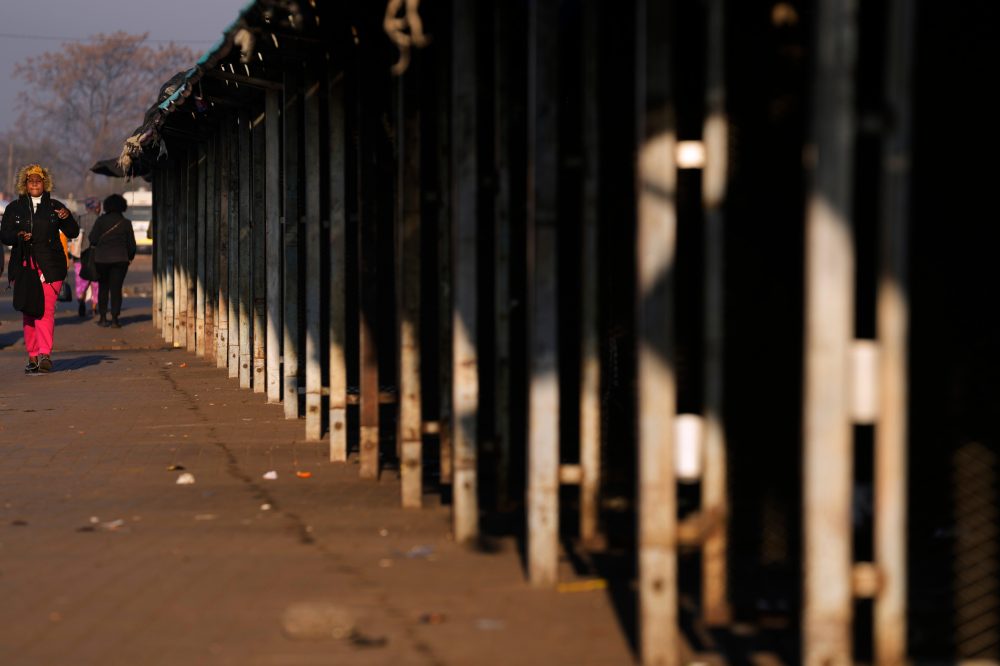
In Johannesburg, some shops owned by foreign nationals closed their doors as protesters began to arrive in the area.
“Today is the last day,” said Nkele Thebe, a protester in Johannesburg. “After today, we’ll be dealing with our president and our nation. We don’t want an outsider to come interfere.”
Fellow protester Bongani Cindi pushed back against the idea that the movement is driven by hatred of foreigners, saying the groups are simply addressing real concerns.
“Our country has got a lot of problems. We have influx of illegal immigrants who are committing crimes that we can’t even take anymore. So we need them to leave us in peace, so we can sort our house. We are not fighting anyone,” Cindi said.