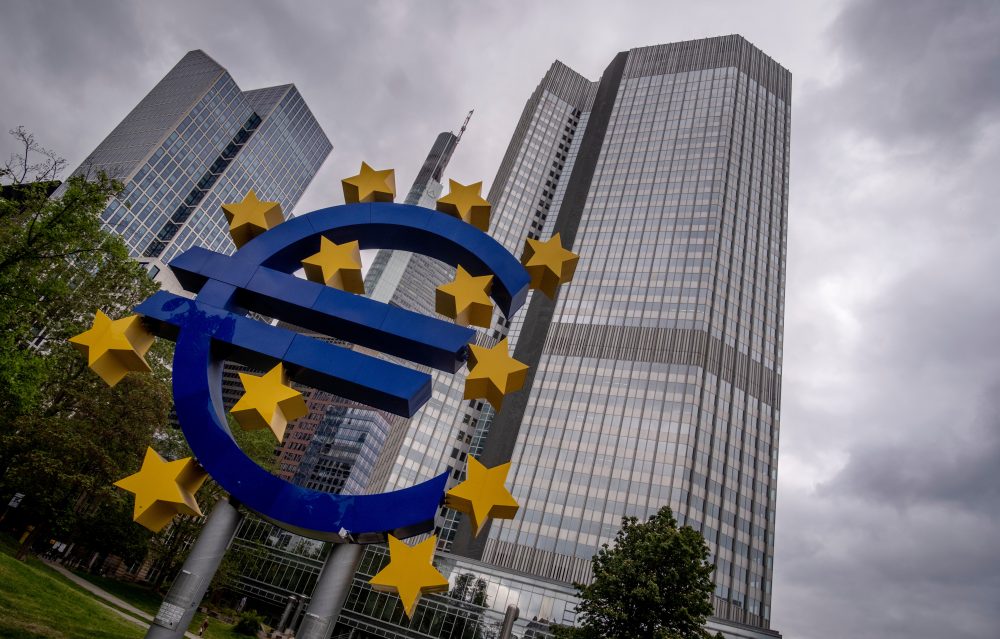

FRANKFURT, Germany — The leader of the European Central Bank is standing firmly behind the institution’s decision to raise interest rates earlier this month, rejecting the notion that the move was simply a precautionary measure.
ECB chief Christine Lagarde stated Monday that the quarter percentage-point rate increase on June 11 was absolutely necessary. Without it, she argued, inflation could have remained above the bank’s 2% target all the way through 2028.
“Some have characterized our rate increase earlier this month as an ‘insurance hike,’” Lagarde said. “I’m sorry to disappoint them. That is not an accurate description. We faced an outlook of rising headline and core inflation.”
The ECB serves as the central bank for the 21 nations that share the euro currency. The June hike brought the benchmark interest rate up by a quarter point to 2.25% — the first rate adjustment in a full year. Despite the increase, economists project that inflation won’t fall back to the 2% goal until the final quarter of 2027. As of May, annual inflation across the euro area stood at 3.2%.
Lagarde was quick to note, however, that the bank does not anticipate needing the aggressive half-point or three-quarter-point rate increases it previously used to bring inflation under control after Russia halted natural gas supplies during the war in Ukraine.
Instead, she explained that improved economic forecasting now allows the bank to evaluate conditions on a meeting-by-meeting basis and respond more carefully to shifting price pressures. Among the current concerns are the economic fallout from the Iran war and disruptions to oil and gas shipments through the Strait of Hormuz. The bank’s next scheduled rate-setting meetings are set for July 22-23 and September 9-10.
Speaking at the bank’s annual monetary policy conference in Sintra, Portugal, Lagarde reflected on how the institution handled the earlier energy crisis. The Russian gas cutoff triggered “the fastest tightening cycle in our history, raising rates in increments we had never used before,” she said.
“We no longer need to act with the same force,” she added. “We can make measured adjustments to rates, calibrated to the shocks we face.”
Lagarde noted that bank analysts are now running scenarios covering both milder and more severe geopolitical outcomes to help avoid overreacting or underreacting to events. Oil prices have swung dramatically throughout the Iran conflict, while the broader European economy has shown more resilience than many anticipated in the face of new tariffs on European goods imposed by U.S. President Donald Trump.