
ABDIN, Syria — When Israeli troops and military vehicles rolled into the southern Syrian town of Abdin, locals fought back the only way they could — blocking roads with rocks while young men and boys hurled stones at the patrol.
The confrontation on Sunday is the latest sign of rising tensions in a region where Israeli forces have taken control of a buffer zone previously monitored by United Nations peacekeepers. Residents of Abdin, located near that zone, attempted to resist what they described as a military incursion into their community.
According to residents, Israeli troops fired warning shots at walls and into the spaces between angry protesters before launching artillery rounds at the village. While no one was injured, the majority of residents fled their homes and remained too frightened to come back by Monday. Many now worry that the skirmish will bring even more aggressive military operations to the area.
“They come into the village regularly, every few days,” said resident Mohammad al-Hassan, speaking near a group of children gathered around an exploded shell. “They come in armored 4×4 vehicles, they roam around the village and search some houses, they knock on doors and if people don’t answer the door they break it down and enter the houses. Women and children start screaming, it’s a terrifying thing, them coming here.”
Israel took over the U.N.-monitored buffer zone in southern Syria back in December 2024, shortly after former Syrian President Bashar Assad was removed from power during an insurgent offensive. Israeli officials initially characterized the move as a temporary measure to guard their borders against militant groups. More recently, however, senior Israeli officials have stated that the occupation of the buffer zone will continue indefinitely.
The expanded Israeli military footprint in southern Syria fits into a broader strategic shift following the deadly Hamas-led attacks on southern Israel in October 2023. Since then, Israel has taken over large portions of Gaza, seized areas of Lebanon — where the Hezbollah militant group has launched missiles and drones across the border — and moved into Syria. Israel refers to these areas as “buffer zones” and maintains they are necessary to prevent future militant attacks.
Since Assad’s removal, there have been no cross-border attacks launched from Syria into Israel, aside from two rockets fired by a little-known militant group. Still, Israeli military operations in southwestern Syrian towns have at times triggered local resistance that has escalated into deadly confrontations.
Syria’s interim president, Ahmad al-Sharaa, has demanded that Israel pull out of the territory, which the United Nations estimates covers 235 square kilometers — roughly 91 square miles. The Syrian government also formally condemned the Israeli military’s incursion and shelling in Abdin.
The clashes in Abdin were actually the second violent episode within a 24-hour span. Earlier Sunday, the Israeli military announced it had killed armed individuals in southern Syria but provided no additional details.
On Monday, an Israeli military official — speaking anonymously under military briefing rules — confirmed that Israeli soldiers had killed two militants who were allegedly planning an attack on Israeli forces. The official did not specify the exact location within Syria.
Meanwhile, the mayor of the Syrian village of Hadar reported that two unidentified individuals traveling in a pickup truck just south of the village were killed in an attack, and that their bodies were taken by the Israeli military.
“There was the sound of an explosion when it happened,” Imad Hassoun told the Associated Press. “They weren’t from Hadar. If they were, we would immediately know.”
On the Abdin incident specifically, the Israeli military official said armed militants had opened fire on one of Israel’s military positions but that no one was hurt, offering no further details.
Residents of Abdin had held out hope that U.S.-brokered talks between Israel and Syria held in France — aimed at reaching a security agreement — would help ease the situation. Those negotiations, however, appear to have stalled.
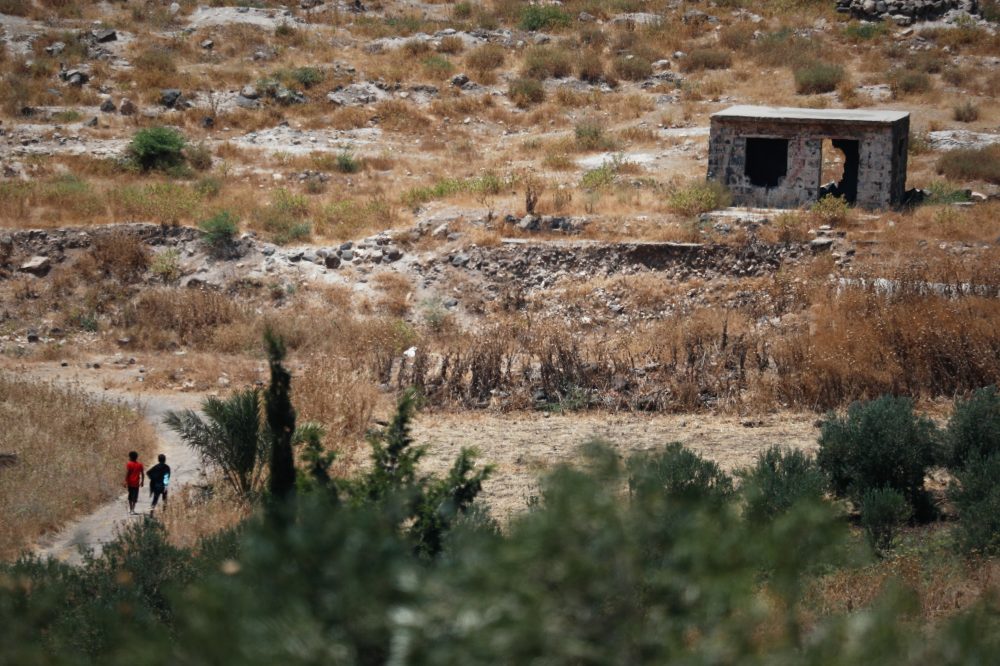
With the security situation unstable and residents struggling with a lack of employment and basic services, many people in these border communities are leaving. The nearest Syrian government security checkpoint to Abdin sits about 10 kilometers — roughly 6 miles — away, and those who remain face persistent shortages of water and electricity.
Sobhi al-Tawlbi, 66, said farmers have had a particularly difficult time reaching their crops and water sources.
“We need the government to support us a little so we can remain steadfast in our villages,” he said, calling on the international community to pressure Israel to end its military incursions.
Residents throughout the broader border region have consistently maintained that they pose no threat and simply want to live stable lives after more than 13 years of civil war that devastated Syria.
“Why are they bothering us? We are living here peacefully in this border area,” al-Hassan said.