
ISLAMABAD (AP) — Pakistan’s government issued a stern warning Tuesday, stating that any effort by India to cut off Pakistan’s share of water under the Indus Waters Treaty would constitute the “weaponization of water” — a move it said could seriously threaten peace and security across the region.
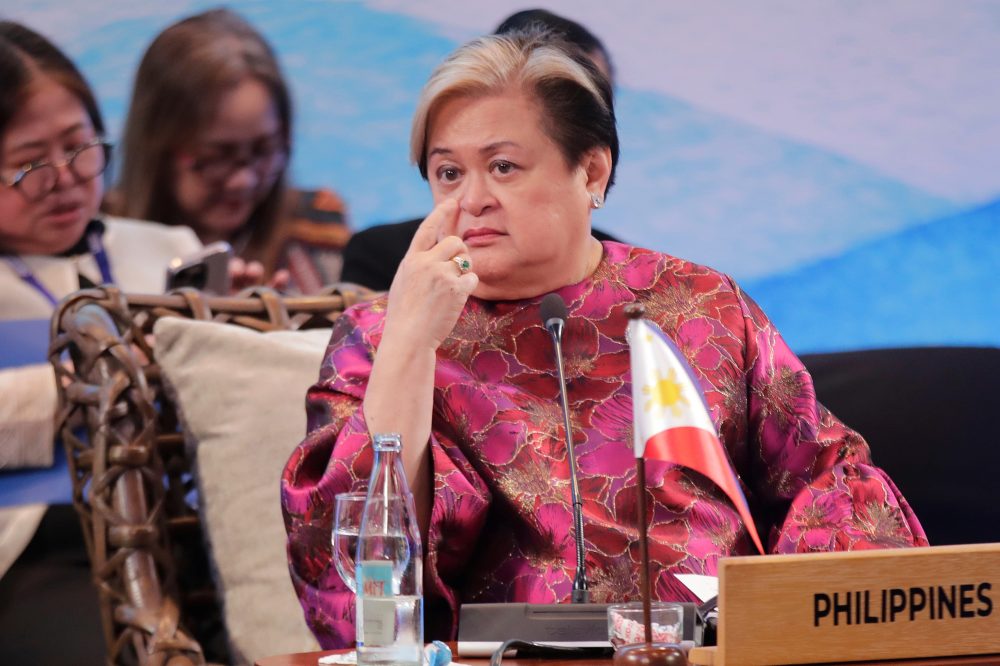
Foreign Minister Ishaq Dar, along with other senior government officials, delivered those remarks at an international seminar dedicated to the treaty, a 1960 agreement brokered by the World Bank that governs how water from the Indus River system is divided between the two nuclear-armed neighboring countries.
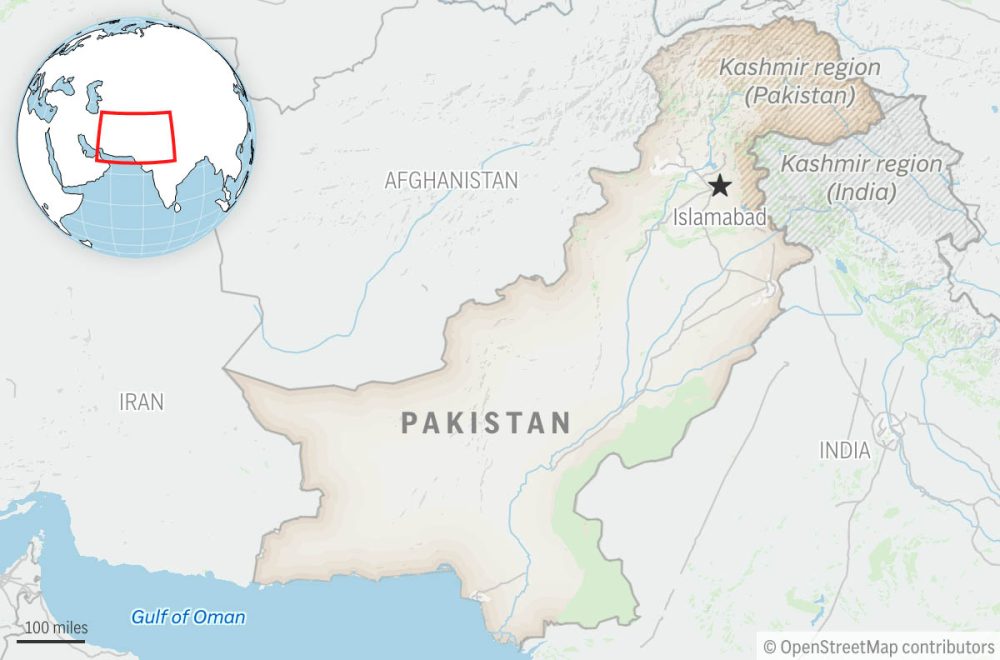
The treaty has faced growing pressure since India suspended its involvement in the agreement following the killing of 26 tourists in Indian-controlled Kashmir in April. India blamed Pakistan-based militants for the attack, an accusation Pakistan rejected while offering to cooperate with an independent investigation.
The incident triggered one of the worst breakdowns in relations between the two rivals in decades. Both nations cut back diplomatic and trade ties, shut down their primary land border crossing, and canceled visas for each other’s citizens. The situation worsened further when the two sides exchanged missile strikes in May 2025, until U.S. President Donald Trump announced a ceasefire. Relations between the two countries have remained at a standstill ever since.
At the seminar, Dar made clear that water should never become a political weapon. “Shared waters must never be weaponized. They should remain a bridge between nations, guided by cooperation, dialogue, and respect for international law for the benefit of present and future generations,” he said.
Dar argued that water is fundamental to human dignity, food security, economic growth, and environmental health, and that rivers flowing across national borders should encourage cooperation rather than spark conflict.
He labeled India’s 2025 decision to suspend the treaty as “illegal,” insisting that Pakistan views the agreement as still fully valid and legally enforceable. “No party can unilaterally suspend or terminate obligations under a treaty that contains no such provision,” Dar stated, adding that international agreements must be honored in good faith.
Dar also repeated Pakistan’s position — previously adopted by the country’s National Security Committee — that any move to redirect, interrupt, or reduce Pakistan’s water allocation under the treaty would be considered an “act of war.”
Pakistan has repeatedly accused India of violating the treaty since New Delhi announced its suspension. At Tuesday’s seminar, Mehar Ali Shah, the chairman of Pakistan’s Indus River System Authority, alleged that India reduced water flows along the Chenab River in recent months, in what he described as a treaty violation. India had not issued a response at the time of reporting.
Earlier in the event, Information Minister Attaullah Tarar emphasized that the treaty cannot be changed, revoked, suspended, or set aside by one country acting alone. He also argued that protecting the agreement has grown more urgent as climate change, melting glaciers, and increasing water shortages pose long-term threats to the region’s stability.
The Indus Waters Treaty, signed in 1960 and facilitated by the World Bank, lays out how the Indus River system’s water is distributed. Under the agreement, India controls three eastern rivers — the Ravi, Sutlej, and Beas — while Pakistan receives the waters of three western rivers: the Indus, Jhelum, and Chenab.
Until May 2025, the treaty had survived multiple wars between the two nations, including conflicts in 1965 and 1971, as well as the 1999 Kargil conflict. It had long been considered one of the few lasting agreements between the two countries despite decades of hostility centered on the Kashmir dispute.