
LONDON — Britain’s military is set for a dramatic technological overhaul, with autonomous fighter jets, pilotless submarines, and drone systems taking center stage in a new Defense Investment Plan unveiled Tuesday.
The announcement reflects how modern warfare has been reshaped by technology and comes after months of delays caused by disagreements between military leadership and Treasury officials over how much money should be committed to national defense.
Like other NATO member nations, the United Kingdom faces growing pressure to boost defense spending in response to an increasingly aggressive Russia and questions about the reliability of the United States as a security partner.
Former Defense Secretary John Healey stepped down on June 11, citing the government’s reluctance to spend adequately on the military during what he described as a period of “rising threats.” Healey had pushed for defense spending to reach 3% of the country’s GDP by 2030, pointing to a British intelligence assessment warning that Russia could launch an attack on a NATO member nation by that time. He argued that the Treasury’s proposed budget would only bring spending to 2.68% of GDP in 2030, following a rise to 2.6% the following year.
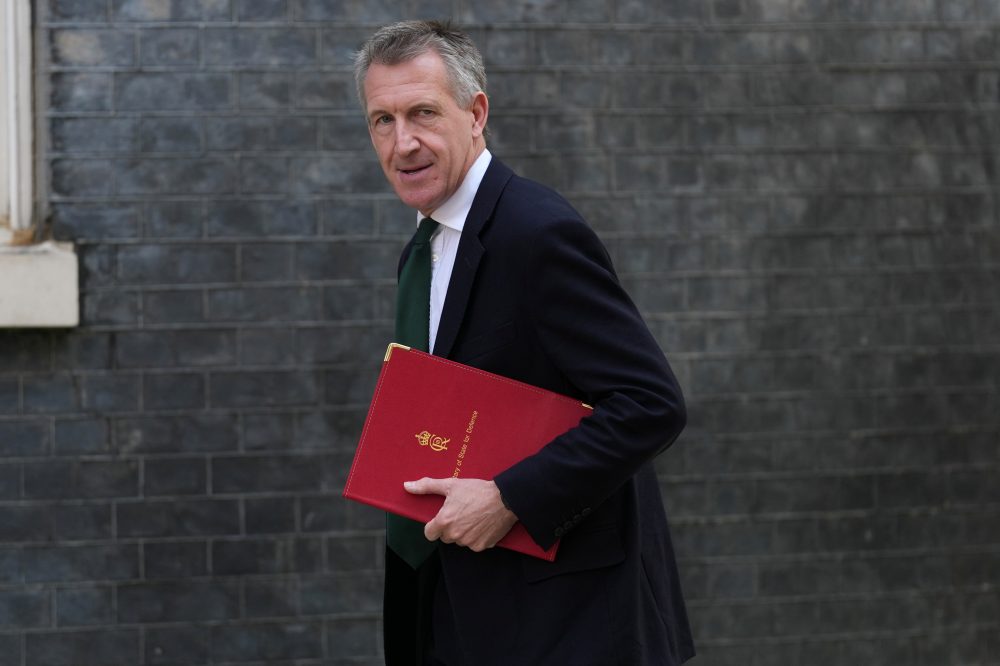
The government says the plan has been “refocused” in recent weeks under Healey’s replacement, Defense Secretary Dan Jarvis. The revised budget is slightly more than the 13.5 billion pounds — roughly $18 billion — that Healey was originally offered, though it reportedly falls well short of the 28 billion pounds, or about $37 billion, that defense officials had requested.
Prime Minister Keir Starmer stated that the plan will guarantee “our servicemen and women have the cutting-edge capabilities they need to deter evolving threats and keep the British people safe.” The complete document was scheduled for release later Tuesday.
The plan serves as a roadmap for reaching NATO’s target of spending 3.5% of GDP on defense by 2035. Britain’s military has been working to reverse years of reduced investment as Russia grows bolder — the country invaded neighboring Ukraine in 2022 and has increasingly tested European defenses through both open and covert means.
The United Kingdom has taken note of how drones have fundamentally changed the battlefield in Ukraine, where the country deploys roughly 200,000 drones each month to resist Russian forces. Britain intends to invest billions of pounds in drone technology across every branch of its military. Rather than building a new fleet of destroyers as previously planned, the Royal Navy will instead receive hybrid vessels designed to serve as command centers for drone operations.
U.S. President Donald Trump has repeatedly pressured Britain and other NATO allies to spend more on their own defense, long questioning the value of the alliance and arguing that the United States has been shouldering too much of the burden for European security.
The departures of Healey and junior Defense Minister Al Carns were part of a series of political setbacks that led Starmer to announce last week that he intends to resign as prime minister. He is expected to attend a NATO summit in Turkey on July 7 and 8 as one of his final acts in office.
Starmer’s likely successor, former Greater Manchester Mayor Andy Burnham, will face pressure to honor the commitments laid out in the defense plan.
Opposition Conservative Party defense spokesperson James Cartlidge criticized the announcement, calling it “too little, too late.” He added, “The plan is now almost a year overdue and only being rushed through because Keir Starmer is desperate for a legacy.”