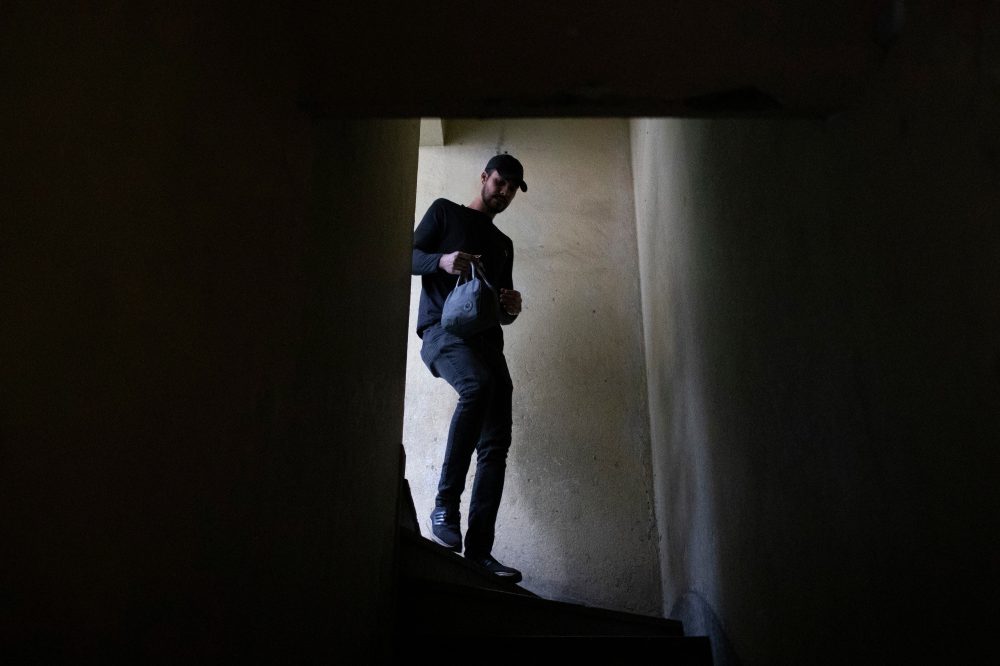

RIO DE JANEIRO — Hundreds of bus drivers walked off the job and gathered in the heart of Rio de Janeiro on Tuesday, rallying for higher wages, improved working conditions, and an end to the exhausting six-day work week. Their strike is part of a larger national effort to guarantee all Brazilian workers two full days of rest each week.
Alexandre Garrido, 49, has spent two decades behind the wheel of a bus and says the current schedule leaves no room for a personal life. “You can’t spend quality time or go out with your family, give attention to your children, visit relatives, or have a day like going to a restaurant to have lunch together,” he said.
A constitutional amendment that would cap the Brazilian work week at five days has already cleared the country’s lower legislative chamber and now sits before the Senate. President Luiz Inácio Lula da Silva has thrown his support behind the measure, making it a centerpiece of his reelection campaign ahead of an October vote.
Under the current system, many Brazilians put in five full eight-hour days and then report for another four hours on a sixth day. Others technically have two days off but still clock 44 hours total per week. The proposed amendment would set a 40-hour weekly maximum while keeping workers’ pay intact.
If the Senate passes the measure, it would reshape daily life for millions of lower-income Brazilians and could provide a significant political lift for the president’s campaign. Several other Latin American nations have enacted similar labor reforms, though Argentina has moved in the opposite direction.
Rick Azevedo, a city councilor in Rio and founder of the movement known as Life Beyond Work — one of the primary forces driving the reform — attended Tuesday’s demonstration. “Those who support working six days a week are in favor of modern slavery,” he said. Beyond the bus drivers’ union strike, Azevedo’s organization also coordinated protests in cities across Brazil on Tuesday.
Roughly 14 million Brazilians currently work six days a week. Among them is Fernanda Sousa, 26, who lives in the sprawling Rocinha favela. Six days a week, she rises before dawn, drops her 6-year-old son at his godmother’s home around 5:30 a.m., and commutes to the upscale neighborhood of Gavea, where she serves cheese bread and snacks at a bistro.
“Going to work on a Sunday when everyone is with their families breaks my heart,” Sousa said while heading home one recent Friday evening with her son beside her. She added that juggling work and household responsibilities is a constant struggle — a burden that falls heavily on women and is made worse by the lengthy work schedule.
Research in Brazil consistently shows that workers in lower-paying, lower-skilled positions are the ones most likely to be locked into the demanding 44-hour week.
Matheus Paulo Costa da Silva, 28, supervises a home furnishings store in Rio. He recently tried enrolling in an evening information technology course but found he was simply too worn out to continue. “I can’t see my family, I can’t go to the gym, I can’t study. I live to work,” he said.
Lawmaker Erika Hilton, who championed the amendment through the lower house in May, noted that even some of her conservative colleagues have come around to supporting it, though opponents in the Senate are working to defeat the bill. “Ending the six-day workweek allows us to care for workers who are under attack since Brazil’s slavery days,” said Hilton, referencing a period of nearly 400 years that came to an end in 1888. She added that workers deserve the freedom to travel, go to the beach, attend church, or simply spend time with friends.
Brazil’s business community, however, is raising serious concerns. The country’s National Confederation of Industry estimates that cutting the work week could drive annual labor costs up by as much as 267 billion reais — the equivalent of roughly $52 billion — an increase of up to 7%. The confederation also warns the change could drag down Brazil’s economic growth by 0.7%.
Economists say smaller businesses stand to be hit the hardest. An institution that supports small enterprises notes they account for about 97% of all businesses in Brazil and provide half of the country’s formal employment.
Marcelo Pierini, 52, owns a pie restaurant in downtown São Paulo and is already anxious about what the reform could mean for him. He runs the restaurant with five employees, closes only on Sundays, and operates on slim profit margins. “This change could mean one of two things: closing on Mondays and losing some profit or sharing my bill with the customers,” he said. “It is hard. I want some rest too, but I can’t afford it.”