
BANGKOK (AP) — The war with Iran has sent energy prices surging across Asia, and nations throughout the region are scrambling to lock in more stable energy supplies — a response that experts say could seriously undercut global climate commitments.
While peace talks remain stalled, energy-hungry countries across Southeast Asia are looking at nuclear power options and planning renewable energy expansions. At the same time, many are pouring new money into coal as a safeguard against future supply disruptions.
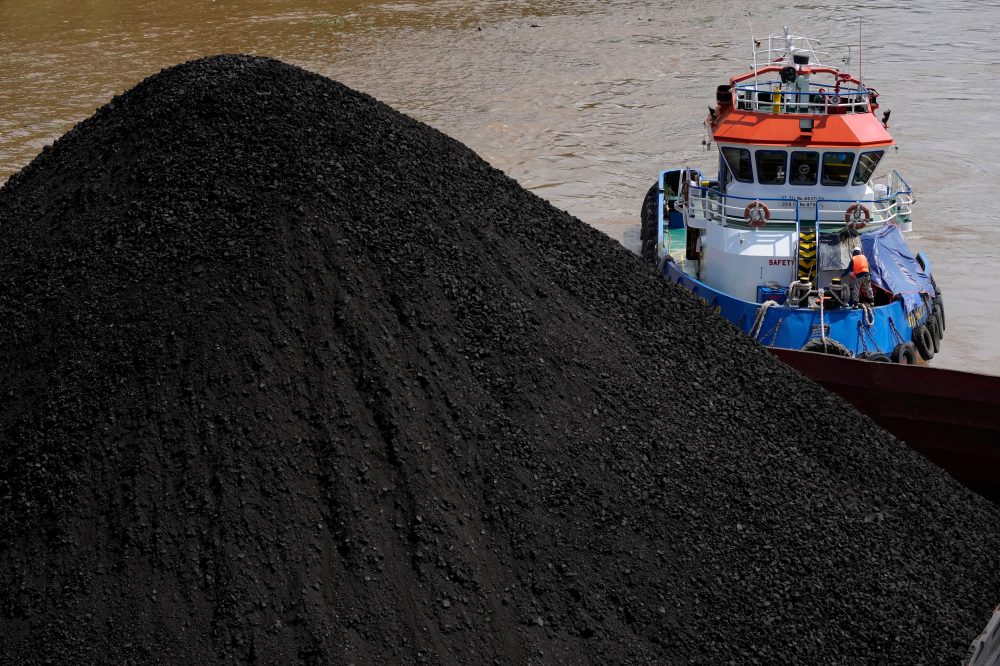
Sandeep Pai at Duke University’s Nicholas Institute for Energy, Environment and Sustainability said the conflict has done nothing to loosen coal’s grip as a cornerstone of energy security in Southeast Asia.
Before the war, coal had been on a slow path toward retirement as governments worked to cut climate-damaging emissions and improve air quality. The conflict has thrown that trajectory into question.
“At the end of the day, energy security triumphs any other climate considerations,” Pai said.
In East Asia, both South Korea and Japan turned to coal to keep their power grids running after the war forced the closure of the Strait of Hormuz, cutting off key oil and gas shipping routes. Southeast Asian nations including Thailand, Vietnam, and the Philippines followed suit.
Pai noted that what began as an emergency response has since evolved into longer-term energy policies that have given coal a new lease on life.
The International Energy Agency projects global coal investment will climb to $180 billion in 2026 — the highest level since 2012.
Back in 2021, the United Nations declared coal was on its way out after nearly 200 countries agreed to phase it down. But when Russia invaded Ukraine in 2022 and disrupted natural gas supplies, European countries responded by burning more coal and constructing new fossil fuel pipelines and import terminals.
Michelle Manook of FutureCoal — formerly the World Coal Association, a group backed by the fossil fuel industry — said this second major energy disruption in under a decade is cementing coal’s role in Asia’s energy security strategy.
According to the Global Energy Monitor, global coal-fired power generation dipped 0.6% last year, but new coal power capacity actually grew by 3.5%.
Indonesia, the world’s top exporter of thermal coal and a key indicator for the fossil fuel sector, is rewriting its trade rules and introducing new taxes following a surge in coal prices to multi-year highs. But the country is also chasing ambitious solar energy targets, aiming to install 100 gigawatts of rooftop solar by 2034 — a massive jump from its current 1.3 gigawatts of capacity.
“Indonesia’s obviously tied to coal in so many ways, but it’s seen beyond that,” said Dave Jones of the energy think tank Ember, adding that renewables still lead growth in regional power generation.
Vietnam has also ramped up coal use but has pledged to put rooftop solar on 10% of public buildings and homes across the country by 2030.
The Philippines burned more coal after the war broke out and declared a national energy emergency. Officials considered lifting a ban on new coal plants but ultimately chose not to, though previously approved projects will still move forward. Meanwhile, Filipino consumers have been installing rooftop solar panels at record-breaking rates.
“This really doesn’t cancel out any of the green energy gains,” said Brenda Valerio of the nonprofit New Energy Nexus in the Philippines. “But it does really show that the energy transition is non-linear and contested.”
A large share of the liquified natural gas passing through the Strait of Hormuz was bound for South Korea and Japan — two countries that import nearly all of their energy. Facing a significant shortfall, South Korea pushed back the scheduled closure of three coal plants, a move that could slow its progress on climate goals. The country also ramped up output at its operating nuclear facilities and fast-tracked maintenance work at five reactors that had been taken offline.
Michiyo Miyamoto of the Institute for Energy Economics and Financial Analysis said Japan has been accelerating the restart of nuclear plants that were shut down following the 2011 Fukushima disaster. That catastrophe had led Japan to lean more heavily on coal after the plant shutdowns temporarily wiped out roughly a third of its total power generating capacity.
India, meanwhile, is planning to invest $3.9 billion in converting coal into industrial fuels and chemicals to replace goods it currently imports, keeping coal central to its energy strategy.
Luke Holt, the Asia-Pacific energy director at the consultancy firm Ramboll, said cutting emissions and reaching net-zero targets are long-term goals that demand sustained focus over many years.
“But we see that they are easily distracted,” he said. “We’ve had a number of shocks to the decarbonization plan.”