
Asia’s manufacturing sector held its ground in June, as a worldwide surge in demand for artificial intelligence technology helped cushion the blow from the ongoing Iran war, according to private business surveys released Wednesday.
The findings offer some reassurance for Asian economies that depend heavily on exports, though analysts warn that energy-related price pressures stemming from the Middle East conflict could intensify in the coming months. Supply shortages and shipping delays are already stretching delivery timelines across the region.
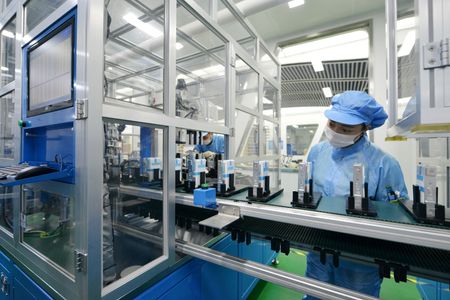
The surveys highlight how the global wave of AI investment is fundamentally changing economic conditions across Asia. Soaring demand for computer chips, data center equipment, and other technology products is providing a significant growth engine while helping to shield the region from escalating geopolitical and trade uncertainties.
China, Japan, and South Korea all recorded factory growth in June, driven by strong orders for chips, computers, and AI-related goods. Companies also stockpiled materials in anticipation of potential shortages and price hikes linked to the Middle East situation.
China’s RatingDog General Manufacturing Purchasing Managers’ Index, or PMI, came in at 51.7 in June — marking a seventh straight month of expansion and topping the 50-point threshold that separates growth from contraction. The reading dipped slightly from 51.8 in May but surpassed analyst expectations of 51.6.
Those results echoed an official government survey released Tuesday, which also showed Chinese factory activity returning to expansion territory last month on the strength of export orders.
Yao Yu, founder of RatingDog, described the results positively: “Overall, the manufacturing sector maintained a steady expansion in June, supported by sustained new order growth, easing cost pressures and improved labour market conditions.”
Japan’s PMI climbed to 54.8 in June, up from 54.5 the previous month, marking a sixth consecutive month of expansion. New orders grew at their fastest rate in over two years. Despite the positive headline numbers, input cost inflation remained near a four-year high — a warning sign that corporate profit margins could come under pressure and broader inflation could follow.
South Korea’s factory sector also expanded for a seventh month in a row, though the pace slowed compared to May as export demand softened.
Usamah Bhatti, an economist at S&P Global Market Intelligence, noted the headwinds facing manufacturers: “Firms frequently reported that rising raw material prices, alongside difficulties sourcing and receiving inputs due to delays and shortages, weighed on sector performance.”
Across other parts of Asia, factory activity largely continued to grow. The Philippines’ PMI held nearly steady at 50.9 in June compared to 50.8 in May, while Malaysia’s index climbed to 50.7 from 49.9. Taiwan and Vietnam also reported factory expansion during the month.