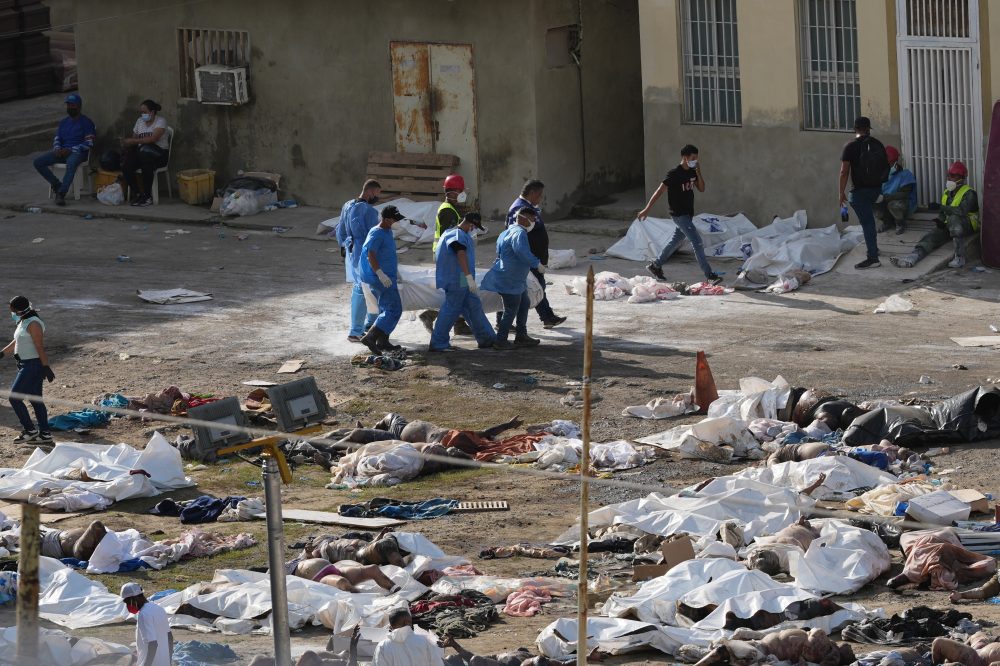
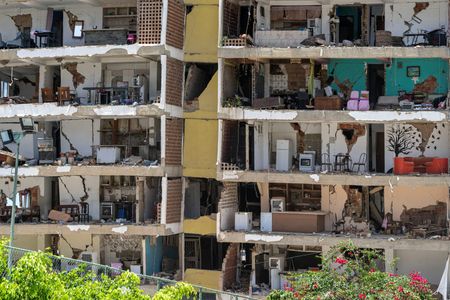
CARACAS, Venezuela — With public criticism growing over how Venezuela has handled its earthquake disaster, acting President Delcy Rodríguez stepped before cameras for the first time to defend her government’s response — all as her 180-day term as interim leader came to an end on Friday.
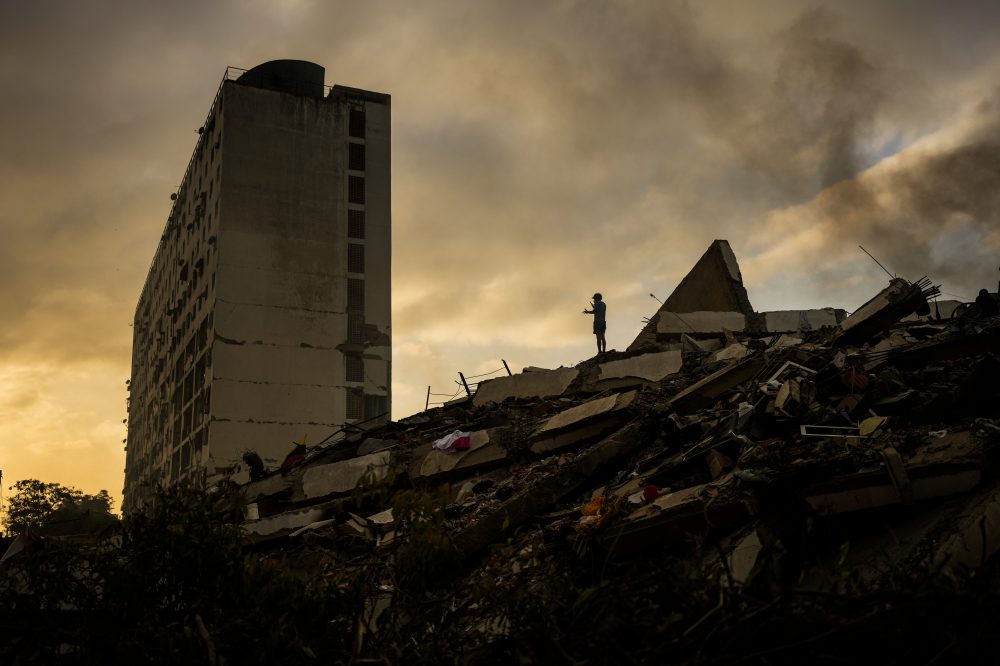
The two powerful earthquakes struck the northern state of La Guaira on June 24, claiming more than 2,295 lives according to the latest official figures. A separate, non-governmental digital database continues to show more than 38,000 individuals as unaccounted for.
Rodríguez, who previously served as deputy to former President Nicolás Maduro before his January capture by the Trump administration, waited more than an hour after the quakes hit before making any public statement. She then held her first formal news conference addressing the government’s response late Thursday — a full eight days after the disaster struck.
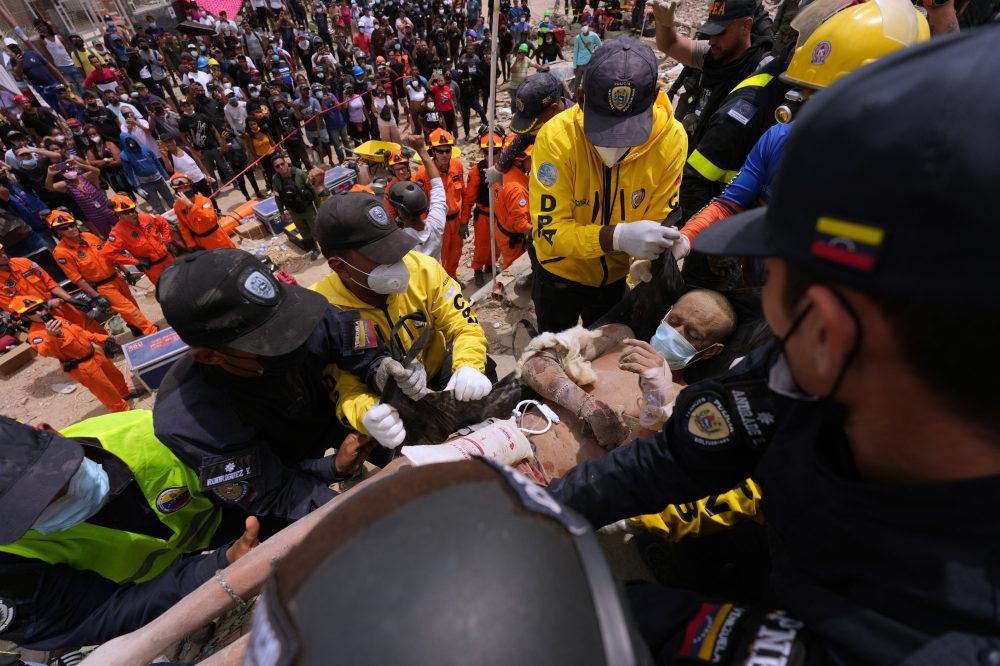
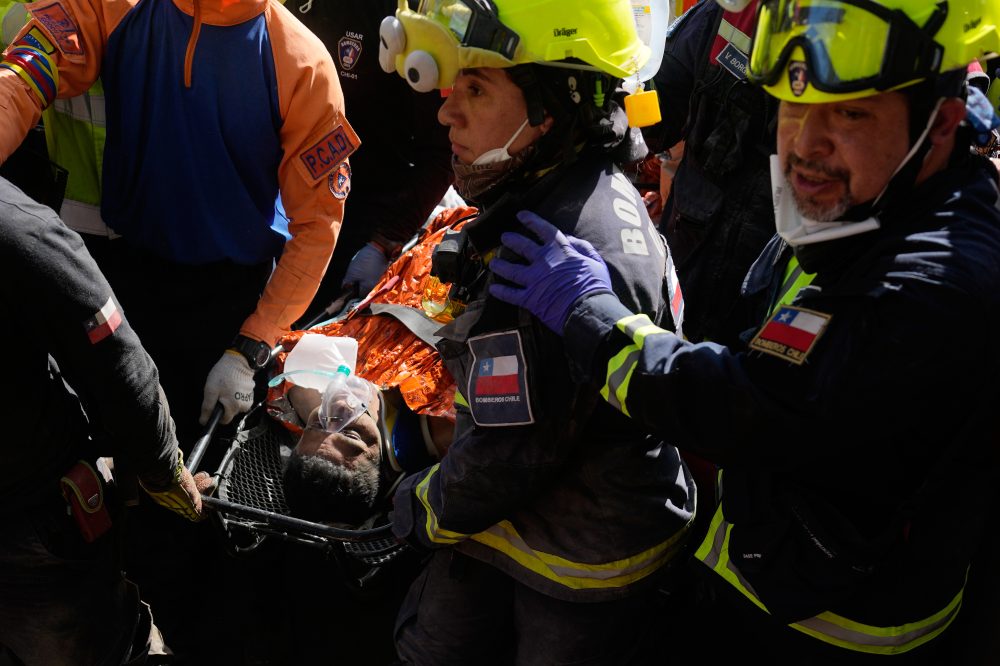
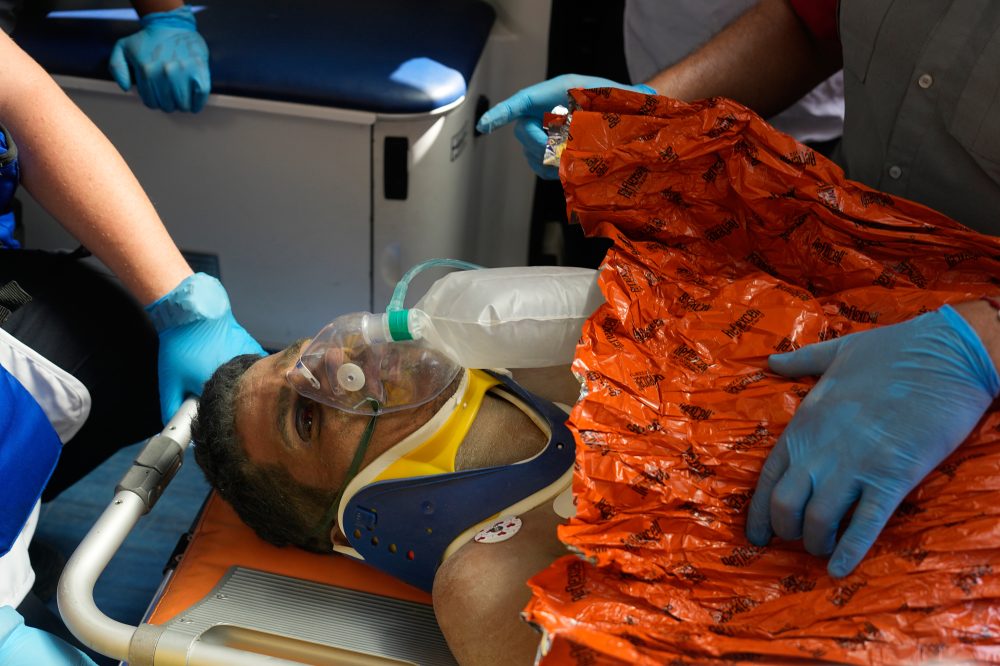
Rescue organizations generally race to find survivors within the first three days following a major natural disaster, as the chances of finding people alive drop sharply with each passing hour. Despite that, weary rescue workers were still digging through devastated neighborhoods in La Guaira on Friday, spurred on by a dramatic rescue the day before — a 43-year-old security guard pulled alive from the basement of a collapsed shopping mall after spending nearly eight days buried in the rubble.
Even as some international rescue teams began packing up and heading home, Rodríguez insisted Thursday night that the government had no plans to scale back its search efforts.
“We have not closed the search-and-rescue phase. We are still in that stage because, according to our overall assessment, there are still active sites where we believe there may be survivors, even if there is only one,” she told reporters during a combative press conference — her first public pushback against criticism of the state’s response since the earthquakes hit.
Rodríguez attributed the public anger over the government’s handling of the crisis to what she described as “narratives manufactured in propaganda laboratories.” She maintained that rescue crews were dispatched immediately with proper equipment — a claim that contradicts widespread accounts from residents who said they were left on their own to search for missing family members, without any official teams or heavy machinery, for the first 48 hours.
“Those propaganda operations, driven by partisan political interests, are despicable,” she said. “We did not wait one day, two days or three days. We activated immediately.”
She also announced that 11 international field hospitals had been set up in quake-affected areas, with medical personnel from 33 countries on the ground. Additionally, she said the government had approved the creation of a fund to collect donations for reconstruction efforts.
The United Nations Development Program has estimated that the earthquakes caused approximately $6.7 billion in physical damage across Venezuela — equivalent to roughly 6% of the country’s gross domestic product — and that figure does not include longer-term recovery and rebuilding costs.
Rodríguez became interim leader with the backing of the Trump administration following Maduro’s removal from power. Her comments appeared designed to project an image of a government firmly in control of the crisis. In recent months, she has pushed through business-friendly changes to Venezuela’s oil industry under U.S. pressure, though she has shown little movement toward restoring democratic governance.
Venezuela’s constitution allows the vice president to fill in during a leader’s temporary absence for up to 90 days. That period can then be extended by the national assembly for another 90 days — bringing the total to 180 days, which expired Friday.
As of Friday, no officials had commented on what steps, if any, would follow the expiration of Rodríguez’s mandate. The National Assembly, which is controlled by Rodríguez’s party, has the authority to call a snap election if lawmakers formally declare the presidency permanently vacant.
No timeline has been set for democratic elections in Venezuela. Before the earthquake, the Trump administration had indicated a vote would happen once the country and its economy were stabilized.
Maduro had claimed victory in a 2024 election from which opposition leader and Nobel Peace Prize winner María Corina Machado was barred from running. An independently verified vote tally conducted by the opposition concluded that Machado’s chosen candidate had actually won.
Machado has said she intends to return from exile to assist with earthquake recovery efforts. Earlier this week, she accused Rodríguez’s government of closing Venezuelan airspace ahead of her scheduled flight in order to prevent her from returning. The Trump administration has repeatedly praised Rodríguez’s earthquake response and has largely distanced itself from Machado.
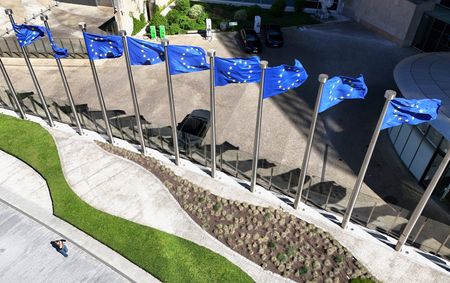
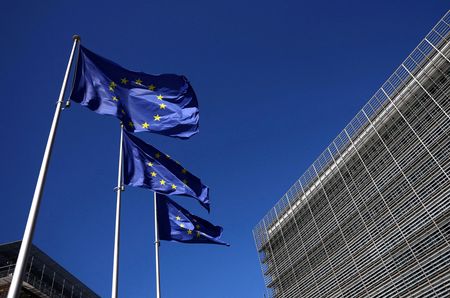
BRUSSELS — The European Commission announced on Friday a proposal for five significant cross-border defence initiatives, paving the way for those projects to tap into European Union funding.
The initiatives, designated as European Defence Projects of Common Interest, span a wide range of security domains. Among them is a drone and counter-drone program that brings together 26 EU member nations along with Norway and Ukraine, as well as an Eastern Flank Watch initiative involving 13 EU members, Norway, and Ukraine.
The remaining three proposals cover integrated maritime and seabed defence, air and missile defence combined with early warning systems, and a space-based defence program.
To qualify for the European Defence Projects of Common Interest designation, a project must be structured to strengthen innovation and boost the competitiveness of Europe’s defence industrial base, while also working to reduce fragmentation across the market.
Through the EU’s European Defence Industry Programme, a total of 325 million euros — roughly $372 million — has been allocated for these designated projects, with the possibility of additional funding down the road.
The five proposals still require formal approval from the Council of the EU before moving forward.
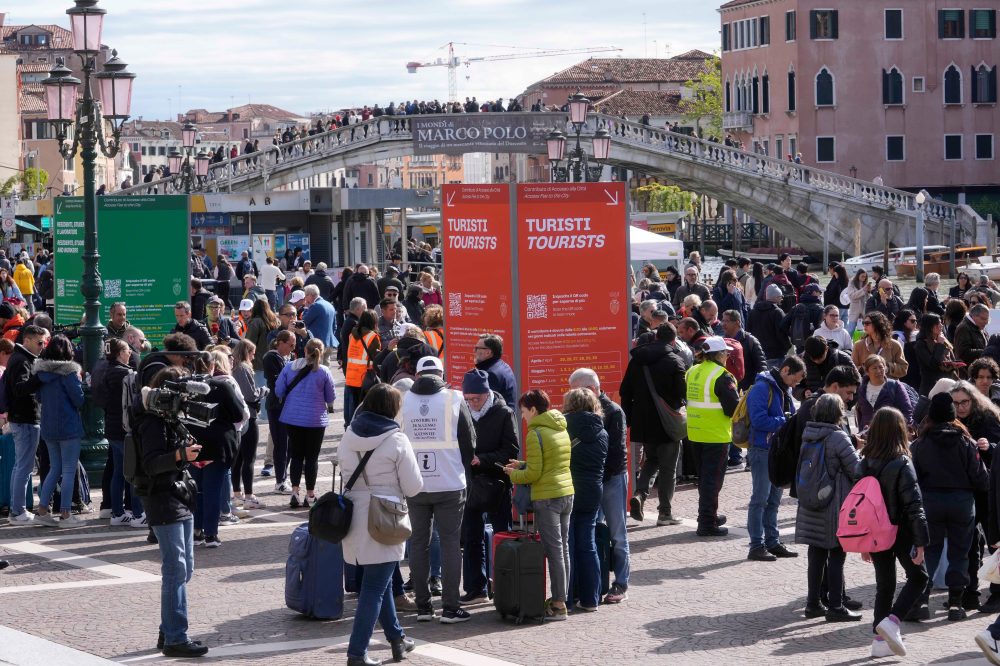
MILAN (AP) — Venice’s new mayor is calling for an overhaul of the city’s three-year-old tourist access fee, proposing a surge-pricing model that could charge day visitors up to 50 euros — roughly $59 — on the city’s most crowded days.
Mayor Simone Venturini spoke with The Associated Press in an interview Friday, explaining that the existing 10-euro charge for last-minute reservations has fallen short of discouraging visitors during peak periods. Rather than simply raising the fee to a fixed higher amount, the city wants to implement a flexible pricing structure that rises along with demand.
Venturini said the approach would serve two purposes: reducing overcrowding and helping to fund the ongoing cost of keeping the city functioning.
“We spend 100 million euros a year just to maintain Venice physically, and nobody gives us that money. Not Europe. Not the Italian state. International critics don’t pay it either. It’s paid by the people of Venice, and in part through tourism taxes,” said Venturini, who was elected mayor last month. He had previously served as the city’s top tourism official when the day-tripper fee was first introduced in 2024.
The access fee has drawn steady criticism from activists, housing advocates, and opposition politicians who argue it hasn’t meaningfully reduced crowding and effectively turns Venice into a ticketed attraction. Critics also contend the city is too focused on managing tourist numbers rather than finding ways to bring more permanent residents back to the historic city center.
Venturini pushed back, saying the revenue is essential for basic upkeep. Implementing a surge-pricing structure would require an amendment to the special Italian law that governs Venice, and Venturini said he has already raised the idea with the country’s tourism minister.
“Day-trippers obviously generate waste — they eat, they drink, they throw things away. That comes at a huge cost,” he said, adding that expenses are driven up “because everything has to be done by hand, with brooms, boats and handcarts.”
Although the proposed 50-euro ceiling has drawn headlines and criticism — particularly over its potential impact on families and budget travelers — Venturini clarified that the figure represents an upper boundary, not a standard charge. The city is still working with researchers to identify the right pricing levels.
“If, for example, more than 40,000 people had already booked for a given day, those above that threshold might be asked to pay a little more — 20, 25 or 30 euros,” Venturini said. “We asked for a broad range, up to 50 euros, and then it would be up to the city to manage the system through further testing. It doesn’t mean everyone who comes to Venice would pay 50 euros.”
Opposition politicians have suggested capping the total number of visitors allowed into the city each day, but Venturini said existing Italian law does not permit that kind of hard limit.
According to the most recent figures tracked by the Ocio housing advocacy group from January, the number of residents living in Venice’s historic canal district has fallen below 48,000, while the number of available tourist beds has climbed above 51,500. Venturini argued that the residential population is likely undercounted, since many students and seasonal workers live in Venice for much of the year without officially registering as residents.
“That doesn’t mean we are satisfied. We need to do more,” he said.
During the program’s 2024 test phase, Venice collected 2.4 million euros from more than 485,000 day-trippers across 29 peak days. Last year, the city expanded the program to 54 days and doubled the last-minute fee to 10 euros, bringing in 5.4 million euros. This year, six additional days have been added to the schedule, though no data on visitor numbers or revenue has been released yet.
Venturini acknowledged that the funds collected so far cover “only a small part of the costs of managing tourism.”
“The goal is not to raise money or to turn Venice into a ticketed city,” he said. “The goal is to give both residents and visitors a better experience on days when the city would otherwise be too crowded.”
CARABALLEDA, Venezuela — In the middle of unimaginable loss, an unexpected source of comfort emerged inside a fast-food restaurant now being called “Hospital McDonald’s.”
Gabriela Alves spent more than a week desperately searching for her 6-year-old dog, Buddy, after two catastrophic earthquakes rocked Venezuela on June 24. On Thursday, she finally found the white pup — alive — at that very restaurant, where she wrapped her arms around him as he lay on a table with an IV in one of his legs, just feet away from workers selling soft-serve ice cream.
“This is a miracle,” Alves said. “We’ve lost everything material, but at least we’re both alive.”
The McDonald’s location, situated beside the collapsed ruins of government housing complexes in the seaside city of Caraballeda, has transformed into an informal medical center for earthquake survivors and a reunification point for families searching for lost pets.
The makeshift operation got started just one day after the back-to-back quakes, which Venezuelan officials say killed at least 2,295 people and left 11,000 others injured. Countless families were left sifting through rubble in search of missing loved ones — including their cats and dogs.
Angel Matute, along with 70 other volunteers — including veterinarians, medical students, doctors, and civilians — made the journey from the western city of Barquisimeto. When the group arrived, they needed a place to sleep, store their supplies, and take cover from the heavy tropical rainfall. One of the few functioning facilities they could find was the local McDonald’s, complete with working air conditioning.
The team moved in and began caring for both human patients and injured animals, while also helping desperate owners track down missing pets.
“For us, a pet is one more human life,” said Matute, who now coordinates the rescue effort out of the restaurant, where volunteers also sleep at night. “There are animals that are more human than humans themselves.”
By Thursday, Matute and his fellow volunteers were busy treating dogs and cats in the same space where search teams were ordering hamburgers and french fries. The group has already rescued 140 animals and treated 60 more, and they say they plan to keep working until their help is no longer needed.
Alves had been visiting the makeshift animal center daily, checking whether any white dogs had been brought in before heading back to the ruins of her home to call out Buddy’s name, hoping for a bark in return. For over a week, there was only silence.
She had been away at a relative’s house when the earthquakes struck northern Venezuela. She immediately jumped on her motorcycle and raced home, only to find her house reduced to rubble with no sign of Buddy.
“We’re all living one day at a time,” she said Thursday. “Today, I returned and I truly can tell you I had lost all hope.”
But she kept searching. While picking through the debris and pulling her mother’s belongings from the only part of the home still reachable, she heard a faint bark. Looking down, she spotted Buddy’s white ear poking through a crack in the concrete.
She screamed for help, and nearby rescue workers rushed over. They broke through the wall and pulled the dust-covered dog from the wreckage. Alves broke down in tears as she held Buddy, who was wrapped in a pink blanket and licking her arm. Hours later, veterinarians at Hospital McDonald’s examined the dog for injuries after he had spent eight days buried in the rubble.
“Right now, with all the tragedy of the earthquake, it’s one positive thing in all the bad,” Alves said, still holding her dog close. “He’s like my doggie Band-Aid.”
BRUSSELS (AP) — NATO’s top military commander told The Associated Press on Friday that European member nations have managed to fill the majority of the defense holes left behind after the United States announced it would scale back its military contributions to the alliance.
U.S. Gen. Alex Grynkewich had called on European countries to step up and offer more military assets after Washington signaled on June 3 that it would no longer provide an aircraft carrier and its support vessels, aerial refueling aircraft, and dozens of fighter jets, among other military resources, to the continent.
Grynkewich also began reviewing backup plans in the event that Europe faces an attack.
The NATO Force Model serves as the alliance’s primary plan for mobilizing forces from its 32 member nations during periods of peace, crisis, or armed conflict. It outlines what military resources commanders can draw upon during the first six months of any potential conflict.
“In a matter of weeks, European Allies have largely filled the gaps left by U.S. reductions to the NATO Force Model,” Grynkewich said. His comments came just days before President Donald Trump and fellow world leaders are set to gather for a July 7-8 summit in Turkey, where military force planning is expected to be a top priority.
“And in those few areas where they haven’t, where they do not currently have a like capability to replace, we are looking at alternate capabilities with matching effect,” Grynkewich added, though he offered no further specifics.
The Pentagon’s announcement caught many NATO allies off guard. The U.S. decision reflects a strategic shift in attention toward potential threats in other parts of the world, particularly from China in the Indo-Pacific region.
European nations and Canada reviewed their own military inventories to determine what resources they could contribute if one of their allies came under attack. Britain, for instance, has placed a second aircraft carrier along with F-35 fighter jets on higher alert, ready for emergency deployment.
NATO Secretary-General Mark Rutte has sought to minimize concerns over the impact of the Trump administration’s move. Rutte believes the United States would redirect more resources toward Europe if an actual conflict were to break out, pointing to how it responded during the war on Iran as an example.
“This is not about where forces and assets are currently located,” Rutte said last month. “It’s about who would do what if our defense plans were activated. So, let’s say in case of an Article 5 situation.”
Article 5 of NATO’s founding treaty — the alliance’s collective defense guarantee — holds that an attack on any one of the 32 member nations is considered an attack on all of them. While it does not legally require members to provide military assistance, most are widely expected to do so.
ROME — The Italian government is speaking out after 80 vials of the powerful synthetic opioid fentanyl were stolen from a hospital in Rome, with officials blasting what they called the “irresponsible conduct” of those who were supposed to keep the drug secure.
The vials were taken from Rome’s Israelite Hospital, and according to a government statement, the amount stolen was sufficient to produce as many as 20,000 doses for illegal use. The statement did not specify when the theft occurred.
Government Undersecretary Alfredo Mantovano presided over an emergency meeting Friday at the government’s headquarters to address the situation.
Law enforcement units that specialize in crimes involving the healthcare sector have been assigned to investigate the theft. Additionally, Italy’s Health Ministry has ordered a formal inspection of the hospital to identify who may bear responsibility for the security lapse.
Italy has been taking steps to address fentanyl misuse in recent years. In 2024, the government rolled out a plan aimed at combating the drug’s abuse. Fentanyl is linked to tens of thousands of overdose deaths worldwide each year, though officials note there is currently no widespread crisis involving the drug within Italy itself.
France’s highest court handed down a significant ruling Friday, declaring that children born through surrogacy in foreign countries must be legally recognized in France as the children of their intended parents — despite the fact that surrogacy itself is prohibited under French law.
The ban on surrogacy — an arrangement in which a woman carries and delivers a child on behalf of parents who cannot do so themselves — has left many families in a legal gray area, with children and their parents lacking official recognition under French law.
The case that triggered the ruling involved a married male couple who had three children through surrogacy in Canada. The couple sought French recognition of a Canadian court decision that had already established them as the children’s legal parents.
In its decision, the court stated: “Given the superior interest of the child, the French ban on surrogacy does not, in itself, allow for the rejection of a foreign judgment which declares the intended parents as the legal parents of the child born through surrogacy practiced in that country.”
The ruling establishes a new legal precedent in France. The court also pointed to a prior decision by the European Court of Human Rights, which found that a national ban on surrogacy cannot be used to block the legal relationship between a child and their intended parents.
Without such recognition, the court warned, “the child would be kept in legal uncertainty … which would be contrary to his best interests.”
The court also noted that Canadian authorities had confirmed the surrogate mothers involved had given their consent to the surrogacy agreements and had agreed to give up their parental rights.
The ruling comes as the surrogacy debate has grown more heated in France. Former prime minister and potential presidential candidate Gabriel Attal has reportedly expressed support for legalizing the practice on what he described as an “altruistic” basis — meaning without any payment to the surrogate mother. However, many of his political allies are opposed to the idea.
France’s current minister for gender equality, Aurore Berge, made her position clear, saying: “I believe that women’s bodies and women’s dignity are completely incompatible with surrogacy.”
The issue remains deeply divisive in French politics, placing supporters of gay rights in opposition to conservatives who uphold traditional family values, while also splitting advocates for women’s rights and those who argue individuals should have freedom over their own bodies.
The debate is not limited to France. In Spain, where surrogacy is also banned, dozens of children born through the practice in other countries are seeking legal recognition. Meanwhile, the Italian government has recently moved to make it a criminal offense for prospective parents to travel abroad to have a child through surrogacy.
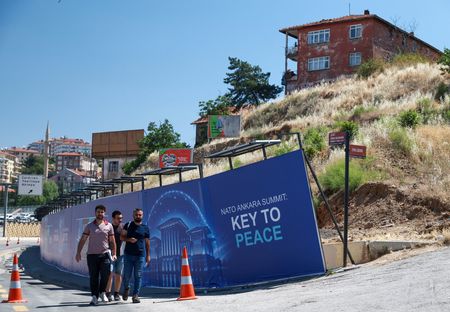
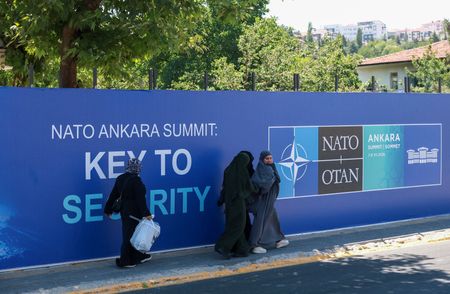
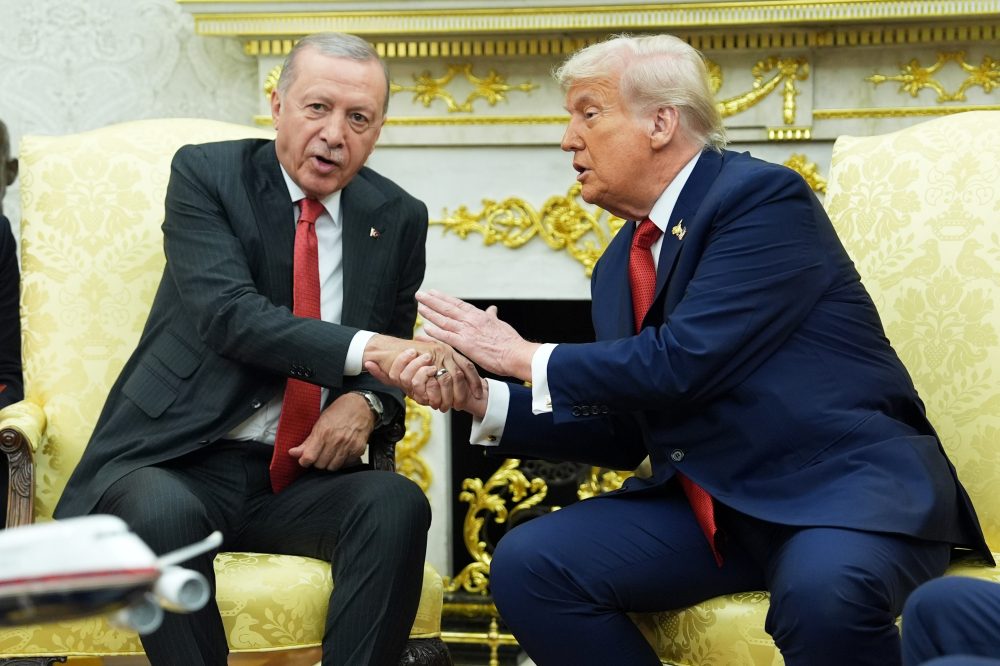
NATO leaders, including U.S. President Donald Trump, are prepared to declare an “ironclad commitment” to collective defense under the alliance’s Article 5 agreement when they gather in Ankara next week, according to a summit declaration reviewed by Reuters that was approved by NATO ambassadors on Friday.
The declaration, which still requires final sign-off from the leaders themselves at the summit, also calls for NATO members to commit €70 billion — roughly $80 billion — in military support for Ukraine in 2026, with “at least equivalent levels” of assistance continuing into 2027.
The summit document states: “We … have gathered in Ankara to reaffirm our ironclad commitment to our collective defence under Article 5 of the Washington Treaty and to the transatlantic bond. An attack on one is an attack on all.”
Trump has repeatedly criticized NATO and its member nations, claiming they have not contributed enough to their own defense and have leaned too heavily on the United States to safeguard Europe. Following disputes with European leaders over the U.S.-Israeli conflict with Iran, Trump raised questions about American dedication to NATO’s mutual defense clause and even floated the idea of withdrawing from the alliance altogether.
However, the fact that the declaration was approved by ambassadors representing all 32 NATO member nations — including the United States — indicates the U.S. president may be willing to put those concerns aside, at least temporarily.
The declaration characterizes Russia as “a long-term threat” to “Euro-Atlantic security and stability” and notes that NATO’s European members and Canada are following through on defense spending commitments made at last year’s summit in The Hague.
“We are building the future: a stronger Europe in a stronger NATO,” the text reads. “European Allies and Canada, working with the United States, are assuming greater responsibility for the Alliance’s defence.”
The declaration also addresses Iran, stating that “Allies reiterate that Iran must never have a nuclear weapon and call on Iran to fully respect freedom of navigation in the Strait of Hormuz.”
Armenia’s parliament approved a new law on Friday that sets stricter requirements for citizens who live outside the country and want to return home to vote in elections.
The move follows reports that Moscow had been working behind the scenes to use Armenians living in Russia to tip the scales in last month’s national election.
Armenia is a landlocked nation and former Soviet republic with a population of around 3 million people. It also has a large number of citizens living abroad, including in Russia, which claims more than 2 million Armenians reside and work there.
The Civil Contract party, led by Prime Minister Nikol Pashinyan, won the June 7 election with 49.8% of the vote. Shortly after that victory, lawmakers from the party introduced the new legislation, arguing that only Armenians who actually live in the country and understand its day-to-day realities should be eligible to vote.
Reuters had reported in May that Russia was stepping up covert operations aimed at undermining Pashinyan’s chances of winning re-election. Officials in Moscow were said to be concerned that he was steering the South Caucasus nation closer to Western nations and away from Russia, which has long served as Armenia’s traditional ally and patron.
According to interviews with five Western intelligence officials and documents reviewed by Reuters, the Russian scheme included plans to transport tens of thousands of Armenians from Russia back to Armenia to influence the outcome of the vote. Pashinyan ultimately defeated a largely pro-Russian opposition.
Russia dismissed the interference allegations as “spymania” and claimed there were irregularities in how the election was conducted.
Under the terms of the newly passed law, Armenian citizens living abroad may only participate in a regular election if they have resided in Armenia for at least half of the two years leading up to the vote — with that residency requirement measured starting 48 days before election day. For snap elections, the window is calculated from 28 days before the vote.
A coalition of Armenian civil society organizations condemned the new law, calling it unconstitutional. In an open letter, the groups wrote that the legislation “endangers democratic principles and violates the political rights of citizens.”
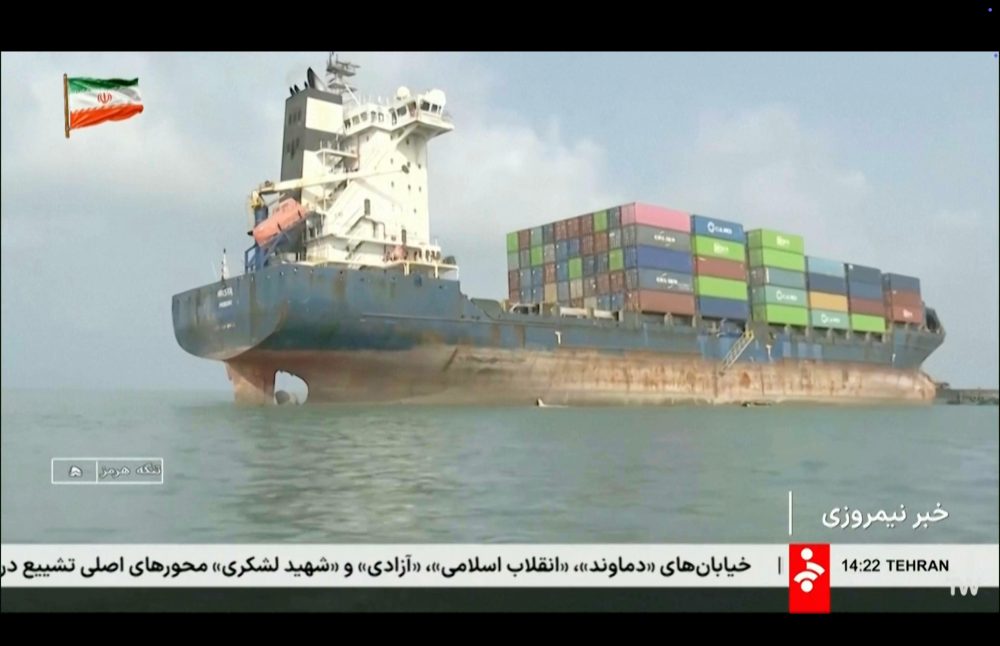
Gulf oil exports climbed sharply in June, rising by more than 3 million barrels per day compared to May to surpass 10 million barrels per day, according to new shipping data. The increase came as U.S. military involvement helped keep the Strait of Hormuz open for tanker traffic, though overall export volumes are still about 40% lower than they were before the conflict began.
The United Arab Emirates was the driving force behind the rebound, with millions of barrels of crude that had been stuck in the Gulf finally reaching global markets. The surge allowed producers to increase output and push oil prices back down to levels seen before the conflict erupted.
Data from cargo analytics firm Kpler showed combined crude and condensate exports from Saudi Arabia, the UAE, Kuwait, Iraq, and Iran climbed by more than 3.5 million barrels per day from May, reaching 10.07 million barrels per day in June. A separate estimate from analytics company Vortexa put June flows at 10.2 million barrels per day, up from 7 million in May but still well below the 16.5 million barrels per day recorded a year ago.
A June 17 agreement between the U.S. and Iran to end hostilities and reopen the Strait of Hormuz accelerated the clearing of backed-up crude shipments. Kpler analyst Johannes Rauball noted that roughly 23 million barrels were still waiting to pass through the waterway. He added that floating storage in the strait had peaked at 96 million barrels in late April.
UAE exports hit a record 3.7 million to 3.8 million barrels per day in June, according to data from Kpler, Vortexa, and LSEG — more than 1 million barrels per day above May figures.
Ship broker BRS reported that 98 tankers crossed the strait between June 22 and June 28, averaging about 14 per day — the highest rate since the conflict started. That total included 47 loaded outbound tankers and 41 empty vessels heading into the Gulf, a sign that ship owners are growing more comfortable sending their fleets back into the region.
Saudi crude exports increased by 768,000 barrels per day to reach 4.52 million barrels per day in June, per Kpler. By last week, exports were averaging around 6.3 million barrels per day — close to January levels — as Riyadh ramped up shipments from Ras Tanura.
During the conflict, Saudi Arabia and the UAE had rerouted some of their exports through pipelines that bypass the Strait of Hormuz, an alternative that Iraq and Kuwait largely did not have access to. ADNOC also employed a tanker shuttle system to keep its exports moving.
Iraq and Kuwait each saw their exports recover to around 800,000 barrels per day, according to Vortexa. Kuwait boosted production sharply in June to 1.65 million barrels per day, a source told Reuters. Iran, meanwhile, saw its exports rise by more than 70% in June to 640,000 barrels per day as the U.S. blockade was eased, Vortexa said.
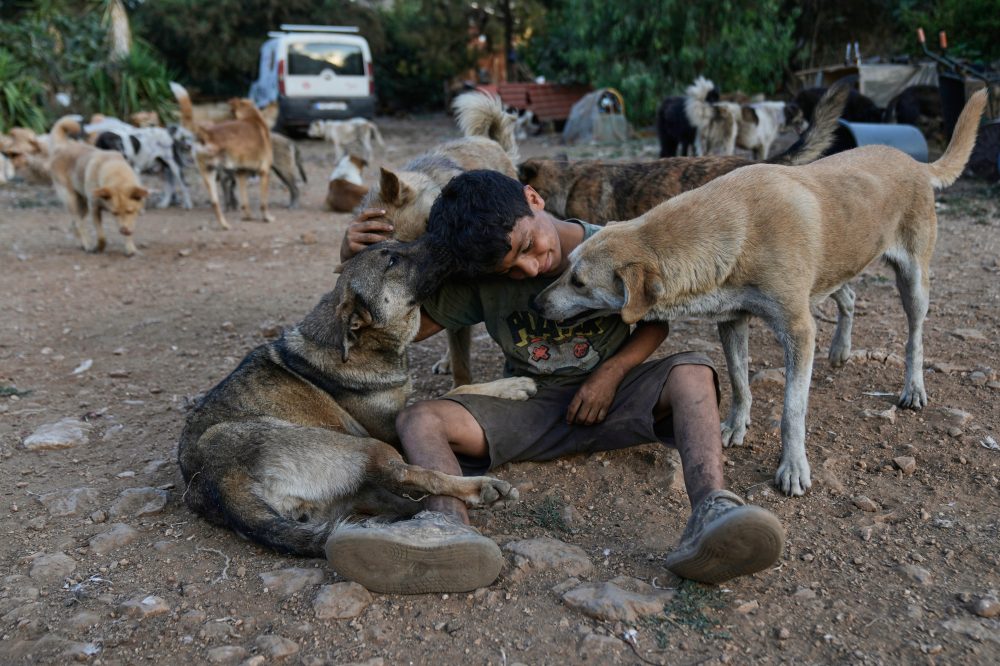
KFAROUE, Lebanon — As the war between Israel and Hezbollah continues to devastate southern Lebanon, one local man is doing what he can to help the most vulnerable victims left behind — the animals.
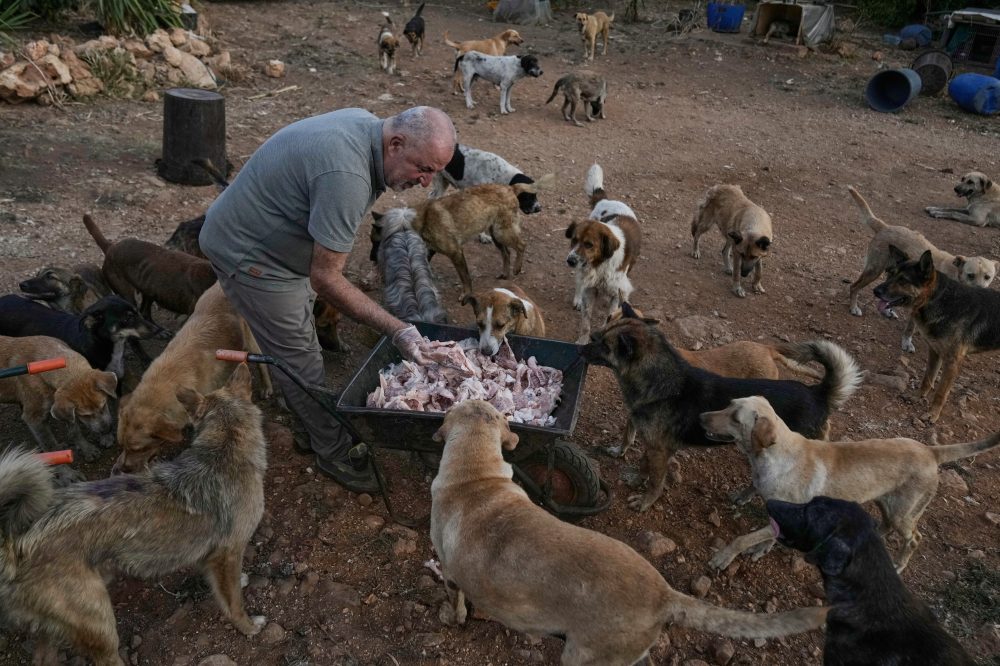
Hussein Hamza has taken it upon himself to care for abandoned pets and farm animals in the village of Kfaroue. With much of the local population having fled the region to escape the fighting, countless animals have been left without anyone to feed or care for them.
The situation is made even more heartbreaking by the fact that some of those animals’ owners did not simply leave — they were killed in airstrikes, leaving their animals with no one to turn to.
A photo gallery compiled by Associated Press photo editors captures the animals Hamza has been working to rescue and care for amid the ongoing conflict.
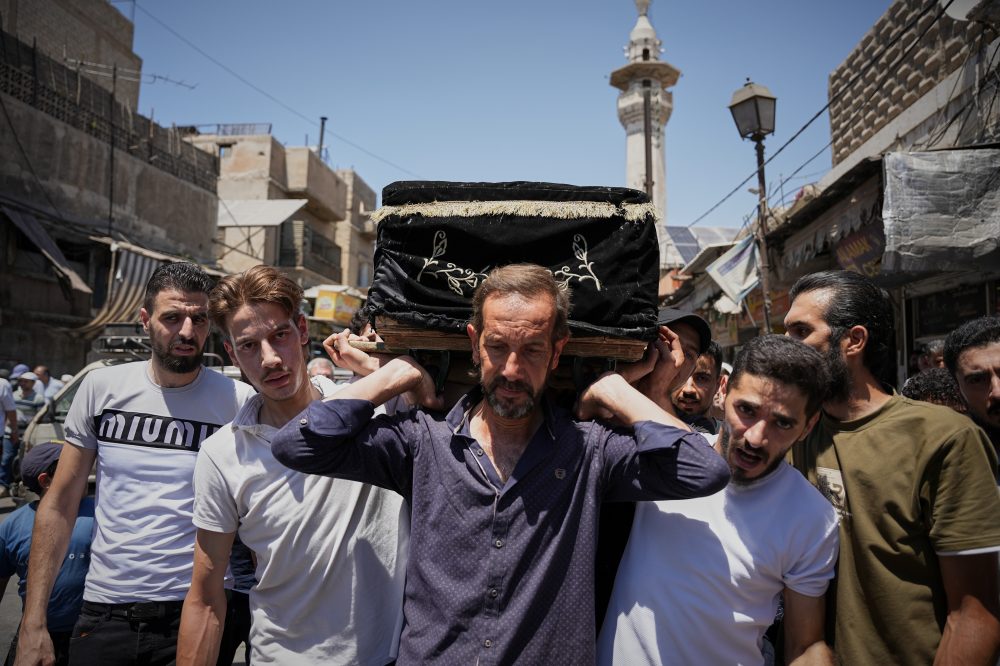
Mourners took to the streets of Damascus on Friday, one day after a bomb hidden inside a cafe in the Syrian capital claimed the lives of nine people.
A funeral procession wound through the typically lively Midan neighborhood, with pallbearers carrying the coffins of three of the victims. The explosion at the popular cafe — located close to the city’s main judicial complex and commonly visited by lawyers — also left 20 people injured.
Syrian authorities have pledged to track down and arrest those responsible for the attack, though no updates on the investigation have been made public. As of Friday, no group had stepped forward to claim responsibility.
Bahaa Qabbani told reporters that his brother, Fathi Qabbani — a married father with one son — worked at a shop close to the blast site and happened to be walking past the cafe when the explosion occurred. He did not survive.
Bahaa Qabbani described those behind the attack as “a group of terrorists who are against the homeland” and urged the nation’s security forces to “take hold of the country with an iron fist.”
Separately on Friday, Syria’s state-run news outlet SANA reported that three security force members were injured in a grenade attack at a checkpoint leading into the Damascus suburb of Jaramana. According to SANA, a man riding a motorcycle hurled two hand grenades at checkpoint guards and attempted to throw a third, but it detonated in his hand, killing him. A second individual was taken into custody in connection with the incident.
Syria’s new leadership, which came to power following the rapid fall of the Assad dynasty in December 2024, has faced ongoing difficulties maintaining control throughout the country and containing extremist activity. Recent deadly attacks attributed to the Islamic State group have struck religious minority communities, including a suicide bombing at a church in a Damascus suburb and an explosion at a mosque in a predominantly Alawite section of the city of Homs.
KFAROUE, Lebanon — Every day, Hussein Hamza walks his rounds through a village in southern Lebanon, tending to a growing collection of animals that the war left behind.
Since the latest conflict between Israel and Hezbollah erupted, the number of animals under Hamza’s care has surged dramatically. As hundreds of thousands of southern Lebanese residents fled their homes, many had no choice but to leave their pets and livestock behind. In other cases, the animals’ owners were killed in Israeli airstrikes. Some of the animals arrived at his shelter already injured.
The war in Lebanon started on March 2, after the Iran-backed Lebanese militant group Hezbollah launched missiles into Israel following attacks on Iran by the U.S. and Israel.
When Hamza makes his rounds, dozens of dogs swarm around him, tails wagging as he wheels a barrow full of chicken pieces to distribute. Several of the dogs are missing limbs. One has an infected foot wound that Hamza tends to personally. He then moves on to carry water buckets into an enclosure where chickens and two camels are kept.
“During the war, people contacted us and told us they had left their chickens behind because everyone had to evacuate suddenly,” Hamza said.
While Kfaroue itself experienced some airstrikes, it remained relatively peaceful compared to communities closer to the Israeli border, where entire villages were destroyed and Israeli forces have occupied large stretches of land.
“They asked us to bring the chickens here, because if they were left roaming free, foxes might eat them, and otherwise they would die from hunger and thirst,” he said. “We managed to rescue only the chickens we could reach — not all of them. There were areas where the fighting was too intense and we couldn’t get there.”
With a fragile ceasefire now in place, Hamza is holding the animals and waiting for their owners to return and collect them.
Hamza’s history with animal rescue dates back to 2006. His shelter, called Mashala — an Arabic phrase meaning “what God has willed” — has operated at its current location for seven years.
While the war has expanded the shelter’s responsibilities, it has also strained its already tight finances.
“When I first started, I paid for everything myself,” Hamza said. “I had an agricultural business, and I kept spending from my own money until I went bankrupt.”
He eventually launched a Facebook page to seek donations from the public.
According to Hamza, the shelter burns through roughly $400 to $500 each day covering food, veterinary care, spaying and neutering procedures, staff wages, fuel, and maintenance costs.
Fundraising has become increasingly difficult as Lebanon faces an overwhelming number of humanitarian crises. Many donors are directing their money toward efforts that support displaced or injured people, Hamza noted.
He understands that priority, but believes people still have a duty to the animals that rely on them.
“We shouldn’t neglect these responsibilities because of wars or because of the poverty we face,” he said.
Ongoing instability and fears of renewed fighting have made many potential adopters hesitant, though some of Hamza’s dogs have managed to find new homes. Abbas Shoeib brought home a black pit bull mix whose previous owners died in an airstrike.
“A dog needs someone to take care of him, and when you take care of him, he will take care of you,” Shoeib said.
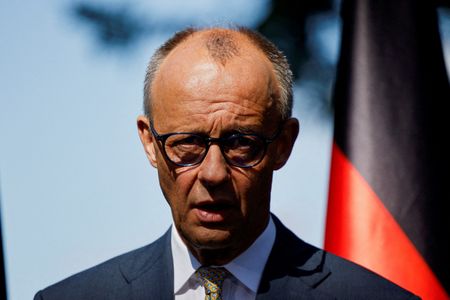
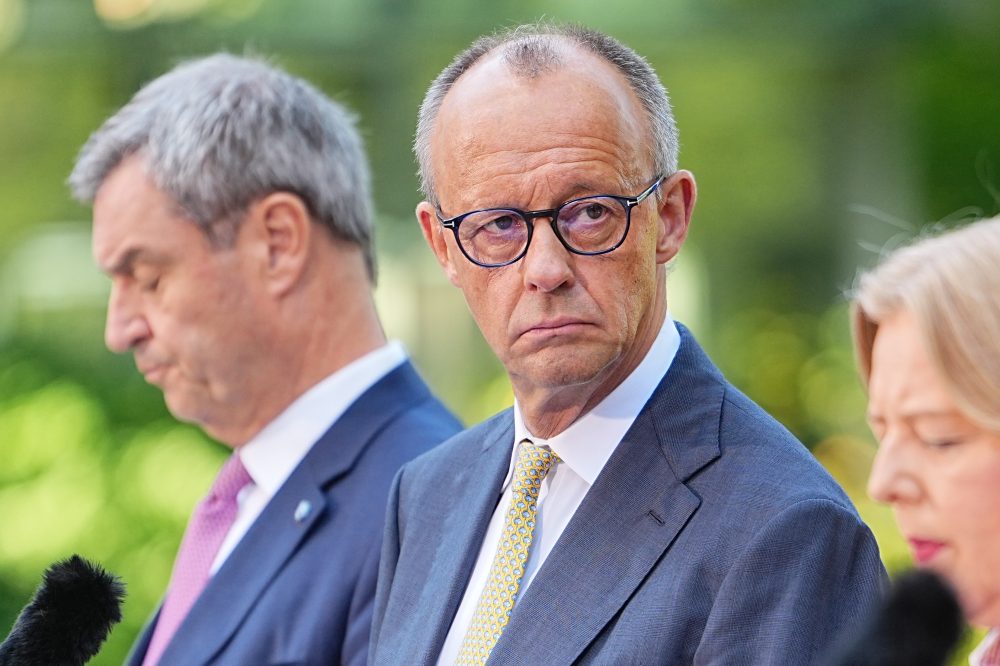
German Chancellor Friedrich Merz stood his ground Friday against criticism from U.S. President Donald Trump, saying Germany has every right to be proud of its efforts to boost military spending.
When reporters asked about Trump’s recent comments calling Germany’s past defense spending record “ridiculous,” Merz was direct in his response.
“Germany is doubling its defence budget within four years. This is the greatest effort we have ever made to strengthen our defence capabilities. In this respect, we have no reason to shy away from anyone,” Merz told reporters.
He added: “We will state this, with all due modesty, and we are doing so as the European Union’s largest member state, bearing a responsibility within Europe.”
Trump had taken to his Truth Social platform earlier this week to blast NATO allies over their defense spending. In one post, he wrote: “Ridiculous for the U.S.A. to continue along this one sided path when the relationship is not reciprocal.” In a separate post, he claimed Germany’s spending between 2014 and 2025 was “MUCH LOWER” than that of the United States or other NATO allies, ending with the word “Ridiculous!”
The dispute comes as NATO leaders prepare to meet next week in Ankara. European nations are hoping to show Trump they are serious about shouldering more of the continent’s defense burden, even as tensions simmer over disagreements involving Iran and Greenland.
Last year in The Hague, NATO members agreed to raise defense spending to 3.5% of their gross domestic product on core military items — including weapons and troops — by 2035. That goal replaced a previous target of 2%.
Merz made his comments while hosting leaders from the Baltic states in Berlin. “We, too, take the Russian threat very seriously, and we are arming ourselves against it,” he said. “We will reach the 3.5% benchmark set in The Hague as early as 2029, well ahead of the agreed deadline.”
The past year has been a turbulent one for the NATO alliance. Trump threatened to seize Greenland from fellow NATO member Denmark and launched military action against Iran without consulting European partners — a move that shook global markets and strained relationships with European leaders, including Merz, who publicly said the U.S. was being humiliated by Iran.
JOHANNESBURG — South Africa has called in more than 3,000 military personnel to back up police forces this month as anti-migrant demonstrations continue to sweep the country, according to a letter signed by the president and released Friday.
Demonstrators took to the streets in cities across the nation on Tuesday, with some marches turning violent. An anti-migrant movement has announced plans to hold similar protests every Thursday, pushing for the government to adopt a stricter approach toward undocumented foreign nationals.
In a letter addressed to the parliamentary speaker, President Cyril Ramaphosa confirmed that 3,405 members of the South African National Defence Force began their deployment on June 28. The operation is projected to cost approximately 54.6 million rand, or about $3.37 million.
The letter, which was published by parliament, stated that “Members of the SANDF … will be on standby for any eventualities.”
Thousands of protesters wrapped in national flags — some carrying wooden weapons — flooded city streets on Tuesday. While most demonstrations remained peaceful, a number of them spiraled into violence and the looting of local shops.
Law enforcement arrested more than 900 individuals on charges ranging from immigration violations and public violence to robbery and sheltering undocumented migrants. Military forces were also sent into an inner-city neighborhood in Johannesburg where large numbers of migrants reside.
Tuesday’s protests are the latest escalation in months of unrest that has drawn condemnation from the international community, as foreign nationals have been forced from their homes and had their businesses and belongings destroyed.
Migrants are frequently accused of taking jobs from citizens, fueling crime, and straining public services — accusations that social scientists say are not supported by evidence.
According to StatsSA, immigrants make up roughly 3 million people, or about 4% of South Africa’s total population — a relatively modest share compared to global averages.
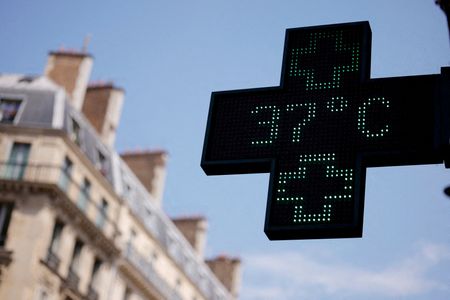
France’s public health authority announced Friday that deaths rose by nearly a third during the most intense week of last month’s record-breaking heat wave, with at least 2,000 more fatalities recorded compared to the week before — a period when temperatures were already rising and emergency rooms were already being overwhelmed with heat-related cases.
Public Health France released updated figures that are double what the agency initially estimated. Just last Sunday, the agency had reported at least 1,000 additional deaths, a figure that only accounted for three of the most extreme days of heat. The newer numbers now cover the full week.
In the French capital, funeral service directors have reported serious difficulty finding storage space for bodies ahead of burial or cremation, with some mortuaries reporting they were at capacity and turning bodies away.
The updated figures cover the week of June 22 through June 28 — the period during which France experienced its hottest days ever recorded, with peak daytime and nighttime temperature records broken in cities and towns across the country. The extreme heat also set records in numerous other parts of Europe.
Public Health France reported a preliminary death count of 8,973 for that week, while cautioning that the data remains incomplete. That figure represents a 29% increase over the 6,948 deaths recorded during the previous week of June 15 through June 21, when the heat wave was just beginning. The difference between those two numbers — 2,025 deaths — is considered the excess mortality from one week to the next, across all causes and all age groups.
At Paris-Saclay Hospital, a wave of patients suffering from heat-related illness began arriving on June 20, according to Dr. Nicolas Gonzales, head of the emergency department, who spoke with The Associated Press. He described treating patients — ranging from children to elderly people living alone — for heart attacks, dehydration, kidney failure, and other heat-related conditions.
Public Health France noted that deaths in private homes saw the most dramatic increase, surging 91% compared to the prior week. Deaths in care facilities for older residents climbed 37%, while hospital deaths rose by nearly 20%.
The Paris region was among the hardest hit areas, with deaths increasing by nearly 63% from one week to the next.
The agency acknowledged that its numbers likely undercount the actual death toll due to the incomplete nature of the data collected. “The mortality will as a consequence be higher than these first figures,” the agency stated.
Brazilian federal police have launched a major operation targeting individuals who were recently placed on a U.S. sanctions list due to alleged ties to the Primeiro Comando da Capital, known as the PCC, one of Brazil’s largest criminal organizations. Two sources with knowledge of the situation confirmed the operation to Reuters on Friday.
While federal police declined to name the specific suspects involved, officials released a statement saying the operation was aimed at breaking up a criminal network accused of washing money generated through international drug trafficking.
Earlier this week, the U.S. Office of Foreign Assets Control added two Brazilian citizens to its Specially Designated Nationals and Blocked Persons List, citing their alleged connections to the PCC. In addition to the two individuals, three Brazilian entities — two of them operating in the financial sector — were also sanctioned due to their alleged ties to one of those individuals.
The designations come after the United States officially classified both the PCC and its rival gang, Comando Vermelho, as Foreign Terrorist Organizations last month.
Brazilian President Luiz Inacio Lula da Silva’s administration had previously pushed back against such classifications, expressing concern that terrorist designations could eventually pave the way for U.S. military involvement or financial penalties against banks that unknowingly conduct business with gang members.
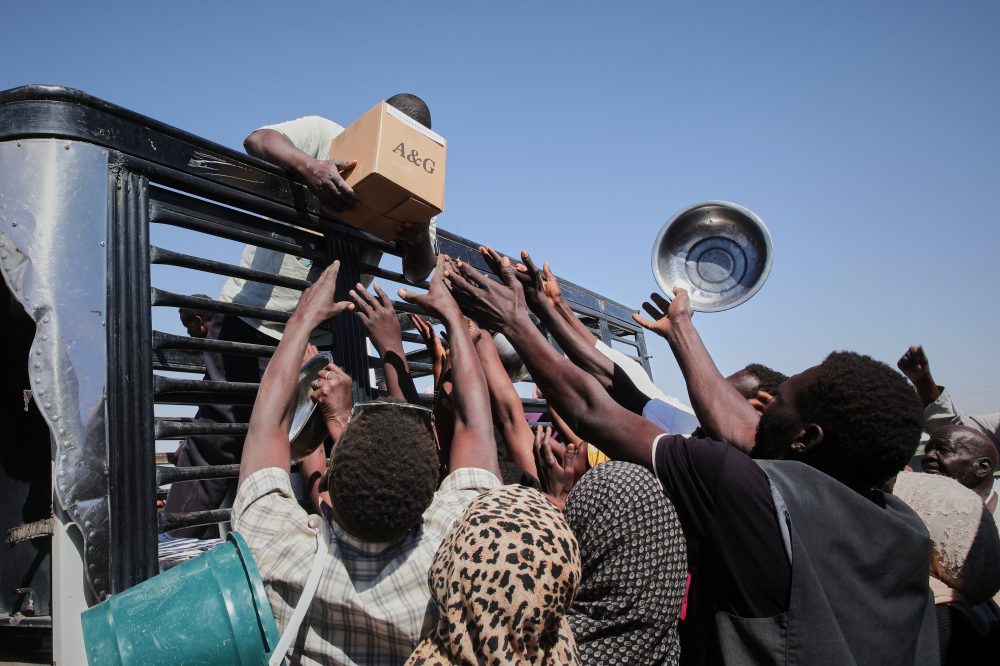
GENEVA — The United Nations’ top human rights official issued a dire warning Friday, declaring a “red alert” over the threat of mass atrocity crimes in and around a key city in central Sudan, and calling on global leaders to step up efforts to end the country’s devastating ongoing conflict.
Volker Türk, the UN High Commissioner for Human Rights, addressed the Human Rights Council at the UN’s Geneva office, warning that signals coming out of the city of el-Obeid were “clear and unmistakable: Another human rights catastrophe is unfolding in Sudan.”
The council — the UN’s highest human rights authority — convened an urgent debate on the el-Obeid situation amid mounting alarm from diplomats, advocacy organizations, and others who fear a fresh wave of violence against civilians. The war in Sudan is now in its fourth year.
“This is not a drill. It is a red alert that needs to land on the desks of heads of state and government around the world,” Türk declared. “Their phones should be running hot in the coming days and weeks, with ideas on how to prevent atrocity crimes in el-Obeid and in other places in Kordofan.”
Türk described how civilians in the region have endured siege-like conditions for 18 months, subjected to what he called “relentless drone strikes” as Sudan’s national armed forces and the paramilitary Rapid Support Forces — known as the RSF — fight for dominance in areas surrounding the city.
The council’s 47 member nations were reviewing a draft resolution introduced by Britain, Germany, Ireland, the Netherlands, and Norway. The resolution condemns the RSF and its allies for escalating violence in and around el-Obeid, calls for increased financial and logistical support for countries sheltering Sudanese refugees, and denounces “all forms of external interference” in the conflict, among other provisions.
The war broke out in April 2023, fueled by long-standing tensions between Sudan’s army and the RSF. Since then, the conflict has claimed the lives of at least 59,000 people, forced approximately 13 million from their homes, and pushed large portions of the country into famine. More than 30 million people are currently in need of humanitarian aid.
In February 2025, Sudan’s military managed to lift a siege on el-Obeid that had been in place for over a year. However, the RSF has since launched several offensives in an effort to reimpose the blockade from multiple directions.
The UN and several nations have raised alarms over reports of RSF forces massing around el-Obeid, a city of half a million residents located in North Kordofan. Recent strikes on critical infrastructure have left civilians with severely limited access to food, fuel, water, medical care, and transportation, according to Türk’s office.
The Karlovy Vary International Film Festival in the Czech Republic has launched its 60th edition, with celebrated actors Dustin Hoffman and Juliette Binoche set to receive special recognition during the event.
Hoffman, a two-time Academy Award winner for best actor — earning the honor for his performances in “Kramer vs. Kramer” in 1979 and “Rain Man” in 1988 — will be presented with an award recognizing his extraordinary artistic contributions to global cinema on opening night Friday.
The following day, Saturday, Hoffman is scheduled to introduce a screening of “The Graduate,” his landmark 1967 film that earned him his very first Oscar nomination.
French actress Juliette Binoche, who took home the Academy Award for best supporting actress for her role in “The English Patient” in 1996 along with numerous other accolades, will receive the same recognition as Hoffman during the festival’s closing ceremony on July 11.
Three of Binoche’s films will be shown at the festival: “Certified Copy” from 2010, “Three Colors: Blue” from 1993, and “In-I in Motion,” released in 2025.
American cinematographer Robert Richardson, widely recognized for his collaborations with directors Oliver Stone, Martin Scorsese, and Quentin Tarantino, will also be honored at the festival. Richardson, a three-time Oscar winner for best cinematography, will introduce a feature documentary about his life and career titled “Robert Richardson: The White Devil” on Saturday.
A grand jury will evaluate 12 competing films for the festival’s top honor, the Crystal Globe. The festival is held in the western Czech spa town of Karlovy Vary.
MONACO (AP) — International law enforcement agency Interpol has publicly named a suspect wanted in connection with a bombing in Monaco that reportedly targeted a Ukrainian tycoon linked to Russia.
The organization identified the suspect as Anastasiia Berezovska, a 39-year-old woman from Ukraine, through a Red Notice published on its official website calling for her arrest.
According to the notice, Berezovska was born in Ukraine, has dark hair, speaks German, and has a tattoo — possibly depicting a snake — running along her right arm from the shoulder to the elbow.
Authorities in Monaco are seeking her arrest on charges that include attempted murder, along with additional criminal counts, according to the Interpol notice.
NATO leaders are heading to Ankara for a summit on July 7-8, where they will confront a series of significant challenges that could shape the future of the alliance for years to come. While some officials are concerned that the Iran war could steal attention from the gathering, they are hoping leaders stay focused on the core mission of defense and deterrence.
Keeping the U.S. on Board
One of the top priorities for NATO officials is preserving unity and ensuring the United States remains committed to Article 5 — the provision stating that an attack against one member nation is considered an attack against all. Two major flashpoints this year have strained the transatlantic relationship: U.S. President Donald Trump’s push for control over Greenland, an autonomous territory belonging to NATO-member Denmark, and his anger toward allies over their handling of the Iran war.
Trump went so far as to call the alliance a “paper tiger” and raised the possibility of pulling the U.S. out of NATO altogether. The alliance’s Secretary-General, Mark Rutte, has worked to ease the friction, combining diplomatic flattery with hard data to convince Trump that European members are living up to their commitments.
Shifting the Defense Burden
The Trump administration has been pushing European governments to assume primary responsibility for defending the continent, as Washington redirects its focus toward the Indo-Pacific region. Steps are already being taken: the U.S. has reduced the military capabilities it makes available to NATO during a crisis, and European members have stepped in to cover nearly all of those gaps.
U.S. Defense Secretary Pete Hegseth has launched a new review of American troop deployments across Europe and threatened to hold back some U.S. financial contributions to NATO if allies he considers “free-riders” fail to meet their defense spending obligations. European officials say they are working to do more, but some have pushed back, arguing that any meaningful transition takes time and expressing unease over the unpredictability of policy decisions coming from Washington.
The Push to Spend More
European NATO members and Canada are under heavy pressure to increase defense investment — both to strengthen deterrence against Russia and to show Trump they are serious about shouldering more of the burden. At last year’s summit in the Hague, NATO leaders agreed to Trump’s demand for higher spending, committing to direct 5% of GDP toward defense and defense-related measures within a decade. Of that total, 3.5% would go toward core defense items like troops and weapons, with the remaining 1.5% allocated to broader related measures.
Alliance data shows that European NATO members and Canada boosted defense spending by 20% in 2025 compared to the previous year in real terms. However, not all countries are on pace to hit the new targets, and several governments are beginning to face domestic political resistance to increased defense budgets.
Turning Money Into Military Capability
As defense investment climbs, a major hurdle for the alliance is converting that funding into actual military capabilities within a reasonable timeframe. In Ankara, NATO members are expected to announce tens of billions of dollars in new contracts. Still, some officials have expressed frustration that production has not ramped up as quickly as hoped, and that securing some orders still takes years. NATO’s leadership has urged defense industries to collaborate more, open new production lines, and speed up delivery timelines.
The Russia Threat
NATO leaders meeting in Ankara are expected to reaffirm that Russia represents a long-term danger to security across Europe and the Atlantic region. While alliance officials acknowledge that Russia is dealing with serious economic difficulties and that Ukraine has strengthened its military position, Secretary-General Rutte has warned that nearly half of Russia’s national budget is now devoted to defense spending — and that the alliance must not be complacent about Moscow’s intentions.
Continued Support for Ukraine
European NATO members have continued to fund assistance for Ukraine, more than four years after Russia launched its full-scale invasion. Aid flows through multiple channels, including direct bilateral support, a European Union loan program, and an initiative that allows European nations to pay for U.S. weapons to be supplied to Ukraine. While most European leaders say they remain committed to backing Kyiv, keeping that support at a high level is increasingly difficult given competing demands on national budgets and growing concern in some capitals that the financial contributions are not being shared equally among member nations.
ABUJA — The United States has pulled back the majority of military forces it deployed to Nigeria for a recent operation against Islamic State militants, with American support now shifting to intelligence sharing at Nigeria’s request, the commander of U.S. Africa Command (AFRICOM) announced.
Back in May, U.S. and Nigerian forces carried out joint military operations in northeastern Nigeria, resulting in the killing of Abu-Bilal al-Minuki, who held the second-highest position in ISIS’s global leadership structure. That mission came after a Christmas Day strike against the militants ordered by President Donald Trump, who stated that the group had been targeting Christians in Nigeria.
Speaking at a conference of African defense chiefs held in Angola on Thursday, AFRICOM Commander General Dagvin Anderson called the May joint operation a blueprint for how the U.S. should approach security partnerships across Africa going forward.
“We have withdrawn much of our forces that were just there for that operation, but are continuing the partnership that Nigeria has asked for to help continue with the intelligence sharing,” Anderson told reporters during a briefing hosted by the U.S. State Department following the conference.
Anderson explained that the operation, which took place in Nigeria’s Lake Chad Basin region, reflected Washington’s broader strategy of offering specialized military capabilities while letting African partner nations take the lead in their own security operations.
He noted that the collaboration with Nigeria had dealt a significant blow to Islamic State’s leadership structure, and said the effects were felt beyond West Africa due to the group’s far-reaching international network. The operation also disrupted broader ISIS communications and activities, not just local commanders, he added.
“Nigeria has been very active since that operation in May,” Anderson said. “They continue to prosecute targets themselves.”
Anderson also pointed out that sustained military pressure from Nigeria, combined with publicizing the operation’s success, had prompted more ISIS fighters in northeastern Nigeria to defect or surrender.
The three-day gathering in Luanda, Angola’s capital, brought together military leaders from 35 African nations, as well as representatives from the United States and Brazil.
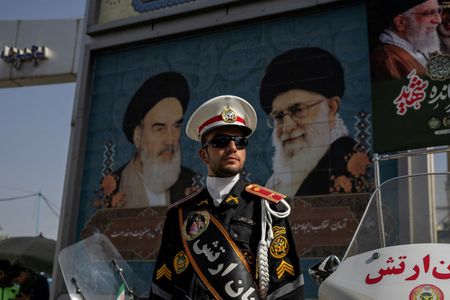
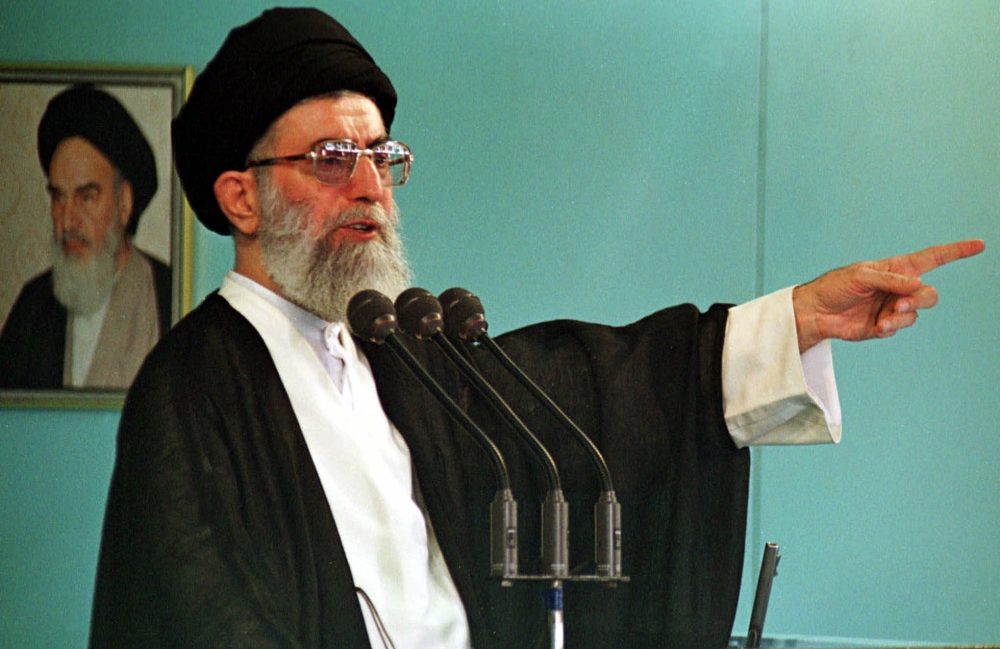
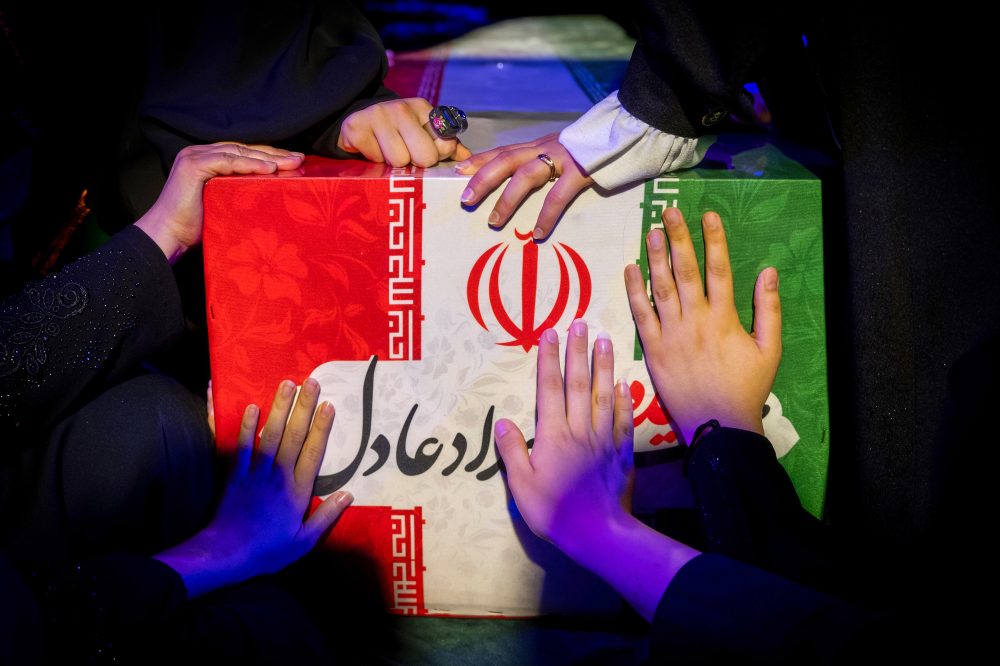
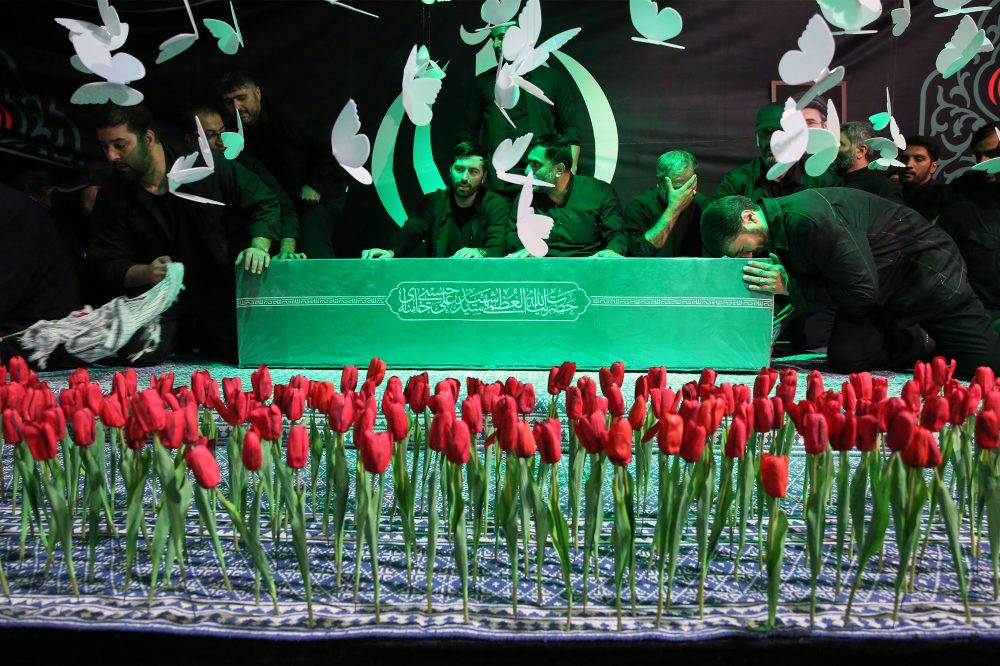
The remains of Iran’s Supreme Leader Ayatollah Ali Khamenei were placed on public display Friday in a large ceremonial hall in Tehran, drawing clerics, government officials, foreign dignitaries, and thousands of grieving supporters following his 37-year reign.
Iran has organized a full week of large-scale funeral processions for Khamenei, who was killed in February during U.S. and Israeli airstrikes at the outset of a four-month war. The elaborate ceremonies are being presented as a demonstration of public loyalty to Iran’s Islamic Republic and its revolutionary principles.
Khamenei’s body is expected to travel to Qom, Najaf, and Kerbala — major Shi’ite holy centers in Iran and Iraq — before his final burial next Thursday in Mashhad, the site of Iran’s most sacred pilgrimage shrine.
His coffin was first unveiled late Thursday to a crowd of weeping supporters who swayed and beat their heads in rhythm with a sung lament while flowers were tossed from the funeral bier into the gathering. By Friday, the coffin — along with those of family members who perished alongside him — had been moved into the grand prayer hall constructed in honor of his predecessor, Ayatollah Ruhollah Khomeini.
The funeral is unfolding at a pivotal time for Iran. The country’s clerical leadership, backed by the Islamic Revolutionary Guard Corps, has emerged emboldened after what it viewed as a battle for survival against its most powerful enemies. Yet nearly five decades after the 1979 revolution, the Islamic Republic finds itself deeply divided internally, even as officials publicly proclaim national unity.
Analysts say support for the clerical leadership is extremely thin. The new Supreme Leader, Khamenei’s son Mojtaba Khamenei, has not appeared publicly since being wounded in the same strike that killed his father.
Years of heavy economic sanctions have crippled the country’s economy, and waves of nationwide protests have been suppressed by security forces with growing brutality — reaching a peak with the killing of thousands of demonstrators in January.
Those underlying tensions have been set aside this week as authorities mount a display of state power, hoping to mobilize millions of mourners for the funeral events. Tehran’s streets were heavily secured, with military and police vehicles positioned along major roads and members of the black-shirted Basij paramilitary force patrolling on motorcycles. Iran also issued a warning to the United States and Israel against conducting any attacks during the funeral period.
When the coffins arrived Friday, carried above the outstretched hands of a waiting crowd, they were placed on a white, tiered platform inside the prayer hall, framed by intricately tiled arched walls and flanked by national and black mourning flags. A black turban — worn by clerics who claim descent from Islam’s Prophet Mohammed — rested on the coffin alongside a folded checkered scarf, a symbol in Iran of revolutionary ideals and solidarity with Palestinians.
Delegations from Lebanon, Iraq, and Yemen — home to some of the strongest groups within Iran’s regional network — filed through the hall to pay their respects. Representatives from Russia and China were also expected to attend. Iraqi President Abdul Latif Rashid, Armenian Prime Minister Nikol Pashinyan, and Pakistani Interior Minister Syed Mohsin Naqvi all traveled to Tehran for the occasion.
Family members of Hezbollah leader Hassan Nasrallah and senior commander Imad Mughniyeh, both Lebanese allies of Iran who were killed in Israeli strikes, also attended the ceremony.
Within Iran’s theocratic system, Khamenei held a unique position — not only as head of state and leader of a revolutionary movement, but as the earthly representative of Shi’ite Islam’s 12th imam, who vanished in the ninth century. His death at the hands of an enemy feeds into a deep Shi’ite tradition of martyrdom and mourning, in which processions of the faithful beat their chests or backs in grief.
That powerful symbolism has been on display throughout Tehran and beyond, with black funeral flags referencing the seventh-century martyrdom of Shi’ism’s third imam, Hossein, hanging over city streets since Khamenei’s death.
Overnight in central Tehran, crowds gathered sobbing and chanting, led by a Basij member, while others distributed posters of the late leader.
DUBAI, United Arab Emirates — For more than three decades, Ayatollah Ali Khamenei steered Iran with an iron grip, reshaping the nation into a formidable regional force while putting it on a collision course with Israel and the United States. Now, months after he was killed at the outset of the U.S.-Israeli war in Iran, his funeral is underway — a multi-day ceremony beginning Saturday.
Khamenei rose to power in 1989 following the death of Ayatollah Ruhollah Khomeini, the revolutionary cleric who had toppled the shah and established clerical rule in Iran. Where Khomeini was a firebrand ideologue, Khamenei was seen as a more rigid figure with less religious authority — yet it was his task to transform that revolutionary spirit into a functioning government.
Throughout his time in power, Khamenei threw his support behind numerous armed groups across the Middle East, pressed forward with Iran’s nuclear ambitions, and responded to multiple waves of domestic unrest with brutal crackdowns. His confrontations with the U.S. and Israel earned him support within Iran, but those same conflicts ultimately contributed to his death.
Following the Iran-Iraq war of the 1980s, Khamenei elevated the paramilitary Revolutionary Guard into the central pillar of his regime. The Guard evolved into both a military powerhouse and a massive business enterprise, becoming Iran’s most elite fighting force with deep roots in the country’s economy.
During his rule, Iran moved away from conventional military strategy, instead cultivating a network of proxy forces known as the “Axis of Resistance.” This included support for the Lebanese militant group Hezbollah, which forced Israel out of southern Lebanon in 2000 and has continued clashing with Israeli forces ever since.
Iran also backed Yemen’s Houthi rebels, who seized the country’s capital in 2014 and held it for over a decade in a grinding, unresolved conflict. The Palestinian militant group Hamas also received Iranian support in its fight against Israel in the Gaza Strip. Meanwhile, Iranian-backed militias carried out an insurgency against American forces in Iraq.
However, the chain of Middle East conflicts sparked by Hamas’ October 7, 2023, attack on Israel began to unravel the “Axis of Resistance,” leaving both Hamas and Hezbollah significantly weakened.
For years, Khamenei brushed aside United Nations sanctions and continued pushing Iran’s nuclear program forward. The U.S. and its allies have long maintained that Iran secretly pursued nuclear weapons development until 2003. Khamenei issued a verbal religious ruling — known as a fatwa — declaring nuclear weapons to be against Islamic principles, while insisting Iran would never abandon what he described as a peaceful nuclear energy program.
Under a 2015 nuclear agreement, Iran committed to sharply scaling back its uranium stockpile and enrichment activities in return for relief from sanctions. But after U.S. President Donald Trump pulled the United States out of that deal in 2018 — a move welcomed by Israel — Iran began amassing uranium enriched to levels close to weapons-grade. Both Israeli and some American officials have warned that Tehran could use that stockpile to pursue nuclear weapons if it decided to do so. The U.S.-Israeli military campaign in 2025 and the ongoing war have both included strikes on Iran’s nuclear facilities.
Political repression and a struggling economy repeatedly ignited waves of public protest throughout Khamenei’s rule. In 2009, demonstrators took to the streets after the reformist opposition alleged that hard-line President Mahmoud Ahmadinejad’s reelection was fraudulent. The government’s response left dozens dead and hundreds imprisoned.
Economic frustrations drove more protests in 2017, and in 2019, demonstrations escalated after the government raised gasoline prices. Activists say the crackdown that followed killed more than 300 people.
In 2022, the death of Mahsa Amini — a young woman who had been detained for allegedly wearing her headscarf incorrectly — ignited another round of nationwide protests. Security forces crushed the movement, killing more than 500 people and arresting tens of thousands.
Then in late 2025, economic grievances once again brought Iranians into the streets in what appeared to be the largest protest movement in the country’s history. Hundreds of thousands of people across Iran demanded an end to the Islamic Republic. Activists report that at least 7,000 people were killed in the crackdown that followed — a level of violence that shocked many Iranians.
Khamenei’s death has raised serious questions about Iran’s future. His son, Ayatollah Mojtaba Khamenei, has been selected as the next supreme leader, but reports suggest he was wounded in the strikes that killed his father and he has not appeared in public since.
As he launched the current war, President Trump urged Iranians to “take over your government.” So far, no such uprising has materialized — hard-liners have instead been gathering nightly in the streets of Tehran.
What comes next for Iran after the burial of its longtime supreme leader may hinge largely on institutions like the Revolutionary Guard, which has demonstrated time and again its willingness to use overwhelming force to hold onto power.
CHISINAU, Moldova — In a surprise announcement Friday, Moldovan Prime Minister Alexandru Munteanu declared he is leaving office, a move that under Moldovan law immediately triggers the resignation of the entire government.
Munteanu offered no specific explanation for his decision, which comes less than a year after he was sworn in to lead the pro-Western government of the EU candidate nation — a country whose recent elections have been seen as a pivotal choice between aligning with Europe or Russia.
In a statement shared on social media, Munteanu wrote: “Today I end my term as prime minister. The moment I understand that I can no longer exercise my mandate in accordance with my principles and beliefs, I choose to walk away.”
He also noted: “I accepted the proposal to be prime minister with a lot of responsibility and strong conviction that I can contribute to changing things for the better.”
Under Moldovan law, a prime minister’s resignation takes effect immediately upon announcement. However, the government remains in place in a caretaker role until a new cabinet is assembled.
Moldovan President Maia Sandu responded to the news with a statement that both acknowledged Munteanu’s service and offered some criticism. She thanked him for guiding the country through what she called a “complex period,” but said she had hoped for “more involvement in complicated decisions, more openness to listening to people.”
Sandu outlined her next steps, saying: “Next week, I will listen to the parliamentary groups to appoint a new prime minister. We must have a united, strong team in the Government that will fulfill our country’s objective. We are obliged to succeed in taking Moldova into the EU and helping the country.”
She acknowledged the challenge ahead, adding: “From my experience, at least in recent years, it is never easy to identify candidates for the position of prime minister. I cannot know how long it will take, but we must still manage to have a government fairly quickly.”
Moldova is a landlocked nation bordered by Ukraine to the east and EU and NATO member Romania to the west. The country declared independence from the Soviet Union in 1991 and in recent years has charted a clear course toward Western integration, making it a focal point in the ongoing geopolitical competition between Russia and Europe.
The United Nations’ top human rights official is calling on the world to take action as a new crisis deepens in Sudan, this time centered on the city of al-Obeid in the state of North Kordofan.
Speaking to delegates in Geneva during an emergency session of the U.N. Human Rights Council on Friday, U.N. High Commissioner for Human Rights Volker Turk delivered a stark warning. “The signs from al-Obeid are clear and unmistakable: Another human rights catastrophe is unfolding in Sudan, this time in the capital of the strategic state of North Kordofan,” he said.
The emergency session was requested by Britain, whose representative had already raised concerns about the possibility of large-scale atrocities. Those fears stem from reports that Sudan’s paramilitary Rapid Support Forces and their allies have been gathering troops around al-Obeid, raising the risk that the conflict could intensify further.
Turk informed delegates that residents of al-Obeid have been living under siege-like conditions for the past 18 months. Access to clean water has reached a critical shortage, and the city has endured relentless drone strikes as Sudan’s Armed Forces and the Rapid Support Forces fight for control of the surrounding territory.
Between June 6 and June 28, the U.N. human rights office documented 15 drone strikes in and around al-Obeid. Those strikes killed at least 45 civilians and left 41 others injured.
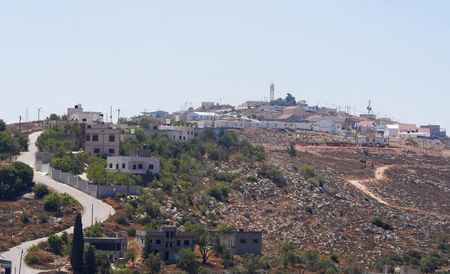
JALUD, West Bank — Mohammad Salameh had a straightforward dream: finish building a home in the Israeli-occupied West Bank where his recently engaged son could begin married life. That dream was shattered when a group of Israeli settlers moved in and took over the property before construction could be completed.
Video captured earlier this week and confirmed as authentic by Reuters showed a minimum of six settlers moving about on the roof of the two-story structure, which sits beneath a nearby hill.
Salameh said he reached out to both the Israeli military and police for help, but received none. He now fears the home — surrounded, like many properties in the Palestinian territory, by Israeli settlements and smaller outposts — may be gone for good. He warned that neighboring homes could face the same outcome.
“Only God knows, if there is law and order then they will leave,” Salameh said. “If they succeeded with taking one, then the rest will follow.”
Reuters was not able to reach the settlers for comment. One settler was observed walking on the roof of the house on Thursday. The Israeli military said it was looking into Reuters’ request for comment but had not replied by Friday. Israeli police also did not respond to a request for comment.
The takeover of Palestinian land by settlers is nothing new in the West Bank, where approximately 500,000 Israelis live alongside roughly 3 million Palestinians. Palestinians have long reported destruction of farmland, acts of vandalism, and violent incidents tied to settlement growth. A United Nations inquiry released last month found that settler attacks on Palestinian villages and agricultural land had surged by 130% since 2023.
For residents of Jalud, this week’s events represent a disturbing new chapter because the settlers targeted a house that had not yet been finished.
“They have now moved down to within no more than 100 meters from the last house in Jalud, which is also a house under construction belonging to a resident,” said Raed al-Haj Mohammad, who leads the village council.
He noted that Jalud has endured five major settler attacks, including homes being burned, vehicles damaged, and trees uprooted.
The vast majority of countries and the United Nations consider Israeli settlements in the West Bank to be illegal under international law, based on the Fourth Geneva Convention’s ban on moving a civilian population into occupied territory. Israel disputes this view, arguing the West Bank is contested land with a Jewish historical presence spanning thousands of years. Palestinians regard the West Bank, along with Gaza and East Jerusalem, as part of a future Palestinian state.
Settlement construction and settler violence have long stood as major barriers to peace between Israelis and Palestinians. Even Israel’s closest allies, including the United States, have spoken out against settler conduct. Still, settlement expansion has picked up pace under Prime Minister Benjamin Netanyahu’s government, which depends on hardline pro-settlement parties to hold its parliamentary majority.
For Salameh, the situation cuts deeply on a personal level. Work on the house had already slowed after the Gaza war broke out in 2023, when his son struggled to find employment and the family faced financial hardship.
“The neighbour close by has built a two-story house, which they will probably take too, if we lose this house (his) they will lose theirs,” he said.
PARIS — A deadly heatwave that gripped parts of Europe in late June has resulted in at least 3,700 excess deaths across France, Belgium, and the Netherlands, according to health officials in each country. Authorities stress these figures are early estimates and the final toll is likely to be higher.
Experts have described the heatwave, which ran from roughly June 20 through June 28, as the most severe on record for Europe. The extreme temperatures caused widespread disruption, straining power systems, damaging infrastructure, and pushing healthcare systems to their limits. Scientists say climate change almost certainly played a role in fueling the dangerous heat.
In France, health officials recorded 2,025 excess deaths during the heatwave period. French Health Minister Stephanie Rist told local television on Friday that people over the age of 45 saw a particularly sharp rise in fatalities. The country’s public health authority reported that deaths at home surged 91% between June 22 and June 28 compared to the week prior, with nursing homes and medical facilities also seeing increased mortality. The authority cautioned that “mortality will … be higher than these initial figures suggest.”
Belgium’s Health Ministry announced Thursday that it had logged approximately 1,200 excess deaths between June 18 and June 29. Of those, 530 were among individuals aged 85 or older, while 180 of the excess deaths involved people under the age of 65. The ministry called the situation alarming, stating in an official release: “Such excess mortality during a heatwave is unprecedented in our country.”
In the Netherlands, authorities reported around 480 excess deaths tied to the heatwave, with the majority occurring among those over 80 years old.
A Bangkok-based flight attendant received an unusual message through TikTok early on the morning of June 18 — a series of questions from an account she didn’t recognize: “Are you flying to Australia? Do you do carry-for-hire? What is your rate?”
The 30-year-old attendant, who works for a regional budget airline, dismissed the message and moved on — until news broke that a Thai Airways flight attendant had been charged with smuggling more than one kilogram (2.2 pounds) of heroin into Australia, hidden inside several tote bags.
“I don’t reply to strangers like this,” the attendant told Reuters, referring to the unknown account that had contacted her. She requested anonymity given the sensitive nature of the situation. “We’ve been constantly warned about this, no carry-for-hire. It’s a well-known rule.”
The account that sent the message — named “Powder is Powder” in Thai — was connected to drug trafficking operations that set up fake social media profiles to find individuals willing to move illegal substances across international borders, according to Areepak Ngernbamroong, a spokesperson for Thailand’s Office of the Narcotics Control Board (ONCB).
“The account has now been shut down,” Areepak said. “The ONCB is investigating, and preliminary findings indicate that the account used many different names.”
Following the flight attendant’s detention, Thai Airways issued a statement saying the airline maintains strict rules of conduct for all staff and would work fully with relevant authorities.
Thai authorities say trafficking networks bring drugs in from neighboring countries that have large production operations, then conceal them in everyday items like clothing, coffee packets, and vases before moving them through Thailand.
According to a December report from the U.N. Office on Drugs and Crime, the cultivation of opium poppies for heroin production in neighboring Myanmar reached its highest point in a decade in 2025. Myanmar, which is experiencing ongoing conflict and economic hardship, has become the world’s leading known source of illicit opium as production has declined in Afghanistan.
Police Major Suriya Singhakamol, Secretary-General of the ONCB, said trafficking rings in Thailand specifically target certain groups of travelers — including flight attendants — to carry drugs out of the country.
In the case of the arrested Thai Airways attendant, Suriya said she had initially posted in a social media group where people advertise their willingness to transport items overseas for payment. She then began communicating with a Facebook user going by the name “Rose Rose.”
“They later agreed on a fee of 8,800 baht ($265.46),” Suriya told reporters.
The heroin that was sewn into the lining of the bags she carried had an estimated street value of A$500,000 (approximately $347,150), according to the Australian Federal Police.
Suriya also revealed that similar trafficking operations had planned to ship five additional drug packages from Bangkok to Australia and Taiwan between June 30 and July 1. Those efforts were intercepted.
“But authorities seized 24.38 kilograms of heroin, concealed in traditional goods, silk clothing, coffee sachets, and winter jackets,” he said, noting that Thai agencies are working in coordination with their counterparts in Australia and Taiwan.
To date, Thai authorities have arrested two individuals — a Thai man and his Laotian wife — suspected of dispatching drug shipments from a border province to Bangkok.
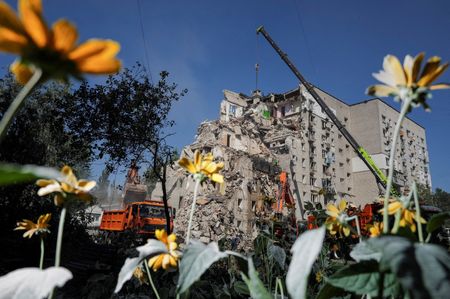
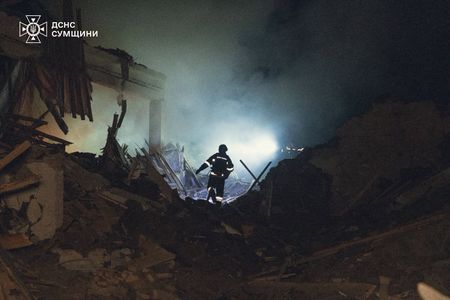
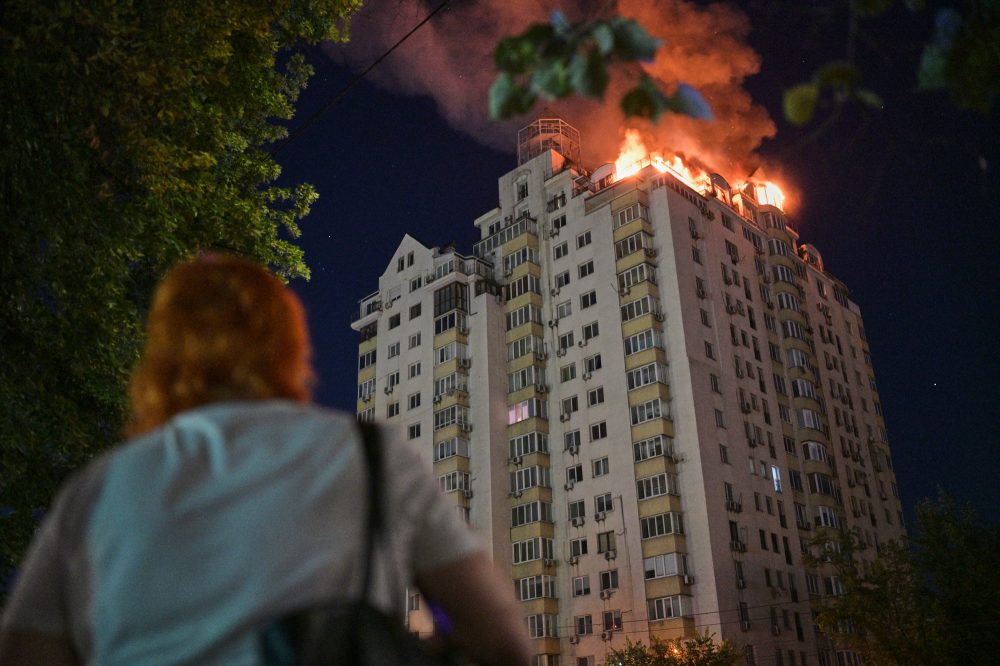
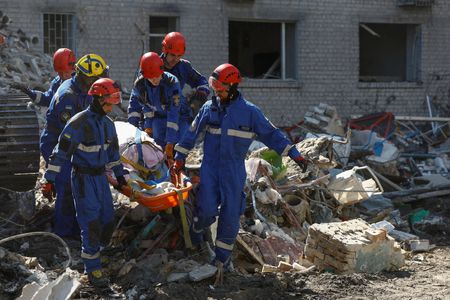
Rescue crews worked through the rubble in Ukraine’s capital city of Kyiv on Friday, hoping to find survivors from a Russian missile and drone assault that claimed at least 30 lives the day before. Flags across the city were lowered to half-staff as officials declared an official day of mourning.
Kyiv Mayor Vitali Klitschko confirmed Friday that the attack — the most lethal Russian strike on the capital in 2025 — left 92 people injured. He also noted that the parents of a 10-year-old boy who was hospitalized following the attack, along with a 15-year-old girl, remained unaccounted for.
In a separate incident, a Russian drone strike on a home in Ukraine’s northern Sumy region killed four people overnight, among them a woman and her young toddler daughter, according to the Prosecutor General’s Office.
Forensic specialists continued working alongside rescue teams as they attempted to identify human remains from the wreckage. Ukrainian President Volodymyr Zelenskiy described the scale of destruction as extraordinary, saying more than 100 residential buildings had been damaged — an extent of devastation rarely seen even in a conflict now entering its fifth year.
In his Thursday evening address to the nation, Zelenskiy placed blame squarely on Russian President Vladimir Putin. “Russia has no argument left for its war other than its ballistic missiles,” he said. “Putin still intends to ‘vanquish’ residential buildings rather than end this war.”
Moscow characterized the strikes as retaliation for Ukrainian drone attacks launched against Russian territory.
Ukraine has in recent months managed to slow Russian advances along the roughly 1,200-kilometer front line, even recapturing ground in certain areas. At the same time, Ukraine has stepped up its own long-range strikes deep inside Russia, targeting energy infrastructure in particular. Those attacks have contributed to a fuel shortage in Russia, forcing the country — one of the world’s top oil producers — to import gasoline.
Russia has responded by escalating its air campaign against Ukrainian cities. Last month, a Russian strike damaged a Kyiv cathedral with roots stretching back 1,000 years, a site considered sacred to the Orthodox faith in both countries.
GoDaddy, the world’s largest seller of internet domain names, is sounding the alarm over a series of directives handed down by an Indian court, arguing that rules meant to combat fraudulent websites could actually make the internet more dangerous for law-abiding businesses and have consequences that stretch well beyond India’s borders.
Online fraud has become a mounting crisis in India, the world’s most populous country, as smartphone and internet usage has surged. Prime Minister Narendra Modi’s government received 2.4 million complaints of alleged cyber fraud last year alone, with losses totaling $2.4 billion.
The legal battle traces back to 2019, when more than 20 major Indian and international companies — including Amazon, McDonald’s, Microsoft, Xiaomi, and Colgate-Palmolive — filed lawsuits seeking court action against websites fraudulently using their names. Amazon targeted fake shopping sites, while McDonald’s went after bogus pages selling phony franchise opportunities. In December, a New Delhi judge ordered more than 1,100 such sites to be shut down.
But that same judge went further, issuing a set of sweeping additional measures that tech experts say have fundamentally altered how internet governance works. Among the directives: domain registrars must stop offering privacy protection to buyers at no cost by default, the personal details of website registrants must be handed over to anyone with a “legitimate interest” within 72 hours, and domain names that resemble protected brand names must be blocked from registration.
GoDaddy, which is based in the United States, has filed a challenge against those directives before a larger panel of judges at the Delhi High Court, according to a Reuters review of non-public court documents. The company argues that removing default privacy protections would expose the names, addresses, phone numbers, and email addresses of legitimate website owners to the public, creating what it described as “foreseeable privacy and security risks” including stalking and harassment.
Because domain names function on a global scale rather than within any single country, GoDaddy also warned that the court’s order could effectively require the company to regulate website addresses around the world. On the 72-hour disclosure requirement, GoDaddy contends it has no reliable way to determine who qualifies as having a “legitimate interest” in obtaining someone’s registration information.
One of GoDaddy’s appeal documents — spanning 5,121 pages — cautioned that the “commercially destabilising” nature of the directives could push domain name companies to “exit India” altogether. Neither the Indian government nor GoDaddy responded to requests for comment from Reuters.
GoDaddy is a major player in the industry, generating $5 billion in annual revenue, managing 80 million domain names, and serving more than 20 million users. Company executives stated in 2024 that India represented its largest market in the emerging market category. Two of GoDaddy’s competitors — Arizona-based Namecheap and Netherlands-based Hosting Concepts — have also challenged the New Delhi ruling, though the specifics of their appeals could not be confirmed. Neither company responded to Reuters’ questions.
The December ruling characterized the fraudulent websites as “engines for large scale deception.” Among the 14 measures outlined by the court, one specified that hiding a domain buyer’s registration details should only be available as a paid service, since the feature acts “as a cloak” that shields the identities of bad actors.
Despite the court order still being in effect, GoDaddy’s website continues to advertise “free privacy protection forever,” stating that it conceals users’ names, addresses, phone numbers, and email addresses from public directories. GoDaddy argues that stripping away default privacy protections would conflict with India’s own data protection law as well as the European Union’s GDPR regulation, both of which require a “privacy by default” approach.
Farzaneh Badii, a New York-based researcher who studies internet governance, was critical of the New Delhi ruling. She pointed out that European regulators moved to hide such personal details precisely because making them public had been exploited for harassment and targeted phishing attacks. “The people exposed will be journalists, activists, small business owners, and private individuals. The brand impersonators will not,” she said.
India’s Home Minister, Amit Shah, stated this year that a person falls victim to cybercrime every 37 seconds in the country, warning that inaction could allow the problem to become a “national crisis.” Although the sweeping December directives came from a court, documents show they were shaped by submissions from the government. An unreported 59-page document from India’s IT ministry, dated 2023 and included in GoDaddy’s appeal filings, revealed that the government told the judge it was troubled by “domain name abuse” and “lack of stringent verification.” The home ministry separately urged the court to make registration details “readily available” for use in criminal investigations.
That position is consistent with Modi’s government’s track record of confrontations with global technology companies. New Delhi has repeatedly criticized firms such as Meta, X, Google, and Telegram for allegedly failing to adequately police content it views as contrary to national interests, and has taken some of those companies to court.
In the McDonald’s case, the company sought action against 110 websites — such as mcdonaldsfranchiseindia.com — some of which displayed the chain’s Golden Arches logo and sold counterfeit franchise opportunities for “huge sums of money.” After those sites were blocked, GoDaddy raised objections to the court’s additional requirement that alphanumeric variations of a protected trademark be prohibited from registration. GoDaddy called such bans “blanket injunctions” that would be nearly impossible to enforce.
The company noted that the name “McDonald” has Scottish origins, derived from a phrase meaning “son of the world ruler,” and argued that blocking all variations of it would effectively “confer a monopoly” over a common name with deep linguistic and historical roots. Reuters found that domains such as mcdonalds-india-franchise.com were still available for purchase on GoDaddy’s India platform for approximately $10.
GoDaddy also submitted research drawn from the Merriam-Webster website to illustrate how protecting variations of a trademark like “HUL” — the Indian subsidiary of Unilever — could interfere with 118 English words that contain those letters, including “hulk” and “moghul.” The company concluded that it is “virtually impossible to register a domain name containing an English word that does not overlap with a registered trademark.”
The appeals are scheduled to be heard by the judges on July 16.
Moldova’s Prime Minister Alexandru Munteanu publicly announced his resignation on Friday, ending his time leading the country’s government.
In a post shared on the social media platform X, Munteanu explained that he felt he could no longer fulfill his responsibilities while staying true to his own values. “The moment I realized that I could no longer carry out my mandate in accordance with my principles and convictions, I chose to step down,” he wrote.
The prime minister did not elaborate on the specific circumstances that led him to make this decision.
NATO leaders are preparing to convene next week in Ankara, Turkey, as European members of the alliance look to put recent conflicts with U.S. President Donald Trump behind them and demonstrate their commitment to defending the continent amid reduced American involvement.
NATO Secretary General Mark Rutte says the Tuesday and Wednesday gathering will serve as proof that European nations are following through on pledges to boost defense spending as a deterrent against any Russian aggression. Tens of billions of dollars in arms agreements are expected to be signed at the summit.
Leaders are also anticipated to reaffirm their commitment to financing weapons for Ukraine as it continues to fight off Russia’s invasion. Ukrainian President Volodymyr Zelenskiy is scheduled to attend a dinner hosted by Turkish President Tayyip Erdogan, who will also hold one-on-one talks with Trump.
European officials say they are counting on Trump’s close relationships with both Erdogan and Rutte to help the summit go smoothly — though they acknowledge there are no guarantees, given ongoing transatlantic friction over the Iran conflict and Trump’s repeated criticism of the alliance.
Just this past Thursday, Trump took to Truth Social to complain that the United States was spending money to protect NATO members “without getting any benefit from so doing.”
Rutte and other NATO leaders have pushed back on that claim, arguing the alliance serves American security interests as well, and that European nations have been answering Trump’s longstanding calls to invest more in their own defense.
Speaking in Berlin on Wednesday, Rutte outlined the summit’s priorities: “The summit next week will focus on turning extra spending into combat-ready capabilities, and significantly scaling up our defence industries.”
He went on to say, “NATO is, and will always be, a transatlantic alliance but we need to rebalance it for the better. Working closely with the United States, European allies and Canada are taking greater responsibility for conventional defence in Europe.”
Rutte revealed last month that NATO’s European members and Canada collectively spent $90 billion more on defense in 2025 compared to the previous year, bringing the total to more than $570 billion.
At last year’s summit in The Hague, NATO leaders agreed to raise defense spending to 3.5% of GDP on core military items — such as weapons and troops — by 2035, up from a previous target of 2%. They also committed to investing an additional 1.5% of GDP on broader defense-related areas, including cybersecurity.
European officials are hoping this year’s Ankara summit mirrors the success of The Hague gathering, where Trump reaffirmed the U.S. commitment to the 32-member alliance and its Article 5 mutual defense clause, while also offering praise for fellow leaders.
However, the past year has put significant strain on the alliance. Trump threatened to seize Greenland from fellow NATO member Denmark, launched a war against Iran without consulting European allies — a conflict that rattled global markets — and the U.S. has since announced troop withdrawals from Europe and reduced the forces it contributes to NATO’s defense plans, including an aircraft carrier, refueling planes, fighter jets, and drones. Washington has also begun a six-month review of its overall military presence on the continent.
“The alliance is alive and kicking but a bit bruised,” one European diplomat said, speaking anonymously.
European officials are also concerned the Iran conflict could cast a shadow over the summit — particularly if fighting flares up again during what is currently a fragile ceasefire, or if Trump publicly criticizes European nations for not doing more to support U.S. military efforts.
Trump has suggested that European reluctance to assist in the Iran war could affect the U.S. obligation to come to the aid of a NATO ally under attack. NATO officials, however, note that the vast majority of member nations did allow the U.S. to use their airspace and military bases, even though the war was broadly unpopular across Europe and many European leaders opposed it.
The conflict also damaged personal relationships between Trump and European leaders including Italian Prime Minister Giorgia Meloni and outgoing British Prime Minister Keir Starmer — raising the possibility that those tensions could re-emerge at the summit.
One senior NATO diplomat expressed cautious optimism: “I’m optimistic (that won’t happen) because I think the leaders know what is at stake. And if something like that does occur, then we always have the ultimate marriage counsellor, Mark Rutte, to smooth things over.”
In the southern Indian state of Kerala, mechanical elephants are beginning to take the place of their living counterparts at traditional temple celebrations in the city of Chalakudy and beyond.
The move toward robotic alternatives follows mounting concerns about the welfare of elephants used in these festivals, as well as a number of alarming incidents that raised serious safety questions.
A photo gallery assembled by AP photo editors captures this unusual and evolving tradition, documenting the transition from live animals to lifelike robotic replicas at these culturally significant events.
QUETTA, Pakistan — Forty people lost their lives and eight others were hurt early Friday when a speeding, overcrowded bus veered off a highway and plummeted into a rocky ravine in southwestern Pakistan, officials reported, describing it as one of the most deadly road accidents the country has seen in recent memory.
The crash took place in Dana Sar, a remote area situated near the boundary between Balochistan and Khyber Pakhtunkhwa provinces. Shahid Rind, a spokesperson for the Balochistan government, said the bus lost control before falling into the ravine below.
Rind explained that the vehicle was not only carrying its own passengers but had also taken on riders from a second bus that had broken down along the route, leaving it dangerously overcrowded. He added that rescue teams were working to identify the victims of the crash.
Pakistan’s President Asif Ali Zardari expressed deep sorrow over the tragedy, offering his condolences to the families of those who died and wishing a full and swift recovery to those who were injured. He also instructed the appropriate authorities to make sure the injured receive the highest quality of medical care available.
Balochistan Chief Minister Sarfraz Bugti also released a statement conveying his grief over the lives lost and ordered officials to ensure survivors are given the best possible medical treatment.
Deadly road accidents are a recurring problem across Pakistan, driven by deteriorating road conditions, weak enforcement of traffic regulations, and reckless driving habits — issues that are especially pronounced in mountainous regions.
This latest disaster follows a similar tragedy in May, when a minibus collided with a parked bus along a motorway in northwestern Pakistan, leaving 17 people dead and five others injured.
MELBOURNE, Australia — Australian Prime Minister Anthony Albanese is sharply criticizing senators who voted to stall updates to a groundbreaking law that bans children from using social media, warning that tech companies will take advantage of the holdup to wipe out records that could be used as evidence against them.
Earlier this week, the government brought forward proposed changes to Parliament that were designed to strengthen the authority of eSafety Commissioner Julie Inman Grant — the country’s top online safety official — to enforce the existing ban. That ban, which has been in effect since December, prohibits Australian children under the age of 16 from holding accounts on platforms such as Facebook, Instagram, and YouTube.
Under the proposed updates, Inman Grant would gain the ability to require platforms to hand over actual documents — not just general information — about how they are working to keep young children off their sites. Currently, she can only request information.
However, the conservative Liberal Party opposition and the minor Australian Greens party joined forces Thursday to send the proposed legislation to an eight-week Senate inquiry. The center-left Labor Party, which leads the government, does not control a Senate majority.
Speaking to the Australian Broadcasting Corp., Albanese made clear his frustration with the delay. “It is outrageous the delay because what the eSafety Commissioner has said very clearly is that that will allow the platforms to go and just delete a whole lot of material,” he said.
He continued: “Whereas if it was passed yesterday, that would have been the date from which these demands could be made by the commissioner. So then fines can be issued.”
The proposed amendments would also extend the commissioner’s reach to third parties, such as companies that provide age verification technology, so she could test whether platforms are being truthful about how children are still managing to get around the ban.
Additionally, the bill would double the maximum penalty for platforms that fail to take reasonable steps to keep children out — raising the ceiling to 99 million Australian dollars, or roughly $68 million.
Greens Senator David Shoebridge, who has consistently opposed the social media ban, questioned the value of raising fines that have never actually been handed out. “Doubling penalties that they’ve never used doesn’t seem to me to be a meaningful measure,” he told Sky News Australia. “Is that really going to be the thing that keeps kids safe online?”
From the opposition side, communications spokesperson Senator Sarah Henderson argued the amendments don’t go far enough. “This is a social media ban which is failing; a half-baked law which is poorly designed, which was rushed, which is badly implemented and which is not working,” she said. “We will interrogate this bill properly and, frankly, I think the amendments before the Parliament need to be tougher,” she added.
The original legislation passed Parliament in 2024 with broad, bipartisan support. The 10 platforms targeted by the law were given more than a year to put the ban into practice.
Several other countries that have enacted or are considering similar restrictions have been closely monitoring how Australia’s approach plays out.
Initially, the government reported that more than 5 million children had their accounts removed, deactivated, or restricted after the law took effect. However, eSafety reported in March that seven out of 10 children who had accounts on the restricted platforms when the ban went into effect on December 10 were still active on Facebook, Instagram, Snapchat, and TikTok.
In April, Inman Grant announced she was weighing legal action against those platforms — along with YouTube — over allegations they were not doing enough to keep children off their services. She said she was more satisfied with the steps taken by the other restricted platforms: X, Kick, Reddit, Threads, and Twitch.
Communications Minister Anika Wells said this week that she has been receiving monthly reports from eSafety since March and that “we are not seeing improvements.”
A bus carrying 48 passengers plunged into a deep roadside ditch in Pakistan’s southwestern province of Balochistan on Friday, killing 40 people and leaving eight others injured, according to a rescue agency and a government official.
The bus was traveling from the provincial capital of Quetta to the national capital of Islamabad when the deadly accident occurred, the rescue agency reported.
At least two people lost their lives in Russian border regions overnight as Ukrainian drones struck multiple targets, damaging several industrial facilities, according to local officials and media reports released Friday.
Ukraine has been relentlessly targeting Russia’s energy infrastructure for months in a sustained effort to weaken Moscow’s military capabilities. Those strikes have contributed to fuel shortages across Russia, the world’s largest nation.
Russian President Vladimir Putin has publicly claimed the attacks are designed to stir up unrest among the Russian population.
On the other side of the conflict, Ukrainian officials announced via Telegram that Russian overnight strikes on Ukraine resulted in four deaths and left ten others wounded.
Valentin Demidov, the mayor of the western Russian city of Belgorod, confirmed that a woman died inside a vehicle after sustaining shrapnel wounds. He also reported that both water and electricity services in the city — located roughly 40 kilometers, or about 25 miles, north of the Ukrainian border — had been knocked out.
Earlier Friday, the Vesti news channel, citing regional officials, reported that an industrial facility had caught fire after Belgorod and the surrounding area were hit by Ukrainian missiles.
In the neighboring border region of Bryansk, acting governor Egor Kovalchuk reported that a man was killed in a village following a kamikaze drone strike.
A fire also ignited at an industrial site in the western Smolensk region after a drone attack there, though local governor Vasily Anokhin noted on Telegram that no injuries were reported in that incident.
MADRID (AP) — Every year during Pride week, the streets of Spain’s capital transform into a runway of a different kind. On Thursday, July 2, competitors strapped on their tallest footwear and dashed through the city in the iconic annual high heel race.
To qualify for the event, participants must wear shoes with heels no shorter than 10 centimeters — that’s roughly 3.9 inches — making the race as much a test of balance as it is of speed.
Images from the lively competition were curated into a photo gallery by AP photo editors, showcasing the energy and excitement of one of Madrid’s most beloved Pride week traditions.
BERLIN — Germany’s far-right Alternative for Germany party is gathering this weekend in an upbeat mood, capitalizing on widespread frustration with the national government’s efforts to revive a sluggish economy while setting its sights on a historic breakthrough in regional elections this fall.
The anti-immigration nationalist party, known as AfD, is holding a convention in the eastern city of Erfurt to re-elect its leadership — something German parties do every two years. The gathering is expected to draw tens of thousands of demonstrators to the streets outside.
The convention will focus on extending the terms of co-leaders Alice Weidel and Tino Chrupalla, who have jointly led the party for four years, with the goal of presenting a united front.
In last year’s national election, the AfD posted the strongest showing by a far-right party in Germany since World War II. Its second-place finish made it the largest opposition party in the country and the dominant political force in Germany’s formerly communist eastern regions. Its support has continued to grow beyond the 20.8% it earned in that election, with recent polling placing it in first place nationally.
Weidel recently declared that “2026 is a year of destiny for AfD.” Mainstream political parties have maintained a so-called “firewall” policy, pledging they will not partner with the AfD in government.
Despite that stance, the AfD is aiming to capture 40% or more of the vote in a state election scheduled for September 6 in the eastern region of Saxony-Anhalt. Such a result could put the party on a path toward an outright majority or place it in a position to attract defectors from other parties — potentially paving the way for the AfD to install its first-ever state governor.
A second eastern state election follows two weeks later in Mecklenburg-Western Pomerania, where the AfD also sees favorable prospects.
“AfD is standing before the gates of power, to some extent,” said Albrecht von Lucke, a political analyst and editor of the magazine Blätter für deutsche und internationale Politik.
The party did achieve a milestone in 2023 when it elected its first county administrator in Thuringia — the state where Erfurt is located — but no additional wins of that kind have followed, as enough voters coalesced around mainstream candidates to block further gains.
Taking control of a state government, however, would represent a far more significant achievement. Germany’s 16 states wield considerable authority, including oversight of education systems and security agencies.
Critics have raised alarms about what an AfD-led state government could mean in practice, including concerns about the replacement of career civil servants and the potential for sensitive government information to reach far-right networks or even Russia. “An AfD interior minister would be a security risk,” said Gregor Maier, Thuringia’s center-left interior minister, in comments to ARD television.
The AfD has pushed back on those concerns. “We will prove that we can do it better, and that is exactly what the old parties are afraid of,” Chrupalla said at a rally in Berlin this week.
Von Lucke, however, cautioned that governing Saxony-Anhalt would be “a huge challenge” for the party, predicting internal tensions. “A lot speaks for this not succeeding,” he said.
The AfD has been boosted by deep public dissatisfaction with Chancellor Friedrich Merz’s national coalition government, which came to power 14 months ago promising to reform and reinvigorate Germany’s economy — the largest in Europe. The government is now undertaking what could be painful economic changes after a prolonged period of stagnation, but has yet to convince voters it can deliver results.
Merz has urged the public to be patient. “It is unrealistic always just to lament decline, mope and wait for a big bang,” he said at a recent industry event. “There isn’t going to be one. We are in a reform process … and we are moving forward in this process.”
He added: “We want to show that solutions are possible from the political center of this country, that we also recognize the problems correctly.”
The AfD has long since expanded its appeal beyond its original focus on limiting immigration, which fueled its initial rise in the mid-2010s. The party has expressed support for the Trump administration’s general direction while criticizing the war in Iran. It has also consistently called for lifting sanctions against Russia and opposes sending weapons to Ukraine. Chrupalla accused Merz of wanting to “escalate against Russia, like in the Cold War,” saying instead, “He should be building bridges.”
The party is also locked in an ongoing legal dispute with Germany’s domestic intelligence agency. The Federal Office for the Protection of the Constitution announced last year that it was formally classifying the AfD as a proven right-wing extremist organization, but suspended that designation after the party filed a legal challenge. In February, a court in Cologne ruled the agency cannot apply the label while it reviews the party’s lawsuit in greater detail.
Some voices in Germany have called for the party to be banned outright, a sentiment that protesters gathering this weekend are expected to amplify. However, Germany’s supreme court has historically set a very high legal bar for banning political parties.
Some opponents of a ban worry that a failed attempt could actually benefit the AfD politically. Merz and his conservative allies have argued the better approach is for the government to demonstrate it can improve everyday life for German citizens.
In a report released Tuesday, the intelligence agency said it found no evidence the AfD had moved away from its controversial positions. “Many statements by the AfD and its representatives reflect an understanding of the nation that is based on ethnicity and ancestry and contradicts the understanding of the nation enshrined in Germany’s constitution,” the agency stated. The report also cited the party’s calls for the “remigration” of millions of people and repeated references to an alleged “great replacement” of the population.
The AfD has strongly rejected accusations of extremism, arguing that the intelligence agency is being used as a political tool by mainstream parties.
Months after the killing of Iran’s supreme leader at the outset of its war with the United States and Israel, the country is preparing to hold a dayslong funeral and burial for the late Ayatollah Ali Khamenei.
Khamenei’s body will be carried through cities across Iran and neighboring Iraq during the mourning period. Iran’s theocratic government is expected to encourage ordinary citizens, government workers, and paramilitary forces to line the streets in tribute.
Khamenei, who held power in Iran for nearly four decades, was killed on Feb. 28 when the U.S. and Israel launched a joint military campaign. The funeral was postponed while the war continued.
The ceremonies will serve as a significant test for Iran’s weakened theocracy and its capacity to draw a massive show of public support — especially since the funeral comes just six months after security forces violently cracked down on nationwide protests against Khamenei’s government.
A massive crowd could also increase the danger of deadly stampedes. A similar tragedy occurred at the funeral of Iran’s first supreme leader, Ayatollah Ruhollah Khomeini.
An uneasy ceasefire, followed by an interim agreement with the United States, likely gave Iranian authorities enough confidence to proceed with the public ceremony and allow top officials to appear. Throughout the war, Israel had targeted and killed senior Iranian leaders, in at least one instance using public appearances to locate them.
It remains uncertain whether Khamenei’s son — Iran’s new Supreme Leader Ayatollah Mojtaba Khamenei — will make his first public appearance during the funeral proceedings. The younger Khamenei is believed to have been injured in the same attack that killed his father and has remained out of public view.
Here is a breakdown of what to expect from the ceremonies, which are set to begin Saturday in Iran’s capital, Tehran.
Khamenei’s body will lie in state at Tehran’s Grand Mosalla on Saturday and Sunday. On Monday, a procession will carry it through the streets of Tehran before it heads to Qom, a Shiite seminary city located roughly 120 kilometers — about 75 miles — to the south. Tuesday’s events will honor Khamenei in Qom.
On Wednesday, the body will be transported to Karbala, Iraq, the location of the shrine of Imam Hussein, a grandson of the Prophet Muhammad who has long represented resistance and sacrifice in Shiite tradition. Wednesday also marks the anniversary of the crackdown on protests against Khamenei’s rule, during which thousands of demonstrators were killed by security forces.
From Iraq, Khamenei’s remains will be brought to Mashhad, Iran’s second-largest city, where he will be laid to rest at the Imam Reza shrine.
Imam Reza was the eighth imam in Shiite Islam. The shrine draws millions of pilgrims annually. A hadith — a traditional Islamic saying — holds that those burdened by sorrow or sin will find relief by visiting the site. Many prominent Shiite clerics have been interred there, including Iran’s late President Ebrahim Raisi, who died in a helicopter crash in 2024.
The risk of crowd-related tragedy looms large over the proceedings. On June 6, 1989, millions of Iranians flooded the streets to mourn Ayatollah Khomeini, who had led the 1979 Islamic Revolution. The scene quickly spiraled out of control as mourners beat their chests in the summer heat and wailing filled the air. The crowd surged toward the casket, causing the 86-year-old cleric’s white-wrapped body to fall into the mass of people. At least eight people were reported killed and roughly 11,000 were injured in the chaos.
Authorities are concerned that a comparable disaster could occur at Khamenei’s funeral if turnout reaches into the millions. A stampede at the 2020 burial of Revolutionary Guard General Qassem Soleimani left at least 56 people dead and more than 2,000 injured.
Meanwhile, diplomatic efforts continue in the background. An interim deal reached in June opened a 60-day window to negotiate the terms of a final agreement to end the Iran war, covering issues such as Iran’s nuclear program and control of the Strait of Hormuz. Technical talks launched this week in Qatar, but deep disagreements — along with several days of military exchanges between the U.S. and Iran over the strait’s future — have complicated the negotiations.
A former European Parliament member who helped investigate abusive surveillance practices was himself a target of Israeli-made spyware, according to a Canadian technology watchdog group.
Citizen Lab released a report Friday stating that the phone of Stelios Kouloglou — a Greek television journalist who went on to serve as a lawmaker — was compromised at least three times between October 2022 and March 2023. The tool used was Pegasus spyware, a product distributed by the Israeli company NSO Group.
During the period when he was being targeted, Kouloglou was an active member of the European Parliament’s PEGA Committee, a body created in 2022 specifically to examine unlawful phone hacking across the European Union. The committee’s work centered largely on Pegasus and similar surveillance tools, ultimately concluding that EU governments had likely used spyware “in one way or another, some legitimate, some illegitimate.”
Kouloglou said he was stunned by the brazenness of whoever carried out the attacks.
“I was not expecting that a PEGA member would be spied on by Pegasus,” he told Reuters. “I was not expecting that they would be as reckless as that.”
NSO Group did not respond to requests for comment.
The European Parliament issued a statement that did not directly address Kouloglou’s situation, but noted that its IT security teams “constantly monitor cybersecurity threats as well as potential cyberattacks against its working environment.” The Parliament also said spyware screening tools have been offered to all lawmakers since 2022, and that a report adopted last month called for expanding those tools to cover all devices used for parliamentary work.
The European Commission, which serves as the EU’s executive arm, did not respond to requests for comment.
NSO has long maintained that its surveillance tools are deployed to combat serious crime and safeguard national security. However, the company has faced repeated accusations of enabling intrusive monitoring of journalists, political figures, civil rights advocates, and religious individuals around the globe. The U.S. government placed NSO on a blacklist in 2021 over concerns about human rights and national security. Last year, Meta Platforms — the parent company of WhatsApp — won a $168 million damages award against NSO for illegally hacking its platform, though that award was later significantly reduced. More recently, Meta accused NSO of violating the court’s injunction against targeting its services and sought a contempt order.
Citizen Lab said it believes the hacking was carried out through a previously unknown vulnerability in Apple software. The group noted that Kouloglou received multiple warnings from Apple in 2023 and 2024 about suspected state-sponsored hacking attempts targeting his device.
While Citizen Lab did not identify the specific party responsible for deploying Pegasus against the former lawmaker, it connected some of the hacking activity to earlier findings that Pegasus had been used to monitor Russian- and Belarusian-speaking journalists and activists living in exile.
Apple did not directly respond to questions about Kouloglou’s case, but confirmed that the vulnerability cited in the Citizen Lab report has since been patched and that the company routinely notifies individuals it believes may have been targeted.
Sophie in ‘t Veld, a former EU lawmaker who was instrumental in establishing the PEGA Committee, said the hacking of Kouloglou’s phone illustrated how the proliferation of for-hire spyware has created a surveillance environment with virtually no boundaries.
“We’re in a situation where anybody could spy on anyone and they’re spying on citizens, they’re spying on journalists, they’re spying on NGOs, on lawyers, on politicians, and nobody knows who’s behind it,” she said.
REALP, Switzerland — Train lovers are gathering this weekend to mark the 100th anniversary of a legendary Swiss mountain railway, with vintage steam-powered locomotives carrying passengers through breathtaking Alpine landscapes as part of the centennial festivities.
The Furka Pass, sitting at an elevation of 2,431 meters — roughly 7,976 feet above sea level — ranks among the highest mountain passes in Switzerland. The route is also well-known to movie fans as the location of a thrilling car chase scene in the 1964 James Bond film “Goldfinger,” featuring actor Sean Connery. Long before Hollywood came calling, however, a steam locomotive completed its first full journey along the steep, winding route on July 3, 1926, establishing an essential rail connection between the Swiss regions of Uri and Valais that would serve the area for decades.
The line’s story took a difficult turn in the early 1980s when a newly constructed tunnel at the foot of the Alps redirected rail traffic, leading to the closure of the beloved mountain route. The railway’s survival came down to volunteers — hundreds of them, affectionately known as the railway’s “pioneers” — who poured countless hours into restoring, maintaining, and operating the historic tracks and equipment to keep the experience as authentic as it was a century ago.
The first portion of the revived heritage line reopened in 1992, and by 2010, the full 18-kilometer, or 11-mile, stretch was once again ready for passengers. Today, the steam trains operate as a warm-weather tourist attraction, running between the stations of Realp and Oberwald during summer months. Riders board old-fashioned carriages and take in sweeping views of rivers, Alpine meadows, and green pastures still dusted with patches of snow.
Last month, passengers traveling through the German-speaking region enjoyed rides aboard what locals call the “dampflokomotive.” Traveler Stephan Willareth described his experience as “wonderful,” while Kurt Guldemann, who previously worked for the Swiss national railway system, praised the historical significance of the locomotives.
Bernhard Lang, one of many volunteers who operate the steam engines, noted that learning to drive one is no quick task.
“It’s something like a living machine, so you have to get kind of the feeling for it,” he said. “To feel how it behaves, how it moves, how it smells, how it sounds.”
Jacob Kallert, a 21-year-old German student studying transport engineering and the youngest train manager on the line, emphasized the importance of truly listening to the locomotives.
“You hear every sound, you hear if everything is right,” he said. “You can pretty much feel how it was then and how it is now.”
Fellow volunteer Sergio Rovelli said that everyone who gives their time to the project ends up completely devoted to it.
“We say, in German, that everyone who works here has the ‘Furka Virus, the Furka disease,’” he joked. “Once you come here, you like it, and you stay.”
A single one-way ticket begins at 46 Swiss francs — approximately $56.82 — for a ride that lasts just under two and a half hours. The centennial celebration kicked off Friday and runs through the weekend.
LA GUAIRA, Venezuela — Rosa López kept her voice low as she described walking past rows of bodies baking under the hot sun while helping her daughter search for her missing son-in-law. Despite her years of experience as a nurse, nothing could have readied her for the sight of dozens of victims wrapped in sheets and blankets.
“We saw a lot of bodies that had not yet been identified,” López said.
Across La Guaira — the Venezuelan coastal state that bore the brunt of the two powerful earthquakes on June 24 — families are in a desperate race to locate and identify their loved ones before time runs out. With a death toll of at least 2,295, Venezuelan authorities are struggling to collect, identify, and preserve the growing number of victims. Thousands of people remain missing.
López’s 25-year-old son-in-law, José Antonio Toledo, was found beneath the building where he had been working as a security guard when the quakes hit. Emergency crews brought his body to a nearby hospital, but staff turned them away due to a lack of space. His remains were then transported to another facility and eventually moved to an open parking lot.
A forensic doctor helped the family locate him several days later, on Saturday. After identifying his body, the family faced another obstacle — they could not afford the $450 fee a funeral home was charging.
Late Saturday night, López received word that the mayor’s office was offering a free burial plot at a local cemetery, but the family had to act fast to secure the spot. Within an hour, López and her daughter made their way up a hillside to the cemetery and laid Toledo to rest.
“He was an exemplary person, a boy who liked helping people,” López said.
Their swift action spared him from a mass grave — a fate that many grieving families fear as the search for victims continues.
Forensic technician Joel Mirabal has been working without a day off since the 7.2 and 7.5 magnitude earthquakes struck seven days ago.
The 45-year-old estimates that in roughly 60% to 70% of cases, a family member or neighbor is present to help identify a body when he arrives. Even then, the process is difficult, with many identifications relying on tattoos, scars, or recognizable clothing.
“They don’t look even 10% like what they were in real life,” he said of the victims.
Bodies that cannot be identified are taken to forensic specialists working out of La Guaira’s seaport. Private companies have donated large refrigerated containers to help preserve the remains, but the number of dead continues to climb.
“Obviously, mass graves will have to be created,” Mirabal said. “The collapse is massive, and the bodies are buried under many layers of debris.”
Mirabal and his fellow forensic technicians expect the body recovery effort to stretch as long as three months. Each day, they travel through the affected areas guided by rescue workers and civilians who have found or spotted remains.
“Many of the rescues are carried out by the people,” he said, referring to the thousands of everyday Venezuelans who have joined the recovery effort.
A professional dog trainer who once worked with the government to locate drugs and missing persons, Mirabal finds comfort in the 12 dogs waiting for him at home — not counting the puppies. One of his favorites is Mila, a young black Dutch Shepherd who rested beside him on Thursday.
“It’s not easy at all to witness the suffering and tragedy of your fellow human beings,” he said.
Over the weekend, crews transported dozens of bodies recovered from collapsed buildings to a government-operated health facility in the city of La Guaira. The remains were held in a scorching parking lot until families could claim them, with funeral home workers estimating that more than 200 bodies were stored there at one point.
By Thursday, grieving families were lined up outside the La Guaira seaport, waiting to identify bodies that authorities were continuing to recover throughout the coastal state. A long line of vehicles — including trucks and vans from funeral homes — formed outside a makeshift morgue at the facility.
Among those waiting was Robert Rodríguez, who sat slumped on a concrete block, his legs hanging, as his daughter went inside to identify the body of her husband. Rafael Alvarado had been killed while trapped inside a grocery store where he worked at the deli counter.
“He was her best friend,” Rodríguez said, tears soaking his blue face mask.
Rodríguez said the family found Alvarado in the rubble on Wednesday, and his body was transported to the seaport on Thursday.
“I saw his shoes and knew it was him,” Rodríguez said, adding that he had tried to prepare his daughter for what she would see. “I told her, ‘Prepare yourself.’”
The family plans to cremate Alvarado and scatter his ashes on Isla de Margarita, the Venezuelan island where he had called home.
JAKARTA, Indonesia — A group of Indonesians is working to halt a massive German cement company’s plans to build a mine and factory, using a first-of-its-kind legal approach that experts say could have far-reaching consequences for European companies doing business across Asia.
Heidelberg Materials, among the largest cement producers on the planet, is accused by critics of failing to thoroughly evaluate and address the potential damage its proposed limestone mine and cement factory could cause in Central Java’s Kendeng Mountains. Opponents of the project warn it could devastate a rare karst ecosystem and strip away the livelihoods of Indigenous communities living in the area.
“If the project is implemented, we face an ecological catastrophe, impoverishment, and violations of our human rights,” said Bambang Sutikyo, one of the people who filed the complaint.
A senior sustainability communication manager for Heidelberg Materials, Katharina Plonsker, said local residents had opportunities to raise concerns with the company’s Indonesian subsidiary, PT Indocement Tunggal Prakarsa, during the permitting process, and that their input shaped the project’s planning. She added that so far, “no decision on the implementation of the project has been taken.”
The complaint, lodged with Germany’s Federal Office for Economic Affairs and Export Control against both Heidelberg Materials and Indocement, is the first time Indonesia has invoked Germany’s supply chain law — a regulation designed to hold large corporations accountable for human rights conditions throughout their supply chains.
Annabell Brüggemann of the Berlin-based European Center for Constitutional and Human Rights noted that other European Union countries are preparing to introduce similar rules, drawing on Germany’s experience as a model. She said that makes the current complaints especially meaningful, adding, “complaints filed at this moment are quite significant.”
This case is part of a broader global trend. Plaintiffs in Cambodia, Pakistan, the Philippines, and other parts of Indonesia are pursuing legal action against major European firms — including apparel company Adidas and energy giant Shell — in comparable disputes.
According to Jameela Joy Reyes of the London-based Grantham Research Institute on Climate Change and the Environment, these cases create mounting financial risk for European companies that may have set up operations in Asia to benefit from less strict regulations. “The transboundary harm element of these cases is quite interesting, and we might be seeing that more in the future,” she said.
The current complaint was brought by 10 individuals, backed by local and international nonprofits including Inclusive Development and Watch Indonesia. They allege that Heidelberg Materials did not fully examine the potential harm to the Kendeng Mountains — a significant natural carbon sink and underground water reservoir.
Opposition to mining projects in the Kendeng region is nothing new. Plaintiff Gunretno, a member of the Indigenous farming community known as the Samin, or Sedulur Sikep, said the stakes go beyond the environment. Like many Indonesians, he uses only one name. “It’s not just the environmental impact, the loss of land taken by the cement industry will result in our brothers and sisters having no land left,” he said.
Gunretno also framed the issue in broader terms: “When it comes to environmental destruction of any kind, we, as global citizens, have a responsibility to figure out how we can work together to protect our one and only Earth.”
A lawyer with the Semarang Legal Aid Institute, Syamsuddin Arief, which supports the Samin community, expressed hope that the complaint would “achieve the shared goal of upholding citizens’ rights to a sustainable life, a healthy and good environment, and ensuring the sustainability of the Kendeng Mountains.”
The Grantham Research Institute, which monitors nearly 3,000 climate-related lawsuits across 60 countries, counted at least 226 such cases filed in 2024 alone.
In a separate but related matter, four fishing community members from Indonesia’s Pari Island filed a legal complaint in 2023 against Swiss construction company Holcim, claiming the firm’s climate-altering emissions threaten their homes and way of life. Holcim disputes those claims and says it intends to appeal a Swiss court’s decision to hear the case — a move that could make it one of the first climate lawsuits ever brought against a Swiss corporation.
In the Philippines, nearly 70 survivors of a devastating 2021 super typhoon filed a complaint last year against Shell, arguing that the company’s historical emissions worsened the storm and seeking compensation for deaths and losses. Shell maintains it bears no legal responsibility.
Around 40 farmers in Pakistan filed a similar complaint against Heidelberg Materials and German energy company RWE last year, arguing that those corporations’ emissions intensified the catastrophic 2022 floods — the worst in Pakistan’s history at the time. That effort was inspired by a parallel case from Peru targeting RWE.
Reyes of the Grantham Institute said these cases are part of a larger conversation about accountability. “All of these factors are coming into play in this bigger conversation about reparations and what this might mean for those in the Global South, whose land and whose resources many of these corporations have been profiting off of,” she said.
Laurie Parsons of Royal Holloway, University of London and author of “Carbon Colonialism,” said Germany’s supply chain law has fundamentally shifted what communities affected by corporate activity around the world can do to push back. “It also changed the mindsets of companies and governments about what’s possible,” he said.
With regulations similar to Germany’s expected to roll out across all 27 EU member nations by 2028, Brüggemann of the ECCHR said more cases are unavoidable. The Indonesian cement case, she said, “shows how strong the movement is for corporate accountability and how big the need is for regulation of the globalized economy.”
Four people lost their lives and ten more were wounded as Russian forces launched overnight attacks on Ukraine, officials announced via Telegram in the early morning hours of Friday.
In the Sumy region, which borders Russia, a drone strike hit a residential home, claiming the lives of two women, an elderly man, and a girl not yet two years old. Three additional people were hurt in that attack, according to Oleh Hryhorov, who leads the regional military administration.
Meanwhile, in Kryvyi Rih — a city in central Ukraine and the hometown of President Volodymyr Zelenskiy — a Russian missile slammed into a densely populated urban neighborhood, leaving seven people injured. Oleksandr Vilkul, head of the city’s defence council, confirmed the details of that strike.
Friday has been designated a day of mourning in Kyiv, following a devastating Russian assault on the capital on Thursday that killed at least three dozen people — making it the deadliest attack on Kyiv so far this year.
Russian President Vladimir Putin is brushing aside serious fuel shortages gripping his country, even as Ukraine continues targeting oil refineries and energy infrastructure deep inside Russian territory.
Putin has called the disruptions to Russia’s energy sector “not critical” and has pushed back against ceasefire efforts, making clear he intends to keep fighting until Russia’s objectives are fulfilled.
The Russian leader has framed Ukraine’s strikes on energy facilities as a tactic to draw attention away from Ukrainian battlefield losses — though outside analysts say Russian forces have largely stalled in their advance over recent months. Putin appears confident his government can contain the fuel crisis before it weakens his grip on power or public backing for a war he started more than four years ago.
Overnight into Thursday morning, Russian forces launched a massive, 11-hour assault on the Ukrainian capital, killing at least 21 people. It stands as one of the most deadly attacks on Kyiv since Russia began its full-scale invasion.
Since March, Ukraine has carried out more than 50 reported strikes on oil refineries and other energy sites inside Russia and in occupied Crimea. Ukrainian officials have said the campaign is designed to pressure Moscow toward ending the war.
At minimum, the attacks have made the conflict feel far more real for millions of ordinary Russians, undermining Putin’s long-standing message that the war has little impact on daily life at home.
According to Chris Weafer, CEO of the consultancy Macro-Advisory, roughly one-third of Russia’s oil refining capacity has been knocked out. The damage is expected to be both lasting and expensive to fix.
Even a major refinery near Moscow — despite the capital’s heavy air defenses — has been struck twice. The second hit, on June 18, sparked a fire and damaged critical equipment that officials say may not be fully repaired until the end of this year.
Russian government figures show gasoline production has dropped by about 17%, falling to around 850,000 barrels per day. Fuel rationing has been put in place across numerous regions, and drivers have been forced to wait in long lines just to fill their tanks.
The hardest-hit area has been Crimea — the Ukrainian territory Russia illegally seized in 2014 — where gasoline sales to private individuals have been suspended entirely.
Last weekend, Putin convened a government meeting specifically to address the fuel situation. In televised remarks, he acknowledged the country was going through a “difficult period” and pledged to speed up repairs to damaged energy facilities. He also said Russia would look into importing gasoline to offset what he called “temporary” shortages, and announced that the country’s defense industry would ramp up production of air defense systems to counter future Ukrainian strikes.
Putin characterized Ukraine’s attacks as an effort to fracture Russian society, stop Moscow’s military push, and pressure the Kremlin into negotiations on terms favorable to Ukraine.
“We will not give them that chance,” he declared.
While Putin insisted Ukraine’s long-range strikes on Russian oil infrastructure “have absolutely no effect on the situation at the front,” Western military analysts say mid-range Ukrainian strikes have disrupted Russian supply lines and slowed the pace of their advance, creating a battlefield stalemate.
Putin maintains that Russian troops are still making progress along the roughly 1,000-kilometer (620-mile) front line. In a state television interview last weekend, he cited the names of specific small villages and even individual streets inside Ukraine as evidence of Russian gains.
Putin responded to Ukrainian President Volodymyr Zelenskyy’s offer to meet by suggesting Zelenskyy come to Moscow — a proposal Ukraine immediately ruled out.
Putin has also rejected a truce proposed by Kyiv and its Western allies, arguing it would simply allow Ukrainian forces to rest and rebuild their strength.
Any ceasefire, Putin has said, would require Ukraine to pull back from the portion of the Donetsk region it still holds — a demand Ukraine has flatly refused. He has also said a final peace agreement must require Ukraine to give up its pursuit of NATO membership, scale back its military, and guarantee protections for Russian language and culture.
In his Sunday interview, Putin claimed Ukraine had privately proposed limiting the fighting to the four regions Russia annexed but never fully captured: Donetsk, Luhansk, Kherson, and Zaporizhzhia. He said he turned it down, arguing it would allow Ukraine to shift forces from other areas and concentrate them against Russian advances in those four southeastern regions.
“Faced with a catastrophic shortage of personnel, the armed forces of Ukraine apparently believe this could be their salvation,” Putin said. “Saving the Kyiv regime is not part of our plans,” he added.
The Kremlin confirmed the proposal came through private diplomatic channels; Ukrainian officials have not publicly addressed it.
Putin also rejected a Ukrainian suggestion to mutually stop deep strikes into each other’s territory, saying Russian strikes reaching deep into Ukraine are “much more powerful, sensitive and, frankly speaking, destructive.”
Thursday’s deadly strike on Kyiv once again hit residential neighborhoods, even as Russia claimed it was going after military targets. Ukrainian strikes inside Russia, by contrast, have overwhelmingly focused on oil facilities, weapons factories, and other military-related infrastructure.
According to a United Nations count, more than 16,000 Ukrainian civilians have lost their lives since the war began.
From June 26 through July 2, 2026, dramatic images captured major events unfolding across Latin America and the Caribbean.
In Venezuela, rescue workers pressed on in their search for survivors following a pair of earthquakes that struck on June 24. The disaster claimed hundreds of lives and left a significant number of people still missing.
On the soccer field, Mexico ended a 40-year absence from the World Cup knockout rounds, defeating Ecuador by a score of 2-0 to advance to the Round of 16.
Pride Month wrapped up with vibrant festivities around the region, highlighted by the annual Pride parade held in Mexico City.
This photo collection was assembled by photojournalist Jorge Saenz, who is based in Asuncion, Paraguay.
WELLINGTON, New Zealand — He came home the way many young males do — returning to the stretch of Australian coastline where he was born. But Neil is no ordinary local. He weighs as much as a small car, has more social media followers than the entire human population of his home state, and leaves a trail of bent metal and broken fences wherever he goes. Neil is a 1,000-kilogram (2,200-pound) elephant seal, and he is causing quite a stir.
Back in June, the boisterous, blubbery 5-year-old hauled himself ashore in southern Tasmania for his twice-yearly visit to coastal towns, a routine he follows after months of feeding out at sea. This is his 12th visit to land, and it has proven to be his most eventful yet.
Neil has already racked up an impressive list of offenses during this trip: picking fights with parked vehicles, knocking over traffic bollards, destroying a sign warning people about seals, and plowing through a fence that stood no chance against him. When he is not causing mayhem, he simply parks himself wherever he pleases — including the middle of the road — bringing entire towns to a halt.
Despite all of this, officials say their greatest worry is not the property damage. It is the fans.
Neil has built a TikTok following of 1.4 million people — more than double the human population of Tasmania — largely because of his rebellious behavior. Some online admirers have crowned him a kind of anti-establishment hero. Scientists, however, say his antics are simply what young male elephant seals do.
Sophia Volzke, an elephant seal researcher at the University of Tasmania in Hobart, explained that juvenile male elephant seals must practice for the intense dominance battles they will face as adults, where males rear up and slam their chests together to compete for breeding rights. Since there are no other young seals around for Neil to spar with, he has been rehearsing on Toyotas instead.
At a news conference in Hobart on Thursday, Kris Carlyon from Tasmania’s Department of Natural Resources and Environment asked the public to give Neil some space.
“Neil’s fame is a bit of a double-edged sword,” Carlyon said. “We have had some pretty silly behavior, instances with people carrying their small babies up close to him and simply trying to get that shot for Instagram.”
Officials have urged people to avoid publicly sharing which town Neil is currently visiting, fearing that a dangerous encounter between the seal and an overeager fan could force rangers to relocate him — a risky operation for everyone involved.
Carlyon also raised a more sobering possibility, pointing to a 2023 incident in Norway where a walrus named Freya, who had attracted massive crowds, was euthanized after authorities determined she posed a growing risk to public safety.
“There is a risk here of essentially loving Neil to death,” Carlyon warned.
It is completely normal for seals to return twice a year to the beaches where they were born to rest, shed fur, and fast. Many species wander into coastal towns during these visits. What makes Neil exceptional is that he is the only male elephant seal currently coming ashore in Tasmania.
Volzke explained that elephant seal breeding populations live on sub-Antarctic islands south of Tasmania, and Neil’s mother would have traveled from one of those islands to give birth. Female elephant seals have been spotted in Tasmania before, but they are much smaller — reaching only the size Neil was at one or two years old — and do not create nearly the same level of disruption.
“Humans got rid of those animals and now maybe they are coming back and repopulating areas that they were previously seen in,” Volzke said. “We do need to find a way to coexist.”
That coexistence may become increasingly challenging. If Neil survives to adulthood, he could grow to 5 meters (16 feet) in length and weigh three times what he does now. However, Volzke noted that roughly 90% of male elephant seals do not live long enough to reach breeding age, which is around 10 years old.
For the moment, Neil has claimed a particular stretch of sidewalk as his own, lying there contentedly and unbothered. He has shown a peculiar fondness for an orange traffic cone, which delights his online followers to no end. Rangers have tried to move him along, but he keeps coming back to the same spot.
“He’s obviously decided this puddle surrounded by bollards, which are horizontal at the moment, is his spot,” Carlyon said Thursday.
Residents of the town currently hosting Neil have mixed feelings about their famous guest. Dale Creamer, a local who says he has not been personally inconvenienced by the seal, offered a philosophical take on the situation.
“He’s one of our biggest exports at the moment,” Creamer said. “It’s Neil’s world and we’re just living in it.”
TAIPEI, Taiwan — Lam Wing-kee, a former Hong Kong bookseller who rose to international prominence as a symbol of defiance against Beijing’s suppression of free expression, has passed away in Taiwan at the age of 70, according to the island’s official Central News Agency, which cited an unnamed source.
The news agency did not disclose a cause of death, but reported that Lam had experienced a cancer relapse last year. He was admitted to MacKay Memorial Hospital in Taipei on Tuesday, slipped into a coma on Wednesday, and died Thursday evening.
Lam had previously worked at Causeway Bay Books in Hong Kong before relocating to Taipei in 2019, driven by concerns over potential legal jeopardy. He reopened the bookstore under its original name in the Taiwanese capital in 2020.
Taiwan’s President Lai Ching-te shared his condolences on Facebook following the news of Lam’s death.
“The passing of Mr Lam Wing-kee is deeply saddening, but the courage he left behind would not fade,” Lai wrote. “Taiwan will remember that a Hong Kong bookstore worker once told us in the most ordinary yet most steadfast way how precious freedom is and reminded us that democracy requires the efforts of generation after generation to defend it.”
Lam was among five individuals connected to Causeway Bay Books who vanished in late 2015. The shop had been known for selling books and magazines that claimed to expose private details about Chinese leaders and the controversies surrounding them.
Among the five, publisher Gui Minhai disappeared from his vacation home in Thailand and was subsequently sentenced to ten years in a Chinese prison on charges of illegally providing intelligence to foreign entities.
In a bold act of defiance, Lam held a press conference in 2016 where he publicly contradicted the Chinese government’s version of events surrounding the disappearances of the five booksellers.
Lam described being taken by Chinese authorities in October 2015 after he crossed from Hong Kong into the mainland city of Shenzhen. He said he was blindfolded and placed on a 13-hour train journey to the eastern city of Ningbo, where he was held under around-the-clock surveillance in a room for five months, monitored by rotating two-person teams.
At a packed news conference in Hong Kong, he recounted being compelled to appear on Chinese state television to deliver a confession to alleged crimes.
As recently as June, Lam told the Central News Agency that he had temporarily shuttered his Taipei bookstore due to health concerns and could not predict when it would reopen.
Since the large-scale anti-government demonstrations that swept Hong Kong in 2019, Chinese and Hong Kong authorities have imposed increasingly strict controls over the territory. In June, Hong Kong police arrested two individuals on suspicion of distributing seditious publications and receiving funding from foreign political organizations, acting under a recently enacted national security law.
WASHINGTON (AP) — While President Donald Trump has publicly criticized and clashed with many of his European counterparts set to attend next week’s NATO summit, Turkey’s leader has used his personal friendship with the U.S. president to guarantee Trump’s attendance at the Ankara gathering — and the visit could come with a major defense bonus for Turkey.
Trump has repeatedly praised the Turkish president, referring to him as a “hell of a leader” and a close friend. “I would not have gone for most people,” Trump said last week. “But he called me up. He said: ‘Please, I have it in Turkey. You got to be there. The United States has to be in there.’ And so I’m going out of respect to President Erdogan.”
That personal rapport has helped Erdogan prevent the turmoil that Trump’s absence would have created for the alliance — especially at a moment when Trump has been threatening to withdraw U.S. troops from Europe and reduce America’s involvement in NATO, causing anxiety among allies. Trump has long pressured NATO members to increase their defense budgets and has recently criticized them for not supporting his confrontation with Iran.
Adding to the appeal, Trump has hinted he may announce something during his visit connected to jet engines and the possible sale of F-35 fighter jets — a deal that has been blocked for years due to Turkey’s close relationship with Russia.
Trump’s well-documented admiration for strongman-style leaders has made him a longtime fan of Erdogan, who first consolidated power as prime minister and is now in his 13th year as Turkey’s president.
“His relationship with Erdogan, which is pretty strong, is consistent with what seems to be a pattern of his preference,” said Philip Gordon, who previously served as national security adviser for Vice President Kamala Harris. “It has often been pointed out he seems to have better relationships with adversaries and autocrats, and he certainly says nicer things about them than with allies.”
Gordon, now affiliated with the Brookings Institution, added, “Erdogan is taking full advantage of it.”
Trump is expected to hold a one-on-one meeting with Erdogan on the sidelines of the summit, making him the first U.S. president to visit Turkey since Barack Obama did so in 2015. The previous administration kept Erdogan at a distance throughout its four years in office, citing concerns about Turkey’s democratic regression and its ties to Russia.
Opposition groups and human rights organizations have accused Erdogan of weakening democratic institutions and restricting free speech, pointing to what they describe as ongoing, unfounded legal actions against journalists, activists, opposition politicians, and others.
Soner Cagaptay of the Washington Institute noted that Erdogan and Trump developed a personal chemistry during Trump’s first term. When the previous administration invited Erdogan to visit the U.S. in 2024 following Turkey’s endorsement of Finland and Sweden’s NATO membership, Erdogan chose not to attend.
“That was Erdogan’s way of signaling to Trump, ‘Hey, you are going to probably win the elections,’” Cagaptay said. “I think Trump saw that as a giant gesture.”
During a recent meeting with NATO Secretary-General Mark Rutte, a reporter asked Trump whether he was bringing “a big gift bag for Erdogan,” referencing Turkey’s desire for F-110 jet engines and F-35 fighter jets.
“Yeah, I think so,” Trump answered. “Yeah, I’m going to probably do something that’s going to make him very happy.” Trump had also floated the idea last September that the U.S. might begin selling F-35s to Turkey.
Turkey was removed from the F-35 program in 2019 after it acquired Russian-made S-400 missile defense systems. American officials have long worried that Turkey operating the Russian system could allow Moscow to collect data on the F-35’s performance and capabilities.
At a White House meeting, Vice President JD Vance said the administration was looking into ways to move forward with the jet sale, stressing that any transaction would require Turkey to be in compliance with U.S. law. There is notable bipartisan resistance in Congress to selling F-35s to Turkey while Ankara still holds the Russian missile defense systems, including from prominent Republicans like Senate Foreign Relations Committee Chairman Jim Risch of Idaho.
Separately, Turkey is seeking to buy F-110 jet engines to power its domestically built KAAN fighter aircraft. The State Department recently moved toward enabling those sales, sending key lawmakers a notification that it intended to bypass congressional objections to more than $700 million worth of jet-engine sales to Ankara, according to two individuals granted anonymity to describe details of a non-public notification.
“In this case, the State Department did not even attempt to justify its decision,” said New York Rep. Gregory Meeks, the leading Democrat on the House Foreign Affairs Committee, in a statement last week. “It did not invoke any emergency authority, did not present a written rationale, and for months refused to make a good-faith effort to brief me on implications of the sale for the U.S.-Turkey relationship, Turkey’s continued possession of the Russian S-400 system, and other regional security concerns.”
The broader relationship between Washington and Ankara is thawing in other areas as well. Earlier this year, the Justice Department dismissed a significant case against Turkey’s state-owned Halkbank, which had faced accusations of helping Iran avoid U.S. sanctions.
When Trump returned to the White House for his second term, he named a longtime personal friend as ambassador to Turkey: Tom Barrack, a close ally who also chaired his inaugural committee. “Barrack is playing a crucial role as a facilitator in the relationship,” said Ahmet Kasim Han, a professor of international relations at TED University in Ankara.
Erdogan and Trump have spoken by phone frequently about Syria, Gaza, and the broader Middle East, and Turkey joined Trump’s Board of Peace established to oversee the Gaza ceasefire. Trump claimed this month that he asked Erdogan to stay out of the conflict with Iran and that the Turkish leader agreed, though there is no evidence Turkey had any plans to become involved.
Trump made his admiration for Erdogan clear even while standing alongside Israeli Prime Minister Benjamin Netanyahu at a joint press conference last year. Netanyahu, whose government is in conflict with Ankara, had hoped to gain Trump’s backing in countering Turkish influence in Syria — but instead watched as Trump heaped praise on Erdogan and urged Netanyahu to be “reasonable.”
Following his meeting with Trump at last year’s NATO summit in The Hague, Erdogan told reporters that the U.S. president responds to his calls quickly — an illustration of just how close their relationship has become.
“With my friend Trump, we are opening the door to a new era in Turkish-American relations,” Erdogan said. “The process of telephone diplomacy between us has never exceeded 24 hours so far. When we call, the other side responds within 24 hours.”
AMSTERDAM — The Dutch military has announced a major financial commitment to drone technology, pledging tens of millions of euros over three years to work alongside Dutch defense tech company Intelic on building advanced drone software.
Both the Dutch Defence Ministry and Intelic stated their shared goal is to develop a common software platform capable of allowing unmanned systems built by different manufacturers to function together seamlessly on the battlefield.
Junior defence minister Derk Boswijk pointed to the ongoing conflict in Ukraine as a key lesson in modern warfare. “Ukraine teaches us that not only the hardware, but also the software is of great importance,” he said. “Making different drone systems work together makes the fight easier.”
The new partnership will be built on top of Intelic’s existing NEXUS command-and-control software, which the company says has already seen real-world use on the battlefield in Ukraine since last year.
Intelic CEO Maurits Korthals Altes highlighted the rapidly expanding drone industry across Europe as a driving force behind the need for interoperability. “Europe now has more than 700 drone manufacturers, and that number continues to grow,” he said. “For defence organisations, the challenge is no longer access to technology, but ensuring those technologies can operate together.”
India has formally notified two major messaging platforms — Telegram and Signal — over worries that their username features could be exploited for impersonation and other harmful activities, according to a government source who spoke on Friday.
The source, who requested anonymity, said both platforms have been asked to detail what protections they have in place to keep users safe. The notices are part of a wider government effort to hold digital platforms more accountable for how their features are used.
The action follows a similar move against Meta’s WhatsApp, which was directed by Indian authorities to halt the gradual rollout of its own username feature in the country. That feature, once fully implemented, would allow users to contact each other without needing to share their phone numbers.
The latest notices represent a further escalation in India’s oversight of online platforms. The government had already blocked Telegram in recent weeks, and has clashed repeatedly over the years with Elon Musk’s X over demands to remove certain content.
NANTOU, Taiwan — Taiwan put more than 370 government and military officials through one of its most intense war preparedness exercises yet this week, simulating a terrifying cascade of crises: a Chinese naval blockade, a devastating earthquake exploited by Beijing, hijacked TV broadcasts, sabotaged power and infrastructure, a run on banks, civil unrest, and ultimately a full-scale military invasion.
The two-day drill took place in central Taiwan’s Nantou County, and Reuters was given rare, exclusive access to the closed-door exercise — the first of its kind testing whether local officials in that mountainous county, working alongside central government and military agencies, could keep the region functioning under wartime conditions.
The exercise is part of a broader effort by President Lai Ching-te to strengthen Taiwan’s readiness for conflict as Beijing’s military activity around the island continues to escalate.
Chi Lien-cheng, the minister without portfolio who oversaw the drill, spoke directly about the stakes involved. “Our adversary is right on our doorstep, just across the Taiwan Strait. That is very close,” he told Reuters.
“If you don’t defend your own country, who else will defend you? I think people are beginning to understand that,” Chi said, while also acknowledging that shortcomings remain and that real-world resources could fall short in an actual emergency. “But that’s all right. We are here to see how they carry out the exercise — whether they have the will to absorb these concepts and put them into practice.”
China has never ruled out using military force to bring Taiwan under its authority. Taiwan’s government maintains that only the island’s own people have the right to determine their future.
As the drill was wrapping up on Thursday, Taiwan’s military reported that China had conducted yet another “joint combat readiness patrol” around the island, deploying warships and at least 22 military aircraft, among them nuclear-capable H-6 bombers.
China’s Taiwan Affairs Office accused President Lai of deliberately stoking tensions. Spokesperson Zhu Fenglian stated Thursday: “This will only push Taiwan into the dangerous situation of war and conflict. He is, through and through, a destroyer of cross-strait peace, a creator of crises in the Taiwan Strait, and an instigator of war.”
The drill opened with a seven-hour tabletop planning session before shifting the following day to hands-on field exercises, which included simulating the shooting down of a Chinese drone near a power plant and setting up food distribution stations for civilians.
A simulated magnitude 6.8 earthquake — in which 12 people were killed in the scenario — added significant pressure, forcing officials to simultaneously manage disaster relief, damaged infrastructure, growing public unrest, and wartime operational planning.
Large screens in the drill’s command center displayed a U.S. military-developed tactical mapping and communications system showing real-time positions of simulated enemy targets. Two Taiwanese government platforms using interactive maps and icons helped visualize the unfolding crises, including the movement of ambulances and other emergency resources.
A key focus of this year’s exercise was deeper coordination between civilian and military operations. Lin Fei-fan, deputy secretary-general of Taiwan’s National Security Council and the official overseeing the resilience-building program, said military reserve commands worked directly alongside local governments throughout the drill.
“The message to our adversary is clear: when they know Taiwan’s society is prepared, they will have to think very carefully about whether to launch such a costly war against Taiwan — one that may not succeed,” Lin said.
Drawing on lessons learned from the conflicts in Ukraine and the Middle East, officials said they have worked to make these exercises more realistic. That has included moving hospital operations underground and bringing in professional hackers to attack and stress-test government computer networks and websites.
One scenario involved a Chinese drone strike on the command center itself, leaving the status of 75 officials uncertain and requiring authorities to activate a backup operations facility.
A military official who took part in the drill, speaking anonymously given the sensitivity of the exercise, reflected on its purpose: “We can’t actually put them through a real war, so we can only use scenarios to help them understand that war is extremely cruel — all situations will be severe and urgent. If you have not made these preparations in peacetime, you will not be able to respond.”
Nantou officials were assigned a specific strategic role: transforming Taiwan’s only landlocked county into a so-called “rear area” — a refuge for civilians evacuating other parts of the island and a fallback zone for military operations while frontline troops engaged Chinese forces.
Dozens of grassroots government units from across the country also joined the exercises via livestream, responding to unfolding scenarios and rapid questions from commanders in the response center.
Officials were questioned in precise detail about their readiness — from how many draft-age men a local government could mobilize overnight to how many cans of baby formula the county had in stock.
The exercise also tested how local authorities would handle information warfare. At one point in the simulation, local television broadcasts were hijacked and replaced with Beijing propaganda, while fake flyers spreading misinformation appeared on the streets — a scenario reminiscent of the 2025 Taiwanese television drama “Zero Day Attack.”
Officials practiced holding mock press conferences and were trained to identify and counter false information.
Lee I-yuan, a 75-year-old borough chief who led a community response team during the drill, said the exercise helped him learn how to tell fact from fiction in a crisis. “If the other side attacks, they will definitely use AI to spread false information,” he said.
New York City police confirmed Thursday that a man died from severe burns sustained near the United Nations headquarters, and activists along with a media outlet representing exiled Tibetans have identified him as a Tibetan man who set himself on fire in a call for independence.
Officers responded to an emergency call at approximately 6:30 p.m. Eastern Time Thursday and found the man with extensive burns. He was transported to Bellevue Hospital, where he was later pronounced dead. Police said an investigation remains underway and did not release his name.
Voice of Tibet, a media organization run by exiled Tibetans, identified the man as activist Logba Rangzen, stating he had “self-immolated outside the UN headquarters in New York after a live appeal for Tibetan independence and unity.”
According to local news site amNewYork, Rangzen worked as an Uber driver and arrived at the scene carrying a Tibetan flag. The outlet spoke with fellow Uber driver Lobsang Paljor, who said he recognized Rangzen from events within the Tibetan community. Paljor told the publication that Rangzen “was enraged by the restrictions the Chinese government had placed on his countrymen.”
The incident took place against the backdrop of China’s new ethnic unity law, which took effect this week. Both the United States and the European Union have voiced concern about the legislation, which gives Beijing a legal framework to take action against people even outside its own borders.
The law establishes a “shared” national identity among China’s 55 ethnic minority groups, including Tibetans and Uyghurs — groups that have historically resisted aspects of Chinese governance. Tibetans worldwide have spoken out against the new law.
Acts of self-immolation by Tibetans protesting Beijing’s policies in Tibet and surrounding regions with large Tibetan populations have occurred before.
China took control of Tibet in 1950, characterizing the takeover as a “peaceful liberation” from feudalistic serfdom. International human rights organizations and exiled Tibetans have long condemned what they describe as oppressive Chinese rule in Tibetan areas — accusations Beijing consistently denies.
Ethnic minority issues remain a deeply sensitive matter within China. Tibetans and other minority groups face heavy surveillance for any perceived signs of “separatism.” Since Xi Jinping assumed the presidency in 2012, Beijing has tightened its institutional grip on Tibet.
Tencho Gyatso, president of the International Campaign for Tibet, remembered Rangzen as “a tireless advocate for Tibet” and said he was “deeply saddened” by the loss.
TOKYO — Japan’s Finance Minister Satsuki Katayama reiterated on Friday that the government stands prepared to act on currency fluctuations, as traders kept a close eye on the possibility of official intervention in the foreign exchange market.
Speaking at a regularly scheduled press conference, Katayama addressed concerns about the yen’s ongoing slide. “Our stance has not changed. We will respond appropriately at any time as needed,” she said.
The minister also noted that Japanese officials have maintained close communication with their counterparts in the United States regarding currency matters — and that those conversations have continued “even when the U.S. is on holiday.”
On Thursday, the yen moved sharply higher against the dollar, prompting speculation among traders that authorities may have stepped in. However, many in the market felt the move was too modest to confirm an intervention. The yen then received an additional lift after U.S. employment data came in weaker than anticipated, pushing the dollar down.
By Friday, the yen was trading at 161.2 per dollar. Earlier in the week, the currency had sunk to 162.84 per dollar — its weakest level in 40 years.
Katayama also turned attention to rising Japanese government bond yields, pledging that the government remains committed to keeping confidence in the bond market intact and ensuring the long-term health of public finances.
Benchmark government bond yields in Japan surged to a level not seen in nearly 30 years on Friday, reflecting growing investor anxiety over the country’s fiscal outlook.
DUBAI, United Arab Emirates — A high-ranking general who commands Iran’s paramilitary Revolutionary Guard has come out of hiding as the country gears up for an elaborate, multi-day funeral honoring the late Supreme Leader Ayatollah Ali Khamenei.
Iranian state media published photographs of Gen. Ahmad Vahidi attending a planning meeting related to the funeral of Khamenei, who was 86 years old, and later sitting beside his casket during a smaller ceremony held Thursday night near the supreme leader’s former residence in downtown Tehran.
According to experts, Vahidi has become a key figure in shaping Iran’s hardline position during negotiations aimed at potentially ending its war with the United States. He is believed to belong to a small inner circle in direct communication with Iran’s new Supreme Leader Ayatollah Mojtaba Khamenei, who has reportedly remained out of public view after being wounded in Israeli strikes on February 28 — the same attack that killed his father, the elder Khamenei.
Vahidi himself had not made any public appearances since February 8, several weeks before the Iran war broke out.
Video footage released by Iranian state media captured the mourning ceremony near the husseiniyah at Khamenei’s compound in Tehran. An Israeli airstrike during the opening moments of the war took the life of Khamenei along with several of his family members. According to state media, his body lay inside a coffin placed on a stage, with red tulips arranged in front of it and what appeared to be paper butterflies suspended from the ceiling above.
Mourners dressed in black — identified by state media as families who lost loved ones in both the 12-day war in 2025 and the more recent Iran conflict — tossed scarves and other personal items toward attendants who brushed them against the coffin, a traditional practice in Iran.
State media later showed images of Khamenei’s casket covered by a red flag bearing white calligraphy reading “Ya Hussein,” a Shiite phrase commemorating the 7th-century martyrdom of the Prophet Muhammad’s grandson. The flag had previously flown over the Imam Hussein golden-domed shrine in Karbala, Iraq. Traditionally, such a flag carries dual meaning — representing the blood of someone unjustly killed and serving as a call for vengeance.
Starting Saturday, Iran will conduct a dayslong funeral for Khamenei, with his remains transported to cities throughout Iran and into neighboring Iraq. The proceedings will kick off at the Grand Mosalla in Tehran, where officials plan to close streets and suspend normal daily activities as the nation mourns the leader who governed Iran for decades with a firm grip while repeatedly clashing with Western nations.
New Zealand Prime Minister Christopher Luxon announced Friday that Indian Prime Minister Narendra Modi will travel to New Zealand for an official visit next week — the first such trip by an Indian head of government in 40 years.
The two countries reached a major trade milestone in April, signing a free trade agreement that will eliminate 95% of tariffs on goods exported from New Zealand.
“Prime Minister Modi’s visit is historic, with this being the first to New Zealand by an Indian Prime Minister in 40 years,” Luxon said in an official statement.
Modi is scheduled to touch down in Auckland on July 10 and will depart the country the following day.
A closely watched private survey released Friday shows Japan’s services sector shifted back into growth mode in June, snapping a brief pause that had stalled activity in May.
The S&P Global final Japan Services Purchasing Managers’ Index, known as the PMI, climbed to 52.2 in June, up from 50.0 in May. Any reading above 50.0 signals that business activity is expanding, while anything below that threshold indicates a slowdown.
The June rebound marked the 14th time in the past 15 months that the sector has registered growth, with May being the lone exception. Even so, the pace of that growth was described as modest and came in slightly below the average rate seen over the past year.
New business coming into service firms increased at one of the fastest rates recorded in the past two years. That growth came despite a continued and notable drop in new business from overseas, which has now declined for three straight months. Some companies pointed to stronger demand in the transportation sector, tied to new product launches and upcoming events.
Cost pressures were a significant concern, with input prices climbing at their steepest rate since June 2022. Higher costs for oil, energy, food, and wages all contributed to that increase. On the other hand, the prices that companies charged their own customers actually eased back from the near-record levels seen in May.
Hiring continued, though at a modest pace. Employment growth picked up slightly from May’s recent low but still fell short of the average seen during a 10-month stretch of payroll increases.
Annabel Fiddes, Economics Associate Director at S&P Global Market Intelligence, offered this assessment: “Although growth momentum improved, overall business confidence strengthened only slightly in June, as uncertainty over the war and rising expenses weighed on forecasts.”
The broader Composite PMI, which factors in both the manufacturing and services sectors, rose to 52.8 in June from 51.1 in May — the strongest reading in three months.
VANCOUVER, British Columbia — The leaders of Canada and the Philippines stood together Thursday and announced plans to build stronger ties in trade, energy, and security, as Canada actively seeks to reduce its reliance on the American market.
Canadian Prime Minister Mark Carney described Filipino-Canadians as being “at the very heart” of Canada, adding that both nations stand to gain through a strategic partnership focused on energy security and critical minerals.
Philippine President Ferdinand Marcos Jr. expressed alignment between the two countries, saying, “We share the same aspirations, in terms of what we would want to achieve in the world.”
Together, the two leaders committed to working toward a Canada-Philippines free trade agreement, expanding defense and maritime cooperation across the Indo-Pacific, and building on economic ties bolstered by Canada’s community of one million Filipino residents.
Canada is currently in trade negotiations with both the Philippines individually and a wider bloc of Southeast Asian nations. Carney is aiming to wrap up those discussions before he travels to Manila in November, when Marcos will be presiding over the summit of the Association of Southeast Asian Nations.
Carney has made it a stated goal to double Canada’s exports to countries other than the United States over the next ten years, pointing to American tariffs as a factor that is cooling investment interest.
Demonstrations erupted across Israel on Thursday as the country marked 1,000 days since the devastating October 7 Hamas massacre. Protesters gathered outside the residences of government officials, blocked major roads and access routes to the Knesset, and demanded accountability for how the government has handled both the ongoing war and the hostage crisis.
Among the targeted locations were the Hod Hasharon home of Education Minister Yoav Kisch and the residence of Knesset Speaker Amir Ohana. Dozens of demonstrators gathered outside Ohana’s home, where much of the anger was directed at Prime Minister Benjamin Netanyahu’s recent appearance on Channel 14. Protesters took particular issue with Netanyahu’s comment that what had changed since October 7 was that he had “lost a little weight,” with many calling it evidence of “zero management, zero accountability, zero leadership.”
Tensions also flared near the Knesset itself, where demonstrators tried to block access to the parliament building. Protesters reported that police moved in to forcibly remove participants from the area.
At Karkur Junction on Route 65, demonstrators unrolled a large banner that read, “A thousand days of mourning, abandonment, whitewashing, failure,” while others blocked the intersection waving yellow flags. Protests were also documented at Ra’anana Junction.
Outside the Kirya military headquarters in Tel Aviv, Danny Elgart, whose brother Itzik Elgart died while in Hamas captivity, addressed the crowd. “Those who came out alive — returned. Those who were abducted alive, abandoned in captivity, murdered and returned in a coffin — did not return,” he said.
Yoram Yehudai, whose son Ron Yehudai was killed at the Nova music festival, spoke emotionally about the toll of the past 1,000 days. “1,000 days of a bleeding heart. We find no time for healing, for recovery, because we have to fight for a state commission of inquiry,” he said. Responding to Netanyahu’s remarks, he added: “This is humiliating. This is chutzpah. Disrespect for the families and the citizens of the state. Is this a joke? I haven’t laughed at jokes for a thousand days.”
On a Tel Aviv beach, a sand installation carried the message: “Their blood cries out from the ground. 7. 1000 days of failure, abandonment and bereavement.”
At the United Nations, Israel’s Ambassador Danny Danon addressed the General Assembly to mark the milestone. “A thousand days after the October 7 massacre, the world must listen to the victims of terror and to the country fighting terrorism day and night,” he said. “No terrorist deserves a UN badge, a UN salary or a UN cover story. If we want to defeat terrorism, we must stand together against it and not grant it immunity.”
Jewish organizations across Canada are sounding the alarm over a surge in antisemitism that has become so severe, some community members are now seriously exploring leaving the country altogether. Groups are arranging trips to Panama and Tulsa, Oklahoma, for Jewish Canadians who say they no longer feel secure at home.
The Toronto-based Tafsik Organization, a Jewish civil rights group, told The Media Line it is organizing a trip to Panama this month for people interested in relocating, following two earlier trips that drew dozens of participants. Meanwhile, the US-based organization Tulsa Tomorrow reported that more than 1,500 Canadians have expressed interest this year in its exploratory visits to Tulsa, with antisemitism frequently cited as the driving reason for considering a move.
Tulsa Tomorrow expects approximately 85 Canadians to visit this year, with its twice-yearly trips capped at 100 participants. In prior years, those trips attracted no more than 10 Canadians. The organization says it has helped three Canadian families permanently relocate since 2022.
Michael Sachs is one person who already made the move. He left Canada with his family last July after facing serious security threats while serving as director of the Friends of Simon Wiesenthal Centre for Western Canada in Vancouver. The threats were significant enough that police provided him with security assistance, and at one point protesters told his children that their parents were killers.
Sachs recalled that his wife, who had long kept her Star of David hidden, felt comfortable enough to wear it openly when they first visited Tulsa through the Tulsa Tomorrow program. “As a Jew, I feel that Tulsa has been a relief of stress for us as a Jewish family,” he said.
Rivka Campbell, executive director of Beth Tikvah Synagogue in Toronto, said she has noticed more community members weighing immigration to Israel or moves to places they consider safer, such as the United States or Panama. She noted that some older Jewish community members who spend their winters in warmer parts of the US say they feel a sense of relief when they leave Canada. “We hear about how different it is. It’s almost like they can breathe when they leave Toronto,” she told The Media Line.
These conversations are unfolding against the backdrop of a sharp increase in antisemitic incidents that began after the October 7, 2023, Hamas-led attacks in Israel and the subsequent war in Gaza. B’nai Brith Canada documented 6,800 antisemitic incidents in 2025 — the highest number recorded since the organization began publishing annual reports in 1982.
Prime Minister Mark Carney stated in a speech last month that more than two-thirds of all religion-motivated hate crimes in Canada last year were directed at Jewish Canadians, a group that makes up roughly 1% of the country’s population.
In May, three people described by police as “visibly identifiable” members of the Jewish community were shot at with an imitation firearm while standing outside a Toronto synagogue. Following an arrest in the case, acting Deputy Chief Joe Matthews of the Toronto police said, “We recognize that Jewish residents have been living with a heightened sense of fear due to repeated incidents targeting their community, and this only adds to that, which is unacceptable.”
Campbell described the nature of antisemitism as becoming more brazen and open. She argued that existing hate crime laws are not being enforced with enough seriousness. “I know there’s this feeling, ‘Well, if we arrest them, they’ll probably get off.’ So what? So what? Arrest them anyway,” she said. “Send a message that we don’t tolerate hate in any form.”
Conservative Deputy Leader Melissa Lantsman, who also serves as a member of parliament, told The Media Line that elected officials have failed to enforce the laws already on the books, which she believes has contributed to the rise in antisemitism. “Nobody should have to ask their government to enforce a law, because that’s the government’s job — but that’s where we’re at today. The fact that this is even controversial shows you just how much work we have to do to restore normalcy here in Canada,” she said.
A new federal law set to take effect in July will make it a criminal offense to intimidate or obstruct people trying to access places of worship, schools, and community centers used by identifiable groups. Public Safety Canada wrote in an email to The Media Line that “these measures are intended to address gaps in law enforcement and send a clear and consistent signal that hate will not be tolerated.”
Prime Minister Carney also launched the Ministerial Advisory Council on Rights, Equality and Inclusion last month, saying it would evaluate antisemitism in Canada and help develop a coordinated government response to the issue.
Kim Werker, president of the Reform Jewish Community of Canada, told The Media Line that most of the antisemitic content she has personally encountered has been online, but that she has grown more cautious about being openly Jewish in public. “There are times I have tucked my Star of David into my shirt,” she said.
Werker noted that antisemitic language has become more casually used, with some teenagers now hearing it regularly. She said Jewish students have felt physically unsafe on certain university campuses in recent years. “What I’m seeing more are comments that indicate that people in our Canadian society do not see Jews as worthy of the same kinds of compassion and support as anyone else in Canada,” she said.
Amir Epstein of the Tafsik Organization told The Media Line he personally knows dozens of people who have already left Canada because of antisemitism and many more who are preparing to do so. “This is where we’ve come down to in our community, that people are really seriously looking to leave,” he stated.
Epstein said he himself has been falsely accused of being a Mossad agent and has received ongoing death threats. He said the volume of inquiries from older community members about leaving Canada grew so large that Tafsik created a program called Plan B — a Panama trip held in February and March for participants between the ages of 40 and 70. “We’re always getting emails from people saying, ‘Where do we go? What do we do?’ So, people are very seriously looking to leave,” he said.
At Tafsik events attended by 700 to 1,500 people, Epstein said roughly two-thirds of those present typically raise their hands when asked if they are considering leaving Canada. He noted that older community members have been more active in exploring relocation, while Jews under 40 appear less inclined to consider moving. Panama is viewed by many as a practical option because permanent residency there is considered relatively accessible.
Epstein acknowledged that Tulsa is not a realistic option for many families due to the difficulty and expense of immigrating to the United States. He noted that Orthodox Jews may be more likely to consider Israel, while more secular Jews may be put off by the cost of living there or by the language barrier.
Campbell said the feeling of vulnerability has deepened because hate crimes are not being met with a strong enough response. She said she has felt less safe over the past two years and lives with a constant worry about the threat of a lone attacker. “Of course, we feel physically vulnerable, 100%. And some will say, yeah, today may be OK, but there’s this underlying feeling of it’s a matter of time,” she said.
Iraq’s top diplomat and the head of the Gulf Cooperation Council sat down in Baghdad on Tuesday to explore ways to bring Iraq and its Gulf neighbors closer together, with both sides voicing strong support for deeper cooperation under Iraq’s newly established government.
Iraqi Foreign Minister Fuad Hussein said the visit was a reflection of a mutual desire to strengthen the relationship between Iraq and GCC member states, while also working to advance the interests of both Iraqi and Gulf citizens.
Hussein outlined his government’s goal of building balanced relationships with Gulf Arab nations across a range of sectors. He also acknowledged that regional difficulties in recent years had put a strain on those ties, and emphasized how critical it is to keep working toward improvement.
GCC Secretary-General Jasem Mohamed Albudaiwi offered his congratulations to Iraq on forming its new government, expressing confidence that the development could mark the beginning of a fresh chapter in relations between the Gulf bloc and Baghdad.
Iraq’s Foreign Ministry reported that Albudaiwi told officials he had been dispatched to Baghdad directly by GCC member states to send a clear message of their dedication to building stronger bonds and expanding joint efforts with Iraq.
Albudaiwi also commended the Iraqi government for referring cases related to attacks on Gulf states to the court system, stating that those found responsible must face prosecution and be held accountable under the law.
After their discussions wrapped up, Hussein and Albudaiwi appeared together at a joint press conference held at the Foreign Ministry, where they addressed further opportunities for cooperation between Iraq and the Gulf states.
The high-level visit underscored the shared desire of both Iraq and the GCC to strengthen political relationships as Iraq’s new leadership seeks to build closer engagement with its neighbors in the Gulf region.
The World Bank has signed off on a seven-year loan worth $1.25 billion for Nigeria, with the goal of speeding up private sector investment, generating employment, and easing the cost of living by reducing obstacles to cross-border trade.
The money will be channeled through the Nigeria Actions for Investment and Jobs Acceleration program, known as NAIJA, which is part of the World Bank’s larger Country Partnership Framework covering the years 2026 through 2032.
The program is built around a set of government-backed reforms targeting key sectors including infrastructure, agriculture, healthcare, trade, and fiscal management.
Among its most ambitious targets, the initiative aims to bring electricity access to 32 million Nigerians. It also seeks to expand internet access to 58 million people, provide support to 9.5 million farmers, and improve healthcare and nutrition services for 40 million residents.
The loan is also intended to make it easier for businesses to operate and for goods to move across borders, with the ultimate aim of growing the private sector and putting more people to work.
A portion of the funds comes with strings attached. States will only qualify for performance-based grants if they meet specific budget transparency requirements, tying some of the money directly to accountability standards.
This loan represents one piece of the World Bank’s long-term strategy with Nigeria, which pairs financial investment with governance improvements and runs through 2032. The approval arrives as Nigerian officials continue pushing forward with economic reforms meant to attract investment and stimulate growth.
Not everyone is on board with the deal. Some members of the public and civil society groups have voiced concern over Nigeria’s expanding external debt load and its ongoing dependence on borrowing from foreign sources.
Those who back the program counter that putting money into electricity, digital infrastructure, farming, and healthcare is meant to raise living standards and set Nigeria up for stronger economic performance over the long haul.
Beyond job creation, the NAIJA program is also designed to help bring down inflation by lowering regional trade barriers and creating a more favorable environment for private investment — all under the umbrella of the seven-year World Bank financing arrangement and the broader 2026-2032 Country Partnership Framework.
Israel finished 2025 with approximately 195,000 dollar millionaires and a rising average personal wealth figure, but a new global report also revealed that median wealth fell during the same period — a sign that the gap between higher- and middle-wealth households is widening.
The 2025 UBS Global Wealth Report, released Tuesday, placed Israel 18th out of 56 countries that together represent more than 92% of all wealth worldwide. Average wealth per Israeli adult climbed to $312,108 by the close of 2025, up from $284,224 the year before. Israel dropped one spot compared to the previous report, landing just behind Ireland and ahead of South Korea in the rankings.
The number of Israeli dollar millionaires grew by 4.7% during 2025, adding more than 8,800 people to that group and bringing the total to around 195,000. That means millionaires now make up 3.2% of Israel’s adult population.
The report highlighted that more than 82% of Israelis’ gross personal wealth is held in financial assets such as stocks, cash, and pension funds — the second-highest proportion among all countries surveyed, trailing only Sweden.
On a global scale, UBS said personal wealth saw its strongest yearly growth since 2017, continuing a three-year upward trend. Close to 1 million new dollar millionaires were created around the world during 2025 — more than 2,600 per day. Switzerland topped the list for average personal wealth globally, with the United States in second place and Luxembourg in third.
Even so, Israel’s median wealth per adult actually declined to $83,843, placing the country 24th globally — a contrast to the rising average figure.
The UBS report noted the disparity directly: “Israel has enjoyed strong growth in average wealth per adult so far this decade, to the tune of over 15% when measured in local currency net of inflation. Median wealth, on the other hand, contracted by more than 12% over the same timeframe of 2020-2025.”
The report also pointed out that during 2025, Tel Aviv stock indexes hit record highs in spite of ongoing war and regional instability, the shekel gained ground against both the dollar and the euro, and technology exits surged 340% to $58.8 billion — even as the country faced escalating war costs and a growing debt load.
Separately, figures from Forbes Israel counted 52 Israeli billionaires, placing the country third in the world for billionaires per capita. Research from the Taub Center also found that Israel continues to grapple with high levels of wealth and income inequality.
A group of more than 100 influential figures from India and Pakistan has come together to urge Prime Ministers Narendra Modi and Shehbaz Sharif to end the long-running diplomatic standoff between their countries and restore normal relations.
The effort was organized by O.P. Shah, a prominent Indian peace activist who serves as founder-chairman of the Centre for Peace and Progress, a civil society organization dedicated to promoting dialogue and reconciliation between the two nations.
The letter, which has been widely covered by major Indian news outlets, bears the signatures of 117 notable individuals — 61 from India and 56 from Pakistan.
Those who signed the letter are calling for a return to structured, comprehensive diplomatic talks, pointing to the negotiation framework that was in place between 2004 and 2007 as a potential model to follow.
The document lays out a step-by-step plan for reducing hostilities. Among the proposals: reinstating high commissioners in both countries, reopening the Atari-Wagah border crossing along with other key trade and transport routes, lifting restrictions on commercial airspace, and relaxing visa rules to make it easier for families, students, and business travelers to cross between the two countries.
The signatories warned that the ongoing tensions are taking a serious toll — both human and economic — and are dimming the prospects of millions of young people across South Asia. The letter argues that the needs and hopes of nearly two billion people must be placed above political disagreements and longstanding historical disputes.
The initiative has attracted widespread attention given the prominence of those who signed it. Indian signatories include former Jammu and Kashmir chief ministers Farooq Abdullah and Mehbooba Mufti, Hurriyat leader Mirwaiz Umar Farooq, former intelligence chief A.S. Dulat of India’s top spy agency RAW, as well as lawmakers, scholars, and public intellectuals such as Mani Shankar Aiyar, Manoj Jha, and Apoorvanand.
On the Pakistani side, signatories include former foreign minister Khurshid Mahmud Kasuri, veteran diplomat Ashraf Jehangir Qazi, physicist Pervez Hoodbhoy, and civil society advocates Beena Sarwar and Salima Hashmi.
The letter arrives at a particularly tense moment in relations between the two countries, following an escalation that grew out of a conflict between the nuclear-armed neighbors in May 2025.
Supporters of the initiative say it builds on small but encouraging signs of renewed engagement, including recent informal diplomatic contacts in Colombo and public statements from some members of India’s political establishment stressing the value of keeping communication lines open.
While both governments continue to face significant domestic political pressures and deep-rooted security concerns, the letter reflects an ongoing push from civil society voices who believe that dialogue is essential to preventing further conflict and opening the door to greater regional economic cooperation.
As of now, neither New Delhi nor Islamabad has issued an official response to the appeal.
Israel’s parliament, the Knesset, took a preliminary step Wednesday toward making Torah study a constitutionally protected principle, advancing a proposed Torah Study Basic Law through its first reading.
The bill, sponsored by Knesset members Moshe Gafni, Yaakov Asher, and Yitzhak Pindrus, passed by a vote of 63 to 53. If it becomes law, the legislation would formally designate Torah study as a “fundamental value” of the state.
Supporters of the measure argue it would place Torah study on equal footing with other core constitutional principles. However, legal experts have raised alarms, warning the law could be used to justify exemptions from mandatory military service — and that in cases of conflict between the rights of Torah students and military personnel, the legislation could give constitutional priority to Torah study.
Prime Minister Benjamin Netanyahu took part in the floor debate and cast his vote in favor of the bill. Four members of the governing coalition broke ranks and voted against it: Yuli Edelstein, Dan Illouz, Sharren Haskel, and Moshe Solomon.
Opposition figures wasted no time condemning the vote. Together chairman Naftali Bennett issued a sharp rebuke, saying, “Immediately after the new government is formed, we will repeal the Basic Law of Torah Humiliation. The law will disappear, but the mark of shame on the miserable Knesset members who supported it will remain.”
Yashar chairman Gadi Eisenkot was equally critical, stating, “The attempt to turn draft evasion into a Basic Law is a direct blow to our national backbone. At a time when the burden on those who serve is reaching record levels and the price they pay is unbearable, the coalition is choosing to create a bypass route for draft evasion.”
Backers of the legislation framed it differently, saying the bill is meant to restore Torah study to what they view as its rightful place in the Jewish state. Speaking before the full parliament, sponsor Yitzhak Pindrus argued that Torah study stands above military service as the nation’s highest value.
Fellow sponsor Moshe Gafni explained his motivation, saying, “In recent years there has been a degradation in the honor of the Torah. Therefore, under the instruction of the leading Torah sages, I decided to bring this Basic Law to restore the honor of the Torah, which has sustained the Jewish people for thousands of years and distinguishes us from all other nations.”
United Torah Judaism chairman Yitzhak Goldknopf described the bill’s purpose as recognizing “the Torah of Israel that was given at Mount Sinai,” and argued that Torah students should not be treated “as though he were a thief.”
One of the newest ideas being floated for Gaza’s postwar transition involves the creation of Hamas-free zones — referred to more carefully by planners as “temporary communities” — inside the Israeli-controlled Green Zone. The concept would allow Palestinian civilians to access shelter, services, and protection under a future Palestinian civilian authority.
However, the proposal — designed to offer a practical starting point while diplomatic efforts remain stalled — also highlights the central challenge facing President Donald Trump’s Board of Peace: most of the plan’s institutional framework exists only on paper, while the tools needed to actually carry it out inside Gaza remain blocked, unfinished, or politically disputed.
Representatives of the Board of Peace and related bodies have been holding meetings in Cyprus this week, following a preparatory workshop in Cairo, to advance the work of the National Committee for the Administration of Gaza, known as the NCAG. This Palestinian technocratic body is expected to replace Hamas’ rule in the territory. The committee was announced earlier this year to lead reconstruction and humanitarian relief efforts, but it remains stationed outside Gaza and has not yet entered the enclave.
The security side of the plan faces similar uncertainty. The Board of Peace has been working to establish both a Palestinian police force and an International Stabilization Force, referred to as the ISF, but no clear operational timeline has been set. Moroccan officers arrived in Israel on June 18 to join the early-stage ISF headquarters in southern Israel, according to the Board of Peace and reports citing the French global news agency AFP — but that arrival does not constitute an active deployment inside Gaza.
The Board of Peace’s near-term backup plan appears to center on establishing temporary communities within the Green Zone, with a first location reportedly being planned near Rafah, in the portion of Gaza currently held by the Israel Defense Forces. The goal is to create areas where civilians can receive humanitarian aid, housing, and services outside of Hamas-controlled territory. But even this limited approach raises significant questions: whether Palestinians would willingly relocate to areas under Israeli military control, whether the NCAG would lose credibility by operating there, and whether Israel would approve the steps needed for construction and administration.
On the diplomatic front, the message is straightforward: Hamas giving up its weapons is the key to unlocking Phase Two of the Gaza plan. According to a report seen by The Associated Press, the Board of Peace intends to ask the UN Security Council to pressure Hamas to disarm. That report identifies Hamas’ refusal to accept verified disarmament, surrender control, and allow a civilian transition as the primary obstacle to full implementation.
Hamas has pushed back against that framing, accusing the Board’s report of ignoring what the group characterizes as Israeli violations of the ceasefire — including issues related to humanitarian access, troop withdrawals, and restrictions at Gaza’s border crossings.
That dispute has locked the ceasefire framework in a standoff over sequencing. Israel says it will not pull back without full Hamas disarmament. Hamas says it will not discuss disarmament until Israel addresses what it considers failures to implement Phase One and provides international guarantees. The Board of Peace says reconstruction cannot begin where weapons remain. Palestinians and Arab mediators argue that without a clear Israeli withdrawal timeline and a political horizon, disarmament cannot be sold to the Palestinian public.
Dr. Gershon Baskin, co-founder and co-director of the Alliance for Two States and Middle East director of the International Communities Organisation, argued that the Board of Peace should not wait for a perfect agreement before taking action. He told The Media Line that the NCAG should stop being “a committee waiting outside Gaza” and instead become a functioning authority operating within the Strip.
Baskin’s proposal centers on the immediate creation of a Palestinian-administered Green Zone. In his view, the NCAG should move into the Israeli-controlled area of Gaza, Palestinian police should be deployed there, the ISF should take up positions along the Yellow Line, and civilians should be given the option to relocate to areas where shelter, food, medical care, schools, and jobs can be provided.
For Baskin, the urgency is as much about institution-building as it is about humanitarian relief. He argued that Palestinian civilian governance must become visible on the ground before the political framework falls apart into another cycle of violence. The Green Zone, in his view, is not meant to be a permanent solution but rather an operational bridge — a way to establish secure Palestinian-administered areas, move civilians into them voluntarily and safely, and gradually reduce the territory controlled by both Hamas and the Israeli military.
The logic is both humanitarian and political: to create a visible alternative to Hamas rule without waiting for Hamas to agree to full disarmament. Baskin argued that the Green Zone should steadily expand while Hamas-controlled space shrinks and Israel’s military presence can be rolled back in stages.
He also emphasized employment as a stabilizing force. Reconstruction work — clearing rubble, fixing water systems, building temporary housing, staffing clinics, and reopening schools — is presented as a broader strategy to weaken Hamas’ hold over Gazan society by giving civilians a tangible alternative.
Katherine Prescott, a senior political advisor at the U.S. Department of State, offered a far more skeptical view of where the plan actually stands. She argued that the problem goes beyond technical delays — it reflects a deeper conflict between institutions that exist on paper and institutions that still cannot function inside Gaza.
Speaking about the NCAG, she told The Media Line: “The committee exists, has a chair, has a mission statement, and has not entered Gaza. Israel blocked its members in January, and there is no current timeline for entry. The PA and Hamas both publicly support it and are both working against it behind the scenes. That is not a technical problem. That is the problem.”
Her assessment of the ISF was equally direct. “There is no force. There is a commander, a coordination center, and outreach to over 70 countries that has produced no firm commitments. The current design confines the ISF to a buffer zone behind the IDF’s yellow line, which means it would operate precisely where Hamas is not,” she said. “That is not stabilization. That is theater with a UN mandate,” she added.
The contradiction is evident on the ground. The ISF is central to the Board of Peace’s design, but at this stage it functions more like a coordination structure than a deployed security force. Morocco’s participation carries symbolic weight, particularly since Arab and Muslim-majority involvement is considered essential for the plan’s regional legitimacy. Yet without deployment inside Gaza, a legal framework, Israeli approval, and clear rules of engagement, the force cannot yet fulfill the role assigned to it.
Prescott also highlighted the unresolved disarmament roadmap put forward by Nickolay Mladenov, the Board of Peace’s director-general and high representative for Gaza. “There is no agreed verification mechanism, no distinction between light and heavy weapons that both parties accept, and no third party with the leverage to break the deadlock. The talks in Cairo this month are real, but the gap is not procedural,” she said.
A previously reported disarmament proposal would require Hamas to surrender weapons in phases over eight months, allow the destruction of tunnels and military infrastructure, and transfer security authority to the NCAG. It would begin with the technocratic committee assuming security and administrative control and end with an Israeli withdrawal after Gaza is verified as weapons-free. However, Reuters reported that Palestinian factions — including Hamas and Palestinian Islamic Jihad — criticized the proposal for placing disarmament ahead of reconstruction, Israeli withdrawal, and political guarantees.
Meanwhile, Israeli security concerns appear to be growing. According to an unsourced report from Kan, senior officers in the IDF’s Military Intelligence Directorate and Southern Command warned Chief of Staff Lt. Gen. Eyal Zamir that Hamas’ military wing is preparing for renewed conflict. The report said Hamas was manufacturing explosive devices and anti-tank missiles, recruiting young fighters, restarting training for its elite Nukhba force, rebuilding underground infrastructure, and attempting to smuggle drones and communications equipment from Sinai.
The same report indicated that these senior officers believe fighting must resume, while the United States opposes a renewed Israeli offensive and prefers to maintain the current status quo while continuing to advance the Board of Peace initiative.
Prescott declined to comment directly on intelligence assessments but said the public record points to the same core dilemma regarding Hamas’ military posture: “Hamas is degraded and still armed enough to veto Phase Two indefinitely. That is the situation,” she noted.
The Gaza situation also intersects with broader regional diplomacy now centered on Washington and Tehran. Since a June 17 memorandum of understanding between the United States and Iran, U.S. diplomatic attention has been heavily consumed by the Iran track — including discussions over sanctions relief, Iranian assets, maritime access, the nuclear file, the Strait of Hormuz, and Iranian militia networks.
“Gaza was not formally linked to the Iran war, but it was functionally deprioritized by it. The June 17 memorandum gives Washington breathing room. Whether that translates into serious reengagement on Gaza is a political question, not a diplomatic one, and the answer is not obvious,” Prescott said.
The question of accountability is also becoming more urgent, and the absence of a clear political endpoint remains one of the most sensitive issues in the postwar framework. “The Board and ISF are authorized through December 2027 with no binding political endpoint, no path to statehood, and an enforcement posture that, based on Mladenov’s own leaked correspondence, does not apply equally to both parties. That is a legitimacy problem that compounds over time,” she noted.
“My honest summary: the architecture exists, the institutions do not function, and the central obstacle — Hamas’ weapons — has no agreed solution. Everything else is negotiation over sequencing,” Prescott added.
For now, the Board of Peace continues to move forward. Workshops are being held. The NCAG is being prepared. Moroccan officers have arrived. Temporary communities are being discussed. Palestinian police training is being planned. The Security Council is being asked to reaffirm that Hamas must disarm.
But the gap between planning and execution remains vast. Hamas still holds weapons and local coercive power. Israel still controls much of Gaza and has not agreed to a clear withdrawal timeline. Both the Palestinian Authority and Hamas have reasons to resist an independent technocratic body that could bypass their influence. The ISF is not yet a deployed force. And Washington is divided between managing Gaza and handling the fallout from the Iran diplomatic track.
The result is a ceasefire framework with institutions, documents, and diplomatic language — but still lacking the political leverage needed to turn those elements into facts on the ground. The concept of Hamas-free camps may become the first real test of whether the Board of Peace can build a functioning alternative inside Gaza. It may also reveal whether the plan can survive without an answer to the question that has blocked every other step: Who, if anyone, can compel Hamas to surrender its weapons — and what will Israel, the Palestinians, and the broader region receive in return?
Dozens of devoted readers lined up outside a prominent Tokyo bookstore in the early morning hours Friday, eager to get their hands on Haruki Murakami’s newest novel the moment it became available at midnight.
The book, titled “The Tale of KAHO,” is notable for being the first full-length novel by the celebrated Japanese author to feature a solitary female lead character, according to Shinchosha Publishing Co.
Murakami shared a brief message on his publisher’s campaign website, offering readers a glimpse into the story. “Kaho, a picture book author, is just an average young woman. But truly bizarre things start happening around her,” he wrote. “I wrote this novel as I put myself in her shoes.”
The author’s comment caught many fans off guard, given that the vast majority of Murakami’s central characters throughout his career have been young or middle-aged men.
Naoyuki Yamano, who was first in line to purchase the new title, expressed his enthusiasm for the shift in storytelling. “I’m excited about finding out how the story evolves around a female character,” he said.
The novel traces its roots to a short story also called “Kaho,” which Murakami first presented at a book reading held two years ago at Waseda University — his own alma mater in Tokyo — alongside Mieko Kawakami, a well-known female author and admirer of his work. That original short story later appeared in the June 2024 issue of the monthly literary magazine Shincho.
The plot centers on 26-year-old Kaho, who goes on a blind date set up by her book editor. During dinner, her date delivers a startling remark: “I’ve never seen one as ugly as you,” despite having dated many women before. Rather than feeling hurt or angry, the curious Kaho becomes determined to understand what he meant — and soon, strange and unexplainable events begin unfolding around her.
Since that initial story, Murakami has written three additional “Kaho” installments for Shincho magazine, with the most recent appearing in the March edition. He has woven all four stories into a 352-page novel organized into four chapters: “Kaho and the Motorcycle Man,” “The Anteater of Musashi-sakai,” “Kaho and the Termite Queen,” and “The Guardian Angel, Elephant Egg and Scarlett Johansson.”
This release arrives three years after Murakami’s previous novel, “The City and Its Uncertain Walls,” a story following a male protagonist as he navigates themes of love, loss, and the blurred line between reality and the subconscious.
TORONTO (AP) — Canadian Prime Minister Mark Carney announced Thursday that a proposed pipeline designed to move Alberta oil to the Pacific Coast will not disturb the existing ban on oil tankers along northern British Columbia’s coastline. The statement came as his government works to address environmental concerns while also trying to calm growing separatist sentiment in the oil-rich province of Alberta.
Carney said Alberta Premier Danielle Smith would be announcing details about a potential pipeline route later Thursday at a joint news conference held in Calgary.
Expanding pipeline access to the Pacific has become a top priority for Carney’s government, which is looking to move Canadian oil exports beyond reliance on the U.S. market. The push also comes in response to longstanding grievances in Alberta, where many felt the previous federal government stood in the way of the province’s energy industry and stoked separatist feelings.
Alberta is scheduled to hold a public vote this fall on whether to pursue a referendum on separating from Canada. Progress on a pipeline could help reduce some of that separatist pressure.
Not everyone is on board, however. British Columbia and some First Nations communities have voiced opposition to routing a pipeline through northern British Columbia.
Carney was firm on one point: “The tanker ban will remain in place. We will be protecting the northern coast of British Columbia,” he said.
He also announced Thursday that British Columbia would receive compensation for environmental risks in the event a pipeline is constructed through the southern portion of the province.
An earlier agreement between Ottawa and Alberta had included language that could have adjusted the oil tanker ban along parts of the British Columbia coast. But British Columbia Premier David Eby said Thursday he had secured a firm commitment to keep the northern tanker ban intact, preserving the province’s unspoiled northern coastline.
“It ensures that the northern tanker ban remains in place, and it ensures that if a pipeline goes ahead, British Columbians are fairly compensated in the environmental risks,” Eby said.
Carney has set an ambitious goal of doubling Canada’s exports to countries other than the U.S. over the next ten years. He has also argued that a new pipeline could reduce the price gap that currently affects Canadian oil sold into U.S. markets.
Former Prime Minister Justin Trudeau’s Liberal government had also opposed any pipeline that would cross through northern British Columbia and the Great Bear Rainforest. Trudeau did approve one pipeline running from Alberta to British Columbia’s southern coast, but rejected the Northern Gateway project due to pushback from environmental groups and Indigenous communities.
Alberta holds one of the largest proven oil reserves anywhere in the world, and Canada is actively working to gain greater access to markets in Asia.
YEREVAN, Armenia — European Commission President Ursula von der Leyen arrived in Armenia on Thursday, announcing an 18-million euro ($20.5-million) assistance package along with the removal of import duties on the vast majority of Armenian agricultural products. The move is intended to bolster Armenia’s growing relationship with the European Union as the country distances itself from its longtime ally, Russia.
The visit follows a parliamentary election last month in which Armenian Prime Minister Nikol Pashinyan’s party strengthened its grip on power — a vote widely interpreted as a referendum on the country’s geopolitical direction. In the weeks leading up to that election, Moscow imposed a series of trade restrictions on Armenian goods, including bans on imports of flowers, brandy, wine, and fruit.
Von der Leyen did not mince words about Russia’s actions, stating that “Armenia is still facing significant economic pressure from Russia,” and characterizing it as “nothing short of economic coercion.”
“But rest assured: when pressure mounts on our partners, the EU steps up,” she added.
She explained that the 18-million euro payment represents the final portion of a larger 52-million euro ($59.4-million) support commitment the EU made in early June, designed to help Armenia strengthen and diversify its trade relationships.
Additionally, von der Leyen announced that the EU will open its market to nearly 80% of Armenian exports on a tariff-free basis, a step she said would help “re-route products that currently still rely heavily on the Russian market.”
Prime Minister Pashinyan expressed gratitude for the EU’s backing and highlighted the urgency of resolving technical barriers to allow Armenian agricultural products into the EU market, noting that the country has entered its harvest season.
Russia, which maintains a military base on Armenian soil, has cautioned that Yerevan’s westward shift could bring serious political and economic fallout. President Vladimir Putin has drawn comparisons between Armenia’s path and that of Ukraine — remarks observers have characterized as barely disguised threats. Putin has also suggested that Russia’s war against Ukraine stemmed from Ukraine’s own attempt to sign an association agreement with the EU.
Ties between Moscow and Yerevan deteriorated significantly after Azerbaijan reclaimed the Karabakh region, a mountainous area that had been held for decades by ethnic Armenian forces with backing from Armenia — the product of a lengthy conflict between the two neighboring nations. Armenia accused Russian peacekeepers stationed in the region of standing by while Azerbaijan launched its offensive, an allegation Moscow has denied while citing its focus on the war in Ukraine.
In August 2025, U.S. President Donald Trump hosted both Pashinyan and Azerbaijani President Ilham Aliyev at a signing ceremony aimed at putting an end to their long-running conflict. The agreement included provisions for the creation of a new transit corridor linking Azerbaijan to its exclave of Nakhchivan.
Von der Leyen’s trip to Armenia came one day after she visited Azerbaijan, where she unveiled a separate 200-million euro ($228.6-million) Global Gateway investment package. She noted that the EU, working alongside financial partners, hopes to mobilize as much as 2 billion euros ($2.3 billion) for strategic projects in transportation, energy, and digital infrastructure across the broader South Caucasus region.
A newly released United Nations report concludes that all sides involved in the deteriorating conflict in eastern Congo are breaking the terms of a peace agreement and committing serious abuses, according to a document reviewed by the Associated Press on Thursday.
U.N. experts say the Congolese army, the M23 rebel group, and M23’s Rwandan supporters have all failed to follow through on a peace deal reached in December — an agreement that was initiated by the Trump administration with the goal of ending a conflict that has dragged on for decades.
Among the violations cited, the experts noted that the Congolese army has continued to work alongside a Hutu rebel group known by the acronym FDLR. That group includes fighters who took part in the 1994 genocide in Rwanda and later fled to Congo. The government in Kinshasa had specifically pledged to end that cooperation as part of the December agreement.
Rwanda has repeatedly sent military forces into eastern Congo, claiming it was necessary to neutralize Hutu fighters and protect its own national security. However, both Congo and the U.S. government have accused Rwanda of using those rebel groups as a cover to gain control over the region’s valuable mineral resources.
The report also found that the Rwandan-backed M23 group — which captured the city of Goma and other eastern cities in a rapid offensive earlier last year — has not pulled back as it agreed to do. Instead, M23 has strategically repositioned its forces and continues to pursue its goal of overthrowing the government in Kinshasa.
M23 now controls large portions of territory in eastern Congo and has been identified as the primary perpetrator of conflict-related sexual violence in the region, the report stated.
Rwanda maintains substantial influence over M23, and by late 2025, Rwandan troops inside Congo were “conservatively estimated at 8,000 to 10,000 elements in South Kivu and 6,000 to 8,000 in North Kivu, with no evidence of significant withdrawals thereafter,” the panel of experts reported — a direct violation of the peace agreement.
The United Nations has described the situation in eastern Congo as “one of the most protracted, complex, serious humanitarian crises on Earth.”
Just last week, Congo announced it had filed a case against Rwanda at the International Court of Justice, accusing its neighbor of bearing legal responsibility for the devastation caused by the ongoing violence.
The U.N. experts also reported that minerals from Rubaya and other mining operations in the Masisi region of eastern Congo are being smuggled into Rwanda by M23, which is building a parallel economy in the areas it controls. That economy is largely dominated by Rwandan-linked companies that export minerals extracted from Congolese soil.
Also last week, the United States imposed sanctions on a gold refinery based in Rwanda, describing it as part of “a network working in coordination” with M23 in eastern Congo. The sanctions against Gasabo Gold Refinery were described as part of broader U.S. and Qatari peace efforts in the region.
European authorities are escalating their efforts against a network of tankers that have been fraudulently flying Cameroon’s flag while secretly hauling Russian oil, with naval forces now boarding vessels at sea and Cameroon removing 39 ships from its official registry in response, according to officials and documents reviewed by Reuters.
On June 8, the European Union expanded the authority of Operation IRINI, its naval mission operating in the Mediterranean Sea, giving it the power to stop, board, detain, and inspect ships suspected of being part of Russia’s so-called “shadow fleet.” Russia publicly condemned the expanded mission.
These shadow fleet vessels are typically older ships that lack recognized Western insurance or safety certification. Russia has used them to dodge international sanctions by sailing under the flags of various countries, making it difficult to trace their true ownership, cargo, and routes.
According to two European military sources, three tankers recently boarded and inspected by Operation IRINI — the Nelsa, the Oneiroi, and the Sandhya — were found to be carrying fraudulent Cameroonian registration documents.
Beyond those three, nine additional ships have been seized by French, Belgian, British, and Swedish naval forces since the beginning of 2026, with five of those vessels having flown Cameroonian flags.
Cameroon had already raised alarms in recent months about the misuse of its flag registry by tankers moving Russian oil. In a letter dated June 16 sent to the United Nations shipping agency — a copy of which was obtained by Reuters — Cameroon’s government reported that an official investigation found multiple vessels were illegally operating under its flag, and that two fraudulent websites were being used to assign that flag to ships without authorization. The government said it had removed 39 vessels from its registry as a result.
The central African nation has become one of the largest sources of fraudulent shipping registrations in recent years. The situation became serious enough that the United Arab Emirates banned Cameroon-flagged ships from its ports in 2024 unless they could show top-level safety certification.
This week, Cameroon’s transport ministry issued a statement saying the country is “cooperating with international authorities and organisations to enforce maritime rules, protect the credibility of its naval registry, and fight against irregular registrations.” The ministry also noted that Cameroon cannot be held responsible for the actions of any vessel after it has been removed from the registry.
The most recent seizure involved a tanker called the Deliver, which was detained by the French navy on June 25 after being intercepted near Sicily. The vessel was still flying a Cameroonian flag even though it had already been removed from that country’s registry.
The EU is now preparing another round of sanctions expected in mid-July, with the shadow fleet among the primary targets. EU foreign policy chief Kaja Kallas explained the reasoning last month, saying, “The idea is to change the best practices, what different countries are doing with those ships, because it is really posing a danger, and of course also the idea is to curb Russia from the funding of this war.”
The upcoming sanctions package, which could be formally adopted in July, would add 30 more vessels to the shadow fleet sanctions list and broaden the criteria to include ships involved in refueling sanctioned vessels or offloading their cargo, according to European officials.
Officials have also highlighted the broader dangers these ships pose — including threats to the safety of crew members and to the environment if vessels are poorly maintained or fall apart at sea, as happened with two Russian coastal oil tankers in the Black Sea in late 2024.
KYIV — When a Russian missile tore through a nine-story apartment building in Ukraine’s capital on Thursday, a graphic designer named Max was already on the scene before the air-raid alert had even been lifted — helping search for survivors before clocking in for his regular workday.
Max is one of roughly 700 volunteers serving with the Ukrainian Red Cross emergency rescue operation. He described the emotional toll of responding to such scenes, saying, “Mentally, it’s a lot easier now because years have gone by and we’ve adapted a bit. But of course it’s hard.”
Max, 43, identifiable by his close-cut mohawk and bold black wing tattoos on either side of his neck, joined fellow volunteers on team leader Taras Didenko’s crew as they moved through darkened, dust-covered hallways in search of anyone who might still be alive.
Didenko, 46, serves as a deputy unit commander for the Ukrainian Red Cross. He described how his team must think on their feet during chaotic situations. “We’re always planning,” he said. “We see all kinds of situations and have to make decisions on the spot.”
Thursday’s assault was enormous in scale. Russia launched 496 drones and 74 missiles during the overnight attack, which killed at least 21 people and wounded approximately 90 others. It marked the worst destruction in Kyiv this year and the deadliest attack since at least May.
Dispatched by the State Emergency Service, Ukrainian Red Cross teams typically assess multiple locations during large-scale attacks before focusing on wherever the need is greatest. Max explained their approach: “First we do a general check: who needs help, what kind. We go apartment to apartment, because people might be stuck inside, or unconscious.”
Working alongside firefighters and other emergency responders, the volunteers helped carry injured residents — young and old, men and women alike — through piles of rubble, broken glass, and debris. Meanwhile, uninjured building residents anxiously scanned the faces of those being brought out on stretchers, searching for people they knew.
The Ukrainian Red Cross maintains around two dozen volunteer teams like this one stationed throughout the country. Their members come from a wide range of backgrounds, including IT professionals and kindergarten teachers. When they are not responding to air strikes, these teams can be found at car accident scenes or providing support at community events like music festivals.
On Thursday alone, the teams treated 35 people across Kyiv, according to a spokesperson.
Another volunteer, a 21-year-old project manager named Anet, was on the scene wearing a bright red armored vest and a helmet-mounted camera. She noted that every strike site presents its own set of challenges. “Since there’s very serious damage here to a residential building, there’s a lot of work, and it’s difficult,” she said.
As Russian air attacks continue to grow in intensity, volunteer rescue teams like Didenko’s have become increasingly skilled at responding to mass-casualty events — all while many of them hold down regular jobs on the side.
Canada is working toward a major announcement at next week’s NATO summit in Turkey, where it hopes to reveal around 10 founding nations for a newly proposed global defence financing institution, according to the country’s lead negotiator.
Canadian Prime Minister Mark Carney has been championing the Defence, Security and Resilience Bank, known as the DSRB, as a cornerstone of his broader push to unite what he describes as “middle powers” in response to what he views as the breakdown of the traditional U.S.-led international order.
“We gave ourselves the NATO summit as a deadline … What we are aiming to announce is the list of founding members,” said Isabelle Hudon, Canada’s chief negotiator for the multilateral initiative and CEO of the Business Development Bank of Canada, in a recent interview.
The proposed bank would support the defense capabilities of allied nations by securing up to £100 billion — roughly $133 billion — in affordable financing.
Hudon indicated that the initial group of founding members would likely consist of Canada and several European nations, though she declined to identify them specifically. She also noted that the announcement was not a certainty, as final talks with potential allies — including discussions about how much capital each country would contribute — were still ongoing. Despite that uncertainty, she said the effort had gained significant momentum.
“My prime minister said we should not aim for perfection before launching this initiative, that we should rally the countries that are ready to be called founding members, and then the membership will stay open,” Hudon said.
The bank’s long-term viability still faces questions, particularly regarding whether it can attract the key national backers needed to achieve a triple-A credit rating.
Hudon noted that the DSRB has held encouraging discussions with South Korea, estimating roughly a 50-50 chance that the country could eventually join — though possibly at a later stage. She added that no other G7 nations appear close to signing on at this time. South Korea’s Finance Ministry has previously confirmed to Reuters that it was evaluating the proposal.
Canada’s Finance Ministry had not responded to a request for comment at the time of reporting.
CATIA LA MAR, Venezuela — Eight days after a series of devastating earthquakes tore through Venezuela, rescue teams held onto a sliver of hope Thursday as smoke from burning wreckage and the odor of decomposing remains hung over the ruins of the northern La Guaira region.
That hope turned into a moment of celebration when rescuers managed to pull a 43-year-old man alive from the debris. Hernán Alberto Gil Flores had been buried beneath the remains of a collapsed shopping mall for nearly eight days, surviving in an air pocket while rescue workers passed him water and food through the rubble.
Teams from across the Americas worked approximately 100 hours to free him. As he was carried out on a stretcher and loaded into an ambulance, crowds gathered nearby erupted in cheers — a brief but powerful moment of relief amid the widespread devastation.
For thousands of others, there was no such outcome.
As of Wednesday, Venezuela’s government reported at least 2,295 people had been killed and more than 11,000 injured. Countless others remain missing, and many survivors are sleeping in overcrowded shelters or out in the open as family members continue searching through the wreckage. Medical workers have raised alarms that the crisis could spiral further, with untreated injuries and the spread of infectious diseases threatening an already fragile healthcare system.
Acting President Delcy Rodríguez has faced sharp criticism from Venezuelans who say the government’s response has been woefully inadequate. Civilian volunteers and international rescue teams have largely taken the lead, overshadowing the official government effort.
The criticism comes at a particularly sensitive time — just one day before the expiration of Rodríguez’s 180-day mandate as acting leader. She had served as deputy to former President Nicolás Maduro before he was removed by the United States in January, at which point she assumed the interim leadership role with the backing of the Trump administration.
Venezuelan officials have provided little transparency about what will happen once that deadline passes Thursday. Under the country’s constitution, a vice president can fill in temporarily for up to 90 days, with the national assembly able to extend that term by an additional 90 days. The National Assembly, which is controlled by Rodríguez’s party, also has the authority to call a snap election if it formally declares the position permanently vacant.
The United States pushed back against critics on Wednesday, reaffirming its support for Rodríguez’s government and noting that roughly 900 American military personnel are currently on the ground assisting with relief and rescue efforts.
John M. Barrett, the U.S. chargé d’affaires to Venezuela, rejected claims that Rodríguez was using the disaster response for political gain. Speaking on a call with reporters, Barrett said the U.S. effort “does require a high level of coordination with local authorities to be successful.”
“And what I can say with confidence is that the local authorities have fully complied with our requests and have accelerated this massive humanitarian response,” Barrett said.
Gen. Francis Donovan, the head of U.S. Southern Command, also weighed in, saying that “decades of poor investment in the people of Venezuela” had “made this even more challenging for the current government.” He added, “It is a big problem for any leader to deal with a challenge of this magnitude.”
A Canadian court has ordered a near-total blackout on media coverage surrounding an alleged plot by an anti-government militia to seize land near Quebec City, and the move is drawing sharp criticism from press-freedom advocates and legal experts who say citizens deserve to know about threats to their safety.
The Quebec Superior Court issued the publication ban in February, according to court documents reviewed by Reuters. The order came just days after a lower court had released more than a thousand pages of police investigation records related to four men — including two active-duty soldiers — who were arrested last summer. Three of the men face accusations of taking “concrete actions to facilitate terrorist activity,” while the fourth faces weapons charges.
Legal experts say publication bans are sometimes used to shield sensitive investigative details or protect vulnerable victims, but one expert described this particular ban as unusually sweeping.
“Rights, including freedom of the press, are not absolute. But restrictions need to be reasonable,” said Wayne MacKay, emeritus professor of law at Dalhousie University. “The broader the ban and the more sweeping it is, the harder it is to justify.”
The judge’s order offered no explanation for the decision, and a spokeswoman for the Quebec Superior Court said the court and its judges are not permitted to comment on rulings.
Reuters was unable to establish why the ban was put in place. The prosecution and two of the four defense attorneys involved in the cases told Reuters they had not sought to restrict public access to information about the proceedings.
James Turk, director of the Centre for Free Expression at Toronto Metropolitan University, said the court’s refusal to explain its reasoning makes it nearly impossible to evaluate whether the ban is appropriate or legally defensible.
“The problem in this case,” he said, “is that we can’t assess whether this ban is legitimate or not without knowing why it was imposed.”
Attorney Maxime Chevalier, who represents defendant Marc-Aurèle Chabot, said the court issued the ban “of its own volition.” Jean-Marc Fradette, the lawyer for defendant Matthew Forbes, said his team not only never requested the ban but had actually been pushing for more court documents to be made available without redactions. The other two defense attorneys did not respond to requests for comment.
Reuters has joined a coalition of media organizations challenging the publication ban at Quebec’s second-highest court. The news organization declined to make further comment. The coalition’s attorney, Marc-André Nadon, also declined to comment. A hearing on the coalition’s request to lift the ban is scheduled for September 23 at the Quebec Superior Court.
Peter Jacobsen, a lawyer with expertise in media, defamation, and constitutional law, warned that the ban puts public safety at risk by keeping citizens uninformed about a far-right militia group facing criminal charges.
“Keeping that information secret means Canadians won’t have a full understanding of how the far right is operating in the country,” he said.
The Royal Canadian Mounted Police announced last July that they had arrested and charged three men — Chabot, Simon Angers-Audet, and Raphaël Lagacé — with terrorism-related offenses connected to an alleged plan to take over land near Quebec City for militia purposes. Authorities alleged the group had stockpiled weapons and “took part in military-style training, as well as shooting, ambush, survival and navigation exercises.” Forbes was separately charged with weapons offenses.
Police said searches carried out in January 2024 turned up a massive arsenal: 16 explosive devices, 83 firearms, roughly 11,000 rounds of ammunition, nearly 130 magazines, four pairs of night-vision goggles, and various military equipment.
Both Chabot and Forbes are members of the Canadian Armed Forces. Chabot is believed to be the first active-duty Canadian military member ever charged with terrorism offenses under the country’s criminal code.
Earlier police press releases and news coverage published before the publication ban took effect remain accessible online. After the charges were announced in July 2025, several Canadian news outlets filed for access to thousands of pages of police documents, which a lower Quebec City court released last August to those who requested them.
Following the release of a second batch of documents earlier this year, Quebec Superior Court Judge François Huot issued an order on February 2 — effective immediately — “prohibiting the media or anyone else from publishing in any form whatsoever, information regarding the facts of this case, regardless of whether or not such information has already been disclosed.”
TIRANA, Albania — Albanian law enforcement officers and demonstrators clashed Thursday when an anti-government protest in the nation’s capital descended into violence, with roots in opposition to a luxury coastal development connected to Jared Kushner, son-in-law of U.S. President Donald Trump.
Officers deployed tear gas, pepper spray, and a water cannon against demonstrators who were throwing rocks, eggs, and other items at police. Officials reported that 12 officers sustained injuries and 18 protesters were taken into custody.
Thursday’s unrest is part of a series of daily demonstrations that have been ongoing for more than a month. The movement, known as the “flamingo revolution,” began as opposition to a planned upscale resort development along the country’s Adriatic coast that has been linked to Kushner.
Although the protests originated over environmental concerns surrounding the proposed development, they have since expanded into a broader political movement directed against the government and Socialist Prime Minister Edi Rama.
In recent weeks, thousands of demonstrators have filled the streets, blowing whistles and carrying cardboard flamingo cutouts — a nod to the protected migratory bird species whose coastal habitats could be threatened by the proposed resort near Narta Lagoon.
The Albanian government has argued the development would be a game-changer for the formerly communist country as it pursues entry into the European Union and works to attract high-end tourism. However, the project — which would span an abandoned island and a nearby section of shoreline — has faced strong pushback from environmental advocates and critics of Rama’s administration.
Several hundred protesters gathered outside the Albanian parliament on Thursday, calling for the prime minister’s resignation and chanting “Rama has to go to jail.” Some demonstrators hurled rocks, eggs, and plastic bottles at officers, and used a piece of metal barrier to shatter the windows of a police vehicle.
One protester, Agustela Thoma, explained the frustration driving the crowd: “The protesters want their voice to be heard inside (the parliament), as the prime minister for so many days has not heard them and has ignored them. But enough is enough.”
Interior Minister Besfort Lamallari condemned what he described as “the acts of vandalism and criminal violence” directed at police officers. “Police officers are public servants, citizens of the Republic, and family members just like everyone else. They serve the law, public order, and the safety of every citizen, without distinction. An attack against them is an attack against the state,” the minister stated.
A Moscow car dealership is struggling to keep pace with a sudden surge in demand for electric vehicles, as Russian drivers look for ways to avoid a growing fuel crisis marked by long lines and rapidly rising prices.
Ukrainian attacks on Russian energy infrastructure have tightened gasoline and diesel supplies in recent weeks, leading to fuel restrictions across most of the country. Reuters calculations show that retail gasoline prices in some parts of Russia have climbed to among the highest levels found anywhere in Europe.
While Russia’s enormous geography, extreme weather, and sparse network of charging stations have historically slowed EV adoption, the ongoing fuel difficulties are pushing more drivers to consider making the switch.
EN Cars, a dealership specializing in Chinese vehicle brands, has seen its daily EV sales jump from two or three per month to two or three per day in just a matter of weeks. Founder Yevgeniy Zabelin shared those figures with Reuters on Wednesday.
“Since the fuel situation became complicated, demand has grown many times over,” Zabelin said, noting that buyers are showing interest in both affordable and high-end models.
Inside the showroom, potential buyers were browsing electric SUVs produced by Chinese automaker Geely.
The trend was already building before the latest crisis. Fuel prices rose more than 12% year-over-year between January and May, and EV interest was already climbing. According to analytical agency Autostat and Russia’s Ministry of Industry and Trade, about 24,600 new plug-in hybrids were sold in the first five months of the year — a 125% increase compared to the same period last year. Sales of fully electric vehicles rose 19% to 4,460 units.
The pace picked up even more in June as fuel shortages deepened. Autostat chief Sergei Tselikov reported that 1,754 new plug-in hybrids were registered in a single week last week — nearly a third more than the week before and roughly 50% above the average weekly rate seen so far this year.
The country’s charging infrastructure is also expanding. According to digital map service 2GIS, the number of charging stations in Russia grew by 20% in the year leading up to July 2026.
One dealership customer named Vasiliy said he was glad he had already purchased both a hybrid and a fully electric vehicle. “Especially in the current situation, I haven’t had any problems at all,” he said with a laugh, though he was skeptical that the broader wave of interest would hold for long.
“I live in a private house in the countryside. I have installed my own charging station and charge at home. In Moscow it is a real problem, to charge properly,” he added.
Despite the recent growth, EVs and plug-in hybrids combined made up just 4.3% of total car sales in Russia last year, according to Autostat.
PARIS — French lawmakers from the Green party filed a no-confidence motion on Thursday targeting the government’s response to a deadly heatwave that has gripped the country since late June, even as France prepares for a possible third round of extreme heat next week.
The motion has the backing of 32 Green party lawmakers, 25 hard-left France Unbowed lawmakers, and one Socialist lawmaker. A Green party spokesperson at the National Assembly told Reuters the motion is expected to come up for debate on July 6.
Despite the political pressure, the effort to bring down Prime Minister Sebastien Lecornu’s minority government is not expected to succeed. The National Rally party has already announced it will not support the motion, and the Socialists have declined to back any of the no-confidence motions brought against Lecornu since he took office last year.
Government spokesperson Maud Bregeon pushed back on the move even before the motion was formally filed. “There is a government managing the crisis and there are political forces fueling the crisis by introducing the motion,” she said on Wednesday.
While temperatures have begun to ease from their record peaks, much of France is still seeing readings around 30 degrees Celsius — about 86 degrees Fahrenheit — and national weather agency Meteo France has warned that heat will build again over the weekend.
France’s public health agency reported on Sunday that at least 1,000 excess deaths have been linked to the heatwave that has swept across Europe since June 20, cautioning that the actual toll is likely even higher.
During a session at the National Assembly on Tuesday, Green party leader Cyriele Chatelain argued that the government bears some responsibility for the deaths that occurred during the heat emergency.
Some Green lawmakers have gone further, suggesting the death toll could be as high as 10,000. Prime Minister Lecornu sharply rejected that figure, calling it “scandalous” and “undignified.”
DAMASCUS, Syria — A deadly explosion rocked a cafe in the Syrian capital of Damascus on Thursday, leaving at least four people dead, according to Syria’s Interior Ministry.
A Health Ministry official, Dr. Ahmad al-Bakour, spoke to the state-run SANA news agency and confirmed that ten additional people suffered injuries in the blast, which took place near the main courthouse complex in the city.
As of Thursday, no group had stepped forward to take credit for the attack. Security personnel quickly descended on the scene, surrounding the cafe and blocking off the surrounding area while investigators work to determine what happened.
Video footage that spread across social media platforms showed multiple injured individuals on the ground, with law enforcement officers visible nearby.
Syria’s current leadership came to power following a rapid insurgency in December 2024 that ended the Assad dynasty’s long rule. Since taking control, the new government has moved aggressively against militants connected to the extremist Islamic State group, aiming to prevent attacks in and around Damascus.
Reporting from Tallinn, Estonia — A court in Belarus has found journalist Kiryl Pazniak guilty and handed him a three-and-a-half-year prison sentence, the latest move in an ongoing campaign against freedom of the press in that country, according to the Belarusian Association of Journalists, which announced the verdict Thursday.
Pazniak, 49, was well known for hosting a widely followed political program on YouTube. He was convicted on charges of discrediting Belarus and helping to form an extremist organization — charges that human rights observers say are routinely used by Belarusian authorities to silence critics. In addition to the prison term, Pazniak was ordered to pay a fine amounting to approximately $8,500.
He was taken into custody in September 2025. His former wife, Elena, has said that Pazniak became gravely ill while incarcerated, contracting both pneumonia and COVID-19, and that he was transferred to a prison hospital in serious condition. Human rights defenders have classified him as a political prisoner.
Belarus is governed by authoritarian president Alexander Lukashenko, who has ruled the nation of 9.5 million people with an iron grip for more than three decades. Western countries have repeatedly imposed sanctions on Belarus — both because of its human rights abuses and because Lukashenko allowed Russia to use Belarusian territory when Moscow launched its full-scale invasion of Ukraine on February 24, 2022.
Lukashenko’s hold on power was tested following a disputed 2020 presidential election, when hundreds of thousands of people flooded the streets to protest what they believed was a rigged vote. Authorities responded with a sweeping crackdown, detaining tens of thousands of people — many of whom were beaten by police. Key opposition leaders either fled the country or were thrown in prison.
Since U.S. President Donald Trump returned to the White House in January 2025, Lukashenko has freed hundreds of political prisoners under American-brokered agreements that resulted in the easing of some U.S. sanctions, as part of the isolated leader’s push to rebuild relationships with Western nations.
Despite those releases, human rights organizations say the Belarusian government has not stopped cracking down on dissent. According to the Viasna human rights center, Belarus still holds 863 political prisoners.
Andrei Bastunets, who leads the Belarusian Association of Journalists, condemned the conviction in strong terms. “Pazniak nearly died behind bars, but was convicted and is forced to continue suffering simply for fulfilling his professional duty,” he said. “Repressions against journalists in Belarus are not abating, and the situation with freedom of speech remains the worst in Europe.”
The Belarusian Association of Journalists says a total of 21 journalists are currently imprisoned in Belarus.
Separately, the Committee to Protect Journalists reported this week that six Belarusian media organizations operating in exile have been repeatedly hit with DDoS attacks — coordinated efforts to flood their websites with traffic and knock them offline.
“While it can be difficult to pinpoint those responsible for DDoS attacks, editors and journalists at the outlets targeted in the recent wave told CPJ they believed Belarusian authorities might have sought to squash reporting on particular political topics, including events linked to Belarus’ exiled opposition,” the Committee to Protect Journalists said in a statement published online.
CATIA LA MAR, Venezuela — A 43-year-old security guard was brought out alive from the rubble of a collapsed basement early Thursday morning, bringing an end to an exhausting multi-day rescue effort that captured the world’s attention following the destruction caused by two powerful earthquakes that hit Venezuela eight days ago.
Hernán Alberto Gil Flores had been trapped beneath the debris of the Galerías Playa Grande shopping center in the coastal community of La Guaira since June 24. Rescue teams first made contact with him over the weekend before successfully extracting him Thursday.
As rescuers carried Gil Flores out on a stretcher draped in an orange tarp, crowds cheered and waved flags from countries around the world. He was loaded into a Red Cross ambulance while members of the Costa Rican Red Cross team, dressed in red uniforms, embraced one another in tearful relief.
Gil Flores had been working the night shift at the shopping complex when the first earthquake hit. The concrete structure around him crumbled, but the small security cabin where he was stationed remained intact, protecting him from the falling debris and preserving a pocket of breathable air.
Costa Rican Red Cross rescuer Minyar Collado recalled a striking moment after making contact with the survivor. “When we found him, he asked us not to tell his wife that he was alive, just in case he wouldn’t make it,” Collado told the Associated Press.
The Costa Rican Red Cross team was the first to detect signs of life and establish communication with Gil Flores on Sunday.
His wife, Gusbimar González, described the anguish of the days before rescuers reached him. She told the AP that once she learned he had survived, “I saw a ray of light in the darkness.” The couple shares two children, aged 8 and 10.
The rescue operation was led by an urban search and rescue unit of Chilean firefighters, who worked continuously alongside specialized teams from the United States, Portugal, Mexico, and other nations.
“We (were) never going to leave him here,” Collado said prior to the successful extraction.
Rescue crews faced severe challenges throughout the operation, including unstable structural conditions, heavy rainfall, and ongoing aftershocks. They drilled a narrow shaft to reach Gil Flores, using a telescopic camera to stay in visual contact and passing water and liquid nutrients through the opening to keep him alive during the final three days of the extraction process.
Chilean firefighter María Paz Campos guided Gil Flores through the entire ordeal, helping him stay calm during the most difficult hours of Thursday’s rescue. In video footage released by the Chilean firefighters before the extraction, Gil Flores is seen drawing — apparently to pass the time — while Campos gently instructs him to face the camera and put on protective goggles.
“I need that you keep the goggles on, for the small particles that are falling, to avoid them getting into your eye,” Campos told him.
The shopping center collapsed after two back-to-back earthquakes struck on June 24, registering magnitudes of 7.2 and 7.5. The shallow tremors caused widespread destruction across northern Venezuela, damaging or destroying tens of thousands of buildings, killing more than 2,200 people, injuring over 11,000 others, and leaving La Guaira state as the most severely affected area in the country.
More than 17 million people living across nine conflict-torn states in northern Nigeria are now struggling with severe hunger, the United Nations food agency warned on Thursday, saying the situation has deteriorated to its worst point in nearly ten years.
According to the World Food Programme (WFP), the most recent food security analysis revealed that the number of people experiencing crisis-level, emergency-level, or catastrophic hunger has climbed by nearly two million compared to earlier projections.
The alarming figures highlight the growing humanitarian toll in Africa’s most populous nation, where Islamist insurgents operating in the northeast and armed criminal groups in parts of the north have uprooted entire communities, prevented farmers from working their land, and blocked humanitarian organizations from delivering aid.
The situation is being made worse by the timing — the current lean season is a period when families typically run out of food stores before the next harvest comes in.
WFP identified Borno state, the center of a long-standing Islamist insurgency, as one of the hardest-hit areas, with more than 3 million residents facing acute food insecurity. Of those, more than 750,000 are enduring severe hunger conditions.
WFP regional director for West and Central Africa Kinday Samba stressed the broader dangers of the food crisis, saying: “When people lose access to food, the risks of displacement, exploitation and instability increase.” Samba also noted that violence is expanding into new areas, pushing more people off their farmland.
The agency disclosed that it is currently able to assist fewer than half of the 1.3 million people it helped last year in three northeastern states, where 6.2 million residents are now food insecure.
To sustain food assistance, nutrition programs, and logistics operations across northern Nigeria over the next six months, WFP said it requires $89 million in funding.
MOSCOW — Russian authorities have detained a member of the liberal Yabloko party, which stands in opposition to the war in Ukraine, on suspicion of making donations to an organization that has been outlawed in the country, the party announced in a statement.
The detained member, Elena Perepelitsa, 60, was taken into custody just eight days after the party’s deputy leader, Maxim Kruglov, was found guilty of spreading false information about the Russian military and sentenced to seven years behind bars.
The arrests are unfolding as Russia prepares to hold elections for the State Duma — the lower chamber of its parliament — in September. The conflict in Ukraine is now in its fifth year, and drone attacks launched by Ukrainian forces have been increasingly affecting daily life within Russian borders.
Yabloko was once considered a major liberal political force during the post-Soviet era, but today holds only a small number of seats in regional legislatures and has no representation at the national level. While the party is unlikely to secure Duma seats in the upcoming vote given Russia’s tightly controlled political environment, its participation in the election provides a rare public platform for anti-war positions that Russian authorities have been working to suppress.
In a separate matter, the Russian edition of Forbes magazine reported the death of journalist Sergei Mingazov, 57, who had been involved in a lengthy legal battle over charges of spreading false information about the war in Ukraine. Forbes reported that Mingazov died of cancer.
BRUSSELS — Belgium is preparing to make a major investment in its air defense capabilities, with plans to acquire 10 NASAMS surface-to-air missile launchers from Kongsberg and 20 Skyranger short-range air defense systems from Rheinmetall, according to a Belgian official who spoke with Reuters on Thursday.
The combined price tag for both purchases comes to 3.1 billion euros, though the official did not provide a breakdown of how the costs are divided between the two systems.
Before the deal can move forward, it must receive approval from Belgium’s council of ministers, which is expected to take place this week. If approved, an official announcement could be made at an upcoming NATO summit in Ankara next week.
To speed up the procurement process, Belgium intends to use existing Dutch framework contracts for both purchases, the official noted.
MADRID — Spanish government officials announced Thursday that 609,737 undocumented migrants who applied for legal status through the country’s recent amnesty program have been issued temporary work permits, allowing them to enter the formal workforce while their applications are being processed.
The program, which ran from April 16 through June 30, offers a one-year renewable residence permit to undocumented migrants who can show they lived in Spain for at least five months before the close of 2025 and have no criminal history.
Officials from the Secretary of State for Migration and the Secretary of State for Social Security — Pilar Cancela and Borja Suárez, respectively — shared additional details about the program’s results on Thursday.
The total number of applications came in at more than 1.17 million, which is more than double the government’s original projection of 500,000. The majority of those applications came from migrants with roots in Latin American countries.
Of the roughly 610,000 people who have received temporary work authorization so far, approximately 160,000 had already secured jobs in the formal economy as of June 30. Additionally, 11,000 applicants have been fully approved and issued their one-year residence permits.
The Spanish government is also working alongside businesses in the construction, tourism, transportation, and caregiving industries to connect migrants with available job opportunities.
Demographic data released by officials shows that around 81% of the undocumented migrants who applied are under the age of 45, and 57% of all applicants are male.
BERLIN — Germany is working on landmark legislation that would dramatically expand what its intelligence agencies are allowed to do, giving them the ability to hack into foreign systems, spread disinformation, and disrupt hostile operations, according to a draft law reviewed by Reuters.
For decades, German spy agencies have operated under some of the tightest restrictions in the world. In the aftermath of World War Two, the country’s lawmakers deliberately prevented any single security body from accumulating too much power. As a result, the agencies have largely been confined to observing and reporting on threats rather than actively countering them.
The proposed legislation is being driven by what the German government describes as a growing threat environment, particularly from Russia. Officials want their services to be able to do more than simply watch — they want them to be able to act.
The draft law would rewrite the legal foundations governing both the domestic security agency and the foreign intelligence service, establishing a unified framework for covert activities, with a particular focus on operations carried out in cyberspace.
Under the interior ministry’s proposal, threats would be sorted into categories that would determine what level of response is permitted — ranging from basic surveillance all the way up to what the draft describes as “particularly serious” monitoring measures.
Most significantly, the agencies would gain the ability — for the first time — to interfere with the technical infrastructure of those attacking Germany, and to deliberately plant false information to mislead hostile actors.
In the digital realm, and under strict conditions, agents could break into the computer systems of adversaries, copy or erase data, and neutralize tools being used in foreign state-sponsored campaigns — including during large-scale cyber attacks.
The draft also addresses how government spyware may be used for online searches and for intercepting communications at the source. Companies operating in telecommunications, digital platforms, transportation, and financial services would be subject to secret, legally binding orders to hand over information. Failure to comply could result in fines reaching up to €1 million, and firms could face on-site inspections.
The legislation also spells out clearer rules around the use of confidential informants, including provisions that could, in the most serious threat scenarios, allow individuals as young as 16 years old to assist in investigations.
To ensure accountability, the draft proposes the creation of a new independent oversight body called the Independent Control Council. This single watchdog would replace the current patchwork of oversight agencies, combining authority over wiretap approvals and data protection. It would be required to pre-approve the most invasive intelligence activities, including extended undercover operations and surveillance conducted inside private homes.
DUBAI — Iran’s Revolutionary Guards announced Thursday that they had killed five members of the Democratic Party of Iranian Kurdistan, known as the PDKI, a banned organization, in the country’s northwestern region, according to state media reports.
The Guards stated that the group was caught in an ambush after crossing into Iranian territory through mountainous border areas near the city of Piranshahr in West Azerbaijan province. Officials did not provide a specific date for when the operation occurred.
The Norway-based Kurdish rights organization Hengaw reported that the confrontation took place Wednesday evening.
The PDKI has engaged in on-and-off armed conflict with Iran’s Islamic Republic for decades, and Tehran has long considered Kurdish armed factions to be separatist threats to the country’s territorial integrity.
During a recent period of conflict with Tehran, both U.S. and Israeli hopes that Kurdish fighters might serve a ground combat role against Iran quickly fell apart. Mixed signals from Washington and Israel, combined with Iranian military strikes and threats against Kurdish positions in Iraq, discouraged those groups from entering the fighting.
A comparable incident near Piranshahr had already been reported by Iranian state media on Tuesday, when the Revolutionary Guards claimed to have killed six members of what they called an “opposition and separatist group.”
Also on Tuesday, state media reported that two Revolutionary Guards members were killed and two others wounded during a shooting in Kermanshah province in western Iran, which occurred Monday evening. Hengaw reported that a newly formed Kurdish armed group claimed responsibility for that attack, saying it was carried out in retaliation for the Guards’ role in crushing a protest movement that took place between 2022 and 2023.
The head of the Palestinian political movement known as New Path, or Masar Jadid, says that upcoming Palestinian legislative elections could open the door to a major shift in leadership. Samer Sinijlawi announced that Palestinian Authority President Mahmoud Abbas is expected to declare later this month that the elections will take place on November 28. Sinijlawi called the anticipated vote a chance for new political voices to rise “after years of political stagnation.”
According to Sinijlawi, the expected announcement comes after sustained pressure from those who have been pushing for greater Palestinian democratic participation. If held, the vote would be the first Palestinian legislative election in more than two decades.
In mid-June, President Abbas issued an official decree calling for presidential elections in early 2027 and legislative elections later this year, according to the official Palestinian news agency Wafa. The decree did not indicate whether Abbas himself would seek the presidency again.
Abbas, who is 90 years old, last won a Palestinian presidential election in 2005. That victory came with a four-year mandate, which would have ended in 2009. His term was subsequently extended, and no presidential election has been held since. Abbas has governed through presidential decrees, a practice that has drawn criticism both within Palestinian territories and internationally.
Israelis are set to hold their own government elections no later than October 20, with Palestinian legislative elections anticipated shortly after.
“For the first time in more than two decades, there is a genuine opportunity for a new Palestinian leadership to emerge through the ballot box,” Sinijlawi said.
He projected that the established Fatah party would capture roughly 20% of the vote, with Islamist parties earning a comparable share. He suggested the remaining votes would likely be split among two or three newer parties, including New Path, which he characterized as moderate, democratic, and reform-focused alternatives to the current political establishment.
At the same time, Sinijlawi pointed out that significant hurdles still stand in the way of a truly level playing field. He noted that the Palestinian Authority has yet to pass a Political Parties Law that would ensure equal conditions for all competing political movements. He also accused Palestinian security forces of interfering with the activities of newer political groups.
“In recent days, several leaders of New Path in the West Bank were summoned for questioning by the Palestinian General Intelligence Service in what we view as attempts to intimidate and harass our movement,” he said.
Sinijlawi urged the international community to pay close attention to the situation and to stand behind what he described as the Palestinian people’s right to elections that are free, fair, and genuinely competitive.
“A new Palestinian leadership with democratic legitimacy would serve the interests of both Palestinians and Israelis,” he said.
Sinijlawi wrapped up his remarks by stressing that the outcome of these elections could shape the entire future course of Palestinian politics.
“Change is now within reach. We stand before two clear alternatives: either elections that open the door to a new era of moderation, partnership, and peace, or the continuation of the current reality, which will almost certainly produce another generation of wars and conflict.”
German federal prosecutors have formally charged a former Ukrainian military officer as a co-perpetrator of a war crime in connection with the 2022 explosions that struck the Nord Stream natural gas pipelines. The charges allege he was acting on behalf of Ukrainian government entities.
Prosecutors announced Thursday that charges had been filed against the man, identified only as Serhii K. under German privacy laws, in a regional court in Hamburg. He faces accusations of participating in a war crime by attacking civilian infrastructure, causing an explosion, destroying critical infrastructure, and disrupting public services.
Officials in Kyiv said Thursday they lacked sufficient information about the case to respond in detail to the German prosecutors’ allegations.
Ukrainian President Volodymyr Zelenskiy noted on Wednesday that he had not yet received the full details of the indictment, which had been formally served that same day. The complete list of charges was made public on Thursday.
“The relevant authorities of our countries will get in touch, and when we receive more details, we will probably be able to respond. For now, it is too early to speak,” Zelenskiy said.
According to prosecutors, the goal of the attack was to permanently cut off gas deliveries through the pipelines and deny Russia the natural gas revenue it was using to fund its military campaign.
Both Russia and Western nations have characterized the September 2022 blasts as deliberate sabotage. The explosions came after Russia had launched its full-scale invasion of Ukraine earlier that year. The blasts caused damage to the Nord Stream 1 pipeline — a key conduit for Russian gas flowing into Europe — and also struck the Nord Stream 2 branch, which had not yet begun operating.
At the time of the alleged attack, Russia had already suspended gas deliveries through Nord Stream 1, citing Western sanctions and technical problems. Europe, however, accused Moscow of using energy as a weapon.
The German indictment states that Serhii K. was a Ukrainian army officer in 2022 who, working with other military personnel and acting on behalf of Ukrainian state bodies, helped devise a plan to destroy both pipelines.
Prosecutors allege that Serhii K. led a team that included professional divers, a boat captain, and an explosives specialist. The group entered Germany using forged Ukrainian passports in September 2022 and boarded a yacht rented with falsified identification. They then transported large amounts of military-grade explosives through international waters to a site near the Danish island of Bornholm, where they attached the explosives to the pipelines on the Baltic Sea floor and set timed detonators.
Serhii K. was arrested in Italy in August and transferred to Germany in November. He has denied any involvement in the blasts. His German legal team was not immediately reachable for comment Thursday, but his Italian attorney said he welcomed the indictment.
“We do not fear the indictment — we demand that the facts be established, and in public,” said lawyer Nicola Canestrini in a written statement.
Under German law, a conviction for directing an attack on civilian objects carries a minimum sentence of three years in prison, or one year in less serious circumstances.
German courts have claimed jurisdiction in the case because the damaged pipelines terminate at Lubmin, located in the German state of Mecklenburg-Vorpommern, and their destruction was deemed a threat to Germany’s energy security and internal safety.
German federal prosecutors took a major step Thursday, filing formal charges against a former Ukrainian army officer accused of carrying out the underwater blasts that severely damaged the Nord Stream natural gas pipelines between Russia and Germany nearly four years ago.
Due to local privacy regulations, the suspect has been identified only as Serhii K. He faces a serious list of charges, including deliberately causing an explosion, destruction of property, disruption of public services, and serving as an “accomplice to war crimes” by targeting civilian infrastructure, according to a statement from prosecutors.
The underwater explosions occurred on September 26, 2022, destroying sections of the pipelines that were constructed to transport Russian natural gas beneath the Baltic Sea to Germany.
The blasts intensified already-high tensions surrounding Russia’s war against Ukraine, coming at a time when European nations were working to reduce their reliance on Russian energy following the Kremlin’s full-scale military invasion of Ukraine in February 2022.
According to prosecutors, the goal of the attack was to permanently cut off the flow of gas through the pipelines and block Russia from using natural gas revenues to fund its military campaign.
Serhii K. was taken into custody last August after authorities raided a bungalow in an Italian village where he had been staying with his family. Police reported he gave himself up without a struggle. He was subsequently extradited to Germany in November.
Investigators say Serhii K. and others allegedly departed from the German port city of Rostock aboard a yacht that had been rented from a German company using falsified identification documents and with assistance from intermediaries.
The explosions tore through the Nord Stream 1 pipeline, which had served as Russia’s primary route for delivering natural gas to Germany until Moscow halted those deliveries in August 2022. The blasts also caused damage to Nord Stream 2, a pipeline that never became operational after Germany put its certification on hold shortly before Russia launched its invasion.
Russia has repeatedly blamed the United States for orchestrating the explosions, an accusation that Washington has firmly rejected. Both pipelines had long drawn criticism from the U.S. and several of its allies, who argued they made Europe dangerously dependent on Russian energy supplies.
A major Russian assault on Ukraine’s capital city overnight into Thursday left many people dead and dozens more injured, as thunderous explosions rocked Kyiv for hours in the darkness.
The large-scale attack sent shockwaves through the city, with residents enduring a prolonged barrage that caused widespread destruction. Associated Press photo editors have put together a gallery of images documenting the scene left behind in the wake of the overnight bombardment.
BERLIN (AP) — German Chancellor Friedrich Merz and his coalition government partners rolled out an ambitious 34-point reform plan Thursday, hoping to breathe new life into an economy that has been slow to grow.
The wide-ranging package covers income tax relief for low- and middle-income households, a restructuring of the country’s strained pension system, stricter requirements around employee sick leave, and significant reductions in bureaucratic red tape.
Speaking Thursday, Merz framed the reforms as a turning point for the nation. “These reforms all have one goal: We’re setting out into the future,” he said. “We’re strengthening ourselves so that we can live well in these new times.”
Merz’s coalition — made up of center-right and center-left parties — took power just over a year ago with promises to turn Germany’s economy around. Europe’s largest economy has seen the coalition grow increasingly unpopular, largely due to public perception that the government has been more focused on internal squabbling than on delivering results.
The chancellor made clear he intends to shake that image. “From the very beginning, we set an agenda with a single goal in mind: We want to get Germany back on track. It is now clear that this is possible,” he said.
Germany’s economy did manage modest growth last year after two consecutive years of contraction. However, the government is only projecting 0.5% growth for this year — a figure weighed down by the fallout from the war in Iran.
The country of 83.5 million people was already contending with stiff competition from Chinese businesses, soaring energy costs stemming from Russia’s full-scale invasion of Ukraine, and the economic pressure of U.S. President Donald Trump’s tariffs and trade threats. Deeper structural problems also persist, including high production costs, weak private investment, and increasingly expensive health and pension systems driven by an aging population.
Officials said Thursday that once fully in place by 2028, the tax cuts would deliver roughly 600 euros — about $64.40 — in annual savings for a household with two working parents, two children, and a combined taxable income of 60,000 euros (approximately $64,416). The overall tax relief across the reform package is estimated at around 10 billion euros, or about $11.4 billion, per year.
The pension overhaul would gradually raise the retirement age — currently set between 65 and 67 years depending on years of service — in step with rising life expectancy. Coalition leaders said they plan to adopt recommendations made last month by a government-appointed panel of experts and politicians to stabilize the pension system, with the goal of keeping pension levels steady and avoiding a large, long-term increase in the contributions workers pay into the system.
Under the new sick leave rules, employees would no longer be permitted to stay home for up to three days without a doctor’s note, or to request a week-long sick leave letter by phone without an in-person visit. Going forward, employers would have the right to require a doctor’s certificate beginning on the very first day an employee is absent. Merz has repeatedly pointed to Germany’s high rate of sick leave as a drag on the country’s productivity.
The government also announced plans to eliminate various reporting and documentation requirements, reduce data protection rules to the European Union’s minimum standard, and simplify the process of filing tax returns.
Not everyone welcomed the package. Alice Weidel, co-leader of the far-right Alternative for Germany party — which finished second in last year’s national elections — dismissed the reforms sharply. On the social media platform X, she called the measures “even more left-wing redistribution, and minimal compromises that don’t deserve to be called ‘reforms.’”
“The fact that this is being sold as a ‘breakthrough’ shows only one thing: this government’s complete inability to reform,” she wrote.
Despite the criticism, Merz appealed directly to the German public for support. Speaking at the chancellery’s garden in Berlin as the reforms were unveiled, he said, “We know that you, ladies and gentlemen — the citizens of our country — want decisions, and you don’t want conflict. And that is exactly what we have delivered.”
“Join us; support us in carrying out the reforms that are now necessary,” he added.
South Korea’s government is pushing back against a U.S. congressional report that accused Seoul of treating Coupang, a Seattle-based e-commerce company listed on U.S. markets, unfairly. The dispute comes after South Korean authorities hit Coupang with a record 625 billion won — roughly $403 million — fine in June, stemming from a massive data breach that affected millions of South Korean customers.
South Korea’s Foreign Ministry spokesperson Park Il voiced regret over the report, which was released Wednesday by the House Judiciary Committee. He said the document reflected “only Coupang’s unilateral claims” and left out Seoul’s perspective entirely.
Park maintained that South Korean authorities handled the Coupang case strictly according to domestic law, rejecting any suggestion that the company was singled out or treated unfairly. “Our handling of the Coupang case has focused on handling the personal data breach and protecting consumers, and our investigation into the company and the related measures have been carried out lawfully and without discrimination under relevant domestic laws,” he said.
He added that claims Seoul “carried out discriminatory investigations” and “imposed unfair regulations” on the company did not hold up to scrutiny.
The 35-page House Judiciary Committee report alleged that South Korea’s antitrust authorities used “coercive investigation tactics” and conducted a “harassment campaign” against Coupang. The report framed those actions as part of a broader pattern of discrimination targeting American-owned businesses operating in South Korea.
South Korea’s Personal Information Protection Commission, after issuing the fine in June, said the breach exposed the personal data of more than 37 million individuals, including 33 million Coupang customers. The commission noted that Coupang failed to report the breach within the legally required 72-hour window and that the company’s security measures were inadequate — pointing out that the breach did not involve sophisticated hacking and could have been prevented with basic safeguards.
According to South Korean officials, a former Coupang employee used a stolen security key to gain unauthorized access to customer accounts. The company’s weak security protocols allowed the unidentified Chinese developer to continue accessing all customer data even after departing from the company.
Coupang issued an apology for the breach but announced it would contest the fine in administrative court, arguing that the privacy regulator failed to adequately take into account the company’s steps to improve security and limit further damage.
In a statement emailed to reporters, Coupang said: “We regret the circumstances that led to the House Judiciary Committee’s investigation, and we remain committed to finding a constructive resolution so Coupang can once again serve as a bridge to strengthen the U.S.-Korea alliance, accelerating trade and investment that benefits both countries.”
Coupang describes itself on its website as a “U.S. technology and Fortune 150 company” that connects American businesses and brands to international markets. Despite its U.S. headquarters in Seattle, the bulk of the company’s revenue comes from South Korea, where it is widely known for its speedy delivery of food, groceries, and everyday consumer goods.
South Korea’s Yonhap News Agency, citing U.S. Senate lobbying disclosure records, reported that Coupang has spent more than $1 million on lobbying efforts in the United States since the data breach controversy surfaced in November. Those efforts have reportedly included outreach to both the White House and Congress.
NEW DELHI (AP) — India and Japan have announced a set of new agreements aimed at deepening their cooperation in defense, economic security, and maritime affairs following high-level talks held Thursday in New Delhi between Indian Prime Minister Narendra Modi and Japanese Prime Minister Sanae Takaichi.
After the meeting concluded, Modi told reporters that the two nations would work together on naval radio antenna systems and had adopted a joint road map focused on economic security. He added that both leaders agreed to boost cooperation across several sectors, including artificial intelligence, shipbuilding, biogas, semiconductors, and other critical technologies.
“India and Japan view economic security as a shared security interest,” Modi said.
Japan ranks among India’s biggest foreign investors and has supported major infrastructure developments in the country, including a high-speed rail line connecting Mumbai and Ahmedabad. Roughly 1,400 Japanese companies currently operate in India, with nearly half of them engaged in manufacturing.
According to Indian government figures, trade between the two countries reached $27.5 billion during India’s 2025-26 fiscal year, while Japanese investment totaled $3.2 billion between April and December 2025.
Takaichi traveled to New Delhi for a three-day visit centered on the 16th annual India-Japan summit. The visit builds on momentum from Modi’s trip to Tokyo last year, during which Japan committed to more than doubling its investment in India to over $61 billion across the next decade. Both nations are looking to strengthen their partnership throughout the Indo-Pacific region.
India and Japan are both members of the Quad, alongside the United States and Australia. The grouping focuses on regional security, maritime cooperation, and defense matters, particularly in response to China’s expanding influence in the Indo-Pacific.
Takaichi emphasized that both New Delhi and Tokyo are committed to a free and open Indo-Pacific, grounded in freedom of navigation and respect for international law. “Expansion of maritime security cooperation is especially important for regional peace and stability,” she said.
When asked about the initiative, Chinese Foreign Ministry spokesperson Guo Jiakun responded Thursday that certain countries were promoting “freedom and openness” while actually pursuing “confrontation and division.” He argued that such an approach contradicts what the region truly wants.
“Asia-Pacific needs stability, not turmoil; focus on cooperation, not division,” Guo said during a regular press briefing held in Beijing.
BEIJING (AP) — A pilot who deliberately flew a small aircraft into Beijing’s tallest building last Friday left behind diary entries referencing “ending his life,” according to Chinese authorities who announced their findings Thursday.
Officials from Beijing’s Chaoyang district government posted a statement on social media saying the investigation determined the crash resulted from “personal reasons.”
The pilot, a 66-year-old man identified only by the surname Liu, was killed in the crash. Thirteen other people sustained injuries, though none are considered life-threatening. One of those hurt has already been released from care, the government statement noted.
The incident occurred in a downtown high-rise district around 6 p.m. as workers were heading home, sparking concerns about security in the Chinese capital. The plane struck the glass exterior of the 108-story CITIC tower — commonly known as the “Zun” building due to its resemblance to an ancient wine vessel of the same name — leaving a visible hole in its facade.
According to the Chaoyang district statement, Liu initially flew with another person aboard the two-seat training aircraft before departing alone from a general aviation airport on the outskirts of Beijing. He then veered off his planned flight route and ground controllers lost contact with him.
Authorities described Liu as someone without steady employment who was divorced and living by himself. He reportedly suffered from insomnia and anxiety, and his diary contained multiple mentions of wanting to end his life.
BANDA ACEH, Indonesia — A young couple faced public caning in Indonesia’s conservative Aceh province on Thursday after an Islamic Sharia court found them guilty of breaking religious law by sharing a kiss during a TikTok livestream.
The Sharia court handed down a sentence of 21 rattan cane strikes each for the pair, who were not married to one another. The punishment was carried out on a public stage at Bustanussalatin City Park in Banda Aceh by individuals dressed in robes and hoods, with a crowd of at least 100 people watching.
The couple — a 22-year-old man and a 25-year-old woman — were taken into custody in April following a February 27 livestream that showed them kissing inside a car in Banda Aceh. The video spread widely online and triggered complaints to local Sharia authorities.
Aceh holds a unique status as the sole province in Muslim-majority Indonesia that operates under a form of Islamic law. The country’s secular national government gave the province the authority to enforce religious law in 2006 as part of an agreement that brought an end to a separatist conflict. In 2015, Aceh extended that law to cover non-Muslims, who make up roughly 1% of the province’s residents.
Under the law, offenses related to morality — such as adultery and same-sex relations — can result in up to 100 lashes. Caning is also used as punishment for gambling, drinking alcohol, women wearing form-fitting clothing, and men who miss Friday prayers.
Although the couple was originally sentenced to 25 lashes each, the total was reduced to 21 strokes to account for the four months they had already spent behind bars.
As part of the case, the court also confiscated a cellphone and a USB flash drive containing the TikTok video, both of which are to be destroyed. Four additional individuals were also publicly caned Thursday on charges related to online gambling and adultery.
Amnesty International Indonesia characterized the public caning as a human rights violation, calling it cruel, inhumane, and an affront to human dignity — particularly given that Indonesia has signed an international agreement requiring the elimination of inhumane punishments.
Usman Hamid, the Executive Director of Amnesty International Indonesia, spoke out against the sentence Thursday. “Such behavior might be considered inappropriate because social media is viewed by people of various age groups, including children. But is it a crime that warrants imprisonment or even caning? That would be excessive,” he said.
Not everyone shared that view. Aini Nadhirah, 22, a Banda Aceh resident who was present at the caning, felt the punishment was warranted. “In my opinion, this caning is entirely justified because it serves as a warning to other Aceh residents to be more careful when using social media. It also raises awareness that such actions are unacceptable, thereby educating the public,” Nadhirah said.
DUBAI, United Arab Emirates — Iranian state television made headlines this week by claiming a foreign ship became grounded in the Strait of Hormuz after its crew ignored navigation instructions from the Islamic Republic’s paramilitary Revolutionary Guard. But a closer examination of the facts tells a very different story.
The vessel in question appears to be an Iranian-connected ship that has been stuck in those waters for months — not a foreign ship that recently defied Tehran’s orders.
Based on the ship’s physical appearance, its reported position, and other identifying details, experts believe the vessel is the container ship Arista, which appears to be flying a fraudulent flag connecting it to the island nation of Comoros. The Arista was previously known as the Panama-flagged Gauja — a ship the U.S. Treasury Department included in sanctions targeting what it described as a network that had been “generating tens of billions of dollars in profit” for Iran’s ruling elite.
Iranian state television broadcast on-screen alerts Wednesday describing a foreign ship that had run aground after disregarding orders from the Guard’s naval forces. A news anchor on the broadcast stated: “A foreign container ship, because of choosing a route other than the one designated under the Iranian order, has run aground in the Strait of Hormuz. This comes as the navy of the Islamic Revolutionary Guard Corps has consistently warned that any entry into or exit from routes other than ‘the Route of Authority’ in the Persian Gulf could lead to irreparable incidents.”
The broadcast appeared designed to reinforce Tehran’s assertion that it holds authority over the strait, a critical passageway for global oil and natural gas shipments. Since the U.S. and Israel launched the war against Iran on Feb. 28, Tehran has used its ability to restrict traffic through the waterway as a major bargaining chip, causing disruptions in global energy markets and the flow of other essential goods.
TankerTrackers.com, a firm that monitors oil shipments at sea, was among the first to identify the vessel as the Arista. Video recorded by an Armenian news outlet matched the ship seen in Iranian state television footage to the Arista, with analysts pointing to the color patterns of the containers on deck and the vessel’s paint scheme as identifying features. Iranian state television never showed a close-up of the ship’s name or registration number — and in one shot, the name was deliberately blurred out.
Marine tracking records indicate the Arista has been grounded north of Hormuz Island, within Iran’s own territorial waters, since mid-March. Data shows the ship had been traveling between Hormuz and Asaluyeh, another Iranian port, when it became stuck.
Iranian state television and Iran’s mission to the United Nations did not respond to questions from The Associated Press on Thursday regarding the broadcast.
On July 30, the U.S. Treasury Department connected the Arista — at that time still known as the Gauja — to a large-scale oil smuggling operation run by Mohammad Hossein Shamkhani, a son of Ali Shamkhani, who had served as a senior security adviser to the late Supreme Leader Ayatollah Ali Khamenei. The elder Shamkhani was killed in an airstrike at the beginning of the war, along with Khamenei.
According to the Treasury Department, the smuggling network moved sanctioned Iranian and Russian oil, along with other commodities, to buyers across the globe.
“The Shamkhani family’s shipping empire highlights how the Iranian regime elites leverage their positions to accrue massive wealth and fund the regime’s dangerous behavior,” Treasury Secretary Scott Bessent said in a statement released at the time of the sanctions.
Following the imposition of those sanctions, the Gauja was renamed the Arista and began operating under a Comoros flag — which shipping records classify as a “false” flag, meaning it is used to conceal a vessel’s true origins. This practice is commonly used by ships in Iran’s so-called shadow fleet to avoid detection and enforcement.
Catastrophe and risk modeling firm Verisk announced Thursday that it expects economic losses from the recent Venezuelan earthquake to surpass $10 billion.
Two powerful earthquakes struck north-central Venezuela near heavily populated areas on June 24. The death toll has climbed into the thousands, and the government has declared a national state of emergency in response.
According to Verisk, the hardest-hit areas were the Caracas metropolitan region and the coastal state of La Guaira. The firm noted that an estimated 1,400 buildings were destroyed across those areas.
Verisk also cautioned that estimating insured losses for this event carries more uncertainty than usual. The company pointed to several complicating factors, including difficult macroeconomic conditions, elevated inflation, low rates of insurance coverage among the population, and market complexities tied to international sanctions.