Category: World News

  • South Africa Disputes US Claims of White Population Emergency

    South Africa Disputes US Claims of White Population Emergency

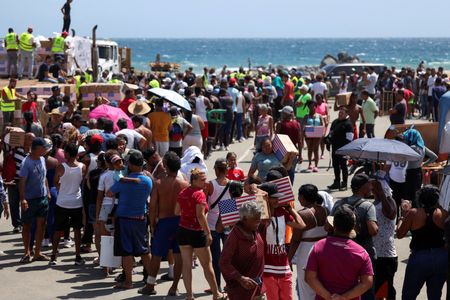
    JOHANNESBURG (AP) — Officials in South Africa and organizations representing Afrikaner interests strongly disputed claims made by the Trump administration on Wednesday regarding an alleged humanitarian crisis affecting the country’s white population.

    This justification was used to expand America’s refugee intake, specifically targeting white Afrikaners. On Tuesday, the Trump administration announced it would accept an additional 10,000 white South Africans as refugees in the coming year, expanding the annual limit while preventing individuals from other nations from accessing the same program.

    U.S. President Donald Trump published his decision in the Federal Register, stating he was expanding refugee admissions due to “an unforeseen emergency refugee situation.” Trump attributed blame to South Africa’s leadership for “recent increases in the incitement of racially motivated violence,” though he provided no concrete evidence.

    South Africa’s international relations department responded Wednesday by calling allegations of widespread persecution against white Afrikaners baseless, noting that some people who participated in immigration programs have decided to return to South Africa.

    “This reality is further corroborated by the actions of individuals who, despite having availed themselves of this preferential immigration program, have since resolved to return home,” spokesman Chrispin Phiri said.

    The Afrikaner labor organization Solidariteit contended that refugee designation isn’t an appropriate remedy for Afrikaners, who ought to flourish within South Africa. Representative Jaco Kleynhans stated the group had not engaged with the Trump administration about any “unforeseen emergency refugee situation,” while acknowledging America’s right to set its own refugee policies regarding Afrikaners.

    The organization “is in no way aware of anything that the Trump administration could be referring to,” Kleynhans said.

    AfriForum, an advocacy group representing the nation’s white Afrikaner minority population of over 300,000 members, indicated it “does not have information” about the specific claim of an emergency refugee crisis.

    The group’s CEO, Kallie Kriel, explained their mission centers on “fighting to create the circumstances in South Africa where there is no need for Afrikaners to leave.”

    Trump halted America’s refugee program immediately upon taking office and has subsequently transformed it into a pathway specifically for Afrikaners — white South Africans primarily of Dutch ancestry — to enter the United States. Critics argue this decision to concentrate a long-established program on a single demographic has abandoned people worldwide who are escaping conflict and hardship.

    Refugee advocacy organizations have questioned the prioritization of white South Africans over individuals from nations experiencing warfare and natural catastrophes. The vetting process for U.S. refugee status typically requires multiple years.

    According to Dr. Bryony Fox, a social justice researcher at Stellenbosch University, the Trump administration’s preference for white Afrikaner refugee admissions creates concerns about discriminatory humanitarian aid, inconsistent refugee protection, and favoring advantaged populations while overlooking other refugee communities facing extreme difficulties.

    “This risks politicizing refugee protection in a way that may ultimately weaken the legitimacy and universality of the refugee regime itself,” she said.

  • Trump Expands Refugee Program for White South Africans Amid Persecution Claims

    Trump Expands Refugee Program for White South Africans Amid Persecution Claims

    CAPE TOWN, South Africa — The Trump administration has boosted refugee slots for white South Africans to 17,500 this year, adding 10,000 new positions based on claims of “recent increases in the incitement of racially motivated violence” by South Africa’s Black-led government and political parties.

    The administration’s Tuesday announcement did not specify what incitement prompted this expansion, marking the latest assertion by the U.S. president that minority white Afrikaners face persecution — a claim South African officials firmly reject.

    The foundation for this refugee resettlement was established through an executive order last year, which characterized Afrikaners as victims of racially motivated violence driven by government policies.

    Afrikaners trace their ancestry to Dutch and French colonists who arrived in South Africa during the 1600s.

    American officials point to isolated attacks on white farmers’ homes as proof of racial persecution. However, South African authorities and experts argue this misrepresents reality, noting that Black farmers and agricultural workers also fall victim to what are primarily violent robberies rather than racially motivated crimes.

    South Africa indeed struggles with violent crime affecting all racial groups, including white farmers.

    Official crime data shows more than 23,000 homicides occurred nationwide between April 1, 2025, and March 31, 2026, impacting all races but disproportionately affecting the impoverished Black majority. By contrast, AfriForum, an Afrikaner advocacy organization, recorded 29 farm-related homicides in 2025. Agricultural killings account for roughly 0.1% of total homicides.

    South African law enforcement reports that Black individuals were also among farm homicide victims, though rural crimes aren’t typically categorized separately or broken down by victim race.

    AfriForum, which leads efforts to highlight rural crime concerns, doesn’t publish statistics on Black farmers and agricultural workers killed, stating it “does not racialize the issue.”

    The administration claimed recent increases in racial violence incitement by South African government officials and politicians created “an unforeseen emergency refugee situation” and “grave humanitarian concerns” for Afrikaners.

    The specific incidents referenced remain unclear, as no public incitement to violence has emerged from South Africa’s government, which consists of a 10-party coalition — some led by white individuals. White South Africans, including those with Afrikaner background, hold Cabinet positions.

    Afrikaners belong to South Africa’s white minority, which includes people of British and other backgrounds. Approximately 4.5 million white people live among South Africa’s 62 million residents, with over 80% being Black and additional minorities of Indian and multiracial heritage.

    Claims of an “emergency refugee situation” for Afrikaners don’t align with daily life in South Africa, where Afrikaners serve as prominent politicians, business executives, and sports figures.

    Afrikaans, their language, enjoys widespread use and school instruction as one of 11 official languages, while Afrikaner monuments and churches remain standing and maintained within the nation’s multicultural framework.

    The administration has previously highlighted one far-left opposition party that has inflamed racial tensions by occasionally using a decades-old chant from the anti-apartheid resistance era, which ended in 1994. The chant contains lyrics “kill the Boer” — referring to white farmers — and has faced hate speech investigations.

    South African leadership hasn’t condemned the chant, arguing it holds historical significance tied to the anti-apartheid struggle and shouldn’t be interpreted literally. Afrikaner groups like AfriForum have criticized this government position and demanded the chant be banned.

    The far-left party operates outside the government and lacks national political influence.

    The Trump administration has also cited South Africa’s affirmative action legislation as evidence of anti-white policies. These laws aim to create opportunities for Black people and others oppressed under white minority rule, while also supporting women and disabled individuals, though their effectiveness remains debated.

    These policies have drawn attention from allies like South African-born billionaire Elon Musk, who claims he was denied a license for his Starlink satellite internet service because of his race.

    Government officials call this characterization misleading. Starlink can operate in South Africa but must comply with affirmative action requirements in that sector, mandating previously disadvantaged groups hold minority stakes in local entities. The government notes over 600 American companies currently operate in South Africa while following affirmative action rules.

    South African officials have previously stated that Afrikaners remain free to emigrate to the U.S., just as other South Africans have sought opportunities abroad. However, they argue against classifying them as refugees fleeing persecution.

    “The assertion that white Afrikaners, in particular, endure systemic persecution is entirely without foundation,” South African foreign ministry spokesperson Chrispin Phiri told The Associated Press on Wednesday.

    Approximately 6,000 South Africans have relocated to the U.S. since the Afrikaner program launched last year, according to American government data.

    The administration maintains broader disagreements with South Africa’s government, particularly regarding the Israel-Palestinian conflict. South Africa, a long-standing Palestinian supporter, has accused close U.S. ally Israel of genocide in Gaza through a high-profile case at the United Nations’ top court.

    Israel, established following the Holocaust, has strongly rejected these allegations and argued that the Hamas-led attack on southern Israel on Oct. 7, 2023, constituted a genocidal act.

    American officials have pointed to South Africa’s stance on this issue and the country’s diplomatic ties with Iran as evidence of anti-American foreign policy, which South Africa disputes.

  • Former Philippines President Duterte’s War Crimes Trial Set for November 30

    Former Philippines President Duterte’s War Crimes Trial Set for November 30

    THE HAGUE, Netherlands — International Criminal Court officials announced Wednesday that former Philippine President Rodrigo Duterte will face trial for crimes against humanity beginning November 30.

    Prosecutors allege the former president bears responsibility for dozens of killings, claiming he directed fatal anti-narcotics operations during his time as mayor of Davao, a southern Philippine city, and throughout his presidency.

    “The expediency of the trial is of the upmost importance,” presiding Judge Joanna Korner said, rejecting requests from the registry of the court to delay the start date over concerns about a lack of translators.

    Duterte, who held the presidency between 2016 and 2022, was taken into custody in the Philippines last year and transported to The Hague, where the international court operates. He maintains his innocence regarding all accusations.

    Korner called on court personnel to guarantee translation services would be provided for Philippine languages, including Tagalog. The court’s official languages are English and French.

    Death toll figures from Duterte’s time in office differ significantly, ranging from over 6,000 according to national police records to as many as 30,000 as reported by human rights organizations.

    Duterte has chosen not to attend any court proceedings, having waived his right to be present. Judges determined last month that he was mentally competent to face trial, after an earlier session was postponed due to health concerns.

    This month, the court made public an arrest warrant for Ronald Marapon dela Rosa, who headed the national police under Duterte and assisted in implementing his anti-drug campaigns that resulted in thousands of deaths, primarily among minor offenders.

    Dela Rosa has disappeared after a confrontation at the country’s Senate building that involved gunshots. Philippine officials are searching for him and have promised to surrender him to the court.

  • Canada Chooses Swedish Aircraft Over US Option for Defense Fleet

    Canada Chooses Swedish Aircraft Over US Option for Defense Fleet

    OTTAWA, May 27 (Reuters) — Canada revealed Wednesday its decision to purchase a fleet of early warning aircraft from Sweden’s Saab, choosing the Swedish option over a competing model from Boeing as part of efforts to decrease dependence on U.S. defense contractors.

    Prime Minister Mark Carney informed reporters that Canada will select Saab’s GlobalEye system, which utilizes Bombardier’s Global 6500 jet as its platform. The alternative Boeing E-7 Wedgetail aircraft had also been under consideration, though that model has experienced scheduling setbacks and budget increases.

    “(This move) builds Canadian strategic autonomy, creates Canadian jobs, and reinforces Canada’s position as a global leader. And it is the product of choice for many of Canada’s partners, including France, Sweden, and the UAE,” Carney said.

    The Swedish company Saab is also being considered as a potential supplier for Canada’s Gripen fighter aircraft needs.

    While Canada has an existing agreement to purchase 88 F-35 jets from Lockheed-Martin, Prime Minister Carney directed the military last year to examine possibilities for reducing that order and acquiring aircraft from alternative suppliers. This review came after the United States imposed tariffs on important Canadian exports. No final determination has been made public regarding changes to the F-35 purchase.

  • Chinese Military Claims It Forced Dutch Warship from Disputed Waters

    Chinese Military Claims It Forced Dutch Warship from Disputed Waters

    Chinese military officials announced they mobilized naval and aerial units to force out a Dutch warship that they claim unlawfully entered waters around the Paracel Islands in the contested South China Sea on Wednesday.

    According to a statement from Zhai Shichen, a spokesperson for the People’s Liberation Army Southern Theater Command, helicopters operating from aircraft carriers have made multiple flights and “intruded into China’s airspace.”

    “We firmly oppose this and solemnly urge the Dutch side to immediately cease its infringing and provocative acts,” Zhai stated, emphasizing that the Chinese military will resolutely safeguard national sovereignty and security.

  • Mali’s Capital Faces Sheep Shortage as Militant Blockade Disrupts Eid Celebrations

    Mali’s Capital Faces Sheep Shortage as Militant Blockade Disrupts Eid Celebrations

    BAMAKO, Mali (AP) — Muslims worldwide are preparing for Eid al-Adha, the feast of sacrifice, but celebrations in Mali’s capital carry a somber tone this year. An economic blockade imposed by armed militants connected to al-Qaida has caused sheep costs to skyrocket, making the holiday’s traditional practice of slaughtering an animal and distributing meat to those in need financially impossible for many households.

    The supply crisis and inflated costs stem from a blockade targeting Bamako that was declared this month by members of Jama’at Nusrat al-Islam wal-Muslimin, a group with al-Qaida ties. These fighters routinely assault truck convoys and vehicles bringing supplies to the capital, frequently burning them completely.

    Mali, which has no coastline, relies extensively on fuel and merchandise transported by truck from neighboring coastal countries including Senegal and Ivory Coast. According to analysts, the militants’ economic siege aims to cripple the nation’s financial stability and weaken the military government’s authority.

    The siege isn’t complete, since the armed factions avoid maintaining roadblocks for extended periods due to concerns about Malian military retaliation, allowing some supplies to continue reaching Bamako and preventing complete food scarcity for the time being.

    However, the blockade has increased costs for certain products like meat and created fuel shortages, compelling citizens to wait in long lines at the limited gas stations still operating.

    Since September 2025, the group had already enforced a stifling road blockade on oil imports.

    Mountaga Touré, 38, a teacher, explained he searched multiple livestock markets before abandoning his plan to purchase a sheep for the celebration, noting that sheep costs have nearly doubled since the blockade began.

    “The small sheep that used to cost $177 are now $266 or more,” Touré said.

    In certain areas of Bamako, citizens have replaced the customary sheep with cattle, combining their resources to buy one animal so they can obtain meat for this significant Muslim observance in West Africa.

    The blockade comes after extensive, synchronized attacks by separatist and extremist forces throughout Mali last month, representing the most significant assault in the nation in more than ten years.

    Mali has endured insurgencies waged by extremists associated with al-Qaida and the Islamic State group, along with a separatist uprising in the northern region, for more than a decade.

    After a 2020 military takeover, the governing junta shifted away from Western partners toward Russia for assistance in fighting Islamic extremists. However, security conditions have deteriorated recently, analysts note, with a unprecedented number of militant attacks. Military forces and Russian mercenaries have also faced accusations of killing civilians they believe are working with militants.

    The Malian military and its Russian Africa Corps mercenaries are working around the blockade by providing protection for truck convoys transporting goods and fuel to supply Bamako markets. The armed forces also frequently report striking positions controlled by armed groups.

    However, residents report that the protective escorts and military strikes haven’t been sufficient to properly supply the capital.

    “Usually, I bring up to 200 sheep to Bamako to sell during Tabaski,” said Amadou Cissé, 45, a livestock trader specializing in Eid sheep, using the West African word for the holiday. “But this year I barely brought 50 because there is not enough space in army-escorted trucks.”

    Cissé explained that the sheep he requested remain in Diema, a community approximately 345 km (215 miles) west of Bamako, where many animals destined for the capital are sourced.

    “I was told more escorted convoys would be organized, but so far none have left Diema, so I doubt the sheep will arrive before the holiday,” he said.

    Drissa Traoré, who has sold sheep in Bamako for more than ten years, reported that available inventory has decreased substantially in recent times. “This year, we have barely half the number of sheep we usually have during Tabaski,” he said.

    The dangerous conditions have also impacted travel arrangements for many people.

    Sidi Diarra, who works at a prominent financial company in Bamako, mentioned he typically observes the holiday with his family in Segou, approximately 240 km (150 miles) from the capital.

    “This year, I am afraid to go because of attacks by extremist groups. It is safer to stay in Bamako,” he said.

  • Hungarian Parliament Reverses Decision to Leave International Criminal Court

    Hungarian Parliament Reverses Decision to Leave International Criminal Court

    BUDAPEST, Hungary — Hungarian lawmakers voted Wednesday to maintain their country’s membership in the International Criminal Court, overturning the prior administration’s plan to exit the global war crimes tribunal under Viktor Orbán.

    Orbán’s administration had announced Hungary’s intention to leave the ICC last year, following a state visit by Israeli Prime Minister Benjamin Netanyahu. The visit proceeded despite an outstanding ICC arrest warrant against Netanyahu for alleged war crimes related to Israel’s military operations in Gaza.

    International organizations and the ICC had condemned Orbán’s administration for not arresting Netanyahu during his visit. Orbán responded by labeling the ICC a “political court.”

    Hungary’s exit from the court was scheduled to become official on June 2.

    Prime Minister Péter Magyar introduced the reversal legislation on Monday, arguing that maintaining international peace and defending human rights requires accountability for serious international crimes through “an international judicial forum.”

    The legislation further states: “To this end, it is necessary to maintain Hungary’s participation in the Statute of the International Criminal Court.”

    The measure passed primarily along party lines, with Magyar’s governing Tisza party providing 133 supporting votes, while 37 lawmakers opposed and five abstained.

    The Assembly of States Parties, which oversees the ICC, praised Hungary’s decision to remain. The organization issued a statement Monday ahead of the parliamentary vote, saying it “congratulates the government of Hungary for this important decision.”

    The ICC had previously determined that Hungary violated its legal duty to apprehend Netanyahu. In July, judicial panel members stated that the “failure to arrest suspects severely undermines the court’s ability to carry out its mandate.”

    Hungary helped establish the ICC, with Orbán personally signing the Rome Statute that created the tribunal in 1999.

    Had Hungary proceeded with withdrawal, it would have joined only the Philippines and Burundi as countries that left the ICC. Hungary also would have become the sole European Union member nation not participating in the court.

  • Mount Everest Climbers Gather to Address Overcrowding, Waste Issues

    Mount Everest Climbers Gather to Address Overcrowding, Waste Issues

    KATHMANDU, Nepal (AP) — Mountaineering experts, climbers, and government officials convened in Nepal’s capital city Wednesday to address mounting concerns about Mount Everest expeditions amid rising temperatures and unprecedented crowding that’s creating serious environmental and safety issues.

    The gathering, called the “Everest Summiteers Summit,” took place during what experts believe was the busiest climbing period ever recorded on the planet’s tallest mountain. In just several days this month, hundreds of adventurers along with their Sherpa guides made their way to the 8,849-meter (29,032-foot) summit.

    This climbing season saw Nepal authorize a unprecedented 494 permits for international climbers, with summit achievements estimated to exceed 900 people. This figure would mark the highest total ever recorded during spring climbing months, though official tallies won’t be released until later.

    A sherpa guide who holds the record for most successful climbs — 32 ascents — expressed concerns about the overwhelming numbers creating dangerous conditions.

    “Nepal should only allow no more than 250 climbers that are issued permit to climb from the Nepal side,” Kami Rita Sherpa said. “It will be good if the government was to limit the number.”

    Recent photographs from the mountain reveal lengthy queues of climbers experiencing bottlenecks, secured to safety ropes while awaiting their turn to approach the peak.

    During climbing season, which concludes this month, approximately 3,000 individuals including climbers, guides, and support staff establish temporary residence on Mount Everest. Removing all waste materials when camps are dismantled continues to pose significant difficulties.

    Government regulations mandate that climbers must pack out their trash, yet substantial amounts remain abandoned on the mountain. Expedition members emphasize that environmental preservation must stay a top concern.

    “We should take the rubbish from the mountain and we should protect our Himalayas,” said He Jing, a renowned Chinese climber.

    Present regulations allow anyone to obtain climbing authorization by paying the government’s $15,000 permit fee.

    However, Nepalese authorities are developing updated rules that would require climbers to demonstrate previous mountaineering experience.

    Nathaniel Douglas, a climber from Seattle, told The Associated Press during the conference that he observes inexperienced individuals attempting Everest after viewing social media content, despite having no mountain climbing background.

    “So they really don’t understand what mountaineering is, like what it actually takes to summit Mount Everest and get back down safely,” he said.

    British mountaineer Adriana Brownlee, the youngest woman to climb all 14 highest peaks, said the weather on the mountains was getting warmer, increasing the risks for climbers.

    “Every year the (Khumbu) Icefall seems more unstable because of global warming,” she said. adding that water underneath is melting faster, causing the seracs — blocks of ice — to fall much easier because of the movement underneath.

    Last month, climbers were forced to postpone their ascents when a massive serac posed a dangerous threat to the climbing route directly above base camp.

  • Rescue Teams Find 5 Cave-Trapped Villagers Alive in Laos After Week-Long Search

    Rescue Teams Find 5 Cave-Trapped Villagers Alive in Laos After Week-Long Search

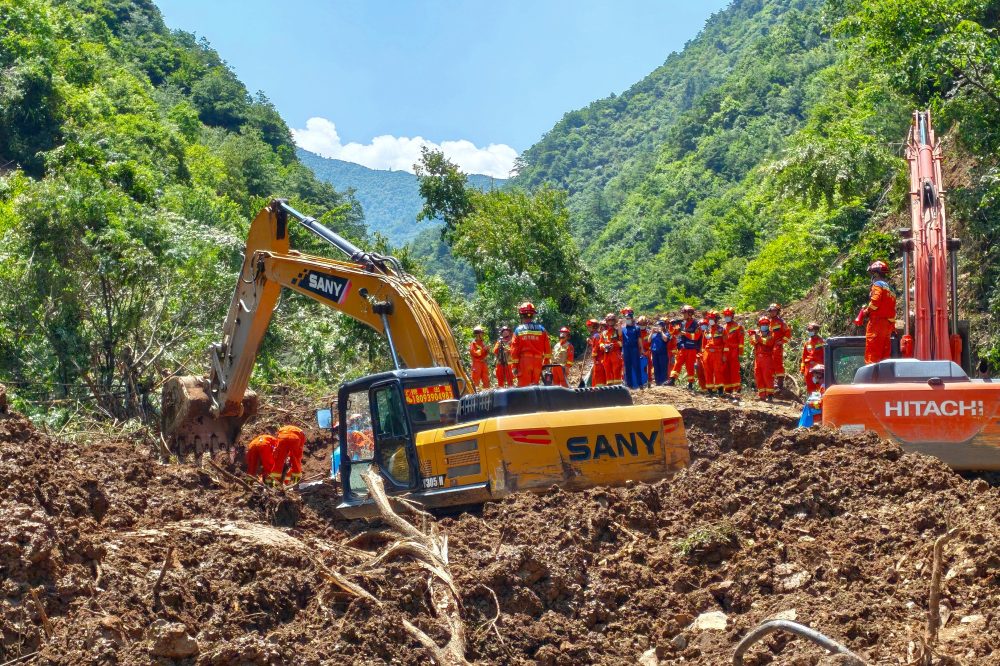
    Rescue teams in central Laos have successfully located five villagers who became trapped in a flooded cave more than a week ago, though search efforts continue for two others who remain unaccounted for, officials announced Wednesday.

    The group of seven villagers had entered the cave located in Xaisomboun province on May 19 when sudden heavy rainfall caused flash flooding that sealed off their escape route, according to rescue teams from Laos and Thailand participating in the operation.

    Bounkham Luanglath, representing the Lao organization Rescue Volunteer for People, which has been collaborating with local officials on the rescue mission, confirmed to The Associated Press that five individuals were discovered safe and alive, while efforts to locate the remaining two will persist.

    “I’m still shaking. Our team made it happen,” he stated in a voice message.

    Footage released by a Thai rescue organization appeared to capture the moment when divers surfaced and located the stranded villagers. The video shows the individuals, each equipped with headlamps, positioned on a rock formation surrounded by flood waters.

    Additional footage depicted rescue personnel both inside and outside the cave celebrating with cheers, jumping, and embracing one another following the successful discovery.

    International rescue specialists from Thailand joined the operation over the weekend, including divers who participated in the complex 2018 rescue operation in northern Thailand that successfully freed 12 schoolchildren and their soccer coach after they spent more than two weeks trapped underground.

    The cave sits in a challenging, isolated location within Xaisomboun province’s Longcheng district, positioned approximately 120 kilometers (75 miles) north of Vientiane, the capital city. Rescue personnel at the location have documented through social media the difficult mountainous conditions and persistent rainfall that have complicated their efforts.

    Online footage shared by Thai rescue teams revealed that accessing the cave entrance demands a challenging uphill trek on foot covering roughly 4 kilometers (2.5 miles). The cave opening itself presents additional obstacles with its steep, rocky terrain and narrow width that permits only one person to pass through at a time.

    While no official explanation has been provided regarding the villagers’ purpose for entering the cave, Bounkham indicated that local residents commonly visited the location in search of gold, despite repeated safety warnings from authorities advising against cave entry due to dangerous conditions.

  • Argentine Opposition Leaders Unite Against President Milei Ahead of 2027 Election

    Argentine Opposition Leaders Unite Against President Milei Ahead of 2027 Election

    Opposition figures in Argentina are moving to form a unified front against President Javier Milei as his public support continues to decline ahead of the 2027 presidential contest.

    Buenos Aires Governor Axel Kicillof, who leads the Peronist Justicialista party in his province, confirmed to Reuters that discussions are ongoing to create a Peronist alliance. The coalition could potentially bring together politicians from various parties who oppose Milei’s economic policies, despite his success in curbing severe inflation through widespread budget cuts.

    The Peronist movement suffered a significant setback in October’s midterm elections, where voters endorsed Milei’s ambitious economic reform agenda. That loss highlighted deep divisions within the opposition and raised serious questions about its ability to mount an effective challenge going forward.

    While Milei has indicated plans to seek re-election, the opposition has yet to name its standard-bearer. Potential candidates include Kicillof and Sergio Massa, a former economy minister with Peronist ties who lost the 2023 presidential race to Milei.

    Recent survey data suggests Milei could face a difficult path to a second term. A May survey by Opina Argentina found Milei’s La Libertad Avanza party essentially tied with Peronist forces. Separate polling by Trespuntozero indicates 42% of voters would definitely or possibly support Kicillof, while only 34% expressed similar sentiment for Milei.
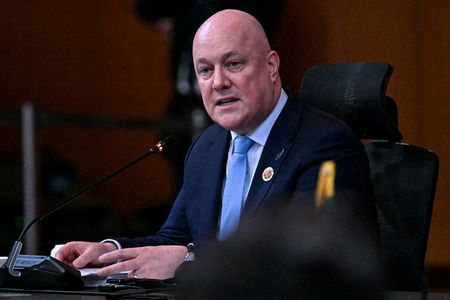
    The Peronist movement remains closely linked to opposition figure Cristina Kirchner, the former president currently under house arrest in Buenos Aires while serving a six-year corruption sentence. During her administration, extensive government spending was cited as a driver of rising inflation, a problem that continued under President Alberto Fernández’s tenure when she served as vice president.
    Current approval numbers show Milei at 39% positive ratings according to Opina Argentina, a sharp drop from 53% over a year ago. His standing has been damaged by government corruption controversies and declining purchasing power that hasn’t kept pace with inflation. Kicillof holds a slight edge at 43% approval, while Massa registers 33%.

    Building a unified Peronist coalition may prove challenging given tensions between factions that span from center-left to center-right ideologies. However, the shared goal of defeating Milei could “act as an incentive for all actors to set aside some of their interests and come together in a coalition,” according to Facundo Nejamkis of Opina Argentina.

    Campaign activities for the October 2027 presidential election are anticipated to begin in August, following the World Cup and local winter break period.

  • Russia Proposes Arming Bank Workers to Defend Against Ukrainian Drones

    Russia Proposes Arming Bank Workers to Defend Against Ukrainian Drones

    Banking employees across Russia could soon find themselves on the front lines of air defense under legislation passed by the nation’s lower parliamentary chamber.

    The proposed law would require financial institutions to fund and install electronic interference equipment at their locations, while designated workers would be trained to destroy approaching unmanned aircraft, according to the measure that received final approval on Tuesday.

    State news agency Interfax reported the legislation was initially introduced last August before being broadened in scope. The proposal now awaits consideration by the upper house Federation Council and must receive Russian President Vladimir Putin’s signature to become law.

    The nation faces mounting challenges defending its vast territory against an increasing number of strikes from advanced Ukrainian long-distance unmanned vehicles. Military experts and Western officials note that smaller aircraft are also hampering Russian forces along the 1,250-kilometer front and disrupting supply operations for the invading military.

    Financial institutions have not emerged as primary targets for Ukrainian aircraft during the four years of conflict since Moscow’s invasion began.

    The legislation provides limited specifics, creating numerous uncertainties about implementation. Installing equipment nationwide and providing staff training would demand extensive organizational resources.

    The initiative would include Russia’s central bank and major institutions, including majority state-owned Sberbank. Given the widespread presence of banking facilities in communities throughout the country, incorporating them into air defense networks could significantly expand protective coverage.

    The move could undermine Putin’s attempts to insulate Russian civilians from the conflict by directly involving ordinary citizens in warfare and increasing visibility of the invasion’s impact.

    The Duma-approved legislation authorizes bank workers to disrupt or intercept aircraft control transmissions and destroy threatening unmanned aerial, underwater, and ground vehicles at their facilities without awaiting security service coordination.

    “Jamming will be used to make it more difficult for (the drones) to target and attack the relevant targets,” Anatoly Aksakov, chairman of the State Duma Committee on Financial Markets, told Russian media outlet RBK. “Plus, we’ll also use means to shoot down these drones, thereby protecting the relevant targets.”

    Individual organizations will decide which staff members receive authorization to implement these defensive measures.

  • Spanish Authorities Raid Socialist Party Offices in Corruption Probe

    Spanish Authorities Raid Socialist Party Offices in Corruption Probe

    BARCELONA, Spain (AP) — Law enforcement authorities conducted a search of Spain’s ruling Socialist Party headquarters on Wednesday as part of an ongoing investigation into alleged financial misconduct, according to the Civil Guard.

    The operation at the Madrid office represents another setback for Prime Minister Pedro Sánchez’s political organization, which has faced numerous corruption allegations in recent months.

    Civil Guard officials informed The Associated Press that officers were executing court orders to collect evidence related to a National Court investigation examining corruption allegations against former party officials and other suspects.

    Authorities stated the operation is specifically focused on an investigation overseen by National Court judge Santiago Pedraz examining potential misconduct by Socialist party member Leire Díez.

    The investigation into Díez began in 2025 after audio recordings surfaced in Spanish media suggesting her involvement in efforts to undermine a Civil Guard anti-corruption unit member. Additional reports connected her to alleged attempts to interfere with state prosecutors’ work. The judge’s investigation aims to determine whether she received party payments to allegedly conduct these activities.

    The Socialist party maintained she was operating independently. Díez, who has departed the party, has rejected any wrongdoing.

    A court statement released Wednesday indicated that judge Pedraz directed the Civil Guard to “confiscate diverse documentation and electronic archives in an investigation of a ring designed to destabilize judicial processes that were affecting the ruling party.”

    The judge indicated that beyond Díez, he is examining the suspected involvement of former Socialist heavyweight Santos Cerdán — already under scrutiny in another corruption matter — along with a former Andalusia regional government member, a police officer, a business owner and two attorneys. The judge is investigating them for suspected bribery, providing false testimony, document forgery, influence peddling, and corruption.

    Last week another court announced it was examining former Prime Minister José Luis Rodríguez Zapatero regarding a government airline bailout. He has rejected any misconduct allegations.

    Sánchez’s wife and brother are under investigation for suspected influence peddling, which both have disputed.

    Most significantly for the Socialists, Cerdán and a former minister under Sánchez are both facing investigation for allegedly participating in a kickback scheme that began during the COVID-19 pandemic, which they have contested.

    Sánchez, who has served as prime minister since 2018, has characterized the cases involving his family as a “smear campaign.” However, the corruption investigation involving his former associates prompted him to request the nation’s “forgiveness” in 2025.

    His minority administration relies on support from a junior coalition partner, which has maintained its backing despite the legal proceedings.

    Sánchez, who has gained international attention for progressive positions that have drawn criticism from U.S. President Donald Trump, has not been directly connected to any of the scandals.

  • New Commission Formed to Investigate Philippines Drug War Deaths

    New Commission Formed to Investigate Philippines Drug War Deaths

    MANILA, Philippines — A new investigative commission was established Wednesday to examine the deadly drug enforcement campaign conducted under former Philippine President Rodrigo Duterte, with organizers seeking to compile witness testimonies and evidence for potential prosecutions.

    The commission is being spearheaded by a Catholic bishop and includes a former judge from the international court system. Duterte concluded his turbulent six-year term in 2022 and was subsequently detained and transported to the Netherlands last year to face charges at the International Criminal Court in The Hague for alleged crimes against humanity related to the killings.

    Sen. Ronald dela Rosa, a close supporter of Duterte who previously served as his top police official and initially implemented the violent enforcement efforts, faces ICC charges as an alleged accomplice in the numerous deaths that drew criticism from Western nations and human rights organizations.

    Dela Rosa has disappeared from public view and is being pursued by Philippine law enforcement, which has committed to executing the ICC arrest warrant and delivering him to the international tribunal.

    Both dela Rosa and the outspoken former president have rejected claims they approved unlawful executions, though Duterte frequently made public threats against suspected criminals during his presidency.

    Thousands of police personnel who participated directly in the harsh enforcement operation that resulted in the deaths of numerous impoverished suspects have escaped thorough investigation, with very few facing criminal conviction, human rights organizations report.

    “This is long overdue,” Cardinal Pablo Virgilio David stated during a press briefing. The independent “EJK Truth Commission” he helped establish will concentrate on assisting victims, their relatives and even remorseful law enforcement personnel in achieving resolution, David explained.

    “This is an opportunity for a catharsis … so we can recover our dignity as a country,” David commented. “Ultimately, what we aspire for is healing not only for the victims but also our institutions.”

    Raul Pangalangan, an esteemed Philippine attorney who previously served as an ICC judge for several years, explained that the commission he will lead “was created to ensure that the stories of victims, survivors and families are heard, verified and preserved.”

    The commission intends to conduct open hearings.

    “These things happened because everybody looked the other way,” Pangalangan stated. “It is almost a conspiracy of silence.”

    Commission representatives indicated they will make their research available to government officials to assist in investigations, prosecutions and accountability efforts. They plan to submit regular reports to justice and human rights agencies, they announced.

    David appealed to civic organizations, educational institutions, faith communities and other groups to support the commission’s work and mentioned that a major German charitable organization has provided financial backing.

    Commission member Raquel Fortun, a forensic pathologist with the state-run University of the Philippines, told The Associated Press that determining facts years after the deaths occurred would be challenging. Some law enforcement personnel involved in the killings attempted to avoid responsibility, she noted.

    Official death records for 13 drug suspects whose bodies were recovered after Duterte left office indicated they died from natural causes such as heart attack and pneumonia, she reported.

    “When I examined the remains, I found that they were hit by gunfire,” Fortun revealed.

  • Britain and Poland Sign Defense Pact to Counter Russian Aggression

    Britain and Poland Sign Defense Pact to Counter Russian Aggression

    LONDON – A new defense and security agreement was finalized Wednesday between Britain and Poland as both nations work to address mounting threats from Russia’s increasingly hostile actions, according to officials from the British government.

    Polish Prime Minister Donald Tusk and British Prime Minister Keir Starmer put their signatures on the treaty during a ceremony in London. The agreement will enhance border protection, combat organized criminal activities, and strengthen defense collaboration with the European Union, British officials announced.

    This latest military partnership with an EU nation follows comparable pacts with France and Germany, highlighting Starmer’s campaign to mend relationships damaged by Brexit nearly a decade ago while responding to calls from U.S. President Donald Trump for European nations to shoulder greater responsibility for continental security.

    Prior to departing Poland, Tusk stated that both countries view “Russia as a strategic threat,” and the two leaders were anticipated to address rising hybrid warfare, cyber attacks, and espionage activities.

    “The challenges Europe now faces demands an even stronger partnership,” Starmer said in a statement.

    “This treaty is the biggest step forward in our defence and security relationship with Poland in a generation, allowing us to confront modern security threats that may be less visible but no less dangerous,” he added.

    British officials indicated the agreement will enable both countries to merge their expertise and industrial capabilities for developing and producing advanced next-generation weaponry, including enhanced air and missile defense capabilities.

    Tusk emphasized that cybersecurity represents a major component of the treaty beyond traditional defense measures. Polish officials note their country’s position as a central point for military assistance to Ukraine has made it a primary target for Russian intelligence operations, cyber warfare, and propaganda campaigns.

    This Polish agreement represents the most recent bilateral defense partnership Britain has pursued under Starmer’s leadership. The Prime Minister has achieved greater success in international relations than domestic politics, where political opponents are positioning themselves and could potentially force a leadership challenge.

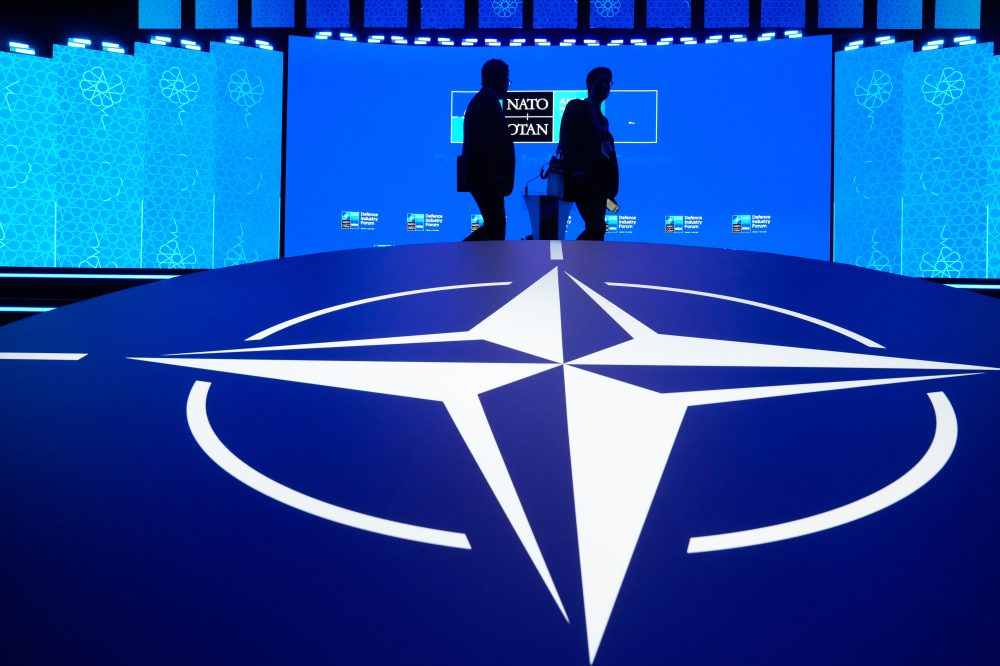
    Following demands from Trump’s administration for Europe to increase its self-defense capabilities, raising uncertainty about the NATO alliance’s future, both Britain and Poland have actively pursued defense agreements with other countries.

    Britain and France reached an agreement last year to strengthen their defense partnership, including enhanced cooperation regarding their nuclear weapons programs, while Starmer also concluded a treaty to expand relations with Germany.

    Poland finalized a defense agreement with France in 2025 to boost military cooperation and is currently developing a comparable treaty with Germany.

  • 300 Ghanaians Return Home from South Africa After Anti-Immigrant Unrest

    300 Ghanaians Return Home from South Africa After Anti-Immigrant Unrest

    Three hundred citizens of Ghana lined up at Johannesburg’s OR Tambo International Airport early Wednesday morning to catch one of the initial flights back to their homeland following weeks of anti-foreigner demonstrations that raised security fears across South Africa.

    The departing group consisted of women and children among the 300 individuals, with officials calling it a voluntary evacuation program for Ghanaian residents who reported feeling unsafe in the country.

    Officials from South Africa have been collaborating with their Ghanaian counterparts to process a roster of approximately 800 individuals who have expressed interest in departing.

    An unnamed South African immigration officer told the eNCA television network: “What we found is that of the 300, only 10 of them are legal in the country, so quite a number of them are in non-compliance to our immigration act.”

    The evacuation came after weeks of anti-foreigner demonstrations, with protesters calling for stricter enforcement against what they termed illegal immigrants and blaming foreign residents for contributing to criminal activity and joblessness.

    The demonstrations have been marked by violent incidents targeting migrants from various sub-Saharan African nations.

    A Ghanaian citizen preparing for departure said continuous intimidation influenced his choice to leave.

    “I’m happy that I’m going to my country … it’s not easy to be in someone else’s country and be disturbed all the time,” the man told reporters, choosing not to reveal his identity.

    Organizations advocating for migrant rights argue that foreign nationals are being unfairly blamed by South Africans for the nation’s economic challenges, including joblessness rates exceeding 30% that particularly impact the Black community.

    Ghana’s High Commissioner to South Africa, Benjamin Quashie, explained that the departures were designed to reduce tensions while maintaining positive diplomatic relations between both nations.

    “The demonstrators have said they want us to work together. We must ensure that those who are undocumented are returned home and that institutions are allowed to function,” Quashie stated, rejecting suggestions of strained diplomatic relations with South Africa.

    South African officials have denounced attacks against foreign residents and promised to take action against xenophobic violence, stating such behavior contradicts the country’s democratic principles.

  • Turkey’s Opposition Leader Plans Party Congress After Court Ruling Crisis

    Turkey’s Opposition Leader Plans Party Congress After Court Ruling Crisis

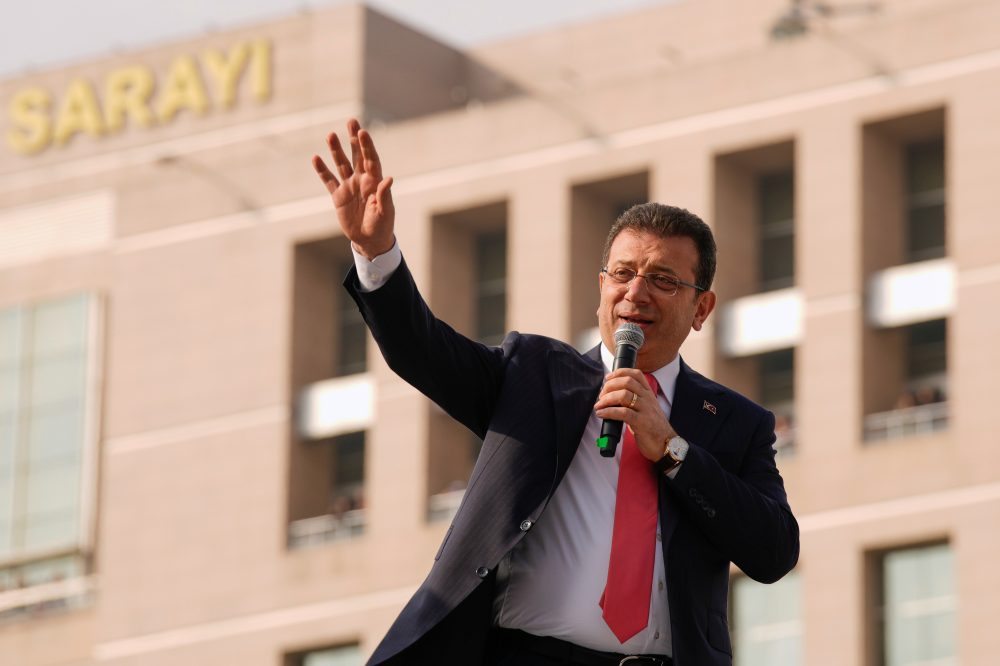
    The restored leader of Turkey’s primary opposition political organization announced Wednesday that a party congress will be scheduled after legal requirements are fulfilled, following a judicial decision that removed prior leadership and sparked internal turmoil and financial market fluctuations last week.

    Kemal Kilicdaroglu informed media representatives that he plans to work with the Republican People’s Party (CHP) legal advisors to determine when the congress should occur.

    The reinstated chair stated a congress “will be held, there is no alternative,” emphasizing it must occur on proper legal grounds and follow established party procedures.

    Kilicdaroglu indicated all choices would be made through group consensus, noting the party assembly will likely meet and that the organization would operate strictly according to legal guidelines and protocols.

    He rejected rumors regarding member expulsions from the organization, stating any such actions must comply with existing regulations.

    Kilicdaroglu also condemned the decision to lock the party headquarters in response to the judicial decision, calling it inappropriate to prevent public access or prevent legislators from entering the facility.

    Former CHP leader Ozgur Ozel suggested Tuesday that a leadership election should involve the party’s 2 million members rather than party representatives.

  • South Korea: Iranian Missile Likely Hit Cargo Ship in Strait of Hormuz

    South Korea: Iranian Missile Likely Hit Cargo Ship in Strait of Hormuz

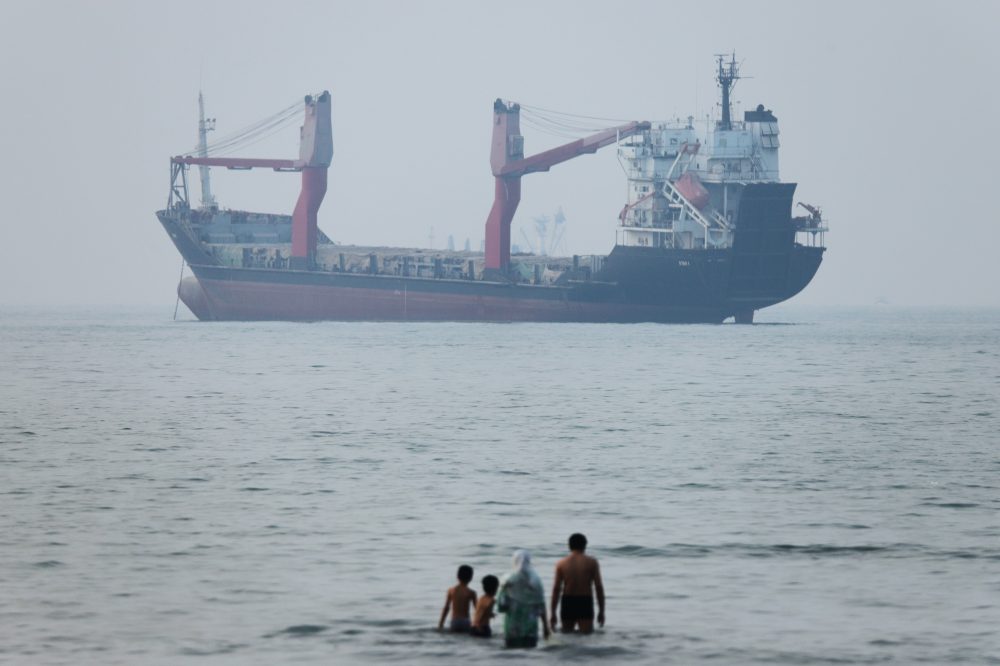
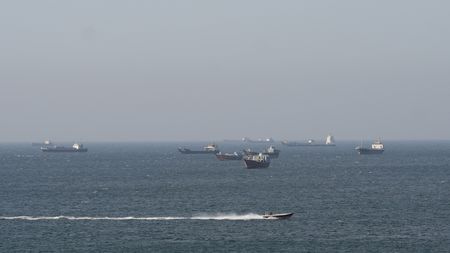
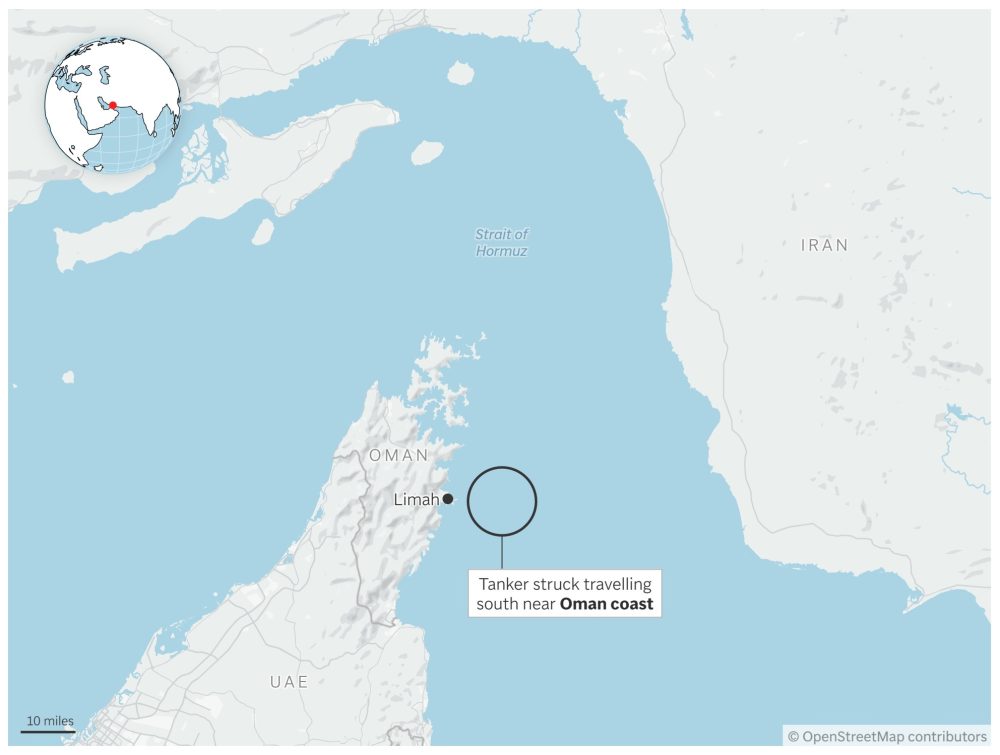
    South Korea’s Foreign Ministry announced Wednesday that investigators believe an Iranian anti-ship missile was responsible for striking a cargo vessel operated by local shipping company HMM in the Strait of Hormuz earlier this month.

    Officials from the Iranian embassy in Seoul have not yet responded to requests for comment regarding the allegations.

    The ministry revealed their findings during a briefing where they disclosed results from a government investigation examining the May 4 strike on the bulk carrier. The incident resulted in a fire and damage to the vessel’s lower stern hull.

    Investigators examined debris from unknown objects discovered inside the ship following the strike on the vessel.

    The examination revealed that the ship, called Namu, was struck twice, with the first warhead failing to detonate while a second one exploded.

    Materials found in the debris suggested the objects were manufactured in Iran, according to ministry officials.

    “Their engines were similar to turbojet engines made in Iran,” stated First Vice Foreign Minister Park Yoon-joo, who noted that one piece contained markings that seemed to be from an Iranian manufacturer.

    The explosive devices were similar to those found in Iranian anti-ship missiles, specifically the Noor or Qader models, Park explained.

    South Korea plans to call in the Iranian ambassador to present the investigation findings and lodge a formal complaint, he announced.

    Seoul will also require Iran to implement responsible actions to ensure such incidents don’t happen again, Park stated.

    U.S. President Donald Trump declared shortly after the incident that Iran had attacked the South Korean ship, and called on Seoul to participate in U.S.-led initiatives to protect shipping routes through the strait.

    Tehran has previously rejected any involvement in the attack.

  • Hungarian Lawmakers Vote to Maintain International Criminal Court Membership

    Hungarian Lawmakers Vote to Maintain International Criminal Court Membership

    BUDAPEST, May 27 (Reuters) — Hungarian lawmakers voted Wednesday to maintain their nation’s participation in the International Criminal Court, overturning a 2025 decision by the previous administration under Viktor Orban to exit the organization.

    The former government under Orban had chosen to leave the ICC, claiming the judicial body had become “political.” Current Prime Minister Peter Magyar, who defeated Orban in last month’s electoral contest, had promised to maintain Hungary’s ICC membership.

  • Global Markets Divided as Iran Conflict Enters Fourth Month

    Global Markets Divided as Iran Conflict Enters Fourth Month

    LONDON, May 27 – The Iran conflict has now stretched into its fourth month, creating a stark divide in global financial markets as elevated oil prices fuel fresh concerns about inflation among policymakers, and weakening currencies present challenges for several Asian nations.

    However, the ongoing conflict has provided a boost to certain assets, particularly petroleum and the dollar’s status as a secure investment.

    Here’s an examination of the notable gainers and those suffering losses.

    PETROLEUM’S BROADER CONSEQUENCES

    Crude oil’s approximately 40% surge has disrupted expectations for inflation and monetary policy. In physical trading, petroleum prices have climbed well beyond $100 per barrel and reached nearly twice their pre-conflict levels during early April.

    A historic 400-million-barrel drawdown from major economies’ strategic stockpiles, combined with traders securing alternative supply sources, has helped offset the supply shortage. However, pressure on the worldwide energy infrastructure continues to mount.

    ARTIFICIAL INTELLIGENCE SURGE SUPPORTS EQUITIES

    International stock markets have managed to navigate the turbulence thus far, as renewed artificial intelligence enthusiasm and broader expectations for a peace agreement outweigh the conflict’s negative effects.

    American equities have reached new peaks, as has South Korea’s Kospi index. European markets are approaching record territory.

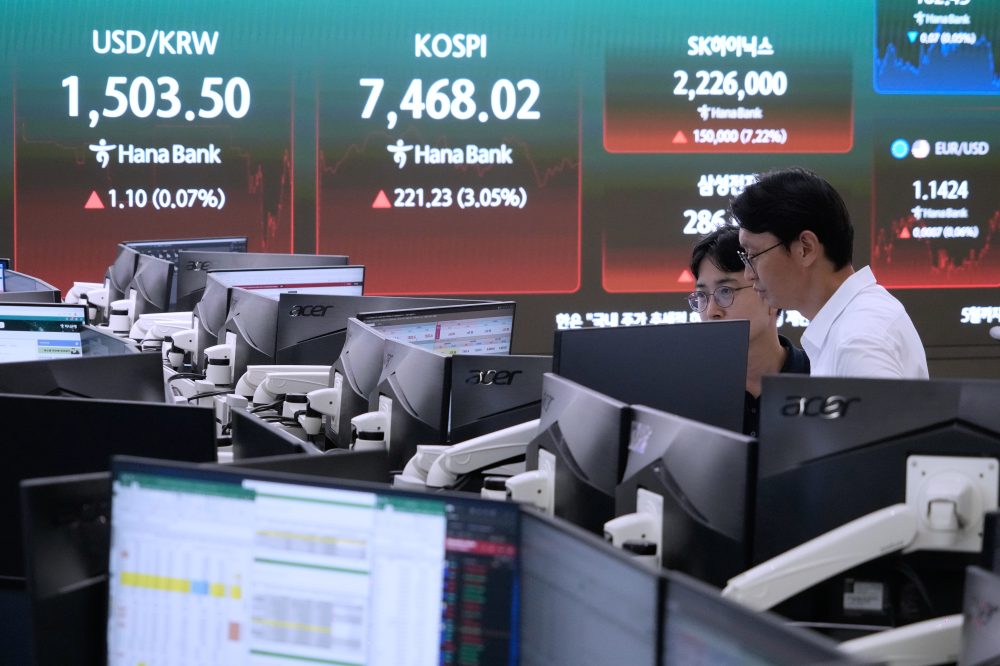
    SK Hynix achieved a $1 trillion market capitalization for the first time Wednesday, joining fellow memory chip companies Samsung Electronics and Micron Technology in reaching this benchmark during an AI-fueled surge.

    However, not every sector is benefiting.

    The S&P 500 passenger airlines index has declined more than 6% since hostilities commenced due to worldwide flight disruptions. A global luxury portfolio has dropped 10%, showing investor concerns that inflation might impact consumer spending.

    HSBC Private Bank global CIO Willem Sels noted the firm maintains an underweight stance on consumer-related products and services.

    “It provides us with a hedge in case the conflict accelerates,” he said. “Consumption has done reasonably okay, certainly in the U.S. where you have better-off households who still consume a lot and are benefiting from AI.”

    DOLLAR MAINTAINS DOMINANCE

    The dollar has emerged as another beneficiary, with investors turning to its safe-haven characteristics. It has risen 1.5% versus other major currencies since hostilities began, outpacing the Swiss franc and yen.

    Climbing U.S. Treasury yields have enhanced the dollar’s attractiveness, though some observers note it continues facing U.S. policy uncertainty and will probably decline when the conflict concludes.

    “We are currently neutral but still expect a weaker dollar in the medium term,” said Van Luu, global head of solutions strategy at Russell Investments.

    ASIAN CURRENCIES EXPERIENCE PRESSURE

    Asia had purchased approximately 80% of petroleum transported through the now-closed Strait of Hormuz, and remaining fuel supplies cost more than previously. This situation is damaging growth and making their currencies among the worst performers since the conflict began.

    India’s rupee, Indonesia’s rupiah and the Philippine peso have reached record lows versus the dollar, prompting some nations to raise interest rates or utilize foreign exchange reserves to mitigate the impact.

    Sri Lanka surprised markets Tuesday with a 100 basis point increase.

    Among Asian currencies, only China’s yuan has maintained stability, supported by significant domestic energy supplies.

    ADDITIONAL DAMAGE TO WORLDWIDE ECONOMY

    The petroleum price spike has also damaged the global economy, especially nations dependent on energy imports.

    Within the euro zone, economic activity contracted at its steepest pace in over two-and-a-half years during May, according to S&P’s composite purchasing managers index.

    The conflict’s effects are worsening Europe’s financial weaknesses, the European Central Bank cautioned in a Wednesday report.

    British firms also reported declining activity alongside rising input costs due to increased energy expenses.

    The U.S., which maintains oil and gas independence and where AI investment is climbing, has experienced less economic damage.

    Nevertheless, the international nature of petroleum markets means U.S. gasoline prices have reached a four-year peak of $4.56 per gallon.

    BONDS SUFFER LOSSES

    Government bonds are also among the losing investments, as the petroleum price surge has led traders to consider the possibility of higher rates responding to energy-driven inflation.

    Anticipation of increased fiscal and military expenditures has added pressure on longer-term securities.

    The Federal Reserve may abandon its easing stance soon, and U.S. 30-year Treasury yields have climbed to their highest levels since 2007, trading above 5%.

    German Bund yields have reached their highest point in more than 15 years as traders anticipate at least two ECB rate increases by year’s end.

  • Israeli Military Claims Killing of Hamas Commander in Gaza Strike

    Israeli Military Claims Killing of Hamas Commander in Gaza Strike

    Israeli military officials announced Wednesday they successfully targeted and eliminated the newly appointed commander of Hamas’ armed forces in Tuesday’s airstrikes on Gaza City, marking another high-profile killing less than two weeks after eliminating his predecessor.

    Defense Minister Israel Katz and Israeli military sources confirmed the Tuesday operations resulted in the death of Mohammed Odeh, who they identified as the latest military chief of the organization.

    Relatives of an individual named Mohammed Odeh verified his death in the bombing but did not verify his role as the military commander. Hamas leadership has remained silent on the matter.

    Katz described him as “one of the architects” of the Oct. 7, 2023, attacks that sparked more than two years of conflict in Gaza and noted this marks the fourth occasion Israel has eliminated the commander of Hamas’ armed wing since that assault. The prior commander, Izz al-Din al-Haddad, was eliminated on May 16.

    Tuesday’s bombing resulted in a minimum of three fatalities and 12 wounded individuals, occurring just before Eid al-Adha, an important Islamic celebration.

    “We pledged to eliminate everyone who led the October 7 massacre and this is what we will do: they are all bound to die, everywhere,” Katz posted on X Wednesday. “We pledged that Hamas will not hold civilian or military rule.”

    Prime Minister Benjamin Netanyahu, who faces upcoming fall elections, similarly vowed that Israel would pursue all participants in the Oct. 7, 2023, assault.

    The bombing occurred while Muslims were making preparations for Eid al-Adha, typically a celebratory period marked by family reunions and festive meals.

    The religious observance remains muted again this year throughout Gaza, where the overwhelming majority of residents continue living as refugees in makeshift accommodations following the destructive conflict. Approximately 90% of Gaza’s population exceeding 2 million has lost their residences, based on U.N. data, with most now housed in massive temporary encampments plagued by rodent problems and standing wastewater. Survival depends entirely on humanitarian assistance.

    Eid al-Adha, known as the “Feast of Sacrifice,” represents a significant Islamic observance celebrated by millions of Muslims worldwide. The four-day celebration, which coincides with the Hajj pilgrimage, traditionally brings families together while children receive new clothing and presents.

    “This is not Eid … we’re dead,” stated Mahmoud Saqer, a refugee from Khan Younis, describing residents as traumatized by the continuing human tragedy and violence throughout the region.

    Throughout Khan Younis and Gaza City, surrounded by demolished structures including a destroyed mosque, residents assembled for Eid prayers with minimal festive atmosphere except for occasional balloon displays along one roadway. Tahrir al-Khatib observed that the happiness typically associated with Eid has been extinguished in Gaza.

    “There’s no Eid. My children were killed. Eid is only for the people who lost no one,” expressed Ayda Al-Banna, a displaced woman from Gaza City, who attended Eid prayers alongside her granddaughter.

    A truce established between Israel and Hamas last October continues to face challenges. Israeli military operations have resulted in over 880 Palestinian deaths since the ceasefire began. Israel maintains its operations respond to Hamas violations or dangers to its forces, though Palestinian medical authorities report numerous civilians among the casualties. Four Israeli military personnel have also died during this timeframe in Gaza.

    Israel initiated its Gaza campaign following the Hamas assault in October 2023, which resulted in approximately 1,200 deaths and 251 individuals taken captive.

    Gaza’s Palestinian Health Ministry reports more than 72,700 Palestinians have died from Israeli military action. The ministry, operating under Gaza’s Hamas administration, does not separate civilian and combatant casualties.

  • German authorities arrest suspected accomplice in Holocaust Memorial attack

    German authorities arrest suspected accomplice in Holocaust Memorial attack

    BERLIN (AP) — German authorities have taken into custody a Syrian man suspected of helping plan a violent attack at Berlin’s Holocaust Memorial that left a Spanish visitor seriously injured earlier this year.

    Federal prosecutors announced Wednesday that the suspect, identified only as Khalaf A. according to German privacy laws, faces charges of being an accessory to attempted murder and causing bodily harm.

    According to investigators, the man spent the day before the February 21, 2025 incident with Wassim Al M., the convicted attacker, and provided encouragement for the planned assault.

    Wassim Al M., who is also Syrian, received a 13-year prison sentence in March after being found guilty on multiple charges, including attempted murder and seeking to join a foreign terrorist organization.

    Court proceedings revealed that the attacker had traveled from Leipzig to Berlin specifically to conduct an assault on behalf of the Islamic State group.

    During sentencing, presiding judge Doris Husch explained that the perpetrator selected the Holocaust Memorial as his target because “he believed he would find people of Jewish faith there.” The attack involved stabbing the Spanish visitor in the throat, followed by the attacker shouting “Allahu akbar,” meaning “God is great.”

    The Memorial to the Murdered Jews of Europe consists of 2,700 gray concrete blocks situated near the Brandenburg Gate in central Berlin, serving as a tribute to the 6 million Jewish victims of the Holocaust.

    The violent incident occurred just two days prior to Germany’s national election, during which immigration policy emerged as a major campaign topic following several fatal attacks involving immigrants in the preceding months.

  • Australian Police Creating Armed Response Team After Sydney Hanukkah Attack

    Australian Police Creating Armed Response Team After Sydney Hanukkah Attack

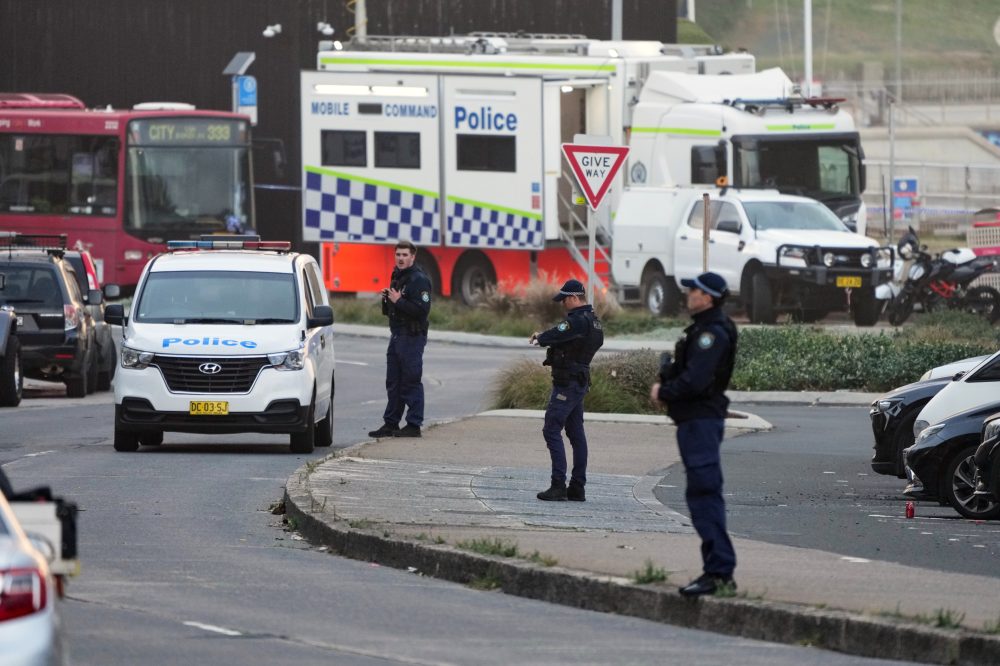
    MELBOURNE, Australia (AP) — Police in an Australian state are developing a heavily armed quick-response unit following a deadly December shooting that claimed 15 lives and injured three officers who carried only handguns during a Sydney Hanukkah event, officials revealed during a government investigation Wednesday.

    During testimony at the Royal Commission on Antisemitism and Social Cohesion, which is examining antisemitism’s growth in Australia before the Dec. 14 Bondi Beach incident, New South Wales Police Deputy Commissioner David Hudson outlined a significant weapons disparity.

    The department has responded by creating plans for an Armed Response Command, outfitted with semiautomatic rifles, while also restarting a priority operation targeting antisemitic incidents and retaliatory attacks on Muslim communities, Hudson testified.

    Previously, rifles in the department were mainly limited to two specialized paramilitary units, he explained.

    Two men, identified as father and son Sajid and Naveed Akram, allegedly used two shotguns and a hunting rifle to fire upon hundreds of Hanukkah celebrants in a beachside park. Just four officers were on scene, carrying Glock pistols that work effectively only at close range.

    “On Dec. 14, our police officers were placed at significant risk being in a gunfight armed with 9 mm Glocks against long arms,” Hudson stated to the commission.

    Eleven officers arrived within five minutes of the alleged shooting by the Akrams. Three of those responding officers were among the many people injured in the attack. Officers fatally shot the father and captured the wounded son in under eight minutes from the initial gunfire, Monday’s hearing revealed.

    Following the incident, police also reactivated Operation Shelter, which had been created to address rising community tensions following the Oct. 7, 2023, Hamas attack on Israel, Hudson noted.

    Hudson had created Operation Shelter as a “high visibility” proactive police initiative to prevent street violence escalation in Sydney. During its busiest period, 200 officers were deployed daily to the operation, which could pull additional personnel from other assignments when needed.

    Operation Shelter was functioning “in name only” during the Bondi attack, Hudson said Wednesday, noting that officials quickly restarted the program after the shooting and upgraded it to an “active policing resource” that will continue until the armed response unit becomes fully operational within the next 18 months to two years.

  • European Union Advances Trade Agreement with United States

    European Union Advances Trade Agreement with United States

    Representatives from European Union member countries approved legislation Wednesday that would eliminate tariffs on numerous American products, according to an EU source familiar with the proceedings. The action is designed to prevent threatened higher U.S. tariffs on European automobiles and other exports.

    The agreement originated from negotiations held at a Scottish golf resort owned by President Donald Trump last July. In that arrangement, European officials committed to eliminating tariffs on American industrial products and providing favorable treatment for U.S. agricultural and seafood exports, while accepting 15% American tariffs on most European goods.

    Nearly ten months after reaching that initial agreement, European officials have not yet implemented their portion of the arrangement. This delay prompted Trump to warn he would impose “much higher” tariffs on European products if the EU fails to meet its obligations by July 4.

    Diplomatic representatives from all 27 EU nations have now approved the legislation needed to implement the tariff reductions. This decision followed negotiations between EU government representatives and European Parliament members last week, which also established protective measures in case the Trump administration violates the trade agreement.

    The European Parliament must still approve the legislation. The parliamentary trade committee plans to conduct a preliminary vote next Tuesday, with the full assembly expected to make a final decision in mid-June.

    The protective provisions, advocated by EU legislators, include a clause terminating the trade agreement at the end of 2029 and language allowing the European Commission to halt portions of the deal if the United States fails to maintain 15% tariffs on washing machines, wind turbines and other products containing significant steel or aluminum. These items currently face 25% tariffs.

  • Latvia Boosts Border Drone Defense After Ukrainian Aircraft Stray Into NATO Territory

    Latvia Boosts Border Drone Defense After Ukrainian Aircraft Stray Into NATO Territory

    Latvia is bolstering its anti-drone capabilities along borders shared with Russia and Moscow-allied Belarus after unmanned aircraft have crossed into the NATO member nation, according to a military official.

    Recent weeks have seen Ukrainian drones drift into Baltic NATO countries’ airspace, creating confusion and heightening tensions with Russia during a period when U.S. dedication to NATO’s mutual defense principles faces scrutiny.

    Ukraine, which has been striking Russia’s Baltic oil loading facilities, has attributed the wayward drones to Russian interference with their aircraft’s navigation signals, causing them to deviate from intended flight paths.

    On May 7, two such unmanned vehicles detonated at an unoccupied oil storage site in Latvia. Another crashed into a lake on Saturday after entering the country undetected, with a fisherman observing the incident.

    An incoming drone prompted Lithuanian legislators in the capital Vilnius to seek underground protection on May 20, while a NATO fighter aircraft destroyed another unmanned vehicle over Estonia on May 19.

    “We plan to deploy (drone) interceptor teams over the next two weeks”, Modris Kairiss, head of the Latvian Army Autonomous Systems Competence Centre, told Reuters at a side event of the Drone Summit conference in Latvia.

    These units will include up to four soldiers operating from rugged terrain vehicles with killer drones capable of eliminating incoming military aircraft within a 10-km (6-mile) range, he explained.

    The quantity of such units patrolling Latvia’s 400-km border with Russia and its ally Belarus remains classified information.

    “We do need to increase the number of such teams, but we need to balance this against other army needs. If we put them on every kilometer of the border, we will quickly burn all army resources”, he said.

    Speaking at a military testing facility where Latvia is evaluating cutting-edge drone technologies through a NATO program, Kairiss explained that neutralizing military drones during peacetime presents complications, as radar information in NATO nations is classified and distributing it to soldiers responsible for drone destruction proves cumbersome.

    “It’s not enough to engage with anything you notice. We need to identify it first”, to avoid hitting a civilian airplane, Kairiss said.

    An additional emerging challenge for Latvia’s military, and NATO overall, involves the increasing deployment of small drones, Kairiss noted.

    “They are several steps ahead of the anti-drone systems… Detection and interception of the small targets is hard, and it’s the big challenge that soon we will all face,” he said.

  • Spanish Authorities Search Socialist Party Offices in Corruption Investigation

    Spanish Authorities Search Socialist Party Offices in Corruption Investigation

    MADRID, May 27 – Law enforcement officials conducted a search at the headquarters of Spain’s governing Socialist Party on Wednesday as part of an investigation into suspected illegal payment schemes, according to Spanish media reports. The action comes amid multiple corruption investigations involving associates of Prime Minister Pedro Sanchez.

    A representative from the Guardia Civil confirmed to Reuters that officers had accessed the PSOE offices, though no additional information was provided due to the confidential nature of the proceedings.

    The law enforcement action was conducted under a court order requesting specific information with advance notification, which differs from surprise raids designed to collect broader evidence without prior warning.

    Party representative Montse Minguez spoke to Catalunya Radio, stating the organization remained composed and was providing complete cooperation with judicial authorities, emphasizing their commitment to providing any requested materials.

    The Prime Minister’s party has faced numerous corruption allegations recently, with several investigations targeting close associates and relatives.

    Last week, a court announced that former Socialist leader Jose Luis Rodriguez Zapatero, a close associate of Sanchez, was under investigation for allegedly orchestrating an influence-peddling and money-laundering operation, dealing another setback to the leftist administration. Zapatero has rejected any accusations of misconduct.

  • Tibetan Exile Leader Takes Oath for Second Term in India

    Tibetan Exile Leader Takes Oath for Second Term in India

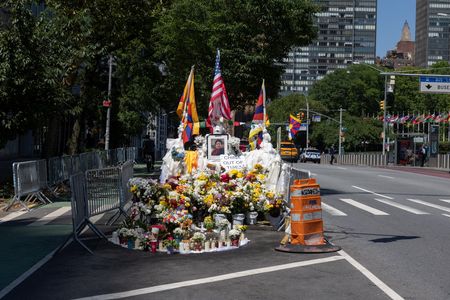
    A leader of Tibet’s government-in-exile began his second consecutive term Wednesday after being inaugurated in Dharamshala, India, following his victory in elections earlier this year.

    Penpa Tsering, age 58, has headed the exile administration located in Dharamshala since 2021. He won another five-year term during February voting among Tibetans residing in India and other countries. Tsering initially joined the Tibetan Parliament-in-Exile in 1996 and held the speaker position from 2008 before advancing to the chief executive role.

    Established in 1959, the Tibetan exile government, currently known as the Central Tibetan Administration, operates with executive, judicial and legislative divisions.

    During Wednesday’s ceremony, Tsering declared that the Central Tibetan Administration “remains firmly committed to the ‘Middle Way Policy’ envisioned by His Holiness the Dalai Lama,” explaining that this approach pursues resolution through nonviolence, dialogue and lasting mutual benefit.

    “Until a resolution is achieved, we will continue the back-channel communications with caution and steadiness with the Chinese government,” he stated.

    The inauguration ceremony occurred with the Dalai Lama present, who arrived at the location accompanied by red-robed monks while drums beat and prayers were chanted. Hundreds of monks and Tibetans watched as Chief Justice Commissioner Yeshi Wangmo of the Tibetan Supreme Justice Commission conducted the oath administration.

    February’s election represented the fourth direct vote for Tibetan exile leadership since the Dalai Lama, Tibet’s spiritual leader, officially stepped back from administrative governance in 2011.

    China maintains Tibet has belonged to its territory since the mid-13th century and the Communist Party has controlled the Himalayan area since 1951. However, many Tibetans claim they maintained effective independence throughout most of their history and believe the Chinese government seeks to extract resources from the region while destroying its cultural heritage.

    China refuses to acknowledge the Central Tibetan Administration and has avoided discussions with the Dalai Lama’s representatives since 2010. India regards Tibet as Chinese territory while providing sanctuary to the Tibetan exile government.

    Beijing claims the Dalai Lama wants to split Tibet from China, which he rejects. Certain Tibetan organizations support independence for Tibet, given minimal advancement in negotiations with China.

    Yu Jing, a spokesperson for the Chinese Embassy in India, rejected the exile administration’s legitimacy on Sunday, declaring it was “not recognized by any sovereign country” and lacked authority to represent Tibetans or manage the Dalai Lama’s reincarnation process.

    During his 90th birthday celebration last year, the Dalai Lama emphasized that Chinese officials would play no part in selecting his successor and the Dalai Lama institution would persist beyond his death.

  • Beijing Seeks to Mend Relations with Czech Republic Amid Taiwan Tensions

    Beijing Seeks to Mend Relations with Czech Republic Amid Taiwan Tensions

    Beijing has expressed its desire to restore diplomatic relations with the Czech Republic and rebuild what it calls their historical friendship, according to statements made by Foreign Minister Wang Yi to his Czech counterpart Petr Macinka, as reported by state broadcaster CCTV on Wednesday.

    While the Czech Republic officially recognizes Beijing rather than Taiwan, which China considers its territory, Prague has developed stronger connections with the island nation in recent years and has received increased investment from Taiwan.

    According to CCTV, Wang emphasized that both nations should “strengthen dialogue and cooperation, enhance political mutual trust and gradually expand practical cooperation in areas such as economy, trade and tourism” to guide their relationship in the proper direction.

    Wang characterized Taiwan as a domestic matter for China and expressed hope that the Czech government would “practice the One-China principle … and promote China-Czech relations back on a healthy development track.”

    Beijing has expressed disapproval of connections between Prague and Taipei, maintaining that the democratically-governed island lacks authority for diplomatic relationships between nations, a position that Taipei’s government firmly disputes.

    Last week, Taiwan Foreign Minister Lin Chia-lung traveled to Prague and participated in a forum there.

    Czech Senate President Milos Vystrcil plans to lead a business delegation to Taiwan next week, where he is scheduled to meet with President Lai Ching-te.

    Tensions also escalated last year when Czech President Petr Pavel met with the Dalai Lama in India during July. Additionally, a delegation from the Czech parliament visited Dharamshala in December and held meetings with the Tibetan spiritual leader.

    In March, China expressed strong opposition to the Czech Senate’s approval of a draft resolution regarding the Dalai Lama’s succession, claiming it “grossly interfered” with domestic matters.

  • Israel Reports Killing Hamas Military Commander Days After Predecessor’s Death

    Israel Reports Killing Hamas Military Commander Days After Predecessor’s Death

    Israeli military officials announced Wednesday that they eliminated Hamas’s recently named military commander in a Gaza operation, continuing their campaign against the organization’s leadership structure.

    Military sources confirmed that Mohammad Odeh was killed during Tuesday’s operation in Gaza.

    A family member verified Odeh’s death to news agencies and indicated funeral services would occur following midday prayers in Gaza City. While Hamas leadership has not released an official response, Odeh’s family stated he died alongside his wife and son in the attack.

    Gaza medical authorities reported that six individuals, including at least one woman, lost their lives and more than 20 sustained injuries in the same Israeli airstrike that demolished the top floor of a residential building in Gaza City’s Rimal district. Emergency responders continued searching the area for additional victims.

    Prime Minister Benjamin Netanyahu stated Tuesday that Odeh had led Hamas’s intelligence operations during the October 7, 2023 cross-border assault on Israel that sparked the current Gaza conflict. According to Netanyahu, Odeh received his appointment roughly one week ago to succeed Izz al-Din al-Haddad, the organization’s top military leader, who was eliminated by Israeli forces on May 15.

    Hamas-affiliated sources would not verify Odeh’s designation as the new military commander but acknowledged he was considered a likely candidate to replace Haddad, given his role leading military intelligence and his status as potentially the final surviving member of the armed wing’s senior command structure.

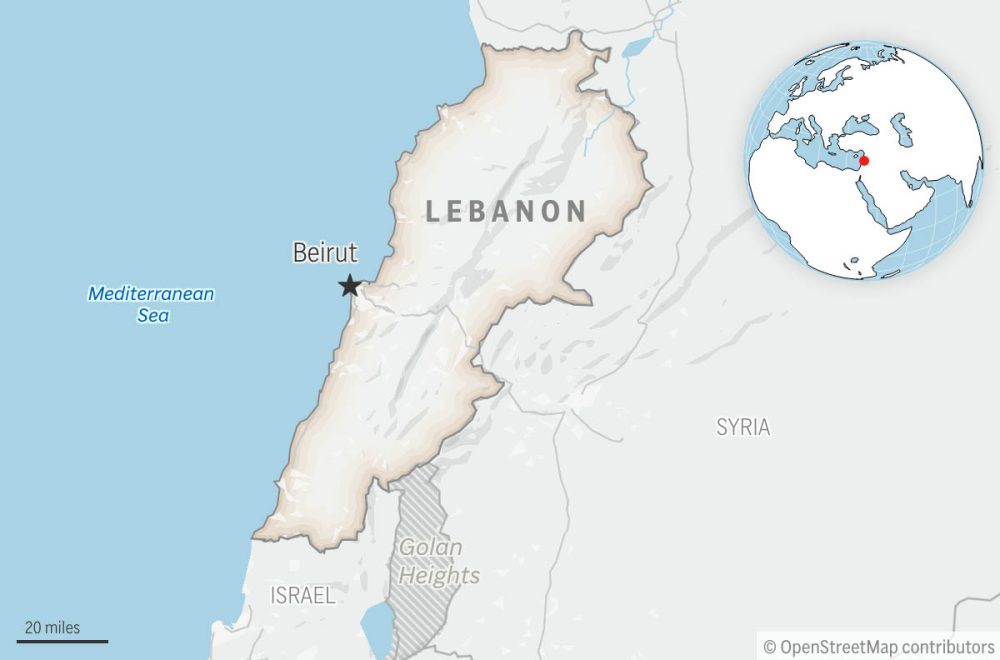
    Prior to the attack, Israel declared it had broadened ground operations in Lebanon, where it has engaged Iran-backed Hezbollah fighters since launching strikes against Iran alongside the United States in late February. Israeli forces are also escalating military actions in the West Bank.

    Israel and Hamas remain at an impasse in indirect negotiations regarding the second phase of a ceasefire agreement, which would involve the group’s disarmament and Israeli military withdrawals.

    The October ceasefire left Israeli forces controlling more than half of Gaza, while Hamas maintains authority over a narrow strip of coastal area.

    Defense Minister Israel Katz declared in a statement that Hamas would lose both civilian and military authority over Gaza and that plans for what he termed “voluntary migration” from the territory would be executed “at the right time and in the right way.”

    Approximately 900 Palestinians have died in Israeli attacks since the truce took effect, based on Gaza health ministry data that does not separate combatants from civilians.

    Four Israeli soldiers have been killed by militants during the same timeframe, according to military officials.

    Israel has eliminated dozens of Hamas leaders and military personnel since the Gaza conflict began, pledging to kill or capture anyone involved in the October 7, 2023 attacks.

    Hamas does not release casualty figures for its fighters. Israel maintains its post-ceasefire strikes target those planning attacks or attempting to approach its armistice line with Hamas.

    More than 72,000 Gazans have died since fighting commenced in October 2023, with most being civilians, according to Gaza health officials. Israel states it employs extraordinary measures to minimize civilian casualties.

    Hamas’s October 7, 2023 attacks on Israel resulted in 1,200 deaths, based on Israeli records.

  • Poland, UK Set to Sign Defense Pact Targeting Russian Threats

    Poland, UK Set to Sign Defense Pact Targeting Russian Threats

    Polish Prime Minister Donald Tusk announced Wednesday that his country seeks to elevate its relationship with Britain to the highest level possible, with a primary focus on defense cooperation against Russian threats, as he prepared to depart for London.

    The United Kingdom is set to formalize a new defense and security agreement with Poland on Wednesday aimed at bolstering military cooperation amid growing hostile activities throughout Europe, according to government officials. This pact follows comparable agreements Britain has already established with France and Germany.

  • China Carries Out Execution in Gaming Executive Poisoning Case

    China Carries Out Execution in Gaming Executive Poisoning Case

    Chinese officials have carried out the death sentence against a man who murdered a wealthy gaming executive using poison in a workplace revenge scheme, according to media reports from Taiwan.

    The executed individual, Xu Yao, was found guilty of murdering Lin Qi, who established the Shanghai-based gaming company Yoozoo Games. Lin’s firm possessed the movie rights to a bestselling science fiction book series called “The Three-Body Problem.”

    The science fiction novels, written by Chinese author Liu Cixin, have been published in over 40 languages and transformed into various entertainment formats, including the Netflix television series “3 Body Problem” that debuted in 2024.

    According to media accounts, Xu previously led a division within Yoozoo Games and killed Lin in December 2020 after being marginalized by the company founder. This occurred shortly after Xu had assisted his boss in securing the Netflix agreement.

    Court proceedings concluded with Xu’s conviction in 2024, and authorities executed him on May 21, media outlets reported.

    The gaming company acknowledged the execution through a Tuesday announcement on the Weibo social media service.

    “Recently, the case concerning Mr. Lin Qi, the founder of Three-Body Universe, has finally reached its conclusion, and justice has ultimately been served,” the statement read.

    “All of us at the company are deeply grateful for the upholding of justice,” it continued.

    Neither Yoozoo Games nor the Shanghai High People’s Court provided immediate responses to requests for additional information on Wednesday.

    Media reports indicate that Xu purchased expensive toxic materials online, spending hundreds of thousands of yuan (equivalent to tens of thousands of dollars). These included alpha-amanitin, a deadly substance present in certain toxic mushrooms.

    The perpetrator concealed these poisons within fake probiotic supplements and also placed them in coffee pods, drinking water, and whisky containers before distributing them to Lin and additional company workers.

    Medical personnel hospitalized Lin in December 2020, where he passed away several days afterward at age 39.

    Multiple other individuals became ill from the poisoning but survived, according to media accounts.

    “The Three-Body Problem” book series has achieved widespread success in China and internationally. Its creator, Liu, made history as the first Chinese author to receive the Hugo Award, considered the most prestigious honor in science fiction.

    Within China, these works have sparked expansion of the science fiction entertainment sector, encompassing films, computer games, publications, periodicals and exhibitions.

  • Stray Ukrainian Drones Cross Into NATO Territory, Raising Regional Tensions

    Stray Ukrainian Drones Cross Into NATO Territory, Raising Regional Tensions

    Off-course Ukrainian military drones have been crossing into the airspace of Baltic nations over recent weeks, creating confusion and heightening regional tensions with Russia during a period when questions persist about U.S. dedication to NATO’s mutual defense agreements.

    These airspace violations have happened while Ukraine intensifies its drone campaign against Russian Baltic seaports that process roughly 40% of the country’s oil and gas exports, four years into Moscow’s comprehensive invasion.

    In the majority of incidents, both Kyiv and Baltic officials have verified the wandering drones belong to Ukraine but point to Russia as responsible for forcing them off their intended routes through electronic warfare systems that interfere with or manipulate guidance signals.

    Both Russian and Ukrainian forces commonly deploy such electronic countermeasures to disrupt opposing drone and missile navigation systems.

    Moscow has alleged the Baltic nations are cooperating to allow Ukraine access to their airspace for launching strikes against Russian facilities. Both the Baltic countries and Ukraine reject these accusations.

    The three Baltic NATO members – Lithuania, Latvia and Estonia – strongly back Kyiv and claim Russia employs threatening rhetoric to intimidate them, hoping they will pressure Ukraine to halt its offensive operations.

    “They’re desperately now using any kind of opportunity to divide the Western part of the world and … to put more pressure on Ukraine not to launch these attacks,” Estonian Foreign Minister Margus Tsahkna said in a phone interview.

    While most wayward drones have caused no harm, either crashing in empty areas or departing Baltic airspace, anxiety levels are rising.

    A NATO fighter aircraft destroyed a suspected Ukrainian drone over Estonia on May 19, marking the first instance NATO’s Baltic air mission had “fired a missile in defence of the Alliance” since these nations joined in 2004, according to NATO officials speaking to Reuters.

    On May 20, Lithuanian parliament members evacuated to underground shelters as a drone neared Vilnius. The next day, air raid warnings sounded across northern Lithuania.

    “The threat level is growing. Drones are flying in. They are Ukrainian, but some are loaded with explosives and can hit civilian objects. We must protect people,” Lithuanian Defence Minister Robertas Kaunas told Reuters.

    Asta Skaisgiryte, foreign policy adviser to Lithuania’s president, explained the Baltic region faces particularly intense challenges now due to Ukrainian advances in drone technology that enhance their long-distance strike capabilities.

    She suggested Russia might be intentionally rerouting drones into neighboring countries’ airspace.

    Multiple drones have penetrated Baltic airspace without detection, exposing weaknesses in air defense systems along NATO’s frontier with Russia and Belarus.

    Latvian Prime Minister Evika Silina stepped down after dismissing her defense minister, holding him accountable for inadequate air defense preparations.

    Even while maintaining unwavering support for Ukraine, Estonian leaders have informed Kyiv that airspace breaches are unhelpful and expressed expectations for better drone control.

    A Ukrainian military source described a “serious” investigation underway to understand how Russia manipulates Ukrainian drones to stray into Baltic airspace.

    A senior Swedish military source suggested Ukraine deliberately flies drones near the Baltic-Russian border, using it as protection since Russia would avoid firing into NATO territory and risking direct conflict.

    Ukraine’s foreign ministry rejected this claim, accusing Russia of jamming drones to intentionally redirect them toward the Baltics while stating Kyiv selects flight routes that minimize risks to Baltic partners.

    “We have intelligence about Russia deliberately doing this, these are not just abstract claims on our side,” said Heorhii Tykhyi, spokesperson for Ukraine’s Foreign Ministry.

    Russian embassies in Vilnius and Stockholm did not respond to comment requests.

    During a recent U.N. Security Council session, Russia’s ambassador claimed Moscow possessed information about Ukrainian plans to launch military drones from Latvia and other Baltic states, warning Russia would retaliate.

    Though Latvia’s representative called his statements “pure fiction,” Russia’s foreign intelligence service SVR alleged Riga had approved the arrangement despite concerns about becoming “a victim of Moscow’s retaliatory strike.”

    Tsahkna and Kaunas interpreted such declarations as evidence of Russian weakness amid struggles to counter Ukrainian drones or achieve significant battlefield progress.

    Linas Kojala, director of the Vilnius-based Geopolitics and Security Studies Center, warned of miscalculation risks from “provocative” Russian actions.

    “The tensions are high, there is a risk of an unintended escalation,” he told Reuters.

    While European leaders consider Russia a significant threat, the United States – NATO’s primary military force with tens of thousands of European-based troops – has delivered conflicting messages about its continental defense commitment.

    President Donald Trump has hinted the U.S. might withdraw from NATO, and Washington announced delays to a Polish troop deployment this month, though later revealed plans for an additional 5,000 personnel.

    A Baltic security official, speaking anonymously, characterized Russian rhetoric as primarily aimed at domestic audiences to highlight “war-mongering Europeans.”

    “They want to hide the fact that they are actually struggling in coping with the Ukrainian drone attacks,” the official said. “From our perspective, the security situation in the region has not changed.”

  • Chinese Shepherd Job Posting Goes Viral, Reveals Economic Struggles

    Chinese Shepherd Job Posting Goes Viral, Reveals Economic Struggles

    A Chinese farm owner never anticipated that his simple job posting for shepherd positions would become an internet phenomenon, attracting hundreds of desperate job seekers and highlighting the nation’s employment challenges.

    Zuo Xiaoyong found himself overwhelmed when more than 700 people responded to his advertisement for just two shepherd roles. The applicants included office workers from major cities like Shanghai and Chongqing, factory employees from various regions, and recent college graduates.

    The job listing, posted in late April, generated massive attention on Weibo, the Chinese equivalent of X, accumulating 59 million views in just hours and sparking over 21,000 discussion threads.

    “I didn’t expect it to go viral,” Zuo commented, noting that one-tenth of those who applied were recent university graduates, while others were struggling with debt, demanding factory jobs, or workplace stress.

    “It seems ordinary people are having a hard time finding work,” he observed.

    The massive response reflects deeper issues in China’s employment landscape. Despite official unemployment rates remaining slightly above 5%, underemployment continues to climb, and private sector wages have failed to keep pace with economic expansion for nearly ten years. Workers in both blue-collar and white-collar positions frequently criticize the demanding ‘996’ work schedule – laboring from 9 a.m. to 9 p.m. six days weekly.

    Economic experts predict worsening job market conditions in upcoming months due to rising factory costs from international conflicts, increasing artificial intelligence implementation, and a record-breaking 12.7 million university graduates entering the job hunt this summer.

    Lynn Song, chief China economist at ING, described the reaction to Zuo’s advertisement as “symptomatic of what continues to be a highly competitive and often low-rewarding labour market.”

    “Urban jobs are becoming less attractive and more rare,” Song added.

    China’s 5% economic expansion depends significantly on booming exports, as manufacturers reduce profits to capture global market share, intensifying pressure on domestic workers.

    Among the applicants was James Guo, who sought the position due to exhaustion from his container manufacturing job.

    “You have no idea what it’s like to work more than 13 hours a day, fastening screws until your hands are swollen and covered in blisters, without even having time to go to the bathroom,” the 21-year-old explained. “The workload is too intense, I can’t take it anymore.”

    Zuo’s job requirements involved managing 3,000 sheep across a 2,000-hectare pasture during summer months and handling demanding indoor feeding and cleaning tasks during harsh winters when temperatures plummet below minus 30 Celsius.

    The compensation offered 8,000 yuan ($1,178) monthly per shepherd, exceeding the national urban private company average of approximately 6,000 yuan, plus provided housing and food.

    Shaun Rein, managing director of China Market Research Group, noted that master’s degree holders from prestigious universities in Shanghai typically seek comparable salaries, but most earnings disappear on rent for cramped apartments and basic living costs.

    Zuo, who also manages 200 cattle, emphasized that the generous pay reflects the job’s difficulties.

    “The salary is high, but whether you can work long-term and get through the winter is what matters most,” Zuo stated. “This is not tourism.”

    Half the applicants were born during the 1990s, representing an age group affected by what Chinese workers term the ‘curse of 35,’ as research indicates most employers, including government agencies, dismiss candidates exceeding that age.

    “We are seeing the ‘curse of 35’ move from a tech-sector meme to a broader economic reality,” explained Christian Yao, senior lecturer in human resource management at Victoria University of Wellington.

    Wu, a 28-year-old e-commerce employee who provided only her surname for privacy, earns 10,000 yuan monthly but found the shepherding opportunity appealing.

    “I want to escape city life and stop dealing with all kinds of difficult people,” Wu shared. “I could enjoy a peaceful, secluded life away from the world.”

    Ultimately, Zuo selected four shepherds – two married couples – all born in the 1980s with previous farming experience. While maintaining a waiting list of 40 additional couples, he refuses to consider unmarried individuals or young city dwellers.

    “In our place, you might not see people for a whole year,” Zuo concluded. “Whether someone can endure such loneliness, I don’t know.”

  • Counterfeit Goods Continue Flowing Despite U.S. Tariff Threats to Vietnam

    Counterfeit Goods Continue Flowing Despite U.S. Tariff Threats to Vietnam

    Counterfeit merchandise continues to flow freely through Vietnamese markets despite ongoing government enforcement campaigns and looming U.S. trade penalties, according to recent observations by news reporters.

    At Hanoi’s Ninh Hiep wholesale market, vendors openly acknowledge that enforcement efforts have minimal lasting impact on their operations. One merchant selling knockoff designer polo shirts explained the routine nature of police visits.

    “Police come once a year with a TV crew. They film the seizure of a shop, and then it’s business as usual,” the vendor stated.

    The Ninh Hiep market ranks among approximately 30 “notorious markets” globally that the U.S. Trade Representative has identified in its most recent annual assessment of counterfeiting and intellectual property theft.

    U.S. officials have also highlighted streaming platforms like MyFlixerz, which they believe operate from Vietnam and attract hundreds of millions of monthly users worldwide by providing illegal access to movies and television programs. These sites remained active as of May 27, despite announced enforcement measures.

    Neither the U.S. Trade Representative nor Vietnam’s foreign ministry provided responses to requests for comment.

    The United States considers Vietnam’s intellectual property violations a significant threat to American economic interests. On April 30, Washington labeled the Southeast Asian country as the globe’s most serious intellectual property offender and indicated it could initiate an investigation by the end of May, potentially resulting in trade penalties.

    This designation came as Vietnam’s exports to America surged, creating a U.S. trade deficit of $54.8 billion with Vietnam during the first quarter of this year – exceeding deficits with major trading partners China and Mexico, according to U.S. government statistics. The current administration has consistently emphasized its goal of reducing trade imbalances.

    Following April’s classification as a “priority foreign country” for intellectual property violations – making Vietnam the first nation added to this worst-offender category in 13 years – the foreign ministry responded that Vietnam has made “strenuous efforts” to safeguard intellectual property rights and called on the United States to provide “an objective and balanced assessment of Vietnam’s efforts and achievements.”

    In response to the U.S. announcement, Vietnamese authorities initiated an anti-counterfeiting and online piracy campaign running from May 7 through 30.

    Similar enforcement action occurred last year following the previous administration’s implementation of 46% tariffs on Vietnamese imports, which have since been lowered to 10%. Vietnam has been pursuing trade agreement discussions with Washington, its primary export destination, for the past year.

    News reporters made two visits to Ninh Hiep this month – once before the crackdown began and again on May 25 – interviewing approximately 10 market vendors. All described a pattern of routine government enforcement operations that produce limited long-term results. The vendors requested anonymity due to the sensitive nature of their business.

    One seller revealed that recent police activity had caused some shops to reduce their displays of branded counterfeit items, but noted, “Fakes are still available in our storage if ordered.”

    Officials responsible for anti-counterfeiting enforcement did not respond to requests for comment.

    Reporters observed numerous stalls selling counterfeit clothing featuring brands such as Ralph Lauren, Calvin Klein, Gucci, Gap and Alo Yoga. Many products included Chinese-language labels identifying their manufacturers. When questioned, shop workers acknowledged the items were fake, primarily imported from Guangzhou, China, with a smaller portion manufactured domestically in Vietnam.

    Previous enforcement campaigns have shown limited effectiveness, with some merchants noting that enforcement pressure and new tax regulations have affected their business. Another “notorious market” in Ho Chi Minh City faced police raids last year but continues operating.

    Motorcycle riders still navigate Ninh Hiep’s cramped pathways, seeking merchandise for resale in downtown Hanoi and other retail locations.

    “As long as there is demand, there will be supply,” one vendor observed.

  • Ukrainian Woman Rebuilds Life After Missile Strike Took Leg, Killed Husband

    Ukrainian Woman Rebuilds Life After Missile Strike Took Leg, Killed Husband

    KRYVYI RIH, Ukraine — When a Russian missile strike cost Iryna Nakonechna her left leg and claimed her husband’s life last year, the Ukrainian woman made a drastic decision to eliminate all connections to her past existence.

    She chopped off her flowing dark hair and cleared out furniture, clothing, keepsakes and photos from her residence. Only one memento from her earlier life stayed: a picture showing her with her husband, Serhii Nakonechnyi.

    Abandoning her former identity became essential, she explained, to survive the difficult transformation needed to create a new existence with an artificial limb.

    Now, Nakonechna displays sharp wit and bubbly energy, with sudden bursts of loud laughter. She sports a short pixie cut and striking red cat-eye glasses, and creates small knitted toy capybaras — creatures that have emerged as an unofficial emblem among Ukraine’s amputee community. However, behind the brightness in her gaze exists sorrow intertwined with the challenging journey of becoming a different person. This represents a frequently unmentioned truth behind the stories of strength surrounding Ukraine’s tens of thousands of limb-loss survivors from the conflict that started over four years ago with Russia’s comprehensive invasion.

    “The most challenging aspect was learning to accept myself with these injuries, wounds that extend beyond the physical,” she explained. “Understanding how dramatically my existence has transformed has been extremely hard.”

    Ukraine’s precise count of war amputees remains unclear, but the figure keeps climbing as explosive devices, artillery fire, and missile and drone attacks cause devastating injuries to military personnel and civilians alike. This growth has sparked an expansion of rehabilitation and prosthetic care, while simultaneously transforming Ukrainian society. Artificial limbs have become increasingly prominent and meaningful symbols of endurance and resistance.

    Nakonechna, 50, continues walking with an uneven gait and relies on a walking stick while adapting to the prosthetic that extends to her upper thigh. The air attack also restricted movement in her arms, creating challenges when lifting heavy items.

    The following phase in Nakonechna’s recovery involves mastering walking without assistance from a cane, according to her physical therapist, Anastasiia Stetsenko.

    She needs to develop not just physical strength, but mental confidence as well. She must learn to trust herself during movements most individuals consider automatic: ascending stairs, bending down to retrieve objects, walking on uneven pavement, or keeping up with her 2-year-old grandson during playground visits.

    Nakonechna’s weekly hour-long appointments with Stetsenko start by detaching her prosthetic and placing it against the wall.

    Next, Stetsenko instructs Nakonechna to raise a plastic bar while sitting, coordinating the motion with her breathing pattern.

    “You are a demon,” Nakonechna tells Stetsenko, when the workouts become challenging.

    Subsequently, Stetsenko positions Nakonechna on her back to rotate her amputated limb in gentle circles, evaluating her movement capabilities.

    “This feels like an extreme sport,” Nakonechna remarks.

    Eventually, Stetsenko recommends she perform squats while holding a ballet barre, among the most difficult movements for her to master again.

    “I will respond as my grandson would,” Nakonechna declares. “Just no.”

    Both women burst into fits of laughter, resembling longtime companions rather than therapist and client.

    The assault occurred on March 5, 2025. Following their evening meal, Nakonechna and her husband decided to take advantage of unusually mild spring temperatures with a nighttime walk.

    They were positioned near a hotel entrance in downtown Kryvyi Rih when a Russian missile ripped through the structure, throwing them in different directions.

    Her ears buzzed as her husband, now meters away, cried out in pain.

    She lifted herself up and felt her left shoulder grinding. The bones had shattered. She reached toward her left leg but felt nothing.

    The pair were transported to separate medical facilities. Her husband passed away the following day.

    “I never got to say goodbye,” Nakonechna stated. “I wasn’t even at the funeral.”

    During the following two months, time became a haze as Nakonechna endured twice-weekly surgical procedures.

    By May of that year, she could finally sit upright once more.

    She experienced relief, she noted, but it marked just the start.

    The residence Nakonechna previously shared with her husband now appears completely different.

    “I had to get rid of everything from the past,” she stated. “And focus on living my life, even if it was half the life I had before.”

    Nakonechna asked her 77-year-old mother, who suffers from dementia, to come live with her. During lunch, her mother cautiously places a pot of borscht on the table. Nakonechna mentioned such activities are no longer simple for her.

    She expresses sadness that she still cannot pick up her grandson, Tymofii. One day, the child attached a sticker showing a cartoon capybara with a prosthetic leg onto her own artificial limb. She kept it there.

    A precise craftsperson, she subsequently started creating knitted toy capybaras through Superhumans, a contemporary war-trauma facility focused on prosthetics and rehabilitation. Throughout the conflict, veterans began placing these toys and stickers of the gentle, cheerful animals on their limbs to help strangers feel comfortable. The capybara has since become a symbol of strength and the drive to find happiness again after tragedy.

    Nakonechna’s creations rapidly gained popularity, and she dedicates hours to knitting them. Her preferred moment comes when putting together the final pieces, transforming the creation into a complete toy.

    “When I count the stitches, I think only about the stitches, not about the life that could have been and unfortunately is not,” Nakonechna explained.

    Recently, she achieved a personal milestone: For the first time following her injury, she put on shorts.

    This simple action represented a significant transformation.

    “I accepted myself as I am,” she declared.

  • Taiwan Authorities Investigate Alleged Nvidia Chip Smuggling Operation to China

    Taiwan Authorities Investigate Alleged Nvidia Chip Smuggling Operation to China

    Taiwanese authorities are investigating allegations that three people illegally transported Nvidia computer chips to China by first routing the shipment through Japan, according to a Bloomberg News report published Wednesday.

    The report, which cited sources with knowledge of the investigation, claims prosecutors believe the individuals managed to successfully complete at least one such smuggling operation.

    The news agency Reuters noted they were unable to independently confirm the Bloomberg report’s details.

  • British Spy Chief Warns Russia Launching Cyber War on UK Infrastructure

    British Spy Chief Warns Russia Launching Cyber War on UK Infrastructure

    LONDON (AP) — The United Kingdom and its international partners face the possibility of defeat in digital warfare against enemies like Russia if citizens, businesses and government agencies don’t make cybersecurity a far more pressing priority, according to a top British intelligence official.

    Anne Keast-Butler, who leads the communications intelligence agency GCHQ, plans to deliver a warning Wednesday that Moscow is “relentlessly targeting critical infrastructure, democratic processes, supply chains and public trust” throughout Britain and Europe. Speaking at a historic World War II codebreaking facility outside London, she will claim Russia is conducting technology theft while planning sabotage operations and assassination plots.

    Keast-Butler intends to state that swift developments in artificial intelligence indicate “the ground beneath our feet is shifting” and there exists a “narrowing window for the U.K. and allies to stay ahead” of nations like China, which she describes as a science and technology “superpower.”

    She will contend that efforts must be made “from boardrooms to living rooms” to make cybersecurity “10 times more urgent,” based on excerpts provided beforehand by GCHQ, which stands for Government Communications Headquarters.

    This represents another in a series of alerts from Western intelligence officials and security specialists that Russia is escalating aggressive actions in what they call a “gray zone” that remains just short of actual warfare.

    Over recent months, government officials in nations including Sweden, Poland, Denmark and Norway have claimed that computer hackers connected to Russia have attacked their essential infrastructure, including electrical facilities and water systems.

    Richard Horne, who directs the U.K.’s National Cyber Security Centre, cautioned last month that antagonistic nations including Russia, China and Iran are responsible for the most dangerous cyber attacks facing the country. He indicated such assaults might escalate significantly if Britain enters an international military conflict.

    Keast-Butler intends to emphasize how crucial international cooperation remains as U.S. President Donald Trump’s “America First” approach to foreign relations and dismissal of traditional allies creates tension between London and Washington.

    Notably, she will present the annual GCHQ director’s address at Bletchley Park, an estate located 45 miles (72 kilometers) northwest of London where hundreds of mathematicians, code specialists, puzzle solvers, chess experts and other professionals labored to break Nazi Germany’s supposedly impenetrable secret communications.

    Their efforts both reduced the length of the war and accelerated the development of contemporary computing technology.

  • Projectile from Lebanon Lands in Israel; No Casualties Reported

    Projectile from Lebanon Lands in Israel; No Casualties Reported

    Israel’s armed forces reported Wednesday that a missile launched from Lebanese territory landed in an uninhabited section of Israel following the activation of warning sirens across multiple northern communities, with authorities confirming no casualties occurred.

  • Canada, Germany Strike Natural Gas Export Deal to Reduce US Dependence

    Canada, Germany Strike Natural Gas Export Deal to Reduce US Dependence

    A Canadian official confirmed Tuesday that the country has finalized an agreement to ship liquefied natural gas to Germany through a proposed export terminal on the Pacific Coast.

    According to the official, who requested anonymity since they lacked authorization to discuss the matter before Wednesday’s formal announcement, Canada will enter into the contract with Germany’s SEFE group, an organization focused on Securing Energy for Europe. The gas will come from the planned KSI Lisims export facility located along British Columbia’s coastline.

    Under the agreement, as much as 1 million metric tons (1.1 million US tons) of liquefied natural gas will be shipped annually.

    Prime Minister Mark Carney has established an objective to increase non-U.S. trade by 100% within ten years. Currently, Canada, despite its abundant oil and gas resources, sends nearly all of its energy exports to the United States.

    British Columbia Premier David Eby stated earlier Tuesday that securing a contract to provide Canadian liquefied natural gas to Germany represents a crucial milestone for the partners involved in the Ksi Lisims project as they consider moving forward with their $10-billion Canadian (US$ 7.2 billion) processing plant and export terminal.

    The Ksi Lisims facility, situated on Pearse Island near the Alaska border, has obtained necessary permits, but the consortium has not yet committed to final investment approval that would trigger construction.

    According to Eby, establishing purchase contracts with buyers represents an essential requirement before Ksi Lisims can achieve that goal.

    The joint venture has previously secured supply contracts with a division of London-headquartered Shell and France-based TotalEnergies.

    SEFE operates as a prominent German energy company. The organization previously functioned as Gazprom’s German division until Germany took control of it in 2022 amid Europe’s energy shortage connected to the Ukraine conflict and ongoing Middle East tensions.

    When European nations backed Ukraine, Russia dramatically reduced natural gas deliveries used for home heating, electricity production, and industrial operations, sparking an energy shortage that has driven up inflation and forced manufacturing facilities to close as costs have soared.

    Before the conflict began, Germany relied heavily on Russian gas imports.

  • North Korea Claims Advanced Weapons Testing Under Kim Jong Un’s Watch

    North Korea Claims Advanced Weapons Testing Under Kim Jong Un’s Watch

    North Korea announced Wednesday that its recent weapons testing involved several advanced military systems, including nuclear-capable cruise missiles that the nation’s leader Kim Jong Un intends to position with front-line forces along the South Korean border as he continues building up military strength.

    The announcement from North Korean state media followed Tuesday’s detection by South Korean forces of multiple projectiles launched by the North, including at least one short-range ballistic missile fired toward western waters. South Korea’s Joint Chiefs of Staff reported the missile traveled approximately 80 kilometers (50 miles) without providing details about other weapons systems used.

    According to North Korea’s official Korean Central News Agency, Kim oversaw Tuesday’s weapons trials that included ballistic missiles equipped with new warheads for battlefield nuclear operations, nuclear-capable cruise missiles using artificial-intelligence guidance systems, and 240-millimeter rocket artillery featuring “ultra-precision” navigation capabilities. South Korean military officials have not yet responded to North Korea’s assertions.

    KCNA reported that Kim showed approval of the testing results, especially the cruise missile systems designated for front-line long-range artillery units positioned near the South Korean border. The agency stated he demanded accelerated modernization and strengthening of artillery forces to ensure “no one can match.”

    Kim has accelerated North Korea’s nuclear and missile development programs following the breakdown of diplomatic talks with U.S. President Donald Trump in 2019. He has also taken a confrontational stance toward South Korea, labeling it his nation’s “most hostile enemy” and working to cut long-established inter-Korean relationships. State media reported that during last week’s meeting with military leaders, Kim discussed reinforcing border units as part of the state objective to transform the frontier into “an impregnable fortress.”

    Kim’s international strategy has increasingly turned toward Russia, which has accepted thousands of North Korean soldiers and substantial conventional weapons shipments for its Ukraine conflict. He has also pursued stronger relationships with China, North Korea’s primary ally and economic supporter, while presenting Pyongyang as part of a larger coalition opposing Washington.

    Trump has stated multiple times his desire to restart diplomatic engagement with Kim, but Pyongyang has dismissed these attempts and maintained that Washington must drop nuclear disarmament demands as a requirement for negotiations.

  • Australian Antisemitism Investigation Leaders Condemn Online Harassment of Witnesses

    Australian Antisemitism Investigation Leaders Condemn Online Harassment of Witnesses

    MELBOURNE, Australia (AP) — Officials leading a major Australian investigation into antisemitism announced Tuesday that Jewish individuals who testified before the commission are experiencing online harassment and intimidation.

    The Royal Commission on Antisemitism and Social Cohesion was established following a December attack where two gunmen, reportedly motivated by the Islamic State group, killed 15 people during a Hanukkah celebration in Sydney. These royal commissions represent Australia’s most significant type of public investigation.

    Virginia Bell, a former High Court judge leading the commission, reported that Jewish individuals who shared their experiences with antisemitism during public sessions that started May 4 have faced online “harassment and intimidation.”

    “We have received reports from a number of witnesses concerning a dramatic increase in online hate messages after they have given evidence,” Bell said.

    “Quite what this undiluted level of hatred and bigotry directed towards members of the Jewish community is thought to benefit by those who post these remarks is lost on me,” she added.

    Bell noted the commission is documenting these “offensive social media posts,” and authorities have been contacted about at least one harassment case.

    “The commission has, as one of its principal objects, understanding and assessing the lived experience of antisemitism by members of the Jewish community and it is being informed by conduct of this character,” she said.

    The initial two weeks of proceedings examined how widespread antisemitism is within Australia’s organizations and broader society.

    During the opening week of testimony, authorities arrested a 68-year-old man for displaying a shirt featuring a “prohibited Nazi symbol” near the commission building in Sydney, according to police.

    The design appeared to incorporate a Star of David superimposed over a swastika with the slogan: “Antisemitism. Proud to be accused. Speak up!”

    Commission officials released a statement expressing they were “appalled” that someone wore an “antisemitic shirt” near their location. They reassured witnesses that security measures were implemented around the facility.

    “The royal commission is determined to investigate antisemitism in Australia without fear or intimidation,” the statement said.

  • Syrian Druze Leader Declares Independence Movement ‘Irreversible’

    Syrian Druze Leader Declares Independence Movement ‘Irreversible’

    A prominent religious leader in southern Syria has announced that his community’s movement to break away from the central government cannot be stopped, marking a significant escalation in tensions within the war-torn country.

    Sheikh Hikmat al-Hijri, who serves as the spiritual leader of the Druze community in As-Suwayda province, made the announcement during a televised address that featured unusually harsh criticism of Syrian authorities. The religious leader branded Damascus as a “terrorist government” and demanded international action regarding what he termed “violations and crimes” against people living in southern Syria.

    Al-Hijri stated that “self-determination” has become a non-negotiable path forward, explaining that the Druze community in As-Suwayda wants to create an independent political and security structure free from Damascus’ control in an area he called “Jabal Bashan.”

    “There is no leadership or guardianship over this mountain except by those chosen by its people,” al-Hijri stated, appearing to dismiss any outside political or military influence.

    The comments highlight growing friction between local groups in southern Syria and the national government, following years of economic devastation, worsening security situations, and weakened government control throughout various regions.

    In perhaps the most striking portion of his address, al-Hijri openly thanked Israel—including both its government and citizens—for what he characterized as assistance with “the Druze cause.” He also mentioned “international allies and guarantors” working to strengthen Druze independence in the area.

    These comments represent some of the most politically charged public statements made in Syria in recent years, considering the long history of official antagonism between Syria and Israel and the potential for such declarations to have major regional and political consequences during current Middle East tensions.

    The increasing demands for self-governance in As-Suwayda pose a fresh challenge to Syria’s national unity, particularly as the nation continues dealing with security instability and political division more than ten years after the Syrian conflict began. Experts caution that additional self-rule movements could encourage more sectarian and regional division during a period when Syria still confronts major obstacles regarding rebuilding and political stability.

    Those backing independent administration in As-Suwayda, though, contend that the action responds to what they view as the Syrian government’s inability to safeguard local populations and deliver essential security and services.

    Al-Hijri’s statements arrive during an especially delicate regional period, with Israel-Iran tensions continuing to intensify and local armed groups expanding their power in southern Syria, making any political or security changes in As-Suwayda increasingly significant to regional and international observers.

    Although the Syrian government has not yet provided an official reaction to these statements, the address demonstrates broader changes in political sentiment across portions of southern Syria and may signal the start of a new chapter in disputes over governance and Syria’s future governmental structure.

  • Israeli Security Leader Reportedly Met Palestinian Exile in UAE During Ceasefire

    Israeli Security Leader Reportedly Met Palestinian Exile in UAE During Ceasefire

    Israeli security officials reportedly held discussions with an exiled Palestinian political figure in the United Arab Emirates during the ceasefire period, according to media reports from Kan.

    The meeting allegedly involved Shin Bet chief David Zini and Mohammed Dahlan, a Palestinian politician who has been living in exile and is considered a political opponent of Palestinian Authority President Mahmoud Abbas.

    Kan’s report indicated the discussion occurred while Zini was traveling in the UAE. Dahlan previously held a senior position within the Preventive Security Force in the Gaza Strip and has long been considered a potential figure who could participate in Gaza’s administration following Hamas.

    When asked about the reported meeting, the Shin Bet refused to provide direct confirmation, stating: “We do not comment on the schedules of the service chief.”

    Dahlan relocated to Abu Dhabi in 2011 after experiencing a contentious political conflict with Palestinian Authority President Mahmoud Abbas. The situation intensified when Dahlan faced allegations of attempting to undermine the leadership, engaging in financial misconduct, and purported participation in Yasser Arafat’s poisoning. Throughout his time in exile, Dahlan has developed strong ties with UAE Mohamed bin Zayed Al Nahyan.

    Despite various appeals for reconciliation, Abbas has consistently refused to restore relations with Dahlan, who has maintained his public criticism of the PA from his UAE base.

    This alleged encounter follows earlier reporting by the Wall Street Journal in May detailing how Mossad chief David Barnea traveled to the UAE on multiple occasions in March and April during Operation Roaring Lion to coordinate war-related matters.

    In recent statements to The Economist, Dahlan shared his perspective on post-conflict Gaza administration. He proposed that the Gaza Strip should operate under technocratic leadership for two years prior to conducting elections and establishing some form of Palestinian statehood, regardless of whether borders are clearly defined.

    While Dahlan’s suggestions may share certain similarities with President Trump’s 20-point plan, there is no evidence suggesting his direct participation in the current framework being considered.

    The existing technocratic committee chosen to oversee Gaza Strip administration is led by Ali Shaath, a former Palestinian Authority deputy minister.

  • Russia Authorizes Banks to Shoot Down Drones Amid Ongoing Attacks

    Russia Authorizes Banks to Shoot Down Drones Amid Ongoing Attacks

    Russian legislators have enacted new legislation authorizing the nation’s central bank and financial institutions to deploy anti-drone defense capabilities and provide weapons to employees for protection against aerial attacks, according to documentation released by the lower parliamentary chamber on Tuesday.

    Following Moscow’s comprehensive invasion in February 2022, Ukraine has maintained regular drone operations targeting Russian territory, with energy facilities often serving as primary objectives as Kyiv seeks to cut off Moscow’s revenue streams and end the conflict.

    Anti-drone protection systems will be positioned at the central bank, Sberbank which is the nation’s largest banking institution, and the Russian Cash Collection Association. Personnel at these facilities will receive authorization to carry weapons.

    According to statements reported by RBC news, Anatoly Aksakov, who leads the financial committee in Russia’s lower parliamentary house, the State Duma, indicated that these institutions will bear the expenses for drone protection systems themselves.

    During Tuesday’s proceedings, Alexander Shokhin, who heads Russia’s most influential business organization, informed President Vladimir Putin that companies are prepared to fund the acquisition of advanced weaponry and electronic defense systems to protect their facilities from drone assaults.

  • Singapore’s Top Diplomat Visits North Korea in Unusual Two-Korea Trip

    Singapore’s Top Diplomat Visits North Korea in Unusual Two-Korea Trip

    Singapore’s top diplomat Vivian Balakrishnan held discussions with North Korean Foreign Minister Choe Son Hui on Tuesday in Pyongyang, focusing on ways to enhance diplomatic relations between their countries, according to North Korea’s state-run KCNA news agency reporting Wednesday.

    The two officials also shared perspectives on international and regional matters, though KCNA provided no additional details about those conversations.

    Following his North Korean visit, Balakrishnan is scheduled to travel to South Korea, marking an uncommon diplomatic journey to both Korean nations by a Singapore official.

    The Singaporean minister served in his country’s cabinet when Singapore played host to the historic first meeting between North Korean and American leaders in 2018.

    During that June 2018 gathering, U.S. President Donald Trump and North Korean leader Kim Jong Un put their signatures on a joint declaration committing to establish new peaceful diplomatic relations and collaborate on dismantling Pyongyang’s nuclear weapons program.

    Trump has expressed interest in arranging another meeting with Kim and has described their relationship positively, though North Korea has not provided a direct response to these diplomatic overtures.

  • British Intelligence Chief Warns of Rising Global Security Threats

    British Intelligence Chief Warns of Rising Global Security Threats

    A senior British intelligence leader will deliver stark warnings Wednesday about mounting security challenges facing the United Kingdom from hostile nations and rapidly evolving technology threats.

    Anne Keast-Butler, who heads GCHQ, plans to address what she describes as a critical juncture for Britain during her agency’s inaugural annual lecture. Her prepared remarks characterize the current global situation as a “new era of radical uncertainty, contested geopolitics and rapidly changing technology.”

    “The risk of miscalculation is as high as I’ve ever seen it,” Keast-Butler will tell audiences, according to advance excerpts from her presentation.

    GCHQ serves as one of three British intelligence branches, focusing on communications monitoring and national cybersecurity operations. The agency has consistently raised alarms about security risks from Russia and China in recent years.

    Just last month, officials from the National Cyber Security Centre, operating under GCHQ’s umbrella, cautioned that Britain should prepare for increased cyberattacks from unfriendly governments.

    Speaking from Bletchley Park, the historic site where British codebreakers operated during World War Two, Keast-Butler will describe how Russia is “scaling up its daily hybrid activity against the UK and Europe” while “relentlessly targeting critical infrastructure, democratic processes, supply chains and public trust.”

    The intelligence chief will also outline her organization’s efforts in “disrupting Russia’s efforts to smuggle Western tech, fending off cyber attacks, and countering reckless sabotage and assassination attempts,” based on speech previews.

    Regarding technological developments like artificial intelligence breakthroughs, Keast-Butler will note that the “ground beneath our feet is shifting,” creating competitive pressures for Britain and allied nations to maintain their advantage over rivals including China.

  • Syrian Officials Tell Euphrates River Residents to Evacuate as Flooding Spreads

    Syrian Officials Tell Euphrates River Residents to Evacuate as Flooding Spreads

    RAQQA, Syria (AP) — Officials in Syria issued evacuation warnings Tuesday for people living along the Euphrates River after water levels climbed significantly over recent days, triggering widespread flooding across northern and eastern regions.

    The flooding has impacted two provinces – Raqqa in the north and Deir el-Zour in the east – though no injuries have been documented so far. Such flooding events have become uncommon in Syria following the construction of Turkish dams years ago that now regulate water flow into Syria and Iraq.

    According to state media reports, the rising waters have damaged farmland along with residential and commercial properties in areas that saw fighting between government troops and Kurdish forces earlier this year.

    Officials attribute the flooding to unusually heavy rainfall this season, which forced authorities to release water through gates at the Euphrates Dam to relieve structural pressure on the facility.

    The state news agency SANA reported that opening the dam gates has created a flow rate of approximately 1,800 cubic meters (63,566 cubic feet) per second, potentially causing further water level increases.

    Forecasters predict river levels could climb an additional 2 meters (6.5 feet) in the coming hours.

    Mohammed Amin, 65, owns the well-known Greek House restaurant in Raqqa, which suffered partial submersion and thousands of dollars in losses. Fish were spotted swimming through the main dining area where water reached several centimeters deep.

    “Our losses are huge,” Amin stated, explaining that refrigeration equipment failed and floodwaters swept away more than 200 chairs positioned along the riverbank.

    Sabha Mohammed, 50, who was forced to leave her home in Maadan within Raqqa province, watched as flood waters destroyed much of her possessions at the riverside tent where she currently lives. “It was early in the morning when the flood began,” she explained.

    Syria’s Civil Defense organization issued safety warnings advising people to stay out of the river and avoid crossing small bridges or using boats during the flooding. The agency also recommended that residents relocate themselves and their livestock to elevated areas.

  • Heritage Foundation Extends Help to Peru for Machu Picchu Tourist Problems

    Heritage Foundation Extends Help to Peru for Machu Picchu Tourist Problems

    LIMA, Peru (AP) — An international heritage organization that focuses on preserving world-famous archaeological locations has extended an offer to collaborate with Peru’s leadership to address persistent issues at Machu Picchu, where visitors regularly encounter lengthy waits, excessive crowds, and undependable transportation services.

    The New7Wonders foundation made this announcement on Tuesday, several months following their September warning that Machu Picchu’s status as one of the New Seven Wonders of the World — a title awarded in 2007 — could be jeopardized due to ongoing visitor service problems.

    Jean Paul De la Fuente, who heads the foundation, stated he had observed “no progress” at the ancient site following last year’s alert, blaming Peru’s “political paralysis” for the lack of improvement.

    De la Fuente, who is currently visiting Peru to meet with tourism authorities, expressed his readiness to engage with Peru’s incoming administration to “explore solutions” for the inadequate services plaguing the location.

    Peruvian officials have not yet responded to the offer. The country is preparing for a presidential runoff election on June 7 to select its next leader — marking the ninth president in ten years.

    The electoral contest features Keiko Fujimori, whose father previously served as president before being imprisoned for human rights violations, competing against Roberto Sanchez, a former commerce minister who has pledged significant changes to the country’s mining industry. The winner will form the next government.

    “People travel to Machu Picchu thinking that they will visit a marvel of the world,” De la Fuente said. “But for many that dream is turning into a nightmare.”

    The ancient Inca fortress, constructed during the 15th century, received UNESCO World Heritage Site status in 1983. Twenty-four years later, it earned recognition through an internet-based survey organized by the New7Wonders foundation, where travelers selected seven modern world wonders.

    De la Fuente noted that visitor numbers have increased dramatically since that designation, while Peruvian officials have failed to implement necessary infrastructure improvements.

    He emphasized that removing Machu Picchu’s wonder status is not currently under consideration, though he hopes the government will review his organization’s improvement proposals.

    “We hope to be able to work with a new leadership once its in place, to find a positive outcome for Machu Picchu,” De la Fuente said. “Going from a negative situation to making sure than Machu Picchu can be an example that many of the other wonders of the world can look up to.”

  • UN Security Council Denounces Attack on UAE Nuclear Facility

    UN Security Council Denounces Attack on UAE Nuclear Facility

    WASHINGTON, May 26 (Reuters) – The United Nations Security Council issued a formal condemnation Tuesday regarding an assault on the Barakah Nuclear Plant located in the United Arab Emirates, declaring in an official statement that such actions represent a breach of international law.

    The security council stopped short of assigning responsibility for the assault.

    According to UAE officials from the previous week, six unmanned aircraft were deployed against the nation from Iraqi territory, with one of the drones sparking a blaze at the nuclear facility in the Gulf nation. Iraq serves as a base for influential militia organizations backed by Iran, which have taken credit for strikes against “enemy bases in Iraq and the region” throughout the U.S.-Israeli conflict with Iran.

  • Israeli Airstrikes Target Hamas Military Leader, Kill 3 on Eve of Muslim Holiday

    Israeli Airstrikes Target Hamas Military Leader, Kill 3 on Eve of Muslim Holiday

    Late Tuesday evening, Israeli forces launched dual airstrikes in Gaza City, resulting in three fatalities and leaving 12 people wounded, according to medical officials. The military action occurred just hours before Eid al-Adha, one of Islam’s most significant religious celebrations.

    Israeli Prime Minister Benjamin Netanyahu, along with defense minister Israel Katz, issued a joint statement confirming the strikes aimed at Mohammed Odeh, who they identified as Hamas’ new military wing commander. The officials described Odeh as “one of the architects” behind the October 7, 2023, assault that sparked more than two years of ongoing conflict.

    This latest military action follows another recent Israeli operation that eliminated Izz al-Din al-Haddad, the former commander of Hamas’ military branch, less than two weeks earlier.

    Hamas has not yet responded to the strikes. Medical personnel transported the victims’ remains to Gaza’s Shifa Hospital, where officials verified the casualties.

    The timing of the operation coincided with the start of Eid al-Adha, traditionally marked by festive family reunions and celebratory feasts.

    For Gaza residents, this year’s holiday observance remains muted, as most of the population continues living in displacement camps and makeshift accommodations following extensive warfare destruction.

    The October ceasefire agreement between Israeli and Hamas forces continues to face challenges. Since the truce began, Israeli military operations have resulted in more than 880 Palestinian deaths. Israeli officials justify these actions as responses to Hamas ceasefire breaches or security threats against their troops, though Palestinian medical authorities report significant civilian casualties among the fatalities. During the same timeframe, four Israeli military personnel have also lost their lives.

    Israel’s Gaza military campaign began following Hamas’ October 2023 offensive, which claimed approximately 1,200 lives and resulted in 250 individuals being taken captive.

    Gaza’s Palestinian Health Ministry reports that Israeli military action has killed more than 72,700 Palestinians. The ministry, operating under Gaza’s Hamas administration, does not distinguish between civilian and combatant casualties in its tallies.

  • Former Greek PM Tsipras Returns to Politics with New Left-Wing Party

    Former Greek PM Tsipras Returns to Politics with New Left-Wing Party

    ATHENS, Greece — The former Greek prime minister who battled European creditors during his nation’s financial crisis has made his political comeback, announcing the formation of a new party ahead of upcoming elections.

    Alexis Tsipras unveiled the Greek Left Alliance on Tuesday during a rally held outdoors near the Acropolis, with enthusiastic supporters in attendance.

    “We cannot stand by and watch society suffocate,” Tsipras declared, claiming the current center-right administration’s business-friendly policies have increased income disparity. “We don’t want to get used to a world of war and injustice.”

    The 51-year-old politician has concluded a three-year hiatus from political activity, though he continues to divide public opinion.

    Tsipras gained power in 2015 by pledging to eliminate the severe austerity policies required by Greece’s European lenders and the International Monetary Fund. The confrontation shook international markets as Greece nearly exited the eurozone. The country ultimately agreed to additional loans and continued austerity measures.

    The former leader now aims to draw support — and possibly legislators — from competing opposition groups as he prepares to confront conservative Prime Minister Kyriakos Mitsotakis and his attempt at securing a third term.

    During the party launch, Tsipras emphasized affordable housing, enhanced worker protections, and growing economic disparity — issues his supporters believe could appeal to younger and working-class voters facing increased living expenses. He also denounced the administration’s strong relationship with Israeli Prime Minister Benjamin Netanyahu.

    Even with ongoing cost-of-living pressures and a corruption controversy affecting his administration, Mitsotakis maintains a substantial lead in polling, supported by consistent economic expansion and decreasing joblessness.

    The nation’s opposition remains severely divided, with seven parties holding parliamentary seats.

    Multiple new groups and smaller organizations are working to build momentum before the election. Recently, the parent of a 19-year-old college student who died in Greece’s 2023 train crash created an anti-corruption movement, increasing challenges for established opposition factions.

    Supporters of Tsipras claim he protected working-class Greeks throughout the nation’s most difficult economic period and accepted difficult compromises to prevent national catastrophe.

    However, detractors charge him with deceiving voters by opposing austerity measures during his campaign, then later agreeing to a strict bailout deal.

    “No matter how hard Mr. Tsipras tries — investing in communication that has no substance — to bury his record deep in the ground, the truth will follow him forever,” government spokesperson Pavlos Marinakis said.

  • Oil Prices Surge 4% After U.S. Military Strikes Iran, Disrupting Peace Talks

    Oil Prices Surge 4% After U.S. Military Strikes Iran, Disrupting Peace Talks

    Oil markets experienced significant volatility Tuesday as Brent crude futures surged approximately 4% following U.S. military action in Iran, dealing a blow to weekend optimism that Washington and Tehran might reach a deal to conclude their three-month conflict and reopen the strategically important Strait of Hormuz to shipping.

    While international oil prices climbed, U.S. crude futures declined as they adjusted to Monday’s Brent selloff that occurred while American markets were shuttered.

    The global Brent benchmark increased $3.44, or 3.6%, closing at $99.58 per barrel, whereas U.S. West Texas Intermediate crude dropped $2.71, or 2.8%, finishing at $93.89.

    Monday saw Brent reach its lowest point since April 20, falling 7% amid fresh optimism for a U.S.-Iran accord. American crude markets were closed Monday for the Memorial Day holiday.

    WTI hit its lowest close since April 22 on Tuesday, with U.S. gasoline futures plummeting 7% and diesel declining 4% to five-week lows.

    American officials have repeatedly indicated they were nearing an agreement with Iran to cease hostilities, though no deal has materialized beyond a temporary truce that has minimized attacks.

    Tuesday brought Iranian accusations that the U.S. violated the ceasefire through what America termed defensive operations in southern Iran, while U.S. Secretary of State Marco Rubio suggested reaching a conflict-ending agreement might “take a few days.”

    Iran’s foreign ministry characterized the U.S. operations in the southern Hormozgan province, where Iranian media documented explosion sounds early Tuesday, as a “gross violation” of the fragile seven-week ceasefire.

    Previously, both nations had signaled advancement on a memorandum of understanding that could end hostilities and resume Strait of Hormuz shipping, providing negotiators 60 days to address more complicated matters, including Iran’s nuclear activities.

    “We are still waiting for more details on a potential deal,” said Giovanni Staunovo at UBS. “Meanwhile we see renewed tensions in the Middle East, while flows through the Strait remain restricted.”

    The American military action coincided with Iran’s chief negotiator and foreign minister conducting discussions in Doha with Qatar’s prime minister to pursue an agreement.

    Iran has essentially blocked nearly all non-Iranian vessel traffic through the Strait of Hormuz since late February when the conflict commenced, restricting roughly one-fifth of worldwide oil and liquefied natural gas transportation.

    Nevertheless, vessel tracking information revealed three LNG carriers recently transited the Strait heading to Pakistan, China and India, alongside a supertanker transporting Iraqi crude to China that had been stranded for almost three months.

    The United Kingdom Maritime Trade Operations reported Tuesday that a tanker experienced an external blast on its port side near the waterline, approximately 60 nautical miles from Oman’s capital, Muscat.

    Pakistan intends to expand domestic storage capacity for crude oil and refined products to enhance energy security, according to government documentation shared with oil producers and major global trading companies.

    American consumer confidence decreased in May as concerns about war-related inflation escalated and households maintained negative labor market outlooks.

    Rising inflation increases consumer costs for goods, prompting central banks like the U.S. Federal Reserve to consider tighter monetary policies that would likely raise borrowing expenses and slow economic expansion.

  • Chinese Foreign Minister Calls for Continued Iran Ceasefire Efforts

    Chinese Foreign Minister Calls for Continued Iran Ceasefire Efforts

    China’s top diplomat called on Tuesday for all sides involved in the Iran conflict to maintain their dedication to ceasefire negotiations and continue working toward compromise.

    The statement from Foreign Minister Wang Yi came as tensions escalated, with Iran accusing the United States of breaking the ceasefire following what the U.S. described as defensive military actions in southern Iran. Meanwhile, U.S. Secretary of State Marco Rubio indicated that reaching an agreement to end the fighting could require “a few days” of additional negotiations.

    Speaking to reporters at the United Nations headquarters in New York following his leadership of a 15-member Security Council session, Wang expressed his desire for progress toward peace.

    “We hope that the parties concerned can stay committed to pursuing a ceasefire and continue to meet each other halfway, so that peace can return to the Middle East as early as possible,” Wang told the media.

    The Chinese Foreign Minister acknowledged the complexity of resolving deep-rooted conflicts, using a metaphor to illustrate his point.

    “As we have been saying, it takes more than one cold day to freeze three feet of ice, and long-standing issues cannot be resolved overnight,” Wang stated.

    Despite the challenges, Wang emphasized the importance of maintaining momentum in diplomatic efforts.

    “However, every step forward in the negotiation brings more hope to peace, and one day earlier the conflict is ended means less civilian casualties,” he added.

  • Canadian Company Telesat Pursues Italian Government Satellite Deal

    Canadian Company Telesat Pursues Italian Government Satellite Deal

    Three sources familiar with the situation revealed Tuesday that Canadian satellite company Telesat has conducted initial discussions with Italian officials regarding the provision of encrypted communication services for government personnel, diplomats, and military officials working in dangerous locations.

    The pursuit of satellite communication solutions has emerged as a particularly delicate matter in Italy following the breakdown of negotiations with Elon Musk’s Starlink service last year, highlighting increasing strains between European and American interests.

    According to company information, Telesat currently manages 11 geostationary satellites and has plans to deploy between 150 and 200 low-Earth-orbit satellites starting this year to serve both commercial and military clients.

    The unnamed sources indicated that Telesat officials engaged in preliminary conversations with Italian government representatives, though no financial terms were discussed during these early meetings.

    According to one source, the most recent discussions occurred within the past month. A separate source noted that Italian officials have not yet provided any response to Telesat’s proposal.

    When contacted, a Telesat representative stated the company could not offer any comments regarding the matter at this time.

    Reuters previously reported that Rome had explored a potential five-year agreement worth €1.5 billion ($1.6 billion) with SpaceX’s Starlink, which leads the industry with approximately 7,000 operational low-Earth-orbit satellites.

    Low-Earth-orbit satellites function 36 times nearer to Earth compared to conventional satellites, resulting in reduced transmission delays and delivering superior, faster internet connectivity even in isolated regions.

  • Brazilian Senator Turns to Trump Amid Banking Scandal During Presidential Campaign

    Brazilian Senator Turns to Trump Amid Banking Scandal During Presidential Campaign

    SAO PAULO (AP) — Twelve months ago, Brazilian Senator Flávio Bolsonaro promoted his family’s ties to U.S. President Donald Trump as a significant political advantage. This week, the senator has traveled to Washington to strengthen that alliance once more as he works to stabilize his faltering presidential campaign following revelations that he accepted millions from a corrupt banking executive.

    The senator touched down on Tuesday with no announced public schedule. His political opponent in October’s election, Brazilian President Luiz Inácio Lula da Silva, held a three-hour session with Trump on May 7. The 80-year-old president is pursuing a fourth non-consecutive term in office.

    The Trump administration has remained silent regarding the Bolsonaro controversy.

    The former President Jair Bolsonaro’s son has faced intense criticism since May 13, when leaked communications published by The Intercept from a federal police probe revealed he obtained approximately $12 million from Daniel Vorcaro, the former head of the now-closed Banco Master.

    Vorcaro faces charges of stealing hundreds of millions from bank clients after persuading them to participate in questionable investment schemes. Federal police in Brazil calculate the institution’s overall fraud at 12 billion reais ($2.3 billion).

    Flávio Bolsonaro has rejected all allegations of misconduct and maintains that Vorcaro’s funds were utilized to finance a biographical film about his father. While Bolsonaro is not anticipated to face charges in the matter, the probe remains ongoing.

    Opposition figures have launched attacks following the disclosure.

    “Anyone getting close to a criminal banker gives a bad sign,” former Minas Gerais Gov. Romeu Zema, a Jair Bolsonaro supporter who is running for the presidency, said on Monday.

    The senator’s campaign has experienced turbulence as he hunts for a vice presidential candidate and works to build coalition partnerships. These alliances are crucial for securing additional funding and complimentary television and radio coverage, which depends on each party’s representation in the lower legislative chamber.

    Prior to the public emergence of Bolsonaro’s ties to Vorcaro, he already faced limited backing from much of the business sector.

    Former Goias Gov. Ronaldo Caiado and Renan Santos, both seeking the presidency, have expressed skepticism about Bolsonaro, while some political figures suggest that former first lady Michelle Bolsonaro should take his place as the presidential nominee.

    “Michelle would bring many voters back. She has a good name for herself,” former environment minister and lawmaker Ricardo Salles said in a recent podcast. “She is much softer and that could work.”

    Michelle Bolsonaro resides with the former president in Brasilia, where he remains under house arrest following his conviction for attempting a coup. She has stayed quiet about the connection between the senator and the failed banking executive, as well as about potentially launching her own presidential campaign.

    “That is none of my business. I have to take care of my husband,” she said last week.

    Sen. Marcos Rogerio, among Flávio Bolsonaro’s primary congressional supporters, stated the presidential candidate has been providing appropriate explanations regarding his dealings with Vorcaro.

    “Moments like this deserve our attention. He needs to make it all clear. But he has also argued in favor of a congressional inquiry on Banco Master. This thing will not bar his candidacy at all,” Rogério told journalists on Saturday. “We are not going to re-evaluate his bid or choose a different person. The senator’s candidacy is still standing.”

    Political analyst Lula Guimaraes, who has advised candidates from various political backgrounds in Brazilian campaigns, indicated the revelations would have been devastating for Bolsonaro had they emerged closer to election day.

    The ongoing police investigations may continue to damage his prospects, though voters could set the matter aside when casting ballots, Guimaraes noted.

    “As of now, people in Brazil want to know who will win the next World Cup. They want to know whether Neymar will play or not. That alone will make this whole affair less visible for a month,” Guimaraes said. “I don’t think this alone will be deadly for Flávio Bolsonaro, but even the man himself said there’s more about him and Vorcaro to come out. He’d better buckle up.”

  • Israeli Defense Giant Works on Anti-Drone Tech to Counter Hezbollah Attacks

    Israeli Defense Giant Works on Anti-Drone Tech to Counter Hezbollah Attacks

    The head of Israel’s biggest defense company says his firm is working on new technology to stop deadly explosive drones from Hezbollah that have been killing Israeli troops in southern Lebanon.

    Bezhalel Machlis, who leads Elbit Systems, told Reuters in an interview Tuesday that his company is actively collaborating with Israel’s defense ministry to create a rapid response to the drone problem. The solution might include what he called an “energy weapon solution,” noting that his company is “very active in energy weapons such as lasers.”

    “There are other means, which are also relevant to this threat. We are heavily involved in the development of a solution (to) this challenge” of explosive drones, Machlis explained after his company announced strong first-quarter earnings and profit increases.

    The Iran-supported Hezbollah has deployed these inexpensive, simple-to-build kamikaze drones against Israeli forces who have stayed in southern Lebanon following an April 16 ceasefire. These drones pose a significant challenge for air defense systems to stop and are also causing devastating damage in the Russia-Ukraine war.

    Facing mounting pressure to tackle this threat, Prime Minister Benjamin Netanyahu announced Monday his intention to intensify strikes against Hezbollah in Lebanon. However, he didn’t outline a specific strategy for dealing with the drones, which can bypass Israel’s advanced jamming technology.

    Currently, Israel has resorted to basic methods like nets to prevent the First-Person-View drones, operated through fiber-optic cables, from striking troops.

    The Israel-Hezbollah fighting represents the most lethal extension of the wider U.S.-Israel conflict with Iran, where prospects for a quick resolution dimmed Tuesday after U.S. forces launched strikes in the country’s southern region.

    Iran maintains that any agreement to conclude the war must include stopping Israeli attacks in Lebanon. Netanyahu has insisted on maintaining the authority to strike throughout the region to counter perceived dangers.

    On Tuesday, Hezbollah announced that its forces deployed explosive drones and rockets against Israeli troops moving toward the southern Lebanese community of Zawtar al-Sharqiya, calling it retaliation for Israeli attacks on Lebanese villages.

    This drone threat and the Israeli defense sector’s efforts to develop countermeasures come during a surge in Israeli military exports, with international demand for Israeli defense technology including ammunition, laser systems, electronic warfare equipment, and night-vision devices rising dramatically since the Gaza conflict began in 2023.

    Machlis reported that Elbit is experiencing increased demand across Europe, the United States, and the Asia-Pacific region, as well as from the United Arab Emirates.

    “We are active in this region,” Machlis commented regarding Elbit’s Middle East operations. “It is fast growing.”

  • New Hungarian PM Plans Corruption Probe Into Former Leader’s Administration

    New Hungarian PM Plans Corruption Probe Into Former Leader’s Administration

    BUDAPEST, Hungary — Hungary’s newly elected Prime Minister Péter Magyar announced Tuesday that his party will use its parliamentary majority to establish investigative panels examining alleged corruption and power abuses during Viktor Orbán’s previous administration.

    Magyar’s center-right Tisza party secured a decisive victory over the autocratic former leader in last month’s elections. The overwhelming win provided Tisza with a two-thirds majority, enabling them to reverse numerous policies that earned Orbán criticism as a far-right authoritarian leader.

    A central campaign pledge for Tisza involved holding Orbán, his nationalist-populist Fidesz party, and their business allies responsible for suspected wrongdoing.

    Speaking Tuesday, Magyar announced that six parliamentary investigative panels will examine various aspects of Orbán’s time in office, including suspected misuse of public money handled by Hungary’s National Bank — a matter currently under police review involving potentially hundreds of millions of dollars.

    “We will put all corruption and abuses of power on full display,” Magyar said. “The Hungarian people have the right to know who benefited from their money, who stole their money, who got rich from the vulnerability of the people.”

    Throughout his 16-year tenure as Hungary’s prime minister, Orbán faced accusations from numerous critics of overseeing widespread public fund misuse, including directing profitable government contracts to relatives and business figures connected to his party.

    Critics also accused him of wielding government power to weaken democratic institutions, prompting the European Parliament to declare in 2022 that Hungary was no longer a democracy.

    Since assuming office earlier this month, Magyar’s party lawmakers have introduced a constitutional amendment restricting prime ministers to eight-year terms — a limitation that would apply to Magyar himself. Orbán, who completed four consecutive terms, would be barred from serving as prime minister again under this proposal.

    Magyar stated Tuesday that his administration would also consider applying the eight-year restriction to other elected positions, noting: “No one should imagine that electoral authority is inherited forever. Power exercised without limits leads to loss of control over time in any democratic system.”

    Another investigative committee will examine details surrounding a pardon granted to an accomplice in a child sexual abuse case by Hungary’s former president, Katalin Novák, which resulted in her 2024 resignation, Magyar explained.

    The new premier has also committed to passing a constitutional amendment dissolving Hungary’s Sovereignty Protection Office, an agency established by Orbán’s administration in 2023 to investigate non-governmental organizations, media companies and political parties under the guise of preventing foreign interference.

    Magyar additionally promised his government would eliminate “political privileges” previously granted to officeholders, including salary reductions for the prime minister and cabinet members, state company executives, and legislators.

  • Hong Kong Offers 10,000 New Permits for Uber-Style Ride Services

    Hong Kong Offers 10,000 New Permits for Uber-Style Ride Services

    Officials in Hong Kong announced Tuesday they will offer 10,000 new vehicle permits for drivers working with ride-sharing platforms such as Uber, representing roughly half of what transportation industry groups had requested.

    Currently, Hong Kong operates approximately 18,000 licensed taxis and limits private car-hire permits to 1,500 vehicles, with these drivers able to accept rides through mobile apps. However, additional drivers working through these platforms operate illegally and have previously faced criminal charges, despite being widespread throughout the city.

    Hong Kong officials revealed specifics of their regulatory plan last summer to formalize oversight of the industry, responding to years of lobbying from taxi operators.

    The Smart Transportation Alliance, representing ride-hailing companies and other transport businesses, had requested in May that authorities approve 20,500 new vehicle permits during the initial rollout phase.

    However, in documentation presented Tuesday to lawmakers, Hong Kong’s Transport and Logistics Bureau stated that limiting permits to 10,000 would be reasonable and suitable, considering both passenger needs and public road capacity. Officials indicated they would reassess the limit later to determine if modifications are necessary.

    City legislators approved legislation last year mandating licenses and permits for ride-hailing platforms and their vehicles and drivers. When issuing licenses, Hong Kong’s transport commissioner may evaluate companies based on their track record, financial stability and planned regional investments. Licensed operators must provide “proper and efficient” service.

    Driver requirements include being at least 21 years old, holding a driver’s license for a minimum of one year, maintaining a clean record without serious traffic violations over five years, and successfully completing an examination.

    According to Tuesday’s announcement, most new ride-hailing rules will take effect in August, with remaining provisions implemented by August 2027. At that point, all platforms must obtain licenses and verify that their associated vehicles and drivers hold proper permits.

    The proposals require companies to implement technology such as facial recognition systems to confirm drivers match the registered vehicle owners.

    Law enforcement has previously arrested several Uber drivers suspected of operating without permits, and in 2018, more than two dozen drivers received fines.

    Many taxi operators have historically opposed platforms like Uber, viewing them as competitors that harm their livelihoods. However, Uber, which launched Hong Kong operations in 2014, maintains popularity in the financial center, where numerous residents express dissatisfaction with taxi service quality. Uber has recently incorporated licensed taxi drivers into its platform.

    In earlier legislative submissions, Uber’s Hong Kong division stated it maintains over 30,000 active drivers citywide over the past year. The company warned that even with 15,000 permits issued and enforced, booking wait times during peak periods could double from current levels, with fares potentially increasing up to 70%.

    Uber said in a Tuesday statement that the legislative proposal represents an important step toward establishing clear regulations, but noted the initial quota falls “significantly lower” than necessary to satisfy rider demand. The company added that more than 20,000 people would lose earning opportunities under the proposals.

    “This legislation is just a start. We hope to continue working closely with the government on an efficient allocation framework and a practical review mechanism that allows the system to evolve over time,” the company stated.

  • UN Chief Expresses Alarm Over Russian Plans to Target Kyiv Decision Centers

    UN Chief Expresses Alarm Over Russian Plans to Target Kyiv Decision Centers

    United Nations Secretary-General Antonio Guterres expressed being “deeply concerned” on Tuesday regarding Russia’s declared intentions to target Ukrainian defense facilities and command centers located in Kyiv.

    The U.N. leader delivered these comments to the Security Council following Moscow’s Monday declaration of its plans to carry out such attacks, coming just one day after launching one of its most intense bombardments of the Ukrainian capital since the conflict between Russia and Ukraine started.

    The Secretary-General noted that Russia’s announcement came in response to reports about a Ukrainian drone strike that hit an educational facility and student housing in Starobilsk, a Ukrainian city currently under Russian control.

    “We condemned the attack on the school – as we condemn all attacks on civilians and civilian infrastructure, wherever they occur,” Guterres stated.

    “Now more than ever, it is imperative to avoid any escalation of a conflict that has already exacted a devastating toll on civilians, and that risks making the search for peace even more distant, prolonging the suffering of people,” the U.N. chief continued.

  • European Nations Call in Russian Diplomats Over Kyiv Evacuation Demands

    European Nations Call in Russian Diplomats Over Kyiv Evacuation Demands

    BRUSSELS, May 26 (Reuters) – Several European nations and the European Union called in Russian diplomatic officials Tuesday following Moscow’s warnings for foreign nationals and diplomatic personnel to evacuate Ukraine’s capital amid threats of renewed attacks.

    Russian officials announced Monday their plans to target Ukrainian military installations and government decision-making facilities in Kyiv, coming just one day after launching one of the most intense bombing campaigns against the city since the conflict started.

    The European Union’s foreign affairs department called in Russia’s chargé d’affaires, according to the bloc’s foreign policy spokesperson on Tuesday.

    Russia’s “threat to foreign citizens & diplomats to leave Kyiv is an unacceptable escalation”, spokesperson Anitta Hipper said in a post on X, calling for Moscow to “stop hitting civilians”.

    The EU’s delegation is remaining in Kyiv, the spokesperson added.

    Norwegian Foreign Minister Espen Barth Eide said he had summoned Russia’s ambassador Nikolai Korchunov to address “the explicit threats against foreign personnel in Ukraine”.

    Sweden on Monday evening summoned the Russian ambassador to “condemn Russia’s false claims of airspace violations in the Nordic-Baltic region and Russia’s threats against Latvia and other countries in the region”.

  • South African President Faces Impeachment Over $580K Hidden in Farm Couch

    South African President Faces Impeachment Over $580K Hidden in Farm Couch

    CAPE TOWN, South Africa — The head of Africa’s most economically advanced nation is confronting impeachment proceedings stemming from a years-old controversy involving approximately $580,000 in cash hidden in furniture at his wildlife ranch before being stolen.

    South African President Cyril Ramaphosa stands accused of improper conduct regarding where the money came from and allegedly trying to conceal the 2020 theft through his private security personnel to keep the cash’s presence secret. He has rejected any wrongdoing.

    Here’s background on the “Farmgate” controversy and the reasons impeachment proceedings against Ramaphosa have been renewed years after the initial incident.

    The controversy initially emerged in 2022 when a former director of South Africa’s state security agency entered a police station, disclosed the theft and charged Ramaphosa with money laundering and additional crimes. The robbery at Ramaphosa’s Phala Phala ranch occurred in February 2020, one year following Ramaphosa’s electoral victory, but remained hidden from public view.

    Following these disclosures, Ramaphosa confirmed the theft occurred, but rejected any misconduct, stating he reported it immediately to the commander of his police protection detail.

    Ramaphosa explained that the $580,000 in U.S. currency taken from the furniture came from legitimate buffalo sales at his ranch. He stated the cash was placed beneath sofa cushions in a guest bedroom at his farm residence by an employee worried that other staff had access to a safe.

    Ramaphosa operated as a successful businessman prior to his presidency and is recognized for his passion for livestock and game breeding.

    A neutral panel designated by Parliament conducted an investigation and released findings indicating preliminary evidence of serious improper conduct by Ramaphosa, including inadequate reporting of the theft, questionable money sources and the possibility that the actual amount exceeded Ramaphosa’s claims.

    Ramaphosa also reportedly used his connections with the then president of neighboring Namibia to help quietly locate a theft suspect who had escaped there, the report stated. It advised a complete investigation.

    Ramaphosa weathered an initial Parliamentary vote regarding the controversy in late 2022 when his African National Congress party — which held a majority then — voted to dismiss the panel findings, halting any impeachment proceedings.

    Nevertheless, two opposition parties brought a case to South Africa’s highest Constitutional Court, contending that the panel report evidence should have prompted formation of an impeachment committee to thoroughly examine whether Ramaphosa committed misconduct and deserved an impeachment vote.

    The court decided this month in the opposition parties’ favor, declaring the 2022 Parliamentary vote failed to follow proper procedure and should be overturned, renewing the controversy and impeachment possibility.

    Parliament has announced it will establish an impeachment committee for a thorough investigation.

    Ramaphosa has stated he will not step down and submitted his own court documents this week challenging the panel report conclusions, national broadcaster SABC reported on Tuesday. He has called it having “grave flaws.”

    Removing Ramaphosa through impeachment would need at least two-thirds of South Africa’s 400-member Parliament to support it, under the nation’s constitution. Although Ramaphosa’s ANC lost its clear majority in 2024, it retains sufficient numbers to prevent an impeachment.

    The 73-year-old Ramaphosa is in his final presidential term, scheduled to conclude in 2029.

  • Fired Senegal PM Elected Parliament Speaker, Defying President

    Fired Senegal PM Elected Parliament Speaker, Defying President

    DAKAR, Senegal (AP) — In a direct challenge to presidential authority, Senegal’s National Assembly chose dismissed Prime Minister Ousmane Sonko as parliament speaker on Tuesday, just days after President Bassirou Diomaye Faye removed him from office. The move raises concerns about potential political gridlock in the West African nation as it struggles with unprecedented debt levels.

    Last week, the president dismissed Sonko along with the entire cabinet after months of growing friction between the two leaders whose once-strong alliance had propelled them to power. The dismissal prompted the previous parliament speaker to step down. On Monday, the president appointed a replacement prime minister and plans to unveil a new cabinet soon.

    Both leaders assumed their positions after winning the March 2024 presidential race, pledging sweeping changes including anti-corruption efforts, job creation for the nation’s expanding youth demographic, and better utilization of natural resources for national benefit.

    However, the former partners have publicly clashed over major policy decisions in recent months, particularly regarding discussions with the International Monetary Fund about potential lending arrangements.

    In his new position as speaker, Sonko will wield significant influence over legislative priorities, government oversight, and bill introduction — authority that could create direct confrontation with his former boss, according to Babacar Ndiaye, a political analyst at the Senegal-based Wathi think tank.

    While Sonko pledged not to exploit his parliamentary role for personal vendettas against the president, he vowed to maintain strict government oversight and utilize all available constitutional mechanisms to fulfill that responsibility.

    The two politicians previously worked together within the Pastef party, which maintains commanding control of parliament with 130 seats out of 165 total. As party leader, Sonko maintains the potential to undermine the president’s governing agenda.

    The political drama unfolds as Senegal confronts escalating financial difficulties and increasing living costs. The nation ranks among Africa’s most debt-burdened countries by GDP ratio, following a government review last year that uncovered $13 billion in previously undisclosed obligations from the former government.

  • Iran Slams U.S. Military Strikes, Threatens Retaliation Amid Peace Talks

    Iran Slams U.S. Military Strikes, Threatens Retaliation Amid Peace Talks

    Iran sharply criticized U.S. military operations conducted Monday, characterizing them as evidence of “bad faith and unreliability” while diplomatic efforts continue toward reaching an agreement to conclude the ongoing conflict.

    American military officials described Monday’s operations in southern Iran as protective measures, stating that targets encompassed missile launching facilities and vessels deploying mines, emphasizing that the U.S. demonstrated “restraint” given the multi-week truce period.

    Iran’s foreign ministry characterized the operations as a breach of the ceasefire and cautioned that Washington would be held accountable for “all consequences,” though specific details were not provided.

    “The Islamic Republic of Iran will leave no act of aggression unanswered,” it added in a statement.

    Iran’s Revolutionary Guard on Tuesday said it had shot down and deterred drones and a fighter jet that entered its airspace, according to Iran’s official Mizan news agency, which did not specify when the incident occurred.

    The impact these events will have on ongoing diplomatic discussions remains uncertain. The military actions occurred following Iranian parliament speaker Mohammad Bagher Qalibaf’s travel to Qatar for the negotiations, which U.S. President Donald Trump described Monday as “proceeding nicely.”

    These operations represent the most recent escalation in the delicate truce that commenced April 7 and has remained mostly intact.

    Diplomatic discussions focus partly on the Strait of Hormuz, the vital shipping channel near southern Iran that facilitated passage for one-fifth of global crude oil and natural gas before hostilities began with U.S.-Israeli operations in February. Tehran responded by essentially blocking the waterway, leaving hundreds of vessels stranded and disrupting the worldwide economy.

    The waterway has emerged as a significant bargaining tool for Tehran during negotiations, alongside the ongoing matter of Iran’s nuclear program and highly enriched uranium. Iran seeks removal of the U.S. military blockade of Iranian ports that started on April 17.

    The strait also generates increasing worry as fertilizer supplies face severe disruption for at-risk global agricultural producers.

    “What we are witnessing today is not only a geopolitical crisis, it is a systemic shock to the global agrifood system,” the director-general of the U.N.’s Food and Agriculture Organization, Qu Dongyu, said Tuesday.

    Trump has brought a fresh perspective to negotiations for resolving the conflict, stating that any agreement to conclude the war should mandate several additional nations, including Saudi Arabia and Pakistan, to become part of the Abraham Accords, a collection of U.S.-facilitated diplomatic, economic and security agreements designed to normalize relationships with Israel.

    Bahrain and the United Arab Emirates became the first countries to join in 2020; Sudan, Morocco and Kazakhstan have followed. Egypt and Jordan already formally recognize Israel and have long-standing peace treaties. Turkey first recognized Israel in 1949.

    Israel’s conduct against Palestinians, including in the war against Hamas in the Gaza Strip, has alienated Gulf Arab states and the wider Muslim world, but Trump has been keen to build on the Abraham Accords, forged during his first term. He even has suggested that Iran eventually could sign on.

  • Displaced Syrians Face Financial Barriers to Returning Home After War’s End

    Displaced Syrians Face Financial Barriers to Returning Home After War’s End

    ATMEH, Syria (AP) — When rebel forces successfully removed President Bashar Assad from power in late 2024, ending more than thirteen years of devastating warfare, Sobhieh al-Saleh believed she would immediately abandon her temporary shelter and go back to her original residence.

    However, she remains housed at the al-Karama camp, a temporary settlement located in Atmeh within Idlib province close to the Turkish border, alongside her spouse and eleven children.

    “I went and saw my house and it was completely razed to the ground,” she told The Associated Press regarding her residence in al-Lataminah across Idlib province, which she abandoned during the peak of the fighting. While over half of the camp’s population has departed, she lacks the financial means to reconstruct her dwelling and relocate, similar to many other impoverished Syrians.

    Therefore, she remains in difficult living conditions. Annually, rainwater seeps into her shelter, and during summer months, she and approximately 40,000 other camp residents must endure extreme temperatures and insect problems.

    The Syrian conflict that began as protests in 2011 and continued until late 2024 devastated the nation, forcing over 90% of its roughly 26 million citizens into economic hardship. According to United Nations estimates, reconstruction efforts will require hundreds of billions of dollars.

    The warfare resulted in 500,000 deaths, over 1 million injuries, and forced more than half of Syria’s prewar population of 23 million to flee their homes.

    Under interim President Ahmad al-Sharaa, the administration has made progress in rebuilding Syria’s international relationships, seeking relief from devastating sanctions while pledging comprehensive reforms.

    Over a year following the conflict’s conclusion, more than 7 million internally displaced Syrians cannot return to their original communities. According to United Nations data, one million continue residing in temporary shelters like al-Saleh.

    Al-Sharaa has promised that displaced Syrians will no longer remain in temporary housing and will receive proper accommodations before 2027 ends. Saudi Arabia has committed $1.5 billion to support this effort.

    However, even with significant investment pledges and partnerships designed to create employment and economic opportunities, the enormous scope of destruction means reducing poverty and facilitating returns will require considerable time.

    The World Bank calculates that postwar rebuilding would require approximately $216 billion. Nearly 18 months after ending five decades of Assad family control, substantial portions of Syria’s major urban centers including Aleppo and Raqqa in the north, Homs in the center, and sections of Damascus remain destroyed.

    Meanwhile, the government faces time constraints. Humanitarian organizations, which have endured years of significant funding reductions, continue scaling back programs that millions of Syrians depend upon.

    “Where are we going to get money to rebuild? We’re barely able to provide ourselves with bread and water,” al-Saleh said. “No aid has come to the camp since the liberation.”

    Most recently, the World Food Program announced on May 13 that it reduced by half its food assistance program to the most vulnerable that once supported 1.3 million people. It also cut a bread subsidy program that millions relied on.

    Simultaneously, Syrian inflation has increased dramatically, preventing people from accumulating sufficient savings for reconstruction.

    “The cost of building materials has surged beyond comprehension. I can barely afford to take my medications,” said Abdulhamid Abu Alaa, who lives with his family in the same camp as al-Saleh.

    He explained that he and numerous others continue repaying loans they obtained to cover essential living expenses.

    Abu Alaa stated that despite Syria’s significant diplomatic and economic progress, he encourages the government to address quickly the needs of the nation’s most impoverished citizens who remain in terrible conditions.

    “The government’s priorities need to change, and put the needs of the poorest people above all things,” he said.

    The United Nations continues pledging to maximize its available resources to help reduce Syrian financial hardships and support al-Sharaa’s 2027 initiative.

    During a visit to a camp in Idlib’s Maarat Misrin area, the U.N. resident and humanitarian coordinator in Syria, Nathalie Fustier, said that the private sector and international financial institutions might need to help al-Sharaa reach the late 2027 deadline.

    “I don’t know exactly how long it will take,” Fustier said. “Maybe there will still be camps, but we will be working again and again to end these camps.”

  • China Investigates Fatal Mine Blast That Killed 82, Finds Elaborate Cover-Up

    China Investigates Fatal Mine Blast That Killed 82, Finds Elaborate Cover-Up

    BEIJING – Chinese authorities are conducting a comprehensive investigation into a devastating coal mine explosion that claimed at least 82 lives on Friday, uncovering an elaborate scheme of deception designed to hide illegal mining operations from government inspectors.

    The fatal gas blast occurred at the Liushenyu mine located in Shanxi province, a coal-producing region in northern China. Two people remain missing while 128 others were taken to hospitals for treatment, according to government media reports.

    This incident marks China’s most catastrophic mining disaster since 2009, when 108 workers perished in a gas explosion at the Xinxing Mine in Heilongjiang province.

    Initial findings from the investigation reveal that the mine operator maintained secret tunnels, doctored blueprints, and employed unregistered workers who lacked mandatory safety tracking devices, state news agency Xinhua reported Tuesday.

    The mining facility, operated by Shanxi Tongzhou Coal Coking Group, maintained dual sets of operational plans and monitoring systems. Officials used one set for actual mining activities while presenting the other to government inspectors, effectively concealing portions of their operation from regulatory supervision.

    Company representatives could not be reached for comment, as state media reports indicate they have been taken into custody.

    Coal extracted from these unauthorized tunnels was excluded from official production records and escaped taxation.

    These duplicate planning systems are commonly referred to as “yin-yang drawings” – one version displayed openly for inspector review and another kept secret. The national mine safety administration acknowledges that such profit-motivated deceptions persist throughout China’s coal industry despite enforcement efforts.

    According to Xinhua, the Liushenyu operation “constructed false doors using wire mesh and woven plastic bags coated with mortar, creating barriers that closely resembled the natural rock walls of mining tunnels.”

    Mine personnel received advance warning when inspectors approached, allowing them to close these deceptive barriers and apply coal dust to camouflage them within the underground passages.

    To avoid detection, mine management employed subcontracted workers in the concealed areas without providing mandatory identification and location tracking equipment or recording their presence in official entry logs.

    These tracking devices would have enabled authorities to monitor worker locations throughout the underground facility, particularly during emergency situations.

    Official records indicated only 124 workers had entered the mine when Friday’s explosion occurred, based on footage broadcast by state television CCTV on Monday. However, 247 workers were actually present in the facility, indicating that 123 individuals were operating in unmonitored tunnels beyond official oversight.

    The absence of precise maps and worker location data has significantly complicated rescue efforts, state media reported.

    The Liushenyu facility – designated as a “high-gas mine” due to elevated explosion risks – also intentionally failed to install gas-detection equipment to further avoid regulatory scrutiny, according to a separate report from state radio.

    These violations were previously known to authorities before Friday’s tragedy. In 2025, regulators fined the mine operator after discovering hidden work areas, but “the penalty failed to serve as an effective deterrent, and the company continued illegal production,” Xinhua stated.

    Following this incident, several mines throughout China have suspended or reduced operations for safety evaluations.

  • Ukrainian Diplomat Hopes NATO Will Address War Funding at July Summit

    Ukrainian Diplomat Hopes NATO Will Address War Funding at July Summit

    Ukraine’s diplomatic representative to Turkey anticipates that NATO will address financial assistance for his country during the alliance’s July summit, even though the funding proposal has struggled to win over member nations.

    Ambassador Nariman Dzhelialov stated during a Tuesday interview that he hopes Ukrainian President Volodymyr Zelenskiy will participate in the July 7-8 gathering in Ankara. He emphasized that Ukraine also seeks renewed commitments from members regarding the country’s aspirations to join the military alliance.

    Ukraine relies heavily on foreign assistance to meet its budget requirements and finance its ongoing conflict with Russia.

    Last June, Zelenskiy requested that Western allies dedicate 0.25% of their gross domestic product toward helping Ukraine enhance weapons manufacturing. Officials indicated that NATO leader Mark Rutte had proposed the concept of alliance members, excluding the United States, spending that percentage for Ukraine’s benefit.

    The proposal has encountered opposition, and Rutte acknowledged last week his doubts about its acceptance. Diplomatic sources indicated that conversations continue regarding ways to show NATO’s commitment to Ukraine during the summit.

    Even with limited support for the concept, the ambassador indicated Ukraine continues advocating for the plan.

    “A mechanism here (could be) one in which every NATO member contributes a part of their finances to support strengthening Ukraine’s security capabilities,” he explained, recognizing that some allies hesitate to allocate resources while working to enhance their own military capabilities according to NATO standards.

    “But we are not saying ‘give us 100%’, just a very small piece,” he added without providing additional specifics.

    The summit occurs during a period of strain between Washington and European partners on multiple fronts. U.S. President Donald Trump has consistently called for NATO allies to substantially increase defense spending, as his administration argues that European nations should eventually take primary responsibility for the continent’s conventional security.

    Dzhelialov praised Turkey’s mediation efforts between Ukraine and Russia, noting that Ukraine remains prepared for leadership-level discussions with Russia.

    He identified Turkey as the most suitable location for such talks, given its history of hosting previous negotiations and its relationships with both nations.

    The ambassador highlighted defense industry collaboration as a crucial area of partnership between Turkey and Ukraine, mentioning that Zelenskiy discussed this topic with President Tayyip Erdogan during an Istanbul visit in April.

    He revealed that Ukraine has presented Turkey with a proposal concerning potential sales, joint manufacturing, or technology sharing for Ukrainian drone systems, with Ukraine prepared to provide operator training if necessary.

    “We have ideas, dreams, technology and they are working, but (Turkey) has the production capacity. This is a bit slow for us because the Russians are always attacking … This is why it is difficult to produce some weapons for us, but (Turkey) has that capacity,” he explained.

  • Turkish Police Fire Water Cannons at Opposition Rally

    Turkish Police Fire Water Cannons at Opposition Rally

    ISTANBUL — Turkish authorities deployed water cannons Tuesday to disperse crowds attempting to attend a rally featuring the ousted head of Turkey’s primary opposition political organization.

    A court directive issued Thursday stripped Ozgur Ozel and the central leadership team of the Republican People’s Party, known as CHP, from their positions in what many observers view as a decision driven by political considerations.

    Ozel planned to speak to his supporters Tuesday in Izmir, a western Turkish municipality, but attendees found steel barricades and law enforcement officers blocking access to Cumhuriyet Square.

    Broadcasting network Halk TV, which supports the opposition, documented numerous attendees, primarily middle-aged individuals, getting drenched by water cannons while attempting to access the square. Regional news outlets additionally reported authorities used pepper spray.

    The governmental turmoil began last week after an Ankara appeals court reversed a 2023 party convention decision that selected Ozel to lead the CHP. The judicial ruling reinstated his former colleague, Kemal Kilicdaroglu, creating anger among party members.

    The 51-year-old Ozel, who replaced the 77-year-old Kilicdaroglu following 13 years of largely unsuccessful resistance to President Recep Tayyip Erdogan, appealed Tuesday for Kilicdaroglu to conduct a new leadership election. “Don’t divide the party, don’t stop our march to power,” he stated. “Let’s ask the 2 million members (and) whoever they choose, let’s hold the congress immediately.”

    Critics of the president regard the legal proceedings, which focused on voting irregularities during the convention, as another judicial assault on the CHP, during which numerous elected representatives and party participants have faced imprisonment.

    After the court’s determination, Ozel and his allies fortified themselves within CHP headquarters in Ankara. Authorities raided the facility Sunday, using plastic pellets and pepper spray to violently conclude the standoff.

    Ozel, who has promised to continue the fight in public spaces, announced upon reaching Izmir that he would “go wherever the people are waiting.” He subsequently appeared at Cumhuriyet Square before moving to an adjacent square where he addressed thousands of enthusiastic supporters.

    The clash in Izmir — Turkey’s third-most populous city and historically a CHP fortress — occurred one day before the official Eid al-Adha celebration, though many citizens had also taken Monday and Tuesday as vacation days.

    During a broadcast Eid address, Erdogan expressed hope the holiday would serve as “an occasion for hearts to soften, for those who are estranged to reconcile, for grievances to be resolved.”

    Recent polling shows the CHP tied with the governing Justice and Development Party, known as AKP, and while the next election isn’t scheduled until 2028, many anticipate Erdogan will seek earlier voting.

    Ozel inflicted significant damage on the AKP during 2024 municipal contests, reinforcing the opposition’s control over major cities it had captured five years prior, including Istanbul and Ankara.

    Istanbul’s CHP mayor, Ekrem Imamoglu, has become the most probable opponent to Erdogan, who has governed Turkey since 2003, in the upcoming presidential contest. However, he has been incarcerated since March of last year while confronting multiple criminal charges that could result in decades of imprisonment.

    Numerous analysts have stated the legal actions targeting the CHP — primarily focusing on corruption accusations — are designed to weaken the party. Government officials maintain that Turkey’s judicial system remains impartial and operates without political interference.

  • Netherlands Stops US Company From Buying Key Cloud Provider

    Netherlands Stops US Company From Buying Key Cloud Provider

    Dutch authorities announced Tuesday they will prevent the acquisition of a critical cloud computing firm by an American technology company, citing national security risks.

    The Netherlands will block US-based software firm Kyndryl from purchasing Solvinity, a Dutch cloud services provider that operates the country’s essential DigiD digital identity platform. Citizens rely on this system to interact with government agencies and access personal medical, insurance, and tax records.

    Junior Economic Affairs Minister Willemijn Aerdts informed parliament in a written statement that government officials determined the proposed acquisition could threaten public interests. The decision follows implementation of legislation aimed at limiting foreign oversight of telecommunications infrastructure.

    Parliamentary representatives had expressed concerns that allowing Kyndryl to complete the purchase might enable US authorities to gain access to all data managed by Solvinity’s systems.

    Officials from the Economic Affairs ministry indicated they are currently coordinating with Solvinity and its existing ownership to determine how to proceed following this ruling.

  • South African Leader Challenges Panel’s Findings in Cash Theft Case

    South African Leader Challenges Panel’s Findings in Cash Theft Case

    South Africa’s president has taken legal action to overturn a panel’s determination that he potentially engaged in misconduct connected to a controversy involving stolen cash hidden in furniture at his property, according to broadcaster eNCA’s Tuesday report.

    The president is seeking to have the 2022 finding that he possibly breached the constitution thrown out, contending the report relied on secondhand information and the panel exceeded its authority, eNCA reported, referencing court documents.

    Vincent Magwenya, the president’s spokesperson, has not yet responded to requests for comment from Reuters.

    The president, who has held office since 2018, has consistently maintained his innocence regarding the controversy that local news outlets have nicknamed “Farmgate.”

    The incident sparked concerns about the president’s acquisition of the $580,000 in cash that he claimed was taken from his property in 2020, questions about proper declaration procedures, and why the money was concealed in furniture instead of being placed in a banking institution.

    Before entering politics, the president worked as a successful businessman and explained the funds represented earnings from buffalo sales. A central bank review determined he had not broken exchange control rules.

    The controversy has created significant political difficulties for the leader, who assumed power promising to combat corruption and restore the reputation of his African National Congress (ANC) party.

    In 2022, ANC legislators prevented impeachment actions against the president, but the constitutional court ruled this month that the parliamentary decision was illegitimate and the accusations warrant additional investigation.

    The 73-year-old president has stated he accepts the court’s decision and has resisted pressure from political opponents calling for his resignation.

    His current term extends until 2029, and political experts believe he will likely survive any parliamentary impeachment vote.

    The ANC reaffirmed its backing for the president this month, improving his prospects of surviving any renewed impeachment attempts.

    Any impeachment would need approval from two-thirds of parliament, and despite the ANC losing its parliamentary majority in the 2024 election, the party maintains approximately 40% of National Assembly seats.

  • Train Strikes Minibus Carrying Children in Belgium, Multiple Injured

    Train Strikes Minibus Carrying Children in Belgium, Multiple Injured

    Federal authorities in Belgium reported Tuesday that multiple individuals sustained injuries when a train struck a minibus transporting children at a railroad crossing in the northern part of the country.

    The collision occurred at a railway crossing close to Buggenhout, situated approximately 30 kilometers (20 miles) northwest of Brussels, the nation’s capital. Authorities have not yet released specific information about how the incident developed.

    Federal police confirmed that “several people” sustained injuries in the collision, though they stated they cannot release additional specifics at this time. A Belgian private television network, VTM, reported that multiple fatalities occurred in the incident.

    Officials said that prosecutors along with forensic investigators and transportation specialists were expected to arrive at the location.

    Belgian Interior Minister Bernard Quintin posted on social media expressing “great sadness” regarding “the tragic accident in Buggenhout, where a school bus was struck by a train. My thoughts go out to the victims and their loved ones.”

  • Ukraine Hit by 100+ Russian Drones as Moscow Threatens Major Strikes on Capital

    Ukraine Hit by 100+ Russian Drones as Moscow Threatens Major Strikes on Capital

    Ukrainian air force officials reported Tuesday that Russia launched more than 100 drones and two ballistic missiles targeting Ukraine during overnight attacks, while Moscow issued warnings of intensified strikes on the capital city.

    Moscow on Monday advised foreign nationals and diplomatic personnel to quickly evacuate the Ukrainian capital and warned civilians to avoid military and government buildings. Russian officials stated they were preparing “systemic strikes” against Kyiv.

    According to a foreign ministry statement, Russia’s Foreign Minister Sergey Lavrov contacted U.S. Secretary of State Marco Rubio by telephone Monday, urging America to withdraw its diplomatic personnel from Kyiv. While Rubio did not indicate whether the State Department would follow that recommendation, he expressed concerns during his India visit that the “terrible” conflict in Ukraine might intensify.

    The Trump administration has spent more than a year attempting to end the hostilities that began following Russia’s February 2022 invasion. However, these diplomatic efforts have produced no major breakthroughs and are currently suspended as Washington concentrates on the Iran war.

    No diplomatic missions announced plans to depart from Kyiv. The European Union, French and Polish delegations publicly declared their intention to remain.

    Ukraine’s foreign ministry issued a statement late Monday asserting that security threats from Russia against Kyiv and other Ukrainian cities “remains the same as in previous years and months.”

    The ministry emphasized that Russia has consistently conducted missile and drone strikes against the capital for over four years, while noting Ukraine stands ready to help diplomatic missions requiring enhanced security measures.

    Moscow characterized its largest missile assault of the year last weekend as retaliation for Friday’s fatal Ukrainian drone attack on what Russia described as a college dormitory in Starobilsk, located in Ukraine’s Russia-controlled Luhansk region.

    However, the Ukrainian General Staff stated that its Starobilsk strike targeted the regional headquarters of the Russian military’s specialized drone unit.

    Ukrainian President Volodymyr Zelenskyy observed that advanced American-manufactured air defense systems needed by Ukraine to counter Russian ballistic missiles are scarce because of the Iran war.

    “Unfortunately, there has been no progress for a long time with America on expanding the production of anti-ballistic capabilities,” Zelenskyy posted on social media late Monday, noting that Kyiv is collaborating with Europe to develop sufficient anti-ballistic defenses.

    He highlighted that Ukrainian military successes in recent months have allowed the country to “stabilize” the 1,250-kilometer (780-mile) front line across eastern and southern Ukraine, indicating Kyiv’s forces are maintaining their position against Russia’s larger military.

    According to the Institute for the Study of War, Russia’s spring offensive is struggling as Ukraine’s medium-range drone attacks disrupt Moscow’s rear supply operations.

    The Washington-based think tank stated late Monday that Moscow’s threats of major strikes are designed to divert public focus from its “poor battlefield performance” and economic strain from war expenses and international sanctions.

  • Historic India Club Faces Eviction After Century on Prime New Delhi Land

    Historic India Club Faces Eviction After Century on Prime New Delhi Land

    A century-old private club in India’s capital faces potential closure after government officials demanded it abandon the prestigious location it has called home since British colonial times, setting off a court fight and public discussion about privilege among India’s wealthy elite.

    The Delhi Gymkhana Club has operated continuously since 1913 on a sprawling property adjacent to where the prime minister lives in central New Delhi. The facility features an expansive complex of elegant buildings and perfectly maintained grounds, complete with teakwood furnishings, leather seating, and large artwork adorning the walls.

    While the organization and government officials have previously disagreed over how the club is run, authorities issued a notice last Friday demanding return of the leased property, pointing to security concerns and infrastructure requirements.

    Through a legal filing exceeding 900 pages that Reuters reviewed, a coalition of club members and staff petitioned the Delhi High Court to stop the action while their legal challenge proceeds.

    According to court documents Reuters examined, the government seeks to “illegally gain possession of a hundred-year-old institution in a period of 15 days.”

    During Tuesday’s court session, the club’s legal representative asked the judge to block authorities from taking forceful measures, while government attorneys stated no removal would occur without proper procedures. The judge scheduled the next hearing for July.

    The exclusive venue serves as a gathering place for high-ranking government workers, military leaders, and influential corporate executives, with membership waiting periods extending over three decades. The Delhi Gymkhana Club has also been the setting for elaborate celebrations, including wedding parties for children of the capital’s wealthy families.

    The private facility provides recreational amenities such as an indoor pool and tennis courts with both clay and grass surfaces. Multiple dining establishments and bars operate within the club, which maintains strict clothing requirements that prohibit round-neck T-shirts.

    The organization relocated to its present 27-acre location two years following Britain’s designation of New Delhi as India’s capital city.

    The conflict with government officials has generated discussion across social media platforms and television broadcasts, with some critics questioning whether such exclusive organizations should exist on subsidized government property, while supporters argue the club provides important cultural and recreational value.

    “If ‘elite privilege’ is suddenly the issue . . . why not also question sprawling ministerial residences, endless VIP (very important person) convoys, private aircraft and the entire ecosystem of taxpayer-funded political privilege?” one user wrote on X.

  • Senegal PM Dismissal Creates New Uncertainty for IMF Debt Negotiations

    Senegal PM Dismissal Creates New Uncertainty for IMF Debt Negotiations

    The dismissal of Senegal’s prime minister by President Bassirou Diomaye Faye has injected new momentum into long-stalled negotiations to address West Africa’s most severe debt crisis, though the move brings both opportunities and fresh uncertainties.

    Faye’s decision Friday to remove Prime Minister Ousmane Sonko, a vocal opponent of International Monetary Fund policies, could eliminate a key barrier to reaching an IMF agreement. However, financial experts and investors warn that the political upheaval may create new challenges for the ongoing discussions and increase risks for those holding Senegalese bonds.

    “The removal of PM Sonko creates additional political uncertainty,” explained Thalia Petousis, portfolio manager at Allan Gray. “There is also a chance that a newly appointed PM might be in favour of a deep debt restructuring, increasing the probability of a negative outcome for Senegalese bondholders.”

    On Monday evening, Faye appointed Ahmadou Al Aminou Lo, an experienced economist and former regional central bank official, to take over from the populist Sonko.

    Financial markets responded negatively Tuesday, with Senegal’s foreign currency government bonds dropping significantly – falling as much as 5.7 cents on the euro and nearly 4 cents on the dollar, according to Tradeweb data.

    Morgan Stanley noted Tuesday that investors were now calculating higher chances of a restructuring following recent developments.

    Petousis cautioned that if foreign-currency debt underwent restructuring while local currency debt remained untouched, “the risks are that realised haircuts could be steeper than what is currently priced.”

    Over the past three months, Senegalese dollar-denominated bonds have generated losses of 9.7% for investors, contrasting sharply with the 0.1% average return of comparable securities in the JPM EMBI Global Diversified Africa index. Bonds maturing in May 2033 were trading around 50.6 cents on the dollar, reaching historic lows.

    Senegal has been pursuing intermittent discussions to secure a new IMF agreement since the Fund suspended a $1.8 billion program in 2024 after discovering previously undisclosed debt that pushed the country’s debt-to-GDP ratio beyond 130%.

    The nation is essentially shut out of international capital markets and faces mounting challenges in controlling escalating fuel subsidy costs. Investors are becoming increasingly concerned about the government’s capacity to meet its debt obligations.

    Earlier this month, President Faye’s office announced he was assuming direct control of Senegal’s debt portfolio. Cheikh Diba, who served as finance minister until Friday, indicated that IMF discussions would restart during the week of June 8, with a potential agreement on a new program’s framework possible by late June.

    In one of his final actions as prime minister, Sonko, who had previously advocated against debt restructuring pressure, criticized the IMF Friday before lawmakers, declaring it had “never developed a country” and arguing Senegal should depend more on domestic resources rather than foreign lenders.

    Despite losing his prime ministerial position, Sonko is expected to maintain significant political influence. His party continues to control the National Assembly and plans to meet Tuesday to “reintegrate” him as a legislator.

    The sudden resignation of the National Assembly speaker Sunday has sparked rumors that Sonko might assume that position, which would preserve his ability to influence Senegal’s future relationship with the Fund.

    Previous government timelines for IMF agreements have proven overly ambitious, with officials initially projecting a program would be established last year.

    Responding to emailed inquiries, the IMF told Reuters it was monitoring Senegalese developments closely and anticipated working with the new administration.

    “The timing of IMF staff’s next visit to Dakar will be guided by the availability and readiness of the incoming authorities,” the organization stated.

    Fuel subsidies will likely dominate future negotiations when talks resume.

    Senegal had allocated 250 billion CFA francs ($446.03 million) for subsidies this year before the U.S. and Israel attacked Iran in late February, triggering a conflict that drove oil prices higher.

    Former Finance Minister Diba warned Friday that subsidy costs could surpass the 2026 budget by 1.39 trillion CFA francs – approximately $2 billion – should oil prices reach $115 per barrel.

    However, Sonko had rejected a proposal to increase fuel prices, Diba informed parliament.

    Barclays analyst Michael Kafe wrote that it “seems unlikely that the IMF would sign an agreement with Senegal that would not include the removal of the country’s expensive fuel subsidies.”

    Should Sonko become parliament speaker, Kafe added, this could create conditions for future confrontations between executive and legislative branches.

    “In many countries, energy prices are incredibly politically sensitive and thus governments will be tempted to alleviate price pressure,” observed Nicholas Sauer, portfolio manager at Robeco.

    “There is indeed a long history of inflation-inspired social unrest that can eventually topple governments.”

  • Lithuania: Russia Jamming GPS Signals Across Much of Europe

    Lithuania: Russia Jamming GPS Signals Across Much of Europe

    A Lithuanian communications official reports that Russia has significantly expanded its capability to disrupt GPS signals across large portions of Europe, with interference now extending up to 280 miles from Russian territory.

    According to Darius Kuliesius, deputy head of Lithuania’s communications regulator, Russia has dramatically increased its GPS “spoofing” equipment in the Kaliningrad region from just three antennas in early 2025 to 36 currently operating. These devices transmit false location data designed to confuse navigation systems.

    The equipment operates from Kaliningrad, a heavily fortified Russian territory located between NATO members Lithuania and Poland along the Baltic Sea.

    “The occasional interference began with the 2023 NATO summit in Vilnius. Now they have built up the infrastructure and the interference has become systemic, permanent, unending Russian provocation against European security,” Kuliesius stated.

    Since Russia’s 2022 invasion of Ukraine, European countries have repeatedly alleged electronic interference from Moscow, though President Vladimir Putin’s administration rejects these claims, attributing them to Western smear campaigns.

    The Russian embassy in Lithuania’s capital Vilnius did not provide an immediate response to requests for comment, though Moscow has consistently denied similar allegations previously.

    Lithuanian regulatory data shows the GPS disruption potentially affects Estonia, Latvia, Lithuania, most of Poland, portions of Finland, Sweden, Belarus, and Baltic Sea waters within the 280-mile range.

    Several high-profile incidents have occurred, including GPS interference experienced by a Spanish military aircraft carrying Defence Minister Margarita Robles near Kaliningrad, and jamming of a plane transporting European Commission President Ursula von der Leyen while traveling to Bulgaria.

    Both Estonia and Finland have also attributed GPS navigation disruptions in regional airspace to Russian interference.

    Despite these disruptions, most commercial aircraft and major airports maintain multiple navigation backup systems when GPS becomes unreliable.

    Kuliesius noted that mobile phone service quality near Kaliningrad suffers due to frequency interference, with notable increases during Ukrainian drone operations against Russia.

    “Online bus schedules in Klaipeda stop working during the spikes, because they rely on tracking buses by GPS,” he explained, referencing a community located 30 miles from the Kaliningrad border.

  • Lebanon Village Attack Leaves 12 Dead as Israel Sends More Troops

    Lebanon Village Attack Leaves 12 Dead as Israel Sends More Troops

    A deadly Israeli military strike targeted a village in eastern Lebanon, claiming 12 lives according to state media reports released Tuesday. Israeli officials confirmed the deployment of additional military personnel to the region.

    The attack occurred late Monday in Mashghara, located in the Bekaa Valley, Lebanon’s state-run National News Agency reported.

    The strike followed Israeli Prime Minister Benjamin Netanyahu’s announcement authorizing more aggressive military operations against the Hezbollah militant organization throughout Lebanon. While Israeli military forces did not provide details about this specific attack, they confirmed Monday that operations were focused on Hezbollah facilities in eastern Lebanon.

    A security official from Israel, speaking anonymously due to protocol requirements, confirmed that military leadership had deployed an additional battalion to Lebanon.

    Emergency response teams recovered a dozen bodies from debris after a series of overnight bombardments struck multiple areas across southern and eastern Lebanon.

    The escalated military action occurs just three days before scheduled direct negotiations between Lebanese and Israeli military representatives in Washington.

    Hezbollah forces continue their offensive against Israeli military units in southern Lebanon and northern Israeli communities, pledging to maintain combat operations until Israel ceases daily bombardments and removes military forces from Lebanese territory.

    In recent weeks, Hezbollah has claimed success using advanced fiber-optic drone technology that Israeli forces have found difficult to counter, successfully targeting both military personnel and northern border communities.

    Israel has revised its security protocols for northern regions in response to current developments, advising residents to avoid large gatherings.

    “What this requires of us now is to increase the blows, to increase the intensity. We will smite them hip and thigh,” Netanyahu said in a video posted on social media Monday ahead of the strikes.

    Lebanese government officials express hope that upcoming direct negotiations with Israel, which Hezbollah opposes, will result in a ceasefire agreement.

    More than one million Lebanese residents have been forced from their homes due to the conflict, which began when Hezbollah launched rockets into northern Israel on March 2 in solidarity with Iran.

    Lebanese Health Ministry statistics show 3,185 people in Lebanon have died from Israeli strikes since fighting began, with over 9,600 additional casualties reported as wounded.

    The increased military operations have raised concerns throughout Lebanon about the possibility of expanded warfare, leaving the capital vulnerable to potential future attacks.

    “By just saying a few words on TV he (Netanyahu) causes everyone to panic and flee their homes,” said Tony Aboud, in Beirut’s bustling Hamra district. “I don’t know what’s going to happen and how long we can live like this.”

  • Fatal Bridge Collapse During Demolition in Seoul Kills 3, Injures 3

    Fatal Bridge Collapse During Demolition in Seoul Kills 3, Injures 3

    A tragic incident in Seoul, South Korea claimed three lives and left three people injured on Tuesday when an aging overpass being demolished partially gave way, according to fire department officials.

    The deadly incident happened while safety inspectors were examining the structure after demolition crews had stopped their work when they observed that part of the bridge had begun to sink slightly during concrete cutting operations, according to Lee Jong-woon, an official at Seoul’s Seodaemun District Fire Station. The fatalities occurred when victims were struck by falling debris and wreckage as a portion of the bridge deck suddenly gave way, authorities reported.

    Law enforcement and emergency responders blocked off traffic in the surrounding area, where mangled steel supports and broken concrete pieces remained dangerously suspended from the overpass edge.

    Falling debris also struck a nearby railroad line, prompting the Korea Railroad Corp. to halt certain train services to Seoul Station.

    The overpass, originally constructed in 1966, had been in the demolition process since August of the previous year due to structural safety issues.

  • Heat-Related Deaths Claim Seven Lives in France as Temperatures Soar

    Heat-Related Deaths Claim Seven Lives in France as Temperatures Soar

    French authorities announced Tuesday that seven fatalities have occurred due to circumstances directly or indirectly connected to the ongoing heat wave affecting the nation, according to French Junior Energy Minister Maud Bregeon.

    Among the casualties, five deaths involved individuals who drowned while seeking relief in lakes, rivers, or at beaches, Bregeon reported.

    In response to the dangerous conditions, officials have directed local authorities to implement protective measures during sporting events, the minister stated.

    The country has been experiencing temperatures above normal levels since Saturday, with weather conditions continuing to deteriorate.

    Weather agency Meteo France has issued an orange-level alert for most of Brittany, forecasting temperatures could climb as high as 36 degrees Celsius by Tuesday afternoon.

    The extreme heat conditions are anticipated to persist through Wednesday and Thursday, according to Meteo France’s official website.

  • Bangladesh Strengthens Border Security Amid Concerns Over Forced Crossings

    Bangladesh Strengthens Border Security Amid Concerns Over Forced Crossings

    DHAKA, May 26 – Border security forces in Bangladesh have stepped up patrol operations and initiated community outreach efforts along sections of the India-Bangladesh frontier amid worries that India is unlawfully pushing individuals across the border, according to government officials.

    The ruling Bharatiya Janata Party in India, which controls the frontier states of Tripura, West Bengal and Assam, has indicated it plans to address unauthorized migration as a key objective.

    This month, India’s foreign ministry informed journalists that the country has requested Bangladesh confirm the citizenship status of over 2,860 individuals believed to be Bangladeshi nationals residing unlawfully within India’s borders. India’s foreign ministry did not provide a response to requests for comment on Tuesday.

    The 60th Battalion of Border Guard Bangladesh initiated outreach efforts on Sunday in frontier regions of the Brahmanbaria district, employing loudspeakers to alert local populations and encourage them to watch for efforts to force people across the boundary.

    “We have started miking in border villages to raise awareness among residents and ask them to stay vigilant against any illegal crossings or push-in attempts,” Lieutenant Colonel S. M. Shariful Islam, commander of the battalion, told Reuters.

    “Our patrols and surveillance have been strengthened across the border areas. Intelligence operations are also continuing to prevent illegal push-ins, human trafficking, and the smuggling of drugs and other goods,” he said.

    The frontier between Bangladesh and India extends for more than 4,000 kilometres (2,485 miles), representing one of the world’s most extensive land boundaries.

    Three administrative areas within Brahmanbaria district in eastern Bangladesh encompass approximately 73 kilometres of the frontier with India’s Tripura state.

    India’s northeastern Assam state, which borders Bangladesh, has since May 2025 forced hundreds of individuals back into Bangladesh from among the 30,000 people that legal tribunals have determined to be non-citizens. Multiple human rights organizations have stated that officials have randomly expelled people from the nation.

    The government in Dhaka has consistently stated that any deportation process must adhere to established diplomatic protocols and has cautioned against one-sided forced movements across the frontier.

  • Rescue Teams Battle Flooding, Terrain to Save 7 Trapped in Laos Cave

    Rescue Teams Battle Flooding, Terrain to Save 7 Trapped in Laos Cave

    BANGKOK — Rescue operations for seven villagers stuck in a water-filled cave in central Laos have reached their seventh day Tuesday, with emergency crews facing challenging conditions and harsh weather while attempting to locate the group whose status remains unclear.

    The group went into the cave located in Xaisomboun province on May 19, but intense rainfall caused sudden flooding that sealed off their way out, rescue teams from Laos and Thailand reported.

    Rescue Volunteer for People, a Lao organization collaborating with local officials, announced on Facebook that Tuesday’s rescue strategy involves examining air shafts located above the cave to find potential entry routes and determine where the trapped individuals might be.

    Emergency personnel from Thailand arrived at the location during the weekend to help with rescue efforts.

    Rescue teams report that diving specialists have made their way approximately 100 meters into the water-filled, confined cave. Officials believe the villagers could be stuck roughly 30 meters past the farthest reachable location. Teams are operating pumps to remove water from the cave to help their search mission.

    The location sits in an isolated section of Longcheng district in Xaisomboun province, positioned approximately 120 kilometers (75 miles) north of Vientiane, the capital city. Emergency workers have documented on social media the difficult mountainous landscape and persistent rainfall creating obstacles for their mission.

    Online footage from Thai rescue workers demonstrated that accessing the cave opening demands a challenging uphill trek on foot covering roughly 4 kilometers (2.5 miles). The opening itself features steep, rocky terrain and remains so narrow that only one individual can pass through at any given time.

    Within the cave, rescue workers must navigate through muddy corridors, water-filled areas and tight passages requiring them to crawl on their hands and knees.

    Officials have not provided formal confirmation regarding the villagers’ purpose for entering the cave, though rescue personnel indicated they went inside searching for gold deposits.

    Bounkham Luanglath from the Lao rescue organization informed The Associated Press that local people regularly visited the cave seeking gold, despite repeated safety warnings from authorities advising against cave entry.

    Laos maintains one of Southeast Asia’s lowest average individual incomes at approximately $2,000-2,500, with even lower earnings in underdeveloped rural regions.

    While Laos doesn’t rank as a significant gold-producing nation, its mining sector represents a substantial portion of the developing country’s economy. Foreign investment, primarily from Thailand and China, drives the mining industry. Copper serves as a major export product, while rare earth element mining for modern technology has grown increasingly prevalent in Laos.

    The Laos Foreign Ministry stated Tuesday that no official details are available for media distribution. The Southeast Asian country operates as a single-party communist government without organized political opposition and maintains strict control over information release.

    The situation gained attention in Thailand due to similarities with the dramatic 2018 cave rescue in northern Thailand, where 12 boys and their soccer coach remained trapped for over two weeks before successful rescue in an operation that captured worldwide attention. A former Thai navy SEAL diver died during that search and rescue mission.

    Another recent tragedy occurred this month when five Italian divers were discovered dead after disappearing while cave diving in the Maldives. A Maldivian military diver participating in the body recovery operation was killed during the dangerous retrieval mission.

    Cave entrapment poses significant health dangers, with cold temperatures rapidly causing hypothermia. While the human body can survive weeks without food, clean water remains essential to prevent dehydration. Contaminated water sources may trigger diarrhea, accelerating dehydration.

    Reduced oxygen levels create symptoms resembling altitude sickness and can eventually harm lungs and other vital organs, while carbon dioxide accumulation leads to fatigue and potential loss of consciousness.

    Continuous darkness affects time awareness and disrupts the body’s natural sleep cycles. It also creates extreme light sensitivity when eyes must readjust to illumination.

  • Spain Temporarily Shuts Down US Betting Platforms Over Licensing Issues

    Spain Temporarily Shuts Down US Betting Platforms Over Licensing Issues

    Spanish regulators have issued a temporary shutdown order against two American prediction market platforms, Polymarket and Kalshi, after determining they were operating without proper gambling licenses, according to the country’s official state gazette published Tuesday.

    The Consumer Rights Ministry announced that its gambling oversight agency has launched an investigation into the U.S.-based firms for allegedly violating domestic regulations by failing to obtain required administrative permits.

    Officials estimate the prohibition will remain in effect for approximately three to four months while the investigation runs its course.

    These prediction market platforms allow participants to purchase and trade positions based on anticipated results of upcoming events, with market prices indicating the likelihood of various outcomes.

    Spanish authorities — similar to other European regulators — classify prediction markets as gambling activities when participants wager on uncertain results.

    According to the ministry, unlicensed operators are missing essential technical and regulatory protections including identity verification processes, age restriction controls for minors, blocking mechanisms for individuals who have self-banned or been prohibited from gambling, plus necessary user protection standards.

    What began as a specialized internet sector has expanded into a multi-billion-dollar market after establishing significant presence in American political betting during 2024.

  • Rescue Teams Make Progress Reaching 7 People Trapped in Laos Cave

    Rescue Teams Make Progress Reaching 7 People Trapped in Laos Cave

    Rescue operations in Laos are showing promising signs as teams work around the clock to reach seven individuals who have been stuck underground for nearly a week, according to the mission leader.

    The group became stranded inside a cave located in Laos’ central Xaisomboun province on May 20 when heavy rainfall caused a landslide that blocked their path out, local rescue organizations and state-run Lao Phattana News reported.

    International assistance arrived Sunday when a Thai rescue squad joined the mission, bringing expertise that has led to major advances in reaching the chamber where the trapped individuals are believed to be located.

    “From this moment on, I believe our success is not far away,” said Kengkard Bongkawong, who leads the rescue operation, in a statement posted to social media Monday.

    The rescue effort is being conducted in partnership with a local organization called the Laos Rescue Volunteer for People, which reported that the seven people had gone into the cave system while searching for gold. Attempts to contact the country’s disaster management agency were unsuccessful.

    Video shared on the Facebook account of Lao Phattana News revealed the challenging conditions facing rescuers, showing helmet-wearing team members crawling through narrow passages by flashlight, struggling to breathe, while others moved slowly through muddy water that reached their chests in the cave’s depths.

    Among the rescue personnel is a diver who participated in the 17-day mission at a flooded mountain cave in Thailand during 2018 that drew worldwide attention, when experts from multiple countries, including American military forces and Thai Navy SEALs, converged on Chiang Rai province to free a youth soccer team called the “Wild Boars.”

    Kengkard, who leads a volunteer emergency response organization in northeastern Thailand, announced that water removal operations would proceed continuously, following the team’s breakthrough of sand and rock barriers that brought them closer to an underwater passage they believe will provide access to the trapped group.

    He reported that an examination of the terrain above the cave system identified four potential shafts that might connect to the underground network and offer an alternative rescue route.

    “We estimate that less than 20 metres remain before we reach the key target area,” he stated.

  • Beijing Criticizes Quad Alliance, Calls for Regional Cooperation Without Targeting Others

    Beijing Criticizes Quad Alliance, Calls for Regional Cooperation Without Targeting Others

    BEIJING, May 26 – Beijing voiced its concerns Tuesday regarding the four-nation alliance between Australia, India, Japan, and the United States, emphasizing that international partnerships should promote regional stability and prosperity without singling out specific nations.

    “We also do not support the formation of exclusive cliques or bloc confrontation. No cooperation should undermine mutual trust and cooperation among regional countries,” China’s foreign ministry spokesperson, Mao Ning, told a daily press conference.

    Foreign ministers from the four Quad nations met Tuesday in India, where they reached agreements to jointly construct a port facility in Fiji and established agreements focused on critical minerals and energy security matters.

  • Swiss Village Residents Rebuild One Year After Devastating Glacier Collapse

    Swiss Village Residents Rebuild One Year After Devastating Glacier Collapse

    WILER, Switzerland – One year has passed since a catastrophic glacier collapse wiped out the Swiss village of Blatten, and residents are demonstrating remarkable resilience as they work to rebuild their shattered community.

    Standing prominently above Switzerland’s Loetschen Valley, Hotel Momentum represents hope and determination in the face of devastating loss. The wooden structure, completed in just 105 days near the adjacent town of Wiler, serves as a powerful example of how displaced villagers are piecing their lives back together following the natural disaster.

    A German-language wooden plaque at the hotel’s front desk delivers a poignant message that captures the spirit of many who lost everything: “The past is no longer, the future is not here yet, life is here and now.”

    Through the hotel’s windows, visitors can gaze across rugged mountain peaks toward the site where Blatten previously existed — now transformed into a gray expanse of rubble and a turquoise lake, with rooftops of buried homes still protruding from the water.

    The catastrophe unfolded after several days of official warnings. Government officials ordered the evacuation of more than 300 village residents when falling rocks destabilized the Birch glacier positioned above their community. On May 28, 2025, an avalanche of stone, earth and ice thundered down the slope in an enormous dust cloud, covering most of Blatten.

    Scientists have connected the glacier failure to climate change impacts throughout the Alps. Melting permafrost undermines rock formations that were once permanently frozen — creating concerns about whether settlements like Blatten can be safely restored.

    Despite these challenges, reconstruction blueprints target completion around 2030. Meanwhile, former villagers such as hotel proprietor Lukas Kalbermatten have been forced to begin anew.

    Kalbermatten’s family lost the Hotel Edelweiss, which served as both their residence and a three-generation family enterprise. Following their safe evacuation, he partnered with another displaced Blatten hotel operator to establish Hotel Momentum.

    BEGINNING AGAIN

    Almost twelve months later, Kalbermatten describes his journey using grief as a comparison.

    “In the grieving process, there’s always that first time, isn’t there? For us, it was the first church service, then the kids’ first St. Nicholas Day that wasn’t spent at home, then the first Christmas,” he explained. “And now this anniversary is coming up, and I think then we’ve made it once around, right?”

    Welcoming visitors once more has created conflicted feelings. “Now you’re welcoming them back in a different place and it’s difficult,” Kalbermatten noted. “Some of them are very sad themselves, still almost in shock.”

    Throughout Momentum’s interior, subtle touches honor Blatten — including throw blankets designed to match those from the destroyed village — though the facility itself is planned as temporary. Stairwell walls remain incomplete, and the building serves as a five-year interim measure before potential disassembly and relocation.

    RESTORATION ‘WILL TAKE TIME’

    Authorities report that progress toward reconstructing Blatten remains on schedule. Road reconstruction commenced last month, and if everything proceeds as planned, residents whose properties survived could potentially return this year. By 2029, major benchmarks should enable wider resettlement.

    Manfred Ebener, construction project lead of the Blatten 2030 coordination group, emphasized that the focus involves creating a village capable of lasting for coming generations, regardless of whether all former residents choose to return.

    “Rebuilding Blatten will take time before the village can return to a size similar or the same as what it was before. We realise that some of us may not live to see that happen,” he stated.

    With climate change threats increasing, surrounding mountains, including those near Kandersteg, face continuous monitoring. Several kilometers from Blatten, isolated fragments breaking from the Oigschtchummun glacier triggered preventive road closures this month.

    However, specialists indicate that the collapse that devastated Blatten was uncommon. Matthias Huss, head of the Swiss glacier monitoring network, informed the media outlet Swissinfo that the Birch glacier collapse resulted from an exceptional accumulation of rock, and warned against making direct comparisons.

    RETURNING HOME?

    For Daniel and Karin Ritler, reconstruction has involved transforming their means of earning a living.

    Prior to the catastrophe, their work encompassed everything from sheep farming to glamping accommodations and food service. One month following the upheaval of their world, they started planning a fresh beginning.

    They are currently launching a new hotel within the Loetschen Valley, explaining that additional lodging is essential — not just for visitors, but also for homeless residents. Through April, they remained in temporary housing.

    The pair has since relocated to an apartment within their new hotel, scheduled to debut later this year under the name Zeitlos, meaning “timeless.”

    While official statistics are unavailable, Kalbermatten believes approximately 80% of Blatten’s previous residents continue living in the valley. Students from the village still attend identical schools in Wiler.

    As reconstruction efforts advance, the mountainside’s stability cannot be assumed, and Blatten’s future remains unclear.

    “We’re not saying we will never go back to Blatten, and we also can’t say we will be back in Blatten at this or that time. That will have to unfold,” Daniel Ritler explained.

    For others, the choice is more definite.

    “Personally, we will certainly go back. That’s not really up for debate for us,” said Kalbermatten.

  • South Korea Plans Nuclear-Powered Submarine Fleet to Counter North Korean Threats

    South Korea Plans Nuclear-Powered Submarine Fleet to Counter North Korean Threats

    South Korea’s Defense Minister Ahn Gyu-back announced Tuesday that the nation plans to develop its first nuclear-powered submarine by the mid-2030s as part of efforts to address submarine-launched nuclear and missile threats from North Korea.

    According to Ahn, the submarine will utilize low-enriched uranium fuel and will be constructed domestically within South Korea. The defense minister outlined South Korea’s fundamental strategy for obtaining nuclear-powered submarine capabilities.

    The initiative will leverage South Korea’s existing nuclear technology, shipbuilding expertise, and defense manufacturing sectors, Ahn explained, while preserving Seoul’s pledge to avoid acquiring or developing nuclear weapons.

    During the process of obtaining low-enriched uranium fuel, South Korea plans to collaborate closely with the United States to ensure non-proliferation standards are met and will also coordinate with the International Atomic Energy Agency, according to Ahn.

    The defense minister confirmed that the timeline calls for deploying the first submarine by the mid-2030s.

    Government officials have stated that nuclear propulsion technology would allow these new submarines to remain submerged for significantly longer periods and provide enhanced mobility compared to South Korea’s current submarine fleet.

  • Bridge Section Falls During Demolition in Seoul, Six Injured

    Bridge Section Falls During Demolition in Seoul, Six Injured

    SEOUL, May 26 – A portion of a bridge in South Korea’s capital city came down Tuesday during demolition operations, leaving six people injured, according to reports from the Yonhap News Agency.

    Authorities are working to determine if additional individuals were caught in the incident, according to the news report.

  • North Korea Fires Multiple Missiles Into Sea in Latest Weapons Test

    North Korea Fires Multiple Missiles Into Sea in Latest Weapons Test

    North Korea conducted a missile test Tuesday, firing several short-range ballistic missiles into the sea from its western coastline, according to South Korean military officials.

    The missiles were launched from Jongju city along North Korea’s western shore, South Korea’s Joint Chiefs of Staff reported.

    In response to the weapons test, South Korean military officials said they have increased their surveillance operations and are sharing intelligence with both U.S. and Japanese counterparts.

    Tuesday’s missile launch marks the first weapons test conducted by North Korea since April 19, when the nation fired several short-range missiles that state media characterized as testing cluster bomb warheads.

    North Korean leader Kim Jong Un has prioritized building up his country’s nuclear and missile capabilities following the breakdown of nuclear negotiations with U.S. President Donald Trump in 2019. While Trump has publicly stated his interest in restarting diplomatic talks with Kim, North Korea has dismissed these attempts and insists Washington must abandon its demands for nuclear disarmament before any negotiations can proceed.

    Kim has adopted an increasingly aggressive approach toward South Korea, labeling it his nation’s permanent and most hostile enemy while working to sever all diplomatic connections.

    During a Cabinet session earlier Tuesday, South Korean President Lee Jae Myung called for enhanced military development efforts. He highlighted the need for advances in artificial intelligence and drone technology, as well as the possible procurement of a nuclear-powered submarine, which has been a topic in discussions with Washington.

    Lee, who advocates for better relations with North Korea, did not directly address the northern threat. However, he emphasized South Korea’s need to show “resolve to take responsibility for and protect our own security ourselves,” arguing that such independence would also strengthen the alliance with the United States.

  • South Korea Reports North Korea Launched Multiple Missiles Tuesday

    South Korea Reports North Korea Launched Multiple Missiles Tuesday

    South Korean military authorities reported Tuesday that North Korea launched multiple missiles, including at least one short-range ballistic missile, into waters along the nation’s western shoreline.

    According to a statement from South Korea’s Joint Chiefs of Staff, the weapons were fired around 1 p.m. local time (0400 GMT) from Chongju, located in North Korea’s North Pyongan Province.

    This represents the first documented missile test by North Korea since April 19, when the nation launched several short-range ballistic missiles that officials claimed were fitted with cluster bomb technology.

    Earlier in April, Pyongyang announced it had conducted tests of a new cluster-bomb warhead attached to a ballistic missile along with an electromagnetic weapon. Military analysts characterized these tests as demonstrations of North Korea’s capabilities for contemporary warfare.

    In March, North Korean leader Kim Jong Un declared that his nation’s nuclear weapons status could not be reversed and emphasized that building up a “self-defensive nuclear deterrent” remained crucial for the country’s security.

    North Korea has intensified its weapons development programs under Kim’s leadership in recent years, despite facing U.N. sanctions on its nuclear and ballistic missile activities since 2006. These efforts have drawn criticism from South Korea, Japan and the United States.

  • Asian Markets Show Mixed Results Following U.S. Military Action Against Iran

    Asian Markets Show Mixed Results Following U.S. Military Action Against Iran

    Financial markets across Asia showed varied results Tuesday following U.S. military operations in southern Iran that targeted missile launch facilities and vessels deploying mines, according to military officials who described the actions as defensive measures.

    The military operations occurred despite President Donald Trump’s social media statements indicating that peace negotiations were “proceeding nicely.”

    American market futures experienced significant gains while petroleum prices showed mixed movement, with Brent crude trading under $95 per barrel.

    Military officials stated the Monday operations aimed “to protect our troops from threats posed by Iranian forces.” They noted exercising restraint due to an existing ceasefire agreement with Iran, which has not provided an official statement. Additional information regarding specific Iranian threats and negotiation implications remained unavailable.

    Financial markets continue responding to various developments and Trump’s statements as the future of peace discussions with Iran remains uncertain.

    “Markets are behaving as though a full Iran breakthrough already exists, even though the hardest parts of the negotiation remain unresolved,” Stephen Innes of SPI Asset Management wrote in a commentary. “Washington continues to signal optimism, while Tehran insists no agreement is imminent.”

    Japan’s Nikkei 225 declined 0.4% to 64,897.64, retreating from Monday’s record closing high.

    Hong Kong’s Hang Seng index climbed 0.3% to 25,668.55, while Shanghai’s Composite index dropped 0.7% to 4,122.87.

    South Korea’s Kospi surged 2.9% to 8,075.71, making up ground after Monday’s holiday closure.

    Australia’s S&P/ASX 200 fell 0.4% to 8,653.80.

    Early Tuesday trading showed S&P 500 and Dow Jones Industrial Average futures rising 0.6%.

    U.S. benchmark crude oil dropped $5.01, more than 4%, reaching $91.59 per barrel. International standard Brent crude increased $1.57 to $94.99 per barrel following Monday’s nearly $5 decline.

    American markets remained closed Monday for Memorial Day while European exchanges posted gains.

    France’s CAC 40 advanced 1.1%, Germany’s DAX climbed 1.0%, and Britain’s FTSE 100 added 0.2%.

    The increases followed indications of peace agreement progress. Regional officials reported Sunday that the United States was approaching a deal with Iran to conclude the conflict, reopen the Strait of Hormuz, and secure Iran’s surrender of highly enriched uranium stockpiles.

    The Strait of Hormuz reopening will significantly influence petroleum pricing direction. War-related closure has blocked oil tankers from leaving the Persian Gulf and delivering crude to global customers. Japan, which imports nearly all its oil primarily through the strait, exemplifies this impact.

    Early Tuesday currency trading showed the U.S. dollar rising to 158.94 Japanese yen from 158.91 yen. The euro traded at $1.1634, down from $1.1645.

  • Building Collapse in Philippines Claims Lives as Search Efforts End

    Building Collapse in Philippines Claims Lives as Search Efforts End

    A devastating construction site accident in the Philippines has left families heartbroken as rescue teams officially ended their search for survivors following a building collapse that occurred early Sunday morning.

    Lea Casilao, 47, described the daily routine she shared with her husband Joselito – morning text messages that began each day with her “Good morning” greeting and his response of “Good morning, love.” However, Sunday brought only silence.

    Casilao explained that her spouse had been staying overnight in the workers’ housing facility on Saturday, as they had been texting until evening hours. This meant he was likely inside when the structure under construction in Angeles, located north of Manila, came crashing down at daybreak on Sunday.

    Officials terminated search and rescue activities Monday night after emergency responders used specialized life detection equipment and found no indications of survivors trapped in the wreckage.

    Recovery operations for the deceased began Tuesday.

    “My hope of still finding him alive has collapsed,” Casilao expressed, her voice filled with emotion.

    The grieving wife recounted how she and her husband had arranged to meet at the construction location Sunday afternoon, where he was supposed to collect her. When she couldn’t contact him, she traveled directly to the site and witnessed the destruction of concrete debris, twisted metal, and fallen scaffolding.

    “I kept calling his number, but nothing,” Casilao shared while sitting in a temporary shelter as heavy machinery worked outside to remove debris from the roadway.

    Other families sat nearby, anxiously awaiting updates about their missing relatives.

    “We know how hard this is for you,” stated Maria Leah Sajili, information officer at the regional Bureau of Fire Protection, during a Tuesday news conference.

    “We sympathise with what you are going through. Rest assured, we did everything we could to save lives, and now we have to move forward,” she added.

    The confirmed death toll stands at four people, including one Malaysian citizen whose body was retrieved Sunday from an adjacent hotel structure also damaged in the collapse. Sixteen individuals, primarily construction workers, are still unaccounted for.

    Among the fatalities was the father of 19-year-old Evelyn Alicaway. She learned about the accident from her uncle, and after viewing footage on social media, she recognized her father among those rescue workers were trying to extract from the debris.

    “Even with his face blurred, I knew right away it was him. It hurt me so much to see my father like that,” Alicaway said through tears during her father’s funeral service.

    Officials have initiated an investigation into the cause of the structural failure and whether the project exceeded its approved construction permits. While authorization was granted for only nine floors, a swimming pool was being built on a tenth level.

    The Philippine labor agency had halted construction at the location in September 2025 due to safety infractions, but removed the work stoppage order one month later after the company addressed regulatory requirements.

    “We hope the owner will take responsibility and address what happened to the workers. The families are also suffering. This is not what we wanted, but they need to coordinate with us,” said Rosenda, Alicaway’s mother.

  • Oil Prices Jump as U.S.-Iran Peace Negotiations Face Setbacks

    Oil Prices Jump as U.S.-Iran Peace Negotiations Face Setbacks

    Energy markets experienced volatility Tuesday as diplomatic efforts between Washington and Tehran encountered new obstacles, according to financial analysts tracking global developments.

    Crude oil values increased following U.S. military operations in southern Iran, which American officials characterized as defensive measures. The timing proved particularly significant as negotiators had been pursuing diplomatic solutions to end the ongoing three-month conflict.

    Iran’s chief negotiator and foreign minister traveled to Doha on Monday for discussions with Qatar’s prime minister regarding a possible agreement with the U.S. to conclude the war. However, both Washington and Tehran have tempered expectations for any immediate diplomatic breakthrough.

    This cautious approach has influenced financial markets, with the dollar strengthening as investors seek safer assets while stock markets showed mixed performance.

    Market participants remain focused on the potential reopening of the Strait of Hormuz, a critical shipping corridor. Japan’s Nikkei newspaper indicated that both nations are exploring a framework to reopen this waterway approximately 30 days following any peace agreement, though specific details have not been disclosed.

    The continued uncertainty is expected to keep energy costs elevated, creating challenges for policymakers and increasing financial pressure on businesses and consumers as inflationary concerns mount.

    In other economic developments, Sri Lanka’s central bank surprised markets by implementing a substantial 100 basis point increase to its benchmark policy rate, aiming to address inflation and currency pressures.

    Bank of Japan Deputy Governor Ryozo Himino noted that Middle Eastern developments would influence the central bank’s decisions regarding interest rate adjustments.

    Financial markets are now anticipating a 25-basis-point rate increase from the Federal Reserve by December, marking a significant shift from the two rate reductions that were expected at the beginning of the year. Similar policy tightening is anticipated from the European Central Bank and Bank of England.

    Tuesday’s economic calendar includes the release of the Conference Board’s U.S. Consumer Confidence Index for May, with economists projecting a decline of eight-tenths of a point to 92. Rising gasoline prices related to the Iran conflict are expected to continue affecting consumer sentiment.

  • Top Diplomats from US, Australia, India, Japan Meet to Address China Concerns

    Top Diplomats from US, Australia, India, Japan Meet to Address China Concerns

    NEW DELHI (AP) — Top diplomats from four allied nations convened in India’s capital Tuesday to address ways to bolster their partnership across the Indo-Pacific region amid shared concerns over China’s expanding regional influence.

    The diplomatic gathering brought together India’s Foreign Minister Subrahmanyam Jaishankar, U.S. Secretary of State Marco Rubio, Japanese Foreign Minister Toshimitsu Motegi and Australian Foreign Minister Penny Wong. According to India’s foreign ministry, the diplomats planned to review current Indo-Pacific developments and explore enhanced collaboration between their countries.

    The diplomatic leaders are also anticipated to address the Iran war and disrupted energy shipments through the Strait of Hormuz.

    These four countries comprise the Quad group, an important strategic alliance focused on maritime security collaboration, supply chain coordination and regional planning as China extends its military and economic reach throughout the Indo-Pacific.

    The Quad has consistently criticized China for demonstrating military strength in the South China Sea and forcefully advancing its ocean territorial demands. Beijing argues that its military presence serves defensive purposes to safeguard what it considers China’s rightful sovereignty and characterizes the Quad as an effort to limit its economic development and regional power.

    The diplomatic session occurs following U.S. President Donald Trump’s recent visit to China, a journey that New Delhi officials monitored carefully for potential changes in Washington’s strategy toward Beijing.

    Rubio, who touched down in India on Saturday, stated that Washington seeks to transform the Quad from a discussion forum into an organization that implements concrete measures on topics such as maritime security and critical minerals. He also mentioned that officials are planning a summit of the four leaders sometime this year, though no specific date has been set.

    The four nations had previously planned to conduct a leaders’ summit in India last year, but those arrangements were postponed due to tensions in U.S.-India diplomatic relations, including disputes over tariffs.

  • 19 Australians with ISIS ties flying home from Syria, some may face charges

    19 Australians with ISIS ties flying home from Syria, some may face charges

    MELBOURNE, Australia — Nineteen Australian women and children with ties to the Islamic State group have arranged flights back from Syria, with some potentially facing criminal charges upon arrival, according to Australia’s government on Tuesday.

    The group consists of seven women and 12 children who were scheduled to land in Sydney and Melbourne on Tuesday. This comes less than three weeks following the return of 13 individuals in comparable circumstances to Australia’s two most populous cities.

    Among the four women from the previous flights, three were hit with slavery and terrorism charges and are currently incarcerated.

    Home Affairs Minister Tony Burke stated that any of the 19 individuals heading to Australia who committed crimes “can expect to face the full force of the law.”

    “The government has not and will not provide any assistance to this group,” Burke declared in a statement.

    “These are people who have made the horrific choice to join a dangerous terrorist organisation and to place their children in an unspeakable situation,” he continued.

    Burke explained that Australian law enforcement and intelligence agencies have been making preparations for their return since 2014 and have established long-term plans to manage and monitor them.

    “The priority of the government, as always, is the safety of the Australian community,” he stated.

    Following this latest group’s departure, a minimum of two Australians will stay at Roj camp, a facility in northeastern Syria close to the Iraq border where individuals connected to IS have been detained since IS forces in the Middle East were defeated in 2019.

    A mother who was blocked from returning to Australia in February through a temporary exclusion order was not part of this traveling group.

    The government previously disclosed that one woman at Roj was subject to an order that can be utilized to prevent high-risk citizens from returning for as long as two years.

    These exclusion orders were established through legislation passed in 2019 to stop defeated IS fighters from coming back to Australia.

    The most recent Australian group returned from Syria on May 7, also without government assistance.

    Kawsar Ahmed, also known as Kawsar Abbas, 53, and her daughter Zeinab Ahmed, 31, were taken into custody upon landing in Melbourne regarding allegations that their family had purchased a female Yazidi slave.

    Janai Safar, 32, was arrested at Sydney Airport when she arrived with her 9-year-old son on charges of membership in a terrorist organization and entering or remaining in territory controlled by a terrorist organization.

    Australian governments have brought Australian women and children back from Syrian detention camps on two separate occasions. Other Australians have returned discreetly without government support.

  • Fatal House Fire in Russia Claims Six Lives Including Four Children

    Fatal House Fire in Russia Claims Six Lives Including Four Children

    A tragic residential fire in Russia’s Omsk region has claimed the lives of six individuals, with four children among the deceased, according to reports from the TASS news agency citing regional officials.

    The deadly blaze occurred at a private residence in the region, which is situated in southwestern Siberia approximately 1,370 miles east of Moscow.

  • Secretary of State Rubio: Iran Deal Could Take Days After New U.S. Strikes

    Secretary of State Rubio: Iran Deal Could Take Days After New U.S. Strikes

    Secretary of State Marco Rubio announced Tuesday that reaching an agreement with Iran might require “a few days” more, diminishing expectations for a swift resolution to the conflict following new American military strikes in southern Iran on Monday.

    The strikes targeted various locations including vessels attempting to place mines and sites for launching missiles, according to Rubio, who emphasized that the Strait of Hormuz must remain accessible “one way or the other.”

    “The straits have to be open, they’re going to be open one way or the other, so they need to be open,” Rubio stated while speaking to journalists aboard his aircraft in India’s Jaipur.

    U.S. Central Command announced Monday that despite an April ceasefire remaining in effect, American forces executed additional strikes intended “to protect our troops from threats posed by Iranian forces.”

    Iranian officials reported Monday that their military had shot down what they described as a “hostile” stealth drone using newly deployed air defense technology, though they did not specify the aircraft’s origin, according to Iranian media outlets.

    The American military action occurred while Iran’s chief negotiator and foreign minister were meeting in Doha with Qatar’s prime minister to discuss a possible agreement with the United States to conclude the three-month conflict, according to a source familiar with the visit.

    Speaking to reporters in New Delhi earlier, Rubio indicated the U.S. would exhaust diplomatic options before exploring alternative approaches to dealing with Iran.

    He described having a “pretty solid thing on the table” regarding discussions about reopening the strait and a “very real, significant, time-limited negotiation on the nuclear matter.”

    President Donald Trump posted extensively on Truth Social Monday, stating that discussions with Iran were progressing “nicely” while cautioning about potential additional attacks if negotiations collapse. “It will only be a Great Deal for all, or no Deal at all,” he posted.

    Highlighting regional tensions, Israeli Prime Minister Benjamin Netanyahu announced Monday that Israel would escalate attacks against the Iran-supported Hezbollah militia operating in Lebanon.

    Israeli military forces subsequently confirmed they were striking Hezbollah facilities in Lebanon’s eastern Bekaa Valley and additional locations.

    While Israel and Lebanon established a ceasefire in mid-April, Israeli airstrikes have continued, with Israel characterizing them as defensive measures against Hezbollah, which was not included in the truce agreement.

    The source briefed on the Iranian delegation’s Doha visit told Reuters that conversations centered on the Strait of Hormuz and Iran’s stockpile of highly enriched uranium, with Iran’s central bank governor participating to address potentially unfreezing Iranian assets as part of any final agreement.

    Iranian foreign ministry spokesperson Esmaeil Baghaei stated earlier that nuclear discussions would only commence after establishing the framework agreement.

    Trump has identified preventing Iran from creating nuclear weapons using its highly enriched uranium as his primary objective in the conflict. Tehran has repeatedly rejected claims that it intends to develop such weapons.

    Baghaei noted that the proposed Iran agreement lacks specific provisions for managing the Strait of Hormuz, the waterway through which roughly one-fifth of global oil and liquefied natural gas typically passes.

    Iran would not impose transit fees for ships but would charge for services like navigation assistance and environmental protection measures, he explained, under a protocol to be established with Oman, located on the waterway’s opposite side.

    Japan’s Nikkei newspaper, citing a Middle East diplomatic source, reported that the U.S. and Iran were considering a proposal to reopen the strait approximately 30 days after reaching a hostilities agreement.

    Following U.S. and Israeli strikes on Iran beginning February 28, vessel traffic through the Strait of Hormuz has dropped to only dozens of ships compared to the previous daily average of 125 to 140.

    This standoff has triggered rising oil prices and increased costs for fuel, fertilizer, and food products.

    During early Tuesday Asian trading, U.S. West Texas Intermediate crude showed slight gains from Monday’s closing price but remained 5.5% below Friday’s close.

  • Human Rights Watch: UAE Trained Colombian Fighters for Sudan Conflict

    Human Rights Watch: UAE Trained Colombian Fighters for Sudan Conflict

    A prominent international human rights organization released findings Tuesday alleging that the United Arab Emirates provided military instruction to Colombian fighters before deploying them in Sudan’s ongoing conflict.

    Human Rights Watch’s latest findings represent another accusation against the Gulf nation, claiming it has provided financial and military assistance to the Rapid Support Forces, a paramilitary organization facing widespread allegations of committing serious violations including war crimes, crimes against humanity and genocide.

    The UAE rejected these new claims when contacted by The Associated Press for comment.

    “The recruitment of Colombian private military contractors adds to a growing body of evidence that the UAE provides military support to the Rapid Support Forces, which have repeatedly carried out heinous atrocities in Sudan,” said Mausi Segun, executive director of HRW’s Africa Division.

    The conflict in Sudan began on April 15, 2023, after tensions between the country’s military leadership and the RSF escalated into armed confrontations in Khartoum and other areas throughout the large northeastern African nation.

    The RSF emerged from the Janjaweed militias, Arab groups that gained infamy for brutal acts committed against East and Central African populations in Sudan’s Darfur region during the early 2000s.

    According to Human Rights Watch’s investigation, hundreds of Colombian fighters received instruction from UAE citizens at a military installation in the Al Dhafra region, located approximately 250 kilometers west of Abu Dhabi, as well as at a second location in Abu Dhabi, before being sent to Sudan to support RSF operations.

    The organization cited an unidentified Colombian fighter who said he provided training to RSF personnel at facilities near Nyala, South Darfur’s main city, in April of the previous year.

    Numerous trainees were “young children,” according to the fighter’s account. The rights organization reported conducting interviews with another Colombian fighter and additional sources, including former Colombian military personnel.

    A United Nations expert panel reported to the U.N. Security Council in September that Colombian fighters participated in combat operations across various regions of Sudan, including Khartoum, the neighboring city of Omdurman, and the Darfur and Kordofan areas. The panel noted that these fighters’ responsibilities included operating RSF unmanned aircraft, artillery equipment and armored vehicles, while also taking part in direct military operations.

    In February video statements, RSF commander Gen. Mohammed Hamdan Dagalo confirmed that Colombian fighters have assisted his organization with drone operations.

    Human Rights Watch identified Global Security Services Group, a private security company based in Abu Dhabi, as the entity responsible for hiring the fighters. The U.N. experts reported that Mohammed Hamdan Al-Zaabi, a UAE citizen, led the company.

    While UAE authorities and the security firm did not respond to Human Rights Watch’s inquiries, the UAE’s Foreign Ministry disputed the claims in correspondence with the AP.

    “The UAE does not permit its territory to be used for the recruitment, training, financing or transit of foreign fighters to any conflict, including Sudan,” the ministry stated.

    The ministry added that any individual or organization, whether Emirati or foreign, providing assistance to non-state armed organizations “would be doing so without state authorization, in violation of Emirati law, and would be subject to criminal investigation and prosecution.”

    Human Rights Watch reported authenticating video evidence showing fighters, believed to be Colombian, supporting RSF forces during their seizure of el-Fasher in Darfur this October. U.N.-commissioned experts characterized this military campaign as displaying “the hallmarks of genocide.” The United Nations reported that no fewer than 6,000 people died within three days.

    The rights organization urged the global community, including the European Union, to pressure the UAE to cease its RSF support by halting military cooperation and weapons transactions.

    “Other countries need to stop accepting the UAE’s blanket denials of support to the RSF which fly in the face of the facts, and should put an end to its impunity for war crimes and crimes against humanity,” Segun said.

    The United States has placed sanctions on numerous individuals and companies in Colombia’s capital, Bogota, for allegedly recruiting and sending Colombian fighters to support the RSF. However, it has not responded to reports regarding the UAE’s alleged RSF assistance, despite accusing the group of conducting “summary executions, ethnically motivated attacks, sexual and gender-based violence, and torture throughout areas under its control” during the conflict.

    The Armed Conflict Location and Event Data Project reported that at least 59,000 people have died during the three-year period. The U.S.-based monitoring organization acknowledged that its casualty count likely underrepresents the actual toll due to reporting challenges.

  • 51 Men Detained in Malaysia Drug Raids Targeting Hotel Gathering

    51 Men Detained in Malaysia Drug Raids Targeting Hotel Gathering

    Authorities in Malaysia took 51 men into custody during weekend operations at a Kuala Lumpur hotel, where officials say drugs were being used during what they characterized as illegal activities.

    The arrests occurred across four different raids on Sunday, according to narcotics investigations department director Hussein Omar Khan, who released details in a Monday evening statement. The detained individuals ranged in age from 21 to 52 years old, with 28 being foreign nationals.

    Officers confiscated illegal substances valued at approximately 103,070 ringgit ($26,021), which included MDMA, ecstasy in both pill and powder forms, and ketamine, Khan reported.

    “This group was found to be using rooms in upscale hotels for entertainment, drug abuse, and is believed to be involved in immoral activities,” Khan stated, noting that investigators are proceeding under the Dangerous Drugs Act.

    Before the raids took place, authorities discovered an unconscious man in the hotel lobby who they suspect was connected to the gathering. Emergency responders transported him to Kuala Lumpur Hospital, where medical staff declared him deceased upon arrival. Khan did not reveal information regarding what caused the death.

    The detained men are being held for three to six days while the investigation proceeds, Khan explained, and drug tests came back positive for 36 of those arrested.

    In Malaysia, a nation with a Muslim majority, homosexuality remains illegal under a dual legal framework that combines Islamic law for Muslims with civil statutes. Sodomy carries criminal penalties, while sharia law prohibits same-sex relationships and cross-dressing.

    Advocacy organizations have cautioned that LGBT individuals in Malaysia are experiencing heightened surveillance and growing hostility.

    In the previous year, Kuala Lumpur law enforcement announced they would examine their protocols following an incident where 171 people detained on suspicion of same-sex conduct were released without charges when no prosecutable evidence emerged. LGBT rights organizations criticized police for allegedly holding some detainees illegally for almost two days despite a court order for their release.

  • Secretary of State Insists Strait of Hormuz Must Stay Open After Iran Strikes

    Secretary of State Insists Strait of Hormuz Must Stay Open After Iran Strikes

    America’s top diplomat declared Tuesday that the Strait of Hormuz must remain accessible following U.S. military strikes against Iran the previous day.

    Secretary of State Marco Rubio made the emphatic statement while speaking with reporters aboard his aircraft in Jaipur, India.

    “The straits have to be open, they’re going to be open one way or the other, so they need to be open,” Rubio declared.

    The Secretary of State also indicated that finalizing the language for an agreement with Iran could require “take a few days” to complete.

  • Starbucks Korea Chairman Issues Second Apology Over Controversial Ad Campaign

    Starbucks Korea Chairman Issues Second Apology Over Controversial Ad Campaign

    SEOUL, South Korea (AP) — The chairman of South Korea’s Starbucks operations delivered his second public apology within two weeks on Tuesday, following intense criticism over a marketing promotion that many interpreted as disrespectful to victims of a 1980 military assault on democracy advocates.

    Chung Yong-jin, who leads Shinsegae Group that controls a 67.5% ownership in Starbucks Korea, performed three ceremonial bows during a broadcast appearance while seeking forgiveness from relatives of democracy fighters killed under the nation’s previous military regime and from citizens at large.

    The controversy erupted when the coffee company tried to market a large tumbler called a ‘tank’ by designating May 18 as ‘Tank Day.’ This date marks the anniversary of a democratic revolt in Gwangju, a southern city where military forces using troops, armored vehicles and aircraft violently crushed the movement, resulting in hundreds of deaths and injuries.

    The marketing effort further inflamed public anger by featuring the phrase ‘Thwack it on the table!,’ which many interpreted as referencing an infamous 1987 police explanation that sought to conceal the torture killing of student protester Park Jong-chol. Authorities had claimed Park suddenly died after investigators ‘hit the desk with a thwack.’

    Public fury was swift, prompting Shinsegae to halt the campaign within hours and dismiss Starbucks Korea’s chief executive. Law enforcement also launched an inquiry following complaints from families of Gwangju victims.

    ‘I take it very seriously the fact that many people felt deep pain and anger because of Starbucks Korea’s inappropriate marketing campaign,’ Chung stated Tuesday.

    He additionally urged the public not to direct their anger toward store employees, emphasizing that leadership bears the responsibility. No significant incidents at retail locations have been reported.

    Chung’s initial apology came on May 19, when he released a statement acknowledging the campaign brought ‘deep pain to the victims and bereaved families of the May 18 Democratization Movement as well as to the public.’

    Jeon Sangjin, a top Shinsegae Group official, indicated the company hasn’t discovered definitive proof that Starbucks Korea marketing staff deliberately intended to ridicule the pro-democracy movement, claims the workers have rejected.

    Nevertheless, he noted some staff members declined management’s requests to surrender their mobile phones during a seven-day internal investigation. Jeon stated the company would review findings from the police examination and terminate any employee proven to have intentionally mocked protesters.

    The campaign backlash has generated widespread boycott demands, supported by government leaders including Interior and Safety Minister Yoon Ho-jung, who announced Starbucks items would be banned from government functions and criticized the company’s ‘anti-historical behavior.’

    President Lee Jae Myung posted on X last week that the campaign demonstrated ‘inhumane and disgraceful behavior by cheap profiteers who deny the values of the South Korean community, basic human rights and democracy.’

    The Gwangju suppression occurred months following General Chun Doo-hwan’s power seizure through a late 1979 military takeover. Official documents indicate approximately 200 deaths in Gwangju, though activists believe the actual casualty count was significantly higher. Chun’s administration also jailed tens of thousands under the guise of eliminating social problems.

    Public fury regarding Chun’s authoritarian rule sparked massive nationwide demonstrations in 1987, compelling him to approve constitutional changes establishing direct presidential voting, commonly regarded as the beginning of South Korea’s democratic transformation.

  • Quad Nations’ Top Diplomats Gather in New Delhi to Revitalize Partnership

    Quad Nations’ Top Diplomats Gather in New Delhi to Revitalize Partnership

    Top diplomats from four major Indo-Pacific nations are convening Tuesday in New Delhi, working to breathe new life into their strategic alliance that observers say has lost steam during President Donald Trump’s administration.

    The foreign ministers gathering represents the third such diplomatic meeting since September 2024, bringing together Australia’s Penny Wong, India’s S Jaishankar, Japan’s Toshimitsu Motegi and U.S. Secretary of State Marco Rubio.

    Plans for a leadership summit in India last year fell through as tensions mounted between Trump and Indian Prime Minister Narendra Modi over Washington’s trade tariffs and other disagreements.

    Despite these challenges, the four countries remain united in their concerns about China’s expanding influence in the region. Rubio, who touched down in India Saturday for a four-day diplomatic mission focused on strengthening ties with New Delhi, has emphasized the critical need to preserve a “free and open Indo-Pacific.”

    Speaking to Indian media Sunday, Rubio outlined his vision for the partnership’s future. “We don’t just want the Quad to be a semi-annual meeting of like-minded countries,” he explained. “We want it to actually be a forum on which we continue to partner on things.”

    The U.S. Secretary of State called for the Quad to pursue “concrete actions” in areas such as maritime security and critical minerals cooperation, while diplomatic teams work toward arranging a leaders’ summit before year’s end.

    “I don’t have a date on that yet, but hopefully this year we’ll find a time for all four leaders to get together,” Rubio stated.

    Japan has particular urgency in diversifying its critical mineral sources after Beijing halted shipments of materials essential for aerospace, defense and semiconductor manufacturing following a recent diplomatic clash.

    The diplomatic gathering occurs amid ongoing U.S.-Iran negotiations potentially aimed at resolving their three-month standoff and reopening the Strait of Hormuz.

    Tehran’s blockade of this vital shipping lane has thrown energy markets into chaos and disrupted the worldwide economy, creating an issue expected to dominate Quad discussions.

    Earlier Quad initiatives have focused on preserving “the free and open maritime order” throughout the Indo-Pacific by enhancing intelligence-sharing about regional maritime activities.

    A Japanese foreign ministry official indicated last week that Japan anticipates discussions will address the U.S.-Israeli conflict with Iran, alongside rising tensions in the East China Sea and South China Sea, where China’s increased military activity in contested waters has heightened friction with Tokyo, the Philippines and neighboring nations.

    Beijing has denounced the Quad as a Cold War-era mechanism designed to restrict its growth and development.

    India also faces territorial disagreements with China, though Modi had indicated openness to improving relations with Beijing during his disputes with Trump.

    New Delhi has advocated for a Trump visit to India, a trip that would likely coincide with a Quad summit. Political analysts have raised concerns that the absence of high-level leadership engagement may have diminished the Quad’s strategic significance.

    The Japanese official noted that India, as the host nation, would determine when a leaders’ meeting could be scheduled.

    “It is quite difficult to get all four leaders together,” the official acknowledged.

    Trump’s attention has been divided by the Iranian conflict, failed attempts to resolve the Ukraine situation, and strained relationships with Quad partners due to his broad tariff policies.

    However, Trump recently praised Modi during a phone call to a U.S. reception in New Delhi Sunday, expressing his affection for the Indian prime minister.

    “India can count on me, 100%,” Trump declared.

  • South Korean Retail Chairman Apologizes After Controversial Starbucks Campaign

    South Korean Retail Chairman Apologizes After Controversial Starbucks Campaign

    Stock prices for South Korean retail company Shinsegae dropped on Tuesday following a public apology from Chairman Chung Yong-jin regarding a controversial Starbucks Korea marketing effort that appeared to reference a deadly 1980 military assault on democracy activists.

    The retail company, which runs Starbucks operations in Korea, encountered significant public criticism over its “Tank Day” promotional campaign featuring tumblers on May 18, coinciding with the nation’s remembrance of the student-led Gwangju Uprising from May 1980.

    “I take it very seriously that Starbucks Korea’s inappropriate marketing hurt and angered many people,” Chung said. “I will take all responsibility for the incident.” While Shinsegae stock initially rose Tuesday morning, it subsequently declined 2.6% after the chairman’s statement.

    Military forces and tanks were deployed by the military dictatorship of Chun Doo-hwan to suppress the demonstrations, resulting in an estimated hundreds of deaths and disappearances.

    Last week, Shinsegae dismissed the leader of Starbucks Korea following an apology for “inappropriate marketing.” The global Starbucks corporation has also issued an apology and announced the start of an investigation.

    In response to the controversy, South Korea’s Interior Minister announced that his department would cease purchasing products from businesses that “make light” of the nation’s democratic heritage.

    According to company documents, Starbucks Korea ownership is split between E-Mart at 67.5% and Singapore’s sovereign wealth fund GIC at 32.5%.

  • Putin Offers Financial Incentives to Boost Military Recruitment for Ukraine War

    Putin Offers Financial Incentives to Boost Military Recruitment for Ukraine War

    The Russian leader has authorized financial relief for military recruits joining the Ukraine conflict and their families, according to an announcement from Moscow late Monday, as part of ongoing efforts to strengthen military forces in the prolonged war.

    Those who enter into military service agreements with Russia’s defense ministry starting May 1, along with their spouses, will have debts up to 10 million roubles ($139,700) forgiven if legal collection proceedings were active prior to that date, according to the official decree published on Moscow’s government website.

    Military service agreements for what Russia terms its ‘special military operation’ — Moscow’s designation for its February 2022 invasion and occupation of Ukraine — must span at least one year, officials stated.

    The debt forgiveness amount equals roughly the cost of a 35 square meter studio apartment in Moscow, based on Cian real estate data.

    This financial incentive joins other support programs for Russian military personnel, including substantial payments and preferential university admission policies, as Moscow works to expand its military capacity while U.S.-led peace negotiations remain stalled.

    Both nations blame each other for escalating tensions, with Ukraine preparing to deploy additional forces to northern territories in response to suspected Russian plans for renewed offensive operations.

    The Russian leader also signed additional legislation Monday permanently extending state land rental agreements for those participating in the Ukraine conflict, according to government officials.

    ($1 = 71.6000 roubles)