
Venezuela is pushing to complete what could be the most complicated debt restructuring in modern history, and it wants to do it fast — raising serious concerns among financial experts about what that speed could mean for the country’s future.
The South American nation is working to restructure both its government debt and that of its state-owned oil company, with total claims nearing $200 billion. Bondholders say Venezuelan officials in Caracas are hoping to complete the early stages of the overhaul — launched in May — as soon as November, with the goal of unlocking billions in desperately needed investment across industries including oil and energy.
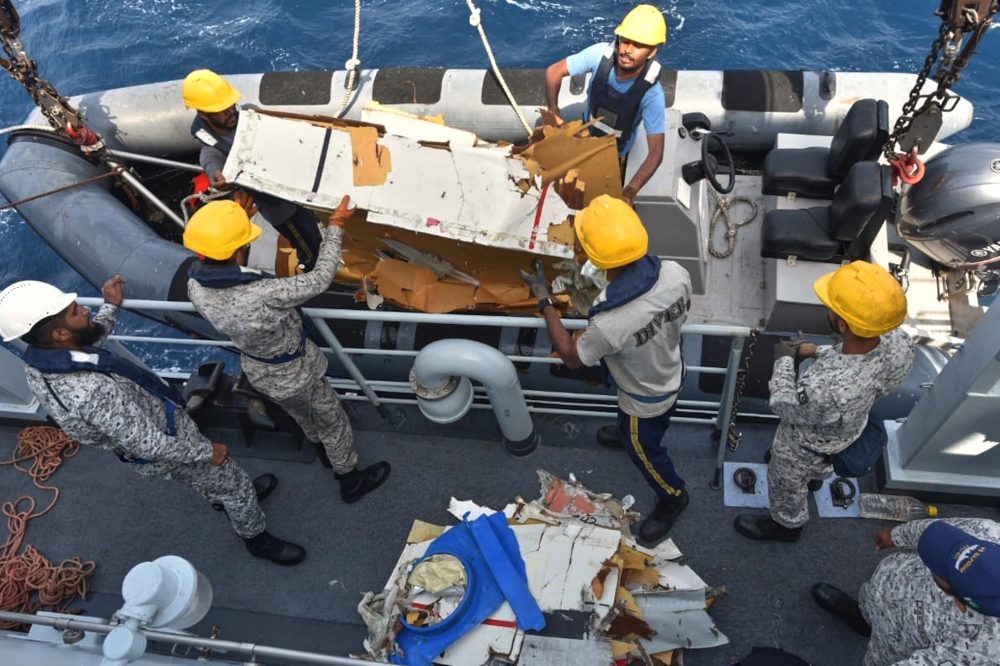
But the push for speed is alarming debt specialists, particularly given that Venezuela is simultaneously dealing with the aftermath of devastating earthquakes that killed more than 3,000 people and damaged hospitals, schools, and other critical infrastructure last month.
“This will surely be the most complex sovereign debt restructuring of my lifetime,” said Mitu Gulati, a sovereign debt expert and professor at the University of Virginia. “I’ve never seen anything done like this.”
A central concern is whether Venezuela can produce a credible Debt Sustainability Analysis — a document that measures a country’s debt load against its economic outlook to help determine how much lenders can expect to recover. The challenge is enormous: Venezuela’s debt includes arbitration awards, oil-backed loans from China, traditional bonds, and overdue interest payments. The country has not released complete debt or economic statistics in years.
Veteran sovereign debt attorney Lee Buchheit, who has guided numerous countries through debt restructurings since the 1980s, said the proposed timeline is far too compressed to produce a trustworthy analysis. He noted that both the government and bondholders may have their own reasons to rush — officials may want to demonstrate a return to global financial markets, while bondholders may want to avoid a more thorough review by the International Monetary Fund that could result in smaller payouts.
“What may be presented as a DSA will in fact just be a manufactured set of numbers that appears to support some form of bond restructuring,” Buchheit warned. He was hired in 2019 by then-opposition leader Juan Guaido to advise on debt restructuring efforts.
For comparison, Greece’s restructuring of its roughly $200 billion debt following its 2012 default took approximately one year to complete. Venezuelan government officials did not respond to requests for comment.
Caracas announced in May that it had hired financial advisory firm Centerview Partners and initially aimed to finish the Debt Sustainability Analysis by the end of June. Investors now anticipate it will be delivered sometime this month. The IMF confirmed it is not involved in the process, which has deepened doubts about the reliability of the figures being used. Centerview Partners declined to comment.
Adding to the unease, the Financial Times reported last month that Venezuela’s debt burden could actually reach $240 billion — $40 billion higher than earlier estimates — without clarifying what accounts for the additional amount. That revelation alarmed some creditors and prompted calls for IMF participation.
“If you don’t have a process that can be verified by independent observers, the IMF, then you run the risk of cronyism and corruption,” said Christopher Sabatini, director of the Latin America Programme at Chatham House.
A Caracas-based financial consultancy called Sintesis Financiera argued that the Venezuelan government should pause the restructuring process entirely, warning that relying on economic data and assumptions made before the earthquakes would be a “costly mistake” that risks underestimating just how much debt relief the country actually needs.
The earthquake damage — estimated at $7 billion — is a “massive blow” to an economy already struggling to recover, according to Joan Domene, chief economist for Latin America at Oxford Economics.
“It will make the case for the government to plead for an even bigger haircut,” Domene said, referring to the losses that creditors absorb when debt is restructured.
Some observers believe the advisers involved understand the gravity of the situation. “It’s right to have a healthy degree of skepticism,” said Elina Theodorakopoulou of Manulife Investment Management, which holds Venezuelan bonds. “But surely you would believe that the people that are putting that together realize the significance of doing that credibly.”
Venezuela’s economy has shrunk by an estimated 75% since 2013, weighed down by sanctions, corruption, and chronic underinvestment. The earthquake’s infrastructure damage has added losses equivalent to as much as 6% of the country’s gross domestic product. Venezuela’s backers have been counting on a fast debt resolution since the U.S. seized then-President Nicolas Maduro in January.
Few analysts expect significant foreign investment to flow in until creditors can no longer pursue Venezuelan assets through legal channels.
“Venezuela has been in limbo for years,” said Rodrigo Olivares-Caminal, a professor at Queen Mary University who is advising some private investors on the situation. “We want to unlock funding… (but) publish a DSA that will not be contested.”
Getting the restructuring wrong, experts caution, could leave Venezuela crushed under unsustainable debt obligations — leaving little room to fund infrastructure repairs or healthcare.
“If you give away all of your goodies now… my worry is that we’re just pushing the real restructuring problem down the road,” said Gulati.