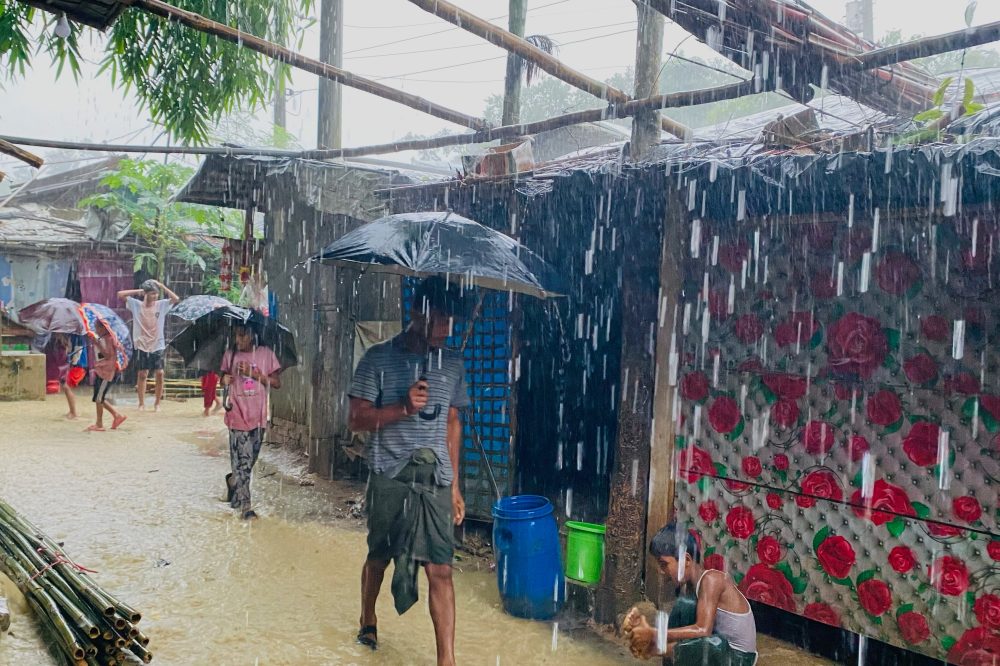
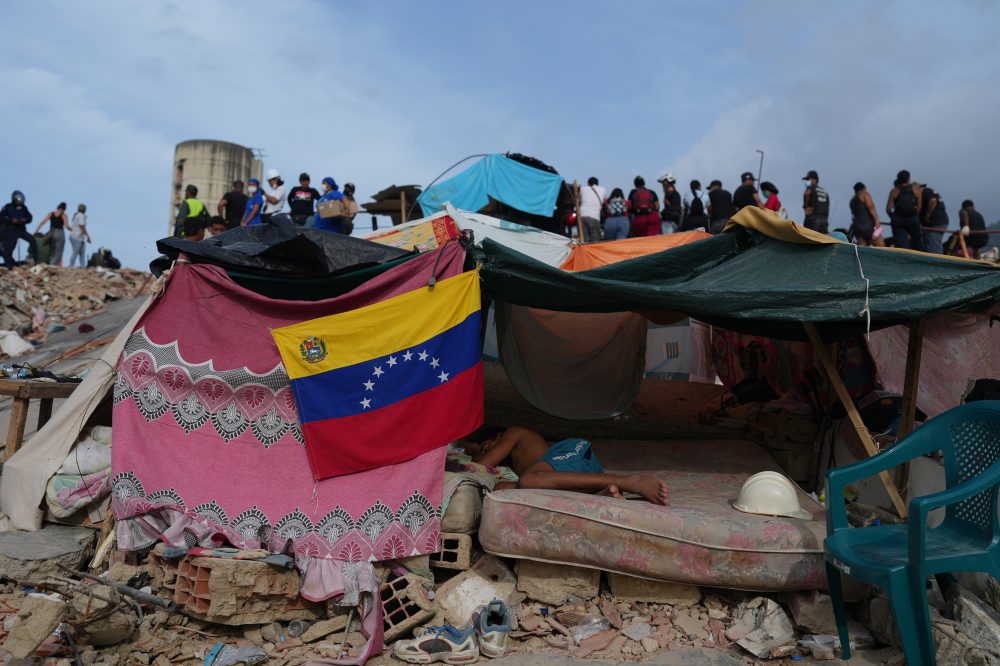
KOHIMA, India — Tovi Murru can’t pinpoint the exact date his family gave up cooking with gas. “It was sometime in April,” he recalls.
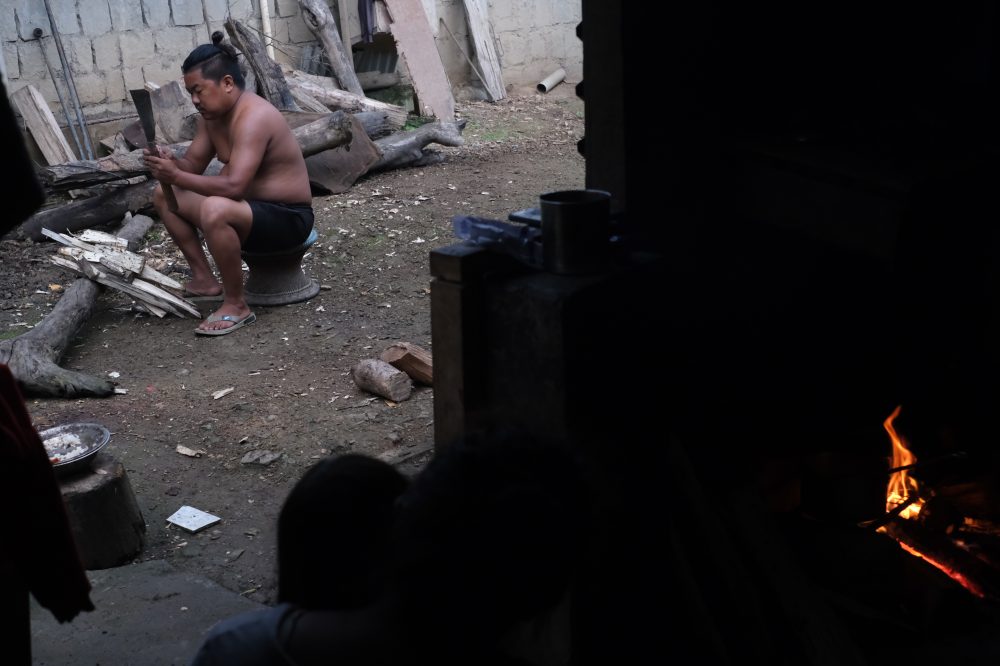
Since making that switch, the workload around his home has roughly doubled. Murru heads into the forest to collect wood from fallen trees, hauls it back, and splits it himself. He has also taken over most of the cooking duties. When the family still relied on liquefied petroleum gas, his 27-year-old wife Atoshi Ayemi handled the kitchen. But managing an open fire is simply too demanding for her, he says.
“The common person is really suffering with the rise of fuel prices. And LPG cylinders are no longer available. The few that are available are unaffordable,” Murru said.
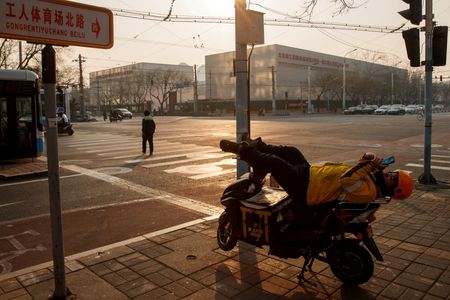
Murru, 32, works as a driver and shares a company-provided home with his wife, their daughter, and two dogs. He acknowledges that if he had to pay rent on top of everything else, getting by would be nearly impossible right now. His monthly income is $125. When he can track down an LPG cylinder — which is increasingly rare — it costs close to a quarter of his paycheck on the black market, more than twice what it sold for before the Iran war began.
Murru proved to be a quick study at building a hearth, completing the project in under a day. He lights the fire with practiced ease and uses it to boil eggs and prepare a broth to be served alongside rice. “Azatina loves eggs,” he says, nodding toward his 3-year-old daughter.
Though Kohima sits more than 4,000 kilometers — roughly 2,500 miles — from Tehran, this small city is still feeling the consequences of the Iran war. Like many others, Murru struggles to understand why a distant conflict is disrupting daily life in his community. He is a Naga, a member of an Indigenous group with roots in northeastern India and parts of Myanmar.
Because India relies on imports for nearly 90% of its crude oil, the war has created hardships for drivers who need gasoline and for the millions of households and restaurants that depend on LPG.
Smoke from the fire irritates Atoshi’s eyes, and young Azatina’s as well. Tovi says the smoke is unpleasant, but adds, “it’s the heat from the fire that gets me,” wiping his forehead as he speaks. In a striking bit of irony, the family sets their meal out beside an empty gas cylinder.
Power outages have become a regular occurrence most evenings, leaving the couple to navigate their home using the flashlights on their mobile phones. Tovi dishes out the food, and the two dogs wait patiently nearby — their turn to eat comes next.
This report is based on a photo gallery assembled by AP photo editors.
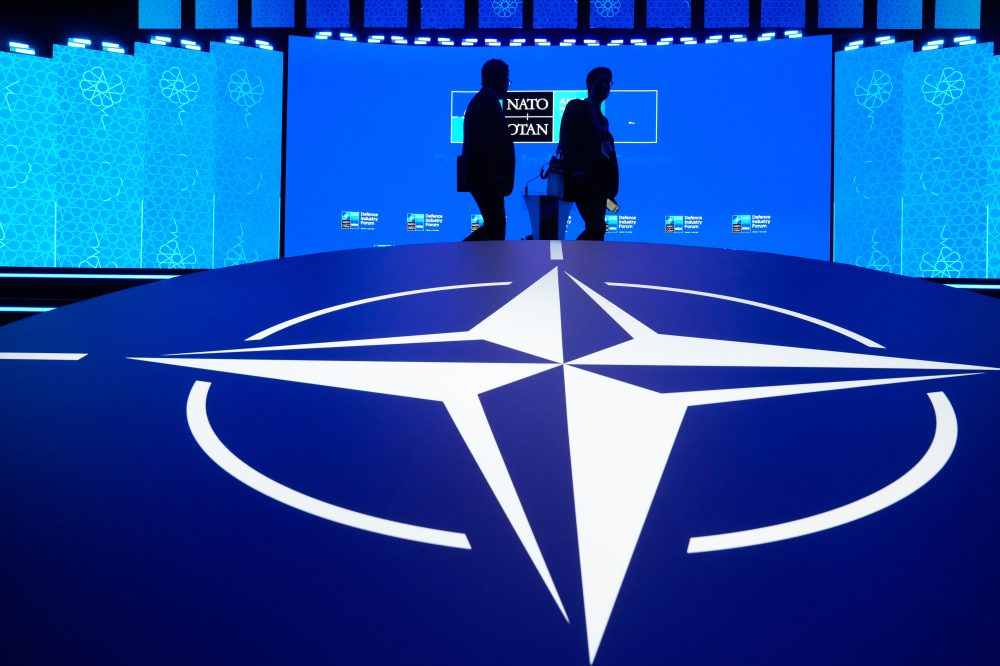
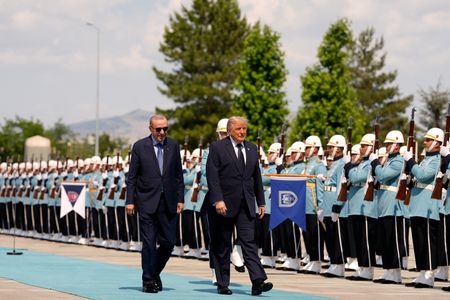
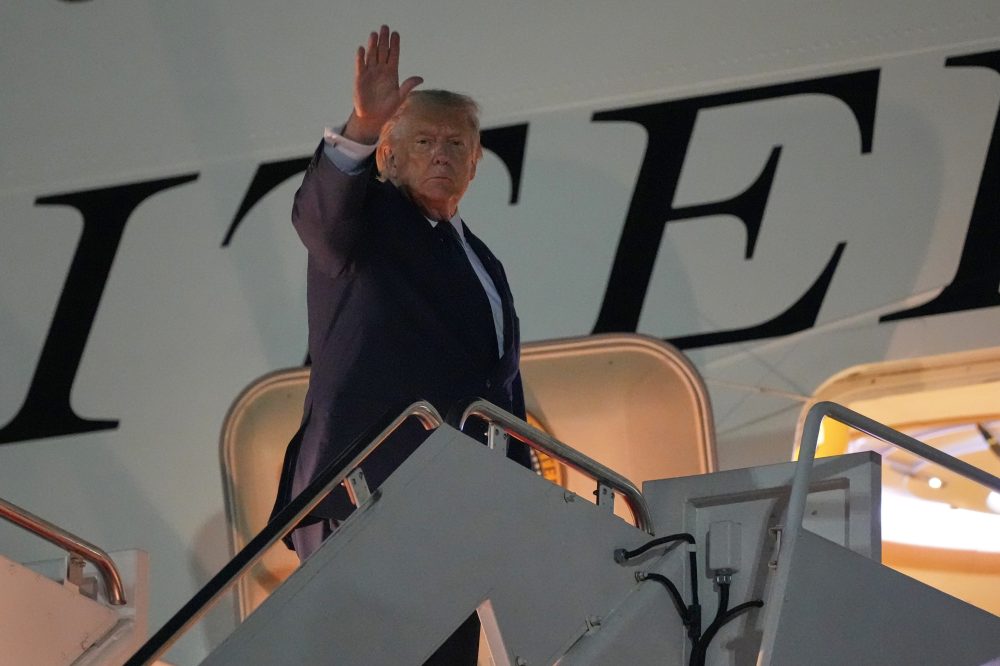
ANKARA, Turkey — President Donald Trump blindsided NATO leaders gathered in Turkey when he ordered a wave of strikes against Iran late Tuesday night and canceled the license that had permitted Tehran to trade its oil on the global market. The dramatic move reshaped a summit that had been carefully planned to highlight how alliance members were ramping up their defense budgets and rallying behind Ukraine in its ongoing war with Russia.
The military action came in response to attacks on three merchant vessels in the Strait of Hormuz, and it exposed just how fragile the temporary ceasefire between the two nations really is. Trump gave the order shortly after stepping away from a dinner hosted by Turkish President Recep Tayyip Erdogan, where all 32 NATO member nations had gathered ahead of Wednesday’s formal talks on defense spending progress.
Trump made no direct public statement about the strikes Tuesday night. It is uncommon for a sitting U.S. president to order military action while traveling abroad, though in 2011 former President Barack Obama did authorize strikes against Libya while visiting Brazil.
European allies and Canada had already been on edge, worried Trump might air new grievances about the U.S.-Israeli war on Iran — a conflict they were never consulted about. Trump had called for “loyalty” from allies and labeled NATO a “paper tiger” after several member nations refused to open their military bases for U.S. forces to use in attacks on Iran.
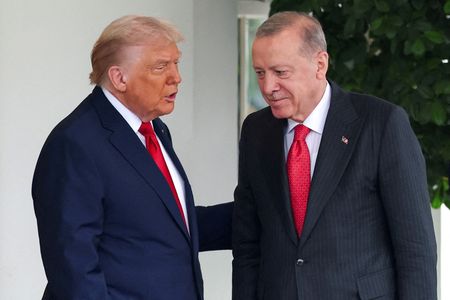
During a Tuesday meeting with Erdogan, Trump revealed he had essentially been testing NATO allies when he asked for their support in the Iran conflict. “Italy turned us down and Germany turned us down and France turned us down,” Trump said. “And that’s OK. But, you know, why are we spending hundreds of billions of dollars and they’re not there for us?”
NATO summits are traditionally meant to project a united front — a signal of strength intended to discourage potential adversaries. That unity is considered more critical than ever as Russia presses on with its war against Ukraine and fears grow that other European nations could eventually be targeted.
Last month, in an effort to keep Trump satisfied, NATO Secretary-General Mark Rutte traveled to Washington to celebrate what he called the “Trump Trillion” — the $1.2 trillion that European allies and Canada have added to their defense budgets since Trump first took office in 2017.
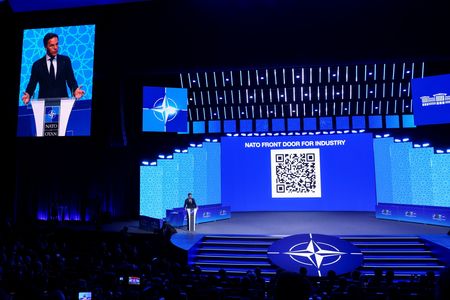
As world leaders arrived in Ankara, Rutte hosted a special event to highlight the major contracts tied to that spending — a large portion of which is expected to flow to American companies and generate thousands of U.S. jobs.
NATO officials had hoped Trump would embrace the moment as a victory, but based on comments he has made since arriving in Turkey, the alliance appears headed for another round of criticism from the U.S. president.
Trump also stirred up a familiar controversy on the eve of the summit, once again insisting the United States should control Greenland rather than NATO ally Denmark. That stance directly contradicts one of NATO’s founding principles — that member nations defend one another’s territory rather than threaten to take it.
Trump has long maintained that the U.S. shoulders a disproportionate share of NATO’s defense costs. At last year’s summit, alliance members agreed to invest 5% of their gross domestic product on defense — 3.5% on military budgets and 1.5% on infrastructure like roads, bridges, and ports to allow faster movement of troops and equipment during a crisis.
Ahead of this year’s gathering, Rutte called on member nations to present “clear, concrete and credible plans” for reaching the alliance’s spending benchmarks.
New data released by NATO on Tuesday showed that Slovenia, Belgium, Spain, and the Czech Republic may face scrutiny from the Trump administration, as all four countries are struggling to even meet the older, lower target of spending 2% of their GDP on defense.
The Trump administration has been pushing for a leaner, more capable “NATO 3.0” model in which Europe takes primary responsibility for its own security — including Ukraine — using conventional weapons, while the United States maintains its nuclear deterrent.
Despite that vision, European allies and Canada are still waiting for a clear answer on how significantly Trump plans to reduce the number of U.S. troops stationed in Europe.
The Pentagon has launched a six-month review of that troop presence, and any reductions could hinge on how quickly European nations increase their defense spending and whether they are willing to allow greater access to their military bases.
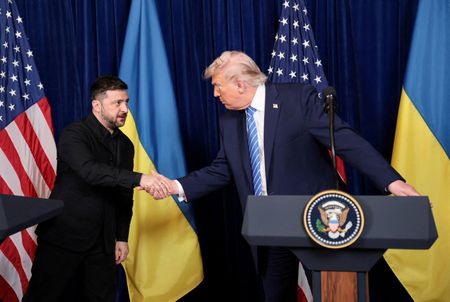
Ukrainian President Volodymyr Zelenskyy used the occasion to again push for Ukraine’s admission into NATO, arguing that his country’s battle-hardened military would strengthen the alliance’s overall capabilities. Zelenskyy, who is scheduled to meet with Trump in Ankara on Wednesday, pointed to Ukraine’s ability to strike deep inside Russian territory, hit oil refineries, and attack other energy infrastructure. He said Ukrainian forces are eliminating an average of 30,000 Russian troops every month.
Anxiety is also rising among northern, central, and eastern European nations over the possibility that Russia may be planning a hybrid assault on the continent — blending traditional military tactics with tools like cyberattacks — as Russian President Vladimir Putin struggles to achieve a clear win in Ukraine.
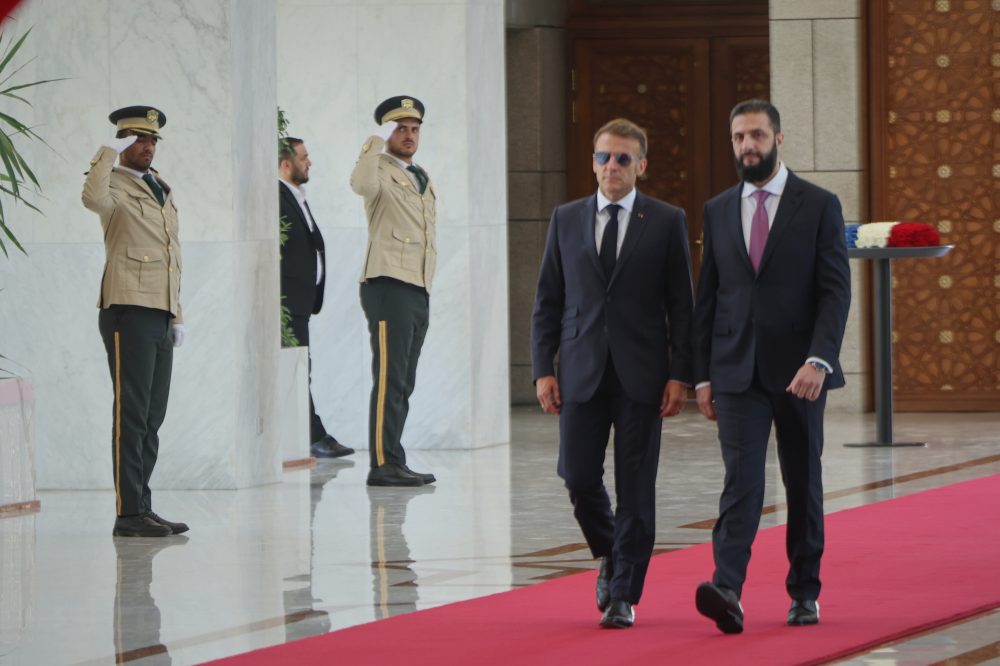
Trump is also set to meet with Syrian President Ahmad al-Sharaa, a former insurgent who led the military campaign that removed longtime autocrat Bashar Assad from power in December 2024. Al-Sharaa, despite his past as an al-Qaida fighter, has gained Trump’s support as Syria works to rebuild and restore its relationships with Western nations.
Trump has repeatedly suggested al-Sharaa would be more effective than the Israeli military at rooting out Hezbollah in Lebanon — a claim that has raised alarm in both Lebanon and Israel. Al-Sharaa himself has stated he has no interest in taking on that role.
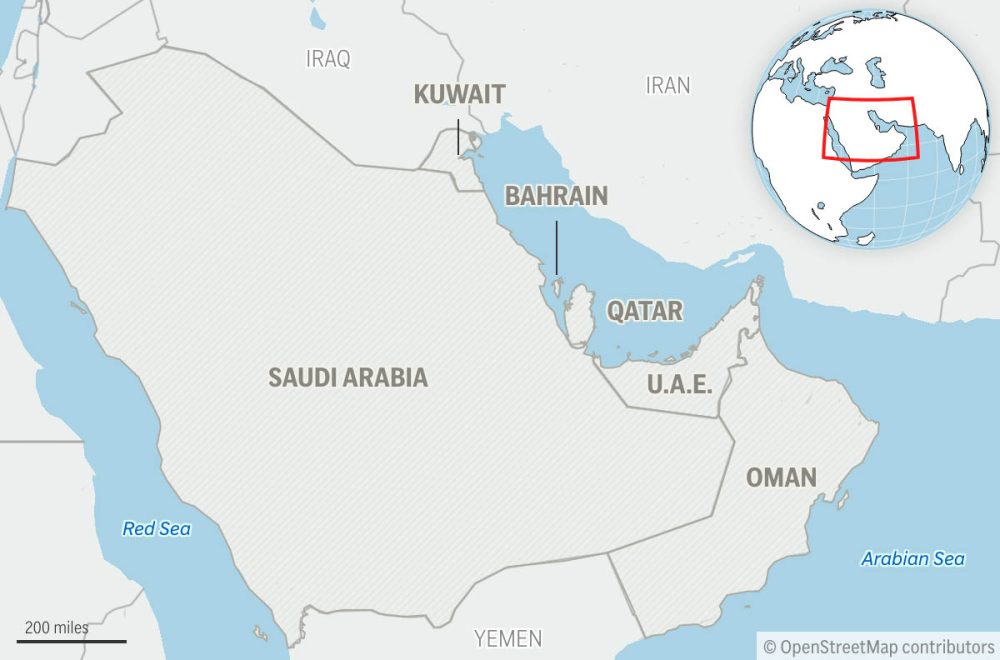
DUBAI, United Arab Emirates — Kuwait announced Wednesday that its air defense systems were activated to intercept incoming fire, following United States airstrikes aimed at Iran.
The announcement from Kuwait’s military came shortly after Bahrain also reported that it was facing incoming missiles on Wednesday morning.
At the time of reporting, there was no information available about what, if anything, had been hit in either country.
Both Bahrain and Kuwait have previously been targeted in Iranian attacks, part of a broader wave of violence that has rattled the interim agreement reached between Iran and the United States intended to bring an end to the conflict.
Washington — The U.S. Central Command announced Tuesday that American forces have wrapped up a fresh round of military strikes against Iran, with more than 80 targets hit during the latest assault.
In addition to the new wave of strikes, Washington moved to revoke a license that had permitted Iran to sell oil on international markets. That decision followed attacks on three oil tankers in the Strait of Hormuz, where projectiles struck the vessels.
The U.S. military released a statement describing what was targeted in the operation: “U.S. forces struck Iranian air defense systems, command and control networks, coastal radar sites, anti-ship missile capabilities, and more than 60 Islamic Revolutionary Guard Corps small boats in and near the strait (of Hormuz) to degrade Iran’s ability to continue attacking international commerce flowing through the international trade corridor.”
The statement went on to say: “CENTCOM forces remain postured and prepared to hold Iran accountable when the agreement is not adhered to or obeyed.”
Iran’s top joint military command fired back, threatening a “crushing response” and accusing the United States of what it described as a “blatant act of aggression.” Iranian officials also warned that Tehran would not tolerate American interference in the management of the Strait of Hormuz.
The broader conflict has left a ceasefire in a fragile state. The war began on February 28, when the U.S. and Israel launched attacks on Iran. Iran then responded with strikes targeting Israel and Gulf states that house American military bases.
The fighting — including U.S.-Israeli strikes on Iran and Israeli attacks on Lebanon — has resulted in thousands of deaths and the displacement of millions of people. The conflict has also driven oil prices sharply higher and rattled financial markets across the globe.
State media in China reported Wednesday that the death toll from a landslide in the country’s northwest has climbed to 21, following the completion of rescue efforts at the disaster site.
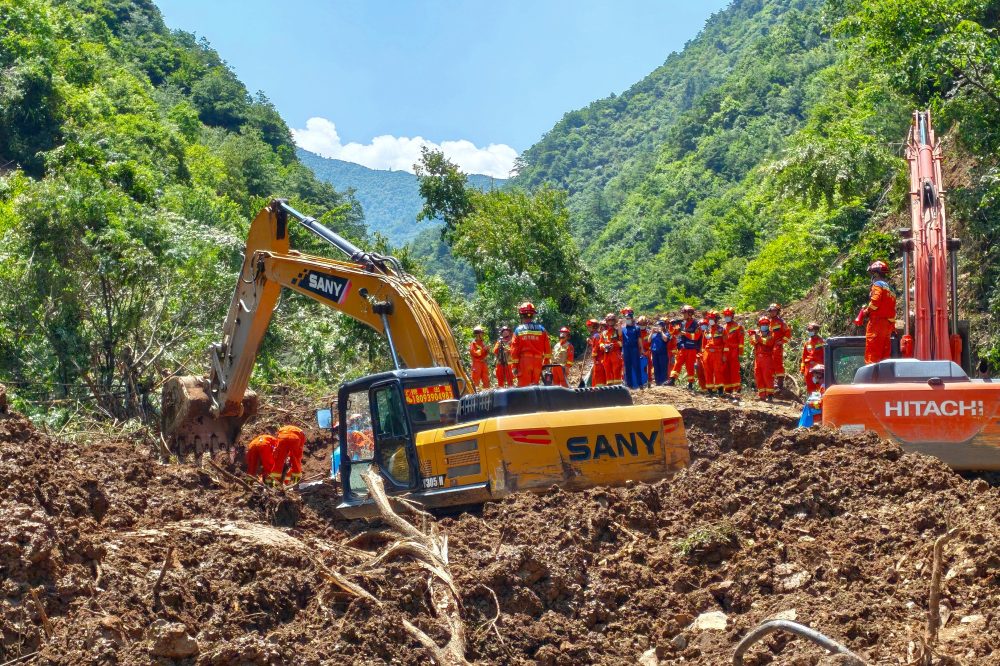
The slide struck just before 7 a.m. Tuesday, burying 33 people in the Nanhe township of Longnan city, located in Gansu province, according to the official Xinhua News Agency. State broadcaster CCTV confirmed that all trapped individuals had been pulled from the debris by early Wednesday morning. Of those rescued alive, seven sustained minor injuries while five others were unharmed.
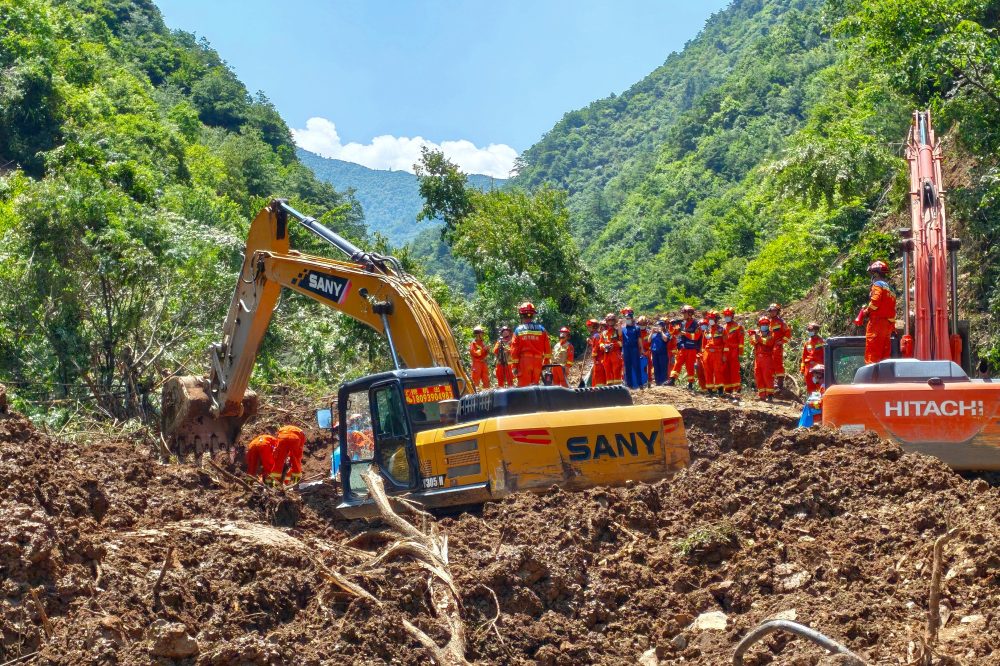
Authorities have not yet determined what caused the landslide. Video and photos shared by CCTV on Tuesday showed three excavators alongside rescue workers digging through large mounds of earth at the scene. Skies above the area appeared clear and sunny at the time of the footage.
European leaders within the NATO alliance traveled to Ankara, Turkey on Wednesday with a clear goal: persuade President Trump to reaffirm his commitment to the decades-old military partnership after he stirred fresh controversy over Iran and Greenland.
Upon arriving in the Turkish capital on Tuesday, Trump suggested he might have skipped the summit entirely if not for his personal friendship with Turkish President Tayyip Erdogan. He also left the door open to pulling additional U.S. troops out of Europe.
Earlier Tuesday, NATO attempted to show that European members were taking Trump’s demands for greater self-reliance seriously, announcing a series of arms agreements totaling at least $50 billion.
Trump, who has been a persistent critic of NATO throughout both of his presidential terms, declared he was “very disappointed” with the alliance. He said the United States was not “treated well” during the U.S.-Israeli war on Iran, questioning why America continues to pour hundreds of billions of dollars into the alliance when European partners did not stand by the U.S. during that conflict.
“Why are we spending hundreds of billions of dollars, and they’re not there for us? We’ve always been there for them,” Trump said during a joint appearance with Erdogan on Tuesday.
Trump has specifically accused European nations of refusing to allow U.S. forces access to their airspace and military bases during the Iran war. European officials, however, have pushed back on that claim, saying they largely fulfilled their obligations to U.S. forces — even though they were not consulted before a conflict that disrupted their economies and proved deeply unpopular across the continent.
Among those caught in Trump’s crosshairs was Italian Prime Minister Giorgia Meloni, once considered a close ally of the president. Trump said his relationship with Meloni had soured “because she refused to help us” on Iran, though he still referred to her as a “nice person.” Italian officials have been working in recent days to put the disagreement behind them.
Trump also renewed his claim that Greenland — a semi-autonomous territory belonging to NATO member Denmark — should come under U.S. control. Danish Prime Minister Mette Frederiksen responded hours later from Ankara, stating she expects all allies to honor the sovereignty of the Danish kingdom and that Greenland is simply not for sale.
The 32 NATO heads of state gathered for a dinner Tuesday evening, with the formal summit session scheduled for Wednesday. Ambassadors from all member nations have already signed off on a summit declaration pledging an “ironclad commitment” to collective defense, though it will not be officially released until the leaders themselves endorse it.
The Trump administration has been pushing European allies to increase their own defense budgets and take primary responsibility for conventional military defense on the continent, as Washington shifts its strategic focus toward the Indo-Pacific region. The U.S. has already announced troop reductions in Europe, scaled back the forces it contributes to NATO defense planning — including an aircraft carrier, refueling planes, fighter jets, and drones — and launched a six-month review of its overall military footprint in Europe.
European leaders say they are prepared to shoulder more of the security burden but are urging a structured and predictable transition to prevent any vulnerabilities that Russia could exploit. Officials on the European side have expressed hope that Trump’s warm relationship with Erdogan and his positive ties with NATO Secretary General Mark Rutte could help ease tensions during the summit.
State news agency Xinhua reported Wednesday that at least 21 people have been confirmed dead following a landslide in China’s western Gansu province, with rescue and recovery operations now concluded.
The disaster unfolded early Tuesday morning when the landslide swept through a valley in Tanchang county, leaving 33 people trapped.
According to state-run China Newsweek, the majority of those caught in the landslide were residents from surrounding villages who had been brought on as temporary workers at a government-operated forestry farm located in the valley.
The area is characterized by rugged mountain terrain, deep valleys, and a network of rivers — conditions that make the region particularly vulnerable to natural disasters such as flash floods and landslides, especially during the rainy season.
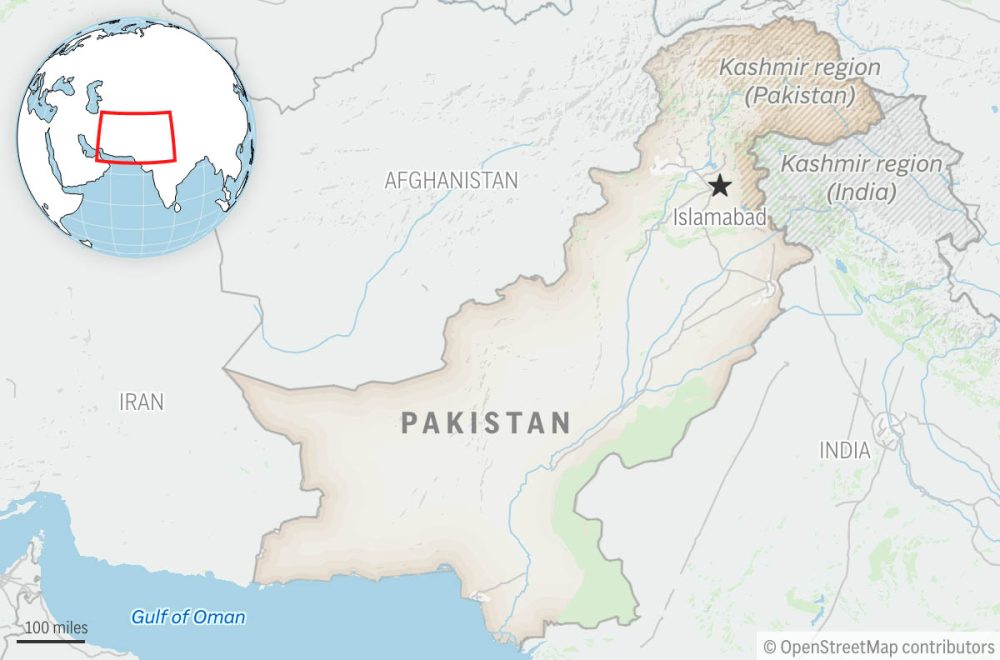
A cargo plane carrying five crew members vanished off the coast of Karachi, Pakistan, late Tuesday evening after plummeting rapidly and losing contact with air traffic controllers while on a flight from the United Arab Emirates, officials reported.
Pakistan’s airport authority announced on X that search and rescue teams had been mobilized in the Arabian Sea. The reason behind the aircraft’s disappearance has not yet been determined.
The Boeing 737, operated by Karachi-based K2 Airways, was making a cargo run from Sharjah in the UAE to Karachi when the crew reported a problem with the navigation system at 9:18 p.m. local time, according to the airport authority.
Radar tracking showed the plane dropping sharply and making a sudden change in direction around 9:21 p.m., after which both radar and radio communication were lost approximately 155 nautical miles — or about 178 miles — west of Karachi, the authority said.
In response, officials activated the Rescue Coordination Center and launched a multi-agency search and rescue effort across the sea to find the missing aircraft.
Aviation expert Imran Aslam, speaking to local ARY News, said the cause of the disappearance remains a mystery. He noted that even in cases of engine failure, a plane would typically continue gliding rather than drop so suddenly. “I still cannot understand how the plane went down so abruptly instead of gliding,” he said.
According to its website, K2 Airways is a private cargo airline headquartered in Karachi that was founded in May 2018.
Officials confirmed that both Pakistan’s military and civilian agencies deployed numerous air and sea resources for the search effort. The Pakistan Navy frigate PNS Zulfiqar was quickly redirected to the area where the aircraft disappeared. The Pakistan Air Force also sent planes to assist, and a Pakistan Navy ATR aircraft departed from Turbat to join the operation.
Additionally, a merchant vessel operated by the Pakistan National Shipping Corp. was sent to the area and is taking part in the search.
This incident comes years after a devastating crash in May 2020, when a Pakistani passenger jet carrying 98 people went down in a densely populated neighborhood near the Karachi airport following what appeared to be an engine failure during its approach to land. Nearly everyone on board perished, with only one passenger surviving. A subsequent government investigation concluded that human error by the pilot, co-pilot, and air traffic control caused that Pakistan International Airlines disaster.
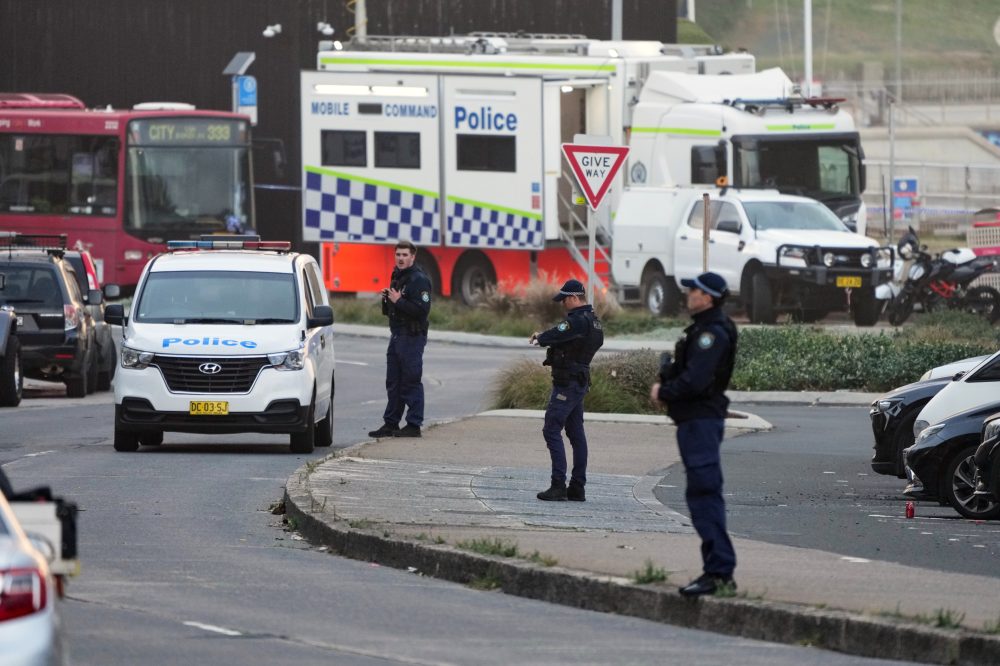
MELBOURNE, Australia — A Google executive appeared before an Australian government inquiry Tuesday, defending YouTube’s decision to keep online a video that falsely portrays a wounded survivor of a deadly antisemitic attack in Sydney as a staged performer wearing theatrical makeup.
Google Australia manager Rachel Lord was called to testify as part of a government investigation into the rise of antisemitism across Australia, which includes scrutiny of a December shooting at a Sydney Hanukkah gathering that claimed 15 lives. Two gunmen — a father and son identified as Sajid and Naveed Akram — are alleged by police to have been motivated by the Islamic State group.
Inquiry officials questioned Lord about a specific complaint filed by shooting survivor Arsen Ostrovsky. In the hours after Ostrovsky was shot on December 14, a photo showing blood flowing from a wound on his head was shared on the platform X. The image quickly became the target of online attacks against him.
Lord confirmed that the decision to leave the video on YouTube had been reviewed at, in her words, “quite senior levels.”
“We have spent a lot of time thinking about where we draw the line and we continue to re-evaluate where we are doing that,” Lord said during her testimony.
To avoid displaying disturbing images publicly, inquiry lawyer Richard Lancaster read from a transcript of the video instead. According to the transcript, four men appear in a split-screen format, describing Ostrovsky’s bleeding head as looking “very crisis actor-ish” and referencing “makeup.” The men also label him an “intelligence asset” who holds a “degree in theater.”
The video further identifies Ostrovsky as a Zionist and asserts that the massacre itself was a “false flag operation” — a claim with no factual basis.
Lancaster pressed Lord on the matter, telling her that YouTube’s choice to leave the video up revealed a “really serious deficiency” in the platform’s hate speech policies. Lord responded by saying she appreciated Lancaster’s “feedback.”
Lord also noted that YouTube had communicated with Australia’s online safety regulator just three days after the massacre, stating the platform was “focused on ensuring Australians and all users around the world have access to high quality information about the tragic events.”
Ostrovsky himself testified before the inquiry last month, describing a sustained campaign of online hate, abuse, vilification, and AI-generated manipulation he has endured since sustaining the minor head wound. The inquiry was also shown an AI-created image depicting Ostrovsky appearing to laugh while someone applied fake blood to his head.
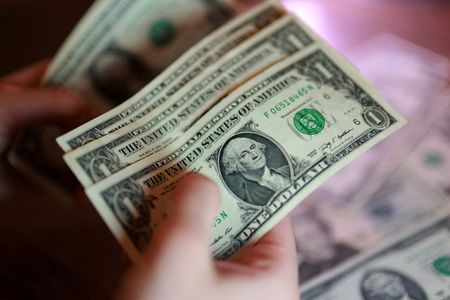
The U.S. dollar held firm at its highest point this week against most major currencies as Asian markets opened Wednesday, following a fresh round of American military strikes against Iran that reignited geopolitical concerns and pushed oil prices upward.
The dollar index, which tracks the greenback’s performance against a basket of six currencies, was trading at 101.18 — its strongest reading since July 2.
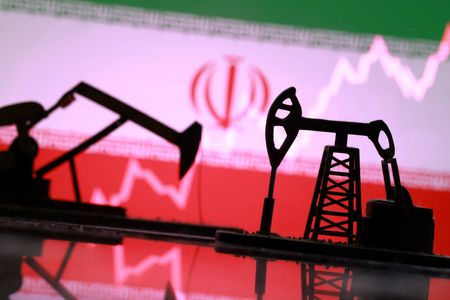
The surge in demand for the dollar as a safe-haven currency followed the United States launching a new wave of strikes against Iran on Tuesday. Washington also revoked a license that had permitted Iran to sell oil, a move that came after three tankers were attacked in the Strait of Hormuz.
Analysts at Westpac noted in a research report that worries about the durability of any peace agreement resurfaced following Iran’s attacks on vessels transiting the Strait of Hormuz. “Concerns over the inflation outlook were in focus, seeing yields jump higher across the globe,” the analysts wrote.
Brent crude oil rose 2.6% to $76.12 per barrel at the opening of the Asian trading session Wednesday, marking the second consecutive day of gains.
The New Zealand dollar edged up 0.1% to $0.5681 ahead of an anticipated interest rate decision by the Reserve Bank of New Zealand, which is expected by a narrow margin to raise rates for the first time in over three years.
The U.S. dollar gained 0.1% against the Japanese yen, rising to 162.28 yen. Bank of Japan board member Toichiro Asada, who was the only dissenting vote against the BOJ’s June decision to raise interest rates, told Reuters on Monday that he would need to see evidence of demand-driven inflation before he could back additional rate increases.
The euro dipped 0.1% to $1.1405, while the British pound slipped 0.1% to $1.3353. The Australian dollar held steady at $0.6926.
In cryptocurrency markets, Bitcoin fell 0.2% to $63,518.35, while Ether dropped 0.5% to $1,774.45.
Federal prosecutors announced charges Tuesday against the head of an Indian criminal organization in connection with a high-profile political assassination in Canada — a killing that previously threw the diplomatic relationship between Canada and India into turmoil.
The announcement came as part of a sweeping law enforcement crackdown involving agencies from the United States, Canada, and Europe. In total, 37 individuals have been charged in connection with three separate Indian international crime syndicates accused of involvement in kidnappings, racketeering, extortion, illegal firearms sales, drug trafficking, and murder. U.S. Attorney Bill Essayli made the announcement at a press conference Tuesday, joined by representatives from the Los Angeles Police Department, the FBI, and the Royal Canadian Mounted Police. Investigators are still searching for seven fugitives believed to be in the U.S., two in India, and one in Europe.
Patrick Grandy, assistant director in charge of the FBI’s Los Angeles field office, said the criminal groups have “fueled violence, fear and instability within the East Indian communities throughout California and abroad.”
Lawrence Bishnoi, 33, and his longtime friend Satinderjeet Singh are accused of planning and directing the murder of Hardeep Singh Nijjar, a well-known Sikh independence advocate who was shot and killed outside a temple where he served as president in 2023. The slaying ignited a diplomatic firestorm after then-Canadian Prime Minister Justin Trudeau stated there were “credible allegations” pointing to the Indian government’s involvement in Nijjar’s death. Bishnoi is currently in custody, while Singh remains at large.
Prosecutors say Bishnoi’s organization “routinely targeted prominent religious, social and political leaders with violence” in exchange for significant sums of money.
Nijjar was 45 years old at the time of his death. He was a leading figure in a movement seeking to establish an independent Sikh homeland called Khalistan, and had been organizing an unofficial vote among Sikhs living outside India through the group Sikhs For Justice. Born in India and a Canadian citizen, Nijjar was wanted by Indian authorities at the time of his killing, with a reward offered for information leading to his capture.
Tensions between Canada and India over Sikh diaspora activism are not new. Canada is home to the largest Sikh population outside of India, and India has long accused Canada of allowing what it calls “terrorists and extremists” to operate freely. The dispute escalated to the point where both nations expelled each other’s diplomats.
Tuesday’s announcement also identified two additional criminal organizations swept up in the same two-year investigation on similar charges. These transnational groups have members operating in the United States, New Zealand, Australia, Portugal, and the United Kingdom. Some members are also accused of stealing large amounts of drugs from rival criminal operations in California and then distributing those drugs across the country and into Canada.
Court documents allege that some defendants used corrupt connections with local officials in India to go after rivals or individuals suspected of cooperating with law enforcement. At least one defendant is accused of directing criminal activity while being held at an Immigration and Customs Enforcement facility — though authorities have not yet explained how he managed to communicate without detection.
No attorney for Bishnoi had been listed as of Tuesday afternoon.
U.S. Attorney Essayli framed the operation as a testament to international cooperation, stating: “Working together, law enforcement in the U.S., Canada, Europe, and Asia are determined to target and dismantle these criminal organizations wherever they operate.”
Iran launched missile attacks against commercial ships passing through the Strait of Hormuz, targeting at least one Qatari-owned liquefied natural gas tanker as diplomatic talks between Tehran and Washington remained at a standstill and regional tensions continued to climb.
Iranian state television, citing sources, confirmed that Tehran had struck at least one LNG tanker, claiming the vessel had disregarded warnings issued by Iranian forces. A U.S. official separately told Axios that two merchant ships had been hit by Iranian missiles.
One of the targeted ships was identified as the Al Rekayyat, an LNG tanker belonging to Qatar. According to The Wall Street Journal, the missile hit the vessel’s engine room, sparking a fire. No crew casualties were reported.
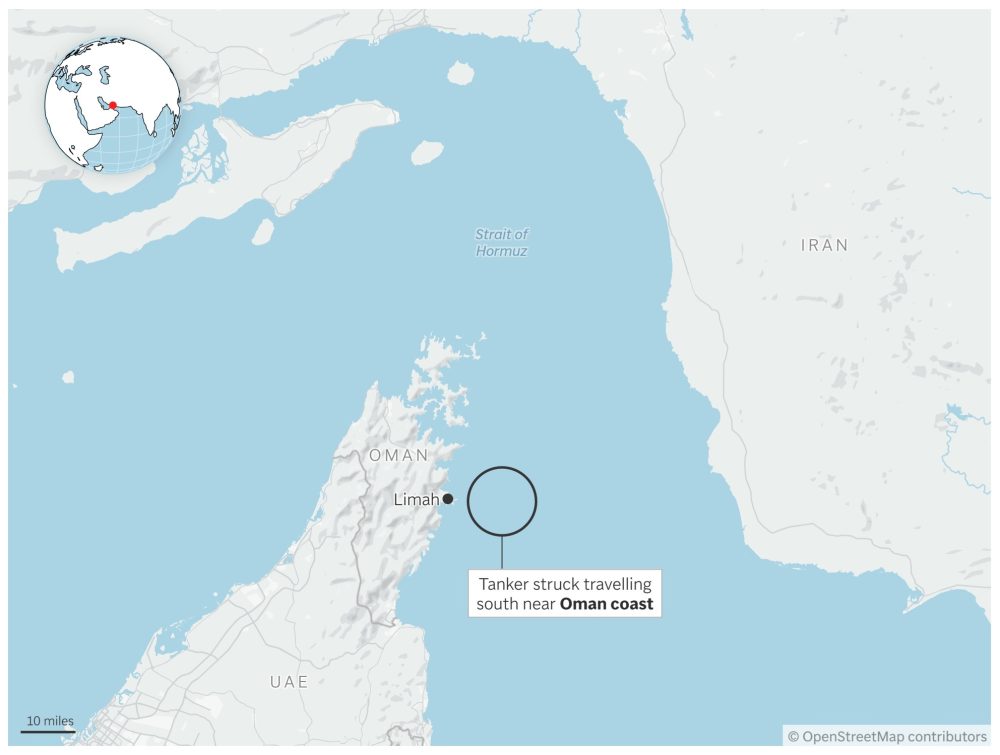
The United Kingdom Maritime Trade Operations agency confirmed early Tuesday that the tanker was struck on its port side while heading southbound, approximately 8 nautical miles — about 15 kilometers — east of Limah. The agency noted the strike caused a fire but reported no casualties and no environmental damage.
The strike came after Iran’s Islamic Revolutionary Guard Corps had issued maritime warnings, announcing that its missiles and drones were ready to fire.
The attack unfolded against the backdrop of stalled U.S.-Iran negotiations, which have been paused during the funeral week for late Supreme Leader Ali Khamenei. The talks have yet to produce any concrete agreement.
On Monday, President Trump stated he still favored reaching a diplomatic deal with Iran but made clear that military force remained an option if talks broke down. “Either we’ll make a deal or we’ll finish the job, and it won’t be that hard to finish the job there. But I prefer a deal,” President Trump said.
Iranian Foreign Minister Abbas Araghchi pushed back against Washington’s warnings, posting on X that “millions of proud Iranians gathered to pay tribute to Khamenei and his legacy. Neither they nor our forces are intimidated by threats.”
Araghchi also directed a pointed message at the United States regarding the ongoing negotiations: “Article 13 of the Memorandum of Understanding is clear: negotiations on the final agreement will not begin if threats continue. Honor your signature.”
Israel’s parliament, the Knesset, took a major step Monday toward establishing a commission to investigate the security and intelligence failures behind the October 7, 2023 Hamas-led massacre — but the path forward is already deeply divided along political lines.
The bill cleared its first reading by a vote of 59 to 0 in the 120-seat legislative body. No lawmakers abstained. Opposition members refused to participate in the vote, staging a boycott in protest of the proposal’s structure.
The legislation will now be sent back to the Knesset Constitution Committee for additional work before returning for its second and third readings, which are expected to occur next week. That timeline is tight, as the Knesset is scheduled to dissolve ahead of elections on July 17.
As written, the bill calls for a six-member commission. Members would ideally be chosen by a two-thirds majority vote of Knesset lawmakers. If that threshold cannot be reached, the governing coalition and the opposition would each appoint three commissioners. Final authority over the appointment process would rest with the speaker of parliament — effectively giving the ruling coalition control over who sits on the commission.
The bill also includes provisions allowing former hostages or family members who lost loved ones in the attack to attend proceedings as observers. Commission hearings would also be broadcast publicly.
Opposition parties have made clear they will not cooperate with any inquiry in which politicians select the investigators. They are pushing instead for a formal state commission of inquiry — one where members would be appointed by the president of the Supreme Court rather than by lawmakers. That court has been in ongoing conflict with Prime Minister Benjamin Netanyahu’s government on a number of fronts.
The parliamentary vote came just days after large demonstrations were held Thursday in Tel Aviv and elsewhere across Israel. Thousands of people gathered to mark 1,000 days since the October 7 attack and to demand the creation of a state-led, independent commission of inquiry.
On October 7, 2023, Hamas-led terrorists stormed southern Israel, killing approximately 1,200 people and taking 251 others hostage. The attack set off the ongoing war in Gaza.
Egyptian President Abdel Fattah el-Sisi officially opened Egypt’s new State Strategic Command Headquarters on Saturday, a sprawling facility nicknamed the “Octagon” situated in the country’s New Administrative Capital, located east of Cairo. The opening ceremony featured the formal signing of the complex’s founding charter and the ceremonial raising of the Armed Forces flag over what has become one of the most ambitious military command centers in the entire Middle East.
The Octagon is far more than a single headquarters building. It functions as a fortified military and administrative city, constructed on a scale designed to signal Egypt’s regional aspirations through its sheer size and advanced secure communications infrastructure. According to Egyptian state information, the complex covers approximately 22,000 acres and is divided into 13 strategic and logistical zones.
The facility’s distinctive design features eight interconnected octagonal outer structures arranged around two central command buildings — a layout intended to represent the unified integration of Egypt’s armed forces and government institutions.
While the massive new complex has drawn scrutiny from Israel, analysts point out that ongoing security coordination between the two countries, their mutual interest in stability along the Gaza border, and the enduring 1979 peace treaty all provide powerful reasons for both nations to avoid any serious breakdown in their relationship.
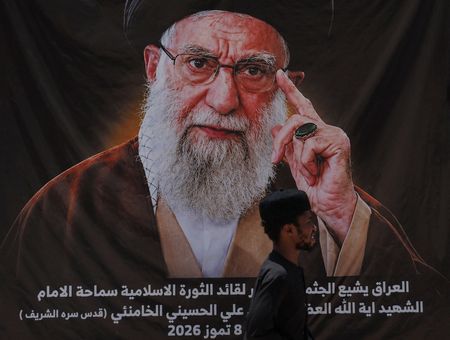
The funeral of former Iranian Supreme Leader Ali Khamenei was far more than a religious ceremony — it was a calculated political performance designed to show the world that the Islamic Republic remains a force to be reckoned with, even after war and the death of the man who led it for more than three decades.
According to Reuters, Khamenei, 86, was killed on February 28 in strikes carried out by the United States and Israel, which also claimed the lives of several of his family members, including his daughter, son-in-law, daughter-in-law, and granddaughter. The ceremonies began in Tehran before moving to the city of Qom on Tuesday, with additional stages planned in Najaf and Karbala in Iraq, ahead of a scheduled burial Thursday in Mashhad — Khamenei’s birthplace.
His coffin, along with those of his relatives, was first placed at Tehran’s Grand Mosalla, one of Iran’s largest religious complexes, before being carried through Tehran and then through Qom. Iranian President Masoud Pezeshkian and Parliament Speaker Mohammad Bagher Ghalibaf both prayed behind the coffins in Tehran, while crowds in attendance waved flags bearing messages of revenge directed at the United States and Israel.
In Qom, hundreds of thousands of mourners turned out to attend prayers, carrying banners that drew comparisons between Khamenei and foundational figures in Shia Islamic history. Iranian authorities worked to bring millions of people to the multi-city procession, providing transportation, meals, and lodging to attendees.
A researcher based in Tehran, speaking anonymously, told The Media Line that the estimated crowd reached 4.5 million people and argued that “most people are totally backing up the regime.”
However, analysts noted that crowd size alone could not be taken as a straightforward measure of public support, given that the government declared public holidays, offered logistical incentives, and applied political pressure to encourage attendance.
Dr. Tallha Abdulrazaq, a Middle East political analyst, told The Media Line that the funeral fit into a long-established pattern of political theater by the Islamic Republic — similar to past events like Quds Day commemorations and mass mourning ceremonies for senior commanders, including Qassem Soleimani.
“The point of all this is to use Shia Islamist symbolism to energize conservative constituencies and draw parallels between modern events and formative historical episodes such as the Battle of Karbala,” Abdulrazaq said.
He described the event as “a kind of loyalty test,” intended to compel public alignment with the regime following the war.
The funeral route itself carried symbolic weight. Moving through Tehran and Qom in Iran, then to Najaf and Karbala in Iraq, and finally back to Mashhad, the procession traced a geography of Shia religious authority — making the ceremony not just an Iranian affair, but one with transnational Shia significance.
Foreign attendance added another layer of diplomatic meaning. Pakistan sent Prime Minister Shehbaz Sharif, along with Pakistani army chief Field Marshal Asim Munir and Interior Minister Mohsin Naqvi. Turkey was represented by Vice President Cevdet Yilmaz, China by senior lawmaker He Wei, Russia by former President Dmitry Medvedev, and Taliban officials from Afghanistan were also reported among the attendees.
India’s official delegation included Bihar Governor Syed Ata Hasnain — described as the most senior Shia holding public office in India — alongside Deputy Foreign Minister Pabitra Margherita. Indian opposition figures Salman Khurshid and Mehbooba Mufti were also reported as part of the delegation.
Nudrat Naheed, an independent researcher and communications strategist specializing in international relations and geopolitical affairs, told The Media Line that the composition of foreign attendance was central to understanding the event’s significance.
“The funeral ceremonies in Tehran should be understood not only as a moment of national mourning but also as an important diplomatic event,” Naheed said. “State funerals often serve as informal arenas where regional and international actors signal political priorities through their level of representation and participation.”
On Pakistan’s participation specifically, Naheed said: “Pakistan’s attendance carries particular diplomatic significance given the longstanding relationship between Islamabad and Tehran. At a time of regional uncertainty, the decision to participate reflects an effort to maintain diplomatic engagement with a neighboring state while reinforcing channels of communication on shared security and regional issues.”
Abdulrazaq noted, however, that most foreign delegations were relatively low- or mid-ranking officials, with Pakistan’s prime minister appearing to be among the most senior foreign officials present.
The Gulf region’s response was more nuanced. Saudi Arabia dispatched a delegation led by Deputy Foreign Minister Waleed bin Abdulkarim al-Khuraiji, while Qatar and Oman also sent representatives. The United Arab Emirates and Bahrain were not among the publicly confirmed Gulf delegations.
Saudi political analyst Abdulaziz Alshaabani told The Media Line that Riyadh’s attendance should be viewed through the lens of diplomacy rather than any endorsement of Tehran’s ideology.
“The attendance of an official delegation at the funeral should be understood as a diplomatic gesture rather than an ideological or political endorsement,” Alshaabani said. “It reflects Riyadh’s commitment to maintaining state-to-state communication, particularly during a period of heightened regional uncertainty.”
Alshaabani also noted a shift in how regional rivalries are now framed. “Compared to the past, the Sunni and Shia division is less marked,” he said. “Today, regional politics is driven more by national interests and pragmatism than by sectarian divisions. While religious differences remain, they are no longer the primary factor shaping state relations. This war put the interests more in alignment between the two, but differences still remain.”
Among the most discussed elements of the ceremonies was the reported use of specific Qur’anic verses recited as different foreign delegations approached the coffins. Iran International identified the verse recited as the Saudi delegation came forward as Verse 13 of Surah Al Imran, which recalls the Battle of Badr. An anonymous Tehran-based researcher told The Media Line the selections appeared to be “targeted verses for each delegation” — for the Saudis, a verse about “the disbelievers and the believers”; for Turkey, one about “those who remain idle”; for Lebanon, one about those “unwilling to make sacrifices”; and for Qatar, a verse about “repentance and forgiveness.”
Geopolitical analyst Massimiliano d’Amore, founder of The Red Zone, told The Media Line that the entire staging appeared carefully calculated. “The Tehran ceremonies function as a legitimacy operation layered onto a religious rite, and the signaling is deliberate at the level of architecture even where individual elements remain ambiguous,” he said.
D’Amore argued that holding the funeral during the first 10 days of Muharram placed Khamenei’s death within the Shia martyrdom tradition, while visual elements — including a clenched fist emblem, multilingual slogans, and the black platform used for the coffins — suggested Tehran was sending a message to a broader Islamic and anti-Western audience, not just its own citizens. “The choreography is the clearest layer,” he said, adding that the staging recast “a head of state killed in wartime as an heir to the Karbala tradition.”
Irina Tsukerman, president of Scarab Rising, Inc. and board member of The Washington Outsider Center for Information Warfare, told The Media Line that the verse selections effectively divided foreign guests into separate political categories. “The choice of verses carried the main political burden of the funeral, because Tehran assigned Arab states language of judgment, confrontation, and spiritual suspicion, then assigned its armed clients language of loyalty, sacrifice, and divine favor,” she said.
The presence of Hezbollah, Hamas, the Houthis, and other Iran-aligned movements reinforced that hierarchy. Abdulrazaq said Tehran’s relationship with Hamas and Hezbollah should not be treated as equivalent. He argued that Iran’s strategic confidence in Hamas has weakened since October 7, 2023, when Iran was drawn into a wider confrontation with Israel that it had long sought to avoid. “Hezbollah, on the other hand, has been shown far more grace from Iran,” he said, describing it as a more direct extension of the Islamic Revolutionary Guard Corps.
He suggested Iran is likely to focus on consolidating its network around Shia factions it more directly controls in Lebanon and Iraq, while also emphasizing the Houthis due to their ability to threaten shipping near the Bab el Mandeb. Hamas, he warned, “may find itself left out in the cold despite the public posturing from Tehran.”
Senior Iranian officials also made a point of appearing publicly. D’Amore noted that the presence of figures including Islamic Revolutionary Guard Corps commander-in-chief Ahmad Vahidi, Quds Force commander Esmail Qaani, President Pezeshkian, and Parliament Speaker Ghalibaf signaled that a reconstituted command structure was willing to assemble in the open after the war — though Vahidi’s appearance under visible security suggested ongoing vulnerability rather than full confidence.
The most striking absence, however, was domestic. Mojtaba Khamenei — Ali Khamenei’s son and Iran’s current supreme leader — did not appear publicly at the Tehran funeral prayers. Reuters reported that as the ceremonies moved to Qom on Tuesday, there was still no public sign of him and no released image since the war began. Three of Khamenei’s other sons — Mostafa, Meysam, and Masoud — prayed beside the coffins at Tehran’s Grand Mosalla, but Mojtaba was nowhere to be seen.
D’Amore called this the ceremony’s most defining signal. “Supreme Leader Mojtaba Khamenei did not attend the prayers for his own father and his wife,” he said, noting that it remains unclear whether his absence was due to injury, a security decision, or deliberate concealment by the regime.
Abdulrazaq was equally pointed: “If he was as victorious as the Iranian state claims, and if he was in such good health, then he would have made an appearance in public, even through a prerecorded message broadcast on big screens. Instead, he was totally absent from his own father’s funeral.”
In the end, Khamenei’s funeral served as both a demonstration of the Islamic Republic’s remaining capacity and a revealing map of its limitations — a regime still capable of staging massive public events and drawing foreign delegations, but also one managing succession under threat, projecting legitimacy without its current leader in view, and using the language of martyrdom to navigate a moment of deep strategic uncertainty.
Pakistan has opened two new overland trade routes — one through Iran and one through China — giving landlocked Central Asian countries a way to reach Pakistani seaports without passing through Afghanistan. The move comes after Islamabad indefinitely shut down its Torkham and Chaman border crossings with Afghanistan in October 2025, citing persistent cross-border militant threats.
Both corridors became active in April 2026. One runs through Iran’s Gabd-Rimdan border crossing, while the other passes through China’s Sost Dry Port. Combined, the two routes have already carried more than 14,000 metric tons of cargo.
The launch of one corridor was marked by a formal ceremony in Karachi, where senior officials from Uzbekistan, Kyrgyzstan, and Tajikistan were present. Pakistan positioned the new routes as a long-term solution for Central Asian nations looking to reach global markets without depending on Afghan transit. The inaugural convoy transported frozen meat and other goods to Tashkent and Bishkek by way of Iran.
Pakistan also sent its first export shipment from the Karachi Export Processing Zone to Kyrgyzstan through the Sost Dry Port, operating under the TIR — or Transports Internationaux Routiers — international transit system. The 3,300-kilometer corridor between Bishkek and Karachi, which functions under the Quadrilateral Traffic in Transit Agreement, has already seen its first two-way commercial exchanges, with Kyrgyz transport fleets bringing minerals and textiles into Pakistan.
In a separate development, the Hemani Group used Pakistan’s electronic customs platform, known as the Pakistan Single Window, to ship a 23.9-tonne load to Kyrgyzstan.
The new corridors give Central Asian nations, including Uzbekistan and Kyrgyzstan, overland access to the Arabian Sea through Pakistan. Uzbekistan has already started using the Gabd-Rimdan route to move agricultural equipment and industrial raw materials.
Pakistan is also working to expand the role of Gwadar Port as part of Phase 2 of the China-Pakistan Economic Corridor. Situated roughly 400 kilometers east of the Strait of Hormuz, the port is expected to handle growing cargo volumes as the new land routes attract more regional trade.
The expanded network also broadens the use of both the TIR transit framework and the Pakistan Single Window system, which handles customs paperwork electronically for shipments crossing international borders.
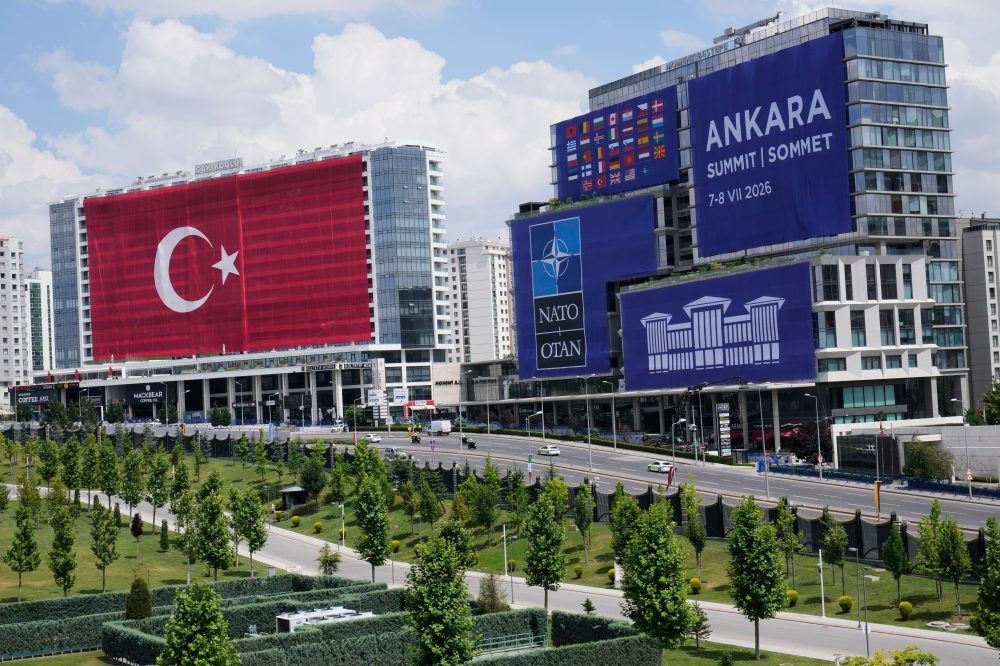
Leaders representing all 32 NATO member nations have descended on Ankara for the 2026 NATO Summit, with President Trump among those in attendance. The central issues on the table include raising defense budgets, growing defense manufacturing capacity, and shifting more of the responsibility for European security away from the United States.
A high-profile dinner Tuesday evening is expected to bring together additional world figures, including Ukrainian President Volodymyr Zelenskyy, South Korean President Lee Jae Myung, European Council President Antonio Costa, and European Commission President Ursula von der Leyen.
President Trump has long been vocal in his criticism of NATO, contending that European nations lean too heavily on American military resources. His administration has pushed those countries to spend more on their own defense and take on a larger share of the continent’s security obligations.
European leaders are set to highlight the progress they have made toward a pledge struck at last year’s summit in The Hague — a commitment to direct 5% of gross domestic product toward defense and defense-related spending by the year 2035.
According to a draft of the summit declaration reviewed by Reuters, leaders are expected to announce: “In 2025, European Allies and Canada increased their investments in core defense requirements by more than $139bn.”
The draft declaration is also expected to include the statement: “We are building the future: a stronger Europe in a stronger NATO — a modernized Alliance. European Allies and Canada, working with the United States, are assuming greater responsibility for the Alliance’s defense.”
Adding another layer of tension to the gathering, European officials are worried that the ongoing war with Iran — and President Trump’s frustration with European governments over how they have handled it — could cast a shadow over the summit proceedings.
The draft declaration is expected to take a firm stance on Iran, reaffirming that “allies reiterate that Iran must never have a nuclear weapon and call on Iran to fully respect freedom of navigation in the Strait of Hormuz.”
The summit’s schedule includes private morning sessions, public afternoon meetings featuring NATO officials and industry representatives, and a series of announcements covering areas such as space defense, surveillance systems, air and missile defense, strike capabilities, transatlantic joint production, and defense innovation.
The United States is moving to restore sanctions on Iranian oil exports after three commercial ships were attacked in the Strait of Hormuz on Monday and Tuesday. The action reverses a temporary suspension of sanctions that had been put in place during a 60-day ceasefire connected to broader regional conflict negotiations.
Those peace talks have been put on hold for one week as Iran conducts funeral ceremonies for the late Supreme Leader Ali Khamenei.
A US official confirmed that the Treasury Department’s Office of Foreign Assets Control will be pulling the sanctions waivers in the wake of the attacks.
“As President Trump and the administration have repeatedly affirmed, the MoU in effect with Iran is entirely performance-based. Iran will only reap benefits if they exhibit good behavior,” the official stated.
The official went on to say: “Iran’s actions in the Strait were wholly unacceptable to the United States and will be met with consequences. Our negotiators continue to work in good faith towards a final deal.”
Iranian state television, citing unnamed sources, reported that Tehran had targeted at least one liquefied natural gas tanker after it allegedly failed to heed Iranian warnings. Earlier, a separate US official told Axios that two merchant vessels had been struck by Iranian missiles.
One of the ships hit was the Al Rekayyat, a Qatari-owned LNG tanker. According to The Wall Street Journal, a missile struck the vessel’s engine room and ignited a fire. No injuries or deaths were reported.
The United Kingdom Maritime Trade Operations agency reported that the tanker was struck on its port side while heading southbound, approximately 8 nautical miles — or about 15 kilometers — east of Limah early Tuesday morning. The agency confirmed the strike caused a fire but said there were no casualties or environmental damage.
The attacks followed an announcement by Iran’s Islamic Revolutionary Guard Corps that it had issued maritime warnings declaring its missiles and drones were prepared to launch.
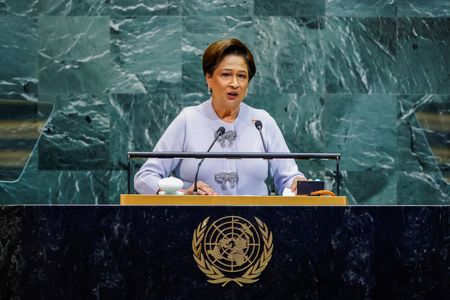
Dominic Hadeed, the owner of Blue Waters, a bottled water company based in Trinidad and Tobago, along with his wife Genevieve, filed an appeal on Tuesday challenging their ongoing detention. The couple is accused of being part of a conspiracy to assassinate Prime Minister Kamla Persad-Bissessar, the attorney general, and other senior government figures.
Both Hadeed and his wife have flatly denied the allegations. Their legal team argues that the detentions amount to political retaliation targeting members of an ethnic minority community believed to be aligned with the opposition.
Hadeed is of Syrian origin and is a member of Trinidad’s Syrian-Lebanese community. According to the appeal, authorities reportedly used the derogatory term “1%” when referring to that community.
The couple was taken into custody in late June under emergency powers provisions. Hadeed has since been held at the Port of Spain Remand Yard, while his wife was transferred to the Maximum Security Women’s Prison. Both remain detained as they await a scheduled hearing on July 27.
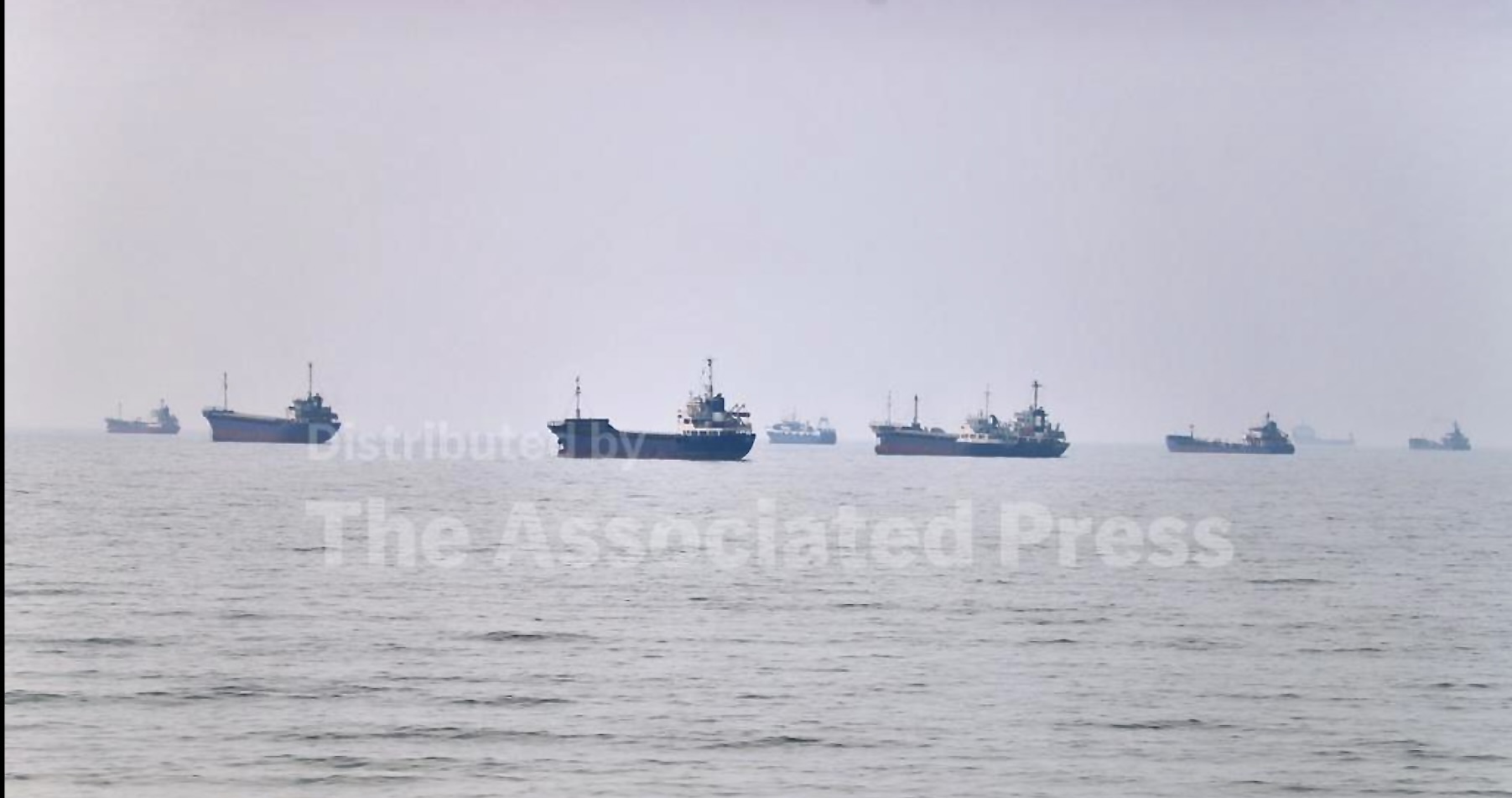
WASHINGTON — The U.S. military has launched multiple strikes against Iran, U.S. Central Command announced Tuesday, saying the action was a direct response to Iranian attacks on three commercial ships traveling through the Strait of Hormuz.
In an official statement, U.S. Central Command declared: “U.S. Central Command forces have begun launching a series of powerful strikes against Iran to impose heavy costs for targeting and attacking commercial shipping.”
The statement went on to say, “Iran’s demonstrated aggression was unwarranted, dangerous, and a clear violation of the ceasefire.”
The specific targets of the U.S. strikes were not immediately confirmed, though Iranian media reported that six projectiles struck the area of Taheroui pier in Sirik, located in southern Iran.
Tuesday’s action represents the first confirmed U.S. military strikes against Iran since late last month, when the two nations engaged in several days of back-and-forth strikes and counterstrikes.
DUBAI, United Arab Emirates — American military forces launched a series of strikes against Iran in the early morning hours Wednesday, coming just hours after three commercial ships were attacked in the Strait of Hormuz off the coast of Oman.
The renewed hostilities from both sides are putting the interim agreement reached last month in serious jeopardy. Both the U.S. and Iran have accused the other of violating that initial deal. The latest round of fighting also makes it harder to continue negotiations aimed at fully reopening the strait, curbing Tehran’s disputed nuclear program, and achieving a permanent end to the war that began on Feb. 28.
U.S. Central Command released a statement on social media explaining that American forces carried out the strikes “to impose heavy costs for targeting and attacking commercial shipping crewed by innocent civilians in an international waterway.”
“Iran’s demonstrated aggression was unwarranted, dangerous, and a clear violation of the ceasefire,” the command added.
The latest flare-up follows a comparable wave of Iranian attacks on shipping and subsequent U.S. retaliation that took place late last month.
Shortly after the three tankers were struck by projectiles, the United States pulled a license it had granted that allowed for the sale of Iranian oil — a key component of the interim agreement meant to halt the fighting.
According to the U.N. International Maritime Organization, the number of attacks on ships in the fuel-shipping waterway on that day was the highest since late April. The fresh wave of assaults threatened to once again disrupt the flow of vessels through the strait, just as nations were hoping to restore normal shipping and ease the global economic burden caused by the war.
A U.S. official, speaking with The Associated Press under the condition of anonymity, said the oil license was revoked because Iran’s behavior in the strait was unacceptable and had to carry real consequences. The Iranian mission to the United Nations did not respond to a request for comment.
One tanker caught fire after being struck
The United Kingdom Maritime Trade Operations center reported that one tanker was traveling off the Omani coast when it was hit and erupted in flames. Iranian state television reported that the liquefied natural gas tanker was struck after disregarding warnings, though it stopped short of claiming direct responsibility for the attack.
The other two vessels suffered some damage but were not seriously disabled, and no injuries were reported. Both ships continued on their way, according to the U.K. maritime agency.
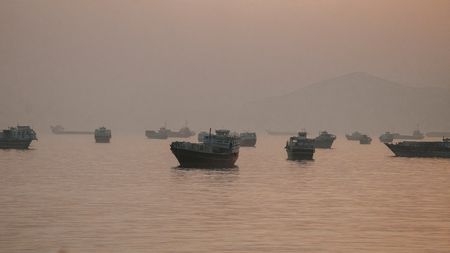
Iran has repeatedly declared that only its designated route through the strait is considered safe, and Tehran is suspected of targeting vessels that have chosen an alternate route running closer to the Omani shoreline. Location data from the U.K. agency confirmed that all three attacks took place off the coasts of Oman or the neighboring United Arab Emirates, suggesting the targeted ships were using that Omani-adjacent route.
Specifically, a Qatari tanker named Al Rekayyat was traveling south through the strait near Limah, Oman, when a projectile struck its left-side engine room and ignited a fire. Majed Al-Ansari, a spokesperson for the Qatari Foreign Ministry, described the incident as an “unacceptable attack” on international navigation and global energy security, calling it a “serious and explicit violation” of international law. In a post on X, he stated that Qatar holds Iran “fully legally responsible.”
Later that same day, the U.K. maritime agency reported a second oil tanker was hit on its left side while exiting the strait near the Omani-Emirati border. A third vessel was struck by a drone off the coast of Oman.
Negotiations between the US and Iran are stalled
The United States remains committed to pushing forward with diplomatic talks with Iran, with goals that include fully reopening the strait, scaling back Tehran’s disputed nuclear activities, and securing a lasting end to the war that began Feb. 28.
The Joint Maritime Information Center, a multinational body operating under U.S. Navy oversight, had told shipping companies Monday that the route around Oman “has been expanded and remains available for all traffic.” Ships traveling north use the Iranian-designated route and must register with Tehran, while those heading south coordinate with Oman and the U.S.
As part of the interim agreement, Iran and the United States had agreed to allow ships to pass through the strait without fees for 60 days. However, Tehran has insisted it must control vessel routing and eventually collect transit fees — a demand that would overturn longstanding international practice in the waterway. The U.S. and many Gulf Arab states have rejected any arrangement that would allow Iran to charge for passage.
The license the U.S. had issued permitted the production, delivery, and sale of Iranian oil through Aug. 21. U.S. Vice President JD Vance had said at the time that extended talks with senior Iranian officials held in Switzerland had laid a “good foundation for a successful final deal” to end the war.
U.S. sanctions on Iranian oil purchases had been in place since the 1979 Iranian Revolution. After the U.S. and Israel launched the war and the strait was closed, the U.S. had authorized temporary Iranian oil sales at least twice as a way to encourage progress toward a deal.
Diplomatic talks between Iran and the U.S. appeared to be on pause pending the burial of Iran’s Supreme Leader Ayatollah Ali Khamenei, who was killed at the outset of the war. Data firm Kpler reported that at least 108 ships crossed through the strait last weekend using various routes. In peacetime, roughly one-fifth of all globally traded oil and natural gas passed through the channel.
Mourners gather in Qom for Khamenei’s funeral
Iranian authorities transported Khamenei’s remains to Qom, a city known as a center of Shiite Islamic scholarship, where large crowds gathered Tuesday to pay their respects.
Iranian state television broadcast live footage showing hundreds of thousands of mourners making their way toward Jamkaran Mosque, located just south of Qom, for the funeral service. Shiites regard the mosque as a sacred site, believing it once hosted Muhammad al-Mahdi — the 12th and final Shiite imam, who vanished in the 9th century and is expected to one day return to bring justice to the world.
Iran’s new Supreme Leader, Ayatollah Mojtaba Khamenei — the son of the late leader — had not appeared at any of the ceremonies, which began Saturday in Tehran. He is believed to be in hiding after reportedly sustaining wounds in the same airstrike that killed his father.
Khamenei’s body arrived in Najaf, Iraq, late Tuesday, where it was received by senior officials from both nations. Processions are scheduled for Wednesday in both Najaf and Karbala, the two most sacred cities of Iraqi Shiism. Iraq has a large Shiite population and is home to significant religious sites and centers of Shiite learning.
Khamenei, who was 86 years old, is to be returned to Iran and buried Thursday at the Imam Reza shrine in Mashhad, the city where he was born.
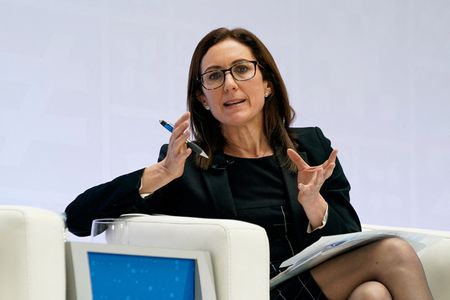
The International Monetary Fund announced Tuesday that Silvana Tenreyro will serve as its next chief economist, stepping into the role vacated by Pierre-Olivier Gourinchas, who has returned to the academic world. IMF Managing Director Kristalina Georgieva made the announcement in an official statement.
Tenreyro holds citizenship in Argentina, Italy, and Britain and has spent many years as an economics professor at the London School of Economics. She is scheduled to assume the position of economic counselor and director of the IMF’s research department beginning August 10.
Her career spans a wide range of high-level economic institutions. From 2017 to 2023, she served as an external member of the Bank of England’s Monetary Policy Committee. Earlier in her professional life, she worked as an economist at the Federal Reserve Bank of Boston and also held a seat on the Monetary Policy Committee of the Bank of Mauritius. She is a widely published scholar in the field of economics.
At present, Tenreyro is a member of Georgieva’s external advisory group and provides guidance to prominent public and private institutions on economic and financial matters.
Georgieva highlighted the significance of the appointment given current global conditions, saying: “At a time of profound transformation and heightened uncertainty in the global economy, Silvana’s mix of intellectual leadership and policy experience will help ensure that the Fund’s analytical work and multilateral surveillance and policy advice will remain at the cutting edge in support of our membership.”
The IMF’s chief economist plays a central role in producing the organization’s regular economic assessments and acts as one of the fund’s leading voices on the state of the global economy. In recent years, that responsibility has grown increasingly complex due to challenges including the COVID pandemic, changes in U.S. tariff policy, and ongoing conflict in the Middle East.
Tenreyro completed her Ph.D. and Master of Arts in economics at Harvard University, having previously earned an undergraduate degree in Argentina.
WASHINGTON — The United States took a major step Tuesday, canceling a general license that had permitted the sale of Iranian oil, as a U.S. official declared that Iran’s conduct in the Strait of Hormuz was “wholly unacceptable” and would carry consequences following a series of attacks on tankers in the critical shipping lane.
Global oil prices surged more than 5% in the wake of the announcement. The U.S. Treasury Department said transactions involving Iranian oil that were previously permitted under the now-canceled license would be allowed to wind down through July 17.
Despite the escalating tensions, a U.S. official indicated that negotiators were still working in good faith toward a final agreement with Iran.
The American action followed reports from the British navy-affiliated agency UKMTO that three tankers had been struck by unknown projectiles in and around the Strait of Hormuz over recent days. Neither Tehran nor any other party issued an immediate comment or claimed responsibility for the attacks.
A second U.S. official, who requested anonymity, said early indications pointed to Iran having fired on the three commercial ships.
The attacks and Washington’s response now threaten to destabilize a delicate diplomatic understanding between the two countries, raising fears that further retaliation could derail ongoing negotiations aimed at reaching a broader agreement — one that had included potential limits on Iran’s nuclear program and partial relief from sanctions, including those targeting oil exports.
The Strait of Hormuz, a narrow passage between Iran and Oman, ranks among the most vital energy corridors on the planet. Approximately one-fifth of the world’s daily oil consumption, along with substantial volumes of liquefied natural gas, flows through the waterway each day.
Any extended disruption to that flow could drive energy prices higher, adding to the burden already felt by consumers and governments grappling with elevated fuel costs.
Oil revenue remains essential to Iran’s economy, generating billions of dollars in hard currency that helps sustain government operations and offset the impact of years of U.S. sanctions. In recent years, Iran has managed to grow its oil shipments — primarily to China — making petroleum exports a critical economic lifeline for the country.
A renewed push to restrict those exports could tighten Iran’s financial situation further, limiting its ability to fund domestic programs and activities across the region.
NAJAF — The remains of Iran’s slain Supreme Leader, Ayatollah Ali Khamenei, reached the Iraqi holy city of Najaf on Tuesday, according to Iraqi state television. Iraqi Prime Minister Ali al-Zaidi, along with senior government officials, was on hand to receive the coffin as it arrived ahead of scheduled funeral ceremonies.
The formal reception took place at Najaf International Airport, where Iraqi political leaders and Shi’ite religious figures gathered to honor the fallen leader. The coffin is expected to be carried through the streets of Najaf in a public mourning procession on Wednesday, an event anticipated to attract massive crowds.
Iranian President Masoud Pezeshkian also traveled to Najaf to take part in the memorial ceremonies, joining the assembled Iraqi officials and religious leaders in paying their respects.
PARIS (AP) — The Grand Palais in Paris was transformed Tuesday into something between a dream and a warning: giant beanstalks stretching toward the ceiling, oversized flowers blooming in colors just a little too vivid to feel entirely safe. It was the setting for Chanel’s latest couture show, and it set the tone perfectly.
Celebrities including Tilda Swinton, Michelle Yeoh, and Catherine Deneuve were seated among the audience — the kind of star-studded crowd that only a fashion house of Chanel’s stature can reliably attract.
The creative force behind it all was designer Matthieu Blazy, who drew his inspiration from an unlikely source: a small leather-bound book of fairy tales he discovered on a shelf in house founder Gabrielle Chanel’s former apartment.
“I started to wonder, was Gabrielle Chanel’s life a fairy tale?” Blazy reflected.
He concluded that it was — specifically a version of Jack and the Beanstalk. In his reading, Chanel was the unlikely climber who rose from a convent orphanage to the pinnacle of the fashion world, daring everything and returning with the prize.
Blazy came to Chanel from Bottega Veneta and is still relatively new to the role. The house was previously led by Karl Lagerfeld for 36 years until his death in 2019, followed by his longtime deputy Virginie Viard, who held the position until 2024. Tuesday’s presentation was only Blazy’s second couture show, yet the house already feels noticeably refreshed under his direction.
The clothing itself told the story. The first look featured a sheer Chanel suit with embroidery arranged to resemble tiny bean shoots. Vines wound their way up dresses and curled around the heels of shoes. Butterflies and blossoms appeared in unexpected places throughout the collection.
Small evening bags were crafted in the shapes of sleeping bears and plump chickens, while heels were sculpted into butterflies and golden eggs. Subtle references to Goldilocks, Puss in Boots, and the Ugly Duckling were woven throughout — though Blazy was careful never to make the references too obvious.
Much of the craftsmanship was hidden from plain sight. Jackets were lined with painted artwork and mock to-do lists stitched in sheer silk — the highest level of couture technique applied to something deliberately mundane. Deliberately frayed edges paid homage to Coco Chanel’s well-known habit of attacking her own garments with pins during fittings.
“Haute Couture at Chanel is not just a fairy tale; in essence it is for women, their realities and their adventures of the everyday,” Blazy said.
That grounded philosophy shaped the entire collection. Rather than leaning into extravagance, Blazy continually stripped pieces back, leaving clothes that felt genuinely livable: a precisely cut coat, a red sequined shift, an evening look reduced to a simple black tunic and trousers.
It is perhaps Chanel’s oldest and most enduring idea — to walk into a room in something simple and make everyone else appear overdressed — and Blazy has managed to make that idea feel fresh again.
He also cast models across a wide range of ages, letting the clothes make the argument without any words needed.
Following the traditional bridal finale gown came a closing look that departed from convention: a bare black off-the-shoulder dress that felt less like a wedding and more like a statement. The reminder was implicit — Chanel herself famously never married.
The audience that witnessed all of this included Swinton and Pedro Pascal, Yeoh and Lupita Nyong’o, Deneuve and Vanessa Paradis, boxer Imane Khelif, and skater Surya Bonaly. They arrived for a spectacle. Blazy sent them home thinking about their shopping lists.
LONDON — Britain took direct diplomatic action Tuesday, summoning Iran’s Chargé d’Affaires — Tehran’s highest-ranking diplomatic representative in London — in the wake of prison sentences handed down against two men convicted in the stabbing of a journalist working for a Persian-language media outlet.
The two convicted men, identified as Nandito Badea, 21, and George Stana, 25, are Romanian nationals whom British prosecutors characterized as proxies acting on behalf of the Iranian government. Last week, a court sentenced Badea to eight years in prison and Stana to 12 years for their roles in the 2024 attack.
Both men had denied the charges of wounding with intent, but a jury at London’s Woolwich Crown Court found them guilty in June.
The victim, Pouria Zaratifoukolaei — better known by his professional name Pouria Zeraati — is a British journalist of Iranian descent who works for Iran International. He was stabbed three times in the leg near his home in southwest London in March 2024.
The British Foreign Office released a statement noting that the presiding judge had determined the assault “was carried out in the interests of, and on behalf of, the Iranian state.”
The statement went on to say the incident “follows a longstanding pattern of hostile activity by the Iranian intelligence services on UK soil,” adding that “Iran’s actions attempt to undermine UK sovereignty and security and are completely unacceptable – it must cease in these activities immediately.”
British lawmakers had previously warned that Iran represents a serious and broad threat to the United Kingdom. Iran’s embassy in London had previously dismissed what it called “unfounded, politically motivated and hostile allegations.” The embassy did not respond to a request for comment regarding Britain’s latest diplomatic move.
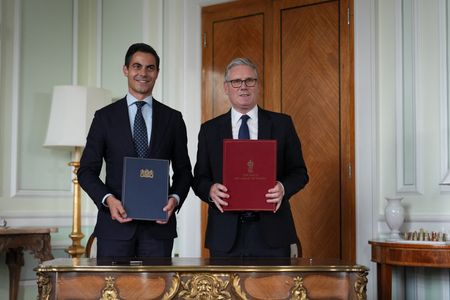
The United Kingdom and the Netherlands have entered into a sweeping maritime agreement worth £2.4 billion — roughly $3.2 billion — that will see both countries’ amphibious military forces outfitted with new transport vessels, the British government announced Tuesday.
The deal was unveiled as British Prime Minister Keir Starmer was present at the NATO summit being held in Turkey. In an official statement, Starmer said the partnership brings together the best of both nations. “Combining the UK’s industrial expertise with The Netherlands’ design and sea-faring experience to deliver first-rate platforms for our elite amphibious forces, this partnership will strengthen NATO,” he said.
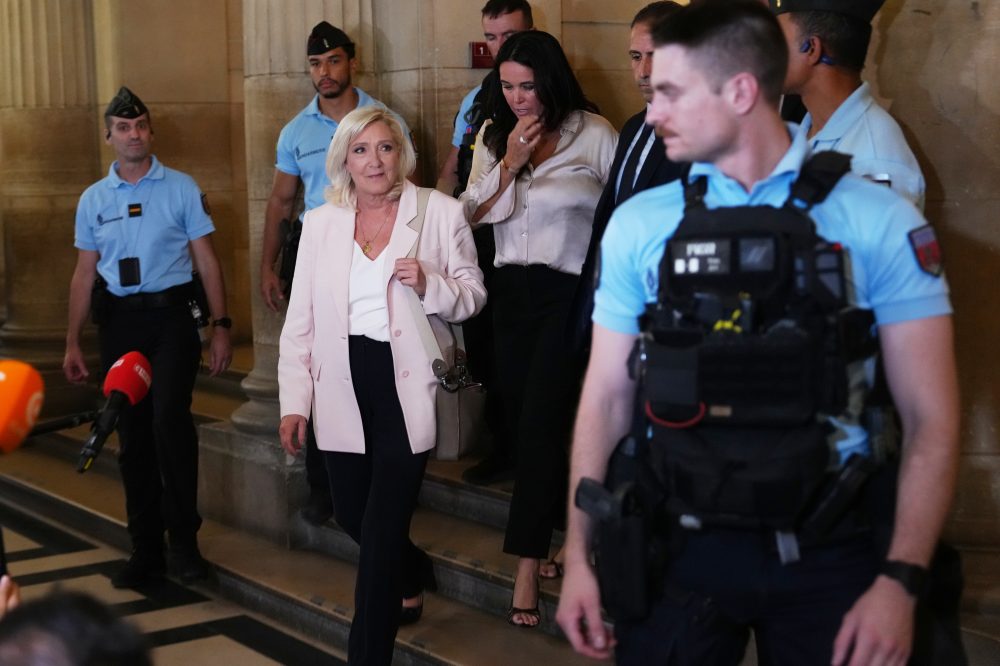
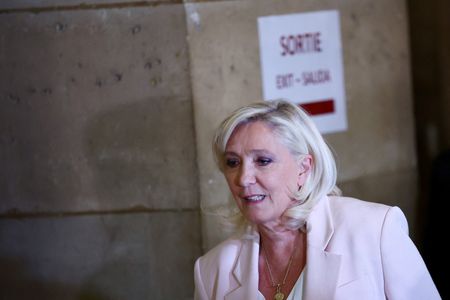
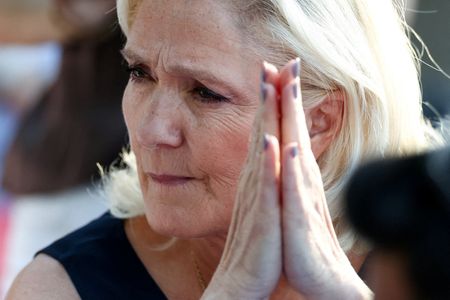
PARIS — A Paris appeals court this week found far-right political leader Marine Le Pen guilty of embezzlement, handing her a fine of 100,000 euros — roughly $114,000 — and reducing her ban from holding elected office from five years down to 45 months, with two-thirds of that ban suspended.
The court also trimmed her prison sentence from four years to three, suspending two of those years. The remaining year is to be served under house arrest with an electronic ankle monitor — a common arrangement in France, where prison overcrowding has long been a serious concern.
The European Committee for the Prevention of Torture has documented persistent overcrowding and deteriorating conditions inside French prisons. Electronic monitoring programs help keep that problem from getting worse.
Under French law, a person placed on electronic home detention must wear an ankle monitor at all times and is forbidden from leaving their home — or another court-approved location — except during hours specifically authorized by a judge. Both the location and the permitted hours are set either by the court or by the judge overseeing the enforcement of the sentence.
While such restrictions make running a political campaign challenging, legal experts say it is not entirely out of the question.
A specialized judge will determine in the weeks or months ahead exactly how Le Pen’s monitoring will be carried out — including where she must serve the sentence and when she will be allowed to leave.
French law also allows for sentence reductions of up to six months per year during the monitoring period, and even the possibility of conditional release, as the appeals court noted in its ruling.
Depending on when the ankle monitor is actually fitted — a process that itself could take several months — Le Pen could potentially be free of the device before the final stretch of the presidential campaign. France is scheduled to hold the first round of its next presidential election on April 18, with a runoff set for May 2.
Céline Bertetto, president of the national association of sentence enforcement judges, weighed in on what the ruling means. “The appeals court has decided to make a (presidential) bid possible, so the decision must be respected,” she said. “Regarding sentence reductions: For a one-year sentence, there can be a six-month reduction, but she must comply with the permitted hours of movement and pay the criminal fine.”
Le Pen herself had previously stated she would not seek the presidency if the court required her to wear an electronic monitor. In a recent interview with LCI channel, she explained her position: “If I can be a candidate, I will be a candidate, provided that I am able to campaign. Because if I’m allowed to be a candidate but am effectively prevented from campaigning freely, then you understand that wouldn’t be possible.”
When asked directly whether the ankle monitor would be the primary obstacle, she was blunt: “Well, of course. I can’t be dependent on a judge to authorize me to go hold a campaign rally … or to visit a market.”
Le Pen, 57, walked out of the courthouse without making any public statement following the verdict, though she was expected to speak during a television interview later that evening.
This type of sentence is not without precedent among prominent French figures. Former French president Nicolas Sarkozy wore an electronic monitor last year after being convicted to a year in prison in a corruption case. He was photographed leaving his residence to go jogging while wearing the device. After just over three months, he was granted conditional release and allowed to remove the monitor. French media reported at the time that he had been authorized to leave home between 8 a.m. and 8 p.m., with that window reportedly extended to 9:30 p.m. on Mondays, Wednesdays, and Thursdays so he could attend a separate legal proceeding.
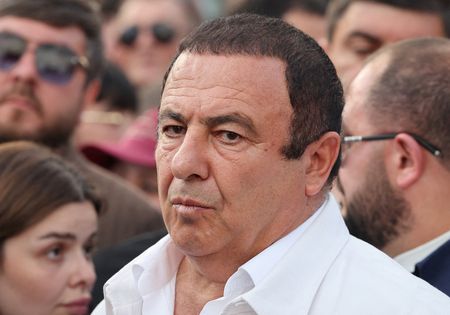
The leader of a pro-Russian Armenian opposition party has been ordered held in pre-trial detention for two months, following his arrest on suspicion of large-scale fraud and money laundering, according to the Armenpress news agency, which cited a court ruling issued Tuesday.
Gagik Tsarukyan, a billionaire businessman, was taken into custody Monday alongside an associate. Prosecutors allege he was involved in the fraudulent importation of vehicles, machinery, fuel, and other goods valued at approximately $21 million from Iran between 2022 and 2024.
The arrest comes shortly after Prime Minister Nikol Pashinyan secured re-election last month in a vote that saw him defeat a field of mostly pro-Russian opposition parties. Following his victory, Pashinyan vowed to take action against what he described as the “three-headed spy party of war” — a reference to three key opposition groups: Strong Armenia, the Armenia Alliance, and Tsarukyan’s Prosperous Armenia party.
Throughout the campaign, Pashinyan warned that opposition forces were attempting to pull Armenia back into armed conflict with Azerbaijan, a country with which Armenia has experienced intermittent hostilities dating back to the late 1980s.
On Monday, Armenian investigators conducted searches at Tsarukyan’s home and roughly 70 other locations connected to him and his wide-ranging business interests, which reportedly include a brandy factory, a cement plant, and a sports complex.
Tsarukyan’s legal team has indicated they plan to challenge any conviction, according to Russia’s state-run news agency TASS.
Eight opposition organizations, which had already alleged that last month’s election was fraudulent, condemned the arrests as politically motivated. The country’s Central Election Commission rejected a petition from opposition groups seeking to invalidate the election results on Saturday.
Tsarukyan, 69, is a former world arm wrestling champion who amassed his fortune in gambling, mining, and other industries during the turbulent years that followed the Soviet Union’s collapse in 1991, of which Armenia was a part.
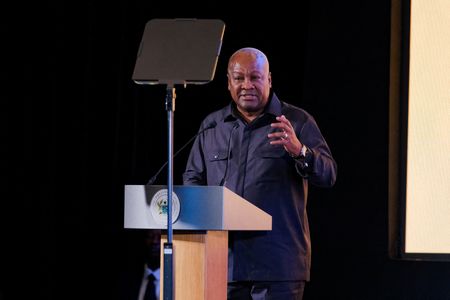
Ghana has postponed high-level bilateral meetings with South Africa that had been scheduled for next month, pointing to a recent surge in anti-migrant violence as the reason for the delay, according to Ghana’s government spokesperson.
Spokesperson Felix Kwakye Ofosu made the announcement on local radio station Joy FM, explaining that the ongoing violence would likely have cast a shadow over the August meetings. Those sessions were set to be hosted by Ghana and co-chaired by South Africa’s President Cyril Ramaphosa and Ghana’s President John Dramani Mahama.
Kwakye Ofosu said it would be more appropriate for the two sides to come together “when matters settle.”
South Africa’s presidential spokesperson Vincent Magwenya told Reuters that the meetings of the South Africa-Ghana Bi-National Commission had been under discussion for months. He said Johannesburg only learned of Ghana’s intention to delay the meetings when it attempted to confirm the arrangements.
South Africa has experienced repeated waves of anti-migrant protests over the past several months. While most demonstrations have remained peaceful, some have turned violent, resulting in attacks on foreign nationals and the looting of businesses owned by immigrants.
Ghana had previously repatriated hundreds of its citizens ahead of a June 30 “deadline” issued by a South African anti-migrant movement demanding that undocumented foreigners leave the country.
Kwakye Ofosu emphasized that Ghana values its relationship with South Africa, but said it would be more fitting for Ramaphosa to make a visit “when the issue of xenophobic attacks no longer hangs over such discussions.”
Magwenya said both nations would “continue to engage through diplomatic channels to identify a mutually convenient date for the next session of the commission.”
Ghana’s foreign ministry stated last week that a Ghanaian citizen was shot and killed in Cape Town’s Khayelitsha township during anti-immigrant demonstrations on June 30.
South African police, however, said they had no record of any such incident occurring on that date. Authorities did confirm that a Ghanaian national was killed one day earlier in a separate Cape Town settlement, but said that incident was believed to be connected to extortion rather than anti-migrant violence.
DHAKA, Bangladesh — Heavy monsoon rains set off a series of deadly landslides in southeastern Bangladesh, claiming the lives of at least eight Rohingya refugees, five of them children, while the same seasonal weather system unleashed destruction across neighboring India, where 13 people have died in recent days.
Dollar Tripura, a Fire Service and Civil Defense official in Cox’s Bazar district, told the Associated Press that rescue teams pulled seven bodies from the debris, while an eighth victim was discovered by fellow refugees after multiple hillsides gave way between late Sunday night and Monday morning. All of the bodies have since been returned to their families, he said. Two additional children survived but sustained injuries.
Tripura said the slides struck at least four separate locations throughout the camps, burying makeshift shelters under mud and rubble while residents were sleeping.
Officials reported that persistent rainfall and water rushing down hillsides loosened the soil on the slopes, causing the temporary structures to collapse. Authorities have begun moving refugees away from high-risk hillside zones, and roughly 1,000 people have already been transferred to safer locations.
The weather office in the Bangladeshi capital of Dhaka has predicted additional rainfall in the days to come.
According to the United Nations refugee agency UNHCR, 36 refugees have died and at least 86 others were hurt in comparable landslide events at the refugee camps between 2021 and 2026.
More than one million Rohingya refugees who escaped from neighboring Myanmar currently live in camps throughout Bangladesh. Renewed clashes in Myanmar’s Rakhine state between the country’s military government and the Arakan Army have raised fears that another wave of refugees could soon cross the border.
Meanwhile, in India’s western Maharashtra state — which includes the city of Mumbai — at least 13 people have lost their lives in rain-related incidents over the past several days as monsoon conditions grew more severe. In Pune district, landslides forced officials to temporarily shut down portions of the Mumbai-Pune Expressway, snarling traffic between the two major cities.
India’s Meteorological Department has forecast continued heavy rainfall across Maharashtra in the coming days and cautioned that low-lying areas face ongoing flood risks.
In the northern Himalayan regions of Jammu and Kashmir and Himachal Pradesh, powerful rains set off flash floods and landslides that damaged roads, disrupted transportation, and left several villages cut off. Emergency response teams were sent in to evacuate residents who were stranded.
India’s annual southwest monsoon season, which spans from June through September, plays a vital role in supporting agriculture and refilling water supplies. However, it also brings widespread flooding and landslides each year, especially in the Himalayan region and in heavily populated cities where drainage systems struggle to keep up.
LONDON — Nigel Farage, who has long cast himself as a thorn in the side of Britain’s political elite, made another dramatic move Tuesday, announcing he would step down from his parliamentary seat and immediately campaign to win it back — a direct response to mounting questions about his personal finances.
The surprise announcement follows recent reports that Farage accepted a £5 million (roughly $6.7 million) gift from a Thailand-based billionaire who invests in cryptocurrency, a transaction critics say was not properly disclosed and is now under investigation by a parliamentary standards watchdog. Questions have also been raised about financial support he received from a political ally who was previously convicted of wire fraud in the United States.
Farage described the decision to force a by-election as part of his strategy of “sticking two fingers up at the establishment,” saying he expected voters in his constituency to reaffirm their support for him as their representative in parliament.
The gamble carries real risk. Opposition parties could flood resources into the race, coordinate their efforts to back whoever has the best chance of defeating him, or dismiss the whole exercise as a publicity stunt. Regardless of how rival parties respond, the resulting vote would effectively become a referendum on Farage’s political future — well ahead of the next scheduled national election in 2029.
Farage, 62, has been one of the most polarizing and influential figures in British politics for more than two decades. As the leading public voice for Brexit, he spent years pressuring successive prime ministers to take a harder line on immigration and ultimately helped force the 2016 referendum in which British voters chose to leave the European Union by a margin of 52% to 48%.
His Reform UK party has topped nearly every national opinion poll for more than a year and has scored wins in local elections, putting serious pressure on both the Labour and Conservative parties, which have dominated British politics for a century.
Despite never serving in government and only winning a seat in the national parliament on his eighth attempt — in 2024 — Farage is widely seen as having reshaped British political debate more than many prime ministers who actually held power.
His career has been anything but straightforward. He has resigned four times from two separate political parties and has had very public falling-outs with numerous colleagues. Yet his everyman image — often photographed holding a cigarette in one hand and a pint of beer in the other — has kept him a constant presence in British media.
After the Brexit referendum victory, Farage abruptly quit as leader of the United Kingdom Independence Party just eight days later, saying he wanted his “life back.” He returned two years later when Brexit negotiations stalled in parliament. His newly formed Brexit Party won the European Parliament elections in 2019, rattling Conservative lawmakers enough that they moved to oust then-Prime Minister Theresa May.
He stepped back again to pursue a media career and cultivated a close relationship with U.S. President Donald Trump. Eventually, he re-entered politics under the Reform UK banner, and his party’s strong showing is widely credited with contributing to the Conservative Party’s worst-ever electoral defeat.
Over the past year, Reform UK has worked to build a more professional political operation, bringing in major donors and relocating to a new headquarters near parliament. Pollsters now suggest the party could win the most seats in the 2029 general election — a result that would put Farage in position to become prime minister.
But reaching that goal would require him to withstand the kind of intense scrutiny that comes with being a genuine contender for government leadership, not simply a critic from the outside.
New estimates released by NATO on Tuesday reveal that five member nations are already projected to reach — and surpass — the alliance’s core defense spending benchmark of 3.5% of gross domestic product in 2026. The data was published ahead of a leaders’ summit taking place in Ankara.
The 3.5% target was established at a summit in The Hague last year, raising the bar from a previous goal of 2%. NATO leaders at that gathering also committed to directing an additional 1.5% of GDP toward broader defense-related priorities, including cybersecurity improvements.
The push for higher defense budgets comes as alliance members have faced increasing pressure from U.S. President Donald Trump to show they are doing more to fund their own security.
According to Tuesday’s figures, Lithuania tops the list among NATO members when measuring core defense spending as a share of economic output, coming in at an estimated 5.33% of GDP this year. Estonia follows at 5.1%, with Latvia at 4.92%, Poland at 4.68%, and Greece at 3.65%.
The data also looked back at last year’s performance, showing that three NATO members fell short of the previous 2% target: Albania at 1.48%, Slovenia at 1.57%, and the Czech Republic at 1.86%.
However, both Albania and the Czech Republic are expected to surpass the 2% threshold this year. A note included in the report indicates that Slovenia’s new government has plans to push spending above 2% as well.
Several other nations are projected to land right at or just above the 2% mark, including Belgium at 2%, Portugal at 2.1%, and Italy at 2.1%.
For major Western powers, the United States is estimated at 3.17% of GDP, Germany at 2.69%, the United Kingdom at 2.56%, and France at 2.22%.
Taken together, European NATO members and Canada are projected to spend a combined 2.53% of GDP on core defense this year.
NAIROBI, Kenya — Large-scale police and military deployments in the capital cities of Kenya and Tanzania brought planned protests to a halt on Tuesday, as both East African nations observed July 7, a date that carries significant historical weight for each country.
For Kenya, July 7 is a day that honors the struggle for multiparty democracy that took place in the 1990s. For Tanzania, the date marks the 72nd anniversary of the founding of what has since become the country’s ruling political party.
Protesters in Tanzania had intended to use the day to demand democratic reforms in the wake of October’s disputed election, and to call for the release of opposition leader Tundu Lissu, who remains behind bars facing treason charges.
In Dar es Salaam, Tanzania’s main commercial city, both police and military personnel were stationed throughout the area, and no protesters were seen gathering. An annual trade fair that was already underway continued under a heavy security presence.
On Monday evening, Tanzania’s Home Affairs Minister, Patrobas Katambi, addressed journalists and made clear that Tanzania was not a place where outside forces could dictate when protests would occur. He stated that the government stood ready to defend public order against any threat.
Political analysts note that the Tanzanian government has been on heightened alert ever since the October election and the violent crackdown that followed, during which hundreds of people lost their lives.
Wade Green, an analyst with Aldebaran Threat Consultants, said that for protesters to succeed in Tanzania, they would need to “catch the security forces off-guard because their guard is so up right now.”
Green went on to say: “Unless the protesters were really strong and organized, there would be no way to overcome the lethality that the Tanzanian security forces unleashed last year and are willing to unleash again.”
Meanwhile, in Kenya’s capital city of Nairobi, police surrounded parliament buildings with barbed wire and shut down major roadways. Several businesses in the area also closed their doors. A small number of people were taken into custody.
Kenyan opposition politician James Orengo criticized the overwhelming police presence in Nairobi, calling it an attempt to intimidate ordinary citizens.
“These are the characteristics of a police state. You find police deployed even when there is no fracas, there is no march, there is no demonstration, there are no vehicles on the road, and even holding a press conference becomes difficult, but we are undeterred,” Orengo said.
BOGOTA, Colombia — Colombia’s president-elect Abelardo de la Espriella announced Tuesday that he is halting the formal transition process with the current administration of President Gustavo Petro.
The decision came one day after Petro refused to acknowledge de la Espriella’s victory in the June 21 runoff election, claiming the vote was fraudulent — a charge he made without presenting any supporting evidence.
De la Espriella, a conservative businessman and lawyer who received an endorsement from U.S. President Donald Trump, posted on X that the transition would be stopped “immediately” with what he described as the “corrupt” outgoing government, which has less than a month left in power. He further accused Petro’s administration of attempting to “destroy Colombia” through its “decisions and conduct.”
In Colombia, the transition period — known locally as “empalme” — is a structured process in which the departing administration shares the information a president-elect needs to prepare for taking office. However, the handover between the politically opposed Petro and de la Espriella has been defined by back-and-forth accusations from the start.
Colombia’s finance minister, Germán Ávila, who also serves as the Petro administration’s transition coordinator, responded by directing his own team to pause their participation in the handover. Speaking in a televised address, Ávila pushed back against comments made by members of de la Espriella’s transition team, stating: “The transition process is not a criminal investigation; it is not a trial. We have absolutely nothing to hide.”
De la Espriella indicated he would soon address the public to elaborate on his decision and outline what actions he intends to take in the near future.
The president-elect’s background is in business and law, with interests that span a clothing line, wine and rum brands, and a restaurant. He secured Trump’s endorsement despite having no prior experience as an elected official. In the June 21 runoff, he defeated progressive lawmaker Iván Cepeda by a margin of just one percentage point — a difference of more than 251,000 votes.
The outcome was widely seen as a rejection of Petro’s governing approach, which Cepeda had pledged to carry forward, including a largely unsuccessful initiative to open peace negotiations with various armed groups operating in the country.
Following the runoff, a European Union election observer mission commended the vote-counting process for its transparency and efficiency. The Carter Center separately concluded that the results management system was “reliable, transparent and fully traceable.”
Kazakhstan’s highest court issued a ruling Tuesday clearing the way for President Kassym-Jomart Tokayev to remain in power for another seven years beyond his current term, which ends in 2029.
The Constitutional Court determined that Tokayev’s existing time in office does not count toward term limits under newly approved changes to the country’s constitution. Those amendments were passed by voters in a nationwide referendum held in March and officially took effect this month.
Kazakhstan joins a growing list of former Soviet republics — including Russia, Belarus, Uzbekistan, and Tajikistan — whose leaders have rewritten or replaced their constitutions in ways that bolster executive authority and allow them to hold onto power longer.
Tokayev, who is 73 years old, has governed the oil-rich Central Asian nation of 20 million people since 2019. Before becoming president, he served as a Soviet official, diplomat, and worked at the United Nations.
The constitutional amendments received overwhelming support in the March referendum and have further solidified Tokayev’s hold on the country. Tokayev has argued the changes were necessary to allow for faster decision-making in an increasingly unpredictable global environment.
The revisions also restructured Kazakhstan’s parliament by combining its two chambers into a single body and granted the president authority to appoint key government officials — with legislative approval — including restoring the position of vice president.
Additionally, the amendments established a new body called the People’s Council, which operates alongside parliament and has the ability to introduce legislation and call for referendums. The president appoints the members of this council.
Political opposition in Kazakhstan holds no seats in government and has had little success in shaping public opinion within the country.
Tokayev first assumed the presidency in 2019 following the resignation of Nursultan Nazarbayev, who had ruled Kazakhstan for nearly 30 years and guided the country through its transition to independence after the Soviet Union dissolved in 1991. Tokayev was widely regarded as Nazarbayev’s chosen successor.
In 2022, Tokayev ordered a crackdown on nationwide protests that resulted in 238 deaths and thousands of injuries — a period that some Kazakhs have called “Bloody January.” Following the unrest, he sought to reposition himself as a reformer and called a snap presidential election, which he won by a wide margin later that same year.
Russia’s largest oil refinery has gone offline following a Ukrainian drone attack, according to two industry insiders who spoke on Tuesday.
The strike, which took place Monday at the Omsk refinery deep in Siberia, ranks among the farthest-reaching attacks Ukraine has carried out since the conflict began — a war now entering its fifth year.
The shutdown of the facility, which leads all Russian refineries in gasoline production, is expected to make fuel shortages worse throughout the country.
Anatoly Seryshev, President Vladimir Putin’s representative in Siberia, confirmed the damage in an official statement Tuesday. “Facilities at the Omsk oil refinery were damaged as a result of (Monday’s) attack. No plant personnel were injured,” he said. Seryshev added that “damage assessment is currently under way, and competent services have organized restoration work,” though he offered no specifics about how operations had been affected.
Gazprom Neft, the company that owns the refinery, had not responded to a request for comment as of the time of reporting.
Industry sources said a crude distillation unit known as CDU-10 caught fire and sustained damage during the attack. That unit is responsible for roughly 38% of the plant’s total output, with a daily processing capacity of 24,580 metric tons.
Since Tuesday, the Omsk refinery has stopped listing gasoline and diesel for sale on the Saint Petersburg International Mercantile Exchange, according to exchange data.
A second major processing unit, CDU-11, was also taken offline, the sources said. That unit handles 37% of the refinery’s capacity and can process 24,000 tons of oil each day. While CDU-11 was not directly hit, critical network connections needed to run it were damaged. The sources noted that CDU-11, which began operations in 2023, may be able to restart in the near term.
The refinery also has two mothballed processing units — CDU-7 and CDU-8 — each capable of handling 10,000 tons per day, which could theoretically be brought back online.
In 2024, the Omsk refinery processed approximately 22 million tons of oil, equivalent to around 440,000 barrels per day, producing 5 million tons of gasoline and 8 million tons of diesel, according to the sources.
British Prime Minister Keir Starmer, who is set to leave office later this month, delivered a speech last week highlighting what he considers his key achievements in office. Among those accomplishments, the Labour Party leader pointed to the makeup of the current Parliament.
Speaking before an LGBT gathering, Starmer proudly declared that he had the privilege of working alongside what he called “the gayest Parliament ever.” He went on to say, “I don’t think there’s any Parliament that is gayer than this Parliament and that is fantastic.”
The remarks drew attention given their unusual phrasing. Of the 650 seats in the House of Commons, 76 members currently identify as LGBT.
A deadly riot at a prison in Sri Lanka was triggered by a conflict between two groups of inmates over drug smuggling inside the facility, a senior government official confirmed Tuesday.
The violence unfolded over two days at the prison located in Negombo, a coastal town roughly 35 kilometers — about 20 miles — north of the commercial capital, Colombo. When the fighting finally ended, 26 people were dead, including seven prison officials, and dozens more had been injured.
Minister of Justice and National Integration Harshana Nanayakkara told parliament that early investigations indicate the conflict began after a small number of prisoners informed authorities about an attempt to smuggle drugs into the prison.
“This had angered a second group of inmates who were supporting the smuggling. This was what started the clash,” Nanayakkara told lawmakers.
He went on to describe how the situation rapidly worsened once prison staff tried to step in. “When prison officials attempted to intervene it had escalated. Prisoners attacked prison officials with bricks and poles. Prison officials fired in self-defence. At the moment we are unaware of how prisoners got possession of weapons. Investigations into these details are ongoing,” he said.
Nanayakkara also noted that a small number of inmates had managed to knock out the prison’s CCTV camera system during the unrest.
To help address severe overcrowding in the aftermath, 734 prisoners were transferred to four other facilities on Tuesday morning, according to the Department of Prisons. The Negombo prison was housing approximately 2,400 inmates at the time of the riot, far exceeding its intended capacity of around 650, according to the Committee for Protecting Rights of Prisoners.
Dozens of police officers and special forces units were deployed to restore order on Monday, and around 100 people — both inmates and prison staff — received hospital treatment for their injuries. Military personnel with armored vehicles remained stationed outside the prison as of Tuesday.
Sri Lanka has seen deadly prison unrest before. A riot in November 2020 left 11 inmates dead, and a separate incident in Colombo in 2012 resulted in 27 fatalities.
At least three Palestinians lost their lives Tuesday as Israeli airstrikes struck multiple locations across the Gaza Strip, according to the territory’s health officials.
In the first incident, a man was killed and two children were injured when an Israeli airstrike hit the Mawasi area of Khan Younis in southern Gaza, according to medics on the ground. The Israeli military confirmed to Reuters that the strike had targeted a Hamas militant.
Later that same day, a second Israeli airstrike landed near a tent encampment sheltering displaced families in western Gaza City, claiming one life and leaving five others wounded. A third strike in Khan Younis also killed one person and injured three more, medics reported. The Israeli military offered no immediate response regarding either of those two incidents.
Israel has conducted repeated strikes throughout Gaza since a ceasefire brokered by the United States with Hamas was reached last October. Israeli officials have stated the strikes are aimed at militants who pose a threat to Israeli forces or who participated in the October 2023 attack on Israel.
Hamas has charged Israel with breaking the terms of the ceasefire agreement. Nikolay Mladenov, appointed by U.S. President Donald Trump as the Board of Peace envoy to Gaza, has stated that both parties have committed violations of the agreement.
In the eight months since the ceasefire took effect, more than 1,070 Palestinians — a significant number of them civilians — and four Israeli soldiers have been killed in Gaza, based on figures provided by both sides. Hamas has not disclosed how many of its own fighters have died.
Israeli forces currently control more than 60% of Gaza, patrolling what Prime Minister Benjamin Netanyahu refers to as a buffer zone designed to prevent Hamas attacks. Netanyahu has made clear that Israel has no plans to withdraw from the territory.
Israel’s extensive aerial and ground campaign in Gaza has displaced nearly the entire population of roughly 2 million people. Most residents are now living in tents or partially destroyed buildings within a narrow coastal strip of land under Hamas governance.
JUBA, South Sudan — The government of South Sudan confirmed late Monday that a government-appointed county commissioner serving in an opposition stronghold within the oil-rich Jonglei State was “assassinated” by opposition forces, marking a dangerous escalation in renewed fighting across the region.
The violence in Jonglei has been intensifying over recent days, with the full number of casualties still unknown. The strategically important county of Akobo has become a flashpoint, with both the government and the opposition having appointed their own rival county commissioners to the area.
James Kueth Makuach, who held the government-appointed commissioner role, was killed on Sunday when opposition fighters launched an attack on Walgak, a remote location in Akobo West. Officials from both sides confirmed the details of the assault.
Makuach had switched allegiance to President Salva Kiir’s ruling party in April, following his removal by the opposition’s acting leadership earlier in the year. The government subsequently named him county commissioner, a move that bypassed the terms of a 2018 peace agreement, which designated that position in Akobo County to the opposition party led by Riek Machar. Machar is currently imprisoned and faces treason charges.
In a formal statement, the ruling party said it “strongly condemns the brutal killing” of the commissioner and announced it would convene an emergency session to address the matter.
The opposition-appointed governor, John Wiyual Lul, stated that opposition fighters briefly took control of the area before pulling back when government reinforcements arrived. He noted that senior military officers were among the fatalities.
Jonglei State government spokesperson Nyamar Lony Thichiot told The Associated Press late Monday that the exact number of casualties had not yet been determined.
The Reconstituted Joint Monitoring and Evaluation Commission, which was established to oversee South Sudan’s peace process, issued a statement Monday warning that the renewed fighting is undermining the implementation of the 2018 peace deal that ended the country’s civil war and is putting civilian lives at risk.
Clashes in Akobo County first broke out in March when opposition forces targeted a government installation. In June, the United Nations pulled its peacekeepers from a base that had been set up to help shield civilians from harm.
Leaders from civil society groups cautioned that political tensions are increasingly translating into armed conflict once again.
Juba-based civil society activist Bol Deng Bol described the situation as “an unfortunate relapse into violence and a clear threat to civilians, their property and humanitarian operations.” Fellow activist Edmond Yakani called on both the opposition and the government to fully honor the permanent ceasefire agreement.
South Sudan is set to hold long-delayed elections on December 22 — its first since gaining independence from Sudan in 2011.
LONDON (AP) — Reform UK leader Nigel Farage has announced he will deliver a public statement Tuesday about his political future, as scrutiny intensifies over financial donations connected to a cryptocurrency billionaire and a man convicted of fraud.
Farage, who is known as a close British ally of U.S. President Donald Trump, posted on X that he would address his future in public life at 2 p.m., though he offered no additional details ahead of the announcement.
The Reform UK leader is currently the subject of a parliamentary standards investigation involving a 5 million pound — roughly $6.7 million — gift from a cryptocurrency billionaire based in Thailand. Separately, opposition lawmakers are pushing for a second inquiry into donations received from George Cottrell, a crypto-gambling entrepreneur with an aristocratic background who previously served time in a U.S. prison for fraud.
Farage has denied any wrongdoing, but the financial scrutiny has fueled widespread speculation about his political future. He had been viewed by some as a front-runner to become prime minister following the next national election.
His anti-immigration party holds only eight of the 650 seats in the House of Commons, yet Reform UK consistently outperforms both the ruling Labour Party and the main opposition Conservatives in opinion polls.
The party scored a major victory in local and regional elections in May, a result that contributed to the removal of Prime Minister Keir Starmer by members of his own Labour Party.
However, Reform UK has now lost three back-to-back special elections it had hoped to win, which may signal a softening in the party’s support. The most recent defeat came at the hands of Labour’s Andy Burnham, who is expected to succeed Starmer as prime minister within the coming weeks.
Parliamentary standards commissioner Daniel Greenberg is leading the investigation into the donation Farage received from Christopher Harborne, a British businessman who lives in Thailand. Farage has said the money was a personal gift used to cover security costs and that it was given before he was elected to the House of Commons.
Should investigators find that Farage violated parliamentary rules, he could face suspension. A suspension lasting 10 or more days would give voters in his Clacton constituency in eastern England the ability to call for a special election to fill his seat.
Such an outcome would deal a significant blow to a party whose rapid rise mirrors the nationalist and anti-immigration political style associated with Trump. Farage has made the issue of migrants crossing the English Channel in small boats a centerpiece of his message — describing the situation as an invasion — though critics accuse him of inflaming public fears rather than addressing the issue constructively.
KYIV, Ukraine — Ukraine’s Security Service announced Tuesday that the body of Ukrainian citizen Anastasiia Berezovska has been found. Berezovska had been sought by authorities in Monaco in connection with a bombing that targeted Ukrainian business tycoon Vadym Yermolaiev.
The Security Service, known by its Ukrainian abbreviation SBU, revealed that an officer from Ukraine’s military intelligence agency admitted to killing Berezovska with the assistance of a former law enforcement officer. The suspect claimed he acted on his own, without the knowledge or approval of his superiors.
The original bombing occurred on June 29 and reportedly targeted Yermolaiev, who has ties to Russia, along with members of his family. Three people were hurt in the blast, among them a child. The explosion sent shockwaves through Monaco — the glamorous coastal enclave known for its wealthy residents, tax advantages, royal family, and Formula 1 Grand Prix race. Monaco’s head of state, Prince Albert II, called the explosion “an odious act” and confirmed that all public services had been deployed to maintain security.
Interpol had previously identified 39-year-old Berezovska as the primary suspect in the bombing, issuing a Red Notice requesting her arrest on charges of attempted murder, placing an explosive device in a public area with criminal intent, and criminal conspiracy. On Tuesday, Interpol said it had no immediate statement to offer and noted that the Red Notice would remain active on its website until Monaco formally requested its removal.
SBU investigators zeroed in on the two suspects after uncovering evidence that they had repeatedly sent cryptocurrency and bank transfers to Berezovska. During searches of the former law enforcement officer’s home, authorities also discovered what the SBU described as a basement that resembled a torture chamber.
Berezovska’s body was located during a crime scene reconstruction based on one of the suspect’s accounts. She had suffered gunshot wounds to the head, and investigators recovered spent pistol casings at the location, according to the SBU.
Both men are now in custody, facing suspicion of premeditated murder.
The SBU said it has provided all relevant information to investigators in Monaco and is continuing efforts to identify who ordered and organized the original assassination attempt.
ANKARA — NATO will establish a shared fleet of Airbus A400M military transport planes and expand its existing tanker aircraft program, Secretary General Mark Rutte announced Tuesday on the sidelines of a NATO summit in Ankara.
Rutte made the announcement at a defense industry event where allied nations unveiled arms agreements worth billions of dollars — a show of force meant to demonstrate that European members are taking seriously U.S. calls to increase defense spending ahead of the summit, which began Tuesday evening with President Donald Trump in attendance.
“It is about air power, which is essential to strengthen our deterrence and defence,” Rutte said.
The existing tanker program, known as the MRTT project, currently operates nine A330 aircraft — planes that can also serve as troop or passenger transports — based out of Eindhoven in the Netherlands. Adding a tenth aircraft moves the alliance closer to filling gaps created after the United States reduced its contributions to NATO. The alliance is working toward eventually growing that fleet to 12 aircraft. Belgium, Czechia, Denmark, Finland, Germany, Luxembourg, the Netherlands, Norway, and Sweden all take part in the program.
While the U.S. has not publicly detailed the extent of its cutbacks, a military source indicated the reductions span refueling planes, fighter jets, drones, and naval vessels. Trump has repeatedly criticized European nations for depending too heavily on American military support through NATO.
Airbus, the manufacturer behind both the A400M airlifter and the A330 jet that serves as the basis for the tanker, said the new shared A400M fleet would include Belgium, Britain, France, Spain, Turkey, Croatia, and Poland.
The news is a welcome development for the A400M program, which was originally designed to address Europe’s shortfall in military cargo and troop transport capabilities to difficult terrain. The aircraft has struggled to attract export customers, raising questions about its long-term viability. Airbus had previously issued warnings to investors about the program’s future, though the company softened that language earlier this year.
According to a spokesperson, the new shared pool would initially draw from aircraft already in service, followed by planes currently in production. The spokesperson added that the arrangement could eventually lead to new aircraft orders, though it was too early to predict how many planes might be ordered or when.
A Paris appeals court issued its ruling on Tuesday, upholding the embezzlement conviction of National Rally leader Marine Le Pen while reducing her ban on seeking elected office — a decision that could allow her to compete in France’s 2027 presidential race.
Under the court’s ruling, Le Pen will serve a three-year prison sentence, with two of those years suspended. She will also be required to wear an electronic ankle monitoring device for one year.
The decision also opens the door for her political protégé, 30-year-old Jordan Bardella, who would likely become the anti-immigrant National Rally’s top presidential contender if Le Pen ultimately chooses not to run.
Le Pen’s path to the presidency had been blocked since March 2025, when she was handed a five-year ban from public office along with a four-year prison sentence. That original verdict came after she was found guilty of embezzling more than 4 million euros — roughly $4.6 million — from the European Parliament.
The court determined she had participated in a scheme that diverted EU funds intended to pay parliamentary staff, channeling that money instead to employees of the National Rally party. Le Pen denied any wrongdoing and pursued an appeal.
Her attorney, Rodolphe Bosselut, responded cautiously to Tuesday’s ruling. “We are considering the decision as a whole, we will issue a further statement. We are partially satisfied,” he said.
Critics on the political left were quick to condemn the situation. Left-wing Ensemble deputy Clementine Autain pointed to what she called hypocrisy within the National Rally. “Whilst the RN blames immigrants for all society’s ills and dreams of imposing ever-harsher penalties for petty crime, it is fleecing taxpayers… The RN leader has vowed that she will not be able to campaign under these conditions. Will she keep her word?” she said.
Benjamin Lucas-Lundy, coordinator of the left-wing political group Generation.s, went further, arguing Le Pen should no longer hold her current legislative seat. “She has been found guilty by the courts of theft… I don’t think she should even be sitting as a Member of Parliament here in the National Assembly any longer,” he stated.
Canada is holding off on naming the founding members of its proposed global defence bank until more countries agree to come on board, the country’s foreign minister said Tuesday.
Foreign minister Anita Anand spoke with reporters on the sidelines of the NATO leaders’ summit in Ankara, Turkey, where she said negotiations are continuing with multiple nations over the Defence, Security and Resilience Bank, known as the DSRB.
The initiative, backed by Mark Carney’s government, had originally been targeting roughly 10 founding national supporters to be revealed at the NATO gathering. However, Anand signaled that Canada wants a broader coalition before making any official announcement.
“We want more and more countries to come on board before we put something out,” Anand said, adding that the project still enjoys a “critical mass” of support — a phrase that echoes earlier statements made by Carney himself.
The DSRB is designed to raise as much as £100 billion — approximately $134 billion U.S. — in affordable financing to strengthen the defence capabilities of allied nations. The bank is pursuing a triple-A credit rating, which would allow it to offer low-interest loans for defence projects, especially for countries and companies that currently have difficulty accessing cheaper funding.
The bank also intends to provide loan guarantees to private financial institutions to help scale up the defence industry.
The future of the project remains uncertain without wider national participation, as countries are being asked to contribute startup capital. Anand declined to identify which nations are currently in talks, but she did highlight Luxembourg as having made considerable effort — noting it is currently the only other publicly confirmed supporter of the initiative.
“We’re still in discussions with many of these countries. Of course, we have a critical mass of countries now, but the more the merrier as it is in terms of ensuring that SMEs (small and medium-sized enterprises) have the capabilities to ramp up,” Anand said.
The NATO summit, which Carney is attending, runs through Wednesday.
PARIS — A French appeals court issued a mixed ruling Tuesday in the case of Marine Le Pen, upholding her conviction on charges of misusing European Union funds while at the same time reducing the duration of her ban from holding elected office.
The decision could potentially reopen the door for the far-right political figure to pursue the French presidency in 2027 — but significant hurdles remain.
While the court shortened the office ban, it also handed down a three-year jail sentence. Two of those years were suspended, but Le Pen was ordered to wear an electronic ankle monitoring device for one full year — a condition that would make running a presidential campaign both politically and logistically challenging.
The ruling leaves considerable uncertainty about whether Le Pen will ultimately seek France’s top political office in the upcoming election cycle.
MANILA — Philippine Vice President Sara Duterte showed no signs of backing down Tuesday as she briefly appeared at the Senate ahead of the second day of her impeachment trial, telling reporters she would emerge from the proceedings beaten but unbroken.
“In this bloodbath and bludgeoning, I will be bloodied but unbowed,” Duterte said to reporters before meeting with her legal team. She wore a green polo shirt, a color widely associated with her political identity.
The high-profile trial carries enormous stakes — its outcome could determine whether Duterte is eligible to seek the presidency in 2028. Rather than attend the proceedings herself, she allowed her attorneys to represent her inside the Senate chamber.
Duterte is the daughter of former President Rodrigo Duterte, who is currently being held in The Hague where he faces a separate trial related to his administration’s deadly anti-drug campaign.
On Tuesday, prosecutors shifted their focus to allegations that the vice president made violent threats against President Ferdinand Marcos Jr., the first lady, and a former House Speaker. Prosecutor Lorenz Defensor argued that these statements went far beyond ordinary criminal behavior and rose to the level of a constitutional violation.
To support their case, prosecutors called a National Bureau of Investigation official as their first witness to verify the authenticity of video recordings capturing Duterte making the alleged remarks.
One video from October 2024 showed Duterte expressing a desire to behead Marcos. A second clip, recorded at a November 2024 press conference, showed her claiming she had arranged for an assassin to kill Marcos, the first lady, and a former House Speaker if anything were to happen to her.
In the video, Duterte is heard saying: “I have talked to a person. I said, ‘if I get killed, go kill BBM (Marcos), (First Lady) Liza Araneta and (House Speaker) Martin Romualdez.’ No joke, no joke. I said, ‘do not stop until you kill them.’”
Defensor stressed to the senator-judges that the alleged threats carried special significance given who made them. “What makes these threats especially sinister is that they do not come from an ordinary citizen, but from the vice president herself,” he said. “Her words were neither accidental nor taken out of context. They were uttered publicly with the intention to be taken seriously.”
The charges related to the alleged threats are just one part of a broader impeachment complaint against Duterte. She also faces accusations of misusing public funds, accumulating unexplained wealth, bribery, and corruption. Duterte has denied all wrongdoing and characterized the impeachment proceedings as politically driven.
Marcos and Duterte — both members of two of the Philippines’ most prominent political families — ran together and won the 2022 election, but their once-united alliance eventually fractured into a deep and public rivalry.
Duterte’s defense team has argued that the impeachment effort is an attempt to undo the will of more than 32 million Filipino voters who elected her to the vice presidency.
NATO has unveiled a roughly $4.5 billion plan to acquire up to 10 Saab GlobalEye surveillance aircraft, choosing the Swedish option over a competing offering from American aviation giant Boeing to replace its fleet of aging early warning planes.
The announcement came Tuesday during a NATO summit in Ankara, where Secretary-General Mark Rutte explained that swapping out the alliance’s Cold War-era Airborne Warning and Control System — commonly known as AWACS — for a newer platform built on smaller business jets would better address modern threats, including drone swarms.
“This will ensure we keep NATO’s… surveillance and early warning capability strong and credible for decades to come,” Rutte said at the summit event.
With U.S. President Donald Trump having repeatedly pushed NATO allies to increase defense spending and purchase more American-made equipment, Rutte was careful to highlight the program’s international roots. The GlobalEye system is installed aboard Bombardier Global 6500 business jets.
“Like its predecessor, GlobalEye is a transatlantic programme, delivered by European and Canadian industries with essential contributions from US industries. It is a real success story, again, made in NATO,” Rutte told those gathered.
Trump has frequently criticized European allies for depending too heavily on the United States for their defense needs while pushing them to buy more U.S. military hardware. He has also, at various points, threatened to withdraw from the alliance altogether.
The GlobalEye goes up against Boeing’s E-7 Wedgetail, an aircraft built on the 737 platform that is designed for early warning and battlefield command-and-control functions.
NATO described the GlobalEye as a mission-proven system, though it offered no further details on that characterization.
Reuters had reported last Thursday that NATO was set to replace its Boeing E-3 Sentry AWACS jets with Saab’s GlobalEye. The alliance is now entering formal contract negotiations with Saab following the public announcement of its preliminary selection.
Saab’s chief executive, Micael Johansson, put the total value of the deal at up to $4.5 billion and said the company could begin delivering aircraft in 2030, provided an agreement is reached in the near term. He noted that a final price has not yet been set, but estimated each aircraft would cost somewhere between approximately $400 million and $450 million.
The total number of planes to be ordered had been a point of debate, with planners weighing whether to pursue a more costly version of the aircraft capable of being refueled while airborne. A source with knowledge of the situation said the GlobalEyes would not initially include that feature, though it is expected to be incorporated through a future upgrade.
NATO’s current AWACS fleet does have in-flight refueling capability — a feature that has proven particularly useful during operations near Ukraine.
CHISINAU — Moldovan President Maia Sandu has tapped Deputy Prime Minister Eugeniu Osmochescu, a former international financial official, to serve as the country’s acting prime minister. The appointment, formalized through a presidential decree, takes effect Wednesday.
Osmochescu steps into the role following the sudden departure of Alexandru Munteanu, who resigned last Friday. Munteanu stated that he was no longer able to perform his duties in a manner consistent with his personal convictions.
In addition to serving as deputy prime minister, Osmochescu currently holds the position of minister of economic development and digitalization. Before entering government service, he worked at the International Finance Corporation, the private sector division of the World Bank.
Munteanu offered his support for his successor in a Facebook post, writing: “I would like to thank him for taking on this responsibility and wish him every success in this mission.”
President Sandu had told reporters on Friday that she planned to consult with parliamentary factions during the week to identify a replacement for Munteanu. Her pro-European Party of Action and Solidarity holds a majority in the country’s 101-seat parliament.
Munteanu had originally been appointed following September’s parliamentary election, in which the party decisively defeated a Russia-leaning rival to secure a new governing mandate.
On Wednesday, Osmochescu will preside over a government meeting. The current cabinet is continuing to function in a caretaker capacity until parliament formally appoints a new government.
Ukrainian drone forces carried out overnight strikes against eight tankers belonging to Russia’s so-called “shadow fleet,” hitting the vessels as they transported fuel to Crimea, Kyiv’s military announced on Tuesday.
In a statement posted to Telegram, Ukraine’s drone forces said each of the targeted ships was operating under international sanctions and had a deadweight capacity of approximately 7,000 tons. The strikes took place in the Sea of Azov.
The attack followed a similar operation just one day earlier, when the same Ukrainian forces reported striking two additional shadow-fleet vessels in the same general area.
Ukraine has intensified its campaign against Crimea’s logistics and energy infrastructure over recent weeks, contributing to fuel shortages and a declared state of emergency in the territory. Crimea is considered vital to Russia’s ongoing war effort against its smaller neighbor — a conflict now entering its fifth year.
Russia seized Crimea in 2014 and later launched a full-scale invasion of Ukraine in 2022.
“Striking the enemy’s naval logistics complicates the supply of fuel and ammunition necessary to support the activities of Russian troops, primarily in the temporarily occupied territory of Crimea,” the drone forces said in their statement.
The unit also released black-and-white drone footage appearing to show ships being struck and catching fire. Reuters was unable to independently confirm the claims.
Ukraine has long pressed its international allies to take stronger action against vessels that circumvent sanctions by carrying Russian oil to global markets.
Ukrainian forces have previously used sea drones to disable tankers hauling Russian oil through the Black Sea, as part of a broader strategy to cut into Moscow’s revenue. A separate series of unexplained explosions has also occurred aboard tankers that docked at Russian ports. Ukraine has neither confirmed nor denied involvement in those incidents, though maritime security sources believe Ukraine is responsible.
President Donald Trump arrived in Ankara, Turkey on Tuesday to join fellow NATO leaders at a high-stakes summit, where the alliance is working to convince him that member countries are genuinely stepping up their military capabilities — even as American attention increasingly shifts away from Europe and toward Asia.
Trump has been openly critical of NATO’s ability to operate without American leadership, has moved to pull U.S. troops out of Europe, and has raised questions about whether the United States would actually defend an ally if attacked. He has also expressed frustration that some NATO members refused to participate in the Iran war, which he launched alongside Israel without consulting the alliance, and have not helped to reopen the Strait of Hormuz.
The two-day gathering in Ankara is being built around the theme of a stronger Europe within a stronger NATO, featuring a showcase of military projects valued at billions of dollars designed to demonstrate that allies are turning their increased defense budgets into real military capability.
NATO Secretary-General Mark Rutte spoke with energy at a defense industry forum on the sidelines of the summit, calling the spending “money well spent.” The event, billed as NATO’s “big reveal,” featured a slick video presentation and techno music as officials made the case to government ministers and defense industry representatives.
Trump, who has called NATO a “paper tiger” that would fall apart without American arms and leadership, was scheduled to first meet with Turkish leader Recep Tayyip Erdoğan at the presidential compound. Erdoğan, a close ally of Trump, is hosting this year’s summit.
One major announcement came from Sweden, where Prime Minister Ulf Kristersson revealed that Swedish manufacturer Saab will supply up to 10 new GlobalEye surveillance aircraft to a ten-nation consortium. The deal replaces NATO’s fleet of 14 AWACS radar planes, which are roughly 50 years old. NATO itself does not own weapons — those belong to the 32 member nations — but it does operate that aging surveillance fleet along with some newer drones.
The Netherlands also announced new defense investments on the summit’s opening day. The Dutch defense ministry said it is partnering with the United Kingdom to purchase new amphibious transport vessels and working with other NATO allies to replace the old AWACS planes. The Netherlands is also taking a leading role in a European effort to jointly produce and maintain American-made weapons, including Stinger, Amraam, and PAC-3 missiles.
Dutch Defense Minister Dilan Yesilgöz-Zegerius said the Netherlands and its European partners “are investing much more in strengthening European defense” with additional funding “but also by working together smarter.”
German Chancellor Friedrich Merz emphasized before departing Berlin that his country has doubled its defense spending since 2022. He said the effort is not being made “to do anyone a favor” but because it is “necessary for our defense, for our security.” Merz described Russia as “a serious threat” that is “testing our determination every day,” and said the Ankara summit “should send the message that we are building a more European NATO so that NATO can remain trans-Atlantic.”
When asked last month what allies could do to get back in his good graces, Trump gave a simple answer: “Just be loyal.”
From Moscow, Kremlin spokesman Dmitry Peskov said Russia would be watching the NATO summit closely. He dismissed Ukraine’s calls for more air defense weapons, saying additional arms deliveries would not stop Russia from achieving what the Kremlin calls the goals of its “special military operation.” On the subject of a peace settlement, Peskov said Russia “maintains contact with the Americans via working-level channels” and expressed hope that American efforts to move toward peace “will ultimately succeed.” He added that hostilities could end once Kyiv “demonstrates goodwill and shows a readiness to make those important decisions that need to be made.”
In a sign of political tensions within some alliance members, the leaders of the Czech Republic traveled to Turkey separately. Prime Minister Andrej Babiš flew with his foreign and defense ministers, while President Petr Pavel departed on his own later. Babiš, whose ANO movement won big in an October election, leads a governing coalition that has moved away from strong support for Ukraine. The Czech defense budget currently falls below NATO’s target, coming in at under 1.8% of GDP. Babiš said Tuesday that the government plans to meet the minimum 2% target next year but does not plan to go beyond that.
President Pavel, a retired army general, is a strong supporter of Ukraine’s fight against the Russian invasion — a position at odds with his government. The government initially refused to include Pavel in the summit delegation, only relenting after the country’s Constitutional Court stepped in.
Turkish police detained more than 20 protesters near a demonstration in central Ankara against the NATO summit. Officers used riot shields to block journalists from filming and photographing the protest, which was organized by supporters of left-wing political parties. A legal association reported that 22 students affiliated with the Turkish Workers’ Party and three lawyers were taken into custody.
Turkish Foreign Minister Hakan Fidan used the summit’s opening day to warn against restrictions on defense industry cooperation among NATO members. In a social media post, he said trade barriers “undermine efficiency and slow response” and have become “strategic liabilities.” The United States and several European nations have imposed limits in recent years on selling military and dual-use goods to Turkey. “European defense initiatives must remain fully inclusive of all NATO Allies,” Fidan stated.
Kazakhstan’s constitutional court announced Tuesday that President Kassym-Jomart Tokayev is free to pursue another term leading the Central Asian nation, which is a major producer of energy and minerals, under a new constitution that officially took effect last week.
The decision essentially gives Tokayev a fresh start on term limits. He had previously been restricted to one seven-year term beginning in 2022, when he oversaw an earlier overhaul of the country’s constitution.
Notably, Tokayev himself asked the court to weigh in on the matter. He first came to power in 2019 as the chosen successor of Kazakhstan’s founding president, Nursultan Nazarbayev.
The new constitution was drafted and ratified within just a few weeks earlier this year, immediately fueling widespread speculation about what it could mean for Tokayev’s political future.
While the updated constitution still caps the presidency at a single seven-year term, the court determined that terms served under the previous constitution would not count toward that limit.
What remains unclear is whether Tokayev will be required to stand for election in a snap vote, or whether he will continue serving under the terms of the old constitution through 2029.
Among other changes, the new constitution establishes a vice-presidency and consolidates parliament into a smaller, single-chamber body. Snap parliamentary elections are already set for August 23.
Before becoming president, Tokayev had a long career as a Soviet diplomat and senior United Nations official, and also served as Kazakhstan’s prime minister and foreign minister prior to succeeding Nazarbayev in 2019.
Tokayev distanced himself from his former mentor in January 2022, following a wave of nationwide unrest that left hundreds of people dead. Tokayev characterized the violence as a coup attempt orchestrated by loyalists of Nazarbayev.
MOSCOW — The Kremlin announced Tuesday that Russia intends to keep a close watch on what comes out of the NATO summit taking place in Turkey, while noting that a string of hostile remarks about Russia had set the tone leading up to the event.
NATO leaders have convened in Ankara for a two-day gathering on Tuesday and Wednesday. The meetings come as U.S. President Donald Trump has pushed European allies to increase their defense spending, and following months of tension across the Atlantic stemming from disputes over the Iran war and Greenland.
“This is an event that is of great interest, including to us. Of course, we will be monitoring all the news and information coming out of Ankara,” Kremlin spokesman Dmitry Peskov told reporters.
Peskov noted that numerous statements about Russia had surfaced in the days before the summit. “To our regret, these were not statements about constructive engagement and dialogue, but rather statements of a confrontational nature,” he said, declining to offer specifics.
On Monday, President Trump said he planned to address the ongoing war in Ukraine during the summit, describing a resolution to the more than four-year conflict as “getting closer than people realise.”
Peskov expressed hope that U.S. “efforts to steer the entire situation onto a peaceful track (would) ultimately succeed,” adding, “At the very least, we, as the Russian President has repeatedly said, remain open to this.”
NEW DELHI — A court in India has ordered the country’s federal government to restore the X social media account belonging to the youth Cockroach Janta Party (CJP), more than a month after it was taken offline. The account had attracted approximately 200,000 followers in just a matter of days after its creation, according to the party’s founder and a lawyer connected to the case.
The government had defended its decision to block the account in court, arguing that content posted there could have sparked disorder during a national medical college entrance examination. That exam had to be held again after its question papers were leaked to the public.
The CJP has been staging sit-in demonstrations for the past two weeks, calling on the education minister to step down in response to the exam scandal. While its main account remained blocked, the party continued reaching its X audience through a secondary account.
The Delhi High Court issued its order after Prime Minister Narendra Modi’s government indicated it had no opposition to restoring the account, according to the lawyer who spoke with Reuters.
CJP founder Abhijeet Dipke celebrated the development on X, calling it a “big win” for the party, the movement, and for “free speech and digital rights.”
However, as of Tuesday evening, the account was still showing as restricted within India, with its page displaying a message stating it had been withheld “in response to a legal demand.”
The CJP, which describes its membership as representing “the lazy, the unemployed, and the chronically correct,” boasts close to 22 million followers on Instagram. By comparison, Modi’s Bharatiya Janata Party — which has labeled the CJP part of “an anti-India gang” — has just over 9 million followers on the platform.
MANILA, Philippines — Philippine Vice President Sara Duterte declared Tuesday that she will emerge battered but defiant as her high-profile impeachment trial gets underway before the country’s Senate.
Duterte, who has publicly stated her intention to run for president in mid-2028, was impeached by the House of Representatives in May. That legislative body is largely controlled by allies of President Ferdinand Marcos Jr. The 48-year-old lawyer and politician has called the charges against her politically motivated.
The trial, broadcast on television and conducted before the 24-member Senate serving as an impeachment court, began Monday.
On Tuesday, senators took up the first of four major charges against her. That charge accuses Duterte of threatening during an online news conference in November 2024 to arrange the killings of Marcos, his wife, and then-House Speaker Martin Romualdez through an unidentified individual — a threat she allegedly made as tensions between her and the president’s camp were intensifying.
Video evidence presented at the trial showed Duterte making the threat and emphasizing that she was serious. She also stated in the footage that the person she asked to carry out the killings had agreed to her plan.
A separate video shown during the proceedings captured the vice president saying she wanted to cut off the president’s head.
Duterte briefly appeared at the Senate building Tuesday in casual clothing and rubber shoes to meet with her legal team, but left before the trial resumed. Speaking to reporters outside, she declined to answer questions.
“In this bloodbath and bludgeoning, I will be bloodied but unbowed,” she told the gathered media.
In prior statements, Duterte has denied all allegations against her. The charges extend beyond the threat and include accumulating unexplained wealth, misappropriating confidential funds, corruption, bribery, and inciting sedition, though no specific details have been provided on those counts.
Duterte and Marcos ran together as a ticket in the 2022 elections, combining the political strength of two of the Philippines’ most powerful dynasties. That alliance, however, quickly unraveled after they took office.
Supporters of the vice president have accused Marcos and his inner circle of using the justice system to sideline her and her political allies in order to block her presidential ambitions.
Adding to the turmoil surrounding the trial, three senators who back Duterte have been removed from the political picture by separate legal troubles. Two were recently arrested and detained on alleged large-scale corruption charges, while a third went into hiding after the International Criminal Court issued a warrant for his arrest. That senator is accused of being a co-conspirator of former President Rodrigo Duterte — the vice president’s father — in alleged crimes against humanity.
Those charges relate to the killings of thousands of mostly low-income drug suspects during anti-narcotics crackdowns ordered by the former president between 2011 and 2019. Rodrigo Duterte, currently held by the ICC in The Hague, is scheduled to face trial on November 30.
Justice officials and state prosecutors have insisted the legal troubles facing the three senators are based on solid evidence and are entirely separate from the vice president’s impeachment proceedings.
Sara Duterte holds Marcos responsible for her father’s arrest last year and his subsequent transfer to ICC custody.
To secure a conviction, prosecutors must obtain at least 16 votes — two-thirds of the 24-member Senate. A guilty verdict would effectively end her presidential ambitions.
Even an acquittal would not guarantee her freedom from legal jeopardy. Anti-graft prosecutors are separately investigating criminal charges against her, including large-scale corruption, that mirror some of the impeachment allegations.
HONG KONG (AP) — A court ruling requiring a Chinese tea company to pay French luxury brand Louis Vuitton $1.5 million has set off a broader conversation about who truly owns traditional Chinese symbols and designs.
The controversy centers on a four-petal flower shape that appears in Louis Vuitton’s 130-year-old signature monogram. Chinese state media outlets and online commentators are now raising questions about whether that design was originally drawn from patterns that trace back to ancient China — and whether the company is effectively “monopolizing” those traditional motifs.
A court in Suzhou, a city in eastern China, recently sided with Louis Vuitton, finding that the logo used by Molly Tea — a chain known for jasmine and other floral-based drinks — was too similar to the French brand’s trademarked monogram. The court directed Molly Tea to pay 10.3 million yuan, equivalent to roughly $1.5 million, to Louis Vuitton. Local media reports carried copies or details of what they described as the official ruling.
Legal battles between international and Chinese brands over intellectual property are not unusual. Western companies, including American sneaker maker New Balance, have previously taken Chinese businesses to court over trademark and intellectual property disputes — and have sometimes won.
The Suzhou ruling quickly became a trending topic across Chinese social media platforms.
On Tuesday, the state-owned Beijing Daily posted a commentary on Weibo, a widely used Chinese social platform, suggesting the decision highlighted a failure to protect ancient Chinese heritage. “Why did a Chinese enterprise end up paying more than 10 million yuan in damages to a French company for using a design that resonated with the spirit of China’s centuries-old patterns?” the post read.
The Global Times, a state-run English-language publication, ran a headline stating: “Chinese netizens accuse LV of attempting to monopolize ancient motifs after lawsuit against tea brand.” The article described what it called “widespread frustration” among Chinese internet users who believe a foreign company now holds trademark rights over a design rooted in Chinese cultural history.
To illustrate the argument, the article included a photo comparing patterns found on a Tang Dynasty rosewood “pipa” — a type of traditional Chinese lute — placed side by side with Louis Vuitton’s monogram design.
Louis Vuitton is currently marking the 130th anniversary of its monogram, which was originally created in 1896. The brand has described it as a “universal symbol of creativity.” According to the website of its parent company LVMH, the monogram drew inspiration from neo-gothic ornamentation and the artistic movement known as Japonism.
Neither LVMH nor Molly Tea responded to requests for comment. As of Tuesday, Molly Tea — which was founded in 2021 — was still displaying the four-petal flower logo on its official website. The company has told local media that it intends to appeal the ruling.
BEIJING (AP) — A deadly landslide in northwestern China has killed five people and left 12 others still unaccounted for beneath the rubble, state media reported Tuesday.
The disaster struck just before 7 a.m., burying 33 people in Nanhe township, located in Longnan city within Gansu province, according to the official Xinhua News Agency.
The exact cause of the landslide has not been determined. Images and footage shared online by state broadcaster CCTV showed three excavators alongside rescue workers digging through large mounds of dirt in an area surrounded by dense green vegetation. Weather conditions at the scene appeared calm, with clear skies visible in the footage.
As rescue efforts continued, local authorities moved residents out of the area as a precaution.
Defence contractors from across NATO member countries convened in Ankara on Tuesday for an industry forum held in conjunction with the alliance’s yearly summit, where a series of major defence deals were unveiled.
Here is a breakdown of the agreements announced:
SAAB
Swedish defence manufacturer Saab announced that NATO has entered into formal negotiations to acquire as many as 10 GlobalEye airborne early warning and control aircraft. The company’s CEO, Micael Johansson, told reporters that deliveries could begin as early as 2030, with each aircraft expected to carry a price tag of roughly $400 million to $450 million.
LOCKHEED MARTIN AND RHEINMETALL
Lockheed Martin and Rheinmetall signed a memorandum of understanding to jointly manufacture ATACMS short-range ballistic missiles on German soil — a historic move that would mark the first time this type of missile has ever been produced outside the United States.
NORTHROP GRUMMAN
NATO Secretary General Mark Rutte announced that alliance members have agreed to purchase up to five MQ-4C Triton high-altitude surveillance drones from Northrop Grumman. Norway, Finland, Germany, and Denmark each signed a letter of intent for the acquisition.
AIRBUS
Secretary General Rutte also announced that NATO will establish a new strategic airlift fleet using Airbus A400M transport aircraft, while also adding one more plane to its current fleet of A330 MRTT tanker and transport aircraft.
ISAR AEROSPACE
German aerospace firm Isar Aerospace inked a deal with Canada’s Maritime Launch Services to secure access to launch facilities and services at Spaceport Nova Scotia, a move NATO says is aimed at strengthening the company’s readiness for orbital launches.
South African police are firmly denying any connection between the recent death of a Nigerian man in police custody and the ongoing surge of anti-migrant violence that has swept the country.
Authorities announced Tuesday that the man died late last month after collapsing while being taken into custody at a Pretoria police station — not as a result of any protest-related violence. He had been arrested on drug possession charges following an intelligence-led operation at his apartment, where drugs were reportedly found at the scene.
Nigeria’s foreign ministry raised alarms on Sunday, alleging the man had died during a police interrogation just two days before nationwide demonstrations against undocumented migrants took place. The ministry warned of unspecified consequences if attacks on Nigerian citizens were to continue.
South African police rejected those characterizations in a formal statement. “The South African Police Service strongly rejects attempts to link this incident to anti-illegal immigrant protests,” a police spokesperson said.
The spokesperson confirmed that paramedics were called to the scene but were unable to save the man. A police oversight watchdog has since been notified and is expected to launch a formal investigation into the circumstances of his death.
South Africa’s foreign ministry has called on Nigeria to submit any evidence it has regarding the man’s death, though officials have not directly addressed the specific allegations made by their Nigerian counterparts.
The anti-migrant protests, which have been ongoing for several months, have been largely peaceful but have at times turned violent, resulting in attacks on foreign nationals and the looting of shops owned by immigrants.
Human rights organizations argue that foreigners are being unfairly blamed for long-standing domestic issues such as high crime rates and widespread unemployment.
FRANKFURT — Europe’s central banking authority has given financial institutions across the euro zone until October 31 to develop concrete plans for defending against cyber threats powered by artificial intelligence, warning that such attacks could seriously damage confidence in the financial system and disrupt payment operations.
The move comes as regulators grow increasingly concerned about highly advanced AI models — including Anthropic’s Mythos — whose cyber capabilities have grown so sophisticated that access to some of them has already been restricted. Euro zone banks are currently among those excluded from accessing these tools.
In a letter sent directly to bank chief executives, the European Central Bank warned that recent developments carry serious consequences for the security and stability of banking technology infrastructure. “These developments have potentially profound implications for the confidentiality, integrity and resilience of banks’ information and communication technology (ICT) systems,” the ECB wrote.
Banks were instructed to make protecting internet-connected systems a top priority, including third-party software and open-source components. The ECB also called on institutions to speed up fixes for known vulnerabilities and strengthen their monitoring capabilities.
Beyond immediate cyber defenses, the ECB urged banks to update outdated technology systems, improve basic cyber hygiene practices, and strengthen their ability to manage crises, recover from incidents, and share information with other institutions.
To help banks focus on meeting the October 31 deadline, the ECB said it would postpone a separate information technology survey and may also scale back certain inspections and other oversight activities.
Alongside the ECB’s letter, the European Systemic Risk Board — an EU body responsible for issuing recommendations to other authorities — released its own warning, cautioning that large-scale cyber disruptions could erode public trust in financial institutions and potentially trigger bank runs against companies or even countries seen as vulnerable.
“The ESRB considers these developments to be a source of systemic risks to the financial system,” the board stated.
To put the threat in concrete terms, the ESRB outlined a range of possible scenarios, from a slow erosion of confidence in smaller banks to state-sponsored espionage and coordinated attacks targeting payment, clearing, and settlement systems. Officials also warned that misinformation campaigns could amplify the damage caused by such incidents.
The board noted that disruptions could spread rapidly through the financial sector due to the widespread use of shared technology providers and common software platforms across institutions.
At least 18 people were hurt Tuesday when two explosions tore through central Damascus, even as France’s president was inside the Syrian presidential palace for a high-profile meeting with his Syrian counterpart, according to Syria’s Interior Ministry.
French President Emmanuel Macron had just begun his meeting with Syrian President Ahmad al-Sharaa when the blasts went off near the Four Seasons Hotel — the same hotel where Syrian media reported Macron was staying. The French president’s office quickly confirmed that Macron was not harmed and that his talks with al-Sharaa were ongoing.
Syria’s Interior Ministry, citing state media, said investigators determined that both explosions were caused by improvised explosive devices — one concealed inside a garbage bin and a second hidden in a parked vehicle. Among the 18 wounded, four were police officers. No fatalities were immediately reported, and an investigation was underway at the scene.
Witnesses described a large column of smoke rising from the area, which sits along a busy Damascus thoroughfare near the Tourism Ministry headquarters and the Damascus National Museum. Video spreading across social media showed a van and a motorcycle engulfed in flames, with bloodstains visible on the pavement. No group immediately stepped forward to claim responsibility.
The bombings come just days after a separate explosive device went off inside a café near the Justice Palace in Damascus, leaving at least 10 people dead and more than 20 others injured.
Macron’s trip marks a significant moment in international diplomacy — he is the first prominent Western leader to travel to Syria since al-Sharaa took power. The visit comes ahead of a NATO summit in Ankara, Turkey. Macron arrived in Syria Monday evening accompanied by an economic delegation, and the two leaders were expected to sign memorandums of understanding aimed at drawing foreign investment into a country still devastated by 14 years of war.
The French president has been a key figure in persuading Europe and the United States to lift most of their sanctions against Syria. Before heading to the presidential palace, Macron also met with members of Syrian civil society, though his office did not disclose the identities of those involved.
Tuesday’s violence represents a setback for al-Sharaa, who rose to power after leading an insurgency that forced former leader Bashar Assad from office in 2024. Since taking control, al-Sharaa has worked to consolidate authority, reassure religious and ethnic minorities wary of his Islamist-rooted background, and gain the confidence of Western governments that had long viewed his leadership of the former al-Qaeda-linked Hayat Tahrir al-Sham group with suspicion. His administration has pledged sweeping political and economic reforms following decades of authoritarian governance.
Although Syria’s new leadership has faced ongoing challenges from various armed factions as it works to stabilize the country, Damascus itself had largely remained calm throughout this turbulent transition period.
The Syrian conflict claimed the lives of nearly half a million people and uprooted millions more. The country’s infrastructure was left in ruins, and despite large investment pledges from other nations and businesses, Syria still requires hundreds of billions of dollars to rebuild and pull its population out of poverty.
China’s navy carried out a test launch of a long-range ballistic missile from one of its nuclear-powered submarines on Monday, firing it into the Pacific Ocean. Defense experts say the move demonstrates Beijing’s growing ability to project nuclear deterrence power on a global scale.
The launch quickly drew protests from the United States and several nations across Asia and the Pacific. It marks only the second time in recent years that China has fired a ballistic missile into international waters. Although some neighboring countries received advance notice, several said it was insufficient — and analysts warn the test is adding fuel to already rising tensions over military expansion in the region.
China’s official Xinhua News Agency released a brief statement after the launch, saying it was part of routine annual training, was conducted in accordance with international law, and was not aimed at any specific country or target. No details were given about the type of missile used.
The missile carried a dummy warhead rather than a live nuclear one. While launching in international waters is uncommon, the United States has also conducted its own missile tests in international waters in the past.
Xinhua released a photograph of the missile on Tuesday but offered no further specifics. Experts believe it could be either a JL-2 or a JL-3 — both submarine-launched ballistic missiles — though most analysts said the image was not clear enough to make a definitive identification. The state-owned Global Times reported it was “most likely” a JL-3, with a range exceeding 10,000 kilometers, or roughly 6,200 miles. The JL-2 has a shorter range by comparison.
New Zealand’s government stated that the missile landed in treaty waters within the South Pacific Nuclear Free Zone, which it said violated the spirit of the agreement. That zone was created under the 1986 Treaty of Rarotonga, which bans nuclear weapons throughout the region. China ratified the treaty’s protocols in 1987, committing not to test nuclear weapons within the zone or threaten to use them against countries with territory there.
China has urged other nations to “avoid overinterpretation” of the test, but experts say the international concerns are grounded in real issues. Drew Thompson, a senior fellow at the S. Rajaratnam School of International Studies in Singapore, pointed to a lack of transparency as a central problem. “China’s military modernization and buildup have occurred without concurrent increases in openness and transparency, resulting in uncertainty about China’s intentions,” he said.
Australian Prime Minister Anthony Albanese said his government did not receive adequate warning before the launch. Speaking to reporters Tuesday while visiting Honiara in the Solomon Islands, he was direct in his assessment: “There is no doubt that this is a provocative act by China which does destabilize the region.”
He went further, adding: “This was a test of a nuclear-capable intercontinental ballistic missile fired from a nuclear-powered submarine. That is of real concern because what we need is less nuclear weapons, certainly not more. And the fact that this test took place yesterday with very little notice is of real concern.”
New Zealand echoed those concerns the previous day, with Foreign Minister Winston Peters describing the launch as “unwelcome and concerning.”
Solomon Islands Prime Minister Matthew Wale, also speaking to reporters in Honiara on Tuesday, expressed disappointment while acknowledging China’s relationship with his country. “China is a good friend of Solomon Islands, but this is not something a friend does. This is not … good in our region,” he said. He added: “We don’t want to see any more countries — China, America, anybody — we don’t want anybody testing their ICBMs in the Pacific Islands region. Be our friend, but don’t threaten us.”
China’s leader Xi Jinping has placed military modernization at the top of his agenda. China already maintains the world’s largest standing army and the world’s largest navy. Although its nuclear stockpile remains smaller than those of the United States and Russia, China has been steadily growing its arsenal of nuclear warheads while also developing longer-range missiles and advanced drone technology.
China’s defense budget is projected to reach $270 billion in 2026, having grown at approximately 7% per year over the past four years, representing just under 2% of its gross domestic product. However, independent researchers suggest actual spending could be significantly higher. The Stockholm International Peace Research Institute, for instance, estimates China’s total military spending for 2024 at $313.7 billion.
Much of the regional anxiety centers on Taiwan — the self-governing island that China claims as its own and has refused to rule out taking by force. China routinely dispatches warplanes and naval vessels into waters surrounding the island as part of what it calls military exercises.
In response to China’s military expansion, neighboring countries have been increasing their own defense budgets. Japan is abandoning its long-standing cap of 1% of GDP on defense spending, doubling that figure to 2%. The Philippines has also agreed to grant the U.S. access to four additional military bases within its borders.
Emma Chanlett-Avery, director of Political-Security Affairs at the Asia Society Policy Institute, noted the broader regional impact: “The Chinese launch exacerbates already deeply strained relations between Beijing and Tokyo. Since (Prime Minister Sanae) Takaichi’s comments last year suggesting that Japan would engage in a conflict over Taiwan, China has tightened export controls on Japan and accused it of embracing a ‘new time of militarism.’”
COLOMBO, Sri Lanka — The number of people killed in a violent clash at a Sri Lankan prison has climbed to 26, with seven prison officials and 19 inmates among the dead. The government confirmed Tuesday that three separate investigations into the incident are now underway.
The trouble began Sunday at the prison in Negombo, located roughly 35 kilometers — about 22 miles — north of the capital city of Colombo. What started as a dispute between inmates escalated dramatically on Monday when prisoners turned on the guards who stepped in to restore order. Officials say the inmates even attempted to force their way through the main gate before being stopped.
Justice Minister Harshana Nanayakkara addressed the situation Tuesday, describing it as a “tragic incident.” He confirmed that 77 additional people — 23 prison officials and 54 inmates — are still receiving medical care in hospitals. The minister did not provide details on the specific causes of the deaths or the nature of the injuries sustained.
Speaking before parliament, Nanayakkara outlined the three ongoing probes into the clash. In addition to a police investigation and an internal review by the prison department, a committee headed by a retired judge is being formed. He said the inquiries will examine what triggered the violence, “whether there were any security lapses or the congestion in the prisons caused this,” and stressed that “our responsibility is to prevent such incidents happening again.”
The initial confrontation broke out between two rival gangs with ties to the illegal drug trade, according to Nanayakkara. By Monday evening, order had been restored, and the inmates identified as ringleaders of the violence were moved to other prison facilities.
On Tuesday, local television footage showed hundreds of family members gathered outside the prison and nearby hospitals, desperately seeking word on their loved ones. Many were seen crying and begging for information.
Security at the prison has been significantly reinforced, with additional army troops and armed tanks now deployed to the area.
Sri Lanka’s prison system is severely overcrowded. More than 39,000 inmates are currently held in facilities designed to hold only 10,000 people.
The body of a Ukrainian woman identified as the chief suspect in a bombing attack targeting a wealthy Ukrainian-born businessman in Monaco has been discovered near the Ukrainian capital of Kyiv, according to a report published Tuesday by Ukrainska Pravda.
Citing law enforcement sources, the Ukrainian news outlet reported that the woman had been shot, with her body discovered shortly before 11 p.m. local time on Monday.
The woman, identified as Anastasiia Berezovska, 39, was named as the primary suspect in an Interpol Red Notice. The notice described her as a Ukrainian national who speaks German, and stated she was wanted by Monaco authorities on charges of attempted murder, placing an explosive device in a public location with criminal intent, and criminal conspiracy.
Monaco’s deputy prosecutor stated last week that following the attack, the suspect left the principality on foot into neighboring France before traveling by car through multiple European countries, including Italy, ultimately reaching Germany.
Sources indicated that Ukrainian-born Vadym Yermolaiev, along with his partner and son, suffered injuries in the bombing, which occurred last Monday.
Ukrainska Pravda, drawing on a separate law enforcement source, also reported that two individuals have already been taken into custody in connection with the attack. One of those detained is reportedly an officer with Ukraine’s Main Directorate of Intelligence, known as HUR, while the second is a former law enforcement officer.
Ukrainian police and HUR did not provide comment when contacted.
Yermolaiev received Cypriot citizenship in 2019 and was placed under Ukrainian sanctions in 2023. Ukrainian media reported that the sanctions were tied to his business activities in Russian-occupied Crimea.
NATO foreign ministers gathered Tuesday with their counterparts from Gulf Arab nations to confront the ongoing crisis surrounding the Strait of Hormuz, including a proposal from France and the United Kingdom to launch a multinational maritime security mission — one that Iran has already rejected.
The meeting, held alongside a NATO summit in Ankara, brought together ministers from Bahrain, Kuwait, Qatar, and the United Arab Emirates. It comes after weeks of heightened tensions in the strategically vital waterway, even though a temporary peace agreement between the United States and Iran was reached in mid-June.
Early Tuesday, the United Kingdom Maritime Trade Operations agency reported that a tanker had been struck east of Oman’s Limah. Axios also reported that Iran’s Revolutionary Guards fired at least two missiles at commercial vessels passing through the Strait of Hormuz.
Belgian Foreign Minister Maxime Prevot spoke ahead of the meeting, emphasizing the stakes for European nations. “In the Gulf region, Bahrain, Kuwait, Qatar, and the United Arab Emirates were directly targeted by Iranian attacks this spring,” he said. “Their stability and ours are inextricably linked. This goes far beyond the Strait of Hormuz alone, however crucial it may be for Europe’s energy security.”
The crisis began when Iran started blockading the waterway after the United States and Israel launched military action against it in February. Despite the interim accord reached last month, ships are still struggling to pass through the strait, which normally carries roughly one-fifth of the world’s oil supply. The disruption has pushed oil prices higher, increased shipping costs, and strained global supply chains.
NATO member nations have largely tried to stay out of direct involvement in the conflict, preferring to work through non-alliance frameworks to reopen the strait. U.S. President Donald Trump, who was scheduled to arrive in Ankara later Tuesday, has publicly criticized NATO allies for being slow to contribute to efforts to restore passage through the waterway.
European countries have stated they did not want to be pulled into a war that began without their consultation, but they have expressed willingness to help secure the strait once the fighting ends. France and Britain have been working to assemble a coalition of roughly a dozen nations to guarantee safe navigation through the strait after tensions subside — though any lasting arrangement would require Iran’s cooperation.
Iran has consistently opposed any foreign military presence in the region and last week pushed back against comments by French President Emmanuel Macron, who suggested the mission would move forward regardless.
Several NATO members already have warships, minehunters, and support vessels operating in the area. Diplomats say France and Britain are hoping to announce in the coming days the launch of an initial mission in the Gulf of Oman — a neighboring waterway that connects the Arabian Sea to the Strait of Hormuz and borders Iran, Oman, and the UAE.
A joint statement issued by France and the United Kingdom on July 3 noted that “the Sultanate of Oman has agreed to work with the United Kingdom and France to ensure that its sovereign territorial waters are safe for navigation.”
TAIPEI — A senior Taiwanese national security official pushed back Tuesday against the idea that Taiwan’s military readiness efforts amount to provocation, saying the island’s people must take the threat from China seriously and begin preparing without delay.
China considers Taiwan to be part of its own territory, despite the island being democratically governed, and has never ruled out using military force to bring it under Beijing’s authority. Chinese military aircraft and naval vessels operate in the skies and waters surrounding Taiwan on a daily basis.
Taiwan’s government rejects China’s claim of sovereignty over the island and has been steadily increasing its defense budget. Regular civil defense exercises are also being conducted as part of what President Lai Ching-te describes as a whole-of-society resilience strategy.
Lin Fei-fan, deputy secretary-general of Taiwan’s National Security Council and the official overseeing the resilience program, addressed a forum in Taipei and pointed to China’s enormous defense spending and persistent military pressure in the region as genuine dangers that cannot be ignored.
“People often portray Taiwan’s preparations as provocation toward the other side,” Lin said. “I want to take this opportunity to tell everyone: all of China’s preparations have one clear goal — military aggression and external expansion.”
China’s Taiwan Affairs Office had not responded to requests for comment at the time of publication. Beijing regularly accuses President Lai of being a “separatist” and blames him for rising tensions. Chinese officials maintain that their military activities are intended to defend Chinese sovereignty and security.
Lin drew a sharp contrast between the actions of Beijing and those of Taipei, pointing out that Taiwan does not send its own aircraft or warships into Chinese airspace or territorial waters.
“A country that advocates ‘the two sides of the strait are one family’ does not need to test-fire missiles and rockets in the Taiwan Strait,” he said. “Taiwan today does not fly a single aircraft or send a single warship to intrude into the other side’s airspace or waters. The one provoking the regional order is not anyone else — it is China.”
Lin also cautioned against complacency, warning that observers should not look at the ongoing war in Ukraine and assume a similar conflict could never unfold in Taiwan. He stressed that government-led efforts to prepare citizens for a potential crisis are essential.
“If we do not act today, strength will not suddenly appear tomorrow,” he said. “If we do not conduct drills today, when a crisis arrives, we may not even know the most basic standard operating procedure.”
Lin concluded by saying that peace would come immediately if China abandoned its military ambitions toward Taiwan — but warned that the alternative is far more dire.
“But if Taiwan now gives up its ability to defend itself, there will no longer be a Taiwan in the world,” he said.
Nigerian President Bola Tinubu has instructed the country’s competition watchdog to launch a formal inquiry into major technology companies, targeting alleged anti-competitive behavior and the unauthorized use of news content. The Federal Competition and Consumer Protection Commission announced the directive late Monday.
The FCCPC said the investigation would look into complaints brought by Nigerian media organizations against companies including Meta, Alphabet, X, and generative artificial intelligence platforms operating within Nigeria.
The complaints were filed by the Nigerian Press Organisation, a body that represents newspaper owners, journalists’ unions, broadcasters, and online publishers throughout the country.
Meta, Alphabet, and X did not provide comment when contacted for a response.
The inquiry could serve as a significant test of Nigeria’s capacity to hold global digital platforms accountable — companies whose search engines, social media networks, and AI tools have fundamentally reshaped how news is shared and how money is made from it.
According to the FCCPC, investigators will look at allegations of market dominance, anti-competitive conduct, the unauthorized extraction or commercial use of copyrighted news and broadcast material, and the use of journalistic content to train AI systems.
The commission was clear that the investigation does not assume any wrongdoing has occurred, and that all parties involved will have a chance to present their side before any findings are made.
Nigeria is not alone in taking this approach. Regulators in multiple countries have been examining whether large tech companies should be required to pay publishers for content that drives user traffic, powers AI tools, or generates advertising revenue.
In Africa, South Africa’s competition authority secured concessions from Google and YouTube last year, including a media support package worth 688 million rand — roughly $42 million — following its own inquiry into digital platforms and the news industry.
France levied a €500 million fine against Google in 2021 over its handling of negotiations with news publishers and violations tied in part to the use of publisher content in AI systems. Australia and Canada have each put in place bargaining frameworks that led to payment deals between tech giants and media outlets.
ROME — Italy’s Foreign Minister Antonio Tajani announced Tuesday that the country intends to stop reacting to provocative statements made by U.S. President Donald Trump, as NATO leaders gathered for a summit in Turkey.
The tension between the two governments flared last month when Prime Minister Giorgia Meloni publicly disputed a claim Trump made to an Italian television channel. Trump had said Meloni had “begged” him for a photo together at a G7 summit held in France — a claim Meloni flatly denied, calling it fabricated.
As both leaders prepared to attend the NATO summit in Ankara on Tuesday and Wednesday, Trump appeared to stoke the feud again by posting a photo on Truth Social showing Meloni looking up at him, captioned with the words “RESTRAINING ORDER NEEDED.”
In an interview with the Italian newspaper La Stampa, Tajani addressed the ongoing friction directly. Trump “speaks for himself. We have a U.S. President who loves to provoke, especially on social media. We have decided to stop responding to these remarks so as not to fuel disputes among our allies,” he said.
Tajani also reaffirmed the countries’ relationship, adding, “We are and will remain friends of the United States as our strategic partner and that of Europe.”
Meloni had previously been one of Trump’s strongest European supporters and was the only European leader present at his 2025 inauguration. But the relationship has grown strained this year after she criticized Trump for attacking Pope Leo over the pope’s condemnation of the Iran conflict. Trump responded sharply, accusing Meloni of lacking courage.
Italian newspaper Il Foglio joined in the back-and-forth on Tuesday, publishing a front-page image of Trump alongside Russia’s Vladimir Putin under the same “RESTRAINING ORDER NEEDED” caption — a pointed response to Trump’s jab at Meloni.
Beijing and Tokyo are offering sharply different versions of events following a confrontation Tuesday near a group of contested islands in the East China Sea.
The islands, which Japan calls the Senkaku Islands and China refers to as the Diaoyu Islands, are claimed by both nations. Over the years, the two countries have repeatedly faced off in the surrounding waters, sending patrol vessels and demanding the other side withdraw.
According to China’s Coast Guard, one of its vessels drove away a Japanese fishing boat that had allegedly entered the territorial waters of one of the disputed islands without permission.
Japan’s Coast Guard told a completely different story. In an official statement, Japanese authorities said they were the ones doing the expelling — intercepting and turning away two Chinese Coast Guard ships that had moved toward a Japanese fishing vessel carrying two crew members, and doing so before Tuesday morning.
Japan’s government maintained that Chinese vessels operating in the waters around the Senkaku Islands and claiming Chinese jurisdiction there are acting in violation of international law. Officials added that Japan would continue to handle such situations, in their words, “calmly and resolutely,” in accordance with both international and Japanese domestic law.
NATO Secretary General Mark Rutte announced Tuesday that member nations are moving forward with a plan to acquire as many as five Northrop Grumman MQ-4C Triton high-altitude surveillance drones. Norway, Finland, Germany, and Denmark have formalized their interest by signing a letter of intent for the purchase.
The acquisition represents a first for the alliance and will add to NATO’s existing fleet of RQ-4D Phoenix intelligence, surveillance, and reconnaissance drones, which are currently stationed at Sigonella Air Base in Sicily, Italy.
Both the Triton and Phoenix drones are designed to support NATO’s ground surveillance operations. Each aircraft is built on Northrop’s Global Hawk platform, which features a wingspan of 35.4 meters — roughly 116 feet — and is capable of remaining airborne for more than 30 hours at a stretch.
Rutte made the announcement while speaking at a defense industry forum held ahead of the NATO summit in Ankara, where he emphasized that intelligence gathering, surveillance, and reconnaissance capabilities are critically important to the alliance’s mission.
LONDON — The United Kingdom announced Monday that it has imposed sanctions on two Russian research institutes along with senior staff members it says are connected to Moscow’s chemical weapons program and played a role in creating the poisons used against Russian opposition activist Alexei Navalny.
British officials described the sanctions as a measure designed to expose and discourage Russia’s use of chemical weapons. The announcement comes in the lead-up to a NATO summit in Ankara, Turkey, and follows similar steps already taken by the European Union.
Back in 2020, Navalny became gravely ill aboard a flight over Siberia. Laboratories in Western countries determined he had been poisoned using a Novichok nerve agent — a category of military-grade chemical weapons that originated during the Soviet era.
Then in 2024, Navalny died after being poisoned with Epibatidine, a toxin derived from poison dart frogs, according to Britain and several European allies. Russia has denied any responsibility for his death.
The British government stated Monday that the individuals and institutions now under sanctions were involved in the development of both the Novichok agent and Epibatidine.
Foreign Minister Yvette Cooper said Russia’s repeated deployment of chemical weapons violates international law and poses a danger to security around the world.
“From the use of Novichok nerve agents in Salisbury to Epibatidine in Siberia, poisoning Dawn Sturgess and Alexei Navalny, Russia continues to use barbaric tools to inflict death and suffering on innocent civilians, including in Ukraine,” Cooper stated.
Russia’s embassy in London pushed back sharply, posting on the messaging platform Telegram that it “categorically” rejected the accusations and called them “slander.” The embassy argued the claims were being used to manufacture a false image of a Russian threat and to justify hostility toward Moscow.
The Novichok nerve agent was also at the center of the 2018 poisoning of former Russian double agent Sergei Skripal and his daughter Yulia in the English city of Salisbury. Both survived that attack, but a civilian named Dawn Sturgess later died after coming into contact with a discarded container that held the substance.
A British public inquiry concluded last year that Russian President Vladimir Putin must have personally ordered the GRU intelligence operatives to carry out the attack on Skripal. Russia has consistently denied any involvement, dismissing the accusations as anti-Russian propaganda.
Prince Harry, the estranged younger son of King Charles, is in London without his wife or children as he awaits a court ruling Tuesday in his costly legal battle against the publisher of the Daily Mail.
The 41-year-old, who has made his home in California since 2020 alongside his American wife Meghan, typically visits Britain only once or twice a year. He arrived Monday evening for a five-day stay, but the trip quickly ran into trouble. At the last minute, Harry chose not to bring his young children due to security worries, and he was then informed he would not be permitted to stay at Buckingham Palace.
The verdict in this high-profile privacy case is the final remaining legal battle for Harry, who has long criticized the British press for what he describes as an abuse of power.
Harry has lived outside the United Kingdom since stepping away from his role as a working royal, a move that revealed a significant divide within the royal family — one he has since expressed a desire to heal.
There had been widespread speculation that this London visit could offer a chance for Harry’s children — Archie, 7, and Lilibet, 5 — to see their grandfather King Charles for the first time in four years. However, the dispute over police protection for the family and the cancellation of the Buckingham Palace invitation have effectively ended any hope of a reconciliation on this trip.
Harry’s aggressive legal pursuit of British media outlets has itself been a source of tension with his family.
The ruling against Associated Newspapers, the company that publishes the Daily Mail, is expected to be announced at 1:00 p.m. London time. Harry brought the case along with Elton John and five other well-known British figures, and Harry personally took the witness stand earlier this year.
The financial stakes are enormous. Legal teams estimate total costs could reach tens of millions of pounds, with the losing side expected to cover most of that bill. If the claimants prevail, they could also be awarded significant damages.
Beyond the money, the outcome carries serious reputational consequences — for Harry and his fellow claimants on one side, and for the newspaper titles, which rank among the most widely read in the English-speaking world, and their editors and journalists on the other.
DAMASCUS — Explosions went off near the Damascus hotel where French President Emmanuel Macron was staying on Tuesday, according to a security source. Despite the blasts, the French presidential office known as the Elysee said Macron never heard them, and he went on to meet Syrian President Ahmed al-Sharaa shortly after.
A Reuters reporter on the ground heard the explosions and observed smoke rising in the area. Roads in the vicinity were closed off and additional security measures were put in place, the security source confirmed.
The Elysee added that the detonations were not audible from within the presidential motorcade, and a Reuters journalist traveling with the press contingent accompanying Macron neither heard the blasts nor witnessed any disruption during the French president’s morning schedule.
Syrian state television later confirmed that Macron and Sharaa held a meeting at the Syrian Presidential Palace.
The visit carries significant symbolic weight, as Macron is the first leader of a European Union nation to travel to Syria since rebels under Sharaa’s leadership drove Bashar al-Assad from power in 2024. The trip spotlights Syria’s shifting geopolitical landscape under Sharaa, a former al Qaeda commander who has since cultivated relationships with Western and Middle Eastern governments that had previously refused to engage with Assad, as he works to rebuild a nation devastated by 13 years of war.
During the long Syrian conflict, various extremist factions, including Islamic State, established a presence inside the country.
Sharaa, who belongs to Syria’s Sunni Muslim majority, has promised to construct a new, inclusive political order following the end of more than five decades of authoritarian rule by the Assad family. However, that commitment has faced serious tests, with outbreaks of violence between pro-government forces and members of religious and ethnic minority communities resulting in hundreds of deaths last year.
QUETTA, Pakistan — A large contingent of militants launched an overnight assault on a police post in southwestern Pakistan, setting off a fierce gun battle that left nine officers dead and wounded several others, officials announced Tuesday. The attack represents the most recent escalation in a wave of militant violence that has been intensifying across the region.
The assault occurred in a remote part of Ziarat district within Balochistan province, according to police, who offered no additional specifics. Eight police officers were taken captive by the attackers, though security forces later managed to recover all of them, according to Shahid Rind, a spokesman for the Balochistan government.
No organization has yet stepped forward to claim responsibility for the attack, though suspicion is expected to focus on the outlawed Baloch Liberation Army.
The BLA did claim credit for a suicide attack over the weekend targeting a security post in the coastal town of Jiwani, a claim the government has neither confirmed nor denied.
Authorities did acknowledge that armed individuals attacked civilians on the outskirts of Quetta city during the weekend. In the aftermath, residents from nearby villages have staged a sit-in protest close to Quetta, calling for improved security measures and protection from future violence.
Interior Minister Mohsin Naqvi attributed the latest attack to what he characterized as militants backed by India, though he offered no evidence to support that claim. India has consistently rejected Pakistan’s accusations that it supports separatist groups in Balochistan or Pakistani Taliban militants.
Naqvi’s statement also honored the fallen officers and extended condolences to their families, declaring that such attacks “cannot sabotage peace.”
The Pakistani Taliban, formally known as Tehrik-e-Taliban Pakistan, or TTP, also maintains a significant foothold in Balochistan and has carried out attacks there as well.
Balochistan is Pakistan’s largest province by land area but its least populated, and it has long struggled with an insurgency driven by separatist factions alongside attacks from the Pakistani Taliban. The BLA, which the United States classified as a foreign terrorist organization in 2019, has been responsible for numerous strikes against both security forces and civilians throughout the province in recent years.
The United States is engaged in negotiations with Germany and several other European nations to establish joint production of Raytheon’s AIM-120 AMRAAM missiles, as well as a maintenance hub for Lockheed’s PAC-3 Patriot missiles, located in Europe, according to a source who spoke with Reuters.
The source, who requested anonymity, said the involved countries are expected to sign a statement of intent at a NATO Industry Forum being held on the sidelines of the military alliance’s summit in Ankara on Tuesday.
Should both initiatives move forward, they could relieve pressure on Raytheon and Lockheed Martin production lines in the United States, allowing those companies to scale up domestic manufacturing.
The weapons at the center of these talks are in heavy demand. PAC-3 missiles, used in Patriot air defense systems, and AIM-120C-8 missiles — which are deployed through NASAMS air defense platforms and F-16 fighter jets — are both being relied upon heavily by Ukraine as it continues to defend against Russian military attacks following Moscow’s full-scale invasion in 2022.
President Donald Trump has repeatedly taken aim at European allies over their dependence on American security guarantees, pushing them to increase defense spending and purchase more U.S.-made military equipment. He has also, on occasion, threatened to withdraw the United States from NATO altogether.
In mid-June, Trump invoked the Defense Production Act in an effort to address bottlenecks in weapons supply and munitions production chains.
That decision came amid mounting concern in Washington over whether U.S. weapons manufacturers can keep pace with demand, particularly as conflicts in both Ukraine and against Iran have drawn down American arms stockpiles. Trump has also expressed support for co-production arrangements between the U.S. and European partners.
India is set to deliver BrahMos supersonic cruise missiles and Astra air-to-air missiles to Indonesia, an Indian government official confirmed on Tuesday, as Indian Prime Minister Narendra Modi kicked off a two-day trip to Jakarta.
Sources within the Indian government previously told Reuters that the agreement, valued at roughly $630 million, was likely to be formally signed during Modi’s visit to the Indonesian capital.
With this deal, Indonesia would become the third nation to enter into a purchase agreement for the missiles, which are produced by BrahMos Aerospace Private Limited.
The transaction represents a significant milestone in the expansion of India’s defense exports and is expected to strengthen strategic relationships with Southeast Asia’s largest economy. It comes amid increasing competition between India and China for regional influence across the Indo-Pacific.
The BrahMos missile was jointly developed by India and Russia and ranks among the fastest cruise missiles in the world. It can be launched from land, sea, and air-based platforms.
The Astra beyond-visual-range air-to-air missiles are designed to be integrated with Russian-built Sukhoi fighter jets currently operated by the Indonesian Air Force.
The Indian government had not responded to prior requests for comment, and the Indonesian embassy in New Delhi also did not immediately reply to media inquiries.
Back in March, Indonesia announced it had reached an agreement with India to acquire the BrahMos missile system, which is jointly owned by the Indian and Russian governments. At that time, Indonesia’s Defence Ministry indicated to Reuters that the deal was in its final stages and could be valued somewhere between $200 million and $350 million.
Global interest in the BrahMos missile has surged following India’s four-day military conflict with Pakistan last year, during which the weapon system was used in live combat for the first time.
India has already finalized BrahMos sales agreements with Vietnam and the Philippines and has received expressions of interest from more than six other countries, including the United Arab Emirates.
During his visit, Modi is scheduled to meet with Indonesian President Prabowo Subianto to discuss topics including maritime security, defense cooperation, regional connectivity, and broader strategic coordination across the Indo-Pacific, according to Indian sources.
Negotiations surrounding the BrahMos deal are expected to center on a phased acquisition approach, which would allow Indonesia to build up its missile capabilities gradually over time, a third Indian source said. The package being considered includes missile systems, supporting infrastructure, operator training, maintenance services, and additional technical assistance needed for long-term use.
Trade between India and Indonesia reached $28.15 billion during the 2024-25 fiscal year, with Indonesia standing as India’s second-largest trading partner within the Association of Southeast Asian Nations.
In the lead-up to his trip, Modi stated that his visits to Indonesia, Australia, and New Zealand would reinforce India’s “Act East” policy, its Mutual and Holistic Advancement for Security Across Regions vision, and its dedication to a free, open, and inclusive Indo-Pacific region.
South Korea put a new law into effect Tuesday that opens the door to significant financial penalties against news organizations and social media content creators accused of spreading false information — but press freedom advocates are sounding the alarm over what it could mean for free speech.
Journalist organizations and civil liberties groups have raised serious concerns about the law, saying its language is too vague to clearly define what content is actually prohibited and that it does not provide enough protections for the press. Critics warn the legislation could discourage reporters from covering government officials, politicians, and major corporations.
Under the law, courts can order news outlets and large social media channels — including YouTube creators — to pay up to five times the documented damages if they are found to have spread illegal, false, or manipulated content that caused harm or was used to generate profit.
The law also carries additional penalties: anyone who continues sharing content that a court has determined to be false or manipulated — doing so more than twice — could face fines of up to 1 billion won, equivalent to roughly $656,000, imposed by the country’s media regulatory body. Large social media platforms with more than one million daily users would be required to remove content or suspend accounts when false or fabricated information is reported to them.
The legislation was championed by President Lee Jae Myung’s liberal Democratic Party and approved by the National Assembly in December, despite a boycott from the conservative opposition. Supporters of the law argue it is a necessary tool to fight disinformation, which they say is threatening democracy by deepening division and fueling hate speech.
The Journalists Association of Korea warned that the threat of repeated large-scale legal claims could have what it called an “unavoidable chilling effect” on the press.
“Even if a law’s objective is legitimate, it could erode the foundations of democracy if it’s enforced in a way that discourages the media and ordinary citizens from freely criticizing and scrutinizing those in power,” the organization stated.
The Seoul Foreign Correspondents’ Club also voiced concern about how the law might affect journalism and the free flow of information.
The push for the legislation gained momentum after Lee raised alarms about South Korea’s online information environment following the brief imposition of martial law by then-President Yoon Suk Yeol in 2024. Yoon was subsequently impeached and removed from office, then convicted of rebellion and sentenced to life in prison — a ruling he appealed in February. Yoon, who faces additional criminal charges, had promoted unverified election fraud claims circulated on YouTube to justify his actions and rally his conservative base against the Democrats. Critics say his campaign deepened the country’s political divisions by injecting falsehoods into already contentious disputes.
The Korea Media and Communications Commission has pushed back against fears of government-sponsored censorship, arguing that private platform operators — not government officials — would be responsible for determining whether reported content qualifies as false or manipulated. The commission also noted last week that reporting done in the public interest is exempt from damage claims.
However, a professor at Seoul’s Duksung Women’s University, Kim Hong-yeol, cautioned that the law could lead to widespread self-censorship and cause internet companies to over-moderate content in order to avoid liability — potentially removing legitimate material in the process. Kim made those observations in an article published by the news website Medius.
Major South Korean internet companies like Naver and Kakao have reportedly been updating their systems to comply with guidelines from the Korea Internet Self-Governance Organization, but it remains unclear how large foreign platforms — such as Google’s YouTube — plan to respond. Google did not immediately reply to a request for comment.
Following the law’s passage in December, U.S. Under Secretary of State Sarah B. Rogers criticized it in a post on X, writing that the revised law puts tech cooperation at risk and that “it’s better to give victims civil remedies than give regulators invasive license for viewpoint-based censorship.”
Hong Kong democracy activist Joshua Wong is scheduled to face sentencing this coming September in a case brought under a national security law that Beijing imposed on the city — legislation that critics argue has been used to crush the pro-democracy movement there.
Wong, who first gained recognition as a student leader in Hong Kong’s pro-democracy movement, was taken into custody in June 2025. He faces charges of conspiracy to collude with foreign forces in a way that endangers national security. This marks the second time he has been charged under the security law, which was introduced in Hong Kong in 2020 following sweeping anti-government protests that swept through the city the year prior.
Court records posted on the judiciary’s website Tuesday show a combined plea and sentencing hearing has been set for September 2, with the proceedings expected to wrap up in a single day.
Prosecutors allege that Wong conspired with fellow activist Nathan Law and others to urge foreign governments, institutions, organizations, or individuals outside of China to impose sanctions, blockades, or carry out other hostile actions against Hong Kong or China. The alleged conduct is said to have taken place between July 1 and November 23, 2020.
If convicted, the charge carries a prison term of between three and ten years. However, if authorities determine the offense is “of a grave nature,” the sentence could extend to life imprisonment.
This is not Wong’s first brush with the national security law. In 2024, he pleaded guilty in a separate case tied to an unofficial primary election and received a sentence of four years and eight months behind bars.
Wong first came to public attention in 2012, when, as a high school student, he led protests against a proposed national education curriculum in Hong Kong’s schools. He later became an internationally recognized figure as a leader of the 2014 Occupy Movement.
In 2016, Wong co-founded a political party called Demosisto alongside other young activists, including Law. During the 2019 pro-democracy protests, Wong worked to build support for the movement from overseas. His efforts prompted Beijing to label him a proponent of Hong Kong independence who “begged for interference” from foreign powers.
Demosisto dissolved when Beijing enacted the security law in 2020. Authorities have maintained that the law has restored stability to the city.
Hong Kong authorities have placed bounties of 1 million Hong Kong dollars — roughly $127,600 — on Law, who relocated to Britain, and other activists living abroad, offering the reward to anyone who provides information leading to their arrest.
Just last month, a court in London handed down prison sentences to a former U.K. border official and a retired Hong Kong police officer after they were convicted of spying on dissidents and critics of Beijing living in Britain. Prosecutors said Law was among those targeted.
India has announced it will deliver the BrahMos cruise missile system along with the Astra air-to-air missile to Indonesia, according to an Indian government official who spoke on Tuesday.
The announcement coincides with a visit by Indian Prime Minister Narendra Modi to the Southeast Asian nation — his first trip there since 2023.
A Paris appeals court began delivering its verdict Tuesday afternoon that will determine the political future of French far-right leader Marine Le Pen — and potentially reshape the country’s next presidential race.
The ruling, which began at 1:30 p.m. and was expected to take several hours to read, centers on whether Le Pen will be permitted to seek the French presidency in 2027. That election will choose a successor to President Emmanuel Macron, who is constitutionally barred from seeking a third consecutive term.
Le Pen, 57, is challenging a March 2025 conviction in which she and fellow members of her National Rally party were found guilty of misappropriating European Parliament funds. The case involves allegations that the party paid its own staff using money that was designated for EU parliamentary assistants — a practice prosecutors say continued from 2004 through 2016.
The original lower court ruling handed Le Pen a suspended prison sentence and a five-year ban on holding elected office. She has consistently denied any wrongdoing and has expressed her intention to make a fourth run at the presidency.
Should the appeals court uphold a lengthy ban, Le Pen’s presidential ambitions would effectively be ended, and her career — which transformed the National Rally into one of France’s most significant political forces — would be placed on hold. Such a ruling could also have wider implications for the European Union, as Le Pen has been a prominent critic of the 27-nation bloc.
If she is disqualified from running, her protege Jordan Bardella, 30, who currently leads the anti-immigration, EU-skeptic National Rally as its president, would be positioned to take her place as the party’s standard-bearer.
However, the court has other options available. It could uphold the guilty finding while reducing the office-holding ban to two years or less — or eliminate the ban entirely. A ban of two years or less would run out before the first round of the French presidential election, currently scheduled for April 2027.
Even so, Le Pen has indicated that simply being legally eligible to run may not be enough. She has said that if the court imposes conditions that interfere with her ability to campaign freely — such as a prison sentence, electronic monitoring, or other judicial restrictions — she may choose not to enter the race.
“If I’m allowed to be a candidate but am effectively prevented from campaigning freely, then you understand that wouldn’t be possible,” Le Pen said in an interview last week.
Prosecutors urged the appeals court to sentence Le Pen to four years in prison — three of which would be suspended — along with a five-year ban on holding public office. They characterized her as the architect of a scheme designed to “siphon off” EU public funds for the benefit of her party.
While prosecutors did not specifically request it, the appeals court has the authority to order any ban to take immediate effect, as the lower court previously did.
Le Pen retains the right to appeal further to France’s highest court, the Court of Cassation, though it remains uncertain whether that court would pause enforcement of the sentence while it reviews the case. The Court of Cassation has previously indicated that, if asked to weigh in, it would aim to issue a decision before the 2027 presidential election.
ANKARA, Turkey — NATO is preparing to unveil a series of new military contracts worth tens of billions of dollars Tuesday, in a direct effort to show U.S. President Donald Trump that member nations are not just spending more on defense — they’re turning that money into actual weapons and equipment.
The announcement, being called the “big reveal,” will feature several alliance leaders announcing new agreements with defense manufacturers, many of them based in the United States. Trump has previously dismissed NATO as a “paper tiger” that couldn’t function without American weapons and leadership.
“We will announce tens of billions in new contracts that will provide the crucial kit we need to deter and defend,” NATO Secretary-General Mark Rutte told journalists on the eve of the summit, which is being held over two days in Turkey.
The push to showcase defense investments follows an earlier attempt by Rutte to address U.S. concerns, when he presented a chart he called “The Trump Trillion” — illustrating $1.2 trillion in defense spending by European allies and Canada since 2017. Trump appeared unimpressed, expressing frustration that some NATO allies refused to support the Iran war, which he launched alongside Israel without consulting the alliance.
“We don’t need their money — we don’t need anything,” Trump said. “I just want loyalty.”
Among the expected announcements is a contract to replace NATO’s aging fleet of surveillance aircraft. While NATO does not own weapons — those belong to its 32 member nations — it does operate a fleet of AWAC surveillance planes that are roughly 50 years old, along with some newer surveillance drones.
Several of the new projects will be funded through a European Union loan program designed specifically for defense purposes, which can raise up to $170 billion through capital markets.
“We need to ensure that we are translating our economic might into military capabilities, putting the cash to work from defense plans to drones, from money to missiles and interceptors,” Rutte said.
The summit is taking place at President Recep Tayyip Erdogan’s expansive palace complex in Ankara. Trump has suggested he plans to arrive with favorable news for the Turkish leader, hinting that F-35 fighter jet sales to Turkey — halted since 2019 after Turkey bought Russian S-400 missile defense systems — could soon resume.
However, Israeli Prime Minister Benjamin Netanyahu pushed back Monday during an appearance on the morning program “Fox & Friends,” urging the U.S. not to sell F-35s to Turkey. He said Erdogan “calls openly for the annihilation of Israel.” Turkey and Israel have had a deeply strained relationship, with Erdogan regularly accusing Israel of committing genocide in its war in Gaza, which was triggered by the Hamas-led attack on southern Israel on October 7, 2023.
Netanyahu warned that arming Turkey with F-35s would “upset the power balance in the Middle East, which is ultimately guaranteed by Israeli air superiority and also, I think, by America’s posture in the Middle East.” Israel’s air force relies on hundreds of U.S. fighter jets, including F-35s, F-16s, and F-15s.
The broader theme of the summit centers on building a stronger Europe capable of handling more of its own security needs. The Trump administration has signaled that the U.S. intends to shift its focus toward China and the Indo-Pacific, leaving Europe to take on a larger share of its own defense responsibilities. The Pentagon has been promoting what it calls “NATO 3.0” — a restructured alliance in which European nations shoulder more of the burden.
But increasing defense budgets requires either raising taxes or pulling funding from other priorities. The U.K.’s Defense Secretary John Healey unexpectedly stepped down last month, citing the government’s reluctance to boost military spending despite growing threats.
Some nations in northern and central eastern Europe are increasingly worried that Russia may be planning a hybrid attack on the continent — combining traditional military force with tactics such as cyberattacks — as Russian President Vladimir Putin continues to struggle to achieve a decisive victory in Ukraine.
British Prime Minister Keir Starmer is attending what is expected to be his final foreign trip as leader, after announcing his resignation on June 22. His office said he will focus on “building a stronger and more European NATO.” Starmer has faced criticism from military officials, opposition lawmakers, and members of his own center-left party over the pace of defense spending increases. While his government has committed to reaching NATO’s target of spending 3.5% of gross domestic product on defense by 2035, no concrete roadmap exists to get there — current plans would bring spending to 2.7% of GDP by 2029.
CARABALLEDA, Venezuela — Along Venezuela’s Caribbean coastline, the community of Caraballeda was once a place where wealthy and working-class residents lived remarkably close together. Marina-access apartments sat near towering public housing blocks on the same curved road, with both sets of residents enjoying the same stunning views of white sand beaches and clear blue water.
Yacht owners and everyday commuters alike called this stretch of coast home. Many of them were relaxing or celebrating on June 24 when a violent earthquake reduced their homes to rubble within seconds.
Now, approximately 17,000 survivors share an unusual and tragic circumstance — they are homeless in Venezuela. With the official death toll surpassing 3,500, many of those who made it out alive must now depend on a government that has been widely criticized for its handling of the disaster and has a history of using housing as a political tool.
For generations of Venezuelans, owning or securing a home has been a central life goal. During the country’s oil boom in the latter half of the 20th century, the government funded large housing developments, lower-income families built informal concrete and brick homes known locally as “ranchos,” and wealthier citizens purchased multiple properties.
Even as Venezuela’s economy collapsed in 2013, most residents managed to keep a roof over their heads — whether through government-provided housing, buying deeply discounted homes from people fleeing the country, stacking new ranchos on top of old ones, or occupying abandoned properties.
Those who received homes through the ruling party — which has been in power for 27 years and is currently led by acting President Delcy Rodríguez — never received legal ownership documents. Even so, those homes gave families stability and kept them off the streets.
“It was their home, their house. It was an immense joy when they were assigned these houses here,” said Carlos Ortega, whose relatives were given 12 apartments in Caraballeda more than a decade ago after losing nearly everything in a mudslide.
“Imagine, they were given a home after losing everything, but now they’ve lost everything, even their lives,” he added.
Only one of Ortega’s siblings survived when the public housing towers collapsed. His son, who lived on the ninth floor but happened to be working at a nearby convenience store when the earthquakes hit, has been missing for more than a week. Ortega said he was holding out hope of finding him at a hospital, a shelter, or one of the tent encampments that have sprung up in public spaces and private parking areas.
Not far from where Ortega paused from digging through rubble that buried his family, others were surveying the destruction near a yacht club, with some Jet Skis being towed away. Rescuers working through the debris were being handed food on plastic trays as the wife of a military general waited nearby, hoping her husband and children would be found.
Ronal Rodríguez, a researcher at the Venezuela Observatory at Colombia’s Universidad del Rosario, noted that Venezuelan governments — even before Hugo Chávez took office in 1999 — had made efforts to prevent the wealthy and poor from living in entirely separate neighborhoods by placing public housing near more exclusive areas. He said this approach also served a political purpose, helping to diversify the voter base in wealthier districts that typically lean toward the opposition.
However, homes constructed under Chávez’s “Grand Housing Mission” — a program his successor, Nicolás Maduro, continued until the U.S. military removed him from power in January — came with a significant catch: residents never received property deeds.
“What Chavismo tries to do is maintain political dependence,” Rodríguez said of Chávez’s political movement. “That is, if at any point you turn against me and stop supporting me, then I’ll take away the roof I’ve given you.”
That dynamic leaves earthquake survivors especially vulnerable, particularly as many have spoken out publicly about the government’s inadequate search and rescue response. The government of acting President Rodríguez, whose handling of the disaster has drawn sharp criticism from residents, has not provided any timeline for long-term housing recovery.
The full scope of the destruction is still being assessed, but satellite imagery analyzed by Microsoft’s AI for Good Lab indicates that at least 10,000 structures — roughly one-third of all buildings — were damaged in Catia La Mar, a city just west of Caraballeda in La Guaira state. Aging buildings, poor construction standards, and the region’s geography made many neighborhoods especially susceptible to the powerful tremors.
Benito Mantilla, 68, is now living in a tent in a pharmacy parking lot in Catia La Mar after his privately owned home was damaged. His wife traveled to the Dominican Republic last week, but Mantilla chose to stay and search for work about 40 minutes away in Caracas, as the earthquakes also destroyed the auto repair shop he runs with his brother.
Another woman sheltering in the same parking lot said she was still counting on the government to provide her with a new home. She mentioned that her daughter holds a local organizing role within the ruling party.
Caryudedi González, 44, who purchased her own home at age 21, was holding onto hope that her working-class house — half of which slid into a ravine — might somehow be salvageable.
“In many countries, it’s very difficult to own a home, and here, we work so hard to have what’s ours,” González said.
JAKARTA, Indonesia — Indian Prime Minister Narendra Modi sat down with Indonesian President Prabowo Subianto on Tuesday in Jakarta, as the two leaders sought to reinforce strategic partnerships between their nations at a time when global economic cooperation faces growing challenges.
The summit, held following a formal ceremony at Indonesia’s main presidential office, the Merdeka Palace, covered a broad range of topics. These included defense and security cooperation, trade and investment, food and energy security, critical minerals, and capacity-building efforts in health and education. Indonesia’s Foreign Minister Sugiono — who, like many Indonesians, goes by a single name — told reporters ahead of the meeting that eight formal agreements and a number of memorandums of understanding were expected to be unveiled.
This marks Modi’s second visit to Indonesia as prime minister, his first having occurred in 2018. The trip follows President Prabowo’s attendance at India’s Republic Day celebrations as the event’s chief guest last year. Modi landed in Jakarta on Monday afternoon, with his aircraft escorted into Indonesian airspace by three fighter jets. President Prabowo personally greeted him on the tarmac at Halim Perdanakusuma Air Force Base, a gesture that underscored the significance Jakarta places on its relationship with New Delhi.
The Jakarta stop is the first leg of a broader Indo-Pacific tour for Modi, which will also take him to Australia and New Zealand. Both India and Indonesia are members of the Group of 20 major economies and of BRICS.
India’s Ambassador to Indonesia, Sandeep Chakravorty, said Modi was also scheduled to address members of Indonesia’s Parliament on Tuesday and attend an evening gathering with the Indian community living in Indonesia. Chakravorty emphasized that the visit reflects deepening collaboration between two of Asia’s most consequential democracies.
“In the recent geopolitical context, closer ties between two leaders of the Global South are very essential so that we give the message to the world that we are together and we work for each other’s strength,” Chakravorty said.
On the defense front, Chakravorty noted that Indonesia has expressed strong interest in purchasing India’s BrahMos supersonic cruise missile system, with negotiations described as having reached an advanced stage. The two nations are also expected to explore broader maritime security arrangements, given their shared strategic interests along major shipping lanes connecting the Indian and Pacific oceans.
Another anticipated highlight of the visit is the planned launch of the Indonesia Open Network, a digital commerce platform modeled after India’s own digital public infrastructure system.
On Wednesday, Modi is expected to travel to the historic Indonesian city of Yogyakarta, where he may formally announce the beginning of an Indian-supported restoration effort at the Prambanan Hindu temple — one of Indonesia’s most treasured cultural heritage sites. That project stems from an agreement made during Prabowo’s earlier visit to India. Later that same day, Modi is set to fly to Australia for meetings with his Australian counterpart, Anthony Albanese.
North Korea’s state-run news agency KCNA published a commentary Tuesday taking aim at Japan’s military growth, asserting that Japanese overseas aggression is “not hypothetical but reality.”
The piece specifically highlighted Japan’s reported plans to develop unmanned submarines capable of conducting anti-ship attacks. According to the commentary, those vessels would be able to carry torpedoes and naval mines and could be positioned near the shores of neighboring countries, enabling pre-emptive strikes against enemy ships during a conflict.
KCNA accused Tokyo of walking away from its long-held policy of defense-only military operations, claiming Japan has transformed its armed forces into what it called a “thoroughly offensive and aggressive force.”
The commentary also pointed to several other Japanese military developments, including efforts to mass produce domestically built long-range missiles, the pursuit of a new ballistic missile with a range of up to 3,000 kilometers (1,864 miles), the deployment of upgraded anti-ship missiles and hypersonic glide weapons, and the acquisition of foreign-made missiles, including U.S. Tomahawks.
Japan’s foreign ministry did not respond to telephone calls requesting comment on the criticism.
The KCNA commentary arrives at a time when North Korea has been drawing attention to its own naval expansion. On Sunday, the agency reported that leader Kim Jong Un watched the launch of a strategic cruise missile and observed weapons tests conducted aboard the new 5,000-ton destroyer Kang Kon.
Kim has called for bolstering the country’s naval combat strength and directed the ship to be put into active service within two months.
North Korea recently brought the 5,000-ton destroyer Choe Hyon into commission and has announced intentions to construct additional warships, including larger vessels weighing in at 10,000 tons.
LONDON — Tuesday marks a turning point in Prince Harry’s years-long legal battle with the British press, as a judge in London’s High Court prepares to deliver a ruling in his privacy invasion lawsuit against the publisher of the Daily Mail.
The decision wraps up a series of three lawsuits in which Harry accused news outlets of unlawfully prying into his personal life. Harry and six co-claimants are seeking significant financial damages in the high-profile case, which involved an 11-week trial estimated to have cost roughly 40 million pounds — approximately $53.5 million.
Among those suing Associated Newspapers Ltd. alongside Harry are singer Elton John, actors Elizabeth Hurley and Sadie Frost, anti-racism activist Doreen Lawrence, former politician Simon Hughes, and John’s husband, David Furnish. The group alleged the company tapped their phones, intercepted voicemails, and used deceptive methods to collect private information.
The newspapers rejected those claims as “preposterous,” arguing that the approximately 50 articles in question were produced through legitimate reporting, with information coming from friends, royal aides, and publicists who voluntarily spoke to journalists.
The ruling arrives while Harry is visiting the United Kingdom, though attention has also turned to whether he will bring his wife, Meghan, Duchess of Sussex, and their children, Prince Archie and Princess Lilibet, to see his father, King Charles III, who is undergoing treatment for an undisclosed form of cancer.
Harry’s drive to challenge the press goes far beyond stories about his younger years or his romantic life. His testimony in February offered an emotional window into the deeper impact of press intrusion on his wellbeing.
He has long blamed the media for the 1997 death of his mother, Princess Diana, who was killed in a Paris car crash while being chased by paparazzi. He has also said relentless press attacks on his wife contributed to the couple’s decision to step back from royal duties and relocate to the United States in 2020.
“They continue to come after me, they have made my wife’s life an absolute misery,” Harry said, visibly emotional while testifying in court.
The phone hacking scandal, which began in the 1990s and stretched on for more than a decade, gave Harry an opening to pursue legal action — something unusual for a senior royal. Three years ago, he became the first high-ranking member of the royal family to appear in court in more than a century.
His legal efforts have already yielded results. In 2023, he won a ruling against the publishers of the Daily Mirror, which was found guilty of “widespread and habitual” phone hacking. More recently, Rupert Murdoch’s flagship U.K. tabloid, The Sun, issued an unprecedented public apology and agreed to pay substantial damages to settle a separate privacy lawsuit brought by Harry.
Harry’s attorney, David Sherborne, argued that the Daily Mail and its companion publication, the Mail on Sunday, deployed journalists, freelancers, and private investigators in a “clear, systematic and sustained use of unlawful information gathering” to spy on his clients. Sherborne pointed to payments made to private detectives and connected them to specific articles, including reporting on Harry’s then-girlfriend, Chelsy Davy, and her travel plans.
When he testified at the start of the trial in January, Harry said the press intrusions left him “paranoid beyond belief,” damaged his relationships, and seriously harmed his mental health.
Hurley testified that the Mail went as far as placing microphones outside her windows and obtaining her medical records, among what she described as “other monstrous, staggering things.”
“It is like there is someone peeping into your life and into your home,” she said in court. “My private life had been violated by violent intruders — that there had been sinister thieves in my home all along and that I had been living with them completely unaware.”
Defense attorney Antony White pushed back, saying the case was built on speculation and that the far more probable explanation was “ordinary, legitimate journalism.” He argued that Harry was “inclined to see unlawful evidence gathering, in particular voicemail interception, everywhere,” without sufficient proof to support those claims.
Unlike the Mirror case, the Mail trial featured journalists who were willing to defend their reporting in court. Some reporters identified official sources such as palace spokespersons, while others named their contacts directly to counter Harry’s claim that his inner circle did not leak information.
“They were not all tight-lipped,” said Katie Nicholl, a former Mail on Sunday editor. “I had very good sources in the inner circle.”
A significant legal question in the case was whether the claimants should have been permitted to bring allegations stretching back to the 1990s, well past a six-year statute of limitations. They argued the deadline did not apply because they only became aware of the hacking after private investigator Gavin Burrows came forward in 2021, saying he wanted to “do the right thing” and assist those he had targeted.
However, Burrows — who once apologized to Harry in a BBC documentary for aggressively targeting him for tabloids during his teenage years — testified at trial that he never worked for the Mail. He further claimed that a statement attributed to him had been fabricated by the claimants’ legal team and that his signature on the document had been forged.
Justice Matthew Nicklin pressed Sherborne multiple times on what would become of the case if the court rejected Burrows’ original statement. Sherborne maintained that other evidence still implicated the newspapers, while White argued that Burrows’ courtroom testimony effectively dismantled the entire case.
Burrows denied that he changed his account out of spite following a falling out with Harry’s legal team.
The ruling will be delivered remotely, without a courtroom hearing, while Harry is in London for charity engagements. Meanwhile, a potential family visit between Harry and King Charles remains uncertain, with disputes over security arrangements and accommodations still unresolved. A government committee declined to approve taxpayer-funded protection for Harry — an issue that has been the subject of repeated legal battles that Harry has consistently lost.
President Donald Trump is reportedly preparing to tell Turkish President Recep Tayyip Erdogan that the United States is willing to bring Turkey back into the F-35 stealth fighter jet program, according to a report published Monday by the New York Times. The newspaper cited four senior administration officials in its reporting.
The news comes as Trump makes his way to Ankara for a NATO summit, where a face-to-face meeting with Erdogan is anticipated. The summit is scheduled to kick off Tuesday evening.
The four officials cited in the New York Times report did not all agree on the specifics of how Trump would navigate existing congressional and legal barriers to such a move. However, they indicated that one possible approach could involve an exchange of formal letters between the two heads of state.
Reuters reached out to the White House for comment on the report but did not receive an immediate response.
The tension between Turkey and the United States over this issue dates back to 2019, when Turkey purchased the Russian-made S-400 air defense system. That decision strained the relationship between the two NATO allies, leading Washington to impose sanctions on Ankara and cut Turkey out of the F-35 program entirely.
Lawmakers on Capitol Hill went further, passing legislation that explicitly bans any F-35 sales to Turkey for as long as the country continues to hold onto its Russian S-400 system. Congress cited the national security risk the Russian technology poses to U.S.-built combat aircraft as justification for the ban.
Despite improved diplomatic relations between Turkey and the United States under the Trump administration, the F-35 dispute has continued to be a sticking point between the two nations.
The latest development appears to reflect a broader thaw in relations. Last month, the Trump administration formally notified Congress of its plan to sell Turkey dozens of jet engines valued at more than $700 million — a copy of that notification was reviewed by Reuters.
Government authorities in the Gaza Strip have announced they have finished all preparations to transfer control of the territory to a newly established body known as the National Committee for Gaza Administration, or NCGA.
As part of the handover process, Mohammad Abdel Khaleq Al-Farra stepped down from his dual role as head of the Government Emergency Committee and acting head of Government Follow-up. The Government Emergency Committee itself was also formally dissolved to clear the way for the transition.
The Government Media Office issued a statement saying the moves reflect a genuine willingness to give up governing authority. “Today, we are not merely reaffirming this commitment and our firm principled position; rather, we are translating it into concrete actions on the ground by taking new and decisive strategic steps that pave the way for fulfilling this national responsibility,” the statement read.
Officials said all administrative and legal groundwork for the transfer had been completed and shared with representatives from Palestinian factions and political groups, the Higher Committee of Clans and Tribes, civil society organizations, and a United Nations observer representative.
The statement noted that only technical and professional staff would remain in leadership roles during the changeover, in order to keep government services running without interruption and to prevent “any administrative or technical vacuum that could harm our people.” Those arrangements, officials said, align with the roadmap agreed upon by Palestinian factions during talks held in Cairo, Egypt.
Public service workers would continue as state employees operating under the authority of the NCGA, the office added, working “in full compliance with its directives and decisions.”
The statement also called on all relevant parties to move quickly, urging them “to expedite the immediate deployment of the National Committee for Gaza Administration so that it may assume its national and administrative responsibilities, strengthen the resilience of our people, and help heal their wounds.”
Officials described the steps as being driven by the best interests of the Palestinian people and the urgency of moving the authority transfer forward without further delay.
Israeli Foreign Minister Gideon Sa’ar on Monday accused Hamas of using a governance proposal as cover to hold onto its military power, declaring that any postwar arrangement for Gaza must require the complete disarmament of the militant group.
Sa’ar was responding to Hamas’s July 6 announcement that it would be willing to transfer Gaza’s civilian administration to a technocratic committee. Rather than viewing this as a genuine step toward peace, Sa’ar said the move is designed to replicate what he called the “Hezbollah model” — a setup where civilian institutions manage routine government functions while an armed faction continues to hold military dominance.
“The willingness to ‘make room’ for a technocratic government is designed to prevent Hamas from being disarmed,” Sa’ar said. “Hamas is interested in a ‘Hezbollah model’ in Gaza: the technocratic committee will be responsible for garbage collection and municipal services, and Hamas will remain the dominant military force.”
Sa’ar made clear that Israel is not budging from its stated position. “Israel insists on implementing the Trump plan as written, with the disarmament of Hamas and other terror organizations and the demilitarization of the Gaza Strip at its core,” he said.
Hamas has framed the governance transfer as a move intended to help revive a stalled peace process, but the proposal contains no pledge by the group to give up its weapons.
The official stated that a technocratic committee could only assume governing responsibilities in Gaza after Hamas has been fully stripped of its military capabilities. The official also made clear that Gaza’s reconstruction would not move forward as long as Hamas remains armed, and that any rebuilding proposals that come before the group’s military infrastructure is dismantled would be rejected outright.
A newly released report from NGO Monitor claims that anti-Semitism and anti-Israel bias run deep within the culture of Doctors Without Borders — known internationally as Médecins Sans Frontières, or MSF. The findings build on an earlier NGO Monitor publication from April that examined MSF’s public communications regarding the war in Gaza.
The latest report, titled “Documenting the Antisemitic Organizational Culture of Doctors without Borders (MSF),” expands on a prior NGO Monitor publication from April 2026 called “NGO Malpractice: MSF (Doctors Without Borders) and the Gaza ‘Genocide’ Campaign.” That earlier report argued that MSF’s messaging about Israel relied on false testimonies and ran counter to medical ethics and the principle of neutrality. The new report contends those problems stem from a broader organizational culture marked by anti-Semitism, bias against Israel, and repeated expressions of support for Hamas.
To make its case, the report draws on statements from current and former MSF officials, staff members, and board members, as well as internal discussions and public interviews, arguing the organization has strayed from its own stated commitments to neutrality and impartiality.
Among those cited is Alain Destexhe, a former MSF secretary-general who accepted the Nobel Peace Prize on behalf of the organization in 1999. In an October 2025 interview, Destexhe stated, “MSF is lying, MSF is partial, MSF is biased and MSF are accomplices of Hamas.” He added that such a level of bias would have been unthinkable during his time leading the organization, saying MSF “has become a biased, partial and militant organization.” The report also references his earlier analysis, in which he argued that MSF failed to condemn Hamas’s October 7 attacks or Hamas’s use of hospitals, while repeatedly criticizing Israel.
The report also includes remarks from Richard Rossin, another former MSF secretary-general, who stated, “Anti-Semitism within MSF began under the cover of anti-Zionism.” Rossin recalled a 2010 incident during a mission in Uganda where an MSF team from the Netherlands refused to collaborate with an Israeli medical organization, which he described as an example of “one-way empathy.”
Michael Goldfarb, who spent more than 15 years working with Doctors Without Borders USA, said Jewish employees faced hostility inside the organization. “European colleagues freely told me, knowing I am Jewish, that Israel doesn’t have a right to exist,” he said. Goldfarb also alleged that complaints about anti-Semitism were not taken seriously and described what he called “extreme ideological fervor” among certain colleagues.
The report references MSF’s internal staff forum, known as the Souk, citing posts from current and former employees that described Israel as a “76-year-old crime scene” and a “textbook example of violent, racist settler colonialism.” One employee reportedly said MSF’s public messaging on the conflict was “one-sided, divisive, and inflammatory,” while an anonymous doctor was quoted saying, “I have never seen this level of polarization within the organization.”
Also cited is Dr. Estrella Lasry, a former consultant and board member at MSF’s Geneva headquarters, who criticized what she described as “the appalling lack of empathy in the organization towards the victims in Israel.” She said an MSF office in the Middle East made an explicit request “not to speak out on behalf of victims in Israel as it would victimize the perpetrators.” The report additionally quotes current employees, identified by pseudonyms, who raised concerns about MSF’s operations in Gaza, its public campaign accusing Israel of genocide, and how the organization internally handled questions about Hamas’s presence in hospitals.
In its conclusion, NGO Monitor calls for sweeping changes at MSF, including replacing current leadership, creating independent oversight mechanisms, and removing staff members it holds responsible for discrimination and anti-Semitism. The organization argues these reforms are essential to restoring MSF’s standing as a neutral provider of humanitarian and medical aid.
As world leaders gathered in Ankara for a high-stakes NATO summit, Turkey’s government found itself facing sharp criticism over the detention of anti-NATO demonstrators — and the question of where legitimate security measures end and political suppression begins.
On Sunday, Turkish police detained more than 100 people during a march organized by the Communist Party of Turkey, known by its Turkish initials TKP, in Ankara’s Kızılay Square, according to Reuters. Officers deployed tear gas to disperse the crowd as demonstrators waved party flags and chanted against NATO’s presence in Turkey. Similar rallies took place under heavy police watch in Istanbul’s Taksim Square and the Kadıköy district.
It is worth noting that the TKP is not an outlawed organization. It is a legally registered political party that appears in the official registry maintained by Turkey’s Court of Cassation Chief Public Prosecutor’s Office, with Kemal İbrahim Okuyan listed as its leader. The fact that a lawful political party organized the protest makes the mass detentions more difficult to dismiss as purely a security response.
The arrests came just ahead of the July 7-8 NATO summit, which brought together leaders from all 32 member nations — including President Donald Trump — to discuss defense spending, the war in Ukraine, military production, recent regional conflicts, and Turkey’s expanding role in Western defense cooperation.
Turkish authorities have a straightforward argument for tightening security. A summit of this scale draws heads of state, cabinet ministers, large diplomatic delegations, media crews, and security personnel from across the alliance. In preparation, Ankara restricted movement in parts of the city, closed roads, increased police patrols, and prohibited public demonstrations near the venue.
But critics say those powers are being stretched well beyond their intended purpose. Turkey’s constitution guarantees freedom of expression, peaceful assembly, and association. In practice, those rights are governed by a law known as Law No. 2911, which gives provincial governors broad authority to ban gatherings on public order or security grounds. Human rights organizations have long argued that this authority is applied far too broadly, effectively turning constitutional protections into rights that exist only on paper.
Human Rights Watch reported that Turkish police arrested at least 209 people in Ankara during overnight raids on June 22-23, weeks before the summit. Those swept up in the raids included political activists, lawyers, an academic, and journalist and LGBT activist Yıldız Tar. Turkish officials said the operations targeted armed groups, including Islamic State and far-left organizations, but Human Rights Watch characterized the detentions as evidence of Turkey’s “ruthless intolerance of freedom of speech and assembly.”
Reuters also reported that Turkish prosecutors had issued arrest warrants for 241 suspects tied to investigations into Islamic State and far-left groups, including DHKP-C, MLKP, and TKP/ML. Opposition figures described the raids as part of a wider campaign against democratic freedoms and civil liberties.
The crackdown has spread beyond protest organizers. The Financial Times reported additional detentions in the lead-up to the summit, including journalists and opposition campaigners. Among those arrested was comedian Deniz Göktaş, taken into custody following a YouTube comedy sketch that mocked President Recep Tayyip Erdoğan. His case has deepened concerns about speech restrictions and the government’s use of law enforcement against its critics.
The pressure on the press has also drawn attention. Reuters reported that dozens of Turkish journalists from independent news outlets were denied credentials to cover the summit. NATO stated that accreditation decisions were made based on guidance provided by the host country.
Amnesty International has noted that freedom of peaceful assembly and association in Turkey remains arbitrarily restricted, with police using force against peaceful demonstrators and courts pursuing charges under protest-related statutes. That track record sits uneasily alongside a NATO summit built around the language of collective defense, democracy, and a rules-based international order.
Turkey has been a NATO member since 1952 and commands one of the alliance’s largest military forces. Its control of the Turkish Straits — the waterway connecting the Mediterranean and Black Seas — gives it enormous strategic importance. Turkey also sits at the crossroads of Europe, Russia, the Caucasus, Syria, Iraq, and Iran. For NATO, Turkey is not a country that can simply be sidelined.
Anti-NATO sentiment in Turkey runs deep across a range of political currents, from leftists and nationalists to Islamists and anti-imperialist movements. Critics of the alliance view it as an instrument of American power and foreign military influence, while supporters see it as a source of military strength and diplomatic standing.
That is the complicated backdrop to this week’s gathering. Erdoğan wants Turkey recognized as an indispensable NATO partner. Protesters want NATO out of Turkey altogether. Rights organizations want Western leaders to press Ankara on civil liberties. And those same Western leaders want Turkey’s cooperation on Ukraine, Black Sea security, defense production, and regional diplomacy.
The underlying tension is nothing new, but it is becoming harder to overlook. NATO needs Turkey, and Turkey’s government knows it. That leverage gives Erdoğan considerable room to host the alliance on his own terms — and the wave of arrests before the summit illustrates the cost of that arrangement. A gathering designed to project allied unity is simultaneously shining a spotlight on the shrinking space for dissent in the country where it is being held.
Iran has revealed plans to collect service fees from ships traveling through the Strait of Hormuz — a decision that flies in the face of President Donald Trump’s warning that any such charges would bring negotiations between the two nations to a halt.
Ambassador Abdolreza Rahmani Fazli made the announcement Saturday while speaking at the World Peace Forum in Beijing. He said Iran was working alongside Oman in “collaboration and cooperation” to establish “new arrangements” for how the strait would be managed. He also noted that “special considerations” would be given to “friendly countries” whose vessels pass through the waterway.
Fazli argued that the fees are justified because the Strait of Hormuz runs through Iranian territorial waters, though he pushed back against describing the charges as tolls.
“As a country where the Hormuz is part of its territorial waters, we will definitely charge service fees,” Fazli stated.
He went on to explain the purpose of the new framework, saying, according to AFP: “These new arrangements will be concerning guaranteeing the security of passage through the Straits of Hormuz, supervision of the passage of the vessels … and also guaranteeing and dealing with the environmental consequences of the massive number of ships.”
President Trump had previously made clear that any effort by Iran to levy charges on vessels using the strait would put an end to talks over a memorandum of understanding, or MoU, aimed at resolving the broader conflict between the two countries.
Just last month, Trump posted on Truth Social claiming that Iran had given the United States assurances it would not impose any fees on commercial shipping. “Iran has informed the US that, despite troublemaking Fake News reporting to the contrary, there are ‘NO TOLLS, NO INSURANCE COSTS, & NO OTHER CHARGES OF ANY KIND BEING SOUGHT OR RECEIVED BY IRAN ON SHIPS TRAVELING THE STRAIT OF HORMUZ,’” Trump wrote.
The original MoU signed between Iran and the United States included a provision allowing commercial vessels to pass through the strait without charge for a period of 60 days. However, the agreement left open the question of what rules would govern passage once that two-month window closed.
The Strait of Hormuz is one of the world’s most critical shipping routes, with roughly 20% of the global oil and gas supply moving through it during normal times. Shipping traffic through the waterway was disrupted during the conflict involving the United States, Iran, and Israel, which contributed to a significant spike in oil prices.
Aisha al-Khatib, a 32-year-old law student and coordinator of the “Power of Decision Through Women’s Voices” initiative, started her day doing household chores and caring for her children before meeting with the Norwegian ambassador during a visit to Aleppo. By afternoon, she was standing in the heart of the city holding a sign that read: “Representation Is Not Just Numbers.”
Al-Khatib was among dozens of women who gathered for a licensed demonstration calling for greater female involvement in political decision-making — the same day authorities in Damascus announced the formation of Syria’s first People’s Assembly since the fall of former President Bashar Assad. The timing was not lost on her.
The new parliament has 210 seats, though only 207 lawmakers have been named. Elections for the remaining three seats in the southern province of As-Suwayda could not take place due to sectarian violence in the region.
Under Syria’s Constitutional Declaration governing the transitional period, 137 members were chosen through indirect elections conducted by bodies established by the Higher Committee for People’s Assembly Elections. President Ahmed al-Sharaa then appointed an additional 70 members — referred to as the “presidential third” — to include professionals, specialists, and social groups that might otherwise have been left out of the process.
Among those 70 appointments were 15 women, which significantly increased female representation in the chamber. Depending on how different news outlets count the numbers, the new parliament now includes either 21 or 22 women, accounting for roughly 10% of the total membership.
While that figure represents a boost in women’s presence, it still falls well short of the global average and has sparked renewed debate about whether presidential appointments can truly make up for women’s limited success in the electoral process — or whether they simply delay addressing the deeper structural barriers that keep women from winning seats outright.
The Aleppo protest was organized within hours of the final parliamentary roster being released. Demonstrators argued that the assembly still fails to reflect the breadth of female expertise and leadership that developed throughout Syria’s years of conflict and upheaval.
“I joined because I believe change comes through action, not words,” al-Khatib told The Media Line. “I felt it was my duty as a Syrian woman to help create space for women’s voices, especially after years in which women carried enormous responsibilities during the revolution — within their families, at work, and in their communities — yet remained largely absent from positions where decisions are made.”
She argued that rebuilding Syria requires “justice and democracy based on merit rather than gender,” and that women should be genuine partners in shaping the country’s future rather than serving as symbolic figures.
For al-Khatib, speaking out publicly carried its own meaning. “For many years, expressing an opinion publicly was associated with fear and danger,” she said. “Standing peacefully in a public square today and demanding our rights was an extraordinary feeling.”
Asmaa al-Mahmoud, 28, a human rights advocate and governance consultant who also studied law, shares al-Khatib’s view that the problem goes deeper than seat counts. “We support merit and technocratic governance at every stage,” al-Mahmoud told The Media Line. “But during this transitional period, I believe a temporary gender quota is necessary.”
She pointed to Aleppo, Syria’s largest province in terms of parliamentary representation, which was allocated 46 seats in the new assembly — yet only two women from the province ended up securing seats. “That simply does not reflect the number of qualified women in Aleppo,” she said. “Women are not decoration. The current percentage is too low to create meaningful influence inside parliament, and the representation does not reflect all segments of Syrian society.”
Yafa Nawaf, a Syrian political activist focused on women’s political participation, said the numbers highlight the structural obstacles women continue to face. “Syrian women were active participants in the struggle for freedom and justice,” Nawaf told The Media Line. “They stood at the forefront of demonstrations against repression, endured imprisonment, displacement, and the loss of family members. That contribution should now be reflected more clearly in the country’s decision-making institutions.”
Government officials maintain that the presidential appointments were intended to address those gaps. Mohammad Taha al-Ahmad, head of the Higher Committee for People’s Assembly Elections, told The Media Line the appointments were made under authority granted by the Constitutional Declaration. He said the president appointed 55 men and 15 women representing a wide range of professional and social backgrounds, including academics, legal experts, community leaders, former political detainees, people injured during the Syrian revolution, and individuals with disabilities. “The objective,” al-Ahmad said, “was to achieve more balanced representation within the assembly.”
Al-Ahmad also confirmed that parliament is ready to hold its first session, during which members will elect a speaker and formal leadership, officially launching Syria’s first legislative body of the transitional era.
Among the more notable female appointees is Rozina Lazkani, 36, a Syrian actress from Hama province. A graduate of Damascus’ Higher Institute of Dramatic Arts with a focus on scenography, she began her television career in 2013 and has appeared in some of Syria’s most well-known TV dramas. Speaking to Syrian media after her appointment, Lazkani described the role as “both a vote of confidence and a great responsibility,” saying she hopes to represent citizens’ concerns and help rebuild Syria during its transitional period.
Other appointees include Samira Ayman al-Wattar, a member of the Higher Committee’s legal committee; Aisha al-Dibs, who led the Women’s Affairs Office in Syria’s post-Assad transitional administration; and Houda al-Atassi, an architect and advocate for women’s and children’s rights who previously served on the preparatory committee for Syria’s National Dialogue Conference.
The list also includes Israa al-Mashhour, an agricultural researcher from Deir ez-Zor who specializes in soil science and plant nutrition. She previously headed a department at the General Commission for Scientific Agricultural Research and has published work in scientific journals. In a statement following her appointment, al-Mashhour described the role as “a responsibility before it is an honor,” saying Syria’s next phase requires turning the people’s sacrifices into legislation that “strengthens justice, protects rights, and reinforces the rule of law.”
Additional appointees include Lara Qadid, a researcher in higher education policy; Madonna Bishara, a civil society activist focused on human rights and women’s issues; and Hanan Ibrahim al-Balkhi, an academic with a master’s degree from the University of Oslo who previously served in both the Syrian National Council and the Syrian Opposition Coalition. Community figures Najwa Qassas, known for supporting women’s economic empowerment, and Asmaa Farhan al-Sibai, a former political detainee and social activist, are also among the appointees.
Critics argue that the true measure of success will not be the diversity of backgrounds but whether these women can actually shape legislation and hold the executive branch accountable.
Mahmoud Hammam, a lawyer, legal researcher, and former parliamentary candidate, said presidential appointments alone will not resolve the deeper barriers to women’s political participation. “The international benchmark of at least 30% female representation is widely regarded as the minimum threshold at which women can form a parliamentary bloc capable of influencing legislation and public policy,” Hammam told The Media Line. “That is precisely the figure demanded by the women who protested in Aleppo.”
He said meaningful progress requires more than allocating seats — it requires building a political environment where qualified women with legal, political, and administrative experience can compete on equal footing.
At roughly 10%, Syria’s female parliamentary representation falls short of regional peers. Iraq’s constitution guarantees women at least 25% of parliamentary seats. Jordan has expanded its quota system in recent years, with women holding about one-fifth of seats in its House of Representatives. Lebanon, which has no parliamentary quota, still has fewer than 10% women — making Syria’s current level broadly comparable despite the countries’ very different political circumstances. According to the Inter-Parliamentary Union, women now hold more than 27% of parliamentary seats worldwide on average.
Women’s underrepresentation in Syrian politics is not new. Parliamentary records and Inter-Parliamentary Union data show no women served in Syria’s parliament after the 1947 or 1953 elections. Representation gradually climbed over the following decades, reaching 2.7% in 1973, 3.6% in 1977, 6.7% in 1981, and 8.4% in 1990. Under Assad’s rule, women generally held between 10% and 13% of seats, peaking at 13.2% in 2016 before dropping to roughly 9.6% in the parliament elected in 2024.
The stakes are particularly high because this new People’s Assembly is Syria’s first legislature since Assad’s fall. During the transitional period, it will be responsible for debating and passing laws, approving the state budget, ratifying international agreements, and exercising legislative authority until a permanent constitution is adopted and national elections are held.
Aqeel Hussein, an elected parliament member representing Aleppo, told The Media Line that success should not be measured by seat counts alone. “The real test,” he said, “will be their presence in key parliamentary committees and their ability to influence legislation and exercise meaningful oversight of the executive branch.”
For al-Khatib, the debate ultimately reaches beyond the makeup of this particular parliament. “We want women’s participation to become the natural result of merit and equal opportunity,” she said, “not an exception achieved only through appointments.”
As Syria’s new parliament prepares to meet for the first time, the debate over women’s representation is shifting beyond statistics and appointments. The months ahead will reveal whether the increase in female lawmakers signals a genuine change in women’s role in shaping Syria’s future.
Iran’s Revolutionary Guards launched at least two missiles at commercial vessels traveling through the Strait of Hormuz on Monday night, according to Axios, which cited two U.S. officials familiar with the situation.
Both targeted ships suffered considerable damage, though no crew members were killed or injured, a U.S. official told Axios. U.S. Central Command had not responded to requests for comment at the time of reporting.
The United Kingdom Maritime Trade Operations agency reported early Tuesday that a tanker had been struck by an unidentified projectile on its port side while traveling southbound, roughly 8 nautical miles — about 15 kilometers — east of Oman’s Limah. The strike sparked a fire aboard the vessel, though no casualties or environmental damage had been reported.
The incident follows the collapse of indirect diplomatic talks between the U.S. and Iran last week, which wrapped up without any visible progress toward a lasting peace agreement. Those negotiations had been taking place under a 60-day ceasefire meant to allow room for diplomacy after U.S. and Israeli military strikes sparked the conflict.
Earlier Monday, President Donald Trump stated that the United States would either negotiate a deal with Iran or “finish the job,” once again threatening military action. His remarks came as Iran showed a defiant posture following the funeral of former Supreme Leader Ayatollah Ali Khamenei.
Over the weekend, Iran’s Revolutionary Guard broadcast a warning to ships via maritime radio. The Wall Street Journal, which obtained a recording, reported the message: “Our missiles and drones are ready to fire at you.”
One of the vessels that came under attack appears to be the Al Rekayyat, a liquefied natural gas tanker owned and operated by Nakilat, the shipping division of Qatar’s LNG sector, according to the Wall Street Journal. The ship was reportedly struck on its port side near the top of the engine room.
A recording obtained by the Wall Street Journal captured a distress message from the vessel: “Engine room fire and full of smoke. Unable to assess further damage. All crew are safe and mustered on the starboard side.”
The ship was located at the entrance to the strait, in the Gulf of Oman, when the attack occurred, the Wall Street Journal reported.
Financial markets and global investors have been closely watching U.S.-Iran negotiations over the security of shipping lanes through the Strait of Hormuz, while also monitoring the pace of recovery in Gulf oil exports.
Morning commuters in Melbourne, Australia got quite a surprise Tuesday when a man climbed to the top of a 460-foot tower on a major cantilever bridge and painted a massive cartoon bird on it — then refused to budge unless police brought him a peanut butter sandwich via drone.
The incident took place on the Bolte Bridge, where the man scaled the 140-metre eastern tower and settled in, shutting down one lane of traffic and triggering a standoff with law enforcement.
Acting Sergeant Paul Hogan of Victoria Police confirmed the situation, saying, “A man has scaled the bridge and remains in a restricted area on the eastern tower. He is refusing to follow police direction and come down.”
Hogan added, “Police allege the man is responsible for graffitiing the bridge earlier this morning.”
The artwork painted on the bridge bears a strong resemblance to a character known as Pam the Bird — a graffiti symbol that has popped up on numerous buildings throughout Melbourne over the years, including on the heritage-listed Flinders Street railway station.
An Instagram account appeared to be streaming live from the scene, showing footage of a man sitting at the top of the tower with his legs hanging over the edge.
In follow-up posts, the man also called for lower taxes in Australia, in addition to his unusual demand for the drone-delivered sandwich.
The identity of the person behind Tuesday’s stunt was not confirmed. However, a separate individual faced court last year on more than 200 charges, many of them tied to previous incidents involving Pam the Bird graffiti.
A tanker ship burst into flames in the Strait of Hormuz on Tuesday morning after being hit by a projectile near the Omani coastline, according to the British military.
The United Kingdom Maritime Trade Operations center reported that the vessel was struck close to Limah, Oman, while navigating through the strait. The projectile made impact on the port side of the ship as it was heading southbound out of the strait toward the Gulf of Oman.
Officials stated that the strike did not cause any environmental damage, and an investigation into the incident has been launched.
As of Tuesday, no group or nation had stepped forward to claim responsibility for the attack. However, Iran is under suspicion in connection with at least two other recent strikes on vessels traveling a similar route near Oman in the strait.
Indian Prime Minister Narendra Modi arrived in Indonesia on Tuesday for high-level talks with President Prabowo Subianto, with both leaders looking to lock in a series of agreements spanning defense cooperation, food security, and several other key areas.
The visit marks Modi’s first trip to the country since 2023. His itinerary includes stops in the capital city of Jakarta and the cultural city of Yogyakarta on Tuesday and Wednesday, after which he is scheduled to continue on to Australia and New Zealand.
India’s ambassador to Indonesia, Sandeep Chakravorty, told reporters last week that the two leaders plan to discuss memorandums of understanding covering health, space, pharmaceuticals, and food security. “Some are in process, some will be finalised in time, some may get delayed but there will still be outcomes related to the visit,” the ambassador said.
The two heads of state have met before — Prabowo traveled to New Delhi last year, where the two countries signed a broad set of agreements.
During his time in Yogyakarta, Modi announced Monday that he would visit Prambanan, Indonesia’s largest Hindu temple complex and a UNESCO World Heritage site. The ambassador added that both leaders are expected to announce the launch of restoration efforts at the site.
Defense matters are also high on the agenda. Chakravorty said the two nations hope to wrap up certain agreements involving BrahMos, a joint missile manufacturing venture between India and Russia. Defense discussions will also touch on maritime awareness and combating piracy.
Back in 2023, BrahMos disclosed it was in advanced negotiations with Indonesia over a potential deal valued somewhere between $200 million and $350 million for its missile systems. The company has already reached agreements with neighboring countries Vietnam and the Philippines.
Trade ties between the two nations are substantial — India is a significant purchaser of palm oil and coal from Indonesia, which is considered a global commodities powerhouse. In May, Indonesia announced plans to bring exports of its key strategic commodities under centralized government control in order to increase state revenues.
Chakravorty indicated India is not particularly concerned about that policy shift, saying: “We understand the reasons and we believe that we are part of the solution.”
Rajiv Bhatia, a distinguished fellow at the think-tank Gateway House and India’s former deputy chief of mission to Indonesia, published an opinion piece Monday suggesting the two countries already enjoy solid relations and have the potential to grow more closely aligned on the world stage.
“The two leaders are expected to achieve a closer, more aligned worldview, especially in the aftermath of the wars in Ukraine and the Gulf and amid the emerging entente cordiale between the U.S. and China,” Bhatia wrote in the Jakarta Post.
WASHINGTON — President Donald Trump said Monday that a resolution to the war in Ukraine, now more than four years old, is “getting much closer than people realize,” and he plans to raise the issue during NATO summit talks in Turkey this week.
Trump’s comments came after he spent part of his weekend on the phone with both Russian President Vladimir Putin and Ukrainian President Volodymyr Zelenskiy. He offered no specific details to back up his optimism, and the statement came even as Russia carried out a deadly overnight assault on Kyiv and the surrounding area using missiles and drones, leaving at least 28 people dead.
Speaking from the Oval Office, Trump told reporters: “This is one that I think we’re getting much closer than people realize. And President Putin wants it to end. I will tell you that very strongly.”
Trump described his Fourth of July phone call with Putin as a “good call.” A Kremlin aide said the conversation ran 85 minutes and that the American president offered to help chart a path toward peace.
“And President Zelenskiy actually wants it to end now. And we’re going to be going to NATO, and we’re going to be talking about it, and I think we’re going to get it,” Trump continued. “I think we’re going to get it ended. It’s been a terrible situation.”
Trump is set to meet with Zelenskiy on Wednesday on the sidelines of the NATO summit in Ankara. A U.S. official said the purpose of those talks is to make a fresh push toward ending the conflict, and that Trump would likely reach out to Putin again after meeting with the Ukrainian leader.
In Moscow, Kremlin spokesman Dmitry Peskov said Putin and Trump agreed to stay in contact “in the near future” and that Russia views the U.S. president’s position on Ukraine as steady and unchanged.
“President Trump, the U.S. president, has a fairly consistent stance, and all these fabrications about him supposedly changing his views like a weather vane are, of course, untrue,” Peskov told reporters. “He is consistent and confident in his understanding of what is happening, but, most importantly, he is open to listening to the information that is conveyed to him by Putin.”
Zelenskiy also called his weekend conversation with Trump “very good.” In an interview with the Financial Times, Zelenskiy said Trump told him that Ukraine “is doing very well” with its long-range drone campaign targeting Russian oil industry infrastructure, a campaign that has contributed to fuel shortages inside Russia.
When asked whether Trump’s positive comments meant the U.S. president was firmly in Ukraine’s corner, Zelenskiy suggested the American leader now sees the conflict differently in light of recent Ukrainian battlefield successes.
“President Trump wants to be where there’s success,” the Financial Times quoted Zelenskiy as saying. “That’s tied to many things — not only to his personality, but to the approaching elections, to his status, to his belief in how this war can be ended.”
The relationship between Trump and Zelenskiy has been rocky. A previous Oval Office meeting between the two deteriorated into a public argument, but the Ukrainian president has since made efforts to repair the relationship through a series of subsequent meetings.
Trump’s latest remarks made no mention of his earlier comments in which he urged Zelenskiy to move quickly toward a deal with Russia, saying the Ukrainian leader lacked the “cards” needed for effective negotiations.
BEIJING — When Bao Zhang lost his job as a software tester, he turned to driving for a ride-hailing app to make ends meet. Working from 7 a.m. until nearly midnight in Beijing, the 30-year-old brings home around 6,000 yuan — roughly $885 — each month after covering vehicle rental and charging expenses. He sees little chance of getting back into the tech industry anytime soon.
Zhang’s situation is far from unique. Across China, tens of millions of workers are moving away from traditional employment and into the gig economy, driven by scarce job opportunities, a record number of college graduates entering the workforce, and limited unemployment benefits.
“Those who used to take taxis now have to drive them themselves,” Zhang said.
According to the China New Employment Forms Research Center, a think tank, the number of people in flexible employment — meaning those without a permanent, full-time contract — is expected to climb from 280 million in 2025 to 320 million this year. That figure represents roughly 44% of China’s total workforce and is nearly equal to the entire population of the United States.
Analysts describe the gig economy as a critical buffer absorbing workers displaced by multiple economic pressures. The collapse of China’s property market has wiped out construction jobs, while manufacturers are cutting staff through automation and cost reductions tied to tariffs, overcapacity, and fierce price competition. Increasingly, educated young people and white-collar professionals are also being pushed into gig work as domestic demand stays weak and artificial intelligence adoption accelerates.
“The proportion is extremely high,” said Yang Zhan, a cultural anthropology expert at the Hong Kong Polytechnic University. “It’s no longer limited to rural migrants and has spread to the middle class and university graduates.”
“China is upgrading manufacturing, and many industries that used to absorb large numbers of workers are being phased out. Then there is AI,” Zhan added.
China’s human resources ministry and the State Council Information Office did not respond to requests for comment.
While gig work helps cushion the financial blow of losing a formal job, it also creates long-term risks for China’s welfare system. One government adviser noted that gig workers are not required to make social insurance contributions, which puts additional pressure on an already underfunded system.
A 2019 report from the Chinese Academy of Social Sciences warned that the national pension fund could be depleted by 2035 as China’s population continues to age. A follow-up report in 2024 suggested that pushing back the retirement age could delay that depletion by eight to nine years.
“It may not be easy to find a solution,” the adviser said, citing the unstable incomes and contracts common in the gig sector. The adviser suggested Beijing focus on supporting the formal services industry to generate higher-quality jobs.
The financial strain on the social insurance system is already showing. An analysis by Gavekal Dragonomics found that central government transfers used to cover social insurance budget shortfalls have roughly tripled over the past decade to around 3 trillion yuan, and have doubled as a share of total government spending — now accounting for about 10%.
A second government adviser cautioned that placing heavier tax burdens on gig workers, many of whom are rural migrants, would be “highly unreasonable.” That adviser suggested birth subsidies might be a better long-term approach.
Of the 12 flexible workers interviewed by Reuters, only two said they were voluntarily contributing to social insurance. Two others said they paid in through formal part-time jobs held alongside their gig work. The remaining workers said they preferred to manage their own savings.
“I can take control, rather than wait for decades for others to pay me,” said Angel An, 24, who earns above the average ride-hailing income by marketing her services to tourists in Shanghai and nearby Suzhou through social media.
Zhang, meanwhile, deals with ongoing ankle and knee pain from spending long hours behind the wheel in traffic. He has chosen not to purchase medical insurance and said a pension feels “too far away” and would be too small to matter much anyway.
HSBC Asia economist Frederic Neumann warned that gig jobs fall short of the pay and stability many Chinese workers expect, and said this trend is weighing on consumer spending and overall economic growth.
“A whole new generation is growing up unaccustomed to the security and confidence that their parents for a long time enjoyed,” Neumann said.
Participation in formal social insurance programs among gig workers remains low. A government report from December 2025 found that as of the end of 2024, only 70.6 million flexible workers were enrolled in the urban employee pension scheme. Most migrant workers contribute only to the basic scheme, where monthly payouts can be as low as 163 yuan.
A Peking University survey of 30,000 delivery workers found that fewer than 10% would support mandatory social security contributions, which would cost workers roughly 10% of their income and employers about 25%.
“The urgent priority is to make it easier for flexible workers to be included in the employee social security system,” said Nomura’s chief China economist Ting Lu, who estimates only tens of millions are fully enrolled. “We need to reduce anxiety so that they save less and consume more,” he added.
Zhan, the anthropologist, said the government faces a difficult balancing act between requiring platform companies to contribute more to social welfare and preserving those companies’ ability to keep creating jobs. “The government very much needs the platform economy to absorb workers” and maintain social stability, she said, warning that major regulatory changes could deliver “a major shock” to the industry’s profits.
China’s official unemployment rate has stayed between 5% and 6% for roughly a decade, partly because anyone working even one hour per week is counted as employed — a definition that effectively absorbs many gig workers into the employed category.
Still, an oversupply of gig workers is starting to push wages down in some sectors. The think tank’s report found that China’s 16 million food delivery riders saw their average hourly pay rise 11% to 37.3 yuan in 2025, but wages for the country’s 37.2 million ride-hailing drivers fell by 1.8%. At least four cities, including the tech hub of Shenzhen, have issued warnings about ride-hailing market “saturation” since April.
The second government adviser said those warnings were intended only to raise public awareness, not to discourage people from taking gig work — noting that restricting such opportunities “would become a social stability issue.”
For workers like Li, a cleaner in his early 50s who delivers food until 10 p.m. to earn an extra 40 to 100 yuan a day, there is simply no alternative. He suspects the growing number of delivery riders is shrinking the earnings per order but says he has “no choice” but to continue.
“At my age, without education, what could I possibly do? In Beijing, most college students also have to deliver food,” said Li, who provided only his surname.
A Paris appeals court is scheduled to deliver a landmark ruling Tuesday that will determine the political fate of French far-right leader Marine Le Pen and whether she will be allowed to compete in next year’s presidential election.
Le Pen’s path to the presidency has been uncertain since March 2025, when a court handed down a five-year ban on holding public office after finding her guilty of diverting more than €4 million (approximately $4.6 million) from the European Parliament. She has maintained her innocence and challenged the ruling through an appeal.
Should the appeals court uphold the ban, the 57-year-old would be blocked from making her fourth attempt at the French presidency. In that scenario, her 30-year-old protege Jordan Bardella would step in as the presidential candidate for her anti-immigrant National Rally party, known by its French initials RN — a party that currently leads in polling.
Le Pen has devoted more than a decade to reshaping the movement her father Jean-Marie founded, transforming it from a fringe nationalist group into what many observers now consider a serious contender for governing power. Being forced out of the race would represent a deeply personal setback.
Despite her potential absence, surveys indicate that Bardella — even with limited political experience — would likely advance through the first round of voting and reach a two-candidate runoff.
The court’s decision is expected at 1:30 p.m. local time (11:30 a.m. GMT). Le Pen is then scheduled to appear in a prime-time interview on TF1 at 8 p.m., where she may address her political future.
The National Rally, currently the largest party in the French parliament, has been preparing for the possibility of operating without Le Pen at the top. Many of the party’s lawmakers built their political careers under her leadership and would need to adjust to Bardella’s direction. Party officials have indicated that Le Pen would actively campaign alongside Bardella if he becomes the nominee, and that the party’s leadership would stay unified.
However, Bardella’s policy positions differ from Le Pen’s in notable ways — particularly his more pro-free-market stance and proposals on pension reform that could alienate older voters, a key part of the RN’s support base.
The specifics of the court’s ruling will be decisive. Le Pen was originally convicted of orchestrating a scheme in which European Union funds meant to pay parliamentary staff were instead used to compensate RN employees. Her original sentence included a five-year ban from seeking elected office — effective immediately — along with a €100,000 fine and a four-year prison term, with two years suspended and two to be served under home detention with electronic monitoring.
The appeals court has several options. It could maintain the conviction but reduce the punishment. If the office ban is eliminated or cut to two years or less, Le Pen would likely be eligible to run, given that the ban began in March 2025. If the prison component is kept in place, running an active presidential campaign while confined to home monitoring would present serious practical and political challenges.
Judges could also throw out the conviction entirely, clearing Le Pen to run without restriction — though legal analysts view that outcome as unlikely given the lower court’s findings.
If the original conviction and sentence are both upheld, Le Pen could bring her case before France’s highest court, the Cour de Cassation. However, she has stated that she will not pursue the presidency if doing so means waiting even longer for a final legal decision.