
CAIRO (AP) — He is the grandson of a prominent Shiite cleric, born in Qom — the center of religious scholarship in Iran — and raised in a devout family that embraced the country’s theocratic system. But by the time he reached his late 20s, he had abandoned prayer and lost faith in clerical rule. Today, he can barely hold a conversation about politics or religion with his own siblings and father.
The tech worker, now in his mid-30s, says Iranian society is fractured to its core — even among those who oppose the Islamic Republic — and he places the blame squarely on one person: Ayatollah Ali Khamenei. The supreme leader who governed Iran for more than three decades was laid to rest Thursday, following his death at the outset of the war.
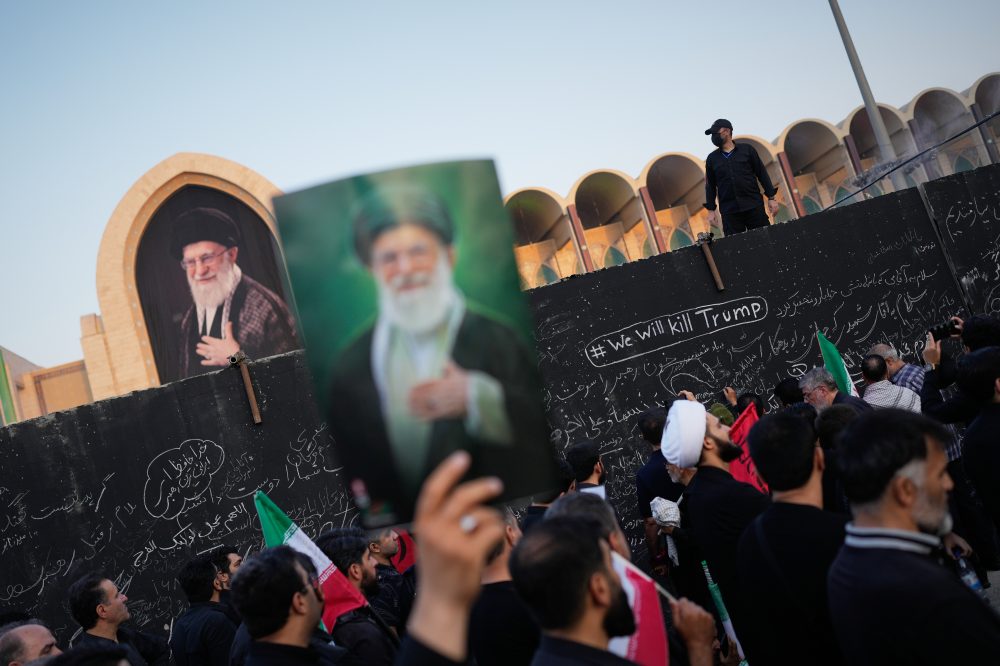
Massive funeral processions carrying his coffin through Tehran and other Iranian cities drew enormous crowds of loyalists, a show of force by hard-liners at the heart of the Islamic Republic, who celebrated him as a champion of clerical authority who had defied the West and Israel.
Yet beneath that display runs a deep current of resentment — built up over decades of violent crackdowns, international sanctions, and economic failures — that has intensified since authorities killed thousands of anti-government demonstrators in January.
“A gap has opened up in homes across the country that is really remarkable,” the tech worker said by phone from Tehran, where he currently lives. Like other Iranians who spoke with The Associated Press about Khamenei’s rule, he asked to remain anonymous due to fears for his safety.
Khamenei’s death, caused by Israeli strikes on February 28, has been framed by Iran’s leadership and his supporters as a martyrdom that crowns his legacy. Reflecting the rhetoric of ultra-hardliners who reject any negotiations with the United States, some funeral attendees called for the killing of U.S. President Donald Trump in retaliation.
“Our goal is to prove to the world that we will not submit to oppression and tyranny, and that we will avenge the blood of our leader,” said Hossein Akbari, a 60-year-old mourner attending the funeral in Tehran.
Khamenei assumed power in 1989 following the death of Ayatollah Ruhollah Khomeini — the commanding ideologue who had led the revolution that toppled the U.S.-backed shah a decade before and inspired a vast popular movement.
Under the banner of resistance to the West, Khamenei pushed forward Iran’s nuclear program, expanded its missile capabilities, and strengthened its network of militant allies across the Middle East — all while defying international sanctions.
Inside Iran, he cemented hard-line clerical authority by largely dismantling the reform movement. He granted the Revolutionary Guard sweeping military, political, and economic influence. As younger generations sought greater freedoms, he worked to maintain rigid control over personal behavior and dress codes.
A pivotal moment came in 2009, when protests erupted over allegations of vote-rigging in that year’s presidential election. Dozens were killed as authorities crushed what was then the largest protest movement the country had seen.
That crackdown produced a widespread sense of hopelessness, according to an Iranian activist and former political prisoner who contributes to a reformist-leaning publication in Tehran.
A senior aide to Iran’s reformist President Masoud Pezeshkian acknowledged last month that the country was “severely polarized” between die-hard supporters of the Islamic Republic and those seeking its complete collapse. But Ali Rabiei said a significant portion of society exists between those “two poles” — people the government could rely on to push for change within the existing system. His comments were reported by the state news agency IRNA.
Reliable polling does not exist in Iran, but election results offer some indication of public sentiment. Voter turnout in the country’s most recent presidential election fell to near-record lows, widely interpreted as a sign that millions who wanted change saw little point in participating. Even so, the hard-line candidate received 13.5 million votes, while Pezeshkian, the reformist, earned 16.3 million.
A string of protest movements since 2009 have each been met with brutal government crackdowns. January’s was the most deadly, when security forces killed thousands of people to suppress nationwide demonstrations that began over economic grievances and grew into calls for Khamenei’s removal from power.
The sister of a protester who was shot and killed on January 9 in Tehran summed up Khamenei’s legacy in a single word: injustice.
For working-class families, Iran’s already struggling economy has deteriorated further since the war began. “Workers can barely afford to buy bread, everything is so expensive,” she said.
“Since my sister died, mentally, financially, our life has fallen apart. All we do is look at photos and videos of my sister and cry. What do we have left?” she said from her home in eastern Iran.
A quiet form of resistance surfaced over the past month as Iranians observed the sacred period of Ashoura — marked by funeral-style marches honoring a martyred Shiite saint from the 7th century. Videos shared on social media showed some participants in the processions carrying photographs of family members who were killed during January’s crackdown.
One element of Khamenei’s legacy is the Islamic Republic’s demonstrated ability to endure both his death and a massive assault by the United States and Israel. The leadership came out of the conflict having reached an interim agreement with the U.S. that delivered some immediate benefits. That deal also holds out the prospect of a larger reward — the lifting of sanctions — should Iran and the U.S. finalize a nuclear agreement, though the outcome remains uncertain.
“It’s a victory for the Islamic Republic,” said a 35-year-old woman who took part in the January protests, referring to the deal. But “for Iran’s people, until we see the results, we won’t know if it is.”
She expressed concern about the deep divisions within Iranian society and the rifts among those who oppose the theocracy — some of whom hope for its rapid collapse, while others believe gradual reform from within is possible.
“The space for dialogue is very closed, and I don’t mean only the government, I mean the people,” she said.
A 33-year-old Tehran resident who also joined the January protests and has since lost his job at a technology company said his primary worry is the devastated economy, where both unemployment and prices have soared. Many of his friends are now out of work, and his wife’s employer drastically cut salaries.
“All of us, frankly, are just trying to stay alive and all of our struggle is taken up with meeting basic needs like rent and food,” he said.
Rebin Rahmani, a Kurdish activist who was once imprisoned in Iran and now lives in Paris, said the theocracy under Khamenei had no real solution to its mounting political and economic crises — only more repression.
“Its insistence on iron-fisted, security-driven approaches will only trigger further unrest,” said Rahmani, a director at the Kurdish Human Rights Network. Protests are “reigniting every few years with renewed force.”
Pezeshkian and other pragmatists within the Iranian system are hoping to use negotiations with the U.S. to lift sanctions and revive the economy. For now, they appear to have tentative backing from Khamenei’s son and successor, Ayatollah Mojtaba Khamenei, who remains in hiding but offered qualified support for the talks in a written statement.
The true test of the elder Khamenei’s legacy may come in peacetime, said Ali Vaez, Iran director at the International Crisis Group, as competing factions fight to shape the future direction of the Islamic Republic.
“Wartime gave the system a degree of cohesion under shared duress. But the governance challenges remain just as stark.”