
MAIQUETÍA, Venezuela — Weeks after a catastrophic pair of earthquakes rocked Venezuela, thousands of survivors in the hardest-hit region are now facing a growing crisis over access to clean water and basic sanitation.
In La Guaira state, desperate families have turned to the Caribbean shoreline to bathe and use the bathroom, leaving human waste scattered across beaches that were once popular gathering spots. Those with a small amount of water still remaining in their home storage tanks are stretching it as far as possible for washing dishes and personal hygiene. With 190 buildings completely collapsed and 856 more left damaged by the June 24 earthquakes — according to Venezuelan officials — many residents have been forced into temporary shelters or are sleeping outside. The death toll from the twin quakes stands at 3,685.
Juliani Herrera, 20, described how the earthquakes wiped out the water supply that families had carefully stored. “We always have water in the tank — water reserved — but with the earthquake, most of the tanks in the houses broke,” she said, referring to the large blue plastic containers many Venezuelan households rely on to collect water during the infrequent days when the state utility delivers service. “Now, we have to wait to see if a tanker comes and fills buckets.”
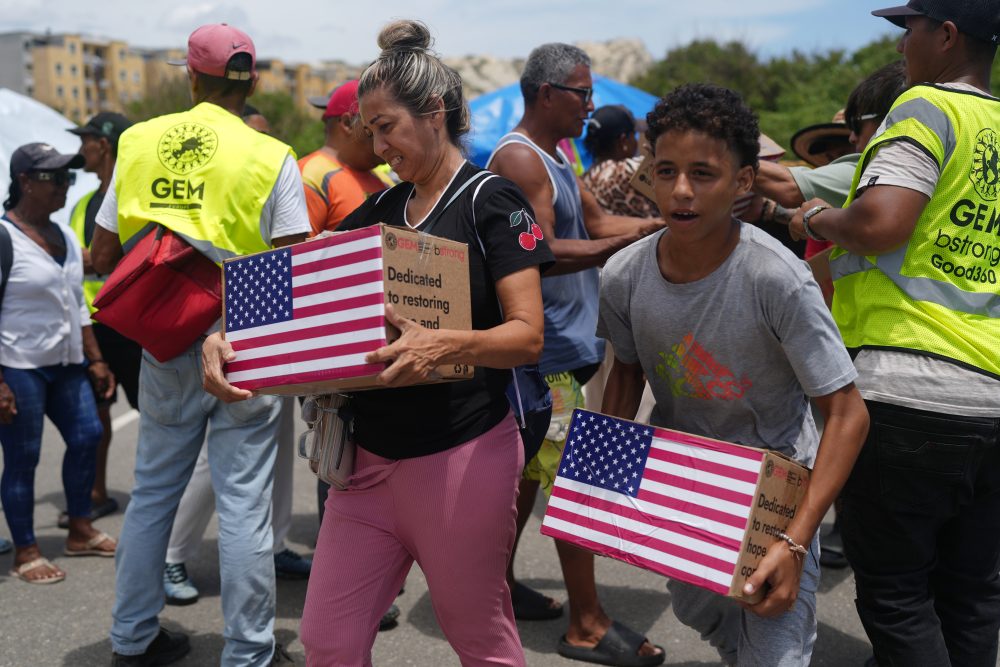
The situation is particularly grim because some of these communities were already receiving potable water only once every month or two before the disaster struck. In Maiquetía — the city best known for housing Venezuela’s primary international airport — residents gathered Wednesday to collect boxes marked with the United States flag, each containing food, water, and a hygiene kit with soap, a toothbrush, and body cleansing towelettes.
Herrera was among those who received one of the aid boxes at a temporary shelter set up near the beach. She carried the box several blocks home, her chin, upper arm, and hands bearing iodine-stained scratches — injuries she suffered when she was thrown from a motorcycle as the violent shaking from the quakes hit.
Beatriz Ochoa, who serves as regional head of advocacy for Latin America at the Norwegian Refugee Council, issued a warning that the crowded, hot, and rainy conditions survivors are enduring could quickly lead to the spread of illness. She said better sanitation conditions must be established without delay.
“I have seen families doing everything they can to maintain dignity in extremely difficult conditions,” Ochoa said. “In one temporary shelter, I saw families organizing themselves to keep common spaces clean, including through makeshift toilets and basic waste management arrangements. Their determination is remarkable, but families should not have to shoulder this burden alone.”