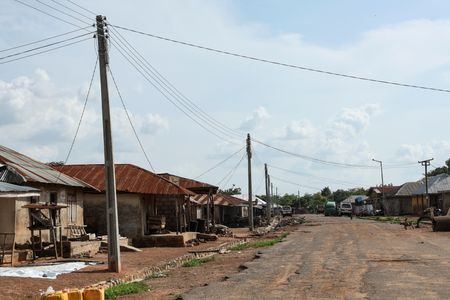
Four people lost their lives and four more were wounded after Ukrainian drones struck the Russian-controlled city of Enerhodar, according to Alexei Likhachev, the head of Russia’s state nuclear corporation Rosatom, who made the announcement on Sunday.
Enerhodar is the home of the Zaporizhzhia nuclear power plant and came under Russian control within just a few weeks of Russia launching its full-scale invasion of Ukraine back in February 2022.
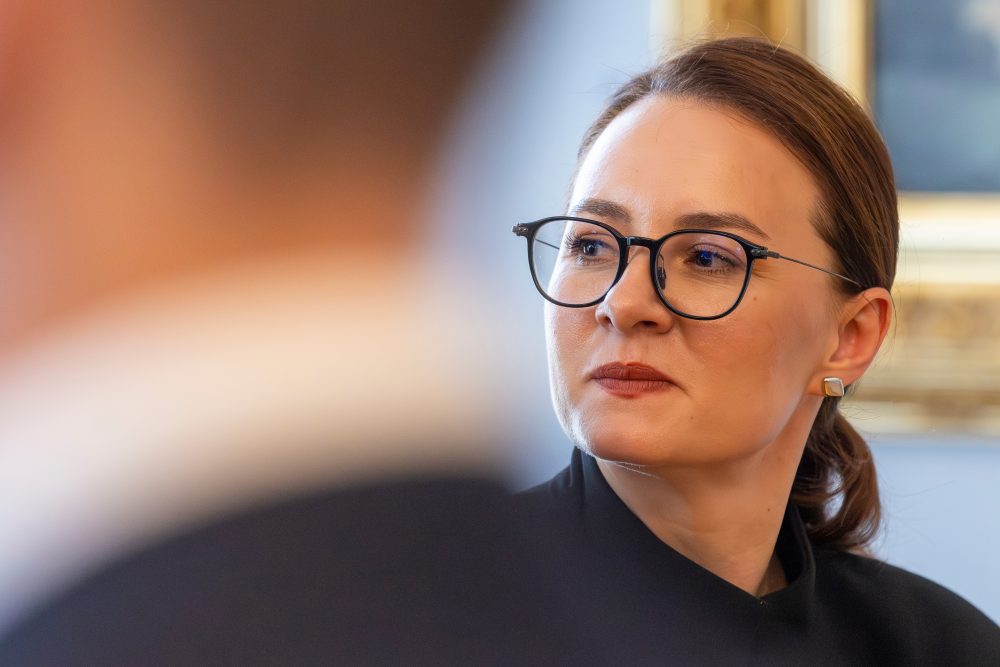
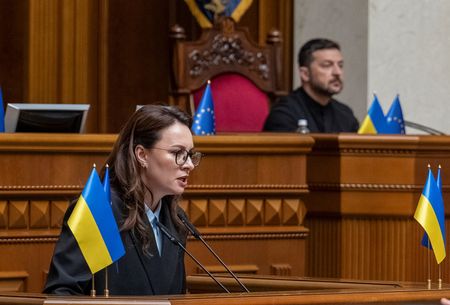
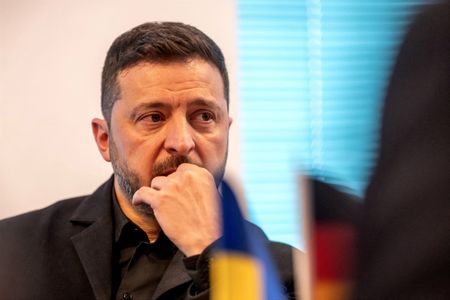
KYIV, Ukraine — Ukrainian Prime Minister Yulia Svyrydenko announced her resignation Sunday, as President Volodymyr Zelenskyy revealed sweeping changes to the country’s government.
Taking to social media, Svyrydenko expressed pride in her service, writing that she was “proud to have had the honor of leading the government during one of the most difficult periods in Ukraine’s modern history.” She noted that she and Zelenskyy had spoken about her “next steps,” though she offered no specifics on what comes next.
“I remain ready to serve the Ukrainian state and carry out every task aimed at strengthening Ukraine’s position, defending our national interests and bringing a just peace closer,” Svyrydenko wrote.
Svyrydenko, who previously served as Ukraine’s economy minister, was appointed prime minister in July 2025 at age 39. She had been credited with playing a central role in securing a minerals agreement between Ukraine and the United States — a deal viewed as a key mechanism for aligning American interests with Ukraine’s security needs.
In announcing her departure, Zelenskyy said Ukraine was “changing its political strategy.” He also indicated he had extended an offer to Svyrydenko to take charge of “a new, important area” in Ukraine’s relationship with a major international partner.
Zelenskyy described the broader restructuring, saying, “Each priority area of foreign policy will be assigned to a specific person with substantial experience who is capable of implementing what we agree on at the leaders’ level and what the Ukrainian people expect.” He added that changes would also be coming to the upper ranks of Ukraine’s law enforcement agencies.
On the battlefield, a Ukrainian military strike in southwestern Russia left one person dead and three others wounded, including a child, according to local Russian officials on Sunday. The governor of Russia’s Samara region said residential homes, apartment buildings, and an unidentified “industrial site” were damaged in the attack.
Russian media reported that the strike targeted the Syzran Oil Refinery in the Samara region — a facility owned by energy giant Rosneft located roughly 800 kilometers, or about 500 miles, east of the Ukrainian border. Photographs circulating in Russian media appeared to show thick black smoke rising from the site. The refinery has been struck by Ukrainian forces on multiple previous occasions.
Separately, the governor of Russia’s Rostov region reported that a drone attack damaged a tanker in the Azov-Black Sea maritime canal. Officials said the vessel was empty and that there is no risk of an oil spill.
Ukraine’s ongoing campaign of drone strikes against Russian oil facilities and other infrastructure has contributed to a significant fuel shortage across multiple Russian regions, with motorists reportedly waiting hours to fill their tanks and rationing measures in place. Russia has responded by stepping up missile and drone attacks on Kyiv and other Ukrainian cities, highlighting Ukraine’s continued vulnerability to ballistic missile strikes.
Zelenskyy has framed the strikes on Russian energy infrastructure as part of what he calls a campaign of “long-range sanctions” — a direct response to Moscow’s refusal to end its four-year invasion of Ukraine.
In a separate development, Russia’s Ministry of Defense claimed Sunday that it had struck the Ukrainian ports of Odesa and Chornomorsk in the Odesa region. Ukrainian officials had not yet responded to those claims.
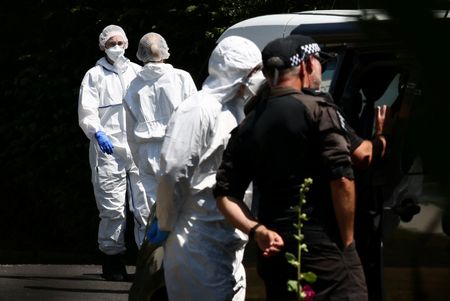
Approximately 300 people had to leave their homes in Sarcelles, a multicultural suburb outside Paris that is home to a large Jewish community, after a vehicle parked near the neighborhood synagogue raised serious security concerns.
French Interior Minister Laurent Nunez confirmed the evacuation during an appearance on French broadcaster BFM, noting the situation unfolded on Saturday evening.
Nunez told the network that investigators found a “military weapon” inside the suspicious car. He added that authorities have not yet determined who was responsible or what the motive may have been, and that an investigation remains ongoing.
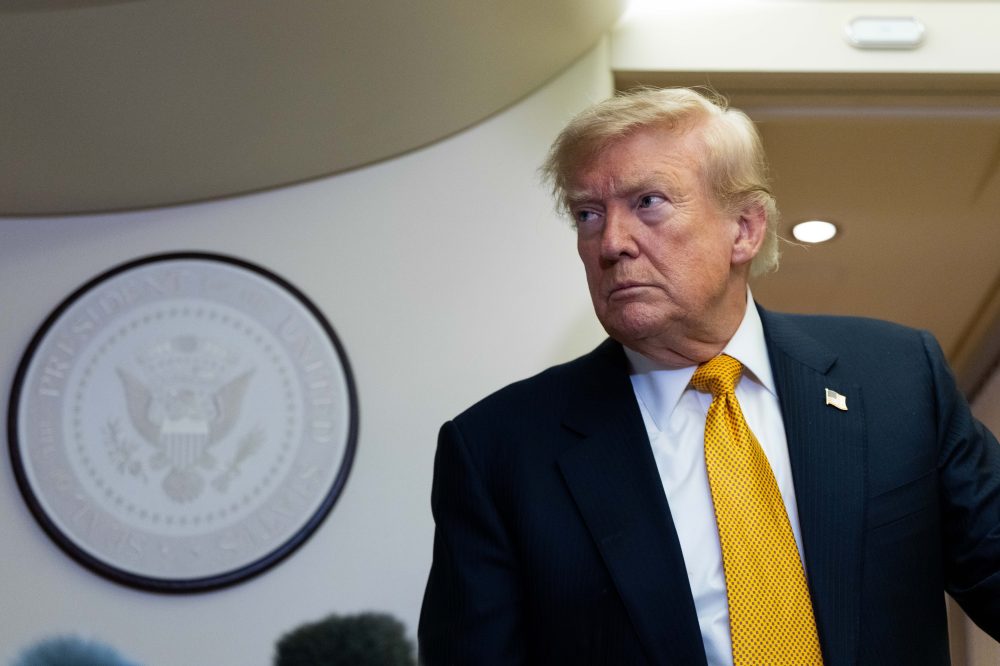
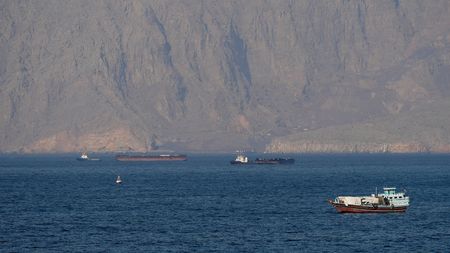
President Donald Trump declared Sunday that commercial vessels are free to navigate the Strait of Hormuz, even as hostilities between the United States and Iran continue to raise alarms about security along one of the most vital oil shipping lanes in the world.
Trump made the remarks during an appearance on NBC’s Meet the Press, addressing growing international concerns over the waterway’s safety as the two nations continue trading attacks in the region.
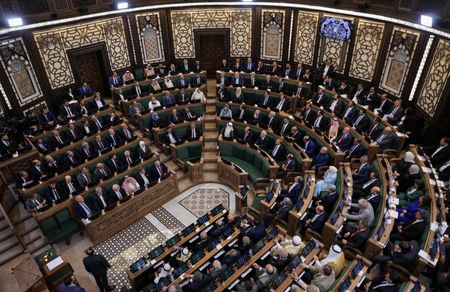
DAMASCUS — Syria’s newly established parliament held its first-ever session on Sunday, a landmark moment in the nation’s ongoing political transition that came roughly 19 months after rebel forces led by President Ahmed al-Sharaa brought down the government of Bashar al-Assad.
Speaking before lawmakers gathered in Damascus, Sharaa urged the body to “make this council a model of responsibility and competence” and called it “a platform for truth and justice.”
“Syria is writing a glorious history that reflects its heroism, and we face the responsibility of building both the nation and the individual,” Sharaa said.
The opening of parliament has been widely viewed as a test of Sharaa’s commitment to establishing an inclusive political system in a country that was governed as a police state under the Assad family for decades. Under Assad, the legislative body was widely regarded as little more than a rubber stamp.
The 210-seat chamber was assembled under interim governing rules. Two-thirds of its members were selected last year through regional electoral colleges, while Sharaa personally appointed the remaining third on July 1. Officials have defended this approach, arguing that years of armed conflict left millions of Syrians displaced and made it impossible to rely on accurate population data or voter registration records.
Critics, however, contend the process gives the executive branch significant influence over who sits in the legislature.
Sharaa has said he supports moving toward general elections once the country’s infrastructure and documentation systems are capable of supporting them.
A temporary constitutional declaration introduced in 2025 granted the parliament limited authority. Notably, the government is not required to secure a parliamentary vote of confidence. The assembly does have the power to propose and pass legislation. It holds a 30-month renewable term and will serve as the country’s legislative authority until a permanent constitution is adopted and elections are organized.
Women account for about 10 percent of the chamber’s membership, with 21 female lawmakers seated — 15 of whom were among those directly appointed by Sharaa. He formally cut ties with al Qaeda in 2016, though he was previously affiliated with the militant group.
Since taking power, Sharaa has worked to build relationships with Western nations and has pledged a new era of freedoms for Syria. His first year in office, however, was marked by several outbreaks of violence between pro-government fighters and members of minority communities.
Authorities have not released a detailed breakdown of lawmakers by ethnic or religious background. Unofficial counts suggest that 10 of the seats filled last year went to members of minority groups, including Kurds, Christians, and Alawites — the religious sect to which Assad belongs.
Four seats currently remain vacant: one lawmaker has died, and three seats set aside for the predominantly Druze province of Sweida have not yet been filled. Officials say the selection of representatives for Sweida has been delayed until “conditions become suitable.” The region has been outside government control since clashes between government-aligned fighters and Druze residents last July, a conflict that the United Nations says claimed approximately 1,700 lives.
SEOUL — South Korea’s unification ministry has reached out to North Korea, asking for assistance in locating a navy sailor who disappeared near the two nations’ shared border along the east coast, the ministry announced Sunday.
Because no active communication channel exists between the two countries, the appeal was delivered through a text message sent to journalists, according to the ministry, which oversees relations between the two Koreas. Officials said the message was intended for Pyongyang.
“On July 12, a navy seaman went missing while on a coast guard duty on the East Sea, and it seems there is a possibility of being drifted north across the Northern Limit Line,” the message stated, referencing the maritime boundary that divides the two countries along the coast.
“As our navy is currently searching for the missing person, we request for cooperation with the search and return from a humanitarian perspective,” the message continued.
North Korea’s embassy in London had not responded to a request for comment at the time of reporting.
South Korea’s current administration, led by President Lee Jae Myung, has made efforts to reduce hostilities with Pyongyang since coming to power last year. However, those repeated attempts to open dialogue have been turned away by North Korea, which formally labeled South Korea a “hostile nation” in 2024.
LONDON — Germany is financing the acquisition of 50,000 attack drones destined for Ukraine, according to a source with direct knowledge of the arrangement — making it one of the most substantial drone purchases by any Western government in support of Kyiv.
Ukraine has leaned heavily on unmanned aerial vehicles throughout its more than four-year conflict with Russia. Ukrainian forces currently carry out thousands of drone strikes each day, and the country is now producing millions of drones on its own every year.
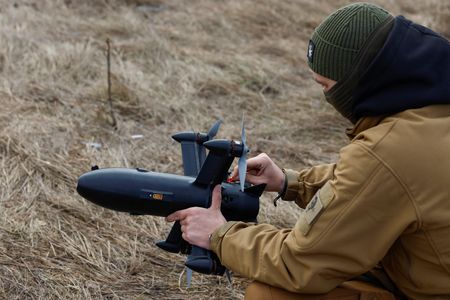
The drones at the center of this deal are Shrike first-person-view, or FPV, models manufactured by prominent Ukrainian drone maker SkyFall. They are equipped with software developed by U.S. defense technology company Auterion, which allows the drones to autonomously identify and strike moving targets during the final moments of flight.
Auterion CEO Lorenz Meier confirmed the scale of the contract, describing it as worth approximately €90 million — equivalent to about $103 million — and said it was funded by a European country. Meier told Reuters that a portion of the drones had already been handed over to Ukraine’s government, with the remaining units set to be shipped before the end of the year.
SkyFall acknowledged Germany’s role in the deal but stated it was unable to discuss the specifics of the purchase. Germany’s Defence Ministry declined to provide any comment, citing operational security concerns. Ukraine’s Defence Ministry also chose not to comment.
The Shrike drone, which has been in use in Ukraine since 2023, has recently drawn wider international attention. A variant called the Shrike 10-F, developed by SkyFall in partnership with UK firm Skycutter, came out on top in the first round of a Pentagon-organized competition. That competition is part of a $1.1 billion U.S. initiative aimed at purchasing hundreds of thousands of single-use attack drones. Auterion noted that its software is being used in multiple entries in the contest.
Meier said Auterion is working with various hardware manufacturers to supply a combined total of 100,000 drones to Ukraine in 2025, with funding coming from multiple Western governments. That figure includes a separate $50 million Pentagon contract to deliver 33,000 drones, which Meier said have already reached Ukraine.
Last month, Britain announced it would send 150,000 drones to Ukraine this year as part of a wider £752 million — approximately $1.01 billion — aid package.
At least five people were killed in Israeli attacks across the Gaza Strip on Sunday, including a 9-year-old girl, according to Palestinian health officials.
Medical workers reported that Israeli gunfire struck a tent encampment on the eastern edge of the Al-Bureij refugee camp in central Gaza, fatally wounding a young girl identified as Tala Abu Matar. The Israeli military offered no immediate response regarding her death.
Separately, an airstrike targeted a metal foundry in the Sabra neighborhood of Gaza City, claiming four lives. Eyewitnesses reported that three Israeli missiles struck the location.
When contacted by Reuters, the Israeli military stated it had hit what it described as “terrorist” infrastructure but declined to provide additional details.
A ceasefire between Israel and Hamas was established in October 2025, bringing an end to the heaviest fighting in the territory. However, Israeli strikes have continued since then, killing more than 1,000 Palestinians. During that same period, militants in Gaza have killed four Israeli soldiers.
The latest bloodshed is unfolding while Hamas officials are meeting with Egyptian counterparts in Cairo to discuss moving forward with the second phase of U.S. President Donald Trump’s peace initiative for Gaza. Those discussions center on Hamas disarmament and the withdrawal of Israeli forces, though sources familiar with the negotiations say no significant progress has been made.
Gaza’s roughly 2 million residents — the vast majority of whom have been uprooted from their homes multiple times — are now crowded into a narrow coastal corridor, living primarily in makeshift shelters or partially destroyed buildings under Hamas governance.
According to Israeli figures, Hamas-led fighters killed approximately 1,200 people during their cross-border assault on Israel on October 7, 2023. Since that attack, Gaza’s health ministry reports that more than 73,000 Palestinians have lost their lives in the territory.
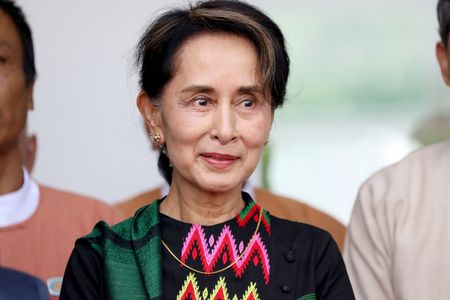
Foreign ministers from the Southeast Asian bloc known as ASEAN received assurances Sunday from their Myanmar counterpart that former leader Aung San Suu Kyi, who has been held in detention since a military coup in 2021, is healthy and will be cared for. The update came from ASEAN’s special envoy to Myanmar following a diplomatic meeting in Bangkok.
Maria Theresa Lazaro, the Philippine foreign minister serving as ASEAN’s special envoy, has been pushing for direct access to Suu Kyi, who is 81 years old. Lazaro relayed what she heard from Myanmar’s foreign minister at a press conference, saying: “My recollection of the statement of the Myanmar foreign minister on Aung San Suu Kyi is that she’s in good health and that the premise of how he said this is that she is a relative, she’s a sister and therefore we will take care of her.”
Suu Kyi is currently serving a 27-year prison sentence, which was recently reduced by one-third. She was convicted on multiple charges — including incitement, corruption, election fraud, and violating state secrets laws — charges that her supporters say were invented to remove her from the political arena. Suu Kyi has maintained her innocence.
Sunday’s gathering marked the first time in years that the 11-member Association of Southeast Asian Nations held an in-person meeting with a Myanmar representative at the foreign minister level, since the country’s military leadership was barred from top-tier ASEAN gatherings following the coup. The exclusion stemmed from Myanmar’s failure to follow through on a “five-point consensus” peace agreement it had reached with the bloc.
The ongoing civil war in Myanmar has claimed an estimated 100,000 lives and forced several million people from their homes.
Since April, Myanmar has been governed by a nominally civilian administration that took shape after elections earlier this year. Former military chief Min Aung Hlaing now holds the presidency and has been working to rebuild ties with ASEAN.
The exact location where Suu Kyi is being held remains unknown, though Lazaro previously indicated she had been moved to a “designated location,” offering no further details.
Thai Foreign Minister Sihasak Phuangketkeow confirmed that Myanmar’s Foreign Minister Tin Maung Swe fielded pointed questions during Sunday’s informal Bangkok session about the condition of the Nobel Peace Prize winner. “We also made our comment that if the ASEAN special envoy could be given the opportunity to meet with Daw Aung San Suu Kyi, that would be even better so that we can be able to verify the claims that the foreign minister made,” he said, using a Myanmar honorific to refer to her.
Ukrainian President Volodymyr Zelenskiy announced Sunday that he is moving to replace Prime Minister Yulia Svyrydenko, signaling a significant shake-up within Ukraine’s government.
In a post on X, Zelenskiy expressed appreciation for Svyrydenko’s service, writing: “I am grateful to Yuliia for her clear, steady, and effective work as Prime Minister, for her years of productive service on Ukraine’s team, and I have offered her the opportunity to lead a new and important area of relations with a key partner.”
Zelenskiy went on to say, “I expect that, together with MPs, we will make the corresponding changes in the Government of Ukraine.”
The president stated the government overhaul was necessary to “ensure the implementation of an updated political strategy,” but did not elaborate further on what that strategy entails.
Svyrydenko had been appointed to the position in July 2025. Zelenskiy did not disclose what role she would move into, nor did he name a potential successor. He did note, however, that leadership changes would also take place within law enforcement agencies.
Opposition lawmaker Yaroslav Zhelezniak suggested on Telegram that Svyrydenko is expected to become Ukraine’s ambassador to the United States. “That means she will leave the post of prime minister and the entire government will be reshuffled,” Zhelezniak wrote.
Under Ukrainian law, the resignation of a prime minister must be approved by parliament and automatically triggers the resignation of the entire cabinet.
Lawmakers have floated several names as possible replacements, including Svyrydenko’s predecessor, Energy Minister Denys Shmyhal; Defence Minister Mykhailo Fedorov; and Serhiy Koretskyi, who heads the state energy company Naftogaz.
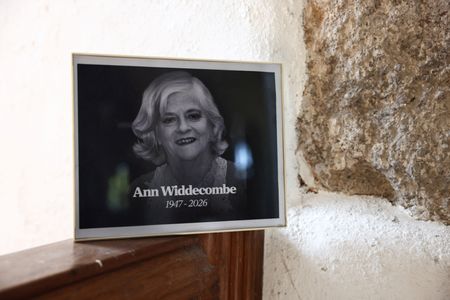
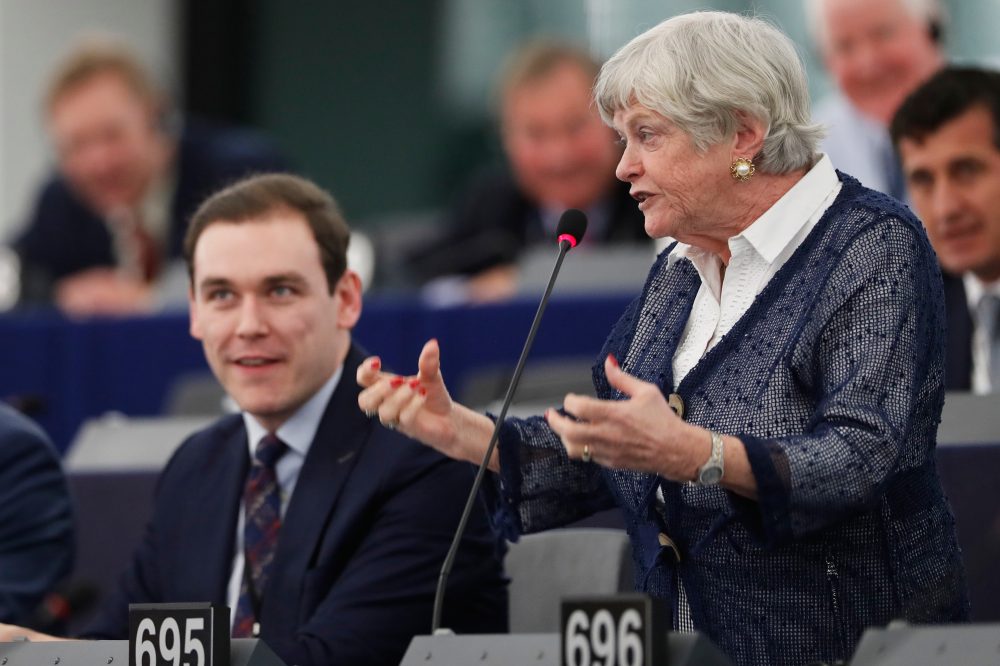
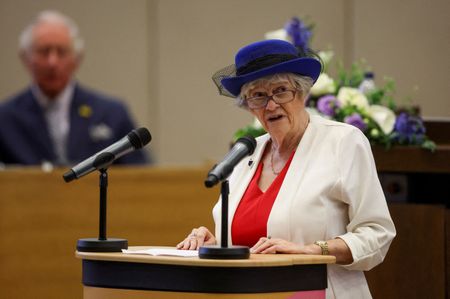
London — Police in the United Kingdom announced Sunday that their investigation into the death of former British government minister Ann Widdecombe has turned up no evidence of a political motive, following the arrest of a 28-year-old man on suspicion of murder.
Devon and Cornwall Police Assistant Chief Constable Matt Longman confirmed the arrest, which was announced late Saturday, and stated that investigators are not pursuing any other individuals in connection with the killing.
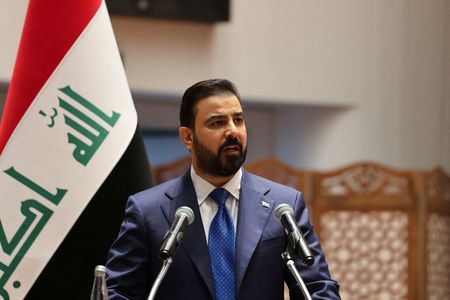
Iraqi Prime Minister Ali al-Zaidi is scheduled to depart for Washington on Monday, leading a formal government delegation following an official invitation from the United States, according to a statement made Sunday by government spokesperson Haider al-Aboudi.
Al-Aboudi addressed reporters at a press conference, saying, “The agreements to be signed will include several memorandums of understanding in the oil and gas sector as Iraq prepares to bring in various U.S. companies that will provide momentum to increase oil production capacity.”
The visit signals a push by Baghdad to deepen energy cooperation with American firms as Iraq works to expand its petroleum output.
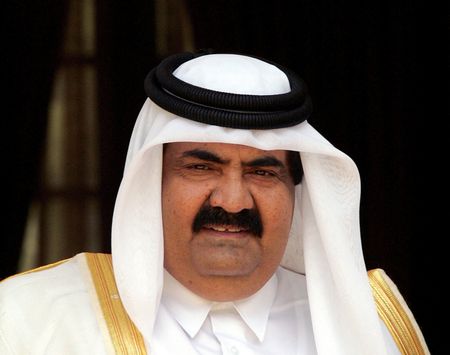
DOHA — Sheikh Hamad bin Khalifa Al-Thani, Qatar’s former emir who dramatically reshaped the tiny Gulf nation over nearly two decades in power, has passed away at the age of 74.
Qatar’s highest government authority, the Amiri Diwan, announced Sunday morning that Sheikh Hamad had died, offering no details about the cause of his death.
By the time Sheikh Hamad handed leadership to his son, the current Emir Sheikh Tamim bin Hamad Al-Thani, Qatar had already undergone a sweeping transformation driven by the elder ruler’s vision and ambition.
During his tenure, Sheikh Hamad oversaw one of the most significant chapters in Qatar’s history, guiding the country through rapid change that redefined its economy, international standing, and political reach.
Known for his strong will and independent thinking, Sheikh Hamad addressed the nation during his 2013 abdication, expressing his desire for a younger generation — one with “innovative ideas and active energies” — to carry the country forward.
Among his most lasting contributions was building out Qatar’s liquefied natural gas infrastructure, which allowed the country to tap into its enormous gas reserves and sell them on the world market. That move transformed Qatar into one of the globe’s top energy exporters and built the financial foundation for its remarkable wealth.
Sheikh Hamad also founded the Al Jazeera media network, which gave Qatar an influential voice throughout the Arab world and extended its reach well beyond the Gulf region. He additionally guided Qatar’s successful campaign to host the 2022 FIFA World Cup — a milestone that thrust the nation onto the global stage and sparked a decade of massive infrastructure development that transformed the capital city of Doha.
His approach to foreign policy positioned Qatar as a go-between in various international disputes, helping to broker negotiations in conflicts spanning Lebanon, Yemen, and Darfur. At the same time, Qatar maintained relationships with the United States — including hosting U.S. Central Command — as well as Iran and groups aligned with Tehran. That careful balancing act set the stage for Qatar’s ongoing involvement in talks between the U.S. and Iran, and in its extended efforts to help end the war in Gaza.
During the Arab Spring uprisings of 2011, Qatar under Sheikh Hamad took an active and divisive role, channeling its resources and influence to support revolutionary movements and Islamist groups throughout the region. While Doha described its actions as backing popular calls for political change, critics charged that Sheikh Hamad was selectively supporting factions that served Qatar’s own interests — particularly those tied to the Muslim Brotherhood.
That stance created friction with neighboring Gulf monarchies in Saudi Arabia and the United Arab Emirates, which viewed such movements as threats to regional stability and their own hold on power. Although Qatar’s regional influence grew, so did tensions with its neighbors, and the effects of that era continue to reverberate in Gulf politics today.
Sheikh Hamad’s decision to step down was partly aimed at ensuring a smooth transfer of power and reducing the risk of internal conflict within a royal family long marked by palace intrigue. He had himself come to power through a bloodless coup against his own father in 1995, and just a year later survived an attempted counter-coup believed to have been orchestrated by his father — who had similarly taken power in 1972 by removing his cousin.
One of Sheikh Hamad’s closest partners in reshaping Qatar was one of his wives, Sheikha Moza bint Nasser, whose public presence was unusual for a spouse of a Gulf ruler. As Sheikh Hamad worked to reposition Qatar at home and internationally, Sheikha Moza pursued a complementary agenda focused on education, research, and social development.
When he first came to power, Sheikh Hamad was the youngest head of state in the region at 44 years old. Unlike many Gulf Arab leaders, he was known for being approachable — often found at a favorite café in Doha’s souq, engaging with ordinary patrons.
The governor of Russia’s Rostov region, Yury Slyusar, announced Sunday that a Ukrainian drone hit a tanker as the vessel was making its way into the Azov-Black Sea Canal.
Slyusar posted on the messaging app Telegram that firefighters brought the resulting blaze under control. He noted there was no danger of an oil spill since the tanker was carrying no cargo at the time, and confirmed that no one was injured in the attack.
The strike is part of a broader Ukrainian military effort that has targeted more than 40 Russian tankers in the Sea of Azov. Ukraine has described the campaign as a strategy to cut off fuel supplies reaching Russian forces and to isolate Moscow-occupied Crimea.
In recent weeks, Ukraine has stepped up its attacks on transportation and energy infrastructure throughout Crimea. Those strikes have contributed to fuel shortages on the peninsula and led authorities there to declare a state of emergency.
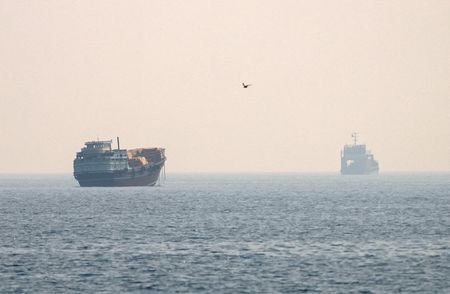
One Indian national is unaccounted for following an attack on the commercial ship GFS Galaxy in waters off the coast of Oman, according to India’s Ministry of External Affairs.
The ministry confirmed that 10 of the 11 Indian crew members aboard the vessel have been rescued. “Of the 11 Indian nationals on board, 10 have been rescued so far, while one Indian National is reportedly missing,” the ministry stated, adding that it strongly condemns the attack.
India’s embassy in Oman is actively tracking the situation and working alongside Omani authorities as the search and rescue operation remains underway, the ministry said.
Earlier, Iran stated that it had fired a warning shot that struck a vessel it claimed was traveling along an unapproved route.
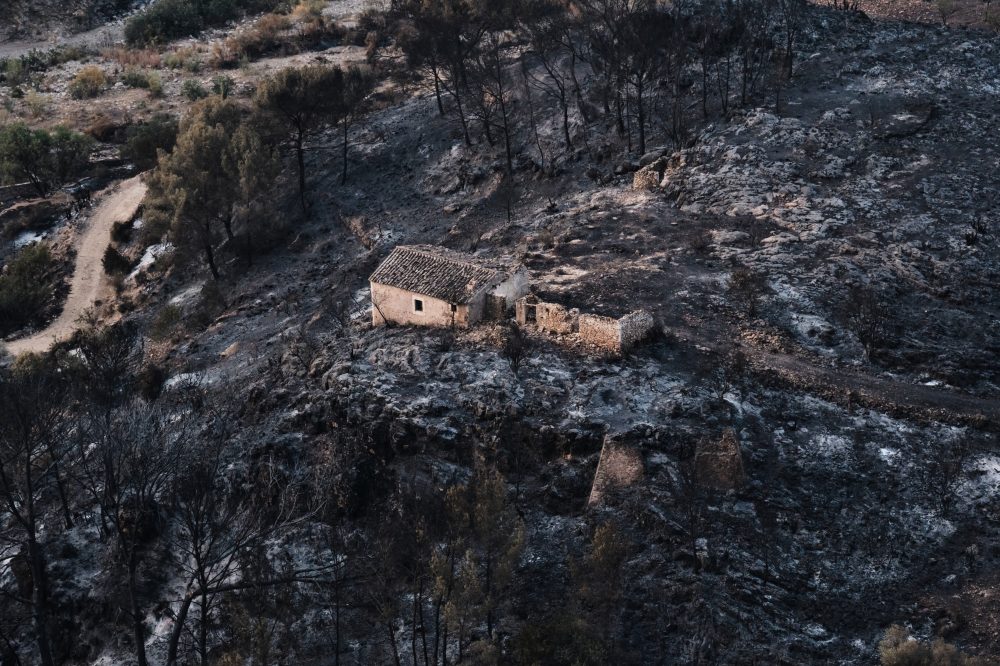
The son of a Belgian man who lost his life in deadly Spanish wildfires is challenging the official version of events, saying that authorities never warned his father or the others who perished before they attempted to flee.
Thomas-Wolf Verdonckt, a Belgian virologist, told reporters on Saturday that he was on the phone with his father — 63-year-old businessman Stanislas Verdonckt — just before 9 p.m. local time on Thursday evening as a wildfire bore down on the mountain village of Bedar, located in Spain’s southeastern Almeria province.
According to his 33-year-old son, Stanislas Verdonckt was among eight victims discovered dead in a valley beneath the Paraje el Curato area on the outskirts of Bedar, where he had owned a home for many years. Thomas-Wolf Verdonckt, who lives in Belgium, made the trip to Spain following the disaster and spoke with neighbors who survived.
He said no one in an official capacity told the group that the fire was approaching their location, nor were they advised whether it would be safer to remain indoors or attempt to evacuate.
“The people who died did not fail to follow any orders because no orders were given. No information was provided,” he said.
“They only started to run when the flames were almost upon them. That was their absolute last resort,” he added.
Spanish authorities have maintained that local officials and police either went door-to-door or called residents by phone to give instructions on whether to evacuate or shelter in place, based on how quickly the fire was moving in each area. Bedar’s mayor stated that he personally urged the group that included Stanislas Verdonckt to remain in their homes. The Andalusian regional government and the Spanish Civil Guard did not respond to requests for comment on Thomas-Wolf Verdonckt’s account.
In all, 12 people died while attempting to escape the wildfires as the blaze reached Bedar, which sits above the town of Los Gallardos. The victims were mostly foreign nationals, like Stanislas Verdonckt, along with one Spanish citizen. Their identities have not yet been officially confirmed, and firefighters were still working to bring the fires under control.
Thomas-Wolf Verdonckt described how the group of neighbors, including his father, first attempted to drive out Thursday night via a paved road, only to be turned back by the advancing flames.
“They couldn’t get through via the main road because they were not warned in advance. Nobody told them that the fire was coming from that direction, and when they tried to get out, it was too late,” he said.
The group then tried driving in the opposite direction along a dead-end dirt lane that runs along a mountainside, but that route also became impassable. They abandoned their vehicles and attempted to escape on foot.
“It was not a choice. They drove to the end of the trail, and when even that was in flames, some people chose to run and try to get into the valley,” he said.
A neighbor who managed to survive inside his home told Thomas-Wolf Verdonckt that the fire came close enough to touch the walls of the house. He described his father as an experienced hiker and photographer who was very familiar with the local terrain and fluent in Spanish.
During what turned out to be their last phone call, Stanislas Verdonckt calmly weighed his options, his son said. Thomas-Wolf Verdonckt described his father as someone who remained composed “even in the most desperate situations” and methodically went through his “plan A, B and C.”
“My father is one of the smartest people I know. He’s always very analytical and was just checking boxes: ‘Can we do this? Can we do that?’” he said. “At that point, it was just minutes before they were engulfed and they were trapped.”
Fourteen nations have come together to declare that China’s sweeping territorial claims over the South China Sea are without legal foundation, issuing a joint statement Sunday to commemorate the 10th anniversary of a major international court decision.
Back in 2016, the Philippines secured a victory at the Permanent Court of Arbitration, which determined that China’s broad assertion of sovereignty over the South China Sea violated international law. China has never accepted that decision and continues to reject it to this day.
The joint statement made clear where the signatory nations stand: “We reaffirm that the award rendered ten years ago by the Arbitral Tribunal is a significant milestone and is final, legally binding, and definitive between China and the Philippines.”
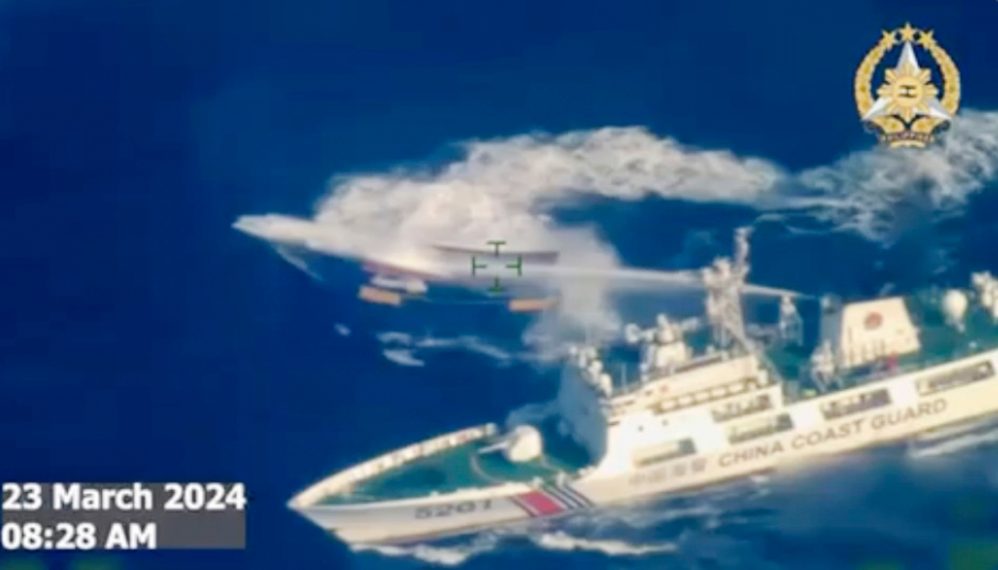
Tensions between the Philippines and China in the region have escalated in recent years. Manila has accused Beijing of carrying out “dangerous manoeuvres” within its exclusive economic zone, including deploying water cannons to disrupt supply missions to areas under Philippine control.
In addition to the United States, Japan, and the Philippines, the joint statement was signed by Australia, Britain, Canada, Estonia, Germany, Italy, Latvia, Lithuania, New Zealand, Romania, and Slovenia.
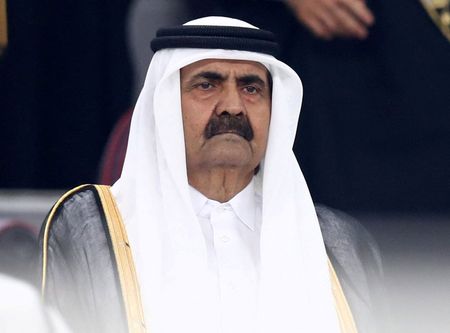
Sheikh Hamad bin Khalifa Al Thani, the former emir who turned Qatar into a powerful presence on the world stage before making history by willingly stepping aside for his son, has died at the age of 74, according to Qatar’s state-run news agency.
The Qatar News Agency announced his passing but provided no details about the cause of death.
During his 18 years as emir — a reign that ended in June 2013 — Sheikh Hamad was the driving force behind Qatar’s dramatic transformation from a largely overlooked Gulf state into a nation with global reach in diplomacy, media, and investment. Among his legacy projects: Qatar’s ownership of the Harrod’s department store in London and the founding of the Al Jazeera satellite news network, which became a major voice in international media.
Qatar’s influence today extends from North Africa to Afghanistan, and the country hosted the 2022 FIFA World Cup — the most-watched soccer event on the planet. Though he had long since left office, Sheikh Hamad received a rousing reception from Qatari fans at the tournament’s opening match.
However, Qatar’s ascent under his leadership also created friction with regional neighbors and Western allies. Critics pointed to the country’s close relationships with Iran, the Palestinian militant group Hamas, and Egypt’s banned Muslim Brotherhood as sources of tension. Al Jazeera, while widely praised for breaking from the traditionally cautious style of Arab journalism, also drew accusations of shaping its coverage to reflect the preferences of Qatar’s leadership.
When Sheikh Hamad announced his abdication, he addressed the nation with a message for the next generation: “The future lies ahead of you, the children of this homeland, as you usher into a new era where young leadership hoists the banner.” Power was passed to his son, the British-educated crown prince Sheikh Tamim bin Hamad Al Thani, who was 33 years old at the time.
Such a peaceful and deliberate transfer of authority was highly unusual in the region, where leadership changes typically come through death or forceful removal. Ironically, Sheikh Hamad had himself come to power by ousting his own father, Sheikh Khalifa, in a bloodless palace coup in 1995. His father subsequently lived in exile for nearly a decade.
His decision to step down was widely interpreted as an effort to get ahead of the reform movements sweeping the Arab world at the time and to respond to the growing influence of the region’s younger population. Qatar, a peninsula roughly half the size of New Jersey, is home to an estimated 300,000 citizens. Sheikh Hamad had also reportedly dealt with health issues for several years prior to his abdication. In December 2015, Qatari officials confirmed he had been flown to Switzerland for surgery after breaking his leg while vacationing.
Sheikh Hamad received his military training at Britain’s Sandhurst academy and went on to serve as commander of Qatar’s armed forces and as defense minister. He was designated crown prince in the late 1970s and steadily expanded his responsibilities to include overseeing the development of Qatar’s enormous oil and gas wealth.
After taking power, he quickly opened the previously insular nation to outside engagement. Al Jazeera became a symbol of that shift, though its willingness to broadcast statements from the al-Qaida terror network stirred anger in Washington — even as Qatar simultaneously hosted a major U.S. military logistics hub following the September 11, 2001 attacks and the subsequent invasions of Afghanistan and Iraq.
Sheikh Hamad also made sports a cornerstone of Qatar’s global image, most notably through the successful — though controversial — bid to host the World Cup. Critics alleged that Qatar used its vast financial resources to secure votes from less wealthy nations. Qatar’s sports footprint also includes sponsorship agreements with Spanish football club Barcelona and a majority ownership stake in Paris Saint-Germain.
Under his direction, Qatar Airways expanded into a major international airline in competition with neighboring carriers. The international airport in Doha, Qatar’s capital, which cost at least $15 billion to build, bears his name.
Sheikh Hamad pursued an ambitious diplomatic agenda as well, with Qatar serving as a mediator in conflicts ranging from Sudan’s Darfur region to political divisions in Lebanon and the internal rift between Palestinian factions Hamas and Fatah.
In October 2012, he became the first head of state to visit the Gaza Strip since Hamas had taken control five years earlier, pledging $400 million in investments and development projects. During that visit, Gaza radio stations broadcast a song called “Thank you, Qatar.”
Qatar also maintained a degree of engagement with Israel. Sheikh Hamad met with Israel’s then-foreign minister, Tzipi Livni, at the United Nations General Assembly in 2007, and Qatar allowed an Israeli trade office to operate in Doha until it was shut down in response to Israeli military action in Gaza in late 2008. While neighboring Bahrain and the United Arab Emirates formally recognized Israel in 2020, Qatar kept its distance from normalization.
During the Arab Spring, Qatar dispatched warplanes to support the NATO-led mission in Libya against Moammar Gadhafi’s forces and provided critical military and financial backing to the Libyan rebel movement. In Syria, Qatar played a leading role in supporting opposition forces against then-President Bashar Assad and pushed for increased weapons supplies to Syrian rebels.
Qatar’s support for Islamist groups, including the Muslim Brotherhood, strained its relationships with other nations in the region. Those tensions boiled over under Sheikh Tamim’s rule, when Bahrain, Egypt, Saudi Arabia, and the UAE launched a years-long diplomatic and economic boycott of Qatar — partly rooted in policies that had originated during his father’s tenure.
One of Sheikh Hamad’s final significant acts before leaving office was overseeing the formal opening of a Taliban office in Qatar, which eventually laid the groundwork for negotiations between the United States and the Taliban — talks that ultimately preceded the chaotic American and NATO withdrawal from Afghanistan in 2021.
Qatar’s former head of state, Sheikh Hamad bin Khalifa Al Thani, has died at 74 years old, according to an announcement made Sunday by the Amiri Diwan, the nation’s top governing body.
NAIROBI, Kenya — The biggest hurdle facing clean energy expansion across Africa is no longer about finding the right technology or resources — it’s about building the institutions, markets, and regulatory systems needed to bring those projects to life at a meaningful scale, according to experts.
This challenge is taking shape at a moment when renewable energy has reached a landmark achievement worldwide. In 2025, renewables accounted for 34% of global electricity generation, edging past coal’s 33% share. When combined with nuclear power, renewables are projected to supply half of all electricity worldwide by 2030.
As demand for electricity climbs due to industrialization, artificial intelligence, and electrification, experts say the main bottleneck in the clean energy transition has moved away from technology and toward the systems — including financing — that support it. Solving these problems is critical for the roughly 600 million people across Africa who still lack access to electricity.
“Clean energy is now cheaper than fossil fuels in virtually every part of the world,” said former New York City Mayor Michael R. Bloomberg, who serves as the U.N. Secretary-General’s Special Envoy on Climate Ambition and Solutions. He made the remarks in late June while unveiling a new $285 million Bloomberg Philanthropies effort aimed at strengthening clean energy industries in emerging and developing economies.
“But fixable obstacles are still slowing down deployment, and with energy demand rising at an unprecedented speed, we can’t allow those obstacles to continue standing in the way,” he added.
Rather than putting money directly into solar farms or wind energy projects, the initiative will channel funds into improving market design, building regulatory capacity, developing technical expertise, and strengthening industry institutions. These areas are increasingly seen as the key to drawing in private investment and speeding up the adoption of renewable energy.
The effort reflects a growing belief that Africa’s energy transition is held back less by a shortage of renewable resources or workable technologies, and more by the institutional capacity required to turn those advantages into financially sound projects that actually deliver power to the grid.
Many projects across the continent face delays stemming from poorly designed markets, limited grid planning, sluggish permitting, and fragmented regulatory systems.
“What has been missing is not the potential, but the institutional infrastructure and capabilities to unlock it,” said Saliem Fakir, executive director of the African Climate Foundation. “Philanthropy that targets those gaps directly is the kind of intervention that can shift the trajectory of a continent’s energy system.”
Across Africa, the cost of renewable energy has dropped significantly while investor interest continues to grow. Still, those investors point to policy uncertainty, slow permitting, and limited regulatory capacity as major obstacles to moving projects forward.
Wangari Muchiri, founder and chief executive of RE.Think Energy, said the funding commitment signals that “the next phase of the energy transition is not about proving clean energy works, it’s about removing the barriers preventing it from scaling fast enough.”
The Bloomberg initiative is focused not just on ambitious energy targets, but on helping projects secure long-term investment and successfully connect to national power grids.
“The next chapter of Africa’s renewable energy story will not be only by the projects it builds, but the institutions that make these projects possible,” Muchiri said.
MANILA, Philippines — Fourteen nations, including the United States and United Kingdom, came together Sunday to reaffirm that China’s broad territorial claims over the South China Sea have no legal standing, citing a 2016 international arbitration decision.
The countries released a joint statement rejecting what they described as “destabilizing” actions in the contested waters that put regional peace at risk.
The declaration marked the anniversary of a July 12, 2016, ruling handed down by a tribunal formed in The Hague under the United Nations Convention on the Law of the Sea. The signatories described that ruling as “a significant milestone and is final, legally binding and definitive.”
China refused to participate in the arbitration process, which was launched by the Philippines in 2013 following a tense maritime standoff the previous year — a confrontation that ended with Beijing effectively taking control of a disputed shoal.
Beijing has rejected the 2016 decision and continues to assert control over nearly the entire South China Sea, a critical global shipping corridor that has long been considered one of Asia’s most volatile flashpoints. The region has seen repeated territorial clashes involving China, the Philippines, Vietnam, Malaysia, Brunei, and Taiwan.
“We reaffirm the Arbitral Tribunal’s decision that there is no legal basis for China’s expansive maritime claims in the South China Sea, including those based on ‘historic rights,’” the joint statement read.
The tribunal had largely sided with the Philippines, determining under the U.N. Convention on the Law of the Sea that “there was no legal basis for China to claim historic rights to resources” in the South China Sea beyond the territorial zones recognized under the convention.
That convention, widely considered the governing treaty for the world’s oceans, entered into force in 1994 and has been ratified by more than 170 countries and parties — including both China and the Philippines.
Beyond the U.S. and Britain, the nations signing Sunday’s statement were the Philippines, Japan, Australia, New Zealand, Canada, Germany, Italy, Estonia, Latvia, Lithuania, Romania, and Slovenia.
“We reiterate our strong opposition to any destabilizing or unilateral actions including by force or coercion that threaten peace and stability in the region,” the statement declared.
The group also voiced firm opposition to the use of coast guard vessels, military forces, and maritime militia to “harass, obstruct, intimidate lawful operations by other states at sea or in the air,” warning that such actions endanger lives and undermine regional security.
The nations called for freedom of navigation and overflight to be upheld in accordance with the 1982 U.N. convention, and urged that all territorial disputes be resolved through peaceful means.
China did not issue an immediate response Sunday. However, through its embassy in Manila, Beijing had previously stated it would never accept the 2016 ruling, calling it “illegal, null and void.”
“The award will not alter the historical and factual basis for China’s sovereignty over the islands of the South China Sea and their adjacent waters,” the Chinese embassy in Manila said, adding that the ruling “will not weaken China’s resolve and determination to safeguard its sovereignty and maritime rights and interests.”
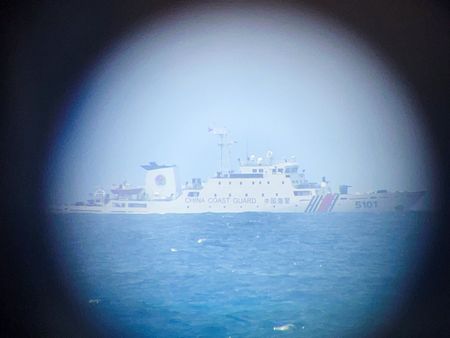
Tensions in the disputed waters have escalated in recent years, especially between Chinese forces and those of the Philippines and Vietnam. Chinese coast guard ships have deployed powerful water cannons, military-grade lasers, and dangerous blocking maneuvers against Philippine personnel and fishermen from competing claimant nations, resulting in collisions and high-risk aerial encounters.
Washington has repeatedly pressed Beijing to abide by the arbitration ruling. Both the former Biden administration and the current Trump administration have warned that the U.S. is treaty-bound to defend the Philippines — its oldest treaty ally in Asia — if Filipino forces, ships, or aircraft face an armed attack in the disputed waters.
U.S. military forces completed a third consecutive night of strikes against Iran on Saturday, according to a statement released by the Central Command on the social media platform X.
The Saturday operation targeted approximately 140 Iranian military sites, which included missile and drone installations, naval assets, ammunition storage areas, communication infrastructure, and coastal surveillance positions, the Central Command reported.
Across all three nights of operations this week, American forces have now struck more than 300 targets in total, according to military officials.
The Central Command stated that Saturday’s strikes were a direct response to an attack on a commercial ship in the Strait of Hormuz, and emphasized that commercial shipping traffic through the critical international waterway is continuing.
The American military action came just hours after Iran announced it had closed the strait, following a warning shot that struck a vessel traveling on what Iran described as an unapproved route. Iranian officials warned that any retaliation would be met with a “severe response.”
U.S. Central Command identified the targeted vessel as the M/V GFS Galaxy, a Cyprus-flagged container ship. Officials said the ship sustained serious damage to its engine room and that one civilian crew member is unaccounted for.
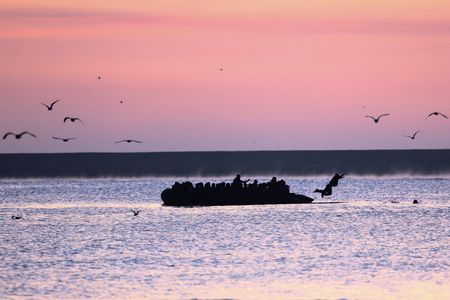
DUBAI, United Arab Emirates — American forces carried out strikes against Iran in the early hours of Sunday morning, responding to an Iranian assault on a cargo vessel navigating the Strait of Hormuz. The attack left the container ship engulfed in flames, compelling its crew to evacuate the burning vessel. Iran then appeared to retaliate by launching strikes aimed at Bahrain, Qatar, and the United Arab Emirates.
The renewed hostilities in the Persian Gulf come on the heels of U.S. President Donald Trump indicating that a temporary agreement and ceasefire in the Iran conflict was finished.
U.S. Defense Secretary Pete Hegseth posted a blunt message online in response to the situation: “Iran made a poor choice. Now they pay.”
The United Arab Emirates issued a public warning Sunday about incoming missile and drone threats, while explosions were reported in neighboring Qatar. A missile alert system activated in Qatar shortly after those blasts, and Qatar’s military announced it had successfully intercepted the Iranian projectiles.
Missile alerts also rang out across Bahrain, a Persian Gulf island nation that serves as the home base for the U.S. Navy’s 5th Fleet.
It remained unclear early Sunday exactly which locations within the UAE were being targeted. The country had not previously been struck during this latest wave of Iranian attacks.
According to U.S. Central Command, the vessel hit in the Strait of Hormuz was a Cyprus-flagged container ship that sustained “significant engineroom damage” as a result of the Iranian strike. A civilian crew member was reported missing.
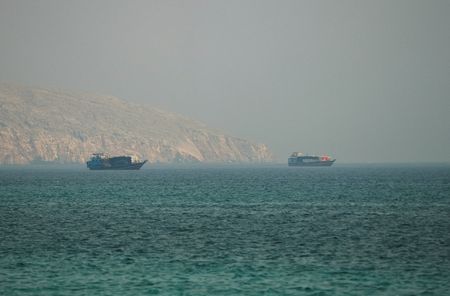
The United Kingdom Maritime Trade Operations center, which operates under British military oversight, reported that the ship had been traveling along a route close to Oman’s coastline — a path ships have been using to move in and out of the Persian Gulf while staying clear of Iranian territorial waters. The crew ultimately abandoned the vessel as it burned.
Iran’s paramilitary Revolutionary Guard claimed that several vessels had “disregarded our warnings and instructions to correct their course and proceed along the approved route,” and that one of those ships “was struck by a warning shot and brought to a stop.”
Iranian authorities declared the strait would remain closed “until further notice” and warned that “additional enemy bases in the region” could face targeting if Iran continued to come under attack.
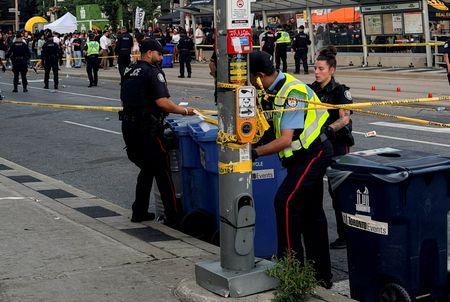
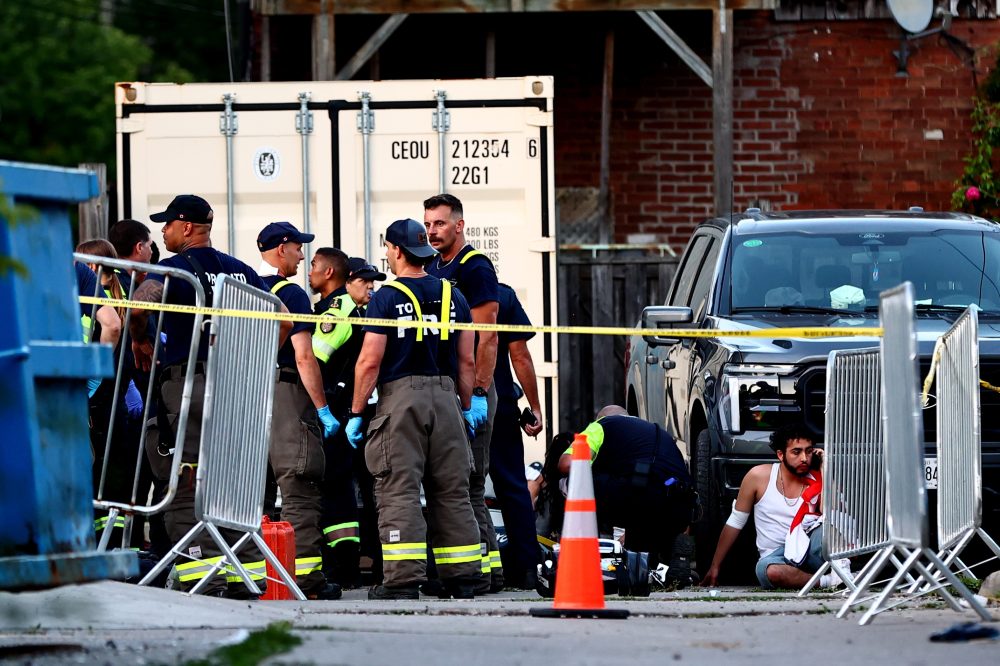
Two people are dead and three others were wounded following a shooting at a popular outdoor festival in Toronto on Saturday, according to an emergency alert posted by police on X.
Officers responding to the scene located five individuals suffering from gunshot wounds. Two of those victims were pronounced dead at the scene. The conditions of the three remaining injured people were not immediately disclosed.
The violence broke out in Midtown Toronto during the Salsa on St. Clair festival, a well-known annual Latin cultural event, according to CTV News.
Residents and visitors in the area were urged by authorities to stay away from the scene and comply with all directions given by law enforcement as officers continued their investigation.
A spokesperson for the Toronto Police declined to go beyond what had already been shared on the department’s official X account when asked for further details.
Police indicated that additional updates would be released as the investigation progressed. As of the initial report, no information had been made available regarding a suspect, a possible motive, or any arrests.
A shooting near a popular Toronto street festival turned deadly Saturday, killing two people and injuring four others, according to Toronto police.
Officers responded to the area near St. Clair Avenue West and Arlington Avenue, where the annual Salsa on St. Clair festival was taking place. Six victims were discovered with gunshot wounds at the scene.
Authorities initially put out an urgent warning for the public to stay away from the area as they responded to what they described as an active shooter situation. While police later announced the scene had been brought under control, they noted that no suspect or suspects had been taken into custody.
A heavy police presence continued in the area surrounding the festival, which is a Latino-themed cultural event held in Toronto.
Ontario Premier Doug Ford expressed his grief over the tragedy on social media. “I am devastated by the senseless violence at the Salsa on St. Clair Festival that has claimed two lives and injured others,” he wrote. “My thoughts are with the victims, their families and everyone affected.”
The shooting is considered unusual for Toronto, which ranks among the safest major cities in North America. Deadly shootings — especially those involving multiple victims in a public setting — are not common occurrences in Canada’s largest city.
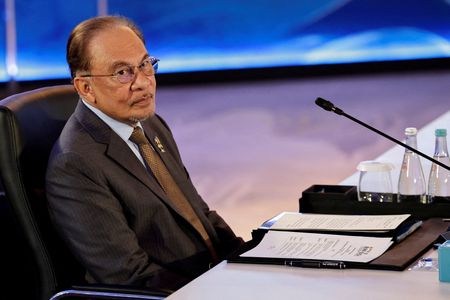
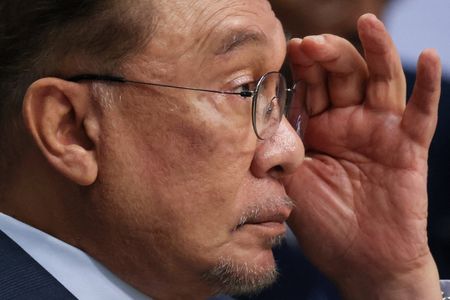
Malaysian Prime Minister Anwar Ibrahim’s political alliance suffered a significant setback Saturday when a key federal partner delivered a decisive blow in a regional election, throwing the stability of their national partnership into question.
The Barisan Nasional (BN) coalition, which governs Johor state in Malaysia’s south, swept to a commanding victory, capturing 48 of 56 state assembly seats according to final tallies released Sunday by the Election Commission. Anwar’s Pakatan Harapan grouping claimed only the remaining eight seats — a drop from the 12 it had previously held.
While the Johor result does not directly threaten Anwar’s majority in the national parliament, it risks deepening tensions between the two blocs, which set aside their rivalry to form a joint government following a hung general election in 2022.
BN Chairman Ahmad Zahid Hamidi wasted no time celebrating the win. “Hopefully, this win will trigger a blue wave across other states,” he told reporters at a late Saturday briefing, referencing his coalition’s signature banner color.
The strong showing is expected to embolden BN, which is led by the once-powerful United Malays National Organisation (UMNO), while raising alarms that Anwar’s bloc is bleeding support among ethnic Chinese voters and reform-minded backers who were instrumental in bringing him to power.
Growing frustration among progressive allies over the sluggish pace of promised reforms has added to the tension, as coalition partners have repeatedly clashed over how to handle sensitive racial and religious matters in the multi-ethnic, Muslim-majority nation.
The predominantly Chinese Democratic Action Party — the largest party within the ruling alliance — has signaled it may reconsider its role in the government arrangement. That announcement followed a similar defeat for Pakatan in Sabah state elections last year.
Both Pakatan and BN have publicly maintained that their federal partnership can weather disagreements at the state level. However, Anwar himself acknowledged in May that he would weigh calling a snap national election if internal divisions continued to grow.
The Johor vote arrives just weeks ahead of another critical test: a state election in Negeri Sembilan scheduled for August 1. Pakatan is expected to contest all 36 seats there, having previously won 17 in that state.
The opposition Perikatan Nasional bloc — which includes former Prime Minister Muhyiddin Yassin’s Bersatu group along with the Islamist party Pas — was shut out entirely in Johor, losing all 33 seats it entered. The newly formed Bersama party, led by Anwar’s one-time protégé-turned-rival Rafizi Ramli and buoyed by defectors from Pakatan, also suffered a resounding defeat.
WASHINGTON — The United States military announced Saturday that it conducted a fresh series of strikes against Iran after forces from the Islamic Revolutionary Guard Corps attacked a Cyprus-flagged container ship as it traveled through the Strait of Hormuz.
According to a statement posted on X by the U.S. Central Command, the vessel suffered severe damage and is no longer able to continue its voyage. “A civilian crew member is missing and the vessel is unable to continue the journey due to an onboard fire and significant engineroom damage,” the statement read.
U.S. Central Command confirmed that the military action was carried out under orders from President Donald Trump.
At least two children have died following a deadly collision between a passenger ferry and a bridge over the Euphrates River in the eastern Syrian city of Deir al-Zor, according to the Syrian Civil Defence.
The incident took place on Sunday, when the vessel — which had more than 35 people on board — struck the bridge while making its way across the river. The impact sent everyone aboard plunging into the water below.
Rescue teams were able to pull more than 15 survivors from the river, the agency reported. Officials confirmed that search and rescue operations remained active as crews continued looking for those still unaccounted for.
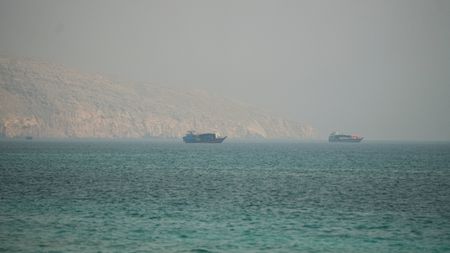
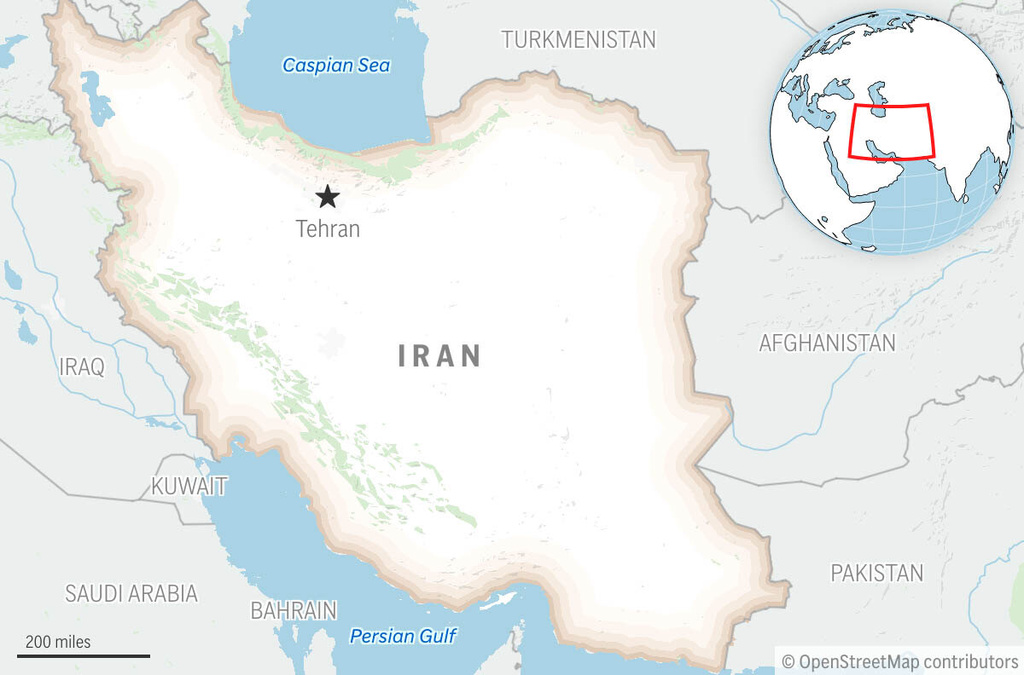
Iran announced Sunday that it has closed the Strait of Hormuz following an incident in which a vessel traveling an unauthorized route was struck and stopped, with Iranian authorities warning that any act of aggression in response would trigger a “severe” counteraction.
The Navy of Iran’s Islamic Revolutionary Guard Corps released a statement saying a ship that had “jeopardized maritime security by switching off its systems was struck and brought to a halt,” though no details were provided identifying the vessel.
According to the IRGC, multiple ships attempted to pass through the waterway along an “unauthorised route” and ignored repeated warnings to change course. The strait, Iran declared, would remain closed “until further notice” and until “the end of U.S. interference in this region.”
The IRGC Navy added that acts of aggression against Iran “will be met with a severe response, and new enemy bases in the region will be targeted.”
Senior U.S. officials told reporters on Friday that Washington is demanding Iran publicly commit to halting attacks on ships in the strait and guarantee that all shipping lanes remain open with no fees charged to vessels passing through.
U.S. President Donald Trump stated Friday that the U.S. and Iran had agreed to keep diplomatic talks going despite a spike in hostilities earlier in the week — though he also declared the ceasefire officially over.
A senior Iranian source informed Reuters that Iran, the U.S., Qatar, and Pakistan had agreed to engage in negotiations through a call that mediators were working to set up for Saturday, while Iran’s Foreign Minister Abbas Araqchi was in Oman.
Whether those efforts succeeded was not immediately known. Araqchi and Omani Foreign Minister Sayyid Badr Albusaidi met in Oman to discuss, in the words of an Iranian foreign ministry statement, “appropriate mechanisms for the safe passage of ships through the Strait of Hormuz.” Oman’s state news agency later reported that negotiators from both countries would press forward with discussions “at the technical and political levels.”
Oman is serving as a mediator in a broader conflict that has rattled the Gulf region and driven up prices worldwide since the U.S. and Israel launched airstrikes on Iran on February 28. Before the war began, roughly one-fifth of the world’s oil supply moved through the Strait of Hormuz. Iran’s effective blockade of the waterway has sent energy prices soaring, contributing to global inflation.
CNN reported Saturday that Oman had put forward a draft proposal for managing traffic through the strait, which would allow free navigation through Oman’s southern corridor in its own territorial waters. Under the plan, ships traveling through the northern corridor in Iranian territorial waters would need to obtain advance approval from Iran, though no tolls would be required. The White House and State Department did not immediately respond to requests for comment on that report.
Earlier in the week, three Qatari and Saudi commercial tankers came under fire, which prompted the U.S. to strike Iranian targets. Iran then responded with its own strikes against U.S. military sites in Gulf states.
Araqchi blamed the United States for breaking the ceasefire agreement. The U.S. revoked a license permitting the sale of Iranian crude oil on Tuesday, following the tanker attacks. “There can only be mutual compliance,” Araqchi wrote on X on Friday.
While Iran has not officially claimed responsibility for the ship attacks, analysts say Tehran uses such incidents as leverage during negotiations.
The renewed hostilities cast fresh uncertainty over an interim agreement meant to end the conflict and pushed oil prices higher — a politically sensitive development for Trump with November congressional elections approaching.
“The Islamic Republic of Iran has asked us to continue ‘talks.’ We have agreed to do so, but the United States has stated to them, in no uncertain terms, that the Cease Fire is OVER!” Trump wrote on his Truth Social platform Friday.
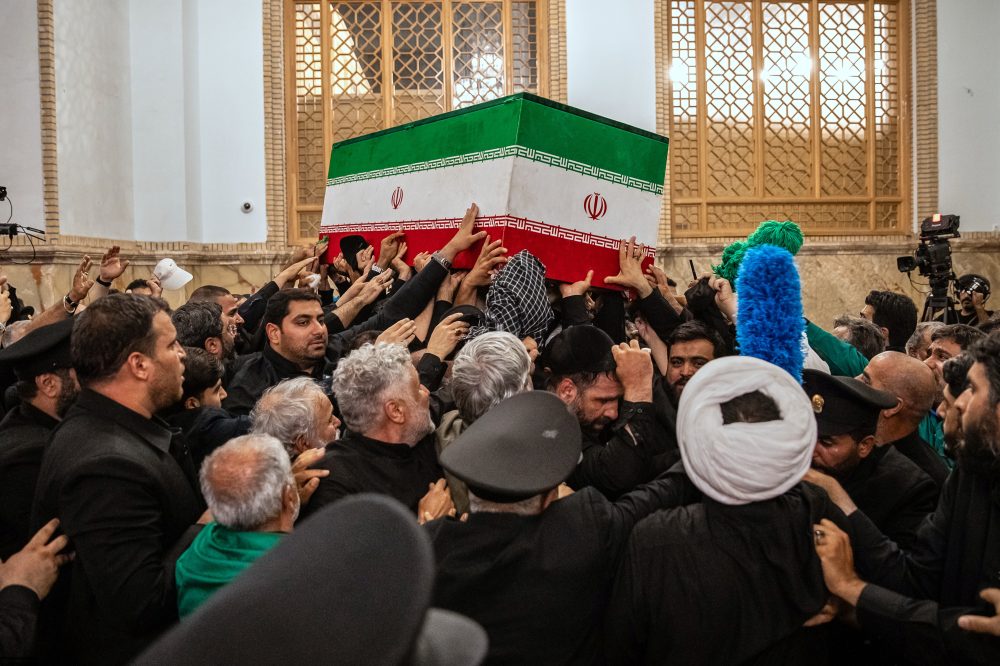
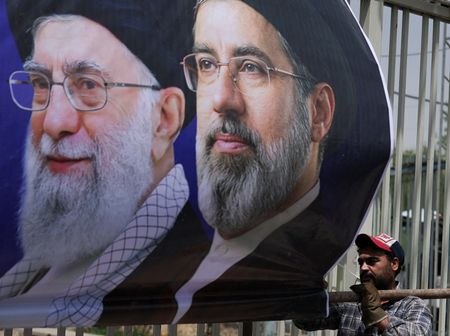
Iran’s new supreme leader, Ayatollah Mojtaba Khamenei, issued a written statement Saturday vowing vengeance for the death of his father and predecessor, who was killed on February 28. The statement was released in connection with funeral ceremonies held Thursday for former leader Ayatollah Ali Khamenei — ceremonies the new leader did not attend. “We pledge to avenge the blood of the martyred leader and all the martyrs,” the message read.
Trump posted Friday that he had directed the U.S. military to be ready to fire thousands of missiles at Iran if Tehran moved to assassinate him. The Wall Street Journal and other American outlets reported this week that Israel had shared intelligence with Washington indicating Iran had recently developed a plan to kill Trump.
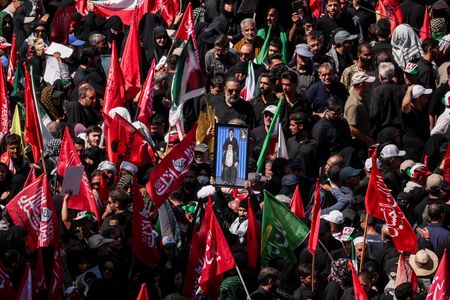
At Thursday’s funeral ceremonies, large crowds filled a courtyard, with some mourners carrying banners bearing the words “We Will Kill Trump.”
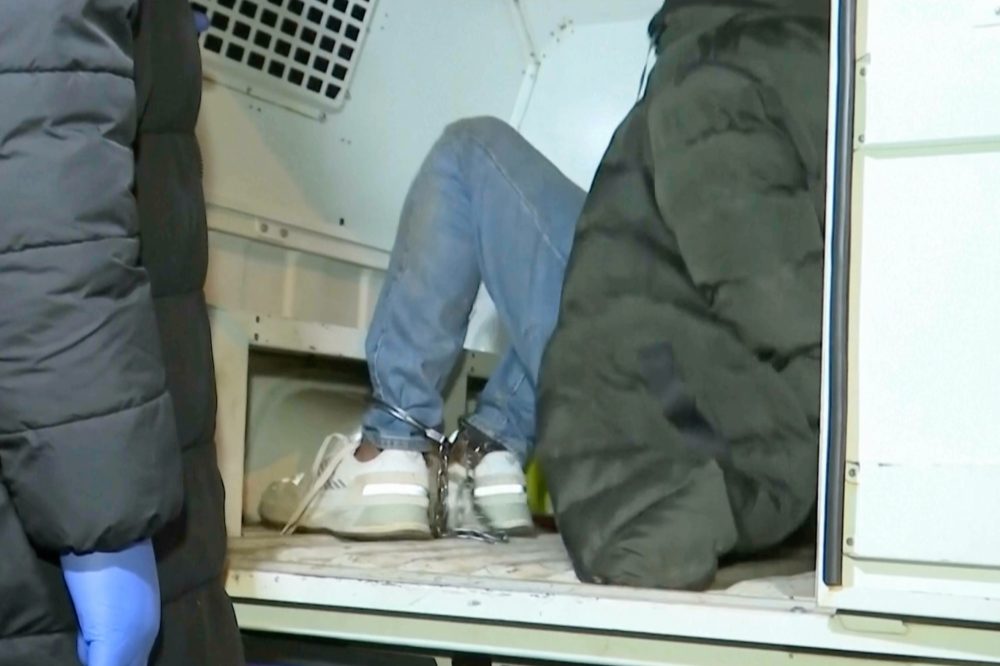
British police announced Saturday that a 28-year-old man has been taken into custody in connection with the killing of Ann Widdecombe, a 78-year-old former government minister in the United Kingdom.
Authorities confirmed the suspect is a white British national who was apprehended in South Yorkshire and remains in police custody at this time.
Iran’s Revolutionary Guards navy announced in the early hours of Sunday that it has shut down the Strait of Hormuz indefinitely, according to reports from Iranian state media.
The closure was triggered after the naval force fired a warning shot at a ship that it claimed had tried to travel through a route that had not been approved, state media indicated.
No timeline was given for when the strategic waterway might reopen, with authorities stating the closure would remain in effect until further notice.
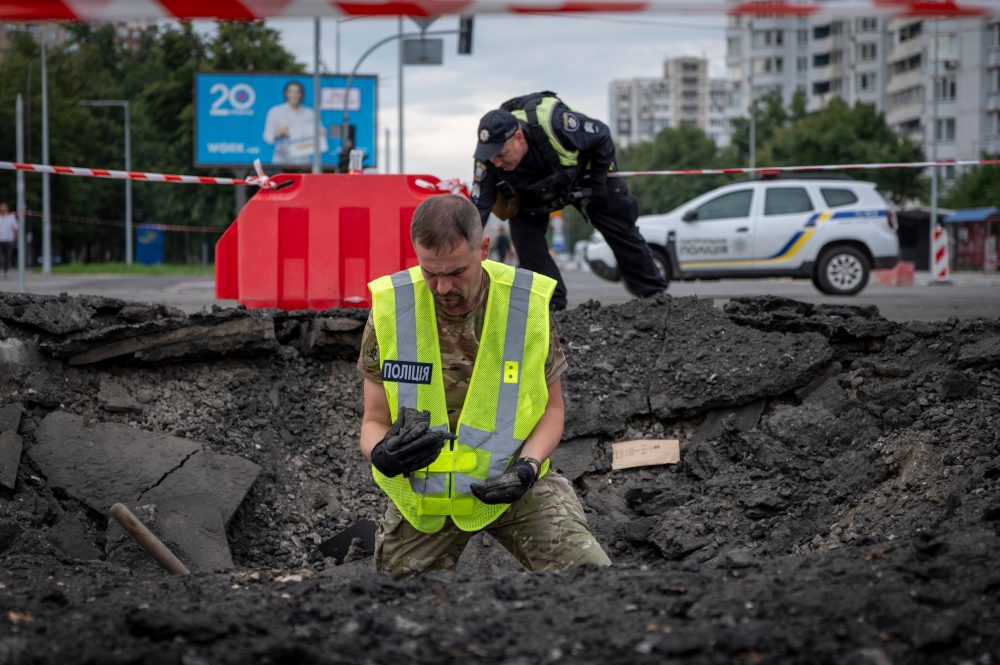
Ukrainian President Volodymyr Zelenskiy declared Saturday that officials who permitted a weapons warehouse to be located in a residential neighborhood on the outskirts of Kyiv would be held responsible after explosions there claimed 10 lives.
Earlier this week, a Russian strike targeted the small town of Vyshneve, located on the western edge of Kyiv, hitting an arms storage facility and triggering a devastating series of secondary blasts. The explosions left hundreds of nearby homes damaged.
Zelenskiy stated that an investigation conducted by the Ukrainian Security Service had pinpointed which officials within the state-run weapons manufacturer Ukroboronprom had approved the use of the Vyshneve warehouse for arms storage.
“This was a direct violation of both the law and a decision of the Supreme Commander-in-Chief’s staff,” Zelenskiy said. “The responsible officials have been identified and the state’s position is that each of them must be held accountable.”
Without naming the individuals involved, Zelenskiy said the leaders of two state-owned enterprises had acted in defiance of Ukrainian law and military directives. He added that other officials who may have played a role in those decisions would also come under scrutiny.
“Every enterprise manager must ensure that such tragedies are never repeated,” the president added.
The deadly incident has ignited public outrage, with local residents accusing authorities of negligence and criticizing the lack of transparency from government officials in the aftermath.
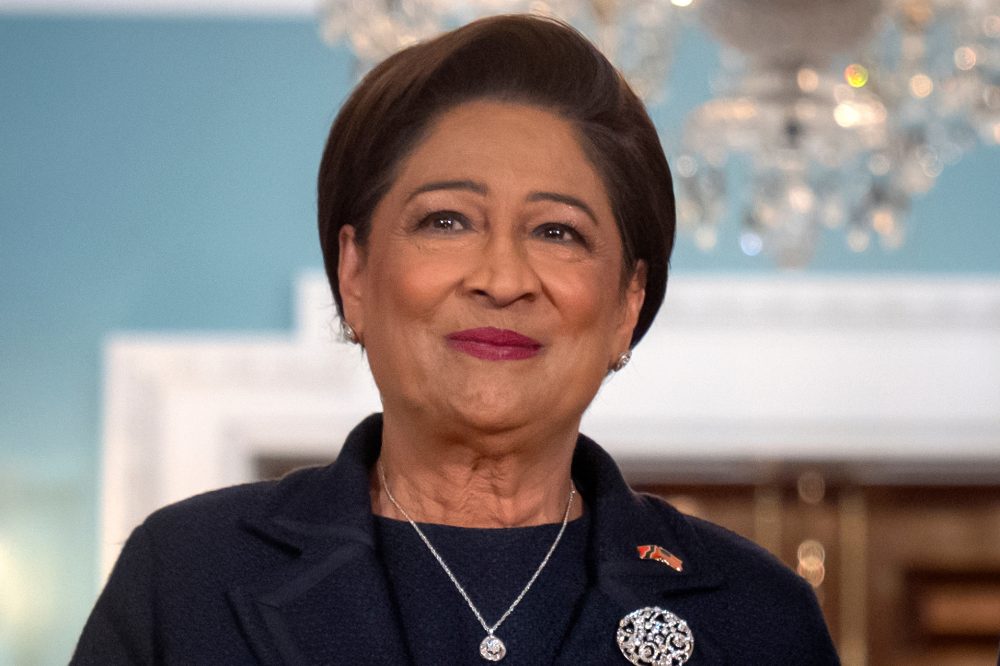
PORT-OF-SPAIN, Trinidad (AP) — Trinidad and Tobago has entered into formal agreements with American companies that will open the door for large-scale data centers to be built in the Caribbean nation, drawing both excitement and concern over the potential strain on the country’s energy and water resources.
The memorandums of understanding were signed on Friday with Florida-based Hummingbird AI Holdings and New York-based Ernst and Young LLP, according to a statement released by the office of Prime Minister Kamla Persad-Bissessar. Officials noted these are the first agreements of this kind signed with any Caribbean country.
The agreement with Ernst and Young LLP establishes a framework for building large-scale data centers, with the company intending to “partner with third parties in the development” of a facility with a 300 megawatt capacity, the statement indicated.
Meanwhile, the deal with Hummingbird AI Holdings creates a structure for “preliminary cooperation, due diligence and coordination” toward a proposed 150 MW artificial intelligence infrastructure and data center project.
A megawatt rating for a data center reflects its electrical power capacity when running at full load. The 300 MW facility, for reference, would consume 300 million watts of electricity at peak operation.
The announcements quickly sparked online debate about the environmental consequences of building such large facilities in the twin-island nation.
Prominent social activist Dr. Wayne Kublalsingh expressed his concerns directly to The Associated Press, questioning the energy demands the planned centers would place on the country. He argued the government is “trying to present something which looks like development, but which is not development.”
Adding to those concerns is Trinidad and Tobago’s long-standing struggle with water access. The country has dealt with chronic shortages and unreliable water delivery for years, and critics worry that water-intensive data centers could make an already strained system even worse. The state utility company operates on a water schedule, and many households rely on personal storage tanks since tap water may only flow once a week. In some communities, residents have gone weeks without any water service from the state provider.
A recent United Nations University report found that data centers worldwide could account for nearly 3% of global electricity consumption by 2030, representing approximately 935 trillion watt-hours. The report also noted that the environmental footprint of data centers already rivals that of some of the world’s largest nations.
On the electricity side, Trinidad and Tobago has seen improvements in recent years, with power outages becoming relatively infrequent, though they do still occur in certain areas.
A third agreement was also signed Friday, this one with American firm Pinnacle Steel and Vanadium Corporation, which recently took ownership of a local iron and steel plant. Government representatives said the deal opens the door for further discussions about restarting operations at the facility.
Taken together, officials said the three agreements are projected to generate more than 5,000 jobs combined.
Prime Minister Persad-Bissessar, who has been a vocal supporter of the Trump administration, noted that the U.S. government helped bring the parties together. Speaking Friday evening at an independence anniversary celebration hosted by the U.S. Embassy in Trinidad and Tobago, she described the deals plainly: “They’re going to invest here to work on data centers, two for data centers, and one to help us rejuvenate and rebuild our steel industry.”
President Donald Trump and Iranian Supreme Leader Mojtaba Khamenei are locked in a war of words, with both sides issuing stark threats while Washington and Tehran tell very different stories about the state of their diplomatic relationship — and remain sharply divided over control of a key waterway.
In a late Friday post on Truth Social, Trump declared that the United States has 1,000 missiles pointed at Iran and that a massive military response would follow if Tehran carries out — or even attempts — any plot to kill him. “1000 Missiles are Locked and Loaded and aimed at the Islamic Republic of Iran,” Trump wrote, warning that thousands more could “immediately follow” if Iran tries to assassinate the sitting U.S. president, adding, “in this case, ME!”
Trump also stated that the U.S. military was “ready, willing, and able” for up to one year — with the possibility of extension — to “completely decimate and destroy all areas of Iran — PRAISE BE TO ALLAH!”
Earlier this week, The Wall Street Journal and other American news outlets reported that Israel had passed along intelligence about an alleged Iranian plan to assassinate the president.
On the Iranian side, Khamenei vowed revenge for those who died in military conflict, including his father, Ali Khamenei. A message issued on his behalf stated: “Tehran is committed to avenging your blood (his father Ali Khamenei) and the blood of all those killed in the two wars. This revenge is the will of our nation and it must be done soon.”
Amid these threats, Trump claimed Iran’s leadership had reached out to restart diplomatic discussions, even though he had previously declared that a Washington-Tehran memorandum of understanding was finished. “The Islamic Republic of Iran has asked us to continue ‘talks.’ We have agreed to do so, but the United States has stated to them, in no uncertain terms, that the Cease Fire is OVER!” Trump wrote Friday.
Iran flatly rejected that account. The Iranian news agency Fars cited a source close to the country’s negotiating team who said talks would not happen “until the American side backs down from its positions.” Iran’s state broadcaster added that Tehran would not return to the table due to what it described as U.S. noncompliance with the Islamabad memorandum of understanding.
The dispute also extends to the Strait of Hormuz, a waterway that typically carries roughly one-fifth of the world’s oil supply. Senior U.S. officials said Friday that Washington is demanding Iran publicly commit to halting attacks on ships in the strait and allow free, unrestricted passage through all shipping lanes. Iran has refused to give up its grip on the waterway.
Iranian Foreign Minister Abbas Araghchi traveled to Oman to meet with his Omani counterpart, Badr al-Busaidi, to discuss how ships could move through the strait under the terms of the memorandum of understanding.
Saudi Crown Prince Mohammed bin Salman also held a conversation with Trump covering the U.S.-Iran talks, security in the waterway, and broader regional stability, according to the Saudi Press Agency.
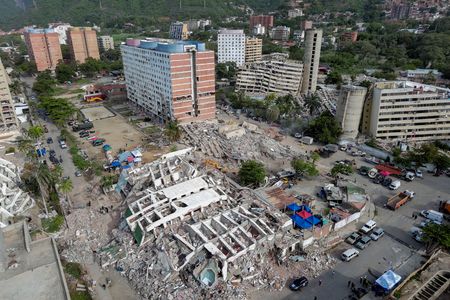
CARACAS — The number of lives lost following two devastating earthquakes that hit Venezuela on June 24 has climbed to 4,333, National Assembly President Jorge Rodriguez announced to reporters on Saturday. He also revealed that housing distribution for survivors will get underway as early as next week.
Among those counted in the death toll, 315 victims have yet to be identified, Rodriguez noted.
The official injury count remains at 16,740. Rescue teams have pulled 6,462 people to safety, while approximately 17,000 individuals have been displaced from their homes.
Rodriguez said that acting President Delcy Rodriguez will assign the first 200 homes to earthquake victims next week, though no additional details were provided about the plan.
Rodriguez also reported that 856 structures sustained damage in the disaster, with 190 of those either fully collapsing or suffering significant structural failure.
Early government estimates indicate that around 25,000 homes will be needed to address the housing crisis. Authorities have already pinpointed roughly 40 parcels of land — totaling approximately 584,000 square meters — in the Osma and Chuspa areas that could be used for new housing developments.
Search and rescue efforts are still ongoing. Rodriguez offered an emotional statement about the continuing operations, saying, “As long as there is life, there is hope. We still have one or two sites where the situation remains uncertain, active sites where we are searching for survivors.”
DUBAI, United Arab Emirates — Leaders from the United States and Iran exchanged sharp threats on Saturday as a shaky interim ceasefire continued to fall apart and international mediators worked desperately to keep diplomatic channels open.
Overnight, President Donald Trump took to social media to threaten additional missile strikes against Iran, following the funeral of Supreme Leader Ayatollah Ali Khamenei, where crowds openly called for Trump’s death. Senior American officials also demanded that Iran publicly declare the Strait of Hormuz open and guarantee the safety of ships passing through it.
Iran’s new Supreme Leader, Mojtaba Khamenei, responded by pledging that Iranians would press forward with avenging his father’s death. He declared that such revenge “is the will of our nation and must certainly be carried out,” in remarks broadcast on Iranian state television. He had not appeared publicly since the conflict erupted on Feb. 28 — the day strikes killed his father.
Iran has maintained that it controls the strait and has the right to collect fees from vessels traveling through it, a position it adopted after the war began.
The war of words came after several days of American airstrikes on Iran, which were triggered by Iran’s attacks on three ships in the strait, and subsequent Iranian strikes targeting Arab nations throughout the region.
Trump declared the ceasefire finished but indicated the U.S. would keep negotiating. Iranian Foreign Minister Abbas Araghchi traveled to Oman on Saturday — situated on the far side of the strait — for additional discussions, one day after Qatari mediators had met with Iranian officials in Tehran.
Trump says threats against him prompted his response
Trump wrote on his website that a thousand “missiles are Locked and Loaded and aimed at the Islamic Republic of Iran, with thousands more to immediately follow, should the Iranian Government act on its threat.”
He stated he was reacting to threats “to assassinate, or attempt to assassinate” him. During Khamenei’s funeral, mourners displayed posters and banners demanding the deaths of both Trump and Israeli Prime Minister Benjamin Netanyahu. Khamenei, who was 86 years old, was buried this week.
Trump also wrote that the U.S. military would “completely decimate and destroy all areas of Iran — PRAISE BE TO ALLAH!” Trump has repeatedly used the Arabic name for God in his statements and threatened to obliterate Iranian civilization. The Council on American-Islamic Relations, an advocacy organization, has spoken out against what it called Trump’s “deranged mocking of Islam.”
U.S. blames hard-liners for undermining the ceasefire
American officials, who spoke without attribution given the sensitivity of the situation, said the renewed strikes this week followed what they described as a rogue group of Iranian hard-liners attempting to derail the ceasefire agreement. Iran, however, has insisted that its government is united behind the new supreme leader.
After the U.S. completed its most recent round of strikes on Thursday, additional attacks reportedly struck Iran, raising questions about who else might be hitting the country. Israel did not claim responsibility, pointing to the possibility that Gulf Arab states carried out the strikes, possibly to discourage Iran from attacking them again. Iran had retaliated against U.S. strikes on Thursday by launching attacks on Bahrain, Jordan, Kuwait, and Qatar.
The two-day wave of strikes inside Iran killed at least 17 people and left 115 others wounded, according to Iranian Health Ministry spokesperson Hossein Kermanpour.
Any nuclear deal would require Iran to hand over enriched uranium
U.S. officials told reporters that Washington would not pursue a nuclear agreement with Iran unless Tehran first halted its attacks on ships in the strait. They also said any nuclear deal would require Iran to surrender its stockpile of highly enriched uranium — something Iran has consistently refused to do.
If no agreement is reached, the U.S. said it has military options to ensure the material stays buried underground permanently, though officials declined to provide specifics.
The uranium, enriched to levels close to weapons-grade, is believed to be stored at nuclear facilities that the U.S. bombed in 2025. Iran has long maintained that its nuclear program is entirely peaceful. The International Atomic Energy Agency, however, has noted that Iran is the only country in the world enriching uranium to such high levels without an active weapons program.
JOHANNESBURG (AP) — South Africa has formally asked the United States to exclude it from proposed tariffs connected to an American investigation into whether dozens of countries are doing enough to prevent imports of goods made with forced labor.
A South African trade delegation, led by the Department of Trade, Industry and Competition, appeared before the Office of the U.S. Trade Representative in Washington this week. The hearing was part of a Section 301 investigation looking at whether at least 60 countries are adequately enforcing bans on goods produced through forced labor.
The delegation made the case that South Africa has ratified major International Labor Organization conventions that prohibit forced labor and has laws on the books allowing authorities to block such imports. The delegation also pointed out that under South African law, goods made using prison labor are already banned.
South Africa urged the U.S. not to move forward with a proposed 12.5% tariff on South African exports. It also sought specific exemptions for several key export products, including platinum group metals, vehicles, citrus, seafood, wine, and nuts, saying there was no evidence those goods were tied to forced labor.
Trade relations between Washington and Pretoria have grown increasingly tense in recent years, with disagreements spanning tariffs, South Africa’s domestic policies, and differing stances on international conflicts, including the war in Gaza.
South Africa has historically enjoyed duty-free access to U.S. markets through the African Growth and Opportunity Act, a trade program that has helped drive billions of dollars in exports from sub-Saharan Africa. That program is set to expire unless the U.S. Congress acts to renew it.
South Africa’s Trade Minister Parks Tau said the United States remains a vital trading partner and that his government plans to continue engaging with Washington on this investigation as well as on existing U.S. tariffs affecting steel, aluminum, and automobiles.
Following the hearing, the U.S. trade office opened a window for additional written submissions due by Thursday, after which officials were expected to make a decision on the matter.
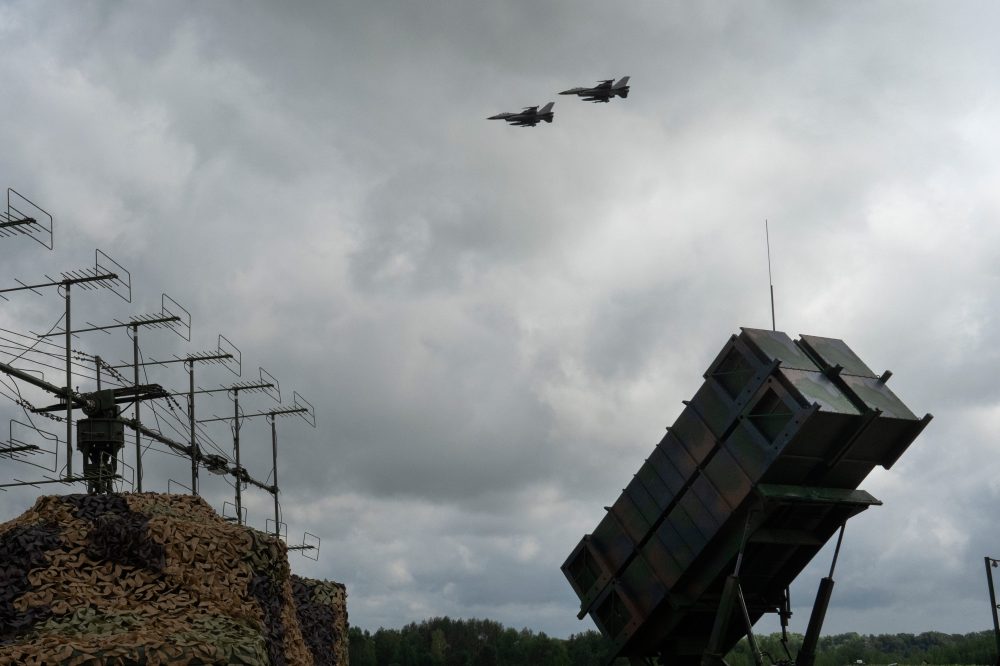
KYIV, Ukraine — U.S. President Donald Trump’s announcement that Ukraine could receive a license to manufacture Patriot air-defense systems has been hailed as a potential turning point for Kyiv, but both experts and Ukrainian officials caution that transforming the pledge into actual weapons will likely require years of work.
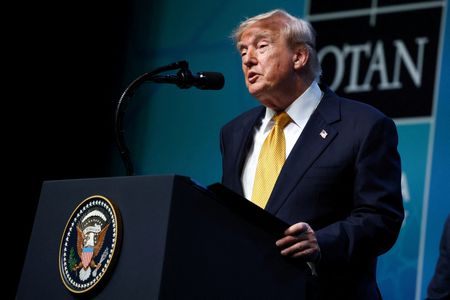
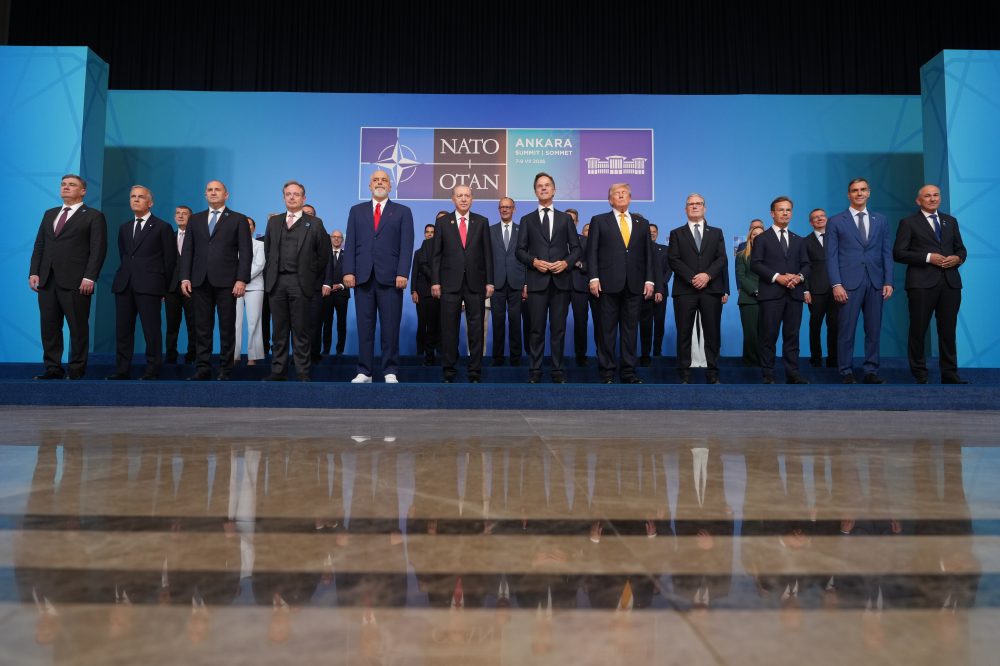
Trump made the announcement Wednesday while standing alongside Ukrainian President Volodymyr Zelenskyy at a NATO summit held in Ankara, Turkey. He declared that the United States would permit Ukraine to manufacture the American-designed systems that Kyiv has desperately wanted to protect its cities and infrastructure from ongoing Russian missile and drone attacks.
“We’ll give them the right to make Patriots. We’ll show them how to do it,” Trump stated. “I think they can produce them pretty quickly.”
However, the announcement left a critical question unanswered: exactly what would Ukraine actually be permitted to produce?
“America has recognized Ukraine as a country that is ready to do this,” Zelenskyy told reporters on Thursday, saying that Ukrainian and U.S. diplomats and defense officials must now work “without pauses” to finalize the licensing arrangements.
Patriot interceptor missiles — used to shoot down incoming missiles, drones, and aircraft — are manufactured by U.S. defense contractors Lockheed Martin and Raytheon, which operates as part of RTX.
A production license would not automatically give Ukraine the ability to build complete Patriot battery systems from the ground up. A full battery includes launchers, radar systems, command posts, and missiles. Instead, the license might cover more limited aspects, such as assembling interceptor missiles from imported component kits or producing select individual components.
Serhii Beskrestnov, an adviser to Ukraine’s defense minister, explained that a U.S. production license would typically come with technical documentation, specialist training, supplier contacts, and foreign consultants to help get manufacturing off the ground.
Other analysts believe the initial steps would fall well short of full domestic production capability.
Anatolii Khrapchynskyi, development director of the Fly Group Ukraine defense company, said Trump’s language was vague because he spoke broadly about producing “Patriots” without clarifying whether he meant missiles, launchers, radar systems, command centers, or individual components.
Missile production alone involves an enormous supply chain, Khrapchynskyi noted, with hundreds of companies responsible for parts including control surfaces, engines, guidance systems, and communications equipment.
The Trump administration has not released specific details about the proposed Ukraine license, though an administration official — speaking anonymously because they were not authorized to comment publicly — said the U.S. is significantly speeding up and expanding Patriot production to meet rising demand and is forming industrial partnerships with allies and partners around the world.
Any additional Patriot systems would enter a conflict that has already demonstrated how rapidly weapons production can scale up when a country receives designs, technical support, and access to parts. Ukraine has emerged as a significant producer of low-cost, expendable drone systems. Russia has similarly expanded domestic production of Iranian-designed Shahed-type attack drones — called Gerans in Russia — at a factory in Tatarstan.
But experts note that Patriot interceptors are far more technologically complex, requiring precision guidance systems, advanced radar technology, solid-fuel rocket motors, military-grade electronics, and rigorous certification standards.
Yehor Chernev, deputy chairman of Ukraine’s parliamentary committee on national security, defense and intelligence, said the legal and administrative groundwork could be laid within months, but that actual production would take considerably longer.
Even if Ukraine received complete component kits imported from abroad, Chernev said, it would likely need a minimum of 18 to 24 months to launch its first pilot production line — followed by additional time before the first finished weapons were ready.
The PAC-3 missile, designed specifically to intercept and destroy ballistic missiles, is among the most technically advanced components in the Patriot family. Chernev said producing a PAC-3 MSE missile in the United States takes roughly 24 months, and manufacturing its solid-fuel rocket motor requires approximately 30 months.
He also noted that some technology — particularly the missile’s active radar seeker — is so sensitive that Washington would likely be unwilling to share full manufacturing documentation. That could mean Ukraine would need to import some of the most complex components and concentrate initially on assembly, integration, or less sensitive portions of the supply chain.
Dr. Thomas Withington, an analyst specializing in electronic warfare, radar, and military communications at the Royal United Services Institute, urged realistic expectations. Ukraine’s existing defense industry could contribute, he said, but the country would still need time to establish facilities, train a workforce, and secure reliable supply chains.
“This is not going to be a fix for the air-defense threats Ukraine is going to face tomorrow,” Withington said.
The United States has previously allowed Patriot-related production in other countries, and those examples show that licensed manufacturing is achievable — but slow.
Japan has been producing Patriot missiles under license for decades. Mitsubishi Heavy Industries has assembled PAC-3 missiles under a licensing agreement with Lockheed Martin, and Japan later relaxed its postwar arms export restrictions to allow the sale of U.S.-designed Patriot missiles back to the United States — a move that could indirectly help replenish stocks used to support Ukraine.
Germany offers a more recent case. Raytheon and MBDA Deutschland announced in 2022 a plan to produce Patriot GEM-T missiles within Germany. A major NATO procurement contract followed in 2024 for up to 1,000 missiles, and a new production facility in Schrobenhausen is expected to help supply Ukraine and replenish European stockpiles.
But Ukraine would face a significant challenge that neither Japan nor Germany had to contend with: Russian airstrikes.
Khrapchynskyi warned that any facility contributing to Ukraine’s air-defense capability would immediately become a high-priority target for Moscow. Production sites would need to be placed in protected locations — potentially underground or inside reinforced shelters.
That reality makes the proposed license more of a long-term strategic investment than a near-term battlefield solution. If fully implemented, it could help Ukraine become a future producer of air-defense weapons and lessen its dependence on allies whose own stockpiles are already under pressure.
“It would not solve the current missile shortage in 2026,” Khrapchynskyi said, “but it would lay the foundation for Ukraine to become one of Europe’s leading producers of air-defense systems in the future.”
A tourist speedboat capsized off the coast of southern Vietnam on Saturday, claiming the lives of 15 Indian visitors, according to state media reports out of Hanoi.
The vessel was carrying 32 Indian tourists along with four crew members when it overturned approximately 400 meters — about 1,310 feet — from Hon May Rut Ngoai Island, located near Phu Quoc, Vietnam’s largest island, authorities said.
Witnesses told VN Express that boats in the area immediately rushed to help, pulling passengers from the water before border guards, naval personnel, coast guard units, and other rescue agencies arrived on scene. VN Express reported that the rescue operation was especially challenging because a number of those aboard were trapped inside the capsized vessel.
In total, 21 people were pulled to safety, and the bodies of all 15 victims were recovered. Those who sustained injuries were transported to nearby hospitals for treatment.
Video footage broadcast on Vietnamese television showed rough waters and powerful winds at the scene, with rescue crews tossing life buoys to people struggling in the sea. Jet skis were used to bring survivors back to shore, where bystanders on the beach administered first aid.
Vietnamese Prime Minister Le Minh Hung called for a full investigation into what caused the accident and directed officials to hold any responsible parties accountable. He also instructed authorities to conduct a safety review of waterway and maritime operations in the affected area and in comparable locations throughout the country.
Indian Prime Minister Narendra Modi confirmed that the tourists were employees of a private mobile phone company who had been attending an annual company event. He posted on social media that staff from the Indian Embassy had been dispatched to the scene.
Phu Quoc, situated in the Gulf of Thailand, ranks among Vietnam’s most visited beach destinations. Hon May Rut island lies roughly 10 kilometers — about 6 miles — south of Phu Quoc. Both locations are celebrated for their white-sand beaches and crystal-clear waters, drawing millions of visitors from Vietnam and abroad each year.
The exact cause of the accident had not been determined as of Saturday, and an investigation remains ongoing.
DHAKA — Relentless monsoon rains have unleashed devastating floods and landslides across southeastern Bangladesh, killing at least 44 people and leaving more than a million residents stranded as emergency crews worked urgently Saturday to get aid to overwhelmed communities.
According to the country’s disaster management ministry, the flooding has spread across seven districts — Chattogram, Cox’s Bazar, Bandarban, Rangamati, Khagrachhari, Moulvibazar and Habiganj — disrupting everyday life, cutting off thousands of families, and affecting 267,918 households.
Downed power lines, wrecked roads, and severed communication networks have hampered rescue and relief operations. Many residents have gone days without being able to prepare meals as floodwaters filled their homes, while others are dealing with thick mud that has covered kitchens and living areas.
Nurul Islam, a resident of a flood-affected neighborhood in Chattogram, described the desperate conditions his family is facing. “There is still water inside our home and we have no way to cook. The dry food we had has run out, and we spend the nights in the dark with our children because there is no electricity,” he said.
Countless families are surviving on ready-to-eat foods such as flattened rice, puffed rice, and biscuits that require no cooking. However, washed-away roads and collapsed bridges have made it extremely difficult for relief workers to access some of the most severely affected areas.
Both army and navy units are using boats to transport food, clean drinking water, medicine, and other critical supplies to communities that have been cut off from the outside world.
Disaster Management and Relief Minister Iqbal Hossain traveled to affected areas in Chattogram, where he addressed the ongoing response efforts. “The government is doing everything possible to support flood victims. Relief, safe drinking water and medical supplies are being distributed, and we urge people whose homes have been inundated to move to the nearest shelter,” he stated.
Earlier in the week, the heavy rainfall also triggered landslides inside Rohingya refugee camps located in Cox’s Bazar, where 16 refugees — including women and children — lost their lives. The camps are home to more than one million Rohingya refugees, many of whom live in makeshift shelters built on steep, tree-stripped hillsides that are particularly vulnerable when monsoon rains arrive.
Bangladesh ranks among the most disaster-vulnerable nations on earth, with seasonal monsoon flooding, river erosion, and landslides a recurring threat. Scientists have noted that climate change is intensifying extreme rainfall events, making disasters like this one more frequent and more severe.
BEJAR, SPAIN — Hundreds of firefighters, supported by helicopters and fixed-wing aircraft, spent Saturday racing to contain one of the most deadly wildfires Spain has seen in years, a blaze that has now claimed at least 12 lives.
Antonio Sanz, who leads Andalusia’s emergency services, said that lighter winds and higher humidity were giving crews some relief, but the enormous scale of the fire continued to make the battle difficult. The blaze has burned through approximately 66 square kilometers — about 25 square miles — of forest and farmland, an area comparable in size to Manhattan.
Sanz said firefighters conducted controlled burns overnight along the fire’s edges in an effort to slow its spread. The fire first ignited late Thursday in a dry, semi-arid region near the Sierra de Los Filabres mountains in Almeria province, striking just as Spain was enduring a brutal heat wave.
Authorities say most of the victims are believed to be foreign nationals who lost their lives after disregarding instructions to shelter in place. Seven of the dead were found on foot, having abandoned their vehicles. Four of those killed are thought to be British citizens — investigators identified the likely nationality based on the right-side steering wheel found in their burned vehicle, consistent with British cars.
Sanz confirmed Saturday that autopsies had been completed and DNA samples collected to help formally identify the victims.
In total, authorities evacuated 1,448 residents from roughly 11 different areas as a precaution.
Jeffrey and Christine Kember were relaxing at their Los Pinos farmhouse watching a favorite television program when a blaring siren warned them of the approaching fire. Jeffrey Kember described how both he and his wife jumped into separate cars, while also trying to assist a neighbor who had two young toddlers with her.
The couple became separated during the chaos, and Jeffrey had no way to reach his wife because she had left without her phone.
“I’m driving through the flames. It was actually flames. I thought, ‘I can’t stop, I just gotta go,’” Jeffrey Kember told the Associated Press, his wife standing beside him outside an evacuation center.
“It was eerie because all of a sudden I came out of the flames and it was all bright sunshine. It was like surreal. Ridiculous!”
Spanish authorities also arrested two individuals who defied evacuation orders and returned to a high-risk zone, according to Spain’s official EFE news agency. Search crews continue to comb through the Bédar area looking for any additional victims.
Spain has faced increasingly severe and frequent heat waves in recent years, with temperatures regularly topping 40 degrees Celsius, or 104 degrees Fahrenheit. A combination of high heat, wind, and dry conditions can quickly turn small fires into massive, uncontrollable blazes.
Justice Minister Félix Bolaños pointed to a “climate emergency” as the driving force behind the fire’s intensity on Saturday, noting that at its most ferocious, the blaze was advancing at a rate of 100 meters — roughly 328 feet — per minute.
This past June, Spain suffered through several days of record-breaking heat that contributed to more than 1,000 excess deaths.
According to the European Union’s Copernicus Climate Change Service, Europe is warming faster than any other continent — temperatures there have risen at twice the global average rate since the 1980s. Parts of Western Europe are currently enduring their third heat wave in just six weeks. Globally, 2025 ranked as the third-hottest year ever recorded, bringing with it a series of intense heat events across Europe.
France was also battling multiple active wildfires Saturday as temperatures spiked across the country. Interior Minister Laurent Nunez announced that 32 people have been arrested in France since the start of summer in connection with wildfire-related offenses.
“Those unacceptable acts, which have disastrous consequences and mobilize our firefighters at the risk of their lives, now fall into the hands of the justice system,” Nunez said. “We will continue our determined action and will not let anything slide.”
French President Emmanuel Macron also weighed in, noting in a post on X that nine out of every ten wildfires are sparked by human activity. More than 25,000 hectares — roughly 62,000 acres — have burned in France so far in 2026, approximately double the area burned during the same stretch last year.
France is currently at the height of its third heat wave this summer, with temperatures hitting 40 degrees Celsius across western and central regions, and around 37 degrees Celsius — about 98 degrees Fahrenheit — in Paris. Last month was France’s hottest June on record, with deaths climbing by nearly a third during the peak heat week.
Wildfires are not new to Spain. Last year’s fire season scorched more than 393,000 hectares — around 971,000 acres — an area twice the size of London, according to the European Forest Fire Information System. Four people died in those fires.
Spain’s deadliest wildfire on record occurred in 1979, when 21 people were killed in Lloret de Mar, a coastal town roughly an hour north of Barcelona. In neighboring Portugal in 2017, a wildfire killed 66 people in Pedrogao Grande, located about 200 kilometers — or 120 miles — northeast of Lisbon. In that disaster, 47 of the victims died on a single road while attempting to flee in their cars, much like several of the victims in this week’s Spanish blaze.
LA GUAIRA, Venezuela — Maria Alejandra Sanz looked away the moment she learned rescue workers had recovered the lifeless body of one of her closest friends from the wreckage of a building destroyed by twin earthquakes that hit the state of La Guaira in northern Venezuela last month.
The 17-year-old had spent 17 agonizing hours pinned beneath the collapsed structure in the coastal town where she had spent her entire life. The June 24 quakes brought the building down around her, forcing her to drink her own urine to stay alive while she assumed the other members of her dance group had all perished.
Of the ten friends who had been rehearsing a routine for their upcoming high school graduation, four would not make it out alive.
“I’m fine,” Sanz said without conviction during an interview held in front of what used to be her home, nine days after the disaster. The air around her was still thick with dust and sorrow. Earlier that same day, rescuers had recovered the body of her friend, Gonzalo Marquez, from the debris.
A flood of questions she could not answer followed: Would her friends still be alive if help had come faster? Would things have turned out differently if the group had been practicing somewhere else? What if she had stayed downstairs with Marquez instead of going up to get him water? Why does she get to go to university when he does not?
Sanz and her friends had grown up amid economic collapse, mass migration and authoritarian rule. They began 2026 with cautious hope, believing that the U.S. removal of Venezuelan President Nicolas Maduro might finally open the door to a better future.
Then the earthquakes struck. The government reports that more than 4,000 people have been killed and nearly 17,000 others injured.
Saved by a Friend’s Thirst
In the weeks before the disaster, the dance troupe had been practicing seven days a week, sometimes rehearsing until 3 a.m. On the evening of June 24, they were in the ground-floor party hall of Sanz’s building, working on their moves to “Dangerous,” a 1991 Michael Jackson song. Graduation was just three days away.
About 20 minutes before the quakes hit, Marquez asked Sanz to bring him some water. She headed up to the third-floor apartment she shared with her parents, paused to pet her dog Bruna one final time, and was just about to grab the water when the building began to shake at 6:04 p.m.
She stepped into the nearest doorframe. Seconds later, darkness swallowed her as the floors below collapsed. A doorframe fell diagonally across her midsection, acting as a shield against a crumbling wall.
A thin sliver of light visible across her fingers told her she wasn’t buried too deeply. She managed to free her feet by sliding out of the oversized sneakers she had been wearing for the dance performance.
Knowing that her own urine might be her only source of hydration, she caught what she could in her hand and brought it to her lips. As the light disappeared, she prayed.
“If I have to die, let it be while I’m asleep,” she recalled thinking in that moment.
When light returned, Sanz woke and began clawing toward it, slowly squeezing her body through chunks of concrete until she carved out an opening large enough to escape through.
With half her body free, she called out to a neighbor for help. Her 71-year-old father, who had been outside with his wife when the quakes struck, ran up the pile of rubble to reach her. Still in a daze, she held onto him tightly. When she finally reached her mother, she learned that five of her ten friends had escaped without injury.
“What about Gonzalo? Isa?” she asked.
There was no word yet on Marquez, but volunteer rescuers reported that Isa Campos — a friend Sanz had known her entire life — had been spotted conscious beneath the rubble. She was alive, they said. At the time, that was true.
‘That Could Be My Daughter’
Jeffry Campos, Isa’s father, arrived at the scene within two hours of the disaster and spent the entire night digging through concrete and steel alongside the father of another dancer. By 11 a.m. the following day, a Caracas police unit joined the effort — working with only their bare hands.
The specialized equipment needed to free Isa from between two beams never came. Known for her sharp mind and vibrant energy, she died roughly 24 hours after the earthquakes. Her body remains in the rubble.
“Help arrived late,” her father said outside a church where a memorial mass was held in her honor. “Rescue workers, firemen and the military did not arrive until two or three days later.”
Civil engineer Andres Ganscka saw a TikTok video about the trapped dancers the night of the earthquakes and immediately set out from his home in central Colombia. He loaded his vehicle with hydraulic and power jacks, hand tools, diapers and baby cream.
“I saw it and thought, ‘That could be my daughter,’” said Ganscka, who has three children of his own.
He arrived the following night to a scene scattered with bodies. He took charge of coordinating volunteer rescue workers at the Sanz family’s building, searching the debris for the missing dancers and 15 other children who had been playing table tennis inside. Venezuelan authorities did not show up until three days after Ganscka had already arrived. In total, he spent approximately $35,000 on the rescue effort.
An Imagined Future, Now Gone
Both Sanz and Marquez had secured spots at universities in Caracas. He had planned to study engineering; she was set to pursue architecture. They had spoken about staying in Venezuela to help rebuild the country.
Like many young Venezuelans, they had watched their parents endure more than a decade of economic crisis, political turmoil and violence, while friends and family members left for other countries. The capture of Maduro by U.S. forces during a January raid had felt like a reason to hope.
When Marquez was assigned the desk beside hers during their freshman year, Sanz says she didn’t think much of it. By senior year, the two were inseparable. Though he wasn’t particularly funny at first, he later became known for his constant sarcastic jokes. They played Mr. and Mrs. Claus together at the school’s Christmas show and, when not dancing, practiced piano side by side.
“He was often the only boy, he didn’t care what anyone thought, full of personality and the protector of the crew,” Sanz said.
The group chat where they once coordinated costumes, set designs and rehearsal schedules has gone mostly quiet. Sanz says the surviving members of the group move between numbness and grief — fine one moment, in tears the next.
“We talked about how we weren’t going to see each other after graduation, we talked about how Gonzalo looked like his dad and would have gray hair,” Sanz said. “They’ll stay young forever, always young.”
Firefighting crews battling a devastating wildfire in Spain’s southeastern Almería province were set to begin pushing back against the blaze on Saturday, according to the region’s top emergency official — even as additional villages were cleared out overnight as a safety precaution.
Driven by strong winds, the fire exploded across the landscape on Friday, overtaking some victims before they could escape. Autopsies have been performed on all 12 bodies recovered near the forested district of Bédar, north of Los Gallardos where the fire originated, though none of the victims have yet been officially identified.
Antonio Sanz, who heads emergency services for the Andalusia region, spoke to reporters at the perimeter of the disaster zone, describing the fire as still “complex” and continuing to spread. However, he praised firefighting crews for successfully preventing the blaze from crossing a major highway toward more densely populated towns along the coast.
“So far we have been engaged in defense work, to prevent advances,” Sanz said. “Today is the first day we will be able to work on attacking the fire.”
The majority of those who died are believed to be citizens of Britain and Belgium, along with one Spanish national. Eight people sustained injuries in the fire, four of them critically, and all remain hospitalized in Seville.
The Institute of Forensic Medicine in Almería released a statement Friday evening noting that identification of the victims has not yet been possible. “No one has been identified yet, nor is it possible at this time to determine the age or sex of the deceased,” the institute stated.
Forensic samples have been sent to Madrid for further testing and comparison against DNA provided by the victims’ families.
Officials have sought to temper fears of a dramatically higher death toll, pointing out that only seven people have been formally reported missing by their families, compared to 23 informal reports that had circulated by Friday.
By late Friday, more than 1,400 residents had been evacuated as the fire continued to burn near Los Gallardos, with precautionary evacuations also carried out in several communities surrounding Bédar.
More than 500 firefighters and emergency personnel are working the scene, including regional fire crews, military soldiers, and 19 specialists from a national firefighting unit. Emergency officials said teams are focusing their efforts on the western edge of the fire, where the flames are burning most intensely and spreading most rapidly. In total, 6,600 hectares have been consumed by the fire so far.
Sanz offered a cautiously optimistic update on overnight conditions: “The night has passed relatively well, within the complexity and dimensions of the fire. The fronts have remained less active and no new direct threats to inhabited areas have occurred.”
Those who witnessed the fire’s terrifying speed on Friday described scenes of disbelief. At one point, the fire advanced 15 kilometres in just two hours, according to the regional president.
Víctor Manuel Fernández, the parish priest serving Bédar and Los Gallardos, recounted that he had traveled to a neighboring village to lead Mass when the fire began. “You could see smoke but far away, in a corner of the municipality,” he said. “I figured they would put it out because our firefighters always react very rapidly. But when we came out of the Mass there was a cloud of black smoke and looking up at the mountains, the flames were devouring everything. It was a matter of minutes.”
At least 11 people were wounded — among them a child — after Russia unleashed a barrage of missiles and drones on the Ukrainian capital of Kyiv in the early morning hours Saturday, according to Ukraine’s State Emergency Service.
In a separate counter-strike, Ukrainian forces targeted Russian ships in the Sea of Azov, with Ukraine’s General Staff reporting damage to 21 tankers carrying oil and petroleum products. Four tugboats, two cargo vessels, and a dredging ship were also hit in the overnight operation. Ukrainian officials said those vessels had been used to support Russian military logistics.
Russian authorities disputed the scope of the attack, saying only four ships were struck and that the damage was minor. One person was killed — a sailor aboard a technical support vessel — according to local Gov. Yuri Slyusar. He said one of the four vessels hit was a tanker carrying methanol.
Explosions and fires broke out across three Kyiv districts: Solomianskyi, Darnytskyi, and Dniprovskyi, the emergency service announced via Telegram. A strike in Solomianskyi district set a three-story office and warehouse building ablaze, while a separate warehouse in Dniprovskyi district also caught fire after being hit.
Ukrainian President Volodymyr Zelenskyy said Russia fired 12 missiles of various types — six of which were ballistic — along with 121 drones during the overnight assault. He noted that while most drones and some missiles were intercepted, none of the ballistic missiles were shot down, underscoring what he described as critical weaknesses in Ukraine’s air defense network.
Ukraine’s air defense forces reported shooting down or electronically disabling two missiles and 111 drones. The Air Force confirmed direct hits at 11 locations from ballistic missiles, two guided air-to-surface missiles, and seven attack drones, with debris from intercepted weapons falling at three additional sites.
Russia’s Defense Ministry claimed its forces had aimed at drone manufacturing facilities in Kyiv, as well as port infrastructure at Izmail and Chornomorsk in Ukraine’s southern Odesa region. The ministry also stated that Russian air defenses destroyed 178 Ukrainian drones overnight across eight Russian regions, as well as over Russian-occupied Crimea and portions of the Black and Azov seas.
Iran’s Supreme Leader Ayatollah Mojtaba Khamenei issued a strong vow of retaliation on Saturday, declaring that avenging the death of his father and predecessor is both “the demand of the nation” and something that “must certainly” happen.
The statement was shared through a written message posted to Khamenei’s Telegram account, timed to coincide with funeral ceremonies for his father, Ayatollah Ali Khamenei, who died in U.S.-Israeli airstrikes on February 28.
“We pledge to avenge the blood of the martyred leader and all the martyrs of these two wars from the criminal and disgraced killers,” Khamenei wrote in the message.
The ceremonies marking the elder Khamenei’s passing were held months after he was killed in those strikes, with his son now leading the country as Supreme Leader.
At least 15 Indian tourists lost their lives after a boat overturned in waters off Phu Quoc, a popular island destination in southern Vietnam, on Saturday, according to VnExpress, which cited local authorities.
The vessel had 36 people on board at the time of the accident — 32 Indian tourists, three crew members, and one attendant. Of those aboard, 21 people survived.
The boat was making its way from Hon May Rut Island to An Thoi Port when it capsized approximately 400 meters — roughly 440 yards — from shore. Authorities noted that sea conditions were dangerous at the time, with large waves in the area.
India’s embassy in Vietnam confirmed it is closely following the situation and has opened emergency response centers in both Ho Chi Minh City and Hanoi to provide support to the families of those involved.
In a statement, the embassy described the event as “tragic” and noted that “exact details of the incident are being ascertained as search and rescue operations by local authorities are ongoing.”
Phu Quoc is Vietnam’s largest island and has grown into one of the nation’s top tourist destinations, drawing a significant number of visitors from India in recent years.
Moldovan President Maia Sandu has put forward financier Vasile Tofan as her choice for the country’s next prime minister, making the announcement during a press conference held Saturday.
Tofan, who is 44 years old, works as a senior partner at the investment firm Horizon Capital. He was a supporter of President Sandu during her 2024 presidential election campaign.
TIRANA — A Miami-based businessman wanted in Albania on allegations of laundering drug money is also suspected of forging the property documents used to sell land where Jared Kushner plans to build a multi-billion-dollar resort, according to case files from Albania’s organized crime-fighting agency reviewed by Reuters.
The businessman, Artur Shehu, denies every accusation leveled against him, according to his attorney, Kujtim Cakrani, who confirmed that Albanian prosecutors have issued a warrant for Shehu’s arrest on charges of laundering money on behalf of drug trafficking organizations.
The case files allege that Shehu and his associates smuggled South American cocaine into European ports and used the proceeds to build a real estate portfolio — including through the use of falsified land ownership records.
“Nothing that has been alleged regarding Mr. Artur Shehu’s character is true. He is neither a drug trafficker nor a forger of property documents,” attorney Cakrani said.
Cakrani added: “Mr. Shehu is aware of the allegations made by the Albanian prosecution. These allegations do not concern him because he maintains that the truth is entirely different from what the prosecution claims.”
A spokesperson for the U.S. Justice Department declined to say whether authorities had received any request from Albania to locate or detain Shehu in Miami.
This past April, Shehu sold the pristine strip of Albanian coastline earmarked for the resort to a company called Albania Land Development, which is owned by Sazan Real Estate Development — the Kushner-backed developers — along with other investors.
“Reasonable suspicions are formed, based on evidence, that the above-mentioned assets were acquired through the use of forged documents,” prosecutors wrote in the case files.
Importantly, the files contain no allegations of wrongdoing against Kushner himself, Sazan Real Estate Development, Albania Land Development, or any other investors connected to the resort project. Reuters found no evidence that any of the investors had knowledge of suspicions surrounding Shehu when they purchased the land.
A spokesperson for Sazan Real Estate Development did not directly address the allegations against Shehu but stated that the company believes the land purchases were conducted lawfully. Albania Land Development did not respond to requests for comment, and a spokesperson for Kushner also declined to comment. While Sazan has confirmed Kushner is an investor in the project, the specific nature of his role and the size of his investment have not been made public.
The allegations surrounding the property documents add yet another obstacle to a project already generating significant controversy. Mass protests have erupted over concerns that the development threatens local wildlife, and residents of the nearby village of Zvernec have been challenging Shehu’s claim to the land in court for more than a decade.
Last month, a dozen of those residents showed Reuters title deeds and tax records they say prove they are the rightful owners. Their attorney, Kostandin Beko, said the legal dispute remains open and that they intend to seek a court order to stop the resort from moving forward.
Albania, once among the poorest and most secluded nations in Europe, is now a candidate for European Union membership and is experiencing a construction surge along some of the last unspoiled coastline on the Adriatic Sea.
The planned resort sits along a stretch of wild beaches, forests, and wetlands that serve as habitat for sea turtles and flamingoes. Those birds have become symbols for opponents of the project, who have branded their demonstrations the “Flamingo Revolution.”
Kushner’s wife, Ivanka Trump, has said the couple came up with the idea for the resort after spotting the coastline from a yacht years ago. In 2024, Kushner announced the plans on social media, sharing an artist’s rendering depicting a hotel, villas, swimming pools, and yacht docks covering the land. He has not publicly disclosed the amount of money he has invested.
Albania’s government has been a strong supporter of the project, dismissing the protests as politically motivated. Prime Minister Edi Rama told Reuters last month that the development was “beautiful” and would proceed regardless of opposition. A government spokesperson, when asked about the allegations against Shehu, said the government would not intervene in private transactions and that the project was moving forward in compliance with Albanian and EU regulations.
The European Union has previously urged Albania — as a membership candidate — to follow EU environmental standards in connection with the project. A spokesperson for the EU’s executive Commission declined to provide additional comment.
The case files against Shehu were compiled by Albania’s Special Structure Against Corruption and Organised Crime, known as SPAK, an independent agency established in 2019 to combat corruption using its own investigators and prosecutors, separate from the regular police and prosecution service.
The documents span 200 pages and have not been released to the public. A SPAK spokesperson confirmed the agency is investigating the matter but declined to elaborate further.
The files are dated June 12, 2026 — the same day SPAK publicly announced arrest warrants for 20 individuals on charges of drug trafficking and money laundering. While the case files identify suspects by their full names, the arrest warrants follow standard Albanian practice and list suspects only by initials. The initials in the warrants correspond to the full names in the case files, including one suspect listed as “A.Sh.”
Shehu’s attorney, Cakrani, confirmed his client is a target of the warrant but expressed little concern, saying it was “widely believed” that Albanian prosecutors act under the influence of political and business figures. SPAK has not disclosed whether any of the 20 suspects have been arrested or formally charged.
According to the SPAK documents, Shehu sold the resort land for approximately €110 million. Prosecutors say they have ordered those funds frozen in a notary’s account, blocking the money from reaching Shehu.
The documents allege that Shehu and his associates “purchased land using illegally obtained funds and forged ownership documents by creating false property titles or artificially increasing the size of properties,” and that “the properties were then transferred or exchanged so they could not easily be traced by the authorities.”
Sazan Real Estate Development’s spokesperson responded: “We continue to believe the underlying land acquisitions were conducted lawfully and in accordance with applicable procedures. As always, we respect and will cooperate with any lawful process as required.” The company did not respond to follow-up questions asking why it considered the transactions lawful in light of the prosecutors’ allegations.
Shehu’s attorney told Reuters that Shehu’s family has held ownership of the land since the era of the Ottoman Empire, more than a century ago, and that the sale to resort investors was entirely legitimate. Cakrani also described Shehu as a law-abiding individual who sought political asylum in the United States in 1998 after witnessing “criminal gangs” kill his brother and uncle. Reuters was unable to independently verify that account.
LONDON (AP) — A 26-year-old man arrested in connection with the death of former British Member of Parliament Ann Widdecombe has been released by police and is no longer considered a suspect in the case.
Devon and Cornwall Police confirmed the release Saturday, stating that “detectives continue to carry out numerous enquiries as part of the ongoing investigation and we remain committed to establishing the full circumstances surrounding the incident.”
Widdecombe, 78, was discovered dead Thursday inside her secluded rural residence on the outskirts of Dartmoor National Park in southwest England. The man had been taken into custody Friday in a nearby town located several miles from the scene.
Authorities have since clarified that the killing is not believed to be an act of terrorism, and investigators have found no evidence suggesting the death was connected to Widdecombe’s political background.
The news sent a wave of grief and shock through British political circles. Widdecombe had served as a lawmaker in the House of Commons from 1987 to 2010 and held the position of prisons minister during Prime Minister John Major’s Conservative government in the 1990s.
After stepping away from Parliament, Widdecombe became a familiar face on British television, appearing as a contestant on the reality programs “Strictly Come Dancing” and “Celebrity Big Brother.”
In her later years, she aligned herself with the Brexit Party and took on a spokeswoman role for the anti-immigration Reform UK party.
ISTANBUL — Turkish prosecutors have issued detention orders for 36 individuals, among them the mayor of an Ankara district controlled by the country’s main opposition party, as part of an ongoing investigation into alleged bribery and manipulation of government contracts, the Ankara chief prosecutor’s office announced Saturday.
Of the 36 people named in the orders, 27 have already been taken into custody. Authorities are still actively searching for the remaining suspects, according to a statement from the prosecutor’s office.
Huseyin Can Guner, the mayor of Ankara’s Cankaya district and a member of the Republican People’s Party — commonly referred to as the CHP — addressed the situation in a post on X. He said he had voluntarily informed authorities of his location and even left a spare key to his home so officers could carry out a search while he made his way back to Ankara.
“Since taking office, we have managed this institution in the best possible way and have not engaged in the slightest conduct that would embarrass anyone who has placed their trust in us,” Guner wrote.
The latest action is part of a broader pattern of legal investigations targeting municipalities run by the CHP. The Turkish government maintains that its judicial system operates independently. The CHP, however, has pushed back against the allegations, characterizing the investigations as politically driven rather than based on genuine legal concerns.
Russian authorities confirmed Saturday that one person was killed following a drone strike on four ships in Taganrog Bay, part of the Sea of Azov.
Yuri Slyusar, governor of the southern Rostov region, shared the news on Telegram, writing: “A seaman on a technical support vessel has lost his life. I offer my condolences to the family and loved ones of the deceased. No one else was injured.”
Slyusar noted that the vessels suffered damage to varying degrees, but assured that “there is no risk of a methanol spill or leak” from the tanker involved in the attack.
Among the ships struck was a tanker transporting methanol. The governor also reported that more than 18 drones were shot down during the defense of the region against the aerial assault.
Russia’s Defence Ministry reported that air defense units destroyed a total of 178 Ukrainian drones across various regions throughout the night.
The attack follows a series of drone strikes on Friday, which triggered fires at two fuel storage facilities and at the Taganrog sea port.
PAMPLONA, Spain — A participant in Spain’s famous San Fermin festival was pierced in the face by a bull’s horn Saturday, while dozens of others narrowly escaped serious injury during a frenzied morning run through the streets of Pamplona.
Six bulls and a group of accompanying steers thundered through tightly packed crowds along the festival’s narrow cobblestone course. The massive animals sent runners tumbling to the ground, and stumbling participants triggered multiple pile-ups throughout the two-and-a-half-minute dash from the starting pen to the bullring, where the animals are killed by bullfighters later in the day.
According to the University of Navarra Hospital, one person sustained a horn wound to the face, while 12 others were treated for various bumps and injuries sustained during the run.
A black bull separated from the rest of the herd early in the 875-meter (957-yard) course and barreled into a crowd of runners, striking one person squarely in the face with its horn. It remains unclear whether that specific moment resulted in the goring.
Throughout the run, many participants appeared completely oblivious to the bulls right behind them. Rather than attempting to gore the runners, some of the bulls simply shoved them aside.
Saturday’s run was the fifth of eight morning runs that make up the festival, which is held in northern Spain.
This year’s San Fermin carries special historical significance — it comes exactly 100 years after the publication of Ernest Hemingway’s novel “The Sun Also Rises,” the book widely credited with bringing the festival its international reputation.
The most recent fatality at San Fermin’s bull runs took place in 2009. However, gorings and broken bones remain a regular occurrence at the event, due in large part to the many inexperienced runners and foreign tourists who participate alongside seasoned locals.
A loud explosion that shook the eastern portion of Tehran province on Saturday was the result of a planned, controlled disposal of ammunition left over from wartime, according to Iranian state media citing a local official.
The official confirmed that the operation was conducted safely and presented no threat to residents, adding that no emergency or incident had taken place as a result of the blast.
Before that explanation was provided, Iranian state media had initially reported the explosion without identifying its source or pinpointing its exact location. Residents living in the areas of Pakdasht and Qiyamdasht said they heard the blast, prompting early concern about its cause.
LONDON — British police announced Saturday that a 26-year-old man who had been taken into custody on suspicion of murdering former government minister Ann Widdecombe has been freed and is no longer considered part of the investigation.
Devon and Cornwall police released a statement from Assistant Chief Constable Matt Longman, who said authorities remain committed to finding those responsible. “Our priority remains identifying those responsible and ensuring that all available evidence is thoroughly examined,” Longman said.
He added that while the investigation is still in its early phases, it is progressing rapidly. “Our murder enquiry is in its early stages but moving at a significant pace. We are deploying all of the necessary resources to find out exactly what has happened,” he said.
The case began Thursday when ambulance workers responded to Widdecombe’s home in rural southwest England and alerted police after discovering her dead with serious injuries.
Widdecombe was 78 years old and well known for her socially conservative political positions. She served as a junior minister under Conservative Prime Minister John Major during his 1992 to 1997 government, and more recently held a role as an immigration and justice spokesperson for Nigel Farage’s populist Reform UK party.
News of her passing broke on Friday and prompted tributes from politicians across the political spectrum in Britain, including from Prime Minister Keir Starmer.
WASHINGTON/CAIRO — President Trump announced Friday that the ceasefire reached last month between the United States and Iran is no longer in effect, though he confirmed both sides have agreed to keep diplomatic talks going.
The week had seen a sharp escalation in hostilities, with three commercial tankers from Qatar and Saudi Arabia coming under attack. The U.S. responded with strikes on Iranian targets, and Iran retaliated with hits on American military installations in Gulf states. Friday brought a relative pause in the fighting as regional mediators scrambled to prevent further escalation.
“The Islamic Republic of Iran has asked us to continue ‘talks.’ We have agreed to do so, but the United States has stated to them, in no uncertain terms, that the Cease Fire is OVER!” Trump wrote on his Truth Social platform.
Iran pushed back on that characterization, with state television reporting that Tehran had not requested direct talks with the U.S. but had agreed to receive a Qatari mediator. A source familiar with the situation confirmed to Reuters that Qatari negotiators were in Iran on Friday, working to reduce tensions and address the situation in the Strait of Hormuz.
Trump also issued a stark military warning, saying he had ordered U.S. forces to be ready to strike Iran if the country moved forward with any assassination plot targeting him.
“1000 Missiles are Locked and Loaded and aimed at the Islamic Republic of Iran, with thousands of more to immediately follow, should the Iranian Government act on its threat, pronounced in many corners of the Globe, to assassinate, or attempt to assassinate, the sitting President of the United States of America, in this case, ME!” he posted.
He added: “Orders have already been given, and the U.S. Military is ready, willing, and able, for a one year period of time, subject to extension, to completely decimate and destroy all areas of Iran — PRAISE BE TO ALLAH!”
The Wall Street Journal and other American media outlets reported this week that Israel had passed along intelligence to Washington indicating Iran had recently developed a plan to assassinate Trump.
At the funeral of Iran’s Supreme Leader Ayatollah Ali Khamenei on Thursday — who was killed in an airstrike on the opening day of the war — massive crowds gathered, with some attendees carrying banners that read, “We Will Kill Trump.”
The conflict began on February 28 with U.S.-Israeli strikes on Iran and is now entering its fifth month. It has claimed thousands of lives, disrupted global energy markets, and raised alarm about a potential worldwide economic downturn.
A major focus of diplomatic efforts is the Strait of Hormuz, the waterway that carried one-fifth of the world’s oil supply before the war began. Iran has largely taken control of the strait during the conflict. The U.S. is demanding that Iran publicly commit to halting attacks on ships passing through the waterway and guarantee that all shipping lanes remain open with no tolls.
Iranian Foreign Minister Abbas Araqchi is set to travel to Oman to discuss arrangements for safe passage through the strait, according to the semi-official ISNA news agency.
Iran’s Health Ministry reported that at least 17 people were killed and 115 wounded in U.S. strikes on six Iranian cities on Wednesday and Thursday. Despite the violence, senior U.S. officials said recent conversations between the two governments had been productive.
Iran’s foreign ministry warned that any failure by Washington to honor commitments would be met with “reciprocal action,” according to state media.
The renewed fighting has also hit American consumers at the pump. After weeks of falling prices, crude oil posted its largest weekly gain in eight weeks.
DUBAI, United Arab Emirates — President Donald Trump issued a sweeping military threat against Iran on Saturday, responding to open calls for his death that emerged during the funeral of Supreme Leader Ayatollah Ali Khamenei — the latest flashpoint in an already deeply unstable situation across the Middle East.
Trump took to his Truth Social platform to post the warning after senior U.S. officials pressed Iran to publicly declare that the Strait of Hormuz is open and that vessels passing through the critical waterway will no longer face attack.
Tehran has refused to make any such declaration. Instead, Iranian officials have insisted on maintaining exclusive control over the strait and have called for ships to pay fees to Iran for passage — a position that defies decades of international understanding treating the corridor as open international waters.
Earlier this week, Iran attacked three ships in the strait, prompting a series of U.S. airstrikes against Iran. Iran responded with retaliatory strikes targeting countries across the region, setting off multiple days of back-and-forth military action.
“1000 Missiles are Locked and Loaded and aimed at the Islamic Republic of Iran, with thousands of more to immediately follow, should the Iranian Government act on its threat,” Trump wrote in his post.
Trump framed his warning as a direct response to threats against his life. During Khamenei’s funeral, crowds of mourners held up posters and banners calling for Trump to be killed, alongside Israeli Prime Minister Benjamin Netanyahu.
Khamenei, who was 86 years old, was killed in an airstrike on February 28 — the opening moment of the Iran war. His body was transported to cities in both Iran and Iraq over the course of a multi-day funeral ceremony before being buried this week.
Trump also wrote in his post that the U.S. military would “completely decimate and destroy all areas of Iran — PRAISE BE TO ALLAH!”
Throughout the conflict and its uneasy ceasefire period, Trump has repeatedly invoked the name of God in Arabic and threatened to obliterate Iranian civilization. The Council on American-Islamic Relations, a national advocacy organization, has previously condemned what it called Trump’s “deranged mocking of Islam.”
U.S. officials, speaking anonymously to describe the current state of negotiations, said the renewed military strikes this week were triggered by what they characterized as a rogue faction of Iranian hardliners attempting to derail the ceasefire between Washington and Tehran.
Iran, however, has pushed back on that characterization, maintaining that its government is unified under the country’s new supreme leader, Ayatollah Mojtaba Khamenei, following the war.
Those same U.S. officials said Friday that Trump is giving American negotiators only a limited window to reach a deal with Iran, while also making clear that the president has a broad range of options available if those talks break down.
Just before the U.S. officials spoke, Iran’s diplomat at the United Nations told reporters that any decisions about the Strait of Hormuz — including whether it is open or subject to demining — “rests exclusively with Iran.”
Iran has demanded that all vessels pay fees to Tehran to pass through the strait, overturning a global norm that has treated the waterway as international territory for decades. Before the war began, roughly one-fifth of all oil and natural gas traded worldwide passed through the strait.
Iran’s stranglehold on the strait during the conflict triggered a worldwide energy crisis. Oil prices have since fallen sharply from a wartime peak of $120 per barrel, though tensions remain high.
President Donald Trump announced Friday that he has directed the U.S. military to stand ready to launch a massive strike against Iran if the Iranian government moves to assassinate him or attempts to do so.
Taking to his Truth Social account, Trump issued a blunt warning: “1000 Missiles are Locked and Loaded and aimed at the Islamic Republic of Iran, with thousands of more to immediately follow, should the Iranian Government act on its threat, pronounced in many corners of the Globe, to assassinate, or attempt to assassinate, the sitting President of the United States of America, in this case, ME!”
The president went further, stating that standing orders have already been given to the armed forces. “Orders have already been given, and the U.S. Military is ready, willing, and able, for a one year period of time, subject to extension, to completely decimate and destroy all areas of Iran,” Trump wrote.
The warning comes amid what Trump described as threats against his life that have been reported across multiple parts of the world.
SEOUL — North Korea lashed out at the United States and its allies on Saturday, accusing them of strengthening military alliances and ramping up arms buildups in the wake of this week’s NATO summit, according to a report from state media outlet KCNA.
The country’s foreign ministry issued a statement declaring that Pyongyang would protect its sovereignty and security interests, along with regional peace, through what it called the responsible exercise of its sovereign rights.
JAKARTA — One of Indonesia’s most powerful prosecutors stepped down Saturday after police carried out a wave of raids connected to corruption investigations, including a search of his own home, netting more than $20 million in cash and 74 kilograms of gold bars.
Febrie Adriansyah, who served as head prosecutor of special crimes within the Attorney General’s Office, submitted his resignation in order to preserve neutrality while the police investigation proceeds, according to a press statement issued by the Attorney General’s Office in the early morning hours of Saturday.
Detectives from both the national police and Jakarta police descended on 12 separate locations and spoke with 15 witnesses throughout the week. During those operations, officers recovered the gold bars along with cash exceeding $20 million, held in a mix of Indonesian rupiah, U.S. dollars, Singapore dollars, and Saudi riyals. Jakarta police spokesperson Budi Hermanto disclosed those details during a press conference Friday evening.
Budi noted that authorities have not publicly explained the full scope of the investigation or outlined specific allegations against Febrie, as the probe is still active.
Police had previously indicated the raids were tied to a broader corruption and bribery inquiry involving the management of state insurance companies Jiwasraya and Asabri, along with irregularities in coal procurement for electricity generation that contributed to recent power outages.
Before submitting his resignation, Febrie spoke to reporters Friday morning and denied any wrongdoing. He said he had no understanding of why he was being investigated in connection with the power blackouts.
Following his resignation, Febrie did not respond to a request for comment from Reuters.
During his tenure, Febrie oversaw some of the Attorney General’s Office’s most high-profile criminal cases, including controversial corruption proceedings against Gojek startup founder Nadiem Makarim and former trade minister Thomas Lembong, who became a government critic, as well as a case involving illegal fuel imports by state energy company Pertamina.
Febrie also held a role in President Prabowo Subianto’s forestry task force, a body that has seized plantations and mining operations from companies accused of breaking forest use regulations.
At the time of his resignation, Febrie was also leading a corruption investigation into the National Nutrition Agency, the government body responsible for running President Prabowo’s free school meals initiative.
JOHANNESBURG — South African authorities have taken a British fugitive into custody after tracking him to the city of Johannesburg, where he had been hiding following the alleged murders of his wife and two young daughters in England.
Ndodana Mkhanyisi Tshuma, a British citizen originally from Zimbabwe, was apprehended in the Johannesburg neighborhood of Kensington. The arrest was the result of an intelligence-driven operation carried out jointly by Interpol and South African law enforcement.
British investigators had been searching for Tshuma in connection with the deaths of his wife, Nothabo Zandile Tshuma, 42, and the couple’s two daughters — 15-year-old Natalie and 5-year-old Nala. The three victims were found dead inside the family’s home located near Bedford, north of London.
Acting National Police Commissioner Lt. Gen. Puleng Dimpane stated that the successful arrest highlights South Africa’s commitment to working with law enforcement agencies around the world to bring fugitives to justice.
“This arrest demonstrates that South Africa is not a safe haven for fugitives,” Dimpane said. “Anyone who believes they can evade justice by fleeing to our country should know that (the South African Police Service) will work tirelessly with international law enforcement partners to trace, locate and arrest them.”
Police spokesperson Brig. Athlenda Mathe confirmed that authorities will move forward with the required legal and extradition procedures in coordination with officials in the United Kingdom. While Britain and South Africa do have an extradition agreement in place, Tshuma must first go through the South African court system before he can be transferred to British custody.
Sources with knowledge of the case said the identity of Tshuma’s legal representation is expected to be revealed once the matter is formally called before a court. Tshuma is set to make his first court appearance in South Africa this coming Monday.
WASHINGTON — The United States and a coalition of Latin American nations issued a joint statement Friday expressing what they called “deep concern” over efforts to undermine confidence in Colombia’s recent presidential election.
“We observe with deep concern the recent statements and actions that, without duly substantiated grounds, cast doubt on the integrity of the electoral process in the Republic of Colombia,” the statement, released through the State Department, read. The statement did not point to any specific comments or actions.
The declaration was signed by the U.S., Argentina, Bolivia, Chile, Costa Rica, the Dominican Republic, Ecuador, El Salvador, Guyana, Honduras, Panama, Paraguay, and Trinidad and Tobago.
The statement came following a narrow presidential election victory last month by Colombian right-wing candidate Abelardo De La Espriella, who had received a public endorsement from President Donald Trump.
The coalition behind Friday’s statement is known as the “Shield of the Americas,” a military alliance established by Trump that brings together right-wing leaders committed to combating drug trafficking.
Trump had previously engaged in a public dispute with outgoing Colombian President Gustavo Petro, a former rebel who became the country’s first leftist leader. Colombian leftist senator Ivan Cepeda conceded the presidential race late last month.
Following his concession, Cepeda raised several allegations — claiming that Trump had improperly interfered in the election, that voters had been manipulated through artificial intelligence-generated content, and that De La Espriella had engaged in vote-buying. He offered no evidence to support any of those claims.
De La Espriella, who ran on a platform of cracking down on crime and reviving the economy, also leveled a vote-buying accusation against Cepeda — likewise without providing supporting evidence.
The joint statement emphasized that transferring power between governments is not a political choice but a constitutional obligation. “The transition between governments does not constitute a political concession, but rather a constitutional and institutional duty designed to guarantee the continuity of the State, democratic stability, and the effective fulfillment of the popular will,” it stated.
The statement carries notable context given Trump’s own history of challenging election outcomes. Trump falsely claimed he had won the 2020 presidential election, which he lost to former President Joe Biden. His supporters stormed the U.S. Capitol in a failed attempt to block Congress from certifying those results. Trump later won the 2024 election and returned to the White House.
More broadly, Trump has been working to expand American influence across Latin America. He ordered a raid targeting ousted Venezuelan leader Nicolas Maduro that resulted in fatalities, and U.S. military forces have conducted multiple strikes on vessels in the Caribbean, operations that have left dozens dead.
Human rights advocates have condemned these actions as unlawful and tantamount to extrajudicial killings. The Trump administration frames them as necessary measures to combat drug trafficking and curb illegal immigration.
KYIV — Russian forces bombarded Ukraine’s capital city of Kyiv with ballistic missiles in the early morning hours of Saturday, according to city officials.
A reporter on the ground for Reuters heard multiple powerful blasts ring out across the city before authorities had even issued an air raid warning to residents.
According to the city’s military administration, which posted updates on the Telegram messaging platform, the strike caused damage to a non-residential building in one part of the city. In another district, smoke was visible rising from a location, and a separate office building was reported to be on fire following the attack.
Israeli soldiers conducting operations within the security zone in southern Lebanon have discovered and demolished a series of Hezbollah weapons facilities, underground tunnels, and arms stockpiles, according to the Israel Defense Forces (IDF).
Members of the Golani Brigade Combat Team, working under the command of the 36th Division, came across weapons depots holding an array of military hardware, including launchers, machine guns, explosive devices, and missiles, along with other Hezbollah armaments.
The IDF reported that soldiers eliminated both the storage facilities themselves and all weapons found within them. Military officials stated that the weapons had been intended for use against Israeli troops and civilians.
In the Majdal Zoun area of southern Lebanon, soldiers uncovered two separate underground tunnel systems with a total combined length of around 200 meters. The tunnels were found to contain residential living areas, three launch shafts pointed in the direction of Israel, and dozens of additional weapons.
A further stockpile of arms was also discovered, which included mortars, launchers, and RPG rockets, the IDF said.
The Israeli military stated it will press forward with its mission to neutralize threats facing Israeli forces and made clear it will not permit Hezbollah to carry out attacks against Israeli civilians.
A cybersecurity company has released a report claiming that Pakistani police networks were targeted by hacking groups linked to both China and India in a series of separate cyberattack campaigns.
SentinelOne, a cybersecurity firm based in Mountain View, California that specializes in AI-driven threat defense, published the report on Thursday. It found evidence of multiple intrusions carried out by hacking groups associated with both countries between February 2024 and April 2026.
The most significant target identified in the report was the Balochistan Police, which serves Pakistan’s southwestern province. According to SentinelOne, the compromised assets there included network equipment, web servers, and online applications — among them a complaint management system containing both police and citizen data, including criminal and biometric records. Researchers say a suspected China-linked actor embedded custom malicious software into one of those web applications.
Aleksandar Milenkoski, a principal threat researcher at SentinelOne, wrote in the report that “When multiple cyberespionage actors operate against law enforcement institutions of a single state, the convergence itself is a signal of target value.”
Beyond Balochistan, the report identified additional targets including the Khyber Pakhtunkhwa Police, the Islamabad Police, and the Punjab Safe Cities Authority.
SentinelOne said the China-linked hacking activity relied on tools including PlugX, ShadowPad, and Cobalt Strike. Researchers believe the motivation was primarily concern for the safety of Chinese nationals working in Pakistan, particularly those connected to China-Pakistan Economic Corridor projects, following a series of attacks by groups such as the Balochistan Liberation Army.
The India-linked activity, associated with a tool called Remcos and actors identified as TAG-179, focused heavily on Balochistan. The report suggests this stemmed from the broader rivalry between India and Pakistan, with hackers seeking intelligence on how the province manages its security amid ongoing accusations between the two countries over support for militant groups.
The Khyber Pakhtunkhwa Police acknowledged that one user login credential had been compromised but said no core systems were accessed. The Balochistan Police and other agencies did not respond to requests for comment. China denied any involvement in such activities, while India had not commented on the report at the time of publication.
SentinelOne noted that Pakistani law enforcement agencies are attractive targets for foreign intelligence-linked hackers because they hold detailed information about the country’s internal security situation, including threats and responses to them — drawing interest from both a strategic partner and a regional rival.
The report comes as Pakistan faces a significant increase in terrorist violence, especially in Khyber Pakhtunkhwa and Balochistan, where security forces have experienced frequent attacks and insurgent activity has grown more intense.
As of now, no official government source has confirmed or denied the report’s findings.
Residents of Johor, a state in southern Malaysia, cast their votes Saturday in a regional election that analysts say could test the strength of Prime Minister Anwar Ibrahim’s coalition government at the national level.
While the Johor state election won’t directly affect Anwar’s majority in Malaysia’s national parliament, the decision by a major coalition partner to campaign independently has raised questions about the durability of his federal alliance.
Anwar has been in office since 2022 and has been widely credited with bringing political stability to a country that had experienced years of internal political turmoil. However, his administration is a patchwork of political blocs, including the formerly dominant Barisan Nasional — once a rival coalition — which has reportedly grown frustrated with playing a secondary role to Anwar’s Pakatan Harapan alliance.
Progressive members within the coalition have also expressed disappointment over what they see as a sluggish pace of reform, while coalition parties have repeatedly clashed on how to handle racial and religious matters in the multi-ethnic, Muslim-majority nation.
Although the next national election isn’t scheduled until 2028, Anwar said in May that he would be open to calling a snap election if the internal divisions continued to deepen.
Barisan Nasional has controlled Johor since 2022 and opted to seek re-election without support from Pakatan. Analysts view BN as the likely frontrunner, though it faces significant competition from both Pakatan and the opposition bloc Perikatan Nasional, which is led by the rising Islamic party PAS.
The election is drawing attention from investors as well. Johor, which shares a border with Singapore, has emerged as a regional financial hub in recent years, attracting billions of dollars in data center and artificial intelligence-related investments. A special economic zone linking Johor and Singapore is also currently in development.
Despite that growth, many residents feel left behind, with rising property values and higher costs of living — driven in part by the state’s proximity to its wealthier neighbor — putting financial pressure on ordinary Johoreans.
Saturday’s vote also marks the first electoral appearance of a new party called Bersama, led by Rafizi Ramli — a former economic minister and one-time protege of Anwar who has since become a rival. The new party has drawn a number of defectors from Pakatan.
The Johor election comes three weeks ahead of another state election in Negeri Sembilan on August 1, which will serve as yet another gauge of stability for the federal coalition. Pakatan is expected to contest all 36 seats in that race, having captured 17 seats in the previous state election there.
BOGOTA, Colombia — Colombia’s outgoing environment minister is sounding the alarm over what she sees as a dangerous shift in the country’s approach to climate and conservation under the incoming government.
In an interview with The Associated Press on Friday, Environment Minister Irene Vélez Torres said she fears the new administration will roll back the progress Colombia has made on climate action — progress she says is urgently needed as the country faces growing environmental threats, including El Niño, a naturally occurring weather phenomenon that can disrupt rainfall and trigger droughts, floods, and extreme heat.
“Arriving with an attitude of climate denialism is absolutely dangerous,” Vélez said.
Her remarks come just weeks before President-elect Abelardo de la Espriella is set to take office on August 7, following a narrow election win that signals a significant political shift for Colombia. The country has spent the past four years under President Gustavo Petro, whose administration worked to establish Colombia as a global leader in climate diplomacy, Amazon protection, and moving away from fossil fuels.
During his campaign, which received an endorsement from U.S. President Donald Trump, de la Espriella pledged to revitalize Colombia’s oil industry, expressed support for fracking, and argued that the country should tap more of its natural resources to drive economic growth. Environmental advocates and some Indigenous leaders have cautioned that a greater focus on extractive industries could put pressure on ecologically sensitive regions, including parts of the Amazon rainforest.
Approximately 42% of Colombia’s land area is covered by Amazon rainforest, and the Petro administration made protecting that rainforest — along with transitioning away from fossil fuels — a cornerstone of its environmental policy.
One of Vélez’s top concerns involves the future of Indigenous communities’ role in managing the Amazon environment. She worries the incoming government could undermine recent efforts to recognize Indigenous authorities as central figures in environmental decision-making and reduce backing for Indigenous territorial governance programs.
Vélez also raised concerns about the possible return of aerial spraying of glyphosate on coca crops — the plant used to produce cocaine. She described the herbicide as “potentially carcinogenic to humans” and said its past use left lasting damage to both the environment and public health in Colombia.
Additionally, she warned against expanded fossil fuel development and mining in Colombia’s paramos — distinctive high-altitude wetlands that provide drinking water to millions of Colombians.
The incoming administration has disputed some of those concerns. Fabio Arjona, a marine biologist selected by de la Espriella to serve as environment minister, has argued that environmental discussions should be less driven by ideology. He criticized what he called “environmental hysteria” and said fracking could be considered under strict regulations, though not in protected areas like national parks and paramos.
Requests for comment sent to representatives for de la Espriella and Arjona went unanswered before this story was published.
Vélez urged the new administration not to abandon the work done to reduce deforestation, restore ecosystems, and strengthen protections for wetlands, paramos, and the Amazon.
“We have a legacy that, despite our differences, should be preserved,” she said. “It would be an unforgivable mistake to abandon this agenda simply because it comes from a different political sector. Social and environmental justice must remain at the center of the political agenda.”
HAVANA — Cuba’s entire national power grid went dark again on Friday, the second time this week the island has suffered a complete nationwide blackout and the fourth total outage of the year so far.
Cuba’s energy ministry announced via social media that recovery efforts were underway, stating, “Protocols are being activated to begin the recovery process,” as grid operator UNE worked to restore electricity to the island’s millions of residents.
The latest collapse came just days after a prior nationwide outage struck on Monday. Authorities had managed to bring most of the grid back online by late Tuesday, but large portions of the country — including the city of Santiago de Cuba — remained without power due to critical fuel shortages.
Yailin Fis Garcia, a 26-year-old woman, stood outside her unlit cafe and pizza restaurant in central Havana with her 5-month-old baby resting on her shoulder. She and her family had opened La Criolla cafe only a few weeks earlier, and Friday’s blackout was already the second total grid failure since they launched the business.
“All the food spoils, which is an economic hit,” she said.
Despite the hardship, she acknowledged things could be even worse. Her neighborhood on the edge of the capital has been experiencing such extreme energy shortages that for the past month, her home has only had electricity for one or two hours each day.
U.S. President Donald Trump imposed an oil blockade on Cuba after Washington removed Venezuelan President Nicolas Maduro from power on January 3. Venezuela had been Cuba’s main supplier of fuel, and additional U.S. pressure subsequently led Mexico to cut off its own oil shipments to the island as well.
The repeated power failures have intensified social unrest, triggering scattered pot-banging protests in Havana following Monday’s blackout. The demonstrations brought to mind the widespread protests of July 11, 2021, when thousands of Cubans flooded the streets in the largest anti-government uprising the communist-governed island had seen in decades.
Cuba’s government points to the longstanding U.S. trade embargo as the root cause of its crumbling infrastructure, while Washington counters that the blackouts are the result of poor management of Cuba’s state-controlled economy.
The United States has openly declared its intention to bring down Cuba’s government, calling for democratic elections and the freeing of individuals it considers political prisoners.
At a United Nations General Assembly debate held Tuesday, U.S. Ambassador to the U.N. Michael Waltz placed the responsibility squarely on Cuban authorities, declaring, “Change your ways and turn the lights back on for your people.”
However, the overwhelming majority of nations that addressed the debate urged the United States to lift the blockade and roll back the economic sanctions that have severely weakened Cuba’s economy.
Cuba’s Minister of Foreign Affairs, Bruno Rodríguez Parrilla, condemned the U.S. fuel embargo and economic sanctions as a “systematic violation of the human rights of an entire people in an act of collective punishment,” and described U.S. policy toward the island as “cruel and ruthless.”
HAVANA (AP) — Cuba was plunged into darkness again on Friday, marking the second complete island-wide power failure in just one week. The blackout is the latest blow to a nation of nearly 10 million people struggling with a failing electrical grid and severe fuel shortages driven by a U.S. energy blockade.
While total power outages have grown more frequent in Cuba in recent times, two occurring just days apart is highly unusual. The country’s Electric Union announced the outage on the social media platform X.
Cuban officials had also acknowledged the first complete blackout, which struck on Monday, though the exact cause was never publicly identified. Authorities said at the time that an investigation had been launched.
The fuel crisis began intensifying in January, when U.S. President Donald Trump threatened tariffs against any nation that supplies oil to Cuba. That move deepened an already severe economic and financial crisis on the island, grinding public transportation to a halt and forcing the cancellation of tens of thousands of scheduled surgeries.
Cuba currently produces only 40% of the fuel it requires. A Russian tanker delivered 730,000 barrels of oil in late March, but that supply was exhausted by the end of April. To cope, the government has been enforcing deliberate power cuts that can last more than 24 hours at a stretch.
The blackouts are not isolated events. A power failure in mid-May knocked out electricity across the island’s eastern provinces, and a separate island-wide outage occurred in mid-March.
WASHINGTON — The United States is pushing Iran to make a public declaration that it will stop targeting ships in the Strait of Hormuz and that all shipping lanes through the strait will remain open and free of tolls, according to senior U.S. officials who spoke Friday.
The officials, speaking to a small group of reporters on a conference call, said that recent discussions between the two countries have been going well.
“What we’re demanding is that the Iranians issue a public statement that acknowledges all channels of the Strait of Hormuz are open and they’re not shooting at ships anymore. They’re either going to give us that statement or we’re not having a good outcome for them,” one official stated.
Iran has reportedly told Washington that the recent attacks on shipping vessels were the result of “an errant part of their system,” according to one senior official.
Officials also noted what appears to be an internal conflict playing out within Iran, describing what looks like a power struggle between hardline factions and more pragmatic elements within the Iranian government.
The diplomatic pressure follows a violent week in which three ships were attacked in the strait, leading U.S. President Donald Trump to authorize military strikes against Iranian targets. Trump has also declared that a ceasefire agreement the two sides reached in June is no longer in effect.
MEXICO CITY — Nicaragua’s ruling government has quietly revoked the practicing licenses of a large number of lawyers in recent days, with a United Nations expert calling it a deliberate “purge of the legal profession” designed to eliminate what little remains of independent oversight in the country.
The nation is governed by husband-and-wife co-presidents Daniel Ortega and Rosario Murillo, who have been systematically crushing opposition since widespread social protests erupted in 2018 — protests the government responded to with violent force.
In the years since, the government has jailed political opponents, religious figures, and journalists, driving thousands out of the country. Hundreds have been stripped of their Nicaraguan citizenship and property. More than 5,000 organizations have been shut down since 2018, including religious groups, local rotary clubs, and scouting organizations.
In recent days, lawyers began noticing their licenses had simply vanished from the Supreme Court of Justice’s official registry — with no warning or explanation given. Reed Brody, an American human rights attorney serving on a U.N. panel of experts focused on Nicaragua, confirmed the removals, as did several lawyers who had their own credentials wiped from the system.
Nicaragua’s government offered no official statement and did not respond when the Associated Press reached out for comment.
Brody said the full extent of the purge was still unclear, but estimated it “would certainly appear to be at least hundreds, if not thousands of lawyers.”
“This follows the pattern that we’ve been seeing for years. First, they closed the NGOs, the universities, the independent media, you know, they’ve gone after the churches, and now it seems the legal profession,” Brody said. “Anyone who might stand between the government and citizens.”
Brody said he was personally aware of at least 20 lawyers who had been affected.
Juan Diego Barberena, a lawyer and human rights defender who has been living in exile in Costa Rica since 2022, was among those whose credentials were erased. He said he knew of at least 25 other colleagues in the same situation.
On Thursday, Barberena attempted to look up his legal accreditation in the government’s online database and found that both his name and license number had been completely removed.
“This is a means of exercising totalitarian control over the legal profession,” Barberena said. “This means that the dictatorship can decide who gets to practice and who doesn’t.”
The tactic mirrors actions the government has taken against exiles who were stripped of their citizenship. Many have reported finding that their birth certificates and other official documents had been erased from government databases as if they never existed.
However, Barberena and Brody noted that this latest round of erasures went further than targeting known dissidents. Some of those affected were simply Nicaraguans living outside the country. Others practiced areas like criminal or family law with no political connection whatsoever. A number were even known supporters of the government, Barberena said.
Brody characterized the move as an effort to strip away the last traces of independence from a judicial system that Ortega and Murillo already effectively control.
“On one hand, it’s an arbitrary measure to punish political dissent,” Barberena said. “On the other, it’s the dictatorship looking medium-term and wanting to prevent lawyers, experts, and academics from participating in the future of the country’s institutions.”
Nigerian security forces have successfully rescued at least 39 schoolchildren and six teachers who were held captive after being kidnapped by gunmen in the country’s southwestern Oyo state, a spokesperson for the Nigerian presidency announced Friday.
The victims were taken on May 15 when armed men stormed multiple schools in Oyo’s Oriire district. The abduction lasted nearly two months before authorities were able to secure their release.
State officials in Oyo had previously reported that one of the kidnapped teachers died while being held captive. Presidential spokesperson Bayo Onanuga confirmed in an official statement that eight of the suspected kidnappers have been apprehended and remain in custody.
The statement included remarks from President Bola Tinubu, who vowed that his administration “will get justice for these children and their teachers” as well as for the family of the teacher “who the terrorists gruesomely murdered.”
Mass abductions carried out by armed criminal groups have emerged as a growing security crisis across Nigeria in recent years. These gangs have taken advantage of weak law enforcement presence and poorly monitored borders to target travelers, students, and rural residents, typically demanding cash or goods in exchange for releasing their captives.
Schools have frequently been singled out as targets, though such attacks occur less often in Nigeria’s southwestern region compared to other parts of the country.
ABUJA, Nigeria — Students who were taken captive by Muslim militants in Nigeria’s southwestern Oyo state have been freed, the country’s government announced Friday.
Government spokesman Bayo Onanuga did not provide an exact count of how many students were rescued. However, when the kidnappings occurred on May 15, authorities reported that more than 40 people had been taken. One teacher who was abducted along with the students was killed shortly after the incident.
Onanuga said eight militants were taken into custody during the rescue operation, and an undisclosed number of additional militants were killed in the process.
The kidnappings drew widespread attention in part because they took place in a southern state — a significant shift from the country’s usual pattern, as most such abductions had previously occurred in Nigeria’s northern regions.
Nigerian President Bola Tinubu released a statement praising the effort, saying: “This successful military operation has ended the siege and standoff of over 50 days and has brought relief to the entire nation and the affected families in particular.”
During the same week as the Oyo abductions, dozens of children were also kidnapped in Borno, which is considered the center of Nigeria’s ongoing security crisis.
School abductions have become a recurring problem across Nigeria, where armed militant groups frequently target educational institutions as a way to pressure the government and demand ransom payments.
King Charles III welcomed Prince Harry and his entire family on Friday for the first time in years, as both sides work to heal a deep divide that began when Harry and his wife walked away from royal life and settled in the United States six years ago.
Harry, his wife Meghan, and their two children — Prince Archie and Princess Lilibet — gathered with the king and Queen Camilla at Highgrove House, a country estate located to the west of London.
The Duke of Sussex had arrived in the United Kingdom on Monday to take part in several charity engagements, though those events were quickly overshadowed by widespread speculation about whether a family meeting would take place.
British media outlets buzzed with questions about whether Meghan, the Duchess of Sussex, would make the trip, and perhaps more significantly, whether the couple would bring their children so they could spend meaningful time with their grandfather, King Charles.
The king’s calendar is typically planned well in advance, making any last-minute family gathering difficult to arrange. The timing was also complicated by the children’s upcoming school schedule and their home base in California, leaving only a narrow window for such a visit.
That urgency created friction between Harry and royal staff earlier in the week. The tension became public when palace officials initially extended an invitation for Harry to stay at Buckingham Palace, only to pull it back after the prince did not respond quickly enough.
Harry’s trip also overlapped with the conclusion of his final legal effort against British tabloid publishers. A judge determined that Harry had not successfully demonstrated his privacy rights were violated by the publisher of the Daily Mail.
His ongoing legal battles have long been a point of contention within the royal family. Harry has said he wants to make peace with his father, who is 77 years old and currently undergoing treatment for a form of cancer that has not been publicly identified.
Part of Harry’s motivation for the visit was also to give his children a chance to bond with their grandfather. Archie, now 7, and Lilibet, now 5, first encountered the king during events marking the late Queen Elizabeth II’s Platinum Jubilee back in 2022 — and are now old enough to retain those memories. The gathering was considered a private affair, and no photographs will be made available to the public.
The rift between Harry and the broader royal family deepened after he and Meghan gave up their official duties and moved to California, where they pursued media and entertainment ventures away from the constraints of palace life.
Relations hit rock bottom after Harry released a tell-all memoir containing unflattering portrayals of royal family members and serious allegations about the relationship between the monarchy and the press.
Among the more damaging claims in his book, titled “Spare,” was that royals leaked information about one another to journalists in exchange for favorable coverage. Harry was particularly critical of Queen Camilla, alleging she shared private conversations with the media as part of an effort to improve her public image following her long affair with Charles while he was still heir to the throne.
Following a failed court challenge last year over his security arrangements, Harry signaled a desire to rebuild family ties — even while suggesting the palace may have deliberately blocked his access to police protection as punishment for leaving royal life.
“I would love reconciliation with my family. There’s no point in continuing to fight anymore,” Harry told the BBC. “I don’t know how much longer my father has.”
The United States announced a new round of Iran-related sanctions on Friday, citing Iran’s renewed attacks on international shipping vessels passing through the Strait of Hormuz, according to the Treasury Department.
Among those targeted is Ali Ansari, an Iranian banker and businessman who operates out of Dubai. Ansari had previously faced sanctions from Britain for his alleged role in providing financial support to Iran’s Revolutionary Guards, along with other individuals and entities named in the action.
The Treasury Department described Ansari as a “key financier” for Iran’s new leader Mojtaba Khamenei. Officials allege he redirected publicly funded wealth into a sprawling international portfolio of real estate and commercial assets, enriching himself, government elites, and the Islamic Revolutionary Guard Corps, also known as the IRGC.
Additionally, Treasury’s Office of Foreign Assets Control, or OFAC, took aim at major Iranian exchange houses. Officials say those operations moved billions of dollars each year on behalf of sanctioned Iranian banks, hiding the activity behind multiple layers of shell companies to conceal the government’s illicit financial dealings.
The announcement came on a relatively calm day following a week of renewed hostilities. During that period, three commercial tankers belonging to Qatar and Saudi Arabia came under Iranian fire. The attacks triggered U.S. strikes on Iranian targets, which in turn prompted Iran to launch retaliatory strikes against U.S. military installations in Gulf states.
Cuban Prime Minister Manuel Marrero Cruz took to social media Thursday evening to dismiss speculation that Cuba’s leadership is divided, following an unusual interview in which the grandson of former Cuban leader Raul Castro said he was willing to open talks with U.S. President Donald Trump.
The interview, published by USA Today, featured Raul Guillermo Rodriguez Castro — a 42-year-old known by the nickname “El Cangrejo” who holds no formal position in the Cuban government. His public offer to engage with Washington quickly fueled questions about whether factions within Cuba’s power structure disagree on how to handle relations with the United States.
Prime Minister Marrero pushed back firmly against those questions in his social media post.
“Conversations have been held with representatives of the U.S. government aimed at seeking solutions, through dialogue, to bilateral differences,” he wrote.
He added: “The working team formed for this strategic responsibility has the trust, support, and mandate of the Army General and of the First Secretary of the Communist Party Central Committee and President of the Republic Miguel Diaz-Canel.”
Senior Cuban foreign ministry officials have consistently said that while lines of communication with the U.S. remain open, the two countries have made little meaningful progress in their relationship.
Earlier this week, tensions between the two nations came to a head at the United Nations. Cuba’s Minister of Foreign Affairs, Bruno Rodríguez Parrilla, described the U.S. fuel embargo and economic sanctions as a “systematic violation of the human rights of an entire people in an act of collective punishment.” Most of the countries that participated in the debate urged Washington to lift the blockade and roll back the sanctions, which have severely damaged Cuba’s economy.
U.S. Ambassador to the United Nations Michael Waltz countered that Cuba’s own government bears responsibility for the country’s electricity shortages.
BAMAKO, Mali — Mali’s military declared Friday that it has successfully lifted a rebel blockade surrounding a strategically important army base in the country’s northern region, as the ruling military government continues to battle a resurgent offensive by separatist fighters and militants with ties to al-Qaida.
The base at Anéfis sits between the separatist-held town of Kidal and the military-controlled town of Gao. Late Thursday, separatists belonging to the Azawad Liberation Front, known as the FLA, announced they had attacked a large convoy carrying reinforcements for the Malian army — which also included allied Russian Africa Corps fighters and local militias — effectively cutting off the base from outside support.
By Friday, however, the FLA acknowledged pulling its forces out of the area following intense combat.
Mali’s military stated that within the previous 24 hours, “12 combat vehicles were destroyed and nearly 100 terrorists were neutralized.” The military did not release updated figures on its own casualties, including those at Anéfis.
In a social media statement released Friday, the Malian army said a substantial logistics and reinforcement convoy had successfully traveled overnight from Gao to Anéfis. The military credited combined air and ground operations for allowing forces to retake the area “despite several ambushes by the terrorist armed groups of the JNIM, the FLA and their affiliates.”
FLA spokesperson Mohamed Elmaouloud Ramadane offered a different explanation for the withdrawal, saying “ultimately, we decided to withdraw so we could better organize ourselves.” He also claimed that military forces from Niger and Burkina Faso had joined in support of Mali’s army. Ramadane said his group suffered “five dead and about 10 wounded” and alleged that the combined forces — including Russia’s Africa Corps — sustained “many deaths.”
Neither the military’s nor the separatists’ accounts could be confirmed by independent sources.
The current crisis began last week when FLA fighters targeted several towns in northern Mali, including Gao, and placed the Anéfis military camp under siege. The Malian army had been working to break through ever since. A first relief convoy was ambushed the previous Sunday, according to the FLA. Video and images purportedly showing a downed helicopter and burned military vehicles spread widely on social media.
Mali has long struggled with armed insurgencies from groups affiliated with both al-Qaida and the Islamic State, alongside a separatist movement in its northern territories, where fighters have sought for years to establish an independent state.
In April, the FLA and the regional al-Qaida affiliate JNIM carried out some of the deadliest attacks seen in more than a decade, killing Mali’s defense minister, Gen. Sadio Camara, at his home and seizing control of several key northern towns.
Mali’s military government is led by Gen. Assimi Goita.
Mali, Niger, and Burkina Faso have all been grappling with jihadist violence. After military coups in each country, their respective juntas shifted away from Western partnerships and turned to Russia for assistance in fighting Islamic militants. Despite that change, the security situation has continued to deteriorate, with militant attacks reaching record levels. Government troops and Russian fighters have also faced accusations of killing civilians suspected of cooperating with militant groups.
A frightening mid-air emergency unfolded Friday when a passenger was partially pulled through an airplane window shortly after a flight took off from the northern Greek city of Thessaloniki, bound for Memmingen, Germany — near Munich.
The flight was operated by Malta Air, a subsidiary of Ryanair. According to the airline, the plane turned back to Thessaloniki “shortly after takeoff when a passenger window dislodged in-flight.” The aircraft landed without further incident, and passengers were brought back to the terminal.
A hospital official in Greece, speaking anonymously because they were not permitted to address the media, confirmed that the 61-year-old passenger involved was treated for neck and shoulder injuries as well as friction burns. One passenger sought and received medical attention on the ground before a replacement aircraft eventually carried the group on to Germany.
Witnesses described a terrifying sequence of events. A passenger identified only as Christina told a Thessaloniki radio station that a loud noise startled those on board, oxygen masks deployed, and the plane began losing altitude rapidly.
“His whole head, neck, shoulders” were pulled out through the window, Christina said, noting that other passengers seated nearby were able to drag him back inside the cabin.
She described the initial sound as something like a tire blowing out — only far louder. “Most people had fallen asleep, we had closed our eyes. We heard a sound, I’d describe it like a tire bursting, … but very loud,” she recounted. “We knew straight away we lost pressure because we lost altitude. … Screams, shrieks, shouting.”
Flight data from tracking service Flightradar24 shows the aircraft — a Boeing 737-800 capable of carrying up to 189 passengers — climbed past 15,000 feet (about 4,570 meters) roughly six minutes after departure. It then dropped sharply to approximately 6,000 feet (around 1,830 meters), where it circled for about 30 minutes to burn off fuel before returning to Thessaloniki, landing approximately one hour after the original takeoff. The plane was delivered new to Ryanair back in 2008, according to Flightradar24.
British actor Micheal Ward walked free Friday after a London jury found him not guilty on all charges related to allegations that he sexually assaulted a woman inside a Mercedes vehicle in 2023.
The 28-year-old actor, best known for his starring role in the Netflix crime drama “Top Boy,” was cleared of two counts of rape, two counts of assault by penetration, and one count of sexual assault following the trial at Snaresbrook Crown Court.
Ward’s acting credits include the films “Blue Story,” “The Book of Clarence,” and the American political satire “Eddington,” which was released last year and featured Joaquin Phoenix and Pedro Pascal.
The actor has earned significant recognition in the industry, having taken home the Rising Star award at the British Academy Film Awards — known as the BAFTAs — back in 2020. He also received a BAFTA acting nomination for his work in Sam Mendes’ “Empire of Light” and a BAFTA television nomination for his performance in the Steve McQueen-directed series “Small Axe.”
Throughout the legal proceedings, Ward maintained his innocence, stating he had “full faith” that he would ultimately be cleared of all accusations.
Following the verdict, defense attorney Humzah Ilyas said his client was “looking forward to getting back to doing the work he loves.”
HAVANA (AP) — The classic old cars that once defined Cuba’s streets have largely disappeared. In their place, small electric tricycles — the majority manufactured in China — have emerged as the go-to form of transportation for hundreds of thousands of Cubans struggling through an extended fuel crisis.
What makes these vehicles especially remarkable is that many owners have added solar panels to them, enabling the tricycles to charge up while on the move without drawing from the country’s already overtaxed electrical grid.
These compact three-wheelers are a dramatic departure from the gas-guzzling old vehicles that were still a common sight just a year ago, leaving trails of black exhaust in their wake.
“This is how people get around now,” said Liecer de la Cruz, a 40-year-old who owns one of the vehicles.
Priced between $2,000 and $4,000, the tricycles are used to haul goods and run fixed routes that buses once covered. Though that cost is beyond what most Cubans can afford, many have traded in their old gasoline-powered vehicles to purchase one. Others have received them from family members living abroad, where the tricycles tend to be less expensive. Some small-business owners have invested their earnings into the vehicles, hoping to recover the expense over time.
The fuel situation worsened in January when U.S. President Donald Trump threatened tariffs on nations that supply oil to Cuba — a country that produces only around 40% of the fuel it consumes. Since that announcement, just one oil tanker has docked on the island, arriving in late March. That’s a sharp drop from the roughly eight tankers per month that had been arriving previously.
The effects on everyday Cuban life have been severe. Rolling blackouts have grown more frequent, compounding hardships in a country whose economy has been in turmoil for five years. Shortages of food and medicine have worsened, and public transportation has been dramatically scaled back.
In this environment, the electric tricycles have become essential. They move goods, cover bus routes that no longer operate, and in certain Havana neighborhoods, they are even used to pick up trash.
Residents carrying heavy loads of groceries can hop on for a ride — slow, hot, and far from comfortable — but preferable to walking.
“If you can pay for it, you just take it; otherwise you can’t go anywhere,” said Berta Ferrer, a 52-year-old who works as a clerk at a store in central Havana four days a week.
She spends roughly 500 Cuban pesos — less than one U.S. dollar — per ride. In a country where state workers earn an average of about $10 per month and private-sector employees bring in around $40, even that small fare is a meaningful expense.
Chinese brands including Zonsen and Jinpeng have become a familiar presence on Cuban roads. Many of the tricycles are purchased in countries like Panama and shipped to Cuba by relatives or importers for resale. They run on gel or lithium batteries. One brand, Vedca, is assembled directly in Cuba under an agreement with China.
Some owners have fitted solar panels onto the awnings above the passenger seats, allowing the vehicles to recharge while in use and continue operating through the island’s ongoing energy crisis.
“There are so many tricycles in Havana that you can’t spend 10 minutes on a street without seeing countless numbers of them pass by,” said Carlos Álvarez, a 29-year-old engineer who runs a workshop focused on electric vehicles.
Álvarez made the comment while attaching a solar panel mounting bracket to one of the tricycles. He acknowledged the solar upgrade runs about $500, but said the investment pays for itself quickly by helping owners stay mobile despite fuel shortages and power outages.
Ricardo Quintero, an engineer who also owns one of the tricycles, uses his to deliver produce to the vegetable stand he operates with his family.
“I think this is here to stay,” he said, glancing at his three-wheeler.
The U.S. Department of Commerce took steps Friday to loosen export controls on the United Arab Emirates, making it simpler to send military items, certain commercial satellites, and spacecraft to the Gulf nation, according to a notice published in the Federal Register.
Under the updated rules, the UAE government and pre-approved companies will now be able to obtain advanced computing items without needing a license. UAE-based firms G42 and Core42, along with U.S. companies doing business in the country — including Amazon, Apple, and xAI — are among those that will no longer be required to secure licenses for AI chips and servers.
The Commerce Department explained that the favorable treatment stems from a long-standing security relationship. The U.S. and UAE have worked together for decades to counter Iran and groups it supports, including Hamas, Hezbollah, and the Houthis.
“More recently, the UAE played a key role advancing U.S. interests during Operation Epic Fury,” the Federal Register posting stated, referring to U.S.-Israeli strikes against Iran that began in February.
Officials also pointed to the UAE’s economic significance, noting it is the largest U.S. trading partner in the Middle East, with UAE foreign direct investment in the United States valued at more than $1 trillion.
The new regulation moves the UAE into a country grouping that permits broader license exceptions for military and dual-use items under Commerce Department oversight. Notably, the UAE will be the only nation in that group that does not belong to multilateral export control regimes — a distinction that sets it apart from the NATO members and other allies also included in the grouping.
Other countries in the region, such as Israel and Saudi Arabia, are not part of that same group.
Syrian authorities announced Wednesday that they have broken up multiple Islamic State cells in southern Syria and taken into custody a senior ISIS figure named Firas al-Dagher. Officials say al-Dagher held a number of high-level roles within the organization, including serving as what ISIS called its “Governor of Lebanon and Palestine” and later working as a personal aide to the group’s self-proclaimed “Caliph.”
The joint operation, conducted by Syria’s Interior Ministry and the General Intelligence Service, is considered one of the most significant counterterrorism actions announced by Damascus since the country underwent its recent political transition.
According to the Interior Ministry, al-Dagher steadily climbed through ISIS’s chain of command over the years, beginning with oversight of areas the group called the “Jaidour Sector” and the “Western Region” before being elevated to lead the self-declared “Province of Lebanon and Palestine.”
Beyond al-Dagher’s arrest, the operation also led to the detention of several other ISIS operatives accused of carrying out assassinations and handling the cell’s financing. Authorities said these suspects confessed to murdering two Interior Ministry personnel, killing a civilian during an attempted assassination inside a barber shop, and stalking a man and his wife before later killing them as well.
Investigators determined that the cell financed its operations by targeting gold merchants in Daraa province — robbing and killing them — and then selling the stolen gold to fund further activities.
Syrian political writer and researcher Bassam Abu Adnan said the importance of this operation goes far beyond capturing a single senior commander. “The investigation sheds light on how ISIS cells in southern Syria have adapted their methods, increasingly relying on assassinations, armed robberies, and criminal activity to finance their operations after losing the traditional sources of revenue they once controlled during the years they ruled large parts of Syria and Iraq,” Abu Adnan told The Media Line.
He added that the operation also highlights improved coordination between Syria’s Interior Ministry and General Intelligence Service as the country continues pursuing ISIS sleeper cells years after the group’s territorial collapse.
An Interior Ministry security source told The Media Line that the arrests followed a lengthy intelligence effort conducted jointly by the two agencies. The fact that raids targeted multiple suspects at the same time suggests authorities had spent an extended period gathering surveillance and intelligence before moving in.
Syrian researcher Orabi Orabi, who specializes in jihadist movements, said capturing someone of al-Dagher’s rank is not the result of a standard security sweep. “Operations of this nature are usually the outcome of extensive intelligence work involving surveillance of suspects, monitoring financial and communication networks, and, in some cases, information obtained through previous arrests or investigations into crimes linked to the cell,” Orabi told The Media Line.
He said the findings point to a growing ability within Syria’s security services to reach senior ISIS operatives rather than simply rounding up lower-level fighters.
Orabi also explained that ISIS has fundamentally changed how it funds itself since losing its territorial strongholds. “At the height of its territorial control, ISIS relied on oil and gas revenues, taxation, extortion, and control of border crossings and local resources,” he said. “Today, its cells increasingly finance themselves through criminal activity such as armed robbery, gold theft, extortion, and kidnapping for ransom.”
He said the pattern uncovered in Daraa — robbing gold merchants and selling the stolen goods — fits squarely into this wider shift. “Criminal activity has become one of ISIS’s primary funding mechanisms since the group lost its traditional sources of income,” Orabi said. “This model also allows sleeper cells to operate with greater flexibility and remain concealed, as many of these crimes initially appear to be ordinary criminal incidents before investigations reveal links to terrorist financing networks.”
Analysts say that as Syrian authorities press forward with efforts to dismantle ISIS networks, lasting success will require more than individual arrests. Disrupting the group’s leadership structure, financial pipelines, and intelligence capabilities will be essential to preventing sleeper cells from continuing to operate despite ISIS’s defeat on the battlefield.
French President Emmanuel Macron’s two-day trip to Damascus on July 6 and 7, 2026, stood as the clearest sign yet that France and Syria are moving past years of diplomatic deep-freeze, with both governments turning their attention toward economic recovery and rebuilding efforts.
Meetings between Macron and Syrian President Ahmed al-Sharaa went well beyond symbolic gestures. The two sides unveiled a set of concrete initiatives: French technical support for Syria’s banking sector, agreements tied to transportation, steps to return assets seized in France from members of the Assad family, and the repatriation of Syrian antiquities that have been held in Paris for years.
The visit carried weight beyond the bilateral relationship. Syria is working to restore its standing on the world stage after a prolonged period of international isolation, while France appears determined to reestablish its foothold in the country before other regional and global players lock up reconstruction contracts.
Al-Sharaa called the visit “an important development” in the relationship between the two nations and credited France with playing a helpful role in supporting Syria’s return to the international fold. He said the next chapter of cooperation would center on infrastructure, financial reform, and other areas where French investment and know-how could aid the country’s rebuilding.
The backdrop to the visit stretches back more than a century. France administered Syria under a mandate from 1920 to 1946, and the relationship in the decades following independence swung between cooperation and tension. Notable moments included a visit to Damascus by former French President Jacques Chirac in 1996 and then-Syrian President Bashar al-Assad’s appearance at France’s Bastille Day celebrations in 2008, at the invitation of then-President Nicolas Sarkozy.
The relationship fell apart after Syria’s uprising began in 2011. France pulled its ambassador, shuttered its Damascus embassy, and became one of Europe’s most vocal champions of sanctions against the Assad government. Syria’s subsequent political transition has led Paris to take a fresh look at its stance, with Macron’s visit serving as the most concrete evidence yet that France is ready to engage with the country’s new leadership.
Ayman Abdelnour, a US-based Syrian reformist and economist affiliated with the Arab Christian Congress and the Middle East Institute’s Syria Program Advisory Council, said the visit’s importance lay not just in the symbolism of a French president arriving in Damascus, but in what actually came out of the discussions.
“Paris and Damascus have moved beyond testing each other’s intentions toward building shared interests,” Abdelnour told The Media Line. “France understands that Syria is entering a new phase in which the country’s economic landscape will be reshaped. Remaining absent would allow other regional and international players to cement their positions in reconstruction, energy, and infrastructure projects.”
He said the tangible steps announced during the visit set it apart from earlier diplomatic contacts and suggested a genuine effort to translate political warming into lasting cooperation.
The makeup of Macron’s delegation underscored that point. In addition to senior government figures, the French president brought along representatives of major French corporations, a sign that economic cooperation was just as central to the trip as political and security matters.
Samir Tawil, a Syrian economic journalist based in France, said the delegation’s composition reflected growing awareness in Paris that the future of French-Syrian relations would hinge as much on business partnerships as on diplomacy.
“The agreements announced during the visit—from financial-sector cooperation to transportation and asset recovery—show that France is not simply testing the waters,” Tawil told The Media Line. “Paris is seeking to establish an early foothold in what is expected to become an increasingly competitive reconstruction environment.”
For Damascus, Macron’s arrival amounted to more than a diplomatic milestone. Syrian officials view it as a chance to bolster the country’s international credibility, demonstrate to Western governments that the post-Assad transition has opened the door to a new kind of relationship with Europe, and encourage other European capitals to resume political and economic ties.
Dr. Faten Ramadan, a Syrian political and human rights activist who leads the organization Sans Menottes, said the visit gave Syria’s new leadership meaningful diplomatic momentum, coming as it did from a country that has long helped set Europe’s Syria policy.
“A French president’s visit to Damascus after years of diplomatic estrangement carries significance far beyond protocol,” Ramadan told The Media Line. “It reflects recognition that Syria’s political landscape has changed and that engagement with the new leadership is becoming part of a different European approach.”
She cautioned that rebuilding ties with Europe would take more than one visit, but noted that France’s move could prompt other European capitals to follow suit if Syria’s new authorities deliver real results.
Mazen Alloush, director of relations at Syria’s General Authority for Border Crossings and Customs, who was present at the meetings between the two presidents, echoed that view. “The economic agenda featured prominently alongside political discussions,” Alloush told The Media Line. “Talks focused on rebuilding state institutions, modernizing infrastructure, and creating an environment capable of attracting foreign investment.”
He said Damascus sees cooperation with France as the start of a broader economic partnership rather than a collection of one-off deals. “The objective is also to reassure European investors that Syria is open to partnerships and investment opportunities during the next phase,” he said.
Kenana Khalaf Alkorde, a Syrian political activist, journalist, and media figure from Deir ez-Zor, said the presence of business leaders showed that France increasingly sees Syria as a future economic partner rather than simply a political or security concern. “French interest extends to infrastructure, energy, transportation, financial services, and public-sector rehabilitation,” she told The Media Line. “These sectors will require significant investment and international expertise after years of conflict.”
Among the most consequential announcements was France’s pledge to provide technical assistance to the Central Bank of Syria, a step economists say is critical for rebuilding confidence among potential investors.
Mohammad Faroun, a Syrian economist working in the exhibitions and conferences sector, said reforming the banking system is fundamental to drawing foreign capital. “Any serious investor needs a banking system capable of handling international transactions, providing financing, and operating according to globally recognized standards,” he told The Media Line.
Faroun said modernizing Syria’s financial institutions would help reconnect the country’s economy to global markets and lay the groundwork for long-term investment.
Another major outcome was France’s decision to begin the process of returning approximately €51 million — roughly $58 million — in assets that had been confiscated from Assad family members. Faroun said the announcement carries both financial and political weight. “It demonstrates France’s willingness to cooperate with Damascus on sensitive legal and financial issues that would have been politically difficult only a short time ago.”
He added that the move could inspire similar efforts elsewhere and strengthen the Syrian government’s push to recover public assets through internationally recognized legal channels.
Analysts say France’s renewed engagement with Damascus is driven by more than just the bilateral relationship. Paris is responding to a rapidly shifting regional picture in which Syria’s political transition has created both strategic and economic openings.
Mosab Al-Saoud, a France-based Syrian journalist and member of the Oversight and Transparency Board of the Syrian Journalists Association, said the emergence of new leadership in Damascus has pushed French policymakers to rethink a stance that had gone largely unchanged for over a decade. “The new authorities have presented themselves as a government committed to rebuilding state institutions and reopening Syria to the international community,” Al-Saoud told The Media Line. “That has created a different political reality for Paris.”
He argued that France’s thinking goes beyond diplomacy. “Security remains a key consideration,” he said. “Stability in Syria affects European interests through counterterrorism, migration, and security in the Eastern Mediterranean.”
He added that Paris is also conscious that sitting on the sidelines would hand reconstruction opportunities to rival regional and international powers.
Tawil said the presence of business figures showed France’s aim to secure an early position in sectors expected to drive Syria’s recovery. “The cargo-handling agreement at Damascus International Airport should be viewed as more than a stand-alone project,” Tawil said. “It could become the first practical step toward the return of French companies to the Syrian market.”
He said successful follow-through would likely encourage other European firms to explore investment, provided Syria can offer a stable legal and economic environment.
The visit also produced a cultural dimension, with France agreeing to return 23 Syrian antiquities that had been held at the Arab World Institute in Paris. While the number was relatively small, the timing gave the gesture added political significance, coinciding as it did with the restoration of high-level ties.
Alkorde described the decision as a meaningful confidence-building step. “Cultural cooperation is often one of the first signs that political trust is being rebuilt,” she noted. “Returning these artifacts could pave the way for broader cooperation in protecting Syria’s cultural heritage and recovering additional antiquities held abroad.”
The visit was not without a stark reminder of Syria’s ongoing security challenges. Two improvised explosive devices went off in Damascus while Macron was in the capital, injuring several people including police officers. Syrian security forces opened an investigation, but Macron continued with his schedule without interruption.
Abdelnour said that decision sent its own message. “Paris does not intend to allow a single security incident to dictate the future of its relationship with Damascus,” he said. “Continuing the visit demonstrated that France views engagement with Syria’s new leadership as a long-term strategic choice.”
The bombings underscored that winning over international investors will require not only political engagement but also the Syrian state’s ability to deliver lasting security and institutional stability. As one of the European Union’s most influential members, France could become the first major European power to test a new model of engagement with Damascus.
Ramadan said the visit has the potential to reshape broader European policy — but only if the commitments made are actually carried out. “The agreements announced this week represent an important opportunity for both sides,” she said. “Ultimately, they will be judged by implementation rather than political declarations. That is what will determine whether this visit marks a genuine turning point in Syrian-French relations.”
Whether Macron’s trip becomes a true reset will ultimately depend on what comes next: whether agreements are implemented, whether institutions are reformed, and whether French-Syrian economic cooperation can hold up against Syria’s ongoing security and political pressures.
A US official confirmed Thursday that technical negotiations between Washington and Tehran over Iran’s nuclear program are still moving forward, even after two days of retaliatory strikes rattled the diplomatic process this week.
Speaking to ABC, the official stated, “The United States is still committed to finding a resolution, and technical talks continue. Iran can never possess a nuclear weapon.”
The official described the existing 60-day ceasefire and memorandum of understanding as “performance-based” agreements, and said Iran’s recent behavior has fallen well short of what was expected under those terms.
“Iran’s actions constitute failed performance at an unacceptable level,” the official said. “Iran’s attacks on these innocent vessels are acts of terrorism.”
The military exchanges came after the Trump administration reimposed sanctions on Iran, which responded by striking ships in the Strait of Hormuz.
At the NATO summit on Wednesday, President Donald Trump offered a sharply negative take on the state of diplomacy with Iran. When asked about the agreement, Trump did not mince words: “I think it’s over. I don’t want to deal with them anymore, they’re scum … they’re led by sick people and they’re vicious, violent people.”
Trump also accused Iranian officials of publicly denying that any negotiations had taken place. “We make a deal… They go outside, talk to the press, they say ‘we never even talked about it’. There’s something wrong with them. They’re cuckoo. As far as I’m concerned, it’s over,” he said.
Despite those strong words, Trump left the door slightly open, saying US negotiators could continue talks “if they want” — though he called further diplomacy “a waste of time.”
Trump specifically mentioned special envoy Steve Witkoff and his son-in-law Jared Kushner as those who could carry on diplomatic efforts if they chose to do so. “I’ll speak to our negotiators, if they want to negotiate they’re good people — Steve Witkoff, Jared Kushner — but they have to come back to me, as far as I’m concerned it’s just a waste of time,” Trump said.
The United States took a historic step on Wednesday, formally launching the process to strip Syria of its State Sponsor of Terrorism designation after President Donald Trump notified Congress of his intent to revoke the label — one that has been attached to Syria since December 29, 1979. The move could represent the most significant change in US-Syrian relations in nearly half a century.
Under American law, Congress has a 45-day window to review the decision before it becomes official. In a formal letter directed to Syrian President Ahmed al-Sharaa, President Trump stated that Washington plans to clear away the “obstacles” standing in the way of Syria’s reconstruction and that American businesses are now “ready to invest” in the country.
Syrian political analyst Abdul Karim told The Media Line that the congressional notification carries far more weight than a routine legal step. “The notification reflects profound political and economic implications that signal a shift in Washington’s approach toward Damascus,” he said.
Karim noted that Trump’s letter to al-Sharaa went beyond simply announcing the start of a legal procedure. “It included a commitment to remove the obstacles preventing Syria’s reconstruction, while also confirming that American companies are prepared to invest in the country. This is the first official indication at this level linking a change in US policy toward Damascus with direct economic engagement,” he told The Media Line.
He also pointed out that the decision follows several months of incremental American moves, including loosening certain restrictions and establishing communication channels with Syria’s new government as part of a broader policy departure from decades of near-total isolation.
From a legal perspective, Syrian legal expert Ibrahim Hussein cautioned that the process is not yet complete. “The removal of the designation does not automatically lift the other US sanctions imposed on Syria, many of which are based on separate laws and executive orders,” Hussein told The Media Line. “However, it removes one of the most politically significant classifications affecting how international financial institutions and companies engage with Damascus.”
Syria was first added to the terrorism list on December 29, 1979, making it one of the earliest nations placed on the roster after it was established under the US Export Administration Act. Washington’s justification at the time centered on Syria’s alleged support for groups classified as terrorist organizations, as well as its harboring of leaders from Palestinian and Lebanese factions on US terrorism lists.
For more than four decades — through multiple US administrations — Syria remained on the list, making it one of the longest-standing entries. During that stretch, Washington imposed sweeping restrictions including arms export bans, limits on US economic aid, tighter controls on dual-use goods, and additional financial and banking penalties.
Syrian economist Osama Qadi said that completing the removal would give international financial institutions and foreign companies greater confidence to explore opportunities in Syria, even with other sanctions still in place. “The State Sponsor of Terrorism designation carried legal and psychological consequences that extended far beyond the direct sanctions themselves,” Qadi told The Media Line.
He added that Trump’s explicit mention of American companies being ready to invest marks a notable change in tone from Washington. “For years, official US statements focused primarily on sanctions, counterterrorism, and humanitarian assistance,” he said. “The current message is the first to present a vision in which the American private sector could participate in rebuilding Syria’s economy, provided the necessary legal and political procedures are completed.”
Qadi argued the messaging is aimed not just at Damascus but also at international banks and American and European businesses. “They are intended to demonstrate that US policy toward Syria has entered a new phase based on gradual engagement rather than comprehensive isolation,” he told The Media Line.
Syrian political analyst Abdullah al-Abdoun said Damascus views the decision as one of its biggest diplomatic wins since its new government came to power. “The decision provides Syria with an important opportunity to advance its efforts to reintegrate into the global economy, attract foreign investment, and convince Western governments that the country’s political landscape has fundamentally changed,” al-Abdoun told The Media Line.
However, he warned that Syria’s full reentry into the global financial system will take time. “The success of this step will ultimately depend on the future of the remaining sanctions, as well as Syria’s ability to implement economic and institutional reforms and provide the legal and security environment necessary to attract investors,” he said.
If Congress completes its review without blocking the move, Syria would become the first nation removed from the US State Sponsors of Terrorism list since Sudan in 2020. Iran, North Korea, and Cuba would remain on the list, underscoring just how significant Washington’s changing stance toward Syria is.
The decision does not, however, bring the broader US sanctions regime against Syria to an end. Much of that framework is rooted in separate legislation and executive orders — most notably the Caesar Syria Civilian Protection Act, which Congress passed in 2019 and which took effect in June 2020. That law dramatically expanded the reach of US sanctions by targeting anyone — including foreign governments and companies — that provides financial, technical, or engineering support to the Syrian government or takes part in reconstruction projects without US approval.
Following Syria’s 2011 uprising and the civil war that followed, then-President Barack Obama signed a series of executive orders targeting former President Bashar Assad, senior officials, and key state institutions, including asset freezes, investment bans, and sanctions on Syria’s oil, energy, and banking sectors.
Many analysts view the Trump administration’s latest move as the beginning of dismantling Washington’s oldest pressure tool against Syria, rather than the end of the broader sanctions structure that has grown over several decades. The real question going forward is whether the US will follow this step with additional legal and economic actions capable of fully reopening Syria to international finance and investment — or whether it will remain a major political gesture without deeper policy changes that fundamentally reshape the relationship between Washington and Damascus.
Israel shared intelligence with the United States indicating that Iran had recently developed a new plot to assassinate President Donald Trump, CNN reported, citing two people with knowledge of the situation.
One source said the intelligence was passed along during the current week. A second source noted that American officials had already been receiving a stream of information over recent weeks about possible threats to President Trump, but described the Israeli tip as the first to point to a specific plan.
Details about the nature of the alleged plot were not made public. According to two sources familiar with the matter, U.S. agencies had not independently confirmed the intelligence and were not previously tracking the plan before Israel’s warning arrived.
Several U.S. officials told CNN they suspected the Israeli intelligence may have been designed to influence President Trump’s thinking on whether to pursue broader military operations against Iran.
The White House chose not to comment directly on the reported warning, instead pointing to the president’s own recent public statements about threats from Iran. The Wall Street Journal was the first outlet to report on the Israeli intelligence.
Speaking to reporters on Wednesday, President Trump addressed the threat directly: “They want to take out the US leader — me. I’m on whatever list. I saw this morning I’m on every single one of their lists. And so far, I guess I’ve been a bit lucky, but maybe that doesn’t last very long. These are evil, sick people. And we have to root out that cancer. That cancer. You know what you do? You’ve got to cut out cancer early. And that’s the way I feel.”
Trump also mentioned that he had recently been briefed on a list placing him at the top of Iran’s assassination targets, though it remained unclear whether he was referring specifically to the intelligence provided by Israel.
This week, at the funeral procession for late Supreme Leader Ali Khamenei, crowds chanted for Trump’s death and called for revenge over the February 28th airstrike that killed the Iranian leader. Protesters threw objects at a billboard depicting the U.S. president with a bullet pointed at his head bearing the message, “The US killed our father,” followed by “We won’t let you go!” Others set fire to American and British flags, held signs reading “KILL TRUMP,” and displayed posters showing President Trump, Vice President JD Vance, Defense Secretary Pete Hegseth, and Israeli Prime Minister Benjamin Netanyahu in a gun’s crosshairs alongside the words, “There will be blood.”
President Trump survived two assassination attempts in July and September of 2024 and has claimed Iran was responsible for both, though no evidence has connected Tehran to either incident. Federal prosecutors have, however, brought charges in two separate alleged Iranian murder-for-hire cases. Iranian threats against Trump stretch back to the U.S. airstrike that killed Gen. Qasem Soleimani in January 2020.
Ukraine’s Prosecutor General announced Friday that he had met with his Monaco counterpart to discuss a high-profile bombing case involving a Ukrainian-born businessman.
Ruslan Kravchenko made the announcement via Telegram, calling for the formation of a joint investigative team to carry the case forward. The push for collaboration comes after a key suspect in the bombing was found dead near Ukraine’s capital earlier this week, on Tuesday.
“I have assured that Ukraine is open to full cooperation in accordance with international legal procedures. I am counting on the same stance from our partners in the Principality of Monaco,” Kravchenko stated.
LONDON (AP) — Police in England announced Friday that a murder investigation has been opened following the death of Ann Widdecombe, a former member of Parliament and reality television personality who was discovered dead inside her home in southwest England.
The 78-year-old, who previously served as a Conservative lawmaker and prisons minister, was found Thursday at her residence in Haytor, located on the edge of Dartmoor National Park. Devon and Cornwall Police stated that she had “sustained serious injuries” when she was discovered. Authorities said they are currently looking for a male suspect in connection with her death.
British Prime Minister Keir Starmer called on the public to set aside political divisions and concentrate on bringing the perpetrator to justice. “This is really shocking news, and my thoughts, I think all of our thoughts, will be with the family and friends of Ann Widdecombe at this awful time,” Starmer said. “Ann was a distinguished politician over many, many years with many achievements, and it’s a huge, huge loss.”
After stepping away from Parliament, Widdecombe gained widespread public recognition as a contestant on the reality television programs Strictly Come Dancing and Celebrity Big Brother. She later aligned herself with the Brexit Party and took on a spokeswoman role for the anti-immigration Reform UK party.
Widdecombe held a seat in the House of Commons from 1987 to 2010 and was widely recognized for her socially conservative positions, including her opposition to abortion rights and the expansion of LGBTQ rights.
Former Prime Minister Boris Johnson remembered her as a “heroic Brexiteer and a great speaker who could move Tory audiences to such ecstasy that she was a very hard act to follow.”
The management company that handled her affairs following her departure from politics described her life and career as being rooted in strong Christian values and a dedication to public service. “She loved the cut and thrust of political debate and, 16 years after leaving Parliament, was still actively campaigning for Reform UK and offering forthright views on the hot topics of the day,” said Cloud9 Management.
The company also shared one of Widdecombe’s own words of philosophy: “We get one go this side of eternity, one go. Life is not a dress rehearsal, you take opportunities that you like and you go for it, that’s my philosophy.”
Since being named Iran’s supreme leader just one week after a strike killed his father at the end of February, Mojtaba Khamenei has been nowhere to be seen — and that disappearing act is becoming a serious problem for the Islamic Republic.
He was entirely absent from the main funeral ceremonies for his father, the late Ayatollah Ali Khamenei, offering not even a written statement. That silence has left Iranians guessing about who is truly steering the country during one of the most turbulent stretches in the Islamic Republic’s 47-year existence.
According to senior sources, Mojtaba Khamenei suffered facial injuries and other physical harm in the strike that killed his father. Those sources say he has continued to make decisions behind the scenes but has not yet recovered enough to appear before the public. He was elevated to the position with the support of the powerful Revolutionary Guards.
His invisibility has taken on greater urgency this week as hostilities with the United States flared up again, putting his leadership — and his physical condition — under an intense spotlight.
“I understand that, from a security standpoint, he should not appear in public. But the country is going through a very difficult time,” said Taghi, a 47-year-old shop owner in Isfahan who declined to share his last name. “There is a need for the Supreme Leader to be seen. Even if he has been injured, people need to see that there is a leader and that he is running the country.”
At Thursday’s burial, the late Khamenei’s three other sons led prayers over his coffin at Iran’s most sacred shrine — a carefully arranged scene that highlighted how family connections remain central to the Islamic Republic’s power structure. Those three brothers are not considered major political forces in Iran, though they have all risen to become senior clerics.
On Friday, Ali Khomeini — a grandson of the founder of Iran’s 1979 revolution — is set to speak on Mojtaba’s behalf at a mourning ceremony, a gesture that reflects how the clerical system uses family ties to project continuity.
Many had hoped Mojtaba Khamenei might finally surface — either in person, through a recorded message, or even in new photographs — when his father was laid to rest beneath the gold-domed shrine. That did not happen.
Senior Iranian sources have pointed to health and security concerns to explain why no new image or audio recording of the new leader has emerged since his March 8 appointment by a clerical assembly. Given that his father was killed in the opening strikes of an unannounced war launched by the U.S. and Israel, the security risks are considered very real.
As the holder of ultimate authority in Iran — political, military, religious, and revolutionary — he may also need to project a level of strength and capability that his ongoing recovery does not yet permit.
The most recent official update on his health came from President Masoud Pezeshkian, who stated in May that he had met with the leader and that his condition was improving.
While the Revolutionary Guards appear to be maintaining firm control of the country for now, questions are mounting about how long a theocratic state can function without its figurehead making any public appearances.
“How do you have a charismatic succession when the successor isn’t there? It’s going to be a problem for them even if they ride it out for the time being. It’s not sustainable in the long run,” said Ali Ansari, a professor of modern history at St Andrews University in Scotland.
The concern is spreading among ordinary Iranians. Reuters spoke with more than 20 people over recent weeks who expressed worry about the leader’s absence while discussing Iranian politics.
“The supreme leader’s absence, now that the war is over, will lead to growing uncertainty and disorder in the country, especially after the burial of the late leader,” said Mohammadreza, a 51-year-old teacher in Tehran.
The position of supreme leader carries a weight unlike nearly any other head of state. Iran’s official governing ideology holds that the officeholder serves as the earthly representative of Shi’ite Islam’s 12th imam, who vanished in the ninth century.
What Mojtaba Khamenei intends to do with that role remains an open question. Iran’s first supreme leader, Ayatollah Ruhollah Khomeini, was the charismatic architect of the 1979 revolution and the country’s most revered religious scholar — a figure whose commanding presence inspired absolute loyalty. His successor, Ali Khamenei, was a former president who was not initially regarded as a top religious authority. Yet over 37 years in power, he outmaneuvered rivals and, with the Revolutionary Guards at his side, extended his authority into nearly every corner of Iranian political life.
Mojtaba Khamenei similarly lacks strong religious credentials and, unlike his father, never built his own independent political standing. He spent his career managing his father’s vast office and its nationwide network of contacts while cultivating deep ties with the Revolutionary Guards.
His true views, capabilities, and leadership style remain largely unknown. What seems clear is that the Guards will continue to play a central role in how he governs — whenever he does govern visibly.
Iran continues to grapple with an ongoing conflict despite an intermittent ceasefire, an economy strangled by sanctions, and the threat of further mass unrest following the violent crackdown on protests in January. Through all of it, the man who holds the country’s highest office remains an enigma.
LONDON — British police have opened a murder investigation into the death of Ann Widdecombe, a 78-year-old former government minister who was announced dead earlier on Friday, July 10.
Widdecombe represented the Conservative Party in parliament from 1987 to 2010 and held a number of junior ministerial roles under former Prime Minister John Major.
Devon and Cornwall Police released a statement confirming the investigation is underway. “Our murder enquiry is in its early stages but moving at a significant pace,” the statement read. “We are deploying all of the necessary resources to find out exactly what has happened and to locate the person responsible who we believe to be a white male.”
Officers were called to Widdecombe’s home around noon on Thursday, where they found her dead with serious injuries. Police noted that forensic work at the property was still ongoing.
Interior minister Shabana Mahmood took to the social media platform X to express her grief, calling the circumstances surrounding the death “extremely distressing.”
Widdecombe’s death comes after two sitting British members of parliament were killed within the past ten years. Labour lawmaker Jo Cox was shot and stabbed in 2016 by an extremist during the Brexit campaign, and Conservative lawmaker David Amess was fatally stabbed in 2021 by an individual motivated by the militant group Islamic State.
Throughout her years in politics, Widdecombe was widely recognized for her strongly conservative social positions. She opposed abortion and resisted efforts to equalize the age of consent for homosexual and heterosexual relationships. She also stood behind a controversial government policy that involved restraining pregnant prisoners during childbirth to prevent escape attempts.
A Catholic convert who never married and described herself as a virgin, Widdecombe was nonetheless a vocal advocate for traditional family values.
After stepping away from parliament, she made a memorable appearance on the British television talent competition “Strictly Come Dancing” in 2010. Though judges were critical of her dancing ability, she won over audiences and remained a fan favorite throughout her time on the show.
She later aligned herself with Nigel Farage’s Brexit Party and was elected as a Member of the European Parliament, serving from 2019 to 2020. Most recently, she held the role of immigration spokesperson for Reform UK — the renamed Brexit Party — which has been leading in most British opinion polls.
Before news of the murder investigation broke, tributes began pouring in from former colleagues across both the Conservative and Reform UK parties. Former Conservative Prime Minister Boris Johnson honored her memory on X, writing that she was “a heroic Brexiteer and a great speaker who could move Tory audiences to such ecstasy that she was a very hard act to follow.”
SAN JUAN, Puerto Rico — Barbados Prime Minister Mia Mottley is pushing back hard against a claim by a former British government official that Britain’s former colonies should pay the country back for what she described as its historical contributions to them.
Mottley took to X late Thursday, calling the suggestion “asinine” and making clear where she stands: “I cannot believe we are being asked to respond to the suggestion that the descendants of the enslaved should pay for the machinery that oppressed them. The Caribbean does not owe Britain for slavery, for colonial extraction, or for laws that treated African people as chattel. We are not asking for charity. We are asking for justice, and history itself has already told the truth.”
The controversy was sparked by Suella Braverman — a former British Home Secretary and current member of the anti-immigration Reform UK party — who posted on X on July 3 that the British Empire “did so much good for the world.” Braverman made the comment in response to another parliamentarian who noted that Jamaica was planning to formally petition for reparations later this year.
“If the government is seriously thinking about this then former colonies should pay the British back for the considerable investment, effort and contribution that this country made which laid the foundations for many flourishing democracies today,” Braverman wrote.
Mottley’s response came in the wake of a meeting in St. Lucia where Caribbean leaders who belong to the regional trade bloc Caricom gathered this week to address several issues, including the topic of slavery reparations.
The Barbados prime minister also suggested that some British politicians may be using the issue as a distraction from problems at home. “Those who wish to speak on this matter should first take the time to read enough history to understand it,” she wrote. “The Caribbean will not be used as a prop for anyone’s politics.”
Last month, Mottley led a subcommittee of Caribbean leaders that unveiled a new slavery reparations manifesto at a reparations conference held in Ghana.
Under Mottley’s leadership, Barbados severed its ties with Queen Elizabeth II in November 2021, ending its status as a constitutional monarchy. The prime minister, who has also gained international recognition for her efforts on climate change, secured a third straight term in office in February.
The broader reparations debate has seen Britain maintain in recent years that it will not make financial amends, while Caribbean leaders have continued to push for a formal apology and measures such as debt cancellations.
The U.N. human rights chief has stated that an estimated 25 million to 30 million Africans were forcibly removed from their homelands for the purpose of slavery, with many sent to labor on plantations throughout the Caribbean and the Americas.
Pakistani security forces, operating alongside military helicopters, have eliminated 75 insurgents during extended operations targeting a banned separatist organization responsible for a string of deadly attacks on military personnel, police officers, and civilians in the troubled Balochistan province, officials announced Friday.
The news came one day after Prime Minister Shehbaz Sharif traveled to Quetta, the provincial capital, where he met with the families of 42 people who lost their lives in the attacks. He assured them that their loved ones did not die in vain and pledged that those behind the violence would face justice.
The attacks this week have heightened concerns that separatist factions once viewed as relatively minor threats may be growing in both size and capability.
According to provincial officials, joint operations involving the army, the Frontier Corps, and police were launched late Monday after dozens of fighters from the Baloch Liberation Army, known as the BLA, struck a police post near Mangi Dam — a critical water source serving millions of residents in Quetta and the surrounding region.
The initial assault left nine police officers and 15 attackers dead. During the attack, 18 police officers were taken captive. Their bodies were later discovered in nearby mountains, with the officers found blindfolded and shot to death after apparently attempting to flee.
Pakistan has accused both the BLA and the Pakistani Taliban of maintaining bases in Afghanistan and receiving backing from India. Both Kabul and New Delhi have rejected those claims.
In response to the tragedy, the government approved compensation of 11.1 million rupees — equivalent to approximately $39,000 — for the family of each police officer killed during the attacks.
Balochistan, which is Pakistan’s largest province by land area but its least populated, has endured a long-running separatist insurgency driven by ethnic Baloch groups seeking either greater autonomy or full independence. The region has also been the target of attacks by the TTP, a militant group that is distinct from but aligned with the Afghan Taliban.
Greek police took two people into custody Friday in connection with a deadly firebomb attack that dates back to 2010, in which three employees of an Athens bank lost their lives while some bystanders in the street below reportedly shouted for the victims to be left to perish in the flames.
The three victims — a man and two women, including one who was pregnant — worked at the Marfin bank branch that was targeted when protesters hurled firebombs into the building. The attack unfolded during a massive demonstration involving tens of thousands of people who had gathered for a general strike against government-imposed austerity measures.
Friday’s arrests mark the first time anyone has been taken into custody specifically for carrying out the firebombing. A previous suspect had been acquitted on all charges. In 2013, three bank officials were found guilty of failing to maintain adequate safety conditions inside the branch.
Greece’s Minister for Citizen Protection, Michalis Chrysochoidis, issued a statement following the arrests. “Our democracy is strong and always wins in the end. It does not win vengefully. Its victories have to do with vindication and the administration of justice,” he said.
He continued: “There cannot be a crime, the taking of a life, without the administration of justice. There cannot be democracy without the administration of justice.”
Chrysochoidis also noted that on the same day, three additional individuals were arrested in connection with a separate series of bomb attacks targeting members of Greece’s governing conservative New Democracy party. Those attacks occurred on July 1, leaving one person dead and four others injured.
The fatal arson at the Marfin bank took place on May 5, 2010, during the early phase of Greece’s prolonged financial crisis — a period that stretched nearly a decade and saw severe austerity measures, including significant cuts to pensions and wages, imposed on the Greek population in exchange for three consecutive international bailout packages.
The bank was located along the route of the large protest march held during the general strike. As the demonstration turned violent, some in the crowd began throwing Molotov cocktails into the building. The fire spread rapidly, cutting off escape routes for the employees inside.
When the trapped workers managed to reach a small balcony to escape the thick smoke, some of the crowd gathered below reportedly shouted for them to be left to burn, reportedly because the employees had been working during a general strike. Firefighters faced significant delays getting to the scene due to the size of the crowd blocking access.
Greek investigators reopened the case into the deaths in 2020. The financial crisis that spawned the protests ultimately erased roughly a quarter of Greece’s entire economy, pushing the country into a deep depression marked by soaring poverty and unemployment rates that climbed to approximately 27%. While Greece’s economy has gradually recovered since then, the crisis left lasting scars on the country’s society.
A delegation from Qatar arrived in Iran on Friday in what is believed to be a move by Doha to strengthen its position as a mediator following a recent surge in hostilities in the Gulf region, according to Iran’s semi-official Tasnim news agency.
Tasnim reported that the visit came on the heels of what it described as Qatari accusations directed at Iran regarding an alleged incident in the Strait of Hormuz, as well as subsequent U.S. military strikes targeting both Iranian military and civilian sites.
A source with direct knowledge of the situation told Reuters on Friday that Qatari negotiators were sitting down with Iranian officials with the goal of reducing tensions and laying the groundwork for broader diplomatic talks. The source added that these discussions were being carried out in coordination with the United States.
LONDON — Britain’s High Court issued a ruling Friday that the government had broken the law by taking away asylum seekers’ ability to challenge decisions that found they were not victims of human trafficking, before those individuals could be deported.
The country’s Home Office, which oversees interior affairs, changed its policy last September to prevent people who had been ruled out as trafficking victims from contesting that determination prior to removal from the country.
That policy shift came in response to a string of legal challenges that had been slowing down deportations under Britain’s “one in, one out” agreement with France — a deal designed to manage the flow of migrants crossing the English Channel.
Five asylum seekers who had been sent back to France, or were at risk of being sent back, challenged the policy in court. On Friday, the High Court sided with them, declaring the revised guidance unlawful.
The court found that many asylum seekers who had made the dangerous small-boat crossing from France across the Channel were being blocked from presenting critical evidence when their trafficking claims were reviewed.
Judge Clive Sheldon pointed to a striking statistic: in 2025, 79% of people initially found not to be trafficking victims later received a favorable decision when their cases were looked at again.
The Home Office announced plans to appeal the ruling. A spokesperson issued a statement saying, “Last-minute modern slavery claims must not be used to frustrate the removal of illegal migrants.”
Attorneys for some of the asylum seekers who brought the case called the ruling a victory, but noted that many individuals had already been sent back to France under the unlawful policy.
The decision represents another obstacle for the government as it tries to reduce illegal immigration — one of the most divisive issues in British politics, one that has even overshadowed concerns about the country’s struggling economy.
The arrival of migrants on small boats and the placement of asylum seekers in hotels have become flashpoints, sometimes sparking public protests and tensions in local communities.
Britain’s Labour government has been pushing stricter immigration measures in part to counter Nigel Farage’s anti-immigration Reform UK party, though that approach has drawn criticism from left-leaning supporters who argue there should be safer, legal pathways for people seeking asylum.
One of the five people who brought the court challenge — a person who was returned to France and was granted anonymity by the court, as is standard in asylum cases — described experiencing “a feeling of hopelessness.”
“When a lot of individuals enter the United Kingdom to seek refuge, and have experienced a lot of difficult situations, being further mistreated is simply heart-breaking,” the person said in a written statement.
“The overwhelming sentiment is that they do not treat people equally,” they added. “Some people they place in hotels, some they return to France, like me.”
DUBAI, United Arab Emirates — A string of airstrikes with no nation stepping forward to claim responsibility has landed on Iran in the hours following the United States’ announcement that it had finished its own military campaign, leaving the international community wondering who else may be behind the attacks on the Islamic Republic.
The strikes occurred on Thursday, at a moment when Iran was preparing funeral arrangements for its late Supreme Leader, Ayatollah Ali Khamenei. The explosions struck multiple locations across southern Iran. Iran’s government has stopped short of directly blaming any specific country for the attacks, though one member of the country’s parliament issued a pointed warning to the United Arab Emirates, accusing it of quietly supporting the American military effort against Iran.
Gulf Arab nations, which have repeatedly been on the receiving end of Iranian attacks since the conflict began February 28, did not respond to media requests for comment on Friday regarding the strikes. Both those countries and the United States have been vocal in insisting that the Strait of Hormuz — a critical passage for global energy supplies — must remain open to international shipping.
Iran, however, has staked out the opposite position, demanding sole authority over the strait and insisting that ships passing through must pay fees to Tehran. The international community has long regarded the waterway as open to all nations. Before the war began, roughly one-fifth of the world’s oil and natural gas flowed through that passage.
The U.S. military’s Central Command announced Thursday at approximately 6:30 a.m. local Iran time that it had completed a round of strikes hitting around 90 targets. Shortly after that announcement, Iranian news outlets and state media began reporting explosions and airstrikes in the country’s Bushehr and Sistan and Baluchestan provinces, as well as the cities of Ahvaz and Chabahar, among other locations.
A U.S. defense official, who spoke without being identified in order to discuss details of the ongoing military operation, confirmed that no new American strikes had taken place since the last round concluded Thursday morning.
Iran responded to the strikes by launching a broader wave of attacks across the Middle East, targeting Bahrain, Jordan, Kuwait, and Qatar. Missile warning sirens blared in all four countries, prompting residents to seek shelter. At least one person was reportedly injured in Kuwait as air defense systems worked to intercept the incoming fire.
The leader of the UAE, Sheikh Mohammed bin Zayed Al Nahyan, traveled to Kuwait shortly after the Iranian attack to meet with that country’s ruling emir. Gulf Arab nations also held calls with Qatar’s foreign minister, who has been playing a significant role alongside Pakistan in brokering negotiations between Iran and the U.S. aimed at maintaining a temporary halt to open warfare.
This is not the first time unclaimed airstrikes have occurred during the conflict. Officials later confirmed that both Saudi Arabia and the UAE had previously launched strikes on Iran after Tehran targeted energy infrastructure in those countries. A Gulf nation striking Iran again could be seen as an attempt to discourage further Iranian attacks on the region.
Israel, which has been conducting an aggressive campaign against Iran under Prime Minister Benjamin Netanyahu, has not struck the Islamic Republic since June. In most instances, Israel has openly acknowledged its strikes on Iran.
Israel’s government confirmed that Netanyahu spoke with U.S. President Donald Trump on Thursday evening, with Trump briefing Netanyahu on what was described as “American moves in the Gulf.”
Israel’s defense minister, Israel Katz, also issued fresh warnings that his country stood prepared to act against Iran if circumstances required it. “The Israeli military is on alert and ready to renew the campaign, to reestablish aerial superiority, and to carry out a blue-white (Israeli) strike in Iran to remove threats, even for a third time,” Katz told attendees at a military ceremony. “If we will have to return, we will return with even greater force.”
On Friday, Iranian state media reported that Esmail Kousari — a member of Iran’s parliament national security committee and a former commander in the paramilitary Revolutionary Guard — warned that the UAE would “pay the price for its cooperation with the United States.” He accused the Emirates of playing a “behind-the-scenes” role in the recent U.S. attacks on Iran.
Iran has repeatedly accused Gulf Arab states of actively aiding the American military effort, allegations those countries have denied. The United States has maintained a large military presence across the Gulf region since the 1991 Gulf War, including a base in Bahrain that serves as headquarters for the U.S. Navy’s 5th Fleet.
The Joint Maritime Information Center, a multinational organization operating under U.S. Navy oversight, issued a new advisory on Friday encouraging vessels to use the Strait of Hormuz route. A similar advisory issued earlier on Tuesday prompted an Iranian attack that struck three ships.
ANKARA, Turkey — World leaders arrived in Turkey this week for a NATO summit focused on global security challenges. What they didn’t expect was to leave carrying a firearm.
Turkish President Recep Tayyip Erdogan presented each attending leader with an engraved .357 Magnum revolver and six rounds of ammunition. According to Turkish media reports, the weapon is the Gumusay model — a vintage six-shot revolver manufactured by MKE, Turkey’s state-owned arms producer.
The gesture was designed to draw attention to Turkey’s booming defense industry, which has evolved over recent decades from being a heavy importer of military equipment to a largely self-sufficient producer of advanced systems, including drones and warships. The country is also working on its own next-generation fighter jet.
But the gift left many alliance members in a bind. Gun laws in several NATO countries made it impossible — or at least very complicated — for leaders to simply take the weapons home.
Canadian Prime Minister Mark Carney quipped about the awkward situation when speaking to reporters, saying his own gift of maple syrup suddenly seemed modest by comparison. “I would like to reassure Canadians, they keep guns away from me,” he said, confirming the revolver had been turned over to police.
Hungary’s new Prime Minister Péter Magyar shared a photo on X of the display box holding his revolver and six cartridges. “An unusual gift from President @RTErdogan at the NATO Summit: a Magnum revolver with ammunition, engraved with my name,” he wrote. What he ultimately did with the firearm was not immediately known.
European Union Commission President Ursula von der Leyen accepted the gift graciously, but her spokesperson confirmed it would be deactivated and donated to a military museum.
British Prime Minister Keir Starmer noted that the gift package included documentation waiving export controls, but said he still left the weapon behind since importing it into the United Kingdom would be illegal. It will be decommissioned.
Belgian Prime Minister Bart De Wever handed his revolver directly to airport police upon returning home. The firearms given to German Chancellor Friedrich Merz and Dutch Prime Minister Rob Jetten were left at their respective countries’ embassies in Ankara and will also be taken out of service, officials confirmed.
In Italy, the weapon was officially logged as a gift at Palazzo Chigi, the official office of Prime Minister Giorgia Meloni. Greek officials said their country’s firearm would go to the War Museum.
Croatian President Zoran Milanović said he wasn’t even aware Erdogan had given him a gun until after he had already returned home from the summit. His office indicated the revolver would likely be turned over to a police museum. Milanović offered a characteristically blunt take on the situation: “I didn’t take it. I shoot from different weapons,” a reference to his outspoken political approach.
The White House did not respond to questions about what happened to the revolver given to the American delegation.
Erdogan’s office has not made any public statement about the gifts. Turkish gun culture runs deep, and the gesture generated little reaction domestically. However, the gun control advocacy group Umut Vakfi noted that armed violence in Turkey has reached troubling levels, with more than 2,700 incidents recorded last year in the country of 86 million people.
In addition to the revolvers, Turkey’s state-run Anadolu Agency reported that summit attendees also received a copy of Erdogan’s biography, titled “The politics of courage: Erdogan and the rise of Türkiye.”
LUSAKA, Zambia — Zambia is preparing for an August presidential election in which incumbent President Hakainde Hichilema is considered the frontrunner for a second term, though opposition leader Brian Mundubile is shaping up to be a formidable challenger.
The election is widely being seen as a judgment on Hichilema’s handling of the economy since he came to power in 2021, when he inherited a country still reeling from a sovereign debt default.
Zambia, Africa’s second-largest copper producer, has experienced an economic turnaround backed by strong copper prices following a debt restructuring deal. However, the rising cost of living continues to weigh on many citizens — a vulnerability the opposition intends to highlight.
Annual inflation dropped to 6.5% in June, the lowest it has been in over eight years, pointing to a meaningful recovery from the country’s debt crisis. Still, many households say they continue to feel financial pressure.
At his campaign launch in the capital Lusaka, Hichilema addressed supporters directly: “A lot of our families still need support beyond what we are delivering today, but I want you to know we hear you.”
Hichilema, 64, is a businessman who won by a wide margin in 2021, defeating the late former president Edgar Lungu. His challenger, Mundubile, is a 55-year-old lawyer and former member of parliament who had never previously run for president. He entered the race relatively late after a divided opposition united behind him.
Despite Zambia’s history of peaceful democratic transitions, the opposition has leveled accusations that Hichilema has limited their ability to campaign and cracked down on political dissent — allegations the president denies.
A cybercrime law introduced in 2025 has drawn criticism from civil society organizations, who argue its broad language could discourage people from expressing themselves online. Additionally, Hichilema signed constitutional amendments in December that will expand the size of parliament — a change critics say could benefit his party.
In an interview with Reuters, Mundubile described a difficult environment for opposition activity: “Any dissenting voice is regarded as an enemy of the state, so it’s been very difficult for the opposition to engage their members.” He also said opposition gatherings had been broken up by police.
Hichilema, meanwhile, is leaning on positive economic data to make his case to voters. The International Monetary Fund projects Zambia’s economy will grow 4.3% this year, up from 3.8% in the prior year, and foreign investment has been increasing.
A survey conducted late last year by the Zambia Election Research Network found that 51% of respondents anticipated a free and fair vote, and 55% said they planned to support Hichilema — though the poll was completed before Mundubile formally entered the race.
“While the opposition started late to mobilise and organise, they should not be dismissed,” said Lee Habasonda, a political science lecturer at the University of Zambia.
The president also benefits from the advantages of incumbency, including access to government resources and aircraft, while his rivals must travel by road through a country roughly three times the geographic size of the United Kingdom.
Mundubile, however, argues that the government’s economic numbers have not translated into real improvements for everyday Zambians. “How can you boast that you have built $6.5 billion in foreign reserves when your people are going hungry?” he said at a campaign rally last month.
Indian police announced Friday that dozens of individuals have been taken into custody in connection with violent unrest that broke out this week following the rape and murder of an 11-year-old girl in an eastern state.
Authorities confirmed that an innocent bystander was killed by a mob during the chaos. Since the girl’s body was discovered in a pond on Sunday — one day after she was reported missing — angry crowds have been blocking roads and setting vehicles on fire in Baruipur city, located in West Bengal state approximately 30 kilometers, or about 20 miles, from Kolkata.
“We have arrested 35 people for violence and vandalism so far … others involved are being identified through multiple videos that went viral,” senior state police officer Arvind Kumar Anand told Reuters.
In a separate development, police reported that one of four men arrested in connection with the girl’s rape and murder was shot and killed by officers. The suspect, identified as Prabhas Mondal, was fatally shot in the early morning hours of Wednesday while allegedly attempting to flee. Authorities said he had been brought to the scene of the crime as part of the ongoing investigation when the incident occurred.
Mondal’s mother declined to claim his body, stating she did not want him brought home because he “did not do anything good.” In a television interview, she added, “The sin committed by my son, he has received punishment for it.”
Indian media reported that the family of one of the three remaining suspects claims their relative is innocent and was taken into custody due to a case of mistaken identity. No statements from the families of the other two suspects have been reported.
West Bengal’s chief minister, Suvendu Adhikari, who took office after Prime Minister Narendra Modi’s Bharatiya Janata Party secured victory in state elections in May, vowed there would be “no leniency” for those responsible for crimes like rape and violence, or for those who beat “innocent and blameless” people to death.
“This new government will pursue such criminals to the fullest extent of the law and ensure justice is served,” Adhikari wrote on X on Thursday.
The tragic case has once again drawn attention to ongoing concerns about the safety of women and girls throughout India. Stricter laws were enacted following nationwide outrage over the 2012 gang rape and murder of a 22-year-old woman in Delhi, a case that resulted in four convictions and executions by hanging.
West Bengal was also the center of international attention in 2024, when the rape and murder of a trainee doctor at Kolkata’s RG Kar Medical College and Hospital set off widespread protests across the country over women’s safety.
Greek police have made two arrests in connection with a deadly fire-bombing that took place during a large-scale general strike in Athens more than a decade ago, authorities announced Friday.
The fatal incident occurred on May 5, 2010, when tens of thousands of workers and civil servants took to the streets to demonstrate against the conditions tied to Greece’s first financial bailout from euro zone nations and the International Monetary Fund — marking the early days of the country’s severe debt crisis.
As masked protesters clashed with riot police, who deployed tear gas and flash bombs throughout the city center, attackers hurled petrol bombs at a Marfin bank branch. Three employees inside the building — one man and two women, one of whom was pregnant — were trapped and died after inhaling smoke from the resulting fire.
Along with the two arrests, police also issued a warrant for a third individual believed to be connected to the attack. According to a police official, investigators were able to identify the suspects by cross-referencing evidence and photographs gathered from that day’s events and other protests over the years.
MADRID (AP) — Deadly wildfires have swept across Europe over the past decade, claiming hundreds of lives, and experts say rising global temperatures will only make the situation worse in the years ahead.
A fire that tore through southern Spain overnight into Friday morning left at least 11 people dead, placing it among the most lethal wildfires ever recorded in that country. The blaze struck as scorching heat settled over much of the nation.
According to the European Union’s Copernicus Climate Change Service, Europe is warming faster than any other continent on the planet — temperatures there have risen at twice the global average rate since the 1980s. Worldwide, 2025 ranked as the third-hottest year ever recorded, bringing with it a series of punishing heat waves across the continent.
Researchers caution that the burning of fossil fuels such as gasoline, oil, and coal is driving climate change, which in turn is making heat and drought more frequent and more severe — conditions that set the stage for catastrophic wildfires in vulnerable regions.
Here is a look at some of the deadliest wildfires to strike Europe over the past ten years:
Greece suffered its worst wildfire on record in 2018, when a massive fire ripped through Mati, a seaside community east of Athens. Residents were trapped in their homes and on roadways as they attempted to escape. More than 100 people perished, with some drowning after jumping into the sea to flee the advancing flames.
Five years later, in 2023, Greek wildfires claimed more than 20 lives. Among the victims were 18 migrants who were moving through a forest in northeastern Greece when they were overtaken by what became the largest single wildfire ever recorded on the European continent.
Just last week, a wildfire in northern Greece killed a 12-year-old boy and his father.
Last July, 10 firefighters and rescue personnel lost their lives battling a wildfire in a forested section of Eskisehir province in northwestern Turkey. The victims included forestry workers and members of the AKUT rescue organization.
Forestry Minister Ibrahim Yumakli explained at the time that a sudden shift in wind direction caused the fire to change course and engulf the workers before they could escape.
Among those killed was a 28-year-old man who had returned from his honeymoon just two days before his death. One AKUT volunteer had previously spent a month helping to rescue survivors of a devastating earthquake that struck southern Turkey in February 2023.
Portugal’s deadliest wildfire occurred in 2017, when a blaze in Pedrogao Grande — located roughly 200 kilometers (120 miles) northeast of Lisbon — killed 66 people. The majority of victims died on a single road while trying to escape by car.
Additional fires later that same year pushed Portugal’s total wildfire death toll for 2017 past 120, making it the deadliest year on record for fire-related fatalities in the country. Among the dead were a one-month-old infant and the baby’s parents.
In the aftermath, the Portuguese government introduced a broad set of measures aimed at preventing and controlling future wildfires. Those steps included public education campaigns about fire prevention, the creation of a rapid-response firefighting force, the clearing of thousands of kilometers of firebreaks, and the deployment of a large number of firefighting resources.
In Cyprus, officials have repeatedly pointed to climate change as the driving force behind the growing ferocity of wildfires that have killed at least six people over the past five years.
In July 2021, the charred remains of four Egyptian workers were found near a fire-ravaged mountain village in what one official described as the most destructive wildfire the island nation had ever experienced.
Last July, rescue teams discovered the bodies of an elderly couple inside a burned-out vehicle on the side of a mountain road. The fire had scorched approximately 50 square miles of forested hillside with alarming speed, prompting President Nikos Christodoulides to state that “there’s never been anything like this before in Cyprus.”
Extreme winds, high temperatures, and severely dry conditions — the result of three consecutive winters with little rainfall — combined to create devastating circumstances at the height of the fire.
A study released in August of last year by World Weather Attribution concluded that climate change, which has fueled record heat and reduced rainfall, caused wildfires in Turkey, Greece, and Cyprus to burn far more intensely during that summer.