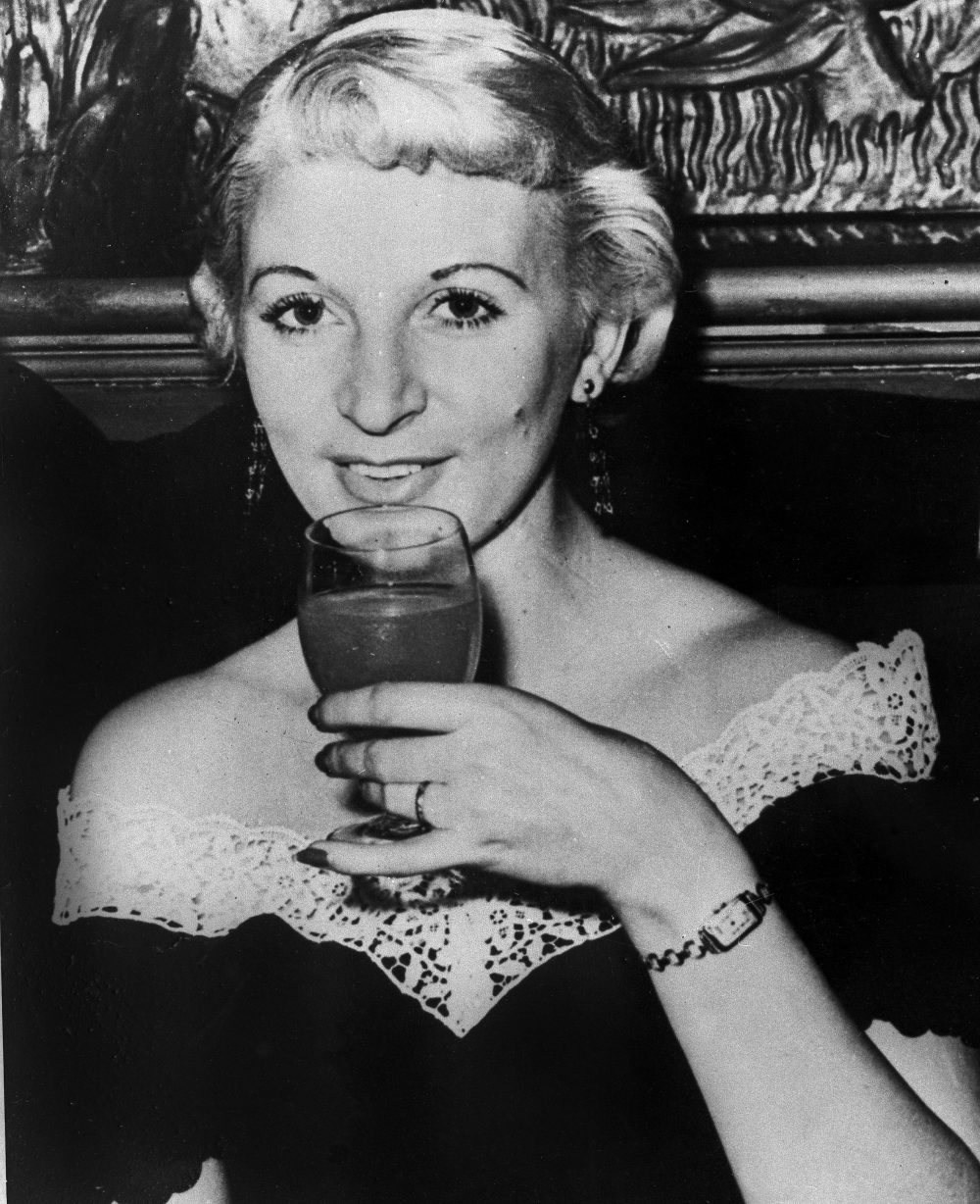

LONDON — More than seven decades after being hanged for shooting her abusive partner outside a London pub, Ruth Ellis — the last woman ever executed in Britain — is set to receive a conditional pardon, Deputy Prime Minister David Lammy announced Wednesday.
Ellis was a 28-year-old single mother who worked as a nightclub hostess when she shot race-car driver David Blakely outside the Magdala pub in London’s Hampstead neighborhood on April 10, 1955. She was executed by hanging on July 13, 1955.
“While the pardon does not claim she was innocent of killing David Blakely, it replaces the death penalty with a sentence of life imprisonment to recognize a profound injustice in this exceptional case,” Lammy said.
The case gripped the nation at the time, turning Ellis into a widely discussed public figure. On the day she was executed, a crowd of 1,000 people gathered outside Holloway Prison in north London to hold a silent vigil.
Her case is widely credited with reshaping British law. During her trial, she was prohibited from arguing that the emotional toll of the abuse she suffered influenced her actions. Just two years after her execution, Parliament passed legislation allowing defendants to use a diminished responsibility defense.
The push for a pardon came from Ellis’s grandchildren, who spent years fighting to have her conviction reduced. They argued that the repeated sexual, emotional, and physical abuse she endured was never taken into account — not during the trial and not afterward, when she could have been spared from execution.
“Justice has finally been done,” said Laura Enston, a granddaughter of Ellis, in a written statement. “This pardon does not undo what happened 71 years ago. It does not restore the lives that were broken — the children left behind, the years lost. But it says, formally and finally, that Ruth should not have been executed; that the justice system failed her. That acknowledgment matters profoundly to our family.”
Lawyers for the family filed for the pardon last year, presenting evidence that Ellis likely suffered from what is now referred to as “battered woman syndrome.”
According to the Mishcon de Reya law firm, which represented the family, Ellis and multiple witnesses — including friends and medical professionals — described how Blakely threatened to kill her and repeatedly assaulted her in public, including pushing her down stairs. At one point, she was reportedly struck in the abdomen with such force that it caused a miscarriage.
Despite all of this, jurors were specifically instructed not to take into account that Ellis had been “badly treated by her lover.” The trial lasted barely more than a day, and the jury returned its verdict in under 30 minutes.
Attorneys who sought the pardon argued that if the diminished responsibility defense had existed at the time, Ellis would have faced a manslaughter conviction at most and would not have been sentenced to death.
Britain suspended capital punishment in 1965 and permanently abolished it in 1970.
Enston also spoke about the lasting damage the execution caused to Ellis’s two children — her mother and uncle.
“My uncle took his own life; my mother’s trauma left her unable to be the parent we needed,” Enston said. “The shadow of Ruth’s execution has fallen across two generations. We have carried shame that was never ours to bear.”
The story of Ruth Ellis has been told on screen multiple times, including in the 1985 feature film “Dance with a Stranger” and a miniseries that aired on ITV last year titled “A Cruel Love: The Ruth Ellis Story.”