
The International Monetary Fund has once again trimmed its outlook for global economic growth in 2026, bringing the forecast down to 3.0% while flagging continued risks tied to the ongoing war in the Middle East, the fragmentation of international trade, and the possibility of a market correction tied to artificial intelligence expectations.
The Washington-based lending institution said the world economy had managed to avoid a more severe downturn despite the war, with strong demand in the technology sector helping to make up for reduced energy supplies caused by the conflict. Growth is expected to climb back to 3.4% in 2027 — though that figure still falls short of the 3.5% average recorded in both 2024 and 2025.
The IMF also bumped up its 2026 global inflation forecast by 0.3 percentage points compared to its April projection, bringing it to 4.7%. Inflation is then expected to ease to 3.9% in 2027. Energy prices are currently running 25% higher than they were before the war broke out on February 28 and are expected to stay elevated. The updated forecast assumes the Strait of Hormuz will begin reopening in mid-July, with conditions returning to prewar levels by March 2027.
“The global economy as a whole has, so far, weathered the shock from the war better than feared,” the IMF wrote in its updated World Economic Outlook. The fund noted that energy-exporting nations and countries deeply connected to the tech sector are faring better, while commodity-importing nations with little exposure to AI-related growth have generally seen their forecasts cut.
Global trade growth is expected to slow sharply — from 5% in 2025, a year when businesses rushed to get ahead of U.S. tariffs, down to 3.5% in 2026, before recovering to 4.3% in 2027.
Deniz Igan, who leads the World Economic Studies division of the IMF Research Department, said the global economy is showing more resilience than analysts expected back in April, even as the war and the closure of the Strait of Hormuz continue to create challenges. She said higher prices and weaker confidence have been partially offset by the release of strategic oil reserves and commercial stockpiles, along with improvements in energy efficiency. Businesses have also adapted by finding new shipping routes and alternative supply sources.
“So far things have been okay, but that doesn’t take away the risk factors that are there, particularly with the war,” Igan told Reuters. She warned that if the current peace deal collapses and fighting resumes, the consequences could be severe — especially since most countries have already drawn down their reserves and have limited flexibility to respond.
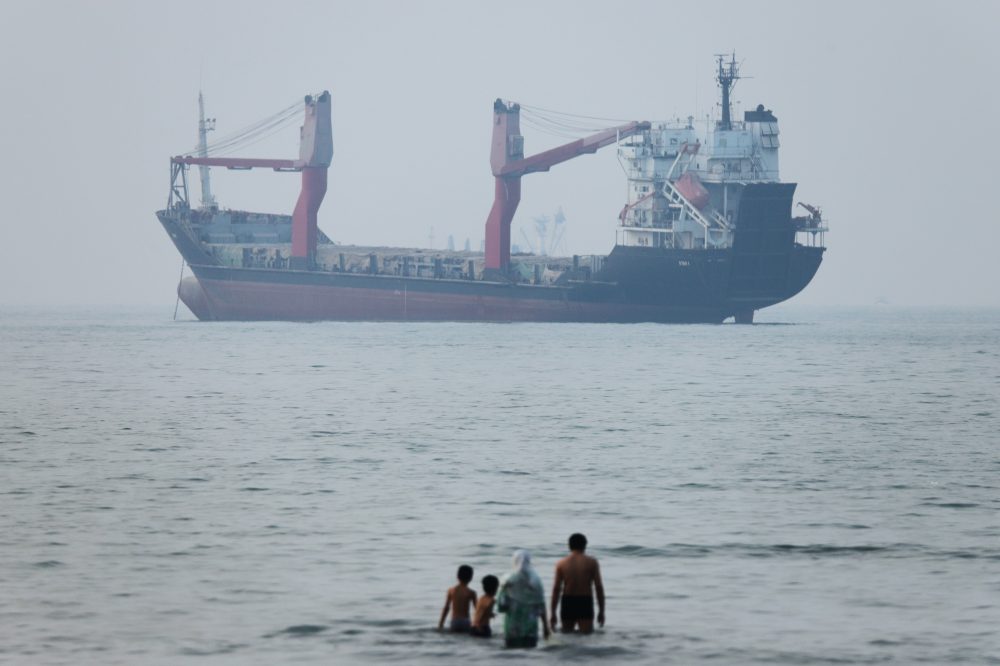
Adding to those concerns, the U.S. military launched a fresh round of strikes against Iran on Tuesday and revoked a license that had allowed the country to sell oil, following attacks on three tankers in the Strait of Hormuz. The moves have put additional strain on an already fragile ceasefire.
“A renewed conflict in the region is going to catch the global economy in a worse position than it was the first time,” Igan said. She also cautioned that if many countries simultaneously try to rebuild their oil reserves, that could drive prices sharply higher.
“If there is a perception that this is going to be more prolonged, then both the incentive and the room to use those reserves is going to shrink very fast,” she added.
Igan noted that while inflation and inflation expectations have risen, the increase has been mostly short-term, with little sign so far that medium-term expectations are shifting.
The IMF’s updated report dropped the three separate war scenarios it had published in April — before the U.S. and Iran reached a ceasefire — and returned to a more conventional single baseline forecast. Comparisons are drawn against the April reference forecast, which had assumed a shorter conflict.
On individual economies, the IMF left its U.S. growth forecast for 2026 unchanged at 2.3% and nudged its 2027 projection up by 0.1 percentage point to 2.2%. The euro area’s 2026 forecast was cut to 0.9% from 1.1% in April, while the 2027 outlook held steady at 1.2%.
Japan’s 2026 growth estimate dipped 0.1 percentage point to 0.6%, while its 2027 forecast was raised by the same margin to 0.7%. Emerging market and developing economies saw their 2026 forecast trimmed by 0.1 percentage point to 3.8%, with 2027 raised by 0.3 points to 4.5%.
China’s 2026 growth is now projected at 4.6%, up from 4.4% in the April forecast, with 2027 expected at 4.1%, slightly above the prior estimate of 4.0%. India, one of the world’s fastest-expanding economies, saw a small downgrade to 6.4% for 2026 from 6.5% in April, but the IMF raised its 2027 forecast for India to 6.7% from 6.5%.
The Middle East and Central Asia region, which has been hit hardest by the war, had its 2026 growth forecast slashed by 1.2 percentage points to just 0.7%. However, the IMF also raised that region’s 2027 forecast by 1.9 percentage points to 6.5%, reflecting expectations of a significant recovery once the conflict subsides.