
When it comes to Greenland, President Donald Trump keeps returning to the same argument: the United States needs to control it. Rising international tensions, a warming planet, and shifting global trade patterns have thrust this remote Arctic island into the center of a major geopolitical debate — and Trump wants America to come out on top.
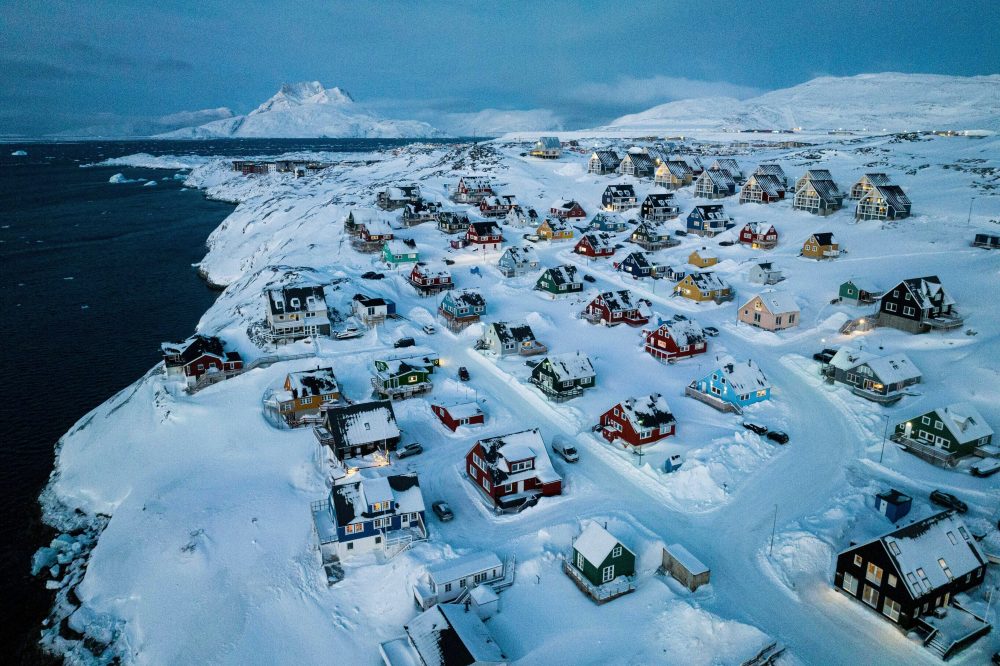
Greenland’s position above the Arctic Circle has long made it a cornerstone of North American defense strategy. About 80% of the island lies within the Arctic Circle, and roughly 56,000 people — most of them Inuit — call it home. Until recently, the island received little global attention. That has changed dramatically.
Greenland is a self-governing territory belonging to Denmark, a longstanding U.S. ally. Both Denmark and Greenland’s own government have pushed back firmly against Trump’s advances, with Greenland’s leaders insisting that the island’s people will determine their own future.
Trump’s persistent calls for U.S. ownership of Greenland — including earlier suggestions that taking it by military force was not off the table — have unsettled NATO allies and raised alarms among European partners who have long counted on the U.S. for their defense. He has since said military options are no longer being considered.
At a recent NATO summit, Trump made his position clear: “Greenland is very important to the United States, but it’s not important to Denmark. We need it for protection of the world, not just the United States.”
Trump has also claimed, without evidence, that Russian and Chinese military forces are operating near Greenland’s shores. He argues that controlling the island is essential to countering threats from both nations.
Greenland’s strategic value stretches back to World War II, when the U.S. moved to occupy the island to prevent Nazi Germany from seizing it and to protect vital North Atlantic shipping routes. During the Cold War, the Arctic was largely a zone of international cooperation. But melting sea ice is now opening up potential new trade routes — including a northwest passage — and reigniting competition over the region’s vast natural resources.
China declared itself a “near-Arctic state” in 2018 in a bid for greater regional influence, and has announced plans to develop what it calls a “Polar Silk Road” as part of its broader global infrastructure initiative. Then-U.S. Secretary of State Mike Pompeo pushed back sharply, asking: “Do we want the Arctic Ocean to transform into a new South China Sea, fraught with militarization and competing territorial claims?”
Russia, meanwhile, has been asserting dominance over large swaths of the Arctic, rebuilding old Soviet-era military infrastructure and constructing new facilities. Since 2014, Moscow has opened several Arctic military bases and worked to restore airfields in the region. Russia’s Northern Fleet is based there, and Russian military officials have indicated the area could once again be used for nuclear weapons testing if deemed necessary.
European anxiety deepened after Russia launched its war against Ukraine on February 24, 2022. Russian President Vladimir Putin has acknowledged concern over NATO’s Arctic activities and pledged to bolster Russian military capabilities in the region — while also saying Moscow remains open to broader international cooperation there.
The U.S. already has a significant military footprint in Greenland. The Department of Defense operates Pituffik Space Base in the island’s northwest, established after the U.S. and Denmark signed the Defense of Greenland Treaty in 1951. The base supports missile warning systems, missile defense operations, and space surveillance for both the U.S. and NATO.
Greenland also plays a key role in monitoring what is known as the GIUK Gap — named for Greenland, Iceland, and the United Kingdom — a stretch of ocean where NATO tracks Russian naval movements in the North Atlantic.
Despite all this, at least one defense expert argues that outright U.S. ownership of Greenland would offer no real security benefit. Thomas Crosbie, an associate professor of military operations at the Royal Danish Defense College, told The Associated Press: “The United States will gain no advantage if its flag is flying in Nuuk versus the Greenlandic flag. There’s no benefits to them because they already enjoy all of the advantages they want.”
Crosbie added: “If there’s any specific security access that they want to improve American security, they’ll be given it as a matter of course, as a trusted ally. So this has nothing to do with improving national security for the United States.”
Denmark’s parliament passed a bill last year allowing U.S. military bases on Danish soil, expanding a 2023 agreement with the Biden administration that gave American troops broad access to Danish air bases. Danish Foreign Minister Lars Løkke Rasmussen also noted last summer that Denmark would have the right to end the agreement if the U.S. attempts to annex all or part of Greenland.
Beyond security, Greenland holds enormous economic appeal. The island is home to significant deposits of rare earth minerals — essential ingredients in cellphones, computers, batteries, and other high-tech products expected to drive the global economy for decades to come. Western nations are eager to reduce their dependence on China, which currently dominates the rare earth market.
However, developing those resources is no easy task. Greenland’s extreme climate makes extraction difficult, and strict environmental regulations have added further obstacles for potential investors.