COLOMBO, Sri Lanka — Members of Sri Lanka’s parliament delivered on a major campaign pledge Tuesday, voting decisively to eliminate their own pension benefits as the nation continues recovering from its devastating economic collapse.
The measure passed with overwhelming support in the 225-seat legislature, receiving 154 votes in favor with just two opposing votes. The remaining members were absent during Tuesday’s voting session.
Under the island nation’s previous system, parliamentary members became eligible for pension payments after completing a single five-year term. The newly approved legislation terminates payments for current recipients and eliminates future eligibility for these benefits. President Anura Kumara Dissanayake, who took office in 2024, made ending this practice a central promise during his electoral campaign.
This action follows another cost-cutting measure implemented by Dissanayake’s administration in September, when they eliminated various privileges granted to former presidents. Those benefits included government-funded housing, monthly allowances, pension payments, and transportation services. The government also discontinued providing office space and staff support for former presidents and their surviving spouses, affecting five living ex-presidents and one widow.
Dissanayake’s electoral victory came amid widespread public frustration with political leaders blamed for the nation’s unprecedented economic disaster in 2022. The crisis created severe shortages of essential items including food, medical supplies, fuel, and electricity, ultimately sparking massive demonstrations that forced former President Gotabaya Rajapaksa to step down.
Justice Minister Harshana Nanayakkara introduced the legislation to parliament, stating that the government had honored its electoral commitment and arguing that legislators lacked moral justification for receiving pensions while the country struggled to overcome its worst-ever economic catastrophe.
The nation officially declared bankruptcy in April 2022, facing more than $83 billion in outstanding debt, with foreign creditors holding over half of that amount. Sri Lanka turned to the International Monetary Fund for assistance, securing approval for a $2.9 billion rescue package spanning four years in 2023, which required the country to reorganize its debt obligations.
Officials announced completion of the debt restructuring process after successfully negotiating agreements with government creditors, international organizations, and private bondholders. The country aims to secure $17 billion in debt payment relief through these arrangements.
The economic disaster resulted from a combination of poor financial management, consequences from the COVID-19 pandemic, and the impact of 2019 terrorist attacks that severely damaged the crucial tourism sector. The pandemic also disrupted money transfers from Sri Lankan citizens employed overseas.
An internationally recognized human rights organization has revealed that a high-profile journalist from Angola fell victim to sophisticated surveillance technology last spring.
According to a Tuesday report from Amnesty International, Teixeira Candido’s mobile device was compromised by Predator spyware manufactured by the Intellexa company during a short timeframe in May 2024.
At the time of the cyber attack, Candido served as leader of the Syndicate of Angolan Journalists. The surveillance campaign began in April 2024 when he received multiple suspicious WhatsApp communications, the human rights group’s investigation found.
The malicious software was successfully installed on May 4th after Candido activated a hyperlink contained within one of these messages. This breach allowed the unknown attackers complete control over his device’s information, the report indicates.
Security experts and federal authorities have connected Intellexa’s surveillance tools to numerous privacy violations in recent years. Amnesty International noted this represents the first documented instance of Predator being deployed within Angola, though they stopped short of identifying which government entity may have purchased the technology.
Attempts to reach legal representatives for Intellexa on Tuesday were unsuccessful.
“I feel exposed, as if I were taking a shower with the bathroom door wide open,” Candido shared with Reuters via email before the report’s release.
The journalist remains uncertain about what information the cyber criminals may have extracted from his device. He explained that the attack came through contact with an unknown individual who claimed to represent a student organization seeking his professional input on a project.
Federal sanctions were imposed on seven individuals connected to the Intellexa Consortium in March 2024. Treasury Department documentation characterized the operation as “a complex international web of decentralized companies that built and commercialized a comprehensive suite of highly invasive spyware products” used against government workers, media professionals, policy analysts and political opposition figures.
The Trump administration lifted sanctions against three Intellexa leadership figures on December 30, 2025. A government source informed Reuters that these individuals had “demonstrated measures to separate themselves from the Intellexa Consortium.”
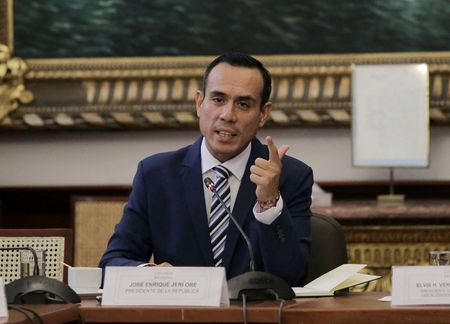
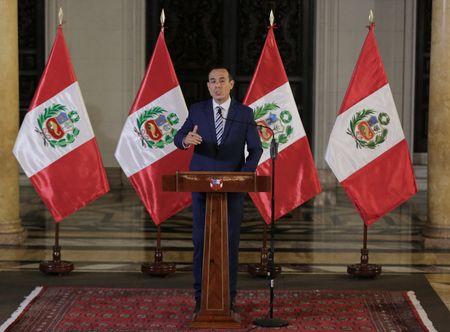
Peru’s political turmoil continued this week as lawmakers voted to remove President Jose Jeri from office after a brief four-month presidency, making him the third consecutive leader ousted by Congress in the South American nation.
At 39 years old, Jeri had been among the youngest world leaders when he assumed the presidency in October following the unexpected impeachment of former President Dina Boluarte. He became Peru’s seventh president since 2018 after ascending from his role as head of Congress, taking power due to the absence of an acting vice president.
Jeri’s presidency was quickly engulfed in scandal, most notably involving clandestine meetings with Chinese businessman Zhihua Yang, who operates retail stores and holds energy concessions while facing government investigation. Video footage emerged showing Jeri in casual attire meeting Yang at a Chinese restaurant, sparking what media dubbed ‘Chifagate’ – referencing the local term for Chinese eateries.
Following public outcry over the meetings, Jeri issued an apology and maintained that no improper conduct occurred. However, mounting political opposition proved insurmountable as upcoming presidential elections intensified competition among politicians seeking voter support.
‘His legitimacy as president was always weak,’ explained Martin Cassinelli, assistant director at the Atlantic Council’s Adrienne Arsht Latin America Center. He characterized the removal as ‘less an act of justice’ and ‘more an act of political self-interest by a congressional majority.’
Despite his abbreviated presidency, Jeri doesn’t hold the record for Peru’s briefest tenure this decade. Interim President Manuel Merino stepped down in 2020 after serving less than one week amid public protests that resulted in two deaths.
The removal underscores Peru’s persistent political instability as the nation approaches April’s presidential election.
‘Unfortunately, for Peruvians, the electoral system will likely result in a fragmented election that is unlikely to yield the majorities necessary for the next president to govern without having to worry about a political impeachment,’ Cassinelli noted.
Born into a middle-class Lima family, Jeri completed his education at Federico Villarreal National University in 2014 before obtaining a law degree from a private Lima institution. He joined the conservative Somos Peru party in 2013 during his legal studies and made two unsuccessful bids for Lima municipal positions.
Jeri initially failed to secure a congressional seat in 2021 when his party captured three legislative positions. However, as the fourth-highest vote recipient, he ultimately claimed the seat of Martin Vizcarra, who faced disqualification from public service before taking office. Vizcarra had previously served as Peru’s president from 2018 to 2020.
Additional controversies plagued Jeri’s presidency, including sexual assault allegations from January 2025 involving a woman who attended a December party. Prosecutors dismissed the case in August due to insufficient evidence, while Jeri denied any wrongdoing.
His administration also faced criticism for awarding government contracts to women following late-night meetings at the presidential palace.
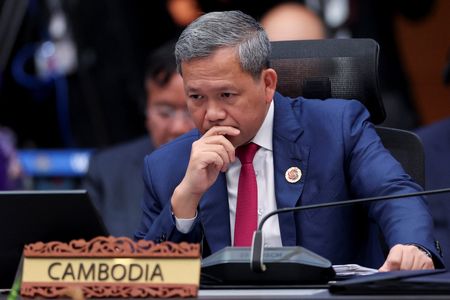
Cambodia’s Prime Minister Hun Manet accused Thailand of maintaining military occupation of Cambodian land during his first international media interview this week, despite a peace agreement facilitated by President Donald Trump.
Speaking with Reuters on Tuesday while visiting Washington for Trump’s Board of Peace meeting, Hun Manet said Thai military forces continue positioning themselves within Cambodian borders following last year’s violent clashes. The Cambodian leader urged Thailand to permit a joint boundary commission to address their contested border issues.
Hun Manet described the current border situation as “fragile” even after the December 27 ceasefire that halted renewed hostilities. He expressed hope that Trump’s newly established Board of Peace, originally designed to monitor the Gaza peace agreement, might help reduce tensions in the region.
Thai officials have maintained their troop deployments are part of de-escalation efforts and reject claims of territorial occupation.
The statements from Cambodia’s leadership highlight concerns that fighting could resume despite Trump’s continued promotion of the peace agreement’s effectiveness.
Last year’s border violence marked the most severe conflict in over ten years, beginning in July and forcing hundreds of thousands to flee their homes while disrupting commerce along the 508-mile frontier. A peace agreement signed in October with Trump and Malaysia’s leader collapsed within weeks before the current ceasefire took effect on December 27.
“We still have Thai forces occupy(ing) deep into Cambodian territory in many areas. This is further beyond even Thailand’s own unilateral claim… border line,” Hun Manet stated, explaining that Thai troops have installed shipping containers and barbed wire in areas Thailand previously acknowledged as Cambodian territory, preventing residents from returning home. “This is not an accusation but it’s a statement of the facts on the ground.”
The Prime Minister emphasized Cambodia cannot tolerate what he termed a “violation of our sovereignty or territorial integrity.”
“The only way to verify that is using the technical mechanism that we have, based on treaties, based on all the agreements we have. So we hope that Thailand will agree and start to allow the JBC (joint boundary commission) to work as early as possible,” Hun Manet explained, noting Thailand had cited its February 8 election as justification for delaying demarcation efforts. Thai Prime Minister Anutin Charnvirakul gained electoral support through nationalist rhetoric surrounding the border dispute.
“Now the election is done, we hope that Thailand can start, at least on a technical level, to start measuring, start demarcating in the hot zone, so that we can go back to life,” Hun Manet added.
Hun Manet, 48, assumed leadership after his father Hun Sen stepped down following 2023 elections where their Cambodian People’s Party faced minimal opposition.
The transition to Hun Manet, a West Point graduate, combined with Trump’s mediation in the territorial conflict, has improved relations between Washington and Phnom Penh after years of Cambodia moving closer to China.
Regarding international relationships, Hun Manet said ties with China and the United States were “not mutually exclusive” and stated Cambodia had “nothing to hide” concerning the Chinese-upgraded Ream naval facility.
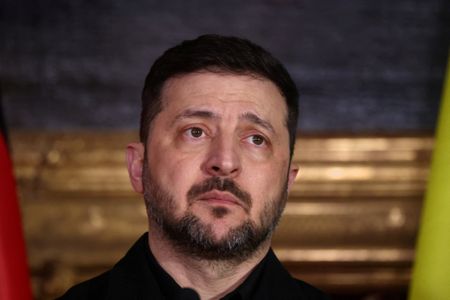
Ukrainian President Volodymyr Zelenskyy has accused President Donald Trump of applying excessive pressure on his country while attempting to broker an end to the conflict with Russia that has raged for nearly four years.
Speaking with Axios in a Tuesday interview, Zelenskyy criticized Trump’s public approach of demanding concessions from Ukraine rather than Russia during ongoing peace negotiations.
“It’s not fair,” Zelenskyy told Axios, referring to Trump’s repeated public calls for Ukraine to make compromises in the peace process.
The Ukrainian leader expressed hope that Trump’s stance represents “just his tactics and not the decision,” according to the interview, which took place while diplomatic representatives from Russia, Ukraine, and the United States were meeting in Geneva.
Trump has recently made several public statements placing responsibility on Ukraine to ensure successful negotiations. Speaking to reporters on Air Force One Monday, Trump declared, “Ukraine better come to the table fast. That’s all I’m telling you.”
According to Axios, Zelenskyy suggested that applying pressure to Ukraine may simply be more convenient than pressuring Russia.
Despite his criticism, Zelenskyy expressed gratitude to Trump for his peacemaking initiatives and noted that his discussions with senior U.S. negotiators Steve Witkoff and Jared Kushner have been more respectful.
“We respect each other,” Zelenskyy said of those conversations, adding that he is “not such a person” who would easily surrender under pressure.
Regarding territorial concessions, Zelenskyy firmly rejected any proposal that would grant Russia control over the entire Donbas region, where Moscow currently occupies approximately 88 percent of the territory.
“Emotionally, people will never forgive this. Never. They will not forgive… me, they will not forgive (the United States),” Zelenskyy explained, emphasizing that Ukrainian citizens “can’t understand why” they would be expected to surrender more land.
“This is part of our country, all these citizens, the flag, the land,” he stated.
Instead, Zelenskyy advocated for maintaining current battle lines, telling Axios: “I think that if we will put in the document … that we stay where we stay on the contact line, I think that people will support this (in a) referendum.”
The International Monetary Fund issued strong recommendations to Japan this week, advising the nation to maintain its course of interest rate increases while steering clear of additional tax reductions that could undermine economic stability.
These suggestions arrive at a crucial time, as Japan’s newly elected Prime Minister Sanae Takaichi has secured a decisive victory with promises that include halting the 8% consumption tax on food items for two years. Financial markets are closely watching whether Takaichi will resist the central bank’s plans for continued rate hikes.
In its preliminary policy guidance released Wednesday, the IMF emphasized the importance of the Bank of Japan’s autonomy, stating that the central bank’s “continued independence and credibility” serves as a vital anchor for inflation expectations. The organization cautioned against excessive government interference in monetary policy decisions.
“The BOJ is appropriately withdrawing monetary accommodation, and gradual hikes should continue to move the policy rate toward neutral,” the IMF stated in its recommendations.
The fund further specified its timeline expectations, noting: “As the baseline projection continues to materialize, withdrawal of policy accommodation should continue so that the policy rate reaches a neutral stance in 2027.”
Japan’s central bank ended its extensive stimulus measures in 2024 and has implemented multiple rate increases, including a December adjustment that brought the policy rate to 0.75% – the highest level in three decades. With inflation running above the 2% target for almost four years, bank officials have indicated their intention to continue raising rates.
These rising borrowing costs present challenges for Takaichi’s proposed tax reductions and increased spending initiatives, which sparked selling pressure in bond and currency markets late last year due to concerns about Japan’s deteriorating financial position.
Regarding the consumption tax proposal, the IMF warned that Japan should resist such cuts because they would “erode fiscal space and add to fiscal risks.” While acknowledging that restricting tax cuts to essential items and maintaining temporary limits could help control costs, the organization stressed that Japan requires fiscal discipline to maintain bond market stability.
“Near-term fiscal policy should refrain from further loosening,” the IMF recommended, advocating for a reliable medium-term fiscal strategy with a “clearly defined fiscal anchor.”
The fund highlighted significant vulnerabilities in Japan’s economic structure, explaining: “High and persistent debt levels, together with a deteriorating fiscal balance, leave Japan’s economy exposed to a range of shocks.” The IMF projects that interest payments will double between 2025 and 2031 as existing debt gets refinanced at higher rates.
Currently, debt financing accounts for 25% of Japan’s total government expenditures, with approximately half of that debt held by the Bank of Japan following years of aggressive money printing designed to stimulate economic growth.
As Japan’s central bank reduces its bond purchasing activities and shrinks its balance sheet, the IMF advised careful monitoring of market liquidity and changing investor demand patterns. Should increased volatility threaten market liquidity, the organization suggested the central bank should prepare for “exceptional targeted interventions,” including emergency bond-purchasing operations if necessary.
Concerning currency fluctuations, the IMF praised Japanese authorities for their “continued commitment to a flexible exchange rate regime,” adding that exchange rate flexibility should “help absorb external shocks and support monetary policy’s focus on price stability.”
United Nations human rights experts are calling for comprehensive investigations after reviewing millions of documents connected to deceased sex offender Jeffrey Epstein, stating the materials reveal evidence of what they describe as a worldwide criminal operation.
A panel of independent specialists working with the UN Human Rights Council concluded that the documented activities may constitute crimes against humanity due to their scope and systematic nature.
According to the experts, the criminal activities detailed in Justice Department records occurred within a framework of racist ideologies, corrupt practices, and extreme hatred toward women.
The specialists noted that these offenses demonstrated the treatment of women and girls as commodities rather than human beings.
“So grave is the scale, nature, systematic character, and transnational reach of these atrocities against women and girls, that a number of them may reasonably meet the legal threshold of crimes against humanity,” the experts said in a statement.
The UN panel emphasized that the accusations within these documents demand a comprehensive, unbiased investigation. They also called for inquiries into how such extensive criminal activity could continue undetected for years.
The Justice Department has not yet provided a response to requests for comment regarding the UN panel’s findings.
Congressional lawmakers passed legislation in November with overwhelming support from both parties, mandating the public release of all materials related to the Epstein case.
The UN specialists expressed alarm about “serious compliance failures and botched redactions” that compromised sensitive victim details. The released materials have identified more than 1,200 victims thus far.
“The reluctance to fully disclose information or broaden investigations, has left many survivors feeling retraumatized and subjected to what they describe as ‘institutional gaslighting,’” the experts said.
The document releases have exposed Epstein’s connections to influential figures across political, financial, academic, and business sectors, including relationships that continued after his 2008 guilty plea to prostitution-related charges involving a minor.
Epstein died by hanging in his jail cell during 2019 following his arrest on federal charges related to trafficking minors for sexual exploitation. Authorities determined his death was self-inflicted.
Former Israeli Prime Minister Naftali Bennett issued a stark warning to American Jewish leaders, declaring that Turkey has emerged as a significant regional threat comparable to Iran’s influence in the Middle East.
During his address at the Conference of Presidents of Major American Jewish Organizations’ annual leadership gathering, Bennett presented his assessment of shifting regional dynamics following the October 7 attacks and subsequent Gaza conflict.
“At this moment, a new Turkish threat is emerging,” Bennett stated. “Turkey and Qatar have gained influence in Syria, are seeking influence elsewhere and everywhere throughout the region. And from here, I warn, Turkey is the new Iran. Erdogan is sophisticated, dangerous, and he seeks to encircle Israel. We can’t close our eyes again.”
The former prime minister argued that the October 7 attacks exposed fundamental flaws in Israel’s security approach. According to Bennett, the tragedy revealed the failure of a defensive mindset that had dominated Israeli strategy for two decades.
“What collapsed on that Black Shabbat was not only the physical defenses on the Gaza border,” he explained, “but a strategic concept built on the illusion that defense alone will protect us.”
Bennett criticized previous Israeli administrations for relying too heavily on what he termed a “containment” strategy, which emphasized barriers and deterrence while avoiding decisive military action.
“Far too long, too many Israeli leaders believed that we only need to buy time and buy quiet,” Bennett said. “We have to replace the organizing principle of the past 20 years of containment with an organizing principle of initiative.”
This new approach, he argued, would prevent hostile forces from establishing positions near Israeli borders and would involve proactive operations throughout the region.
“We will not permit Hamas to rebuild rocket launchers or weapon factories minutes from our communities. Never again,” he declared. “We won’t hesitate to operate throughout the Middle East to pursue enemies, to hunt them down, and to secure a future.”
Regarding Iran, Bennett acknowledged that while recent Israeli-American military operations had significantly damaged Tehran’s nuclear capabilities, the regime remained a threat. He described Iran as being at its weakest point since the Islamic Revolution, comparing the situation to the Soviet Union’s final years.
“This is the closest moment in the history of this regime that we’re close to collapse,” Bennett observed. “Our strategy in ten seconds is do everything to accelerate the fall of this horrible regime, and in the meantime, ensure that they don’t acquire a nuclear weapon.”
However, Bennett devoted considerable attention to what he characterized as Turkey’s growing regional ambitions. He accused Ankara and Doha of working together to expand their influence across Syria and Gaza while attempting to create a hostile Sunni coalition.
“Turkey and Qatar are nourishing the Islamic Brotherhood monster that is growing,” he claimed. “Turkey is trying to flip Saudi Arabia against us and establish a hostile Sunni axis with nuclear Pakistan.”
Bennett also criticized Israel’s current diplomatic posture, arguing that while the military had demonstrated effectiveness across multiple theaters, diplomatic efforts had become too passive.
The former leader offered a blunt assessment of international relations, suggesting that Israel should abandon hopes of widespread global approval.
“They’re not going to love us,” he said. “The aspiration that the world will love Israel—it’s not going to happen. What we need is that our enemies fear us, our friends respect us, and everyone needs us.”
Perhaps most significantly, Bennett warned that internal Israeli divisions posed an even greater danger than external threats, referencing historical examples of Jewish sovereignty lost due to civil conflict.
“Our internal divisions here in Israel concern me even more,” he stated. “An Israel divided against itself will not stand.”
Bennett emphasized the interconnected relationship between Israel and Jewish communities worldwide, telling the audience that global Jewish strength depends on Israeli security, while Israeli strength relies on worldwide Jewish support.
“Am Yisrael (the people of Israel) worldwide depends on a strong state of Israel, and a strong state of Israel depends on a strong Am Yisrael,” he explained. “Israel belongs to every Jew in the world. Each of you holds a share in Israel.”
The former prime minister concluded his remarks by signaling his political ambitions for Israel’s future leadership.
“I intend to lead Israel into its next strong, beautiful, hopeful future,” he announced, clearly positioning himself as both a critic of current policies and a potential future leader.
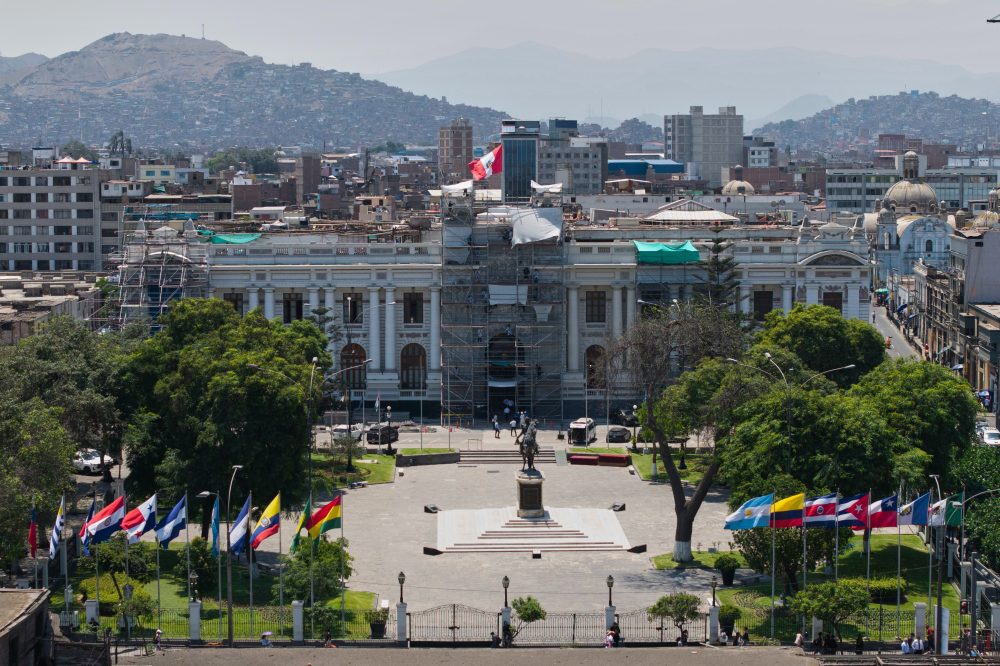
LIMA, Peru — Political turmoil struck Peru once again Tuesday as lawmakers voted to oust interim President José Jerí, creating fresh uncertainty just weeks ahead of the country’s scheduled April presidential race.
The 39-year-old attorney becomes Peru’s seventh leader to exit office in under ten years, with congressional members set to choose his replacement to guide the nation through upcoming elections until the newly chosen president takes the oath on July 28.
Jerí, who won a congressional seat in 2021 representing the small conservative Somos Peru party, had served as Congress leader last October when legislators ousted former President Dina Boluarte amid rising violent crime concerns.
After Boluarte’s departure, fellow lawmakers selected Jerí as temporary president, expecting him to remain until July when the new presidential term starts. However, his tenure ended abruptly as corruption accusations emerged and Congress lost confidence in his leadership abilities.
Peru’s Attorney General’s office launched a preliminary corruption and influence peddling probe against Jerí earlier this year.
The investigation centers on secret December meetings between Jerí and two Chinese business figures. One businessman maintains active government contracts, while authorities are investigating the other for suspected participation in illegal timber operations.
Jerí has maintained his innocence, claiming the meetings were arranged to plan a Peruvian-Chinese celebration, though political opponents have labeled his actions corrupt.
Although Jerí hasn’t been convicted of any wrongdoing, congressional colleagues pointed to these allegations when justifying his removal, claiming he was no longer capable of fulfilling presidential responsibilities.
Peru’s constitution includes a provision allowing lawmakers to dismiss presidents deemed “morally incapable” of performing their official functions.
This constitutional measure has given legislators significant power over the executive branch, which has also faced difficulties securing congressional support in recent years.
Congress members have broadly interpreted the moral incapacity provision, using it alongside corruption claims to dismiss presidents who no longer serve the political parties’ interests.
The past decade has seen seven different presidents lead Peru, with only two winning office through popular elections. The remainder have been vice presidents stepping up for removed leaders, or Congress members chosen by colleagues to head the South American country.
Despite this presidential carousel, Peru has maintained economic stability throughout the decade, with successive governments following traditional economic approaches including controlled government spending.
In 2024, the South American country maintained a 32% public debt-to-GDP ratio, among Latin America’s lowest, while attracting foreign investment in mining and infrastructure sectors.
Nevertheless, political analysts have observed that the increasingly influential Congress has enacted laws in recent years that could undermine Peru’s judicial independence.
Congressional representatives will meet Wednesday to select a new temporary president, who must serve until July and transfer authority to whoever wins the nation’s presidential contest set for April 12.
Conservative businessman and former Lima mayor Rafael López Aliaga currently leads a packed candidate field that includes ex-legislator Keiko Fujimori, who has run for president three times and whose father led Peru during the 1990s.
Should no candidate secure over 50% of April votes, the top two finishers will compete in a June runoff election.
Foreign policy analysts are questioning President Donald Trump’s decision to have his top envoys handle negotiations on two major international crises during a single day in Geneva, Switzerland.
Special envoy Steve Witkoff and Trump’s son-in-law Jared Kushner conducted separate discussions Tuesday addressing both Iran’s nuclear program and the ongoing war in Ukraine. The ambitious diplomatic schedule has sparked debate among experts about whether the approach can effectively address either complex situation.
Trump, who has repeatedly claimed credit for ending various conflicts during his presidency, appears focused on securing additional international agreements as he pursues recognition including a potential Nobel Peace Prize.
The rapid organization of both negotiations in Geneva has drawn criticism from foreign policy professionals who question the strategy’s effectiveness.
“Trump seems more focused on quantity over quality instead of the difficult detailed work of diplomacy,” said Brett Bruen, a former Obama administration foreign policy adviser who now leads the Global Situation Room strategic consultancy. “Tackling both issues at the same time in the same place doesn’t make a lot of sense.”
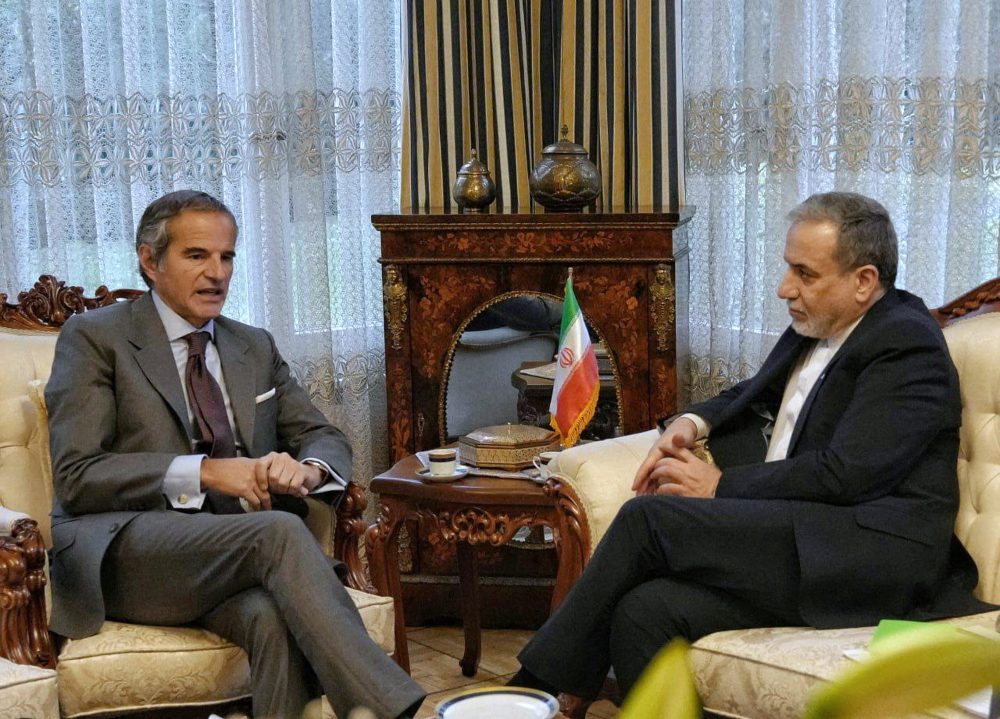
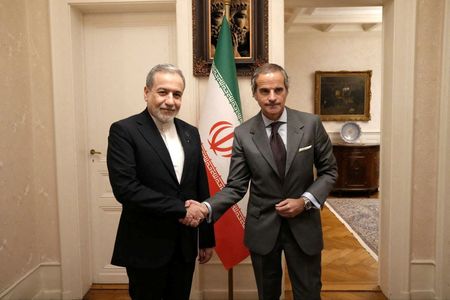
The Iran discussions began the diplomatic marathon, with the American delegation engaging in indirect talks with Iranian Foreign Minister Abbas Araqchi through Omani mediators. The 3.5-hour session took place at Oman’s diplomatic facility under tight security.
Both parties suggested modest advancement occurred during the nuclear program discussions, though no immediate resolution appeared likely for the prolonged dispute.
Trump’s continued military buildup near Iran signals that military action remains a possibility while diplomatic efforts continue, potentially maintaining regional tensions and concerns about broader conflict escalation.
Following the Iran meetings, the U.S. team immediately relocated to the luxury Intercontinental hotel for Ukraine-Russia negotiations. These talks, scheduled for two days, address the conflict Trump previously promised to resolve within 24 hours during his 2024 campaign.
Observers held minimal expectations for significant progress in ending what represents Europe’s largest military conflict since World War II concluded in 1945.
An Iranian leadership source expressed skepticism about Washington’s commitment to either diplomatic effort, given the simultaneous approach.
“The approach risks overstretch,” the official told Reuters anonymously. “It resembles an emergency room with two critically ill patients and a single doctor unable to give either case sustained attention, increasing the likelihood of failure.”
Mohanad Hajj-Ali from the Carnegie Middle East Center in Beirut emphasized the high stakes involved in Iranian diplomacy.
“Having a team of Witkoff and Kushner tasked with resolving all the world’s problems is, frankly, a shocking reality,” he stated.
Several analysts expressed concerns that both negotiators, who come from Trump’s New York real estate background, may lack sufficient expertise to match experienced diplomats like Araqchi and their Russian counterparts in these intricate international disputes.
Notably absent from the Geneva meetings was Secretary of State Marco Rubio, Trump’s chief diplomat recognized for his foreign policy expertise.
White House spokesperson Anna Kelly defended the administration’s efforts when asked for comment, stating Trump and his team “have done more than anyone to bring both sides together to stop the killing and deliver a peace deal” regarding Ukraine. She criticized anonymous “critics” of the president’s methods but did not address specific questions about the Geneva approach.
Administration officials have consistently supported Witkoff and Kushner’s roles, pointing to their negotiation abilities, Trump’s confidence in them, and the limitations of conventional diplomatic methods over time.
Witkoff, frequently dubbed the “envoy for everything” due to his extensive responsibilities, helped broker the Israel-Hamas ceasefire agreement in Gaza last year, though progress toward permanent resolution has stalled. His diplomatic work with Iran and Russia has shown limited success to date.
During Trump’s first presidency, Kushner led the Abraham Accords initiative, which established historic diplomatic relationships between Israel and several Arab nations. However, the agreement has seen little advancement since Trump’s return to office approximately 13 months ago.
Some experts argue that Trump’s reduction of the State Department and National Security Council staff, including the departure of many experienced personnel, has weakened Kushner and Witkoff’s diplomatic capabilities.
“We’ve seen a hollowing-out of our diplomatic bench,” former Obama foreign policy adviser Bruen explained. “So there’s a question of whether we still have the right people to work on these big issues.”
Syrian public opinion has shifted dramatically since the fall of Bashar Assad last December, with a new survey showing strong support for American involvement and optimism about future relations with Israel.
The YouGov poll, funded by the Council for a Secure America, revealed that 65% of Syrians support US involvement in their nation, while only 12% oppose it. The remaining respondents said they were either neutral or hadn’t decided on the issue.
Regarding Israel, the survey uncovered surprising optimism. Nearly 6 out of 10 respondents – 59% – believe peace between Syria and Israel could happen down the road, while just 14% think it’s unlikely. The remaining participants had no strong opinion either way.
When it comes to security cooperation with Israel, support was even more robust. The poll found 64% of Syrians would back a security partnership, compared to only 9% who would oppose such an arrangement. About 30% remained neutral or undecided on the matter.
However, opinions split more evenly on establishing full diplomatic ties. Nearly half of those surveyed – 47% – said they would support normalizing relations with Israel once Palestinian issues are resolved, while 13% rejected the idea and 40% remained uncertain.
The survey also revealed strong anti-Hezbollah sentiment among Syrians. Seven out of 10 respondents said the Iranian-supported militant organization has harmed their country. Just 11% viewed Hezbollah positively, while over one-third offered no opinion. The Assad regime had maintained strong connections with both Hezbollah and Iran throughout his time in power.
Syria’s new leader, Ahmed Al-Sharaa, received positive ratings from most respondents. About 69% described his job performance as good, while 12% gave him poor marks and 19% weren’t sure. The Trump administration has backed al-Sharaa’s government despite his previous connections to al-Qaida, as his administration works to establish control throughout Syria.
YouGov conducted the research between January 8 and January 15, interviewing 260 Syrian adults selected from a pool of 40,000 panel participants. The survey carries a margin of error of plus or minus 5 percentage points.
American military personnel continue operating in Syria as part of the ongoing mission against the Islamic State, which Washington considers an active threat despite the recent change in Syrian leadership.
A human rights organization reported Monday that drone attacks on a crowded marketplace in central Sudan resulted in the deaths of at least 28 civilians, according to AFP reports. The strikes occurred as military clashes between Sudan’s national army and the Rapid Support Forces (RSF) have grown more intense along a heavily disputed battlefront.
The Emergency Lawyers, an organization tracking violations throughout the ongoing conflict, reported that multiple drones targeted the al-Safiya marketplace on Sunday. The attack took place in RSF-controlled territory close to Sodari in North Kordofan province. According to the monitoring group, the marketplace was packed with people when the strikes occurred, and they cautioned that the death toll may increase.
The town of Sodari sits in an isolated section of northern Kordofan where various desert trading paths meet. Located approximately 230 kilometers (132 miles) northwest of El-Obeid, the capital of North Kordofan state, Sodari has been part of the RSF’s months-long effort to surround the strategic city as part of their wider regional offensive.
The Kordofan region has emerged as a critical battleground in the three-year conflict, experiencing an uptick in deadly drone warfare as both military forces compete for dominance over Sudan’s primary east-west transportation corridor. This vital route links the RSF-controlled western Darfur region through El-Obeid to the army-held capital city of Khartoum and beyond to other areas of the nation.
Aerial bombardments and drone attacks have consistently targeted communities and villages throughout extensive portions of Sudan, frequently causing mass civilian casualties in individual incidents. Military officials have accused both the national army and RSF of launching strikes against populated centers located far from active combat zones.
Previous reports indicate that a drone attack last Wednesday resulted in two children’s deaths and injured approximately twelve individuals when it struck an educational facility. That same day, another assault caused significant damage to a United Nations storage facility housing emergency food aid supplies.
Following their successful consolidation of control over the Darfur region last year, the RSF advanced eastward into the resource-rich Kordofan area, which contains valuable oil and gold deposits, in their campaign to capture Sudan’s central corridor and broaden their territorial influence.
The armed conflict began in April 2023 and has resulted in tens of thousands of deaths while forcing approximately 11 million people from their homes, creating what humanitarian organizations characterize as the globe’s most severe hunger and displacement emergency. The warfare has effectively split Sudan into separate territories, with government forces maintaining control over much of the central, northern and eastern regions, while the RSF governs the west and, alongside allied militias, portions of the south.
Labor activists are expressing growing alarm over the whereabouts and wellbeing of roughly 200 Iranian workers who remain in custody at military-run storage facilities following recent strikes at the nation’s primary natural gas complex.
The workers were taken into custody during labor demonstrations at Asaluyeh, which houses Iran’s most significant gas operations and ranks as the globe’s largest such facility. They are currently being held at warehouses operated by the Islamic Revolutionary Guard Corps’ Khatam al-Anbiya Construction Headquarters.
Family members have been unable to contact the detained workers for several weeks, according to reports from The Media Line.
A worker employed in South Pars gas field operations revealed to The Media Line that employees from various industries throughout Asaluyeh had initiated organized meetings, demonstrations, and work stoppages several weeks prior to the broader protest movement that spread across Iran.
The current status and treatment of the detained workers remains unclear, sparking concern among labor rights advocates about conditions at the detention facilities.
PORT-OF-SPAIN, Trinidad (AP) — The twin-island nation of Trinidad and Tobago came to a virtual standstill Tuesday as the Caribbean territory approached the peak of its world-renowned two-day carnival celebration.
However, this year’s festivities — often called “the greatest show on Earth” — confronted significant financial challenges as escalating expenses have priced out an increasing number of local residents from joining the celebration.
Premium event passes reached nearly $700, while outfits for popular masquerade groups exceeded $2,000.
Recognizing these climbing costs, educators and artists are developing innovative approaches to make the carnival accessible to locals, whose ancestors were enslaved people prohibited from taking part in such celebrations.
Joshua Lamorelle, who visits low-income neighborhoods to provide complimentary stilt-walking instruction, explained: “It is giving the kids an opportunity to be a part of something that is very hard for them to afford.”
Just days before educational institutions and workplaces closed for the major carnival street procession that started Monday, Lamorelle offered students their final coaching session. He watched as 11-year-old Kanye Simmons positioned himself on a wall and fastened stilts to his legs before a youth parade.
For Simmons, stilt-walking has become his preferred activity, surpassing even video games: “I find it’s very educational, and it’s very fun.”
His mother, Chrisann Clarke, expressed appreciation for Lamorelle’s efforts to teach young people about their nation’s traditions and carnival origins. She also felt thankful that her son could join the parade without the typical payment requirement.
“It’s actually great, because most parents are unable to afford it,” she said.
The Trinidad and Tobago carnival takes place during the two days before Ash Wednesday — known as Carnival Monday and Tuesday. While not officially recognized as national holidays, tens of thousands of participants wear elaborate costumes for the street procession.
These festivities trace back to the 1700s, when French colonists introduced the celebrations to the islands while preventing African slaves from joining. During the 1800s, formerly enslaved Africans clashed with British authorities who attempted to ban the festivities.
The carnival has since transformed into a major cultural event and economic driver, providing jobs for thousands while generating millions in tourism income.
As ticket and costume prices continue climbing, soca artist Kimba Sorzano developed an inventive method to promote his latest carnival music.
Using his minibus, called a “maxi taxi,” he provides complimentary transportation to riders who agree to listen to his songs throughout their journey.
This marketing strategy gained such popularity that local fast-food establishments joined in, providing free morning meals during the commute.
“Some people got priced out of the carnival, but at the same time we are the carnival,” said Sorzano, who maintains that carnival’s authentic spirit resides within the people of Trinidad and Tobago.
Other performers are also sharing carnival joy without charge. Vocalist Patrice Roberts hosted a free soca concert in late January that attracted over 10,000 attendees.
Recognizing the financial struggles affecting families, Roberts stated in a social media video that she understood “not everyone can indulge” this year.
“This is for all the faithful fans, families and for anyone who still wants to feel the magic,” Roberts said.
Lamorelle maintains that increasing access to carnival and other cultural elements of Trinidad and Tobago enhances people’s quality of life.
“Anything to make the youths better and have a better vision on culture is what I am going for,” he said.
This year, Lamorelle established a children’s carnival masquerade group, funding most expenses himself with assistance from several sponsors.
This represents a valuable chance for a nation of approximately 1.4 million residents whose jobless rate increased to 4.8% in the third quarter of 2025, up from 3.8% the previous quarter, based on recent government statistics.
Officials have implemented new taxes and raised various fees since taking office last April. This has resulted in higher consumer prices and employment losses, with some business owners reporting they were compelled to close their operations.
Lamorelle receives backing from residents in Valencia, a small community in northeastern Trinidad.
“He’s doing wonderful work in the community because he has the children more occupied than just loitering and doing nonsense,” said Nakita De Verteuil, whose two children participate in the group.
Her son, Josiah De Verteuil, who performed as a “midnight robber” on four-foot stilts, considers Lamorelle a role model.
“He is a very lovable person,” the 17-year-old said. “And to children, he is one of the best influencers.”
Peru’s legislative body voted Tuesday to remove President Jose Jeri from power after serving just four months as the nation’s leader, amid controversy surrounding secret meetings with a Chinese business figure.
The South American country’s lawmakers used a censure motion to dismiss Jeri through a simple majority vote, extending Peru’s pattern of frequent leadership changes.
The president’s downfall stemmed from a scandal involving undisclosed encounters with a businessman from China, which ultimately cost him his position in the ongoing revolving door of Peruvian leadership.
Diplomatic efforts to find a resolution to the ongoing Ukraine conflict moved forward Wednesday after a challenging day of negotiations in Geneva, according to reports from Russian news agencies.
A source familiar with the discussions told Russian media that Tuesday’s U.S.-facilitated negotiations between Russian and Ukrainian representatives were marked by significant tension. The diplomatic meetings stretched on for six hours before participants agreed to reconvene the following day.
“(The talks) were very tense,” the source revealed to the agencies. “They lasted six hours. They agreed to continue tomorrow.”
The marathon negotiation session included various meeting configurations, with participants engaging in both bilateral discussions between two parties and trilateral formats involving all three sides, according to the source.
Flight operations came to a standstill at Lithuania’s main international airport Tuesday evening after weather balloons launched from Belarus crossed into Lithuanian airspace, according to the country’s emergency management officials.
The Vilnius Airport suspended all activities at 6:30 p.m. GMT following the airspace incursion. Located approximately 19 miles from the Belarusian border, the facility has experienced more than ten similar shutdowns since the beginning of October 2025, all related to comparable balloon incidents from its neighboring country.
Lithuanian crisis management authorities confirmed the temporary closure, which highlights ongoing tensions between the two nations that have resulted in repeated disruptions to commercial aviation in the region.
American officials have provided fresh details about what they claim was an undisclosed Chinese nuclear weapons test that took place in 2020, according to statements made at a Washington D.C. gathering.
A U.S. government representative revealed that seismic activity initially recorded as a distant earthquake in 2020 was actually the result of a Chinese nuclear test conducted in secret.
The disclosure comes amid growing concerns about China’s expanding nuclear weapons program and capabilities. Military analysts have noted that China is currently engaged in a significant buildup of its nuclear arsenal.
The allegations highlight ongoing tensions between the United States and China regarding nuclear weapons development and transparency in testing activities.
A high-ranking Russian military leader confirmed Tuesday that SpaceX Starlink satellite terminals utilized by Russian forces have been offline for a fortnight, though he maintains the outage hasn’t disrupted their unmanned aircraft operations.
Deputy Defence Minister Aleksei Krivoruchko stated during a State Television interview: “Starlink terminals have been down for two weeks, but this has not affected the intensity or effectiveness of the troops’ unmanned systems, as confirmed by data from objective monitoring of damage to enemy equipment and personnel.”
This Russian confirmation comes roughly fourteen days after Ukrainian authorities announced that Moscow’s military had lost access to these satellite communication devices.
Ukrainian Defence Minister Mykhailo Fedorov had previously reported the terminals were cut off, with other Ukrainian leaders claiming the disruption significantly impacted Russian military capabilities.
Ukraine’s armed forces depend on thousands of Starlink satellite connections for battlefield communications and controlling certain drone missions.
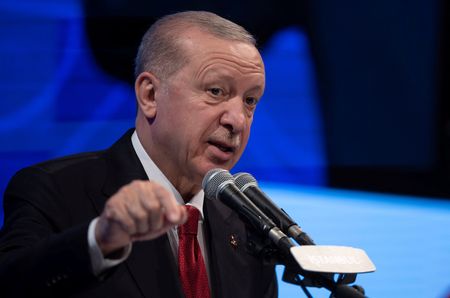
Turkish President Tayyip Erdogan declared Tuesday that Israel’s acknowledgment of the breakaway Republic of Somaliland serves no positive purpose for either Somaliland or the broader region.
Back in December, Erdogan had condemned Israel’s formal recognition of Somaliland—a northern territory that proclaimed independence in 1991—calling the move both illegal and unacceptable. At that time, he also claimed Israel was attempting to create instability in the Horn of Africa.
Speaking at a news conference while visiting Addis Ababa, Erdogan stated: “I would like to especially underline our stance of valuing the sovereignty and territorial integrity of states in the area where Ethiopia is located.” He emphasized that Turkey opposes any new conflicts emerging in the region.
“We believe regional countries need to find solutions to the problems of the region and for the Horn of Africa not to become a competition field for foreign forces. In that regard, I would like to emphasise that Israel’s recognition of Somaliland does not benefit Somaliland or the Horn of Africa,” Erdogan continued.
The NATO member nation has expanded its presence across Africa in recent years, providing training for Somalia’s security personnel and offering development aid in exchange for strategic positioning along crucial international shipping lanes. Turkey has also built strong relationships with other nations in the region, including Ethiopia.
Meanwhile, Somalia has severed all diplomatic relations with the United Arab Emirates, claiming the UAE influenced Israel’s decision to recognize Somaliland. Following this break, Somalia signed a defense pact with Qatar, and Turkey deployed fighter aircraft to its Somali base as a demonstration of military support.
Turkey has emerged as one of Israel’s harshest critics regarding its military operations in Gaza, which Turkish officials have labeled as genocide. The country has halted all commercial dealings with Israel and has advocated for international sanctions against Israeli leadership.
TEL AVIV, Israel (AP) — Military weapons were removed from showcases, unmanned aircraft flew over vendor booths, and massive monitors displayed continuous video of rocket strikes throughout the exhibition halls at Tel Aviv’s convention center during the Defense Tech Expo Israel 2026.
The conference united Israeli military contractors, international representatives, and financial backers to showcase innovations spanning personal weapons and automated systems to aerial and rocket defense platforms plus cybersecurity solutions.
Exhibition spaces featured large-scale models of defense missiles and pilotless vehicles, with company representatives explaining combat features to prospective purchasers. Corporate negotiations took place next to monitors displaying war zone simulations and marketing videos.
The current year’s conference demonstrated increased global attention toward Israel’s military industry, with companies marketing products developed through recent military engagements.
Beyond the conference center, a small collection of demonstrators opposed the military and weapons business. Several protesters connected the trade show to the Gaza conflict, carrying placards that called the region a “testing lab” for armaments.
Combined, these events illustrate the conflict between the business presentation of warfare technology and the civic discussion about how it gets used.
This represents a photo collection assembled by AP photography staff.
LONDON (AP) — Participants wearing elaborate outfits that included a giant number two pencil, penguin, and strawberry costume dashed across a downtown London plaza while clutching frying pans during the city’s traditional annual pancake flipping race. The festive event marks the observance of Shrove Tuesday, commonly called Fat Tuesday, which represents the last day before Lent begins — the 40-day period of Christian fasting.
The photo collection was assembled by Associated Press photography staff.
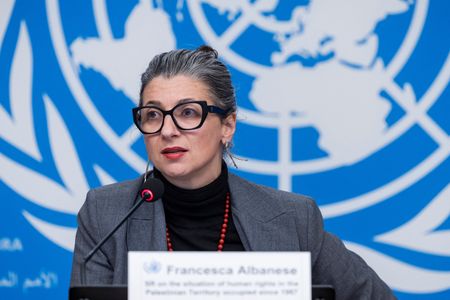
GENEVA – A United Nations committee is defending one of its Palestinian rights experts after multiple European governments demanded her removal based on statements she says she never made.
The UN Coordination Committee issued a strong rebuke Tuesday against what it called malicious attacks targeting Francesca Albanese, the organization’s special rapporteur for Palestine. The committee accused European officials of spreading false information about the Italian lawyer’s comments.
Over the past week, government ministers from Germany, France, Italy, and the Czech Republic have called for Albanese’s removal from her position. The controversy began when Czech Foreign Minister Petr Macinka posted on social media Friday, claiming Albanese had described Israel as a “common enemy of humanity” and demanding her resignation.
However, a Reuters review of transcripts from Albanese’s February 7 speech in Doha found no evidence she used those words, though she has been a consistent critic of Israel’s actions in Gaza.
The six-member UN committee, which oversees the work of special rapporteurs, accused the European ministers of relying on fabricated information.
“Instead of demanding Ms Albanese’s resignation for performing her mandate…these government representatives should join forces to hold accountable, including before the International Criminal Court, leaders and officials accused of committing war crimes and crimes against humanity in Gaza,” the committee stated.
The panel warned that the pressure against Albanese represents a growing pattern of politically driven attacks targeting independent human rights investigators, UN staff, and international court judges.
The Trump administration has also taken action against Albanese, imposing sanctions after she sent correspondence to American companies, alleging their involvement in human rights violations by Israel in Gaza and the West Bank.
Special rapporteurs like Albanese work independently from the UN itself, though they are appointed by the Geneva-based Human Rights Council to investigate and report on specific human rights situations.
While no special rapporteur has ever been removed mid-term, diplomatic sources indicate that member states of the 47-nation council could theoretically propose such action. However, they noted that strong Palestinian rights support within the council makes successful removal unlikely.
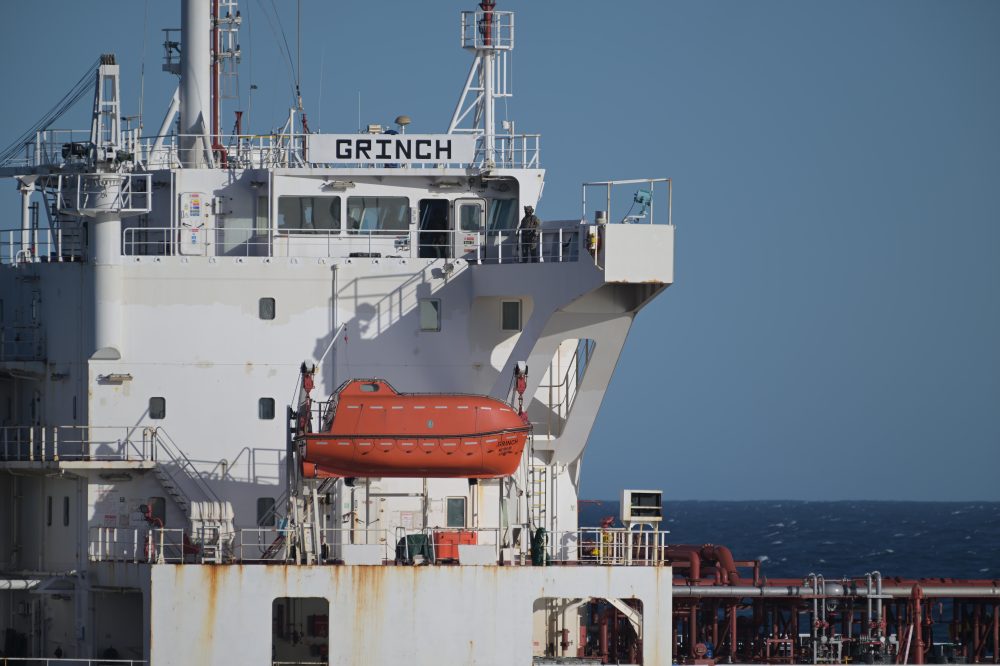
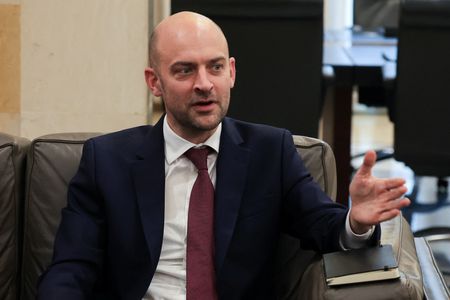
PARIS — Officials in France announced Tuesday that they have freed an oil tanker detained last month in Mediterranean waters, which authorities believe was operating as part of Russia’s covert shipping network designed to bypass international oil sanctions.
In a social media statement, French Foreign Minister Jean-Noël Barrot revealed that the vessel named Grinch was permitted to depart French territorial waters following payment of a financial penalty worth “several million euros” and enduring “three weeks of costly immobilization.”
“Circumventing European sanctions comes at a price. Russia will no longer be able to finance its war with impunity through a ghost fleet off our coasts,” Barrot said.
French naval forces had redirected the vessel last month and secured it at the Fos-sur-Mer port during an investigation into allegations of operating without proper flag documentation. The ship’s crew members, all of Indian citizenship, remained aboard throughout the detention.
“As part of a guilty plea procedure the company that owns the vessel was sentenced by the Marseille judicial court to a financial penalty of confiscation,” according to a combined statement from the Marseille prosecutor’s office and regional maritime authorities.
Officials did not reveal the precise sum of the monetary penalty.
Intelligence reports suggest Russia operates more than 400 vessels to circumvent sanctions related to its military campaign in Ukraine. France and allied nations have pledged to intensify enforcement efforts.
This covert maritime operation consists of deteriorating ships and oil carriers controlled by obscure companies registered in non-sanctioning nations, operating under those countries’ flags.
In September, French naval personnel boarded another oil vessel off France’s Atlantic coastline that President Emmanuel Macron also connected to the shadow fleet operation. Putin condemned that seizure as an act of piracy.
The captain of that September incident faces trial next week on charges related to the crew’s alleged failure to comply with authorities.
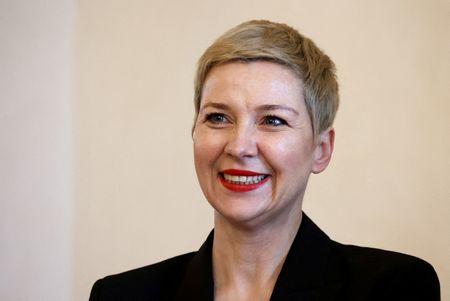
A prominent Belarusian opposition activist who was recently released from prison is calling on European leaders to open diplomatic channels with the country’s authoritarian president, warning that continued isolation will only drive Belarus deeper into Russia’s sphere of influence.
Maria Kalesnikava made these remarks during a virtual discussion hosted by the London-based Chatham House think tank on Tuesday. She spent over five years behind bars for her role in organizing demonstrations that were violently suppressed by President Alexander Lukashenko after Belarus’s controversial 2020 election. Kalesnikava was freed and forced to leave the country last December.
Her comments contribute to an ongoing discussion about whether European nations should follow the United States’ lead in pursuing talks with the long-serving dictator, or maintain their current policy of diplomatic isolation due to his poor human rights record and support for Vladimir Putin’s military campaign in Ukraine.
“Belarusians must feel that they are part of Europe… The more Belarus is cut off from Europe, the more it’s structurally tied to Moscow,” Kalesnikava stated during the online forum.
“If Europe wants a stable and secure eastern neighbourhood, it cannot afford to disengage,” she continued.
However, Nobel Peace Prize winner Ales Bialiatski, who was also released from prison in December, expressed doubt about Lukashenko’s commitment to reforming the authoritarian structure he has maintained since assuming power in 1994.
“Currently Belarus resembles scorched earth,” Bialiatski observed, describing the atmosphere of political oppression and the nation’s economic reliance on Russia and China.
“Society is like a pressure cooker and the lid has been tightly screwed down with all the bolts,” he added.
Bialiatski characterized Lukashenko’s decision to negotiate with American officials as a strategic move motivated by economic struggles.
“Regimes like Lukashenko’s understand only the language of strength,” he stated.
Both activists were part of a group of 123 political prisoners freed by Lukashenko in December following discussions with a representative of President Donald Trump. In exchange, the United States removed sanctions on Belarusian potash exports, though European Union restrictions remain active.
Opposition critics argue this prisoner exchange follows a long-established pattern where Lukashenko releases jailed political opponents to secure concessions from Western nations while offering minimal reforms in return.
Despite this criticism, Kalesnikava credited a previous period of improved Western relations between 2016 and 2019 with inspiring Belarusians to envision a democratic European future, ultimately motivating the 2020 street protests.
The former professional musician suggested that providing travel documents to ordinary Belarusian citizens and resuming educational, cultural, and professional exchange programs could help restore those democratic aspirations.
She warned that failing to take such steps would waste a crucial opportunity when the 71-year-old Lukashenko eventually exits the political stage.
“If the West is absent at that moment, it will lose influence over the outcome,” she concluded.
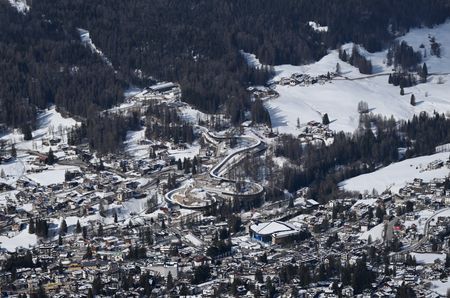
A cybersecurity company has exposed a sophisticated online fraud scheme targeting Olympic fans through fake merchandise websites designed to look like the official Milano Cortina 2026 store.
On Tuesday, Bitdefender revealed they had discovered multiple counterfeit shopping sites that closely mirror the legitimate Olympic merchandise store, aimed at deceiving customers in Europe and across the United States.
The security researchers found that these fraudulent operations spread through deceptive advertisements on Facebook and other Meta-owned platforms, enticing shoppers with massive markdowns of up to 80 percent on what appears to be genuine Olympic products.
When unsuspecting customers click these promotional ads, they’re taken to sophisticated replica websites that steal payment information, home addresses, telephone numbers, email addresses, and sometimes login passwords. Those who fall victim may either receive fake products or receive nothing while having their sensitive information stolen.
Bitdefender’s investigation showed these criminal operations depend on extremely realistic copies of the authentic Olympics merchandise website.
Officials from the Milano Cortina 2026 Winter Olympics organizing committee and Meta did not respond to requests for comment.
The counterfeit websites feature the same product images, visual design, official logos, and product lines as the real store.
Security experts noted that numerous fake web addresses were created within days of each other and marketed through recently established Facebook accounts. This pattern indicates an organized network designed to change rapidly and evade detection by authorities.
Most of these fraudulent websites vanish within hours or days after collecting payments, making it impossible for victims to recover their money.
Bitdefender pointed out that careful observers can spot key differences that expose the scam. While the legitimate store promotes deals like “Sign up and save 15%”, the counterfeit versions advertise “Sign up and save 80%”.
The cybersecurity firm recommended that shoppers verify website registration information, remain skeptical of unusually large discounts, and research the background of Facebook pages advertising these deals.
Given the extensive and advanced nature of this criminal operation, thousands of online shoppers could fall victim as the Winter Games draw to a close, according to the security company’s warning.
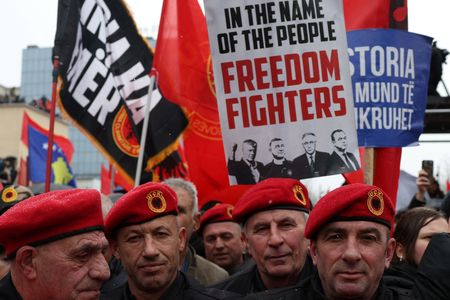
Massive crowds filled the streets of Pristina on Tuesday as demonstrators rallied in support of former Kosovo Liberation Army leaders currently facing war crimes charges at an international tribunal.
The protest centered around four former KLA commanders who were taken into custody in 2020 and transferred to a specialized war crimes court in The Hague. Among those on trial is Hashim Thaci, Kosovo’s former president, along with ex-parliamentary leaders Jakup Krasniqi and Kadri Veseli, plus former legislator Rexhep Selimi.
The defendants face serious allegations including persecution, murder, torture and forced disappearances connected to Kosovo’s 1998-99 independence struggle against Serbia. All four have entered not guilty pleas to the charges.
Court proceedings have reached the final argument phase this week, with judges expected to render their decision within three months. Prosecutors have requested 45-year prison terms for each defendant.
Demonstrators expressed strong opposition to the proceedings, with many viewing the accused as freedom fighters rather than war criminals. “Those who deserve to be in The Hague are the occupiers, not the liberators,” declared Miran Zeka, 49, who traveled from Albania to join the demonstration.
“We fought in our land, we did not go to Serbia to fight,” stated Bekim Muja, 53, a veteran who participated in the Kosovo conflict.
Rally participants displayed KLA military uniforms while others carried flags representing the KLA, Kosovo, and Albania. Demonstrators held signs declaring “Freedom has a name” and carried photographs of Thaci and co-defendants labeled “Heroes of War and Peace.”
Thaci, now 57, held multiple high-ranking positions in independent Kosovo from 2008 to 2020, serving as prime minister, foreign minister, and president.
The conflict that sparked these charges resulted in over 13,000 casualties, predominantly Kosovo Albanians, during the late 1990s uprising. At that time, Kosovo remained under Serbian control, governed by nationalist leader Slobodan Milosevic, whose forces launched brutal campaigns against ethnic Albanian populations.
The Kosovo Specialist Chambers was established in 2015 with international judges and legal staff to prosecute war crimes cases involving former KLA fighters under Kosovo’s legal framework. Officials located the tribunal outside Kosovo due to concerns about witness safety, recognizing that many Kosovo citizens regard former KLA commanders as national heroes who secured their freedom.
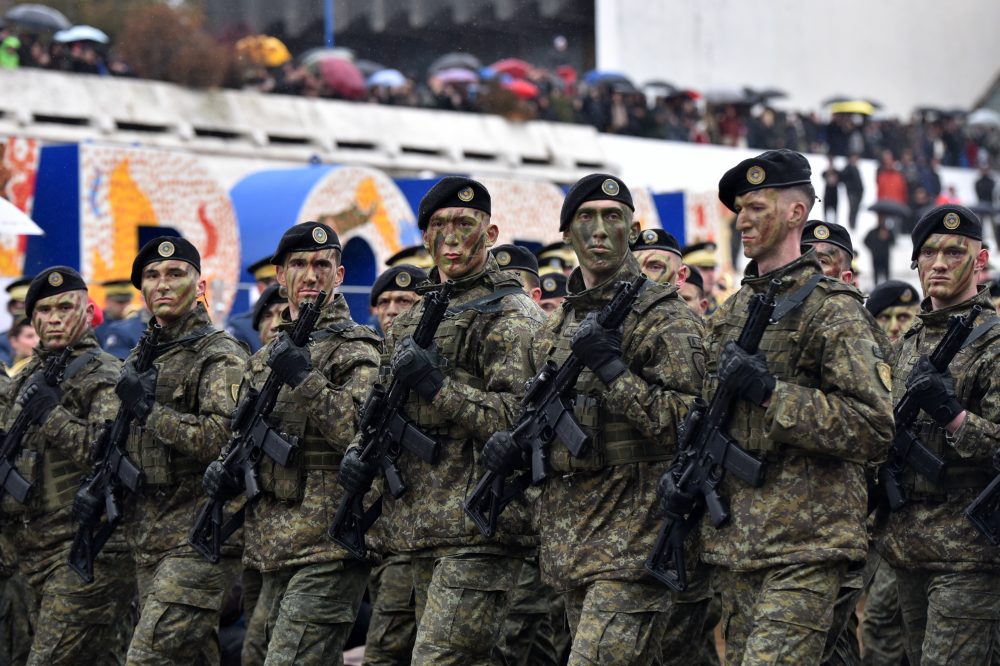
PRISTINA, Kosovo — Kosovo’s 18th independence anniversary took on a tone of resistance Tuesday as massive crowds demonstrated in support of former military leaders currently on trial for alleged war crimes committed during the 1998-1999 conflict with Serbia.
Despite frigid, snowy conditions in Pristina, demonstrators draped in Albanian national colors gathered to protest legal proceedings taking place in The Hague against ex-president and former rebel commander Hashim Thaci, along with three co-defendants accused of committing atrocities during and following the war that claimed approximately 13,000 lives.
The independence commemoration began with Kosovo security forces conducting ceremonial parades through Pristina, followed by a special parliamentary session.
The conflict began when the Kosovo Liberation Army initiated its independence campaign in 1998, prompting Serbia to launch a harsh military response. The war concluded after a 78-day NATO bombing campaign against Serbia in 1999, ultimately compelling Serbian forces to withdraw from the territory.
Serbia continues to reject Kosovo’s 2008 independence declaration, creating ongoing tensions throughout the unstable Balkans. Both nations have been informed that establishing normal diplomatic relations is a prerequisite for European Union membership.
The Kosovo Specialist Chambers in The Hague — technically part of Kosovo’s court system despite its foreign location — has prosecutors seeking maximum 45-year sentences for Thaci and his co-defendants. Thaci faces additional charges in a separate witness intimidation case scheduled to begin this month.
Kosovo officials and demonstrators have condemned the trials as politically motivated, arguing they create an unfair equivalency with Serbia, whose political and military leadership faced previous war crimes convictions at a separate United Nations tribunal.
Tuesday’s protesters displayed signs declaring “History cannot be rewritten” and “Freedom for the liberators.” They surrounded a prominent independence monument with metal barriers and posted a “Kosovo in Prison” sign atop the structure.
President Vjosa Osmani released a statement asserting that “truth cannot be changed by attempts to rewrite history or to tarnish and devalue the struggle of Kosovo’s people for freedom.”
Prime Minister Albin Kurti declared that “the KLA-led war was pure, liberation (struggle) and an anti-colonial war … a just struggle of an occupied and oppressed people under apartheid.”
From Belgrade, a Serbian government office responsible for Kosovo affairs characterized the independence declaration 18 years ago as a “flagrant violation of international law.” The statement claimed “systematic terror” and persecution targeting Serbian minorities in Kosovo.
More than 100 countries, including the United States and most European Union members, have acknowledged Kosovo’s independence, while Russia and China support Serbia’s territorial claims.
Thaci stepped down from the presidency in 2020 to face 10 charges of crimes against humanity and war crimes.
The specialized court and prosecutor’s office were established following a 2011 Council of Europe human rights report that investigated claims of KLA fighters trafficking human organs from prisoners and killing both Serbs and fellow ethnic Albanians. The organ trafficking allegations have not appeared in court indictments.
LIMA, Peru — Lawmakers in Peru’s Congress were scheduled to cast ballots Tuesday on whether to force out interim President José Jerí, as prosecutors examine corruption claims related to undisclosed encounters between Jerí and Chinese business leaders.
Should the parliamentarians obtain enough support, Jerí would be forced from power just four months after taking office. His ouster would spark another leadership change, requiring lawmakers to select a replacement and adding fresh instability to Peru’s political landscape with national elections just two months away.
Jerí represents the seventh person to hold the presidency in Peru over the last ten years. He took the oath of office in October following his predecessor’s removal by Congress due to graft accusations and escalating violent crime. He now confronts potential dismissal by his former legislative peers, who claim he engaged in improper conduct and lacks the ability to fulfill presidential responsibilities.
The 39-year-old acting president expressed confidence he would weather the legislative challenge.
“I’m not dead yet,” Jerí stated in a weekend television appearance on Peru’s Panamericana network, declaring his intention to continue serving Peruvians until his “last day” at the presidential residence.
Should lawmakers vote for his dismissal, they will select a successor from their ranks to lead the country until July 28, when the acting president transfers power to whoever wins the April 12 presidential contest.
Following any removal, Jerí would resume his role as a congressional member through July 28, when the incoming legislature also assumes office.
There remains a possibility legislators will reject the removal effort. Jerí enjoys backing from the Fuerza Popular party, headed by presidential hopeful Keiko Fujimori, whose father previously served as president before facing imprisonment for human rights violations.
The charges against Jerí originated from a disclosed document about a secret December gathering with two Chinese business executives. One participant maintains active government contracts, while the other faces investigation for suspected participation in unlawful timber operations.
Jerí has rejected any wrongdoing, explaining he met with the executives to plan a Peruvian-Chinese celebration, though his critics have labeled this corruption.
This turmoil represents another episode in Peru’s extended political breakdown, as the nation has witnessed seven presidents since 2016 and prepares for general elections while citizens express widespread anger over rising violent crime.
Even with the constant presidential turnover, Peru’s economic situation has stayed steady.
The South American country maintained an external debt-to-GDP ratio of 32% in 2024, among Latin America’s most favorable, while the government continues encouraging foreign investment in sectors including mining and infrastructure development.
A simple vegetable that’s a staple in Russian kitchens has become an unexpected flashpoint for economic frustration as the country’s war in Ukraine continues to strain household budgets.
Cucumber costs have surged dramatically across Russia, with government data showing prices have doubled since December to average more than 300 rubles (about $3.91) per kilogram. Social media posts reveal some stores charging two or three times that amount for the common salad ingredient.
The price spike has caught the attention of lawmakers, particularly those from the ruling United Russia party facing elections later this year. Anti-monopoly officials have now demanded explanations from growers and grocery chains about the sudden increases.
Sergei Mironov, who leads the Just Russia party in parliament, criticized government explanations that blame seasonal factors for the price jumps.
“This winter, a new ‘delicacy’ has appeared in our shops – cucumbers,” Mironov stated. “They used the same explanation for last year’s ‘golden’ potatoes, and now it’s ‘gilded’ cucumbers.”
The former paratrooper turned politician, known for highlighting issues that frustrate voters nationwide, pressed further: “What are people supposed to do? Just accept that they can’t afford the most basic foods?”
Food producers have attempted to calm concerns, promising cucumber prices should drop next month when temperatures rise. Officials point to successful resolutions of similar pricing problems with other foods in the past, and there’s no indication the complaints threaten social order despite widespread grumbling on social platforms.
However, the cucumber crisis comes amid broader economic pressures, with overall prices climbing 2.1% since January began – partly due to higher value-added taxes – while Russia’s economy slows after four years of conflict in Ukraine.
Russia’s central bank projects annual inflation could reach 5.5% this year, and citizens are voicing complaints about everything from utility costs to gasoline prices to restaurant bills.
The situation has become so severe that cucumbers now cost more than imported bananas. Some Siberian supermarkets have imposed purchase limits per customer, while a major Russian newspaper distributed seeds so readers could grow their own vegetables at home.
Opposition parties in the Duma, including Mironov’s group and the communists, have proposed government caps on retailer markups for essential foods.
Yevgeny Popov, a ruling party legislator, attempted to minimize concerns on social media, claiming prices would decline and emphasizing Russia’s complete self-sufficiency in cucumber production.
His reassurances drew sharp responses from constituents.
“The prices for cucumbers and tomatoes are outrageous,” replied a woman identifying herself as Svetlana. “Once upon a time they said eggs were ‘golden’ (because they were so expensive.) Now it’s cucumbers that are golden.”
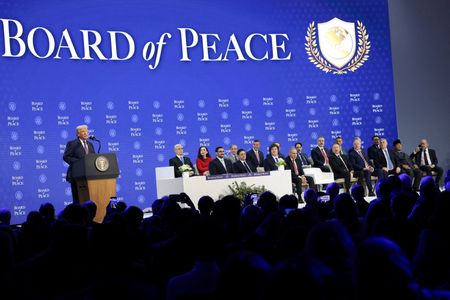
ROME – Political opposition forces in Italy are condemning their government’s decision to participate in President Donald Trump’s newly formed Board of Peace, arguing the organization weakens the United Nations and violates international legal principles.
The board will convene for its inaugural session in Washington this Thursday, focusing on reconstruction strategies for Gaza. Representatives from over 20 nations are expected to participate in the gathering.
Prime Minister Giorgia Meloni, who maintains strong relationships with Trump, announced Italy would join as an observer nation, stating Rome seeks involvement in American-led peace initiatives. However, most Western countries continue showing hesitation about participation.
During parliamentary discussions with Foreign Minister Antonio Tajani, Democratic Party legislator Giuseppe Provenzano questioned the government’s motives, stating: “How far are you willing to go in order to please Trump? You have answered this question: rushing to the American president’s court whenever and for any reason.”
While originally created to support Gaza’s ceasefire agreement, Trump envisions the Board of Peace addressing worldwide conflicts – a broader scope that concerns some nations who worry it could challenge the UN’s authority.
Several Middle Eastern powers have committed to the board, including Turkey, Egypt, Saudi Arabia and Qatar, alongside major developing countries like Indonesia. A European Union representative will also observe the initial meeting, though Italy’s specific representative remains undetermined.
Rome has rejected full membership, citing constitutional conflicts with portions of the board’s charter. Italy’s constitution requires equal participation in international organizations, while the United States would maintain leadership authority in this new entity.
Centrist parliament member Riccardo Magi criticized the organization’s foundation, saying: “The Board of Peace is based not on democracy but on arrogance, not on law but on business,” referencing American proposals for residential developments and coastal resorts in Palestinian territory.
Foreign Minister Tajani defended against the criticism, arguing no viable alternatives exist for Trump’s Gaza strategy. “If anyone thought there are concrete, workable alternatives to this plan today, they would be showing they don’t know how to deal with reality,” Tajani responded.
Ukrainian forces launched successful drone attacks against two major Russian industrial facilities during overnight operations, according to Ukraine’s domestic security service SBU on Tuesday.
The strikes targeted the Taman oil terminal located in Russia’s Krasnodar region and a significant chemical manufacturing facility in the Perm region near the Ural mountains, officials confirmed from Kyiv.
These operations represent Ukraine’s continued strategy of intensifying long-distance attacks against key Russian infrastructure that supports Moscow’s military operations in the ongoing four-year conflict.
According to an SBU representative, this marks the second time the agency has successfully struck the Taman terminal since January 22. Ukraine’s General Staff had previously announced another attack on the same facility over the weekend.
The drone assault also targeted the Metafrax Chemicals facility in Perm, positioned approximately 1,600 kilometers away from Ukrainian territory. Security officials characterized this plant as among Russia’s and Europe’s largest methanol manufacturing operations.
These military actions occurred just as new diplomatic discussions between Ukraine and Russia commenced Tuesday in Geneva under U.S. mediation, though expectations remain low for meaningful progress from these negotiations.
India’s information minister delivered a strong message to major technology companies on Tuesday, emphasizing that platforms such as YouTube, Meta, X and Netflix must operate according to the nation’s constitutional principles following the implementation of stricter content removal regulations.
The minister made these remarks while attending an artificial intelligence conference in Delhi, where executives from leading AI companies are meeting with world leaders throughout the week.
“It’s very important for the multinationals to understand the cultural context of the country in which they are operating,” Ashwini Vaishnaw stated during his presentation at the India AI Impact Summit.
The previous week saw India announce that social media platforms must now eliminate illegal content within three hours after receiving notification, significantly reducing the former 36-hour deadline in a move that presents new compliance hurdles for Meta, YouTube and X.
Vaishnaw emphasized the necessity for enhanced regulation regarding deepfake technology, noting that discussions with industry representatives on this matter have already begun.
Social media platforms face increasing worldwide demands from governments to monitor content more rigorously, with authorities from Brussels to Brasilia requiring quicker content removal and enhanced responsibility.
On the same day, Spanish authorities directed prosecutors to examine social media platforms X, Meta and TikTok for allegedly distributing AI-created child sexual abuse content, as European officials increase their oversight of major technology companies regarding dangerous and unlawful material.
GENEVA – Iranian officials shut down the Strait of Hormuz on Tuesday for military exercises while simultaneously engaging in nuclear negotiations with American representatives in Geneva, creating a dramatic escalation in Middle Eastern tensions.
This marked the first instance Iran has blocked the critical shipping lane – which handles one-fifth of global oil transportation – since Washington began deploying military forces to the region and issuing threats. The move represents a significant intensification in the ongoing standoff that threatens to spark another Middle Eastern conflict.
Iranian media reported that live missiles were fired toward the waterway as diplomatic discussions commenced, with officials citing “safety and maritime concerns” for the several-hour closure.
The Tasnim news agency, which maintains connections to Iran’s Revolutionary Guard, confirmed that missiles launched from Iranian territory and coastal positions successfully hit their intended targets within the Strait.
State television later announced the completion of talks after nearly three hours of discussions.
Diplomatic Efforts Continue
Iranian broadcasting had previously indicated these negotiations would remain indirect, concentrating exclusively on nuclear issues while avoiding domestic matters such as the nation’s violent suppression of recent demonstrations.
President Donald Trump has consistently threatened military action to force Iranian compliance with nuclear restrictions. Iranian officials have promised retaliation for any attacks, while Trump has also issued warnings regarding the treatment of protesters.
The initial diplomatic session occurred February 6th in Oman, an Arabian Peninsula nation, following the same indirect format. The current meetings took place at the Omani diplomatic residence in Geneva, with both sides apparently conducting separate discussions through intermediaries.
Trump representatives Steve Witkoff and Jared Kushner traveled to participate in these latest negotiations.
Iranian Foreign Minister Abbas Araghchi, heading his country’s negotiating team, met Monday with the United Nations nuclear oversight chief in Geneva.
“I am in Geneva with real ideas to achieve a fair and equitable deal,” Araghchi posted on social media platform X. “What is not on the table: submission before threats.”
A diplomatic source close to the UN nuclear agency verified that Director General Rafael Grossi was present in Geneva to offer technical guidance when requested by either party. The source requested anonymity due to the discussions’ sensitive nature.
Speaking with reporters Monday evening aboard Air Force One while returning to Washington, President Trump indicated his planned involvement in the negotiations. “I think they want to make a deal. I don’t think they want the consequences of not making a deal,” Trump stated.
The United States is simultaneously hosting separate discussions between Russian and Ukrainian representatives in Geneva Tuesday and Wednesday, approaching the fourth anniversary of Russia’s full-scale invasion.
Military Exercises in Strategic Waters
Iranian officials announced that Revolutionary Guard forces began exercises Monday morning in the Strait of Hormuz, Persian Gulf, and Gulf of Oman – all vital international shipping corridors. This represents the second live-fire drill Iran has conducted in the Strait recently.
Supreme Leader Ayatollah Ali Khamenei intensified his warnings to Washington regarding American military buildup in the Middle East.
“Of course a warship is a dangerous apparatus, but more dangerous than the warship is the weapon that can sink the warship into the depths of the sea,” Khamenei declared according to state television.
He additionally cautioned America that “forcing the result of talks in advance is a wrong and foolish job.”
American Military Buildup
Last week, Trump announced the deployment of the USS Gerald R. Ford, the world’s largest aircraft carrier, from Caribbean waters to the Middle East to supplement existing American military assets in the region.
The Ford will join the USS Abraham Lincoln and its escort destroyers, which have maintained regional presence for more than two weeks. American forces shot down an Iranian drone that approached the Lincoln the same day Iran attempted to intercept a US-flagged vessel in the Strait of Hormuz.
Gulf Arab nations have expressed concerns that any attack could escalate into broader regional warfare in a Middle East already destabilized by the Israel-Hamas conflict.
The Trump administration seeks an agreement limiting Iran’s nuclear capabilities and preventing weapons development. Iran maintains it is not pursuing weapons and has resisted demands to cease uranium enrichment or surrender its highly-enriched uranium stockpile.
American-Iranian discussions had continued for months when Israel launched a 12-day military campaign against Iran in June, halting diplomatic progress. US forces bombed Iranian nuclear facilities during that conflict, likely destroying numerous centrifuges used for uranium enrichment to near-weapons grade levels. Israeli strikes also devastated Iran’s air defense systems and ballistic missile capabilities.
Iran continues asserting its nuclear program serves peaceful purposes. Prior to the June conflict, Iran had been enriching uranium to 60% purity, requiring only minor technical advancement to reach weapons-grade concentrations.
Protest Crackdown Remembrance
Iran is observing 40 days – the traditional Islamic mourning period – since one of the bloodiest days in its suppression of nationwide protests last month. Activists report at least 7,015 deaths, with many occurring during overnight violence between January 8th and 9th.
The US-based Human Rights Activists News Agency, which provided these figures, has demonstrated accuracy in previous Iranian unrest death counts and relies on domestic activist networks for verification.
The Associated Press cannot independently confirm casualty numbers due to Iranian authorities disrupting internet access and international communications.
Iran’s official news agency announced government memorial services at Tehran’s Grand Mosalla mosque, attributing the demonstrations to “violent actions by armed groups allegedly directed by foreign intelligence agencies.”
NAIROBI, Kenya (AP) — Transportation companies across Africa are starting to build electric passenger vans and taxis within their own borders, utilizing component kits from Chinese manufacturers along with creative payment plans to expand electric public transit throughout the region.
Lagos-based Saglev has started putting together 18-passenger electric vans using component packages from Chinese car manufacturer Dongfeng Motor Corp. The Nigerian company expects to produce as many as 2,500 vehicles annually, with plans to eventually build 17 different electric models for Nigeria and neighboring West African countries.
“This is a major step in Nigeria’s transition toward clean, fossil-free transportation,” said Saglev’s CEO Olu Falaye. He described the van as Nigeria’s first domestically assembled electric vehicle designed for mass transportation, marking a first for sub-Saharan Africa as well.
“This feat is a clear signal that electric mobility in Nigeria is practical, scalable and ready for adoption,” Falaye said.
The company represents a partnership between Nigeria’s Stallion Group, a prominent automotive distributor, and Chinese car maker Sokon Motor. Saglev also intends to build solar-powered charging facilities to address power reliability issues that pose a significant obstacle to electric vehicle adoption across parts of Africa.
Kenya is pursuing a comparable strategy, where Chinese-supported Rideence Africa recently finalized a $2.46 million agreement with Mombasa’s Associated Vehicle Assemblers (AVA) to start local production of electric taxis and small buses using kits from China’s Jiangsu Joylong Automobile and Beijing Henrey Automobile Technology.
“We are now moving decisively from operator to manufacturer,” said Rideence Africa’s managing director, Minnan Yu. “Our aim is to build a Kenya-rooted new-energy mobility company serving Africa.”
These two major African economies are spearheading local electric vehicle production as nations work to lower fuel expenses, decrease pollution, and develop their own manufacturing industries.
“This partnership delivers Kenya’s first dedicated electric vehicle assembly line, demonstrating clearly that Kenya has the capacity and capability to assemble EVs locally at scale,” AVA Managing Director Matt Lloyd said.
Small electric vans and buses serve as the backbone of African public transportation, where Japanese vehicles like Toyota Hiace and Nissan vans currently dominate streets, transporting both passengers and cargo.
Charging an electric vehicle costs approximately $3 for distances up to 200 kilometers (123 miles), while gasoline expenses for the same distance exceed $15.
“The assembly of electric vans is emerging as a strong market segment,” said Dennis Wakaba, the secretary-general of the Electric Mobility Association of Kenya. “Earlier, the cost of electric vans was high, putting off operators. But as local assembly scales up, these costs have dropped, attracting more orders.”
Kenya operates one of Africa’s most dynamic electric transportation markets, featuring startup companies that build buses and vans for public transit and ride-sharing services. Ethiopia and South Africa have also joined this market, with Ethiopia’s Belayneh Kinde Group (BKG) producing approximately 150 small buses monthly using Chinese parts.
To improve electric vehicle affordability, companies such as Rideence offer pay-per-use and rent-to-own programs that eliminate large upfront costs for operators. The company rents its taxis to drivers for roughly $18 daily.
BasiGo-Kenya Vehicle Manufacturer, which is also expanding into electric van assembly, asks operators to make a down payment followed by approximately 20 U.S. cents per kilometer (32 cents per mile) of driving.
This strategy aligns with the financial circumstances of African transport operators, who face limited credit access and rarely have funds to buy new vehicles outright.
“These innovative financing models mitigate risks for both assembler and operators, helping put vehicles on the road faster. With these, we expect to see more e-vans taking a larger share of the African transport systems,” Wakaba said.
However, Africa currently has only about 30,000 electric vehicles compared to millions powered by gasoline and diesel, according to recent data from the Africa Mobility Alliance. The continent produced just 1.1 million vehicles total last year, with 90% manufactured in Morocco and South Africa.
French President Emmanuel Macron conducted bilateral discussions with Indian Prime Minister Narendra Modi on Tuesday in Mumbai, working to strengthen economic and defense partnerships between the two nations during a period of global uncertainty and changing international relationships.
The discussions in India’s commercial hub highlighted the increasing significance of the France-India alliance, which has grown beyond military cooperation to encompass commerce, technology and energy sectors, with Paris establishing itself as New Delhi’s most dependable European ally.
“India-France partnership knows no boundary. In today’s era of uncertainties, this partnership is a force for global stability and progress,” Modi stated at a joint press briefing alongside Macron.
The diplomatic meeting occurred as India pursues foreign investment and supply chain strengthening while France aims to establish greater influence in the Indo-Pacific region and secure long-term involvement in India’s economic and security framework.
Both leaders participated in a virtual ceremony launching a final assembly facility for H125 helicopter manufacturing, a collaborative project between India’s Tata Advanced Systems and Airbus.
Located in Karnataka state in southern India, this assembly plant represents the country’s first private sector helicopter manufacturing facility.
Macron described the Franco-Indian relationship as entering an accelerated phase in response to evolving global dynamics.
“We have a special global strategic partnership, which gives new ambitions to the ties between India and France,” he stated.
The French president identified space technology, nuclear power, rare earth materials and critical minerals, aviation, and high-speed rail systems as priority areas for collaboration with India, while expressing support for a free-trade agreement between New Delhi and the European Union.
Macron also urged India to collaborate with France in efforts to conclude Russia’s military action in Ukraine and extended an invitation to Modi for the Group of Seven summit scheduled for June in Evian, France.
“As the ceasefire remains difficult to achieve, and I regret that, we could join our efforts to secure the establishment of an immediate and lasting moratorium on strikes against civilians and civilian infrastructure,” Macron explained.
Modi responded that India would maintain its advocacy for peaceful solutions to current conflicts in western Asia and eastern Europe.
Commercial relationships between Paris and New Delhi have grown consistently through increased trade volumes and expanded French investment in Indian manufacturing, energy, defense and infrastructure sectors. Trade between the nations surpassed $15 billion in the fiscal year concluding March 2025, establishing France as India’s third-largest EU trading partner, based on Indian government statistics.
Military cooperation forms the foundation of the bilateral relationship. The previous week, an Indian government committee granted preliminary authorization for military equipment purchases valued at $40 billion, including 114 Rafale fighter aircraft from France.
Preserving air superiority represents a strategic imperative for India, which confronts ongoing security threats along its frontiers with nuclear-capable adversaries Pakistan and China.
India currently operates two squadrons of Rafale fighter aircraft and completed an agreement last year to acquire 26 naval versions of the stealth fighter for its maritime forces.
NAIROBI, Kenya (AP) — Flight services have returned to Jomo Kenyatta International Airport in Nairobi after airport staff ended a two-day work stoppage Tuesday following successful negotiations with Kenya’s transportation department.
The major aviation hub experienced severe disruptions Monday, with travelers facing delays stretching up to six hours as carriers advised customers to reschedule their trips.
Kenya’s Civil Aviation Authority announced in a release that airport functions would restart immediately following the successful labor agreement reached with union representatives on Tuesday.
Workers had been seeking improved workplace conditions, higher wages, and enhanced benefits packages, with negotiations addressing these concerns taking place throughout Tuesday.
The facility serves as a crucial gateway for both regional African travel and international flights.
Transportation Minister Davies Chirchir emphasized the government’s dedication to maintaining stability within the country’s aviation industry.
Kenya Airways released a statement indicating the carrier was working to restore its flight schedule, noting that “normal operations will resume within the next 24 hours.”
The work stoppage began after union officials issued a strike warning the previous week, citing government failure to honor portions of a previously negotiated labor contract that included provisions for enhanced working conditions along with salary and benefit improvements.
People seeking refuge in Libya, including children as young as 14, are being subjected to horrific violence including murder, sexual assault, and forced labor, according to a new United Nations report released Tuesday.
The disturbing findings have prompted UN officials to demand that the international community stop sending migrant boats back to Libya until proper human rights protections are put in place.
Since longtime ruler Muammar Gaddafi was overthrown in a NATO-supported rebellion in 2011, Libya has served as a major pathway for people escaping war and economic hardship as they attempt to reach Europe by crossing the Mediterranean Sea. The nation has been divided between competing factions in the east and west since 2014.
European Union countries have provided support and training to Libya’s coastal patrol forces in recent years, which intercept migrants at sea and return them to detention facilities. The EU has also funded programs to help Libya manage its borders.
The report, issued jointly by the UN Human Rights Office and UN Support Mission, found that migrants are being captured and kidnapped by criminal smuggling organizations that often have connections to Libyan government officials and international crime groups.
“They are separated from their families, arrested, and transferred to detention facilities without due process, often at gunpoint, in what amounts to arbitrary detention,” said Thameen Al-Kheetan, a spokesperson for the UN Human Rights Office, during a briefing in Geneva.
Libya’s diplomatic mission in Geneva did not respond immediately to requests for comment. Libyan officials have previously rejected claims of widespread migrant abuse.
Researchers compiled the report by conducting interviews with nearly 100 migrants, people seeking asylum, and refugees from 16 nations across Africa, the Middle East, and South Asia. The interviews took place both within Libya and in other locations.
One account came from a woman from Eritrea who spent more than six weeks held captive at a smuggling operation in Tobruk, located in eastern Libya. “I wish I died. It was a journey of hell,” she told investigators.
“Different men raped me many times. Girls as young as 14 were raped daily,” the woman said. Her captors only freed her after her family paid money for her release.
The report, which examined the timeframe from January 2024 through December 2025, documented cases including a man forced into unpaid labor without adequate food, and young girls being taken away from their mothers.
“Men used humiliating methods with women, making them, for example, take their clothes off in front of other men and women migrants before raping them publicly, torturing them, and beating them,” explained Suki Nagra, a UN Human Rights representative working with the UN mission in Libya, during the Geneva briefing.
While the report acknowledged the critical importance of rescue operations to save migrants’ lives at sea, it strongly urged the global community to suspend returns to Libya until sufficient human rights protections can be guaranteed.
MADRID – Spanish authorities have greenlit a massive relief package totaling roughly 7 billion euros ($8 billion) on Tuesday to assist those impacted by devastating storms that struck the Extremadura and Andalusia regions in recent weeks.
Multiple severe weather systems have pummeled Spain and Portugal throughout the early months of this year, resulting in extensive infrastructure destruction and crop losses while prompting officials to relocate thousands of residents to safety.
“The help will compensate more than 12,400 people evacuated because of these events and mitigate the impact of heavy rains and flooding on houses, businesses and the agricultural and fishing sectors,” Budget Minister Maria Jesus Montero explained to media representatives. Montero indicated that additional financial support remains possible pending comprehensive damage assessments from specialists.
The storm systems destroyed at least 14,000 hectares (35,000 acres) of agricultural land, affecting berry farms, citrus groves, and olive orchards, as Agriculture Minister Luis Planas reported to national broadcaster TVE during the previous week.
Weather monitoring agency AEMET has documented that Spain has experienced 38% above-normal precipitation levels since October began.
Meanwhile, Portuguese officials initially calculated reconstruction expenses exceeding 4 billion euros following Storm Kristin’s destruction three weeks ago, subsequently implementing 2.5 billion euros in financial assistance programs and rebuilding incentives.
BEIRUT (AP) — Major thoroughfares in and around Lebanon’s capital were shut down by demonstrators Tuesday following the government’s decision to implement new taxation measures that will drive up gasoline costs and other consumer goods to finance public sector salary increases.
Lebanon’s Cabinet on Monday endorsed a levy of 300,000 Lebanese pounds (approximately $3.30) for every 20 liters (5.3 gallons) of gasoline purchased. Diesel was spared from the taxation measure, since most Lebanese citizens rely on it to operate personal generators that compensate for chronic state electrical power shortages.
Officials also decided to raise the value-added tax from 11 percent to 12 percent on all items currently subject to this fee, though parliamentary approval is still required.
These taxation measures will finance salary and pension increases for government workers, whose earnings were devastated during the 2019 monetary crisis, providing them with compensation equivalent to six additional months of pay. Information Minister Paul Morcos stated the wage increases are projected to cost approximately $800 million.
Despite sitting atop some of the Middle East’s most substantial gold deposits, this Mediterranean nation continues to battle persistent inflation and endemic corruption. The financially struggling country also sustained roughly $11 billion in destruction during the 2024 conflict between Israel and the Hezbollah militant organization.
Ghayath Saadeh, among a contingent of taxi operators who shut down a primary route into central Beirut, said the nation’s leadership “consider us taxi drivers to be garbage.”
“Everything is getting more expensive, food and drinks, and Ramadan is coming,” he said. “We will block all the roads, God willing, if they don’t respond to us.”
In 2019, when Lebanese authorities proposed additional taxes, including a $6 monthly charge for internet calling services like WhatsApp, massive demonstrations erupted that brought the nation to a standstill for months. Protesters demanded their leaders resign due to rampant corruption, governmental dysfunction and crumbling infrastructure, while also calling for an end to the nation’s religious power-sharing arrangement.
Lebanon has faced international demands to implement financial reforms for years, yet has achieved minimal advancement.
During Monday’s session, cabinet members also received an update from Lebanon’s military regarding progress on a strategy to disarm non-governmental militant organizations throughout the country, including Hezbollah.
The military announced last month it had finished the initial phase of this strategy, focusing on territory south of the Litani River near Israel’s border. The plan’s second phase will address portions of southern Lebanon between the Litani and Awali rivers, encompassing the coastal city of Sidon.
Information Minister Morcos stated after the cabinet meeting that the second phase is anticipated to require four months but might be prolonged “depending on the available resources, the continuation of Israeli attacks and the obstacles on the ground.”
This disarmament strategy follows a U.S.-mediated ceasefire that officially concluded fighting between Hezbollah and Israel in November 2024. Since that time, Israel has claimed Hezbollah is rebuilding and has maintained almost daily military strikes in Lebanon while occupying multiple elevated positions on Lebanese territory along the border.
Hezbollah maintains that the ceasefire agreement only mandates its disarmament south of the Litani River and refuses to consider disarming elsewhere in the country until Israel ceases its attacks and completely withdraws from Lebanese soil.
A French woman whose courage transformed her into an international symbol against sexual violence has published her memoir globally, hoping to inspire other survivors with her journey from victim to advocate.
Gisèle Pelicot’s book, titled “A Hymn to Life, Shame has to Change Sides,” became available Tuesday across 22 languages, chronicling her experience surviving nearly a decade of systematic assault.
“I wanted my story to help others,” Pelicot explained during a recent interview with France 5, a French television network, before her memoir’s worldwide launch.
The book represents Pelicot’s first extensive public commentary since a groundbreaking 2024 court case that made headlines internationally. Her decision to publicly identify herself during the proceedings, rather than remain anonymous, sparked global conversations about sexual violence and victim-blaming.
“Today I’m doing better, and this book allowed me to engage in self-reflection, to take stock of my life,” she explained. “I had to try to rebuild myself on this field of ruins. Today I am a woman standing strong.”
Pelicot emphasized that her memoir carries “a message of hope to all the women who are going through a very complicated period in their lives.”
Her case and public stance created ripple effects worldwide, earning recognition from prominent figures including Olympic champion Simone Biles, who has also spoken about surviving sexual abuse.
“Gisèle has demonstrated to the world that it’s not for victims of sexual abuse to feel shame — it’s the perpetrators,” Biles stated in remarks aired by the BBC. “By waiving her anonymity and refusing to feel shame, Gisèle paves the way for other victims to come forward.”
The criminal case concluded in December 2024 with convictions against Pelicot’s former husband, Dominique Pelicot, along with 50 additional defendants. The crimes occurred between 2011 and 2020, during which Dominique Pelicot secretly drugged his wife to render her unconscious before assaulting her and allowing other men to do the same.
Dominique Pelicot received a 20-year prison sentence, while co-defendants were given terms between three and 15 years. One defendant who appealed his conviction later had his sentence extended to 10 years by an appeals court.
The couple had been married for nearly five decades when Dominique Pelicot confessed to years of secretly adding sedatives to his wife’s food and beverages to facilitate the assaults.
The trial highlighted concerning connections between online pornography, internet chat groups, and misconceptions about sexual consent that can contribute to violence against women.
The case prompted legislative action in France, where lawmakers approved new rape legislation in October. The updated law characterizes rape and sexual assault as any sexual activity without consent, aligning France with neighboring European countries like Germany, Belgium, and Spain that have similar consent-focused statutes. Previously, French law required proving that rape involved “violence, coercion, threat or surprise” rather than simply lack of consent.
ISLAMABAD — Military officials report that an explosive-packed vehicle crashed into a security checkpoint in Pakistan’s northwestern region, resulting in the deaths of 11 soldiers and one child during an overnight assault.
According to military statements released Tuesday, the incident took place Monday evening in Bajaur district within Khyber Pakhtunkhwa province, located near the Afghan border. The attackers attempted to penetrate the checkpoint but were confronted by security personnel who had signaled the vehicle to halt.
The explosion caused sections of the military compound to crumble and severely damaged nearby residential buildings. A young girl was killed in the blast, while seven other civilians, including women and children, sustained injuries.
Local police official Zafar Khan reported that following the initial bombing, additional militants attempted to infiltrate the security facility, sparking a gun battle. Security forces ultimately eliminated 12 attackers, whom authorities refer to as “khawarij,” their term for the Pakistani Taliban, known as TTP. A manhunt continues throughout the Bajaur area.
The region has remained volatile since August 2025, when military forces initiated a “targeted operation” against militant groups, forcing thousands of residents to temporarily evacuate before returning to their homes. Intelligence-driven operations have continued in the area since that time.
While no organization has taken credit for the assault, authorities suspect the Pakistani Taliban, who frequently launch attacks against both security personnel and civilians nationwide.
Pakistani President Asif Ali Zadari and Prime Minister Shehbaz Sharif issued separate condemnations of the attack. Both leaders expressed grief over what they called the “martyrdom” of the security forces and civilian victim, extending sympathies to the bereaved families. Sharif emphasized the government’s commitment to defeating terrorism and declared the nation’s support for its military forces in this battle.
The country has experienced escalating violence in recent years, with most incidents attributed to the TTP. This organization operates independently from but maintains close ties with Afghanistan’s Taliban, who regained control in 2021. The rising number of attacks has created diplomatic tensions between Islamabad and Kabul, as Pakistan claims the TTP operates without restriction from Afghan territory — allegations that both the TTP and Kabul reject.
Last month, Pakistan’s army chief General Asim Munir challenged Afghanistan’s Taliban leadership to decide between preserving relationships with Islamabad or continuing to support the Pakistani Taliban, the militant organization responsible for numerous recent deadly strikes.
General Munir delivered these statements at his headquarters in Rawalpindi, where he participated in a ceremonial honor guard from all military branches, commemorating the establishment of Pakistan’s unified military command structure.
NAPLES, Italy – Flames completely destroyed the interior of Naples’ treasured Teatro Sannazaro on Tuesday, leaving the 176-year-old cultural landmark in ruins after a devastating blaze swept through the structure.
The inferno reportedly originated in a residential building located in Naples’ affluent Chiaia neighborhood before quickly spreading to the adjacent theater, which dates back to the 1800s. The intense flames caused the theater’s distinctive domed ceiling to collapse while destroying the elegant seating areas and ornate golden balconies that had defined the venue for generations.
Fire commander Giuseppe Paduano described the extensive damage to news media, stating “Very little of the theatre remains.” He added, “Inside there are still some small hotspots that we will extinguish shortly. As for the causes, it’s still too early to say.”
According to Naples Mayor Gaetano Manfredi, preliminary findings point to the fire starting by accident rather than intentionally.
The massive blaze created thick, suffocating smoke that enveloped the surrounding area beginning at daybreak, forcing authorities to evacuate 22 families from nearby residences. Medical personnel transported four individuals to local hospitals for treatment of smoke inhalation, though officials reported no fatalities or severe injuries occurred.
When Mayor Manfredi arrived at the destruction site, he expressed profound grief over the cultural loss. He described the theater’s destruction as “a great sorrow” and “a deep wound” to Naples’ rich historical and cultural heritage.
The Teatro Sannazaro first opened its doors to audiences in 1847 and became a celebrated venue that welcomed Italy’s most renowned performers and dramatists throughout its long history. In recent years, the theater presented a diverse lineup featuring both traditional musical performances and touring theatrical productions.
The mayor pledged municipal support for restoration efforts, promising “We will do everything we can to help the owners rebuild.” He also indicated that Italy’s national government plans to provide financial assistance for the reconstruction project.
This tragedy echoes similar disasters that have struck Italy’s theatrical heritage in recent decades. Venice’s renowned Fenice opera house suffered complete destruction in a fire thirty years ago but successfully reopened in 2003 following extensive reconstruction work. The Teatro Petruzzelli in Bari met a similar fate in 1991, remaining closed until 2009 when it finally welcomed audiences again. Unlike Tuesday’s apparent accident in Naples, both previous theater fires resulted from deliberate arson attacks.
MARSEILLE, France – French officials have released an oil tanker suspected of helping Russia evade international sanctions after the vessel’s owners paid a multi-million euro fine, France’s Foreign Minister Jean-Noel Barrot announced Tuesday.
The tanker GRINCH was permitted to depart French waters following the substantial financial penalty, Barrot revealed.
“Circumventing European sanctions comes at a price. Russia will no longer be able to finance its war with impunity through a ghost fleet off our coasts,” Barrot wrote in a social media post.
French maritime authorities had detained the GRINCH in the Mediterranean Sea last month before directing it to waters near the port city of Marseille. Officials suspected the vessel was operating as part of Russia’s shadow fleet – a network of ships designed to transport Russian oil while avoiding international sanctions.
According to French authorities, the tanker had departed from the Russian Arctic port of Murmansk in early January while flying under the flag of Comoros.
Officials stated that the ship’s operating company was required to pay the financial penalty after failing to provide adequate justification for the vessel’s flag registration.
A tragic blaze at a residential building in northeastern Spain has claimed five lives and left five additional people with minor wounds, according to regional emergency officials who reported the incident Monday evening.
The deadly flames erupted in a storage area within a five-story residential complex located in Manlleu, a community of approximately 21,000 residents situated north of Barcelona, Catalonian regional officials confirmed in an official statement.
Authorities indicated that the five victims became trapped in the building’s upper-level storage area and were unable to flee, though the circumstances preventing their escape remain unclear. Officials have not yet determined what ignited the destructive fire. The process of identifying the deceased will take place Tuesday, as several bodies sustained severe burn damage.
Law enforcement officials from Catalonia revealed that all five fatalities were young individuals who were not residents of the affected building.
Salvador Illa, Catalonia’s regional leader, shared his sympathies for the victims and their loved ones through social media, stating he was “deeply saddened by the death of five people.”
Medical officials reported Tuesday that four of the wounded individuals received treatment at area hospitals before being discharged, while the fifth injured person did not require hospital care.
Catalonian law enforcement has launched a formal inquiry to determine what caused the fatal fire. Investigators have not disclosed whether they are examining the incident as a potential criminal matter.
DHAKA, Bangladesh — Tarique Rahman officially assumed the role of Bangladesh’s prime minister on Tuesday following his political party’s commanding victory in recent parliamentary elections, marking the nation’s first vote since the major 2024 civil unrest that reshaped the country’s political direction.
The 60-year-old Rahman, whose leadership term spans the next five years, carries significant political lineage as the child of former Prime Minister Khaleda Zia and late President Ziaur Rahman. His inauguration breaks a 35-year streak of female leadership, as Bangladesh’s governance since its 1991 return to democratic rule had alternated between Rahman’s mother and her political opponent Sheikh Hasina.
President Mohammed Shahabuddin conducted the official swearing-in ceremony for Rahman on Tuesday, with numerous cabinet appointees and government officials also taking their oaths of office during the proceedings.
Electoral results showed Rahman’s Bangladesh Nationalist Party and allied groups capturing 212 positions in the 350-seat legislative body, while an opposition coalition of 11 parties headed by Jamaat-e-Islami, the nation’s primary Islamic political organization, secured 77 parliamentary seats.
Among the opposition alliance was the newly established National Citizen Party, created by student activists who spearheaded the 2024 demonstrations, which obtained six legislative positions.
Bangladesh’s electoral system allows citizens to directly choose 300 parliamentary representatives, with the remaining 50 positions designated for women and allocated based on each party’s electoral performance.
Rahman returned to Bangladesh in December after spending 17 years in voluntary exile in London, arriving shortly before his mother’s passing. He has pledged to champion democratic principles in the South Asian nation of 170 million residents.
The election process was supervised by an interim administration headed by Nobel Peace Prize recipient Muhammad Yunus, which assumed control after Hasina’s government fell. International election monitors characterized the voting as largely peaceful and legitimate.
Tuesday’s inauguration drew various international representatives, including Maldives President Mohamed Muizzu, Bhutan’s Prime Minister Tshering Tobgay, and delegations from India, Nepal, Sri Lanka, and other regional nations.
Earlier Tuesday, election commission leader A.N.M. Nasir Uddin separately administered oaths to all newly elected parliamentary members.
The Bangladesh Awami League, Rahman’s primary opposition party previously led by Hasina, was prohibited from participating in the election following her removal during the 2024 mass protests. The Yunus administration had also suspended all party activities for Hasina’s organization, which had governed Bangladesh for a decade and a half.
Speaking from her refuge in India, where she has resided since August 5, 2024, Hasina criticized the electoral process as biased against her political movement, which maintains considerable influence. Domestically, she received a death sentence on crimes against humanity charges related to the hundreds of fatalities during the uprising.
Hasina has rejected these accusations and dismissed the court proceedings as a “kangaroo court.”
KYIV – A devastating Russian assault on Ukraine’s electrical systems left three energy workers dead and tens of thousands without electricity or heating on Tuesday, occurring just hours before planned peace negotiations were set to begin.
Ukrainian President Volodymyr Zelenskyy denounced the overnight bombardment that struck 12 regions across the country, timing the attack to coincide with the start of U.S.-supported three-way discussions between Kyiv and Moscow scheduled for Geneva.
“It was a combined strike, specially calculated to cause as much damage as possible to our energy sector,” Zelenskyy posted on X, demanding that diplomatic efforts be supported by “justice and strength.”
Since launching its comprehensive military offensive against Ukraine in February 2022, Russia has repeatedly targeted Ukrainian power facilities throughout this winter season, disrupting electricity and heating systems across the nation.
According to Ukraine’s deputy energy minister, the three fatalities occurred when a Russian unmanned aircraft hit their vehicle close to the Sloviansk power facility, located in a contested border region that Moscow demands Ukraine surrender as part of any peace agreement.
The strategic Black Sea port of Odesa experienced “incredibly serious” harm to its power supply network, according to private utility company DTEK.
“Repairs will take a long time to restore the equipment to working order,” the company announced on social media platforms.
Deputy Energy Minister Artem Nekrasov reported that residential areas in five regions experienced electrical outages due to the bombardment, while also confirming heating disruptions in Odesa and Sumy, a regional center in northern Ukraine located near the Russian frontier.
Ukrainian air defense forces reported that Russia deployed almost 400 unmanned aircraft and 29 missiles in the attack. While most were intercepted, 13 locations within Ukraine sustained direct hits, military officials confirmed.
Nigeria’s data protection authority has launched an investigation into the Chinese-owned shopping platform Temu following allegations of privacy law violations, officials announced Tuesday. The inquiry could result in significant financial penalties for the company in one of Africa’s largest consumer markets.
The Nigeria Data Protection Commission (NDPC) cited multiple areas of concern that prompted the investigation, including digital surveillance activities, unclear data handling procedures, international data transfers, and potential violations of data minimization requirements.
This investigation occurs as Temu faces increasing international examination of its aggressive global expansion strategy.
Vincent Olatunji, who leads the NDPC, authorized the investigation and cautioned that data processors may face accountability for any regulatory violations.
Temu has not yet provided a response to requests for comment regarding the investigation.
The Nigerian data protection agency previously imposed substantial penalties, including a 766 million naira fine ($565,990) against Multichoice Nigeria, the continent’s leading pay-television provider, for privacy regulation violations last year.
According to the NDPC’s statement, Temu processes personal information for approximately 12.7 million Nigerian customers and serves roughly 70 million users worldwide each day.
The platform, which operates under the publicly-traded PDD Holdings on the Nasdaq exchange, has experienced swift growth in Nigeria through its mobile application that provides significant price reductions on clothing, technology products, and home items.
GENEVA — Representatives from Russia and Ukraine gathered in Switzerland on Tuesday for another attempt at American-facilitated peace negotiations, occurring just days before marking four years since Russia launched its full-scale military assault on Ukraine.
Ukrainian President Volodymyr Zelenskyy confirmed his nation’s diplomatic team had arrived in Switzerland, while Russian state media outlet Tass reported their delegation was also present. The scheduled two-day negotiations were set to begin later Tuesday.
According to a source with knowledge of the proceedings who requested anonymity due to the delicate nature of the discussions, challenging conversations regarding Russian-controlled Ukrainian territories are anticipated. President Donald Trump’s special envoy Steve Witkoff and son-in-law Jared Kushner will facilitate meetings with both delegations, though Russian representatives continue demanding Ukraine surrender its eastern Donbas territory.
Military commanders from all three nations will examine ceasefire oversight mechanisms and implementation requirements during the Geneva sessions, the informed source revealed. Earlier negotiations in Abu Dhabi focused on establishing demilitarized zones and maintaining military communication channels between the parties.
However, prospects for significant progress appear limited, as both sides remain firmly entrenched in their territorial positions despite America’s June deadline for reaching an agreement.
Ukraine’s undermanned military continues grinding warfare against Russia’s larger forces across approximately 750 miles of front lines. Ukrainian citizens face ongoing Russian air strikes that consistently disable electrical systems and demolish residential areas.
Central issues include the fate of nearly 20% of Ukrainian territory currently under Russian occupation or desired by Moscow, along with Kyiv’s insistence on post-conflict security assurances backed by American support to prevent future Russian aggression.
Trump characterized the Geneva gathering as “big talks.”
“Ukraine better come to the table fast,” he stated to reporters Monday evening while returning to Washington from Florida.
The meaning behind Trump’s remarks about Ukraine remained unclear, given the country has consistently participated in negotiations seeking to end Russia’s destructive campaign.
U.S. military representation includes Gen. Alexus Grynkewich, commander of American and NATO forces in Europe, and Army Secretary Dan Driscoll, who will engage with their Russian and Ukrainian counterparts, confirmed Col. Martin O’Donnell, Grynkewich’s spokesman.
Russia launched nearly 400 long-range drones and 29 various missiles overnight against 12 Ukrainian regions, wounding nine individuals including children, according to the Ukrainian president.
Zelenskyy reported tens of thousands of residents in the southern port city of Odesa lost heating and water service.
The Ukrainian leader demanded Moscow face consequences for the persistent attacks, arguing they undermine American peace efforts.
“The more this evil comes from Russia, the harder it will be for everyone to reach any agreements with them. Partners must understand this. First and foremost, this concerns the United States,” Zelenskyy posted on social media Monday evening.
“We agreed to all realistic proposals from the United States, starting with the proposal for an unconditional and long-term ceasefire,” Zelenskyy added.
Military leadership discussions will focus on potential ceasefire monitoring following any peace agreement, the source indicated.
Previous Abu Dhabi meetings addressed demilitarized zone establishment in contested areas and maintaining military communications between all parties.
Grynkewich arrived in Switzerland Monday from Germany for the negotiations.
The Geneva discussions occurred simultaneously with separate American-Iranian indirect talks in the same Swiss city.
Following the second Abu Dhabi round, delegation members described the talks as “pretty good,” suggesting peace could be achieved “if everyone just agrees to it,” according to the source.
After those earlier negotiations, the United States announced restored direct military communication with Russia, with Grynkewich hoping to establish high-level dialogue with Russian military chief Gen. Valery Gerasimov.
BRUSSELS (AP) — Belgian officials called in the United States ambassador Tuesday following his social media comments that characterized the nation as engaging in antisemitic targeting of its Jewish population, according to the country’s top diplomat.
Belgian Foreign Minister Maxime Prévot responded Monday on X, stating “Labeling Belgium as antisemitic is not just wrong, it’s dangerous disinformation that undermines the real fight against hatred.” Such diplomatic summons between close allies are uncommon.
“An ambassador accredited to Belgium has a responsibility to respect our institutions, our elected representatives, and the independence of our judicial system,” Prévot declared. “Personal attacks against a Belgian minister and interference in judicial matters violate basic diplomatic norms.”
According to national broadcaster VRT, Belgian law enforcement is examining whether three individuals in Antwerp conducted circumcisions lacking proper medical certification.
US Ambassador Bill White posted on X that this probe represented “unacceptable harassment of the Jewish community here in Antwerp and in Belgium.”
White announced plans to meet with the three individuals under investigation in Antwerp and requested Belgium’s health minister accompany him.
“You must make a legal provision to allow Jewish religious MOHELS to perform their duties here in Belgium,” White wrote, referencing the Hebrew word for specially trained Jewish religious officials who perform circumcisions, which represents a fundamental religious practice.
The ritual is essential for Jewish males, as those who haven’t undergone circumcision typically cannot participate in bar mitzvahs, Jewish weddings, or burial in Jewish cemeteries.
Foreign Minister Prévot explained that “Belgian law permits ritual circumcision when performed by a qualified physician under strict health and safety standards” while declining to discuss the active investigation.
MANILA, Philippines — Washington will expand its deployment of advanced missile defense systems to the Philippines as tensions escalate with China over disputed South China Sea territories, according to officials from both allied nations.
During annual security discussions held Monday in Manila, American and Philippine representatives announced plans to strengthen military cooperation and increase the presence of sophisticated U.S. weaponry in the region. The two countries issued a joint statement Tuesday criticizing what they described as China’s hostile and unlawful conduct in contested waters.
Beijing has consistently objected to America’s military buildup in the northern Philippines, particularly the 2024 installation of the Typhon mid-range missile system and last year’s deployment of anti-ship missile technology. Chinese officials argue these weapons target their nation’s growing influence and threaten regional peace.
Despite Beijing’s demands for removal of the missile systems, Philippine President Ferdinand Marcos Jr. and his administration have refused to comply with China’s requests.
The joint statement released Tuesday outlined specific military initiatives for the coming year, including expanded joint training exercises, U.S. assistance in modernizing Philippine armed forces, and commitments to enhance the deployment of America’s most advanced missile and drone technologies to Philippine territory.
Both nations emphasized their commitment to maintaining open sea lanes and protecting commercial shipping rights. The statement declared that the allies “condemned China’s illegal, coercive, aggressive and deceptive activities in the South China Sea, recognizing their adverse effects on regional peace and stability and the economies of the Indo-Pacific and beyond.”
Maritime confrontations between Chinese and Philippine coast guard vessels have intensified recently in the disputed region, where Vietnam, Malaysia, Brunei and Taiwan also maintain competing territorial claims.
Philippine Ambassador to the United States Jose Manuel Romualdez, who participated in Monday’s discussions, revealed that defense officials explored deploying enhanced versions of American missile systems that the Philippines might eventually purchase for its own military.
“It’s a kind of system that’s really very sophisticated and will be deployed here in the hope that, down the road, we will be able to get our own,” Romualdez explained to reporters.
According to Romualdez, both the Typhon system positioned in Luzon’s northern region since April 2024 and the Navy Marine Expeditionary Ship Interdiction System deployed to the same area last April remain operational in the Philippines.
American forces have conducted training sessions with Filipino military personnel to demonstrate the weapons’ capabilities and operational procedures during joint military exercises, according to military sources.
Romualdez emphasized that the U.S. missile presence serves defensive rather than provocative purposes. “It’s purely for deterrence,” he stated. “Every time the Chinese show any kind of aggression, it only strengthens our resolve to have these types.”
The land-based Typhon launchers can fire both Standard Missile-6 and Tomahawk Land Attack Missile systems. Tomahawk missiles possess a range exceeding 1,000 miles, potentially reaching Chinese territory from their northern Philippine positions.
Last year’s deployment of the anti-ship missile system occurred on Batan island in Batanes province, the Philippines’ northernmost territory facing the strategically important Bashi Channel near Taiwan.
This waterway represents a crucial shipping and military corridor where both American and Chinese forces seek strategic dominance.
Pakistani military officials reported Tuesday that twelve people died during a violent militant assault in the country’s northwestern Bajaur region, with eleven of the victims being members of security forces and one being a child.
The attack also left seven other individuals wounded, among them women and children, according to military statements.
The incident occurred in Pakistan’s volatile northwestern territory, an area that has experienced ongoing security challenges.
RIO DE JANEIRO — Literature and samba dancing don’t typically mix, but this year’s Carnival celebration in Rio de Janeiro broke tradition when two prominent samba schools chose to spotlight Black Brazilian women writers through their spectacular parade performances. The tribute shines light on authors who have long been overlooked because of their race and gender.
Seventy-nine-year-old author Conceição Evaristo, whose writings focus on the Black female experience in Brazil, rode proudly on a decorated float created by the Imperio Serrano samba school at Rio’s renowned Sambodrome on Saturday. Just two days afterward, the Unidos da Tijuca samba school centered their entire parade around Carolina Maria de Jesus, a diary writer from the favelas who passed away almost 50 years ago, while also featuring Evaristo.
“For Black women in Brazil everything is very difficult,” Evaristo explained while speaking from the school’s preparation warehouse. She described how the parade “presents other forms of knowledge that are born in Black communities” while celebrating Brazil’s diversity.
The samba tradition stems from Afro-Brazilian culture, featuring syncopated musical rhythms and dance. Each year, schools from economically disadvantaged areas invest months creating elaborate presentations with original songs, massive floats, and spectacular costumes for judged competitions during Carnival season.
These performances frequently incorporate social and political messages. This year’s events included Porto da Pedra’s advocacy for sex worker rights, while past celebrations have featured criticism of former President Jair Bolsonaro and brought attention to struggles facing the Yanomami Indigenous community.
Early Tuesday morning, Unidos da Tijuca’s dancers, performers, and drummers processed through the Sambodrome’s main pathway while music honoring de Jesus echoed throughout the venue. Literary themes dominated the floats and costumes, with books displayed in various colors, shapes, and sizes.
Official parade materials described the tribute as “an act of historical reparation,” noting that de Jesus passed away in poverty and obscurity in 1977.
Both honored authors emerged from modest circumstances. During the 1950s, de Jesus documented her daily challenges earning money and providing food for her three children while living in a Sao Paulo favela through diary entries.
According to the Instituto Moreira Salles museum’s dedicated website, her published diary has achieved sales exceeding one million copies since appearing in 1960.
Though some literary critics have characterized de Jesus’s writing as overly simple, Evaristo champions her distinctive approach.
“The Brazilian model cannot choose a single language model … based, for example, on European cultures,” stated Evaristo, whose celebrated publications include her 2003 novel “Poncia Vivencio,” which follows a Black woman’s journey from rural Brazil to urban life, and her 2014 short story compilation “Water Eyes.”
Actress Maria Gal, who represents de Jesus in an upcoming movie and participated in the parade, believes the late author’s emphasis on education, gender equality, and sustainable development keeps her message current in today’s Brazil.
“We are a country that often ends up forgetting our own history. And yet we have an incredibly rich cultural history. Carolina illustrates this very powerfully,” Gal explained.
Black women throughout Brazil continue experiencing institutional discrimination. Statistics show they face higher rates of poverty, illiteracy, and hunger compared to white women, while also encountering increased risks of gender-based violence.
Ana Maria Gonçalves made history last year as the first Black woman inducted into Brazil’s Brazilian Academy of Letters, the nation’s most elite literary organization. Despite this achievement, academic experts maintain that racial and gender prejudice continue shaping the academy’s legacy.
“I have no doubt about the fact that if Conceição Evaristo were a white man, she would already be a part of the Brazilian Academy of Letters,” observed Felipe Fanuel Xavier Rodrigues, who teaches literature at the Federal University of Rio de Janeiro.
According to Rodrigues, these parade tributes represent meaningful political action. “Carnival suspends everyday rules, including those of a structurally racist society like ours. It’s when a crack appears.”
A senior Russian official close to Vladimir Putin issued a stark warning Tuesday, threatening that Moscow might use its naval forces to shield Russian ships from being confiscated by Western nations and could target European maritime vessels in response.
Nikolai Patrushev, who serves as a Kremlin advisor and leads Russia’s Maritime Board, made the comments as Western countries continue their efforts to isolate Russia economically through widespread sanctions related to the ongoing conflict in Ukraine.
More than 30,000 sanctions have been imposed by Western nations aimed at cutting Russia off from international commerce and damaging its economic capabilities since the war began.
European and American authorities have also moved to intercept oil tankers believed to be transporting Russian petroleum products. Last month, U.S. officials confiscated a Russian-flagged tanker as part of operations to restrict Venezuelan oil shipments.
Putin has previously characterized these seizures as acts of piracy.
Speaking to Russian publication Argumenty i Fakty, Patrushev warned of escalating Western actions. “If we don’t give them a tough rebuff, then soon the British, French and even the Balts (Baltic nations) will become arrogant to such an extent that they will try to block our country’s access to the seas at least in the Atlantic basin,” he stated.
The Russian official emphasized Moscow’s intention to maintain a strong naval presence in international waters. “We believe that, as always, the best guarantee of the safety of navigation is the navy. In the main maritime areas, including regions far from Russia, substantial forces must be permanently deployed – forces capable of cooling the ardour of Western pirates,” Patrushev declared.
An Azerbaijani court has handed down a 20-year prison sentence to Ruben Vardanyan, a wealthy Armenian-born banker who held a top government position in the now-collapsed breakaway region of Nagorno-Karabakh, according to reports from state-controlled media outlets.
The sentencing took place Tuesday in Baku, where Vardanyan had been facing trial in military court for more than 12 months. He was charged with multiple serious offenses, including terrorism, war crimes, and crimes against humanity.
Vardanyan previously held the second-highest government role in Karabakh during 2022 and 2023, before the Armenian administration there fell apart in 2023.
Government prosecutors in Azerbaijan had initially sought a life sentence for the billionaire banker, but the court ultimately imposed the shorter two-decade term instead.
MADRID – Spanish prosecutors have been directed to launch an investigation into major social media companies X, Meta, and TikTok over allegations they have allowed artificial intelligence-generated child sexual abuse material to circulate on their platforms, according to an announcement Tuesday from Prime Minister Pedro Sanchez.
Sanchez took to his X social media account to condemn the platforms, stating: “These platforms are undermining the mental health, dignity, and rights of our children. The state cannot allow this. The impunity of these giants must end.”
The investigation represents part of a broader initiative by the Spanish leader to combat online exploitation of minors. Earlier in February, Sanchez unveiled multiple protective measures designed to shield children from digital harm, including a proposal that would prohibit anyone under 16 years old from accessing social media platforms.
A devastating fire at a residential complex in northeastern Spain has claimed the lives of five individuals, with regional emergency responders confirming that four additional people sustained minor injuries during the incident on Monday evening.
Emergency officials report that all fatalities involved young individuals, with authorities indicating that several victims may have been minors, according to information provided by Spain’s EFE news agency through fire department sources.
The deadly incident occurred when flames erupted in a storage area within a five-level residential structure located in Manlleu, a community of approximately 21,000 residents situated in the Osona region north of Barcelona, emergency services confirmed in an official statement.
Investigators have not yet determined why the victims became trapped in the storage space and were unable to evacuate safely, officials noted. The Mossos d’Esquadra, which serves as Catalonia’s regional police force, has launched a formal investigation to determine what sparked the fatal blaze.
The process of identifying the deceased individuals is expected to continue through Tuesday morning, as authorities report that some remains were severely burned in the incident.
North Korean leader Kim Jong Un attended a ceremony celebrating the completion of 10,000 newly constructed homes in the capital city of Pyongyang, according to reports from state-controlled media on Tuesday. The milestone comes as the isolated nation prepares for a major political gathering later this month.
The housing completion represents the fulfillment of an ambitious construction target established five years earlier during the country’s previous major political conference. Kim has been making public appearances at various construction locations and highlighting development achievements in advance of the upcoming Ninth Congress of the ruling Workers’ Party.
This significant political event, scheduled for later in February, serves as North Korea’s most important governmental assembly, where officials evaluate past performance, establish future policy directions, and potentially announce leadership changes.
During Monday’s ceremony in Pyongyang’s Hwasong District, Kim celebrated reaching the target of 50,000 new residential units across the metropolitan region, a goal that was established during the Eighth Congress held five years prior, state media KCNA reported.
“Based on the transformational achievements… during the Eighth period, the Ninth Congress of the party will set a grander goal of restoration and creation,” Kim said, according to KCNA.
Kim’s teenage daughter Ju Ae accompanied him to the ceremony, where she was photographed embracing and congratulating new residents of the housing development. Intelligence experts and South Korean officials have increasingly suggested that Kim may be preparing his daughter for eventual succession to leadership.
State television footage showed the father and daughter visiting various amenities within the housing complex, including a gaming center resembling an internet café, a music store, and a veterinary clinic where they interacted with a small dog.
KCNA also reported that delegates for the approaching party congress arrived in Pyongyang on Monday. Historical patterns suggest the major political gathering typically begins within three to four days after representatives reach the capital, according to Hong Min, a research analyst at Seoul’s Korea Institute for National Unification.
A French woman who became a worldwide advocate for sexual assault survivors has published a book detailing the unimaginable crimes committed against her by her own husband and dozens of other men.
Gisele Pelicot’s memoir “A Hymn to Life” hit shelves Tuesday, offering her personal account of discovering that her husband had been drugging her and orchestrating her sexual assault by strangers for years. The 73-year-old’s decision to make her 2024 trial public transformed her into an international figure in the battle against sexual violence and prompted France to overhaul its laws regarding rape.
In her book, Pelicot explains why she gave up her legal right to remain anonymous during the proceedings. “No one would ever know what they had done to me… No one beyond those involved in the trial would see their faces, look them up and down and wonder how to pick out the rapists among their neighbours and colleagues,” she wrote.
The memoir details the devastating moment when authorities revealed the scope of the crimes against her. Police initially questioned whether she and her then-husband participated in swinging, but when she said no, officers showed her photographs of herself unconscious in bed with men she didn’t recognize.
“The officer says a number. He tells me fifty-three men had come to my house to rape me,” Pelicot wrote in her account.
She describes returning home afterward and doing routine household tasks like hanging her husband’s laundry. “I was like a dog waiting by the garden gate for its master,” she recalled.
The book also chronicles the painful process of informing loved ones, particularly her children, about what had happened. She wrote about knowing her daughter Caroline was about to “go through hell and back.”
Her former husband Dominique Pelicot was convicted along with 50 other men for the assaults against her.
Though she never spoke directly to Dominique during the trial, Pelicot reveals in her memoir that she intends to visit him in prison seeking answers to difficult questions.
“Did you ever think, ‘I must stop’? Did you abuse our daughter? Did you commit the most abject crime of all? Do you have any idea of the hell we’re living in? … Did you kill? … I’ll ask him all these questions. I need answers; he owes me that much,” she wrote.
Pelicot credits the overwhelming support from women worldwide as a source of strength during her ordeal. She received thousands of letters and was moved by supporters who gathered outside the courthouse.
“Not long after the trial began, I started to be presented with a bundle of correspondence at the end of each day … I preferred to read their letters rather than the newspapers; they gave me the chance to listen to women’s voices,” she explained.
“How could I tell the women … that their presence outside the courtroom eased for me what was happening inside,” Pelicot added.
The memoir also reveals that Pelicot has found romance again with someone she met through mutual acquaintances. She described feeling “light-headed with happiness” the evening they first met.
“I needed to love again. I wasn’t afraid. … I still have faith in people. Once, that was my greatest weakness. Now it is my strength. My revenge,” she concluded.
MOSCOW, Feb 17 – An American citizen has been handed a four-year prison term by a Russian court after being convicted of attempting to smuggle a component from a Kalashnikov assault rifle out of the country, according to a report from Russia’s RIA state news agency released Tuesday.
The individual was caught trying to remove the rifle stock – a key component of the weapon – from Russian territory, leading to the criminal charges and subsequent conviction.
MOSCOW – Russian defense officials reported that their air defense systems successfully intercepted 151 Ukrainian drones during overnight operations, according to a Tuesday report from the state-run TASS news agency.
The defense ministry served as the source for the claim about the drone interceptions, TASS reported on Tuesday.
GENEVA (AP) — American and Iranian representatives are scheduled to conduct their second diplomatic meeting Tuesday in Geneva regarding Tehran’s nuclear activities, occurring while Washington increases its military footprint across the Middle East and Iran conducts extensive naval drills.
President Donald Trump has made repeated threats about using military action to force Iran into accepting restrictions on its nuclear development. Tehran has indicated it would retaliate with its own strikes. Trump has also issued warnings to Iran concerning its violent suppression of recent nationwide demonstrations.
The initial diplomatic session took place February 6 in Oman, located on the Arabian Peninsula’s eastern coast, and involved indirect communication. Vehicles bearing American flags arrived at the palace location only after Iranian representatives appeared to have departed. Details about Tuesday’s negotiation format remain unclear.
Trump’s representatives Steve Witkoff and Jared Kushner are making the trip for these latest discussions. During a visit to Budapest, Hungary on Monday, Secretary of State Marco Rubio expressed optimism about reaching an agreement with Iran despite existing challenges. “I’m not going to prejudge these talks,” Rubio stated. “The president always prefers peaceful outcomes and negotiated outcomes to things.”
Iran’s Foreign Minister Abbas Araghchi, serving as Tehran’s lead negotiator, conducted a meeting Monday in Geneva with the director of the U.N. nuclear monitoring organization.
“I am in Geneva with real ideas to achieve a fair and equitable deal,” Araghchi posted on X. “What is not on the table: submission before threats.”
During the previous week, a senior Iranian security representative visited Oman for discussions with Foreign Minister Badr al-Busaidi, the primary mediator facilitating these negotiations. Their meeting likely centered on updates from the initial session and planning future steps.
“Regional peace and security is our priority, and we urge restraint and wise compromise,” al-Busaidi posted on X following his discussion with Ali Larijani, Iran’s former parliamentary leader who currently heads the Supreme National Security Council.
Iran has historically delivered its positions through written communication when engaging with American officials. Notably, in 2019, Japan’s then-Prime Minister Shinzo Abe attempted to deliver a letter from Trump to Iranian Supreme Leader Ayatollah Ali Khamenei, who declined to accept it.
Iran declared that its paramilitary Revolutionary Guard began military exercises early Monday in the Strait of Hormuz, Persian Gulf, and Gulf of Oman. These strategic waterways serve as vital international shipping lanes, handling approximately 20% of global oil transportation.
Additionally, EOS Risk Group reported that maritime personnel in the area received radio notifications warning of potential live-fire exercises Tuesday in the northern section of the Strait of Hormuz within Iranian waters. Iranian state television did not confirm the live-fire component.
This marked Iran’s second recent announcement regarding live-fire military drills.
Trump announced last week that the USS Gerald R. Ford, the globe’s largest aircraft carrier, would redeploy from the Caribbean to the Middle East, joining existing American naval forces in the region.
The Ford, whose deployment was initially reported by The New York Times, will operate alongside the USS Abraham Lincoln and its escort destroyers, which have maintained regional presence for more than two weeks. American forces recently destroyed an Iranian drone approaching the Lincoln, coinciding with Iran’s attempt to intercept a U.S.-flagged vessel in the Strait of Hormuz.
Persian Gulf Arab states have cautioned that any military confrontation could escalate into broader regional warfare in a Middle East still recovering from the Gaza Strip conflict between Israel and Hamas.
The Trump administration seeks an agreement restricting Iran’s nuclear capabilities while preventing weapons development. Iran maintains it is not pursuing weaponization and has resisted demands to cease uranium enrichment or surrender its uranium stockpiles.
Iran’s Deputy Foreign Minister Majid Takht-Ravanchi indicated Tehran’s potential willingness to negotiate nuclear compromises in exchange for relief from U.S.-led international sanctions.
“The ball is in America’s court. They have to prove they want to have a deal with us,” Takht-Ravanchi told the BBC Sunday. “If we see a sincerity on their part, I am sure that we will be on a road to have an agreement.”
“We are ready to discuss this and other issues related to our program provided that they are also ready to talk about the sanctions,” he continued.
American-Iranian negotiations were ongoing for several months before Israel’s 12-day military campaign against Iran in June immediately suspended the diplomatic process. During that conflict, U.S. forces struck Iranian nuclear facilities, likely eliminating numerous centrifuges used for uranium enrichment to near-weapons-grade levels. Israeli attacks also severely damaged Iran’s air defense systems and targeted its ballistic missile capabilities.
Iran continues asserting its nuclear program serves civilian purposes only. Prior to the June conflict, Iran had been processing uranium to 60% purity, approaching the technical threshold for weapons-grade material.
GENEVA – Critical nuclear negotiations between the United States and Iran resumed Tuesday in Switzerland, as both countries navigate a delicate diplomatic process overshadowed by potential military conflict.
American representatives Steve Witkoff and Jared Kushner are participating in the discussions alongside Iranian Foreign Minister Abbas Araqchi, with Oman serving as mediator, according to sources familiar with the negotiations.
The diplomatic efforts unfold against a backdrop of military preparations on both sides. US defense officials report that American forces are positioning for potential weeks-long operations should President Trump authorize military action against Iran.
Meanwhile, Iran launched military exercises Monday in the strategically important Strait of Hormuz, a crucial shipping lane for oil exports from Gulf nations that have been urging diplomatic solutions to the standoff.
These latest negotiations mark a continuation of talks that restarted February 6, addressing a nuclear disagreement spanning decades between the two nations.
The United States and Israel maintain that Iran seeks to develop nuclear weapons capability that could pose an existential threat to Israel. Iranian officials counter that their nuclear program serves only civilian purposes, despite enriching uranium to levels far exceeding power generation needs and approaching weapons-grade concentration.
Iran remains mindful of previous diplomatic attempts that were interrupted last June when Israel initiated bombing operations against Iranian targets, later joined by American forces striking nuclear facilities. Following those attacks, Tehran announced it had suspended uranium enrichment activities.
Iran’s government has faced internal challenges since then, dealing with massive civil unrest that resulted in thousands of casualties. The protests stemmed from economic hardships partly caused by international sanctions that have severely impacted Iran’s oil revenues.
The current situation differs from previous negotiations, with Trump deploying what he describes as a substantial naval presence to the region.
American negotiators hope to broaden discussions beyond nuclear issues to include Iran’s missile capabilities. However, Iranian officials state they will only consider limitations on nuclear activities in exchange for sanctions relief, refusing to completely abandon uranium enrichment or discuss their missile program.
During a Monday press conference in Budapest, Secretary of State Marco Rubio acknowledged the difficulty of reaching an agreement with Iran while expressing America’s willingness to pursue negotiations.
Prior to the main talks, Araqchi met with Rafael Grossi, director of the International Atomic Energy Agency, to address technical cooperation matters and aspects of the upcoming American discussions.
Tuesday afternoon will see Witkoff and Kushner engage in separate three-way discussions involving Russia and Ukraine, as the administration attempts to broker an end to Moscow’s four-year military campaign in Ukraine.
GUATEMALA CITY — Guatemalan officials concluded their state of emergency on Monday, bringing to a close a month-long period of expanded government authority that began after gang members murdered 10 police officers.
President Bernardo Arévalo had requested the extraordinary powers following the deadly attacks on law enforcement personnel by suspected criminal organization members.
During the emergency period, certain constitutional protections were suspended, giving law enforcement the ability to detain suspects without obtaining judicial warrants. These expanded arrest powers will end as the country transitions to less severe security measures beginning Tuesday, though Arévalo has not specified the exact nature of these upcoming policies.
Unlike the emergency declaration, the replacement security measures will not need legislative approval or periodic extensions.
Speaking on Sunday, Arévalo reported that law enforcement had detained 83 gang members throughout the emergency period. He also claimed that both murder rates and extortion complaints had decreased compared to the corresponding timeframe from the previous year, though he did not release specific statistics.
Guatemala’s temporary emergency powers stand in sharp contrast to the extended extraordinary measures in neighboring El Salvador, where President Nayib Bukele has maintained similar anti-gang authorities through monthly legislative renewals for almost four years.
The deadly attacks on Guatemalan police occurred in January when criminal groups struck back at law enforcement following government efforts to suppress uprisings at three correctional facilities.
MELBOURNE, Australia (AP) — Australian Prime Minister Anthony Albanese announced Tuesday that his government refuses to bring home 34 women and children who allegedly have connections to ISIS and are currently detained in Syria.
The group, representing 11 different families, had been scheduled to travel from Damascus back to Australia, but Syrian officials sent them back to the Roj detention facility in northeastern Syria on Monday due to administrative complications, according to government sources.
Since ISIS fell from power in 2019, Australia has assisted in bringing home only two groups of its citizens from Syrian detention camps. Additional Australians have managed to return on their own without official government support.
When asked about reports suggesting the most recent group possessed Australian passports, Albanese declined to provide details.
“We’re providing absolutely no support and we are not repatriating people,” Albanese told Australian Broadcasting Corp. in Melbourne.
“We have no sympathy, frankly, for people who traveled overseas in order to participate in what was an attempt to establish a caliphate to undermine, destroy, our way of life. And so, as my mother would say, ‘You make your bed, you lie in it,’” Albanese added.
The Prime Minister referenced how the international organization Save the Children was unable to convince Australian courts that the government bore legal responsibility for bringing citizens home from Syrian detention facilities.
Following a 2024 federal court decision that sided with the government, Save the Children Australia’s chief executive Mat Tinkler maintained that officials still carried a moral duty to repatriate these families, even without legal requirements.
Albanese warned that if members of this latest group somehow reached Australia independently, they would face criminal charges.
Australian law made it illegal to visit the former ISIS territory of al-Raqqa province without valid justification between 2014 and 2017. Violators could face up to a decade behind bars.
“It’s unfortunate that children are impacted by this as well, but we are not providing any support. And if anyone does manage to find their way back to Australia, then they’ll face the full force of the law, if any laws have been broken,” Albanese added.
The most recent successful repatriation occurred in October 2022, when a group arrived in Sydney.
That group included four women who had been partners of ISIS supporters, along with 13 children.
Government officials had determined this group faced the greatest risk among approximately 60 Australian women and children being held at Roj camp, authorities explained at that time.
In 2019, the previous conservative administration brought home eight children whose fathers were Australian ISIS fighters who had been killed.
The topic of ISIS supporters has gained renewed attention in Australia following a deadly attack at a Jewish festival at Bondi Beach on December 14 that killed 15 people. Authorities believe the perpetrators drew inspiration from ISIS.
The Philippine government has issued a sharp rebuke to China’s embassy in Manila after Chinese diplomats suggested that escalating tensions between the two nations could lead to the loss of millions of jobs.
In a statement released late Monday, the Philippines’ Department of Foreign Affairs condemned what it described as inappropriate diplomatic language from the Chinese Embassy.
The diplomatic friction stems from ongoing territorial disputes in the South China Sea, where both countries have engaged in repeated confrontations over maritime boundaries and access rights.
Recent calls by some Philippine senators to expel China’s ambassador triggered the embassy’s warning last week that serious harm to relations between the countries would result in significant job losses.
Philippine foreign ministry officials responded forcefully to those remarks, stating: “We take strong exception to the embassy’s tone, which appears to imply that such cooperation could be withheld as a form of leverage or retaliation.”
The ministry further criticized the Chinese diplomatic approach, saying: “In the current atmosphere, this framing risks being perceived as coercive and undermines constructive bilateral dialogue.” Officials urged Chinese representatives to “adopt a responsible and measured tone in public exchanges.”
The Chinese Embassy had not provided a response to requests for comment as of Tuesday, which marks a holiday in both nations for the Lunar New Year celebration.
The dispute reflects broader tensions over South China Sea territories, where Philippine authorities have accused China of hostile behavior within their exclusive economic zones. These alleged actions include hazardous naval maneuvers, attacks with water cannons, and interference with supply operations.
China has countered these accusations by claiming the Philippines is violating territories that belong to China under international law.
GENEVA – Ukrainian and Russian diplomatic teams are scheduled to convene in Geneva this Tuesday and Wednesday for another attempt at U.S.-facilitated peace negotiations, with territorial disputes expected to dominate discussions according to Moscow officials.
President Donald Trump continues to urge both Moscow and Kyiv toward a settlement that would end what has become Europe’s largest military conflict since World War II ended in 1945. Ukrainian President Volodymyr Zelenskyy has expressed frustration that his nation faces mounting pressure to make compromises.
Moscow’s primary demand centers on Ukraine surrendering the final 20% of Donetsk’s eastern territory that Russian forces have been unable to secure through military action – a concession that Kyiv categorically rejects.
“This time, the idea is to discuss a broader range of issues, including, in fact, the main ones. The main issues concern both the territories and everything else related to the demands we have put forward,” Kremlin spokesman Dmitry Peskov told reporters on Monday.
The Swiss lakeside location represents a change from Abu Dhabi, which previously hosted two negotiation sessions that both parties characterized as productive despite yielding no major agreements.
These Geneva discussions arrive just before February 24th marks four years since Russia launched its comprehensive assault on its smaller neighbor. The prolonged conflict has claimed tens of thousands of lives, displaced millions of civilians, and left numerous Ukrainian communities in ruins.
Russian forces currently control approximately 20% of Ukraine’s sovereign territory, including Crimea and sections of the eastern Donbas area captured prior to the 2022 escalation. Recent Russian bombardments targeting power infrastructure have left hundreds of thousands of Ukrainians without electricity and heating throughout a brutal winter season.
EXPECTATIONS REMAIN MODEST FOR MEANINGFUL PROGRESS
Moscow announced that Vladimir Medinsky, a senior aide to President Vladimir Putin, will head Russia’s negotiating team.
Ukrainian representatives have previously criticized Medinsky for delivering historical lectures they view as justification for Russia’s invasion, which has further dampened hopes for substantial progress during the Geneva meetings.
Military intelligence director Igor Kostyukov will participate in the discussions, while Putin’s special representative Kirill Dmitriev will join a separate committee addressing economic matters.
During Saturday’s Munich Security Conference, Zelenskyy expressed cautious optimism that the Geneva negotiations would prove “serious, substantive… but honestly sometimes it feels like the sides are talking about completely different things.”
Ukraine’s delegation will include Rustem Umerov, who serves as secretary of the national security and defense council, along with Zelenskyy’s chief of staff Kyrylo Budanov. Senior presidential advisor Serhiy Kyslytsya will also attend.
Prior to departing for Geneva, Umerov stated that Ukraine’s objective of “a sustainable and lasting peace” remains firm.
Beyond territorial questions, Russia and Ukraine maintain significant disagreements over control of the Zaporizhzhia nuclear facility and potential Western military presence in post-conflict Ukraine.
According to sources, U.S. representatives Steve Witkoff and Jared Kushner will attend on behalf of the Trump administration. The American envoys are simultaneously participating in separate Geneva discussions involving Iran this week.
ABUJA, Nigeria — Nigerian military officials confirmed Monday that roughly 100 American service members and their equipment have been deployed to the West African nation to assist with military training operations as Nigeria continues its fight against various militant organizations.
According to a military statement, the American presence comes in response to Nigeria’s formal request to Washington for assistance with military training programs, technical assistance, and intelligence coordination.
This military cooperation represents a thaw in relations between Washington and Abuja, which became strained after former President Donald Trump accused Nigeria of failing to prevent what he characterized as genocide against Christians. Nigerian officials have disputed this characterization, with experts noting that the security crisis affects people of all faiths rather than targeting specific religious groups.
Major General Samaila Uba, who speaks for Nigeria’s Defense Headquarters, has previously clarified that American personnel will not participate in combat operations or take direct operational control, emphasizing that Nigerian commanders will maintain full authority over their forces.
U.S. military involvement in the region has been escalating, with American forces conducting airstrikes against Islamic State-affiliated fighters in Nigeria’s northwest in December. Last month, the commander of U.S. Africa Command acknowledged that a small contingent of American military advisors was already operating in Nigeria, primarily providing intelligence assistance following coordination meetings in Abuja.
The West African country faces an ongoing security challenge from numerous armed factions competing for territory and influence. These include homegrown Islamic extremist organizations such as Boko Haram and its splinter group, Islamic State West Africa Province. The threat landscape also includes the IS-affiliated Lakurawa organization and various criminal networks specializing in kidnapping operations and illegal resource extraction.
The security situation has deteriorated further with the involvement of militant groups from neighboring Sahel countries, including Jama’at Nusrat al-Islam wal-Muslimin, which conducted its inaugural attack on Nigerian territory last year. United Nations statistics indicate that thousands of Nigerians have lost their lives in this violence, with security analysts criticizing the government’s efforts to safeguard civilians.
Despite claims that Christians are specifically targeted, analysts and local residents report that the majority of casualties from these armed groups are actually Muslims living in Nigeria’s predominantly Muslim northern regions, where most of the violence occurs.
President Donald Trump announced Monday that he plans to participate in an indirect capacity in nuclear negotiations between the United States and Iran, scheduled to commence Tuesday in Geneva.
Speaking to reporters while traveling on Air Force One, Trump stated his intention to engage in the diplomatic process. “I’ll be involved in those talks, indirectly. And they’ll be very important,” the President declared.
The upcoming negotiations occur against a backdrop of escalating tensions, with the United States having positioned a second aircraft carrier in the Middle East region. According to U.S. officials who spoke with Reuters, military planners are making preparations for the potential of an extended military operation should diplomatic efforts fail to produce results.
When questioned about the likelihood of reaching an agreement, Trump indicated that Iran appears inclined toward aggressive bargaining tactics but referenced lessons learned from previous confrontations. He noted that Tehran experienced the ramifications of taking an uncompromising position last summer when American forces conducted strikes against Iranian nuclear facilities.
The President expressed confidence that Iranian officials have incentives to engage constructively in the current round of discussions. “I don’t think they want the consequences of not making a deal,” Trump remarked.
The nuclear dialogue between Washington and Tehran had previously reached an impasse before the U.S. collaborated with Israel in attacking Iranian nuclear installations in June. The deadlock centered on America’s insistence that Iran abandon uranium enrichment activities within its borders, which U.S. officials consider a potential route to developing nuclear weapons capability.
Meanwhile, Iran’s civil defense organization conducted chemical defense exercises Monday at the Pars Special Economic Energy Zone, aimed at improving emergency response capabilities for possible chemical incidents at the strategic energy facility in southern Iran.
HAVANA, Cuba – Motorists across Cuba are discovering they may need to wait months before they can fill up their vehicles, as the island nation grapples with severe fuel shortages attributed to U.S. economic sanctions targeting oil imports.
Cuban authorities implemented a mandatory smartphone application called Ticket last week, requiring all drivers to schedule refueling appointments through the digital platform to prevent disorder at service stations.
However, Havana residents who spoke with reporters on Monday revealed the app is scheduling appointments weeks or even months in advance due to overwhelming demand.
Jorge Reyes, a 65-year-old resident who registered for the app Monday, expressed frustration with his assigned queue position. “I have (appointment) number seven thousand and something,” Reyes explained.
The gas station where Reyes registered only processes 50 appointments daily, leaving him wondering, “When will I be able to buy gas again?”
The application restricts users to booking appointments at a single station at once, prompting drivers to share intelligence through WhatsApp messaging groups about which locations might have shorter waits or higher daily capacity, with some stations handling up to 90 appointments per day.
These efforts provide minimal relief for drivers discovering thousands of appointments ahead of theirs in the digital queue.
Cuba’s government has simultaneously eliminated subsidized gasoline sales in local currency at approximately 25 cents per liter, now exclusively offering higher-priced fuel denominated in U.S. dollars.
Current gasoline prices reach $1.30 per liter at official stations, while black market rates can climb to $6 per liter. Cuban government employees typically earn under $20 monthly when their peso salaries are converted to dollars at current exchange rates.
When drivers finally secure refueling opportunities, they face a 20-liter purchase limit, equivalent to roughly 5.2 gallons.
Businessman Ariel Alonso, who managed to refuel Monday at El Riviera station, highlighted the inadequacy of this restriction. “This will not last me long,” Alonso stated.
“I have to leave a reserve of five liters in case anyone gets sick at home,” he added, referring to potential emergency hospital trips.
The Ticket platform operates under XETID, a government-controlled software company. Commercial director Saumel Tejada informed Cuba Debate news outlet last week that over 90,000 drivers had requested refueling appointments through the application.
While Ticket has existed for three years, previously helping Cubans schedule notary visits and access subsidized fuel, it has now become virtually the sole legitimate method for vehicle refueling outside black market channels.
Tourism industry vehicles represent the primary exception to these restrictions. Cars bearing special tourism license plates can access 44 designated service stations island-wide, though lengthy queues have formed at these locations. Tourism vehicles face the same 20-liter purchase limits as regular cars.
Energy shortages and electrical blackouts have escalated across Cuba this month as the nation struggles to secure oil imports for power generation facilities and refineries.
President Donald Trump issued threats in late January targeting any countries selling oil to Cuba with potential tariffs, as Washington intensifies pressure on the island’s communist leadership to implement economic and political changes.
Cuban President Miguel Díaz-Canel has indicated willingness to engage in negotiations with the United States “as equals” while maintaining national sovereignty. Díaz-Canel has characterized U.S. actions as an “energy blockade.”
Venezuela, historically a major Cuban oil supplier, ceased crude shipments to the island in January following U.S. forces’ capture of former president Nicolás Maduro during a pre-dawn operation and his subsequent transport to New York to face drug trafficking charges.
Mexico similarly terminated oil deliveries to Cuba in January after Trump announced the tariff threats.
Financial institutions throughout Cuba have shortened operating hours to conserve electricity, while the government announced earlier this month it would discontinue aircraft refueling services for planes landing on the island. This decision prompted three Canadian airlines to suspend Cuban routes, though other carriers continue service by making fuel stops in the Dominican Republic.
Officials have postponed both an annual book fair and the traditional cigar industry trade show as part of broader efforts to reduce fuel and electricity consumption.
A coalition of United Nations human rights specialists criticized the U.S. oil embargo last week, declaring it “has no basis on collective security and constitutes a unilateral act that is incompatible with international law.”
North Korean leader Kim Jong Un celebrated a major housing achievement in the capital city as his country prepares for an important political event, according to state media reports released Tuesday.
The completion of 10,000 new residential units in Pyongyang’s Hwasong District represents the fulfillment of an ambitious construction target established half a decade ago. State news agency KCNA reported that this milestone completes the goal of constructing 50,000 new homes throughout the metropolitan region, a target that was established during the Eighth Congress five years prior.
Kim attended Monday’s completion ceremony as North Korea prepares to convene the Ninth Congress of the ruling Workers’ Party this February. This major political event serves as the nation’s most significant governmental gathering, where officials evaluate past performance, establish future policy objectives, and potentially implement leadership changes.
The North Korean leader has spent recent months visiting various construction locations and highlighting developmental achievements as the country approaches this crucial party meeting.
“Based on the transformational achievements… during the Eighth period, the Ninth Congress of the party will set a grander goal of restoration and creation,” Kim stated, as reported by KCNA.
State media also confirmed that delegates and attendees scheduled to take part in the forthcoming party congress reached Pyongyang on Monday.
According to Hong Min, a researcher with the Korea Institute for National Unification in Seoul, historical patterns suggest the Congress typically commences three to four days following the arrival of representatives in Pyongyang, based on the previous two gatherings held in 2016 and 2021.
Australian Prime Minister Anthony Albanese declared Tuesday that his administration will not assist in bringing home Australian nationals currently held at a Syrian detention facility housing relatives of alleged Islamic State fighters.
Speaking to ABC News, Albanese stated his position clearly: “We have a very firm view that we won’t be providing assistance or repatriation.”
The announcement follows an incident Monday where 34 Australian citizens were temporarily freed from a detention camp in northern Syria, only to be sent back to the facility due to what sources described as “technical reasons,” according to two individuals who spoke with Reuters.
Baghdad hosted high-level diplomatic discussions Sunday as Iraq’s Prime Minister Mohammed Shia’ al-Sudani welcomed Finnish Interior Minister Mari Rantanen for talks aimed at strengthening bilateral ties in security and development sectors, with counterterrorism coordination taking center stage amid Iraq’s ongoing efforts to relocate Islamic State prisoners from Syrian facilities.
According to a statement from al-Sudani’s media office, the leaders explored expanding collaborative efforts across multiple sectors including development, economics, and technology, with particular emphasis on sharing expertise related to sustainable development initiatives. Iraqi representatives highlighted their desire for enhanced security partnerships, specifically focusing on practical cooperation in law enforcement training, intelligence coordination, and implementation of advanced security systems.
The diplomatic engagement occurs as Iraq seeks to establish itself as a key player in regional anti-terrorism initiatives following the military defeat of the Islamic State organization across Iraq and Syria. Despite the group’s territorial losses, it continues to present security threats through guerrilla operations, while tens of thousands of suspected members and their relatives remain housed in detention facilities and camps throughout northeastern Syria.
Addressing the prisoner relocation issue, al-Sudani declared that “transferring Islamic State (IS) prisoners from Syria to Iraq is a sovereign decision aimed at protecting regional and global security,” while calling on other nations to accept responsibility for their citizens. He encouraged the global community “to receive foreign IS detainees and bring them to justice.”
The Finnish minister, as reported in the Iraqi statement, confirmed Finland’s commitment to strengthening bilateral relationships and expressed Helsinki’s willingness to investigate new collaborative opportunities based on mutual interests.
Iraq’s National Center for International Judicial Cooperation announced Friday that 5,704 Islamic State prisoners have been relocated from Syrian detention centers to Iraqi control, a move expected to spark increased debate regarding legal prosecution procedures, prison infrastructure capacity, and responsibility-sharing among nations whose citizens are among the detained individuals.