
DUBAI, United Arab Emirates — American forces launched a fresh wave of airstrikes against Iran in the early hours of Thursday, prompting Tehran to strike back at three Gulf Arab nations — Bahrain, Kuwait, and Qatar — in a dangerous escalation that has thrown a fragile ceasefire into serious doubt.
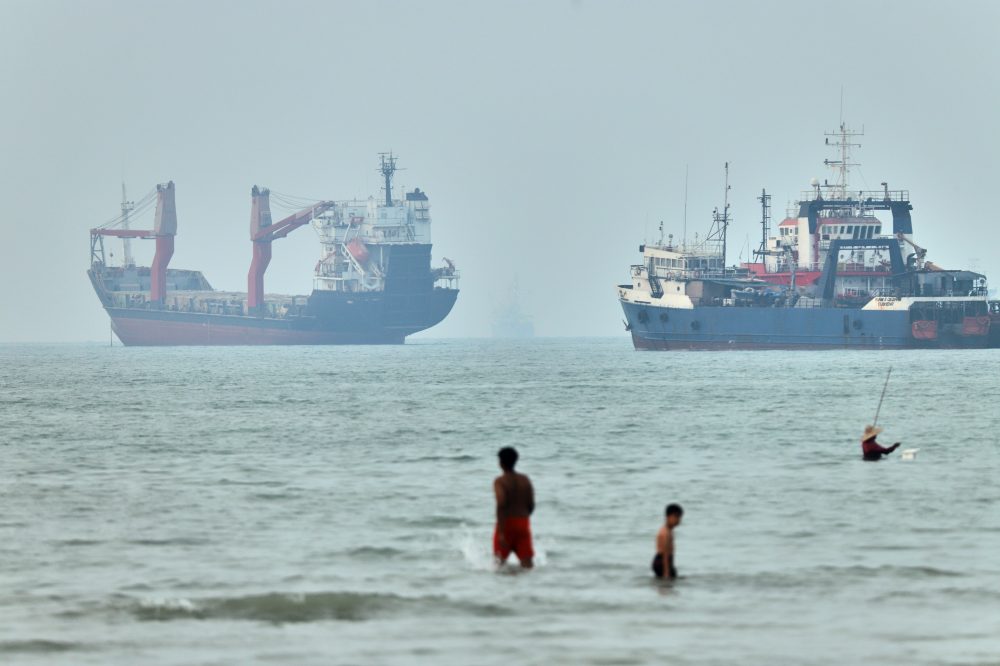
The latest strikes came just hours after President Donald Trump declared that recent Iranian attacks on commercial ships in the Strait of Hormuz had effectively ended the shaky peace agreement that had been in place. Earlier in the week, U.S. forces had already struck Iranian military installations and port facilities following Iran’s targeting of multiple merchant vessels off the coast of Oman, which also triggered Iranian retaliation at the time.
Thursday’s round of fighting appeared to be larger in scale. Air raid sirens sounded at least twice in Bahrain, where the U.S. Navy’s 5th Fleet is headquartered. No immediate reports of damage emerged from the three Gulf nations, though Kuwait’s military announced it was actively working to intercept incoming drones and missiles.
U.S. military officials stated in a social media post that the goal of the strikes was to “further degrade” Iran’s capacity “to threaten freedom of navigation” through the strait. Before the war began on Feb. 28 with U.S. and Israeli attacks, roughly one-fifth of the world’s traded oil and natural gas moved through that waterway.
Iranian state media reported explosions at multiple locations, including Bushehr — where Iran’s nuclear power plant complex is located — as well as the southern port cities of Chabahar, Konarak, Bandar Abbas, and Sirik.
After departing a NATO summit in Turkey, Trump shared videos on his social media platform that he said showed explosions inside Iran and issued a stern warning to the country. “This is in retribution for yesterday’s bombing of ships by Iran. If it happens again, it will get much worse!” Trump wrote.
Earlier Thursday, Trump suggested the ongoing fighting would not lead to prolonged military involvement. “Anything that happens is going to happen very fast,” he said, while also hinting the U.S. military might “just finish the job.” He also repeated past threats to strike Iranian civilian infrastructure — including power plants and desalination facilities — and to seize Kharg Island, Iran’s primary oil export hub.
Trump cast serious doubt on the ceasefire’s survival, saying the interim agreement to pause the fighting was “over,” though he left the door open to continued diplomacy. “For me, I think it’s over,” Trump said when asked about the status of the deal. He added that U.S. negotiators could keep talking, but expressed skepticism: “They can talk, but I think they’re wasting their time.”
Trump has previously threatened to take Kharg Island, including last month when he questioned whether the U.S. “has the stomach for it.” Approximately 90% of Iran’s oil exports flow through the island.
Analysts suggest the renewed attacks on shipping — even amid ongoing negotiations — may point to a split within Iran’s leadership. Hard-line factions are believed to want permanent control over the strategically vital strait, while more pragmatic leaders are seeking a lasting peace agreement that would lift international sanctions and provide much-needed economic relief to the country.
Peace talks aimed at reaching a final settlement had been scheduled to begin following the funeral of Iran’s Supreme Leader Ayatollah Ali Khamenei, who was killed on Feb. 28 at the very start of the conflict. The funeral concludes Thursday and was supposed to mark a period of reduced hostilities. The planned negotiations were set to tackle the most difficult issues, including fully reopening the strait to international shipping and addressing Iran’s contested nuclear program.