
DUBAI, United Arab Emirates — American forces carried out a sweeping new round of airstrikes against Iran in the early hours of Thursday, striking approximately 90 targets across the country. Iran wasted little time firing back, launching attacks against three Gulf Arab nations — Bahrain, Kuwait, and Qatar — in an escalation that put a fragile interim peace agreement in serious jeopardy.
The latest military exchange followed President Donald Trump’s declaration that recent Iranian attacks on shipping vessels in the Strait of Hormuz had effectively ended the ceasefire. Just a day earlier, U.S. forces had struck Iranian military sites and port facilities after Iran targeted multiple merchant ships off the coast of Oman, which also prompted Iranian retaliation at the time.
Thursday’s fighting appeared to be on a larger scale. Air raid sirens went off at least twice in Bahrain, which is home to the U.S. Navy’s 5th Fleet headquarters. No immediate reports of damage emerged from the three targeted Gulf nations. Kuwait’s military announced it was actively working to intercept incoming drones and missiles, while Iran’s Revolutionary Guard publicly claimed responsibility for the strikes on Bahrain and Kuwait.
The U.S. military’s Central Command released black-and-white video footage appearing to show strikes on an airport runway and missile launch sites. In a statement, Central Command declared: “U.S. forces remain vigilant, lethal, and prepared to execute operations directed by the Commander in Chief.”
American officials stated the strikes were designed to further weaken Iran’s capacity to disrupt shipping through the Strait of Hormuz — a waterway through which roughly one-fifth of the world’s oil and natural gas trade flowed before the war began with U.S. and Israeli strikes on February 28.
Iranian state media reported explosions at multiple locations, including Bushehr, where Iran’s nuclear power plant complex is located, as well as the southern port cities of Chabahar, Konarak, Bandar Abbas, and Sirik. In Iranshahr, local authorities said a firefighter at an airport was killed in a strike.
In what appeared to be the first such action since April, U.S. strikes also appeared to target Iranian bridges. State media reported a hit on a railway bridge in Iran’s northeastern Golestan province. The Revolutionary Guard separately said two bridges had been struck along the route to Mashhad, where officials were planning to bury the late Ayatollah Ali Khamenei on Thursday. It was unclear whether the Golestan strike and the Guard’s account referred to the same incident.
After departing a NATO summit in Turkey, Trump shared videos on his social media platform that he said showed explosions inside Iran, along with a stark warning to Tehran. “This is in retribution for yesterday’s bombing of ships by Iran. If it happens again, it will get much worse!” Trump wrote.
Earlier Thursday, Trump suggested the renewed fighting would not lead to prolonged military engagement. “Anything that happens is going to happen very fast,” he said, though he also hinted that the U.S. military might “just finish the job.” He also revived earlier threats to strike Iranian civilian infrastructure — including power plants and desalination facilities — and to seize Kharg Island, Iran’s primary oil export hub, through which about 90% of Iranian oil passes.
Iran’s Parliament Speaker Mohammad Bagher Qalibaf, a key figure in negotiations toward a permanent peace agreement, took a defiant tone on social media Thursday morning. “America still hasn’t learned that bullying and breaking promises are no longer cost-free. Let me put it plainly: if you strike, you’ll get hit,” he posted on X.
Trump openly cast doubt on the ceasefire’s survival. “For me, I think it’s over,” he said when pressed on the agreement’s status, though he added that U.S. negotiators could continue talks. “They can talk, but I think they’re wasting their time,” he added. Oil prices surged following his remarks, reflecting market fears that a full resumption of the conflict could shut down energy shipments through the strait once again.
Iranian Deputy Foreign Minister Kazem Gharibabadi, also a senior negotiator, pushed back on X, writing that Trump’s comments “are not a sign of power but an admission of the failure” of Washington’s approach toward Iran.
Analysts suggest the renewed attacks on shipping may reflect a split within Iran’s own leadership — with hard-liners seeking permanent control over the strait as leverage against the West, while pragmatists favor a lasting peace deal that would lift international sanctions and provide economic relief to a struggling Iranian economy.
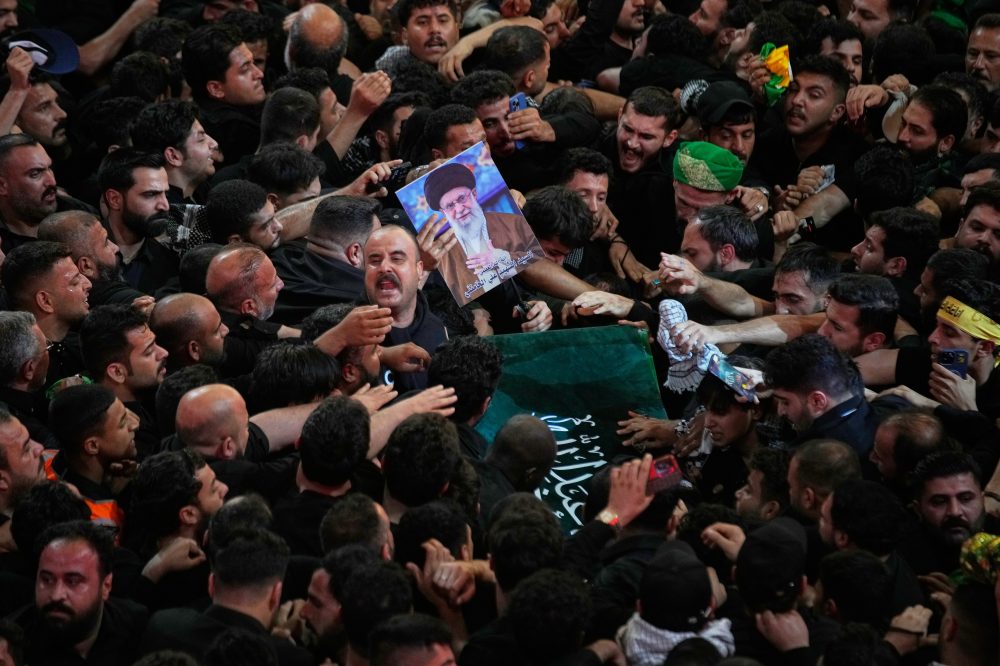
Formal negotiations toward a final settlement had been scheduled to begin after the funeral for Ayatollah Khamenei, who was killed on February 28 at the outset of the war. The funeral period, which concludes Thursday, was supposed to be a time of reduced hostilities. The planned talks were expected to address the most difficult issues, including fully reopening the strait and reining in Iran’s contested nuclear program.